EP3832946A1 - Method and system of authenticated encryption and decryption - Google Patents
Method and system of authenticated encryption and decryption Download PDFInfo
- Publication number
- EP3832946A1 EP3832946A1 EP20200701.9A EP20200701A EP3832946A1 EP 3832946 A1 EP3832946 A1 EP 3832946A1 EP 20200701 A EP20200701 A EP 20200701A EP 3832946 A1 EP3832946 A1 EP 3832946A1
- Authority
- EP
- European Patent Office
- Prior art keywords
- siv
- ciphertext
- circuit
- encryption
- decryption
- Prior art date
- Legal status (The legal status is an assumption and is not a legal conclusion. Google has not performed a legal analysis and makes no representation as to the accuracy of the status listed.)
- Granted
Links
Images



Classifications
-
- G—PHYSICS
- G06—COMPUTING OR CALCULATING; COUNTING
- G06F—ELECTRIC DIGITAL DATA PROCESSING
- G06F21/00—Security arrangements for protecting computers, components thereof, programs or data against unauthorised activity
- G06F21/70—Protecting specific internal or peripheral components, in which the protection of a component leads to protection of the entire computer
- G06F21/71—Protecting specific internal or peripheral components, in which the protection of a component leads to protection of the entire computer to assure secure computing or processing of information
- G06F21/72—Protecting specific internal or peripheral components, in which the protection of a component leads to protection of the entire computer to assure secure computing or processing of information in cryptographic circuits
-
- H—ELECTRICITY
- H04—ELECTRIC COMMUNICATION TECHNIQUE
- H04L—TRANSMISSION OF DIGITAL INFORMATION, e.g. TELEGRAPHIC COMMUNICATION
- H04L9/00—Cryptographic mechanisms or cryptographic arrangements for secret or secure communications; Network security protocols
- H04L9/06—Cryptographic mechanisms or cryptographic arrangements for secret or secure communications; Network security protocols the encryption apparatus using shift registers or memories for block-wise or stream coding, e.g. DES systems or RC4; Hash functions; Pseudorandom sequence generators
- H04L9/0618—Block ciphers, i.e. encrypting groups of characters of a plain text message using fixed encryption transformation
- H04L9/0637—Modes of operation, e.g. cipher block chaining [CBC], electronic codebook [ECB] or Galois/counter mode [GCM]
-
- H—ELECTRICITY
- H04—ELECTRIC COMMUNICATION TECHNIQUE
- H04L—TRANSMISSION OF DIGITAL INFORMATION, e.g. TELEGRAPHIC COMMUNICATION
- H04L9/00—Cryptographic mechanisms or cryptographic arrangements for secret or secure communications; Network security protocols
- H04L9/32—Cryptographic mechanisms or cryptographic arrangements for secret or secure communications; Network security protocols including means for verifying the identity or authority of a user of the system or for message authentication, e.g. authorization, entity authentication, data integrity or data verification, non-repudiation, key authentication or verification of credentials
- H04L9/3247—Cryptographic mechanisms or cryptographic arrangements for secret or secure communications; Network security protocols including means for verifying the identity or authority of a user of the system or for message authentication, e.g. authorization, entity authentication, data integrity or data verification, non-repudiation, key authentication or verification of credentials involving digital signatures
-
- G—PHYSICS
- G06—COMPUTING OR CALCULATING; COUNTING
- G06F—ELECTRIC DIGITAL DATA PROCESSING
- G06F21/00—Security arrangements for protecting computers, components thereof, programs or data against unauthorised activity
- G06F21/60—Protecting data
- G06F21/606—Protecting data by securing the transmission between two devices or processes
-
- H—ELECTRICITY
- H04—ELECTRIC COMMUNICATION TECHNIQUE
- H04L—TRANSMISSION OF DIGITAL INFORMATION, e.g. TELEGRAPHIC COMMUNICATION
- H04L9/00—Cryptographic mechanisms or cryptographic arrangements for secret or secure communications; Network security protocols
- H04L9/06—Cryptographic mechanisms or cryptographic arrangements for secret or secure communications; Network security protocols the encryption apparatus using shift registers or memories for block-wise or stream coding, e.g. DES systems or RC4; Hash functions; Pseudorandom sequence generators
- H04L9/0643—Hash functions, e.g. MD5, SHA, HMAC or f9 MAC
-
- H—ELECTRICITY
- H04—ELECTRIC COMMUNICATION TECHNIQUE
- H04L—TRANSMISSION OF DIGITAL INFORMATION, e.g. TELEGRAPHIC COMMUNICATION
- H04L9/00—Cryptographic mechanisms or cryptographic arrangements for secret or secure communications; Network security protocols
- H04L9/08—Key distribution or management, e.g. generation, sharing or updating, of cryptographic keys or passwords
- H04L9/0816—Key establishment, i.e. cryptographic processes or cryptographic protocols whereby a shared secret becomes available to two or more parties, for subsequent use
- H04L9/085—Secret sharing or secret splitting, e.g. threshold schemes
-
- H—ELECTRICITY
- H04—ELECTRIC COMMUNICATION TECHNIQUE
- H04L—TRANSMISSION OF DIGITAL INFORMATION, e.g. TELEGRAPHIC COMMUNICATION
- H04L9/00—Cryptographic mechanisms or cryptographic arrangements for secret or secure communications; Network security protocols
- H04L9/12—Transmitting and receiving encryption devices synchronised or initially set up in a particular manner
-
- H—ELECTRICITY
- H04—ELECTRIC COMMUNICATION TECHNIQUE
- H04L—TRANSMISSION OF DIGITAL INFORMATION, e.g. TELEGRAPHIC COMMUNICATION
- H04L9/00—Cryptographic mechanisms or cryptographic arrangements for secret or secure communications; Network security protocols
- H04L9/32—Cryptographic mechanisms or cryptographic arrangements for secret or secure communications; Network security protocols including means for verifying the identity or authority of a user of the system or for message authentication, e.g. authorization, entity authentication, data integrity or data verification, non-repudiation, key authentication or verification of credentials
- H04L9/3236—Cryptographic mechanisms or cryptographic arrangements for secret or secure communications; Network security protocols including means for verifying the identity or authority of a user of the system or for message authentication, e.g. authorization, entity authentication, data integrity or data verification, non-repudiation, key authentication or verification of credentials using cryptographic hash functions
- H04L9/3242—Cryptographic mechanisms or cryptographic arrangements for secret or secure communications; Network security protocols including means for verifying the identity or authority of a user of the system or for message authentication, e.g. authorization, entity authentication, data integrity or data verification, non-repudiation, key authentication or verification of credentials using cryptographic hash functions involving keyed hash functions, e.g. message authentication codes [MACs], CBC-MAC or HMAC
-
- H—ELECTRICITY
- H04—ELECTRIC COMMUNICATION TECHNIQUE
- H04L—TRANSMISSION OF DIGITAL INFORMATION, e.g. TELEGRAPHIC COMMUNICATION
- H04L2209/00—Additional information or applications relating to cryptographic mechanisms or cryptographic arrangements for secret or secure communication H04L9/00
- H04L2209/12—Details relating to cryptographic hardware or logic circuitry
-
- H—ELECTRICITY
- H04—ELECTRIC COMMUNICATION TECHNIQUE
- H04L—TRANSMISSION OF DIGITAL INFORMATION, e.g. TELEGRAPHIC COMMUNICATION
- H04L2209/00—Additional information or applications relating to cryptographic mechanisms or cryptographic arrangements for secret or secure communication H04L9/00
- H04L2209/84—Vehicles
Definitions
- This disclosure generally relates to a method and system of authenticated encryption and decryption of a message.
- GCM Galois/Counter Mode
- An example of a method of authenticated encryption includes generating a first digital signature with an encryption circuit of a first processor component; concatenating the first digital signature to a plaintext message to generate a concatenated message, with the encryption circuit; encrypting, with the encryption circuit, the concatenated message into a ciphertext; and transmitting, with the first processor component, the ciphertext via a communications channel to a second processor component.
- the second digital signature is generated by the decryption circuit using a message authentication code (MAC) of the decrypted plaintext message.
- MAC message authentication code
- the first digital signature is generated by the encryption circuit using a message authentication code (MAC) of the plaintext message.
- MAC message authentication code
- step of encrypting the first digital signature further includes the step generating a secure initialization vector (SIV).
- SIV secure initialization vector
- the encryption circuit extracts a portion of the SIV and concatenates the portion of the SIV to the ciphertext.
- the decryption circuit extracts a portion of the local SIV and compares the portion of the local SIV with the portion of the SIV concatenated to the ciphertext.
- the decryption circuit decrypts the ciphertext.
- the decryption circuit determines a difference between the portion of the local SIV and the portion of the SIV concatenated to the ciphertext.
- the decryption circuit increments the portion of the local SIV by a quantity to match the portion of the SIV concatenated to the ciphertext, and decrypts the ciphertext.
- the decryption circuit further increments the local SIV by the same quantity as the portion of the local SIV is incremented.
- the encryption circuit and the decryption circuit begin a new encryption and decryption session.
- step of encrypting the first digital signature further includes the step generating a key.
- the decryption circuit shares the local SIV with the encryption circuit, thereby creating a SIV in the encryption circuit.
- an authenticated encryption and decryption system includes a first processor component having an encryption circuit configured to generate a first digital signature; wherein the encryption circuit is further configured to: concatenate the first digital signature to a plaintext message to generate a concatenated message; encrypt the concatenated message into a ciphertext; whereby the first processor component transmits the ciphertext via a communications channel to a second processor component.
- system further includes the second processor component having a decryption circuit configured to decrypt the ciphertext into a decrypted first digital signature and a decrypted plaintext message.
- the decryption circuit compares the decrypted first digital signature with a second digital signature, thereby authenticating the decrypted plaintext message.
- the decryption circuit generates the second digital signature by using a message authentication code (MAC) of the decrypted plaintext message.
- MAC message authentication code
- the encryption circuit generates the first digital signature by using a message authentication code (MAC) of the plaintext message.
- MAC message authentication code
- the decryption circuit generates a local SIV and shares the local SIV with the encryption circuit, thereby creating a SIV in the encryption circuit.
- the encryption circuit further generates a secure initialization vector (SIV) in addition to encrypting the first digital signature.
- SIV secure initialization vector
- the encryption circuit increments the SIV after the ciphertext is transmitted to the decryption circuit.
- the encryption circuit shares the SIV with the decryption circuit, thereby creating a local SIV in the decryption circuit.
- the encryption circuit extracts a portion of the SIV and concatenates the portion of the SIV to the ciphertext.
- the decryption circuit extracts a portion of the local SIV and compares the portion of the local SIV with the portion of the SIV concatenated to the ciphertext.
- the decryption circuit decrypts the ciphertext.
- the decryption circuit determines a difference between the portion of the local SIV and the portion of the SIV concatenated to the ciphertext.
- the decryption circuit increments the portion of the local SIV by a quantity to match the SIV concatenated to the ciphertext, and decrypts the ciphertext.
- the decryption circuit further increments the local SIV by the same quantity as the portion of the local SIV is incremented.
- the encryption circuit and the decryption circuit when the difference is greater than a threshold, the encryption circuit and the decryption circuit begin a new encryption and decryption session.
- the decryption circuit increments the local SIV after the ciphertext is decrypted and authenticated.
- the step of encrypting the first digital signature further includes the step generating a key.
- the encryption circuit shares the key with the decryption circuit.
- the decryption circuit shares the key with the encryption circuit.
- the decryption circuit shares the local SIV with the encryption circuit, thereby creating a SIV in the encryption circuit.
- the encryption circuit generates a key and shares the key with the decryption circuit.
- the decryption circuit generates a key and shares the key with the encryption circuit.
- GCM Galois/Counter Mode
- GMAC Galois/Counter Mode
- AE Authenticated encryption
- AEAD authenticated encryption with associated data
- GCM is a symmetric-key block cipher mode of operation in cryptography which relies on AE.
- GCM is constructed from an approved symmetric key block cipher with a block size of 128 bits, such as the Advanced Encryption Standard (AES) algorithm that is specified in Federal Information Processing Standard (FIPS) Pub. 197.
- AES Advanced Encryption Standard
- FIPS Federal Information Processing Standard
- GCM is a widely accepted standard for authenticated encryption because of its efficiency and performance.
- IV initialization vectors
- Tags authentication tags
- An example of a transmission protocol with a relatively small payload size is the Controller Area Network (CAN) communication between different control units and/or devices in a vehicle sub-system.
- CAN Controller Area Network
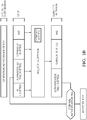
- Fig. 1A illustrates an example of a GCM encryption logic flow.
- a GCM key is the block cipher key (i.e., a secret key, secure key, etc.).
- the exchange of the key is done via any of the known security protocols, such as Public Key Infrastructure (PKI) or Diffie-Hellman key exchange.
- PKI Public Key Infrastructure
- Diffie-Hellman key exchange Diffie-Hellman key exchange.
- the underlying block cipher consists of two functions that are inverses of each other. The two functions are authenticated encryption and authenticated decryption.
- the authenticated encryption function encrypts the confidential data and computes the Tag on both the confidential data and any additional, non-confidential data.
- Examples of confidential data for encryption in a vehicle system include, but are not limited to, inertial measurement unit (IMU) data shared over CAN network to an autonomous drive engine control unit (ECU), radar and/or LiDAR sensor data shared with the host ECU running safety applications.
- Examples of non-confidential data for encryption in the vehicle system include, but are not limited to, a message identifier (CAN communications), an IP Address and/or Port Numbers (ethernet communication).
- Fig. 1B illustrates an example of a GCM decryption logic flow.
- the authenticated decryption function decrypts the confidential data and authenticates the sender based on verification of the Tag.
- the output of the authenticated decryption function includes the plaintext message that corresponds to the ciphertext (assuming the Tag verification is successful), and the Tag verification result (i.e., PASS/FAIL).
- the ciphertext is the result of encrypting a plaintext message.
- Examples of some of the limitations of the GCM method include:
- the output from the GCM encryption process includes the Tag of symmetric-key size.
- the IV (with NIST recommended length of 12 bytes) also needs to be transmitted to aid the eventual decryption process.
- AES GCM is adopted for the CAN bus communication, which has a max payload size of 8 bytes
- transmitting the Tag and IV are significant overheads (i.e. 4 extra CAN frames to carry IV and Tag for every message of CAN). If shorter length Tags are used, the overhead could only be reduced to 3 extra frames for every frame of payload.
- 28 bytes of IV and Tag are significant overheads (e.g., 44% of total payload of 64 bytes).
- GCM being a pure AEAD scheme provides no resistance from message drops. Message loss handling is left to the underlying network layer.
- Fig. 2 is a flow chart illustrating a method 100 of authenticated encryption and decryption using a system of authenticated encryption and decryption 10, hereafter the system 10.
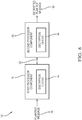
- An example of the system 10 is illustrated in Fig. 6 .
- the method 100 may offer improvements over other methods because the method 100 reduces an overhead associated with transmitting IVs and Tags, and secures from replay attacks.
- the examples in the following disclosure assume a CAN bus with a data size (i.e., a plaintext message 18) of 6 bytes, and a 16 byte key size. It will be appreciated that the method 100 will apply to other communication protocols having different maximum payloads.
- Step 102 GENERATE FIRST SIGNATURE, includes generating a first digital signature 12 with an encryption circuit 14 of a first processor component 16.
- Fig. 3 illustrates an example of a logic flow that occurs within the encryption circuit 14.
- the first digital signature 12 is generated by the encryption circuit 14 using a message authentication code (MAC) of the plaintext message 18.
- MAC message authentication code
- the plaintext message 18 is 6 bytes in length.
- the output of the MAC i.e., the plaintext message 18 and any optional fields
- a "salt” in cryptography is random data that is used as an additional input to a one-way function that "hashes" data, a password or passphrase.
- MAC algorithms e.g., Galois MAC (GMAC), hash-based MAC (HMAC), and cipher-based MAC (CMAC)
- GMAC Galois MAC
- HMAC hash-based MAC
- CMAC cipher-based MAC
- the GMAC algorithm is used to generate the first digital signature 12 having a length of 1 byte.
- the first digital signature 12 is derived from the GMAC of the plaintext message 18 and any additional inputs. Depending on the length of the plaintext message 18 (i.e. the message payload size), the size of first digital signature 12 can be varied to ensure the maximum possible assurance of integrity and authenticity.
- a first step is to generate the GMAC.
- the inputs used by the encryption circuit 14 to generate the GMAC include the plaintext message 18, any additional authenticated data (AAD), a secure initialization vector (SIV), an initialization vector counter (IVC), and the "salt".
- the AAD may be a message identifier.
- the AAD may be IP Address, and/or Port Numbers.
- the salt is an array of pointers to the bit locations in GMAC. The number of array pointers required to form the first digital signature 12 depends on the size of the first digital signature 12. In an example, if the GMAC is 16 bytes (i.e. 128 bits) and the first digital signature 12 is 1 byte (i.e.
- the salt will have 8 pointers agreed upon between the encryption circuit 14 and the decryption circuit 26 during a handshake process.
- these 8 pointers point to particular bit locations in the GMAC.
- the bit values at the locations pointed to by the 8 pointers are concatenated together to form the 1 byte first digital signature 12.
- the salt is securely exchanged at the beginning of every encryption/decryption session between the encryption circuit 14 and the decryption circuit 26.
- the first processor component 16 is a microprocessor.
- the microprocessor may be a component of a controller circuit and/or part of a microcontroller, such as an engine control module, a body control module, and/or other circuitry associated with various sensors and actuators that may be installed on a vehicle (not shown).
- the microprocessor may include other control circuitry such as analog and/or digital control circuitry.
- the control circuitry may include one or more application-specific integrated circuits (ASICs) or field programmable gate arrays (FPGAs) that are programmed to perform the techniques, or may include one or more general purpose hardware processors programmed to perform the techniques pursuant to program instructions in firmware, memory, other storage, or a combination.
- ASICs application-specific integrated circuits
- FPGAs field programmable gate arrays
- the microprocessor may also combine custom hard-wired logic, ASICs, or FPGAs with custom programming to accomplish the techniques.
- the microprocessor may include a memory or storage media (not shown), including non-volatile memory, such as electrically erasable programmable read-only memory (EEPROM) for storing one or more routines, thresholds, and captured data.
- EEPROM electrically erasable programmable read-only memory
- the EEPROM stores data and allows individual bytes to be erased and reprogrammed by applying special programming signals.
- the microprocessor may include other examples of non-volatile memory, such as flash memory, read-only memory (ROM), programmable read-only memory (PROM), and erasable programmable read-only memory (EPROM).
- the microprocessor may include volatile memory, such as dynamic random-access memory (DRAM), static random-access memory (SRAM).
- DRAM dynamic random-access memory
- SRAM static random-access memory
- the one or more routines may be executed by the microprocessor to perform steps for encryption based on signals received by the microprocessor from the encryption circuit 14 as described herein.
- the first processor component 16 includes the encryption circuit 14 (i.e., the encryption circuit 14 is integral to the first processor component 16 electrical packaging).
- the first processor component 16 and the encryption circuit 14 are separate devices.
- the first processor component 16 is a Hardware Security Module (HSM) that may be a component of a controller circuit.
- HSMs are hardened, tamper-resistant hardware devices that strengthen encryption practices by generating keys, encrypting and decrypting data, and creating and verifying digital signatures.
- the HSM includes a central processor unit (CPU), hardware accelerators for AES, Hash and Public Key Cryptography, dedicated RAM and Flash memory, and a Random Number Generator.
- the HSM can access the entire system RAM and Flash memory of the controller circuit, while the RAM and Flash memory in the HSM cannot be accessed by any system component other than the HSM.
- protection is provided to the security artifacts such as keys, and certificates that may be stored in the HSM.
- the operations performed in the HSM are protected from the outside world.
- the controller circuit submits crypto requests to the HSM which performs these operations in a safe environment, and provides the result to the controller circuit.
- the encryption circuit 14 also generates a secure initialization vector (SIV) at the start of an encryption session.
- decryption circuit 26 generates a local secure initialization vector (local SIV) and shares it with the encryption circuit 14.
- SIV is "secure", compared to the GCM method, because the SIV is not transmitted on a communication channel along with the encrypted plaintext message 18.
- the SIV and local SIV are 12 bytes in length.
- the SIV is securely exchanged between the first processor component 16 and a second processor component 24 by any of the known methods including, but not limited to, PKI or Diffie-Hellman key exchange.
- the SIV and local SIV can be used as an "optional field" in the generation of the first digital signature 12 and a second digital signature 32.
- the SIV and local SIV are the concatenation of two fields, called the fixed field and the variable field.
- the fixed field identifies a device (e.g., a sensor, microcontroller, etc.), or the context for the instance of the authenticated encryption function.
- the variable field identifies the sets of inputs to the authenticated encryption or decryption function in the particular device.
- variable field typically is either 1) an integer counter, or 2) a linear feedback shift register that is driven by a primitive polynomial to ensure a maximal cycle length. In either case, the variable field increments upon each invocation of the authenticated encryption or decryption function.
- the lengths and positions of the fixed field and the variable field are fixed for each supported SIV length for the life of the key. Examples of the partitioning of the SIV and local SIV are illustrated in Figs. 4A and 4B , respectively.
- the leading 64 bits (i.e., leftmost, or most significant bits - MSB) of the SIV and local SIV hold the fixed field
- the trailing 32 bits i.e., rightmost, or least significant bits - LSB
- the variable field is used as a counter, termed an initialization vector counter (IVC), and initialization vector counter local (IVCL).
- IVC initialization vector counter
- IVCL initialization vector counter local
- the encryption circuit 14 generates the key and shares the key with the decryption circuit 26.
- decryption circuit 26 generates the key and shares the key with the encryption circuit 14.
- the key can be generated using a random number generator (RNG), such as true random number generator hardware typically available in most HSM blocks, or an equivalent software implementation.
- RNG random number generator
- the RNG can also be used to generate the SIV.
- Other methods for generating the key are described in the NIST document referenced above.
- Step 104 includes concatenating the first digital signature 12 to the plaintext message 18 to generate a concatenated message 20, with the encryption circuit 14.
- the 1 byte of first digital signature 12 string is attached to (i.e., concatenated to) the 6 byte plaintext message 18 string to create the concatenated message 20 having a length of 7 bytes.
- This concatenated message 20 has a much smaller overhead compared to the example of the GCM method shown in Fig. 1A , that has the overhead of 18 bytes.
- Step 106 ENCRYPT CONCATENATED MESSAGE, includes encrypting, with the encryption circuit 14, the concatenated message 20 into a ciphertext 22.
- the encryption of the concatenated message 20 follows the known GCM encryption protocol, and will not be described in detail herein. Details of the GCM encryption algorithms may be found in the NIST document referenced above.
- Step 108 TRANSMIT CIPHERTEXT, includes transmitting, with the first processor component 16, the ciphertext 22 via a communications channel to the second processor component 24.
- the second processor component 24 is another microprocessor. This microprocessor may be a component of another controller circuit and/or part of another microcontroller, as described above for the first processor component 16.
- the second processor component 24 is another HSM that may be a component of another controller circuit, as described above for the first processor component 16.
- the ciphertext 22 is transmitted over the CAN bus, which may be an unsecured line of transmission.
- ciphertext 22 may be used to transmit the ciphertext 22 including, but not limited to, BLUETOOTH®, Wi-Fi, NFC, universal serial bus (USB), Apple Lightning, universal asynchronous receiver/transmitter (UART), etc.
- the encryption circuit 14 prior to transmitting the ciphertext 22 to the second processor component 24, the encryption circuit 14 extracts a portion of the SIV and concatenates this portion of the SIV to the ciphertext 22.
- the encryption circuit 14 extracts the rightmost 8 bits, or least significant bits (LSB) of the IVC, hereafter referred to as the IVC-LSB, and concatenates the IVC-LSB to the ciphertext 22 as illustrated in Fig. 3 .
- the first processor component 16 transmits the message containing the 6 byte ciphertext 22, along with an overhead of 2 bytes that includes the 1 byte first digital signature 12 and the 1 byte IVC-LSB. As will be described in more detail below, this transmitted IVC-LSB will be used in a decryption process, and for synchronization between the encryption circuit 14 and the decryption circuit 26.
- the encryption circuit 14 increments the variable field of the SIV (i.e., the IVC portion of the SIV). This increment may be any pre-determined increment pattern and may be user defined.
- Step 110 includes decrypting the ciphertext 22, with the decryption circuit 26 of the second processor component 24, into a decrypted first digital signature 28 and a decrypted plaintext message 30.
- Fig. 5 illustrates an example of a logic flow of the decryption process that occurs in the decryption circuit 26.
- the encryption circuit 14 shares the SIV with the decryption circuit 26 in a secure manner separate from the ciphertext 22 (e.g., via PKI, or Diffie-Hellman key exchange), thereby creating a local copy of the SIV in the decryption circuit 26, hereafter the local SIV.
- the decryption circuit 26 initiates the exchange of the local SIV with the encryption circuit 14.
- the decryption circuit 26 extracts a portion of the local SIV and compares the portion of the local SIV with the portion of the SIV (i.e., the IVC-LSB) concatenated to the ciphertext 22.
- the decryption circuit extracts the LSB of the IVCL (i.e., the IVCL-LSB) from the local SIV for comparison (see Fig. 4B ). Referring again to the partitioning diagram of Fig.
- the decryption circuit 26 extracts the IVCL-LSB for comparison to the IVC-LSB that is transmitted from the encryption circuit 14 with the ciphertext 22. That is, the decryption circuit 26 compares the IVCL-LSB to the IVC-LSB as a security check before proceeding with the decryption of the ciphertext 22. This security check protects against replay attacks, spoofing, tampering, information disclosure, and message loss. In an example, when the IVCL-LSB matches the IVC-LSB, the decryption circuit 26 decrypts the ciphertext 22.
- the local SIV is incremented by the decryption circuit 26 after the ciphertext 22 is decrypted and authenticated to synchronize the local SIV in the decryption circuit 26 with the SIV in the encryption circuit 14. That is the IVCL is incremented by the decryption circuit 26 to match the increment of the IVC performed by the encryption circuit 14 as described above.
- the decryption circuit 26 determines a difference between the IVCL-LSB and the IVC-LSB. In this example, when the difference is less than a threshold, the decryption circuit 26 increments the IVCL-LSB by a quantity to match the IVC-LSB, and decrypts the ciphertext 22. In this example, the decryption circuit 26 further increments the local SIV by the same quantity as the IVCL-LSB is incremented to synchronize IVCL in the decryption circuit 26 with the SIV in the encryption circuit 14.
- the threshold may be user defined, and a range of the threshold depends on the application.
- This aspect of the system 10 provides resistance to message drops and/or message corruption by correcting small differences in the IVC and IVCL, or by terminating the encryption/decryption session.
- the encryption circuit 14 and the decryption circuit 26 begin a new encryption and decryption session. In this example, this situation is considered to be beyond recovery and re-initialization is started. During re-initialization, the key, SIV, and salt are freshly generated and shared to between the encryption circuit 14 and the decryption circuit 26 to restart the encryption and decryption process.
- Step 112 AUTHENTICATE MESSAGE, includes comparing, with the decryption circuit 26, the decrypted first digital signature 28 with a second digital signature 32, thereby authenticating the decrypted plaintext message 30.
- the second digital signature 32 is generated by the decryption circuit 26 using a MAC of the decrypted plaintext message 30 by a similar process as that for the first digital signature 12 described above.
- the decrypted plaintext message 30 may be output to a channel to be read by another device, as required by the application.
- replay attacks will fail because a retransmitted message will fail the authentication.
- the SIV which is used to create the retransmitted message will not match the local SIV (which increments with every received message) used to decrypt the message, thereby creating a signature mismatch.
- a method 100 of authenticated encryption and decryption, and an authenticated encryption and decryption system 10 are provided.
- the method 100 may provide advantages over other methods because the method 100 reduces the overhead of transmitted data and increases the security of the encryption and decryption messages.
- message splitting may be avoided. For example, with 6 bytes of payload, the authenticated message may be contained in one CAN message, compared to GCM which requires 4 CAN messages.
- While the examples of the method 100 and system 10 described herein include application to the GCM scheme of AEAD, it will be appreciated that the method 100 and system 10 may also be applied to other AEAD schemes, including Counter with Cipher Block Chaining Message Authentication Code (CCM mode), Offset Codebook Mode (OCB mode), and Carter-Wegman + CTR Mode (CWC mode).
- CCM mode Counter with Cipher Block Chaining Message Authentication Code
- OCB mode Offset Codebook Mode
- CWC mode Carter-Wegman + CTR Mode
- first contact could be termed a second contact
- second contact could be termed a first contact
- the first contact and the second contact are both contacts, but they are not the same contact.
- the terminology used in the description of the various described embodiments herein is for the purpose of describing particular embodiments only and is not intended to be limiting. As used in the description of the various described embodiments and the appended claims, the singular forms "a”, “an” and “the” are intended to include the plural forms as well, unless the context clearly indicates otherwise. It will also be understood that the term “and/or” as used herein refers to and encompasses any and all possible combinations of one or more of the associated listed items.
- the phrase “if it is determined” or “if [a stated condition or event] is detected” is, optionally, construed to mean “upon determining” or “in response to determining” or “upon detecting [the stated condition or event]” or “in response to detecting [the stated condition or event],” depending on the context.
Landscapes
- Engineering & Computer Science (AREA)
- Computer Security & Cryptography (AREA)
- Computer Networks & Wireless Communication (AREA)
- Signal Processing (AREA)
- Theoretical Computer Science (AREA)
- Physics & Mathematics (AREA)
- Computer Hardware Design (AREA)
- Power Engineering (AREA)
- Software Systems (AREA)
- General Engineering & Computer Science (AREA)
- General Physics & Mathematics (AREA)
- Mathematical Physics (AREA)
- Health & Medical Sciences (AREA)
- Bioethics (AREA)
- General Health & Medical Sciences (AREA)
- Storage Device Security (AREA)
- Data Exchanges In Wide-Area Networks (AREA)
- Small-Scale Networks (AREA)
Abstract
Description
- This disclosure generally relates to a method and system of authenticated encryption and decryption of a message.
- A Galois/Counter Mode (GCM) algorithm is a widely accepted standard for authenticated encryption and decryption. However, for protecting messages on a transmission protocol with small payload sizes, the relatively large overhead of transmitting initialization vectors and authentication tags, and no security from replay attacks, may be problematic.
- An example of a method of authenticated encryption includes generating a first digital signature with an encryption circuit of a first processor component; concatenating the first digital signature to a plaintext message to generate a concatenated message, with the encryption circuit; encrypting, with the encryption circuit, the concatenated message into a ciphertext; and transmitting, with the first processor component, the ciphertext via a communications channel to a second processor component.
- In an example having one or more features of the method of the previous paragraph, further including the step of decrypting the ciphertext, with a decryption circuit of the second processor component, into a decrypted first digital signature and a decrypted plaintext message.
- In an example having one or more features of the method of the previous paragraph, further including the step of comparing, with the decryption circuit, the decrypted first digital signature with a second digital signature, thereby authenticating the decrypted plaintext message.
- In an example having one or more features of the method of any of the previous paragraphs, wherein the second digital signature is generated by the decryption circuit using a message authentication code (MAC) of the decrypted plaintext message.
- In an example having one or more features of the method of any of the previous paragraphs, wherein the first digital signature is generated by the encryption circuit using a message authentication code (MAC) of the plaintext message.
- In an example having one or more features of the method of any of the previous paragraphs, wherein the step of encrypting the first digital signature further includes the step generating a secure initialization vector (SIV).
- In an example having one or more features of the method of any of the previous paragraphs, wherein the SIV is incremented by the encryption circuit after the ciphertext is transmitted to the decryption circuit.
- In an example having one or more features of the method of any of the previous paragraphs, wherein the encryption circuit shares the SIV with the decryption circuit, thereby creating a local SIV in the decryption circuit.
- In an example having one or more features of the method of any of the previous paragraphs, wherein the encryption circuit extracts a portion of the SIV and concatenates the portion of the SIV to the ciphertext.
- In an example having one or more features of the method of any of the previous paragraphs, wherein the decryption circuit extracts a portion of the local SIV and compares the portion of the local SIV with the portion of the SIV concatenated to the ciphertext.
- In an example having one or more features of the method of any of the previous paragraphs, wherein when the portion of the local SIV matches the portion of the SIV concatenated to the ciphertext, the decryption circuit decrypts the ciphertext.
- In an example having one or more features of the method of any of the previous paragraphs, wherein when the portion of the local SIV does not match the portion of the SIV concatenated to the ciphertext, the decryption circuit determines a difference between the portion of the local SIV and the portion of the SIV concatenated to the ciphertext.
- In an example having one or more features of the method of any of the previous paragraphs, wherein when the difference is less than a threshold, the decryption circuit increments the portion of the local SIV by a quantity to match the portion of the SIV concatenated to the ciphertext, and decrypts the ciphertext.
- In an example having one or more features of the method of any of the previous paragraphs, wherein the decryption circuit further increments the local SIV by the same quantity as the portion of the local SIV is incremented.
- In an example having one or more features of the method of any of the previous paragraphs, wherein when the difference is greater than a threshold, the encryption circuit and the decryption circuit begin a new encryption and decryption session.
- In an example having one or more features of the method of any of the previous paragraphs, wherein the local SIV is incremented by the decryption circuit after the ciphertext is decrypted and authenticated.
- In an example having one or more features of the method of any of the previous paragraphs, wherein the step of encrypting the first digital signature further includes the step generating a key.
- In an example having one or more features of the method of any of the previous paragraphs, wherein the encryption circuit shares the key with the decryption circuit.
- In an example having one or more features of the method of any of the previous paragraphs, wherein the decryption circuit shares the key with the encryption circuit.
- In an example having one or more features of the method of any of the previous paragraphs, wherein the decryption circuit shares the local SIV with the encryption circuit, thereby creating a SIV in the encryption circuit.
- An example of an authenticated encryption and decryption system, the system includes a first processor component having an encryption circuit configured to generate a first digital signature; wherein the encryption circuit is further configured to: concatenate the first digital signature to a plaintext message to generate a concatenated message; encrypt the concatenated message into a ciphertext; whereby the first processor component transmits the ciphertext via a communications channel to a second processor component.
- In an example having one or more features of the system of the previous paragraph, the system further includes the second processor component having a decryption circuit configured to decrypt the ciphertext into a decrypted first digital signature and a decrypted plaintext message.
- In an example having one or more features of the system of the previous paragraph, the decryption circuit compares the decrypted first digital signature with a second digital signature, thereby authenticating the decrypted plaintext message.
- In an example having one or more features of the system of the previous paragraph, wherein the decryption circuit generates the second digital signature by using a message authentication code (MAC) of the decrypted plaintext message.
- In an example having one or more features of the system of any of the previous paragraphs, the encryption circuit generates the first digital signature by using a message authentication code (MAC) of the plaintext message.
- In an example having one or more features of the system of any of the previous paragraphs, the decryption circuit generates a local SIV and shares the local SIV with the encryption circuit, thereby creating a SIV in the encryption circuit.
- In an example having one or more features of the system of any of the previous paragraphs, the encryption circuit further generates a secure initialization vector (SIV) in addition to encrypting the first digital signature.
- In an example having one or more features of the system of any of the previous paragraphs, the encryption circuit increments the SIV after the ciphertext is transmitted to the decryption circuit.
- In an example having one or more features of the system of any of the previous paragraphs, the encryption circuit shares the SIV with the decryption circuit, thereby creating a local SIV in the decryption circuit.
- In an example having one or more features of the system of any of the previous paragraphs, the encryption circuit extracts a portion of the SIV and concatenates the portion of the SIV to the ciphertext.
- In an example having one or more features of the system of any of the previous paragraphs, the decryption circuit extracts a portion of the local SIV and compares the portion of the local SIV with the portion of the SIV concatenated to the ciphertext.
- In an example having one or more features of the system of any of the previous paragraphs, when the portion of the local SIV matches the portion of the SIV concatenated to the ciphertext, the decryption circuit decrypts the ciphertext.
- In an example having one or more features of the system of any of the previous paragraphs, when the portion of the local SIV does not match the portion of the SIV concatenated to the ciphertext, the decryption circuit determines a difference between the portion of the local SIV and the portion of the SIV concatenated to the ciphertext.
- In an example having one or more features of the system of any of the previous paragraphs, when the difference is less than a threshold, the decryption circuit increments the portion of the local SIV by a quantity to match the SIV concatenated to the ciphertext, and decrypts the ciphertext.
- In an example having one or more features of the system of any of the previous paragraphs, the decryption circuit further increments the local SIV by the same quantity as the portion of the local SIV is incremented.
- In an example having one or more features of the system of any of the previous paragraphs, when the difference is greater than a threshold, the encryption circuit and the decryption circuit begin a new encryption and decryption session.
- In an example having one or more features of the system of any of the previous paragraphs, the decryption circuit increments the local SIV after the ciphertext is decrypted and authenticated.
- In an example having one or more features of the system of any of the previous paragraphs, the step of encrypting the first digital signature further includes the step generating a key.
- In an example having one or more features of the system of any of the previous paragraphs, the encryption circuit shares the key with the decryption circuit.
- In an example having one or more features of the system of any of the previous paragraphs, the decryption circuit shares the key with the encryption circuit.
- In an example having one or more features of the system of any of the previous paragraphs, the decryption circuit shares the local SIV with the encryption circuit, thereby creating a SIV in the encryption circuit.
- In an example having one or more features of the system of any of the previous paragraphs, the encryption circuit generates a key and shares the key with the decryption circuit.
- In an example having one or more features of the system of any of the previous paragraphs, the decryption circuit generates a key and shares the key with the encryption circuit.
- The present invention will now be described, by way of example with reference to the accompanying drawings, in which:
-
Fig. 1A is an illustration of a logic flow of a Galois/Counter Mode (GCM) encryption process in accordance with one embodiment; -
Fig. 1B is an illustration of a logic flow of a Galois/Counter Mode (GCM) decryption process in accordance with one embodiment; -
Fig. 2 is a flow chart of a method of authenticated encryption and decryption in accordance with another embodiment; -
Fig. 3 is an illustration of a logic flow of an encryption process in accordance with another embodiment; -
Fig. 4A is an illustration of a partitioning of a secure initialization vector in accordance with another embodiment; -
Fig. 4B is an illustration of a partitioning of a local secure initialization vector in accordance with another embodiment; -
Fig. 5 is an illustration of a logic flow of a decryption process in accordance with another embodiment; and -
Fig. 6 is an illustration of an authenticated encryption and decryption system in accordance with yet another embodiment. - Reference will now be made in detail to embodiments, examples of which are illustrated in the accompanying drawings. In the following detailed description, numerous specific details are set forth in order to provide a thorough understanding of the various described embodiments. However, it will be apparent to one of ordinary skill in the art that the various described embodiments may be practiced without these specific details. In other instances, well-known methods, procedures, components, circuits, and networks have not been described in detail so as not to unnecessarily obscure aspects of the embodiments.
- The United States National Institute of Standards and Technology (NIST) Special Publication 800-38D, issued November, 2007, entitled, RECOMMENDATION FOR BLOCK CIPHER MODES OF OPERATION: GALOIS/COUNTER MODE (GCM) AND GMAC, specifies the Galois/Counter Mode (GCM), an algorithm for authenticated encryption with associated data, and its specialization, GMAC, for generating a Message Authentication Code on data that is not encrypted. GCM and GMAC are modes of operation for an underlying approved symmetric key block cipher. Authenticated encryption (AE) and authenticated encryption with associated data (AEAD) are forms of encryption which simultaneously assure the confidentiality and authenticity of data. GCM is a symmetric-key block cipher mode of operation in cryptography which relies on AE. GCM is constructed from an approved symmetric key block cipher with a block size of 128 bits, such as the Advanced Encryption Standard (AES) algorithm that is specified in Federal Information Processing Standard (FIPS) Pub. 197. GCM is a mode of operation of the AES algorithm.
- GCM is a widely accepted standard for authenticated encryption because of its efficiency and performance. However, for protecting messages on a transmission protocol with relatively small payload sizes (typical in embedded systems in vehicles), the overhead of transmission of initialization vectors (IV) and authentication tags (Tags) is relatively high. An example of a transmission protocol with a relatively small payload size is the Controller Area Network (CAN) communication between different control units and/or devices in a vehicle sub-system. As will be described in more detail below, a modified GCM scheme disclosed herein addresses two issues of GCM; 1) the additional overhead of transmitting IV and Tags; and 2) little to no protection from replay attacks.
-
Fig. 1A illustrates an example of a GCM encryption logic flow. A GCM key is the block cipher key (i.e., a secret key, secure key, etc.). The exchange of the key is done via any of the known security protocols, such as Public Key Infrastructure (PKI) or Diffie-Hellman key exchange. For any given key, the underlying block cipher consists of two functions that are inverses of each other. The two functions are authenticated encryption and authenticated decryption. The authenticated encryption function encrypts the confidential data and computes the Tag on both the confidential data and any additional, non-confidential data. Examples of confidential data for encryption in a vehicle system include, but are not limited to, inertial measurement unit (IMU) data shared over CAN network to an autonomous drive engine control unit (ECU), radar and/or LiDAR sensor data shared with the host ECU running safety applications. Examples of non-confidential data for encryption in the vehicle system include, but are not limited to, a message identifier (CAN communications), an IP Address and/or Port Numbers (ethernet communication). -
Fig. 1B illustrates an example of a GCM decryption logic flow. The authenticated decryption function decrypts the confidential data and authenticates the sender based on verification of the Tag. In this example, the output of the authenticated decryption function includes the plaintext message that corresponds to the ciphertext (assuming the Tag verification is successful), and the Tag verification result (i.e., PASS/FAIL). The ciphertext is the result of encrypting a plaintext message. - The output from the GCM encryption process includes the Tag of symmetric-key size. In addition to transmitting the ciphertext and the Tag, the IV (with NIST recommended length of 12 bytes) also needs to be transmitted to aid the eventual decryption process. When AES GCM is adopted for the CAN bus communication, which has a max payload size of 8 bytes, transmitting the Tag and IV are significant overheads (i.e. 4 extra CAN frames to carry IV and Tag for every message of CAN). If shorter length Tags are used, the overhead could only be reduced to 3 extra frames for every frame of payload. Even in case of CAN-FD, 28 bytes of IV and Tag are significant overheads (e.g., 44% of total payload of 64 bytes).
- In addition to increasing the data bus load, there is overhead of synchronization of multiple frame messages (e.g., ciphertext, IV, and Tag) which introduces latency and performance issues.
- If an attacker eavesdrops on the data on bus, captures the data and replays it to the receiver, the receiver cannot differentiate the retransmitted message from the original message. This necessitates the inclusion of an additional data field in the payload (e.g., a counter in Secure CAN implementation or a timestamp) which increases network overhead.
- GCM, being a pure AEAD scheme provides no resistance from message drops. Message loss handling is left to the underlying network layer.
-
Fig. 2 is a flow chart illustrating amethod 100 of authenticated encryption and decryption using a system of authenticated encryption anddecryption 10, hereafter thesystem 10. An example of thesystem 10 is illustrated inFig. 6 . As will be explained in more detail below, themethod 100 may offer improvements over other methods because themethod 100 reduces an overhead associated with transmitting IVs and Tags, and secures from replay attacks. For illustration purposes only, the examples in the following disclosure assume a CAN bus with a data size (i.e., a plaintext message 18) of 6 bytes, and a 16 byte key size. It will be appreciated that themethod 100 will apply to other communication protocols having different maximum payloads. -
Step 102, GENERATE FIRST SIGNATURE, includes generating a firstdigital signature 12 with anencryption circuit 14 of afirst processor component 16.Fig. 3 illustrates an example of a logic flow that occurs within theencryption circuit 14. In an example, the firstdigital signature 12 is generated by theencryption circuit 14 using a message authentication code (MAC) of theplaintext message 18. In this example, theplaintext message 18 is 6 bytes in length. In an example, the output of the MAC (i.e., theplaintext message 18 and any optional fields) can be reduced to the desired size using a "salt", or any other known means. A "salt" in cryptography, is random data that is used as an additional input to a one-way function that "hashes" data, a password or passphrase. MAC algorithms (e.g., Galois MAC (GMAC), hash-based MAC (HMAC), and cipher-based MAC (CMAC)), are used to derive digital signatures. In this example, the GMAC algorithm is used to generate the firstdigital signature 12 having a length of 1 byte. The firstdigital signature 12 is derived from the GMAC of theplaintext message 18 and any additional inputs. Depending on the length of the plaintext message 18 (i.e. the message payload size), the size of firstdigital signature 12 can be varied to ensure the maximum possible assurance of integrity and authenticity. In order to generate firstdigital signature 12, a first step is to generate the GMAC. In this example, the inputs used by theencryption circuit 14 to generate the GMAC include theplaintext message 18, any additional authenticated data (AAD), a secure initialization vector (SIV), an initialization vector counter (IVC), and the "salt". In the example of CAN communications, the AAD may be a message identifier. In an example of an ethernet communication, the AAD may be IP Address, and/or Port Numbers. The salt is an array of pointers to the bit locations in GMAC. The number of array pointers required to form the firstdigital signature 12 depends on the size of the firstdigital signature 12. In an example, if the GMAC is 16 bytes (i.e. 128 bits) and the firstdigital signature 12 is 1 byte (i.e. 8 bits), the salt will have 8 pointers agreed upon between theencryption circuit 14 and thedecryption circuit 26 during a handshake process. In this example, these 8 pointers point to particular bit locations in the GMAC. The bit values at the locations pointed to by the 8 pointers are concatenated together to form the 1 byte firstdigital signature 12. The salt is securely exchanged at the beginning of every encryption/decryption session between theencryption circuit 14 and thedecryption circuit 26. - In an example, the
first processor component 16 is a microprocessor. The microprocessor may be a component of a controller circuit and/or part of a microcontroller, such as an engine control module, a body control module, and/or other circuitry associated with various sensors and actuators that may be installed on a vehicle (not shown). The microprocessor may include other control circuitry such as analog and/or digital control circuitry. The control circuitry may include one or more application-specific integrated circuits (ASICs) or field programmable gate arrays (FPGAs) that are programmed to perform the techniques, or may include one or more general purpose hardware processors programmed to perform the techniques pursuant to program instructions in firmware, memory, other storage, or a combination. The microprocessor may also combine custom hard-wired logic, ASICs, or FPGAs with custom programming to accomplish the techniques. The microprocessor may include a memory or storage media (not shown), including non-volatile memory, such as electrically erasable programmable read-only memory (EEPROM) for storing one or more routines, thresholds, and captured data. The EEPROM stores data and allows individual bytes to be erased and reprogrammed by applying special programming signals. The microprocessor may include other examples of non-volatile memory, such as flash memory, read-only memory (ROM), programmable read-only memory (PROM), and erasable programmable read-only memory (EPROM). The microprocessor may include volatile memory, such as dynamic random-access memory (DRAM), static random-access memory (SRAM). The one or more routines may be executed by the microprocessor to perform steps for encryption based on signals received by the microprocessor from theencryption circuit 14 as described herein. In an example, thefirst processor component 16 includes the encryption circuit 14 (i.e., theencryption circuit 14 is integral to thefirst processor component 16 electrical packaging). In another example, thefirst processor component 16 and theencryption circuit 14 are separate devices. - In another example, the
first processor component 16 is a Hardware Security Module (HSM) that may be a component of a controller circuit. HSMs are hardened, tamper-resistant hardware devices that strengthen encryption practices by generating keys, encrypting and decrypting data, and creating and verifying digital signatures. In an example, the HSM includes a central processor unit (CPU), hardware accelerators for AES, Hash and Public Key Cryptography, dedicated RAM and Flash memory, and a Random Number Generator. In an example, the HSM can access the entire system RAM and Flash memory of the controller circuit, while the RAM and Flash memory in the HSM cannot be accessed by any system component other than the HSM. In this example, protection is provided to the security artifacts such as keys, and certificates that may be stored in the HSM. In an example, the operations performed in the HSM are protected from the outside world. In an example, the controller circuit submits crypto requests to the HSM which performs these operations in a safe environment, and provides the result to the controller circuit. - In an example, the
encryption circuit 14 also generates a secure initialization vector (SIV) at the start of an encryption session. In another example,decryption circuit 26 generates a local secure initialization vector (local SIV) and shares it with theencryption circuit 14. As used herein, the SIV is "secure", compared to the GCM method, because the SIV is not transmitted on a communication channel along with theencrypted plaintext message 18. In the examples illustrated inFigs. 3 and4 , the SIV and local SIV are 12 bytes in length. As will be described in more detail below, the SIV is securely exchanged between thefirst processor component 16 and asecond processor component 24 by any of the known methods including, but not limited to, PKI or Diffie-Hellman key exchange. In an example, the SIV and local SIV can be used as an "optional field" in the generation of the firstdigital signature 12 and a seconddigital signature 32. In an example of deterministic construction of the SIV and the local SIV, the SIV and local SIV are the concatenation of two fields, called the fixed field and the variable field. The fixed field identifies a device (e.g., a sensor, microcontroller, etc.), or the context for the instance of the authenticated encryption function. The variable field identifies the sets of inputs to the authenticated encryption or decryption function in the particular device. In order to be compliant with the uniqueness requirement on the SIVs from the NIST recommendations referenced above, for any given key, no two distinct devices share the same fixed field, and no two distinct sets of inputs to any single device share the same variable field. The variable field typically is either 1) an integer counter, or 2) a linear feedback shift register that is driven by a primitive polynomial to ensure a maximal cycle length. In either case, the variable field increments upon each invocation of the authenticated encryption or decryption function. The lengths and positions of the fixed field and the variable field are fixed for each supported SIV length for the life of the key. Examples of the partitioning of the SIV and local SIV are illustrated inFigs. 4A and 4B , respectively. In these examples, with the SIV and local SIV length of 12 bytes (i.e., 96 bits), the leading 64 bits (i.e., leftmost, or most significant bits - MSB) of the SIV and local SIV hold the fixed field, and the trailing 32 bits (i.e., rightmost, or least significant bits - LSB) hold the variable field. In these examples, the variable field is used as a counter, termed an initialization vector counter (IVC), and initialization vector counter local (IVCL). As will be described in more detail below, a role of the IVC and IVCL is to create a mechanism by which the encryption protocol is resistant to replay attacks, spoofing, tampering, information disclosure and message loss. It will be appreciated that other lengths and partitioning of the SIV and local SIV may be used besides the examples described herein. - In another example the
encryption circuit 14 generates the key and shares the key with thedecryption circuit 26. In another example,decryption circuit 26 generates the key and shares the key with theencryption circuit 14. The key can be generated using a random number generator (RNG), such as true random number generator hardware typically available in most HSM blocks, or an equivalent software implementation. The RNG can also be used to generate the SIV. Other methods for generating the key are described in the NIST document referenced above. -
Step 104, GENERATE CONCATENATED MESSAGE, includes concatenating the firstdigital signature 12 to theplaintext message 18 to generate a concatenatedmessage 20, with theencryption circuit 14. Referring again toFig. 3 , the 1 byte of firstdigital signature 12 string is attached to (i.e., concatenated to) the 6byte plaintext message 18 string to create the concatenatedmessage 20 having a length of 7 bytes. This concatenatedmessage 20 has a much smaller overhead compared to the example of the GCM method shown inFig. 1A , that has the overhead of 18 bytes. -
Step 106, ENCRYPT CONCATENATED MESSAGE, includes encrypting, with theencryption circuit 14, the concatenatedmessage 20 into aciphertext 22. In the example illustrated inFig. 3 , the encryption of the concatenatedmessage 20 follows the known GCM encryption protocol, and will not be described in detail herein. Details of the GCM encryption algorithms may be found in the NIST document referenced above. -
Step 108, TRANSMIT CIPHERTEXT, includes transmitting, with thefirst processor component 16, theciphertext 22 via a communications channel to thesecond processor component 24. In an example, thesecond processor component 24 is another microprocessor. This microprocessor may be a component of another controller circuit and/or part of another microcontroller, as described above for thefirst processor component 16. In another example, thesecond processor component 24 is another HSM that may be a component of another controller circuit, as described above for thefirst processor component 16. In the example of thesystem 10 illustrated inFig. 6 , theciphertext 22 is transmitted over the CAN bus, which may be an unsecured line of transmission. It will be appreciated that other communication protocols, having standard wireless and/or wired interfaces, may be used to transmit the ciphertext 22 including, but not limited to, BLUETOOTH®, Wi-Fi, NFC, universal serial bus (USB), Apple Lightning, universal asynchronous receiver/transmitter (UART), etc. - In an example, prior to transmitting the ciphertext 22 to the
second processor component 24, theencryption circuit 14 extracts a portion of the SIV and concatenates this portion of the SIV to theciphertext 22. Referring back toFig. 4A , theencryption circuit 14 extracts the rightmost 8 bits, or least significant bits (LSB) of the IVC, hereafter referred to as the IVC-LSB, and concatenates the IVC-LSB to the ciphertext 22 as illustrated inFig. 3 . Referring again to the example illustrated inFig. 3 , thefirst processor component 16 transmits the message containing the 6byte ciphertext 22, along with an overhead of 2 bytes that includes the 1 byte firstdigital signature 12 and the 1 byte IVC-LSB. As will be described in more detail below, this transmitted IVC-LSB will be used in a decryption process, and for synchronization between theencryption circuit 14 and thedecryption circuit 26. - Referring back to
Fig. 3 , after transmitting the ciphertext 22 to thedecryption circuit 26 of thesecond processor component 24, theencryption circuit 14 increments the variable field of the SIV (i.e., the IVC portion of the SIV). This increment may be any pre-determined increment pattern and may be user defined. -
Step 110, DECRYPT CIPHERTEXT, includes decrypting theciphertext 22, with thedecryption circuit 26 of thesecond processor component 24, into a decrypted first digital signature 28 and a decryptedplaintext message 30.Fig. 5 illustrates an example of a logic flow of the decryption process that occurs in thedecryption circuit 26. In an example, at the start of each encryption/decryption session, theencryption circuit 14 shares the SIV with thedecryption circuit 26 in a secure manner separate from the ciphertext 22 (e.g., via PKI, or Diffie-Hellman key exchange), thereby creating a local copy of the SIV in thedecryption circuit 26, hereafter the local SIV. In another example, thedecryption circuit 26 initiates the exchange of the local SIV with theencryption circuit 14. - In an example, the
decryption circuit 26 extracts a portion of the local SIV and compares the portion of the local SIV with the portion of the SIV (i.e., the IVC-LSB) concatenated to theciphertext 22. Just as theencryption circuit 14 extracts the IVC-LSB from the SIV, as described above and illustrated inFig. 4A , the decryption circuit extracts the LSB of the IVCL (i.e., the IVCL-LSB) from the local SIV for comparison (seeFig. 4B ). Referring again to the partitioning diagram ofFig. 4B , thedecryption circuit 26 extracts the IVCL-LSB for comparison to the IVC-LSB that is transmitted from theencryption circuit 14 with theciphertext 22. That is, thedecryption circuit 26 compares the IVCL-LSB to the IVC-LSB as a security check before proceeding with the decryption of theciphertext 22. This security check protects against replay attacks, spoofing, tampering, information disclosure, and message loss. In an example, when the IVCL-LSB matches the IVC-LSB, thedecryption circuit 26 decrypts theciphertext 22. In this example, the local SIV is incremented by thedecryption circuit 26 after theciphertext 22 is decrypted and authenticated to synchronize the local SIV in thedecryption circuit 26 with the SIV in theencryption circuit 14. That is the IVCL is incremented by thedecryption circuit 26 to match the increment of the IVC performed by theencryption circuit 14 as described above. - In an example, when the IVCL-LSB does not match the IVC-LSB, the
decryption circuit 26 determines a difference between the IVCL-LSB and the IVC-LSB. In this example, when the difference is less than a threshold, thedecryption circuit 26 increments the IVCL-LSB by a quantity to match the IVC-LSB, and decrypts theciphertext 22. In this example, thedecryption circuit 26 further increments the local SIV by the same quantity as the IVCL-LSB is incremented to synchronize IVCL in thedecryption circuit 26 with the SIV in theencryption circuit 14. The threshold may be user defined, and a range of the threshold depends on the application. For example, in the case of navigation by GPS, a few packet drops of GPS data may be tolerable, while in the case of navigation by dead reckoning, a loss of 2-3 IMU data packets is the most that may be tolerated. This aspect of thesystem 10 provides resistance to message drops and/or message corruption by correcting small differences in the IVC and IVCL, or by terminating the encryption/decryption session. - In an example, when the difference between the IVCL-LSB and the IVC-LSB is greater than the threshold, the
encryption circuit 14 and thedecryption circuit 26 begin a new encryption and decryption session. In this example, this situation is considered to be beyond recovery and re-initialization is started. During re-initialization, the key, SIV, and salt are freshly generated and shared to between theencryption circuit 14 and thedecryption circuit 26 to restart the encryption and decryption process. -
Step 112, AUTHENTICATE MESSAGE, includes comparing, with thedecryption circuit 26, the decrypted first digital signature 28 with a seconddigital signature 32, thereby authenticating the decryptedplaintext message 30. In an example, the seconddigital signature 32 is generated by thedecryption circuit 26 using a MAC of the decryptedplaintext message 30 by a similar process as that for the firstdigital signature 12 described above. Once the decryptedplaintext message 30 is authenticated, it may be output to a channel to be read by another device, as required by the application. In an example, replay attacks will fail because a retransmitted message will fail the authentication. In this example, the SIV which is used to create the retransmitted message will not match the local SIV (which increments with every received message) used to decrypt the message, thereby creating a signature mismatch. - Accordingly, a
method 100 of authenticated encryption and decryption, and an authenticated encryption anddecryption system 10 are provided. Themethod 100 may provide advantages over other methods because themethod 100 reduces the overhead of transmitted data and increases the security of the encryption and decryption messages. In addition, because the transmitted overhead is relatively small, message splitting may be avoided. For example, with 6 bytes of payload, the authenticated message may be contained in one CAN message, compared to GCM which requires 4 CAN messages. While the examples of themethod 100 andsystem 10 described herein include application to the GCM scheme of AEAD, it will be appreciated that themethod 100 andsystem 10 may also be applied to other AEAD schemes, including Counter with Cipher Block Chaining Message Authentication Code (CCM mode), Offset Codebook Mode (OCB mode), and Carter-Wegman + CTR Mode (CWC mode). - The following are some additional examples, in accordance with techniques of this disclosure:
- Example 1. A method of authenticated encryption, comprising: generating a first digital signature with an encryption circuit of a first processor component; concatenating the first digital signature to a plaintext message to generate a concatenated message, with the encryption circuit; encrypting, with the encryption circuit, the concatenated message into a ciphertext; and transmitting, with the first processor component, the ciphertext via a communications channel to a second processor component.
- Example 2. The method of any other example, further including the step of decrypting the ciphertext, with a decryption circuit of the second processor component, into a decrypted first digital signature and a decrypted plaintext message.
- Example 3. The method of any other example, further including the step of comparing, with the decryption circuit, the decrypted first digital signature with a second digital signature, thereby authenticating the decrypted plaintext message.
- Example 4. The method of any other example, wherein the second digital signature is generated by the decryption circuit using a message authentication code (MAC) of the decrypted plaintext message.
- Example 5. The method of any other example, wherein the first digital signature is generated by the encryption circuit using a message authentication code (MAC) of the plaintext message.
- Example 6. The method of any other example, wherein the step of encrypting the first digital signature further includes the step generating a secure initialization vector (SIV).
- Example 7. The method of any other example, wherein the SIV is incremented by the encryption circuit after the ciphertext is transmitted to the decryption circuit.
- Example 8. The method of any other example, wherein the encryption circuit shares the SIV with the decryption circuit, thereby creating a local SIV in the decryption circuit.
- Example 9. The method of any other example, wherein the encryption circuit extracts a portion of the SIV and concatenates the portion of the SIV to the ciphertext.
- Example 10. The method of any other example, wherein the decryption circuit extracts a portion of the local SIV and compares the portion of the local SIV with the portion of the SIV concatenated to the ciphertext.
- Example 11. The method of any other example, wherein when the portion of the local SIV matches the portion of the SIV concatenated to the ciphertext, the decryption circuit decrypts the ciphertext.
- Example 12. The method of any other example, wherein when the portion of the local SIV does not match the portion of the SIV concatenated to the ciphertext, the decryption circuit determines a difference between the portion of the local SIV and the portion of the SIV concatenated to the ciphertext.
- Example 13. The method of any other example, wherein when the difference is less than a threshold, the decryption circuit increments the portion of the local SIV by a quantity to match the portion of the SIV concatenated to the ciphertext, and decrypts the ciphertext.
- Example 14. The method of any other example, wherein the decryption circuit further increments the local SIV by the same quantity as the portion of the local SIV is incremented.
- Example 15. The method of any other example, wherein when the difference is greater than a threshold, the encryption circuit and the decryption circuit begin a new encryption and decryption session.
- Example 16. The method of any other example, wherein the local SIV is incremented by the decryption circuit after the ciphertext is decrypted and authenticated.
- Example 17. An authenticated encryption and decryption system, the system comprising: a first processor component having an encryption circuit configured to generate a first digital signature; wherein the encryption circuit is further configured to: concatenate the first digital signature to a plaintext message to generate a concatenated message; encrypt the concatenated message into a ciphertext; whereby the first processor component transmits the ciphertext via a communications channel to a second processor component.
- Example 18. The system of any other example, wherein the system further includes the second processor component having a decryption circuit configured to decrypt the ciphertext into a decrypted first digital signature and a decrypted plaintext message.
- Example 19. The system of any other example, wherein the decryption circuit compares the decrypted first digital signature with a second digital signature, thereby authenticating the decrypted plaintext message.
- Example 20. The system of any other example, wherein the decryption circuit generates the second digital signature by using a message authentication code (MAC) of the decrypted plaintext message.
- Example 21. The system of any other example, wherein the encryption circuit generates the first digital signature by using a message authentication code (MAC) of the plaintext message.
- Example 22. The system of any other example, wherein the decryption circuit generates a local SIV and shares the local SIV with the encryption circuit, thereby creating a SIV in the encryption circuit.
- Example 23. The system of any other example, wherein the encryption circuit further generates a secure initialization vector (SIV) in addition to encrypting the first digital signature.
- Example 24. The system of any other example, wherein the encryption circuit increments the SIV after the ciphertext is transmitted to the decryption circuit.
- Example 25. The system of any other example, wherein the encryption circuit shares the SIV with the decryption circuit, thereby creating a local SIV in the decryption circuit.
- Example 26. The system of any other example, wherein the encryption circuit extracts a portion of the SIV and concatenates the portion of the SIV to the ciphertext.
- Example 27. The system of any other example, wherein the decryption circuit extracts a portion of the local SIV and compares the portion of the local SIV with the portion of the SIV concatenated to the ciphertext.
- Example 28. The system of any other example, wherein when the portion of the local SIV matches the portion of the SIV concatenated to the ciphertext, the decryption circuit decrypts the ciphertext.
- Example 29. The system of any other example, wherein when the portion of the local SIV does not match the portion of the SIV concatenated to the ciphertext, the decryption circuit determines a difference between the portion of the local SIV and the portion of the SIV concatenated to the ciphertext.
- Example 30. The system of any other example, wherein when the difference is less than a threshold, the decryption circuit increments the portion of the local SIV by a quantity to match the portion of the SIV concatenated to the ciphertext, and decrypts the ciphertext.
- Example 31. The system of any other example, wherein the decryption circuit further increments the local SIV by the same quantity as the portion of the local SIV is incremented.
- Example 32. The system of any other example, wherein when the difference is greater than a threshold, the encryption circuit and the decryption circuit begin a new encryption and decryption session.
- Example 33. The system of any other example, wherein the decryption circuit increments the local SIV after the ciphertext is decrypted and authenticated.
- Example 34. The system of any other example, wherein the encryption circuit generates a key and shares the key with the decryption circuit.
- Example 35. The system of any other example, wherein the decryption circuit generates a key and shares the key with the encryption circuit.
- While this invention has been described in terms of the preferred embodiments thereof, it is not intended to be so limited, but rather only to the extent set forth in the claims that follow. "One or more" includes a function being performed by one element, a function being performed by more than one element, e.g., in a distributed fashion, several functions being performed by one element, several functions being performed by several elements, or any combination of the above. It will also be understood that, although the terms first, second, etc. are, in some instances, used herein to describe various elements, these elements should not be limited by these terms. These terms are only used to distinguish one element from another. For example, a first contact could be termed a second contact, and, similarly, a second contact could be termed a first contact, without departing from the scope of the various described embodiments. The first contact and the second contact are both contacts, but they are not the same contact. The terminology used in the description of the various described embodiments herein is for the purpose of describing particular embodiments only and is not intended to be limiting. As used in the description of the various described embodiments and the appended claims, the singular forms "a", "an" and "the" are intended to include the plural forms as well, unless the context clearly indicates otherwise. It will also be understood that the term "and/or" as used herein refers to and encompasses any and all possible combinations of one or more of the associated listed items. It will be further understood that the terms "includes," "including," "comprises," and/or "comprising," when used in this specification, specify the presence of stated features, integers, steps, operations, elements, and/or components, but do not preclude the presence or addition of one or more other features, integers, steps, operations, elements, components, and/or groups thereof. As used herein, the term "if' is, optionally, construed to mean "when" or "upon" or "in response to determining" or "in response to detecting," depending on the context. Similarly, the phrase "if it is determined" or "if [a stated condition or event] is detected" is, optionally, construed to mean "upon determining" or "in response to determining" or "upon detecting [the stated condition or event]" or "in response to detecting [the stated condition or event]," depending on the context.
Claims (15)
- A method of authenticated encryption, comprising:generating a first digital signature with an encryption circuit of a first processor component;concatenating the first digital signature to a plaintext message to generate a concatenated message, with the encryption circuit;encrypting, with the encryption circuit, the concatenated message into a ciphertext; andtransmitting, with the first processor component, the ciphertext via a communications channel to a second processor component.
- The method of claim 1, further including the step of decrypting the ciphertext, with a decryption circuit of the second processor component, into a decrypted first digital signature and a decrypted plaintext message.
- The method of claim 2, further including the step of comparing, with the decryption circuit, the decrypted first digital signature with a second digital signature, thereby authenticating the decrypted plaintext message.
- The method of claim 3, wherein the second digital signature is generated by the decryption circuit using a message authentication code (MAC) of the decrypted plaintext message.
- The method of claim 3 or 4, wherein the first digital signature is generated by the encryption circuit using a message authentication code (MAC) of the plaintext message.
- The method of any of claims 3-5, wherein the step of encrypting the first digital signature further includes the step generating a secure initialization vector (SIV).
- The method of claim 6, wherein the SIV is incremented by the encryption circuit after the ciphertext is transmitted to the decryption circuit.
- The method of claim 6 or 7, wherein the encryption circuit shares the SIV with the decryption circuit, thereby creating a local SIV in the decryption circuit.
- The method of claim 8, wherein the encryption circuit extracts a portion of the SIV and concatenates the portion of the SIV to the ciphertext.
- The method of claim 9, wherein the decryption circuit extracts a portion of the local SIV and compares the portion of the local SIV with the portion of the SIV concatenated to the ciphertext.
- The method of claim 10, wherein when the portion of the local SIV matches the portion of the SIV concatenated to the ciphertext, the decryption circuit decrypts the ciphertext.
- The method of claim 10 or 11, wherein when the portion of the local SIV does not match the portion of the SIV concatenated to the ciphertext, the decryption circuit determines a difference between the portion of the local SIV and the portion of the SIV concatenated to the ciphertext.
- The method of claim 12,wherein when the difference is less than a threshold, the decryption circuit increments the portion of the local SIV by a quantity to match the portion of the SIV concatenated to the ciphertext, and decrypts the ciphertext;wherein the decryption circuit further increments the local SIV by the same quantity as the portion of the local SIV is incremented;wherein when the difference is greater than a threshold, the encryption circuit and the decryption circuit begin a new encryption and decryption session; andwherein the local SIV is incremented by the decryption circuit after the ciphertext is decrypted and authenticated.
- An authenticated encryption and decryption system, the system comprising:
a first processor component having an encryption circuit configured to generate a first digital signature; wherein the encryption circuit is further configured to:concatenate the first digital signature to a plaintext message to generate a concatenated message;encrypt the concatenated message into a ciphertext;whereby the first processor component transmits the ciphertext via a communications channel to a second processor component. - A system comprising means for performing the method of any of claims 1-13.
Applications Claiming Priority (1)
| Application Number | Priority Date | Filing Date | Title |
|---|---|---|---|
| US16/701,261 US11347895B2 (en) | 2019-12-03 | 2019-12-03 | Method and system of authenticated encryption and decryption |
Publications (2)
| Publication Number | Publication Date |
|---|---|
| EP3832946A1 true EP3832946A1 (en) | 2021-06-09 |
| EP3832946B1 EP3832946B1 (en) | 2024-06-19 |
Family
ID=72811645
Family Applications (1)
| Application Number | Title | Priority Date | Filing Date |
|---|---|---|---|
| EP20200701.9A Active EP3832946B1 (en) | 2019-12-03 | 2020-10-08 | Method and system of authenticated encryption and decryption |
Country Status (3)
| Country | Link |
|---|---|
| US (1) | US11347895B2 (en) |
| EP (1) | EP3832946B1 (en) |
| CN (1) | CN112910650B (en) |
Families Citing this family (13)
| Publication number | Priority date | Publication date | Assignee | Title |
|---|---|---|---|---|
| US11876889B2 (en) * | 2015-09-03 | 2024-01-16 | Fiske Software, Llc | NADO cryptography with key generators |
| US20240372718A1 (en) * | 2013-08-13 | 2024-11-07 | Michael Stephen Fiske | NADO CRYPTOGRAPHY with KEY GENERATORS |
| US11347895B2 (en) * | 2019-12-03 | 2022-05-31 | Aptiv Technologies Limited | Method and system of authenticated encryption and decryption |
| US11626995B2 (en) * | 2020-09-29 | 2023-04-11 | Infineon Technologies Ag | Automatic message assembly during a cryptographic operation |
| CN112612235A (en) * | 2020-12-23 | 2021-04-06 | 卡斯柯信号有限公司 | Reliability protection method for sending real-time scrambling code message of train control center system |
| US11861046B2 (en) * | 2021-04-29 | 2024-01-02 | Infineon Technologies Ag | System for an improved safety and security check |
| WO2023069444A1 (en) * | 2021-10-21 | 2023-04-27 | Liveramp, Inc. | Personal data protection |
| TWI819516B (en) * | 2022-03-09 | 2023-10-21 | 瑞昱半導體股份有限公司 | Processing method and circuit of the hash message authentication codes based key derivation function |
| CN115225672B (en) * | 2022-07-14 | 2024-07-26 | 蔚来汽车科技(安徽)有限公司 | End-to-end data transmission method, equipment and medium |
| DE102022004632B3 (en) * | 2022-12-12 | 2024-03-21 | Mercedes-Benz Group AG | Method for encrypting plain text |
| GB202301467D0 (en) * | 2023-02-01 | 2023-03-15 | Nordic Semiconductor Asa | Radio devices |
| CN121100542A (en) * | 2024-04-07 | 2025-12-09 | 北京小米移动软件有限公司 | Information processing method, network device, terminal, communication system, and storage medium |
| DE102024117825A1 (en) * | 2024-06-25 | 2026-01-08 | WAGO Verwaltungsgesellschaft mit beschränkter Haftung | SENDER, RECEIVER AND METHOD FOR VERIFYING THE VALIDITY OF DATA TRANSMITTED ACROSS A TRANSMITTING CHANNEL |
Citations (2)
| Publication number | Priority date | Publication date | Assignee | Title |
|---|---|---|---|---|
| WO2018198297A1 (en) * | 2017-04-27 | 2018-11-01 | 富士通株式会社 | Vehicle system and key distribution method |
| US20190044728A1 (en) * | 2017-12-20 | 2019-02-07 | Intel Corporation | Methods and arrangements for vehicle-to-vehicle communications |
Family Cites Families (49)
| Publication number | Priority date | Publication date | Assignee | Title |
|---|---|---|---|---|
| US5144667A (en) | 1990-12-20 | 1992-09-01 | Delco Electronics Corporation | Method of secure remote access |
| US5345508A (en) * | 1993-08-23 | 1994-09-06 | Apple Computer, Inc. | Method and apparatus for variable-overhead cached encryption |
| US5673319A (en) * | 1995-02-06 | 1997-09-30 | International Business Machines Corporation | Block cipher mode of operation for secure, length-preserving encryption |
| US6055316A (en) * | 1997-12-26 | 2000-04-25 | Sun Microsystems, Inc. | System and method for deriving an appropriate initialization vector for secure communications |
| US6215876B1 (en) * | 1997-12-31 | 2001-04-10 | Transcrypt International, Inc. | Apparatus for and method of detecting initialization vector errors and maintaining cryptographic synchronization without substantial increase in overhead |
| US7327846B1 (en) * | 2000-09-05 | 2008-02-05 | Chung Nan Chang | Secure cryptographic key exchange and verifiable digital signature |
| US6911488B2 (en) * | 2000-09-27 | 2005-06-28 | Shamrock Technologies, Inc. | Physical methods of dispersing characteristic use particles and compositions thereof |
| US7178030B2 (en) * | 2000-10-25 | 2007-02-13 | Tecsec, Inc. | Electronically signing a document |
| US7412058B2 (en) | 2003-03-18 | 2008-08-12 | Delphi Technologies, Inc. | Digital receiver and method for receiving secure group data |
| US7328339B1 (en) * | 2003-11-03 | 2008-02-05 | Advanced Micro Devices Inc | Method of testing the encryption function of a device |
| JP2005140823A (en) * | 2003-11-04 | 2005-06-02 | Sony Corp | Information processing apparatus, control method, program, and recording medium |
| FI20031856A0 (en) * | 2003-12-18 | 2003-12-18 | Nokia Corp | Procedure for ensuring the integrity of data registration |
| KR100735577B1 (en) * | 2004-08-12 | 2007-07-04 | 삼성전자주식회사 | Adaptive Key Search Device and Method in Wireless Network |
| DE102005030590B4 (en) * | 2005-06-30 | 2011-03-24 | Advanced Micro Devices, Inc., Sunnyvale | Safe patch system |
| US7725719B2 (en) * | 2005-11-08 | 2010-05-25 | International Business Machines Corporation | Method and system for generating ciphertext and message authentication codes utilizing shared hardware |
| KR100832530B1 (en) * | 2005-12-07 | 2008-05-27 | 한국전자통신연구원 | Key management methode for security and device for controlling security channel in EPON |
| US7724899B2 (en) * | 2005-12-07 | 2010-05-25 | Electronics And Telecommunications Research Insitute | Method for controlling security channel in MAC security network and terminal using the same |
| US8832466B1 (en) * | 2006-01-27 | 2014-09-09 | Trustwave Holdings, Inc. | Methods for augmentation and interpretation of data objects |
| US7903812B2 (en) * | 2006-09-07 | 2011-03-08 | International Business Machines Corporation | Detection and handling of encryption key and initialization vector |
| US7921294B2 (en) * | 2006-09-07 | 2011-04-05 | International Business Machines Corporation | Verification of encryption key |
| GB2443244A (en) * | 2006-10-05 | 2008-04-30 | Hewlett Packard Development Co | Authenticated Encryption Method and Apparatus |
| US20080101613A1 (en) | 2006-10-27 | 2008-05-01 | Brunts Randall T | Autonomous Field Reprogramming |
| US7991152B2 (en) | 2007-03-28 | 2011-08-02 | Intel Corporation | Speeding up Galois Counter Mode (GCM) computations |
| JP2008270870A (en) * | 2007-04-16 | 2008-11-06 | Sony Corp | COMMUNICATION SYSTEM, COMMUNICATION DEVICE, COMMUNICATION METHOD, AND COMPUTER PROGRAM |
| US8719572B2 (en) * | 2008-07-16 | 2014-05-06 | Disney Enterprises, Inc. | System and method for managing authentication cookie encryption keys |
| EP2194257A1 (en) | 2008-12-05 | 2010-06-09 | Delphi Technologies Holding S.à.r.l. | A method of controlling a vehicle engine system |
| US8218759B2 (en) * | 2009-04-17 | 2012-07-10 | Oracle America, Inc. | System and method for encrypting data |
| AU2014257953B2 (en) * | 2013-04-25 | 2018-05-10 | Treebox Solutions Pte Ltd | Method performed by at least one server for processing a data packet from a first computing device to a second computing device to permit end-to-end encryption communication |
| US9237014B2 (en) * | 2013-05-28 | 2016-01-12 | Hong Kong Applied Science & Technology Research Institute Company, Limited | Partial CipherText updates using variable-length segments delineated by pattern matching and encrypted by fixed-length blocks |
| US9519757B2 (en) * | 2014-02-26 | 2016-12-13 | Unisys Corporation | AES-GCM based enhanced security setup for media encryption |
| US9825764B2 (en) * | 2014-02-26 | 2017-11-21 | Unisys Corporation | Enhanced security for media decryption |
| US9407437B1 (en) * | 2014-03-25 | 2016-08-02 | Amazon Technologies, Inc. | Secure initialization vector generation |
| US9537657B1 (en) * | 2014-05-29 | 2017-01-03 | Amazon Technologies, Inc. | Multipart authenticated encryption |
| CN105246071B (en) * | 2014-07-11 | 2019-05-21 | 电信科学技术研究院 | A kind of message in car networking system generates and verification method, equipment |
| KR101527329B1 (en) * | 2014-09-12 | 2015-06-09 | 삼성에스디에스 주식회사 | Apparatus and method for data encryption |
| EP3228044B1 (en) * | 2014-12-03 | 2019-02-20 | Nagravision S.A. | Block cryptographic method for encrypting/decrypting messages and cryptographic devices for implementing this method |
| US9602288B1 (en) * | 2015-03-27 | 2017-03-21 | Amazon Technologies, Inc. | Enhanced data security through uniqueness checking |
| CN107801187B (en) * | 2016-08-31 | 2021-02-02 | 华为技术有限公司 | Encryption and decryption method, device and system |
| US10945125B2 (en) * | 2016-09-21 | 2021-03-09 | Telefonaktiebolaget Lm Ericsson (Publ) | Methods and apparatus for communication |
| US9910999B1 (en) * | 2017-02-06 | 2018-03-06 | OverNest, Inc. | Methods and apparatus for encrypted indexing and searching encrypted data |
| US10560269B2 (en) * | 2017-04-05 | 2020-02-11 | Trellisware Technologies, Inc. | Methods and systems for improved authenticated encryption in counter-based cipher systems |
| US11240243B2 (en) * | 2017-09-13 | 2022-02-01 | International Business Machines Corporation | Preventing statistical inference attacks on data that is shared among multiple stakeholders with disjoint access privileges |
| US12124542B2 (en) * | 2018-05-22 | 2024-10-22 | Sony Group Corporation | User-protected license |
| EP3667505B1 (en) * | 2018-12-14 | 2021-11-10 | Nxp B.V. | Memory system with an incremental hashing operation and method |
| US10755156B2 (en) * | 2018-12-14 | 2020-08-25 | Intel Corporation | Configurable integrity protected link for secure accelerator communication |
| US11394531B2 (en) * | 2019-07-12 | 2022-07-19 | Intel Corporation | Overhead reduction for link protection |
| US11265709B2 (en) * | 2019-08-08 | 2022-03-01 | Zettaset, Inc. | Efficient internet-of-things (IoT) data encryption/decryption |
| US10998075B2 (en) * | 2019-09-11 | 2021-05-04 | International Business Machines Corporation | Built-in self-test for bit-write enabled memory arrays |
| US11347895B2 (en) * | 2019-12-03 | 2022-05-31 | Aptiv Technologies Limited | Method and system of authenticated encryption and decryption |
-
2019
- 2019-12-03 US US16/701,261 patent/US11347895B2/en active Active
-
2020
- 2020-10-08 EP EP20200701.9A patent/EP3832946B1/en active Active
- 2020-10-30 CN CN202011193091.7A patent/CN112910650B/en active Active
Patent Citations (3)
| Publication number | Priority date | Publication date | Assignee | Title |
|---|---|---|---|---|
| WO2018198297A1 (en) * | 2017-04-27 | 2018-11-01 | 富士通株式会社 | Vehicle system and key distribution method |
| US20200044842A1 (en) * | 2017-04-27 | 2020-02-06 | Fujitsu Limited | Vehicle system and key distribution method |
| US20190044728A1 (en) * | 2017-12-20 | 2019-02-07 | Intel Corporation | Methods and arrangements for vehicle-to-vehicle communications |
Non-Patent Citations (2)
| Title |
|---|
| GLIGOR V D ET AL: "Fast Encryption and Authentication: XCBC Encryption and XECB Authentication Modes", INTERNET CITATION, 27 October 2000 (2000-10-27), XP002178464, Retrieved from the Internet <URL:http://citeseer.nj.nec.com/cs> [retrieved on 20010925] * |
| MORRIS DWORKIN: "Recommendation for Block Cipher Modes of Operation: Galois/Counter Mode (GCM) and GMAC", NIST SPECIAL PUBLICATION 800-38D NOVEMBER, 1 November 2007 (2007-11-01), pages 1 - 31, XP055537218, Retrieved from the Internet <URL:https://nvlpubs.nist.gov/nistpubs/Legacy/SP/nistspecialpublication800-38d.pdf> [retrieved on 20181220] * |
Also Published As
| Publication number | Publication date |
|---|---|
| US11347895B2 (en) | 2022-05-31 |
| EP3832946B1 (en) | 2024-06-19 |
| CN112910650A (en) | 2021-06-04 |
| US20210165916A1 (en) | 2021-06-03 |
| CN112910650B (en) | 2023-11-24 |
Similar Documents
| Publication | Publication Date | Title |
|---|---|---|
| EP3832946B1 (en) | Method and system of authenticated encryption and decryption | |
| CN109600350B (en) | System and method for secure communication between controllers in a vehicle network | |
| KR101725847B1 (en) | Master key encryption functions for transmitter-receiver pairing as a countermeasure to thwart key recovery attacks | |
| EP3869730B1 (en) | Confidential communication management | |
| US7773754B2 (en) | Key management system and method | |
| Mundhenk et al. | Lightweight authentication for secure automotive networks | |
| US10057071B2 (en) | Component for connecting to a data bus, and methods for implementing a cryptographic functionality in such a component | |
| EP3476078B1 (en) | Systems and methods for authenticating communications using a single message exchange and symmetric key | |
| US10680816B2 (en) | Method and system for improving the data security during a communication process | |
| US20160380770A1 (en) | System and Method for Hash-Based Data Stream Authentication | |
| US20130054964A1 (en) | Methods and apparatus for source authentication of messages that are secured with a group key | |
| JP2020513117A (en) | Method and system for improved authenticated encryption in a counter-based cryptosystem | |
| CN104104510A (en) | Method for recognizing a manipulation of a sensor and/or sensor data of the sensor | |
| CN114945169B (en) | Information security communication method, device and computer equipment based on automobile CAN-FD network | |
| WO2016068941A1 (en) | Secure transactions in a memory fabric | |
| Bäumer et al. | Terrapin attack: Breaking {SSH} channel integrity by sequence number manipulation | |
| CN113132083A (en) | Safety authentication system, method and device applied to Beidou navigation system | |
| CN120034855A (en) | MAC header protection using pre-existing keys | |
| CN119602946A (en) | A hybrid encryption and decryption method and device for post-quantum cryptography and national secret algorithm | |
| Keleman et al. | Secure firmware update in embedded systems | |
| US8793505B2 (en) | Encryption processing apparatus | |
| GB2459735A (en) | Hybrid asymmetric / symmetric encryption scheme which obviates padding | |
| CN107534552A (en) | Distribution and verification of transaction integrity keys | |
| Cultice et al. | A PUF based CAN security framework | |
| JP6454614B2 (en) | In-vehicle system, control device and control method thereof |
Legal Events
| Date | Code | Title | Description |
|---|---|---|---|
| PUAI | Public reference made under article 153(3) epc to a published international application that has entered the european phase |
Free format text: ORIGINAL CODE: 0009012 |
|
| STAA | Information on the status of an ep patent application or granted ep patent |
Free format text: STATUS: THE APPLICATION HAS BEEN PUBLISHED |
|
| AK | Designated contracting states |
Kind code of ref document: A1 Designated state(s): AL AT BE BG CH CY CZ DE DK EE ES FI FR GB GR HR HU IE IS IT LI LT LU LV MC MK MT NL NO PL PT RO RS SE SI SK SM TR |
|
| STAA | Information on the status of an ep patent application or granted ep patent |
Free format text: STATUS: REQUEST FOR EXAMINATION WAS MADE |
|
| 17P | Request for examination filed |
Effective date: 20211110 |
|
| RBV | Designated contracting states (corrected) |
Designated state(s): AL AT BE BG CH CY CZ DE DK EE ES FI FR GB GR HR HU IE IS IT LI LT LU LV MC MK MT NL NO PL PT RO RS SE SI SK SM TR |
|
| RAP3 | Party data changed (applicant data changed or rights of an application transferred) |
Owner name: APTIV TECHNOLOGIES LIMITED |
|
| STAA | Information on the status of an ep patent application or granted ep patent |
Free format text: STATUS: EXAMINATION IS IN PROGRESS |
|
| 17Q | First examination report despatched |
Effective date: 20230414 |
|
| GRAP | Despatch of communication of intention to grant a patent |
Free format text: ORIGINAL CODE: EPIDOSNIGR1 |
|
| STAA | Information on the status of an ep patent application or granted ep patent |
Free format text: STATUS: GRANT OF PATENT IS INTENDED |
|
| RIC1 | Information provided on ipc code assigned before grant |
Ipc: H04L 9/12 20060101ALI20240229BHEP Ipc: H04L 9/06 20060101AFI20240229BHEP |
|
| INTG | Intention to grant announced |
Effective date: 20240319 |
|
| RIN1 | Information on inventor provided before grant (corrected) |
Inventor name: YARLAGADDA, SRIRAM Inventor name: P, AKHILA Inventor name: LEKKALA, MADHURIMA Inventor name: ABHYANKAR, RANJIT V. |
|
| RAP1 | Party data changed (applicant data changed or rights of an application transferred) |
Owner name: APTIV TECHNOLOGIES AG |
|
| P01 | Opt-out of the competence of the unified patent court (upc) registered |
Effective date: 20240402 |
|
| GRAS | Grant fee paid |
Free format text: ORIGINAL CODE: EPIDOSNIGR3 |
|
| GRAA | (expected) grant |
Free format text: ORIGINAL CODE: 0009210 |
|
| STAA | Information on the status of an ep patent application or granted ep patent |
Free format text: STATUS: THE PATENT HAS BEEN GRANTED |
|
| AK | Designated contracting states |
Kind code of ref document: B1 Designated state(s): AL AT BE BG CH CY CZ DE DK EE ES FI FR GB GR HR HU IE IS IT LI LT LU LV MC MK MT NL NO PL PT RO RS SE SI SK SM TR |
|
| REG | Reference to a national code |
Ref country code: GB Ref legal event code: FG4D |
|
| REG | Reference to a national code |
Ref country code: CH Ref legal event code: EP |
|
| REG | Reference to a national code |
Ref country code: DE Ref legal event code: R096 Ref document number: 602020032555 Country of ref document: DE |
|
| RAP4 | Party data changed (patent owner data changed or rights of a patent transferred) |
Owner name: APTIV TECHNOLOGIES AG |
|
| PG25 | Lapsed in a contracting state [announced via postgrant information from national office to epo] |
Ref country code: BG Free format text: LAPSE BECAUSE OF FAILURE TO SUBMIT A TRANSLATION OF THE DESCRIPTION OR TO PAY THE FEE WITHIN THE PRESCRIBED TIME-LIMIT Effective date: 20240619 |
|
| PG25 | Lapsed in a contracting state [announced via postgrant information from national office to epo] |
Ref country code: FI Free format text: LAPSE BECAUSE OF FAILURE TO SUBMIT A TRANSLATION OF THE DESCRIPTION OR TO PAY THE FEE WITHIN THE PRESCRIBED TIME-LIMIT Effective date: 20240619 Ref country code: HR Free format text: LAPSE BECAUSE OF FAILURE TO SUBMIT A TRANSLATION OF THE DESCRIPTION OR TO PAY THE FEE WITHIN THE PRESCRIBED TIME-LIMIT Effective date: 20240619 |
|
| REG | Reference to a national code |
Ref country code: LT Ref legal event code: MG9D |
|
| PG25 | Lapsed in a contracting state [announced via postgrant information from national office to epo] |
Ref country code: GR Free format text: LAPSE BECAUSE OF FAILURE TO SUBMIT A TRANSLATION OF THE DESCRIPTION OR TO PAY THE FEE WITHIN THE PRESCRIBED TIME-LIMIT Effective date: 20240920 |
|
| REG | Reference to a national code |
Ref country code: NL Ref legal event code: MP Effective date: 20240619 |
|
| PG25 | Lapsed in a contracting state [announced via postgrant information from national office to epo] |
Ref country code: LV Free format text: LAPSE BECAUSE OF FAILURE TO SUBMIT A TRANSLATION OF THE DESCRIPTION OR TO PAY THE FEE WITHIN THE PRESCRIBED TIME-LIMIT Effective date: 20240619 |
|
| PG25 | Lapsed in a contracting state [announced via postgrant information from national office to epo] |
Ref country code: NO Free format text: LAPSE BECAUSE OF FAILURE TO SUBMIT A TRANSLATION OF THE DESCRIPTION OR TO PAY THE FEE WITHIN THE PRESCRIBED TIME-LIMIT Effective date: 20240919 Ref country code: LV Free format text: LAPSE BECAUSE OF FAILURE TO SUBMIT A TRANSLATION OF THE DESCRIPTION OR TO PAY THE FEE WITHIN THE PRESCRIBED TIME-LIMIT Effective date: 20240619 Ref country code: HR Free format text: LAPSE BECAUSE OF FAILURE TO SUBMIT A TRANSLATION OF THE DESCRIPTION OR TO PAY THE FEE WITHIN THE PRESCRIBED TIME-LIMIT Effective date: 20240619 Ref country code: GR Free format text: LAPSE BECAUSE OF FAILURE TO SUBMIT A TRANSLATION OF THE DESCRIPTION OR TO PAY THE FEE WITHIN THE PRESCRIBED TIME-LIMIT Effective date: 20240920 Ref country code: FI Free format text: LAPSE BECAUSE OF FAILURE TO SUBMIT A TRANSLATION OF THE DESCRIPTION OR TO PAY THE FEE WITHIN THE PRESCRIBED TIME-LIMIT Effective date: 20240619 Ref country code: BG Free format text: LAPSE BECAUSE OF FAILURE TO SUBMIT A TRANSLATION OF THE DESCRIPTION OR TO PAY THE FEE WITHIN THE PRESCRIBED TIME-LIMIT Effective date: 20240619 Ref country code: RS Free format text: LAPSE BECAUSE OF FAILURE TO SUBMIT A TRANSLATION OF THE DESCRIPTION OR TO PAY THE FEE WITHIN THE PRESCRIBED TIME-LIMIT Effective date: 20240919 |
|
| PG25 | Lapsed in a contracting state [announced via postgrant information from national office to epo] |
Ref country code: NL Free format text: LAPSE BECAUSE OF FAILURE TO SUBMIT A TRANSLATION OF THE DESCRIPTION OR TO PAY THE FEE WITHIN THE PRESCRIBED TIME-LIMIT Effective date: 20240619 |
|
| REG | Reference to a national code |
Ref country code: AT Ref legal event code: MK05 Ref document number: 1696673 Country of ref document: AT Kind code of ref document: T Effective date: 20240619 |
|
| PG25 | Lapsed in a contracting state [announced via postgrant information from national office to epo] |
Ref country code: NL Free format text: LAPSE BECAUSE OF FAILURE TO SUBMIT A TRANSLATION OF THE DESCRIPTION OR TO PAY THE FEE WITHIN THE PRESCRIBED TIME-LIMIT Effective date: 20240619 |
|
| PG25 | Lapsed in a contracting state [announced via postgrant information from national office to epo] |
Ref country code: PT Free format text: LAPSE BECAUSE OF FAILURE TO SUBMIT A TRANSLATION OF THE DESCRIPTION OR TO PAY THE FEE WITHIN THE PRESCRIBED TIME-LIMIT Effective date: 20241021 |
|
| PG25 | Lapsed in a contracting state [announced via postgrant information from national office to epo] |
Ref country code: PT Free format text: LAPSE BECAUSE OF FAILURE TO SUBMIT A TRANSLATION OF THE DESCRIPTION OR TO PAY THE FEE WITHIN THE PRESCRIBED TIME-LIMIT Effective date: 20241021 |
|
| PG25 | Lapsed in a contracting state [announced via postgrant information from national office to epo] |
Ref country code: PL Free format text: LAPSE BECAUSE OF FAILURE TO SUBMIT A TRANSLATION OF THE DESCRIPTION OR TO PAY THE FEE WITHIN THE PRESCRIBED TIME-LIMIT Effective date: 20240619 |
|
| PG25 | Lapsed in a contracting state [announced via postgrant information from national office to epo] |
Ref country code: EE Free format text: LAPSE BECAUSE OF FAILURE TO SUBMIT A TRANSLATION OF THE DESCRIPTION OR TO PAY THE FEE WITHIN THE PRESCRIBED TIME-LIMIT Effective date: 20240619 |
|
| PG25 | Lapsed in a contracting state [announced via postgrant information from national office to epo] |
Ref country code: AT Free format text: LAPSE BECAUSE OF FAILURE TO SUBMIT A TRANSLATION OF THE DESCRIPTION OR TO PAY THE FEE WITHIN THE PRESCRIBED TIME-LIMIT Effective date: 20240619 Ref country code: IS Free format text: LAPSE BECAUSE OF FAILURE TO SUBMIT A TRANSLATION OF THE DESCRIPTION OR TO PAY THE FEE WITHIN THE PRESCRIBED TIME-LIMIT Effective date: 20241019 |
|
| PG25 | Lapsed in a contracting state [announced via postgrant information from national office to epo] |
Ref country code: CZ Free format text: LAPSE BECAUSE OF FAILURE TO SUBMIT A TRANSLATION OF THE DESCRIPTION OR TO PAY THE FEE WITHIN THE PRESCRIBED TIME-LIMIT Effective date: 20240619 |
|
| PG25 | Lapsed in a contracting state [announced via postgrant information from national office to epo] |
Ref country code: RO Free format text: LAPSE BECAUSE OF FAILURE TO SUBMIT A TRANSLATION OF THE DESCRIPTION OR TO PAY THE FEE WITHIN THE PRESCRIBED TIME-LIMIT Effective date: 20240619 Ref country code: SK Free format text: LAPSE BECAUSE OF FAILURE TO SUBMIT A TRANSLATION OF THE DESCRIPTION OR TO PAY THE FEE WITHIN THE PRESCRIBED TIME-LIMIT Effective date: 20240619 |
|
| PG25 | Lapsed in a contracting state [announced via postgrant information from national office to epo] |
Ref country code: ES Free format text: LAPSE BECAUSE OF FAILURE TO SUBMIT A TRANSLATION OF THE DESCRIPTION OR TO PAY THE FEE WITHIN THE PRESCRIBED TIME-LIMIT Effective date: 20240619 Ref country code: SM Free format text: LAPSE BECAUSE OF FAILURE TO SUBMIT A TRANSLATION OF THE DESCRIPTION OR TO PAY THE FEE WITHIN THE PRESCRIBED TIME-LIMIT Effective date: 20240619 |
|
| PG25 | Lapsed in a contracting state [announced via postgrant information from national office to epo] |
Ref country code: SM Free format text: LAPSE BECAUSE OF FAILURE TO SUBMIT A TRANSLATION OF THE DESCRIPTION OR TO PAY THE FEE WITHIN THE PRESCRIBED TIME-LIMIT Effective date: 20240619 Ref country code: SK Free format text: LAPSE BECAUSE OF FAILURE TO SUBMIT A TRANSLATION OF THE DESCRIPTION OR TO PAY THE FEE WITHIN THE PRESCRIBED TIME-LIMIT Effective date: 20240619 Ref country code: RO Free format text: LAPSE BECAUSE OF FAILURE TO SUBMIT A TRANSLATION OF THE DESCRIPTION OR TO PAY THE FEE WITHIN THE PRESCRIBED TIME-LIMIT Effective date: 20240619 Ref country code: PL Free format text: LAPSE BECAUSE OF FAILURE TO SUBMIT A TRANSLATION OF THE DESCRIPTION OR TO PAY THE FEE WITHIN THE PRESCRIBED TIME-LIMIT Effective date: 20240619 Ref country code: IS Free format text: LAPSE BECAUSE OF FAILURE TO SUBMIT A TRANSLATION OF THE DESCRIPTION OR TO PAY THE FEE WITHIN THE PRESCRIBED TIME-LIMIT Effective date: 20241019 Ref country code: ES Free format text: LAPSE BECAUSE OF FAILURE TO SUBMIT A TRANSLATION OF THE DESCRIPTION OR TO PAY THE FEE WITHIN THE PRESCRIBED TIME-LIMIT Effective date: 20240619 Ref country code: EE Free format text: LAPSE BECAUSE OF FAILURE TO SUBMIT A TRANSLATION OF THE DESCRIPTION OR TO PAY THE FEE WITHIN THE PRESCRIBED TIME-LIMIT Effective date: 20240619 Ref country code: CZ Free format text: LAPSE BECAUSE OF FAILURE TO SUBMIT A TRANSLATION OF THE DESCRIPTION OR TO PAY THE FEE WITHIN THE PRESCRIBED TIME-LIMIT Effective date: 20240619 Ref country code: AT Free format text: LAPSE BECAUSE OF FAILURE TO SUBMIT A TRANSLATION OF THE DESCRIPTION OR TO PAY THE FEE WITHIN THE PRESCRIBED TIME-LIMIT Effective date: 20240619 |
|
| PG25 | Lapsed in a contracting state [announced via postgrant information from national office to epo] |
Ref country code: IT Free format text: LAPSE BECAUSE OF FAILURE TO SUBMIT A TRANSLATION OF THE DESCRIPTION OR TO PAY THE FEE WITHIN THE PRESCRIBED TIME-LIMIT Effective date: 20240619 |
|
| REG | Reference to a national code |
Ref country code: DE Ref legal event code: R097 Ref document number: 602020032555 Country of ref document: DE |
|
| PG25 | Lapsed in a contracting state [announced via postgrant information from national office to epo] |
Ref country code: DK Free format text: LAPSE BECAUSE OF FAILURE TO SUBMIT A TRANSLATION OF THE DESCRIPTION OR TO PAY THE FEE WITHIN THE PRESCRIBED TIME-LIMIT Effective date: 20240619 |
|
| PLBE | No opposition filed within time limit |
Free format text: ORIGINAL CODE: 0009261 |
|
| STAA | Information on the status of an ep patent application or granted ep patent |
Free format text: STATUS: NO OPPOSITION FILED WITHIN TIME LIMIT |
|
| 26N | No opposition filed |
Effective date: 20250320 |
|
| REG | Reference to a national code |
Ref country code: CH Ref legal event code: PL |
|
| PG25 | Lapsed in a contracting state [announced via postgrant information from national office to epo] |
Ref country code: MC Free format text: LAPSE BECAUSE OF FAILURE TO SUBMIT A TRANSLATION OF THE DESCRIPTION OR TO PAY THE FEE WITHIN THE PRESCRIBED TIME-LIMIT Effective date: 20240619 |
|
| PG25 | Lapsed in a contracting state [announced via postgrant information from national office to epo] |
Ref country code: BE Free format text: LAPSE BECAUSE OF NON-PAYMENT OF DUE FEES Effective date: 20241031 Ref country code: LU Free format text: LAPSE BECAUSE OF NON-PAYMENT OF DUE FEES Effective date: 20241008 |
|
| PG25 | Lapsed in a contracting state [announced via postgrant information from national office to epo] |
Ref country code: CH Free format text: LAPSE BECAUSE OF NON-PAYMENT OF DUE FEES Effective date: 20241031 |
|
| REG | Reference to a national code |
Ref country code: BE Ref legal event code: MM Effective date: 20241031 |
|
| PG25 | Lapsed in a contracting state [announced via postgrant information from national office to epo] |
Ref country code: SE Free format text: LAPSE BECAUSE OF FAILURE TO SUBMIT A TRANSLATION OF THE DESCRIPTION OR TO PAY THE FEE WITHIN THE PRESCRIBED TIME-LIMIT Effective date: 20240619 |
|
| PGFP | Annual fee paid to national office [announced via postgrant information from national office to epo] |
Ref country code: GB Payment date: 20250924 Year of fee payment: 6 |
|
| PGFP | Annual fee paid to national office [announced via postgrant information from national office to epo] |
Ref country code: FR Payment date: 20250910 Year of fee payment: 6 |
|
| PG25 | Lapsed in a contracting state [announced via postgrant information from national office to epo] |
Ref country code: IE Free format text: LAPSE BECAUSE OF NON-PAYMENT OF DUE FEES Effective date: 20241008 |
|
| PGFP | Annual fee paid to national office [announced via postgrant information from national office to epo] |
Ref country code: DE Payment date: 20250917 Year of fee payment: 6 |
|
| PG25 | Lapsed in a contracting state [announced via postgrant information from national office to epo] |
Ref country code: CY Free format text: LAPSE BECAUSE OF FAILURE TO SUBMIT A TRANSLATION OF THE DESCRIPTION OR TO PAY THE FEE WITHIN THE PRESCRIBED TIME-LIMIT; INVALID AB INITIO Effective date: 20201008 |
|
| PG25 | Lapsed in a contracting state [announced via postgrant information from national office to epo] |
Ref country code: HU Free format text: LAPSE BECAUSE OF FAILURE TO SUBMIT A TRANSLATION OF THE DESCRIPTION OR TO PAY THE FEE WITHIN THE PRESCRIBED TIME-LIMIT; INVALID AB INITIO Effective date: 20201008 |