EP3832486A2 - Text query method and apparatus, device and storage medium - Google Patents
Text query method and apparatus, device and storage medium Download PDFInfo
- Publication number
- EP3832486A2 EP3832486A2 EP21164204.6A EP21164204A EP3832486A2 EP 3832486 A2 EP3832486 A2 EP 3832486A2 EP 21164204 A EP21164204 A EP 21164204A EP 3832486 A2 EP3832486 A2 EP 3832486A2
- Authority
- EP
- European Patent Office
- Prior art keywords
- information
- intention
- time
- query
- target
- Prior art date
- Legal status (The legal status is an assumption and is not a legal conclusion. Google has not performed a legal analysis and makes no representation as to the accuracy of the status listed.)
- Ceased
Links
Images


Classifications
-
- G—PHYSICS
- G06—COMPUTING OR CALCULATING; COUNTING
- G06F—ELECTRIC DIGITAL DATA PROCESSING
- G06F16/00—Information retrieval; Database structures therefor; File system structures therefor
- G06F16/30—Information retrieval; Database structures therefor; File system structures therefor of unstructured textual data
- G06F16/33—Querying
- G06F16/3331—Query processing
- G06F16/334—Query execution
- G06F16/3344—Query execution using natural language analysis
-
- G—PHYSICS
- G06—COMPUTING OR CALCULATING; COUNTING
- G06F—ELECTRIC DIGITAL DATA PROCESSING
- G06F16/00—Information retrieval; Database structures therefor; File system structures therefor
- G06F16/20—Information retrieval; Database structures therefor; File system structures therefor of structured data, e.g. relational data
- G06F16/24—Querying
- G06F16/245—Query processing
- G06F16/2458—Special types of queries, e.g. statistical queries, fuzzy queries or distributed queries
- G06F16/2477—Temporal data queries
-
- G—PHYSICS
- G06—COMPUTING OR CALCULATING; COUNTING
- G06F—ELECTRIC DIGITAL DATA PROCESSING
- G06F16/00—Information retrieval; Database structures therefor; File system structures therefor
- G06F16/30—Information retrieval; Database structures therefor; File system structures therefor of unstructured textual data
- G06F16/33—Querying
- G06F16/332—Query formulation
-
- G—PHYSICS
- G06—COMPUTING OR CALCULATING; COUNTING
- G06F—ELECTRIC DIGITAL DATA PROCESSING
- G06F16/00—Information retrieval; Database structures therefor; File system structures therefor
- G06F16/30—Information retrieval; Database structures therefor; File system structures therefor of unstructured textual data
- G06F16/33—Querying
- G06F16/3331—Query processing
-
- G—PHYSICS
- G06—COMPUTING OR CALCULATING; COUNTING
- G06F—ELECTRIC DIGITAL DATA PROCESSING
- G06F16/00—Information retrieval; Database structures therefor; File system structures therefor
- G06F16/90—Details of database functions independent of the retrieved data types
- G06F16/903—Querying
- G06F16/9032—Query formulation
- G06F16/90332—Natural language query formulation or dialogue systems
-
- G—PHYSICS
- G06—COMPUTING OR CALCULATING; COUNTING
- G06F—ELECTRIC DIGITAL DATA PROCESSING
- G06F40/00—Handling natural language data
- G06F40/30—Semantic analysis
-
- G—PHYSICS
- G06—COMPUTING OR CALCULATING; COUNTING
- G06F—ELECTRIC DIGITAL DATA PROCESSING
- G06F40/00—Handling natural language data
- G06F40/20—Natural language analysis
- G06F40/279—Recognition of textual entities
-
- G—PHYSICS
- G06—COMPUTING OR CALCULATING; COUNTING
- G06F—ELECTRIC DIGITAL DATA PROCESSING
- G06F40/00—Handling natural language data
- G06F40/20—Natural language analysis
- G06F40/279—Recognition of textual entities
- G06F40/289—Phrasal analysis, e.g. finite state techniques or chunking
- G06F40/295—Named entity recognition
Definitions
- the present application relates to the field of intelligent search technology in the field of computer technology, and in particular to a text query method and apparatus, device and storage medium.
- a text query method is mainly a user's manual query. Specifically, the user performs a series of operations such as clicking, dragging and inputting text in components such as a webpage and an input box, and then can find a corresponding query function and perform a corresponding query. Thus, a query efficiency of the current text query is low.
- the present application provides a text query method and apparatus, device and storage medium, to solve the problem that the query efficiency of the text query is low.
- the present application provides a text query method, including:
- the present application provides a text query apparatus, including:
- the present application provides an electronic device, including:
- the present application provides a non-transitory computer-readable storage medium storing computer instructions for causing the computer to perform the text query method provided in the present application.
- the technical solution of the present application can improve query efficiency of text query.
- FIG. 1 is a flowchart of a text query method provided in the present application. As shown in FIG. 1 , the method includes the following steps S101-S103.
- Step S101 identifying intention information and feature information of a query text, where the intention information is used to indicate intention of the query text.
- the foregoing intention may represent a query intention of the foregoing query text.
- the foregoing intention information may be intention information extracted from the query text. For example, for a query text of "Li Si's travel record last week", the intention information may include travel, people, records and other intention information. For another example, for a query text of "what about accommodation conditions last week?", the intention information may include accommodation and other intention information. Further, the foregoing intention information may also include intention information analyzed from the query text. For example, for the query text of "what about accommodation conditions last week?", it may be identified that the intention information of the query text may include hotels.
- the foregoing feature information may include information such as time and entity of the query text.
- the foregoing query text may be a free-text query sentence, a natural-text query sentence or a regular query sentence.
- the foregoing query text may be text obtained by converting input voice, or input text.
- Step S102 according to the intention information, determining a query interface for querying the intention.
- multiple query interfaces may be configured in advance, and different query interfaces are used for querying query results of different intentions.
- the query interface of the present application may be an application programming interface (API).
- API application programming interface
- Step S103 querying a query result matching the feature information in information corresponding to the intention through the query interface.
- the foregoing information corresponding to the intention may be information associated with the intention.
- the information corresponding to the intention may include travel-related information, such as route, weather, flight and other information.
- the foregoing query result matching the feature information may be information obtained from the information corresponding to the intention according to the feature information, such as text, picture, video or a combination of these information. Further, the foregoing feature information may also be understood as a query parameter of the foregoing interface.
- the query result matching the feature information can be directly searched through a query result corresponding to the intention, thereby improving an efficiency of text query.
- the query results may include: specific record information, basic information of related people, full-text search information of related articles, relationship graphs, behavior trajectories, etc.
- present application may also sort the query results according to scores of similarity with the query text.
- the text query method provided in the present application may be applied to an electronic device, such as a server, a computer, a mobile phone and other electronic device.
- the foregoing feature information includes at least one of the following: entity information and time information.
- the foregoing entity information may indicate entities in the foregoing query text, and these entities may be people, events, places, objects, cases and other entity categories.
- the foregoing time information may indicate time corresponding to the foregoing query text, such as a time point or a time period.
- a query result that matches at least one of the entity information and the time information can be queried in the information corresponding to the foregoing intention, thereby improving an accuracy of the query result.
- the entity information is entity information of the query text identified through a language model.
- the foregoing language model may be a deep learning neural network model or a recurrent neural network model.
- a network model is shown in FIG. 2 .
- FIG. 2 is only an example, and the language model is not limited in the present application.
- the foregoing language model may be a language model established by deep learning or conditional random field (crf).
- each character or word of a sentence may be labeled correspondingly in a training process in which a sequence to sequence model may be used.
- a supervised corpus can be trained.
- this example is a piece of supervised labeled data.
- the LSTM language model can directly build a language model on corpus after word segmentation, or directly use word vectors to build a language model without word segmentation.
- the conditional random field method can use corpus after word segmentation to build a language model.
- the entity information is identified by the language model, which can improve accuracy of the entity information and can further quickly identify the entity information.
- identifying entity information by language models and other methods may also be used to identify entity information, such as identifying entity information of a query text by semantic recognition technology.
- the time information includes at least one of time point information and time period information.
- the time point information is analyzed from time description information.
- the time period information is analyzed from the time description information according to the time point information.
- the time description information is time description information extracted from the query text.
- the foregoing analyzing time point information may including: analyzing according to a preset time granularity.
- the time granularity information may be as shown in Table 1: Table 1 time granularity example hour X month x day x hour; x o'clock (hour) in the morning of x month x day half a day yesterday morning/the day before yesterday afternoon/tonight half a day x year x month x day (date) morning; x month x day (date) night day yesterday/the day before yesterday/today/tomorrow day x year x month x day (date); x month x day (date) day last x days; in the past x days; two days ago half a week first half week week last x weeks, in the past x weeks, last week, month x week x half a month first ten days of month x, middle ten days of a month month last x years, in the past x months, last month month X month, x year x month half
- the foregoing time period information may be obtained in a way of determining a time point according to the foregoing time point information, and then determining specific time period information according to key words (such as to, until) of the time description information.
- the foregoing time period information may be analyzed according to a single time point, two time points of same type, or two time points of different types, etc., for example, as shown in the following Table 2.
- Table 2 type single time point x month x day, last x days, last month two time points of same type May 2018 to January 2019 two time points of different types from late April to July, from the morning before yesterday to yesterday
- the foregoing time description information may be time-related information extracted from the foregoing query text.
- the time-related information may be extracted through a language model or a semantic analysis method, which is not limited.
- the accuracy of the time information can be improved, thereby improving the accuracy of the query result.
- the time point information is obtained in the following manner:
- the normalizing the time description information to obtain time normalization information may include: normalizing time information into time information of a same type; for example, normalizing time information in the capital form of a Chinese numeral into digital time information.
- multiple time analysis rules may be pre-configured, for example, time analysis rules of different time granularities.
- multiple time analysis rules may also be configured with the same time granularity, which is not limited.
- types of time point information analyzed with different time analysis rules may be different. For example, year, month, day and hour may be analyzed out according to one time analysis rule, while month, day and hour may be analyzed out according to another time analysis rule.
- the querying a time analysis rule matching the time normalization information may include: querying a time analysis rule capable of analyzing the foregoing time normalization information, from multiple pre-configured time analysis rules.
- the using a preset conflict resolution strategy to select a target time analysis rule to analyze the time normalization information may include: selecting a time analysis rule with a smallest analysis time granularity, from the multiple time analysis rules, as the target time analysis rule.
- the present application is not limited thereto.
- a time analysis rule with a second smallest analysis time granularity may be selected as the target time analysis rule.
- the foregoing conflict resolution strategy may be pre-configured.
- the time point information and the time period information may be used to obtain accurate time information through processes of time description extraction, normalization, rule matching, conflict resolution, analyzing time point and analyzing time period.
- the accuracy of analyzing time information can be improved.
- the foregoing intention information includes multi-level intention information.
- the query interface is a query interface for querying a target intention indicated by target intention information.
- the target intention information is first-level intention information in the multi-level intention information.
- the querying a query result matching the feature information in information corresponding to the intention through the query interface may include: through the query interface, querying the query result matching the feature information in target type information corresponding to the target intention; where an information type of the target type information matches intention represented by other intention information, the target type information is information corresponding to the target intention, and the other intention information is intention information other than the target intention information in the multi-level intention information.
- the foregoing multi-level intention information indicates intention of identifying a query text and specific conditions.
- the foregoing multi-level intention information may include three-level intention information, which includes, for example:
- the foregoing target intention information may be three-level intention information, such as travel, accommodation, weather and other intentions.
- the first-level intention information may be identified by a language model, such as the svm/lstm language model, and the second-level or/third-level intention information may be identified by keyword regular matching.
- a language model such as the svm/lstm language model
- the second-level or/third-level intention information may be identified by keyword regular matching.
- the present application is not limited thereto.
- the query interface may be an internal interface.
- the internal interface may be defined in some rule files, such as drools or other rule files.
- the corresponding internal interface is triggered, and then an automatic call is completed to query the corresponding query result.
- a "travel" type query rule is defined in the following. In case that a query text satisfies that a first type intention is people and a third type intention is to travel, then a specified internal api is executed. A query element includes results of entity identification and time analysis. In this way, an interface corresponding to the travel intention is called; through the interface, a query result, of which a type matches people and which matches the feature information, is searched in information corresponding to the travel.
- priorities may be specified by setting attributes (for example, salience attribute).
- the query result matching the feature information can be directly searched through a query result corresponding to the intention, thereby improving an efficiency of text query.
- FIG. 4 is a structural diagram of a text query apparatus provided in the present application.
- a text query apparatus 400 includes:
- the feature information includes at least one of the following: entity information and time information.
- the entity information is entity information of the query text identified through a language model; and/or, the time information includes at least one of time point information and time period information.
- the time point information is analyzed from time description information.
- the time period information is analyzed from the time description information according to the time point information.
- the time description information is time description information extracted from the query text.
- the time point information is obtained in the following manner:
- the intention information includes multi-level intention information.
- the query interface is a query interface for querying a target intention indicated by target intention information.
- the target intention information is first-level intention information in the multi-level intention information.
- the query module 403 is configured to, through the query interface, query the query result matching the feature information in target type information corresponding to the target intention; where an information type of the target type information matches intention represented by other intention information, the target type information is information corresponding to the target intention, and the other intention information is intention information other than the target intention information in the multi-level intention information.
- the apparatus provided in this embodiment can implement each process implemented in the method embodiment of the present application, and can achieve the same beneficial effects. To avoid repetition, details are not repeated here.
- the present application further provides an electronic device and a readable storage medium.
- FIG. 5 is a block diagram of an electronic device of a text query method according to an embodiment of the present application.
- the electronic device is intended to represent various forms of digital computers, such as laptop computers, desktop computers, workstations, personal digital assistants, servers, blade servers, mainframe computers, and other suitable computers.
- the electronic device may also represent various forms of mobile devices, such as personal digital processing, cellular telephones, smart phones, wearable devices, and other similar computing devices.
- the components shown herein, their connections and relationships, and their functions are by way of example only and are not intended to limit the implementations of the present application described and/or claimed herein.
- the electronic device includes: one or more processors 501, a memory 502, and interfaces for connecting various components, including highspeed interfaces and low-speed interfaces.
- the various components are interconnected using different buses and may be mounted on a common motherboard or otherwise as desired.
- the processor may process instructions for execution within the electronic device, including instructions stored in the memory or on the memory to display graphical information of a Graphical User Interface (GUI) on an external input/output device, such as a display device coupled to the interface.
- GUI Graphical User Interface
- multiple processors and/or multiple buses and multiple memories may be used with multiple memories if desired.
- multiple electronic devices may be connected, each providing part of the necessary operations (e.g., as an array of servers, a set of blade servers, or a multiprocessor system).
- one processor 501 is taken as an example.
- the memory 502 is a non-transitory computer-readable storage medium provided herein.
- the memory stores instructions executable by at least one processor to enable the at least one processor to implement the text query method provided herein.
- the non-transitory computer-readable storage medium of the present application stores computer instructions for enabling a computer to implement the text query method provided herein.
- the memory 502 may be used to store non-transitory software programs, non-transitory computer-executable programs, and modules, such as program instructions/modules (e.g., the identification module 401, the determining module 402 and the query module 403 shown in FIG. 5 ) corresponding to the text query method of embodiments of the present application.
- the processor 501 executes various functional applications of the server and data processing, i.e., a text query method in the above-mentioned method embodiment, by operating non-transitory software programs, instructions, and modules stored in the memory 502.
- the memory 502 may include a program storage area and a data storage area, wherein the program storage area may store an application program required by an operating system and at least one function; the data storage area may store data created according to the use of the electronic device of the text query method, etc.
- the memory 502 may include a high speed random access memory, and may also include a non-transitory memory, such as at least one magnetic disk storage device, a flash memory device, or other non-transitory solid state memory device.
- the memory 502 may optionally include memories remotely located with respect to processor 501, which may be connected via a network to the electronic device of the text query method. Examples of such networks include, but are not limited to, the Internet, intranet, local area networks, mobile communication networks, and combinations thereof.
- the electronic device of the text query method may further include: an input device 503 and an output device 504.
- the processor 501, the memory 502, the input device 503, and the output device 504 may be connected via a bus or otherwise.
- FIG. 5 takes a bus connection as an example.
- the input device 503 may receive input numeric or character information and generate key signal inputs related to user settings and functional controls of the electronic device of the text query method, such as input devices including touch screens, keypads, mice, track pads, touch pads, pointing sticks, one or more mouse buttons, trackballs, joysticks, etc.
- the output device 504 may include display devices, auxiliary lighting devices (e.g., LEDs), tactile feedback devices (e.g., vibration motors), and the like.
- the display device may include, but is not limited to, a Liquid Crystal Display (LCD), a Light Emitting Diode (LED) display, and a plasma display. In some embodiments, the display device may be a touch screen.
- Various embodiments of the systems and techniques described herein may be implemented in digital electronic circuit systems, integrated circuit systems, Application Specific Integrated Circuits (ASICs), computer hardware, firmware, software, and/or combinations thereof. These various embodiments may include: implementation in one or more computer programs which can be executed and/or interpreted on a programmable system including at least one programmable processor, and the programmable processor may be a dedicated or general-purpose programmable processor which can receive data and instructions from, and transmit data and instructions to, a memory system, at least one input device, and at least one output device.
- ASICs Application Specific Integrated Circuits
- machine-readable medium and “computer-readable medium” refer to any computer program product, device, and/or apparatus (e.g., magnetic disk, optical disk, memory, programmable logic device (PLD)) for providing machine instructions and/or data to a programmable processor, including a machine-readable medium that receives machine instructions as machine-readable signals.
- machine-readable signal refers to any signal used to provide machine instructions and/or data to a programmable processor.
- the systems and techniques described herein may be implemented on a computer having: a display device (e.g., a Cathode Ray Tube (CRT) or Liquid Crystal Display (LCD) monitor) for displaying information to a user; and a keyboard and a pointing device (e.g., a mouse or a trackball) by which a user can provide input to the computer.
- a display device e.g., a Cathode Ray Tube (CRT) or Liquid Crystal Display (LCD) monitor
- a keyboard and a pointing device e.g., a mouse or a trackball
- Other types of devices may also be used to provide interaction with a user; for example, the feedback provided to the user may be any form of sensory feedback (e.g., visual feedback, audile feedback, or tactile feedback); and input from the user may be received in any form, including acoustic input, audio input, or tactile input.
- the systems and techniques described herein may be implemented in a computing system that includes a background component (e.g., as a data server), or a computing system that includes a middleware component (e.g., an application server), or a computing system that includes a front-end component (e.g., a user computer having a graphical user interface or a web browser through which a user may interact with embodiments of the systems and techniques described herein), or in a computing system that includes any combination of such background component, middleware component, or front-end component.
- the components of the system may be interconnected by digital data communication (e.g., a communication network) of any form or medium. Examples of the communication network include: Local Area Networks (LANs), Wide Area Networks (WANs), and the Internet.
- the computer system may include a client and a server.
- the client and the server are typically remote from each other and typically interact through a communication network.
- a relationship between the client and the server is generated by computer programs operating on respective computers and having a client-server relationship with each other.
- the query result matching the feature information can be directly searched through a query result corresponding to the intention, thereby improving an efficiency of text query.
Landscapes
- Engineering & Computer Science (AREA)
- Theoretical Computer Science (AREA)
- Physics & Mathematics (AREA)
- General Engineering & Computer Science (AREA)
- Computational Linguistics (AREA)
- General Physics & Mathematics (AREA)
- Databases & Information Systems (AREA)
- Data Mining & Analysis (AREA)
- Artificial Intelligence (AREA)
- Mathematical Physics (AREA)
- Health & Medical Sciences (AREA)
- Audiology, Speech & Language Pathology (AREA)
- General Health & Medical Sciences (AREA)
- Fuzzy Systems (AREA)
- Probability & Statistics with Applications (AREA)
- Software Systems (AREA)
- Information Retrieval, Db Structures And Fs Structures Therefor (AREA)
- User Interface Of Digital Computer (AREA)
Abstract
Description
- The present application relates to the field of intelligent search technology in the field of computer technology, and in particular to a text query method and apparatus, device and storage medium.
- At present, a text query method is mainly a user's manual query. Specifically, the user performs a series of operations such as clicking, dragging and inputting text in components such as a webpage and an input box, and then can find a corresponding query function and perform a corresponding query. Thus, a query efficiency of the current text query is low.
- The present application provides a text query method and apparatus, device and storage medium, to solve the problem that the query efficiency of the text query is low.
- In a first aspect, the present application provides a text query method, including:
- identifying intention information and feature information of a query text, wherein the intention information is used to indicate intention of the query text;
- according to the intention information, determining a query interface for querying the intention; and
- querying a query result matching the feature information in information corresponding to the intention through the query interface.
- In a second aspect, the present application provides a text query apparatus, including:
- an identification module configured to identify intention information and feature information of a query text, wherein the intention information is used to indicate intention of the query text;
- a determining module configured to determine a query interface for querying the intention according to the intention information; and
- a query module configured to query a query result matching the feature information in information corresponding to the intention through the query interface.
- In a third aspect, the present application provides an electronic device, including:
- at least one processor; and
- a memory communicatively connected to the at least one processor; wherein,
- the memory stores instructions executable by the at least one processor to enable the at least one processor to implement the text query method provided in the present application.
- In a fourth aspect, the present application provides a non-transitory computer-readable storage medium storing computer instructions for causing the computer to perform the text query method provided in the present application.
- The technical solution of the present application can improve query efficiency of text query.
- It is to be understood that the contents in this section are not intended to identify the key or critical features of the embodiments of the present application, and are not intended to limit the scope of the present application. Other features of the present application will become readily apparent from the following description.
- The drawings are included to provide a better understanding of the application and are not to be construed as limiting the application. Wherein:
-
FIG. 1 is a flowchart of a text query method provided in the present application; -
FIG. 2 is a schematic diagram of a language model provided in the present application; -
FIG. 3 is a schematic diagram of analyzing time information provided in the present application; -
FIG. 4 is a structural diagram of a text query apparatus provided in the present application; -
FIG. 5 is a block diagram of an electronic device for implementing a text query method according to an embodiment of the present application. - Reference will now be made in detail to the exemplary embodiments of the present application, examples of which are illustrated in the accompanying drawings, wherein the various details of the embodiments of the present application are included to facilitate understanding and are to be considered as exemplary only. Accordingly, a person skilled in the art should appreciate that various changes and modifications can be made to the embodiments described herein without departing from the scope and spirit of the present application. Also, descriptions of well-known functions and structures are omitted from the following description for clarity and conciseness.
- Referring to
FIG. 1, FIG. 1 is a flowchart of a text query method provided in the present application. As shown inFIG. 1 , the method includes the following steps S101-S103. - Step S101: identifying intention information and feature information of a query text, where the intention information is used to indicate intention of the query text.
- The foregoing intention may represent a query intention of the foregoing query text. The foregoing intention information may be intention information extracted from the query text. For example, for a query text of "Li Si's travel record last week", the intention information may include travel, people, records and other intention information. For another example, for a query text of "what about accommodation conditions last week?", the intention information may include accommodation and other intention information. Further, the foregoing intention information may also include intention information analyzed from the query text. For example, for the query text of "what about accommodation conditions last week?", it may be identified that the intention information of the query text may include hotels.
- The foregoing feature information may include information such as time and entity of the query text.
- In addition, the foregoing query text may be a free-text query sentence, a natural-text query sentence or a regular query sentence.
- Further, the foregoing query text may be text obtained by converting input voice, or input text.
- Step S102: according to the intention information, determining a query interface for querying the intention.
- In the present application, multiple query interfaces may be configured in advance, and different query interfaces are used for querying query results of different intentions.
- The query interface of the present application may be an application programming interface (API).
- Step S103: querying a query result matching the feature information in information corresponding to the intention through the query interface.
- The foregoing information corresponding to the intention may be information associated with the intention. For example, taking a travel intention as an example, the information corresponding to the intention may include travel-related information, such as route, weather, flight and other information.
- The foregoing query result matching the feature information may be information obtained from the information corresponding to the intention according to the feature information, such as text, picture, video or a combination of these information. Further, the foregoing feature information may also be understood as a query parameter of the foregoing interface.
- In the present application, through the above steps, the query result matching the feature information can be directly searched through a query result corresponding to the intention, thereby improving an efficiency of text query.
- For example, for the following query texts:
- Who's been traveling with Zhang San recently?
- Li Si's travel record last week?
- Who is Xiao Zhang's father?
- The query results may include: specific record information, basic information of related people, full-text search information of related articles, relationship graphs, behavior trajectories, etc.
- Further, the present application may also sort the query results according to scores of similarity with the query text.
- It should be noted that the text query method provided in the present application may be applied to an electronic device, such as a server, a computer, a mobile phone and other electronic device.
- As an optional embodiment, the foregoing feature information includes at least one of the following:
entity information and time information. - The foregoing entity information may indicate entities in the foregoing query text, and these entities may be people, events, places, objects, cases and other entity categories.
- The foregoing time information may indicate time corresponding to the foregoing query text, such as a time point or a time period.
- In this embodiment, a query result that matches at least one of the entity information and the time information, can be queried in the information corresponding to the foregoing intention, thereby improving an accuracy of the query result.
- Optionally, the entity information is entity information of the query text identified through a language model.
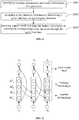
- The foregoing language model may be a deep learning neural network model or a recurrent neural network model. For example, a network model is shown in
FIG. 2 . Of course,FIG. 2 is only an example, and the language model is not limited in the present application. - In addition, the foregoing language model may be a language model established by deep learning or conditional random field (crf).
- Taking a language model established by deep learning as an example, each character or word of a sentence may be labeled correspondingly in a training process in which a sequence to sequence model may be used.
- Taking a long short-term memory (LSTM) language model as an example, a supervised corpus can be trained.
- For example, for "Li Si's travel record last week", last week->"time"; Li Si->"person's name"; travel->"behavior type"; record->"default".
- Then, this example is a piece of supervised labeled data. The LSTM language model can directly build a language model on corpus after word segmentation, or directly use word vectors to build a language model without word segmentation.
- The conditional random field method can use corpus after word segmentation to build a language model.
- In this embodiment, the entity information is identified by the language model, which can improve accuracy of the entity information and can further quickly identify the entity information.
- It should be noted that the present application is not limited to identifying entity information by language models, and other methods may also be used to identify entity information, such as identifying entity information of a query text by semantic recognition technology.
- Optionally, the time information includes at least one of time point information and time period information. The time point information is analyzed from time description information. The time period information is analyzed from the time description information according to the time point information. The time description information is time description information extracted from the query text.
- The foregoing analyzing time point information may including: analyzing according to a preset time granularity. The time granularity information may be as shown in Table 1:
Table 1 time granularity example hour X month x day x hour; x o'clock (hour) in the morning of x month x day half a day yesterday morning/the day before yesterday afternoon/tonight half a day x year x month x day (date) morning; x month x day (date) night day yesterday/the day before yesterday/today/tomorrow day x year x month x day (date); x month x day (date) day last x days; in the past x days; two days ago half a week first half week week last x weeks, in the past x weeks, last week, month x week x half a month first ten days of month x, middle ten days of a month month last x years, in the past x months, last month month X month, x year x month half a year first half of a year, second half of the year, first half of the year of 18 year in the year of 2019, in the year of 19, this year, last year - The foregoing time period information may be obtained in a way of determining a time point according to the foregoing time point information, and then determining specific time period information according to key words (such as to, until) of the time description information. The foregoing time period information may be analyzed according to a single time point, two time points of same type, or two time points of different types, etc., for example, as shown in the following Table 2.
Table 2 type single time point x month x day, last x days, last month two time points of same type May 2018 to January 2019 two time points of different types from late April to July, from the morning before yesterday to yesterday - The foregoing time description information may be time-related information extracted from the foregoing query text. For example, the time-related information may be extracted through a language model or a semantic analysis method, which is not limited.
- In this embodiment, since at least one of the time point information and the time period information can be analyzed, the accuracy of the time information can be improved, thereby improving the accuracy of the query result.
- Optionally, the time point information is obtained in the following manner:
- normalizing the time description information to obtain time normalization information;
- querying a time analysis rule matching the time normalization information;
- in case that there are multiple time analysis rules matching the time normalization information, using a preset conflict resolution strategy to select a target time analysis rule to analyze the time normalization information to obtain the time point information; in case that there is only one time analysis rule matching the time normalization information, using the time analysis rule to analyze the time normalization information to obtain the time point information.
- The normalizing the time description information to obtain time normalization information, may include: normalizing time information into time information of a same type; for example, normalizing time information in the capital form of a Chinese numeral into digital time information.
- In this embodiment, multiple time analysis rules may be pre-configured, for example, time analysis rules of different time granularities. Of course, multiple time analysis rules may also be configured with the same time granularity, which is not limited. In addition, types of time point information analyzed with different time analysis rules may be different. For example, year, month, day and hour may be analyzed out according to one time analysis rule, while month, day and hour may be analyzed out according to another time analysis rule.
- The querying a time analysis rule matching the time normalization information, may include: querying a time analysis rule capable of analyzing the foregoing time normalization information, from multiple pre-configured time analysis rules.
- In case that there are multiple time analysis rules matching the time normalization information, the using a preset conflict resolution strategy to select a target time analysis rule to analyze the time normalization information, may include: selecting a time analysis rule with a smallest analysis time granularity, from the multiple time analysis rules, as the target time analysis rule. Of course, the present application is not limited thereto. For example, a time analysis rule with a second smallest analysis time granularity may be selected as the target time analysis rule. Specifically, the foregoing conflict resolution strategy may be pre-configured.
- In this embodiment, by using the conflict resolution strategy to select the target time analysis rule to analyze the time normalization information, the problem of inaccurate time information caused by time information conflict can be solved.
- For example, as shown in
FIG. 3 , the time point information and the time period information may be used to obtain accurate time information through processes of time description extraction, normalization, rule matching, conflict resolution, analyzing time point and analyzing time period. - Further, in this embodiment, since the time description information is normalized, the accuracy of analyzing time information can be improved.
- As an optional embodiment, the foregoing intention information includes multi-level intention information. The query interface is a query interface for querying a target intention indicated by target intention information. The target intention information is first-level intention information in the multi-level intention information.
- The querying a query result matching the feature information in information corresponding to the intention through the query interface, may include:
through the query interface, querying the query result matching the feature information in target type information corresponding to the target intention; where an information type of the target type information matches intention represented by other intention information, the target type information is information corresponding to the target intention, and the other intention information is intention information other than the target intention information in the multi-level intention information. - The foregoing multi-level intention information indicates intention of identifying a query text and specific conditions. In addition, the foregoing multi-level intention information may include three-level intention information, which includes, for example:
- first-level intention type: people, object, records, etc.;
- second-level intention type: social background, association relationship, etc.;
- three-level intention type: travel, accommodation, etc.
- The foregoing target intention information may be three-level intention information, such as travel, accommodation, weather and other intentions.
- Further, different levels of intention information may be identified in the same or different ways. For example, the first-level intention information may be identified by a language model, such as the svm/lstm language model, and the second-level or/third-level intention information may be identified by keyword regular matching. Of course, the present application is not limited thereto.
- Taking the foregoing target intention information as travel, and other intention information including people and social background as an example, in this way, information, of which the information type is people and which is related to social background, can be queried in information corresponding to the travel.
- In this embodiment, the query interface may be an internal interface. The internal interface may be defined in some rule files, such as drools or other rule files.
- In case that the type of the foregoing target intention information (for example, three-level intention information) satisfies a certain condition, the corresponding internal interface is triggered, and then an automatic call is completed to query the corresponding query result.
- In this embodiment, due to the multi-level intention information, it is only needed to query corresponding type information during query, thereby further improving the efficiency of text query.
- A "travel" type query rule is defined in the following. In case that a query text satisfies that a first type intention is people and a third type intention is to travel, then a specified internal api is executed. A query element includes results of entity identification and time analysis. In this way, an interface corresponding to the travel intention is called; through the interface, a query result, of which a type matches people and which matches the feature information, is searched in information corresponding to the travel.
- In addition, in case that multiple query interfaces are triggered and executed at the same time, priorities may be specified by setting attributes (for example, salience attribute).
- In the present application, through the foregoing method, the query result matching the feature information can be directly searched through a query result corresponding to the intention, thereby improving an efficiency of text query.
- Referring to
FIG. 4, FIG. 4 is a structural diagram of a text query apparatus provided in the present application. As shown inFIG. 4 , atext query apparatus 400 includes: - an
identification module 401 configured to identify intention information and feature information of a query text, where the intention information is used to indicate intention of the query text; - a determining
module 402 configured to determine a query interface for querying the intention according to the intention information; - a
query module 403 configured to query a query result matching the feature information in information corresponding to the intention through the query interface. - Optionally, the feature information includes at least one of the following:
entity information and time information. - Optionally, the entity information is entity information of the query text identified through a language model; and/or,
the time information includes at least one of time point information and time period information. The time point information is analyzed from time description information. The time period information is analyzed from the time description information according to the time point information. The time description information is time description information extracted from the query text. - Optionally, the time point information is obtained in the following manner:
- normalizing the time description information to obtain time normalization information;
- querying a time analysis rule matching the time normalization information;
- in case that there are multiple time analysis rules matching the time normalization information, using a preset conflict resolution strategy to select a target time analysis rule to analyze the time normalization information to obtain the time point information; in case that there is only one time analysis rule matching the time normalization information, using the time analysis rule to analyze the time normalization information to obtain the time point information.
- Optionally, the intention information includes multi-level intention information. The query interface is a query interface for querying a target intention indicated by target intention information. The target intention information is first-level intention information in the multi-level intention information.
- The
query module 403 is configured to, through the query interface, query the query result matching the feature information in target type information corresponding to the target intention; where an information type of the target type information matches intention represented by other intention information, the target type information is information corresponding to the target intention, and the other intention information is intention information other than the target intention information in the multi-level intention information. - The apparatus provided in this embodiment can implement each process implemented in the method embodiment of the present application, and can achieve the same beneficial effects. To avoid repetition, details are not repeated here.
- According to the embodiments of the present application, the present application further provides an electronic device and a readable storage medium.
-
FIG. 5 is a block diagram of an electronic device of a text query method according to an embodiment of the present application. The electronic device is intended to represent various forms of digital computers, such as laptop computers, desktop computers, workstations, personal digital assistants, servers, blade servers, mainframe computers, and other suitable computers. The electronic device may also represent various forms of mobile devices, such as personal digital processing, cellular telephones, smart phones, wearable devices, and other similar computing devices. The components shown herein, their connections and relationships, and their functions are by way of example only and are not intended to limit the implementations of the present application described and/or claimed herein. - As shown in
FIG. 5 , the electronic device includes: one ormore processors 501, amemory 502, and interfaces for connecting various components, including highspeed interfaces and low-speed interfaces. The various components are interconnected using different buses and may be mounted on a common motherboard or otherwise as desired. The processor may process instructions for execution within the electronic device, including instructions stored in the memory or on the memory to display graphical information of a Graphical User Interface (GUI) on an external input/output device, such as a display device coupled to the interface. In other embodiments, multiple processors and/or multiple buses and multiple memories may be used with multiple memories if desired. Similarly, multiple electronic devices may be connected, each providing part of the necessary operations (e.g., as an array of servers, a set of blade servers, or a multiprocessor system). InFIG. 5 , oneprocessor 501 is taken as an example. - The
memory 502 is a non-transitory computer-readable storage medium provided herein. The memory stores instructions executable by at least one processor to enable the at least one processor to implement the text query method provided herein. The non-transitory computer-readable storage medium of the present application stores computer instructions for enabling a computer to implement the text query method provided herein. - The
memory 502, as a non-transitory computer-readable storage medium, may be used to store non-transitory software programs, non-transitory computer-executable programs, and modules, such as program instructions/modules (e.g., theidentification module 401, the determiningmodule 402 and thequery module 403 shown inFIG. 5 ) corresponding to the text query method of embodiments of the present application. Theprocessor 501 executes various functional applications of the server and data processing, i.e., a text query method in the above-mentioned method embodiment, by operating non-transitory software programs, instructions, and modules stored in thememory 502. - The
memory 502 may include a program storage area and a data storage area, wherein the program storage area may store an application program required by an operating system and at least one function; the data storage area may store data created according to the use of the electronic device of the text query method, etc. In addition, thememory 502 may include a high speed random access memory, and may also include a non-transitory memory, such as at least one magnetic disk storage device, a flash memory device, or other non-transitory solid state memory device. In some embodiments, thememory 502 may optionally include memories remotely located with respect toprocessor 501, which may be connected via a network to the electronic device of the text query method. Examples of such networks include, but are not limited to, the Internet, intranet, local area networks, mobile communication networks, and combinations thereof. - The electronic device of the text query method may further include: an
input device 503 and anoutput device 504. Theprocessor 501, thememory 502, theinput device 503, and theoutput device 504 may be connected via a bus or otherwise.FIG. 5 takes a bus connection as an example. - The
input device 503 may receive input numeric or character information and generate key signal inputs related to user settings and functional controls of the electronic device of the text query method, such as input devices including touch screens, keypads, mice, track pads, touch pads, pointing sticks, one or more mouse buttons, trackballs, joysticks, etc. Theoutput device 504 may include display devices, auxiliary lighting devices (e.g., LEDs), tactile feedback devices (e.g., vibration motors), and the like. The display device may include, but is not limited to, a Liquid Crystal Display (LCD), a Light Emitting Diode (LED) display, and a plasma display. In some embodiments, the display device may be a touch screen. - Various embodiments of the systems and techniques described herein may be implemented in digital electronic circuit systems, integrated circuit systems, Application Specific Integrated Circuits (ASICs), computer hardware, firmware, software, and/or combinations thereof. These various embodiments may include: implementation in one or more computer programs which can be executed and/or interpreted on a programmable system including at least one programmable processor, and the programmable processor may be a dedicated or general-purpose programmable processor which can receive data and instructions from, and transmit data and instructions to, a memory system, at least one input device, and at least one output device.
- These computing programs (also referred to as programs, software, software applications, or codes) include machine instructions of a programmable processor, and may be implemented using high-level procedural and/or object-oriented programming languages, and/or assembly/machine languages. As used herein, the terms "machine-readable medium" and "computer-readable medium" refer to any computer program product, device, and/or apparatus (e.g., magnetic disk, optical disk, memory, programmable logic device (PLD)) for providing machine instructions and/or data to a programmable processor, including a machine-readable medium that receives machine instructions as machine-readable signals. The term "machine-readable signal" refers to any signal used to provide machine instructions and/or data to a programmable processor.
- To provide for interaction with a user, the systems and techniques described herein may be implemented on a computer having: a display device (e.g., a Cathode Ray Tube (CRT) or Liquid Crystal Display (LCD) monitor) for displaying information to a user; and a keyboard and a pointing device (e.g., a mouse or a trackball) by which a user can provide input to the computer. Other types of devices may also be used to provide interaction with a user; for example, the feedback provided to the user may be any form of sensory feedback (e.g., visual feedback, audile feedback, or tactile feedback); and input from the user may be received in any form, including acoustic input, audio input, or tactile input.
- The systems and techniques described herein may be implemented in a computing system that includes a background component (e.g., as a data server), or a computing system that includes a middleware component (e.g., an application server), or a computing system that includes a front-end component (e.g., a user computer having a graphical user interface or a web browser through which a user may interact with embodiments of the systems and techniques described herein), or in a computing system that includes any combination of such background component, middleware component, or front-end component. The components of the system may be interconnected by digital data communication (e.g., a communication network) of any form or medium. Examples of the communication network include: Local Area Networks (LANs), Wide Area Networks (WANs), and the Internet.
- The computer system may include a client and a server. The client and the server are typically remote from each other and typically interact through a communication network. A relationship between the client and the server is generated by computer programs operating on respective computers and having a client-server relationship with each other.
- According to the technical solution of the embodiment of the application, the query result matching the feature information can be directly searched through a query result corresponding to the intention, thereby improving an efficiency of text query.
- It will be appreciated that the various forms of flow, reordering, adding or removing steps shown above may be used. For example, the steps recited in the present application may be performed in parallel or sequentially or may be performed in a different order, so long as the desired results of the technical solutions disclosed in the present application can be achieved, and no limitation is made herein.
- The above-mentioned embodiments are not to be construed as limiting the scope of the present application. It will be apparent to a person skilled in the art that various modifications, combinations, sub-combinations and substitutions are possible, depending on design requirements and other factors. Any modifications, equivalents, and improvements within the spirit and principles of this application are intended to be included within the scope of the present application.
Claims (13)
- A text query method, comprising:identifying (S101) intention information and feature information of a query text, wherein the intention information is used to indicate intention of the query text;according to the intention information, determining (S102) a query interface for querying the intention; andquerying (S103) a query result matching the feature information in information corresponding to the intention through the query interface.
- The method according to claim 1, wherein the feature information comprises at least one of the following: entity information and time information.
- The method according to claim 2, wherein the entity information is entity information of the query text identified through a language model; and/or,
the time information comprises at least one of time point information and time period information; the time point information is analyzed from time description information; the time period information is analyzed from the time description information according to the time point information; and the time description information is time description information extracted from the query text. - The method according to claim 3, wherein the time point information is obtained in the following manner:normalizing the time description information to obtain time normalization information;querying a time analysis rule matching the time normalization information;in case that there are multiple time analysis rules matching the time normalization information, using a preset conflict resolution strategy to select a target time analysis rule to analyze the time normalization information to obtain the time point information; in case that there is only one time analysis rule matching the time normalization information, using the time analysis rule to analyze the time normalization information to obtain the time point information.
- The method according to any one of claims 1 to 4, wherein the intention information comprises multi-level intention information; the query interface is a query interface for querying a target intention indicated by target intention information; the target intention information is first-level intention information in the multi-level intention information;
wherein the querying a query result matching the feature information in information corresponding to the intention through the query interface, comprises:
through the query interface, querying the query result matching the feature information in target type information corresponding to the target intention; wherein an information type of the target type information matches intention represented by other intention information, the target type information is information corresponding to the target intention, and the other intention information is intention information other than the target intention information in the multi-level intention information. - A text query apparatus (400), comprising:an identification module (401) configured to identify intention information and feature information of a query text, wherein the intention information is used to indicate intention of the query text;a determining module (402) configured to determine a query interface for querying the intention according to the intention information; anda query module (403) configured to query a query result matching the feature information in information corresponding to the intention through the query interface.
- The apparatus (400) according to claim 6, wherein the feature information comprises at least one of the following: entity information and time information.
- The apparatus (400) according to claim 7, wherein the entity information is entity information of the query text identified through a language model; and/or,
the time information comprises at least one of time point information and time period information; the time point information is analyzed from time description information; the time period information is analyzed from the time description information according to the time point information; and the time description information is time description information extracted from the query text. - The apparatus (400) according to claim 8, wherein the time point information is obtained in the following manner:normalizing the time description information to obtain time normalization information;querying a time analysis rule matching the time normalization information;in case that there are multiple time analysis rules matching the time normalization information, using a preset conflict resolution strategy to select a target time analysis rule to analyze the time normalization information to obtain the time point information; in case that there is only one time analysis rule matching the time normalization information, using the time analysis rule to analyze the time normalization information to obtain the time point information.
- The apparatus (400) according to any one of claims 6 to 9, wherein the intention information comprises multi-level intention information; the query interface is a query interface for querying a target intention indicated by target intention information; the target intention information is first-level intention information in the multi-level intention information;
wherein the query module is configured to, through the query interface, query the query result matching the feature information in target type information corresponding to the target intention; wherein an information type of the target type information matches intention represented by other intention information, the target type information is information corresponding to the target intention, and the other intention information is intention information other than the target intention information in the multi-level intention information. - An electronic device, comprising:at least one processor (501); anda memory (502) communicatively connected to the at least one processor (501); wherein,the memory (502) stores instructions executable by the at least one processor (501) to enable the at least one processor (501) to implement the method of any one of claims 1 to 5.
- A non-transitory computer-readable storage medium storing computer instructions for causing the computer to perform the method of any one of claims 1 to 5.
- A computer program product, comprising a computer program that, when executed by a computer, causes the computer to implement the method according to any one of claims 1 to 5.
Applications Claiming Priority (1)
| Application Number | Priority Date | Filing Date | Title |
|---|---|---|---|
| CN202010343782.4A CN111538815B (en) | 2020-04-27 | 2020-04-27 | A text query method, device, equipment and storage medium |
Publications (2)
| Publication Number | Publication Date |
|---|---|
| EP3832486A2 true EP3832486A2 (en) | 2021-06-09 |
| EP3832486A3 EP3832486A3 (en) | 2021-10-06 |
Family
ID=71977348
Family Applications (1)
| Application Number | Title | Priority Date | Filing Date |
|---|---|---|---|
| EP21164204.6A Ceased EP3832486A3 (en) | 2020-04-27 | 2021-03-23 | Text query method and apparatus, device and storage medium |
Country Status (5)
| Country | Link |
|---|---|
| US (1) | US20210209112A1 (en) |
| EP (1) | EP3832486A3 (en) |
| JP (1) | JP7163440B2 (en) |
| KR (1) | KR20210038471A (en) |
| CN (1) | CN111538815B (en) |
Families Citing this family (10)
| Publication number | Priority date | Publication date | Assignee | Title |
|---|---|---|---|---|
| CN114090798A (en) * | 2021-11-12 | 2022-02-25 | 盐城金堤科技有限公司 | Text duplicate removal method and device, computer storage medium and electronic equipment |
| CN114065049B (en) * | 2021-11-25 | 2025-09-05 | 中国建设银行股份有限公司 | Resource recommendation method, device, equipment and storage medium |
| CN114676689A (en) * | 2022-03-09 | 2022-06-28 | 青岛海尔科技有限公司 | Sentence text recognition method and device, storage medium and electronic device |
| CN114610914B (en) * | 2022-03-11 | 2024-08-13 | 北京百度网讯科技有限公司 | Information processing method, device and electronic equipment |
| CN115563246B (en) * | 2022-09-29 | 2026-04-03 | 招商局金融科技有限公司 | Intelligent methods, devices, equipment, and storage media for finding missing persons based on intent recognition |
| CN116150316A (en) * | 2022-09-30 | 2023-05-23 | 马上消费金融股份有限公司 | Work order data processing method, device, electronic device and storage medium |
| CN116150409B (en) * | 2023-04-10 | 2023-06-23 | 中科雨辰科技有限公司 | Text time sequence acquisition method, electronic equipment and storage medium |
| CN117290476A (en) * | 2023-09-13 | 2023-12-26 | 支付宝(杭州)信息技术有限公司 | A problem query method, device, equipment and medium |
| CN117370493A (en) * | 2023-09-22 | 2024-01-09 | 中国司法大数据研究院有限公司 | Intelligent interaction method and device for system based on large language model |
| CN117093696B (en) * | 2023-10-16 | 2024-02-02 | 浙江同花顺智能科技有限公司 | A question text generation method, device, equipment and medium for a large language model |
Family Cites Families (14)
| Publication number | Priority date | Publication date | Assignee | Title |
|---|---|---|---|---|
| US20090187467A1 (en) * | 2008-01-23 | 2009-07-23 | Palo Alto Research Center Incorporated | Linguistic extraction of temporal and location information for a recommender system |
| JP4668332B2 (en) * | 2009-05-28 | 2011-04-13 | インターナショナル・ビジネス・マシーンズ・コーポレーション | Schedule adjustment support apparatus, method, and program |
| CN103369520B (en) * | 2012-03-27 | 2016-12-14 | 百度在线网络技术(北京)有限公司 | The intention anticipation system and method for the application program questionable conduct of mobile terminal |
| CN105122240A (en) * | 2013-03-14 | 2015-12-02 | 微软技术许可有限责任公司 | Query intent expression for search in an embedded application context |
| CN103440242A (en) * | 2013-06-26 | 2013-12-11 | 北京亿赞普网络技术有限公司 | User search behavior-based personalized recommendation method and system |
| US9892208B2 (en) * | 2014-04-02 | 2018-02-13 | Microsoft Technology Licensing, Llc | Entity and attribute resolution in conversational applications |
| US10579652B2 (en) * | 2014-06-17 | 2020-03-03 | Microsoft Technology Licensing, Llc | Learning and using contextual content retrieval rules for query disambiguation |
| US10686738B2 (en) * | 2015-07-24 | 2020-06-16 | Facebook, Inc. | Providing personal assistant service via messaging |
| US10210201B2 (en) * | 2016-05-13 | 2019-02-19 | TCL Research America Inc. | Method and system for App page recommendation via inference of implicit intent in a user query |
| JP7020100B2 (en) * | 2017-12-19 | 2022-02-16 | 日本電気株式会社 | Information processing equipment, hazard map generation method and program |
| US20190294731A1 (en) * | 2018-03-26 | 2019-09-26 | Microsoft Technology Licensing, Llc | Search query dispatcher using machine learning |
| DK201870358A1 (en) * | 2018-06-03 | 2020-01-03 | Apple Inc. | Accelerated task performance |
| CN110008413B (en) * | 2019-03-14 | 2023-11-10 | 海信集团有限公司 | Traffic travel problem query method and device |
| CN110795528B (en) * | 2019-09-05 | 2023-10-13 | 腾讯科技(深圳)有限公司 | A data query method, device, electronic equipment and storage medium |
-
2020
- 2020-04-27 CN CN202010343782.4A patent/CN111538815B/en active Active
-
2021
- 2021-03-18 JP JP2021044383A patent/JP7163440B2/en active Active
- 2021-03-19 KR KR1020210035691A patent/KR20210038471A/en not_active Withdrawn
- 2021-03-19 US US17/206,697 patent/US20210209112A1/en not_active Abandoned
- 2021-03-23 EP EP21164204.6A patent/EP3832486A3/en not_active Ceased
Also Published As
| Publication number | Publication date |
|---|---|
| CN111538815A (en) | 2020-08-14 |
| US20210209112A1 (en) | 2021-07-08 |
| CN111538815B (en) | 2023-09-22 |
| JP7163440B2 (en) | 2022-10-31 |
| EP3832486A3 (en) | 2021-10-06 |
| KR20210038471A (en) | 2021-04-07 |
| JP2021099881A (en) | 2021-07-01 |
Similar Documents
| Publication | Publication Date | Title |
|---|---|---|
| US20210209112A1 (en) | Text query method and apparatus, device and storage medium | |
| US12518177B2 (en) | Method, apparatus, device and storage medium for constructing knowledge graph | |
| US12340288B2 (en) | Method of training classification model, method of classifying sample, and device | |
| CN112507715B (en) | Methods, devices, equipment and storage media for determining association relationships between entities | |
| CN111221983B (en) | Time sequence knowledge graph generation method, device, equipment and medium | |
| US20220129448A1 (en) | Intelligent dialogue method and apparatus, and storage medium | |
| CN111104514B (en) | Training method and device for document labeling model | |
| US12353835B2 (en) | Model training method and method for human-machine interaction | |
| US10558754B2 (en) | Method and system for automating training of named entity recognition in natural language processing | |
| CN111967262A (en) | Method and device for determining entity tag | |
| CN112560912A (en) | Method and device for training classification model, electronic equipment and storage medium | |
| US20210200813A1 (en) | Human-machine interaction method, electronic device, and storage medium | |
| CN111625635A (en) | Question answering processing, language model training method, apparatus, equipment and storage medium | |
| CN112541076A (en) | Method and device for generating extended corpus of target field and electronic equipment | |
| CN111611468B (en) | Page interaction method and device and electronic equipment | |
| CN112579750B (en) | Similar medical record retrieval method, device, equipment and storage medium | |
| CN111831814A (en) | Pre-training method, apparatus, electronic device and storage medium for abstract generation model | |
| CN114595686B (en) | Knowledge extraction method, and training method and device of knowledge extraction model | |
| US11704326B2 (en) | Generalization processing method, apparatus, device and computer storage medium | |
| CN111539209B (en) | Method and apparatus for entity classification | |
| CN111460289A (en) | News information pushing method and device | |
| US20210216713A1 (en) | Method, apparatus, device and storage medium for intelligent response | |
| CN111460296B (en) | Method and apparatus for updating event sets | |
| CN111310058B (en) | Information theme recommendation method, device, terminal and storage medium | |
| CN111241302B (en) | Position information map generation method, device, equipment and medium |
Legal Events
| Date | Code | Title | Description |
|---|---|---|---|
| PUAI | Public reference made under article 153(3) epc to a published international application that has entered the european phase |
Free format text: ORIGINAL CODE: 0009012 |
|
| STAA | Information on the status of an ep patent application or granted ep patent |
Free format text: STATUS: REQUEST FOR EXAMINATION WAS MADE |
|
| 17P | Request for examination filed |
Effective date: 20210323 |
|
| AK | Designated contracting states |
Kind code of ref document: A2 Designated state(s): AL AT BE BG CH CY CZ DE DK EE ES FI FR GB GR HR HU IE IS IT LI LT LU LV MC MK MT NL NO PL PT RO RS SE SI SK SM TR |
|
| REG | Reference to a national code |
Ref country code: DE Ref legal event code: R079 Free format text: PREVIOUS MAIN CLASS: G06F0016332000 Ipc: G06F0016903200 |
|
| PUAL | Search report despatched |
Free format text: ORIGINAL CODE: 0009013 |
|
| AK | Designated contracting states |
Kind code of ref document: A3 Designated state(s): AL AT BE BG CH CY CZ DE DK EE ES FI FR GB GR HR HU IE IS IT LI LT LU LV MC MK MT NL NO PL PT RO RS SE SI SK SM TR |
|
| RIC1 | Information provided on ipc code assigned before grant |
Ipc: G06F 16/33 20190101ALI20210902BHEP Ipc: G06F 16/332 20190101ALI20210902BHEP Ipc: G06F 16/9032 20190101AFI20210902BHEP |
|
| STAA | Information on the status of an ep patent application or granted ep patent |
Free format text: STATUS: EXAMINATION IS IN PROGRESS |
|
| 17Q | First examination report despatched |
Effective date: 20220608 |
|
| STAA | Information on the status of an ep patent application or granted ep patent |
Free format text: STATUS: THE APPLICATION HAS BEEN REFUSED |
|
| 18R | Application refused |
Effective date: 20230522 |