EP3832424A1 - Method of operating an actuator system, actuator system, and aircraft comprising said method and system - Google Patents
Method of operating an actuator system, actuator system, and aircraft comprising said method and system Download PDFInfo
- Publication number
- EP3832424A1 EP3832424A1 EP19212935.1A EP19212935A EP3832424A1 EP 3832424 A1 EP3832424 A1 EP 3832424A1 EP 19212935 A EP19212935 A EP 19212935A EP 3832424 A1 EP3832424 A1 EP 3832424A1
- Authority
- EP
- European Patent Office
- Prior art keywords
- actuators
- actuator
- determining
- deviation
- sub
- Prior art date
- Legal status (The legal status is an assumption and is not a legal conclusion. Google has not performed a legal analysis and makes no representation as to the accuracy of the status listed.)
- Granted
Links
Images


Classifications
-
- G—PHYSICS
- G05—CONTROLLING; REGULATING
- G05B—CONTROL OR REGULATING SYSTEMS IN GENERAL; FUNCTIONAL ELEMENTS OF SUCH SYSTEMS; MONITORING OR TESTING ARRANGEMENTS FOR SUCH SYSTEMS OR ELEMENTS
- G05B13/00—Adaptive control systems, i.e. systems automatically adjusting themselves to have a performance which is optimum according to some preassigned criterion
- G05B13/02—Adaptive control systems, i.e. systems automatically adjusting themselves to have a performance which is optimum according to some preassigned criterion electric
- G05B13/04—Adaptive control systems, i.e. systems automatically adjusting themselves to have a performance which is optimum according to some preassigned criterion electric involving the use of models or simulators
- G05B13/042—Adaptive control systems, i.e. systems automatically adjusting themselves to have a performance which is optimum according to some preassigned criterion electric involving the use of models or simulators in which a parameter or coefficient is automatically adjusted to optimise the performance
-
- G—PHYSICS
- G05—CONTROLLING; REGULATING
- G05D—SYSTEMS FOR CONTROLLING OR REGULATING NON-ELECTRIC VARIABLES
- G05D1/00—Control of position, course, altitude or attitude of land, water, air or space vehicles, e.g. using automatic pilots
- G05D1/08—Control of attitude, i.e. control of roll, pitch, or yaw
- G05D1/0808—Control of attitude, i.e. control of roll, pitch, or yaw specially adapted for aircraft
- G05D1/0858—Control of attitude, i.e. control of roll, pitch, or yaw specially adapted for aircraft specially adapted for vertical take-off of aircraft
-
- B—PERFORMING OPERATIONS; TRANSPORTING
- B64—AIRCRAFT; AVIATION; COSMONAUTICS
- B64C—AEROPLANES; HELICOPTERS
- B64C19/00—Aircraft control not otherwise provided for
-
- B—PERFORMING OPERATIONS; TRANSPORTING
- B64—AIRCRAFT; AVIATION; COSMONAUTICS
- B64C—AEROPLANES; HELICOPTERS
- B64C29/00—Aircraft capable of landing or taking-off vertically, e.g. vertical take-off and landing [VTOL] aircraft
- B64C29/0008—Aircraft capable of landing or taking-off vertically, e.g. vertical take-off and landing [VTOL] aircraft having its flight directional axis horizontal when grounded
- B64C29/0016—Aircraft capable of landing or taking-off vertically, e.g. vertical take-off and landing [VTOL] aircraft having its flight directional axis horizontal when grounded the lift during taking-off being created by free or ducted propellers or by blowers
- B64C29/0025—Aircraft capable of landing or taking-off vertically, e.g. vertical take-off and landing [VTOL] aircraft having its flight directional axis horizontal when grounded the lift during taking-off being created by free or ducted propellers or by blowers the propellers being fixed relative to the fuselage
-
- B—PERFORMING OPERATIONS; TRANSPORTING
- B64—AIRCRAFT; AVIATION; COSMONAUTICS
- B64D—EQUIPMENT FOR FITTING IN OR TO AIRCRAFT; FLIGHT SUITS; PARACHUTES; ARRANGEMENT OR MOUNTING OF POWER PLANTS OR PROPULSION TRANSMISSIONS IN AIRCRAFT
- B64D31/00—Power plant control systems; Arrangement of power plant control systems in aircraft
- B64D31/02—Initiating means
- B64D31/06—Initiating means actuated automatically
-
- H—ELECTRICITY
- H02—GENERATION; CONVERSION OR DISTRIBUTION OF ELECTRIC POWER
- H02P—CONTROL OR REGULATION OF ELECTRIC MOTORS, ELECTRIC GENERATORS OR DYNAMO-ELECTRIC CONVERTERS; CONTROLLING TRANSFORMERS, REACTORS OR CHOKE COILS
- H02P5/00—Arrangements specially adapted for regulating or controlling the speed or torque of two or more electric motors
Definitions
- the invention relates to a method of operating an actuator system comprising a number k, k ⁇ N , of actuators, in particular individual propulsions units of an MAV-VTOL aircraft, according to claim 1.
- the invention also relates to an actuator system comprising a number k, k ⁇ N , of actuators, in particular individual propulsions units of an MAV-VTOL aircraft, according to claim 10.
- the invention further relates to an aircraft in the form of a multiactuator aerial vehicle, MAV, with vertical take-off and landing, VTOL, capacity comprising a plurality of k, k ⁇ N , actuators in the form of propulsion units for moving the aircraft and comprising a flight control unit for controlling the actuators, according to claim 12.
- MAV multiactuator aerial vehicle
- VTOL vertical take-off and landing
- actuator systems e.g. aircraft in the form of multiactuator aerial vehicles (MAVs)
- MAVs multiactuator aerial vehicles
- a given task can be allocated in different ways/portions to the different actuators, which may be devised as individual propulsion units of the MAV.
- One way to do this has been described in German application DE 10 2019 101 903.6 , filed by the present applicant.
- an allocation algorithm is implemented to find a solution to a given task while minimizing the squared sum (L-2 norm) of all actuator commands (for energy efficiency).
- a multiactuator aerial vehicle MAV
- VTOL vertical take-off and landing
- capacity comprising a plurality of k, k ⁇ N
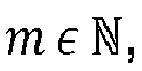
- actuators in the form of propulsion units for moving the aircraft and comprising a flight control unit for controlling the actuators with a desired control command u p ⁇ R m , m ⁇ N , which desired control command is allocated, by said flight control unit, to real actuator commands u ⁇ R k , k ⁇ N , by using a weighted allocation matrix D(W), from an equation u D -1 (W)u p , wherein D -1 ( W ) is an inverse of the weighted allocation matrix, and wherein the real actuator commands u are applied, by the control unit, to the actuators, the flight control unit is adapted to implement
- Multiactuator Aerial Vehicles are flying platforms, the lift and all other motion capabilities of which are accomplished owing to an actuator system (comprising a plurality of propulsion units) distributed onboard.
- VTOL-MAVs Very Take-off and Landing (VTOL)-MAVs are flying platforms which can take-off and land in hover condition with almost or exactly zero horizontal velocity.
- overly determined MAVs are flying platforms which have a redundant number of actuators for completing a certain task.
- under-actuated MAVs are flying platforms which cannot perform all motion tasks in their operation space (e.g. 3D, i.e., 3 translations and 3 rotations) with all dimensions being independent (or decoupled) from each other.
- an off-the-shelf quadrotor VTOL (all actuators are facing upwards) is an under-actuated VTOL-MAV, because it needs to tilt (roll and/or pitch) in order to move horizontally (coupled dimensions). It can however perform vertical or yaw motion independently from each other. Notice that a quadrotor can control roll, pitch, yaw, vertical motion directly; hence four dimensions out of six (in 3D).
- an off-the-shelf octorotor VTOL (all actuators are facing upwards) is an overly determined under-actuated VTOL-MAV, because it performs the same tasks as a quadrotor, but with eight actuators.
- Volocopter® designed by the applicant with its 18 actuators also has to be considered as an overly determined, yet under-actuated VTOL-MAV.
- a tilt angle of the actuators w.r.t. the aircraft body has been neglected, i.e., the rotors are considered as being aligned in linearly dependent fashion (or with small tilt angles), e.g., they all (noticeably) face upwards.
- a feed-back control algorithm is used in the aircraft's flight control unit which computes the desired control values, e.g., for an under-actuated MAV-VTOL the desired roll, pitch, yaw torques (unit: Nm) and thrust (unit: N).
- desired control values e.g., for an under-actuated MAV-VTOL the desired roll, pitch, yaw torques (unit: Nm) and thrust (unit: N).
- u p ⁇ R m for m 4
- right subscript "p" stands for "pseudo command”.
- the desired pseudo command u p is allocated to the real actuator commands u ⁇ R k , where for an overly determined MAV-VTOL k > m.
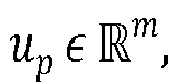
- the flight control unit can be connected to a sensor system of the aircraft for to determine said desired control command u p ⁇ R m , m ⁇ N , from a (feedback) control law.
- a common way of computing u from u p is using pseudo-inversion of an allocation matrix, which is denoted here by D and which may comprise the following information:
- a standard rotor or a propeller driven by, e.g., a brushless electric motor
- RPM or radian/second
- a relationship between the RPM and the generated forces and torques of a rotor can be defined as a function of the rotor's aerodynamic characteristics, e.g.
- the parameters p j ,q j , ⁇ j 1,2,3 can be identified from the aerodynamic characteristics of the rotor.
- the inverse of the allocation matrix is some sort of pseudo inverse. For overly determined systems, e.g., in the case of k > m, this inversion results in more than one solution.
- This makes sure that an energy-optimum solution has been found e.g., in case of u being the RPM of the rotors, the L-2 norm of u relates to a kinetic energy).
- the first two items mentioned above can be accomplished using standard methods, e.g. first one using a state feedback control and the second one via pseudo-inversion of the allocation matrix.
- Zero (0) weight implies "punishing" that individual actuator and excluding it from the solution, and weight One (1) means full involvement of that actuator in the solution.
- the actuators we propose weighting the actuators based on how far they diverge (individually) from a characterizing value u * in the form of a mean value of the all actuator commands.
- the mean value of the overall actuator commands is used as a "desired equilibrium", which implies looking for an allocation solution where the commands and the demanded power are (is) distributed equally between multiple actuators.
- This approach can be used to "punish" those actuators which require more power than the characterizing value u *, i.e., said mean value, by reducing their weight as their demand w.r.t. the mean demand increases further.
- this approach advantageously - does not require using any data from the actuators for implementing the method.
- the quality of the method could be improved if data from the actuators were available.
- the current measured actuator state can be used in order to validate the overuse of one or more actuators, or u and u * can be acquired from the sensor data of the actuators if available, instead of using the computed ones.
- the present method does not rely on such measurements, but it can be improved if actuator state data is available.
- weights are then used for solving the allocation problem in a following cycle of a control iteration performed by the (flight) control unit (see Figure 5 for a detailed description of the algorithm).
- a weight w i is computed if a corresponding deviation e i is greater than a given value, e.g., zero, i.e., e i > 0.
- a weight w i is reduced for an increasing value of the respective deviation e i .
- a low-pass filtered exponential weight function provides smoothness in this region, as well as in case of other artificial discrete jumps in the weight function due to, e.g., other if/else command in the algorithm. Hence a low-pass filtered exponential function is particularly recommended.
- Low-pass filters can also be used with other weighting functions as presented above.
- the weights w i ( e i ) are determined by using a weighting function, which weighting function preferably is
- said (flight) control unit is further adapted to implement any one of the further method steps described above as further embodiments of the inventive method.
- the propulsion units are electrically powered. Most preferably, they are devised as individual motor-propeller units.
- actuators can be devised as individual propulsion units of an aircraft 10, in particular an electrically powered MAV-VTOL, as shown in exemplary fashion.
- Some or all of the actuators 2 can comprise sensor means 3 for determining use parameters (temperature, power consumption, noise level, RPM, torque, etc. of a respective actuator, e.g., actuator 2.k.
- Actuators 2 are controlled by (flight) control unit 4 comprising algorithm means 4a, which determine actuator commands u ( u i ), i.e., a command vector with individual command components for each one of the actuators 2, from the desired command or pseudo command, which is denoted u p ⁇ u. Said actuator commands u ( u i ) are employed to control the actuators 2 in order to achieve a given task, e.g., a flight manoeuvre, with the overall actuator system 1 (aircraft 10).
- the sensor means 3 can be used to improve system performance by providing the control unit 4 with actuator feedback, as detailed above.
- the present invention proposes to use weights for individual actuators 2 when a desired control command u p ⁇ R m , m ⁇ N , for controlling the actuator system is allocated to real actuator commands u ⁇ R k . k ⁇ N .
- a weighting function can be used to determine the weights w i ( e i ), according to which weighting function a weight w i , 0 ⁇ w i ⁇ 1, is computed if a corresponding deviation e i is greater than zero, i.e., e i > 0.
- FIG. 2 shows a possible, sigmoid-like weight function with different parameters.
- e x denotes the Euler exponential and e i is the positive normalized error.
- e i is the positive normalized error.
- Low-passed filtered weighting functions can be preferred because they can smooth out a discontinuity in the weighting algorithm (if/else), thus enhancing smoothness around zero error which is important.
- a low-pass filtered exponential weight function as shown in Figure 4 provides smoothness in this region, as well as in case of other artificial discrete jumps in the weight function due to, e.g., other if/else commands in the algorithm.
- a low-pass filtered exponential function is particularly recommended.
- FIG. 5 shows an implementation of a weighting algorithm 4a (cf. Figure 1 ) for reduction of the maximum of the overall actuator commands (L-infinity) in an actuator system, as preferably used in the present invention.
- Step S1 is an initialization step. Initialization happens only once, while everything in box CL is in the control loop, i.e., these steps are performed repeatedly during actuator use.
- Initialized weight matrix w is then provided to allocation step S2, which calculates u from u p , as shown.
- u p is derived from a (feedback) control law as shown in generic form at S3.
- the mean command value u mean and the deviations e i are calculated.
Landscapes
- Engineering & Computer Science (AREA)
- Aviation & Aerospace Engineering (AREA)
- General Physics & Mathematics (AREA)
- Automation & Control Theory (AREA)
- Physics & Mathematics (AREA)
- Remote Sensing (AREA)
- Radar, Positioning & Navigation (AREA)
- Health & Medical Sciences (AREA)
- Artificial Intelligence (AREA)
- Computer Vision & Pattern Recognition (AREA)
- Evolutionary Computation (AREA)
- Medical Informatics (AREA)
- Software Systems (AREA)
- Power Engineering (AREA)
- Feedback Control In General (AREA)
Abstract
Description
- The invention relates to a method of operating an actuator system comprising a number k,
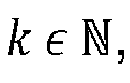
claim 1. - The invention also relates to an actuator system comprising a number k,

claim 10. - The invention further relates to an aircraft in the form of a multiactuator aerial vehicle, MAV, with vertical take-off and landing, VTOL, capacity comprising a plurality of k,

- In overly determined actuator systems, e.g. aircraft in the form of multiactuator aerial vehicles (MAVs), there are different possibilities to achieve given tasks, such as a given flight direction, by using allocation algorithms, which are performed by a (flight) control unit of the actuator system or aircraft. A given task can be allocated in different ways/portions to the different actuators, which may be devised as individual propulsion units of the MAV. One way to do this has been described in
German application DE 10 2019 101 903.6 , filed by the present applicant. Generally speaking, an allocation algorithm is implemented to find a solution to a given task while minimizing the squared sum (L-2 norm) of all actuator commands (for energy efficiency). - So far, no allocation method has been described in the prior art which considers minimizing the maximum power demand of all actuators. This is also referred to as the L-infinity norm of all actuators. Minimizing said L-infinity norm in the allocation results in better power distribution between multiple actuators in an overly determined system.
- It is the object of the present invention to provide a method, an actuator system and an aircraft comprising multiple actuators in the form of propulsion units which achieve better distribution of required actuator command power between the actuators while reducing a maximum required command power, thus positively affecting a possible design of the actuator system in terms of total energy consumption, cost, weight and/or size.
- The object is achieved by means of a method having the features of appended
claim 1, by means of an actuator system having the features of appendedclaim 10, and by means of an aircraft having the features of appended claim 12. - Advantageous further embodiments are defined in the dependent claims.
- According to a first aspect of the invention, a method of operating an actuator system comprising a number k,


- a) determining a characterizing value u* from the real actuator commands u;
- b) determining, at least for some of the actuators, preferably for all of the actuators, a deviation ei , i = 1, 2,..., k of a respective actuator command ui, i = 1, 2,..., k from said characterizing value u*;
- c) determining, at least for some of the actuators, preferably for all of the actuators, a weight wi, i = 1, 2,..., k for a given actuator as a function wi (ei), i = 1,2, ..., k of said deviation ei ; and
- d) using the weights wi for determining said weighted allocation matrix D(W).
- According to a second aspect of the invention, in an actuator system comprising a number k,

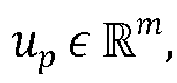

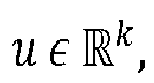

- a) determining a characterizing value u* from the real actuator commands u;
- b) determining, at least for some of the actuators, preferably for all of the actuators, a deviation ei , i = 1, 2, ..., k of a respective actuator command ui, i = 1, 2, ...,k from said characterizing value u*;
- c) determining, at least for some of the actuators, preferably for all of the actuators, a weight wi, i = 1, 2,..., k for a given actuator as a function wi (ei), i = 1, 2, ..., k of said deviation ei ; and
- d) using the weights wi for determining said weighted allocation matrix D(W).
- According to a third aspect of the invention, in an aircraft in the form of a multiactuator aerial vehicle, MAV, with vertical take-off and landing, VTOL, capacity comprising a plurality of k,


- a) determining a characterizing value u* from the real actuator commands u;
- b) determining, at least for some of the actuators, preferably for all of the actuators, a deviation ei , i = 1, 2, ..., k of a respective actuator command ui, i = 1, 2, ...,k from said characterizing value u*;
- c) determining, at least for some of the actuators, preferably for all of the actuators, a weight wi, i = 1, 2,..., k for a given actuator as a function wi (ei), i = 1, 2, ..., k of said deviation ei ; and
- d) using the weights wi for determining said weighted allocation matrix D(W).
- If an actuator system is overly determined, one can still minimize the L-2 norm of all actuators for minimizing the energy consumption in a weighted allocation algorithm while solving a given task. Weights of each actuator are assigned for minimizing the L-infinity norm of the actuator commands, such that the maximum control demand of all actuators is reduced.
- The basic physical and mathematical considerations underlying the present invention will now be explained in further detail:
Within the present description, "Multiactuator Aerial Vehicles (MAV)" are flying platforms, the lift and all other motion capabilities of which are accomplished owing to an actuator system (comprising a plurality of propulsion units) distributed onboard. - Within the present description, "Vertical Take-off and Landing (VTOL)-MAVs" are flying platforms which can take-off and land in hover condition with almost or exactly zero horizontal velocity.
- Within the present description, "overly determined MAVs" are flying platforms which have a redundant number of actuators for completing a certain task.
- Within the present description, "under-actuated MAVs" are flying platforms which cannot perform all motion tasks in their operation space (e.g. 3D, i.e., 3 translations and 3 rotations) with all dimensions being independent (or decoupled) from each other.
- For example, an off-the-shelf quadrotor VTOL (all actuators are facing upwards) is an under-actuated VTOL-MAV, because it needs to tilt (roll and/or pitch) in order to move horizontally (coupled dimensions). It can however perform vertical or yaw motion independently from each other. Notice that a quadrotor can control roll, pitch, yaw, vertical motion directly; hence four dimensions out of six (in 3D).
- For example, an off-the-shelf octorotor VTOL (all actuators are facing upwards) is an overly determined under-actuated VTOL-MAV, because it performs the same tasks as a quadrotor, but with eight actuators.
- For example, the Volocopter® designed by the applicant with its 18 actuators also has to be considered as an overly determined, yet under-actuated VTOL-MAV.
- Note: In the above-mentioned examples, a tilt angle of the actuators w.r.t. the aircraft body has been neglected, i.e., the rotors are considered as being aligned in linearly dependent fashion (or with small tilt angles), e.g., they all (noticeably) face upwards.
- For control of a MAV-VTOL, a feed-back control algorithm is used in the aircraft's flight control unit which computes the desired control values, e.g., for an under-actuated MAV-VTOL the desired roll, pitch, yaw torques (unit: Nm) and thrust (unit: N). Typically, all these four values are put in a vector called


- In a corresponding embodiment of the aircraft, the flight control unit can be connected to a sensor system of the aircraft for to determine said desired control command


- A common way of computing u from up is using pseudo-inversion of an allocation matrix, which is denoted here by D and which may comprise the following information:
- respective geometric locations (position and orientation) of the actuators w.r.t. the body-fixed frame of the MAV;
- physical capabilities of the actuators, e.g., the forces (N) and torques (Nm) they apply at their respective locations;
- a relationship between the physical capabilities (N, Nm) and the units of the actual commands, i.e. u.
- For example, a standard rotor (or a propeller driven by, e.g., a brushless electric motor), usually accepts RPM (or radian/second) commands since most off-the-shelf brushless electric motors are driven via speed commands (because tracking velocity commands are more robust). Hence a relationship between the RPM and the generated forces and torques of a rotor can be defined as a function of the rotor's aerodynamic characteristics, e.g.

- For control purposes, it is common to assume that p 3 = q 3 = 0.
- The aforementioned allocation matrix can be shown to be defined by:


- Since k ≠ m, the inverse of the allocation matrix is some sort of pseudo inverse. For overly determined systems, e.g., in the case of k > m, this inversion results in more than one solution.
- A usual way of approaching this problem is solving the pseudo inverse by optimizing some criteria, e.g., the Moore-Penrose inverse which minimizes the L-2 norm of u, that is

- However, minimizing the L-2 norm of the commanded actuator inputs does not guarantee that the supremum of all actuator commands is minimized as well.
- In the present description, the "supremum" of a set is the maximum of its all entities: sup(u) = max(u) and represents a particular characterizing value u*.
- Minimizing the supremum of all actuator commands can have great impact in design: if an equivalent solution could be found with a reduced sup(u), this would imply that less powerful actuators would be sufficient for accomplishing a given task. Note that since in general (e.g. MAVs with rotors) the power required by an actuator monotonically increases with the actuator command u, a reduction in sup(u) implies a reduced maximum power consumption for that actuator. Being able to use less powerful actuators has a direct effect on the cost and the weight of the overall actuator/aircraft system.
- In this disclosure, we propose a control allocation algorithm, which:
- ensures that desired up are provided,
- achieves an energy optimum (by minimization of the L-2 norm of u),
- reduces the maximum power demand, thus allowing design optimization (by minimization of the L-infinity norm of u).
- The first two items mentioned above can be accomplished using standard methods, e.g. first one using a state feedback control and the second one via pseudo-inversion of the allocation matrix. Moreover, in the context of the invention, we use a weighted inversion in the following form:


- Each actuator can be weighted differently, with values wi ranging between 0 and 1, i.e., wi ∈ [0,1], ∀ i = 1,2,...,k. Zero (0) weight implies "punishing" that individual actuator and excluding it from the solution, and weight One (1) means full involvement of that actuator in the solution.
- In an embodiment of the present invention, we propose weighting the actuators based on how far they diverge (individually) from a characterizing value u* in the form of a mean value of the all actuator commands. Hence, the mean value of the overall actuator commands is used as a "desired equilibrium", which implies looking for an allocation solution where the commands and the demanded power are (is) distributed equally between multiple actuators. This approach can be used to "punish" those actuators which require more power than the characterizing value u*, i.e., said mean value, by reducing their weight as their demand w.r.t. the mean demand increases further.
- Therefore, in a further embodiment of the method according to the invention, said characterizing value u* is a mean value of an entirety of the actuator commands u, i.e., u* = umeαn = mean(u).
- Notice that this assumes a direct connection between the actuator command and actuator demand, under the valid assumption that an actuator command increases monotonically with its demand (if the demand of an actuator increases, it shall be commanded with increasing command values to fulfil that demand). Hence, this approach - advantageously - does not require using any data from the actuators for implementing the method. However, the quality of the method could be improved if data from the actuators were available. In this case the current measured actuator state can be used in order to validate the overuse of one or more actuators, or u and u* can be acquired from the sensor data of the actuators if available, instead of using the computed ones. The present method does not rely on such measurements, but it can be improved if actuator state data is available.
- umeαn = mean(u) can be defined as the mean value of all actuator commands. A normalized error for each actuator, which takes into account a difference between its commanded value ui and said mean value, can be defined as ei =

Figure 5 for a detailed description of the algorithm). - As stated before, in a corresponding further embodiment of the method according to the invention, said deviation ei is a normalized deviation determined by

- In a further embodiment of the method according to the invention, a weight wi is computed if a corresponding deviation ei is greater than a given value, e.g., zero, i.e., ei > 0.
- In another embodiment of the method according to the invention, a weight wi is set to a default value, in particular wi = 1, if a corresponding deviation ei is equal to or smaller than a given value, e.g., zero, i.e., ei ≤ 0.
- In yet another embodiment of the method according to the invention, a weight wi is reduced for an increasing value of the respective deviation ei .
- In a preferred embodiment of the method according to the invention, the weights wi which have been determined at a given time are used to solve the equation u = D -1 (W)up during a subsequent iteration step of the method.
- Possible weighting functions are:
- a variety of sigmoid functions. See
Figure 2 for a sigmoid-like weighting function in the form of
- polynomial functions. See
Figure 3 for a comparison of a weighting polynomial
- Low-pass filtered exponential functions. See
Figure 4 for the exponentially decaying weighting function (solid line) as
- Notice that since there is a discontinuity in the weighting algorithm (if/else), smoothness around zero error is important. A low-pass filtered exponential weight function provides smoothness in this region, as well as in case of other artificial discrete jumps in the weight function due to, e.g., other if/else command in the algorithm. Hence a low-pass filtered exponential function is particularly recommended.
- Low-pass filters can also be used with other weighting functions as presented above.
- Accordingly, in a further embodiment of the method according to the invention, the weights wi (ei ) are determined by using a weighting function, which weighting function preferably is
- a) a sigmoid function, wi = 1 / ((1 + eα ( βei -1)), ex being the Euler exponential;
- b) a polynomial function, w i = ∑ jajei j; or
- c) an exponential function, 1-1/ei γ.
- In yet a further embodiment of the method according to the invention, the weighting function is low-pass filtered, preferably according to

- In further embodiments of the actuator system or the aircraft, said (flight) control unit is further adapted to implement any one of the further method steps described above as further embodiments of the inventive method.
- Preferably, in a further embodiment of the aircraft, the propulsion units are electrically powered. Most preferably, they are devised as individual motor-propeller units.
- With the proposed invention, there is an improved power distribution between actuators, which implies enhanced heat distribution and less over-usage of individual actuators, etc. Further, since maximum power is a direct design criterion for actuators, minimizing maximum actuator can directly affect the size and weight of the aircraft.
- Further characteristics and advantages of the invention will now be explained in connection with the appended drawings, wherein
-
Fig. 1 shows an actuator system according to the invention; -
Fig. 2 shows a sigmoid-like weight function with different parameters; -
Fig. 3 shows a polynomial weighting function compared to a sigmoid-like weighting function; -
Fig. 4 shows an exponentially decaying weighting function and its low-pass filtered version; and -
Fig. 5 shows an embodiment of the weighting algorithm. - In
Fig. 1 ,reference numeral 1 denotes an actuator system comprising a plurality ofactuators 2 denoted as a 2.i, i = 1,...,k;
aircraft 10, in particular an electrically powered MAV-VTOL, as shown in exemplary fashion. Some or all of theactuators 2 can comprise sensor means 3 for determining use parameters (temperature, power consumption, noise level, RPM, torque, etc. of a respective actuator, e.g., actuator 2.k.Actuators 2 are controlled by (flight)control unit 4 comprising algorithm means 4a, which determine actuator commands u (ui ), i.e., a command vector with individual command components for each one of theactuators 2, from the desired command or pseudo command, which is denoted up →u. Said actuator commands u (ui ) are employed to control theactuators 2 in order to achieve a given task, e.g., a flight manoeuvre, with the overall actuator system 1 (aircraft 10). - The sensor means 3 can be used to improve system performance by providing the
control unit 4 with actuator feedback, as detailed above. - The present invention proposes to use weights for
individual actuators 2 when a desired control command


actuators 2. Preferably, matrix W = W(wi ) comprises individual actuator weights wi which depend on a deviation ei which is a normalized deviation determined by
- A weighting function can be used to determine the weights wi (ei ), according to which weighting function a weight w i, 0 ≤ wi ≤ 1, is computed if a corresponding deviation ei is greater than zero, i.e., ei > 0.
- A weight wi can be set to a default value, in particular wi = 1, if a corresponding deviation ei is equal to or smaller than zero, i.e., ei ≤ 0. Furthermore, a weight wi is reduced for an increasing value of the respective deviation ei .
-
Figure 2 shows a possible, sigmoid-like weight function with different parameters. Analytical representation of the function is
-
Figure 3 shows a possible, polynomial weighting function (solid line) wi = 1 - 3ei 2 + 2ei 3 (with shallower slope) and a sigmoid-like weighting function (dashed line, steeper slope)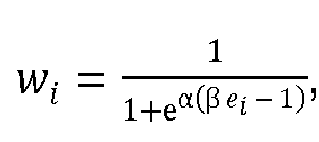
-
Figure 4 shows an exponentially decaying weighting function
Figure 4 provides smoothness in this region, as well as in case of other artificial discrete jumps in the weight function due to, e.g., other if/else commands in the algorithm. Hence, a low-pass filtered exponential function is particularly recommended. -
Figure 5 shows an implementation of aweighting algorithm 4a (cf.Figure 1 ) for reduction of the maximum of the overall actuator commands (L-infinity) in an actuator system, as preferably used in the present invention. Step S1 is an initialization step. Initialization happens only once, while everything in box CL is in the control loop, i.e., these steps are performed repeatedly during actuator use. Initialized weight matrix w is then provided to allocation step S2, which calculates u from up, as shown. up is derived from a (feedback) control law as shown in generic form at S3. At S4, the mean command value umean and the deviations ei are calculated. At S5, it is determined whether ei > 0. If yes (Y), then the wi are calculated using a suitable weighting function at S6. Three different weighting functions are shown at F-1 through F-3. Note that this is done for each actuator i = 1,...,k separately, depending on whether ei > 0 or not. If not (N), then wi (for a given actuator) is set to defaultvalue 1 at S7. The wi are used to fill new matrix w at S8, which is then used at S2 during allocation. Steps S2 through S8 are performed repeatedly during operation of the actuator system. The command vector u calculated at S2 is used to control the actuators 2 (cf.Figure 1 ).
Claims (15)
- A method of operating an actuator system (1) comprising a number k,


 a) determining a characterizing value u* from the real actuator commands u;b) determining, at least for some of the actuators (2), preferably for all of the actuators (2), a deviation ei , i = 1,2, ...,k of a respective actuator command ui, i = 1,2,...,k from said characterizing value u*;c) determining, at least for some of the actuators (2), preferably for all of the actuators (2), a weight wi, i = 1, 2, ..., k for a given actuator (2) as a function wi (ei ),i = 1,2,...,k of said deviation ei ; andd) using the weights wi for determining said weighted allocation matrix D(W).
 - The method of claim 1, wherein said characterizing value u* is a mean value of an entirety of the actuator commands u, i.e., u* = umeαn = mean(u).
- The method of claim 1 or 2, wherein said deviation ei is a normalized deviation determined by

- The method of any one of claims 1 through 3, wherein a weight wi is computed if a corresponding deviation ei is greater than zero, i.e., ei > 0.
- The method of any one of claims 1 through 4, wherein a weight wi is set to a default value, in particular wi = 1, if a corresponding deviation ei is equal to or smaller than zero, i.e., ei < 0.
- The method of any one of claims 1 through 5, wherein a weight wi is reduced for an increasing value of the respective deviation ei .
- The method of any one of claims 1 through 6, wherein the weights wi which have been determined at a given time are used to solve the equation u = D -1 (W)up during a subsequent iteration step of the method.
- The method of any one of claims 1 through 7, wherein the wi (ei ) are determined by using a weighting function, which weighting function preferably isa) a sigmoid function, wi = 1 / ((1 + e α(βei -1)), e being the Euler exponential;b) a polynomial function, w i = ∑jajei j; orc) an exponential function, 1-1/ei γ.
- The method of claim 8, wherein the weighting function is low-pass filtered, preferably via

- An actuator system (1) comprising a number k,


 a) determining a characterizing value u* from the real actuator commands u;b) determining, at least for some of the actuators (2), preferably for all of the actuators (2), a deviation ei , i = 1,2,..., k of a respective actuator command ui , i = 1,2,...,k from said characterizing value u*;c) determining, at least for some of the actuators (2), preferably for all of the actuators (2), a weight wi, i = 1,2, ..., k for a given actuator (2) as a function wi (ei ),i = 1,2,..., k of said deviation ei ; andd) using the weights wi for determining said weighted allocation matrix D(W).
 - The actuator system (1) of claim 10, wherein the control unit (4) is further adapted to implement any one of the further method steps according to any one of claims 2 through 9.
- An aircraft (10) in the form of a multiactuator aerial vehicle, MAV, with vertical take-off and landing, VTOL, capacity comprising a plurality of k,



 a) determining a characterizing value u* from the real actuator commands u;b) determining, at least for some of the actuators (2), preferably for all of the actuators (2), a deviation ei , i = 1,2,..., k of a respective actuator command ui , i = 1,2,...,k from said characterizing value u*;c) determining, at least for some of the actuators (2), preferably for all of the actuators (2), a weight wi, i = 1,2, ...,k for a given actuator (2) as a function wi (ei ),i = 1,2,..., k of said deviation ei ; andd) using the weights wi for determining said weighted allocation matrix D(W).
 - The aircraft (10) of claim 12, wherein the flight control unit (4) is further adapted to implement any one of the further method steps according to any one of claims 2 through 9.
- The aircraft (10) of claim 12 or 13, wherein the propulsion units are electrically powered.
- The aircraft (10) of any one of claims 12 through 14, wherein the flight control unit (4) is connected to a sensor system of the aircraft to determine said desired control command

Priority Applications (3)
| Application Number | Priority Date | Filing Date | Title |
|---|---|---|---|
| EP19212935.1A EP3832424B1 (en) | 2019-12-02 | 2019-12-02 | Method of operating an actuator system, actuator system, and aircraft comprising said method and system |
| US17/086,826 US11794918B2 (en) | 2019-12-02 | 2020-11-02 | Method of operating an actuator system, actuator system, and aircraft comprising said method and system |
| CN202011330514.5A CN112904711B (en) | 2019-12-02 | 2020-11-24 | Methods of operating actuator systems, actuator systems and aircraft |
Applications Claiming Priority (1)
| Application Number | Priority Date | Filing Date | Title |
|---|---|---|---|
| EP19212935.1A EP3832424B1 (en) | 2019-12-02 | 2019-12-02 | Method of operating an actuator system, actuator system, and aircraft comprising said method and system |
Publications (2)
| Publication Number | Publication Date |
|---|---|
| EP3832424A1 true EP3832424A1 (en) | 2021-06-09 |
| EP3832424B1 EP3832424B1 (en) | 2022-07-13 |
Family
ID=68762647
Family Applications (1)
| Application Number | Title | Priority Date | Filing Date |
|---|---|---|---|
| EP19212935.1A Active EP3832424B1 (en) | 2019-12-02 | 2019-12-02 | Method of operating an actuator system, actuator system, and aircraft comprising said method and system |
Country Status (3)
| Country | Link |
|---|---|
| US (1) | US11794918B2 (en) |
| EP (1) | EP3832424B1 (en) |
| CN (1) | CN112904711B (en) |
Cited By (2)
| Publication number | Priority date | Publication date | Assignee | Title |
|---|---|---|---|---|
| EP4318166A1 (en) | 2022-08-05 | 2024-02-07 | Volocopter GmbH | Method of controlling a transition aircraft and transition aircraft |
| DE102021111104B4 (en) | 2021-04-29 | 2024-08-29 | Volocopter Gmbh | Method and control unit for controlling an overdetermined system, system and aircraft |
Families Citing this family (3)
| Publication number | Priority date | Publication date | Assignee | Title |
|---|---|---|---|---|
| USD930548S1 (en) * | 2019-08-19 | 2021-09-14 | Volocopter Gmbh | Aircraft |
| EP3792184B1 (en) * | 2019-09-10 | 2025-12-24 | Volocopter Technologies GmbH | Method of controlling an actuator system and aircraft using said method |
| CN114633889B (en) * | 2022-03-31 | 2024-11-15 | 中山大学 | A distributed electric propulsion aircraft control distribution method and device |
Citations (3)
| Publication number | Priority date | Publication date | Assignee | Title |
|---|---|---|---|---|
| US20040107013A1 (en) * | 2002-12-02 | 2004-06-03 | Fuller James W. | Constrained dynamic inversion control algorithm |
| US20080237392A1 (en) * | 2006-08-16 | 2008-10-02 | Piasecki Aircraft Corporation | Compound aircraft control system and method |
| US20190202546A1 (en) * | 2016-10-18 | 2019-07-04 | Kitty Hawk Corporation | Online optimization-based flight control system |
Family Cites Families (14)
| Publication number | Priority date | Publication date | Assignee | Title |
|---|---|---|---|---|
| US4159444A (en) * | 1978-03-21 | 1979-06-26 | Sperry Rand Corporation | Fail operational dual electromechanical servo actuator for aircraft with model monitoring |
| JP3436320B2 (en) | 1994-04-18 | 2003-08-11 | 富士通株式会社 | Method and apparatus for controlling output trajectory and dynamic characteristics of nonlinear system |
| CN100591900C (en) | 2004-11-08 | 2010-02-24 | 贝尔直升机泰克斯特龙公司 | Flight control system with three control loop design |
| FR2894559B1 (en) * | 2005-12-13 | 2009-07-10 | Thales Sa | SECURE CONTROL DEVICE FOR AIRCRAFT FLIGHT CONTROL ACTUATOR |
| FR2957626B1 (en) * | 2010-03-16 | 2012-04-20 | Ratier Figeac Soc | OPEN EMERGENCY OPENING ACTUATOR FOR AN AIRCRAFT OPENER, COMPRISING GAS EXHAUST MEANS |
| FR2972175B1 (en) * | 2011-03-01 | 2013-10-25 | Sagem Defense Securite | METHOD FOR SIMULTANEOUSLY CONTROLLING AIRCRAFT FLIGHT DISPLACEMENT ACTUATORS, AIRCRAFT FLIGHT AND AIRCRAFT FLIGHT DEVICE PROVIDED WITH SUCH A DEVICE |
| JP5791460B2 (en) * | 2011-10-21 | 2015-10-07 | 三菱重工業株式会社 | Aircraft and aircraft control method |
| CN105138003B (en) | 2015-09-18 | 2017-06-30 | 山东科技大学 | Many control surface unmanned plane direct lift force control methods |
| US9937997B2 (en) * | 2015-10-15 | 2018-04-10 | Goodrich Corporation | Conformal actuator operated aircraft cargo restraint mechanism |
| FR3042660B1 (en) * | 2015-10-16 | 2018-04-06 | Airbus Helicopters | ELECTROMECHANICAL ACTUATOR FOR ELECTRICAL FLIGHT CONTROL OF AN AIRCRAFT |
| CN106707749B (en) | 2016-12-14 | 2019-05-17 | 北京科技大学 | A kind of control method for bionic flapping-wing flying robot |
| CN107168055B (en) | 2017-05-15 | 2020-03-31 | 东南大学 | Ammonia desulphurization optimization control method based on multivariable predictive control |
| DE102019101903B4 (en) | 2019-01-25 | 2024-05-16 | Volocopter Gmbh | Flight control unit and method for flight stabilization of a person- or load-carrying multicopter |
| CN110134135B (en) | 2019-05-27 | 2022-03-18 | 郑州轻工业学院 | Control method of quadrotor aircraft based on improved MPC-PID |
-
2019
- 2019-12-02 EP EP19212935.1A patent/EP3832424B1/en active Active
-
2020
- 2020-11-02 US US17/086,826 patent/US11794918B2/en active Active
- 2020-11-24 CN CN202011330514.5A patent/CN112904711B/en active Active
Patent Citations (3)
| Publication number | Priority date | Publication date | Assignee | Title |
|---|---|---|---|---|
| US20040107013A1 (en) * | 2002-12-02 | 2004-06-03 | Fuller James W. | Constrained dynamic inversion control algorithm |
| US20080237392A1 (en) * | 2006-08-16 | 2008-10-02 | Piasecki Aircraft Corporation | Compound aircraft control system and method |
| US20190202546A1 (en) * | 2016-10-18 | 2019-07-04 | Kitty Hawk Corporation | Online optimization-based flight control system |
Cited By (3)
| Publication number | Priority date | Publication date | Assignee | Title |
|---|---|---|---|---|
| DE102021111104B4 (en) | 2021-04-29 | 2024-08-29 | Volocopter Gmbh | Method and control unit for controlling an overdetermined system, system and aircraft |
| EP4318166A1 (en) | 2022-08-05 | 2024-02-07 | Volocopter GmbH | Method of controlling a transition aircraft and transition aircraft |
| US12346131B2 (en) | 2022-08-05 | 2025-07-01 | Volocopter Gmbh | Method of controlling a transition aircraft and transition aircraft |
Also Published As
| Publication number | Publication date |
|---|---|
| US11794918B2 (en) | 2023-10-24 |
| EP3832424B1 (en) | 2022-07-13 |
| CN112904711A (en) | 2021-06-04 |
| US20210163144A1 (en) | 2021-06-03 |
| CN112904711B (en) | 2024-02-02 |
Similar Documents
| Publication | Publication Date | Title |
|---|---|---|
| EP3832424B1 (en) | Method of operating an actuator system, actuator system, and aircraft comprising said method and system | |
| EP3691967B1 (en) | Autonomous flying ambulance | |
| JP5676824B2 (en) | Private aircraft | |
| EP3805893B1 (en) | Method of controlling an actuator system and aircraft using same | |
| KR102761921B1 (en) | FAIL-OPERATIONAL VTOL AIRCRAFT | |
| JP7224039B2 (en) | Electric aircraft and its aerodynamic performance control method | |
| WO2025058685A2 (en) | Systems and methods for aircraft load alleviation | |
| US11312478B2 (en) | Adaptive phase control architecture for reduction of community noise from distributed propulsion vehicles | |
| CN111491860B (en) | Aircraft wing and rotor vectoring systems | |
| EP3859482B1 (en) | Cooperative multi-actuator variable bandwidth controller | |
| EP3476731B1 (en) | Rotorcraft anti-torque system | |
| US10787254B1 (en) | VTOL flying taxicab | |
| US11753154B2 (en) | Tilt rotor aircraft noise reduction | |
| US10543904B2 (en) | System and method for flaperon and/or aileron control | |
| CN106802659A (en) | The control method of feather multi-rotor aerocraft | |
| CN114840012B (en) | Method and control unit for controlling overdetermined system, system and aircraft | |
| CN115268477B (en) | Method for controlling an overdetermined system, control unit, system and aircraft | |
| AU2024340016A1 (en) | Systems and methods for aircraft load alleviation | |
| EP3736211A1 (en) | A system and method for enhanced altitude control of an autogyro | |
| JP2021059158A (en) | Motorized aircraft and attitude control method for the same | |
| Chaturvedi et al. | Actuator fault detection in centrally powered variable-pitch propeller quadrotor vehicles | |
| EP4279382B1 (en) | Method of controlling operation of an aircraft and control arrangement | |
| Palaia et al. | Preliminary design of a Tiltwing UAV with a box wing configuration | |
| US2532483A (en) | Control for tandem rotored helicopters | |
| WO2024205971A1 (en) | Rotor assembly for mitigating effects of edgewise flight inflow and methods therefor |
Legal Events
| Date | Code | Title | Description |
|---|---|---|---|
| PUAI | Public reference made under article 153(3) epc to a published international application that has entered the european phase |
Free format text: ORIGINAL CODE: 0009012 |
|
| STAA | Information on the status of an ep patent application or granted ep patent |
Free format text: STATUS: THE APPLICATION HAS BEEN PUBLISHED |
|
| AK | Designated contracting states |
Kind code of ref document: A1 Designated state(s): AL AT BE BG CH CY CZ DE DK EE ES FI FR GB GR HR HU IE IS IT LI LT LU LV MC MK MT NL NO PL PT RO RS SE SI SK SM TR |
|
| STAA | Information on the status of an ep patent application or granted ep patent |
Free format text: STATUS: REQUEST FOR EXAMINATION WAS MADE |
|
| 17P | Request for examination filed |
Effective date: 20211008 |
|
| RBV | Designated contracting states (corrected) |
Designated state(s): AL AT BE BG CH CY CZ DE DK EE ES FI FR GB GR HR HU IE IS IT LI LT LU LV MC MK MT NL NO PL PT RO RS SE SI SK SM TR |
|
| GRAP | Despatch of communication of intention to grant a patent |
Free format text: ORIGINAL CODE: EPIDOSNIGR1 |
|
| STAA | Information on the status of an ep patent application or granted ep patent |
Free format text: STATUS: GRANT OF PATENT IS INTENDED |
|
| INTG | Intention to grant announced |
Effective date: 20220128 |
|
| GRAS | Grant fee paid |
Free format text: ORIGINAL CODE: EPIDOSNIGR3 |
|
| GRAJ | Information related to disapproval of communication of intention to grant by the applicant or resumption of examination proceedings by the epo deleted |
Free format text: ORIGINAL CODE: EPIDOSDIGR1 |
|
| GRAL | Information related to payment of fee for publishing/printing deleted |
Free format text: ORIGINAL CODE: EPIDOSDIGR3 |
|
| STAA | Information on the status of an ep patent application or granted ep patent |
Free format text: STATUS: REQUEST FOR EXAMINATION WAS MADE |
|
| GRAP | Despatch of communication of intention to grant a patent |
Free format text: ORIGINAL CODE: EPIDOSNIGR1 |
|
| STAA | Information on the status of an ep patent application or granted ep patent |
Free format text: STATUS: GRANT OF PATENT IS INTENDED |
|
| INTC | Intention to grant announced (deleted) | ||
| INTG | Intention to grant announced |
Effective date: 20220511 |
|
| GRAA | (expected) grant |
Free format text: ORIGINAL CODE: 0009210 |
|
| STAA | Information on the status of an ep patent application or granted ep patent |
Free format text: STATUS: THE PATENT HAS BEEN GRANTED |
|
| AK | Designated contracting states |
Kind code of ref document: B1 Designated state(s): AL AT BE BG CH CY CZ DE DK EE ES FI FR GB GR HR HU IE IS IT LI LT LU LV MC MK MT NL NO PL PT RO RS SE SI SK SM TR |
|
| REG | Reference to a national code |
Ref country code: CH Ref legal event code: EP |
|
| REG | Reference to a national code |
Ref country code: DE Ref legal event code: R096 Ref document number: 602019016945 Country of ref document: DE |
|
| REG | Reference to a national code |
Ref country code: AT Ref legal event code: REF Ref document number: 1504597 Country of ref document: AT Kind code of ref document: T Effective date: 20220815 |
|
| REG | Reference to a national code |
Ref country code: IE Ref legal event code: FG4D |
|
| REG | Reference to a national code |
Ref country code: LT Ref legal event code: MG9D |
|
| REG | Reference to a national code |
Ref country code: NL Ref legal event code: MP Effective date: 20220713 |
|
| PG25 | Lapsed in a contracting state [announced via postgrant information from national office to epo] |
Ref country code: SE Free format text: LAPSE BECAUSE OF FAILURE TO SUBMIT A TRANSLATION OF THE DESCRIPTION OR TO PAY THE FEE WITHIN THE PRESCRIBED TIME-LIMIT Effective date: 20220713 Ref country code: RS Free format text: LAPSE BECAUSE OF FAILURE TO SUBMIT A TRANSLATION OF THE DESCRIPTION OR TO PAY THE FEE WITHIN THE PRESCRIBED TIME-LIMIT Effective date: 20220713 Ref country code: PT Free format text: LAPSE BECAUSE OF FAILURE TO SUBMIT A TRANSLATION OF THE DESCRIPTION OR TO PAY THE FEE WITHIN THE PRESCRIBED TIME-LIMIT Effective date: 20221114 Ref country code: NO Free format text: LAPSE BECAUSE OF FAILURE TO SUBMIT A TRANSLATION OF THE DESCRIPTION OR TO PAY THE FEE WITHIN THE PRESCRIBED TIME-LIMIT Effective date: 20221013 Ref country code: NL Free format text: LAPSE BECAUSE OF FAILURE TO SUBMIT A TRANSLATION OF THE DESCRIPTION OR TO PAY THE FEE WITHIN THE PRESCRIBED TIME-LIMIT Effective date: 20220713 Ref country code: LV Free format text: LAPSE BECAUSE OF FAILURE TO SUBMIT A TRANSLATION OF THE DESCRIPTION OR TO PAY THE FEE WITHIN THE PRESCRIBED TIME-LIMIT Effective date: 20220713 Ref country code: LT Free format text: LAPSE BECAUSE OF FAILURE TO SUBMIT A TRANSLATION OF THE DESCRIPTION OR TO PAY THE FEE WITHIN THE PRESCRIBED TIME-LIMIT Effective date: 20220713 Ref country code: FI Free format text: LAPSE BECAUSE OF FAILURE TO SUBMIT A TRANSLATION OF THE DESCRIPTION OR TO PAY THE FEE WITHIN THE PRESCRIBED TIME-LIMIT Effective date: 20220713 Ref country code: ES Free format text: LAPSE BECAUSE OF FAILURE TO SUBMIT A TRANSLATION OF THE DESCRIPTION OR TO PAY THE FEE WITHIN THE PRESCRIBED TIME-LIMIT Effective date: 20220713 |
|
| REG | Reference to a national code |
Ref country code: AT Ref legal event code: MK05 Ref document number: 1504597 Country of ref document: AT Kind code of ref document: T Effective date: 20220713 |
|
| PG25 | Lapsed in a contracting state [announced via postgrant information from national office to epo] |
Ref country code: PL Free format text: LAPSE BECAUSE OF FAILURE TO SUBMIT A TRANSLATION OF THE DESCRIPTION OR TO PAY THE FEE WITHIN THE PRESCRIBED TIME-LIMIT Effective date: 20220713 Ref country code: IS Free format text: LAPSE BECAUSE OF FAILURE TO SUBMIT A TRANSLATION OF THE DESCRIPTION OR TO PAY THE FEE WITHIN THE PRESCRIBED TIME-LIMIT Effective date: 20221113 Ref country code: HR Free format text: LAPSE BECAUSE OF FAILURE TO SUBMIT A TRANSLATION OF THE DESCRIPTION OR TO PAY THE FEE WITHIN THE PRESCRIBED TIME-LIMIT Effective date: 20220713 Ref country code: GR Free format text: LAPSE BECAUSE OF FAILURE TO SUBMIT A TRANSLATION OF THE DESCRIPTION OR TO PAY THE FEE WITHIN THE PRESCRIBED TIME-LIMIT Effective date: 20221014 |
|
| REG | Reference to a national code |
Ref country code: DE Ref legal event code: R097 Ref document number: 602019016945 Country of ref document: DE |
|
| PG25 | Lapsed in a contracting state [announced via postgrant information from national office to epo] |
Ref country code: SM Free format text: LAPSE BECAUSE OF FAILURE TO SUBMIT A TRANSLATION OF THE DESCRIPTION OR TO PAY THE FEE WITHIN THE PRESCRIBED TIME-LIMIT Effective date: 20220713 Ref country code: RO Free format text: LAPSE BECAUSE OF FAILURE TO SUBMIT A TRANSLATION OF THE DESCRIPTION OR TO PAY THE FEE WITHIN THE PRESCRIBED TIME-LIMIT Effective date: 20220713 Ref country code: DK Free format text: LAPSE BECAUSE OF FAILURE TO SUBMIT A TRANSLATION OF THE DESCRIPTION OR TO PAY THE FEE WITHIN THE PRESCRIBED TIME-LIMIT Effective date: 20220713 Ref country code: CZ Free format text: LAPSE BECAUSE OF FAILURE TO SUBMIT A TRANSLATION OF THE DESCRIPTION OR TO PAY THE FEE WITHIN THE PRESCRIBED TIME-LIMIT Effective date: 20220713 Ref country code: AT Free format text: LAPSE BECAUSE OF FAILURE TO SUBMIT A TRANSLATION OF THE DESCRIPTION OR TO PAY THE FEE WITHIN THE PRESCRIBED TIME-LIMIT Effective date: 20220713 |
|
| PLBE | No opposition filed within time limit |
Free format text: ORIGINAL CODE: 0009261 |
|
| STAA | Information on the status of an ep patent application or granted ep patent |
Free format text: STATUS: NO OPPOSITION FILED WITHIN TIME LIMIT |
|
| PG25 | Lapsed in a contracting state [announced via postgrant information from national office to epo] |
Ref country code: SK Free format text: LAPSE BECAUSE OF FAILURE TO SUBMIT A TRANSLATION OF THE DESCRIPTION OR TO PAY THE FEE WITHIN THE PRESCRIBED TIME-LIMIT Effective date: 20220713 Ref country code: EE Free format text: LAPSE BECAUSE OF FAILURE TO SUBMIT A TRANSLATION OF THE DESCRIPTION OR TO PAY THE FEE WITHIN THE PRESCRIBED TIME-LIMIT Effective date: 20220713 |
|
| 26N | No opposition filed |
Effective date: 20230414 |
|
| PG25 | Lapsed in a contracting state [announced via postgrant information from national office to epo] |
Ref country code: AL Free format text: LAPSE BECAUSE OF FAILURE TO SUBMIT A TRANSLATION OF THE DESCRIPTION OR TO PAY THE FEE WITHIN THE PRESCRIBED TIME-LIMIT Effective date: 20220713 |
|
| REG | Reference to a national code |
Ref country code: CH Ref legal event code: PL |
|
| REG | Reference to a national code |
Ref country code: BE Ref legal event code: MM Effective date: 20221231 |
|
| PG25 | Lapsed in a contracting state [announced via postgrant information from national office to epo] |
Ref country code: SI Free format text: LAPSE BECAUSE OF FAILURE TO SUBMIT A TRANSLATION OF THE DESCRIPTION OR TO PAY THE FEE WITHIN THE PRESCRIBED TIME-LIMIT Effective date: 20220713 Ref country code: LU Free format text: LAPSE BECAUSE OF NON-PAYMENT OF DUE FEES Effective date: 20221202 |
|
| PG25 | Lapsed in a contracting state [announced via postgrant information from national office to epo] |
Ref country code: LI Free format text: LAPSE BECAUSE OF NON-PAYMENT OF DUE FEES Effective date: 20221231 Ref country code: IE Free format text: LAPSE BECAUSE OF NON-PAYMENT OF DUE FEES Effective date: 20221202 Ref country code: CH Free format text: LAPSE BECAUSE OF NON-PAYMENT OF DUE FEES Effective date: 20221231 |
|
| REG | Reference to a national code |
Ref country code: DE Ref legal event code: R079 Ref document number: 602019016945 Country of ref document: DE Free format text: PREVIOUS MAIN CLASS: G05D0001080000 Ipc: G05D0001490000 |
|
| PG25 | Lapsed in a contracting state [announced via postgrant information from national office to epo] |
Ref country code: FR Free format text: LAPSE BECAUSE OF NON-PAYMENT OF DUE FEES Effective date: 20221231 Ref country code: BE Free format text: LAPSE BECAUSE OF NON-PAYMENT OF DUE FEES Effective date: 20221231 |
|
| REG | Reference to a national code |
Ref country code: DE Ref legal event code: R081 Ref document number: 602019016945 Country of ref document: DE Owner name: VOLOCOPTER GMBH, DE Free format text: FORMER OWNER: VOLOCOPTER GMBH, 76646 BRUCHSAL, DE Ref country code: DE Ref legal event code: R081 Ref document number: 602019016945 Country of ref document: DE Owner name: VOLOCOPTER TECHNOLOGIES GMBH, DE Free format text: FORMER OWNER: VOLOCOPTER GMBH, 76646 BRUCHSAL, DE |
|
| PG25 | Lapsed in a contracting state [announced via postgrant information from national office to epo] |
Ref country code: IT Free format text: LAPSE BECAUSE OF FAILURE TO SUBMIT A TRANSLATION OF THE DESCRIPTION OR TO PAY THE FEE WITHIN THE PRESCRIBED TIME-LIMIT Effective date: 20220713 |
|
| PG25 | Lapsed in a contracting state [announced via postgrant information from national office to epo] |
Ref country code: CY Free format text: LAPSE BECAUSE OF FAILURE TO SUBMIT A TRANSLATION OF THE DESCRIPTION OR TO PAY THE FEE WITHIN THE PRESCRIBED TIME-LIMIT Effective date: 20220713 |
|
| PG25 | Lapsed in a contracting state [announced via postgrant information from national office to epo] |
Ref country code: MK Free format text: LAPSE BECAUSE OF FAILURE TO SUBMIT A TRANSLATION OF THE DESCRIPTION OR TO PAY THE FEE WITHIN THE PRESCRIBED TIME-LIMIT Effective date: 20220713 Ref country code: HU Free format text: LAPSE BECAUSE OF FAILURE TO SUBMIT A TRANSLATION OF THE DESCRIPTION OR TO PAY THE FEE WITHIN THE PRESCRIBED TIME-LIMIT; INVALID AB INITIO Effective date: 20191202 |
|
| PG25 | Lapsed in a contracting state [announced via postgrant information from national office to epo] |
Ref country code: MC Free format text: LAPSE BECAUSE OF FAILURE TO SUBMIT A TRANSLATION OF THE DESCRIPTION OR TO PAY THE FEE WITHIN THE PRESCRIBED TIME-LIMIT Effective date: 20220713 |
|
| PG25 | Lapsed in a contracting state [announced via postgrant information from national office to epo] |
Ref country code: TR Free format text: LAPSE BECAUSE OF FAILURE TO SUBMIT A TRANSLATION OF THE DESCRIPTION OR TO PAY THE FEE WITHIN THE PRESCRIBED TIME-LIMIT Effective date: 20220713 Ref country code: MC Free format text: LAPSE BECAUSE OF FAILURE TO SUBMIT A TRANSLATION OF THE DESCRIPTION OR TO PAY THE FEE WITHIN THE PRESCRIBED TIME-LIMIT Effective date: 20220713 |
|
| PG25 | Lapsed in a contracting state [announced via postgrant information from national office to epo] |
Ref country code: BG Free format text: LAPSE BECAUSE OF FAILURE TO SUBMIT A TRANSLATION OF THE DESCRIPTION OR TO PAY THE FEE WITHIN THE PRESCRIBED TIME-LIMIT Effective date: 20220713 |
|
| GBPC | Gb: european patent ceased through non-payment of renewal fee |
Effective date: 20231202 |
|
| PG25 | Lapsed in a contracting state [announced via postgrant information from national office to epo] |
Ref country code: MT Free format text: LAPSE BECAUSE OF FAILURE TO SUBMIT A TRANSLATION OF THE DESCRIPTION OR TO PAY THE FEE WITHIN THE PRESCRIBED TIME-LIMIT Effective date: 20220713 |
|
| PG25 | Lapsed in a contracting state [announced via postgrant information from national office to epo] |
Ref country code: GB Free format text: LAPSE BECAUSE OF NON-PAYMENT OF DUE FEES Effective date: 20231202 |
|
| PG25 | Lapsed in a contracting state [announced via postgrant information from national office to epo] |
Ref country code: GB Free format text: LAPSE BECAUSE OF NON-PAYMENT OF DUE FEES Effective date: 20231202 |
|
| REG | Reference to a national code |
Ref country code: DE Ref legal event code: R081 Ref document number: 602019016945 Country of ref document: DE Owner name: VOLOCOPTER TECHNOLOGIES GMBH, DE Free format text: FORMER OWNER: VOLOCOPTER GMBH, KARLSRUHE, DE Ref country code: DE Ref legal event code: R082 Ref document number: 602019016945 Country of ref document: DE Representative=s name: BAUER, MARCUS, M.SC., DE |
|
| PGFP | Annual fee paid to national office [announced via postgrant information from national office to epo] |
Ref country code: DE Payment date: 20251222 Year of fee payment: 7 |