EP3831950A1 - Fermentation process with improved glycerol and acetic acid conversion - Google Patents
Fermentation process with improved glycerol and acetic acid conversion Download PDFInfo
- Publication number
- EP3831950A1 EP3831950A1 EP20207094.2A EP20207094A EP3831950A1 EP 3831950 A1 EP3831950 A1 EP 3831950A1 EP 20207094 A EP20207094 A EP 20207094A EP 3831950 A1 EP3831950 A1 EP 3831950A1
- Authority
- EP
- European Patent Office
- Prior art keywords
- glycerol
- fermentation
- process according
- reactor
- sugar
- Prior art date
- Legal status (The legal status is an assumption and is not a legal conclusion. Google has not performed a legal analysis and makes no representation as to the accuracy of the status listed.)
- Withdrawn
Links
- PEDCQBHIVMGVHV-UHFFFAOYSA-N Glycerine Chemical compound OCC(O)CO PEDCQBHIVMGVHV-UHFFFAOYSA-N 0.000 title claims abstract description 549
- 238000000855 fermentation Methods 0.000 title claims abstract description 220
- 230000004151 fermentation Effects 0.000 title claims abstract description 212
- QTBSBXVTEAMEQO-UHFFFAOYSA-N Acetic acid Chemical compound CC(O)=O QTBSBXVTEAMEQO-UHFFFAOYSA-N 0.000 title claims abstract description 174
- 238000006243 chemical reaction Methods 0.000 title description 80
- 238000000034 method Methods 0.000 claims abstract description 72
- 235000000346 sugar Nutrition 0.000 claims abstract description 72
- 230000008569 process Effects 0.000 claims abstract description 66
- OKTJSMMVPCPJKN-UHFFFAOYSA-N Carbon Chemical compound [C] OKTJSMMVPCPJKN-UHFFFAOYSA-N 0.000 claims abstract description 39
- 229910052799 carbon Inorganic materials 0.000 claims abstract description 39
- 238000002955 isolation Methods 0.000 claims abstract description 11
- LFQSCWFLJHTTHZ-UHFFFAOYSA-N Ethanol Chemical compound CCO LFQSCWFLJHTTHZ-UHFFFAOYSA-N 0.000 claims description 135
- 240000004808 Saccharomyces cerevisiae Species 0.000 claims description 88
- 239000000413 hydrolysate Substances 0.000 claims description 86
- SRBFZHDQGSBBOR-IOVATXLUSA-N D-xylopyranose Chemical compound O[C@@H]1COC(O)[C@H](O)[C@H]1O SRBFZHDQGSBBOR-IOVATXLUSA-N 0.000 claims description 61
- 210000004027 cell Anatomy 0.000 claims description 47
- WQZGKKKJIJFFOK-GASJEMHNSA-N Glucose Natural products OC[C@H]1OC(O)[C@H](O)[C@@H](O)[C@@H]1O WQZGKKKJIJFFOK-GASJEMHNSA-N 0.000 claims description 40
- 239000008103 glucose Substances 0.000 claims description 40
- PYMYPHUHKUWMLA-UHFFFAOYSA-N arabinose Natural products OCC(O)C(O)C(O)C=O PYMYPHUHKUWMLA-UHFFFAOYSA-N 0.000 claims description 39
- SRBFZHDQGSBBOR-UHFFFAOYSA-N beta-D-Pyranose-Lyxose Natural products OC1COC(O)C(O)C1O SRBFZHDQGSBBOR-UHFFFAOYSA-N 0.000 claims description 39
- 239000000047 product Substances 0.000 claims description 23
- 239000000203 mixture Substances 0.000 claims description 14
- 239000002773 nucleotide Substances 0.000 claims description 12
- 125000003729 nucleotide group Chemical group 0.000 claims description 12
- 210000005253 yeast cell Anatomy 0.000 claims description 11
- 239000003225 biodiesel Substances 0.000 claims description 9
- 238000012217 deletion Methods 0.000 claims description 9
- 230000037430 deletion Effects 0.000 claims description 9
- 108010009736 Protein Hydrolysates Proteins 0.000 claims description 8
- 101000892220 Geobacillus thermodenitrificans (strain NG80-2) Long-chain-alcohol dehydrogenase 1 Proteins 0.000 claims description 6
- 108010015895 Glycerone kinase Proteins 0.000 claims description 6
- BAWFJGJZGIEFAR-NNYOXOHSSA-O NAD(+) Chemical compound NC(=O)C1=CC=C[N+]([C@H]2[C@@H]([C@H](O)[C@@H](COP(O)(=O)OP(O)(=O)OC[C@@H]3[C@H]([C@@H](O)[C@@H](O3)N3C4=NC=NC(N)=C4N=C3)O)O2)O)=C1 BAWFJGJZGIEFAR-NNYOXOHSSA-O 0.000 claims description 6
- 102000003673 Symporters Human genes 0.000 claims description 6
- 108090000088 Symporters Proteins 0.000 claims description 6
- 108010081577 aldehyde dehydrogenase (NAD(P)+) Proteins 0.000 claims description 5
- 150000007524 organic acids Chemical class 0.000 claims description 5
- 108010041921 Glycerolphosphate Dehydrogenase Proteins 0.000 claims description 4
- 230000001419 dependent effect Effects 0.000 claims description 4
- 102000004160 Phosphoric Monoester Hydrolases Human genes 0.000 claims description 3
- 108090000608 Phosphoric Monoester Hydrolases Proteins 0.000 claims description 3
- 229920002472 Starch Polymers 0.000 claims description 3
- 230000000397 acetylating effect Effects 0.000 claims description 3
- AWUCVROLDVIAJX-GSVOUGTGSA-N sn-glycerol 3-phosphate Chemical compound OC[C@@H](O)COP(O)(O)=O AWUCVROLDVIAJX-GSVOUGTGSA-N 0.000 claims description 3
- 239000008107 starch Substances 0.000 claims description 3
- 235000019698 starch Nutrition 0.000 claims description 3
- 108010049926 Acetate-CoA ligase Proteins 0.000 claims description 2
- 102000008146 Acetate-CoA ligase Human genes 0.000 claims 1
- FGUUSXIOTUKUDN-IBGZPJMESA-N C1(=CC=CC=C1)N1C2=C(NC([C@H](C1)NC=1OC(=NN=1)C1=CC=CC=C1)=O)C=CC=C2 Chemical compound C1(=CC=CC=C1)N1C2=C(NC([C@H](C1)NC=1OC(=NN=1)C1=CC=CC=C1)=O)C=CC=C2 FGUUSXIOTUKUDN-IBGZPJMESA-N 0.000 claims 1
- 235000011187 glycerol Nutrition 0.000 description 176
- 235000014680 Saccharomyces cerevisiae Nutrition 0.000 description 85
- 239000002028 Biomass Substances 0.000 description 49
- 240000008042 Zea mays Species 0.000 description 34
- 235000005824 Zea mays ssp. parviglumis Nutrition 0.000 description 34
- 235000002017 Zea mays subsp mays Nutrition 0.000 description 34
- 235000005822 corn Nutrition 0.000 description 34
- 238000002474 experimental method Methods 0.000 description 33
- 239000002609 medium Substances 0.000 description 32
- 239000010907 stover Substances 0.000 description 25
- 238000004519 manufacturing process Methods 0.000 description 24
- 230000012010 growth Effects 0.000 description 21
- 150000008163 sugars Chemical class 0.000 description 17
- 230000002401 inhibitory effect Effects 0.000 description 15
- 230000000052 comparative effect Effects 0.000 description 13
- 238000010790 dilution Methods 0.000 description 13
- 239000012895 dilution Substances 0.000 description 13
- 230000000694 effects Effects 0.000 description 13
- XLYOFNOQVPJJNP-UHFFFAOYSA-N water Substances O XLYOFNOQVPJJNP-UHFFFAOYSA-N 0.000 description 13
- 239000006227 byproduct Substances 0.000 description 11
- 239000000758 substrate Substances 0.000 description 10
- HEMHJVSKTPXQMS-UHFFFAOYSA-M Sodium hydroxide Chemical compound [OH-].[Na+] HEMHJVSKTPXQMS-UHFFFAOYSA-M 0.000 description 9
- PYMYPHUHKUWMLA-WDCZJNDASA-N arabinose Chemical compound OC[C@@H](O)[C@@H](O)[C@H](O)C=O PYMYPHUHKUWMLA-WDCZJNDASA-N 0.000 description 9
- WQZGKKKJIJFFOK-VFUOTHLCSA-N beta-D-glucose Chemical compound OC[C@H]1O[C@@H](O)[C@H](O)[C@@H](O)[C@@H]1O WQZGKKKJIJFFOK-VFUOTHLCSA-N 0.000 description 9
- 108090000623 proteins and genes Proteins 0.000 description 9
- 230000002829 reductive effect Effects 0.000 description 9
- QGZKDVFQNNGYKY-UHFFFAOYSA-N Ammonia Chemical compound N QGZKDVFQNNGYKY-UHFFFAOYSA-N 0.000 description 8
- 102000004190 Enzymes Human genes 0.000 description 8
- 108090000790 Enzymes Proteins 0.000 description 8
- 238000004458 analytical method Methods 0.000 description 8
- 230000003247 decreasing effect Effects 0.000 description 8
- 239000003112 inhibitor Substances 0.000 description 8
- 239000007788 liquid Substances 0.000 description 8
- 230000001105 regulatory effect Effects 0.000 description 8
- 239000010902 straw Substances 0.000 description 8
- 241000196324 Embryophyta Species 0.000 description 7
- 150000001875 compounds Chemical class 0.000 description 7
- BDAGIHXWWSANSR-UHFFFAOYSA-N methanoic acid Natural products OC=O BDAGIHXWWSANSR-UHFFFAOYSA-N 0.000 description 7
- 239000006188 syrup Substances 0.000 description 7
- 235000020357 syrup Nutrition 0.000 description 7
- 238000005809 transesterification reaction Methods 0.000 description 7
- 101150009006 HIS3 gene Proteins 0.000 description 6
- OKKJLVBELUTLKV-UHFFFAOYSA-N Methanol Chemical compound OC OKKJLVBELUTLKV-UHFFFAOYSA-N 0.000 description 6
- HYBBIBNJHNGZAN-UHFFFAOYSA-N furfural Chemical compound O=CC1=CC=CO1 HYBBIBNJHNGZAN-UHFFFAOYSA-N 0.000 description 6
- HNDVDQJCIGZPNO-UHFFFAOYSA-N histidine Natural products OC(=O)C(N)CC1=CN=CN1 HNDVDQJCIGZPNO-UHFFFAOYSA-N 0.000 description 6
- 230000002018 overexpression Effects 0.000 description 6
- 230000037361 pathway Effects 0.000 description 6
- NOEGNKMFWQHSLB-UHFFFAOYSA-N 5-hydroxymethylfurfural Chemical compound OCC1=CC=C(C=O)O1 NOEGNKMFWQHSLB-UHFFFAOYSA-N 0.000 description 5
- 230000002378 acidificating effect Effects 0.000 description 5
- 230000008901 benefit Effects 0.000 description 5
- 230000015572 biosynthetic process Effects 0.000 description 5
- 230000007423 decrease Effects 0.000 description 5
- 229930182830 galactose Natural products 0.000 description 5
- 230000014509 gene expression Effects 0.000 description 5
- 239000003550 marker Substances 0.000 description 5
- 244000005700 microbiome Species 0.000 description 5
- 229930027945 nicotinamide-adenine dinucleotide Natural products 0.000 description 5
- BOPGDPNILDQYTO-NNYOXOHSSA-N nicotinamide-adenine dinucleotide Chemical compound C1=CCC(C(=O)N)=CN1[C@H]1[C@H](O)[C@H](O)[C@@H](COP(O)(=O)OP(O)(=O)OC[C@@H]2[C@H]([C@@H](O)[C@@H](O2)N2C3=NC=NC(N)=C3N=C2)O)O1 BOPGDPNILDQYTO-NNYOXOHSSA-N 0.000 description 5
- HNSDLXPSAYFUHK-UHFFFAOYSA-N 1,4-bis(2-ethylhexyl) sulfosuccinate Chemical compound CCCCC(CC)COC(=O)CC(S(O)(=O)=O)C(=O)OCC(CC)CCCC HNSDLXPSAYFUHK-UHFFFAOYSA-N 0.000 description 4
- IJGRMHOSHXDMSA-UHFFFAOYSA-N Atomic nitrogen Chemical compound N#N IJGRMHOSHXDMSA-UHFFFAOYSA-N 0.000 description 4
- WQZGKKKJIJFFOK-QTVWNMPRSA-N D-mannopyranose Chemical compound OC[C@H]1OC(O)[C@@H](O)[C@@H](O)[C@@H]1O WQZGKKKJIJFFOK-QTVWNMPRSA-N 0.000 description 4
- 229930091371 Fructose Natural products 0.000 description 4
- RFSUNEUAIZKAJO-ARQDHWQXSA-N Fructose Chemical compound OC[C@H]1O[C@](O)(CO)[C@@H](O)[C@@H]1O RFSUNEUAIZKAJO-ARQDHWQXSA-N 0.000 description 4
- 239000005715 Fructose Substances 0.000 description 4
- 101100394989 Rhodopseudomonas palustris (strain ATCC BAA-98 / CGA009) hisI gene Proteins 0.000 description 4
- 241000209140 Triticum Species 0.000 description 4
- 235000021307 Triticum Nutrition 0.000 description 4
- 241000235033 Zygosaccharomyces rouxii Species 0.000 description 4
- 235000011054 acetic acid Nutrition 0.000 description 4
- WQZGKKKJIJFFOK-PHYPRBDBSA-N alpha-D-galactose Chemical compound OC[C@H]1O[C@H](O)[C@H](O)[C@@H](O)[C@H]1O WQZGKKKJIJFFOK-PHYPRBDBSA-N 0.000 description 4
- 229910021529 ammonia Inorganic materials 0.000 description 4
- 230000001580 bacterial effect Effects 0.000 description 4
- 230000010261 cell growth Effects 0.000 description 4
- 238000004821 distillation Methods 0.000 description 4
- 230000007071 enzymatic hydrolysis Effects 0.000 description 4
- 238000006047 enzymatic hydrolysis reaction Methods 0.000 description 4
- 238000011049 filling Methods 0.000 description 4
- 239000000463 material Substances 0.000 description 4
- 239000000178 monomer Substances 0.000 description 4
- 150000002972 pentoses Chemical class 0.000 description 4
- 230000009469 supplementation Effects 0.000 description 4
- 231100000331 toxic Toxicity 0.000 description 4
- 230000002588 toxic effect Effects 0.000 description 4
- OSWFIVFLDKOXQC-UHFFFAOYSA-N 4-(3-methoxyphenyl)aniline Chemical compound COC1=CC=CC(C=2C=CC(N)=CC=2)=C1 OSWFIVFLDKOXQC-UHFFFAOYSA-N 0.000 description 3
- 102000016912 Aldehyde Reductase Human genes 0.000 description 3
- 108010053754 Aldehyde reductase Proteins 0.000 description 3
- 108010078791 Carrier Proteins Proteins 0.000 description 3
- 241000588724 Escherichia coli Species 0.000 description 3
- 101000891113 Homo sapiens T-cell acute lymphocytic leukemia protein 1 Proteins 0.000 description 3
- 240000007594 Oryza sativa Species 0.000 description 3
- 235000007164 Oryza sativa Nutrition 0.000 description 3
- 101150012255 RKI1 gene Proteins 0.000 description 3
- 101100428737 Saccharomyces cerevisiae (strain ATCC 204508 / S288c) VPS54 gene Proteins 0.000 description 3
- 101000702553 Schistosoma mansoni Antigen Sm21.7 Proteins 0.000 description 3
- 101000714192 Schistosoma mansoni Tegument antigen Proteins 0.000 description 3
- 102100040365 T-cell acute lymphocytic leukemia protein 1 Human genes 0.000 description 3
- 239000002253 acid Substances 0.000 description 3
- 238000010923 batch production Methods 0.000 description 3
- 239000011942 biocatalyst Substances 0.000 description 3
- 229940112112 capex Drugs 0.000 description 3
- 239000000356 contaminant Substances 0.000 description 3
- 101150032129 egsA gene Proteins 0.000 description 3
- 230000007613 environmental effect Effects 0.000 description 3
- 238000001704 evaporation Methods 0.000 description 3
- 230000008020 evaporation Effects 0.000 description 3
- FEBLZLNTKCEFIT-VSXGLTOVSA-N fluocinolone acetonide Chemical compound C1([C@@H](F)C2)=CC(=O)C=C[C@]1(C)[C@]1(F)[C@@H]2[C@@H]2C[C@H]3OC(C)(C)O[C@@]3(C(=O)CO)[C@@]2(C)C[C@@H]1O FEBLZLNTKCEFIT-VSXGLTOVSA-N 0.000 description 3
- 235000019253 formic acid Nutrition 0.000 description 3
- 101150033931 gldA gene Proteins 0.000 description 3
- 150000002402 hexoses Chemical class 0.000 description 3
- 231100000086 high toxicity Toxicity 0.000 description 3
- 239000010903 husk Substances 0.000 description 3
- 239000012535 impurity Substances 0.000 description 3
- 230000005764 inhibitory process Effects 0.000 description 3
- 239000012978 lignocellulosic material Substances 0.000 description 3
- 230000035772 mutation Effects 0.000 description 3
- 235000015097 nutrients Nutrition 0.000 description 3
- 108010004621 phosphoketolase Proteins 0.000 description 3
- 238000004064 recycling Methods 0.000 description 3
- 235000009566 rice Nutrition 0.000 description 3
- 150000003839 salts Chemical class 0.000 description 3
- 239000000243 solution Substances 0.000 description 3
- 239000002699 waste material Substances 0.000 description 3
- QTBSBXVTEAMEQO-UHFFFAOYSA-M Acetate Chemical compound CC([O-])=O QTBSBXVTEAMEQO-UHFFFAOYSA-M 0.000 description 2
- 229920001817 Agar Polymers 0.000 description 2
- 241000219310 Beta vulgaris subsp. vulgaris Species 0.000 description 2
- MWRWFPQBGSZWNV-UHFFFAOYSA-N Dinitrosopentamethylenetetramine Chemical compound C1N2CN(N=O)CN1CN(N=O)C2 MWRWFPQBGSZWNV-UHFFFAOYSA-N 0.000 description 2
- 102100036669 Glycerol-3-phosphate dehydrogenase [NAD(+)], cytoplasmic Human genes 0.000 description 2
- 235000010469 Glycine max Nutrition 0.000 description 2
- 229920002488 Hemicellulose Polymers 0.000 description 2
- 101001072574 Homo sapiens Glycerol-3-phosphate dehydrogenase [NAD(+)], cytoplasmic Proteins 0.000 description 2
- 101001009678 Homo sapiens Glycerol-3-phosphate dehydrogenase, mitochondrial Proteins 0.000 description 2
- 241001520808 Panicum virgatum Species 0.000 description 2
- JGSARLDLIJGVTE-MBNYWOFBSA-N Penicillin G Chemical compound N([C@H]1[C@H]2SC([C@@H](N2C1=O)C(O)=O)(C)C)C(=O)CC1=CC=CC=C1 JGSARLDLIJGVTE-MBNYWOFBSA-N 0.000 description 2
- 101100121588 Saccharomyces cerevisiae (strain ATCC 204508 / S288c) GCY1 gene Proteins 0.000 description 2
- 240000000111 Saccharum officinarum Species 0.000 description 2
- 235000007201 Saccharum officinarum Nutrition 0.000 description 2
- FAPWRFPIFSIZLT-UHFFFAOYSA-M Sodium chloride Chemical compound [Na+].[Cl-] FAPWRFPIFSIZLT-UHFFFAOYSA-M 0.000 description 2
- 235000021536 Sugar beet Nutrition 0.000 description 2
- 101150050575 URA3 gene Proteins 0.000 description 2
- 101150100773 XKS1 gene Proteins 0.000 description 2
- 239000008272 agar Substances 0.000 description 2
- 239000003242 anti bacterial agent Substances 0.000 description 2
- 229940088710 antibiotic agent Drugs 0.000 description 2
- QVGXLLKOCUKJST-UHFFFAOYSA-N atomic oxygen Chemical compound [O] QVGXLLKOCUKJST-UHFFFAOYSA-N 0.000 description 2
- 238000005119 centrifugation Methods 0.000 description 2
- 235000013339 cereals Nutrition 0.000 description 2
- 238000010276 construction Methods 0.000 description 2
- 239000003085 diluting agent Substances 0.000 description 2
- 235000013399 edible fruits Nutrition 0.000 description 2
- 238000010828 elution Methods 0.000 description 2
- 230000004907 flux Effects 0.000 description 2
- 230000009422 growth inhibiting effect Effects 0.000 description 2
- 239000011121 hardwood Substances 0.000 description 2
- -1 hexoses and pentoses Chemical class 0.000 description 2
- 230000007062 hydrolysis Effects 0.000 description 2
- 238000006460 hydrolysis reaction Methods 0.000 description 2
- RJGBSYZFOCAGQY-UHFFFAOYSA-N hydroxymethylfurfural Natural products COC1=CC=C(C=O)O1 RJGBSYZFOCAGQY-UHFFFAOYSA-N 0.000 description 2
- 230000008676 import Effects 0.000 description 2
- 238000009655 industrial fermentation Methods 0.000 description 2
- 230000004941 influx Effects 0.000 description 2
- 238000011081 inoculation Methods 0.000 description 2
- 230000010354 integration Effects 0.000 description 2
- JVTAAEKCZFNVCJ-UHFFFAOYSA-N lactic acid Chemical compound CC(O)C(O)=O JVTAAEKCZFNVCJ-UHFFFAOYSA-N 0.000 description 2
- 238000012269 metabolic engineering Methods 0.000 description 2
- 230000004060 metabolic process Effects 0.000 description 2
- 239000007003 mineral medium Substances 0.000 description 2
- 238000012544 monitoring process Methods 0.000 description 2
- DNIAPMSPPWPWGF-UHFFFAOYSA-N monopropylene glycol Natural products CC(O)CO DNIAPMSPPWPWGF-UHFFFAOYSA-N 0.000 description 2
- 239000010813 municipal solid waste Substances 0.000 description 2
- 229910052757 nitrogen Inorganic materials 0.000 description 2
- 238000000424 optical density measurement Methods 0.000 description 2
- 230000003204 osmotic effect Effects 0.000 description 2
- 238000007254 oxidation reaction Methods 0.000 description 2
- 239000001301 oxygen Substances 0.000 description 2
- 229910052760 oxygen Inorganic materials 0.000 description 2
- 239000010893 paper waste Substances 0.000 description 2
- 230000004108 pentose phosphate pathway Effects 0.000 description 2
- 230000003389 potentiating effect Effects 0.000 description 2
- 230000000644 propagated effect Effects 0.000 description 2
- 230000009467 reduction Effects 0.000 description 2
- 238000000926 separation method Methods 0.000 description 2
- 239000011122 softwood Substances 0.000 description 2
- 239000007787 solid Substances 0.000 description 2
- 230000004083 survival effect Effects 0.000 description 2
- 239000000725 suspension Substances 0.000 description 2
- 238000012360 testing method Methods 0.000 description 2
- 235000013311 vegetables Nutrition 0.000 description 2
- 239000002916 wood waste Substances 0.000 description 2
- 101150052264 xylA gene Proteins 0.000 description 2
- VEMLQICWTSVKQH-BTVCFUMJSA-N (2r,3s,4r,5r)-2,3,4,5,6-pentahydroxyhexanal;propane-1,2,3-triol Chemical compound OCC(O)CO.OC[C@@H](O)[C@@H](O)[C@H](O)[C@@H](O)C=O VEMLQICWTSVKQH-BTVCFUMJSA-N 0.000 description 1
- FQVLRGLGWNWPSS-BXBUPLCLSA-N (4r,7s,10s,13s,16r)-16-acetamido-13-(1h-imidazol-5-ylmethyl)-10-methyl-6,9,12,15-tetraoxo-7-propan-2-yl-1,2-dithia-5,8,11,14-tetrazacycloheptadecane-4-carboxamide Chemical compound N1C(=O)[C@@H](NC(C)=O)CSSC[C@@H](C(N)=O)NC(=O)[C@H](C(C)C)NC(=O)[C@H](C)NC(=O)[C@@H]1CC1=CN=CN1 FQVLRGLGWNWPSS-BXBUPLCLSA-N 0.000 description 1
- DNIAPMSPPWPWGF-GSVOUGTGSA-N (R)-(-)-Propylene glycol Chemical compound C[C@@H](O)CO DNIAPMSPPWPWGF-GSVOUGTGSA-N 0.000 description 1
- PKAUICCNAWQPAU-UHFFFAOYSA-N 2-(4-chloro-2-methylphenoxy)acetic acid;n-methylmethanamine Chemical compound CNC.CC1=CC(Cl)=CC=C1OCC(O)=O PKAUICCNAWQPAU-UHFFFAOYSA-N 0.000 description 1
- ZSLZBFCDCINBPY-ZSJPKINUSA-N Acetyl-CoA Natural products O[C@@H]1[C@H](OP(O)(O)=O)[C@@H](COP(O)(=O)OP(O)(=O)OCC(C)(C)[C@@H](O)C(=O)NCCC(=O)NCCSC(=O)C)O[C@H]1N1C2=NC=NC(N)=C2N=C1 ZSLZBFCDCINBPY-ZSJPKINUSA-N 0.000 description 1
- 102100035709 Acetyl-coenzyme A synthetase, cytoplasmic Human genes 0.000 description 1
- 108010021809 Alcohol dehydrogenase Proteins 0.000 description 1
- 102000007698 Alcohol dehydrogenase Human genes 0.000 description 1
- 102100034035 Alcohol dehydrogenase 1A Human genes 0.000 description 1
- 240000001592 Amaranthus caudatus Species 0.000 description 1
- 235000009328 Amaranthus caudatus Nutrition 0.000 description 1
- 241000609240 Ambelania acida Species 0.000 description 1
- 101100517196 Arabidopsis thaliana NRPE1 gene Proteins 0.000 description 1
- 241000209134 Arundinaria Species 0.000 description 1
- 241001474374 Blennius Species 0.000 description 1
- 101100190825 Bos taurus PMEL gene Proteins 0.000 description 1
- 235000014698 Brassica juncea var multisecta Nutrition 0.000 description 1
- 235000006008 Brassica napus var napus Nutrition 0.000 description 1
- 240000000385 Brassica napus var. napus Species 0.000 description 1
- 235000006618 Brassica rapa subsp oleifera Nutrition 0.000 description 1
- 235000004977 Brassica sinapistrum Nutrition 0.000 description 1
- 240000005430 Bromus catharticus Species 0.000 description 1
- 101100351264 Candida albicans (strain SC5314 / ATCC MYA-2876) PDC11 gene Proteins 0.000 description 1
- 244000025254 Cannabis sativa Species 0.000 description 1
- 229920000742 Cotton Polymers 0.000 description 1
- 229930182843 D-Lactic acid Natural products 0.000 description 1
- JVTAAEKCZFNVCJ-UWTATZPHSA-N D-lactic acid Chemical compound C[C@@H](O)C(O)=O JVTAAEKCZFNVCJ-UWTATZPHSA-N 0.000 description 1
- 108010058076 D-xylulose reductase Proteins 0.000 description 1
- 101900054001 Escherichia coli Glycerol dehydrogenase Proteins 0.000 description 1
- 101150002721 GPD2 gene Proteins 0.000 description 1
- 101150118141 GRE3 gene Proteins 0.000 description 1
- 108010068370 Glutens Proteins 0.000 description 1
- 102100030395 Glycerol-3-phosphate dehydrogenase, mitochondrial Human genes 0.000 description 1
- 244000068988 Glycine max Species 0.000 description 1
- 101100246753 Halobacterium salinarum (strain ATCC 700922 / JCM 11081 / NRC-1) pyrF gene Proteins 0.000 description 1
- 101000780443 Homo sapiens Alcohol dehydrogenase 1A Proteins 0.000 description 1
- 101000780205 Homo sapiens Long-chain-fatty-acid-CoA ligase 5 Proteins 0.000 description 1
- 101000780202 Homo sapiens Long-chain-fatty-acid-CoA ligase 6 Proteins 0.000 description 1
- 101000801742 Homo sapiens Triosephosphate isomerase Proteins 0.000 description 1
- 240000005979 Hordeum vulgare Species 0.000 description 1
- 235000007340 Hordeum vulgare Nutrition 0.000 description 1
- 101150007280 LEU2 gene Proteins 0.000 description 1
- 240000006024 Lactobacillus plantarum Species 0.000 description 1
- 235000013965 Lactobacillus plantarum Nutrition 0.000 description 1
- 244000073231 Larrea tridentata Species 0.000 description 1
- 235000006173 Larrea tridentata Nutrition 0.000 description 1
- 108090000364 Ligases Proteins 0.000 description 1
- 102000003960 Ligases Human genes 0.000 description 1
- 240000006240 Linum usitatissimum Species 0.000 description 1
- 235000004431 Linum usitatissimum Nutrition 0.000 description 1
- 102100034337 Long-chain-fatty-acid-CoA ligase 6 Human genes 0.000 description 1
- 241000940612 Medina Species 0.000 description 1
- 241001465754 Metazoa Species 0.000 description 1
- 240000003433 Miscanthus floridulus Species 0.000 description 1
- 101710084200 Mitochondrial 2-methylisocitrate lyase Proteins 0.000 description 1
- 229930193140 Neomycin Natural products 0.000 description 1
- 101100073341 Oryza sativa subsp. japonica KAO gene Proteins 0.000 description 1
- 101150050255 PDC1 gene Proteins 0.000 description 1
- 108700023175 Phosphate acetyltransferases Proteins 0.000 description 1
- 235000008331 Pinus X rigitaeda Nutrition 0.000 description 1
- 241000018646 Pinus brutia Species 0.000 description 1
- 235000011613 Pinus brutia Nutrition 0.000 description 1
- 241000235379 Piromyces Species 0.000 description 1
- 241000209504 Poaceae Species 0.000 description 1
- 241000219000 Populus Species 0.000 description 1
- LCTONWCANYUPML-UHFFFAOYSA-M Pyruvate Chemical compound CC(=O)C([O-])=O LCTONWCANYUPML-UHFFFAOYSA-M 0.000 description 1
- 108010011939 Pyruvate Decarboxylase Proteins 0.000 description 1
- 101100069420 Saccharomyces cerevisiae (strain ATCC 204508 / S288c) GRE3 gene Proteins 0.000 description 1
- 101100103120 Saccharomyces cerevisiae (strain ATCC 204508 / S288c) XKS1 gene Proteins 0.000 description 1
- 102100026974 Sorbitol dehydrogenase Human genes 0.000 description 1
- 244000138286 Sorghum saccharatum Species 0.000 description 1
- 235000011684 Sorghum saccharatum Nutrition 0.000 description 1
- 235000016536 Sporobolus cryptandrus Nutrition 0.000 description 1
- 229930006000 Sucrose Natural products 0.000 description 1
- CZMRCDWAGMRECN-UGDNZRGBSA-N Sucrose Chemical compound O[C@H]1[C@H](O)[C@@H](CO)O[C@@]1(CO)O[C@@H]1[C@H](O)[C@@H](O)[C@H](O)[C@@H](CO)O1 CZMRCDWAGMRECN-UGDNZRGBSA-N 0.000 description 1
- QAOWNCQODCNURD-UHFFFAOYSA-N Sulfuric acid Chemical compound OS(O)(=O)=O QAOWNCQODCNURD-UHFFFAOYSA-N 0.000 description 1
- 101150052008 TKL-1 gene Proteins 0.000 description 1
- 101150032817 TPI1 gene Proteins 0.000 description 1
- 102100033598 Triosephosphate isomerase Human genes 0.000 description 1
- 244000082267 Tripsacum dactyloides Species 0.000 description 1
- 235000007218 Tripsacum dactyloides Nutrition 0.000 description 1
- OIRDTQYFTABQOQ-UHTZMRCNSA-N Vidarabine Chemical compound C1=NC=2C(N)=NC=NC=2N1[C@@H]1O[C@H](CO)[C@@H](O)[C@@H]1O OIRDTQYFTABQOQ-UHTZMRCNSA-N 0.000 description 1
- 101150095212 XYL2 gene Proteins 0.000 description 1
- NRAUADCLPJTGSF-ZPGVOIKOSA-N [(2r,3s,4r,5r,6r)-6-[[(3as,7r,7as)-7-hydroxy-4-oxo-1,3a,5,6,7,7a-hexahydroimidazo[4,5-c]pyridin-2-yl]amino]-5-[[(3s)-3,6-diaminohexanoyl]amino]-4-hydroxy-2-(hydroxymethyl)oxan-3-yl] carbamate Chemical compound NCCC[C@H](N)CC(=O)N[C@@H]1[C@@H](O)[C@H](OC(N)=O)[C@@H](CO)O[C@H]1\N=C/1N[C@H](C(=O)NC[C@H]2O)[C@@H]2N\1 NRAUADCLPJTGSF-ZPGVOIKOSA-N 0.000 description 1
- XJLXINKUBYWONI-DQQFMEOOSA-N [[(2r,3r,4r,5r)-5-(6-aminopurin-9-yl)-3-hydroxy-4-phosphonooxyoxolan-2-yl]methoxy-hydroxyphosphoryl] [(2s,3r,4s,5s)-5-(3-carbamoylpyridin-1-ium-1-yl)-3,4-dihydroxyoxolan-2-yl]methyl phosphate Chemical compound NC(=O)C1=CC=C[N+]([C@@H]2[C@H]([C@@H](O)[C@H](COP([O-])(=O)OP(O)(=O)OC[C@@H]3[C@H]([C@@H](OP(O)(O)=O)[C@@H](O3)N3C4=NC=NC(N)=C4N=C3)O)O2)O)=C1 XJLXINKUBYWONI-DQQFMEOOSA-N 0.000 description 1
- 230000002411 adverse Effects 0.000 description 1
- 238000005273 aeration Methods 0.000 description 1
- 150000001413 amino acids Chemical class 0.000 description 1
- 230000009604 anaerobic growth Effects 0.000 description 1
- 239000010828 animal waste Substances 0.000 description 1
- 238000005571 anion exchange chromatography Methods 0.000 description 1
- 239000002518 antifoaming agent Substances 0.000 description 1
- 238000013459 approach Methods 0.000 description 1
- OIRDTQYFTABQOQ-UHFFFAOYSA-N ara-adenosine Natural products Nc1ncnc2n(cnc12)C1OC(CO)C(O)C1O OIRDTQYFTABQOQ-UHFFFAOYSA-N 0.000 description 1
- 101150035354 araA gene Proteins 0.000 description 1
- 101150097746 araB gene Proteins 0.000 description 1
- 101150017736 araD gene Proteins 0.000 description 1
- 229940090047 auto-injector Drugs 0.000 description 1
- 239000010905 bagasse Substances 0.000 description 1
- 230000009286 beneficial effect Effects 0.000 description 1
- 230000004071 biological effect Effects 0.000 description 1
- 229940041514 candida albicans extract Drugs 0.000 description 1
- 230000015556 catabolic process Effects 0.000 description 1
- 230000008859 change Effects 0.000 description 1
- 230000002759 chromosomal effect Effects 0.000 description 1
- 235000020971 citrus fruits Nutrition 0.000 description 1
- 238000001816 cooling Methods 0.000 description 1
- 239000002285 corn oil Substances 0.000 description 1
- 235000005687 corn oil Nutrition 0.000 description 1
- 239000006071 cream Substances 0.000 description 1
- 210000004748 cultured cell Anatomy 0.000 description 1
- 238000001784 detoxification Methods 0.000 description 1
- 230000001627 detrimental effect Effects 0.000 description 1
- 235000014113 dietary fatty acids Nutrition 0.000 description 1
- 238000007865 diluting Methods 0.000 description 1
- 238000009837 dry grinding Methods 0.000 description 1
- 238000005516 engineering process Methods 0.000 description 1
- 238000011067 equilibration Methods 0.000 description 1
- 239000003925 fat Substances 0.000 description 1
- 229930195729 fatty acid Natural products 0.000 description 1
- 239000000194 fatty acid Substances 0.000 description 1
- 150000004665 fatty acids Chemical class 0.000 description 1
- 239000000835 fiber Substances 0.000 description 1
- 238000001914 filtration Methods 0.000 description 1
- 238000010353 genetic engineering Methods 0.000 description 1
- 235000021312 gluten Nutrition 0.000 description 1
- 101150087371 gpd1 gene Proteins 0.000 description 1
- 238000003306 harvesting Methods 0.000 description 1
- 238000010438 heat treatment Methods 0.000 description 1
- WHWDWIHXSPCOKZ-UHFFFAOYSA-N hexahydrofarnesyl acetone Natural products CC(C)CCCC(C)CCCC(C)CCCC(C)=O WHWDWIHXSPCOKZ-UHFFFAOYSA-N 0.000 description 1
- 238000004128 high performance liquid chromatography Methods 0.000 description 1
- 101150012930 icl2 gene Proteins 0.000 description 1
- 230000006872 improvement Effects 0.000 description 1
- 239000002440 industrial waste Substances 0.000 description 1
- 239000002054 inoculum Substances 0.000 description 1
- 229910052500 inorganic mineral Inorganic materials 0.000 description 1
- 238000010829 isocratic elution Methods 0.000 description 1
- 239000004310 lactic acid Substances 0.000 description 1
- 235000014655 lactic acid Nutrition 0.000 description 1
- 229940072205 lactobacillus plantarum Drugs 0.000 description 1
- 238000012423 maintenance Methods 0.000 description 1
- 230000014759 maintenance of location Effects 0.000 description 1
- 230000013011 mating Effects 0.000 description 1
- 101150024975 mhpF gene Proteins 0.000 description 1
- 230000000813 microbial effect Effects 0.000 description 1
- 239000011707 mineral Substances 0.000 description 1
- 238000012986 modification Methods 0.000 description 1
- 150000002772 monosaccharides Chemical class 0.000 description 1
- 229960004927 neomycin Drugs 0.000 description 1
- 231100000989 no adverse effect Toxicity 0.000 description 1
- 239000003921 oil Substances 0.000 description 1
- 235000019198 oils Nutrition 0.000 description 1
- 239000002420 orchard Substances 0.000 description 1
- 235000005985 organic acids Nutrition 0.000 description 1
- 239000010815 organic waste Substances 0.000 description 1
- 230000001590 oxidative effect Effects 0.000 description 1
- 239000008188 pellet Substances 0.000 description 1
- 229940056360 penicillin g Drugs 0.000 description 1
- 229920005862 polyol Polymers 0.000 description 1
- 150000003077 polyols Chemical class 0.000 description 1
- 229920001296 polysiloxane Polymers 0.000 description 1
- OTYBMLCTZGSZBG-UHFFFAOYSA-L potassium sulfate Chemical compound [K+].[K+].[O-]S([O-])(=O)=O OTYBMLCTZGSZBG-UHFFFAOYSA-L 0.000 description 1
- 229910052939 potassium sulfate Inorganic materials 0.000 description 1
- 238000002360 preparation method Methods 0.000 description 1
- 230000037452 priming Effects 0.000 description 1
- QAQREVBBADEHPA-IEXPHMLFSA-N propionyl-CoA Chemical compound O[C@@H]1[C@H](OP(O)(O)=O)[C@@H](COP(O)(=O)OP(O)(=O)OCC(C)(C)[C@@H](O)C(=O)NCCC(=O)NCCSC(=O)CC)O[C@H]1N1C2=NC=NC(N)=C2N=C1 QAQREVBBADEHPA-IEXPHMLFSA-N 0.000 description 1
- 235000013772 propylene glycol Nutrition 0.000 description 1
- 235000018102 proteins Nutrition 0.000 description 1
- 102000004169 proteins and genes Human genes 0.000 description 1
- 238000009790 rate-determining step (RDS) Methods 0.000 description 1
- 238000005215 recombination Methods 0.000 description 1
- 230000006798 recombination Effects 0.000 description 1
- 230000008929 regeneration Effects 0.000 description 1
- 238000011069 regeneration method Methods 0.000 description 1
- 230000029219 regulation of pH Effects 0.000 description 1
- 238000010405 reoxidation reaction Methods 0.000 description 1
- 238000011160 research Methods 0.000 description 1
- 101150005492 rpe1 gene Proteins 0.000 description 1
- 239000002002 slurry Substances 0.000 description 1
- 239000011780 sodium chloride Substances 0.000 description 1
- 238000012619 stoichiometric conversion Methods 0.000 description 1
- 238000003860 storage Methods 0.000 description 1
- 239000005720 sucrose Substances 0.000 description 1
- 239000006228 supernatant Substances 0.000 description 1
- 230000009466 transformation Effects 0.000 description 1
- 238000011144 upstream manufacturing Methods 0.000 description 1
- 238000011514 vinification Methods 0.000 description 1
- 238000001238 wet grinding Methods 0.000 description 1
- 101150011516 xlnD gene Proteins 0.000 description 1
- 101150034227 xyl1 gene Proteins 0.000 description 1
- 239000010925 yard waste Substances 0.000 description 1
- 239000012138 yeast extract Substances 0.000 description 1
Images












Classifications
-
- C—CHEMISTRY; METALLURGY
- C12—BIOCHEMISTRY; BEER; SPIRITS; WINE; VINEGAR; MICROBIOLOGY; ENZYMOLOGY; MUTATION OR GENETIC ENGINEERING
- C12P—FERMENTATION OR ENZYME-USING PROCESSES TO SYNTHESISE A DESIRED CHEMICAL COMPOUND OR COMPOSITION OR TO SEPARATE OPTICAL ISOMERS FROM A RACEMIC MIXTURE
- C12P7/00—Preparation of oxygen-containing organic compounds
- C12P7/02—Preparation of oxygen-containing organic compounds containing a hydroxy group
- C12P7/04—Preparation of oxygen-containing organic compounds containing a hydroxy group acyclic
- C12P7/06—Ethanol, i.e. non-beverage
- C12P7/08—Ethanol, i.e. non-beverage produced as by-product or from waste or cellulosic material substrate
- C12P7/10—Ethanol, i.e. non-beverage produced as by-product or from waste or cellulosic material substrate substrate containing cellulosic material
-
- C—CHEMISTRY; METALLURGY
- C07—ORGANIC CHEMISTRY
- C07C—ACYCLIC OR CARBOCYCLIC COMPOUNDS
- C07C31/00—Saturated compounds having hydroxy or O-metal groups bound to acyclic carbon atoms
- C07C31/02—Monohydroxylic acyclic alcohols
- C07C31/08—Ethanol
-
- C—CHEMISTRY; METALLURGY
- C12—BIOCHEMISTRY; BEER; SPIRITS; WINE; VINEGAR; MICROBIOLOGY; ENZYMOLOGY; MUTATION OR GENETIC ENGINEERING
- C12P—FERMENTATION OR ENZYME-USING PROCESSES TO SYNTHESISE A DESIRED CHEMICAL COMPOUND OR COMPOSITION OR TO SEPARATE OPTICAL ISOMERS FROM A RACEMIC MIXTURE
- C12P7/00—Preparation of oxygen-containing organic compounds
- C12P7/02—Preparation of oxygen-containing organic compounds containing a hydroxy group
- C12P7/04—Preparation of oxygen-containing organic compounds containing a hydroxy group acyclic
- C12P7/06—Ethanol, i.e. non-beverage
-
- C—CHEMISTRY; METALLURGY
- C12—BIOCHEMISTRY; BEER; SPIRITS; WINE; VINEGAR; MICROBIOLOGY; ENZYMOLOGY; MUTATION OR GENETIC ENGINEERING
- C12Y—ENZYMES
- C12Y101/00—Oxidoreductases acting on the CH-OH group of donors (1.1)
- C12Y101/01—Oxidoreductases acting on the CH-OH group of donors (1.1) with NAD+ or NADP+ as acceptor (1.1.1)
- C12Y101/01006—Glycerol dehydrogenase (1.1.1.6)
-
- C—CHEMISTRY; METALLURGY
- C12—BIOCHEMISTRY; BEER; SPIRITS; WINE; VINEGAR; MICROBIOLOGY; ENZYMOLOGY; MUTATION OR GENETIC ENGINEERING
- C12Y—ENZYMES
- C12Y102/00—Oxidoreductases acting on the aldehyde or oxo group of donors (1.2)
- C12Y102/01—Oxidoreductases acting on the aldehyde or oxo group of donors (1.2) with NAD+ or NADP+ as acceptor (1.2.1)
- C12Y102/0101—Acetaldehyde dehydrogenase (acetylating) (1.2.1.10)
-
- C—CHEMISTRY; METALLURGY
- C12—BIOCHEMISTRY; BEER; SPIRITS; WINE; VINEGAR; MICROBIOLOGY; ENZYMOLOGY; MUTATION OR GENETIC ENGINEERING
- C12Y—ENZYMES
- C12Y207/00—Transferases transferring phosphorus-containing groups (2.7)
- C12Y207/01—Phosphotransferases with an alcohol group as acceptor (2.7.1)
- C12Y207/01028—Triokinase (2.7.1.28)
-
- C—CHEMISTRY; METALLURGY
- C12—BIOCHEMISTRY; BEER; SPIRITS; WINE; VINEGAR; MICROBIOLOGY; ENZYMOLOGY; MUTATION OR GENETIC ENGINEERING
- C12Y—ENZYMES
- C12Y207/00—Transferases transferring phosphorus-containing groups (2.7)
- C12Y207/01—Phosphotransferases with an alcohol group as acceptor (2.7.1)
- C12Y207/01029—Glycerone kinase (2.7.1.29), i.e. dihydroxyacetone kinase
-
- C—CHEMISTRY; METALLURGY
- C12—BIOCHEMISTRY; BEER; SPIRITS; WINE; VINEGAR; MICROBIOLOGY; ENZYMOLOGY; MUTATION OR GENETIC ENGINEERING
- C12Y—ENZYMES
- C12Y602/00—Ligases forming carbon-sulfur bonds (6.2)
- C12Y602/01—Acid-Thiol Ligases (6.2.1)
- C12Y602/01001—Acetate-CoA ligase (6.2.1.1)
-
- Y—GENERAL TAGGING OF NEW TECHNOLOGICAL DEVELOPMENTS; GENERAL TAGGING OF CROSS-SECTIONAL TECHNOLOGIES SPANNING OVER SEVERAL SECTIONS OF THE IPC; TECHNICAL SUBJECTS COVERED BY FORMER USPC CROSS-REFERENCE ART COLLECTIONS [XRACs] AND DIGESTS
- Y02—TECHNOLOGIES OR APPLICATIONS FOR MITIGATION OR ADAPTATION AGAINST CLIMATE CHANGE
- Y02E—REDUCTION OF GREENHOUSE GAS [GHG] EMISSIONS, RELATED TO ENERGY GENERATION, TRANSMISSION OR DISTRIBUTION
- Y02E50/00—Technologies for the production of fuel of non-fossil origin
- Y02E50/10—Biofuels, e.g. bio-diesel
Definitions
- the present invention relates to a fermentation process.
- the invention relates fermentation process with glycerol and acetic acid converting yeast cells with improved acetic acid conversion.
- the invention further relates to the processes wherein the yeast cells produce fermentation product, such as ethanol.
- Second generation bioethanol is produced from e.g. lignocellulosic fractions of plant biomass that is hydrolyzed into free monomeric sugars, such as hexoses and pentoses, for fermentation into ethanol. Apart from the sugar release during pretreatment and hydrolysis of the biomass, some toxic by-products are formed. For instance, furfural and HMF are two of these products. The quantities in which they are formed depend on several pretreatment parameters, such as temperature, pressure and pretreatment time. Lignocellulosic hydrolysates also contain high amounts of acetic acid, which is a potent inhibitor of the fermentative capacity of microorganisms, such as yeasts.
- Glycerol is the major by-product during fermentation of sugars into ethanol, mainly formed as a result of re-oxidation reactions to consume the excess NADH formed during biosynthesis under anaerobic conditions (van Dijken and Scheffers, 1986). As a result, during industrial fermentations, about 5 to 10 % of the consumed sugars by yeast cells are diverted into glycerol. Lowering the amount of this polyol is considered a promising route to increase ethanol yield. This could be achieved by adjusting the feeding rate during the fed-batch process, or by selecting strains that produce less glycerol.
- Yu et al (2010) constructed Saccharomyces cerevisiae strains metabolically engineered for improved ethanol production from glycerol by simultaneous overexpression of glycerol dehydrogenase (encoded by GCY1 ), dihydroxyacetone kinase ( DAK1 ) and the glycerol uptake protein ( GUP1 ).
- GCY1 glycerol dehydrogenase
- DAK1 dihydroxyacetone kinase
- GUP1 glycerol uptake protein
- Lee and Dasilva (2006) disclosed the yeast Saccharomyces cerevisiae engineered to produce 1,2-propanediol from glycerol by amongst others introducing expression of the Escherichia coli mgs and gldA genes.
- acetic acid conversion is potentially possible by introducing an extra NADH-generating pathway, e.g. by additionally (over-)expressing a glycerol consumption pathway.
- an extra NADH-generating pathway e.g. by additionally (over-)expressing a glycerol consumption pathway.
- GUP1-, GCY1- and DAK1 -genes Yu et al, 2010
- a yeast strain expressing an anaerobic acetic acid conversion pathway such as e.g. described by Medina et al, 2009
- acetic acid conversion should be increased in order to maintain the redox balance, leading to further increased detoxification of the hydrolysate and higher ethanol yield.
- a disadvantage of the known processes is that the known batch fermentations of certain lignocellulosic hydrolysates with high toxicity (for instance with 2 g/l acetic acid or more) are not feasible with glycerol/HAc-converting yeast strains. This was found by us herein in and is described in the examples.
- One or more of these objectives are reached according to the invention, that provides a process for producing a fermentation product that comprises fermentation of a carbon source in a reactor with a cell, capable of converting sugar, glycerol and acetic acid, wherein the carbon source comprises sugar and acetic acid, comprising the following steps:
- the objectives are achieved.
- the invention thus relates to a process for producing a fermentation product that comprises fermentation of a carbon source in a reactor with a cell, capable of converting sugar, glycerol and acetic acid, wherein the carbon source comprises sugar and acetic acid, comprising the following steps:
- a feasible process for fermentation of lignocellulosic hydrolysates with high toxicity is achieved.
- a process with efficient glycerol and HAc conversions is achieved.
- the strain has increased sugar conversion rate and improved cell growth.
- a unique feature of a fermented broth from a fermentation process according to the invention is that it has a significantly reduced HAc content (compared to the unfermented hydrolysate or prior art product). This allows (part or whole of) the fermented broth, or distilled fermentation broth (stillage) to be recycled into the batch-phases of subsequent propagation and fermentation cycles without introducing inhibitory concentrations of HAc.
- a liquid fraction of stillage to use as dilution water before and/or after pretreatment.
- this allows recycling of enzyme used in the hydrolysis of lignocellulosic material, when using heat-stable enzymes that survive distillation.
- Step a) may involve filling the reactor with the carbon source. This may be done in any conventional way.
- the reactor may be filled partly or fully.
- the filling may be metered.
- temperature may be changed e.g. by heating or cooling.
- the carbon source may be an aqueous liquid, an aqueous slurry.
- the aqueous liquid may comprise any carbon source the cell can use, e.g. hexose or pentose sugar, e.g. glucose, xylose and/or arabinose.
- the carbon source is a lignocellulose hydrolysate.
- the carbon source may optionally be diluted with a liquid comprising 2g/l or less acetic acid. Since the carbon source may be toxic to the cell, in this step the contents of the reactor may be diluted if it is too toxic for the microorganism.
- the dilution may be done in any conventional way, by adding a dilutant e.g. (process) water. The dilution may be metered.
- This process step may be conducted in conventional way, though some parameters of these steps may be different then in the specific known conventional processes as in described in more detail below.
- any suitable carbon source may be used.
- the carbon source may be diluted lignocellulosic hydrolysate, more specifically lignocellulosic hydrolysate that is two or more fold diluted in water.
- step a) cells are added to the reactor. Adding of a cell e.g. as a cell population to the contents of the reactor (inoculation), is conducted in a known manner.
- the cell population may be added as dry cell mass, as a cream, or suspended in water.
- Steps of adding carbon source to the reactor, dilution of the carbon source and inoculation may also be executed in any other way of bringing the carbon source, diluent, and initial cell together, into e.g. carbon source and diluent may be combined in another vessel than the reactor, for later use in the reactor.
- the present invention allows the use of 1 st generation ethanol plant stillage as a glycerol source in ethanolic fermentation. Therefore in an embodiment, 1 st gen stillage is added to the fermentation medium.
- Range of dry matter contents at which stillage which may be used is common, e.g. 10-60 wt% or 20-40wt%.
- Glycerol concentration may typically range from 15 g/l to 200 g/l, e.g. 80-120 g/l or about 100 g/l.
- glycerol derived from transesterification-based biodiesel processes in ethanolic fermentation is used as glycerol source.
- glycerol is added after glucose is substantially depleted, e.g. when the glucose concentration is 2 g/l or lower or after glucose depletion.
- the amount of glycerol added is such that the molar concentration of glycerol in the reactor is about twice the molar concentration of acetic acid in the reactor.
- the molar concentration of glycerol in the reactor may be 1,8-2,2 times the molar concentration of acetic acid in the reactor.
- the added glycerol originates from a starch based or sucrose based ethanol production plant.
- the added glycerol originates from a transesterification-based biodiesel production plant.
- the addition of glycerol is commenced when the glucose concentration in reactor is 2 g/l or lower.
- glycerol source to hydrolysate or hydrolysate feed so that concentration glycerol is in a certain range, e.g. ⁇ 8 g/l (see Compative experiment C) for 17%ds pCS, this may be higher for hydrolysates at higher % ds.
- Sugar may optionally be added together with the glycerol.
- the sugar may be any sugar, e.g glucose, xylose and/or arabinose, as such or as part of any substrate e.g. lignocellulose hydrolysate and/or a fraction of lignocellulose hydrolysate.
- the pH of the mixture in the fed batch reactor in the fed batch mode is kept substantially constant by addition of sufficient lignocellulosic hydrolysate.
- the concentration of acetic acid in the fed batch reactor is 30 g/l or less.
- the rate of lignocellulosic hydrolysate fed into the fed batch reactor is 0,10 h -1 or less.
- the rate of lignocellulosic hydrolysate fed into the fed batch reactor is from 0,01 h -1 to 0,10 h -1 .
- the pH in the reactor in fed batch mode is pH 4 to pH 7, preferably pH 4 to pH 5.
- the yeast can an-aerobically ferment at least one C6 sugar and at least one C5 sugar.
- the spent broth i.e. the fermented broth from a fermentation process using HAc-converting strains in combination with a feeding strategy as described here, that it has a significantly reduced HAc content (compared to the un-fermented hydrolysate). This allows (part of) the spent broth or distilled fermentation broth (stillage) to be recycled into the batch-phases of subsequent propagation and fermentation cycles without introducing inhibitory concentrations of HAc.
- this spent broth also contains residual glycerol, this will be recycled in the fraction that is applied in a subsequent fermentation cycle, lowering the required glycerol supplementation of the hydrolysate, thereby improving the economics of the conversion process.
- the invention thus includes recycling of part of the fermented broth, with decreased HAc-content and containing residual glycerol, into the batch phase of a subsequent propagation or ferementation cycle.
- the invention further relates to a fermentation product obtained according to the process decribed herein above.
- the fermentation product is ethanol.
- a propagation process is added to the fermentation process.
- the process or processes are continuous.
- Lignocellulosic hydrolysate is herein any hydrolysed lignocellulose.
- Lignocelllulose is herein biomass. It herein includes hemicellulose and hemicellulose parts of biomass. Also lignocellulose includes lignocellulosic fractions of biomass.
- Suitable lignocellulosic materials may be found in the following list: orchard primings, chaparral, mill waste, urban wood waste, municipal waste, logging waste, forest thinnings, short-rotation woody crops, industrial waste, wheat straw, oat straw, rice straw, barley straw, rye straw, flax straw, soy hulls, rice hulls, rice straw, corn gluten feed, oat hulls, sugar cane, corn stover, corn stalks, corn cobs, corn husks, switch grass, miscanthus, sweet sorghum, canola stems, soybean stems, prairie grass, gamagrass, foxtail; sugar beet pulp, citrus fruit pulp, seed hulls, cellulosic animal wastes, lawn clippings, cotton, seaweed, trees, softwood, hardwood, poplar, pine, shrubs, grasses, wheat, wheat straw, sugar cane bagasse, corn, corn husks, corn hobs, corn kernel, fiber from kernels, products
- the lignocellulosic hydrolysate may be acidic.
- the lignocellulosic hydrolysate comprises organic acid.
- organic acids possible in lignocellulosic hydrolysate are acetic acid and formic acid.
- the organic acid is acetic acid.
- Acidic lignocellulosic hydrolysate is common product from pretreatment wherein acid is used, which results in formation of acetic acid.
- the cell used in the invention is capable of converting sugar, glycerol and acetic acid.
- fermentation product e.g. ethanol from acetic acid and glycerol
- fermenting hexoses glucose, fructose, galactose, etc
- pentoses like xylose and arabinose.
- the cell is a yeast cell.
- suitable yeast cells are yeast cells that are genetically modified comprising:
- the cell has a deletion or disruption of one or more endogenous nucleotide sequence encoding a glycerol 3-phosphate phosphohydrolase and/or encoding a glycerol 3-phosphate dehydrogenase gene.
- endogenous nucleotide sequence encoding a glycerol 3-phosphate phosphohydrolase and/or encoding a glycerol 3-phosphate dehydrogenase gene.
- Such cells are e.g. described in European Patent Application EP13182222.3 , the contents of which is incorporated herein.
- the yeast cell has a deletion or disruption of one or more endogenous nucleotide sequence encoding a glycerol 3-phosphate phosphohydrolase and/or encoding a glycerol 3-phosphate dehydrogenase gene.
- no base needs to be added to the mixture in the reactor.
- the yeast is capable of metabolizing organic acid, preferably of metabolizing acetic acid.
- the cell has one or more nucleotide sequence encoding a glycerol transporter.
- a glycerol transporter from Zygosaccharomyces rouxii (ZYRO0E01210p).
- the cell is able to ferment C5 and/or C6 sugar e.g. xylose, arabinose, mannose or galactose.
- the transformed host cell comprises one or more of: a xylA -gene, XYL1 gene and XYL2 gene and/or XKS1-gene, to allow the transformed host cell to ferment xylose; and one or more, or two to ten copies of araA, araB and araD, genes, wherein these genes may be integrated into the cell genome, to allow the cell to ferment arabinose; deletion of the aldose reductase (GRE3) gene; overexpression of PPP-genes TAL1, TKL1, RPE1 and RKI1 to allow the increase of the flux through the pentose phosphate pathway in the cell.
- GRE3 aldose reductase
- the transformed host cell is an industrial cell, more preferably an industrial yeast.
- An industrial cell and industrial yeast cell may be defined as follows.
- the living environments of (yeast) cells in industrial processes are significantly different from that in the laboratory.
- Industrial yeast cells must be able to perform well under multiple environmental conditions which may vary during the process. Such variations include change in nutrient sources, pH, ethanol concentration, temperature, oxygen concentration, etc., which together have potential impact on the cellular growth and ethanol production of Saccharomyces cerevisiae.
- the environmental tolerant strains should allow robust growth and production.
- Industrial yeast strains are generally more robust towards these changes in environmental conditions which may occur in the applications they are used, such as in the baking industry, brewing industry, wine making and the ethanol industry.
- the industrial transformed host cell is constructed on the basis of an industrial host cell, wherein the construction is conducted as described hereinafter.
- industrial yeast S. cerevisiae
- Ethanol Red® Fermiol®
- DSM Fermiol®
- Thermosacc® Longmand
- the transformed host cell is inhibitor tolerant.
- Inhibitor tolerance is resistance to inhibiting compounds.
- Acetic acid is herein understood to include equivalent acetate.
- Acetic acid i.e. acetic acid/acetate and also formic acid/formate form part of hydrolysed lignocellulosic material, that may be used in the invention as carbon source.
- Lignocellulosic hydrolysates contain high amounts of acetic acid, which is a potent inhibitor of the fermentative capacity of microorganisms, such as yeasts. Therefore in a process according to the invention inhibition of the cell by acetic acid is avoided. The process may be conducted according to the following embodiments.
- An anaerobic or anoxic fed-batch fermentation process in which the pH of the fermentation broth in the reactor is higher than the pH of the feed (for the fed batch).
- the feed of acetic acid is lower than the conversion rate of acetic acid by the cell.
- the fed-batch fermentation process is conducted while the concentration of acetic acid in the fermentation medium is 3-15g/l HAc.
- the pH of the fermentation broth in the reactor is ⁇ 5 and ⁇ 3,5 , e.g. pH 4-4,5.
- substrate concentrations (C6 and C5 sugars, glycerol and HAc) are kept low, e.g. 10 g/l or less, 7 g/l or less, 5 g/l or less or 2 g/l or less.
- the fed-batch process may be a fermentation process, i.e. a process which leads to a fermentation product or a propagation process, where cells are the product.
- the process is a combined continuous propagation & fermentation process.
- a propagation process is an aerobic carbon-limited and/or pH-regulated fed-batch propagation.
- HAc-conversion is the rate-limiting step in such a process.
- HAc Acetic acid
- C6 and C5 sugars, glycerol substrate concentrations
- C6 and C5 sugars, glycerol substrate concentrations
- Strains were pre-cultured on solid medium containing 10g/I yeast extract, 20g/l phytone, 20g/l glucose and 15g/l agar (YPhD), and in liquid mineral medium (Luttik et al., 2000) set to pH 6,0 with 6N KOH and containing 200mg/l histidine.
- Fermentation experiments were performed using either synthetic mineral media (Luttik et al. 2000) or (NREL) pretreated corn stover hydrolysate. Whenever a strain was applied in a particular fermentation experiment that was auxotrophic for histidine, the fermentation medium was supplemented with this amino acid to a final concentration of 200 mg/l. Initial pH and concentrations of sugars, acetic acid and glycerol are listed separately in the experiment descriptions.
- pretreated corn stover hydrolysate For fermentations of pretreated corn stover hydrolysate, 2 different batches were used. Both of these were derived from dilute acid pretreated corn stover separately obtained from NREL, and enzymatically hydrolyzed using DSM's proprietary enzyme cocktail after adjusting the pH of the pretreated material was adjusted (from approximately 1-2) to pH 4,5 using 2M ammonia. Compositions of these hydrolysates are given in table 1. Table 1 .
- Composition of the NREL dilute-acid-pretreated, enzymatically hydrolyzed corn stover hydrolysates Compound Batch 1 Batch 2 Sugar monomers: (g/l) (g/l) Glucose 63,0 a 64,5 b Xylose 40,9 a 33,6 b Arabinose 4,8 a 4,1 b Mannose 1,1 a Galactose 2,5 a Fructose 0,1 a Inhibitors and byproducts: (g/l) (g/l) Acetic acid b 5,1 5,1 Lactic acid b ND ND Formic acid b 0,3 0,2 Glycerol b ND 0,4 Ethanol b ND ND Hydroxymethylfurfural (HMF) b 0,2 0,4 Furfural b 1,0 0,7 Other analyses: pH 4,2 4,3 Dry Matter (%(m/m)) 17,3 19,5 Density 1,06 g/ml 1,05 g/ml a Determined by HPAEC analysis
- ammonia (25%(w/v) was added to adjust pH to 5,5 and also served as nitrogen source.
- neomycin and penicillin G were added to a final concentration of 50 ⁇ g/ml and 100 ⁇ g/ml respectively.
- silicone antifoam (Dow Corning 1520) was added to each of the hydrolysates to preventfoaming.
- Syrup (sometimes also referred to as 'solubles') is the concentrated liquid fraction of stillage (by evaporation), obtained from a traditional (1 st generation) corn-starch-to-EtOH plant.
- 'Crude glycerin' is obtained from transesterification-based biodiesel production plant. Compositions of these glycerol sources are given in table 2. Table 2 .
- strains used in the experiments were YD01248, YD01397 and YD01437, which were derived from RN1001, RN1041 and RN1069 subsequently, as described below.
- Strain RN1001 is the parent strain of strain RN1041, i.e. before deletion of the HIS3-gene.
- RN1041 has been described in WO 2012/067510 .
- the ura3-52 mutation is complemented by the URA3 gene on the Piromyces xylA overexpression construct; the leu2-112 mutation is complemented by the LEU2 gene on the XKS1 overexpression construct.
- the deletion of the HIS3-gene causes a histidine auxotrophy. For this reason, RN1041 needs histidine in the medium for growth.
- gre3::loxP is a deletion of the GRE3 gene, encoding aldose reductase. The loxP site is left behind in the genome after marker removal.
- loxP-pTPI1 designates the overexpression of genes of, in the experiments described herein, the non-oxidative pentose phosphate pathway by replacement of the native promoter by the promoter of the TPI1 gene.
- the loxP site upstream of the strong, constitutive TPI1 promoter remains in the genome after marker removal ( Kuyper et al, FEMS Yeast Research 5 (2005) 925-934 ). delta: means chromosomal integration of the construct after recombination on the long terminal repeats of the Ty1 retrotransposon.
- Strain RN1069 is derived from RN1041 : the GPD1 and GPD2 genes were disrupted by gene replacement. The construction of strain RN1069 is also described in detail in WO2013/081456 .
- the genotype of strain RN1069 is: MAT a, ura3-52, leu2-112, his3::loxP, gre3::loxP, loxP-pTPI1::TAL1, loxP-pTPI1::RKI1, loxP-pTPl1-TKL1, loxP-pTPI1-RPE1, delta::pADH1-XKS1-tCYC1-LEU2, delta::URA3-25 pTPI1-xylA-tCYC1 gpd1::hphMX, gpd2::natMX. Due to an unknown reason, this strain has lost its natMX-marker, i.e. it is no longer resistant to nourseothricin. This
- Strain YD01248 has been described in WO2015028583 , see e.g. examples 2 and 3. Table 3: Expressed glycerol/acetic acid genes, encoding desired enzyme activities in strain YD01248.
- Gene Source organism Enzyme activity acdH Lactobacillus plantarum Acetaldehyde dehydrogenase ACS2 Saccharomyces cerevisiae Acetyl-CoA ligase gldA Escherichia coli Glycerol dehydrogenase DAK1 Saccharomyces cerevisiae Dihydroxyacetone kinase
- Strain YD01437 has been derived from strain YD01248 through removal of selection markers, and introduction of a putative glycerol transporter from Zygosaccharomyces rouxii, and is described in detail in WO2015028583 , in particular in examples 6 and 7, strain T5.
- a loopfull of frozen (glycerol) stock culture was streaked on YPhD (see 'Media') and incubated for 3 days at 30 °C. Obtained yeast biomass was transferred from the agar plate to a 500ml shake flask containing 200ml of a mineral medium (Luttik et al., 2000) that had been set to pH 6,0 with 6N KOH and contained 200mg/l histidine. Cultures were incubated overnight (17-20hrs) in a shaker incubator (200RPM) at 32°C. Cells were harvested by centrifugation (3 min, 13500 x g) and washed with 50ml cold (4°C) sterile demineralized water.
- Fermentation inoculum volume was calculated from the OD700 of the suspension using a previously determined linear correlation between OD700 and (dry) yeast biomass for the particular strain.
- a volume of 400ml fermentation medium in 500ml flasks (80% filling) was used for each fermentation test, which was inoculated from a suspension of pre-cultured cells to a (dry) yeast biomass concentration of approximately 0,5g/l.
- histidine was added to the hydrolysate medium to a final concentration of 200mg/l.
- Glucose, xylose, arabinose, ethanol, acetic acid and glycerol in the fermentation broth samples were quantified using a Shimadzu ('s-Hertogenbosch, The Netherlands) HPLC system with column oven CTO-10A-vp and Auto-injector SIL-10AD-vp equipped with a guard column (Bio-Rad H cartridge) and an Aminex HPX-87H column (300x7.8mm; Bio-Rad, Hercules, USA). Elution took place at 80°C with 5mM H 2 SO4 at 0,6ml*min -1 . The eluate was monitored using a Refractive Index detector RID-10A (Shimadzu, 's-Hertogenbosch, the Netherlands).
- HPAEC high-performance anion-exchange chromatography
- Yeast biomass concentration in the fermentation broth samples was approximated by measuring the OD of the samples at 700nm in a spectrophotometer (Perkin-Elmer Lambda 2), corrected for OD of fermentation medium, and calculated to (dry) yeast biomass using a previously determined (strain and instrument-specific) linear correlation factor. Broth samples were diluted to this linear range (generally between 0-1 OD units) when necessary.
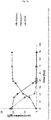
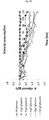
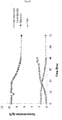
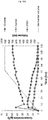
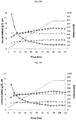
- Strain YD01248 was applied in a fermentation on synthetic medium containing approximately 20g/l glucose, 20g/l xylose, 2g/l acetic acid and 5g/l glycerol. Initial pH of the medium was adjusted to 4,5 with 6M KOH. The fermentation medium was inoculated to an OD600 of approximately 0,9 (corresponding to approximately 0,15 g/l (as dry) yeast biomass). The results are given in Fig 1 . Fermentation behavior of YD01248 on synthetic medium; Sugar conversion and EtOH production (A), glycerol- and HAc conversion, biomass(B).
- acetic acid level dropped slightly (from 2.2g/l to 1.6g/l). Acetic acid conversion needs to take place during this phase in order to balance redox equivalents (re-oxidation NADH, generated during cellular growth, to NAD + ). However, after 24 hours, when glycerol conversion accelerated, also the rate of acetic acid conversion accelerated. Between 24 hours and 72 hours, more acetic acid is converted, due to glycerol conversion and some yeast growth (up to 48 hours).
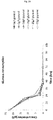
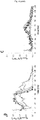
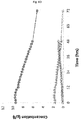
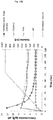
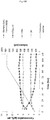
- Strain YD01248 was applied in fermentations on synthetic medium containing approximately 20g/l glucose, 20g/l xylose, 2g/l acetic acid. Glycerol was added to the media at 0, 5, 10, 15, 20 and 30g/l respectively. Initial pH of the medium was adjusted to 4,5 with 6M KOH. The fermentation media were inoculated to an OD600 of approximately 0,9 (corresponding to approximately 0,15 g/l (as dry) yeast biomass). The results are shown in Fig.2.
- Fig. 2 shows that increasing the glycerol concentration from 5g/l up to 30g/l in the fermentation medium resulted in a higher degree of glycerol (2D) and HAc (2C) conversion. These increased glycerol concentrations however negatively influenced glucose (2 A ) and, to a larger extent, xylose conversion (2 B ).
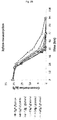
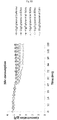
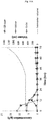
- Strain YD01248 was applied in fermentations on pretreated corn stover hydrolysate (NREL batch 1, see table 1) at 0,5g/l (as dry) yeast biomass. Glycerol was added to the fermentation media at 0 (reference), 2, 4, 6, 8 and 15g/l respectively. Initial pH of the medium was adjusted to 5,5 with 6M KOH.
- Fig. 3 shows that glycerol (3 D ) and HAc (3 C ) conversions were much lower in lignocellulosic hydrolysate than on synthetic medium (see Comparative experiment B).
- glycerol 3 D
- HAc 3 C
- Strain YD01248 was applied in fermentations on pretreated corn stover hydrolysate (NREL batch 1, see table 1)) at 0,5g/l (as dry) yeast biomass. Initial pH of the medium was adjusted to 5,5 with 6M KOH.
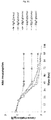
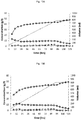
- Fig.5 Shows that inhibition of yeast biomass formation was avoided when adding glycerol to the fermentation broth at the point where glucose was (nearly) depleted and the majority of growth has already occurred (5 A ).
- glycerol concentrations that proved to be strongly inhibitory of sugar conversions ( ⁇ 8g/l) in Comparative experiment C can be applied in order to improve glycerol (5 D ) and HAc (5 E ) conversions without compromising sugar conversion to a large extent, which leads to a more efficient ethanol production than if glycerol is added at the start of the fermentation.
- Maximum glycerol and HAc conversion achieved after 120hrs of fermentation increased with 1.0g/l (1.4g/l to 2.4) and 0.4g/l (from 1.2g/l to 1.6g/l) respectively.
- the optimum glycerol concentration for glycerol and HAc conversion is ⁇ 15g/l.
- addition of glycerol to concentrations above the concentration theoretically required to fully convert the HAc present in a given hydrolysate for this particular NREL-pretreated corn stover hydrolysate at 5.1g/l HAc: 15.6g/l glycerol at a stoichiometric conversion ratio of 2 moles glycerol per 1 mole of HAc (neglecting the HAc conversion enabled by NADH generated from anaerobic yeast growth)) would be sub-optimal from an economic perspective as it would inevitably leave relatively large amounts of glycerol unconverted.
- a better solution to this problem would be to improve glycerol (and concomitantly HAc) conversion by extending the glycerol/HAc conversion window from only during the xylose fermentation phase to the full duration of the fermentation by enabling glucose-glycerol co-conversion.
- Expression of the glycerol-proton symporter from Z.rouxii in a glycerol and HAc-converting yeast strain (described in patent application WO2015028583 could allow for this, and should also improve affinity of the yeast to glycerol, offering the possibility of leaving less residual glycerol in the fermentation broth (comparative experiment E).
- Strains YD01397 (described in patent application WO2015028583 , in particular in examples 6 and 7, strain T3) and YD01437 (expressing a glycerol-proton symporter from Z.rouxii, described in WO2015028583 , in particular in examples 6 and 7, strain T5) were applied at approximately 0,125g/l (as dry) yeast biomass in fermentations of synthetic medium containing approximately 20g/l glucose, 20g/l xylose, 2g/l acetic acid and 10g/I glycerol. Initial pH of the medium was adjusted to 4,5 with 6M KOH. The fermentation medium was inoculated to an OD600 of approximately 0,9.
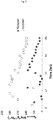
- Fig.6 shows that where glycerol uptake in YD01397 only started after glucose had nearly been depleted (approximately 23hrs), strain YD01437 clearly co-converted glucose and glycerol at 20g/l glucose. Glycerol conversion rate ( fig.7 ) was also dramatically increased in YD01437.
- Fig. 7 Glycerol conversion per biomass for strains YD01397 and YD01437 in fermentations of synthetic medium.
- Yeast strain YD01437 was pre-cultured, harvested, washed and re-suspended to a biomass concentration of 50g/l (as dry).
- Fig. 8 shows that strain YD01437 clearly co-consumes glucose (A), glycerol and HAc (B).
- A glucose
- B HAc
- Yeast strain YD01437 was pre-cultured, harvested, washed and re-suspended to a biomass concentration of 50g/l (as dry) and added to an empty (1000ml) fermenter to 1.0g/l (as dry) yeast biomass on final fermentation volume.
- the fermenter was subsequently fed 93,75hrs at a constant feed rate with 900ml pretreated corn stover hydrolysate (NREL batch 2, see table 1) supplemented with 12,2g/l glycerol and adjusted to pH 5,5 with 6M KOH. Anaerobic fermentation was performed at 32°C and stirred at 150 rpm.
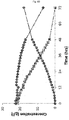
- Obtained fermentation data depicted in Fig. 9 show that from at least 6hrs into the fermentation (the first sample taken) onward, the yeast is able to convert glucose, xylose, HAc and glycerol at approximately the rate at which it is fed to the fermenter, causing these substrates to remain relatively low during the fermentation, in contrast to the batch fermentation of Compartive experiment F.
- the inhibitory effects of these compounds is significantly reduced, negating their detrimental effects on sugar resulting in dramatically improved substrate conversion levels and increased EtOH content after 120hrs of fermentation.
- the pH of the fermentation broth is maintained lower by feeding a hydrolysate/glycerol mixture that is not pH-adjusted after enzymatic hydrolysis.
- the fraction of undissociated HAc in the fermentation broth available for conversion to EtOH is thereby increased, and total residual HAc subsequently decreased.
- Yeast strain YD01437 is pre-cultured, harvested, washed and re-suspended to a biomass concentration of 50g/l (as dry) and added to 3 empty (1000ml) fermenters to 1.0g/l (as dry) yeast biomass on final fermentation volume. Fermenters are initially fed at a constant rate of 0,20ml/min (1,31% of final volume/hr, corresponding to a total feed time of 75hrs) with pretreated corn stover hydrolysate (NREL batch 2, see table 1) supplemented with 12,2g/l glycerol and adjusted to 5,5 with 6M KOH. Anoxic fermentation is performed at 32°C and stirred at 150 rpm.
- Figure 10 shows that the addition of the non-pH adjusted feed starting from 36hrs leads to a decrease in broth pH (B), but the fermentation still runs almost identical to the fermentation that was fed exclusively with hydrolysate/glycerol mixture at pH5,5 (example 1, fig.9 ).
- 'Syrup' or 'solubles' is the concentrated liquid fraction of stillage (by evaporation), obtained from a traditional (1st generation) corn-starch-to-EtOH plant (see table 2).
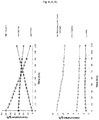
- Glycerol sources were mixed into the hydrolysate feed at such a ratio that the molar ratio of glycerol to HAc in the obtained mixed feed is 2:1. As this caused a slight dilution of the hydrolysate, analyses of the resulting mixed feed are also shown in table 2, in the far right column. The results are shown in figure 11 (A to D); glycerol source: 1G syrup (A,C) and biodiesel derived glycerin (B,D).
- 'Crude glycerin' is obtained from transesterification-based biodiesel production (see table 2). It will be mixed into the hydrolysate feed at such a ratio that the molar ratio of glycerol to HAc in the obtained mixed feed is 2:1.
- HAc and glycerol on the yeast as low as possible, ideally, the concentrations of these compounds would be (close to) 0g/l for the full duration of the fermentation.
- sugars are generally present at higher concentrations than HAc (and supplemented glycerol)
- glycerol and HAc utilization are rate-limiting when applying a feed strategy aimed at keeping al (yeast-inhibiting) substrate levels low because conversion rates of glycerol and HAc (coupled through NAD + -NADH cofactor utilization) are much lower than those of the sugars present in the hydrolysate.
- dosing of the feed would therefore be directly coupled to the remaining HAc in the fermentation broth.
- a residual HAc-coupled feed can be automated by applying pH-regulation using (acidic) hydrolysate feed, analog to what has been described in patent application WO2014072232-A1 for pH-regulated aerobic fed-batch yeast propagation.
- pH is a parameter that is already commonly (online) measured in (ethanolic) fermentation processes and therefore does not require large hardware-modification investments when applied at large scale.
- the experiment was started by performing an aerobic pH-controlled fed-batch yeast propagation of strain YD01437 according to WO2014072232 A1 . pH of the feed was not adjusted (from pH 4.3, after enzymatic hydrolysis). pH of the propagation broth was controlled at 4.5 by dosing of the lignocellulosic hydrolysate feed for 72hrs. Aeration of the fermenter was stopped at this point, after which a portion of the propagation broth was removed from the fermenter, leaving a quantity of 500ml broth in the fermenter (corresponding to the fermenter minimum working volume), containing 23.4g/l (as dry) yeast biomass.
- Peak concentrations of HAc, glycerol and sugars at the early stages of fermentation when feeding a hydrolysate/glycerol-mixture to a relatively low volume of broth can be prevented by increasing the batch-phase volume, effectively decreasing the relatively high dilution rates at the start of feeding.
- An increase of batch phase volume can be achieved in 2 ways: By performing propagation process with lower final yeast biomass concentration, so a larger volume of propagation broth is used in the fermentation. This is undesirable from an economic point of view however, as this would require correspondingly larger propagators, leading to increased CAPEX.
- a unique feature of the fermented broth from a fermentation process using HAc-converting strains in combination with a feeding strategy as described here is that it has a significantly reduced HAc content (compared to the unfermented hydrolysate). This allows (part of) the fermented broth, or distilled fermentation broth (stillage) to be recycled into the batch-phases of subsequent propagation and fermentation cycles without introducing inhibitory concentrations of HAc.
- this fermented broth also contains residual glycerol, it will be recycled in the fraction that is applied in a subsequent fermentation cycle, lowering the required glycerol supplementation of the hydrolysate, thereby improving the economics of the conversion process.
- the experiment was started by performing a pH-controlled aerobic fed-batch yeast propagation of strain YD01437 on pretreated corn stover hydrolysate batch 3 (table 1) according to WO2014072232 A1 , with a fixed dilution rate of 0,06hr -1 . pH of the feed was adjusted (from 4.3) to 5,5 , after enzymatic hydrolysis). Propagation broth was harvested from the fermenter after 50 hrs, at which approximately 800 ml of the hydrolysate had been fed. At this point, the propagation broth contained 34 g DCW/I yeast biomass, while concentrations of all fermentable C-sources (glucose, xylose, HAc and glycerol) were >1g/l.
- Fermenters were subsequently fed with a total 745ml pretreated corn stover hydrolysate (NREL batch 3, see table 1) supplemented with 14,3g/l glycerol and adjusted to pH 5,5 with 6M KOH, over 94 hrs at a constant feed rate. Anaerobic fermentation was performed at 32°C and the broth was stirred at 150 rpm.
- NREL batch 3 pretreated corn stover hydrolysate
- FIG 13 shows that there is no adverse effect of increasing the batch volume 2x by addition of recycled fermentation broth (A,D vs B,E). Even when increasing the batch volume with a factor 4, the effect of diluting out the yeast biomass is limited, resulting in a slightly decreased sugar conversion rate. In fermentations where reduction of acetic acid concentration by conversion to EtOH is more challenging (e.g. more toxic hydrolysate), the risk of overfeeding exists. When feeding more HAc to the broth than the yeast is able to convert, the residual HAc leads to high concentration in the fermentation broth as there is only a small liquid volume in the fermenter and hence this residual HAc is not diluted out much.
- Coupled continuous propagation and fermentation system
- FIG.12 A schematic setup for this experiment is depicted in fig.12 ).
- the experiment is started by filling 2 fermenters ( fig.12 : 1-2) for 1/5 of their final volume with (NREL pretreated corn stover, batch 2) hydrolysate (see table 1) and 4/5 volumes of water.
- the medium in fermenter 1 is supplemented with nutrients
- the medium in fermenter 2 is supplemented with stillage (see table 2) to such an extent that the molar ratio of glycerol to HAc in both fermenters is 2:1).
- Fermenter 1 is inoculated to a concentration of approximately 0,02g/l of freshly pre-cultured strain YD01437 and aerated at 1vvm ( fig.12 : 3). Dissolved oxygen is controlled at 20% through a stirrer cascade (150-500 RPM) ( fig.12 : 4). The yeast utilizes available c-sources from the diluted hydrolysate for growth and maintenance. Continuous conversion of the HAc causes the broth pH to rise ( fig.12 : 5).
- additional hydrolysate is added to the fermenter, the concentration of HAc in the broth is maintained close to 0g/l allowing the yeast to grow efficiently.
- Concentration of yeast biomass in the hydrolysate gradually increases to approximately 46g/l (as dry).
- a maximum level indicator in fermenter 1 ( fig.12 : 8) triggers a pump that provides a continuous flow of propagation broth from fermenter 1 to fermenter 2 ( fig.12 : 2).
- the yeast propagated in fermenter 1 (anaerobically) converts glucose, xylose, glycerol and HAc in fermenter 2.
- a maximum level indicator in fermenter 2 ( fig.12 : 9) will triggers a pump that provides a continuous flow of fermented broth out of fermenter 2 ( fig.12 : 10). In an industrial setting, such a stream would be fed to the distillation system, optionally via a buffer tank.
- the continuous influx of freshly propagated yeast from fermenter 1 increases the yeast concentration in fermenter 2 to the extent that a degree of glycerol and HAc conversion is achieved that increases the pH of the broth to the level of the setpoint that triggers 2 separate feeds to fermenter 2; hydrolysate ( fig.12 : 11) and stillage ( fig.12 : 12).
- the ratio between these feeds is set in such a way that the molar ratio of glycerol to HAc in the combined feed influx (hydrolysate + stillage) is 2:1.
- the degree of HAc conversion can manually be adjusted through changing the pH control setting of fermenter 2; decreasing this setting decreases the fraction of HAc that has to be converted to trigger the (acidic) feed.
Landscapes
- Organic Chemistry (AREA)
- Chemical & Material Sciences (AREA)
- Engineering & Computer Science (AREA)
- Life Sciences & Earth Sciences (AREA)
- Zoology (AREA)
- Wood Science & Technology (AREA)
- Bioinformatics & Cheminformatics (AREA)
- Health & Medical Sciences (AREA)
- Biochemistry (AREA)
- General Engineering & Computer Science (AREA)
- General Health & Medical Sciences (AREA)
- Genetics & Genomics (AREA)
- Microbiology (AREA)
- General Chemical & Material Sciences (AREA)
- Chemical Kinetics & Catalysis (AREA)
- Biotechnology (AREA)
- Preparation Of Compounds By Using Micro-Organisms (AREA)
- Organic Low-Molecular-Weight Compounds And Preparation Thereof (AREA)
Abstract
Description
- The present invention relates to a fermentation process. In particular the invention relates fermentation process with glycerol and acetic acid converting yeast cells with improved acetic acid conversion. The invention further relates to the processes wherein the yeast cells produce fermentation product, such as ethanol.
- Second generation bioethanol is produced from e.g. lignocellulosic fractions of plant biomass that is hydrolyzed into free monomeric sugars, such as hexoses and pentoses, for fermentation into ethanol. Apart from the sugar release during pretreatment and hydrolysis of the biomass, some toxic by-products are formed. For instance, furfural and HMF are two of these products. The quantities in which they are formed depend on several pretreatment parameters, such as temperature, pressure and pretreatment time.
Lignocellulosic hydrolysates also contain high amounts of acetic acid, which is a potent inhibitor of the fermentative capacity of microorganisms, such as yeasts. - Glycerol is the major by-product during fermentation of sugars into ethanol, mainly formed as a result of re-oxidation reactions to consume the excess NADH formed during biosynthesis under anaerobic conditions (van Dijken and Scheffers, 1986). As a result, during industrial fermentations, about 5 to 10 % of the consumed sugars by yeast cells are diverted into glycerol. Lowering the amount of this polyol is considered a promising route to increase ethanol yield. This could be achieved by adjusting the feeding rate during the fed-batch process, or by selecting strains that produce less glycerol.
- In the literature, however, several different approaches have been reported that could help to reduce the inhibitory effect of acetic acid on the fermentation of the sugars in hydrolysates as well as (partly) solving redox balance issues upon deletion of the genes involved in glycerol production, e.g. by genetic engineering of yeasts.
- Sonderegger et al (2004) disclosed the heterologous expression of phosphotransacetylase and acetaldehyde dehydrogenase in a xylose-fermenting Saccharomyces cerevisiae strain. In combination with the native phosphoketolase, Sonderegger et al thereby created a functional phosphoketolase pathway that is capable of net reoxidation of NADH generated by the heterologous expression of a xylose reductase and xylitol dehydrogenase that are used for xylose utilization in that particular strain.
- Guadalupe et al (2010) described a Saccharomyces cerevisiae strain wherein production of the by-product glycerol is eliminated by the disruption of the endogenous NAD-dependent glycerol 3-phosphate dehydrogenase genes (GPD1 and GPD2). Expression of the E. coli mhpF gene, encoding the acetylating NAD-dependent acetaldehyde dehydrogenase, restored the ability of the gpd1gpd2 double deletion strain to grow anaerobically by supplementation of the medium with acetic acid.
- Yu et al (2010) constructed Saccharomyces cerevisiae strains metabolically engineered for improved ethanol production from glycerol by simultaneous overexpression of glycerol dehydrogenase (encoded by GCY1), dihydroxyacetone kinase (DAK1) and the glycerol uptake protein (GUP1). In a later report by the same group (Yu et al, 2012) it is described that additional overexpression of ADH1 and PDC1, encoding alcohol dehydrogenase and pyruvate decarboxylase respectively, caused an increase in growth rate and glycerol consumption under fermentative conditions, resulting in a slightly increased final ethanol yield.
- Lee and Dasilva (2006) disclosed the yeast Saccharomyces cerevisiae engineered to produce 1,2-propanediol from glycerol by amongst others introducing expression of the Escherichia coli mgs and gldA genes.
- The technology described by Guadelupe et al (2010) (and also in patent application
WO 2011/010923 ) provides a solution for decreasing the acetic acid content of hydrolysates during fermentation of the biomass sugars and the aforementioned acetic acid into e.g. ethanol. - Further enhancement of the ability to convert acetic acid is potentially possible by introducing an extra NADH-generating pathway, e.g. by additionally (over-)expressing a glycerol consumption pathway. Upon introduction of the aforementioned GUP1-, GCY1- and DAK1-genes (Yu et al, 2010) in a yeast strain expressing an anaerobic acetic acid conversion pathway (such as e.g. described by Medina et al, 2009), acetic acid conversion should be increased in order to maintain the redox balance, leading to further increased detoxification of the hydrolysate and higher ethanol yield. The solution of Yu et al however, does not work, since the yeast glycerol dehydrogenase (encoded by GCY1) uses NADP+ as a co-factor, resulting in a cofactor imbalance due to insufficient cofactor regeneration. An alternative glyceroldehydrogenase (gldA from E.coli) was tested in combination with the acetic acid reduction pathway and indeed enhanced the conversion of acetic acid under anaerobic growth (fermentation) conditions (patent application
WO2013/081456 ). - A disadvantage of the known processes is that the known batch fermentations of certain lignocellulosic hydrolysates with high toxicity (for instance with 2 g/l acetic acid or more) are not feasible with glycerol/HAc-converting yeast strains. This was found by us herein in and is described in the examples.
- An objective of the invention is therefore to provide a feasible process for fermentation of lignocellulosic hydrolysates with high toxicity. Another object of the invention is to provide a process with efficient glycerol and HAc conversions. Another object is to provide a process wherein the strain has increased sugar conversion rate and improved cell growth.
- One or more of these objectives are reached according to the invention, that provides a process for producing a fermentation product that comprises fermentation of a carbon source in a reactor with a cell, capable of converting sugar, glycerol and acetic acid, wherein the carbon source comprises sugar and acetic acid, comprising the following steps:
- a) Inoculating a optionally diluted carbon source with the cell;
- b) optionally fermenting the reactor in batch mode;
- c) adding carbon source comprising glycerol and optionally sugar gradually to the reactor;
- d) after sufficient fermentation time, isolation of fermentation product from the reactor,
- e) optionally keeping the remaining fraction after isolation of step d) as spent broth;
and - f) optionally using the spent broth in step a) to dilute the carbon source.
- As is shown in examples, the objectives are achieved.
-
- Fig. 1
- Fermentation behavior of YD01248 on synthetic medium; Sugar conversion and EtOH production (A), glycerol- and HAc conversion, biomass(B);
- Fig. 2
- Fermentation behavior of YD01248 on synthetic media at increasing glycerol concentrations;
- Fig. 3
- Fermentation behavior of YD01248 on (NREL) pretreated corn stover hydrolysate supplemented with glycerol at different concentrations;
- Fig. 4
- Yeast biomass growth (calculated from OD700) (A),and conversion rates per biomass for glucose (B) and xylose (C) for YD01248 in fermentations of (NREL) pretreated corn stover hydrolysate supplemented with glycerol at different concentrations; the legend of
figs. 4B and 4C is identical to that offig. 4A . - Fig. 5A
- Yeast biomass growth (calculated from OD700) (A) for YD01248 in fermentation of (NREL) pretreated corn stover hydrolysate supplemented with glycerol at different concentrations at the point of glucose depletion (50hrs); the legend of
figs. 5A ,5C and5E is identical to that offig. 5B - Fig. 5 B-E
- Yeast biomass growth (calculated from OD700) (A), glucose (B), xylose (C), HAc (D) and glycerol (E) conversion profiles for YD01248 in fermentation of (NREL) pretreated corn stover hydrolysate supplemented with glycerol at different concentrations at the point of glucose depletion (50hrs);
- Fig. 6
- Fermentation behavior of YD01397 (A,C) and YD01437 (B,D) on synthetic medium; Sugar conversion and EtOH production (A,B), glycerol- and HAc conversion, biomass (calculated from OD700) (C,D); the legend of
fig. 6B is identical to that offig. 6A ; the legend offig. 6D is identical to that offig. 6C . - Fig. 7
- Glycerol conversion per biomass for strains YD01397 and YD01437 in fermentations of synthetic medium;
- Fig. 8
- Batch Fermentation of YD01437 on (NREL) pretreated corn stover hydrolysate supplemented with glycerol; Sugar conversion and EtOH production (A), glycerol- and HAc conversion, biomass (calculated from OD700) (B);
- Fig. 9
- Fed-batch Fermentation of YD01437 on (NREL) pretreated corn stover hydrolysate supplemented with glycerol; Sugar conversion and EtOH production (A), glycerol- and HAc conversion, biomass (calculated from OD700) (B);
- Fig. 10
- Fed-batch Fermentation of YD01437 on (NREL) pretreated corn stover hydrolysate supplemented with glycerol at reduced pH; t=0-36hrs feed at
pH pH - Fig. 11
-
Fig. 11 (A,C) Aerobic pH-regulated fed-batch propagation of strain YD01437 on (NREL) pretreated corn stover hydrolysate followed by (B,D) ph-regulated fedbatch fermentation of the same hydrolysate supplemented with glycerol. Sugar conversion and EtOH production (A), glycerol- and HAc conversion, broth pH and biomass (calculated from OD700) (B). - Fig. 12
- Schematic representation of the pH-regulated continuous yeast propagation and fermentation system of example 6.
- Fig. 13
- Fed-batch Fermentations of YD01437 on (NREL) pretreated corn stover hydrolysate supplemented with glycerol; No recycled broth in the starting volume (A,D), 30 ml (B,E) and 90 ml (C,F) recycled broth in the starting volume. The following signs are used in A, B, C: sugar conversion glucose () and xylose (
 ) and EtOH (
 ), fermentor volume (
 ) and in D, E, F: glycerol (
 ) HAc (
 ), pH (
 ), biomass (calculated from OD600) (
 ), fermentor volume (
 ).
).
- Throughout the present specification and the accompanying claims, the words "comprise" and "include" and variations such as "comprises", "comprising", "includes" and "including" are to be interpreted inclusively. That is, these words are intended to convey the possible inclusion of other elements or integers not specifically recited, where the context allows. The articles "a" and "an" are used herein to refer to one or to more than one (i.e. to one or at least one) of the grammatical object of the article. By way of example, "an element" may mean one element or more than one element.
- The invention thus relates to a process for producing a fermentation product that comprises fermentation of a carbon source in a reactor with a cell, capable of converting sugar, glycerol and acetic acid, wherein the carbon source comprises sugar and acetic acid, comprising the following steps:
- a) Inoculating a optionally diluted carbon source with the cell;
- b) optionally fermenting the reactor in batch mode;
- c) adding carbon source comprising glycerol and optionally sugar gradually to the reactor;
- d) after sufficient fermentation time, isolation of fermentation product from the reactor,
- e) optionally keeping the remaining fraction after isolation of step d) as spent broth;
and - f) optionally using the spent broth in step a) to dilute the carbon source.
- As is shown in the examples, with the process according to the invention, a feasible process for fermentation of lignocellulosic hydrolysates with high toxicity is achieved. Also a process with efficient glycerol and HAc conversions is achieved. Further in the process the strain has increased sugar conversion rate and improved cell growth. Additionally a unique feature of a fermented broth from a fermentation process according to the invention, is that it has a significantly reduced HAc content (compared to the unfermented hydrolysate or prior art product). This allows (part or whole of) the fermented broth, or distilled fermentation broth (stillage) to be recycled into the batch-phases of subsequent propagation and fermentation cycles without introducing inhibitory concentrations of HAc. In an embodiment for instance a liquid fraction of stillage to use as dilution water before and/or after pretreatment. In an embodiment, this allows recycling of enzyme used in the hydrolysis of lignocellulosic material, when using heat-stable enzymes that survive distillation.
- Embodiment of the process of the invention are described in more detail here:
Step a) may involve filling the reactor with the carbon source. This may be done in any conventional way. The reactor may be filled partly or fully. The filling may be metered. In this stage temperature may be changed e.g. by heating or cooling. The carbon source may be an aqueous liquid, an aqueous slurry. The aqueous liquid may comprise any carbon source the cell can use, e.g. hexose or pentose sugar, e.g. glucose, xylose and/or arabinose. In an embodiment the carbon source is a lignocellulose hydrolysate. Further in an embodiment of step a), the carbon source may optionally be diluted with a liquid comprising 2g/l or less acetic acid. Since the carbon source may be toxic to the cell, in this step the contents of the reactor may be diluted if it is too toxic for the microorganism. The dilution may be done in any conventional way, by adding a dilutant e.g. (process) water. The dilution may be metered. - This process step may be conducted in conventional way, though some parameters of these steps may be different then in the specific known conventional processes as in described in more detail below.
- In step a) any suitable carbon source may be used. In an embodiment, in step a), the carbon source may be diluted lignocellulosic hydrolysate, more specifically lignocellulosic hydrolysate that is two or more fold diluted in water.
- In step a) cells are added to the reactor. Adding of a cell e.g. as a cell population to the contents of the reactor (inoculation), is conducted in a known manner. The cell population may be added as dry cell mass, as a cream, or suspended in water.
- Steps of adding carbon source to the reactor, dilution of the carbon source and inoculation may also be executed in any other way of bringing the carbon source, diluent, and initial cell together, into e.g. carbon source and diluent may be combined in another vessel than the reactor, for later use in the reactor.
- b) optionally fermenting the initial cell population in the reactor in batch mode. In this optional step, fermentation of the initial cell population is conducted in known manner, under conditions, so that carbon source is used for growth of the cells and/or for production of fermentation product.
- c) adding carbon source comprising glycerol and optionally sugar gradually to the reactor; In this step carbon source comprising glycerol and optionally sugar is gradually added to the reactor.
- The present invention allows the use of 1st generation ethanol plant stillage as a glycerol source in ethanolic fermentation. Therefore in an embodiment, 1st gen stillage is added to the fermentation medium.
- Range of dry matter contents at which stillage which may be used is common, e.g. 10-60 wt% or 20-40wt%. Glycerol concentration may typically range from 15 g/l to 200 g/l, e.g. 80-120 g/l or about 100 g/l.
- In one embodiment of the invention glycerol derived from transesterification-based biodiesel processes in ethanolic fermentation is used as glycerol source.
- In an embodiment, glycerol is added after glucose is substantially depleted, e.g. when the glucose concentration is 2 g/l or lower or after glucose depletion.
- In an embodiment, the amount of glycerol added is such that the molar concentration of glycerol in the reactor is about twice the molar concentration of acetic acid in the reactor. For instance the molar concentration of glycerol in the reactor may be 1,8-2,2 times the molar concentration of acetic acid in the reactor. In an embodiment, the added glycerol originates from a starch based or sucrose based ethanol production plant.
- In an embodiment, the added glycerol originates from a transesterification-based biodiesel production plant.
- In an embodiment, the addition of glycerol is commenced when the glucose concentration in reactor is 2 g/l or lower.
- Addition of glycerol source to hydrolysate or hydrolysate feed so that concentration glycerol is in a certain range, e.g. <8 g/l (see Compative experiment C) for 17%ds pCS, this may be higher for hydrolysates at higher % ds. In an embodiment the concentration is such that mol glycerol = mol HAc *2. A range, e.g. mol glycerol = 1,8-2,2 mol HAc is also suitable. Sugar may optionally be added together with the glycerol. The sugar may be any sugar, e.g glucose, xylose and/or arabinose, as such or as part of any substrate e.g. lignocellulose hydrolysate and/or a fraction of lignocellulose hydrolysate.
- In an embodiment, the pH of the mixture in the fed batch reactor in the fed batch mode is kept substantially constant by addition of sufficient lignocellulosic hydrolysate. In an embodiment, the concentration of acetic acid in the fed batch reactor is 30 g/l or less. In an embodiment, the rate of lignocellulosic hydrolysate fed into the fed batch reactor is 0,10 h-1 or less. In an embodiment, the rate of lignocellulosic hydrolysate fed into the fed batch reactor is from 0,01 h-1 to 0,10 h-1. In an embodiment, the pH in the reactor in fed batch mode is
pH 4 topH 7, preferablypH 4 topH 5. In an embodiment, the yeast can an-aerobically ferment at least one C6 sugar and at least one C5 sugar. - d) After sufficient fermentation time, isolation of fermentation product from the reactor is conducted. Sufficient fermentation time is time when a desired amount of fermentation product is formed. This depends, amongst other, on the microorganism used, the pitch of the microorganism, and the carbon source. For example a suitable fermentation time may be e.g. about 72 hours, about 60 hours, about 48 hours or about 24 hours.
- e) optionally keeping the remaining fraction after isolation of step d) as spent broth; and This step can be executed with known techniques (e.g. separation and storing techniques).
- f) optionally using the spent broth in step a) to dilute the carbon source.
- It is a unique feature of the spent broth i.e. the fermented broth from a fermentation process using HAc-converting strains in combination with a feeding strategy as described here, that it has a significantly reduced HAc content (compared to the un-fermented hydrolysate). This allows (part of) the spent broth or distilled fermentation broth (stillage) to be recycled into the batch-phases of subsequent propagation and fermentation cycles without introducing inhibitory concentrations of HAc.
- If this spent broth also contains residual glycerol, this will be recycled in the fraction that is applied in a subsequent fermentation cycle, lowering the required glycerol supplementation of the hydrolysate, thereby improving the economics of the conversion process.
- The invention thus includes recycling of part of the fermented broth, with decreased HAc-content and containing residual glycerol, into the batch phase of a subsequent propagation or ferementation cycle.
- The invention further relates to a fermentation product obtained according to the process decribed herein above. In an embodiment, the fermentation product is ethanol. In an embodiment, to the fermentation process a propagation process is added. In an embodiment, the process or processes are continuous.
- Lignocellulosic hydrolysate is herein any hydrolysed lignocellulose. Lignocelllulose is herein biomass. It herein includes hemicellulose and hemicellulose parts of biomass. Also lignocellulose includes lignocellulosic fractions of biomass. Suitable lignocellulosic materials may be found in the following list: orchard primings, chaparral, mill waste, urban wood waste, municipal waste, logging waste, forest thinnings, short-rotation woody crops, industrial waste, wheat straw, oat straw, rice straw, barley straw, rye straw, flax straw, soy hulls, rice hulls, rice straw, corn gluten feed, oat hulls, sugar cane, corn stover, corn stalks, corn cobs, corn husks, switch grass, miscanthus, sweet sorghum, canola stems, soybean stems, prairie grass, gamagrass, foxtail; sugar beet pulp, citrus fruit pulp, seed hulls, cellulosic animal wastes, lawn clippings, cotton, seaweed, trees, softwood, hardwood, poplar, pine, shrubs, grasses, wheat, wheat straw, sugar cane bagasse, corn, corn husks, corn hobs, corn kernel, fiber from kernels, products and by-products from wet or dry milling of grains, municipal solid waste, waste paper, yard waste, herbaceous material, agricultural residues, forestry residues, municipal solid waste, waste paper, pulp, paper mill residues, branches, bushes, canes, corn, corn husks, an energy crop, forest, a fruit, a flower, a grain, a grass, a herbaceous crop, a leaf, bark, a needle, a log, a root, a sapling, a shrub, switch grass, a tree, a vegetable, fruit peel, a vine, sugar beet pulp, wheat midlings, oat hulls, hard or soft wood, organic waste material generated from an agricultural process, forestry wood waste, or a combination of any two or more thereof.
- The lignocellulosic hydrolysate may be acidic. In an embodiment, the lignocellulosic hydrolysate comprises organic acid. Examples of organic acids possible in lignocellulosic hydrolysate are acetic acid and formic acid. In an embodiment the organic acid is acetic acid. Acidic lignocellulosic hydrolysate is common product from pretreatment wherein acid is used, which results in formation of acetic acid.
- The cell used in the invention is capable of converting sugar, glycerol and acetic acid.
- In an embodiment, is capable of producing fermentation product e.g. ethanol from acetic acid and glycerol while having also abilities of fermenting hexoses (glucose, fructose, galactose, etc) as well as pentoses like xylose and arabinose.
- In an embodiment the cell is a yeast cell. Example of suitable yeast cells are yeast cells that are genetically modified comprising:
- a) one or more nucleotide sequence encoding a heterologous NAD+-dependent acetylating acetaldehyde dehydrogenase (E.C. 1.2.1.10);
- b) one or more nucleotide sequence encoding a homologous or heterologous acetyl-CoA synthetase (E.C. 6.2.1.1);
- c) one or more nucleotide sequence encoding a heterologous glycerol dehydrogenase (E.C. 1.1.1.6); and
- d) one or more nucleotide sequence encoding a homologous or heterologous dihydroxyacetone kinase (E.C. 2.7.1.28 or E.C. 2.7.1.29).
- In an embodiment, the cell has a deletion or disruption of one or more endogenous nucleotide sequence encoding a glycerol 3-phosphate phosphohydrolase and/or encoding a glycerol 3-phosphate dehydrogenase gene. Such cells are e.g. described in European Patent Application
EP13182222.3 - In an embodiment, the yeast cell has a deletion or disruption of one or more endogenous nucleotide sequence encoding a glycerol 3-phosphate phosphohydrolase and/or encoding a glycerol 3-phosphate dehydrogenase gene. In an embodiment, during the process no base needs to be added to the mixture in the reactor.
- In an embodiment, the yeast is capable of metabolizing organic acid, preferably of metabolizing acetic acid. In an embodiment the cell has one or more nucleotide sequence encoding a glycerol transporter. Such cells are described in European Patent Application
EP13182225.6 - In one embodiment the cell is able to ferment C5 and/or C6 sugar e.g. xylose, arabinose, mannose or galactose. In an embodiment of the invention the transformed host cell comprises one or more of: a xylA-gene, XYL1 gene and XYL2 gene and/or XKS1-gene, to allow the transformed host cell to ferment xylose; and one or more, or two to ten copies of araA, araB and araD, genes, wherein these genes may be integrated into the cell genome, to allow the cell to ferment arabinose; deletion of the aldose reductase (GRE3) gene; overexpression of PPP-genes TAL1, TKL1, RPE1 and RKI1 to allow the increase of the flux through the pentose phosphate pathway in the cell.
- In an embodiment, the transformed host cell is an industrial cell, more preferably an industrial yeast. An industrial cell and industrial yeast cell may be defined as follows. The living environments of (yeast) cells in industrial processes are significantly different from that in the laboratory. Industrial yeast cells must be able to perform well under multiple environmental conditions which may vary during the process. Such variations include change in nutrient sources, pH, ethanol concentration, temperature, oxygen concentration, etc., which together have potential impact on the cellular growth and ethanol production of Saccharomyces cerevisiae. Under adverse industrial conditions, the environmental tolerant strains should allow robust growth and production. Industrial yeast strains are generally more robust towards these changes in environmental conditions which may occur in the applications they are used, such as in the baking industry, brewing industry, wine making and the ethanol industry. In one embodiment, the industrial transformed host cell is constructed on the basis of an industrial host cell, wherein the construction is conducted as described hereinafter. Examples of industrial yeast (S. cerevisiae) are Ethanol Red® (Fermentis) Fermiol® (DSM) and Thermosacc® (Lallemand).
- In an embodiment the transformed host cell is inhibitor tolerant. Inhibitor tolerance is resistance to inhibiting compounds.
- Acetic acid is herein understood to include equivalent acetate. Acetic acid i.e. acetic acid/acetate and also formic acid/formate form part of hydrolysed lignocellulosic material, that may be used in the invention as carbon source. Lignocellulosic hydrolysates contain high amounts of acetic acid, which is a potent inhibitor of the fermentative capacity of microorganisms, such as yeasts. Therefore in a process according to the invention inhibition of the cell by acetic acid is avoided. The process may be conducted according to the following embodiments.
- An anaerobic or anoxic fed-batch fermentation process in which the pH of the fermentation broth in the reactor is higher than the pH of the feed (for the fed batch). In an embodiment the feed of acetic acid is lower than the conversion rate of acetic acid by the cell.
- In an embodiment, the fed-batch fermentation process is conducted while the concentration of acetic acid in the fermentation medium is 3-15g/l HAc. In an embodiment the pH of the fermentation broth in the reactor is ≤5 and ≥3,5 , e.g. pH 4-4,5.
- In an embodiment the in the fed-batch fermentation process substrate concentrations (C6 and C5 sugars, glycerol and HAc) are kept low, e.g. 10 g/l or less, 7 g/l or less, 5 g/l or less or 2 g/l or less.
- The fed-batch process may be a fermentation process, i.e. a process which leads to a fermentation product or a propagation process, where cells are the product. In an embodiment thereof, the process is a combined continuous propagation & fermentation process.
- In an embodiment a propagation process is an aerobic carbon-limited and/or pH-regulated fed-batch propagation. HAc-conversion is the rate-limiting step in such a process.
- Advantages of the fed-batch include:
Acetic acid (HAc), but also other substrate concentrations (C6 and C5 sugars, glycerol ) are all kept low during the fermentation, removing/reducing their respective growth-inhibiting effects (decoupling, osmotic etc.). As compared to a batch fermentation or a traditional sugar-limited fed-batch fermentation this results in: - fermentation of hydrolysates in which the effects of HAc on the yeast's growth and survival are so severe that they result in insufficient biocatalyst activity to complete substrate conversions is enabled.
- Reduced yeast pitch requirement in hydrolysates with less severe inhibitor content.
- Reducing the risk of, and actual sugar losses to bacterial contaminants in the fermentation by:
- ▪ Enabling fermentation of HAc-containing lignocellulosic hydrolysates at a lower pH than the pH 5-5,5 common for fermentations of lignocellulosic hydrolysate. Fermentation can now even take place at pH below pKa of HAc;
- ▪ EtOH concentration is higher throughout the fermentation compared to a sugar-limited or non-sugar limited fed-batch fermentation, and even more so compared to a batch fermentation;
- ▪ These effects also decrease/remove the requirement for addition of antibiotics.
- ▪ The process results in lower requirement for titrant after enzymatic hydrolysis and before fermentation, costs savings of 0,01-0,02 $/gal EtOH produced (compared to a 17%dm corn-stover hydrolysate pH adjusted with ammonia before fermentation).
- The invention is illustrated by the following examples, that should not be interpreted as to limit the scope of the invention.
- Strains were pre-cultured on solid medium containing 10g/I yeast extract, 20g/l phytone, 20g/l glucose and 15g/l agar (YPhD), and in liquid mineral medium (Luttik et al., 2000) set to
pH - Fermentation experiments were performed using either synthetic mineral media (Luttik et al. 2000) or (NREL) pretreated corn stover hydrolysate. Whenever a strain was applied in a particular fermentation experiment that was auxotrophic for histidine, the fermentation medium was supplemented with this amino acid to a final concentration of 200 mg/l. Initial pH and concentrations of sugars, acetic acid and glycerol are listed separately in the experiment descriptions.
- For fermentations of pretreated corn stover hydrolysate, 2 different batches were used. Both of these were derived from dilute acid pretreated corn stover separately obtained from NREL, and enzymatically hydrolyzed using DSM's proprietary enzyme cocktail after adjusting the pH of the pretreated material was adjusted (from approximately 1-2) to
pH Table 1. Composition of the NREL dilute-acid-pretreated, enzymatically hydrolyzed corn stover hydrolysates Compound Batch 1 Batch 2Sugar monomers: (g/l) (g/l) Glucose 63,0a 64,5b Xylose 40,9a 33,6b Arabinose 4,8a 4,1b Mannose 1,1a Galactose 2,5a Fructose 0,1a Inhibitors and byproducts: (g/l) (g/l) Acetic acid 5,1 5,1 Lactic acidb ND ND Formic acid b 0,3 0,2 Glycerolb ND 0,4 Ethanolb ND ND Hydroxymethylfurfural (HMF)b 0,2 0,4 Furfural 1,0 0,7 Other analyses: pH 4,2 4,3 Dry Matter (%(m/m)) 17,3 19,5 Density 1,06 g/ ml 1,05 g/ml aDetermined by HPAEC analysis, bdetermined by HPLC-H analysis,
ND = Not Detected, none or negligible amounts present. - Suspended solids in the hydrolysates were removed by centrifugation (30min 4520x g) followed by filtration (106µm) of the supernatant prior to fermentation. This was done to allow monitoring of yeast growth by OD measurement, and to simplify feeding of hydrolysate in fed-batch fermentations at lab scale.
- Unless stated otherwise, ammonia (25%(w/v)) was added to adjust pH to 5,5 and also served as nitrogen source. To prevent outgrowth of any bacterial contaminants present in the hydrolysates, neomycin and penicillin G were added to a final concentration of 50 µg/ml and 100 µg/ml respectively. Approximately 250 µl/l of silicone antifoam (Dow Corning 1520) was added to each of the hydrolysates to preventfoaming.
- Where mentioned, one of 2 industrial byproduct streams, abundantly available in bulk quantities, was added as a source of glycerol; being either 'syrup' or 'crude glycerin'.
- Syrup (sometimes also referred to as 'solubles') is the concentrated liquid fraction of stillage (by evaporation), obtained from a traditional (1st generation) corn-starch-to-EtOH plant. 'Crude glycerin' is obtained from transesterification-based biodiesel production plant.
Compositions of these glycerol sources are given in table 2.Table 2. Composition of industrial glycerol sources 'syrup' and 'crude glycerin' Compound Syrup Crude glycerin Sugar monomers: (g/l) (g/l) Glucose a D Xylose a D Arabinose a D Inhibitors and byproducts: (g/l) (g/l) Acetic acid 1,9 Lactic acid 20,9 Formic acidb ND Glycerolb 106,9 Ethanolb ND Hydroxymethylfurfural (HMF)b ND Furfuralb ND Other analyses: pH Dry Matter % Density g/ml g/ml aDetermined by HPAEC analysis, bdetermined by HPLC-H analysis,
ND = Not Detected, none or negligible amounts present. - The strains used in the experiments were YD01248, YD01397 and YD01437, which were derived from RN1001, RN1041 and RN1069 subsequently, as described below.
- Strain RN1001 is the parent strain of strain RN1041, i.e. before deletion of the HIS3-gene.
- RN1041 has been described in
WO 2012/067510 . This strain has the following genotype: MAT a, ura3-52, leu2-112, his3::loxP, gre3::loxP, loxP-pTPI1::TAL1, loxPpTPI1::RKI1, loxP-pTPI1-TKL1, loxP-pTPI1-RPE1, delta::pADH1-XKS1-tCYC1-LEU2, delta:: URA3-pTPI1-xylA-tCYC1 MAT a = mating type a ura3-52, leu2-112, HIS3::loxP mutations in the URA3, LEU2 and HIS3 genes respectively. The ura3-52 mutation is complemented by the URA3 gene on the Piromyces xylA overexpression construct; the leu2-112 mutation is complemented by the LEU2 gene on the XKS1 overexpression construct. The deletion of the HIS3-gene causes a histidine auxotrophy. For this reason, RN1041 needs histidine in the medium for growth.
gre3::loxP is a deletion of the GRE3 gene, encoding aldose reductase. The loxP site is left behind in the genome after marker removal.
loxP-pTPI1 designates the overexpression of genes of, in the experiments described herein, the non-oxidative pentose phosphate pathway by replacement of the native promoter by the promoter of the TPI1 gene. The loxP site upstream of the strong, constitutive TPI1 promoter remains in the genome after marker removal (Kuyper et al, FEMS Yeast Research 5 (2005) 925-934).
delta:: means chromosomal integration of the construct after recombination on the long terminal repeats of the Ty1 retrotransposon. - Strain RN1069 is derived from RN1041 : the GPD1 and GPD2 genes were disrupted by gene replacement. The construction of strain RN1069 is also described in detail in
WO2013/081456 . The genotype of strain RN1069 is: MAT a, ura3-52, leu2-112, his3::loxP, gre3::loxP, loxP-pTPI1::TAL1, loxP-pTPI1::RKI1, loxP-pTPl1-TKL1, loxP-pTPI1-RPE1, delta::pADH1-XKS1-tCYC1-LEU2, delta::URA3-25 pTPI1-xylA-tCYC1 gpd1::hphMX, gpd2::natMX. Due to an unknown reason, this strain has lost its natMX-marker, i.e. it is no longer resistant to nourseothricin. This allowed for the use of this marker in subsequent transformation experiments. However, also another marker could have been used instead. - Strain YD01248 has been described in
WO2015028583 , see e.g. examples 2 and 3.Table 3: Expressed glycerol/acetic acid genes, encoding desired enzyme activities in strain YD01248. Gene Source organism Enzyme activity acdH Lactobacillus plantarum Acetaldehyde dehydrogenase ACS2 Saccharomyces cerevisiae Acetyl-CoA ligase gldA Escherichia coli Glycerol dehydrogenase DAK1 Saccharomyces cerevisiae Dihydroxyacetone kinase - Strain YD01437 has been derived from strain YD01248 through removal of selection markers, and introduction of a putative glycerol transporter from Zygosaccharomyces rouxii, and is described in detail in
WO2015028583 , in particular in examples 6 and 7, strain T5. - A loopfull of frozen (glycerol) stock culture was streaked on YPhD (see 'Media') and incubated for 3 days at 30 °C. Obtained yeast biomass was transferred from the agar plate to a 500ml shake flask containing 200ml of a mineral medium (Luttik et al., 2000) that had been set to
pH - Unless stated otherwise, a volume of 400ml fermentation medium in 500ml flasks (80% filling) was used for each fermentation test, which was inoculated from a suspension of pre-cultured cells to a (dry) yeast biomass concentration of approximately 0,5g/l. When strains with histidine-auxotrophy were used in the fermentation, histidine was added to the hydrolysate medium to a final concentration of 200mg/l.
- Batch-fermentation tests were performed using the Alcohol Fermentation Monitor (AFM) (Applikon Biotechnology, Schiedam, the Netherlands), with temperature controlled at 32°C and stirred at 250RPM. Broth pH was not controlled during fermentations. CO2 production was measured online by the AFM, correlating with the sum of ethanol (EtOH) and biomass formation, and samples were taken periodically during the fermentation to determine yeast growth-, substrate utilization- and product formation.
- Fed-batch fermentations were performed similar to batch-fermentation experiments. At final volumes of 400-800ml, the Biological Activity Monitor (BAM) (Halotec, Veenendaal, the Netherlands) was used; essentially a predecessor of the AFM instrument in which the fermentation flasks are stirred with regular magnetic stirrers and incubated at 32°C using a water bath. Dosing of feed was performed using programmable HPLH pumps equipped with HPLH 20VS or HPLH 200VS pump heads (CAT, Staufen, Germany).
Fed-batch fermentations at final volumes of 800-2000ml, as well as all other experiments where pH-was monitored, were performed using Minifors fermenters (Infors-HT, Basel, Switzerland). - Glucose, xylose, arabinose, ethanol, acetic acid and glycerol in the fermentation broth samples were quantified using a Shimadzu ('s-Hertogenbosch, The Netherlands) HPLC system with column oven CTO-10A-vp and Auto-injector SIL-10AD-vp equipped with a guard column (Bio-Rad H cartridge) and an Aminex HPX-87H column (300x7.8mm; Bio-Rad, Hercules, USA). Elution took place at 80°C with 5mM H2SO4 at 0,6ml*min-1. The eluate was monitored using a Refractive Index detector RID-10A (Shimadzu, 's-Hertogenbosch, the Netherlands).
- Note that when using this separation column, xylose, fructose, mannose and galactose have similar retention times. Reported numbers for xylose marked with "analyzed using HPLC-H" therefore include all of these sugar monomers. As can be seen from table 1, xylose content of the applied hydrolysates is much higher than for these other sugar monomers, and these therefore have only a minor effect on reported xylose numbers.
- Where mentioned, monosaccharide concentrations (glucose, xylose, arabinose, galactose, mannose, fructose) were analyzed separately by high-performance anion-exchange chromatography (HPAEC). HPAEC was performed on a Dionex (Sunnyvale, USA) ICS3000 system equipped with a Dionex CarboPac PA-1 column (4 mm ID x 250 mm) in combination with a Dionex CarboPac PA guard column (4 mm x 50 mm) and an ED50-detector (Dionex). Isocratic elution (20°C, 1 ml*min-1) of 23 min was carried out with water. Each elution was followed by a washing- (2
min 0,15 M NaOH, 3min 0,15 M NaOH + 1 M NaAc, 1min 0,15 M NaOH) and an equilibration step (1 min water). - Yeast biomass concentration in the fermentation broth samples was approximated by measuring the OD of the samples at 700nm in a spectrophotometer (Perkin-Elmer Lambda 2), corrected for OD of fermentation medium, and calculated to (dry) yeast biomass using a previously determined (strain and instrument-specific) linear correlation factor. Broth samples were diluted to this linear range (generally between 0-1 OD units) when necessary.
- Strain YD01248 was applied in a fermentation on synthetic medium containing approximately 20g/l glucose, 20g/l xylose, 2g/l acetic acid and 5g/l glycerol. Initial pH of the medium was adjusted to 4,5 with 6M KOH. The fermentation medium was inoculated to an OD600 of approximately 0,9 (corresponding to approximately 0,15 g/l (as dry) yeast biomass). The results are given in
Fig 1 . Fermentation behavior of YD01248 on synthetic medium; Sugar conversion and EtOH production (A), glycerol- and HAc conversion, biomass(B). - From
figure 1 it can be inferred that during glucose fermentation, here until somewhat later than 24 hours, no significant glycerol conversion takes place. Only after glucose levels dropped below approximately 5 grams per liter, glycerol conversion commenced. - In the first 24 hours of the fermentation, acetic acid level dropped slightly (from 2.2g/l to 1.6g/l). Acetic acid conversion needs to take place during this phase in order to balance redox equivalents (re-oxidation NADH, generated during cellular growth, to NAD+). However, after 24 hours, when glycerol conversion accelerated, also the rate of acetic acid conversion accelerated. Between 24 hours and 72 hours, more acetic acid is converted, due to glycerol conversion and some yeast growth (up to 48 hours).
- However, although theoretically sufficient glycerol was present in the medium to supply the cells with enough NADH to convert all HAc to EtOH, 0,8g/l HAc remained in the fermentation medium at the point when glycerol and HAc conversions stopped due to the depletion of xylose.
- In order to improve glycerol import into the cells and thereby increase its degree of conversion, the concentration of externally provided glycerol was increased in the experiment described under Comparative experiment B.
- Strain YD01248 was applied in fermentations on synthetic medium containing approximately 20g/l glucose, 20g/l xylose, 2g/l acetic acid. Glycerol was added to the media at 0, 5, 10, 15, 20 and 30g/l respectively. Initial pH of the medium was adjusted to 4,5 with 6M KOH. The fermentation media were inoculated to an OD600 of approximately 0,9 (corresponding to approximately 0,15 g/l (as dry) yeast biomass). The results are shown in
Fig.2. Fig. 2 shows that increasing the glycerol concentration from 5g/l up to 30g/l in the fermentation medium resulted in a higher degree of glycerol (2D) and HAc (2C) conversion. These increased glycerol concentrations however negatively influenced glucose (2A) and, to a larger extent, xylose conversion (2B). - Strain YD01248 was applied in fermentations on pretreated corn stover hydrolysate (
NREL batch 1, see table 1) at 0,5g/l (as dry) yeast biomass. Glycerol was added to the fermentation media at 0 (reference), 2, 4, 6, 8 and 15g/l respectively. Initial pH of the medium was adjusted to 5,5 with 6M KOH. - The results are shown in Fig.'s 3 and 4.
Fig. 3 shows that glycerol (3D) and HAc (3C) conversions were much lower in lignocellulosic hydrolysate than on synthetic medium (see Comparative experiment B). Whereas addition of glycerol at concentrations up to 6g/l only negatively affected sugar conversion to a limited degree, there appears to be a sharp increase in its inhibiting effect at concentrations of 8g/l and higher (3A,B), which would be required in order to allow complete conversion of the HAc present in the hydrolysate. As can be seen infig. 4 , not only the growth rate of the yeast (A), and thereby the total amount of biocatalyst present in the fermentation, but also the glucose (B) and xylose (C) consumption rates per biomass are negatively affected by increasing concentrations of glycerol in the fermentation broth, both effects contributing to sub-optimal sugar conversion (rates). - These results indicate that when fermenting lignocellulosic hydrolysates supplemented with glycerol, using a glycerol- and HAc-converting strain comparable to YD01248, the optimum concentration of glycerol to be applied in the fermentation medium is a tradeoff between increased glycerol/HAc- and the degree of (C5) sugar conversion.
- As glycerol is not utilized until glucose concentration becomes low, one way to improve this tradeoff would be to not provide the glycerol to the fermentation before its conversion would commence (at low glucose concentration). Thereby the negative effects of glycerol on the yeast's glucose conversion and growth rate are avoided without compromising glycerol conversion. In order to verify this assumption, the experiment described in comparative experiment D was performed.
- Strain YD01248 was applied in fermentations on pretreated corn stover hydrolysate (
NREL batch 1, see table 1)) at 0,5g/l (as dry) yeast biomass. Initial pH of the medium was adjusted to 5,5 with 6M KOH. - As glycerol is only converted after glucose drops below approximately 5g/l (previous Comparative experiment C), it was added to concentrations of 0 (reference), 2, 4, 6, 8 and 15g/l respectively, at the point when glucose was nearly depleted (50hrs), in order to prevent inhibition of yeast growth in the glucose-fermentation phase.
-
Fig.5 Shows that inhibition of yeast biomass formation was avoided when adding glycerol to the fermentation broth at the point where glucose was (nearly) depleted and the majority of growth has already occurred (5A). When applying this strategy, glycerol concentrations that proved to be strongly inhibitory of sugar conversions (≥8g/l) in Comparative experiment C can be applied in order to improve glycerol (5D) and HAc (5E) conversions without compromising sugar conversion to a large extent, which leads to a more efficient ethanol production than if glycerol is added at the start of the fermentation. Maximum glycerol and HAc conversion achieved after 120hrs of fermentation increased with 1.0g/l (1.4g/l to 2.4) and 0.4g/l (from 1.2g/l to 1.6g/l) respectively. - When applying this method, the optimum glycerol concentration for glycerol and HAc conversion is ≥ 15g/l. However, addition of glycerol to concentrations above the concentration theoretically required to fully convert the HAc present in a given hydrolysate (for this particular NREL-pretreated corn stover hydrolysate at 5.1g/l HAc: 15.6g/l glycerol at a stoichiometric conversion ratio of 2 moles glycerol per 1 mole of HAc (neglecting the HAc conversion enabled by NADH generated from anaerobic yeast growth)) would be sub-optimal from an economic perspective as it would inevitably leave relatively large amounts of glycerol unconverted.
- A better solution to this problem would be to improve glycerol (and concomitantly HAc) conversion by extending the glycerol/HAc conversion window from only during the xylose fermentation phase to the full duration of the fermentation by enabling glucose-glycerol co-conversion. Expression of the glycerol-proton symporter from Z.rouxii in a glycerol and HAc-converting yeast strain (described in patent application
WO2015028583 could allow for this, and should also improve affinity of the yeast to glycerol, offering the possibility of leaving less residual glycerol in the fermentation broth (comparative experiment E). - Strains YD01397 (described in patent application
WO2015028583 , in particular in examples 6 and 7, strain T3) and YD01437 (expressing a glycerol-proton symporter from Z.rouxii, described inWO2015028583 , in particular in examples 6 and 7, strain T5, were applied at approximately 0,125g/l (as dry) yeast biomass in fermentations of synthetic medium containing approximately 20g/l glucose, 20g/l xylose, 2g/l acetic acid and 10g/I glycerol. Initial pH of the medium was adjusted to 4,5 with 6M KOH. The fermentation medium was inoculated to an OD600 of approximately 0,9. -
Fig.6 shows that where glycerol uptake in YD01397 only started after glucose had nearly been depleted (approximately 23hrs), strain YD01437 clearly co-converted glucose and glycerol at 20g/l glucose. Glycerol conversion rate (fig.7 ) was also dramatically increased in YD01437. - However, sugar conversion rate and biomass growth were severely inhibited by this increased level glycerol import and/or conversion.
-
Fig. 7 Glycerol conversion per biomass for strains YD01397 and YD01437 in fermentations of synthetic medium. - Yeast strain YD01437 was pre-cultured, harvested, washed and re-suspended to a biomass concentration of 50g/l (as dry). A (1000ml) fermenter containing (900ml) pretreated corn stover hydrolysate (
NREL batch 2, see table 1) supplemented with 12,2g/l glycerol and adjusted topH -
Fig. 8 shows that strain YD01437 clearly co-consumes glucose (A), glycerol and HAc (B). However, the combination of the inhibitory effects of HAc, glycerol but likely also other compounds present in the hydrolysate mixture cause very slow and inefficient sugar conversion and yeast growth in fermentation. These inhibitory effects can be reduced by applying fed-batch fermentation, which is shown in example 1. - Yeast strain YD01437 was pre-cultured, harvested, washed and re-suspended to a biomass concentration of 50g/l (as dry) and added to an empty (1000ml) fermenter to 1.0g/l (as dry) yeast biomass on final fermentation volume. The fermenter was subsequently fed 93,75hrs at a constant feed rate with 900ml pretreated corn stover hydrolysate (
NREL batch 2, see table 1) supplemented with 12,2g/l glycerol and adjusted topH - Obtained fermentation data depicted in
Fig. 9 show that from at least 6hrs into the fermentation (the first sample taken) onward, the yeast is able to convert glucose, xylose, HAc and glycerol at approximately the rate at which it is fed to the fermenter, causing these substrates to remain relatively low during the fermentation, in contrast to the batch fermentation of Compartive experiment F. As a result of these low concentrations, the inhibitory effects of these compounds (as seen in Comparative experiment F) is significantly reduced, negating their detrimental effects on sugar resulting in dramatically improved substrate conversion levels and increased EtOH content after 120hrs of fermentation. - Advantages: HAc, but also other substrate concentrations (C6 and C5 sugars, glycerol) are all relatively low during the fermentation, reducing their respective growth-inhibiting effects (decoupling, osmotic etc.). As compared to a batch fermentation or a traditional sugar-limited fed-batch fermentation this results in:
- Enabling fermentation of hydrolysates in which the effects of HAc on the yeast's growth and survival are so severe that they result in insufficient biocatalyst activity to complete substrate conversions.
- Reduced yeast pitch requirement in hydrolysates with less severe inhibitor content.
- In the experiment described in example 1, concentrations of HAc, sugars and glycerol are strongly reduced compared to the batch fermentation of Comparative experiment F. To keep the inhibitory effects of these compounds on the yeast as low as possible, ideally, these concentrations would be close to 0g/l for the full duration of the fermentation.
- To improve HAc conversion compared to the experiment in example 1 (where 2,1g/l HAc remained unconverted), the pH of the fermentation broth is maintained lower by feeding a hydrolysate/glycerol mixture that is not pH-adjusted after enzymatic hydrolysis. The fraction of undissociated HAc in the fermentation broth available for conversion to EtOH is thereby increased, and total residual HAc subsequently decreased.
- Yeast strain YD01437 is pre-cultured, harvested, washed and re-suspended to a biomass concentration of 50g/l (as dry) and added to 3 empty (1000ml) fermenters to 1.0g/l (as dry) yeast biomass on final fermentation volume. Fermenters are initially fed at a constant rate of 0,20ml/min (1,31% of final volume/hr, corresponding to a total feed time of 75hrs) with pretreated corn stover hydrolysate (
NREL batch 2, see table 1) supplemented with 12,2g/l glycerol and adjusted to 5,5 with 6M KOH. Anoxic fermentation is performed at 32°C and stirred at 150 rpm. -
Figure 10 shows that the addition of the non-pH adjusted feed starting from 36hrs leads to a decrease in broth pH (B), but the fermentation still runs almost identical to the fermentation that was fed exclusively with hydrolysate/glycerol mixture at pH5,5 (example 1,fig.9 ). - Advantages: Reducing sugar losses to bacterial contaminants in the fermentation by:
- Enabling fermentation of HAc-containing lignocellulosic hydrolysates at a lower pH than the pH 5-5,5 common practice for fermentations of lignocellulosic hydrolysate. At very low HAc concentrations in the broth, fermentation can even take place at pH below pKa of HAc, which is common in traditional (1st generation) sugar/starch to EtOH plants as it favors yeast-over bacterial growth.
- EtOH concentration is higher throughout the fermentation compared to a sugar-limited or non-sugar limited fed-batch fermentation, and even more so compared to a batch fermentation.
- These effects also decrease/remove the requirement for addition of antibiotics.
- Experiment of example 1 is repeated with a glycerol supplementation to the hydrolysate through addition of industrial byproduct streams; one with (1st generation) starch-to-EtOH 'syrup', and one with transesterification-based biodiesel 'crude glycerin' (see table 2 for compositions).
- 'Syrup' or 'solubles' is the concentrated liquid fraction of stillage (by evaporation), obtained from a traditional (1st generation) corn-starch-to-EtOH plant (see table 2). Glycerol sources were mixed into the hydrolysate feed at such a ratio that the molar ratio of glycerol to HAc in the obtained mixed feed is 2:1. As this caused a slight dilution of the hydrolysate, analyses of the resulting mixed feed are also shown in table 2, in the far right column. The results are shown in
figure 11 (A to D); glycerol source: 1G syrup (A,C) and biodiesel derived glycerin (B,D). - The additional sugars and HAc that are introduced in the fermentation translate to a slightly increased EtOH titer at the end of fermentation.
Advantages: - Stillage is directly available on-site at biorefineries that are co-located with a 1st generation EtOH plant.
- Stillage contains nutrients, from (mostly lysed) yeast from C6 fermentation, that are beneficial for yeast growth in the fermentation of lignocellulosic hydrolysate. These also include nitrogen, which will result in savings in N-source addition to the hydrolysate of up to 0,03$/gal, depending on the initial N-content of the hydrolysate and price of the envisioned N-source (e.g. ammonia).
- Stillage contains residual sugars from C6 fermentation which will increase potential final EtOH titer for the fermentation of lignocellulosic hydrolysate.
- Stillage often contains HAc produced in the C6 fermentation which can also potentially be converted to EtOH in the fermentation of lignocellulosic hydrolysate.
- 'Crude glycerin' is obtained from transesterification-based biodiesel production (see table 2). It will be mixed into the hydrolysate feed at such a ratio that the molar ratio of glycerol to HAc in the obtained mixed feed is 2:1.
- Advantage:
- Crude glycerol abundantly available as the main by-product of biodiesel production, generated from the transesterification of vegetable or animal fats.
and oils. It has a relatively low value due to the presence of impurities (such as methanol, salts and fatty acids) and is therefore an economically attractive source of glycerol for this application. - Crude glycerol will become increasingly available on-site as a byproduct a biorefineries that are co-located with a 1st generation EtOH plant in which biodiesel is produced from extracted corn-oil. In this process, transesterification will take place using the on-site produced EtOH instead of methanol; any residual EtOH in the crude glycerin will be also be recovered when glycerol byproduct is applied in the fermentation process described here.
- The considerable concentration of impurities, such as salts (K2SO4 or NaCl, up to 7%w/v), that will be inhibitory in microbial conversion in processes that, for economic reasons, require utilization of the crude glycerol without/at low dilution, will be less of a problem due to the dilution in the glycerol-hydrolysate blending-ratio envisioned in the process described here (factor of 4-8x).
- When applying crude glycerin as a glycerol source, fermentation rate is slightly decreased due to the introduction of impurities (salts).
- To keep the inhibitory effects of sugars, HAc and glycerol on the yeast as low as possible, ideally, the concentrations of these compounds would be (close to) 0g/l for the full duration of the fermentation. Although in lignocellulosic hydrolysates, sugars are generally present at higher concentrations than HAc (and supplemented glycerol), glycerol and HAc utilization are rate-limiting when applying a feed strategy aimed at keeping al (yeast-inhibiting) substrate levels low because conversion rates of glycerol and HAc (coupled through NAD+-NADH cofactor utilization) are much lower than those of the sugars present in the hydrolysate. Ideally, dosing of the feed would therefore be directly coupled to the remaining HAc in the fermentation broth.
- As is observed in example 2, the pH of the fermentation broth is indicative of the residual concentration of HAc. Therefore, a residual HAc-coupled feed can be automated by applying pH-regulation using (acidic) hydrolysate feed, analog to what has been described in patent application
WO2014072232-A1 for pH-regulated aerobic fed-batch yeast propagation. Adding to the practicality of such a method, pH is a parameter that is already commonly (online) measured in (ethanolic) fermentation processes and therefore does not require large hardware-modification investments when applied at large scale. - The experiment was started by performing an aerobic pH-controlled fed-batch yeast propagation of strain YD01437 according to
WO2014072232 A1 . pH of the feed was not adjusted (from pH 4.3, after enzymatic hydrolysis). pH of the propagation broth was controlled at 4.5 by dosing of the lignocellulosic hydrolysate feed for 72hrs. Aeration of the fermenter was stopped at this point, after which a portion of the propagation broth was removed from the fermenter, leaving a quantity of 500ml broth in the fermenter (corresponding to the fermenter minimum working volume), containing 23.4g/l (as dry) yeast biomass. - After the switch to anoxic conditions, pH of the fermentation broth was controlled at 4.5 by dosing of a mixture of the lignocellulosic hydrolysate and glycerol, in which the molar ratio of glycerol to HAc was 2:1. The pH of the feed was also not adjusted (from pH 4.3). The results are shown in
figure 12 . In thisfigure 12 , (A,C) is Aerobic pH regulated fed-batch propagation of strain YD01437 on (NREL) pretreated corn stover hydrolysate and (B,D) is pH-regultaed fed-batch fermentation of the same hydrolysate supplemented with glycerol. Sugar conversion and EtOH production (A), glycerol- and HAc conversion, broth pH and biomass (calculated from OD700) (B). - Peak concentrations of HAc, glycerol and sugars at the early stages of fermentation when feeding a hydrolysate/glycerol-mixture to a relatively low volume of broth can be prevented by increasing the batch-phase volume, effectively decreasing the relatively high dilution rates at the start of feeding. An increase of batch phase volume can be achieved in 2 ways:
By performing propagation process with lower final yeast biomass concentration, so a larger volume of propagation broth is used in the fermentation. This is undesirable from an economic point of view however, as this would require correspondingly larger propagators, leading to increased CAPEX. - Applying dilution of the propagation broth. This is typically done in industrial fermentations of lignocellulosic hydrolysate by addition of process water to the fermenter. This is, however, also undesirable as this introduces additional water into the system, which increases total fermentation volume (requiring larger fermenters and increased CAPEX), lowers final EtOH titer (lower (energy) efficiency in distillation, leading to increased OPEX. Additionally, the dilution water will need to be processed downstream of distillation (evaporation / anaerobic digester), leading to further production cost increases (CAPEX & OPEX).
- A unique feature of the fermented broth from a fermentation process using HAc-converting strains in combination with a feeding strategy as described here is that it has a significantly reduced HAc content (compared to the unfermented hydrolysate). This allows (part of) the fermented broth, or distilled fermentation broth (stillage) to be recycled into the batch-phases of subsequent propagation and fermentation cycles without introducing inhibitory concentrations of HAc.
- If this fermented broth also contains residual glycerol, it will be recycled in the fraction that is applied in a subsequent fermentation cycle, lowering the required glycerol supplementation of the hydrolysate, thereby improving the economics of the conversion process.
- The experiment was started by performing a pH-controlled aerobic fed-batch yeast propagation of strain YD01437 on pretreated corn stover hydrolysate batch 3 (table 1) according to
WO2014072232 A1 , with a fixed dilution rate of 0,06hr-1. pH of the feed was adjusted (from 4.3) to 5,5 , after enzymatic hydrolysis). Propagation broth was harvested from the fermenter after 50 hrs, at which approximately 800 ml of the hydrolysate had been fed. At this point, the propagation broth contained 34 g DCW/I yeast biomass, while concentrations of all fermentable C-sources (glucose, xylose, HAc and glycerol) were >1g/l. - Aliquots of 30 ml fermentation broth (containing 1,0 g DCW yeast biomass) were transferred to (1000ml) fermenters containing 0, 30 and 90 ml recycled fermentation broth respectively (with 0,4 g/l glucose, 0,5 g/l xylose, 1,7 g/l HAc, and 2,8 g/l glycerol as fermentable C-sources, as well as 47,5 g/l EtOH and a pH of 7,7). As this broth had been filtrated (0,2µm pore-size) after harvesting it from the fermenter, both to enable storage (at 4°C) without spoilage and to enable biomass monitoring through OD measurement in the subsequent fermentation, this broth contained no yeast activity from the preceding fermentation. Fermenters were subsequently fed with a total 745ml pretreated corn stover hydrolysate (
NREL batch 3, see table 1) supplemented with 14,3g/l glycerol and adjusted topH - The results are presented in
figure 13. Figure 13 shows that there is no adverse effect of increasing the batch volume 2x by addition of recycled fermentation broth (A,D vs B,E). Even when increasing the batch volume with afactor 4, the effect of diluting out the yeast biomass is limited, resulting in a slightly decreased sugar conversion rate. In fermentations where reduction of acetic acid concentration by conversion to EtOH is more challenging (e.g. more toxic hydrolysate), the risk of overfeeding exists. When feeding more HAc to the broth than the yeast is able to convert, the residual HAc leads to high concentration in the fermentation broth as there is only a small liquid volume in the fermenter and hence this residual HAc is not diluted out much. High concentration of HAc in the broth subsequently inhibits its conversion to EtOH by the yeast, which can result in a stuck or at least sluggish fermentation. By adding detoxified broth from a previous fermentation to the fermenter prior to feeding, any HAc fed to the fermenter that is not directly converted is diluted out more strongly, effectively dampening the inhibitory effects of overfeeding, and allowing the conversion of HAc in the broth to continue and possibly catch up later in the fermentation, when the dilution factor becomes progressively smaller. - A schematic setup for this experiment is depicted in
fig.12 ). The experiment is started by filling 2 fermenters (fig.12 : 1-2) for 1/5 of their final volume with (NREL pretreated corn stover, batch 2) hydrolysate (see table 1) and 4/5 volumes of water. The medium infermenter 1 is supplemented with nutrients, the medium infermenter 2 is supplemented with stillage (see table 2) to such an extent that the molar ratio of glycerol to HAc in both fermenters is 2:1). -
Fermenter 1 is inoculated to a concentration of approximately 0,02g/l of freshly pre-cultured strain YD01437 and aerated at 1vvm (fig.12 : 3). Dissolved oxygen is controlled at 20% through a stirrer cascade (150-500 RPM) (fig.12 : 4). The yeast utilizes available c-sources from the diluted hydrolysate for growth and maintenance. Continuous conversion of the HAc causes the broth pH to rise (fig.12 : 5). pH Is subsequently maintained at 4,5 by dosing of (acidic) hydrolysate (fig.12 : 6) to the fermenter which effectively results in a pH-regulated feed which will stabilize at an average dilution rate of approximately 0,09hr-1. Although additional hydrolysate is added to the fermenter, the concentration of HAc in the broth is maintained close to 0g/l allowing the yeast to grow efficiently. Concentration of yeast biomass in the hydrolysate gradually increases to approximately 46g/l (as dry). A maximum level indicator in fermenter 1 (fig.12 : 8) triggers a pump that provides a continuous flow of propagation broth fromfermenter 1 to fermenter 2 (fig.12 : 2). - The yeast propagated in fermenter 1 (anaerobically) converts glucose, xylose, glycerol and HAc in
fermenter 2. - A maximum level indicator in fermenter 2 (
fig.12 : 9) will triggers a pump that provides a continuous flow of fermented broth out of fermenter 2 (fig.12 : 10). In an industrial setting, such a stream would be fed to the distillation system, optionally via a buffer tank. - The continuous influx of freshly propagated yeast from fermenter 1 (
fig.12 : 8) increases the yeast concentration infermenter 2 to the extent that a degree of glycerol and HAc conversion is achieved that increases the pH of the broth to the level of the setpoint that triggers 2 separate feeds tofermenter 2; hydrolysate (fig.12 : 11) and stillage (fig.12 : 12). The ratio between these feeds is set in such a way that the molar ratio of glycerol to HAc in the combined feed influx (hydrolysate + stillage) is 2:1. - In this combined continuous propagation and fermentation system, an equilibrium is automatically established between fermentation residence time and the quantity of yeast in the fermentation section. The flux of yeast biomass can manually be adjusted by changing
fermenter 1 working volume; (by adjusting the height of level sensor (fig.12 : 7)); smaller propagation volume will decrease yeast output. - The degree of HAc conversion can manually be adjusted through changing the pH control setting of
fermenter 2; decreasing this setting decreases the fraction of HAc that has to be converted to trigger the (acidic) feed. -
- Van Dijken and Scheffers (1986) "Redox balances in the metabolism of sugars by yeasts". FEMS Microbiology Letters Volume 32. Issue 3-4. pages 199-224;
- Sonderegger et al (2004) "Metabolic Engineering of a Phosphoketolase Pathway for Pentose Catabolism in Saccharomyces cerevisiae". AEM 70(5). 2892-2897;
- Guadalupe Medina V. Almering MJ. van Maris AJ. Pronk JT (2009) "Elimination of glycerol production in anaerobic cultures of Saccharomyces cerevisiae engineered for use of acetic acid as electron acceptor." Appl Environ Microbiol. pages 190-195;
- Yu et al (2010) "Engineering of glycerol utilization pathway for ethanol production by Saccharomyces cerevisiae". Bioresour. Technol. 101(11):4157-4161;
- Yu et al (2012) "Improvement of Ethanol Yield from Glycerol via Conversion of Pyruvate to Ethanol in Metabolically Engineered Saccharomyces cerevisiae" , Appl. Biochem. Biotechnol. February 2012, Volume 166(4) pages 856-865
- Lee and Dasilva (2006) "Application of sequential integration for metabolic engineering of 1.2-propanediol production in yeast". Metab. Eng. 8(1):58-65;
- Luttik et al. (2000) "The Saccharomyces cerevisiae ICL2 gene encodes a mitochondrial 2-methylisocitrate lyase involved in propionyl-coenzyme A metabolism", J. Bacteriol. Dec. 2000, 812 (24) p. 7000-7013.
Claims (23)
- Process for producing a fermentation product that comprises fermentation of a carbon source in a reactor with a cell, capable of converting sugar, glycerol and acetic acid, wherein the carbon source comprises sugar and acetic acid, comprising the following steps:a) Inoculating a optionally diluted carbon source with the cell;b) optionally fermenting the reactor in batch mode;c) adding carbon source comprising glycerol and optionally sugar gradually to the reactor;d) after sufficient fermentation time, isolation of fermentation product from the reactor,e) optionally keeping the remaining fraction after isolation of step d) as spent broth;
andf) optionally using the spent broth in step a) to dilute the carbon source. - Process according to claim 1, wherein the carbon source comprises lignocellulosic hydrolysate.
- Process according to claim 2, wherein the amount of glycerol added is such that the molar concentration of glycerol in the reactor is about twice the molar concentration or 1,8 to 2,2 times the molar concentration of acetic acid in the reactor.
- Process according to claim 2 or 3, wherein the added glycerol originates from a starch or sugar based ethanol product plant or a biodiesel plant.
- Process according to any of claims 1 to 4, wherein the addition of glycerol is commenced when the glucose concentration in reactor is 2 g/l or lower.
- Process according to any of claims 1 to 5, wherein the remaining fraction after isolation of step f) is kept as spent broth; and the spent broth is used in step b).
- Process according to any of claims 1 to 6, wherein the cell is capable of consuming xylose in the lignocelluloic hydrolysate, preferably substantially all xylose.
- Process according to any of claims 1 to 7, wherein the cell is a yeast cell that is genetically modified comprising:a) one or more nucleotide sequence encoding a heterologous NAD+-dependent acetylating acetaldehyde dehydrogenase (E.C. 1.2.1.10);b) one or more nucleotide sequence encoding a homologous or heterologous acetyl-CoA synthetase (E.C. 6.2.1.1);c) one or more nucleotide sequence encoding a heterologous glycerol dehydrogenase (E.C. 1.1.1.6); andd) one or more nucleotide sequence encoding a homologous or heterologous dihydroxyacetone kinase (E.C. 2.7.1.28 or E.C. 2.7.1.29).
- Process according to claim 1 to 8, wherein the yeast cell has a deletion or disruption of one or more endogenous nucleotide sequence encoding a glycerol 3-phosphate phosphohydrolase and/or encoding a glycerol 3-phosphate dehydrogenase gene.
- Process according to claim 8 or 9, wherein the cell expresses an exogenous glycerol symporter.
- Process according to any of claims 1 to 10 wherein during the process no base needs to be added to the mixture in the reactor.
- Process according to any of claims 1 to 11, wherein the yeast is capable of metabolizing organic acid, preferably of metabolizing acetic acid.
- Process according to any of claims 1 to 12, wherein the pH of the mixture in the fed batch reactor in the fed batch mode is kept substantially constant by addition of sufficient lignocellulosic hydrolysate.
- Process according to claim 13, wherein the concentration of acetic acid in the fed batch reactor is 30 g/l or less.
- Process according to claim 14, wherein the rate of lignocellulosic hydrolysate fed into the fed batch reactor is from 0,01 h-1 to 0,10 h-1.
- Process according to any of claims 1 to 15, wherein the pH in the reactor in fed batch mode is pH 4 to pH 7, pH 4 to pH 5 or pH 4 to pH 4,5.
- Process according to any of claims 1 to 16 wherein the process is an anaerobic or anoxic fed-batch fermentation process in which the pH of the fermentation broth in the reactor is higher than the pH of the feed.
- Process according to any of claims 8 to 17, wherein the yeast can an-aerobically ferment at least one C6 sugar and at least one C5 sugar.
- Fermentation product obtained according to the process according to any of claims 1 to 18.
- Process according to claim 19, wherein the fermentation product is ethanol.
- Process according to any of claims 1 to 20, wherein to the fermentation process, a propagation process is added.
- Process according to any of claims 1 to 21, wherein the process or processes are continuous.
- A process according to claim 22, which is a coupled continuous propagation and fermentation process.
Applications Claiming Priority (3)
| Application Number | Priority Date | Filing Date | Title |
|---|---|---|---|
| EP14199434 | 2014-12-19 | ||
| PCT/EP2015/080330 WO2016097202A1 (en) | 2014-12-19 | 2015-12-17 | Fermentation process with improved glycerol and acetic acid conversion |
| EP15817235.3A EP3234161B1 (en) | 2014-12-19 | 2015-12-17 | Fermentation process with improved glycerol and acetic acid conversion |
Related Parent Applications (3)
| Application Number | Title | Priority Date | Filing Date |
|---|---|---|---|
| EP15817235.3A Division-Into EP3234161B1 (en) | 2014-12-19 | 2015-12-17 | Fermentation process with improved glycerol and acetic acid conversion |
| EP15817235.3A Division EP3234161B1 (en) | 2014-12-19 | 2015-12-17 | Fermentation process with improved glycerol and acetic acid conversion |
| PCT/EP2015/080330 Previously-Filed-Application WO2016097202A1 (en) | 2014-12-19 | 2015-12-17 | Fermentation process with improved glycerol and acetic acid conversion |
Publications (1)
| Publication Number | Publication Date |
|---|---|
| EP3831950A1 true EP3831950A1 (en) | 2021-06-09 |
Family
ID=52354690
Family Applications (2)
| Application Number | Title | Priority Date | Filing Date |
|---|---|---|---|
| EP20207094.2A Withdrawn EP3831950A1 (en) | 2014-12-19 | 2015-12-17 | Fermentation process with improved glycerol and acetic acid conversion |
| EP15817235.3A Not-in-force EP3234161B1 (en) | 2014-12-19 | 2015-12-17 | Fermentation process with improved glycerol and acetic acid conversion |
Family Applications After (1)
| Application Number | Title | Priority Date | Filing Date |
|---|---|---|---|
| EP15817235.3A Not-in-force EP3234161B1 (en) | 2014-12-19 | 2015-12-17 | Fermentation process with improved glycerol and acetic acid conversion |
Country Status (12)
| Country | Link |
|---|---|
| US (2) | US10883122B2 (en) |
| EP (2) | EP3831950A1 (en) |
| CN (1) | CN107109441A (en) |
| BR (1) | BR112017012624A2 (en) |
| CA (1) | CA2969162C (en) |
| DK (1) | DK3234161T3 (en) |
| ES (1) | ES2864715T3 (en) |
| HR (1) | HRP20210513T1 (en) |
| HU (1) | HUE053810T2 (en) |
| MY (1) | MY188314A (en) |
| PL (1) | PL3234161T3 (en) |
| WO (1) | WO2016097202A1 (en) |
Families Citing this family (3)
| Publication number | Priority date | Publication date | Assignee | Title |
|---|---|---|---|---|
| MY188314A (en) * | 2014-12-19 | 2021-11-28 | Dsm Ip Assets Bv | Fermentation process with improved glycerol and acetic acid conversion |
| EP3559220A1 (en) | 2016-12-23 | 2019-10-30 | DSM IP Assets B.V. | Improved glycerol free ethanol production |
| EP3688177A1 (en) | 2017-09-26 | 2020-08-05 | DSM IP Assets B.V. | Acetic acid consuming strain |
Citations (7)
| Publication number | Priority date | Publication date | Assignee | Title |
|---|---|---|---|---|
| WO2011149353A1 (en) * | 2010-05-27 | 2011-12-01 | C5 Yeast Company B.V. | Yeast strains engineered to produce ethanol from acetic acid and glycerol |
| WO2012067510A1 (en) * | 2010-11-18 | 2012-05-24 | C5 Yeast Company B.V. | Yeast strains engineered to produce ethanol from glycerol |
| WO2013081456A2 (en) * | 2011-11-30 | 2013-06-06 | Dsm Ip Assets B.V. | Yeast strains engineered to produce ethanol from acetic acid and glycerol |
| WO2014072232A1 (en) * | 2012-11-07 | 2014-05-15 | Dsm Ip Assets B.V. | pH CONTROLLED YEAST PROPAGATION |
| WO2014180820A2 (en) * | 2013-05-08 | 2014-11-13 | Dsm Ip Assets B.V. | Gpd- yeast strains with improved osmotolerance |
| WO2015028583A2 (en) * | 2013-08-29 | 2015-03-05 | Dsm Ip Assets B.V. | Glycerol and acetic acid converting cells with improved glycerol transport |
| WO2015028582A2 (en) * | 2013-08-29 | 2015-03-05 | Dsm Ip Assets B.V. | Glycerol and acetic acid converting yeast cells with improved acetic acid conversion |
Family Cites Families (2)
| Publication number | Priority date | Publication date | Assignee | Title |
|---|---|---|---|---|
| CN103289908B (en) * | 2006-10-02 | 2018-05-11 | 帝斯曼知识产权资产管理有限公司 | The metabolic engineering of the eukaryotic of fermentation arabinose |
| MY188314A (en) * | 2014-12-19 | 2021-11-28 | Dsm Ip Assets Bv | Fermentation process with improved glycerol and acetic acid conversion |
-
2015
- 2015-12-17 MY MYPI2017701719A patent/MY188314A/en unknown
- 2015-12-17 HU HUE15817235A patent/HUE053810T2/en unknown
- 2015-12-17 CN CN201580069126.7A patent/CN107109441A/en active Pending
- 2015-12-17 ES ES15817235T patent/ES2864715T3/en active Active
- 2015-12-17 HR HRP20210513TT patent/HRP20210513T1/en unknown
- 2015-12-17 DK DK15817235.3T patent/DK3234161T3/en active
- 2015-12-17 BR BR112017012624A patent/BR112017012624A2/en not_active IP Right Cessation
- 2015-12-17 CA CA2969162A patent/CA2969162C/en active Active
- 2015-12-17 EP EP20207094.2A patent/EP3831950A1/en not_active Withdrawn
- 2015-12-17 WO PCT/EP2015/080330 patent/WO2016097202A1/en not_active Ceased
- 2015-12-17 PL PL15817235T patent/PL3234161T3/en unknown
- 2015-12-17 EP EP15817235.3A patent/EP3234161B1/en not_active Not-in-force
- 2015-12-17 US US15/535,961 patent/US10883122B2/en not_active Expired - Fee Related
-
2020
- 2020-11-12 US US17/096,751 patent/US11667935B2/en active Active
Patent Citations (7)
| Publication number | Priority date | Publication date | Assignee | Title |
|---|---|---|---|---|
| WO2011149353A1 (en) * | 2010-05-27 | 2011-12-01 | C5 Yeast Company B.V. | Yeast strains engineered to produce ethanol from acetic acid and glycerol |
| WO2012067510A1 (en) * | 2010-11-18 | 2012-05-24 | C5 Yeast Company B.V. | Yeast strains engineered to produce ethanol from glycerol |
| WO2013081456A2 (en) * | 2011-11-30 | 2013-06-06 | Dsm Ip Assets B.V. | Yeast strains engineered to produce ethanol from acetic acid and glycerol |
| WO2014072232A1 (en) * | 2012-11-07 | 2014-05-15 | Dsm Ip Assets B.V. | pH CONTROLLED YEAST PROPAGATION |
| WO2014180820A2 (en) * | 2013-05-08 | 2014-11-13 | Dsm Ip Assets B.V. | Gpd- yeast strains with improved osmotolerance |
| WO2015028583A2 (en) * | 2013-08-29 | 2015-03-05 | Dsm Ip Assets B.V. | Glycerol and acetic acid converting cells with improved glycerol transport |
| WO2015028582A2 (en) * | 2013-08-29 | 2015-03-05 | Dsm Ip Assets B.V. | Glycerol and acetic acid converting yeast cells with improved acetic acid conversion |
Also Published As
| Publication number | Publication date |
|---|---|
| EP3234161B1 (en) | 2021-03-17 |
| US20170335350A1 (en) | 2017-11-23 |
| US11667935B2 (en) | 2023-06-06 |
| WO2016097202A1 (en) | 2016-06-23 |
| US20210071205A1 (en) | 2021-03-11 |
| PL3234161T3 (en) | 2021-10-25 |
| CN107109441A (en) | 2017-08-29 |
| US10883122B2 (en) | 2021-01-05 |
| DK3234161T3 (en) | 2021-05-31 |
| ES2864715T3 (en) | 2021-10-14 |
| EP3234161A1 (en) | 2017-10-25 |
| BR112017012624A2 (en) | 2018-04-10 |
| CA2969162C (en) | 2023-09-26 |
| HRP20210513T1 (en) | 2021-05-14 |
| MY188314A (en) | 2021-11-28 |
| CA2969162A1 (en) | 2016-06-23 |
| HUE053810T2 (en) | 2021-07-28 |
Similar Documents
| Publication | Publication Date | Title |
|---|---|---|
| CN103154234B (en) | Ferment pentoses and the yeast cells of glucose | |
| US11753658B2 (en) | Pichia stipitis strain and cultures and uses of the same | |
| US20150252319A1 (en) | pH CONTROLLED YEAST PROPAGATION | |
| Wang et al. | Fermentation of sweet sorghum derived sugars to butyric acid at high titer and productivity by a moderate thermophile Clostridium thermobutyricum at 50 C | |
| US12012604B2 (en) | Acetate consuming yeast cell | |
| US11667935B2 (en) | Fermentation process for improved glycerol and acetic acid conversion | |
| CN118325748A (en) | Recombinant yeast cells | |
| US8530211B2 (en) | Co-fermentation of glucose, xylose and/or cellobiose by yeast | |
| EP3359655B1 (en) | Eukaryotic cell with increased production of fermentation product | |
| US11535872B2 (en) | Microbial strains and uses thereof |
Legal Events
| Date | Code | Title | Description |
|---|---|---|---|
| PUAI | Public reference made under article 153(3) epc to a published international application that has entered the european phase |
Free format text: ORIGINAL CODE: 0009012 |
|
| STAA | Information on the status of an ep patent application or granted ep patent |
Free format text: STATUS: THE APPLICATION HAS BEEN PUBLISHED |
|
| AC | Divisional application: reference to earlier application |
Ref document number: 3234161 Country of ref document: EP Kind code of ref document: P |
|
| AK | Designated contracting states |
Kind code of ref document: A1 Designated state(s): AL AT BE BG CH CY CZ DE DK EE ES FI FR GB GR HR HU IE IS IT LI LT LU LV MC MK MT NL NO PL PT RO RS SE SI SK SM TR |
|
| STAA | Information on the status of an ep patent application or granted ep patent |
Free format text: STATUS: REQUEST FOR EXAMINATION WAS MADE |
|
| 17P | Request for examination filed |
Effective date: 20211207 |
|
| RBV | Designated contracting states (corrected) |
Designated state(s): AL AT BE BG CH CY CZ DE DK EE ES FI FR GB GR HR HU IE IS IT LI LT LU LV MC MK MT NL NO PL PT RO RS SE SI SK SM TR |
|
| RAP3 | Party data changed (applicant data changed or rights of an application transferred) |
Owner name: DSM IP ASSETS B.V. |
|
| STAA | Information on the status of an ep patent application or granted ep patent |
Free format text: STATUS: THE APPLICATION IS DEEMED TO BE WITHDRAWN |
|
| 18D | Application deemed to be withdrawn |
Effective date: 20240702 |