EP3829037B1 - E-charger with longitudinal cooling passage - Google Patents
E-charger with longitudinal cooling passage Download PDFInfo
- Publication number
- EP3829037B1 EP3829037B1 EP20196284.2A EP20196284A EP3829037B1 EP 3829037 B1 EP3829037 B1 EP 3829037B1 EP 20196284 A EP20196284 A EP 20196284A EP 3829037 B1 EP3829037 B1 EP 3829037B1
- Authority
- EP
- European Patent Office
- Prior art keywords
- passage
- axis
- longitudinal
- motor
- charger
- Prior art date
- Legal status (The legal status is an assumption and is not a legal conclusion. Google has not performed a legal analysis and makes no representation as to the accuracy of the status listed.)
- Active
Links
Images





Classifications
-
- F—MECHANICAL ENGINEERING; LIGHTING; HEATING; WEAPONS; BLASTING
- F02—COMBUSTION ENGINES; HOT-GAS OR COMBUSTION-PRODUCT ENGINE PLANTS
- F02B—INTERNAL-COMBUSTION PISTON ENGINES; COMBUSTION ENGINES IN GENERAL
- F02B39/00—Component parts, details, or accessories relating to, driven charging or scavenging pumps, not provided for in groups F02B33/00 - F02B37/00
- F02B39/005—Cooling of pump drives
-
- H—ELECTRICITY
- H02—GENERATION; CONVERSION OR DISTRIBUTION OF ELECTRIC POWER
- H02K—DYNAMO-ELECTRIC MACHINES
- H02K5/00—Casings; Enclosures; Supports
- H02K5/04—Casings or enclosures characterised by the shape, form or construction thereof
-
- F—MECHANICAL ENGINEERING; LIGHTING; HEATING; WEAPONS; BLASTING
- F02—COMBUSTION ENGINES; HOT-GAS OR COMBUSTION-PRODUCT ENGINE PLANTS
- F02B—INTERNAL-COMBUSTION PISTON ENGINES; COMBUSTION ENGINES IN GENERAL
- F02B37/00—Engines characterised by provision of pumps driven at least for part of the time by exhaust
- F02B37/04—Engines with exhaust drive and other drive of pumps, e.g. with exhaust-driven pump and mechanically-driven second pump
-
- F—MECHANICAL ENGINEERING; LIGHTING; HEATING; WEAPONS; BLASTING
- F02—COMBUSTION ENGINES; HOT-GAS OR COMBUSTION-PRODUCT ENGINE PLANTS
- F02B—INTERNAL-COMBUSTION PISTON ENGINES; COMBUSTION ENGINES IN GENERAL
- F02B39/00—Component parts, details, or accessories relating to, driven charging or scavenging pumps, not provided for in groups F02B33/00 - F02B37/00
- F02B39/02—Drives of pumps; Varying pump drive gear ratio
- F02B39/08—Non-mechanical drives, e.g. fluid drives having variable gear ratio
- F02B39/10—Non-mechanical drives, e.g. fluid drives having variable gear ratio electric
-
- F—MECHANICAL ENGINEERING; LIGHTING; HEATING; WEAPONS; BLASTING
- F04—POSITIVE - DISPLACEMENT MACHINES FOR LIQUIDS; PUMPS FOR LIQUIDS OR ELASTIC FLUIDS
- F04D—NON-POSITIVE-DISPLACEMENT PUMPS
- F04D17/00—Radial-flow pumps, e.g. centrifugal pumps; Helico-centrifugal pumps
- F04D17/08—Centrifugal pumps
-
- F—MECHANICAL ENGINEERING; LIGHTING; HEATING; WEAPONS; BLASTING
- F04—POSITIVE - DISPLACEMENT MACHINES FOR LIQUIDS; PUMPS FOR LIQUIDS OR ELASTIC FLUIDS
- F04D—NON-POSITIVE-DISPLACEMENT PUMPS
- F04D25/00—Pumping installations or systems
- F04D25/02—Units comprising pumps and their driving means
- F04D25/06—Units comprising pumps and their driving means the pump being electrically driven
- F04D25/0606—Units comprising pumps and their driving means the pump being electrically driven the electric motor being specially adapted for integration in the pump
-
- F—MECHANICAL ENGINEERING; LIGHTING; HEATING; WEAPONS; BLASTING
- F04—POSITIVE - DISPLACEMENT MACHINES FOR LIQUIDS; PUMPS FOR LIQUIDS OR ELASTIC FLUIDS
- F04D—NON-POSITIVE-DISPLACEMENT PUMPS
- F04D29/00—Details, component parts, or accessories
- F04D29/04—Shafts or bearings, or assemblies thereof
- F04D29/043—Shafts
-
- F—MECHANICAL ENGINEERING; LIGHTING; HEATING; WEAPONS; BLASTING
- F04—POSITIVE - DISPLACEMENT MACHINES FOR LIQUIDS; PUMPS FOR LIQUIDS OR ELASTIC FLUIDS
- F04D—NON-POSITIVE-DISPLACEMENT PUMPS
- F04D29/00—Details, component parts, or accessories
- F04D29/58—Cooling; Heating; Diminishing heat transfer
-
- F—MECHANICAL ENGINEERING; LIGHTING; HEATING; WEAPONS; BLASTING
- F04—POSITIVE - DISPLACEMENT MACHINES FOR LIQUIDS; PUMPS FOR LIQUIDS OR ELASTIC FLUIDS
- F04D—NON-POSITIVE-DISPLACEMENT PUMPS
- F04D29/00—Details, component parts, or accessories
- F04D29/58—Cooling; Heating; Diminishing heat transfer
- F04D29/5806—Cooling the drive system
-
- H—ELECTRICITY
- H02—GENERATION; CONVERSION OR DISTRIBUTION OF ELECTRIC POWER
- H02K—DYNAMO-ELECTRIC MACHINES
- H02K15/00—Processes or apparatus specially adapted for manufacturing, assembling, maintaining or repairing of dynamo-electric machines
- H02K15/14—Casings; Enclosures; Supports
-
- H—ELECTRICITY
- H02—GENERATION; CONVERSION OR DISTRIBUTION OF ELECTRIC POWER
- H02K—DYNAMO-ELECTRIC MACHINES
- H02K5/00—Casings; Enclosures; Supports
- H02K5/04—Casings or enclosures characterised by the shape, form or construction thereof
- H02K5/16—Means for supporting bearings, e.g. insulating supports or means for fitting bearings in the bearing-shields
-
- H—ELECTRICITY
- H02—GENERATION; CONVERSION OR DISTRIBUTION OF ELECTRIC POWER
- H02K—DYNAMO-ELECTRIC MACHINES
- H02K5/00—Casings; Enclosures; Supports
- H02K5/04—Casings or enclosures characterised by the shape, form or construction thereof
- H02K5/20—Casings or enclosures characterised by the shape, form or construction thereof with channels or ducts for flow of cooling medium
- H02K5/203—Casings or enclosures characterised by the shape, form or construction thereof with channels or ducts for flow of cooling medium specially adapted for liquids, e.g. cooling jackets
-
- H—ELECTRICITY
- H02—GENERATION; CONVERSION OR DISTRIBUTION OF ELECTRIC POWER
- H02K—DYNAMO-ELECTRIC MACHINES
- H02K7/00—Arrangements for handling mechanical energy structurally associated with dynamo-electric machines, e.g. structural association with mechanical driving motors or auxiliary dynamo-electric machines
- H02K7/14—Structural association with mechanical loads, e.g. with hand-held machine tools or fans
-
- H—ELECTRICITY
- H02—GENERATION; CONVERSION OR DISTRIBUTION OF ELECTRIC POWER
- H02K—DYNAMO-ELECTRIC MACHINES
- H02K9/00—Arrangements for cooling or ventilating
- H02K9/08—Arrangements for cooling or ventilating by gaseous cooling medium circulating wholly within the machine casing
-
- F—MECHANICAL ENGINEERING; LIGHTING; HEATING; WEAPONS; BLASTING
- F02—COMBUSTION ENGINES; HOT-GAS OR COMBUSTION-PRODUCT ENGINE PLANTS
- F02C—GAS-TURBINE PLANTS; AIR INTAKES FOR JET-PROPULSION PLANTS; CONTROLLING FUEL SUPPLY IN AIR-BREATHING JET-PROPULSION PLANTS
- F02C6/00—Plural gas-turbine plants; Combinations of gas-turbine plants with other apparatus; Adaptations of gas-turbine plants for special use
- F02C6/04—Gas-turbine plants providing heated or pressurised working fluid for other apparatus, e.g. without mechanical power output
- F02C6/10—Gas-turbine plants providing heated or pressurised working fluid for other apparatus, e.g. without mechanical power output supplying working fluid to a user, e.g. a chemical process, which returns working fluid to a turbine of the plant
- F02C6/12—Turbochargers, i.e. plants for augmenting mechanical power output of internal-combustion piston engines by increase of charge pressure
-
- F—MECHANICAL ENGINEERING; LIGHTING; HEATING; WEAPONS; BLASTING
- F04—POSITIVE - DISPLACEMENT MACHINES FOR LIQUIDS; PUMPS FOR LIQUIDS OR ELASTIC FLUIDS
- F04D—NON-POSITIVE-DISPLACEMENT PUMPS
- F04D29/00—Details, component parts, or accessories
- F04D29/66—Combating cavitation, whirls, noise, vibration or the like; Balancing
- F04D29/661—Combating cavitation, whirls, noise, vibration or the like; Balancing especially adapted for elastic fluid pumps
- F04D29/668—Combating cavitation, whirls, noise, vibration or the like; Balancing especially adapted for elastic fluid pumps damping or preventing mechanical vibrations
-
- H—ELECTRICITY
- H02—GENERATION; CONVERSION OR DISTRIBUTION OF ELECTRIC POWER
- H02K—DYNAMO-ELECTRIC MACHINES
- H02K7/00—Arrangements for handling mechanical energy structurally associated with dynamo-electric machines, e.g. structural association with mechanical driving motors or auxiliary dynamo-electric machines
- H02K7/18—Structural association of electric generators with mechanical driving motors, e.g. with turbines
- H02K7/1807—Rotary generators
- H02K7/1823—Rotary generators structurally associated with turbines or similar engines
Definitions
- the present disclosure generally relates to an e-charger and, more particularly, relates to an e-charger with a longitudinal cooling passage.
- Some vehicles include a charging device, such as a turbocharger or supercharger, that boosts engine performance by compressing air that is then fed to the engine. These devices may also be employed in fuel cell systems or other systems.
- a charging device such as a turbocharger or supercharger
- These devices may also be employed in fuel cell systems or other systems.
- an e-charger may be provided.
- the e-charger may include an electric motor that is configured to drive and rotate a compressor wheel for compressing an airflow, which is then fed to an engine, a fuel cell stack, etc.
- These charging devices may include a cooling system.
- a cooling system may be provided that directs flow of a coolant through the device to maintain operating temperatures within a predetermined range.
- the electric motor may be cooled, for example, to improve operating efficiency of the motor.
- cooling systems for e-chargers suffer from various deficiencies, and operating efficiency may be negatively affected as a result. It may be difficult to provide an acceptable cooling effect for some charging devices and/or under certain operating conditions. There may be space constraints that limit the size and/or routing of the cooling circuit and, thus, negatively affects cooling performance.
- the present invention discloses an e-charger as defined in claim 1 and a method of manufacturing an e-charger as defined in claim 14.
- example embodiments disclosed herein include an improved e-charger.
- the disclosed e-charger may be a device with a motor that drives a compressor wheel for providing a compressed airstream to a downstream component (e.g., to a fuel cell stack, to an internal combustion engine, etc.).
- the e-charger of the present disclosure may be configured as an electric supercharger, a hybrid turbocharger, an e-boost device, an e-turbo device, an e-assist charging device, or other related component.
- an e-charger and methods of manufacturing the same are disclosed, wherein the e-charger also includes a fluid system for a coolant (i.e., "a cooling system").
- the cooling system may include a plurality of passages that may collectively define a cooling jacket that surrounds a majority of the motor.
- the passages may also be fluidly connected (e.g., in-series) from an inlet to an outlet.
- the inlet and the outlet may be provided proximate one end of the motor. Also, in some embodiments, at least some of the passages may extend longitudinally toward the opposite end of the motor and other passages may extend back longitudinally toward the first end. There may also be at least one passage fluidly connecting two longitudinal passages, and in some embodiments, this connecting passage may extend along an end of the motor.
- the cooling system may include distinct longitudinal passages that provide flow back-and-forth longitudinally between the ends of the motor. Also, end passages may fluidly connect different pairs of the longitudinal passages. These passages may provide cooling to the motor, to one or more bearings, and/or to other components of the e-charger.
- the disclosed e-charger may provide various advantages.
- the layout and construction of the cooling system may be relatively simple and compact and, yet, may provide effective cooling for the motor, bearings, electronics, and/or other components.
- flow through the cooling system may result in relatively low pressure loss.
- the coolant may flow along a labyrinthine path at a relatively high Reynolds number, resulting in high cooling capacity.
- the cooling system provides high cooling efficiency and maintains the motor, bearing, and/or other components within acceptable operating temperatures for a long operating lifetime.
- the e-charger may operate at high efficiency in a wide variety of operating conditions as a result.
- the e-charger may have high manufacturability due to the features of the present disclosure.
- FIG. 1 is a schematic view of an example e-charger 100 according to example embodiments of the present disclosure.
- e-charger as used herein will be understood broadly by those in the art, for example, to include devices with an electrically driven compressor wheel regardless of where the e-charger 100 is incorporated, the type of system in which the e-charger 100 is incorporated, etc.
- the e-charger 100 of the present disclosure may also be referred to as an electrically driven compressor assembly.
- the e-charger 100 of the present disclosure may be operatively attached to an exhaust-driven turbine wheel, for example, in a hybrid turbocharger or e-assist turbocharger.
- the e-charger 100 may also be configured as an electric supercharger, as an e-boost device, e-turbo, or other related component. Also, the e-charger 100 may be fluidly and otherwise operatively coupled to additional charging devices, either upstream or downstream of the e-charger 100.
- the e-charger 100 may be incorporated within a fuel cell system 102. Also, as shown, the e-charger 100 may be configured as an electric compressor device (i.e., electric supercharger) with a single-stage compressor.
- an electric compressor device i.e., electric supercharger
- the e-charger 100 may include a motor section 110 with a first end 199 and a second end 200.
- the e-charger 100 may also include a compressor section 111.
- the motor section 110 may drive a rotating group 118 of the e-charger 100 about an axis 108 relative to a housing 119 of the e-charger 100, thereby providing a compressed airstream (represented by arrow 124) to a fuel cell stack 104 of the fuel cell system 102.
- the e-charger 100 and/or features of the present disclosure may be configured differently than the illustration. Also, it will be appreciated that the e-charger 100 may be incorporated within a system other than a fuel cell system. For example, the e-charger 100 may be configured for supplying the compressed airstream 124 to an internal combustion engine, to another charging device, etc.
- the motor section 110 of the e-charger 100 may include an electric motor 103 with a stator 146 and a rotor 148 ( FIGS. 2 , 3 , and 5 ), which are centered on the axis 108.
- the rotor 148 may be fixed to a shaft 150 for rotation as a unit about the axis 108.
- the shaft 150 may project from the rotor 148 and away from the first end 199 of the motor section 110.
- the motor section 110 may include one or more parts of the housing 119.
- the housing 119 may include a motor housing 123, which houses, encapsulates, and/or surrounds the stator 146 and at least part of the rotor 148 in the motor section 110.
- the compressor section 111 may include a compressor wheel 130, which may be mounted on the shaft 150 at the first end 199 of the motor section 110.
- the compressor wheel 130 may be fixed to the rotor 148 via the shaft 150 to rotate as a unit with the rotating group 118 of the e-charger 100.
- the compressor wheel 130 may be fixed to the shaft 150 via one or more fasteners, weldments, and/or other attachment.
- the compressor section 111 may also include one or more parts of the housing 119.
- the compressor section 111 may include a compressor housing member 136 (shown in phantom in FIG. 1 ).
- the compressor housing member 136 may be fixed to a side of the motor housing 123 (e.g., by fasteners, weldments, or other attachments).
- the compressor housing member 136 may include a volute structure with an axial inlet 138 and an outlet 143.
- the compressor housing member 136 may be a unitary, one-piece compressor housing member 136.
- the axial inlet 138 may be tubular, straight, and centered on the axis 108.
- the outlet 143 may be directed outward and tangential to a circle that is centered on the axis 108.
- the motor 103 may drivingly rotate the compressor wheel 130 within the compressor housing member 136 about the axis 108.
- An inlet airstream (represented by arrow 122 in FIG. 1 ) may flow into the inlet 138 and flow through the compressor housing 136.
- a resultant compressed airstream (represented by arrow 124) may be directed from the outlet 143.
- the compressed airstream 124 may be cooled by an intercooler 128 and may flow to the fuel cell stack 104 for boosting the operating efficiency of the fuel cell system 102.
- the fuel cell stack 104 may contain a plurality of fuel cells. Hydrogen may be supplied to the fuel cell stack 104 from a tank 106, and oxygen may be supplied to the fuel cell stack 104 to generate electricity by a known chemical reaction.
- the fuel cell stack 104 may generate electricity for an additional electric motor 105 and/or other connected electrical devices.
- the fuel cell system 102 may be included in a vehicle, such as a car, truck, sport utility vehicle, van, motorcycle, aircraft, etc. Accordingly, in some embodiments, the electric motor 105 may convert the electrical power generated by the fuel cell stack 104 to mechanical power to drive and rotate an axle (and, thus, one or more wheels) of the vehicle.
- the fuel cell stack 104 may provide electricity for the stator 146 to drivingly rotate the rotor 148 and other components of the rotating group 118 of the e-charger 100.
- the fuel cell system 102 may be configured for a different use without departing from the scope of the present disclosure.
- an exhaust gas stream (represented by arrow 132) from the fuel cell stack 104 may be exhausted to atmosphere as represented in FIG. 1 .
- the exhaust gas stream 132 may be directed away from the e-charger 100.
- the exhaust gas stream 132 may be directed back toward the e-charger 100, for example, to drive rotation of a turbine wheel that is included in the rotating group 118. This may, in turn, drive rotation of the compressor wheel 130, for example, to assist the electric motor 103.
- the e-charger 100 and/or other components of the fuel cell system 102 may be controlled by a controller 134 ( FIG. 1 ).
- the controller 134 may be a computerized system with a processor, various sensors, and other components for electrically controlling operation of the motor 112, the fuel cell stack 104, and/or other features of the system 102.
- the controller 134 may define or may be part of the electrical control unit (ECU) of a vehicle.
- ECU electrical control unit
- the controller 134 may generate control commands for turning the motor 103 of the e-charger 100 ON and OFF and/or for changing the speed of the motor 103.
- the controller 134 may generate these control commands based on input from sensors.
- the speed of the motor 103 (and, thus, the rotational speed of the compressor wheel 130) may be controlled, for example, based on a sensed throttle position or other sensed characteristic of the system.
- the e-charger 100 may include a cooling system, which is indicated generally at 152 in the Figures, and which will be discussed in detail below according to example embodiments.
- the cooling system 152 may include an inlet 154, an outlet 156 and a plurality of passages 158 ( FIGS. 5-7 ) defined through the housing 119 for conducting a flow of coolant (e.g., liquid coolant) from the inlet 154 to the outlet 156.
- the cooling system 152 may define a cooling jacket that surrounds a majority of the motor 103.
- the cooling system 152 may be routed through the housing 119 to provide effective cooling while also ensuring that the e-charger 100 is compact and relatively lightweight. Additionally, the cooling system 152 provides various manufacturing advantages as will be discussed.
- the motor housing 123 may include an outer housing 202 ( FIG. 1 ) with an outer body 203 ( FIGS. 2 and 3 ) (i.e., outer structure, outer member, etc.).
- the outer body 203 may be block-shaped with a variety of rigid, strong, supportive structures made, for example, from metal.
- the outer body 203 may include a receptacle 160 ( FIG. 2 ).
- the receptacle 160 may be generally barrel-shaped, cylindrical, etc.
- the receptacle 160 may be centered on the axis 108 and recessed along the axis 108 from the first end 199 of the motor section 110 toward the second end 200.
- the receptacle 160 may be open at the first end 199 and closed off at the second end 200 by an end plate 164 ( FIG. 3 ) of the outer body 203.
- the receptacle 160 may include a circular rim 162.
- the receptacle 160 may also include an inner diameter surface 166 with one or more projections 168a, 168b, 168c, 168d ( FIGS. 2 and 5 ).
- the projections 168a-168d may be elongate rails that project radially inward toward the axis 108.
- the projections 168a-168d may extend longitudinally along the axis 108 (e.g., substantially parallel to the axis 108) from the first end 199 to the second end 200 of the motor section 110.
- the projections 168a-168d may be spaced substantially equally about the axis 108. As shown, there may be four projections 168a-168d, which are spaced apart by ninety degrees (90°) from neighboring ones of the projections 168a-168d with respect to the axis 108.
- Each projection 168a-168d may include a respective inward-facing nest surface 169a, 169b, 169c, 169d.
- the nest surfaces 169a-169d may be substantially smooth and may be arcuately curved about the axis 108.
- the nest surfaces 169a-169d may also extend longitudinally along (e.g., parallel to) the axis 108 between the first end 199 and the second end 200.
- the inner diameter surface 166 of the receptacle 160 may include intermediate surfaces 170a, 170b, 170c, 170d, which are each defined circumferentially between neighboring pairs of the nest surfaces 169a-169d.
- the intermediate surface 170a may be defined between the nest surface 169a and the nest surface 169d.
- the intermediate surface 170b may be defined between the nest surface 169a and the nest surface 169b.
- the intermediate surface 170c may be defined between the nest surface 169b and the nest surface 169c.
- the intermediate surface 170d may be defined between the nest surface 169c and the nest surface 169d.
- the intermediate surfaces 170a-170d may contour arcuately about the axis 108 and may extend longitudinally along the axis 108 from the first end 199 to the second end 200 of the motor section 110.
- the intermediate surfaces 170a-170d may also include various contoured surfaces that define the transitions to respective ones of the nest surfaces 169a-169d.
- the outer body 203 may include the end plate 164.
- the end plate 164 may be a relatively flat panel that is arranged normal to the axis 108 and that defines a majority of the second end 200 of the motor section 110.
- the end plate 164 may include an inner surface 172 that faces inwardly along the axis 108 and that defines the closed longitudinal end of the receptacle 160, proximate the second end 200.
- the inner surface 172 may include one or more recesses 174.
- the inner surface 172 may include a bearing mount 178.
- the bearing mount 178 may be a hollow, cylindrical projection that is centered on the axis 108.
- the bearing mount 178 may be integrally connected to the other portions of the end plate 164 and may project inwardly along the axis 108 partially into the receptacle 160.
- the outer body 203 may further include one or more electrical connector structures 180 that project substantially radially outward.
- the electrical connector structures 180 may support one or more electrical connectors that provide electrical communication with the controller 134.
- the outer housing 202 may further include an end plate 210 (i.e., an end member).
- the end plate 210 may be round, thin and disposed transverse (e.g., substantially perpendicular) to the axis 108.
- the end plate 210 may be removably attached to the outer body 203 at the first end 199 of the motor section 110 to cover over and close off the receptacle 160.
- the end plate 210 may be removably attached and fixed to the outer body 203 via fasteners in some embodiments.
- the end plate 210 may include an inner surface 211 ( FIG. 3 ) that faces inward into the receptacle 160.
- the inner surface 211 may include a bearing mount 213, which is hollow, cylindrical, and centered on the axis 108.
- the bearing mount 213 may project along the axis 108 partially into the receptacle 160.
- the inner surface 211 may also include a plurality of projections 215a, 215b, 215c, 215d that are elongate and that project radially outward from the bearing mount 213 to the outer diameter of the end plate 210.
- the end plate 210 may further include a central aperture 217.
- the shaft 150 may pass through the end plate 210 via the central aperture 217.
- the compressor wheel 130 may be fixed to the shaft 150 to be disposed at an outer surface 219 of the end plate 210.
- the e-charger 100 may additionally include one or more dampeners 182 ( FIG. 3 ).
- the dampener 182 may be shaped as a continuous band with wavy or otherwise uneven surfaces on its inner and/or outer radially-facing surfaces.
- the dampener 182 may have a thickness measured between these opposite radially-facing surfaces, and this thickness may remain substantially continuous along the dampener 182.
- the dampener 182 may be made of an elastomeric material, a resilient metal material, or otherwise.
- the dampener 182 may be received within the bearing mount 213.
- the dampener 182 may resiliently deflect in the due to vibrations and/or other forces during operation.
- the dampener 182 may resiliently recover to the neutral shape shown in FIG. 3 (i.e., the dampener 182 may be biased toward the neutral position) to counterbalance and/or dampen the vibrations or other forces.
- the e-charger 100 may further include one or more bearings 214a, 214b.
- the bearing(s) 214a, 214b may support the shaft 150 for rotation about the axis 108.
- One bearing 214a may be disposed proximate the first end 199 and may include an outer member (e.g., an outer race) that is fixed within the bearing mount 213 of the end plate 210, an inner member (e.g., an inner race) that is fixed to the shaft 150, and a plurality of roller elements that are disposed between the outer member and the inner member for supporting rotation of the shaft 150.
- the other bearing 214b may be disposed proximate the second end 200 and may include an outer member fixed within the bearing mount 178 of the end plate 164, an inner member fixed to the shaft 150, and roller elements disposed therebetween.
- the motor housing 123 may further include a motor case 228.
- the motor case 228 may encase the motor 103, and the motor case 228 may be received within the receptacle 160 of the outer body 203.
- the motor case 228 may be substantially cylindrical and hollow.
- the exterior of the motor case 228 may include a first longitudinal end face 230, an outer diameter surface 232, and a second longitudinal end face 234.
- the outer diameter surface 232 may extend circumferentially about the axis 108 and may extend longitudinally between the first and second longitudinal end faces 230, 234.
- the outer diameter surface 232 may be centered with respect to the axis 108. A majority of the outer diameter surface 232 may be substantially smooth and continuous about the axis 108.
- the first and second longitudinal end faces 230, 234 may be disposed on opposite ends of the outer diameter surface 232 with the first longitudinal end face 230 proximate the first end 199 of the motor section 110 and the second longitudinal end face 234 proximate the second end 200.
- the first and second longitudinal end faces 230, 234 may be annular and may be disposed substantially perpendicular to the axis 108.
- the first longitudinal end face 230 may include a plurality of rail-like projections 221a, 221b, 221c, 221d ( FIG. 2 ) that project along the axis 108 toward the first end 199.
- Each projection 221a-221d may extend radially from a central opening 223 to the outer diameter of the end face 230.
- the inner ends of the projections 221a-221d may also be flush with an annular projection 225 that encircles the central opening 223.
- the second longitudinal end face 234 may include a projection 235 ( FIG.
- a portion of the projection 235 may extend about the connectors 176 and about a central opening 237 of the end face 234.
- Another portion of the projection 235 may be rail-shaped and may extend in the radial direction away from the central opening 237 to the outer diameter of the end face 234.
- the rotor 148 and the stator 146 may be disposed longitudinally between the first and second longitudinal end faces 230, 234, and the outer diameter surface 232 may continuously surround and cover over the stator 146.
- the shaft 150 may extend through the central openings 223, 237 to connect to the bearings 214a, 214b.
- the motor case 228 may be formed via a casting process and may be formed of metal. Also, as shown in FIGS. 2-4 , the motor case 228 may be a multi-part shell conforming in shape to the stator 146. For example, a first member 227 of the motor case 228 may define the first longitudinal end face 230, and a second member 229 of the motor case 228 may define the second longitudinal end face 234 and a majority of the outer diameter surface 232. Thus, in some embodiments, the second member 229 may be a hollow cylindrical structure with an open end that is closed off and covered by the first member 227. Also, as shown in FIG.
- the first member 227 may receive an upper rim portion 231 of the second member 229 and may be fixedly attached thereto.
- a first seal member 233 may be included for creating a substantially hermetic seal between the first and second members 227, 229.
- the first seal member 233 may be an O-ring that is received in an outer diameter groove of the second member 229 and that seals against a substantially smooth opposing surface of the first member.
- the motor case 228 and the motor 103 therein may be received within the outer housing 202.
- the motor case 228 may be received within the receptacle 160 of the outer body 203, and the end plate 164 may be fixed to the rim 162 (i.e., the end plate 164 and outer body 203 cooperatively house the motor case 228 and the motor 103 therein).
- the motor case 228 may be received in the receptacle 160 with the second longitudinal end face 234 facing (opposing) the inner surface 172 of the end plate 164.
- the outer diameter surface 232 may oppose the inner diameter surface 166 of the outer housing 202.
- the first longitudinal end face 230 may oppose the inner surface 211.
- a second seal member 236 may be included between the second longitudinal end face 234 and the inner surface 172 of the end plate 164. As shown in FIG. 3 , the second seal member 236 may extend along at least part of the projection 235.
- the second seal member 236 may be made from an elastomeric material and may include a first portion 238 that extends about the connectors 176 and the central opening 237 and a second portion 240 that extends along both radially-extending edges of the projection 235.
- the second seal member 236 may substantially hermetically seal against the opposing inner surface 172. Additionally, there may one or more features (i.e., anti-rotation features) that retain the motor case 228 against rotation about the axis 108 relative to the outer housing 202.
- the e-charger 100 may include the cooling system 152 (i.e., coolant jacket, cooling circuit, etc.).
- the cooling system 152 may include a plurality of fluid channels, reservoirs, passages, circuits, etc. that receive one or more flows of liquid coolant.
- the coolant may flow through the cooling system 152 and remove heat from the e-charger 100 to maintain high operating efficiency.
- the cooling system 152 and flow therethrough is illustrated schematically in FIGS. 6 and 7 .
- the cooling system 152 may extend through the motor housing 123, and a majority of the cooling system 152 may be cooperatively defined by (and defined between) the outer housing 202 and the motor case 228.
- the plurality of fluid passages 158 of the cooling system 152 may be connected in-series in some embodiments from the inlet 154 to the outlet 156. Fluid coolant may pass from the inlet 154, through the passages 158, and out via the outlet 156, and heat may transfer to the coolant and out of the e-charger 100 to maintain operations within a predetermined temperature range. For example, heat from the motor 222, the bearings 214a, 214b, and/or the housing 123 may transfer to the coolant to be carried away from the e-charger 100.
- the motor case 228 may include a projection that partly defines the fluid boundary member
- the outer housing 202 may include a surface that nests with the projection.
- the surfaces may nest to cooperatively define the respective fluid boundary 184.
- the surfaces may "nest" in a variety of ways without departing from the scope of the present disclosure.
- the surfaces may be flat and planar but closely adjacent to nest together.
- the surfaces may have corresponding contours, shapes, etc.
- One nesting surface may be concave while the other may be convex and may have corresponding radii in some embodiments. These surfaces may or may not come into abutting contact.
- the inlet 154 and the outlet 156 may both be disposed proximate the first end 199.
- the inlet 154 and the outlet 156 may be substantially parallel (i.e., the axes of the inlet 154 and outlet 156 may be straight and substantially parallel).
- the inlet 154 and the outlet 156 may be disposed on a common side of the axis 108 as shown.
- the inlet 154 and the outlet 156 may extend radially through the end plate 210.
- the plurality of passages 158 may define a single, continuous fluid path from the inlet 154 to the outlet 156.
- the passages 158 and the fluid flow path through the cooling system 152 is illustrated in FIGS. 6 and 7 .
- FIGS. 6 and 7 For purposes of clarity, only the voids defined between the outer housing 202 and the motor case 208 are shown in FIGS. 6 and 7 .
- Some of the fluid boundaries 184 are indicated in FIGS. 6 and 7 with cross hatching for clarity to distinguish from the passages 158.
- the plurality of passages 158 may include at least one longitudinal passage, which extend generally along the axis 108 between the first end 199 and the second end 200.
- the e-charger 100 may include a first longitudinal passage 244, a second longitudinal passage 248, a third longitudinal passage 250, and a fourth longitudinal passage 252. At least one of these longitudinal passages may extend substantially parallel to the axis 108 and may direct the coolant in either a first direction along the axis (from the first end 199 to the second end 200) or in a second direction (from the second end 200 to the first end 199).
- the plurality of passages 158 may include at least one transverse passage, which extend transverse to the axis 108 (generally radially and/or arcuately about the axis). According to the invention the transverse passage(s) provides flow in the radial and circumferential direction with respect to the axis 108. Also, the transverse passage may be disposed proximate the first end 199 or the second end 200.
- the e-charger 100 may include a first end receiving passage 242 (a first transverse passage). As shown in the illustrated embodiments of FIGS. 6 and 7 , the inlet 154 may be fluidly connected to the first receiving passage 242.
- Other transverse passages may be included, such as a second end connecting passages 246, 254, a first end connecting passage 256, and a first end discharge passage 258.
- the first end receiving passage 242 may be defined at the first end 199 between the end plate 210 and the first longitudinal end face 230 of the motor case 228.
- the projections 215a, 215d and bearing mount 213 of the end plate 210 may nest, respectively, against the projections 221a, 215d, 225 of the motor case 228 to cooperatively define a wall, dam, or other fluid boundary 184 for directing flow of the coolant.
- These opposing surfaces of the end plate 210 and the motor case 228 may be closely adjacent and, in some embodiments, may abut and/or seal together. However, this is not mandatory, and some amount of permitted leakage may occur across the nesting surfaces while the boundary 184 contains a majority of the coolant within the passage 242.
- the first end receiving passage 242 may be confined to a first quadrant of the e-charger 100 with respect to the axis 108 at the first end 199 of the e-charger 100. Flow into the first end receiving passage 242 may be received from the inlet 154 radially, and redirected transversely and arcuately about the axis 108, for example, to provide cooling to the bearing 214a. Flow from the first end receiving passage 242 may also be redirected toward the first longitudinal passage 244. This flow within and through the first end receiving passage 242 is illustrated generally by arrow 243 in FIG. 6 .
- the first longitudinal passage 244 may be defined between the outer diameter surface 232 of the motor case 228 and the inner diameter surface 166 of the outer body 203. More specifically, the passage 244 may be defined between the intermediate surface 170a and the outer diameter surface 232 as shown in FIG. 5 .
- the first longitudinal passage 244 may be fluidly connected to the first end receiving passage 242 and may receive flow therefrom.
- the nest surface 169a may nest with the surface 232 of the motor case 228, and the nest surface 169d may nest with the surface 232 to define the respective fluid boundaries 184. As shown in FIG. 5 , the first longitudinal passage 244 may be arcuate with respect to the axis 108.
- the first longitudinal passage 244 may extend arcuately within the first quadrant of the axis 108 (along with the first end receiving passage 242), and the first longitudinal passage 244 may pass longitudinally from the first end 199 to the second end 200 as indicated by arrow 245.
- the axis of the passage 244 may be parallel to the axis 108 in some embodiments. Coolant flow from the first end receiving passage 242 may be received and directed longitudinally along the axis 108 for cooling the motor 103.
- the cooling system 152 may include the second end connecting passage 246.
- the second end connecting passage 246 may be defined at the second end 200 between the end plate 164 and the second longitudinal end face 234 of the motor case 228.
- the first portion 238 and the second portion 240 of the projection 235 may nest against the inner surface 172 of the end plate 164 to define the second end connecting passage 246 for cooperatively defining a respective fluid boundary 184.
- the fluid boundaries 184 may define the second end connecting passage 246 across the first quadrant and circumferentially to a second quadrant with respect to the axis 108 at the second end 200 of the e-charger 100.
- Flow from the first longitudinal passage 244 may be received by the second end connecting passage 246 and may flow arcuately about the axis 108, for example, to provide cooling to the bearing 214b.
- Flow from the second end connecting passage 246 may also be redirected toward the second longitudinal passage 248 of the cooling system 152. This flow is illustrated generally by arrow 247 in FIG. 7 .
- the second longitudinal passage 248 may be defined between the outer diameter surface 232 of the motor case 228 and the inner diameter surface 166 of the outer body 203. More specifically, the passage 248 may be defined between the intermediate surface 170d and the outer diameter surface 232 as shown in FIG. 5 .
- the second longitudinal passage 248 may be fluidly connected to the second end connecting passage 246 and may receive flow therefrom.
- the nest surface 169d may nest, abut, and substantially conform to the surface 232 of the motor case 228, and the nest surface 169c may nest, abut, and substantially conform to the surface 232 of the motor case 228 to define the respective fluid boundary 184.
- the second longitudinal passage 248 may be arcuate with respect to the axis 108.
- the second longitudinal passage 248 may extend arcuately within the second quadrant of the axis 108 (along with the second end connecting passage 246), and the second longitudinal passage 248 may pass longitudinally from the second end 200 to the first end 199 as indicated by arrow 249.
- the axis of the passage 244 may be parallel to the axis 108 in some embodiments. Coolant flow from the second end connecting passage 246 may be received by the second longitudinal passage 248 and directed longitudinally along the axis 108 from the second end 200 toward the first end 199 for cooling the motor 103. Flow from the second longitudinal passage 248 may be received in the first end connecting passage 256 ( FIG. 6 ).
- the first end connecting passage 256 may be defined at the first end 199 between the end plate 210 and the first longitudinal end face 230 of the motor case 228.
- the projections 215b, 215d and bearing mount 213 of the end plate 210 may nest, respectively, against the projections 221b, 221d, 225 of the motor case 228 to cooperatively define the respective fluid boundary 184.
- the projection 215c may be spaced apart from the projection 221c in the longitudinal direction to define a gap that allows passage of the fluid from the second quadrant to a third quadrant of the e-charger 100. This flow path is indicated by arrow 257 in FIG. 6 . This flow may allow the coolant in the first end connecting passage 256 to remove heat from the bearing 214a and/or the motor 103. Flow from the first end connecting passage 256 may be received in the third longitudinal passage 250.
- the third longitudinal passage 250 may be defined between the outer diameter surface 232 of the motor case 228 and the inner diameter surface 166 of the outer body 203. More specifically, the passage 250 may be defined between the intermediate surface 170c and the outer diameter surface 232 as shown in FIG. 5 .
- the nest surface 169c may nest, abut, and/or substantially conform to the surface 232 of the motor case 228, and the nest surface 169b may nest, abut, and/or substantially conform to the surface 232 of the motor case 228 to define respective boundaries 184.
- the third longitudinal passage 250 may be arcuate with respect to the axis 108.
- the third longitudinal passage 250 may extend arcuately within the third quadrant of the axis 108, and the third longitudinal passage 250 may pass longitudinally from the first end 199 to the second end 200 as indicated by arrow 251.
- the axis of the passage 250 may be parallel to the axis 108 in some embodiments. Coolant flow from the first end connecting passage 256 may be received by the third longitudinal passage 250 and directed longitudinally along the axis 108 from the first end 199 to the second end 200 for cooling the motor 103. Flow from the third longitudinal passage 250 may be received in the second end connecting passage 254 ( FIG. 7 ).
- the second end connecting passage 254 may be defined at the second end 200 between the end plate 164 and the second longitudinal end face 234 of the motor case 228.
- the first portion 238 and the second portion 240 of the projection 235 may nest against the inner surface 172 of the end plate 164 to define the second end connecting passage 246 for cooperatively defining the fluid boundary 184.
- the second end connecting passage 254 may be confined to the third quadrant and a fourth quadrant of the e-charger 100.
- Flow from the third longitudinal passage 250 may be received by the second end connecting passage 254 and may flow arcuately about the axis 108, for example, to provide cooling to the bearing 214b.
- Flow from the second end connecting passage 254 may also be redirected to the fourth longitudinal passage 252 of the cooling system 152. This flow is illustrated generally by arrow 253 in FIG. 7 .
- the fourth longitudinal passage 252 may be defined between the outer diameter surface 232 of the motor case 228 and the inner diameter surface 166 of the outer body 203. More specifically, the passage 252 may be defined between the intermediate surface 170b and the outer diameter surface 232 as shown in FIG. 5 .
- the nest surface 169b may nest, abut, and/or substantially conform to the surface 232 of the motor case 228, and the nest surface 169a may nest, abut, and/or substantially conform to the surface 232 of the motor case 228 to define respective boundaries 184 of the fourth longitudinal passage 252.
- the fourth longitudinal passage 252 may be arcuate with respect to the axis 108.
- the fourth longitudinal passage 252 may extend arcuately within the fourth quadrant of the axis 108, and the fourth longitudinal passage 252 may pass longitudinally from the second end 200 to the first end 199 as indicated by arrow 253.
- the axis of the passage 252 may be parallel to the axis 108 in some embodiments. Coolant flow from the second end connecting passage 254 may be received by the fourth longitudinal passage 252 and directed longitudinally along the axis 108 from the second end 200 to the first end 199 for cooling the motor 103. Flow from the fourth longitudinal passage 252 may be received in the first end discharge passage 258 ( FIG. 6 ).
- the first end discharge passage 258 may be defined at the first end 199 between the end plate 210 and the first longitudinal end face 230 of the motor case 228.
- the projections 215a, 215b and bearing mount 213 of the end plate 210 may nest, respectively, against the projections 221a, 215b, 225 of the motor case 228 to cooperatively define the respective fluid boundary 184 for directing flow of the coolant.
- the first end discharge passage 258 may be confined to the fourth quadrant of the e-charger 100 with respect to the axis 108 at the first end 199 of the e-charger 100.
- Flow from the fourth longitudinal passage 252 may be received by the first end discharge passage 258 and turned radially, and redirected transversely and arcuately about the axis 108, for example, to provide cooling to the bearing 214a.
- the first end discharge passage 258 may also be connected to the outlet 156.
- hot coolant may exit the e-charger 100 via the outlet 156 to be replaced by fresh (lower temperature) coolant entering via the inlet 154.
- the e-charger 100 may be highly manufacturable.
- the outer housing 202 may be formed via casting methods from aluminum in some embodiments.
- the motor case 228 may also be cast, for example, from aluminum.
- the stator 146 and rotor 148 may be formed to a predetermined shape, size, and configuration, and the motor 103 may be assembled within the motor case 228. Potting material may be used, and in some embodiments, the potting material may be conductive epoxy to maximize heat transfer through the motor 103 and motor case 228.
- the motor case 228 may be inserted into and enclosed within the outer housing 202 as discussed above. Then, the compressor section 111 may be installed and attached to the motor section 110.
- the e-charger 110 may be installed into the fuel cell system 102, for example, by attaching the electrical connectors 180 to the control system 134, by fluidly connecting the inlet 138 and the outlet 143 for airflow, and by fluidly connecting the inlet 154 and the outlet 156 for liquid coolant flow.
- the cooling system 152 provides effective cooling. Also, the e-charger 100 is relatively compact, with a highly manufacturable design. Moreover, because the passages 158 are arranged in-series, there may be relatively few interfaces, seals, etc. to maintain. Additionally, this layout increases manufacturability. Furthermore, the cooling system 152 surrounds (jackets) the stator 146, the bearings 214a, 214b, and other areas of e-charger 100 for highly effective cooling. Also, the cooling system 152 may maintain suitable fluid pressure throughout and may avoid significant pressure loss therethrough.
Landscapes
- Engineering & Computer Science (AREA)
- Mechanical Engineering (AREA)
- General Engineering & Computer Science (AREA)
- Power Engineering (AREA)
- Chemical & Material Sciences (AREA)
- Combustion & Propulsion (AREA)
- Thermal Sciences (AREA)
- Physics & Mathematics (AREA)
- Manufacturing & Machinery (AREA)
- Motor Or Generator Cooling System (AREA)
- Connection Of Motors, Electrical Generators, Mechanical Devices, And The Like (AREA)
- Fuel Cell (AREA)
- Supercharger (AREA)
Description
- The present disclosure generally relates to an e-charger and, more particularly, relates to an e-charger with a longitudinal cooling passage.
- Some vehicles include a charging device, such as a turbocharger or supercharger, that boosts engine performance by compressing air that is then fed to the engine. These devices may also be employed in fuel cell systems or other systems. In some cases, an e-charger may be provided. The e-charger may include an electric motor that is configured to drive and rotate a compressor wheel for compressing an airflow, which is then fed to an engine, a fuel cell stack, etc.
- These charging devices may include a cooling system. In the case of an e-charger, for example, a cooling system may be provided that directs flow of a coolant through the device to maintain operating temperatures within a predetermined range. The electric motor may be cooled, for example, to improve operating efficiency of the motor.
- However, conventional cooling systems for e-chargers suffer from various deficiencies, and operating efficiency may be negatively affected as a result. It may be difficult to provide an acceptable cooling effect for some charging devices and/or under certain operating conditions. There may be space constraints that limit the size and/or routing of the cooling circuit and, thus, negatively affects cooling performance.
- Thus, it is desirable to provide a cooling system for an e-charger that improves the cooling effect. It is also desirable to provide an e-charger cooling system that is compact, highly manufacturable, and that is cost effective. Other desirable features and characteristics of the present disclosure will become apparent from the subsequent detailed description and the appended claims, taken in conjunction with the accompanying drawings and this background discussion. Document
US2014354089 relates to a similar machine. - The present invention discloses an e-charger as defined in claim 1 and a method of manufacturing an e-charger as defined in claim 14.
- The present disclosure will hereinafter be described in conjunction with the following drawing figures, wherein like numerals denote like elements, and wherein:
-
FIG. 1 is a schematic view of a charging device, such as an e-charger, and a fuel cell system according to example embodiments of the present disclosure; -
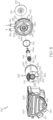
FIG. 2 is a front perspective exploded view of the e-charger ofFIG. 1 ; -
FIG. 3 is a rear perspective exploded view of the e-charger ofFIG. 1 ; -
FIG. 4 is a longitudinal section view of a motor stator and motor case of the e-charger taken along the line 4-4 ofFIG. 2 ; -
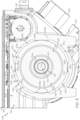
FIG. 5 is a cross-sectional view of the e-charger taken along the line 5-5 ofFIG. 1 ; -
FIG. 6 is a front perspective view of a coolant flow circuit through the e-charger ofFIG. 1 ; and -
FIG. 7 is a rear perspective view of the coolant flow circuit through the e-charger ofFIG. 1 . - The following detailed description is merely exemplary in nature and is not intended to limit the present disclosure or the application and uses of the present disclosure. Furthermore, there is no intention to be bound by any theory presented in the preceding background or the following detailed description.
- Broadly, example embodiments disclosed herein include an improved e-charger. The disclosed e-charger may be a device with a motor that drives a compressor wheel for providing a compressed airstream to a downstream component (e.g., to a fuel cell stack, to an internal combustion engine, etc.). Also, the e-charger of the present disclosure may be configured as an electric supercharger, a hybrid turbocharger, an e-boost device, an e-turbo device, an e-assist charging device, or other related component.
- In particular, an e-charger and methods of manufacturing the same are disclosed, wherein the e-charger also includes a fluid system for a coolant (i.e., "a cooling system"). The cooling system may include a plurality of passages that may collectively define a cooling jacket that surrounds a majority of the motor. The passages may also be fluidly connected (e.g., in-series) from an inlet to an outlet.
- In some embodiments, the inlet and the outlet may be provided proximate one end of the motor. Also, in some embodiments, at least some of the passages may extend longitudinally toward the opposite end of the motor and other passages may extend back longitudinally toward the first end. There may also be at least one passage fluidly connecting two longitudinal passages, and in some embodiments, this connecting passage may extend along an end of the motor.
- Furthermore, in some embodiments, the cooling system may include distinct longitudinal passages that provide flow back-and-forth longitudinally between the ends of the motor. Also, end passages may fluidly connect different pairs of the longitudinal passages. These passages may provide cooling to the motor, to one or more bearings, and/or to other components of the e-charger.
- The disclosed e-charger may provide various advantages. For example, the layout and construction of the cooling system may be relatively simple and compact and, yet, may provide effective cooling for the motor, bearings, electronics, and/or other components. Also, flow through the cooling system may result in relatively low pressure loss. Also, the coolant may flow along a labyrinthine path at a relatively high Reynolds number, resulting in high cooling capacity. The cooling system provides high cooling efficiency and maintains the motor, bearing, and/or other components within acceptable operating temperatures for a long operating lifetime. The e-charger may operate at high efficiency in a wide variety of operating conditions as a result. Moreover, the e-charger may have high manufacturability due to the features of the present disclosure.
-
FIG. 1 is a schematic view of anexample e-charger 100 according to example embodiments of the present disclosure. It will be appreciated that the term "e-charger" as used herein will be understood broadly by those in the art, for example, to include devices with an electrically driven compressor wheel regardless of where thee-charger 100 is incorporated, the type of system in which thee-charger 100 is incorporated, etc. It will also be appreciated that thee-charger 100 of the present disclosure may also be referred to as an electrically driven compressor assembly. Also, thee-charger 100 of the present disclosure may be operatively attached to an exhaust-driven turbine wheel, for example, in a hybrid turbocharger or e-assist turbocharger. Thee-charger 100 may also be configured as an electric supercharger, as an e-boost device, e-turbo, or other related component. Also, thee-charger 100 may be fluidly and otherwise operatively coupled to additional charging devices, either upstream or downstream of thee-charger 100. - As shown, the
e-charger 100 may be incorporated within afuel cell system 102. Also, as shown, thee-charger 100 may be configured as an electric compressor device (i.e., electric supercharger) with a single-stage compressor. - Generally, the
e-charger 100 may include amotor section 110 with afirst end 199 and asecond end 200. Thee-charger 100 may also include acompressor section 111. Themotor section 110 may drive a rotatinggroup 118 of thee-charger 100 about anaxis 108 relative to ahousing 119 of thee-charger 100, thereby providing a compressed airstream (represented by arrow 124) to afuel cell stack 104 of thefuel cell system 102. - It will be appreciated that the
e-charger 100 and/or features of the present disclosure may be configured differently than the illustration. Also, it will be appreciated that thee-charger 100 may be incorporated within a system other than a fuel cell system. For example, thee-charger 100 may be configured for supplying thecompressed airstream 124 to an internal combustion engine, to another charging device, etc. - The
motor section 110 of thee-charger 100 may include anelectric motor 103 with astator 146 and a rotor 148 (FIGS. 2 ,3 , and5 ), which are centered on theaxis 108. Therotor 148 may be fixed to ashaft 150 for rotation as a unit about theaxis 108. Theshaft 150 may project from therotor 148 and away from thefirst end 199 of themotor section 110. Furthermore, themotor section 110 may include one or more parts of thehousing 119. For example, thehousing 119 may include amotor housing 123, which houses, encapsulates, and/or surrounds thestator 146 and at least part of therotor 148 in themotor section 110. - The
compressor section 111 may include acompressor wheel 130, which may be mounted on theshaft 150 at thefirst end 199 of themotor section 110. Thecompressor wheel 130 may be fixed to therotor 148 via theshaft 150 to rotate as a unit with therotating group 118 of the e-charger 100. Thecompressor wheel 130 may be fixed to theshaft 150 via one or more fasteners, weldments, and/or other attachment. Thecompressor section 111 may also include one or more parts of thehousing 119. Thecompressor section 111 may include a compressor housing member 136 (shown in phantom inFIG. 1 ). Thecompressor housing member 136 may be fixed to a side of the motor housing 123 (e.g., by fasteners, weldments, or other attachments). Thecompressor housing member 136 may include a volute structure with anaxial inlet 138 and anoutlet 143. Thecompressor housing member 136 may be a unitary, one-piececompressor housing member 136. Theaxial inlet 138 may be tubular, straight, and centered on theaxis 108. Theoutlet 143 may be directed outward and tangential to a circle that is centered on theaxis 108. - The
motor 103 may drivingly rotate thecompressor wheel 130 within thecompressor housing member 136 about theaxis 108. An inlet airstream (represented byarrow 122 inFIG. 1 ) may flow into theinlet 138 and flow through thecompressor housing 136. A resultant compressed airstream (represented by arrow 124) may be directed from theoutlet 143. In some embodiments, thecompressed airstream 124 may be cooled by anintercooler 128 and may flow to thefuel cell stack 104 for boosting the operating efficiency of thefuel cell system 102. - The fuel cell stack 104 (
FIG. 1 ) may contain a plurality of fuel cells. Hydrogen may be supplied to thefuel cell stack 104 from atank 106, and oxygen may be supplied to thefuel cell stack 104 to generate electricity by a known chemical reaction. Thefuel cell stack 104 may generate electricity for an additionalelectric motor 105 and/or other connected electrical devices. Thefuel cell system 102 may be included in a vehicle, such as a car, truck, sport utility vehicle, van, motorcycle, aircraft, etc. Accordingly, in some embodiments, theelectric motor 105 may convert the electrical power generated by thefuel cell stack 104 to mechanical power to drive and rotate an axle (and, thus, one or more wheels) of the vehicle. In some embodiments, thefuel cell stack 104 may provide electricity for thestator 146 to drivingly rotate therotor 148 and other components of therotating group 118 of the e-charger 100. However, it will be appreciated that thefuel cell system 102 may be configured for a different use without departing from the scope of the present disclosure. - Furthermore, an exhaust gas stream (represented by arrow 132) from the
fuel cell stack 104 may be exhausted to atmosphere as represented inFIG. 1 . Stated differently, theexhaust gas stream 132 may be directed away from the e-charger 100. In other embodiments, theexhaust gas stream 132 may be directed back toward the e-charger 100, for example, to drive rotation of a turbine wheel that is included in therotating group 118. This may, in turn, drive rotation of thecompressor wheel 130, for example, to assist theelectric motor 103. - The e-charger 100 and/or other components of the
fuel cell system 102 may be controlled by a controller 134 (FIG. 1 ). Thecontroller 134 may be a computerized system with a processor, various sensors, and other components for electrically controlling operation of the motor 112, thefuel cell stack 104, and/or other features of thesystem 102. In some embodiments, thecontroller 134 may define or may be part of the electrical control unit (ECU) of a vehicle. - Accordingly, the
controller 134 may generate control commands for turning themotor 103 of the e-charger 100 ON and OFF and/or for changing the speed of themotor 103. Thecontroller 134 may generate these control commands based on input from sensors. Thus, the speed of the motor 103 (and, thus, the rotational speed of the compressor wheel 130) may be controlled, for example, based on a sensed throttle position or other sensed characteristic of the system. - Furthermore, the e-charger 100 may include a cooling system, which is indicated generally at 152 in the Figures, and which will be discussed in detail below according to example embodiments. The
cooling system 152 may include aninlet 154, anoutlet 156 and a plurality of passages 158 (FIGS. 5-7 ) defined through thehousing 119 for conducting a flow of coolant (e.g., liquid coolant) from theinlet 154 to theoutlet 156. Thecooling system 152 may define a cooling jacket that surrounds a majority of themotor 103. As will be discussed, thecooling system 152 may be routed through thehousing 119 to provide effective cooling while also ensuring that the e-charger 100 is compact and relatively lightweight. Additionally, thecooling system 152 provides various manufacturing advantages as will be discussed. - Referring to
FIGS. 1-3 and5 , themotor housing 123 of the e-charger 100 will now be discussed in greater detail according to example embodiments. Themotor housing 123 may include an outer housing 202 (FIG. 1 ) with an outer body 203 (FIGS. 2 and3 ) (i.e., outer structure, outer member, etc.). Theouter body 203 may be block-shaped with a variety of rigid, strong, supportive structures made, for example, from metal. Theouter body 203 may include a receptacle 160 (FIG. 2 ). Thereceptacle 160 may be generally barrel-shaped, cylindrical, etc. Thereceptacle 160 may be centered on theaxis 108 and recessed along theaxis 108 from thefirst end 199 of themotor section 110 toward thesecond end 200. Thereceptacle 160 may be open at thefirst end 199 and closed off at thesecond end 200 by an end plate 164 (FIG. 3 ) of theouter body 203. As shown inFIG. 2 , thereceptacle 160 may include acircular rim 162. Thereceptacle 160 may also include an inner diameter surface 166 with one ormore projections FIGS. 2 and5 ). - The
projections 168a-168d may be elongate rails that project radially inward toward theaxis 108. Theprojections 168a-168d may extend longitudinally along the axis 108 (e.g., substantially parallel to the axis 108) from thefirst end 199 to thesecond end 200 of themotor section 110. Theprojections 168a-168d may be spaced substantially equally about theaxis 108. As shown, there may be fourprojections 168a-168d, which are spaced apart by ninety degrees (90°) from neighboring ones of theprojections 168a-168d with respect to theaxis 108. Eachprojection 168a-168d may include a respective inward-facingnest surface axis 108. The nest surfaces 169a-169d may also extend longitudinally along (e.g., parallel to) theaxis 108 between thefirst end 199 and thesecond end 200. - Also, the inner diameter surface 166 of the
receptacle 160 may includeintermediate surfaces nest surfaces 169a-169d. For example, as shown inFIG. 5 , theintermediate surface 170a may be defined between thenest surface 169a and thenest surface 169d. Theintermediate surface 170b may be defined between thenest surface 169a and thenest surface 169b. Theintermediate surface 170c may be defined between thenest surface 169b and thenest surface 169c. The intermediate surface 170d may be defined between thenest surface 169c and thenest surface 169d. Generally, theintermediate surfaces 170a-170d may contour arcuately about theaxis 108 and may extend longitudinally along theaxis 108 from thefirst end 199 to thesecond end 200 of themotor section 110. Theintermediate surfaces 170a-170d may also include various contoured surfaces that define the transitions to respective ones of thenest surfaces 169a-169d. - Furthermore, the
outer body 203 may include theend plate 164. Theend plate 164 may be a relatively flat panel that is arranged normal to theaxis 108 and that defines a majority of thesecond end 200 of themotor section 110. As shown inFIG. 2 , theend plate 164 may include an inner surface 172 that faces inwardly along theaxis 108 and that defines the closed longitudinal end of thereceptacle 160, proximate thesecond end 200. The inner surface 172 may include one or more recesses 174. For example, there may be twoarcuate recesses 174 arranged on opposite sides of theaxis 108. Furthermore, there may be anopening 171 for receivingelectrical connectors 176 of the motor 112. In addition, the inner surface 172 may include abearing mount 178. Thebearing mount 178 may be a hollow, cylindrical projection that is centered on theaxis 108. Thebearing mount 178 may be integrally connected to the other portions of theend plate 164 and may project inwardly along theaxis 108 partially into thereceptacle 160. - The
outer body 203 may further include one or moreelectrical connector structures 180 that project substantially radially outward. Theelectrical connector structures 180 may support one or more electrical connectors that provide electrical communication with thecontroller 134. - The
outer housing 202 may further include an end plate 210 (i.e., an end member). Theend plate 210 may be round, thin and disposed transverse (e.g., substantially perpendicular) to theaxis 108. Theend plate 210 may be removably attached to theouter body 203 at thefirst end 199 of themotor section 110 to cover over and close off thereceptacle 160. Theend plate 210 may be removably attached and fixed to theouter body 203 via fasteners in some embodiments. Theend plate 210 may include an inner surface 211 (FIG. 3 ) that faces inward into thereceptacle 160. Theinner surface 211 may include a bearing mount 213, which is hollow, cylindrical, and centered on theaxis 108. The bearing mount 213 may project along theaxis 108 partially into thereceptacle 160. Theinner surface 211 may also include a plurality ofprojections end plate 210. There may be fourprojections end plate 210 may further include acentral aperture 217. Theshaft 150 may pass through theend plate 210 via thecentral aperture 217. Thecompressor wheel 130 may be fixed to theshaft 150 to be disposed at anouter surface 219 of theend plate 210. - The e-charger 100 may additionally include one or more dampeners 182 (
FIG. 3 ). Thedampener 182 may be shaped as a continuous band with wavy or otherwise uneven surfaces on its inner and/or outer radially-facing surfaces. Thedampener 182 may have a thickness measured between these opposite radially-facing surfaces, and this thickness may remain substantially continuous along thedampener 182. Thedampener 182 may be made of an elastomeric material, a resilient metal material, or otherwise. Thedampener 182 may be received within the bearing mount 213. Thedampener 182 may resiliently deflect in the due to vibrations and/or other forces during operation. Thedampener 182 may resiliently recover to the neutral shape shown inFIG. 3 (i.e., thedampener 182 may be biased toward the neutral position) to counterbalance and/or dampen the vibrations or other forces. - The e-charger 100 may further include one or
more bearings shaft 150 for rotation about theaxis 108. In some embodiments, there may be twobearings bearing 214a may be disposed proximate thefirst end 199 and may include an outer member (e.g., an outer race) that is fixed within the bearing mount 213 of theend plate 210, an inner member (e.g., an inner race) that is fixed to theshaft 150, and a plurality of roller elements that are disposed between the outer member and the inner member for supporting rotation of theshaft 150. Theother bearing 214b may be disposed proximate thesecond end 200 and may include an outer member fixed within thebearing mount 178 of theend plate 164, an inner member fixed to theshaft 150, and roller elements disposed therebetween. - The
motor housing 123 may further include amotor case 228. Themotor case 228 may encase themotor 103, and themotor case 228 may be received within thereceptacle 160 of theouter body 203. Themotor case 228 may be substantially cylindrical and hollow. The exterior of themotor case 228 may include a firstlongitudinal end face 230, anouter diameter surface 232, and a secondlongitudinal end face 234. Theouter diameter surface 232 may extend circumferentially about theaxis 108 and may extend longitudinally between the first and second longitudinal end faces 230, 234. Theouter diameter surface 232 may be centered with respect to theaxis 108. A majority of theouter diameter surface 232 may be substantially smooth and continuous about theaxis 108. The first and second longitudinal end faces 230, 234 may be disposed on opposite ends of theouter diameter surface 232 with the firstlongitudinal end face 230 proximate thefirst end 199 of themotor section 110 and the secondlongitudinal end face 234 proximate thesecond end 200. The first and second longitudinal end faces 230, 234 may be annular and may be disposed substantially perpendicular to theaxis 108. - The first
longitudinal end face 230 may include a plurality of rail-like projections FIG. 2 ) that project along theaxis 108 toward thefirst end 199. Eachprojection 221a-221d may extend radially from acentral opening 223 to the outer diameter of theend face 230. In some embodiments, there may be fourprojections 221a-221d that are spaced apart equally about the axis 108 (e.g., spaced apart by ninety degrees (90°)). The inner ends of theprojections 221a-221d may also be flush with anannular projection 225 that encircles thecentral opening 223. The secondlongitudinal end face 234 may include a projection 235 (FIG. 3 ) that projects along theaxis 108 toward thesecond end 200 from surrounding areas of theface 234. A portion of the projection 235 may extend about theconnectors 176 and about acentral opening 237 of theend face 234. Another portion of the projection 235 may be rail-shaped and may extend in the radial direction away from thecentral opening 237 to the outer diameter of theend face 234. - The
rotor 148 and thestator 146 may be disposed longitudinally between the first and second longitudinal end faces 230, 234, and theouter diameter surface 232 may continuously surround and cover over thestator 146. Theshaft 150 may extend through thecentral openings bearings - In some embodiments, the
motor case 228 may be formed via a casting process and may be formed of metal. Also, as shown inFIGS. 2-4 , themotor case 228 may be a multi-part shell conforming in shape to thestator 146. For example, afirst member 227 of themotor case 228 may define the firstlongitudinal end face 230, and asecond member 229 of themotor case 228 may define the secondlongitudinal end face 234 and a majority of theouter diameter surface 232. Thus, in some embodiments, thesecond member 229 may be a hollow cylindrical structure with an open end that is closed off and covered by thefirst member 227. Also, as shown inFIG. 4 , thefirst member 227 may receive anupper rim portion 231 of thesecond member 229 and may be fixedly attached thereto. Afirst seal member 233 may be included for creating a substantially hermetic seal between the first andsecond members first seal member 233 may be an O-ring that is received in an outer diameter groove of thesecond member 229 and that seals against a substantially smooth opposing surface of the first member. - The
motor case 228 and themotor 103 therein may be received within theouter housing 202. Specifically, themotor case 228 may be received within thereceptacle 160 of theouter body 203, and theend plate 164 may be fixed to the rim 162 (i.e., theend plate 164 andouter body 203 cooperatively house themotor case 228 and themotor 103 therein). Themotor case 228 may be received in thereceptacle 160 with the secondlongitudinal end face 234 facing (opposing) the inner surface 172 of theend plate 164. Also, theouter diameter surface 232 may oppose the inner diameter surface 166 of theouter housing 202. Furthermore, with theend plate 210 installed on theouter housing 202, the firstlongitudinal end face 230 may oppose theinner surface 211. As shown inFIGS. 3 and4 , asecond seal member 236 may be included between the secondlongitudinal end face 234 and the inner surface 172 of theend plate 164. As shown inFIG. 3 , thesecond seal member 236 may extend along at least part of the projection 235. Thesecond seal member 236 may be made from an elastomeric material and may include afirst portion 238 that extends about theconnectors 176 and thecentral opening 237 and asecond portion 240 that extends along both radially-extending edges of the projection 235. Thesecond seal member 236 may substantially hermetically seal against the opposing inner surface 172. Additionally, there may one or more features (i.e., anti-rotation features) that retain themotor case 228 against rotation about theaxis 108 relative to theouter housing 202. - As mentioned above, the e-charger 100 may include the cooling system 152 (i.e., coolant jacket, cooling circuit, etc.). The
cooling system 152 may include a plurality of fluid channels, reservoirs, passages, circuits, etc. that receive one or more flows of liquid coolant. The coolant may flow through thecooling system 152 and remove heat from the e-charger 100 to maintain high operating efficiency. Thecooling system 152 and flow therethrough is illustrated schematically inFIGS. 6 and7 . Thecooling system 152 may extend through themotor housing 123, and a majority of thecooling system 152 may be cooperatively defined by (and defined between) theouter housing 202 and themotor case 228. The plurality offluid passages 158 of thecooling system 152 may be connected in-series in some embodiments from theinlet 154 to theoutlet 156. Fluid coolant may pass from theinlet 154, through thepassages 158, and out via theoutlet 156, and heat may transfer to the coolant and out of the e-charger 100 to maintain operations within a predetermined temperature range. For example, heat from the motor 222, thebearings housing 123 may transfer to the coolant to be carried away from the e-charger 100. - In some embodiments, different ones of the plurality of
passages 158 may be separated by one or more fluid boundaries 184 (i.e., dams, barriers, fluid retainers, etc.) as will be discussed, themotor case 228 may include a projection that partly defines the fluid boundary member, and theouter housing 202 may include a surface that nests with the projection. The surfaces may nest to cooperatively define therespective fluid boundary 184. The surfaces may "nest" in a variety of ways without departing from the scope of the present disclosure. For example, the surfaces may be flat and planar but closely adjacent to nest together. Also, in some embodiments, the surfaces may have corresponding contours, shapes, etc. One nesting surface may be concave while the other may be convex and may have corresponding radii in some embodiments. These surfaces may or may not come into abutting contact. - As shown in
FIGS. 2 ,3 ,6 , and7 , theinlet 154 and theoutlet 156 may both be disposed proximate thefirst end 199. Also, in some embodiments, theinlet 154 and theoutlet 156 may be substantially parallel (i.e., the axes of theinlet 154 andoutlet 156 may be straight and substantially parallel). Furthermore, theinlet 154 and theoutlet 156 may be disposed on a common side of theaxis 108 as shown. Theinlet 154 and theoutlet 156 may extend radially through theend plate 210. With theinlet 154 andoutlet 156 in this arrangement, the e-charger 100 may be compact and coolant lines to/from the e-charger 100 may be incorporated and attached easily to thefuel cell system 102. - The plurality of passages 158 (
FIGS. 5-7 ) may define a single, continuous fluid path from theinlet 154 to theoutlet 156. Thepassages 158 and the fluid flow path through thecooling system 152 is illustrated inFIGS. 6 and7 . For purposes of clarity, only the voids defined between theouter housing 202 and the motor case 208 are shown inFIGS. 6 and7 . Some of thefluid boundaries 184 are indicated inFIGS. 6 and7 with cross hatching for clarity to distinguish from thepassages 158. - In some embodiments, the plurality of
passages 158 may include at least one longitudinal passage, which extend generally along theaxis 108 between thefirst end 199 and thesecond end 200. For example, there may be at least four such longitudinal passages. In the illustrated embodiments, for example, the e-charger 100 may include a firstlongitudinal passage 244, a secondlongitudinal passage 248, a thirdlongitudinal passage 250, and a fourthlongitudinal passage 252. At least one of these longitudinal passages may extend substantially parallel to theaxis 108 and may direct the coolant in either a first direction along the axis (from thefirst end 199 to the second end 200) or in a second direction (from thesecond end 200 to the first end 199). - Also, the plurality of
passages 158 may include at least one transverse passage, which extend transverse to the axis 108 (generally radially and/or arcuately about the axis). According to the invention the transverse passage(s) provides flow in the radial and circumferential direction with respect to theaxis 108. Also, the transverse passage may be disposed proximate thefirst end 199 or thesecond end 200. For example, the e-charger 100 may include a first end receiving passage 242 (a first transverse passage). As shown in the illustrated embodiments ofFIGS. 6 and7 , theinlet 154 may be fluidly connected to thefirst receiving passage 242. Other transverse passages may be included, such as a secondend connecting passages end connecting passage 256, and a firstend discharge passage 258. - The first
end receiving passage 242 may be defined at thefirst end 199 between theend plate 210 and the firstlongitudinal end face 230 of themotor case 228. Theprojections end plate 210 may nest, respectively, against theprojections motor case 228 to cooperatively define a wall, dam, or otherfluid boundary 184 for directing flow of the coolant. These opposing surfaces of theend plate 210 and themotor case 228 may be closely adjacent and, in some embodiments, may abut and/or seal together. However, this is not mandatory, and some amount of permitted leakage may occur across the nesting surfaces while theboundary 184 contains a majority of the coolant within thepassage 242. - As shown, the first
end receiving passage 242 may be confined to a first quadrant of the e-charger 100 with respect to theaxis 108 at thefirst end 199 of the e-charger 100. Flow into the firstend receiving passage 242 may be received from theinlet 154 radially, and redirected transversely and arcuately about theaxis 108, for example, to provide cooling to thebearing 214a. Flow from the firstend receiving passage 242 may also be redirected toward the firstlongitudinal passage 244. This flow within and through the firstend receiving passage 242 is illustrated generally byarrow 243 inFIG. 6 . - The first
longitudinal passage 244 may be defined between theouter diameter surface 232 of themotor case 228 and the inner diameter surface 166 of theouter body 203. More specifically, thepassage 244 may be defined between theintermediate surface 170a and theouter diameter surface 232 as shown inFIG. 5 . The firstlongitudinal passage 244 may be fluidly connected to the firstend receiving passage 242 and may receive flow therefrom. Thenest surface 169a may nest with thesurface 232 of themotor case 228, and thenest surface 169d may nest with thesurface 232 to define the respectivefluid boundaries 184. As shown inFIG. 5 , the firstlongitudinal passage 244 may be arcuate with respect to theaxis 108. The firstlongitudinal passage 244 may extend arcuately within the first quadrant of the axis 108 (along with the first end receiving passage 242), and the firstlongitudinal passage 244 may pass longitudinally from thefirst end 199 to thesecond end 200 as indicated byarrow 245. The axis of thepassage 244 may be parallel to theaxis 108 in some embodiments. Coolant flow from the firstend receiving passage 242 may be received and directed longitudinally along theaxis 108 for cooling themotor 103. - Furthermore, as shown in
FIG. 7 , thecooling system 152 may include the secondend connecting passage 246. The secondend connecting passage 246 may be defined at thesecond end 200 between theend plate 164 and the secondlongitudinal end face 234 of themotor case 228. Thefirst portion 238 and thesecond portion 240 of the projection 235 may nest against the inner surface 172 of theend plate 164 to define the secondend connecting passage 246 for cooperatively defining arespective fluid boundary 184. As shown, thefluid boundaries 184 may define the secondend connecting passage 246 across the first quadrant and circumferentially to a second quadrant with respect to theaxis 108 at thesecond end 200 of the e-charger 100. Flow from the firstlongitudinal passage 244 may be received by the secondend connecting passage 246 and may flow arcuately about theaxis 108, for example, to provide cooling to thebearing 214b. Flow from the secondend connecting passage 246 may also be redirected toward the secondlongitudinal passage 248 of thecooling system 152. This flow is illustrated generally by arrow 247 inFIG. 7 . - The second
longitudinal passage 248 may be defined between theouter diameter surface 232 of themotor case 228 and the inner diameter surface 166 of theouter body 203. More specifically, thepassage 248 may be defined between the intermediate surface 170d and theouter diameter surface 232 as shown inFIG. 5 . The secondlongitudinal passage 248 may be fluidly connected to the secondend connecting passage 246 and may receive flow therefrom. Thenest surface 169d may nest, abut, and substantially conform to thesurface 232 of themotor case 228, and thenest surface 169c may nest, abut, and substantially conform to thesurface 232 of themotor case 228 to define therespective fluid boundary 184. As shown inFIG. 5 , the secondlongitudinal passage 248 may be arcuate with respect to theaxis 108. The secondlongitudinal passage 248 may extend arcuately within the second quadrant of the axis 108 (along with the second end connecting passage 246), and the secondlongitudinal passage 248 may pass longitudinally from thesecond end 200 to thefirst end 199 as indicated byarrow 249. The axis of thepassage 244 may be parallel to theaxis 108 in some embodiments. Coolant flow from the secondend connecting passage 246 may be received by the secondlongitudinal passage 248 and directed longitudinally along theaxis 108 from thesecond end 200 toward thefirst end 199 for cooling themotor 103. Flow from the secondlongitudinal passage 248 may be received in the first end connecting passage 256 (FIG. 6 ). - The first
end connecting passage 256 may be defined at thefirst end 199 between theend plate 210 and the firstlongitudinal end face 230 of themotor case 228. Theprojections end plate 210 may nest, respectively, against theprojections motor case 228 to cooperatively define therespective fluid boundary 184. Also, theprojection 215c may be spaced apart from theprojection 221c in the longitudinal direction to define a gap that allows passage of the fluid from the second quadrant to a third quadrant of the e-charger 100. This flow path is indicated byarrow 257 inFIG. 6 . This flow may allow the coolant in the firstend connecting passage 256 to remove heat from thebearing 214a and/or themotor 103. Flow from the firstend connecting passage 256 may be received in the thirdlongitudinal passage 250. - The third
longitudinal passage 250 may be defined between theouter diameter surface 232 of themotor case 228 and the inner diameter surface 166 of theouter body 203. More specifically, thepassage 250 may be defined between theintermediate surface 170c and theouter diameter surface 232 as shown inFIG. 5 . Thenest surface 169c may nest, abut, and/or substantially conform to thesurface 232 of themotor case 228, and thenest surface 169b may nest, abut, and/or substantially conform to thesurface 232 of themotor case 228 to definerespective boundaries 184. As shown inFIG. 5 , the thirdlongitudinal passage 250 may be arcuate with respect to theaxis 108. The thirdlongitudinal passage 250 may extend arcuately within the third quadrant of theaxis 108, and the thirdlongitudinal passage 250 may pass longitudinally from thefirst end 199 to thesecond end 200 as indicated byarrow 251. The axis of thepassage 250 may be parallel to theaxis 108 in some embodiments. Coolant flow from the firstend connecting passage 256 may be received by the thirdlongitudinal passage 250 and directed longitudinally along theaxis 108 from thefirst end 199 to thesecond end 200 for cooling themotor 103. Flow from the thirdlongitudinal passage 250 may be received in the second end connecting passage 254 (FIG. 7 ). - The second
end connecting passage 254 may be defined at thesecond end 200 between theend plate 164 and the secondlongitudinal end face 234 of themotor case 228. Thefirst portion 238 and thesecond portion 240 of the projection 235 may nest against the inner surface 172 of theend plate 164 to define the secondend connecting passage 246 for cooperatively defining thefluid boundary 184. As shown, the secondend connecting passage 254 may be confined to the third quadrant and a fourth quadrant of the e-charger 100. Flow from the thirdlongitudinal passage 250 may be received by the secondend connecting passage 254 and may flow arcuately about theaxis 108, for example, to provide cooling to thebearing 214b. Flow from the secondend connecting passage 254 may also be redirected to the fourthlongitudinal passage 252 of thecooling system 152. This flow is illustrated generally byarrow 253 inFIG. 7 . - The fourth
longitudinal passage 252 may be defined between theouter diameter surface 232 of themotor case 228 and the inner diameter surface 166 of theouter body 203. More specifically, thepassage 252 may be defined between theintermediate surface 170b and theouter diameter surface 232 as shown inFIG. 5 . Thenest surface 169b may nest, abut, and/or substantially conform to thesurface 232 of themotor case 228, and thenest surface 169a may nest, abut, and/or substantially conform to thesurface 232 of themotor case 228 to definerespective boundaries 184 of the fourthlongitudinal passage 252. As shown inFIG. 5 , the fourthlongitudinal passage 252 may be arcuate with respect to theaxis 108. The fourthlongitudinal passage 252 may extend arcuately within the fourth quadrant of theaxis 108, and the fourthlongitudinal passage 252 may pass longitudinally from thesecond end 200 to thefirst end 199 as indicated byarrow 253. The axis of thepassage 252 may be parallel to theaxis 108 in some embodiments. Coolant flow from the secondend connecting passage 254 may be received by the fourthlongitudinal passage 252 and directed longitudinally along theaxis 108 from thesecond end 200 to thefirst end 199 for cooling themotor 103. Flow from the fourthlongitudinal passage 252 may be received in the first end discharge passage 258 (FIG. 6 ). - The first
end discharge passage 258 may be defined at thefirst end 199 between theend plate 210 and the firstlongitudinal end face 230 of themotor case 228. Theprojections end plate 210 may nest, respectively, against theprojections motor case 228 to cooperatively define therespective fluid boundary 184 for directing flow of the coolant. As shown, the firstend discharge passage 258 may be confined to the fourth quadrant of the e-charger 100 with respect to theaxis 108 at thefirst end 199 of the e-charger 100. Flow from the fourthlongitudinal passage 252 may be received by the firstend discharge passage 258 and turned radially, and redirected transversely and arcuately about theaxis 108, for example, to provide cooling to thebearing 214a. The firstend discharge passage 258 may also be connected to theoutlet 156. Thus, hot coolant may exit the e-charger 100 via theoutlet 156 to be replaced by fresh (lower temperature) coolant entering via theinlet 154. - The e-charger 100 may be highly manufacturable. The
outer housing 202 may be formed via casting methods from aluminum in some embodiments. Themotor case 228 may also be cast, for example, from aluminum. Thestator 146 androtor 148 may be formed to a predetermined shape, size, and configuration, and themotor 103 may be assembled within themotor case 228. Potting material may be used, and in some embodiments, the potting material may be conductive epoxy to maximize heat transfer through themotor 103 andmotor case 228. Once assembled, themotor case 228 may be inserted into and enclosed within theouter housing 202 as discussed above. Then, thecompressor section 111 may be installed and attached to themotor section 110. Subsequently, the e-charger 110 may be installed into thefuel cell system 102, for example, by attaching theelectrical connectors 180 to thecontrol system 134, by fluidly connecting theinlet 138 and theoutlet 143 for airflow, and by fluidly connecting theinlet 154 and theoutlet 156 for liquid coolant flow. - It will be appreciated that the
cooling system 152 provides effective cooling. Also, the e-charger 100 is relatively compact, with a highly manufacturable design. Moreover, because thepassages 158 are arranged in-series, there may be relatively few interfaces, seals, etc. to maintain. Additionally, this layout increases manufacturability. Furthermore, thecooling system 152 surrounds (jackets) thestator 146, thebearings e-charger 100 for highly effective cooling. Also, thecooling system 152 may maintain suitable fluid pressure throughout and may avoid significant pressure loss therethrough. - While at least one exemplary embodiment has been presented in the foregoing detailed description, it should be appreciated that a vast number of variations exist. It should also be appreciated that the exemplary embodiment or exemplary embodiments are only examples, and are not intended to limit the scope, applicability, or configuration of the present disclosure in any way. Rather, the foregoing detailed description will provide those skilled in the art with a convenient road map for implementing an exemplary embodiment of the present disclosure. It is understood that various changes may be made in the function and arrangement of elements described in an exemplary embodiment without departing from the scope of the present disclosure as set forth in the appended claims.
Claims (14)
- An e-charger comprising:a motor (112) that drives a shaft (150) for rotation about an axis (108), the axis extending through a first end (199) of the motor and a second end (200) of the motor;a compressor wheel (130) that is attached to the shaft to be rotatably driven by the motor to thereby provide a compressed fluid stream;a motor case (228) that encases the motor;an outer housing (202) that houses the motor case; anda cooling system (152) with an inlet, an outlet, and a plurality of passages (158) fluidly connecting the inlet and the outlet, the plurality of passages cooperatively defined by the outer housing and the motor case, the plurality of passages including a first longitudinal passage, a second longitudinal passage, and an end passage, the first longitudinal passage extending between the first and second ends of the motor, the second longitudinal passage extending between the second and first ends of the motor, the end passage disposed proximate the first end and fluidly connecting the first longitudinal passage and the second longitudinal passage, the cooling system configured for directing flow of the coolant from the inlet, through the first longitudinal passage in a first longitudinal direction with respect to the axis, radially and circumferentially through the end passage with respect to the axis, and back through the second longitudinal passage in a second longitudinal direction with respect to the axis.
- The e-charger of claim 1, wherein the plurality of passages (158) includes at least four longitudinal passages that extend between the first and second ends of the motor, the first longitudinal passage and the second longitudinal passage being ones of the at least four longitudinal passages; andwherein the cooling system is configured for directing flow of the coolant through two of the at least four longitudinal passages in the first longitudinal direction; andwherein the cooling system is configured for directing flow of the coolant through another two of the at least four longitudinal passages in the second longitudinal direction, wherein,optionally,
the plurality of passages includes a first longitudinal passage disposed in a first quadrant with respect to the axis, a second longitudinal passage disposed in a second quadrant with respect to the axis, a third longitudinal passage disposed in a third quadrant with respect to the axis, and a fourth longitudinal passage disposed in a fourth quadrant with respect to the axis. - The e-charger of any preceding claim, wherein the first longitudinal passage and the second longitudinal passage are arcuate with respect to the axis (108).
- The e-charger of any preceding claim, wherein the motor case includes a first end face proximate the first end (199), a second end face proximate the second end (200), and an outer diameter surface that extends longitudinally between the first end face and the second end face; and
wherein the first end face cooperates with the outer housing to define the end passage. - The e-charger of any preceding claim, wherein the inlet and the outlet are disposed proximate the first end (199).
- The e-charger of claim 5, wherein the inlet has an inlet axis and the outlet has an outlet axis;
wherein the inlet axis and the outlet axis are substantially parallel. - The e-charger of claim 6, wherein the inlet and the outlet are disposed on a common side of the axis (108).
- The e-charger of claim 7, further comprising a bearing;wherein the outer housing includes a body (203) with a receptacle (160) that receives the motor case and an end member that is attached to the body, the body and the end member cooperatively housing the motor case, the end member including a bearing mount (178) and an aperture (217);wherein the bearing is connected to the bearing mount and the shaft, wherein the bearing supports rotation of the shaft relative to the bearing mount, wherein the shaft extends through the aperture, and wherein the end member is disposed between the motor case and the compressor wheel; andwherein the inlet and the outlet are defined in the end member of the outer housing, wherein, optionally,
the bearing is a first bearing and the bearing mount is a first bearing mount;further comprising a second bearing;wherein the body includes a second bearing mount; andwherein the end passage is proximate the second bearing for directing flow of the coolant to cool the second bearing. - The e-charger of any preceding claim, wherein the outer housing includes a body with a receptacle that receives the motor case and an end member that is attached to the body, the body and the end member cooperatively housing the motor case;wherein the motor case includes a first end face that faces the end member;wherein the cooling system includes a first chamber that fluidly connects the inlet and the first longitudinal passage, the first chamber cooperatively defined by the end member and the first end face of the motor case.
- The e-charger of claim 9, wherein the cooling system includes a second chamber cooperatively defined by the end member and the first end face of the motor case;wherein the cooling system includes a third longitudinal passage that extends between the first end and the second end of the motor case; andwherein the cooling system is configured for directing flow of the coolant from the inlet, through the first chamber, through the first longitudinal passage in the first longitudinal direction, through the end passage, through the second longitudinal passage in the second longitudinal direction, into the second chamber, and into the third longitudinal passage, wherein, optionally, the motor case includes the first end face, a second end face proximate the second end, and an outer diameter surface that extends longitudinally between the first end face and the second end face;wherein the cooling system includes a third chamber cooperatively defined by the end member and the first end face of the motor case;wherein the end passage is a first connecting passage cooperatively defined by the second end face and the body;wherein the cooling system includes a fourth longitudinal passage that extends between the first end and the second end of the motor case;wherein the cooling system includes a second connecting passage cooperatively defined by the second end face and the body, the second connecting passage fluidly connecting the third longitudinal passage and the fourth longitudinal passage; andwherein the cooling system is configured for directing flow of the coolant from the inlet, through the first chamber, through the first longitudinal passage in the first longitudinal direction, through the first connecting passage, through the second longitudinal passage in the second longitudinal direction, into the second chamber, into the third longitudinal passage in the first longitudinal direction, into the second connecting passage, into the fourth longitudinal passage in the second longitudinal direction, into the third chamber and out via the outlet.
- The e-charger of any preceding claim, wherein one of the motor case and the outer housing includes a projection, wherein the other of the motor case and the outer housing includes a surface that nests with the projection to cooperatively define a fluid boundary between adjacent ones of the plurality of passages, wherein, optionally,
the outer housing includes an inner diameter surface that includes the projection, and wherein the motor case includes the surface that nests with the projection, the surface of the motor case that nests with the projection being substantially smooth. - The e-charger of any preceding claim, wherein the first longitudinal passage extends along a first passage axis, and the second longitudinal passage extends along a second passage axis, the first passage axis and the second passage axis being substantially parallel to the axis of the motor.
- The e-charger of any preceding claim, wherein the motor case includes a first member and a second member that is attached to the first member with a seal member disposed therebetween.
- A method of manufacturing an e-charger comprising:encasing a motor (112) in a motor case (228), the motor configured to drive a shaft (150) for rotation about an axis, the axis extending through a first end (199) of the motor and a second end (200) of the motor;attaching a compressor wheel (130) to the shaft to be rotatably driven by the motor to thereby provide a compressed fluid stream;housing the motor case with an outer housing (202), including providing a cooling system that is at least partly disposed between motor case and the outer housing, the cooling system including an inlet, an outlet, and a plurality of passages (158) fluidly connecting the inlet and the outlet, the plurality of passages cooperatively defined by the outer housing and the motor case, the plurality of passages including a first longitudinal passage, a second longitudinal passage, and an end passage, the first longitudinal passage extending between the first and second ends of the motor, the second longitudinal passage extending between the second and first ends of the motor, the end passage disposed proximate the first end and fluidly connecting the first longitudinal passage and the second longitudinal passage, the cooling system configured for directing flow of coolant from the inlet, through the first longitudinal passage in a first longitudinal direction with respect to the axis, radially and circumferentially through the end passage with respect to the axis, and back through the second longitudinal passage in a second longitudinal direction with respect to the axis.
Applications Claiming Priority (1)
| Application Number | Priority Date | Filing Date | Title |
|---|---|---|---|
| US16/696,313 US11732638B2 (en) | 2019-11-26 | 2019-11-26 | E-charger with longitudinal cooling passage |
Publications (2)
| Publication Number | Publication Date |
|---|---|
| EP3829037A1 EP3829037A1 (en) | 2021-06-02 |
| EP3829037B1 true EP3829037B1 (en) | 2025-06-11 |
Family
ID=72521438
Family Applications (1)
| Application Number | Title | Priority Date | Filing Date |
|---|---|---|---|
| EP20196284.2A Active EP3829037B1 (en) | 2019-11-26 | 2020-09-15 | E-charger with longitudinal cooling passage |
Country Status (3)
| Country | Link |
|---|---|
| US (2) | US11732638B2 (en) |
| EP (1) | EP3829037B1 (en) |
| CN (1) | CN112953119A (en) |
Families Citing this family (7)
| Publication number | Priority date | Publication date | Assignee | Title |
|---|---|---|---|---|
| US11221054B2 (en) * | 2019-11-26 | 2022-01-11 | Garrett Transportation I Inc | E-charger with hybrid dampening system |
| US11732638B2 (en) * | 2019-11-26 | 2023-08-22 | Garrett Transportation I Inc. | E-charger with longitudinal cooling passage |
| JP7452711B2 (en) * | 2021-02-10 | 2024-03-19 | 株式会社Ihi | electric supercharger |
| CN114285212B (en) * | 2021-12-17 | 2023-07-04 | 浙江鸿运实业有限公司 | Range-extending motor |
| US12320367B2 (en) * | 2023-02-01 | 2025-06-03 | Garrett Transportation I Inc. | Turbomachine with coolant jacket and turbulator insert member |
| CN117040203B (en) * | 2023-09-27 | 2023-12-08 | 福建中为电机有限公司 | High-efficient heat dissipation motor of new energy automobile |
| CN118508662B (en) * | 2024-07-12 | 2024-09-24 | 孚瑞肯电气(深圳)有限公司 | Waterproof type industry big fan driver |
Family Cites Families (9)
| Publication number | Priority date | Publication date | Assignee | Title |
|---|---|---|---|---|
| US7675209B2 (en) * | 2007-02-01 | 2010-03-09 | Honeywell International Inc. | Electric motor cooling jacket |
| DE102007035271A1 (en) | 2007-07-27 | 2009-01-29 | Continental Automotive Gmbh | electric motor |
| US9356492B2 (en) * | 2013-05-30 | 2016-05-31 | Remy Technologies, Llc | Electric machine with liquid cooled housing |
| DE102015102270A1 (en) | 2014-03-07 | 2015-09-10 | Ecomotors, Inc. | Isolation of an electric machine |
| US10097066B2 (en) | 2016-03-17 | 2018-10-09 | Ford Global Technologies, Llc | Electric machine for vehicle |
| US9976561B2 (en) | 2016-04-11 | 2018-05-22 | Borgwarner Inc. | Method for securing stator in high speed electric motors |
| US10539160B2 (en) * | 2017-04-19 | 2020-01-21 | Garrett Transportation I Inc | Damping system for an e-charger |
| CN110299787B (en) | 2019-06-17 | 2020-05-22 | 常州环能涡轮动力股份有限公司 | Electric supercharger and cooling structure thereof |
| US11732638B2 (en) * | 2019-11-26 | 2023-08-22 | Garrett Transportation I Inc. | E-charger with longitudinal cooling passage |
-
2019
- 2019-11-26 US US16/696,313 patent/US11732638B2/en active Active
-
2020
- 2020-09-15 EP EP20196284.2A patent/EP3829037B1/en active Active
- 2020-11-26 CN CN202011346826.5A patent/CN112953119A/en active Pending
-
2023
- 2023-03-30 US US18/192,669 patent/US12168953B2/en active Active
Also Published As
| Publication number | Publication date |
|---|---|
| US20210156299A1 (en) | 2021-05-27 |
| EP3829037A1 (en) | 2021-06-02 |
| US12168953B2 (en) | 2024-12-17 |
| US20230235696A1 (en) | 2023-07-27 |
| US11732638B2 (en) | 2023-08-22 |
| CN112953119A (en) | 2021-06-11 |
Similar Documents
| Publication | Publication Date | Title |
|---|---|---|
| EP3829037B1 (en) | E-charger with longitudinal cooling passage | |
| EP3623597B1 (en) | Cooling system for e-charger assembly | |
| EP3882468B1 (en) | Compressor with cooled air passage and liquid coolant passage in axial heat exchanger arrangement | |
| US11913473B2 (en) | Compressor with electric motor coolant jacket having radial and axial portions | |
| EP3401548B1 (en) | Damping system for an e-charger | |
| CN110541831A (en) | Multi-stage compressor with turbine section for fuel cell systems | |
| EP3828422B1 (en) | E-charger with hybrid dampening system | |
| EP3734080B1 (en) | Single-stage compressor with thrust load suppression section | |
| US11689076B2 (en) | Motor cooling system for e-boosting device | |
| US12320367B2 (en) | Turbomachine with coolant jacket and turbulator insert member | |
| EP4057484B1 (en) | Compressor with electric motor coolant jacket having radial and axial portions | |
| EP4151844B1 (en) | Turbomachine with e-machine housing thermal fluid retainer member |
Legal Events
| Date | Code | Title | Description |
|---|---|---|---|
| PUAI | Public reference made under article 153(3) epc to a published international application that has entered the european phase |
Free format text: ORIGINAL CODE: 0009012 |
|
| STAA | Information on the status of an ep patent application or granted ep patent |
Free format text: STATUS: REQUEST FOR EXAMINATION WAS MADE |
|
| 17P | Request for examination filed |
Effective date: 20200915 |
|
| AK | Designated contracting states |
Kind code of ref document: A1 Designated state(s): AL AT BE BG CH CY CZ DE DK EE ES FI FR GB GR HR HU IE IS IT LI LT LU LV MC MK MT NL NO PL PT RO RS SE SI SK SM TR |
|
| P01 | Opt-out of the competence of the unified patent court (upc) registered |
Effective date: 20230424 |
|
| RIC1 | Information provided on ipc code assigned before grant |
Ipc: H02K 7/18 20060101ALN20250120BHEP Ipc: F02C 6/12 20060101ALN20250120BHEP Ipc: H02K 9/19 20060101ALI20250120BHEP Ipc: H02K 5/20 20060101AFI20250120BHEP |
|
| RIC1 | Information provided on ipc code assigned before grant |
Ipc: H02K 7/18 20060101ALN20250206BHEP Ipc: F02C 6/12 20060101ALN20250206BHEP Ipc: H02K 9/19 20060101ALI20250206BHEP Ipc: H02K 5/20 20060101AFI20250206BHEP |
|
| GRAP | Despatch of communication of intention to grant a patent |
Free format text: ORIGINAL CODE: EPIDOSNIGR1 |
|
| STAA | Information on the status of an ep patent application or granted ep patent |
Free format text: STATUS: GRANT OF PATENT IS INTENDED |
|
| RIC1 | Information provided on ipc code assigned before grant |
Ipc: H02K 7/18 20060101ALN20250226BHEP Ipc: F02C 6/12 20060101ALN20250226BHEP Ipc: H02K 9/19 20060101ALI20250226BHEP Ipc: H02K 5/20 20060101AFI20250226BHEP |
|
| RIC1 | Information provided on ipc code assigned before grant |
Ipc: H02K 7/18 20060101ALN20250303BHEP Ipc: F02C 6/12 20060101ALN20250303BHEP Ipc: H02K 9/19 20060101ALI20250303BHEP Ipc: H02K 5/20 20060101AFI20250303BHEP |
|
| INTG | Intention to grant announced |
Effective date: 20250314 |
|
| GRAS | Grant fee paid |
Free format text: ORIGINAL CODE: EPIDOSNIGR3 |
|
| GRAA | (expected) grant |
Free format text: ORIGINAL CODE: 0009210 |
|
| STAA | Information on the status of an ep patent application or granted ep patent |
Free format text: STATUS: THE PATENT HAS BEEN GRANTED |
|
| AK | Designated contracting states |
Kind code of ref document: B1 Designated state(s): AL AT BE BG CH CY CZ DE DK EE ES FI FR GB GR HR HU IE IS IT LI LT LU LV MC MK MT NL NO PL PT RO RS SE SI SK SM TR |
|
| REG | Reference to a national code |
Ref country code: GB Ref legal event code: FG4D |
|
| REG | Reference to a national code |
Ref country code: CH Ref legal event code: EP |
|
| REG | Reference to a national code |
Ref country code: DE Ref legal event code: R096 Ref document number: 602020052547 Country of ref document: DE |
|
| REG | Reference to a national code |
Ref country code: IE Ref legal event code: FG4D |
|
| PG25 | Lapsed in a contracting state [announced via postgrant information from national office to epo] |
Ref country code: FI Free format text: LAPSE BECAUSE OF FAILURE TO SUBMIT A TRANSLATION OF THE DESCRIPTION OR TO PAY THE FEE WITHIN THE PRESCRIBED TIME-LIMIT Effective date: 20250611 Ref country code: ES Free format text: LAPSE BECAUSE OF FAILURE TO SUBMIT A TRANSLATION OF THE DESCRIPTION OR TO PAY THE FEE WITHIN THE PRESCRIBED TIME-LIMIT Effective date: 20250611 |
|
| PGFP | Annual fee paid to national office [announced via postgrant information from national office to epo] |
Ref country code: DE Payment date: 20250926 Year of fee payment: 6 |
|
| REG | Reference to a national code |
Ref country code: LT Ref legal event code: MG9D |
|
| PG25 | Lapsed in a contracting state [announced via postgrant information from national office to epo] |
Ref country code: GR Free format text: LAPSE BECAUSE OF FAILURE TO SUBMIT A TRANSLATION OF THE DESCRIPTION OR TO PAY THE FEE WITHIN THE PRESCRIBED TIME-LIMIT Effective date: 20250912 Ref country code: NO Free format text: LAPSE BECAUSE OF FAILURE TO SUBMIT A TRANSLATION OF THE DESCRIPTION OR TO PAY THE FEE WITHIN THE PRESCRIBED TIME-LIMIT Effective date: 20250911 |
|
| REG | Reference to a national code |
Ref country code: NL Ref legal event code: MP Effective date: 20250611 |
|
| PG25 | Lapsed in a contracting state [announced via postgrant information from national office to epo] |
Ref country code: BG Free format text: LAPSE BECAUSE OF FAILURE TO SUBMIT A TRANSLATION OF THE DESCRIPTION OR TO PAY THE FEE WITHIN THE PRESCRIBED TIME-LIMIT Effective date: 20250611 |
|
| PGFP | Annual fee paid to national office [announced via postgrant information from national office to epo] |
Ref country code: GB Payment date: 20250923 Year of fee payment: 6 |
|
| PG25 | Lapsed in a contracting state [announced via postgrant information from national office to epo] |
Ref country code: HR Free format text: LAPSE BECAUSE OF FAILURE TO SUBMIT A TRANSLATION OF THE DESCRIPTION OR TO PAY THE FEE WITHIN THE PRESCRIBED TIME-LIMIT Effective date: 20250611 |
|
| PGFP | Annual fee paid to national office [announced via postgrant information from national office to epo] |
Ref country code: FR Payment date: 20250925 Year of fee payment: 6 |
|
| PG25 | Lapsed in a contracting state [announced via postgrant information from national office to epo] |
Ref country code: RS Free format text: LAPSE BECAUSE OF FAILURE TO SUBMIT A TRANSLATION OF THE DESCRIPTION OR TO PAY THE FEE WITHIN THE PRESCRIBED TIME-LIMIT Effective date: 20250911 |
|
| PG25 | Lapsed in a contracting state [announced via postgrant information from national office to epo] |
Ref country code: LV Free format text: LAPSE BECAUSE OF FAILURE TO SUBMIT A TRANSLATION OF THE DESCRIPTION OR TO PAY THE FEE WITHIN THE PRESCRIBED TIME-LIMIT Effective date: 20250611 |
|
| PG25 | Lapsed in a contracting state [announced via postgrant information from national office to epo] |
Ref country code: NL Free format text: LAPSE BECAUSE OF FAILURE TO SUBMIT A TRANSLATION OF THE DESCRIPTION OR TO PAY THE FEE WITHIN THE PRESCRIBED TIME-LIMIT Effective date: 20250611 |
|
| PG25 | Lapsed in a contracting state [announced via postgrant information from national office to epo] |
Ref country code: PT Free format text: LAPSE BECAUSE OF FAILURE TO SUBMIT A TRANSLATION OF THE DESCRIPTION OR TO PAY THE FEE WITHIN THE PRESCRIBED TIME-LIMIT Effective date: 20251013 |
|
| REG | Reference to a national code |
Ref country code: AT Ref legal event code: MK05 Ref document number: 1803045 Country of ref document: AT Kind code of ref document: T Effective date: 20250611 |
|
| PG25 | Lapsed in a contracting state [announced via postgrant information from national office to epo] |
Ref country code: IS Free format text: LAPSE BECAUSE OF FAILURE TO SUBMIT A TRANSLATION OF THE DESCRIPTION OR TO PAY THE FEE WITHIN THE PRESCRIBED TIME-LIMIT Effective date: 20251011 |
|
| PG25 | Lapsed in a contracting state [announced via postgrant information from national office to epo] |
Ref country code: SM Free format text: LAPSE BECAUSE OF FAILURE TO SUBMIT A TRANSLATION OF THE DESCRIPTION OR TO PAY THE FEE WITHIN THE PRESCRIBED TIME-LIMIT Effective date: 20250611 Ref country code: AT Free format text: LAPSE BECAUSE OF FAILURE TO SUBMIT A TRANSLATION OF THE DESCRIPTION OR TO PAY THE FEE WITHIN THE PRESCRIBED TIME-LIMIT Effective date: 20250611 |
|
| PG25 | Lapsed in a contracting state [announced via postgrant information from national office to epo] |
Ref country code: CZ Free format text: LAPSE BECAUSE OF FAILURE TO SUBMIT A TRANSLATION OF THE DESCRIPTION OR TO PAY THE FEE WITHIN THE PRESCRIBED TIME-LIMIT Effective date: 20250611 |
|
| PG25 | Lapsed in a contracting state [announced via postgrant information from national office to epo] |
Ref country code: PL Free format text: LAPSE BECAUSE OF FAILURE TO SUBMIT A TRANSLATION OF THE DESCRIPTION OR TO PAY THE FEE WITHIN THE PRESCRIBED TIME-LIMIT Effective date: 20250611 |
|
| PG25 | Lapsed in a contracting state [announced via postgrant information from national office to epo] |
Ref country code: EE Free format text: LAPSE BECAUSE OF FAILURE TO SUBMIT A TRANSLATION OF THE DESCRIPTION OR TO PAY THE FEE WITHIN THE PRESCRIBED TIME-LIMIT Effective date: 20250611 |
|
| PG25 | Lapsed in a contracting state [announced via postgrant information from national office to epo] |
Ref country code: RO Free format text: LAPSE BECAUSE OF FAILURE TO SUBMIT A TRANSLATION OF THE DESCRIPTION OR TO PAY THE FEE WITHIN THE PRESCRIBED TIME-LIMIT Effective date: 20250611 Ref country code: SK Free format text: LAPSE BECAUSE OF FAILURE TO SUBMIT A TRANSLATION OF THE DESCRIPTION OR TO PAY THE FEE WITHIN THE PRESCRIBED TIME-LIMIT Effective date: 20250611 |
|
| REG | Reference to a national code |
Ref country code: DE Ref legal event code: R097 Ref document number: 602020052547 Country of ref document: DE |
|
| PG25 | Lapsed in a contracting state [announced via postgrant information from national office to epo] |
Ref country code: DK Free format text: LAPSE BECAUSE OF FAILURE TO SUBMIT A TRANSLATION OF THE DESCRIPTION OR TO PAY THE FEE WITHIN THE PRESCRIBED TIME-LIMIT Effective date: 20250611 |
|
| PG25 | Lapsed in a contracting state [announced via postgrant information from national office to epo] |
Ref country code: IT Free format text: LAPSE BECAUSE OF FAILURE TO SUBMIT A TRANSLATION OF THE DESCRIPTION OR TO PAY THE FEE WITHIN THE PRESCRIBED TIME-LIMIT Effective date: 20250611 |
|
| PLBE | No opposition filed within time limit |
Free format text: ORIGINAL CODE: 0009261 |
|
| STAA | Information on the status of an ep patent application or granted ep patent |
Free format text: STATUS: NO OPPOSITION FILED WITHIN TIME LIMIT |
|
| REG | Reference to a national code |
Ref country code: CH Ref legal event code: L10 Free format text: ST27 STATUS EVENT CODE: U-0-0-L10-L00 (AS PROVIDED BY THE NATIONAL OFFICE) Effective date: 20260423 |