EP3829028B1 - Method and devices for providing operational feedback during power transfer in a wireless power transfer system - Google Patents
Method and devices for providing operational feedback during power transfer in a wireless power transfer system Download PDFInfo
- Publication number
- EP3829028B1 EP3829028B1 EP19212476.6A EP19212476A EP3829028B1 EP 3829028 B1 EP3829028 B1 EP 3829028B1 EP 19212476 A EP19212476 A EP 19212476A EP 3829028 B1 EP3829028 B1 EP 3829028B1
- Authority
- EP
- European Patent Office
- Prior art keywords
- power
- transmit
- receive
- data packet
- frequency
- Prior art date
- Legal status (The legal status is an assumption and is not a legal conclusion. Google has not performed a legal analysis and makes no representation as to the accuracy of the status listed.)
- Active
Links
Images



Classifications
-
- H—ELECTRICITY
- H02—GENERATION; CONVERSION OR DISTRIBUTION OF ELECTRIC POWER
- H02J—ELECTRIC POWER NETWORKS; CIRCUIT ARRANGEMENTS OR SYSTEMS FOR SUPPLYING OR DISTRIBUTING ELECTRIC POWER; SYSTEMS FOR STORING ELECTRIC ENERGY
- H02J50/00—Circuit arrangements or systems for wireless supply or distribution of electric power
- H02J50/80—Circuit arrangements or systems for wireless supply or distribution of electric power involving the exchange of data, concerning supply or distribution of electric power, between transmitting devices and receiving devices
-
- H—ELECTRICITY
- H02—GENERATION; CONVERSION OR DISTRIBUTION OF ELECTRIC POWER
- H02J—ELECTRIC POWER NETWORKS; CIRCUIT ARRANGEMENTS OR SYSTEMS FOR SUPPLYING OR DISTRIBUTING ELECTRIC POWER; SYSTEMS FOR STORING ELECTRIC ENERGY
- H02J50/00—Circuit arrangements or systems for wireless supply or distribution of electric power
- H02J50/10—Circuit arrangements or systems for wireless supply or distribution of electric power using inductive coupling
-
- H—ELECTRICITY
- H04—ELECTRIC COMMUNICATION TECHNIQUE
- H04B—TRANSMISSION
- H04B17/00—Monitoring; Testing
- H04B17/10—Monitoring; Testing of transmitters
- H04B17/15—Performance testing
- H04B17/191—Over-the-air testing
-
- H—ELECTRICITY
- H04—ELECTRIC COMMUNICATION TECHNIQUE
- H04B—TRANSMISSION
- H04B5/00—Near-field transmission systems, e.g. inductive or capacitive transmission systems
- H04B5/20—Near-field transmission systems, e.g. inductive or capacitive transmission systems characterised by the transmission technique; characterised by the transmission medium
- H04B5/24—Inductive coupling
-
- H—ELECTRICITY
- H04—ELECTRIC COMMUNICATION TECHNIQUE
- H04B—TRANSMISSION
- H04B5/00—Near-field transmission systems, e.g. inductive or capacitive transmission systems
- H04B5/20—Near-field transmission systems, e.g. inductive or capacitive transmission systems characterised by the transmission technique; characterised by the transmission medium
- H04B5/24—Inductive coupling
- H04B5/26—Inductive coupling using coils
- H04B5/266—One coil at each side, e.g. with primary and secondary coils
-
- H—ELECTRICITY
- H04—ELECTRIC COMMUNICATION TECHNIQUE
- H04B—TRANSMISSION
- H04B5/00—Near-field transmission systems, e.g. inductive or capacitive transmission systems
- H04B5/70—Near-field transmission systems, e.g. inductive or capacitive transmission systems specially adapted for specific purposes
- H04B5/72—Near-field transmission systems, e.g. inductive or capacitive transmission systems specially adapted for specific purposes for local intradevice communication
-
- H—ELECTRICITY
- H04—ELECTRIC COMMUNICATION TECHNIQUE
- H04B—TRANSMISSION
- H04B5/00—Near-field transmission systems, e.g. inductive or capacitive transmission systems
- H04B5/70—Near-field transmission systems, e.g. inductive or capacitive transmission systems specially adapted for specific purposes
- H04B5/79—Near-field transmission systems, e.g. inductive or capacitive transmission systems specially adapted for specific purposes for data transfer in combination with power transfer
-
- H—ELECTRICITY
- H04—ELECTRIC COMMUNICATION TECHNIQUE
- H04L—TRANSMISSION OF DIGITAL INFORMATION, e.g. TELEGRAPHIC COMMUNICATION
- H04L27/00—Modulated-carrier systems
- H04L27/0008—Modulated-carrier systems arrangements for allowing a transmitter or receiver to use more than one type of modulation
-
- H—ELECTRICITY
- H04—ELECTRIC COMMUNICATION TECHNIQUE
- H04L—TRANSMISSION OF DIGITAL INFORMATION, e.g. TELEGRAPHIC COMMUNICATION
- H04L27/00—Modulated-carrier systems
- H04L27/02—Amplitude-modulated carrier systems, e.g. using on-off keying; Single sideband or vestigial sideband modulation
-
- H—ELECTRICITY
- H04—ELECTRIC COMMUNICATION TECHNIQUE
- H04L—TRANSMISSION OF DIGITAL INFORMATION, e.g. TELEGRAPHIC COMMUNICATION
- H04L27/00—Modulated-carrier systems
- H04L27/10—Frequency-modulated carrier systems, i.e. using frequency-shift keying
-
- H—ELECTRICITY
- H04—ELECTRIC COMMUNICATION TECHNIQUE
- H04L—TRANSMISSION OF DIGITAL INFORMATION, e.g. TELEGRAPHIC COMMUNICATION
- H04L5/00—Arrangements affording multiple use of the transmission path
- H04L5/14—Two-way operation using the same type of signal, i.e. duplex
- H04L5/16—Half-duplex systems; Simplex/duplex switching; Transmission of break signals non-automatically inverting the direction of transmission
-
- H—ELECTRICITY
- H04—ELECTRIC COMMUNICATION TECHNIQUE
- H04B—TRANSMISSION
- H04B5/00—Near-field transmission systems, e.g. inductive or capacitive transmission systems
- H04B5/40—Near-field transmission systems, e.g. inductive or capacitive transmission systems characterised by components specially adapted for near-field transmission
- H04B5/45—Transponders
Definitions
- the present invention relates to wireless power transfer, specifically to inductive wireless power transfer. Even more specifically, the present invention relates to the communication of operational data during power transfer.
- Wireless power transfer is showing strong progress, especially for wireless battery charging of mobile devices such as, for instance, mobile terminals, tablet computers, laptop computers, cameras, audio players, rechargeable toothbrushes, wireless headsets, as well as various other consumer products and appliances.
- mobile devices such as, for instance, mobile terminals, tablet computers, laptop computers, cameras, audio players, rechargeable toothbrushes, wireless headsets, as well as various other consumer products and appliances.
- devices that support wireless charging rely on magnetic induction between planar coils.
- Two kinds of devices are involved, namely devices that provide wireless power (referred to as base stations or wireless power transmit devices), and devices that consume wireless power (referred to as mobile devices or power receive devices).
- Power transfer takes place from e.g. a base station to a mobile device.
- a base station contains a subsystem (a power transmitter) that comprises a primary coil
- a mobile device contains a subsystem (a power receiver) that comprises a secondary coil.
- the primary coil and the secondary coil will constitute the two halves of a coreless transformer.
- a power transmit device has a flat surface, on top of which a user can place one or more mobile devices (also typically having a flat surface), so as to enjoy wireless battery charging or operational power supply for the mobile device(s) placed on the base station.
- a user can place one or more mobile devices (also typically having a flat surface), so as to enjoy wireless battery charging or operational power supply for the mobile device(s) placed on the base station.
- mobile devices also typically having a flat surface
- the Wireless Power Consortium has developed a wireless power transfer standard known as Qi.
- Other known wireless power transfer approaches include Alliance for Wireless Power, and Power Matters Alliance.
- the wireless power transfer standard known as Qi by the Wireless Power Consortium will be referred to, without limitation, throughout this document as the presently preferred wireless power transfer manner applicable to the present invention. However, the invention may generally be applied also to other wireless power transfer standards or approaches, including but not limited to the ones mentioned above.
- Devices complying with Qi will be configured to interact according to a specified scheme before power transfer is initiated. The scheme moves from a selection state to a ping state and further to an identification & configuration state that is followed by a power transfer state.
- power transmit device evaluates the power received and communicates desired increases or decreases in power to the power transmit device using a control error packet.
- the power transmit device will adjust its transferred power as requested by the power receive device in the control error packet. If the control error packet is not received as expected by the power transmit device, the power transmit device aborts the power transfer and the system reverts to the selection state.
- Each restart of the power transfer scheme may result in e.g. a mobile phone indicating interrupted charging, increased charging time due to the initiation process and/or reduced efficiency of the charging.
- Power transmission begins during a coil selection action, which comprises transmission of an FSK package, a sync packet. This transmission of followed by 50-150 ms of waiting in order to allow a power receiving device to respond to the sync packet.
- WO 2019/203539 A1 relates to extended Control Error Packets (CEP) that are transmitted in response to a received packet.
- CEP Extended Control Error Packets
- Data in the extended CEP will indicate whether transmission of packets should continue and/or if an operating point of a wireless power transmit device should be adjusted.
- EP 3542475 A1 presents a testing system for use in testing of wireless power transfer.
- the testing system has at least one wireless power receiver circuit for receiving inductive power from an external wireless power transmitter.
- the testing system is arranged to detect received inductive power at at least two operating frequencies relating to both a wireless power standard and a wireless communication standard.
- US 2019/305597 A1 might be seen as disclosing a method which is performed during power transfer in a wireless power transfer system that comprises a power transmit device arranged to transfer power over an inductive wireless power transfer interface operating at a transmit frequency to a power receive device, the wireless power transfer system being adapted to transfer information at half duplex using Frequency Shift Keying (FSK) in one direction and Amplitude Shift Keying (ASK) in the other direction, the method comprising: transferring, at the transmit frequency and by the power transmit device, power to the power receive device and, during the transferring: a) transmitting, at the transmit frequency and by one of the power transmit device or the power receive device, a first data packet to the other of the power transmit device or the power receive device using one of two modulation types being FSK or ASK, and b) receiving, by the other of the devices, the first data packet and, during the receiving, transmitting, at the transmit frequency and by the other of the devices to said one of the devices, using the other of said modulation types.
- An object of the present invention is to provide a new type of wireless power transfer method and associated devices which are improved over the prior art and which eliminate or at least mitigate the drawbacks discussed above. More specifically, an object of the invention is to provide a wireless power transfer method and associated devices that are capable of communicating operational feedback during power transfer in a wireless power transfer system.
- a method for providing operational feedback during power transfer in a wireless power transfer system comprises a power transmit device arranged to transfer power over an inductive wireless power transfer interface operating at a transmit frequency to a power receive device.
- the wireless power transfer system is adapted to transfer information at half duplex using Frequency Shift Keying, FSK, in one direction and Amplitude Shift Keying, ASK, in the other direction.
- the method comprises transferring, at the transmit frequency, by the power transmit device, power to the power receive device.
- the method further comprises transmitting, at the transmit frequency by one of the power transmit device or the power receive device, a first data packet to the other of the power transmit device or the power receive device using one of two modulation types being FSK or ASK.
- the method further comprises receiving, by the other of the devices, the first data packet.
- the method further comprises transmitting, at the transmit frequency, by the other of the devices to said one of the devices, operational information using the other of said modulation types.
- the power transmit device is configured to transmit data and/or information using FSK and receive data and/or information using ASK.
- the power receive device is configured to transmit data and/or information using ASK and to receive data and/or information using FSK.
- the power transmit device will have frequency generation functionality and the modifications required to have this device achieve FSK modulation are fewer than those required by the power receive device.
- the device transmitting the first data packet is the power transmit device and the device transmitting the operational information is the power receive device. This is beneficial since this enables the power receive device to communicate problems and/or instructions back to the power transmit device already during the transmittal of the first packet.
- the device transmitting the first data packet is the power receive device and the device transmitting the operational information is the power transmit device. This is beneficial since this enables the power transmit device to communicate problems and/or instructions back to the power receive device already during the transmittal of the first packet.
- the device receiving the first data packet evaluates the signal quality of a modulated data signal comprising the first data packet and determines that said signaling condition is fulfilled if the evaluated quality of the modulated data signal fails to meet a threshold signal quality. This is beneficial since it enables e.g. problems relating to the first packet or the transferal of the first packet to be communicated already during the transmittal of the first packet.
- the device receiving the first data packet further generates a Signal Quality Indicator, SQI, representative of the evaluated quality of the modulated data signal and includes the SQI in the transmitted operational information.
- SQI Signal Quality Indicator
- the signal quality is evaluated at least with respect to a modulation depth of the modulated data signal comprising the first data packet. This is beneficial since the modulation depth is a good metric of the quality of the signal and a change in this will indicate that something has changed in the transfer.
- the signal quality is evaluated at least with respect to a modulation speed of the modulated data signal comprising the first data packet.
- the modulation speed is a good metric of the signal quality since it relates to the e.g. clock synchronization.
- the device receiving the first data packet determines that said signaling condition is fulfilled if the SQI is below a SQI limit. Having a set limit for the SQI is good since it avoids unnecessary communication and just the fact that the operational information is sent will indicate that the SQI is below the SQI limit.
- the operational information is comprised in a payload of a second data packet. Having the operational information formatted as the payload enables the transmittal of further data in the packet and also helps the reception of the operational data when the format of the second packet is known.
- the signaling condition is determined to be fulfilled if the device receiving the first data packet has data to transmit. This enables the transmittal of data at any time enabling duplex communication in a half duplex system.
- a power transmit device is presented.
- the power transmit device is arrangeable in a wireless power transfer system to transfer power over an inductive wireless power transfer interface operating at a transmit frequency to a power receive device.
- the wireless power transfer system is of a type which is adapted to transfer information at half duplex using Frequency Shift Keying, FSK, in one direction and Amplitude Shift Keying, ASK, in the other direction.
- the power transmit device comprises a transmit controller operatively connected to a power transfer circuitry.
- the transmit controller is configured to cause the power transfer circuitry to:
- the power transmit device it is further configured to perform the functionality of the power transmit device as recited in the method above, or parts of said functionality.
- a power receive device is presented.
- the power receive device is arrangeable in a wireless power transfer system to receive power over an inductive wireless power transfer interface operating at a transmit frequency from a power transmit device.
- the wireless power transfer system is of a type which is adapted to transfer information at half duplex using Frequency Shift Keying, FSK, in one direction and Amplitude Shift Keying, ASK, in the other direction.
- the power receive device comprises a receive controller operatively connected to a power receive circuitry.
- the power receive device is configured to cause the power receive circuitry to:
- the power receive device it is further configured to perform the functionality of the power receive device as recited in the above, or parts of said functionality.
- a test system comprising a probe device and an analyzer device.
- the probe device is arrangeable in a wireless power transfer system that comprises a power transmit device arranged to transfer power over an inductive wireless power transfer interface operating at a transmit frequency to a power receive device.
- the wireless power transfer system is of a type which is adapted to transfer information at half duplex using Frequency Shift Keying, FSK, in one direction and Amplitude Shift Keying, ASK, in the other direction.
- the probe device comprises at least one pickup coil and further comprises or is operatively connected to said probe analyzer device.
- the analyzer device is configured to detect a transferring, at the transmit frequency by the power transmit device, of power to the power receive device and, during the transferring detect a transmitting, at the transmit frequency by one of the power transmit device or the power receive device, of a first data packet to the other of the power transmit device or the power receive device using one of two modulation types being FSK or ASK.
- the analyzer device is further configured to detect, if determining that a signaling condition is fulfilled, a transmitting, at the transmit frequency, by the other of the devices to said one of the devices, of operational information using the other of said modulation types.
- the analyzer device is also configured to provide information regarding the detections as output.
- test system it is further configured to detect if operational information is transmitted without the signaling condition being fulfilled and to generate an output to that respect. This enables the detection of false communication and helps troubleshoot and identify potential malfunctions of the devices.
- the analyzer device further comprises a generator configurable, by the analyzer device, to inject signals into the inductive wireless power transfer interface such that the signaling condition is fulfilled. This is beneficial since the test system will be able to evaluate if the devices react correctly to the signaling condition.
- the analyzer device is further configured to detect any of the transferred information as presented in the method above.
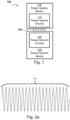
- a schematic view of a wireless power transfer system 100 is shown.
- the system comprises a power receive device 110 and a power transmit deice 120.
- the power transmit device 120 is arranged to transfer power to the power receive device 110.
- the power is transferred by inductive coupling over an inductive wireless power transfer interface 105.
- the inductive coupling is achieved through coupling a power transmit circuitry 122 comprised in the power transmit device 120 and a power receive circuitry 112 comprised in the power receive device 110.
- the inductive wireless power transfer interface 105 is typically an air interface and the inductive coupling between the devices 110, 120 is coreless.
- the power transmit circuitry 122 will have to induce a receive current I RX in the power receive coil circuitry 112.
- a transmit current I TX alternating with a transmit frequency fix will generate an electromagnetic field that propagates over the wireless inductive wireless transfer interface 105 to the power receive circuitry 112. This electromagnetic field will induce the receive current I RX in the power receive circuitry 112.
- the receive current I RX will be an alternating current, alternating with the transmit frequency f TX .
- the actual power transferred will depend on, among other things, the coupling factor between the power transmit coil 127 and the power receive circuitry 112.
- the transmit frequency fix may affect the efficiency of the system, a too low frequency may cause one of the circuitries 112, 122 to saturate and a too high frequency would reduce efficiency by unnecessary switching.
- any wireless power transfer system in general, and the wireless power transfer system 100 of Fig. 1 in particular, will require some kind of communication between the devices 110, 120. If no communication was present in e.g. a wireless charging scenario, the power transmit device 120 would have no way of knowing how much power to transfer to the power receive device 110 but would have to target the same transfer power for all power receive devices 110. The power receive device 110 would have to handle whatever power was induced in its power receive circuitry 112 and power may have to be dissipated in a dummy load if the power received was too high.
- Fig. 2a shows a transmit signal provided to the transmit circuitry 122 that oscillates at a single transmit frequency f TX .
- the transmit frequency f TX changes periodically between a first transmit frequency frxi and a second transmit frequency f TX2 .
- the time between each change can be described as a symbol time Ts.
- This change in transmit frequency f TX is detectable by the power receive device 110.
- the absolute difference between the first transmit frequency frxi and the second transmit frequency f TX2 is called the frequency deviation f dev and may be referred to as the modulation depth.
- This type of modulation is known in the art as Frequency Shift Keying, FSK, and the particular example of Fig. 2b with two different values of the transmit frequency is typically called Binary Frequency Shift Keying, BFSK.
- Another way of communicating data between the devices 120, 110 is to change the amplitude of the transmit signal periodically. This is shown in Fig. 2c where the amplitude of the transmit signal is changed with the symbol time Ts. The amplitude is changed between a first amplitude A 1 and a second amplitude A 2 . The absolute difference between the first amplitude A 1 and the second amplitude A 2 is called the amplitude deviation A dev and may be referred to as the modulation depth.
- the change in amplitude is easily detectable by either of the devices 110, 120. Since the transmit circuitry 122 is inductively coupled to the receive circuitry 112, any change in the power receive circuitry 112 of the power receive device 110 will be detectable by the power transmit device 120.
- the power receive device 110 may change or modify its receive circuitry 112 and this would be seen as a change in amplitude of the transmit signal at the transmit circuitry 122 of the power transmit device 120. This is known as backscatter communication or ambient backscatter communication.
- the change in the receive circuitry 112 may be implemented by switching or changing any suitable impedance element in the power receive circuitry 112, this will be explained in more detail in coming sections.
- This type of modulation is known in the art as Amplitude Shift Keying, ASK, and the particular example of Fig. 2c with two different values of the transmit frequency is typically called Binary Amplitude Shift Keying, BASK.
- the modulation is typically achieved by purely resistive changes in the power receive circuitry 112.
- phase shifts may occur during switching between amplitudes.
- a purely resistive impedance element is difficult to achieve. Consequently, some shifting of the phase is expected.
- the impedance element is mainly reactive which may be seen as a form of Phase Shift Keying, PSK.
- the power transmit device 120 communicates by BFSK and the power receive device 110 by BASK.
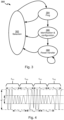
- the process 300 starts with the selection phase 302 wherein the power transmit device 120 typically monitors the wireless inductive power interface 105 for changes, and particularly the introduction of a power receive device 110.
- the ping phase 304 is initiated.
- the power transmit device 120 executes a digital ping by the power transmit device 120 providing a transmit signal of the transmit frequency fix to the transmit coil 127.
- the process 300 moves on to a identification & configuration phase 306. If no modulation is detected, the process 300 reverts back to the selection phase 302.
- the power transmit device 120 identifies the power receive device 110 and obtains configuration information regarding e.g. maximum power to be transferred.
- the identification & configuration phase 306 may comprise a negotiation phase and a calibration phase (neither shown in Fig. 3 ) depending on capabilities of the power transmit device 120 and the power receive device 110. If errors should occur during the identification & configuration phase 306, the process 300 reverts back to the selection phase 302.
- the process 300 advances to a power transfer phase 308 wherein power is transferred and the control of the power transferred is based on control data transmitted by the power receive device 110. If the power transmitter 120 does not receive a communication from the power receive device 110 within a predetermined period of time, the power transmitter 120 will typically terminate the power transfer and revert to the selection phase 302.
- the inventors of this invention have realized that the process 300 described above may be improved in many ways. It takes a fair amount of power to reach the power transfer phase 308 and the phases 302, 304, 306 leading up to this phase 308 will typically have to be repeated if something fails in the communication between the power receive device 110 and the power transmit device 120. Also, there is no way for the power transmit device 120 to initiate communication with the power receive device 110 when operating in the power transfer phase 308.
- the transmit device 120 may communicate data to the receive device 110 simultaneously as the receive device 110 communicates data to the transmit device 120. This is possible due to the different modulation types employed, one device will use FSK modulation and the other device will use ASK modulation. Typically, the power transmit device 120 will be configured to use FSK modulation and the power receive device 110 will use ASK modulation. This enables the wireless power transfer system 100 to transfer information at full duplex as opposed to the half-duplex as specified in e.g. the Qi specifications.
- a graph of the transmit signal being both ASK modulated and FSK modulated is shown.
- the amplitude shifts between a first amplitude A 1 and a second amplitude A 2 .
- the frequency shifts between a first transmit frequency frxi and a second transmit frequency f TX2 .
- the ASK and FSK modulations are phase shifted but they may very well be in phase.
- a symbol time T Fs of the FSK modulation may be different from a symbol time T As of the ASK modulation.
- the transmit signal can comprise two independent sets or streams of data. One FSK modulated set or stream of data and one ASK modulated set or stream of data.
- Fig. 5 shows a slightly more detailed schematic view of a power receive device 110.
- the power receive circuitry 112 comprises at least a power receive coil 117 that will enable coupling to the inductive wireless power transfer interface 105 such that a receive current I RX is induced in the power receive circuitry.
- the power receive circuitry 112 will typically comprise some kind of rectifier circuitry arranged to rectify the receive current I RX and the output of the rectifier may be operatively connected to e.g. a charging circuitry and/or a battery.
- the power receive device will typically comprise a load 115 that comprises an impedance element with an impedance Z L .
- the power receive device 110 also comprises a receive controller 111 that may be configured to control at least the power transfer portion of the power receive device 110.
- the power receive device 111 further comprises an ASK module 116 that is configurable to ASK modulate the receive current I RX of the receive circuitry 112.
- One or more sensors 114 are also comprised in the power receive device 110, typically these sensors are arranged in or at the power receive circuitry 112 to provide metrics e.g. voltage, current, power, frequency and/or temperature to the receive controller 111.
- the power receive device 110 comprises an FSK module 113 that is configurable to detect an FSK modulated signal comprised in the receive current I RX of the receive circuitry 112.
- the modulation modules 116, 113 will be comprised in or operatively connected to the receive controller 111.
- the modulation modules 116, 113 may be stand-alone hardware blocks/components or implemented in software.
- the ASK module 116 will be arranged to control the load 115 such that ASK modulation is achieved.
- the load 115 will be operatively connectable to the receive circuitry 112 and may be comprised in the receive circuitry 112 before or after, seen from the power receive coil 117, the rectifying circuitry of the power receive circuitry.
- the FSK module 113 will be operatively connected to a frequency sensor that may be one of said one or more sensors 114 or a separate sensor that may be implemented in software configured to detect a frequency content of a digital representation of the receive current I RX and/or an associated receive voltage V RX .
- the actual internal arrangement of the power receive device 110 may be varied in any number of ways and the skilled person will understand that the particular composition and interconnections will be adapted depending on the situation.
- the power transmit device 120 is schematically shown in Fig. 6 .
- the power transmit device 120 comprises the power transmit circuitry 122 and a transmit controller 121 operatively connected to the power transmit circuitry 122.
- the transmit circuitry 122 comprises at least one power transmit coil 127 that will inductively couple to the power receive coil 117 of the power receive device 110.
- the transmit controller 121 is configured to control the excitation of the power transmit circuitry 122 and control the power delivered to the power receive device 110 via the inductive wireless power transfer interface 105.
- the power transmit device 120 comprises a transmit module 125 that is operatively connected to or comprised in the transmit controller 121.
- the transmit module 125 generates the transmit signal at the transmit frequency f TX and will change the transmit signal based on instructions received from the transmit controller and/or an FSK module comprised in the power receive device.
- An FSK 123 module controls the FSK modulation of the transmit module 125 and may be a stand-alone block/component or comprised in the transmit module 125 or the transmit controller.
- the power transmit device 121 will comprise one or more sensors 124, typically these sensors 124 are arranged in or at the power transmit circuitry 122 to provide metrics e.g. voltage, current, power, frequency and/or temperature to the transmit controller 121.
- the power transfer module further comprises an ASK module 122 operatively connected to receive ASK modulation form the transmit current I TX and/or an associated transmit voltage V TX in the transmit circuitry.
- the ASK module 122 may be configured to detect ASK modulation on a digital representation of the transmit signal.
- the actual internal arrangement of the power transmit device 120 may be varied in any number of ways and the skilled person will understand that the particular composition and interconnections will be adapted depending on the situation.
- the modules 116, 113, 114, 122, 123, 124, and controllers 111, 121 introduced with reference to Figs. 5 and 6 in the previous sections may be software or hardware modules or a combination of software and hardware.
- the functionality of the modules 116, 113, 114, 115, 122, 123, 124, 125 is described as isolated modules but this is for explanatory reasons only, each module may be distributed among or included in any the other modules.
- all modules 116, 113, 114 are comprised in the receive controller 111. In a further embodiment, all modules 116, 113, 114 are comprised in the receive controller 111 as software modules.
- all modules 122, 123, 124 are comprised in the receive controller 121. In a further embodiment, all modules 122, 123, 124 are comprised in the transmit controller 121 as software modules.
- the wireless power transfer system 100 of Fig. 1 , the power receive device 110 of Fig. 5 and the power transmit device 120 of Fig. 6 are but examples of how devices and systems may be designed. There are many possible variations to these and the skilled person will know how, if, and when to modify the system or devices, respectively, in order to implement the teachings of this disclosure.
- the power transmitter 120 if the power transmitter 120 does not receive a communication from the power receive device 110 within a predetermined period of time, the power transmitter 120 will typically terminate the power transfer and revert to the selection phase 302.
- the probability of the power transmit device correctly decoding a received ASK symbol will depend on the modulation depth and any noise comprised in the signal comprising the ASK modulated signal.
- the relationship is commonly referred to as Signal to Noise Ratio, SNR, and is a common metric in communications.
- SNR Signal to Noise Ratio
- the SNR can, in simplified wording, be described as the useful part of a received signal divided by the noise of the received signal. If the SNR should decrease, the probability of a receiver correctly decoding the modulated signal will also decrease. In Fig.
- the signal of Fig. 2c has been subjected to a random noise and as seen a spread in the first amplitude ⁇ A 1 is overlapping the corresponding spread in the second amplitude ⁇ A 2 . From the receiver perspective, it will be more difficult to correctly receive and decode the ASK modulated signal due to the difficulty in determining the amplitude deviation A dev , i.e. a low SNR.
- the transmit signal is depicted with an ASK modulation analogously to Fig. 2c .
- the modulation depth i.e. the absolute difference in amplitude between the first amplitude A1 and the second amplitude A2
- the power transmit device is greatly decreased in Fig. 7b .
- the modulation depth i.e. the absolute difference in amplitude between the first amplitude A1 and the second amplitude A2
- the noise could be any external or internal source generating a disturbance or thermal noise occurring due to heating of either the transmit device 120 or the receive device 110.
- the amplitude deviation A dev being low may be caused by e.g. poor coupling between the power transmit circuitry 122 and the power receive circuitry 112. Any such change in the received signal can be referred to as a change in modulation accuracy.
- the frequency modulation shown in e.g. Fig. 2b assumes that the power transfer system 100 has a bandwidth that at least covers the frequency deviation and that the power transferred, i.e. a power transfer loss, is substantially the same for all modulation frequencies. This is the case if the transmit frequency fix is the same as a resonance frequency of the power transfer system 100. However, this is typically not the case and also during FSK modulation, there may be unwanted shifts in amplitude. These unwanted amplitude shifts further affect the modulation accuracy and the SNR of the ASK modulation, increasing the risk of miscommunication and re-iteration of the power transfer process 300
- the transmitting device may, in response, take necessary steps to mitigate the change in modulation accuracy e.g. adjust its modulation depth etc.
- This scenario would reduce the risk of the power transfer process 300, as introduced with reference to Fig. 3 , having to revert back to the selection phase 302 due to a missed communication during the power transfer phase 308. This will increase the system efficiency, power consumption and the average power transferred. As a consequence, the time it will take to fully charge a device in a wireless charging scenario will decrease.
- the method 310 will enable the transmission of operational feedback during power transfer in the wireless power transfer system 100.
- the method is executed during the power transfer phase 308.
- One device 120, 110 will transmit 311 a first data packet to the other device 110, 120.
- the other device 110, 120 will receive 312 the first data packet.
- the receiving device 110, 120 will determine 313 if a signal condition is fulfilled, this will be explained in coming sections, and if that is the case, transmit 314 operational information to the device 110, 120 transmitting 311 the data.
- either of the devices 110, 120 can transmit 311 or receive 312 the first data packet.
- the power transferred, the first data packet and the operational information are all transmitted simultaneously over the wireless power transfer interface at the transmit frequency fix.
- the transmit frequency will change with the FSK modulation but it is important to remember that it is all occurring simultaneously on the same frequency during the transmission 311.
- the step of receiving 312 the first data packet may comprise evaluating the signal comprising the first data packet with regards to one or more metrics relating to the quality of the signal. It may be a change in modulation accuracy, such changes may be represented in a Signal Quality Indicator, SQI.
- the SQI may comprise changes in modulation accuracy metrics as described with reference to Figs. 7a-b , a change in frequency deviation, a change in symbol time Ts, T Fs , T As . Changes in symbol time Ts, T Fs , T As can be seen as changes in a symbol rate, i.e. a bit rate or a modulation speed.
- the SQI may comprise any metric having to do with signal quality and is not limited to modulation accuracy. Either of the FSK module 113 of the power receive device 110 or the ASK module 122 of the power transmit device 120 may perform the receiving.
- the operational data referred to in the method 310 may be any type of operational data. It may be the SQI as mentioned earlier or any metric obtained by said one or more sensors 114, 124.
- the operational data may comprise instructions to the device 110, 120 transmitting the first package configured to cause that device 110, 120 to perform certain actions. Such actions may be e.g. changing a modulation parameter.
- the operational data may be comprised in the payload of a second data packet.
- the second data packet may comprise any other type of data.
- Determining if the signal condition is fulfilled 313, as referred to in the method 310, may comprise an evaluation of one or more of many different signal conditions such as the e.g. the SQI as presented in previous sections.
- the SQI may be compared to a predefined or configurable SQI limit.
- the SQI limit may be a value or a range and the signal condition may be that the SQI is below the SQI limit. Alternatively or additionally, it may be the other way around, where the signal condition is fulfilled if the SQI is above the SQI limit.
- the SQI limit may have some hysteresis associated with it, meaning that fulfilling the signal condition for SQI below the SQI limit is compared to a lower SQI limit than fulfilling the signal condition for SQI above the SQI limit. This implementation will reduce the risk of added signaling of operational data if the SQI is at the SQI limit and small changes in SQI will trigger the SQI limit.
- the signal conditions may also be the device 110, 120 having operational data to send. Meaning that the device has something to communicate e.g. a request, sensor data or simply a periodic status.
- the power receive device 110 and the power transmit device 120 exemplified with reference to Figs. 5 and 6 are both capable of performing the method 310 described above.
- Either device 110, 120 may be configured to transmit or receive the first package.
- the device transmitting the first package will have to activate its receiving module 113, 122 simultaneously with the transmission by the transmitting module 116, 123.
- the power receive device 110 will transmit the first package using its ASK module 116 while simultaneously receiving operational data from the power transmit device 120 using its FSK module 113.
- the power transmit device 120 will transmit the first package using its FSK module 123 while simultaneously receiving operational data form the power receive device 110 using its ASK module 122.
- the power transmit device 120 will be the device receiving the first package. This is the communication associated with the power transfer phase 308 of the power transfer process 300 described in Fig. 3 .
- the first package would, in such an embodiment, be the control data transmitted by the power receive device 110. If the first package comprising the control data would suffer from e.g. poor modulation accuracy and/or SQI, the method 310 described with reference to Fig. 8 would enable the power transmit device 120 to detect this as the signaling condition and communicate relevant operational information back to the power receive device 110.
- the power receive device 110 could perform e.g. necessary adjustments to its ASK module 116 such that the modulation accuracy and/or SQI is improved.
- the power transfer phase 308 can commence without having to revert to the selection phase 302, thereby avoiding a re-iteration of the power transfer process 300.
- the novel and inventive process 310 described with reference to Fig. 8 can be verified, certified, trimmed and/or calibrated using a probe device 132.
- a test system 130 will be introduced.
- the test system 130 comprises the probe device 132 an analyzer device 134 and an optional host interface 136.
- the probe device 132 is arrangeable in the wireless power transfer system 100 such that it can sniff the electromagnetic field of the inductive wireless power transfer interface 105.
- the probe device 132 either comprises or is operatively connected to the analyzer device 134.
- the analyzer device 134 may be in communication with the host device 136.
- the probe device 132 comprises a pickup coil 133 which is to be arranged in the inductive wireless power transfer interface 105.
- the pickup coil 133 will be arranged between a surface of a housing of the wireless power transmit device 120 and a surface of a housing of the wireless power receive device 110, i.e. between the transmit coil 127 and the receive coil 117. This will enable the pickup coil 133 to generate electric signals by capturing the electro-magnetic signals exchanged between the wireless power transmit and receive devices 120, 110 pursuant to a wireless power transfer protocol 300, 310.
- the analyzer device 134 if it is not comprised in the probe device 132, connects to a probe interface 134 of the probe device 132 using a corresponding analyzer interface 137 of the analyzer device 134.
- the electromagnetic signals are transferred, using the interfaces 134, 137 to the analyzer device 134 where a processing unit 138 is comprised in the analyzer device 134.
- the probe device 132 may further comprise other sensors such as temperature sensors, etc., and sensor data from these sensors may also be received by the processing unit 138 through the interfaces 134, 137.
- the analyzer device 134 will typically, using the processing unit 138, process the data and signals received from the probe device 132.
- the processing may comprise interpreting the signals sniffed by the pickup coil 133 to determine if the signaling conforms to e.g. the processes 300, 310 described in relation to Figs. 3 and 8 .
- the analyzer device 134 may further be configured to provide the results of the determining as output to e.g. a user or the optional host device 136. Additionally or alternatively, the analyzer device 134 may be configured to log data and/or signals provided by the probe device 132.
- the logs could be stored in a memory device comprised in the analyzer device 134, connected to the analyzer device 134 and/or communicated to a user and/or the host device 136. These logs may be analyzed by the analyzer device 134 to determine the accuracy with regards to e.g. modulation accuracy, timing, power etc., over a period of time in order to, for instance, detect trends or identify isolated events.
- the analyzer device 134 comprises an optional generator 139.
- the generator 139 may be configured to generate signals that are injected into the inductive wireless power transfer interface 105 by the probe device 132. These signals may be signals configured to trigger certain events related to the process 300, 310 to be tested.
- the generator 139 may be configured to generate signals, e.g. noise or other unwanted disturbances, that will affect the modulation quality of signals transmitted between power transmit device 120 and the power receive device 110.
- the disturbance signals may be configured such that they affect the first packet of the method 310 of Fig. 8 , such that the signaling condition is fulfilled. In this embodiment, it is possible to verify if a power transmit device 120, a power receive device 110 and/or a wireless power transfer system 100 complies with the method 310 of Fig. 8 .
- the analyzer device 134 will be very useful in detecting if the method 310 is performed as intended and provide output to that respect.
- the output may be provided to an internal or external storage means, a user of the device or to the host device 136.
- the probe device 132 will provide signals to the analyzer device 134 such that the analyzer can determine if the wireless power transfer system 100 is operating in the power transfer phase 308. If that it is the case, the analyzer device 134 will be configured to detect if one of the power transmit device 120 or the power receive device 110 transmits 311 a first data packet.
- the analyzer device 134 Since the analyzer device 134 cannot determine if the other of the devices receives 312 the first packet, it will have to monitor the inductive wireless power transfer interface 105 and detect if the signaling condition is fulfilled 313. If the signaling condition is fulfilled, the analyzer device 134 may be configured to detect that the other device transmits 314 operational information. The analyzer device 134 may further be configured to detect if e.g. operational information is transmitted without the signaling condition being fulfilled. Any detected deviations or violations of the processes 300, 310 described herein may result in the analyzer device 134 generating output indicating the deviation or violation.
Landscapes
- Engineering & Computer Science (AREA)
- Computer Networks & Wireless Communication (AREA)
- Signal Processing (AREA)
- Power Engineering (AREA)
- Physics & Mathematics (AREA)
- Electromagnetism (AREA)
- Near-Field Transmission Systems (AREA)
Description
- The present invention relates to wireless power transfer, specifically to inductive wireless power transfer. Even more specifically, the present invention relates to the communication of operational data during power transfer.
- Wireless power transfer is showing strong progress, especially for wireless battery charging of mobile devices such as, for instance, mobile terminals, tablet computers, laptop computers, cameras, audio players, rechargeable toothbrushes, wireless headsets, as well as various other consumer products and appliances.
- Typically, devices that support wireless charging rely on magnetic induction between planar coils. Two kinds of devices are involved, namely devices that provide wireless power (referred to as base stations or wireless power transmit devices), and devices that consume wireless power (referred to as mobile devices or power receive devices). Power transfer takes place from e.g. a base station to a mobile device. For this purpose, a base station contains a subsystem (a power transmitter) that comprises a primary coil, whereas a mobile device contains a subsystem (a power receiver) that comprises a secondary coil. In operation, the primary coil and the secondary coil will constitute the two halves of a coreless transformer. Typically, a power transmit device has a flat surface, on top of which a user can place one or more mobile devices (also typically having a flat surface), so as to enjoy wireless battery charging or operational power supply for the mobile device(s) placed on the base station. Common for all types of inductive power transfer is that the efficiency of the power transfer will depend on the distance between the coils and the alignment of the coils.
- The Wireless Power Consortium has developed a wireless power transfer standard known as Qi. Other known wireless power transfer approaches include Alliance for Wireless Power, and Power Matters Alliance.
- The wireless power transfer standard known as Qi by the Wireless Power Consortium will be referred to, without limitation, throughout this document as the presently preferred wireless power transfer manner applicable to the present invention. However, the invention may generally be applied also to other wireless power transfer standards or approaches, including but not limited to the ones mentioned above. Devices complying with Qi will be configured to interact according to a specified scheme before power transfer is initiated. The scheme moves from a selection state to a ping state and further to an identification & configuration state that is followed by a power transfer state. When the devices are in the power transfer state, power is transferred from the power transmit device to the power receive device. During the power transfer, the power receive device evaluates the power received and communicates desired increases or decreases in power to the power transmit device using a control error packet. The power transmit device will adjust its transferred power as requested by the power receive device in the control error packet. If the control error packet is not received as expected by the power transmit device, the power transmit device aborts the power transfer and the system reverts to the selection state.
- This means that any failure in the communication from the power receive device to the power transmit device will result in a restart of the power transfer scheme. Each restart of the power transfer scheme may result in e.g. a mobile phone indicating interrupted charging, increased charging time due to the initiation process and/or reduced efficiency of the charging.
- In
US 2019/058360 A1 , a method for negotiation of a power transfer protocol to use during power transfer is disclosed. Power transmission begins during a coil selection action, which comprises transmission of an FSK package, a sync packet. This transmission of followed by 50-150 ms of waiting in order to allow a power receiving device to respond to the sync packet. -
WO 2019/203539 A1 relates to extended Control Error Packets (CEP) that are transmitted in response to a received packet. Data in the extended CEP will indicate whether transmission of packets should continue and/or if an operating point of a wireless power transmit device should be adjusted. -
EP 3542475 A1 presents a testing system for use in testing of wireless power transfer. The testing system has at least one wireless power receiver circuit for receiving inductive power from an external wireless power transmitter. The testing system is arranged to detect received inductive power at at least two operating frequencies relating to both a wireless power standard and a wireless communication standard. -
US 2019/305597 A1 might be seen as disclosing a method which is performed during power transfer in a wireless power transfer system that comprises a power transmit device arranged to transfer power over an inductive wireless power transfer interface operating at a transmit frequency to a power receive device, the wireless power transfer system being adapted to transfer information at half duplex using Frequency Shift Keying (FSK) in one direction and Amplitude Shift Keying (ASK) in the other direction, the method comprising: transferring, at the transmit frequency and by the power transmit device, power to the power receive device and, during the transferring: a) transmitting, at the transmit frequency and by one of the power transmit device or the power receive device, a first data packet to the other of the power transmit device or the power receive device using one of two modulation types being FSK or ASK, and b) receiving, by the other of the devices, the first data packet and, during the receiving, transmitting, at the transmit frequency and by the other of the devices to said one of the devices, using the other of said modulation types. - From the above it is understood that there is room for improvements.
- An object of the present invention is to provide a new type of wireless power transfer method and associated devices which are improved over the prior art and which eliminate or at least mitigate the drawbacks discussed above. More specifically, an object of the invention is to provide a wireless power transfer method and associated devices that are capable of communicating operational feedback during power transfer in a wireless power transfer system. These objects are achieved by the technique and technology set forth in the appended independent claims with preferred embodiments defined in the dependent claims related thereto.
- In a first aspect, a method for providing operational feedback during power transfer in a wireless power transfer system is presented. The power transfer system comprises a power transmit device arranged to transfer power over an inductive wireless power transfer interface operating at a transmit frequency to a power receive device. The wireless power transfer system is adapted to transfer information at half duplex using Frequency Shift Keying, FSK, in one direction and Amplitude Shift Keying, ASK, in the other direction. The method comprises transferring, at the transmit frequency, by the power transmit device, power to the power receive device. During the transferring, the method further comprises transmitting, at the transmit frequency by one of the power transmit device or the power receive device, a first data packet to the other of the power transmit device or the power receive device using one of two modulation types being FSK or ASK. The method further comprises receiving, by the other of the devices, the first data packet. During the receiving and if a signaling condition is determined to be fulfilled, the method further comprises transmitting, at the transmit frequency, by the other of the devices to said one of the devices, operational information using the other of said modulation types.
- According to one variant of method, the power transmit device is configured to transmit data and/or information using FSK and receive data and/or information using ASK. The power receive device is configured to transmit data and/or information using ASK and to receive data and/or information using FSK. The power transmit device will have frequency generation functionality and the modifications required to have this device achieve FSK modulation are fewer than those required by the power receive device.
- In a further variant of the method, the device transmitting the first data packet is the power transmit device and the device transmitting the operational information is the power receive device. This is beneficial since this enables the power receive device to communicate problems and/or instructions back to the power transmit device already during the transmittal of the first packet.
- In another variant of the method, the device transmitting the first data packet is the power receive device and the device transmitting the operational information is the power transmit device. This is beneficial since this enables the power transmit device to communicate problems and/or instructions back to the power receive device already during the transmittal of the first packet.
- In yet another variant of the method, the device receiving the first data packet evaluates the signal quality of a modulated data signal comprising the first data packet and determines that said signaling condition is fulfilled if the evaluated quality of the modulated data signal fails to meet a threshold signal quality. This is beneficial since it enables e.g. problems relating to the first packet or the transferal of the first packet to be communicated already during the transmittal of the first packet.
- In a further variant of the method, the device receiving the first data packet further generates a Signal Quality Indicator, SQI, representative of the evaluated quality of the modulated data signal and includes the SQI in the transmitted operational information. This is beneficial since the SQI provides a common metric that can be used to determine the quality of the first packet such that the device transmitting the first packet becomes aware of this and can act accordingly.
- According to an even further variant of the method, the signal quality is evaluated at least with respect to a modulation depth of the modulated data signal comprising the first data packet. This is beneficial since the modulation depth is a good metric of the quality of the signal and a change in this will indicate that something has changed in the transfer.
- In another variant of the method, the signal quality is evaluated at least with respect to a modulation speed of the modulated data signal comprising the first data packet. The modulation speed is a good metric of the signal quality since it relates to the e.g. clock synchronization.
- In one variant of the method, the device receiving the first data packet determines that said signaling condition is fulfilled if the SQI is below a SQI limit. Having a set limit for the SQI is good since it avoids unnecessary communication and just the fact that the operational information is sent will indicate that the SQI is below the SQI limit.
- In an even further variant of the method, the operational information is comprised in a payload of a second data packet. Having the operational information formatted as the payload enables the transmittal of further data in the packet and also helps the reception of the operational data when the format of the second packet is known.
- According to another variant of the method, the signaling condition is determined to be fulfilled if the device receiving the first data packet has data to transmit. This enables the transmittal of data at any time enabling duplex communication in a half duplex system.
- In a second aspect, a power transmit device is presented. The power transmit device is arrangeable in a wireless power transfer system to transfer power over an inductive wireless power transfer interface operating at a transmit frequency to a power receive device. The wireless power transfer system is of a type which is adapted to transfer information at half duplex using Frequency Shift Keying, FSK, in one direction and Amplitude Shift Keying, ASK, in the other direction. The power transmit device comprises a transmit controller operatively connected to a power transfer circuitry. The transmit controller is configured to cause the power transfer circuitry to:
- transfer, at the transmit frequency, power to the power receive device, and during the transferring,
- receive, at the transmit frequency, using one of two modulation types being FSK or ASK, a first data packet and, during the receiving and if a signaling condition is determined to be fulfilled,
- transmit, at the transmit frequency, operational information using the other of said modulation types.
- According to one variant of the power transmit device, it is further configured to perform the functionality of the power transmit device as recited in the method above, or parts of said functionality.
- In a third aspect, a power receive device is presented. The power receive device is arrangeable in a wireless power transfer system to receive power over an inductive wireless power transfer interface operating at a transmit frequency from a power transmit device. The wireless power transfer system is of a type which is adapted to transfer information at half duplex using Frequency Shift Keying, FSK, in one direction and Amplitude Shift Keying, ASK, in the other direction. The power receive device comprises a receive controller operatively connected to a power receive circuitry. The power receive device is configured to cause the power receive circuitry to:
- receive, at the transmit frequency, power from the transmit device, and during the receiving,
- receive, at the transmit frequency, using one of two modulation types being FSK or ASK, a first data packet and, during the receiving of the first data packet and if a signaling condition is determined to be fulfilled,
- transmit, at the transmit frequency, operational information using the other of said modulation types.
- In one variant of the power receive device, it is further configured to perform the functionality of the power receive device as recited in the above, or parts of said functionality.
- In a fourth aspect, a test system comprising a probe device and an analyzer device is presented. The probe device is arrangeable in a wireless power transfer system that comprises a power transmit device arranged to transfer power over an inductive wireless power transfer interface operating at a transmit frequency to a power receive device. The wireless power transfer system is of a type which is adapted to transfer information at half duplex using Frequency Shift Keying, FSK, in one direction and Amplitude Shift Keying, ASK, in the other direction. The probe device comprises at least one pickup coil and further comprises or is operatively connected to said probe analyzer device. The analyzer device is configured to detect a transferring, at the transmit frequency by the power transmit device, of power to the power receive device and, during the transferring detect a transmitting, at the transmit frequency by one of the power transmit device or the power receive device, of a first data packet to the other of the power transmit device or the power receive device using one of two modulation types being FSK or ASK. The analyzer device is further configured to detect, if determining that a signaling condition is fulfilled, a transmitting, at the transmit frequency, by the other of the devices to said one of the devices, of operational information using the other of said modulation types. The analyzer device is also configured to provide information regarding the detections as output.
- In one variant of the test system it is further configured to detect if operational information is transmitted without the signaling condition being fulfilled and to generate an output to that respect. This enables the detection of false communication and helps troubleshoot and identify potential malfunctions of the devices.
- In another variant of the test system, the analyzer device further comprises a generator configurable, by the analyzer device, to inject signals into the inductive wireless power transfer interface such that the signaling condition is fulfilled. This is beneficial since the test system will be able to evaluate if the devices react correctly to the signaling condition.
- In yet another variant of the test system, the analyzer device is further configured to detect any of the transferred information as presented in the method above.
- Embodiments of the invention will be described in the following; references being made to the appended diagrammatical drawings which illustrate non-limiting examples of how the inventive concept can be reduced into practice.
-
Fig. 1 is a block diagram of a wireless power transfer system according to some embodiments. -
Fig. 2a-c are plots of different transmit signals. -
Fig. 3 is a simplified flow-chart of a process for wireless power transfer. -
Fig. 4 is a plot of a transmit signal. -
Fig. 5 is a block diagram of a power receive device according to some embodiments. -
Fig. 6 is a block diagram of a power transmit device according to some embodiments. -
Fig. 7a-b are plots of different transmit signals. -
Fig. 8 is a simplified flow-chart of a method for providing operational feedback during power transfer according to some embodiments. -
Fig. 9 is a block diagram of a test system and a wireless power transfer system according to some embodiments. -
Fig. 10 is a block diagram of a test system according to some embodiments. -
Fig. 11 is a block diagram of a test system according to some embodiments. - Hereinafter, certain embodiments will be described more fully with reference to the accompanying drawings. The invention may, however, be embodied in many different forms and should not be construed as limited to the embodiments set forth herein; rather, these embodiments are provided by way of example so that this disclosure will be thorough and complete, and will fully convey the scope of the invention, such as it is defined in the appended claims, to those skilled in the art.
- With reference to
Fig. 1 , a schematic view of a wirelesspower transfer system 100 is shown. The system comprises a power receivedevice 110 and a power transmitdeice 120. The power transmitdevice 120 is arranged to transfer power to the power receivedevice 110. The power is transferred by inductive coupling over an inductive wirelesspower transfer interface 105. The inductive coupling is achieved through coupling a power transmitcircuitry 122 comprised in the power transmitdevice 120 and a power receivecircuitry 112 comprised in the power receivedevice 110. The inductive wirelesspower transfer interface 105 is typically an air interface and the inductive coupling between thedevices - In order for power to be transferred over the wireless inductive
wireless transfer interface 105, the power transmitcircuitry 122 will have to induce a receive current IRX in the power receivecoil circuitry 112. A transmit current ITX alternating with a transmit frequency fix will generate an electromagnetic field that propagates over the wireless inductivewireless transfer interface 105 to the power receivecircuitry 112. This electromagnetic field will induce the receive current IRX in the power receivecircuitry 112. The receive current IRX will be an alternating current, alternating with the transmit frequency fTX. The actual power transferred will depend on, among other things, the coupling factor between the power transmitcoil 127 and the power receivecircuitry 112. Thus coupling is affected by factors such as the number of turns of coils comprised in the power receive and transmit circuitry respectively, the alignment of these coils and the distance between them. The transmit frequency fix may affect the efficiency of the system, a too low frequency may cause one of thecircuitries - Any wireless power transfer system in general, and the wireless
power transfer system 100 ofFig. 1 in particular, will require some kind of communication between thedevices device 120 would have no way of knowing how much power to transfer to the power receivedevice 110 but would have to target the same transfer power for all power receivedevices 110. The power receivedevice 110 would have to handle whatever power was induced in its power receivecircuitry 112 and power may have to be dissipated in a dummy load if the power received was too high. These problems are addressed in the Qi standard from the Wireless Power Consortium by the introduction of an information interface that will be briefly discussed with reference toFig. 3 in the coming sections. - One way of communicating data between the transmit
device 120 to the receivedevice 110 is to change the transmit frequency fTX of the power transmitdevice 120.Fig. 2a shows a transmit signal provided to the transmitcircuitry 122 that oscillates at a single transmit frequency fTX. InFig. 2b , the transmit frequency fTX changes periodically between a first transmit frequency frxi and a second transmit frequency fTX2. The time between each change can be described as a symbol time Ts. This change in transmit frequency fTX is detectable by the power receivedevice 110. The absolute difference between the first transmit frequency frxi and the second transmit frequency fTX2 is called the frequency deviation fdev and may be referred to as the modulation depth. This type of modulation is known in the art as Frequency Shift Keying, FSK, and the particular example ofFig. 2b with two different values of the transmit frequency is typically called Binary Frequency Shift Keying, BFSK. - Another way of communicating data between the
devices Fig. 2c where the amplitude of the transmit signal is changed with the symbol time Ts. The amplitude is changed between a first amplitude A1 and a second amplitude A2. The absolute difference between the first amplitude A1 and the second amplitude A2 is called the amplitude deviation Adev and may be referred to as the modulation depth. The change in amplitude is easily detectable by either of thedevices circuitry 122 is inductively coupled to the receivecircuitry 112, any change in the power receivecircuitry 112 of the power receivedevice 110 will be detectable by the power transmitdevice 120. Simply put, this means that the power receivedevice 110 may change or modify its receivecircuitry 112 and this would be seen as a change in amplitude of the transmit signal at the transmitcircuitry 122 of the power transmitdevice 120. This is known as backscatter communication or ambient backscatter communication. - The change in the receive
circuitry 112 may be implemented by switching or changing any suitable impedance element in the power receivecircuitry 112, this will be explained in more detail in coming sections. This type of modulation is known in the art as Amplitude Shift Keying, ASK, and the particular example ofFig. 2c with two different values of the transmit frequency is typically called Binary Amplitude Shift Keying, BASK. - In true ASK, the modulation is typically achieved by purely resistive changes in the power receive
circuitry 112. When reactive components are introduced in the impedance elements, phase shifts may occur during switching between amplitudes. In real applications, a purely resistive impedance element is difficult to achieve. Consequently, some shifting of the phase is expected. There may be implementations where the impedance element is mainly reactive which may be seen as a form of Phase Shift Keying, PSK. - In the Qi standard, the power transmit
device 120 communicates by BFSK and the power receivedevice 110 by BASK. - With reference to
Fig. 3 , a brief introduction to the Qipower transfer process 300 will be given. This will be a non-exhaustive description and given as a general introduction only. In order to save power, theprocess 300 starts with theselection phase 302 wherein the power transmitdevice 120 typically monitors the wirelessinductive power interface 105 for changes, and particularly the introduction of a power receivedevice 110. When an object is detected in the wirelessinductive power interface 105, theping phase 304 is initiated. In theping phase 304, the power transmitdevice 120 executes a digital ping by the power transmitdevice 120 providing a transmit signal of the transmit frequency fix to the transmitcoil 127. If a modulation is detected on the transmit signal within a predefined time period, theprocess 300 moves on to a identification &configuration phase 306. If no modulation is detected, theprocess 300 reverts back to theselection phase 302. In the identification &configuration phase 306, the power transmitdevice 120 identifies the power receivedevice 110 and obtains configuration information regarding e.g. maximum power to be transferred. The identification &configuration phase 306 may comprise a negotiation phase and a calibration phase (neither shown inFig. 3 ) depending on capabilities of the power transmitdevice 120 and the power receivedevice 110. If errors should occur during the identification &configuration phase 306, theprocess 300 reverts back to theselection phase 302. If, on the other hand, the identification &configuration phase 306 is successful, theprocess 300 advances to apower transfer phase 308 wherein power is transferred and the control of the power transferred is based on control data transmitted by the power receivedevice 110. If thepower transmitter 120 does not receive a communication from the power receivedevice 110 within a predetermined period of time, thepower transmitter 120 will typically terminate the power transfer and revert to theselection phase 302. - The inventors of this invention have realized that the
process 300 described above may be improved in many ways. It takes a fair amount of power to reach thepower transfer phase 308 and thephases phase 308 will typically have to be repeated if something fails in the communication between the power receivedevice 110 and the power transmitdevice 120. Also, there is no way for the power transmitdevice 120 to initiate communication with the power receivedevice 110 when operating in thepower transfer phase 308. - If, during the
power transfer phase 308, the transmitdevice 120 has data to communicate to the receivedevice 110, the inventors have realized that the transmitdevice 120 may communicate data to the receivedevice 110 simultaneously as the receivedevice 110 communicates data to the transmitdevice 120. This is possible due to the different modulation types employed, one device will use FSK modulation and the other device will use ASK modulation. Typically, the power transmitdevice 120 will be configured to use FSK modulation and the power receivedevice 110 will use ASK modulation. This enables the wirelesspower transfer system 100 to transfer information at full duplex as opposed to the half-duplex as specified in e.g. the Qi specifications. - With reference to
Fig. 4 , a graph of the transmit signal being both ASK modulated and FSK modulated is shown. As shown also inFig. 2c , the amplitude shifts between a first amplitude A1 and a second amplitude A2. As remembered fromFig. 2b , the frequency shifts between a first transmit frequency frxi and a second transmit frequency fTX2. InFig. 4 , the ASK and FSK modulations are phase shifted but they may very well be in phase. A symbol time TFs of the FSK modulation may be different from a symbol time TAs of the ASK modulation. FromFig. 4 , it can be seen that the transmit signal can comprise two independent sets or streams of data. One FSK modulated set or stream of data and one ASK modulated set or stream of data. -
Fig. 5 shows a slightly more detailed schematic view of a power receivedevice 110. The power receivecircuitry 112 comprises at least a power receivecoil 117 that will enable coupling to the inductive wirelesspower transfer interface 105 such that a receive current IRX is induced in the power receive circuitry. The power receivecircuitry 112 will typically comprise some kind of rectifier circuitry arranged to rectify the receive current IRX and the output of the rectifier may be operatively connected to e.g. a charging circuitry and/or a battery. The power receive device will typically comprise aload 115 that comprises an impedance element with an impedance ZL. The power receivedevice 110 also comprises a receivecontroller 111 that may be configured to control at least the power transfer portion of the power receivedevice 110. The power receivedevice 111 further comprises anASK module 116 that is configurable to ASK modulate the receive current IRX of the receivecircuitry 112. One ormore sensors 114 are also comprised in the power receivedevice 110, typically these sensors are arranged in or at the power receivecircuitry 112 to provide metrics e.g. voltage, current, power, frequency and/or temperature to the receivecontroller 111. Further to this, the power receivedevice 110 comprises anFSK module 113 that is configurable to detect an FSK modulated signal comprised in the receive current IRX of the receivecircuitry 112. Typically, themodulation modules controller 111. Themodulation modules ASK module 116 will be arranged to control theload 115 such that ASK modulation is achieved. Theload 115 will be operatively connectable to the receivecircuitry 112 and may be comprised in the receivecircuitry 112 before or after, seen from the power receivecoil 117, the rectifying circuitry of the power receive circuitry. Similarly, theFSK module 113 will be operatively connected to a frequency sensor that may be one of said one ormore sensors 114 or a separate sensor that may be implemented in software configured to detect a frequency content of a digital representation of the receive current IRX and/or an associated receive voltage VRX. The actual internal arrangement of the power receivedevice 110 may be varied in any number of ways and the skilled person will understand that the particular composition and interconnections will be adapted depending on the situation. - The power transmit
device 120 is schematically shown inFig. 6 . The power transmitdevice 120 comprises the power transmitcircuitry 122 and a transmitcontroller 121 operatively connected to the power transmitcircuitry 122. The transmitcircuitry 122 comprises at least one power transmitcoil 127 that will inductively couple to the power receivecoil 117 of the power receivedevice 110. The transmitcontroller 121 is configured to control the excitation of the power transmitcircuitry 122 and control the power delivered to the power receivedevice 110 via the inductive wirelesspower transfer interface 105. In order to achieve this, the power transmitdevice 120 comprises a transmitmodule 125 that is operatively connected to or comprised in the transmitcontroller 121. The transmitmodule 125 generates the transmit signal at the transmit frequency fTX and will change the transmit signal based on instructions received from the transmit controller and/or an FSK module comprised in the power receive device. AnFSK 123 module controls the FSK modulation of the transmitmodule 125 and may be a stand-alone block/component or comprised in the transmitmodule 125 or the transmit controller. The power transmitdevice 121 will comprise one ormore sensors 124, typically thesesensors 124 are arranged in or at the power transmitcircuitry 122 to provide metrics e.g. voltage, current, power, frequency and/or temperature to the transmitcontroller 121. The power transfer module further comprises anASK module 122 operatively connected to receive ASK modulation form the transmit current ITX and/or an associated transmit voltage VTX in the transmit circuitry. Alternatively or additionally, theASK module 122 may be configured to detect ASK modulation on a digital representation of the transmit signal. The actual internal arrangement of the power transmitdevice 120 may be varied in any number of ways and the skilled person will understand that the particular composition and interconnections will be adapted depending on the situation. - The
modules controllers Figs. 5 and 6 in the previous sections may be software or hardware modules or a combination of software and hardware. The functionality of themodules - In one embodiment of the power receive
device 110, allmodules controller 111. In a further embodiment, allmodules controller 111 as software modules. - In one embodiment of the power transmit
device 120, allmodules controller 121. In a further embodiment, allmodules controller 121 as software modules. - The wireless
power transfer system 100 ofFig. 1 , the power receivedevice 110 ofFig. 5 and the power transmitdevice 120 ofFig. 6 are but examples of how devices and systems may be designed. There are many possible variations to these and the skilled person will know how, if, and when to modify the system or devices, respectively, in order to implement the teachings of this disclosure. - As mentioned with reference to
Fig. 3 and thepower transfer process 300, if thepower transmitter 120 does not receive a communication from the power receivedevice 110 within a predetermined period of time, thepower transmitter 120 will typically terminate the power transfer and revert to theselection phase 302. The probability of the power transmit device correctly decoding a received ASK symbol will depend on the modulation depth and any noise comprised in the signal comprising the ASK modulated signal. The relationship is commonly referred to as Signal to Noise Ratio, SNR, and is a common metric in communications. The SNR can, in simplified wording, be described as the useful part of a received signal divided by the noise of the received signal. If the SNR should decrease, the probability of a receiver correctly decoding the modulated signal will also decrease. InFig. 7a , the signal ofFig. 2c has been subjected to a random noise and as seen a spread in the first amplitude ΔA1 is overlapping the corresponding spread in the second amplitude ΔA2. From the receiver perspective, it will be more difficult to correctly receive and decode the ASK modulated signal due to the difficulty in determining the amplitude deviation Adev, i.e. a low SNR. InFig. 7b , the transmit signal is depicted with an ASK modulation analogously toFig. 2c . One difference betweenFig. 7b andFig. 2c is that the modulation depth, i.e. the absolute difference in amplitude between the first amplitude A1 and the second amplitude A2, is greatly decreased inFig. 7b . As the modulation depth decreases, it will be increasingly difficult for the power transmit device to receive the communication from the power receive device. - There are many reasons for the ASK modulated signal to show behavior such as those in
Figs. 7a and 7b or a combination of them, i.e. poor amplitude deviation Adev and high noise. The noise could be any external or internal source generating a disturbance or thermal noise occurring due to heating of either the transmitdevice 120 or the receivedevice 110. The amplitude deviation Adev being low may be caused by e.g. poor coupling between the power transmitcircuitry 122 and the power receivecircuitry 112. Any such change in the received signal can be referred to as a change in modulation accuracy. - In the
power transfer system 100, there are some noteworthy characteristics that typically increases the SNR in these types ofsystems 100. The most power will be transferred when data associated with the highest ASK amplitude is transmitted. This means that the transferred power decreases when data associated with the lower ASK amplitude is transmitted. The decrease in power transfer will be proportional to the amplitude deviation Adev. Consequently, the amplitude deviation Adev will be kept as low as possible in order to maximize the power transfer but still sustain a reliable communication. This makes the data communication of the wireless power transfer system more sensitive to noise and the typical SNR of these systems is low. As was explained earlier with reference toFig. 3 , miscommunication or failure to communicate messages will result in re-iteration of thepower transfer process 300. - The frequency modulation shown in e.g.
Fig. 2b , assumes that thepower transfer system 100 has a bandwidth that at least covers the frequency deviation and that the power transferred, i.e. a power transfer loss, is substantially the same for all modulation frequencies. This is the case if the transmit frequency fix is the same as a resonance frequency of thepower transfer system 100. However, this is typically not the case and also during FSK modulation, there may be unwanted shifts in amplitude. These unwanted amplitude shifts further affect the modulation accuracy and the SNR of the ASK modulation, increasing the risk of miscommunication and re-iteration of thepower transfer process 300 - By identifying the change in modulation accuracy, and with the realization that data can be sent using FSK modulation at the same time as ASK modulated data is received, or vice versa, it will be possible to communicate this change back to the
device power transfer process 300, as introduced with reference toFig. 3 , having to revert back to theselection phase 302 due to a missed communication during thepower transfer phase 308. This will increase the system efficiency, power consumption and the average power transferred. As a consequence, the time it will take to fully charge a device in a wireless charging scenario will decrease. - The communication necessary to implement the added functionality to the
wireless charging process 300 ofFig. 3 will now be described with reference toFig. 8 . In short, themethod 310 will enable the transmission of operational feedback during power transfer in the wirelesspower transfer system 100. The method is executed during thepower transfer phase 308. Onedevice other device other device device device devices transmission 311. - The step of receiving 312 the first data packet may comprise evaluating the signal comprising the first data packet with regards to one or more metrics relating to the quality of the signal. It may be a change in modulation accuracy, such changes may be represented in a Signal Quality Indicator, SQI. The SQI may comprise changes in modulation accuracy metrics as described with reference to
Figs. 7a-b , a change in frequency deviation, a change in symbol time Ts, TFs, TAs. Changes in symbol time Ts, TFs, TAs can be seen as changes in a symbol rate, i.e. a bit rate or a modulation speed. The SQI may comprise any metric having to do with signal quality and is not limited to modulation accuracy. Either of theFSK module 113 of the power receivedevice 110 or theASK module 122 of the power transmitdevice 120 may perform the receiving. - The operational data referred to in the
method 310 may be any type of operational data. It may be the SQI as mentioned earlier or any metric obtained by said one ormore sensors device device - Determining if the signal condition is fulfilled 313, as referred to in the
method 310, may comprise an evaluation of one or more of many different signal conditions such as the e.g. the SQI as presented in previous sections. The SQI may be compared to a predefined or configurable SQI limit. The SQI limit may be a value or a range and the signal condition may be that the SQI is below the SQI limit. Alternatively or additionally, it may be the other way around, where the signal condition is fulfilled if the SQI is above the SQI limit. The SQI limit may have some hysteresis associated with it, meaning that fulfilling the signal condition for SQI below the SQI limit is compared to a lower SQI limit than fulfilling the signal condition for SQI above the SQI limit. This implementation will reduce the risk of added signaling of operational data if the SQI is at the SQI limit and small changes in SQI will trigger the SQI limit. - The signal conditions may also be the
device - Since the steps described in the
method 310 ofFig. 8 still comply with e.g. the Qi specification, it is something that can be implemented seamlessly and the added functionality will have no effect on legacy systems. - The power receive
device 110 and the power transmitdevice 120 exemplified with reference toFigs. 5 and 6 are both capable of performing themethod 310 described above. Eitherdevice receiving module module device 110 will transmit the first package using itsASK module 116 while simultaneously receiving operational data from the power transmitdevice 120 using itsFSK module 113. Alternatively, the power transmitdevice 120 will transmit the first package using itsFSK module 123 while simultaneously receiving operational data form the power receivedevice 110 using itsASK module 122. - Typically, in the Qi specification, the power transmit
device 120 will be the device receiving the first package. This is the communication associated with thepower transfer phase 308 of thepower transfer process 300 described inFig. 3 . The first package would, in such an embodiment, be the control data transmitted by the power receivedevice 110. If the first package comprising the control data would suffer from e.g. poor modulation accuracy and/or SQI, themethod 310 described with reference toFig. 8 would enable the power transmitdevice 120 to detect this as the signaling condition and communicate relevant operational information back to the power receivedevice 110. The power receivedevice 110 could perform e.g. necessary adjustments to itsASK module 116 such that the modulation accuracy and/or SQI is improved. As a result, thepower transfer phase 308 can commence without having to revert to theselection phase 302, thereby avoiding a re-iteration of thepower transfer process 300. - The novel and
inventive process 310 described with reference toFig. 8 can be verified, certified, trimmed and/or calibrated using aprobe device 132. With reference toFig. 9 , atest system 130 will be introduced. Thetest system 130 comprises theprobe device 132 ananalyzer device 134 and anoptional host interface 136. Theprobe device 132 is arrangeable in the wirelesspower transfer system 100 such that it can sniff the electromagnetic field of the inductive wirelesspower transfer interface 105. Theprobe device 132 either comprises or is operatively connected to theanalyzer device 134. Theanalyzer device 134 may be in communication with thehost device 136. - Turning to
Fig. 10 , a block diagram of thetest system 130 is shown, depicting theprobe device 132 and the associatedanalyzer device 134 in more detail. Theprobe device 132 comprises a pickup coil 133 which is to be arranged in the inductive wirelesspower transfer interface 105. Typically, the pickup coil 133 will be arranged between a surface of a housing of the wireless power transmitdevice 120 and a surface of a housing of the wireless power receivedevice 110, i.e. between the transmitcoil 127 and the receivecoil 117. This will enable the pickup coil 133 to generate electric signals by capturing the electro-magnetic signals exchanged between the wireless power transmit and receivedevices power transfer protocol analyzer device 134, if it is not comprised in theprobe device 132, connects to aprobe interface 134 of theprobe device 132 using acorresponding analyzer interface 137 of theanalyzer device 134. The electromagnetic signals are transferred, using theinterfaces analyzer device 134 where aprocessing unit 138 is comprised in theanalyzer device 134. Theprobe device 132 may further comprise other sensors such as temperature sensors, etc., and sensor data from these sensors may also be received by theprocessing unit 138 through theinterfaces - The
analyzer device 134 will typically, using theprocessing unit 138, process the data and signals received from theprobe device 132. The processing may comprise interpreting the signals sniffed by the pickup coil 133 to determine if the signaling conforms to e.g. theprocesses Figs. 3 and8 . Theanalyzer device 134 may further be configured to provide the results of the determining as output to e.g. a user or theoptional host device 136. Additionally or alternatively, theanalyzer device 134 may be configured to log data and/or signals provided by theprobe device 132. The logs could be stored in a memory device comprised in theanalyzer device 134, connected to theanalyzer device 134 and/or communicated to a user and/or thehost device 136. These logs may be analyzed by theanalyzer device 134 to determine the accuracy with regards to e.g. modulation accuracy, timing, power etc., over a period of time in order to, for instance, detect trends or identify isolated events. - With reference to
Fig. 11 , one embodiment of thetest system 130 is shown wherein theanalyzer device 134 comprises anoptional generator 139. Thegenerator 139 may be configured to generate signals that are injected into the inductive wirelesspower transfer interface 105 by theprobe device 132. These signals may be signals configured to trigger certain events related to theprocess generator 139 may be configured to generate signals, e.g. noise or other unwanted disturbances, that will affect the modulation quality of signals transmitted between power transmitdevice 120 and the power receivedevice 110. The disturbance signals may be configured such that they affect the first packet of themethod 310 ofFig. 8 , such that the signaling condition is fulfilled. In this embodiment, it is possible to verify if a power transmitdevice 120, a power receivedevice 110 and/or a wirelesspower transfer system 100 complies with themethod 310 ofFig. 8 . - As mentioned, the
analyzer device 134 will be very useful in detecting if themethod 310 is performed as intended and provide output to that respect. The output may be provided to an internal or external storage means, a user of the device or to thehost device 136. In short, theprobe device 132 will provide signals to theanalyzer device 134 such that the analyzer can determine if the wirelesspower transfer system 100 is operating in thepower transfer phase 308. If that it is the case, theanalyzer device 134 will be configured to detect if one of the power transmitdevice 120 or the power receivedevice 110 transmits 311 a first data packet. Since theanalyzer device 134 cannot determine if the other of the devices receives 312 the first packet, it will have to monitor the inductive wirelesspower transfer interface 105 and detect if the signaling condition is fulfilled 313. If the signaling condition is fulfilled, theanalyzer device 134 may be configured to detect that the other device transmits 314 operational information. Theanalyzer device 134 may further be configured to detect if e.g. operational information is transmitted without the signaling condition being fulfilled. Any detected deviations or violations of theprocesses analyzer device 134 generating output indicating the deviation or violation.
Claims (19)
- A method (310) for providing operational feedback during power transfer in a wireless power transfer system (100) that comprises a power transmit device (120) arranged to transfer power over an inductive wireless power transfer interface (105) operating at a transmit frequency, fTX, to a power receive device (110), the wireless power transfer system (100) being adapted to transfer information at half duplex using Frequency Shift Keying, FSK, in one direction and Amplitude Shift Keying, ASK, in the other direction, the method (310) comprising:
transferring (308), at the transmit frequency, fTX, by the power transmit (120) device, power to the power receive device (110) and, during the transferring (308):transmitting (311), at the transmit frequency, fTX, by one of the power transmit device (120) or the power receive device (110), a first data packet to the other of the power transmit device (120) or the power receive device (110) using one of two modulation types being FSK or ASK,receiving (312), by the other of the devices (110, 120), the first data packet and, during the receiving (312) and if a signaling condition is determined (313) to be fulfilled, transmitting (314), at the transmit frequency, fTX, by the other of the devices (110, 120) to said one of the devices (110, 120), operational information using the other of said modulation types. - The method (310) of claim 1, wherein the power transmit device (120) is configured to transmit (311, 314) data and/or information using FSK and receive (312) data and/or information using ASK, and the power receive device (110) is configured to transmit (311, 314) data and/or information using ASK and to receive (312) data and/or information using FSK.
- The method (310) of any of claims 1 to 2, wherein the device transmitting (311) the first data packet is the power transmit device (120) and the device transmitting (314) the operational information is the power receive device (110).
- The method (310) of any of claims 1 to 2, wherein the device transmitting (311) the first data packet is the power receive device (110) and the device transmitting (314) the operational information is the power transmit device (120).
- The method (310) of any of claims 1 to 4, wherein the device receiving (312) the first data packet evaluates the signal quality of a modulated data signal comprising the first data packet and determines (313) that said signaling condition is fulfilled if the evaluated quality of the modulated data signal fails to meet a threshold signal quality.
- The method (310) of claim 5, wherein the device receiving (312) the first data packet further:generates a Signal Quality Indicator, SQI, representative of the evaluated quality of the modulated data signal; andincludes the SQI in the transmitted operational information.
- The method (310) of claim 5 or 6, wherein the signal quality is evaluated at least with respect to a modulation depth of the modulated data signal comprising the first data packet.
- The method (310) of any of claims 5 to 7, wherein the signal quality is evaluated at least with respect to a modulation speed of the modulated data signal comprising the first data packet.
- The method (310) of claim 6 or claims 7 or 8 when dependent on claim 6, wherein the device (110, 120) receiving (312) the first data packet determines (313) that said signaling condition is fulfilled if the SQI is below a SQI limit.
- The method (310) of any of claims 1 to 9, wherein the operational information is comprised in a payload of a second data packet.
- The method of any of claims 1 to 10, wherein the signaling condition is determined (313) to be fulfilled if the device (110, 120) receiving (312) the first data packet has data to transmit.
- A power transmit device (120), arrangeable in a wireless power transfer system (100) to transfer power over an inductive wireless power transfer interface (105) operating at a transmit frequency, fTX, to a power receive device (110), the wireless power transfer system (100) being of a type which is adapted to transfer information at half duplex using Frequency Shift Keying, FSK, in one direction and Amplitude Shift Keying, ASK, in the other direction, wherein the power transmit device (120) comprises a transmit controller (121) operatively connected to a power transfer circuitry (122), and wherein the transmit controller (121) is configured to cause the power transfer circuitry (127) to:transfer (308), at the transmit frequency, fTX, power to the power receive device (110), and during the transferring (308),receive (312), at the transmit frequency, using one of two modulation types being FSK or ASK, a first data packet and, during the receiving (312) and if a signaling condition is determined (313) to be fulfilled,transmit (314), at the transmit frequency, fTX, operational information using the other of said modulation types.
- The power transmit device (120) of claim 12, further configured to perform the functionality of the power transmit device (120) as recited in the method (310) of any of the claims 2 to 4, or any of the claims 5-11 when depending on claim 3.
- A power receive device (110), arrangeable in a wireless power transfer system (100) to receive power over an inductive wireless power transfer interface (105) operating at a transmit frequency, fTX, from a power transmit device (120), the wireless power transfer system (100) being of a type which is adapted to transfer information at half duplex using Frequency Shift Keying, FSK, in one direction and Amplitude Shift Keying, ASK, in the other direction, wherein the power receive device (110) comprises a receive controller (111) operatively connected to a power receive circuitry (112), and wherein the power receive device (110) is configured to cause the power receive circuitry (112) to:receive (308), at the transmit frequency, fTX, power from the transmit device (120), and during the receiving (308),receive (311), at the transmit frequency, fTX, using one of two modulation types being FSK or ASK, a first data packet and, during the receiving (311) of the first data packet and if a signaling condition is determined (313) to be fulfilled,transmit (314), at the transmit frequency, fTX, operational information using the other of said modulation types.
- The power receive device (110) of claim 14, further configured to perform the functionality of the power receive device (110) as recited in the method (310) of any of the claims 2 to 4, or any of the claims 5-11 when depending on claim 4.
- A test system comprising a probe device (132) and an analyzer device (136), the probe device (132) being arrangeable in a wireless power transfer system (100) that comprises a power transmit device (120) arranged to transfer power over an inductive wireless power transfer interface (105) operating at a transmit frequency, fTX, to a power receive device (110), the wireless power transfer system (100) being of a type which is adapted to transfer information at half duplex using Frequency Shift Keying, FSK, in one direction and Amplitude Shift Keying, ASK, in the other direction,wherein the probe device (132) comprises at least one pickup coil (133) and further comprises or is operatively connected to said probe analyzer device (134), andwherein the analyzer device (134) is configured to:
detect a transferring (308), at the transmit frequency, fTX, by the power transmit device (120), of power to the power receive device (110) and, during the transferring (308):detect a transmitting (311), at the transmit frequency, fTX, by one of the power transmit device (120) or the power receive device (110), of a first data packet to the other of the power transmit device (120) or the power receive device (110) using one of two modulation types being FSK or ASK,detect, during the transmitting (311), if a signaling condition is fulfilled, a transmitting (314), at the transmit frequency, fTX, by the other of the devices (110, 120) to said one of the devices (110, 120), of operational information using the other of said modulation types, andprovide information regarding the detections as output. - The test system (132) of claim 16, further configured to detect if operational information is transmitted without the signaling condition being fulfilled and to generate an output to that respect.
- The test system (132) of claim 16 or 17, wherein the analyzer device (134) further comprises a generator (139) configurable, by the analyzer device (134), to inject signals into the inductive wireless power transfer interface (105) such that the signaling condition is fulfilled.
- The test system (132) of any of claims 16 to 18, wherein the analyzer device (134) is further configured to detect any of the transferred information in any of the claims 2 to 11.
Priority Applications (6)
| Application Number | Priority Date | Filing Date | Title |
|---|---|---|---|
| EP19212476.6A EP3829028B1 (en) | 2019-11-29 | 2019-11-29 | Method and devices for providing operational feedback during power transfer in a wireless power transfer system |
| JP2021529479A JP7234367B2 (en) | 2019-11-29 | 2020-11-26 | Method and apparatus for providing motion feedback during power transfer in wireless power transfer system |
| PCT/EP2020/083503 WO2021105282A1 (en) | 2019-11-29 | 2020-11-26 | Method and devices for providing operational feedback during power transfer in a wireless power transfer system |
| CN202080006008.2A CN113196716B (en) | 2019-11-29 | 2020-11-26 | Method and apparatus for providing operational feedback during power transmission in a wireless power transmission system |
| KR1020217015842A KR102584271B1 (en) | 2019-11-29 | 2020-11-26 | Method and apparatus for providing motion feedback during power transfer in a wireless power transfer system |
| US17/285,505 US11955818B2 (en) | 2019-11-29 | 2020-11-26 | Method and devices for providing operational feedback during power transfer in a wireless power transfer system |
Applications Claiming Priority (1)
| Application Number | Priority Date | Filing Date | Title |
|---|---|---|---|
| EP19212476.6A EP3829028B1 (en) | 2019-11-29 | 2019-11-29 | Method and devices for providing operational feedback during power transfer in a wireless power transfer system |
Publications (3)
| Publication Number | Publication Date |
|---|---|
| EP3829028A1 EP3829028A1 (en) | 2021-06-02 |
| EP3829028C0 EP3829028C0 (en) | 2023-07-12 |
| EP3829028B1 true EP3829028B1 (en) | 2023-07-12 |
Family
ID=68732887
Family Applications (1)
| Application Number | Title | Priority Date | Filing Date |
|---|---|---|---|
| EP19212476.6A Active EP3829028B1 (en) | 2019-11-29 | 2019-11-29 | Method and devices for providing operational feedback during power transfer in a wireless power transfer system |
Country Status (6)
| Country | Link |
|---|---|
| US (1) | US11955818B2 (en) |
| EP (1) | EP3829028B1 (en) |
| JP (1) | JP7234367B2 (en) |
| KR (1) | KR102584271B1 (en) |
| CN (1) | CN113196716B (en) |
| WO (1) | WO2021105282A1 (en) |
Families Citing this family (8)
| Publication number | Priority date | Publication date | Assignee | Title |
|---|---|---|---|---|
| US11329696B2 (en) * | 2020-06-24 | 2022-05-10 | Apple Inc. | Communication between devices during wireless power transfer |
| US11843265B2 (en) | 2020-07-02 | 2023-12-12 | Apple Inc. | Wireless power mode switching |
| WO2023022441A1 (en) * | 2021-08-17 | 2023-02-23 | 엘지전자 주식회사 | Method and apparatus for simultaneous multiple data communication in wireless power transmission system |
| EP4391305A4 (en) * | 2021-08-18 | 2025-10-08 | Lg Electronics Inc | Method and device related to pauses during data communication in a wireless power transmission system |
| KR20230045434A (en) * | 2021-09-28 | 2023-04-04 | 삼성전자주식회사 | Power reception device and method to control charging of power reception device |
| US12401232B2 (en) * | 2022-06-23 | 2025-08-26 | Apple Inc. | Wireless power systems with frequency-shift-keying communications |
| JP7754343B2 (en) * | 2022-10-21 | 2025-10-15 | 株式会社村田製作所 | Wireless power supply system, power transmission device for wireless power supply system |
| EP4625760A1 (en) * | 2022-11-24 | 2025-10-01 | LG Electronics Inc. | Method and device for controlling power-related parameters for fast charging in wireless power transmission system |
Citations (1)
| Publication number | Priority date | Publication date | Assignee | Title |
|---|---|---|---|---|
| US20190305597A1 (en) * | 2018-04-03 | 2019-10-03 | Apple Inc. | Power System With Battery Charging Control |
Family Cites Families (23)
| Publication number | Priority date | Publication date | Assignee | Title |
|---|---|---|---|---|
| DE10304584A1 (en) | 2003-02-05 | 2004-08-19 | Abb Research Ltd. | Communication of power and data to sensors and actuators in a process uses field transmission and avoids wiring |
| AU2004269728A1 (en) * | 2003-08-29 | 2005-03-10 | Symbol Technologies, Inc. | RFID system with selectable backscatter parameters |
| EP1585015B1 (en) | 2004-03-17 | 2007-05-02 | 3DConnexion GmbH | User interface device |
| JP2007065976A (en) | 2005-08-31 | 2007-03-15 | Keyence Corp | Radio tag reader and rfid system |
| CA2623805A1 (en) * | 2007-03-02 | 2008-09-02 | Robert A. Hubbs | Quality of service based preemptive routing |
| JP5228703B2 (en) | 2008-08-27 | 2013-07-03 | オムロン株式会社 | RFID reader / writer and RFID reader / writer communication control method |
| JP5332596B2 (en) | 2008-12-25 | 2013-11-06 | セイコーエプソン株式会社 | Power transmission device and method for testing power transmission device |
| EP2764604B1 (en) | 2011-08-04 | 2018-07-04 | WiTricity Corporation | Tunable wireless power architectures |
| US8942624B2 (en) * | 2012-03-30 | 2015-01-27 | Integrated Device Technology, Inc. | Apparatus, system, and method for back-channel communication in an inductive wireless power transfer system |
| JP2013240246A (en) | 2012-05-17 | 2013-11-28 | Toshiba Corp | Wireless power supply relay device |
| BR112014032025B1 (en) | 2012-06-29 | 2022-10-18 | Koninklijke Philips N.V | METHOD OF OPERATION FOR AN INDUCTIVE ENERGY TRANSFER SYSTEM, METHOD OF OPERATION OF AN ENERGY TRANSMITTER OF AN INDUCTIVE ENERGY TRANSFER SYSTEM, METHOD OF OPERATION OF AN ENERGY RECEIVER OF AN INDUCTION INDUCTIVE POWER, POWER TRANSMITTER FOR AN INDUCTIVE POWER TRANSFER SYSTEM, AND POWER RECEIVER FOR AN INDUCTIVE POWER TRANSMISSION SYSTEM |
| TR201903762T4 (en) | 2014-09-03 | 2019-04-22 | Koninklijke Philips Nv | Wireless inductive power transmission. |
| US20160141908A1 (en) | 2014-11-14 | 2016-05-19 | Motorola Solutions, Inc | Method and apparatus for efficiency compliance in wireless charging systems |
| SE538428C2 (en) | 2015-03-23 | 2016-06-21 | Nok9 Ab | A testing device for wireless power transfer, and an associated method |
| SE1550754A1 (en) | 2015-06-08 | 2016-10-18 | Nok9 Ab | A testing device for wireless power transfer, and an associated method |
| WO2017076818A1 (en) | 2015-11-02 | 2017-05-11 | Koninklijke Philips N.V. | Wireless inductive power transfer |
| CN108702034B (en) | 2016-02-24 | 2022-05-24 | 皇家飞利浦有限公司 | Power transmitter, transmission system and method for wireless inductive power transmission |
| WO2018069478A1 (en) | 2016-10-12 | 2018-04-19 | Nok9 Ab | A testing system for use in testing of wireless power transfer, and an associated testing device and method |
| WO2019032966A1 (en) | 2017-08-11 | 2019-02-14 | Integrated Device Technology, Inc. | Wireless power transmitter to receiver communication during power transfer phase |
| WO2019036061A1 (en) * | 2017-08-16 | 2019-02-21 | Apple Inc. | Dual protocol wireless power system |
| US10110030B1 (en) | 2018-04-09 | 2018-10-23 | Apple Inc. | Wireless charging systems with multiple power receiving devices |
| US10998775B2 (en) * | 2018-04-16 | 2021-05-04 | Lg Electronics Inc. | Apparatus and method for performing power control in wireless power transfer system |
| US20200099257A1 (en) * | 2018-09-21 | 2020-03-26 | Apple Inc. | Wireless Power System With Dynamic Battery Charging |
-
2019
- 2019-11-29 EP EP19212476.6A patent/EP3829028B1/en active Active
-
2020
- 2020-11-26 US US17/285,505 patent/US11955818B2/en active Active
- 2020-11-26 WO PCT/EP2020/083503 patent/WO2021105282A1/en not_active Ceased
- 2020-11-26 JP JP2021529479A patent/JP7234367B2/en active Active
- 2020-11-26 KR KR1020217015842A patent/KR102584271B1/en active Active
- 2020-11-26 CN CN202080006008.2A patent/CN113196716B/en active Active
Patent Citations (1)
| Publication number | Priority date | Publication date | Assignee | Title |
|---|---|---|---|---|
| US20190305597A1 (en) * | 2018-04-03 | 2019-10-03 | Apple Inc. | Power System With Battery Charging Control |
Also Published As
| Publication number | Publication date |
|---|---|
| KR102584271B1 (en) | 2023-10-04 |
| WO2021105282A1 (en) | 2021-06-03 |
| EP3829028A1 (en) | 2021-06-02 |
| US11955818B2 (en) | 2024-04-09 |
| US20220368171A1 (en) | 2022-11-17 |
| KR20210096097A (en) | 2021-08-04 |
| JP2022515975A (en) | 2022-02-24 |
| JP7234367B2 (en) | 2023-03-07 |
| EP3829028C0 (en) | 2023-07-12 |
| CN113196716B (en) | 2022-11-15 |
| CN113196716A (en) | 2021-07-30 |
Similar Documents
| Publication | Publication Date | Title |
|---|---|---|
| US11955818B2 (en) | Method and devices for providing operational feedback during power transfer in a wireless power transfer system | |
| EP3829071B1 (en) | Method, apparatuses and test system for transferring data during power transfer in a wireless power transfer system | |
| JP7804011B2 (en) | Enhanced Wireless Power Transfer | |
| US20230378822A1 (en) | Wireless power transfer profiles | |
| RU2588579C2 (en) | Power transmitter and energy receiver for inductive energy transfer | |
| RU2658331C2 (en) | Wireless inductive power transfer | |
| CN104025696B (en) | Method and apparatus for controlling accessories | |
| US20160218569A1 (en) | Wireless load modulation | |
| US9893565B2 (en) | Power receiver control circuit, control method of wireless power receiver, and electronic apparatus | |
| CN118402159A (en) | Wireless power transmission | |
| US20260066711A1 (en) | Transmitter and Receiver Negotiations for Wireless Power Transfer | |
| US20250253715A1 (en) | Wireless power transfer profiles | |
| WO2017105795A1 (en) | Cross-connection resolution in wireless power transfer systems | |
| US20250183729A1 (en) | Techniques for Wireless Charging Negotiation | |
| CN121530012A (en) | Low-power ping transition to wireless power receiver mode | |
| CN118017710A (en) | Wireless charging control method, device, power supply equipment and charging equipment | |
| CN121508196A (en) | Frequency sweep used to detect attached wireless power transmitters or receivers |
Legal Events
| Date | Code | Title | Description |
|---|---|---|---|
| STAA | Information on the status of an ep patent application or granted ep patent |
Free format text: STATUS: EXAMINATION IS IN PROGRESS |
|
| PUAI | Public reference made under article 153(3) epc to a published international application that has entered the european phase |
Free format text: ORIGINAL CODE: 0009012 |
|
| 17P | Request for examination filed |
Effective date: 20201126 |
|
| AK | Designated contracting states |
Kind code of ref document: A1 Designated state(s): AL AT BE BG CH CY CZ DE DK EE ES FI FR GB GR HR HU IE IS IT LI LT LU LV MC MK MT NL NO PL PT RO RS SE SI SK SM TR |
|
| GRAP | Despatch of communication of intention to grant a patent |
Free format text: ORIGINAL CODE: EPIDOSNIGR1 |
|
| STAA | Information on the status of an ep patent application or granted ep patent |
Free format text: STATUS: GRANT OF PATENT IS INTENDED |
|
| INTG | Intention to grant announced |
Effective date: 20230213 |
|
| GRAS | Grant fee paid |
Free format text: ORIGINAL CODE: EPIDOSNIGR3 |
|
| GRAA | (expected) grant |
Free format text: ORIGINAL CODE: 0009210 |
|
| STAA | Information on the status of an ep patent application or granted ep patent |
Free format text: STATUS: THE PATENT HAS BEEN GRANTED |
|
| AK | Designated contracting states |
Kind code of ref document: B1 Designated state(s): AL AT BE BG CH CY CZ DE DK EE ES FI FR GB GR HR HU IE IS IT LI LT LU LV MC MK MT NL NO PL PT RO RS SE SI SK SM TR |
|
| REG | Reference to a national code |
Ref country code: CH Ref legal event code: EP |
|
| REG | Reference to a national code |
Ref country code: DE Ref legal event code: R096 Ref document number: 602019032471 Country of ref document: DE |
|
| REG | Reference to a national code |
Ref country code: IE Ref legal event code: FG4D |
|
| U01 | Request for unitary effect filed |
Effective date: 20230809 |
|
| U07 | Unitary effect registered |
Designated state(s): AT BE BG DE DK EE FI FR IT LT LU LV MT NL PT SE SI Effective date: 20230816 |
|
| REG | Reference to a national code |
Ref country code: LT Ref legal event code: MG9D |
|
| U20 | Renewal fee for the european patent with unitary effect paid |
Year of fee payment: 5 Effective date: 20231113 |
|
| PG25 | Lapsed in a contracting state [announced via postgrant information from national office to epo] |
Ref country code: GR Free format text: LAPSE BECAUSE OF FAILURE TO SUBMIT A TRANSLATION OF THE DESCRIPTION OR TO PAY THE FEE WITHIN THE PRESCRIBED TIME-LIMIT Effective date: 20231013 |
|
| PG25 | Lapsed in a contracting state [announced via postgrant information from national office to epo] |
Ref country code: ES Free format text: LAPSE BECAUSE OF FAILURE TO SUBMIT A TRANSLATION OF THE DESCRIPTION OR TO PAY THE FEE WITHIN THE PRESCRIBED TIME-LIMIT Effective date: 20230712 |
|
| PG25 | Lapsed in a contracting state [announced via postgrant information from national office to epo] |
Ref country code: IS Free format text: LAPSE BECAUSE OF FAILURE TO SUBMIT A TRANSLATION OF THE DESCRIPTION OR TO PAY THE FEE WITHIN THE PRESCRIBED TIME-LIMIT Effective date: 20231112 |
|
| PG25 | Lapsed in a contracting state [announced via postgrant information from national office to epo] |
Ref country code: RS Free format text: LAPSE BECAUSE OF FAILURE TO SUBMIT A TRANSLATION OF THE DESCRIPTION OR TO PAY THE FEE WITHIN THE PRESCRIBED TIME-LIMIT Effective date: 20230712 Ref country code: NO Free format text: LAPSE BECAUSE OF FAILURE TO SUBMIT A TRANSLATION OF THE DESCRIPTION OR TO PAY THE FEE WITHIN THE PRESCRIBED TIME-LIMIT Effective date: 20231012 Ref country code: IS Free format text: LAPSE BECAUSE OF FAILURE TO SUBMIT A TRANSLATION OF THE DESCRIPTION OR TO PAY THE FEE WITHIN THE PRESCRIBED TIME-LIMIT Effective date: 20231112 Ref country code: HR Free format text: LAPSE BECAUSE OF FAILURE TO SUBMIT A TRANSLATION OF THE DESCRIPTION OR TO PAY THE FEE WITHIN THE PRESCRIBED TIME-LIMIT Effective date: 20230712 Ref country code: GR Free format text: LAPSE BECAUSE OF FAILURE TO SUBMIT A TRANSLATION OF THE DESCRIPTION OR TO PAY THE FEE WITHIN THE PRESCRIBED TIME-LIMIT Effective date: 20231013 Ref country code: ES Free format text: LAPSE BECAUSE OF FAILURE TO SUBMIT A TRANSLATION OF THE DESCRIPTION OR TO PAY THE FEE WITHIN THE PRESCRIBED TIME-LIMIT Effective date: 20230712 |
|
| PG25 | Lapsed in a contracting state [announced via postgrant information from national office to epo] |
Ref country code: PL Free format text: LAPSE BECAUSE OF FAILURE TO SUBMIT A TRANSLATION OF THE DESCRIPTION OR TO PAY THE FEE WITHIN THE PRESCRIBED TIME-LIMIT Effective date: 20230712 |
|
| REG | Reference to a national code |
Ref country code: DE Ref legal event code: R097 Ref document number: 602019032471 Country of ref document: DE |
|
| PG25 | Lapsed in a contracting state [announced via postgrant information from national office to epo] |
Ref country code: SM Free format text: LAPSE BECAUSE OF FAILURE TO SUBMIT A TRANSLATION OF THE DESCRIPTION OR TO PAY THE FEE WITHIN THE PRESCRIBED TIME-LIMIT Effective date: 20230712 Ref country code: RO Free format text: LAPSE BECAUSE OF FAILURE TO SUBMIT A TRANSLATION OF THE DESCRIPTION OR TO PAY THE FEE WITHIN THE PRESCRIBED TIME-LIMIT Effective date: 20230712 Ref country code: CZ Free format text: LAPSE BECAUSE OF FAILURE TO SUBMIT A TRANSLATION OF THE DESCRIPTION OR TO PAY THE FEE WITHIN THE PRESCRIBED TIME-LIMIT Effective date: 20230712 Ref country code: SK Free format text: LAPSE BECAUSE OF FAILURE TO SUBMIT A TRANSLATION OF THE DESCRIPTION OR TO PAY THE FEE WITHIN THE PRESCRIBED TIME-LIMIT Effective date: 20230712 |
|
| PLBE | No opposition filed within time limit |
Free format text: ORIGINAL CODE: 0009261 |
|
| STAA | Information on the status of an ep patent application or granted ep patent |
Free format text: STATUS: NO OPPOSITION FILED WITHIN TIME LIMIT |
|
| 26N | No opposition filed |
Effective date: 20240415 |
|
| REG | Reference to a national code |
Ref country code: CH Ref legal event code: PL |
|
| PG25 | Lapsed in a contracting state [announced via postgrant information from national office to epo] |
Ref country code: MC Free format text: LAPSE BECAUSE OF FAILURE TO SUBMIT A TRANSLATION OF THE DESCRIPTION OR TO PAY THE FEE WITHIN THE PRESCRIBED TIME-LIMIT Effective date: 20230712 |
|
| PG25 | Lapsed in a contracting state [announced via postgrant information from national office to epo] |
Ref country code: CH Free format text: LAPSE BECAUSE OF NON-PAYMENT OF DUE FEES Effective date: 20231130 |
|
| PG25 | Lapsed in a contracting state [announced via postgrant information from national office to epo] |
Ref country code: MC Free format text: LAPSE BECAUSE OF FAILURE TO SUBMIT A TRANSLATION OF THE DESCRIPTION OR TO PAY THE FEE WITHIN THE PRESCRIBED TIME-LIMIT Effective date: 20230712 Ref country code: CH Free format text: LAPSE BECAUSE OF NON-PAYMENT OF DUE FEES Effective date: 20231130 |
|
| REG | Reference to a national code |
Ref country code: IE Ref legal event code: MM4A |
|
| PG25 | Lapsed in a contracting state [announced via postgrant information from national office to epo] |
Ref country code: IE Free format text: LAPSE BECAUSE OF NON-PAYMENT OF DUE FEES Effective date: 20231129 |
|
| PG25 | Lapsed in a contracting state [announced via postgrant information from national office to epo] |
Ref country code: IE Free format text: LAPSE BECAUSE OF NON-PAYMENT OF DUE FEES Effective date: 20231129 |
|
| U20 | Renewal fee for the european patent with unitary effect paid |
Year of fee payment: 6 Effective date: 20241118 |
|
| PG25 | Lapsed in a contracting state [announced via postgrant information from national office to epo] |
Ref country code: CY Free format text: LAPSE BECAUSE OF FAILURE TO SUBMIT A TRANSLATION OF THE DESCRIPTION OR TO PAY THE FEE WITHIN THE PRESCRIBED TIME-LIMIT; INVALID AB INITIO Effective date: 20191129 |
|
| PG25 | Lapsed in a contracting state [announced via postgrant information from national office to epo] |
Ref country code: HU Free format text: LAPSE BECAUSE OF FAILURE TO SUBMIT A TRANSLATION OF THE DESCRIPTION OR TO PAY THE FEE WITHIN THE PRESCRIBED TIME-LIMIT; INVALID AB INITIO Effective date: 20191129 |
|
| PG25 | Lapsed in a contracting state [announced via postgrant information from national office to epo] |
Ref country code: TR Free format text: LAPSE BECAUSE OF FAILURE TO SUBMIT A TRANSLATION OF THE DESCRIPTION OR TO PAY THE FEE WITHIN THE PRESCRIBED TIME-LIMIT Effective date: 20230712 |
|
| U20 | Renewal fee for the european patent with unitary effect paid |
Year of fee payment: 7 Effective date: 20251117 |
|
| PGFP | Annual fee paid to national office [announced via postgrant information from national office to epo] |
Ref country code: GB Payment date: 20251117 Year of fee payment: 7 |