EP3828988A1 - Ess module having structure enabling prevention of external exposure of flame, and battery pack comprising same - Google Patents
Ess module having structure enabling prevention of external exposure of flame, and battery pack comprising same Download PDFInfo
- Publication number
- EP3828988A1 EP3828988A1 EP19918102.5A EP19918102A EP3828988A1 EP 3828988 A1 EP3828988 A1 EP 3828988A1 EP 19918102 A EP19918102 A EP 19918102A EP 3828988 A1 EP3828988 A1 EP 3828988A1
- Authority
- EP
- European Patent Office
- Prior art keywords
- cell stack
- plate
- flow path
- ess
- mica
- Prior art date
- Legal status (The legal status is an assumption and is not a legal conclusion. Google has not performed a legal analysis and makes no representation as to the accuracy of the status listed.)
- Granted
Links
Images




Classifications
-
- H—ELECTRICITY
- H01—ELECTRIC ELEMENTS
- H01M—PROCESSES OR MEANS, e.g. BATTERIES, FOR THE DIRECT CONVERSION OF CHEMICAL ENERGY INTO ELECTRICAL ENERGY
- H01M10/00—Secondary cells; Manufacture thereof
- H01M10/04—Construction or manufacture in general
- H01M10/0481—Compression means other than compression means for stacks of electrodes and separators
-
- H—ELECTRICITY
- H01—ELECTRIC ELEMENTS
- H01M—PROCESSES OR MEANS, e.g. BATTERIES, FOR THE DIRECT CONVERSION OF CHEMICAL ENERGY INTO ELECTRICAL ENERGY
- H01M50/00—Constructional details or processes of manufacture of the non-active parts of electrochemical cells other than fuel cells, e.g. hybrid cells
- H01M50/30—Arrangements for facilitating escape of gases
- H01M50/375—Vent means sensitive to or responsive to temperature
-
- A—HUMAN NECESSITIES
- A62—LIFE-SAVING; FIRE-FIGHTING
- A62C—FIRE-FIGHTING
- A62C2/00—Fire prevention or containment
- A62C2/06—Physical fire-barriers
- A62C2/065—Physical fire-barriers having as the main closure device materials, whose characteristics undergo an irreversible change under high temperatures, e.g. intumescent
-
- A—HUMAN NECESSITIES
- A62—LIFE-SAVING; FIRE-FIGHTING
- A62C—FIRE-FIGHTING
- A62C3/00—Fire prevention, containment or extinguishing specially adapted for particular objects or places
- A62C3/16—Fire prevention, containment or extinguishing specially adapted for particular objects or places in electrical installations, e.g. cableways
-
- H—ELECTRICITY
- H01—ELECTRIC ELEMENTS
- H01M—PROCESSES OR MEANS, e.g. BATTERIES, FOR THE DIRECT CONVERSION OF CHEMICAL ENERGY INTO ELECTRICAL ENERGY
- H01M10/00—Secondary cells; Manufacture thereof
- H01M10/60—Heating or cooling; Temperature control
- H01M10/61—Types of temperature control
- H01M10/613—Cooling or keeping cold
-
- H—ELECTRICITY
- H01—ELECTRIC ELEMENTS
- H01M—PROCESSES OR MEANS, e.g. BATTERIES, FOR THE DIRECT CONVERSION OF CHEMICAL ENERGY INTO ELECTRICAL ENERGY
- H01M10/00—Secondary cells; Manufacture thereof
- H01M10/60—Heating or cooling; Temperature control
- H01M10/62—Heating or cooling; Temperature control specially adapted for specific applications
- H01M10/627—Stationary installations, e.g. power plant buffering or backup power supplies
-
- H—ELECTRICITY
- H01—ELECTRIC ELEMENTS
- H01M—PROCESSES OR MEANS, e.g. BATTERIES, FOR THE DIRECT CONVERSION OF CHEMICAL ENERGY INTO ELECTRICAL ENERGY
- H01M10/00—Secondary cells; Manufacture thereof
- H01M10/60—Heating or cooling; Temperature control
- H01M10/64—Heating or cooling; Temperature control characterised by the shape of the cells
- H01M10/647—Prismatic or flat cells, e.g. pouch cells
-
- H—ELECTRICITY
- H01—ELECTRIC ELEMENTS
- H01M—PROCESSES OR MEANS, e.g. BATTERIES, FOR THE DIRECT CONVERSION OF CHEMICAL ENERGY INTO ELECTRICAL ENERGY
- H01M10/00—Secondary cells; Manufacture thereof
- H01M10/60—Heating or cooling; Temperature control
- H01M10/65—Means for temperature control structurally associated with the cells
- H01M10/653—Means for temperature control structurally associated with the cells characterised by electrically insulating or thermally conductive materials
-
- H—ELECTRICITY
- H01—ELECTRIC ELEMENTS
- H01M—PROCESSES OR MEANS, e.g. BATTERIES, FOR THE DIRECT CONVERSION OF CHEMICAL ENERGY INTO ELECTRICAL ENERGY
- H01M10/00—Secondary cells; Manufacture thereof
- H01M10/60—Heating or cooling; Temperature control
- H01M10/65—Means for temperature control structurally associated with the cells
- H01M10/655—Solid structures for heat exchange or heat conduction
- H01M10/6554—Rods or plates
-
- H—ELECTRICITY
- H01—ELECTRIC ELEMENTS
- H01M—PROCESSES OR MEANS, e.g. BATTERIES, FOR THE DIRECT CONVERSION OF CHEMICAL ENERGY INTO ELECTRICAL ENERGY
- H01M10/00—Secondary cells; Manufacture thereof
- H01M10/60—Heating or cooling; Temperature control
- H01M10/65—Means for temperature control structurally associated with the cells
- H01M10/655—Solid structures for heat exchange or heat conduction
- H01M10/6554—Rods or plates
- H01M10/6555—Rods or plates arranged between the cells
-
- H—ELECTRICITY
- H01—ELECTRIC ELEMENTS
- H01M—PROCESSES OR MEANS, e.g. BATTERIES, FOR THE DIRECT CONVERSION OF CHEMICAL ENERGY INTO ELECTRICAL ENERGY
- H01M10/00—Secondary cells; Manufacture thereof
- H01M10/60—Heating or cooling; Temperature control
- H01M10/65—Means for temperature control structurally associated with the cells
- H01M10/655—Solid structures for heat exchange or heat conduction
- H01M10/6556—Solid parts with flow channel passages or pipes for heat exchange
-
- H—ELECTRICITY
- H01—ELECTRIC ELEMENTS
- H01M—PROCESSES OR MEANS, e.g. BATTERIES, FOR THE DIRECT CONVERSION OF CHEMICAL ENERGY INTO ELECTRICAL ENERGY
- H01M10/00—Secondary cells; Manufacture thereof
- H01M10/60—Heating or cooling; Temperature control
- H01M10/65—Means for temperature control structurally associated with the cells
- H01M10/655—Solid structures for heat exchange or heat conduction
- H01M10/6556—Solid parts with flow channel passages or pipes for heat exchange
- H01M10/6557—Solid parts with flow channel passages or pipes for heat exchange arranged between the cells
-
- H—ELECTRICITY
- H01—ELECTRIC ELEMENTS
- H01M—PROCESSES OR MEANS, e.g. BATTERIES, FOR THE DIRECT CONVERSION OF CHEMICAL ENERGY INTO ELECTRICAL ENERGY
- H01M10/00—Secondary cells; Manufacture thereof
- H01M10/60—Heating or cooling; Temperature control
- H01M10/65—Means for temperature control structurally associated with the cells
- H01M10/656—Means for temperature control structurally associated with the cells characterised by the type of heat-exchange fluid
- H01M10/6561—Gases
- H01M10/6566—Means within the gas flow to guide the flow around one or more cells, e.g. manifolds, baffles or other barriers
-
- H—ELECTRICITY
- H01—ELECTRIC ELEMENTS
- H01M—PROCESSES OR MEANS, e.g. BATTERIES, FOR THE DIRECT CONVERSION OF CHEMICAL ENERGY INTO ELECTRICAL ENERGY
- H01M10/00—Secondary cells; Manufacture thereof
- H01M10/60—Heating or cooling; Temperature control
- H01M10/65—Means for temperature control structurally associated with the cells
- H01M10/658—Means for temperature control structurally associated with the cells by thermal insulation or shielding
-
- H—ELECTRICITY
- H01—ELECTRIC ELEMENTS
- H01M—PROCESSES OR MEANS, e.g. BATTERIES, FOR THE DIRECT CONVERSION OF CHEMICAL ENERGY INTO ELECTRICAL ENERGY
- H01M50/00—Constructional details or processes of manufacture of the non-active parts of electrochemical cells other than fuel cells, e.g. hybrid cells
- H01M50/10—Primary casings; Jackets or wrappings
- H01M50/102—Primary casings; Jackets or wrappings characterised by their shape or physical structure
- H01M50/105—Pouches or flexible bags
-
- H—ELECTRICITY
- H01—ELECTRIC ELEMENTS
- H01M—PROCESSES OR MEANS, e.g. BATTERIES, FOR THE DIRECT CONVERSION OF CHEMICAL ENERGY INTO ELECTRICAL ENERGY
- H01M50/00—Constructional details or processes of manufacture of the non-active parts of electrochemical cells other than fuel cells, e.g. hybrid cells
- H01M50/10—Primary casings; Jackets or wrappings
- H01M50/183—Sealing members
- H01M50/184—Sealing members characterised by their shape or structure
-
- H—ELECTRICITY
- H01—ELECTRIC ELEMENTS
- H01M—PROCESSES OR MEANS, e.g. BATTERIES, FOR THE DIRECT CONVERSION OF CHEMICAL ENERGY INTO ELECTRICAL ENERGY
- H01M50/00—Constructional details or processes of manufacture of the non-active parts of electrochemical cells other than fuel cells, e.g. hybrid cells
- H01M50/10—Primary casings; Jackets or wrappings
- H01M50/183—Sealing members
- H01M50/186—Sealing members characterised by the disposition of the sealing members
-
- H—ELECTRICITY
- H01—ELECTRIC ELEMENTS
- H01M—PROCESSES OR MEANS, e.g. BATTERIES, FOR THE DIRECT CONVERSION OF CHEMICAL ENERGY INTO ELECTRICAL ENERGY
- H01M50/00—Constructional details or processes of manufacture of the non-active parts of electrochemical cells other than fuel cells, e.g. hybrid cells
- H01M50/20—Mountings; Secondary casings or frames; Racks, modules or packs; Suspension devices; Shock absorbers; Transport or carrying devices; Holders
- H01M50/204—Racks, modules or packs for multiple batteries or multiple cells
- H01M50/207—Racks, modules or packs for multiple batteries or multiple cells characterised by their shape
- H01M50/211—Racks, modules or packs for multiple batteries or multiple cells characterised by their shape adapted for pouch cells
-
- H—ELECTRICITY
- H01—ELECTRIC ELEMENTS
- H01M—PROCESSES OR MEANS, e.g. BATTERIES, FOR THE DIRECT CONVERSION OF CHEMICAL ENERGY INTO ELECTRICAL ENERGY
- H01M50/00—Constructional details or processes of manufacture of the non-active parts of electrochemical cells other than fuel cells, e.g. hybrid cells
- H01M50/20—Mountings; Secondary casings or frames; Racks, modules or packs; Suspension devices; Shock absorbers; Transport or carrying devices; Holders
- H01M50/233—Mountings; Secondary casings or frames; Racks, modules or packs; Suspension devices; Shock absorbers; Transport or carrying devices; Holders characterised by physical properties of casings or racks, e.g. dimensions
- H01M50/24—Mountings; Secondary casings or frames; Racks, modules or packs; Suspension devices; Shock absorbers; Transport or carrying devices; Holders characterised by physical properties of casings or racks, e.g. dimensions adapted for protecting batteries from their environment, e.g. from corrosion
-
- H—ELECTRICITY
- H01—ELECTRIC ELEMENTS
- H01M—PROCESSES OR MEANS, e.g. BATTERIES, FOR THE DIRECT CONVERSION OF CHEMICAL ENERGY INTO ELECTRICAL ENERGY
- H01M50/00—Constructional details or processes of manufacture of the non-active parts of electrochemical cells other than fuel cells, e.g. hybrid cells
- H01M50/20—Mountings; Secondary casings or frames; Racks, modules or packs; Suspension devices; Shock absorbers; Transport or carrying devices; Holders
- H01M50/251—Mountings; Secondary casings or frames; Racks, modules or packs; Suspension devices; Shock absorbers; Transport or carrying devices; Holders specially adapted for stationary devices, e.g. power plant buffering or backup power supplies
-
- H—ELECTRICITY
- H01—ELECTRIC ELEMENTS
- H01M—PROCESSES OR MEANS, e.g. BATTERIES, FOR THE DIRECT CONVERSION OF CHEMICAL ENERGY INTO ELECTRICAL ENERGY
- H01M50/00—Constructional details or processes of manufacture of the non-active parts of electrochemical cells other than fuel cells, e.g. hybrid cells
- H01M50/20—Mountings; Secondary casings or frames; Racks, modules or packs; Suspension devices; Shock absorbers; Transport or carrying devices; Holders
- H01M50/258—Modular batteries; Casings provided with means for assembling
-
- H—ELECTRICITY
- H01—ELECTRIC ELEMENTS
- H01M—PROCESSES OR MEANS, e.g. BATTERIES, FOR THE DIRECT CONVERSION OF CHEMICAL ENERGY INTO ELECTRICAL ENERGY
- H01M50/00—Constructional details or processes of manufacture of the non-active parts of electrochemical cells other than fuel cells, e.g. hybrid cells
- H01M50/20—Mountings; Secondary casings or frames; Racks, modules or packs; Suspension devices; Shock absorbers; Transport or carrying devices; Holders
- H01M50/262—Mountings; Secondary casings or frames; Racks, modules or packs; Suspension devices; Shock absorbers; Transport or carrying devices; Holders with fastening means, e.g. locks
- H01M50/264—Mountings; Secondary casings or frames; Racks, modules or packs; Suspension devices; Shock absorbers; Transport or carrying devices; Holders with fastening means, e.g. locks for cells or batteries, e.g. straps, tie rods or peripheral frames
-
- H—ELECTRICITY
- H01—ELECTRIC ELEMENTS
- H01M—PROCESSES OR MEANS, e.g. BATTERIES, FOR THE DIRECT CONVERSION OF CHEMICAL ENERGY INTO ELECTRICAL ENERGY
- H01M50/00—Constructional details or processes of manufacture of the non-active parts of electrochemical cells other than fuel cells, e.g. hybrid cells
- H01M50/20—Mountings; Secondary casings or frames; Racks, modules or packs; Suspension devices; Shock absorbers; Transport or carrying devices; Holders
- H01M50/289—Mountings; Secondary casings or frames; Racks, modules or packs; Suspension devices; Shock absorbers; Transport or carrying devices; Holders characterised by spacing elements or positioning means within frames, racks or packs
- H01M50/291—Mountings; Secondary casings or frames; Racks, modules or packs; Suspension devices; Shock absorbers; Transport or carrying devices; Holders characterised by spacing elements or positioning means within frames, racks or packs characterised by their shape
-
- H—ELECTRICITY
- H01—ELECTRIC ELEMENTS
- H01M—PROCESSES OR MEANS, e.g. BATTERIES, FOR THE DIRECT CONVERSION OF CHEMICAL ENERGY INTO ELECTRICAL ENERGY
- H01M50/00—Constructional details or processes of manufacture of the non-active parts of electrochemical cells other than fuel cells, e.g. hybrid cells
- H01M50/20—Mountings; Secondary casings or frames; Racks, modules or packs; Suspension devices; Shock absorbers; Transport or carrying devices; Holders
- H01M50/289—Mountings; Secondary casings or frames; Racks, modules or packs; Suspension devices; Shock absorbers; Transport or carrying devices; Holders characterised by spacing elements or positioning means within frames, racks or packs
- H01M50/293—Mountings; Secondary casings or frames; Racks, modules or packs; Suspension devices; Shock absorbers; Transport or carrying devices; Holders characterised by spacing elements or positioning means within frames, racks or packs characterised by the material
-
- H—ELECTRICITY
- H01—ELECTRIC ELEMENTS
- H01M—PROCESSES OR MEANS, e.g. BATTERIES, FOR THE DIRECT CONVERSION OF CHEMICAL ENERGY INTO ELECTRICAL ENERGY
- H01M50/00—Constructional details or processes of manufacture of the non-active parts of electrochemical cells other than fuel cells, e.g. hybrid cells
- H01M50/30—Arrangements for facilitating escape of gases
- H01M50/35—Gas exhaust passages comprising elongated, tortuous or labyrinth-shaped exhaust passages
-
- H—ELECTRICITY
- H01—ELECTRIC ELEMENTS
- H01M—PROCESSES OR MEANS, e.g. BATTERIES, FOR THE DIRECT CONVERSION OF CHEMICAL ENERGY INTO ELECTRICAL ENERGY
- H01M50/00—Constructional details or processes of manufacture of the non-active parts of electrochemical cells other than fuel cells, e.g. hybrid cells
- H01M50/30—Arrangements for facilitating escape of gases
- H01M50/35—Gas exhaust passages comprising elongated, tortuous or labyrinth-shaped exhaust passages
- H01M50/367—Internal gas exhaust passages forming part of the battery cover or case; Double cover vent systems
-
- H—ELECTRICITY
- H01—ELECTRIC ELEMENTS
- H01M—PROCESSES OR MEANS, e.g. BATTERIES, FOR THE DIRECT CONVERSION OF CHEMICAL ENERGY INTO ELECTRICAL ENERGY
- H01M50/00—Constructional details or processes of manufacture of the non-active parts of electrochemical cells other than fuel cells, e.g. hybrid cells
- H01M50/30—Arrangements for facilitating escape of gases
- H01M50/383—Flame arresting or ignition-preventing means
-
- H—ELECTRICITY
- H01—ELECTRIC ELEMENTS
- H01M—PROCESSES OR MEANS, e.g. BATTERIES, FOR THE DIRECT CONVERSION OF CHEMICAL ENERGY INTO ELECTRICAL ENERGY
- H01M50/00—Constructional details or processes of manufacture of the non-active parts of electrochemical cells other than fuel cells, e.g. hybrid cells
- H01M50/50—Current conducting connections for cells or batteries
- H01M50/502—Interconnectors for connecting terminals of adjacent batteries; Interconnectors for connecting cells outside a battery casing
- H01M50/503—Interconnectors for connecting terminals of adjacent batteries; Interconnectors for connecting cells outside a battery casing characterised by the shape of the interconnectors
-
- H—ELECTRICITY
- H01—ELECTRIC ELEMENTS
- H01M—PROCESSES OR MEANS, e.g. BATTERIES, FOR THE DIRECT CONVERSION OF CHEMICAL ENERGY INTO ELECTRICAL ENERGY
- H01M50/00—Constructional details or processes of manufacture of the non-active parts of electrochemical cells other than fuel cells, e.g. hybrid cells
- H01M50/50—Current conducting connections for cells or batteries
- H01M50/502—Interconnectors for connecting terminals of adjacent batteries; Interconnectors for connecting cells outside a battery casing
- H01M50/507—Interconnectors for connecting terminals of adjacent batteries; Interconnectors for connecting cells outside a battery casing comprising an arrangement of two or more busbars within a container structure, e.g. busbar modules
-
- H—ELECTRICITY
- H01—ELECTRIC ELEMENTS
- H01M—PROCESSES OR MEANS, e.g. BATTERIES, FOR THE DIRECT CONVERSION OF CHEMICAL ENERGY INTO ELECTRICAL ENERGY
- H01M10/00—Secondary cells; Manufacture thereof
- H01M10/60—Heating or cooling; Temperature control
- H01M10/65—Means for temperature control structurally associated with the cells
- H01M10/656—Means for temperature control structurally associated with the cells characterised by the type of heat-exchange fluid
- H01M10/6561—Gases
- H01M10/6563—Gases with forced flow, e.g. by blowers
-
- H—ELECTRICITY
- H01—ELECTRIC ELEMENTS
- H01M—PROCESSES OR MEANS, e.g. BATTERIES, FOR THE DIRECT CONVERSION OF CHEMICAL ENERGY INTO ELECTRICAL ENERGY
- H01M2220/00—Batteries for particular applications
- H01M2220/10—Batteries in stationary systems, e.g. emergency power source in plant
-
- Y—GENERAL TAGGING OF NEW TECHNOLOGICAL DEVELOPMENTS; GENERAL TAGGING OF CROSS-SECTIONAL TECHNOLOGIES SPANNING OVER SEVERAL SECTIONS OF THE IPC; TECHNICAL SUBJECTS COVERED BY FORMER USPC CROSS-REFERENCE ART COLLECTIONS [XRACs] AND DIGESTS
- Y02—TECHNOLOGIES OR APPLICATIONS FOR MITIGATION OR ADAPTATION AGAINST CLIMATE CHANGE
- Y02E—REDUCTION OF GREENHOUSE GAS [GHG] EMISSIONS, RELATED TO ENERGY GENERATION, TRANSMISSION OR DISTRIBUTION
- Y02E60/00—Enabling technologies; Technologies with a potential or indirect contribution to GHG emissions mitigation
- Y02E60/10—Energy storage using batteries
-
- Y—GENERAL TAGGING OF NEW TECHNOLOGICAL DEVELOPMENTS; GENERAL TAGGING OF CROSS-SECTIONAL TECHNOLOGIES SPANNING OVER SEVERAL SECTIONS OF THE IPC; TECHNICAL SUBJECTS COVERED BY FORMER USPC CROSS-REFERENCE ART COLLECTIONS [XRACs] AND DIGESTS
- Y02—TECHNOLOGIES OR APPLICATIONS FOR MITIGATION OR ADAPTATION AGAINST CLIMATE CHANGE
- Y02P—CLIMATE CHANGE MITIGATION TECHNOLOGIES IN THE PRODUCTION OR PROCESSING OF GOODS
- Y02P70/00—Climate change mitigation technologies in the production process for final industrial or consumer products
- Y02P70/50—Manufacturing or production processes characterised by the final manufactured product
Definitions
- the present disclosure relates to an ESS module having a structure capable of preventing external exposure of flame and an ESS pack including the ESS module, and more particularly, to an ESS module having a structure capable of effectively preventing external exposure of flame generated therein while easily discharging gas caused by venting of a battery cell, and an ESS pack including the ESS module.
- An ESS (Energy Storage System) module is designed based on UL9450A regulations to cope with a fire test.
- a battery cell inside the ESS module must be heated using a heating pad at a heating rate of 5 to 7 degrees per minute to cause a thermal runaway of the battery cell.
- the ESS module adopts air cooling as a cooling method, a flow path is formed along a stacking direction of the battery cells for smooth flow of air, and if a thermal runaway phenomenon occurs at a specific battery cell, heat and flame are easily propagated to adjacent battery cells along the flow path.
- the ESS module when a thermal runaway phenomenon occurs due to an increase in temperature of the battery cell, gas generation caused by venting of the battery cell is accompanied beforehand. Since a greater issue such as an increase in flame or explosion due to an increase in internal pressure of the ESS module does not happen only when the gas is smoothly discharged to the outside, the ESS module must be equipped with a structure capable of smoothly discharging gas.
- an ESS module having a structure capable of smoothly cooling a battery cell therein and smoothly discharging gas generated by venting of the battery cell in normal use and simultaneously capable of preventing flame generated in some battery cells from propagating to adjacent battery cells to the maximum.
- the present disclosure is designed to solve the problems of the related art, and therefore the present disclosure is directed to providing an ESS module having a structure capable of smoothly cooling a battery cell therein and smoothly discharging gas generated by venting of the battery cell in normal use and simultaneously capable of preventing flame generated in some battery cells from propagating to adjacent battery cells to the maximum.
- an ESS (Energy Storage System) module comprising: a cell stack assembly including a cell stack formed by stacking a plurality of battery cells and a plurality of mica barrier assemblies and a pair of bus bar frames coupled to both side portions of the cell stack; and a housing configured to accommodate the cell stack assembly and having a plurality of flow path holes formed at locations corresponding to a front side, a rear side and both side portions of the cell stack assembly, wherein the mica barrier assembly is provided between adjacent battery cells and at an outermost side of the cell stack to form a flow path along a stacking direction of the cell stack at a temperature lower than a reference temperature and to block the flow path at a temperature equal to or higher than the reference temperature.
- ESS Electronicgy Storage System
- the mica barrier assembly may include a mica barrier having a flow path groove formed on at least one of a top end and a bottom end thereof; and a first expandable graphite sheet configured to fill a part of the flow path groove, the first expandable graphite sheet being expanded at a temperature equal to or higher than the reference temperature to fully fill the flow path groove.
- the battery cell may be a pouch-type battery cell and have sealing tapes attached to both widthwise side portions thereof.
- the ESS module may further comprise a pair of pressing plates provided in close contact with both side portions of the cell stack in the stacking direction to press the cell stack and fixed to the bus bar frame.
- the housing may include a lower housing having a lower plate configured to cover a lower portion of the cell stack assembly, a front plate configured to cover a front portion of the cell stack assembly and a rear plate configured to cover a rear portion of the cell stack assembly; and an upper housing having an upper plate configured to cover an upper portion of the cell stack assembly and a pair of side plates configured to cover both side portions of the cell stack assembly.
- the ESS module may further comprise a mesh barrier assembly interposed between the front plate and the cell stack assembly and between the rear plate and the cell stack assembly.
- the mesh barrier assembly may include a mesh barrier having a coupling groove formed on at least one of a top end and a bottom end thereof; and a second expandable graphite sheet coupled to the mesh barrier while filling the coupling groove, the second expandable graphite sheet having a plurality of flow path holes and being expanded at a temperature equal to or higher than the reference temperature so that the flow path holes disappear.
- the ESS module may further comprise a mesh plate interposed between the side plate and the cell stack assembly.
- the ESS module may further comprise a first mica plate interposed between the cell stack and the mesh plate and arranged in parallel to the mesh plate, the first mica plate having a plurality of flow path holes.
- the ESS module may further comprise a second mica plate disposed between the cell stack and the mesh plate and disposed perpendicular to the mesh plate to partition an inner space of the bus bar frame.
- an ESS pack comprising a plurality of ESS modules according to an embodiment of the present disclosure.
- an ESS module may include a cell stack assembly 100, a lower housing 200, an upper housing 300, a cooling fan block 400, a mesh barrier assembly 500, a mesh plate 600, a first mica plate 700 and a second mica plate 800.
- the cell stack assembly 100 includes a cell stack 110, a bus bar frame 120 and a pressing plate 130.
- the cell stack 110 is formed by stacking a plurality of battery cells 111 and a plurality of mica barrier assemblies 112.
- a pouch-type battery cell may be applied as the battery cell 111.
- the battery cell 111 includes a pair of electrode lead 111a respectively drawn out through both longitudinal sides.
- a sealing tape T for enhancing the sealing property of a pouch case of the battery cell 111 is attached to both widthwise side portions of the battery cell 111. As the sealing tape T is applied, the pouch-type battery cell 111 has better sealing property at both widthwise side portions of the pouch case, compared to sealing property of both longitudinal side portions thereof.
- the mica barrier assembly 112 is provided between the battery cells 111 adjacent to each other and at an outermost side of the cell stack 110 to form a flow path along the stacking direction of the cell stack 110 at a temperature lower than a reference temperature and to block the flow path at a temperature equal to or higher than the reference temperature.
- the flow path means a passage for movement for cooling air and for movement of gas when venting occurs.
- the movement of cooling air and the movement of the exhaust gas may be smoothly performed in the battery cells 111 along a direction from a front side to a rear side of the ESS module or a direction from a rear side to a front side thereof (parallel to the stacking direction of the battery cells 111).
- the cooling air may be smoothly moved along a direction parallel to the stacking direction of the battery cells 111 and the mica barrier assemblies 112 through the flow path formed inside the cell stack assembly 100.
- the gas leaked out of the battery cells 111 may smoothly move along a direction parallel to the stacking direction of the battery cells 111 and the mica barrier assemblies 112 through the flow path.
- the flow path is blocked to prevent the flame generated due to the thermal runaway of some battery cells 111 from propagating to adjacent battery cells 111 inside the cell stack, thereby suppressing rapid propagation of the thermal runaway phenomenon.
- the mica barrier assembly 112 has a length corresponding to the battery cell 111 and a slightly larger width than the battery cell 111, and is implemented to include a mica barrier 112a and a first expandable graphite sheet 112b.
- the mica barrier 112a is formed to have a width that slightly greater than that of the battery cell 111, thereby having a shape protruding further to the battery cell 111 at the top end and the bottom end of the cell stack 110.
- the mica barrier 112a has a pair of first flow path grooves G formed with a predetermined depth and length at a top end and/or a bottom end thereof in a widthwise direction.
- the first expandable graphite sheet 112b having a height lower than the depth of the first flow path groove G is attached inside the first flow path groove G. That is, the first expandable graphite sheet 112b fills just a part of the first flow path groove G, which creates an empty space in a part of the first flow path groove G, and this empty space functions as a flow path.
- Mica constituting the mica barrier 112a is one of coarse materials constituting granite and has excellent electrical insulation properties and very little change in properties when heated.
- the mica maintains an insulation resistance of approximately 150 kV/mm even at high temperatures of 500°C to 1000°C and may be used as an asbestos substitute serving as an eco-friendly material.
- the mica has excellent flame retardancy and smoke-free properties during combustion or heating. Due to these characteristics, it is possible to prevent the thermal runaway phenomenon from propagating between adjacent battery cells 111 by inserting the mica barrier 112a made of mica material between the adjacent battery cells 111 when constructing the cell stack 110.
- the expandable graphite powder of the first expandable graphite sheet 112b may control the temperature at which expansion occurs by controlling its composition, and in the present disclosure, the composition of the powder may be adjusted so that the first expandable graphite sheet 112b is expanded over a temperature at which the flame occurs due to the thermal runaway phenomenon. That is, as shown in FIGS. 9 and 10 , the first expandable graphite sheet 112b is expanded at the reference temperature above the temperature at which the flame occurs, and fully fills the first flow path groove G. If the first flow path groove G is fully filled as above, the flow path formed along the stacking direction of the cell stack 110 inside the ESS module disappears, thereby completely preventing the movement of flame between adjacent battery cells 111.
- the bus bar frame 120 is provided in a pair, and each bus bar frame 120 is coupled to the cell stack 110 in a direction in which the electrode lead 111a is drawn.
- the bus bar frame 120 includes a lead placing portion 121 and a pair of plate support portions 122.
- the lead placing portion 121 includes a lead drawing slit 121a through which the electrode lead 111a passes.
- the electrode lead 111a is drawn out of the cell stack assembly 100 through the lead drawing slit 121a and is coupled to a bus bar (not shown) installed on the lead placing portion 121 by welding.
- the electrical connection relationship between the plurality of battery cells 111 is determined according to the number and polarity of electrode leads 111a coupled to one bus bar.
- the plate support portion 122 has a shape extending from both widthwise ends of the lead placing portion 121 along a direction perpendicular to the lead placing portion 121, and includes a first fixing slit 122a and a second fixing slit 122b.
- the first fixing slit 122a is formed at an inner surface of the plate support portion 122, but is formed along the longitudinal direction of the plate support portion 122.
- the first fixing slit 122a is formed at both inner surfaces of the pair of plate support portions 122 facing each other, and the first mica plate 700 for preventing flame from leaking out through both side portions of the ESS module is inserted into and fixed to the first fixing slit 122a (see FIG. 15 ).
- the first mica plate 700 will be described later in detail with reference to FIG. 15 .
- the second fixing slit 122b is formed at the inner surface of the plate support portion 122, but is formed along the widthwise direction of the plate support portion 122. That is, the second fixing slit 122b has a shape extending along a direction perpendicular to the first fixing slit 122a, and thus the first fixing slit 122a is divided as much as the number of the formed second fixing slits 122b.
- the second mica plate 800 for preventing flame from moving toward the front side and the rear side of the ESS module in the inner space of the bus bar frame 120 is inserted into and fixed to the second fixing slit 122b (see FIG. 16 ).
- the second mica plate 800 will be described later in detail with reference to FIG. 16 .
- the pressing plate 130 is provided in a pair, and each pressing plate 130 is in close contact with both side portions of the cell stack 110 in the stacking direction to press the cell stack 110. That is, the cell stack 110 is disposed between the pair of pressing plates 130 in a pressurized state along the stacking direction, and the pressing plate 130 is fixed to the bus bar frame 120 to maintain the pressure on the cell stack 110.
- the pressure of the pressing plate 130 onto the cell stack 110 improves the energy density of the cell stack 110, and also induces venting in the drawing direction of the electrode lead 111a when venting occurs due to a temperature rise of the battery cell 111.
- the battery cell 111 may be a pouch-type battery cell, and in this case, because the sealing tape T is attached to both widthwise side portions of the battery cell 111, the gas and flame are guided to be discharged through the drawing portion of the electrode lead 111a, which has relatively poor sealing properties compared to both side portions.
- the housing is configured to accommodate the cell stack assembly 100 and includes a lower housing 200 configured to cover a lower portion, a front portion and a rear portion of the cell stack assembly 100 and an upper housing 300 configured to cover an upper portion and both side portions of the cell stack assembly 100.
- the lower housing 200 includes a lower plate 210 for covering the lower portion of the cell stack assembly 100, a front plate 220 for covering the front portion of the cell stack assembly 100, and a rear plate 230 for covering the rear portion of the cell stack assembly 100.
- the front plate 220 and the rear plate 230 have a plurality of flow path holes H communicating with the flow path formed in the cell stack 110.
- the upper housing 300 includes an upper plate 310 for covering the upper portion of the cell stack assembly 100 and a pair of side plates 320 for covering both side portions of the cell stack assembly 100.
- the side plate 320 covers the bus bar frame 120, and also have a plurality of flow path holes H communicating with the inner space of the bus bar frame 120 formed to be surrounded by the lead placing portions 121 and the plate support portions 122.
- the flow path holes H provided in the lower housing 200 and the upper housing 300 function as a movement path of a cooling air and a movement path of gas when venting occurs.
- the cooling fan block 400 is installed outside the housing, and is installed adjacent to the front plate 220 and/or the rear plate 230.
- the internal space of the cooling fan block 400 communicates with the flow path holes H formed in the front plate 220 and/or the rear plate 230.
- a cooling fan (not shown) may be provided inside the cooling fan block 400, and the cooling air is moved from the front plate 220 toward the rear plate 230 or from the rear plate 230 toward the front plate 220 by driving the cooling fan.
- the mesh barrier assembly 500 is interposed between the front plate 220 and the cell stack assembly 100 and between the rear plate 230 and the cell stack assembly 100, and functions to pass air and gas while blocking flame.
- the mesh barrier assembly 500 is implemented to include a mesh barrier 510 and a second expandable graphite sheet 520.
- the mesh barrier 510 is a mesh-type plate in which a plurality of fine pores are formed to pass air for cooling and gas generated by venting but minimize the passage of flame, and has a coupling groove 511 formed with a predetermined width and length on at least one of a top end and a bottom end thereof.
- the second expandable graphite sheet 520 is coupled to the mesh barrier 510 while filling the coupling groove 511, and has a plurality of flow path holes H.
- the flow path hole H formed in the second expandable graphite sheet 520 is provided at a location corresponding to the flow path hole H formed in the front plate 220 and the rear plate 230 described above.
- the second expandable graphite sheet 520 is expanded at the reference temperature or higher, like the first expandable graphite sheet 112b described above.
- the plurality of flow path holes H formed in the second expandable graphite sheet 112b disappear, and accordingly the flame ejected along the front side and/or the rear side of the cell stack assembly 100 is not be able to pass through the second expandable graphite sheet 112b.
- the mesh plate 600 is provided in a pair, and each mesh plate 600 is interposed between the side plate 320 and the cell stack assembly 100.
- the mesh plate 600 is a mesh-type plate in which a plurality of fine pores are formed to pass air for cooling and gas generated by venting but minimize the passage of flame, like the mesh barrier 510 described above.
- the gas ejected along the longitudinal direction of the battery cell 111 is smoothly discharged to the outside of the ESS module, but the flame ejected along the longitudinal direction of the battery cell 111 may be exposed to the outside of the ESS module to the minimum.
- the first mica plate 700 is interposed between the cell stack 110 and the mesh plate 600.
- the first mica plate 700 is inserted into and fixed to the first fixing slit 122a formed at the plate support portion 122.
- the first mica plate 700 is arranged in parallel to the mesh plate 600, and has a plurality of flow path holes H for smoothly discharging the gas that is intensively ejected along the drawing direction of the electrode lead 111a.
- the first mica plate 700 may be installed in duplicate to minimize that the flame is ejected to the outside of the ESS module along the drawing direction of the electrode lead 111a. That is, the first mica plate 700 may form two rows of barriers spaced apart from each other along the drawing direction of the electrode lead 111a.
- the second mica plate 800 is disposed between the cell stack 110 and the mesh plate 600 to be perpendicular to the mesh plate 600.
- the second mica plate 800 is inserted into and fixed to the second fixing slit 122b formed at the plate support portion 122.
- the second mica plate 800 is provided in plural.
- the plurality of the second mica plates 800 are installed to be spaced apart from each other from the front side of the ESS module toward the rear side thereof to partition the inner space of the bus bar frame 120, namely the space surrounded by the lead placing portion 121 and the pair of plate support portions 122.
- the second mica plate 800 prevents the flame ejected along the drawing direction of the electrode lead 111a from moving along the direction perpendicular to the drawing direction of the electrode lead 111a in the inner space of the bus bar frame 120.
- the first mica plate 700 and/or the second mica plate 800 are applied to maximize the effect of preventing the flame exposure by the mesh plate 600.
- the ESS module according to the present disclosure may also have a structure in which only the mesh plate 600 is applied except for the first mica plate 700 and/or the second mica plate 800.
Landscapes
- Chemical & Material Sciences (AREA)
- Chemical Kinetics & Catalysis (AREA)
- Electrochemistry (AREA)
- General Chemical & Material Sciences (AREA)
- Manufacturing & Machinery (AREA)
- Engineering & Computer Science (AREA)
- Public Health (AREA)
- Business, Economics & Management (AREA)
- Emergency Management (AREA)
- Health & Medical Sciences (AREA)
- Secondary Cells (AREA)
- Battery Mounting, Suspending (AREA)
- Connection Of Batteries Or Terminals (AREA)
- Fuel Cell (AREA)
Abstract
Description
- The present application claims priority to Korean Patent Application No.
10-2019-0025994 filed on March 6, 2019 - The present disclosure relates to an ESS module having a structure capable of preventing external exposure of flame and an ESS pack including the ESS module, and more particularly, to an ESS module having a structure capable of effectively preventing external exposure of flame generated therein while easily discharging gas caused by venting of a battery cell, and an ESS pack including the ESS module.
- An ESS (Energy Storage System) module is designed based on UL9450A regulations to cope with a fire test. In the fire test according to the UL9450A regulations, a battery cell inside the ESS module must be heated using a heating pad at a heating rate of 5 to 7 degrees per minute to cause a thermal runaway of the battery cell.
- In addition, in order to satisfy the UL9450A regulations, when the thermal runaway phenomenon occurs, only gas generated by venting is discharged to the outside of the ESS module, and the flame generated therein must not be exposed to the outside.
- However, if the ESS module adopts air cooling as a cooling method, a flow path is formed along a stacking direction of the battery cells for smooth flow of air, and if a thermal runaway phenomenon occurs at a specific battery cell, heat and flame are easily propagated to adjacent battery cells along the flow path.
- Moreover, when a thermal runaway phenomenon occurs due to an increase in temperature of the battery cell, gas generation caused by venting of the battery cell is accompanied beforehand. Since a greater issue such as an increase in flame or explosion due to an increase in internal pressure of the ESS module does not happen only when the gas is smoothly discharged to the outside, the ESS module must be equipped with a structure capable of smoothly discharging gas.
- Accordingly, there is a need to develop an ESS module having a structure capable of smoothly cooling a battery cell therein and smoothly discharging gas generated by venting of the battery cell in normal use and simultaneously capable of preventing flame generated in some battery cells from propagating to adjacent battery cells to the maximum.
- The present disclosure is designed to solve the problems of the related art, and therefore the present disclosure is directed to providing an ESS module having a structure capable of smoothly cooling a battery cell therein and smoothly discharging gas generated by venting of the battery cell in normal use and simultaneously capable of preventing flame generated in some battery cells from propagating to adjacent battery cells to the maximum.
- However, the technical problem to be solved by the present disclosure is not limited to the above, and other objects not mentioned herein will be understood from the following description by those skilled in the art.
- In one aspect of the present disclosure, there is provided an ESS (Energy Storage System) module, comprising: a cell stack assembly including a cell stack formed by stacking a plurality of battery cells and a plurality of mica barrier assemblies and a pair of bus bar frames coupled to both side portions of the cell stack; and a housing configured to accommodate the cell stack assembly and having a plurality of flow path holes formed at locations corresponding to a front side, a rear side and both side portions of the cell stack assembly, wherein the mica barrier assembly is provided between adjacent battery cells and at an outermost side of the cell stack to form a flow path along a stacking direction of the cell stack at a temperature lower than a reference temperature and to block the flow path at a temperature equal to or higher than the reference temperature.
- The mica barrier assembly may include a mica barrier having a flow path groove formed on at least one of a top end and a bottom end thereof; and a first expandable graphite sheet configured to fill a part of the flow path groove, the first expandable graphite sheet being expanded at a temperature equal to or higher than the reference temperature to fully fill the flow path groove.
- The battery cell may be a pouch-type battery cell and have sealing tapes attached to both widthwise side portions thereof.
- The ESS module may further comprise a pair of pressing plates provided in close contact with both side portions of the cell stack in the stacking direction to press the cell stack and fixed to the bus bar frame.
- The housing may include a lower housing having a lower plate configured to cover a lower portion of the cell stack assembly, a front plate configured to cover a front portion of the cell stack assembly and a rear plate configured to cover a rear portion of the cell stack assembly; and an upper housing having an upper plate configured to cover an upper portion of the cell stack assembly and a pair of side plates configured to cover both side portions of the cell stack assembly.
- The ESS module may further comprise a mesh barrier assembly interposed between the front plate and the cell stack assembly and between the rear plate and the cell stack assembly.
- The mesh barrier assembly may include a mesh barrier having a coupling groove formed on at least one of a top end and a bottom end thereof; and a second expandable graphite sheet coupled to the mesh barrier while filling the coupling groove, the second expandable graphite sheet having a plurality of flow path holes and being expanded at a temperature equal to or higher than the reference temperature so that the flow path holes disappear.
- The ESS module may further comprise a mesh plate interposed between the side plate and the cell stack assembly.
- The ESS module may further comprise a first mica plate interposed between the cell stack and the mesh plate and arranged in parallel to the mesh plate, the first mica plate having a plurality of flow path holes.
- The ESS module may further comprise a second mica plate disposed between the cell stack and the mesh plate and disposed perpendicular to the mesh plate to partition an inner space of the bus bar frame.
- Meanwhile, in another aspect of the present disclosure, there is also provided an ESS pack, comprising a plurality of ESS modules according to an embodiment of the present disclosure.
- According to an embodiment of the present disclosure, it is possible to smoothly cool a battery cell therein and smoothly discharge gas generated by venting of the battery cell in normal use and simultaneously to delay/prevent that flame generated in some battery cells propagates to adjacent battery cells.
- The accompanying drawings illustrate a preferred embodiment of the present disclosure and together with the foregoing disclosure, serve to provide further understanding of the technical features of the present disclosure, and thus, the present disclosure is not construed as being limited to the drawing.
-
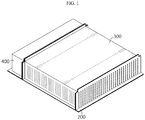
FIG. 1 is a perspective view showing an ESS module according to an embodiment of the present disclosure. -
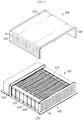
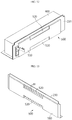
FIGS. 2 to 4 are exploded perspective views showing an ESS module according to an embodiment of the present disclosure. -
FIG. 5 is an exploded perspective view showing a cell stack assembly applied to the ESS module according to an embodiment of the present disclosure. -
FIG. 6 is a perspective view showing the cell stack assembly applied to the ESS module according to an embodiment of the present disclosure in an assembled state. -
FIG. 7 is a diagram showing a state where an upper housing is removed from the ESS module according to an embodiment of the present disclosure, in which an expandable graphite is not expanded. -
FIG. 8 is a diagram showing a mica plate assembly applied to the present disclosure, in which the expandable graphite is not expanded. -
FIG. 9 is a diagram showing a state where the upper housing is removed from the ESS module according to an embodiment of the present disclosure, after which the expandable graphite is expanded. -
FIG. 10 is a diagram showing the mica plate assembly applied to the present disclosure, after the expandable graphite is not expanded. -
FIGS. 11 to 14 are diagrams showing that a flow path hole formed in the expandable graphite disappears as temperature rises, in the mesh plate assembly applied to the present disclosure. -
FIG. 15 is a cross-sectioned view, taken along the line X-XFIG. 1 . -
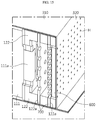
FIG. 16 is a diagram showing an inner structure, observed from a side of the ESS module according to an embodiment of the present disclosure. - Hereinafter, preferred embodiments of the present disclosure will be described in detail with reference to the accompanying drawings. Prior to the description, it should be understood that the terms used in the specification and the appended claims should not be construed as limited to general and dictionary meanings, but interpreted based on the meanings and concepts corresponding to technical aspects of the present disclosure on the basis of the principle that the inventor is allowed to define terms appropriately for the best explanation. Therefore, the description proposed herein is just a preferable example for the purpose of illustrations only, not intended to limit the scope of the disclosure, so it should be understood that other equivalents and modifications could be made thereto without departing from the scope of the disclosure.
- Referring to
FIGS. 1 to 4 , an ESS module according to an embodiment of the present disclosure may include acell stack assembly 100, alower housing 200, anupper housing 300, acooling fan block 400, amesh barrier assembly 500, amesh plate 600, afirst mica plate 700 and asecond mica plate 800. - Referring to
FIGS. 5 and6 , thecell stack assembly 100 includes acell stack 110, abus bar frame 120 and apressing plate 130. - The
cell stack 110 is formed by stacking a plurality ofbattery cells 111 and a plurality of mica barrier assemblies 112. A pouch-type battery cell may be applied as thebattery cell 111. Thebattery cell 111 includes a pair ofelectrode lead 111a respectively drawn out through both longitudinal sides. A sealing tape T for enhancing the sealing property of a pouch case of thebattery cell 111 is attached to both widthwise side portions of thebattery cell 111. As the sealing tape T is applied, the pouch-type battery cell 111 has better sealing property at both widthwise side portions of the pouch case, compared to sealing property of both longitudinal side portions thereof. - Due to the above characteristic of the pouch-
type battery cell 111, when the internal pressure of the ESS module increases, an internal gas caused by venting is discharged along a direction in which theelectrode lead 111a is drawn out, namely the longitudinal direction of thebattery cell 111. - Referring to
FIGS. 7 to 10 along withFIGS. 5 and6 , themica barrier assembly 112 is provided between thebattery cells 111 adjacent to each other and at an outermost side of thecell stack 110 to form a flow path along the stacking direction of thecell stack 110 at a temperature lower than a reference temperature and to block the flow path at a temperature equal to or higher than the reference temperature. Here, the flow path means a passage for movement for cooling air and for movement of gas when venting occurs. - When the temperature inside the ESS module is lower than the reference temperature and the flow path is formed accordingly, the movement of cooling air and the movement of the exhaust gas may be smoothly performed in the
battery cells 111 along a direction from a front side to a rear side of the ESS module or a direction from a rear side to a front side thereof (parallel to the stacking direction of the battery cells 111). - On the contrary, when the temperature inside the ESS module is equal to or higher than the reference temperature and the flow path is blocked accordingly, the movement of air, gas and flame along the direction from the front side to the rear side of the ESS module or the direction from the rear side to the front side thereof (parallel to the stacking direction of the battery cells 111) is blocked.
- That is, in a normal use state of the ESS module, the cooling air may be smoothly moved along a direction parallel to the stacking direction of the
battery cells 111 and the mica barrier assemblies 112 through the flow path formed inside thecell stack assembly 100. In addition, even when an abnormal situation such as a short circuit occurs in some of thebattery cells 111 of the ESS module and thus the temperature inside thebattery cell 111 rises to reach a temperature at which venting occurs, the gas leaked out of thebattery cells 111 may smoothly move along a direction parallel to the stacking direction of thebattery cells 111 and the mica barrier assemblies 112 through the flow path. - However, if the temperature rises further to reach the reference temperature equal to or higher than a temperature at which some
battery cells 111 cause thermal runaway, the flow path is blocked to prevent the flame generated due to the thermal runaway of somebattery cells 111 from propagating toadjacent battery cells 111 inside the cell stack, thereby suppressing rapid propagation of the thermal runaway phenomenon. - In order to perform this function, the
mica barrier assembly 112 has a length corresponding to thebattery cell 111 and a slightly larger width than thebattery cell 111, and is implemented to include amica barrier 112a and a firstexpandable graphite sheet 112b. - Referring to
FIGS. 7 and 8 , themica barrier 112a is formed to have a width that slightly greater than that of thebattery cell 111, thereby having a shape protruding further to thebattery cell 111 at the top end and the bottom end of thecell stack 110. In addition, themica barrier 112a has a pair of first flow path grooves G formed with a predetermined depth and length at a top end and/or a bottom end thereof in a widthwise direction. The firstexpandable graphite sheet 112b having a height lower than the depth of the first flow path groove G is attached inside the first flow path groove G. That is, the firstexpandable graphite sheet 112b fills just a part of the first flow path groove G, which creates an empty space in a part of the first flow path groove G, and this empty space functions as a flow path. - Mica constituting the
mica barrier 112a is one of coarse materials constituting granite and has excellent electrical insulation properties and very little change in properties when heated. The mica maintains an insulation resistance of approximately 150 kV/mm even at high temperatures of 500°C to 1000°C and may be used as an asbestos substitute serving as an eco-friendly material. In addition, the mica has excellent flame retardancy and smoke-free properties during combustion or heating. Due to these characteristics, it is possible to prevent the thermal runaway phenomenon from propagating betweenadjacent battery cells 111 by inserting themica barrier 112a made of mica material between theadjacent battery cells 111 when constructing thecell stack 110. - The expandable graphite powder of the first
expandable graphite sheet 112b may control the temperature at which expansion occurs by controlling its composition, and in the present disclosure, the composition of the powder may be adjusted so that the firstexpandable graphite sheet 112b is expanded over a temperature at which the flame occurs due to the thermal runaway phenomenon. That is, as shown inFIGS. 9 and10 , the firstexpandable graphite sheet 112b is expanded at the reference temperature above the temperature at which the flame occurs, and fully fills the first flow path groove G. If the first flow path groove G is fully filled as above, the flow path formed along the stacking direction of thecell stack 110 inside the ESS module disappears, thereby completely preventing the movement of flame betweenadjacent battery cells 111. - Referring to
FIGS. 5 and6 , thebus bar frame 120 is provided in a pair, and eachbus bar frame 120 is coupled to thecell stack 110 in a direction in which theelectrode lead 111a is drawn. Thebus bar frame 120 includes alead placing portion 121 and a pair ofplate support portions 122. - The
lead placing portion 121 includes a lead drawing slit 121a through which theelectrode lead 111a passes. Theelectrode lead 111a is drawn out of thecell stack assembly 100 through thelead drawing slit 121a and is coupled to a bus bar (not shown) installed on thelead placing portion 121 by welding. The electrical connection relationship between the plurality ofbattery cells 111 is determined according to the number and polarity of electrode leads 111a coupled to one bus bar. - The
plate support portion 122 has a shape extending from both widthwise ends of thelead placing portion 121 along a direction perpendicular to thelead placing portion 121, and includes afirst fixing slit 122a and asecond fixing slit 122b. - The
first fixing slit 122a is formed at an inner surface of theplate support portion 122, but is formed along the longitudinal direction of theplate support portion 122. Thefirst fixing slit 122a is formed at both inner surfaces of the pair ofplate support portions 122 facing each other, and thefirst mica plate 700 for preventing flame from leaking out through both side portions of the ESS module is inserted into and fixed to thefirst fixing slit 122a (seeFIG. 15 ). Thefirst mica plate 700 will be described later in detail with reference toFIG. 15 . - The
second fixing slit 122b is formed at the inner surface of theplate support portion 122, but is formed along the widthwise direction of theplate support portion 122. That is, thesecond fixing slit 122b has a shape extending along a direction perpendicular to thefirst fixing slit 122a, and thus thefirst fixing slit 122a is divided as much as the number of the formed second fixingslits 122b. Thesecond mica plate 800 for preventing flame from moving toward the front side and the rear side of the ESS module in the inner space of thebus bar frame 120 is inserted into and fixed to the second fixing slit 122b (seeFIG. 16 ). - The
second mica plate 800 will be described later in detail with reference toFIG. 16 . - Referring to
FIGS. 5 and6 , thepressing plate 130 is provided in a pair, and eachpressing plate 130 is in close contact with both side portions of thecell stack 110 in the stacking direction to press thecell stack 110. That is, thecell stack 110 is disposed between the pair ofpressing plates 130 in a pressurized state along the stacking direction, and thepressing plate 130 is fixed to thebus bar frame 120 to maintain the pressure on thecell stack 110. - The pressure of the
pressing plate 130 onto thecell stack 110 improves the energy density of thecell stack 110, and also induces venting in the drawing direction of theelectrode lead 111a when venting occurs due to a temperature rise of thebattery cell 111. That is, as described above, thebattery cell 111 may be a pouch-type battery cell, and in this case, because the sealing tape T is attached to both widthwise side portions of thebattery cell 111, the gas and flame are guided to be discharged through the drawing portion of theelectrode lead 111a, which has relatively poor sealing properties compared to both side portions. - Referring to
FIGS. 1 to 4 again, the housing is configured to accommodate thecell stack assembly 100 and includes alower housing 200 configured to cover a lower portion, a front portion and a rear portion of thecell stack assembly 100 and anupper housing 300 configured to cover an upper portion and both side portions of thecell stack assembly 100. - The
lower housing 200 includes alower plate 210 for covering the lower portion of thecell stack assembly 100, afront plate 220 for covering the front portion of thecell stack assembly 100, and arear plate 230 for covering the rear portion of thecell stack assembly 100. Thefront plate 220 and therear plate 230 have a plurality of flow path holes H communicating with the flow path formed in thecell stack 110. - The
upper housing 300 includes anupper plate 310 for covering the upper portion of thecell stack assembly 100 and a pair ofside plates 320 for covering both side portions of thecell stack assembly 100. Theside plate 320 covers thebus bar frame 120, and also have a plurality of flow path holes H communicating with the inner space of thebus bar frame 120 formed to be surrounded by thelead placing portions 121 and theplate support portions 122. - The flow path holes H provided in the
lower housing 200 and theupper housing 300 function as a movement path of a cooling air and a movement path of gas when venting occurs. - Referring to
FIGS. 1 to 4 again, the coolingfan block 400 is installed outside the housing, and is installed adjacent to thefront plate 220 and/or therear plate 230. The internal space of the coolingfan block 400 communicates with the flow path holes H formed in thefront plate 220 and/or therear plate 230. In addition, a cooling fan (not shown) may be provided inside the coolingfan block 400, and the cooling air is moved from thefront plate 220 toward therear plate 230 or from therear plate 230 toward thefront plate 220 by driving the cooling fan. - Next, referring to
FIGS. 11 to 14 along withFIG. 4 , themesh barrier assembly 500 is interposed between thefront plate 220 and thecell stack assembly 100 and between therear plate 230 and thecell stack assembly 100, and functions to pass air and gas while blocking flame. - The
mesh barrier assembly 500 is implemented to include amesh barrier 510 and a secondexpandable graphite sheet 520. Themesh barrier 510 is a mesh-type plate in which a plurality of fine pores are formed to pass air for cooling and gas generated by venting but minimize the passage of flame, and has acoupling groove 511 formed with a predetermined width and length on at least one of a top end and a bottom end thereof. - The second
expandable graphite sheet 520 is coupled to themesh barrier 510 while filling thecoupling groove 511, and has a plurality of flow path holes H. The flow path hole H formed in the secondexpandable graphite sheet 520 is provided at a location corresponding to the flow path hole H formed in thefront plate 220 and therear plate 230 described above. - The second
expandable graphite sheet 520 is expanded at the reference temperature or higher, like the firstexpandable graphite sheet 112b described above. When the secondexpandable graphite sheet 520 is expanded, the plurality of flow path holes H formed in the secondexpandable graphite sheet 112b disappear, and accordingly the flame ejected along the front side and/or the rear side of thecell stack assembly 100 is not be able to pass through the secondexpandable graphite sheet 112b. - Next, referring to
FIGS. 1 to 4 , themesh plate 600 is provided in a pair, and eachmesh plate 600 is interposed between theside plate 320 and thecell stack assembly 100. Themesh plate 600 is a mesh-type plate in which a plurality of fine pores are formed to pass air for cooling and gas generated by venting but minimize the passage of flame, like themesh barrier 510 described above. - As the
mesh plate 600 is applied, the gas ejected along the longitudinal direction of thebattery cell 111 is smoothly discharged to the outside of the ESS module, but the flame ejected along the longitudinal direction of thebattery cell 111 may be exposed to the outside of the ESS module to the minimum. - Next, referring to
FIGS. 15 and16 , thefirst mica plate 700 is interposed between thecell stack 110 and themesh plate 600. Thefirst mica plate 700 is inserted into and fixed to thefirst fixing slit 122a formed at theplate support portion 122. Thefirst mica plate 700 is arranged in parallel to themesh plate 600, and has a plurality of flow path holes H for smoothly discharging the gas that is intensively ejected along the drawing direction of theelectrode lead 111a. - The
first mica plate 700 may be installed in duplicate to minimize that the flame is ejected to the outside of the ESS module along the drawing direction of theelectrode lead 111a. That is, thefirst mica plate 700 may form two rows of barriers spaced apart from each other along the drawing direction of theelectrode lead 111a. - The
second mica plate 800 is disposed between thecell stack 110 and themesh plate 600 to be perpendicular to themesh plate 600. Thesecond mica plate 800 is inserted into and fixed to thesecond fixing slit 122b formed at theplate support portion 122. Thesecond mica plate 800 is provided in plural. The plurality of thesecond mica plates 800 are installed to be spaced apart from each other from the front side of the ESS module toward the rear side thereof to partition the inner space of thebus bar frame 120, namely the space surrounded by thelead placing portion 121 and the pair ofplate support portions 122. - The
second mica plate 800 prevents the flame ejected along the drawing direction of theelectrode lead 111a from moving along the direction perpendicular to the drawing direction of theelectrode lead 111a in the inner space of thebus bar frame 120. - Meanwhile, in the present disclosure, the
first mica plate 700 and/or thesecond mica plate 800 are applied to maximize the effect of preventing the flame exposure by themesh plate 600. Thus, the ESS module according to the present disclosure may also have a structure in which only themesh plate 600 is applied except for thefirst mica plate 700 and/or thesecond mica plate 800. - The present disclosure has been described in detail. However, it should be understood that the detailed description and specific examples, while indicating preferred embodiments of the disclosure, are given by way of illustration only, since various changes and modifications within the scope of the disclosure will become apparent to those skilled in the art from this detailed description.
Claims (11)
- An ESS (Energy Storage System) module, comprising:a cell stack assembly including a cell stack formed by stacking a plurality of battery cells and a plurality of mica barrier assemblies and a pair of bus bar frames coupled to both side portions of the cell stack; anda housing configured to accommodate the cell stack assembly and having a plurality of flow path holes formed at locations corresponding to a front side, a rear side and both side portions of the cell stack assembly,wherein the mica barrier assembly is provided between adjacent battery cells and at an outermost side of the cell stack to form a flow path along a stacking direction of the cell stack at a temperature lower than a reference temperature and to block the flow path at a temperature equal to or higher than the reference temperature.
- The ESS module according to claim 1,
wherein the mica barrier assembly includes:a mica barrier having a flow path groove formed on at least one of a top end and a bottom end thereof; anda first expandable graphite sheet configured to fill a part of the flow path groove, the first expandable graphite sheet being expanded at a temperature equal to or higher than the reference temperature to fully fill the flow path groove. - The ESS module according to claim 1,
wherein the battery cell is a pouch-type battery cell and has sealing tapes attached to both widthwise side portions thereof. - The ESS module according to claim 3, further comprising:
a pair of pressing plates provided in close contact with both side portions of the cell stack in the stacking direction to press the cell stack and fixed to the bus bar frame. - The ESS module according to claim 1,
wherein the housing includes:a lower housing having a lower plate configured to cover a lower portion of the cell stack assembly, a front plate configured to cover a front portion of the cell stack assembly and a rear plate configured to cover a rear portion of the cell stack assembly; andan upper housing having an upper plate configured to cover an upper portion of the cell stack assembly and a pair of side plates configured to cover both side portions of the cell stack assembly. - The ESS module according to claim 5, further comprising:
a mesh barrier assembly interposed between the front plate and the cell stack assembly and between the rear plate and the cell stack assembly. - The ESS module according to claim 6,
wherein the mesh barrier assembly includes:a mesh barrier having a coupling groove formed on at least one of a top end and a bottom end thereof; anda second expandable graphite sheet coupled to the mesh barrier while filling the coupling groove, the second expandable graphite sheet having a plurality of flow path holes and being expanded at a temperature equal to or higher than the reference temperature so that the flow path holes disappear. - The ESS module according to claim 5, further comprising:
a mesh plate interposed between the side plate and the cell stack assembly. - The ESS module according to claim 8, further comprising:
a first mica plate interposed between the cell stack and the mesh plate and arranged in parallel to the mesh plate, the first mica plate having a plurality of flow path holes. - The ESS module according to claim 9, further comprising:
a second mica plate disposed between the cell stack and the mesh plate and disposed perpendicular to the mesh plate to partition an inner space of the bus bar frame. - An ESS pack, comprising a plurality of ESS modules according to any one of claims 1 to 10.
Applications Claiming Priority (2)
| Application Number | Priority Date | Filing Date | Title |
|---|---|---|---|
| KR1020190025994A KR102380225B1 (en) | 2019-03-06 | 2019-03-06 | A ESS module having a structure capable of preventing external exposure of a flame and a ESS pack comprising the same |
| PCT/KR2019/017894 WO2020179994A1 (en) | 2019-03-06 | 2019-12-17 | Ess module having structure enabling prevention of external exposure of flame, and battery pack comprising same |
Publications (3)
| Publication Number | Publication Date |
|---|---|
| EP3828988A1 true EP3828988A1 (en) | 2021-06-02 |
| EP3828988A4 EP3828988A4 (en) | 2021-09-22 |
| EP3828988B1 EP3828988B1 (en) | 2023-06-07 |
Family
ID=72338718
Family Applications (1)
| Application Number | Title | Priority Date | Filing Date |
|---|---|---|---|
| EP19918102.5A Active EP3828988B1 (en) | 2019-03-06 | 2019-12-17 | Ess module having structure enabling prevention of external exposure of flame, and battery pack comprising same |
Country Status (8)
| Country | Link |
|---|---|
| US (1) | US11881592B2 (en) |
| EP (1) | EP3828988B1 (en) |
| JP (1) | JP7062163B2 (en) |
| KR (1) | KR102380225B1 (en) |
| ES (1) | ES2949642T3 (en) |
| HU (1) | HUE062330T2 (en) |
| PL (1) | PL3828988T3 (en) |
| WO (1) | WO2020179994A1 (en) |
Cited By (8)
| Publication number | Priority date | Publication date | Assignee | Title |
|---|---|---|---|---|
| EP4047731A3 (en) * | 2021-02-22 | 2022-11-16 | SK On Co., Ltd. | Battery cell assembly and battery pack including the same |
| EP4148883A1 (en) * | 2021-09-09 | 2023-03-15 | SK On Co., Ltd. | Battery pack |
| US11824176B2 (en) | 2022-03-25 | 2023-11-21 | Beta Air, Llc | Systems and methods for battery pack cooling using a cooling fin |
| JP2024535414A (en) * | 2021-12-27 | 2024-09-30 | エルジー エナジー ソリューション リミテッド | Battery pack, and ESS and automobile including said battery pack |
| EP4354622A4 (en) * | 2022-02-18 | 2024-11-20 | LG Energy Solution, Ltd. | BATTERY MODULE WITH SCREEN FOR INTERIOR DIVISION AND BATTERY PACK |
| EP4420190A4 (en) * | 2021-10-19 | 2025-11-26 | Cadenza Innovation Inc | POUCH CELL BATTERY SYSTEMS |
| EP4607680A4 (en) * | 2023-08-08 | 2026-03-18 | Lg Energy Solution Ltd | BATTERY PACK |
| EP4576385A4 (en) * | 2023-09-20 | 2026-04-01 | Lg Energy Solution Ltd | BATTERY MODULE |
Families Citing this family (56)
| Publication number | Priority date | Publication date | Assignee | Title |
|---|---|---|---|---|
| KR102464824B1 (en) * | 2019-06-25 | 2022-11-07 | 주식회사 엘지에너지솔루션 | Battery module and battery pack including the same |
| KR102830920B1 (en) * | 2021-01-11 | 2025-07-04 | 주식회사 엘지에너지솔루션 | Battery module having a structure capable of preventing fire and explosion, and battery pack and vehicle including the same |
| KR102917118B1 (en) * | 2021-01-15 | 2026-01-22 | 주식회사 엘지에너지솔루션 | Battery module and battery pack including the same |
| KR102825807B1 (en) * | 2021-01-15 | 2025-06-25 | 주식회사 엘지에너지솔루션 | Battery module having a structure capable of preventing fire and explosion, and battery pack and ESS including the same |
| KR102836099B1 (en) * | 2021-01-21 | 2025-07-17 | 주식회사 엘지에너지솔루션 | Battery pack having a structure capable of preventing fire and explosion, and ESS including the same |
| KR20220106534A (en) * | 2021-01-22 | 2022-07-29 | 주식회사 엘지에너지솔루션 | Battery module and battery pack including the same |
| KR102884911B1 (en) | 2021-01-22 | 2025-11-13 | 주식회사 엘지에너지솔루션 | A Battery Module Equipped With A Fire Spread Prevention Structure And A Battery Pack Including It |
| CN112670642B (en) * | 2021-01-28 | 2022-07-26 | 唐山鹏安科技有限公司 | Inert gas protection method for explosion-proof lithium battery power supply during combustion |
| KR102889232B1 (en) * | 2021-02-08 | 2025-11-24 | 에스케이온 주식회사 | Battery pack |
| KR102941327B1 (en) | 2021-02-19 | 2026-03-20 | 에스케이온 주식회사 | battery pack |
| KR20220120916A (en) * | 2021-02-24 | 2022-08-31 | 주식회사 엘지에너지솔루션 | Battery module and battery pack including same |
| EP4254619A4 (en) * | 2021-03-18 | 2025-03-05 | LG Energy Solution, Ltd. | BATTERY MODULE AND BATTERY PACK |
| EP4203162A4 (en) * | 2021-03-22 | 2024-10-02 | LG Energy Solution, Ltd. | BATTERY MODULE AND BATTERY PACK COMPRISING SAME |
| KR20220165133A (en) * | 2021-06-07 | 2022-12-14 | 주식회사 엘지에너지솔루션 | Battery module, battery pack and vehicle comprising the battery module |
| KR102647403B1 (en) * | 2021-06-22 | 2024-03-12 | 주식회사 엘지에너지솔루션 | Battery module with reinforced safety |
| KR20230001169A (en) | 2021-06-28 | 2023-01-04 | 주식회사 엘지에너지솔루션 | Battery cell and manufacturing method thereof, battery module and battery pack including the battery cell |
| KR20230004022A (en) | 2021-06-30 | 2023-01-06 | 주식회사 엘지에너지솔루션 | Battery cell, battery module and battery pack including the battery cell |
| KR20230004119A (en) | 2021-06-30 | 2023-01-06 | 주식회사 엘지에너지솔루션 | Battery cell, battery module and battery pack including the battery cell |
| KR102689331B1 (en) * | 2021-08-30 | 2024-07-26 | 에스케이온 주식회사 | Battery module |
| KR102866051B1 (en) * | 2021-10-25 | 2025-09-30 | 에스케이온 주식회사 | battery pack |
| EP4274014B1 (en) * | 2021-11-03 | 2025-09-24 | LG Energy Solution, Ltd. | Battery module and battery pack with improved safety |
| KR20230064784A (en) * | 2021-11-04 | 2023-05-11 | 주식회사 엘지에너지솔루션 | Battery module |
| EP4383408A4 (en) * | 2021-12-23 | 2025-02-26 | LG Energy Solution, Ltd. | Battery pack with improved safety |
| WO2023121415A1 (en) * | 2021-12-23 | 2023-06-29 | 주식회사 엘지에너지솔루션 | Battery module with reinforced safety |
| KR102685925B1 (en) * | 2021-12-27 | 2024-07-16 | 주식회사 엘지에너지솔루션 | Battery module, battery pack comprising the battery module, energy storage system and vehicle comprising the battery pack |
| KR102674208B1 (en) | 2021-12-30 | 2024-06-12 | 에스케이온 주식회사 | Battery module and battery pack comprising the same |
| KR102674209B1 (en) * | 2021-12-30 | 2024-06-12 | 에스케이온 주식회사 | Battery module and battery pack comprising the same |
| EP4270631B1 (en) * | 2022-01-07 | 2026-02-04 | LG Energy Solution, Ltd. | Battery cell assembly including bus bar to which flame blocking member is added and battery cell assembly structure including the battery cell assembly |
| KR20230112413A (en) * | 2022-01-20 | 2023-07-27 | 에스케이온 주식회사 | Battery Pack |
| JP2023141848A (en) * | 2022-03-24 | 2023-10-05 | 日産自動車株式会社 | battery pack |
| WO2023200303A1 (en) * | 2022-04-15 | 2023-10-19 | 주식회사 엘지에너지솔루션 | Battery module having enhanced safety |
| KR102649356B1 (en) * | 2022-04-15 | 2024-03-19 | 주식회사 엘지에너지솔루션 | Battery module with reinforced safety |
| JP7662279B2 (en) * | 2022-05-27 | 2025-04-15 | エルジー エナジー ソリューション リミテッド | Battery pack and device including same |
| KR20230168498A (en) * | 2022-06-07 | 2023-12-14 | 에스케이온 주식회사 | Battery module |
| KR20230168499A (en) | 2022-06-07 | 2023-12-14 | 에스케이온 주식회사 | Battery module |
| KR20230171653A (en) * | 2022-06-14 | 2023-12-21 | 주식회사 엘지에너지솔루션 | Battery module and manufacturing method thereof |
| US20240347852A1 (en) * | 2022-07-20 | 2024-10-17 | Lg Energy Solution, Ltd. | Battery Cell Unit, and Battery Pack and Vehicle Including the Same |
| JP7789914B2 (en) * | 2022-07-20 | 2025-12-22 | エルジー エナジー ソリューション リミテッド | Battery module, battery pack including the same, and automobile including the same |
| US20240413478A1 (en) * | 2022-07-20 | 2024-12-12 | Lg Energy Solution, Ltd. | Battery Pack and Vehicle Including the Same |
| EP4525175A4 (en) * | 2022-07-20 | 2025-08-20 | Lg Energy Solution Ltd | BATTERY PACK AND BATTERY MODULE |
| KR20240020076A (en) * | 2022-08-05 | 2024-02-14 | 주식회사 엘지에너지솔루션 | Battery pack |
| DE102022124281B3 (en) | 2022-09-21 | 2023-09-28 | Dr. Ing. H.C. F. Porsche Aktiengesellschaft | Battery module and its use as well as battery and motor vehicle with such a module |
| CN120051894A (en) * | 2022-11-23 | 2025-05-27 | 株式会社Lg新能源 | Battery pack and device comprising same |
| KR102887962B1 (en) * | 2022-11-24 | 2025-11-24 | 주식회사 브이스페이스 | Battery Module Capable of Preventing Spread of Fire |
| KR20240078161A (en) * | 2022-11-25 | 2024-06-03 | 에스케이온 주식회사 | Battery module |
| JP2025532574A (en) * | 2022-11-30 | 2025-10-01 | エルジー エナジー ソリューション リミテッド | Battery module, battery pack including same, and automobile |
| WO2024136188A1 (en) * | 2022-12-22 | 2024-06-27 | 주식회사 엘지에너지솔루션 | Battery pack and energy storage device including same |
| KR102945209B1 (en) * | 2022-12-22 | 2026-03-30 | 주식회사 엘지에너지솔루션 | Battery pack and energy storage device including the same |
| US20250233262A1 (en) * | 2022-12-23 | 2025-07-17 | Lg Energy Solution, Ltd. | Battery module, and battery pack and vehicle comprising the same |
| KR20240134669A (en) * | 2023-03-02 | 2024-09-10 | 주식회사 엘지에너지솔루션 | Battery module having blocking unit of flame exhaust and battery pack including the same |
| KR20250023825A (en) | 2023-08-10 | 2025-02-18 | 에스케이온 주식회사 | Battery module including housing member comprising flame retardant composite material |
| KR20250035373A (en) * | 2023-09-05 | 2025-03-12 | 주식회사 엘지에너지솔루션 | Battery pack |
| DE102023131639A1 (en) * | 2023-11-14 | 2025-05-15 | Dr. Ing. H.C. F. Porsche Aktiengesellschaft | Battery cell arrangement, battery and method for producing a battery |
| KR20250072763A (en) * | 2023-11-17 | 2025-05-26 | 주식회사 엘지에너지솔루션 | Battery pack and Vehicle including the same |
| KR20250080262A (en) * | 2023-11-28 | 2025-06-05 | 삼성에스디아이 주식회사 | Energy storage system |
| US20250391993A1 (en) * | 2024-06-20 | 2025-12-25 | GM Global Technology Operations LLC | Flame arrestor for battery cell group assembly |
Family Cites Families (25)
| Publication number | Priority date | Publication date | Assignee | Title |
|---|---|---|---|---|
| JPH10294128A (en) * | 1997-02-24 | 1998-11-04 | Hitachi Ltd | High temperature sodium secondary battery module and battery system |
| JP2008218210A (en) | 2007-03-05 | 2008-09-18 | Lenovo Singapore Pte Ltd | Battery pack and portable electronic device |
| KR101103755B1 (en) | 2008-09-03 | 2012-01-06 | 에스케이이노베이션 주식회사 | Lithium secondary battery unit set with bus bar and lithium secondary battery set with bus bar |
| KR101543477B1 (en) | 2010-11-08 | 2015-08-11 | 주식회사 엘지화학 | Battery module and lithium secondary battery pack comprising the same |
| AU2012323993B2 (en) | 2011-11-17 | 2016-08-25 | Med-Life Discoveries Lp | Methods for the synthesis of 13C labeled DHA and use as a reference standard |
| US20130171487A1 (en) | 2011-12-30 | 2013-07-04 | Roger Bull | Rechargeable battery and method |
| CN104094448B (en) * | 2012-02-29 | 2016-08-17 | 株式会社Lg化学 | Battery cell assembly with enhanced safety and battery module including the battery cell assembly |
| DE102012207162A1 (en) | 2012-04-30 | 2013-10-31 | Robert Bosch Gmbh | Process for the production of Li-ion battery modules and a corresponding Li-ion battery module |
| KR101298232B1 (en) | 2012-05-22 | 2013-08-22 | 비스티온 인테리어스 코리아 주식회사 | A bma using mesh and methd for manufacturing method of bma |
| DE102013200546A1 (en) * | 2013-01-16 | 2014-07-17 | Hilti Aktiengesellschaft | Accumulator for a hand tool and method for producing a rechargeable battery for a hand tool |
| US20160032190A1 (en) | 2014-07-30 | 2016-02-04 | Samsung Display Co., Ltd. | Composition for aligning, display panel and method of manufacturing same |
| KR101767634B1 (en) | 2014-07-31 | 2017-08-14 | 주식회사 엘지화학 | Battery module |
| KR20160041311A (en) | 2014-10-07 | 2016-04-18 | 주식회사 엘지화학 | Battery Pack Comprising Fire-resistance Safety Member |
| EP3259800B1 (en) | 2015-02-18 | 2022-12-07 | Shift Clean Solutions Ltd. | Lithium ion battery module with cooling system |
| JP6365884B2 (en) * | 2015-04-14 | 2018-08-01 | 豊田合成株式会社 | Assembled battery |
| KR102022590B1 (en) * | 2015-09-21 | 2019-09-18 | 주식회사 엘지화학 | Battery Module |
| KR102034208B1 (en) * | 2016-03-03 | 2019-10-18 | 주식회사 엘지화학 | Battery module, battery pack the battery module and vehicle comprising the battery pack |
| GR20160100371A (en) | 2016-07-05 | 2018-03-30 | Δημοκριτειο Πανεπιστημιο Θρακης-Δπθ | Electromechanical rechargeable lithium-ion cell |
| KR102097084B1 (en) * | 2016-09-05 | 2020-04-03 | 주식회사 엘지화학 | Pouch type secondary battery and battery module including the same |
| KR20180080813A (en) | 2017-01-05 | 2018-07-13 | 에이치엘그린파워 주식회사 | Battery module housing structure for improving cooling performance and Method for assembling the same |
| JP6912217B2 (en) * | 2017-02-20 | 2021-08-04 | 三菱ケミカル株式会社 | Variable thermal conductivity material |
| CN106785225A (en) | 2017-03-14 | 2017-05-31 | 合肥国轩高科动力能源有限公司 | Passive protection battery module structure and manufacturing method thereof |
| JP6885791B2 (en) * | 2017-06-05 | 2021-06-16 | 積水化学工業株式会社 | Thermal runaway prevention sheet |
| CN208522006U (en) * | 2018-06-28 | 2019-02-19 | 合肥国轩高科动力能源有限公司 | A battery module structure |
| CN110459715A (en) * | 2019-09-05 | 2019-11-15 | 台州市黄岩双盛塑模有限公司 | Composite battery case |
-
2019
- 2019-03-06 KR KR1020190025994A patent/KR102380225B1/en active Active
- 2019-12-17 JP JP2020546108A patent/JP7062163B2/en active Active
- 2019-12-17 PL PL19918102.5T patent/PL3828988T3/en unknown
- 2019-12-17 WO PCT/KR2019/017894 patent/WO2020179994A1/en not_active Ceased
- 2019-12-17 HU HUE19918102A patent/HUE062330T2/en unknown
- 2019-12-17 ES ES19918102T patent/ES2949642T3/en active Active
- 2019-12-17 US US17/268,169 patent/US11881592B2/en active Active
- 2019-12-17 EP EP19918102.5A patent/EP3828988B1/en active Active
Cited By (11)
| Publication number | Priority date | Publication date | Assignee | Title |
|---|---|---|---|---|
| EP4047731A3 (en) * | 2021-02-22 | 2022-11-16 | SK On Co., Ltd. | Battery cell assembly and battery pack including the same |
| EP4148883A1 (en) * | 2021-09-09 | 2023-03-15 | SK On Co., Ltd. | Battery pack |
| US12482895B2 (en) | 2021-09-09 | 2025-11-25 | Sk On Co., Ltd. | Battery pack |
| EP4420190A4 (en) * | 2021-10-19 | 2025-11-26 | Cadenza Innovation Inc | POUCH CELL BATTERY SYSTEMS |
| JP2024535414A (en) * | 2021-12-27 | 2024-09-30 | エルジー エナジー ソリューション リミテッド | Battery pack, and ESS and automobile including said battery pack |
| EP4379937A4 (en) * | 2021-12-27 | 2025-01-29 | LG Energy Solution, Ltd. | BATTERY PACK AND VEHICLE COMPRISING IT |
| JP7793770B2 (en) | 2021-12-27 | 2026-01-05 | エルジー エナジー ソリューション リミテッド | Battery pack, and ESS and automobile including said battery pack |
| EP4354622A4 (en) * | 2022-02-18 | 2024-11-20 | LG Energy Solution, Ltd. | BATTERY MODULE WITH SCREEN FOR INTERIOR DIVISION AND BATTERY PACK |
| US11824176B2 (en) | 2022-03-25 | 2023-11-21 | Beta Air, Llc | Systems and methods for battery pack cooling using a cooling fin |
| EP4607680A4 (en) * | 2023-08-08 | 2026-03-18 | Lg Energy Solution Ltd | BATTERY PACK |
| EP4576385A4 (en) * | 2023-09-20 | 2026-04-01 | Lg Energy Solution Ltd | BATTERY MODULE |
Also Published As
| Publication number | Publication date |
|---|---|
| US11881592B2 (en) | 2024-01-23 |
| KR20200107213A (en) | 2020-09-16 |
| JP7062163B2 (en) | 2022-05-06 |
| WO2020179994A1 (en) | 2020-09-10 |
| US20210320374A1 (en) | 2021-10-14 |
| PL3828988T3 (en) | 2023-08-28 |
| HUE062330T2 (en) | 2023-10-28 |
| EP3828988B1 (en) | 2023-06-07 |
| KR102380225B1 (en) | 2022-03-28 |
| JP2021517708A (en) | 2021-07-26 |
| ES2949642T3 (en) | 2023-10-02 |
| EP3828988A4 (en) | 2021-09-22 |
Similar Documents
| Publication | Publication Date | Title |
|---|---|---|
| EP3828988B1 (en) | Ess module having structure enabling prevention of external exposure of flame, and battery pack comprising same | |
| KR102924941B1 (en) | Battery module | |
| JP7580837B2 (en) | Battery module and battery pack including same | |
| KR102930111B1 (en) | Energy Storage System | |
| KR102805857B1 (en) | Battery Module Comprising Heat Insulating Member and Battery Pack Including the Same | |
| KR20230131112A (en) | Battery module and battery pack including same | |
| KR20230165712A (en) | Battery pack and device including the same | |
| KR20230119770A (en) | Battery rack and energy storage system comprising the same | |
| CN116349076A (en) | Battery module and battery pack including battery module | |
| KR102673791B1 (en) | Battery module and battery pack including the same | |
| KR20230124138A (en) | Battery pack and device including the same | |
| EP4513633A1 (en) | Battery module having heat dissipation and insulation function and battery pack comprising same | |
| JP7578376B2 (en) | Battery module and battery pack including same | |
| KR102849389B1 (en) | Battery module | |
| US20220367969A1 (en) | Battery module and battery pack | |
| KR20240084332A (en) | Battery pack having directional venting structure | |
| KR20230015217A (en) | Cooling member and battery pack including the same | |
| EP4629413A1 (en) | Battery pack | |
| CN117999696A (en) | Battery pack with improved safety | |
| JP7776652B2 (en) | Battery pack with heat propagation delay structure | |
| CN222106884U (en) | Battery packs and electrical equipment | |
| US20260005391A1 (en) | Battery module provided with pouch cells | |
| CN222191054U (en) | Battery packs and electrical equipment | |
| JP7853521B2 (en) | Battery module, battery pack including said battery module, and automobile | |
| KR20240041432A (en) | Battery module |
Legal Events
| Date | Code | Title | Description |
|---|---|---|---|
| STAA | Information on the status of an ep patent application or granted ep patent |
Free format text: STATUS: THE INTERNATIONAL PUBLICATION HAS BEEN MADE |
|
| PUAI | Public reference made under article 153(3) epc to a published international application that has entered the european phase |
Free format text: ORIGINAL CODE: 0009012 |
|
| STAA | Information on the status of an ep patent application or granted ep patent |
Free format text: STATUS: REQUEST FOR EXAMINATION WAS MADE |
|
| 17P | Request for examination filed |
Effective date: 20210225 |
|
| AK | Designated contracting states |
Kind code of ref document: A1 Designated state(s): AL AT BE BG CH CY CZ DE DK EE ES FI FR GB GR HR HU IE IS IT LI LT LU LV MC MK MT NL NO PL PT RO RS SE SI SK SM TR |
|
| A4 | Supplementary search report drawn up and despatched |
Effective date: 20210819 |
|
| RIC1 | Information provided on ipc code assigned before grant |
Ipc: H01M 50/383 20210101ALI20210813BHEP Ipc: H01M 50/375 20210101ALI20210813BHEP Ipc: H01M 50/367 20210101ALI20210813BHEP Ipc: H01M 50/293 20210101ALI20210813BHEP Ipc: H01M 50/291 20210101ALI20210813BHEP Ipc: H01M 10/6556 20140101ALI20210813BHEP Ipc: H01M 10/6555 20140101ALI20210813BHEP Ipc: H01M 10/63 20140101ALI20210813BHEP Ipc: A62C 3/16 20060101ALI20210813BHEP Ipc: A62C 2/06 20060101ALI20210813BHEP Ipc: H01M 10/613 20140101ALI20210813BHEP Ipc: H01M 10/647 20140101ALI20210813BHEP Ipc: H01M 10/627 20140101ALI20210813BHEP Ipc: H01M 10/653 20140101ALI20210813BHEP Ipc: H01M 10/6566 20140101ALI20210813BHEP Ipc: H01M 10/658 20140101AFI20210813BHEP |
|
| RAP1 | Party data changed (applicant data changed or rights of an application transferred) |
Owner name: LG ENERGY SOLUTION LTD. |
|
| RAP3 | Party data changed (applicant data changed or rights of an application transferred) |
Owner name: LG ENERGY SOLUTION, LTD. |
|
| DAV | Request for validation of the european patent (deleted) | ||
| DAX | Request for extension of the european patent (deleted) | ||
| GRAP | Despatch of communication of intention to grant a patent |
Free format text: ORIGINAL CODE: EPIDOSNIGR1 |
|
| STAA | Information on the status of an ep patent application or granted ep patent |
Free format text: STATUS: GRANT OF PATENT IS INTENDED |
|
| INTG | Intention to grant announced |
Effective date: 20230309 |
|
| GRAS | Grant fee paid |
Free format text: ORIGINAL CODE: EPIDOSNIGR3 |
|
| GRAA | (expected) grant |
Free format text: ORIGINAL CODE: 0009210 |
|
| STAA | Information on the status of an ep patent application or granted ep patent |
Free format text: STATUS: THE PATENT HAS BEEN GRANTED |
|
| AK | Designated contracting states |
Kind code of ref document: B1 Designated state(s): AL AT BE BG CH CY CZ DE DK EE ES FI FR GB GR HR HU IE IS IT LI LT LU LV MC MK MT NL NO PL PT RO RS SE SI SK SM TR |
|
| REG | Reference to a national code |
Ref country code: GB Ref legal event code: FG4D |
|
| REG | Reference to a national code |
Ref country code: CH Ref legal event code: EP Ref country code: AT Ref legal event code: REF Ref document number: 1577653 Country of ref document: AT Kind code of ref document: T Effective date: 20230615 Ref country code: DE Ref legal event code: R096 Ref document number: 602019030842 Country of ref document: DE |
|
| P01 | Opt-out of the competence of the unified patent court (upc) registered |
Effective date: 20230517 |
|
| REG | Reference to a national code |
Ref country code: SE Ref legal event code: TRGR |
|
| REG | Reference to a national code |
Ref country code: LT Ref legal event code: MG9D |
|
| REG | Reference to a national code |
Ref country code: ES Ref legal event code: FG2A Ref document number: 2949642 Country of ref document: ES Kind code of ref document: T3 Effective date: 20231002 |
|
| REG | Reference to a national code |
Ref country code: NL Ref legal event code: MP Effective date: 20230607 |
|
| REG | Reference to a national code |
Ref country code: HU Ref legal event code: AG4A Ref document number: E062330 Country of ref document: HU |
|
| PG25 | Lapsed in a contracting state [announced via postgrant information from national office to epo] |
Ref country code: NO Free format text: LAPSE BECAUSE OF FAILURE TO SUBMIT A TRANSLATION OF THE DESCRIPTION OR TO PAY THE FEE WITHIN THE PRESCRIBED TIME-LIMIT Effective date: 20230907 |
|
| REG | Reference to a national code |
Ref country code: AT Ref legal event code: MK05 Ref document number: 1577653 Country of ref document: AT Kind code of ref document: T Effective date: 20230607 |
|
| PG25 | Lapsed in a contracting state [announced via postgrant information from national office to epo] |
Ref country code: RS Free format text: LAPSE BECAUSE OF FAILURE TO SUBMIT A TRANSLATION OF THE DESCRIPTION OR TO PAY THE FEE WITHIN THE PRESCRIBED TIME-LIMIT Effective date: 20230607 Ref country code: NL Free format text: LAPSE BECAUSE OF FAILURE TO SUBMIT A TRANSLATION OF THE DESCRIPTION OR TO PAY THE FEE WITHIN THE PRESCRIBED TIME-LIMIT Effective date: 20230607 Ref country code: LV Free format text: LAPSE BECAUSE OF FAILURE TO SUBMIT A TRANSLATION OF THE DESCRIPTION OR TO PAY THE FEE WITHIN THE PRESCRIBED TIME-LIMIT Effective date: 20230607 Ref country code: LT Free format text: LAPSE BECAUSE OF FAILURE TO SUBMIT A TRANSLATION OF THE DESCRIPTION OR TO PAY THE FEE WITHIN THE PRESCRIBED TIME-LIMIT Effective date: 20230607 Ref country code: HR Free format text: LAPSE BECAUSE OF FAILURE TO SUBMIT A TRANSLATION OF THE DESCRIPTION OR TO PAY THE FEE WITHIN THE PRESCRIBED TIME-LIMIT Effective date: 20230607 Ref country code: GR Free format text: LAPSE BECAUSE OF FAILURE TO SUBMIT A TRANSLATION OF THE DESCRIPTION OR TO PAY THE FEE WITHIN THE PRESCRIBED TIME-LIMIT Effective date: 20230908 |
|
| PG25 | Lapsed in a contracting state [announced via postgrant information from national office to epo] |
Ref country code: FI Free format text: LAPSE BECAUSE OF FAILURE TO SUBMIT A TRANSLATION OF THE DESCRIPTION OR TO PAY THE FEE WITHIN THE PRESCRIBED TIME-LIMIT Effective date: 20230607 |
|
| PG25 | Lapsed in a contracting state [announced via postgrant information from national office to epo] |
Ref country code: SK Free format text: LAPSE BECAUSE OF FAILURE TO SUBMIT A TRANSLATION OF THE DESCRIPTION OR TO PAY THE FEE WITHIN THE PRESCRIBED TIME-LIMIT Effective date: 20230607 |
|
| PG25 | Lapsed in a contracting state [announced via postgrant information from national office to epo] |
Ref country code: IS Free format text: LAPSE BECAUSE OF FAILURE TO SUBMIT A TRANSLATION OF THE DESCRIPTION OR TO PAY THE FEE WITHIN THE PRESCRIBED TIME-LIMIT Effective date: 20231007 |
|
| PG25 | Lapsed in a contracting state [announced via postgrant information from national office to epo] |
Ref country code: SM Free format text: LAPSE BECAUSE OF FAILURE TO SUBMIT A TRANSLATION OF THE DESCRIPTION OR TO PAY THE FEE WITHIN THE PRESCRIBED TIME-LIMIT Effective date: 20230607 Ref country code: SK Free format text: LAPSE BECAUSE OF FAILURE TO SUBMIT A TRANSLATION OF THE DESCRIPTION OR TO PAY THE FEE WITHIN THE PRESCRIBED TIME-LIMIT Effective date: 20230607 Ref country code: RO Free format text: LAPSE BECAUSE OF FAILURE TO SUBMIT A TRANSLATION OF THE DESCRIPTION OR TO PAY THE FEE WITHIN THE PRESCRIBED TIME-LIMIT Effective date: 20230607 Ref country code: PT Free format text: LAPSE BECAUSE OF FAILURE TO SUBMIT A TRANSLATION OF THE DESCRIPTION OR TO PAY THE FEE WITHIN THE PRESCRIBED TIME-LIMIT Effective date: 20231009 Ref country code: IS Free format text: LAPSE BECAUSE OF FAILURE TO SUBMIT A TRANSLATION OF THE DESCRIPTION OR TO PAY THE FEE WITHIN THE PRESCRIBED TIME-LIMIT Effective date: 20231007 Ref country code: EE Free format text: LAPSE BECAUSE OF FAILURE TO SUBMIT A TRANSLATION OF THE DESCRIPTION OR TO PAY THE FEE WITHIN THE PRESCRIBED TIME-LIMIT Effective date: 20230607 Ref country code: CZ Free format text: LAPSE BECAUSE OF FAILURE TO SUBMIT A TRANSLATION OF THE DESCRIPTION OR TO PAY THE FEE WITHIN THE PRESCRIBED TIME-LIMIT Effective date: 20230607 Ref country code: AT Free format text: LAPSE BECAUSE OF FAILURE TO SUBMIT A TRANSLATION OF THE DESCRIPTION OR TO PAY THE FEE WITHIN THE PRESCRIBED TIME-LIMIT Effective date: 20230607 |
|
| REG | Reference to a national code |
Ref country code: DE Ref legal event code: R097 Ref document number: 602019030842 Country of ref document: DE |
|
| PLBE | No opposition filed within time limit |
Free format text: ORIGINAL CODE: 0009261 |
|
| STAA | Information on the status of an ep patent application or granted ep patent |
Free format text: STATUS: NO OPPOSITION FILED WITHIN TIME LIMIT |
|
| PG25 | Lapsed in a contracting state [announced via postgrant information from national office to epo] |
Ref country code: DK Free format text: LAPSE BECAUSE OF FAILURE TO SUBMIT A TRANSLATION OF THE DESCRIPTION OR TO PAY THE FEE WITHIN THE PRESCRIBED TIME-LIMIT Effective date: 20230607 |
|
| PG25 | Lapsed in a contracting state [announced via postgrant information from national office to epo] |
Ref country code: SI Free format text: LAPSE BECAUSE OF FAILURE TO SUBMIT A TRANSLATION OF THE DESCRIPTION OR TO PAY THE FEE WITHIN THE PRESCRIBED TIME-LIMIT Effective date: 20230607 |
|
| 26N | No opposition filed |
Effective date: 20240308 |
|
| PG25 | Lapsed in a contracting state [announced via postgrant information from national office to epo] |
Ref country code: SI Free format text: LAPSE BECAUSE OF FAILURE TO SUBMIT A TRANSLATION OF THE DESCRIPTION OR TO PAY THE FEE WITHIN THE PRESCRIBED TIME-LIMIT Effective date: 20230607 Ref country code: IT Free format text: LAPSE BECAUSE OF FAILURE TO SUBMIT A TRANSLATION OF THE DESCRIPTION OR TO PAY THE FEE WITHIN THE PRESCRIBED TIME-LIMIT Effective date: 20230607 |
|
| REG | Reference to a national code |
Ref country code: CH Ref legal event code: PL |
|
| PG25 | Lapsed in a contracting state [announced via postgrant information from national office to epo] |
Ref country code: LU Free format text: LAPSE BECAUSE OF NON-PAYMENT OF DUE FEES Effective date: 20231217 |
|
| PG25 | Lapsed in a contracting state [announced via postgrant information from national office to epo] |
Ref country code: MC Free format text: LAPSE BECAUSE OF FAILURE TO SUBMIT A TRANSLATION OF THE DESCRIPTION OR TO PAY THE FEE WITHIN THE PRESCRIBED TIME-LIMIT Effective date: 20230607 |
|
| REG | Reference to a national code |
Ref country code: BE Ref legal event code: MM Effective date: 20231231 |
|
| PG25 | Lapsed in a contracting state [announced via postgrant information from national office to epo] |
Ref country code: MC Free format text: LAPSE BECAUSE OF FAILURE TO SUBMIT A TRANSLATION OF THE DESCRIPTION OR TO PAY THE FEE WITHIN THE PRESCRIBED TIME-LIMIT Effective date: 20230607 Ref country code: LU Free format text: LAPSE BECAUSE OF NON-PAYMENT OF DUE FEES Effective date: 20231217 |
|
| REG | Reference to a national code |
Ref country code: IE Ref legal event code: MM4A |
|
| PG25 | Lapsed in a contracting state [announced via postgrant information from national office to epo] |
Ref country code: IE Free format text: LAPSE BECAUSE OF NON-PAYMENT OF DUE FEES Effective date: 20231217 |
|
| PG25 | Lapsed in a contracting state [announced via postgrant information from national office to epo] |
Ref country code: BE Free format text: LAPSE BECAUSE OF NON-PAYMENT OF DUE FEES Effective date: 20231231 |
|
| PG25 | Lapsed in a contracting state [announced via postgrant information from national office to epo] |
Ref country code: CH Free format text: LAPSE BECAUSE OF NON-PAYMENT OF DUE FEES Effective date: 20231231 |
|
| PG25 | Lapsed in a contracting state [announced via postgrant information from national office to epo] |
Ref country code: IE Free format text: LAPSE BECAUSE OF NON-PAYMENT OF DUE FEES Effective date: 20231217 Ref country code: CH Free format text: LAPSE BECAUSE OF NON-PAYMENT OF DUE FEES Effective date: 20231231 Ref country code: BE Free format text: LAPSE BECAUSE OF NON-PAYMENT OF DUE FEES Effective date: 20231231 |
|
| PG25 | Lapsed in a contracting state [announced via postgrant information from national office to epo] |
Ref country code: BG Free format text: LAPSE BECAUSE OF FAILURE TO SUBMIT A TRANSLATION OF THE DESCRIPTION OR TO PAY THE FEE WITHIN THE PRESCRIBED TIME-LIMIT Effective date: 20230607 |
|
| PG25 | Lapsed in a contracting state [announced via postgrant information from national office to epo] |
Ref country code: BG Free format text: LAPSE BECAUSE OF FAILURE TO SUBMIT A TRANSLATION OF THE DESCRIPTION OR TO PAY THE FEE WITHIN THE PRESCRIBED TIME-LIMIT Effective date: 20230607 |
|
| PG25 | Lapsed in a contracting state [announced via postgrant information from national office to epo] |
Ref country code: CY Free format text: LAPSE BECAUSE OF FAILURE TO SUBMIT A TRANSLATION OF THE DESCRIPTION OR TO PAY THE FEE WITHIN THE PRESCRIBED TIME-LIMIT; INVALID AB INITIO Effective date: 20191217 |
|
| PG25 | Lapsed in a contracting state [announced via postgrant information from national office to epo] |
Ref country code: TR Free format text: LAPSE BECAUSE OF FAILURE TO SUBMIT A TRANSLATION OF THE DESCRIPTION OR TO PAY THE FEE WITHIN THE PRESCRIBED TIME-LIMIT Effective date: 20230607 |
|
| PGFP | Annual fee paid to national office [announced via postgrant information from national office to epo] |
Ref country code: DE Payment date: 20251120 Year of fee payment: 7 |
|
| PGFP | Annual fee paid to national office [announced via postgrant information from national office to epo] |
Ref country code: GB Payment date: 20251120 Year of fee payment: 7 |
|
| PGFP | Annual fee paid to national office [announced via postgrant information from national office to epo] |
Ref country code: HU Payment date: 20251216 Year of fee payment: 7 Ref country code: FR Payment date: 20251125 Year of fee payment: 7 |
|
| PGFP | Annual fee paid to national office [announced via postgrant information from national office to epo] |
Ref country code: SE Payment date: 20251121 Year of fee payment: 7 |
|
| PGFP | Annual fee paid to national office [announced via postgrant information from national office to epo] |
Ref country code: PL Payment date: 20251124 Year of fee payment: 7 |
|
| PGFP | Annual fee paid to national office [announced via postgrant information from national office to epo] |
Ref country code: ES Payment date: 20260122 Year of fee payment: 7 |