EP3827856A1 - Drug delivery device - Google Patents
Drug delivery device Download PDFInfo
- Publication number
- EP3827856A1 EP3827856A1 EP21151416.1A EP21151416A EP3827856A1 EP 3827856 A1 EP3827856 A1 EP 3827856A1 EP 21151416 A EP21151416 A EP 21151416A EP 3827856 A1 EP3827856 A1 EP 3827856A1
- Authority
- EP
- European Patent Office
- Prior art keywords
- cap
- activation
- delivery device
- drug delivery
- feature
- Prior art date
- Legal status (The legal status is an assumption and is not a legal conclusion. Google has not performed a legal analysis and makes no representation as to the accuracy of the status listed.)
- Pending
Links
Images


Classifications
-
- A—HUMAN NECESSITIES
- A61—MEDICAL OR VETERINARY SCIENCE; HYGIENE
- A61M—DEVICES FOR INTRODUCING MEDIA INTO, OR ONTO, THE BODY; DEVICES FOR TRANSDUCING BODY MEDIA OR FOR TAKING MEDIA FROM THE BODY; DEVICES FOR PRODUCING OR ENDING SLEEP OR STUPOR
- A61M5/00—Devices for bringing media into the body in a subcutaneous, intra-vascular or intramuscular way; Accessories therefor, e.g. filling or cleaning devices, arm-rests
- A61M5/178—Syringes
- A61M5/31—Details
- A61M5/32—Needles; Details of needles pertaining to their connection with syringe or hub; Accessories for bringing the needle into, or holding the needle on, the body; Devices for protection of needles
- A61M5/3202—Devices for protection of the needle before use, e.g. caps
-
- A—HUMAN NECESSITIES
- A61—MEDICAL OR VETERINARY SCIENCE; HYGIENE
- A61M—DEVICES FOR INTRODUCING MEDIA INTO, OR ONTO, THE BODY; DEVICES FOR TRANSDUCING BODY MEDIA OR FOR TAKING MEDIA FROM THE BODY; DEVICES FOR PRODUCING OR ENDING SLEEP OR STUPOR
- A61M5/00—Devices for bringing media into the body in a subcutaneous, intra-vascular or intramuscular way; Accessories therefor, e.g. filling or cleaning devices, arm-rests
- A61M5/178—Syringes
- A61M5/24—Ampoule syringes, i.e. syringes with needle for use in combination with replaceable ampoules or carpules, e.g. automatic
-
- A—HUMAN NECESSITIES
- A61—MEDICAL OR VETERINARY SCIENCE; HYGIENE
- A61M—DEVICES FOR INTRODUCING MEDIA INTO, OR ONTO, THE BODY; DEVICES FOR TRANSDUCING BODY MEDIA OR FOR TAKING MEDIA FROM THE BODY; DEVICES FOR PRODUCING OR ENDING SLEEP OR STUPOR
- A61M5/00—Devices for bringing media into the body in a subcutaneous, intra-vascular or intramuscular way; Accessories therefor, e.g. filling or cleaning devices, arm-rests
- A61M5/178—Syringes
- A61M5/31—Details
- A61M5/315—Pistons; Piston-rods; Guiding, blocking or restricting the movement of the rod or piston; Appliances on the rod for facilitating dosing ; Dosing mechanisms
- A61M5/31565—Administration mechanisms, i.e. constructional features, modes of administering a dose
-
- A—HUMAN NECESSITIES
- A61—MEDICAL OR VETERINARY SCIENCE; HYGIENE
- A61M—DEVICES FOR INTRODUCING MEDIA INTO, OR ONTO, THE BODY; DEVICES FOR TRANSDUCING BODY MEDIA OR FOR TAKING MEDIA FROM THE BODY; DEVICES FOR PRODUCING OR ENDING SLEEP OR STUPOR
- A61M5/00—Devices for bringing media into the body in a subcutaneous, intra-vascular or intramuscular way; Accessories therefor, e.g. filling or cleaning devices, arm-rests
- A61M5/178—Syringes
- A61M5/31—Details
- A61M5/315—Pistons; Piston-rods; Guiding, blocking or restricting the movement of the rod or piston; Appliances on the rod for facilitating dosing ; Dosing mechanisms
- A61M5/31565—Administration mechanisms, i.e. constructional features, modes of administering a dose
- A61M5/31566—Means improving security or handling thereof
- A61M5/31571—Means preventing accidental administration
-
- A—HUMAN NECESSITIES
- A61—MEDICAL OR VETERINARY SCIENCE; HYGIENE
- A61M—DEVICES FOR INTRODUCING MEDIA INTO, OR ONTO, THE BODY; DEVICES FOR TRANSDUCING BODY MEDIA OR FOR TAKING MEDIA FROM THE BODY; DEVICES FOR PRODUCING OR ENDING SLEEP OR STUPOR
- A61M5/00—Devices for bringing media into the body in a subcutaneous, intra-vascular or intramuscular way; Accessories therefor, e.g. filling or cleaning devices, arm-rests
- A61M5/178—Syringes
- A61M5/31—Details
- A61M5/32—Needles; Details of needles pertaining to their connection with syringe or hub; Accessories for bringing the needle into, or holding the needle on, the body; Devices for protection of needles
- A61M5/3205—Apparatus for removing or disposing of used needles or syringes, e.g. containers; Means for protection against accidental injuries from used needles
- A61M5/321—Means for protection against accidental injuries by used needles
- A61M5/3213—Caps placed axially onto the needle, e.g. equipped with finger protection guards
-
- A—HUMAN NECESSITIES
- A61—MEDICAL OR VETERINARY SCIENCE; HYGIENE
- A61M—DEVICES FOR INTRODUCING MEDIA INTO, OR ONTO, THE BODY; DEVICES FOR TRANSDUCING BODY MEDIA OR FOR TAKING MEDIA FROM THE BODY; DEVICES FOR PRODUCING OR ENDING SLEEP OR STUPOR
- A61M5/00—Devices for bringing media into the body in a subcutaneous, intra-vascular or intramuscular way; Accessories therefor, e.g. filling or cleaning devices, arm-rests
- A61M5/178—Syringes
- A61M5/20—Automatic syringes, e.g. with automatically actuated piston rod, with automatic needle injection, filling automatically
- A61M2005/2006—Having specific accessories
- A61M2005/2013—Having specific accessories triggering of discharging means by contact of injector with patient body
-
- A—HUMAN NECESSITIES
- A61—MEDICAL OR VETERINARY SCIENCE; HYGIENE
- A61M—DEVICES FOR INTRODUCING MEDIA INTO, OR ONTO, THE BODY; DEVICES FOR TRANSDUCING BODY MEDIA OR FOR TAKING MEDIA FROM THE BODY; DEVICES FOR PRODUCING OR ENDING SLEEP OR STUPOR
- A61M5/00—Devices for bringing media into the body in a subcutaneous, intra-vascular or intramuscular way; Accessories therefor, e.g. filling or cleaning devices, arm-rests
- A61M5/178—Syringes
- A61M5/20—Automatic syringes, e.g. with automatically actuated piston rod, with automatic needle injection, filling automatically
- A61M2005/2073—Automatic syringes, e.g. with automatically actuated piston rod, with automatic needle injection, filling automatically preventing premature release, e.g. by making use of a safety lock
- A61M2005/208—Release is possible only when device is pushed against the skin, e.g. using a trigger which is blocked or inactive when the device is not pushed against the skin
-
- A—HUMAN NECESSITIES
- A61—MEDICAL OR VETERINARY SCIENCE; HYGIENE
- A61M—DEVICES FOR INTRODUCING MEDIA INTO, OR ONTO, THE BODY; DEVICES FOR TRANSDUCING BODY MEDIA OR FOR TAKING MEDIA FROM THE BODY; DEVICES FOR PRODUCING OR ENDING SLEEP OR STUPOR
- A61M5/00—Devices for bringing media into the body in a subcutaneous, intra-vascular or intramuscular way; Accessories therefor, e.g. filling or cleaning devices, arm-rests
- A61M5/178—Syringes
- A61M5/31—Details
- A61M5/32—Needles; Details of needles pertaining to their connection with syringe or hub; Accessories for bringing the needle into, or holding the needle on, the body; Devices for protection of needles
- A61M5/3205—Apparatus for removing or disposing of used needles or syringes, e.g. containers; Means for protection against accidental injuries from used needles
- A61M5/321—Means for protection against accidental injuries by used needles
- A61M5/3243—Means for protection against accidental injuries by used needles being axially-extensible, e.g. protective sleeves coaxially slidable on the syringe barrel
- A61M5/326—Fully automatic sleeve extension, i.e. in which triggering of the sleeve does not require a deliberate action by the user
Definitions
- the present disclosure generally relates to a drug delivery device.
- Administering an injection is a process which presents a number of risks and challenges for users and healthcare professionals, both mental and physical.
- Pre-filled syringes containing a selected dosage of a medicament for administering the medicament to a patient are known in the art.
- An object of the present disclosure is to provide an improved drug delivery device.
- the object is achieved by a drug delivery device according to claim 1.
- a drug delivery device comprises:
- Actuation of the activating mechanism may be the only requirement or one out of a number of requirements to initiate a drug dispense operation of the drug delivery device.
- the cap which is otherwise used to cover the opening of the body, through which the drug is dispensed and prevent access to an injection needle which may be present in this opening, is also used to actuate the activating mechanism.
- the cap may thus serve as a trigger button or as a key to unlock the activating mechanism allowing operation of a different trigger button or sleeve to start the drug dispense operation.
- Patients using the drug delivery device are thus provided with an additional safety measure in order to avoid accidental triggering of the drug delivery device.
- the activation feature is arranged on a proximal end of the cap or on a distal end of the cap or on a lateral face thereof.
- the activation opening is arranged in a proximal end of the body or in a lateral face of the body.
- the cap comprises an activation feature in the form of a sheath grabber within the cap for engaging a protective needle sheath.
- the activation feature has the form of one or more activation ribs adapted to be inserted into activation openings having the form of lateral notches within the proximal end of the body in order to actuate the activation mechanism.
- the activation feature comprises one or more inwardly directed ribs within the cap adapted to engage an outer thread arranged within the proximal end of the body allowing the cap to be screwed into the proximal end.
- an insertion movement of the activation feature into the activation opening may be decoupled from an actuation movement of the cap.
- the activation feature engages the activation mechanism such that the cap may be depressed in the distal direction in order to actuate the activation mechanism. This is one possible way to decouple the insertion movement of the activation feature from the actuation movement of the cap thus reducing the risk of accidental actuation.
- the activation feature has the form of a key suitable for transmitting a torque, e.g. a hexalobular external key in order to allow for actuating the activation mechanism by rotating the cap.
- a torque e.g. a hexalobular external key
- the cap comprises a grip feature adapted to facilitate gripping the cap by a user's hand and/or fingers.
- the grip feature may comprises one or more extensions in a transversal direction. This may facilitate removal of the cap from the distal end if the body and rotational movement of the cap for insertion or actuation.
- the grip feature may be reusable and/or tailored to the hand or fingers of an individual user.
- the cap is adapted to be placed laterally on the body for engaging the actuation feature to the actuation mechanism such that an end of the cap is substantially flush with the distal end of the body to render the drug delivery device more manageable and/or to increase a supporting surface of the drug delivery device 1 on an injection site, e.g. a patient's skin.
- a sleeve is telescoped within the distal end of the body, wherein the sleeve is adapted to be moved in the proximal direction relative to the body in order to expose the injection needle and/or to actuate the drug delivery device and/or to allow actuation of the activation mechanism.
- the sleeve is interlocked to the activation mechanism, e.g. such that the activation mechanism is locked prior to depression of the sleeve, wherein the sleeve has to be depressed in the proximal direction in order to unlock the activation mechanism which can only then be operated by the activation feature on the cap in order to dispense the drug.
- the interlock may be such that sleeve is locked prior to operation of the activation mechanism, wherein the activation feature on the cap has to operate the activation mechanism in order to unlock the sleeve, wherein subsequent depression of the sleeve in the proximal direction activates the drug delivery device in order to dispense the drug.
- it may be required to depress the sleeve and to operate the activation mechanism by the activation feature of the cap to dispense the drug without having to observe a sequence of operation.
- Figure 1 is a schematic view of an exemplary embodiment of a drug delivery device 1 comprising a body 2 and a cap 3 attached to a distal end 2.1 of the body 2.
- the body 2 may be adapted to retain a medicament cartridge to which an injection needle may be attached or a medicament cartridge in the form of a pre-filled syringe with an attached injection needle, which may extend from or be extended through an opening 2.4 in the distal end 2.1.
- the cap 3 is adapted to cover the opening 2.4 in the distal end 2.1 of the body 2 to prevent access to the injection needle.
- the cap 3 may be adapted to engage a protective needle sheath arranged over the injection needle in order to remove the protective needle sheath upon removal of the cap 3 from the distal end 2.1.
- the body 2 may comprise a viewing window 4 allowing inspection of the contents of the medicament cartridge or syringe.
- An activation mechanism may be arranged within the body 2, the activation mechanism adapted to advance the syringe and needle and/or to advance a stopper within the syringe for displacing a drug contained in the syringe through the injection needle.
- Figure 2 is a schematic view of the drug delivery device 1 after removal of the cap 3 from the distal end 2.1 of the body 2.
- a sleeve 5 is telescoped within the distal end 2.1 of the body 2, wherein the sleeve 5 may be adapted to be moved in a proximal direction P into the body 2 in order to expose the injection needle and/or to actuate the drug delivery device 1 and/or to allow actuation of the activation mechanism.
- the cap 3 comprises an activation feature 3.1 having the form of an attachment intended to be inserted into an activation opening 2.2 of the body 2 in order to actuate the activation mechanism or in order to allow movement of the sleeve 5 for actuating the drug delivery device 1.
- Figure 2 shows the cap 3 reversed with respect to its orientation in figure 1 , i.e. a distal end 3.3 of the cap 3 points in the proximal direction P of the drug delivery device 1.
- the activation feature 3.1 is arranged on a proximal end 3.2 of the cap 3.
- the man skilled in the art will readily understand that the activation feature 3.1 may likewise be arranged on a distal end 3.3 of the cap 3 or on a lateral face thereof.
- the activation opening 2.2 of the body 2 into which the activation feature 3.1 may be inserted is arranged in a proximal end 2.3 of the body 2.
- the activation opening 2.2 may likewise be arranged in a lateral face of the body 2.
- the insertion movement may be a movement of the cap 3 in the distal direction D or in a radial direction towards the body 2.
- the cap 3 may be inserted into the activation opening 2.2 in the radial direction to engage but not yet actuate the activation mechanism. The user may then have to depress the cap 3 in the distal direction D to actuate the activation mechanism.
- Figure 3 is a schematic view of the drug delivery device 1 while the cap 3 is being attached to a proximal end 2.3 of the body 2.
- the cap 3 may be hinged to the proximal end 2.3 of the body 2 and rotated into position in order to actuate the activation mechanism or in order to allow movement of the sleeve 5 for actuating the drug delivery device 1.
- the cap 3 may be hooked into a hinge at the proximal end 2.3 of the body 2 after having been removed from the distal end 2.1 thereof.
- Figure 4 is a schematic view of an exemplary embodiment of a drug delivery device 1 comprising a body 2 and a cap 3 attached to a distal end 2.1 of the body 2.
- the body 2 may be adapted to retain a medicament cartridge to which an injection needle may be attached or a pre-filled syringe with an attached injection needle, which may extend from or be extended through an opening 2.4 in the distal end 2.1.
- the cap 3 is adapted to cover the opening 2.4 in the distal end 2.1 of the body 2 to prevent access to the injection needle.
- the cap 3 may be adapted to engage a protective needle sheath arranged over the injection needle in order to remove the protective needle sheath upon removal of the cap 3 from the distal end 2.1.
- the body 2 may comprise a viewing window 4 allowing inspection of the contents of the medicament cartridge or syringe.
- An activation mechanism 6 may be arranged within the body 2, the activation mechanism 6 adapted to advance the syringe and needle and/or to advance a stopper within the syringe for displacing a drug contained in the syringe through the injection needle when operated by the activation feature 3.1 of the cap 3.
- Figure 5 is a schematic view of the drug delivery device 1 after removal of the cap 3 and during assembly of the cap 3 to the proximal end 2.3 of the body 2.
- a sleeve 5 is telescoped within the distal end 2.1 of the body 2, wherein the sleeve 5 may be adapted to be moved in a proximal direction P into the body 2 in order to expose the injection needle and/or to actuate the drug delivery device 1 after the activation mechanism 6 has been actuated and/or to allow actuation of the activation mechanism 6.
- the cap 3 comprises an activation feature 3.1 in the form of a sheath grabber within the cap 3 for engaging a protective needle sheath 7.
- the cap 3 is adapted to be reversed and placed over the proximal end 2.3 of the body 2, wherein the activation feature 3.1 is inserted into an activation opening 2.2 in the proximal end 2.3 of the body 2 in order to actuate the activation mechanism 6 or in order to allow movement of the sleeve 5 for actuating the activation mechanism 6.
- Figure 5 shows the cap 3 reversed with respect to its orientation in figure 4 , i.e. a distal end 3.3 of the cap 3 points in the proximal direction P of the drug delivery device 1.
- the activation feature 3.1 is arranged within the cap 3 and points towards a proximal end 3.2 of the cap 3.
- the activation opening 2.2 of the body 2 into which the activation feature 3.1 may be inserted is arranged in a proximal end 2.3 of the body 2.
- the man skilled in the art will readily understand that the activation opening 2.2 may likewise be arranged in a lateral face of the body 2.
- Figure 6 is a schematic view of the drug delivery device 1 with the cap 3 assembled to the proximal end 2.3 of the body 2 for actuating the activation mechanism 6 of the drug delivery device 1.
- the cap 3 has been fully pushed on the proximal end 2.3 and the activation feature 3.1 has thus engaged the activation mechanism 6 and displaced it in the distal direction D.
- Figure 7 is a schematic longitudinal section of an exemplary embodiment of a cap 3 having an activation feature 3.1 in the form of activation ribs for actuating an activation mechanism 6 of a drug delivery device 1 similar to the one shown in figures 4 to 6 .
- Figure 8 is a schematic view of a proximal end 3.2 of the cap 3 of figure 7 .
- the cap 3 is adapted to be reversed and placed over the proximal end 2.3 of the body 2, wherein the one or more activation features 3.1 are inserted e.g. into lateral notches within the proximal end 2.3 of the body 2 in order to actuate the activation mechanism 6 or in order to allow movement of the sleeve 5 for actuating the drug delivery device 1.
- Figure 9 is a schematic view of an exemplary embodiment of a drug delivery device 1 comprising a body 2 and a cap 3 after removal of the cap 3 and prior to assembly of the cap 3 to the proximal end 2.3 of the body 2.
- a sleeve 5 is telescoped within the distal end 2.1 of the body 2, wherein the sleeve 5 may be adapted to be moved in a proximal direction P into the body 2 in order to expose the injection needle and/or to actuate the drug delivery device 1 after the activation mechanism 6 has been actuated and/or to allow actuation of the activation mechanism 6.
- the cap 3 comprises an activation feature 3.1 in the form of one or more inwardly directed ribs within the cap 3 adapted to engage an outer thread 8 arranged within the proximal end 2.3 of the body 2.
- the outer thread 8 may be arranged on casework 9 within the body 2 which may be fixed relative to the body 2.
- the cap 3 is adapted to be reversed and screwed into the proximal end 2.3 of the body 2, wherein the activation feature 3.1 is inserted into an activation opening 2.2 in the proximal end 2.3 of the body 2 in order to actuate the activation mechanism 6 or in order to allow movement of the sleeve 5 for actuating the drug delivery device 1.
- Figure 9 shows the cap 3 reversed with respect to its orientation when attached to the distal end 2.1 of the body 2, i.e. a distal end 3.3 of the cap 3 points in the proximal direction P of the drug delivery device 1.
- the activation opening 2.2 of the body 2 into which the activation feature 3.1 may be inserted is arranged in a proximal end 2.3 of the body 2.
- the man skilled in the art will readily understand that the activation opening 2.2 may likewise be arranged in a lateral face of the body 2.
- Figure 10 is a schematic view of the drug delivery device 1 with the cap 3 screwed into the proximal end 2.3 of the body 2 for actuating the activation mechanism 6 of the drug delivery device 1.
- the cap 3 has been screwed into the proximal end 2.3 and the activation feature 3.1 has thus engaged the activation mechanism 6.
- the cap 3 may be pressed in the distal direction D in order to actuate and displace the activation mechanism 6 in the distal direction D in order to actuate the drug delivery device 1 or in order to allow movement of the sleeve 5 for actuating the drug delivery device 1.
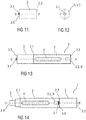
- FIG 11 is a schematic longitudinal section of an exemplary embodiment of a cap 3 having an activation feature 3.1 in the form of a key for actuating an activation mechanism 6 of a drug delivery device 1.
- Figure 12 is a schematic view of a distal end 3.3 or distal face of the cap 3 of figure 11 .
- the activation feature 3.1 is arranged on the distal end 3.3 of the cap 3.
- the activation feature 3.1 may likewise be arranged on a lateral face of the cap 3.
- the activation feature 3.1 has the form of a six point star shape or hexalobular external key.
- the activation feature 3.1 may also have any other form suitable for transmitting a torque.
- Figure 13 is a schematic view of an exemplary embodiment of a drug delivery device 1 comprising a body 2 and the cap 3 of figures 11 and 12 attached to the distal end 2.1 of the body 2.
- the body 2 may be adapted to retain a medicament cartridge to which an injection needle may be attached or a pre-filled syringe with an attached injection needle, which may extend from or be extended through an opening 2.4 in the distal end 2.1.
- the cap 3 is adapted to cover the opening 2.4 in the distal end 2.1 of the body 2 to prevent access to the injection needle.
- the cap 3 may be adapted to engage a protective needle sheath arranged over the injection needle in order to remove the protective needle sheath upon removal of the cap 3 from the distal end 2.1.
- the body 2 may comprise a viewing window 4 allowing inspection of the contents of the medicament cartridge or syringe.
- An activation mechanism 6 may be arranged within the body 2, the activation mechanism 6 adapted to advance the syringe and needle and/or to advance a stopper within the syringe for displacing a drug contained in the syringe through the injection needle.
- Figure 14 is a schematic view of the drug delivery device 1 after removal of the cap 3 and during application of the cap 3 to the proximal end 2.3 of the body 2.
- a sleeve 5 is telescoped within the distal end 2.1 of the body 2, wherein the sleeve 5 may be adapted to be moved in a proximal direction P into the body 2 in order to expose the injection needle and/or to actuate the drug delivery device 1 after the actuation mechanism 6 has been actuated and/or to allow actuation of the activation mechanism 6.
- the cap 3 is adapted to be applied to the proximal end 2.3 of the body 2 without being reversed, wherein the activation feature 3.1 is inserted into an activation opening 2.2 in the proximal end 2.3 of the body 2 in order to actuate the activation mechanism 6, e.g. by rotating it.
- Figure 14 shows the cap 3 having the same orientation as in figures 11 and 13 , i.e. a distal end 3.3 of the cap 3 points in the distal direction D of the drug delivery device 1.
- the activation opening 2.2 of the body 2 into which the activation feature 3.1 may be inserted is arranged in a proximal end 2.3 of the body 2.
- the activation opening 2.2 may likewise be arranged in a lateral face of the body 2.
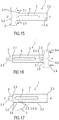
- Figure 15 is a schematic view of an exemplary embodiment of a drug delivery device 1 comprising a body 2 and a cap 3 attached to a distal end 2.1 of the body 2.
- the body 2 may be adapted to retain a medicament cartridge to which an injection needle may be attached or a pre-filled syringe with an attached injection needle, which may extend from or be extended through an opening 2.4 in the distal end 2.1 (not illustrated).
- the cap 3 is adapted to cover the opening 2.4 in the distal end 2.1 of the body 2 to prevent access to the injection needle.
- the cap 3 may be adapted to engage a protective needle sheath arranged over the injection needle in order to remove the protective needle sheath upon removal of the cap 3 from the distal end 2.1.
- the cap 3 comprises a grip feature 3.4 adapted to facilitate gripping the cap 3 by a user's hand and/or fingers.
- the grip feature 3.4 may extend in a transversal direction, i.e. at right angles with respect to a longitudinal direction of the drug delivery device 1.
- the grip feature 3.4 or the whole cap 3 may be a reusable part.
- the grip feature 3.4 may be adapted to an individual user's hand.
- the body 2 may comprise a viewing window 4 allowing inspection of the contents of the medicament cartridge or syringe.
- An activation mechanism 6 may be arranged within the body 2, the activation mechanism 6 adapted to advance the syringe and needle and/or to advance a stopper within the syringe for displacing a drug contained in the syringe through the injection needle.
- Figure 16 is a schematic view of the drug delivery device 1 after removal of the cap 3 from the distal end 2.1 of the body 2.
- a sleeve 5 is telescoped within the distal end 2.1 of the body 2, wherein the sleeve 5 may be adapted to be moved in a proximal direction P into the body 2 in order to expose the injection needle and/or to actuate the drug delivery device 1 after the actuating mechanism 6 has been actuated and/or to allow actuation of the activation mechanism 6.
- the cap 3 comprises an activation feature 3.1 having the form of an attachment intended to be inserted into an activation opening 2.2 of the body 2 in order to actuate the activation mechanism 6 or in order to allow movement of the sleeve 5 for actuating the drug delivery device 1.
- Figure 16 shows the cap 3 reversed with respect to its orientation in figure 15 , i.e. a distal end 3.3 of the cap 3 points in the proximal direction P of the drug delivery device 1.
- the activation feature 3.1 is arranged on a proximal end 3.2 of the cap 3.
- the activation feature 3.1 may likewise be arranged on a distal end 3.3 of the cap 3 or on a lateral face thereof.
- the activation opening 2.2 of the body 2 into which the activation feature 3.1 may be inserted is arranged in a proximal end 2.3 of the body 2.
- the man skilled in the art will readily understand that the activation opening 2.2 may likewise be arranged in a lateral face of the body 2.
- Figure 17 is a schematic view of an exemplary embodiment of a drug delivery device 1 comprising a body 2 and a cap 3 adapted to be attached to a distal 2.1 end of the body 2, wherein in figure 17 the cap 3 is removed from the distal end 2.1 and instead attached to the body 2 laterally for actuating an activation mechanism 6 of the drug delivery device 1.
- the body 2 may be adapted to retain a medicament cartridge to which an injection needle may be attached or a pre-filled syringe with an attached injection needle, which may extend from or be extended through an opening 2.4 in the distal end 2.1.
- the cap 3 is adapted to cover the opening 2.4 in the distal end 2.1 of the body 2 to prevent access to the injection needle.
- the cap 3 may be adapted to engage a protective needle sheath arranged over the injection needle in order to remove the protective needle sheath upon removal of the cap 3 from the distal end 2.1.
- the body 2 may comprise a viewing window 4 allowing inspection of the contents of the medicament cartridge or syringe.
- An activation mechanism 6 may be arranged within the body 2, the activation mechanism 6 adapted to advance the syringe and needle and/or to advance a stopper within the syringe for displacing a drug contained in the syringe through the injection needle.
- Figure 17 shows drug delivery device 1 after removal of the cap 3 from the distal end 2.1 of the body 2.
- a sleeve 5 is telescoped within the distal end 2.1 of the body 2, wherein the sleeve 5 may be adapted to be moved in a proximal direction P into the body 2 in order to expose the injection needle and/or to actuate the drug delivery device 1 after the activation mechanism 6 has been actuated and/or to allow actuation of the activation mechanism 6.
- the cap 3 comprises an activation feature 3.1 having the form of an attachment intended to be inserted into an activation opening 2.2 of the body 2 in order to actuate the activation mechanism 6 or in order to allow movement of the sleeve 5 for actuating the drug delivery device 1.
- Figure 17 shows the cap 3 reversed with respect to its orientation when placed of the distal end 2.1 of the body 2, i.e. a distal end 3.3 of the cap 3 points in the proximal direction P of the drug delivery device 1.
- the activation feature 3.1 is arranged on a lateral face 3.5 of the cap 3.
- the activation feature 3.1 may likewise be arranged on the distal end 3.3 or on the proximal end 3.2 of the cap 3.
- the activation opening 2.2 of the body 2 into which the activation feature 3.1 may be inserted is arranged on a lateral face 2.5 of the body 2.
- the cap 3 may be placed laterally on the body 2 such that the proximal end 3.2 of the cap 3 is substantially flush with the distal end 2.1 of the body 2.
- the cap 3 serves as an expansion of the body 2 to render the drug delivery device 1 more manageable and/or to increase a supporting surface of the drug delivery device 1 on an injection site, e.g. a patient's skin.
- the activation mechanism 6 may comprise a connecting rod which may be operated by the activation feature 3.1 on the cap 3, wherein the cap 3 is used as a trigger button, wherein actuation of the cap 3, e.g. depression or rotation, moves the connecting rod which in turn displaces the stopper in the syringe or medicament cartridge to dispense the drug.
- the activation mechanism 6 may comprise an energy source such as a spring, which may be released by actuation of the cap 3, e.g. depression or rotation, in order to allow the energy source to displace the stopper in the syringe or medicament cartridge to dispense the drug.
- the above described embodiments respectively comprise a sleeve 5, which may be interlocked to the activation mechanism 6, e.g. such that the activation mechanism 6 is locked prior to depression of the sleeve 5, wherein the sleeve 5 has to be depressed in the proximal direction P in order to unlock the activation mechanism 6 which can only then be operated by the activation feature 3.1 on the cap 3 in order to dispense the drug.
- the interlock may be such that sleeve 5 is locked prior to operation of the activation mechanism 6, wherein the activation feature 3.1 on the cap 3 has to operate the activation mechanism 6 in order to unlock the sleeve 5, wherein subsequent depression of the sleeve 5 in the proximal direction P activates the drug delivery device 1 in order to dispense the drug.
- it may be required to depress the sleeve 5 and to operate the activation mechanism 6 by the activation feature 3.1 of the cap 3 to dispense the drug without having to observe a sequence of operation.
- any one of the above described and illustrated embodiments may be without the sleeve 5 so that only operation of the activation mechanism 6 by the activation feature 3.1 of the cap 3 results in dispense of the drug.
- an additional trigger button may be provided, which has to be depressed in order to dispense the drug.
- the insertion movement of the activation feature 3.1 into the activation opening 2.2 can be decoupled from an actuation movement of the cap 3 as in some of the above described embodiments, e.g. by inserting through rotation or by insertion in a radial direction and activating by depression in the distal direction D.
- a drug or medicament can include at least one small or large molecule, or combinations thereof, in various types of formulations, for the treatment of one or more diseases.
- exemplary pharmaceutically active compounds may include small molecules; polypeptides, peptides and proteins (e.g., hormones, growth factors, antibodies, antibody fragments, and enzymes); carbohydrates and polysaccharides; and nucleic acids, double or single stranded DNA (including naked and cDNA), RNA, antisense nucleic acids such as antisense DNA and RNA, small interfering RNA (siRNA), ribozymes, genes, and oligonucleotides. Nucleic acids may be incorporated into molecular delivery systems such as vectors, plasmids, or liposomes. Mixtures of one or more of these drugs are also contemplated.
- a drug delivery device shall encompass any type of device or system configured to dispense a drug into a human or animal body.
- a drug delivery device 1 may be an injection device (e.g., syringe, pen injector, auto injector, large-volume device, pump, perfusion system, or other device configured for intraocular, subcutaneous, intramuscular, or intravascular delivery), skin patch (e.g., osmotic, chemical, micro-needle), inhaler (e.g., nasal or pulmonary), implantable (e.g., coated stent, capsule), or feeding systems for the gastrointestinal tract.
- the presently described drugs may be particularly useful with injection devices that include a needle, e.g., a small gauge needle.
- the drug or medicament may be contained in a primary package or "drug container" adapted for use with a drug delivery device 1.
- the drug container may be, e.g., a cartridge, syringe, reservoir, or other vessel configured to provide a suitable chamber for storage (e.g., short- or long-term storage) of one or more pharmaceutically active compounds.
- the chamber may be designed to store a drug for at least one day (e.g., 1 to at least 30 days).
- the chamber may be designed to store a drug for about 1 month to about 2 years. Storage may occur at room temperature (e.g., about 20°C), or refrigerated temperatures (e.g., from about - 4°C to about 4°C).
- the drug container may be or may include a dual-chamber cartridge configured to store two or more components of a drug formulation (e.g., a drug and a diluent, or two different types of drugs) separately, one in each chamber.
- the two chambers of the dual-chamber cartridge may be configured to allow mixing between the two or more components of the drug or medicament prior to and/or during dispensing into the human or animal body.
- the two chambers may be configured such that they are in fluid communication with each other (e.g., by way of a conduit between the two chambers) and allow mixing of the two components when desired by a user prior to dispensing.
- the two chambers may be configured to allow mixing as the components are being dispensed into the human or animal body.
- the drug delivery devices 1 and drugs described herein can be used for the treatment and/or prophylaxis of many different types of disorders.
- exemplary disorders include, e.g., diabetes mellitus or complications associated with diabetes mellitus such as diabetic retinopathy, thromboembolism disorders such as deep vein or pulmonary thromboembolism.
- Further exemplary disorders are acute coronary syndrome (ACS), angina, myocardial infarction, cancer, macular degeneration, inflammation, hay fever, atherosclerosis and/or rheumatoid arthritis.
- ACS acute coronary syndrome
- angina myocardial infarction
- cancer macular degeneration
- inflammation hay fever
- atherosclerosis and/or rheumatoid arthritis.
- Exemplary drugs for the treatment and/or prophylaxis of diabetes mellitus or complications associated with diabetes mellitus include an insulin, e.g., human insulin, or a human insulin analogue or derivative, a glucagon-like peptide (GLP-1), GLP-1 analogues or GLP-1 receptor agonists, or an analogue or derivative thereof, a dipeptidyl peptidase-4 (DPP4) inhibitor, or a pharmaceutically acceptable salt or solvate thereof, or any mixture thereof.
- the term "derivative” refers to any substance which is sufficiently structurally similar to the original substance so as to have substantially similar functionality or activity (e.g., therapeutic effectiveness).
- Exemplary insulin analogues are Gly(A21), Arg(B31), Arg(B32) human insulin (insulin glargine); Lys(B3), Glu(B29) human insulin; Lys(B28), Pro(B29) human insulin; Asp(B28) human insulin; human insulin, wherein proline in position B28 is replaced by Asp, Lys, Leu, Val or Ala and wherein in position B29 Lys may be replaced by Pro; Ala(B26) human insulin; Des(B28-B30) human insulin; Des(B27) human insulin and Des(B30) human insulin.
- Exemplary insulin derivatives are, for example, B29-N-myristoyl-des(B30) human insulin; B29-N-palmitoyl-des(B30) human insulin; B29-N-myristoyl human insulin; B29-N-palmitoyl human insulin; B28-N-myristoyl LysB28ProB29 human insulin; B28-N-palmitoyl-LysB28ProB29 human insulin; B30-N-myristoyl-ThrB29LysB30 human insulin; B30-N-palmitoyl- ThrB29LysB30 human insulin; B29-N-(N-palmitoyl-gamma-glutamyl)-des(B30) human insulin; B29-N-(N-lithocholyl-gamma-glutamyl)-des(B30) human insulin; B29-N-( ⁇ -carboxyheptadecanoyl)-des(B30) human insulin and B29-N
- GLP-1, GLP-1 analogues and GLP-1 receptor agonists are, for example: Lixisenatide / AVE0010 / ZP10 / Lyxumia, Exenatide / Exendin-4 / Byetta / Bydureon / ITCA 650 / AC-2993 (a 39 amino acid peptide which is produced by the salivary glands of the Gila monster), Liraglutide / Victoza, Semaglutide, Taspoglutide, Syncria / Albiglutide, Dulaglutide, rExendin-4, CJC-1134-PC, PB-1023, TTP-054, Langlenatide / HM-11260C, CM-3, GLP-1 Eligen, ORMD-0901, NN-9924, NN-9926, NN-9927, Nodexen, Viador-GLP-1, CVX-096, ZYOG-1, ZYD-1, GSK-2374697, DA-3091, MAR-701
- An exemplary oligonucleotide is, for example: mipomersen / Kynamro, a cholesterol-reducing antisense therapeutic for the treatment of familial hypercholesterolemia.
- DPP4 inhibitors are Vildagliptin, Sitagliptin, Denagliptin, Saxagliptin, Berberine.
- hormones include hypophysis hormones or hypothalamus hormones or regulatory active peptides and their antagonists, such as Gonadotropine (Follitropin, Lutropin, Choriongonadotropin, Menotropin), Somatropine (Somatropin), Desmopressin, Terlipressin, Gonadorelin, Triptorelin, Leuprorelin, Buserelin, Nafarelin, and Goserelin.
- Gonadotropine Follitropin, Lutropin, Choriongonadotropin, Menotropin
- Somatropine Somatropin
- Desmopressin Terlipressin
- Gonadorelin Triptorelin
- Leuprorelin Buserelin
- Nafarelin Nafarelin
- Goserelin Goserelin.
- Exemplary polysaccharides include a glucosaminoglycane, a hyaluronic acid, a heparin, a low molecular weight heparin or an ultra-low molecular weight heparin or a derivative thereof, or a sulphated polysaccharide, e.g. a poly-sulphated form of the above-mentioned polysaccharides, and/or a pharmaceutically acceptable salt thereof.
- An example of a pharmaceutically acceptable salt of a poly-sulphated low molecular weight heparin is enoxaparin sodium.
- An example of a hyaluronic acid derivative is Hylan G-F 20 / Synvisc, a sodium hyaluronate.
- antibody refers to an immunoglobulin molecule or an antigen-binding portion thereof.
- antigen-binding portions of immunoglobulin molecules include F(ab) and F(ab') 2 fragments, which retain the ability to bind antigen.
- the antibody can be polyclonal, monoclonal, recombinant, chimeric, de-immunized or humanized, fully human, non-human, (e.g., murine), or single chain antibody.
- the antibody has effector function and can fix complement.
- the antibody has reduced or no ability to bind an Fc receptor.
- the antibody can be an isotype or subtype, an antibody fragment or mutant, which does not support binding to an Fc receptor, e.g., it has a mutagenized or deleted Fc receptor binding region.
- fragment refers to a polypeptide derived from an antibody polypeptide molecule (e.g., an antibody heavy and/or light chain polypeptide) that does not comprise a full-length antibody polypeptide, but that still comprises at least a portion of a full-length antibody polypeptide that is capable of binding to an antigen.
- Antibody fragments can comprise a cleaved portion of a full length antibody polypeptide, although the term is not limited to such cleaved fragments.
- Antibody fragments that are useful in the present disclosure include, for example, Fab fragments, F(ab')2 fragments, scFv (single-chain Fv) fragments, linear antibodies, monospecific or multispecific antibody fragments such as bispecific, trispecific, and multispecific antibodies (e.g., diabodies, triabodies, tetrabodies), minibodies, chelating recombinant antibodies, tribodies or bibodies, intrabodies, nanobodies, small modular immunopharmaceuticals (SMIP), binding-domain immunoglobulin fusion proteins, camelized antibodies, and VHH containing antibodies. Additional examples of antigen-binding antibody fragments are known in the art.
- CDR complementarity-determining region
- framework region refers to amino acid sequences within the variable region of both heavy and light chain polypeptides that are not CDR sequences, and are primarily responsible for maintaining correct positioning of the CDR sequences to permit antigen binding.
- framework regions themselves typically do not directly participate in antigen binding, as is known in the art, certain residues within the framework regions of certain antibodies can directly participate in antigen binding or can affect the ability of one or more amino acids in CDRs to interact with antigen.
- Exemplary antibodies are anti PCSK-9 mAb (e.g., Alirocumab), anti IL-6 mAb (e.g., Sarilumab), and anti IL-4 mAb (e.g., Dupilumab).
- anti PCSK-9 mAb e.g., Alirocumab
- anti IL-6 mAb e.g., Sarilumab
- anti IL-4 mAb e.g., Dupilumab
- the compounds described herein may be used in pharmaceutical formulations comprising (a) the compound(s) or pharmaceutically acceptable salts thereof, and (b) a pharmaceutically acceptable carrier.
- the compounds may also be used in pharmaceutical formulations that include one or more other active pharmaceutical ingredients or in pharmaceutical formulations in which the present compound or a pharmaceutically acceptable salt thereof is the only active ingredient.
- the pharmaceutical formulations of the present disclosure encompass any formulation made by admixing a compound described herein and a pharmaceutically acceptable carrier.
- Pharmaceutically acceptable salts of any drug described herein are also contemplated for use in drug delivery devices.
- Pharmaceutically acceptable salts are for example acid addition salts and basic salts.
- Acid addition salts are e.g. HCI or HBr salts.
- Basic salts are e.g. salts having a cation selected from an alkali or alkaline earth metal, e.g.
- R1 to R4 independently of each other mean: hydrogen, an optionally substituted C1-C6-alkyl group, an optionally substituted C2-C6-alkenyl group, an optionally substituted C6-C10-aryl group, or an optionally substituted C6-C10-heteroaryl group.
- R1 to R4 independently of each other mean: hydrogen, an optionally substituted C1-C6-alkyl group, an optionally substituted C2-C6-alkenyl group, an optionally substituted C6-C10-aryl group, or an optionally substituted C6-C10-heteroaryl group.
- solvates are for example hydrates or alkanolates such as methanolates or ethanolates.
Landscapes
- Health & Medical Sciences (AREA)
- Engineering & Computer Science (AREA)
- Hematology (AREA)
- Anesthesiology (AREA)
- Biomedical Technology (AREA)
- Heart & Thoracic Surgery (AREA)
- Vascular Medicine (AREA)
- Life Sciences & Earth Sciences (AREA)
- Animal Behavior & Ethology (AREA)
- General Health & Medical Sciences (AREA)
- Public Health (AREA)
- Veterinary Medicine (AREA)
- Environmental & Geological Engineering (AREA)
- Infusion, Injection, And Reservoir Apparatuses (AREA)
Abstract
Description
- The present disclosure generally relates to a drug delivery device.
- Administering an injection is a process which presents a number of risks and challenges for users and healthcare professionals, both mental and physical. Pre-filled syringes containing a selected dosage of a medicament for administering the medicament to a patient are known in the art.
- There remains a need for an improved drug delivery device.
- An object of the present disclosure is to provide an improved drug delivery device.
- The object is achieved by a drug delivery device according to
claim 1. - Exemplary embodiments are provided in the dependent claims.
- According to the present disclosure, a drug delivery device comprises:
- a body adapted to retain a medicament cartridge,
- a cap attachable to a distal end of the body to cover an opening thereof,
- an activation mechanism arranged within the body,
- Actuation of the activating mechanism may be the only requirement or one out of a number of requirements to initiate a drug dispense operation of the drug delivery device. According to the present disclosure, the cap, which is otherwise used to cover the opening of the body, through which the drug is dispensed and prevent access to an injection needle which may be present in this opening, is also used to actuate the activating mechanism. The cap may thus serve as a trigger button or as a key to unlock the activating mechanism allowing operation of a different trigger button or sleeve to start the drug dispense operation. Patients using the drug delivery device are thus provided with an additional safety measure in order to avoid accidental triggering of the drug delivery device.
- In an exemplary embodiment the activation feature is arranged on a proximal end of the cap or on a distal end of the cap or on a lateral face thereof.
- In an exemplary embodiment the activation opening is arranged in a proximal end of the body or in a lateral face of the body.
- In an exemplary embodiment the cap comprises an activation feature in the form of a sheath grabber within the cap for engaging a protective needle sheath.
- In an exemplary embodiment the activation feature has the form of one or more activation ribs adapted to be inserted into activation openings having the form of lateral notches within the proximal end of the body in order to actuate the activation mechanism.
- In an exemplary embodiment the activation feature comprises one or more inwardly directed ribs within the cap adapted to engage an outer thread arranged within the proximal end of the body allowing the cap to be screwed into the proximal end.
- In order to avoid accidental activation, an insertion movement of the activation feature into the activation opening may be decoupled from an actuation movement of the cap.
- In an exemplary embodiment, when the cap has been screwed into the proximal end, the activation feature engages the activation mechanism such that the cap may be depressed in the distal direction in order to actuate the activation mechanism. This is one possible way to decouple the insertion movement of the activation feature from the actuation movement of the cap thus reducing the risk of accidental actuation.
- In an exemplary embodiment the activation feature has the form of a key suitable for transmitting a torque, e.g. a hexalobular external key in order to allow for actuating the activation mechanism by rotating the cap. This is another possible way to decouple the insertion movement of the activation feature from the actuation movement of the cap thus reducing the risk of accidental actuation.
- In an exemplary embodiment the cap comprises a grip feature adapted to facilitate gripping the cap by a user's hand and/or fingers. In particular, the grip feature may comprises one or more extensions in a transversal direction. This may facilitate removal of the cap from the distal end if the body and rotational movement of the cap for insertion or actuation. The grip feature may be reusable and/or tailored to the hand or fingers of an individual user.
- In an exemplary embodiment the cap is adapted to be placed laterally on the body for engaging the actuation feature to the actuation mechanism such that an end of the cap is substantially flush with the distal end of the body to render the drug delivery device more manageable and/or to increase a supporting surface of the
drug delivery device 1 on an injection site, e.g. a patient's skin. - In an exemplary embodiment, a sleeve is telescoped within the distal end of the body, wherein the sleeve is adapted to be moved in the proximal direction relative to the body in order to expose the injection needle and/or to actuate the drug delivery device and/or to allow actuation of the activation mechanism.
- In an exemplary embodiment, the sleeve is interlocked to the activation mechanism, e.g. such that the activation mechanism is locked prior to depression of the sleeve, wherein the sleeve has to be depressed in the proximal direction in order to unlock the activation mechanism which can only then be operated by the activation feature on the cap in order to dispense the drug. In another exemplary embodiment, the interlock may be such that sleeve is locked prior to operation of the activation mechanism, wherein the activation feature on the cap has to operate the activation mechanism in order to unlock the sleeve, wherein subsequent depression of the sleeve in the proximal direction activates the drug delivery device in order to dispense the drug. In yet another exemplary embodiment, it may be required to depress the sleeve and to operate the activation mechanism by the activation feature of the cap to dispense the drug without having to observe a sequence of operation.
- Further scope of applicability of the present disclosure will become apparent from the detailed description given hereinafter. However, it should be understood that the detailed description and specific examples, while indicating exemplary embodiments of the disclosure, are given by way of illustration only, since various changes and modifications within the spirit and scope of the disclosure will become apparent to those skilled in the art from this detailed description.
- The present disclosure will become more fully understood from the detailed description given below and the accompanying drawings, which are given by way of illustration only, and do not limit the present disclosure, and wherein:
-
Figure 1 is a schematic view of an exemplary embodiment of a drug delivery device comprising a body and a cap attached to a distal end thereof, -
Figure 2 is a schematic view of the drug delivery device after removal of the cap, -
Figure 3 is a schematic view of the drug delivery device while the cap is being attached to a proximal end of the body, -
Figure 4 is a schematic view of an exemplary embodiment of a drug delivery device comprising a body and a cap attached to a distal end thereof, -
Figure 5 is a schematic view of the drug delivery device after removal of the cap and during assembly of the cap to the proximal end of the body, -
Figure 6 is a schematic view of the drug delivery device with the cap assembled to the proximal end of the body for actuating an activation mechanism of the drug delivery device, -
Figure 7 is a schematic longitudinal section of an exemplary embodiment of a cap having activation ribs for actuating an activation mechanism of a drug delivery device, -
Figure 8 is a schematic view of a proximal face of the cap offigure 7 , -
Figure 9 is a schematic view of an exemplary embodiment of a drug delivery device comprising a body and a cap after removal of the cap and prior to assembly of the cap to the proximal end of the body, -
Figure 10 is a schematic view of an exemplary embodiment of a drug delivery device after removal of a cap and during assembly of the cap to the proximal end thereof for actuating an activation mechanism of the drug delivery device, -
Figure 11 is a schematic longitudinal section of an exemplary embodiment of a cap having a key for actuating an activation mechanism of a drug delivery device, -
Figure 12 is a schematic view of a distal face of the cap offigure 11 , -
Figure 13 is a schematic view of an exemplary embodiment of a drug delivery device comprising a body and the cap offigures 11 and 12 attached to the distal end thereof, -
Figure 14 is a schematic view of the drug delivery device with the cap removed from the distal end and attached to the proximal end of the body for actuating an activation mechanism of the drug delivery device, -
Figure 15 is a schematic view of an exemplary embodiment of a drug delivery device comprising a body and a cap attached to a distal end thereof, -
Figure 16 is a schematic view of the drug delivery device with the cap removed from the distal end and attached to a proximal end thereof for actuating an activation mechanism of the drug delivery device, and -
Figure 17 is a schematic view of an exemplary embodiment of a drug delivery device comprising a body and a cap adapted to be attached to a distal end thereof, wherein the cap is removed from the distal end and instead attached to the body laterally for actuating an activation mechanism of the drug delivery device. - Corresponding parts are marked with the same reference symbols in all figures.
-
Figure 1 is a schematic view of an exemplary embodiment of adrug delivery device 1 comprising abody 2 and acap 3 attached to a distal end 2.1 of thebody 2. Thebody 2 may be adapted to retain a medicament cartridge to which an injection needle may be attached or a medicament cartridge in the form of a pre-filled syringe with an attached injection needle, which may extend from or be extended through an opening 2.4 in the distal end 2.1. Thecap 3 is adapted to cover the opening 2.4 in the distal end 2.1 of thebody 2 to prevent access to the injection needle. Furthermore, thecap 3 may be adapted to engage a protective needle sheath arranged over the injection needle in order to remove the protective needle sheath upon removal of thecap 3 from the distal end 2.1. Thebody 2 may comprise aviewing window 4 allowing inspection of the contents of the medicament cartridge or syringe. An activation mechanism may be arranged within thebody 2, the activation mechanism adapted to advance the syringe and needle and/or to advance a stopper within the syringe for displacing a drug contained in the syringe through the injection needle. -
Figure 2 is a schematic view of thedrug delivery device 1 after removal of thecap 3 from the distal end 2.1 of thebody 2. In the exemplary embodiment, asleeve 5 is telescoped within the distal end 2.1 of thebody 2, wherein thesleeve 5 may be adapted to be moved in a proximal direction P into thebody 2 in order to expose the injection needle and/or to actuate thedrug delivery device 1 and/or to allow actuation of the activation mechanism. Thecap 3 comprises an activation feature 3.1 having the form of an attachment intended to be inserted into an activation opening 2.2 of thebody 2 in order to actuate the activation mechanism or in order to allow movement of thesleeve 5 for actuating thedrug delivery device 1.Figure 2 shows thecap 3 reversed with respect to its orientation infigure 1 , i.e. a distal end 3.3 of thecap 3 points in the proximal direction P of thedrug delivery device 1. In this embodiment, the activation feature 3.1 is arranged on a proximal end 3.2 of thecap 3. The man skilled in the art will readily understand that the activation feature 3.1 may likewise be arranged on a distal end 3.3 of thecap 3 or on a lateral face thereof. In the embodiment offigure 2 , the activation opening 2.2 of thebody 2 into which the activation feature 3.1 may be inserted is arranged in a proximal end 2.3 of thebody 2. The man skilled in the art will readily understand that the activation opening 2.2 may likewise be arranged in a lateral face of thebody 2. The insertion movement may be a movement of thecap 3 in the distal direction D or in a radial direction towards thebody 2. In an exemplary embodiment, thecap 3 may be inserted into the activation opening 2.2 in the radial direction to engage but not yet actuate the activation mechanism. The user may then have to depress thecap 3 in the distal direction D to actuate the activation mechanism. -
Figure 3 is a schematic view of thedrug delivery device 1 while thecap 3 is being attached to a proximal end 2.3 of thebody 2. In this embodiment, thecap 3 may be hinged to the proximal end 2.3 of thebody 2 and rotated into position in order to actuate the activation mechanism or in order to allow movement of thesleeve 5 for actuating thedrug delivery device 1. For this purpose, thecap 3 may be hooked into a hinge at the proximal end 2.3 of thebody 2 after having been removed from the distal end 2.1 thereof. -
Figure 4 is a schematic view of an exemplary embodiment of adrug delivery device 1 comprising abody 2 and acap 3 attached to a distal end 2.1 of thebody 2. Thebody 2 may be adapted to retain a medicament cartridge to which an injection needle may be attached or a pre-filled syringe with an attached injection needle, which may extend from or be extended through an opening 2.4 in the distal end 2.1. Thecap 3 is adapted to cover the opening 2.4 in the distal end 2.1 of thebody 2 to prevent access to the injection needle. Furthermore, thecap 3 may be adapted to engage a protective needle sheath arranged over the injection needle in order to remove the protective needle sheath upon removal of thecap 3 from the distal end 2.1. Thebody 2 may comprise aviewing window 4 allowing inspection of the contents of the medicament cartridge or syringe. Anactivation mechanism 6 may be arranged within thebody 2, theactivation mechanism 6 adapted to advance the syringe and needle and/or to advance a stopper within the syringe for displacing a drug contained in the syringe through the injection needle when operated by the activation feature 3.1 of thecap 3. -
Figure 5 is a schematic view of thedrug delivery device 1 after removal of thecap 3 and during assembly of thecap 3 to the proximal end 2.3 of thebody 2. In the exemplary embodiment, asleeve 5 is telescoped within the distal end 2.1 of thebody 2, wherein thesleeve 5 may be adapted to be moved in a proximal direction P into thebody 2 in order to expose the injection needle and/or to actuate thedrug delivery device 1 after theactivation mechanism 6 has been actuated and/or to allow actuation of theactivation mechanism 6. Thecap 3 comprises an activation feature 3.1 in the form of a sheath grabber within thecap 3 for engaging aprotective needle sheath 7. Thecap 3 is adapted to be reversed and placed over the proximal end 2.3 of thebody 2, wherein the activation feature 3.1 is inserted into an activation opening 2.2 in the proximal end 2.3 of thebody 2 in order to actuate theactivation mechanism 6 or in order to allow movement of thesleeve 5 for actuating theactivation mechanism 6.Figure 5 shows thecap 3 reversed with respect to its orientation infigure 4 , i.e. a distal end 3.3 of thecap 3 points in the proximal direction P of thedrug delivery device 1. In this embodiment, the activation feature 3.1 is arranged within thecap 3 and points towards a proximal end 3.2 of thecap 3. In the embodiment offigure 5 , the activation opening 2.2 of thebody 2 into which the activation feature 3.1 may be inserted is arranged in a proximal end 2.3 of thebody 2. The man skilled in the art will readily understand that the activation opening 2.2 may likewise be arranged in a lateral face of thebody 2. -
Figure 6 is a schematic view of thedrug delivery device 1 with thecap 3 assembled to the proximal end 2.3 of thebody 2 for actuating theactivation mechanism 6 of thedrug delivery device 1. Thecap 3 has been fully pushed on the proximal end 2.3 and the activation feature 3.1 has thus engaged theactivation mechanism 6 and displaced it in the distal direction D. -
Figure 7 is a schematic longitudinal section of an exemplary embodiment of acap 3 having an activation feature 3.1 in the form of activation ribs for actuating anactivation mechanism 6 of adrug delivery device 1 similar to the one shown infigures 4 to 6 .Figure 8 is a schematic view of a proximal end 3.2 of thecap 3 offigure 7 . Thecap 3 is adapted to be reversed and placed over the proximal end 2.3 of thebody 2, wherein the one or more activation features 3.1 are inserted e.g. into lateral notches within the proximal end 2.3 of thebody 2 in order to actuate theactivation mechanism 6 or in order to allow movement of thesleeve 5 for actuating thedrug delivery device 1. -
Figure 9 is a schematic view of an exemplary embodiment of adrug delivery device 1 comprising abody 2 and acap 3 after removal of thecap 3 and prior to assembly of thecap 3 to the proximal end 2.3 of thebody 2. In the exemplary embodiment, asleeve 5 is telescoped within the distal end 2.1 of thebody 2, wherein thesleeve 5 may be adapted to be moved in a proximal direction P into thebody 2 in order to expose the injection needle and/or to actuate thedrug delivery device 1 after theactivation mechanism 6 has been actuated and/or to allow actuation of theactivation mechanism 6. Thecap 3 comprises an activation feature 3.1 in the form of one or more inwardly directed ribs within thecap 3 adapted to engage anouter thread 8 arranged within the proximal end 2.3 of thebody 2. Theouter thread 8 may be arranged on casework 9 within thebody 2 which may be fixed relative to thebody 2. Thecap 3 is adapted to be reversed and screwed into the proximal end 2.3 of thebody 2, wherein the activation feature 3.1 is inserted into an activation opening 2.2 in the proximal end 2.3 of thebody 2 in order to actuate theactivation mechanism 6 or in order to allow movement of thesleeve 5 for actuating thedrug delivery device 1.Figure 9 shows thecap 3 reversed with respect to its orientation when attached to the distal end 2.1 of thebody 2, i.e. a distal end 3.3 of thecap 3 points in the proximal direction P of thedrug delivery device 1. In the illustrated embodiment the activation opening 2.2 of thebody 2 into which the activation feature 3.1 may be inserted is arranged in a proximal end 2.3 of thebody 2. The man skilled in the art will readily understand that the activation opening 2.2 may likewise be arranged in a lateral face of thebody 2. -
Figure 10 is a schematic view of thedrug delivery device 1 with thecap 3 screwed into the proximal end 2.3 of thebody 2 for actuating theactivation mechanism 6 of thedrug delivery device 1. Thecap 3 has been screwed into the proximal end 2.3 and the activation feature 3.1 has thus engaged theactivation mechanism 6. In a next step, thecap 3 may be pressed in the distal direction D in order to actuate and displace theactivation mechanism 6 in the distal direction D in order to actuate thedrug delivery device 1 or in order to allow movement of thesleeve 5 for actuating thedrug delivery device 1. -
Figure 11 is a schematic longitudinal section of an exemplary embodiment of acap 3 having an activation feature 3.1 in the form of a key for actuating anactivation mechanism 6 of adrug delivery device 1.Figure 12 is a schematic view of a distal end 3.3 or distal face of thecap 3 offigure 11 . In this embodiment, the activation feature 3.1 is arranged on the distal end 3.3 of thecap 3. The man skilled in the art will readily understand that the activation feature 3.1 may likewise be arranged on a lateral face of thecap 3. In the illustrated embodiment the activation feature 3.1 has the form of a six point star shape or hexalobular external key. The man skilled in the art will readily understand that the activation feature 3.1 may also have any other form suitable for transmitting a torque. -
Figure 13 is a schematic view of an exemplary embodiment of adrug delivery device 1 comprising abody 2 and thecap 3 offigures 11 and 12 attached to the distal end 2.1 of thebody 2. Thebody 2 may be adapted to retain a medicament cartridge to which an injection needle may be attached or a pre-filled syringe with an attached injection needle, which may extend from or be extended through an opening 2.4 in the distal end 2.1. Thecap 3 is adapted to cover the opening 2.4 in the distal end 2.1 of thebody 2 to prevent access to the injection needle. Furthermore, thecap 3 may be adapted to engage a protective needle sheath arranged over the injection needle in order to remove the protective needle sheath upon removal of thecap 3 from the distal end 2.1. Thebody 2 may comprise aviewing window 4 allowing inspection of the contents of the medicament cartridge or syringe. Anactivation mechanism 6 may be arranged within thebody 2, theactivation mechanism 6 adapted to advance the syringe and needle and/or to advance a stopper within the syringe for displacing a drug contained in the syringe through the injection needle. -
Figure 14 is a schematic view of thedrug delivery device 1 after removal of thecap 3 and during application of thecap 3 to the proximal end 2.3 of thebody 2. In the exemplary embodiment, asleeve 5 is telescoped within the distal end 2.1 of thebody 2, wherein thesleeve 5 may be adapted to be moved in a proximal direction P into thebody 2 in order to expose the injection needle and/or to actuate thedrug delivery device 1 after theactuation mechanism 6 has been actuated and/or to allow actuation of theactivation mechanism 6. Thecap 3 is adapted to be applied to the proximal end 2.3 of thebody 2 without being reversed, wherein the activation feature 3.1 is inserted into an activation opening 2.2 in the proximal end 2.3 of thebody 2 in order to actuate theactivation mechanism 6, e.g. by rotating it.Figure 14 shows thecap 3 having the same orientation as infigures 11 and 13 , i.e. a distal end 3.3 of thecap 3 points in the distal direction D of thedrug delivery device 1. In the embodiment offigures 13, and 14 , the activation opening 2.2 of thebody 2 into which the activation feature 3.1 may be inserted is arranged in a proximal end 2.3 of thebody 2. The man skilled in the art will readily understand that the activation opening 2.2 may likewise be arranged in a lateral face of thebody 2. -
Figure 15 is a schematic view of an exemplary embodiment of adrug delivery device 1 comprising abody 2 and acap 3 attached to a distal end 2.1 of thebody 2. Thebody 2 may be adapted to retain a medicament cartridge to which an injection needle may be attached or a pre-filled syringe with an attached injection needle, which may extend from or be extended through an opening 2.4 in the distal end 2.1 (not illustrated). Thecap 3 is adapted to cover the opening 2.4 in the distal end 2.1 of thebody 2 to prevent access to the injection needle. Furthermore, thecap 3 may be adapted to engage a protective needle sheath arranged over the injection needle in order to remove the protective needle sheath upon removal of thecap 3 from the distal end 2.1. In the illustrated embodiment, thecap 3 comprises a grip feature 3.4 adapted to facilitate gripping thecap 3 by a user's hand and/or fingers. The grip feature 3.4 may extend in a transversal direction, i.e. at right angles with respect to a longitudinal direction of thedrug delivery device 1. The grip feature 3.4 or thewhole cap 3 may be a reusable part. Furthermore, the grip feature 3.4 may be adapted to an individual user's hand. - The
body 2 may comprise aviewing window 4 allowing inspection of the contents of the medicament cartridge or syringe. Anactivation mechanism 6 may be arranged within thebody 2, theactivation mechanism 6 adapted to advance the syringe and needle and/or to advance a stopper within the syringe for displacing a drug contained in the syringe through the injection needle. -
Figure 16 is a schematic view of thedrug delivery device 1 after removal of thecap 3 from the distal end 2.1 of thebody 2. In the exemplary embodiment, asleeve 5 is telescoped within the distal end 2.1 of thebody 2, wherein thesleeve 5 may be adapted to be moved in a proximal direction P into thebody 2 in order to expose the injection needle and/or to actuate thedrug delivery device 1 after theactuating mechanism 6 has been actuated and/or to allow actuation of theactivation mechanism 6. Thecap 3 comprises an activation feature 3.1 having the form of an attachment intended to be inserted into an activation opening 2.2 of thebody 2 in order to actuate theactivation mechanism 6 or in order to allow movement of thesleeve 5 for actuating thedrug delivery device 1.Figure 16 shows thecap 3 reversed with respect to its orientation infigure 15 , i.e. a distal end 3.3 of thecap 3 points in the proximal direction P of thedrug delivery device 1. In this embodiment, the activation feature 3.1 is arranged on a proximal end 3.2 of thecap 3. The man skilled in the art will readily understand that the activation feature 3.1 may likewise be arranged on a distal end 3.3 of thecap 3 or on a lateral face thereof. In the embodiment offigures 15 and 16 , the activation opening 2.2 of thebody 2 into which the activation feature 3.1 may be inserted is arranged in a proximal end 2.3 of thebody 2. The man skilled in the art will readily understand that the activation opening 2.2 may likewise be arranged in a lateral face of thebody 2. -
Figure 17 is a schematic view of an exemplary embodiment of adrug delivery device 1 comprising abody 2 and acap 3 adapted to be attached to a distal 2.1 end of thebody 2, wherein infigure 17 thecap 3 is removed from the distal end 2.1 and instead attached to thebody 2 laterally for actuating anactivation mechanism 6 of thedrug delivery device 1. Thebody 2 may be adapted to retain a medicament cartridge to which an injection needle may be attached or a pre-filled syringe with an attached injection needle, which may extend from or be extended through an opening 2.4 in the distal end 2.1. Thecap 3 is adapted to cover the opening 2.4 in the distal end 2.1 of thebody 2 to prevent access to the injection needle. Furthermore, thecap 3 may be adapted to engage a protective needle sheath arranged over the injection needle in order to remove the protective needle sheath upon removal of thecap 3 from the distal end 2.1. - The
body 2 may comprise aviewing window 4 allowing inspection of the contents of the medicament cartridge or syringe. Anactivation mechanism 6 may be arranged within thebody 2, theactivation mechanism 6 adapted to advance the syringe and needle and/or to advance a stopper within the syringe for displacing a drug contained in the syringe through the injection needle. -
Figure 17 showsdrug delivery device 1 after removal of thecap 3 from the distal end 2.1 of thebody 2. In the exemplary embodiment, asleeve 5 is telescoped within the distal end 2.1 of thebody 2, wherein thesleeve 5 may be adapted to be moved in a proximal direction P into thebody 2 in order to expose the injection needle and/or to actuate thedrug delivery device 1 after theactivation mechanism 6 has been actuated and/or to allow actuation of theactivation mechanism 6. Thecap 3 comprises an activation feature 3.1 having the form of an attachment intended to be inserted into an activation opening 2.2 of thebody 2 in order to actuate theactivation mechanism 6 or in order to allow movement of thesleeve 5 for actuating thedrug delivery device 1.Figure 17 shows thecap 3 reversed with respect to its orientation when placed of the distal end 2.1 of thebody 2, i.e. a distal end 3.3 of thecap 3 points in the proximal direction P of thedrug delivery device 1. In this embodiment, the activation feature 3.1 is arranged on a lateral face 3.5 of thecap 3. The man skilled in the art will readily understand that the activation feature 3.1 may likewise be arranged on the distal end 3.3 or on the proximal end 3.2 of thecap 3. In the embodiment offigure 17 , the activation opening 2.2 of thebody 2 into which the activation feature 3.1 may be inserted is arranged on a lateral face 2.5 of thebody 2. - In the embodiment of
figure 17 , thecap 3 may be placed laterally on thebody 2 such that the proximal end 3.2 of thecap 3 is substantially flush with the distal end 2.1 of thebody 2. Thus, thecap 3 serves as an expansion of thebody 2 to render thedrug delivery device 1 more manageable and/or to increase a supporting surface of thedrug delivery device 1 on an injection site, e.g. a patient's skin. - In all above described embodiments, the
activation mechanism 6 may comprise a connecting rod which may be operated by the activation feature 3.1 on thecap 3, wherein thecap 3 is used as a trigger button, wherein actuation of thecap 3, e.g. depression or rotation, moves the connecting rod which in turn displaces the stopper in the syringe or medicament cartridge to dispense the drug. Likewise, in all above described embodiments, theactivation mechanism 6 may comprise an energy source such as a spring, which may be released by actuation of thecap 3, e.g. depression or rotation, in order to allow the energy source to displace the stopper in the syringe or medicament cartridge to dispense the drug. - The above described embodiments respectively comprise a
sleeve 5, which may be interlocked to theactivation mechanism 6, e.g. such that theactivation mechanism 6 is locked prior to depression of thesleeve 5, wherein thesleeve 5 has to be depressed in the proximal direction P in order to unlock theactivation mechanism 6 which can only then be operated by the activation feature 3.1 on thecap 3 in order to dispense the drug. In another exemplary embodiment, the interlock may be such thatsleeve 5 is locked prior to operation of theactivation mechanism 6, wherein the activation feature 3.1 on thecap 3 has to operate theactivation mechanism 6 in order to unlock thesleeve 5, wherein subsequent depression of thesleeve 5 in the proximal direction P activates thedrug delivery device 1 in order to dispense the drug. In yet another exemplary embodiment, it may be required to depress thesleeve 5 and to operate theactivation mechanism 6 by the activation feature 3.1 of thecap 3 to dispense the drug without having to observe a sequence of operation. In yet another embodiment, any one of the above described and illustrated embodiments may be without thesleeve 5 so that only operation of theactivation mechanism 6 by the activation feature 3.1 of thecap 3 results in dispense of the drug. Furthermore, an additional trigger button may be provided, which has to be depressed in order to dispense the drug. - In order to avoid accidental activation, the insertion movement of the activation feature 3.1 into the activation opening 2.2 can be decoupled from an actuation movement of the
cap 3 as in some of the above described embodiments, e.g. by inserting through rotation or by insertion in a radial direction and activating by depression in the distal direction D. - The man skilled in the art will readily understand that the features of the embodiments shown in the figures and described above may be combined with each other.
- The terms "drug" or "medicament" are used herein to describe one or more pharmaceutically active compounds. As described below, a drug or medicament can include at least one small or large molecule, or combinations thereof, in various types of formulations, for the treatment of one or more diseases. Exemplary pharmaceutically active compounds may include small molecules; polypeptides, peptides and proteins (e.g., hormones, growth factors, antibodies, antibody fragments, and enzymes); carbohydrates and polysaccharides; and nucleic acids, double or single stranded DNA (including naked and cDNA), RNA, antisense nucleic acids such as antisense DNA and RNA, small interfering RNA (siRNA), ribozymes, genes, and oligonucleotides. Nucleic acids may be incorporated into molecular delivery systems such as vectors, plasmids, or liposomes. Mixtures of one or more of these drugs are also contemplated.
- The term "drug delivery device" shall encompass any type of device or system configured to dispense a drug into a human or animal body. Without limitation, a
drug delivery device 1 may be an injection device (e.g., syringe, pen injector, auto injector, large-volume device, pump, perfusion system, or other device configured for intraocular, subcutaneous, intramuscular, or intravascular delivery), skin patch (e.g., osmotic, chemical, micro-needle), inhaler (e.g., nasal or pulmonary), implantable (e.g., coated stent, capsule), or feeding systems for the gastrointestinal tract. The presently described drugs may be particularly useful with injection devices that include a needle, e.g., a small gauge needle. - The drug or medicament may be contained in a primary package or "drug container" adapted for use with a
drug delivery device 1. The drug container may be, e.g., a cartridge, syringe, reservoir, or other vessel configured to provide a suitable chamber for storage (e.g., short- or long-term storage) of one or more pharmaceutically active compounds. For example, in some instances, the chamber may be designed to store a drug for at least one day (e.g., 1 to at least 30 days). In some instances, the chamber may be designed to store a drug for about 1 month to about 2 years. Storage may occur at room temperature (e.g., about 20°C), or refrigerated temperatures (e.g., from about - 4°C to about 4°C). In some instances, the drug container may be or may include a dual-chamber cartridge configured to store two or more components of a drug formulation (e.g., a drug and a diluent, or two different types of drugs) separately, one in each chamber. In such instances, the two chambers of the dual-chamber cartridge may be configured to allow mixing between the two or more components of the drug or medicament prior to and/or during dispensing into the human or animal body. For example, the two chambers may be configured such that they are in fluid communication with each other (e.g., by way of a conduit between the two chambers) and allow mixing of the two components when desired by a user prior to dispensing. Alternatively or in addition, the two chambers may be configured to allow mixing as the components are being dispensed into the human or animal body. - The
drug delivery devices 1 and drugs described herein can be used for the treatment and/or prophylaxis of many different types of disorders. Exemplary disorders include, e.g., diabetes mellitus or complications associated with diabetes mellitus such as diabetic retinopathy, thromboembolism disorders such as deep vein or pulmonary thromboembolism. Further exemplary disorders are acute coronary syndrome (ACS), angina, myocardial infarction, cancer, macular degeneration, inflammation, hay fever, atherosclerosis and/or rheumatoid arthritis. - Exemplary drugs for the treatment and/or prophylaxis of diabetes mellitus or complications associated with diabetes mellitus include an insulin, e.g., human insulin, or a human insulin analogue or derivative, a glucagon-like peptide (GLP-1), GLP-1 analogues or GLP-1 receptor agonists, or an analogue or derivative thereof, a dipeptidyl peptidase-4 (DPP4) inhibitor, or a pharmaceutically acceptable salt or solvate thereof, or any mixture thereof. As used herein, the term "derivative" refers to any substance which is sufficiently structurally similar to the original substance so as to have substantially similar functionality or activity (e.g., therapeutic effectiveness).
- Exemplary insulin analogues are Gly(A21), Arg(B31), Arg(B32) human insulin (insulin glargine); Lys(B3), Glu(B29) human insulin; Lys(B28), Pro(B29) human insulin; Asp(B28) human insulin; human insulin, wherein proline in position B28 is replaced by Asp, Lys, Leu, Val or Ala and wherein in position B29 Lys may be replaced by Pro; Ala(B26) human insulin; Des(B28-B30) human insulin; Des(B27) human insulin and Des(B30) human insulin.
- Exemplary insulin derivatives are, for example, B29-N-myristoyl-des(B30) human insulin; B29-N-palmitoyl-des(B30) human insulin; B29-N-myristoyl human insulin; B29-N-palmitoyl human insulin; B28-N-myristoyl LysB28ProB29 human insulin; B28-N-palmitoyl-LysB28ProB29 human insulin; B30-N-myristoyl-ThrB29LysB30 human insulin; B30-N-palmitoyl- ThrB29LysB30 human insulin; B29-N-(N-palmitoyl-gamma-glutamyl)-des(B30) human insulin; B29-N-(N-lithocholyl-gamma-glutamyl)-des(B30) human insulin; B29-N-(ω-carboxyheptadecanoyl)-des(B30) human insulin and B29-N-(ω-carboxyheptadecanoyl) human insulin. Exemplary GLP-1, GLP-1 analogues and GLP-1 receptor agonists are, for example: Lixisenatide / AVE0010 / ZP10 / Lyxumia, Exenatide / Exendin-4 / Byetta / Bydureon / ITCA 650 / AC-2993 (a 39 amino acid peptide which is produced by the salivary glands of the Gila monster), Liraglutide / Victoza, Semaglutide, Taspoglutide, Syncria / Albiglutide, Dulaglutide, rExendin-4, CJC-1134-PC, PB-1023, TTP-054, Langlenatide / HM-11260C, CM-3, GLP-1 Eligen, ORMD-0901, NN-9924, NN-9926, NN-9927, Nodexen, Viador-GLP-1, CVX-096, ZYOG-1, ZYD-1, GSK-2374697, DA-3091, MAR-701, MAR709, ZP-2929, ZP-3022, TT-401, BHM-034. MOD-6030, CAM-2036, DA-15864, ARI-2651, ARI-2255, Exenatide-XTEN and Glucagon-Xten.
- An exemplary oligonucleotide is, for example: mipomersen / Kynamro, a cholesterol-reducing antisense therapeutic for the treatment of familial hypercholesterolemia.
- Exemplary DPP4 inhibitors are Vildagliptin, Sitagliptin, Denagliptin, Saxagliptin, Berberine.
- Exemplary hormones include hypophysis hormones or hypothalamus hormones or regulatory active peptides and their antagonists, such as Gonadotropine (Follitropin, Lutropin, Choriongonadotropin, Menotropin), Somatropine (Somatropin), Desmopressin, Terlipressin, Gonadorelin, Triptorelin, Leuprorelin, Buserelin, Nafarelin, and Goserelin.
- Exemplary polysaccharides include a glucosaminoglycane, a hyaluronic acid, a heparin, a low molecular weight heparin or an ultra-low molecular weight heparin or a derivative thereof, or a sulphated polysaccharide, e.g. a poly-sulphated form of the above-mentioned polysaccharides, and/or a pharmaceutically acceptable salt thereof. An example of a pharmaceutically acceptable salt of a poly-sulphated low molecular weight heparin is enoxaparin sodium. An example of a hyaluronic acid derivative is Hylan G-F 20 / Synvisc, a sodium hyaluronate.
- The term "antibody", as used herein, refers to an immunoglobulin molecule or an antigen-binding portion thereof. Examples of antigen-binding portions of immunoglobulin molecules include F(ab) and F(ab')2 fragments, which retain the ability to bind antigen. The antibody can be polyclonal, monoclonal, recombinant, chimeric, de-immunized or humanized, fully human, non-human, (e.g., murine), or single chain antibody. In some embodiments, the antibody has effector function and can fix complement. In some embodiments, the antibody has reduced or no ability to bind an Fc receptor. For example, the antibody can be an isotype or subtype, an antibody fragment or mutant, which does not support binding to an Fc receptor, e.g., it has a mutagenized or deleted Fc receptor binding region.
- The terms "fragment" or "antibody fragment" refer to a polypeptide derived from an antibody polypeptide molecule (e.g., an antibody heavy and/or light chain polypeptide) that does not comprise a full-length antibody polypeptide, but that still comprises at least a portion of a full-length antibody polypeptide that is capable of binding to an antigen. Antibody fragments can comprise a cleaved portion of a full length antibody polypeptide, although the term is not limited to such cleaved fragments. Antibody fragments that are useful in the present disclosure include, for example, Fab fragments, F(ab')2 fragments, scFv (single-chain Fv) fragments, linear antibodies, monospecific or multispecific antibody fragments such as bispecific, trispecific, and multispecific antibodies (e.g., diabodies, triabodies, tetrabodies), minibodies, chelating recombinant antibodies, tribodies or bibodies, intrabodies, nanobodies, small modular immunopharmaceuticals (SMIP), binding-domain immunoglobulin fusion proteins, camelized antibodies, and VHH containing antibodies. Additional examples of antigen-binding antibody fragments are known in the art.
- The terms "Complementarity-determining region" or "CDR" refer to short polypeptide sequences within the variable region of both heavy and light chain polypeptides that are primarily responsible for mediating specific antigen recognition. The term "framework region" refers to amino acid sequences within the variable region of both heavy and light chain polypeptides that are not CDR sequences, and are primarily responsible for maintaining correct positioning of the CDR sequences to permit antigen binding. Although the framework regions themselves typically do not directly participate in antigen binding, as is known in the art, certain residues within the framework regions of certain antibodies can directly participate in antigen binding or can affect the ability of one or more amino acids in CDRs to interact with antigen.
- Exemplary antibodies are anti PCSK-9 mAb (e.g., Alirocumab), anti IL-6 mAb (e.g., Sarilumab), and anti IL-4 mAb (e.g., Dupilumab).
- The compounds described herein may be used in pharmaceutical formulations comprising (a) the compound(s) or pharmaceutically acceptable salts thereof, and (b) a pharmaceutically acceptable carrier. The compounds may also be used in pharmaceutical formulations that include one or more other active pharmaceutical ingredients or in pharmaceutical formulations in which the present compound or a pharmaceutically acceptable salt thereof is the only active ingredient. Accordingly, the pharmaceutical formulations of the present disclosure encompass any formulation made by admixing a compound described herein and a pharmaceutically acceptable carrier.
- Pharmaceutically acceptable salts of any drug described herein are also contemplated for use in drug delivery devices. Pharmaceutically acceptable salts are for example acid addition salts and basic salts. Acid addition salts are e.g. HCI or HBr salts. Basic salts are e.g. salts having a cation selected from an alkali or alkaline earth metal, e.g. Na+, or K+, or Ca2+, or an ammonium ion N+(R1)(R2)(R3)(R4), wherein R1 to R4 independently of each other mean: hydrogen, an optionally substituted C1-C6-alkyl group, an optionally substituted C2-C6-alkenyl group, an optionally substituted C6-C10-aryl group, or an optionally substituted C6-C10-heteroaryl group. Further examples of pharmaceutically acceptable salts are known to those of skill in the arts.
- Pharmaceutically acceptable solvates are for example hydrates or alkanolates such as methanolates or ethanolates.
- Those of skill in the art will understand that modifications (additions and/or removals) of various components of the substances, formulations, apparatuses, methods, systems and embodiments described herein may be made without departing from the full scope and spirit of the present disclosure, which encompass such modifications and any and all equivalents thereof.
- The present application is a divisional application of
EP 17742972.7 - In the following, a set of embodiments is disclosed. The embodiments are numbered to facilitate referencing the features of one embodiment in other embodiments. The embodiments form part of the disclosure of the present application and could be made subject to independent and/or dependent claims irrespective of what currently is claimed in the application and also independent of the references in brackets. We note, however, that the scope of protection is defined by the appended claims, where the following embodiments do not constitute claims. The embodiments are:
-
Embodiment 1. Drug delivery device (1), comprising:- a body (2) adapted to retain a medicament cartridge,
- a cap (3) attachable to a distal end (2.1) of the body (2) to cover an opening (2.4) thereof,
- an activation mechanism (6) arranged within the body (2),
wherein a sleeve (5) is telescoped within the distal end (2.1) of the body (2), wherein the sleeve (5) is adapted to be moved in the proximal direction (P) relative to the body (2) in order to expose the injection needle and/or to actuate the drug delivery device (1) and/or to allow actuation of the activation mechanism (6). -
Embodiment 2. Drug delivery device (1) according toembodiment 1,
wherein the activation feature (3.1) is arranged on a proximal end (3.2) of the cap (3) or on a distal end (3.3) of the cap (3) or on a lateral face (3.5) thereof. -
Embodiment 3. Drug delivery device (1) according to any one of theembodiments -
Embodiment 4. Drug delivery device (1) according to any one of theembodiments 1 to 3, wherein the cap (3) comprises an activation feature (3.1) in the form of a sheath grabber within the cap (3) for engaging a protective needle sheath (7). -
Embodiment 5. Drug delivery device (1) according to any one of theembodiments 1 to 3, wherein the activation feature (3.1) has the form of one or more activation ribs adapted to be inserted into activation openings (2.2) having the form of lateral notches within the proximal end (2.3) of the body (2) in order to actuate the activation mechanism (6). -
Embodiment 6. Drug delivery device (1) according to any one of theembodiments 1 to 3, wherein the activation feature (3.1) comprises one or more inwardly directed ribs within the cap (3) adapted to engage an outer thread (8) arranged within the proximal end (2.3) of the body (2) allowing the cap (3) to be screwed into the proximal end (2.3). -
Embodiment 7. Drug delivery device (1) according toembodiment 6, wherein when the cap (3) has been screwed into the proximal end (2.3), the activation feature (3.1) engages the activation mechanism (6) such that the cap (3) may be depressed in the distal direction (D) in order to actuate the activation mechanism (6). -
Embodiment 8. Drug delivery device (1) according to any one of theembodiments 1 to 3, wherein the activation feature (3.1) has the form of a key suitable for transmitting a torque. - Embodiment 9. Drug delivery device (1) according to
embodiment 8, wherein the activation feature (3.1) has the form of a hexalobular external key. - Embodiment 10. Drug delivery device (1) according to any one of the
embodiments 1 to 9, wherein the cap (3) comprises a grip feature (3.4) adapted to facilitate gripping the cap (3) by a user's hand and/or fingers. - Embodiment 11. Drug delivery device (1) according to embodiment 10, wherein the grip feature (3.4) comprises one or more extensions in a transversal direction.
- Embodiment 12. Drug delivery device (1) according to any one of the
embodiments 1 to 11, wherein the cap (3) is adapted to be placed laterally on the body (2) for engaging the actuation feature (3.1) to the actuation mechanism (6) such that an end (3.2) of the cap (3) is substantially flush with the distal end (2.1) of the body (2). - Embodiment 13. Drug delivery device (1) according to any one of the
embodiments 1 to 12, wherein an insertion movement of the activation feature (3.1) into the activation opening (2.2) is decoupled from an actuation movement of the cap (3). - Embodiment 14. Drug delivery device (1) according to any one of the
embodiments 1 to 13, wherein the sleeve (5) is interlocked to the activation mechanism (6). -
- 1
- drug delivery device
- 2
- body
- 2.1
- distal end
- 2.2
- activation opening
- 2.3
- proximal end
- 2.4
- opening
- 2.5
- lateral face
- 3
- cap
- 3.1
- activation feature
- 3.2
- proximal end
- 3.3
- distal end
- 3.4
- grip feature
- 3.5
- lateral face
- 4
- viewing window
- 5
- sleeve
- 6
- activation mechanism
- 7
- protective needle sheath
- 8
- outer thread
- 9
- casework
- D
- distal direction
- P
- proximal direction
Claims (10)
- Drug delivery device (1), comprising:- a body (2) adapted to retain a medicament cartridge,- a cap (3) attachable to a distal end (2.1) of the body (2) to cover an opening (2.4) thereof,- an activation mechanism (6) arranged within the body (2),wherein the cap (3) comprises an activation feature (3.1) adapted to be inserted into an activation opening (2.2) of the body (2) in order to actuate the activation mechanism (6) or allow actuation thereof,
wherein a sleeve (5) is telescoped within the distal end (2.1) of the body (2), wherein the sleeve (5) is adapted to be moved in the proximal direction (P) relative to the body (2) in order to expose the injection needle and/or to actuate the drug delivery device (1) and/or to allow actuation of the activation mechanism (6), wherein the activation feature (3.1)- has the form of a sheath grabber within the cap (3) for engaging a protective needle sheath (7), or- has the form of one or more activation ribs adapted to be inserted into activation openings (2.2) having the form of lateral notches within the proximal end (2.3) of the body (2) in order to actuate the activation mechanism (6), or- comprises one or more inwardly directed ribs within the cap (3) adapted to engage an outer thread (8) arranged within the proximal end (2.3) of the body (2) allowing the cap (3) to be screwed into the proximal end (2.3), or- has the form of a key suitable for transmitting a torque. - Drug delivery device (1) according to claim 1,
wherein the activation feature (3.1) is arranged on a proximal end (3.2) of the cap (3) or on a distal end (3.3) of the cap (3) or on a lateral face (3.5) thereof. - Drug delivery device (1) according to any one of the claims 1 or 2,
wherein the activation opening (2.2) is arranged in a proximal end (2.3) of the body (2) or in a lateral face (2.5) of the body (2.5). - Drug delivery device (1) according to claim 1, wherein when the cap (3) has been screwed into the proximal end (2.3), the activation feature (3.1) engages the activation mechanism (6) such that the cap (3) may be depressed in the distal direction (D) in order to actuate the activation mechanism (6).
- Drug delivery device (1) according to claim 1, wherein the activation feature (3.1) has the form of a hexalobular external key.
- Drug delivery device (1) according to any one of the preceding claims, wherein the cap (3) comprises a grip feature (3.4) adapted to facilitate gripping the cap (3) by a user's hand and/or fingers.
- Drug delivery device (1) according to claim 6, wherein the grip feature (3.4) comprises one or more extensions in a transversal direction.
- Drug delivery device (1) according to any one of the preceding claims,
wherein the cap (3) is adapted to be placed laterally on the body (2) for engaging the actuation feature (3.1) to the actuation mechanism (6) such that an end (3.2) of the cap (3) is substantially flush with the distal end (2.1) of the body (2). - Drug delivery device (1) according to any one of the preceding claims,
wherein an insertion movement of the activation feature (3.1) into the activation opening (2.2) is decoupled from an actuation movement of the cap (3). - Drug delivery device (1) according to any one of the preceding claims,
wherein the sleeve (5) is interlocked to the activation mechanism (6).
Applications Claiming Priority (3)
| Application Number | Priority Date | Filing Date | Title |
|---|---|---|---|
| EP16179488 | 2016-07-14 | ||
| EP17742972.7A EP3484550B1 (en) | 2016-07-14 | 2017-07-12 | Drug delivery device |
| PCT/EP2017/067503 WO2018011249A1 (en) | 2016-07-14 | 2017-07-12 | Drug delivery device |
Related Parent Applications (2)
| Application Number | Title | Priority Date | Filing Date |
|---|---|---|---|
| EP17742972.7A Division-Into EP3484550B1 (en) | 2016-07-14 | 2017-07-12 | Drug delivery device |
| EP17742972.7A Division EP3484550B1 (en) | 2016-07-14 | 2017-07-12 | Drug delivery device |
Publications (1)
| Publication Number | Publication Date |
|---|---|
| EP3827856A1 true EP3827856A1 (en) | 2021-06-02 |
Family
ID=56411541
Family Applications (2)
| Application Number | Title | Priority Date | Filing Date |
|---|---|---|---|
| EP17742972.7A Active EP3484550B1 (en) | 2016-07-14 | 2017-07-12 | Drug delivery device |
| EP21151416.1A Pending EP3827856A1 (en) | 2016-07-14 | 2017-07-12 | Drug delivery device |
Family Applications Before (1)
| Application Number | Title | Priority Date | Filing Date |
|---|---|---|---|
| EP17742972.7A Active EP3484550B1 (en) | 2016-07-14 | 2017-07-12 | Drug delivery device |
Country Status (6)
| Country | Link |
|---|---|
| US (1) | US10973987B2 (en) |
| EP (2) | EP3484550B1 (en) |
| JP (1) | JP7012702B2 (en) |
| CN (1) | CN109475696B (en) |
| DK (1) | DK3484550T3 (en) |
| WO (1) | WO2018011249A1 (en) |
Citations (3)
| Publication number | Priority date | Publication date | Assignee | Title |
|---|---|---|---|---|
| WO2002017996A1 (en) * | 2000-08-29 | 2002-03-07 | Novo Nordisk A/S | Automatic injection device with torsion function for retraction of needle |
| US20030233070A1 (en) * | 2001-11-09 | 2003-12-18 | De La Serna Pedro E. | Pneumatic powered autoinjector |
| WO2009092807A1 (en) * | 2008-01-23 | 2009-07-30 | Novo Nordisk A/S | Device for injecting apportioned doses of liquid drug |
Family Cites Families (12)
| Publication number | Priority date | Publication date | Assignee | Title |
|---|---|---|---|---|
| JPS5132306Y2 (en) * | 1971-04-14 | 1976-08-12 | ||
| US9144648B2 (en) * | 2006-05-03 | 2015-09-29 | Antares Pharma, Inc. | Injector with adjustable dosing |
| US8992484B2 (en) * | 2008-01-23 | 2015-03-31 | Novo Nordisk A/S | Device for injecting apportioned doses of liquid drug |
| US8048029B2 (en) * | 2008-06-20 | 2011-11-01 | West Pharmaceutical Services, Inc. | Injector apparatus |
| JP2011524792A (en) | 2008-06-20 | 2011-09-08 | ウエスト・ファーマシューティカル・サービシーズ・インコーポレイテッド | Automatic injection mechanism with front support wall |
| TW201200190A (en) | 2010-03-26 | 2012-01-01 | Sanofi Aventis Deutschland | Electro-mechanical drug delivery device |
| CN102971034B (en) | 2010-05-20 | 2015-01-21 | Shl集团有限责任公司 | drug delivery device |
| US20140012205A1 (en) * | 2011-03-23 | 2014-01-09 | Sanofi-Aventis Deutschland Gmbh | Drug Delivery Device with Pivoting Protective Cap |
| EP2714152B1 (en) | 2011-05-25 | 2017-12-20 | Sanofi-Aventis Deutschland GmbH | Medicament delivery device with cap |
| CN106913938B (en) * | 2012-03-14 | 2020-02-21 | 艾斯曲尔医疗公司 | Medicament delivery device |
| GB201212190D0 (en) * | 2012-07-09 | 2012-08-22 | Oval Medical Technologies Ltd | Injector device with mechanism for preventing accidental activation |
| WO2015185686A1 (en) * | 2014-06-06 | 2015-12-10 | Novo Nordisk A/S | Logging device operated by drug delivery device |
-
2017
- 2017-07-12 JP JP2019501608A patent/JP7012702B2/en active Active
- 2017-07-12 CN CN201780043197.9A patent/CN109475696B/en active Active
- 2017-07-12 US US16/316,722 patent/US10973987B2/en active Active
- 2017-07-12 EP EP17742972.7A patent/EP3484550B1/en active Active
- 2017-07-12 DK DK17742972.7T patent/DK3484550T3/en active
- 2017-07-12 EP EP21151416.1A patent/EP3827856A1/en active Pending
- 2017-07-12 WO PCT/EP2017/067503 patent/WO2018011249A1/en not_active Ceased
Patent Citations (3)
| Publication number | Priority date | Publication date | Assignee | Title |
|---|---|---|---|---|
| WO2002017996A1 (en) * | 2000-08-29 | 2002-03-07 | Novo Nordisk A/S | Automatic injection device with torsion function for retraction of needle |
| US20030233070A1 (en) * | 2001-11-09 | 2003-12-18 | De La Serna Pedro E. | Pneumatic powered autoinjector |
| WO2009092807A1 (en) * | 2008-01-23 | 2009-07-30 | Novo Nordisk A/S | Device for injecting apportioned doses of liquid drug |
Also Published As
| Publication number | Publication date |
|---|---|
| CN109475696A (en) | 2019-03-15 |
| CN109475696B (en) | 2022-04-19 |
| EP3484550A1 (en) | 2019-05-22 |
| US10973987B2 (en) | 2021-04-13 |
| DK3484550T3 (en) | 2021-08-09 |
| US20190240420A1 (en) | 2019-08-08 |
| EP3484550B1 (en) | 2021-05-19 |
| WO2018011249A1 (en) | 2018-01-18 |
| JP2019520930A (en) | 2019-07-25 |
| JP7012702B2 (en) | 2022-01-28 |
Similar Documents
| Publication | Publication Date | Title |
|---|---|---|
| US12156994B2 (en) | Drug delivery device | |
| US20210322683A1 (en) | Shroud lock | |
| US11642463B2 (en) | Drug delivery device | |
| EP3484556B1 (en) | Drug delivery device with controlled needle shield and cover sleeve | |
| US10814071B2 (en) | Drug delivery device with protective needle cap control and device activation mechanism | |
| EP3484550B1 (en) | Drug delivery device | |
| HK40001262B (en) | Drug delivery device | |
| EP3117855A1 (en) | Cap and cap removal device | |
| HK40001471A (en) | Drug delivery device with controlled needle shield and cover sleeve | |
| HK40001471B (en) | Drug delivery device with controlled needle shield and cover sleeve | |
| HK1249739B (en) | Drug delivery device with protective needle cap control and device activation mechanism | |
| WO2017118660A1 (en) | Drug delivery device |
Legal Events
| Date | Code | Title | Description |
|---|---|---|---|
| PUAI | Public reference made under article 153(3) epc to a published international application that has entered the european phase |
Free format text: ORIGINAL CODE: 0009012 |
|
| STAA | Information on the status of an ep patent application or granted ep patent |
Free format text: STATUS: THE APPLICATION HAS BEEN PUBLISHED |
|
| AC | Divisional application: reference to earlier application |
Ref document number: 3484550 Country of ref document: EP Kind code of ref document: P |
|
| AK | Designated contracting states |
Kind code of ref document: A1 Designated state(s): AL AT BE BG CH CY CZ DE DK EE ES FI FR GB GR HR HU IE IS IT LI LT LU LV MC MK MT NL NO PL PT RO RS SE SI SK SM TR |
|
| STAA | Information on the status of an ep patent application or granted ep patent |
Free format text: STATUS: REQUEST FOR EXAMINATION WAS MADE |
|
| 17P | Request for examination filed |
Effective date: 20210608 |
|
| RBV | Designated contracting states (corrected) |
Designated state(s): AL AT BE BG CH CY CZ DE DK EE ES FI FR GB GR HR HU IE IS IT LI LT LU LV MC MK MT NL NO PL PT RO RS SE SI SK SM TR |
|
| GRAP | Despatch of communication of intention to grant a patent |
Free format text: ORIGINAL CODE: EPIDOSNIGR1 |
|
| STAA | Information on the status of an ep patent application or granted ep patent |
Free format text: STATUS: GRANT OF PATENT IS INTENDED |
|
| RIC1 | Information provided on ipc code assigned before grant |
Ipc: A61M 5/20 20060101ALN20231115BHEP Ipc: A61M 5/32 20060101ALI20231115BHEP Ipc: A61M 5/315 20060101ALI20231115BHEP Ipc: A61M 5/24 20060101AFI20231115BHEP |
|
| INTG | Intention to grant announced |
Effective date: 20231207 |
|
| GRAJ | Information related to disapproval of communication of intention to grant by the applicant or resumption of examination proceedings by the epo deleted |
Free format text: ORIGINAL CODE: EPIDOSDIGR1 |
|
| STAA | Information on the status of an ep patent application or granted ep patent |
Free format text: STATUS: REQUEST FOR EXAMINATION WAS MADE |
|
| INTC | Intention to grant announced (deleted) | ||
| GRAP | Despatch of communication of intention to grant a patent |
Free format text: ORIGINAL CODE: EPIDOSNIGR1 |
|
| STAA | Information on the status of an ep patent application or granted ep patent |
Free format text: STATUS: GRANT OF PATENT IS INTENDED |
|
| RIC1 | Information provided on ipc code assigned before grant |
Ipc: A61M 5/20 20060101ALN20240425BHEP Ipc: A61M 5/32 20060101ALI20240425BHEP Ipc: A61M 5/315 20060101ALI20240425BHEP Ipc: A61M 5/24 20060101AFI20240425BHEP |
|
| RIC1 | Information provided on ipc code assigned before grant |
Ipc: A61M 5/20 20060101ALN20240506BHEP Ipc: A61M 5/32 20060101ALI20240506BHEP Ipc: A61M 5/315 20060101ALI20240506BHEP Ipc: A61M 5/24 20060101AFI20240506BHEP |
|
| INTG | Intention to grant announced |
Effective date: 20240522 |
|
| GRAJ | Information related to disapproval of communication of intention to grant by the applicant or resumption of examination proceedings by the epo deleted |
Free format text: ORIGINAL CODE: EPIDOSDIGR1 |
|
| STAA | Information on the status of an ep patent application or granted ep patent |
Free format text: STATUS: REQUEST FOR EXAMINATION WAS MADE |
|
| STAA | Information on the status of an ep patent application or granted ep patent |
Free format text: STATUS: EXAMINATION IS IN PROGRESS |
|
| INTC | Intention to grant announced (deleted) | ||
| 17Q | First examination report despatched |
Effective date: 20241023 |
|
| GRAP | Despatch of communication of intention to grant a patent |
Free format text: ORIGINAL CODE: EPIDOSNIGR1 |
|
| STAA | Information on the status of an ep patent application or granted ep patent |
Free format text: STATUS: GRANT OF PATENT IS INTENDED |
|
| RIC1 | Information provided on ipc code assigned before grant |
Ipc: A61M 5/24 20060101AFI20260209BHEP Ipc: A61M 5/315 20060101ALI20260209BHEP Ipc: A61M 5/32 20060101ALI20260209BHEP Ipc: A61M 5/20 20060101ALN20260209BHEP |
|
| INTG | Intention to grant announced |
Effective date: 20260225 |