EP3827659B1 - Riding lawn mower - Google Patents
Riding lawn mower Download PDFInfo
- Publication number
- EP3827659B1 EP3827659B1 EP19843130.6A EP19843130A EP3827659B1 EP 3827659 B1 EP3827659 B1 EP 3827659B1 EP 19843130 A EP19843130 A EP 19843130A EP 3827659 B1 EP3827659 B1 EP 3827659B1
- Authority
- EP
- European Patent Office
- Prior art keywords
- battery pack
- battery
- discharge
- voltage
- current
- Prior art date
- Legal status (The legal status is an assumption and is not a legal conclusion. Google has not performed a legal analysis and makes no representation as to the accuracy of the status listed.)
- Active
Links
Images





Classifications
-
- H—ELECTRICITY
- H02—GENERATION; CONVERSION OR DISTRIBUTION OF ELECTRIC POWER
- H02J—ELECTRIC POWER NETWORKS; CIRCUIT ARRANGEMENTS OR SYSTEMS FOR SUPPLYING OR DISTRIBUTING ELECTRIC POWER; SYSTEMS FOR STORING ELECTRIC ENERGY
- H02J7/00—Circuit arrangements for charging or discharging batteries or for supplying loads from batteries
- H02J7/50—Circuit arrangements for charging or discharging batteries or for supplying loads from batteries acting upon multiple batteries simultaneously or sequentially
- H02J7/52—Circuit arrangements for charging or discharging batteries or for supplying loads from batteries acting upon multiple batteries simultaneously or sequentially for charge balancing, e.g. equalisation of charge between batteries
- H02J7/54—Passive balancing, e.g. using resistors or parallel MOSFETs
-
- A—HUMAN NECESSITIES
- A01—AGRICULTURE; FORESTRY; ANIMAL HUSBANDRY; HUNTING; TRAPPING; FISHING
- A01D—HARVESTING; MOWING
- A01D34/00—Mowers; Mowing apparatus of harvesters
- A01D34/006—Control or measuring arrangements
-
- A—HUMAN NECESSITIES
- A01—AGRICULTURE; FORESTRY; ANIMAL HUSBANDRY; HUNTING; TRAPPING; FISHING
- A01D—HARVESTING; MOWING
- A01D34/00—Mowers; Mowing apparatus of harvesters
- A01D34/01—Mowers; Mowing apparatus of harvesters characterised by features relating to the type of cutting apparatus
- A01D34/412—Mowers; Mowing apparatus of harvesters characterised by features relating to the type of cutting apparatus having rotating cutters
- A01D34/63—Mowers; Mowing apparatus of harvesters characterised by features relating to the type of cutting apparatus having rotating cutters having cutters rotating about a vertical axis
- A01D34/64—Mowers; Mowing apparatus of harvesters characterised by features relating to the type of cutting apparatus having rotating cutters having cutters rotating about a vertical axis mounted on a vehicle, e.g. a tractor, or drawn by an animal or a vehicle
-
- A—HUMAN NECESSITIES
- A01—AGRICULTURE; FORESTRY; ANIMAL HUSBANDRY; HUNTING; TRAPPING; FISHING
- A01D—HARVESTING; MOWING
- A01D69/00—Driving mechanisms or parts thereof for harvesters or mowers
- A01D69/02—Driving mechanisms or parts thereof for harvesters or mowers electric
-
- H—ELECTRICITY
- H02—GENERATION; CONVERSION OR DISTRIBUTION OF ELECTRIC POWER
- H02J—ELECTRIC POWER NETWORKS; CIRCUIT ARRANGEMENTS OR SYSTEMS FOR SUPPLYING OR DISTRIBUTING ELECTRIC POWER; SYSTEMS FOR STORING ELECTRIC ENERGY
- H02J7/00—Circuit arrangements for charging or discharging batteries or for supplying loads from batteries
- H02J7/60—Circuit arrangements for charging or discharging batteries or for supplying loads from batteries including safety or protection arrangements
- H02J7/62—Circuit arrangements for charging or discharging batteries or for supplying loads from batteries including safety or protection arrangements against overcurrent
-
- H—ELECTRICITY
- H02—GENERATION; CONVERSION OR DISTRIBUTION OF ELECTRIC POWER
- H02J—ELECTRIC POWER NETWORKS; CIRCUIT ARRANGEMENTS OR SYSTEMS FOR SUPPLYING OR DISTRIBUTING ELECTRIC POWER; SYSTEMS FOR STORING ELECTRIC ENERGY
- H02J7/00—Circuit arrangements for charging or discharging batteries or for supplying loads from batteries
- H02J7/60—Circuit arrangements for charging or discharging batteries or for supplying loads from batteries including safety or protection arrangements
- H02J7/63—Circuit arrangements for charging or discharging batteries or for supplying loads from batteries including safety or protection arrangements against overdischarge
-
- H—ELECTRICITY
- H02—GENERATION; CONVERSION OR DISTRIBUTION OF ELECTRIC POWER
- H02J—ELECTRIC POWER NETWORKS; CIRCUIT ARRANGEMENTS OR SYSTEMS FOR SUPPLYING OR DISTRIBUTING ELECTRIC POWER; SYSTEMS FOR STORING ELECTRIC ENERGY
- H02J7/00—Circuit arrangements for charging or discharging batteries or for supplying loads from batteries
- H02J7/855—Circuit arrangements for charging or discharging batteries or for supplying loads from batteries with circuits adapted for supplying loads from the battery
-
- A—HUMAN NECESSITIES
- A01—AGRICULTURE; FORESTRY; ANIMAL HUSBANDRY; HUNTING; TRAPPING; FISHING
- A01D—HARVESTING; MOWING
- A01D2101/00—Lawn-mowers
-
- H—ELECTRICITY
- H02—GENERATION; CONVERSION OR DISTRIBUTION OF ELECTRIC POWER
- H02J—ELECTRIC POWER NETWORKS; CIRCUIT ARRANGEMENTS OR SYSTEMS FOR SUPPLYING OR DISTRIBUTING ELECTRIC POWER; SYSTEMS FOR STORING ELECTRIC ENERGY
- H02J2105/00—Networks for supplying or distributing electric power characterised by their spatial reach or by the load
- H02J2105/30—Networks for supplying or distributing electric power characterised by their spatial reach or by the load the load networks being external to vehicles, i.e. exchanging power with vehicles
-
- H—ELECTRICITY
- H02—GENERATION; CONVERSION OR DISTRIBUTION OF ELECTRIC POWER
- H02J—ELECTRIC POWER NETWORKS; CIRCUIT ARRANGEMENTS OR SYSTEMS FOR SUPPLYING OR DISTRIBUTING ELECTRIC POWER; SYSTEMS FOR STORING ELECTRIC ENERGY
- H02J2105/00—Networks for supplying or distributing electric power characterised by their spatial reach or by the load
- H02J2105/40—Networks for supplying or distributing electric power characterised by their spatial reach or by the load characterised by the loads connecting to the networks or being supplied by the networks
- H02J2105/44—Portable electronic devices
Definitions
- US 20160242356A1 discloses a lawn mower and more particularly to a system and method of charging a variety of batteries of the lawn mower including connecting the lawn mower to a towing vehicle, either directly or by placing the lawn mower on a trailer, towing the lawn mower, generating electricity upon towing the lawn mower utilizing a generator mechanically coupled to the lawn mower wheels or the wheels of the trailer.
- the generator converts the mechanical energy into electrical energy.
- the generator is electrically coupled to first type of battery and a second type of battery that is connected to the lawn mower and/or a first type of battery and a second type of battery that is connected to a charging station on the trailer.
- the system also includes a charging circuit for each of the first type of battery and the second type of battery.
- WO 2013/102023 A1 discloses a riding lawn mower provided with an electrical system.
- the electrical system includes a control module, transceiver modules, and a wiring system.
- the control module allows for programmably controlling electrical operations of the riding lawn mower.
- the transceiver modules are operably connected with respective devices of the riding lawn mower so as to communicate data between the respective devices and the control module.
- the wiring system comprising wires that electrically connect the transceiver modules with the control module/
- the wiring system includes a power wire that provide electrical power to the transceiver modules from the battery; and a data bus comprising a data wire that transmits data between the control module and the transceiver modules.
- EP 2793346 discloses a cell connection control device. When connecting a plurality of cells in parallel, an operation to calculate an inrush current flowing when a pair of cells are selected from the cells for the parallel connection and parallel-connected for all cell combinations. A cell combination, whose inrush current is the largest in the cell combinations which are judged that the calculated inrush current is less than or equal to a pre-determined upper limit current value, is set as a cell combination to parallel-connect the cells.
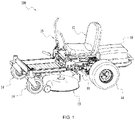
- a riding-type mower 100 shown in FIG. 1 to FIG. 3 can be operated by an operator riding on the riding-type mower 100 to mow lawns, vegetation and the like.
- controller may include or relate to at least one of hardware or software.
- the body frame 11 is configured to carry the seat 12, and at least a portion of the body frame 11 extends along a direction parallel to a forward and back direction of the frame 11.
- the seat 12 is configured for the operator sitting, and the seat 12 is mounted on the body frame 11.
- the forward and back direction refers to a left-right direction in FIG. 1 .
- the mowing unit 13 is connected to the body frame 11, and the mowing unit 13 includes a mowing element implementing a mowing function. As shown in FIG. 4 , the mowing unit 13 further includes a first motor 131 configured to drive the mowing element to rotate at a high speed.
- the mowing unit 13 may include more than one mowing element, and correspondingly, a number of first motors 131 may correspond to a number of mowing elements.
- the mowing elements are three blades, and three corresponding first motors are provided.
- the mowing unit 13 further includes a first controller 132 controlling the first motor 131.
- the walking unit 14 enables the riding-type mower 100 to walk on the lawn.
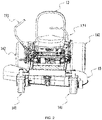
- the walking unit 14 includes a road wheel, the road wheel includes a first road wheel 141 and a second road wheel 142, and the above-mentioned mowing unit 13 is disposed between the first road wheel 141 and the second road wheel 142.
- Two first road wheels 141 are provided, and two second road wheels 142 are further provided.
- the walking unit 14 further includes a second motor 143, and the second motor 143 is configured to drive the second road wheels 142. Two second motors are further provided.
- the walking unit 14 further includes a second controller 144 controlling the second motor 143.
- the operating device 15 is configured to be operated by a user so as to control a walking and mowing action of the riding-type mower 100.
- the operating assembly 15 may include a first operating assembly 151 and a second operating assembly (not shown in the figure).
- the first operating assembly 151 is configured to be operated by the user so as to start the second motor 143 in the walking unit 14, thereby controlling the riding-type mower 100 to walk on the lawn.
- the two first operating assemblies 151 are provided, and in this embodiment, the two first operating assemblies 151 control the two corresponding second motors 143, respectively.
- the second operating assembly is configured to be operated by the user so as to start the first motor 131 in the mowing unit 13, thereby controlling the mowing element to mow.
- the power supply device 16 includes at least one battery pack 161, the at least one battery pack 161 is configured to supply an energy source to the riding-type mower 100, and the at least one battery pack 161 is further configured to supply the energy source to another electric power tool.
- At least one battery cell group is disposed in the battery pack 161, and the battery cell group includes a plurality of battery cells electrically connected to each other.
- the battery cell may be a lithium battery cell.
- the battery pack 161 can be detached from the body frame 11 by the user.
- the electric power tool system 200 shown in FIG. 3 includes the riding-type mower 100 and a hand-held electric power tool 100a.
- the battery pack 161 in the power supply device 16 that supplies power to the riding-type mower 100 can be detached from the riding-type mower 100 and mounted to the hand-held electric power tool 100a, such that the battery pack 161 can further supply the energy source to the hand-held electric power tool 100a. That is to say, the battery pack 161 in the power supply device 16 of the present application can be applied to not only the riding-type mower 100, but also other hand-held electric power tools 100a, thereby improving the adaptability of the battery pack 161 and the ability of the riding-type mower 100 adapting to the battery pack 161.
- the hand-held electric power tool 100a may be a garden tool such as a grass trimmer, a pruner, or a blowing machine; a torque output tool such as an electric drill or an electric hammer; a saw-type tool such as an electric circular saw, a turning saw, or a reciprocating saw; or a grinding-type tool such as an angle grinder, or a sander.
- the battery pack 161 is further configured to supply power to a hand-pushing electric power tool, such as a hand-pushing mower or a hand-pushing snow sweeper.
- a number of battery packs is greater than or equal to four and less than or equal to ten.
- a weight of a single battery pack is less than or equal to 4KG.
- discharge power of the power supply device 16 ranges from 2KW to 4KW.
- discharge power of a single battery pack 161 ranges from 500W to 6500W.
- a capacity of a single battery pack 161 is greater than or equal to 130Wh and less than or equal to 1000Wh.
- the power supply device 16 further includes a battery compartment 162 for mounting the battery pack 161, and the power supply device 16 may include a plurality of battery compartments 162.
- the power supply device 16 includes six battery compartments 162, and the six battery compartments 162 are all disposed at one end of the seat 12 facing away from the first road wheel 141.
- the power supply device 16 includes six battery packs 161, and the six battery packs 161 can be installed in the six corresponding battery compartments 162, respectively.
- each battery compartment 162 is provided with a battery pack port 164, and the battery pack port 164 is configured to electrically access the respective battery pack 161.
- the battery pack port 164 includes a communication terminal, and the communication terminal of the battery pack port 164 is configured to be connected to a communication terminal of the battery pack 161 so as to transmit a communication signal.
- the six battery compartments 162 may also be formed by a single battery compartment with a larger size. That is to say, the power supply device 16 includes only one battery compartment 162, and the plurality of battery packs 161 are all installed in the one battery compartment 162.
- the one battery compartment 162 includes six battery pack ports 164, and the six battery pack ports 164 are correspondingly connected to the six battery packs 161, respectively.
- a number of battery compartments 162 and a number of battery packs 161 are not specifically limited, and the corresponding relation between the battery compartments 162 and the battery packs 161 is not limited to a one-to-one correspondence, but a number of battery pack ports 164 should correspond to a maximum number of the accessed battery packs 161.
- the power supply device 16 further includes a power management module 163, and the power management module 163 can be electrically connected to the battery pack port 164 of each battery compartment 162.
- the power management module 163 is configured to perform charge management or discharge management on an electrically accessed battery pack 161.
- the power management module 163 relates to at least one of software or hardware.
- the power management module 163 may perform charge management or discharge management on one electrically accessed battery pack 161, or perform charge management or discharge management on two or more electrically accessed battery packs 161, or perform charge management and discharge management on two or more electrically accessed battery packs 161; or perform charge management or discharge management on one or more battery packs in a plurality of battery packs 161 which are electrically accessed.
- the power management module 163 includes a charging port 1631, an electric energy output port 1632, and a controller 1633.
- the charging port 1631 is configured to be electrically connected to a charger 17 so as to charge a battery pack 161 electrically connected to the power management module 163.
- an electric energy input port is disposed outside the riding-type mower 100, and an output interface of the charger 17 may be electrically connected to the charging port 1631 through an external cable or the output interface of the charger 17 may be electrically connected to the charging port 1631 in direct.
- the output interface of the charger 17 is electrically connected to the charging port 1631 in a plug-and-unplug mode.
- the charging port 1631 may be disposed inside the riding-type mower 100, and the charger 17 may also be built in the riding-type mower 100. In this case, the output interface of the charger 17 and the charging port 1631 are both disposed inside the riding-type mower 100, and the output interface of the charger 17 is electrically connected to the charging port 1631 through internal wires.
- the electric energy output port 1632 is configured to output electric energy of the battery pack 161 to other electronic assemblies or external devices of the riding-type mower 100 so as to provide electric energy to the other electronic assemblies or external devices.
- the electric energy output port 1632 is configured to supply the electric energy of the battery pack 161 to the first motor 131 and the first controller 132 of the mowing unit 13 and to the second motor 143 and the second controller 144 of the walking unit 14.
- the electric energy output port 1632 is further configured to output the electric energy of the battery pack 161 to an auxiliary function module 18, and the auxiliary function module 18 is configured to provide an auxiliary function of the riding-type mower 100.
- the auxiliary function module 18 may include a power conversion module 185, at least one alternating current (AC) electrical output interface 181, at least one direct current (DC) electrical output interface 182, at least one universal serial bus (USB) interface 183, a lighting device 184.
- the power conversion module 185 is configured to convert electric energy from at least one battery pack 161 into electric energy which can be used by external devices.
- the AC electrical output interface 181 may output 220V three-phase alternating current
- the DC electrical output interface 182 may output 12V/25W direct current
- the USB interface may charge an electronic device (such as a mobile phone) having a USB interface.
- the auxiliary function module 18 may further include other function modules.
- the power conversion module 185 may also be integrated into the power management module 163.
- the controller 1633 of the power management module 163 includes a charging unit and a discharge unit.
- the charging unit enables the charger 17 to charge the battery pack 161 electrically connected to the power management module 163.
- the charging unit includes a charging input end, a charging output end, and an electronic switch.
- the charging input end of the charging unit is electrically connected to the charging port 1631, and the charging output end of the charging unit is electrically connected to the battery pack port 164.
- the charging input end of the charging unit is the charging port 1631.
- the charging output end of the charging unit is the battery pack port 164.
- the charging input end of the charging unit and the charging output end of the charging unit can achieve electrical connection between the battery pack 161 and the charger 17.
- the electronic switch includes two contact ends and one enabled end, the two contact ends are connected in series between the charging input end and the charging output end, the enabled end is connected to the controller 1633, and the enabled end is configured to receive a control signal from the controller 1633 so as to control on and off of the electronic switch.
- the electronic switch is a relay. In other embodiments, the electronic switch is a power switching tube.
- an input end of the discharge unit is electrically connected to the battery pack port 164, and an output end of the discharge unit is electrically connected to the electric energy output port 1632.
- the input end of the discharge unit is the battery pack port 164 such that the battery pack port 164 is electrically connected to the discharge unit.
- the input end of the discharge unit is electrically connected to the battery pack port 164 such that the battery pack 161 is electrically connected to the discharge unit.
- the riding-type mower 100 controls current distribution between at least two loads through the controller 1633, and the at least two loads include the mowing unit 13 and the walking unit 14.
- the mowing unit 13 includes the first motor 131
- the walking unit includes the second motor 143.
- the controller 1633 of the power management module 163 controls a working current of the first motor 131 of the mowing unit 13 during the mowing operation of the mowing unit 13 and a working current of the second motor 143 of the walking unit 14 during the walking of the walking unit 14.
- the power supply device 16 may further include a detector or a monitoring circuit, and the detector or the monitoring circuit is configured to detect a physical parameter or an electrical parameter of the battery pack 161 during the battery pack 161 charging or discharging.
- a voltage monitoring circuit 165 of each battery pack 161 is configured to detect a voltage of each battery pack 161.
- a total voltage monitoring circuit 167 is configured to monitor a total voltage output by the power supply device 16.
- a current detection circuit 166 associated with each battery pack 161 is disposed on each battery pack circuit, and the current detection circuit 166 is configured to detect a charging current or a discharge current of each battery pack 161.
- a total current monitoring circuit 168 is configured to monitor a total current output by the power supply device 16.
- a temperature detection circuit in the power supply device 16 is configured to detect an internal temperature of each battery pack 161 or a temperature of each battery compartment 162.
- the power management module 163 may further include a battery capacity detection unit, and the battery capacity detection unit is configured to detect a battery capacity or a capacity of each battery pack 161 inserted into the battery compartment 162.
- the power management module 163 is connected to each load in a bus mode.
- the controller 1633 of the power management module 163 may include at least one processor or controller.
- the processor is a microprocessor (MCU).
- the controller 1633 may include only one processor or controller, and all battery packs 161 share the one processor or controller.
- the processor or controller is configured to control an indicator state of each battery pack 161 and the electronic switch on a charging and discharging circuit according to information of each battery pack 161, such as a voltage, a current, a temperature, and SOC.
- the controller 1633 may include a plurality of processors or controllers, and a number of the processors is less than a number of the battery compartments 162. For example, for six battery packs 161, three battery packs 161 of the six battery packs 161 share one processor or controller, and there are two processors or controllers in total.
- the controller 1633 includes processors or controllers, and a number of the processors or controllers is the same as a number of the battery compartments 162.
- Each battery pack 161 has a respective processor or controller, and the processor or the controller is configured to control an indicator state of the corresponding battery pack 161 and a plurality of electronic switches on a circuit of the corresponding battery pack 161 according to information of a corresponding battery pack 161, such as a current, a voltage, a temperature, and SOC.
- the controller 1633 may include a plurality of processors or controllers, and the plurality of processors or controllers may communicate and exchange respective information with each other. In this way, the plurality of processors or controllers can obtain state information and the like of all the battery packs 161, so as to better achieve the coordinated management of charging and discharging of all the battery packs 161.
- one processor or controller may further be selected as a host, and the host is configured to collect and process information of other processors or controllers (including current status information of each battery pack 161) so as to coordinate and manage the plurality of processors or controllers.
- the host is further configured to transmit status information of the power supply device 16 or the plurality of battery packs 161 to an external apparatus (such as a display screen).
- One or more electronic switches are disposed in series on each battery pack circuit, and a control end of the electronic switch is electrically connected to a processor or controller of a corresponding battery pack 161 so as to receive a control signal from the corresponding processor or controller.
- the electronic switch allows a charging current to flow into the battery pack 161 or prohibits a charging current from flowing into the battery pack 161; and in a discharge process of the battery pack 161, the electronic switch allows or prohibits a discharging current from the battery pack 161.
- the electronic switch is a metal oxide semiconductor (MOS) tube.
- the power management module 163 can coordinate and manage the plurality of battery packs 161 in the power supply device 16 such that at least two battery packs 161 can jointly discharge to provide sufficient electric energy for the riding-type mower 100.
- the power management module 163 is configured to determine whether the battery pack 161 satisfies a discharge condition, and control a battery pack 161 satisfying the discharge condition to discharge when the battery pack 161 satisfies the discharge condition.
- the discharge condition includes that a sum of numbers of respective battery cell groups of all battery packs 161 connected in parallel is greater than or equal to five. In this way, a case that a current tolerated by each battery cell in the battery pack 161 being discharged exceeds a current of the battery pack 161 that can safely discharge due to larger output power or output current required by the riding-type mower 100 can be avoided.
- a total parallel number of battery packs 161 in the power supply device 16 participating in discharge needs to be greater than or equal to five so as to ensure sufficient output power while improving the safety of the discharge process.
- a parallel number of the battery pack 161 is defined firstly.
- the parallel number of the battery pack 161 is a number of battery cell groups in the battery pack 161 connected in parallel, and the parallel number is expressed as a symbol P.
- a single battery pack 161 having a number n of internal battery cell groups connected in parallel may be referred to as an nP battery pack.
- a 2P battery pack means that the number of battery cell groups in the battery pack connected in parallel is two.
- the total parallel number P total of battery packs in the present application is the sum of the number of all battery cell groups connected in parallel.
- the total parallel number P total is equal to four. At this time, the above-mentioned parallel number condition is not satisfied, and the power supply device 16 will not discharge.
- a number of battery packs 161 in the power supply device 16 satisfying the discharge condition may be one, two or more.
- the number of battery packs 161 satisfying the discharge condition is one
- the number of internal battery cell of the battery packs 161 groups connected in parallel satisfying the discharge condition is greater than or equal to five.
- the sum of numbers of battery cell groups of all battery packs 161 connected in parallel is greater than or equal to five.
- the sum of numbers of battery cell groups of all the battery packs 161 connected in parallel is six. As described above, when the sum of the numbers of battery cell groups of the battery packs 161 connected in parallel in the power supply device 16 satisfying the discharge condition is less than 5, the power supply device 16 will not discharge.
- the battery cell groups of the battery packs 161 satisfying the discharge condition have a same rated voltage. In this way, when the plurality of battery packs 161 are discharged at the same time, the battery cell groups of the battery packs 161 can be prevented from being over discharged due to insufficient electric power, thus damaging the battery pack 161.
- the power supply device 16 includes at least two battery packs 161, and the sum of numbers of battery cell groups of the respective battery packs 161 connected in parallel is greater than or equal to five.
- a discharge current of any one battery pack 161 is greater than a preset current threshold
- the power management module 163 controls the battery packs 161 to stop discharging.
- a value of the preset current threshold ranges from 40A-60A.
- the power management module 163 controls the battery packs 161 to stop discharging, that is, when voltages of internal battery cells of the battery pack 161 are unbalanced, the power management module 163 controls the battery packs 161 to stop discharging.
- the voltage monitoring circuit 165, a temperature monitoring circuit, and the current detection circuit 166 which are correlated with each battery pack 161 monitor the temperature of each battery pack 161, the voltage of each battery pack 161, the current of a single battery pack circuit, and a switching tube on each battery pack circuit in real time. If the battery pack 161 has an abnormal state such as overtemperature, overcurrent of a battery pack circuit, or internal cell voltage imbalance in the discharge process, the power management module 163 enables the battery pack 161 to stop working and removes the battery pack 161 from a discharge battery pack queue, such that the battery pack 161 exits a discharge state without affecting the operation of the whole machine.
- the riding-type mower 100 in order to ensure that the riding-type mower 100 can have at least some power to complete the remedial work, such as braking or returning to the base, when the parallel number of battery packs 161 is less than a preset parallel number, even if a battery pack 161 has abnormal conditions, the battery pack 161 will not be removed.
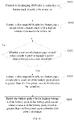
- FIG. 5 illustrates a discharge method of the power supply device of the riding-type mower 100, and the method includes steps described below.
- a voltage of the battery pack 161, a temperature of the battery pack 161, a discharge current of a single battery pack circuit and a temperature of a MOS tube of the battery pack circuit appear abnormalities is monitored. If the battery pack 161 inserted into the battery compartment 162 is overheated or unbalanced, a discharge current of a single-path battery pack is greater than an over current protection threshold (such as 50A) or a duration of the discharge current of the single-path battery pack being greater than the over current protection threshold (such as 50A) is greater than a preset duration (such as 30s), or the MOS of the circuit of the battery pack circuit is overheated, it is determined that the battery pack 161 is in an abnormal state or an inoperative state.
- an over current protection threshold such as 50A
- a duration of the discharge current of the single-path battery pack being greater than the over current protection threshold such as 50A
- a preset duration such as 30s
- the preset parallel number is set to 5. If the total parallel number P total of the battery packs 161 without abnormality is greater than or equal to 5, step S105 is turned to. If the total parallel number P total of the battery packs 161 without abnormality is less than 5, step S107 is turned to, and the discharge of the power supply device 16 is terminated.
- the preset parallel number P herein may also be other values, as long as an actual output current of each battery cell is matched with factory characteristics of the battery cell and the discharge current of each battery cell is within a safe current range that the battery cell can tolerate.
- the plurality of battery packs 161 when the plurality of battery packs 161 are grouped into one battery pack unit according to the voltage uniformity condition, the plurality of battery packs 161 discharge at the same time.
- step S201 a state of each battery pack and a state of a battery pack circuit in each battery compartment 162 are monitored in real time.
- step S203 If a battery pack only has the temperature abnormality, the battery pack joins the battery pack discharge queue after the temperature of the battery pack is restored to a normal temperature, and the power management module 163 can control the battery pack to discharge. If the battery pack has more than temperature abnormality, step S203 is turned to.
- step S205 whether P total is greater than or equal to the preset parallel number is determined.
- step S106 is referred to.
- the riding-type mower 100 or the power supply device 16 includes at least a first battery pack circuit and a second battery pack circuit which are connected in parallel, where the first battery pack circuit includes a first battery pack 161a and a first electronic switch which are connected in series with each other, and the second battery pack circuit includes a second battery pack 161b and a second electronic switch which are connected in series with each other.
- the power management module 163 controls the first electronic switch on the first battery pack circuit and the second electronic switch on the second battery pack circuit, such that output current of the at least two battery packs 161 connected in parallel are between a first rated current and a second rated current.
- a voltage of the first battery pack 161a and a voltage of the second battery pack 161b are acquired.
- the second battery pack circuit includes a discharge MOS tube Q21 and a charging MOS tube Q22 which are connected in series with the second battery pack 161b, the discharge MOS tube Q21 and the charging MOS tube Q22 are connected in subtractive series, and both the discharge MOS tube Q21 and the charging MOS tube Q22 include a parasitic diode.
- a value of the first preset current threshold ranges from 0A to 3A.
- step S302 a discharge MOS tube in a battery pack circuit where a battery pack 161 with a higher voltage between the first battery pack 161a and the second battery pack 161b is located is controlled to be turned on.
- step S304 a discharge MOS tube in the battery pack circuit where the battery pack with the lower voltage between the first battery pack and the second battery pack is located is controlled to be turned on.
- the first battery pack 161a discharges and a voltage value of the first battery pack 161a continuously decreases; when the voltage of the first battery pack 161a reduces to be equal or substantially equal to the voltage of the second battery pack 161b, that is, the voltage difference is within the preset range, such that the parasitic diode of the second branch discharge MOS tube Q21 can be turned on, a low current flows through the parasitic diode of the discharge MOS tube Q21 on the second battery pack circuit, and the current detected by the current detection circuit 166b of the second battery pack circuit is greater than the preset threshold.
- the controller 1633 determines, based on the current detected by the current detection circuit 166b, that the voltage of the first battery pack 161a is equal or substantially equal to the second battery pack 161b, that is, the voltage difference is within the preset range, and then the controller 1633 outputs the control signal to control the discharge MOS tube Q21 of the second battery pack circuit to be turned on, such that the first battery pack 161a and the second battery pack 161b jointly discharge.
- a value of the preset current threshold ranges from 0 to 3A.
- the power supply device 16 includes two battery packs 161. In other embodiments, when the power supply device 16 includes a plurality of dischargeable battery packs 161, the power management module 163 controls the plurality of battery packs 161 to discharge according to the above-mentioned similar method.
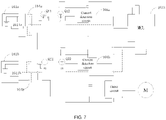
- the power supply device 16 includes a plurality of battery pack circuits connected in parallel, each battery pack circuit includes a battery pack 161 (BAT1, BAT2, BAT3, BAT4, BAT5, and BAT6), a discharge MOS tube (Q11, Q21, Q31, Q41, Q51, and Q61) and a charging MOS tube (Q12, Q22, Q32, Q42, Q52, and Q62), and the battery pack 161, the discharge MOS tube and the charging MOS tub are connected in series.
- the discharge MOS tube is configured to control the battery pack 161 to discharge
- the charging MOS tube is configured to control the battery pack 161 to charge.
- the power management module 163 is configured to enable each charging MOS tube in the plurality of battery pack circuits to be turned on, and enable a discharge MOS tube in a battery pack circuit where a battery pack 161 with a highest voltage is located to be turned on.
- the power management module 163 is configured to control the discharge MOS tube in the one battery pack circuit to be turned on, so as to enable the battery pack 161 with the highest voltage and the battery pack 161 of the battery pack circuit where a current of the battery pack circuit is greater than the first preset current threshold to jointly discharge.
- FIG. 7 illustrates a power supply device 16 according to one embodiment, the power supply device 16 includes six battery packs 161 and battery pack circuits composed of the six battery packs 161, and six battery pack circuits 161 are connected in parallel.
- FIG. 10 illustrates a discharge method of the power supply device 16 of the riding-type mower 100 according to one embodiment, and the discharge method includes steps described below.
- step S401 each charging MOS tube in the plurality of battery pack circuits is turned on.
- the power management module 163 controls each charging MOS tube (Q12, Q22, Q32, Q42, Q52, and Q62) in each battery pack circuit to be turned on.
- step S402 a discharge MOS tube in a battery pack circuit where a battery pack 161 with a highest voltage is located is turned on.
- the discharge MOS tube Q61 of the battery pack circuit where the battery pack BAT6 is located is controlled to be turned on.
- step S403 whether a current of a battery pack circuit is greater than the first preset current threshold is determined.
- the power management module 163 controls the discharge MOS tube in the one battery pack circuit to be turned on, so as to enable the battery pack 161 with the highest voltage and the battery pack 161 of the battery pack circuit where a current of the battery pack circuit is greater than the first preset current threshold to jointly discharge.
- the power management module 163 controls the plurality of battery packs 161 to discharge according to the above-mentioned method. Enabling the battery packs 161 to jointly discharge according to the voltage level sequence from highest to lowest has an advantage that the battery pack 161 with a higher voltage charging the battery pack 161 with a lower voltage can be avoided, thus facilitating the operation of the riding-type mower 100.
- a condition that a direction of a rotation speed of the second motor 143 is opposite to a torque direction may appear (for example, in a process of braking or downhill), the second motor 143 is in a power generation state, a current output from the power supply device 16 to the second motor 143 is reduced, and the battery pack 161 may not be required for power supply at this time.
- a current of any one of the plurality of battery pack circuits except the battery pack circuit where the battery pack with the highest voltage is located is less than a second preset current threshold, a discharge MOS tube in the one battery pack circuit is controlled to be turned off.
- a value the second preset current threshold ranges from 0A to 3A.
- a value of the third preset current threshold ranges from -3A to 0A. In this way, when the total current being negative is detected, it can be determined that the second motor 143 is in the power generation state. In one embodiment, the value of the third preset current threshold ranges from -1A to 3A. In this way, a possible condition that the power supply device repeatedly enters and exits the energy recovery mode due to current fluctuation can be avoided, and the energy recovery mode can be accurately entered, thus timely preventing excessive energy from damaging electronic components in the circuit.
- the current output by the battery pack 161 can satisfy the usage requirement, but when the load suddenly increases (for example, during uphill or the grass is dense), the output current will also suddenly increase, and at this time, the total current of the discharge loop may exceed the safe current range, that is, overcurrent phenomenon will occur, which will affect the service life of the battery pack 161 and even bring safety problems.
- the riding-type mower 100 when the overcurrent phenomenon occurs, current-limiting protection treatment is performed on each load such that the total output current of the power supply device 16 is reduced below the safe current.
- the riding-type mower 100 when the overcurrent phenomenon occurs in the discharge process of the power supply device 16, the riding-type mower 100 reasonably limits the current of each load according to a preset rule, that is, the current output by the power supply device 16 is reasonably distributed, so as to not only enable the total output current to be less than or equal to the over current protection (OCP) threshold and but also ensure that the riding-type mower 100 can satisfy the actual working condition requirements.
- a current-limiting protection method of the riding-type mower 100 for a plurality of loads includes steps described below.
- An over current protection (OCP) threshold is preset.
- the total output current of the power supply device 16 is monitored in real time. Whether the total output current exceeds the OCP threshold is determined. When the total output current exceeds the OCP threshold, current-limiting protection information is generated according to a preset rule such that the total output current of the power supply device 16 reduces to be equal to or less than the OCP threshold.
- the current-limiting protection information includes a current distribution rule for the plurality of loads, and each load limits its own current according to received current-limiting protection information, thus achieving current-limiting protection.
- the riding-type mower 100 includes a current-limiting protection unit 1634, the current-limiting protection unit 1634 may be disposed in the power management module 163 (as shown in FIG. 4 ), and the current-limiting protection unit 1634 is configured to coordinate and distribute the current flowing to each load such that the total output current of the power supply device 16 reduces to be equal to or less than the OCP threshold.
- the current-limiting protection unit 1634 generates current-limiting protection information and transmits the current-limiting protection information to each load, and the current-limiting protection information includes a current distribution rule for a plurality of loads.
- the current-limiting protection unit 1634 may relate to software or hardware, or relate to both the software and the hardware.
- the current-limiting protection unit 1634 may also be disposed in the load, and the current-limiting protection unit 1634 is configured to coordinate and distribute the current flowing to each load such that the total output current of the power supply device 16 reduces to be equal to or less than the OCP threshold.
- the riding-type mower 100 includes a display module 19, and the display module 19 can display status information of the power supply device 16 of the riding-type mower 100.
- the status information of the power supply device 16 includes battery capacity information and remaining working time of the power supply device 16, battery capacity information of each battery pack 161 inserted into the battery compartment 162, and the like such that it is convenient for the user to check state of the power supply device 16 and state of the battery pack 161 so as to arrange the subsequent work of the riding-type mower 100.
- the display module 19 includes a total battery capacity display unit 191.
- a total battery capacity of the power supply device 16 is shown as a percentage.
- a fixed total capacity is used as a reference, and a ratio of an actual capacity of the battery pack 161 inserted into the battery compartment 162 to the total capacity is used as present total battery capacity information of the riding-type mower 100.
- a sum that is, the total capacity of fully charged capacities of all battery packs 161 inserted into the battery compartment 162 is used as a reference, and a ratio of the actual capacities of all battery packs 161 inserted into the battery compartment 162 to the sum of the fully charged capacities of all battery packs 161 is used as the present total battery capacity information of the power supply device16 and the riding-type mower 100.
- the display module 19 further includes a battery compartment status display unit 192.
- the battery compartment status display unit 192 can display at least a state of the battery compartment 162, and the state of the battery compartment 162 includes whether a battery pack 161 is inserted into the battery compartment 162, whether the battery pack 161 inserted into the battery compartment 162 is in an operating state, and the like.
- the battery compartment status display unit 192 includes a status indicator light corresponding to a respective battery compartment 162, and the status indicator light is configured to display the state of the battery compartment 162.
- a status indicator light of a corresponding battery compartment 162 is lighted, where the operating state includes a discharge state and a charge state.
- the battery compartment status display unit 192 further includes a battery capacity display indicator light, and the battery capacity display indicator light is configured to display battery capacity information of the battery pack 161 in each battery compartment 162.
- One battery capacity display indicator light is provided. The state of each battery compartment 162 and the battery capacity information of the battery pack 161 in the battery compartment 162 are alternately displayed through a combination of the status indicator light and the battery capacity display indicator light corresponding to the respective battery compartment 162. In this way, not only the number of indicator lights is reduced and the cost is saved, but also a display interface of the display module 19 is more compact, thereby simplifying the design.
- the display module 19 further includes a remaining working time display unit (not shown in the figure), and the remaining working time display unit is configured to display remaining working time of the power supply device 16.
- the remaining working time of the power supply device 16 is set at least according to the operating state of the first motor 131 of the mowing unit 13 or the operating state of the second motor 143 of the walking unit 14, or according to the operating states of both the first motor 131 and the second motor 143.
- the remaining working time display unit displays the remaining working time of the power supply device 16 and the remaining working time of the load corresponding to the selected load condition in different load selections, such that it is convenient for the user to view and arrange subsequent work.
- the remaining working time display unit displays the remaining working time of the riding-type mower 100 for mowing.
- the walking unit 14 that is, the second motor 143 is selected as the load
- the remaining working time display unit displays the remaining working time of the riding-type mower 100 for walking.
- the remaining working time display unit displays the total remaining working time of the riding-type mower 100 for walking and mowing at the same time.
- the display module 19 further includes an abnormal status alarm region 193, and the abnormal status alarm region 193 is configured to display an abnormal state of the power supply device 16 and transmit alarm information to alert the user.
- the abnormal state of the power supply device 16 may be that the battery capacity is insufficient, the battery pack 161 is unbalanced, or the battery pack 161 is overheated, or the like.
- each battery pack 161 inserted into the power supply device 16 has an independent display interface, each display interface can display the battery capacity state of each battery pack 161, and the user can view the state of each battery pack 161 through the display interface.
- the state includes the battery capacity information of the battery pack 161.
Landscapes
- Engineering & Computer Science (AREA)
- Power Engineering (AREA)
- Life Sciences & Earth Sciences (AREA)
- Environmental Sciences (AREA)
- Charge And Discharge Circuits For Batteries Or The Like (AREA)
- Harvester Elements (AREA)
Description
- This application claims priority to
Chinese patent application No. 201810860510.4 filed August 01, 2018 - The present application relates to a riding-type mower.
- As a garden tool, a mower is widely used in the fields of mowing lawns and vegetation. In the related art, the mower generally includes a hand-held mower and a riding-type mower. In the market, the riding-type mower is generally powered by diesel, which not only pollutes the environment, but also requires frequent replacement of vulnerable parts in a fuel system, thus increasing maintenance costs.
-
US 20160242356A1 discloses a lawn mower and more particularly to a system and method of charging a variety of batteries of the lawn mower including connecting the lawn mower to a towing vehicle, either directly or by placing the lawn mower on a trailer, towing the lawn mower, generating electricity upon towing the lawn mower utilizing a generator mechanically coupled to the lawn mower wheels or the wheels of the trailer. The generator converts the mechanical energy into electrical energy. The generator is electrically coupled to first type of battery and a second type of battery that is connected to the lawn mower and/or a first type of battery and a second type of battery that is connected to a charging station on the trailer. The system also includes a charging circuit for each of the first type of battery and the second type of battery. -
WO 2013/102023 A1 discloses a riding lawn mower provided with an electrical system. The electrical system includes a control module, transceiver modules, and a wiring system. The control module allows for programmably controlling electrical operations of the riding lawn mower. The transceiver modules are operably connected with respective devices of the riding lawn mower so as to communicate data between the respective devices and the control module. The wiring system comprising wires that electrically connect the transceiver modules with the control module/ The wiring system includes a power wire that provide electrical power to the transceiver modules from the battery; and a data bus comprising a data wire that transmits data between the control module and the transceiver modules. -
EP 2793346 discloses a cell connection control device. When connecting a plurality of cells in parallel, an operation to calculate an inrush current flowing when a pair of cells are selected from the cells for the parallel connection and parallel-connected for all cell combinations. A cell combination, whose inrush current is the largest in the cell combinations which are judged that the calculated inrush current is less than or equal to a pre-determined upper limit current value, is set as a cell combination to parallel-connect the cells. - The present application provides a riding-type mower powered by a battery pack. Such invention is set out in the appended set of claims.
-
-
FIG. 1 is a perspective view of a riding-type mower according to one embodiment of the present application; -
FIG. 2 is a perspective view of a riding-type mower from another perspective according to one embodiment of the present application; -
FIG. 3 is an electric power tool system including a riding-type mower according to one embodiment of the present application; -
FIG. 4 is a circuit schematic diagram of a riding-type mower according to one embodiment of the present application; -
FIG. 5 is a flowchart of a discharge method of a power supply device of a riding-type mower according to one embodiment of the present application; -
FIG. 6 is a flowchart of a discharge method of a power supply device of a riding-type mower according to one embodiment of the present application; -
FIG. 7 is a schematic diagram of a discharge circuit of a power supply device of a riding-type mower according to one embodiment of the present application; -
FIG. 8 is a flowchart of a discharge method of the power supply device of the riding-type mower shown inFIG. 7 according to one embodiment of the present application; -
FIG. 9 is a schematic diagram of a discharge circuit of a power supply device of a riding-type mower according to one embodiment of the present application; -
FIG. 10 is a flowchart of a discharge method of the power supply device of the riding-type mower shown inFIG. 9 according to one embodiment of the present application; -
FIG. 11 is a schematic diagram of a display module of a riding-type mower according to one embodiment of the present application. - A riding-
type mower 100 shown inFIG. 1 to FIG. 3 can be operated by an operator riding on the riding-type mower 100 to mow lawns, vegetation and the like. - The riding-
type mower 100 includes abody frame 11, aseat 12, amowing unit 13, awalking unit 14, anoperating device 15, a power supply device16, and a control unit (not shown in the figure). - It will be apparent to those skilled in the art that the terms "controller", "control unit", "power management module", "module", "unit" and "processor" may include or relate to at least one of hardware or software.
- The
body frame 11 is configured to carry theseat 12, and at least a portion of thebody frame 11 extends along a direction parallel to a forward and back direction of theframe 11. Theseat 12 is configured for the operator sitting, and theseat 12 is mounted on thebody frame 11. The forward and back direction refers to a left-right direction inFIG. 1 . - The
mowing unit 13 is connected to thebody frame 11, and themowing unit 13 includes a mowing element implementing a mowing function. As shown inFIG. 4 , themowing unit 13 further includes afirst motor 131 configured to drive the mowing element to rotate at a high speed. Themowing unit 13 may include more than one mowing element, and correspondingly, a number offirst motors 131 may correspond to a number of mowing elements. In this embodiment, the mowing elements are three blades, and three corresponding first motors are provided. In other embodiments, themowing unit 13 further includes afirst controller 132 controlling thefirst motor 131. - The
walking unit 14 enables the riding-type mower 100 to walk on the lawn. As shown inFIG. 2 andFIG. 3 , thewalking unit 14 includes a road wheel, the road wheel includes afirst road wheel 141 and asecond road wheel 142, and the above-mentionedmowing unit 13 is disposed between thefirst road wheel 141 and thesecond road wheel 142. Twofirst road wheels 141 are provided, and twosecond road wheels 142 are further provided. As shown inFIG. 4 , thewalking unit 14 further includes asecond motor 143, and thesecond motor 143 is configured to drive thesecond road wheels 142. Two second motors are further provided. When the twosecond motors 143 drive correspondingsecond walking wheels 142 to rotate at different rotational speeds, a speed difference occurs between the twosecond road wheels 142, thereby causing the riding-type mower 100 to veer. In other embodiments, thewalking unit 14 further includes asecond controller 144 controlling thesecond motor 143. - The
operating device 15 is configured to be operated by a user so as to control a walking and mowing action of the riding-type mower 100. As shown inFIG. 2 , theoperating assembly 15 may include afirst operating assembly 151 and a second operating assembly (not shown in the figure). Thefirst operating assembly 151 is configured to be operated by the user so as to start thesecond motor 143 in thewalking unit 14, thereby controlling the riding-type mower 100 to walk on the lawn. The twofirst operating assemblies 151 are provided, and in this embodiment, the twofirst operating assemblies 151 control the two correspondingsecond motors 143, respectively. The second operating assembly is configured to be operated by the user so as to start thefirst motor 131 in themowing unit 13, thereby controlling the mowing element to mow. - As shown in
FIG. 3 , thepower supply device 16 includes at least onebattery pack 161, the at least onebattery pack 161 is configured to supply an energy source to the riding-type mower 100, and the at least onebattery pack 161 is further configured to supply the energy source to another electric power tool. At least one battery cell group is disposed in thebattery pack 161, and the battery cell group includes a plurality of battery cells electrically connected to each other. In one embodiment, the battery cell may be a lithium battery cell. - The
battery pack 161 can be detached from thebody frame 11 by the user. The electricpower tool system 200 shown inFIG. 3 includes the riding-type mower 100 and a hand-heldelectric power tool 100a. Thebattery pack 161 in thepower supply device 16 that supplies power to the riding-type mower 100 can be detached from the riding-type mower 100 and mounted to the hand-heldelectric power tool 100a, such that thebattery pack 161 can further supply the energy source to the hand-heldelectric power tool 100a. That is to say, thebattery pack 161 in thepower supply device 16 of the present application can be applied to not only the riding-type mower 100, but also other hand-heldelectric power tools 100a, thereby improving the adaptability of thebattery pack 161 and the ability of the riding-type mower 100 adapting to thebattery pack 161. - In one embodiment, the hand-held
electric power tool 100a may be a garden tool such as a grass trimmer, a pruner, or a blowing machine; a torque output tool such as an electric drill or an electric hammer; a saw-type tool such as an electric circular saw, a turning saw, or a reciprocating saw; or a grinding-type tool such as an angle grinder, or a sander. In other embodiments, thebattery pack 161 is further configured to supply power to a hand-pushing electric power tool, such as a hand-pushing mower or a hand-pushing snow sweeper. - In one embodiment, a number of battery packs is greater than or equal to four and less than or equal to ten. A weight of a single battery pack is less than or equal to 4KG. The advantage is that requirement of larger output power or larger output current of the riding-
type mower 100 is satisfied and the whole riding-type mower 100 will not appear cumbersome. - In one embodiment, discharge power of the
power supply device 16 ranges from 2KW to 4KW. - In one embodiment, discharge power of a
single battery pack 161 ranges from 500W to 6500W. - In one embodiment, a capacity of a
single battery pack 161 is greater than or equal to 130Wh and less than or equal to 1000Wh. - As shown in
FIG. 3 , thepower supply device 16 further includes abattery compartment 162 for mounting thebattery pack 161, and thepower supply device 16 may include a plurality of battery compartments 162. For example, in this embodiment, thepower supply device 16 includes sixbattery compartments 162, and the sixbattery compartments 162 are all disposed at one end of theseat 12 facing away from thefirst road wheel 141. Correspondingly, thepower supply device 16 includes sixbattery packs 161, and the sixbattery packs 161 can be installed in the six corresponding battery compartments 162, respectively. As shown inFIG. 4 , eachbattery compartment 162 is provided with abattery pack port 164, and thebattery pack port 164 is configured to electrically access therespective battery pack 161. In one embodiment, thebattery pack port 164 includes a communication terminal, and the communication terminal of thebattery pack port 164 is configured to be connected to a communication terminal of thebattery pack 161 so as to transmit a communication signal. In one embodiment, the sixbattery compartments 162 may also be formed by a single battery compartment with a larger size. That is to say, thepower supply device 16 includes only onebattery compartment 162, and the plurality of battery packs 161 are all installed in the onebattery compartment 162. In this case, the onebattery compartment 162 includes sixbattery pack ports 164, and the sixbattery pack ports 164 are correspondingly connected to the sixbattery packs 161, respectively. A number ofbattery compartments 162 and a number of battery packs 161 are not specifically limited, and the corresponding relation between the battery compartments 162 and the battery packs 161 is not limited to a one-to-one correspondence, but a number ofbattery pack ports 164 should correspond to a maximum number of the accessed battery packs 161. - Referring to
FIG. 4 , thepower supply device 16 further includes apower management module 163, and thepower management module 163 can be electrically connected to thebattery pack port 164 of eachbattery compartment 162. Thepower management module 163 is configured to perform charge management or discharge management on an electrically accessedbattery pack 161. In one embodiment, thepower management module 163 relates to at least one of software or hardware. - The
power management module 163 may perform charge management or discharge management on one electrically accessedbattery pack 161, or perform charge management or discharge management on two or more electrically accessed battery packs 161, or perform charge management and discharge management on two or more electrically accessed battery packs 161; or perform charge management or discharge management on one or more battery packs in a plurality of battery packs 161 which are electrically accessed. In one embodiment, thepower management module 163 includes a chargingport 1631, an electricenergy output port 1632, and acontroller 1633. - As shown in
FIG. 4 , the chargingport 1631 is configured to be electrically connected to acharger 17 so as to charge abattery pack 161 electrically connected to thepower management module 163. In one embodiment, an electric energy input port is disposed outside the riding-type mower 100, and an output interface of thecharger 17 may be electrically connected to the chargingport 1631 through an external cable or the output interface of thecharger 17 may be electrically connected to the chargingport 1631 in direct. For example, the output interface of thecharger 17 is electrically connected to the chargingport 1631 in a plug-and-unplug mode. In other embodiments, the chargingport 1631 may be disposed inside the riding-type mower 100, and thecharger 17 may also be built in the riding-type mower 100. In this case, the output interface of thecharger 17 and the chargingport 1631 are both disposed inside the riding-type mower 100, and the output interface of thecharger 17 is electrically connected to the chargingport 1631 through internal wires. - The electric
energy output port 1632 is configured to output electric energy of thebattery pack 161 to other electronic assemblies or external devices of the riding-type mower 100 so as to provide electric energy to the other electronic assemblies or external devices. For example, in this embodiment, the electricenergy output port 1632 is configured to supply the electric energy of thebattery pack 161 to thefirst motor 131 and thefirst controller 132 of themowing unit 13 and to thesecond motor 143 and thesecond controller 144 of thewalking unit 14. - The electric
energy output port 1632 is further configured to output the electric energy of thebattery pack 161 to anauxiliary function module 18, and theauxiliary function module 18 is configured to provide an auxiliary function of the riding-type mower 100. Theauxiliary function module 18 may include apower conversion module 185, at least one alternating current (AC)electrical output interface 181, at least one direct current (DC)electrical output interface 182, at least one universal serial bus (USB)interface 183, alighting device 184. Thepower conversion module 185 is configured to convert electric energy from at least onebattery pack 161 into electric energy which can be used by external devices. The ACelectrical output interface 181 may output 220V three-phase alternating current, the DCelectrical output interface 182 may output 12V/25W direct current, and the USB interface may charge an electronic device (such as a mobile phone) having a USB interface. In one embodiment, theauxiliary function module 18 may further include other function modules. In one embodiment, thepower conversion module 185 may also be integrated into thepower management module 163. - As shown in
FIG. 4 , thecontroller 1633 of thepower management module 163 includes a charging unit and a discharge unit. The charging unit enables thecharger 17 to charge thebattery pack 161 electrically connected to thepower management module 163. In one embodiment, the charging unit includes a charging input end, a charging output end, and an electronic switch. The charging input end of the charging unit is electrically connected to the chargingport 1631, and the charging output end of the charging unit is electrically connected to thebattery pack port 164. In one embodiment, the charging input end of the charging unit is the chargingport 1631. In one embodiment, the charging output end of the charging unit is thebattery pack port 164. The charging input end of the charging unit and the charging output end of the charging unit can achieve electrical connection between thebattery pack 161 and thecharger 17. The electronic switch includes two contact ends and one enabled end, the two contact ends are connected in series between the charging input end and the charging output end, the enabled end is connected to thecontroller 1633, and the enabled end is configured to receive a control signal from thecontroller 1633 so as to control on and off of the electronic switch. In one embodiment, the electronic switch is a relay. In other embodiments, the electronic switch is a power switching tube. When the electronic switch is turned on, an electrical connection between the chargingport 1631 and thebattery pack port 164 is established so as to enable thecharger 17 to charge the accessedbattery pack 161 through the charging unit. When the electronic switch is disconnected, the electrical connection between the chargingport 1631 and thebattery pack port 164 is disconnected, and at this time, thecharger 17 cannot charge the accessedbattery pack 161 through the charging unit. - In one embodiment, an input end of the discharge unit is electrically connected to the
battery pack port 164, and an output end of the discharge unit is electrically connected to the electricenergy output port 1632. In one embodiment, the input end of the discharge unit is thebattery pack port 164 such that thebattery pack port 164 is electrically connected to the discharge unit. In other embodiments, the input end of the discharge unit is electrically connected to thebattery pack port 164 such that thebattery pack 161 is electrically connected to the discharge unit. In one embodiment, the discharge unit includes an electronic switch, the electronic switch includes two contact ends and one enabled end, the two contact ends are connected in series between the input end of the discharge unit and the output end of the discharge unit, the enabled end is electrically connected to thecontroller 1633, and the enabled end is configured to receive a control signal from thecontroller 1633 so as to control the on and off of the electronic switch. In one embodiment, the electronic switch is a relay. In other embodiments, the electronic switch is a power switching tube. - The
controller 1633 of thepower management module 163 is configured to control the charging unit and the discharge unit, and can further achieve coordinated management of the plurality of battery packs 161. For example, a plurality of accessed battery packs 161 with a larger voltage difference are coordinated and managed so as to prevent cross-charging between the plurality of battery packs 161 when the voltage difference is relatively large, or battery packs 161 satisfying a charging and discharge condition are selected for charging control or discharging control. Thecontroller 1633 of thepower management module 163 is further configured to process data, output a control signal, and the like. - In the above-mentioned embodiments of the present application, the riding-
type mower 100 controls current distribution between at least two loads through thecontroller 1633, and the at least two loads include themowing unit 13 and thewalking unit 14. Themowing unit 13 includes thefirst motor 131, and the walking unit includes thesecond motor 143. Thecontroller 1633 of thepower management module 163 controls a working current of thefirst motor 131 of themowing unit 13 during the mowing operation of themowing unit 13 and a working current of thesecond motor 143 of thewalking unit 14 during the walking of thewalking unit 14. - In one embodiment, the
power supply device 16 may further include a detector or a monitoring circuit, and the detector or the monitoring circuit is configured to detect a physical parameter or an electrical parameter of thebattery pack 161 during thebattery pack 161 charging or discharging. For example, as shown inFIG. 9 , avoltage monitoring circuit 165 of eachbattery pack 161 is configured to detect a voltage of eachbattery pack 161. A totalvoltage monitoring circuit 167 is configured to monitor a total voltage output by thepower supply device 16. Acurrent detection circuit 166 associated with eachbattery pack 161 is disposed on each battery pack circuit, and thecurrent detection circuit 166 is configured to detect a charging current or a discharge current of eachbattery pack 161. A totalcurrent monitoring circuit 168 is configured to monitor a total current output by thepower supply device 16. A temperature detection circuit in thepower supply device 16 is configured to detect an internal temperature of eachbattery pack 161 or a temperature of eachbattery compartment 162. In one embodiment, thepower management module 163 may further include a battery capacity detection unit, and the battery capacity detection unit is configured to detect a battery capacity or a capacity of eachbattery pack 161 inserted into thebattery compartment 162. In this embodiment, thepower management module 163 is connected to each load in a bus mode. - As will be appreciated by those skilled in the art, the
controller 1633 of thepower management module 163 may include at least one processor or controller. In one embodiment, the processor is a microprocessor (MCU). - In one embodiment, the
controller 1633 may include only one processor or controller, and all battery packs 161 share the one processor or controller. The processor or controller is configured to control an indicator state of eachbattery pack 161 and the electronic switch on a charging and discharging circuit according to information of eachbattery pack 161, such as a voltage, a current, a temperature, and SOC. - In one embodiment, the
controller 1633 may include a plurality of processors or controllers, and a number of the processors is less than a number of the battery compartments 162. For example, for sixbattery packs 161, threebattery packs 161 of the sixbattery packs 161 share one processor or controller, and there are two processors or controllers in total. - In other embodiments, the
controller 1633 includes processors or controllers, and a number of the processors or controllers is the same as a number of the battery compartments 162. Eachbattery pack 161 has a respective processor or controller, and the processor or the controller is configured to control an indicator state of thecorresponding battery pack 161 and a plurality of electronic switches on a circuit of thecorresponding battery pack 161 according to information of acorresponding battery pack 161, such as a current, a voltage, a temperature, and SOC. - The
controller 1633 may include a plurality of processors or controllers, and the plurality of processors or controllers may communicate and exchange respective information with each other. In this way, the plurality of processors or controllers can obtain state information and the like of all the battery packs 161, so as to better achieve the coordinated management of charging and discharging of all the battery packs 161. - In one embodiment, one processor or controller may further be selected as a host, and the host is configured to collect and process information of other processors or controllers (including current status information of each battery pack 161) so as to coordinate and manage the plurality of processors or controllers. The host is further configured to transmit status information of the
power supply device 16 or the plurality of battery packs 161 to an external apparatus (such as a display screen). - One or more electronic switches are disposed in series on each battery pack circuit, and a control end of the electronic switch is electrically connected to a processor or controller of a
corresponding battery pack 161 so as to receive a control signal from the corresponding processor or controller. In this way, in a charging process of thebattery pack 161, the electronic switch allows a charging current to flow into thebattery pack 161 or prohibits a charging current from flowing into thebattery pack 161; and in a discharge process of thebattery pack 161, the electronic switch allows or prohibits a discharging current from thebattery pack 161. In one embodiment, the electronic switch is a metal oxide semiconductor (MOS) tube. - In this embodiment, the
power management module 163 can coordinate and manage the plurality of battery packs 161 in thepower supply device 16 such that at least twobattery packs 161 can jointly discharge to provide sufficient electric energy for the riding-type mower 100. - The
power management module 163 is configured to determine whether thebattery pack 161 satisfies a discharge condition, and control abattery pack 161 satisfying the discharge condition to discharge when thebattery pack 161 satisfies the discharge condition. The discharge condition includes that a sum of numbers of respective battery cell groups of all battery packs 161 connected in parallel is greater than or equal to five. In this way, a case that a current tolerated by each battery cell in thebattery pack 161 being discharged exceeds a current of thebattery pack 161 that can safely discharge due to larger output power or output current required by the riding-type mower 100 can be avoided. If the current tolerated by each battery cell exceeds the current of thebattery pack 161 that can safely discharge, not only a service life of thebattery pack 161 will be affected, but also safety problems will be caused. Moreover, a total parallel number of battery packs 161 in thepower supply device 16 participating in discharge needs to be greater than or equal to five so as to ensure sufficient output power while improving the safety of the discharge process. - For ease of description, a parallel number of the
battery pack 161 is defined firstly. The parallel number of thebattery pack 161 is a number of battery cell groups in thebattery pack 161 connected in parallel, and the parallel number is expressed as a symbol P. Asingle battery pack 161 having a number n of internal battery cell groups connected in parallel may be referred to as an nP battery pack. For example, a 2P battery pack means that the number of battery cell groups in the battery pack connected in parallel is two. When the plurality of battery packs 161 are connected in parallel, the sum (that is, a total parallel number) of the battery cell groups of battery packs 161 connected in parallel is a sum of parallel numbers of respective battery cell groups of the battery packs 161, and the total parallel number is expressed as a symbol Ptotal. For example, when a1P battery pack 161, a2P battery pack 161, and a3P battery pack 161 are connected in parallel, the sum of numbers of battery cell groups of all the battery packs 161 connected in parallel Ptotal=1P+2P+3P=6P. For ease of description, the total parallel number Ptotal of battery packs in the present application is the sum of the number of all battery cell groups connected in parallel. - According to the above-mentioned definition, when one
1P battery pack 161 and one3P battery pack 161 are connected in parallel, or two 2P battery packs 161 are connected in parallel, the total parallel number Ptotal is equal to four. At this time, the above-mentioned parallel number condition is not satisfied, and thepower supply device 16 will not discharge. - In the present application, a number of battery packs 161 in the
power supply device 16 satisfying the discharge condition may be one, two or more. In a case where the number of battery packs 161 satisfying the discharge condition is one, the number of internal battery cell of the battery packs 161 groups connected in parallel satisfying the discharge condition is greater than or equal to five. In a case where the number of battery packs 161 satisfying the discharge condition is two or more, the sum of numbers of battery cell groups of all battery packs 161 connected in parallel is greater than or equal to five. For example, when a1P battery pack 161, a2P battery pack 161, and a3P battery pack 161 are connected in parallel, the sum of numbers of battery cell groups of all the battery packs 161 connected in parallel is six. As described above, when the sum of the numbers of battery cell groups of the battery packs 161 connected in parallel in thepower supply device 16 satisfying the discharge condition is less than 5, thepower supply device 16 will not discharge. - In a case where the number of battery packs 161 satisfying the discharge condition is two or more, the battery cell groups of the battery packs 161 satisfying the discharge condition have a same rated voltage. In this way, when the plurality of battery packs 161 are discharged at the same time, the battery cell groups of the battery packs 161 can be prevented from being over discharged due to insufficient electric power, thus damaging the
battery pack 161. - In one embodiment, a number of battery cells in each battery cell group may be equal or not equal.
- The
power supply device 16 includes at least twobattery packs 161, and the sum of numbers of battery cell groups of the respective battery packs 161 connected in parallel is greater than or equal to five. - In this embodiment, the
battery pack 161 inserted into thebattery compartment 162 must be in an operational state, that is, thebattery pack 161 has no abnormalities. For example, thebattery pack 161 does not have an abnormal condition that thebattery pack 161 cannot work normally due to factors such as over-temperature or imbalance, that is, thebattery pack 161 is in the operational state such that thebattery pack 161 can be discharged and the safety of discharge can be ensured. - The discharge condition further includes that a temperature of the
battery pack 161 is less than a preset temperature threshold. In one embodiment, when the temperature of thebattery pack 161 is greater than or equal to the preset temperature threshold, thepower management module 163 controls thebattery pack 161 to discharge after waiting for the temperature of thebattery pack 161 is changed to be less than the preset temperature threshold. - In a discharge process of the
power supply device 16, when a discharge current of any onebattery pack 161 is greater than a preset current threshold, thepower management module 163 controls the battery packs 161 to stop discharging. In one embodiment, a value of the preset current threshold ranges from 40A-60A. - In a discharge process of the
power supply device 16, when a voltage difference of each battery cell in any onebattery pack 161 is greater than a preset voltage difference threshold, thepower management module 163 controls the battery packs 161 to stop discharging, that is, when voltages of internal battery cells of thebattery pack 161 are unbalanced, thepower management module 163 controls the battery packs 161 to stop discharging. - When at least two
battery packs 161 satisfy the discharge condition, the at least twobattery packs 161 can together discharge only when voltages of the at least twobattery packs 161 are equal or substantially equal, that is, only when a voltage difference of the at least two battery packs 161 is within a preset range can the at least twobattery packs 161 jointly discharge. In this embodiment, the voltages of the at least twobattery packs 161 being equal refers to that a voltage difference between every two battery packs in the plurality of battery packs 161 is less than the preset voltage difference threshold, and the preset voltage difference threshold may be 2V, 1V, or the like. The joint discharge of the at least two battery packs 161 ensures that a current in a discharge loop of eachbattery pack 161 does not exceed a safe current value that thebattery pack 161 can tolerate. The advantage is that an output current of the riding-type mower 100 can be prevented from being too large. If only onebattery pack 161 discharges within a preset period of time, a discharge current in the discharge loop of thebattery pack 161 is bound to be very large and may exceed the safe current value that the discharge loop of thebattery pack 161 can tolerate, thus not only affecting the service life of thebattery pack 161, but also causing safety accidents. Only the voltages of the at least two battery packs being equal or substantially equal is satisfied, the at least two battery packs can jointly discharge, that is, if the voltage difference value is within the preset range, the phenomenon of reverse current that a high-voltage battery pack 161 charges a low-voltage battery pack 161 due to the large voltage difference between battery packs 161 connected in parallel and the parallel discharge of the battery packs 161 at the same time can be avoided, which is not conducive to the normal discharge of the battery pack 10 and the normal operation of the riding-type mower 100. - In the
power supply device 16 having two or more battery packs 161, a plurality of battery packs 161 with an equal or substantially equal voltage may be provided, that is, the voltage difference of the plurality of battery packs 161 is within the preset range. The plurality of battery packs 161 with an equal or substantially equal voltage are defined as one battery pack unit, a plurality of battery packs 161 with a same uniform voltage are defined as one battery pack unit, and the one battery pack unit has one uniform voltage. In this way, the one battery pack unit has at least two battery packs 161. Asingle battery pack 161 may also be defined as one battery pack unit, the one battery pack unit has only onebattery pack 161, and a uniform voltage of the battery pack unit may be defined as a voltage of thebattery pack 161. In this embodiment, if a plurality of battery pack units having different uniform voltages are provided, that is, when at least two battery pack units are provided, a method of thepower management module 163 controlling the at least two battery pack units to jointly discharge includes steps described below. Battery packs 161 with an equal or substantially equal voltage are grouped into one battery pack unit, that is, battery packs 161 where a voltage difference between the battery packs is within the preset range is grouped into one battery pack unit. The battery pack units sequentially discharge according to a voltage level sequence of the battery pack units from highest to lowest until all battery pack units jointly discharge finally. - In the discharge process of the
power supply device 16, thevoltage monitoring circuit 165, a temperature monitoring circuit, and thecurrent detection circuit 166 which are correlated with eachbattery pack 161 monitor the temperature of eachbattery pack 161, the voltage of eachbattery pack 161, the current of a single battery pack circuit, and a switching tube on each battery pack circuit in real time. If thebattery pack 161 has an abnormal state such as overtemperature, overcurrent of a battery pack circuit, or internal cell voltage imbalance in the discharge process, thepower management module 163 enables thebattery pack 161 to stop working and removes thebattery pack 161 from a discharge battery pack queue, such that thebattery pack 161 exits a discharge state without affecting the operation of the whole machine. - In one embodiment, in order to ensure that the riding-
type mower 100 can have at least some power to complete the remedial work, such as braking or returning to the base, when the parallel number of battery packs 161 is less than a preset parallel number, even if abattery pack 161 has abnormal conditions, thebattery pack 161 will not be removed. - Referring to
FIG. 5, FIG. 5 illustrates a discharge method of the power supply device of the riding-type mower 100, and the method includes steps described below. - In step S101, a status of a battery pack and a status of a battery pack circuit in each
battery compartment 162 are monitored in real time. - For example, whether a voltage of the
battery pack 161, a temperature of thebattery pack 161, a discharge current of a single battery pack circuit and a temperature of a MOS tube of the battery pack circuit appear abnormalities is monitored. If thebattery pack 161 inserted into thebattery compartment 162 is overheated or unbalanced, a discharge current of a single-path battery pack is greater than an over current protection threshold (such as 50A) or a duration of the discharge current of the single-path battery pack being greater than the over current protection threshold (such as 50A) is greater than a preset duration (such as 30s), or the MOS of the circuit of the battery pack circuit is overheated, it is determined that thebattery pack 161 is in an abnormal state or an inoperative state. - In step S102, the battery pack in the abnormal state is stopped from discharging.
when a battery pack in the abnormal state is detected, thepower management module 163 stops thebattery pack 161 in the abnormal state from discharging. In other embodiments, in the discharge process, if an abnormality occurs in thebattery pack 161, thepower management module 163 controls all the battery packs 161 to stop discharging, removes theabnormal battery pack 161 from the discharge queue, and re-performs discharge control on other battery packs 161 satisfying the discharge condition according to the above-mentioned method. - In step S103, a total parallel number Ptotal of battery packs without abnormality is counted.
- As described above, the total parallel number Ptotal of the plurality of battery packs 161 is a sum of parallel numbers of the respective battery packs 161, and the parallel number P of each
battery pack 161 is the number of interior battery cells in the eachbattery pack 161 connected in parallel. For example, when a1P battery pack 161, a2P battery pack 161, and a3P battery pack 161 are connected in parallel, the total parallel number Ptotal=1P+2P+3P=6P. - Assuming that the parallel number P of each
battery pack 161 is 2 and all of the sixbattery packs 161 have no abnormalities, then the total parallel number of battery packs 161 without abnormalities inFIG. 7 is Ptotal=2*6=12. - In step S104, whether Ptotal is greater than or equal to the preset parallel number is determined.
- In one embodiment, the preset parallel number is set to 5. If the total parallel number Ptotal of the battery packs 161 without abnormality is greater than or equal to 5, step S105 is turned to. If the total parallel number Ptotal of the battery packs 161 without abnormality is less than 5, step S107 is turned to, and the discharge of the
power supply device 16 is terminated. The preset parallel number P herein may also be other values, as long as an actual output current of each battery cell is matched with factory characteristics of the battery cell and the discharge current of each battery cell is within a safe current range that the battery cell can tolerate. - In step S105, the at least two
battery packs 161 are grouped into at least two battery pack units according to a voltage uniformity condition. - Still referring to
FIG. 4 , assuming that a first battery pack BAT1, a second battery pack BAT2 and a third battery pack BAT3 satisfy the voltage uniformity condition and the uniform voltage is 40V, a fourth battery pack BAT4 and a sixth battery pack BAT6 satisfy the voltage uniformity condition and the uniform voltage is 50V, and a voltage of a fifth battery pack BAT5 is 45V, then, the first battery pack BAT1, the second battery pack BAT2 and the third battery pack BAT3 are grouped into one group, that is, a first battery pack unit, and a voltage of the first battery pack unit is 40V; similarly, the fourth battery pack BAT4 and the sixth battery pack BAT6 are grouped into one group, that is, a second battery pack unit; the fifth battery pack BAT5 may be formed into one group, that is, a third battery pack unit (this battery pack unit has only one battery pack), and a voltage of the third battery pack unit is 45V. - In step S106, the battery pack units sequentially discharge according to the voltage level sequence of the battery pack units from highest to lowest until all battery pack units jointly discharge finally.
- The
power supply device 16 shown inFIG. 4 is described as an example, and the plurality of battery pack units are sorted according to the voltage level sequence from highest to lowest as follows: the second battery pack unit > the third battery pack unit > the first battery pack unit. - In one embodiment, the
controller 1633 of thepower management module 163 outputs a control signal to the battery packs 161 of the second battery pack unit, that is, the fourth battery pack BAT4 and the sixth battery pack BAT6, such that the fourth battery pack BAT4 and the sixth battery pack BAT6 jointly discharge. After the fourth battery pack BAT4, the sixth battery pack BAT6 of the second battery pack unit and the fifth battery pack BAT5 of the third battery pack unit satisfy the voltage uniformity condition, thecontroller 1633 of thepower management module 163 outputs a control signal to the fourth battery pack BAT4, the fifth battery pack BAT5, and the sixth battery pack BAT6 such that the fourth battery pack BAT4, the fifth battery pack BAT5, and the sixth battery pack BAT6 jointly discharge. After the fourth battery pack BAT4, the fifth battery pack BAT5, the sixth battery pack BAT6 and the first battery pack BAT1, the second battery pack BAT2, and the third battery pack BAT3 of the first battery pack unit satisfy the voltage uniformity condition, thecontroller 1633 of thepower management module 163 outputs a control signal to the first battery pack BAT1, the second battery pack BAT2, the third battery pack BAT3, the fourth battery pack BAT4, the fifth battery pack BAT5, and the sixth battery pack BAT6, such that the first battery pack BAT1, the second battery pack BAT2, the third battery pack BAT3, the fourth battery pack BAT4, the fifth battery pack BAT5, and the sixth battery pack BAT6 jointly discharge, thereby finally achieving joint discharge of the six battery packs. According to this mode, a discharge sequence of the plurality of battery packs inFIG. 4 is BAT4 and BAT6 → BAT4, BAT5 and BAT6 → BAT1, BAT2, BAT3, BAT4, BAT5 and BAT6. - In this embodiment, when the plurality of battery packs 161 are grouped into one battery pack unit according to the voltage uniformity condition, the plurality of battery packs 161 discharge at the same time.
- In step S107, the discharge of the
power supply device 16 is terminated. - In the discharge process, when a
battery pack 161 is inserted or pulled out, the discharge control needs to be re-performed on the plurality of battery packs 161 according to the above-mentioned method. - In the discharge process of the
power supply device 16, if the temperature of thebattery pack 161 is greater than or equal to the preset temperature threshold, the powersupply management module 163 adds thebattery pack 161 to the discharge queue after waiting for the temperature of thebattery pack 161 changing to be less than the preset temperature threshold, and controls thebattery pack 161 to discharge. - Referring to
FIG. 6, FIG. 6 illustrates another discharge method of the power supply device of the riding-type mower 100, and the discharge method includes steps described below. - In step S201, a state of each battery pack and a state of a battery pack circuit in each
battery compartment 162 are monitored in real time. - For example, whether a voltage of the
battery pack 161, a temperature of thebattery pack 161, a discharge current of a single battery pack circuit and a temperature of a MOS tube of the battery pack circuit appear abnormalities is monitored, if thebattery pack 161 inserted into thebattery compartment 162 is overheated or unbalanced, a discharge current of a single-path battery pack is greater than an over current protection threshold (such as 50A) or a duration of the discharge current of the single-path battery pack being greater than the over current protection threshold (such as 50A) is greater than a preset duration (such as 30s), or the MOS of the battery pack circuit is overheated, it is determined that thebattery pack 161 is in an abnormal state or an inoperative state. - In step S202, whether a battery pack only has temperature abnormality is determined.
- If a battery pack only has the temperature abnormality, the battery pack joins the battery pack discharge queue after the temperature of the battery pack is restored to a normal temperature, and the
power management module 163 can control the battery pack to discharge. If the battery pack has more than temperature abnormality, step S203 is turned to. - In one embodiment, the temperature monitoring circuit detects the temperature of each
battery pack 161 in real time, and thepower management module 163 determines whether the temperature of eachbattery pack 161 satisfies a temperature condition for charging and discharging. For example, when whether the temperature of thebattery pack 161 is greater than or equal to the preset temperature threshold is determined, if thebattery pack 161 satisfies the charging and discharging condition and has no other abnormal conditions, thebattery pack 161 is determined to be free of abnormalities; and if the battery pack has only the temperature abnormality, after waiting for cooling of thebattery pack 161 and monitoring the temperature of the battery pack until the temperature of the battery pack returns a normal state, thebattery pack 161 joins the discharge queue, and thebattery pack 161 is controlled to discharge. - In step S203, an abnormal battery pack is stopped from discharging.
- When a
battery pack 161 in the abnormal state is monitored, thepower management module 163 stops thebattery pack 161 in the abnormal state from discharging. In other embodiments, in the discharge process, if an abnormality occurs in thebattery pack 161, thepower management module 163 controls all the battery packs 161 to stop discharging, removes theabnormal battery pack 161 from the discharge queue, and re-performs discharge control on other battery packs 161 satisfying the discharge condition according to the above-mentioned method. - In step S204, a total parallel number Ptotal of battery packs without abnormality is counted.
- The above-mentioned step S103 is referred to.
- In step S205, whether Ptotal is greater than or equal to the preset parallel number is determined.
- In this embodiment, if the total parallel number of battery packs 161 is less than the preset parallel number, it may be considered that in step S202, a
battery pack 161 previously having an abnormal temperature has restored to the normal temperature during waiting, so step S201 can be returned to until the total parallel number Ptotal of battery packs without abnormality is greater than or equal to the preset parallel number. In one embodiment, timekeeping may be performed after step S701 is returned to, and the discharge process is exited after a preset period of time (such as 5 min) is exceeded, so as to avoid energy waste caused by long-time waiting or program cycling. - In step S206, at least two battery packs are grouped into at least two battery pack units according to the voltage uniformity condition.
- The above-mentioned step S105 is referred to.
- In step S207, battery pack units sequentially discharge according to the voltage level sequence of the battery pack units from highest to lowest until all battery pack units jointly discharge finally.
- The above-mentioned step S106 is referred to.
- In this embodiment, when the plurality of battery packs 161 are grouped into one battery pack unit according to the voltage uniformity condition, the plurality of battery packs 161 discharge at the same time.
- In step S208, the discharge of the
power supply device 16 is terminated. - In the discharge process, when a
battery pack 161 is inserted or pulled out, the discharge control needs to be re-performed on the plurality of battery packs 161 according to the above-mentioned method. - As shown in
FIG. 7 , the riding-type mower 100 or thepower supply device 16 includes at least a first battery pack circuit and a second battery pack circuit which are connected in parallel, where the first battery pack circuit includes afirst battery pack 161a and a first electronic switch which are connected in series with each other, and the second battery pack circuit includes asecond battery pack 161b and a second electronic switch which are connected in series with each other. Thepower management module 163 controls the first electronic switch on the first battery pack circuit and the second electronic switch on the second battery pack circuit, such that output current of the at least twobattery packs 161 connected in parallel are between a first rated current and a second rated current. The first rated current is a working current at which the riding-type mower 100 can at least perform mowing, and the second rated current is a working current at which the riding-type mower 100 can at least perform walking. The first electronic switch and the second electronic switch may include a plurality of electronic switches, and the plurality of electronic switches are configured to be turned on when different charging and discharging conditions are satisfied, separately, so as to improve the safety and reliability of the charging and discharging process. - Referring to
FIG. 7 , in one embodiment, thepower supply device 16 includes the first battery pack circuit and the second battery pack circuit which are connected in parallel, the first battery pack circuit includes thefirst battery pack 161a, and the second battery pack circuit includes thesecond battery pack 161b connected in series. - The method of the
power management module 163 controlling the twobattery packs 161 to jointly discharge includes steps described below. - A voltage of the
first battery pack 161a and a voltage of thesecond battery pack 161b are acquired. - Whether the voltage of the
first battery pack 161a and the voltage of thesecond battery pack 161b are equal or substantially equal is determined. When the voltage of thefirst battery pack 161a and the voltage of thesecond battery pack 161b are equal or substantially equal, that is, a voltage difference between thefirst battery pack 161a and thesecond battery pack 161b is within a preset range, thefirst battery pack 161a and thesecond battery pack 161b are controlled to jointly discharge. When the difference between the voltage of thefirst battery pack 161a and the voltage of thesecond battery pack 161b is relatively large, that is, the voltage difference exceeds the preset range, a battery pack with a higher voltage between thefirst battery pack 161a and thesecond battery pack 161b is controlled to discharge first until the voltage of thefirst battery pack 161a and the voltage of thesecond battery pack 161b are equal or substantially equal, that is, the voltage difference is within the preset range, and then thefirst battery pack 161a and thesecond battery pack 161b are controlled to jointly discharge. - The
power supply device 16 includes the first battery pack circuit and the second battery pack circuit which are connected in parallel with each other. The first battery pack circuit includes a discharge MOS tube Q11 and a charging MOS tube Q12 which are connected in series with thefirst battery pack 161a, the discharge MOS tube Q11 and the charging MOS tube Q12 are connected in subtractive series, and both the discharge MOS tube Q11 and the charging MOS tube Q12 include a parasitic diode. - The second battery pack circuit includes a discharge MOS tube Q21 and a charging MOS tube Q22 which are connected in series with the
second battery pack 161b, the discharge MOS tube Q21 and the charging MOS tube Q22 are connected in subtractive series, and both the discharge MOS tube Q21 and the charging MOS tube Q22 include a parasitic diode. - In one embodiment, the
first battery pack 161a further includes a microcontroller, thesecond battery pack 161b further includes a microcontroller, and the microcontroller is configured to communicate with thecontroller 1633 of thepower management module 163 of thepower supply device 16 so as to ensure a normal charging and discharging process. - The method of the
power management module 163 controlling the twobattery packs 161 to jointly discharge includes steps described below. The charging MOS tube in the first battery pack circuit and the charging MOS tube in the second battery pack circuit are controlled to be turned on. A discharge MOS tube in a battery pack circuit where a battery pack with a higher voltage between thefirst battery pack 161a and thesecond battery pack 161b is located is controlled to be turned on. When a current of a battery pack circuit where a battery pack with a lower voltage between thefirst battery pack 161a and thesecond battery pack 161b is located is greater than a first preset current threshold, the discharge MOS tube in this battery pack circuit is controlled to be turned on so as to enable thefirst battery pack 161a and thesecond battery pack 161b to jointly discharge. - In one embodiment, a value of the first preset current threshold ranges from 0A to 3A.
- Referring to
FIG. 8 , the method of thepower management module 163 controlling the twobattery packs 161 to jointly discharge includes steps described below. - In step S301, a charging MOS tube in the first battery pack circuit and a charging MOS tube in the second battery pack circuit are controlled to be turned on.
- In step S302, a discharge MOS tube in a battery pack circuit where a
battery pack 161 with a higher voltage between thefirst battery pack 161a and thesecond battery pack 161b is located is controlled to be turned on. - In step S303, whether a current of a battery pack circuit where a battery pack with a lower voltage is located is greater than the first preset current threshold is determined. If the current of the battery pack circuit where the battery pack with the lower voltage is located is greater than the first preset current threshold, step S104 is turned to. If the current of the battery pack circuit where the battery pack with the lower voltage is located is less than the first preset current threshold, step S103 is turned to, and the discharge of the battery pack with the higher voltage between the
first battery pack 161a and thesecond battery pack 161b is continued until the current of the battery pack circuit where the battery pack with the lower voltage is located being greater than the preset current threshold is detected. In one embodiment, a value of the first preset current threshold ranges from 0A to 3A. - In step S304, a discharge MOS tube in the battery pack circuit where the battery pack with the lower voltage between the first battery pack and the second battery pack is located is controlled to be turned on.
- In step S305, the
first battery pack 161a and thesecond battery pack 161b jointly discharge. - Assuming that the voltage of the
first battery pack 161a is greater than the voltage of thesecond battery pack 161b, for example, the voltage of thefirst battery pack 161a is 58V and the voltage of thesecond battery pack 161b is 50V, then a process of thecontroller 1633 of thepower management module 163 controlling the twobattery packs 161 to discharge includes steps described below. Thecontroller 1633 transmits a control signal to a first branch discharge MOS tube Q11 of the first battery pack circuit and a second branch discharge MOS tube Q21 of the second battery pack circuit so as to enable the first branch discharge MOS tube Q11 of the first battery pack circuit and the second branch discharge MOS tube Q21 of the second battery pack circuit to be turned on. - The
controller 1633 compares the voltages of the respective battery packs 161 and controls thebattery pack 161 with a high voltage to discharge first. In one embodiment, thecontroller 1633 compares and determines, according to the voltages of the battery packs 161 detected by avoltage monitoring module 165 disposed in thepower supply device 16, thebattery pack 161 with the higher voltage and transmits a control signal to thebattery pack 161 with the higher voltage to discharge first. In this embodiment, the voltage of thefirst battery pack 161a is 58V, and the voltage of thesecond battery pack 161b is 50V. Therefore, thecontroller 1633 transmits the control signal to a first branch charging MOS tube Q12 connected in series on the first battery pack circuit to turn on the first branch charging MOS tube Q12, such that both the first branch discharge MOS tube Q11 and the first branch charging MOS tube Q12 of the first battery pack circuit are turned on, and thefirst battery pack 161a discharges first. - After the voltage of the
first battery pack 161a reduces to be equal or substantially equal to the voltage of thesecond battery pack 161b, thecontroller 1633 controls thefirst battery pack 161a and thesecond battery pack 161b to jointly discharge. - As shown in
FIG. 7 , the first battery pack circuit further includes acurrent detection circuit 166a, and thecurrent detection circuit 166a is configured to detect a current of the first battery pack circuit. The second battery pack circuit further includes acurrent detection circuit 166b, and thecurrent detection circuit 166b is configured to detect a current of the second battery pack circuit. During the discharge of thefirst battery pack 161a, both the discharge MOS tube Q11 and the charging MOS tube Q12 on the first battery pack circuit are turned on, the first battery pack discharges through the discharge MOS tube Q11 and the charging MOS tube Q12, and the first battery pack circuit has a current flow. At this time, only the charging MOS tube Q22 in the second battery pack circuit is turned on, but since the discharge MOS tube Q21 has the parasitic diode, even if the discharge MOS tube Q21 in the second battery pack circuit is not turned on, if a positive voltage difference exists between two ends of the discharge MOS tube Q21, a low current still will flow through the parasitic diode. - In this embodiment, since the voltage of the
first battery pack 161a is greater than the voltage of thesecond battery pack 161b, a voltage difference between the two ends of the parasitic diode of the discharge MOS tube Q21 on the second battery pack circuit is negative, the parasitic diode of the discharge MOS tube Q21 on the second battery pack circuit cannot be turned on, and a current value detected by thecurrent detection circuit 166b of the second battery pack circuit is zero. As time goes on, thefirst battery pack 161a discharges and a voltage value of thefirst battery pack 161a continuously decreases; when the voltage of thefirst battery pack 161a reduces to be equal or substantially equal to the voltage of thesecond battery pack 161b, that is, the voltage difference is within the preset range, such that the parasitic diode of the second branch discharge MOS tube Q21 can be turned on, a low current flows through the parasitic diode of the discharge MOS tube Q21 on the second battery pack circuit, and the current detected by thecurrent detection circuit 166b of the second battery pack circuit is greater than the preset threshold. Thecontroller 1633 determines, based on the current detected by thecurrent detection circuit 166b, that the voltage of thefirst battery pack 161a is equal or substantially equal to thesecond battery pack 161b, that is, the voltage difference is within the preset range, and then thecontroller 1633 outputs the control signal to control the discharge MOS tube Q21 of the second battery pack circuit to be turned on, such that thefirst battery pack 161a and thesecond battery pack 161b jointly discharge. In one embodiment, a value of the preset current threshold ranges from 0 to 3A. - In the above-mentioned embodiments, the
power supply device 16 includes two battery packs 161. In other embodiments, when thepower supply device 16 includes a plurality of dischargeable battery packs 161, thepower management module 163 controls the plurality of battery packs 161 to discharge according to the above-mentioned similar method. - Referring to
FIG. 9 , thepower supply device 16 includes a plurality of battery pack circuits connected in parallel, each battery pack circuit includes a battery pack 161 (BAT1, BAT2, BAT3, BAT4, BAT5, and BAT6), a discharge MOS tube (Q11, Q21, Q31, Q41, Q51, and Q61) and a charging MOS tube (Q12, Q22, Q32, Q42, Q52, and Q62), and thebattery pack 161, the discharge MOS tube and the charging MOS tub are connected in series. The discharge MOS tube is configured to control thebattery pack 161 to discharge, and the charging MOS tube is configured to control thebattery pack 161 to charge. The discharge MOS tube and the charging MOS tube are connected in series, and the discharge MOS tube and the charging MOS tube include a parasitic diode connected to the discharge MOS tube in parallel and a parasitic diode connected to the charging MOS tube in parallel, respectively. In one embodiment, a control end of each electronic switch of eachbattery pack 161 is electrically connected to a processor or a controller of acorresponding battery pack 161 through an isolated drive circuit so as to improve the effectiveness of the processor or the controller in controlling the electronic switch. - The
power management module 163 is configured to enable each charging MOS tube in the plurality of battery pack circuits to be turned on, and enable a discharge MOS tube in a battery pack circuit where abattery pack 161 with a highest voltage is located to be turned on. When a current of any one of the plurality of battery pack circuits is greater than the first preset current threshold, thepower management module 163 is configured to control the discharge MOS tube in the one battery pack circuit to be turned on, so as to enable thebattery pack 161 with the highest voltage and thebattery pack 161 of the battery pack circuit where a current of the battery pack circuit is greater than the first preset current threshold to jointly discharge. -
FIG. 7 illustrates apower supply device 16 according to one embodiment, thepower supply device 16 includes sixbattery packs 161 and battery pack circuits composed of the sixbattery packs 161, and sixbattery pack circuits 161 are connected in parallel. - Referring to
FIG. 10, FIG. 10 illustrates a discharge method of thepower supply device 16 of the riding-type mower 100 according to one embodiment, and the discharge method includes steps described below. - In step S401, each charging MOS tube in the plurality of battery pack circuits is turned on.
- In this embodiment, the
power management module 163 controls each charging MOS tube (Q12, Q22, Q32, Q42, Q52, and Q62) in each battery pack circuit to be turned on. - In step S402, a discharge MOS tube in a battery pack circuit where a
battery pack 161 with a highest voltage is located is turned on. - Assuming that the voltage of the battery pack BAT6 is the highest, the discharge MOS tube Q61 of the battery pack circuit where the battery pack BAT6 is located is controlled to be turned on.
- In step S403, whether a current of a battery pack circuit is greater than the first preset current threshold is determined.
- The
current monitoring circuit 166 of each battery pack circuit monitors a current of a battery pack circuit where thecurrent monitoring circuit 166 is located and outputs the current to thecontroller 1633 of thepower management module 163. Thecontroller 1633 of thepower management module 163 determines, according to a current value detected by thecurrent monitoring circuit 166 of each battery pack circuit, whether the current of each battery pack circuit is greater than the first preset current threshold. - In step S405, the
battery pack 161 with the highest voltage and thebattery pack 161 of the battery pack circuit where a current of the battery pack circuit is greater than the first preset current threshold jointly discharge. - When a current of any one of the plurality of battery pack circuits is greater than the first preset current threshold, the
power management module 163 controls the discharge MOS tube in the one battery pack circuit to be turned on, so as to enable thebattery pack 161 with the highest voltage and thebattery pack 161 of the battery pack circuit where a current of the battery pack circuit is greater than the first preset current threshold to jointly discharge. - According to the above-mentioned mode, assuming that voltages of the above-mentioned battery packs BAT1, BAT2, BAT3, BAT4, BAT5, and BAT6 are sequentially increased, the
power management module 163 first controls the charging MOS tube of the battery pack circuit where arespective battery pack 161 is located to be turned on and controls the discharge MOS tube Q61 of the battery pack circuit where the battery pack BAT6 is located to be turned on so as to enable the battery pack BAT6 to discharge first. When it is detected that the current of the battery pack circuit where the battery pack BAT5 is located is greater than the first preset current threshold, thepower management module 163 controls the discharge MOS tube of the battery pack circuit where the battery pack BAT5 is located to be turned on so as to enable the battery pack BAT5 and the battery pack BAT6 discharge simultaneously. When it is detected that the current of the battery pack circuit where the battery pack BAT4 is located is greater than the first preset current threshold, thepower management module 163 controls the discharge MOS tube of the battery pack circuit where the battery pack BAT4 is located to be turned on so as to enable the battery pack BAT4, the battery pack BAT5 and the battery pack BAT6 to discharge simultaneously; and so on. Thepower management module 163 controls the plurality of battery packs 161 to discharge according to the above-mentioned method. Enabling the battery packs 161 to jointly discharge according to the voltage level sequence from highest to lowest has an advantage that thebattery pack 161 with a higher voltage charging thebattery pack 161 with a lower voltage can be avoided, thus facilitating the operation of the riding-type mower 100. - In an operational process of the riding-
type mower 100, a condition that a direction of a rotation speed of thesecond motor 143 is opposite to a torque direction may appear (for example, in a process of braking or downhill), thesecond motor 143 is in a power generation state, a current output from thepower supply device 16 to thesecond motor 143 is reduced, and thebattery pack 161 may not be required for power supply at this time. In this embodiment, when a current of any one of the plurality of battery pack circuits except the battery pack circuit where the battery pack with the highest voltage is located is less than a second preset current threshold, a discharge MOS tube in the one battery pack circuit is controlled to be turned off. In one embodiment, a value the second preset current threshold ranges from 0A to 3A. Due to the power generation of thesecond motor 143, excess energy will be generated, while holding a current path of thebattery pack 161 with the highest voltage not off can determine whether energy recovery is required (see the details below), such that the excess energy is fed back to thebattery pack 161, and the excess energy can also be prevented from damaging electronic components in the circuit, such as MOS tubes. - As shown in
FIG. 9 , the riding-type mower 100 further includes a totalcurrent detection circuit 168. The totalcurrent detection circuit 168 is configured to detect a current in a total current loop output by thepower supply device 16. Thepower management module 163 is configured to: in a discharge process of thepower supply device 16, after a total current being less than a third preset current threshold is detected, enable a charging MOS tube and a discharge MOS tube in a battery pack circuit where abattery pack 161 with a lowest voltage is located to be turned on, and charging MOS tubes and discharge MOS tubes in battery pack circuits where the rest battery packs except the battery pack with the lowest voltage are located to be turned off. That is to say, when it is detected that the total current is negative, it can be determined that thesecond motor 143 is in the power generation state, and an energy recovery mode is entered at this time. In the energy recovery mode, a current loop of thebattery pack 161 with the lowest voltage is kept open, such that excess energy generated by the power generation of thesecond motor 143 can be fed back into thebattery pack 161 with the lowest voltage. On one hand, energy recovery and utilization can be achieved, and on the other hand, the excess energy can be prevented from damaging electronic components in the circuit, such as charging MOS tubes and discharging MOS tubes. - In one embodiment, a value of the third preset current threshold ranges from -3A to 0A. In this way, when the total current being negative is detected, it can be determined that the
second motor 143 is in the power generation state. In one embodiment, the value of the third preset current threshold ranges from -1A to 3A. In this way, a possible condition that the power supply device repeatedly enters and exits the energy recovery mode due to current fluctuation can be avoided, and the energy recovery mode can be accurately entered, thus timely preventing excessive energy from damaging electronic components in the circuit. - The electric energy output by the
power supply device 16 of the riding-type mower 100 can be used by a plurality of loads, and the loads include thewalking unit 14, themowing unit 13, and other auxiliary function modules. The walkingunit 14 and themowing unit 13 are two main function modules of the riding-type mower 100, and can achieve the walking function and the mowing function of the riding-type mower 100, respectively. In this embodiment, as shown inFIG. 4 , themowing unit 13 includes threefirst motors 131, and thewalking unit 14 includes twosecond motors 143. Under normal circumstances, the current output by thebattery pack 161 can satisfy the usage requirement, but when the load suddenly increases (for example, during uphill or the grass is dense), the output current will also suddenly increase, and at this time, the total current of the discharge loop may exceed the safe current range, that is, overcurrent phenomenon will occur, which will affect the service life of thebattery pack 161 and even bring safety problems. - In this embodiment, when the overcurrent phenomenon occurs, current-limiting protection treatment is performed on each load such that the total output current of the
power supply device 16 is reduced below the safe current. In this embodiment, when the overcurrent phenomenon occurs in the discharge process of thepower supply device 16, the riding-type mower 100 reasonably limits the current of each load according to a preset rule, that is, the current output by thepower supply device 16 is reasonably distributed, so as to not only enable the total output current to be less than or equal to the over current protection (OCP) threshold and but also ensure that the riding-type mower 100 can satisfy the actual working condition requirements. A current-limiting protection method of the riding-type mower 100 for a plurality of loads includes steps described below. An over current protection (OCP) threshold is preset. The total output current of thepower supply device 16 is monitored in real time. Whether the total output current exceeds the OCP threshold is determined. When the total output current exceeds the OCP threshold, current-limiting protection information is generated according to a preset rule such that the total output current of thepower supply device 16 reduces to be equal to or less than the OCP threshold. The current-limiting protection information includes a current distribution rule for the plurality of loads, and each load limits its own current according to received current-limiting protection information, thus achieving current-limiting protection. - The riding-
type mower 100 includes a current-limitingprotection unit 1634, the current-limitingprotection unit 1634 may be disposed in the power management module 163 (as shown inFIG. 4 ), and the current-limitingprotection unit 1634 is configured to coordinate and distribute the current flowing to each load such that the total output current of thepower supply device 16 reduces to be equal to or less than the OCP threshold. The current-limitingprotection unit 1634 generates current-limiting protection information and transmits the current-limiting protection information to each load, and the current-limiting protection information includes a current distribution rule for a plurality of loads. The current-limitingprotection unit 1634 may relate to software or hardware, or relate to both the software and the hardware. In other embodiments, the current-limitingprotection unit 1634 may also be disposed in the load, and the current-limitingprotection unit 1634 is configured to coordinate and distribute the current flowing to each load such that the total output current of thepower supply device 16 reduces to be equal to or less than the OCP threshold. - Referring to
FIG. 11 , the riding-type mower 100 includes adisplay module 19, and thedisplay module 19 can display status information of thepower supply device 16 of the riding-type mower 100. The status information of thepower supply device 16 includes battery capacity information and remaining working time of thepower supply device 16, battery capacity information of eachbattery pack 161 inserted into thebattery compartment 162, and the like such that it is convenient for the user to check state of thepower supply device 16 and state of thebattery pack 161 so as to arrange the subsequent work of the riding-type mower 100. - The
display module 19 includes a total batterycapacity display unit 191. In one embodiment, a total battery capacity of thepower supply device 16 is shown as a percentage. In one embodiment, a fixed total capacity is used as a reference, and a ratio of an actual capacity of thebattery pack 161 inserted into thebattery compartment 162 to the total capacity is used as present total battery capacity information of the riding-type mower 100. In one embodiment, a sum (that is, the total capacity) of fully charged capacities of all battery packs 161 inserted into thebattery compartment 162 is used as a reference, and a ratio of the actual capacities of all battery packs 161 inserted into thebattery compartment 162 to the sum of the fully charged capacities of all battery packs 161 is used as the present total battery capacity information of the power supply device16 and the riding-type mower 100. - The
display module 19 further includes a battery compartmentstatus display unit 192. The battery compartmentstatus display unit 192 can display at least a state of thebattery compartment 162, and the state of thebattery compartment 162 includes whether abattery pack 161 is inserted into thebattery compartment 162, whether thebattery pack 161 inserted into thebattery compartment 162 is in an operating state, and the like. In one embodiment, the battery compartmentstatus display unit 192 includes a status indicator light corresponding to arespective battery compartment 162, and the status indicator light is configured to display the state of thebattery compartment 162. When thebattery pack 161 in thebattery compartment 162 is in the operating state, a status indicator light of acorresponding battery compartment 162 is lighted, where the operating state includes a discharge state and a charge state. In one embodiment, the battery compartmentstatus display unit 192 further includes a battery capacity display indicator light, and the battery capacity display indicator light is configured to display battery capacity information of thebattery pack 161 in eachbattery compartment 162. One battery capacity display indicator light is provided. The state of eachbattery compartment 162 and the battery capacity information of thebattery pack 161 in thebattery compartment 162 are alternately displayed through a combination of the status indicator light and the battery capacity display indicator light corresponding to therespective battery compartment 162. In this way, not only the number of indicator lights is reduced and the cost is saved, but also a display interface of thedisplay module 19 is more compact, thereby simplifying the design. - In one embodiment, the
display module 19 further includes a remaining working time display unit (not shown in the figure), and the remaining working time display unit is configured to display remaining working time of thepower supply device 16. The remaining working time of thepower supply device 16 is set at least according to the operating state of thefirst motor 131 of themowing unit 13 or the operating state of thesecond motor 143 of thewalking unit 14, or according to the operating states of both thefirst motor 131 and thesecond motor 143. - In one embodiment, the remaining working time display unit displays the remaining working time of the
power supply device 16 and the remaining working time of the load corresponding to the selected load condition in different load selections, such that it is convenient for the user to view and arrange subsequent work. For example, when themowing unit 13 is selected, that is, thefirst motor 131 of the mowing unit is selected as the load, and the remaining working time display unit displays the remaining working time of the riding-type mower 100 for mowing. When thewalking unit 14 is selected, that is, thesecond motor 143 is selected as the load, the remaining working time display unit displays the remaining working time of the riding-type mower 100 for walking. When themowing unit 13 and thewalking unit 14 are selected, that is, thefirst motor 131 and thesecond motor 143 are selected as loads, the remaining working time display unit displays the total remaining working time of the riding-type mower 100 for walking and mowing at the same time. - In one embodiment, the
display module 19 further includes an abnormalstatus alarm region 193, and the abnormalstatus alarm region 193 is configured to display an abnormal state of thepower supply device 16 and transmit alarm information to alert the user. For example, the abnormal state of thepower supply device 16 may be that the battery capacity is insufficient, thebattery pack 161 is unbalanced, or thebattery pack 161 is overheated, or the like. - In one embodiment, each
battery pack 161 inserted into thepower supply device 16 has an independent display interface, each display interface can display the battery capacity state of eachbattery pack 161, and the user can view the state of eachbattery pack 161 through the display interface. The state includes the battery capacity information of thebattery pack 161.
Claims (15)
- A riding-type mower, comprising:a body frame (11);a seat (12) disposed on the body frame;a mowing unit (13), comprising a mowing element and a first motor (131) configured to drive the mowing element;a walking unit (14), comprising a road wheel and a second motor (143) configured to drive the road wheel; anda power supply device (16) mounted on the body frame,wherein the power supply device comprises:a plurality of battery packs (161) configured to supply power to the riding-type mower, wherein at least one of the plurality of battery packs is detachably mounted to the riding-type mower and further configured to supply power to a hand-held electric power tool (100a); the plurality of battery packs each are provided with at least one battery cell group, and each battery cell group comprises a plurality of battery cells electrically connected to each other;characterized in thatthe power supply device further comprises a power management module (163), which is configured to determine whether the plurality of battery packs satisfy a discharge condition, and control a battery pack satisfying the discharge condition to discharge when the battery pack satisfies the discharge condition; wherein the discharge condition comprises that a sum of numbers of respective battery cell groups of all the plurality of battery packs connected in parallel is greater than or equal to 5.
- The riding-type mower of claim 1, wherein a rated voltages of the plurality of battery cell groups each is equal and the plurality of battery cell groups each have a same number of battery cells.
- The riding-type mower of claim 1, wherein the power management module is further configured to enable battery packs that satisfy the discharge condition and where a voltage difference between the battery packs is within a preset range to jointly discharge; wherein the power management module is further configured to group the battery packs where the voltage difference between the battery packs is within the preset range into one battery pack unit, and enable battery pack units to sequentially discharge according to a voltage level sequence of the battery pack units from highest to lowest until all the battery pack units jointly discharge finally.
- The riding-type mower of claim 1, wherein the power management module is further configured to enable the plurality of battery packs to sequentially discharge according to a voltage level sequence of the plurality of battery packs from highest to lowest until all the plurality of battery packs jointly discharge finally.
- The riding-type mower of claim 1, wherein the power supply device comprises a first battery pack circuit and a second battery pack circuit which are disposed in parallel, the first battery pack circuit comprises a first battery pack (161a), and the second battery pack circuit comprises a second battery pack (161b); and the power management module is configured to:acquire a voltage of the first battery pack and a voltage of the second battery pack; anddetermine whether a difference between the voltage of the first battery pack and the voltage of the second battery pack is within a preset range, wherein the power management module is configured to, in condition that the difference between the voltage of the first battery pack and the voltage of the second battery pack is within the preset range, control the first battery pack and the second battery pack to jointly discharge; and in condition that the difference between the voltage of the first battery pack and the voltage of the second battery pack exceeds the preset range, control a battery pack with a higher voltage between the first battery pack and the second battery pack to discharge first until the difference between the voltage of the first battery pack and the voltage of the second battery pack is within the preset range, and then in response to the difference between the voltage of the first battery pack and the voltage of the second battery pack being within the preset range, control the first battery pack and the second battery pack to jointly discharge.
- The riding-type mower of claim 1, wherein the power supply device comprises a plurality of battery pack circuits disposed in parallel, the plurality of battery pack circuits each comprise a battery pack, a discharge metal oxide semiconductor (MOS) tube, and a charging MOS tube, the battery pack, the discharge metal oxide semiconductor (MOS) tube, and the charging MOS tube are connected in series, the discharge MOS tube is configured to control the battery pack to discharge, the charging MOS tube is configured to control the battery pack to charge, the discharge MOS tube and the charging MOS tube are connected in series, and the discharge MOS tube and the charging MOS tube each comprise a parasitic diode; and
the power management module is configured to:enable each charging MOS tube in the plurality of battery pack circuits to be turned on;enable a discharge MOS tube in a battery pack circuit where a battery pack with a highest voltage is located to be turned on; andin condition that a current of any one of the plurality of battery pack circuits is greater than a first preset current threshold, control a discharge MOS tube in the one battery pack circuit to be turned on, so as to enable the battery pack with the highest voltage and a battery pack of a battery pack circuit where a current of the battery pack circuit is greater than the first preset current threshold to jointly discharge;wherein a value of the first preset current threshold ranges from 0A to 3A. - The riding-type mower of claim 6, wherein the power management module is further configured to: in condition that a current of any one of the plurality of battery pack circuits except the battery pack circuit where the battery pack with the highest voltage is located is less than a second preset current threshold, control a discharge MOS tube in the one battery pack circuit to be turned off; wherein a value of the second preset current threshold ranges from 0A to 3A.
- The riding-type mower of claim 7, further comprising a total current detection circuit (168), wherein the total current detection circuit is configured to detect a current in a total current loop output by the power supply device, and the power management module is configured to: in a discharge process of the power supply device, after a total current is detected to be less than a third preset current threshold, enable a charging MOS tube and a discharge MOS tube in a battery pack circuit where a battery pack with a lowest voltage is located to be turned on, and enable charging MOS tubes and discharge MOS tubes in the plurality of battery pack circuits except the battery pack circuit where the battery pack with the lowest voltage is located to be turned off.
- The riding-type mower of claim 1, wherein the power management module is configured to, in condition that a discharge current of any one of the plurality of battery packs is greater than a preset current threshold, control the one battery pack to stop discharging.
- The riding-type mower of claim 1, wherein the power management module is configured to, in condition that a voltage difference between any two battery cells in any one of the plurality of battery packs is greater than a preset voltage threshold, control the one battery pack to stop discharging.
- The riding-type mower of claim 10, wherein the power management module is capable of, in condition that the temperature of the battery pack is greater than or equal to a preset temperature threshold, controlling the battery pack to discharge after waiting for the temperature of the battery pack being changed to be less than the preset temperature threshold.
- The riding-type mower of claim 1, wherein a value of discharge power of the power supply device ranges from 2KW to 4KW; and a value of discharge power of the battery pack ranges from 500W to 6500W.
- The riding-type mower of claim 1, wherein a capacity of the battery pack is greater than or equal to 130Wh and less than or equal to 1000Wh; and a weight of the battery pack is less than or equal to 4KG.
- The riding-type mower of claim 1, wherein a number of the plurality of battery packs in the power supply device 16 is greater than or equal to 4 and less than or equal to 10.
- The riding-type mower of claim 1, further comprising a current-limiting protection unit (1634), wherein the current-limiting protection unit is configured to coordinate and distribute a current flowing to each of loads so as to enable a total output current of the power supply device to be less than or equal to an over current protection threshold.
Applications Claiming Priority (2)
| Application Number | Priority Date | Filing Date | Title |
|---|---|---|---|
| CN201810860510 | 2018-08-01 | ||
| PCT/CN2019/098877 WO2020025024A1 (en) | 2018-08-01 | 2019-08-01 | Riding lawn mower, and current-limiting protection method for same |
Publications (3)
| Publication Number | Publication Date |
|---|---|
| EP3827659A1 EP3827659A1 (en) | 2021-06-02 |
| EP3827659A4 EP3827659A4 (en) | 2021-09-22 |
| EP3827659B1 true EP3827659B1 (en) | 2022-06-22 |
Family
ID=69231463
Family Applications (1)
| Application Number | Title | Priority Date | Filing Date |
|---|---|---|---|
| EP19843130.6A Active EP3827659B1 (en) | 2018-08-01 | 2019-08-01 | Riding lawn mower |
Country Status (4)
| Country | Link |
|---|---|
| US (2) | US11942807B2 (en) |
| EP (1) | EP3827659B1 (en) |
| CA (1) | CA3107893C (en) |
| WO (1) | WO2020025024A1 (en) |
Families Citing this family (32)
| Publication number | Priority date | Publication date | Assignee | Title |
|---|---|---|---|---|
| WO2020143758A1 (en) | 2019-01-11 | 2020-07-16 | 南京德朔实业有限公司 | Riding lawn mower |
| WO2020214925A1 (en) * | 2019-04-17 | 2020-10-22 | The Toro Company | Autonomous machine navigation and charging |
| WO2021071655A1 (en) | 2019-10-11 | 2021-04-15 | Ariens Company | Power source and control system for a lawn mower |
| CN112952224B (en) * | 2019-12-11 | 2022-12-20 | 南京泉峰科技有限公司 | Battery pack charge balancing method, system and battery pack |
| WO2021168769A1 (en) * | 2020-02-28 | 2021-09-02 | 东莞新能源科技有限公司 | Battery pack management system, battery pack, vehicle and management method |
| US20230147651A1 (en) * | 2020-03-23 | 2023-05-11 | Techtronic Cordless Gp | Multi-battery management for a portable device |
| WO2021190612A1 (en) | 2020-03-26 | 2021-09-30 | 格力博(江苏)股份有限公司 | Electric vehicle and battery system |
| CN111431228B (en) * | 2020-03-27 | 2023-06-20 | 东莞新能安科技有限公司 | Parallel battery charge and discharge management method and electronic device |
| KR102787471B1 (en) * | 2020-07-22 | 2025-03-27 | 주식회사 엘지에너지솔루션 | Battery charging/discharging control system and method of dual battery |
| CN112134340A (en) | 2020-09-24 | 2020-12-25 | 格力博(江苏)股份有限公司 | A confluence module, a cascade module and a control method for the confluence module |
| CN112706602A (en) * | 2020-12-24 | 2021-04-27 | 格力博(江苏)股份有限公司 | Electric vehicle |
| KR20220100332A (en) * | 2021-01-08 | 2022-07-15 | 주식회사 엘지에너지솔루션 | Battery apparatus and method of supplying voltage |
| US12296694B2 (en) | 2021-03-10 | 2025-05-13 | Techtronic Cordless Gp | Lawnmowers |
| JP7320027B2 (en) * | 2021-09-07 | 2023-08-02 | ソフトバンク株式会社 | Systems, programs and management methods |
| US20240008399A1 (en) * | 2021-11-01 | 2024-01-11 | Nanjing Chervon Industry Co., Ltd. | Walk-behind working machine |
| US11777334B2 (en) * | 2021-11-11 | 2023-10-03 | Beta Air, Llc | System for charging multiple power sources and monitoring diode currents for faults |
| USD1014568S1 (en) | 2022-02-14 | 2024-02-13 | Techtronic Cordless Gp | Lawn mower |
| USD1015381S1 (en) | 2022-02-14 | 2024-02-20 | Techtronic Cordless Gp | Lawn mower |
| IT202200003644A1 (en) * | 2022-02-25 | 2023-08-25 | Stiga S P A In Breve Anche St S P A | Method of controlling the power of a primary power user and a secondary power user in a gardening or agricultural tool or vehicle and control unit configured to perform such method of power control |
| IT202200003653A1 (en) * | 2022-02-25 | 2023-08-25 | Stiga S P A In Breve Anche St S P A | Method of operating a tool or vehicle with connection and disconnection of on-board batteries, control unit configured in accordance with such method and lawn tractor including such control unit |
| IT202200003638A1 (en) * | 2022-02-25 | 2023-08-25 | Stiga S P A In Breve Anche St S P A | METHOD OF CONTROL OF A GARDENING OR AGRICULTURE TOOL OR VEHICLE AND CONTROL UNIT CONFIGURED TO PERFORM SUCH CONTROL METHOD |
| EP4534329A4 (en) * | 2022-06-28 | 2025-10-29 | Kubota Kk | WORK VEHICLE |
| CN115275937B (en) * | 2022-07-29 | 2026-03-24 | 深圳市华成工业控制股份有限公司 | A power device protection circuit |
| US20240066995A1 (en) * | 2022-08-23 | 2024-02-29 | Black & Decker Inc. | Motor control panel for electric lawn apparatus |
| WO2024125035A1 (en) * | 2022-12-15 | 2024-06-20 | 南京泉峰科技有限公司 | Electric all-terrain vehicle |
| US20240215490A1 (en) * | 2022-12-30 | 2024-07-04 | Nanjing Chervon Industry Co., Ltd. | Riding mower |
| FR3151718A1 (en) * | 2023-07-26 | 2025-01-31 | Pellenc | Power supply system and method for multi-phase electric motor |
| TWI900875B (en) * | 2023-08-01 | 2025-10-11 | 神基科技股份有限公司 | Multi-battery electronic device and protection method thereof |
| CN117898107A (en) * | 2024-01-12 | 2024-04-19 | 宁波大叶园林设备股份有限公司 | Control system and control method of extended-range riding mower |
| WO2025153107A1 (en) * | 2024-01-15 | 2025-07-24 | 江苏东成机电工具有限公司 | Electric garden work vehicle |
| US20250357770A1 (en) * | 2024-05-20 | 2025-11-20 | Milwaukee Electric Tool Corporation | Power tool including dual battery pack sequential discharge |
| WO2025259869A1 (en) * | 2024-06-12 | 2025-12-18 | Husqvarna Ab | Multi-purpose charging port |
Family Cites Families (10)
| Publication number | Priority date | Publication date | Assignee | Title |
|---|---|---|---|---|
| EP2169760A4 (en) * | 2007-05-18 | 2011-04-27 | Panasonic Corp | BATTERY PACK AND BATTERY SYSTEM |
| US8274261B2 (en) * | 2007-07-13 | 2012-09-25 | Black & Decker Inc. | Cell monitoring and balancing |
| US9226444B2 (en) * | 2011-07-14 | 2016-01-05 | Husqvarna Ab | Battery powered lawn care vehicle with efficient drive controller |
| JP6056344B2 (en) * | 2011-12-12 | 2017-01-11 | 日産自動車株式会社 | Battery connection control device |
| AU2012362308B2 (en) * | 2011-12-28 | 2016-05-19 | Husqvarna Ab | Electrical system for riding lawn care vehicle |
| JP5778094B2 (en) * | 2012-08-02 | 2015-09-16 | 国産電機株式会社 | Electric work vehicle, battery device thereof, and battery monitoring device |
| CN103944487B (en) * | 2014-02-26 | 2016-06-22 | 上虞市冠业电器有限公司 | Direct current generator current-limiting protection circuit |
| US10098278B2 (en) * | 2015-02-20 | 2018-10-16 | Black & Decker Inc. | Mower |
| CN105850340A (en) * | 2016-04-07 | 2016-08-17 | 常州格力博有限公司 | Electric zero-turn riding type mower |
| CN107612094A (en) * | 2017-10-15 | 2018-01-19 | 宁波大叶园林设备股份有限公司 | Gardens machine lithium cell charging program and voltage conversion circuit |
-
2019
- 2019-08-01 CA CA3107893A patent/CA3107893C/en active Active
- 2019-08-01 WO PCT/CN2019/098877 patent/WO2020025024A1/en not_active Ceased
- 2019-08-01 EP EP19843130.6A patent/EP3827659B1/en active Active
-
2021
- 2021-01-25 US US17/156,709 patent/US11942807B2/en active Active
-
2024
- 2024-02-02 US US18/431,154 patent/US20240258802A1/en active Pending
Also Published As
| Publication number | Publication date |
|---|---|
| EP3827659A4 (en) | 2021-09-22 |
| CA3107893C (en) | 2023-09-26 |
| US11942807B2 (en) | 2024-03-26 |
| WO2020025024A1 (en) | 2020-02-06 |
| EP3827659A1 (en) | 2021-06-02 |
| US20210143650A1 (en) | 2021-05-13 |
| CA3107893A1 (en) | 2020-02-06 |
| US20240258802A1 (en) | 2024-08-01 |
Similar Documents
| Publication | Publication Date | Title |
|---|---|---|
| EP3827659B1 (en) | Riding lawn mower | |
| US20230402855A1 (en) | Series-connected battery packs, system and method | |
| KR102679823B1 (en) | Battery system and controlling method of the same | |
| EP2393102A2 (en) | Power source apparatus with fuse-implemented over-current cut-off | |
| CN110949178A (en) | Intelligent lithium battery parallel management control system and method | |
| CN112838656A (en) | Riding lawn mower and charging method thereof | |
| KR20170013537A (en) | An energy storage and control system having battery management and communication function | |
| CN111129619A (en) | Power battery cluster management system | |
| WO2023155071A1 (en) | Management of battery packs | |
| CN212573554U (en) | Mower and battery management system | |
| CN102035187B (en) | Charger, discharge protection device, controller, charge and discharge protection device and system | |
| CN100428606C (en) | Circuit for controlling series battery charge and discharge | |
| CN102957172A (en) | Multi-cell serially-connected lithium battery pack equalization and protection system | |
| JP2011029010A (en) | Lithium ion secondary battery system and power supply method to management device | |
| AU2021100229A4 (en) | Riding-type mower and current-limiting protection method thereof | |
| CN212967804U (en) | Retired power battery management system | |
| CN112671075B (en) | Power Tools | |
| EP4233520A1 (en) | Control method of the power supply of a primary power user and a secondary power user in a tool or vehicle for gardening or agriculture and control unit configured to execute such a control method of the power supply | |
| CN114421564A (en) | Electric tool charging control device for astronauts | |
| EP4233522A1 (en) | Method of managing a tool or vehicle with connection and disconnection of on-board batteries, control unit configured in accordance with such method and lawnmower tractor comprising such control unit | |
| EP4234317A1 (en) | Method of managing charge and discharge of a plurality of batteries and lawnmower tractor including a control unit configured for managing charge and discharge of a plurality of batteries | |
| EP4235905A1 (en) | Method of feeding a power user in a tool or vehicle for gardening or agriculture and control unit configured for performing such feeding method | |
| EP4233521A1 (en) | Method of controlling a tool or vehicle for gardening or agriculture and control unit configured for performing such controlling method | |
| EP4470357A1 (en) | Control method for outdoor power device, and outdoor power device | |
| EP4482293A1 (en) | Methods for the management, control and supply, controller configured to execute at least among such methods and lawnmower tractor comprising such a controller |
Legal Events
| Date | Code | Title | Description |
|---|---|---|---|
| STAA | Information on the status of an ep patent application or granted ep patent |
Free format text: STATUS: THE INTERNATIONAL PUBLICATION HAS BEEN MADE |
|
| PUAI | Public reference made under article 153(3) epc to a published international application that has entered the european phase |
Free format text: ORIGINAL CODE: 0009012 |
|
| STAA | Information on the status of an ep patent application or granted ep patent |
Free format text: STATUS: REQUEST FOR EXAMINATION WAS MADE |
|
| 17P | Request for examination filed |
Effective date: 20210225 |
|
| AK | Designated contracting states |
Kind code of ref document: A1 Designated state(s): AL AT BE BG CH CY CZ DE DK EE ES FI FR GB GR HR HU IE IS IT LI LT LU LV MC MK MT NL NO PL PT RO RS SE SI SK SM TR |
|
| REG | Reference to a national code |
Ref country code: DE Ref legal event code: R079 Ref document number: 602019016270 Country of ref document: DE Free format text: PREVIOUS MAIN CLASS: A01D0034000000 Ipc: A01D0034640000 |
|
| A4 | Supplementary search report drawn up and despatched |
Effective date: 20210824 |
|
| RIC1 | Information provided on ipc code assigned before grant |
Ipc: A01D 69/02 20060101ALI20210818BHEP Ipc: H02J 7/00 20060101ALI20210818BHEP Ipc: A01D 34/64 20060101AFI20210818BHEP |
|
| DAV | Request for validation of the european patent (deleted) | ||
| DAX | Request for extension of the european patent (deleted) | ||
| GRAP | Despatch of communication of intention to grant a patent |
Free format text: ORIGINAL CODE: EPIDOSNIGR1 |
|
| STAA | Information on the status of an ep patent application or granted ep patent |
Free format text: STATUS: GRANT OF PATENT IS INTENDED |
|
| GRAS | Grant fee paid |
Free format text: ORIGINAL CODE: EPIDOSNIGR3 |
|
| INTG | Intention to grant announced |
Effective date: 20220426 |
|
| GRAA | (expected) grant |
Free format text: ORIGINAL CODE: 0009210 |
|
| STAA | Information on the status of an ep patent application or granted ep patent |
Free format text: STATUS: THE PATENT HAS BEEN GRANTED |
|
| AK | Designated contracting states |
Kind code of ref document: B1 Designated state(s): AL AT BE BG CH CY CZ DE DK EE ES FI FR GB GR HR HU IE IS IT LI LT LU LV MC MK MT NL NO PL PT RO RS SE SI SK SM TR |
|
| REG | Reference to a national code |
Ref country code: GB Ref legal event code: FG4D |
|
| REG | Reference to a national code |
Ref country code: CH Ref legal event code: EP |
|
| REG | Reference to a national code |
Ref country code: DE Ref legal event code: R096 Ref document number: 602019016270 Country of ref document: DE |
|
| REG | Reference to a national code |
Ref country code: AT Ref legal event code: REF Ref document number: 1499186 Country of ref document: AT Kind code of ref document: T Effective date: 20220715 |
|
| REG | Reference to a national code |
Ref country code: IE Ref legal event code: FG4D |
|
| REG | Reference to a national code |
Ref country code: LT Ref legal event code: MG9D |
|
| REG | Reference to a national code |
Ref country code: NL Ref legal event code: MP Effective date: 20220622 |
|
| PG25 | Lapsed in a contracting state [announced via postgrant information from national office to epo] |
Ref country code: SE Free format text: LAPSE BECAUSE OF FAILURE TO SUBMIT A TRANSLATION OF THE DESCRIPTION OR TO PAY THE FEE WITHIN THE PRESCRIBED TIME-LIMIT Effective date: 20220622 Ref country code: NO Free format text: LAPSE BECAUSE OF FAILURE TO SUBMIT A TRANSLATION OF THE DESCRIPTION OR TO PAY THE FEE WITHIN THE PRESCRIBED TIME-LIMIT Effective date: 20220922 Ref country code: LT Free format text: LAPSE BECAUSE OF FAILURE TO SUBMIT A TRANSLATION OF THE DESCRIPTION OR TO PAY THE FEE WITHIN THE PRESCRIBED TIME-LIMIT Effective date: 20220622 Ref country code: HR Free format text: LAPSE BECAUSE OF FAILURE TO SUBMIT A TRANSLATION OF THE DESCRIPTION OR TO PAY THE FEE WITHIN THE PRESCRIBED TIME-LIMIT Effective date: 20220622 Ref country code: GR Free format text: LAPSE BECAUSE OF FAILURE TO SUBMIT A TRANSLATION OF THE DESCRIPTION OR TO PAY THE FEE WITHIN THE PRESCRIBED TIME-LIMIT Effective date: 20220923 Ref country code: FI Free format text: LAPSE BECAUSE OF FAILURE TO SUBMIT A TRANSLATION OF THE DESCRIPTION OR TO PAY THE FEE WITHIN THE PRESCRIBED TIME-LIMIT Effective date: 20220622 Ref country code: BG Free format text: LAPSE BECAUSE OF FAILURE TO SUBMIT A TRANSLATION OF THE DESCRIPTION OR TO PAY THE FEE WITHIN THE PRESCRIBED TIME-LIMIT Effective date: 20220922 |
|
| REG | Reference to a national code |
Ref country code: AT Ref legal event code: MK05 Ref document number: 1499186 Country of ref document: AT Kind code of ref document: T Effective date: 20220622 |
|
| PG25 | Lapsed in a contracting state [announced via postgrant information from national office to epo] |
Ref country code: RS Free format text: LAPSE BECAUSE OF FAILURE TO SUBMIT A TRANSLATION OF THE DESCRIPTION OR TO PAY THE FEE WITHIN THE PRESCRIBED TIME-LIMIT Effective date: 20220622 Ref country code: LV Free format text: LAPSE BECAUSE OF FAILURE TO SUBMIT A TRANSLATION OF THE DESCRIPTION OR TO PAY THE FEE WITHIN THE PRESCRIBED TIME-LIMIT Effective date: 20220622 |
|
| PG25 | Lapsed in a contracting state [announced via postgrant information from national office to epo] |
Ref country code: NL Free format text: LAPSE BECAUSE OF FAILURE TO SUBMIT A TRANSLATION OF THE DESCRIPTION OR TO PAY THE FEE WITHIN THE PRESCRIBED TIME-LIMIT Effective date: 20220622 |
|
| PG25 | Lapsed in a contracting state [announced via postgrant information from national office to epo] |
Ref country code: SM Free format text: LAPSE BECAUSE OF FAILURE TO SUBMIT A TRANSLATION OF THE DESCRIPTION OR TO PAY THE FEE WITHIN THE PRESCRIBED TIME-LIMIT Effective date: 20220622 Ref country code: SK Free format text: LAPSE BECAUSE OF FAILURE TO SUBMIT A TRANSLATION OF THE DESCRIPTION OR TO PAY THE FEE WITHIN THE PRESCRIBED TIME-LIMIT Effective date: 20220622 Ref country code: RO Free format text: LAPSE BECAUSE OF FAILURE TO SUBMIT A TRANSLATION OF THE DESCRIPTION OR TO PAY THE FEE WITHIN THE PRESCRIBED TIME-LIMIT Effective date: 20220622 Ref country code: PT Free format text: LAPSE BECAUSE OF FAILURE TO SUBMIT A TRANSLATION OF THE DESCRIPTION OR TO PAY THE FEE WITHIN THE PRESCRIBED TIME-LIMIT Effective date: 20221024 Ref country code: ES Free format text: LAPSE BECAUSE OF FAILURE TO SUBMIT A TRANSLATION OF THE DESCRIPTION OR TO PAY THE FEE WITHIN THE PRESCRIBED TIME-LIMIT Effective date: 20220622 Ref country code: CZ Free format text: LAPSE BECAUSE OF FAILURE TO SUBMIT A TRANSLATION OF THE DESCRIPTION OR TO PAY THE FEE WITHIN THE PRESCRIBED TIME-LIMIT Effective date: 20220622 Ref country code: AT Free format text: LAPSE BECAUSE OF FAILURE TO SUBMIT A TRANSLATION OF THE DESCRIPTION OR TO PAY THE FEE WITHIN THE PRESCRIBED TIME-LIMIT Effective date: 20220622 |
|
| PG25 | Lapsed in a contracting state [announced via postgrant information from national office to epo] |
Ref country code: PL Free format text: LAPSE BECAUSE OF FAILURE TO SUBMIT A TRANSLATION OF THE DESCRIPTION OR TO PAY THE FEE WITHIN THE PRESCRIBED TIME-LIMIT Effective date: 20220622 Ref country code: IS Free format text: LAPSE BECAUSE OF FAILURE TO SUBMIT A TRANSLATION OF THE DESCRIPTION OR TO PAY THE FEE WITHIN THE PRESCRIBED TIME-LIMIT Effective date: 20221022 |
|
| REG | Reference to a national code |
Ref country code: DE Ref legal event code: R097 Ref document number: 602019016270 Country of ref document: DE |
|
| PG25 | Lapsed in a contracting state [announced via postgrant information from national office to epo] |
Ref country code: MC Free format text: LAPSE BECAUSE OF FAILURE TO SUBMIT A TRANSLATION OF THE DESCRIPTION OR TO PAY THE FEE WITHIN THE PRESCRIBED TIME-LIMIT Effective date: 20220622 Ref country code: AL Free format text: LAPSE BECAUSE OF FAILURE TO SUBMIT A TRANSLATION OF THE DESCRIPTION OR TO PAY THE FEE WITHIN THE PRESCRIBED TIME-LIMIT Effective date: 20220622 |
|
| REG | Reference to a national code |
Ref country code: CH Ref legal event code: PL |
|
| PG25 | Lapsed in a contracting state [announced via postgrant information from national office to epo] |
Ref country code: LU Free format text: LAPSE BECAUSE OF NON-PAYMENT OF DUE FEES Effective date: 20220801 Ref country code: LI Free format text: LAPSE BECAUSE OF NON-PAYMENT OF DUE FEES Effective date: 20220831 Ref country code: DK Free format text: LAPSE BECAUSE OF FAILURE TO SUBMIT A TRANSLATION OF THE DESCRIPTION OR TO PAY THE FEE WITHIN THE PRESCRIBED TIME-LIMIT Effective date: 20220622 Ref country code: CH Free format text: LAPSE BECAUSE OF NON-PAYMENT OF DUE FEES Effective date: 20220831 |
|
| PLBE | No opposition filed within time limit |
Free format text: ORIGINAL CODE: 0009261 |
|
| STAA | Information on the status of an ep patent application or granted ep patent |
Free format text: STATUS: NO OPPOSITION FILED WITHIN TIME LIMIT |
|
| REG | Reference to a national code |
Ref country code: BE Ref legal event code: MM Effective date: 20220831 |
|
| 26N | No opposition filed |
Effective date: 20230323 |
|
| PG25 | Lapsed in a contracting state [announced via postgrant information from national office to epo] |
Ref country code: IE Free format text: LAPSE BECAUSE OF NON-PAYMENT OF DUE FEES Effective date: 20220801 |
|
| PG25 | Lapsed in a contracting state [announced via postgrant information from national office to epo] |
Ref country code: SI Free format text: LAPSE BECAUSE OF FAILURE TO SUBMIT A TRANSLATION OF THE DESCRIPTION OR TO PAY THE FEE WITHIN THE PRESCRIBED TIME-LIMIT Effective date: 20220622 |
|
| PG25 | Lapsed in a contracting state [announced via postgrant information from national office to epo] |
Ref country code: BE Free format text: LAPSE BECAUSE OF NON-PAYMENT OF DUE FEES Effective date: 20220831 |
|
| PG25 | Lapsed in a contracting state [announced via postgrant information from national office to epo] |
Ref country code: IT Free format text: LAPSE BECAUSE OF FAILURE TO SUBMIT A TRANSLATION OF THE DESCRIPTION OR TO PAY THE FEE WITHIN THE PRESCRIBED TIME-LIMIT Effective date: 20220622 |
|
| PG25 | Lapsed in a contracting state [announced via postgrant information from national office to epo] |
Ref country code: MK Free format text: LAPSE BECAUSE OF FAILURE TO SUBMIT A TRANSLATION OF THE DESCRIPTION OR TO PAY THE FEE WITHIN THE PRESCRIBED TIME-LIMIT Effective date: 20220622 Ref country code: EE Free format text: LAPSE BECAUSE OF FAILURE TO SUBMIT A TRANSLATION OF THE DESCRIPTION OR TO PAY THE FEE WITHIN THE PRESCRIBED TIME-LIMIT Effective date: 20220622 Ref country code: CY Free format text: LAPSE BECAUSE OF FAILURE TO SUBMIT A TRANSLATION OF THE DESCRIPTION OR TO PAY THE FEE WITHIN THE PRESCRIBED TIME-LIMIT Effective date: 20220622 |
|
| PG25 | Lapsed in a contracting state [announced via postgrant information from national office to epo] |
Ref country code: HU Free format text: LAPSE BECAUSE OF FAILURE TO SUBMIT A TRANSLATION OF THE DESCRIPTION OR TO PAY THE FEE WITHIN THE PRESCRIBED TIME-LIMIT; INVALID AB INITIO Effective date: 20190801 |
|
| PG25 | Lapsed in a contracting state [announced via postgrant information from national office to epo] |
Ref country code: TR Free format text: LAPSE BECAUSE OF FAILURE TO SUBMIT A TRANSLATION OF THE DESCRIPTION OR TO PAY THE FEE WITHIN THE PRESCRIBED TIME-LIMIT Effective date: 20220622 |
|
| PG25 | Lapsed in a contracting state [announced via postgrant information from national office to epo] |
Ref country code: MT Free format text: LAPSE BECAUSE OF FAILURE TO SUBMIT A TRANSLATION OF THE DESCRIPTION OR TO PAY THE FEE WITHIN THE PRESCRIBED TIME-LIMIT Effective date: 20220622 |
|
| PG25 | Lapsed in a contracting state [announced via postgrant information from national office to epo] |
Ref country code: BG Free format text: LAPSE BECAUSE OF FAILURE TO SUBMIT A TRANSLATION OF THE DESCRIPTION OR TO PAY THE FEE WITHIN THE PRESCRIBED TIME-LIMIT Effective date: 20220622 |
|
| PG25 | Lapsed in a contracting state [announced via postgrant information from national office to epo] |
Ref country code: BG Free format text: LAPSE BECAUSE OF FAILURE TO SUBMIT A TRANSLATION OF THE DESCRIPTION OR TO PAY THE FEE WITHIN THE PRESCRIBED TIME-LIMIT Effective date: 20220622 |
|
| PGFP | Annual fee paid to national office [announced via postgrant information from national office to epo] |
Ref country code: DE Payment date: 20250730 Year of fee payment: 7 |
|
| PGFP | Annual fee paid to national office [announced via postgrant information from national office to epo] |
Ref country code: GB Payment date: 20250731 Year of fee payment: 7 |
|
| PGFP | Annual fee paid to national office [announced via postgrant information from national office to epo] |
Ref country code: FR Payment date: 20250808 Year of fee payment: 7 |