EP3827446B1 - Electrically conductive cellulose-based composite material - Google Patents
Electrically conductive cellulose-based composite material Download PDFInfo
- Publication number
- EP3827446B1 EP3827446B1 EP19770185.7A EP19770185A EP3827446B1 EP 3827446 B1 EP3827446 B1 EP 3827446B1 EP 19770185 A EP19770185 A EP 19770185A EP 3827446 B1 EP3827446 B1 EP 3827446B1
- Authority
- EP
- European Patent Office
- Prior art keywords
- cellulose
- based composite
- composite material
- plant
- zein
- Prior art date
- Legal status (The legal status is an assumption and is not a legal conclusion. Google has not performed a legal analysis and makes no representation as to the accuracy of the status listed.)
- Active
Links
Images




Classifications
-
- H—ELECTRICITY
- H01—ELECTRIC ELEMENTS
- H01B—CABLES; CONDUCTORS; INSULATORS; SELECTION OF MATERIALS FOR THEIR CONDUCTIVE, INSULATING OR DIELECTRIC PROPERTIES
- H01B1/00—Conductors or conductive bodies characterised by the conductive materials; Selection of materials as conductors
- H01B1/20—Conductive material dispersed in non-conductive organic material
- H01B1/24—Conductive material dispersed in non-conductive organic material the conductive material comprising carbon-silicon compounds, carbon or silicon
-
- C—CHEMISTRY; METALLURGY
- C09—DYES; PAINTS; POLISHES; NATURAL RESINS; ADHESIVES; COMPOSITIONS NOT OTHERWISE PROVIDED FOR; APPLICATIONS OF MATERIALS NOT OTHERWISE PROVIDED FOR
- C09D—COATING COMPOSITIONS, e.g. PAINTS, VARNISHES OR LACQUERS; FILLING PASTES; CHEMICAL PAINT OR INK REMOVERS; INKS; CORRECTING FLUIDS; WOODSTAINS; PASTES OR SOLIDS FOR COLOURING OR PRINTING; USE OF MATERIALS THEREFOR
- C09D11/00—Inks
- C09D11/02—Printing inks
- C09D11/04—Printing inks based on proteins
-
- C—CHEMISTRY; METALLURGY
- C09—DYES; PAINTS; POLISHES; NATURAL RESINS; ADHESIVES; COMPOSITIONS NOT OTHERWISE PROVIDED FOR; APPLICATIONS OF MATERIALS NOT OTHERWISE PROVIDED FOR
- C09D—COATING COMPOSITIONS, e.g. PAINTS, VARNISHES OR LACQUERS; FILLING PASTES; CHEMICAL PAINT OR INK REMOVERS; INKS; CORRECTING FLUIDS; WOODSTAINS; PASTES OR SOLIDS FOR COLOURING OR PRINTING; USE OF MATERIALS THEREFOR
- C09D11/00—Inks
- C09D11/02—Printing inks
- C09D11/08—Printing inks based on natural resins
-
- C—CHEMISTRY; METALLURGY
- C09—DYES; PAINTS; POLISHES; NATURAL RESINS; ADHESIVES; COMPOSITIONS NOT OTHERWISE PROVIDED FOR; APPLICATIONS OF MATERIALS NOT OTHERWISE PROVIDED FOR
- C09D—COATING COMPOSITIONS, e.g. PAINTS, VARNISHES OR LACQUERS; FILLING PASTES; CHEMICAL PAINT OR INK REMOVERS; INKS; CORRECTING FLUIDS; WOODSTAINS; PASTES OR SOLIDS FOR COLOURING OR PRINTING; USE OF MATERIALS THEREFOR
- C09D11/00—Inks
- C09D11/02—Printing inks
- C09D11/14—Printing inks based on carbohydrates
-
- C—CHEMISTRY; METALLURGY
- C09—DYES; PAINTS; POLISHES; NATURAL RESINS; ADHESIVES; COMPOSITIONS NOT OTHERWISE PROVIDED FOR; APPLICATIONS OF MATERIALS NOT OTHERWISE PROVIDED FOR
- C09D—COATING COMPOSITIONS, e.g. PAINTS, VARNISHES OR LACQUERS; FILLING PASTES; CHEMICAL PAINT OR INK REMOVERS; INKS; CORRECTING FLUIDS; WOODSTAINS; PASTES OR SOLIDS FOR COLOURING OR PRINTING; USE OF MATERIALS THEREFOR
- C09D11/00—Inks
- C09D11/52—Electrically conductive inks
-
- D—TEXTILES; PAPER
- D21—PAPER-MAKING; PRODUCTION OF CELLULOSE
- D21H—PULP COMPOSITIONS; PREPARATION THEREOF NOT COVERED BY SUBCLASSES D21C OR D21D; IMPREGNATING OR COATING OF PAPER; TREATMENT OF FINISHED PAPER NOT COVERED BY CLASS B31 OR SUBCLASS D21G; PAPER NOT OTHERWISE PROVIDED FOR
- D21H17/00—Non-fibrous material added to the pulp, characterised by its constitution; Paper-impregnating material characterised by its constitution
- D21H17/20—Macromolecular organic compounds
- D21H17/21—Macromolecular organic compounds of natural origin; Derivatives thereof
- D21H17/22—Proteins
-
- D—TEXTILES; PAPER
- D21—PAPER-MAKING; PRODUCTION OF CELLULOSE
- D21H—PULP COMPOSITIONS; PREPARATION THEREOF NOT COVERED BY SUBCLASSES D21C OR D21D; IMPREGNATING OR COATING OF PAPER; TREATMENT OF FINISHED PAPER NOT COVERED BY CLASS B31 OR SUBCLASS D21G; PAPER NOT OTHERWISE PROVIDED FOR
- D21H17/00—Non-fibrous material added to the pulp, characterised by its constitution; Paper-impregnating material characterised by its constitution
- D21H17/63—Inorganic compounds
-
- D—TEXTILES; PAPER
- D21—PAPER-MAKING; PRODUCTION OF CELLULOSE
- D21H—PULP COMPOSITIONS; PREPARATION THEREOF NOT COVERED BY SUBCLASSES D21C OR D21D; IMPREGNATING OR COATING OF PAPER; TREATMENT OF FINISHED PAPER NOT COVERED BY CLASS B31 OR SUBCLASS D21G; PAPER NOT OTHERWISE PROVIDED FOR
- D21H19/00—Coated paper; Coating material
- D21H19/36—Coatings with pigments
- D21H19/38—Coatings with pigments characterised by the pigments
-
- D—TEXTILES; PAPER
- D21—PAPER-MAKING; PRODUCTION OF CELLULOSE
- D21H—PULP COMPOSITIONS; PREPARATION THEREOF NOT COVERED BY SUBCLASSES D21C OR D21D; IMPREGNATING OR COATING OF PAPER; TREATMENT OF FINISHED PAPER NOT COVERED BY CLASS B31 OR SUBCLASS D21G; PAPER NOT OTHERWISE PROVIDED FOR
- D21H19/00—Coated paper; Coating material
- D21H19/36—Coatings with pigments
- D21H19/44—Coatings with pigments characterised by the other ingredients, e.g. the binder or dispersing agent
- D21H19/50—Proteins
-
- D—TEXTILES; PAPER
- D21—PAPER-MAKING; PRODUCTION OF CELLULOSE
- D21H—PULP COMPOSITIONS; PREPARATION THEREOF NOT COVERED BY SUBCLASSES D21C OR D21D; IMPREGNATING OR COATING OF PAPER; TREATMENT OF FINISHED PAPER NOT COVERED BY CLASS B31 OR SUBCLASS D21G; PAPER NOT OTHERWISE PROVIDED FOR
- D21H19/00—Coated paper; Coating material
- D21H19/36—Coatings with pigments
- D21H19/44—Coatings with pigments characterised by the other ingredients, e.g. the binder or dispersing agent
- D21H19/62—Macromolecular organic compounds or oligomers thereof obtained otherwise than by reactions only involving carbon-to-carbon unsaturated bonds
-
- D—TEXTILES; PAPER
- D21—PAPER-MAKING; PRODUCTION OF CELLULOSE
- D21H—PULP COMPOSITIONS; PREPARATION THEREOF NOT COVERED BY SUBCLASSES D21C OR D21D; IMPREGNATING OR COATING OF PAPER; TREATMENT OF FINISHED PAPER NOT COVERED BY CLASS B31 OR SUBCLASS D21G; PAPER NOT OTHERWISE PROVIDED FOR
- D21H25/00—After-treatment of paper not provided for in groups D21H17/00 - D21H23/00
- D21H25/04—Physical treatment, e.g. heating, irradiating
- D21H25/06—Physical treatment, e.g. heating, irradiating of impregnated or coated paper
Definitions
- This disclosure relates to electrically conductive cellulose-based composite materials.
- One or more embodiments may regard, for example, biodegradable flexible cellulose-based composite materials suitable to be employed in electronic devices.
- New application for electronic devices such as wearable electronics and Internet of Things, are expected to increase the use of electronics, and consequently of their waste. These new applications will also require new properties like flexibility, conformability and safe disposal.
- the continuous growth in energy demand has given rise to a need of flexible and compliant electronic materials to render such technologies self-powered by generation or harvesting of electrical power.
- Most electronic components are made with inorganic bulk, rigid, long-lasting and, sometimes, rare materials.
- organic materials abundant in nature have shown to be biodegradable, flexible, biocompatible, lightweight, and low-cost. Consequently, the use of these "green" components to manufacture sustainable and flexible electronics spurred the growth of research in order to meet the rigorous requirements of portable electronics while greatly facilitating e-waste management.
- plant materials show the chemical and structural advantages required to meet the needs of the growing electronic market.
- This renders the functionalization of plant-based components with conductive nanomaterials a viable way to induce electrical conductivity to such materials.
- This approach has been partially employed elsewhere with the modification of plant-derived cellulose by addition of conductive nanoparticles.
- this functionalization has been often carried out with metal-based and/or inorganic materials and without the employment of a binder which prevents adhesion problems for both inorganic and not plant-derived system. Indeed, the proper interaction between the conductive nanomaterial and the cellulose fibers, ensure mechanical resistance and durability.
- a plant-based nanocomposite functionalized with conductive nanoparticles could constitute a smart method to exploit the advantage of organics materials and to build sustainable and flexible devices.
- plants are natural and biodegradable and present outstanding mechanical properties (e.g. flexibility and lightweight).
- mechanical properties e.g. flexibility and lightweight.
- Plant-e-tronics this is, plant-based sustainable flexible electronics.
- the object of this disclosure is to provide a versatile, flexible, robust, low cost and easily disposable biodegradable cellulose-based composite material impregnated with a conductive ink comprising an electrically conductive material suitable to be employed in different applications, from EMI shielding to antennas, photovoltaics cells and finally to foldable and wearable electronics.
- the present disclosure provides a cellulose-based composite material comprising an electrically conductive material dispersed in a matrix comprising at least one plant-derived protein and a polymer of aleuritic acid, said cellulose-based composite material being obtainable by a process comprising the steps of:
- the cellulose-based composite material so achieved is therefore impregnated with the conductive ink comprising an electrically conductive material dispersed in a matrix comprising at least one plant-derived protein and a polymer of aleuritic acid.
- the at least one plant-derived protein is selected between gliadin and zein. In a preferred embodiment, the plant-derived protein is zein.
- the at least one plant-derived protein preferably zein, is present in the dissolving solution in an amount comprised between 50% and 75% by weight, preferably between 50% and 60%, more preferably 55% of the total amount of the at least one plant-derived protein plus aleuritic acid.
- Aleuritic acid a naturally occurring polyhydroxylated fatty acid, is present in the dissolving solution in an amount comprised between 25 and 50% by weight, preferably between 40 and 50%, more preferably 45% of the total amount of the at least one plant-derived protein plus aleuritic acid.
- the electrically conductive material preferably comprising graphene nanoplatelets, is dispersed in the dissolving solution in an amount comprised between 2 and 40% by weight, preferably between 30 and 40%, more preferably 30% of the total amount of the at least one plant-derived protein plus aleuritic acid in order to achieve a conductive ink.
- the hot-pressing is carried out at a temperature comprised between 160 and 200°C, preferably at 190°C.
- the hot-pressing is carried out at carried out at a pressure comprised between 5 and 20 bar, preferably between 10 and 20 bar, more preferably at 20 bar.
- the present disclosure relates to the field of foldable conductive biomaterials suitable to be employed in several flexible electronic devices.
- the present disclosure provides a cellulose-based composite material comprising a cellulose substrate impregnated with an electrically conductive material dispersed in a matrix comprising at least one plant-derived protein and a polymer of aleuritic acid (polyaleuritate).
- Electrically conductive materials can be generally used to induce electrical conductivity, for example to flexible substrates.
- carbon-based organic nanofillers are particularly promising in light of their astonishing mixture of diverse properties, i.e. high electrical and thermal conduction, lightweight and flexibility.
- the electrically conductive material contained in the cellulose-based composite herein disclosed can be selected in the group consisting of: graphene nanoplatelets, carbon nanofiber, carbon nanotube, carbon black, silver nanoparticles, gold nanoparticles, aluminum nanoparticles and mixtures thereof.
- the electrically conductive material contained in the cellulose-based composite herein disclosed consists of graphene nanoplatelets (GnPs).
- Graphene nanoplatelets are a carbon-based filler with improved electrical properties. Another advantage linked to the use of GnPs is that it is a low-cost material compared to other carbon-based nanomaterials.
- Graphene nanoplatelets suitable to be used in the composite herein disclosed may have a lateral size comprised between 1 and 30 ⁇ m, preferably between 5 and 20 ⁇ m.
- the electrically conductive material preferably consisting of graphene nanoplatelets, is dispersed in a matrix comprising at least one plant-derived protein, preferably selected between zein and gliadin, and a polymer of aleuritic acid, i.e. a naturally occurring polyhydroxylated fatty acid.
- corn-derived proteins are very interesting in view of the evidence that, corn is globally, among farmed crops, the cereal with the highest production.
- zein is a corn-derived protein widespread in bakery products and food packaging/safety applications; this protein is thus largely available, renewable and biodegradable.
- a drawback linked to the use of zein in application requiring particular mechanical performance may be linked to its intrinsic rigidity and the need of plasticizers to be used in combination with.
- Aleuritic acid (9,10,16-trihydroxyhexadecoic acid) is a naturally occurring polyhydroxylated fatty acid. Aleuritic acid is an accessible and renewable feedstock for synthetic long-chain polyhydroxyesters, being isolated from shellac, a natural lac resin.
- polyaleuritate The polymer derived from the polymerization of 9,10,16-trihydroxyhexadecoic (aleuritic acid; AC) is generally known as polyaleuritate.
- Polyaleuritate is a cutin-like polyester that can be synthetized by enzymatic, emulsion, or free-solvent non-catalyzed melt-polycondensation of aleuritic acid, as disclosed in Bentez et al., (2015) "Polyhydroxyester films obtained by non-catalyzed melt-polycondensation of natural occurring fatty polyhydroxyacids", Frontiers in Materials 2, 59 https://doi.org/10.3389/fmats.2015.00059 and in Heredia-Guerrero, et al., (2017) "All-Natural Sustainable Packaging Materials Inspired by Plant Cuticles” Advanced Sustainable Systems 1600024(1) (1-9 ).
- the last approach has ecological advantages due to the fact that use of catalysts and solvents is avoided and water is the single by-product derived from the chemical reaction.
- polyaleuritate shows high waterproof and barrier properties as well as full biodegradability in short-times.
- the cellulose-based composite herein disclosed is obtainable by first dissolving at least one plant-derived protein and aleuritic acid in a dissolving solution.
- the dissolving solution may comprise methanol and chloroform, preferably in a ratio of 1:1 (vol:vol).
- the at least one plant-derived protein is present in the dissolving solution in an amount comprised between 50 and 75% by weight, preferably between 50 and 60%, more preferably in an amount of 55% of the total amount of the at least one plant-derived protein plus aleuritic acid (AC).
- AC aleuritic acid
- aleuritic acid is present in the dissolving solution in an amount comprised between 25 and 50% by weight, preferably between 40 and 50%, more preferably in an amount of 45% of the total amount of the at least one plant-derived protein plus aleuritic acid.
- the electric conductive material preferably consisting of graphene nanoplatelets, is dispersed in the dissolving solution in an amount comprised between 2 and 40% by weight, preferably between 30 and 40%, more preferably 30% of the total amount of the at least one plant-derived protein plus aleuritic acid in order to achieve a conductive ink.
- conductive ink means a colored liquid endowed with electrical conductivity having the electric conductive material dispersed therein.
- cellulose-based composite material means a composite material comprising a cellulose substrate.
- the cellulose substrate may be a laminar or planar substrate.
- the liquid conductive ink is then distributed on at least one side of a cellulose substrate.
- the cellulose substrate may have a thickness comprised between 30 and 100 ⁇ m, preferably between 40 and 70 ⁇ m.
- the conductive ink may be spray coated on the cellulose substrate.
- the spray coating may be carried out for example by using spray guns or airbrushes known in the art.
- the distance between the dispenser used for the spray gun and the cellulose substrate may be comprised between 10 and 20 cm.
- the distance between the dispenser and the cellulose substrate may be comprised between 10 and 20 cm.
- the pressure of supply of the liquid conductive ink through a spray gun may be comprised between 0.8 and 3 bar, preferably 2.0 bar for pressure driven spray.
- the distance between the dispenser and the cellulose substrate is between 15 and 18 cm.
- the pressure is comprised between 0.8-3 bar, preferably 2.0 bar.
- the cellulose substrate comprising the conductive ink distributed thereon is then hot-pressed to achieve impregnation of the cellulose substrate with the conductive ink and polymerization of aleuritic acid into polyaleuritate.
- the hot-pressing may be carried out at a temperature comprised between 160 and 200°C, preferably at 190°C.
- the hot-pressing may be carried out at a pressure comprised between 5 and 20 bar, preferably between 10 and 20 bar, more preferably at 20 bar.
- the cellulose-based composite material comprises the electrically conductive material, preferably consisting of GnPs, in a weight percentage comprised between 1.5 and 23% of the composite comprising cellulose, the at least one plant-derived protein, aleuritic acid, the electrically conductive material.
- the plant-derived protein may be present in an amount of 55% by weight, aleuritic acid may present in an amount of 45% by weight and GnPs may be present in an amount of 30% by weight of the total amount of zein plus aleuritic acid in the dissolving solution.
- the polymer acts as a plastic matrix for the electrically conductive dispersion.
- the Inventors of the instant application also showed that the specific combination of zein and aleuritic acid (AC) provides a composite with the most promising flexibility.
- the aleuritic acid polymer, polyaleuritate in particular, acts as compatibilizer between zein and cellulose (as shown in Figure 2 ).
- the cellulose-based composite herein disclosed is free of plasticizers. In addition, it may be obtained by a versatile and easy method.
- the plant-derived protein preferably zein, and the monomer, aleuritic acid, are used in pure form without any prior processing into a synthetic product.
- Cellulose substrates (approximately 30-40 ⁇ m thick) were purchased from Korff (Art. Num. 60285). Zein was obtained by Sigma Aldrich ( CAS number 9010-66-6 ). Aleuritic acid (9,10,16-trihydroxyhexadecanoic acid, 98% purity by NaOH titration) was acquired from TCI Europe. Graphene nanoplatelets were kindly donated by Directa Plus (grade Ultra G+). Chloroform and methanol (analytical degree) were bought from Sigma-Aldrich.
- Graphene nanoplatelets (0.3 g) were added to the dissolving solution and homogeneously dispersed trough tip sonication (Sonics & Materials, Inc., Model Num. VCX750, 750 W, 40% amplitude, 20 kHz, 3 times for 30 s) obtaining a conductive ink.
- the conductive ink was spray coated on both sides of the cellulose substrate samples obtaining coated cellulose substrate samples.
- the sprayed cellulose substrate samples were hot-pressed by using a Specac-Atlas Power Presses T8 for 20 minutes at a temperature of 190°C and at a pressure of 20 bar.
- the hot-pressing allowed achieving i) impregnation of the cellulose substrates with the conductive ink and ii) polymerization of aleuritic acid into polyaleuritate polyester.
- Teflon anti-stick films (Advent Research Material, Art. Num. FP823338) were used during the hot-pressing procedure to avoid sticking of the nanocomposites on the press platen.
- both zein and the polymer acted as a plastic matrix for the GnPs.
- the polyester in particular, acted as compatibilizer between zein and cellulose.
- SEM images of the prepared samples were acquired through A JEOL microscope (model JSM-6490LA) operating at an acceleration voltage of 15 kV.
- Figure 1b and Figure 1c show a sample of an uncoated (not impregnated) cellulose substrate and a composite obtained as disclosed in the instant application, respectively.
- micro-morphology is markedly different, the substrate's surface of the cellulose not impregnated substrate showing a fiber network whereas the substrate's surface of the composite obtained as disclosed appearing more regular and flat.
- uncoated and coated cellulose substrates preserve approximately the same thickness (40 micron), indicating that most of the conductive ink is embedded inside the fibers interlaces.
- Cellulose-based composites were chemically characterized by ATR-FTIR (as shown in Figure 2 ).
- Infrared measurements of samples were obtained with an ATR accessory (MIRacle ATR, PIKE Technologies) coupled to FTIR spectrometer (FT/IR-4100, JASCO). All spectra were recorded in the range from 3800 to 600 cm -1 with 4 cm -1 resolution, accumulating 128 scans. In a typical measurement, the sample was gently placed on the spot of the ATR accessory and slowly pressed.
- ATR accessory MIRacle ATR, PIKE Technologies
- FT/IR-4100 FTIR-4100
- a cellulose pure not impregnated sample was characterized by the typical cellulose bands: OH stretching mode at 3331 cm -1 , CH stretching mode at 2885 cm -1 , adsorbed water at 1655 cm -1 , asymmetric C-C stretching mode at 1161 cm -1 , and C-O stretching mode at 1030 cm -1 .
- aleuritic acid polymer polyaleuritate polyester
- This spectroscopic pattern has been associated with the formation of H-bonds between the hydroxyl groups of cellulose and the OH and ester groups of polyaleuritate.
- bands from cellulose are very strong, indicating that polyaleuritate was impregnated inside the substrate.
- the spectroscopic profile of the amide I band changed when polyaleuritate was present: the maximum of the peak shifted to 1647 cm -1 , the intensity of the region related to ⁇ -edges decreased, while the intensity of the region related to ⁇ -sheets increased.
- Similar changes have been described for the plasticization and formation of complexes with zein and were justified by the formation of H-bonds of zein (helical and glutamine-rich parts) with substances such as water, glycerol, 2-mercaptoethanol, and iodine. Identical results were obtained when graphene was added to the mixture of aleuritic acid and zein.
- Biodegradability was evaluated through a standard biochemical oxygen demand (BOD) test by measuring the oxygen amount consumed in 30 days in a biodegradation reaction in water. For each sample, three measurements were collected and the results were averaged to obtain a mean value. Carefully weighed samples ( ⁇ 200 mg) were finely minced and immersed in 432 mL bottles containing seawater collected from the Genoa (Italy) area shoreline. Oxygen consumed during the biodegradation process was recorded at different time intervals by using sealed OxyTop caps on each bottle which can assess the oxygen levels. BOD from blank bottles filled with only seawater was also measured for reference.
- BOD biochemical oxygen demand
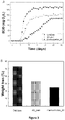
- Figure 3A shows the oxygen consumption for i) an uncoated cellulose substrate ("Cellolose” in figures), ii) a cellulose substrate impregnated and hot-pressed with zein and aleuritic acid (“AC_Zein” in the figures) and iii) cellulose substrate composite impregnated and hot-pressed with a conductive ink comprising zein, aleuritic acid and GnPs (Plant-e-tronics_30 in the figures).
- the sample comprising zein and polyaleuritate started to degrade after 5 days, reaching the maximum oxygen consumption after around 17 days at 99 mg O 2 /L.
- zein needs to be impregnated into a cellulose support. Nevertheless, the Inventors of the instant application also showed that it is the specific combination of zein and AC to provide a composite with the most promising flexibility.
- Table 1 shows the chemical compositions of different cellulose-based composites used for comparison tests.
- the amounts of zein, aleuritic acid (AC) and graphene nanoplatelets (GnPs) are expressed in Table 1 as weight % with respect to the total amount of zein and aleuritic acid.
- Table 1 Composite Cellulose substrate % zein % AC % GnPs 1 100 0 0 0 2 100 0 100 0 3 100 100 0 0 4 100 57 43 0 5 100 57 43 30 6 100 0 100 30 7 100 100 0 30
- the different composites have been undergone to hot-pressing in order to obtain the polymerization of AC.
- Table 2 shows the results of comparison tests in terms of Young's Modulus, percentage of elongation, ultimate tensile stress and folding cycles before electrical failure between the composite of the instant disclosure (composite 5) and the other comparative different composites (1-4 and 6,7).
- Composite Young's Modulus (Gpa) % Elongation Ultimate tensile stress Folding cycles before electrical failure 1 1,6 2,5 12 n/a 2 3, 0 1,3 16 n/a 3 1, 9 1, 6 13 n/a 4 3, 0 2,1 16 n/a 5 10, 2 1,3 21 >20 6 8,5 0,7 19, 6 8 7 7, 8 0, 65 17,3 5
- the thermal properties of pure uncoated cellulose substrates and of the composite herein disclosed with 30% by weight GnPs with respect to the total amount of zein and aleuritic acid were investigated via IR-camera (FLIR A310) and using FLIR Researcher software for image analysis.
- the samples were placed on a hot plate (IKA, model C-MAGHP10) at 145°C, kept at distance of 0.6 cm from the hot surface. In this way, the samples were heated-up by the convective heat transfer exerted by air.
- the range of the measurement was set between 40°C to 90°C.
- VNA Vector Network Analyzer
- VDI Virginia Diodes Inc.
- the composite herein disclosed In light of the low sheet resistance ( ⁇ 10 ⁇ /sq), lightweight, biodegradability and flexibility of the composite herein disclosed, it is an ideal candidate for efficient EMI shielding, enabling a range of applications in the field of green technology.
- high frequency EMI shielding i.e., in the range of THz
- the composite herein disclosed was exploited to substitute expensive, rigid and corrosion-susceptible metallic conductors as THz shield, contributing to the rise of high-speed circuit applications built with safe components for the environment.
- SE also known as EMI shielding effectiveness
- the absolute value of the transmittance) normalized with respect to sample thickness as a function of the frequency of the incident EM waves is reported for samples with different GnPs loads.
- the average SE improved from 0 dB/ ⁇ m for the pure cellulose sample to approximately 0.8 dB/ ⁇ m for the plant-nanocomposites with 10wt.% GnPs concentration, and around 0.9 dB/ ⁇ m for the sample with 30wt.% GnPs load.
- the obtained results are approaching some of the highest attenuation levels reported (i.e., ⁇ 1dB/ ⁇ m) for other carbon-based nanocomposites in literature.
- the shielding effectiveness reported in this work achieves a value of ⁇ 45dB for the 50 ⁇ m thick 30wt.% GnPs sample (or normalized SE of 0.9 dB/ ⁇ m), significantly exceeding the threshold value of EMI SE required for commercial applications (i.e., 20dB, or less than 1% transmittance of electromagnetic wave).
- the cellulose-based composites herein disclosed offer high THz shielding performance, showing great potential to replace conventional metallic conductors as THz shielding materials.
- Two WR-1.5 horn antennas were employed at the ends of the two extenders to couple the electromagnetic wave (THz signal) to and from the air.
- the THz signal from the horn antenna of the first extender was reflected/collimated by a parabolic mirror to normally incident onto the plant-based biocomposite sample under test.
- the transmitted THz signal was then reflected/focused by another parabolic mirror onto the horn antenna of the second extender.
- Conformable antennas have been already investigated depositing conductive metal-based geometries on flexible plastic substrates. Anyhow, the materials employed are not always sustainable and lightweight.
- a versatile and easy method to produce flexible and environmentally friendly antennas was developed employing the cellulose-based composites herein disclosed as conductor. The composite was laser-cut and shaped copying the design of a commercially available WI-FI antenna ( Figure 7a and b) . The antenna was then characterized measuring different antenna features.
- S11 scattering parameter or return loss or reflection coefficient
- Figure 7c shows the return loss of the two antennas recorded in the frequency band 1-4GHz. It highlights that the commercial antenna (dashed line) is, as expected, resonating at 2.5 GHz with a return loss of -13 dB, and its -10 dB bandwidth is 0.45 GHz.
- the fabricated antenna (black solid line), instead, shows a resonance at 1.73 GHz, with a return loss of approx. -22 dB and a -10 dB bandwidth of 0.54 GHz.
- the prototype showed smaller reflection coefficient and wider operative bandwidth compared to the commercial antenna, in other words, at its resonance the power fed to the antenna was effectively radiated.
- the relatively small return loss of the plant-antenna is a direct consequence of the low and stable electric conductivity.
- the different resonant frequency with respect to the commercial antenna is determined by the different interaction of the material employed for the antenna manufacturing with the dielectric environment (air and the substrate). For an engineered design of the prototype antenna, its resonance could significantly right-shift towards WI-FI frequency.
- FIG. 7d shows the radiation pattern in polar coordinates of the antenna at its resonance.
- the peaks (lobes) represent the distribution of power at different angles.
- the total gain pattern in the horizontal and vertical plane highlights ⁇ 15 dB gain in correspondence of the horn aperture (between 150° and 240°, 90° angle of aperture).
- the front to back ratio which corresponds to the ratio of power gain between the front and rear of the fabricated antenna, is 4dB (approx. 160% of directionality) .
- the front to back ratio was shown to be in the same range of the commercial antenna (2.6 dB, approx.
- the composite herein disclosed was used as top electrode of a fully-sprayed Polymer Solar Cell (PSC), as schematically exhibited in figure 8a .
- PSD Polymer Solar Cell
- the composite was laminated on top of a multilayer structure fabricated by spraying all the layers in air starting from a polyethylene terephthalate (PET) substrate coated with a ITO/Ag/ITO three-layer as transparent conductive bottom electrode.
- PET polyethylene terephthalate
- ITO/Ag/ITO three-layer as transparent conductive bottom electrode The active area of the flexible solar cell was 15 mm 2 .
- An inverted configuration was chosen in light of its ease of scalability and compatibility with polymer:fullerene systems.
- a double layer composed of ZnO ( ⁇ 20 nm) and PEIE ( ⁇ 10 nm) was sprayed as electron transport and extraction system, allowing a significant improvement of open circuit voltage (V OC ) and short circuit current (J SC ) compared to the use of bare ZnO or PEIE.
- the active layer was composed by PffBT4T-20D polymer and PC 70 BM fullerene. This system was employed since it forms highly crystalline and sufficiently pure small polymer domains that ensure robust morphology and excellent performance. Another advantage is the ease of scalability due to the large thickness, thus facilitating the coating of large-area substrates, even with a rough and irregular surface.
- chlorinated solvents are ideal for dissolving and processing the polymer:fullerene system, they were avoided during spray-deposition of the solar cell layer in order to address the target of a sustainable and industry-compatible process.
- Vanadium oxide (V 2 O x ) was sprayed onto PffBT4T-20D:PC 70 BM as hole transport layer, followed by the deposition of PEDOT:PSS/D-Sorbitol, which acts as an electronic glue between the sprayed stack and the plant-nanocomposite.
Landscapes
- Chemical & Material Sciences (AREA)
- Life Sciences & Earth Sciences (AREA)
- Engineering & Computer Science (AREA)
- Materials Engineering (AREA)
- Wood Science & Technology (AREA)
- Organic Chemistry (AREA)
- Physics & Mathematics (AREA)
- Dispersion Chemistry (AREA)
- Spectroscopy & Molecular Physics (AREA)
- Molecular Biology (AREA)
- Chemical Kinetics & Catalysis (AREA)
- Health & Medical Sciences (AREA)
- Inorganic Chemistry (AREA)
- Compositions Of Macromolecular Compounds (AREA)
- Conductive Materials (AREA)
Description
- This disclosure relates to electrically conductive cellulose-based composite materials. One or more embodiments may regard, for example, biodegradable flexible cellulose-based composite materials suitable to be employed in electronic devices.
- Electronic technologies are widespread in many aspects of human-life. The fast obsolescence of existing electrical goods and the design of new devices with augmented performances, increase drastically the electrical apparatus sales. This extraordinary innovation speed produces important social and industrial problems when old electronic devices need to be discarded. Indeed, 50 million tons of electronic wastes (e-waste) are forecasted to be produced in 2018. Electrical components, that are non-biodegradable, have environmentally hazardous substances such as heavy metals, brominated flame retardants and polyhalogenated molecules that can be released in the environment. Therefore, the proper management of e-waste has to be regulated by law in most of developed countries and the innovation in the design and materials for electronics has to pursue sustainability.
- New application for electronic devices, such as wearable electronics and Internet of Things, are expected to increase the use of electronics, and consequently of their waste. These new applications will also require new properties like flexibility, conformability and safe disposal. The continuous growth in energy demand has given rise to a need of flexible and compliant electronic materials to render such technologies self-powered by generation or harvesting of electrical power. Most electronic components are made with inorganic bulk, rigid, long-lasting and, sometimes, rare materials. On the other hand, many organic materials abundant in nature have shown to be biodegradable, flexible, biocompatible, lightweight, and low-cost. Consequently, the use of these "green" components to manufacture sustainable and flexible electronics spurred the growth of research in order to meet the rigorous requirements of portable electronics while greatly facilitating e-waste management. Under such perspective, plant materials show the chemical and structural advantages required to meet the needs of the growing electronic market. This renders the functionalization of plant-based components with conductive nanomaterials a viable way to induce electrical conductivity to such materials. This approach has been partially employed elsewhere with the modification of plant-derived cellulose by addition of conductive nanoparticles. In any case, this functionalization has been often carried out with metal-based and/or inorganic materials and without the employment of a binder which prevents adhesion problems for both inorganic and not plant-derived system. Indeed, the proper interaction between the conductive nanomaterial and the cellulose fibers, ensure mechanical resistance and durability. In this sense, a plant-based nanocomposite functionalized with conductive nanoparticles could constitute a smart method to exploit the advantage of organics materials and to build sustainable and flexible devices. In fact, plants are natural and biodegradable and present outstanding mechanical properties (e.g. flexibility and lightweight). For the first time, such an approach can be named "Plant-e-tronics", this is, plant-based sustainable flexible electronics.
- The scientific publication Cataldi et al., "Foldable Conductive Cellulose Fiber Network Modified by Graphene Nanoplatelet-Bio-Based Composites" Advanced Electronic Materials (2015), 1, 1500224:1-8, discloses a method for producing a foldable composite comprising a biodegradable plant-derived matrix. The scientific publication Heredia-Guerrero et al., "Cellulose-polyhydroxylated fatty acid ester-based bioplastics with tuning properties: Acylation via a mixed anhydride system",Carbohydrate Polymers, (2017), 173, pp. 312-320, discloses a cellulose-based composite impregnated with a dispersion containing graphene platelets and bovine serum albumin.
- Improved technical solutions, however, are still needed in order to provide flexible and stable conductive biodegradable composite materials.
- The object of this disclosure is to provide a versatile, flexible, robust, low cost and easily disposable biodegradable cellulose-based composite material impregnated with a conductive ink comprising an electrically conductive material suitable to be employed in different applications, from EMI shielding to antennas, photovoltaics cells and finally to foldable and wearable electronics.
- The above object is achieved thanks to the subject matter recalled specifically in the ensuing claims, which are understood as forming an integral part of this disclosure.
- The present disclosure provides a cellulose-based composite material comprising an electrically conductive material dispersed in a matrix comprising at least one plant-derived protein and a polymer of aleuritic acid, said cellulose-based composite material being obtainable by a process comprising the steps of:
- dissolving at least one plant-derived protein and aleuritic acid in a dissolving solution to achieve a first mixture,
- dispersing an electrically conductive material in said first mixture to achieve a conductive ink,
- distributing said conductive ink on at least one side of a cellulose substrate to achieve a coated cellulose substrate,
- hot-pressing said coated cellulose substrate to obtain i) impregnation of the cellulose substrate with said conductive ink and ii) polymerization of aleuritic acid.
- The cellulose-based composite material so achieved is therefore impregnated with the conductive ink comprising an electrically conductive material dispersed in a matrix comprising at least one plant-derived protein and a polymer of aleuritic acid.
- In one or more embodiments, the at least one plant-derived protein is selected between gliadin and zein. In a preferred embodiment, the plant-derived protein is zein.
- The at least one plant-derived protein, preferably zein, is present in the dissolving solution in an amount comprised between 50% and 75% by weight, preferably between 50% and 60%, more preferably 55% of the total amount of the at least one plant-derived protein plus aleuritic acid.
- Aleuritic acid, a naturally occurring polyhydroxylated fatty acid, is present in the dissolving solution in an amount comprised between 25 and 50% by weight, preferably between 40 and 50%, more preferably 45% of the total amount of the at least one plant-derived protein plus aleuritic acid.
- In one or more embodiments, the electrically conductive material, preferably comprising graphene nanoplatelets, is dispersed in the dissolving solution in an amount comprised between 2 and 40% by weight, preferably between 30 and 40%, more preferably 30% of the total amount of the at least one plant-derived protein plus aleuritic acid in order to achieve a conductive ink.
- In one or more embodiments, the hot-pressing is carried out at a temperature comprised between 160 and 200°C, preferably at 190°C.
- In one or more embodiments, the hot-pressing is carried out at carried out at a pressure comprised between 5 and 20 bar, preferably between 10 and 20 bar, more preferably at 20 bar.
- One or more embodiments will now be described, purely by way of non-limiting example, with reference to the annexed drawings, in which:
-
Figure 1: a) Scheme of the preparation of the cellulose-based composite comprising electrically conductive material according to embodiments of the instant disclosure. From left to right, conductive ink, spray-coating and hot-pressing assisted impregnation. b) Scanning electron microscopy (SEM) images of the morphology of a bare cellulose network with the relative photograph in the inset. SEM topography (c) of a cellulose-based composite comprising GnPs with the relative photograph as an inset. d) and e) SEM cross sections of the samples shown in b) and c), respectively. -
Figure 2 : ATR-FTIR spectra of the substrate (cellulose), "cellulose plus aleuritic acid", "cellulose plus zein" and "cellulose plus aleuritic acid plus zein" composites.
Assignations for cellulose (black), the aleuritic acid polymer, and zein are included. B, comparison of "cellulose + zein" and "cellulose + aleuritic acid + zein" samples in the 1800-1480 cm-1 spectral range. Assignations for the cutin-like polymer and zein are included. C, molecular schematic representation about the interactions between the aleuritic acid polymer and both cellulose and zein. -
Figure 3 : A, biological oxygen demand data of cellulose, cellulose with zein and polyaleuritate (AC_Zein) and cellulose-based composite according to embodiments of the instant disclosure ("Plant-e-tronics_30", in the figure). B, weight loss for the different samples after BOD tests. -
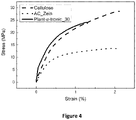
Figure 4 : Stress-strain curves of pure cellulose, cellulose-based composite according to embodiments of the instant disclosure ("Plant-e-tronics_30") and cellulose-based composite comprising zein and polyaleuritate ("AC_Zein"). -
Figure 5 : Infrared Camera measurements of pure cellulose and cellulose-based composite according to embodiments of the instant disclosure ("Plant-e-tronics_30"). On the left, samples temperature as a function of time. On the right, infrared camera images at 55s. -
Figure 6 : a) Schematic of the EMI shielding Mechanism. b) Terahertz EMI shielding characteristics of the biocomposites in terms of frequency-dependent transmittance. Cel and Pol are the pure cellulose and the fibrous substrate modified with Zein and AC, respectively. -
Figure 7: a) Scheme of the laser-cut fabrication of the conductive part of the antenna. b) Top view of the antenna and experimental setup. c) Measured return loss of the Plant-e-tronics antenna and the commercial antenna. d) Reference system for the radiation pattern measurements. e) Radiation pattern of the plant antenna at 1.73 GHz in the H- and E-plane. Solid line represents the DB scale. -
Figure 8: a) On the left: schematic of the multilayer structure of a fully-sprayed polymer solar cell. On the right: photograph of the obtained devices. b) J-V characteristic of the best device and table with the resume of the electrical parameters of the photovoltaic cell. - In the following description, numerous specific details are given to provide a thorough understanding of embodiments. The embodiments can be practiced without one or more of the specific details, or with other methods, components, materials, etc. In other instances, well-known structures, materials, or operations are not shown or described in detail to avoid obscuring aspects of the embodiments.
- Reference throughout this specification to "one embodiment" or "an embodiment" means that a particular feature, structure, or characteristic described in connection with the embodiment is included in at least one embodiment. Thus, the appearances of the phrases "in one embodiment" or "in an embodiment" in various places throughout this specification are not necessarily all referring to the same embodiment. Furthermore, the particular features, structures, or characteristics may be combined in any suitable manner in one or more embodiments.
- The headings provided herein are for convenience only and do not interpret the scope or meaning of the embodiments.
- The present disclosure relates to the field of foldable conductive biomaterials suitable to be employed in several flexible electronic devices.
- The present disclosure provides a cellulose-based composite material comprising a cellulose substrate impregnated with an electrically conductive material dispersed in a matrix comprising at least one plant-derived protein and a polymer of aleuritic acid (polyaleuritate).
- Electrically conductive materials can be generally used to induce electrical conductivity, for example to flexible substrates. Among them, carbon-based organic nanofillers are particularly promising in light of their astonishing mixture of diverse properties, i.e. high electrical and thermal conduction, lightweight and flexibility.
- The electrically conductive material contained in the cellulose-based composite herein disclosed can be selected in the group consisting of: graphene nanoplatelets, carbon nanofiber, carbon nanotube, carbon black, silver nanoparticles, gold nanoparticles, aluminum nanoparticles and mixtures thereof.
- In one or more embodiments, the electrically conductive material contained in the cellulose-based composite herein disclosed consists of graphene nanoplatelets (GnPs).
- Graphene nanoplatelets are a carbon-based filler with improved electrical properties. Another advantage linked to the use of GnPs is that it is a low-cost material compared to other carbon-based nanomaterials.
- Graphene nanoplatelets suitable to be used in the composite herein disclosed may have a lateral size comprised between 1 and 30 µm, preferably between 5 and 20 µm.
- The electrically conductive material, preferably consisting of graphene nanoplatelets, is dispersed in a matrix comprising at least one plant-derived protein, preferably selected between zein and gliadin, and a polymer of aleuritic acid, i.e. a naturally occurring polyhydroxylated fatty acid.
- Among plant-derived proteins, corn-derived proteins are very interesting in view of the evidence that, corn is globally, among farmed crops, the cereal with the highest production. Particularly, zein is a corn-derived protein widespread in bakery products and food packaging/safety applications; this protein is thus largely available, renewable and biodegradable.
- A drawback linked to the use of zein in application requiring particular mechanical performance may be linked to its intrinsic rigidity and the need of plasticizers to be used in combination with.
- The Inventors of the instant application surprisingly found that a specific combination of zein with a polymer of aleuritic acid allows achieving a flexible composite without the need of using plasticizers.
- Aleuritic acid (9,10,16-trihydroxyhexadecoic acid) is a naturally occurring polyhydroxylated fatty acid. Aleuritic acid is an accessible and renewable feedstock for synthetic long-chain polyhydroxyesters, being isolated from shellac, a natural lac resin.
- The polymer derived from the polymerization of 9,10,16-trihydroxyhexadecoic (aleuritic acid; AC) is generally known as polyaleuritate.
- Polyaleuritate is a cutin-like polyester that can be synthetized by enzymatic, emulsion, or free-solvent non-catalyzed melt-polycondensation of aleuritic acid, as disclosed in Bentez et al., (2015) "Polyhydroxyester films obtained by non-catalyzed melt-polycondensation of natural occurring fatty polyhydroxyacids", Frontiers in and in Heredia-Guerrero, et al., (2017) "All-Natural Sustainable Packaging Materials Inspired by Plant Cuticles" Advanced Sustainable Systems 1600024(1) (1-9). The last approach has ecological advantages due to the fact that use of catalysts and solvents is avoided and water is the single by-product derived from the chemical reaction.
- Similarly to the cutin of plants (the biopolyester that covers and protects the epidermis of aerial parts of plant such as leaves, fruits, petals, and non-lignified stems), polyaleuritate shows high waterproof and barrier properties as well as full biodegradability in short-times.
- The cellulose-based composite herein disclosed is obtainable by first dissolving at least one plant-derived protein and aleuritic acid in a dissolving solution.
- The dissolving solution may comprise methanol and chloroform, preferably in a ratio of 1:1 (vol:vol).
- In one or more embodiments, the at least one plant-derived protein is present in the dissolving solution in an amount comprised between 50 and 75% by weight, preferably between 50 and 60%, more preferably in an amount of 55% of the total amount of the at least one plant-derived protein plus aleuritic acid (AC).
- In one or more embodiments, aleuritic acid is present in the dissolving solution in an amount comprised between 25 and 50% by weight, preferably between 40 and 50%, more preferably in an amount of 45% of the total amount of the at least one plant-derived protein plus aleuritic acid.
- The electric conductive material, preferably consisting of graphene nanoplatelets, is dispersed in the dissolving solution in an amount comprised between 2 and 40% by weight, preferably between 30 and 40%, more preferably 30% of the total amount of the at least one plant-derived protein plus aleuritic acid in order to achieve a conductive ink.
- The expression "conductive ink" means a colored liquid endowed with electrical conductivity having the electric conductive material dispersed therein.
- The expression "cellulose-based composite material" means a composite material comprising a cellulose substrate.
- The cellulose substrate may be a laminar or planar substrate.
- The liquid conductive ink is then distributed on at least one side of a cellulose substrate.
- The cellulose substrate may have a thickness comprised between 30 and 100 µm, preferably between 40 and 70 µm.
- The conductive ink may be spray coated on the cellulose substrate. The spray coating may be carried out for example by using spray guns or airbrushes known in the art.
- The distance between the dispenser used for the spray gun and the cellulose substrate may be comprised between 10 and 20 cm.
- In particular, when the liquid conductive ink is distributed on the cellulose substrate by using a spray gun the distance between the dispenser and the cellulose substrate may be comprised between 10 and 20 cm.
- The pressure of supply of the liquid conductive ink through a spray gun may be comprised between 0.8 and 3 bar, preferably 2.0 bar for pressure driven spray.
- When the liquid conductive ink is distributed on the cellulose substrate by using an airbrush the distance between the dispenser and the cellulose substrate is between 15 and 18 cm. The pressure is comprised between 0.8-3 bar, preferably 2.0 bar.
- The cellulose substrate comprising the conductive ink distributed thereon is then hot-pressed to achieve impregnation of the cellulose substrate with the conductive ink and polymerization of aleuritic acid into polyaleuritate.
- The hot-pressing may be carried out at a temperature comprised between 160 and 200°C, preferably at 190°C.
- The hot-pressing may be carried out at a pressure comprised between 5 and 20 bar, preferably between 10 and 20 bar, more preferably at 20 bar.
- In one or more embodiments, the cellulose-based composite material comprises the electrically conductive material, preferably consisting of GnPs, in a weight percentage comprised between 1.5 and 23% of the composite comprising cellulose, the at least one plant-derived protein, aleuritic acid, the electrically conductive material.
- In one or more embodiments, the plant-derived protein may be present in an amount of 55% by weight, aleuritic acid may present in an amount of 45% by weight and GnPs may be present in an amount of 30% by weight of the total amount of zein plus aleuritic acid in the dissolving solution.
- After hot-pressing and thus polymerization of aleuritic acid into polyaleuritate, the polymer acts as a plastic matrix for the electrically conductive dispersion.
- The Inventors of the instant application also showed that the specific combination of zein and aleuritic acid (AC) provides a composite with the most promising flexibility. The aleuritic acid polymer, polyaleuritate, in particular, acts as compatibilizer between zein and cellulose (as shown in
Figure 2 ). - The cellulose-based composite herein disclosed is free of plasticizers. In addition, it may be obtained by a versatile and easy method.
- The plant-derived protein, preferably zein, and the monomer, aleuritic acid, are used in pure form without any prior processing into a synthetic product.
- Cellulose substrates (approximately 30-40µm thick) were purchased from Korff (Art. Num. 60285). Zein was obtained by Sigma Aldrich (CAS number 9010-66-6). Aleuritic acid (9,10,16-trihydroxyhexadecanoic acid, 98% purity by NaOH titration) was acquired from TCI Europe. Graphene nanoplatelets were kindly donated by Directa Plus (grade Ultra G+). Chloroform and methanol (analytical degree) were bought from Sigma-Aldrich.
- Zein and aleuritic acid (AC) were dissolved in a solution and mixed with GnPs, as disclosed in the following.
- Zein (0.5 g) and AC (0.4 g) were dissolved in a dissolving solution comprising chloroform and methanol in a volume ratio 1:1 (vol:vol) (
total volume 30 ml). - Graphene nanoplatelets (0.3 g) were added to the dissolving solution and homogeneously dispersed trough tip sonication (Sonics & Materials, Inc., Model Num. VCX750, 750 W, 40% amplitude, 20 kHz, 3 times for 30 s) obtaining a conductive ink.
- 4 ml of the conductive ink was spray coated (2.0 bar, 15-18 cm distance, Paasche Air Brush, USA) on both sides of cellulose substrate samples having a rectangular shape with a surface area of 15 cm2.
- The conductive ink was spray coated on both sides of the cellulose substrate samples obtaining coated cellulose substrate samples.
- The sprayed cellulose substrate samples were hot-pressed by using a Specac-Atlas Power Presses T8 for 20 minutes at a temperature of 190°C and at a pressure of 20 bar.
- The hot-pressing allowed achieving i) impregnation of the cellulose substrates with the conductive ink and ii) polymerization of aleuritic acid into polyaleuritate polyester.
- Teflon anti-stick films (Advent Research Material, Art. Num. FP823338) were used during the hot-pressing procedure to avoid sticking of the nanocomposites on the press platen.
- After hot-pressing and thus polymerization of aleuritic acid, both zein and the polymer acted as a plastic matrix for the GnPs. The polyester, in particular, acted as compatibilizer between zein and cellulose.
- The obtained cellulose-based composite has been tested as disclosed in the following and identified in the figures as "Plant-e-tronics_30".
- Comparative, experimental test (disclosed in the following) were also carried out on:
- i) samples of pure, uncoated hot-pressed cellulose substrates (samples identified as "Cellulose" in the figures),
- ii) samples of hot-pressed cellulose substrates coated with zein and aleuritic acid (without GnPs) and identified as "AC_Zein" in the figures.
- Scanning Electron microscope (SEM) images of the prepared samples were acquired through A JEOL microscope (model JSM-6490LA) operating at an acceleration voltage of 15 kV.
-
Figure 1b and Figure 1c show a sample of an uncoated (not impregnated) cellulose substrate and a composite obtained as disclosed in the instant application, respectively. - As it can be appreciated in the higher magnification inset of
figure 1b the cellulose substrate's surface appears whitish. In contrast, the surface of the composite obtained as disclosed in the instant application appears significantly darker, due to the presence of the GnPs dispersed therein (inset ofFigure 1c ). - In addition, the micro-morphology is markedly different, the substrate's surface of the cellulose not impregnated substrate showing a fiber network whereas the substrate's surface of the composite obtained as disclosed appearing more regular and flat. Interestingly, as displayed in the cross-section images of
Figures 1d and 1e , uncoated and coated cellulose substrates preserve approximately the same thickness (40 micron), indicating that most of the conductive ink is embedded inside the fibers interlaces. - Cellulose-based composites were chemically characterized by ATR-FTIR (as shown in
Figure 2 ). - Infrared measurements of samples were obtained with an ATR accessory (MIRacle ATR, PIKE Technologies) coupled to FTIR spectrometer (FT/IR-4100, JASCO). All spectra were recorded in the range from 3800 to 600 cm-1 with 4 cm-1 resolution, accumulating 128 scans. In a typical measurement, the sample was gently placed on the spot of the ATR accessory and slowly pressed.
- A cellulose pure not impregnated sample was characterized by the typical cellulose bands: OH stretching mode at 3331 cm-1, CH stretching mode at 2885 cm-1, adsorbed water at 1655 cm-1, asymmetric C-C stretching mode at 1161 cm-1, and C-O stretching mode at 1030 cm-1.
- When the aleuritic acid polymer (polyaleuritate polyester) is formed during hot-pressing, additional bands from the polyhydroxylated long-chain polyester were observed: asymmetric and symmetric CH2 stretching mode at 2926 cm-1 and 2851 cm-1, respectively, and C=O stretching mode of free and H-bond interacting ester groups at 1726 cm-1 and 1717 cm-1, respectively.
- This spectroscopic pattern has been associated with the formation of H-bonds between the hydroxyl groups of cellulose and the OH and ester groups of polyaleuritate.
- Furthermore, bands from cellulose are very strong, indicating that polyaleuritate was impregnated inside the substrate.
- Main bands of the sample of cellulose hot-pressed with zein, a plant protein with a cylindrical shape formed by nine antiparallel helices and glutamine-rich caps in the extremes, were attributed to the protein: amide A at 3281 cm-1, amide I at 1639 cm-1, amide II at 1524 cm-1, and amide III at 1447 cm-1.
- Interestingly, ATR-FTIR spectrum of untreated zein displayed identical wavenumbers, revealing that hot-pressing did not affected the protein structure.
- On the other hand, bands ascribed to cellulose showed no shifts, most likely due to the not interaction between both polymers. When a mixture of aleuritic acid and zein was hot-pressed on the cellulose substrate, the above described bands ascribed to the polyaleuritate and the protein were detected. Main spectroscopic modifications were observed in the amide I and II bands of zein, as illustrated in
Figure 2B . Major contributions to the zein's amide I band were α-helical structures (1640 cm-1) , β-sheets (∼1685 cm-1), and β-edges (~1615 cm-1). The spectroscopic profile of the amide I band changed when polyaleuritate was present: the maximum of the peak shifted to 1647 cm-1, the intensity of the region related to β-edges decreased, while the intensity of the region related to β-sheets increased. Concerning amide II, a band that is sensible to the H-bond network, the relative intensity of the peaks at 1537 cm-1 and 1518 cm-1 was decreased for the sample with polyaleuritate. Similar changes have been described for the plasticization and formation of complexes with zein and were justified by the formation of H-bonds of zein (helical and glutamine-rich parts) with substances such as water, glycerol, 2-mercaptoethanol, and iodine. Identical results were obtained when graphene was added to the mixture of aleuritic acid and zein. - Based on the above results a molecular scenario is proposed in
Figure 2C . In this model, polyaleuritate is shown as being interacting with both cellulose and zein through H-bonds between hydroxyl and ester groups of the polyaleuritate with hydroxyl groups of the polysaccharide and amide groups of the protein. In such conditions, polyaleuritate can act as a compatibilizer and binder of cellulose and zein. - Biodegradability was evaluated through a standard biochemical oxygen demand (BOD) test by measuring the oxygen amount consumed in 30 days in a biodegradation reaction in water. For each sample, three measurements were collected and the results were averaged to obtain a mean value. Carefully weighed samples (~200 mg) were finely minced and immersed in 432 mL bottles containing seawater collected from the Genoa (Italy) area shoreline. Oxygen consumed during the biodegradation process was recorded at different time intervals by using sealed OxyTop caps on each bottle which can assess the oxygen levels. BOD from blank bottles filled with only seawater was also measured for reference.
-
Figure 3A shows the oxygen consumption for i) an uncoated cellulose substrate ("Cellolose" in figures), ii) a cellulose substrate impregnated and hot-pressed with zein and aleuritic acid ("AC_Zein" in the figures) and iii) cellulose substrate composite impregnated and hot-pressed with a conductive ink comprising zein, aleuritic acid and GnPs (Plant-e-tronics_30 in the figures). - In general, all the samples exhibited a high biodegradability. For the material prepared from pure paper, the biodegradation started after 5 days and reached a plateau after 13 days at 130 mg O2/L.
- The sample comprising zein and polyaleuritate started to degrade after 5 days, reaching the maximum oxygen consumption after around 17 days at 99 mg O2/L.
- Finally, for the sample containing GnPs, the degradation was initiated after 6 days, achieving the plateau after 24 days with an oxygen consumption of 87 mg O2/L.
- After BOD test, the remaining materials were collected and characterized. The weight loss is presented in
Figure 3B . As observed, the pure uncoated cellulose substrate presented the highest weigh loss (53% of its initial weight). For the sample containing zein and polyaleuritate ("AC-Zein") the weight loss was 33% and, finally, the sample also containing GnPs (Plant-e-tronics_30), the one with the lowest degradation in seawater, has a weight loss of 25% of its initial weight. - Mechanical properties of the composite were measured by uniaxial tensile tests. A uniaxial testing machine (Instron 3365) was utilized to accomplish stress-strain mechanical tests on the composites and on the raw materials (
initial length 25 mm, width 4 mm,deformation rate 1 mm/min). - Pure cellulose substrate and AC Zein sample were tested for comparison. Dog-bone shaped samples (width w=4 mm, useful length l=25 mm) were stretched at a rate of 1 mm/min. The Young's modulus E, ultimate strength UTS and elongation at break values were evaluated from the stress-strain curves. Typical curves are reported in
Figure 4 . The stress-strain trend of the AC Zein sample presents lower stiffness and resistance compared with pure cellulose: the Young's modulus drops from 4.3±0.3 GPa to 2.9±0.4 GPa, the UTS from 30.3±1.7 MPa to 15.9±1.7 MPa, while the elongation is preserved. - The sample also comprising GnPs, on the other hand, leads to stress-strain curves with increased stiffness (Young's modulus E=10.2±1.4 GPa) and more brittle behavior (UTS=20.8±2.9 MPa, elongation at break approximately diminished of 1/3rd). Anyhow, both Plant-e-tronics_30 and AC Zein samples preserve the same order of magnitude of Young's modulus, UTS and elongation at break of pure cellulose.
- Note that it is impossible to produce free standing zein films with 30 wt% GnPs loading without the use of extensive amount of plasticizers as zein makes very brittle films; adding GnPs or any other rigid filler will make it much more brittle.
- Hence, zein needs to be impregnated into a cellulose support. Nevertheless, the Inventors of the instant application also showed that it is the specific combination of zein and AC to provide a composite with the most promising flexibility.
- Specifically, it has been proven that composites wherein zein it is not associated with AC fail the folding tests, as also shown in the tables below.
- Table 1 shows the chemical compositions of different cellulose-based composites used for comparison tests. The amounts of zein, aleuritic acid (AC) and graphene nanoplatelets (GnPs) are expressed in Table 1 as weight % with respect to the total amount of zein and aleuritic acid.
Table 1 Composite Cellulose substrate % zein % AC % GnPs 1 100 0 0 0 2 100 0 100 0 3 100 100 0 0 4 100 57 43 0 5 100 57 43 30 6 100 0 100 30 7 100 100 0 30 -
Composite 1 is a pure cellulose substrate; composite 2 is a cellulose-based composite comprising AC, and it is free of GnPs; composite 3 comprises zein and it is devoid of AC and GnPs; composite 4 comprises zein, AC and it is devoid of GnPs; composite 5 comprises zein, AC and GnPS, i.e. it is the composite material disclosed in the instant application; composite 6 comprises AC and GnPs but it is devoid of zein; composite 7 comprises zein, GnPs and it devoid of AC. - The different composites have been undergone to hot-pressing in order to obtain the polymerization of AC.
- Table 2 shows the results of comparison tests in terms of Young's Modulus, percentage of elongation, ultimate tensile stress and folding cycles before electrical failure between the composite of the instant disclosure (composite 5) and the other comparative different composites (1-4 and 6,7).
Composite Young's Modulus (Gpa) % Elongation Ultimate tensile stress Folding cycles before electrical failure 1 1,6 2,5 12 n/a 2 3, 0 1,3 16 n/a 3 1, 9 1, 6 13 n/a 4 3, 0 2,1 16 n/a 5 10, 2 1,3 21 >20 6 8,5 0,7 19, 6 8 7 7, 8 0, 65 17,3 5 - The table clearly shows, especially considering composite 5, 6 and 7, that only the combination of zein and AC (composite 5) is able to provide a stable and foldable conductive product, with a number of folding cycles for
composite 5 before electrical failure >20. - The thermal properties of pure uncoated cellulose substrates and of the composite herein disclosed with 30% by weight GnPs with respect to the total amount of zein and aleuritic acid were investigated via IR-camera (FLIR A310) and using FLIR Researcher software for image analysis. The samples were placed on a hot plate (IKA, model C-MAGHP10) at 145°C, kept at distance of 0.6 cm from the hot surface. In this way, the samples were heated-up by the convective heat transfer exerted by air. The range of the measurement was set between 40°C to 90°C.
- Since an efficient percolating thermally conductive nanoparticle network ensures a significantly reduced thermal interface resistance, the heat transfer properties of a substrate only containing cellulose and of a sample of the composite disclosed in the instant application was tested by employing an Infrared camera.
- Samples were heated-up in a set up by hot-air convective heating coming from an hot-plate placed underneath the samples (
Figure 5 ). The sample temperature recorded as a function of time are plotted inFigure 5 . The sample of the composite herein disclosed (identified as "Plant-e-tronics 30") shows an improved heat diffusion compared with the substrate only containing cellulose.
Indeed, between 40 and 60°C the composite of the instant disclosure heat-up faster than substrate only containing cellulose (see Table inFigure 5 ). Afterwards, the composite herein disclosed reach a plateau around 70°C while the substrate only containing cellulose keep heating-up reaching the saturation temperature of the infrared camera set at 90°C (right part ofFigure 5 ). Therefore, the composite of the instant disclosure is able to dissipate heat faster than pure cellulose. - The EMI shielding measurements were performed using a WR-1.5 (0.50-0.75 THz) Vector Network Analyzer (VNA) system, i.e., a Kesight N5245A PNA in conjunction with two Virginia Diodes Inc. (VDI) WR-1.5 extenders. Measurements were done after turning on the system for about an hour to reach a steady state. The ratio of the received power to the incident one (or transmittance) characterizes the EMI shielding effectiveness (SE) of the sample. The measured transmittance was normalized to sample thickness for a fair comparison.
- In light of the low sheet resistance (≈10 Ω/sq), lightweight, biodegradability and flexibility of the composite herein disclosed, it is an ideal candidate for efficient EMI shielding, enabling a range of applications in the field of green technology. In particular, considering the increasing speed of electronics appliances, high frequency EMI shielding (i.e., in the range of THz) is gaining constantly importance in fields as diverse as security, spectroscopy, optoelectronics, defense, imaging, space science and biological sensing. Therefore, the composite herein disclosed was exploited to substitute expensive, rigid and corrosion-susceptible metallic conductors as THz shield, contributing to the rise of high-speed circuit applications built with safe components for the environment. The EMI shielding measurements were performed at frequencies between 0.5 and 0.75 THz for normal incidence (see
Figure 6 ) on plant-based biocomposite samples with different GnPs loads. All the losses of the incoming electromagnetic wave due to screening (SE, also known as EMI shielding effectiveness) were calculated using SE(dB)= -10 log(Pt/Pi), where Pt is the transmitted electromagnetic power and Pi is the incident power. The ratio Pt/Pi is called transmittance and is a function of the frequency of the incoming EM wave. In figure 6b the EMI SE (i.e. the absolute value of the transmittance) normalized with respect to sample thickness as a function of the frequency of the incident EM waves is reported for samples with different GnPs loads. The average SE improved from 0 dB/µm for the pure cellulose sample to approximately 0.8 dB/µm for the plant-nanocomposites with 10wt.% GnPs concentration, and around 0.9 dB/µm for the sample with 30wt.% GnPs load. The obtained results are approaching some of the highest attenuation levels reported (i.e., ∼ 1dB/µm) for other carbon-based nanocomposites in literature. The shielding effectiveness reported in this work achieves a value of ≈ 45dB for the 50 µm thick 30wt.% GnPs sample (or normalized SE of 0.9 dB/µm), significantly exceeding the threshold value of EMI SE required for commercial applications (i.e., 20dB, or less than 1% transmittance of electromagnetic wave). Overall, the cellulose-based composites herein disclosed offer high THz shielding performance, showing great potential to replace conventional metallic conductors as THz shielding materials. - Two WR-1.5 horn antennas were employed at the ends of the two extenders to couple the electromagnetic wave (THz signal) to and from the air. The THz signal from the horn antenna of the first extender was reflected/collimated by a parabolic mirror to normally incident onto the plant-based biocomposite sample under test.
- The transmitted THz signal was then reflected/focused by another parabolic mirror onto the horn antenna of the second extender.
- Conformable antennas have been already investigated depositing conductive metal-based geometries on flexible plastic substrates. Anyhow, the materials employed are not always sustainable and lightweight. A versatile and easy method to produce flexible and environmentally friendly antennas was developed employing the cellulose-based composites herein disclosed as conductor. The composite was laser-cut and shaped copying the design of a commercially available WI-FI antenna (
Figure 7a and b) . The antenna was then characterized measuring different antenna features. - One of the most common characteristics used to describe the performances of an antenna is the scattering parameter or return loss or reflection coefficient (S11). When expressed in dB, it represents how much power is reflected from the antenna. If S11=0 the antenna is not working, since all the power is reflected and nothing is radiated. The return loss of both antennas (commercial antenna and Plantronic-based) was measured with a Network Analyzer, as schematically shown in
figure 7b . Both antennas were placed on a flexible cardboard. -
Figure 7c shows the return loss of the two antennas recorded in the frequency band 1-4GHz. It highlights that the commercial antenna (dashed line) is, as expected, resonating at 2.5 GHz with a return loss of -13 dB, and its -10 dB bandwidth is 0.45 GHz. The fabricated antenna (black solid line), instead, shows a resonance at 1.73 GHz, with a return loss of approx. -22 dB and a -10 dB bandwidth of 0.54 GHz. - The prototype showed smaller reflection coefficient and wider operative bandwidth compared to the commercial antenna, in other words, at its resonance the power fed to the antenna was effectively radiated. The relatively small return loss of the plant-antenna is a direct consequence of the low and stable electric conductivity. The different resonant frequency with respect to the commercial antenna is determined by the different interaction of the material employed for the antenna manufacturing with the dielectric environment (air and the substrate). For an engineered design of the prototype antenna, its resonance could significantly right-shift towards WI-FI frequency.
- Afterwards we derived the radiation diagram of the fabricated antenna, which graphically represents its radiation properties as a function of the incidence angle.
Figure 7d shows the radiation pattern in polar coordinates of the antenna at its resonance. The peaks (lobes) represent the distribution of power at different angles. The total gain pattern in the horizontal and vertical plane (H- and E-plane, respectively) highlights ≈15 dB gain in correspondence of the horn aperture (between 150° and 240°, 90° angle of aperture). The front to back ratio, which corresponds to the ratio of power gain between the front and rear of the fabricated antenna, is 4dB (approx. 160% of directionality) . The front to back ratio was shown to be in the same range of the commercial antenna (2.6 dB, approx. 135% of directionality, see datasheet, http://www.molex.com/molex/products/datasheet.jsp?part= active/0479502011_ANTENNAS.xml&channel=Products&Lang=en -US), thus demonstrating its full functionality. The radio-frequency performances make the antenna a competitive candidate in a wide variety of wireless applications, such as RFID or high-speed communications. - The composite herein disclosed was used as top electrode of a fully-sprayed Polymer Solar Cell (PSC), as schematically exhibited in
figure 8a . The composite was laminated on top of a multilayer structure fabricated by spraying all the layers in air starting from a polyethylene terephthalate (PET) substrate coated with a ITO/Ag/ITO three-layer as transparent conductive bottom electrode. The active area of the flexible solar cell was 15 mm2. An inverted configuration was chosen in light of its ease of scalability and compatibility with polymer:fullerene systems. Firstly, a double layer composed of ZnO (≈20 nm) and PEIE (≈10 nm) was sprayed as electron transport and extraction system, allowing a significant improvement of open circuit voltage (VOC) and short circuit current (JSC) compared to the use of bare ZnO or PEIE. The active layer was composed by PffBT4T-20D polymer and PC70BM fullerene. This system was employed since it forms highly crystalline and sufficiently pure small polymer domains that ensure robust morphology and excellent performance. Another advantage is the ease of scalability due to the large thickness, thus facilitating the coating of large-area substrates, even with a rough and irregular surface. Notably, although chlorinated solvents are ideal for dissolving and processing the polymer:fullerene system, they were avoided during spray-deposition of the solar cell layer in order to address the target of a sustainable and industry-compatible process. Vanadium oxide (V2Ox) was sprayed onto PffBT4T-20D:PC70BM as hole transport layer, followed by the deposition of PEDOT:PSS/D-Sorbitol, which acts as an electronic glue between the sprayed stack and the plant-nanocomposite. - The overall electrical parameters of the PSCs and the J-V curve of the best device are displayed in
Figure 7b . The average power conversion efficiency was measured to be 2.6% with a maximum value of 3.1%. These results are comparable with those obtained with fully-sprayed devices which were finalized with different types of composites as the top electrode. This demonstrates that i) the composite material herein disclosed has a suitable value of sheet resistance for this application due to the favorable bulk morphology in the cellulose for the charge transport and ii) the interface with the electronic glue effectively works. The PSCs exhibit a relatively high VOC, and lower JSC and fill factor (FF) if compared to devices with standard evaporated top electrode. This is ascribed to the recombination losses introduced when several sprayed layers stack on each other, mostly increasing the series resistance (RS). However, the organic photovoltaic devices based on top electrode comprising a composite as herein disclosed have shown electrical performances significantly higher than other fully sprayed devices based on glass or fabrics and are viable candidates in flexible and wearable electronics.
Claims (13)
- Cellulose-based composite material comprising an electrically conductive material dispersed in a matrix containing at least one plant-derived protein and a polymer of aleuritic acid, said cellulose-based composite material being obtainable by a process comprising the steps of:- dissolving the at least one plant-derived protein and aleuritic acid in a dissolving solution to achieve a first mixture,- dispersing an electrically conductive material in said first mixture to achieve a conductive ink,- distributing said conductive ink on at least one side of a cellulose substrate to achieve a coated cellulose substrate,- hot-pressing said coated cellulose substrate to obtain i) impregnation of the cellulose substrate with said conductive ink and ii) polymerization of aleuritic acid.
- Cellulose-based composite material according to claim 1, wherein the at least one plant-derived protein is present in the dissolving solution in an amount comprised between 50 and 75% by weight, preferably between 50 and 60%, more preferably 55% of the total amount of the at least one plant-derived protein plus aleuritic acid.
- Cellulose-based composite material according to claim 1 or claim 2, wherein said at least one plant-derived protein is selected between gliadin and zein, preferably is zein.
- Cellulose-based composite material according to any preceding claims, wherein aleuritic acid is present in the dissolving solution in an amount comprised between 25 and 50%, preferably between 40 and 50%, more preferably 45% of the total amount of the at least one plant-derived protein plus aleuritic acid.
- Cellulose-based composite material according to any preceding claims, wherein the electrically conductive material is selected in the group consisting of graphene nanoplatelets, carbon nanofiber, carbon nanotube, carbon black, silver nanoparticles, gold nanoparticles, aluminum nanoparticles, mixtures thereof.
- Cellulose-based composite material according to any preceding claims, wherein said electrically conductive material consists of graphene nanoplatelets.
- Cellulose-based composite material according to any preceding claims, wherein said electrically conductive material is dispersed in said dissolving solution in an amount comprised between 2 and 40% by weight, preferably between 30 and 40%, more preferably 30% of the total amount of the at least one plant-derived protein plus aleuritic acid in order to achieve a conductive ink.
- Cellulose-based composite material according to any preceding claims, wherein the cellulose substrate has a thickness comprised between 30 and 100 µm, preferably between 30 and 70 µm.
- Cellulose-based composite material according to any preceding claims, wherein said hot-pressing is carried out at a temperature comprised between 160 and 200°C, preferably at 190°C.
- Cellulose-based composite material according to any preceding claims, wherein said hot-pressing is carried out at a pressure comprised between 5 and 20 bar, preferably between 10 and 20 bar, more preferably at 20 bar.
- Cellulose-based composite material according to any preceding claims, wherein the dissolving solution comprises methanol and chloroform, preferably in a volume ratio (v/v) of 1:1.
- Cellulose-based composite material according to any preceding claims, wherein the distributing of said conductive ink on at least one side of a cellulose substrate to achieve a coated cellulose substrate is carried out by spray coating.
- Cellulose-based composite material comprising a cellulose substrate impregnated with an electrically conductive material dispersed in a matrix containing at least one plant-derived protein, preferably zein, and polyaleuritate.
Applications Claiming Priority (2)
| Application Number | Priority Date | Filing Date | Title |
|---|---|---|---|
| IT102018000007450A IT201800007450A1 (en) | 2018-07-23 | 2018-07-23 | ELECTRICALLY CONDUCTIVE COMPOSITE MATERIAL BASED ON CELLULOSE |
| PCT/IB2019/056193 WO2020021413A1 (en) | 2018-07-23 | 2019-07-19 | Electrically conductive cellulose-based composite material |
Publications (2)
| Publication Number | Publication Date |
|---|---|
| EP3827446A1 EP3827446A1 (en) | 2021-06-02 |
| EP3827446B1 true EP3827446B1 (en) | 2022-05-04 |
Family
ID=63684367
Family Applications (1)
| Application Number | Title | Priority Date | Filing Date |
|---|---|---|---|
| EP19770185.7A Active EP3827446B1 (en) | 2018-07-23 | 2019-07-19 | Electrically conductive cellulose-based composite material |
Country Status (4)
| Country | Link |
|---|---|
| US (1) | US11767439B2 (en) |
| EP (1) | EP3827446B1 (en) |
| IT (1) | IT201800007450A1 (en) |
| WO (1) | WO2020021413A1 (en) |
Family Cites Families (3)
| Publication number | Priority date | Publication date | Assignee | Title |
|---|---|---|---|---|
| FR2885619B1 (en) * | 2005-05-13 | 2011-02-11 | Imaje Sa | LIQUID, FOOD, INGERABLE INK COMPOSITION FOR INKJET PRINTING |
| EP2545093A4 (en) * | 2010-03-12 | 2015-01-21 | Synthezyme Llc | Polyurethane polymers comprising copolyester polyols having repeat units derived from biobased -hydroxyfatty acids |
| CN103448308B (en) * | 2013-09-18 | 2015-08-05 | 电子科技大学 | A kind of biodegradable flexible conductive base plate and preparation method thereof |
-
2018
- 2018-07-23 IT IT102018000007450A patent/IT201800007450A1/en unknown
-
2019
- 2019-07-19 WO PCT/IB2019/056193 patent/WO2020021413A1/en not_active Ceased
- 2019-07-19 EP EP19770185.7A patent/EP3827446B1/en active Active
- 2019-07-19 US US17/262,669 patent/US11767439B2/en active Active
Also Published As
| Publication number | Publication date |
|---|---|
| IT201800007450A1 (en) | 2020-01-23 |
| WO2020021413A1 (en) | 2020-01-30 |
| EP3827446A1 (en) | 2021-06-02 |
| US11767439B2 (en) | 2023-09-26 |
| US20210309872A1 (en) | 2021-10-07 |
Similar Documents
| Publication | Publication Date | Title |
|---|---|---|
| Bozó et al. | Bioplastics and carbon-based sustainable materials, components, and devices: toward green electronics | |
| Gopakumar et al. | Cellulose nanofiber-based polyaniline flexible papers as sustainable microwave absorbers in the X-band | |
| Parit et al. | Polypyrrole and cellulose nanofiber based composite films with improved physical and electrical properties for electromagnetic shielding applications | |
| Lim et al. | Highly stretchable and transparent films based on cellulose | |
| Wen et al. | Evaluating distillers grains as bio-fillers for high-density polyethylene | |
| US12391843B2 (en) | Carbon-based conducting inks | |
| Robles-García et al. | Nanofibers of cellulose bagasse from Agave tequilana Weber var. azul by electrospinning: preparation and characterization | |
| Lavania et al. | Biocomposites: prospects and manifold applications for human and environmental sustainability | |
| Nilogal et al. | Conductive in situ reduced graphene oxide–silk fibroin bionanocomposites | |
| JP2010270205A (en) | Carbon nanotube-containing composition and coating film | |
| Rao et al. | Rapid processing of holocellulose-based nanopaper toward an electrode material | |
| Hajlaoui et al. | Design and characterization of type I cellulose-polyaniline composites from various cellulose sources: a comparative study | |
| CA3230227A1 (en) | Carbon-based conducting inks | |
| Lokesh Kumar et al. | Modified eco‐friendly and biodegradable chitosan‐based sustainable semiconducting thin films | |
| US11767439B2 (en) | Electrically conductive cellulose-based composite material | |
| Sharmoukh et al. | The dielectric properties of conducting films derived from sugarcane bagasse: implications for cyanoethyl cellulose/cellulose acetate synthesis | |
| Xu et al. | Feasibly developing Polyester-type poly (vinyl alcohol) adhesive in one go with high water resistance and bonding performance | |
| Li et al. | Polyphenol-functionalized boron nitride nanosheet-reinforced sustainable polyimide dielectric films for antenna-in-package applications | |
| Ratuchne et al. | Enhanced Stability and Conductivity of (polyaniline/chitosan) Composites | |
| Posri et al. | Conductive and self-cleaning composite membranes from corn husk nanofiber embedded with inorganic fillers (TiO2, CaO, and eggshell) by sol–gel and casting processes for smart membrane applications | |
| Thakur et al. | Biobased polymers, their composites and blends in electronics | |
| Biscaro et al. | Reactive doping of PAni–CSA and its use in microwave absorbing materials | |
| KR101956672B1 (en) | Manufacturing method of transparent conductive film using the hybrid of nano silver and silver nanowire and the transparent conductive film made therefrom | |
| Hamed et al. | Plant‐Based Electrodes for Bioimpedance Readings of Fruit | |
| Raihan et al. | Effect of ZnO nanoparticle content on the amorphousness of conducting jackfruit seed starch-PVA blend polymer electrolyte |
Legal Events
| Date | Code | Title | Description |
|---|---|---|---|
| STAA | Information on the status of an ep patent application or granted ep patent |
Free format text: STATUS: UNKNOWN |
|
| STAA | Information on the status of an ep patent application or granted ep patent |
Free format text: STATUS: THE INTERNATIONAL PUBLICATION HAS BEEN MADE |
|
| PUAI | Public reference made under article 153(3) epc to a published international application that has entered the european phase |
Free format text: ORIGINAL CODE: 0009012 |
|
| STAA | Information on the status of an ep patent application or granted ep patent |
Free format text: STATUS: REQUEST FOR EXAMINATION WAS MADE |
|
| 17P | Request for examination filed |
Effective date: 20210121 |
|
| AK | Designated contracting states |
Kind code of ref document: A1 Designated state(s): AL AT BE BG CH CY CZ DE DK EE ES FI FR GB GR HR HU IE IS IT LI LT LU LV MC MK MT NL NO PL PT RO RS SE SI SK SM TR |
|
| DAV | Request for validation of the european patent (deleted) | ||
| DAX | Request for extension of the european patent (deleted) | ||
| GRAP | Despatch of communication of intention to grant a patent |
Free format text: ORIGINAL CODE: EPIDOSNIGR1 |
|
| STAA | Information on the status of an ep patent application or granted ep patent |
Free format text: STATUS: GRANT OF PATENT IS INTENDED |
|
| INTG | Intention to grant announced |
Effective date: 20220225 |
|
| GRAS | Grant fee paid |
Free format text: ORIGINAL CODE: EPIDOSNIGR3 |
|
| GRAA | (expected) grant |
Free format text: ORIGINAL CODE: 0009210 |
|
| STAA | Information on the status of an ep patent application or granted ep patent |
Free format text: STATUS: THE PATENT HAS BEEN GRANTED |
|
| AK | Designated contracting states |
Kind code of ref document: B1 Designated state(s): AL AT BE BG CH CY CZ DE DK EE ES FI FR GB GR HR HU IE IS IT LI LT LU LV MC MK MT NL NO PL PT RO RS SE SI SK SM TR |
|
| REG | Reference to a national code |
Ref country code: GB Ref legal event code: FG4D |
|
| REG | Reference to a national code |
Ref country code: CH Ref legal event code: EP |
|
| REG | Reference to a national code |
Ref country code: AT Ref legal event code: REF Ref document number: 1489998 Country of ref document: AT Kind code of ref document: T Effective date: 20220515 |
|
| REG | Reference to a national code |
Ref country code: DE Ref legal event code: R096 Ref document number: 602019014624 Country of ref document: DE |
|
| REG | Reference to a national code |
Ref country code: IE Ref legal event code: FG4D |
|
| REG | Reference to a national code |
Ref country code: LT Ref legal event code: MG9D |
|
| REG | Reference to a national code |
Ref country code: NL Ref legal event code: MP Effective date: 20220504 |
|
| REG | Reference to a national code |
Ref country code: AT Ref legal event code: MK05 Ref document number: 1489998 Country of ref document: AT Kind code of ref document: T Effective date: 20220504 |
|
| PG25 | Lapsed in a contracting state [announced via postgrant information from national office to epo] |
Ref country code: SE Free format text: LAPSE BECAUSE OF FAILURE TO SUBMIT A TRANSLATION OF THE DESCRIPTION OR TO PAY THE FEE WITHIN THE PRESCRIBED TIME-LIMIT Effective date: 20220504 Ref country code: PT Free format text: LAPSE BECAUSE OF FAILURE TO SUBMIT A TRANSLATION OF THE DESCRIPTION OR TO PAY THE FEE WITHIN THE PRESCRIBED TIME-LIMIT Effective date: 20220905 Ref country code: NO Free format text: LAPSE BECAUSE OF FAILURE TO SUBMIT A TRANSLATION OF THE DESCRIPTION OR TO PAY THE FEE WITHIN THE PRESCRIBED TIME-LIMIT Effective date: 20220804 Ref country code: NL Free format text: LAPSE BECAUSE OF FAILURE TO SUBMIT A TRANSLATION OF THE DESCRIPTION OR TO PAY THE FEE WITHIN THE PRESCRIBED TIME-LIMIT Effective date: 20220504 Ref country code: LT Free format text: LAPSE BECAUSE OF FAILURE TO SUBMIT A TRANSLATION OF THE DESCRIPTION OR TO PAY THE FEE WITHIN THE PRESCRIBED TIME-LIMIT Effective date: 20220504 Ref country code: HR Free format text: LAPSE BECAUSE OF FAILURE TO SUBMIT A TRANSLATION OF THE DESCRIPTION OR TO PAY THE FEE WITHIN THE PRESCRIBED TIME-LIMIT Effective date: 20220504 Ref country code: GR Free format text: LAPSE BECAUSE OF FAILURE TO SUBMIT A TRANSLATION OF THE DESCRIPTION OR TO PAY THE FEE WITHIN THE PRESCRIBED TIME-LIMIT Effective date: 20220805 Ref country code: FI Free format text: LAPSE BECAUSE OF FAILURE TO SUBMIT A TRANSLATION OF THE DESCRIPTION OR TO PAY THE FEE WITHIN THE PRESCRIBED TIME-LIMIT Effective date: 20220504 Ref country code: BG Free format text: LAPSE BECAUSE OF FAILURE TO SUBMIT A TRANSLATION OF THE DESCRIPTION OR TO PAY THE FEE WITHIN THE PRESCRIBED TIME-LIMIT Effective date: 20220804 Ref country code: AT Free format text: LAPSE BECAUSE OF FAILURE TO SUBMIT A TRANSLATION OF THE DESCRIPTION OR TO PAY THE FEE WITHIN THE PRESCRIBED TIME-LIMIT Effective date: 20220504 |
|
| PG25 | Lapsed in a contracting state [announced via postgrant information from national office to epo] |
Ref country code: RS Free format text: LAPSE BECAUSE OF FAILURE TO SUBMIT A TRANSLATION OF THE DESCRIPTION OR TO PAY THE FEE WITHIN THE PRESCRIBED TIME-LIMIT Effective date: 20220504 Ref country code: PL Free format text: LAPSE BECAUSE OF FAILURE TO SUBMIT A TRANSLATION OF THE DESCRIPTION OR TO PAY THE FEE WITHIN THE PRESCRIBED TIME-LIMIT Effective date: 20220504 Ref country code: LV Free format text: LAPSE BECAUSE OF FAILURE TO SUBMIT A TRANSLATION OF THE DESCRIPTION OR TO PAY THE FEE WITHIN THE PRESCRIBED TIME-LIMIT Effective date: 20220504 Ref country code: IS Free format text: LAPSE BECAUSE OF FAILURE TO SUBMIT A TRANSLATION OF THE DESCRIPTION OR TO PAY THE FEE WITHIN THE PRESCRIBED TIME-LIMIT Effective date: 20220904 |
|
| PG25 | Lapsed in a contracting state [announced via postgrant information from national office to epo] |
Ref country code: SM Free format text: LAPSE BECAUSE OF FAILURE TO SUBMIT A TRANSLATION OF THE DESCRIPTION OR TO PAY THE FEE WITHIN THE PRESCRIBED TIME-LIMIT Effective date: 20220504 Ref country code: SK Free format text: LAPSE BECAUSE OF FAILURE TO SUBMIT A TRANSLATION OF THE DESCRIPTION OR TO PAY THE FEE WITHIN THE PRESCRIBED TIME-LIMIT Effective date: 20220504 Ref country code: RO Free format text: LAPSE BECAUSE OF FAILURE TO SUBMIT A TRANSLATION OF THE DESCRIPTION OR TO PAY THE FEE WITHIN THE PRESCRIBED TIME-LIMIT Effective date: 20220504 Ref country code: ES Free format text: LAPSE BECAUSE OF FAILURE TO SUBMIT A TRANSLATION OF THE DESCRIPTION OR TO PAY THE FEE WITHIN THE PRESCRIBED TIME-LIMIT Effective date: 20220504 Ref country code: EE Free format text: LAPSE BECAUSE OF FAILURE TO SUBMIT A TRANSLATION OF THE DESCRIPTION OR TO PAY THE FEE WITHIN THE PRESCRIBED TIME-LIMIT Effective date: 20220504 Ref country code: DK Free format text: LAPSE BECAUSE OF FAILURE TO SUBMIT A TRANSLATION OF THE DESCRIPTION OR TO PAY THE FEE WITHIN THE PRESCRIBED TIME-LIMIT Effective date: 20220504 Ref country code: CZ Free format text: LAPSE BECAUSE OF FAILURE TO SUBMIT A TRANSLATION OF THE DESCRIPTION OR TO PAY THE FEE WITHIN THE PRESCRIBED TIME-LIMIT Effective date: 20220504 |
|
| REG | Reference to a national code |
Ref country code: DE Ref legal event code: R097 Ref document number: 602019014624 Country of ref document: DE |
|
| PG25 | Lapsed in a contracting state [announced via postgrant information from national office to epo] |
Ref country code: MC Free format text: LAPSE BECAUSE OF FAILURE TO SUBMIT A TRANSLATION OF THE DESCRIPTION OR TO PAY THE FEE WITHIN THE PRESCRIBED TIME-LIMIT Effective date: 20220504 |
|
| REG | Reference to a national code |
Ref country code: CH Ref legal event code: PL |
|
| PLBE | No opposition filed within time limit |
Free format text: ORIGINAL CODE: 0009261 |
|
| STAA | Information on the status of an ep patent application or granted ep patent |
Free format text: STATUS: NO OPPOSITION FILED WITHIN TIME LIMIT |
|
| REG | Reference to a national code |
Ref country code: BE Ref legal event code: MM Effective date: 20220731 |
|
| PG25 | Lapsed in a contracting state [announced via postgrant information from national office to epo] |
Ref country code: AL Free format text: LAPSE BECAUSE OF FAILURE TO SUBMIT A TRANSLATION OF THE DESCRIPTION OR TO PAY THE FEE WITHIN THE PRESCRIBED TIME-LIMIT Effective date: 20220504 |
|
| 26N | No opposition filed |
Effective date: 20230207 |
|
| PG25 | Lapsed in a contracting state [announced via postgrant information from national office to epo] |
Ref country code: LU Free format text: LAPSE BECAUSE OF NON-PAYMENT OF DUE FEES Effective date: 20220719 Ref country code: LI Free format text: LAPSE BECAUSE OF NON-PAYMENT OF DUE FEES Effective date: 20220731 Ref country code: CH Free format text: LAPSE BECAUSE OF NON-PAYMENT OF DUE FEES Effective date: 20220731 |
|
| PG25 | Lapsed in a contracting state [announced via postgrant information from national office to epo] |
Ref country code: SI Free format text: LAPSE BECAUSE OF FAILURE TO SUBMIT A TRANSLATION OF THE DESCRIPTION OR TO PAY THE FEE WITHIN THE PRESCRIBED TIME-LIMIT Effective date: 20220504 Ref country code: BE Free format text: LAPSE BECAUSE OF NON-PAYMENT OF DUE FEES Effective date: 20220731 |
|
| PG25 | Lapsed in a contracting state [announced via postgrant information from national office to epo] |
Ref country code: IE Free format text: LAPSE BECAUSE OF NON-PAYMENT OF DUE FEES Effective date: 20220719 |
|
| P01 | Opt-out of the competence of the unified patent court (upc) registered |
Effective date: 20230811 |
|
| PG25 | Lapsed in a contracting state [announced via postgrant information from national office to epo] |
Ref country code: IT Free format text: LAPSE BECAUSE OF FAILURE TO SUBMIT A TRANSLATION OF THE DESCRIPTION OR TO PAY THE FEE WITHIN THE PRESCRIBED TIME-LIMIT Effective date: 20220504 |
|
| PG25 | Lapsed in a contracting state [announced via postgrant information from national office to epo] |
Ref country code: MK Free format text: LAPSE BECAUSE OF FAILURE TO SUBMIT A TRANSLATION OF THE DESCRIPTION OR TO PAY THE FEE WITHIN THE PRESCRIBED TIME-LIMIT Effective date: 20220504 Ref country code: CY Free format text: LAPSE BECAUSE OF FAILURE TO SUBMIT A TRANSLATION OF THE DESCRIPTION OR TO PAY THE FEE WITHIN THE PRESCRIBED TIME-LIMIT Effective date: 20220504 |
|
| PG25 | Lapsed in a contracting state [announced via postgrant information from national office to epo] |
Ref country code: HU Free format text: LAPSE BECAUSE OF FAILURE TO SUBMIT A TRANSLATION OF THE DESCRIPTION OR TO PAY THE FEE WITHIN THE PRESCRIBED TIME-LIMIT; INVALID AB INITIO Effective date: 20190719 |
|
| PG25 | Lapsed in a contracting state [announced via postgrant information from national office to epo] |
Ref country code: MT Free format text: LAPSE BECAUSE OF FAILURE TO SUBMIT A TRANSLATION OF THE DESCRIPTION OR TO PAY THE FEE WITHIN THE PRESCRIBED TIME-LIMIT Effective date: 20220504 |
|
| PG25 | Lapsed in a contracting state [announced via postgrant information from national office to epo] |
Ref country code: BG Free format text: LAPSE BECAUSE OF FAILURE TO SUBMIT A TRANSLATION OF THE DESCRIPTION OR TO PAY THE FEE WITHIN THE PRESCRIBED TIME-LIMIT Effective date: 20220504 |
|
| PG25 | Lapsed in a contracting state [announced via postgrant information from national office to epo] |
Ref country code: BG Free format text: LAPSE BECAUSE OF FAILURE TO SUBMIT A TRANSLATION OF THE DESCRIPTION OR TO PAY THE FEE WITHIN THE PRESCRIBED TIME-LIMIT Effective date: 20220504 |
|
| PGFP | Annual fee paid to national office [announced via postgrant information from national office to epo] |
Ref country code: DE Payment date: 20250728 Year of fee payment: 7 |
|
| PGFP | Annual fee paid to national office [announced via postgrant information from national office to epo] |
Ref country code: GB Payment date: 20250722 Year of fee payment: 7 |
|
| PGFP | Annual fee paid to national office [announced via postgrant information from national office to epo] |
Ref country code: FR Payment date: 20250725 Year of fee payment: 7 |
|
| PG25 | Lapsed in a contracting state [announced via postgrant information from national office to epo] |
Ref country code: TR Free format text: LAPSE BECAUSE OF FAILURE TO SUBMIT A TRANSLATION OF THE DESCRIPTION OR TO PAY THE FEE WITHIN THE PRESCRIBED TIME-LIMIT Effective date: 20220504 |