EP3826081B1 - Packaging for flexible secondary battery and flexible secondary battery comprising the same - Google Patents
Packaging for flexible secondary battery and flexible secondary battery comprising the same Download PDFInfo
- Publication number
- EP3826081B1 EP3826081B1 EP19873271.1A EP19873271A EP3826081B1 EP 3826081 B1 EP3826081 B1 EP 3826081B1 EP 19873271 A EP19873271 A EP 19873271A EP 3826081 B1 EP3826081 B1 EP 3826081B1
- Authority
- EP
- European Patent Office
- Prior art keywords
- graphene oxide
- layer
- secondary battery
- reduced graphene
- flexible secondary
- Prior art date
- Legal status (The legal status is an assumption and is not a legal conclusion. Google has not performed a legal analysis and makes no representation as to the accuracy of the status listed.)
- Active
Links
Images




Classifications
-
- H—ELECTRICITY
- H01—ELECTRIC ELEMENTS
- H01M—PROCESSES OR MEANS, e.g. BATTERIES, FOR THE DIRECT CONVERSION OF CHEMICAL ENERGY INTO ELECTRICAL ENERGY
- H01M50/00—Constructional details or processes of manufacture of the non-active parts of electrochemical cells other than fuel cells, e.g. hybrid cells
- H01M50/10—Primary casings; Jackets or wrappings
- H01M50/116—Primary casings; Jackets or wrappings characterised by the material
- H01M50/124—Primary casings; Jackets or wrappings characterised by the material having a layered structure
- H01M50/126—Primary casings; Jackets or wrappings characterised by the material having a layered structure comprising three or more layers
- H01M50/129—Primary casings; Jackets or wrappings characterised by the material having a layered structure comprising three or more layers with two or more layers of only organic material
-
- B—PERFORMING OPERATIONS; TRANSPORTING
- B32—LAYERED PRODUCTS
- B32B—LAYERED PRODUCTS, i.e. PRODUCTS BUILT-UP OF STRATA OF FLAT OR NON-FLAT, e.g. CELLULAR OR HONEYCOMB, FORM
- B32B1/00—Layered products having a non-planar shape
- B32B1/08—Tubular products
-
- B—PERFORMING OPERATIONS; TRANSPORTING
- B32—LAYERED PRODUCTS
- B32B—LAYERED PRODUCTS, i.e. PRODUCTS BUILT-UP OF STRATA OF FLAT OR NON-FLAT, e.g. CELLULAR OR HONEYCOMB, FORM
- B32B27/00—Layered products comprising a layer of synthetic resin
- B32B27/06—Layered products comprising a layer of synthetic resin as the main or only constituent of a layer, which is next to another layer of the same or of a different material
- B32B27/08—Layered products comprising a layer of synthetic resin as the main or only constituent of a layer, which is next to another layer of the same or of a different material of synthetic resin
-
- B—PERFORMING OPERATIONS; TRANSPORTING
- B32—LAYERED PRODUCTS
- B32B—LAYERED PRODUCTS, i.e. PRODUCTS BUILT-UP OF STRATA OF FLAT OR NON-FLAT, e.g. CELLULAR OR HONEYCOMB, FORM
- B32B27/00—Layered products comprising a layer of synthetic resin
- B32B27/16—Layered products comprising a layer of synthetic resin specially treated, e.g. irradiated
-
- B—PERFORMING OPERATIONS; TRANSPORTING
- B32—LAYERED PRODUCTS
- B32B—LAYERED PRODUCTS, i.e. PRODUCTS BUILT-UP OF STRATA OF FLAT OR NON-FLAT, e.g. CELLULAR OR HONEYCOMB, FORM
- B32B27/00—Layered products comprising a layer of synthetic resin
- B32B27/28—Layered products comprising a layer of synthetic resin comprising synthetic resins not wholly covered by any one of the sub-groups B32B27/30 - B32B27/42
-
- B—PERFORMING OPERATIONS; TRANSPORTING
- B32—LAYERED PRODUCTS
- B32B—LAYERED PRODUCTS, i.e. PRODUCTS BUILT-UP OF STRATA OF FLAT OR NON-FLAT, e.g. CELLULAR OR HONEYCOMB, FORM
- B32B27/00—Layered products comprising a layer of synthetic resin
- B32B27/28—Layered products comprising a layer of synthetic resin comprising synthetic resins not wholly covered by any one of the sub-groups B32B27/30 - B32B27/42
- B32B27/281—Layered products comprising a layer of synthetic resin comprising synthetic resins not wholly covered by any one of the sub-groups B32B27/30 - B32B27/42 comprising polyimides
-
- B—PERFORMING OPERATIONS; TRANSPORTING
- B32—LAYERED PRODUCTS
- B32B—LAYERED PRODUCTS, i.e. PRODUCTS BUILT-UP OF STRATA OF FLAT OR NON-FLAT, e.g. CELLULAR OR HONEYCOMB, FORM
- B32B27/00—Layered products comprising a layer of synthetic resin
- B32B27/28—Layered products comprising a layer of synthetic resin comprising synthetic resins not wholly covered by any one of the sub-groups B32B27/30 - B32B27/42
- B32B27/285—Layered products comprising a layer of synthetic resin comprising synthetic resins not wholly covered by any one of the sub-groups B32B27/30 - B32B27/42 comprising polyethers
-
- B—PERFORMING OPERATIONS; TRANSPORTING
- B32—LAYERED PRODUCTS
- B32B—LAYERED PRODUCTS, i.e. PRODUCTS BUILT-UP OF STRATA OF FLAT OR NON-FLAT, e.g. CELLULAR OR HONEYCOMB, FORM
- B32B27/00—Layered products comprising a layer of synthetic resin
- B32B27/28—Layered products comprising a layer of synthetic resin comprising synthetic resins not wholly covered by any one of the sub-groups B32B27/30 - B32B27/42
- B32B27/286—Layered products comprising a layer of synthetic resin comprising synthetic resins not wholly covered by any one of the sub-groups B32B27/30 - B32B27/42 comprising polysulphones; polysulfides
-
- B—PERFORMING OPERATIONS; TRANSPORTING
- B32—LAYERED PRODUCTS
- B32B—LAYERED PRODUCTS, i.e. PRODUCTS BUILT-UP OF STRATA OF FLAT OR NON-FLAT, e.g. CELLULAR OR HONEYCOMB, FORM
- B32B27/00—Layered products comprising a layer of synthetic resin
- B32B27/28—Layered products comprising a layer of synthetic resin comprising synthetic resins not wholly covered by any one of the sub-groups B32B27/30 - B32B27/42
- B32B27/288—Layered products comprising a layer of synthetic resin comprising synthetic resins not wholly covered by any one of the sub-groups B32B27/30 - B32B27/42 comprising polyketones
-
- B—PERFORMING OPERATIONS; TRANSPORTING
- B32—LAYERED PRODUCTS
- B32B—LAYERED PRODUCTS, i.e. PRODUCTS BUILT-UP OF STRATA OF FLAT OR NON-FLAT, e.g. CELLULAR OR HONEYCOMB, FORM
- B32B27/00—Layered products comprising a layer of synthetic resin
- B32B27/30—Layered products comprising a layer of synthetic resin comprising vinyl (co)polymers; comprising acrylic (co)polymers
- B32B27/304—Layered products comprising a layer of synthetic resin comprising vinyl (co)polymers; comprising acrylic (co)polymers comprising vinyl halide (co)polymers, e.g. PVC, PVDC, PVF, PVDF
-
- B—PERFORMING OPERATIONS; TRANSPORTING
- B32—LAYERED PRODUCTS
- B32B—LAYERED PRODUCTS, i.e. PRODUCTS BUILT-UP OF STRATA OF FLAT OR NON-FLAT, e.g. CELLULAR OR HONEYCOMB, FORM
- B32B27/00—Layered products comprising a layer of synthetic resin
- B32B27/30—Layered products comprising a layer of synthetic resin comprising vinyl (co)polymers; comprising acrylic (co)polymers
- B32B27/308—Layered products comprising a layer of synthetic resin comprising vinyl (co)polymers; comprising acrylic (co)polymers comprising acrylic (co)polymers
-
- B—PERFORMING OPERATIONS; TRANSPORTING
- B32—LAYERED PRODUCTS
- B32B—LAYERED PRODUCTS, i.e. PRODUCTS BUILT-UP OF STRATA OF FLAT OR NON-FLAT, e.g. CELLULAR OR HONEYCOMB, FORM
- B32B27/00—Layered products comprising a layer of synthetic resin
- B32B27/32—Layered products comprising a layer of synthetic resin comprising polyolefins
-
- B—PERFORMING OPERATIONS; TRANSPORTING
- B32—LAYERED PRODUCTS
- B32B—LAYERED PRODUCTS, i.e. PRODUCTS BUILT-UP OF STRATA OF FLAT OR NON-FLAT, e.g. CELLULAR OR HONEYCOMB, FORM
- B32B27/00—Layered products comprising a layer of synthetic resin
- B32B27/32—Layered products comprising a layer of synthetic resin comprising polyolefins
- B32B27/322—Layered products comprising a layer of synthetic resin comprising polyolefins comprising halogenated polyolefins, e.g. PTFE
-
- B—PERFORMING OPERATIONS; TRANSPORTING
- B32—LAYERED PRODUCTS
- B32B—LAYERED PRODUCTS, i.e. PRODUCTS BUILT-UP OF STRATA OF FLAT OR NON-FLAT, e.g. CELLULAR OR HONEYCOMB, FORM
- B32B27/00—Layered products comprising a layer of synthetic resin
- B32B27/34—Layered products comprising a layer of synthetic resin comprising polyamides
-
- B—PERFORMING OPERATIONS; TRANSPORTING
- B32—LAYERED PRODUCTS
- B32B—LAYERED PRODUCTS, i.e. PRODUCTS BUILT-UP OF STRATA OF FLAT OR NON-FLAT, e.g. CELLULAR OR HONEYCOMB, FORM
- B32B27/00—Layered products comprising a layer of synthetic resin
- B32B27/36—Layered products comprising a layer of synthetic resin comprising polyesters
-
- B—PERFORMING OPERATIONS; TRANSPORTING
- B32—LAYERED PRODUCTS
- B32B—LAYERED PRODUCTS, i.e. PRODUCTS BUILT-UP OF STRATA OF FLAT OR NON-FLAT, e.g. CELLULAR OR HONEYCOMB, FORM
- B32B27/00—Layered products comprising a layer of synthetic resin
- B32B27/36—Layered products comprising a layer of synthetic resin comprising polyesters
- B32B27/365—Layered products comprising a layer of synthetic resin comprising polyesters comprising polycarbonates
-
- B—PERFORMING OPERATIONS; TRANSPORTING
- B32—LAYERED PRODUCTS
- B32B—LAYERED PRODUCTS, i.e. PRODUCTS BUILT-UP OF STRATA OF FLAT OR NON-FLAT, e.g. CELLULAR OR HONEYCOMB, FORM
- B32B33/00—Layered products characterised by particular properties or particular surface features, e.g. particular surface coatings; Layered products designed for particular purposes not covered by another single class
-
- B—PERFORMING OPERATIONS; TRANSPORTING
- B32—LAYERED PRODUCTS
- B32B—LAYERED PRODUCTS, i.e. PRODUCTS BUILT-UP OF STRATA OF FLAT OR NON-FLAT, e.g. CELLULAR OR HONEYCOMB, FORM
- B32B7/00—Layered products characterised by the relation between layers; Layered products characterised by the relative orientation of features between layers, or by the relative values of a measurable parameter between layers, i.e. products comprising layers having different physical, chemical or physicochemical properties; Layered products characterised by the interconnection of layers
- B32B7/04—Interconnection of layers
- B32B7/12—Interconnection of layers using interposed adhesives or interposed materials with bonding properties
-
- H—ELECTRICITY
- H01—ELECTRIC ELEMENTS
- H01M—PROCESSES OR MEANS, e.g. BATTERIES, FOR THE DIRECT CONVERSION OF CHEMICAL ENERGY INTO ELECTRICAL ENERGY
- H01M50/00—Constructional details or processes of manufacture of the non-active parts of electrochemical cells other than fuel cells, e.g. hybrid cells
- H01M50/10—Primary casings; Jackets or wrappings
-
- H—ELECTRICITY
- H01—ELECTRIC ELEMENTS
- H01M—PROCESSES OR MEANS, e.g. BATTERIES, FOR THE DIRECT CONVERSION OF CHEMICAL ENERGY INTO ELECTRICAL ENERGY
- H01M50/00—Constructional details or processes of manufacture of the non-active parts of electrochemical cells other than fuel cells, e.g. hybrid cells
- H01M50/10—Primary casings; Jackets or wrappings
- H01M50/102—Primary casings; Jackets or wrappings characterised by their shape or physical structure
- H01M50/105—Pouches or flexible bags
-
- H—ELECTRICITY
- H01—ELECTRIC ELEMENTS
- H01M—PROCESSES OR MEANS, e.g. BATTERIES, FOR THE DIRECT CONVERSION OF CHEMICAL ENERGY INTO ELECTRICAL ENERGY
- H01M50/00—Constructional details or processes of manufacture of the non-active parts of electrochemical cells other than fuel cells, e.g. hybrid cells
- H01M50/10—Primary casings; Jackets or wrappings
- H01M50/102—Primary casings; Jackets or wrappings characterised by their shape or physical structure
- H01M50/107—Primary casings; Jackets or wrappings characterised by their shape or physical structure having curved cross-section, e.g. round or elliptic
-
- H—ELECTRICITY
- H01—ELECTRIC ELEMENTS
- H01M—PROCESSES OR MEANS, e.g. BATTERIES, FOR THE DIRECT CONVERSION OF CHEMICAL ENERGY INTO ELECTRICAL ENERGY
- H01M50/00—Constructional details or processes of manufacture of the non-active parts of electrochemical cells other than fuel cells, e.g. hybrid cells
- H01M50/10—Primary casings; Jackets or wrappings
- H01M50/116—Primary casings; Jackets or wrappings characterised by the material
- H01M50/117—Inorganic material
-
- H—ELECTRICITY
- H01—ELECTRIC ELEMENTS
- H01M—PROCESSES OR MEANS, e.g. BATTERIES, FOR THE DIRECT CONVERSION OF CHEMICAL ENERGY INTO ELECTRICAL ENERGY
- H01M50/00—Constructional details or processes of manufacture of the non-active parts of electrochemical cells other than fuel cells, e.g. hybrid cells
- H01M50/10—Primary casings; Jackets or wrappings
- H01M50/116—Primary casings; Jackets or wrappings characterised by the material
- H01M50/124—Primary casings; Jackets or wrappings characterised by the material having a layered structure
- H01M50/126—Primary casings; Jackets or wrappings characterised by the material having a layered structure comprising three or more layers
-
- H—ELECTRICITY
- H01—ELECTRIC ELEMENTS
- H01M—PROCESSES OR MEANS, e.g. BATTERIES, FOR THE DIRECT CONVERSION OF CHEMICAL ENERGY INTO ELECTRICAL ENERGY
- H01M50/00—Constructional details or processes of manufacture of the non-active parts of electrochemical cells other than fuel cells, e.g. hybrid cells
- H01M50/10—Primary casings; Jackets or wrappings
- H01M50/131—Primary casings; Jackets or wrappings characterised by physical properties, e.g. gas permeability, size or heat resistance
-
- H—ELECTRICITY
- H01—ELECTRIC ELEMENTS
- H01M—PROCESSES OR MEANS, e.g. BATTERIES, FOR THE DIRECT CONVERSION OF CHEMICAL ENERGY INTO ELECTRICAL ENERGY
- H01M50/00—Constructional details or processes of manufacture of the non-active parts of electrochemical cells other than fuel cells, e.g. hybrid cells
- H01M50/10—Primary casings; Jackets or wrappings
- H01M50/131—Primary casings; Jackets or wrappings characterised by physical properties, e.g. gas permeability, size or heat resistance
- H01M50/133—Thickness
-
- H—ELECTRICITY
- H01—ELECTRIC ELEMENTS
- H01M—PROCESSES OR MEANS, e.g. BATTERIES, FOR THE DIRECT CONVERSION OF CHEMICAL ENERGY INTO ELECTRICAL ENERGY
- H01M50/00—Constructional details or processes of manufacture of the non-active parts of electrochemical cells other than fuel cells, e.g. hybrid cells
- H01M50/10—Primary casings; Jackets or wrappings
- H01M50/131—Primary casings; Jackets or wrappings characterised by physical properties, e.g. gas permeability, size or heat resistance
- H01M50/136—Flexibility or foldability
-
- H—ELECTRICITY
- H01—ELECTRIC ELEMENTS
- H01M—PROCESSES OR MEANS, e.g. BATTERIES, FOR THE DIRECT CONVERSION OF CHEMICAL ENERGY INTO ELECTRICAL ENERGY
- H01M50/00—Constructional details or processes of manufacture of the non-active parts of electrochemical cells other than fuel cells, e.g. hybrid cells
- H01M50/10—Primary casings; Jackets or wrappings
- H01M50/14—Primary casings; Jackets or wrappings for protecting against damage caused by external factors
- H01M50/141—Primary casings; Jackets or wrappings for protecting against damage caused by external factors for protecting against humidity
-
- H—ELECTRICITY
- H01—ELECTRIC ELEMENTS
- H01M—PROCESSES OR MEANS, e.g. BATTERIES, FOR THE DIRECT CONVERSION OF CHEMICAL ENERGY INTO ELECTRICAL ENERGY
- H01M50/00—Constructional details or processes of manufacture of the non-active parts of electrochemical cells other than fuel cells, e.g. hybrid cells
- H01M50/10—Primary casings; Jackets or wrappings
- H01M50/183—Sealing members
-
- B—PERFORMING OPERATIONS; TRANSPORTING
- B32—LAYERED PRODUCTS
- B32B—LAYERED PRODUCTS, i.e. PRODUCTS BUILT-UP OF STRATA OF FLAT OR NON-FLAT, e.g. CELLULAR OR HONEYCOMB, FORM
- B32B2250/00—Layers arrangement
- B32B2250/03—3 layers
-
- B—PERFORMING OPERATIONS; TRANSPORTING
- B32—LAYERED PRODUCTS
- B32B—LAYERED PRODUCTS, i.e. PRODUCTS BUILT-UP OF STRATA OF FLAT OR NON-FLAT, e.g. CELLULAR OR HONEYCOMB, FORM
- B32B2250/00—Layers arrangement
- B32B2250/24—All layers being polymeric
-
- B—PERFORMING OPERATIONS; TRANSPORTING
- B32—LAYERED PRODUCTS
- B32B—LAYERED PRODUCTS, i.e. PRODUCTS BUILT-UP OF STRATA OF FLAT OR NON-FLAT, e.g. CELLULAR OR HONEYCOMB, FORM
- B32B2255/00—Coating on the layer surface
- B32B2255/10—Coating on the layer surface on synthetic resin layer or on natural or synthetic rubber layer
-
- B—PERFORMING OPERATIONS; TRANSPORTING
- B32—LAYERED PRODUCTS
- B32B—LAYERED PRODUCTS, i.e. PRODUCTS BUILT-UP OF STRATA OF FLAT OR NON-FLAT, e.g. CELLULAR OR HONEYCOMB, FORM
- B32B2255/00—Coating on the layer surface
- B32B2255/20—Inorganic coating
-
- B—PERFORMING OPERATIONS; TRANSPORTING
- B32—LAYERED PRODUCTS
- B32B—LAYERED PRODUCTS, i.e. PRODUCTS BUILT-UP OF STRATA OF FLAT OR NON-FLAT, e.g. CELLULAR OR HONEYCOMB, FORM
- B32B2255/00—Coating on the layer surface
- B32B2255/28—Multiple coating on one surface
-
- B—PERFORMING OPERATIONS; TRANSPORTING
- B32—LAYERED PRODUCTS
- B32B—LAYERED PRODUCTS, i.e. PRODUCTS BUILT-UP OF STRATA OF FLAT OR NON-FLAT, e.g. CELLULAR OR HONEYCOMB, FORM
- B32B2307/00—Properties of the layers or laminate
- B32B2307/50—Properties of the layers or laminate having particular mechanical properties
- B32B2307/546—Flexural strength; Flexion stiffness
-
- B—PERFORMING OPERATIONS; TRANSPORTING
- B32—LAYERED PRODUCTS
- B32B—LAYERED PRODUCTS, i.e. PRODUCTS BUILT-UP OF STRATA OF FLAT OR NON-FLAT, e.g. CELLULAR OR HONEYCOMB, FORM
- B32B2307/00—Properties of the layers or laminate
- B32B2307/50—Properties of the layers or laminate having particular mechanical properties
- B32B2307/558—Impact strength, toughness
-
- B—PERFORMING OPERATIONS; TRANSPORTING
- B32—LAYERED PRODUCTS
- B32B—LAYERED PRODUCTS, i.e. PRODUCTS BUILT-UP OF STRATA OF FLAT OR NON-FLAT, e.g. CELLULAR OR HONEYCOMB, FORM
- B32B2307/00—Properties of the layers or laminate
- B32B2307/70—Other properties
- B32B2307/724—Permeability to gases, adsorption
- B32B2307/7242—Non-permeable
- B32B2307/7244—Oxygen barrier
-
- B—PERFORMING OPERATIONS; TRANSPORTING
- B32—LAYERED PRODUCTS
- B32B—LAYERED PRODUCTS, i.e. PRODUCTS BUILT-UP OF STRATA OF FLAT OR NON-FLAT, e.g. CELLULAR OR HONEYCOMB, FORM
- B32B2307/00—Properties of the layers or laminate
- B32B2307/70—Other properties
- B32B2307/724—Permeability to gases, adsorption
- B32B2307/7242—Non-permeable
- B32B2307/7246—Water vapor barrier
-
- B—PERFORMING OPERATIONS; TRANSPORTING
- B32—LAYERED PRODUCTS
- B32B—LAYERED PRODUCTS, i.e. PRODUCTS BUILT-UP OF STRATA OF FLAT OR NON-FLAT, e.g. CELLULAR OR HONEYCOMB, FORM
- B32B2307/00—Properties of the layers or laminate
- B32B2307/70—Other properties
- B32B2307/728—Hydrophilic
-
- B—PERFORMING OPERATIONS; TRANSPORTING
- B32—LAYERED PRODUCTS
- B32B—LAYERED PRODUCTS, i.e. PRODUCTS BUILT-UP OF STRATA OF FLAT OR NON-FLAT, e.g. CELLULAR OR HONEYCOMB, FORM
- B32B2307/00—Properties of the layers or laminate
- B32B2307/70—Other properties
- B32B2307/73—Hydrophobic
-
- B—PERFORMING OPERATIONS; TRANSPORTING
- B32—LAYERED PRODUCTS
- B32B—LAYERED PRODUCTS, i.e. PRODUCTS BUILT-UP OF STRATA OF FLAT OR NON-FLAT, e.g. CELLULAR OR HONEYCOMB, FORM
- B32B2307/00—Properties of the layers or laminate
- B32B2307/70—Other properties
- B32B2307/732—Dimensional properties
-
- B—PERFORMING OPERATIONS; TRANSPORTING
- B32—LAYERED PRODUCTS
- B32B—LAYERED PRODUCTS, i.e. PRODUCTS BUILT-UP OF STRATA OF FLAT OR NON-FLAT, e.g. CELLULAR OR HONEYCOMB, FORM
- B32B2307/00—Properties of the layers or laminate
- B32B2307/70—Other properties
- B32B2307/732—Dimensional properties
- B32B2307/734—Dimensional stability
- B32B2307/736—Shrinkable
-
- B—PERFORMING OPERATIONS; TRANSPORTING
- B32—LAYERED PRODUCTS
- B32B—LAYERED PRODUCTS, i.e. PRODUCTS BUILT-UP OF STRATA OF FLAT OR NON-FLAT, e.g. CELLULAR OR HONEYCOMB, FORM
- B32B2457/00—Electrical equipment
- B32B2457/10—Batteries
-
- B—PERFORMING OPERATIONS; TRANSPORTING
- B32—LAYERED PRODUCTS
- B32B—LAYERED PRODUCTS, i.e. PRODUCTS BUILT-UP OF STRATA OF FLAT OR NON-FLAT, e.g. CELLULAR OR HONEYCOMB, FORM
- B32B2553/00—Packaging equipment or accessories not otherwise provided for
-
- H—ELECTRICITY
- H01—ELECTRIC ELEMENTS
- H01M—PROCESSES OR MEANS, e.g. BATTERIES, FOR THE DIRECT CONVERSION OF CHEMICAL ENERGY INTO ELECTRICAL ENERGY
- H01M10/00—Secondary cells; Manufacture thereof
- H01M10/05—Accumulators with non-aqueous electrolyte
- H01M10/052—Li-accumulators
-
- H—ELECTRICITY
- H01—ELECTRIC ELEMENTS
- H01M—PROCESSES OR MEANS, e.g. BATTERIES, FOR THE DIRECT CONVERSION OF CHEMICAL ENERGY INTO ELECTRICAL ENERGY
- H01M10/00—Secondary cells; Manufacture thereof
- H01M10/05—Accumulators with non-aqueous electrolyte
- H01M10/058—Construction or manufacture
-
- H—ELECTRICITY
- H01—ELECTRIC ELEMENTS
- H01M—PROCESSES OR MEANS, e.g. BATTERIES, FOR THE DIRECT CONVERSION OF CHEMICAL ENERGY INTO ELECTRICAL ENERGY
- H01M50/00—Constructional details or processes of manufacture of the non-active parts of electrochemical cells other than fuel cells, e.g. hybrid cells
- H01M50/10—Primary casings; Jackets or wrappings
- H01M50/183—Sealing members
- H01M50/186—Sealing members characterised by the disposition of the sealing members
-
- H—ELECTRICITY
- H01—ELECTRIC ELEMENTS
- H01M—PROCESSES OR MEANS, e.g. BATTERIES, FOR THE DIRECT CONVERSION OF CHEMICAL ENERGY INTO ELECTRICAL ENERGY
- H01M50/00—Constructional details or processes of manufacture of the non-active parts of electrochemical cells other than fuel cells, e.g. hybrid cells
- H01M50/20—Mountings; Secondary casings or frames; Racks, modules or packs; Suspension devices; Shock absorbers; Transport or carrying devices; Holders
- H01M50/202—Casings or frames around the primary casing of a single cell or a single battery
-
- H—ELECTRICITY
- H01—ELECTRIC ELEMENTS
- H01M—PROCESSES OR MEANS, e.g. BATTERIES, FOR THE DIRECT CONVERSION OF CHEMICAL ENERGY INTO ELECTRICAL ENERGY
- H01M50/00—Constructional details or processes of manufacture of the non-active parts of electrochemical cells other than fuel cells, e.g. hybrid cells
- H01M50/20—Mountings; Secondary casings or frames; Racks, modules or packs; Suspension devices; Shock absorbers; Transport or carrying devices; Holders
- H01M50/218—Mountings; Secondary casings or frames; Racks, modules or packs; Suspension devices; Shock absorbers; Transport or carrying devices; Holders characterised by the material
- H01M50/22—Mountings; Secondary casings or frames; Racks, modules or packs; Suspension devices; Shock absorbers; Transport or carrying devices; Holders characterised by the material of the casings or racks
- H01M50/231—Mountings; Secondary casings or frames; Racks, modules or packs; Suspension devices; Shock absorbers; Transport or carrying devices; Holders characterised by the material of the casings or racks having a layered structure
-
- H—ELECTRICITY
- H01—ELECTRIC ELEMENTS
- H01M—PROCESSES OR MEANS, e.g. BATTERIES, FOR THE DIRECT CONVERSION OF CHEMICAL ENERGY INTO ELECTRICAL ENERGY
- H01M50/00—Constructional details or processes of manufacture of the non-active parts of electrochemical cells other than fuel cells, e.g. hybrid cells
- H01M50/20—Mountings; Secondary casings or frames; Racks, modules or packs; Suspension devices; Shock absorbers; Transport or carrying devices; Holders
- H01M50/233—Mountings; Secondary casings or frames; Racks, modules or packs; Suspension devices; Shock absorbers; Transport or carrying devices; Holders characterised by physical properties of casings or racks, e.g. dimensions
- H01M50/238—Flexibility or foldability
-
- H—ELECTRICITY
- H01—ELECTRIC ELEMENTS
- H01M—PROCESSES OR MEANS, e.g. BATTERIES, FOR THE DIRECT CONVERSION OF CHEMICAL ENERGY INTO ELECTRICAL ENERGY
- H01M50/00—Constructional details or processes of manufacture of the non-active parts of electrochemical cells other than fuel cells, e.g. hybrid cells
- H01M50/20—Mountings; Secondary casings or frames; Racks, modules or packs; Suspension devices; Shock absorbers; Transport or carrying devices; Holders
- H01M50/233—Mountings; Secondary casings or frames; Racks, modules or packs; Suspension devices; Shock absorbers; Transport or carrying devices; Holders characterised by physical properties of casings or racks, e.g. dimensions
- H01M50/24—Mountings; Secondary casings or frames; Racks, modules or packs; Suspension devices; Shock absorbers; Transport or carrying devices; Holders characterised by physical properties of casings or racks, e.g. dimensions adapted for protecting batteries from their environment, e.g. from corrosion
-
- Y—GENERAL TAGGING OF NEW TECHNOLOGICAL DEVELOPMENTS; GENERAL TAGGING OF CROSS-SECTIONAL TECHNOLOGIES SPANNING OVER SEVERAL SECTIONS OF THE IPC; TECHNICAL SUBJECTS COVERED BY FORMER USPC CROSS-REFERENCE ART COLLECTIONS [XRACs] AND DIGESTS
- Y02—TECHNOLOGIES OR APPLICATIONS FOR MITIGATION OR ADAPTATION AGAINST CLIMATE CHANGE
- Y02E—REDUCTION OF GREENHOUSE GAS [GHG] EMISSIONS, RELATED TO ENERGY GENERATION, TRANSMISSION OR DISTRIBUTION
- Y02E60/00—Enabling technologies; Technologies with a potential or indirect contribution to GHG emissions mitigation
- Y02E60/10—Energy storage using batteries
-
- Y—GENERAL TAGGING OF NEW TECHNOLOGICAL DEVELOPMENTS; GENERAL TAGGING OF CROSS-SECTIONAL TECHNOLOGIES SPANNING OVER SEVERAL SECTIONS OF THE IPC; TECHNICAL SUBJECTS COVERED BY FORMER USPC CROSS-REFERENCE ART COLLECTIONS [XRACs] AND DIGESTS
- Y02—TECHNOLOGIES OR APPLICATIONS FOR MITIGATION OR ADAPTATION AGAINST CLIMATE CHANGE
- Y02P—CLIMATE CHANGE MITIGATION TECHNOLOGIES IN THE PRODUCTION OR PROCESSING OF GOODS
- Y02P70/00—Climate change mitigation technologies in the production process for final industrial or consumer products
- Y02P70/50—Manufacturing or production processes characterised by the final manufactured product
Definitions
- the present disclosure relates to a packaging for a flexible secondary battery and a flexible secondary battery comprising the same.
- Secondary batteries are designed to convert external electrical energy in the form of chemical energy and stores it, and when necessary, produce electricity. Since they can be charged many times, they are also known as “rechargeable batteries”. Commonly used secondary batteries include lead-acid batteries, NiCd batteries, NiMH batteries, Li-ion batteries and Li-ion polymer batteries. Secondary batteries provide both economical and environmental advantages, compared to disposable primary batteries.
- Secondary batteries are currently used in low power applications.
- the range of applications may include devices that help starting a car, mobile devices, tools and uninterruptible energy systems.
- Recently, development of wireless communication technology leads to the widespread use of mobile devices, and with a tendency to wirelessize many types of existing devices, the demand for secondary batteries is dramatically increasing. Additionally, in keeping with environmental pollution prevention, the use of hybrid electric vehicles and electric vehicles is widespread, and these next-generation vehicles adopt technology to reduce the price and weight and increase the life using secondary batteries.
- Known types of secondary batteries are cylindrical, prismatic and pouch-type secondary batteries, and recently, flexible secondary batteries featuring flexibility has been suggested, including a flexible secondary battery having a very high ratio of length to cross sectional diameter.
- FIG. 1 is a diagram showing the structure of an embodiment of a general flexible secondary battery.
- the flexible secondary battery 50 includes a negative electrode 10 wound in the shape of a coil, a separator 20 formed in a cylindrical shape having the negative electrode 10 provided on the inner side thereof, and wrapped around the outer surface of the negative electrode 10, a positive electrode 30 provided on the outer surface of the separator 20, and a packaging 40 formed in a cylindrical shape having the positive electrode 30 provided on the inner side thereof. That is, the flexible secondary battery 50 is manufactured by winding the separator 20, the positive electrode 30 and the packaging 40 in that order on the outer surface of the negative electrode 10 in the shape of a coil.
- the flexible secondary battery 50 may be formed in the shape of a cable to allow it to bend, and may further include a heat shrinkable tube that is wrapped around the outer surface of the electrode assembly.
- the heat shrinkable tube is primarily made using a polymer material.
- the polymer is made in a porous form due to the structural feature thereof, so there is a problem with ingress of vapor and air into the battery.
- the vapor ingress into the battery is a major factor that causes battery performance degradation by reaction with water in an electrolyte solution using LiPF 6 as a lithium salt.
- US 2016/329533 A1 is concerned with a secondary battery and electronic device.
- US 2014/3355391 A1 is concerned with a packing for a cable-type secondary battery and a cable-type secondary battery comprising the same.
- the present disclosure is aimed at improving the vapor barrier property of a film for packaging a flexible secondary battery.
- the present disclosure is aimed at improving not only the vapor barrier property but also flexibility of the film for packaging a flexible secondary battery.
- the present disclosure is aimed at providing a flexible secondary battery comprising the film for packaging a flexible secondary battery with improved vapor barrier property and flexibility.
- a packaging for a flexible secondary battery that is wrapped around an outer surface of an electrode assembly of the flexible secondary battery, as defined in claim 1.
- a packaging for a flexible secondary battery that is wrapped around an outer surface of an electrode assembly of the flexible secondary battery
- the packaging for a flexible secondary battery is in a shape of a tube that is wrapped around the outer surface of the electrode assembly
- the packaging for a flexible secondary battery comprises a heat shrink layer; a reduced graphene oxide layer disposed on the heat shrink layer and including a plurality of reduced graphene oxide sheets; and a sealant layer disposed on the reduced graphene oxide layer, wherein the plurality of reduced graphene oxide sheets in the reduced graphene oxide layer form electrostatic interaction between adjacent reduced graphene oxide sheets.
- the packaging for a flexible secondary battery as defined in the first or second embodiment wherein the reduced graphene oxide sheet has a structure of one to three layers of reduced graphene oxide particles.
- the packaging for a flexible secondary battery as defined in the first or second embodiment wherein the reduced graphene oxide sheet has a thickness ranging from 0.002 to 10 ⁇ m.
- the packaging for a flexible secondary battery as defined in any one of the first to fifth embodiments, further comprising an adhesive layer between the layers.
- the packaging for a flexible secondary battery as defined in the first embodiment wherein the heat shrink layer is surface modified to modify the surface of the heat shrink layer having a hydrophobic surface to be hydrophilic by performing UV-ozone treatment, plasma surface treatment using oxygen to nitrogen, chemical treatment using a silane coupling agent, or surface coating using polymer or an organic compound.
- the packaging for a flexible secondary battery as defined in the first embodiment wherein the reduced graphene oxide layer has a thickness ranging from 20 nm to 100 ⁇ m.
- the packaging for a flexible secondary battery as defined in the first embodiment wherein the reduced graphene oxide sheets have an interlayer spacing ranging from 0.3 nm to 5.0 nm.
- a ninth embodiment of the present disclosure there is provided the method for manufacturing a packaging for a flexible secondary battery as defined in the eighth embodiment, wherein the graphene oxide layer is reduced by hydriodic acid or vitamin C.
- a flexible secondary battery comprising an electrode assembly; and the packaging for a flexible secondary battery according to the first embodiment, wherein the packaging for a flexible secondary battery is wrapped around an outer surface of the electrode assembly.
- the packaging for a flexible secondary battery according to the present disclosure further comprises a reduced graphene oxide layer on a heat shrink layer having the shape of a film or a tube, and the reduced graphene oxide layer blocks the passage through which vapor and/or gas enters very effectively due to electrostatic interaction between reduced graphene oxide sheets of the reduced graphene oxide layer.
- the packaging for a flexible secondary battery does not use a metal layer such as aluminum, which makes the finally completed flexible secondary battery flexible, thereby reducing stresses that occur when the flexible secondary battery bends.
- graphene refers to the form of a plurality of carbon atoms joined together by covalent bonds to form a polycyclic aromatic molecule.
- the carbon atoms joined together by covalent bonds form six-membered rings as repeat units, but may further include five-membered rings and/or seven-membered rings.
- a sheet of graphene may be the form of a single layer of covalently bonded carbon atoms, but is not limited thereto.
- the sheet of graphene may have various structures, and these structures may differ depending on the number of five-membered rings and/or seven-membered rings that may be included in graphene.
- sheets of graphene may be stacked to form multiple layers, and the graphene sheet may be saturated with hydrogen atoms at the edge on the side, but is not limited thereto.
- graphene oxide may be shorted as “GO”.
- the graphene oxide may include a structure in which a functional group containing oxygen such as a carboxyl group, a hydroxyl group or an epoxy group is bonded on a single layer of graphene, but is not limited thereto.
- reduced graphene oxide refers to graphene oxide having reduced oxygen content by reduction, and may be shorted as “rGO”, but is not limited thereto.
- oxygen content in the reduced graphene oxide may be 0.01 to 30 at.% based on 100 at.% of carbon, but is not limited thereto.
- the heat shrink layer may be in the shape of a film or a tube.
- the heat shrink layer When the heat shrink layer is in the shape of a film, the heat shrink layer may be stacked with the other layer such as the mechanical support layer, the reduced graphene oxide layer and the sealant layer, and then wrapped around the electrode assembly to form a tube-type packaging
- the other layer such as the mechanical support layer, the reduced graphene oxide layer and the sealant layer may be applied to the inner or outer side of the tube to form a tube-type packaging.
- heat shrink processing is performed on the heat shrink layer at low temperature to prevent thermal damage to the secondary battery, and generally, it is required to complete heat shrinking at the temperature of 70 to 200°C, or 70 to 150°C, more preferably 100 to 150°C, even more preferably 70 to 120°C.
- the heat shrink layer may be formed from modified polymer of at least one selected from the group consisting of polyolefin such as polyethylene and polypropylene, polyesters such as polyethyleneterephthalate, fluororesin such as polyvinylidene fluoride and polytetrafluoroethylene and polyvinyl chloride.
- the heat shrink layer may have the thickness ranging from 1 ⁇ m to 1000 ⁇ m, or from 10 ⁇ m to 500 ⁇ m, or from 30 ⁇ m to 250 ⁇ m to reduce the distance between the electrode and the case and ensure flexibility.
- the heat shrink layer may be optionally modified to make the surface hydrophilic by oxygen or nitrogen plasma treatment.
- a reduced graphene oxide layer on the heat shrink layer first, when forming a graphene oxide layer on the heat shrink layer, in case that the heat shrink layer has a hydrophobic surface, surface energy is generated due to a difference between hydrophobicity of the heat shrink layer surface and hydrophilicity of the graphene oxide, and as a result, it may be difficult to achieve a uniform coating of the graphene oxide layer on one surface of the heat shrink layer.
- surface modification may be performed to modify the surface of the heat shrink layer having the hydrophobic surface to be hydrophilic.
- the surface modification may be performed by UV-ozone treatment, plasma surface treatment using oxygen or nitrogen, chemical treatment using a silane coupling agent such as amino silane, or surface coating using polymer or an organic compound, but is not limited thereto. Whether or not the surface energy of the graphene oxide layer and the surface energy of the modified heat shrink layer have equal or similar values may be determined by measuring the contact angle of a water drop of each layer.
- a heat shrinkable tube may be used as the heat shrink layer.
- the "heat shrinkable tube” is a tube that shrinks when heated, and refers to a material that air-tightly wraps a terminal or other material of a different shape or size.
- the heat shrinkable tube is heated, and as it shrinks, the heat shrinkable tube tightly packages the outer surface of the electrode assembly.
- the vapor barrier performance of the packaging may be improved so much, and at the same time, the insulation effect may be obtained through the heat shrinkable tube.
- An embodiment of the present disclosure may provide a new packaging comprising a commercially available heat shrinkable tube and an additional layer.
- the reduced graphene oxide layer may be disposed on one surface or two surfaces of the heat shrink layer.
- the reduced graphene oxide layer may be disposed on the inner or outer surface of the heat shrinkable tube.
- the reduced graphene oxide layer is a component that imparts an effect of preventing the ingress of vapor and/or gas to the packaging for a flexible secondary battery according to the present disclosure.
- the barrier effect may depend on factors such as the thickness of the graphene oxide layer and the degree of alignment of graphene oxide, and they may be determined by a process condition for producing reduced graphene oxide.
- the process condition may include, but is not limited to, the purity of the graphene oxide, the concentration of a graphene oxide dispersion composition, the coating time, the number of coatings, the evaporation rate of a dispersion medium after coating and the presence or absence of a shear force.
- reduced graphene oxide particles 2310 are stacked to form a reduced graphene oxide sheet 2320, and a plurality of reduced graphene oxide sheets 2320 form a reduced graphene oxide layer, and in this instance, the reduced graphene oxide sheets 2320 form electrostatic interaction 2330 with adjacent reduced graphene oxide sheets by the medium of a metal cation.
- the metal cation forms electrostatic interaction with oxygen functional groups at the edge of the reduced graphene oxide particles. Since the oxygen functional group has (-) charge and the metal cation has (+) charge, for a sufficient attractive force by electrostatic interaction between two or more reduced graphene oxide particles, the cation preferably has the oxidation number of 2+ or more. Additionally, an attractive force between the metal cation and the reduced graphene oxide particles is interaction occurring at the edge of the reduced graphene oxide particles, and thus a spacing between the reduced graphene oxide sheets on the basal plane is maintained.
- the reduced graphene oxide sheet may have a structure of one to three layers of reduced graphene oxide particles, for example, reduced graphene oxide platy particles.
- the number of stacks of reduced graphene oxide is set before the reduction reaction of graphene oxide.
- graphene oxide is synthesized by oxidation of graphite and then ultrasonic dispersion, and the layer structure of graphene oxide particles may be adjusted by adjusting the oxidation level of graphite at the graphite oxidation step.
- the layer structure of reduced graphene oxide particles is the same as described above, it is possible to significantly reduce the probability that defects may occur during coating of the reduced graphene oxide, and improve the mechanical properties of the formed reduced graphene oxide layer.
- the reduced graphene oxide sheet may have the thickness ranging from 0.002 to 10 ⁇ m, or from 0.005 to 1 ⁇ m, or from 0.01 to 0.1 ⁇ m.
- the reduced graphene oxide sheet has the above-described range of thickness, it is possible to achieve flexible mechanical properties and effective vapor barrier.
- the graphene oxide having a predetermined level of purity or above it is desirable to use the graphene oxide having a predetermined level of purity or above.
- the graphene oxide of purity 93% or higher, or 97.5% or higher, or 99.5% or higher may be used.
- 'purity' refers to a ratio of the weight of graphene oxide to the total weight of graphene oxide and metal residue.
- a metal cation of the metal salt is at least one of Li + , K + , Ag + , Mg 2+ , Ca 2+ , Cu 2+ , Pb 2+ , Co 2+ , Al 3+ , Cr 3+ and Fe 3+ .
- the metal cation Al 3+ , Cr 3+ or Fe 3+ is especially desirable since it can effectively exert an electrostatic attractive force due to high oxidation number.
- An anion that makes up the metal salt with the metal cation may include, without limitation, any type that serves the purpose of the present disclosure, and non-limiting examples may include Cl - , NO 3 - or SO 4 2- .
- the metal salt is added to the dispersion medium in an amount of 0.01 to 10 weight% or the metal salt may be added to the dispersion medium in an amount of 0.01 to 1 weight% based on the weight of the graphene oxide particles.
- the metal salt is present in the above-described range of amounts, it is possible to prevent metal particles from being formed and a nanometer-scale gap from being created between the reduced graphene sheets due to excess metal cations, and to form a proper electrostatic interaction.
- the dispersion composition may include graphene oxide in an amount of about 0.0001 parts by weight to about 0.01 parts by weight based on 100 parts by weight of the dispersion medium.
- graphene oxide in an amount of about 0.0001 parts by weight to about 0.01 parts by weight based on 100 parts by weight of the dispersion medium.
- the graphene oxide dispersion composition may include graphene oxide in an amount of about 0.0001 parts by weight to about 0.01 parts by weight, about 0.0004 parts by weight to about 0.01 parts by weight, or about 0.0004 parts by weight to about 0.008 parts by weight based on 100 parts by weight of the dispersion medium, but is not limited thereto.
- the dispersion may use an ultrasonic generator such as an ultrasonic dispersion device, but is not limited thereto.
- the graphene oxide dispersion composition may further include an organic solvent to allow the dispersion of the graphene oxide.
- organic solvent may include, but are not limited to, alcohol, dimethyl formamide (DMF), dimethyl sulfoxide (DMSO), N-methyl pyrrolidone, methyl phenol, cresol, or a combination thereof.
- the graphene oxide dispersion composition may further include about 100 volume% or less of the organic solvent to allow the dispersion of the graphene oxide based on 100 volume% of the dispersion medium.
- the graphene oxide dispersion composition may further include the organic solvent to allow the dispersion of the graphene oxide, in an amount of about 1 volume% to about 100 volume%, about 20 volume% to about 80 volume%, or about 40 volume% to about 60 volume% based on 100 volume% of the dispersion medium, but is not limited thereto.
- the reduced graphene oxide layer may be obtained by applying graphene oxide to one surface of the heat shrink film or the inner or outer surface of the heat shrinkable tube to form a graphene oxide layer and reducing the graphene oxide layer.
- Non-limiting examples of application of graphene oxide to one surface of the heat shrink film may include, but are not limited to, a lamination method.
- Non-limiting examples of application of graphene oxide to the heat shrinkable tube may include, but are not limited to, gas/air flow, spray and electrospray.
- the gas/air flow method when graphene oxide is applied to the inner surface of the heat shrinkable tube, the gas/air flow method may be selected.
- the spray and electrospray methods may be selected. Its non-limiting method may include mixing a graphene oxide dispersion with a volatile liquid such as ethanol or isopropanol (IPA) at a predetermined ratio and spraying the mixture together with nitrogen or argon gas to form a graphene oxide thin film.
- IPA isopropanol
- the gas spray pressure may be 0.1 to 20 bar
- the spraying rate of dispersion may be set between 0.1 mL/min and 100 mL/min
- the distance between a spray nozzle and a medium to be coated may be 1 cm to 50 cm.
- the graphene oxide dispersion composition may be coated on one surface, for example, the outer surface of the heat shrinkable tube.
- the dried graphene oxide layer may have the thickness ranging from 20 nm to 30 ⁇ m, or from 100 nm to 10 ⁇ m, or from 500 nm to 5 ⁇ m.
- the obtained graphene oxide layer may undergo reduction to maximize the vapor barrier property of the vapor barrier film, to form a reduced graphene oxide layer.
- a reduction method using hydriodic acid (HI) or a reduction method using vitamin C may be used.
- the reduced graphene oxide layer may be obtained by the steps of putting together a container containing a hydriodic acid solution and the formed graphene oxide layer into a space that is sealed, for example, a glass petri dish, performing thermal treatment at the temperature between 10°C and 100°C for 1 min to 1 hour to evaporate the hydriodic acid, and maintaining the evaporated hydriodic acid and the graphene oxide layer for 2 min to 3 hours to convert the graphene oxide layer to reduced graphene oxide.
- the reduced graphene oxide layer may be obtained by the steps of immersing the formed graphene oxide layer in a hydriodic acid solution of 10 to 100°C, for example, 90°C, for example, for 12 hours or longer to convert the graphene oxide layer to reduced graphene oxide, and washing the reduced graphene oxide layer with distilled water.
- the obtained reduced graphene oxide layer may be washed with ethanol. The drying may be performed at room temperature, for example, 23 to 25°C, and in a non-limiting example, 25°C.
- the reduced graphene oxide layer may be formed by the steps of dissolving, for example, ascorbic acid in distilled water to prepare an ascorbic acid solution at the concentration of 0.01 mg/mL to 5 mg/mL, or 0.05 mg/mL to 0.3 mg/mL; and immersing the graphene oxide layer in the ascorbic acid solution having the temperature ranging from 25 to 90°C to reduce the graphene oxide layer.
- the obtained reduced graphene oxide sheets may have a structure that can block the ingress of vapor and/or gas, and may have an interlayer spacing, for example, ranging from 0.3 nm to 5.0 nm, or from 0.3 nm to 0.7 nm.
- interlayer spacing refers to a spacing between the reduced graphene oxide sheets, i.e., a distance between the reduced graphene oxide sheets.
- the mechanical support layer serves to prevent the reduced graphene oxide layer from being damaged by external stresses or impacts, and may use, without limitation, any type of material having sufficient mechanical properties for preventing the reduced graphene oxide layer from being damaged by external stresses or impacts, and may be formed on the outer side of the reduced graphene oxide.
- Non-limiting examples of the material of which the mechanical support layer is made may include, but are not limited to, at least one selected from the group consisting of polyolefin such as high density polyethylene, low density polyethylene, linear low density polyethylene, ultra high molecular weight polyethylene and polypropylene; polyester such as polyethyleneterephthalate and polybutyleneterephthalate; polyacetal; polyamide; polycarbonate; polyimide; fluoropolymer such as polyvinylidene fluoride; polyetheretherketone; polyethersulfone; polyphenyleneoxide; polyphenylenesulfide; and polyethylenenaphthalate.
- polyolefin such as high density polyethylene, low density polyethylene, linear low density polyethylene, ultra high molecular weight polyethylene and polypropylene
- polyester such as polyethyleneterephthalate and polybutyleneterephthalate
- polyacetal polyamide
- polycarbonate polyimide
- fluoropolymer such as polyvinylidene fluoride
- the sealant layer is formed at a location at which the sealant layer comes into contact with the outer surface of the electrode assembly.
- the sealant layer may be disposed at the innermost side of the tube-type packaging for a flexible secondary battery.
- the sealant layer has a thermally adhesive property or a hot melt property that makes it adhere to by heat, and each may independently include an least one selected from the group consisting of polypropylene-acrylic acid copolymer, polyethylene-acrylic acid copolymer, polypropylene chloride, polypropylene-butylene-ethylene terpolymer, polypropylene, polyethylene and ethylene propylene copolymer.
- the adhesive strength between the mechanical support layer and the reduced graphene oxide layer, between the reduced graphene oxide layer and the heat shrink layer, and between the reduced graphene oxide layer and the sealant layer may be insufficient.
- the packaging for a flexible secondary battery may further include an adhesive layer between the layers facing each other. Through this, the adhesive property and the vapor barrier property may be further improved.
- the material of the adhesive layer may include, but is not limited to, for example, a urethane-based material, an acrylic material and a composition containing thermoplastic elastomer.
- the packaging for the flexible secondary battery is in the shape of a tube that is wrapped around the outer surface of the electrode assembly, and comprises a mechanical support layer; a reduced graphene oxide (rGO) layer disposed on the mechanical support layer, and including a plurality of reduced graphene oxide sheets; a heat shrink layer disposed on the reduced graphene oxide layer; and a sealant layer disposed on the heat shrink layer, wherein the plurality of reduced graphene oxide sheets in the reduced graphene oxide layer forms electrostatic interaction between adjacent reduced graphene oxide sheets.
- rGO reduced graphene oxide
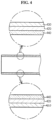
- FIG. 2 shows an embodiment of a tube-type packaging for a flexible secondary battery, and a film in cross section taken along the line A-A' of FIG. 2 is shown in FIGS. 3 to 5 in detail.
- the packaging for a flexible secondary battery may include a mechanical support layer 310, a reduced graphene oxide layer 320 disposed on the mechanical support layer 310, a heat shrink layer 330 disposed on the reduced graphene oxide layer 320, and a sealant layer 340 disposed on the heat shrink layer 330 in a sequential order in the thicknesswise direction.
- the mechanical support layer 310 is disposed facing the outside of the packaging for a flexible secondary battery
- the sealant layer 340 is disposed facing the inside of the packaging for a flexible secondary battery.
- the packaging for a flexible secondary battery may further include an adhesive layer on at least one of between the above-described layers.
- the packaging for a flexible secondary battery comprising a heat shrink layer; a reduced graphene oxide layer disposed on the heat shrink layer and including a plurality of reduced graphene oxide sheets; and a sealant layer disposed on the reduced graphene oxide layer, wherein the reduced graphene oxide sheets of the reduced graphene oxide layer form electrostatic interaction between adjacent reduced graphene oxide sheets, and the packaging for a flexible secondary battery is in the shape of a tube that is wrapped around the outer surface of the electrode assembly.
- the packaging for a flexible secondary battery may include a heat shrink layer 430, a reduced graphene oxide layer 420 disposed on one side of the heat shrink layer 430, and a sealant layer 440 disposed on the other side of the reduced graphene oxide layer 420 in a sequential order in the thicknesswise direction.
- the heat shrink layer 430 is disposed facing the outside of the packaging for a flexible secondary battery
- the sealant layer 440 is disposed facing the inside of the packaging for a flexible secondary battery.
- the packaging for a flexible secondary battery may further include an adhesive layer on at least one of between the each layers.
- the packaging for a flexible secondary battery comprising a mechanical support layer; a reduced graphene oxide layer disposed on the mechanical support layer and including a plurality of reduced graphene oxide sheets; a heat shrink layer disposed on the reduced graphene oxide layer; a reduced graphene oxide layer disposed on the heat shrink layer; and a sealant layer disposed on the reduced graphene oxide layer, wherein the reduced graphene oxide sheets of the reduced graphene oxide layer form electrostatic interaction between adjacent reduced graphene oxide sheets, and the packaging for a flexible secondary battery is in the shape of a tube that is wrapped around the outer surface of the electrode assembly.
- the packaging for a flexible secondary battery may include a mechanical support layer 510, a reduced graphene oxide layer 520 disposed on the mechanical support layer 510 and including a plurality of reduced graphene oxide sheets, a heat shrink layer 530 disposed on the reduced graphene oxide layer 520, another reduced graphene oxide layer 520' disposed on the heat shrink layer 530 and a sealant layer 540 disposed on the reduced graphene oxide layer 520' in a sequential order in the thicknessswise direction.
- the mechanical support layer 510 is disposed facing the outside of the packaging for a flexible secondary battery
- the sealant layer 540 is disposed facing the inside of the packaging for a flexible secondary battery.
- the packaging for a flexible secondary battery may further include an adhesive layer on at least one of between the above-described layers.
- the packaging for a flexible secondary battery in which a stack comprising 'the mechanical support layer, the reduced graphene oxide (rGO) layer, the heat shrink layer and the sealant layer' or a stack comprising 'the heat shrink layer, the reduced graphene oxide layer and the sealant layer' is formed in the shape of a tube.
- a stack comprising 'the mechanical support layer, the reduced graphene oxide (rGO) layer, the heat shrink layer and the sealant layer' or a stack comprising 'the heat shrink layer, the reduced graphene oxide layer and the sealant layer' is formed in the shape of a tube.
- the stack may be formed in the shape of a tube that is wrapped around the outer surface of the electrode assembly according to the following two embodiments.
- the sealant layer formed on one surface at one end of the stack may be disposed on the tube-type outermost layer, for example, the mechanical support layer or the heat shrink layer, such that they overlap.
- the sealant layer formed on one surface at one end of the stack and the sealant layer formed on one surface at the other end of the stack may be disposed facing each other so that they adhere to each other.
- the adhered parts may form a wing, and the wing may be bent in one direction along the outer peripheral surface of the outermost layer.
- a flexible secondary battery comprising the packaging for a flexible secondary battery.
- the packaged flexible secondary battery according to the present disclosure comprises an electrode assembly that has a horizontal cross section of a predetermined shape and extends in the lengthwise direction, wherein the electrode assembly comprising an inner electrode, a separation layer formed around the inner electrode to prevent a short circuit of the electrode, and an outer electrode formed around the outer surface of the separation layer; and the packaging for a flexible secondary battery according to the present disclosure that is tightly wrapped around the entire outer surface of the electrode assembly.
- the 'predetermined shape' is not limited to a particular shape, and may include any shape without departing from the nature of the present disclosure.
- the horizontal cross section of the predetermined shape may be circular or polygonal, and the circular structure is a circular structure of geometrically perfect symmetry and an oval structure of asymmetry.
- the polygonal structure is not limited to a particular shape, and non-limiting examples of the polygonal structure may include a triangular shape, a quadrilateral shape, a pentagonal shape or a hexagonal shape.
- the flexible secondary battery of the present disclosure has the horizontal cross section of the predetermined shape and a linear structure that elongates in the lengthwise direction of the horizontal cross section, and it is so flexible that it can change the shape freely.
- the inner electrode of the electrode assembly may include a lithium ion supplying core including an electrolyte, an inner current collector of an open structure formed around the outer surface of the lithium ion supplying core and an inner electrode active material layer formed on the surface of the inner current collector.
- the open structure refers to a structure having an open boundary surface through which a substance may be transferred freely from the inside of the structure to the outside thereof.
- the lithium ion supplying core may include an electrolyte, and the electrolyte is not limited to a particular type, and may include a non-aqueous electrolyte using ethylene carbonate (EC), propylene carbonate (PC), butylene carbonate (BC), vinylene carbonate (VC), diethyl carbonate (DEC), dimethyl carbonate (DMC), ethylmethylcarbonate (EMC), methyl formate (MF), ⁇ -butyrolactone ( ⁇ -BL), sulfolane, methylacetate (MA) or methylpropionate (MP); a gel polymer electrolyte using PEO, PVdF, PMMA, PAN or PVAC; or a solid electrolyte using PEO, polypropylene oxide (PPO), polyethylene imine (PEI), polyethylene sulphide (PES) or polyvinyl acetate (PVAc).
- EC ethylene carbonate
- PC propylene carbonate
- BC butylene carbonate
- the electrolyte may further include a lithium salt, and preferably, the lithium salt may include LiCl, LiBr, LiI, LiClO4, LiBF 4 , LiB 10 Cl 10 , LiPF 6 , LiCF 3 SO 3 , LiCF 3 CO 2 , LiAsF 6 , LiSbF 6 , LiAlCl 4 , CH 3 SO 3 Li, CF 3 SO 3 Li, (CF 3 SO 2 ) 2 NLi, chloro borane lithium, lower aliphatic carboxylic acid lithium and lithium tetraphenyl borate.
- the lithium ion supplying core may include the electrolyte alone, and in the case of a liquid electrolyte, the lithium ion supplying core may include a porous carrier.
- the inner current collector of the present disclosure may have an open structure that allows the penetration of the electrolyte of the lithium ion supplying core, and the open structure may include any type of structure that allows the penetration of the electrolyte.
- the inner current collector may be manufactured using stainless steel, aluminum, nickel, titanium, sintered carbon, copper, or stainless steel treated with carbon, nickel, titanium or silver on the surface, aluminum-cadmium alloy, non-conductive polymer surface-treated with a conductive material, or conductive polymer.
- the current collector serves to collect electrons produced by electrochemical reaction of the active material or supply electrons necessary for electrochemical reaction, and generally, metal such as copper or aluminum is used. Particularly, when a polymer conductor made of non-conductive polymer surface-treated with a conductive material or conductive polymer is used, flexibility is higher than when metal such as copper or aluminum is used. Additionally, it is possible to achieve weight reduction of the battery by replacing the metal current collector with a polymer current collector.
- the conductive material may include polyacetylene, polyaniline, polypyrrole, polythiophene and poly sulfur nitride, indium thin oxide (ITO), silver, palladium and nickel, and the conductive polymer may include polyacetylene, polyaniline, polypyrrole, polythiophene and poly sulfur nitride.
- the non-conductive polymer used in the current collector is not limited to a particular type.
- the inner electrode active material layer of the present disclosure is formed on the surface of the inner current collector.
- the inner electrode active material layer may be formed around the outer surface of the inner current collector such that the open structure of the inner current collector is not exposed to the outer surface of the inner electrode active material layer, and the inner electrode active material layer may be formed on the surface of the open structure of the inner current collector such that the open structure of the inner current collector is exposed to the outer surface of the inner electrode active material layer.
- an active material layer may be formed on the surface of a wound wire-type current collector, and a wire-type current collector having an electrode active material layer may be wound.
- the outer current collector of the present disclosure is not limited to a particular type, but may include a pipe-type current collector, a wound wire-type current collector or a mesh-type current collector. Additionally, the outer current collector may be made of stainless steel, aluminum, nickel, titanium, sintered carbon, copper; stainless steel treated with carbon, nickel, titanium or silver on the surface; aluminum-cadmium alloy; non-conductive polymer surface-treated with a conductive material; conductive polymer; a metal paste including metal powder of Ni, Al, Au, Ag, Al, Pd/Ag, Cr, Ta, Cu, Ba or ITO; or a carbon paste including carbon powder of graphite, carbon black or carbon nanotubes.
- the inner electrode may be a negative or positive electrode
- the outer electrode may be a positive or negative electrode opposite to the inner electrode
- the electrode active material layer of the present disclosure allows ions to move through the current collector, and the movement of ions is made by interaction through intercalation and deintercalation of ions to/from an electrolyte layer.
- the electrode active material layer may include natural graphite, artificial graphite, a carbonaceous material; lithium containing titanium composite oxide (LTO); metals (Me) including Si, Sn, Li, Zn, Mg, Cd, Ce, Ni or Fe; alloys of the metals (Me); oxide (MeO x ) of the metals (Me); and composite of the metals (Me) and carbon.
- the positive electrode active material layer may include LiCoO 2 , LiNiO 2 , LiMn 2 O 4 , LiCoPO 4 , LiFePO 4 , LiNiMnCoO 2 and LiNi 1-x-y-z Co x M1 y M2 z O 2
- M1 and M2 are, independently, any one selected from the group consisting of Al, Ni, Co, Fe, Mn, V, Cr, Ti, W, Ta, Mg and Mo, and x, y and z are independently atomic fractions of elements that form the oxide, where 0 ⁇ x ⁇ 0.5, 0 ⁇ y ⁇ 0.5, 0 ⁇ z ⁇ 0.5, x+y+z ⁇ 1).
- the separation layer of the present disclosure may use an electrolyte layer or a separator.
- the electrolyte layer serving as an ion channel uses a gel polymer electrolyte using PEO, PVdF, PMMA, PAN or PVAC, or a solid electrolyte using PEO, polypropylene oxide (PPO), polyethylene imine (PEI), polyethylene sulphide (PES) or polyvinyl acetate (PVAc).
- the solid electrolyte matrix may have a framework of polymer or ceramic glass. In the case of a general polymer electrolyte, even though ionic conductivity is satisfied, ions may move very slowly due to the reaction rate, and thus it is preferable to use the gel polymer electrolyte having easier movement of ions than a solid polymer electrolyte.
- the gel polymer electrolyte has poor mechanical properties, and to improve the mechanical properties, the gel polymer electrolyte may include a pore structure support or crosslinked polymer.
- the electrolyte layer of the present disclosure may act as a separator, thereby eliminating the need to use a separate separator.
- the electrolyte layer of the present disclosure may further include a lithium salt.
- the lithium salt may improve the ionic conductivity and reaction rate, and non-limiting examples may include LiCl, LiBr, LiI, LiClO 4 , LiBF 4 , LiB 10 Cl 10 , LiPF 6 , LiCF 3 SO 3 , LiCF 3 CO 2 , LiAsF 6 , LiSbF 6 , LiAlCl 4 , CH 3 SO 3 Li, CF 3 SO 3 Li, (CF 3 SO 2 ) 2 NLi, chloro borane lithium, lower aliphatic carboxylic acid lithium and lithium tetraphenyl borate.
- the separator is not limited to a particular type, and may include a porous substrate made of polyolefin-based polymer selected from the group consisting of ethylene homopolymer, propylene homopolymer, ethylene-butene copolymer, ethylene-hexene copolymer and ethylene-methacrylate copolymer; a porous substrate made of polymer selected from the group consisting of polyester, polyacetal, polyamide, polycarbonate, polyimide, polyetheretherketone, polyethersulfone, polyphenyleneoxide, polyphenylenesulfide and polyethylenenaphthalene; or a porous substrate made of a mixture of inorganic particles and binder polymer.
- a porous substrate made of polyolefin-based polymer selected from the group consisting of ethylene homopolymer, propylene homopolymer, ethylene-butene copolymer, ethylene-hexene copolymer and ethylene-methacrylate copolymer
- the separator may further include a porous coating layer including a mixture of inorganic particles and binder polymer on at least one surface of the porous substrate made of the above-described polymer.
- a porous coating layer including a mixture of inorganic particles and binder polymer on at least one surface of the porous substrate made of the above-described polymer.
- a method for manufacturing a flexible secondary battery according to an aspect of the present disclosure comprises:
- the flexible secondary battery according to an embodiment of the present disclosure applies a skin-tight packaging to the electrode assembly, and there is no wrinkle. As a result, the flexibility of the battery may be improved. Additionally, the packaging comprising the heat shrinkable tube may provide much improved flexibility of the battery.
- a polyethylene terephthalate film (LAMI-ACE, a laminating film) was prepared as a mechanical support layer.
- graphene oxide particles graphene oxide powder, Standard Graphene
- energy was applied using an ultrasonic dispersion device to prepare a graphene oxide dispersion composition at the concentration of 1 mg/mL.
- CuCl 2 Sigma Aldrich, CuCl 2
- the dispersion composition was poured onto the prepared mechanical support layer, i.e., the polyethylene terephthalate (PET) film, followed by coating by bar coating and drying to form a graphene oxide layer.
- PET polyethylene terephthalate
- the formed graphene oxide layer was immersed in a hydriodic acid solution (TCI, 57% Hydriodic acid) of 90°C and maintained for 12 hours or longer.
- TCI hydriodic acid solution
- the formed reduced graphene oxide layer was taken out of the hydriodic acid solution, washed with distilled water and dried at room temperature to form a mechanical support layer-reduced graphene oxide layer. It was found that the reduced graphene oxide layer is about 100 nm in thickness, the reduced graphene oxide sheet of the layer was 1 to 4 nm in thickness, and an interlayer spacing between the reduced graphene oxide sheets was about 0.3 to 0.4 nm.
- the interlayer spacing between the reduced graphene oxide sheets was measured using XRD and calculated using Bragg equation.
- the used XRD was Bruker D4 Endeavor.
- the thickness of the reduced graphene oxide layer was determined by observing the cross section of the synthesized reduced graphene oxide layer using SEM, and the used SEM was Hitachi 4800.
- the thickness of the reduced graphene oxide sheet was measured using Atomic Force Microscope (AFM) after the reduced graphene oxide sheet was spin-cast on a SiO 2 substrate, and the used AFM was Park Systems NX10.
- AFM Atomic Force Microscope
- a heat shrink layer was formed on the reduced graphene oxide layer using a lamination method.
- a modified polyvinylidene fluoride film (YoulChon Chemical) was used as the heat shrink layer.
- a polypropylene film (YoulChon Chemical) corresponding to a sealant layer was formed on the formed heat shrink layer layer using a lamination method. Accordingly, the mechanical support layer-reduced graphene oxide layer-heat shrink layer-sealant layer was obtained.
- the negative electrode slurry was coated on a wire-type copper current collector having the diameter of 250 ⁇ m in a loading amount of 3.8 mAh/cm 2 and dried to prepare a wire-type negative electrode having a negative electrode active material layer.
- the prepared four wire-type negative electrodes were prepared and wound in the shape of a spring to form an inner negative electrode unit of an open structure having a hollow space inside and a lithium ion supplying core.
- a polyolefin film separator was wound on the outer side of the inner negative electrode unit to form a separation layer.
- LiCoO 2 as a positive electrode active material, denka black as a conductive material and polyvinylidene fluoride (PVdF) as a binder at a weight ratio of 85:5:15 were added to N-methylpyrrolidone (NMP) as a solvent to prepare a positive electrode active material slurry.
- NMP N-methylpyrrolidone
- the positive electrode active material slurry was coated on a sheet-type aluminum current collector and dried to prepare a positive electrode active material layer.
- Carbon black and PVdF as a conductive material were dispersed in an NMP solvent at a weight ratio of 1:1 to prepare a conductive layer slurry.
- the conductive layer slurry was coated on the positive electrode active material layer, a porous polymer non-woven substrate was placed on the conductive layer slurry and the conductive layer slurry was dried to prepare a sheet-type outer positive electrode.
- the manufactured positive electrode was designed with 108% N/P ratio (discharge capacity ratio of negative to positive electrodes) (the amount of final positive electrode loading: 3.3 mAh/cm 2 ).
- the sheet-type outer positive electrode was cut to 2 mm width, and wound around the inner negative electrode and the separation layer to manufacture an electrode assembly.
- the mechanical support layer-reduced graphene oxide layer-heat shrink layer-sealant layer was wrapped around the outer surface of the electrode assembly manufactured as described above, and in this instance, the sealant layer was overlapped with the upper layer of the outermost layer, i.e., the mechanical support layer and adhered to the outermost layer to form a tube type, and the outer surface of the electrode assembly comes into contact with the sealant layer.
- a non-aqueous electrolyte solution (1M LiPF 6 , ethylene carbonate (EC)/propylene carbonate (PC)/diethyl carbonate (DEC)
- EC ethylene carbonate
- PC propylene carbonate
- DEC diethyl carbonate
- a packaging for a secondary battery and a flexible secondary battery in which the packaging for a flexible secondary battery is in a shape of a tube that is wrapped around the outer surface of the electrode assembly of the flexible secondary battery were obtained.
- a modified polyvinylidene fluoride film (YoulChon Chemical) was prepared as a heat shrink layer.
- Graphene oxide particles (graphene oxide powder, Standard Graphen) were put into deionized water, and energy was applied using an ultrasonic dispersion device to prepare a graphene oxide dispersion composition at the concentration of 1 mg/mL. Subsequently, CuCl 2 (Sigma Aldrich, CuCl 2 ) was added to the dispersion composition in an amount of 1 weight% based on the weight of graphene oxide. The dispersion composition was poured onto the prepared heat shrink layer, followed by coating by bar coating and drying to form a graphene oxide layer. The formed graphene oxide layer was immersed in a hydriodic acid solution (TCI, 57% Hydriodic acid) of 90°C and maintained for 12 hours or longer.
- TCI hydriodic acid solution
- the formed reduced graphene oxide layer was taken out of the hydriodic acid solution, washed with distilled water and dried at room temperature to form a heat shrink layer-reduced graphene oxide layer. It was found that the reduced graphene oxide layer was about 100 nm in thickness, the reduced graphene oxide sheet of the layer was 1 to 4 nm in thickness, and an interlayer spacing between reduced graphene oxide sheets was about 0.3 to 0.4 nm.
- the interlayer spacing between the reduced graphene oxide sheets, the thickness of the reduced graphene oxide layer, and the thickness of the reduced graphene oxide sheet were measured by the same method as the above-described example 1.
- a polypropylene film (YoulChon Chemical) corresponding to a sealant layer was formed on the formed reduced graphene oxide layer using a lamination method. Accordingly, the heat shrink layer-reduced graphene oxide layer-sealant layer was in the shape of a tube.
- a packaging for a flexible secondary battery and a flexible secondary battery in which the packaging for a flexible secondary battery is in a shape of a tube that is wrapped around the outer surface of the electrode assembly of the flexible secondary battery were obtained by the same method as example 1.
- a mechanical support layer-reduced graphene oxide layer was obtained by the method described in example 1.
- a heat shrinkable tube (YoulChon Chemical, a modified polyvinylidene fluoride tube) as a heat shrink layer was applied to the outer side of the mechanical support layer-reduced graphene oxide layer by lamination.
- the surface of the reduced graphene oxide layer was modified by oxidation through UVO treatment so that surface energy of the heat shrink layer and surface energy of the reduced graphene oxide were equal.
- the contact angle of a water drop was used to determine whether or not the surface energy of the heat shrink layer and the surface energy of the reduced graphene oxide layer are equal.
- a packaging for a flexible secondary battery and a flexible secondary battery in which the packaging for a flexible secondary battery is in a shape of a tube that is wrapped around the outer surface of the electrode assembly of the flexible secondary battery were obtained by the same method as example 1.
- a packaging for a flexible secondary battery and a flexible secondary battery were manufactured by the same method as example 1 except that CuCl 2 was not added to the dispersion composition when forming a reduced graphene oxide layer. It was found that the reduced graphene oxide layer was about 100 nm in thickness, the graphene oxide sheet of the layer was 1 to 4 nm in thickness, and the formed reduced graphene oxide layer had an interlayer spacing of about 0.3 to 0.4 nm.
- a packaging for a flexible secondary battery and a flexible secondary battery in which the packaging for a flexible secondary battery is in a shape of a tube that is wrapped around the outer surface of the electrode assembly of the flexible secondary battery were obtained by the same method as example 1.
- a packaging for a flexible secondary battery and a flexible secondary battery in which the packaging for a flexible secondary battery is in a shape of a tube that is wrapped around the outer surface of the electrode assembly of the flexible secondary battery were obtained by the same method as example 1.
- each film manufactured in example 1 and comparative examples 1 and 2 was prepared 10 x 10 cm in size, tailored and mounted in a water vapor transmission rate tester (Sejin Test, Model: SJTM-014). Subsequently, dry nitrogen gas containing no water vapor was introduced into one surface of the packaging for a flexible secondary battery, and water vapor was introduced into the other surface. In this instance, to prevent gases introduced into the two surfaces of the packaging for a flexible secondary battery from being mixed with each other, two spaces in which the gases flow were isolated from each other. Meanwhile, during the test, the temperature was set to 38°C, and the humidity was set to 100 %RH, and these conditions were maintained.
Landscapes
- Chemical & Material Sciences (AREA)
- Chemical Kinetics & Catalysis (AREA)
- Electrochemistry (AREA)
- General Chemical & Material Sciences (AREA)
- Engineering & Computer Science (AREA)
- Inorganic Chemistry (AREA)
- Mechanical Engineering (AREA)
- Manufacturing & Machinery (AREA)
- Sealing Battery Cases Or Jackets (AREA)
- Secondary Cells (AREA)
Description
- The present application claims the benefit of
Korean Patent Application No. 10-2018-0125543 filed on October 19, 2018 - The present disclosure relates to a packaging for a flexible secondary battery and a flexible secondary battery comprising the same.
- Secondary batteries are designed to convert external electrical energy in the form of chemical energy and stores it, and when necessary, produce electricity. Since they can be charged many times, they are also known as "rechargeable batteries". Commonly used secondary batteries include lead-acid batteries, NiCd batteries, NiMH batteries, Li-ion batteries and Li-ion polymer batteries. Secondary batteries provide both economical and environmental advantages, compared to disposable primary batteries.
- Secondary batteries are currently used in low power applications. For example, the range of applications may include devices that help starting a car, mobile devices, tools and uninterruptible energy systems. Recently, development of wireless communication technology leads to the widespread use of mobile devices, and with a tendency to wirelessize many types of existing devices, the demand for secondary batteries is dramatically increasing. Additionally, in keeping with environmental pollution prevention, the use of hybrid electric vehicles and electric vehicles is widespread, and these next-generation vehicles adopt technology to reduce the price and weight and increase the life using secondary batteries.
- Known types of secondary batteries are cylindrical, prismatic and pouch-type secondary batteries, and recently, flexible secondary batteries featuring flexibility has been suggested, including a flexible secondary battery having a very high ratio of length to cross sectional diameter.
-
FIG. 1 is a diagram showing the structure of an embodiment of a general flexible secondary battery. As shown inFIG. 1 , the flexiblesecondary battery 50 includes anegative electrode 10 wound in the shape of a coil, aseparator 20 formed in a cylindrical shape having thenegative electrode 10 provided on the inner side thereof, and wrapped around the outer surface of thenegative electrode 10, apositive electrode 30 provided on the outer surface of theseparator 20, and apackaging 40 formed in a cylindrical shape having thepositive electrode 30 provided on the inner side thereof. That is, the flexiblesecondary battery 50 is manufactured by winding theseparator 20, thepositive electrode 30 and thepackaging 40 in that order on the outer surface of thenegative electrode 10 in the shape of a coil. As such, the flexiblesecondary battery 50 may be formed in the shape of a cable to allow it to bend, and may further include a heat shrinkable tube that is wrapped around the outer surface of the electrode assembly. - In general, the heat shrinkable tube is primarily made using a polymer material. The polymer is made in a porous form due to the structural feature thereof, so there is a problem with ingress of vapor and air into the battery. The vapor ingress into the battery is a major factor that causes battery performance degradation by reaction with water in an electrolyte solution using LiPF6 as a lithium salt. Further,
US 2016/329533 A1 is concerned with a secondary battery and electronic device.US 2014/3355391 A1 is concerned with a packing for a cable-type secondary battery and a cable-type secondary battery comprising the same. - Therefore, the present disclosure is aimed at improving the vapor barrier property of a film for packaging a flexible secondary battery.
- In addition, the present disclosure is aimed at improving not only the vapor barrier property but also flexibility of the film for packaging a flexible secondary battery.
- Further, the present disclosure is aimed at providing a flexible secondary battery comprising the film for packaging a flexible secondary battery with improved vapor barrier property and flexibility.
- In a first embodiment of the present disclosure, there is provided a packaging for a flexible secondary battery that is wrapped around an outer surface of an electrode assembly of the flexible secondary battery, as defined in
claim 1. - In an example of the present disclosure, there is provided a packaging for a flexible secondary battery that is wrapped around an outer surface of an electrode assembly of the flexible secondary battery, in which the packaging for a flexible secondary battery is in a shape of a tube that is wrapped around the outer surface of the electrode assembly, and the packaging for a flexible secondary battery comprises a heat shrink layer; a reduced graphene oxide layer disposed on the heat shrink layer and including a plurality of reduced graphene oxide sheets; and a sealant layer disposed on the reduced graphene oxide layer, wherein the plurality of reduced graphene oxide sheets in the reduced graphene oxide layer form electrostatic interaction between adjacent reduced graphene oxide sheets.
- In a second embodiment of the present disclosure, there is provided the packaging for a flexible secondary battery as defined in the first or second embodiment, wherein the reduced graphene oxide sheet has a structure of one to three layers of reduced graphene oxide particles.
- In a third embodiment of the present disclosure, there is provided the packaging for a flexible secondary battery as defined in the first or second embodiment, wherein the reduced graphene oxide sheet has a thickness ranging from 0.002 to 10 µm.
- In a fourth embodiment of the present disclosure, there is provided the packaging for a flexible secondary battery as defined in any one of the first to fifth embodiments, further comprising an adhesive layer between the layers.
- In a fifth embodiment of the present disclosure, there is provided the packaging for a flexible secondary battery as defined in the first embodiment, wherein the heat shrink layer is surface modified to modify the surface of the heat shrink layer having a hydrophobic surface to be hydrophilic by performing UV-ozone treatment, plasma surface treatment using oxygen to nitrogen, chemical treatment using a silane coupling agent, or surface coating using polymer or an organic compound.
- In a sixth embodiment of the present disclosure, there is provided the packaging for a flexible secondary battery as defined in the first embodiment, wherein the reduced graphene oxide layer has a thickness ranging from 20 nm to 100 µm.
- In a seventh embodiment of the present disclosure, there is provided the packaging for a flexible secondary battery as defined in the first embodiment, wherein the reduced graphene oxide sheets have an interlayer spacing ranging from 0.3 nm to 5.0 nm.
- In an eighth embodiment of the present disclosure, there is provided a method for manufacturing a packaging for a flexible secondary battery that is wrapped around an outer surface of an electrode assembly of the flexible secondary battery, as defined in claim 8.
- In a ninth embodiment of the present disclosure, there is provided the method for manufacturing a packaging for a flexible secondary battery as defined in the eighth embodiment, wherein the graphene oxide layer is reduced by hydriodic acid or vitamin C.
- In a tenth embodiment of the present disclosure, there is provided a flexible secondary battery comprising an electrode assembly; and the packaging for a flexible secondary battery according to the first embodiment, wherein the packaging for a flexible secondary battery is wrapped around an outer surface of the electrode assembly.
- The packaging for a flexible secondary battery according to the present disclosure further comprises a reduced graphene oxide layer on a heat shrink layer having the shape of a film or a tube, and the reduced graphene oxide layer blocks the passage through which vapor and/or gas enters very effectively due to electrostatic interaction between reduced graphene oxide sheets of the reduced graphene oxide layer.
- Particularly, the above-described effect of blocking the passage through which vapor and gas enter very effectively cannot be expected from a reduced graphene oxide layer simply formed with a layer structure of reduced graphene oxide sheets without physical or chemical bonding between adjacent reduced graphene oxide sheets in the reduced graphene oxide layer. The reason is that when graphene oxide or reduced graphene oxide itself is used in a packaging film, it is impossible to prevent the ingress of vapor and gas due to the presence of a few water monolayers in an interlayer of graphene oxide.
- In addition, the packaging for a flexible secondary battery does not use a metal layer such as aluminum, which makes the finally completed flexible secondary battery flexible, thereby reducing stresses that occur when the flexible secondary battery bends.
-
-
FIG. 1 is a diagram showing the structure of an embodiment of a general flexible secondary battery. -
FIG. 2 is a schematic perspective view of a tube-type packaging for a flexible secondary battery according to an embodiment of the present disclosure. -
FIG. 3 is a schematic cross-sectional view of a film that constitutes a packaging for a flexible secondary battery according to an embodiment of the present disclosure. -
FIG. 4 is a schematic cross-sectional view of a film that constitutes a packaging for a flexible secondary battery according to an embodiment of the present disclosure. -
FIG. 5 is a schematic cross-sectional view of a film that constitutes a packaging for a flexible secondary battery according to an embodiment of the present disclosure. -
FIG. 6 is a schematic internal cross-sectional view of a reduced graphene oxide layer according to an embodiment of the present disclosure. - Hereinafter, the present disclosure will be described in detail. It should be understood that the terms or words used in the specification and the appended claims should not be construed as limited to general and dictionary meanings, but interpreted based on the meanings and concepts corresponding to the technical aspects of the present disclosure on the basis of the principle that the inventor is allowed to define terms appropriately for the best explanation. Therefore, the embodiments described herein and illustration in the drawings are just a most preferred embodiment of the present disclosure, and they are not intended to fully describe the technical aspects of the present disclosure, so it should be understood that other equivalents and modifications could be made thereto at the time the application was filed.
- It will be understood that when an element is referred to as being "connected to" another element, it can be "directly connected to" the other element and it may be "electrically connected" to the other element with intervening elements interposed between.
- It will be understood that when an element is referred to as being disposed "on", "on one side of" or "on the other side of" another element, it can be placed in contact with one surface of the other element or with an adhesive layer interposed between the two elements, and intervening elements may be present.
- When used in this specification, "comprise" specifies the presence of stated elements, but does not preclude the presence or addition of one or more other elements, unless the context clearly indicates otherwise. It will be understood that "about" is used herein in the sense of at, or nearly at, when given the manufacturing and material tolerances inherent in the stated circumstances and is used to prevent the unscrupulous infringer from unfairly taking advantage of the disclosure where exact or absolute figures are stated as an aid to understanding the present disclosure.
- When used in this specification, "A and/or B" specifies "either A or B, or both".
- When used in this specification, "graphene" refers to the form of a plurality of carbon atoms joined together by covalent bonds to form a polycyclic aromatic molecule. The carbon atoms joined together by covalent bonds form six-membered rings as repeat units, but may further include five-membered rings and/or seven-membered rings. Accordingly, a sheet of graphene may be the form of a single layer of covalently bonded carbon atoms, but is not limited thereto. The sheet of graphene may have various structures, and these structures may differ depending on the number of five-membered rings and/or seven-membered rings that may be included in graphene. Additionally, when the sheet of graphene is a single layer, sheets of graphene may be stacked to form multiple layers, and the graphene sheet may be saturated with hydrogen atoms at the edge on the side, but is not limited thereto.
- When used in this specification, "graphene oxide" may be shorted as "GO". The graphene oxide may include a structure in which a functional group containing oxygen such as a carboxyl group, a hydroxyl group or an epoxy group is bonded on a single layer of graphene, but is not limited thereto.
- When used in this specification, "reduced graphene oxide" refers to graphene oxide having reduced oxygen content by reduction, and may be shorted as "rGO", but is not limited thereto. In a non-limiting example, the oxygen content in the reduced graphene oxide may be 0.01 to 30 at.% based on 100 at.% of carbon, but is not limited thereto.
- In the present disclosure, the heat shrink layer may be in the shape of a film or a tube.
- When the heat shrink layer is in the shape of a film, the heat shrink layer may be stacked with the other layer such as the mechanical support layer, the reduced graphene oxide layer and the sealant layer, and then wrapped around the electrode assembly to form a tube-type packaging
- When the heat shrink layer is in the shape of a tube, the other layer such as the mechanical support layer, the reduced graphene oxide layer and the sealant layer may be applied to the inner or outer side of the tube to form a tube-type packaging.
- Preferably, heat shrink processing is performed on the heat shrink layer at low temperature to prevent thermal damage to the secondary battery, and generally, it is required to complete heat shrinking at the temperature of 70 to 200°C, or 70 to 150°C, more preferably 100 to 150°C, even more preferably 70 to 120°C. To this end, the heat shrink layer may be formed from modified polymer of at least one selected from the group consisting of polyolefin such as polyethylene and polypropylene, polyesters such as polyethyleneterephthalate, fluororesin such as polyvinylidene fluoride and polytetrafluoroethylene and polyvinyl chloride.
- The heat shrink layer may have the thickness ranging from 1 µm to 1000 µm, or from 10 µm to 500 µm, or from 30 µm to 250 µm to reduce the distance between the electrode and the case and ensure flexibility.
- The heat shrink layer may be optionally modified to make the surface hydrophilic by oxygen or nitrogen plasma treatment. To form a reduced graphene oxide layer on the heat shrink layer, first, when forming a graphene oxide layer on the heat shrink layer, in case that the heat shrink layer has a hydrophobic surface, surface energy is generated due to a difference between hydrophobicity of the heat shrink layer surface and hydrophilicity of the graphene oxide, and as a result, it may be difficult to achieve a uniform coating of the graphene oxide layer on one surface of the heat shrink layer. To control this, surface modification may be performed to modify the surface of the heat shrink layer having the hydrophobic surface to be hydrophilic. The surface modification may be performed by UV-ozone treatment, plasma surface treatment using oxygen or nitrogen, chemical treatment using a silane coupling agent such as amino silane, or surface coating using polymer or an organic compound, but is not limited thereto. Whether or not the surface energy of the graphene oxide layer and the surface energy of the modified heat shrink layer have equal or similar values may be determined by measuring the contact angle of a water drop of each layer.
- According to a particular embodiment of the present disclosure, as described above, a heat shrinkable tube may be used as the heat shrink layer. In the specification, the "heat shrinkable tube" is a tube that shrinks when heated, and refers to a material that air-tightly wraps a terminal or other material of a different shape or size. In the present disclosure, after the electrode assembly is inserted into the heat shrinkable tube, when heat is applied, the heat shrinkable tube is heated, and as it shrinks, the heat shrinkable tube tightly packages the outer surface of the electrode assembly. Through the air-tight packaging, the vapor barrier performance of the packaging may be improved so much, and at the same time, the insulation effect may be obtained through the heat shrinkable tube. There are commercially available heat shrinkable tubes of various materials and shapes. An embodiment of the present disclosure may provide a new packaging comprising a commercially available heat shrinkable tube and an additional layer.
- The reduced graphene oxide layer may be disposed on one surface or two surfaces of the heat shrink layer. In more detail, when the heat shrinkable tube is used as the heat shrink layer and the reduced graphene oxide layer is disposed on one surface of the heat shrink layer, the reduced graphene oxide layer may be disposed on the inner or outer surface of the heat shrinkable tube.
- The reduced graphene oxide layer is a component that imparts an effect of preventing the ingress of vapor and/or gas to the packaging for a flexible secondary battery according to the present disclosure. The barrier effect may depend on factors such as the thickness of the graphene oxide layer and the degree of alignment of graphene oxide, and they may be determined by a process condition for producing reduced graphene oxide. The process condition may include, but is not limited to, the purity of the graphene oxide, the concentration of a graphene oxide dispersion composition, the coating time, the number of coatings, the evaporation rate of a dispersion medium after coating and the presence or absence of a shear force.
- Seeing a schematic cross-sectional view of the reduced
graphene oxide layer 230 according to the present disclosure with reference toFIG. 6 , reducedgraphene oxide particles 2310 are stacked to form a reducedgraphene oxide sheet 2320, and a plurality of reducedgraphene oxide sheets 2320 form a reduced graphene oxide layer, and in this instance, the reducedgraphene oxide sheets 2320 formelectrostatic interaction 2330 with adjacent reduced graphene oxide sheets by the medium of a metal cation. - It should be understood that 'electrostatic interaction' as used herein includes ionic bonding.
- In more detail, the metal cation forms electrostatic interaction with oxygen functional groups at the edge of the reduced graphene oxide particles. Since the oxygen functional group has (-) charge and the metal cation has (+) charge, for a sufficient attractive force by electrostatic interaction between two or more reduced graphene oxide particles, the cation preferably has the oxidation number of 2+ or more. Additionally, an attractive force between the metal cation and the reduced graphene oxide particles is interaction occurring at the edge of the reduced graphene oxide particles, and thus a spacing between the reduced graphene oxide sheets on the basal plane is maintained.
- According to a particular embodiment of the present disclosure, the reduced graphene oxide sheet may have a structure of one to three layers of reduced graphene oxide particles, for example, reduced graphene oxide platy particles. The number of stacks of reduced graphene oxide is set before the reduction reaction of graphene oxide. In general, graphene oxide is synthesized by oxidation of graphite and then ultrasonic dispersion, and the layer structure of graphene oxide particles may be adjusted by adjusting the oxidation level of graphite at the graphite oxidation step. When the layer structure of reduced graphene oxide particles is the same as described above, it is possible to significantly reduce the probability that defects may occur during coating of the reduced graphene oxide, and improve the mechanical properties of the formed reduced graphene oxide layer.
- According to a particular embodiment of the present disclosure, the reduced graphene oxide sheet may have the thickness ranging from 0.002 to 10 µm, or from 0.005 to 1 µm, or from 0.01 to 0.1 µm.When the reduced graphene oxide sheet has the above-described range of thickness, it is possible to achieve flexible mechanical properties and effective vapor barrier.
- In the present disclosure, for a very small interlayer spacing, it is desirable to use the graphene oxide having a predetermined level of purity or above. For example, the graphene oxide of purity 93% or higher, or 97.5% or higher, or 99.5% or higher may be used. In relation to this, in the specification, 'purity' refers to a ratio of the weight of graphene oxide to the total weight of graphene oxide and metal residue.
- According to the present invention, a metal cation of the metal salt is at least one of Li+, K+, Ag+, Mg2+, Ca2+, Cu2+, Pb2+, Co2+, Al3+, Cr3+ and Fe3+. Among the exemplary metal cations, the metal cation Al3+, Cr3+ or Fe3+ is especially desirable since it can effectively exert an electrostatic attractive force due to high oxidation number. An anion that makes up the metal salt with the metal cation may include, without limitation, any type that serves the purpose of the present disclosure, and non-limiting examples may include Cl-, NO3 - or SO4 2-.
- According to a particular embodiment of the present disclosure, the metal salt is added to the dispersion medium in an amount of 0.01 to 10 weight% or the metal salt may be added to the dispersion medium in an amount of 0.01 to 1 weight% based on the weight of the graphene oxide particles. When the metal salt is present in the above-described range of amounts, it is possible to prevent metal particles from being formed and a nanometer-scale gap from being created between the reduced graphene sheets due to excess metal cations, and to form a proper electrostatic interaction.
- According to a particular embodiment of the present disclosure, the dispersion composition may include graphene oxide in an amount of about 0.0001 parts by weight to about 0.01 parts by weight based on 100 parts by weight of the dispersion medium. Within the above-described range, when the graphene oxide is present in an amount of 0.0001 parts by weight or more, it is possible to induce the alignment of graphene oxide when forming the graphene oxide layer, and when the graphene oxide is present in an amount of 0.01 parts by weight or less, it is possible to achieve good dispersion. For example, the graphene oxide dispersion composition may include graphene oxide in an amount of about 0.0001 parts by weight to about 0.01 parts by weight, about 0.0004 parts by weight to about 0.01 parts by weight, or about 0.0004 parts by weight to about 0.008 parts by weight based on 100 parts by weight of the dispersion medium, but is not limited thereto.
- The dispersion may use an ultrasonic generator such as an ultrasonic dispersion device, but is not limited thereto.
- According to a particular embodiment of the present disclosure, the graphene oxide dispersion composition may further include an organic solvent to allow the dispersion of the graphene oxide. Non-limiting examples of the organic solvent may include, but are not limited to, alcohol, dimethyl formamide (DMF), dimethyl sulfoxide (DMSO), N-methyl pyrrolidone, methyl phenol, cresol, or a combination thereof. The graphene oxide dispersion composition may further include about 100 volume% or less of the organic solvent to allow the dispersion of the graphene oxide based on 100 volume% of the dispersion medium. For example, the graphene oxide dispersion composition may further include the organic solvent to allow the dispersion of the graphene oxide, in an amount of about 1 volume% to about 100 volume%, about 20 volume% to about 80 volume%, or about 40 volume% to about 60 volume% based on 100 volume% of the dispersion medium, but is not limited thereto.
- The reduced graphene oxide layer may be obtained by applying graphene oxide to one surface of the heat shrink film or the inner or outer surface of the heat shrinkable tube to form a graphene oxide layer and reducing the graphene oxide layer.
- Non-limiting examples of application of graphene oxide to one surface of the heat shrink film may include, but are not limited to, a lamination method.
- Non-limiting examples of application of graphene oxide to the heat shrinkable tube may include, but are not limited to, gas/air flow, spray and electrospray.
- In an embodiment, when graphene oxide is applied to the inner surface of the heat shrinkable tube, the gas/air flow method may be selected.
- In another embodiment, when graphene oxide is applied to the inner surface of the heat shrinkable tube, the spray and electrospray methods may be selected. Its non-limiting method may include mixing a graphene oxide dispersion with a volatile liquid such as ethanol or isopropanol (IPA) at a predetermined ratio and spraying the mixture together with nitrogen or argon gas to form a graphene oxide thin film. In this instance, the gas spray pressure may be 0.1 to 20 bar, the spraying rate of dispersion may be set between 0.1 mL/min and 100 mL/min, and the distance between a spray nozzle and a medium to be coated may be 1 cm to 50 cm.
- The graphene oxide dispersion composition may be coated on one surface, for example, the outer surface of the heat shrinkable tube.
- For the benefit of vapor barrier performance when the dried graphene oxide layer has the thickness of 20 nm or more and mechanical properties when the dried graphene oxide layer has the thickness of 100 µm or less, the dried graphene oxide layer may have the thickness ranging from 20 nm to 30 µm, or from 100 nm to 10 µm, or from 500 nm to 5 µm.
- The obtained graphene oxide layer may undergo reduction to maximize the vapor barrier property of the vapor barrier film, to form a reduced graphene oxide layer.
- For the reduction, a reduction method using hydriodic acid (HI) or a reduction method using vitamin C may be used.
- In the case of the reduction method using hydriodic acid, the reduced graphene oxide layer may be obtained by the steps of putting together a container containing a hydriodic acid solution and the formed graphene oxide layer into a space that is sealed, for example, a glass petri dish, performing thermal treatment at the temperature between 10°C and 100°C for 1 min to 1 hour to evaporate the hydriodic acid, and maintaining the evaporated hydriodic acid and the graphene oxide layer for 2 min to 3 hours to convert the graphene oxide layer to reduced graphene oxide.
- Alternatively, the reduced graphene oxide layer may be obtained by the steps of immersing the formed graphene oxide layer in a hydriodic acid solution of 10 to 100°C, for example, 90°C, for example, for 12 hours or longer to convert the graphene oxide layer to reduced graphene oxide, and washing the reduced graphene oxide layer with distilled water. The obtained reduced graphene oxide layer may be washed with ethanol. The drying may be performed at room temperature, for example, 23 to 25°C, and in a non-limiting example, 25°C.
- In the case of the reduction method using vitamin C, the reduced graphene oxide layer may be formed by the steps of dissolving, for example, ascorbic acid in distilled water to prepare an ascorbic acid solution at the concentration of 0.01 mg/mL to 5 mg/mL, or 0.05 mg/mL to 0.3 mg/mL; and immersing the graphene oxide layer in the ascorbic acid solution having the temperature ranging from 25 to 90°C to reduce the graphene oxide layer.
- The obtained reduced graphene oxide sheets may have a structure that can block the ingress of vapor and/or gas, and may have an interlayer spacing, for example, ranging from 0.3 nm to 5.0 nm, or from 0.3 nm to 0.7 nm.
- The "interlayer spacing" as used herein refers to a spacing between the reduced graphene oxide sheets, i.e., a distance between the reduced graphene oxide sheets.
- As opposed to the present disclosure, in case that there is no electrostatic interaction between the reduced graphene oxide sheets of the reduced graphene oxide layer, there is no chemical and/or physical connector between the reduced graphene oxide sheets, and a defect in vapor barrier may be developed. As a consequence, water particles pass through the reduced graphene oxide sheets, causing degraded performance of the battery packaged with the film for packaging a secondary battery including the reduced graphene oxide layer.
- The mechanical support layer serves to prevent the reduced graphene oxide layer from being damaged by external stresses or impacts, and may use, without limitation, any type of material having sufficient mechanical properties for preventing the reduced graphene oxide layer from being damaged by external stresses or impacts, and may be formed on the outer side of the reduced graphene oxide.
- Non-limiting examples of the material of which the mechanical support layer is made, may include, but are not limited to, at least one selected from the group consisting of polyolefin such as high density polyethylene, low density polyethylene, linear low density polyethylene, ultra high molecular weight polyethylene and polypropylene; polyester such as polyethyleneterephthalate and polybutyleneterephthalate; polyacetal; polyamide; polycarbonate; polyimide; fluoropolymer such as polyvinylidene fluoride; polyetheretherketone; polyethersulfone; polyphenyleneoxide; polyphenylenesulfide; and polyethylenenaphthalate.
- The sealant layer is formed at a location at which the sealant layer comes into contact with the outer surface of the electrode assembly. For example, the sealant layer may be disposed at the innermost side of the tube-type packaging for a flexible secondary battery.
- The sealant layer has a thermally adhesive property or a hot melt property that makes it adhere to by heat, and each may independently include an least one selected from the group consisting of polypropylene-acrylic acid copolymer, polyethylene-acrylic acid copolymer, polypropylene chloride, polypropylene-butylene-ethylene terpolymer, polypropylene, polyethylene and ethylene propylene copolymer.
- Additionally, the adhesive strength between the mechanical support layer and the reduced graphene oxide layer, between the reduced graphene oxide layer and the heat shrink layer, and between the reduced graphene oxide layer and the sealant layer may be insufficient. Thus the packaging for a flexible secondary battery may further include an adhesive layer between the layers facing each other. Through this, the adhesive property and the vapor barrier property may be further improved. The material of the adhesive layer may include, but is not limited to, for example, a urethane-based material, an acrylic material and a composition containing thermoplastic elastomer.
- Describing an embodiment of the present disclosure in more detail, in an embodiment of a packaging for a flexible secondary battery that is wrapped around an outer surface of an electrode assembly of the flexible secondary battery, the packaging for the flexible secondary battery is in the shape of a tube that is wrapped around the outer surface of the electrode assembly, and comprises a mechanical support layer; a reduced graphene oxide (rGO) layer disposed on the mechanical support layer, and including a plurality of reduced graphene oxide sheets; a heat shrink layer disposed on the reduced graphene oxide layer; and a sealant layer disposed on the heat shrink layer, wherein the plurality of reduced graphene oxide sheets in the reduced graphene oxide layer forms electrostatic interaction between adjacent reduced graphene oxide sheets.
-
FIG. 2 shows an embodiment of a tube-type packaging for a flexible secondary battery, and a film in cross section taken along the line A-A' ofFIG. 2 is shown inFIGS. 3 to 5 in detail. - Referring to
FIG. 3 , the packaging for a flexible secondary battery according to the above-described embodiment may include amechanical support layer 310, a reducedgraphene oxide layer 320 disposed on themechanical support layer 310, aheat shrink layer 330 disposed on the reducedgraphene oxide layer 320, and asealant layer 340 disposed on theheat shrink layer 330 in a sequential order in the thicknesswise direction. Themechanical support layer 310 is disposed facing the outside of the packaging for a flexible secondary battery, and thesealant layer 340 is disposed facing the inside of the packaging for a flexible secondary battery. Additionally, the packaging for a flexible secondary battery may further include an adhesive layer on at least one of between the above-described layers. - In another embodiment of a packaging for a flexible secondary battery that is wrapped around the outer surface of an electrode assembly of the flexible secondary battery, there is provided the packaging for a flexible secondary battery comprising a heat shrink layer; a reduced graphene oxide layer disposed on the heat shrink layer and including a plurality of reduced graphene oxide sheets; and a sealant layer disposed on the reduced graphene oxide layer, wherein the reduced graphene oxide sheets of the reduced graphene oxide layer form electrostatic interaction between adjacent reduced graphene oxide sheets, and the packaging for a flexible secondary battery is in the shape of a tube that is wrapped around the outer surface of the electrode assembly.
- Referring to
FIG. 4 , the packaging for a flexible secondary battery according to the above-described embodiment may include aheat shrink layer 430, a reducedgraphene oxide layer 420 disposed on one side of theheat shrink layer 430, and asealant layer 440 disposed on the other side of the reducedgraphene oxide layer 420 in a sequential order in the thicknesswise direction. Theheat shrink layer 430 is disposed facing the outside of the packaging for a flexible secondary battery, and thesealant layer 440 is disposed facing the inside of the packaging for a flexible secondary battery. Additionally, the packaging for a flexible secondary battery may further include an adhesive layer on at least one of between the each layers. - In still another embodiment of a packaging for a flexible secondary battery that is wrapped around the outer surface of an electrode assembly of the flexible secondary battery, there is provided the packaging for a flexible secondary battery comprising a mechanical support layer; a reduced graphene oxide layer disposed on the mechanical support layer and including a plurality of reduced graphene oxide sheets; a heat shrink layer disposed on the reduced graphene oxide layer; a reduced graphene oxide layer disposed on the heat shrink layer; and a sealant layer disposed on the reduced graphene oxide layer, wherein the reduced graphene oxide sheets of the reduced graphene oxide layer form electrostatic interaction between adjacent reduced graphene oxide sheets, and the packaging for a flexible secondary battery is in the shape of a tube that is wrapped around the outer surface of the electrode assembly.
- Referring to
FIG. 5 , the packaging for a flexible secondary battery according to the above-described embodiment may include amechanical support layer 510, a reducedgraphene oxide layer 520 disposed on themechanical support layer 510 and including a plurality of reduced graphene oxide sheets, aheat shrink layer 530 disposed on the reducedgraphene oxide layer 520, another reduced graphene oxide layer 520' disposed on theheat shrink layer 530 and asealant layer 540 disposed on the reduced graphene oxide layer 520' in a sequential order in the thicknessswise direction. Themechanical support layer 510 is disposed facing the outside of the packaging for a flexible secondary battery, and thesealant layer 540 is disposed facing the inside of the packaging for a flexible secondary battery. Additionally, the packaging for a flexible secondary battery may further include an adhesive layer on at least one of between the above-described layers. - According to a particular embodiment of the present disclosure, there may be provided the packaging for a flexible secondary battery in which a stack comprising 'the mechanical support layer, the reduced graphene oxide (rGO) layer, the heat shrink layer and the sealant layer' or a stack comprising 'the heat shrink layer, the reduced graphene oxide layer and the sealant layer' is formed in the shape of a tube.
- The stack may be formed in the shape of a tube that is wrapped around the outer surface of the electrode assembly according to the following two embodiments.
- In an embodiment, the sealant layer formed on one surface at one end of the stack may be disposed on the tube-type outermost layer, for example, the mechanical support layer or the heat shrink layer, such that they overlap.
- Alternatively, in another embodiment, the sealant layer formed on one surface at one end of the stack and the sealant layer formed on one surface at the other end of the stack may be disposed facing each other so that they adhere to each other. In this instance, the adhered parts may form a wing, and the wing may be bent in one direction along the outer peripheral surface of the outermost layer.
- According to the present disclosure, there is provided a flexible secondary battery comprising the packaging for a flexible secondary battery.
- The packaged flexible secondary battery according to the present disclosure comprises an electrode assembly that has a horizontal cross section of a predetermined shape and extends in the lengthwise direction, wherein the electrode assembly comprising an inner electrode, a separation layer formed around the inner electrode to prevent a short circuit of the electrode, and an outer electrode formed around the outer surface of the separation layer; and the packaging for a flexible secondary battery according to the present disclosure that is tightly wrapped around the entire outer surface of the electrode assembly.
- In the present disclosure, the 'predetermined shape' is not limited to a particular shape, and may include any shape without departing from the nature of the present disclosure. The horizontal cross section of the predetermined shape may be circular or polygonal, and the circular structure is a circular structure of geometrically perfect symmetry and an oval structure of asymmetry. The polygonal structure is not limited to a particular shape, and non-limiting examples of the polygonal structure may include a triangular shape, a quadrilateral shape, a pentagonal shape or a hexagonal shape.
- The flexible secondary battery of the present disclosure has the horizontal cross section of the predetermined shape and a linear structure that elongates in the lengthwise direction of the horizontal cross section, and it is so flexible that it can change the shape freely.
- In the present disclosure, the inner electrode of the electrode assembly may include a lithium ion supplying core including an electrolyte, an inner current collector of an open structure formed around the outer surface of the lithium ion supplying core and an inner electrode active material layer formed on the surface of the inner current collector.
- The open structure refers to a structure having an open boundary surface through which a substance may be transferred freely from the inside of the structure to the outside thereof.
- The lithium ion supplying core may include an electrolyte, and the electrolyte is not limited to a particular type, and may include a non-aqueous electrolyte using ethylene carbonate (EC), propylene carbonate (PC), butylene carbonate (BC), vinylene carbonate (VC), diethyl carbonate (DEC), dimethyl carbonate (DMC), ethylmethylcarbonate (EMC), methyl formate (MF), γ-butyrolactone (γ-BL), sulfolane, methylacetate (MA) or methylpropionate (MP); a gel polymer electrolyte using PEO, PVdF, PMMA, PAN or PVAC; or a solid electrolyte using PEO, polypropylene oxide (PPO), polyethylene imine (PEI), polyethylene sulphide (PES) or polyvinyl acetate (PVAc). Additionally, the electrolyte may further include a lithium salt, and preferably, the lithium salt may include LiCl, LiBr, LiI, LiClO4, LiBF4, LiB10Cl10, LiPF6, LiCF3SO3, LiCF3CO2, LiAsF6, LiSbF6, LiAlCl4, CH3SO3Li, CF3SO3Li, (CF3SO2)2NLi, chloro borane lithium, lower aliphatic carboxylic acid lithium and lithium tetraphenyl borate. Additionally, the lithium ion supplying core may include the electrolyte alone, and in the case of a liquid electrolyte, the lithium ion supplying core may include a porous carrier.
- The inner current collector of the present disclosure may have an open structure that allows the penetration of the electrolyte of the lithium ion supplying core, and the open structure may include any type of structure that allows the penetration of the electrolyte.
- Preferably, the inner current collector may be manufactured using stainless steel, aluminum, nickel, titanium, sintered carbon, copper, or stainless steel treated with carbon, nickel, titanium or silver on the surface, aluminum-cadmium alloy, non-conductive polymer surface-treated with a conductive material, or conductive polymer.
- The current collector serves to collect electrons produced by electrochemical reaction of the active material or supply electrons necessary for electrochemical reaction, and generally, metal such as copper or aluminum is used. Particularly, when a polymer conductor made of non-conductive polymer surface-treated with a conductive material or conductive polymer is used, flexibility is higher than when metal such as copper or aluminum is used. Additionally, it is possible to achieve weight reduction of the battery by replacing the metal current collector with a polymer current collector.
- The conductive material may include polyacetylene, polyaniline, polypyrrole, polythiophene and poly sulfur nitride, indium thin oxide (ITO), silver, palladium and nickel, and the conductive polymer may include polyacetylene, polyaniline, polypyrrole, polythiophene and poly sulfur nitride. The non-conductive polymer used in the current collector is not limited to a particular type.
- The inner electrode active material layer of the present disclosure is formed on the surface of the inner current collector. In this instance, the inner electrode active material layer may be formed around the outer surface of the inner current collector such that the open structure of the inner current collector is not exposed to the outer surface of the inner electrode active material layer, and the inner electrode active material layer may be formed on the surface of the open structure of the inner current collector such that the open structure of the inner current collector is exposed to the outer surface of the inner electrode active material layer. For example, an active material layer may be formed on the surface of a wound wire-type current collector, and a wire-type current collector having an electrode active material layer may be wound.
- The outer current collector of the present disclosure is not limited to a particular type, but may include a pipe-type current collector, a wound wire-type current collector or a mesh-type current collector. Additionally, the outer current collector may be made of stainless steel, aluminum, nickel, titanium, sintered carbon, copper; stainless steel treated with carbon, nickel, titanium or silver on the surface; aluminum-cadmium alloy; non-conductive polymer surface-treated with a conductive material; conductive polymer; a metal paste including metal powder of Ni, Al, Au, Ag, Al, Pd/Ag, Cr, Ta, Cu, Ba or ITO; or a carbon paste including carbon powder of graphite, carbon black or carbon nanotubes.
- The inner electrode may be a negative or positive electrode, and the outer electrode may be a positive or negative electrode opposite to the inner electrode.
- The electrode active material layer of the present disclosure allows ions to move through the current collector, and the movement of ions is made by interaction through intercalation and deintercalation of ions to/from an electrolyte layer. The electrode active material layer may include natural graphite, artificial graphite, a carbonaceous material; lithium containing titanium composite oxide (LTO); metals (Me) including Si, Sn, Li, Zn, Mg, Cd, Ce, Ni or Fe; alloys of the metals (Me); oxide (MeOx) of the metals (Me); and composite of the metals (Me) and carbon. The positive electrode active material layer may include LiCoO2, LiNiO2, LiMn2O4, LiCoPO4, LiFePO4, LiNiMnCoO2 and LiNi1-x-y-zCoxM1yM2zO2(M1 and M2 are, independently, any one selected from the group consisting of Al, Ni, Co, Fe, Mn, V, Cr, Ti, W, Ta, Mg and Mo, and x, y and z are independently atomic fractions of elements that form the oxide, where 0 ≤ x < 0.5, 0 ≤ y < 0.5, 0 ≤ z < 0.5, x+y+z ≤ 1).
- The separation layer of the present disclosure may use an electrolyte layer or a separator.
- The electrolyte layer serving as an ion channel uses a gel polymer electrolyte using PEO, PVdF, PMMA, PAN or PVAC, or a solid electrolyte using PEO, polypropylene oxide (PPO), polyethylene imine (PEI), polyethylene sulphide (PES) or polyvinyl acetate (PVAc). Preferably, the solid electrolyte matrix may have a framework of polymer or ceramic glass. In the case of a general polymer electrolyte, even though ionic conductivity is satisfied, ions may move very slowly due to the reaction rate, and thus it is preferable to use the gel polymer electrolyte having easier movement of ions than a solid polymer electrolyte. The gel polymer electrolyte has poor mechanical properties, and to improve the mechanical properties, the gel polymer electrolyte may include a pore structure support or crosslinked polymer. The electrolyte layer of the present disclosure may act as a separator, thereby eliminating the need to use a separate separator.
- The electrolyte layer of the present disclosure may further include a lithium salt. The lithium salt may improve the ionic conductivity and reaction rate, and non-limiting examples may include LiCl, LiBr, LiI, LiClO4, LiBF4, LiB10Cl10, LiPF6, LiCF3SO3, LiCF3CO2, LiAsF6, LiSbF6, LiAlCl4, CH3SO3Li, CF3SO3Li, (CF3SO2)2NLi, chloro borane lithium, lower aliphatic carboxylic acid lithium and lithium tetraphenyl borate.
- The separator is not limited to a particular type, and may include a porous substrate made of polyolefin-based polymer selected from the group consisting of ethylene homopolymer, propylene homopolymer, ethylene-butene copolymer, ethylene-hexene copolymer and ethylene-methacrylate copolymer; a porous substrate made of polymer selected from the group consisting of polyester, polyacetal, polyamide, polycarbonate, polyimide, polyetheretherketone, polyethersulfone, polyphenyleneoxide, polyphenylenesulfide and polyethylenenaphthalene; or a porous substrate made of a mixture of inorganic particles and binder polymer. Additionally, the separator may further include a porous coating layer including a mixture of inorganic particles and binder polymer on at least one surface of the porous substrate made of the above-described polymer. Particularly, to easily transport the lithium ions of the lithium ion supplying core to the outer electrode, it is desirable to use the separator of a non-woven fabric corresponding to the porous substrate made of polymer selected from the group consisting of polyester, polyacetal, polyamide, polycarbonate, polyimide, polyetheretherketone, polyethersulfone, polyphenyleneoxide, polyphenylenesulfide and polyethylenenaphthalene.
- Additionally, a method for manufacturing a flexible secondary battery according to an aspect of the present disclosure comprises:
- (S1) preparing an electrode assembly that has a horizontal cross section of a predetermined shape and extends in the lengthwise direction, the electrode assembly comprising an inner electrode, a separation layer formed around the inner electrode to prevent a short circuit of the electrode, and an outer electrode formed around the outer surface of the separation layer; and
- (S2) inserting the electrode assembly into the packaging for a flexible secondary battery, and then heating to join the packaging for a flexible secondary battery with the electrode assembly.
- The flexible secondary battery according to an embodiment of the present disclosure applies a skin-tight packaging to the electrode assembly, and there is no wrinkle. As a result, the flexibility of the battery may be improved. Additionally, the packaging comprising the heat shrinkable tube may provide much improved flexibility of the battery.
- A polyethylene terephthalate film (LAMI-ACE, a laminating film) was prepared as a mechanical support layer.
- To form a reduced graphene oxide layer on the mechanical support layer, graphene oxide particles (graphene oxide powder, Standard Graphene) were put into deionized water, and energy was applied using an ultrasonic dispersion device to prepare a graphene oxide dispersion composition at the concentration of 1 mg/mL. Subsequently, CuCl2 (Sigma Aldrich, CuCl2) was added to the dispersion composition in an amount of 1 weight% based on the weight of graphene oxide. The dispersion composition was poured onto the prepared mechanical support layer, i.e., the polyethylene terephthalate (PET) film, followed by coating by bar coating and drying to form a graphene oxide layer. The formed graphene oxide layer was immersed in a hydriodic acid solution (TCI, 57% Hydriodic acid) of 90°C and maintained for 12 hours or longer. The formed reduced graphene oxide layer was taken out of the hydriodic acid solution, washed with distilled water and dried at room temperature to form a mechanical support layer-reduced graphene oxide layer. It was found that the reduced graphene oxide layer is about 100 nm in thickness, the reduced graphene oxide sheet of the layer was 1 to 4 nm in thickness, and an interlayer spacing between the reduced graphene oxide sheets was about 0.3 to 0.4 nm.
- The interlayer spacing between the reduced graphene oxide sheets was measured using XRD and calculated using Bragg equation. The used XRD was Bruker D4 Endeavor.
- The thickness of the reduced graphene oxide layer was determined by observing the cross section of the synthesized reduced graphene oxide layer using SEM, and the used SEM was Hitachi 4800.
- The thickness of the reduced graphene oxide sheet was measured using Atomic Force Microscope (AFM) after the reduced graphene oxide sheet was spin-cast on a SiO2 substrate, and the used AFM was Park Systems NX10.
- Subsequently, a heat shrink layer was formed on the reduced graphene oxide layer using a lamination method. A modified polyvinylidene fluoride film (YoulChon Chemical) was used as the heat shrink layer.
- A polypropylene film (YoulChon Chemical) corresponding to a sealant layer was formed on the formed heat shrink layer layer using a lamination method. Accordingly, the mechanical support layer-reduced graphene oxide layer-heat shrink layer-sealant layer was obtained.
- Artificial graphite as a negative electrode active material, denka black (carbon black) as a conductive material and polyvinylidene fluoride (PVdF) as a binder were mixed at a weight ratio of 75:5:25, and N-methylpyrrolidone (NMP) as a solvent was added to prepare a negative electrode slurry.
- The negative electrode slurry was coated on a wire-type copper current collector having the diameter of 250 µm in a loading amount of 3.8 mAh/cm2 and dried to prepare a wire-type negative electrode having a negative electrode active material layer. The prepared four wire-type negative electrodes were prepared and wound in the shape of a spring to form an inner negative electrode unit of an open structure having a hollow space inside and a lithium ion supplying core. A polyolefin film separator was wound on the outer side of the inner negative electrode unit to form a separation layer.
- LiCoO2 as a positive electrode active material, denka black as a conductive material and polyvinylidene fluoride (PVdF) as a binder at a weight ratio of 85:5:15 were added to N-methylpyrrolidone (NMP) as a solvent to prepare a positive electrode active material slurry. The positive electrode active material slurry was coated on a sheet-type aluminum current collector and dried to prepare a positive electrode active material layer. Carbon black and PVdF as a conductive material were dispersed in an NMP solvent at a weight ratio of 1:1 to prepare a conductive layer slurry. The conductive layer slurry was coated on the positive electrode active material layer, a porous polymer non-woven substrate was placed on the conductive layer slurry and the conductive layer slurry was dried to prepare a sheet-type outer positive electrode. In this instance, the manufactured positive electrode was designed with 108% N/P ratio (discharge capacity ratio of negative to positive electrodes) (the amount of final positive electrode loading: 3.3 mAh/cm2). The sheet-type outer positive electrode was cut to 2 mm width, and wound around the inner negative electrode and the separation layer to manufacture an electrode assembly.
- The mechanical support layer-reduced graphene oxide layer-heat shrink layer-sealant layer was wrapped around the outer surface of the electrode assembly manufactured as described above, and in this instance, the sealant layer was overlapped with the upper layer of the outermost layer, i.e., the mechanical support layer and adhered to the outermost layer to form a tube type, and the outer surface of the electrode assembly comes into contact with the sealant layer. Subsequently, a non-aqueous electrolyte solution (1M LiPF6, ethylene carbonate (EC)/propylene carbonate (PC)/diethyl carbonate (DEC)) was injected into the center of the inner electrode support of an open structure using a syringe to form a lithium ion supplying core, and heat was applied. Thus, the outer surface of the electrode assembly was completely sealed by the packaging for a flexible secondary battery in an air-tight manner.
- As a result, a packaging for a secondary battery and a flexible secondary battery in which the packaging for a flexible secondary battery is in a shape of a tube that is wrapped around the outer surface of the electrode assembly of the flexible secondary battery were obtained.
- A modified polyvinylidene fluoride film (YoulChon Chemical) was prepared as a heat shrink layer.
- Graphene oxide particles (graphene oxide powder, Standard Graphen) were put into deionized water, and energy was applied using an ultrasonic dispersion device to prepare a graphene oxide dispersion composition at the concentration of 1 mg/mL. Subsequently, CuCl2 (Sigma Aldrich, CuCl2) was added to the dispersion composition in an amount of 1 weight% based on the weight of graphene oxide. The dispersion composition was poured onto the prepared heat shrink layer, followed by coating by bar coating and drying to form a graphene oxide layer. The formed graphene oxide layer was immersed in a hydriodic acid solution (TCI, 57% Hydriodic acid) of 90°C and maintained for 12 hours or longer. The formed reduced graphene oxide layer was taken out of the hydriodic acid solution, washed with distilled water and dried at room temperature to form a heat shrink layer-reduced graphene oxide layer. It was found that the reduced graphene oxide layer was about 100 nm in thickness, the reduced graphene oxide sheet of the layer was 1 to 4 nm in thickness, and an interlayer spacing between reduced graphene oxide sheets was about 0.3 to 0.4 nm.
- The interlayer spacing between the reduced graphene oxide sheets, the thickness of the reduced graphene oxide layer, and the thickness of the reduced graphene oxide sheet were measured by the same method as the above-described example 1.
- A polypropylene film (YoulChon Chemical) corresponding to a sealant layer was formed on the formed reduced graphene oxide layer using a lamination method. Accordingly, the heat shrink layer-reduced graphene oxide layer-sealant layer was in the shape of a tube.
- Except that the heat shrink layer-reduced graphene oxide layer-sealant layer was used, a packaging for a flexible secondary battery and a flexible secondary battery in which the packaging for a flexible secondary battery is in a shape of a tube that is wrapped around the outer surface of the electrode assembly of the flexible secondary battery were obtained by the same method as example 1.
- A mechanical support layer-reduced graphene oxide layer was obtained by the method described in example 1.
- A heat shrinkable tube (YoulChon Chemical, a modified polyvinylidene fluoride tube) as a heat shrink layer was applied to the outer side of the mechanical support layer-reduced graphene oxide layer by lamination. In this instance, the surface of the reduced graphene oxide layer was modified by oxidation through UVO treatment so that surface energy of the heat shrink layer and surface energy of the reduced graphene oxide were equal. The contact angle of a water drop was used to determine whether or not the surface energy of the heat shrink layer and the surface energy of the reduced graphene oxide layer are equal.
- Subsequently, except that a polypropylene film (YoulChon Chemical) as a sealant layer was applied to the inner side of the heat shrink layer by lamination, a packaging for a flexible secondary battery and a flexible secondary battery in which the packaging for a flexible secondary battery is in a shape of a tube that is wrapped around the outer surface of the electrode assembly of the flexible secondary battery were obtained by the same method as example 1.
- A packaging for a flexible secondary battery and a flexible secondary battery were manufactured by the same method as example 1 except that CuCl2 was not added to the dispersion composition when forming a reduced graphene oxide layer. It was found that the reduced graphene oxide layer was about 100 nm in thickness, the graphene oxide sheet of the layer was 1 to 4 nm in thickness, and the formed reduced graphene oxide layer had an interlayer spacing of about 0.3 to 0.4 nm.
- Except that a polyethylene terephthalate (PET) film (LAMI-ACE, a laminating film) was used instead of the mechanical support layer-reduced graphene oxide layer-heat shrink layer-sealant layer, a packaging for a flexible secondary battery and a flexible secondary battery in which the packaging for a flexible secondary battery is in a shape of a tube that is wrapped around the outer surface of the electrode assembly of the flexible secondary battery were obtained by the same method as example 1.
- Except that a stack film obtained by stacking a polypropylene film as a sealant layer on one surface of a polyethylene terephthalate (PET) film (LAMI-ACE, a laminating film) by lamination was used instead of the mechanical support layer-reduced graphene oxide layer-heat shrink layer-sealant layer, a packaging for a flexible secondary battery and a flexible secondary battery in which the packaging for a flexible secondary battery is in a shape of a tube that is wrapped around the outer surface of the electrode assembly of the flexible secondary battery were obtained by the same method as example 1.
- To measure the vapor barrier property, each film manufactured in example 1 and comparative examples 1 and 2 was prepared 10 x 10 cm in size, tailored and mounted in a water vapor transmission rate tester (Sejin Test, Model: SJTM-014). Subsequently, dry nitrogen gas containing no water vapor was introduced into one surface of the packaging for a flexible secondary battery, and water vapor was introduced into the other surface. In this instance, to prevent gases introduced into the two surfaces of the packaging for a flexible secondary battery from being mixed with each other, two spaces in which the gases flow were isolated from each other. Meanwhile, during the test, the temperature was set to 38°C, and the humidity was set to 100 %RH, and these conditions were maintained. Additionally, an amount of water vapor on the one surface in which dry nitrogen gas flows was measured for 24 hours using a humidity sensor. An amount of water vapor per unit area penetrating the pouch film for 24 hours was obtained by dividing the amount of water vapor by the area of the one surface, and this was evaluated as a water vapor transmission rate (WVTR). The results are shown in Table 1.
- As a result, as presented in the following Table 1, it was found that the packaging for a flexible secondary battery of example 1 had much improved water vapor transmission rate compared to each packaging for a flexible secondary battery of comparative examples 1 and 2. Through this, it can be seen that the packaging for a flexible secondary battery with electrostatic interaction of the reduced graphene oxide sheets of the reduced graphene oxide layer shows more effective vapor barrier than the packaging for a flexible secondary battery with no electrostatic interaction.
[Table 1] Example 1 Comparative example 1 Comparative example 2 WVTR (g/m2/day) 9.2 x 10⁻³ 1.38 x 10⁻¹ 3.0 - For each flexible secondary battery manufactured in example 1 and comparative example 3, a charge/discharge test was performed at the current density of 0.3 C in the voltage condition between 2.5 V to 4.2 V for 50 cycles. As a result, it was found that the capacity retention of the flexible secondary battery of example 1 after 50 cycles was 95%, whereas the capacity retention of the flexible secondary battery of comparative example 3 after 50 cycles was 5%, and thus the capacity retention of the flexible secondary battery manufactured in example 1 was much better.
Claims (10)
- A packaging for a flexible secondary battery that is wrapped around an outer surface of an electrode assembly of the flexible secondary battery,the packaging for a flexible secondary battery in a shape of a tube that is wrapped around the outer surface of the electrode assembly,the packaging for a flexible secondary battery comprising:a mechanical support layer (310);a reduced graphene oxide (rGO) layer (320) disposed on the mechanical support layer and including a plurality of reduced graphene oxide sheets;a heat shrink layer (330) disposed on the reduced graphene oxide layer (320); anda sealant layer (340) disposed on the heat shrink layer (330),wherein reduced graphene oxide particles are stacked to form a reduced graphene oxide sheet; the plurality of reduced graphene oxide sheets in the reduced graphene oxide layer (320) forms electrostatic interaction between adjacent reduced graphene oxide sheets, and forms the reduced graphene oxide layer; the reduced graphene oxide sheets form electrostatic interaction between the adjacent reduced graphene oxide sheets by medium of metal cation Li+, K+, Ag+, Mg2+, Ca2+, Cu2+, Pb2+, Co2+, Al3+, Cr3+, Fe3+, or two or more thereof, forming electrostatic interaction, including ionic bonding, with oxygen functional groups at the edge of the reduced graphene oxide particles.
- The packaging for a flexible secondary battery according to claim 1, wherein the reduced graphene oxide sheet has a structure of one to three layers of reduced graphene oxide particles.
- The packaging for a flexible secondary battery according to claim 1, wherein the reduced graphene oxide sheet has a thickness ranging from 0.002 to 10 µm.
- The packaging for a flexible secondary battery according to claim 1 further comprising:
an adhesive layer between the layers. - The packaging for a flexible secondary battery according to claim 1, wherein the heat shrink layer (330) is surface modified to modify the surface of the heat shrink layer having a hydrophobic surface to be hydrophilic by performing UV-ozone treatment, plasma surface treatment using oxygen or nitrogen, chemical treatment using a silane coupling agent, or surface coating using polymer or an organic compound.
- The packaging for a flexible secondary battery according to claim 1, wherein the reduced graphene oxide layer (320) has a thickness ranging from 20 nm to 100 µm.
- The packaging for a flexible secondary battery according to claim 1, wherein the reduced graphene oxide sheets have an interlayer spacing ranging from 0.3 nm to 5.0 nm.
- A method for manufacturing a packaging for a flexible secondary battery that is wrapped around an outer surface of an electrode assembly of the flexible secondary battery, the method comprising:preparing a mechanical support layer (310);coating a dispersion medium in which graphene oxide (GO) particles and a metal salt are dispersed on the mechanical support layer (310), and drying to form a graphene oxide layer (320);reducing the graphene oxide layer (320) to form a reduced graphene oxide layer (320);forming a heat shrink layer (330) on the reduced graphene oxide layer (320);forming a sealant layer (340) on the heat shrink layer (330); andwrapping the outer surface of the electrode assembly of the flexible secondary battery with the packaging for a flexible secondary battery such that the sealant layer (340) is in contact with the outer surface of the electrode assembly of the flexible secondary battery,wherein the packaging for a flexible secondary battery is defined in claim 1, and wherein the metal salt is added to the dispersion medium in an amount of 0.01 to 10 weight% based on the weight of the graphene oxide particles.
- The method for manufacturing a packaging for a flexible secondary battery according to claim 8, wherein the graphene oxide layer (320) is reduced by hydriodic acid or vitamin C.
- A flexible secondary battery, comprising:an electrode assembly; andthe packaging for a flexible secondary battery according to claim 1, wherein the packaging for a flexible secondary battery is wrapped around an outer surface of the electrode assembly.
Applications Claiming Priority (2)
| Application Number | Priority Date | Filing Date | Title |
|---|---|---|---|
| KR20180125543 | 2018-10-19 | ||
| PCT/KR2019/013846 WO2020080918A1 (en) | 2018-10-19 | 2019-10-21 | Packaging for flexible secondary battery and flexible secondary battery comprising same |
Publications (3)
| Publication Number | Publication Date |
|---|---|
| EP3826081A1 EP3826081A1 (en) | 2021-05-26 |
| EP3826081A4 EP3826081A4 (en) | 2021-09-22 |
| EP3826081B1 true EP3826081B1 (en) | 2025-06-04 |
Family
ID=70284293
Family Applications (1)
| Application Number | Title | Priority Date | Filing Date |
|---|---|---|---|
| EP19873271.1A Active EP3826081B1 (en) | 2018-10-19 | 2019-10-21 | Packaging for flexible secondary battery and flexible secondary battery comprising the same |
Country Status (7)
| Country | Link |
|---|---|
| US (1) | US20210234217A1 (en) |
| EP (1) | EP3826081B1 (en) |
| KR (1) | KR102521578B1 (en) |
| CN (1) | CN112335099B (en) |
| ES (1) | ES3034379T3 (en) |
| HU (1) | HUE071641T2 (en) |
| WO (1) | WO2020080918A1 (en) |
Families Citing this family (3)
| Publication number | Priority date | Publication date | Assignee | Title |
|---|---|---|---|---|
| JP2021068705A (en) * | 2019-10-23 | 2021-04-30 | 韓国アルミニウム株式会社 | Rechargeable battery pouch film containing graphene |
| KR102512757B1 (en) | 2021-07-22 | 2023-03-22 | (주)이니바이오 | Method for Purification of Botulinum Toxin Complex with Improved Purification Yield |
| CN115159511B (en) * | 2022-08-05 | 2023-06-30 | 常州富烯科技股份有限公司 | Graphene material, preparation method thereof and heat conduction gasket |
Family Cites Families (17)
| Publication number | Priority date | Publication date | Assignee | Title |
|---|---|---|---|---|
| JPWO2003055937A1 (en) * | 2001-12-27 | 2005-05-12 | 東洋紡績株式会社 | Thermoplastic resin film and method for producing the same |
| US9368772B1 (en) * | 2009-06-15 | 2016-06-14 | Sakti3, Inc. | Packaging and termination structure for a solid state battery |
| KR101244058B1 (en) * | 2010-04-15 | 2013-03-18 | 국립대학법인 울산과학기술대학교 산학협력단 | Preparation method of graphene transparent thin film using layer―by―layer assembly process of reduced graphene oxide |
| KR101297885B1 (en) * | 2011-03-15 | 2013-08-19 | 국립대학법인 울산과학기술대학교 산학협력단 | Counter electrode with graphene and metal hybrid film for dye sensitized solar cell and dye sensitized solar cell comprising the same |
| KR101320186B1 (en) * | 2011-12-16 | 2013-10-23 | 삼성전기주식회사 | Transparent panel and manufacturing method thereof |
| JP5966550B2 (en) * | 2012-04-13 | 2016-08-10 | 凸版印刷株式会社 | Method for manufacturing exterior material for lithium ion battery |
| JP5357346B1 (en) * | 2013-01-15 | 2013-12-04 | 株式会社Micc Tec | Method for producing reduced graphene oxide |
| KR101470554B1 (en) * | 2013-04-29 | 2014-12-10 | 주식회사 엘지화학 | Packaging for a cable-type secondary battery and cable-type secondary battery including the same |
| KR101774014B1 (en) * | 2014-06-19 | 2017-09-01 | 주식회사 엘지화학 | Hollow packaging for a cable-type secondary battery and cable-type secondary battery including the same |
| KR20190131143A (en) * | 2015-03-17 | 2019-11-25 | 닛토덴코 가부시키가이샤 | Functionalized graphene barrier element |
| CN204632774U (en) * | 2015-03-26 | 2015-09-09 | 汉能新材料科技有限公司 | A flexible packaging composite film |
| WO2016178117A1 (en) * | 2015-05-06 | 2016-11-10 | Semiconductor Energy Laboratory Co., Ltd. | Secondary battery and electronic device |
| KR101865997B1 (en) * | 2015-07-24 | 2018-06-08 | 현대자동차주식회사 | Electrode protection layer for the dye-sensitized solar cell and method of forming the same |
| WO2017149405A1 (en) * | 2016-03-02 | 2017-09-08 | Semiconductor Energy Laboratory Co., Ltd. | Graphene compound, method for forming graphene compound, and lithium-ion storage battery |
| EP3446810B1 (en) | 2016-04-19 | 2020-06-10 | JFE Steel Corporation | Abrasion-resistant steel plate and method for producing abrasion-resistant steel plate |
| CN106495137B (en) * | 2016-10-26 | 2018-09-18 | 新奥科技发展有限公司 | A kind of preparation method of graphene |
| CN207572409U (en) * | 2017-12-19 | 2018-07-03 | 厦门紫阳科技产业发展有限公司 | A kind of battery Soft Roll based on graphene high-termal conductivity |
-
2019
- 2019-10-21 CN CN201980044167.9A patent/CN112335099B/en active Active
- 2019-10-21 HU HUE19873271A patent/HUE071641T2/en unknown
- 2019-10-21 KR KR1020190131016A patent/KR102521578B1/en active Active
- 2019-10-21 WO PCT/KR2019/013846 patent/WO2020080918A1/en not_active Ceased
- 2019-10-21 EP EP19873271.1A patent/EP3826081B1/en active Active
- 2019-10-21 ES ES19873271T patent/ES3034379T3/en active Active
- 2019-10-21 US US15/734,836 patent/US20210234217A1/en active Pending
Also Published As
| Publication number | Publication date |
|---|---|
| WO2020080918A1 (en) | 2020-04-23 |
| KR20200044716A (en) | 2020-04-29 |
| EP3826081A4 (en) | 2021-09-22 |
| HUE071641T2 (en) | 2025-09-28 |
| CN112335099A (en) | 2021-02-05 |
| ES3034379T3 (en) | 2025-08-18 |
| US20210234217A1 (en) | 2021-07-29 |
| CN112335099B (en) | 2023-04-07 |
| KR102521578B1 (en) | 2023-04-13 |
| EP3826081A1 (en) | 2021-05-26 |
Similar Documents
| Publication | Publication Date | Title |
|---|---|---|
| US11264618B2 (en) | Electrode including current collector with surface irregularity, lithium metal layer, insulating protective layer, lithium ion-isolating layer, and secondary battery having the same | |
| US20210313627A1 (en) | Positive temperature coefficient film, positive temperature coefficient electrode, positive temperature coefficient separator, and battery comprising the same | |
| EP3785911B1 (en) | Film for packaging secondary battery and secondary battery comprising the same | |
| US9666858B2 (en) | Negative electrode for secondary battery, and process for production thereof | |
| JP5544011B2 (en) | Manufacturing method of cable type secondary battery | |
| CN105612637B (en) | Electrode material for nonaqueous electrolyte secondary battery, electrode for nonaqueous electrolyte secondary battery and nonaqueous electrolyte secondary battery using same | |
| KR101089135B1 (en) | High power lithium secondary battery | |
| JP7127209B2 (en) | Flexible electrode, secondary battery containing same, and flexible secondary battery | |
| KR20140123531A (en) | Bipolar electrode and bipolar lithium-ion secondary battery using same | |
| EP4181268A1 (en) | Lithium secondary battery cathode comprising insulating layer with excellent wet adhesive strength and lithium secondary battery comprising same | |
| EP3826081B1 (en) | Packaging for flexible secondary battery and flexible secondary battery comprising the same | |
| EP4181267A1 (en) | Insulation composition having excellent wet adhesion for electrodes, and method for manufacturing same | |
| KR102042464B1 (en) | Separator Manufacturing Method Comprising Thermal Resistant Coating Layer Having an Improved Ion Conductivity and Separator Manufactured thereby | |
| KR102813878B1 (en) | Positive electrode comprising insulating layer having excellent wet adhesion and lithium secondary battery comprising the same | |
| KR101829856B1 (en) | A cable-type secondary battery and a pouch-type secondary battery including a electrode assembly extending in longitudinal direction | |
| KR20200044715A (en) | Packaging for flexible secondary batteries and Flexible secondary batteries comprising the same | |
| CN108292754A (en) | Lithium rechargeable battery | |
| KR20180036393A (en) | Cable-type secondary battery and preparation method thereof |
Legal Events
| Date | Code | Title | Description |
|---|---|---|---|
| STAA | Information on the status of an ep patent application or granted ep patent |
Free format text: STATUS: THE INTERNATIONAL PUBLICATION HAS BEEN MADE |
|
| PUAI | Public reference made under article 153(3) epc to a published international application that has entered the european phase |
Free format text: ORIGINAL CODE: 0009012 |
|
| STAA | Information on the status of an ep patent application or granted ep patent |
Free format text: STATUS: REQUEST FOR EXAMINATION WAS MADE |
|
| 17P | Request for examination filed |
Effective date: 20210222 |
|
| AK | Designated contracting states |
Kind code of ref document: A1 Designated state(s): AL AT BE BG CH CY CZ DE DK EE ES FI FR GB GR HR HU IE IS IT LI LT LU LV MC MK MT NL NO PL PT RO RS SE SI SK SM TR |
|
| REG | Reference to a national code |
Ref legal event code: R079 Ipc: B32B0033000000 Ref country code: DE Ref document number: 602019070889 Country of ref document: DE Free format text: PREVIOUS MAIN CLASS: H01M0002020000 |
|
| A4 | Supplementary search report drawn up and despatched |
Effective date: 20210825 |
|
| RIC1 | Information provided on ipc code assigned before grant |
Ipc: B32B 1/08 20060101ALI20210819BHEP Ipc: H01M 50/231 20210101ALI20210819BHEP Ipc: H01M 50/24 20210101ALI20210819BHEP Ipc: H01M 50/202 20210101ALI20210819BHEP Ipc: H01M 50/238 20210101ALI20210819BHEP Ipc: H01M 50/107 20210101ALI20210819BHEP Ipc: H01M 10/052 20100101ALI20210819BHEP Ipc: B32B 27/36 20060101ALI20210819BHEP Ipc: B32B 27/34 20060101ALI20210819BHEP Ipc: B32B 27/28 20060101ALI20210819BHEP Ipc: B32B 27/16 20060101ALI20210819BHEP Ipc: B32B 27/08 20060101ALI20210819BHEP Ipc: H01M 50/136 20210101ALI20210819BHEP Ipc: H01M 50/126 20210101ALI20210819BHEP Ipc: H01M 10/058 20100101ALI20210819BHEP Ipc: H01M 10/04 20060101ALI20210819BHEP Ipc: B32B 27/30 20060101ALI20210819BHEP Ipc: B32B 27/32 20060101ALI20210819BHEP Ipc: B32B 7/12 20060101ALI20210819BHEP Ipc: B32B 33/00 20060101AFI20210819BHEP |
|
| RAP1 | Party data changed (applicant data changed or rights of an application transferred) |
Owner name: LG ENERGY SOLUTION LTD. |
|
| DAV | Request for validation of the european patent (deleted) | ||
| DAX | Request for extension of the european patent (deleted) | ||
| RAP3 | Party data changed (applicant data changed or rights of an application transferred) |
Owner name: LG ENERGY SOLUTION, LTD. |
|
| STAA | Information on the status of an ep patent application or granted ep patent |
Free format text: STATUS: EXAMINATION IS IN PROGRESS |
|
| 17Q | First examination report despatched |
Effective date: 20230424 |
|
| GRAP | Despatch of communication of intention to grant a patent |
Free format text: ORIGINAL CODE: EPIDOSNIGR1 |
|
| STAA | Information on the status of an ep patent application or granted ep patent |
Free format text: STATUS: GRANT OF PATENT IS INTENDED |
|
| INTG | Intention to grant announced |
Effective date: 20250103 |
|
| GRAS | Grant fee paid |
Free format text: ORIGINAL CODE: EPIDOSNIGR3 |
|
| GRAA | (expected) grant |
Free format text: ORIGINAL CODE: 0009210 |
|
| STAA | Information on the status of an ep patent application or granted ep patent |
Free format text: STATUS: THE PATENT HAS BEEN GRANTED |
|
| AK | Designated contracting states |
Kind code of ref document: B1 Designated state(s): AL AT BE BG CH CY CZ DE DK EE ES FI FR GB GR HR HU IE IS IT LI LT LU LV MC MK MT NL NO PL PT RO RS SE SI SK SM TR |
|
| REG | Reference to a national code |
Ref country code: GB Ref legal event code: FG4D |
|
| REG | Reference to a national code |
Ref country code: CH Ref legal event code: EP |
|
| REG | Reference to a national code |
Ref country code: DE Ref legal event code: R096 Ref document number: 602019070889 Country of ref document: DE |
|
| P01 | Opt-out of the competence of the unified patent court (upc) registered |
Free format text: CASE NUMBER: APP_23479/2025 Effective date: 20250516 |
|
| REG | Reference to a national code |
Ref country code: IE Ref legal event code: FG4D |
|
| REG | Reference to a national code |
Ref country code: ES Ref legal event code: FG2A Ref document number: 3034379 Country of ref document: ES Kind code of ref document: T3 Effective date: 20250818 |
|
| REG | Reference to a national code |
Ref country code: HU Ref legal event code: AG4A Ref document number: E071641 Country of ref document: HU |
|
| REG | Reference to a national code |
Ref country code: NL Ref legal event code: MP Effective date: 20250604 |
|
| PG25 | Lapsed in a contracting state [announced via postgrant information from national office to epo] |
Ref country code: FI Free format text: LAPSE BECAUSE OF FAILURE TO SUBMIT A TRANSLATION OF THE DESCRIPTION OR TO PAY THE FEE WITHIN THE PRESCRIBED TIME-LIMIT Effective date: 20250604 |
|
| REG | Reference to a national code |
Ref country code: LT Ref legal event code: MG9D |
|
| PG25 | Lapsed in a contracting state [announced via postgrant information from national office to epo] |
Ref country code: NO Free format text: LAPSE BECAUSE OF FAILURE TO SUBMIT A TRANSLATION OF THE DESCRIPTION OR TO PAY THE FEE WITHIN THE PRESCRIBED TIME-LIMIT Effective date: 20250904 Ref country code: GR Free format text: LAPSE BECAUSE OF FAILURE TO SUBMIT A TRANSLATION OF THE DESCRIPTION OR TO PAY THE FEE WITHIN THE PRESCRIBED TIME-LIMIT Effective date: 20250905 |
|
| PG25 | Lapsed in a contracting state [announced via postgrant information from national office to epo] |
Ref country code: PL Free format text: LAPSE BECAUSE OF FAILURE TO SUBMIT A TRANSLATION OF THE DESCRIPTION OR TO PAY THE FEE WITHIN THE PRESCRIBED TIME-LIMIT Effective date: 20250604 |
|
| PG25 | Lapsed in a contracting state [announced via postgrant information from national office to epo] |
Ref country code: BG Free format text: LAPSE BECAUSE OF FAILURE TO SUBMIT A TRANSLATION OF THE DESCRIPTION OR TO PAY THE FEE WITHIN THE PRESCRIBED TIME-LIMIT Effective date: 20250604 |
|
| PGFP | Annual fee paid to national office [announced via postgrant information from national office to epo] |
Ref country code: BE Payment date: 20250922 Year of fee payment: 7 Ref country code: GB Payment date: 20250922 Year of fee payment: 7 |
|
| PG25 | Lapsed in a contracting state [announced via postgrant information from national office to epo] |
Ref country code: HR Free format text: LAPSE BECAUSE OF FAILURE TO SUBMIT A TRANSLATION OF THE DESCRIPTION OR TO PAY THE FEE WITHIN THE PRESCRIBED TIME-LIMIT Effective date: 20250604 |
|
| PGFP | Annual fee paid to national office [announced via postgrant information from national office to epo] |
Ref country code: FR Payment date: 20250925 Year of fee payment: 7 |
|
| PG25 | Lapsed in a contracting state [announced via postgrant information from national office to epo] |
Ref country code: RS Free format text: LAPSE BECAUSE OF FAILURE TO SUBMIT A TRANSLATION OF THE DESCRIPTION OR TO PAY THE FEE WITHIN THE PRESCRIBED TIME-LIMIT Effective date: 20250904 |
|
| PG25 | Lapsed in a contracting state [announced via postgrant information from national office to epo] |
Ref country code: LV Free format text: LAPSE BECAUSE OF FAILURE TO SUBMIT A TRANSLATION OF THE DESCRIPTION OR TO PAY THE FEE WITHIN THE PRESCRIBED TIME-LIMIT Effective date: 20250604 |
|
| PGFP | Annual fee paid to national office [announced via postgrant information from national office to epo] |
Ref country code: HU Payment date: 20251029 Year of fee payment: 7 |
|
| PG25 | Lapsed in a contracting state [announced via postgrant information from national office to epo] |
Ref country code: NL Free format text: LAPSE BECAUSE OF FAILURE TO SUBMIT A TRANSLATION OF THE DESCRIPTION OR TO PAY THE FEE WITHIN THE PRESCRIBED TIME-LIMIT Effective date: 20250604 |
|
| PG25 | Lapsed in a contracting state [announced via postgrant information from national office to epo] |
Ref country code: PT Free format text: LAPSE BECAUSE OF FAILURE TO SUBMIT A TRANSLATION OF THE DESCRIPTION OR TO PAY THE FEE WITHIN THE PRESCRIBED TIME-LIMIT Effective date: 20251006 |
|
| REG | Reference to a national code |
Ref country code: AT Ref legal event code: MK05 Ref document number: 1799984 Country of ref document: AT Kind code of ref document: T Effective date: 20250604 |
|
| PG25 | Lapsed in a contracting state [announced via postgrant information from national office to epo] |
Ref country code: IS Free format text: LAPSE BECAUSE OF FAILURE TO SUBMIT A TRANSLATION OF THE DESCRIPTION OR TO PAY THE FEE WITHIN THE PRESCRIBED TIME-LIMIT Effective date: 20251004 |
|
| PGFP | Annual fee paid to national office [announced via postgrant information from national office to epo] |
Ref country code: DE Payment date: 20250922 Year of fee payment: 7 |
|
| PG25 | Lapsed in a contracting state [announced via postgrant information from national office to epo] |
Ref country code: AT Free format text: LAPSE BECAUSE OF FAILURE TO SUBMIT A TRANSLATION OF THE DESCRIPTION OR TO PAY THE FEE WITHIN THE PRESCRIBED TIME-LIMIT Effective date: 20250604 Ref country code: SM Free format text: LAPSE BECAUSE OF FAILURE TO SUBMIT A TRANSLATION OF THE DESCRIPTION OR TO PAY THE FEE WITHIN THE PRESCRIBED TIME-LIMIT Effective date: 20250604 |
|
| PG25 | Lapsed in a contracting state [announced via postgrant information from national office to epo] |
Ref country code: CZ Free format text: LAPSE BECAUSE OF FAILURE TO SUBMIT A TRANSLATION OF THE DESCRIPTION OR TO PAY THE FEE WITHIN THE PRESCRIBED TIME-LIMIT Effective date: 20250604 |
|
| PG25 | Lapsed in a contracting state [announced via postgrant information from national office to epo] |
Ref country code: EE Free format text: LAPSE BECAUSE OF FAILURE TO SUBMIT A TRANSLATION OF THE DESCRIPTION OR TO PAY THE FEE WITHIN THE PRESCRIBED TIME-LIMIT Effective date: 20250604 |
|
| PG25 | Lapsed in a contracting state [announced via postgrant information from national office to epo] |
Ref country code: SK Free format text: LAPSE BECAUSE OF FAILURE TO SUBMIT A TRANSLATION OF THE DESCRIPTION OR TO PAY THE FEE WITHIN THE PRESCRIBED TIME-LIMIT Effective date: 20250604 Ref country code: RO Free format text: LAPSE BECAUSE OF FAILURE TO SUBMIT A TRANSLATION OF THE DESCRIPTION OR TO PAY THE FEE WITHIN THE PRESCRIBED TIME-LIMIT Effective date: 20250604 |
|
| PG25 | Lapsed in a contracting state [announced via postgrant information from national office to epo] |
Ref country code: IT Free format text: LAPSE BECAUSE OF FAILURE TO SUBMIT A TRANSLATION OF THE DESCRIPTION OR TO PAY THE FEE WITHIN THE PRESCRIBED TIME-LIMIT Effective date: 20250604 |
|
| PGFP | Annual fee paid to national office [announced via postgrant information from national office to epo] |
Ref country code: ES Payment date: 20251117 Year of fee payment: 7 |
|
| REG | Reference to a national code |
Ref country code: DE Ref legal event code: R097 Ref document number: 602019070889 Country of ref document: DE |
|
| PLBE | No opposition filed within time limit |
Free format text: ORIGINAL CODE: 0009261 |
|
| STAA | Information on the status of an ep patent application or granted ep patent |
Free format text: STATUS: NO OPPOSITION FILED WITHIN TIME LIMIT |
|
| PG25 | Lapsed in a contracting state [announced via postgrant information from national office to epo] |
Ref country code: DK Free format text: LAPSE BECAUSE OF FAILURE TO SUBMIT A TRANSLATION OF THE DESCRIPTION OR TO PAY THE FEE WITHIN THE PRESCRIBED TIME-LIMIT Effective date: 20250604 |
|
| REG | Reference to a national code |
Ref country code: CH Ref legal event code: L10 Free format text: ST27 STATUS EVENT CODE: U-0-0-L10-L00 (AS PROVIDED BY THE NATIONAL OFFICE) Effective date: 20260416 |