EP3825656A1 - Real-time lightning monitor for synthetic vision system (svs) - Google Patents
Real-time lightning monitor for synthetic vision system (svs) Download PDFInfo
- Publication number
- EP3825656A1 EP3825656A1 EP20209246.6A EP20209246A EP3825656A1 EP 3825656 A1 EP3825656 A1 EP 3825656A1 EP 20209246 A EP20209246 A EP 20209246A EP 3825656 A1 EP3825656 A1 EP 3825656A1
- Authority
- EP
- European Patent Office
- Prior art keywords
- aircraft
- lightning
- display
- fde
- real
- Prior art date
- Legal status (The legal status is an assumption and is not a legal conclusion. Google has not performed a legal analysis and makes no representation as to the accuracy of the status listed.)
- Pending
Links
- 238000001514 detection method Methods 0.000 claims abstract description 20
- 230000000694 effects Effects 0.000 claims abstract description 8
- 239000003550 marker Substances 0.000 claims description 3
- 238000001556 precipitation Methods 0.000 description 4
- 238000000034 method Methods 0.000 description 3
- 230000000007 visual effect Effects 0.000 description 2
- 230000005540 biological transmission Effects 0.000 description 1
- 238000010276 construction Methods 0.000 description 1
- 238000010586 diagram Methods 0.000 description 1
- 239000000446 fuel Substances 0.000 description 1
- 230000000977 initiatory effect Effects 0.000 description 1
- 238000004088 simulation Methods 0.000 description 1
- 238000006467 substitution reaction Methods 0.000 description 1
Images



Classifications
-
- G—PHYSICS
- G01—MEASURING; TESTING
- G01C—MEASURING DISTANCES, LEVELS OR BEARINGS; SURVEYING; NAVIGATION; GYROSCOPIC INSTRUMENTS; PHOTOGRAMMETRY OR VIDEOGRAMMETRY
- G01C23/00—Combined instruments indicating more than one navigational value, e.g. for aircraft; Combined measuring devices for measuring two or more variables of movement, e.g. distance, speed or acceleration
-
- G—PHYSICS
- G01—MEASURING; TESTING
- G01W—METEOROLOGY
- G01W1/00—Meteorology
- G01W1/16—Measuring atmospheric potential differences, e.g. due to electrical charges in clouds
-
- B—PERFORMING OPERATIONS; TRANSPORTING
- B64—AIRCRAFT; AVIATION; COSMONAUTICS
- B64D—EQUIPMENT FOR FITTING IN OR TO AIRCRAFT; FLIGHT SUITS; PARACHUTES; ARRANGEMENT OR MOUNTING OF POWER PLANTS OR PROPULSION TRANSMISSIONS IN AIRCRAFT
- B64D43/00—Arrangements or adaptations of instruments
-
- B—PERFORMING OPERATIONS; TRANSPORTING
- B64—AIRCRAFT; AVIATION; COSMONAUTICS
- B64D—EQUIPMENT FOR FITTING IN OR TO AIRCRAFT; FLIGHT SUITS; PARACHUTES; ARRANGEMENT OR MOUNTING OF POWER PLANTS OR PROPULSION TRANSMISSIONS IN AIRCRAFT
- B64D45/00—Aircraft indicators or protectors not otherwise provided for
- B64D45/02—Lightning protectors; Static dischargers
-
- G—PHYSICS
- G01—MEASURING; TESTING
- G01R—MEASURING ELECTRIC VARIABLES; MEASURING MAGNETIC VARIABLES
- G01R29/00—Arrangements for measuring or indicating electric quantities not covered by groups G01R19/00 - G01R27/00
- G01R29/08—Measuring electromagnetic field characteristics
- G01R29/0807—Measuring electromagnetic field characteristics characterised by the application
- G01R29/0814—Field measurements related to measuring influence on or from apparatus, components or humans, e.g. in ESD, EMI, EMC, EMP testing, measuring radiation leakage; detecting presence of micro- or radiowave emitters; dosimetry; testing shielding; measurements related to lightning
- G01R29/0842—Measurements related to lightning, e.g. measuring electric disturbances, warning systems
-
- G—PHYSICS
- G01—MEASURING; TESTING
- G01S—RADIO DIRECTION-FINDING; RADIO NAVIGATION; DETERMINING DISTANCE OR VELOCITY BY USE OF RADIO WAVES; LOCATING OR PRESENCE-DETECTING BY USE OF THE REFLECTION OR RERADIATION OF RADIO WAVES; ANALOGOUS ARRANGEMENTS USING OTHER WAVES
- G01S13/00—Systems using the reflection or reradiation of radio waves, e.g. radar systems; Analogous systems using reflection or reradiation of waves whose nature or wavelength is irrelevant or unspecified
- G01S13/88—Radar or analogous systems specially adapted for specific applications
- G01S13/95—Radar or analogous systems specially adapted for specific applications for meteorological use
- G01S13/953—Radar or analogous systems specially adapted for specific applications for meteorological use mounted on aircraft
-
- G—PHYSICS
- G01—MEASURING; TESTING
- G01S—RADIO DIRECTION-FINDING; RADIO NAVIGATION; DETERMINING DISTANCE OR VELOCITY BY USE OF RADIO WAVES; LOCATING OR PRESENCE-DETECTING BY USE OF THE REFLECTION OR RERADIATION OF RADIO WAVES; ANALOGOUS ARRANGEMENTS USING OTHER WAVES
- G01S7/00—Details of systems according to groups G01S13/00, G01S15/00, G01S17/00
- G01S7/02—Details of systems according to groups G01S13/00, G01S15/00, G01S17/00 of systems according to group G01S13/00
- G01S7/04—Display arrangements
-
- G—PHYSICS
- G02—OPTICS
- G02B—OPTICAL ELEMENTS, SYSTEMS OR APPARATUS
- G02B27/00—Optical systems or apparatus not provided for by any of the groups G02B1/00 - G02B26/00, G02B30/00
- G02B27/01—Head-up displays
Definitions
- Embodiments of the inventive concepts disclosed herein are directed generally to aircraft-based synthetic vision systems (SVS), and more particularly to synthetic vision systems capable of processing and displaying weather data.
- SVS aircraft-based synthetic vision systems
- Modern primary flight displays may provide a limited amount of weather information to the cockpit crew via synthetic vision systems (SVS) that also provides visual information about terrain, landmarks, and obstacles near the aircraft.
- WXR onboard weather radar
- WXR may only provide information about precipitation (e.g., rain and hail) and precipitation-related turbulence, but no information about nearby lightning strikes.
- the aircraft itself may trigger a lightning strike if flying through particularly charged cloud cover.
- commercial aircraft may incorporate extensive safeguards to protect passengers and aircraft fuel systems from lightning, the associated power surges may still result in damage to the aircraft or to its extensive electrical systems.
- some onboard systems may display atmospheric data with respect to predicting wind shear conditions, these systems may operate only during certain flight segments or altitudes (e.g., landing/initial climb, final descent/takeoff).
- the SVS includes avionics processors linked to aircraft lightning sensors.
- the lightning sensors detect lightning strikes proximate to the aircraft and generate real-time data for each strike, including a bearing and distance from the aircraft to the strike.
- the avionics processors Based on the real-time lightning data, the avionics processors generate flight deck effects (FDE) a distance for each volume enclosing a sufficient quantity of proximate lightning strikes occurring during a time window (e.g., during the last minute).
- FDE flight deck effects
- the FDEs are sent to aircraft display systems, which incorporate into, or superimpose the FDEs on, status displays generated by the display systems (e.g., aircraft position, instrument statuses), such that the FDEs display the relative position of the proximate lightning strikes to pilots and crew.
- status displays generated by the display systems (e.g., aircraft position, instrument statuses), such that the FDEs display the relative position of the proximate lightning strikes to pilots and crew.
- the real-time lightning detection system includes aircraft-based lightning sensors for detecting lightning strikes proximate to the aircraft (e.g., within a predetermined distance). For each proximate lightning strike detected, the lightning sensors generate real-time lightning data, e.g., a time of the strike and its bearing and distance from the aircraft.
- the lightning detection sensors are linked to avionics processors which determine, for each collection of proximate lightning strikes within a particular volume during a time window, a flight deck effect (FDE) corresponding to the volume, as well as a bearing and distance from the aircraft to the volume.
- FDE flight deck effect
- the real-time lightning detection system includes aircraft displays (e.g., primary flight displays (PFD), heads-up displays (HUD), and/or head-worn displays (HWD) capable of generating status displays including, e.g., the aircraft position and statuses of its instruments.
- aircraft displays e.g., primary flight displays (PFD), heads-up displays (HUD), and/or head-worn displays (HWD) capable of generating status displays including, e.g., the aircraft position and statuses of its instruments.
- the avionics processors incorporate the generated FDEs into status displays, such that the FDEs are displayed to pilots and crew in real time or near real time.
- a letter following a reference numeral is intended to reference an embodiment of the feature or element that may be similar, but not necessarily identical, to a previously described element or feature bearing the same reference numeral (e.g., 1, 1a, 1b).
- reference numeral e.g. 1, 1a, 1b
- Such shorthand notations are used for purposes of convenience only and should not be construed to limit the disclosure in any way unless expressly stated to the contrary.
- any reference to “one embodiment” or “some embodiments” means that a particular element, feature, structure, or characteristic described in connection with the embodiment is included in at least one embodiment disclosed herein.
- the appearances of the phrase “in some embodiments” in various places in the specification are not necessarily all referring to the same embodiment, and embodiments may include one or more of the features expressly described or inherently present herein, or any combination or sub-combination of two or more such features, along with any other features which may not necessarily be expressly described or inherently present in the instant disclosure.
- a synthetic vision system display 100 (SVS) is disclosed.
- the SVS display 100 may be displayed by a primary flight display 102 (PFD) mounted in an aircraft cockpit.
- the SVS display 100 may be displayed by a mobile computing device, e.g., a tablet or similar device wirelessly linked to onboard avionics processors or networks.
- the SVS display may continually and dynamically indicate status updates combining positional, navigational, or operational data of the aircraft 104 (e.g., heading 106, altitude 108, airspeed 110, attitude 112, communications status 114) with SVS-based or enhanced vision system (EVS) based representations of the surrounding terrain 116.
- EVS enhanced vision system
- the terrain 116 surrounding the aircraft 104 may be visible or may be obscured (e.g., by darkness or degraded visual environment (DVE)); however, the SVS display 100 may combine positional information (e.g., GNSS satellite-based updates as to the exact longitude, latitude, and altitude of the aircraft) with retrieved information about terrain 116 and landmarks therewithin (e.g., natural features, manmade structures) corresponding to the current position to provide an accurate simulation of the surrounding terrain.
- the SVS display 100 may include weather information, e.g., barometric pressure 118 or weather radar (WXR) information, e.g., active areas of precipitation or precipitation related turbulence.
- WXR weather radar
- the SVS display 100 may display flight deck effects 120, 120a (FDE) superimposed thereupon or integrated thereinto, the displayed FDE corresponding to identified lightning zones.
- FDE flight deck effects 120, 120a
- LDS lightning detection sensors aboard the aircraft 104 may identify any individual lightning strikes occurring within a predetermined range of the aircraft. Whenever a sufficient quantity of lightning strikes is detected in close proximity within a defined time history, an FDE 120, 120a may be generated defining a volume including the identified strikes. The FDE 120, 120a may be superimposed on the SVS display 100 at the appropriate bearing to, and distance from, the aircraft 104, such that the positions of the corresponding volumes are shown relative to the current position and heading 106 of the aircraft.
- LDS lightning detection sensors
- the FDE 120, 120a may include an altitude marker 122 indicating the approximate ceiling of the volume at, e.g., FL (Flight Level) 250, FL 180, or FL 115 (corresponding respectively to 25000, 18000, or 11500 feet).
- FL Frelight Level
- a given FDE 120a may decay and disappear from the SVS display 100. For example, after one minute (e.g., after initial appearance) the FDE 120a may be displayed in an altered fashion, e.g., via dotted lines or change of color. After two minutes, the FDE 120a may be eliminated entirely. In some embodiments, the FDE 120, 120a may decay and disappear from the SVS display 100 based on deceeding a strike threshold, as described below. In some embodiments, a given FDE 120, 120a may decay and/or disappear if the lightning sensors cease data transmission for any reason or, e.g., if the volume corresponding to the FDE is sufficiently distant to be out of range of the aircraft 104.
- the bearing and distance of the FDE are available for review by the flight crew. For example, by modifying the flight plan to navigate the aircraft 104 around, or away from, airspace corresponding to an FDE 120, the flight crew may enhance passenger comfort and safety while increasing the longevity of the airframe by reducing exposure to lightning strikes.
- the SVS display 100a may be implemented and may function similarly to the SVS display 100 of FIG. 1 , except that the SVS display 100a may generate an FDE 120, 120a based on the detection by onboard lightning sensors of a sufficient quantity of individual lightning strikes 202a-e, 204a-d (e.g., exceeding a predetermined strike threshold) within a volume of airspace within a predetermined time window (e.g., 1 minute).
- the lightning sensors aboard the aircraft 104 may continually detect individual lightning strikes 202a-e, 204a-d, each individual lightning strike occurring at a given time and at a particular bearing to and distance from (206) the aircraft 104. For example, if, within the time window, a sufficient quantity of lightning strikes (202a-e) are detected within a predetermined radius 208 of an axis 210 (e.g., an axis extending vertically above the ground), the SVS display 100a may include a cylindrical volume 212 having as its longitudinal axis the axis 210 and including within its radius 208 and height 214 (e.g., maximum altitude) the proximate lightning strikes 202a-e.
- a predetermined radius 208 of an axis 210 e.g., an axis extending vertically above the ground
- the SVS display 100a may include a cylindrical volume 212 having as its longitudinal axis the axis 210 and including within its radius 208 and height 214 (e.g., maximum al
- the radii 208 or heights 214, 218 of the volumes 210, 216 corresponding to each FDE 120, 120a may be determined by cross-referencing real-time lightning data with other available weather and atmospheric data, e.g., local area forecasts or weather radar (WXR) scans.
- WXR weather radar
- the FDE 120, 120a may be of any appropriate size depending on the desired parameters (e.g., number of lightning strikes, time window).
- the volume 216 of the FDE 120a may reflect a lower maximum altitude 218 than the height 214 of the volume 210 corresponding to the FDE 120; the FDE 120a may be associated with a more closely concentrated quantity of lightning strikes 204a-d.
- the FDEs 120, 120a may decay or disappear from the SVS display 100a as described above.
- the quantity of lightning strikes 202a-e, 204a-d within the volumes 208, 210 during, e.g., the last minute (or other predetermined time window) may decrease and deceed the strike threshold, such that the corresponding FDE 120, 120a disappears from the SVS display 100a. While each individual lightning strike 202a-e, 204a-d may contribute to the definition and creation of an FDE 120, 120a, the FDEs displayed by the SVS display 100a may not include each individual lightning strike.
- the SVS display 100b may be implemented and may function similarly to the SVS displays 100, 100a of FIGS. 1 and 2 , except that the SVS display 100b (incorporating FDEs 120, decaying FDE 120b and altitude markers 122) may be displayed by a heads-up display 302 (HUD), a helmet-mounted display (HMD) or some other version of head-worn display (HWD) worn by the user.
- HUD heads-up display 302
- HMD helmet-mounted display
- HWD head-worn display
- the real-time lightning detection system 400 may include lightning detection sensors 402 and avionics processors 404 and may incorporate one or more of a PFD 102, a HUD 302, or a helmet-mounted display 406 (HMD).
- the real-time lightning detection system 400 may include lightning detection sensors 402 and avionics processors 404 and may incorporate one or more of a PFD 102, a HUD 302, or a helmet-mounted display 406 (HMD).
- HMD helmet-mounted display 406
- the real-time lightning detection system 400 may detect and track individual lightning strikes 202 as they happen. For example, for each individual lightning strike 202, the lightning detection sensors 402 may track the time 408 of the lightning strike as well as a bearing 410 from the strike to the aircraft (104, FIG. 1 ) and a distance 412 between the strike and the aircraft.
- the avionics processors 404 may include processors for the synthetic vision system (SVS), which identify clusters of proximate lightning strikes 202 based on the real-time lightning data (408, 410, 412) and generate FDEs 120 based on, e.g., a sufficient quantity of proximate or clustered lightning strikes within a time window.
- SVS synthetic vision system
- the avionics processors 404 may include graphics processors capable of incorporating the FDEs 120 directly into the SVS display 100) or, in some embodiments, superimposing the FDEs onto the SVS display fed to the PFD 102, the HUD 302, or the HMD 406 for display to the pilot 414, crew, or other user/s.
- the avionics processors 404 may continue to track the heading (106, FIG. 1 ) of the aircraft relative to the locations of the FDEs. For example, the pilot 414 or flight crew may take into consideration the bearing and distance of each FDE 120 relative to the aircraft 104 as well as other weather and atmospheric data (e.g., a 2d plot of individual lightning strikes 202) in determining whether to modify the flight plan (416) of the aircraft to avoid airspace corresponding to the FDEs and the associated lightning strikes (e.g., via initiating a reroute), the modified flight plan sent to the displays (418) for display to the crew (420) for review and possible execution. In some embodiments, the avionics processors 404 may activate an aural alert 422 to warn the flight crew if the aircraft 104 continues on a course into, or proximate to, areas of extreme weather or frequent lightning strikes 202.
- the avionics processors 404 may activate an aural alert 422 to warn the flight crew if the aircraft 104 continues on
- embodiments of the methods disclosed herein may include one or more of the steps described herein. Further, such steps may be carried out in any desired order and two or more of the steps may be carried out simultaneously with one another. Two or more of the steps disclosed herein may be combined in a single step, and in some embodiments, one or more of the steps may be carried out as two or more sub-steps. Further, other steps or sub-steps may be carried in addition to, or as substitutes to one or more of the steps disclosed herein.
Landscapes
- Engineering & Computer Science (AREA)
- Physics & Mathematics (AREA)
- Remote Sensing (AREA)
- Radar, Positioning & Navigation (AREA)
- General Physics & Mathematics (AREA)
- Aviation & Aerospace Engineering (AREA)
- Environmental & Geological Engineering (AREA)
- Electromagnetism (AREA)
- Computer Networks & Wireless Communication (AREA)
- Environmental Sciences (AREA)
- Ecology (AREA)
- Biodiversity & Conservation Biology (AREA)
- Atmospheric Sciences (AREA)
- Life Sciences & Earth Sciences (AREA)
- Optics & Photonics (AREA)
- Traffic Control Systems (AREA)
Abstract
Description
- Embodiments of the inventive concepts disclosed herein are directed generally to aircraft-based synthetic vision systems (SVS), and more particularly to synthetic vision systems capable of processing and displaying weather data.
- Modern primary flight displays (PFD) may provide a limited amount of weather information to the cockpit crew via synthetic vision systems (SVS) that also provides visual information about terrain, landmarks, and obstacles near the aircraft. However, onboard weather radar (WXR) may only provide information about precipitation (e.g., rain and hail) and precipitation-related turbulence, but no information about nearby lightning strikes. In some cases, the aircraft itself may trigger a lightning strike if flying through particularly charged cloud cover. While commercial aircraft may incorporate extensive safeguards to protect passengers and aircraft fuel systems from lightning, the associated power surges may still result in damage to the aircraft or to its extensive electrical systems. Similarly, while some onboard systems may display atmospheric data with respect to predicting wind shear conditions, these systems may operate only during certain flight segments or altitudes (e.g., landing/initial climb, final descent/takeoff).
- An aircraft-based synthetic vision system (SVS) is disclosed. In embodiments, the SVS includes avionics processors linked to aircraft lightning sensors. The lightning sensors detect lightning strikes proximate to the aircraft and generate real-time data for each strike, including a bearing and distance from the aircraft to the strike. Based on the real-time lightning data, the avionics processors generate flight deck effects (FDE) a distance for each volume enclosing a sufficient quantity of proximate lightning strikes occurring during a time window (e.g., during the last minute). The FDEs are sent to aircraft display systems, which incorporate into, or superimpose the FDEs on, status displays generated by the display systems (e.g., aircraft position, instrument statuses), such that the FDEs display the relative position of the proximate lightning strikes to pilots and crew.
- A real-time lightning detection system is also disclosed. In embodiments, the real-time lightning detection system includes aircraft-based lightning sensors for detecting lightning strikes proximate to the aircraft (e.g., within a predetermined distance). For each proximate lightning strike detected, the lightning sensors generate real-time lightning data, e.g., a time of the strike and its bearing and distance from the aircraft. The lightning detection sensors are linked to avionics processors which determine, for each collection of proximate lightning strikes within a particular volume during a time window, a flight deck effect (FDE) corresponding to the volume, as well as a bearing and distance from the aircraft to the volume. The real-time lightning detection system includes aircraft displays (e.g., primary flight displays (PFD), heads-up displays (HUD), and/or head-worn displays (HWD) capable of generating status displays including, e.g., the aircraft position and statuses of its instruments. The avionics processors incorporate the generated FDEs into status displays, such that the FDEs are displayed to pilots and crew in real time or near real time.
- This Summary is provided solely as an introduction to subject matter that is fully described in the Detailed Description and Drawings. The Summary should not be considered to describe essential features nor be used to determine the scope of the Claims. Moreover, it is to be understood that both the foregoing Summary and the following Detailed Description are example and explanatory only and are not necessarily restrictive of the subject matter claimed.
- The detailed description is described with reference to the accompanying figures. The use of the same reference numbers in different instances in the description and the figures may indicate similar or identical items. Various embodiments or examples ("examples") of the present disclosure are disclosed in the following detailed description and the accompanying drawings. The drawings are not necessarily to scale. In general, operations of disclosed processes may be performed in an arbitrary order, unless otherwise provided in the claims. In the drawings:
-
FIG. 1 is a forward illustration of a primary flight display (PFD) in accordance with example embodiments of this disclosure; and -
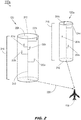
FIG. 2 is a diagrammatic illustration of flight deck effects (FDE) displayed via the PFD ofFIG. 1 ; -
FIG. 3 is a forward illustration of a heads-up display (HUD) in accordance with example embodiments of this disclosure; - and
FIG. 4 is a block diagram illustrating a real-time lightning detection system incorporating the PFD ofFIG. 1 and the HUD ofFIG. 3 . - Before explaining one or more embodiments of the disclosure in detail, it is to be understood that the embodiments are not limited in their application to the details of construction and the arrangement of the components or steps or methodologies set forth in the following description or illustrated in the drawings. In the following detailed description of embodiments, numerous specific details may be set forth in order to provide a more thorough understanding of the disclosure. However, it will be apparent to one of ordinary skill in the art having the benefit of the instant disclosure that the embodiments disclosed herein may be practiced without some of these specific details. In other instances, well-known features may not be described in detail to avoid unnecessarily complicating the instant disclosure.
- As used herein a letter following a reference numeral is intended to reference an embodiment of the feature or element that may be similar, but not necessarily identical, to a previously described element or feature bearing the same reference numeral (e.g., 1, 1a, 1b). Such shorthand notations are used for purposes of convenience only and should not be construed to limit the disclosure in any way unless expressly stated to the contrary.
- Further, unless expressly stated to the contrary, "or" refers to an inclusive or and not to an exclusive or. For example, a condition A or B is satisfied by any one of the following: A is true (or present) and B is false (or not present), A is false (or not present) and B is true (or present), and both A and B are true (or present).
- In addition, use of "a" or "an" may be employed to describe elements and components of embodiments disclosed herein. This is done merely for convenience and "a" and "an" are intended to include "one" or "at least one," and the singular also includes the plural unless it is obvious that it is meant otherwise.
- Finally, as used herein any reference to "one embodiment" or "some embodiments" means that a particular element, feature, structure, or characteristic described in connection with the embodiment is included in at least one embodiment disclosed herein. The appearances of the phrase "in some embodiments" in various places in the specification are not necessarily all referring to the same embodiment, and embodiments may include one or more of the features expressly described or inherently present herein, or any combination or sub-combination of two or more such features, along with any other features which may not necessarily be expressly described or inherently present in the instant disclosure.
- Referring to
FIG. 1 , a synthetic vision system display 100 (SVS) is disclosed. - In embodiments, the
SVS display 100 may be displayed by a primary flight display 102 (PFD) mounted in an aircraft cockpit. In some embodiments, theSVS display 100 may be displayed by a mobile computing device, e.g., a tablet or similar device wirelessly linked to onboard avionics processors or networks. The SVS display may continually and dynamically indicate status updates combining positional, navigational, or operational data of the aircraft 104 (e.g.,heading 106,altitude 108,airspeed 110,attitude 112, communications status 114) with SVS-based or enhanced vision system (EVS) based representations of the surroundingterrain 116. For example, theterrain 116 surrounding theaircraft 104 may be visible or may be obscured (e.g., by darkness or degraded visual environment (DVE)); however, theSVS display 100 may combine positional information (e.g., GNSS satellite-based updates as to the exact longitude, latitude, and altitude of the aircraft) with retrieved information aboutterrain 116 and landmarks therewithin (e.g., natural features, manmade structures) corresponding to the current position to provide an accurate simulation of the surrounding terrain. In some embodiments, theSVS display 100 may include weather information, e.g., barometric pressure 118 or weather radar (WXR) information, e.g., active areas of precipitation or precipitation related turbulence. - In embodiments, the
SVS display 100 may displayflight deck effects aircraft 104 may identify any individual lightning strikes occurring within a predetermined range of the aircraft. Whenever a sufficient quantity of lightning strikes is detected in close proximity within a defined time history, anFDE FDE SVS display 100 at the appropriate bearing to, and distance from, theaircraft 104, such that the positions of the corresponding volumes are shown relative to the current position andheading 106 of the aircraft. In some embodiments, theFDE altitude marker 122 indicating the approximate ceiling of the volume at, e.g., FL (Flight Level) 250, FL 180, or FL 115 (corresponding respectively to 25000, 18000, or 11500 feet). - In embodiments, a given
FDE 120a may decay and disappear from theSVS display 100. For example, after one minute (e.g., after initial appearance) the FDE 120a may be displayed in an altered fashion, e.g., via dotted lines or change of color. After two minutes, the FDE 120a may be eliminated entirely. In some embodiments, theFDE SVS display 100 based on deceeding a strike threshold, as described below. In some embodiments, a givenFDE aircraft 104. - In embodiments, while a given
FDE 120 remains onscreen, the bearing and distance of the FDE are available for review by the flight crew. For example, by modifying the flight plan to navigate theaircraft 104 around, or away from, airspace corresponding to anFDE 120, the flight crew may enhance passenger comfort and safety while increasing the longevity of the airframe by reducing exposure to lightning strikes. - Referring to
FIG. 2 , theSVS display 100a may be implemented and may function similarly to theSVS display 100 ofFIG. 1 , except that theSVS display 100a may generate anFDE individual lightning strikes 202a-e, 204a-d (e.g., exceeding a predetermined strike threshold) within a volume of airspace within a predetermined time window (e.g., 1 minute). - In embodiments, the lightning sensors aboard the
aircraft 104 may continually detectindividual lightning strikes 202a-e, 204a-d, each individual lightning strike occurring at a given time and at a particular bearing to and distance from (206) theaircraft 104. For example, if, within the time window, a sufficient quantity of lightning strikes (202a-e) are detected within apredetermined radius 208 of an axis 210 (e.g., an axis extending vertically above the ground), theSVS display 100a may include acylindrical volume 212 having as its longitudinal axis theaxis 210 and including within itsradius 208 and height 214 (e.g., maximum altitude) theproximate lightning strikes 202a-e. In some embodiments, theradii 208 orheights volumes FDE - In embodiments, the
FDE volume 216 of theFDE 120a may reflect a lowermaximum altitude 218 than theheight 214 of thevolume 210 corresponding to theFDE 120; theFDE 120a may be associated with a more closely concentrated quantity oflightning strikes 204a-d. In embodiments, theFDEs SVS display 100a as described above. In some embodiments, as the time elapses after each individual lightning strike, the quantity oflightning strikes 202a-e, 204a-d within thevolumes FDE SVS display 100a. While eachindividual lightning strike 202a-e, 204a-d may contribute to the definition and creation of anFDE SVS display 100a may not include each individual lightning strike. - Referring to
FIG. 3 , theSVS display 100b may be implemented and may function similarly to the SVS displays 100, 100a ofFIGS. 1 and2 , except that theSVS display 100b (incorporatingFDEs 120, decayingFDE 120b and altitude markers 122) may be displayed by a heads-up display 302 (HUD), a helmet-mounted display (HMD) or some other version of head-worn display (HWD) worn by the user. - Referring to
FIG. 4 , a real-timelightning detection system 400 is disclosed. The real-timelightning detection system 400 may include lightning detection sensors 402 andavionics processors 404 and may incorporate one or more of aPFD 102, aHUD 302, or a helmet-mounted display 406 (HMD). - In embodiments, the real-time
lightning detection system 400 may detect and trackindividual lightning strikes 202 as they happen. For example, for eachindividual lightning strike 202, the lightning detection sensors 402 may track thetime 408 of the lightning strike as well as a bearing 410 from the strike to the aircraft (104,FIG. 1 ) and adistance 412 between the strike and the aircraft. Theavionics processors 404 may include processors for the synthetic vision system (SVS), which identify clusters ofproximate lightning strikes 202 based on the real-time lightning data (408, 410, 412) and generateFDEs 120 based on, e.g., a sufficient quantity of proximate or clustered lightning strikes within a time window. Theavionics processors 404 may include graphics processors capable of incorporating theFDEs 120 directly into the SVS display 100) or, in some embodiments, superimposing the FDEs onto the SVS display fed to thePFD 102, theHUD 302, or theHMD 406 for display to thepilot 414, crew, or other user/s. - In embodiments, having incorporated
FDEs 120 into theSVS display 100 at the appropriate bearing to and distance from theaircraft 104, theavionics processors 404 may continue to track the heading (106,FIG. 1 ) of the aircraft relative to the locations of the FDEs. For example, thepilot 414 or flight crew may take into consideration the bearing and distance of eachFDE 120 relative to theaircraft 104 as well as other weather and atmospheric data (e.g., a 2d plot of individual lightning strikes 202) in determining whether to modify the flight plan (416) of the aircraft to avoid airspace corresponding to the FDEs and the associated lightning strikes (e.g., via initiating a reroute), the modified flight plan sent to the displays (418) for display to the crew (420) for review and possible execution. In some embodiments, theavionics processors 404 may activate anaural alert 422 to warn the flight crew if theaircraft 104 continues on a course into, or proximate to, areas of extreme weather or frequent lightning strikes 202. - It is to be understood that embodiments of the methods disclosed herein may include one or more of the steps described herein. Further, such steps may be carried out in any desired order and two or more of the steps may be carried out simultaneously with one another. Two or more of the steps disclosed herein may be combined in a single step, and in some embodiments, one or more of the steps may be carried out as two or more sub-steps. Further, other steps or sub-steps may be carried in addition to, or as substitutes to one or more of the steps disclosed herein.
- Although inventive concepts have been described with reference to the embodiments illustrated in the attached drawing figures, equivalents may be employed and substitutions made herein without departing from the scope of the claims. Components illustrated and described herein are merely examples of a system/device and components that may be used to implement embodiments of the inventive concepts and may be replaced with other devices and components without departing from the scope of the claims. Furthermore, any dimensions, degrees, and/or numerical ranges provided herein are to be understood as non-limiting examples unless otherwise specified in the claims.
Claims (12)
- A synthetic vision system, SVS, comprising:at least one avionics processor (404) in communication with one or more lightning sensors (402) configured to sense real-time lightning data corresponding to at least one lightning strike proximate to an aircraft, the real-time lightning data including at least:a time of the lightning strike;a first bearing from the aircraft to the lightning strike;anda first distance between the aircraft and the lightning strike;the avionics processor configured to generate at least one flight deck effect, FDE, (120) corresponding to a volume enclosing a quantity of the proximate lightning strikes within a predetermined time window, the quantity exceeding a strike threshold, the FDE including at least a second bearing from the aircraft to the volume and a second distance between the aircraft and the volume;anda display system (100) installable aboard the aircraft and couplable to the avionics processor, the display system configured to:generate at least one status display based on one or more of a current position of the aircraft and an instrument status of the aircraft;anddisplay the at least one FDE relative to the status display to at least one user.
- The real-time lightning detection system of claim 1, wherein the at least one avionics processor includes a graphics processor configured to incorporate the at least one FDE into the status display.
- The SVS of claim 1 or 2, wherein the display system includes a primary flight display, PFD, (102) of the aircraft.
- The SVS of claim 1 or 2, wherein the display system includes at least one of a heads-up display, HUD, (302) or a helmet-mounted display, HMD, worn by the user.
- The SVS of any preceding claim, wherein the at least one FDE includes an altitude marker (122) corresponding to a maximum altitude of the volume.
- The SVS of any preceding claim, further comprising:
at least one speaker (422) configured to transmit an aural alert to the user, the aural alert based on at least one of the second bearing or the second distance. - A real-time lightning detection system, comprising:one or more aircraft-based lightning sensors (402) configured to:detect at least one lightning strike proximate to an aircraft;andgenerate real-time lightning data corresponding to the at least one lightning strike, the real-time lightning data including at least a first bearing from the aircraft, a first distance between the aircraft and the lightning strike, and a time of the lightning strike;at least one avionics processor (404) in communication with the one or more lightning sensors and configured to generate at least one flight deck effect, FDE, based on the real-time lightning data, the FDE corresponding to a volume enclosing a quantity of selected lightning strikes exceeding a strike threshold within a time window, the FDE including at least a second bearing from the aircraft to the volume and a second distance between the aircraft and the volume;andat least one display system (100) in communication with the avionics processor, the display system configured to:generate at least one status display based on one or more of a current position of the aircraft and an instrument status of the aircraft;anddisplay to at least one user the at least one FDE relative to the status display.
- The real-time lightning detection system of claim 7, wherein the at least one avionics processor includes a graphics processor configured to incorporate the at least one FDE into the status display.
- The real-time lightning detection system of claim 7 or 8, wherein the display system includes a primary flight display, PFD, (102) of the aircraft.
- The real-time lightning detection system of claim 7 or 8, wherein the display system includes at least one of a heads-up display, HUD, (302) or a helmet-mounted display, HMD, worn by the user.
- The real-time lightning detection system of claim 7, 8, 9 or 10, wherein the at least one FDE includes an altitude marker (122) corresponding to a maximum altitude of the volume.
- The real-time lightning detection system of any of claims 7 to 11, further comprising:
at least one speaker (422) configured to transmit an aural alert to the user, the aural alert based on at least one of the second bearing or the second distance.
Applications Claiming Priority (1)
| Application Number | Priority Date | Filing Date | Title |
|---|---|---|---|
| US16/691,261 US11561327B2 (en) | 2019-11-21 | 2019-11-21 | Real-time lightning monitor for synthetic vision systems (SVS) |
Publications (1)
| Publication Number | Publication Date |
|---|---|
| EP3825656A1 true EP3825656A1 (en) | 2021-05-26 |
Family
ID=73544063
Family Applications (1)
| Application Number | Title | Priority Date | Filing Date |
|---|---|---|---|
| EP20209246.6A Pending EP3825656A1 (en) | 2019-11-21 | 2020-11-23 | Real-time lightning monitor for synthetic vision system (svs) |
Country Status (2)
| Country | Link |
|---|---|
| US (1) | US11561327B2 (en) |
| EP (1) | EP3825656A1 (en) |
Families Citing this family (7)
| Publication number | Priority date | Publication date | Assignee | Title |
|---|---|---|---|---|
| EP4647803A1 (en) * | 2024-05-07 | 2025-11-12 | Honeywell International Inc. | System & process for displaying hazard data detected by onboard weather sensor on heads up display |
| USD1122955S1 (en) * | 2024-12-09 | 2026-04-21 | Jeppesen Foreflight, Inc. | Display screen or portion thereof with animated graphical user interface |
| USD1121653S1 (en) * | 2024-12-09 | 2026-04-07 | Jeppesen Foreflight, Inc. | Display screen or portion thereof with animated graphical user interface |
| USD1122274S1 (en) * | 2024-12-09 | 2026-04-14 | Jeppesen Foreflight, Inc. | Display screen or portion thereof with graphical user interface |
| USD1122956S1 (en) * | 2024-12-09 | 2026-04-21 | Jeppesen Foreflight, Inc. | Display screen or portion thereof with animated graphical user interface |
| USD1121651S1 (en) * | 2024-12-09 | 2026-04-07 | Jeppesen Foreflight, Inc. | Display screen or portion thereof with animated graphical user interface |
| USD1122957S1 (en) * | 2024-12-09 | 2026-04-21 | Jeppesen Foreflight, Inc. | Display screen or portion thereof with animated graphical user interface |
Citations (3)
| Publication number | Priority date | Publication date | Assignee | Title |
|---|---|---|---|---|
| US8244418B1 (en) * | 2008-07-03 | 2012-08-14 | Rockwell Collins, Inc. | System and method for generating alert signals in a weather awareness and warning system |
| US8477062B1 (en) * | 2009-09-29 | 2013-07-02 | Rockwell Collins, Inc. | Radar-based system, module, and method for presenting steering symbology on an aircraft display unit |
| US8902100B1 (en) * | 2008-03-07 | 2014-12-02 | Rockwell Collins, Inc. | System and method for turbulence detection |
Family Cites Families (23)
| Publication number | Priority date | Publication date | Assignee | Title |
|---|---|---|---|---|
| US4506211A (en) | 1981-02-17 | 1985-03-19 | Coleman Ernest W | Storm warning method and apparatus |
| US5305210A (en) | 1992-04-29 | 1994-04-19 | B. F. Goodrich Flight Systems, Inc. | Sampled data lightning strike detection and mapping system capable of early detection of an invalid strike from sampled data and quick resumption of monitoring an incoming signal |
| US5319553A (en) | 1992-04-29 | 1994-06-07 | B. F. Goodrich Flight Systems, Inc. | Lightning strike detection and mapping system with auto control of mapping display |
| US5325299A (en) | 1992-04-29 | 1994-06-28 | B. F. Goodrich Flight Systems, Inc. | System for classifying lightning strikes to enhance location estimation thereof |
| US5299127A (en) | 1992-04-29 | 1994-03-29 | Bf Goodrich Flight Systems, Inc. | Lightning strike detection and mapping system capable of monitoring its power source and of displaying a representation thereof on the mapping display |
| US5295071A (en) | 1992-04-29 | 1994-03-15 | B. F. Goodrich Flightsystems, Inc. | Sampled data lightning strike detection and mapping system capable of generating frequency spectrum of input signal waveforms and displaying such on the mapping display |
| US5331330A (en) | 1993-05-18 | 1994-07-19 | Susnjara Kenneth J | Apparatus and method for detecting and displaying lightning |
| US5537318A (en) | 1994-07-13 | 1996-07-16 | B. F. Goodrich Flightsystems, Inc. | Lightning strike detection and mapping system |
| US5610813A (en) | 1994-10-06 | 1997-03-11 | B. F. Goodrich Flightsystems, Inc. | Thunderstorm cell detection and mapping system for identifying and ranging thunderstorm cells by clustering single strike lightning observations |
| EP0845110A4 (en) | 1995-07-26 | 1999-04-14 | Airborne Res Ass | Lightning locating system |
| US6405133B1 (en) * | 1998-07-30 | 2002-06-11 | Avidyne Corporation | Displaying lightning strikes |
| US6560538B2 (en) | 1998-06-15 | 2003-05-06 | Avidyne Corporation | Displaying lightning strikes |
| US6215294B1 (en) | 1998-12-30 | 2001-04-10 | Ernest Wilson Coleman | Storm warning method and apparatus |
| US8010289B1 (en) | 2005-07-19 | 2011-08-30 | Avidyne Corporation | Method and apparatus for detecting and processing lightning |
| US7868811B1 (en) | 2006-03-07 | 2011-01-11 | Rockwell Collins, Inc. | Weather radar system and method using data from a lightning sensor |
| US20090164124A1 (en) | 2007-12-21 | 2009-06-25 | Advidyne Corporation | Ultra wideband receiver for lightning detection |
| US9134418B1 (en) | 2013-03-15 | 2015-09-15 | Rockwell Collins, Inc. | Weather hazard threat level computation and display |
| JP6411651B2 (en) | 2014-07-16 | 2018-10-24 | アキュウェザー, インク.Accuweather, Inc. | Lightning detection system and apparatus |
| US10175353B2 (en) * | 2015-09-23 | 2019-01-08 | Rockwell Collins, Inc. | Enhancement of airborne weather radar performance using external weather data |
| US10302815B1 (en) | 2015-10-01 | 2019-05-28 | Rockwell Collins, Inc. | System and method of integrating global convective weather |
| US10094682B2 (en) * | 2017-02-22 | 2018-10-09 | Honeywell International Inc. | Cockpit display systems and methods for performing glide slope validation processes during instrument landing system approaches |
| US10762793B2 (en) * | 2018-08-13 | 2020-09-01 | Honeywell International Inc. | Systems and methods for selecting accurate runway records for use in cockpit display systems |
| US11582412B2 (en) * | 2021-04-01 | 2023-02-14 | Rockwell Collins, Inc. | Camera agnostic core monitor incorporating projected images with high spatial frequency |
-
2019
- 2019-11-21 US US16/691,261 patent/US11561327B2/en active Active
-
2020
- 2020-11-23 EP EP20209246.6A patent/EP3825656A1/en active Pending
Patent Citations (3)
| Publication number | Priority date | Publication date | Assignee | Title |
|---|---|---|---|---|
| US8902100B1 (en) * | 2008-03-07 | 2014-12-02 | Rockwell Collins, Inc. | System and method for turbulence detection |
| US8244418B1 (en) * | 2008-07-03 | 2012-08-14 | Rockwell Collins, Inc. | System and method for generating alert signals in a weather awareness and warning system |
| US8477062B1 (en) * | 2009-09-29 | 2013-07-02 | Rockwell Collins, Inc. | Radar-based system, module, and method for presenting steering symbology on an aircraft display unit |
Also Published As
| Publication number | Publication date |
|---|---|
| US11561327B2 (en) | 2023-01-24 |
| US20210157030A1 (en) | 2021-05-27 |
Similar Documents
| Publication | Publication Date | Title |
|---|---|---|
| US11561327B2 (en) | Real-time lightning monitor for synthetic vision systems (SVS) | |
| US10748435B2 (en) | Obstacle avoidance system | |
| EP2416124B1 (en) | Enhanced flight vision system for enhancing approach runway signatures | |
| US8687056B2 (en) | Aircraft landing assistance | |
| US9384586B1 (en) | Enhanced flight vision system and method with radar sensing and pilot monitoring display | |
| US7675461B1 (en) | System and method for displaying radar-estimated terrain | |
| US8742952B1 (en) | Traffic awareness systems and methods | |
| US10175353B2 (en) | Enhancement of airborne weather radar performance using external weather data | |
| US10467913B1 (en) | Flight assistant | |
| US8457889B2 (en) | Waypoint display system and method | |
| EP2851889B1 (en) | System and method for processing and displaying wake turbulence | |
| US8010245B2 (en) | Aircraft systems and methods for displaying a touchdown point | |
| US10388049B2 (en) | Avionic display systems and methods for generating avionic displays including aerial firefighting symbology | |
| US20100023189A1 (en) | Aircraft display systems and methods for enhanced display of landing information | |
| CN107957505B (en) | Aircraft system and method for displaying wind shear | |
| CN109436348A (en) | For adjusting the aircraft system and method for shown sensor image visual field | |
| US20180322792A1 (en) | Display system and method for indicating a time-based requirement | |
| EP2211146B1 (en) | System for generating obstacle position indicator on aircraft display device | |
| US12371184B2 (en) | Systems and methods for presenting a qualitative risk assessment for an aircraft to perform a flight procedure | |
| US10417916B2 (en) | Method and system to provide contextual auto-correlation of vertical situational display objects to objects displayed on a lateral map display based on a priority scheme | |
| WO2005050601A2 (en) | Display systems for a device | |
| US11130592B1 (en) | Method of avoiding controlled flight into terrain and a controlled flight into terrain avoidance system | |
| He et al. | EGPWS on synthetic vision primary flight display | |
| US20190276159A1 (en) | Avionic system operator terminal flying an aircraft | |
| Arthur et al. | Multi-modal cockpit interface for improved airport surface operations |
Legal Events
| Date | Code | Title | Description |
|---|---|---|---|
| PUAI | Public reference made under article 153(3) epc to a published international application that has entered the european phase |
Free format text: ORIGINAL CODE: 0009012 |
|
| STAA | Information on the status of an ep patent application or granted ep patent |
Free format text: STATUS: THE APPLICATION HAS BEEN PUBLISHED |
|
| AK | Designated contracting states |
Kind code of ref document: A1 Designated state(s): AL AT BE BG CH CY CZ DE DK EE ES FI FR GB GR HR HU IE IS IT LI LT LU LV MC MK MT NL NO PL PT RO RS SE SI SK SM TR |
|
| STAA | Information on the status of an ep patent application or granted ep patent |
Free format text: STATUS: REQUEST FOR EXAMINATION WAS MADE |
|
| 17P | Request for examination filed |
Effective date: 20211126 |
|
| RBV | Designated contracting states (corrected) |
Designated state(s): AL AT BE BG CH CY CZ DE DK EE ES FI FR GB GR HR HU IE IS IT LI LT LU LV MC MK MT NL NO PL PT RO RS SE SI SK SM TR |
|
| STAA | Information on the status of an ep patent application or granted ep patent |
Free format text: STATUS: EXAMINATION IS IN PROGRESS |
|
| 17Q | First examination report despatched |
Effective date: 20230105 |