EP3825267A1 - Method of controlling caliper of the fiber web of a parent roll and production line for producing fiber webs - Google Patents
Method of controlling caliper of the fiber web of a parent roll and production line for producing fiber webs Download PDFInfo
- Publication number
- EP3825267A1 EP3825267A1 EP20203987.1A EP20203987A EP3825267A1 EP 3825267 A1 EP3825267 A1 EP 3825267A1 EP 20203987 A EP20203987 A EP 20203987A EP 3825267 A1 EP3825267 A1 EP 3825267A1
- Authority
- EP
- European Patent Office
- Prior art keywords
- caliper
- fiber web
- parent roll
- roll
- customer
- Prior art date
- Legal status (The legal status is an assumption and is not a legal conclusion. Google has not performed a legal analysis and makes no representation as to the accuracy of the status listed.)
- Granted
Links
Images


Classifications
-
- D—TEXTILES; PAPER
- D21—PAPER-MAKING; PRODUCTION OF CELLULOSE
- D21F—PAPER-MAKING MACHINES; METHODS OF PRODUCING PAPER THEREON
- D21F7/00—Other details of machines for making continuous webs of paper
- D21F7/06—Indicating or regulating the thickness of the layer; Signal devices
-
- B—PERFORMING OPERATIONS; TRANSPORTING
- B65—CONVEYING; PACKING; STORING; HANDLING THIN OR FILAMENTARY MATERIAL
- B65H—HANDLING THIN OR FILAMENTARY MATERIAL, e.g. SHEETS, WEBS, CABLES
- B65H18/00—Winding webs
- B65H18/08—Web-winding mechanisms
- B65H18/10—Mechanisms in which power is applied to web-roll spindle
-
- B—PERFORMING OPERATIONS; TRANSPORTING
- B65—CONVEYING; PACKING; STORING; HANDLING THIN OR FILAMENTARY MATERIAL
- B65H—HANDLING THIN OR FILAMENTARY MATERIAL, e.g. SHEETS, WEBS, CABLES
- B65H18/00—Winding webs
-
- B—PERFORMING OPERATIONS; TRANSPORTING
- B65—CONVEYING; PACKING; STORING; HANDLING THIN OR FILAMENTARY MATERIAL
- B65H—HANDLING THIN OR FILAMENTARY MATERIAL, e.g. SHEETS, WEBS, CABLES
- B65H26/00—Warning or safety devices, e.g. automatic fault detectors, stop-motions, for web-advancing mechanisms
- B65H26/08—Warning or safety devices, e.g. automatic fault detectors, stop-motions, for web-advancing mechanisms responsive to a predetermined diameter
-
- B—PERFORMING OPERATIONS; TRANSPORTING
- B65—CONVEYING; PACKING; STORING; HANDLING THIN OR FILAMENTARY MATERIAL
- B65H—HANDLING THIN OR FILAMENTARY MATERIAL, e.g. SHEETS, WEBS, CABLES
- B65H18/00—Winding webs
- B65H18/28—Wound package of webs
-
- D—TEXTILES; PAPER
- D21—PAPER-MAKING; PRODUCTION OF CELLULOSE
- D21F—PAPER-MAKING MACHINES; METHODS OF PRODUCING PAPER THEREON
- D21F9/00—Complete machines for making continuous webs of paper
-
- D—TEXTILES; PAPER
- D21—PAPER-MAKING; PRODUCTION OF CELLULOSE
- D21G—CALENDERS; ACCESSORIES FOR PAPER-MAKING MACHINES
- D21G9/00—Other accessories for paper-making machines
- D21G9/0009—Paper-making control systems
-
- D—TEXTILES; PAPER
- D21—PAPER-MAKING; PRODUCTION OF CELLULOSE
- D21G—CALENDERS; ACCESSORIES FOR PAPER-MAKING MACHINES
- D21G9/00—Other accessories for paper-making machines
- D21G9/0009—Paper-making control systems
- D21G9/0054—Paper-making control systems details of algorithms or programs
-
- B—PERFORMING OPERATIONS; TRANSPORTING
- B65—CONVEYING; PACKING; STORING; HANDLING THIN OR FILAMENTARY MATERIAL
- B65H—HANDLING THIN OR FILAMENTARY MATERIAL, e.g. SHEETS, WEBS, CABLES
- B65H2511/00—Dimensions; Position; Numbers; Identification; Occurrences
- B65H2511/10—Size; Dimensions
- B65H2511/13—Thickness
-
- B—PERFORMING OPERATIONS; TRANSPORTING
- B65—CONVEYING; PACKING; STORING; HANDLING THIN OR FILAMENTARY MATERIAL
- B65H—HANDLING THIN OR FILAMENTARY MATERIAL, e.g. SHEETS, WEBS, CABLES
- B65H2511/00—Dimensions; Position; Numbers; Identification; Occurrences
- B65H2511/10—Size; Dimensions
- B65H2511/14—Diameter, e.g. of roll or package
-
- B—PERFORMING OPERATIONS; TRANSPORTING
- B65—CONVEYING; PACKING; STORING; HANDLING THIN OR FILAMENTARY MATERIAL
- B65H—HANDLING THIN OR FILAMENTARY MATERIAL, e.g. SHEETS, WEBS, CABLES
- B65H2515/00—Physical entities not provided for in groups B65H2511/00 or B65H2513/00
- B65H2515/10—Mass, e.g. mass flow rate; Weight; Inertia
-
- B—PERFORMING OPERATIONS; TRANSPORTING
- B65—CONVEYING; PACKING; STORING; HANDLING THIN OR FILAMENTARY MATERIAL
- B65H—HANDLING THIN OR FILAMENTARY MATERIAL, e.g. SHEETS, WEBS, CABLES
- B65H2515/00—Physical entities not provided for in groups B65H2511/00 or B65H2513/00
- B65H2515/12—Density
-
- B—PERFORMING OPERATIONS; TRANSPORTING
- B65—CONVEYING; PACKING; STORING; HANDLING THIN OR FILAMENTARY MATERIAL
- B65H—HANDLING THIN OR FILAMENTARY MATERIAL, e.g. SHEETS, WEBS, CABLES
- B65H2557/00—Means for control not provided for in groups B65H2551/00 - B65H2555/00
- B65H2557/20—Calculating means; Controlling methods
- B65H2557/24—Calculating methods; Mathematic models
- B65H2557/242—Calculating methods; Mathematic models involving a particular data profile or curve
-
- B—PERFORMING OPERATIONS; TRANSPORTING
- B65—CONVEYING; PACKING; STORING; HANDLING THIN OR FILAMENTARY MATERIAL
- B65H—HANDLING THIN OR FILAMENTARY MATERIAL, e.g. SHEETS, WEBS, CABLES
- B65H2557/00—Means for control not provided for in groups B65H2551/00 - B65H2555/00
- B65H2557/60—Details of processes or procedures
- B65H2557/63—Optimisation, self-adjustment, self-learning processes or procedures, e.g. during start-up
-
- B—PERFORMING OPERATIONS; TRANSPORTING
- B65—CONVEYING; PACKING; STORING; HANDLING THIN OR FILAMENTARY MATERIAL
- B65H—HANDLING THIN OR FILAMENTARY MATERIAL, e.g. SHEETS, WEBS, CABLES
- B65H2701/00—Handled material; Storage means
- B65H2701/10—Handled articles or webs
- B65H2701/17—Nature of material
- B65H2701/177—Fibrous or compressible material
-
- B—PERFORMING OPERATIONS; TRANSPORTING
- B65—CONVEYING; PACKING; STORING; HANDLING THIN OR FILAMENTARY MATERIAL
- B65H—HANDLING THIN OR FILAMENTARY MATERIAL, e.g. SHEETS, WEBS, CABLES
- B65H2801/00—Application field
- B65H2801/84—Paper-making machines
Definitions
- present invention relates to production of fiber webs, in particular to producing board webs. More especially the present invention relates to a method of controlling caliper of the fiber web of a parent roll according to preamble part of the independent method claim and to production line for producing fiber webs according to preamble part of the independent production line claim.
- a typical production and treatment line comprises a head box, a wire section and a press section as well as a subsequent drying section and a reel-up.
- the production and treatment line can further comprise other sections and devices for finishing the fiber web, for example a sizer, a coating device and a calender.
- the production and treatment line also typically comprises at least one slitter-winder for forming customer rolls as well as a roll packaging apparatus.
- fiber webs such as paper or board webs, are manufactured in machines together forming a fiber web manufacturing line, which may be hundreds of meters long.
- the parent roll is wound up to be just as tight as to endure reeling, storage including roll transfers and later unwinding.
- the goal is for the parent roll tightness to decrease from inner layers to surface or, at least, to remain the same.
- One known system is described in WO patent application publication 02102693 A1 .
- the reeling parameters: nip load, web tension and peripheral force, are determined based on f. ex. properties of paper or board, such as smoothness, stiffness, compressibility and friction coefficient, the parent roll size, handling method, storage time and running speed.
- the reeling parameters are typically only changed when the fiber web grade changes or if there are reeling problems.
- Fiber webs especially paper and board are available in a wide variety of types and can be divided according to basis weight in two grades: papers with a single ply and a basis weight of 25-300 g/m 2 and boards manufactured in one- or multi-ply technology and having a basis weight of 150-600 m/m 2 .
- the borderline between paper and board is flexible since board grades with lightest basis weights are lighter than the heaviest paper grades.
- paper is used for printing and board for packaging.
- the main carton board grades are folding boxboard (FBB), white-lined chipboard (WLC), solid bleached board (SBS) and liquid packaging board (LPB). In general, these grades are typically used for different kinds of packaging of consumer goods.
- Carton board grades vary from one- up to five-ply boards (150-400 g/m 2 ).
- the top side is usually coated with from one to three layers (20-40 g/m 2 ), the back side has less coating or no coating at all.
- the method of controlling caliper of the fiber web according to the invention is mainly characterized by the features of the characterizing clause of the independent method claim and the production line for producing fiber webs according to the invention is mainly characterized by the features of the characterizing clause of the independent production line claim.
- Advantageous embodiments and features are disclosed in the dependent claims.
- inner layers of a parent roll is meant 10 %, advantageously 5 %, of the whole length of the fiber web on the parent roll.
- the caliper of the fiber web of a parent roll produced in a fiber web production line comprising a head box, a forming section, a press section, a drying section, a calender, a coating section, a reel-up, an unwinding station of a slitter-winder, a slitting section of the slitter-winder, a winding section of the slitter-winder, the caliper of the fiber web of the parent roll is controlled as a function of the diameter of the parent roll.
- At least one of the following running parameters of the production line web speed i.e. production speed, headbox-flow, head-box consistency, coating weight of the coating paste and/or calender nip load is adjusted for reeling of the parent roll to control the caliper of the fiber web.
- caliper of the fiber web to be wound as inner layers of the parent roll is adjusted to exceed a set target value of the caliper of the fiber web by adjusting the running parameter/-s.
- the finished parent roll is provided the fiber web with desired caliper as a function of the diameter of the parent roll or the customer roll, advantageously with constant caliper.
- the running speed of the production line is decreased in order to provide fiber web with caliper values exceeding the target value of the caliper of the fiber web for the inner layers of the parent roll.
- to provide fiber web with caliper values exceeding the target value of the caliper of the fiber web for the inner layers of the parent roll is provided by increasing the headbox-flow and/or by increasing the head-box consistency and/or by increasing the coating weight of the coating paste and/or by reducing thee calender nip load.
- time interval for the run with adjusted running parameters for the run of the inner layers of the parent roll is defined advantageously by caliper data calculated based on data received from an on-line measurement means, advantageously sensors, at the unwinding station of the slitter-winder and/or from an on-line measurement means, advantageously sensors, at winding section of the slitter-winder.
- the caliper data can be calculated based on calculation systems known as such, for example as described in WO patent application publication 02102693 A1 .
- the fiber web is produced in a fiber web production line further comprising a parent roll storage with a sample taking station and/or a customer roll storage with a sample taking station and time interval for the run with adjusted running parameters for the run of the inner layers of the parent roll is defined advantageously by caliper measurement data received the sample taking station/-s.
- the method comprises: a target setting step, in which target caliper data of the fiber web is set, a parameter selection step, in which the running parameters, web speed i.e. production speed, the headbox-flow and/or the head-box consistency, the coating weight of the coating paste to be applied onto the fiber web at the coating section and the calender nip load of the calender are selected and defined to produce a fiber web with the target caliper, a measurement step, in which the caliper data is received, a checking step, in which based on the received caliper data is checked whether the caliper of the fiber web as a function of the diameter of the parent roll or the customer roll is desired, advantageously constant, in the parent roll/in the customer roll, and if the caliper of the fiber web in the parent roll/in the customer roll is not desired, advantageously constant, the return branch is selected, and the diameter dependent correction factor is changed in a factor changing step and the selected running parameter/-s are changed accordingly in the parameter selection
- the method further comprises: a sample measurement step, in which caliper data is received and thereafter a sample checking step and based on the from the sample measurement step received caliper data is checked whether the caliper of the fiber web as a function of the diameter of the parent roll or the customer roll is desired, advantageously constant, in the parent roll/in the customer roll and if the caliper of the fiber web in the parent roll/in the customer roll is not desired, advantageously constant, an additional return branch is selected and the diameter dependent correction factor is changed in factor changing step and the selected running parameter/-s are changed accordingly in the parameter selection step.
- the production line for producing fiber webs comprises a head box, a forming section, a press section, a drying section, a calender, a coating section, a reel-up, an unwinding station of a slitter-winder, a slitting section of the slitter-winder, a winding section of the slitter-winder and measuring means, for example sensors, advantageously one-line measuring means, to measure the of the fiber web of the parent roll to calculate the caliper of the fiber web, for example based on calculation systems known as such, for example as described in WO patent application publication 02102693 A1 , to be unwound in the unwinding station and/or to define the caliper of the fiber web to be wound to a customer roll in the winding section, wherein the production line further comprises a data-base and calculating device to collect and store the measurement data received from the measuring means and to calculate, for example as described in WO patent application publication 02102693 A1 , and
- the production line further comprises a parent roll storage, a sample taking station at the parent roll storage and/or a customer roll storage and a sample taking station at the customer roll storage to take samples of the fiber web in order to define the caliper of the fiber web.
- the caliper of the unwound fiber web is with desired caliper as a function of the diameter of the parent roll, advantageously with constant caliper / the caliper of the fiber web to be unwound from a customer roll is with desired caliper as a function of the diameter of the customer roll, advantageously with constant caliper.
- time of running increased caliper is about 10% of the reeling of one parent roll in the reel-up.
- figure 1 is shown schematically an advantageous example of a fiber web production line according to the invention.
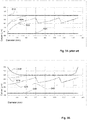
- FIGS 3A-3B is schematically shown example graphs of caliper losses, in figure 3A in accordance prior art and in figure 3B in accordance with the invention.
- the caliper of the fiber web W of the parent roll is controlled as a function of the diameter of the parent roll.
- at least one of the following running parameters of the production line: web speed i.e. production speed, headbox-flow, head-box consistency, coating weight of the coating paste and/or calender nip load is adjusted for reeling of a parent roll such, that caliper of the fiber web W to be wound as inner layers of the parent roll exceeds the target value and desired caliper as a function of the diameter of the parent roll/the customer roll, advantageously constant caliper of the fiber web of the parent roll is achieved.
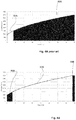
- FIGS 4A-4B is schematically shown portion of over caliper run of a parent roll, in figure 4A in accordance prior art and in figure 4B in accordance with the invention.
- the running time in over caliper is about 90 % of the running time of the parent roll unwinding but in the invention as can be seen from figure 4B the running time in over caliper is only about 10 % of the running time of the parent roll unwinding and thereby, the situation has significantly improved.
- Graphs 65A, 65B illustrate the diameter of the parent roll as function of time and the covered areas 66A, 66B illustrate the portion of over caliper run.
Landscapes
- Engineering & Computer Science (AREA)
- Software Systems (AREA)
- Paper (AREA)
- Treatment Of Fiber Materials (AREA)
- Nonwoven Fabrics (AREA)
Abstract
Description
- In general, present invention relates to production of fiber webs, in particular to producing board webs. More especially the present invention relates to a method of controlling caliper of the fiber web of a parent roll according to preamble part of the independent method claim and to production line for producing fiber webs according to preamble part of the independent production line claim.
- As known from the prior art in fiber web producing processes typically comprise an assembly formed by a number of apparatuses arranged consecutively in the process line. A typical production and treatment line comprises a head box, a wire section and a press section as well as a subsequent drying section and a reel-up. The production and treatment line can further comprise other sections and devices for finishing the fiber web, for example a sizer, a coating device and a calender. The production and treatment line also typically comprises at least one slitter-winder for forming customer rolls as well as a roll packaging apparatus. And as known, fiber webs, such as paper or board webs, are manufactured in machines together forming a fiber web manufacturing line, which may be hundreds of meters long.
- In fiber web manufacturing lines, manufacturing operates as a continuous process and the process is generally run with constant speed and with constant basis weight, when producing selected fiber web grade. The finished fiber web being output from the machine is wound with a reel-up around a reeling shaft, i.e. a reel spool, into a parent roll (a machine roll), the diameter of which may be more than 5 meters, and which may weigh more than 160 tons. The purpose of the reeling is to transfer the fiber web from its planar manufacturing form into a form in which it can be handled more easily. The reel-up is thus a device that reels a material, which is produced as a continuous fiber web in a fiber web production line, into form of a roll; the parent roll. In the production process of the fiber web, the reeling is generally a first process part, wherein a continuous process is discontinued to be continued in sequences. The parent roll is formed around the reeling shaft that functions as a core of reeling, i.e. the fiber web on one parent roll around one reeling shaft has a beginning and an end.
- The parent roll is wound up to be just as tight as to endure reeling, storage including roll transfers and later unwinding. Typically, the goal is for the parent roll tightness to decrease from inner layers to surface or, at least, to remain the same. It is known from prior art to define real-time parent reel or wound roll caliper and density by a measurement and calculation system. It is also known to define wound-in caliper profiles during reeling. One known system is described in
WO patent application publication 02102693 A1 - The web of the parent roll generated during manufacture is full-width and even more than 100 km long, so it must be cut into partial webs of a suitable width and length for customers and wound around cores into "customer rolls" before dispatch from the mill. As known, this slitting and winding of the web takes place in a separate machine fitted to the purpose, i.e., a slitter-winder. In the slitter-winder the parent roll is unwound in the unwinding station off the reeling shaft and the broad web is slit with the slitting section into a number of narrower partial webs, which are wound with the winding section in the winder around winding spools such as cores into customer rolls. When the customer rolls are ready, the slitter-winder is stopped and the rolls, or "set", is removed from the machine. After this, the process continues with the winding of a new set. These stages are repeated periodically until the fiber web on the parent roll runs out from the reeling shaft, at which point the parent roll is replaced and the operation restarts with the unwinding of a new parent roll from the reeling shaft.
- Fiber webs, especially paper and board are available in a wide variety of types and can be divided according to basis weight in two grades: papers with a single ply and a basis weight of 25-300 g/m2 and boards manufactured in one- or multi-ply technology and having a basis weight of 150-600 m/m2. It should be noted that the borderline between paper and board is flexible since board grades with lightest basis weights are lighter than the heaviest paper grades. Generally speaking, paper is used for printing and board for packaging. The main carton board grades are folding boxboard (FBB), white-lined chipboard (WLC), solid bleached board (SBS) and liquid packaging board (LPB). In general, these grades are typically used for different kinds of packaging of consumer goods. Carton board grades vary from one- up to five-ply boards (150-400 g/m2). The top side is usually coated with from one to three layers (20-40 g/m2), the back side has less coating or no coating at all.
- Bulkiness i.e. relation of thickness of the fiber web to its grammage (basis weight) of board webs reduces during reeling and typically bulk loss is greatest in inner layers of the parent roll as the stresses inside the parent roll cause caliper losses. Additionally, some bulk loss may occur during winding in the slitter-winder. Due to this in board manufacturing board web is typically produced in caliper values exceeding the target value, even 5 %, in order to reach the target value also in the worst case. Thus, of the production time even over 90 % of time is run with caliper values that exceed the target value. This has a significant negative input also economically. These disadvantages and problems also increase, when the bulkiness of the fiber web increases.
- In
EP publication 2107997 A1 is disclosed a method for winding continuous web material to form a substantially fully compressed roll of the wound web material so that the machine direction tension in the web is substantially uniform throughout the wound roll of web material. In the method a compensated WOT profile id generated and the compensated WOT profile varies as a function of the wound roll diameter and the compensated WOT profile is the WOT that is needed in the web as the web is being wound onto the roll in order to provide the wound roll with a substantially uniform thru-roll MD tension. In the method the compensated WOT profile can be converted to speed control based on a predetermined relation between winder speed and WOT for the web. - An object of the invention is to create a method of controlling caliper of the fiber web of a parent roll and a production line for producing fiber webs, in which the disadvantages and problems of prior art are eliminated or at least minimized.
A particular object of the invention is to create a method of controlling caliper of the fiber web and a production line for producing fiber webs, in which the disadvantages and problems of prior art relating to running the production of the fiber web with caliper values exceeding the target values are eliminated or at least minimized. - In order to achieve the above mentioned objects, the method of controlling caliper of the fiber web according to the invention is mainly characterized by the features of the characterizing clause of the independent method claim and the production line for producing fiber webs according to the invention is mainly characterized by the features of the characterizing clause of the independent production line claim. Advantageous embodiments and features are disclosed in the dependent claims.
- In this description and in the claims by the expression "inner layers of a parent roll" is meant 10 %, advantageously 5 %, of the whole length of the fiber web on the parent roll.
- According to the invention in the method of controlling the caliper of the fiber web of a parent roll produced in a fiber web production line comprising a head box, a forming section, a press section, a drying section, a calender, a coating section, a reel-up, an unwinding station of a slitter-winder, a slitting section of the slitter-winder, a winding section of the slitter-winder, the caliper of the fiber web of the parent roll is controlled as a function of the diameter of the parent roll.
- According to an advantageous feature of the invention in the method at least one of the following running parameters of the production line: web speed i.e. production speed, headbox-flow, head-box consistency, coating weight of the coating paste and/or calender nip load is adjusted for reeling of the parent roll to control the caliper of the fiber web.
- According to an advantageous feature of the invention in the method caliper of the fiber web to be wound as inner layers of the parent roll is adjusted to exceed a set target value of the caliper of the fiber web by adjusting the running parameter/-s.
- According to an advantageous feature of the invention in the method the finished parent roll is provided the fiber web with desired caliper as a function of the diameter of the parent roll or the customer roll, advantageously with constant caliper.
- According to an advantageous feature of the invention the running parameter/- s is/are adjusted beginning at the latest at the time for the fiber web to be reeled as the inner most layer of the parent roll for a time-interval corresponding to reeling the inner layers of the parent roll. According to an advantageous aspect it is preferable if the running during a changing parameter is timed to correspond the time when running bottom or surface waste layers of the parent roll.
- According to an advantageous feature of the invention the running speed of the production line is decreased in order to provide fiber web with caliper values exceeding the target value of the caliper of the fiber web for the inner layers of the parent roll.
- According to an advantageous feature of the invention to provide fiber web with caliper values exceeding the target value of the caliper of the fiber web for the inner layers of the parent roll is provided by increasing the headbox-flow and/or by increasing the head-box consistency and/or by increasing the coating weight of the coating paste and/or by reducing thee calender nip load.
- According to an advantageous feature of the invention time interval for the run with adjusted running parameters for the run of the inner layers of the parent roll is defined advantageously by caliper data calculated based on data received from an on-line measurement means, advantageously sensors, at the unwinding station of the slitter-winder and/or from an on-line measurement means, advantageously sensors, at winding section of the slitter-winder. The caliper data can be calculated based on calculation systems known as such, for example as described in
WO patent application publication 02102693 A1 - According to an advantageous feature of the invention the fiber web is produced in a fiber web production line further comprising a parent roll storage with a sample taking station and/or a customer roll storage with a sample taking station and time interval for the run with adjusted running parameters for the run of the inner layers of the parent roll is defined advantageously by caliper measurement data received the sample taking station/-s.
- According to an advantageous feature of the invention the method comprises: a target setting step, in which target caliper data of the fiber web is set,
a parameter selection step, in which the running parameters, web speed i.e. production speed, the headbox-flow and/or the head-box consistency, the coating weight of the coating paste to be applied onto the fiber web at the coating section and the calender nip load of the calender are selected and defined to produce a fiber web with the target caliper,
a measurement step, in which the caliper data is received,
a checking step, in which based on the received caliper data is checked whether the caliper of the fiber web as a function of the diameter of the parent roll or the customer roll is desired, advantageously constant, in the parent roll/in the customer roll,
and if the caliper of the fiber web in the parent roll/in the customer roll is not desired, advantageously constant, the return branch is selected, and the diameter dependent correction factor is changed in a factor changing step and the selected running parameter/-s are changed accordingly in the parameter selection step. - According to an advantageous feature of the invention the method further comprises: a sample measurement step, in which caliper data is received and thereafter a sample checking step and based on the from the sample measurement step received caliper data is checked whether the caliper of the fiber web as a function of the diameter of the parent roll or the customer roll is desired, advantageously constant, in the parent roll/in the customer roll and if the caliper of the fiber web in the parent roll/in the customer roll is not desired, advantageously constant, an additional return branch is selected and the diameter dependent correction factor is changed in factor changing step and the selected running parameter/-s are changed accordingly in the parameter selection step.
- According to the invention the production line for producing fiber webs comprises a head box, a forming section, a press section, a drying section, a calender, a coating section, a reel-up, an unwinding station of a slitter-winder, a slitting section of the slitter-winder, a winding section of the slitter-winder and measuring means, for example sensors, advantageously one-line measuring means, to measure the of the fiber web of the parent roll to calculate the caliper of the fiber web, for example based on calculation systems known as such, for example as described in
WO patent application publication 02102693 A1 WO patent application publication 02102693 A1 - According to an advantageous feature of the invention the production line further comprises a parent roll storage, a sample taking station at the parent roll storage and/or a customer roll storage and a sample taking station at the customer roll storage to take samples of the fiber web in order to define the caliper of the fiber web.
- According to an advantageous aspect of the present invention the caliper of the fiber web is controlled as a function of the diameter of the parent roll in unwinding in the unwinding station of the slitter-winder, alternatively or additionally as a function of the diameter of the customer rolls of the set. Advantageously, the caliper is increased before the turn-up (change to new parent roll winding) in the reel-up and a set time increased caliper is reeled as the inner layers of the parent roll. There after the caliper is set to the target value. Thus, in unwinding the caliper of the unwound fiber web is with desired caliper as a function of the diameter of the parent roll, advantageously with constant caliper / the caliper of the fiber web to be unwound from a customer roll is with desired caliper as a function of the diameter of the customer roll, advantageously with constant caliper. Advantageously, time of running increased caliper is about 10% of the reeling of one parent roll in the reel-up.
- According to an advantageous aspect of the invention based on caliper curve of the parent roll in unwinding in the unwinding station of the slitter-winder the caliper of the fiber web is adjusted by decreasing the production speed of the production line, typically2-3 %, if required even up to 10 %, such that the fiber web to be reeled as inner layers of the parent roll will have increased caliper to compensate the bulk loss of the reeling and winding.
- According to another advantageous aspect of the invention based on caliper curve of the customer roll set produced in the slitter-winder the caliper of the fiber web is adjusted by decreasing the production speed of the production line, typically 2-3 %, if required even up to 10 %, such that the fiber web to be reeled as inner layers of the parent roll will have increased caliper to compensate the bulk loss of the reeling and winding.
- Alternatively, to provide the increased caliper to the inner layers of the parent roll the consistency of the head-box and/or flow at the slice of the head-box is adjusted correspondingly for the inner layers of the parent roll. In case a multi-ply fiber web is produced, for example only the consistency of the middle layer head-box and/or flow at the slice of the middle-layer head-box is adjusted.
- Alternatively, to provide the increased caliper to the inner layers of the parent roll the coating weight of the coating paste to be applied onto the fiber web at the coating section is adjusted correspondingly for the inner layers of the parent roll.
- Alternatively, to provide the increased caliper to the inner layers of the parent roll the calender nip load is adjusted correspondingly for the inner layers of the parent roll.
- By the invention and its advantageous features many advantages are achieved: amount of raw material used, and energy consumed decreased several percent and still the target values of the fiber web produced are achieved. Thus, significant environmental and economical saving are also achieved.
- In the following the invention is explained in detail with reference to the accompanying drawing to which the invention is not to be narrowly limited.
- In
figure 1 is shown schematically an advantageous example of a fiber web production line according to the invention. - In
figure 2 is shown a schematical example as flowchart illustrating steps of the method of controlling caliper of a fiber web of a parent roll. - In
figures 3A-3B is schematically shown example graphs of caliper losses, infigure 3A in accordance prior art and infigure 3B in accordance with the invention. - In
figures 4A-4B is schematically shown portion of one caliper run of a parent roll, infigure 4A in accordance prior art and infigure 4B in accordance with the invention. - During the course of the following description like numbers and signs will be used to identify like elements according to the different views which illustrate the invention and its advantageous examples. In the figures some repetitive reference signs have been omitted for clarity reasons.
- In
figure 1 is very schematically shown a fiber web production line which comprises ahead box 11, a formingsection 12, apress section 13, a dryingsection 14, acalender 15, acoating section 16 with dryingequipment 17, a reel-up 18, aparent roll storage 19, an unwindingstation 21 of a slitter-winder, a slitting section (not shown) of the slitter-winder, a windingsection 22 of the slitter-winder and acustomer roll storage 23, as well as apackaging section 24. In the production line there are also guide rolls 10, 20 for guiding and supporting the fiber web W and/or the fabric F supporting the web W. The fiber web W is typically supported by fabrics during forming, pressing and drying. The production line comprises measuring means 31, for example sensors, advantageously one-line measuring means, with a calculation system to measure and calculate for example as described inWO patent application publication 02102693 A1 station 21 and/or to define the caliper of the fiber web to be wound to a customer roll in the windingsection 22. The production line may also comprisesample taking stations 32 at theparent roll storage 19 and/or at thecustomer roll storage 23 to take samples of the fiber web in order to define the caliper of the fiber web W. The production line further comprises a data-base and calculatingdevice 33 to collect and store the caliper data received from the measuring means with the calculation system and/or from the sample taking stations received information and to calculate and determine the caliper curve of the parent roll and/or to calculate the caliper as function of the diameter of the parent roll / the customer roll as out-put data sent as input data to acontrol device 34 of the fiber web production line to control production speed of the fiber web production line in order to decrease the production speed during reeling of the inner layers of the parent roll in the reel-up 18 to increase caliper and bulkiness temporarily for the inner layers of the parent roll to provide a parent roll with desired, advantageously constant target caliper fiber web as a function of the diameter of the parent roll for unwinding in theunwinder station 21 of the slitter-winder. - In
figure 2 is shown a schematical example as a flowchart illustrating steps of the method of controlling caliper of a fiber web of a parent roll. Each fiber web grade has grade-based correction factor. In thetarget setting step 41 of the method the target caliper data of the fiber web is set and thereafter in theparameter selection step 42 the running parameters, web speed i.e. production speed, headbox-flow and/or head-box consistency, coating weight of the coating paste to be applied onto the fiber web at the coating section and/or calender nip load of the calender for the fiber web production line are selected and defined to produce a fiber web with the target caliper. In themeasurement step 43 caliper data (advantageously calculated based on on-line measurement results with a calculation system received form the of a parent roll at the unwinding section of the slitter-winder) is received and thereafter in the checkingstep 44 based on the received caliper data is checked whether the caliper of the fiber web is desired as a function of the diameter of the parent roll/the customer roll, advantageously constant in the parent roll/in the customer roll. If the caliper of the fiber web in the parent roll is not desired as a function of the diameter of the parent roll/the customer roll, advantageously constant thereturn branch 51 i.e. "NO" is selected and the diameter dependent correction factor is changed infactor changing step 45 and the selected running parameter/-s are changed accordingly in theparameter selection step 42. Additionally (or alternatively) insample measurement step 46 caliper data (advantageously calculated based on on-line caliper data received form the of a sample taking station) is received and thereafter in thesample checking step 47 based on the from thesample measurement step 46 received caliper data is checked whether the caliper of the fiber web is desired as a function of the diameter of the parent roll/the customer roll, advantageously constant in the parent roll/in the customer roll. If the caliper of the fiber web in the parent roll is not desired, advantageously constant, theadditional return branch 52 i.e. "NO" is selected and the diameter dependent correction factor is changed infactor changing step 45 and the selected running parameter/-s are changed accordingly in theparameter selection step 42. In case the caliper is desired as a function of the diameter of the parent roll/the customer roll, advantageously constant in the parent roll thecontinuation branch 53 "YES" is selected and the production is continued with set parameters. - According to an advantageous example of the invention, here explained with reference to the examples of
figures 1 - 2 , in the method the caliper of the fiber web W of the parent roll is controlled as a function of the diameter of the parent roll. In the method at least one of the following running parameters of the production line: web speed i.e. production speed, headbox-flow, head-box consistency, coating weight of the coating paste and/or calender nip load is adjusted for reeling of a parent roll such, that caliper of the fiber web W to be wound as inner layers of the parent roll exceeds the target value and desired caliper as a function of the diameter of the parent roll/the customer roll, advantageously constant caliper of the fiber web of the parent roll is achieved. Thus, the parameter/-s are adjusted beginning at the time for the fiber web W to be reeled as the inner most layer of the parent roll for a time-interval corresponding to reeling the inner layers of the parent roll. Advantageously, the running speed of the production line is decreased in order to run fiber web W with "over caliper" i.e. with caliper values exceeding the target value of the caliper of the fiber web W for the inner layers of the parent roll. The "over caliper" run is also achieved by increasing the headbox-flow, by increasing the head-box consistency, by increasing the coating weight of the coating paste and/or by reducing thee calender nip load. The time interval needed by the "over caliper" run of the inner layers of the parent roll is defined advantageously by measurement data received from an on-line measurement means 31, advantageously sensors, with the calculation system at the unwindingstation 21 of the slitter-winder. Additionally or alternatively, the time interval needed by the "over caliper" run of the inner layers of the parent roll is defined by measurement data received from an on-line measurement means 31, advantageously sensors, with the calculation system at windingsection 22 of the slitter-winder and/or caliper measurement data received from asample taking station 32 at theparent roll storage 19 and/or at thecustomer roll storage 23. - In
figures 3A-3B is schematically shown example graphs of caliper losses, infigure 3A in accordance prior art and infigure 3B in accordance with the invention. In X-axis is shown diameter of a parent roll in mm and in Y-axis is shown caliper in µm. Infigures 3A ja 3B graphs graphs graphs graphs figure 3A in prior art systems the difference between thetarget value 64A of the caliper and the caliper used 61A-63A is large-scale but as can be seen from thefigure 3B by the invention the difference between thetarget value 64B of the caliper and the caliper used 61B-63B is much smaller scale, and the difference between the required target values,graphs - In
figures 4A-4B is schematically shown portion of over caliper run of a parent roll, infigure 4A in accordance prior art and infigure 4B in accordance with the invention. As can be seen fromfigure 4A in prior art the running time in over caliper is about 90 % of the running time of the parent roll unwinding but in the invention as can be seen fromfigure 4B the running time in over caliper is only about 10 % of the running time of the parent roll unwinding and thereby, the situation has significantly improved.Graphs areas - In the description in the foregoing, although some functions have been described with reference to certain features and examples, those functions may be performable by other features and examples whether described or not. Although features have been described with reference to the certain examples, those features may also be present in other examples whether described or not.
- Above only some advantageous examples of the inventions have been described to which examples the invention is not to be narrowly limited and many modifications and alterations are possible within the invention.
Claims (13)
- Method of controlling the caliper of the fiber web (W) of a parent roll produced in a fiber web production line, comprising a head box (11), a forming section (12), a press section (13), a drying section (14), a calender (15), a coating section (16), a reel-up (18) for reeling the parent roll, an unwinding station (21) of a slitter-winder, a slitting section of the slitter-winder, a winding section (22) of the slitter-winder for winding customer rolls, characterized in
that the caliper of the fiber web (W) is controlled before reeling the fiber web (W) onto the parent roll in the reel-up (18) as a function of the diameter of the parent roll or as a function of the diameter of the customer roll. - Method according to claim 1, characterized in that in the method at least one of the following running parameters of the production line: web speed i.e. production speed, headbox-flow, head-box consistency, coating weight of the coating paste and/or calender nip load is adjusted for reeling of the parent roll to control the caliper of the fiber web.
- Method according to claim 1 or 2, characterized in that in the method caliper of the fiber web (W) to be wound as inner layers of the parent roll is adjusted to exceed a set target value of the caliper of the fiber web by adjusting the running parameter/-s.
- Method according to any of claims 1 - 3, characterized in that in the method the finished parent roll is provided the fiber web with desired caliper as a function of the diameter of the parent roll, advantageously with constant caliper.
- Method according to any of claims 2 - 4, characterized in that the running parameter/-s is/are adjusted at the latest beginning at the time for the fiber web (W) to be reeled as the inner most layer of the parent roll for a time-interval corresponding to reeling the inner layers of the parent roll.
- Method according to any of claims 2 - 5, characterized in that to, characterized in that the running speed of the production line is decreased in order to provide fiber web (W) with caliper values exceeding the target value of the caliper of the fiber web (W) for the inner layers of the parent roll.
- Method according to any of claims 2 - 6, characterized in that to provide fiber web (W) with caliper values exceeding the target value of the caliper of the fiber web (W) for the inner layers of the parent roll is provided by increasing the headbox-flow and/or by increasing the head-box consistency and/or by increasing the coating weight of the coating paste and/or by reducing thee calender nip load.
- Method according to any of claims 2 - 7, characterized in that time interval for the run with adjusted running parameters for the run of the inner layers of the parent roll is defined advantageously by caliper data received from an on-line measurement means (31), advantageously sensors, with a calculation system at the unwinding station (21) of the slitter-winder and/or from an on-line measurement means (31), advantageously sensors, with a calculation system at winding section (22) of the slitter-winder.
- Method according to any of claims 2 - 8, characterized in that the fiber web (W) is produced in a fiber web production line further comprising a parent roll storage (19) with a sample taking station (32) and/or a customer roll storage (23) with a sample taking station (32) and that time interval for the run with adjusted running parameters for the run of the inner layers of the parent roll is defined advantageously by caliper measurement data received the sample taking station/-s (32).
- Method according to any of claims 1 - 9, characterized in that the method comprises:a target setting step (41), in which target caliper data of the fiber web is set,a parameter selection step (42), in which the running parameters, web speed i.e. production speed, the headbox-flow and/or the head-box consistency, the coating weight of the coating paste to be applied onto the fiber web at the coating section and the calender nip load of the calender are selected and defined to produce a fiber web with the target caliper,a measurement step (43), in which the caliper data is received,a checking step (44), in which based on the received caliper data is checked whether the caliper of the fiber web as a function of the diameter of the parent roll or the customer roll is desired, advantageously constant in the parent roll/in the customer roll,and that if the caliper of the fiber web in the parent roll/in the customer roll is not desired, advantageously constant, the return branch (51) is selected and the diameter dependent correction factor is changed in a factor changing step (45) and the selected running parameter/-s are changed accordingly in the parameter selection step (42).
- Method according to any of claims 1 - 10, characterized in that the method further comprises:
a sample measurement step (46), in which caliper data is received and thereafter a sample checking step (47) and that based on the from the sample measurement step (46) received caliper data is checked whether the caliper of the fiber web as a function of the diameter of the parent roll or the customer roll is desired, advantageously , in the parent roll/in the customer roll and that if the caliper of the fiber web in the parent roll/in the customer roll is not desired, advantageously constant, an additional return branch (52) is selected and the diameter dependent correction factor is changed in factor changing step (45) and the selected running parameter/-s are changed accordingly in the parameter selection step (42). - Production line for producing fiber webs comprising a head box (11), a forming section (12), a press section (13), a drying section (14), a calender (15), a coating section (16), a reel-up (18) for reeling a parent roll, an unwinding station (21) of a slitter-winder, a slitting section (not shown) of the slitter-winder, a winding section (22) of the slitter-winder for winding customer rolls and measuring means (31), for example sensors, with a calculation system, advantageously one-line measuring means, to define the caliper of the fiber web (W) of the parent roll to be unwound in the unwinding station (21) and/or to define the caliper of the fiber web to be wound to a customer roll in the winding section (22), characterized in that the production line further comprises a data-base and calculating device (33) to collect and store the caliper data received from the measuring means and to calculate and determine the caliper curve of the parent roll as a function of the diameter of the parent roll and to calculate the caliper as function of the diameter of the parent roll / the customer roll as out-put data sent as in-put data to a control device (34) of the fiber web production line to adjust at least one of the following running parameters of the production line: web speed i.e. production speed, headbox-flow, head-box consistency, coating weight of the coating paste and/or calender nip load is adjusted for reeling of the parent roll to control the caliper of the fiber web.
- Production line according to claim 12, characterized in that the production line further comprises a parent roll storage (19), a sample taking station (32) at the parent roll storage (19) and/or a customer roll storage (23) and a sample taking station (32) at the customer roll storage (23) to take samples of the fiber web in order to define the caliper of the fiber web (W).
Applications Claiming Priority (1)
| Application Number | Priority Date | Filing Date | Title |
|---|---|---|---|
| FI20196003A FI129063B (en) | 2019-11-22 | 2019-11-22 | Method of controlling caliper of the fiber web of a parent roll and production line for producing fiber webs |
Publications (2)
| Publication Number | Publication Date |
|---|---|
| EP3825267A1 true EP3825267A1 (en) | 2021-05-26 |
| EP3825267B1 EP3825267B1 (en) | 2023-07-05 |
Family
ID=73029859
Family Applications (1)
| Application Number | Title | Priority Date | Filing Date |
|---|---|---|---|
| EP20203987.1A Active EP3825267B1 (en) | 2019-11-22 | 2020-10-27 | Method of controlling caliper of the fiber web of a parent roll and production line for producing fiber webs |
Country Status (4)
| Country | Link |
|---|---|
| US (1) | US12006176B2 (en) |
| EP (1) | EP3825267B1 (en) |
| CN (1) | CN112832053B (en) |
| FI (1) | FI129063B (en) |
Cited By (1)
| Publication number | Priority date | Publication date | Assignee | Title |
|---|---|---|---|---|
| EP4261165A1 (en) * | 2022-04-11 | 2023-10-18 | Valmet Technologies Oy | System of controlling performance a slitter-winder and/or the fiber web production line and a method of controlling performance a slitter-winder and/or a fiber web production line |
Families Citing this family (2)
| Publication number | Priority date | Publication date | Assignee | Title |
|---|---|---|---|---|
| US12049372B2 (en) * | 2020-06-26 | 2024-07-30 | Paper Converting Machine Company | Method for producing coreless roll products |
| DE102021120371A1 (en) * | 2021-08-05 | 2023-02-09 | Multivac Sepp Haggenmüller Se & Co. Kg | PACKAGING MACHINE WITH FILM TRANSPORT DEVICE AND PROCESS |
Citations (6)
| Publication number | Priority date | Publication date | Assignee | Title |
|---|---|---|---|---|
| US3009666A (en) * | 1958-10-31 | 1961-11-21 | Samuel M Langston Co | Roll density control for slitter winders |
| DE2932396A1 (en) * | 1979-08-09 | 1981-02-26 | Siemens Ag | Paper reeling machine wound roll density control system - regulates torque delivered to each roller drive in dependence on roll dia. using density and dia. characteristics |
| US4535950A (en) * | 1984-01-13 | 1985-08-20 | International Paper Company | Method and apparatus for roll winding measurement |
| WO2002102693A1 (en) | 2001-06-15 | 2002-12-27 | Metso Paper, Inc. | Method for determination of roll density |
| US20080017748A1 (en) * | 2006-07-21 | 2008-01-24 | The Procter & Gamble Company | Process for winding a web substrate |
| EP2107997A1 (en) | 2007-02-02 | 2009-10-14 | Kimberly-Clark Worldwide, Inc. | Winding method for uniform properties |
Family Cites Families (9)
| Publication number | Priority date | Publication date | Assignee | Title |
|---|---|---|---|---|
| JPS59143837A (en) | 1983-02-07 | 1984-08-17 | Fuji Tekkosho:Kk | Winding control for web and its device |
| DE4128706A1 (en) * | 1991-08-29 | 1993-03-04 | Jagenberg Ag | Coil hardness measuring method for paper or cardboard winding machines - involving measuring changes in coil dia. and length of material, deriving packing density using formula, low-pass filtering to eliminate vibration effects |
| US20030011629A1 (en) | 2000-12-28 | 2003-01-16 | Rouse Jennifer K. | System to provide instructional information |
| US6755940B2 (en) * | 2001-12-20 | 2004-06-29 | Kimberly-Clark Worldwide, Inc. | Method and apparatus for caliper control of a fibrous web |
| FI116283B (en) | 2003-04-24 | 2005-10-31 | Metso Paper Inc | Method for calculating / optimizing the diameter of a paper or board web roll |
| FI122677B (en) * | 2010-09-20 | 2012-05-15 | Metso Paper Inc | Procedure in a fiber web machine finishing and reeling concept |
| US20120253496A1 (en) | 2011-03-30 | 2012-10-04 | Abb Inc. | Automated adjustment for producing rolls of material in an industrial process |
| EP3219651B1 (en) * | 2016-03-15 | 2018-10-17 | Valmet Pescia srl | A winder and a method for winding a roll from a fibrous web |
| IT201600072709A1 (en) * | 2016-07-12 | 2018-01-12 | Perini Fabio Spa | TRANSFORMATION LINE FOR TISSUE PAPER AND METHOD |
-
2019
- 2019-11-22 FI FI20196003A patent/FI129063B/en active IP Right Grant
-
2020
- 2020-10-27 EP EP20203987.1A patent/EP3825267B1/en active Active
- 2020-11-23 CN CN202011322148.9A patent/CN112832053B/en active Active
-
2021
- 2021-01-20 US US17/153,105 patent/US12006176B2/en active Active
Patent Citations (6)
| Publication number | Priority date | Publication date | Assignee | Title |
|---|---|---|---|---|
| US3009666A (en) * | 1958-10-31 | 1961-11-21 | Samuel M Langston Co | Roll density control for slitter winders |
| DE2932396A1 (en) * | 1979-08-09 | 1981-02-26 | Siemens Ag | Paper reeling machine wound roll density control system - regulates torque delivered to each roller drive in dependence on roll dia. using density and dia. characteristics |
| US4535950A (en) * | 1984-01-13 | 1985-08-20 | International Paper Company | Method and apparatus for roll winding measurement |
| WO2002102693A1 (en) | 2001-06-15 | 2002-12-27 | Metso Paper, Inc. | Method for determination of roll density |
| US20080017748A1 (en) * | 2006-07-21 | 2008-01-24 | The Procter & Gamble Company | Process for winding a web substrate |
| EP2107997A1 (en) | 2007-02-02 | 2009-10-14 | Kimberly-Clark Worldwide, Inc. | Winding method for uniform properties |
Cited By (2)
| Publication number | Priority date | Publication date | Assignee | Title |
|---|---|---|---|---|
| EP4261165A1 (en) * | 2022-04-11 | 2023-10-18 | Valmet Technologies Oy | System of controlling performance a slitter-winder and/or the fiber web production line and a method of controlling performance a slitter-winder and/or a fiber web production line |
| US12576548B2 (en) | 2022-04-11 | 2026-03-17 | Valmet Technologies Oy | Slitter-winder and fiber web production line control system |
Also Published As
| Publication number | Publication date |
|---|---|
| EP3825267B1 (en) | 2023-07-05 |
| FI129063B (en) | 2021-06-15 |
| CN112832053A (en) | 2021-05-25 |
| CN112832053B (en) | 2023-04-07 |
| FI20196003A1 (en) | 2021-05-23 |
| US12006176B2 (en) | 2024-06-11 |
| US20210155436A1 (en) | 2021-05-27 |
Similar Documents
| Publication | Publication Date | Title |
|---|---|---|
| EP3825267B1 (en) | Method of controlling caliper of the fiber web of a parent roll and production line for producing fiber webs | |
| EP1456465B1 (en) | Method for manufacturing and finishing web products at high speed without reeling and unwinding | |
| US12017877B2 (en) | Method and a device for joining ends of fiber webs in a parent roll change of an unwinder | |
| CN113165822B (en) | Rewinder and method for controlling the speed of a motor in a rewinder | |
| FI20206035A1 (en) | Method of controlling caliper of the fiber web of a parent roll and production line for producing fiber webs | |
| US12576548B2 (en) | Slitter-winder and fiber web production line control system | |
| US12545543B2 (en) | Slitter-winder and a method for slitting and winding a fiber web | |
| US7011267B2 (en) | Method and device for winding a paper or board web | |
| FI129160B (en) | Rereeler and method for rereeling fiber webs | |
| EP4477590B1 (en) | Method of applying adhesive in a slitter-winder and a slitter-winder comprising a system of applying adhesive | |
| FI132015B1 (en) | Friction measuring system and a friction measuring method for measurement of friction of a fiber web in connection with an unwinder of a slitter-winder | |
| FI20255140A1 (en) | Winder with a diameter profile measuring system and a diameter profile measuring method | |
| WO2012038593A2 (en) | Method in finishing processing of a fiber web machine and a reeling concept | |
| US6964393B1 (en) | Method in sequential winding stations and production line comprising sequential winding stations | |
| FI20206275A1 (en) | Fiber web production line | |
| KOrea | Factors to Consider when Choosing |
Legal Events
| Date | Code | Title | Description |
|---|---|---|---|
| PUAI | Public reference made under article 153(3) epc to a published international application that has entered the european phase |
Free format text: ORIGINAL CODE: 0009012 |
|
| STAA | Information on the status of an ep patent application or granted ep patent |
Free format text: STATUS: THE APPLICATION HAS BEEN PUBLISHED |
|
| AK | Designated contracting states |
Kind code of ref document: A1 Designated state(s): AL AT BE BG CH CY CZ DE DK EE ES FI FR GB GR HR HU IE IS IT LI LT LU LV MC MK MT NL NO PL PT RO RS SE SI SK SM TR |
|
| STAA | Information on the status of an ep patent application or granted ep patent |
Free format text: STATUS: REQUEST FOR EXAMINATION WAS MADE |
|
| 17P | Request for examination filed |
Effective date: 20211007 |
|
| RBV | Designated contracting states (corrected) |
Designated state(s): AL AT BE BG CH CY CZ DE DK EE ES FI FR GB GR HR HU IE IS IT LI LT LU LV MC MK MT NL NO PL PT RO RS SE SI SK SM TR |
|
| GRAP | Despatch of communication of intention to grant a patent |
Free format text: ORIGINAL CODE: EPIDOSNIGR1 |
|
| STAA | Information on the status of an ep patent application or granted ep patent |
Free format text: STATUS: GRANT OF PATENT IS INTENDED |
|
| INTG | Intention to grant announced |
Effective date: 20230330 |
|
| GRAS | Grant fee paid |
Free format text: ORIGINAL CODE: EPIDOSNIGR3 |
|
| GRAA | (expected) grant |
Free format text: ORIGINAL CODE: 0009210 |
|
| STAA | Information on the status of an ep patent application or granted ep patent |
Free format text: STATUS: THE PATENT HAS BEEN GRANTED |
|
| AK | Designated contracting states |
Kind code of ref document: B1 Designated state(s): AL AT BE BG CH CY CZ DE DK EE ES FI FR GB GR HR HU IE IS IT LI LT LU LV MC MK MT NL NO PL PT RO RS SE SI SK SM TR |
|
| REG | Reference to a national code |
Ref country code: CH Ref legal event code: EP |
|
| REG | Reference to a national code |
Ref country code: AT Ref legal event code: REF Ref document number: 1584681 Country of ref document: AT Kind code of ref document: T Effective date: 20230715 |
|
| REG | Reference to a national code |
Ref country code: DE Ref legal event code: R096 Ref document number: 602020013244 Country of ref document: DE |
|
| REG | Reference to a national code |
Ref country code: IE Ref legal event code: FG4D |
|
| REG | Reference to a national code |
Ref country code: LT Ref legal event code: MG9D |
|
| REG | Reference to a national code |
Ref country code: NL Ref legal event code: MP Effective date: 20230705 |
|
| PG25 | Lapsed in a contracting state [announced via postgrant information from national office to epo] |
Ref country code: NL Free format text: LAPSE BECAUSE OF FAILURE TO SUBMIT A TRANSLATION OF THE DESCRIPTION OR TO PAY THE FEE WITHIN THE PRESCRIBED TIME-LIMIT Effective date: 20230705 |
|
| PG25 | Lapsed in a contracting state [announced via postgrant information from national office to epo] |
Ref country code: GR Free format text: LAPSE BECAUSE OF FAILURE TO SUBMIT A TRANSLATION OF THE DESCRIPTION OR TO PAY THE FEE WITHIN THE PRESCRIBED TIME-LIMIT Effective date: 20231006 |
|
| PG25 | Lapsed in a contracting state [announced via postgrant information from national office to epo] |
Ref country code: ES Free format text: LAPSE BECAUSE OF FAILURE TO SUBMIT A TRANSLATION OF THE DESCRIPTION OR TO PAY THE FEE WITHIN THE PRESCRIBED TIME-LIMIT Effective date: 20230705 |
|
| PG25 | Lapsed in a contracting state [announced via postgrant information from national office to epo] |
Ref country code: IS Free format text: LAPSE BECAUSE OF FAILURE TO SUBMIT A TRANSLATION OF THE DESCRIPTION OR TO PAY THE FEE WITHIN THE PRESCRIBED TIME-LIMIT Effective date: 20231105 |
|
| PG25 | Lapsed in a contracting state [announced via postgrant information from national office to epo] |
Ref country code: SE Free format text: LAPSE BECAUSE OF FAILURE TO SUBMIT A TRANSLATION OF THE DESCRIPTION OR TO PAY THE FEE WITHIN THE PRESCRIBED TIME-LIMIT Effective date: 20230705 Ref country code: RS Free format text: LAPSE BECAUSE OF FAILURE TO SUBMIT A TRANSLATION OF THE DESCRIPTION OR TO PAY THE FEE WITHIN THE PRESCRIBED TIME-LIMIT Effective date: 20230705 Ref country code: PT Free format text: LAPSE BECAUSE OF FAILURE TO SUBMIT A TRANSLATION OF THE DESCRIPTION OR TO PAY THE FEE WITHIN THE PRESCRIBED TIME-LIMIT Effective date: 20231106 Ref country code: NO Free format text: LAPSE BECAUSE OF FAILURE TO SUBMIT A TRANSLATION OF THE DESCRIPTION OR TO PAY THE FEE WITHIN THE PRESCRIBED TIME-LIMIT Effective date: 20231005 Ref country code: LV Free format text: LAPSE BECAUSE OF FAILURE TO SUBMIT A TRANSLATION OF THE DESCRIPTION OR TO PAY THE FEE WITHIN THE PRESCRIBED TIME-LIMIT Effective date: 20230705 Ref country code: LT Free format text: LAPSE BECAUSE OF FAILURE TO SUBMIT A TRANSLATION OF THE DESCRIPTION OR TO PAY THE FEE WITHIN THE PRESCRIBED TIME-LIMIT Effective date: 20230705 Ref country code: IS Free format text: LAPSE BECAUSE OF FAILURE TO SUBMIT A TRANSLATION OF THE DESCRIPTION OR TO PAY THE FEE WITHIN THE PRESCRIBED TIME-LIMIT Effective date: 20231105 Ref country code: HR Free format text: LAPSE BECAUSE OF FAILURE TO SUBMIT A TRANSLATION OF THE DESCRIPTION OR TO PAY THE FEE WITHIN THE PRESCRIBED TIME-LIMIT Effective date: 20230705 Ref country code: GR Free format text: LAPSE BECAUSE OF FAILURE TO SUBMIT A TRANSLATION OF THE DESCRIPTION OR TO PAY THE FEE WITHIN THE PRESCRIBED TIME-LIMIT Effective date: 20231006 Ref country code: FI Free format text: LAPSE BECAUSE OF FAILURE TO SUBMIT A TRANSLATION OF THE DESCRIPTION OR TO PAY THE FEE WITHIN THE PRESCRIBED TIME-LIMIT Effective date: 20230705 Ref country code: ES Free format text: LAPSE BECAUSE OF FAILURE TO SUBMIT A TRANSLATION OF THE DESCRIPTION OR TO PAY THE FEE WITHIN THE PRESCRIBED TIME-LIMIT Effective date: 20230705 |
|
| REG | Reference to a national code |
Ref country code: AT Ref legal event code: UEP Ref document number: 1584681 Country of ref document: AT Kind code of ref document: T Effective date: 20230705 |
|
| PG25 | Lapsed in a contracting state [announced via postgrant information from national office to epo] |
Ref country code: PL Free format text: LAPSE BECAUSE OF FAILURE TO SUBMIT A TRANSLATION OF THE DESCRIPTION OR TO PAY THE FEE WITHIN THE PRESCRIBED TIME-LIMIT Effective date: 20230705 |
|
| REG | Reference to a national code |
Ref country code: DE Ref legal event code: R097 Ref document number: 602020013244 Country of ref document: DE |
|
| PG25 | Lapsed in a contracting state [announced via postgrant information from national office to epo] |
Ref country code: SM Free format text: LAPSE BECAUSE OF FAILURE TO SUBMIT A TRANSLATION OF THE DESCRIPTION OR TO PAY THE FEE WITHIN THE PRESCRIBED TIME-LIMIT Effective date: 20230705 Ref country code: RO Free format text: LAPSE BECAUSE OF FAILURE TO SUBMIT A TRANSLATION OF THE DESCRIPTION OR TO PAY THE FEE WITHIN THE PRESCRIBED TIME-LIMIT Effective date: 20230705 Ref country code: EE Free format text: LAPSE BECAUSE OF FAILURE TO SUBMIT A TRANSLATION OF THE DESCRIPTION OR TO PAY THE FEE WITHIN THE PRESCRIBED TIME-LIMIT Effective date: 20230705 Ref country code: DK Free format text: LAPSE BECAUSE OF FAILURE TO SUBMIT A TRANSLATION OF THE DESCRIPTION OR TO PAY THE FEE WITHIN THE PRESCRIBED TIME-LIMIT Effective date: 20230705 Ref country code: CZ Free format text: LAPSE BECAUSE OF FAILURE TO SUBMIT A TRANSLATION OF THE DESCRIPTION OR TO PAY THE FEE WITHIN THE PRESCRIBED TIME-LIMIT Effective date: 20230705 Ref country code: SK Free format text: LAPSE BECAUSE OF FAILURE TO SUBMIT A TRANSLATION OF THE DESCRIPTION OR TO PAY THE FEE WITHIN THE PRESCRIBED TIME-LIMIT Effective date: 20230705 |
|
| PLBE | No opposition filed within time limit |
Free format text: ORIGINAL CODE: 0009261 |
|
| STAA | Information on the status of an ep patent application or granted ep patent |
Free format text: STATUS: NO OPPOSITION FILED WITHIN TIME LIMIT |
|
| PG25 | Lapsed in a contracting state [announced via postgrant information from national office to epo] |
Ref country code: IT Free format text: LAPSE BECAUSE OF FAILURE TO SUBMIT A TRANSLATION OF THE DESCRIPTION OR TO PAY THE FEE WITHIN THE PRESCRIBED TIME-LIMIT Effective date: 20230705 Ref country code: MC Free format text: LAPSE BECAUSE OF FAILURE TO SUBMIT A TRANSLATION OF THE DESCRIPTION OR TO PAY THE FEE WITHIN THE PRESCRIBED TIME-LIMIT Effective date: 20230705 |
|
| REG | Reference to a national code |
Ref country code: CH Ref legal event code: PL |
|
| 26N | No opposition filed |
Effective date: 20240408 |
|
| REG | Reference to a national code |
Ref country code: BE Ref legal event code: MM Effective date: 20231031 |
|
| PG25 | Lapsed in a contracting state [announced via postgrant information from national office to epo] |
Ref country code: LU Free format text: LAPSE BECAUSE OF NON-PAYMENT OF DUE FEES Effective date: 20231027 |
|
| PG25 | Lapsed in a contracting state [announced via postgrant information from national office to epo] |
Ref country code: LU Free format text: LAPSE BECAUSE OF NON-PAYMENT OF DUE FEES Effective date: 20231027 |
|
| PG25 | Lapsed in a contracting state [announced via postgrant information from national office to epo] |
Ref country code: CH Free format text: LAPSE BECAUSE OF NON-PAYMENT OF DUE FEES Effective date: 20231031 |
|
| PG25 | Lapsed in a contracting state [announced via postgrant information from national office to epo] |
Ref country code: FR Free format text: LAPSE BECAUSE OF NON-PAYMENT OF DUE FEES Effective date: 20231031 Ref country code: CH Free format text: LAPSE BECAUSE OF NON-PAYMENT OF DUE FEES Effective date: 20231031 Ref country code: SI Free format text: LAPSE BECAUSE OF FAILURE TO SUBMIT A TRANSLATION OF THE DESCRIPTION OR TO PAY THE FEE WITHIN THE PRESCRIBED TIME-LIMIT Effective date: 20230705 |
|
| PG25 | Lapsed in a contracting state [announced via postgrant information from national office to epo] |
Ref country code: BE Free format text: LAPSE BECAUSE OF NON-PAYMENT OF DUE FEES Effective date: 20231031 |
|
| PG25 | Lapsed in a contracting state [announced via postgrant information from national office to epo] |
Ref country code: IE Free format text: LAPSE BECAUSE OF NON-PAYMENT OF DUE FEES Effective date: 20231027 |
|
| PG25 | Lapsed in a contracting state [announced via postgrant information from national office to epo] |
Ref country code: IE Free format text: LAPSE BECAUSE OF NON-PAYMENT OF DUE FEES Effective date: 20231027 |
|
| PG25 | Lapsed in a contracting state [announced via postgrant information from national office to epo] |
Ref country code: BG Free format text: LAPSE BECAUSE OF FAILURE TO SUBMIT A TRANSLATION OF THE DESCRIPTION OR TO PAY THE FEE WITHIN THE PRESCRIBED TIME-LIMIT Effective date: 20230705 |
|
| PG25 | Lapsed in a contracting state [announced via postgrant information from national office to epo] |
Ref country code: BG Free format text: LAPSE BECAUSE OF FAILURE TO SUBMIT A TRANSLATION OF THE DESCRIPTION OR TO PAY THE FEE WITHIN THE PRESCRIBED TIME-LIMIT Effective date: 20230705 |
|
| GBPC | Gb: european patent ceased through non-payment of renewal fee |
Effective date: 20241027 |
|
| PG25 | Lapsed in a contracting state [announced via postgrant information from national office to epo] |
Ref country code: GB Free format text: LAPSE BECAUSE OF NON-PAYMENT OF DUE FEES Effective date: 20241027 |
|
| PG25 | Lapsed in a contracting state [announced via postgrant information from national office to epo] |
Ref country code: CY Free format text: LAPSE BECAUSE OF FAILURE TO SUBMIT A TRANSLATION OF THE DESCRIPTION OR TO PAY THE FEE WITHIN THE PRESCRIBED TIME-LIMIT; INVALID AB INITIO Effective date: 20201027 |
|
| PG25 | Lapsed in a contracting state [announced via postgrant information from national office to epo] |
Ref country code: HU Free format text: LAPSE BECAUSE OF FAILURE TO SUBMIT A TRANSLATION OF THE DESCRIPTION OR TO PAY THE FEE WITHIN THE PRESCRIBED TIME-LIMIT; INVALID AB INITIO Effective date: 20201027 |
|
| PG25 | Lapsed in a contracting state [announced via postgrant information from national office to epo] |
Ref country code: TR Free format text: LAPSE BECAUSE OF FAILURE TO SUBMIT A TRANSLATION OF THE DESCRIPTION OR TO PAY THE FEE WITHIN THE PRESCRIBED TIME-LIMIT Effective date: 20230705 |
|
| PGFP | Annual fee paid to national office [announced via postgrant information from national office to epo] |
Ref country code: DE Payment date: 20251021 Year of fee payment: 6 |
|
| PGFP | Annual fee paid to national office [announced via postgrant information from national office to epo] |
Ref country code: AT Payment date: 20251022 Year of fee payment: 6 |