EP3824376B1 - Vehicle interior component - Google Patents
Vehicle interior component Download PDFInfo
- Publication number
- EP3824376B1 EP3824376B1 EP19837385.4A EP19837385A EP3824376B1 EP 3824376 B1 EP3824376 B1 EP 3824376B1 EP 19837385 A EP19837385 A EP 19837385A EP 3824376 B1 EP3824376 B1 EP 3824376B1
- Authority
- EP
- European Patent Office
- Prior art keywords
- user interface
- light
- cover
- panel
- figures
- Prior art date
- Legal status (The legal status is an assumption and is not a legal conclusion. Google has not performed a legal analysis and makes no representation as to the accuracy of the status listed.)
- Active
Links
Images











Classifications
-
- H—ELECTRICITY
- H03—ELECTRONIC CIRCUITRY
- H03K—PULSE TECHNIQUE
- H03K17/00—Electronic switching or gating, i.e. not by contact-making and –breaking
- H03K17/94—Electronic switching or gating, i.e. not by contact-making and –breaking characterised by the way in which the control signals are generated
- H03K17/96—Touch switches
-
- B—PERFORMING OPERATIONS; TRANSPORTING
- B60—VEHICLES IN GENERAL
- B60Q—ARRANGEMENT OF SIGNALLING OR LIGHTING DEVICES, THE MOUNTING OR SUPPORTING THEREOF OR CIRCUITS THEREFOR, FOR VEHICLES IN GENERAL
- B60Q3/00—Arrangement of lighting devices for vehicle interiors; Lighting devices specially adapted for vehicle interiors
- B60Q3/10—Arrangement of lighting devices for vehicle interiors; Lighting devices specially adapted for vehicle interiors for dashboards
- B60Q3/16—Circuits; Control arrangements
-
- B—PERFORMING OPERATIONS; TRANSPORTING
- B60—VEHICLES IN GENERAL
- B60K—ARRANGEMENT OR MOUNTING OF PROPULSION UNITS OR OF TRANSMISSIONS IN VEHICLES; ARRANGEMENT OR MOUNTING OF PLURAL DIVERSE PRIME-MOVERS IN VEHICLES; AUXILIARY DRIVES FOR VEHICLES; INSTRUMENTATION OR DASHBOARDS FOR VEHICLES; ARRANGEMENTS IN CONNECTION WITH COOLING, AIR INTAKE, GAS EXHAUST OR FUEL SUPPLY OF PROPULSION UNITS IN VEHICLES
- B60K35/00—Instruments specially adapted for vehicles; Arrangement of instruments in or on vehicles
- B60K35/10—Input arrangements, i.e. from user to vehicle, associated with vehicle functions or specially adapted therefor
-
- B—PERFORMING OPERATIONS; TRANSPORTING
- B60—VEHICLES IN GENERAL
- B60K—ARRANGEMENT OR MOUNTING OF PROPULSION UNITS OR OF TRANSMISSIONS IN VEHICLES; ARRANGEMENT OR MOUNTING OF PLURAL DIVERSE PRIME-MOVERS IN VEHICLES; AUXILIARY DRIVES FOR VEHICLES; INSTRUMENTATION OR DASHBOARDS FOR VEHICLES; ARRANGEMENTS IN CONNECTION WITH COOLING, AIR INTAKE, GAS EXHAUST OR FUEL SUPPLY OF PROPULSION UNITS IN VEHICLES
- B60K35/00—Instruments specially adapted for vehicles; Arrangement of instruments in or on vehicles
- B60K35/20—Output arrangements, i.e. from vehicle to user, associated with vehicle functions or specially adapted therefor
- B60K35/21—Output arrangements, i.e. from vehicle to user, associated with vehicle functions or specially adapted therefor using visual output, e.g. blinking lights or matrix displays
- B60K35/22—Display screens
-
- B—PERFORMING OPERATIONS; TRANSPORTING
- B60—VEHICLES IN GENERAL
- B60K—ARRANGEMENT OR MOUNTING OF PROPULSION UNITS OR OF TRANSMISSIONS IN VEHICLES; ARRANGEMENT OR MOUNTING OF PLURAL DIVERSE PRIME-MOVERS IN VEHICLES; AUXILIARY DRIVES FOR VEHICLES; INSTRUMENTATION OR DASHBOARDS FOR VEHICLES; ARRANGEMENTS IN CONNECTION WITH COOLING, AIR INTAKE, GAS EXHAUST OR FUEL SUPPLY OF PROPULSION UNITS IN VEHICLES
- B60K35/00—Instruments specially adapted for vehicles; Arrangement of instruments in or on vehicles
- B60K35/20—Output arrangements, i.e. from vehicle to user, associated with vehicle functions or specially adapted therefor
- B60K35/21—Output arrangements, i.e. from vehicle to user, associated with vehicle functions or specially adapted therefor using visual output, e.g. blinking lights or matrix displays
- B60K35/22—Display screens
- B60K35/223—Flexible displays
-
- B—PERFORMING OPERATIONS; TRANSPORTING
- B60—VEHICLES IN GENERAL
- B60K—ARRANGEMENT OR MOUNTING OF PROPULSION UNITS OR OF TRANSMISSIONS IN VEHICLES; ARRANGEMENT OR MOUNTING OF PLURAL DIVERSE PRIME-MOVERS IN VEHICLES; AUXILIARY DRIVES FOR VEHICLES; INSTRUMENTATION OR DASHBOARDS FOR VEHICLES; ARRANGEMENTS IN CONNECTION WITH COOLING, AIR INTAKE, GAS EXHAUST OR FUEL SUPPLY OF PROPULSION UNITS IN VEHICLES
- B60K35/00—Instruments specially adapted for vehicles; Arrangement of instruments in or on vehicles
- B60K35/20—Output arrangements, i.e. from vehicle to user, associated with vehicle functions or specially adapted therefor
- B60K35/25—Output arrangements, i.e. from vehicle to user, associated with vehicle functions or specially adapted therefor using haptic output
-
- B—PERFORMING OPERATIONS; TRANSPORTING
- B60—VEHICLES IN GENERAL
- B60K—ARRANGEMENT OR MOUNTING OF PROPULSION UNITS OR OF TRANSMISSIONS IN VEHICLES; ARRANGEMENT OR MOUNTING OF PLURAL DIVERSE PRIME-MOVERS IN VEHICLES; AUXILIARY DRIVES FOR VEHICLES; INSTRUMENTATION OR DASHBOARDS FOR VEHICLES; ARRANGEMENTS IN CONNECTION WITH COOLING, AIR INTAKE, GAS EXHAUST OR FUEL SUPPLY OF PROPULSION UNITS IN VEHICLES
- B60K35/00—Instruments specially adapted for vehicles; Arrangement of instruments in or on vehicles
- B60K35/20—Output arrangements, i.e. from vehicle to user, associated with vehicle functions or specially adapted therefor
- B60K35/26—Output arrangements, i.e. from vehicle to user, associated with vehicle functions or specially adapted therefor using acoustic output
-
- B—PERFORMING OPERATIONS; TRANSPORTING
- B60—VEHICLES IN GENERAL
- B60K—ARRANGEMENT OR MOUNTING OF PROPULSION UNITS OR OF TRANSMISSIONS IN VEHICLES; ARRANGEMENT OR MOUNTING OF PLURAL DIVERSE PRIME-MOVERS IN VEHICLES; AUXILIARY DRIVES FOR VEHICLES; INSTRUMENTATION OR DASHBOARDS FOR VEHICLES; ARRANGEMENTS IN CONNECTION WITH COOLING, AIR INTAKE, GAS EXHAUST OR FUEL SUPPLY OF PROPULSION UNITS IN VEHICLES
- B60K35/00—Instruments specially adapted for vehicles; Arrangement of instruments in or on vehicles
- B60K35/60—Instruments characterised by their location or relative disposition in or on vehicles
-
- B—PERFORMING OPERATIONS; TRANSPORTING
- B60—VEHICLES IN GENERAL
- B60K—ARRANGEMENT OR MOUNTING OF PROPULSION UNITS OR OF TRANSMISSIONS IN VEHICLES; ARRANGEMENT OR MOUNTING OF PLURAL DIVERSE PRIME-MOVERS IN VEHICLES; AUXILIARY DRIVES FOR VEHICLES; INSTRUMENTATION OR DASHBOARDS FOR VEHICLES; ARRANGEMENTS IN CONNECTION WITH COOLING, AIR INTAKE, GAS EXHAUST OR FUEL SUPPLY OF PROPULSION UNITS IN VEHICLES
- B60K35/00—Instruments specially adapted for vehicles; Arrangement of instruments in or on vehicles
- B60K35/80—Arrangements for controlling instruments
-
- B—PERFORMING OPERATIONS; TRANSPORTING
- B60—VEHICLES IN GENERAL
- B60K—ARRANGEMENT OR MOUNTING OF PROPULSION UNITS OR OF TRANSMISSIONS IN VEHICLES; ARRANGEMENT OR MOUNTING OF PLURAL DIVERSE PRIME-MOVERS IN VEHICLES; AUXILIARY DRIVES FOR VEHICLES; INSTRUMENTATION OR DASHBOARDS FOR VEHICLES; ARRANGEMENTS IN CONNECTION WITH COOLING, AIR INTAKE, GAS EXHAUST OR FUEL SUPPLY OF PROPULSION UNITS IN VEHICLES
- B60K35/00—Instruments specially adapted for vehicles; Arrangement of instruments in or on vehicles
- B60K35/90—Calibration of instruments, e.g. setting initial or reference parameters; Testing of instruments, e.g. detecting malfunction
-
- B—PERFORMING OPERATIONS; TRANSPORTING
- B60—VEHICLES IN GENERAL
- B60K—ARRANGEMENT OR MOUNTING OF PROPULSION UNITS OR OF TRANSMISSIONS IN VEHICLES; ARRANGEMENT OR MOUNTING OF PLURAL DIVERSE PRIME-MOVERS IN VEHICLES; AUXILIARY DRIVES FOR VEHICLES; INSTRUMENTATION OR DASHBOARDS FOR VEHICLES; ARRANGEMENTS IN CONNECTION WITH COOLING, AIR INTAKE, GAS EXHAUST OR FUEL SUPPLY OF PROPULSION UNITS IN VEHICLES
- B60K37/00—Dashboards
- B60K37/20—Dashboard panels
-
- B—PERFORMING OPERATIONS; TRANSPORTING
- B60—VEHICLES IN GENERAL
- B60Q—ARRANGEMENT OF SIGNALLING OR LIGHTING DEVICES, THE MOUNTING OR SUPPORTING THEREOF OR CIRCUITS THEREFOR, FOR VEHICLES IN GENERAL
- B60Q3/00—Arrangement of lighting devices for vehicle interiors; Lighting devices specially adapted for vehicle interiors
- B60Q3/20—Arrangement of lighting devices for vehicle interiors; Lighting devices specially adapted for vehicle interiors for lighting specific fittings of passenger or driving compartments; mounted on specific fittings of passenger or driving compartments
- B60Q3/217—Doors, e.g. door sills; Steps
-
- B—PERFORMING OPERATIONS; TRANSPORTING
- B60—VEHICLES IN GENERAL
- B60Q—ARRANGEMENT OF SIGNALLING OR LIGHTING DEVICES, THE MOUNTING OR SUPPORTING THEREOF OR CIRCUITS THEREFOR, FOR VEHICLES IN GENERAL
- B60Q3/00—Arrangement of lighting devices for vehicle interiors; Lighting devices specially adapted for vehicle interiors
- B60Q3/20—Arrangement of lighting devices for vehicle interiors; Lighting devices specially adapted for vehicle interiors for lighting specific fittings of passenger or driving compartments; mounted on specific fittings of passenger or driving compartments
- B60Q3/283—Steering wheels; Gear levers
-
- B—PERFORMING OPERATIONS; TRANSPORTING
- B60—VEHICLES IN GENERAL
- B60R—VEHICLES, VEHICLE FITTINGS, OR VEHICLE PARTS, NOT OTHERWISE PROVIDED FOR
- B60R13/00—Elements for body-finishing, identifying, or decorating; Arrangements or adaptations for advertising purposes
- B60R13/02—Internal Trim mouldings ; Internal Ledges; Wall liners for passenger compartments; Roof liners
-
- B—PERFORMING OPERATIONS; TRANSPORTING
- B60—VEHICLES IN GENERAL
- B60K—ARRANGEMENT OR MOUNTING OF PROPULSION UNITS OR OF TRANSMISSIONS IN VEHICLES; ARRANGEMENT OR MOUNTING OF PLURAL DIVERSE PRIME-MOVERS IN VEHICLES; AUXILIARY DRIVES FOR VEHICLES; INSTRUMENTATION OR DASHBOARDS FOR VEHICLES; ARRANGEMENTS IN CONNECTION WITH COOLING, AIR INTAKE, GAS EXHAUST OR FUEL SUPPLY OF PROPULSION UNITS IN VEHICLES
- B60K2360/00—Indexing scheme associated with groups B60K35/00 or B60K37/00 relating to details of instruments or dashboards
- B60K2360/128—Axially displaceable input devices for instruments
-
- B—PERFORMING OPERATIONS; TRANSPORTING
- B60—VEHICLES IN GENERAL
- B60K—ARRANGEMENT OR MOUNTING OF PROPULSION UNITS OR OF TRANSMISSIONS IN VEHICLES; ARRANGEMENT OR MOUNTING OF PLURAL DIVERSE PRIME-MOVERS IN VEHICLES; AUXILIARY DRIVES FOR VEHICLES; INSTRUMENTATION OR DASHBOARDS FOR VEHICLES; ARRANGEMENTS IN CONNECTION WITH COOLING, AIR INTAKE, GAS EXHAUST OR FUEL SUPPLY OF PROPULSION UNITS IN VEHICLES
- B60K2360/00—Indexing scheme associated with groups B60K35/00 or B60K37/00 relating to details of instruments or dashboards
- B60K2360/143—Touch sensitive instrument input devices
- B60K2360/1434—Touch panels
-
- B—PERFORMING OPERATIONS; TRANSPORTING
- B60—VEHICLES IN GENERAL
- B60K—ARRANGEMENT OR MOUNTING OF PROPULSION UNITS OR OF TRANSMISSIONS IN VEHICLES; ARRANGEMENT OR MOUNTING OF PLURAL DIVERSE PRIME-MOVERS IN VEHICLES; AUXILIARY DRIVES FOR VEHICLES; INSTRUMENTATION OR DASHBOARDS FOR VEHICLES; ARRANGEMENTS IN CONNECTION WITH COOLING, AIR INTAKE, GAS EXHAUST OR FUEL SUPPLY OF PROPULSION UNITS IN VEHICLES
- B60K2360/00—Indexing scheme associated with groups B60K35/00 or B60K37/00 relating to details of instruments or dashboards
- B60K2360/143—Touch sensitive instrument input devices
- B60K2360/1446—Touch switches
-
- B—PERFORMING OPERATIONS; TRANSPORTING
- B60—VEHICLES IN GENERAL
- B60K—ARRANGEMENT OR MOUNTING OF PROPULSION UNITS OR OF TRANSMISSIONS IN VEHICLES; ARRANGEMENT OR MOUNTING OF PLURAL DIVERSE PRIME-MOVERS IN VEHICLES; AUXILIARY DRIVES FOR VEHICLES; INSTRUMENTATION OR DASHBOARDS FOR VEHICLES; ARRANGEMENTS IN CONNECTION WITH COOLING, AIR INTAKE, GAS EXHAUST OR FUEL SUPPLY OF PROPULSION UNITS IN VEHICLES
- B60K2360/00—Indexing scheme associated with groups B60K35/00 or B60K37/00 relating to details of instruments or dashboards
- B60K2360/20—Optical features of instruments
- B60K2360/33—Illumination features
- B60K2360/332—Light emitting diodes
-
- B—PERFORMING OPERATIONS; TRANSPORTING
- B60—VEHICLES IN GENERAL
- B60K—ARRANGEMENT OR MOUNTING OF PROPULSION UNITS OR OF TRANSMISSIONS IN VEHICLES; ARRANGEMENT OR MOUNTING OF PLURAL DIVERSE PRIME-MOVERS IN VEHICLES; AUXILIARY DRIVES FOR VEHICLES; INSTRUMENTATION OR DASHBOARDS FOR VEHICLES; ARRANGEMENTS IN CONNECTION WITH COOLING, AIR INTAKE, GAS EXHAUST OR FUEL SUPPLY OF PROPULSION UNITS IN VEHICLES
- B60K2360/00—Indexing scheme associated with groups B60K35/00 or B60K37/00 relating to details of instruments or dashboards
- B60K2360/20—Optical features of instruments
- B60K2360/33—Illumination features
- B60K2360/339—Translucent dashboard skins
-
- B—PERFORMING OPERATIONS; TRANSPORTING
- B60—VEHICLES IN GENERAL
- B60K—ARRANGEMENT OR MOUNTING OF PROPULSION UNITS OR OF TRANSMISSIONS IN VEHICLES; ARRANGEMENT OR MOUNTING OF PLURAL DIVERSE PRIME-MOVERS IN VEHICLES; AUXILIARY DRIVES FOR VEHICLES; INSTRUMENTATION OR DASHBOARDS FOR VEHICLES; ARRANGEMENTS IN CONNECTION WITH COOLING, AIR INTAKE, GAS EXHAUST OR FUEL SUPPLY OF PROPULSION UNITS IN VEHICLES
- B60K2360/00—Indexing scheme associated with groups B60K35/00 or B60K37/00 relating to details of instruments or dashboards
- B60K2360/20—Optical features of instruments
- B60K2360/33—Illumination features
- B60K2360/34—Backlit symbols
-
- B—PERFORMING OPERATIONS; TRANSPORTING
- B60—VEHICLES IN GENERAL
- B60K—ARRANGEMENT OR MOUNTING OF PROPULSION UNITS OR OF TRANSMISSIONS IN VEHICLES; ARRANGEMENT OR MOUNTING OF PLURAL DIVERSE PRIME-MOVERS IN VEHICLES; AUXILIARY DRIVES FOR VEHICLES; INSTRUMENTATION OR DASHBOARDS FOR VEHICLES; ARRANGEMENTS IN CONNECTION WITH COOLING, AIR INTAKE, GAS EXHAUST OR FUEL SUPPLY OF PROPULSION UNITS IN VEHICLES
- B60K2360/00—Indexing scheme associated with groups B60K35/00 or B60K37/00 relating to details of instruments or dashboards
- B60K2360/77—Instrument locations other than the dashboard
- B60K2360/794—Instrument locations other than the dashboard on or in doors
-
- B—PERFORMING OPERATIONS; TRANSPORTING
- B60—VEHICLES IN GENERAL
- B60R—VEHICLES, VEHICLE FITTINGS, OR VEHICLE PARTS, NOT OTHERWISE PROVIDED FOR
- B60R13/00—Elements for body-finishing, identifying, or decorating; Arrangements or adaptations for advertising purposes
- B60R13/02—Internal Trim mouldings ; Internal Ledges; Wall liners for passenger compartments; Roof liners
- B60R2013/0287—Internal Trim mouldings ; Internal Ledges; Wall liners for passenger compartments; Roof liners integrating other functions or accessories
-
- B—PERFORMING OPERATIONS; TRANSPORTING
- B60—VEHICLES IN GENERAL
- B60R—VEHICLES, VEHICLE FITTINGS, OR VEHICLE PARTS, NOT OTHERWISE PROVIDED FOR
- B60R2300/00—Details of viewing arrangements using cameras and displays, specially adapted for use in a vehicle
- B60R2300/20—Details of viewing arrangements using cameras and displays, specially adapted for use in a vehicle characterised by the type of display used
-
- H—ELECTRICITY
- H03—ELECTRONIC CIRCUITRY
- H03K—PULSE TECHNIQUE
- H03K2217/00—Indexing scheme related to electronic switching or gating, i.e. not by contact-making or -breaking covered by H03K17/00
- H03K2217/94—Indexing scheme related to electronic switching or gating, i.e. not by contact-making or -breaking covered by H03K17/00 characterised by the way in which the control signal is generated
- H03K2217/96—Touch switches
- H03K2217/96042—Touch switches with illumination
-
- H—ELECTRICITY
- H03—ELECTRONIC CIRCUITRY
- H03K—PULSE TECHNIQUE
- H03K2217/00—Indexing scheme related to electronic switching or gating, i.e. not by contact-making or -breaking covered by H03K17/00
- H03K2217/94—Indexing scheme related to electronic switching or gating, i.e. not by contact-making or -breaking covered by H03K17/00 characterised by the way in which the control signal is generated
- H03K2217/96—Touch switches
- H03K2217/9607—Capacitive touch switches
- H03K2217/960785—Capacitive touch switches with illumination
Definitions
- the present invention relates to a vehicle interior component.
- the present invention also relates to a vehicle interior component providing a composite structure.
- the present invention further relates to a vehicle interior component providing a composite structure providing a user interface system.
- a typical interface may comprise display devices such as screens, illuminated panels, light indicators, etc. providing output to the occupant and input devices such as switches, buttons, dials, and other physical control elements for receiving inputs from an occupant.
- Display devices may be coupled to vehicle systems and/or instrumentation; input devices may be coupled to corresponding features and systems including entertainment systems, information systems, climate controls, door locks, window regulator/controls, seat position adjusters, cruise control, mirror position adjusters, headlights, steering wheel adjusters, and etc.
- Typical display devices are provided in a rigid or semi-rigid form.
- buttons/icons that can be pressed to perform a function such as adjusting a seat or window position. It is known to provide such a panel with buttons/icons that are illuminated at all times, or only when selectively illuminated. It is known to provide such a panel with a hard surface that is separate from the soft (e.g. fabric/leather/etc.) surfaces of vehicle interior components.
- an improved composite structure including a cover/exterior surface and configured to provide a user interface in or on a vehicle interior component providing features suitable for a vehicle interior such as system integration, decorative appearance, color/texture, softness/firmness, feel/touch/haptic sensation, resistance to dirt/stains, repellence to water/fluids, convenient to maintain/clean, etc.
- a user interface system with a composite structure configured to facilitate seamless design integration with other vehicle interior components and with a user interface that enhances aesthetics and user comfort (e.g. including by seamless and/or efficient integration with input devices and/or output display at the user interface, by visual simplicity, by integration of soft surfaces/layers with input devices and/or output displays, by elimination of or efficient integration of components such as switches and displays, by use of materials selected to provide enhanced functionality for a vehicle interior component, by compact/efficient form factor for system components/modules, etc.).
- seamless and/or efficient integration with input devices and/or output display at the user interface by visual simplicity, by integration of soft surfaces/layers with input devices and/or output displays, by elimination of or efficient integration of components such as switches and displays, by use of materials selected to provide enhanced functionality for a vehicle interior component, by compact/efficient form factor for system components/modules, etc.
- a vehicle interior component configured to provide one or more of various potential advantages by integration with a user interface system comprising a composite structure configured to present a user interface configured for interaction by a user/occupant of the vehicle with vehicle systems and/or other functions in a vehicle interior.
- the document US 2010/214213 A1 relates to a vehicle interior component configured to provide a user interface system comprising at least one sensor and at least one light source and configured to provide a user interface for interaction with a vehicle occupant in a vehicle providing at least one vehicle system.
- the vehicle interior component known from this prior-art comprises a composite structure formed by different layers and/or films, wherein the composite structure is configured to present the user interface for the vehicle occupant.
- the user interface for the vehicle occupant comprises an input device connected to at least one sensor of the user interface system and a light display adjacent the input device from at least one light source of the user interface system.
- the input device comprises a switch coupled through a hole.
- the document JP 2007008246 A relates to an input device capable of operating of a vehicle-mounted equipment.
- the document DE 20 2012 104 088 U1 relates to a decorative part designed as a molded part for a vehicle interior.
- WO 2018/013557 A1 relates to a vehicle interior component providing a composite structure with a user interface for vehicle systems and other systems/devices and data/network connectivity.
- the present invention relates to a vehicle interior component as defined by independent claim 1, wherein further developments of the inventive vehicle interior component are provided in the sub-claims, respectively.
- the present invention relates to a vehicle interior component configured to provide a user interface system comprising at least one sensor and at least one light source and configured to provide a user interface for interaction with a vehicle occupant in a vehicle providing at least one vehicle system.
- the vehicle interior component comprises a composite structure configured to present the user interface for the vehicle occupant comprising a substrate and a cover providing an exterior surface and at least one functional layer between the cover and the substrate;
- the user interface for the vehicle occupant comprises (1) a light display from at least one light source of the user interface system and (2) an input device connected to at least one sensor of the user interface system;
- the substrate comprises a light-transmissive section configured to allow transmission of light from the at least one light source to the light display for the user interface.
- the at least one functional layer may comprise a mask layer.
- the at least one functional layer may comprise a mask layer for the light display at the user interface configured to provide a mask section to block light from the at least one light source.
- the mask layer may comprise at least one of (a) a mask on an underside of the cover; (b) a mask on the substrate; (c) a mask on a layer between the cover and the substrate; (d) a layer on a foam layer between the cover and the substrate; (e) a mask on a light-transmissive substrate; (f) a mask in the cover; (g) a barrier.
- the mask layer may be provided by at least one of (a) printing; (b) ink-jet printing; (c) pad printing; (d) screen printing; (e) spraying; (f) spray depositing; (g) painting; (h) applying and ablation; (i) application to the cover and to the substrate; (j) application to a film layer; (k) application to a film layer on the cover; (I) application of a mask on a film layer on the cover.
- the input device comprises a switch.
- the cover may be configured to present the user interface for the vehicle occupant.
- the at least one functional layer comprises at least one of (a) a soft layer; (b) a foam layer; (c) a fleece layer; (d) a fabric layer; (e) a textile layer.
- the cover comprises at least one of (a) a textile; (b) a fabric; (c) leather; (d) artificial leather; (e) upholstered material.
- the composite structure may comprise a film layer applied to the cover layer.
- the substrate may comprise a carrier configured to provide a structure for the composite structure.
- the substrate may be formed by (a) injection molding of at least one material; (b) compression forming of at least one material; (c) thermoforming of at least one material; (d) injection molding of a first material and a second material providing the light-transmissive section.
- the light-transmissive section of the substrate may comprise at least one of (a) a transparent section; (b) transparent segments; (c) transparent windows; (d) transparent segments in an opaque frame; (e) a translucent section; (f) translucent segments; (g) translucent segments in an opaque frame; (h) translucent segments in a translucent frame; (i) translucent segments integrally formed in a translucent frame; (j) a light-transmissive substrate; (k) transparent windows in an opaque carrier; (l) a transparent resin; (m) a translucent resin; (n) an injection molded material; (o) an injection-compression molded material; (p) a thermoformed material; (q) a light-transmissive polymeric plate; (r) a light-transmissive polycarbonate plate; (s) a polymer resin.
- the substrate may comprise an opaque section.
- the cover may comprise a translucent section.
- the at least one sensor may comprise a sensor configured to detect input from the vehicle occupant at or adjacent to the exterior surface of the cover; the one sensor may comprise at least one of (a) an array; (b) a grid; (c) a foil; (d) a panel; (e) a touch panel; (f) a flexible panel; (g) a detector; (h) a proximity detector; (i) a capacitive touch panel; (j) a pressure sensitive panel; (k) a sensor grid; (l) a sensor foil bonded to the substrate; (m) a capacitive sensor foil bonded to the substrate; (n) a camera/detector; (o) a camera; (p) a switch connector; (q) a resistive sensor; (r) a touch sensor; (s) a proximity sensor; (t) a switch; (u) a virtual switch; (v) a button; (w) a virtual button; (x) an electronic control.
- the at least one light source may comprise at least one of (a) an array; (b) a grid; (c) a panel; (d) a display panel; (e) a flexible panel; (f) a lighting array; (g) a lighting device array; (h) a light-emitting device array; (i) an LED; (j) an LED array; (k) an OLED array; (l) a flexible LED array; (m) a flexible sheet; (n) a light source directed through a light guide; (o) a light source directed through a woven light guide; (p) a light source directed through a light-transmissive fiber; (q) an LED mat; (r) a flexible LED mat.
- the light display may comprise at least one of (a) a display element; (b) a design element; (c) a light segment; (d) a display of light at the input device; (e) a light display at the cover; (f) a light display through the cover; (g) a light display through a mask layer; (h) illumination at least partially visible through the exterior surface of the cover.
- the input device may comprise at least one of (a) a switch; (b) a physical switch; (c) a switch coupled through a hole in the cover; (d) a touch interface; (e) a touch interface provided at the exterior surface of the cover; (f) a button; (g) a button provided at the cover by the light display; (h) a button provided at the exterior surface; (i) a physical switch with the light display; (j) a virtual switch; (k) a digital switch comprising a sensor. Operation of the user interface for the vehicle occupant may comprise at least one of (a) output from the light display and (b) input from the input device.
- the light display for the user interface may comprise display elements configured to be illuminated by the light source; operation of the user interface for the vehicle occupant may comprise an animation effect from the light display; the animation effect from the light display may comprise illumination of display elements of the user interface in a sequence.
- the light source may be configured to display at least one of (a) data; (b) information; (c) vehicle system information; (d) an input panel; (e) a menu system; (f) a button; (g) an image; (h) an animation effect.
- the cover may comprise at least one of (a) textile; (b) fabric; (c) fiber mesh; (d) leather; (e) grain surface; (f) synthetic fibers; (g) natural fibers; (h) artificial/synthetic leather; (i) polyester; (j) synthetic material; (k) fabric sheet; (l) upholstered material; (m) a molded material; (n) a woven material; (o) a non-woven material; (p) a sheet material; (q) a perforated material; (r) a composite of multiple materials; (s) a composite of multiple fiber materials; (t) a soft foil; (u) a compact foil.
- the cover may be configured to provide a translucent effect for a display element at the exterior surface and may comprise at least one of (a) film; (b) fabric; (c) leather; (d) synthetic leather; (e) polyvinyl material; (f) a polyethylene material (g) a composite of multiple plastic materials; (h) a composite of multiple materials.
- the composite structure may comprise a cover comprising a thermoplastic polyurethane material and the functional layer comprising a polyethylene foam material and the substrate comprising an opaque section comprising a polycarbonate-acrylonitrile butadiene styrene material and the generally transparent section comprising a polycarbonate material or a polymethyl methacrylate material.
- the functional layer may be configured for at least one of (a) optical enhancement; (b) light shielding; (c) cushioning; (d) adhesion or bonding; (e) diffusion of illumination from the light source; (f) transmission of light from the light source; (g) soft touch; (h) masking of light.
- the functional layer may comprise at least one of at least one functional layer comprises at least one of (a) a soft layer; (b) a fabric material; (c) a fleece material; (d) a spacer material; (e) a foam material; (f) a plastic material; (g) a compact layer; (h) a light-diffusing layer; (i) a foam layer; (j) a polyethylene material; (k) a polypropylene material; (l) a polyurethane material; (m) a polyvinyl-chloride material; (n) a polyethylene terephthalate material; (o) a mask configured to block light from the at least one light source; (p) a mask layer provided on an undersurface of the cover; (q) a mask layer provided on a top surface of the substrate; (r) a film provided on an underside of the cover; (s) a mask provided on a film on the cover; (t) a mask layer configured to alter the color of the light display from
- the composite structure may be configured in a contoured shape.
- the composite structure may comprise at least one of (a) a foam layer under the cover; (b) a foam layer on the substrate; (c) a resilient layer between the cover and the substrate; (d) a foam layer between the cover and the substrate.
- the composite structure may be configured for at least one of (a) a trim component; (b) a panel; (c) a door; (d) a surface; (e) a console; (f) a base; (g) a steering control; (h) a steering wheel; (i) an instrument panel; (j) a floor console; (k) a compartment.
- a vehicle system may comprise at least one of (a) an indicator; (b) a display; (c) a control system; (d) a climate control system; (e) a security system; (f) an engine control unit; (g) a data storage system; (h) a database; (i) a motor; (j) a vehicle seat; (k) a window regulator; (l) a network; (m) a data storage system; (n) a sunroof; (o) a side mirror; (p) an audio system; (q) a loudspeaker; (r) an entertainment system; (s) a charging system; (t) a mobile device interaction system; (u) a mobile device connectivity hub; (v) an operator; (w) an opener; (x) a door opener; (y) a steering control; (z) a steering wheel.
- the user interface may comprise a control panel presented at the exterior surface of the cover.
- the user interface system may comprise a control system configured to connect the user interface to at least one vehicle system; the control system may be configured to facilitate operation by the vehicle occupant for at least one of (a) sending a signal to a control module; (b) controlling a motor; (c) providing a signal to a vehicle component; (d) providing electrical power to a vehicle component; (e) providing at least one of (1) visible feedback; (2) audible feedback; (3) tactile feedback; (4) haptic feedback to the vehicle occupant; (f) sending a control signal to at least one vehicle system; (g) vehicle control; (h) vehicle steering.
- the at least one functional layer may comprise a material that may be at least one of translucent or transparent or light transmissive.
- the substrate of the composite structure may comprise a carrier comprising (a) an opaque section comprising a polycarbonate-acrylonitrile butadiene styrene (PC/ABS) material or a Polypropylene (PP) material or a Polyamide (PA) material and (b) a generally light transmissive section comprising a polycarbonate (PC) material or a polymethyl methacrylate material (PMMA) or a Polypropylene (PP) material or a Polyamide (PA) material or a transparent material.
- PC/ABS polycarbonate-acrylonitrile butadiene styrene
- PP Polypropylene
- PA Polyamide
- the substrate of the composite structure may comprise a carrier comprising a transparent material comprising a polycarbonate (PC) material or a polymethyl methacrylate (PMMA) material or a Polypropylene (PP) material or a Polyamide (PA) material.
- the composite structure may comprise at least one of (a) a foam layer under the cover; (b) a foam layer on the substrate; (c) a resilient layer between the cover and the substrate; (d) a foam layer between the cover and the substrate, (e) a spacer fabric between cover and substrate, (f) a fabric between cover and substrate, (g) a fleece between cover and substrate.
- the present invention relates to a vehicle interior component configured for interaction with an occupant of a vehicle comprising vehicle systems comprising composite structure configured to provide a user interface for interaction with the occupant;
- the composite structure may comprise a cover providing an exterior surface and a substrate and an input device and a light source;
- the cover may comprise a light-transmissive layer;
- the substrate may comprise a light-transmissive section;
- the input device may be configured to detect input from the occupant at or adjacent to the exterior surface of the cover;
- the light source may be configured to provide illumination at least partially visible through the exterior surface of the cover;
- operation of the user interface for the occupant may comprise at least one of (a) output from illumination from the display and (b) input from the input device;
- the user interface may be configured to present a display element at the exterior surface of the cover from illumination from the light source through a mask layer between the light-transmissive section of the substrate and the cover.
- the input device may comprise at least one of a sensor; a sensor grid; a sensor foil; a sensor film; a capacitive sensor film; a capacitive touch sensor; a touch interface; a touch pad; a switch; a physical switch.
- the display element of the user interface may comprise at least one of (a) an icon; (b) a symbol; (c) a button indicator; (d) a graphics display image; (e) a control panel; (f) an input panel; (g) a touch panel; (h) indicia.
- the composite structure may comprises a functional layer for the composite structure configured for at least one of (a) spacing; (b) optical enhancement; (c) light shielding; (d) cushioning; (e) adhesion or bonding; (f) masking of illumination from the light source; (g) diffusion of light from the light source.
- the input device may comprise a sensor; and the user interface may be configured (a) to be activated for operation by approaching the sensor and (b) to be operated by contacting the exterior surface within a distance where input can be detected by the sensor.
- the cover may comprise a translucent layer and/or a light-transmissive layer.
- the present invention relates to a method of interacting with a vehicle interior component comprising a composite structure providing a substrate and at least one functional layer and a cover with an exterior surface and an input device and a light source configured to provide illumination of an output display comprising at least one display element configured to provide a user interface for a vehicle occupant in a vehicle with at least one vehicle system comprising the steps of approaching the exterior surface of the cover toward the input device to a distance where proximity can be detected by the input device at the user interface; contacting the exterior surface within a distance where input can be detected by the input device at the user interface; activating the output display to provide illumination from the light source at the user interface responsive to input from the input device at the user interface.
- the substrate may comprise a light-transmissive section configured to transmit light for illumination of the output display;
- the cover may comprise a light-transmissive layer configured to transmit light for illumination of the output display;
- a mask layer may be provided between the cover and the substrate so that a display element may be configured to be presented by illumination from the light source at least partially visible through the exterior surface of the cover for the output display;
- the functional layer may comprise a soft layer between the substrate and the cover;
- operation of the user interface for the vehicle occupant may comprise at least one of (a) output provided at the output display from illumination from the light source and (b) input detected by the input device;
- the input device may be configured to detect input from the vehicle occupant at or adjacent to the exterior surface of the cover from at least one of (a) touch; (b) pressure; (c) proximity; (d) movement; (e) gesture; (f) positioning;
- the input device may comprise at least one of (a) a switch; (b) a button; (c) the display element.
- the input device may comprise a switch and a button.
- the method may further comprise the step of actuating the switch to interact with a vehicle system through the user interface.
- the display elements of the output display comprise a set of light segments for the user interface; and the step of activating the output display may comprise illumination of the set of light segments to provide an animation effect in response to input at the input device of the user interface.
- the cover may comprise a light-transmissive layer.
- the present invention relates to a vehicle interior component configured to provide a user interface system comprising at least one sensor and at least one light source and configured to provide a user interface for interaction with a vehicle occupant in a vehicle providing at least one vehicle system comprising a composite structure configured to present the user interface for the vehicle occupant.
- the composite structure may comprise a substrate and a cover providing an exterior surface and configured to present the user interface for the vehicle occupant.
- the user interface for the vehicle occupant may comprise (1) a light display from at least one light source of the user interface system and (2) an input device connected to at least one sensor of the user interface system.
- the substrate may comprise a light-transmissive section configured to allow transmission of light from the at least one light source to the light display for the user interface.
- the light display may comprise display elements configured to be illuminated by the light source so that operation of the user interface system may comprise at least one of (a) an effect provided by illumination of display elements of the user interface in a sequence or (b) an effect provided by illumination of display elements of the user interface responsive to the input device.
- the composite structure may comprise at least one functional layer between the cover and the substrate.
- the functional layer may comprise at least one of at least one functional layer comprises at least one of (a) a soft layer; (b) a fabric material; (c) a fleece material; (d) a spacer material; (e) a foam material; (f) a plastic material; (g) a compact layer; (h) a light-diffusing layer; (i) a foam layer; (j) a polyethylene material; (k) a polypropylene material; (l) a polyurethane material; (m) a polyvinyl-chloride material; (n) a polyethylene terephthalate material; (o) a mask configured to block light from the at least one light source; (p) a mask layer provided on an undersurface of the cover; (q) a mask layer provided on a top surface of the substrate; (r) a film provided on an underside of the cover; (s) a mask provided on a film on the cover; (t) a mask layer configured to alter the color of the light display from
- the functional layer may comprise a mask layer provided by at least one of (a) printing; (b) ink-jet printing; (c) pad printing; (d) screen printing; (e) spraying; (f) spray depositing; (g) painting; (h) applying and ablation; (i) application to the cover and to the substrate; (j) application to a film layer; (k) application to a film layer on the cover; (l) application of a mask on a film layer on the cover.
- the input device may comprise at least one of (a) a switch; (b) a physical switch; (c) a button; (d) a touch interface for user interface; (e) a touch sensor; (f) a switch and a button; (g) a physical switch and a button; (h) a physical switch and a touch interface; (i) a dial; (j) a physical device and a touch sensor.
- the sensor may comprise at least one of (a) an array; (b) a grid; (c) a foil; (d) a panel; (e) a touch panel; (f) a flexible panel; (g) a detector; (h) a proximity detector; (i) a capacitive touch panel; (j) a pressure sensitive panel; (k) a sensor grid; (l) a sensor foil bonded to the substrate; (m) a capacitive sensor foil bonded to the substrate; (n) a camera/detector; (o) a camera; (p) a switch connector.
- the light source may comprise at least one of (a) an array; (b) a grid; (c) a panel; (d) a display panel; (e) a flexible panel; (f) a lighting array; (g) a lighting device array; (h) a light-emitting device array; (i) an LED; (j) an LED array; (k) an OLED array; (l) a flexible LED array; (m) a flexible sheet; (n) a light source directed through a light guide; (o) a light source directed through a woven light guide; (p) a light source directed through a light-transmissive fiber.
- the cover may comprise at least one of (a) a cover layer; (b) a light-transmissive material; (c) a PVC material; (d) a TPO material; (e) a TPU material; (f) a PUR material; (g) a synthetic/artificial leather; (h) leather; (i) fabric; (j) a soft foil; (k) a compact foil; (l) textile; (m) fiber mesh; (n) grain surface; (o) synthetic fibers; (p) natural fibers; (q) polyester; (r) fabric sheet; (s) upholstered material; (t) a molded material; (u) a woven material; (v) a non-woven material; (w) a sheet material; (x) a perforated material; (y) a synthetic material; (z) a composite of multiple materials.
- the functional layer may comprise a mask layer; the cover may provide an undersurface opposite to the exterior surface and the mask layer may be provided on the undersurface of the cover.
- the substrate may comprise a top surface and the mask layer may be provided on the top surface of the substrate.
- the functional layer may comprise a mask layer; the mask layer may comprise at least one of (a) a mask on an underside of the cover; (b) a mask on the substrate; (c) a mask on a layer between the cover and the substrate; (d) a layer on a foam layer between the cover and the substrate; (e) a mask on a light-transmissive substrate; (f) a mask in the cover; (g) a barrier; (h) a generally opaque barrier; (i) a carrier.
- the present invention relates to a vehicle interior component configured to provide a user interface system comprising at least one sensor and at least one light source and configured to provide a user interface for interaction with a vehicle occupant in a vehicle providing at least one vehicle system.
- the vehicle interior component may comprise a composite structure configured to present the user interface for the vehicle occupant comprising a substrate; a cover providing an exterior surface; at least one functional layer between the cover and the substrate.
- the user interface for the vehicle occupant may comprise (1) a light display from at least one light source of the user interface system and (2) an input device connected to at least one sensor of the user interface system; the substrate may comprise a light-transmissive section configured to allow transmission of light from the light source to the light display for the user interface.
- the input device may comprise at least one of (a) a switch; (b) a physical switch; (c) a button; (d) a touch interface for user interface for the vehicle occupant; (e) a touch sensor; (f) a switch and a button; (g) a physical switch and a button; (h) a physical switch and a touch interface; (i) a dial; (j) a physical device and a touch sensor.
- the cover may be configured to present the user interface for the vehicle occupant.
- the functional layer may comprise at least one of (a) a soft layer; (b) a foam layer; (c) a fleece layer; (d) a fabric/textile; (e) a fabric/spacer layer.
- the functional layer may comprise a mask layer for the light display at the user interface configured to provide a mask section to block light from the light source.
- the functional layer may comprise a mask layer; the cover may provide an undersurface opposite to the exterior surface and the mask layer may be provided on the undersurface of the cover.
- the functional layer may comprise a mask layer; the substrate may comprise a top surface and the mask layer may be provided on the top surface of the substrate.
- the mask layer may be provided by at least one of (a) printing; (b) ink-jet printing; (c) pad printing; (d) screen printing; (e) spraying; (f) spray depositing; (g) painting; (h) applying and ablation; (i) application to the cover and to the substrate; (j) application to a film layer; (k) application to a film layer on the cover; (l) application of a mask on a film layer on the cover.
- the cover may comprise at least one of (a) a cover layer; (b) a light-transmissive material; (c) a PVC material; (d) a TPO material; (e) a TPU material; (f) a PUR material; (g) a synthetic leather; (h) leather; (i) fabric; (j) a soft foil; (k) a compact foil; (l) perforated leather; (m) perforated material; (n) a microfiber-based synthetic leather; (o) a film-based synthetic leather; (p) a translucent material.
- the composite structure may comprise a film layer applied to the cover layer.
- the substrate may comprise a carrier configured to provide a structure for the composite structure.
- the substrate may be formed by injection molding of (a) a first material and (b) a second material providing the light-transmissive section.
- the light-transmissive section of the substrate may comprise at least one of (a) a transparent section; (b) transparent segments; (c) transparent windows; (d) transparent segments in an opaque frame; (e) a translucent section; (f) translucent segments; (g) translucent segments in an opaque frame; (h) translucent segments in a translucent frame; (i) translucent segments integrally formed in a translucent frame.
- the substrate may comprise an opaque section.
- the cover may comprise a translucent section.
- Operation of the user interface for the vehicle occupant may comprise at least one of (a) output from the light display and (b) input from the input device.
- the sensor may be configured to detect input from the vehicle occupant at or adjacent to the exterior surface of the cover.
- the sensor may comprise at least one of (a) an array; (b) a grid; (c) a foil; (d) a panel; (e) a touch panel; (f) a flexible panel; (g) a detector; (h) a proximity detector; (i) a capacitive touch panel; (j) a pressure sensitive panel; (k) a sensor grid; (l) a sensor foil bonded to the substrate; (m) a capacitive sensor foil bonded to the substrate; (n) a camera/detector; (o) a camera; (p) a switch connector.
- the light source may comprise at least one of (a) an array; (b) a grid; (c) a panel; (d) a display panel; (e) a flexible panel; (f) a lighting array; (g) a lighting device array; (h) a light-emitting device array; (i) an LED; (j) an LED array; (k) an OLED array; (l) a flexible LED array; (m) a flexible sheet; (n) a light source directed through a light guide; (o) a light source directed through a woven light guide; (p) a light source directed through a light-transmissive fiber.
- the light display may comprise at least one of a display element; a design element; a light segment; a display of light at the input device; a light display at the cover; a light display through the cover; a light display through a mask layer; illumination at least partially visible through the exterior surface of the cover.
- the input device may comprise at least one of a switch; a physical switch; a switch coupled through a hole in the cover; a touch interface; a touch interface provided at the exterior surface of the cover; a button; a button provided at the cover by the light display; a physical switch; a physical switch with the light display.
- the light display for the user interface may comprise display elements configured to be illuminated by the light source; operation of the user interface for the vehicle occupant may comprise an animation effect from the light display; the animation effect from the light display may comprise illumination of display elements of the user interface in a sequence.
- the light source may be configured to display at least one of (a) data; (b) information; (c) vehicle system information; (d) an input panel; (e) a menu system; (f) a button; (g) an image.
- the cover may comprise at least one of (a) textile; (b) fabric; (c) fiber mesh; (d) leather; (e) grain surface; (f) synthetic fibers; (g) natural fibers; (h) artificial/synthetic leather; (i) polyester; (j) synthetic material; (k) fabric sheet; (l) upholstered material; (m) a molded material; (n) a woven material; (o) a non-woven material; (p) a sheet material; (q) a perforated material; (r) a composite of multiple materials; (s) a composite of multiple fiber materials; (t) a soft foil; (u) a compact foil.
- the cover may be configured to provide a translucent effect for a display element at the exterior surface and may comprise at least one of (a) film; (b) fabric; (c) leather; (d) synthetic leather; (e) polyvinyl material; (f) a polyethylene material (g) a composite of multiple plastic materials; (h) a composite of multiple materials.
- the functional layer may be configured for at least one of (a) optical enhancement; (b) light shielding/masking; (c) cushioning/comfort; (d) adhesion or bonding; (e) diffusion of illumination from the light source; (f) transmission of light from the light source.
- the functional layer may comprise at least one of at least one functional layer comprises at least one of (a) a soft layer; (b) a fabric material; (c) a fleece material; (d) a spacer material; (e) a foam material; (f) a plastic material; (g) a compact layer; (h) a light-diffusing layer; (i) a foam layer; (j) a polyethylene material; (k) a polypropylene material; (l) a polyurethane material; (m) a polyvinyl-chloride material; (n) a polyethylene terephthalate material; (o) a mask configured to block light from the at least one light source; (p) a mask layer provided on an undersurface of the cover; (q) a mask layer provided on a top surface of the substrate; (r) a film provided on an underside of the cover; (s) a mask provided on a film on the cover; (t) a mask layer configured to alter the color of the light display from
- the composite structure may be configured in a contoured shape.
- the composite structure may comprise at least one of (a) a foam layer under the cover; (b) a foam layer on the substrate; (c) a resilient layer between the cover and the substrate; (d) a foam layer between the cover and the substrate.
- the composite structure may comprise a cover comprising a thermoplastic polyurethane material and the functional layer comprising a polyethylene foam material and the substrate comprising an opaque section comprising a polycarbonate-acrylonitrile butadiene styrene material and the generally transparent section comprising a polycarbonate material or a polymethyl methacrylate material.
- the composite structure may be configured as (a) a trim component; (b) a panel; (c) a door; (d) a surface; (e) a console; (f) a base.
- the vehicle system may comprise at least one of ((a) an indicator; (b) a display; (c) a control system; (d) a climate control system; (e) a security system; (f) an engine control unit; (g) a data storage system; (h) a database; (i) a motor; (j) a vehicle seat; (k) a window regulator; (l) a network; (m) a data storage system; (n) a sunroof; (o) a side mirror; (p) an audio system; (q) a loudspeaker; (r) an entertainment system; (s) a charging system; (t) a mobile device interaction system; (u) a mobile device connectivity hub.
- the user interface may comprise a control panel presented at the exterior surface of the cover.
- the user interface system may comprise a control system configured to connect the user interface to at least one vehicle system; the control system may be configured to facilitate operation by the vehicle occupant for at least one of (a) sending a signal to a control module; (b) controlling a motor; (c) providing a signal to a vehicle component; (d) providing electrical power to a vehicle component; (e) providing at least one of (1) visible feedback; (2) audible feedback; (3) tactile feedback; (4) haptic feedback to the vehicle occupant; (f) sending a control signal to at least one vehicle system.
- the present invention relates to a vehicle interior component configured for interaction with an occupant of a vehicle comprising vehicle systems.
- vehicle interior component may comprise a composite structure configured to provide a user interface for interaction with the occupant comprising: a cover providing an exterior surface; a substrate; an input device; and a light source.
- the input device may comprise at least one of a sensor; a sensor grid; a sensor foil; a sensor film; a capacitive sensor film; a capacitive touch sensor; a touch interface; a touch pad; a switch; a physical switch.
- the display element of the user interface may comprise at least one of (a) an icon; (b) a symbol; (c) a button indicator; (d) a graphics display image; (e) a control panel; (f) an input panel; (g) a touch panel; (h) indicia.
- the vehicle interior component may comprise a functional layer for the composite structure configured for at least one of (a) spacing; (b) optical enhancement; (c) light shielding; (d) cushioning; (e) adhesion or bonding; (f) masking of illumination from the light source; (g) diffusion of light from the light source.
- the input device may comprise a sensor; the user interface may be configured (a) to be activated for operation by approaching the sensor and (b) to be operated by contacting the exterior surface within a distance where input can be detected by the sensor.
- the present invention relates to a method of interacting with a vehicle interior component comprising a composite structure providing a substrate and at least one functional layer and a cover with an exterior surface and an input device and a light source configured to provide illumination of an output display comprising at least one display element configured to provide a user interface for a vehicle occupant in a vehicle with at least one vehicle system.
- the method may comprise the steps of: approaching the exterior surface of the cover toward the input device to a distance where proximity can be detected by the input device at the user interface; and contacting the exterior surface within a distance where input can be detected by the input device at the user interface; and activating the output display to provide illumination from the light source at the user interface responsive to input from the input device at the user interface.
- the substrate may comprise a light-transmissive section configured to transmit light for illumination of the output display;
- the cover may comprise a translucent layer configured to transmit light for illumination of the output display;
- a mask layer may be provided between the cover and the substrate so that a display element may be configured to be presented by illumination from the light source at least partially visible through the exterior surface of the cover for the output display;
- the functional layer may comprise a soft layer between the substrate and the cover;
- operation of the user interface for the vehicle occupant may comprise at least one of (a) output provided at the output display from illumination from the light source and (b) input detected by the input device;
- the input device may be configured to detect input from the vehicle occupant at or adjacent to the exterior surface of the cover from at least one of (a) touch; (b) pressure; (c) proximity; (d) movement; (e) gesture; (f) positioning;
- the input device may comprise at least one of (a) a switch; (b) a button; (c) the display element.
- the input device may comprise a switch and a button; the method may comprise the step of actuating the switch and/or the button to interact with a vehicle system through the user interface.
- the display elements of the output display may comprise a set of light segments for the user interface; and the step of activating the output display may comprise illumination of the set of light segments to provide an animation effect in response to input at the input device of the user interface.
- the present invention relates to a vehicle interior component configured to provide a user interface system comprising at least one sensor and at least one light source and configured to provide a user interface for interaction with a vehicle occupant in a vehicle providing at least one vehicle system.
- the vehicle interior component may comprise a composite structure configured to present the user interface for the vehicle occupant comprising a substrate and a cover providing an exterior surface and configured to present the user interface for the vehicle occupant;
- the user interface for the vehicle occupant may comprise (1) a light display from at least one light source of the user interface system and (2) an input device connected to at least one sensor of the user interface system;
- the substrate may comprise a light-transmissive section configured to allow transmission of light from the light source to the light display for the user interface;
- the light display may comprise display elements configured to be illuminated by the light source so that operation of the user interface system may comprise at least one of (a) an effect provided by illumination of display elements of the user interface in a sequence; or (b) an effect provided by illumination of display elements of the user interface responsive
- the vehicle interior component may comprise at least one functional layer between the cover and the substrate.
- the functional layer comprises at least one of (a) a soft layer; (b) a fabric material; (c) a fleece material; (d) a spacer material; (e) a foam material; (f) a plastic material; (g) a compact layer; (h) a light-diffusing layer; (i) a foam layer; (j) a polyethylene material; (k) a polypropylene material; (l) a polyurethane material; (m) a polyvinyl-chloride material; (n) a polyethylene terephthalate material; (o) a mask configured to block light from the at least one light source; (p) a mask layer provided on an undersurface of the cover; (q) a mask layer provided on a top surface of the substrate; (r) a film provided on an underside of the cover; (s) a mask provided on a film on the cover; (t) a mask layer configured
- the functional layer may comprise a mask layer provided by at least one of (a) printing; (b) ink-jet printing; (c) pad printing; (d) screen printing; (e) spraying; (f) spray depositing; (g) painting; (h) applying and ablation; (i) application to the cover and to the substrate; (j) application to a film layer; (k) application to a film layer on the cover; (l) application of a mask on a film layer on the cover.
- the input device may comprise at least one of (a) a switch; (b) a physical switch; (c) a button; (d) a touch interface for user interface; (e) a touch sensor; (f) a switch and a button; (g) a physical switch and a button; (h) a physical switch and a touch interface; (i) a dial; (i) a physical device and a touch sensor.
- the sensor may comprise at least one of (a) an array; (b) a grid; (c) a foil; (d) a panel; (e) a touch panel; (f) a flexible panel; (g) a detector; (h) a proximity detector; (i) a capacitive touch panel; (j) a pressure sensitive panel; (k) a sensor grid; (l) a sensor foil bonded to the substrate; (m) a capacitive sensor foil bonded to the substrate; (n) a camera/detector; (o) a camera; (p) a switch connector.
- the light source may comprise at least one of (a) an array; (b) a grid; (c) a panel; (d) a display panel; (e) a flexible panel; (f) a lighting array; (g) a lighting device array; (h) a light-emitting device array; (i) an LED; (j) an LED array; (k) an OLED array; (l) a flexible LED array; (m) a flexible sheet; (n) a light source directed through a light guide; (o) a light source directed through a woven light guide; (p) a light source directed through a light-transmissive fiber.
- the cover may comprise at least one of (a) a cover layer; (b) a light-transmissive material; (c) a PVC material; (d) a TPO material; (e) a TPU material; (f) a PUR material; (g) a synthetic/artificial leather; (h) leather; (i) fabric; (j) a soft foil; (k) a compact foil; (l) textile; (m) fiber mesh; (n) grain surface; (o) synthetic fibers; (p) natural fibers; (q) polyester; (r) fabric sheet; (s) upholstered material; (t) a molded material; (u) a woven material; (v) a non-woven material; (w) a sheet material; (x) a perforated material; (y) a composite of multiple materials; (z) a composite of multiple fiber materials.
- the input device may comprise a switch and/or a button; and the method may comprise the step of actuating the switch and/or the button to interact with a vehicle system through the user interface.
- the display elements of the output display may comprise a set of light segments for the user interface; and the step of activating the output display may comprise illumination of the set of light segments to provide an animation effect in response to input at the input device of the user interface (e.g. light segments may be activated/animated as a visual response/feedback to a contemplated action, function, operation, etc.) and/or output for the display elements of the user interface (e.g. directed by the function of the user interface system/control system for information presentation, etc.).
- a vehicle V is shown schematically according to an exemplary embodiment with an interior I providing a variety of interior components IC; according to an exemplary embodiment the interior components may comprise panels (e.g. door panel, instrument panel, trim panel, etc.), consoles (such as a floor console, overhead console, etc.), interior trim, etc. within the vehicle interior.
- panels e.g. door panel, instrument panel, trim panel, etc.
- consoles such as a floor console, overhead console, etc.
- interior trim etc. within the vehicle interior.
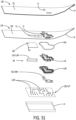
- the panel P may comprise an assembly providing a user interface system US; the user interface system US may comprise a user interface UI (see FIGURES 3A and 4A-4C ) (e.g. presented at the panel) and a functional module/system M (see FIGURES 3A-3C ) (e.g. installed/attached to the panel). See also FIGURE 51 (exemplary embodiment of functional module M with LED arrangement on board/panel LP and housing H).
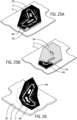
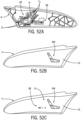
- the user interface system (e.g. system configured for user interface/input) may be provided on any of a variety of panels in the vehicle interior and configured for use/operation by a user/occupant in the vehicle (e.g. to perform any of a wide variety of functions in the vehicle, including interactions with vehicle systems such as controls for seats/seat position, audio system, window regulation, security/locking of doors, comfort/ventilation controls, instrumentation, network/device interconnectivity, communications, etc.). See also FIGURES 52A-52C (exemplary embodiment of trim panel with composite structure configured to provide user interface).
- the composite structure shown as panel P may comprise an assembly comprising a cover layer CL providing an exterior surface (e.g. in a construction comprising one or a combination of layers/material such as artificial/synthetic leather, real/natural leather, textiles/fabrics, composites, translucent film, poly-vinyl chloride material [PVC], thermoplastic olefin material [TPO], thermoplastic polyurethane material [TPU], polyurethane material [PUR], polymer material, soft foil, compact foil, polymer-based coatings, other coatings, etc.) and a substrate shown as a carrier/structure (e.g.
- a carrier/structure e.g.
- the substrate or carrier of the panel may comprise and a generally opaque frame/base section OP (e.g. providing a shape/form such as from a mold/molded part) with a set of holes H (e.g.
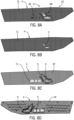
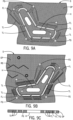
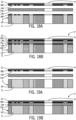
- the frame/base of the substrate of the composite structure/panel may comprise a rigidifying structure RS (e.g. a set of ribs/ridges, honeycomb structure, etc.). See also FIGURES 8A-8D , 9A-9C , 10A-10C and 11A-11B .
- the user interface UI of the user interface system US may comprise as a control/switch (e.g. physical device, physical switch/structure, button, knob, dial, lever, arm, cap, etc.) shown as switch/structure SW (e.g. a control or set of controls with operation provided external to the panel/surface connected to the functional module) and/or and input device such as a control/button (e.g. touch pad/surface, touch button, light pad, sensor/detector, sensor/switch, touch sensor, input pad, touch control, button, slider, etc.) shown as sensor/button SB (e.g.
- a control/switch e.g. physical device, physical switch/structure, button, knob, dial, lever, arm, cap, etc.
- switch/structure SW e.g. a control or set of controls with operation provided external to the panel/surface connected to the functional module
- input device such as a control/button (e.g. touch pad/surface, touch button, light pad, sensor/dete
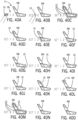
- the switch/structure SW and the sensor/button SB of the user interface system US on the panel P may comprise a set of elements or segments (e.g. generally transparent lighttransmitting elements/areas, such as display elements in the form of display elements, characters, symbols, shapes, forms, etc.) that can be illuminated (e.g. made visible by selective activation from an LED, LED/light array, etc.) at the user interface UI for the user/occupant of the vehicle. See FIGURES 5A-5D and 6A-6H . See also FIGURES 29A-29E to 40A-40O .
- elements or segments e.g. generally transparent lighttransmitting elements/areas, such as display elements in the form of display elements, characters, symbols, shapes, forms, etc.
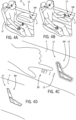
- the switch/structure SW of the user interface UI may be given the physical form of a car seat (e.g. the form of the switches and/or the control/buttons of the system may be correlated to the function of each switch and/or control/button); as indicated schematically according to an exemplary embodiment in FIGURES 1B , 2A-2C , 3A-3C and 4A-4C , the sensor/button SB of the user interface UI is configured for set/preset of seat position. See also FIGURES 5A-5D .
- functional module/system M of the user interface system US may comprise a proximity sensor PR (e.g. configured to detect the approach of the hand of a user/occupant to the user interface UI), a sensor array/grid SG (e.g. such as a capacitive foil/grid configured to detect touch/gesture from a user/occupant at the sensor/button SB for the user interface UI), a light source/system comprising a set of LED array panels LP (e.g.
- a proximity sensor PR e.g. configured to detect the approach of the hand of a user/occupant to the user interface UI
- a sensor array/grid SG e.g. such as a capacitive foil/grid configured to detect touch/gesture from a user/occupant at the sensor/button SB for the user interface UI
- a light source/system comprising a set of LED array panels LP (e.g.
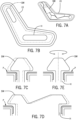
- FIGURES 7C-7D sliding switch, actuator, lever, arm, etc.
- FIGURE 7E rotary switch, dial, etc.
- FIGURES 13C-13D and 19C-19E e.g. showing LED/LED panel LP with light guide LG and/or light wall LW.
- the user interface system US with functional module M provides a user interface UI comprising a combination of illumination/lighting output and touch/switch control input to facilitate interaction by a user/occupant with vehicle systems.
- the light source/system e.g. LED lamps, LED/array, light source with functional module, light guides, light-transmissive elements, light fiber, walls/structure, separator, etc.
- the light source/system may be configured to provide illumination for the user interface in a form (e.g. amplitude, intensity, color, selection of color LED, diffusion/direction, enhancement/masking, etc.) as desired for the user interface system. See also FIGURES 12A-12C , 13A-13D and 19C-19E .
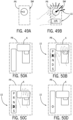
- the user interface system through the user interface UI may be configured to provide a dormant/default state (e.g. display elements not illuminated, not visible, not readily perceptible, etc.) when not in use (e.g. inactive, not intended for use/control of a vehicle system, etc.) (see FIGURE 4A ) and a use/operation state when in use (e.g. when active, intended for use/control of a vehicle system, etc.) (see FIGURES 4B and 4C ); as indicated schematically in FIGURES 3B and 4A-4C , the user interface system may comprise a functional module comprising a sensor/detector (e.g.
- FIGURES 5A-5B, 5E-5F and 6A-6B As indicated schematically in FIGURES 4A-4C , 5A-5B, 5E-5F and 6A-6B , when in the dormant/inactive state the user interface UI at the panel may be dark/unilluminated (see FIGURES 4A , 5A , 5E and 6A ); when in the active/operation state the user interface UI at the panel may be lighted/illuminated (e.g.
- the user interface system may be configured (e.g. with sensor, detector, etc.) to activate/actuate and illuminate the user interface (e.g. display elements, light segments, etc.) based on environmental light conditions (e.g. outdoor ambient conditions, time-of day light conditions, daylight, darkness, etc.) to present the user interface in a manner intended for effective use by the vehicle occupant in the conditions (e.g.
- environmental light conditions e.g. outdoor ambient conditions, time-of day light conditions, daylight, darkness, etc.
- the user interface may be configured to present an ambient light effect within the vehicle interior that is controlled by the vehicle occupant and/or vehicle systems (or conditions) through the display elements (e.g. illumination/activation of light segments, etc., with variations in pattern, enhancement/reduction of intensity, variations of color, presentation of light effect, etc.).
- the display elements e.g. illumination/activation of light segments, etc., with variations in pattern, enhancement/reduction of intensity, variations of color, presentation of light effect, etc.
- the functional module of the user interface system comprises a proximity sensor PR configured to detect the approach of a hand toward the switch SW of the user interface UI; approach of hand, finger, etc of a user/occupant will activate/illuminate light segments LS of the user interface UI around the perimeter of the switch SW. See also FIGURES 3C , 6A-6B and 19C-19E (e.g. showing sensor array/film SG attached/installed to underside of substrate S).
- the functional module of the user interface system comprises a proximity sensor PR configured to detect the approach of a hand toward the user interface UI (including both of sensor/button SB and switch SW); approach of hand, finger, etc. of a user/occupant will activate/illuminate light segments LS of the user interface at both the sensor/button SB and around the perimeter of the switch SW (see FIGURE 5B ); touch of a sensor/button SB will illuminate the corresponding light segment LS for the corresponding sensor/button SB to a higher intensity (see FIGURES 5C and 5D ). See also FIGURES 4A-4B .
- a user interface system/functional module with a user interface at a panel of an interior component may be provided and configured to facilitate control/monitoring/operation of any of a wide variety of vehicle systems for a vehicle.
- the user interface UI of the user interface system US with functional module M is configured to provide control/monitoring for a car seat (e.g. position of a car seat).
- the switch SW of the user interface UI is the physical form of a car seat and manual operation of the switch SW (e.g.
- light segments LS of the user interface UI at the switch SW may be configured to provide a corresponding/relative indication of the position of the car seat during manual operation/adjustment (e.g. position of adjustment, range of adjustment, etc.), such as seat back adjustment (see FIGURES 6C-6D and 7C ), seat base horizontal position (see FIGURES 6E-6F and 7D ) and seat base vertical position (see FIGURES 6G-6H and 7C ). See also FIGURES 29A-29C through 39A-39F .
- the physical form/structure of the input device e.g. physical switch, buttons, dial, control, touch surface, etc.
- the user interface system may be provided/adapted to any of a wide variety of physical forms/shapes and sizes/fit and arrangements for the user interface on the component (e.g. panel, etc.).
- FIGURES 7A-7D switch with contour/form
- FIGURES 7E rotary dial
- FIGURES 13C-13D and 19C-19E e.g. switch and/or dial with flat profile.
- the functional module M (e.g. with components, etc.) may be installed/attached (e.g. bonded, glued, applied, installed, etc.) to the underside of the substrate/carrier. See also FIGURES 13C-13D and 19C-19E .
- the light source/system e.g. LED lamps, LED/array, light source with functional module, light guides, light-transmissive elements, light fiber, walls/structure, etc.
- the light source/system e.g. LED lamps, LED/array, light source with functional module, light guides, light-transmissive elements, light fiber, walls/structure, etc.
- FIGURES 12C , 13C-13D and 19C-19E See also FIGURES 12C , 13C-13D and 19C-19E .
- the form of the composite structure shown as panel P may comprise a molded structure or substrate S comprising a structure shown as a generally opaque frame/base section OP (e.g. with underside configured for attachment/interconnection of the sensor grid/array SG and proximity sensor PR and the functional module M of the user interface system US) and the light-transmissive sections shown as generally transparent section TL (e.g.
- the frame/base of the substrate is configured to provide the shape of the panel and may comprise a rigidifying structure RS (e.g. ribs, ridges, honeycomb structure, etc.).
- RS rigidifying structure
- the substrate may comprise an injection molded plastic/resin component that is formed by a molding process where the opaque plastic material and the generally transparent plastic material are injected separately into the mold/tool to form the substrate S with structure frame/base show as opaque base OP and light transmissive section shown as generally transparent sections TL.
- FIGURES 46A-46E exemplary embodiment of substrate/carrier S comprising a light-transmissive body TL with mask MK.
- injection of the generally transparent plastic material may require fill lines/flow paths FL and injection points shown as gates FG that appear/remain in the substrate S after formation (e.g.
- the fill lines FL appear on both sides of the substrate; as shown schematically according to an exemplary embodiment in FIGURES 10A-10C , the fill lines FL and gates FG appear only on the underside of the substrate.
- the substrate/carrier may be provided with the generally transparent sections integrally formed (e.g. in a mold, in a two-shot mold process, by insert molding/back injection molding, etc.), with generally transparent sections provided as inserts (e.g. in the mold, separate in assembly, etc.), etc. See for example FIGURES 3B-3C and 8B-8D .
- the substrate/carrier may comprise a generally transparent form and/or a generally translucent form (e.g.
- the light-transmissive sections may be provided in a form that is generally translucent (e.g. to provide diffusion of light from the light source with generally translucent segments TL) or generally transparent (e.g. generally clear, generally clear provided with a colorant/additive, etc. for generally transparent segments TL). See for example FIGURES 3B-3C , 8B-8D , 9A-9C , 10A-10C , 11A-11B and 19C-19E .
- the substrate/carrier may comprise a frame/frame section (e.g. comprising opaque material and/or translucent material) and light-transmissive sections (e.g. comprising transparent material and/or translucent material). See also FIGURES 9A-9C , 10A-10C , 11A-11B and 19C-19E .
- the form/assembly of panel P comprises a cover layer CL (and optionally one or more additional layers of film or soft material such as foam, spacer/fabric, textile/fabric, fleece, etc. providing a functional layer FM) over the substrate S with generally frame/base section shown as generally opaque section OP and light-transmissive section shown as generally transparent section TL (e.g. which construction/layers may be provided in a variety of arrangements according to design/performance specifications and requirements and assembled/bonded/glued according to process/production methods for trim panel manufacture).
- cover layer CL and optionally one or more additional layers of film or soft material such as foam, spacer/fabric, textile/fabric, fleece, etc. providing a functional layer FM
- generally frame/base section shown as generally opaque section OP
- light-transmissive section shown as generally transparent section TL (e.g. which construction/layers may be provided in a variety of arrangements according to design/performance specifications and requirements and assembled/bonded/glued according to process/production methods for trim panel manufacture).
- the sensor grid/array may be attached/installed (e.g. bonded, glued, applied, installed, etc.) to the underside of the substrate/carrier. See also FIGURES 13C-13D and 19C-19E .
- FIGURES 12A-12E , 13A-13D , 14A-14B, 15A-15B , 16A-16B, 17A-17B , 18A-18B and 19C-19E in order to provide enhanced optical performance of the panel (e.g. transmission of light through the panel to provide suitable/precise illumination at the user interface for each sensor/button and switch), a mask shown as a mask layer is provided in the construction of the panel (e.g. multi-layer set-up). See also FIGURES 23A-23C , 24A-24C , 25, 26 , 27A-27B and 28A-28E .
- the mask layer MK is provided between the top surface of the substrate S and the underside of the cover CL in alignment with the generally transparent sections TL of the substrate S so that light (e.g. from the functional module) is presented to and through the cover layer CL for the panel P in a manner to provide the function/form intended for the user interface UI (e.g. illuminated symbols/forms, etc. clearly indicated in the intended form and sequence). See FIGURES 12C , 13A-13D and 19C-19E .
- the mask/mask layer is provided in a manner to facilitate the transmission of light to and through the cover of the panel with intended precision and intensity (including illumination without fade or diffusion/bleeding, sharpness/brightness, precision, registration of detail of symbols/forms, alignment of sensor/button illumination region to sensor/button detection region, contrast, etc.). See FIGURES 40A-40O .
- a vehicle interior may comprise a relatively large number of controls and indicators such as instrumentation, information displays, input devices, buttons, switches, etc.; the composite structure of the user interface system may be configured to provide a user interface that when in an "off" condition provided reduced (or no) illumination (e.g. with a dead-front appearance, reduced visible light/disturbance to the user/occupant, an unilluminated default state, etc.).
- the user interface of the user interface system may be configured to provide no substantially visible display/indication at the surface/panel when not in use (e.g. when in an "off” state and unless/until activated to an "on” state). See also FIGURES 5A-5H and 42A-42C .
- the substrate of composite structure of the user interface system is configured to be formed in a molding process (e.g. injection molding) to provide the opaque section and the generally transparent section with fill sections/segments (e.g. gates/injection points, runners/flow lines, distribution channels, etc.) established in a manner to facilitate shaping/formation of the intended shape/form for the substrate.
- a molding process e.g. injection molding
- fill sections/segments e.g. gates/injection points, runners/flow lines, distribution channels, etc.
- the input device may comprise at least one of (a) a switch; (b) a physical switch; (c) a button; (d) a touch interface for user interface for the vehicle occupant; (e) a touch sensor; (f) a switch and a button; (g) a physical switch and a button; (h) a physical switch and a touch interface; (i) a dial; (j) a physical device and a touch sensor. See also FIGURES 4A-4D , 5A-5H , 6A-6H , 7A-7E , 13C-13D , 19C-19E , 41A-41D and 42A-42C .
- the senor may comprise at least one of (a) an array; (b) a grid; (c) a foil; (d) a panel; (e) a touch panel; (f) a flexible panel; (g) a detector; (h) a proximity detector; (i) a capacitive touch panel; (j) a pressure sensitive panel; (k) a sensor grid; (l) a sensor foil bonded to the substrate; (m) a capacitive sensor foil bonded to the substrate; (n) a camera/detector; (o) a camera; (p) a switch connector. See also FIGURES 4A-4D , 5A-5H , 6A-6H , 7A-7E , 13C-13D , 19C-19E , 41A-41D and 42A-42C .
- the light source may comprise at least one of (a) an array; (b) a grid; (c) a panel; (d) a display panel; (e) a flexible panel; (f) a lighting array; (g) a lighting device array; (h) a light-emitting device array; (i) an LED; (j) an LED array; (k) an OLED array; (l) a flexible LED array; (m) a flexible sheet; (n) a light source directed through a light guide; (o) a light source directed through a woven light guide; (p) a light source directed through a light-transmissive fiber. See also FIGURES 4A-4D , 5A-5H , 6A-6H , 7A-7E , 12C , 13C-13D , 19C-19E , 41A-41D and 42A-42C .
- FIGURES 12A-12E through 22 a variety of forms of construction of the composite structure shown as panel P (e.g. composition and/or assembly of layers, films, materials, etc.) are indicated schematically according to an exemplary embodiment. See also FIGURES 3A-3C and 8A-8D .
- the cover/cover layer may comprise at least one of (a) a molded material; (b) a translucent material; (c) a PVC material; (d) a TPO material; (e) a TPU material; (f) a PUR material; (g) a synthetic/artificial leather; (h) leather; (i) fabric; (j) a soft foil; (k) a compact foil; (l) textile; (m) fiber mesh; (n) grain surface; (o) synthetic fibers; (p) natural fibers; (q) polyester; (r) fabric sheet; (s) upholstered material; (t) a synthetic material; (u) a woven material; (v) a non-woven material; (w) a sheet material; (x) a perforated material; (y) a composite of multiple materials; (z) a composite of multiple fiber materials.
- the functional layer may comprise at least one of at least one functional layer comprises at least one of (a) a soft layer; (b) a fabric material; (c) a fleece material; (d) a spacer material; (e) a foam material; (f) a plastic material; (g) a compact layer; (h) a light-diffusing layer; (i) a foam layer; (j) a polyethylene material; (k) a polypropylene material; (l) a polyurethane material; (m) a polyvinyl-chloride material; (n) a polyethylene terephthalate material; (o) a mask configured to block light from the at least one light source; (p) a mask layer provided on an undersurface of the cover; (q) a mask layer provided on a top surface of the substrate; (r) a film provided on an underside of the cover; (s) a mask provided on a film on the cover; (t) a mask layer configured
- the composite structure shown as the panel P comprises a construction comprising the substrate S with a functional layer FM (shown as foam layer) and the cover CL with an applied mask shown as a mask layer MK (e.g.
- the user interface system with functional module is configured to provide a user interface UI with a switch SW (and light segments LS) and set of sensor/button elements SB (presented by light segments LS) on the panel P; transmission of light from a light source shown as LEDs to and through the cover layer CL will display the user interface UI (see FIGURE 12C ); the user interface UI also comprises the touch function of the sensor grid/array for the sensor/button elements SB and the operation of the switch SW (interconnected to the functional module). See FIGURES 4A-4C and 7A-7D .
- the composite structure shown as the panel P comprises a construction comprising the substrate S with an applied mask layer MK on the top surface in alignment with the generally transparent sections TL and with a functional layer FM (shown as foam layer) and the cover CL;
- the user interface system with functional module is configured to provide a user interface UI with a switch SW (and light segments LS) and set of sensor/button elements SB (presented by light segments LS) on the panel P; transmission of light from a light source shown as LEDs to and through the cover layer CL will display the user interface UI (see FIGURES 13C-13D );
- the user interface UI also comprises the touch function of the sensor grid/array for the sensor/button elements SB and the operation of the switch SW (interconnected to the functional module).
- sensor array may be attached/applied to (e.g. bonded, glued, etc.) the substrate of the composite structure/panel (see FIGURES 3B-3C and 13D ) or positioned/installed beneath the substrate of the composite structure (see FIGURE 13C ) and configured to provide the user interface UI at a location on the surface of the composite structure/panel for the user interface system (e.g. sensor/button interface, touch-sensitive surface, etc.). See also FIGURES 3A-3C and 8A .
- the composite structure shown as the panel P comprises a construction comprising the substrate S with a functional layer FM (shown as foam layer) and the cover CL having film layer F with an applied mask layer MK in alignment with the generally transparent sections TL of the substrate S; transmission of light from a light source/system (such as LEDs, LED array, etc.) of the functional module to and through the cover layer CL will display the user interface UI); the user interface UI also comprises the touch function of the sensor grid/array for the sensor/button elements and the operation of the switch (interconnected to the functional module).
- a light source/system such as LEDs, LED array, etc.
- the composite structure shown as the panel P comprises a construction comprising the substrate S and the cover CL with an applied mask layer MK in alignment with the generally transparent sections TL of the substrate S; transmission of light from a light source/system (such as LEDs, LED array, etc.) of the functional module to and through the cover layer CL will display the user interface UI); the user interface UI also comprises the touch function of the sensor grid/array for the sensor/button elements and the operation of the switch (interconnected to the functional module).
- a light source/system such as LEDs, LED array, etc.
- the composite structure shown as the panel P comprises a construction comprising the substrate S with a functional layer FM (shown as foam layer) and the cover CL with an applied multi-layer mask comprising mask layer MK and mask layer ML (e.g. a mask configured to provide a color to the light) in alignment with the generally transparent sections TL of the substrate S; transmission of light from a light source/system (such as LEDs, LED array, etc.) of the functional module to and through the cover layer CL will display the user interface UI); the user interface UI also comprises the touch function of the sensor grid/array for the sensor/button elements and the operation of the switch (interconnected to the functional module).
- a light source/system such as LEDs, LED array, etc.
- the composite structure shown as the panel P comprises a construction comprising the substrate S with an applied multi-layer mask comprising mask layer MK and mask layer ML (e.g. a mask configured to provide a color to the light) in alignment with the generally transparent sections TL and with a functional layer FM (shown as foam layer) and the cover CL;
- the user interface system with functional module is configured to provide a user interface UI with a switch SW (and light segments LS) and set of sensor/button elements SB (presented by light segments LS) on the panel P; transmission of light from a light source/system (such as LEDs, LED array, etc.) of the functional module to and through the cover layer CL will display the user interface UI);
- the user interface UI also comprises the touch function of the sensor grid/array for the sensor/button elements and the operation of the switch (interconnected to the functional module).
- the composite structure shown as the panel P comprises a construction comprising the substrate S with an applied mask layer MK on the top surface in alignment with the generally transparent sections TL and with a functional layer FM (shown as foam layer) and the cover CL with an applied mask layer MK in alignment with the generally transparent sections TL of the substrate S (and generally with the applied mask layer on the top surface of the substrate); transmission of light from a light source/system (such as LEDs, LED array, etc.) of the functional module to and through the cover layer CL will display the user interface UI); the user interface UI also comprises the touch function of the sensor grid/array for the sensor/button elements and the operation of the switch (interconnected to the functional module).
- a light source/system such as LEDs, LED array, etc.
- the composite structure shown as the panel P comprises a construction comprising the substrate S with a functional layer FM (shown as foam layer) and the cover CL with an applied mask layer MK in alignment with generally transparent sections TL of the substrate S;
- the user interface system US with functional module M is configured to provide a user interface UI with a switch SW (and light segments LS) and set of sensor/button elements SB (presented by light segments LS) on the panel P; transmission of light from a light source/system shown as LEDs to and through the cover layer CL will display the user interface UI (see FIGURES 19C-19E );
- the user interface UI also comprises the touch function of the sensor grid/array SG (shown as a capacitive touch panel under substrate S) for the sensor/button elements SB and the operation of the switch SW (interconnected to the functional module).
- the foam layer FM of the panel P is of a relatively-thin/reduced thickness; the mask layer comprises precision segments configured to present detail/form as intended for the user interface UI (e.g. to display design elements/display elements).
- the cover layer CL and functional/foam layer FM are folded into hole H adjacent the switch SW (e.g.
- the top of the switch SW is configured to cover the size of the hole (e.g. with the hole/discontinuity not visible and with reduction of any potential for light "leakage" from the light source along the post/tower as not to be visible at the hole).
- the light source/system e.g. LED, LED panel/array, etc.
- the user interface system US is configured to provide illumination for the user interface from light source through the generally transparent sections TL of the substrate (e.g.
- FIGURES 5A-5F and 6A-6H See also FIGURES 29A-29E through 39A-39F .
- the composite structure shown as the panel P comprises a construction comprising the substrate S with a functional layer FM (shown as fleece/fiber layer) and the cover CL with an applied mask shown as a mask layer MK (e.g. a functional layer) in alignment with the generally transparent sections TL of the substrate S;
- the functional layer is configured to provide a pad/resilient effect (e.g. at least partially compressible/"soft" feel for user/occupant at the external surface of the panel) (the functional layer FM may also function to diffuse light from the light source).
- the composite structure shown as the panel P comprises a construction comprising the substrate S with a functional layer FM (shown as fabric/textile/spacer) and the cover CL with an applied mask shown as a mask layer MK (e.g. a functional layer) in alignment with the generally transparent sections TL of the substrate S;
- the functional layer is configured to provide a pad/resilient effect (e.g. at least partially compressible/"soft" feel for user/occupant at the external surface of the panel) (the functional layer FM may also function to diffuse light from the light source).
- the composite structure shown as the panel P comprises a construction comprising the substrate S with an applied mask layer MK on the top surface in alignment with the generally transparent sections TL and with a functional layer FM (shown as fabric/textile/spacer) and the cover CL;
- the functional layer is configured to provide a pad/resilient effect (e.g. at least partially compressible/"soft" feel for user/occupant at the external surface of the panel) (the functional layer FM may also function to diffuse light from the light source).
- the user interface system comprises a composite structure (shown as a panel) with a cover comprising a thermoplastic polyurethane material (e.g. TPU sheet/film, synthetic leather, etc.) and a functional/intermediate layer comprising a polyethylene foam material and a substrate comprising a structure/frame section comprising a polycarbonate/acrylonitrile butadiene styrene material (e.g. PC-ABS, opaque plastic, translucent plastic, etc.) and a generally transparent section comprising a polycarbonate material (e.g. PC, transparent/plastic, translucent/plastic, etc.) or a polymethyl methacrylate material (e.g., PMMA, Plexiglas, etc.).
- a composite structure shown as a panel
- a cover comprising a thermoplastic polyurethane material (e.g. TPU sheet/film, synthetic leather, etc.) and a functional/intermediate layer comprising a polyethylene foam material and a substrate comprising a structure/frame section comprising
- the substrate of the composite structure/panel may comprise light-transmissive sections provided in a form that is generally translucent (e.g. to provide diffusion of light from the light source) or generally transparent (e.g. generally clear, generally clear provided with a colorant/additive, etc.).
- the user interface system may comprise a composite structure/panel with a cover/cover layer and a substrate with or without a functional layer (e.g. with or without a foam, fleece, fabric, spacer, soft layer, etc.) configured to present the user interface at a generally rigid surface (e.g. less compliant surface, hard surface, etc.).
- a functional layer e.g. with or without a foam, fleece, fabric, spacer, soft layer, etc.
- FIGURES 12A-12B e.g. composite structure with functional/foam layer
- FIGURES 15A-15B e.g. composite structure with no functional/foam layer
- FIGURES 20A-20B, 21 and 22 e.g. composite structure with functional layer shown as fleece material and/or fabric/textile material.
- a mask e.g. functional layer shown as mask layer
- a mask layer may be provided in the construction of the composite structure/panel between the top surface of the substrate S and the underside of the cover CL in alignment with the generally transparent sections TL of the substrate S. See also FIGURES 12A-12E , 13A-13D , 14A-14B, 15A-15B , 16A-16B, 17A-17B , 18A-18B , 19A-19E , 20A-20B, 21 and 22 .
- the mask comprises an ink (or a material otherwise providing the function of ink/colorant) applied by any suitable process/method intended to facilitate efficient manufacture of the panel (e.g. as indicated mask material and/or a mask layer may be selectively applied at locations where useful/required and providing masked sections MK and unmasked sections UM). See also FIGURES 12A-12E , 13A-13D , 14A-14B, 15A-15B , 16A-16B, 17A-17B , 18A-18B , and 19A-19E .
- the mask MK may be applied to the underside of the cover layer CL by an ink-jet deposition process with a tool T providing an ink-jet nozzle IJ (see FIGURES 23A and 24A ), the mask MK may be applied to the a film layer F on the underside of the cover layer CL by an ink-jet deposition process with a tool T providing an ink-jet nozzle IJ (see FIGURE 23B and 24B ); the mask MK may be applied to the top of the substrate S (e.g.
- a multi-layer mask comprising a color mask ML and a dark mask MK may be applied (e.g. with mask ML and then mask MK at the underside of the cover CL see FIGURE 25A ); a multi-layer mask comprising a color/translucent mask ML and a dark mask MK (e.g.
- the multi-layer mask may be applied to the underside of the cover or a film layer
- a mask MK may be applied as a sheet material to the top of the substrate of the panel (see FIGURE 26 )
- the mask sheet may be applied to the underside of the cover or film layer
- a mask MK may be applied (e.g.
- the mask MK may be applied by an application tool SP that operates as a pad printer (e.g. ink stamping tool, etc.) to the cover CL and/or to the substrate S (e.g. as a composite of multiple stampings/application to the selective areas or an individual application) (see FIGURES 28A-28E ) (for example, with mask MK as indicated on gates/fill lines FG/FL, etc.).
- a pad printer e.g. ink stamping tool, etc.
- FIGURES 28A-28E for example, with mask MK as indicated on gates/fill lines FG/FL, etc.
- the mask material/layer may be applied efficiently in a manner intended to present display elements such as light segments for the user interface at the exterior surface of the cover of the composite structure by direction of illumination from the light source. See generally FIGURES 3A-3C , 4A-4C , 12C , 13D and 19A-19E .
- the mask may comprise selectively applied mask material, selectively applied mask sections, uniformly applied mask layer, a composite mask section, etc.
- mask of the user interface of the user interface system provided by the composite structure (and functional module) will be configured to present display elements a clear and readily perceptible form at the exterior surface of the cover illuminated by the light source; according to an exemplary embodiment, the mask may be applied/configured so not to be readily perceptible at the exterior surface of the cover (e.g. when not in use). See for example FIGURES 4C-4D , 5G-5H . See also FIGURES 25A-25B (e.g. arrangement where mask/functional layers may interoperate to provide the intended effect of the mask/light source for the user interface).
- the mask may comprise an opaque ink layer (e.g. with color selected to the functional/soft layer or to the cover layer); the thickness and/or color of the mask material may be selected to provide a sufficient mask effect (e.g. opaqueness and/or color).
- FIGURES 29A-29E through 39A-39F and 40A-40O the animation/operation of a user interface with input device shown as comprising a switch and/or sensor/button with display elements (e.g. in the form of illuminated design elements, light segments, etc.) for the user interface system for the vehicle interior component such as panel is shown in representative function/use according to an exemplary embodiment. See also FIGURES 2A-2D, 3A-3C , 5A-5F , 6A-6H , 12A-12E and 19A-19E .
- a method of interacting with the vehicle interior component with the user interface system may comprise the steps of: approaching the exterior surface of the cover toward the input device to a distance where proximity can be detected by the input device at the user interface; and contacting the exterior surface within a distance where input can be detected by the input device at the user interface; and activating the output display to provide illumination from the light source at the user interface responsive to input from the input device at the user interface; operation of the user interface for the vehicle occupant may comprise at least one of (a) output provided at the output display from illumination from the light source and (b) input detected by the input device; the input device may be configured to detect input from the vehicle occupant at or adjacent to the exterior surface of the cover from at least one of (a) touch; (b) pressure; (c) proximity; (d) movement; (e) gesture; (f) positioning; the input device may comprise at least one of (a) a switch; (b) a button; (c) the display element.
- the input device may comprise a switch and/or a button; the method may comprise the step of actuating the switch and/or the button to interact with a vehicle system through the user interface. See FIGURES 12A-12E , 19A-19E , 29A-29E through 39A-39F , 40A-40O , 41A-4D and 42A-42C .
- the display elements of the output display may comprise a set of light segments for the user interface; and the step of activating the output display may comprise illumination of the set of light segments to provide an animation effect in response to input at the input device of the user interface; the output display may be configured to provide output for the vehicle occupant at the exterior surface of the cover. See FIGURES 4A-4D , 5A-5H , 6A-6H , 7A-7E , 29A-29E through 39A-39F , 40A-40O , 41A-4D and 42A-42C .
- a user interface system for a vehicle interior component providing a user interface UI may be configured with switch SW and display elements shown as light segments (e.g. to be illuminated selectively/sequentially as indicated schematically) in a sequence of operation for a vehicle system shown as an adjustment control/system for a vehicle seat representative of the function of moving the base of the seat forward directed by input from a user/occupant of the vehicle (e.g. by touch/manual control).
- a user interface system for a vehicle interior component providing a user interface UI may be configured with switch SW and display elements shown as light segments (e.g. to be illuminated selectively/sequentially as indicated schematically) in a sequence of operation for a vehicle system shown as an adjustment control/system for a vehicle seat representative of the function of moving the base of the seat backwards directed by input from a user/occupant of the vehicle (e.g. by touch/manual control).
- a user interface system for a vehicle interior component providing a user interface UI may be configured with switch SW and display elements shown as light segments (e.g. to be illuminated selectively/sequentially as indicated schematically) in a sequence of operation for a vehicle system shown as an adjustment control/system for a vehicle seat representative of the function of elevating the front of the seat directed by input from a user/occupant of the vehicle (e.g. by touch/manual control).
- a user interface system for a vehicle interior component providing a user interface UI may be configured with switch SW and display elements shown as light segments (e.g. to be illuminated selectively/sequentially as indicated schematically) in a sequence of operation for a vehicle system shown as an adjustment control/system for a vehicle seat representative of the function of lowering the front of the seat directed by input from a user/occupant of the vehicle (e.g. by touch/manual control).
- a user interface system for a vehicle interior component providing a user interface UI may be configured with switch SW and display elements shown as light segments (e.g. to be illuminated selectively/sequentially as indicated schematically) in a sequence of operation for a vehicle system shown as an adjustment control/system for a vehicle seat representative of the function of elevating the base of the seat directed by input from a user/occupant of the vehicle (e.g. by touch/manual control).
- a user interface system for a vehicle interior component providing a user interface UI may be configured with switch SW and display elements shown as light segments (e.g. to be illuminated selectively/sequentially as indicated schematically) in a sequence of operation for a vehicle system shown as an adjustment control/system for a vehicle seat representative of the function of lowering the base of the seat directed by input from a user/occupant of the vehicle (e.g. by touch/manual control).
- a user interface system for a vehicle interior component providing a user interface UI may be configured with switch SW and display elements shown as light segments (e.g. to be illuminated selectively/sequentially as indicated schematically) in a sequence of operation for a vehicle system shown as an adjustment control/system for a vehicle seat representative of the function of moving the back of the seat forward directed by input from a user/occupant of the vehicle (e.g. by touch/manual control).
- a user interface system for a vehicle interior component providing a user interface UI may be configured with switch SW and display elements shown as light segments (e.g. to be illuminated selectively/sequentially as indicated schematically) in a sequence of operation for a vehicle system shown as an adjustment control/system for a vehicle seat representative of the function of moving the back of the seat backwards directed by input from a user/occupant of the vehicle (e.g. by touch/manual control).
- a user interface system for a vehicle interior component providing a user interface UI may be configured with switch SW and display elements shown as light segments (e.g. to be illuminated selectively/sequentially as indicated schematically) in a sequence of operation for a vehicle system shown as an adjustment control/system for a vehicle seat representative of the function of elevating the head rest of the seat directed by input from a user/occupant of the vehicle (e.g. by touch/manual control).
- a user interface system for a vehicle interior component providing a user interface UI may be configured with switch SW and display elements shown as light segments (e.g. to be illuminated selectively/sequentially as indicated schematically) in a sequence of operation for a vehicle system shown as an adjustment control/system for a vehicle seat representative of the function of activation (e.g. from the proximity sensor) directed by input from a user/occupant of the vehicle (e.g. by detection or touch/manual control).
- a user interface system for a vehicle interior component providing a user interface UI may be configured with switch SW and sensor/button SB and display elements shown as light segments (e.g. to be illuminated selectively/sequentially as indicated schematically) in a sequence of operation for a vehicle system shown as an adjustment control/system for a vehicle seat representative of the function of moving the seat base forward directed by input from a user/occupant of the vehicle (e.g. by touch/manual control).
- FIGURES 40A-40O the animation/operation of a user interface with input device shown as comprising a switch and/or sensor/button with display elements (e.g. in the form of illuminated design elements, light segments, etc.) for the user interface system for the vehicle interior component such as panel is shown in representative function/use according to an exemplary embodiment for operation for a vehicle system shown as an adjustment control/system for a vehicle seat; the input device shown as sensor/button SB is shown in a ) in a sequence of operation for the function of setting a pre-set (e.g. position) for the seat base directed by input from a user/occupant of the vehicle (e.g. by touch/manual control).. See also FIGURES 2A-2D, 3A-3C , 5A-5F , 6A-6H , 12A-12E and 19A-19E .
- a pre-set e.g. position
- FIGURES 29A-29E through 39A-39F and 40A-40O the animation/operation of a user interface with input device (e.g. switch and/or sensor/button with display elements) for the user interface system for the vehicle interior component (such as panel) is shown for operation for a vehicle system shown as an adjustment control/system for a vehicle seat representative; according to an exemplary embodiment the user interface system could be configured for operation of any of a wide variety of other systems/vehicle systems.
- a user interface with input device e.g. switch and/or sensor/button with display elements
- the user interface system for the vehicle interior component such as panel
- the user interface system could be configured for operation of any of a wide variety of other systems/vehicle systems.
- the user interface system may be configured to provide a user interface UI (e.g. input device and/or output display) with sensor/button SB (e.g. operated through a sensor, sensor grid, etc.) on the presented on the surface of the composite structure shown as panel P (e.g. with illumination from a light source/system such as an LED, LED array, etc.). See also FIGURES 5G-5H (showing user interface with sensor/button arrangement comprising an input device and output display but with no physical switch on the composite structure/panel).
- a user interface UI e.g. input device and/or output display
- sensor/button SB e.g. operated through a sensor, sensor grid, etc.
- panel P e.g. with illumination from a light source/system such as an LED, LED array, etc.
- FIGURES 5G-5H showning user interface with sensor/button arrangement comprising an input device and output display but with no physical switch on the composite structure/panel).
- the user interface system comprises the panel P and the functional module providing a proximity sensor PR configured to detect the approach of a hand toward the sensor/button SB of the user interface UI (e.g. with interaction through sensor grid/array SG); approach of hand, finger, etc. of a user/occupant will activate/illuminate display elements shown as light segments LS (e.g. output display) configured to provide the sensor/button SB of the user interface (e.g. shown schematically as illumination to a visible/perceptible level of intensity at the surface of the cover). See FIGURES 5H , 41A and 42B . See also FIGURES 4C , 6A-6B and 19C-19E .
- a proximity sensor PR configured to detect the approach of a hand toward the sensor/button SB of the user interface UI (e.g. with interaction through sensor grid/array SG); approach of hand, finger, etc. of a user/occupant will activate/illuminate display elements shown as light segments LS (e.g. output display) configured to provide the sensor
- the user interface may comprise display elements such as light segments LS presented at the exterior surface of the composite structure shown as panel P configured to provide an input device shown as sensor/button B (e.g. presenting characters and/or symbols) configured to provide a control/indicator for a vehicle system (e.g. direction/position control of a device such as a side mirror).
- display elements such as light segments LS presented at the exterior surface of the composite structure shown as panel P configured to provide an input device shown as sensor/button B (e.g. presenting characters and/or symbols) configured to provide a control/indicator for a vehicle system (e.g. direction/position control of a device such as a side mirror).
- the user interface system may be configured so that touch of a sensor/button SB presented through the user interface UI at the panel P (e.g. visible/perceptible through illumination of a display element at the exterior surface of the cover of the panel) may facilitate actuation/operation of a vehicle system (shown schematically/representationally as operation of position control for a seat) and/or illuminate the corresponding display element such as light segments LS for the corresponding sensor/button SB to a higher intensity (see FIGURES 41B-41D and 42C ). See also FIGURES 4A-4B and 5A-5H .
- the input device of the user interface may comprise a switch and/or a button;
- the output display of the user interface may comprise display elements such as a set of light segments; and activating the output display may comprise illumination of the set of light segments to provide an animation effect in response to input at the input device of the user interface; light segments may be activated/animated as a visual response/feedback to a contemplated action, function, operation, etc. at the user interface (e.g. such as indicating that a function was completed). See for example FIGURES 40A-40O (indicating operation/successful saving of a pre-set at the sensor/button).
- a vehicle interior component IC for a vehicle V providing at least one vehicle system may be configured to provide a user interface system US comprising at least one sensor and at least one light source; the user interface system US may be configured to provide a user interface UI for interaction with a vehicle occupant.
- the vehicle interior component may comprise a panel P comprising a composite structure configured to present the user interface UI for the vehicle occupant;
- the composite structure/component shown as panel P may comprise a substrate S (e.g. carrier, structure, base, etc.) and a cover CL (e.g.
- the user interface for the vehicle occupant may comprise (1) a light display from at least one light source of the user interface system and (2) an input device connected to at least one sensor of the user interface system;
- the substrate may comprise a light-transmissive section TL (e.g. a transparent section/carrier, translucent section/carrier, light-transmissive carrier, etc.) configured to allow transmission of light from the at least one light source to the light display for the user interface (e.g. display, display panel, LED array, LED mat, etc.). See e.g.
- the substrate may comprise a light-transmissive section configured to transmit light for illumination of the output display;
- the cover may comprise a light-transmissive layer configured to transmit light for illumination of the output display;
- a mask layer may be provided between the cover and the substrate so that a display element may be configured to be presented by illumination from the light source at least partially visible through the exterior surface of the cover for the output display;
- the functional layer may comprise a soft layer between the substrate and the cover (e.g. fabric/textile, fiber pad/mat, woven material, non-woven material, fleece, foam, etc.). See e.g. FIGURES 8A-8D , 9A-9C , 10A-10C , 11A-11B , 12A-12E , 15A-15B , 43A, 44A, 45A and 52C .
- a method of interacting with a vehicle interior component comprising a composite structure providing a substrate and at least one functional layer and a cover with an exterior surface and an input device and a light source configured to provide illumination of an output display comprising at least one display element configured to provide a user interface for a vehicle occupant in a vehicle with at least one vehicle system
- FIGURES 4A-4D See e.g. FIGURES 4A-4D , 5A-5H , 6A-6H , 46A-46E , 47A-47B, 48A-48B , 49A-49B, 50A-50D , and 52A-52C .
- the method may comprise the step of actuating the switch to interact with a vehicle system through the user interface (e.g. with an input device such as a physical switch, dial, button, virtual/digital switch, touch sensor, etc.). See e.g. FIGURES 4A-4D , 5A-5H , 6A-6H , 47A-47B , 48A-48B , 49A-49B, and 50A-50D .
- Operation of the user interface for the vehicle occupant may comprise (a) output from the light display and (b) input from the input device. See e.g.
- the input device may be configured to detect input from the vehicle occupant at or adjacent to the exterior surface of the cover from at least one of (a) touch; (b) pressure; (c) proximity; (d) movement; (e) gesture; (f) positioning; the input device may comprise at least one of (a) a switch; (b) a button; (c) the display element.
- the input device may comprise a switch and/or a button. See e.g. FIGURES 4A-4D , 5A-5H , 6A-6H , 41A-41D , 42A-42C , 47A-47B , 48A-48B , 49A-49B and 50A-50D .
- the composite structure may comprise a functional layer configured for (a) optical enhancement; (b) light shielding; (c) cushioning; (d) adhesion or bonding; (e) diffusion of illumination from the light source; (f) transmission of light from the light source; (g) soft touch; (h) masking of light.
- the functional layer may comprise a mask layer for the light display at the user interface configured to provide a mask section to block light from the at least one light source.
- the form/assembly of panel P comprises a cover layer CL (and optionally one or more additional layers of film or soft material such as foam, spacer/fabric, textile/fabric, fleece, etc. providing a functional layer FM) over the substrate S with generally frame/base section shown as generally opaque section OP and light-transmissive section shown as generally transparent section TL (e.g. which construction/layers may be provided in a variety of arrangements according to design/performance specifications and requirements and assembled/bonded/glued according to process/production methods for trim panel manufacture).
- cover layer CL and optionally one or more additional layers of film or soft material such as foam, spacer/fabric, textile/fabric, fleece, etc. providing a functional layer FM
- generally frame/base section shown as generally opaque section OP
- light-transmissive section shown as generally transparent section TL (e.g. which construction/layers may be provided in a variety of arrangements according to design/performance specifications and requirements and assembled/bonded/glued according to process/production methods for trim panel manufacture).
- the sensor grid/array may be attached/installed (e.g. bonded, glued, applied, installed, etc.) to the underside of the substrate/carrier. See also FIGURES 13C-13D and 19A-19E .
- FIGURES 12A-12E , 13A-13D , 14A-14B, 15A-15B , 16A-16B, 17A-17B , 18A-18B and 19A-19E in order to provide enhanced optical performance of the panel (e.g. transmission of light through the panel to provide suitable/precise illumination at the user interface for each sensor/button and switch), a mask shown as a mask layer is provided in the construction of the panel (e.g. multilayer set-up). See also FIGURES 23A-23C , 24A-24C , 25, 26 , 27A-27B and 28A-28E .
- the mask layer MK is provided between the top surface of the substrate S and the underside of the cover CL in alignment with the generally transparent sections TL of the substrate S so that light (e.g. from the functional module) is presented to and through the cover layer CL for the panel P in a manner to provide the function/form intended for the user interface UI (e.g. illuminated symbols/forms, etc. clearly indicated in the intended form and sequence).
- the function/form intended for the user interface UI e.g. illuminated symbols/forms, etc. clearly indicated in the intended form and sequence.
- the mask/mask layer is provided in a manner to facilitate the transmission of light to and through the cover of the panel with intended precision and intensity (including illumination without fade or diffusion/bleeding, sharpness/brightness, precision, registration of
- FIGURES 40A-40O and 43A-43B indicating schematically light sharpness with mask layer placement.
- FIGURES 44A-44B and 45A-45B indicating schematically light diffusion with mask layer placement and/or omission of mask layer.
- the composite structure may comprise a cover configured to provide an undersurface opposite to the exterior surface and the mask layer may be provided on the undersurface of the cover (e.g. with the composite structure/panel configured to present a user interface with and/or without a physical switch). See e.g. FIGURES 12A-12E and 43A-43B .
- a composite structure P configured to present a user interface may comprise a cover shown as cover layer CL and a functional layer comprising a mask layer MK (with unmasked area UM) and a foam layer FM on carrier/substrate S (comprising opaque section OP and light-transmissive section TL) with a light source shown as light/display panel LP with LED on a sensor grid/array SG (e.g.
- light is transmitted from the light/display panel LP with LED through the composite structure and unmasked area UM of the mask layer to present a light effect at light segment LS at the exterior surface of the cover CL providing a focus/sharpness as indicated schematically in FIGURE 43B . See also FIGURES 12A-12E and 43A .
- the composite structure may comprise a carrier/substrate configured to provide a top surface and the mask layer may be provided on the top surface of the substrate (e.g. with the composite structure/panel configured to present a user interface with and/or without a physical switch). See e.g. FIGURES 13A-13D and 44A-44B .
- a composite structure P configured to present a user interface may comprise a cover shown as cover layer CL and a functional layer comprising a foam layer FM and a mask layer MK (with unmasked area UM) and on carrier/substrate S (comprising opaque section OP and light-transmissive section TL) with a light source shown as LED (e.g. componentry of a functional module); light is transmitted from the light source LED through the unmasked area UM of the mask layer and the composite structure to present a light effect at light segment LS at the exterior surface of the cover CL providing a generally diffuse image as indicated schematically in FIGURE 43B . See also FIGURES 13A-13D and 44A .
- the composite structure may comprise a carrier/substrate configured to provide a top surface and foam and/or fiber layer may be provided on the top surface of the substrate (e.g. with the composite structure/panel configured to present a user interface with and/or without a physical switch). See e.g. FIGURES 45A-45B .
- a composite structure P configured to present a user interface may comprise a cover shown as cover layer CL and a functional layer comprising a foam layer FM on carrier/substrate S (comprising opaque section OP and light-transmissive section TL) with a light source shown as LED (e.g.
- light is transmitted from light source LED through the composite structure to present a light effect at light segment LS at the exterior surface of the cover CL providing a relatively highly diffuse image as indicated schematically in FIGURE 45B . See also FIGURE 45A .
- the functional layer may comprise a mask layer; the mask layer may comprise at least one of (a) a mask on an underside of the cover; (b) a mask on the substrate; (c) a mask on a layer between the cover and the substrate; (d) a layer on a foam layer between the cover and the substrate; (e) a mask on a light-transmissive substrate; (f) a mask in the cover; (g) a barrier; (h) a generally opaque barrier; (i) a carrier.
- the mask layer may comprise at least one of (a) a mask on an underside of the cover; (b) a mask on the substrate; (c) a mask on a layer between the cover and the substrate; (d) a layer on a foam layer between the cover and the substrate; (e) a mask on a light-transmissive substrate; (f) a mask in the cover; (g) a barrier; (h) a generally opaque barrier; (i) a carrier.
- the mask layer for the light display at the user interface may be configured to provide a mask section to block light from the light source. See also FIGURES 12A-12E , 43A , 44A , 46A-46E and 52A-52C (e.g. mask can be positioned on backside of cover layer, on foam layer, substrate/carrier part with light-transmissive segments, fully light-transmissive substrate/carrier, etc.).
- the mask layer may be provided by (a) printing; (b) ink-jet printing; (c) pad printing; (d) screen printing; (e) spraying; (f) spray depositing; (g) painting; (h) applying and ablation; (i) application to the cover and to the substrate; (j) application to a film layer; (k) application to a film layer on the cover; (l) application of a mask on a film layer on the cover. See e.g. FIGURES 23A-23C , 24A-24C , 25, 26 , 27A-27B and 28A-28E .
- the functional layer of the composite structure may comprise at least one of (a) a foam layer under the cover; (b) a foam layer on the substrate; (c) a resilient layer between the cover and the substrate; (d) a foam layer between the cover and the substrate, (e) a spacer fabric between cover and substrate, (f) a fabric between cover and substrate, (g) a fleece between cover and substrate. See e.g. FIGURES 12A-12E , 13A-13D , 14A-14B , 16A-16B , 17A-17B , 18A-18B , 19A-19E , 20A-20B, 21, 22 , 43A, 44A and 45A .
- the functional layer may comprise (a) a soft layer; (b) a foam layer; (c) a fleece layer; (d) a fabric/textile; (e) a fabric/spacer layer.
- a functional layer of the composite structure comprising a soft layer may comprise any of a variety of materials/forms (e.g. foam, fiber, fabric/textile, fleece, spacer, cushion, pad, air/gap, etc.) to provide the feel/comfort and functional user interface with lighttransmitting/optical performance and/or input/sensor for the panel (e.g. display, haptics, etc.). See e.g.
- the functional layer may comprise (a) a soft layer; (b) a foam layer; (c) a fleece layer; (d) a fabric/textile; (e) a spacer fabric layer; (f) a foam material; (g) a polyethylene material; (h) a polypropylene material; (i) a polyurethane material; (j) a polyvinyl-chloride material; (k) a polyethylene terephthalate material; (l) a mask configured to block light from the at least one light source; (m) a mask layer provided on an undersurface of the cover; (n) a mask layer provided on a top surface of the substrate; (o) a film provided on an underside of the cover; (p) a mask provided on a film on the cover; (q) a mask layer configured to alter the color of the light display from the light source; (r) a polyolefin material; (s) a polyester material.)
- a panel/trim comprising the composite structure may be configured to provide the functional user interface (e.g. with haptics and light display/segments) without a functional comfort/soft layer. See e.g. FIGURES 15A-15B and 46A-46E.
- the functional layer may comprise a material that is translucent or transparent or light transmissive to present the user interface and/or a touch function (e.g. sensor grid/array to provide sensor/button elements)See FIGURES 4A-4C and 7A-7D .
- the composite structure may be provided with an input device/user interface comprising a physical switch SW (and accompanying light segments LS) (see FIGURES 6A-6H and 12A-12E ) or without a physical switch and with sensor/buttons SB (see FIGURES 41A-41D, 42A-42C , 43A, 44A, 45A .)
- the functional layer FM is shown as a foam layer for the panel P; the functional/foam layer is configured to provide a pad/resilient effect (e.g. at least partially compressible/"soft" feel for user/occupant at the external surface of the panel). See also FIGURES 43A-43B, 44A-44B and 45A-45B .
- the light source e.g. LED, LED panel/array, etc.
- the user interface system is configured to provide illumination for the user interface from light source through the generally transparent sections TL of the substrate (e.g.
- the functional layer FM may also function to diffuse light from the light source.
- the functional/foam layer may comprise any of a variety of foam materials; the foam may be formed to provide the intended effect/softness (e.g. cut/formed to provide open cells).
- the substrate of the composite structure may comprise a light-transmissive structure, layer, sections, etc. (e.g. translucent, transparent, etc.) and/or an opaque structure, sections, etc.
- the substrate may be formed by (a) injection molding of at least one material; (b) compression forming of at least one material (e.g. compression forming, injection-compression molding with a light-transmissive resin, etc.); (c) thermo-forming of at least one material (e.g.
- the light-transmissive section of the substrate may comprise (a) a transparent section; (b) transparent segments; (c) transparent windows; (d) transparent segments in an opaque frame; (e) a translucent section; (f) translucent segments; (g) translucent segments in an opaque frame; (h) translucent segments in a translucent frame; (i) translucent segments integrally formed in a translucent frame; (j) a light-transmissive substrate; (k) transparent windows in an opaque carrier; (l) a transparent resin; (m) a translucent resin; (n) an injection molded material; (o) an injection-compression molded material; (p) a thermoformed material; (q) a light-transmissive polymeric plate; (r) a light-transmissive polycarbonate plate; (s)
- the substrate of the composite structure comprises a carrier comprising (a) an opaque section comprising a polycarbonate-acrylonitrile butadiene styrene [PC/ABS] material or a Polypropylene [PP] or a Polyamide [PA] material and (b) a generally light transmissive section comprising a polycarbonate [PC] material or a polymethyl methacrylate material [PMMA] or a or a Polypropylene [PP] or a Polyamide [PA] material or a transparent material.
- a carrier comprising (a) an opaque section comprising a polycarbonate-acrylonitrile butadiene styrene [PC/ABS] material or a Polypropylene [PP] or a Polyamide [PA] material and (b) a generally light transmissive section comprising a polycarbonate [PC] material or a polymethyl methacrylate material [PMMA] or a or a Polypropylene [PP] or a Polyamide [PA] material or a
- the substrate of the composite structure may comprise a carrier comprising a transparent material comprising a polycarbonate [PC] material or a polymethyl methacrylate [PMMA] material or a Polypropylene [PP] or a Polyamide [PA] material.
- a transparent material comprising a polycarbonate [PC] material or a polymethyl methacrylate [PMMA] material or a Polypropylene [PP] or a Polyamide [PA] material.
- the cover shown as cover layer CL of the composite structure may be configured to present the user interface for the vehicle occupant. See e.g. FIGURES 52A-52C .
- the cover may comprise at least one of (a) a cover layer; (b) a light-transmissive material; (c) a PVC material; (d) a TPO material; (e) a TPU material; (f) a PUR material; (g) a synthetic/artificial leather; (h) leather; (i) fabric; (j) a soft foil; (k) a compact foil; (l) textile; (m) fiber mesh; (n) grain surface; (o) synthetic fibers; (p) natural fibers; (q) polyester; (r) fabric sheet; (s) upholstered material; (t) a molded material; (u) a woven material; (v) a non-woven material; (w) a sheet material; (x) a
- the cover may comprise (a) a cover layer; (b) a light-transmissive material; (c) a PVC material; (d) a TPO material; (e) a TPU material; (f) a PUR material; (g) a synthetic leather; (h) leather; (i) fabric; (j) a soft foil; (k) a compact foil; (l) perforated leather; (m) perforated material; (n) a microfiber-based synthetic leather; (o) a film-based synthetic leather; (p) a translucent material.
- the cover may comprise the cover comprises at least one of (a) textile; (b) fabric; (c) fiber mesh; (d) leather; (e) grain surface; (f) synthetic fibers; (g) natural fibers; (h) artificial leather; (i) polyester; (j) synthetic material; (k) fabric sheet; (l) upholstered material; (m) a molded material; (n) a woven material; (o) a non-woven material; (p) a sheet material; (q) a perforated material; (r) a composite of multiple materials; (s) a composite of multiple fiber materials; (t) a soft foil; (u) a compact foil; (v) synthetic leather.)
- the composite structure may comprise a layer (e.g. coating, film, paint, etc.) applied to the cover layer (e.g. as a protectant, colorant, visual performance enhancement, etc.).
- the input device may comprise (a) a sensor; (b) a switch; (c) a physical switch; (d) a button; (e) a touch interface for user interface; (f) a touch sensor; (g) a switch and a button; (h) a physical switch and a button; (i) a physical switch and a touch interface; (j) a dial; (k) a physical device and a touch sensor; (l) a lever (e.g. door opener/control, etc.); (m) a control for a vehicle system. See e.g.
- FIGURES 4A-4D 5A-5H , 6A-6H , 7A-7E , 8A-8D , 9A-9C , 10A-10C , 11A-11B , 12A-12E , 15A-15B , 19C-19E , 29A-29E, 30A-30C, 31A-31C , 32A-32C, 33A-33C, 34A-34C, 35A-35C , 36A-36C, 37A-37C , 38A-38C, 39A-39F , 40A-40O , 41A-41D, 42A-42C , 47A-47B, 48A-48B , 49A-49B, 50A-50D and 52A-52C .
- the input device may comprise (a) a switch; (b) a physical switch; (c) a switch coupled through a hole in the cover; (d) a touch interface; (e) a touch interface provided at the exterior surface of the cover; (f) a button; (g) a button provided at the cover by/adjacent to the light display; (h) a button provided at the exterior surface; (i) a physical switch with the light display; (j) a virtual switch; (k) a digital switch comprising a sensor. See e.g.
- the senor may comprise (a) an array; (b) a grid; (c) a foil; (d) a panel; (e) a touch panel; (f) a flexible panel; (g) a detector; (h) a proximity detector; (i) a capacitive touch panel; (j) a pressure sensitive panel; (k) a sensor grid; (l) a sensor foil bonded to the substrate; (m) a capacitive sensor foil bonded to the substrate; (n) a camera/detector; (o) a camera; (p) a switch connector; (q) a resistive sensor; (r) a touch sensor; (s) a proximity sensor; (t) a switch; (u) a virtual switch; (v) a button; (w) a virtual button; (x) an electronic control. See also FIGURES 3A and 3B (showing functional module M with composite structure/component P).
- the display elements of the output display comprise a set of light segments for the user interface; and the step of activating the output display may comprise illumination of the set of light segments to provide an animation effect in response to input at the input device of the user interface. See e.g. FIGURES 40A-40O , 41A-41D , 42A-42C , 47A-47B , 48A-48B , 49A-49B, and 50A-50D .
- the light source may comprise (a) an array; (b) a grid; (c) a panel; (d) a display panel; (e) a flexible panel; (f) a lighting array; (g) a lighting device array; (h) a light-emitting device array; (i) an LED; (j) an LED array; (k) an OLED array; (l) a flexible LED array; (m) a flexible sheet; (n) a light source directed through a light guide; (o) a light source directed through a woven light guide; (p) a light source directed through a light-transmissive fiber; (q) an LED mat; (r) a flexible LED mat.
- the light display may comprise (a) a display element; (b) a design element; (c) a light segment; (d) a display of light at the input device; (e) a light display at the cover; (f) a light display through the cover; (g) a light display through a mask layer; (h) illumination at least partially visible through the exterior surface of the cover.
- the light display for the user interface may comprise display elements such as light segments LS configured to be illuminated by the light source; operation of the user interface for the vehicle occupant may comprise an animation effect from the light display; the animation effect from the light display may comprise illumination of display elements of the user interface in a sequence.
- the user interface may comprise light segments LS for a hazard button/indicator SB (e.g.
- the user interface may comprise light segments LS adjacent to an interior component part shown as a vent ICP (e.g. animated to illuminate in a sequence/pattern to indicate activity/intensity); as indicated in FIGURES 49A-49B , the user interface may comprise light segments LS adjacent a proximity detector PR and a physical switch shown as dial SW (e.g. a rotary switch, etc.
- the user interface may comprise light segment LS for a vehicle control shown as transmission/shift selector K with proximity sensor PR with selector K and light segments configured to indicate a gear selection such as reverse gear R or drive gear D or park P, etc.(e.g. configured to turn on/illuminate during activity/selection and turn off after selection).
- the light source may be configured to display (a) data; (b) information; (c) vehicle system information; (d) an input panel; (e) a menu system; (f) a button; (g) an image; (h) an animation effect.
- the composite structure may be configured for (a) a trim component; (b) a panel; (c) a door; (d) a surface; (e) a console; (f) a base; (g) a steering control; (h) a steering wheel; (i) an instrument panel; (j) a floor console; (k) a compartment. See e.g. FIGURES 1B-1C , 2A-2C , 47A-47B, 48A-48B , 49A-49B, 50A-50D , 51 and 52A-52C .
- the user interface may comprise a control panel presented at the exterior surface of the cover (e.g. to operate, monitor, control, etc. a vehicle system).
- the user interface system may comprise a control system configured to connect the user interface to at least one vehicle system; the control system may be configured to facilitate operation by the vehicle occupant for (a) sending a signal to a control module; (b) controlling a motor; (c) providing a signal to a vehicle component; (d) providing electrical power to a vehicle component; (e) providing (1) visible feedback; (2) audible feedback; (3) tactile feedback; (4) haptic feedback to the vehicle occupant; (f) sending a control signal to at least one vehicle system; (g) vehicle control; (h) vehicle steering.
- a vehicle system may comprise (a) an indicator; (b) a display; (c) a control system; (d) a climate control system; (e) a security system; (f) an engine control unit; (g) a data storage system; (h) a database; (i) a motor; (j) a vehicle seat; (k) a window regulator; (l) a network; (m) a data storage system; (n) a sunroof; (o) a side mirror; (p) an audio system; (q) a loudspeaker; (r) an entertainment system; (s) a charging system; (t) a mobile device interaction system; (u) a mobile device connectivity hub; (v) an operator; (w) an opener; (x) a door opener; (y) a steering control; (z) a steering wheel.
- the user interface system may be comprise a composite structure shown as panel P (e.g. with cover/surface) be provided on or in a vehicle interior component in a wide variety of forms with a composite of layers/components of a variety of types/materials and functions/performance attributes (see e.g. FIGURES 3A-3C , 8A-8D , 12A-12E , 19C-19E , 43A-43B, 44A-44B, 45A-45B , 46A-46E and 51 ); the composite structure may configured to be operated as a user interface through a controller/control system (e.g.
- FIGURES 2A-2C , 3A-3C , 8A and 51 a user interface with an illuminated/display area (e.g. light segments, sensor/button, control panel/menu, etc.) on a cover/exterior surface (e.g. surface of a type suitable for a vehicle interior component as shown generally in FIGURES 1B-1C , 2A-2C , 3A , 4A-4D , 8A and 19A-19E ) accessible by a vehicle occupant. See also FIGURES 2A-2C , 3A , 4A-4D , 8A and 42A-42C (e.g.
- vehicle interior component shown schematically with cover/surface of composite structure providing user interface with menu/display element
- FIGURES 4A-4D , 5A-5H , 6A-6H , 41A-41D and 42A-42C e.g. showing schematically interaction by vehicle occupant with user interface at cover/surface of composite structure of vehicle interior component.
- the composite structure for the user interface system may be comprised of any of a wide variety of forms and types of layers and subcomponents to provide the form and fit and function for integration with a vehicle interior component and/or interconnectivity through a user interface with vehicle systems and other systems and data/networks. See e.g. FIGURES 2A-2C , 3A , 4A -
- 4D 5A-5H , 6A-6H , 41A-41D and 42A-42C , 47A-47B , 48A-48B , 49A-49B, 50A-50D (e.g. showing system configured for interaction with vehicle occupant by contact/touch/feel and display/lighting/illumination).
- the user interface of the user interface system may be provided on any of a wide variety of components/surfaces in a vehicle interior (e.g. panels, surfaces, components, seats, consoles, door panels, instrument panels, controls, etc.). See for example FIGURES 1B-1C and 52A-52C .
- the composite structure with user interface for interaction may be provided on any of wide variety of vehicle interior components such as trim, consoles, doors, panels, surfaces, structures, seats, systems, spaces, lighting, etc. See for example FIGURES 1B and 1C (showing example integration of the composite structure with display on surface to provide a user interface/display on with seat backs, door panels, pillars, overhead/cockpit, instrument panel, consoles, doors, visors, backrests, walls, etc.). See also FIGURES 52A-52C (e.g. trim component/panel).
- the user interface for interaction provided by the composite structure for the vehicle interior may be configured to interconnect/integrate for data communication/interchange and control/monitoring with any of a wide variety of vehicle systems (including vehicle data from systems, cameras, data sources, on-board network, etc.) and other systems (e.g. data sources, devices, objects, networks, internet, etc.) in the vehicle or external to the vehicle; according to an exemplary embodiment, the user interface may connect to devices (such as mobile phones, computing devices, etc.), systems (such as entertainment systems, gaming systems, etc.) and objects (e.g. detected/networked objects such as cargo, luggage, tags, etc.). See for example FIGURES 1B-1C , 47A-47B , 48A-48B , 49A-49B, and 50A-50D .
- the display of the user interface may be configured to present data/information (e.g. messages, text, images, status, reminders, directions, maps, alerts, etc.) and to present effects (e.g. display/visual effects for ambient lighting, color, tone, etc.) for decorative functions and/or user selected/preferred choice (e.g. for comfort, mood, purpose, convenience, etc.) at or on the vehicle interior component (e.g. individually or in coordination).
- data/information e.g. messages, text, images, status, reminders, directions, maps, alerts, etc.
- effects e.g. display/visual effects for ambient lighting, color, tone, etc.
- user selected/preferred choice e.g. for comfort, mood, purpose, convenience, etc.
- FIGURES 5A-5H e.g. example display of on user interface on surface of composite structure of vehicle interior component.
- the user interface system with composite structure may be configured to facilitate seamless design integration within the vehicle interior (e.g. with vehicle interior components); implementation of the user interface system may be provided without requiring separate structures (e.g. frames) and in a manner that facilitates aesthetic design intent (e.g. visual simplicity, uniformity, etc. at visible surfaces such as the exterior surface of the panel); the composite structure may be configured with the functional layer (e.g. fabric/textile, fabric spacer, fleece/fiber, foam, etc.) to provide a soft layer/feel for the user interface and to integrate input devices (e.g. sensor/buttons and/or switches) in a manner consistent with other vehicle interior components (e.g.
- the functional layer e.g. fabric/textile, fabric spacer, fleece/fiber, foam, etc.
- the vehicle interior component may provide composite structure providing an interface system (e.g. user interface) that allows an interaction between passenger and vehicle.
- the composite structure of the component may comprise at least a fully or partially transparent carrier substrate and a translucent cover; the composite structure may comprise functional layers, such as a translucent soft layer, a sensor foil and a mask layer. See e.g. FIGURES 8A-8D , 12A-12E , 43A, 44A and 46A-46E .
- a light source may be placed; through an aperture pattern in the composite structure a physical switch arrangement may be assembled on the interior component.
- the vehicle interior component may be configured to respond to the function of the physical switch by back-lighting the translucent interior component. See e.g. FIGURES 40A-40O .
- enhanced lighting effect such as sharp effect and/or a faded effect may be presented at the exterior surface/cover of the vehicle interior component. Compare FIGURES 43B and 44B and 45B .
- an input device for the user interface provided by the vehicle interior component may comprise a physical switch arrangement and/or a virtual/display switch arrangement (e.g. "digital switch" configurations) with back-lit/masked display elements (e.g. illuminated/able-to be-illuminated icons, indicia, symbols, etc.).
- the functional layer of the composite structure may comprise a functional element such as a wireless charging pad, etc.
- the component may comprise a composite structure and a functional module M with LED arrangement on board/panel LP and housing H. See also FIGURES 3A-3C .
- the composite structure may comprise a substrate/carrier S comprising a light-transmissive body TL with mask MK applied to create unmasked areas UM for light transmission for the user interface.
- FIGURES 8A-8D e.g. opaque carrier with light-transmissive segments. See also FIGURES 52A-52C (exemplary embodiment of trim panel with composite structure configured to provide user interface).
Landscapes
- Engineering & Computer Science (AREA)
- Mechanical Engineering (AREA)
- Chemical & Material Sciences (AREA)
- Combustion & Propulsion (AREA)
- Transportation (AREA)
- Arrangements Of Lighting Devices For Vehicle Interiors, Mounting And Supporting Thereof, Circuits Therefore (AREA)
Description
- The present invention claims priority to the following patent applications: (1)
U.S. Provisional Patent Application No. 62/700,123 titled "Vehicle Interior Component" filed on July 18, 2018 U.S. Provisional Patent Application No. 62/700,856 titled "Vehicle Interior Component" filed on July 19, 2018 - The present invention relates to a vehicle interior component. The present invention also relates to a vehicle interior component providing a composite structure. The present invention further relates to a vehicle interior component providing a composite structure providing a user interface system.
- Conventional automotive interiors may include a variety of interfaces to facilitate interactions by a user/occupant with vehicle systems. A typical interface may comprise display devices such as screens, illuminated panels, light indicators, etc. providing output to the occupant and input devices such as switches, buttons, dials, and other physical control elements for receiving inputs from an occupant. Display devices may be coupled to vehicle systems and/or instrumentation; input devices may be coupled to corresponding features and systems including entertainment systems, information systems, climate controls, door locks, window regulator/controls, seat position adjusters, cruise control, mirror position adjusters, headlights, steering wheel adjusters, and etc. Typical display devices are provided in a rigid or semi-rigid form.
- It is known to provide a touch panel in a vehicle interior having buttons/icons that can be pressed to perform a function such as adjusting a seat or window position. It is known to provide such a panel with buttons/icons that are illuminated at all times, or only when selectively illuminated. It is known to provide such a panel with a hard surface that is separate from the soft (e.g. fabric/leather/etc.) surfaces of vehicle interior components.
- It would be advantageous to provide an aesthetically pleasing and integrated composite structure such as a panel including a cover/exterior surface and configured to provide a user interface with switch/sensor and display for a vehicle interior component. It would be advantageous to provide an integrated composite structure configured to provide a user interface in or on a vehicle interior component in a manner to provide an appearance and feel provided by the cover/exterior surface and compliant/resilient layers beneath the cover. It would be advantageous to provide an improved system and method of operating the user interface for the composite structure of the vehicle interior component.
- It would be advantageous to provide an improved composite structure including a cover/exterior surface and configured to provide a user interface in or on a vehicle interior component providing features suitable for a vehicle interior such as system integration, decorative appearance, color/texture, softness/firmness, feel/touch/haptic sensation, resistance to dirt/stains, repellence to water/fluids, convenient to maintain/clean, etc.
- It would be advantageous to provide a user interface system with a composite structure configured to facilitate seamless design integration with other vehicle interior components and with a user interface that enhances aesthetics and user comfort (e.g. including by seamless and/or efficient integration with input devices and/or output display at the user interface, by visual simplicity, by integration of soft surfaces/layers with input devices and/or output displays, by elimination of or efficient integration of components such as switches and displays, by use of materials selected to provide enhanced functionality for a vehicle interior component, by compact/efficient form factor for system components/modules, etc.).
- It would be advantageous to provide an improved vehicle interior component configured to provide one or more of various potential advantages by integration with a user interface system comprising a composite structure configured to present a user interface configured for interaction by a user/occupant of the vehicle with vehicle systems and/or other functions in a vehicle interior.
- The document
US 2010/214213 A1 relates to a vehicle interior component configured to provide a user interface system comprising at least one sensor and at least one light source and configured to provide a user interface for interaction with a vehicle occupant in a vehicle providing at least one vehicle system. The vehicle interior component known from this prior-art comprises a composite structure formed by different layers and/or films, wherein the composite structure is configured to present the user interface for the vehicle occupant. The user interface for the vehicle occupant comprises an input device connected to at least one sensor of the user interface system and a light display adjacent the input device from at least one light source of the user interface system. The input device comprises a switch coupled through a hole. - The document
JP 2007008246 A - The document
DE 20 2012 104 088 U1 relates to a decorative part designed as a molded part for a vehicle interior. - The document
WO 2018/013557 A1 relates to a vehicle interior component providing a composite structure with a user interface for vehicle systems and other systems/devices and data/network connectivity. - The present invention relates to a vehicle interior component as defined by
independent claim 1, wherein further developments of the inventive vehicle interior component are provided in the sub-claims, respectively. - Hence, the present invention relates to a vehicle interior component configured to provide a user interface system comprising at least one sensor and at least one light source and configured to provide a user interface for interaction with a vehicle occupant in a vehicle providing at least one vehicle system. The vehicle interior component comprises a composite structure configured to present the user interface for the vehicle occupant comprising a substrate and a cover providing an exterior surface and at least one functional layer between the cover and the substrate; the user interface for the vehicle occupant comprises (1) a light display from at least one light source of the user interface system and (2) an input device connected to at least one sensor of the user interface system; the substrate comprises a light-transmissive section configured to allow transmission of light from the at least one light source to the light display for the user interface.
- The at least one functional layer may comprise a mask layer. The at least one functional layer may comprise a mask layer for the light display at the user interface configured to provide a mask section to block light from the at least one light source. The mask layer may comprise at least one of (a) a mask on an underside of the cover; (b) a mask on the substrate; (c) a mask on a layer between the cover and the substrate; (d) a layer on a foam layer between the cover and the substrate; (e) a mask on a light-transmissive substrate; (f) a mask in the cover; (g) a barrier. The mask layer may be provided by at least one of (a) printing; (b) ink-jet printing; (c) pad printing; (d) screen printing; (e) spraying; (f) spray depositing; (g) painting; (h) applying and ablation; (i) application to the cover and to the substrate; (j) application to a film layer; (k) application to a film layer on the cover; (I) application of a mask on a film layer on the cover.
- The input device comprises a switch. The cover may be configured to present the user interface for the vehicle occupant. The at least one functional layer comprises at least one of (a) a soft layer; (b) a foam layer; (c) a fleece layer; (d) a fabric layer; (e) a textile layer. The cover comprises at least one of (a) a textile; (b) a fabric; (c) leather; (d) artificial leather; (e) upholstered material.
- The composite structure may comprise a film layer applied to the cover layer.
- The substrate may comprise a carrier configured to provide a structure for the composite structure. The substrate may be formed by (a) injection molding of at least one material; (b) compression forming of at least one material; (c) thermoforming of at least one material; (d) injection molding of a first material and a second material providing the light-transmissive section. The light-transmissive section of the substrate may comprise at least one of (a) a transparent section; (b) transparent segments; (c) transparent windows; (d) transparent segments in an opaque frame; (e) a translucent section; (f) translucent segments; (g) translucent segments in an opaque frame; (h) translucent segments in a translucent frame; (i) translucent segments integrally formed in a translucent frame; (j) a light-transmissive substrate; (k) transparent windows in an opaque carrier; (l) a transparent resin; (m) a translucent resin; (n) an injection molded material; (o) an injection-compression molded material; (p) a thermoformed material; (q) a light-transmissive polymeric plate; (r) a light-transmissive polycarbonate plate; (s) a polymer resin. The substrate may comprise an opaque section. The cover may comprise a translucent section.
- The at least one sensor may comprise a sensor configured to detect input from the vehicle occupant at or adjacent to the exterior surface of the cover; the one sensor may comprise at least one of (a) an array; (b) a grid; (c) a foil; (d) a panel; (e) a touch panel; (f) a flexible panel; (g) a detector; (h) a proximity detector; (i) a capacitive touch panel; (j) a pressure sensitive panel; (k) a sensor grid; (l) a sensor foil bonded to the substrate; (m) a capacitive sensor foil bonded to the substrate; (n) a camera/detector; (o) a camera; (p) a switch connector; (q) a resistive sensor; (r) a touch sensor; (s) a proximity sensor; (t) a switch; (u) a virtual switch; (v) a button; (w) a virtual button; (x) an electronic control. The at least one light source may comprise at least one of (a) an array; (b) a grid; (c) a panel; (d) a display panel; (e) a flexible panel; (f) a lighting array; (g) a lighting device array; (h) a light-emitting device array; (i) an LED; (j) an LED array; (k) an OLED array; (l) a flexible LED array; (m) a flexible sheet; (n) a light source directed through a light guide; (o) a light source directed through a woven light guide; (p) a light source directed through a light-transmissive fiber; (q) an LED mat; (r) a flexible LED mat. The light display may comprise at least one of (a) a display element; (b) a design element; (c) a light segment; (d) a display of light at the input device; (e) a light display at the cover; (f) a light display through the cover; (g) a light display through a mask layer; (h) illumination at least partially visible through the exterior surface of the cover.
- The input device may comprise at least one of (a) a switch; (b) a physical switch; (c) a switch coupled through a hole in the cover; (d) a touch interface; (e) a touch interface provided at the exterior surface of the cover; (f) a button; (g) a button provided at the cover by the light display; (h) a button provided at the exterior surface; (i) a physical switch with the light display; (j) a virtual switch; (k) a digital switch comprising a sensor. Operation of the user interface for the vehicle occupant may comprise at least one of (a) output from the light display and (b) input from the input device. The light display for the user interface may comprise display elements configured to be illuminated by the light source; operation of the user interface for the vehicle occupant may comprise an animation effect from the light display; the animation effect from the light display may comprise illumination of display elements of the user interface in a sequence. The light source may be configured to display at least one of (a) data; (b) information; (c) vehicle system information; (d) an input panel; (e) a menu system; (f) a button; (g) an image; (h) an animation effect. The cover may comprise at least one of (a) textile; (b) fabric; (c) fiber mesh; (d) leather; (e) grain surface; (f) synthetic fibers; (g) natural fibers; (h) artificial/synthetic leather; (i) polyester; (j) synthetic material; (k) fabric sheet; (l) upholstered material; (m) a molded material; (n) a woven material; (o) a non-woven material; (p) a sheet material; (q) a perforated material; (r) a composite of multiple materials; (s) a composite of multiple fiber materials; (t) a soft foil; (u) a compact foil. The cover may be configured to provide a translucent effect for a display element at the exterior surface and may comprise at least one of (a) film; (b) fabric; (c) leather; (d) synthetic leather; (e) polyvinyl material; (f) a polyethylene material (g) a composite of multiple plastic materials; (h) a composite of multiple materials.
- The composite structure may comprise a cover comprising a thermoplastic polyurethane material and the functional layer comprising a polyethylene foam material and the substrate comprising an opaque section comprising a polycarbonate-acrylonitrile butadiene styrene material and the generally transparent section comprising a polycarbonate material or a polymethyl methacrylate material. The functional layer may be configured for at least one of (a) optical enhancement; (b) light shielding; (c) cushioning; (d) adhesion or bonding; (e) diffusion of illumination from the light source; (f) transmission of light from the light source; (g) soft touch; (h) masking of light. The functional layer may comprise at least one of at least one functional layer comprises at least one of (a) a soft layer; (b) a fabric material; (c) a fleece material; (d) a spacer material; (e) a foam material; (f) a plastic material; (g) a compact layer; (h) a light-diffusing layer; (i) a foam layer; (j) a polyethylene material; (k) a polypropylene material; (l) a polyurethane material; (m) a polyvinyl-chloride material; (n) a polyethylene terephthalate material; (o) a mask configured to block light from the at least one light source; (p) a mask layer provided on an undersurface of the cover; (q) a mask layer provided on a top surface of the substrate; (r) a film provided on an underside of the cover; (s) a mask provided on a film on the cover; (t) a mask layer configured to alter the color of the light display from the light source; (u) a spacing material; (v) a spacer fabric material; (w) a polyester material; (x) a polyolefin material. The composite structure may be configured in a contoured shape. The composite structure may comprise at least one of (a) a foam layer under the cover; (b) a foam layer on the substrate; (c) a resilient layer between the cover and the substrate; (d) a foam layer between the cover and the substrate.
- The composite structure may be configured for at least one of (a) a trim component; (b) a panel; (c) a door; (d) a surface; (e) a console; (f) a base; (g) a steering control; (h) a steering wheel; (i) an instrument panel; (j) a floor console; (k) a compartment. A vehicle system may comprise at least one of (a) an indicator; (b) a display; (c) a control system; (d) a climate control system; (e) a security system; (f) an engine control unit; (g) a data storage system; (h) a database; (i) a motor; (j) a vehicle seat; (k) a window regulator; (l) a network; (m) a data storage system; (n) a sunroof; (o) a side mirror; (p) an audio system; (q) a loudspeaker; (r) an entertainment system; (s) a charging system; (t) a mobile device interaction system; (u) a mobile device connectivity hub; (v) an operator; (w) an opener; (x) a door opener; (y) a steering control; (z) a steering wheel. The user interface may comprise a control panel presented at the exterior surface of the cover. The user interface system may comprise a control system configured to connect the user interface to at least one vehicle system; the control system may be configured to facilitate operation by the vehicle occupant for at least one of (a) sending a signal to a control module; (b) controlling a motor; (c) providing a signal to a vehicle component; (d) providing electrical power to a vehicle component; (e) providing at least one of (1) visible feedback; (2) audible feedback; (3) tactile feedback; (4) haptic feedback to the vehicle occupant; (f) sending a control signal to at least one vehicle system; (g) vehicle control; (h) vehicle steering.
- The at least one functional layer may comprise a material that may be at least one of translucent or transparent or light transmissive. The substrate of the composite structure may comprise a carrier comprising (a) an opaque section comprising a polycarbonate-acrylonitrile butadiene styrene (PC/ABS) material or a Polypropylene (PP) material or a Polyamide (PA) material and (b) a generally light transmissive section comprising a polycarbonate (PC) material or a polymethyl methacrylate material (PMMA) or a Polypropylene (PP) material or a Polyamide (PA) material or a transparent material. The substrate of the composite structure may comprise a carrier comprising a transparent material comprising a polycarbonate (PC) material or a polymethyl methacrylate (PMMA) material or a Polypropylene (PP) material or a Polyamide (PA) material. The composite structure may comprise at least one of (a) a foam layer under the cover; (b) a foam layer on the substrate; (c) a resilient layer between the cover and the substrate; (d) a foam layer between the cover and the substrate, (e) a spacer fabric between cover and substrate, (f) a fabric between cover and substrate, (g) a fleece between cover and substrate.
- The present invention relates to a vehicle interior component configured for interaction with an occupant of a vehicle comprising vehicle systems comprising composite structure configured to provide a user interface for interaction with the occupant; the composite structure may comprise a cover providing an exterior surface and a substrate and an input device and a light source; the cover may comprise a light-transmissive layer; the substrate may comprise a light-transmissive section; the input device may be configured to detect input from the occupant at or adjacent to the exterior surface of the cover; the light source may be configured to provide illumination at least partially visible through the exterior surface of the cover; operation of the user interface for the occupant may comprise at least one of (a) output from illumination from the display and (b) input from the input device; the user interface may be configured to present a display element at the exterior surface of the cover from illumination from the light source through a mask layer between the light-transmissive section of the substrate and the cover. The input device may comprise at least one of a sensor; a sensor grid; a sensor foil; a sensor film; a capacitive sensor film; a capacitive touch sensor; a touch interface; a touch pad; a switch; a physical switch. The display element of the user interface may comprise at least one of (a) an icon; (b) a symbol; (c) a button indicator; (d) a graphics display image; (e) a control panel; (f) an input panel; (g) a touch panel; (h) indicia. The composite structure may comprises a functional layer for the composite structure configured for at least one of (a) spacing; (b) optical enhancement; (c) light shielding; (d) cushioning; (e) adhesion or bonding; (f) masking of illumination from the light source; (g) diffusion of light from the light source. The input device may comprise a sensor; and the user interface may be configured (a) to be activated for operation by approaching the sensor and (b) to be operated by contacting the exterior surface within a distance where input can be detected by the sensor. The cover may comprise a translucent layer and/or a light-transmissive layer.
- The present invention relates to a method of interacting with a vehicle interior component comprising a composite structure providing a substrate and at least one functional layer and a cover with an exterior surface and an input device and a light source configured to provide illumination of an output display comprising at least one display element configured to provide a user interface for a vehicle occupant in a vehicle with at least one vehicle system comprising the steps of approaching the exterior surface of the cover toward the input device to a distance where proximity can be detected by the input device at the user interface; contacting the exterior surface within a distance where input can be detected by the input device at the user interface; activating the output display to provide illumination from the light source at the user interface responsive to input from the input device at the user interface. The substrate may comprise a light-transmissive section configured to transmit light for illumination of the output display; the cover may comprise a light-transmissive layer configured to transmit light for illumination of the output display; a mask layer may be provided between the cover and the substrate so that a display element may be configured to be presented by illumination from the light source at least partially visible through the exterior surface of the cover for the output display; the functional layer may comprise a soft layer between the substrate and the cover; operation of the user interface for the vehicle occupant may comprise at least one of (a) output provided at the output display from illumination from the light source and (b) input detected by the input device; the input device may be configured to detect input from the vehicle occupant at or adjacent to the exterior surface of the cover from at least one of (a) touch; (b) pressure; (c) proximity; (d) movement; (e) gesture; (f) positioning; the input device may comprise at least one of (a) a switch; (b) a button; (c) the display element. The input device may comprise a switch and a button. The method may further comprise the step of actuating the switch to interact with a vehicle system through the user interface. The display elements of the output display comprise a set of light segments for the user interface; and the step of activating the output display may comprise illumination of the set of light segments to provide an animation effect in response to input at the input device of the user interface. The cover may comprise a light-transmissive layer.
- The present invention relates to a vehicle interior component configured to provide a user interface system comprising at least one sensor and at least one light source and configured to provide a user interface for interaction with a vehicle occupant in a vehicle providing at least one vehicle system comprising a composite structure configured to present the user interface for the vehicle occupant. The composite structure may comprise a substrate and a cover providing an exterior surface and configured to present the user interface for the vehicle occupant. The user interface for the vehicle occupant may comprise (1) a light display from at least one light source of the user interface system and (2) an input device connected to at least one sensor of the user interface system. The substrate may comprise a light-transmissive section configured to allow transmission of light from the at least one light source to the light display for the user interface. The light display may comprise display elements configured to be illuminated by the light source so that operation of the user interface system may comprise at least one of (a) an effect provided by illumination of display elements of the user interface in a sequence or (b) an effect provided by illumination of display elements of the user interface responsive to the input device. The composite structure may comprise at least one functional layer between the cover and the substrate. The functional layer may comprise at least one of at least one functional layer comprises at least one of (a) a soft layer; (b) a fabric material; (c) a fleece material; (d) a spacer material; (e) a foam material; (f) a plastic material; (g) a compact layer; (h) a light-diffusing layer; (i) a foam layer; (j) a polyethylene material; (k) a polypropylene material; (l) a polyurethane material; (m) a polyvinyl-chloride material; (n) a polyethylene terephthalate material; (o) a mask configured to block light from the at least one light source; (p) a mask layer provided on an undersurface of the cover; (q) a mask layer provided on a top surface of the substrate; (r) a film provided on an underside of the cover; (s) a mask provided on a film on the cover; (t) a mask layer configured to alter the color of the light display from the light source; (u) a spacing material; (v) a spacer fabric material; (w) a polyester material; (x) a polyolefin material. The functional layer may comprise a mask layer provided by at least one of (a) printing; (b) ink-jet printing; (c) pad printing; (d) screen printing; (e) spraying; (f) spray depositing; (g) painting; (h) applying and ablation; (i) application to the cover and to the substrate; (j) application to a film layer; (k) application to a film layer on the cover; (l) application of a mask on a film layer on the cover. The input device may comprise at least one of (a) a switch; (b) a physical switch; (c) a button; (d) a touch interface for user interface; (e) a touch sensor; (f) a switch and a button; (g) a physical switch and a button; (h) a physical switch and a touch interface; (i) a dial; (j) a physical device and a touch sensor. The sensor may comprise at least one of (a) an array; (b) a grid; (c) a foil; (d) a panel; (e) a touch panel; (f) a flexible panel; (g) a detector; (h) a proximity detector; (i) a capacitive touch panel; (j) a pressure sensitive panel; (k) a sensor grid; (l) a sensor foil bonded to the substrate; (m) a capacitive sensor foil bonded to the substrate; (n) a camera/detector; (o) a camera; (p) a switch connector. The light source may comprise at least one of (a) an array; (b) a grid; (c) a panel; (d) a display panel; (e) a flexible panel; (f) a lighting array; (g) a lighting device array; (h) a light-emitting device array; (i) an LED; (j) an LED array; (k) an OLED array; (l) a flexible LED array; (m) a flexible sheet; (n) a light source directed through a light guide; (o) a light source directed through a woven light guide; (p) a light source directed through a light-transmissive fiber. The cover may comprise at least one of (a) a cover layer; (b) a light-transmissive material; (c) a PVC material; (d) a TPO material; (e) a TPU material; (f) a PUR material; (g) a synthetic/artificial leather; (h) leather; (i) fabric; (j) a soft foil; (k) a compact foil; (l) textile; (m) fiber mesh; (n) grain surface; (o) synthetic fibers; (p) natural fibers; (q) polyester; (r) fabric sheet; (s) upholstered material; (t) a molded material; (u) a woven material; (v) a non-woven material; (w) a sheet material; (x) a perforated material; (y) a synthetic material; (z) a composite of multiple materials. The functional layer may comprise a mask layer; the cover may provide an undersurface opposite to the exterior surface and the mask layer may be provided on the undersurface of the cover. The substrate may comprise a top surface and the mask layer may be provided on the top surface of the substrate. The functional layer may comprise a mask layer; the mask layer may comprise at least one of (a) a mask on an underside of the cover; (b) a mask on the substrate; (c) a mask on a layer between the cover and the substrate; (d) a layer on a foam layer between the cover and the substrate; (e) a mask on a light-transmissive substrate; (f) a mask in the cover; (g) a barrier; (h) a generally opaque barrier; (i) a carrier. The present invention relates to a vehicle interior component configured to provide a user interface system comprising at least one sensor and at least one light source and configured to provide a user interface for interaction with a vehicle occupant in a vehicle providing at least one vehicle system. The vehicle interior component may comprise a composite structure configured to present the user interface for the vehicle occupant comprising a substrate; a cover providing an exterior surface; at least one functional layer between the cover and the substrate. The user interface for the vehicle occupant may comprise (1) a light display from at least one light source of the user interface system and (2) an input device connected to at least one sensor of the user interface system; the substrate may comprise a light-transmissive section configured to allow transmission of light from the light source to the light display for the user interface.
- The input device may comprise at least one of (a) a switch; (b) a physical switch; (c) a button; (d) a touch interface for user interface for the vehicle occupant; (e) a touch sensor; (f) a switch and a button; (g) a physical switch and a button; (h) a physical switch and a touch interface; (i) a dial; (j) a physical device and a touch sensor.
- The cover may be configured to present the user interface for the vehicle occupant. The functional layer may comprise at least one of (a) a soft layer; (b) a foam layer; (c) a fleece layer; (d) a fabric/textile; (e) a fabric/spacer layer. The functional layer may comprise a mask layer for the light display at the user interface configured to provide a mask section to block light from the light source. The functional layer may comprise a mask layer; the cover may provide an undersurface opposite to the exterior surface and the mask layer may be provided on the undersurface of the cover. The functional layer may comprise a mask layer; the substrate may comprise a top surface and the mask layer may be provided on the top surface of the substrate. The mask layer may be provided by at least one of (a) printing; (b) ink-jet printing; (c) pad printing; (d) screen printing; (e) spraying; (f) spray depositing; (g) painting; (h) applying and ablation; (i) application to the cover and to the substrate; (j) application to a film layer; (k) application to a film layer on the cover; (l) application of a mask on a film layer on the cover.
- The cover may comprise at least one of (a) a cover layer; (b) a light-transmissive material; (c) a PVC material; (d) a TPO material; (e) a TPU material; (f) a PUR material; (g) a synthetic leather; (h) leather; (i) fabric; (j) a soft foil; (k) a compact foil; (l) perforated leather; (m) perforated material; (n) a microfiber-based synthetic leather; (o) a film-based synthetic leather; (p) a translucent material. The composite structure may comprise a film layer applied to the cover layer.
- The substrate may comprise a carrier configured to provide a structure for the composite structure. The substrate may be formed by injection molding of (a) a first material and (b) a second material providing the light-transmissive section. The light-transmissive section of the substrate may comprise at least one of (a) a transparent section; (b) transparent segments; (c) transparent windows; (d) transparent segments in an opaque frame; (e) a translucent section; (f) translucent segments; (g) translucent segments in an opaque frame; (h) translucent segments in a translucent frame; (i) translucent segments integrally formed in a translucent frame. The substrate may comprise an opaque section. The cover may comprise a translucent section.
- Operation of the user interface for the vehicle occupant may comprise at least one of (a) output from the light display and (b) input from the input device.
- The sensor may be configured to detect input from the vehicle occupant at or adjacent to the exterior surface of the cover. The sensor may comprise at least one of (a) an array; (b) a grid; (c) a foil; (d) a panel; (e) a touch panel; (f) a flexible panel; (g) a detector; (h) a proximity detector; (i) a capacitive touch panel; (j) a pressure sensitive panel; (k) a sensor grid; (l) a sensor foil bonded to the substrate; (m) a capacitive sensor foil bonded to the substrate; (n) a camera/detector; (o) a camera; (p) a switch connector.
- The light source may comprise at least one of (a) an array; (b) a grid; (c) a panel; (d) a display panel; (e) a flexible panel; (f) a lighting array; (g) a lighting device array; (h) a light-emitting device array; (i) an LED; (j) an LED array; (k) an OLED array; (l) a flexible LED array; (m) a flexible sheet; (n) a light source directed through a light guide; (o) a light source directed through a woven light guide; (p) a light source directed through a light-transmissive fiber. The light display may comprise at least one of a display element; a design element; a light segment; a display of light at the input device; a light display at the cover; a light display through the cover; a light display through a mask layer; illumination at least partially visible through the exterior surface of the cover. The input device may comprise at least one of a switch; a physical switch; a switch coupled through a hole in the cover; a touch interface; a touch interface provided at the exterior surface of the cover; a button; a button provided at the cover by the light display; a physical switch; a physical switch with the light display. The light display for the user interface may comprise display elements configured to be illuminated by the light source; operation of the user interface for the vehicle occupant may comprise an animation effect from the light display; the animation effect from the light display may comprise illumination of display elements of the user interface in a sequence. The light source may be configured to display at least one of (a) data; (b) information; (c) vehicle system information; (d) an input panel; (e) a menu system; (f) a button; (g) an image.
- The cover may comprise at least one of (a) textile; (b) fabric; (c) fiber mesh; (d) leather; (e) grain surface; (f) synthetic fibers; (g) natural fibers; (h) artificial/synthetic leather; (i) polyester; (j) synthetic material; (k) fabric sheet; (l) upholstered material; (m) a molded material; (n) a woven material; (o) a non-woven material; (p) a sheet material; (q) a perforated material; (r) a composite of multiple materials; (s) a composite of multiple fiber materials; (t) a soft foil; (u) a compact foil. The cover may be configured to provide a translucent effect for a display element at the exterior surface and may comprise at least one of (a) film; (b) fabric; (c) leather; (d) synthetic leather; (e) polyvinyl material; (f) a polyethylene material (g) a composite of multiple plastic materials; (h) a composite of multiple materials.
- The functional layer may be configured for at least one of (a) optical enhancement; (b) light shielding/masking; (c) cushioning/comfort; (d) adhesion or bonding; (e) diffusion of illumination from the light source; (f) transmission of light from the light source. The functional layer may comprise at least one of at least one functional layer comprises at least one of (a) a soft layer; (b) a fabric material; (c) a fleece material; (d) a spacer material; (e) a foam material; (f) a plastic material; (g) a compact layer; (h) a light-diffusing layer; (i) a foam layer; (j) a polyethylene material; (k) a polypropylene material; (l) a polyurethane material; (m) a polyvinyl-chloride material; (n) a polyethylene terephthalate material; (o) a mask configured to block light from the at least one light source; (p) a mask layer provided on an undersurface of the cover; (q) a mask layer provided on a top surface of the substrate; (r) a film provided on an underside of the cover; (s) a mask provided on a film on the cover; (t) a mask layer configured to alter the color of the light display from the light source; (u) a spacing material; (v) a spacer fabric material; (w) a polyester material; (x) a polyolefin material.
- The composite structure may be configured in a contoured shape. The composite structure may comprise at least one of (a) a foam layer under the cover; (b) a foam layer on the substrate; (c) a resilient layer between the cover and the substrate; (d) a foam layer between the cover and the substrate. The composite structure may comprise a cover comprising a thermoplastic polyurethane material and the functional layer comprising a polyethylene foam material and the substrate comprising an opaque section comprising a polycarbonate-acrylonitrile butadiene styrene material and the generally transparent section comprising a polycarbonate material or a polymethyl methacrylate material. The composite structure may be configured as (a) a trim component; (b) a panel; (c) a door; (d) a surface; (e) a console; (f) a base.
- The vehicle system may comprise at least one of ((a) an indicator; (b) a display; (c) a control system; (d) a climate control system; (e) a security system; (f) an engine control unit; (g) a data storage system; (h) a database; (i) a motor; (j) a vehicle seat; (k) a window regulator; (l) a network; (m) a data storage system; (n) a sunroof; (o) a side mirror; (p) an audio system; (q) a loudspeaker; (r) an entertainment system; (s) a charging system; (t) a mobile device interaction system; (u) a mobile device connectivity hub.
- The user interface may comprise a control panel presented at the exterior surface of the cover. The user interface system may comprise a control system configured to connect the user interface to at least one vehicle system; the control system may be configured to facilitate operation by the vehicle occupant for at least one of (a) sending a signal to a control module; (b) controlling a motor; (c) providing a signal to a vehicle component; (d) providing electrical power to a vehicle component; (e) providing at least one of (1) visible feedback; (2) audible feedback; (3) tactile feedback; (4) haptic feedback to the vehicle occupant; (f) sending a control signal to at least one vehicle system.
- The present invention relates to a vehicle interior component configured for interaction with an occupant of a vehicle comprising vehicle systems. The vehicle interior component may comprise a composite structure configured to provide a user interface for interaction with the occupant comprising: a cover providing an exterior surface; a substrate; an input device; and a light source. The cover may comprise a translucent layer; the substrate may comprise a light-transmissive section; the input device may be configured to detect input from the occupant at or adjacent to the exterior surface of the cover; the light source may be configured to provide illumination at least partially visible through the exterior surface of the cover; operation of the user interface for the occupant may comprise at least one of (a) output from illumination from the display and (b) input from the input device; the user interface may be configured to present a display element at the exterior surface of the cover from illumination from the light source through a mask layer between the light-transmissive section of the substrate and the cover.
- The input device may comprise at least one of a sensor; a sensor grid; a sensor foil; a sensor film; a capacitive sensor film; a capacitive touch sensor; a touch interface; a touch pad; a switch; a physical switch. The display element of the user interface may comprise at least one of (a) an icon; (b) a symbol; (c) a button indicator; (d) a graphics display image; (e) a control panel; (f) an input panel; (g) a touch panel; (h) indicia. The vehicle interior component may comprise a functional layer for the composite structure configured for at least one of (a) spacing; (b) optical enhancement; (c) light shielding; (d) cushioning; (e) adhesion or bonding; (f) masking of illumination from the light source; (g) diffusion of light from the light source. The input device may comprise a sensor; the user interface may be configured (a) to be activated for operation by approaching the sensor and (b) to be operated by contacting the exterior surface within a distance where input can be detected by the sensor.
- The present invention relates to a method of interacting with a vehicle interior component comprising a composite structure providing a substrate and at least one functional layer and a cover with an exterior surface and an input device and a light source configured to provide illumination of an output display comprising at least one display element configured to provide a user interface for a vehicle occupant in a vehicle with at least one vehicle system. The method may comprise the steps of: approaching the exterior surface of the cover toward the input device to a distance where proximity can be detected by the input device at the user interface; and contacting the exterior surface within a distance where input can be detected by the input device at the user interface; and activating the output display to provide illumination from the light source at the user interface responsive to input from the input device at the user interface. The substrate may comprise a light-transmissive section configured to transmit light for illumination of the output display; the cover may comprise a translucent layer configured to transmit light for illumination of the output display; a mask layer may be provided between the cover and the substrate so that a display element may be configured to be presented by illumination from the light source at least partially visible through the exterior surface of the cover for the output display; the functional layer may comprise a soft layer between the substrate and the cover; operation of the user interface for the vehicle occupant may comprise at least one of (a) output provided at the output display from illumination from the light source and (b) input detected by the input device; the input device may be configured to detect input from the vehicle occupant at or adjacent to the exterior surface of the cover from at least one of (a) touch; (b) pressure; (c) proximity; (d) movement; (e) gesture; (f) positioning; the input device may comprise at least one of (a) a switch; (b) a button; (c) the display element. The input device may comprise a switch and a button; the method may comprise the step of actuating the switch and/or the button to interact with a vehicle system through the user interface. The display elements of the output display may comprise a set of light segments for the user interface; and the step of activating the output display may comprise illumination of the set of light segments to provide an animation effect in response to input at the input device of the user interface.
- The present invention relates to a vehicle interior component configured to provide a user interface system comprising at least one sensor and at least one light source and configured to provide a user interface for interaction with a vehicle occupant in a vehicle providing at least one vehicle system. The vehicle interior component may comprise a composite structure configured to present the user interface for the vehicle occupant comprising a substrate and a cover providing an exterior surface and configured to present the user interface for the vehicle occupant; the user interface for the vehicle occupant may comprise (1) a light display from at least one light source of the user interface system and (2) an input device connected to at least one sensor of the user interface system; the substrate may comprise a light-transmissive section configured to allow transmission of light from the light source to the light display for the user interface; the light display may comprise display elements configured to be illuminated by the light source so that operation of the user interface system may comprise at least one of (a) an effect provided by illumination of display elements of the user interface in a sequence; or (b) an effect provided by illumination of display elements of the user interface responsive to the input device.
- The vehicle interior component may comprise at least one functional layer between the cover and the substrate. The functional layer comprises at least one of (a) a soft layer; (b) a fabric material; (c) a fleece material; (d) a spacer material; (e) a foam material; (f) a plastic material; (g) a compact layer; (h) a light-diffusing layer; (i) a foam layer; (j) a polyethylene material; (k) a polypropylene material; (l) a polyurethane material; (m) a polyvinyl-chloride material; (n) a polyethylene terephthalate material; (o) a mask configured to block light from the at least one light source; (p) a mask layer provided on an undersurface of the cover; (q) a mask layer provided on a top surface of the substrate; (r) a film provided on an underside of the cover; (s) a mask provided on a film on the cover; (t) a mask layer configured to alter the color of the light display from the light source; (u) a spacing material; (v) a spacer fabric material; (w) a polyester material; (x) a polyolefin material.. The functional layer may comprise a mask layer provided by at least one of (a) printing; (b) ink-jet printing; (c) pad printing; (d) screen printing; (e) spraying; (f) spray depositing; (g) painting; (h) applying and ablation; (i) application to the cover and to the substrate; (j) application to a film layer; (k) application to a film layer on the cover; (l) application of a mask on a film layer on the cover.
- The input device may comprise at least one of (a) a switch; (b) a physical switch; (c) a button; (d) a touch interface for user interface; (e) a touch sensor; (f) a switch and a button; (g) a physical switch and a button; (h) a physical switch and a touch interface; (i) a dial; (i) a physical device and a touch sensor. The sensor may comprise at least one of (a) an array; (b) a grid; (c) a foil; (d) a panel; (e) a touch panel; (f) a flexible panel; (g) a detector; (h) a proximity detector; (i) a capacitive touch panel; (j) a pressure sensitive panel; (k) a sensor grid; (l) a sensor foil bonded to the substrate; (m) a capacitive sensor foil bonded to the substrate; (n) a camera/detector; (o) a camera; (p) a switch connector. The light source may comprise at least one of (a) an array; (b) a grid; (c) a panel; (d) a display panel; (e) a flexible panel; (f) a lighting array; (g) a lighting device array; (h) a light-emitting device array; (i) an LED; (j) an LED array; (k) an OLED array; (l) a flexible LED array; (m) a flexible sheet; (n) a light source directed through a light guide; (o) a light source directed through a woven light guide; (p) a light source directed through a light-transmissive fiber.
- The cover may comprise at least one of (a) a cover layer; (b) a light-transmissive material; (c) a PVC material; (d) a TPO material; (e) a TPU material; (f) a PUR material; (g) a synthetic/artificial leather; (h) leather; (i) fabric; (j) a soft foil; (k) a compact foil; (l) textile; (m) fiber mesh; (n) grain surface; (o) synthetic fibers; (p) natural fibers; (q) polyester; (r) fabric sheet; (s) upholstered material; (t) a molded material; (u) a woven material; (v) a non-woven material; (w) a sheet material; (x) a perforated material; (y) a composite of multiple materials; (z) a composite of multiple fiber materials.
- The input device may comprise a switch and/or a button; and the method may comprise the step of actuating the switch and/or the button to interact with a vehicle system through the user interface. The display elements of the output display may comprise a set of light segments for the user interface; and the step of activating the output display may comprise illumination of the set of light segments to provide an animation effect in response to input at the input device of the user interface (e.g. light segments may be activated/animated as a visual response/feedback to a contemplated action, function, operation, etc.) and/or output for the display elements of the user interface (e.g. directed by the function of the user interface system/control system for information presentation, etc.).
-
-
FIGURE 1A is a schematic perspective view of a vehicle according to an exemplary embodiment of the present invention. -
FIGURE 1B is a schematic perspective cut-away view of the vehicle showing a vehicle interior according to an exemplary embodiment of the present invention. -
FIGURE 1C is a schematic perspective cut-away view of the vehicle showing a vehicle interior according to an exemplary embodiment of the present invention. -
FIGURES 2A and 2B are schematic perspective views of a vehicle interior component shown as a door panel with a composite structure in operation to present a user interface according to an exemplary embodiment of the present invention. -
FIGURE 2C is a schematic perspective view of a vehicle interior component shown as a panel with a composite structure in operation to present a user interface according to an exemplary embodiment of the present invention. -
FIGURE 3A is a schematic perspective view of a vehicle interior component shown as a panel with a composite structure and functional module in operation to present a user interface according to an exemplary embodiment of the present invention. -
FIGURES 3B and 3C are schematic exploded perspective views of a vehicle interior component shown as a panel with a composite structure and functional module according to an exemplary embodiment of the present invention. -
FIGURES 4A and 4B are schematic perspective views of a vehicle interior component shown as a door panel with a composite structure in operation to present a user interface according to an exemplary embodiment of the present invention. -
FIGURE 4C is a schematic perspective view of a vehicle interior component shown as a panel with a composite structure in operation to present a user interface according to an exemplary embodiment of the present invention. -
FIGURE 4D is a schematic perspective view of a vehicle interior component shown as a panel with a composite structure configured to present a user interface according to an exemplary embodiment of the present invention. -
FIGURES 5A to 5F are schematic perspective views of a vehicle interior component shown as a panel with switch and display elements in operation to present a user interface according to an exemplary embodiment of the present invention. -
FIGURES 5G to 5H are schematic perspective views of a vehicle interior component shown as a panel with display elements in operation to present a user interface according to an exemplary embodiment of the present invention. -
FIGURES 6A to 6H are schematic perspective views of a user interface system for a vehicle interior component with switch and display elements in operation to present a user interface according to an exemplary embodiment of the present invention. -
FIGURE 7A is a schematic perspective view of a switch and display element for a vehicle interior component configured to present a user interface according to an exemplary embodiment of the present invention. -
FIGURE 7B is a schematic side elevation view of a switch and display element for a vehicle interior component configured to present a user interface according to an exemplary embodiment of the present invention. -
FIGURES 7C to 7E are a schematic cross-section top plan views of a switch on a vehicle interior component shown as a panel configured to present a user interface according to an exemplary embodiment of the present invention. -
FIGURE 8A is a schematic perspective view of a vehicle interior component shown as a panel with a composite structure with switch and display elements in operation to present a user interface according to an exemplary embodiment of the present invention. -
FIGURE 8B is a schematic perspective view of a vehicle interior component shown as a panel with a composite structure configured to present a user interface according to an exemplary embodiment of the present invention. -
FIGURE 8C is a schematic front perspective view of the substrate of a composite structure for a panel configured to present a user interface according to an exemplary embodiment of the present invention. -
FIGURE 8D is a schematic rear perspective view of the substrate of a composite structure for a panel configured to present a user interface according to an exemplary embodiment of the present invention. -
FIGURE 9A is a schematic partial top plan view of the substrate of a composite structure for a panel configured to present a user interface according to an exemplary embodiment of the present invention. -
FIGURE 9B is a schematic partial bottom plan view of the substrate of a composite structure for a panel configured to present a user interface according to an exemplary embodiment of the present invention. -
FIGURE 9C is a schematic partial cross-section side elevation view of the substrate of a composite structure for a panel configured to present a user interface according to an exemplary embodiment of the present invention. -
FIGURE 10A is a schematic partial top plan view of the substrate of a composite structure for a panel configured to present a user interface according to an exemplary embodiment of the present invention. -
FIGURE 10B is a schematic partial bottom plan view of the substrate of a composite structure for a panel configured to present a user interface according to an exemplary embodiment of the present invention. -
FIGURE 10C is a schematic partial cross-section side elevation view of the substrate of a composite structure for a panel configured to present a user interface according to an exemplary embodiment of the present invention. -
FIGURE 11A is a schematic partial top plan view of the substrate of a composite structure for a panel configured to present a user interface according to an exemplary embodiment of the present invention. -
FIGURE 11B is a schematic partial bottom plan view of the substrate of a composite structure for a panel configured to present a user interface according to an exemplary embodiment of the present invention. -
FIGURE 12A is a schematic partial exploded cross-section view of a composite structure for a panel configured to provide a user interface according to an exemplary embodiment of the present invention. -
FIGURE 12B is a schematic partial cross-section view of a composite structure for a panel configured to provide a user interface according to an exemplary embodiment of the present invention. -
FIGURE 12C is a schematic partial cross-section view of a composite structure for a panel with switch and display elements in operation to present a user interface according to an exemplary embodiment of the present invention. -
FIGURES 12D and 12E are a schematic partial exploded cross-section views of a composite structure for a panel configured to provide a user interface according to an exemplary embodiment of the present invention. -
FIGURE 13A is a schematic partial exploded cross-section view of a composite structure for a panel configured to provide a user interface according to an exemplary embodiment of the present invention. -
FIGURE 13B is a schematic partial cross-section view of a composite structure for a panel configured to provide a user interface according to an exemplary embodiment of the present invention. -
FIGURES 13C and 13D are a schematic partial cross-section views of a composite structure for a panel with switch and display elements in operation to present a user interface according to an exemplary embodiment of the present invention. -
FIGURE 14A is a schematic partial exploded cross-section view of a composite structure for a panel configured to provide a user interface according to an exemplary embodiment of the present invention. -
FIGURE 14B is a schematic partial cross-section view of a composite structure for a panel configured to provide a user interface according to an exemplary embodiment of the present invention. -
FIGURE 15A is a schematic partial exploded cross-section view of a composite structure for a panel configured to provide a user interface according to an exemplary embodiment of the present invention. -
FIGURE 15B is a schematic partial cross-section view of a composite structure for a panel configured to provide a user interface according to an exemplary embodiment of the present invention. -
FIGURE 16A is a schematic partial exploded cross-section view of a composite structure for a panel configured to provide a user interface according to an exemplary embodiment of the present invention. -
FIGURE 16B is a schematic partial cross-section view of a composite structure for a panel configured to provide a user interface according to an exemplary embodiment of the present invention. -
FIGURE 17A is a schematic partial exploded cross-section view of a composite structure for a panel configured to provide a user interface according to an exemplary embodiment of the present invention. -
FIGURE 17B is a schematic partial cross-section view of a composite structure for a panel configured to provide a user interface according to an exemplary embodiment of the present invention. -
FIGURE 18A is a schematic partial exploded cross-section view of a composite structure for a panel configured to provide a user interface according to an exemplary embodiment of the present invention. -
FIGURE 18B is a schematic partial cross-section view of a composite structure for a panel configured to provide a user interface according to an exemplary embodiment of the present invention. -
FIGURE 19A is a schematic partial exploded cross-section view of a composite structure for a panel configured to provide a user interface according to an exemplary embodiment of the present invention. -
FIGURE 19B is a schematic partial cross-section view of a composite structure for a panel configured to provide a user interface according to an exemplary embodiment of the present invention. -
FIGURES 19C to 19E are schematic partial cross-section views of a user interface system with functional module and composite structure for a panel with switch and display elements in operation to present a user interface according to an exemplary embodiment of the present invention. -
FIGURE 20A is a schematic partial exploded cross-section view of a composite structure for a panel configured to provide a user interface according to an exemplary embodiment of the present invention. -
FIGURE 20B is a schematic partial cross-section view of a composite structure for a panel configured to provide a user interface according to an exemplary embodiment of the present invention. -
FIGURE 21 is a schematic partial cross-section view of a composite structure for a panel configured to provide a user interface according to an exemplary embodiment of the present invention. -
FIGURE 22 is a schematic partial cross-section view of a composite structure for a panel configured to provide a user interface according to an exemplary embodiment of the present invention. -
FIGURES 23A and 23B are schematic partial perspective views of the application of a functional layer shown as a mask to the cover for the composite structure of the panel according to an exemplary embodiment of the present invention. -
FIGURE 23C is a schematic partial perspective view of the application of a functional layer shown as a mask to the substrate for the composite structure of the panel according to an exemplary embodiment of the present invention. -
FIGURES 24A and 24B are schematic partial perspective views of the application of a functional layer shown as a mask to the cover for the composite structure of the panel according to an exemplary embodiment of the present invention. -
FIGURE 24C is a schematic partial perspective view of the application of a functional layer shown as a mask to the substrate for the composite structure of the panel according to an exemplary embodiment of the present invention. -
FIGURE 25A is schematic partial perspective view of the application of a functional layer shown as a set of mask layers to the cover for the composite structure of the panel according to an exemplary embodiment of the present invention. -
FIGURE 25B is schematic partial perspective view of the application of a functional layer shown as a set of mask layers to the cover for the composite structure of the panel according to an exemplary embodiment of the present invention. -
FIGURE 26 is schematic partial perspective view of the application of a functional layer shown as a mask layer to the substrate for the composite structure of the panel according to an exemplary embodiment of the present invention. -
FIGURES 27A and 27B are schematic partial perspective views of the application of a functional layer shown as a mask to the cover for the composite structure of the panel according to an exemplary embodiment of the present invention. -
FIGURES 28A to 28E are schematic partial perspective views of the application of a functional layer shown as a mask to the cover for the composite structure of the panel according to an exemplary embodiment of the present invention. -
FIGURES 29A to 29E are schematic perspective views of a user interface system for a vehicle interior component with switch and display elements in operation to present a user interface according to an exemplary embodiment of the present invention. -
FIGURES 30A to 30C are schematic perspective views of a user interface system for a vehicle interior component with switch and display elements in operation to present a user interface according to an exemplary embodiment of the present invention. -
FIGURES 31A to 31C are schematic perspective views of a user interface system for a vehicle interior component with switch and display elements in operation to present a user interface according to an exemplary embodiment of the present invention. -
FIGURES 32A to 32C are schematic perspective views of a user interface system for a vehicle interior component with switch and display elements in operation to present a user interface according to an exemplary embodiment of the present invention. -
FIGURES 33A to 33C are schematic perspective views of a user interface system for a vehicle interior component with switch and display elements in operation to present a user interface according to an exemplary embodiment of the present invention. -
FIGURES 34A to 34C are schematic perspective views of a user interface system for a vehicle interior component with switch and display elements in operation to present a user interface according to an exemplary embodiment of the present invention. -
FIGURES 35A to 35C are schematic perspective views of a user interface system for a vehicle interior component with switch and display elements in operation to present a user interface according to an exemplary embodiment of the present invention. -
FIGURES 36A to 36C are schematic perspective views of a user interface system for a vehicle interior component with switch and display elements in operation to present a user interface according to an exemplary embodiment of the present invention. - FIGURES 37A to 37E are schematic perspective views of a user interface system for a vehicle interior component with switch and display elements in operation to present a user interface according to an exemplary embodiment of the present invention.
-
FIGURES 38A to 38C are schematic perspective views of a user interface system for a vehicle interior component with switch and display elements in operation to present a user interface according to an exemplary embodiment of the present invention. -
FIGURES 39A to 39F are schematic perspective views of a user interface system for a vehicle interior component with switch and display elements in operation to present a user interface according to an exemplary embodiment of the present invention. -
FIGURES 40A to 40O are schematic perspective views of a user interface system for a vehicle interior component with switch and display elements in operation to present a user interface according to an exemplary embodiment of the present invention. -
FIGURES 41A to 41D are schematic perspective views of a user interface system for a vehicle interior component with display elements in operation to present a user interface according to an exemplary embodiment of the present invention. -
FIGURES 42A to 42C are schematic perspective views of a user interface system for a vehicle interior component with display elements in operation to present a user interface according to an exemplary embodiment of the present invention. -
FIGURE 43A is a schematic partial cross-section view of a composite structure for a panel configured to provide a user interface according to an exemplary embodiment of the present invention. -
FIGURE 43B is a schematic diagram of the light effect provided by the composite structure ofFIGURE 43A configured to provide a user interface according to an exemplary embodiment of the present invention. -
FIGURE 44A is a schematic partial cross-section view of a composite structure for a panel configured to provide a user interface according to an exemplary embodiment of the present invention. -
FIGURE 44B is a schematic diagram of the light effect provided by the composite structure ofFIGURE 44A configured to provide a user interface according to an exemplary embodiment of the present invention. -
FIGURE 45A is a schematic partial cross-section view of a composite structure for a panel configured to provide a user interface according to an exemplary embodiment of the present invention. -
FIGURE 45B is a schematic diagram of the light effect provided by the composite structure ofFIGURE 45A configured to provide a user interface according to an exemplary embodiment of the present invention. -
FIGURE 46A is a schematic front perspective view of a vehicle interior component shown as a panel according to an exemplary embodiment of the present invention. -
FIGURE 46B is a schematic rear perspective view of a vehicle interior component shown as a panel according to an exemplary embodiment of the present invention. -
FIGURE 46C is a schematic rear perspective view of the substrate of a composite structure for a panel with mask configured to present a user interface according to an exemplary embodiment of the present invention. -
FIGURE 46D is a schematic front perspective view of the substrate of a composite structure for a panel with mask configured to present a user interface according to an exemplary embodiment of the present invention. -
FIGURE 46E is a schematic front perspective view of the composite structure for a panel with mask configured to present a user interface according to an exemplary embodiment of the present invention. -
FIGURES 47A to 47B are schematic perspective views of a user interface system for a vehicle interior component with display elements in operation to present a user interface according to an exemplary embodiment of the present invention. -
FIGURES 48A to 48B are schematic perspective views of a user interface system for a vehicle interior component with display elements in operation to present a user interface according to an exemplary embodiment of the present invention. -
FIGURES 49A to 49B are schematic perspective views of a user interface system for a vehicle interior component with display elements in operation to present a user interface according to an exemplary embodiment of the present invention. -
FIGURES 50A to 50D are schematic perspective views of a user interface system for a vehicle interior component with display elements in operation to present a user interface according to an exemplary embodiment of the present invention. -
FIGURE 51 is a schematic exploded perspective view of a vehicle interior component shown as a panel with a composite structure and functional module according to an exemplary embodiment of the present invention. -
FIGURES 52A to 52C are schematic perspective views of a vehicle interior component shown as a panel with a composite structure according to an exemplary embodiment of the present invention. - Referring to
FIGURES 1A-1C and2A-2B a vehicle V is shown schematically according to an exemplary embodiment with an interior I providing a variety of interior components IC; according to an exemplary embodiment the interior components may comprise panels (e.g. door panel, instrument panel, trim panel, etc.), consoles (such as a floor console, overhead console, etc.), interior trim, etc. within the vehicle interior. - As shown schematically according to an exemplary embodiment in
FIGURES 1B-1C and2A-2C , a variety of composite structures shown as panels P (e.g. panels/subpanels, surfaces/inserts, etc.) may be provided in and on a variety of surfaces/components such as door panel DP in the vehicle interior. As shown schematically according to an exemplary embodiment inFIGURES 2A-2C ,3A-3C and4A-4C , the panel P may comprise an assembly providing a user interface system US; the user interface system US may comprise a user interface UI (seeFIGURES 3A and4A-4C ) (e.g. presented at the panel) and a functional module/system M (seeFIGURES 3A-3C ) (e.g. installed/attached to the panel). See alsoFIGURE 51 (exemplary embodiment of functional module M with LED arrangement on board/panel LP and housing H). - As indicated schematically in
FIGURES 1B-1C ,2A-2C ,3A and4A-4C , the user interface system (e.g. system configured for user interface/input) may be provided on any of a variety of panels in the vehicle interior and configured for use/operation by a user/occupant in the vehicle (e.g. to perform any of a wide variety of functions in the vehicle, including interactions with vehicle systems such as controls for seats/seat position, audio system, window regulation, security/locking of doors, comfort/ventilation controls, instrumentation, network/device interconnectivity, communications, etc.). See alsoFIGURES 52A-52C (exemplary embodiment of trim panel with composite structure configured to provide user interface). - As shown schematically according to an exemplary embodiment in
FIGURES 2A-2B ,3A-3B and4A-4C , the composite structure shown as panel P may comprise an assembly comprising a cover layer CL providing an exterior surface (e.g. in a construction comprising one or a combination of layers/material such as artificial/synthetic leather, real/natural leather, textiles/fabrics, composites, translucent film, poly-vinyl chloride material [PVC], thermoplastic olefin material [TPO], thermoplastic polyurethane material [TPU], polyurethane material [PUR], polymer material, soft foil, compact foil, polymer-based coatings, other coatings, etc.) and a substrate shown as a carrier/structure (e.g. a formed plastic component, molded resin component, composite/assembly, two-shot molded component, acrylonitrile butadiene styrene material [ABS], polycarbonate-acrylonitrile butadiene styrene material [PC-ABS], polycarbonate material [PC], polymethyl methacrylate material [PMMA], Plexiglas, etc.); as shown schematically according to an exemplary embodiment inFIGURES 3B and 3C , the substrate or carrier of the panel may comprise and a generally opaque frame/base section OP (e.g. providing a shape/form such as from a mold/molded part) with a set of holes H (e.g. for attachment/interconnection of the switch SW to the functional module M of the user interface system US) and a generally transparent section TL (e.g. comprising one or more segments of generally transparent plastic material configured to facilitate transmission of light from the functional module M through the panel P, which may be formed/molded, provided as inserts, insert molding, assembled, etc. for substrate); the frame/base of the substrate of the composite structure/panel may comprise a rigidifying structure RS (e.g. a set of ribs/ridges, honeycomb structure, etc.). See alsoFIGURES 8A-8D ,9A-9C ,10A-10C and11A-11B . - According to an exemplary embodiment shows schematically in
FIGURES 2A-2C ,3A and4A-4C , the user interface UI of the user interface system US may comprise as a control/switch (e.g. physical device, physical switch/structure, button, knob, dial, lever, arm, cap, etc.) shown as switch/structure SW (e.g. a control or set of controls with operation provided external to the panel/surface connected to the functional module) and/or and input device such as a control/button (e.g. touch pad/surface, touch button, light pad, sensor/detector, sensor/switch, touch sensor, input pad, touch control, button, slider, etc.) shown as sensor/button SB (e.g. a control or set of controls with operation provided/detected at or internal to the panel/surface connected to the functional module). As shown schematically according to an exemplary embodiment inFIGURES 2C ,3A ,4A-4C and7A-7B , the switch/structure SW and the sensor/button SB of the user interface system US on the panel P may comprise a set of elements or segments (e.g. generally transparent lighttransmitting elements/areas, such as display elements in the form of display elements, characters, symbols, shapes, forms, etc.) that can be illuminated (e.g. made visible by selective activation from an LED, LED/light array, etc.) at the user interface UI for the user/occupant of the vehicle. SeeFIGURES 5A-5D and6A-6H . See alsoFIGURES 29A-29E to 40A-40O . - As indicated schematically according to an exemplary embodiment in
FIGURES 1B ,2A-2C ,3A-3C and4A-4C , when the user interface UI of the user interface system US with functional module M is configured to provide control for a car seat (e.g. position of a car seat), the switch/structure SW of the user interface UI may be given the physical form of a car seat (e.g. the form of the switches and/or the control/buttons of the system may be correlated to the function of each switch and/or control/button); as indicated schematically according to an exemplary embodiment inFIGURES 1B ,2A-2C ,3A-3C and4A-4C , the sensor/button SB of the user interface UI is configured for set/preset of seat position. See alsoFIGURES 5A-5D . - According to a exemplary embodiment shown schematically in
FIGURES 3A-3C , functional module/system M of the user interface system US may comprise a proximity sensor PR (e.g. configured to detect the approach of the hand of a user/occupant to the user interface UI), a sensor array/grid SG (e.g. such as a capacitive foil/grid configured to detect touch/gesture from a user/occupant at the sensor/button SB for the user interface UI), a light source/system comprising a set of LED array panels LP (e.g. configured to provide light/illumination for the switch SW and sensor/button SB at the user interface UI), a light guide LG and separator shown as wall section LW, a housing H (with module base MB and circuit board/base CB) and switch connectors SC (e.g. including switch/slider modules SM configured to connect the switch SW for operation at the user interface UI). SeeFIGURES 7C-7D (sliding switch, actuator, lever, arm, etc.) andFIGURE 7E (rotary switch, dial, etc.). See alsoFIGURES 13C-13D and19C-19E (e.g. showing LED/LED panel LP with light guide LG and/or light wall LW). - As indicated schematically in
FIGURES 2A-2C ,3A-3C and4A-4C , the user interface system US with functional module M provides a user interface UI comprising a combination of illumination/lighting output and touch/switch control input to facilitate interaction by a user/occupant with vehicle systems. As indicated schematically, the light source/system (e.g. LED lamps, LED/array, light source with functional module, light guides, light-transmissive elements, light fiber, walls/structure, separator, etc.) may be configured to provide illumination for the user interface in a form (e.g. amplitude, intensity, color, selection of color LED, diffusion/direction, enhancement/masking, etc.) as desired for the user interface system. See alsoFIGURES 12A-12C ,13A-13D and19C-19E . - As shown schematically according to an exemplary embodiment in
FIGURES 4A-4C , the user interface system through the user interface UI may be configured to provide a dormant/default state (e.g. display elements not illuminated, not visible, not readily perceptible, etc.) when not in use (e.g. inactive, not intended for use/control of a vehicle system, etc.) (seeFIGURE 4A ) and a use/operation state when in use (e.g. when active, intended for use/control of a vehicle system, etc.) (seeFIGURES 4B and 4C ); as indicated schematically inFIGURES 3B and4A-4C , the user interface system may comprise a functional module comprising a sensor/detector (e.g. proximity detector, sensor grid/array, etc.) configured to sense/detect the approach of the hand of a user/occupant and to transition the user interface UI from the dormant state to the operation state for use. See alsoFIGURES 5A-5B, 5E-5F and6A-6B . As indicated schematically inFIGURES 4A-4C ,5A-5B, 5E-5F and6A-6B , when in the dormant/inactive state the user interface UI at the panel may be dark/unilluminated (seeFIGURES 4A ,5A ,5E and6A ); when in the active/operation state the user interface UI at the panel may be lighted/illuminated (e.g. with light transmitted from the functional module through generally transparent/light-transmitting elements and the cover layer) (seeFIGURES 4B ,5B ,5F and6B ). As indicated schematically according to an exemplary embodiment, the user interface system may be configured (e.g. with sensor, detector, etc.) to activate/actuate and illuminate the user interface (e.g. display elements, light segments, etc.) based on environmental light conditions (e.g. outdoor ambient conditions, time-of day light conditions, daylight, darkness, etc.) to present the user interface in a manner intended for effective use by the vehicle occupant in the conditions (e.g. with variations in pattern, enhancement/reduction of intensity, variations of color, presentation of light effect, etc.); according to an exemplary embodiment, the user interface may be configured to present an ambient light effect within the vehicle interior that is controlled by the vehicle occupant and/or vehicle systems (or conditions) through the display elements (e.g. illumination/activation of light segments, etc., with variations in pattern, enhancement/reduction of intensity, variations of color, presentation of light effect, etc.). - As shown schematically according to an exemplary embodiment in
FIGURES 5A-5B and 5E-5F , the functional module of the user interface system comprises a proximity sensor PR configured to detect the approach of a hand toward the switch SW of the user interface UI; approach of hand, finger, etc of a user/occupant will activate/illuminate light segments LS of the user interface UI around the perimeter of the switch SW. See alsoFIGURES 3C ,6A-6B and19C-19E (e.g. showing sensor array/film SG attached/installed to underside of substrate S). As shown schematically according to an exemplary embodiment inFIGURES 5A-5D , the functional module of the user interface system comprises a proximity sensor PR configured to detect the approach of a hand toward the user interface UI (including both of sensor/button SB and switch SW); approach of hand, finger, etc. of a user/occupant will activate/illuminate light segments LS of the user interface at both the sensor/button SB and around the perimeter of the switch SW (seeFIGURE 5B ); touch of a sensor/button SB will illuminate the corresponding light segment LS for the corresponding sensor/button SB to a higher intensity (seeFIGURES 5C and 5D ). See alsoFIGURES 4A-4B . - As indicated in
FIGURES 1B-1C and3A-3C , a user interface system/functional module with a user interface at a panel of an interior component may be provided and configured to facilitate control/monitoring/operation of any of a wide variety of vehicle systems for a vehicle. According to an exemplary embodiment shown schematically inFIGURES 5A-5F ,6A-6H and7A , the user interface UI of the user interface system US with functional module M is configured to provide control/monitoring for a car seat (e.g. position of a car seat). As shown schematically inFIGURES 5A-5F ,6A-6H and7A , the switch SW of the user interface UI is the physical form of a car seat and manual operation of the switch SW (e.g. directed movement by hand of the user/occupant as indicated) will adjust the position of the car seat (e.g. from switch SW through the functional module M connected to the corresponding vehicle systems); as indicated schematically, light segments LS of the user interface UI at the switch SW (visible by illumination through the surface of the panel) may be configured to provide a corresponding/relative indication of the position of the car seat during manual operation/adjustment (e.g. position of adjustment, range of adjustment, etc.), such as seat back adjustment (seeFIGURES 6C-6D and7C ), seat base horizontal position (seeFIGURES 6E-6F and7D ) and seat base vertical position (seeFIGURES 6G-6H and7C ). See alsoFIGURES 29A-29C through 39A-39F . As indicated schematically in the FIGURES, the physical form/structure of the input device (e.g. physical switch, buttons, dial, control, touch surface, etc.) for the user interface system may be provided/adapted to any of a wide variety of physical forms/shapes and sizes/fit and arrangements for the user interface on the component (e.g. panel, etc.). Compare for exampleFIGURES 7A-7D (switch with contour/form) withFIGURES 7E (rotary dial) andFIGURES 13C-13D and19C-19E (e.g. switch and/or dial with flat profile). - According to an exemplary embodiment shown schematically in
FIGURES 3A-3C and8A , the functional module M (e.g. with components, etc.) may be installed/attached (e.g. bonded, glued, applied, installed, etc.) to the underside of the substrate/carrier. See alsoFIGURES 13C-13D and19C-19E . According to an exemplary embodiment shown schematically inFIGURES 3A-3C and8A , the light source/system (e.g. LED lamps, LED/array, light source with functional module, light guides, light-transmissive elements, light fiber, walls/structure, etc.) may be installed/attached (e.g. bonded, glued, applied, installed, etc.) to the underside of the substrate/carrier. See alsoFIGURES 12C ,13C-13D and19C-19E . - According to an exemplary embodiment shown schematically in
FIGURES 3A-3C ,8A-8D ,9A-9C ,10A-10C and11A-11B , the form of the composite structure shown as panel P may comprise a molded structure or substrate S comprising a structure shown as a generally opaque frame/base section OP (e.g. with underside configured for attachment/interconnection of the sensor grid/array SG and proximity sensor PR and the functional module M of the user interface system US) and the light-transmissive sections shown as generally transparent section TL (e.g. comprising one or more segments of generally transparent plastic material configured to facilitate transmission of light from the functional module M through the panel P); the frame/base of the substrate is configured to provide the shape of the panel and may comprise a rigidifying structure RS (e.g. ribs, ridges, honeycomb structure, etc.). - As indicated schematically in
FIGURES 3B and8C-8D , the substrate may comprise an injection molded plastic/resin component that is formed by a molding process where the opaque plastic material and the generally transparent plastic material are injected separately into the mold/tool to form the substrate S with structure frame/base show as opaque base OP and light transmissive section shown as generally transparent sections TL. See alsoFIGURES 46A-46E (exemplary embodiment of substrate/carrier S comprising a light-transmissive body TL with mask MK). As shown schematically inFIGURES 9A-9C and 10A-10C, injection of the generally transparent plastic material may require fill lines/flow paths FL and injection points shown as gates FG that appear/remain in the substrate S after formation (e.g. as gates and/or artifacts from the injection molding process); as shown schematically according to an exemplary embodiment inFIGURES 9A-9C , the fill lines FL appear on both sides of the substrate; as shown schematically according to an exemplary embodiment inFIGURES 10A-10C , the fill lines FL and gates FG appear only on the underside of the substrate. - According to an exemplary embodiment as indicated schematically, the substrate/carrier may be provided with the generally transparent sections integrally formed (e.g. in a mold, in a two-shot mold process, by insert molding/back injection molding, etc.), with generally transparent sections provided as inserts (e.g. in the mold, separate in assembly, etc.), etc. See for example
FIGURES 3B-3C and8B-8D . According to an exemplary embodiment, the substrate/carrier may comprise a generally transparent form and/or a generally translucent form (e.g. assembled/formed from light-transmissive material, integrally formed with a single transparent material and/or integrally formed translucent material for the frame/structure OP and transparent/translucent sections TL, as an entirely transparent structure, as an entirely translucent structure, opaque structure with translucent and/or transparent sections, etc.); the light-transmissive sections may be provided in a form that is generally translucent (e.g. to provide diffusion of light from the light source with generally translucent segments TL) or generally transparent (e.g. generally clear, generally clear provided with a colorant/additive, etc. for generally transparent segments TL). See for exampleFIGURES 3B-3C ,8B-8D ,9A-9C ,10A-10C ,11A-11B and19C-19E . According to an exemplary embodiment as indicated schematically according to an exemplary embodiment inFIGURES 3A-3C and8A-8D , the substrate/carrier may comprise a frame/frame section (e.g. comprising opaque material and/or translucent material) and light-transmissive sections (e.g. comprising transparent material and/or translucent material). See alsoFIGURES 9A-9C ,10A-10C ,11A-11B and19C-19E . - According to an exemplary embodiment shown schematically in
FIGURES 2A-2C ,3A-3C ,8A-8D , the form/assembly of panel P comprises a cover layer CL (and optionally one or more additional layers of film or soft material such as foam, spacer/fabric, textile/fabric, fleece, etc. providing a functional layer FM) over the substrate S with generally frame/base section shown as generally opaque section OP and light-transmissive section shown as generally transparent section TL (e.g. which construction/layers may be provided in a variety of arrangements according to design/performance specifications and requirements and assembled/bonded/glued according to process/production methods for trim panel manufacture). See for exampleFIGURES 12A-12E ,13A-13D ,14A-14B, 15A-15B ,16A-16B, 17A-17B ,18A-18B and19C-19E . According to an exemplary embodiment shown schematically inFIGURES 3A-3C , the sensor grid/array may be attached/installed (e.g. bonded, glued, applied, installed, etc.) to the underside of the substrate/carrier. See alsoFIGURES 13C-13D and19C-19E . - According to an exemplary embodiment shown schematically in
FIGURES 12A-12E ,13A-13D ,14A-14B, 15A-15B ,16A-16B, 17A-17B ,18A-18B and19C-19E , in order to provide enhanced optical performance of the panel (e.g. transmission of light through the panel to provide suitable/precise illumination at the user interface for each sensor/button and switch), a mask shown as a mask layer is provided in the construction of the panel (e.g. multi-layer set-up). See alsoFIGURES 23A-23C ,24A-24C ,25, 26 ,27A-27B and28A-28E . As indicated schematically inFIGURES 12A-12E ,13A-13D ,14A-14B, 15A-15B ,16A-16B, 17A-17B ,18A-18B and19C-19E , the mask layer MK is provided between the top surface of the substrate S and the underside of the cover CL in alignment with the generally transparent sections TL of the substrate S so that light (e.g. from the functional module) is presented to and through the cover layer CL for the panel P in a manner to provide the function/form intended for the user interface UI (e.g. illuminated symbols/forms, etc. clearly indicated in the intended form and sequence). SeeFIGURES 12C ,13A-13D and19C-19E . See alsoFIGURES 2C ,4C and5A-5D (schematically indicating suitably precise/aligned light providing coherent visible illumination of elements/segments at the user interface of the panel and masking/covering of areas such as fill areas for transparent/translucent plastic in the substrate). According to an exemplary embodiment, the mask/mask layer is provided in a manner to facilitate the transmission of light to and through the cover of the panel with intended precision and intensity (including illumination without fade or diffusion/bleeding, sharpness/brightness, precision, registration of detail of symbols/forms, alignment of sensor/button illumination region to sensor/button detection region, contrast, etc.). SeeFIGURES 40A-40O . - According to an exemplary embodiment indicated schematically in
FIGURES 1B-1C ,2A-2C and4A-4C , a vehicle interior may comprise a relatively large number of controls and indicators such as instrumentation, information displays, input devices, buttons, switches, etc.; the composite structure of the user interface system may be configured to provide a user interface that when in an "off" condition provided reduced (or no) illumination (e.g. with a dead-front appearance, reduced visible light/disturbance to the user/occupant, an unilluminated default state, etc.). As indicated schematically according to an exemplary embodiment inFIGURES 2A-2C and4A-4D , the user interface of the user interface system may be configured to provide no substantially visible display/indication at the surface/panel when not in use (e.g. when in an "off" state and unless/until activated to an "on" state). See alsoFIGURES 5A-5H and42A-42C . - According to an exemplary embodiment, the substrate of composite structure of the user interface system is configured to be formed in a molding process (e.g. injection molding) to provide the opaque section and the generally transparent section with fill sections/segments (e.g. gates/injection points, runners/flow lines, distribution channels, etc.) established in a manner to facilitate shaping/formation of the intended shape/form for the substrate. See for example
FIGURES 3B ,8A-8D , ,9A-9C ,10A-10C ,11A-11B ,12A-12E and19A-19E . - According to an exemplary embodiment shown schematically in
FIGURES 1B-1C ,2A-2C ,3A-3C and8A-8D , the input device may comprise at least one of (a) a switch; (b) a physical switch; (c) a button; (d) a touch interface for user interface for the vehicle occupant; (e) a touch sensor; (f) a switch and a button; (g) a physical switch and a button; (h) a physical switch and a touch interface; (i) a dial; (j) a physical device and a touch sensor. See alsoFIGURES 4A-4D ,5A-5H ,6A-6H ,7A-7E ,13C-13D ,19C-19E ,41A-41D and 42A-42C . - According to an exemplary embodiment shown schematically in
FIGURES 1B-1C ,2A-2C ,3A-3C and8A-8D , the sensor may comprise at least one of (a) an array; (b) a grid; (c) a foil; (d) a panel; (e) a touch panel; (f) a flexible panel; (g) a detector; (h) a proximity detector; (i) a capacitive touch panel; (j) a pressure sensitive panel; (k) a sensor grid; (l) a sensor foil bonded to the substrate; (m) a capacitive sensor foil bonded to the substrate; (n) a camera/detector; (o) a camera; (p) a switch connector. See alsoFIGURES 4A-4D ,5A-5H ,6A-6H ,7A-7E ,13C-13D ,19C-19E ,41A-41D and 42A-42C . - According to an exemplary embodiment shown schematically in
FIGURES 1B-1C ,2A-2C ,3A-3C and8A-8D , the light source may comprise at least one of (a) an array; (b) a grid; (c) a panel; (d) a display panel; (e) a flexible panel; (f) a lighting array; (g) a lighting device array; (h) a light-emitting device array; (i) an LED; (j) an LED array; (k) an OLED array; (l) a flexible LED array; (m) a flexible sheet; (n) a light source directed through a light guide; (o) a light source directed through a woven light guide; (p) a light source directed through a light-transmissive fiber. See alsoFIGURES 4A-4D ,5A-5H ,6A-6H ,7A-7E ,12C ,13C-13D ,19C-19E ,41A-41D and 42A-42C . - Referring to
FIGURES 12A-12E through 22 , a variety of forms of construction of the composite structure shown as panel P (e.g. composition and/or assembly of layers, films, materials, etc.) are indicated schematically according to an exemplary embodiment. See alsoFIGURES 3A-3C and8A-8D . - According to an exemplary embodiment shown schematically in
FIGURES 1B-1C ,2A-2C ,3A-3C and8A-8D , the cover/cover layer may comprise at least one of (a) a molded material; (b) a translucent material; (c) a PVC material; (d) a TPO material; (e) a TPU material; (f) a PUR material; (g) a synthetic/artificial leather; (h) leather; (i) fabric; (j) a soft foil; (k) a compact foil; (l) textile; (m) fiber mesh; (n) grain surface; (o) synthetic fibers; (p) natural fibers; (q) polyester; (r) fabric sheet; (s) upholstered material; (t) a synthetic material; (u) a woven material; (v) a non-woven material; (w) a sheet material; (x) a perforated material; (y) a composite of multiple materials; (z) a composite of multiple fiber materials. According to an exemplary embodiment shown schematically, the functional layer may comprise at least one of at least one functional layer comprises at least one of (a) a soft layer; (b) a fabric material; (c) a fleece material; (d) a spacer material; (e) a foam material; (f) a plastic material; (g) a compact layer; (h) a light-diffusing layer; (i) a foam layer; (j) a polyethylene material; (k) a polypropylene material; (l) a polyurethane material; (m) a polyvinyl-chloride material; (n) a polyethylene terephthalate material; (o) a mask configured to block light from the at least one light source; (p) a mask layer provided on an undersurface of the cover; (q) a mask layer provided on a top surface of the substrate; (r) a film provided on an underside of the cover; (s) a mask provided on a film on the cover; (t) a mask layer configured to alter the color of the light display from the light source; (u) a spacing material; (v) a spacer fabric material; (w) a polyester material; (x) a polyolefin material; according to an exemplary embodiment shown schematically, the functional layer may be configured for at least one of (a) optical enhancement; (b) light shielding; (c) cushioning; (d) adhesion or bonding; (e) diffusion of illumination from the light source; (f) transmission of light from the light source. See generallyFIGURES 1B-1C ,2A-2C ,3A-3C and8A-8D . - As indicated schematically according to an exemplary embodiment in
FIGURES 12A-12E , the composite structure shown as the panel P comprises a construction comprising the substrate S with a functional layer FM (shown as foam layer) and the cover CL with an applied mask shown as a mask layer MK (e.g. a functional layer) in alignment with the generally transparent sections TL of the substrate S; the user interface system with functional module is configured to provide a user interface UI with a switch SW (and light segments LS) and set of sensor/button elements SB (presented by light segments LS) on the panel P; transmission of light from a light source shown as LEDs to and through the cover layer CL will display the user interface UI (seeFIGURE 12C ); the user interface UI also comprises the touch function of the sensor grid/array for the sensor/button elements SB and the operation of the switch SW (interconnected to the functional module). SeeFIGURES 4A-4C and7A-7D . - As shown schematically in
FIGURES 12D-12E , the functional layer FM is shown as a foam layer for the panel P; the functional/foam layer is configured to provide a pad/resilient effect (e.g. at least partially compressible/"soft" feel for user/occupant at the external surface of the panel). As shown schematically inFIGURE 12C , the light source (e.g. LED, LED panel/array, etc.) for the user interface system is configured to provide illumination for the user interface from light source through the generally transparent sections TL of the substrate (e.g. light source such as LED lamps/array configured to transmit light into the panel) to illuminate display elements (e.g. such as light segments LS for sensor/button SB and sensor/switch SW as indicated schematically inFIGURES 5A-5F and6A-6H ) (the functional layer FM may also function to diffuse light from the light source). According to an exemplary embodiment, the functional/foam layer may comprise any of a variety of foam materials (e.g. polyethylene [PE], polypropylene [PP], polyethylene terephthalate [PET], polyurethane [PUR], polyvinyl-chloride [PVC], etc.); the foam material may be stabilized (e.g. treated by ultraviolet light, etc. to resist damage/deterioration in use from LED/light source); the foam may be formed to provide the intended effect/softness (e.g. cut/formed to provide open cells). - As indicated schematically according to an exemplary embodiment in
FIGURES 13A-13D , the composite structure shown as the panel P comprises a construction comprising the substrate S with an applied mask layer MK on the top surface in alignment with the generally transparent sections TL and with a functional layer FM (shown as foam layer) and the cover CL; the user interface system with functional module is configured to provide a user interface UI with a switch SW (and light segments LS) and set of sensor/button elements SB (presented by light segments LS) on the panel P; transmission of light from a light source shown as LEDs to and through the cover layer CL will display the user interface UI (seeFIGURES 13C-13D ); the user interface UI also comprises the touch function of the sensor grid/array for the sensor/button elements SB and the operation of the switch SW (interconnected to the functional module). As shown schematically inFIGURES 13C-13D , the light source/system (e.g. LED, LED panel/array, etc.) for the user interface system is configured to provide illumination for the user interface from light source through the generally transparent sections TL of the substrate (e.g. light source such as LED lamps/array with light guides LG configured to direct light into the panel) to illuminate display elements (e.g. such as light segments LS for sensor/button SB and sensor/switch SW as indicated schematically inFIGURES 5A-5F and6A-6H ). As shown schematically according to an exemplary embodiment inFIGURES 13C-13D , a sensor grid/array SG (e.g. sensor array, sensor grid, sensor film, detector/sensor, capacitive sensor foil, capacitive touch grid, capacitive sensor film, etc.) may be attached/applied to (e.g. bonded, glued, etc.) the substrate of the composite structure/panel (seeFIGURES 3B-3C and13D ) or positioned/installed beneath the substrate of the composite structure (seeFIGURE 13C ) and configured to provide the user interface UI at a location on the surface of the composite structure/panel for the user interface system (e.g. sensor/button interface, touch-sensitive surface, etc.). See alsoFIGURES 3A-3C and8A . - As indicated schematically according to an exemplary embodiment in
FIGURES 14A-14B , the composite structure shown as the panel P comprises a construction comprising the substrate S with a functional layer FM (shown as foam layer) and the cover CL having film layer F with an applied mask layer MK in alignment with the generally transparent sections TL of the substrate S; transmission of light from a light source/system (such as LEDs, LED array, etc.) of the functional module to and through the cover layer CL will display the user interface UI); the user interface UI also comprises the touch function of the sensor grid/array for the sensor/button elements and the operation of the switch (interconnected to the functional module). - As indicated schematically according to an exemplary embodiment in
FIGURES 15A-15B , the composite structure shown as the panel P comprises a construction comprising the substrate S and the cover CL with an applied mask layer MK in alignment with the generally transparent sections TL of the substrate S; transmission of light from a light source/system (such as LEDs, LED array, etc.) of the functional module to and through the cover layer CL will display the user interface UI); the user interface UI also comprises the touch function of the sensor grid/array for the sensor/button elements and the operation of the switch (interconnected to the functional module). - As indicated schematically according to an exemplary embodiment in
FIGURES 16A-16B , the composite structure shown as the panel P comprises a construction comprising the substrate S with a functional layer FM (shown as foam layer) and the cover CL with an applied multi-layer mask comprising mask layer MK and mask layer ML (e.g. a mask configured to provide a color to the light) in alignment with the generally transparent sections TL of the substrate S; transmission of light from a light source/system (such as LEDs, LED array, etc.) of the functional module to and through the cover layer CL will display the user interface UI); the user interface UI also comprises the touch function of the sensor grid/array for the sensor/button elements and the operation of the switch (interconnected to the functional module). - As indicated schematically according to an exemplary embodiment in
FIGURES 17A-17B , the composite structure shown as the panel P comprises a construction comprising the substrate S with an applied multi-layer mask comprising mask layer MK and mask layer ML (e.g. a mask configured to provide a color to the light) in alignment with the generally transparent sections TL and with a functional layer FM (shown as foam layer) and the cover CL; the user interface system with functional module is configured to provide a user interface UI with a switch SW (and light segments LS) and set of sensor/button elements SB (presented by light segments LS) on the panel P; transmission of light from a light source/system (such as LEDs, LED array, etc.) of the functional module to and through the cover layer CL will display the user interface UI); the user interface UI also comprises the touch function of the sensor grid/array for the sensor/button elements and the operation of the switch (interconnected to the functional module). - As indicated schematically according to an exemplary embodiment in
FIGURES 18A-18B , the composite structure shown as the panel P comprises a construction comprising the substrate S with an applied mask layer MK on the top surface in alignment with the generally transparent sections TL and with a functional layer FM (shown as foam layer) and the cover CL with an applied mask layer MK in alignment with the generally transparent sections TL of the substrate S (and generally with the applied mask layer on the top surface of the substrate); transmission of light from a light source/system (such as LEDs, LED array, etc.) of the functional module to and through the cover layer CL will display the user interface UI); the user interface UI also comprises the touch function of the sensor grid/array for the sensor/button elements and the operation of the switch (interconnected to the functional module). - As indicated schematically according to an exemplary embodiment in
FIGURES 19A-19E , the composite structure shown as the panel P comprises a construction comprising the substrate S with a functional layer FM (shown as foam layer) and the cover CL with an applied mask layer MK in alignment with generally transparent sections TL of the substrate S; the user interface system US with functional module M is configured to provide a user interface UI with a switch SW (and light segments LS) and set of sensor/button elements SB (presented by light segments LS) on the panel P; transmission of light from a light source/system shown as LEDs to and through the cover layer CL will display the user interface UI (seeFIGURES 19C-19E ); the user interface UI also comprises the touch function of the sensor grid/array SG (shown as a capacitive touch panel under substrate S) for the sensor/button elements SB and the operation of the switch SW (interconnected to the functional module). SeeFIGURES 19C-19E . See alsoFIGURES 4A-4C ,5A-5F and6A-6H . As shown schematically inFIGURES 19A-19E , the foam layer FM of the panel P is of a relatively-thin/reduced thickness; the mask layer comprises precision segments configured to present detail/form as intended for the user interface UI (e.g. to display design elements/display elements). As shown schematically inFIGURES 19C-19E , the cover layer CL and functional/foam layer FM are folded into hole H adjacent the switch SW (e.g. glued/bonded and formed/assembled to provide a generally continuous transition along the surface and at the interface with the hole H); as indicated schematically, the top of the switch SW is configured to cover the size of the hole (e.g. with the hole/discontinuity not visible and with reduction of any potential for light "leakage" from the light source along the post/tower as not to be visible at the hole). As shown schematically inFIGURES 19C-19E , the light source/system (e.g. LED, LED panel/array, etc.) for the user interface system US is configured to provide illumination for the user interface from light source through the generally transparent sections TL of the substrate (e.g. light source such as LED lamps/array with light guides LG and light walls LW configured to direct light into the panel) to illuminate display elements (e.g. such as light segments LS for sensor/button SB and sensor/switch SW as indicated schematically inFIGURES 5A-5F and6A-6H ). See alsoFIGURES 29A-29E through 39A-39F . - As indicated schematically according to an exemplary embodiment in
FIGURES 20A-20B , the composite structure shown as the panel P comprises a construction comprising the substrate S with a functional layer FM (shown as fleece/fiber layer) and the cover CL with an applied mask shown as a mask layer MK (e.g. a functional layer) in alignment with the generally transparent sections TL of the substrate S; the functional layer is configured to provide a pad/resilient effect (e.g. at least partially compressible/"soft" feel for user/occupant at the external surface of the panel) (the functional layer FM may also function to diffuse light from the light source). - As indicated schematically according to an exemplary embodiment in
FIGURE 21 , the composite structure shown as the panel P comprises a construction comprising the substrate S with a functional layer FM (shown as fabric/textile/spacer) and the cover CL with an applied mask shown as a mask layer MK (e.g. a functional layer) in alignment with the generally transparent sections TL of the substrate S; the functional layer is configured to provide a pad/resilient effect (e.g. at least partially compressible/"soft" feel for user/occupant at the external surface of the panel) (the functional layer FM may also function to diffuse light from the light source). - As indicated schematically according to an exemplary embodiment in
FIGURE 22 , the composite structure shown as the panel P comprises a construction comprising the substrate S with an applied mask layer MK on the top surface in alignment with the generally transparent sections TL and with a functional layer FM (shown as fabric/textile/spacer) and the cover CL; the functional layer is configured to provide a pad/resilient effect (e.g. at least partially compressible/"soft" feel for user/occupant at the external surface of the panel) (the functional layer FM may also function to diffuse light from the light source). - According to an exemplary embodiment indicated schematically in
FIGURES 3A-3C ,8A-8D and19A-19C , the user interface system comprises a composite structure (shown as a panel) with a cover comprising a thermoplastic polyurethane material (e.g. TPU sheet/film, synthetic leather, etc.) and a functional/intermediate layer comprising a polyethylene foam material and a substrate comprising a structure/frame section comprising a polycarbonate/acrylonitrile butadiene styrene material (e.g. PC-ABS, opaque plastic, translucent plastic, etc.) and a generally transparent section comprising a polycarbonate material (e.g. PC, transparent/plastic, translucent/plastic, etc.) or a polymethyl methacrylate material (e.g., PMMA, Plexiglas, etc.). - According to an exemplary embodiment of the user interface system, the substrate of the composite structure/panel may comprise light-transmissive sections provided in a form that is generally translucent (e.g. to provide diffusion of light from the light source) or generally transparent (e.g. generally clear, generally clear provided with a colorant/additive, etc.).
- According to an exemplary embodiment, the user interface system may comprise a composite structure/panel with a cover/cover layer and a substrate with or without a functional layer (e.g. with or without a foam, fleece, fabric, spacer, soft layer, etc.) configured to present the user interface at a generally rigid surface (e.g. less compliant surface, hard surface, etc.). Compare for example
FIGURES 12A-12B (e.g. composite structure with functional/foam layer) withFIGURES 15A-15B (e.g. composite structure with no functional/foam layer). See alsoFIGURES 20A-20B, 21 and 22 (e.g. composite structure with functional layer shown as fleece material and/or fabric/textile material). - According to an exemplary embodiment shown schematically in
FIGURES 23A-23C ,24A-24B ,25A-25B, 26 ,27A-27B and28A-28E , a mask (e.g. functional layer shown as mask layer) may be provided in the construction of the composite structure/panel between the top surface of the substrate S and the underside of the cover CL in alignment with the generally transparent sections TL of the substrate S. See alsoFIGURES 12A-12E ,13A-13D ,14A-14B, 15A-15B ,16A-16B, 17A-17B ,18A-18B ,19A-19E ,20A-20B, 21 and 22 . According to an exemplary embodiment, the mask comprises an ink (or a material otherwise providing the function of ink/colorant) applied by any suitable process/method intended to facilitate efficient manufacture of the panel (e.g. as indicated mask material and/or a mask layer may be selectively applied at locations where useful/required and providing masked sections MK and unmasked sections UM). See alsoFIGURES 12A-12E ,13A-13D ,14A-14B, 15A-15B ,16A-16B, 17A-17B ,18A-18B , and19A-19E . - As indicated schematically in
FIGURES 23A-23C ,24A-24B ,25A-25B, 26 ,27A-27B and28A-28E , the mask MK may be applied to the underside of the cover layer CL by an ink-jet deposition process with a tool T providing an ink-jet nozzle IJ (seeFIGURES 23A and24A ), the mask MK may be applied to the a film layer F on the underside of the cover layer CL by an ink-jet deposition process with a tool T providing an ink-jet nozzle IJ (seeFIGURE 23B and24B ); the mask MK may be applied to the top of the substrate S (e.g. over transparent/translucent sections that require masking) by an ink-jet deposition process with a tool T providing an ink-jet nozzle IJ (seeFIGURE 23C and24C ); a multi-layer mask comprising a color mask ML and a dark mask MK may be applied (e.g. with mask ML and then mask MK at the underside of the cover CL seeFIGURE 25A ); a multi-layer mask comprising a color/translucent mask ML and a dark mask MK (e.g. with mask MK and the mask ML at the underside of the cover CL seeFIGURE 25B ) (according to an exemplary embodiment, the multi-layer mask may be applied to the underside of the cover or a film layer); a mask MK may be applied as a sheet material to the top of the substrate of the panel (seeFIGURE 26 ) (according to an exemplary embodiment, the mask sheet may be applied to the underside of the cover or film layer); a mask MK may be applied (e.g. painted without masking by application tool SP such as a spray head/nozzle) to form a generally uniform coating and unmasked areas UM may be removed/created by laser ablation using tool T with a laser LR (seeFIGURES 27A and 27B ); the mask MK may be applied by an application tool SP that operates as a pad printer (e.g. ink stamping tool, etc.) to the cover CL and/or to the substrate S (e.g. as a composite of multiple stampings/application to the selective areas or an individual application) (seeFIGURES 28A-28E ) (for example, with mask MK as indicated on gates/fill lines FG/FL, etc.). - According to an exemplary embodiment, the mask material/layer may be applied efficiently in a manner intended to present display elements such as light segments for the user interface at the exterior surface of the cover of the composite structure by direction of illumination from the light source. See generally
FIGURES 3A-3C ,4A-4C ,12C ,13D and19A-19E . According to an exemplary embodiment, the mask may comprise selectively applied mask material, selectively applied mask sections, uniformly applied mask layer, a composite mask section, etc.FIGURES 23A-23C ,24A-24B ,25A-25B, 26 ,27A-27B and28A-28E . - According to an exemplary embodiment, mask of the user interface of the user interface system provided by the composite structure (and functional module) will be configured to present display elements a clear and readily perceptible form at the exterior surface of the cover illuminated by the light source; according to an exemplary embodiment, the mask may be applied/configured so not to be readily perceptible at the exterior surface of the cover (e.g. when not in use). See for example
FIGURES 4C-4D ,5G-5H . See alsoFIGURES 25A-25B (e.g. arrangement where mask/functional layers may interoperate to provide the intended effect of the mask/light source for the user interface). According to an exemplary embodiment, the mask may comprise an opaque ink layer (e.g. with color selected to the functional/soft layer or to the cover layer); the thickness and/or color of the mask material may be selected to provide a sufficient mask effect (e.g. opaqueness and/or color). - Referring to
FIGURES 29A-29E through 39A-39F and40A-40O , the animation/operation of a user interface with input device shown as comprising a switch and/or sensor/button with display elements (e.g. in the form of illuminated design elements, light segments, etc.) for the user interface system for the vehicle interior component such as panel is shown in representative function/use according to an exemplary embodiment. See also FIGURES 2A-2D,3A-3C ,5A-5F ,6A-6H ,12A-12E and19A-19E . - As shown schematically according to an exemplary embodiment, a method of interacting with the vehicle interior component with the user interface system may comprise the steps of: approaching the exterior surface of the cover toward the input device to a distance where proximity can be detected by the input device at the user interface; and contacting the exterior surface within a distance where input can be detected by the input device at the user interface; and activating the output display to provide illumination from the light source at the user interface responsive to input from the input device at the user interface; operation of the user interface for the vehicle occupant may comprise at least one of (a) output provided at the output display from illumination from the light source and (b) input detected by the input device; the input device may be configured to detect input from the vehicle occupant at or adjacent to the exterior surface of the cover from at least one of (a) touch; (b) pressure; (c) proximity; (d) movement; (e) gesture; (f) positioning; the input device may comprise at least one of (a) a switch; (b) a button; (c) the display element. See
FIGURES 2A-2C ,4A-4D ,5A-5H ,6A-6H ,7A-7E ,12A-12E and19A-19E . See alsoFIGURES 29A-29E through 39A-39F ,40A-40O ,41A-4D and 42A-42C . As shown schematically, the input device may comprise a switch and/or a button; the method may comprise the step of actuating the switch and/or the button to interact with a vehicle system through the user interface. SeeFIGURES 12A-12E ,19A-19E ,29A-29E through 39A-39F ,40A-40O ,41A-4D and 42A-42C . As shown schematically, the display elements of the output display may comprise a set of light segments for the user interface; and the step of activating the output display may comprise illumination of the set of light segments to provide an animation effect in response to input at the input device of the user interface; the output display may be configured to provide output for the vehicle occupant at the exterior surface of the cover. SeeFIGURES 4A-4D ,5A-5H ,6A-6H ,7A-7E ,29A-29E through 39A-39F ,40A-40O ,41A-4D and 42A-42C . - As shown schematically according to an exemplary embodiment in
FIGURES 29A to 29E , a user interface system for a vehicle interior component providing a user interface UI may be configured with switch SW and display elements shown as light segments (e.g. to be illuminated selectively/sequentially as indicated schematically) in a sequence of operation for a vehicle system shown as an adjustment control/system for a vehicle seat representative of the function of moving the base of the seat forward directed by input from a user/occupant of the vehicle (e.g. by touch/manual control). - As shown schematically according to an exemplary embodiment in
FIGURES 30A to 30C , a user interface system for a vehicle interior component providing a user interface UI may be configured with switch SW and display elements shown as light segments (e.g. to be illuminated selectively/sequentially as indicated schematically) in a sequence of operation for a vehicle system shown as an adjustment control/system for a vehicle seat representative of the function of moving the base of the seat backwards directed by input from a user/occupant of the vehicle (e.g. by touch/manual control). - As shown schematically according to an exemplary embodiment in
FIGURES 31A to 31C , a user interface system for a vehicle interior component providing a user interface UI may be configured with switch SW and display elements shown as light segments (e.g. to be illuminated selectively/sequentially as indicated schematically) in a sequence of operation for a vehicle system shown as an adjustment control/system for a vehicle seat representative of the function of elevating the front of the seat directed by input from a user/occupant of the vehicle (e.g. by touch/manual control). - As shown schematically according to an exemplary embodiment in
FIGURES 32A to 32C , a user interface system for a vehicle interior component providing a user interface UI may be configured with switch SW and display elements shown as light segments (e.g. to be illuminated selectively/sequentially as indicated schematically) in a sequence of operation for a vehicle system shown as an adjustment control/system for a vehicle seat representative of the function of lowering the front of the seat directed by input from a user/occupant of the vehicle (e.g. by touch/manual control). - As shown schematically according to an exemplary embodiment in
FIGURES 33A to 33C , a user interface system for a vehicle interior component providing a user interface UI may be configured with switch SW and display elements shown as light segments (e.g. to be illuminated selectively/sequentially as indicated schematically) in a sequence of operation for a vehicle system shown as an adjustment control/system for a vehicle seat representative of the function of elevating the base of the seat directed by input from a user/occupant of the vehicle (e.g. by touch/manual control). - As shown schematically according to an exemplary embodiment in
FIGURES 34A to 34C , a user interface system for a vehicle interior component providing a user interface UI may be configured with switch SW and display elements shown as light segments (e.g. to be illuminated selectively/sequentially as indicated schematically) in a sequence of operation for a vehicle system shown as an adjustment control/system for a vehicle seat representative of the function of lowering the base of the seat directed by input from a user/occupant of the vehicle (e.g. by touch/manual control). - As shown schematically according to an exemplary embodiment in
FIGURES 35A to 35C , a user interface system for a vehicle interior component providing a user interface UI may be configured with switch SW and display elements shown as light segments (e.g. to be illuminated selectively/sequentially as indicated schematically) in a sequence of operation for a vehicle system shown as an adjustment control/system for a vehicle seat representative of the function of moving the back of the seat forward directed by input from a user/occupant of the vehicle (e.g. by touch/manual control). - As shown schematically according to an exemplary embodiment in
FIGURES 36A to 36C , a user interface system for a vehicle interior component providing a user interface UI may be configured with switch SW and display elements shown as light segments (e.g. to be illuminated selectively/sequentially as indicated schematically) in a sequence of operation for a vehicle system shown as an adjustment control/system for a vehicle seat representative of the function of moving the back of the seat backwards directed by input from a user/occupant of the vehicle (e.g. by touch/manual control). - As shown schematically according to an exemplary embodiment in
FIGURES 37A to 37C , a user interface system for a vehicle interior component providing a user interface UI may be configured with switch SW and display elements shown as light segments (e.g. to be illuminated selectively/sequentially as indicated schematically) in a sequence of operation for a vehicle system shown as an adjustment control/system for a vehicle seat representative of the function of elevating the head rest of the seat directed by input from a user/occupant of the vehicle (e.g. by touch/manual control). - As shown schematically according to an exemplary embodiment in
FIGURES 38A to 38C , a user interface system for a vehicle interior component providing a user interface UI may be configured with switch SW and display elements shown as light segments (e.g. to be illuminated selectively/sequentially as indicated schematically) in a sequence of operation for a vehicle system shown as an adjustment control/system for a vehicle seat representative of the function of activation (e.g. from the proximity sensor) directed by input from a user/occupant of the vehicle (e.g. by detection or touch/manual control). - As shown schematically according to an exemplary embodiment in
FIGURES 39A to 39F , a user interface system for a vehicle interior component providing a user interface UI may be configured with switch SW and sensor/button SB and display elements shown as light segments (e.g. to be illuminated selectively/sequentially as indicated schematically) in a sequence of operation for a vehicle system shown as an adjustment control/system for a vehicle seat representative of the function of moving the seat base forward directed by input from a user/occupant of the vehicle (e.g. by touch/manual control). - Referring to
FIGURES 40A-40O , the animation/operation of a user interface with input device shown as comprising a switch and/or sensor/button with display elements (e.g. in the form of illuminated design elements, light segments, etc.) for the user interface system for the vehicle interior component such as panel is shown in representative function/use according to an exemplary embodiment for operation for a vehicle system shown as an adjustment control/system for a vehicle seat; the input device shown as sensor/button SB is shown in a ) in a sequence of operation for the function of setting a pre-set (e.g. position) for the seat base directed by input from a user/occupant of the vehicle (e.g. by touch/manual control).. See also FIGURES 2A-2D,3A-3C ,5A-5F ,6A-6H ,12A-12E and19A-19E . - As indicated schematically according to an exemplary embodiment in
FIGURES 29A-29E through 39A-39F and40A-40O , the animation/operation of a user interface with input device (e.g. switch and/or sensor/button with display elements) for the user interface system for the vehicle interior component (such as panel) is shown for operation for a vehicle system shown as an adjustment control/system for a vehicle seat representative; according to an exemplary embodiment the user interface system could be configured for operation of any of a wide variety of other systems/vehicle systems. - As shown schematically according to an exemplary embodiment in
FIGURES 41A-41D and 42A-42C , the user interface system may be configured to provide a user interface UI (e.g. input device and/or output display) with sensor/button SB (e.g. operated through a sensor, sensor grid, etc.) on the presented on the surface of the composite structure shown as panel P (e.g. with illumination from a light source/system such as an LED, LED array, etc.). See alsoFIGURES 5G-5H (showing user interface with sensor/button arrangement comprising an input device and output display but with no physical switch on the composite structure/panel). As indicated schematically inFIGURES 41A and 42A , the user interface system comprises the panel P and the functional module providing a proximity sensor PR configured to detect the approach of a hand toward the sensor/button SB of the user interface UI (e.g. with interaction through sensor grid/array SG); approach of hand, finger, etc. of a user/occupant will activate/illuminate display elements shown as light segments LS (e.g. output display) configured to provide the sensor/button SB of the user interface (e.g. shown schematically as illumination to a visible/perceptible level of intensity at the surface of the cover). SeeFIGURES 5H ,41A and 42B . See alsoFIGURES 4C ,6A-6B and19C-19E . - As shown schematically according to an exemplary embodiment in
FIGURES 42A-42C , the user interface may comprise display elements such as light segments LS presented at the exterior surface of the composite structure shown as panel P configured to provide an input device shown as sensor/button B (e.g. presenting characters and/or symbols) configured to provide a control/indicator for a vehicle system (e.g. direction/position control of a device such as a side mirror). - As shown schematically according to an exemplary embodiment in
FIGURES 41B-41D and 42B-42C , the user interface system may be configured so that touch of a sensor/button SB presented through the user interface UI at the panel P (e.g. visible/perceptible through illumination of a display element at the exterior surface of the cover of the panel) may facilitate actuation/operation of a vehicle system (shown schematically/representationally as operation of position control for a seat) and/or illuminate the corresponding display element such as light segments LS for the corresponding sensor/button SB to a higher intensity (seeFIGURES 41B-41D and 42C ). See alsoFIGURES 4A-4B and5A-5H . - As indicated schematically according to an exemplary embodiment of the user interface system in
FIGURES 4A-4D ,5A-5H ,6A-6H ,41A-41D and 42A-42C , the input device of the user interface may comprise a switch and/or a button; the output display of the user interface may comprise display elements such as a set of light segments; and activating the output display may comprise illumination of the set of light segments to provide an animation effect in response to input at the input device of the user interface; light segments may be activated/animated as a visual response/feedback to a contemplated action, function, operation, etc. at the user interface (e.g. such as indicating that a function was completed). See for exampleFIGURES 40A-40O (indicating operation/successful saving of a pre-set at the sensor/button). - According to an exemplary embodiment as shown schematically in
FIGURES 1A-1C ,2A-2C ,3A-3C ,4A-4D ,5A-5H ,6A-6H ,7A-7E ,8A-8D ,9A-9C ,10A-10C ,11A-11B ,12A-12E ,15A-15B ,46A-46E ,47A-47B, 48A-48B ,49A-49B, 50A-50D ,51 and52A-52C , a vehicle interior component IC for a vehicle V providing at least one vehicle system may be configured to provide a user interface system US comprising at least one sensor and at least one light source; the user interface system US may be configured to provide a user interface UI for interaction with a vehicle occupant. See e.g.FIGURES 39A-39F ,40A-40O ,41A-41D, 42A-42C ,43A-43B, 44A-44B and 45A-45B . As shown schematically, the vehicle interior component may comprise a panel P comprising a composite structure configured to present the user interface UI for the vehicle occupant; the composite structure/component shown as panel P may comprise a substrate S (e.g. carrier, structure, base, etc.) and a cover CL (e.g. cover layer, material, etc.) providing an exterior surface and at least one functional layer between the cover and the substrate; the user interface for the vehicle occupant may comprise (1) a light display from at least one light source of the user interface system and (2) an input device connected to at least one sensor of the user interface system; the substrate may comprise a light-transmissive section TL (e.g. a transparent section/carrier, translucent section/carrier, light-transmissive carrier, etc.) configured to allow transmission of light from the at least one light source to the light display for the user interface (e.g. display, display panel, LED array, LED mat, etc.). See e.g.FIGURES 3A-3C ,8A-8D ,41A-41D, 42A-42C ,43A-43B, 44A-44B 45A-45B ,46A-46E ,47A-47B, 48A-48B ,49A-49B, 50A-50D , and51 . - As shown schematically according to an exemplary embodiment, the substrate may comprise a light-transmissive section configured to transmit light for illumination of the output display; the cover may comprise a light-transmissive layer configured to transmit light for illumination of the output display; a mask layer may be provided between the cover and the substrate so that a display element may be configured to be presented by illumination from the light source at least partially visible through the exterior surface of the cover for the output display; the functional layer may comprise a soft layer between the substrate and the cover (e.g. fabric/textile, fiber pad/mat, woven material, non-woven material, fleece, foam, etc.). See e.g.
FIGURES 8A-8D ,9A-9C ,10A-10C ,11A-11B ,12A-12E ,15A-15B ,43A, 44A, 45A and52C . - According to an exemplary embodiment as shown schematically in
FIGURES 1A-1C ,2A-2C ,7A-7E ,8A-8D ,9A-9C ,10A-10C ,11A-11B ,12A-12E ,15A-15B , and52A-52C , a method of interacting with a vehicle interior component comprising a composite structure providing a substrate and at least one functional layer and a cover with an exterior surface and an input device and a light source configured to provide illumination of an output display comprising at least one display element configured to provide a user interface for a vehicle occupant in a vehicle with at least one vehicle system may comprise the steps of approaching the exterior surface of the cover toward the input device to a distance where proximity can be detected by the input device at the user interface; contacting the exterior surface within a distance where input can be detected by the input device at the user interface; activating the output display to provide illumination from the light source at the user interface responsive to input from the input device at the user interface. See e.g.FIGURES 4A-4D ,5A-5H ,6A-6H ,46A-46E ,47A-47B, 48A-48B ,49A-49B, 50A-50D , and52A-52C . - The method may comprise the step of actuating the switch to interact with a vehicle system through the user interface (e.g. with an input device such as a physical switch, dial, button, virtual/digital switch, touch sensor, etc.). See e.g.
FIGURES 4A-4D ,5A-5H ,6A-6H ,47A-47B ,48A-48B ,49A-49B, and 50A-50D . Operation of the user interface for the vehicle occupant may comprise (a) output from the light display and (b) input from the input device. See e.g.FIGURES 4A-4D ,5A-5H ,6A-6H ,7A-7E ,8A-8D ,9A-9C ,10A-10C ,11A-11B ,12A-12E ,15A-15B ,41A-41D, 42A-42C ,47A-47B, 48A-48B ,49A-49B and 50A-50D . As indicated schematically, the input device may be configured to detect input from the vehicle occupant at or adjacent to the exterior surface of the cover from at least one of (a) touch; (b) pressure; (c) proximity; (d) movement; (e) gesture; (f) positioning; the input device may comprise at least one of (a) a switch; (b) a button; (c) the display element. The input device may comprise a switch and/or a button. See e.g.FIGURES 4A-4D ,5A-5H ,6A-6H ,41A-41D ,42A-42C ,47A-47B ,48A-48B ,49A-49B and 50A-50D . - As shown schematically according to an exemplary embodiment in
FIGURES 12A-12E ,43A and 45A , the composite structure may comprise a functional layer configured for (a) optical enhancement; (b) light shielding; (c) cushioning; (d) adhesion or bonding; (e) diffusion of illumination from the light source; (f) transmission of light from the light source; (g) soft touch; (h) masking of light. As shown schematically according to an exemplary embodiment, the functional layer may comprise a mask layer for the light display at the user interface configured to provide a mask section to block light from the at least one light source. According to an exemplary embodiment shown schematically inFIGURES 2A-2C ,3A-3C ,8A-8D ,12A-12E ,43A, 44A, 45A and51 , the form/assembly of panel P comprises a cover layer CL (and optionally one or more additional layers of film or soft material such as foam, spacer/fabric, textile/fabric, fleece, etc. providing a functional layer FM) over the substrate S with generally frame/base section shown as generally opaque section OP and light-transmissive section shown as generally transparent section TL (e.g. which construction/layers may be provided in a variety of arrangements according to design/performance specifications and requirements and assembled/bonded/glued according to process/production methods for trim panel manufacture). See for exampleFIGURES 12A-12E ,13A-13D ,14A-14B, 15A-15B ,16A-16B, 17A-17B ,18A-18B and19A-19E . According to an exemplary embodiment shown schematically inFIGURES 3A-3C and51 , the sensor grid/array may be attached/installed (e.g. bonded, glued, applied, installed, etc.) to the underside of the substrate/carrier. See alsoFIGURES 13C-13D and19A-19E . - According to an exemplary embodiment shown schematically in
FIGURES 12A-12E ,13A-13D ,14A-14B, 15A-15B ,16A-16B, 17A-17B ,18A-18B and19A-19E , in order to provide enhanced optical performance of the panel (e.g. transmission of light through the panel to provide suitable/precise illumination at the user interface for each sensor/button and switch), a mask shown as a mask layer is provided in the construction of the panel (e.g. multilayer set-up). See alsoFIGURES 23A-23C ,24A-24C ,25, 26 ,27A-27B and28A-28E . As indicated schematically, the mask layer MK is provided between the top surface of the substrate S and the underside of the cover CL in alignment with the generally transparent sections TL of the substrate S so that light (e.g. from the functional module) is presented to and through the cover layer CL for the panel P in a manner to provide the function/form intended for the user interface UI (e.g. illuminated symbols/forms, etc. clearly indicated in the intended form and sequence). - See
FIGURES 12C ,13C-13D and19C-19E . See alsoFIGURES 2C ,4C and5A-5D (schematically indicating suitably precise/aligned light providing coherent visible illumination of elements/segments at the user interface of the panel and masking/covering of areas such as fill areas for transparent/translucent plastic in the substrate). According to an exemplary embodiment, the mask/mask layer is provided in a manner to facilitate the transmission of light to and through the cover of the panel with intended precision and intensity (including illumination without fade or diffusion/bleeding, sharpness/brightness, precision, registration of - detail of symbols/forms, alignment of sensor/button illumination region to sensor/button detection region, contrast, etc.). See
FIGURES 40A-40O and43A-43B (indicating schematically light sharpness with mask layer placement). CompareFIGURES 44A-44B and 45A-45B (indicating schematically light diffusion with mask layer placement and/or omission of mask layer). - As shown schematically according to an exemplary embodiment, the composite structure may comprise a cover configured to provide an undersurface opposite to the exterior surface and the mask layer may be provided on the undersurface of the cover (e.g. with the composite structure/panel configured to present a user interface with and/or without a physical switch). See e.g.
FIGURES 12A-12E and43A-43B . As shown schematically inFIGURES 43A-43B , a composite structure P configured to present a user interface may comprise a cover shown as cover layer CL and a functional layer comprising a mask layer MK (with unmasked area UM) and a foam layer FM on carrier/substrate S (comprising opaque section OP and light-transmissive section TL) with a light source shown as light/display panel LP with LED on a sensor grid/array SG (e.g. componentry of a functional module); light is transmitted from the light/display panel LP with LED through the composite structure and unmasked area UM of the mask layer to present a light effect at light segment LS at the exterior surface of the cover CL providing a focus/sharpness as indicated schematically inFIGURE 43B . See alsoFIGURES 12A-12E and43A . - As shown schematically according to an exemplary embodiment, the composite structure may comprise a carrier/substrate configured to provide a top surface and the mask layer may be provided on the top surface of the substrate (e.g. with the composite structure/panel configured to present a user interface with and/or without a physical switch). See e.g.
FIGURES 13A-13D and44A-44B . As shown schematically inFIGURES 44A-44B , a composite structure P configured to present a user interface may comprise a cover shown as cover layer CL and a functional layer comprising a foam layer FM and a mask layer MK (with unmasked area UM) and on carrier/substrate S (comprising opaque section OP and light-transmissive section TL) with a light source shown as LED (e.g. componentry of a functional module); light is transmitted from the light source LED through the unmasked area UM of the mask layer and the composite structure to present a light effect at light segment LS at the exterior surface of the cover CL providing a generally diffuse image as indicated schematically inFIGURE 43B . See alsoFIGURES 13A-13D and44A . - As shown schematically according to an exemplary embodiment, the composite structure may comprise a carrier/substrate configured to provide a top surface and foam and/or fiber layer may be provided on the top surface of the substrate (e.g. with the composite structure/panel configured to present a user interface with and/or without a physical switch). See e.g.
FIGURES 45A-45B . As shown schematically inFIGURES 45A-45B , a composite structure P configured to present a user interface may comprise a cover shown as cover layer CL and a functional layer comprising a foam layer FM on carrier/substrate S (comprising opaque section OP and light-transmissive section TL) with a light source shown as LED (e.g. componentry of a functional module); light is transmitted from light source LED through the composite structure to present a light effect at light segment LS at the exterior surface of the cover CL providing a relatively highly diffuse image as indicated schematically inFIGURE 45B . See alsoFIGURE 45A . - As indicated schematically according to an exemplary embodiment, the functional layer may comprise a mask layer; the mask layer may comprise at least one of (a) a mask on an underside of the cover; (b) a mask on the substrate; (c) a mask on a layer between the cover and the substrate; (d) a layer on a foam layer between the cover and the substrate; (e) a mask on a light-transmissive substrate; (f) a mask in the cover; (g) a barrier; (h) a generally opaque barrier; (i) a carrier. According to an exemplary embodiment as shown schematically in
FIGURES 23A-23C ,24A-24C ,25, 26 ,27A-27B and28A-28E , the mask layer for the light display at the user interface may be configured to provide a mask section to block light from the light source. See alsoFIGURES 12A-12E ,43A ,44A ,46A-46E and52A-52C (e.g. mask can be positioned on backside of cover layer, on foam layer, substrate/carrier part with light-transmissive segments, fully light-transmissive substrate/carrier, etc.). As shown schematically according to an exemplary embodiment, the mask layer may be provided by (a) printing; (b) ink-jet printing; (c) pad printing; (d) screen printing; (e) spraying; (f) spray depositing; (g) painting; (h) applying and ablation; (i) application to the cover and to the substrate; (j) application to a film layer; (k) application to a film layer on the cover; (l) application of a mask on a film layer on the cover. See e.g.FIGURES 23A-23C ,24A-24C ,25, 26 ,27A-27B and28A-28E . - As shown schematically according to an exemplary embodiment, the functional layer of the composite structure may comprise at least one of (a) a foam layer under the cover; (b) a foam layer on the substrate; (c) a resilient layer between the cover and the substrate; (d) a foam layer between the cover and the substrate, (e) a spacer fabric between cover and substrate, (f) a fabric between cover and substrate, (g) a fleece between cover and substrate. See e.g.
FIGURES 12A-12E ,13A-13D ,14A-14B ,16A-16B ,17A-17B ,18A-18B ,19A-19E ,20A-20B, 21, 22 ,43A, 44A and 45A . According to an exemplary embodiment as shown schematically, the functional layer may comprise (a) a soft layer; (b) a foam layer; (c) a fleece layer; (d) a fabric/textile; (e) a fabric/spacer layer. As indicated schematically, a functional layer of the composite structure comprising a soft layer may comprise any of a variety of materials/forms (e.g. foam, fiber, fabric/textile, fleece, spacer, cushion, pad, air/gap, etc.) to provide the feel/comfort and functional user interface with lighttransmitting/optical performance and/or input/sensor for the panel (e.g. display, haptics, etc.). See e.g.FIGURES 12A-12E ,13A-13D ,14A-14B ,16A-16B ,17A-17B ,18A-18B ,19A-19E ,20A-20B ,21 ,43A, 44A, 45A and52A-52C . (According to an exemplary embodiment, the functional layer may comprise (a) a soft layer; (b) a foam layer; (c) a fleece layer; (d) a fabric/textile; (e) a spacer fabric layer; (f) a foam material; (g) a polyethylene material; (h) a polypropylene material; (i) a polyurethane material; (j) a polyvinyl-chloride material; (k) a polyethylene terephthalate material; (l) a mask configured to block light from the at least one light source; (m) a mask layer provided on an undersurface of the cover; (n) a mask layer provided on a top surface of the substrate; (o) a film provided on an underside of the cover; (p) a mask provided on a film on the cover; (q) a mask layer configured to alter the color of the light display from the light source; (r) a polyolefin material; (s) a polyester material.) - As indicated schematically, a panel/trim comprising the composite structure may be configured to provide the functional user interface (e.g. with haptics and light display/segments) without a functional comfort/soft layer. See e.g.
FIGURES 15A-15B and 46A-46E. As shown schematically according to an exemplary embodiment, the functional layer may comprise a material that is translucent or transparent or light transmissive to present the user interface and/or a touch function (e.g. sensor grid/array to provide sensor/button elements)SeeFIGURES 4A-4C and7A-7D . As shown schematically inFIGURES 6A-6H ,12A-12E ,41A-41D, 42A-42C ,43A, 44A, and 45A , the composite structure may be provided with an input device/user interface comprising a physical switch SW (and accompanying light segments LS) (seeFIGURES 6A-6H and12A-12E ) or without a physical switch and with sensor/buttons SB (seeFIGURES 41A-41D, 42A-42C ,43A, 44A, 45A .) - As shown schematically in
FIGURES 12D-12E , the functional layer FM is shown as a foam layer for the panel P; the functional/foam layer is configured to provide a pad/resilient effect (e.g. at least partially compressible/"soft" feel for user/occupant at the external surface of the panel). See alsoFIGURES 43A-43B, 44A-44B and 45A-45B . As shown schematically inFIGURES 12C and43A-43B , the light source (e.g. LED, LED panel/array, etc.) for the user interface system is configured to provide illumination for the user interface from light source through the generally transparent sections TL of the substrate (e.g. light source such as LED lamps/array configured to transmit light into the panel) to illuminate display elements (e.g. such as light segments LS for sensor/button SB and/or sensor/switch SW as indicated schematically inFIGURES 5A-5F and6A-6H ) (the functional layer FM may also function to diffuse light from the light source). According to an exemplary embodiment, the functional/foam layer may comprise any of a variety of foam materials; the foam may be formed to provide the intended effect/softness (e.g. cut/formed to provide open cells). - As shown schematically in
FIGURES 8A-8D and46A-46E , the substrate of the composite structure may comprise a light-transmissive structure, layer, sections, etc. (e.g. translucent, transparent, etc.) and/or an opaque structure, sections, etc. As shown schematically according to an exemplary embodiment, the substrate may be formed by (a) injection molding of at least one material; (b) compression forming of at least one material (e.g. compression forming, injection-compression molding with a light-transmissive resin, etc.); (c) thermo-forming of at least one material (e.g. a polycarbonate material, polycarbonate plate, light-transmissive plate, thick transparent plate, etc.); (d) injection molding of a first material and a second material providing the light-transmissive section (or sections). As shown schematically according to an exemplary embodiment, the light-transmissive section of the substrate may comprise (a) a transparent section; (b) transparent segments; (c) transparent windows; (d) transparent segments in an opaque frame; (e) a translucent section; (f) translucent segments; (g) translucent segments in an opaque frame; (h) translucent segments in a translucent frame; (i) translucent segments integrally formed in a translucent frame; (j) a light-transmissive substrate; (k) transparent windows in an opaque carrier; (l) a transparent resin; (m) a translucent resin; (n) an injection molded material; (o) an injection-compression molded material; (p) a thermoformed material; (q) a light-transmissive polymeric plate; (r) a light-transmissive polycarbonate plate; (s) a polymer resin. - As shown schematically according to an exemplary embodiment, the substrate of the composite structure comprises a carrier comprising (a) an opaque section comprising a polycarbonate-acrylonitrile butadiene styrene [PC/ABS] material or a Polypropylene [PP] or a Polyamide [PA] material and (b) a generally light transmissive section comprising a polycarbonate [PC] material or a polymethyl methacrylate material [PMMA] or a or a Polypropylene [PP] or a Polyamide [PA] material or a transparent material. As shown schematically according to an exemplary embodiment, the substrate of the composite structure may comprise a carrier comprising a transparent material comprising a polycarbonate [PC] material or a polymethyl methacrylate [PMMA] material or a Polypropylene [PP] or a Polyamide [PA] material.
- As shown schematically according to an exemplary embodiment, the cover shown as cover layer CL of the composite structure may be configured to present the user interface for the vehicle occupant. See e.g.
FIGURES 52A-52C . As shown schematically according to an exemplary embodiment, the cover may comprise at least one of (a) a cover layer; (b) a light-transmissive material; (c) a PVC material; (d) a TPO material; (e) a TPU material; (f) a PUR material; (g) a synthetic/artificial leather; (h) leather; (i) fabric; (j) a soft foil; (k) a compact foil; (l) textile; (m) fiber mesh; (n) grain surface; (o) synthetic fibers; (p) natural fibers; (q) polyester; (r) fabric sheet; (s) upholstered material; (t) a molded material; (u) a woven material; (v) a non-woven material; (w) a sheet material; (x) a perforated material; (y) a synthetic material; (z) a composite of multiple materials. (According to an exemplary embodiment, the cover may comprise (a) a cover layer; (b) a light-transmissive material; (c) a PVC material; (d) a TPO material; (e) a TPU material; (f) a PUR material; (g) a synthetic leather; (h) leather; (i) fabric; (j) a soft foil; (k) a compact foil; (l) perforated leather; (m) perforated material; (n) a microfiber-based synthetic leather; (o) a film-based synthetic leather; (p) a translucent material. According to an exemplary embodiment the cover may comprise the cover comprises at least one of (a) textile; (b) fabric; (c) fiber mesh; (d) leather; (e) grain surface; (f) synthetic fibers; (g) natural fibers; (h) artificial leather; (i) polyester; (j) synthetic material; (k) fabric sheet; (l) upholstered material; (m) a molded material; (n) a woven material; (o) a non-woven material; (p) a sheet material; (q) a perforated material; (r) a composite of multiple materials; (s) a composite of multiple fiber materials; (t) a soft foil; (u) a compact foil; (v) synthetic leather.) As shown schematically according to an exemplary embodiment, the composite structure may comprise a layer (e.g. coating, film, paint, etc.) applied to the cover layer (e.g. as a protectant, colorant, visual performance enhancement, etc.). - As shown schematically according to an exemplary embodiment, the input device may comprise (a) a sensor; (b) a switch; (c) a physical switch; (d) a button; (e) a touch interface for user interface; (f) a touch sensor; (g) a switch and a button; (h) a physical switch and a button; (i) a physical switch and a touch interface; (j) a dial; (k) a physical device and a touch sensor; (l) a lever (e.g. door opener/control, etc.); (m) a control for a vehicle system. See e.g.
FIGURES 4A-4D ,5A-5H ,6A-6H ,7A-7E ,8A-8D ,9A-9C ,10A-10C ,11A-11B ,12A-12E ,15A-15B ,19C-19E ,29A-29E, 30A-30C, 31A-31C ,32A-32C, 33A-33C, 34A-34C, 35A-35C ,36A-36C, 37A-37C ,38A-38C, 39A-39F ,40A-40O ,41A-41D, 42A-42C ,47A-47B, 48A-48B ,49A-49B, 50A-50D and52A-52C . As shown schematically according to an exemplary embodiment, the input device may comprise (a) a switch; (b) a physical switch; (c) a switch coupled through a hole in the cover; (d) a touch interface; (e) a touch interface provided at the exterior surface of the cover; (f) a button; (g) a button provided at the cover by/adjacent to the light display; (h) a button provided at the exterior surface; (i) a physical switch with the light display; (j) a virtual switch; (k) a digital switch comprising a sensor. See e.g.FIGURES 4A-4D ,5A-5H ,6A-6H ,7A-7E ,8A-8D ,9A-9C ,10A-10C ,11A-11B ,12A-12E ,15A-15B , ,41A-41D , 42A-42C ,47A-47B, 48A-48B ,49A-49B, and 50A-50D . As shown schematically according to an exemplary embodiment inFIGURES 3C and51 , the sensor may comprise (a) an array; (b) a grid; (c) a foil; (d) a panel; (e) a touch panel; (f) a flexible panel; (g) a detector; (h) a proximity detector; (i) a capacitive touch panel; (j) a pressure sensitive panel; (k) a sensor grid; (l) a sensor foil bonded to the substrate; (m) a capacitive sensor foil bonded to the substrate; (n) a camera/detector; (o) a camera; (p) a switch connector; (q) a resistive sensor; (r) a touch sensor; (s) a proximity sensor; (t) a switch; (u) a virtual switch; (v) a button; (w) a virtual button; (x) an electronic control. See alsoFIGURES 3A and 3B (showing functional module M with composite structure/component P). - As shown schematically according to an exemplary embodiment, the display elements of the output display comprise a set of light segments for the user interface; and the step of activating the output display may comprise illumination of the set of light segments to provide an animation effect in response to input at the input device of the user interface. See e.g.
FIGURES 40A-40O ,41A-41D ,42A-42C ,47A-47B ,48A-48B ,49A-49B, and 50A-50D . As shown schematically according to an exemplary embodiment inFIGURES 3C and51 , the light source may comprise (a) an array; (b) a grid; (c) a panel; (d) a display panel; (e) a flexible panel; (f) a lighting array; (g) a lighting device array; (h) a light-emitting device array; (i) an LED; (j) an LED array; (k) an OLED array; (l) a flexible LED array; (m) a flexible sheet; (n) a light source directed through a light guide; (o) a light source directed through a woven light guide; (p) a light source directed through a light-transmissive fiber; (q) an LED mat; (r) a flexible LED mat. See also.FIGURES 12A-12E ,43A-43B, 44A-44B and 45A-45B . As shown schematically according to an exemplary embodiment, the light display may comprise (a) a display element; (b) a design element; (c) a light segment; (d) a display of light at the input device; (e) a light display at the cover; (f) a light display through the cover; (g) a light display through a mask layer; (h) illumination at least partially visible through the exterior surface of the cover. As shown schematically according to an exemplary embodiment inFIGURES 47A-47B, 48A-48B ,49A-49B, and 50A-50D ., the light display for the user interface may comprise display elements such as light segments LS configured to be illuminated by the light source; operation of the user interface for the vehicle occupant may comprise an animation effect from the light display; the animation effect from the light display may comprise illumination of display elements of the user interface in a sequence. As indicated inFIGURES 47A-47B , the user interface may comprise light segments LS for a hazard button/indicator SB (e.g. animated to operate in a sequence/pattern); as indicated inFIGURES 48A-48B , the user interface may comprise light segments LS adjacent to an interior component part shown as a vent ICP (e.g. animated to illuminate in a sequence/pattern to indicate activity/intensity); as indicated inFIGURES 49A-49B , the user interface may comprise light segments LS adjacent a proximity detector PR and a physical switch shown as dial SW (e.g. a rotary switch, etc. configured to indicate a setting/adjustment); as indicated inFIGURES 50A-50D , the user interface may comprise light segment LS for a vehicle control shown as transmission/shift selector K with proximity sensor PR with selector K and light segments configured to indicate a gear selection such as reverse gear R or drive gear D or park P, etc.(e.g. configured to turn on/illuminate during activity/selection and turn off after selection). As shown schematically according to an exemplary embodiment, the light source may be configured to display (a) data; (b) information; (c) vehicle system information; (d) an input panel; (e) a menu system; (f) a button; (g) an image; (h) an animation effect. - As shown schematically according to an exemplary embodiment, the composite structure may be configured for (a) a trim component; (b) a panel; (c) a door; (d) a surface; (e) a console; (f) a base; (g) a steering control; (h) a steering wheel; (i) an instrument panel; (j) a floor console; (k) a compartment. See e.g.
FIGURES 1B-1C ,2A-2C ,47A-47B, 48A-48B ,49A-49B, 50A-50D ,51 and52A-52C . - As shown schematically according to an exemplary embodiment, the user interface may comprise a control panel presented at the exterior surface of the cover (e.g. to operate, monitor, control, etc. a vehicle system). As shown schematically according to an exemplary embodiment, the user interface system may comprise a control system configured to connect the user interface to at least one vehicle system; the control system may be configured to facilitate operation by the vehicle occupant for (a) sending a signal to a control module; (b) controlling a motor; (c) providing a signal to a vehicle component; (d) providing electrical power to a vehicle component; (e) providing (1) visible feedback; (2) audible feedback; (3) tactile feedback; (4) haptic feedback to the vehicle occupant; (f) sending a control signal to at least one vehicle system; (g) vehicle control; (h) vehicle steering.
- As indicated schematically, a vehicle system may comprise (a) an indicator; (b) a display; (c) a control system; (d) a climate control system; (e) a security system; (f) an engine control unit; (g) a data storage system; (h) a database; (i) a motor; (j) a vehicle seat; (k) a window regulator; (l) a network; (m) a data storage system; (n) a sunroof; (o) a side mirror; (p) an audio system; (q) a loudspeaker; (r) an entertainment system; (s) a charging system; (t) a mobile device interaction system; (u) a mobile device connectivity hub; (v) an operator; (w) an opener; (x) a door opener; (y) a steering control; (z) a steering wheel.
- According to an exemplary embodiment as shown schematically in the FIGURES, the user interface system may be comprise a composite structure shown as panel P (e.g. with cover/surface) be provided on or in a vehicle interior component in a wide variety of forms with a composite of layers/components of a variety of types/materials and functions/performance attributes (see e.g.
FIGURES 3A-3C ,8A-8D ,12A-12E ,19C-19E ,43A-43B, 44A-44B, 45A-45B ,46A-46E and51 ); the composite structure may configured to be operated as a user interface through a controller/control system (e.g. mechatronics module, functional module M and with a control program, etc.) (see e.g.FIGURES 2A-2C ,3A-3C ,8A and51 ); a user interface with an illuminated/display area (e.g. light segments, sensor/button, control panel/menu, etc.) on a cover/exterior surface (e.g. surface of a type suitable for a vehicle interior component as shown generally inFIGURES 1B-1C ,2A-2C ,3A ,4A-4D ,8A and19A-19E ) accessible by a vehicle occupant. See alsoFIGURES 2A-2C ,3A ,4A-4D ,8A and42A-42C (e.g. vehicle interior component shown schematically with cover/surface of composite structure providing user interface with menu/display element) andFIGURES 4A-4D ,5A-5H ,6A-6H ,41A-41D and 42A-42C (e.g. showing schematically interaction by vehicle occupant with user interface at cover/surface of composite structure of vehicle interior component). - As indicated schematically in the FIGURES, according to an exemplary embodiment the composite structure for the user interface system may be comprised of any of a wide variety of forms and types of layers and subcomponents to provide the form and fit and function for integration with a vehicle interior component and/or interconnectivity through a user interface with vehicle systems and other systems and data/networks. See e.g.
FIGURES 2A-2C ,3A ,4A - -
4D ,5A-5H ,6A-6H ,41A-41D and42A-42C ,47A-47B ,48A-48B ,49A-49B, 50A-50D (e.g. showing system configured for interaction with vehicle occupant by contact/touch/feel and display/lighting/illumination). - According to an exemplary embodiment as indicated schematically, the user interface of the user interface system may be provided on any of a wide variety of components/surfaces in a vehicle interior (e.g. panels, surfaces, components, seats, consoles, door panels, instrument panels, controls, etc.). See for example
FIGURES 1B-1C and52A-52C . - According to an exemplary embodiment, the composite structure with user interface for interaction may be provided on any of wide variety of vehicle interior components such as trim, consoles, doors, panels, surfaces, structures, seats, systems, spaces, lighting, etc. See for example
FIGURES 1B and 1C (showing example integration of the composite structure with display on surface to provide a user interface/display on with seat backs, door panels, pillars, overhead/cockpit, instrument panel, consoles, doors, visors, backrests, walls, etc.). See alsoFIGURES 52A-52C (e.g. trim component/panel). - As indicated generally, the user interface for interaction provided by the composite structure for the vehicle interior may be configured to interconnect/integrate for data communication/interchange and control/monitoring with any of a wide variety of vehicle systems (including vehicle data from systems, cameras, data sources, on-board network, etc.) and other systems (e.g. data sources, devices, objects, networks, internet, etc.) in the vehicle or external to the vehicle; according to an exemplary embodiment, the user interface may connect to devices (such as mobile phones, computing devices, etc.), systems (such as entertainment systems, gaming systems, etc.) and objects (e.g. detected/networked objects such as cargo, luggage, tags, etc.). See for example
FIGURES 1B-1C ,47A-47B ,48A-48B ,49A-49B, and 50A-50D . - According to an exemplary embodiment, the display of the user interface may be configured to present data/information (e.g. messages, text, images, status, reminders, directions, maps, alerts, etc.) and to present effects (e.g. display/visual effects for ambient lighting, color, tone, etc.) for decorative functions and/or user selected/preferred choice (e.g. for comfort, mood, purpose, convenience, etc.) at or on the vehicle interior component (e.g. individually or in coordination). See for example
FIGURES 5A-5H ,41A-41D ,42A-42C ,47A-47B ,48A-48B ,49A-49B, and 50A-50D (e.g. example display of on user interface on surface of composite structure of vehicle interior component). - According to an exemplary embodiment as indicated schematically in the FIGURES, the user interface system with composite structure may be configured to facilitate seamless design integration within the vehicle interior (e.g. with vehicle interior components); implementation of the user interface system may be provided without requiring separate structures (e.g. frames) and in a manner that facilitates aesthetic design intent (e.g. visual simplicity, uniformity, etc. at visible surfaces such as the exterior surface of the panel); the composite structure may be configured with the functional layer (e.g. fabric/textile, fabric spacer, fleece/fiber, foam, etc.) to provide a soft layer/feel for the user interface and to integrate input devices (e.g. sensor/buttons and/or switches) in a manner consistent with other vehicle interior components (e.g. trim components, etc.) and to enhance user/occupant comfort, etc. See for example
FIGURES 1B-1C ,4A-4D ,8A ,12A-12E ,13A-13D ,19A-19E ,20A-20B, 21, 22 ,41A-41D, 42A-42C ,47A-47B, 48A-48B ,49A-49B, 50A-50D and52A-52C . - As shown schematically according to an exemplary embodiment, the vehicle interior component may provide composite structure providing an interface system (e.g. user interface) that allows an interaction between passenger and vehicle. As shown schematically according to an exemplary embodiment, the composite structure of the component may comprise at least a fully or partially transparent carrier substrate and a translucent cover; the composite structure may comprise functional layers, such as a translucent soft layer, a sensor foil and a mask layer. See e.g.
FIGURES 8A-8D ,12A-12E ,43A, 44A and46A-46E . According to an exemplary embodiment as indicated schematically, behind the carrier a light source may be placed; through an aperture pattern in the composite structure a physical switch arrangement may be assembled on the interior component. As shown schematically according to an exemplary embodiment, the vehicle interior component may be configured to respond to the function of the physical switch by back-lighting the translucent interior component. See e.g.FIGURES 40A-40O . According to an exemplary embodiment as indicated schematically, with mask arrangement enhanced lighting effect such as sharp effect and/or a faded effect may be presented at the exterior surface/cover of the vehicle interior component. CompareFIGURES 43B and 44B and 45B . According to an exemplary embodiment as indicated schematically, an input device for the user interface provided by the vehicle interior component may comprise a physical switch arrangement and/or a virtual/display switch arrangement (e.g. "digital switch" configurations) with back-lit/masked display elements (e.g. illuminated/able-to be-illuminated icons, indicia, symbols, etc.). - According to an exemplary embodiment indicated schematically, the functional layer of the composite structure may comprise a functional element such as a wireless charging pad, etc.
- As indicated schematically according to an exemplary embodiment in
FIGURE 51 , the component may comprise a composite structure and a functional module M with LED arrangement on board/panel LP and housing H. See alsoFIGURES 3A-3C . - As indicated schematically according to an exemplary embodiment in
FIGURES 46A-46E , the composite structure may comprise a substrate/carrier S comprising a light-transmissive body TL with mask MK applied to create unmasked areas UM for light transmission for the user interface. CompareFIGURES 8A-8D (e.g. opaque carrier with light-transmissive segments). See alsoFIGURES 52A-52C (exemplary embodiment of trim panel with composite structure configured to provide user interface).
Claims (14)
- A vehicle interior component (IC) configured to provide a user interface system comprising at least one sensor and at least one light source and configured to provide a user interface (UI) for interaction with a vehicle occupant in a vehicle (V) providing at least one vehicle system comprising:- a composite structure configured to present the user interface (UI) for the vehicle occupant comprising:(a) a substrate (S);(b) a cover (CL) providing an exterior surface; and(c) at least one functional layer (FM) between the cover (CL) and the substrate (S);wherein the user interface (UI) for the vehicle occupant comprises (1) an input device connected to at least one sensor of the user interface system and(2) a light display adjacent the input device from at least one light source of the user interface system;wherein the substrate (S) comprises a light-transmissive section (TL) configured to allow transmission of light from the at least one light source to the light display for the user interface (UI);wherein the at least one functional layer (FM) comprises at least one of (a) a soft layer; (b) a foam layer; (c) a fleece layer; (d) a fabric layer; (e) a textile layer;wherein the input device comprises a switch (SW) coupled through a hole (H) in the cover (CL),wherein the cover (CL) comprises at least one of (a) textile; (b) fabric; (c) leather; (d) artificial leather; (g) upholstered material.
- The vehicle interior component (IC) of Claim 1 wherein the light display comprises illumination at least partially visible through the exterior surface of the cover (CL).
- The vehicle interior component (IC) of Claim 1 or 2 wherein the input device comprises at least one button.
- The vehicle interior component (IC) of one of Claims 1 to 3 wherein the at least one sensor comprises a sensor configured to detect input from the vehicle occupant at or adjacent to the exterior surface of the cover (CL).
- The vehicle interior component (IC) of one of Claims 1 to 4 wherein the light display comprises display elements configured to be illuminated by the at least one light source; wherein operation of the user interface (UI) for the vehicle occupant comprises an animation effect from the light display; wherein the animation effect from the light display comprises illumination of display elements of the user interface (UI) in a sequence.
- The vehicle interior component (IC) of one of Claims 1 to 5 wherein the at least one functional layer (FM) is configured for at least one of (a) optical enhancement; (b) light shielding; (c) diffusion of illumination from the light source.
- The vehicle interior component (IC) of one of Claims 1 to 6 wherein the composite structure is configured for at least one of (a) a trim component; (b) a panel (P); (c) a door; (d) a surface; (e) a console; (f) a base; (g) a steering control; (h) a steering wheel; (i) an instrument panel (P); (j) a floor console; (k) a compartment.
- The vehicle interior component (IC) of one of Claims 1 to 7 wherein the at least one functional layer (FM) comprises a material that is at least one of translucent or transparent or light transmissive.
- The vehicle interior component (IC) of one of Claims 1 to 8 wherein the user interface (UI) is configured (a) to be activated for operation by approaching the sensor and (b) to be operated by contacting the exterior surface of the cover (CL) within a distance where input can be detected by the sensor.
- The vehicle interior component (IC) of one of Claims 1 to 9 wherein the light display comprises display elements configured to be illuminated by the at least one light source so that operation of the user interface (UI) system comprises at least one of (a) an effect provided by illumination of display elements of the user interface (UI) in a sequence or (b) an effect provided by illumination of display elements of the user interface (UI) responsive to the input device.
- The vehicle interior component (IC) of one of Claims 1 to 10 wherein the input device comprises at least one of (a) the switch (SW); (b) a physical switch; (c) a button; (d) a touch interface for user interface (UI); (e) a touch sensor; (f) the switch (SW) and a button; (g) a physical switch and a button; (h) a physical switch and a touch interface; (i) a dial; (j) a physical device and a touch sensor.
- The vehicle interior component (IC) of one of Claims 1 to 11 wherein the at least one sensor comprises at least one of (a) an array; (b) a grid; (c) a foil; (d) a panel (P); (e) a touch panel; (f) a flexible panel; (g) a detector; (h) a proximity detector; (i) a capacitive touch panel; (j) a pressure sensitive panel; (k) a sensor grid; (l) a sensor foil bonded to the substrate (S); (m) a capacitive sensor foil bonded to the substrate (S); (n) a camera/detector; (o) a camera; (p) a switch connector.
- The vehicle interior component (IC) of one of Claims 1 to 12 wherein the light display comprises an output display for the user interface (UI) configured to be operated by a method comprising the step of activating the output display to provide illumination from the at least one light source at the user interface (UI) responsive to input from the input device at the user interface (UI); wherein the input device is configured to detect input from the vehicle occupant at or adjacent to the exterior surface of the cover (CL) from at least one of (a) touch; (b) pressure; (c) proximity; (d) movement; (e) gesture; (f) positioning; (g) actuating the switch (SW); (h) actuating the switch (SW) to interact with a vehicle system through the user interface (UI).
- The vehicle interior component (IC) of Claim 13 wherein the user interface (UI) is configured to be operated by approaching the exterior surface of the cover (CL) toward the input device to a distance where proximity can be detected by the input device at the user interface (UI); and contacting the exterior surface within a distance where input can be detected by the input device at the user interface (UI).
Applications Claiming Priority (3)
| Application Number | Priority Date | Filing Date | Title |
|---|---|---|---|
| US201862700123P | 2018-07-18 | 2018-07-18 | |
| US201862700856P | 2018-07-19 | 2018-07-19 | |
| PCT/US2019/041897 WO2020018470A1 (en) | 2018-07-18 | 2019-07-15 | Vehicle interior component |
Publications (3)
| Publication Number | Publication Date |
|---|---|
| EP3824376A1 EP3824376A1 (en) | 2021-05-26 |
| EP3824376A4 EP3824376A4 (en) | 2022-04-06 |
| EP3824376B1 true EP3824376B1 (en) | 2025-04-09 |
Family
ID=69164022
Family Applications (1)
| Application Number | Title | Priority Date | Filing Date |
|---|---|---|---|
| EP19837385.4A Active EP3824376B1 (en) | 2018-07-18 | 2019-07-15 | Vehicle interior component |
Country Status (4)
| Country | Link |
|---|---|
| US (1) | US11453332B2 (en) |
| EP (1) | EP3824376B1 (en) |
| CN (1) | CN112534387B (en) |
| WO (1) | WO2020018470A1 (en) |
Families Citing this family (32)
| Publication number | Priority date | Publication date | Assignee | Title |
|---|---|---|---|---|
| DE102018215735A1 (en) * | 2018-09-17 | 2020-03-19 | Bayerische Motoren Werke Aktiengesellschaft | Motor vehicle |
| US11787288B2 (en) * | 2019-07-24 | 2023-10-17 | Harman International Industries, Incorporated | Systems and methods for user interfaces in a vehicular environment |
| DE102019123740B4 (en) * | 2019-09-04 | 2023-01-26 | Motherson Innovations Company Limited | Method for providing a rear and/or side view of a vehicle, virtual mirror device and vehicle |
| US11241979B2 (en) * | 2019-09-09 | 2022-02-08 | Byton North America Corporation | Method of multi-directional seat adjustment using a polar coordinate system based user interface |
| US11649032B2 (en) * | 2019-10-17 | 2023-05-16 | Gulfstream Aerospace Corporation | Interior panel for an interior of a vehicle and a method for making the same |
| DE102020200939A1 (en) | 2020-01-27 | 2021-07-29 | Volkswagen Aktiengesellschaft | Textile interaction and information panel |
| FR3107222B1 (en) * | 2020-02-19 | 2023-10-27 | Valeo Vision | Method of projecting light inside a vehicle, automobile light projector and automobile light assembly |
| FR3108269B1 (en) * | 2020-03-19 | 2022-04-01 | Faurecia Interieur Ind | Process for manufacturing a part adapted to be arranged facing a light source and associated part |
| WO2021195872A1 (en) * | 2020-03-30 | 2021-10-07 | 加通汽车内饰(常熟)有限公司 | Automobile interior trim, framework assembly and automobile |
| WO2021195868A1 (en) * | 2020-03-30 | 2021-10-07 | 加通汽车内饰(常熟)有限公司 | Three-dimensional spacer fabric having high transmittance, artificial leather, and automotive interior |
| DE102020113334A1 (en) * | 2020-05-18 | 2021-11-18 | Bayerische Motoren Werke Aktiengesellschaft | Press carrier with partial backlighting |
| US12030431B2 (en) | 2020-07-20 | 2024-07-09 | Inteva Products, Llc | Trim component with flexible capacitive sensors and method of making |
| JP7563914B2 (en) * | 2020-08-03 | 2024-10-08 | 株式会社東海理化電機製作所 | Panel device |
| JP2022028358A (en) * | 2020-08-03 | 2022-02-16 | 株式会社東海理化電機製作所 | Panel device |
| KR102885990B1 (en) * | 2020-09-01 | 2025-11-12 | 현대모비스 주식회사 | Driver's airbag with emblem |
| KR102522188B1 (en) * | 2020-09-15 | 2023-04-14 | 현대모비스 주식회사 | Driver airbag module with lighting device |
| KR102914651B1 (en) | 2020-12-01 | 2026-01-16 | 현대모비스 주식회사 | Airbag cover structure for steering wheel |
| JP7146993B1 (en) * | 2021-03-29 | 2022-10-04 | Nissha株式会社 | Decorative film for insert molding, method for manufacturing decorative film for insert molding, and method for manufacturing resin molded product |
| DE102021108089A1 (en) * | 2021-03-30 | 2022-10-06 | Bayerische Motoren Werke Aktiengesellschaft | Functional module for a vehicle interior paneling, interior paneling and motor vehicle |
| US11780399B2 (en) * | 2021-07-23 | 2023-10-10 | Autoliv Asp, Inc. | Emblem assembly in airbag cover |
| US12390885B2 (en) * | 2021-11-03 | 2025-08-19 | GM Global Technology Operations LLC | Laser marking system for vehicle body customization |
| US12376213B2 (en) * | 2021-11-15 | 2025-07-29 | Goodrich Corporation | Systems and methods for touchless passenger light control |
| KR20230090922A (en) | 2021-12-15 | 2023-06-22 | 현대트랜시스 주식회사 | Operation button installation structure in vehicle interior |
| JP7655247B2 (en) * | 2022-02-28 | 2025-04-02 | 豊田合成株式会社 | Illumination device and display panel |
| US11926258B2 (en) | 2022-03-24 | 2024-03-12 | Honda Motor Co., Ltd. | Vehicle ambient lighting |
| KR20240045775A (en) * | 2022-09-30 | 2024-04-08 | 현대자동차주식회사 | Vehicle integrated controller and vehicle function implementation method using the same |
| US12447714B1 (en) | 2022-11-18 | 2025-10-21 | Apple Inc. | Electronic devices with light-emitting fabrics |
| DE102023106887A1 (en) * | 2023-03-20 | 2024-09-26 | Bayerische Motoren Werke Aktiengesellschaft | Lighting device on a vehicle door of a motor vehicle |
| US12617317B1 (en) * | 2023-05-19 | 2026-05-05 | International Automotive Components Group Na, Inc. | Article with shapeshifting surface |
| EP4623940A1 (en) * | 2024-03-28 | 2025-10-01 | Supair-Tel AG | Air freshener device for a vehicle |
| KR20250164056A (en) * | 2024-05-14 | 2025-11-24 | 현대자동차주식회사 | Vehicluar side-view mirror system |
| FR3163032A1 (en) * | 2024-06-07 | 2025-12-12 | Faurecia Interieur Industrie | Trim element comprising a backlit element on an opaque surface |
Family Cites Families (56)
| Publication number | Priority date | Publication date | Assignee | Title |
|---|---|---|---|---|
| US5095409A (en) | 1990-06-18 | 1992-03-10 | Raymond Dematteo | Backlit control actuator |
| US5560475A (en) | 1994-12-14 | 1996-10-01 | Brundage; Douglas L. | Illuminated rocker buttons with light dams |
| US5736233A (en) | 1996-12-09 | 1998-04-07 | Delco Electronics Corporation | Method of producing multicolor backlit display graphics, and product thereof |
| DE19729866B4 (en) | 1997-07-11 | 2006-06-14 | Bayerische Motoren Werke Ag | Switch arrangement for an externally adjustable vehicle seat |
| US6774505B1 (en) | 1998-07-17 | 2004-08-10 | Lear Automotive Dearborn, Inc. | Vehicle switch assembly with proximity activated illumination |
| DE19926520A1 (en) | 1999-06-10 | 2000-12-14 | Volkswagen Ag | Seat adjustment switch in the form of a miniaturized vehicle seat |
| DE19926519B4 (en) | 1999-06-10 | 2007-12-06 | Volkswagen Ag | Control element for the electrical seat adjustment of motor vehicle seats |
| US6652128B2 (en) | 2001-01-31 | 2003-11-25 | Textron Automotive Company, Inc. | Backlighting method for an automotive trim panel |
| US7441913B2 (en) | 2002-12-23 | 2008-10-28 | Lisa Dräxlmaier GmbH | Lighting system for displays in vehicles |
| US20050052426A1 (en) * | 2003-09-08 | 2005-03-10 | Hagermoser E. Scott | Vehicle touch input device and methods of making same |
| DE10342666A1 (en) | 2003-09-16 | 2005-04-28 | Daimler Chrysler Ag | Operating system for a vehicle |
| US7708437B2 (en) | 2003-11-19 | 2010-05-04 | Lear Corporation | Instrument panel system having concealed switches |
| US20050134485A1 (en) * | 2003-12-22 | 2005-06-23 | Hein David A. | Touch pad for motor vehicle and sensor therewith |
| US7036188B1 (en) | 2004-03-24 | 2006-05-02 | The Grigoleit Company | Composite knob with light pipe leakage barrier |
| US7207686B2 (en) | 2004-10-07 | 2007-04-24 | Lear Corporation | Graphic back-lighting for panel with contact-less switch sensors |
| DE602005014266D1 (en) | 2004-12-03 | 2009-06-10 | Magna Int Inc | TOUCH-FREE ACTUATING SYSTEM WITH GEERDETER SURFACE |
| US7350949B2 (en) | 2005-02-04 | 2008-04-01 | Adac Plastics, Inc. | Trim component with concealed indicium |
| JP2007008246A (en) * | 2005-06-29 | 2007-01-18 | Mitsubishi Motors Corp | Input device |
| KR100736960B1 (en) | 2005-10-19 | 2007-07-09 | 현대자동차주식회사 | Vehicle Window Control Switch System |
| DE102006001926B4 (en) | 2006-01-14 | 2008-02-21 | Audi Ag | Operating unit for electrical adjustment of a vehicle seat |
| FR2901010B1 (en) | 2006-05-15 | 2015-03-06 | Faurecia Interieur Ind | LUMINOUS SIGNALING DEVICE ON A SOFT SKIN AND METHOD OF MANUFACTURING THE SAME |
| US20080158510A1 (en) * | 2007-01-02 | 2008-07-03 | Gm Global Technology Operations, Inc. | Apparatus And Method For Displaying Information Within A Vehicle Interior |
| JP4997988B2 (en) | 2007-01-23 | 2012-08-15 | アイシン・エィ・ダブリュ株式会社 | Switch control device and switch control method |
| FR2913135B1 (en) | 2007-02-23 | 2010-06-11 | Visteon Global Tech Inc | CLOTHING ELEMENT HAVING A DISPLAY DEVICE AND METHOD FOR MANUFACTURING SUCH A MEMBER |
| US8232976B2 (en) | 2010-03-25 | 2012-07-31 | Panasonic Corporation Of North America | Physically reconfigurable input and output systems and methods |
| DE102008025122A1 (en) | 2008-05-26 | 2009-12-03 | Volkswagen Ag | Display method for a display system, display system and operating method for a navigation system of a vehicle |
| FR2931746B1 (en) | 2008-05-29 | 2010-07-30 | Faurecia Interieur Ind | LUMINOUS DECORATIVE DEVICE FOR INTERIOR VEHICLE INTERIOR PIECE. |
| US8627586B2 (en) * | 2008-11-26 | 2014-01-14 | Johnson Controls Technology Corporation | Illuminated trim panels |
| DE102009007707A1 (en) | 2009-02-05 | 2010-08-12 | Daimler Ag | Control device i.e. seat adjuster, for controlling e.g. backrest of seat in motor vehicle, has control unit designed to change from passive condition into active condition based on action of user detectable by sensor device |
| US8775023B2 (en) | 2009-02-15 | 2014-07-08 | Neanode Inc. | Light-based touch controls on a steering wheel and dashboard |
| US8449156B2 (en) | 2009-02-22 | 2013-05-28 | Ford Global Technologies, Llc | Automotive interior hidden switching |
| US20100214213A1 (en) | 2009-02-25 | 2010-08-26 | Upton Beall Bowden | Integrated center panel with rotary control |
| US7862220B2 (en) | 2009-03-10 | 2011-01-04 | International Automotive Components Group North America, Inc | Integration of light emitting devices and printed electronics into vehicle trim components |
| US20110002138A1 (en) | 2009-07-02 | 2011-01-06 | International Automotive Components Group North America, Inc. | Selectively illuminated trim panels |
| US8449161B2 (en) | 2010-03-22 | 2013-05-28 | Ford Global Technologies, Llc | Luminous decorative vehicle trim insert |
| DE102010053578A1 (en) * | 2010-12-06 | 2012-06-06 | Daimler Ag | Interior component and method for its production |
| DE102011081098A1 (en) | 2011-08-17 | 2013-02-21 | Bayerische Motoren Werke Aktiengesellschaft | Control device for controlling electrical adjustable component of motor car seat, has sensor and control units attached to components of motor car seat, where haptic feedback of components is performed during action of operator |
| US9143126B2 (en) | 2011-09-22 | 2015-09-22 | Ford Global Technologies, Llc | Proximity switch having lockout control for controlling movable panel |
| US20130200991A1 (en) | 2011-11-16 | 2013-08-08 | Flextronics Ap, Llc | On board vehicle media controller |
| DE102012101315B4 (en) * | 2012-02-17 | 2018-07-05 | Novem Car Interior Design Gmbh | Molded part and method for producing a molded part |
| US20140309871A1 (en) | 2013-04-15 | 2014-10-16 | Flextronics Ap, Llc | User gesture control of vehicle features |
| JP2015521303A (en) | 2012-03-30 | 2015-07-27 | ザ ボード オブ トラスティーズ オブ ザ ユニヴァーシ | An electronic device that can be attached to the surface and can be attached to an accessory |
| US9531379B2 (en) | 2012-04-11 | 2016-12-27 | Ford Global Technologies, Llc | Proximity switch assembly having groove between adjacent proximity sensors |
| US20150019083A1 (en) | 2013-07-10 | 2015-01-15 | Magna Closures Inc. | Method and system for hands-free operation of a power window of a vehicle |
| EP3033663B1 (en) * | 2013-08-12 | 2020-10-28 | Johnson Controls Technology Company | Pressure sensing interface for vehicle interior |
| US10705666B2 (en) | 2013-08-12 | 2020-07-07 | Shanghai Yangfeng Jinqiao Automotive Trim Systems Co. Ltd. | Vehicle interior component with user interface |
| DE102014100698A1 (en) | 2014-01-22 | 2015-07-23 | Huf Hülsbeck & Fürst Gmbh & Co. Kg | Actuating device for a motor vehicle |
| US9440604B2 (en) | 2014-06-09 | 2016-09-13 | Atieva, Inc. | Time and day sensitive learning interface |
| DE102015200006A1 (en) | 2015-01-02 | 2016-07-07 | Volkswagen Ag | Apparatus and method for assisting a user before operating a switch for electromotive adjustment of a part of a means of locomotion |
| DE102015101331A1 (en) | 2015-01-29 | 2016-08-04 | Bayerische Motoren Werke Aktiengesellschaft | Translucent imitation leather and method of making the same |
| EP3053778B1 (en) | 2015-02-04 | 2019-10-23 | Grupo Antolin-Ingenieria, S.A. | Luminous decorative assembly for vehicle interior |
| US9841548B2 (en) | 2015-06-30 | 2017-12-12 | Apple Inc. | Electronic devices with soft input-output components |
| KR102298484B1 (en) | 2016-01-15 | 2021-09-03 | 로히니, 엘엘씨. | Apparatus and method for backlighting through a cover on the device |
| WO2018013557A1 (en) * | 2016-07-11 | 2018-01-18 | Shanghai Yanfeng Jinqiao Automotive Trim Systems Co. Ltd | Vehicle interior component |
| EP3882085B1 (en) * | 2018-11-14 | 2026-01-28 | Shanghai Yanfeng Jinqiao Automotive Trim Systems Co., Ltd. | Vehicle interior trim piece |
| CN210116215U (en) * | 2019-04-11 | 2020-02-28 | 上海延锋金桥汽车饰件系统有限公司 | Light-permeable epidermis and including light-permeable gadget of this light-permeable epidermis |
-
2019
- 2019-07-15 WO PCT/US2019/041897 patent/WO2020018470A1/en not_active Ceased
- 2019-07-15 EP EP19837385.4A patent/EP3824376B1/en active Active
- 2019-07-15 CN CN201980050718.2A patent/CN112534387B/en active Active
-
2020
- 2020-12-08 US US17/115,207 patent/US11453332B2/en active Active
Also Published As
| Publication number | Publication date |
|---|---|
| EP3824376A1 (en) | 2021-05-26 |
| CN112534387A (en) | 2021-03-19 |
| WO2020018470A1 (en) | 2020-01-23 |
| US20210107400A1 (en) | 2021-04-15 |
| CN112534387B (en) | 2024-11-12 |
| US11453332B2 (en) | 2022-09-27 |
| EP3824376A4 (en) | 2022-04-06 |
Similar Documents
| Publication | Publication Date | Title |
|---|---|---|
| US11453332B2 (en) | Vehicle interior component | |
| US20200139814A1 (en) | Vehicle interior component | |
| US20190135199A1 (en) | Vehicle interior component | |
| EP3476658B1 (en) | Trim part | |
| US20200369223A1 (en) | Vehicle interior component | |
| EP4210989B1 (en) | Vehicle interior component | |
| EP3072743B1 (en) | Interior lining component for a motor vehicle | |
| US10974662B2 (en) | Interior trim part for a motor vehicle and method of its manufacture | |
| US20170291536A1 (en) | Interior trim part of a motor vehicle | |
| US20210229599A1 (en) | Vehicle interior component | |
| EP4136007A1 (en) | Vehicle interior component | |
| US20210370824A1 (en) | Lighting Systems | |
| WO2009089092A1 (en) | Touch sensitive switches integrated with a vehicle interior part | |
| CN111527003B (en) | Linear lighting with integrated operating elements | |
| US20230311804A1 (en) | Component for vehicle interior | |
| US12240327B2 (en) | Component for vehicle interior | |
| CN114829200A (en) | Operating unit for a motor vehicle | |
| US20230373388A1 (en) | Interior trim article for a motor vehicle | |
| CN116572855A (en) | Decorative element for the cabin of a means of transport | |
| CN219838505U (en) | Touch-interactive automotive cladding decoration and automobile | |
| WO2025196665A1 (en) | Illuminated component for vehicle interior | |
| JP2025034048A (en) | Display-equipped skin material and its manufacturing method |
Legal Events
| Date | Code | Title | Description |
|---|---|---|---|
| STAA | Information on the status of an ep patent application or granted ep patent |
Free format text: STATUS: THE INTERNATIONAL PUBLICATION HAS BEEN MADE |
|
| PUAI | Public reference made under article 153(3) epc to a published international application that has entered the european phase |
Free format text: ORIGINAL CODE: 0009012 |
|
| STAA | Information on the status of an ep patent application or granted ep patent |
Free format text: STATUS: REQUEST FOR EXAMINATION WAS MADE |
|
| 17P | Request for examination filed |
Effective date: 20201116 |
|
| AK | Designated contracting states |
Kind code of ref document: A1 Designated state(s): AL AT BE BG CH CY CZ DE DK EE ES FI FR GB GR HR HU IE IS IT LI LT LU LV MC MK MT NL NO PL PT RO RS SE SI SK SM TR |
|
| DAV | Request for validation of the european patent (deleted) | ||
| DAX | Request for extension of the european patent (deleted) | ||
| A4 | Supplementary search report drawn up and despatched |
Effective date: 20220303 |
|
| RIC1 | Information provided on ipc code assigned before grant |
Ipc: B60K 35/00 20060101ALI20220225BHEP Ipc: H03K 17/96 20060101ALI20220225BHEP Ipc: B60R 13/02 20060101ALI20220225BHEP Ipc: B60K 37/06 20060101ALI20220225BHEP Ipc: G06F 3/044 20060101AFI20220225BHEP |
|
| P01 | Opt-out of the competence of the unified patent court (upc) registered |
Effective date: 20230603 |
|
| STAA | Information on the status of an ep patent application or granted ep patent |
Free format text: STATUS: EXAMINATION IS IN PROGRESS |
|
| 17Q | First examination report despatched |
Effective date: 20240321 |
|
| REG | Reference to a national code |
Ref country code: DE Ref legal event code: R079 Free format text: PREVIOUS MAIN CLASS: G06F0003044000 Ipc: B60K0035100000 Ref country code: DE Ref legal event code: R079 Ref document number: 602019068508 Country of ref document: DE Free format text: PREVIOUS MAIN CLASS: G06F0003044000 Ipc: B60K0035100000 |
|
| RIC1 | Information provided on ipc code assigned before grant |
Ipc: H03K 17/96 20060101ALI20241107BHEP Ipc: B60R 13/02 20060101ALI20241107BHEP Ipc: B60K 35/00 20060101ALI20241107BHEP Ipc: B60K 37/20 20240101ALI20241107BHEP Ipc: B60K 35/60 20240101ALI20241107BHEP Ipc: B60K 35/22 20240101ALI20241107BHEP Ipc: B60K 35/10 20240101AFI20241107BHEP |
|
| GRAP | Despatch of communication of intention to grant a patent |
Free format text: ORIGINAL CODE: EPIDOSNIGR1 |
|
| STAA | Information on the status of an ep patent application or granted ep patent |
Free format text: STATUS: GRANT OF PATENT IS INTENDED |
|
| INTG | Intention to grant announced |
Effective date: 20241220 |
|
| GRAS | Grant fee paid |
Free format text: ORIGINAL CODE: EPIDOSNIGR3 |
|
| GRAA | (expected) grant |
Free format text: ORIGINAL CODE: 0009210 |
|
| STAA | Information on the status of an ep patent application or granted ep patent |
Free format text: STATUS: THE PATENT HAS BEEN GRANTED |
|
| AK | Designated contracting states |
Kind code of ref document: B1 Designated state(s): AL AT BE BG CH CY CZ DE DK EE ES FI FR GB GR HR HU IE IS IT LI LT LU LV MC MK MT NL NO PL PT RO RS SE SI SK SM TR |
|
| REG | Reference to a national code |
Ref country code: GB Ref legal event code: FG4D |
|
| REG | Reference to a national code |
Ref country code: CH Ref legal event code: EP |
|
| REG | Reference to a national code |
Ref country code: DE Ref legal event code: R096 Ref document number: 602019068508 Country of ref document: DE |
|
| REG | Reference to a national code |
Ref country code: IE Ref legal event code: FG4D |
|
| REG | Reference to a national code |
Ref country code: NL Ref legal event code: MP Effective date: 20250409 |
|
| PG25 | Lapsed in a contracting state [announced via postgrant information from national office to epo] |
Ref country code: NL Free format text: LAPSE BECAUSE OF FAILURE TO SUBMIT A TRANSLATION OF THE DESCRIPTION OR TO PAY THE FEE WITHIN THE PRESCRIBED TIME-LIMIT Effective date: 20250409 |
|
| REG | Reference to a national code |
Ref country code: AT Ref legal event code: MK05 Ref document number: 1783252 Country of ref document: AT Kind code of ref document: T Effective date: 20250409 |
|
| PG25 | Lapsed in a contracting state [announced via postgrant information from national office to epo] |
Ref country code: FI Free format text: LAPSE BECAUSE OF FAILURE TO SUBMIT A TRANSLATION OF THE DESCRIPTION OR TO PAY THE FEE WITHIN THE PRESCRIBED TIME-LIMIT Effective date: 20250409 Ref country code: PT Free format text: LAPSE BECAUSE OF FAILURE TO SUBMIT A TRANSLATION OF THE DESCRIPTION OR TO PAY THE FEE WITHIN THE PRESCRIBED TIME-LIMIT Effective date: 20250811 Ref country code: ES Free format text: LAPSE BECAUSE OF FAILURE TO SUBMIT A TRANSLATION OF THE DESCRIPTION OR TO PAY THE FEE WITHIN THE PRESCRIBED TIME-LIMIT Effective date: 20250409 |
|
| PGFP | Annual fee paid to national office [announced via postgrant information from national office to epo] |
Ref country code: DE Payment date: 20250521 Year of fee payment: 7 |
|
| REG | Reference to a national code |
Ref country code: LT Ref legal event code: MG9D |
|
| PG25 | Lapsed in a contracting state [announced via postgrant information from national office to epo] |
Ref country code: NO Free format text: LAPSE BECAUSE OF FAILURE TO SUBMIT A TRANSLATION OF THE DESCRIPTION OR TO PAY THE FEE WITHIN THE PRESCRIBED TIME-LIMIT Effective date: 20250709 Ref country code: GR Free format text: LAPSE BECAUSE OF FAILURE TO SUBMIT A TRANSLATION OF THE DESCRIPTION OR TO PAY THE FEE WITHIN THE PRESCRIBED TIME-LIMIT Effective date: 20250710 |
|
| PG25 | Lapsed in a contracting state [announced via postgrant information from national office to epo] |
Ref country code: PL Free format text: LAPSE BECAUSE OF FAILURE TO SUBMIT A TRANSLATION OF THE DESCRIPTION OR TO PAY THE FEE WITHIN THE PRESCRIBED TIME-LIMIT Effective date: 20250409 |
|
| PG25 | Lapsed in a contracting state [announced via postgrant information from national office to epo] |
Ref country code: BG Free format text: LAPSE BECAUSE OF FAILURE TO SUBMIT A TRANSLATION OF THE DESCRIPTION OR TO PAY THE FEE WITHIN THE PRESCRIBED TIME-LIMIT Effective date: 20250409 |
|
| PG25 | Lapsed in a contracting state [announced via postgrant information from national office to epo] |
Ref country code: HR Free format text: LAPSE BECAUSE OF FAILURE TO SUBMIT A TRANSLATION OF THE DESCRIPTION OR TO PAY THE FEE WITHIN THE PRESCRIBED TIME-LIMIT Effective date: 20250409 |
|
| PG25 | Lapsed in a contracting state [announced via postgrant information from national office to epo] |
Ref country code: AT Free format text: LAPSE BECAUSE OF FAILURE TO SUBMIT A TRANSLATION OF THE DESCRIPTION OR TO PAY THE FEE WITHIN THE PRESCRIBED TIME-LIMIT Effective date: 20250409 |
|
| PG25 | Lapsed in a contracting state [announced via postgrant information from national office to epo] |
Ref country code: RS Free format text: LAPSE BECAUSE OF FAILURE TO SUBMIT A TRANSLATION OF THE DESCRIPTION OR TO PAY THE FEE WITHIN THE PRESCRIBED TIME-LIMIT Effective date: 20250709 |
|
| PG25 | Lapsed in a contracting state [announced via postgrant information from national office to epo] |
Ref country code: IS Free format text: LAPSE BECAUSE OF FAILURE TO SUBMIT A TRANSLATION OF THE DESCRIPTION OR TO PAY THE FEE WITHIN THE PRESCRIBED TIME-LIMIT Effective date: 20250809 |
|
| PG25 | Lapsed in a contracting state [announced via postgrant information from national office to epo] |
Ref country code: LV Free format text: LAPSE BECAUSE OF FAILURE TO SUBMIT A TRANSLATION OF THE DESCRIPTION OR TO PAY THE FEE WITHIN THE PRESCRIBED TIME-LIMIT Effective date: 20250409 |
|
| REG | Reference to a national code |
Ref country code: DE Ref legal event code: R097 Ref document number: 602019068508 Country of ref document: DE |
|
| PG25 | Lapsed in a contracting state [announced via postgrant information from national office to epo] |
Ref country code: SM Free format text: LAPSE BECAUSE OF FAILURE TO SUBMIT A TRANSLATION OF THE DESCRIPTION OR TO PAY THE FEE WITHIN THE PRESCRIBED TIME-LIMIT Effective date: 20250409 Ref country code: DK Free format text: LAPSE BECAUSE OF FAILURE TO SUBMIT A TRANSLATION OF THE DESCRIPTION OR TO PAY THE FEE WITHIN THE PRESCRIBED TIME-LIMIT Effective date: 20250409 |
|
| PG25 | Lapsed in a contracting state [announced via postgrant information from national office to epo] |
Ref country code: CZ Free format text: LAPSE BECAUSE OF FAILURE TO SUBMIT A TRANSLATION OF THE DESCRIPTION OR TO PAY THE FEE WITHIN THE PRESCRIBED TIME-LIMIT Effective date: 20250409 |
|
| PG25 | Lapsed in a contracting state [announced via postgrant information from national office to epo] |
Ref country code: EE Free format text: LAPSE BECAUSE OF FAILURE TO SUBMIT A TRANSLATION OF THE DESCRIPTION OR TO PAY THE FEE WITHIN THE PRESCRIBED TIME-LIMIT Effective date: 20250409 |
|
| PG25 | Lapsed in a contracting state [announced via postgrant information from national office to epo] |
Ref country code: SK Free format text: LAPSE BECAUSE OF FAILURE TO SUBMIT A TRANSLATION OF THE DESCRIPTION OR TO PAY THE FEE WITHIN THE PRESCRIBED TIME-LIMIT Effective date: 20250409 Ref country code: RO Free format text: LAPSE BECAUSE OF FAILURE TO SUBMIT A TRANSLATION OF THE DESCRIPTION OR TO PAY THE FEE WITHIN THE PRESCRIBED TIME-LIMIT Effective date: 20250409 |
|
| PG25 | Lapsed in a contracting state [announced via postgrant information from national office to epo] |
Ref country code: IT Free format text: LAPSE BECAUSE OF FAILURE TO SUBMIT A TRANSLATION OF THE DESCRIPTION OR TO PAY THE FEE WITHIN THE PRESCRIBED TIME-LIMIT Effective date: 20250409 |
|
| PLBE | No opposition filed within time limit |
Free format text: ORIGINAL CODE: 0009261 |
|
| STAA | Information on the status of an ep patent application or granted ep patent |
Free format text: STATUS: NO OPPOSITION FILED WITHIN TIME LIMIT |
|
| REG | Reference to a national code |
Ref country code: CH Ref legal event code: L10 Free format text: ST27 STATUS EVENT CODE: U-0-0-L10-L00 (AS PROVIDED BY THE NATIONAL OFFICE) Effective date: 20260218 |
|
| REG | Reference to a national code |
Ref country code: CH Ref legal event code: H13 Free format text: ST27 STATUS EVENT CODE: U-0-0-H10-H13 (AS PROVIDED BY THE NATIONAL OFFICE) Effective date: 20260224 |
|
| PG25 | Lapsed in a contracting state [announced via postgrant information from national office to epo] |
Ref country code: LU Free format text: LAPSE BECAUSE OF NON-PAYMENT OF DUE FEES Effective date: 20250715 |
|
| 26N | No opposition filed |
Effective date: 20260112 |
|
| GBPC | Gb: european patent ceased through non-payment of renewal fee |
Effective date: 20250715 |
|
| REG | Reference to a national code |
Ref country code: BE Ref legal event code: MM Effective date: 20250731 |
|
| PG25 | Lapsed in a contracting state [announced via postgrant information from national office to epo] |
Ref country code: GB Free format text: LAPSE BECAUSE OF NON-PAYMENT OF DUE FEES Effective date: 20250715 |
|
| PG25 | Lapsed in a contracting state [announced via postgrant information from national office to epo] |
Ref country code: BE Free format text: LAPSE BECAUSE OF NON-PAYMENT OF DUE FEES Effective date: 20250731 |
|
| PG25 | Lapsed in a contracting state [announced via postgrant information from national office to epo] |
Ref country code: FR Free format text: LAPSE BECAUSE OF NON-PAYMENT OF DUE FEES Effective date: 20250731 |
|
| PG25 | Lapsed in a contracting state [announced via postgrant information from national office to epo] |
Ref country code: CH Free format text: LAPSE BECAUSE OF NON-PAYMENT OF DUE FEES Effective date: 20250731 |