EP3823934B1 - Microwave assisted pyrolysis and gasification - Google Patents
Microwave assisted pyrolysis and gasification Download PDFInfo
- Publication number
- EP3823934B1 EP3823934B1 EP19755449.6A EP19755449A EP3823934B1 EP 3823934 B1 EP3823934 B1 EP 3823934B1 EP 19755449 A EP19755449 A EP 19755449A EP 3823934 B1 EP3823934 B1 EP 3823934B1
- Authority
- EP
- European Patent Office
- Prior art keywords
- sludge
- reactor
- pyrolysis
- gas
- microwave radiation
- Prior art date
- Legal status (The legal status is an assumption and is not a legal conclusion. Google has not performed a legal analysis and makes no representation as to the accuracy of the status listed.)
- Active
Links
Images





Classifications
-
- C—CHEMISTRY; METALLURGY
- C02—TREATMENT OF WATER, WASTE WATER, SEWAGE, OR SLUDGE
- C02F—TREATMENT OF WATER, WASTE WATER, SEWAGE, OR SLUDGE
- C02F11/00—Treatment of sludge; Devices therefor
-
- C—CHEMISTRY; METALLURGY
- C02—TREATMENT OF WATER, WASTE WATER, SEWAGE, OR SLUDGE
- C02F—TREATMENT OF WATER, WASTE WATER, SEWAGE, OR SLUDGE
- C02F11/00—Treatment of sludge; Devices therefor
- C02F11/10—Treatment of sludge; Devices therefor by pyrolysis
-
- A—HUMAN NECESSITIES
- A01—AGRICULTURE; FORESTRY; ANIMAL HUSBANDRY; HUNTING; TRAPPING; FISHING
- A01K—ANIMAL HUSBANDRY; AVICULTURE; APICULTURE; PISCICULTURE; FISHING; REARING OR BREEDING ANIMALS, NOT OTHERWISE PROVIDED FOR; NEW BREEDS OF ANIMALS
- A01K61/00—Culture of aquatic animals
-
- C—CHEMISTRY; METALLURGY
- C02—TREATMENT OF WATER, WASTE WATER, SEWAGE, OR SLUDGE
- C02F—TREATMENT OF WATER, WASTE WATER, SEWAGE, OR SLUDGE
- C02F9/00—Multistage treatment of water, waste water or sewage
-
- C—CHEMISTRY; METALLURGY
- C10—PETROLEUM, GAS OR COKE INDUSTRIES; TECHNICAL GASES CONTAINING CARBON MONOXIDE; FUELS; LUBRICANTS; PEAT
- C10J—PRODUCTION OF PRODUCER GAS, WATER-GAS, SYNTHESIS GAS FROM SOLID CARBONACEOUS MATERIAL, OR MIXTURES CONTAINING THESE GASES; CARBURETTING AIR OR OTHER GASES
- C10J3/00—Production of combustible gases containing carbon monoxide from solid carbonaceous fuels
-
- C—CHEMISTRY; METALLURGY
- C10—PETROLEUM, GAS OR COKE INDUSTRIES; TECHNICAL GASES CONTAINING CARBON MONOXIDE; FUELS; LUBRICANTS; PEAT
- C10J—PRODUCTION OF PRODUCER GAS, WATER-GAS, SYNTHESIS GAS FROM SOLID CARBONACEOUS MATERIAL, OR MIXTURES CONTAINING THESE GASES; CARBURETTING AIR OR OTHER GASES
- C10J3/00—Production of combustible gases containing carbon monoxide from solid carbonaceous fuels
- C10J3/02—Fixed-bed gasification of lump fuel
- C10J3/06—Continuous processes
-
- C—CHEMISTRY; METALLURGY
- C10—PETROLEUM, GAS OR COKE INDUSTRIES; TECHNICAL GASES CONTAINING CARBON MONOXIDE; FUELS; LUBRICANTS; PEAT
- C10J—PRODUCTION OF PRODUCER GAS, WATER-GAS, SYNTHESIS GAS FROM SOLID CARBONACEOUS MATERIAL, OR MIXTURES CONTAINING THESE GASES; CARBURETTING AIR OR OTHER GASES
- C10J3/00—Production of combustible gases containing carbon monoxide from solid carbonaceous fuels
- C10J3/02—Fixed-bed gasification of lump fuel
- C10J3/06—Continuous processes
- C10J3/18—Continuous processes using electricity
-
- F—MECHANICAL ENGINEERING; LIGHTING; HEATING; WEAPONS; BLASTING
- F23—COMBUSTION APPARATUS; COMBUSTION PROCESSES
- F23G—CREMATION FURNACES; CONSUMING WASTE PRODUCTS BY COMBUSTION
- F23G5/00—Incineration of waste; Incinerator constructions; Details, accessories or control therefor
- F23G5/02—Incineration of waste; Incinerator constructions; Details, accessories or control therefor with pretreatment
- F23G5/027—Incineration of waste; Incinerator constructions; Details, accessories or control therefor with pretreatment pyrolising or gasifying stage
-
- H—ELECTRICITY
- H01—ELECTRIC ELEMENTS
- H01M—PROCESSES OR MEANS, e.g. BATTERIES, FOR THE DIRECT CONVERSION OF CHEMICAL ENERGY INTO ELECTRICAL ENERGY
- H01M8/00—Fuel cells; Manufacture thereof
- H01M8/06—Combination of fuel cells with means for production of reactants or for treatment of residues
- H01M8/0606—Combination of fuel cells with means for production of reactants or for treatment of residues with means for production of gaseous reactants
- H01M8/0612—Combination of fuel cells with means for production of reactants or for treatment of residues with means for production of gaseous reactants from carbon-containing material
- H01M8/0618—Reforming processes, e.g. autothermal, partial oxidation or steam reforming
-
- C—CHEMISTRY; METALLURGY
- C02—TREATMENT OF WATER, WASTE WATER, SEWAGE, OR SLUDGE
- C02F—TREATMENT OF WATER, WASTE WATER, SEWAGE, OR SLUDGE
- C02F11/00—Treatment of sludge; Devices therefor
- C02F11/02—Biological treatment
- C02F11/04—Anaerobic treatment; Production of methane by such processes
-
- C—CHEMISTRY; METALLURGY
- C02—TREATMENT OF WATER, WASTE WATER, SEWAGE, OR SLUDGE
- C02F—TREATMENT OF WATER, WASTE WATER, SEWAGE, OR SLUDGE
- C02F11/00—Treatment of sludge; Devices therefor
- C02F11/12—Treatment of sludge; Devices therefor by de-watering, drying or thickening
-
- C—CHEMISTRY; METALLURGY
- C02—TREATMENT OF WATER, WASTE WATER, SEWAGE, OR SLUDGE
- C02F—TREATMENT OF WATER, WASTE WATER, SEWAGE, OR SLUDGE
- C02F11/00—Treatment of sludge; Devices therefor
- C02F11/12—Treatment of sludge; Devices therefor by de-watering, drying or thickening
- C02F11/13—Treatment of sludge; Devices therefor by de-watering, drying or thickening by heating
-
- C—CHEMISTRY; METALLURGY
- C02—TREATMENT OF WATER, WASTE WATER, SEWAGE, OR SLUDGE
- C02F—TREATMENT OF WATER, WASTE WATER, SEWAGE, OR SLUDGE
- C02F11/00—Treatment of sludge; Devices therefor
- C02F11/18—Treatment of sludge; Devices therefor by thermal conditioning
-
- C—CHEMISTRY; METALLURGY
- C02—TREATMENT OF WATER, WASTE WATER, SEWAGE, OR SLUDGE
- C02F—TREATMENT OF WATER, WASTE WATER, SEWAGE, OR SLUDGE
- C02F2103/00—Nature of the water, waste water, sewage or sludge to be treated
- C02F2103/20—Nature of the water, waste water, sewage or sludge to be treated from animal husbandry
-
- C—CHEMISTRY; METALLURGY
- C10—PETROLEUM, GAS OR COKE INDUSTRIES; TECHNICAL GASES CONTAINING CARBON MONOXIDE; FUELS; LUBRICANTS; PEAT
- C10J—PRODUCTION OF PRODUCER GAS, WATER-GAS, SYNTHESIS GAS FROM SOLID CARBONACEOUS MATERIAL, OR MIXTURES CONTAINING THESE GASES; CARBURETTING AIR OR OTHER GASES
- C10J2300/00—Details of gasification processes
- C10J2300/09—Details of the feed, e.g. feeding of spent catalyst, inert gas or halogens
- C10J2300/0913—Carbonaceous raw material
- C10J2300/0916—Biomass
- C10J2300/0923—Sludge, e.g. from water treatment plant
-
- C—CHEMISTRY; METALLURGY
- C10—PETROLEUM, GAS OR COKE INDUSTRIES; TECHNICAL GASES CONTAINING CARBON MONOXIDE; FUELS; LUBRICANTS; PEAT
- C10J—PRODUCTION OF PRODUCER GAS, WATER-GAS, SYNTHESIS GAS FROM SOLID CARBONACEOUS MATERIAL, OR MIXTURES CONTAINING THESE GASES; CARBURETTING AIR OR OTHER GASES
- C10J2300/00—Details of gasification processes
- C10J2300/12—Heating the gasifier
- C10J2300/123—Heating the gasifier by electromagnetic waves, e.g. microwaves
-
- C—CHEMISTRY; METALLURGY
- C10—PETROLEUM, GAS OR COKE INDUSTRIES; TECHNICAL GASES CONTAINING CARBON MONOXIDE; FUELS; LUBRICANTS; PEAT
- C10J—PRODUCTION OF PRODUCER GAS, WATER-GAS, SYNTHESIS GAS FROM SOLID CARBONACEOUS MATERIAL, OR MIXTURES CONTAINING THESE GASES; CARBURETTING AIR OR OTHER GASES
- C10J2300/00—Details of gasification processes
- C10J2300/16—Integration of gasification processes with another plant or parts within the plant
- C10J2300/164—Integration of gasification processes with another plant or parts within the plant with conversion of synthesis gas
- C10J2300/1643—Conversion of synthesis gas to energy
- C10J2300/1646—Conversion of synthesis gas to energy integrated with a fuel cell
-
- F—MECHANICAL ENGINEERING; LIGHTING; HEATING; WEAPONS; BLASTING
- F23—COMBUSTION APPARATUS; COMBUSTION PROCESSES
- F23G—CREMATION FURNACES; CONSUMING WASTE PRODUCTS BY COMBUSTION
- F23G2200/00—Waste incineration
-
- F—MECHANICAL ENGINEERING; LIGHTING; HEATING; WEAPONS; BLASTING
- F23—COMBUSTION APPARATUS; COMBUSTION PROCESSES
- F23G—CREMATION FURNACES; CONSUMING WASTE PRODUCTS BY COMBUSTION
- F23G2201/00—Pretreatment
- F23G2201/30—Pyrolysing
-
- F—MECHANICAL ENGINEERING; LIGHTING; HEATING; WEAPONS; BLASTING
- F23—COMBUSTION APPARATUS; COMBUSTION PROCESSES
- F23G—CREMATION FURNACES; CONSUMING WASTE PRODUCTS BY COMBUSTION
- F23G2209/00—Specific waste
- F23G2209/12—Sludge, slurries or mixtures of liquids
-
- H—ELECTRICITY
- H01—ELECTRIC ELEMENTS
- H01M—PROCESSES OR MEANS, e.g. BATTERIES, FOR THE DIRECT CONVERSION OF CHEMICAL ENERGY INTO ELECTRICAL ENERGY
- H01M8/00—Fuel cells; Manufacture thereof
- H01M8/10—Fuel cells with solid electrolytes
- H01M8/12—Fuel cells with solid electrolytes operating at high temperature, e.g. with stabilised ZrO2 electrolyte
- H01M2008/1293—Fuel cells with solid oxide electrolytes
-
- Y—GENERAL TAGGING OF NEW TECHNOLOGICAL DEVELOPMENTS; GENERAL TAGGING OF CROSS-SECTIONAL TECHNOLOGIES SPANNING OVER SEVERAL SECTIONS OF THE IPC; TECHNICAL SUBJECTS COVERED BY FORMER USPC CROSS-REFERENCE ART COLLECTIONS [XRACs] AND DIGESTS
- Y02—TECHNOLOGIES OR APPLICATIONS FOR MITIGATION OR ADAPTATION AGAINST CLIMATE CHANGE
- Y02E—REDUCTION OF GREENHOUSE GAS [GHG] EMISSIONS, RELATED TO ENERGY GENERATION, TRANSMISSION OR DISTRIBUTION
- Y02E60/00—Enabling technologies; Technologies with a potential or indirect contribution to GHG emissions mitigation
- Y02E60/30—Hydrogen technology
- Y02E60/50—Fuel cells
-
- Y—GENERAL TAGGING OF NEW TECHNOLOGICAL DEVELOPMENTS; GENERAL TAGGING OF CROSS-SECTIONAL TECHNOLOGIES SPANNING OVER SEVERAL SECTIONS OF THE IPC; TECHNICAL SUBJECTS COVERED BY FORMER USPC CROSS-REFERENCE ART COLLECTIONS [XRACs] AND DIGESTS
- Y02—TECHNOLOGIES OR APPLICATIONS FOR MITIGATION OR ADAPTATION AGAINST CLIMATE CHANGE
- Y02W—CLIMATE CHANGE MITIGATION TECHNOLOGIES RELATED TO WASTEWATER TREATMENT OR WASTE MANAGEMENT
- Y02W10/00—Technologies for wastewater treatment
- Y02W10/40—Valorisation of by-products of wastewater, sewage or sludge processing
Definitions
- the present invention relates to a method and system for converting an aqueous salt containing sludge.
- Aquaculture industry is in a continuous growth with huge economic benefits.
- the fish can be raised until harvested in different types of cage farms e.g. open cages placed directly in the water or "off-shore cultivation" when the cages are placed directly in the sea water.
- Another alternative is represented recirculating aquaculture systems (RAS) which comprise a series of culture tanks and where the water is continuously recirculated and monitored.
- RAS recirculating aquaculture systems
- the fish farms can be located in different areas on land or on the sea, sometimes isolated and off-grid connections.
- the fish farming industry also face different challenges such as escaped fish/genetic interaction, pollution and discharges, diseases and parasites, use of coastal areas, feed/feed resources.
- different closed cage farms concepts have been developed with many positive benefits such us preventing escaping of the fish, avoiding the fish lice problems, less medicines and antibiotics, but also that the fish sludge will no longer reach the bottom of the sea.
- Closing the fish farm cages represents a good environmental measure but it will also bring new challenges that must be solved e.g. huge quantities of sludge that will be collected from the bottom of the closed fish farms, pumped and transported on land.
- the total fish production in Norway can generate waste in form of sludge as 13-14 million inhabitants (approx. 3 times the population of Norway); but, if collected and re-used it can generate up to 6.7 million Nm 3 methane or 65 GWh/year.
- the aquaculture industry aims to increase their production by a factor of 5, until 2050 leading to a potential methane production of 580 million Nm 3 or 5.7 TWh/year.
- Another waste recovery technology used at large scale to produce biogas and fertilizer is anaerobic digestion.
- the number of anaerobic digester recovery plants is still increasing buy they are mainly using mixt waste from sewage, wood, plants, etc.
- the anaerobic digestion technology could be used only for the sludge generated by on-land fish farms, so-called fresh water fish sludge.
- the challenges here are that in an anaerobic digester plant the biogas production is quite slow (require up to 20-30 days to produce the biogas), the plants are quite expensive and require large area of land around the needed units e.g. digesters, reservoirs, collectors. Thus, new technologies for handling this large volume of generated waste are required.
- US6398921 describes a process for gasifying solid organic matter from wastewater sludge involves dewatering the sludge to a solids content of at least 35% by weight using a combination of centrifugation, microwave heat exchange and screw press separation. The denatured solids are than at least partially pyrolyzed by passing through a heated inclined screw auger. The pyrolysis solids, tars and gases are then gasified by exposure to a high intensity microwave field. The method cannot be used if the sludge contains salt. "Microwave-assisted pyrolysis of biomass for liquid biofuels production" by Chisme Yin describes methods for producing "liquid biofuels" (general abstract) from feedstock using pyrolysis.
- GB2287471 relates to methods for disposing of aqueous by dewatering and then passing the sludge to a reactor with a plasma source, where it is converted to gas and a slag.
- Menendez J A et al: "Microwave-induced drying, pyrolysis and gasification (MWDPG) of sewage sludge: Vitrification of the solid residue", XP027671839 describes a treatment process for sewage sludge comprising subjecting a sample of the material to high temperatures in a single-mode microwave cavity oven.
- the method and system of the invention are realized in compact and fast process, wherein the composition of the products can be controlled by the reaction temperature and the reaction kinetics by control of the microwave intensity.
- the method and system can also be used for treatment of sludge that has a low, or no amount of salt.
- a first aspect of the present invention relates to a method for continuously converting an aqueous salt containing sludge into gases and a solid residue, wherein the method comprises;
- the dewatered sludge anoxically exposed to a temperature in the range of 500 °C to 700 °C.
- the dewatered sludge anoxically exposed to a temperature in the range of 500 °C to 600 °C.
- the dewatered sludge anoxically exposed to a temperature in the range of 600 °C to 700 °C.
- the anoxically exposure in the reaction is obtained by adding an inert gas to the reactor.
- reaction temperature 500 °C to 700 °C maintained without external cooling of the reactor.
- reaction temperature 500 °C to 600 °C maintained without external cooling of the reactor.
- reaction temperature 600 °C to 700 °C maintained without external cooling of the reactor.
- pyrolysis products inter alia C (s), H 2 (g) and CHO (oil) completely gasified to CO(g) and H 2 (g).
- a microwave radiation absorber used to absorb microwave radiation.
- microwave radiation absorber produced during the pyrolysis of the sludge.
- the salt containing dewatered sludge is continuously fed to the reactor (100), and wherein a microwave radiation having a field density of 0.5 - 5 kW/l, more preferably 0.8-2 kW/l, and most preferably about 1 kW/l is applied to the sludge, and wherein the dewatered sludge is anoxically exposed to a temperature in the range of 500 °C to 600 °C, in order to partially or completely pyrolyse and gasify the sludge to gases and char.
- the salt containing aqueous sludge added to the reactor is the salt containing aqueous sludge added to the reactor, and the gas and char are collected from the reactor continuously.
- the gasifying carried out in the absence of oxygen.
- the salt containing aqueous sludge from a fish farm is the salt containing aqueous sludge from a fish farm.
- the salt containing aqueous sludge from a RAS fish farm is the salt containing aqueous sludge from a RAS fish farm.
- the salt containing aqueous sludge from a marine fish farm is the salt containing aqueous sludge from a marine fish farm.
- the salt containing aqueous sludge salt in a concentration of 10-100 g/kg, more preferably 15-50 g/kg, and more preferably 20-40 g/kg, and most preferably 30-40 g/kg.
- the salt containing aqueous sludge salt in a concentration of 31 g/kg, to 38 g/kg.
- the salt containing aqueous sludge Cl - in a concentration of 50-300 mg/g, more preferably 75-200 mg/g, and more preferably 90-150 mg/g.
- the dewatered sludge heated to 500 °C to 600 °C by microwave radiation.
- the temperature of heating of the dewatered sludge regulated to a lower temperature in order to enhance the fraction of methane in the produced gas mixture.
- a preferred embodiment has the reactor increasing temperature through the reactor, in order to produce gas with a low vapour pressure of salt at low temperatures and the rest at higher temperature, at low gas volume, to obtain complete conversion.
- steam in the first part of the reactor bypass the pyrolysis zone and be directed to the gasification zone in order to control the reaction products.
- the produced gas be further heated from the reaction zone to the absorbent in order to avoid uncontrolled condensation.
- a second aspect of the present invention relates to a system for handling a salt containing aqueous sludge which is continuously fed into the system, the system comprising
- a gas/solid separator In a preferred embodiment comprises the system a gas/solid separator.
- a gas cleaning unit downstream for the reactor capable of cleaning the wet gas received from the reactor.
- a fuel cell which converts that gas produced by the reactor into heat, CO 2 and water.
- the fuel cell a SOFC.
- the salt containing sludge can be treated and converted to char and gases by a combination of pyrolysis and gasification, and wherein the pyrolysis and gasification reactions are assisted with microwave radiation.
- the sludge generated by a closed fish farm usually contains fish food waste, faeces, nutrients, water, and in the case of a sea-based fish farm, salt.
- the waste generated by the byproducts from hatcheries e.g. bones, skin, guts can be recycled and is in the context of the present invention not considered here.
- a sludge containing remainder of fish and fish byproducts can be treated by the method according to the invention.
- Pyrolysis represents a thermochemical decomposition of different organic material at elevated temperatures and in the absence of oxygen. During pyrolysis, the organic waste is decomposed into gas, tar and a char - reaction 1, see below.
- the pyrolysis is considered as an alternative to biogas production via anaerobic digester technology and provides fast pyrolysis that occurs during a short residence time.
- Gasification is an endothermic process which means heat is required.
- the tars (gas+oil fractions) are usually collected and burned as fuel to produce energy.
- the generated heat is converted into electricity in a turbine or any other thermal engine.
- the proposed alternative for the produced tars uses the already produced hydrogen (in the pyrolysis reaction) and steam to enhance the bio-gas production - reaction 2; while the solid bio char will also be further gasified using steam into bio-gas - reaction 3.
- microwave energy as the energy source for the pyrolysis and gasification processes because of very fast heat delivery. A few seconds are needed to reach 1000 °C.
- the solid carbon obtained via pyrolysis is highly active but only for a short period.
- the proposed solution will not involve any additional transportation of the produced carbon. Instead, it will be used immediately in the same reactor, i.e. a one-step reactor for pyrolysis and gasification.
- Microwaves enhance the reaction kinetics resulting in faster conversion at lower temperatures, so called microwave assisted reaction kinetics enhancement. This means that for a practical, compact and fast application the process can operate at a lower temperature than for pure thermal heating for pyrolysis.
- salt will evaporate in the reactor and condensate when the reaction gas is cooled.
- appr. 1 kg of salt will evaporate in one year.
- This small amount of salt can easily be condensed out in an absorbent, adsorbent or condensation chamber.
- the condensed salt can be washed out periodically by cooling to ambient temperature and flushing with water.
- 700 °C, 800 °C or 900 °C the amounts of salt will be appr. 30 kg, 350 kg and 2200 kg respectively. These amounts of salt would require larger operating costs and larger equipment.
- the fuel in the produced gas consist mainly of methane, hydrogen and carbon monoxide.
- a higher fraction of methane is formed at lower temperatures.
- Methane has a higher volumetric energy content than hydrogen and carbon monoxide. The smaller volume means that less salt will be evaporated and transported, and less energy and volume is needed for compression and storage. Less energy is required to produce methane than hydrogen and carbon monoxide, and the efficiency is higher when used in a fuel cell.
- microwave assisted reaction kinetics enhancement enables the reactions to take place at sufficiently high rates at lower temperatures, a more attractive gas composition can be obtained.
- the process can also be run at increasing temperatures through the reactor, so that as much as possible of the gas is produced with a low vapour pressure of salt at low temperatures and the rest at higher temperatures, but low gas volume, to obtain complete conversion.
- Steam generated in the first part of the reactor can bypass the pyrolysis zone and directed to the gasification zone in order to control the reaction products.
- the gas can be further heated from the reaction zone to the absorbent to avoid uncontrolled condensation.
- Methane and gas as fuel for fuel cells are Methane and gas as fuel for fuel cells:
- the method according to the present invention provides a one-step reactor to continuously thermally decompose and gasify the fish sludge into gas and char by using microwaves as heat source, so called microwave assisted pyrolysis and gasification (MAP-G) technology.
- microwave assisted pyrolysis and gasification MAP-G
- the solids contained by the fish sludge can be decomposed very fast (some seconds) through the one-step microwave assisted pyrolysis and gasification reactor (MAP-G) (100) into gas and solid residue while travelling along the reactor (100).
- MAP-G microwave assisted pyrolysis and gasification reactor
- the one-step reactor design can be vertical and thus the gravitational force will help with a constant feeding of the MAP-G reactor (100), and thus, no additional power will be needed for the feeding unit.
- the invention also anticipates other reactor designs, and the feedstock can be pumped into the reactor (100).
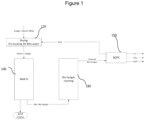
- the feedstock will preferably consist of small sludge agglomerates coming directly from the cyclone separator (not shown in figure 1 ) and being dried in a drying unit (120) to a 40-60% water content prior entering the MAP-G reactor (100).
- the energy and heat required for the drying and pre-heating of the sludge can be provided by any means.
- the heat is preferably provided by the high temperature fuel cell unit (150).
- This heat (preferably up to 750°C) can be recovered and reused to dry the fish sludge and also simultaneously form steam.
- the produced steam will be used for the gasification reactions and thus, the steam together with the sludge (40-60% water content) will enter the MAP-G reactor (100) where pyrolysis and steam gasification reaction will take place simultaneously to produce more steam, carbon and wet gas. Therefore, the pyrolysis MAP-G reactor (100) will further dry the sludge (40-60% water) to produce more steam while the pyrolysis reaction will also take place.
- the steam flow coming from the drying unit (120) and the steam produced inside the MAP-G reactor (100) will simultaneously gasify the pyrolysis products (char and the oils) into gas and solid residue.
- the aim is that all the produced carbon and all the produced oils will be gasified in one single reactor (100). Due to the continuous fed of the reactor (100) the produced gas will contain traces of water, so called wet gas. This wet gas will move to the exit part of the reactor (100) at the bottom of the reactor (100), due to an increase in the gas pressure, and it will be fed into a gas cleaning unit (180) and from here the dried and lean gas will be used as fuel into the fuel cell system (150).
- a main advantage of using water already present in the sludge as a steam source to gasify the solid char is that the sludge will not require a dewatering and/or drying step as in other available technologies. In prior art technologies must up to 95-98% of the water be removed before treatment. Instead, according to the present invention, a water removal between 40 and 60% will be sufficient. The remaining water will provide the required amount of steam for the gasification of the char fraction. Thus, energy will be saved by not dewatering and drying the sludge. And in addition, no additional external water stream is required.
- bio-gas and small amounts of solid residue will be produced.
- the method provides for gasification of the produced solid carbon char as fast and as much as possible, until in the end the remaining solid residue will contain mainly phosphorus, heavy metals, nitrogen, salt and very little or no amount of char. If these valuable nutrients and components are volatilized and removed from the fish sludge inside the MAP-G reactor different commercial absorbents can be used to separate the removed nutrients and components from the flue gas (at different temperatures).
- TG/DTA analyses were performed both in air and in reduced atmosphere (using Argon gas) on a raw/fresh fish sludge generated by fish from a RAS unit.
- the tests of the fresh fish sludge samples show the evolution of the sample mass while it was heated in air and reduced atmosphere, up to 1400°C using a 5°C/min as heating rate.
- the results show that both samples are losing most of its mass to water evaporation up to 130°C.
- the subsequent mass change takes place between 130 and 550°C corresponding to oxidation of the organics present in the samples.
- a raw/fresh fish sample of a fish sludge from a RAS unit was investigated using XRD. Besides, similar fish sludge samples were thermally treated in air, up to 1200°C and 1300°C, respectively (using 200°C/h as heating rate and 2h as plateau). The XRD spectra are shown in figure 3 .
- the crystalline phases that are present are combining relevant and useful elements such as Ca, Mg, Na, Fe, P which should be recover from the remaining residue.
- the samples used for the XRD were also used to determine the elements that are present in the samples.
- the XRD detection limit cannot identify the very low levels of all the elements present in the samples.
- the elemental analysis of the samples is given in table below in mg/kg.
- the proof of concept was done in a laboratory scale batch reactor by using a commercially microwave oven.
- the reactor was designed to improve the handling and visibility of the sample, to improve the gas analysis capabilities.
- the sample tube was a quartz tube, placed inside an alumina tube with one closed end inside the oven volume. This alumina tube was penetrating the back wall of the microwave oven (see figure 4 - two upper pictures).
- the inner quartz sample tube (see figure 4 - lower picture) was connected to the outer alumina tube with a steel flange.
- the connections between the flanges and tubes were made gas-tight with the help of Viton O-rings and silicone paste.
- the sweep gas was entering the outer tube and then being forced into the inner quartz tube through the sample and out, where it was passed through a condensing cold trap and by a mass-spectrometer for the real-time analysis of the gases.
- a metal sheathed insulated junction K-type thermocouple was placed inside the sample at the start of a test together with a thin metal tube to be able to inject additional gasification agent into the sample as desired. All metallic parts inside and around the inner oven volume were electrically grounded to avoid sparks.
- the whole setup was placed inside a reflecting metallic cage to avoid microwave radiation leakage.
- the test setup (see Figure 5 ) is providing the mass flow control over the sweep gas flow, gasification agent flow (water/CO 2 ).
- gasification agent flow water/CO 2
- the mixture of the produced gas and the sweep gas (argon) passes through a tube into the ventilation.
- a mass spectrometer (HPR-20 from Hiden Analytical) samples the gas continuously from the exhaust tube, monitoring the real time gas composition.
- the sample temperature and the oven temperature are measured by a thin insulated K-type thermocouple. All control and data acquisition is made in LabView software via National Instruments CompactRio I/O modules.
- the output of the oven magnetron is controlled externally by switching it on and off (full power / zero power) using the sample temperature reading and a relay switch.
- the maximum output magnetron power is 700 W.
- the fish sludge coming from the RAS fish farm is of varying solids content and therefore, we were drying the sludge in air at 104 °C for 12 hours prior to using it in the tests. This removes all the free water, leaving only absorbed or chemically bound water left inside the sample. Water as a gasifying agent can then be added to the sample via the tube and the liquid flow controller. Five grams of dried sludge are weighed and used in each test. The sludge is mixed with 15 grams of microwave absorbing additives (either SiC powder or LaCrOs crush) and put inside the quartz tube at the end farthest from the flange (see Figure 6 ). The thermocouple and the water supply tube are inserted.
- microwave absorbing additives either SiC powder or LaCrOs crush
- the sample is fixed in place inside the quartz tube by two gas permeable rockwool plugs, which are also weighed.
- the sample tube is then placed inside the alumina tube so that the sample is inside the oven, the flange connection is tightened, and sweep gas inlet and product gas outlet are connected.
- the quartz tube is removed from the setup; the sample with the rockwool plugs is pushed out and weighed. There is often condensate on the tube walls, this condensate is wiped out and weighed too.
- An approximate mass balance is then calculated based on the weighing results and analysis of the gas composition, which is approximated from the partial pressures of gases and the constant flow rate of the sweep gas.
- the total duration of the heating was 2 hours 12 minutes. This is much longer than would be actually required. The reason was to see clearly, at which temperature the gases were being produced, and to be able to estimate the amounts of each produced gas from the mass spectrometer data.
- the sample was heated stepwise from ambient to 1000°C as shown in the figure 7 below.
- the reactor heating control is based on switching the magnetron on and off, so the actual average temperature of the sample during the "constant temperature” steps was approximately 30 degrees below the setpoint: 570°C instead of 600°C, 670°C instead of 700°C etc. (see Figure 7 which shows the temperature t).
- the corresponding gas production is shown below the temperature profile (see figure 8 ).
- the combustible fraction of the gaseous products consists mainly of hydrogen and carbon monoxide, while carbon dioxide stands for 44% of the total.
- the sample used in the test is rather small, and it is likely that excess of water was added, leading to increased COz production. It is likely that the gas composition would change based on the heating profile, heating duration, water to dry sludge ratio and other reactor parameters.
- the table 6, below, shows the results for the salted sludge, commercial fish food and 2 samples after the pyrolysis and gasification + microwave.
- the fish sludge from the RAS unit (with salt) was dried at 104°C for 12h prior testing in the microwave reactor (here are given as example 2 sample tests on 16 March and on 22 March, respectively - different conditions).
- the HHV and LHV are about 21-23.000 J/g for the food and in the sludge it decreases to 11-12 000 J/g. This means that the fish are eating the food and some energy is absorbed by the fish during digestion. After the pyrolysis and gasification with microwaves the energy values are decreasing to 1300-1500 J/g for one sample and 8-900 J/g for the other one. This simply shows that with the method and reactor according to the invention, we have managed to achieve complete gasification and pyrolysis of the sample. This is extraordinary.
- the temperature of the processes are preferably around 600 °C. If we allow the temperature to increase the salt will start to volatilize, and this will impose problems to the reactor and the efficiency of the method. NaCl has a boiling point at 801C but it can start to vaporize below this temperature.
- the salt vaporization will affect the reactor itself (e.g. corrosion problems, cracking of the steel walls) but also the salt vapors will be present in the produced gas. Thus, we will have to clean the gas to be suitable for the fuel cell system. It would be important to keep the temperature as low as possible to avoid salt vaporization.
- the salt is shown in the analysis by Na and Cl-.
- the sludge that we used is from smolts unit (using a mixture of salt and fresh water). Anyhow, the proposed reactor will work perfectly fine also with higher concentrations of salt in the water, i.e. on waste coming from a sea-based fish farms.
- Table 6 Sample / Obtained data Method used for the analyses Resulted data U.M.
Landscapes
- Chemical & Material Sciences (AREA)
- Engineering & Computer Science (AREA)
- Life Sciences & Earth Sciences (AREA)
- Organic Chemistry (AREA)
- Hydrology & Water Resources (AREA)
- Water Supply & Treatment (AREA)
- Environmental & Geological Engineering (AREA)
- Combustion & Propulsion (AREA)
- Oil, Petroleum & Natural Gas (AREA)
- Environmental Sciences (AREA)
- General Engineering & Computer Science (AREA)
- Mechanical Engineering (AREA)
- Zoology (AREA)
- Marine Sciences & Fisheries (AREA)
- Biodiversity & Conservation Biology (AREA)
- Animal Husbandry (AREA)
- Sustainable Energy (AREA)
- General Chemical & Material Sciences (AREA)
- Sustainable Development (AREA)
- Chemical Kinetics & Catalysis (AREA)
- Electrochemistry (AREA)
- Manufacturing & Machinery (AREA)
- Physics & Mathematics (AREA)
- Thermal Sciences (AREA)
- Treatment Of Sludge (AREA)
- Organic Low-Molecular-Weight Compounds And Preparation Thereof (AREA)
Description
- The present invention relates to a method and system for converting an aqueous salt containing sludge.
- Aquaculture industry is in a continuous growth with huge economic benefits. Currently the fish can be raised until harvested in different types of cage farms e.g. open cages placed directly in the water or "off-shore cultivation" when the cages are placed directly in the sea water. Another alternative is represented recirculating aquaculture systems (RAS) which comprise a series of culture tanks and where the water is continuously recirculated and monitored. Thus, the fish farms can be located in different areas on land or on the sea, sometimes isolated and off-grid connections.
- The fish farming industry also face different challenges such as escaped fish/genetic interaction, pollution and discharges, diseases and parasites, use of coastal areas, feed/feed resources. Thus, lately, different closed cage farms concepts have been developed with many positive benefits such us preventing escaping of the fish, avoiding the fish lice problems, less medicines and antibiotics, but also that the fish sludge will no longer reach the bottom of the sea. Closing the fish farm cages represents a good environmental measure but it will also bring new challenges that must be solved e.g. huge quantities of sludge that will be collected from the bottom of the closed fish farms, pumped and transported on land. This sludge possesses a tremendous potential to generate energy but it is also a valuable source of nitrogen (N), phosphorous (P), heavy metals (Cd, Pb, Hg, Ni, Zn, Cu, Cr), salt (NaCl), other minerals which were so far not exploited/recovered. Another challenge for a closed cage fish farm is that you have to provide large quantities of oxygen to the fish in order to maintain the fish health and welfare. This comes with a significant cost in case the oxygen is purchased from different commercial producers.
- For example, if the fish farming industry will manage to collect and re-use all the sludge from 1 million tones salmon/year to produce biogas, then 70-190 million m3 methane could be produced, equivalent to 0.7-2 TWh energy. As a comparison, according with the Statistics Norway, in 2009 Bergen area having a population of 252 051 inhabitants, used in total 2.0334 TWh energy. According to Fishery Directorate, in March 2018 the total fish production in Norway was 728 531 tons from which 103 788 tons are located in Hordaland area. According to Milostatus 780 tons fish will generate as much waste in form of sludge as 11 780 inhabitants. Thus, the total fish production in Norway can generate waste in form of sludge as 13-14 million inhabitants (approx. 3 times the population of Norway); but, if collected and re-used it can generate up to 6.7 million Nm3 methane or 65 GWh/year. The aquaculture industry aims to increase their production by a factor of 5, until 2050 leading to a potential methane production of 580 million Nm3 or 5.7 TWh/year.
- Different solutions for sludge handling that have been proposed so far are aiming to filter, dewater and/or dry the sludge up to 95-98% total solids. Either afterwards the dried pellets are delivered to a waste recovery plant (e.g. Denmark, Sweden) to produce biogas or to different production lines to be used as "green fuel" e.g. cement. One cement factory has a capacity of burning up to 12 000 tons dried sludge (Fiskeslam som brensel - Tom Berntsen, HeidelbergCement http://tekset.no/wp-content/uploads/2017/02/14-Berntsen.pdf ). Anyhow, these solutions come with a significant transport cost and environmental consequences. Besides, by incinerating and/or burning the dried sludge pellets all the valuable components still present are wasted.
- Another waste recovery technology used at large scale to produce biogas and fertilizer is anaerobic digestion. The number of anaerobic digester recovery plants is still increasing buy they are mainly using mixt waste from sewage, wood, plants, etc. When it comes to the fish sludge the anaerobic digestion technology could be used only for the sludge generated by on-land fish farms, so-called fresh water fish sludge. The challenges here are that in an anaerobic digester plant the biogas production is quite slow (require up to 20-30 days to produce the biogas), the plants are quite expensive and require large area of land around the needed units e.g. digesters, reservoirs, collectors. Thus, new technologies for handling this large volume of generated waste are required.
- When it comes to the sludge generated by a sea-based fish farm or RAS, which are using a mixture of fresh water with seawater, there is salt present in the sludge. This salt destroys the media/bacteria inside the anaerobic digester unit. Therefore, for this specific type of sludge the anaerobic digestion technology can be used only if the sludge is desalinated (by using large amounts of fresh water), dewatered and/or dried (by using large amounts of energy). Depending on the digester manufacturers the salt level needs to be reduced to 1% (ENSPAR Biogas, www.enspar.de) and 25% (Schmack Biogas, www.schmack-biogas.com).
-
US6398921 describes a process for gasifying solid organic matter from wastewater sludge involves dewatering the sludge to a solids content of at least 35% by weight using a combination of centrifugation, microwave heat exchange and screw press separation. The denatured solids are than at least partially pyrolyzed by passing through a heated inclined screw auger. The pyrolysis solids, tars and gases are then gasified by exposure to a high intensity microwave field. The method cannot be used if the sludge contains salt. "Microwave-assisted pyrolysis of biomass for liquid biofuels production" by Chungen Yin describes methods for producing "liquid biofuels" (general abstract) from feedstock using pyrolysis.GB2287471 - It is an aim of the present invention to provide a method and system that can treat salt containing sludge. The method and system of the invention are realized in compact and fast process, wherein the composition of the products can be controlled by the reaction temperature and the reaction kinetics by control of the microwave intensity. The method and system can also be used for treatment of sludge that has a low, or no amount of salt.
- A first aspect of the present invention relates to a method for continuously converting an aqueous salt containing sludge into gases and a solid residue, wherein the method comprises;
- the aqueous salt containing sludge is dewatered to a water content of 20-60% (weight/weight); and thereafter;
- the dewatered sludge is heated to a temperature of 500 °C to 1000 °C by microwave radiation, wherein the microwave radiation generates heat and steam,
- partially or complete pyrolyzing the dewatered sludge to produce pyrolysis products, wherein the pyrolysis products inter alia are CO (g), CH4(g) and H2 (g), CHO (oil) and C(s)
- gasifying the pyrolysis products, wherein inter alia the C (s) and CHO (oil) are gasified to CO(g) and H2(g), wherein the microwave enhanced pyrolysis and gasification takes place simultaneously in one reactor.
- In a preferred embodiment is the dewatered sludge anoxically exposed to a temperature in the range of 500 °C to 700 °C.
- In a preferred embodiment is the dewatered sludge anoxically exposed to a temperature in the range of 500 °C to 600 °C.
- In a preferred embodiment is the dewatered sludge anoxically exposed to a temperature in the range of 600 °C to 700 °C.
- In a preferred embodiment is the anoxically exposure in the reaction is obtained by adding an inert gas to the reactor.
- In a preferred embodiment is a reaction temperature of 500 °C to 700 °C maintained without external cooling of the reactor.
- In a preferred embodiment is a reaction temperature of 500 °C to 600 °C maintained without external cooling of the reactor.
- In a preferred embodiment is a reaction temperature of 600 °C to 700 °C maintained without external cooling of the reactor.
- In a preferred embodiment are the pyrolysis products, inter alia C (s), H2 (g) and CHO (oil) completely gasified to CO(g) and H2(g).
- In a preferred embodiment generates the microwave radiation the steam for the gasification reaction by heating the water in the salt containing aqueous sludge.
- In a preferred embodiment is a microwave radiation absorber (catalyst) used to absorb microwave radiation.
- In a preferred embodiment is the microwave radiation absorber produced during the pyrolysis of the sludge.
- In a preferred embodiment is carbon the microwave radiation absorber produced during the pyrolysis of the sludge.
- In a preferred embodiment is the aqueous salt containing sludge dewatered to a water content of 30-40% (weight/weight).
- In a preferred embodiment are the method steps conducted in a one-step reactor.
- In a preferred embodiments the salt containing dewatered sludge is continuously fed to the reactor (100), and wherein a microwave radiation having a field density of 0.5 - 5 kW/l, more preferably 0.8-2 kW/l, and most preferably about 1 kW/l is applied to the sludge, and wherein the dewatered sludge is anoxically exposed to a temperature in the range of 500 °C to 600 °C, in order to partially or completely pyrolyse and gasify the sludge to gases and char.
- In a preferred embodiment is the gases and char separated and collected.
- In a preferred embodiment is the salt containing aqueous sludge added to the reactor, and the gas and char are collected from the reactor continuously.
- In a preferred embodiment is the gasifying carried out in the absence of oxygen.
- In a preferred embodiment is the salt containing aqueous sludge from a fish farm.
- In a preferred embodiment is the salt containing aqueous sludge from a RAS fish farm.
- In a preferred embodiment is the salt containing aqueous sludge from a marine fish farm.
- In a preferred embodiment contains the salt containing aqueous sludge salt in a concentration of 10-100 g/kg, more preferably 15-50 g/kg, and more preferably 20-40 g/kg, and most preferably 30-40 g/kg.
- In a preferred embodiment contains the salt containing aqueous sludge salt in a concentration of 31 g/kg, to 38 g/kg.
- In a preferred embodiment contains salt containing aqueous sludge Na+ in a concentration of 10-200 g/kg, more preferably 20-100 g/kg, and more preferably 30-60 g/kg.
- In a preferred embodiment contains the salt containing aqueous sludge Cl- in a concentration of 50-300 mg/g, more preferably 75-200 mg/g, and more preferably 90-150 mg/g.
- In a preferred embodiment is the dewatered sludge heated to 500 °C to 600 °C by microwave radiation.
- In a preferred embodiment is the temperature of heating of the dewatered sludge regulated to a lower temperature in order to enhance the fraction of methane in the produced gas mixture.
- In a preferred embodiment has the reactor increasing temperature through the reactor, in order to produce gas with a low vapour pressure of salt at low temperatures and the rest at higher temperature, at low gas volume, to obtain complete conversion.
- In a preferred embodiment can steam in the first part of the reactor bypass the pyrolysis zone and be directed to the gasification zone in order to control the reaction products.
- In a preferred embodiment can the produced gas be further heated from the reaction zone to the absorbent in order to avoid uncontrolled condensation.
- A second aspect of the present invention relates to a system for handling a salt containing aqueous sludge which is continuously fed into the system, the system comprising
- a reactor (100) comprising;
- a microwave generator that generates microwaves have a field strength of 0.5 - 5 kW/l, more preferably 0.8-2 kW/l, and most preferably about 1 kW/l, and applies the microwave radiation to the sludge added to the reactor (100), and
- a pyrolysis zone within which sludge is pyrolyzed anaerobically during use, and
- a gasification zone within which the pyrolysis products are gasified during use, and a drying unit upstream from the reactor.
- In a preferred embodiment comprises the system a gas/solid separator.
- In a preferred embodiment comprises the system a gas cleaning unit downstream for the reactor capable of cleaning the wet gas received from the reactor.
- In a preferred embodiment comprises the system a fuel cell which converts that gas produced by the reactor into heat, CO2 and water.
- In a preferred embodiment is the fuel cell a SOFC.
- In a preferred embodiment is the heat generated by the fuel cell fed to the drying unit.
- Embodiments of the present invention will now be described, by way of example only, with reference to the following diagrams wherein:
-
Figure 1 shows a schematic diagram of the concept of microwave assisted pyrolysis and gasification (MAP-G) of an aqueous sludge. -
Figure 2 shows TG/DTA analyses of a sludge sample from ... -
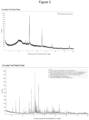
Figure 3 shows XRD spectra: upper graph - raw fish sludge; middle graph- fish sludge treated at 1200°C; lower graph - fish sludge treated at 1300°C. -
Figure 4 shows a proof of concept MAP-G reactor (two upper pictures); quarts sample tube with sample before treatment (lower picture -
Figure 5 shows P&ID of the test set-up -
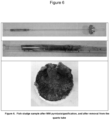
Figure 6 . Fish sludge sample after MW pyrolysis/gasification, and after removal from the quartz tube -
Figure 7 shows the temperature measured inside the sample during the pyrolysis/gasification test on 16.03.2018 -
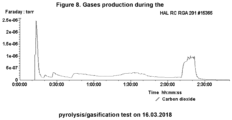
Figure 8 shows the production of gases during the pyrolysis/gasification test on 16.03.2018 - We have shown that the salt containing sludge can be treated and converted to char and gases by a combination of pyrolysis and gasification, and wherein the pyrolysis and gasification reactions are assisted with microwave radiation.
- The sludge generated by a closed fish farm usually contains fish food waste, faeces, nutrients, water, and in the case of a sea-based fish farm, salt. The waste generated by the byproducts from hatcheries e.g. bones, skin, guts can be recycled and is in the context of the present invention not considered here. However, also a sludge containing remainder of fish and fish byproducts can be treated by the method according to the invention.
- Pyrolysis represents a thermochemical decomposition of different organic material at elevated temperatures and in the absence of oxygen. During pyrolysis, the organic waste is decomposed into gas, tar and a char - reaction 1, see below. The pyrolysis is considered as an alternative to biogas production via anaerobic digester technology and provides fast pyrolysis that occurs during a short residence time.
- Our preliminary calculations of a microwave assisted pyrolysis and gasification (MAP-G) technology shows that this method will provide 2 to 3 times more energy than the alternative anaerobic digester route.
- Gasification is an endothermic process which means heat is required. The tars (gas+oil fractions) are usually collected and burned as fuel to produce energy. The generated heat is converted into electricity in a turbine or any other thermal engine.
- The proposed alternative for the produced tars uses the already produced hydrogen (in the pyrolysis reaction) and steam to enhance the bio-gas production - reaction 2; while the solid bio char will also be further gasified using steam into bio-gas -
reaction 3. - The reactions present during the pyrolysis and gasification processes are as follows:
- Reaction 1 - Pyrolysis reaction

- Reaction 2 - Gasification reaction
CHO (oil) + H2 → CO + H2 (bio-gas)
- Reaction 3 - Gasification reaction
C(solid) + H2O (steam) → CO + H2 (gas) + solid residue
- Total reaction
CxHyO2 (sludge) → CO + H2 + CH4 + solid residue
- We will use microwave energy as the energy source for the pyrolysis and gasification processes because of very fast heat delivery. A few seconds are needed to reach 1000 °C.
- It is known to use carbon as catalyst to absorb the microwave radiation. The technology so far is that you have to add active carbon and mix it with the waste that you are going to thermally decompose in the pyrolysis step.
- In the method according to the invention, we will not add carbon, but the carbon that will be produced during the pyrolysis will start to absorb the microwave radiation immediately and continuing to heat itself and the surrounding and thus, sustaining the gasification processes. Therefore, at the beginning of the process the remained water will absorb the microwave radiation generating steam and initiating the pyrolysis reactions producing the solid Carbon and gas via pyrolysis reactions. The produced solid Carbon via pyrolysis is highly reactive and it will take over; it will continue to absorb the microwave radiation, and thus continuing to heat itself and the produced oils until all the gasification reactions are completed (very fast). The absorption of microwave radiation by the water and Carbon will happen simultaneously and continuously since the reactor will be continuously fed with fish sludge: new water entering the reactor at all time, new steam, new carbon, new oils, and new gas. All these reactions and effects are connected to each other and take place in circle.
- Simplified mechanism is as follows:



- Advantages: the solid carbon obtained via pyrolysis is highly active but only for a short period. The proposed solution will not involve any additional transportation of the produced carbon. Instead, it will be used immediately in the same reactor, i.e. a one-step reactor for pyrolysis and gasification.
- Microwaves enhance the reaction kinetics resulting in faster conversion at lower temperatures, so called microwave assisted reaction kinetics enhancement. This means that for a practical, compact and fast application the process can operate at a lower temperature than for pure thermal heating for pyrolysis.
- If the reactions are performed at high temperatures salt will evaporate in the reactor and condensate when the reaction gas is cooled. In a reactor producing 100 kWh operated at 600°C, appr. 1 kg of salt will evaporate in one year. This small amount of salt can easily be condensed out in an absorbent, adsorbent or condensation chamber. The condensed salt can be washed out periodically by cooling to ambient temperature and flushing with water. When operated at 700 °C, 800 °C or 900 °C the amounts of salt will be appr. 30 kg, 350 kg and 2200 kg respectively. These amounts of salt would require larger operating costs and larger equipment.
- The fuel in the produced gas consist mainly of methane, hydrogen and carbon monoxide. A higher fraction of methane is formed at lower temperatures. Methane has a higher volumetric energy content than hydrogen and carbon monoxide. The smaller volume means that less salt will be evaporated and transported, and less energy and volume is needed for compression and storage. Less energy is required to produce methane than hydrogen and carbon monoxide, and the efficiency is higher when used in a fuel cell. As the use of microwave assisted reaction kinetics enhancement enables the reactions to take place at sufficiently high rates at lower temperatures, a more attractive gas composition can be obtained.
- The process can also be run at increasing temperatures through the reactor, so that as much as possible of the gas is produced with a low vapour pressure of salt at low temperatures and the rest at higher temperatures, but low gas volume, to obtain complete conversion.
- Steam generated in the first part of the reactor can bypass the pyrolysis zone and directed to the gasification zone in order to control the reaction products.
- The gas can be further heated from the reaction zone to the absorbent to avoid uncontrolled condensation.
- As described in
figure 1 , the method according to the present invention provides a one-step reactor to continuously thermally decompose and gasify the fish sludge into gas and char by using microwaves as heat source, so called microwave assisted pyrolysis and gasification (MAP-G) technology. - In accordance with the method of the invention, the solids contained by the fish sludge can be decomposed very fast (some seconds) through the one-step microwave assisted pyrolysis and gasification reactor (MAP-G) (100) into gas and solid residue while travelling along the reactor (100). The one-step reactor design can be vertical and thus the gravitational force will help with a constant feeding of the MAP-G reactor (100), and thus, no additional power will be needed for the feeding unit. The invention also anticipates other reactor designs, and the feedstock can be pumped into the reactor (100). The feedstock will preferably consist of small sludge agglomerates coming directly from the cyclone separator (not shown in
figure 1 ) and being dried in a drying unit (120) to a 40-60% water content prior entering the MAP-G reactor (100). - The energy and heat required for the drying and pre-heating of the sludge can be provided by any means. However, the heat is preferably provided by the high temperature fuel cell unit (150). This heat (preferably up to 750°C) can be recovered and reused to dry the fish sludge and also simultaneously form steam. The produced steam will be used for the gasification reactions and thus, the steam together with the sludge (40-60% water content) will enter the MAP-G reactor (100) where pyrolysis and steam gasification reaction will take place simultaneously to produce more steam, carbon and wet gas. Therefore, the pyrolysis MAP-G reactor (100) will further dry the sludge (40-60% water) to produce more steam while the pyrolysis reaction will also take place. The steam flow coming from the drying unit (120) and the steam produced inside the MAP-G reactor (100) will simultaneously gasify the pyrolysis products (char and the oils) into gas and solid residue. The aim is that all the produced carbon and all the produced oils will be gasified in one single reactor (100). Due to the continuous fed of the reactor (100) the produced gas will contain traces of water, so called wet gas. This wet gas will move to the exit part of the reactor (100) at the bottom of the reactor (100), due to an increase in the gas pressure, and it will be fed into a gas cleaning unit (180) and from here the dried and lean gas will be used as fuel into the fuel cell system (150). Into the cleaning unit (180), different commercial absorbers will be used to remove the traces that are present into the gas and that are harmful for the fuel cell system (e.g. water, Sulphur, siloxanes, salt). At the end, from the fuel cell system (150) water, COz stream, electricity and heat will be produced and these products can be captured and reused in other processes on-site.
- A main advantage of using water already present in the sludge as a steam source to gasify the solid char is that the sludge will not require a dewatering and/or drying step as in other available technologies. In prior art technologies must up to 95-98% of the water be removed before treatment. Instead, according to the present invention, a water removal between 40 and 60% will be sufficient. The remaining water will provide the required amount of steam for the gasification of the char fraction. Thus, energy will be saved by not dewatering and drying the sludge. And in addition, no additional external water stream is required.
- By combining the pyrolysis and gasification with the help of microwave at the end of the processes mainly bio-gas and small amounts of solid residue will be produced. The method provides for gasification of the produced solid carbon char as fast and as much as possible, until in the end the remaining solid residue will contain mainly phosphorus, heavy metals, nitrogen, salt and very little or no amount of char. If these valuable nutrients and components are volatilized and removed from the fish sludge inside the MAP-G reactor different commercial absorbents can be used to separate the removed nutrients and components from the flue gas (at different temperatures).
- TG/DTA analyses were performed both in air and in reduced atmosphere (using Argon gas) on a raw/fresh fish sludge generated by fish from a RAS unit. The tests of the fresh fish sludge samples (see
figure 5 ) show the evolution of the sample mass while it was heated in air and reduced atmosphere, up to 1400°C using a 5°C/min as heating rate. The results show that both samples are losing most of its mass to water evaporation up to 130°C. For the sample treated in air (Figure 2 - upper graph) the subsequent mass change takes place between 130 and 550°C corresponding to oxidation of the organics present in the samples. The two peaks at around 300°C and at around 460°C occur during the oxidation, probably corresponding to oxidation of volatile organics and fixed carbon, respectively. After 550°C no major effects are noticed and the remaining mass is mostly constant. The mass was reduced up to 98%. - For the sample treated in Argon (
Figure 2 - lower graph) the subsequent mass change takes place between 140 and 400°C corresponding to thermally decomposition of the organics present in the samples. The two peaks at around 300°C and at around 460°C corresponding to oxidation of volatile organics and fixed carbon are not present. After 400°C no major effects are noticed and the remaining mass continuously decreasing due to the elimination of the gasses from the sample. The total mass reduction was up to 98%. - A raw/fresh fish sample of a fish sludge from a RAS unit was investigated using XRD. Besides, similar fish sludge samples were thermally treated in air, up to 1200°C and 1300°C, respectively (using 200°C/h as heating rate and 2h as plateau). The XRD spectra are shown in
figure 3 . - For the XRD spectra the sample of fresh fish sludge was dried at 104°C for 12 h before using it in the XRD. The spectra of the raw/fresh fish sample, see
figure 3 - up, shows only amorphous phase, no crystalline phases were identified, except NaCl (halite) which was present in the sludge from the sea water. - The XRD spectra of the fish sludge samples treated in air at 1200 and 1300°C, respectively show similar crystalline phases e.g. merillite, hydroxylapatite, sodium calcium iron phosphate, forsterite, periclasem chopinite. The crystalline phases that are present are combining relevant and useful elements such as Ca, Mg, Na, Fe, P which should be recover from the remaining residue.
- The samples used for the XRD were also used to determine the elements that are present in the samples. The XRD detection limit cannot identify the very low levels of all the elements present in the samples. The elemental analysis of the samples is given in table below in mg/kg.


- The elemental analysis shown levels of Mg, Al, Si, P, Cl, K, Ca, Ti, V, Cr, Mn, Fe, Zn, As, Br, Sr, Ba, Ce and Gd are dominant while the other elements are present in traces.
- The proof of concept was done in a laboratory scale batch reactor by using a commercially microwave oven. The reactor was designed to improve the handling and visibility of the sample, to improve the gas analysis capabilities. The sample tube was a quartz tube, placed inside an alumina tube with one closed end inside the oven volume. This alumina tube was penetrating the back wall of the microwave oven (see
figure 4 - two upper pictures). - The inner quartz sample tube (see
figure 4 - lower picture) was connected to the outer alumina tube with a steel flange. The connections between the flanges and tubes were made gas-tight with the help of Viton O-rings and silicone paste. The sweep gas was entering the outer tube and then being forced into the inner quartz tube through the sample and out, where it was passed through a condensing cold trap and by a mass-spectrometer for the real-time analysis of the gases. A metal sheathed insulated junction K-type thermocouple was placed inside the sample at the start of a test together with a thin metal tube to be able to inject additional gasification agent into the sample as desired. All metallic parts inside and around the inner oven volume were electrically grounded to avoid sparks. The whole setup was placed inside a reflecting metallic cage to avoid microwave radiation leakage. - The test setup (see
Figure 5 ) is providing the mass flow control over the sweep gas flow, gasification agent flow (water/CO2). The mixture of the produced gas and the sweep gas (argon) passes through a tube into the ventilation. A mass spectrometer (HPR-20 from Hiden Analytical) samples the gas continuously from the exhaust tube, monitoring the real time gas composition. - The sample temperature and the oven temperature are measured by a thin insulated K-type thermocouple. All control and data acquisition is made in LabView software via National Instruments CompactRio I/O modules. The output of the oven magnetron is controlled externally by switching it on and off (full power / zero power) using the sample temperature reading and a relay switch. The maximum output magnetron power is 700 W.
- The fish sludge coming from the RAS fish farm is of varying solids content and therefore, we were drying the sludge in air at 104 °C for 12 hours prior to using it in the tests. This removes all the free water, leaving only absorbed or chemically bound water left inside the sample. Water as a gasifying agent can then be added to the sample via the tube and the liquid flow controller. Five grams of dried sludge are weighed and used in each test. The sludge is mixed with 15 grams of microwave absorbing additives (either SiC powder or LaCrOs crush) and put inside the quartz tube at the end farthest from the flange (see
Figure 6 ). The thermocouple and the water supply tube are inserted. The sample is fixed in place inside the quartz tube by two gas permeable rockwool plugs, which are also weighed. The sample tube is then placed inside the alumina tube so that the sample is inside the oven, the flange connection is tightened, and sweep gas inlet and product gas outlet are connected. - 1 l/min of sweep gas is used during the testing. The desired sample temperature is set in the software, and the oven starts to heat until the desired temperature set point is reached. The software is then switching the magnetron on and off to keep the measured sample temperature close to the set point. Water is supplied into the sample at a rate of 5-10 g per hour. Partial pressures of Ar, CH4, H2, CO, CO2 and H2O are recorded by the mass spectrometer every 30 seconds.
- After the sample has cooled down, the quartz tube is removed from the setup; the sample with the rockwool plugs is pushed out and weighed. There is often condensate on the tube walls, this condensate is wiped out and weighed too. An approximate mass balance is then calculated based on the weighing results and analysis of the gas composition, which is approximated from the partial pressures of gases and the constant flow rate of the sweep gas.
- Around 20 tests have been performed on microwave pyrolysis/gasification of the fish sludge. The samples heating was attempted with SiC and with crushed LaCr3 ceramic as the MW absorbing additive, and without other additives. The samples were heated with and without adding gasifying agents (water, CO2). Data from a representative test performed on the 16th of March (sample mixed with SiC additive, water added as gasifying agent) is presented here as an example.
- The total duration of the heating was 2 hours 12 minutes. This is much longer than would be actually required. The reason was to see clearly, at which temperature the gases were being produced, and to be able to estimate the amounts of each produced gas from the mass spectrometer data. The sample was heated stepwise from ambient to 1000°C as shown in the
figure 7 below. The reactor heating control is based on switching the magnetron on and off, so the actual average temperature of the sample during the "constant temperature" steps was approximately 30 degrees below the setpoint: 570°C instead of 600°C, 670°C instead of 700°C etc. (seeFigure 7 which shows the temperature t). The corresponding gas production (mass spectrometer data) is shown below the temperature profile (seefigure 8 ). - The graphs above are roughly aligned time wise, so it is possible to see that each step brought some additional gas production, but the largest amount of products were generated at around 600°C and then at close to 1000°C. The initial pyrolysis and partial gasification reactions start around 140°C and between 400 and 600°C, and most products are formed then. Further heating yields little until quite high temperature. It is likely that the second large peak at around 1000°C is the result of the reaction between the produced oils and char and water vapor to produce more gaseous products. The gas analysis produced the following results, see table 2.
Table 2, Composition of the gas produced during the pyrolysis/gasification test on 16.03.2018 %vol composition of produced dry gas (over whole test duration) H2 25 % CH 4 5% CO 26% CO2 44% - The combustible fraction of the gaseous products consists mainly of hydrogen and carbon monoxide, while carbon dioxide stands for 44% of the total. The sample used in the test is rather small, and it is likely that excess of water was added, leading to increased COz production. It is likely that the gas composition would change based on the heating profile, heating duration, water to dry sludge ratio and other reactor parameters.
- The following mass balance (see Table 3. Mass balance of the test on 16.03.2018) was produced on the basis of sample weighing.

Table 4 - Distribution of the products (mass balance) Distribution of products Liquid products /condensate 12% Gas produced 54% Char/ash 34% - This balance does not include the water that was supplied to the sample, as most of it evaporated and condensed further in the outlet gas tube and the cold trap. Part of that water reacted with the pyrolysis products.
Table 5. Mass balance MW sludge sample 16 March 2018 In, g Out, g Sum out, minus water and sweep gas, g H2 in, g 0 H2 out 0.06 CH4 in 0 CH4 out 0.08 CO in 0 CO out 0.80 CO2 in 0 CO2 out 2.17 Ar in/out 55.36 Ar out 55.47 H2O in 22.66 H2O gas out 0.22 H2O evaporated from the sample 2 Sum 78.02 60.81 3.11 - According to this calculation, a total of 3.11 g of gas (H2, CH4, CO and CO2) was produced. This mass includes the water that reacted with the pyrolysis products. Assuming that the sample has lost 1.7 g (initial weight minus the residue minus the condensate/oil collected from the quartz tube walls), and 3.11 g of gas was detected at the outlet, around 1.4 g of water has reacted during the test.
- The table 6, below, shows the results for the salted sludge, commercial fish food and 2 samples after the pyrolysis and gasification + microwave. The fish sludge from the RAS unit (with salt) was dried at 104°C for 12h prior testing in the microwave reactor (here are given as example 2 sample tests on 16 March and on 22 March, respectively - different conditions).
- As evident from the table 6, the HHV and LHV are about 21-23.000 J/g for the food and in the sludge it decreases to 11-12 000 J/g. This means that the fish are eating the food and some energy is absorbed by the fish during digestion. After the pyrolysis and gasification with microwaves the energy values are decreasing to 1300-1500 J/g for one sample and 8-900 J/g for the other one. This simply shows that with the method and reactor according to the invention, we have managed to achieve complete gasification and pyrolysis of the sample. This is extraordinary.
- In accordance with the method of the present invention, the temperature of the processes are preferably around 600 °C. If we allow the temperature to increase the salt will start to volatilize, and this will impose problems to the reactor and the efficiency of the method. NaCl has a boiling point at 801C but it can start to vaporize below this temperature.
- The salt vaporization will affect the reactor itself (e.g. corrosion problems, cracking of the steel walls) but also the salt vapors will be present in the produced gas. Thus, we will have to clean the gas to be suitable for the fuel cell system. It would be important to keep the temperature as low as possible to avoid salt vaporization.
- The salt is shown in the analysis by Na and Cl-. The sludge that we used is from smolts unit (using a mixture of salt and fresh water). Anyhow, the proposed reactor will work perfectly fine also with higher concentrations of salt in the water, i.e. on waste coming from a sea-based fish farms.
Table 6 Sample / Obtained data Method used for the analyses Resulted data U.M. Dried initial fish waste (sludge) WITH SALT dried at 100°C for 12 h fish food Test10 (16 March 2018) Sludge from RAS unit, dried at 104C for 12H before the microwave testing Test 19 295i 299i Sludge from RAS unit, dried at 104C for 12H before the microwav e testing 294i 298i High Heating Value (HHV) 12 326 23 120 1511 904 DIN-51900-1: 2000 Low Heating Value (LHV) 11 442 21 568 1373 786 DIN-51900-2: 2003 Sodium (Na) mg / kg 36 120 4 770 8 360 9 290 SR EN ISO 11885: 2009 Phosphor (P) mg / kg 34 500 14 400 5 610 8 270 As mg / kg 1.60 1.22 0.18 0.28 R ISO 11466: 1999 Cd mg / kg 0.52 0.30 0.25 0.26 Cr mg / kg 4.77 2.95 15.82 37.82 Co mg / kg 0.97 0.45 0.91 3.02 SR EN ISO 17294-2: 2017 Cu mg / kg 7.95 2.93 2.26 7.16 Mn mg/kg 142 21.96 78.25 135 Ni mg / kg 8.24 4.11 21.29 164 Pb mg / kg 1.57 0.75 1.03 1.48 Zn mg / kg 267 70.82 33.10 24.84 Carbon % 27.4 47.9 26.7 20.2 ISO 10694:1995 Hydrogen % 4.41 7.16 0.354 0.252 Oxygen % 22 27.3 7 5.46 ISO 13878:1998 Sulphur (S) % SLQ(<0.01) SLQ(<0.0 1) SLQ(<0.01) SLQ(<0.0 1) ISO Nitrogen (N) % 2.52 7.75 1.42 SLQ(<0.0 1) 15178:2000 Fluoride (F-) mg / kg 840 710 84.5 4.5 SR EN ISO 10304 - 1: 2009 Chloride (Cl-) mg / kg 99 000 12 110 21 270 13 500 Nitrite (NO2 -) mg / kg < 0.5 < 0.5 < 0.5 < 0.5 Nitrate (NO3 -) mg / kg 53.5 54.5 10.6 11.0 Phosphate (PO4 3-) mg / kg < 0.5 15 562 10.0 < 0.5 Sulphate (SO4 2-) mg / kg 9 865 1 700 1 200 82.5 SLQ = Under detection limit of the method
Sample 294i: fish waste WITH SALT
Sample 295i: fish food
Sample 298i: Test 10 (16 March 2018 pyro/gas - microwaves
Sample 299i: Test no.19 (pyro/gas - microwaves)
Claims (12)
- A method for continuously converting an aqueous salt containing sludge into gases and a solid residue, wherein the method comprises;- the aqueous salt containing sludge is dewatered to a water content of 20-60% by weight; and thereafter:- the dewatered sludge is heated to a temperature of 500 °C to 1000 °C by microwave radiation, wherein the microwave radiation generates heat and steam, thereby- partially or complete pyrolyzing the dewatered sludge to produce pyrolysis products, wherein the pyrolysis products inter alia are CO (g), CH4(g) and H2 (g), CHO (oil) and solid C(s), and- gasifying the pyrolysis products, wherein inter alia the solid C (s) and CHO (oil) are gasified to CO(g) and H2(g), wherein the microwave enhanced pyrolysis and gasification takes place simultaneously in one reactor.
- A method according to claim 1, wherein the dewatered sludge is anoxically exposed to a temperature in the range of 500 °C to 700 °C, preferably in the range of 500 °C to 600 °C, preferably in the range of 600 °C to 700 °C.
- A method according to claim 2, wherein a reaction temperature of 500 °C to 700 °C is maintained without external cooling of the reactor, preferably wherein a reaction temperature of 500 °C to 600 °C is maintained without external cooling of the reactor, preferably wherein a reaction temperature of 600 °C to 700 °C is maintained without external cooling of the reactor.
- A method according to claim 1, wherein the microwave radiation generates the steam for the gasification reaction by heating the water in the salt containing aqueous sludge.
- A method according to any of the proceeding claims, wherein a microwave radiation absorber is used to absorb microwave radiation, preferably wherein the microwave radiation absorber is produced during the pyrolysis of the sludge, preferably wherein the microwave radiation absorber is carbon produced during the pyrolysis of the sludge.
- A method according to claim 1, wherein the salt containing dewatered sludge is continuously fed to the reactor (100), and wherein a microwave radiation having a field density of 0.5 - 5 kW/ liter, more preferably 0.8-2 kW/liter, and most preferably about 1 kW/liter is applied to the sludge, and wherein the dewatered sludge is anoxically exposed to a temperature in the range of 500 °C to 600 °C.
- A method according to claim 1, wherein the salt containing aqueous sludge is sludge from a marine fish farm.
- A method according to any of the preceding claims, wherein the salt containing aqueous sludge contains salt in a concentration of 10-100 g/kg, more preferably 15-50 g/kg, and more preferably 20-40 g/kg, and most preferably 30-40 g/kg.
- A method according to claim 1, wherein the reactor has increasing temperature through the reactor, in order to produce gas with a low vapour pressure of salt at low temperatures and the rest at higher temperature, at low gas volume, to obtain complete conversion.
- A system for handling a salt containing aqueous sludge which is continuously fed into the system, the system comprising- a reactor (100) comprising;- a microwave generator that generates microwaves having a field density of 0.5 - 5 kW/l, more preferably 0.8-2 kW/l, and most preferably about 1 kW/l, and applies the microwave radiation to the sludge added to the reactor (100), and- a pyrolysis zone within which sludge is pyrolyzed anaerobically during use,- a gasification zone within which the pyrolysis products are gasified during use, and- a drying unit upstream from the reactor.
- A system according to claim 10, wherein the system comprises a fuel cell (150) which converts that gas produced by the reactor (100) into heat, CO2 and water, preferably wherein the fuel cell (150) is a SOFC (150).
- A system according to claim 11, wherein the heat generated by the fuel cell (150) is fed to the drying unit (120).
Applications Claiming Priority (2)
| Application Number | Priority Date | Filing Date | Title |
|---|---|---|---|
| NO20181008A NO346959B1 (en) | 2018-07-20 | 2018-07-20 | Microwave assisted pyrolysis and gasification reactor and method |
| PCT/NO2019/050154 WO2020017979A1 (en) | 2018-07-20 | 2019-07-19 | Microwave assisted pyrolysis and gasification |
Publications (3)
| Publication Number | Publication Date |
|---|---|
| EP3823934A1 EP3823934A1 (en) | 2021-05-26 |
| EP3823934B1 true EP3823934B1 (en) | 2023-06-07 |
| EP3823934C0 EP3823934C0 (en) | 2023-06-07 |
Family
ID=67660442
Family Applications (1)
| Application Number | Title | Priority Date | Filing Date |
|---|---|---|---|
| EP19755449.6A Active EP3823934B1 (en) | 2018-07-20 | 2019-07-19 | Microwave assisted pyrolysis and gasification |
Country Status (8)
| Country | Link |
|---|---|
| US (1) | US11939249B2 (en) |
| EP (1) | EP3823934B1 (en) |
| KR (1) | KR20210032989A (en) |
| CN (1) | CN112469671A (en) |
| CA (1) | CA3106443A1 (en) |
| ES (1) | ES2955658T3 (en) |
| NO (1) | NO346959B1 (en) |
| WO (1) | WO2020017979A1 (en) |
Families Citing this family (10)
| Publication number | Priority date | Publication date | Assignee | Title |
|---|---|---|---|---|
| NO346959B1 (en) * | 2018-07-20 | 2023-03-20 | Prototech As | Microwave assisted pyrolysis and gasification reactor and method |
| CN112480956B (en) * | 2020-12-10 | 2024-06-04 | 南昌大学 | Method for producing biological naphtha by using marine plastic garbage and oil stains |
| US20230307804A1 (en) | 2021-03-12 | 2023-09-28 | Lg Energy Solution, Ltd. | Bus bar assembly, battery pack comprising bus bar assembly, and vehicle comprising battery pack |
| CN113843264B (en) * | 2021-10-18 | 2024-05-10 | 亚德(上海)环保系统有限公司 | Method and system for microwave thermal desorption and oxidation treatment of waste salt |
| NO347781B1 (en) * | 2021-12-21 | 2024-03-25 | Kjell Ivar Kasin | Method and apparatus for CO2 negative production of heat and power in combination with hydrogen (CHPH) |
| CN114477689A (en) * | 2021-12-27 | 2022-05-13 | 深圳大学 | CO (carbon monoxide)2Equipment and method for producing CO-rich synthetic gas by dry reforming and strengthening microwave continuous pyrolysis of sludge |
| CN117416928A (en) * | 2022-06-24 | 2024-01-19 | 中晶城康资源再生利用技术有限公司 | Application of catalytic methane cracking for hydrogen production from anaerobic fermentation sludge residue and methods and devices for catalytic methane cracking for hydrogen production |
| GB2622009A (en) * | 2022-08-30 | 2024-03-06 | Sintef Tto As | Sludge processing |
| CN119797702A (en) * | 2023-10-11 | 2025-04-11 | 中国石油天然气股份有限公司 | A gasification system and method for harmlessly treating oily sludge |
| US12330117B1 (en) | 2023-12-19 | 2025-06-17 | Halliburton Energy Services, Inc. | Applying metal alkaline and microwave pyrolysis for separating and capturing carbon dioxide from exhaust gas |
Family Cites Families (15)
| Publication number | Priority date | Publication date | Assignee | Title |
|---|---|---|---|---|
| US4592291A (en) * | 1985-03-11 | 1986-06-03 | Red Fox Industries, Inc. | Sewage treatment method and apparatus |
| GB9405209D0 (en) * | 1994-03-17 | 1994-04-27 | Wrc Plc | Plasma gasification process for a sludge feedstock |
| US6398921B1 (en) | 1995-03-15 | 2002-06-04 | Microgas Corporation | Process and system for wastewater solids gasification and vitrification |
| US20070137097A1 (en) * | 2005-12-16 | 2007-06-21 | Michio Ikura | Production of biodiesel from triglycerides via a thermal route |
| CN101724467B (en) * | 2009-12-22 | 2013-06-19 | 煤炭科学研究总院 | Method for preparing combustible gas and gas-solid reaction device specially used therefor |
| CA2831401C (en) | 2011-01-19 | 2015-10-06 | Jocelyn Doucet | Catalyst for distributed batch microwave pyrolysis and process thereof |
| US20130081934A1 (en) * | 2011-10-04 | 2013-04-04 | Pulverdryer Usa, Inc. | Systems and methods for converting sewage sludge into a combustible fuel |
| CN103058481B (en) * | 2011-10-21 | 2014-04-16 | 中国石油化工股份有限公司 | Method for treating oil sludge through microwave catalytic pyrolysis |
| CN102718383B (en) * | 2012-06-06 | 2017-03-08 | 中国科学院上海高等研究院 | Convert pyrolysis installation and the method containing carbon resource using microwave-assisted pyrolysis on the spot |
| KR101602232B1 (en) * | 2013-07-23 | 2016-03-10 | 두산중공업 주식회사 | Fuel cell, generation system and method using the same |
| CN104355519A (en) | 2014-10-29 | 2015-02-18 | 华南理工大学 | Comprehensive sludge treating method based on hydrothermal carbonization and fast microwave pyrolysis |
| FI127201B (en) * | 2015-04-17 | 2018-01-31 | Valmet Technologies Oy | Catalytic refining of pyrolysis vapors |
| CN106675661B (en) * | 2015-11-05 | 2019-05-17 | 中国石油化工股份有限公司大连石油化工研究院 | A kind of method of material continuous pyrolysis gasification |
| CN105417918B (en) * | 2015-12-08 | 2018-08-31 | 深圳大学 | Microwave-heating handles the technical method of municipal sludge |
| NO346959B1 (en) * | 2018-07-20 | 2023-03-20 | Prototech As | Microwave assisted pyrolysis and gasification reactor and method |
-
2018
- 2018-07-20 NO NO20181008A patent/NO346959B1/en unknown
-
2019
- 2019-07-19 ES ES19755449T patent/ES2955658T3/en active Active
- 2019-07-19 WO PCT/NO2019/050154 patent/WO2020017979A1/en not_active Ceased
- 2019-07-19 US US17/261,620 patent/US11939249B2/en active Active
- 2019-07-19 CN CN201980048415.7A patent/CN112469671A/en active Pending
- 2019-07-19 EP EP19755449.6A patent/EP3823934B1/en active Active
- 2019-07-19 KR KR1020217004075A patent/KR20210032989A/en not_active Ceased
- 2019-07-19 CA CA3106443A patent/CA3106443A1/en active Pending
Non-Patent Citations (1)
| Title |
|---|
| MENENDEZ J A ET AL: "Microwave-induced drying, pyrolysis and gasification (MWDPG) of sewage sludge: Vitrification of the solid residue", JOURNAL OF ANALYTICAL AND APPLIED PYROLYSIS, ELSEVIER BV, NL, vol. 74, no. 1-2, 1 August 2005 (2005-08-01), pages 406 - 412, XP027671839, ISSN: 0165-2370, [retrieved on 20050801] * |
Also Published As
| Publication number | Publication date |
|---|---|
| WO2020017979A1 (en) | 2020-01-23 |
| EP3823934A1 (en) | 2021-05-26 |
| CA3106443A1 (en) | 2020-01-23 |
| CN112469671A (en) | 2021-03-09 |
| NO346959B1 (en) | 2023-03-20 |
| US11939249B2 (en) | 2024-03-26 |
| US20210261453A1 (en) | 2021-08-26 |
| KR20210032989A (en) | 2021-03-25 |
| EP3823934C0 (en) | 2023-06-07 |
| NO20181008A1 (en) | 2020-01-21 |
| ES2955658T3 (en) | 2023-12-05 |
Similar Documents
| Publication | Publication Date | Title |
|---|---|---|
| EP3823934B1 (en) | Microwave assisted pyrolysis and gasification | |
| Yang et al. | Slow pyrolysis of organic fraction of municipal solid waste (OFMSW): Characterisation of products and screening of the aqueous liquid product for anaerobic digestion | |
| US8845772B2 (en) | Process and system for syngas production from biomass materials | |
| Periyavaram et al. | Thermal behaviour of hydrochar derived from hydrothermal carbonization of food waste using leachate as moisture source: Kinetic and thermodynamic analysis | |
| US20080317657A1 (en) | Systems and methods for capturing, isolating and sequestering carbon from CO2 in the atmosphere in the form of char produced from biomass feedstock | |
| RU2518120C2 (en) | Method of biomass thermal treatment with help of boiler plant | |
| CA2944852C (en) | System and method for thermocatalytic treatment of material and pyrolysis oil produced therewith | |
| RU2562112C2 (en) | Device for thermochemical harmonisation and gasification of wet biomass and its application | |
| Taufer et al. | Coupling hydrothermal carbonization of digestate and supercritical water gasification of liquid products | |
| RU2616196C2 (en) | Structural scheme and environmentally safe method of processing wastes and biomass to increase efficiency of generating electric power and heat | |
| RU2346026C2 (en) | Method of sng and coal char obtaining by pyrolysis reaction of biomass | |
| Werle | Sewage sludge gasification: Theoretical and experimental investigation | |
| EP1572841B1 (en) | Method of manure slurry treatment | |
| Zhang et al. | Alkali-catalyzed supercritical water gasification of sewage sludge: effect of liquid residue reuse as homogenous catalyst | |
| Šušteršič et al. | Pyrolysis and gasification in the process of sewage sludge treatment | |
| Serio et al. | Pyrolysis of mixed solid food, paper, and packaging wastes | |
| WO2014053083A1 (en) | Process and device for production of compacted fertilizer charcoal | |
| AU2021202520A1 (en) | Valuable materials from solid organic waste (vmw) | |
| Nyashina et al. | Distinctive Features of the Pyrolysis and Gasification of Biomass in Microwave Heating in a CO2 Medium | |
| Wresta et al. | Reclaiming resources from disposable diapers: Closing the loop with hydrothermal carbonization and water reuse | |
| Venna et al. | Gate-to-Gate Life Cycle Assessment of Hydrothermal Carbonization Process for Food and Yard Waste | |
| Kokh-Tatarenko et al. | Oxidative Torrefaction of Poultry Litter in a Pilot Unit: A Numerical Assessment of Process Parameters | |
| RU2518592C2 (en) | Method of processing organic substrates to gaseous energy sources and fertilisers | |
| Krishnakumar et al. | Biomass Processing Technologies | |
| Levin et al. | Cfd-modeling of the multistage gasifier capacity of 30 Kw |
Legal Events
| Date | Code | Title | Description |
|---|---|---|---|
| STAA | Information on the status of an ep patent application or granted ep patent |
Free format text: STATUS: UNKNOWN |
|
| STAA | Information on the status of an ep patent application or granted ep patent |
Free format text: STATUS: THE INTERNATIONAL PUBLICATION HAS BEEN MADE |
|
| PUAI | Public reference made under article 153(3) epc to a published international application that has entered the european phase |
Free format text: ORIGINAL CODE: 0009012 |
|
| STAA | Information on the status of an ep patent application or granted ep patent |
Free format text: STATUS: REQUEST FOR EXAMINATION WAS MADE |
|
| 17P | Request for examination filed |
Effective date: 20210222 |
|
| AK | Designated contracting states |
Kind code of ref document: A1 Designated state(s): AL AT BE BG CH CY CZ DE DK EE ES FI FR GB GR HR HU IE IS IT LI LT LU LV MC MK MT NL NO PL PT RO RS SE SI SK SM TR |
|
| DAV | Request for validation of the european patent (deleted) | ||
| DAX | Request for extension of the european patent (deleted) | ||
| STAA | Information on the status of an ep patent application or granted ep patent |
Free format text: STATUS: EXAMINATION IS IN PROGRESS |
|
| 17Q | First examination report despatched |
Effective date: 20220331 |
|
| GRAP | Despatch of communication of intention to grant a patent |
Free format text: ORIGINAL CODE: EPIDOSNIGR1 |
|
| STAA | Information on the status of an ep patent application or granted ep patent |
Free format text: STATUS: GRANT OF PATENT IS INTENDED |
|
| RIC1 | Information provided on ipc code assigned before grant |
Ipc: C02F 11/18 20060101ALN20220422BHEP Ipc: C02F 11/12 20190101ALN20220422BHEP Ipc: C10J 3/18 20060101ALI20220422BHEP Ipc: C02F 11/10 20060101AFI20220422BHEP |
|
| INTG | Intention to grant announced |
Effective date: 20220512 |
|
| GRAJ | Information related to disapproval of communication of intention to grant by the applicant or resumption of examination proceedings by the epo deleted |
Free format text: ORIGINAL CODE: EPIDOSDIGR1 |
|
| STAA | Information on the status of an ep patent application or granted ep patent |
Free format text: STATUS: EXAMINATION IS IN PROGRESS |
|
| INTC | Intention to grant announced (deleted) | ||
| RIC1 | Information provided on ipc code assigned before grant |
Ipc: C02F 11/18 20060101ALN20220913BHEP Ipc: C02F 11/12 20190101ALN20220913BHEP Ipc: C10J 3/18 20060101ALI20220913BHEP Ipc: C02F 11/10 20060101AFI20220913BHEP |
|
| GRAP | Despatch of communication of intention to grant a patent |
Free format text: ORIGINAL CODE: EPIDOSNIGR1 |
|
| STAA | Information on the status of an ep patent application or granted ep patent |
Free format text: STATUS: GRANT OF PATENT IS INTENDED |
|
| INTG | Intention to grant announced |
Effective date: 20221102 |
|
| GRAS | Grant fee paid |
Free format text: ORIGINAL CODE: EPIDOSNIGR3 |
|
| GRAA | (expected) grant |
Free format text: ORIGINAL CODE: 0009210 |
|
| STAA | Information on the status of an ep patent application or granted ep patent |
Free format text: STATUS: THE PATENT HAS BEEN GRANTED |
|
| AK | Designated contracting states |
Kind code of ref document: B1 Designated state(s): AL AT BE BG CH CY CZ DE DK EE ES FI FR GB GR HR HU IE IS IT LI LT LU LV MC MK MT NL NO PL PT RO RS SE SI SK SM TR |
|
| REG | Reference to a national code |
Ref country code: GB Ref legal event code: FG4D |
|
| REG | Reference to a national code |
Ref country code: CH Ref legal event code: EP Ref country code: AT Ref legal event code: REF Ref document number: 1574600 Country of ref document: AT Kind code of ref document: T Effective date: 20230615 |
|
| REG | Reference to a national code |
Ref country code: DE Ref legal event code: R096 Ref document number: 602019030345 Country of ref document: DE |
|
| U01 | Request for unitary effect filed |
Effective date: 20230630 |
|
| U07 | Unitary effect registered |
Designated state(s): AT BE BG DE DK EE FI FR IT LT LU LV MT NL PT SE SI Effective date: 20230707 |
|
| U20 | Renewal fee for the european patent with unitary effect paid |
Year of fee payment: 5 Effective date: 20230724 |
|
| REG | Reference to a national code |
Ref country code: LT Ref legal event code: MG9D |
|
| PG25 | Lapsed in a contracting state [announced via postgrant information from national office to epo] |
Ref country code: NO Free format text: LAPSE BECAUSE OF FAILURE TO SUBMIT A TRANSLATION OF THE DESCRIPTION OR TO PAY THE FEE WITHIN THE PRESCRIBED TIME-LIMIT Effective date: 20230907 |
|
| PG25 | Lapsed in a contracting state [announced via postgrant information from national office to epo] |
Ref country code: RS Free format text: LAPSE BECAUSE OF FAILURE TO SUBMIT A TRANSLATION OF THE DESCRIPTION OR TO PAY THE FEE WITHIN THE PRESCRIBED TIME-LIMIT Effective date: 20230607 Ref country code: HR Free format text: LAPSE BECAUSE OF FAILURE TO SUBMIT A TRANSLATION OF THE DESCRIPTION OR TO PAY THE FEE WITHIN THE PRESCRIBED TIME-LIMIT Effective date: 20230607 Ref country code: GR Free format text: LAPSE BECAUSE OF FAILURE TO SUBMIT A TRANSLATION OF THE DESCRIPTION OR TO PAY THE FEE WITHIN THE PRESCRIBED TIME-LIMIT Effective date: 20230908 |
|
| REG | Reference to a national code |
Ref country code: ES Ref legal event code: FG2A Ref document number: 2955658 Country of ref document: ES Kind code of ref document: T3 Effective date: 20231205 |
|
| PG25 | Lapsed in a contracting state [announced via postgrant information from national office to epo] |
Ref country code: SK Free format text: LAPSE BECAUSE OF FAILURE TO SUBMIT A TRANSLATION OF THE DESCRIPTION OR TO PAY THE FEE WITHIN THE PRESCRIBED TIME-LIMIT Effective date: 20230607 |
|
| PG25 | Lapsed in a contracting state [announced via postgrant information from national office to epo] |
Ref country code: IS Free format text: LAPSE BECAUSE OF FAILURE TO SUBMIT A TRANSLATION OF THE DESCRIPTION OR TO PAY THE FEE WITHIN THE PRESCRIBED TIME-LIMIT Effective date: 20231007 |
|
| PG25 | Lapsed in a contracting state [announced via postgrant information from national office to epo] |
Ref country code: SM Free format text: LAPSE BECAUSE OF FAILURE TO SUBMIT A TRANSLATION OF THE DESCRIPTION OR TO PAY THE FEE WITHIN THE PRESCRIBED TIME-LIMIT Effective date: 20230607 Ref country code: SK Free format text: LAPSE BECAUSE OF FAILURE TO SUBMIT A TRANSLATION OF THE DESCRIPTION OR TO PAY THE FEE WITHIN THE PRESCRIBED TIME-LIMIT Effective date: 20230607 Ref country code: RO Free format text: LAPSE BECAUSE OF FAILURE TO SUBMIT A TRANSLATION OF THE DESCRIPTION OR TO PAY THE FEE WITHIN THE PRESCRIBED TIME-LIMIT Effective date: 20230607 Ref country code: IS Free format text: LAPSE BECAUSE OF FAILURE TO SUBMIT A TRANSLATION OF THE DESCRIPTION OR TO PAY THE FEE WITHIN THE PRESCRIBED TIME-LIMIT Effective date: 20231007 Ref country code: CZ Free format text: LAPSE BECAUSE OF FAILURE TO SUBMIT A TRANSLATION OF THE DESCRIPTION OR TO PAY THE FEE WITHIN THE PRESCRIBED TIME-LIMIT Effective date: 20230607 |
|
| PG25 | Lapsed in a contracting state [announced via postgrant information from national office to epo] |
Ref country code: PL Free format text: LAPSE BECAUSE OF FAILURE TO SUBMIT A TRANSLATION OF THE DESCRIPTION OR TO PAY THE FEE WITHIN THE PRESCRIBED TIME-LIMIT Effective date: 20230607 |
|
| REG | Reference to a national code |
Ref country code: CH Ref legal event code: PL |
|
| REG | Reference to a national code |
Ref country code: DE Ref legal event code: R097 Ref document number: 602019030345 Country of ref document: DE |
|
| PG25 | Lapsed in a contracting state [announced via postgrant information from national office to epo] |
Ref country code: MC Free format text: LAPSE BECAUSE OF FAILURE TO SUBMIT A TRANSLATION OF THE DESCRIPTION OR TO PAY THE FEE WITHIN THE PRESCRIBED TIME-LIMIT Effective date: 20230607 |
|
| PG25 | Lapsed in a contracting state [announced via postgrant information from national office to epo] |
Ref country code: MC Free format text: LAPSE BECAUSE OF FAILURE TO SUBMIT A TRANSLATION OF THE DESCRIPTION OR TO PAY THE FEE WITHIN THE PRESCRIBED TIME-LIMIT Effective date: 20230607 |
|
| PLBE | No opposition filed within time limit |
Free format text: ORIGINAL CODE: 0009261 |
|
| STAA | Information on the status of an ep patent application or granted ep patent |
Free format text: STATUS: NO OPPOSITION FILED WITHIN TIME LIMIT |
|
| PG25 | Lapsed in a contracting state [announced via postgrant information from national office to epo] |
Ref country code: CH Free format text: LAPSE BECAUSE OF NON-PAYMENT OF DUE FEES Effective date: 20230731 |
|
| 26N | No opposition filed |
Effective date: 20240308 |
|
| U20 | Renewal fee for the european patent with unitary effect paid |
Year of fee payment: 6 Effective date: 20240619 |
|
| PG25 | Lapsed in a contracting state [announced via postgrant information from national office to epo] |
Ref country code: CY Free format text: LAPSE BECAUSE OF FAILURE TO SUBMIT A TRANSLATION OF THE DESCRIPTION OR TO PAY THE FEE WITHIN THE PRESCRIBED TIME-LIMIT; INVALID AB INITIO Effective date: 20190719 |
|
| PGFP | Annual fee paid to national office [announced via postgrant information from national office to epo] |
Ref country code: IE Payment date: 20250627 Year of fee payment: 7 |
|
| U20 | Renewal fee for the european patent with unitary effect paid |
Year of fee payment: 7 Effective date: 20250701 |
|
| PG25 | Lapsed in a contracting state [announced via postgrant information from national office to epo] |
Ref country code: HU Free format text: LAPSE BECAUSE OF FAILURE TO SUBMIT A TRANSLATION OF THE DESCRIPTION OR TO PAY THE FEE WITHIN THE PRESCRIBED TIME-LIMIT; INVALID AB INITIO Effective date: 20190719 |
|
| PGFP | Annual fee paid to national office [announced via postgrant information from national office to epo] |
Ref country code: ES Payment date: 20250821 Year of fee payment: 7 |
|
| PGFP | Annual fee paid to national office [announced via postgrant information from national office to epo] |
Ref country code: GB Payment date: 20250701 Year of fee payment: 7 |
|
| PG25 | Lapsed in a contracting state [announced via postgrant information from national office to epo] |
Ref country code: TR Free format text: LAPSE BECAUSE OF FAILURE TO SUBMIT A TRANSLATION OF THE DESCRIPTION OR TO PAY THE FEE WITHIN THE PRESCRIBED TIME-LIMIT Effective date: 20230607 |
|
| U1N | Appointed representative for the unitary patent procedure changed after the registration of the unitary effect |
Representative=s name: ACAPO ONSAGERS AS; NO |