EP3820088A1 - Method and network device for multi-path communication - Google Patents
Method and network device for multi-path communication Download PDFInfo
- Publication number
- EP3820088A1 EP3820088A1 EP19207381.5A EP19207381A EP3820088A1 EP 3820088 A1 EP3820088 A1 EP 3820088A1 EP 19207381 A EP19207381 A EP 19207381A EP 3820088 A1 EP3820088 A1 EP 3820088A1
- Authority
- EP
- European Patent Office
- Prior art keywords
- network entity
- data packets
- network
- internet connection
- user datagram
- Prior art date
- Legal status (The legal status is an assumption and is not a legal conclusion. Google has not performed a legal analysis and makes no representation as to the accuracy of the status listed.)
- Granted
Links
Images


Classifications
-
- H—ELECTRICITY
- H04—ELECTRIC COMMUNICATION TECHNIQUE
- H04L—TRANSMISSION OF DIGITAL INFORMATION, e.g. TELEGRAPHIC COMMUNICATION
- H04L69/00—Network arrangements, protocols or services independent of the application payload and not provided for in the other groups of this subclass
- H04L69/14—Multichannel or multilink protocols
-
- H—ELECTRICITY
- H04—ELECTRIC COMMUNICATION TECHNIQUE
- H04L—TRANSMISSION OF DIGITAL INFORMATION, e.g. TELEGRAPHIC COMMUNICATION
- H04L45/00—Routing or path finding of packets in data switching networks
- H04L45/24—Multipath
-
- H—ELECTRICITY
- H04—ELECTRIC COMMUNICATION TECHNIQUE
- H04L—TRANSMISSION OF DIGITAL INFORMATION, e.g. TELEGRAPHIC COMMUNICATION
- H04L12/00—Data switching networks
- H04L12/28—Data switching networks characterised by path configuration, e.g. LAN [Local Area Networks] or WAN [Wide Area Networks]
- H04L12/2854—Wide area networks, e.g. public data networks
- H04L12/2856—Access arrangements, e.g. Internet access
- H04L12/2869—Operational details of access network equipments
- H04L12/2878—Access multiplexer, e.g. DSLAM
- H04L12/2879—Access multiplexer, e.g. DSLAM characterised by the network type on the uplink side, i.e. towards the service provider network
-
- H—ELECTRICITY
- H04—ELECTRIC COMMUNICATION TECHNIQUE
- H04L—TRANSMISSION OF DIGITAL INFORMATION, e.g. TELEGRAPHIC COMMUNICATION
- H04L12/00—Data switching networks
- H04L12/28—Data switching networks characterised by path configuration, e.g. LAN [Local Area Networks] or WAN [Wide Area Networks]
- H04L12/46—Interconnection of networks
- H04L12/4633—Interconnection of networks using encapsulation techniques, e.g. tunneling
-
- H—ELECTRICITY
- H04—ELECTRIC COMMUNICATION TECHNIQUE
- H04L—TRANSMISSION OF DIGITAL INFORMATION, e.g. TELEGRAPHIC COMMUNICATION
- H04L45/00—Routing or path finding of packets in data switching networks
- H04L45/12—Shortest path evaluation
- H04L45/123—Evaluation of link metrics
-
- H—ELECTRICITY
- H04—ELECTRIC COMMUNICATION TECHNIQUE
- H04L—TRANSMISSION OF DIGITAL INFORMATION, e.g. TELEGRAPHIC COMMUNICATION
- H04L45/00—Routing or path finding of packets in data switching networks
- H04L45/50—Routing or path finding of packets in data switching networks using label swapping, e.g. multi-protocol label switch [MPLS]
-
- H—ELECTRICITY
- H04—ELECTRIC COMMUNICATION TECHNIQUE
- H04L—TRANSMISSION OF DIGITAL INFORMATION, e.g. TELEGRAPHIC COMMUNICATION
- H04L47/00—Traffic control in data switching networks
- H04L47/10—Flow control; Congestion control
- H04L47/12—Avoiding congestion; Recovering from congestion
- H04L47/122—Avoiding congestion; Recovering from congestion by diverting traffic away from congested entities
-
- H—ELECTRICITY
- H04—ELECTRIC COMMUNICATION TECHNIQUE
- H04L—TRANSMISSION OF DIGITAL INFORMATION, e.g. TELEGRAPHIC COMMUNICATION
- H04L47/00—Traffic control in data switching networks
- H04L47/10—Flow control; Congestion control
- H04L47/33—Flow control; Congestion control using forward notification
-
- H—ELECTRICITY
- H04—ELECTRIC COMMUNICATION TECHNIQUE
- H04L—TRANSMISSION OF DIGITAL INFORMATION, e.g. TELEGRAPHIC COMMUNICATION
- H04L47/00—Traffic control in data switching networks
- H04L47/10—Flow control; Congestion control
- H04L47/34—Flow control; Congestion control ensuring sequence integrity, e.g. using sequence numbers
-
- H—ELECTRICITY
- H04—ELECTRIC COMMUNICATION TECHNIQUE
- H04L—TRANSMISSION OF DIGITAL INFORMATION, e.g. TELEGRAPHIC COMMUNICATION
- H04L69/00—Network arrangements, protocols or services independent of the application payload and not provided for in the other groups of this subclass
- H04L69/16—Implementation or adaptation of Internet protocol [IP], of transmission control protocol [TCP] or of user datagram protocol [UDP]
- H04L69/163—In-band adaptation of TCP data exchange; In-band control procedures
-
- H—ELECTRICITY
- H04—ELECTRIC COMMUNICATION TECHNIQUE
- H04W—WIRELESS COMMUNICATION NETWORKS
- H04W40/00—Communication routing or communication path finding
- H04W40/02—Communication route or path selection, e.g. power-based or shortest path routing
-
- H—ELECTRICITY
- H04—ELECTRIC COMMUNICATION TECHNIQUE
- H04W—WIRELESS COMMUNICATION NETWORKS
- H04W76/00—Connection management
- H04W76/10—Connection setup
- H04W76/12—Setup of transport tunnels
Definitions
- the invention proposes to establish a QUIC tunnel between a first network entity and a second network entity, wherein in the embodiment shown in Fig. 2 the first network entity is the user equipment 100 and the second network entity is the converter 200, and the QUIC tunnel is established between the virtual network interface 150 and the virtual network interface 250.
- Establishing a QUIC tunnel means to establish a connection using a tunneling protocol on the basis of the QUIC protocol.
- TCP will see any error on a connection as a blocking operation, stopping further transfers until the error is resolved or the connection is considered failed. If a single connection is being used to send multiple streams of data, as is the case in the HTTP/2 protocol, all of these streams are blocked although only one of them might have a problem. This phenomenon is called head-of-line blocking.
- a non-reliable data transmission is another extension of the current QUIC design.
- a different or an additional frame type may be defined and indicated by a parameter within a QUIC packet.
- a certain reordering is preferably performed, which however typically is not a complete reordering, wherein in particular packet loss is tolerated and accordingly no re-transmissions are performed.
- congestion control information may be extracted from the data packets transmitted as payload within the QUIC tunnel in the first and/or in the second network entity, wherein in particular said extracted congestion control information is used for adapting a congestion control of the QUIC tunnel between the first network entity and a second network entity.
- the invention preferably combines three technologies for shaping an IP compatible multipath framework as depicted in Figure 2 , capable of transporting IP packets, UDP datagrams and QUIC segments over multiple paths, wherein said technologies are
- the received data packets are queued in a reorder queue in the second network entity, and wherein the data packets in the reorder queue are reordered according to a pre-defined reorder criterion, and wherein data packets which are lost in the transmission from the first network entity to the second network entity via the tunnel are skipped in the reordering.
- the method preferably comprises the steps of determining a maximum transmission unit of at least one transmission path available for transmitting data packets from the first network entity to the second network entity, and selecting the data size of the quick user datagram protocol internet connection packets depending on the determined maximum transmission unit.
- the method preferably comprises the step of extracting congestion control information from the data packets in the first and/or in the second network entity, wherein in particular said extracted congestion control information is used for adapting a congestion control of the quick user datagram protocol internet connection tunnel between the first network entity and a second network entity.
- a network device which comprises at least two network interfaces, said network device being adapted for multi-path communication using said at least two network interfaces, wherein the network device is further adapted for establishing a quick user datagram protocol internet connection tunnel to a further network device, said further network device being adapted for multi-path communication, wherein the network device is adapted for transmitting data packets to the further network device via said tunnel, said data packets being encapsulated within quick user datagram protocol internet connection packets, wherein the quick user datagram protocol internet connection packets are transmitted via multiple paths, extracting data packets from received quick user datagram protocol internet connection packets, and for forwarding extracted data packets to the respective destination.
Landscapes
- Engineering & Computer Science (AREA)
- Computer Networks & Wireless Communication (AREA)
- Signal Processing (AREA)
- Computer Security & Cryptography (AREA)
- Data Exchanges In Wide-Area Networks (AREA)
Abstract
Description
- The invention relates to a method for transmitting data packets of at least one communication service from a first network entity to at least one destination network entity via multiple paths.
- A Hybrid Access Network is a special architecture for broadband access networks where two different network technologies are combined, for instance combining one xDSL network with a wireless network such as LTE. Similarly, 3GPP ATSSS (3rd Generation Partnership Project Access Traffic Steering, Switching and Splitting) refers to an architecture in which 3GPP and non-3GPP accesses are combined. Access Traffic Steering refers to a procedure that selects an access network for a new data flow and transfers the traffic of this data flow over the selected access network, Access Traffic Switching refers to a procedure that moves all traffic of an ongoing data flow from one access network to another access network in a way that maintains the continuity of the data flow, and Access Traffic Splitting refers to a procedure that splits the traffic of a data flow across multiple access networks, wherein when traffic splitting is applied to a data flow, some traffic of the data flow is transferred via one access and some other traffic of the same data flow is transferred via another access. Access Traffic Steering, Switching and Splitting is applicable between 3GPP and non-3GPP accesses. Devices which are connectable to more than one network are also referred to as multi-homed devices.
- For the purpose of simultaneously using multiple paths between peers, there exist several multipath network protocols like MPTCP (Multipath Transmission Control Protocol) standardized by IETF in RFC 6824, January 2013, CMT-SCTP described by P. Amer et al. in the document "Load Sharing for the Stream Control Transmission Protocol (SCTP), draft-tuexen-tsvwg-sctp-multipath-18, July 22, 2019" and MP-DCCP as disclosed in the document "DCCP Extensions for Multipath Operation with Multiple Addresses, draft-amend-tsvwg-multipath-dccp-02" by M. Amend et al., July 8, 2019.
- In order to overcome TCP and HTTP limitations, the so-called QUIC protocol, its name "QUIC" originally proposed as the acronym for "Quick UDP Internet Connections", was initiated in 2013. An earlier effort in that context was the so-called SPDY. The decision not to evolve TCP itself was made because of backwards compatibility reasons and the slow penetrations and deployments of such evolvements. QUIC is running over UDP and promises performance benefits over TCP, even though it imitates a lot of its characteristics like congestion control and reliable in-order delivery. However, it extends the scope over TCP when including stream multiplexing and end-to-end encryption. In 2018 the decision was made, that the next HTTP version HTTP/3 will run over QUIC. QUIC needs, like other transport protocols also, explicit implementation and selection by services.
- The QUIC protocol thus is a general-purpose transport layer network protocol, which presently is in the process of standardization within the IETF. The current status of the standardization by the IETF Working Group is described in the Internet draft "QUIC: A UDP-Based Multiplexed and Secure Transport, draft-ietf-quic-transport-23" by J. Iyengar et al., September 12, 2019. In the following, the content of said Internet draft is also referred to as the current QUIC design. Non-standardized versions of QUIC are already in use and are for instance implemented in certain web browsers.
- It is an object of the present invention to show a way how data packets of at least one communication service can be transmitted from a first network entity to at least one destination network entity via multiple paths using a QUIC protocol.
- It is to be noted that in the context of the present invention the term QUIC shall encompass, unless otherwise stated, a protocol having the features according to the current status of standardization of the QUIC protocol by the IETF or a protocol according to a future standard of the QUIC protocol. Since the invention proposes certain extensions and/or amendments of the QUIC protocol, however, in the context of the present invention the term QUIC shall not be limited to the current status of standardization of the QUIC protocol by the IETF, but shall also encompass these extensions and/or amendments, in particular with regard to the establishing of a tunnel and the employment of MP-QUIC and in certain embodiments also with regard to the utilization of non-reliable data transmission.
- A core aspect of the present invention may be seen in that between a first network entity and a second network entity a QUIC tunnel is established and for the data transmission between the first and second network entity a Multi-Path QUIC (MP-QUIC) protocol is used. A preferred aspect of the invention further lies in the utilization of non-reliable data transmission between the first network entity and the second network entity.
- It is shown in
- Fig. 1
- a schematic view of a non-working communication system illustrating a problem which is solved by the invention,
- Fig. 2
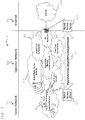
- a schematic view of a preferred embodiment of an inventive communication system, and
- Fig. 3
- a schematic view of a reference topology for Hybrid Access.
- In
Fig. 1 a non-working system architecture is shown for illustrating a problem which is encountered when the QUIC protocol shall be utilized via multiple paths, for instance in a hybrid access network or in the context of 3GPP ATSSS. In the only theoretical, non-working communication system 10' shown inFig. 1 a user equipment 100' is simultaneously connected to a converter server 200' via anLTE network 310 and anxDSL network 320. The user equipment 100' could be hybrid customer premises equipment router and the converter 200' could be a hybrid aggregation gateway in a server of a communication provider. - Since QUIC and TCP share a lot of similarities regarding their transport characteristics the experience with the MP-TCP protocol could be used and transferred to a MP-QUIC protocol. An MP-QUIC protocol which is comparable to MP-TCP can split QUIC connections over multiple paths and relies on QUIC's reliable in-order delivery.
- In the system 10' applications 110', 120', 130' and 140' indicating a number of n applications running on the user equipment 100' shall use such MP-QUIC protocol for transmitting data packets via multiple paths, i.e. via
networks - However, an MP-QUIC protocol which is comparable to MP-TCP can only work end-to-end and does not tolerate an interception, because of its inherent end-to-end encryption. Therefore, a proxy 250' which would be needed to translate the MP-QUIC protocol into the QUIC protocol cannot be realized and accordingly the communication system 10' as shown in
Fig. 1 is a non-working system illustrating a general problem which is encountered when trying to utilized the QUIC protocol via multiple paths. As a result, inclusion into Hybrid Access or 3GPP ATSSS for operator controlled traffic management does not work on a QUIC or MP-QUIC protocol level. - In
Fig. 2 a schematic view of a preferred embodiment of aninventive communication system 10 is shown, in which the above described problem is solved. - The
communication system 10 comprisesuser equipment 100, wherein in a number of n applications communication services are running which respectively generate data packets which are to be transmitted to a respective destination network entity. The data packets are generated on the basis of a communication protocol which is selected depending on the respective communication service. In the embodiment shown inFig. 2 afirst application 110 is generating QUIC data packets, asecond application 120 is generating UDP data packets, athird application 130 is generating IP data packets, an nth application 140 is generating TCP data packets. In the shown embodiment the different data packets from the different application are routed to a virtual network interface VNIF 150 which may be implemented in a hybrid customer premises equipment router. Theapplications - In the shown embodiment the
virtual network interface 150 is connected to avirtual network interface 250 in aconverter 200, wherein saidconverter 200 preferably is a hybrid aggregation gateway in a server of a communication provider. Thehybrid user equipment 100 and thehybrid converter 200 are simultaneously connected via at least two different network, thus enabling data transmission via multiple paths. In the shown embodiment thevirtual network interface 150 is connected tovirtual network interface 250 via anLTE network 310 and via axDSL network 320. It is to be noted that also other types of networks may be utilized, wherein in such a case theuser equipment 100 and theconverter 200 are then provided with respective network interfaces adapted for communication via said other types of networks. - The invention proposes to establish a QUIC tunnel between a first network entity and a second network entity, wherein in the embodiment shown in
Fig. 2 the first network entity is theuser equipment 100 and the second network entity is theconverter 200, and the QUIC tunnel is established between thevirtual network interface 150 and thevirtual network interface 250. Establishing a QUIC tunnel means to establish a connection using a tunneling protocol on the basis of the QUIC protocol. - TCP is often used as a tunneling protocol. QUIC can similarly be used as a tunneling protocol, allowing tunneling services to maintain the benefits of QUIC, without degrading the performance and security characteristics.
- A tunneling protocol is a communications protocol that allows for the transmission of data from one network entity to another network entity through a process called encapsulation. Because the QUIC tunneling involves repackaging the traffic data into a different form, with encryption as standard, due to the use of the QUIC protocol, it can hide the nature of the traffic that is run through a tunnel. A tunneling protocol works by using the data portion of a packet, i.e. the payload, to carry the packets that actually provide the service. Tunneling uses a layered protocol model such as those of the OSI or TCP/IP protocol suite, but usually violates the layering when using the payload to carry a service not normally provided by the network. Typically, the delivery protocol operates at an equal or higher level in the layered model than the payload protocol.
- A QUIC tunnel between two multi-path capable entities, such as
entities Layer 2 upwards. In the embodiment shown inFig. 2 the data packets which are encapsulated into QUIC packets exemplary comprise QUIC data packets fromapplication 110, UDP data packets fromapplication 120, IP data packets fromapplication 130 and TCP data packets fromapplication 140. - The invention further proposes that both QUIC tunnel termination points, in the embodiment shown in
Fig. 2 virtual network interfaces 150 and 250, employ an MP-QUIC protocol, so that the QUIC tunnel itself is distributed over the multiple paths. - The current design of QUIC does not enable multi-homed or hybrid access devices to efficiently use different paths simultaneously. Therefore, in order to utilize an MP-QUIC protocol within the QUIC tunnel, the invention proposes a respective extension of the current QUIC protocol.
- Typically a path is defined by a 4-tuple, comprising Source IP Address, Source Port Number, Destination IP Address, and Destination Port Number. QUIC paths are host-specific, i.e., the path from A to B is different from the one from B to A, which enables the use of unidirectional networks such as satellites, unapplicable when using TCP.
- Furthermore, QUIC is not bound to a particular 4-tuple during the lifetime of a connection. A QUIC connection is identified by a Connection ID, placed in the public header of each QUIC packet. This enables hosts to continue the connection even if the 4-tuple changes. This ability to shift a connection from one 4-tuple to another is called Connection Migration. A QUIC peer can thus start on a given path, denoted as the initial path, and end on another one. However, the current QUIC design assumes that only one symmetric path is in use for a given connection.
- In the following a possible establishment of a Multipath QUIC connection between a first network entity and a second network entity is exemplary described. A Multipath QUIC connection may start like a regular QUIC connection, wherein a handshake takes place according to the current QUIC design. During this handshake a multipath capability may be negotiated between the network entities, in the embodiment as shown in
Fig. 2 between theuser equipment 100 and theconverter 200 utilizing virtual network interfaces 150 and 250. For this purpose a respective parameter is transmitted between the network entities which indicates the capability of the respective network entity for multi-path transmission. The parameter may for instance indicate the number of paths which may be simultaneously supported by the respective network entity. It is also conceivable that no transmitted parameter or a parameter with a value of zero indicates no support for multi-path transmission and any other parameter value indicates support for multi-path transmission. - An established Multipath QUIC connection comprises at least two paths, wherein each path is associated with a different four-tuple and is identified by a Path ID, wherein the respective Path IDs are negotiated between the network entities. As an extension over the current QUIC design the Path ID is transmitted in all or at least in certain QUIC packets, wherein the Path ID may be placed in the public header of the respective QUIC packets.
- Thus, a core aspect of the invention can be seen in the combination of a QUIC tunnel and the use of a MP-QUIC protocol for data transmission between a first and a second network entity, wherein the first network entity in particular is a user device, such as a hybrid access router or a smartphone having two network interfaces for connecting to respectively different networks, and wherein the second network entity in particular is a server in the core network of a communication provider, such as a hybrid aggregation gateway.
- Again referring to
Fig. 2 , a service using the IP compatible multipath framework as described above, based on QUIC encapsulation in the QUIC tunnel, sends its payload through thevirtual network interface 150. The shown exemplary services provided byapplications original service endpoints Internet 400. - As described above, within the QUIC tunnel various types of data packets may be encapsulated and transmitted as payload, wherein certain types of data packets may be transmitted between the communication endpoints using a reliable transmission, as for instance TCP data packets transmitted between
applications - The Transmission Control Protocol, or short TCP, aims to provide an interface for sending streams of data reliably between two endpoints, wherein data is handed to the TCP system, which ensures the data makes it to the other end in exactly the same form, or the connection will indicate that an error condition exists. To do this, TCP breaks up the data into network packets and adds small amounts of data to each packet. This additional data includes a sequence number that is used to detect packets that are lost or transmitted out of order, and a checksum that allows the errors within packet data to be detected. When either problem occurs, TCP uses automatic repeat request (ARQ) to tell the sender to re-send the lost or damaged packet. In most implementations, TCP will see any error on a connection as a blocking operation, stopping further transfers until the error is resolved or the connection is considered failed. If a single connection is being used to send multiple streams of data, as is the case in the HTTP/2 protocol, all of these streams are blocked although only one of them might have a problem. This phenomenon is called head-of-line blocking.
- QUIC aims to be nearly equivalent to a TCP connection but with reduced latency. QUIC uses UDP as its basis, which does not include loss recovery. Instead, each QUIC stream is separately flow controlled and lost data retransmitted at the level of QUIC, not UDP. This means that if an error occurs in one stream, the protocol stack can continue servicing other streams independently. However, head-of-line blocking still occurs with respect to the one stream which has the error.
- To ensure no head-of-line blocking by the QUIC tunnel in case of disturbance a mechanism is preferably applied within QUIC which relaxes its reliable transmission.
- Furthermore, if data packets of a protocol such as TCP, which employs reliable transmission and accordingly performs re-transmissions in case of error and reordering of data packets, are encapsulated within the QUIC tunnel, a conflict may arise, when also within the QUIC tunnel a reliable transmission would be performed with re-transmissions and reordering of piggybacked TCP packets and underlying QUIC packets simultaneously. Such a conflict might lead to significant increase of latency and/or decrease of throughput.
- Therefore, in a preferred embodiment of the invention quick user datagram protocol internet connection packets or QUIC packets are transmitted non-reliably between the first and the
second network entities - A non-reliable data transmission, as it is preferably proposed for the data transmission within the QUIC tunnel, is another extension of the current QUIC design. For this purpose preferably a different or an additional frame type may be defined and indicated by a parameter within a QUIC packet.
- Greatly differing transmission characteristics of the multiple paths may however lead an amount of scrambling of the encapsulated data packets which might result in problems for communication services which utilize reliable transmission, for instance reliable transmission of TCP data packets. Therefore, in a preferred embodiment forwarding the extracted data packets from the second network entity, for
instance converter 200 to the respective destination network entity, forinstance network entity - In other words, a certain reordering is preferably performed, which however typically is not a complete reordering, wherein in particular packet loss is tolerated and accordingly no re-transmissions are performed.
- In a preferred embodiment, received data packets are queued in a reorder queue in the second network entity for forwarding, wherein the data packets in the reorder queue are reordered according to a pre-defined reorder criterion, and wherein data packets which are lost in the transmission from the first network entity to the second network entity via the tunnel are skipped in the reordering. Furthermore, mechanisms may the used for the reordering as described in
EP 3 531 637 A1 - The congestion control scheme as defined by the current QUIC design is not suitable for data transmission via multiple paths. Therefore this congestion control scheme preferably is not used.
- For MP-QUIC data transmission within the QUIC tunnel the LIA congestion control scheme as specified in RFC 6356 may be utilized, which is also used by Multipath TCP.
- In a preferred embodiment congestion control information may be extracted from the data packets transmitted as payload within the QUIC tunnel in the first and/or in the second network entity, wherein in particular said extracted congestion control information is used for adapting a congestion control of the QUIC tunnel between the first network entity and a second network entity.
- In a further preferred embodiment of the invention a maximum transmission unit of at least one transmission path available for transmitting data from the first network entity to the second network entity is determined and the data size of the quick user datagram protocol internet connection packets is selected depending on the determined maximum transmission unit.
- Summarizing, the invention preferably combines three technologies for shaping an IP compatible multipath framework as depicted in
Figure 2 , capable of transporting IP packets, UDP datagrams and QUIC segments over multiple paths, wherein said technologies are - QUIC encapsulation using a QUIC tunnel,
- employment of Multipath QUIC within the QUIC tunnel, and
- non-reliable transmission of the payload within the QUIC tunnel.
- All of these technologies are extensions and/or modifications of the current QUIC design.
- As described above, an additional feature to guarantee efficient processing of the piggybacked payload through the QUIC tunnel might be a re-assembly unit on receiver side to bring the payload in the same or almost identical order as they were originated. The re-assembly unit can be placed within QUIC or MP-QUIC but also as an external entity as long as some ordering information is available.
- As an additional feature a Path Maximum Transfer Unit (PMTU) probing might be employed, when a new path joins the MP-QUIC session, to ensure no mismatch with the virtual network interface Maximum Transfer Unit (VNIF MTU) and to avoid fragmentation. In case the PMTU is lower than the difference of VNIF MTU and the encapsulation overhead, the VNIF MTU preferably is adapted.
- As another additional feature to avoid performance degradation by the QUIC tunnel some interaction with a potential inner congestion control of the piggybacked payload may be employed, as described above, wherein congestion control parameters of the piggybacked payload may only be measured for monitoring purposes without performing congestion control of the QUIC tunnel on that basis.
-
Fig. 3 shows areference topology 600 for Hybrid Access (HA). Thereference topology 600 illustrates theHome Network zone 610 withCustomer Network 611 and Home Gateway withHybrid Access Client 612, theIntegrated Operator Network 620 with a variety ofoperator networks Internet zone 630 with theInternet 631. At theoperator networks protocols 627 are implemented to connect theHybrid Access Client 612 with theHybrid Access Server 628 for connection with the Internet 631.Thereference topology 600 as shown inFig. 3 is an example of a system in which the invention may be employed, wherein inFig. 3 the first network entity as described above is theHybrid Access Client 612 and the second network entity is theHybrid Access Server 628. - At least some of the preferred aspects are summarized below. In the following the term "user datagram protocol internet connection packet" refers to a QUIC packet as described above, the format of which is based on the current QUIC design extended and/or modified by the respective extensions and/or modifications proposed by the invention as described herein.
- According to one aspect, a method for transmitting data packets of at least one communication service from a first network entity to at least one destination network entity is provided, comprising the steps of establishing a quick user datagram protocol internet connection tunnel between the first network entity and a second network entity, transmitting the data packets from the first network entity to the second network entity via said tunnel, wherein the data packets are encapsulated within quick user datagram protocol internet connection packets, and wherein the quick user datagram protocol internet connection packets are transmitted from the first network entity to the second network entity via multiple paths, extracting the data packets from the received quick user datagram protocol internet connection packets in the second network entity, and forwarding the extracted data packets from the second network entity to the respective destination network entity.
- In a preferred embodiment of the method an information is transmitted from the first network entity to the second network entity indicating non-reliable transmission within the quick user datagram protocol internet connection tunnel, wherein in response the quick user datagram protocol internet connection packets are transmitted non-reliably.
- Preferably, the data packets and/or the quick user datagram protocol internet connection packets comprise ordering information, wherein forwarding the extracted data packets from the second network entity to the respective destination network entity is performed in an order depending on said ordering information.
- Preferably, for forwarding the received data packets are queued in a reorder queue in the second network entity, and wherein the data packets in the reorder queue are reordered according to a pre-defined reorder criterion, and wherein data packets which are lost in the transmission from the first network entity to the second network entity via the tunnel are skipped in the reordering.
- The quick user datagram protocol internet connection tunnel preferably is established between a first virtual network interface in the first network entity and a second virtual network interface in the second network entity. Virtual network interfaces are known per se, wherein the use of virtual network interfaces allows for simple routing in the respective network entities.
- Preferably, data packets originating from different communication services are encapsulated in the same quick user datagram protocol internet connection packet.
- The method preferably comprises the steps of determining a maximum transmission unit of at least one transmission path available for transmitting data packets from the first network entity to the second network entity, and selecting the data size of the quick user datagram protocol internet connection packets depending on the determined maximum transmission unit.
- Furthermore, the method preferably comprises the step of extracting congestion control information from the data packets in the first and/or in the second network entity, wherein in particular said extracted congestion control information is used for adapting a congestion control of the quick user datagram protocol internet connection tunnel between the first network entity and a second network entity.
- According to another aspect a network device is provided, which comprises at least two network interfaces, said network device being adapted for multi-path communication using said at least two network interfaces, wherein the network device is further adapted for establishing a quick user datagram protocol internet connection tunnel to a further network device, said further network device being adapted for multi-path communication, wherein the network device is adapted for transmitting data packets to the further network device via said tunnel, said data packets being encapsulated within quick user datagram protocol internet connection packets, wherein the quick user datagram protocol internet connection packets are transmitted via multiple paths, extracting data packets from received quick user datagram protocol internet connection packets, and for forwarding extracted data packets to the respective destination.
- The network device preferably is a hybrid customer premises equipment router, a hybrid aggregation gateway or a mobile communication device.
- In a further aspect a communication system is provided, comprising at least two network devices as described above, in particular a combination of a user equipment and a server of a communication provider.
Claims (11)
- A method for transmitting data packets of at least one communication service from a first network entity (100) to at least one destination network entity (510, 520, 530, 540), comprising the steps of:- establishing a quick user datagram protocol internet connection tunnel (300) between the first network entity (100) and a second network entity (200),- transmitting the data packets from the first network entity (100) to the second network entity (200) via said tunnel (300), wherein the data packets are encapsulated within quick user datagram protocol internet connection packets, and wherein the quick user datagram protocol internet connection packets are transmitted from the first network entity (100) to the second network entity (200) via multiple paths,- extracting the data packets from the received quick user datagram protocol internet connection packets in the second network entity (200),- forwarding the extracted data packets from the second network entity (200) to the respective destination network entity (510, 520, 530, 540).
- The method of claim 1, wherein an information is transmitted from the first network entity (100) to the second network entity (200) indicating non-reliable transmission within the quick user datagram protocol internet connection tunnel (300), and wherein in response the quick user datagram protocol internet connection packets are transmitted non-reliably.
- The method of claim 2, wherein the data packets and/or the quick user datagram protocol internet connection packets comprise ordering information, and wherein forwarding the extracted data packets from the second network entity to the respective destination network entity (510, 520, 530, 540) is performed in an order depending on said ordering information.
- The method of claim 3, wherein for forwarding the received data packets are queued in a reorder queue in the second network entity (200), and wherein the data packets in the reorder queue are reordered according to a pre-defined reorder criterion, and wherein data packets which are lost in the transmission from the first network entity (100) to the second network entity (200) via the tunnel (300) are skipped in the reordering.
- The method of any one of the preceding claims, wherein the quick user datagram protocol internet connection tunnel (300) is established between a first virtual network interface (150) in the first network entity (100) and a second virtual network interface (250) in the second network entity (200).
- The method of any one of the preceding claims, wherein data packets originating from different communication services (110, 120, 130, 140) are encapsulated in the same quick user datagram protocol internet connection packet.
- The method of any one of the preceding claims, comprising the steps of- determining a maximum transmission unit of at least one transmission path available for transmitting data packets from the first network entity (100) to the second network entity (200), and- selecting the data size of the quick user datagram protocol internet connection packets depending on the determined maximum transmission unit.
- The method of any one of the preceding claims, comprising the step of- extracting congestion control information from the data packets in the first (100) and/or in the second network entity (200), wherein in particular said extracted congestion control information is used for adapting a congestion control of the quick user datagram protocol internet connection tunnel (300) between the first network entity (100) and a second network entity (200).
- A network device (100, 200, 612, 628), comprising at least two network interfaces, said network device being adapted for multi-path communication using said at least two network interfaces, wherein the network device is further adapted for- establishing a quick user datagram protocol internet connection tunnel (300) to a further network device, said further network device being adapted for multi-path communication, wherein the network device (100, 200, 612, 628) is adapted for transmitting data packets to the further network device via said tunnel (300), said data packets being encapsulated within quick user datagram protocol internet connection packets, wherein the quick user datagram protocol internet connection packets are transmitted via multiple paths,- extracting data packets from received quick user datagram protocol internet connection packets, and for- forwarding extracted data packets to the respective destination (510, 520, 530, 540).
- The network device of claim 9, wherein said network device is a hybrid customer premises equipment router (612), a hybrid aggregation gateway (628) or a mobile communication device.
- A communication system (10, 600), comprising at least two network devices (100, 200; 612, 628) according to claim 9 or 10.
Priority Applications (6)
| Application Number | Priority Date | Filing Date | Title |
|---|---|---|---|
| EP19207381.5A EP3820088B1 (en) | 2019-11-06 | 2019-11-06 | Method and network device for multi-path communication |
| PL19207381.5T PL3820088T3 (en) | 2019-11-06 | 2019-11-06 | Method and network device for multi-path communication |
| ES19207381T ES2972036T3 (en) | 2019-11-06 | 2019-11-06 | Procedure and network device for multipath communication |
| US17/774,152 US12184537B2 (en) | 2019-11-06 | 2020-11-03 | Method and network device for multi-path communication |
| PCT/EP2020/080829 WO2021089552A1 (en) | 2019-11-06 | 2020-11-03 | Method and network device for multi-path communication |
| CN202080077025.5A CN114631297B (en) | 2019-11-06 | 2020-11-03 | Methods and network devices for multipath communications |
Applications Claiming Priority (1)
| Application Number | Priority Date | Filing Date | Title |
|---|---|---|---|
| EP19207381.5A EP3820088B1 (en) | 2019-11-06 | 2019-11-06 | Method and network device for multi-path communication |
Publications (2)
| Publication Number | Publication Date |
|---|---|
| EP3820088A1 true EP3820088A1 (en) | 2021-05-12 |
| EP3820088B1 EP3820088B1 (en) | 2024-01-03 |
Family
ID=68470336
Family Applications (1)
| Application Number | Title | Priority Date | Filing Date |
|---|---|---|---|
| EP19207381.5A Active EP3820088B1 (en) | 2019-11-06 | 2019-11-06 | Method and network device for multi-path communication |
Country Status (6)
| Country | Link |
|---|---|
| US (1) | US12184537B2 (en) |
| EP (1) | EP3820088B1 (en) |
| CN (1) | CN114631297B (en) |
| ES (1) | ES2972036T3 (en) |
| PL (1) | PL3820088T3 (en) |
| WO (1) | WO2021089552A1 (en) |
Cited By (1)
| Publication number | Priority date | Publication date | Assignee | Title |
|---|---|---|---|---|
| US12166825B2 (en) | 2022-08-25 | 2024-12-10 | Cisco Technology, Inc. | Telemetry over quic |
Families Citing this family (13)
| Publication number | Priority date | Publication date | Assignee | Title |
|---|---|---|---|---|
| US12634236B2 (en) * | 2020-02-28 | 2026-05-19 | Lenovo (Singapore) Pte. Ltd. | Access traffic steering using a plurality of steering connections over different access networks |
| ES2978712T3 (en) * | 2021-08-31 | 2024-09-18 | Deutsche Telekom Ag | Techniques for providing a generic multipath system through a flexible selection of network protocols |
| WO2023044174A1 (en) * | 2021-09-15 | 2023-03-23 | Cisco Technology, Inc. | Policy expressions using quic connection identifiers |
| US12200080B2 (en) | 2021-09-15 | 2025-01-14 | Cisco Technology, Inc. | Next gen zero trust network access (ZTNA) and virtual private network (VPN) including cloud secure access service edge (SASE) |
| CN115664987A (en) * | 2022-08-18 | 2023-01-31 | 缀初网络技术(上海)有限公司 | Data transmission method and device based on QUIC protocol in edge scenarios |
| CN116015954B (en) * | 2023-01-03 | 2025-12-02 | 阿里巴巴(中国)有限公司 | Methods and electronic equipment for constructing safe tunnels |
| CN116390152B (en) * | 2023-03-16 | 2023-10-27 | 广州爱浦路网络技术有限公司 | Data transmission method, device and medium for ATSSS in communication core network |
| CN116389191A (en) * | 2023-03-31 | 2023-07-04 | 阿里巴巴(中国)有限公司 | Data transmission system and its method, device and storage medium |
| CN118075349A (en) * | 2024-02-27 | 2024-05-24 | 南京大学 | A network twin multi-host transmission method and system for multi-cloud native applications |
| WO2025150033A1 (en) * | 2024-04-01 | 2025-07-17 | Lenovo (Singapore) Pte. Ltd. | Techniques for sequence numbering with packet duplication and reordering for udp packets |
| US20250220736A1 (en) * | 2024-04-01 | 2025-07-03 | Lenovo (Singapore) Pte. Ltd. | Techniques for sequence numbering with packet duplication and reordering for udp packets |
| US12676772B2 (en) * | 2024-04-30 | 2026-07-07 | Fortinet, Inc. | Zero-trust network access with user datagram protocol message forwarding |
| CN122053689B (en) * | 2026-04-17 | 2026-07-31 | 中国电信股份有限公司 | Data transmission method, system, device, electronic equipment and computer program product |
Citations (1)
| Publication number | Priority date | Publication date | Assignee | Title |
|---|---|---|---|---|
| EP3531637A1 (en) | 2018-02-21 | 2019-08-28 | Deutsche Telekom AG | Techniques for efficient reordering of data packets in multipath scenarios |
Family Cites Families (20)
| Publication number | Priority date | Publication date | Assignee | Title |
|---|---|---|---|---|
| US6999432B2 (en) * | 2000-07-13 | 2006-02-14 | Microsoft Corporation | Channel and quality of service adaptation for multimedia over wireless networks |
| RU2623197C2 (en) * | 2011-07-25 | 2017-06-27 | Филипс Лайтинг Холдинг Б.В. | Methods, devices and systems for creation of cross-secure safety connections and for safe transmission of data packages |
| US9838353B2 (en) * | 2013-11-01 | 2017-12-05 | Google Llc | Communication across network address translation |
| FR3053197A1 (en) * | 2016-06-24 | 2017-12-29 | Orange | METHOD FOR UDP COMMUNICATION VIA MULTIPLE PATHS BETWEEN TWO TERMINALS |
| US10135720B2 (en) | 2016-08-03 | 2018-11-20 | Anchorfree Inc. | System and method for virtual multipath data transport |
| CN109328450B (en) | 2016-08-17 | 2021-06-15 | 华为技术有限公司 | Multi-path transmission strategy control method and related equipment |
| WO2018086076A1 (en) | 2016-11-11 | 2018-05-17 | 华为技术有限公司 | Data transmission method and apparatus |
| EP3625944B1 (en) * | 2017-05-19 | 2021-07-07 | Telefonaktiebolaget LM Ericsson (publ) | Technique for enabling multipath transmission |
| US10594618B1 (en) * | 2017-06-06 | 2020-03-17 | Juniper Networks, Inc | Apparatus, system, and method for fragmenting packets into segments that comply with the maximum transmission unit of egress interfaces |
| US10581749B2 (en) * | 2017-07-13 | 2020-03-03 | Nicira, Inc. | Automatic discovery of maximum transmission unit size for a software defined network |
| CN107786307A (en) | 2017-09-21 | 2018-03-09 | 上海华为技术有限公司 | A kind of data processing method and terminal |
| US11178262B2 (en) * | 2017-09-29 | 2021-11-16 | Fungible, Inc. | Fabric control protocol for data center networks with packet spraying over multiple alternate data paths |
| JP2019103118A (en) | 2017-12-01 | 2019-06-24 | 富士通株式会社 | Communication relay device, communication relay program, and communication relay method |
| US10992712B2 (en) * | 2018-02-27 | 2021-04-27 | Cisco Technology, Inc. | Multipath subflow anchoring for security policy enforcement |
| CN110366271B (en) | 2018-04-10 | 2023-11-17 | 华为技术有限公司 | Communication method and communication device |
| US11317456B2 (en) * | 2018-04-13 | 2022-04-26 | Samsung Electronics Co., Ltd. | Method and system for handling data path creation in wireless network system |
| US10602551B2 (en) * | 2018-06-27 | 2020-03-24 | Charter Communications Operating, Llc | Methods and apparatus for testing alternative wireless connections and selecting a wireless connection |
| US10904342B2 (en) * | 2018-07-30 | 2021-01-26 | Cisco Technology, Inc. | Container networking using communication tunnels |
| US20190155645A1 (en) * | 2019-01-23 | 2019-05-23 | Intel Corporation | Distribution of network traffic to processor cores |
| WO2021209132A1 (en) * | 2020-04-16 | 2021-10-21 | Huawei Technologies Co., Ltd. | A device and method for romote direct memory access |
-
2019
- 2019-11-06 ES ES19207381T patent/ES2972036T3/en active Active
- 2019-11-06 PL PL19207381.5T patent/PL3820088T3/en unknown
- 2019-11-06 EP EP19207381.5A patent/EP3820088B1/en active Active
-
2020
- 2020-11-03 CN CN202080077025.5A patent/CN114631297B/en active Active
- 2020-11-03 US US17/774,152 patent/US12184537B2/en active Active
- 2020-11-03 WO PCT/EP2020/080829 patent/WO2021089552A1/en not_active Ceased
Patent Citations (1)
| Publication number | Priority date | Publication date | Assignee | Title |
|---|---|---|---|---|
| EP3531637A1 (en) | 2018-02-21 | 2019-08-28 | Deutsche Telekom AG | Techniques for efficient reordering of data packets in multipath scenarios |
Non-Patent Citations (4)
| Title |
|---|
| ABDELSALAM A ET AL: "QUIC-proxy based architecture for satellite communication to enhance a 5G scenario", 2019 INTERNATIONAL SYMPOSIUM ON NETWORKS, COMPUTERS AND COMMUNICATIONS (ISNCC), IEEE, 18 June 2019 (2019-06-18), pages 1 - 6, XP033663148, DOI: 10.1109/ISNCC.2019.8909181 * |
| CUI YONG ET AL: "Innovating Transport with QUIC: Design Approaches and Research Challenges", IEEE INTERNET COMPUTING, INSTITUTE OF ELECTRICAL AND ELECTRONICS ENGINEERS, US, vol. 21, no. 2, 1 March 2017 (2017-03-01), pages 72 - 76, XP011641977, ISSN: 1089-7801, [retrieved on 20170301], DOI: 10.1109/MIC.2017.44 * |
| MOGENSEN SUHR RASMUS ET AL: "6/7/2018 Reliability enhancement for LTE using MPQUIC in a mixed traffic scenario A novel MPQUIC Selective Redundant Scheduling implementation", 6 July 2018 (2018-07-06), Aalborg , Denmark, pages 1 - 108, XP055693315, Retrieved from the Internet <URL:https://projekter.aau.dk/projekter/files/281252124/MasterThesisFinal.pdf> [retrieved on 20200508] * |
| UNKNOWN ET AL: "Multipath QUIC : Design and Evaluation", PROCEEDINGS OF THE 13TH INTERNATIONAL CONFERENCE ON EMERGING NETWORKING EXPERIMENTS AND TECHNOLOGIES , CONEXT '17, 1 January 2017 (2017-01-01), New York, New York, USA, pages 160 - 166, XP055671532, ISBN: 978-1-4503-5422-6, DOI: 10.1145/3143361.3143370 * |
Cited By (1)
| Publication number | Priority date | Publication date | Assignee | Title |
|---|---|---|---|---|
| US12166825B2 (en) | 2022-08-25 | 2024-12-10 | Cisco Technology, Inc. | Telemetry over quic |
Also Published As
| Publication number | Publication date |
|---|---|
| PL3820088T3 (en) | 2024-05-13 |
| CN114631297A (en) | 2022-06-14 |
| US12184537B2 (en) | 2024-12-31 |
| EP3820088B1 (en) | 2024-01-03 |
| CN114631297B (en) | 2024-02-20 |
| US20220407799A1 (en) | 2022-12-22 |
| ES2972036T3 (en) | 2024-06-10 |
| WO2021089552A1 (en) | 2021-05-14 |
Similar Documents
| Publication | Publication Date | Title |
|---|---|---|
| US12184537B2 (en) | Method and network device for multi-path communication | |
| US11258823B2 (en) | Multilayer tunneling of protocols over QUIC | |
| US11477130B2 (en) | Transmission control method and apparatus | |
| EP3633932B1 (en) | Multipath data transmission processing method, and network device | |
| US8406240B2 (en) | Packet fragmentation prevention | |
| US10841406B2 (en) | Method for multi-path UDP communication method between two terminals | |
| US10630813B2 (en) | Transporting UDP packets over an MPTCP connection | |
| US20210014153A1 (en) | Techniques for efficient multipath transmission | |
| CN103548307B (en) | Method and system for transmitting data over a computer network | |
| CN109076017B (en) | Method, routing device, and computer-readable storage medium for routing signals | |
| US20100250767A1 (en) | Apparatus and method for accelerating streams through use of transparent proxy architecture | |
| KR102442083B1 (en) | Method and system for scheduling of packets in a bundling scenario based on TCP tunnels and unique TCP information | |
| EP3119057A1 (en) | Packet conversion device and method for allowing transparent packet-based multipath bundling | |
| US20190037054A1 (en) | Method and server for establishing a tcp connection | |
| EP3944593A1 (en) | Load balancing a tcp connection across multiple paths | |
| EP4633114A1 (en) | Computer-implemented method for network-assisted data transport | |
| Bonaventure | Multipath TCP–documentation |
Legal Events
| Date | Code | Title | Description |
|---|---|---|---|
| PUAI | Public reference made under article 153(3) epc to a published international application that has entered the european phase |
Free format text: ORIGINAL CODE: 0009012 |
|
| STAA | Information on the status of an ep patent application or granted ep patent |
Free format text: STATUS: THE APPLICATION HAS BEEN PUBLISHED |
|
| AK | Designated contracting states |
Kind code of ref document: A1 Designated state(s): AL AT BE BG CH CY CZ DE DK EE ES FI FR GB GR HR HU IE IS IT LI LT LU LV MC MK MT NL NO PL PT RO RS SE SI SK SM TR |
|
| STAA | Information on the status of an ep patent application or granted ep patent |
Free format text: STATUS: REQUEST FOR EXAMINATION WAS MADE |
|
| 17P | Request for examination filed |
Effective date: 20210622 |
|
| RBV | Designated contracting states (corrected) |
Designated state(s): AL AT BE BG CH CY CZ DE DK EE ES FI FR GB GR HR HU IE IS IT LI LT LU LV MC MK MT NL NO PL PT RO RS SE SI SK SM TR |
|
| STAA | Information on the status of an ep patent application or granted ep patent |
Free format text: STATUS: EXAMINATION IS IN PROGRESS |
|
| 17Q | First examination report despatched |
Effective date: 20211125 |
|
| REG | Reference to a national code |
Ref country code: DE Ref legal event code: R079 Free format text: PREVIOUS MAIN CLASS: H04L0012707000 Ipc: H04L0069140000 Ref country code: DE Ref legal event code: R079 Ref document number: 602019044359 Country of ref document: DE Free format text: PREVIOUS MAIN CLASS: H04L0012707000 Ipc: H04L0069140000 |
|
| GRAP | Despatch of communication of intention to grant a patent |
Free format text: ORIGINAL CODE: EPIDOSNIGR1 |
|
| STAA | Information on the status of an ep patent application or granted ep patent |
Free format text: STATUS: GRANT OF PATENT IS INTENDED |
|
| RIC1 | Information provided on ipc code assigned before grant |
Ipc: H04W 76/12 20180101ALI20230524BHEP Ipc: H04L 45/24 20220101ALI20230524BHEP Ipc: H04L 12/46 20060101ALI20230524BHEP Ipc: H04L 47/34 20220101ALI20230524BHEP Ipc: H04L 47/33 20220101ALI20230524BHEP Ipc: H04L 69/163 20220101ALI20230524BHEP Ipc: H04L 69/14 20220101AFI20230524BHEP |
|
| INTG | Intention to grant announced |
Effective date: 20230609 |
|
| GRAS | Grant fee paid |
Free format text: ORIGINAL CODE: EPIDOSNIGR3 |
|
| GRAA | (expected) grant |
Free format text: ORIGINAL CODE: 0009210 |
|
| STAA | Information on the status of an ep patent application or granted ep patent |
Free format text: STATUS: THE PATENT HAS BEEN GRANTED |
|
| AK | Designated contracting states |
Kind code of ref document: B1 Designated state(s): AL AT BE BG CH CY CZ DE DK EE ES FI FR GB GR HR HU IE IS IT LI LT LU LV MC MK MT NL NO PL PT RO RS SE SI SK SM TR |
|
| REG | Reference to a national code |
Ref country code: GB Ref legal event code: FG4D |
|
| REG | Reference to a national code |
Ref country code: CH Ref legal event code: EP |
|
| REG | Reference to a national code |
Ref country code: DE Ref legal event code: R096 Ref document number: 602019044359 Country of ref document: DE |
|
| REG | Reference to a national code |
Ref country code: IE Ref legal event code: FG4D |
|
| REG | Reference to a national code |
Ref country code: NL Ref legal event code: FP |
|
| REG | Reference to a national code |
Ref country code: LT Ref legal event code: MG9D |
|
| REG | Reference to a national code |
Ref country code: ES Ref legal event code: FG2A Ref document number: 2972036 Country of ref document: ES Kind code of ref document: T3 Effective date: 20240610 |
|
| REG | Reference to a national code |
Ref country code: AT Ref legal event code: MK05 Ref document number: 1647929 Country of ref document: AT Kind code of ref document: T Effective date: 20240103 |
|
| PG25 | Lapsed in a contracting state [announced via postgrant information from national office to epo] |
Ref country code: IS Free format text: LAPSE BECAUSE OF FAILURE TO SUBMIT A TRANSLATION OF THE DESCRIPTION OR TO PAY THE FEE WITHIN THE PRESCRIBED TIME-LIMIT Effective date: 20240503 |
|
| PG25 | Lapsed in a contracting state [announced via postgrant information from national office to epo] |
Ref country code: LT Free format text: LAPSE BECAUSE OF FAILURE TO SUBMIT A TRANSLATION OF THE DESCRIPTION OR TO PAY THE FEE WITHIN THE PRESCRIBED TIME-LIMIT Effective date: 20240103 |
|
| PG25 | Lapsed in a contracting state [announced via postgrant information from national office to epo] |
Ref country code: GR Free format text: LAPSE BECAUSE OF FAILURE TO SUBMIT A TRANSLATION OF THE DESCRIPTION OR TO PAY THE FEE WITHIN THE PRESCRIBED TIME-LIMIT Effective date: 20240404 |
|
| PG25 | Lapsed in a contracting state [announced via postgrant information from national office to epo] |
Ref country code: HR Free format text: LAPSE BECAUSE OF FAILURE TO SUBMIT A TRANSLATION OF THE DESCRIPTION OR TO PAY THE FEE WITHIN THE PRESCRIBED TIME-LIMIT Effective date: 20240103 Ref country code: RS Free format text: LAPSE BECAUSE OF FAILURE TO SUBMIT A TRANSLATION OF THE DESCRIPTION OR TO PAY THE FEE WITHIN THE PRESCRIBED TIME-LIMIT Effective date: 20240403 |
|
| PG25 | Lapsed in a contracting state [announced via postgrant information from national office to epo] |
Ref country code: CZ Free format text: LAPSE BECAUSE OF FAILURE TO SUBMIT A TRANSLATION OF THE DESCRIPTION OR TO PAY THE FEE WITHIN THE PRESCRIBED TIME-LIMIT Effective date: 20240103 Ref country code: AT Free format text: LAPSE BECAUSE OF FAILURE TO SUBMIT A TRANSLATION OF THE DESCRIPTION OR TO PAY THE FEE WITHIN THE PRESCRIBED TIME-LIMIT Effective date: 20240103 |
|
| PG25 | Lapsed in a contracting state [announced via postgrant information from national office to epo] |
Ref country code: RS Free format text: LAPSE BECAUSE OF FAILURE TO SUBMIT A TRANSLATION OF THE DESCRIPTION OR TO PAY THE FEE WITHIN THE PRESCRIBED TIME-LIMIT Effective date: 20240403 Ref country code: NO Free format text: LAPSE BECAUSE OF FAILURE TO SUBMIT A TRANSLATION OF THE DESCRIPTION OR TO PAY THE FEE WITHIN THE PRESCRIBED TIME-LIMIT Effective date: 20240403 Ref country code: LT Free format text: LAPSE BECAUSE OF FAILURE TO SUBMIT A TRANSLATION OF THE DESCRIPTION OR TO PAY THE FEE WITHIN THE PRESCRIBED TIME-LIMIT Effective date: 20240103 Ref country code: IS Free format text: LAPSE BECAUSE OF FAILURE TO SUBMIT A TRANSLATION OF THE DESCRIPTION OR TO PAY THE FEE WITHIN THE PRESCRIBED TIME-LIMIT Effective date: 20240503 Ref country code: HR Free format text: LAPSE BECAUSE OF FAILURE TO SUBMIT A TRANSLATION OF THE DESCRIPTION OR TO PAY THE FEE WITHIN THE PRESCRIBED TIME-LIMIT Effective date: 20240103 Ref country code: GR Free format text: LAPSE BECAUSE OF FAILURE TO SUBMIT A TRANSLATION OF THE DESCRIPTION OR TO PAY THE FEE WITHIN THE PRESCRIBED TIME-LIMIT Effective date: 20240404 Ref country code: CZ Free format text: LAPSE BECAUSE OF FAILURE TO SUBMIT A TRANSLATION OF THE DESCRIPTION OR TO PAY THE FEE WITHIN THE PRESCRIBED TIME-LIMIT Effective date: 20240103 Ref country code: BG Free format text: LAPSE BECAUSE OF FAILURE TO SUBMIT A TRANSLATION OF THE DESCRIPTION OR TO PAY THE FEE WITHIN THE PRESCRIBED TIME-LIMIT Effective date: 20240103 Ref country code: AT Free format text: LAPSE BECAUSE OF FAILURE TO SUBMIT A TRANSLATION OF THE DESCRIPTION OR TO PAY THE FEE WITHIN THE PRESCRIBED TIME-LIMIT Effective date: 20240103 |
|
| PG25 | Lapsed in a contracting state [announced via postgrant information from national office to epo] |
Ref country code: PT Free format text: LAPSE BECAUSE OF FAILURE TO SUBMIT A TRANSLATION OF THE DESCRIPTION OR TO PAY THE FEE WITHIN THE PRESCRIBED TIME-LIMIT Effective date: 20240503 |
|
| PG25 | Lapsed in a contracting state [announced via postgrant information from national office to epo] |
Ref country code: SE Free format text: LAPSE BECAUSE OF FAILURE TO SUBMIT A TRANSLATION OF THE DESCRIPTION OR TO PAY THE FEE WITHIN THE PRESCRIBED TIME-LIMIT Effective date: 20240103 Ref country code: PT Free format text: LAPSE BECAUSE OF FAILURE TO SUBMIT A TRANSLATION OF THE DESCRIPTION OR TO PAY THE FEE WITHIN THE PRESCRIBED TIME-LIMIT Effective date: 20240503 Ref country code: LV Free format text: LAPSE BECAUSE OF FAILURE TO SUBMIT A TRANSLATION OF THE DESCRIPTION OR TO PAY THE FEE WITHIN THE PRESCRIBED TIME-LIMIT Effective date: 20240103 |
|
| REG | Reference to a national code |
Ref country code: DE Ref legal event code: R097 Ref document number: 602019044359 Country of ref document: DE |
|
| PG25 | Lapsed in a contracting state [announced via postgrant information from national office to epo] |
Ref country code: DK Free format text: LAPSE BECAUSE OF FAILURE TO SUBMIT A TRANSLATION OF THE DESCRIPTION OR TO PAY THE FEE WITHIN THE PRESCRIBED TIME-LIMIT Effective date: 20240103 |
|
| PG25 | Lapsed in a contracting state [announced via postgrant information from national office to epo] |
Ref country code: SM Free format text: LAPSE BECAUSE OF FAILURE TO SUBMIT A TRANSLATION OF THE DESCRIPTION OR TO PAY THE FEE WITHIN THE PRESCRIBED TIME-LIMIT Effective date: 20240103 |
|
| PG25 | Lapsed in a contracting state [announced via postgrant information from national office to epo] |
Ref country code: EE Free format text: LAPSE BECAUSE OF FAILURE TO SUBMIT A TRANSLATION OF THE DESCRIPTION OR TO PAY THE FEE WITHIN THE PRESCRIBED TIME-LIMIT Effective date: 20240103 |
|
| PG25 | Lapsed in a contracting state [announced via postgrant information from national office to epo] |
Ref country code: SK Free format text: LAPSE BECAUSE OF FAILURE TO SUBMIT A TRANSLATION OF THE DESCRIPTION OR TO PAY THE FEE WITHIN THE PRESCRIBED TIME-LIMIT Effective date: 20240103 |
|
| PG25 | Lapsed in a contracting state [announced via postgrant information from national office to epo] |
Ref country code: SM Free format text: LAPSE BECAUSE OF FAILURE TO SUBMIT A TRANSLATION OF THE DESCRIPTION OR TO PAY THE FEE WITHIN THE PRESCRIBED TIME-LIMIT Effective date: 20240103 Ref country code: SK Free format text: LAPSE BECAUSE OF FAILURE TO SUBMIT A TRANSLATION OF THE DESCRIPTION OR TO PAY THE FEE WITHIN THE PRESCRIBED TIME-LIMIT Effective date: 20240103 Ref country code: RO Free format text: LAPSE BECAUSE OF FAILURE TO SUBMIT A TRANSLATION OF THE DESCRIPTION OR TO PAY THE FEE WITHIN THE PRESCRIBED TIME-LIMIT Effective date: 20240103 Ref country code: EE Free format text: LAPSE BECAUSE OF FAILURE TO SUBMIT A TRANSLATION OF THE DESCRIPTION OR TO PAY THE FEE WITHIN THE PRESCRIBED TIME-LIMIT Effective date: 20240103 Ref country code: DK Free format text: LAPSE BECAUSE OF FAILURE TO SUBMIT A TRANSLATION OF THE DESCRIPTION OR TO PAY THE FEE WITHIN THE PRESCRIBED TIME-LIMIT Effective date: 20240103 |
|
| PLBE | No opposition filed within time limit |
Free format text: ORIGINAL CODE: 0009261 |
|
| STAA | Information on the status of an ep patent application or granted ep patent |
Free format text: STATUS: NO OPPOSITION FILED WITHIN TIME LIMIT |
|
| 26N | No opposition filed |
Effective date: 20241007 |
|
| PG25 | Lapsed in a contracting state [announced via postgrant information from national office to epo] |
Ref country code: SI Free format text: LAPSE BECAUSE OF FAILURE TO SUBMIT A TRANSLATION OF THE DESCRIPTION OR TO PAY THE FEE WITHIN THE PRESCRIBED TIME-LIMIT Effective date: 20240103 |
|
| REG | Reference to a national code |
Ref country code: CH Ref legal event code: PL |
|
| PG25 | Lapsed in a contracting state [announced via postgrant information from national office to epo] |
Ref country code: MC Free format text: LAPSE BECAUSE OF FAILURE TO SUBMIT A TRANSLATION OF THE DESCRIPTION OR TO PAY THE FEE WITHIN THE PRESCRIBED TIME-LIMIT Effective date: 20240103 |
|
| PG25 | Lapsed in a contracting state [announced via postgrant information from national office to epo] |
Ref country code: LU Free format text: LAPSE BECAUSE OF NON-PAYMENT OF DUE FEES Effective date: 20241106 |
|
| REG | Reference to a national code |
Ref country code: CH Ref legal event code: PL |
|
| PG25 | Lapsed in a contracting state [announced via postgrant information from national office to epo] |
Ref country code: CH Free format text: LAPSE BECAUSE OF NON-PAYMENT OF DUE FEES Effective date: 20241130 |
|
| REG | Reference to a national code |
Ref country code: BE Ref legal event code: MM Effective date: 20241130 |
|
| PG25 | Lapsed in a contracting state [announced via postgrant information from national office to epo] |
Ref country code: FI Free format text: LAPSE BECAUSE OF FAILURE TO SUBMIT A TRANSLATION OF THE DESCRIPTION OR TO PAY THE FEE WITHIN THE PRESCRIBED TIME-LIMIT Effective date: 20240103 |
|
| PG25 | Lapsed in a contracting state [announced via postgrant information from national office to epo] |
Ref country code: BE Free format text: LAPSE BECAUSE OF NON-PAYMENT OF DUE FEES Effective date: 20241130 |
|
| PG25 | Lapsed in a contracting state [announced via postgrant information from national office to epo] |
Ref country code: IE Free format text: LAPSE BECAUSE OF NON-PAYMENT OF DUE FEES Effective date: 20241106 |
|
| PGFP | Annual fee paid to national office [announced via postgrant information from national office to epo] |
Ref country code: NL Payment date: 20251119 Year of fee payment: 7 |
|
| PGFP | Annual fee paid to national office [announced via postgrant information from national office to epo] |
Ref country code: DE Payment date: 20251118 Year of fee payment: 7 |
|
| PGFP | Annual fee paid to national office [announced via postgrant information from national office to epo] |
Ref country code: GB Payment date: 20251120 Year of fee payment: 7 |
|
| PGFP | Annual fee paid to national office [announced via postgrant information from national office to epo] |
Ref country code: IT Payment date: 20251128 Year of fee payment: 7 |
|
| PGFP | Annual fee paid to national office [announced via postgrant information from national office to epo] |
Ref country code: FR Payment date: 20251125 Year of fee payment: 7 |
|
| PGFP | Annual fee paid to national office [announced via postgrant information from national office to epo] |
Ref country code: TR Payment date: 20251103 Year of fee payment: 7 |
|
| PGFP | Annual fee paid to national office [announced via postgrant information from national office to epo] |
Ref country code: PL Payment date: 20251024 Year of fee payment: 7 |
|
| PGFP | Annual fee paid to national office [announced via postgrant information from national office to epo] |
Ref country code: ES Payment date: 20251216 Year of fee payment: 7 |
|
| PG25 | Lapsed in a contracting state [announced via postgrant information from national office to epo] |
Ref country code: HU Free format text: LAPSE BECAUSE OF FAILURE TO SUBMIT A TRANSLATION OF THE DESCRIPTION OR TO PAY THE FEE WITHIN THE PRESCRIBED TIME-LIMIT; INVALID AB INITIO Effective date: 20191106 |
|
| PG25 | Lapsed in a contracting state [announced via postgrant information from national office to epo] |
Ref country code: CY Free format text: LAPSE BECAUSE OF FAILURE TO SUBMIT A TRANSLATION OF THE DESCRIPTION OR TO PAY THE FEE WITHIN THE PRESCRIBED TIME-LIMIT; INVALID AB INITIO Effective date: 20191106 |