EP3819770A1 - System and method for software verification - Google Patents
System and method for software verification Download PDFInfo
- Publication number
- EP3819770A1 EP3819770A1 EP20161835.2A EP20161835A EP3819770A1 EP 3819770 A1 EP3819770 A1 EP 3819770A1 EP 20161835 A EP20161835 A EP 20161835A EP 3819770 A1 EP3819770 A1 EP 3819770A1
- Authority
- EP
- European Patent Office
- Prior art keywords
- verification
- source code
- techniques
- loops
- analysis
- Prior art date
- Legal status (The legal status is an assumption and is not a legal conclusion. Google has not performed a legal analysis and makes no representation as to the accuracy of the status listed.)
- Granted
Links
Images



Classifications
-
- G—PHYSICS
- G06—COMPUTING OR CALCULATING; COUNTING
- G06F—ELECTRIC DIGITAL DATA PROCESSING
- G06F11/00—Error detection; Error correction; Monitoring
- G06F11/36—Prevention of errors by analysis, debugging or testing of software
- G06F11/3604—Analysis of software for verifying properties of programs
-
- G—PHYSICS
- G06—COMPUTING OR CALCULATING; COUNTING
- G06F—ELECTRIC DIGITAL DATA PROCESSING
- G06F21/00—Security arrangements for protecting computers, components thereof, programs or data against unauthorised activity
- G06F21/60—Protecting data
- G06F21/62—Protecting access to data via a platform, e.g. using keys or access control rules
- G06F21/6209—Protecting access to data via a platform, e.g. using keys or access control rules to a single file or object, e.g. in a secure envelope, encrypted and accessed using a key, or with access control rules appended to the object itself
-
- G—PHYSICS
- G06—COMPUTING OR CALCULATING; COUNTING
- G06F—ELECTRIC DIGITAL DATA PROCESSING
- G06F21/00—Security arrangements for protecting computers, components thereof, programs or data against unauthorised activity
- G06F21/50—Monitoring users, programs or devices to maintain the integrity of platforms, e.g. of processors, firmware or operating systems
- G06F21/57—Certifying or maintaining trusted computer platforms, e.g. secure boots or power-downs, version controls, system software checks, secure updates or assessing vulnerabilities
- G06F21/577—Assessing vulnerabilities and evaluating computer system security
-
- G—PHYSICS
- G06—COMPUTING OR CALCULATING; COUNTING
- G06F—ELECTRIC DIGITAL DATA PROCESSING
- G06F8/00—Arrangements for software engineering
- G06F8/30—Creation or generation of source code
- G06F8/33—Intelligent editors
-
- G—PHYSICS
- G06—COMPUTING OR CALCULATING; COUNTING
- G06F—ELECTRIC DIGITAL DATA PROCESSING
- G06F8/00—Arrangements for software engineering
- G06F8/70—Software maintenance or management
- G06F8/75—Structural analysis for program understanding
-
- G—PHYSICS
- G06—COMPUTING OR CALCULATING; COUNTING
- G06F—ELECTRIC DIGITAL DATA PROCESSING
- G06F9/00—Arrangements for program control, e.g. control units
- G06F9/06—Arrangements for program control, e.g. control units using stored programs, i.e. using an internal store of processing equipment to receive or retain programs
- G06F9/44—Arrangements for executing specific programs
- G06F9/445—Program loading or initiating
- G06F9/44589—Program code verification, e.g. Java bytecode verification, proof-carrying code
Definitions
- the embodiments herein generally relate to software verification, and, more particularly, to method and system for software verification.
- Computer programs also referred to as software programs or source codes, include codes written in a programming language to perform certain tasks in a computing device on which the computer program is executed. Examples of computing devices include, but are not limited to, a laptop, personal digital assistant (PDA), computer, mobile phone, and so on.
- PDA personal digital assistant
- Verification of the source codes is of utmost importance for safe running of software programs. For example, it is imperative to perform defect detection in all kinds of software programs. However, it is considered to be a challenging task as no single known technique succeeds on all software programs or software codes.
- a known technique for verification of software programs includes model checking.
- Bounded Model checking (BMC)
- BMC Bounded Model checking
- a technical challenge associated with verification of software codes using BMC is that it cannot prove the safety of programs with loops of large or unknown bounds.
- a method for verification of software codes includes, receiving a source code encoded with one or more specifications to be verified, via one or more hardware processors. Further the method includes performing, via the one or more hardware processors, static analysis of the source code to identify one or more program features of the source code, the one or more program features comprising at least one of multiple return paths, loops with an unstructured control flow, loops with arrays, short ranges and numerical loops.
- the method includes applying one or more verification techniques associated with the one or more program features to the source code for the verification, via the one or more hardware processors, wherein each verification technique of the one or more verification techniques is applied for a predetermined period of time and in a predefined order.
- a system for verification of software codes includes one or more memories; and one or more first hardware processors, the one or more first memories coupled to the one or more first hardware processors, wherein the one or more first hardware processors are configured to execute programmed instructions stored in the one or more first memories, to receive a source code encoded with one or more specifications to be verified. Further, the one or more first hardware processors are configured to execute programmed instructions to perform static analysis of the source code to identify one or more program features of the source code, the one or more program features comprising at least one of multiple return paths, loops with an unstructured control flow, loops with arrays, short ranges and numerical loops.
- the one or more first hardware processors are configured to execute programmed instructions to apply one or more verification techniques associated with the one or more program features to the source code for the verification, wherein each verification technique of the one or more verification techniques is applied for a predetermined period of time and in a predefined order.
- a non-transitory computer readable medium for a method for verification of software codes includes, receiving a source code encoded with one or more specifications to be verified, via one or more hardware processors. Further the method includes performing, via the one or more hardware processors, static analysis of the source code to identify one or more program features of the source code, the one or more program features comprising at least one of multiple return paths, loops with an unstructured control flow, loops with arrays, short ranges and numerical loops.
- the method includes applying one or more verification techniques associated with the one or more program features to the source code for the verification, via the one or more hardware processors, wherein each verification technique of the one or more verification techniques is applied for a predetermined period of time and in a predefined order.
- 'verification' may refer to finding error paths as well as proving validity of the input properties of the source codes.
- the effectiveness of a verification technique is program and property dependent. Hence, without knowledge of the verification techniques that may be suitable for a given software program, the process of verification may be inefficient, cumbersome and time consuming.
- loops are a major bottleneck for efficient software verification, however, a single technique may not work for different types of loops that can be written for a software program.
- BMC bounded model checking
- conventional verifiers incorporate portfolios of complementary techniques. Further, such conventional verifiers define feature specific strategies, or sequences of feature specific verification techniques tried one after another until the input program is verified. Such a strategy based verification may be helpful in an improved applicability of formal verification in practice.
- Example 1 having loop which copies array elements from one array to another.
- bounded model checking does not scale on the software program.
- one or more verification techniques should be selected which can handle property verification in presence of arrays accessed in loop.
- Various embodiments disclosed herein provide software verification method and system that employs strategy-based verification of software program.
- the disclosed method and system automatically selects most appropriate technique(s) for verification of source code based on the structure of the loops and the values of variable selected by them.
- a strategy selection method is proposed which performs inter-procedural control flow and light-weight loops-based static analysis to select a best possible sequence of available verification techniques for verifying given input program. Said sequence of the available verification techniques may hereinafter be referred to as a 'strategy'.
- the disclosed method facilitates in mapping an input software program to a strategy (or sequence of verification techniques) that may perform well for the given software program type.
- a verification system employs a strategy based portfolio verifier aimed at checking for the unreachability of errors for all possible program executions or checking for the reachability of errors in programs with loops, since loops form a bottleneck for effective formal verification.
- the disclosed system selects a verification strategy for a program (or a software code) by performing lightweight analysis of loops in the program.
- the system utilizes various program features for classifying the programs to learn or select a verifier or a strategy.
- the disclosed system implements a wide variety of techniques to verify different types of loops, as will be described further in the description below.
- the disclosed method employs a static analysis and includes a plurality of techniques in its portfolio.
- Said techniques include, but are not limited to, array pruning, explicit state model checking, two loop invariant generation techniques and an interval analysis.
- the analysis of the software code by using the aforementioned techniques facilitates in identifying program features and variables.
- FIG. 1 through 6 where similar reference characters denote corresponding features consistently throughout the figures, there are shown preferred embodiments and these embodiments are described in the context of the following exemplary system and/or method.
- FIG. 1 illustrates a block diagram of a system 100 implementing software verification in a program written in a programming language, in accordance with an implementation of the present subject matter.
- the software verification system 100 may be implemented in a computing device. Examples of the computing device include, but are not limited to, mainframe computers, workstations, personal computers, desktop computers, minicomputers, servers, multiprocessor systems, laptops, a cellular communicating device, such as a personal digital assistant, a smart phone, and a mobile phone; and the like.
- the software verification system 100 implemented using the computing device, includes one or more hardware processor(s) 102, IO interface(s) 104, and a memory 106 coupled to the processor 102.
- the processor 102 can be a single processing unit or a number of units.
- the hardware processor 102, the memory 106, and the IO interface 104 may be coupled by a system bus such as a system bus 112 or a similar mechanism.
- the processor 102 may be implemented as one or more microprocessors, microcomputers, microcontrollers, digital signal processors, central processing units, state machines, logic circuitries, and/or any devices that manipulate signals based on operational instructions.
- the processor 102 is configured to fetch and execute computer-readable instructions and data stored in the memory 106.
- processors may be provided through the use of dedicated hardware as well as hardware capable of executing software in association with appropriate software.
- the functions may be provided by a single dedicated processor, by a single shared processor, or by a plurality of individual processors, some of which may be shared.
- explicit use of the term "processor” should not be construed to refer exclusively to hardware capable of executing software, and may implicitly include, without limitation, digital signal processor (DSP) hardware, network processor, application specific integrated circuit (ASIC), field programmable gate array (FPGA), read only memory (ROM) for storing software, random access memory (RAM), and non-volatile storage.
- DSP digital signal processor
- ASIC application specific integrated circuit
- FPGA field programmable gate array
- ROM read only memory
- RAM random access memory
- non-volatile storage Other hardware, conventional and/or customized, may also be included.
- the IO interfaces 104 may include a variety of software and hardware interfaces, for example, interface for peripheral device(s), such as a keyboard, a mouse, an external memory, and a printer. Further, the IO interfaces 104 may enable the computing device to communicate with other computing devices, such as a personal computer, a laptop, and like.
- the memory 106 may include any computer-readable medium known in the art including, for example, volatile memory, such as static random access memory (SRAM) and dynamic random access memory (DRAM), and/or non-volatile memory, such as read only memory (ROM), erasable programmable ROM, flash memories, hard disks, optical disks, and magnetic tapes.
- volatile memory such as static random access memory (SRAM) and dynamic random access memory (DRAM)
- non-volatile memory such as read only memory (ROM), erasable programmable ROM, flash memories, hard disks, optical disks, and magnetic tapes.
- ROM read only memory
- erasable programmable ROM erasable programmable ROM
- the module(s) 108 include routines, programs, objects, components, data structures, etc., which perform particular tasks or implement particular abstract data types.
- the modules 108 may include routines, programs, objects, components, data structures, and so on, which perform particular tasks or implement particular abstract data types.
- the modules 108 may include programs or computer-readable instructions or coded instructions that supplement applications or functions performed by the system 100.
- the modules 108 may also be used as, signal processor(s), state machine(s), logic circuitries, and/or any other device or component that manipulates signals based on operational instructions.
- the modules 108 can be used by hardware, by computer-readable instructions executed by the one or more hardware processors 102, or by a combination thereof.
- the modules 108 can include various sub-modules, for example, a strategy selector module 114 and other module(s) 116.
- the other module(s) 116 may include programs or coded instructions that supplement applications and functions of the computing device.
- the data 110 serves as a repository for storing data processed, received, and generated by one or more of the module(s) 108.
- the data 110 includes, for example, software verification data associated with strategies and techniques, and other data.
- the other data includes data generated as a result of the execution of one or more modules in the other module(s).
- the computing device may receive a source code for verification.
- the source code may be referred to as a program or a software program, hence the terms source code, program, and software program shall be used interchangeably throughout the description.
- the computing device may receive the source code from a compilation module.
- the compilation module may be internal or external to the computing device.
- the source code may be understood as a computer program written in a programming language.
- the systems and methods can be implemented in a variety of computing devices.
- the computing devices include, but are not limited to, desktop computers, hand-held devices, laptops or other portable computers, and the like.
- the systems and methods implementing software verification may be provided for software verification in programs written using programming languages including, but not limited to, C, C++, VC++, C#, and the like.
- the source code encoded with one or more specifications to be verified may be received.
- the disclosed system may output verification successful (S) if the program specification or properties hold for all possible program executions, verification failed (F) if any of the program properties does not hold for at least one program execution, and unknown (U) otherwise.
- S verification successful
- F verification failed
- U unknown
- FIG. 2 an architecture diagram of a system 200 for software verification is illustrated in accordance with an example embodiment.
- the architecture diagram is shown to include a strategy selector module 202 (referred to as strategy selector module 114 in FIG. 1 ).
- the strategy selector module 202 performs a light-weight structural analysis of loops and an interval analysis of input values read in loops, to determine a sequence (or order) of suitable verification techniques or a strategy for a given software program. In other words, the strategy selector 202 facilitates in determining verification technique(s) that may work well on the given software program based on loops and the program control flow. The strategy selector module 202 performs structural analysis of inter-procedural control flow and loops to decide a strategy (or a sequence of suitable verification techniques).
- the strategy selector module 202 checks for the following strategies in the given order: (1) Strategy 1 - for loops with multiple return paths, (2) Strategy 2 - for loops with an unstructured control flow, (3) Strategy 3 - for loops processing arrays, (4) Strategy 4 - for loops with inputs of short ranges or discrete values, and (5) a default strategy - for all remaining loops including numerical loops.
- the verification techniques in each of the strategies may be applied for a predetermined period of time and in a predefined order.
- This strategy is mainly designed for verifying programs with the commonly found numeric loops, and also supports programs without loops.
- the default strategy applies a sequence of one or more default verification techniques in the reducing order of scalability (as shown in FIG. 2 ). If a technique cannot verify the input program with respect to the given property, the next technique in the sequence of the one or more default verification techniques is applied.
- Loop Abstraction After the interval analysis, the disclosed system 200 applies Loop Abstraction followed by BMC (LABMC) to the input program by which each loop is replaced by an abstract loop of known small bounds so that BMC scales well on that program.
- LABMC is a sound abstraction and can verify if the input property holds. Moreover, for precise abstractions, the disclosed system 200 can verify property failures. Thereafter, the system applies BMC to the input program with the bounds produced by the interval analysis to show (the absence of) errors.
- Loop Summarization At this stage, the system 200 applies a technique to a subset of loops that analyses the interleaving of unique paths within the loop to produce a disjunctive summarization of the loop to find errors or proofs.
- k-Induction As a last step in default strategy, the system applies k-induction to loops to prove properties.
- the static analysis is performed by carrying out analysis of the one or more program features in a structured sequential manner, as described above (for instance, the sequence of Strategies 1, 2, 3, 4 and default strategy).
- the static analysis can be performed by carrying out analysis of the one or more program features in parallel, for instance, strategy 2 performed in parallel with strategy 3, and so on.
- FIG. 3 illustrates an example flow diagram of a method 300 for software verification in accordance with embodiments of the present disclosure.
- the method 300 depicted in the flow chart may be executed by a system, for example, the system, 100 of FIG. 1 and/or the system 200 of FIG. 2 .
- the system 100/200 may be embodied in a computing device.
- Operations of the flowchart, and combinations of operation in the flowchart may be implemented by various means, such as hardware, firmware, processor, circuitry and/or other device associated with execution of software including one or more computer program instructions.
- one or more of the procedures described in various embodiments may be embodied by computer program instructions.
- the computer program instructions, which embody the procedures, described in various embodiments may be stored by at least one memory device of a system and executed by at least one processor in the system. Any such computer program instructions may be loaded onto a computer or other programmable system (for example, hardware) to produce a machine, such that the resulting computer or other programmable system embody means for implementing the operations specified in the flowchart.
- the operations of the method 300 are described with help of system 100/200. However, the operations of the method 300 can be described and/or practiced by using any other system.
- the method 300 includes receiving, via one or more hardware processors (for example processor 102 of FIG. 1 ) a source code encoded with one or more specifications to be verified.
- the term 'specification' refers to a property of the input program which should be satisfied in all possible executions of that program.
- the method 300 includes performing, via the one or more hardware processors, static analysis of the source code to identify one or more program features of the source code.
- the one or more program features may include, but are not limited to, multiple return paths, loops with an unstructured control flow, loops with arrays, short ranges and numerical loops.
- the method 300 includes applying, based on the identification of the one or more program features, one or more verification techniques to the source code for the verification via the one or more hardware processors. Each verification technique of the one or more verification techniques is selected and applied for a predetermined period of time and in a predetermined order. The process of strategy selection for verification of software program is explained further using few examples (Examples 2-6).
- strategy selector module 202 selects fuzz testing (Strategy 2). Below example does not contain function calls (Strategy 1) and satisfies criterion for strategy 2.
- strategy selector module 202 selects array abstraction technique (or strategy 3), followed by default strategy.
- array abstraction technique or strategy 3
- the below example satisfies this criterion because the input program does not contain function calls or return statements (suiting strategy 1), or unstructured control flow (suiting strategy 2). It contains an array element a[i] being accessed in while loop (as suiting Strategy 3).
- the program is verified by the selected array abstraction technique.
- the strategy selector module 202 selects Strategy 4.
- ranges of variables input and a1 are [1,4] and [0,5] respectively, which are small ranges, thus this example falls under this criteria, and this program does not contain function calls and returns (suiting Strategy 1), unstructured control flow (suiting Strategy 2), arrays (suiting Strategy 3).
- This software program is verified by explicit state model checking technique.
- strategy selector selects the default strategy because it does not contain function calls (corresponding to Strategy 1), complex control flow in the program (fitting Strategy 2), arrays (fitting Strategy 3), or inputs of short ranges (suiting Strategy 4). This program is verified by the loop abstraction technique in the default strategy.
- strategy selector module 202 selects, k-path interval analysis with k>1.
- the procedure lock has two return statements and at the call point of lock the return value is used inside the condition after this call.
- the unlock() function gets called or not, maintaining all value paths at the return of lock is necessary.
- k-path interval analysis with k>1 gets selected here.
- the disclosed system embodies a reachability verifier for C programs that checks that the function_VERIFIER_error() is never called in the input program. Same may be specified in a property file with a prp extension in the following format: CHECK(init(main()),LTL(G ! call(_VERIFIER_error()))))
- a tool embodying the disclosed system is a command line tool that works on the GNU/Linux operating system. For a 64-bit architecture, the tool accepts the 64 bit option, it considers a 32-bit architecture by default.
- a sample command to check the program ex.c with the property file a.prp is as follows:
- ReachSafetyTM a reachability verification category.
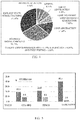
- ReachSafetyTM comprises of 3831 diverse C programs divided into 10 sub-categories - Arrays, BitVectors, ControlFlow, ECA, Floats, Heap, Loops, ProductLines, Recursive and Sequentialized, contributed by researchers and practitioners.
- Table 1 shows the suitable techniques that are selected based on the defined criteria and the contribution of each technique for verification of these benchmarks Table 1 Selection Criteria /Techniques Accessing Arrays Linear modification to variables Short input range Statically known loop bound Unstructured control flow Others %Analyzed Programs Array Abstraction Yes 6.43 Loop Abstraction Yes Yes Yes 13.65 Loop invariant generation Yes 7.15 Explicit state model checking Yes 33.38 Bounded model Checking Yes Yes Yes Yes Yes 30.73 Interval analysis Yes Yes Yes Yes 4.16 Others(K-Induction,Fuzz Testing, Loop Summarization) Yes Yes Yes Yes Yes 4.51
- CPA-SeqTM is a portfolio verifier on top of the CPAchecker framework. It selects a verification strategy for a program by looking at the input property followed by the code structure.
- PeSCo uses machine learning for strategy selection. It uses the CPAchecker framework in six different configurations for verification.
- UAutomizer is a program verifier that uses an automata-based CEGAR approach with a single strategy for refinement. It uses techniques like predicate analysis and interpolation.
- FIG. 5 shows the percentage of mutually exclusive programs verified by each best performer compared to disclosed tool.
- the first bar shows that, of the programs verified by disclosed tool in the disclosed tool category, 19.3% were not verified by CPA-Seq
- the second bar shows that, of the programs verified by CPA-Seq, 8% were not verified by disclosed tool.
- CPA-Seq verified 8% programs that VeriAbs did not - we believe this is by virtue of techniques not a part of VeriAbs, like value and predicate analyses with CEGAR, and block abstraction memoization.
- PeSCo uses CPAChecker as well, thus its comparison with VeriAbs bears results similar to CPA-Seq.
- UAutomizer does not use a strategy selection in the abstraction or the refinement phases. Its results showcase the strength of strategy selection.
- FIGS. 6A and 6B shows the comparison of disclosed tool with the known tools.
- the disclosed tool performed better in four subcategories as compared to the portfolio verifier, CPASeq, and non-portfolio verifiers, ESBMC-kind and Pinaka (shown in FIG. 6A ).
- ESBMC-kind is a context bounded model checker with abilities of k-induction strengthened with interval analysis to prove properties.
- Pinaka is a symbolic execution engine that uses incremental SAT solving with eager state infeasibility checks.
- ESBMC-kind is a context bounded model checker with abilities of k-induction strengthened with interval analysis to prove properties.
- Pinaka is a symbolic execution engine that uses incremental SAT solving with eager state infeasibility checks.
- the disclosed tool verifies 543 programs across subcategories that are not verified by the other best tools.
- the distribution of techniques in disclosed tool verifying these programs is similar to the category wise distribution presented in FIG. 4 .
- explicit state model checking and bounded model checking supported by strategy selection have verified most programs.
- Next 328 programs not verified by the disclosed tool but verified by the respective other tools were analyzed. A majority of these programs contain inputs of large ranges with intensive control-flow. Overall, one can see that portfolio verifiers enjoy a broader applicability by virtue of their portfolios.
- the disclosed system accepts source code with the specification to be verified and a set of available verification techniques to be applied for the verification of program. It outputs a sequence of strategies of techniques or a sequence of techniques suitable for the verification of the input program. For example, the disclosed system performs Inter-Procedural Control-Flow Analysis by performing static analysis of the input programs to detect if there exists any procedure with multiple return paths and the return value of this procedure decides the control flow of the program at its call point. Further, the disclosed system performs a light weight structural analysis of the input programs to detect different types of loops. In an embodiment, the system performs array accesses detection by analyzing program to identify if it contains loops in which arrays are read or modified.
- the system analyzes program to detect loops that contains some linear modifications to numerical variables.
- Unstructured Control Flow the system analyzes input code for checking loops formed by unstructured forward and backward goto edges or other unstructured control flow.
- the system detects programs for loops with inputs of short ranges or discrete values, having small state spaces using static analysis like interval analysis.
- loop bound detection the system performs interval analysis to detect maximum possible loop unwinding bound for the input program. The bound thus computed could be used as an input to the bounded model checker in the default strategy.
- the hardware device can be any kind of device which can be programmed including e.g. any kind of computer like a server or a personal computer, or the like, or any combination thereof.
- the device may also include means which could be e.g. hardware means like e.g. an application-specific integrated circuit (ASIC), a field-programmable gate array (FPGA), or a combination of hardware and software means, e.g.
- ASIC application-specific integrated circuit
- FPGA field-programmable gate array
- the means can include both hardware means and software means.
- the method embodiments described herein could be implemented in hardware and software.
- the device may also include software means.
- the embodiments may be implemented on different hardware devices, e.g. using a plurality of CPUs.
- the embodiments herein can comprise hardware and software elements.
- the embodiments that are implemented in software include but are not limited to, firmware, resident software, microcode, etc.
- the functions performed by various components described herein may be implemented in other components or combinations of other components.
- a computer-usable or computer readable medium can be any apparatus that can comprise, store, communicate, propagate, or transport the program for use by or in connection with the instruction execution system, apparatus, or device.
- a computer-readable storage medium refers to any type of physical memory on which information or data readable by a processor may be stored.
- a computer-readable storage medium may store instructions for execution by one or more processors, including instructions for causing the processor(s) to perform steps or stages consistent with the embodiments described herein.
- the term "computer-readable medium” should be understood to include tangible items and exclude carrier waves and transient signals, i.e., be non-transitory. Examples include random access memory (RAM), read-only memory (ROM), volatile memory, nonvolatile memory, hard drives, CD ROMs, DVDs, flash drives, disks, and any other known physical storage media.
Landscapes
- Engineering & Computer Science (AREA)
- Theoretical Computer Science (AREA)
- Software Systems (AREA)
- General Engineering & Computer Science (AREA)
- Physics & Mathematics (AREA)
- General Physics & Mathematics (AREA)
- Computer Hardware Design (AREA)
- Computer Security & Cryptography (AREA)
- General Health & Medical Sciences (AREA)
- Health & Medical Sciences (AREA)
- Bioethics (AREA)
- Quality & Reliability (AREA)
- Computing Systems (AREA)
- Stored Programmes (AREA)
- Debugging And Monitoring (AREA)
Abstract
Description
- The present application claims priority from Indian patent application no.
201921045604, filed on November 8th 2019 - The embodiments herein generally relate to software verification, and, more particularly, to method and system for software verification.
- Computer programs, also referred to as software programs or source codes, include codes written in a programming language to perform certain tasks in a computing device on which the computer program is executed. Examples of computing devices include, but are not limited to, a laptop, personal digital assistant (PDA), computer, mobile phone, and so on.
- Verification of the source codes is of utmost importance for safe running of software programs. For example, it is imperative to perform defect detection in all kinds of software programs. However, it is considered to be a challenging task as no single known technique succeeds on all software programs or software codes.
- A known technique for verification of software programs includes model checking. Bounded Model checking (BMC), for example, can find errors in programs with loops of known small bounds. However, a technical challenge associated with verification of software codes using BMC is that it cannot prove the safety of programs with loops of large or unknown bounds.
- Embodiments of the present disclosure present technological improvements as solutions to one or more of the above-mentioned technical problems recognized by the inventors in conventional systems. For example, in one embodiment, a method for verification of software codes is provided. The method includes, receiving a source code encoded with one or more specifications to be verified, via one or more hardware processors. Further the method includes performing, via the one or more hardware processors, static analysis of the source code to identify one or more program features of the source code, the one or more program features comprising at least one of multiple return paths, loops with an unstructured control flow, loops with arrays, short ranges and numerical loops. Furthermore the method includes applying one or more verification techniques associated with the one or more program features to the source code for the verification, via the one or more hardware processors, wherein each verification technique of the one or more verification techniques is applied for a predetermined period of time and in a predefined order.
- In another aspect, a system for verification of software codes is provided. The system includes one or more memories; and one or more first hardware processors, the one or more first memories coupled to the one or more first hardware processors, wherein the one or more first hardware processors are configured to execute programmed instructions stored in the one or more first memories, to receive a source code encoded with one or more specifications to be verified. Further, the one or more first hardware processors are configured to execute programmed instructions to perform static analysis of the source code to identify one or more program features of the source code, the one or more program features comprising at least one of multiple return paths, loops with an unstructured control flow, loops with arrays, short ranges and numerical loops. Also, the one or more first hardware processors are configured to execute programmed instructions to apply one or more verification techniques associated with the one or more program features to the source code for the verification, wherein each verification technique of the one or more verification techniques is applied for a predetermined period of time and in a predefined order.
- In yet another aspect, a non-transitory computer readable medium for a method for verification of software codes is provided. The method includes, receiving a source code encoded with one or more specifications to be verified, via one or more hardware processors. Further the method includes performing, via the one or more hardware processors, static analysis of the source code to identify one or more program features of the source code, the one or more program features comprising at least one of multiple return paths, loops with an unstructured control flow, loops with arrays, short ranges and numerical loops. Furthermore the method includes applying one or more verification techniques associated with the one or more program features to the source code for the verification, via the one or more hardware processors, wherein each verification technique of the one or more verification techniques is applied for a predetermined period of time and in a predefined order.
- It is to be understood that both the foregoing general description and the following detailed description are exemplary and explanatory only and are not restrictive of the invention, as claimed.
- The accompanying drawings, which are incorporated in and constitute a part of this disclosure, illustrate exemplary embodiments and, together with the description, serve to explain the disclosed principles:
-
FIG. 1 illustrates a block diagram of a system for software verification, in accordance with an embodiment of the present disclosure. -
FIG. 2 . Illustrates an architecture diagram of the system (ofFIG. 1 ) for software verification, in accordance with an embodiment of the present disclosure. -
FIG. 3 illustrates a flow diagram of a method for software verification, in accordance with an example embodiment of the present disclosure. -
FIGS. 4-6 illustrates comparative analysis of experimental results of software verification by the system ofFIGS. 1 /2 vis-à-vis known systems, in accordance with an example embodiment of the present disclosure - There are multiple techniques for software verification and each technique performs differently for different types of software programs or source codes. Herein, 'verification' may refer to finding error paths as well as proving validity of the input properties of the source codes. The effectiveness of a verification technique is program and property dependent. Hence, without knowledge of the verification techniques that may be suitable for a given software program, the process of verification may be inefficient, cumbersome and time consuming.
- Further, loops are a major bottleneck for efficient software verification, however, a single technique may not work for different types of loops that can be written for a software program. For example, bounded model checking (BMC) can find errors in programs with loops of known small bounds, but cannot prove the safety of programs with loops of large or unknown bounds. Thus, to be able to verify a variety of software programs with limited resources, conventional verifiers (or verification systems) incorporate portfolios of complementary techniques. Further, such conventional verifiers define feature specific strategies, or sequences of feature specific verification techniques tried one after another until the input program is verified. Such a strategy based verification may be helpful in an improved applicability of formal verification in practice.
- Referring to the following example (Example: 1) having loop which copies array elements from one array to another.
-
     int main() {
      int a1[100000];
      int a2[100000];
      int a;
      for (a = 0 ; a < 100000 ; a++) {
         a1[a] = nondet_int();
       }
      int i;
      for (i = 0 ; i < 100000 ; i++) {
        a2[i] = a1[i];
       }
      int x;
      for (x = 0 ; x < 100000 ; x++) {
        assert(a1[x] == a2[x]); // property to be verified
      }
      return 0;
 }
- Strategy 1: For software programs containing multiple procedures and procedures with multiple return paths, where the return value of a procedure call decides the control-flow of the program, the verification techniques including inter procedural verification techniques sequence of verification techniques are selected for the verification of the program. The inter-procedural verification techniques for the verification of the program with multiple return paths may be applied in a predefined order, for example, interval analysis followed by bounded model checking. In an embodiment, the interval analysis may include k-path interval analysis, for example k-path interval (k=500). Upon verification of the software program, the status may be one of Verification Successful (S) or Verification Failed (F). If, however, the software program is not verified (Status is Unknown (U)), the process flow is passed to strategy selector to check with other strategies, for example,
Strategy 2, in the following possible order. - Strategy 2: If the input software program contains a loop formed by unstructured forward and backward goto edges, random fuzz testing is applied to show the presence of errors (Status: Verification Failed (F)) or inconclusive verification result (Status: Unknown (U)). Inputting massive amounts of random data, called fuzz, to test the input program in an attempt to make it crash or fuzz testing or random testing performs, well on such programs by virtue of algorithms that achieve a high branch-pair coverage. Some of these algorithms also evolve tests from the initial input test cases based on the execution paths of the input program. These can be applied in this strategy to verify the input program and the specification.
- Strategy 3: For software codes processing arrays in loops, efficient and scalable array abstraction techniques are selected. The abstraction techniques selected may include array pruning and loop shrinking wherein it may be sufficient to verify the input specification with respect to a subset of the elements of the input arrays in the program instead of the entire array for better efficiency and scalability, or it may be sufficient to validate the input specification with respect to a few iterations of the loop(s) in the program. In an embodiment, the abstraction techniques selected may be applied in a predefined order, namely, array pruning followed by loop shrinking. Said abstraction techniques validate user properties or assertions for a sufficient subset of array elements to verify the program with an improved scalability. In an embodiment, the abstraction techniques may be applied for a predetermined period of time. If these techniques run out of time or memory (Status: Unknown U), the default strategy is applied over the program as explained later.
- Strategy 4: For software programs which have small state spaces by virtue of loops with inputs of short ranges or discrete values, explicit state model checking technique and loop invariant generation technique is selected. If explicit state model checking cannot scale, two loop invariant generation techniques are applied simultaneously and a first result produced by either is output. One invariant generation technique uses dynamic analysis, specifically fuzz testing, and program syntax analysis to guess and check candidate loop invariants. The second invariant generation technique is a Counter-Example Guided Loop Abstraction Refinement (CEGLAR) technique. It 'havocs' the output variables of, and applies induction to, each loop containing user properties to abstract the loop. If this abstraction produces a counterexample, then the system guesses and checks likely loop invariants such that they eliminate all paths leading to the counter-example. Said counter-example guided invariant guess check-guess cycle is repeated until the error is found (F) or the property is proved to be safe (S). This technique is a sound abstraction and works well in practice, but is incomplete and may not terminate with a solution.
     unsigned int x, y = 1;
     label 1:
     if(*) {
       if((x% 3) == 1){
         x += 2; y =0 ;
         label 2;
         goto label 1;
       }
       else if ((x %3) = = 2) {
         x = x +1; y =0;
         goto label 2; }}
     if (y==0)
       assert ((x%3) == 0) //property to be verified
     int a[100000];
     int x, max = 0, i =0 ;
     while (i < 100000) {
        if (a[i] > max) {
          max = a[i];
        }
        i = i + 1;
       }
     for(x=0 ; x<100000 ; x++) {
     assert(a[x] <= max); //property to be verified
     }
a1 = 0;
     while(1) {
            input = *;
            if(input >=1 && input < 4){
                    if(a1==0 && input ==2)
                           a1 = 3;
                    else
                           a1 = 5;
            }
            assert(a1 == 3); //property to be verified
     }
     unsigned int x = 0;
     while (x < 0x0fffffff) {
     x+=2;
     }
     assert(!(x % 2)); //property to be verified
     m=0
     void main() {
             int n=lock()
             if(n! =0)
                    unlock();
             assert(m==1);
     }
     int lock(){
             int t=nondet();
             if(t!=0){
                    m=1;
                    return t;
             } else
                    return 0;
     }
     void unlock() { m=0; }
- VeriAbs/scripts/veriabs --property-file a.prp ex.c
- VeriAbs displays the verification result on the standard output
| Selection Criteria /Techniques | Accessing Arrays | Linear modification to variables | Short input range | Statically known loop bound | Unstructured control flow | Others | %Analyzed Programs |
| Array Abstraction | Yes | 6.43 | |||||
| Loop Abstraction | Yes | Yes | Yes | 13.65 | |||
| Loop invariant generation | Yes | 7.15 | |||||
| Explicit state model checking | Yes | 33.38 | |||||
| Bounded model Checking | Yes | Yes | Yes | Yes | 30.73 | ||
| Interval analysis | Yes | Yes | Yes | 4.16 | |||
| Others(K-Induction,Fuzz Testing, Loop Summarization) | Yes | Yes | Yes | Yes | 4.51 |
Claims (15)
- A processor implemented method for verification of a source code, comprising:receiving a source code encoded with one or more specifications to be verified, via one or more hardware processors;performing, via the one or more hardware processors, static analysis of the source code to identify one or more program features of the source code, the one or more program features comprising at least one of multiple return paths, loops with an unstructured control flow, loops with arrays, short ranges and numerical loops, wherein the static analysis is performed by carrying out one of an analysis of the one or more program features in a predefined sequential order and an analysis of the one or more program features in parallel; andapplying one or more verification techniques associated with the one or more program features to the source code for the verification, via the one or more hardware processors, wherein each verification technique of the one or more verification techniques is applied for a predetermined period of time and in a predefined order.
- The method of claim 1, further comprising selecting one or more default verification techniques upon elapse of the predetermined period of time to verify the corresponding property by the one or more verification techniques.
- The method of claim 1, wherein the one or more verification techniques comprises one or more inter procedural verification techniques for the verification of the source code with multiple return paths, the one or more inter procedural verification techniques comprises interval analysis followed by bounded model checking.
- The method of claim 1, wherein the one or more verification techniques for the verification of the source code having one or more loops with the unstructured control flow comprises random testing.
- The method of claim 1, wherein the one or more verification techniques for the verification of the source code comprising loops with arrays comprises a plurality of array abstraction techniques, the plurality of array abstraction techniques comprises array pruning followed by loop shrinking.
- The method of claim 1, wherein the one or more verification techniques for the verification of the source code comprising loops with inputs of short ranges comprises explicit state model checking technique and loop invariant generation techniques.
- The method of claim 2, wherein the one or more default verification techniques comprises carrying out an execution sequence comprising interval analysis, loop abstraction, loop summarization, bounded model checking and k-induction.
comprises performing the static - A system for verification of a source code comprising:at least one memory; andone or more hardware processors, the at least one memory coupled to the one or more hardware processors wherein the one or more hardware processors are capable of executing programmed instructions stored in the at least one memory to:receive a source code encoded with one or more specifications to be verified;perform static analysis of the source code to identify one or more program features of the source code, the one or more program features comprising at least one of multiple return paths, loops with an unstructured control flow, loops with arrays, short ranges and numerical loops, wherein the static analysis is performed by carrying out one of an analysis of the one or more program features in a predefined sequential order and an analysis of the one or more program features in parallel.;apply one or more verification techniques associated with the one or more program features to the source code for the verification, wherein each verification technique of the one or more verification techniques is applied for a predetermined period of time and in a predefined order; andselect one or more default verification techniques upon elapse of the predetermined period of time to verify the corresponding property by the one or more verification techniques.
- The system of claim 8, wherein the one or more verification techniques comprises one or more inter procedural verification techniques for the verification of the source code with multiple return paths, the one or more inter procedural verification techniques comprises interval analysis followed by bounded model checking.
- The system of claim 8, wherein the one or more verification techniques for the verification of the source code having one or more loops with the unstructured control flow comprises random testing.
- The system of claim 8, wherein the one or more verification techniques for the verification of the source code comprising loops with arrays comprises a plurality of array abstraction techniques, the plurality of array abstraction techniques comprises array pruning followed by loop shrinking.
- The system of claim 8, wherein the one or more verification techniques for the verification of the source code comprising loops with inputs of short ranges comprises explicit state model checking technique and loop invariant generation techniques.
- The system of claim 8, wherein the one or more default verification techniques comprises carrying out an execution sequence comprising interval analysis, loop abstraction, loop summarization, bounded model checking and k-induction.
- The system of claim 8, wherein the one or more hardware processors are capable of executing programmed instructions to perform the static analysis by carrying out one of an analysis of the one or more program features in a predefined sequential order and an analysis of the one or more program features in parallel.
- One or more non-transitory machine readable information storage mediums comprising one or more instructions which when executed by one or more hardware processors cause:receiving a source code encoded with one or more specifications to be verified, via one or more hardware processors;performing, via the one or more hardware processors, static analysis of the source code to identify one or more program features of the source code, the one or more program features comprising at least one of multiple return paths, loops with an unstructured control flow, loops with arrays, short ranges and numerical loops; andapplying one or more verification techniques associated with the one or more program features to the source code for the verification, via the one or more hardware processors, wherein each verification technique of the one or more verification techniques is applied for a predetermined period of time and in a predefined order.
Applications Claiming Priority (1)
| Application Number | Priority Date | Filing Date | Title |
|---|---|---|---|
| IN201921045604 | 2019-11-08 |
Publications (3)
| Publication Number | Publication Date |
|---|---|
| EP3819770A1 true EP3819770A1 (en) | 2021-05-12 |
| EP3819770B1 EP3819770B1 (en) | 2024-03-06 |
| EP3819770C0 EP3819770C0 (en) | 2024-03-06 |
Family
ID=69784191
Family Applications (1)
| Application Number | Title | Priority Date | Filing Date |
|---|---|---|---|
| EP20161835.2A Active EP3819770B1 (en) | 2019-11-08 | 2020-03-09 | System and method for software verification |
Country Status (2)
| Country | Link |
|---|---|
| US (1) | US11275860B2 (en) |
| EP (1) | EP3819770B1 (en) |
Families Citing this family (5)
| Publication number | Priority date | Publication date | Assignee | Title |
|---|---|---|---|---|
| JP7653577B2 (en) * | 2021-06-04 | 2025-03-28 | エルディーアールエイ テクノロジー インコーポレイテッド | Method and system for verifying control and data coupling analysis in software code - Patents.com |
| EP4102356A1 (en) * | 2021-06-09 | 2022-12-14 | Tata Consultancy Services Limited | Systems and methods for selective path sensitive interval analysis |
| CN114741123A (en) * | 2022-02-11 | 2022-07-12 | 华东师范大学 | Onboard software formal verification system |
| US11983091B2 (en) * | 2022-03-25 | 2024-05-14 | GitLab B.V. | Adaptively generated program model |
| US12169714B2 (en) * | 2022-05-25 | 2024-12-17 | Bionic Stork Ltd. | Techniques for code isolation in static analysis of applications using application framework |
Family Cites Families (4)
| Publication number | Priority date | Publication date | Assignee | Title |
|---|---|---|---|---|
| US7089534B2 (en) | 2002-05-01 | 2006-08-08 | International Business Machines Corporation | Model based test generation for validation of parallel and concurrent software |
| US7865339B2 (en) * | 2004-07-12 | 2011-01-04 | Sri International | Formal methods for test case generation |
| US8131532B2 (en) | 2005-06-03 | 2012-03-06 | Nec Laboratories America, Inc. | Software verification using range analysis |
| US7930659B2 (en) * | 2005-06-03 | 2011-04-19 | Nec Laboratories America, Inc. | Software verification |
-
2020
- 2020-03-09 EP EP20161835.2A patent/EP3819770B1/en active Active
- 2020-03-10 US US16/814,460 patent/US11275860B2/en active Active
Non-Patent Citations (2)
| Title |
|---|
| BEYER DIRK ET AL: "Strategy Selection for Software Verification Based on Boolean Features", 30 October 2018, ROBOCUP 2008: ROBOCUP 2008: ROBOT SOCCER WORLD CUP XII; [LECTURE NOTES IN COMPUTER SCIENCE; LECT.NOTES COMPUTER], SPRINGER INTERNATIONAL PUBLISHING, CHAM, PAGE(S) 144 - 159, ISBN: 978-3-319-10403-4, XP047493117 * |
| CHEN GUANG ET AL: "Scalable Verification Framework for C Program", 2018 25TH ASIA-PACIFIC SOFTWARE ENGINEERING CONFERENCE (APSEC), IEEE, 4 December 2018 (2018-12-04), pages 129 - 138, XP033555012, DOI: 10.1109/APSEC.2018.00027 * |
Also Published As
| Publication number | Publication date |
|---|---|
| EP3819770B1 (en) | 2024-03-06 |
| US11275860B2 (en) | 2022-03-15 |
| US20210141914A1 (en) | 2021-05-13 |
| EP3819770C0 (en) | 2024-03-06 |
Similar Documents
| Publication | Publication Date | Title |
|---|---|---|
| EP3819770B1 (en) | System and method for software verification | |
| Tan et al. | Making k-object-sensitive pointer analysis more precise with still k-limiting | |
| Hemmati et al. | Prioritizing manual test cases in traditional and rapid release environments | |
| US8645761B2 (en) | Precise fault localization | |
| JP7404839B2 (en) | Identification of software program defect location | |
| US20090265531A1 (en) | Code Evaluation for In-Order Processing | |
| US9286039B2 (en) | Operating system support for contracts | |
| CN112925524B (en) | A method and device for detecting unsafe direct memory access in a driver program | |
| EP3264274B1 (en) | Input discovery for unknown program binaries | |
| US10534689B2 (en) | Data structure abstraction for model checking | |
| US20140013090A1 (en) | Flattening conditional statements | |
| CN111897711A (en) | Method and device for positioning bug in code, electronic equipment and readable storage medium | |
| US9552284B2 (en) | Determining valid inputs for an unknown binary program | |
| US20200012581A1 (en) | Method for Semantic Preserving Transform Mutation Discovery and Vetting | |
| Liu et al. | Leveraging binary coverage for effective generation guidance in kernel fuzzing | |
| Senanayake et al. | Labelled vulnerability dataset on android source code (lvdandro) to develop AI-based code vulnerability detection models. | |
| De Kraker et al. | GLICE: combining graph neural networks and program slicing to improve software vulnerability detection | |
| CN109857583B (en) | Processing method and device | |
| US10877870B2 (en) | Method and system for verifying properties of source code | |
| KR20130022280A (en) | Low cost apparatus and method for error-based program testing | |
| CN114564396A (en) | Random instruction test program generation method based on data path constraint solving | |
| US20140089738A1 (en) | System and method for identifying source of run-time execution failure | |
| CN116415256B (en) | A formal verification method for processor branch prediction attack vulnerabilities | |
| CN119149015A (en) | Method and device for generating codes | |
| US11650907B2 (en) | Systems and methods for selective path sensitive interval analysis |
Legal Events
| Date | Code | Title | Description |
|---|---|---|---|
| PUAI | Public reference made under article 153(3) epc to a published international application that has entered the european phase |
Free format text: ORIGINAL CODE: 0009012 |
|
| STAA | Information on the status of an ep patent application or granted ep patent |
Free format text: STATUS: THE APPLICATION HAS BEEN PUBLISHED |
|
| AK | Designated contracting states |
Kind code of ref document: A1 Designated state(s): AL AT BE BG CH CY CZ DE DK EE ES FI FR GB GR HR HU IE IS IT LI LT LU LV MC MK MT NL NO PL PT RO RS SE SI SK SM TR |
|
| STAA | Information on the status of an ep patent application or granted ep patent |
Free format text: STATUS: REQUEST FOR EXAMINATION WAS MADE |
|
| 17P | Request for examination filed |
Effective date: 20211112 |
|
| RBV | Designated contracting states (corrected) |
Designated state(s): AL AT BE BG CH CY CZ DE DK EE ES FI FR GB GR HR HU IE IS IT LI LT LU LV MC MK MT NL NO PL PT RO RS SE SI SK SM TR |
|
| GRAP | Despatch of communication of intention to grant a patent |
Free format text: ORIGINAL CODE: EPIDOSNIGR1 |
|
| STAA | Information on the status of an ep patent application or granted ep patent |
Free format text: STATUS: GRANT OF PATENT IS INTENDED |
|
| INTG | Intention to grant announced |
Effective date: 20230915 |
|
| GRAS | Grant fee paid |
Free format text: ORIGINAL CODE: EPIDOSNIGR3 |
|
| GRAA | (expected) grant |
Free format text: ORIGINAL CODE: 0009210 |
|
| STAA | Information on the status of an ep patent application or granted ep patent |
Free format text: STATUS: THE PATENT HAS BEEN GRANTED |
|
| AK | Designated contracting states |
Kind code of ref document: B1 Designated state(s): AL AT BE BG CH CY CZ DE DK EE ES FI FR GB GR HR HU IE IS IT LI LT LU LV MC MK MT NL NO PL PT RO RS SE SI SK SM TR |
|
| REG | Reference to a national code |
Ref country code: CH Ref legal event code: EP |
|
| REG | Reference to a national code |
Ref country code: DE Ref legal event code: R096 Ref document number: 602020026662 Country of ref document: DE |
|
| REG | Reference to a national code |
Ref country code: IE Ref legal event code: FG4D |
|
| U01 | Request for unitary effect filed |
Effective date: 20240306 |
|
| U07 | Unitary effect registered |
Designated state(s): AT BE BG DE DK EE FI FR IT LT LU LV MT NL PT SE SI Effective date: 20240312 |
|
| U20 | Renewal fee for the european patent with unitary effect paid |
Year of fee payment: 5 Effective date: 20240326 |
|
| PG25 | Lapsed in a contracting state [announced via postgrant information from national office to epo] |
Ref country code: GR Free format text: LAPSE BECAUSE OF FAILURE TO SUBMIT A TRANSLATION OF THE DESCRIPTION OR TO PAY THE FEE WITHIN THE PRESCRIBED TIME-LIMIT Effective date: 20240607 |
|
| PG25 | Lapsed in a contracting state [announced via postgrant information from national office to epo] |
Ref country code: RS Free format text: LAPSE BECAUSE OF FAILURE TO SUBMIT A TRANSLATION OF THE DESCRIPTION OR TO PAY THE FEE WITHIN THE PRESCRIBED TIME-LIMIT Effective date: 20240606 Ref country code: HR Free format text: LAPSE BECAUSE OF FAILURE TO SUBMIT A TRANSLATION OF THE DESCRIPTION OR TO PAY THE FEE WITHIN THE PRESCRIBED TIME-LIMIT Effective date: 20240306 |
|
| PG25 | Lapsed in a contracting state [announced via postgrant information from national office to epo] |
Ref country code: ES Free format text: LAPSE BECAUSE OF FAILURE TO SUBMIT A TRANSLATION OF THE DESCRIPTION OR TO PAY THE FEE WITHIN THE PRESCRIBED TIME-LIMIT Effective date: 20240306 |
|
| PG25 | Lapsed in a contracting state [announced via postgrant information from national office to epo] |
Ref country code: RS Free format text: LAPSE BECAUSE OF FAILURE TO SUBMIT A TRANSLATION OF THE DESCRIPTION OR TO PAY THE FEE WITHIN THE PRESCRIBED TIME-LIMIT Effective date: 20240606 Ref country code: NO Free format text: LAPSE BECAUSE OF FAILURE TO SUBMIT A TRANSLATION OF THE DESCRIPTION OR TO PAY THE FEE WITHIN THE PRESCRIBED TIME-LIMIT Effective date: 20240606 Ref country code: HR Free format text: LAPSE BECAUSE OF FAILURE TO SUBMIT A TRANSLATION OF THE DESCRIPTION OR TO PAY THE FEE WITHIN THE PRESCRIBED TIME-LIMIT Effective date: 20240306 Ref country code: GR Free format text: LAPSE BECAUSE OF FAILURE TO SUBMIT A TRANSLATION OF THE DESCRIPTION OR TO PAY THE FEE WITHIN THE PRESCRIBED TIME-LIMIT Effective date: 20240607 Ref country code: ES Free format text: LAPSE BECAUSE OF FAILURE TO SUBMIT A TRANSLATION OF THE DESCRIPTION OR TO PAY THE FEE WITHIN THE PRESCRIBED TIME-LIMIT Effective date: 20240306 |
|
| PG25 | Lapsed in a contracting state [announced via postgrant information from national office to epo] |
Ref country code: IS Free format text: LAPSE BECAUSE OF FAILURE TO SUBMIT A TRANSLATION OF THE DESCRIPTION OR TO PAY THE FEE WITHIN THE PRESCRIBED TIME-LIMIT Effective date: 20240706 |
|
| PG25 | Lapsed in a contracting state [announced via postgrant information from national office to epo] |
Ref country code: SM Free format text: LAPSE BECAUSE OF FAILURE TO SUBMIT A TRANSLATION OF THE DESCRIPTION OR TO PAY THE FEE WITHIN THE PRESCRIBED TIME-LIMIT Effective date: 20240306 |
|
| PG25 | Lapsed in a contracting state [announced via postgrant information from national office to epo] |
Ref country code: CZ Free format text: LAPSE BECAUSE OF FAILURE TO SUBMIT A TRANSLATION OF THE DESCRIPTION OR TO PAY THE FEE WITHIN THE PRESCRIBED TIME-LIMIT Effective date: 20240306 |
|
| PG25 | Lapsed in a contracting state [announced via postgrant information from national office to epo] |
Ref country code: PL Free format text: LAPSE BECAUSE OF FAILURE TO SUBMIT A TRANSLATION OF THE DESCRIPTION OR TO PAY THE FEE WITHIN THE PRESCRIBED TIME-LIMIT Effective date: 20240306 |
|
| PG25 | Lapsed in a contracting state [announced via postgrant information from national office to epo] |
Ref country code: SK Free format text: LAPSE BECAUSE OF FAILURE TO SUBMIT A TRANSLATION OF THE DESCRIPTION OR TO PAY THE FEE WITHIN THE PRESCRIBED TIME-LIMIT Effective date: 20240306 |
|
| PG25 | Lapsed in a contracting state [announced via postgrant information from national office to epo] |
Ref country code: SM Free format text: LAPSE BECAUSE OF FAILURE TO SUBMIT A TRANSLATION OF THE DESCRIPTION OR TO PAY THE FEE WITHIN THE PRESCRIBED TIME-LIMIT Effective date: 20240306 Ref country code: SK Free format text: LAPSE BECAUSE OF FAILURE TO SUBMIT A TRANSLATION OF THE DESCRIPTION OR TO PAY THE FEE WITHIN THE PRESCRIBED TIME-LIMIT Effective date: 20240306 Ref country code: RO Free format text: LAPSE BECAUSE OF FAILURE TO SUBMIT A TRANSLATION OF THE DESCRIPTION OR TO PAY THE FEE WITHIN THE PRESCRIBED TIME-LIMIT Effective date: 20240306 Ref country code: PL Free format text: LAPSE BECAUSE OF FAILURE TO SUBMIT A TRANSLATION OF THE DESCRIPTION OR TO PAY THE FEE WITHIN THE PRESCRIBED TIME-LIMIT Effective date: 20240306 Ref country code: IS Free format text: LAPSE BECAUSE OF FAILURE TO SUBMIT A TRANSLATION OF THE DESCRIPTION OR TO PAY THE FEE WITHIN THE PRESCRIBED TIME-LIMIT Effective date: 20240706 Ref country code: CZ Free format text: LAPSE BECAUSE OF FAILURE TO SUBMIT A TRANSLATION OF THE DESCRIPTION OR TO PAY THE FEE WITHIN THE PRESCRIBED TIME-LIMIT Effective date: 20240306 |
|
| REG | Reference to a national code |
Ref country code: DE Ref legal event code: R097 Ref document number: 602020026662 Country of ref document: DE |
|
| PG25 | Lapsed in a contracting state [announced via postgrant information from national office to epo] |
Ref country code: MC Free format text: LAPSE BECAUSE OF FAILURE TO SUBMIT A TRANSLATION OF THE DESCRIPTION OR TO PAY THE FEE WITHIN THE PRESCRIBED TIME-LIMIT Effective date: 20240306 |
|
| PLBE | No opposition filed within time limit |
Free format text: ORIGINAL CODE: 0009261 |
|
| STAA | Information on the status of an ep patent application or granted ep patent |
Free format text: STATUS: NO OPPOSITION FILED WITHIN TIME LIMIT |
|
| PG25 | Lapsed in a contracting state [announced via postgrant information from national office to epo] |
Ref country code: IE Free format text: LAPSE BECAUSE OF NON-PAYMENT OF DUE FEES Effective date: 20240309 |
|
| PG25 | Lapsed in a contracting state [announced via postgrant information from national office to epo] |
Ref country code: MC Free format text: LAPSE BECAUSE OF FAILURE TO SUBMIT A TRANSLATION OF THE DESCRIPTION OR TO PAY THE FEE WITHIN THE PRESCRIBED TIME-LIMIT Effective date: 20240306 Ref country code: IE Free format text: LAPSE BECAUSE OF NON-PAYMENT OF DUE FEES Effective date: 20240309 |
|
| 26N | No opposition filed |
Effective date: 20241209 |
|
| U20 | Renewal fee for the european patent with unitary effect paid |
Year of fee payment: 6 Effective date: 20250325 |
|
| PGFP | Annual fee paid to national office [announced via postgrant information from national office to epo] |
Ref country code: CH Payment date: 20250401 Year of fee payment: 6 |
|
| PG25 | Lapsed in a contracting state [announced via postgrant information from national office to epo] |
Ref country code: CY Free format text: LAPSE BECAUSE OF FAILURE TO SUBMIT A TRANSLATION OF THE DESCRIPTION OR TO PAY THE FEE WITHIN THE PRESCRIBED TIME-LIMIT; INVALID AB INITIO Effective date: 20200309 |
|
| PG25 | Lapsed in a contracting state [announced via postgrant information from national office to epo] |
Ref country code: HU Free format text: LAPSE BECAUSE OF FAILURE TO SUBMIT A TRANSLATION OF THE DESCRIPTION OR TO PAY THE FEE WITHIN THE PRESCRIBED TIME-LIMIT; INVALID AB INITIO Effective date: 20200309 |
|
| PG25 | Lapsed in a contracting state [announced via postgrant information from national office to epo] |
Ref country code: TR Free format text: LAPSE BECAUSE OF FAILURE TO SUBMIT A TRANSLATION OF THE DESCRIPTION OR TO PAY THE FEE WITHIN THE PRESCRIBED TIME-LIMIT Effective date: 20240306 |
|
| REG | Reference to a national code |
Ref country code: CH Ref legal event code: U11 Free format text: ST27 STATUS EVENT CODE: U-0-0-U10-U11 (AS PROVIDED BY THE NATIONAL OFFICE) Effective date: 20260401 |
|
| PGFP | Annual fee paid to national office [announced via postgrant information from national office to epo] |
Ref country code: GB Payment date: 20260304 Year of fee payment: 7 |
|
| U20 | Renewal fee for the european patent with unitary effect paid |
Year of fee payment: 7 Effective date: 20260323 |