EP3819183A2 - Method and apparatus for planning autonomous vehicle, electronic device and storage medium - Google Patents
Method and apparatus for planning autonomous vehicle, electronic device and storage medium Download PDFInfo
- Publication number
- EP3819183A2 EP3819183A2 EP20215435.7A EP20215435A EP3819183A2 EP 3819183 A2 EP3819183 A2 EP 3819183A2 EP 20215435 A EP20215435 A EP 20215435A EP 3819183 A2 EP3819183 A2 EP 3819183A2
- Authority
- EP
- European Patent Office
- Prior art keywords
- vehicle
- obstacle
- autonomous vehicle
- obstacle vehicle
- autonomous
- Prior art date
- Legal status (The legal status is an assumption and is not a legal conclusion. Google has not performed a legal analysis and makes no representation as to the accuracy of the status listed.)
- Granted
Links
Images



Classifications
-
- B—PERFORMING OPERATIONS; TRANSPORTING
- B60—VEHICLES IN GENERAL
- B60W—CONJOINT CONTROL OF VEHICLE SUB-UNITS OF DIFFERENT TYPE OR DIFFERENT FUNCTION; CONTROL SYSTEMS SPECIALLY ADAPTED FOR HYBRID VEHICLES; ROAD VEHICLE DRIVE CONTROL SYSTEMS FOR PURPOSES NOT RELATED TO THE CONTROL OF A PARTICULAR SUB-UNIT
- B60W60/00—Drive control systems specially adapted for autonomous road vehicles
- B60W60/001—Planning or execution of driving tasks
- B60W60/0015—Planning or execution of driving tasks specially adapted for safety
-
- B—PERFORMING OPERATIONS; TRANSPORTING
- B60—VEHICLES IN GENERAL
- B60W—CONJOINT CONTROL OF VEHICLE SUB-UNITS OF DIFFERENT TYPE OR DIFFERENT FUNCTION; CONTROL SYSTEMS SPECIALLY ADAPTED FOR HYBRID VEHICLES; ROAD VEHICLE DRIVE CONTROL SYSTEMS FOR PURPOSES NOT RELATED TO THE CONTROL OF A PARTICULAR SUB-UNIT
- B60W60/00—Drive control systems specially adapted for autonomous road vehicles
- B60W60/001—Planning or execution of driving tasks
- B60W60/0015—Planning or execution of driving tasks specially adapted for safety
- B60W60/0017—Planning or execution of driving tasks specially adapted for safety of other traffic participants
-
- B—PERFORMING OPERATIONS; TRANSPORTING
- B60—VEHICLES IN GENERAL
- B60W—CONJOINT CONTROL OF VEHICLE SUB-UNITS OF DIFFERENT TYPE OR DIFFERENT FUNCTION; CONTROL SYSTEMS SPECIALLY ADAPTED FOR HYBRID VEHICLES; ROAD VEHICLE DRIVE CONTROL SYSTEMS FOR PURPOSES NOT RELATED TO THE CONTROL OF A PARTICULAR SUB-UNIT
- B60W30/00—Purposes of road vehicle drive control systems not related to the control of a particular sub-unit, e.g. of systems using conjoint control of vehicle sub-units
- B60W30/08—Active safety systems predicting or avoiding probable or impending collision or attempting to minimise its consequences
- B60W30/09—Taking automatic action to avoid collision, e.g. braking and steering
-
- B—PERFORMING OPERATIONS; TRANSPORTING
- B60—VEHICLES IN GENERAL
- B60W—CONJOINT CONTROL OF VEHICLE SUB-UNITS OF DIFFERENT TYPE OR DIFFERENT FUNCTION; CONTROL SYSTEMS SPECIALLY ADAPTED FOR HYBRID VEHICLES; ROAD VEHICLE DRIVE CONTROL SYSTEMS FOR PURPOSES NOT RELATED TO THE CONTROL OF A PARTICULAR SUB-UNIT
- B60W30/00—Purposes of road vehicle drive control systems not related to the control of a particular sub-unit, e.g. of systems using conjoint control of vehicle sub-units
- B60W30/08—Active safety systems predicting or avoiding probable or impending collision or attempting to minimise its consequences
- B60W30/095—Predicting travel path or likelihood of collision
-
- B—PERFORMING OPERATIONS; TRANSPORTING
- B60—VEHICLES IN GENERAL
- B60W—CONJOINT CONTROL OF VEHICLE SUB-UNITS OF DIFFERENT TYPE OR DIFFERENT FUNCTION; CONTROL SYSTEMS SPECIALLY ADAPTED FOR HYBRID VEHICLES; ROAD VEHICLE DRIVE CONTROL SYSTEMS FOR PURPOSES NOT RELATED TO THE CONTROL OF A PARTICULAR SUB-UNIT
- B60W30/00—Purposes of road vehicle drive control systems not related to the control of a particular sub-unit, e.g. of systems using conjoint control of vehicle sub-units
- B60W30/08—Active safety systems predicting or avoiding probable or impending collision or attempting to minimise its consequences
- B60W30/095—Predicting travel path or likelihood of collision
- B60W30/0956—Predicting travel path or likelihood of collision the prediction being responsive to traffic or environmental parameters
-
- B—PERFORMING OPERATIONS; TRANSPORTING
- B60—VEHICLES IN GENERAL
- B60W—CONJOINT CONTROL OF VEHICLE SUB-UNITS OF DIFFERENT TYPE OR DIFFERENT FUNCTION; CONTROL SYSTEMS SPECIALLY ADAPTED FOR HYBRID VEHICLES; ROAD VEHICLE DRIVE CONTROL SYSTEMS FOR PURPOSES NOT RELATED TO THE CONTROL OF A PARTICULAR SUB-UNIT
- B60W30/00—Purposes of road vehicle drive control systems not related to the control of a particular sub-unit, e.g. of systems using conjoint control of vehicle sub-units
- B60W30/18—Propelling the vehicle
- B60W30/18009—Propelling the vehicle related to particular drive situations
- B60W30/18154—Approaching an intersection
-
- B—PERFORMING OPERATIONS; TRANSPORTING
- B60—VEHICLES IN GENERAL
- B60W—CONJOINT CONTROL OF VEHICLE SUB-UNITS OF DIFFERENT TYPE OR DIFFERENT FUNCTION; CONTROL SYSTEMS SPECIALLY ADAPTED FOR HYBRID VEHICLES; ROAD VEHICLE DRIVE CONTROL SYSTEMS FOR PURPOSES NOT RELATED TO THE CONTROL OF A PARTICULAR SUB-UNIT
- B60W30/00—Purposes of road vehicle drive control systems not related to the control of a particular sub-unit, e.g. of systems using conjoint control of vehicle sub-units
- B60W30/18—Propelling the vehicle
- B60W30/18009—Propelling the vehicle related to particular drive situations
- B60W30/18159—Traversing an intersection
-
- B—PERFORMING OPERATIONS; TRANSPORTING
- B60—VEHICLES IN GENERAL
- B60W—CONJOINT CONTROL OF VEHICLE SUB-UNITS OF DIFFERENT TYPE OR DIFFERENT FUNCTION; CONTROL SYSTEMS SPECIALLY ADAPTED FOR HYBRID VEHICLES; ROAD VEHICLE DRIVE CONTROL SYSTEMS FOR PURPOSES NOT RELATED TO THE CONTROL OF A PARTICULAR SUB-UNIT
- B60W30/00—Purposes of road vehicle drive control systems not related to the control of a particular sub-unit, e.g. of systems using conjoint control of vehicle sub-units
- B60W30/18—Propelling the vehicle
- B60W30/18009—Propelling the vehicle related to particular drive situations
- B60W30/18163—Lane change; Overtaking manoeuvres
-
- B—PERFORMING OPERATIONS; TRANSPORTING
- B60—VEHICLES IN GENERAL
- B60W—CONJOINT CONTROL OF VEHICLE SUB-UNITS OF DIFFERENT TYPE OR DIFFERENT FUNCTION; CONTROL SYSTEMS SPECIALLY ADAPTED FOR HYBRID VEHICLES; ROAD VEHICLE DRIVE CONTROL SYSTEMS FOR PURPOSES NOT RELATED TO THE CONTROL OF A PARTICULAR SUB-UNIT
- B60W40/00—Estimation or calculation of non-directly measurable driving parameters for road vehicle drive control systems not related to the control of a particular sub unit, e.g. by using mathematical models
- B60W40/10—Estimation or calculation of non-directly measurable driving parameters for road vehicle drive control systems not related to the control of a particular sub unit, e.g. by using mathematical models related to vehicle motion
- B60W40/105—Speed
-
- B—PERFORMING OPERATIONS; TRANSPORTING
- B60—VEHICLES IN GENERAL
- B60W—CONJOINT CONTROL OF VEHICLE SUB-UNITS OF DIFFERENT TYPE OR DIFFERENT FUNCTION; CONTROL SYSTEMS SPECIALLY ADAPTED FOR HYBRID VEHICLES; ROAD VEHICLE DRIVE CONTROL SYSTEMS FOR PURPOSES NOT RELATED TO THE CONTROL OF A PARTICULAR SUB-UNIT
- B60W50/00—Details of control systems for road vehicle drive control not related to the control of a particular sub-unit, e.g. process diagnostic or vehicle driver interfaces
- B60W50/0097—Predicting future conditions
-
- B—PERFORMING OPERATIONS; TRANSPORTING
- B60—VEHICLES IN GENERAL
- B60W—CONJOINT CONTROL OF VEHICLE SUB-UNITS OF DIFFERENT TYPE OR DIFFERENT FUNCTION; CONTROL SYSTEMS SPECIALLY ADAPTED FOR HYBRID VEHICLES; ROAD VEHICLE DRIVE CONTROL SYSTEMS FOR PURPOSES NOT RELATED TO THE CONTROL OF A PARTICULAR SUB-UNIT
- B60W60/00—Drive control systems specially adapted for autonomous road vehicles
- B60W60/001—Planning or execution of driving tasks
- B60W60/0011—Planning or execution of driving tasks involving control alternatives for a single driving scenario, e.g. planning several paths to avoid obstacles
-
- B—PERFORMING OPERATIONS; TRANSPORTING
- B60—VEHICLES IN GENERAL
- B60W—CONJOINT CONTROL OF VEHICLE SUB-UNITS OF DIFFERENT TYPE OR DIFFERENT FUNCTION; CONTROL SYSTEMS SPECIALLY ADAPTED FOR HYBRID VEHICLES; ROAD VEHICLE DRIVE CONTROL SYSTEMS FOR PURPOSES NOT RELATED TO THE CONTROL OF A PARTICULAR SUB-UNIT
- B60W60/00—Drive control systems specially adapted for autonomous road vehicles
- B60W60/001—Planning or execution of driving tasks
- B60W60/0027—Planning or execution of driving tasks using trajectory prediction for other traffic participants
-
- B—PERFORMING OPERATIONS; TRANSPORTING
- B60—VEHICLES IN GENERAL
- B60W—CONJOINT CONTROL OF VEHICLE SUB-UNITS OF DIFFERENT TYPE OR DIFFERENT FUNCTION; CONTROL SYSTEMS SPECIALLY ADAPTED FOR HYBRID VEHICLES; ROAD VEHICLE DRIVE CONTROL SYSTEMS FOR PURPOSES NOT RELATED TO THE CONTROL OF A PARTICULAR SUB-UNIT
- B60W60/00—Drive control systems specially adapted for autonomous road vehicles
- B60W60/001—Planning or execution of driving tasks
- B60W60/0027—Planning or execution of driving tasks using trajectory prediction for other traffic participants
- B60W60/00274—Planning or execution of driving tasks using trajectory prediction for other traffic participants considering possible movement changes
-
- G—PHYSICS
- G08—SIGNALLING
- G08G—TRAFFIC CONTROL SYSTEMS
- G08G1/00—Traffic control systems for road vehicles
- G08G1/09—Arrangements for giving variable traffic instructions
- G08G1/0962—Arrangements for giving variable traffic instructions having an indicator mounted inside the vehicle, e.g. giving voice messages
- G08G1/0967—Systems involving transmission of highway information, e.g. weather, speed limits
- G08G1/096708—Systems involving transmission of highway information, e.g. weather, speed limits where the received information might be used to generate an automatic action on the vehicle control
- G08G1/096725—Systems involving transmission of highway information, e.g. weather, speed limits where the received information might be used to generate an automatic action on the vehicle control where the received information generates an automatic action on the vehicle control
-
- G—PHYSICS
- G08—SIGNALLING
- G08G—TRAFFIC CONTROL SYSTEMS
- G08G1/00—Traffic control systems for road vehicles
- G08G1/16—Anti-collision systems
- G08G1/161—Decentralised systems, e.g. inter-vehicle communication
-
- G—PHYSICS
- G08—SIGNALLING
- G08G—TRAFFIC CONTROL SYSTEMS
- G08G1/00—Traffic control systems for road vehicles
- G08G1/16—Anti-collision systems
- G08G1/166—Anti-collision systems for active traffic, e.g. moving vehicles, pedestrians, bikes
-
- B—PERFORMING OPERATIONS; TRANSPORTING
- B60—VEHICLES IN GENERAL
- B60W—CONJOINT CONTROL OF VEHICLE SUB-UNITS OF DIFFERENT TYPE OR DIFFERENT FUNCTION; CONTROL SYSTEMS SPECIALLY ADAPTED FOR HYBRID VEHICLES; ROAD VEHICLE DRIVE CONTROL SYSTEMS FOR PURPOSES NOT RELATED TO THE CONTROL OF A PARTICULAR SUB-UNIT
- B60W50/00—Details of control systems for road vehicle drive control not related to the control of a particular sub-unit, e.g. process diagnostic or vehicle driver interfaces
- B60W2050/0001—Details of the control system
- B60W2050/0002—Automatic control, details of type of controller or control system architecture
- B60W2050/0004—In digital systems, e.g. discrete-time systems involving sampling
- B60W2050/0005—Processor details or data handling, e.g. memory registers or chip architecture
-
- B—PERFORMING OPERATIONS; TRANSPORTING
- B60—VEHICLES IN GENERAL
- B60W—CONJOINT CONTROL OF VEHICLE SUB-UNITS OF DIFFERENT TYPE OR DIFFERENT FUNCTION; CONTROL SYSTEMS SPECIALLY ADAPTED FOR HYBRID VEHICLES; ROAD VEHICLE DRIVE CONTROL SYSTEMS FOR PURPOSES NOT RELATED TO THE CONTROL OF A PARTICULAR SUB-UNIT
- B60W2520/00—Input parameters relating to overall vehicle dynamics
- B60W2520/10—Longitudinal speed
-
- B—PERFORMING OPERATIONS; TRANSPORTING
- B60—VEHICLES IN GENERAL
- B60W—CONJOINT CONTROL OF VEHICLE SUB-UNITS OF DIFFERENT TYPE OR DIFFERENT FUNCTION; CONTROL SYSTEMS SPECIALLY ADAPTED FOR HYBRID VEHICLES; ROAD VEHICLE DRIVE CONTROL SYSTEMS FOR PURPOSES NOT RELATED TO THE CONTROL OF A PARTICULAR SUB-UNIT
- B60W2520/00—Input parameters relating to overall vehicle dynamics
- B60W2520/10—Longitudinal speed
- B60W2520/105—Longitudinal acceleration
-
- B—PERFORMING OPERATIONS; TRANSPORTING
- B60—VEHICLES IN GENERAL
- B60W—CONJOINT CONTROL OF VEHICLE SUB-UNITS OF DIFFERENT TYPE OR DIFFERENT FUNCTION; CONTROL SYSTEMS SPECIALLY ADAPTED FOR HYBRID VEHICLES; ROAD VEHICLE DRIVE CONTROL SYSTEMS FOR PURPOSES NOT RELATED TO THE CONTROL OF A PARTICULAR SUB-UNIT
- B60W2554/00—Input parameters relating to objects
- B60W2554/40—Dynamic objects, e.g. animals, windblown objects
- B60W2554/404—Characteristics
-
- B—PERFORMING OPERATIONS; TRANSPORTING
- B60—VEHICLES IN GENERAL
- B60W—CONJOINT CONTROL OF VEHICLE SUB-UNITS OF DIFFERENT TYPE OR DIFFERENT FUNCTION; CONTROL SYSTEMS SPECIALLY ADAPTED FOR HYBRID VEHICLES; ROAD VEHICLE DRIVE CONTROL SYSTEMS FOR PURPOSES NOT RELATED TO THE CONTROL OF A PARTICULAR SUB-UNIT
- B60W2554/00—Input parameters relating to objects
- B60W2554/40—Dynamic objects, e.g. animals, windblown objects
- B60W2554/404—Characteristics
- B60W2554/4041—Position
-
- B—PERFORMING OPERATIONS; TRANSPORTING
- B60—VEHICLES IN GENERAL
- B60W—CONJOINT CONTROL OF VEHICLE SUB-UNITS OF DIFFERENT TYPE OR DIFFERENT FUNCTION; CONTROL SYSTEMS SPECIALLY ADAPTED FOR HYBRID VEHICLES; ROAD VEHICLE DRIVE CONTROL SYSTEMS FOR PURPOSES NOT RELATED TO THE CONTROL OF A PARTICULAR SUB-UNIT
- B60W2554/00—Input parameters relating to objects
- B60W2554/40—Dynamic objects, e.g. animals, windblown objects
- B60W2554/404—Characteristics
- B60W2554/4042—Longitudinal speed
-
- B—PERFORMING OPERATIONS; TRANSPORTING
- B60—VEHICLES IN GENERAL
- B60W—CONJOINT CONTROL OF VEHICLE SUB-UNITS OF DIFFERENT TYPE OR DIFFERENT FUNCTION; CONTROL SYSTEMS SPECIALLY ADAPTED FOR HYBRID VEHICLES; ROAD VEHICLE DRIVE CONTROL SYSTEMS FOR PURPOSES NOT RELATED TO THE CONTROL OF A PARTICULAR SUB-UNIT
- B60W2554/00—Input parameters relating to objects
- B60W2554/40—Dynamic objects, e.g. animals, windblown objects
- B60W2554/404—Characteristics
- B60W2554/4045—Intention, e.g. lane change or imminent movement
-
- B—PERFORMING OPERATIONS; TRANSPORTING
- B60—VEHICLES IN GENERAL
- B60W—CONJOINT CONTROL OF VEHICLE SUB-UNITS OF DIFFERENT TYPE OR DIFFERENT FUNCTION; CONTROL SYSTEMS SPECIALLY ADAPTED FOR HYBRID VEHICLES; ROAD VEHICLE DRIVE CONTROL SYSTEMS FOR PURPOSES NOT RELATED TO THE CONTROL OF A PARTICULAR SUB-UNIT
- B60W2555/00—Input parameters relating to exterior conditions, not covered by groups B60W2552/00, B60W2554/00
- B60W2555/60—Traffic rules, e.g. speed limits or right of way
-
- B—PERFORMING OPERATIONS; TRANSPORTING
- B60—VEHICLES IN GENERAL
- B60Y—INDEXING SCHEME RELATING TO ASPECTS CROSS-CUTTING VEHICLE TECHNOLOGY
- B60Y2300/00—Purposes or special features of road vehicle drive control systems
- B60Y2300/18—Propelling the vehicle
- B60Y2300/18008—Propelling the vehicle related to particular drive situations
- B60Y2300/18158—Approaching intersection
-
- B—PERFORMING OPERATIONS; TRANSPORTING
- B60—VEHICLES IN GENERAL
- B60Y—INDEXING SCHEME RELATING TO ASPECTS CROSS-CUTTING VEHICLE TECHNOLOGY
- B60Y2300/00—Purposes or special features of road vehicle drive control systems
- B60Y2300/18—Propelling the vehicle
- B60Y2300/18008—Propelling the vehicle related to particular drive situations
- B60Y2300/18166—Overtaking, changing lanes
Definitions
- Embodiments of the present application relate to the field of computer technologies, and in particular, to a method and apparatus for planning an autonomous vehicle, an electronic device and a storage medium, which are applicable to the autonomous vehicle.
- the present application provides a method for planning an autonomous vehicle, an apparatus for planning an autonomous vehicle, an electronic device and a storage medium.
- a method for planning an autonomous vehicle which may include:
- an apparatus for planning an autonomous vehicle which may include:
- an electronic device which may include:
- a non-transitory computer readable storage medium having stored computer instructions is provided, the computer instructions may be configured to cause a computer to execute the method for planning an autonomous vehicle according to the embodiments of the present application.
- time points of entering a vehicle-converging area can be accurately predicted according to traveling status of both parties, so that a traveling speed of the autonomous vehicle is controlled more accurately, and personal accidents and property loss caused by vehicle collision are avoided.
- the autonomous vehicle in the embodiments of the present application may be a vehicle controlled by utilizing computer technologies in terms of control traveling.
- the autonomous vehicle cannot be accelerated or decelerated rapidly in a non-emergency state, so that a driving speed of the vehicle is relatively stable.
- An obstacle vehicle is a non-automatic vehicle. The obstacle vehicle is driven by a driver, and is greatly influenced by subjective consciousness of the driver.
- traveling routes of the two vehicles is equivalent to the determination of a game (vehicle-converging) position between the autonomous vehicle and the obstacle vehicle.
- a two-dimensional game problem is reduced to a one-dimensional time planning game problem.
- FIG. 1 is a schematic view for illustrating an application scenario of a method for planning an autonomous vehicle according to an embodiment of the present application.
- FIG. 1 simply shows a scenario in which an autonomous vehicle adc turns left and an obstacle vehicle obs passes straight through an intersection from an opposite lane.
- the method for planning an autonomous vehicle and the apparatus for planning an autonomous vehicle in the present application can also be applied to all scenarios where vehicle-converging occurs at the intersection, including a scenario where the autonomous vehicle adc passes straight through the intersection and the obstacle vehicle obs turns left from the opposite lane, a scenario where the autonomous vehicle adc turns right and the obstacle vehicle obs turns left from the opposite lane, and a scenario where the autonomous vehicle adc passes straight through the intersection and the obstacle vehicle obs passes straight through the intersection from left and right roads.
- the method for planning an autonomous vehicle of the present application may also be suitable for a scenario where the autonomous vehicle overtakes or yields the obstacle vehicle traveling in the same direction.
- the embodiments of the present application is specifically described by taking the scenario in which the autonomous vehicle adc turns left and the obstacle vehicle obs passes straight through the intersection from the opposite lane as an example, as shown in FIG. 1 .
- a traveling track taken by the autonomous vehicle adc is a first track P adc that is a track of a left turn at an intersection.
- a traveling track taken by the obstacle vehicle obs is a second track P obs of going straight through the intersection from an opposite lane, it may then be determined that time points at which the autonomous vehicle adc enters and leaves a vehicle-converging area (i.e. a game point) I_R, to be T adc,i and T adc,o respectively, and time points at which the obstacle vehicle obs enters and leaves the vehicle-converging area, to be T obs,i and T obs,o respectively.
- Two vehicles cannot collide at the intersection, thus there may be two cases, namely the obstacle vehicle obs overtaking and passing by or yielding and passing by, which may be expressed in time as follows:
- the obstacle vehicle obs in the case where the obstacle vehicle obs overtakes and passes by, it must leave the vehicle-converging area I_R before the autonomous vehicle adc enters the vehicle-converging area I_R at the time T adc,i . If the obstacle vehicle obs yields and passes by, it must enter the vehicle-converging area I_R after the autonomous vehicle adc leaves the vehicle-converging area I_R at the time T adc,o .
- the traveling distance S adc,i of the autonomous vehicle adc going from a current position until entering the vehicle-converging area I_R is constant with the traveling distance S adc,o of the autonomous vehicle adc going from the current position until leaving the vehicle-converging area I_R.
- the time T adc,i for the autonomous vehicle adc to enter the vehicle-converging area I_R, and the time T adc,o for the autonomous vehicle adc to leave the vehicle-converging area I_R are variable based on a traveling speed of the autonomous vehicle adc.
- a length of time for the autonomous vehicle adc to pass through the vehicle-converging area I_R is also variable. This is also true for the obstacle vehicle obs.
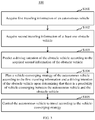
- FIG. 3 is a flow chart of a method for planning an autonomous vehicle according to an embodiment of the present application. As shown in FIG. 3 , the method 100 for planning an autonomous vehicle may include the following steps.
- Step 101 acquire first traveling information of an autonomous vehicle adc, where the first traveling information includes a traveling track and a traveling parameter of the autonomous vehicle adc.
- the navigation apparatus plans a traveling route according to a current position and a destination position of the vehicle.
- the autonomous vehicle adc travels according to the traveling route, a speed limit rule of a corresponding lane and vehicle conditions on a road.
- the autonomous vehicle adc is generally mounted with an internal sensor for acquiring vehicle traveling information such as a speed and an acceleration of the vehicle, and also with an external sensor such as a radar and a camera for sensing a surrounding environment.
- a controlling unit of the autonomous vehicle adc acquires the traveling track and road information from the navigation apparatus, and acquires traveling information of the vehicle from the internal sensor, and acquires traveling information of surrounding vehicles from the external sensor.
- the traveling parameter may include at least one of the speed and the acceleration.
- Step 102 acquire second traveling information of at least one obstacle vehicle obs, where the second traveling information includes position information and a traveling parameter of the obstacle vehicle obs.
- the second traveling information of the obstacle vehicle obs may include position information of the obstacle vehicle obs at more than two time points and a lane position where the obstacle vehicle obs is located.
- the traveling parameter may include at least one of the speed and the acceleration.
- Step 103 predict a driving intention of the obstacle vehicle obs according to the acquired second traveling information of the obstacle vehicle obs.
- the autonomous vehicle adc can acquire a plurality of images of the obstacle vehicle obs through the external sensor, such as the camera, and determine a lane position of the obstacle vehicle obs in a road or turn-on information of a turn signal of the obstacle vehicle obs from the images.
- the position of the lane where the vehicle is located or the turn-on state of the turn signal may be used to predict a traveling track of the obstacle vehicle obs.
- the autonomous vehicle may also calculate the speed and/or acceleration of the obstacle vehicle obs from the acquired position information of the obstacle vehicle obs at a plurality of time points.
- the traveling information of the obstacle vehicle obs may include information of the lane position (a left-turn lane, a through lane, or a right-turn lane), information of the turn signal, information of the speed and/or the acceleration.
- the driving intention of the obstacle vehicle obs is predicted according to the traveling track and the information of the acceleration of the obstacle vehicle obs.
- Step 104 plan a vehicle-converging strategy for the autonomous vehicle adc according to the first traveling information and the driving intention of the obstacle vehicle obs upon determining that there is a possibility of vehicle-converging between the autonomous vehicle adc and the obstacle vehicle obs.
- Step 105 control the autonomous vehicle adc to travel according to the vehicle-converging strategy.
- an accurate vehicle-converging strategy is provided for the autonomous vehicle adc by predicting the driving intention of the obstacle vehicle obs.
- traffic accidents caused by wrong decisions of the autonomous vehicle adc can be reduced, and the probability of taking over by a driver is reduced.
- the step 103 of predicting the driving intention of the obstacle vehicle obs according to the acquired second traveling information of the obstacle vehicle obs may include:
- a new constraint may be introduced, that is, a distance constraint, is used as follows.
- acceleration constraints of the obstacle vehicle under two conditions can be solved, namely, A obs > A overtake,threshold when overtaking, and A obs ⁇ A yield,threshold when yielding.
- the predicting the driving intention of the obstacle vehicle obs based on the overtaking acceleration constraint and the yielding acceleration constraint of the obstacle vehicle obs may include: acquiring an acceleration of the obstacle vehicle obs, and determining the driving intention by comparing the acceleration with an acceleration constraint for the driving intention of overtaking and an acceleration constraint for the driving intention of yielding.
- the autonomous vehicle adc also guarantees the comfort of the obstacle vehicle obs during traveling, namely the obstacle vehicle obs cannot accelerate or decelerate too fast and its acceleration is within a reasonable preset acceleration range [A dec,comfort , A acc,comfort ]. If the calculated value cannot guarantee this, a traveling track taken by the autonomous vehicle adc is considered to be an unreasonable track and should be pruned.
- the predicting the driving intention of the obstacle vehicle obs according to the acquired second traveling information of the obstacle vehicle obs may also include:
- the measured historical track of the obstacle vehicle obs is (Position St, Speed Vt), (St-1, Vt-1) ..., and the acceleration at which the obstacle vehicle obs overtakes or yields is not observable.
- a kalman filtering method may be used for deriving the acceleration. Assuming that the acceleration of the obstacle vehicle obs at an initial time A o ⁇ N(0, ⁇ 2 0 ), the acceleration of the obstacle vehicle obs at a current moment A t ⁇ N( ⁇ t , ⁇ 2 t ) may be acquired based on the historical track.
- An acceleration distribution value [ ⁇ t - 2 ⁇ t , ⁇ t + 2 ⁇ t ] of the obstacle vehicle obs is determined by the gaussian distribution 2 ⁇ rule (a principle of impossible events). Based on the acceleration distribution value of the obstacle vehicle obs, it is determined a possibility describing whether the obstacle vehicle is yielding or overtaking.
- the obstacle vehicle obs since the obstacle vehicle obs is driven by a driver, actual decision time when the obstacle vehicle obs overtakes or yields may be earlier or later than time at which the prediction is performed by the autonomous vehicle. For example, before the autonomous vehicle adc makes a decision, the obstacle vehicle obs may have completed to make a decision, such as starting to speed up to overtake or slow down to yield, or travel with a constant speed so as to overtake or yield. Alternatively, the driver of the obstacle vehicle obs may start to speed up to overtake or slow down to yield at a certain time after the decision is made by the autonomous vehicle adc.
- the obstacle vehicle obs does not consider the game as a game process and pursues self-benefit maximization. So the yielding and overtaking decision made by the obstacle vehicle obs does not appear at the early stage.
- the noise in the detected speed and acceleration signal of the obstacle vehicle obs at the early stage is relatively large, which would possibly reduce the accuracy of planning the autonomous vehicle.
- the solution to the fundamental problem is to determine when to start to determine the driving intention of the obstacle vehicle obs. Firstly, it needs to be a key moment of the game, namely, the time point when the obstacle vehicle obs must take an action to avoid a collision. Secondly, it needs to be at the moment when the sensing is stable, i.e., when a position and a speed of the obstacle vehicle obs can be accurately detected. The moment herein needs to be kept as short as possible.
- the predicting the driving intention of the obstacle vehicle obs according to the acquired second traveling information of the obstacle vehicle obs may include:
- the obstacle vehicle obs When the obstacle vehicle obs overtakes, the obstacle vehicle obs needs to be accelerated. Assuming that the minimum acceleration of the obstacle vehicle obs is A obs,min , the time for generating an action acquiredis: V obs T adc , i + 1 / 2 A obs , min T adc , i ⁇ ⁇ 2 ⁇ D o
- the predicting the driving intention of the obstacle vehicle obs according to the traveling parameter of the obstacle vehicle obs after entering the game stage may include: comparing the overtaking acceleration constraint and the yielding acceleration constraint with the acceleration distribution of the obstacle vehicle obs and predicting the driving intention of the obstacle vehicle obs to be overtaking or yielding.
- the planing the vehicle-converging strategy for the autonomous vehicle adc according to the first traveling information and the driving intention of the obstacle vehicle obs may include:
- the planning the vehicle-converging strategy for the autonomous vehicle adc according to the first traveling information of the autonomous vehicle adc and the driving intention of the obstacle vehicle obs may include:
- the speed of the vehicles participating in the game is changed as little as possible when the vehicles pass through the vehicle-converging area.
- the planning the vehicle-converging strategy for the autonomous vehicle adc according to the first traveling information and the driving intention of the obstacle vehicle obs may include:
- the traveling speed can determine the time when the two vehicles leave the vehicle-converging I_R. Therefore, in this case, the vehicle with a higher speed can overtake and pass by.
- Yielding and overtaking are relative to the autonomous vehicle adc and the obstacle vehicles obs. That is, when the obstacle vehicle obs overtakes, the autonomous vehicle adc necessarily needs to yield. Under a condition that the obstacle vehicle obs yields, the autonomous vehicle adc can overtake and pass by. Therefore, the following describes a method for planning an autonomous vehicle of the present application by predicting and analyzing the yielding and overtaking intention of the obstacle vehicle obs.
- the autonomous vehicle adc By determining whether the obstacle vehicle obs yields or overtakes, it can be reversely deduced that the autonomous vehicle adc needs to overtake or yield when traveling follow the track. If the autonomous vehicle adc needs to yield, a deceleration action is taken, and if the autonomous vehicle adc needs to overtake, an acceleration action is taken.
- the preparation stage in order to meet the requirement of perception stability, the preparation stage is required to be an area where the autonomous vehicle adc can stably detect the moving speed of the obstacle vehicle obs. And in order to accurately reflect the driving intention of the obstacle vehicle obs in the game stage, the preparation stage needs to be as close to the vehicle-converging area as possible. In addition, the position of the preparation stage needs to meet the distance required by straight-ahead yielding or overtaking.
- the preparation stage may be determined based on the speed of the obstacle vehicle obs and the distance to the vehicle-converging area. That is, the higher the current speed of the obstacle vehicle obs is, the longer the deceleration distance is required when the obstacle vehicle obs takes a deceleration action. Therefore, earlier determination of the intention of the obstacle vehicle obs is required.
- a gaming strategy of the method 100 for planning an autonomous vehicle according to the embodiment of the present application is described in detail below with reference to FIG. 4 .
- step 200 the autonomous vehicle adc acquires its current speed and traveling track.
- step 202 time T adc,i when the autonomous vehicle adc enters the vehicle-converging area I_R and time T adc,o when the autonomous vehicle adc leaves the vehicle-converging area I_R are computed according to the current speed and the traveling track.
- step 201 a history track of the obstacle vehicle obs is acquired.
- step 204 the speed and acceleration distribution value of the obstacle vehicle obs are computed according to the history track of the obstacle vehicle obs. Specifically, a mean value and a standard deviation value of the acceleration of the obstacle vehicle obs are calculated using the acquired history track, thus the acceleration distribution value of the obstacle vehicle obs is calculated.
- step 205 the overtaking acceleration constraint of the obstacle vehicle obs is calculated using the mathematical formula (4).
- the time during which the obstacle vehicle obs can accelerate is shortened by a predetermined time ⁇ .
- the calculated overtaking acceleration constraint for the obstacle vehicle obs is compared with the acceleration distribution value of the obstacle vehicle obs. If the overtaking acceleration constraint for the obstacle vehicle obs is within the acceleration distribution value, it is indicated that the overtaking acceleration constraint for the obstacle vehicle obs is available.
- step 211 an overtaking track of the obstacle vehicle obs is compared with a yielding track of the autonomous vehicle adc.
- step 213 whether the vehicle-converging strategy is reasonable is determined according to a comparison result. If it is reasonable, in step 215, the strategy is retained, otherwise, in step 214, pruning is performed.
- the yielding acceleration constraint of the obstacle vehicle obs is calculated using the mathematical formula (3).
- the time during which the obstacle vehicle obs can decelerate is shortened by a predetermined time ⁇ .
- the calculated yielding acceleration constraint for the obstacle vehicle obs is compared with the acceleration distribution value of the obstacle vehicle obs. If the yielding acceleration constraint for the obstacle vehicle obs is within the acceleration distribution value, it is indicated that the yielding acceleration constraint for the obstacle vehicle obs is usable.
- a yielding track of the obstacle vehicle obs is compared with an overtaking track of the autonomous vehicle adc.
- whether the vehicle-converging strategy is reasonable is determined according to the comparison result. If it is reasonable, in step 215, the strategy is retained, otherwise, in step 214, pruning is performed.
- the autonomous vehicle adc would yield and pass by. If the prediction result is that the obstacle vehicle obs accelerates to overtake and pass by, and the minimum acceleration is not within the acceleration distribution value, the autonomous vehicle adc would decelerate to yield and pass by. If the prediction result is that the obstacle vehicle obs decelerates to yield and pass by, and the maximum acceleration is within the acceleration distribution value, the autonomous vehicle adc would overtake and pass by. If the prediction result is that the obstacle vehicle obs decelerates to yield and pass by, and the maximum acceleration is not within the acceleration distribution value, the autonomous vehicle adc would accelerate to overtake and pass by.
- the length and/or the position of the preparation stage may be determined according to the speed of the obstacle vehicle obs.
- a calculation process of acceleration when yielding or overtaking is analyzed from the perspective of the obstacle vehicle obs.
- the requirement with respect to the acceleration distribution value should also be met when yielding or overtaking, so that whether a strategy of yielding or overtaking by the autonomous vehicle adc is reasonable or not can be determined. Therefore, a process of determining yielding and overtaking by the autonomous vehicle adc is not described in detail herein.
- the driving intention of the obstacle vehicle obs is predicted as early as possible and the rationality of yielding and overtaking is analyzed.
- a yielding or overtaking decision can be made more accurately.
- the traveling speed of the autonomous vehicle is controlled more accurately, and personal accidents and property loss caused by vehicle collision are avoided.
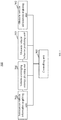
- FIG. 5 is a block diagram of an apparatus 500 for planning an autonomous vehicle according to an embodiment of the present application.
- the apparatus 500 for planning the autonomous vehicle in the present embodiment is applicable in traveling of an autonomous vehicle or an unmanned vehicle, and controls a yielding or overtaking behavior of the autonomous vehicle adc when there is a possibility of vehicle-converging between the autonomous vehicle adc and an obstacle vehicle obs.
- the apparatus 500 for planning an autonomous vehicle may include: an autonomous vehicle information acquiring unit 501, configured to acquire first traveling information of the autonomous vehicle adc, where the first traveling information includes a traveling track and a traveling parameter of the autonomous vehicle adc; an obstacle vehicle information acquiring unit 502, configured to acquire second traveling information of at least one obstacle vehicle obs, where the second traveling information includes position information and a traveling parameter of the obstacle vehicle obs; an obstacle vehicle behavior predicting unit 503, configured to predict a driving intention of the obstacle vehicle obs according to the acquired second traveling information of the obstacle vehicle obs; a vehicle-converging strategy planning unit 504, configured to plan a vehicle-converging strategy for the autonomous vehicle adc according to the first traveling information and the driving intention of the obstacle vehicle upon determining that there is a possibility of vehicle-converging between the autonomous vehicle adc and the obstacle vehicle obs; and a controlling unit 505, configured to control the autonomous vehicle adc to travel according to the vehicle-collection strategy.
- an autonomous vehicle information acquiring unit 501 configured to acquire first traveling
- the obstacle vehicle behavior predicting unit 503 is further configured to:
- the obstacle vehicle behavior predicting unit 503 is further configured to: acquire an acceleration of the obstacle vehicle obs, and determine the driving intention by comparing the acceleration with an acceleration constraint for the driving intention of overtaking and an acceleration constraint for the driving intention of yielding.
- the obstacle vehicle behavior predicting unit 503 is further configured to:
- the obstacle vehicle behavior predicting unit 503 is further configured to:
- the vehicle-converging strategy planning unit 504 is further configured to:
- the vehicle-converging strategy planning unit 504 is further configured to:
- the vehicle-converging strategy planning unit 504 is further configured to:
- the vehicle-converging strategy planning unit 504 is further configured to:
- the vehicle-converging strategy planning unit 504 is further configured to: comparing the overtaking acceleration constraint and the yielding acceleration constraint with an acceleration distribution of the obstacle vehicle obs and predict the driving intention of the obstacle vehicle obs to be overtaking or yielding.
- the obstacle vehicle behavior predicting unit 503 is further configured to:
- the vehicle-converging strategy planning unit 504 is further configured to:
- a method for planning an autonomous vehicle and an apparatus for planning an autonomous vehicle provided by the embodiments of the present application are applied to the field of autonomous driving in computer technologies, so as to accurately determine the driving intention of the obstacle vehicle obs when there is a possibility of vehicle-converging between the autonomous vehicle adc and the obstacle vehicle obs, thus achieving more stable control on the traveling of the autonomous vehicle adc, and avoiding vehicle collision.
- a vehicle-converging strategy for the autonomous vehicle adc is rationally planned, so as to ensure the safety of two parties as well as the comfort of interactive vehicle and self-comfort, thus achieving a win-win cooperation.
- the present application also provides an electronic device and a readable storage medium.
- the electronic device may include: one or more processors, a memory, and interfaces for connecting the components, including a high speed interface and a low speed interface.
- the various components are interconnected using different buses and may be mounted on a common motherboard or in other manners as desired.
- the processor may process instructions for execution within the electronic device, including instructions stored in the memory or on the memory for displaying graphical information of a graphical user interface (GUI) on an external input/output apparatus (such as a display device coupled to the interface).
- GUI graphical user interface
- multiple processors and/or multiple buses may be used, along with multiple memories, if desired.
- multiple electronic devices may be connected, with each electronic device providing some of the necessary operations (e.g. as a server array, a group of blade servers, or a multi-processor system).
- the memory is a non-transitory computer readable storage medium as provided herein.
- the memory stores instructions executable by at least one processor to cause the at least one processor to execute a method for planning an autonomous vehicle provided by the present application.
- the non-transitory computer-readable storage medium of the present application stores computer instructions for causing a computer to execute the method for planning an autonomous vehicle provided by the present application.
- the memory as a non-transitory computer-readable storage medium, may be used to store non-transitory software programs, non-transitory computer-executable programs, and modules, such as program instructions or modules corresponding to the method for planning an autonomous vehicle in embodiments of the present application.
- the processor executes various functional applications of the server and data processing by running non-transitory software programs, instructions, and modules stored in the memory, i.e. implementing the method for planning an autonomous vehicle in the above method embodiments.
- the memory may include a program storage area and a data storage area.
- the storage program area may store an operating system, an application program required for at least one function.
- the data storage area may store data created by use of the electronic apparatus according to the embodiments of the present application, and the like.
- the memory may include a high speed random access memory, and may also include a non-transitory memory, such as at least one magnetic disk storage device, a flash memory device, or other non-transitory solid state storage devices.
- the memory optionally includes a memory located remotely from the processor, which may be connected to the electronic device of embodiments of the present application via a network. Examples of such networks include, but are not limited to, the internet, intranets, local area networks, mobile communication networks, and combinations thereof.
- Various implementations of the systems and techniques described here can be realized in a digital electronic circuitry, an integrated circuitry, a specific ASIC (application specific integrated circuits), computer hardware, firmware, software, and combinations thereof.
- These various embodiments may include: implemented in one or more computer programs, the one or more computer programs are executable and/or interpretable on a programmable system including at least one programmable processor and the programmable processor may be special or general programmable processor, and may receive data and instructions from, and transmitting data and instructions to, a storage system, at least one input apparatus, and at least one output apparatus.
- the systems and techniques described here can be implemented on a computer.
- the computer has: a display apparatus (e.g. a CRT (cathode ray tube) or an LCD (liquid crystal display) monitor) for displaying information to a user; and a keyboard and a pointing apparatus (e.g. a mouse or a trackball).
- a display apparatus e.g. a CRT (cathode ray tube) or an LCD (liquid crystal display) monitor
- a keyboard and a pointing apparatus e.g. a mouse or a trackball
- a user may provide input to the computer through the keyboard and the pointing apparatus.
- Other kinds of apparatuses may also be used to provide the interaction with the user.
- feedback provided to the user can be any form of sensory feedback (e.g. visual feedback, auditory feedback, or tactile feedback); and input from the user can be received in any form, including acoustic, speech, or tactile input.
- the systems and techniques described here can be implemented in a computing system that includes a back-end component (e.g. as a data server), or that includes a middleware component (e.g. an application server), or that includes a front-end component (e.g. a user computer having a graphical user interface or a web browser through which a user can interact with an implementation of the systems and techniques described here), or any combination of such back-end, middleware, or front-end components.
- the components of the systems can be interconnected by any form or medium of digital data communication (e.g. a communication network). Examples of communication networks include: local area networks (LANs), wide area networks (WANs), and the Internet.
- a computing system may include a client and a server.
- the client and the server are generally remote from each other and typically interact through a communication network.
- the relationship of the client and the server arises by virtue of computer programs running on the respective computers and having a client-server relationship to each other.
- steps may be reordered, added, or deleted.
- steps described in the present application may be executed in parallel, sequentially, or in different orders, which are not limited herein as long as the desired results of the technical solutions disclosed in the present application can be achieved.
Landscapes
- Engineering & Computer Science (AREA)
- Automation & Control Theory (AREA)
- Transportation (AREA)
- Mechanical Engineering (AREA)
- Human Computer Interaction (AREA)
- Physics & Mathematics (AREA)
- General Physics & Mathematics (AREA)
- Life Sciences & Earth Sciences (AREA)
- Atmospheric Sciences (AREA)
- Mathematical Physics (AREA)
- Traffic Control Systems (AREA)
- Control Of Driving Devices And Active Controlling Of Vehicle (AREA)
Abstract
Description
- Embodiments of the present application relate to the field of computer technologies, and in particular, to a method and apparatus for planning an autonomous vehicle, an electronic device and a storage medium, which are applicable to the autonomous vehicle.
- At present, there are many intersections and large traffic flow on urban roads. When an autonomous vehicle passes through an intersection, particularly turns left at the intersection, a traveling condition of an oncoming vehicle needs to be considered. In an actual scenario, when the autonomous vehicle misjudges a traveling intention of the oncoming vehicle, it is prone to vehicle collision, and serious consequences would be brought to the autonomous vehicle and the oncoming vehicle.
- Therefore, a method for controlling a vehicle which is capable of accurately controlling overtaking or yielding to avoid the vehicle collision based on traveling conditions of the autonomous vehicle and the oncoming vehicle is urgently needed.
- The present application provides a method for planning an autonomous vehicle, an apparatus for planning an autonomous vehicle, an electronic device and a storage medium.
- According to an aspect of the present application, a method for planning an autonomous vehicle is provided, which may include:
- acquiring first traveling information of an autonomous vehicle, where the first traveling information includes a traveling track and a traveling parameter of the autonomous vehicle;
- acquiring second traveling information of at least one obstacle vehicle, where the second traveling information includes position information and a traveling parameter of the obstacle vehicle;
- predicting a driving intention of the obstacle vehicle according to the acquired second traveling information of the obstacle vehicle;
- planning a vehicle-converging strategy for the autonomous vehicle according to the first traveling information and the driving intention of the obstacle vehicle upon determining that there is a possibility of vehicle-converging between the autonomous vehicle and the obstacle vehicle; and
- controlling the autonomous vehicle to travel according to the vehicle-converging strategy.
- According to another aspect of the present application, an apparatus for planning an autonomous vehicle is provided, which may include:
- an autonomous vehicle information acquiring unit, configured to acquire first traveling information of an autonomous vehicle, where the first traveling information includes a traveling track and a traveling parameter of the autonomous vehicle;
- an obstacle vehicle information acquiring unit, configured to acquire second traveling information of at least one obstacle vehicle, where the second traveling information includes position information and a traveling parameter of the obstacle vehicle;
- an obstacle vehicle behavior predicting unit, configured to predict a driving intention of the obstacle vehicle according to the acquired second traveling information of the obstacle vehicle;
- a vehicle-converging strategy planning unit, configured to plan a vehicle-converging strategy for the autonomous vehicle according to the first traveling information and the driving intention of the obstacle vehicle upon determining that there is a possibility of vehicle-converging between the autonomous vehicle and the obstacle vehicle; and
- a controlling unit, configured to control the autonomous vehicle to travel according to the vehicle-collection strategy.
- According to another aspect of the present application, an electronic device is provided, which may include:
- at least one processor; and
- a memory in a communicational connection with the at least one processor, where the memory is stored with instructions executable by the at least one processor, the instructions are executed by the at least one processor to cause the at least one processor to execute the method for planning an autonomous vehicle according to the embodiments of the present application.
- According to another aspect of the present application, a non-transitory computer readable storage medium having stored computer instructions is provided, the computer instructions may be configured to cause a computer to execute the method for planning an autonomous vehicle according to the embodiments of the present application.
- According to the technical solutions of the present application, when the autonomous vehicle and the obstacle vehicle converge, time points of entering a vehicle-converging area can be accurately predicted according to traveling status of both parties, so that a traveling speed of the autonomous vehicle is controlled more accurately, and personal accidents and property loss caused by vehicle collision are avoided.
- It should be understood that the statements in this section are not intended to identify key features or essential features of the embodiments of the present application, nor are they intended to limit the scope of the present application. Other features of the present application would become easy to understand from the following description.
- The drawings are included to provide a better understanding of the technical solutions and should not be construed as limitations of the present application. In the drawings:
-
FIG. 1 is a schematic view for illustrating an application scenario of a method for planning an autonomous vehicle according to an embodiment of the present application; -
FIG. 2 is a schematic view for illustrating a relationship between time of entering and leaving a vehicle-converging area, and a traveling distance; -
FIG. 3 is a flowchart of a method for planning an autonomous vehicle according to an embodiment of the present application; -
FIG. 4 is a block diagram for explaining a yielding and overtaking game according to an embodiment of the present application; and -
FIG. 5 is a block diagram of an apparatus for planning an autonomous vehicle according to an embodiment of the present application. - Exemplary embodiments of the present application are described below in conjunction with the accompanying drawings. The description includes various details of the embodiments of the present application to assist in understanding. The description should be considered as merely exemplary. Accordingly, persons of ordinary skill in the art should recognize that various changes and modifications may be made to the embodiments described herein without departing from the scope and spirit of the present application. Likewise, for clarity and conciseness, description of well-known functions and structures is omitted in the following description.
- At present, due to the popularization of vehicles, the traffic flow on urban roads is large, and there are many intersections on urban roads, so it is necessary to plan to yield or overtake frequently while traveling. Research and development of autonomous vehicles has received wide attention, and it is particularly important to accurately plan yielding or overtaking for an autonomous vehicle.
- The autonomous vehicle in the embodiments of the present application may be a vehicle controlled by utilizing computer technologies in terms of control traveling. The autonomous vehicle cannot be accelerated or decelerated rapidly in a non-emergency state, so that a driving speed of the vehicle is relatively stable. An obstacle vehicle is a non-automatic vehicle. The obstacle vehicle is driven by a driver, and is greatly influenced by subjective consciousness of the driver.
- Assuming that a traveling track, a speed, and an acceleration of an obstacle vehicle predicted from acquired information of the obstacle vehicle are correct, taking into account that a traveling track of an autonomous vehicle is also determined, traveling routes of the two vehicles is equivalent to the determination of a game (vehicle-converging) position between the autonomous vehicle and the obstacle vehicle. Thus a two-dimensional game problem is reduced to a one-dimensional time planning game problem.
-
FIG. 1 is a schematic view for illustrating an application scenario of a method for planning an autonomous vehicle according to an embodiment of the present application.FIG. 1 simply shows a scenario in which an autonomous vehicle adc turns left and an obstacle vehicle obs passes straight through an intersection from an opposite lane. But the method for planning an autonomous vehicle and the apparatus for planning an autonomous vehicle in the present application can also be applied to all scenarios where vehicle-converging occurs at the intersection, including a scenario where the autonomous vehicle adc passes straight through the intersection and the obstacle vehicle obs turns left from the opposite lane, a scenario where the autonomous vehicle adc turns right and the obstacle vehicle obs turns left from the opposite lane, and a scenario where the autonomous vehicle adc passes straight through the intersection and the obstacle vehicle obs passes straight through the intersection from left and right roads. The method for planning an autonomous vehicle of the present application may also be suitable for a scenario where the autonomous vehicle overtakes or yields the obstacle vehicle traveling in the same direction. The embodiments of the present application is specifically described by taking the scenario in which the autonomous vehicle adc turns left and the obstacle vehicle obs passes straight through the intersection from the opposite lane as an example, as shown inFIG. 1 . - Referring to
FIG. 1 , assuming that a traveling track taken by the autonomous vehicle adc is a first track Padc that is a track of a left turn at an intersection. A traveling track taken by the obstacle vehicle obs is a second track Pobs of going straight through the intersection from an opposite lane, it may then be determined that time points at which the autonomous vehicle adc enters and leaves a vehicle-converging area (i.e. a game point) I_R, to be Tadc,i and Tadc,o respectively, and time points at which the obstacle vehicle obs enters and leaves the vehicle-converging area, to be Tobs,i and Tobs,o respectively. Two vehicles cannot collide at the intersection, thus there may be two cases, namely the obstacle vehicle obs overtaking and passing by or yielding and passing by, which may be expressed in time as follows: - if the obstacle vehicle overtakes and passes by, the obstacle vehicle must leave the game point before the autonomous vehicle enters vehicle-converging area I_R, i.e. Tobs,o < Tadc,i.
- if the obstacle vehicle yields and passes by, the obstacle vehicle must enter the game point after the autonomous vehicle leaves the vehicle-converging area I_R, i.e. Tobs,o>Tadc,i.
- Specifically, as shown in
FIG. 2 , in the case where the obstacle vehicle obs overtakes and passes by, it must leave the vehicle-converging area I_R before the autonomous vehicle adc enters the vehicle-converging area I_R at the time Tadc,i. If the obstacle vehicle obs yields and passes by, it must enter the vehicle-converging area I_R after the autonomous vehicle adc leaves the vehicle-converging area I_R at the time Tadc,o. The traveling distance Sadc,i of the autonomous vehicle adc going from a current position until entering the vehicle-converging area I_R is constant with the traveling distance Sadc,o of the autonomous vehicle adc going from the current position until leaving the vehicle-converging area I_R. However, the time Tadc,i for the autonomous vehicle adc to enter the vehicle-converging area I_R, and the time Tadc,o for the autonomous vehicle adc to leave the vehicle-converging area I_R are variable based on a traveling speed of the autonomous vehicle adc. Thus a length of time for the autonomous vehicle adc to pass through the vehicle-converging area I_R is also variable. This is also true for the obstacle vehicle obs. -
FIG. 3 is a flow chart of a method for planning an autonomous vehicle according to an embodiment of the present application. As shown inFIG. 3 , themethod 100 for planning an autonomous vehicle may include the following steps. - Step 101: acquire first traveling information of an autonomous vehicle adc, where the first traveling information includes a traveling track and a traveling parameter of the autonomous vehicle adc.
- Before the autonomous vehicle adc starts to travel, a destination needs to be input into a navigation apparatus installed in the vehicle. The navigation apparatus plans a traveling route according to a current position and a destination position of the vehicle. The autonomous vehicle adc travels according to the traveling route, a speed limit rule of a corresponding lane and vehicle conditions on a road. The autonomous vehicle adc is generally mounted with an internal sensor for acquiring vehicle traveling information such as a speed and an acceleration of the vehicle, and also with an external sensor such as a radar and a camera for sensing a surrounding environment. A controlling unit of the autonomous vehicle adc acquires the traveling track and road information from the navigation apparatus, and acquires traveling information of the vehicle from the internal sensor, and acquires traveling information of surrounding vehicles from the external sensor. The traveling parameter may include at least one of the speed and the acceleration.
- Step 102: acquire second traveling information of at least one obstacle vehicle obs, where the second traveling information includes position information and a traveling parameter of the obstacle vehicle obs.
- Specifically, the second traveling information of the obstacle vehicle obs may include position information of the obstacle vehicle obs at more than two time points and a lane position where the obstacle vehicle obs is located. The traveling parameter may include at least one of the speed and the acceleration.
- Step 103: predict a driving intention of the obstacle vehicle obs according to the acquired second traveling information of the obstacle vehicle obs.
- The autonomous vehicle adc can acquire a plurality of images of the obstacle vehicle obs through the external sensor, such as the camera, and determine a lane position of the obstacle vehicle obs in a road or turn-on information of a turn signal of the obstacle vehicle obs from the images. The position of the lane where the vehicle is located or the turn-on state of the turn signal may be used to predict a traveling track of the obstacle vehicle obs. The autonomous vehicle may also calculate the speed and/or acceleration of the obstacle vehicle obs from the acquired position information of the obstacle vehicle obs at a plurality of time points. That is, the traveling information of the obstacle vehicle obs may include information of the lane position (a left-turn lane, a through lane, or a right-turn lane), information of the turn signal, information of the speed and/or the acceleration. The driving intention of the obstacle vehicle obs is predicted according to the traveling track and the information of the acceleration of the obstacle vehicle obs.
- Step 104: plan a vehicle-converging strategy for the autonomous vehicle adc according to the first traveling information and the driving intention of the obstacle vehicle obs upon determining that there is a possibility of vehicle-converging between the autonomous vehicle adc and the obstacle vehicle obs.
- Step 105: control the autonomous vehicle adc to travel according to the vehicle-converging strategy.
- According to the
method 100 for planning an autonomous vehicle in the embodiment of the present application, an accurate vehicle-converging strategy is provided for the autonomous vehicle adc by predicting the driving intention of the obstacle vehicle obs. Thus traffic accidents caused by wrong decisions of the autonomous vehicle adc can be reduced, and the probability of taking over by a driver is reduced. - Optionally, in the
method 100 for planning an autonomous vehicle according to the embodiment of the present application, thestep 103 of predicting the driving intention of the obstacle vehicle obs according to the acquired second traveling information of the obstacle vehicle obs may include: - computing, according to the acquired first traveling information of the autonomous vehicle adc, time when the autonomous vehicle adc enters a vehicle-converging area and time when the autonomous vehicle adc leaves the vehicle-converging area;
- calculating an overtaking acceleration constraint and a yielding acceleration constraint of the obstacle vehicle obs according to the time Tadc,i when the autonomous vehicle adc enters a vehicle-converging area I_R and/or the time Tadc,o when the autonomous vehicle adc leaves the vehicle-converging area I_R, and the second traveling information of the obstacle vehicle obs; and
- predicting the driving intention of the obstacle vehicle obs based on the overtaking acceleration constraint and the yielding acceleration constraint of the obstacle vehicle obs.
- Assuming that a speed of the obstacle vehicle obs when detected is Vobs, an acceleration is Aobs, the distance to an entry location of the vehicle-converging area I_R is Di, and the distance to an exit location of the vehicle-converging area I_R is Do, the following relationships are given.
- When the obstacle vehicle obs plans to overtake, f (Do, Vobs, Aobs) < Tadc,i.
- When the obstacle vehicle obs plans to yield, f (Di, Vobs, Aobs) > Tadc,o.
- Considering that a problem of the obstacle vehicle obs entering a certain position is solved by a quadratic equation using the speed and acceleration (V, A) of the obstacle vehicle obs, a new constraint may be introduced, that is, a distance constraint, is used as follows.
- When the obstacle vehicle obs is to overtake and pass by, it should have left the vehicle-converging area I_R when the autonomous vehicle adc enters the vehicle-converging area I_R at the time Tadc,i:

- When the obstacle vehicle obs is to yield and pass by, it should have not entered the vehicle-converging area I_R yet when the autonomous vehicle adc leaves the vehicle-converging area I_R at the time Tadc,o:

- According to the above mathematical formulas (1) and (2), acceleration constraints of the obstacle vehicle under two conditions can be solved, namely, Aobs > Aovertake,threshold when overtaking, and Aobs < Ayield,threshold when yielding.
- Optionally, the predicting the driving intention of the obstacle vehicle obs based on the overtaking acceleration constraint and the yielding acceleration constraint of the obstacle vehicle obs may include: acquiring an acceleration of the obstacle vehicle obs, and determining the driving intention by comparing the acceleration with an acceleration constraint for the driving intention of overtaking and an acceleration constraint for the driving intention of yielding.
- Regarding the planned vehicle-converging strategy, the autonomous vehicle adc also guarantees the comfort of the obstacle vehicle obs during traveling, namely the obstacle vehicle obs cannot accelerate or decelerate too fast and its acceleration is within a reasonable preset acceleration range [Adec,comfort, Aacc,comfort]. If the calculated value cannot guarantee this, a traveling track taken by the autonomous vehicle adc is considered to be an unreasonable track and should be pruned.
- In other words, determining that the driving intention is yielding, when it is calculated according to the second traveling information of the obstacle vehicle obs that the obstacle vehicle obs is accelerating and the overtaking acceleration constraint exceeds a preset acceleration range; and determine that the driving intention is overtaking, when it is calculated according to the second traveling information of the obstacle vehicle obs that the obstacle vehicle obs is decelerating and the yielding acceleration constraint exceeds a preset acceleration range.
- Optionally, the predicting the driving intention of the obstacle vehicle obs according to the acquired second traveling information of the obstacle vehicle obs may also include:
- estimating acceleration distribution of the obstacle vehicle obs according to acquired position information of the obstacle vehicle obs at each moment; and
- the predicting the driving intention of the obstacle vehicle obs based on the overtaking acceleration constraint and the yielding acceleration constraint of the obstacle vehicle obs may include:
predicting the driving intention of the obstacle vehicle obs by comparing the acceleration distribution with the overtaking acceleration constraint and the yielding acceleration constraint of the obstacle vehicle obs. - Suppose that the measured historical track of the obstacle vehicle obs is (Position St, Speed Vt), (St-1, Vt-1) ..., and the acceleration at which the obstacle vehicle obs overtakes or yields is not observable. For this purpose, a kalman filtering method may be used for deriving the acceleration. Assuming that the acceleration of the obstacle vehicle obs at an initial time Ao ∼ N(0, σ2 0), the acceleration of the obstacle vehicle obs at a current moment At ∼ N(µt, σ2 t) may be acquired based on the historical track. An acceleration distribution value [µt - 2σt, µt + 2σt] of the obstacle vehicle obs is determined by the gaussian distribution 2σ rule (a principle of impossible events). Based on the acceleration distribution value of the obstacle vehicle obs, it is determined a possibility describing whether the obstacle vehicle is yielding or overtaking.
- In the above embodiments, more accurate prediction of the driving intention is achieved by introducing history information confirmation mechanism.
- Further, inventors of the present application have found that, in practical situations, since the obstacle vehicle obs is driven by a driver, actual decision time when the obstacle vehicle obs overtakes or yields may be earlier or later than time at which the prediction is performed by the autonomous vehicle. For example, before the autonomous vehicle adc makes a decision, the obstacle vehicle obs may have completed to make a decision, such as starting to speed up to overtake or slow down to yield, or travel with a constant speed so as to overtake or yield. Alternatively, the driver of the obstacle vehicle obs may start to speed up to overtake or slow down to yield at a certain time after the decision is made by the autonomous vehicle adc. In other words, at an early stage of the game, the obstacle vehicle obs does not consider the game as a game process and pursues self-benefit maximization. So the yielding and overtaking decision made by the obstacle vehicle obs does not appear at the early stage. The noise in the detected speed and acceleration signal of the obstacle vehicle obs at the early stage is relatively large, which would possibly reduce the accuracy of planning the autonomous vehicle.
- Therefore, the solution to the fundamental problem is to determine when to start to determine the driving intention of the obstacle vehicle obs. Firstly, it needs to be a key moment of the game, namely, the time point when the obstacle vehicle obs must take an action to avoid a collision. Secondly, it needs to be at the moment when the sensing is stable, i.e., when a position and a speed of the obstacle vehicle obs can be accurately detected. The moment herein needs to be kept as short as possible.
- In an embodiment, the predicting the driving intention of the obstacle vehicle obs according to the acquired second traveling information of the obstacle vehicle obs may include:
- dividing, according to the acquired second traveling information of the obstacle vehicle and an extreme value of a preset acceleration range, traveling of the obstacle vehicle obs before entering the vehicle-converging area into a preparation stage and a game stage; and
- predicting the driving intention of the obstacle vehicle obs according to the traveling parameter of the obstacle vehicle obs after entering the game stage.
- Applying the manner herein to the aforementioned model:
when the obstacle vehicle obs yields, the obstacle vehicle obs needs to decelerate. Assuming that the maximum acceleration of the obstacle vehicle obs is Aobs,max, the time for generating an action is:
- When the obstacle vehicle obs overtakes, the obstacle vehicle obs needs to be accelerated. Assuming that the minimum acceleration of the obstacle vehicle obs is Aobs,min, the time for generating an action acquiredis:

- Optionally, the predicting the driving intention of the obstacle vehicle obs according to the traveling parameter of the obstacle vehicle obs after entering the game stage may include:
comparing the overtaking acceleration constraint and the yielding acceleration constraint with the acceleration distribution of the obstacle vehicle obs and predicting the driving intention of the obstacle vehicle obs to be overtaking or yielding. - Based on the predicted driving intention of the obstacle vehicle obs in any of the above-described embodiments, the planing the vehicle-converging strategy for the autonomous vehicle adc according to the first traveling information and the driving intention of the obstacle vehicle obs may include:
- planning the autonomous vehicle adc to yield when the predicted driving intention of the obstacle vehicle obs is overtaking; and
- planning the autonomous vehicle adc to overtake when the predicted driving intention of the obstacle vehicle obs is yielding.
- Optionally, the planning the vehicle-converging strategy for the autonomous vehicle adc according to the first traveling information of the autonomous vehicle adc and the driving intention of the obstacle vehicle obs may include:
- updating, according to the driving intention of the obstacle vehicle, time when the obstacle vehicle obs enters the vehicle-converging area and/or time when the obstacle vehicle leaves the vehicle-converging area; and
- planning the autonomous vehicle adc to yield under a condition that the computed time Tadc,i when the autonomous vehicle adc enters the vehicle-converging area I_R is later than the time Tobs,i when the obstacle vehicle obs enters the vehicle-converging area I_R; otherwise, planning the autonomous vehicle adc to overtake.
- In other words, the vehicles that arrive in the vehicle-converging area I_R first pass first. Thus in a case of possible vehicle-converging, the speed of the vehicles participating in the game is changed as little as possible when the vehicles pass through the vehicle-converging area.
- Optionally, in the
method 100 for planning an autonomous vehicle according to the embodiment of the present application, the planning the vehicle-converging strategy for the autonomous vehicle adc according to the first traveling information and the driving intention of the obstacle vehicle obs may include: - computing, according to the acquired traveling parameter of the autonomous vehicle adc, a speed of the autonomous vehicle adc when entering the vehicle-converging area I_R;
- predicting, according to the acquired information of the obstacle vehicle obs, a speed of the obstacle vehicle obs when entering the vehicle-converging area I_R and updating time when the obstacle vehicle obs enters the vehicle-converging area and/or time when the obstacle vehicle obs leaves the vehicle-converging area; and
- planning the autonomous vehicle adc to overtake or yield according to the computed speed of the autonomous vehicle adc when entering the vehicle-converging area I_R and the predicted speed of the obstacle vehicle obs when entering the vehicle-converging area I_R, under a condition that a difference between the time Tadc,i when the autonomous vehicle adc enters the vehicle-converging area I_R and the predicted time Tobs,i when the obstacle vehicle obs enters the vehicle-converging area I_R is smaller than a preset value.
- In a case where a time difference of the two vehicles entering the vehicle-converging area I_R is relatively small, the traveling speed can determine the time when the two vehicles leave the vehicle-converging I_R. Therefore, in this case, the vehicle with a higher speed can overtake and pass by.
- Specifically, under the condition that the time difference between the computed time Tadc,i when the autonomous vehicle adc enters the vehicle-converging area I_R and the predicted time Tobs,i when the obstacle vehicle obs enters the vehicle-converging area I_R is smaller than a preset value, planning the autonomous vehicle adc to overtake and pass by in a case where the computed speed of the autonomous vehicle adc when entering the vehicle-converging area I_R is higher than the predicted speed of the obstacle vehicle obs when entering the vehicle-converging area I_R, and planning the autonomous vehicle adc to yield and pass by in a case where the computed speed of the autonomous vehicle adc when entering the vehicle-converging area I_R is lower than the predicted speed of the obstacle vehicle obs when entering the vehicle-converging area I_R.
- Yielding and overtaking are relative to the autonomous vehicle adc and the obstacle vehicles obs. That is, when the obstacle vehicle obs overtakes, the autonomous vehicle adc necessarily needs to yield. Under a condition that the obstacle vehicle obs yields, the autonomous vehicle adc can overtake and pass by. Therefore, the following describes a method for planning an autonomous vehicle of the present application by predicting and analyzing the yielding and overtaking intention of the obstacle vehicle obs.
- In order to ensure the safety of vehicles, particularly when the predicted time when the autonomous vehicle adc enters the vehicle-converging area I_R is very close to the predicted time when the obstacle vehicle obs enters the vehicle-converging area I_R, it is necessary to predict the traveling behavior of the obstacle vehicle obs more accurately.
- When the autonomous vehicle adc yields, a track which does not require the obstacle vehicle obs to accelerate is selected. When the autonomous vehicle adc overtakes, a track which does not require the obstacle vehicle obs to decelerate is selected.
- By determining whether the obstacle vehicle obs yields or overtakes, it can be reversely deduced that the autonomous vehicle adc needs to overtake or yield when traveling follow the track. If the autonomous vehicle adc needs to yield, a deceleration action is taken, and if the autonomous vehicle adc needs to overtake, an acceleration action is taken.
- Herein, in order to meet the requirement of perception stability, the preparation stage is required to be an area where the autonomous vehicle adc can stably detect the moving speed of the obstacle vehicle obs. And in order to accurately reflect the driving intention of the obstacle vehicle obs in the game stage, the preparation stage needs to be as close to the vehicle-converging area as possible. In addition, the position of the preparation stage needs to meet the distance required by straight-ahead yielding or overtaking.
- Specifically, the preparation stage may be determined based on the speed of the obstacle vehicle obs and the distance to the vehicle-converging area. That is, the higher the current speed of the obstacle vehicle obs is, the longer the deceleration distance is required when the obstacle vehicle obs takes a deceleration action. Therefore, earlier determination of the intention of the obstacle vehicle obs is required.
- A gaming strategy of the
method 100 for planning an autonomous vehicle according to the embodiment of the present application is described in detail below with reference toFIG. 4 . - Referring to
FIG. 4 , in step 200, the autonomous vehicle adc acquires its current speed and traveling track. In step 202, time Tadc,i when the autonomous vehicle adc enters the vehicle-converging area I_R and time Tadc,o when the autonomous vehicle adc leaves the vehicle-converging area I_R are computed according to the current speed and the traveling track. In step 201, a history track of the obstacle vehicle obs is acquired. In step 204, the speed and acceleration distribution value of the obstacle vehicle obs are computed according to the history track of the obstacle vehicle obs. Specifically, a mean value and a standard deviation value of the acceleration of the obstacle vehicle obs are calculated using the acquired history track, thus the acceleration distribution value of the obstacle vehicle obs is calculated. In step 205, the overtaking acceleration constraint of the obstacle vehicle obs is calculated using the mathematical formula (4). Herein, in order to avoid a vehicle-converging collision, the time during which the obstacle vehicle obs can accelerate is shortened by a predetermined time τ. In step 209, the calculated overtaking acceleration constraint for the obstacle vehicle obs is compared with the acceleration distribution value of the obstacle vehicle obs. If the overtaking acceleration constraint for the obstacle vehicle obs is within the acceleration distribution value, it is indicated that the overtaking acceleration constraint for the obstacle vehicle obs is available. In step 211, an overtaking track of the obstacle vehicle obs is compared with a yielding track of the autonomous vehicle adc. In step 213, whether the vehicle-converging strategy is reasonable is determined according to a comparison result. If it is reasonable, instep 215, the strategy is retained, otherwise, in step 214, pruning is performed. - In step 206, the yielding acceleration constraint of the obstacle vehicle obs is calculated using the mathematical formula (3). Herein, in order to avoid a vehicle-converging collision, the time during which the obstacle vehicle obs can decelerate is shortened by a predetermined time τ. In
step 210, the calculated yielding acceleration constraint for the obstacle vehicle obs is compared with the acceleration distribution value of the obstacle vehicle obs. If the yielding acceleration constraint for the obstacle vehicle obs is within the acceleration distribution value, it is indicated that the yielding acceleration constraint for the obstacle vehicle obs is usable. Instep 212, a yielding track of the obstacle vehicle obs is compared with an overtaking track of the autonomous vehicle adc. In step 213, whether the vehicle-converging strategy is reasonable is determined according to the comparison result. If it is reasonable, instep 215, the strategy is retained, otherwise, in step 214, pruning is performed. - Specifically, if a predicted result is that the obstacle vehicle obs accelerates to overtake and pass by, and the minimum acceleration is within the acceleration distribution value, the autonomous vehicle adc would yield and pass by. If the prediction result is that the obstacle vehicle obs accelerates to overtake and pass by, and the minimum acceleration is not within the acceleration distribution value, the autonomous vehicle adc would decelerate to yield and pass by. If the prediction result is that the obstacle vehicle obs decelerates to yield and pass by, and the maximum acceleration is within the acceleration distribution value, the autonomous vehicle adc would overtake and pass by. If the prediction result is that the obstacle vehicle obs decelerates to yield and pass by, and the maximum acceleration is not within the acceleration distribution value, the autonomous vehicle adc would accelerate to overtake and pass by. If the speed required by the autonomous vehicle adc when accelerating to overtake and pass by exceeds speed limit of a corresponding road, an overtaking behavior is given up. If the acceleration required by the autonomous vehicle adc when yielding and passing by is smaller than a preset value, a yielding behavior is given up.
- In the method for planning an autonomous vehicle according to the embodiments of the present application, the length and/or the position of the preparation stage may be determined according to the speed of the obstacle vehicle obs.
- Optionally, under a condition that the speed required by the autonomous vehicle adc when accelerating to overtake and pass by exceeds the speed limit of the corresponding road, giving up an overtaking behavior; and under a condition that the acceleration required by the autonomous vehicle adc when yielding and passing by is smaller than a preset value, giving up a yielding and passing by behavior.
- In the above-described embodiments, a calculation process of acceleration when yielding or overtaking is analyzed from the perspective of the obstacle vehicle obs. For the autonomous vehicle adc, the requirement with respect to the acceleration distribution value should also be met when yielding or overtaking, so that whether a strategy of yielding or overtaking by the autonomous vehicle adc is reasonable or not can be determined. Therefore, a process of determining yielding and overtaking by the autonomous vehicle adc is not described in detail herein.
- In the
method 100 for planning an autonomous vehicle according to the embodiments of the present application, the driving intention of the obstacle vehicle obs is predicted as early as possible and the rationality of yielding and overtaking is analyzed. When traveling tracks of two vehicles converge, a yielding or overtaking decision can be made more accurately. Thus the traveling speed of the autonomous vehicle is controlled more accurately, and personal accidents and property loss caused by vehicle collision are avoided. -
FIG. 5 is a block diagram of anapparatus 500 for planning an autonomous vehicle according to an embodiment of the present application. Theapparatus 500 for planning the autonomous vehicle in the present embodiment is applicable in traveling of an autonomous vehicle or an unmanned vehicle, and controls a yielding or overtaking behavior of the autonomous vehicle adc when there is a possibility of vehicle-converging between the autonomous vehicle adc and an obstacle vehicle obs. Theapparatus 500 for planning an autonomous vehicle may include: an autonomous vehicleinformation acquiring unit 501, configured to acquire first traveling information of the autonomous vehicle adc, where the first traveling information includes a traveling track and a traveling parameter of the autonomous vehicle adc; an obstacle vehicleinformation acquiring unit 502, configured to acquire second traveling information of at least one obstacle vehicle obs, where the second traveling information includes position information and a traveling parameter of the obstacle vehicle obs; an obstacle vehiclebehavior predicting unit 503, configured to predict a driving intention of the obstacle vehicle obs according to the acquired second traveling information of the obstacle vehicle obs; a vehicle-convergingstrategy planning unit 504, configured to plan a vehicle-converging strategy for the autonomous vehicle adc according to the first traveling information and the driving intention of the obstacle vehicle upon determining that there is a possibility of vehicle-converging between the autonomous vehicle adc and the obstacle vehicle obs; and a controllingunit 505, configured to control the autonomous vehicle adc to travel according to the vehicle-collection strategy. - Optionally, the obstacle vehicle
behavior predicting unit 503 is further configured to: - compute, according to the acquired first traveling information of the autonomous vehicle adc, time Tadc,i when the autonomous vehicle adc enters a vehicle-converging area I_R and time Tadc,o when the autonomous vehicle adc leaves the vehicle-converging area I_R;
- calculate an overtaking acceleration constraint and a yielding acceleration constraint of the obstacle vehicle obs according to the time Tadc,i when the autonomous vehicle adc enters the vehicle-converging area I_R, the time Tadc,o when the autonomous vehicle adc leaves the vehicle-converging area I_R and the second traveling information of the obstacle vehicle obs; and
- predict the driving intention of the obstacle vehicle obs based on the overtaking acceleration constraint and the yielding acceleration constraint of the obstacle vehicle obs.
- Optionally, the obstacle vehicle
behavior predicting unit 503 is further configured to:
acquire an acceleration of the obstacle vehicle obs, and determine the driving intention by comparing the acceleration with an acceleration constraint for the driving intention of overtaking and an acceleration constraint for the driving intention of yielding. - Optionally, the obstacle vehicle
behavior predicting unit 503 is further configured to: - determine that the driving intention is yielding, when it is calculated according to the second traveling information of the obstacle vehicle obs that the obstacle vehicle obs is accelerating and the overtaking acceleration constraint exceeds a preset acceleration range; and
- determine that the driving intention is overtaking, when it is calculated according to the second traveling information of the obstacle vehicle obs that the obstacle vehicle obs is decelerating and the yielding acceleration constraint exceeds a preset acceleration range.
- Optionally, the obstacle vehicle
behavior predicting unit 503 is further configured to: - estimate acceleration distribution of the obstacle vehicle obs according to acquired position information of the obstacle vehicle obs at each moment; and
- predict the driving intention of the obstacle vehicle obs by comparing the acceleration distribution with the overtaking acceleration constraint and the yielding acceleration constraint of the obstacle vehicle obs.
- Optionally, the vehicle-converging
strategy planning unit 504 is further configured to: - plan the autonomous vehicle adc to yield when the predicted driving intention of the obstacle vehicle obs is overtaking; and
- plan the autonomous vehicle adc to overtake when the predicted driving intention of the obstacle vehicle obs is yielding.
- Optionally, the vehicle-converging
strategy planning unit 504 is further configured to: - update, according to the driving intention of the obstacle vehicle obs, time Tobs,i when the obstacle vehicle obs enters the vehicle-converging area I_R, and/or time Tobs,o when the obstacle vehicle leaves the vehicle-converging area I_R; and
- plan the autonomous vehicle adc to yield under a condition that the computed time Tadc,i when the autonomous vehicle adc enters the vehicle-converging area I_R is later than time Tobs,i when the obstacle vehicle obs enters the vehicle-converging area I_R; otherwise, plan the autonomous vehicle adc to overtake.
- Optionally, the vehicle-converging
strategy planning unit 504 is further configured to: - compute, according to the acquired traveling parameter of the autonomous vehicle adc, a speed of the autonomous vehicle adc when entering the vehicle-converging area I_R;
- predict, according to the driving intention of the obstacle vehicle, a speed of the obstacle vehicle obs when entering the vehicle-converging area and update time Tobs,i when the obstacle vehicle obs enters the vehicle-converging area I_R and/or time Tobs,o when the obstacle vehicle leaves the vehicle-converging area I_R; and
- plan the autonomous vehicle adc to overtake or yield according to the computed speed of the autonomous vehicle adc when entering the vehicle-converging area I_R and the predicted speed of the obstacle vehicle obs when entering the vehicle-converging area I_R under a condition that a difference between the computed time Tadc,i when the autonomous vehicle adc enters the vehicle-converging area I_R and the predicted time Tobs,i when the obstacle vehicle obs enters the vehicle-converging area I_R is smaller than a preset value.
- Optionally, the vehicle-converging
strategy planning unit 504 is further configured to: - plan the autonomous vehicle adc to overtake and pass by under a condition that the computed speed of the autonomous vehicle adc when entering the vehicle-converging area I_R is higher than the predicted speed of the obstacle vehicle obs when entering the vehicle-converging area I_R; and
- plan the autonomous vehicle adc to yield and pass by under a condition that the computed speed of the autonomous vehicle adc when entering the vehicle-converging area is lower than the predicted speed of the obstacle vehicle obs when entering the vehicle-converging area.
- Optionally, the vehicle-converging
strategy planning unit 504 is further configured to:
comparing the overtaking acceleration constraint and the yielding acceleration constraint with an acceleration distribution of the obstacle vehicle obs and predict the driving intention of the obstacle vehicle obs to be overtaking or yielding. - Optionally, the obstacle vehicle
behavior predicting unit 503 is further configured to: - divide, according to the acquired second traveling information of the obstacle vehicle obs and an extreme value of a preset acceleration range, traveling of the obstacle vehicle obs before entering the vehicle-converging area I_R into a preparation stage and a game stage; and
- predict the driving intention of the obstacle vehicle obs according to the traveling parameter of the obstacle vehicle obs after entering the game stage.
- Optionally, the vehicle-converging
strategy planning unit 504 is further configured to: - give up an overtaking and passing by behavior under a condition that a speed required by the autonomous vehicle adc when accelerating to overtake and pass by exceeds a speed limit of a corresponding road; and
- give up a yielding and passing by behavior under a condition that an acceleration required by the autonomous vehicle adc when yielding and passing by is smaller than a preset value.
- A method for planning an autonomous vehicle and an apparatus for planning an autonomous vehicle provided by the embodiments of the present application are applied to the field of autonomous driving in computer technologies, so as to accurately determine the driving intention of the obstacle vehicle obs when there is a possibility of vehicle-converging between the autonomous vehicle adc and the obstacle vehicle obs, thus achieving more stable control on the traveling of the autonomous vehicle adc, and avoiding vehicle collision.
- In the method for planning an autonomous vehicle and the apparatus for planning an autonomous vehicle according to the embodiments of the present application, a vehicle-converging strategy for the autonomous vehicle adc is rationally planned, so as to ensure the safety of two parties as well as the comfort of interactive vehicle and self-comfort, thus achieving a win-win cooperation.
- According to the embodiments of the present application, the present application also provides an electronic device and a readable storage medium.
- The electronic device may include: one or more processors, a memory, and interfaces for connecting the components, including a high speed interface and a low speed interface. The various components are interconnected using different buses and may be mounted on a common motherboard or in other manners as desired. The processor may process instructions for execution within the electronic device, including instructions stored in the memory or on the memory for displaying graphical information of a graphical user interface (GUI) on an external input/output apparatus (such as a display device coupled to the interface). In other embodiments, multiple processors and/or multiple buses may be used, along with multiple memories, if desired. Also, multiple electronic devices may be connected, with each electronic device providing some of the necessary operations (e.g. as a server array, a group of blade servers, or a multi-processor system).
- The memory is a non-transitory computer readable storage medium as provided herein. The memory stores instructions executable by at least one processor to cause the at least one processor to execute a method for planning an autonomous vehicle provided by the present application. The non-transitory computer-readable storage medium of the present application stores computer instructions for causing a computer to execute the method for planning an autonomous vehicle provided by the present application.
- The memory, as a non-transitory computer-readable storage medium, may be used to store non-transitory software programs, non-transitory computer-executable programs, and modules, such as program instructions or modules corresponding to the method for planning an autonomous vehicle in embodiments of the present application. The processor executes various functional applications of the server and data processing by running non-transitory software programs, instructions, and modules stored in the memory, i.e. implementing the method for planning an autonomous vehicle in the above method embodiments.
- The memory may include a program storage area and a data storage area. The storage program area may store an operating system, an application program required for at least one function. The data storage area may store data created by use of the electronic apparatus according to the embodiments of the present application, and the like. Further, the memory may include a high speed random access memory, and may also include a non-transitory memory, such as at least one magnetic disk storage device, a flash memory device, or other non-transitory solid state storage devices. In some embodiments, the memory optionally includes a memory located remotely from the processor, which may be connected to the electronic device of embodiments of the present application via a network. Examples of such networks include, but are not limited to, the internet, intranets, local area networks, mobile communication networks, and combinations thereof.
- Various implementations of the systems and techniques described here can be realized in a digital electronic circuitry, an integrated circuitry, a specific ASIC (application specific integrated circuits), computer hardware, firmware, software, and combinations thereof. These various embodiments may include: implemented in one or more computer programs, the one or more computer programs are executable and/or interpretable on a programmable system including at least one programmable processor and the programmable processor may be special or general programmable processor, and may receive data and instructions from, and transmitting data and instructions to, a storage system, at least one input apparatus, and at least one output apparatus.
- These computer programs (also known as programs, software, software applications, or codes) include machine instructions for a programmable processor, and may be implemented using high-level procedural and/or subtended programming languages, and/or assembly/machine languages. As used herein, the terms "machine-readable medium" and "computer-readable medium" refer to any computer program product, apparatus and/or device (e.g. magnetic discs, optical disks, memory, Programmable Logic Devices (PLDs)) used to provide machine instructions or data to the programmable processor, including a machine-readable medium that receives machine instructions as a machine-readable signal. The term "machine-readable signal" refers to any signal used to provide machine instructions or data to the programmable processor.
- To provide an interaction with a user, the systems and techniques described here can be implemented on a computer. The computer has: a display apparatus (e.g. a CRT (cathode ray tube) or an LCD (liquid crystal display) monitor) for displaying information to a user; and a keyboard and a pointing apparatus (e.g. a mouse or a trackball). A user may provide input to the computer through the keyboard and the pointing apparatus. Other kinds of apparatuses may also be used to provide the interaction with the user. For example, feedback provided to the user can be any form of sensory feedback (e.g. visual feedback, auditory feedback, or tactile feedback); and input from the user can be received in any form, including acoustic, speech, or tactile input.
- The systems and techniques described here can be implemented in a computing system that includes a back-end component (e.g. as a data server), or that includes a middleware component (e.g. an application server), or that includes a front-end component (e.g. a user computer having a graphical user interface or a web browser through which a user can interact with an implementation of the systems and techniques described here), or any combination of such back-end, middleware, or front-end components. The components of the systems can be interconnected by any form or medium of digital data communication (e.g. a communication network). Examples of communication networks include: local area networks (LANs), wide area networks (WANs), and the Internet.
- A computing system may include a client and a server. The client and the server are generally remote from each other and typically interact through a communication network. The relationship of the client and the server arises by virtue of computer programs running on the respective computers and having a client-server relationship to each other.
- According to the technical solutions of the present application, when an autonomous vehicle and an oncoming vehicle converge, time points of entering a vehicle-converging area can be accurately predicted according to traveling conditions of two parties. Thus the traveling speed of the autonomous vehicle is controlled more accurately, and personal accidents and property loss caused by vehicle collision are avoided.
- It should be appreciated that, using the processes of various forms shown above, steps may be reordered, added, or deleted. For example, the steps described in the present application may be executed in parallel, sequentially, or in different orders, which are not limited herein as long as the desired results of the technical solutions disclosed in the present application can be achieved.
- The above specific implementations do not constitute a limitation on the protection scope of the present application. A person skilled in the art may appreciate that modifications, combinations, sub-combinations and substitutions can be made according to design requirements and other factors. Any modifications, equivalent substitutions and improvements made within the spirit and principle of the present application all should be included in the protection scope of the present application.
Claims (15)
- A method (100) for planning an autonomous vehicle, comprising:acquiring (S101) first traveling information of an autonomous vehicle, wherein the first traveling information comprises a traveling track and a traveling parameter of the autonomous vehicle;acquiring (S102) second traveling information of at least one obstacle vehicle, wherein the second traveling information comprises position information and a traveling parameter of the obstacle vehicle;predicting (S103) a driving intention of the obstacle vehicle according to the acquired second traveling information of the obstacle vehicle;planning (S104) a vehicle-converging strategy for the autonomous vehicle according to the first traveling information and the driving intention of the obstacle vehicle upon determining that there is a possibility of vehicle-converging between the autonomous vehicle and the obstacle vehicle; andcontrolling (S105) the autonomous vehicle to travel according to the vehicle-converging strategy.
- The method (100) according to claim 1, wherein the predicting (S103) a driving intention of the obstacle vehicle according to the acquired second traveling information of the obstacle vehicle comprises:computing, according to the acquired first traveling information of the autonomous vehicle, time when the autonomous vehicle enters a vehicle-converging area and time when the autonomous vehicle leaves the vehicle-converging area;calculating an overtaking acceleration constraint and a yielding acceleration constraint of the obstacle vehicle according to the second traveling information of the obstacle vehicle and, the time when the autonomous vehicle enters the vehicle-converging area and/or the time when the autonomous vehicle leaves the vehicle-converging area; andpredicting the driving intention of the obstacle vehicle based on the overtaking acceleration constraint and the yielding acceleration constraint of the obstacle vehicle.
- The method (100) according to claim 2, wherein the predicting the driving intention of the obstacle vehicle based on the overtaking acceleration constraint and the yielding acceleration constraint of the obstacle vehicle comprises:
acquiring an acceleration of the obstacle vehicle, and determining the driving intention by comparing the acceleration with an acceleration constraint for the driving intention of overtaking and an acceleration constraint for the driving intention of yielding. - The method (100) according to claim 2, wherein the predicting the driving intention of the obstacle vehicle based on the overtaking acceleration constraint and the yielding acceleration constraint of the obstacle vehicle comprises:determining that the driving intention is yielding, when it is calculated according to the second traveling information of the obstacle vehicle that the obstacle vehicle is accelerating and the overtaking acceleration constraint exceeds a preset acceleration range; anddetermining that the driving intention is overtaking, when it is calculated according to the second traveling information of the obstacle vehicle that the obstacle vehicle is decelerating and the yielding acceleration constraint exceeds a preset acceleration range.
- The method (100) according to any one of claims 2-4, wherein the predicting the driving intention of the obstacle vehicle according to the acquired second traveling information of the obstacle vehicle further comprises:estimating acceleration distribution of the obstacle vehicle according to acquired position information of the obstacle vehicle at each moment; andthe predicting the driving intention of the obstacle vehicle based on the overtaking acceleration constraint and the yielding acceleration constraint of the obstacle vehicle comprises:
predicting the driving intention of the obstacle vehicle by comparing the acceleration distribution with the overtaking acceleration constraint and the yielding acceleration constraint of the obstacle vehicle. - The method (100) according to any one of claims 2-5, wherein the planning the vehicle-converging strategy for the autonomous vehicle according to the first traveling information and the driving intention of the obstacle vehicle comprises:planning the autonomous vehicle to yield when the predicted driving intention of the obstacle vehicle is overtaking; andplanning the autonomous vehicle to overtake when the predicted driving intention of the obstacle vehicle is yielding.
- The method (100) according to any one of claims 2-6, wherein the planning the vehicle-converging strategy for the autonomous vehicle according to the first traveling information and the driving intention of the obstacle vehicle comprises:updating, according to the driving intention of the obstacle vehicle, time when the obstacle vehicle enters the vehicle-converging area and/or time when the obstacle vehicle leaves the vehicle-converging area; andplanning the autonomous vehicle to yield under a condition that the computed time when the autonomous vehicle enters the vehicle-converging area is later than the time when the obstacle vehicle enters the vehicle-converging area; otherwise, planning the autonomous vehicle to overtake.
- The method (100) according to any one of claims 2-7, wherein the planning the vehicle-converging strategy for the autonomous vehicle according to the first traveling information and the driving intention of the obstacle vehicle comprises:computing, according to the acquired traveling parameter of the autonomous vehicle, a speed of the autonomous vehicle when entering the vehicle-converging area;predicting, according to the driving intention of the obstacle vehicle, a speed of the obstacle vehicle when entering the vehicle-converging area and updating time when the obstacle vehicle enters the vehicle-converging area and/or time when the obstacle vehicle leaves the vehicle-converging area; andplanning the autonomous vehicle to overtake or yield according to the computed speed of the autonomous vehicle when entering the vehicle-converging area and the predicted speed of the obstacle vehicle when entering the vehicle-converging area, under a condition that a difference between the computed time when the autonomous vehicle enters the vehicle-converging area and the predicted time when the obstacle vehicle enters the vehicle-converging area is smaller than a preset value.
- The method (100) according to claim 8, wherein the planning the autonomous vehicle to overtake or yield according to the computed speed of the autonomous vehicle when entering the vehicle-converging area and the predicted speed of the obstacle vehicle when entering the vehicle-converging area comprises:planning the autonomous vehicle to overtake and pass by under a condition that the computed speed of the autonomous vehicle when entering the vehicle-converging area is higher than the predicted speed of the obstacle vehicle when entering the vehicle-converging area; andplanning the autonomous vehicle to yield and pass by under a condition that the computed speed of the autonomous vehicle when entering the vehicle-converging area is lower than the predicted speed of the obstacle vehicle when entering the vehicle-converging area.
- The method (100) according to claim 5, wherein the predicting the driving intention of the obstacle vehicle according to the acquired second traveling information of the obstacle vehicle comprises:dividing, according to the acquired second traveling information of the obstacle vehicle and an extreme value of a preset acceleration range, traveling of the obstacle vehicle before entering the vehicle-converging area into a preparation stage and a game stage; andpredicting the driving intention of the obstacle vehicle according to the traveling parameter of the obstacle vehicle after entering the game stage.
- The method (100) according to claim 10, wherein the predicting the driving intention of the obstacle vehicle according to the traveling parameter of the obstacle vehicle after entering the game stage comprises:
comparing the overtaking acceleration constraint and the yielding acceleration constraint with the acceleration distribution of the obstacle vehicle and predicting the driving intention of the obstacle vehicle to be overtaking or yielding. - The method (100) according to claim 1, wherein:giving up an overtaking and passing by behavior under a condition that a speed required by the autonomous vehicle when accelerating to overtake and pass by exceeds a speed limit of a corresponding road; andgiving up a yielding and passing by behavior under a condition that an acceleration required by the autonomous vehicle when yielding and passing by is smaller than a preset value.
- An apparatus (500) for planning an autonomous vehicle, configured to perform the method according to any one of claims 1-12.
- A non-transitory computer readable storage medium having stored computer instructions, the computer instructions are configured to cause a computer to execute the method according to any one of claims 1-12.
- A computer program, comprising instructions configured to cause a processor to execute the method according to any one of claims 1-12.
Applications Claiming Priority (1)
| Application Number | Priority Date | Filing Date | Title |
|---|---|---|---|
| CN202010605381.1A CN111775961B (en) | 2020-06-29 | 2020-06-29 | Automatic driving vehicle planning method and device, electronic equipment and storage medium |
Publications (3)
| Publication Number | Publication Date |
|---|---|
| EP3819183A2 true EP3819183A2 (en) | 2021-05-12 |
| EP3819183A3 EP3819183A3 (en) | 2021-09-08 |
| EP3819183B1 EP3819183B1 (en) | 2022-09-07 |
Family
ID=72760317
Family Applications (1)
| Application Number | Title | Priority Date | Filing Date |
|---|---|---|---|
| EP20215435.7A Active EP3819183B1 (en) | 2020-06-29 | 2020-12-18 | Method and apparatus for planning in an autonomous vehicle, electronic device and storage medium |
Country Status (5)
| Country | Link |
|---|---|
| US (1) | US11878716B2 (en) |
| EP (1) | EP3819183B1 (en) |
| JP (1) | JP7171808B2 (en) |
| KR (1) | KR102577645B1 (en) |
| CN (1) | CN111775961B (en) |
Cited By (2)
| Publication number | Priority date | Publication date | Assignee | Title |
|---|---|---|---|---|
| WO2024039997A1 (en) * | 2022-08-15 | 2024-02-22 | Motional Ad Llc | Determination of an action for an autonomous vehicle in the presence of intelligent agents |
| EP4563427A4 (en) * | 2022-08-18 | 2025-08-27 | Shenzhen Yinwang Intelligent Technology Co Ltd | Method and device for planning a movement sequence and intelligent drive device |
Families Citing this family (30)
| Publication number | Priority date | Publication date | Assignee | Title |
|---|---|---|---|---|
| US11643073B2 (en) * | 2019-10-24 | 2023-05-09 | Zoox, Inc. | Trajectory modifications based on a collision zone |
| US11420630B2 (en) | 2019-10-24 | 2022-08-23 | Zoox, Inc. | Trajectory modifications based on a collision zone |
| CN114677858B (en) * | 2020-12-24 | 2024-04-02 | 长沙智能驾驶研究院有限公司 | Vehicle management method, device, equipment and computer storage medium |
| CN112977441A (en) * | 2021-03-03 | 2021-06-18 | 恒大新能源汽车投资控股集团有限公司 | Driving decision method and device and electronic equipment |
| CN115246415B (en) * | 2021-04-26 | 2025-08-08 | 深圳引望智能技术有限公司 | Decision-making method, device and vehicle |
| CN115257798B (en) * | 2021-04-29 | 2025-11-14 | 沃尔沃汽车公司 | Autonomous driving control methods and control units and systems for autonomous vehicles |
| CN113625724B (en) * | 2021-08-31 | 2023-07-21 | 东风柳州汽车有限公司 | Unmanned vehicle path planning method, device, equipment and storage medium |
| MX2024005903A (en) * | 2021-11-16 | 2024-07-19 | Huawei Tech Co Ltd | Intelligent driving method and vehicle applying same. |
| TWI796846B (en) * | 2021-11-23 | 2023-03-21 | 財團法人工業技術研究院 | Method and electronic apparatus for predicting path based on object interaction relationship |
| CN114179826B (en) * | 2021-12-17 | 2024-10-18 | 中汽创智科技有限公司 | Starting control method, device and equipment for automatic driving vehicle and storage medium |
| CN114179830B (en) * | 2021-12-25 | 2023-06-23 | 长安大学 | An autonomous overtaking method and system for an autonomous vehicle |
| CN114675641B (en) * | 2022-03-03 | 2025-02-28 | 北京三快在线科技有限公司 | A control method, device and electronic equipment for unmanned equipment |
| CN114771560B (en) * | 2022-03-28 | 2023-04-25 | 小米汽车科技有限公司 | Vehicle running control method, device, equipment and storage medium |
| CN115056798B (en) | 2022-05-30 | 2024-04-09 | 天津大学 | A Bayesian game-based vehicle-road collaborative decision-making algorithm for lane-changing behavior of autonomous driving vehicles |
| CN115303296A (en) * | 2022-06-30 | 2022-11-08 | 广州文远知行科技有限公司 | A vehicle meeting processing method, device, equipment and computer storage medium |
| CN115457783B (en) * | 2022-08-30 | 2023-08-11 | 重庆长安汽车股份有限公司 | Traffic, cooperation and cooperation method and system for intersection without signal lamp |
| CN115469669B (en) * | 2022-09-28 | 2025-10-28 | 广州文远知行科技有限公司 | Narrow road meeting method, device, equipment and storage medium |
| CN115309169B (en) * | 2022-10-11 | 2022-12-20 | 天地科技股份有限公司 | Underground unmanned vehicle control method and device |
| CN115743186A (en) * | 2022-12-20 | 2023-03-07 | 北京百度网讯科技有限公司 | Automatic driving decision method and device, electronic equipment and automatic driving vehicle |
| CN116331237A (en) * | 2023-02-27 | 2023-06-27 | 网络通信与安全紫金山实验室 | Control method for autonomous vehicles |
| CN116373907A (en) * | 2023-04-25 | 2023-07-04 | 北京百度网讯科技有限公司 | Method, device, electronic device and self-driving vehicle for obtaining super-decision results |
| CN116714605A (en) * | 2023-07-05 | 2023-09-08 | 北京京深深向科技有限公司 | Vehicle speed planning method, device and electronic equipment, storage medium |
| CN117246320B (en) * | 2023-11-10 | 2024-02-09 | 新石器慧通(北京)科技有限公司 | Control method, device, equipment and storage medium for vehicle |
| CN118254750B (en) * | 2024-03-27 | 2025-07-25 | 岚图汽车科技有限公司 | Vehicle braking function control method, device, equipment and storage medium |
| US20260014989A1 (en) * | 2024-07-12 | 2026-01-15 | Volvo Car Corporation | Artificially intelligent assistance of hazardous overtaking initiatives |
| US20260116425A1 (en) * | 2024-10-24 | 2026-04-30 | GM Global Technology Operations LLC | Method of planning a lane-level path for a vehicle in the existence of scene uncertainty |
| CN119261748A (en) * | 2024-12-06 | 2025-01-07 | 常州星宇车灯股份有限公司 | A method and system for warning a vehicle behind to have an overtaking intention |
| CN119611356B (en) * | 2024-12-11 | 2025-10-17 | 北京理工大学 | Real-time collision detection method based on driving intention and track prediction |
| CN119636799B (en) * | 2024-12-24 | 2026-01-16 | 京东鲲鹏(江苏)科技有限公司 | Method, device, equipment and storage medium for controlling vehicle |
| CN120096627B (en) * | 2025-05-06 | 2025-08-08 | 新石器慧通(北京)科技有限公司 | Speed planning method and device, electronic equipment, storage medium and program product |
Family Cites Families (31)
| Publication number | Priority date | Publication date | Assignee | Title |
|---|---|---|---|---|
| US7382274B1 (en) * | 2000-01-21 | 2008-06-03 | Agere Systems Inc. | Vehicle interaction communication system |
| DE102007015030A1 (en) * | 2007-03-29 | 2008-10-02 | Daimler Ag | Method for forecasting performance of object operating on collision course for motor vehicle, involves determining collision zone of object by momentary movement condition |
| JP4375488B2 (en) * | 2007-10-11 | 2009-12-02 | トヨタ自動車株式会社 | Driving assistance device |
| JP5880580B2 (en) * | 2012-01-20 | 2016-03-09 | トヨタ自動車株式会社 | Vehicle behavior prediction device, vehicle behavior prediction method, and driving support device |
| CN103996312B (en) * | 2014-05-23 | 2015-12-09 | 北京理工大学 | There is the pilotless automobile control system that social action is mutual |
| US10209717B2 (en) * | 2015-02-06 | 2019-02-19 | Aptiv Technologies Limited | Autonomous guidance system |
| US9983591B2 (en) | 2015-11-05 | 2018-05-29 | Ford Global Technologies, Llc | Autonomous driving at intersections based on perception data |
| KR20170097435A (en) | 2016-02-18 | 2017-08-28 | 한국전자통신연구원 | Apparatus and method for decision making for right turn in intersection for autonomous driving system |
| DE112017000884T5 (en) * | 2016-02-18 | 2018-12-06 | Honda Motor Co., Ltd. | Vehicle control / control device, vehicle control / control method and vehicle control / control program |
| JP6726903B2 (en) | 2017-03-02 | 2020-07-22 | パナソニックIpマネジメント株式会社 | Driving support method and driving support device using the same, automatic driving control device, vehicle, program, driving support system |
| JP6650904B2 (en) * | 2017-03-31 | 2020-02-19 | 本田技研工業株式会社 | Vehicle control device |
| JP6869850B2 (en) | 2017-08-24 | 2021-05-12 | フォルシアクラリオン・エレクトロニクス株式会社 | Automatic driving support device |
| US11458963B2 (en) * | 2017-10-10 | 2022-10-04 | Nissan Motor Co., Ltd. | Driving control method and driving control apparatus |
| DE102017221619A1 (en) * | 2017-11-30 | 2019-06-06 | Volkswagen Aktiengesellschaft | Method and device for indicating a feasibility of an at least partially automatically feasible driving maneuver in a vehicle |
| JP7117538B2 (en) | 2018-03-23 | 2022-08-15 | パナソニックIpマネジメント株式会社 | Vehicle and automatic driving control device |
| US10745011B2 (en) | 2018-05-31 | 2020-08-18 | Nissan North America, Inc. | Predicting yield behaviors |
| CN108725452B (en) * | 2018-06-01 | 2019-12-31 | 湖南工业大学 | An unmanned vehicle control system and control method based on full audio perception |
| US11163317B2 (en) * | 2018-07-31 | 2021-11-02 | Honda Motor Co., Ltd. | System and method for shared autonomy through cooperative sensing |
| US11841437B2 (en) | 2018-10-12 | 2023-12-12 | Baidu Usa Llc | Automatic lidar calibration based on pre-collected static reflection map for autonomous driving |
| US11043122B2 (en) * | 2018-10-19 | 2021-06-22 | Toyota Jidosha Kabushiki Kaisha | Digital behavioral twin system for intersection management in connected environments |
| US11474125B2 (en) * | 2018-11-16 | 2022-10-18 | Pony Ai Inc. | Measurements incorporating brake light detection |
| US11192545B1 (en) * | 2018-12-05 | 2021-12-07 | Waymo Llc | Risk mitigation in speed planning |
| KR102659054B1 (en) | 2018-12-07 | 2024-04-22 | 현대자동차주식회사 | Apparatus and method for controlling running of vehicle |
| CN109582022B (en) * | 2018-12-20 | 2021-11-02 | 驭势科技(北京)有限公司 | An automatic driving strategy decision-making system and method |
| JP7152339B2 (en) * | 2019-03-25 | 2022-10-12 | 本田技研工業株式会社 | Travel control device, travel control method, and program |
| EP3726497B1 (en) * | 2019-04-15 | 2025-04-09 | Zenuity AB | Autonomous decisions in traffic situations with planning control |
| JP7112374B2 (en) * | 2019-06-25 | 2022-08-03 | 本田技研工業株式会社 | VEHICLE CONTROL DEVICE, VEHICLE CONTROL METHOD, AND PROGRAM |
| CN110390839B (en) * | 2019-07-23 | 2020-06-30 | 哈尔滨工业大学 | A vehicle lane changing method considering the overlapping area of multi-vehicle interaction areas |
| US11225247B2 (en) * | 2019-08-21 | 2022-01-18 | Zoox, Inc. | Collision prediction and avoidance for vehicles |
| US11643073B2 (en) * | 2019-10-24 | 2023-05-09 | Zoox, Inc. | Trajectory modifications based on a collision zone |
| CN110910657B (en) * | 2019-12-04 | 2021-06-22 | 珠海深圳清华大学研究院创新中心 | Intersection right-of-way distribution method and device and electronic equipment |
-
2020
- 2020-06-29 CN CN202010605381.1A patent/CN111775961B/en active Active
- 2020-12-16 US US17/123,651 patent/US11878716B2/en active Active
- 2020-12-18 EP EP20215435.7A patent/EP3819183B1/en active Active
-
2021
- 2021-03-25 KR KR1020210038683A patent/KR102577645B1/en not_active Ceased
- 2021-04-08 JP JP2021065703A patent/JP7171808B2/en active Active
Cited By (2)
| Publication number | Priority date | Publication date | Assignee | Title |
|---|---|---|---|---|
| WO2024039997A1 (en) * | 2022-08-15 | 2024-02-22 | Motional Ad Llc | Determination of an action for an autonomous vehicle in the presence of intelligent agents |
| EP4563427A4 (en) * | 2022-08-18 | 2025-08-27 | Shenzhen Yinwang Intelligent Technology Co Ltd | Method and device for planning a movement sequence and intelligent drive device |
Also Published As
| Publication number | Publication date |
|---|---|
| CN111775961A (en) | 2020-10-16 |
| EP3819183A3 (en) | 2021-09-08 |
| CN111775961B (en) | 2022-01-04 |
| KR20210041544A (en) | 2021-04-15 |
| US11878716B2 (en) | 2024-01-23 |
| US20210188317A1 (en) | 2021-06-24 |
| EP3819183B1 (en) | 2022-09-07 |
| KR102577645B1 (en) | 2023-09-12 |
| JP2021113049A (en) | 2021-08-05 |
| JP7171808B2 (en) | 2022-11-15 |
Similar Documents
| Publication | Publication Date | Title |
|---|---|---|
| US11878716B2 (en) | Method and apparatus for planning autonomous vehicle, electronic device and storage medium | |
| US11727497B2 (en) | Safe state to safe state navigation | |
| US11430071B2 (en) | Navigation based on liability constraints | |
| US12286106B2 (en) | Systems and methods for vehicle navigation | |
| EP3994626B1 (en) | Receding horizon state estimator | |
| KR102668309B1 (en) | Autonomous vehicle and driving control method using the same | |
| CN109313445B (en) | Vehicle driving and automated driving facilitation | |
| EP3324386B1 (en) | Maneuver prediction for surrounding traffic | |
| CN114475585B (en) | Automatic intersection driving method and device, electronic equipment and automatic driving vehicle | |
| CN113119999B (en) | Methods, devices, equipment, media and program products for determining autonomous driving characteristics | |
| CN115447612A (en) | Narrow road meeting method, device, equipment and storage medium | |
| EP3646128A1 (en) | Human supervision of an automated driving system | |
| US11295609B1 (en) | Travel assistance method and travel assistance device | |
| CN115112138A (en) | Trajectory planning information generation method, device, electronic device, and storage medium | |
| CN114852079A (en) | Behavior decision information generation method, device, electronic device and storage medium | |
| CN114604241A (en) | Vehicle driving risk assessment method and device, electronic equipment and edge computing equipment | |
| CN115743173A (en) | Predicted trajectory correction method and device, electronic equipment and storage medium | |
| CN117104273A (en) | Vehicle lane changing control method, device, electronic equipment and storage medium | |
| CN114148344A (en) | Vehicle behavior prediction method and device and vehicle | |
| EP4250039A1 (en) | Driving control apparatus for vehicle | |
| CN115285146A (en) | Vehicle interaction method and device, electronic equipment and automatic driving vehicle | |
| US20260057233A1 (en) | Training machine learning models to perform vehicle prediction tasks | |
| US20250346295A1 (en) | Target Vehicle Position Prediction for Assisted Lane Change | |
| Alston et al. | Automated platoon manipulation in merging scenarios using trajectory estimation of connected vehicles | |
| CN120199099A (en) | Method and device for selecting straight lane, electronic device and storage medium |
Legal Events
| Date | Code | Title | Description |
|---|---|---|---|
| PUAI | Public reference made under article 153(3) epc to a published international application that has entered the european phase |
Free format text: ORIGINAL CODE: 0009012 |
|
| STAA | Information on the status of an ep patent application or granted ep patent |
Free format text: STATUS: REQUEST FOR EXAMINATION WAS MADE |
|
| 17P | Request for examination filed |
Effective date: 20201218 |
|
| AK | Designated contracting states |
Kind code of ref document: A2 Designated state(s): AL AT BE BG CH CY CZ DE DK EE ES FI FR GB GR HR HU IE IS IT LI LT LU LV MC MK MT NL NO PL PT RO RS SE SI SK SM TR |
|
| PUAL | Search report despatched |
Free format text: ORIGINAL CODE: 0009013 |
|
| AK | Designated contracting states |
Kind code of ref document: A3 Designated state(s): AL AT BE BG CH CY CZ DE DK EE ES FI FR GB GR HR HU IE IS IT LI LT LU LV MC MK MT NL NO PL PT RO RS SE SI SK SM TR |
|
| RIC1 | Information provided on ipc code assigned before grant |
Ipc: G08G 1/16 20060101ALI20210803BHEP Ipc: B60W 30/09 20120101ALI20210803BHEP Ipc: B60W 50/00 20060101ALI20210803BHEP Ipc: B60W 30/095 20120101ALI20210803BHEP Ipc: B60W 60/00 20200101AFI20210803BHEP |
|
| RAP1 | Party data changed (applicant data changed or rights of an application transferred) |
Owner name: APOLLO INTELLIGENT DRIVING TECHNOLOGY (BEIJING) CO., LTD. |
|
| GRAP | Despatch of communication of intention to grant a patent |
Free format text: ORIGINAL CODE: EPIDOSNIGR1 |
|
| STAA | Information on the status of an ep patent application or granted ep patent |
Free format text: STATUS: GRANT OF PATENT IS INTENDED |
|
| INTG | Intention to grant announced |
Effective date: 20220519 |
|
| GRAS | Grant fee paid |
Free format text: ORIGINAL CODE: EPIDOSNIGR3 |
|
| GRAA | (expected) grant |
Free format text: ORIGINAL CODE: 0009210 |
|
| STAA | Information on the status of an ep patent application or granted ep patent |
Free format text: STATUS: THE PATENT HAS BEEN GRANTED |
|
| AK | Designated contracting states |
Kind code of ref document: B1 Designated state(s): AL AT BE BG CH CY CZ DE DK EE ES FI FR GB GR HR HU IE IS IT LI LT LU LV MC MK MT NL NO PL PT RO RS SE SI SK SM TR |
|
| REG | Reference to a national code |
Ref country code: GB Ref legal event code: FG4D |
|
| REG | Reference to a national code |
Ref country code: CH Ref legal event code: EP Ref country code: AT Ref legal event code: REF Ref document number: 1516815 Country of ref document: AT Kind code of ref document: T Effective date: 20220915 |
|
| REG | Reference to a national code |
Ref country code: IE Ref legal event code: FG4D |
|
| REG | Reference to a national code |
Ref country code: DE Ref legal event code: R096 Ref document number: 602020004993 Country of ref document: DE |
|
| REG | Reference to a national code |
Ref country code: LT Ref legal event code: MG9D |
|
| REG | Reference to a national code |
Ref country code: NL Ref legal event code: MP Effective date: 20220907 |
|
| PG25 | Lapsed in a contracting state [announced via postgrant information from national office to epo] |
Ref country code: SE Free format text: LAPSE BECAUSE OF FAILURE TO SUBMIT A TRANSLATION OF THE DESCRIPTION OR TO PAY THE FEE WITHIN THE PRESCRIBED TIME-LIMIT Effective date: 20220907 Ref country code: RS Free format text: LAPSE BECAUSE OF FAILURE TO SUBMIT A TRANSLATION OF THE DESCRIPTION OR TO PAY THE FEE WITHIN THE PRESCRIBED TIME-LIMIT Effective date: 20220907 Ref country code: NO Free format text: LAPSE BECAUSE OF FAILURE TO SUBMIT A TRANSLATION OF THE DESCRIPTION OR TO PAY THE FEE WITHIN THE PRESCRIBED TIME-LIMIT Effective date: 20221207 Ref country code: LV Free format text: LAPSE BECAUSE OF FAILURE TO SUBMIT A TRANSLATION OF THE DESCRIPTION OR TO PAY THE FEE WITHIN THE PRESCRIBED TIME-LIMIT Effective date: 20220907 Ref country code: LT Free format text: LAPSE BECAUSE OF FAILURE TO SUBMIT A TRANSLATION OF THE DESCRIPTION OR TO PAY THE FEE WITHIN THE PRESCRIBED TIME-LIMIT Effective date: 20220907 Ref country code: FI Free format text: LAPSE BECAUSE OF FAILURE TO SUBMIT A TRANSLATION OF THE DESCRIPTION OR TO PAY THE FEE WITHIN THE PRESCRIBED TIME-LIMIT Effective date: 20220907 |
|
| REG | Reference to a national code |
Ref country code: AT Ref legal event code: MK05 Ref document number: 1516815 Country of ref document: AT Kind code of ref document: T Effective date: 20220907 |
|
| PG25 | Lapsed in a contracting state [announced via postgrant information from national office to epo] |
Ref country code: HR Free format text: LAPSE BECAUSE OF FAILURE TO SUBMIT A TRANSLATION OF THE DESCRIPTION OR TO PAY THE FEE WITHIN THE PRESCRIBED TIME-LIMIT Effective date: 20220907 Ref country code: GR Free format text: LAPSE BECAUSE OF FAILURE TO SUBMIT A TRANSLATION OF THE DESCRIPTION OR TO PAY THE FEE WITHIN THE PRESCRIBED TIME-LIMIT Effective date: 20221208 |
|
| PG25 | Lapsed in a contracting state [announced via postgrant information from national office to epo] |
Ref country code: SM Free format text: LAPSE BECAUSE OF FAILURE TO SUBMIT A TRANSLATION OF THE DESCRIPTION OR TO PAY THE FEE WITHIN THE PRESCRIBED TIME-LIMIT Effective date: 20220907 Ref country code: RO Free format text: LAPSE BECAUSE OF FAILURE TO SUBMIT A TRANSLATION OF THE DESCRIPTION OR TO PAY THE FEE WITHIN THE PRESCRIBED TIME-LIMIT Effective date: 20220907 Ref country code: PT Free format text: LAPSE BECAUSE OF FAILURE TO SUBMIT A TRANSLATION OF THE DESCRIPTION OR TO PAY THE FEE WITHIN THE PRESCRIBED TIME-LIMIT Effective date: 20230109 Ref country code: ES Free format text: LAPSE BECAUSE OF FAILURE TO SUBMIT A TRANSLATION OF THE DESCRIPTION OR TO PAY THE FEE WITHIN THE PRESCRIBED TIME-LIMIT Effective date: 20220907 Ref country code: CZ Free format text: LAPSE BECAUSE OF FAILURE TO SUBMIT A TRANSLATION OF THE DESCRIPTION OR TO PAY THE FEE WITHIN THE PRESCRIBED TIME-LIMIT Effective date: 20220907 Ref country code: AT Free format text: LAPSE BECAUSE OF FAILURE TO SUBMIT A TRANSLATION OF THE DESCRIPTION OR TO PAY THE FEE WITHIN THE PRESCRIBED TIME-LIMIT Effective date: 20220907 |
|
| PG25 | Lapsed in a contracting state [announced via postgrant information from national office to epo] |
Ref country code: SK Free format text: LAPSE BECAUSE OF FAILURE TO SUBMIT A TRANSLATION OF THE DESCRIPTION OR TO PAY THE FEE WITHIN THE PRESCRIBED TIME-LIMIT Effective date: 20220907 Ref country code: PL Free format text: LAPSE BECAUSE OF FAILURE TO SUBMIT A TRANSLATION OF THE DESCRIPTION OR TO PAY THE FEE WITHIN THE PRESCRIBED TIME-LIMIT Effective date: 20220907 Ref country code: IS Free format text: LAPSE BECAUSE OF FAILURE TO SUBMIT A TRANSLATION OF THE DESCRIPTION OR TO PAY THE FEE WITHIN THE PRESCRIBED TIME-LIMIT Effective date: 20230107 Ref country code: EE Free format text: LAPSE BECAUSE OF FAILURE TO SUBMIT A TRANSLATION OF THE DESCRIPTION OR TO PAY THE FEE WITHIN THE PRESCRIBED TIME-LIMIT Effective date: 20220907 |
|
| REG | Reference to a national code |
Ref country code: DE Ref legal event code: R097 Ref document number: 602020004993 Country of ref document: DE |
|
| PG25 | Lapsed in a contracting state [announced via postgrant information from national office to epo] |
Ref country code: NL Free format text: LAPSE BECAUSE OF FAILURE TO SUBMIT A TRANSLATION OF THE DESCRIPTION OR TO PAY THE FEE WITHIN THE PRESCRIBED TIME-LIMIT Effective date: 20220907 Ref country code: AL Free format text: LAPSE BECAUSE OF FAILURE TO SUBMIT A TRANSLATION OF THE DESCRIPTION OR TO PAY THE FEE WITHIN THE PRESCRIBED TIME-LIMIT Effective date: 20220907 |
|
| P01 | Opt-out of the competence of the unified patent court (upc) registered |
Effective date: 20230530 |
|
| PLBE | No opposition filed within time limit |
Free format text: ORIGINAL CODE: 0009261 |
|
| STAA | Information on the status of an ep patent application or granted ep patent |
Free format text: STATUS: NO OPPOSITION FILED WITHIN TIME LIMIT |
|
| PG25 | Lapsed in a contracting state [announced via postgrant information from national office to epo] |
Ref country code: DK Free format text: LAPSE BECAUSE OF FAILURE TO SUBMIT A TRANSLATION OF THE DESCRIPTION OR TO PAY THE FEE WITHIN THE PRESCRIBED TIME-LIMIT Effective date: 20220907 |
|
| 26N | No opposition filed |
Effective date: 20230608 |
|
| REG | Reference to a national code |
Ref country code: BE Ref legal event code: MM Effective date: 20221231 |
|
| PG25 | Lapsed in a contracting state [announced via postgrant information from national office to epo] |
Ref country code: SI Free format text: LAPSE BECAUSE OF FAILURE TO SUBMIT A TRANSLATION OF THE DESCRIPTION OR TO PAY THE FEE WITHIN THE PRESCRIBED TIME-LIMIT Effective date: 20220907 Ref country code: LU Free format text: LAPSE BECAUSE OF NON-PAYMENT OF DUE FEES Effective date: 20221218 |
|
| PG25 | Lapsed in a contracting state [announced via postgrant information from national office to epo] |
Ref country code: IE Free format text: LAPSE BECAUSE OF NON-PAYMENT OF DUE FEES Effective date: 20221218 |
|
| PG25 | Lapsed in a contracting state [announced via postgrant information from national office to epo] |
Ref country code: BE Free format text: LAPSE BECAUSE OF NON-PAYMENT OF DUE FEES Effective date: 20221231 |
|
| PG25 | Lapsed in a contracting state [announced via postgrant information from national office to epo] |
Ref country code: CY Free format text: LAPSE BECAUSE OF FAILURE TO SUBMIT A TRANSLATION OF THE DESCRIPTION OR TO PAY THE FEE WITHIN THE PRESCRIBED TIME-LIMIT Effective date: 20220907 |
|
| PG25 | Lapsed in a contracting state [announced via postgrant information from national office to epo] |
Ref country code: MK Free format text: LAPSE BECAUSE OF FAILURE TO SUBMIT A TRANSLATION OF THE DESCRIPTION OR TO PAY THE FEE WITHIN THE PRESCRIBED TIME-LIMIT Effective date: 20220907 Ref country code: IT Free format text: LAPSE BECAUSE OF FAILURE TO SUBMIT A TRANSLATION OF THE DESCRIPTION OR TO PAY THE FEE WITHIN THE PRESCRIBED TIME-LIMIT Effective date: 20220907 |
|
| PG25 | Lapsed in a contracting state [announced via postgrant information from national office to epo] |
Ref country code: MC Free format text: LAPSE BECAUSE OF FAILURE TO SUBMIT A TRANSLATION OF THE DESCRIPTION OR TO PAY THE FEE WITHIN THE PRESCRIBED TIME-LIMIT Effective date: 20220907 |
|
| PG25 | Lapsed in a contracting state [announced via postgrant information from national office to epo] |
Ref country code: TR Free format text: LAPSE BECAUSE OF FAILURE TO SUBMIT A TRANSLATION OF THE DESCRIPTION OR TO PAY THE FEE WITHIN THE PRESCRIBED TIME-LIMIT Effective date: 20220907 Ref country code: MC Free format text: LAPSE BECAUSE OF FAILURE TO SUBMIT A TRANSLATION OF THE DESCRIPTION OR TO PAY THE FEE WITHIN THE PRESCRIBED TIME-LIMIT Effective date: 20220907 |
|
| PG25 | Lapsed in a contracting state [announced via postgrant information from national office to epo] |
Ref country code: BG Free format text: LAPSE BECAUSE OF FAILURE TO SUBMIT A TRANSLATION OF THE DESCRIPTION OR TO PAY THE FEE WITHIN THE PRESCRIBED TIME-LIMIT Effective date: 20220907 |
|
| REG | Reference to a national code |
Ref country code: CH Ref legal event code: PL |
|
| PG25 | Lapsed in a contracting state [announced via postgrant information from national office to epo] |
Ref country code: MT Free format text: LAPSE BECAUSE OF FAILURE TO SUBMIT A TRANSLATION OF THE DESCRIPTION OR TO PAY THE FEE WITHIN THE PRESCRIBED TIME-LIMIT Effective date: 20220907 |
|
| PG25 | Lapsed in a contracting state [announced via postgrant information from national office to epo] |
Ref country code: CH Free format text: LAPSE BECAUSE OF NON-PAYMENT OF DUE FEES Effective date: 20231231 |
|
| PG25 | Lapsed in a contracting state [announced via postgrant information from national office to epo] |
Ref country code: CH Free format text: LAPSE BECAUSE OF NON-PAYMENT OF DUE FEES Effective date: 20231231 |
|
| PG25 | Lapsed in a contracting state [announced via postgrant information from national office to epo] |
Ref country code: HU Free format text: LAPSE BECAUSE OF FAILURE TO SUBMIT A TRANSLATION OF THE DESCRIPTION OR TO PAY THE FEE WITHIN THE PRESCRIBED TIME-LIMIT; INVALID AB INITIO Effective date: 20201218 |
|
| GBPC | Gb: european patent ceased through non-payment of renewal fee |
Effective date: 20241218 |
|
| PG25 | Lapsed in a contracting state [announced via postgrant information from national office to epo] |
Ref country code: GB Free format text: LAPSE BECAUSE OF NON-PAYMENT OF DUE FEES Effective date: 20241218 |
|
| PGFP | Annual fee paid to national office [announced via postgrant information from national office to epo] |
Ref country code: FR Payment date: 20251110 Year of fee payment: 6 |
|
| PGFP | Annual fee paid to national office [announced via postgrant information from national office to epo] |
Ref country code: DE Payment date: 20251222 Year of fee payment: 6 |