EP3818599B1 - Adapter device with heat protection switch - Google Patents
Adapter device with heat protection switch Download PDFInfo
- Publication number
- EP3818599B1 EP3818599B1 EP19728010.0A EP19728010A EP3818599B1 EP 3818599 B1 EP3818599 B1 EP 3818599B1 EP 19728010 A EP19728010 A EP 19728010A EP 3818599 B1 EP3818599 B1 EP 3818599B1
- Authority
- EP
- European Patent Office
- Prior art keywords
- connector
- sensor
- housing
- male
- female
- Prior art date
- Legal status (The legal status is an assumption and is not a legal conclusion. Google has not performed a legal analysis and makes no representation as to the accuracy of the status listed.)
- Not-in-force
Links
Images

Classifications
-
- H—ELECTRICITY
- H01—ELECTRIC ELEMENTS
- H01R—ELECTRICALLY-CONDUCTIVE CONNECTIONS; STRUCTURAL ASSOCIATIONS OF A PLURALITY OF MUTUALLY-INSULATED ELECTRICAL CONNECTING ELEMENTS; COUPLING DEVICES; CURRENT COLLECTORS
- H01R13/00—Details of coupling devices of the kinds covered by groups H01R12/70 or H01R24/00 - H01R33/00
- H01R13/66—Structural association with built-in electrical component
- H01R13/665—Structural association with built-in electrical component with built-in electronic circuit
- H01R13/6683—Structural association with built-in electrical component with built-in electronic circuit with built-in sensor
-
- H—ELECTRICITY
- H01—ELECTRIC ELEMENTS
- H01R—ELECTRICALLY-CONDUCTIVE CONNECTIONS; STRUCTURAL ASSOCIATIONS OF A PLURALITY OF MUTUALLY-INSULATED ELECTRICAL CONNECTING ELEMENTS; COUPLING DEVICES; CURRENT COLLECTORS
- H01R31/00—Coupling parts supported only by co-operation with counterpart
- H01R31/06—Intermediate parts for linking two coupling parts, e.g. adapter
- H01R31/065—Intermediate parts for linking two coupling parts, e.g. adapter with built-in electric apparatus
-
- H—ELECTRICITY
- H01—ELECTRIC ELEMENTS
- H01R—ELECTRICALLY-CONDUCTIVE CONNECTIONS; STRUCTURAL ASSOCIATIONS OF A PLURALITY OF MUTUALLY-INSULATED ELECTRICAL CONNECTING ELEMENTS; COUPLING DEVICES; CURRENT COLLECTORS
- H01R13/00—Details of coupling devices of the kinds covered by groups H01R12/70 or H01R24/00 - H01R33/00
- H01R13/66—Structural association with built-in electrical component
- H01R13/70—Structural association with built-in electrical component with built-in switch
- H01R13/713—Structural association with built-in electrical component with built-in switch the switch being a safety switch
-
- G—PHYSICS
- G01—MEASURING; TESTING
- G01J—MEASUREMENT OF INTENSITY, VELOCITY, SPECTRAL CONTENT, POLARISATION, PHASE OR PULSE CHARACTERISTICS OF INFRARED, VISIBLE OR ULTRAVIOLET LIGHT; COLORIMETRY; RADIATION PYROMETRY
- G01J5/00—Radiation pyrometry, e.g. infrared or optical thermometry
- G01J5/10—Radiation pyrometry, e.g. infrared or optical thermometry using electric radiation detectors
- G01J5/12—Radiation pyrometry, e.g. infrared or optical thermometry using electric radiation detectors using thermoelectric elements, e.g. thermocouples
-
- H—ELECTRICITY
- H01—ELECTRIC ELEMENTS
- H01R—ELECTRICALLY-CONDUCTIVE CONNECTIONS; STRUCTURAL ASSOCIATIONS OF A PLURALITY OF MUTUALLY-INSULATED ELECTRICAL CONNECTING ELEMENTS; COUPLING DEVICES; CURRENT COLLECTORS
- H01R13/00—Details of coupling devices of the kinds covered by groups H01R12/70 or H01R24/00 - H01R33/00
- H01R13/66—Structural association with built-in electrical component
- H01R13/70—Structural association with built-in electrical component with built-in switch
- H01R13/713—Structural association with built-in electrical component with built-in switch the switch being a safety switch
- H01R13/7137—Structural association with built-in electrical component with built-in switch the switch being a safety switch with thermal interrupter
-
- H—ELECTRICITY
- H01—ELECTRIC ELEMENTS
- H01R—ELECTRICALLY-CONDUCTIVE CONNECTIONS; STRUCTURAL ASSOCIATIONS OF A PLURALITY OF MUTUALLY-INSULATED ELECTRICAL CONNECTING ELEMENTS; COUPLING DEVICES; CURRENT COLLECTORS
- H01R24/00—Two-part coupling devices, or either of their cooperating parts, characterised by their overall structure
- H01R24/38—Two-part coupling devices, or either of their cooperating parts, characterised by their overall structure having concentrically or coaxially arranged contacts
- H01R24/40—Two-part coupling devices, or either of their cooperating parts, characterised by their overall structure having concentrically or coaxially arranged contacts specially adapted for high frequency
- H01R24/42—Two-part coupling devices, or either of their cooperating parts, characterised by their overall structure having concentrically or coaxially arranged contacts specially adapted for high frequency comprising impedance matching means or electrical components, e.g. filters or switches
- H01R24/48—Two-part coupling devices, or either of their cooperating parts, characterised by their overall structure having concentrically or coaxially arranged contacts specially adapted for high frequency comprising impedance matching means or electrical components, e.g. filters or switches comprising protection devices, e.g. overvoltage protection
-
- H—ELECTRICITY
- H01—ELECTRIC ELEMENTS
- H01R—ELECTRICALLY-CONDUCTIVE CONNECTIONS; STRUCTURAL ASSOCIATIONS OF A PLURALITY OF MUTUALLY-INSULATED ELECTRICAL CONNECTING ELEMENTS; COUPLING DEVICES; CURRENT COLLECTORS
- H01R24/00—Two-part coupling devices, or either of their cooperating parts, characterised by their overall structure
- H01R24/38—Two-part coupling devices, or either of their cooperating parts, characterised by their overall structure having concentrically or coaxially arranged contacts
- H01R24/40—Two-part coupling devices, or either of their cooperating parts, characterised by their overall structure having concentrically or coaxially arranged contacts specially adapted for high frequency
- H01R24/54—Intermediate parts, e.g. adapters, splitters or elbows
- H01R24/542—Adapters
-
- H—ELECTRICITY
- H01—ELECTRIC ELEMENTS
- H01R—ELECTRICALLY-CONDUCTIVE CONNECTIONS; STRUCTURAL ASSOCIATIONS OF A PLURALITY OF MUTUALLY-INSULATED ELECTRICAL CONNECTING ELEMENTS; COUPLING DEVICES; CURRENT COLLECTORS
- H01R31/00—Coupling parts supported only by co-operation with counterpart
- H01R31/06—Intermediate parts for linking two coupling parts, e.g. adapter
-
- H—ELECTRICITY
- H02—GENERATION; CONVERSION OR DISTRIBUTION OF ELECTRIC POWER
- H02H—EMERGENCY PROTECTIVE CIRCUIT ARRANGEMENTS
- H02H3/00—Emergency protective circuit arrangements for automatic disconnection directly responsive to an undesired change from normal electric working condition with or without subsequent reconnection ; integrated protection
- H02H3/12—Emergency protective circuit arrangements for automatic disconnection directly responsive to an undesired change from normal electric working condition with or without subsequent reconnection ; integrated protection responsive to underload or no-load
-
- H—ELECTRICITY
- H02—GENERATION; CONVERSION OR DISTRIBUTION OF ELECTRIC POWER
- H02H—EMERGENCY PROTECTIVE CIRCUIT ARRANGEMENTS
- H02H5/00—Emergency protective circuit arrangements for automatic disconnection directly responsive to an undesired change from normal non-electric working conditions with or without subsequent reconnection
- H02H5/04—Emergency protective circuit arrangements for automatic disconnection directly responsive to an undesired change from normal non-electric working conditions with or without subsequent reconnection responsive to abnormal temperature
-
- H—ELECTRICITY
- H02—GENERATION; CONVERSION OR DISTRIBUTION OF ELECTRIC POWER
- H02J—ELECTRIC POWER NETWORKS; CIRCUIT ARRANGEMENTS OR SYSTEMS FOR SUPPLYING OR DISTRIBUTING ELECTRIC POWER; SYSTEMS FOR STORING ELECTRIC ENERGY
- H02J7/00—Circuit arrangements for charging or discharging batteries or for supplying loads from batteries
- H02J7/60—Circuit arrangements for charging or discharging batteries or for supplying loads from batteries including safety or protection arrangements
- H02J7/65—Circuit arrangements for charging or discharging batteries or for supplying loads from batteries including safety or protection arrangements against overtemperature
-
- H—ELECTRICITY
- H02—GENERATION; CONVERSION OR DISTRIBUTION OF ELECTRIC POWER
- H02J—ELECTRIC POWER NETWORKS; CIRCUIT ARRANGEMENTS OR SYSTEMS FOR SUPPLYING OR DISTRIBUTING ELECTRIC POWER; SYSTEMS FOR STORING ELECTRIC ENERGY
- H02J7/00—Circuit arrangements for charging or discharging batteries or for supplying loads from batteries
- H02J7/70—Circuit arrangements for charging or discharging batteries or for supplying loads from batteries characterised by the mechanical construction
-
- H—ELECTRICITY
- H01—ELECTRIC ELEMENTS
- H01R—ELECTRICALLY-CONDUCTIVE CONNECTIONS; STRUCTURAL ASSOCIATIONS OF A PLURALITY OF MUTUALLY-INSULATED ELECTRICAL CONNECTING ELEMENTS; COUPLING DEVICES; CURRENT COLLECTORS
- H01R2103/00—Two poles
-
- H—ELECTRICITY
- H01—ELECTRIC ELEMENTS
- H01R—ELECTRICALLY-CONDUCTIVE CONNECTIONS; STRUCTURAL ASSOCIATIONS OF A PLURALITY OF MUTUALLY-INSULATED ELECTRICAL CONNECTING ELEMENTS; COUPLING DEVICES; CURRENT COLLECTORS
- H01R24/00—Two-part coupling devices, or either of their cooperating parts, characterised by their overall structure
- H01R24/76—Two-part coupling devices, or either of their cooperating parts, characterised by their overall structure with sockets, clips or analogous contacts and secured to apparatus or structure, e.g. to a wall
-
- H—ELECTRICITY
- H10—SEMICONDUCTOR DEVICES; ELECTRIC SOLID-STATE DEVICES NOT OTHERWISE PROVIDED FOR
- H10N—ELECTRIC SOLID-STATE DEVICES NOT OTHERWISE PROVIDED FOR
- H10N10/00—Thermoelectric devices comprising a junction of dissimilar materials, i.e. devices exhibiting Seebeck or Peltier effects
- H10N10/10—Thermoelectric devices comprising a junction of dissimilar materials, i.e. devices exhibiting Seebeck or Peltier effects operating with only the Peltier or Seebeck effects
- H10N10/17—Thermoelectric devices comprising a junction of dissimilar materials, i.e. devices exhibiting Seebeck or Peltier effects operating with only the Peltier or Seebeck effects characterised by the structure or configuration of the cell or thermocouple forming the device
Definitions
- This invention relates to an adapter with a heat monitoring ability, which can be conveniently attached to a mobile phone charger.
- Electricity transformers are used for charging laptops, tablet computers and in particular mobile phones. For examples, in a family home, several mobile phones can be charged during night time. Such transformers a typically referred to as “chargers"
- TW I 594 542 B discloses an example of a charging system including a temperature detector with a switch.
- US 2001/012732 A1 discloses an adaptor device comprising a heat sensor and a switch, according to the preamble of claim 1.
- Other teachings regarding heat sensor and safety systems can be found in documents EP2701244 A2 , US 2012/180839 A1 , US 2014/342590 A1 .
- an adaptor device comprising a housing, a female electrical connector, a male electrical connector adapted to couple to a female electrical connector of the same type as comprised in the adaptor device, where parts of the housing form a part of the female electrical connector and a part of the male electrical connector, the device further comprising at least two leads in the housing from the male to the female connector such that the device can provide electricity to the female connector, and thereby to a male connector of a second device coupled to the female connector, the adapter device further comprising a switch that can switch off the electricity provided in the leads, the device further comprising a heat sensing device, said heat sensing device comprising an IR sensor arranged in a space in the housing, said housing having an aperture for allowing IR radiation from the male connector of the second device to reach the IR sensor in the space of the housing, where the aperture is arranged in the female connector such that the aperture, when a male connector of a second device is coupled to the female connector of the adaptor device, is in close
- the female connector according to the invention has two receptacles for receiving pins of a male member and the IR sensor, or the aperture for the IR sensor, is arranged between the receptacles of the female connectors of the adaptor device.
- This has the advantage that it is likely that the second device comes in the field of view of the IR sensor, for example when a the male member of the second device is formed as an Europlug or similar.
- the female connector may be arranged to receive the male connector from one direction and the IR sensor is arranged to detect heat from the same direction. This has the advantage that the IR sensor "observes" the second device.
- the heat sensing device may be powered by the leads.
- the heat sensing device may be powered by the leads irrespectively of the switch.
- the IR sensor may comprise a thermopile.
- the leads of the leads of the thermopile may be approximately parallel to the incoming radiation, and the leads of the thermopile may be embedded in a matrix.
- an assembly comprising a) an adaptor device according to the first aspect of the invention 7, b) a charger comprising a male connector, where the male connector and the transformer of the charger is provided in the same housing, where the male connector of the charger is inserted into the female connector of the adaptor device such that the housing of the charger is in close proximity to the IR sensor or an aperture for the IR sensor of the adaptor device.
- a method comprising the steps of a) connecting the male connector of an adaptor device according to the first aspect of the invention to a power outlet, b) connecting a male connector of a charger where the male connector and the transformer of the charger is provided in the same housing, to the female connector of the adaptor device such that the housing of the charger is in close proximity to the IR sensor or an aperture for the IR sensor, of the adaptor device where steps a) and b) can be carried out in any order.
- the adaptor device 1 of the invention has a female connector 2 that intended to be used together with a second device 3, preferably a charger 3 of the often-used type that is integrated with a male connector 6 in the same housing 17.
- a second device 3 preferably a charger 3 of the often-used type that is integrated with a male connector 6 in the same housing 17.
- the housing 17 of the charger 3 When coupled to a female connector 2 the housing 17 of the charger 3 will be in close proximity to the female connector 2.
- the charger 3 is preferably a charger for a mobile phone 19 or a tablet computer.
- the charger 3 is preferably of the type where the transformer 20 and the male connector 6 is provided in the same housing 17.
- Such chargers 3 are convenient and frequently used. They often have a port 34, such as USB port 34 for attaching a charging cord 18 to for example a mobile phone 19.
- Charging cord 18 may also be permanently attached to charger 3.
- the transformer 20 of the charger 3 is preferably in close proximity to the male connector 6.
- the distance between the outer tip of the pins 31 of the male member 6 and the transformer 20 may preferably be less than 15 cm, more preferably less than 12 cm, even more preferably less than 10 cm, and most preferably less than 8 cm.
- the adaptor device 1 has an outer housing 5 and a male connector 4 for coupling to a female electrical connector 7, such as a for example a wall socket or the socket of a power strip.
- the female electrical connector is referred to as socket 7.
- the male connector 4 is adapted to couple to a female connector of the same type that is comprised in the adaptor device 1, i.e. female connector 2.
- coupling between socket 7 and male connector 4 is reversible, as is coupling between female connector 2 of adaptor device 1 and male member 6 of second device 3.
- a part of outer housing 5 forms a part of the female connector 2 and the male connector 4. Accordingly, parts the female connector 2 and the male connector 4 are arranged on the outside of the housing 5 or are parts of the housing 5. Typically surfaces of the female connector 2 forms a part of housing 5. Typically housing 5 will provide openings 33 for the pins 31 of male connector 6 as a part of female connector 2. Furthermore, non-conducting parts of male connector 4 forms a part of housing 5.
- connection direction of the male 4 and the female connector 2 is preferably the same such that the male connector 4 is pushed into the socket 7 in the same direction as the male connector 6 of the second device 3 is pushed into the female connector 2.
- the female connector 2 and the male connector 4 of the adaptor device 1 may be arranged along the same axis.
- the device 1 further comprises at least two leads 8a 8b in the housing 5 from the male connector 4 to the female connector 2 such that the device 1 can provide electricity to the female connector 2, and thereby to a male connector 6 of second device 3 reversibly coupled to the female connector 2 such that electricity can be provided from the socket 7 to the charger 3 via the adaptor device 1.
- the leads 8a 8b terminate in receptacles 16a 16b arranged to receive the pins 31a 31b of a male member 6 of the second device 3.
- Switch 9 in the adapter device 1 can switch off the electricity provided in the leads 8a 8b. Accordingly switch 9 can switch off the electricity provided to the female connector 2 and thereby to second device 3.
- the switch 9 is controlled by heat sensing device 10.
- Heat sensing device 10 comprises IR sensor 11, which may comprise a thermopile 12.
- the heat sensing device 10 can provide a signal to the switch 9 which causes the switch 9 to break the circuit from the male connector 4 of the adaptor device 1.
- the IR sensor 11 is arranged in a space 14 in the housing 5.
- the IR sensor 11 is able to detect the temperature of the outer surface of the housing of the second device 3, for example the temperature caused by a transformer 20 in second device 3 when second device 3 is a charger.
- the housing 5 has an aperture 15 for allowing IR radiation 30 from the male member 6 of the second device 3 to reach the IR sensor 11 in the space 14 of the housing 5 in a field of view 18, and where the IR sensor 11 is arranged in the space 14 of the housing 5 to receive IR radiation 30 through the aperture 15 in the field of view 18.
- the aperture 15 may be a common aperture for the housing 5 and the space 14.
- the aperture 15 is arranged in the female connector 2 such that the aperture 15, when a male connector 6 of a second device 3 is coupled to the female connector 2 of the adaptor device 1is in close proximity to said male connector 6, preferably to the outer surface of the male connector 6. Close proximity is preferably less than 5 mm, even more preferably less than 3 mm, and most preferably 1 mm or less.
- the aperture 15 provides short response time and provides freedom to place the IR sensor 11 in housing 5.
- the aperture 15 does not have a window or filter of a solid material such that IR radiation 30 can pass from the outer surface of male member 6 of the charger 3 into the inner space 14 to the surface 28 of the heat sensor 11 without passing through any solid material and by passing through the air only.
- the IR radiation 30 can reach the surface of the thermopile 12, (or when a heat sink 26 is used, the surface of the heat sink 26), directly from the outer surface of the charger 3 by travelling through air only.
- the aperture 15 is not necessary. Hence, the IR sensor may also be covered by outer housing 5. However, an advantage with the aperture 15 is that the response time will be shorter.
- the rim of the aperture 15 may be provided with sealing means 32 such as brushes or a gasket to prevent IR seepage from for example ambient temperature or lighting to reach the space 14. This prevents false release of switch 9.
- sealing means 32 such as brushes or a gasket to prevent IR seepage from for example ambient temperature or lighting to reach the space 14. This prevents false release of switch 9.
- the female connector 2 has at least two receptacles 16a, 16b for receiving pins 31a, 31b of a male member 6.
- the IR sensor 11, or the aperture 15 for the IR sensor is preferably arranged between the openings 33a, 33b in the housing 5 for receptacles.
- the female connector 2 may have more than two receptacles 16a, 16b, for example an additional receptacle for a connection to earth.
- the IR sensor 11 or the aperture 15 for the IR sensor is arranged between the + and - receptacles 16a, 16b. This ensures that the IR sensor or the aperture 15 for the IR sensor is in close proximity to the male member 6 of second device 3.
- the heat sensing device 10 is able to, using IR sensor 11, to detect a temperature of the male connector 6, in particular the surface of the male connector 6, inserted in the female connector 2.
- the heat sensing device 10 is furthermore arranged to cause the switch 9 to switch off the current to the female connector 2 when the detected temperature (i.e. the temperature of the male connector 6 coupled to the female connector 2) rises above a threshold temperature.
- the threshold should be selected so that fires caused by a malfunctioning second device 3 is avoided.
- a person skilled in the art can select a suitable threshold temperature.
- the threshold temperature may be for example 55° C.
- the heat sensing device 10 may comprise suitable electric circuitry that may comprise an amplifier, an analogue to digital converter, and a processor that may comprise a memory with firmware.
- the thermopile 12 may be electrically connected to an amplifier that amplifies the signal from the thermopile 12.
- the signal from the amplifier may be digitalized by the analogue/digital converter that provides the digitalized signal to the processor.
- the processor may have firmware that comprises the temperature threshold such that the processor provides a signal to the switch 9 if the detected temperature is above the threshold.
- the processor may also provide additional functionality such as, for example, resetting the device 1, providing an alarm, or providing a visual indication of release of switch 9, etc.
- Heat sensing device 10 may obtain power from thermopile 12 but may need additional power for, for example, an amplifier.
- the heat sensing device 10 may obtain power from the leads 8 trough wires 13a 13b.
- Heat sensing device 10 may comprise a power transformer to transform the power from the leads 13a 13b to an appropriate voltage.
- the power is preferably provided upstream of switch 9 so that sensing device 10 can obtain power independently of switch 9, as shown in Fig 5 .
- heat sensing device 10 may be able to "sneak" power from leads 8a 8b by using induction or may be powered by a battery in housing 5.
- the female connector 2 may be arranged to receive the male connector 6 from one direction and the IR sensor 11 may arranged to detect heat from the same direction. This ensures that the male connector 6 comes in close proximity to the IR sensor 11. In particular when the male connector 6 is of the Europlug, US or UK type, this ensures that the IR sensor 11 will come in close proximity of the second device 3.
- the adaptor device 1 may have a reset button for resetting switch 9.
- the adaptor device may also comprise a sound alarm for alerting a user if the second device 3 becomes too hot.
- the housing 5 may have any suitable shape as long as it can provide parts of female connector 2 and male connector 4.
- Figs. 1 to 6 a rectangular housing 3 is shown but housing 5 may have any suitable shape such as oval, triangular, puck-shaped, spherical, etc.
- thermopile 12 comprises at least two thermocouples. Each thermocouple consists of a first lead 21 of a first metal and a second lead 22 of a second metal, where the first lead 21 and the second lead 22 have different Seebeck coefficients. Thus, there is at least a first lead 21 that has a first Seebeck coefficient and a second lead 22 that has a second Seebeck coefficient. Examples of suitable pairs of metals include chromel-constantan (type E thermocouple), iron-constantan (type J), chromel-alumel (type K), or copper - nickel.
- the leads 21, 22 of the thermopile 12 is preferably embedded in matrix 27.
- Matrix 27 is made from a non-conductive material such as, for example, an epoxy polymer.
- the material of matrix 27 is preferably a poor conductor of heat and electricity.
- the material of the matrix 27 can be selected by a person skilled in the art.
- the leads 21 and 22 may be connected with connectors 29 on the hot side 23 and the cold side 24 of the thermopile 12.
- the individual thermocouple pairs 21,22 and 21', 22' of the thermopile 12 are coupled to provide a voltage potential that is sufficient to be detected, possibly after amplification.
- the cold side 24 side of the heat sensor 10 may comprise a cold sink 25. A useful thermopile with this design is described in WO2004098256 .
- Heat sensor 11 may comprise a heat sink 26 arranged in contact with thermopile 12 such that IR radiation 30 from the second device 3 can be absorbed by the heat sink 26 and transferred to leads 21, 22 of thermopile 12.
- the heat sink 26 may be a heat absorbing layer.
- the heat absorbing layer is preferably arranged perpendicular to the direction of the leads 21, 22 of the thermopile 5.
- the heat sink 26 should be able to absorb heat and conduct heat to thermopile 12.
- Suitable materials for the heat sink 26 includes materials that efficiently absorb IR radiation, for example a heat absorbing polymer or copper.
- the heat sink 26 preferably covers the hot side 23 of the thermopile 12, thus being arranged between the aperture 15 and the thermopile 12.
- the detection surface 28 of the heat sensor 11 may have any suitable shape.
- Fig. 8 shows a square configuration of the thermopile 12, but a circular detection area may be preferred.
- thermopile 12 is preferably of an axial design, i.e. where the direction of the leads 21,22 are arranged so that they are approximately parallel to main direction of the incoming radiation 30. "approximately parallel” as used in this context comprises an angle of up to 10°, more preferably up to 5°, between the incoming radiation and the leads 21, 22 of the thermopile 12. This arrangement makes it possible to provide a large and scalable detection surface 28. It also makes it possible to embed leads 21, 22 in matrix 27, so that leads 21,22 are protected from physical damage. Matrix 27 also shades the cold side 24 from radiation 18.
- Figs. 9 and 10 shows an embodiment of the adaptor device 1 intended to be used with a charger 3 for the CEE 7/3 ("Schuko") socket typically found large parts of Europe, including Germany and Sweden.
- the charger 3 in Figs. 9 and 10 have a so called Europlug male connector 6.
- the Europlug is smaller than other types of male connectors that fit in the European type female 2 shown in Figs 9 and 10 .
- the aperture 15 is located between the openings 33a, 33b for receptacles 16a, 16b in order to ensure that the heat sensor 11 "observes" the outer surface of charger 3.
Landscapes
- Engineering & Computer Science (AREA)
- Power Engineering (AREA)
- Microelectronics & Electronic Packaging (AREA)
- Physics & Mathematics (AREA)
- General Physics & Mathematics (AREA)
- Spectroscopy & Molecular Physics (AREA)
- Details Of Connecting Devices For Male And Female Coupling (AREA)
- Radiation Pyrometers (AREA)
- Photometry And Measurement Of Optical Pulse Characteristics (AREA)
Description
- This invention relates to an adapter with a heat monitoring ability, which can be conveniently attached to a mobile phone charger.
- Electricity transformers are used for charging laptops, tablet computers and in particular mobile phones. For examples, in a family home, several mobile phones can be charged during night time. Such transformers a typically referred to as "chargers"
- Such chargers may be overheated. In particular, poorly manufactured, low-cost chargers for mobile phones may be dangerous since they can cause fires.
TW I 594 542 B US 2001/012732 A1 discloses an adaptor device comprising a heat sensor and a switch, according to the preamble ofclaim 1. Other teachings regarding heat sensor and safety systems can be found in documentsEP2701244 A2 ,US 2012/180839 A1 ,US 2014/342590 A1 . - There is thus a need for a convenient, low cost device for monitoring chargers.
- Z The problem set above is solved by the invention according to
claim 1. - In a first aspect of the invention there is provided an adaptor device comprising a housing, a female electrical connector, a male electrical connector adapted to couple to a female electrical connector of the same type as comprised in the adaptor device, where parts of the housing form a part of the female electrical connector and a part of the male electrical connector, the device further comprising at least two leads in the housing from the male to the female connector such that the device can provide electricity to the female connector, and thereby to a male connector of a second device coupled to the female connector, the adapter device further comprising a switch that can switch off the electricity provided in the leads, the device further comprising a heat sensing device, said heat sensing device comprising an IR sensor arranged in a space in the housing, said housing having an aperture for allowing IR radiation from the male connector of the second device to reach the IR sensor in the space of the housing, where the aperture is arranged in the female connector such that the aperture, when a male connector of a second device is coupled to the female connector of the adaptor device, is in close proximity to said male connector, where the heat sensing device is arranged to cause the switch to switch off the current to the female connector when the detected temperature rises above a threshold temperature.
- The female connector according to the invention has two receptacles for receiving pins of a male member and the IR sensor, or the aperture for the IR sensor, is arranged between the receptacles of the female connectors of the adaptor device. This has the advantage that it is likely that the second device comes in the field of view of the IR sensor, for example when a the male member of the second device is formed as an Europlug or similar. The female connector may be arranged to receive the male connector from one direction and the IR sensor is arranged to detect heat from the same direction. This has the advantage that the IR sensor "observes" the second device.
- The heat sensing device may be powered by the leads. The heat sensing device may be powered by the leads irrespectively of the switch.
- The IR sensor may comprise a thermopile. The leads of the leads of the thermopile may be approximately parallel to the incoming radiation, and the leads of the thermopile may be embedded in a matrix.
- In a second aspect of the invention there is provided an assembly comprising a) an adaptor device according to the first aspect of the invention 7, b) a charger comprising a male connector, where the male connector and the transformer of the charger is provided in the same housing, where the male connector of the charger is inserted into the female connector of the adaptor device such that the housing of the charger is in close proximity to the IR sensor or an aperture for the IR sensor of the adaptor device.
- In a third aspect of the invention there is provided a method comprising the steps of a) connecting the male connector of an adaptor device according to the first aspect of the invention to a power outlet, b) connecting a male connector of a charger where the male connector and the transformer of the charger is provided in the same housing, to the female connector of the adaptor device such that the housing of the charger is in close proximity to the IR sensor or an aperture for the IR sensor, of the adaptor device where steps a) and b) can be carried out in any order.
- The accompanying drawings form a part of the specification and schematically illustrate preferred embodiments of the invention and serve to illustrate the principles of the invention. Reference numbers are the same throughout the description.
-
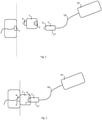
Figs. 1 and 2 are schematic drawings of a adapter device, a charger and a power socket. -
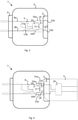
Fig. 3 is a schematic drawing of an adapter device. -
Fig. 4 is a schematic drawing of an adapter device and a charger. -
Fig. 5 is a schematic drawing of an adapter device with an aperture. -
Fig. 6 is a schematic drawing of an adapter device. -
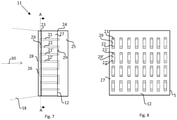
Figs 7-8 are schematic side views and front views of a thermopile. -
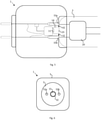
Figs. 9-10 are drawings of an adapter and a charger. - With reference to
Figs 1-6 , theadaptor device 1 of the invention has afemale connector 2 that intended to be used together with asecond device 3, preferably acharger 3 of the often-used type that is integrated with amale connector 6 in thesame housing 17. When coupled to afemale connector 2 thehousing 17 of thecharger 3 will be in close proximity to thefemale connector 2. - The
charger 3 is preferably a charger for amobile phone 19 or a tablet computer. Thecharger 3 is preferably of the type where thetransformer 20 and themale connector 6 is provided in thesame housing 17.Such chargers 3 are convenient and frequently used. They often have aport 34, such asUSB port 34 for attaching acharging cord 18 to for example amobile phone 19.Charging cord 18 may also be permanently attached tocharger 3. Thetransformer 20 of thecharger 3 is preferably in close proximity to themale connector 6. The distance between the outer tip of the pins 31 of themale member 6 and thetransformer 20 may preferably be less than 15 cm, more preferably less than 12 cm, even more preferably less than 10 cm, and most preferably less than 8 cm. - The
adaptor device 1 has anouter housing 5 and a male connector 4 for coupling to a female electrical connector 7, such as a for example a wall socket or the socket of a power strip. The female electrical connector is referred to as socket 7. The male connector 4 is adapted to couple to a female connector of the same type that is comprised in theadaptor device 1, i.e.female connector 2. Generally, coupling between socket 7 and male connector 4 is reversible, as is coupling betweenfemale connector 2 ofadaptor device 1 andmale member 6 ofsecond device 3. - A part of
outer housing 5 forms a part of thefemale connector 2 and the male connector 4. Accordingly, parts thefemale connector 2 and the male connector 4 are arranged on the outside of thehousing 5 or are parts of thehousing 5. Typically surfaces of thefemale connector 2 forms a part ofhousing 5. Typicallyhousing 5 will provide openings 33 for the pins 31 ofmale connector 6 as a part offemale connector 2. Furthermore, non-conducting parts of male connector 4 forms a part ofhousing 5. - The connection direction of the male 4 and the
female connector 2 is preferably the same such that the male connector 4 is pushed into the socket 7 in the same direction as themale connector 6 of thesecond device 3 is pushed into thefemale connector 2. Thefemale connector 2 and the male connector 4 of theadaptor device 1 may be arranged along the same axis. - The
device 1 further comprises at least two leads8a 8b in thehousing 5 from the male connector 4 to thefemale connector 2 such that thedevice 1 can provide electricity to thefemale connector 2, and thereby to amale connector 6 ofsecond device 3 reversibly coupled to thefemale connector 2 such that electricity can be provided from the socket 7 to thecharger 3 via theadaptor device 1. Theleads 8areceptacles 16apins 31amale member 6 of thesecond device 3. - Switch 9 in the
adapter device 1 can switch off the electricity provided in theleads 8aswitch 9 can switch off the electricity provided to thefemale connector 2 and thereby tosecond device 3. - The
switch 9 is controlled byheat sensing device 10.Heat sensing device 10 comprisesIR sensor 11, which may comprise athermopile 12. Theheat sensing device 10 can provide a signal to theswitch 9 which causes theswitch 9 to break the circuit from the male connector 4 of theadaptor device 1. - The
IR sensor 11 is arranged in aspace 14 in thehousing 5. TheIR sensor 11 is able to detect the temperature of the outer surface of the housing of thesecond device 3, for example the temperature caused by atransformer 20 insecond device 3 whensecond device 3 is a charger. In a preferred embodiment thehousing 5 has anaperture 15 for allowingIR radiation 30 from themale member 6 of thesecond device 3 to reach theIR sensor 11 in thespace 14 of thehousing 5 in a field ofview 18, and where theIR sensor 11 is arranged in thespace 14 of thehousing 5 to receiveIR radiation 30 through theaperture 15 in the field ofview 18. Theaperture 15 may be a common aperture for thehousing 5 and thespace 14. - The
aperture 15 is arranged in thefemale connector 2 such that theaperture 15, when amale connector 6 of asecond device 3 is coupled to thefemale connector 2 of the adaptor device 1is in close proximity to saidmale connector 6, preferably to the outer surface of themale connector 6. Close proximity is preferably less than 5 mm, even more preferably less than 3 mm, and most preferably 1 mm or less. - The
aperture 15 provides short response time and provides freedom to place theIR sensor 11 inhousing 5. - The
aperture 15 does not have a window or filter of a solid material such thatIR radiation 30 can pass from the outer surface ofmale member 6 of thecharger 3 into theinner space 14 to thesurface 28 of theheat sensor 11 without passing through any solid material and by passing through the air only. Thus, theIR radiation 30 can reach the surface of thethermopile 12, (or when aheat sink 26 is used, the surface of the heat sink 26), directly from the outer surface of thecharger 3 by travelling through air only. - The
aperture 15 is not necessary. Hence, the IR sensor may also be covered byouter housing 5. However, an advantage with theaperture 15 is that the response time will be shorter. - The rim of the
aperture 15 may be provided with sealing means 32 such as brushes or a gasket to prevent IR seepage from for example ambient temperature or lighting to reach thespace 14. This prevents false release ofswitch 9. - Typically, the
female connector 2 has at least tworeceptacles pins male member 6. TheIR sensor 11, or theaperture 15 for the IR sensor, is preferably arranged between theopenings housing 5 for receptacles. Thefemale connector 2 may have more than tworeceptacles IR sensor 11 or theaperture 15 for the IR sensor is arranged between the + and -receptacles aperture 15 for the IR sensor is in close proximity to themale member 6 ofsecond device 3. - The
heat sensing device 10 is able to, usingIR sensor 11, to detect a temperature of themale connector 6, in particular the surface of themale connector 6, inserted in thefemale connector 2. Theheat sensing device 10 is furthermore arranged to cause theswitch 9 to switch off the current to thefemale connector 2 when the detected temperature (i.e. the temperature of themale connector 6 coupled to the female connector 2) rises above a threshold temperature. The threshold should be selected so that fires caused by a malfunctioningsecond device 3 is avoided. A person skilled in the art can select a suitable threshold temperature. The threshold temperature may be for example 55° C. - The
heat sensing device 10 may comprise suitable electric circuitry that may comprise an amplifier, an analogue to digital converter, and a processor that may comprise a memory with firmware. Thethermopile 12 may be electrically connected to an amplifier that amplifies the signal from thethermopile 12. The signal from the amplifier may be digitalized by the analogue/digital converter that provides the digitalized signal to the processor. The processor may have firmware that comprises the temperature threshold such that the processor provides a signal to theswitch 9 if the detected temperature is above the threshold. The processor may also provide additional functionality such as, for example, resetting thedevice 1, providing an alarm, or providing a visual indication of release ofswitch 9, etc. -
Heat sensing device 10 may obtain power fromthermopile 12 but may need additional power for, for example, an amplifier. Theheat sensing device 10 may obtain power from the leads 8trough wires 13aHeat sensing device 10 may comprise a power transformer to transform the power from theleads 13aswitch 9 so that sensingdevice 10 can obtain power independently ofswitch 9, as shown inFig 5 . Alternatively,heat sensing device 10 may be able to "sneak" power from leads8a 8b by using induction or may be powered by a battery inhousing 5. - The
female connector 2 may be arranged to receive themale connector 6 from one direction and theIR sensor 11 may arranged to detect heat from the same direction. This ensures that themale connector 6 comes in close proximity to theIR sensor 11. In particular when themale connector 6 is of the Europlug, US or UK type, this ensures that theIR sensor 11 will come in close proximity of thesecond device 3. - The
adaptor device 1 may have a reset button for resettingswitch 9. The adaptor device may also comprise a sound alarm for alerting a user if thesecond device 3 becomes too hot. - The
housing 5 may have any suitable shape as long as it can provide parts offemale connector 2 and male connector 4. InFigs. 1 to 6 arectangular housing 3 is shown buthousing 5 may have any suitable shape such as oval, triangular, puck-shaped, spherical, etc. - With reference to
Figs. 7 and 8 , theheat sensor 11 ofadapter device sensor 1 may comprise athermopile 12. Athermopile 12 comprises at least two thermocouples. Each thermocouple consists of afirst lead 21 of a first metal and asecond lead 22 of a second metal, where thefirst lead 21 and thesecond lead 22 have different Seebeck coefficients. Thus, there is at least afirst lead 21 that has a first Seebeck coefficient and asecond lead 22 that has a second Seebeck coefficient. Examples of suitable pairs of metals include chromel-constantan (type E thermocouple), iron-constantan (type J), chromel-alumel (type K), or copper - nickel. The leads 21, 22 of thethermopile 12 is preferably embedded inmatrix 27. When there is a temperature difference between thehot side 23 and the cold side 24 a voltage potential will be generated.Matrix 27 is made from a non-conductive material such as, for example, an epoxy polymer. The material ofmatrix 27 is preferably a poor conductor of heat and electricity. The material of thematrix 27 can be selected by a person skilled in the art. The leads 21 and 22 may be connected withconnectors 29 on thehot side 23 and thecold side 24 of thethermopile 12. The individual thermocouple pairs 21,22 and 21', 22' of thethermopile 12 are coupled to provide a voltage potential that is sufficient to be detected, possibly after amplification. Thecold side 24 side of theheat sensor 10 may comprise acold sink 25. A useful thermopile with this design is described inWO2004098256 . -
Heat sensor 11 may comprise aheat sink 26 arranged in contact withthermopile 12 such thatIR radiation 30 from thesecond device 3 can be absorbed by theheat sink 26 and transferred to leads 21, 22 ofthermopile 12. Theheat sink 26 may be a heat absorbing layer. The heat absorbing layer is preferably arranged perpendicular to the direction of theleads thermopile 5. Theheat sink 26 should be able to absorb heat and conduct heat tothermopile 12. Suitable materials for theheat sink 26 includes materials that efficiently absorb IR radiation, for example a heat absorbing polymer or copper. Theheat sink 26 preferably covers thehot side 23 of thethermopile 12, thus being arranged between theaperture 15 and thethermopile 12. - The
detection surface 28 of theheat sensor 11 may have any suitable shape.Fig. 8 shows a square configuration of thethermopile 12, but a circular detection area may be preferred. - As seen in the figures, the
thermopile 12 is preferably of an axial design, i.e. where the direction of theleads incoming radiation 30. "approximately parallel" as used in this context comprises an angle of up to 10°, more preferably up to 5°, between the incoming radiation and theleads thermopile 12. This arrangement makes it possible to provide a large andscalable detection surface 28. It also makes it possible to embed leads 21, 22 inmatrix 27, so that leads 21,22 are protected from physical damage.Matrix 27 also shades thecold side 24 fromradiation 18. -
Figs. 9 and 10 shows an embodiment of theadaptor device 1 intended to be used with acharger 3 for the CEE 7/3 ("Schuko") socket typically found large parts of Europe, including Germany and Sweden. Thecharger 3 inFigs. 9 and 10 have a so called Europlugmale connector 6. The Europlug is smaller than other types of male connectors that fit in theEuropean type female 2 shown inFigs 9 and 10 . - The
aperture 15 is located between theopenings receptacles heat sensor 11 "observes" the outer surface ofcharger 3. - While the invention has been described with reference to specific exemplary embodiments, the description is in general only intended to illustrate the inventive concept and should not be taken as limiting the scope of the invention as defined by the appended claims.
Claims (8)
- An adaptor (1) device comprisinga housing (5), a female electrical connector (2), a male electrical connector (4) adapted to couple to a female electrical connector of the same type as comprised in the adaptor device, where parts of the housing form a part of the female electrical connector (2) and a part of the male electrical connector (4), the device further comprising at least two leads(8a,8b) in the housing from the male (4) to the female connector (2) such that the device can provide electricity to the female connector (2), and thereby to a male connector of a second device coupled to the female connector (2), the adapter device further comprising a switch (9) that can switch off the electricity provided in the leads (8a, 8b), the device further comprising a heat sensing device (10) arranged to cause the switch (9) to switch off the current to the female connector when the detected temperature rises above a threshold temperature,characterized in that said heat sensing device comprises IR sensor (11) arranged in a space in the housing, said housing having an aperture (15) for allowing IR radiation from the male connector of the second device to reach the IR sensor in the space of the housing, where the aperture (15) is arranged in the female connector (2) such that the aperture, when a male connector of a second device is coupled to the female connector of the adaptor device, is in close proximity to said male connector, wherein the female connector has two receptacles (16a, 16b) for receiving pins of a male member and the IR sensor (11), or the aperture (15) for the IR sensor, is arranged between the receptacles of the female connectors of the adaptor device.
- The adaptor device according to claim 1 where the female connector (2) is arranged to receive a male connector of a second device from one direction and the IR sensor is arranged to detect heat from the same direction.
- The device according to any one of claims 1 to 2 where the heat sensing device Z (10) is powered by the leads (8a, 8b).
- The device according to claim 3 where the heat sensing device is powered by the leads (8a, 8b) irrespectively of the switch (9).
- The device according to any one of claims 1 to 4 where the IR sensor (11) comprises a thermopile (12).
- The device according to claim 5 where the leads (21, 22) of the thermopile are approximately parallel to the incoming radiation, and where the leads of the thermopile are embedded in a matrix.
- An assembly comprisinga. an adaptor device (1) according to any one of claims 1 to 6,b. a charger (3) comprising a male connector (6), where the male connector and the transformer of the charger is provided in the same housing, where the male connector of the charger is inserted into the female connector (2) of the adaptor device such that the housing of the charger is in close proximity to the IR sensor (11) or an aperture (15) for the IR sensor of the adaptor device.
- A method comprising the steps ofa. connecting the male connector (4) of an adaptor device (1) according to claim 1 to 6 to a power outlet,b. connecting a male connector (6) of a charger where the male connector and the transformer of the charger is provided in the same housing, to the female connector (2) of the adaptor device (1) such that the housing of the charger is in close proximity to the IR sensor (11) or an aperture (15) for the IR sensor, of the adaptor device (1) where steps a) and b) can be carried out in any order.
Applications Claiming Priority (2)
| Application Number | Priority Date | Filing Date | Title |
|---|---|---|---|
| SE1850826A SE543173C2 (en) | 2018-07-02 | 2018-07-02 | Adapter device with infrared sensor and heat protection switch |
| PCT/EP2019/063949 WO2020007538A1 (en) | 2018-07-02 | 2019-05-29 | Adapter device with heat protection switch |
Publications (2)
| Publication Number | Publication Date |
|---|---|
| EP3818599A1 EP3818599A1 (en) | 2021-05-12 |
| EP3818599B1 true EP3818599B1 (en) | 2022-02-02 |
Family
ID=66690353
Family Applications (1)
| Application Number | Title | Priority Date | Filing Date |
|---|---|---|---|
| EP19728010.0A Not-in-force EP3818599B1 (en) | 2018-07-02 | 2019-05-29 | Adapter device with heat protection switch |
Country Status (5)
| Country | Link |
|---|---|
| US (1) | US20210126412A1 (en) |
| EP (1) | EP3818599B1 (en) |
| CN (1) | CN112368893A (en) |
| SE (1) | SE543173C2 (en) |
| WO (1) | WO2020007538A1 (en) |
Families Citing this family (2)
| Publication number | Priority date | Publication date | Assignee | Title |
|---|---|---|---|---|
| GB201811648D0 (en) * | 2018-07-16 | 2018-08-29 | Parfitt Anthony D | Electrical safety device and system |
| CN216903609U (en) * | 2022-01-25 | 2022-07-05 | 北京博衍思创信息科技有限公司 | Cable and electronic equipment |
Citations (1)
| Publication number | Priority date | Publication date | Assignee | Title |
|---|---|---|---|---|
| US6597152B1 (en) * | 2002-08-23 | 2003-07-22 | S-B Power Tool Corporation | Battery charger splitting adapter |
Family Cites Families (15)
| Publication number | Priority date | Publication date | Assignee | Title |
|---|---|---|---|---|
| US6603385B2 (en) * | 1997-11-21 | 2003-08-05 | Safety Thermal Components, Inc. | Safety devices for electrical circuits and systems |
| SE526006C2 (en) | 2003-04-29 | 2005-06-14 | Senseair Ab | Treated thin film substrate |
| US20060007151A1 (en) * | 2004-06-08 | 2006-01-12 | Pranil Ram | Computer Apparatus with added functionality |
| US9163955B2 (en) * | 2012-04-25 | 2015-10-20 | Eastman Kodak Company | Electronic sensing system with environmental sensor patches |
| DE102009043413B3 (en) * | 2009-09-29 | 2011-06-01 | Siemens Aktiengesellschaft | Thermo-electric energy converter with three-dimensional microstructure, method for producing the energy converter and use of the energy converter |
| CN102780133A (en) * | 2012-07-20 | 2012-11-14 | 天津市亚鼎科技有限公司 | Intelligent and multifunctional safety socket |
| DE202012008085U1 (en) * | 2012-08-23 | 2012-09-25 | Abb Ag | Electric socket with temperature control |
| CN202797555U (en) * | 2012-10-10 | 2013-03-13 | 山东索尔电子科技有限公司 | Air condition socket |
| US8956168B2 (en) * | 2013-05-14 | 2015-02-17 | Kuwait University | Electrical outlet safety device |
| US9821671B2 (en) * | 2014-03-04 | 2017-11-21 | Lear Corporation | Wall plug system for electric vehicle |
| US9493083B1 (en) * | 2015-06-22 | 2016-11-15 | Delphi Technologies, Inc. | Electrical plug adapter |
| US20180198296A1 (en) * | 2017-01-10 | 2018-07-12 | Htc Corporation | Hand-held electronic apparatus, charging system, connector and charging management method thereof |
| CN110574240B (en) * | 2017-09-01 | 2021-03-30 | 广东玛西尔电动科技有限公司 | Combined multi-path charger |
| US20190081426A1 (en) * | 2017-09-13 | 2019-03-14 | Anand Kumar Chavakula | Multi-use Connector |
| CN111845392A (en) * | 2019-04-29 | 2020-10-30 | 台达电子企业管理(上海)有限公司 | A portable charging device and charging connector |
-
2018
- 2018-07-02 SE SE1850826A patent/SE543173C2/en unknown
-
2019
- 2019-05-29 CN CN201980044123.6A patent/CN112368893A/en active Pending
- 2019-05-29 EP EP19728010.0A patent/EP3818599B1/en not_active Not-in-force
- 2019-05-29 US US17/256,515 patent/US20210126412A1/en not_active Abandoned
- 2019-05-29 WO PCT/EP2019/063949 patent/WO2020007538A1/en not_active Ceased
Patent Citations (1)
| Publication number | Priority date | Publication date | Assignee | Title |
|---|---|---|---|---|
| US6597152B1 (en) * | 2002-08-23 | 2003-07-22 | S-B Power Tool Corporation | Battery charger splitting adapter |
Also Published As
| Publication number | Publication date |
|---|---|
| US20210126412A1 (en) | 2021-04-29 |
| SE543173C2 (en) | 2020-10-20 |
| WO2020007538A1 (en) | 2020-01-09 |
| CN112368893A (en) | 2021-02-12 |
| SE1850826A1 (en) | 2020-01-03 |
| EP3818599A1 (en) | 2021-05-12 |
Similar Documents
| Publication | Publication Date | Title |
|---|---|---|
| US7944667B2 (en) | Thermal security for hybrid vehicle recharging cable plugs device and method | |
| US8238070B2 (en) | Electrical fire prevention from over-temperature conditions | |
| CN106415945B (en) | Cables and Power Supply Equipment | |
| CN106575842B (en) | Plug-in connector with temperature sensor | |
| TWI675515B (en) | Connector | |
| US8696377B2 (en) | Communication connector with analog coupling circuit | |
| US7666033B1 (en) | Power plug with over temperature and over current protection | |
| EP3859908B1 (en) | Plug-in connector element and plug-in connector for high-voltage applications | |
| EP3818599B1 (en) | Adapter device with heat protection switch | |
| WO2016154820A1 (en) | Charge control method and apparatus, and charge cable | |
| JP7361852B2 (en) | Electric vehicle charging plug with seal | |
| WO2016154819A1 (en) | Charge control method and apparatus, and power adapter | |
| EP3483990B1 (en) | Power connector | |
| JP2009093826A (en) | Wiring connector | |
| CN218101929U (en) | Electric vehicle charging plug with seal | |
| JP6233756B2 (en) | Universal serial bus with temperature detection | |
| SE541450C2 (en) | Overheating alarm device for cell phone charger or similar device | |
| CN214843368U (en) | An information sampling device and molded case circuit breaker | |
| US4295371A (en) | Temperature detecting device | |
| CN111579106A (en) | Cable online monitoring device and system | |
| CN117937181A (en) | Power line for electric vehicle power supply equipment | |
| WO2024228066A9 (en) | Electrical safety devices and apparatuses for preventing flow of electric current based on temperature sensing | |
| NO345795B1 (en) | A safety device and a method of using same |
Legal Events
| Date | Code | Title | Description |
|---|---|---|---|
| STAA | Information on the status of an ep patent application or granted ep patent |
Free format text: STATUS: UNKNOWN |
|
| STAA | Information on the status of an ep patent application or granted ep patent |
Free format text: STATUS: THE INTERNATIONAL PUBLICATION HAS BEEN MADE |
|
| PUAI | Public reference made under article 153(3) epc to a published international application that has entered the european phase |
Free format text: ORIGINAL CODE: 0009012 |
|
| STAA | Information on the status of an ep patent application or granted ep patent |
Free format text: STATUS: REQUEST FOR EXAMINATION WAS MADE |
|
| 17P | Request for examination filed |
Effective date: 20210129 |
|
| AK | Designated contracting states |
Kind code of ref document: A1 Designated state(s): AL AT BE BG CH CY CZ DE DK EE ES FI FR GB GR HR HU IE IS IT LI LT LU LV MC MK MT NL NO PL PT RO RS SE SI SK SM TR |
|
| RAP3 | Party data changed (applicant data changed or rights of an application transferred) |
Owner name: JONDETECH SENSORS AB (PUBL) |
|
| GRAJ | Information related to disapproval of communication of intention to grant by the applicant or resumption of examination proceedings by the epo deleted |
Free format text: ORIGINAL CODE: EPIDOSDIGR1 |
|
| STAA | Information on the status of an ep patent application or granted ep patent |
Free format text: STATUS: GRANT OF PATENT IS INTENDED |
|
| GRAP | Despatch of communication of intention to grant a patent |
Free format text: ORIGINAL CODE: EPIDOSNIGR1 |
|
| DAV | Request for validation of the european patent (deleted) | ||
| DAX | Request for extension of the european patent (deleted) | ||
| INTG | Intention to grant announced |
Effective date: 20210916 |
|
| GRAS | Grant fee paid |
Free format text: ORIGINAL CODE: EPIDOSNIGR3 |
|
| GRAA | (expected) grant |
Free format text: ORIGINAL CODE: 0009210 |
|
| STAA | Information on the status of an ep patent application or granted ep patent |
Free format text: STATUS: THE PATENT HAS BEEN GRANTED |
|
| AK | Designated contracting states |
Kind code of ref document: B1 Designated state(s): AL AT BE BG CH CY CZ DE DK EE ES FI FR GB GR HR HU IE IS IT LI LT LU LV MC MK MT NL NO PL PT RO RS SE SI SK SM TR |
|
| REG | Reference to a national code |
Ref country code: GB Ref legal event code: FG4D |
|
| REG | Reference to a national code |
Ref country code: CH Ref legal event code: EP Ref country code: AT Ref legal event code: REF Ref document number: 1466826 Country of ref document: AT Kind code of ref document: T Effective date: 20220215 |
|
| REG | Reference to a national code |
Ref country code: DE Ref legal event code: R096 Ref document number: 602019011361 Country of ref document: DE |
|
| REG | Reference to a national code |
Ref country code: IE Ref legal event code: FG4D |
|
| REG | Reference to a national code |
Ref country code: LT Ref legal event code: MG9D |
|
| REG | Reference to a national code |
Ref country code: NL Ref legal event code: MP Effective date: 20220202 |
|
| REG | Reference to a national code |
Ref country code: AT Ref legal event code: MK05 Ref document number: 1466826 Country of ref document: AT Kind code of ref document: T Effective date: 20220202 |
|
| PG25 | Lapsed in a contracting state [announced via postgrant information from national office to epo] |
Ref country code: SE Free format text: LAPSE BECAUSE OF FAILURE TO SUBMIT A TRANSLATION OF THE DESCRIPTION OR TO PAY THE FEE WITHIN THE PRESCRIBED TIME-LIMIT Effective date: 20220202 Ref country code: RS Free format text: LAPSE BECAUSE OF FAILURE TO SUBMIT A TRANSLATION OF THE DESCRIPTION OR TO PAY THE FEE WITHIN THE PRESCRIBED TIME-LIMIT Effective date: 20220202 Ref country code: PT Free format text: LAPSE BECAUSE OF FAILURE TO SUBMIT A TRANSLATION OF THE DESCRIPTION OR TO PAY THE FEE WITHIN THE PRESCRIBED TIME-LIMIT Effective date: 20220602 Ref country code: NO Free format text: LAPSE BECAUSE OF FAILURE TO SUBMIT A TRANSLATION OF THE DESCRIPTION OR TO PAY THE FEE WITHIN THE PRESCRIBED TIME-LIMIT Effective date: 20220502 Ref country code: NL Free format text: LAPSE BECAUSE OF FAILURE TO SUBMIT A TRANSLATION OF THE DESCRIPTION OR TO PAY THE FEE WITHIN THE PRESCRIBED TIME-LIMIT Effective date: 20220202 Ref country code: LT Free format text: LAPSE BECAUSE OF FAILURE TO SUBMIT A TRANSLATION OF THE DESCRIPTION OR TO PAY THE FEE WITHIN THE PRESCRIBED TIME-LIMIT Effective date: 20220202 Ref country code: HR Free format text: LAPSE BECAUSE OF FAILURE TO SUBMIT A TRANSLATION OF THE DESCRIPTION OR TO PAY THE FEE WITHIN THE PRESCRIBED TIME-LIMIT Effective date: 20220202 Ref country code: ES Free format text: LAPSE BECAUSE OF FAILURE TO SUBMIT A TRANSLATION OF THE DESCRIPTION OR TO PAY THE FEE WITHIN THE PRESCRIBED TIME-LIMIT Effective date: 20220202 Ref country code: BG Free format text: LAPSE BECAUSE OF FAILURE TO SUBMIT A TRANSLATION OF THE DESCRIPTION OR TO PAY THE FEE WITHIN THE PRESCRIBED TIME-LIMIT Effective date: 20220502 |
|
| PG25 | Lapsed in a contracting state [announced via postgrant information from national office to epo] |
Ref country code: PL Free format text: LAPSE BECAUSE OF FAILURE TO SUBMIT A TRANSLATION OF THE DESCRIPTION OR TO PAY THE FEE WITHIN THE PRESCRIBED TIME-LIMIT Effective date: 20220202 Ref country code: LV Free format text: LAPSE BECAUSE OF FAILURE TO SUBMIT A TRANSLATION OF THE DESCRIPTION OR TO PAY THE FEE WITHIN THE PRESCRIBED TIME-LIMIT Effective date: 20220202 Ref country code: GR Free format text: LAPSE BECAUSE OF FAILURE TO SUBMIT A TRANSLATION OF THE DESCRIPTION OR TO PAY THE FEE WITHIN THE PRESCRIBED TIME-LIMIT Effective date: 20220503 Ref country code: FI Free format text: LAPSE BECAUSE OF FAILURE TO SUBMIT A TRANSLATION OF THE DESCRIPTION OR TO PAY THE FEE WITHIN THE PRESCRIBED TIME-LIMIT Effective date: 20220202 Ref country code: AT Free format text: LAPSE BECAUSE OF FAILURE TO SUBMIT A TRANSLATION OF THE DESCRIPTION OR TO PAY THE FEE WITHIN THE PRESCRIBED TIME-LIMIT Effective date: 20220202 |
|
| PG25 | Lapsed in a contracting state [announced via postgrant information from national office to epo] |
Ref country code: IS Free format text: LAPSE BECAUSE OF FAILURE TO SUBMIT A TRANSLATION OF THE DESCRIPTION OR TO PAY THE FEE WITHIN THE PRESCRIBED TIME-LIMIT Effective date: 20220602 |
|
| PG25 | Lapsed in a contracting state [announced via postgrant information from national office to epo] |
Ref country code: SM Free format text: LAPSE BECAUSE OF FAILURE TO SUBMIT A TRANSLATION OF THE DESCRIPTION OR TO PAY THE FEE WITHIN THE PRESCRIBED TIME-LIMIT Effective date: 20220202 Ref country code: SK Free format text: LAPSE BECAUSE OF FAILURE TO SUBMIT A TRANSLATION OF THE DESCRIPTION OR TO PAY THE FEE WITHIN THE PRESCRIBED TIME-LIMIT Effective date: 20220202 Ref country code: RO Free format text: LAPSE BECAUSE OF FAILURE TO SUBMIT A TRANSLATION OF THE DESCRIPTION OR TO PAY THE FEE WITHIN THE PRESCRIBED TIME-LIMIT Effective date: 20220202 Ref country code: EE Free format text: LAPSE BECAUSE OF FAILURE TO SUBMIT A TRANSLATION OF THE DESCRIPTION OR TO PAY THE FEE WITHIN THE PRESCRIBED TIME-LIMIT Effective date: 20220202 Ref country code: DK Free format text: LAPSE BECAUSE OF FAILURE TO SUBMIT A TRANSLATION OF THE DESCRIPTION OR TO PAY THE FEE WITHIN THE PRESCRIBED TIME-LIMIT Effective date: 20220202 Ref country code: CZ Free format text: LAPSE BECAUSE OF FAILURE TO SUBMIT A TRANSLATION OF THE DESCRIPTION OR TO PAY THE FEE WITHIN THE PRESCRIBED TIME-LIMIT Effective date: 20220202 |
|
| REG | Reference to a national code |
Ref country code: DE Ref legal event code: R097 Ref document number: 602019011361 Country of ref document: DE |
|
| PG25 | Lapsed in a contracting state [announced via postgrant information from national office to epo] |
Ref country code: AL Free format text: LAPSE BECAUSE OF FAILURE TO SUBMIT A TRANSLATION OF THE DESCRIPTION OR TO PAY THE FEE WITHIN THE PRESCRIBED TIME-LIMIT Effective date: 20220202 |
|
| REG | Reference to a national code |
Ref country code: DE Ref legal event code: R119 Ref document number: 602019011361 Country of ref document: DE |
|
| PLBE | No opposition filed within time limit |
Free format text: ORIGINAL CODE: 0009261 |
|
| STAA | Information on the status of an ep patent application or granted ep patent |
Free format text: STATUS: NO OPPOSITION FILED WITHIN TIME LIMIT |
|
| REG | Reference to a national code |
Ref country code: CH Ref legal event code: PL |
|
| 26N | No opposition filed |
Effective date: 20221103 |
|
| REG | Reference to a national code |
Ref country code: BE Ref legal event code: MM Effective date: 20220531 |
|
| PG25 | Lapsed in a contracting state [announced via postgrant information from national office to epo] |
Ref country code: MC Free format text: LAPSE BECAUSE OF FAILURE TO SUBMIT A TRANSLATION OF THE DESCRIPTION OR TO PAY THE FEE WITHIN THE PRESCRIBED TIME-LIMIT Effective date: 20220202 Ref country code: LU Free format text: LAPSE BECAUSE OF NON-PAYMENT OF DUE FEES Effective date: 20220529 Ref country code: LI Free format text: LAPSE BECAUSE OF NON-PAYMENT OF DUE FEES Effective date: 20220531 Ref country code: CH Free format text: LAPSE BECAUSE OF NON-PAYMENT OF DUE FEES Effective date: 20220531 |
|
| PG25 | Lapsed in a contracting state [announced via postgrant information from national office to epo] |
Ref country code: IE Free format text: LAPSE BECAUSE OF NON-PAYMENT OF DUE FEES Effective date: 20220529 Ref country code: FR Free format text: LAPSE BECAUSE OF NON-PAYMENT OF DUE FEES Effective date: 20220531 |
|
| PG25 | Lapsed in a contracting state [announced via postgrant information from national office to epo] |
Ref country code: DE Free format text: LAPSE BECAUSE OF NON-PAYMENT OF DUE FEES Effective date: 20221201 Ref country code: BE Free format text: LAPSE BECAUSE OF NON-PAYMENT OF DUE FEES Effective date: 20220531 |
|
| PG25 | Lapsed in a contracting state [announced via postgrant information from national office to epo] |
Ref country code: IT Free format text: LAPSE BECAUSE OF FAILURE TO SUBMIT A TRANSLATION OF THE DESCRIPTION OR TO PAY THE FEE WITHIN THE PRESCRIBED TIME-LIMIT Effective date: 20220202 |
|
| GBPC | Gb: european patent ceased through non-payment of renewal fee |
Effective date: 20230529 |
|
| PG25 | Lapsed in a contracting state [announced via postgrant information from national office to epo] |
Ref country code: MK Free format text: LAPSE BECAUSE OF FAILURE TO SUBMIT A TRANSLATION OF THE DESCRIPTION OR TO PAY THE FEE WITHIN THE PRESCRIBED TIME-LIMIT Effective date: 20220202 Ref country code: CY Free format text: LAPSE BECAUSE OF FAILURE TO SUBMIT A TRANSLATION OF THE DESCRIPTION OR TO PAY THE FEE WITHIN THE PRESCRIBED TIME-LIMIT Effective date: 20220202 Ref country code: GB Free format text: LAPSE BECAUSE OF NON-PAYMENT OF DUE FEES Effective date: 20230529 |
|
| PG25 | Lapsed in a contracting state [announced via postgrant information from national office to epo] |
Ref country code: HU Free format text: LAPSE BECAUSE OF FAILURE TO SUBMIT A TRANSLATION OF THE DESCRIPTION OR TO PAY THE FEE WITHIN THE PRESCRIBED TIME-LIMIT; INVALID AB INITIO Effective date: 20190529 |
|
| PG25 | Lapsed in a contracting state [announced via postgrant information from national office to epo] |
Ref country code: TR Free format text: LAPSE BECAUSE OF FAILURE TO SUBMIT A TRANSLATION OF THE DESCRIPTION OR TO PAY THE FEE WITHIN THE PRESCRIBED TIME-LIMIT Effective date: 20220202 |
|
| PG25 | Lapsed in a contracting state [announced via postgrant information from national office to epo] |
Ref country code: MT Free format text: LAPSE BECAUSE OF FAILURE TO SUBMIT A TRANSLATION OF THE DESCRIPTION OR TO PAY THE FEE WITHIN THE PRESCRIBED TIME-LIMIT Effective date: 20220202 |
|
| PG25 | Lapsed in a contracting state [announced via postgrant information from national office to epo] |
Ref country code: SI Free format text: LAPSE BECAUSE OF FAILURE TO SUBMIT A TRANSLATION OF THE DESCRIPTION OR TO PAY THE FEE WITHIN THE PRESCRIBED TIME-LIMIT Effective date: 20220202 |