EP3817191B1 - Vehicle non-contact power feeding system - Google Patents
Vehicle non-contact power feeding system Download PDFInfo
- Publication number
- EP3817191B1 EP3817191B1 EP18925030.1A EP18925030A EP3817191B1 EP 3817191 B1 EP3817191 B1 EP 3817191B1 EP 18925030 A EP18925030 A EP 18925030A EP 3817191 B1 EP3817191 B1 EP 3817191B1
- Authority
- EP
- European Patent Office
- Prior art keywords
- coil unit
- power transmitter
- bulge
- foreign object
- transmitter coil
- Prior art date
- Legal status (The legal status is an assumption and is not a legal conclusion. Google has not performed a legal analysis and makes no representation as to the accuracy of the status listed.)
- Active
Links
Images



Classifications
-
- B—PERFORMING OPERATIONS; TRANSPORTING
- B60—VEHICLES IN GENERAL
- B60L—PROPULSION OF ELECTRICALLY-PROPELLED VEHICLES; SUPPLYING ELECTRIC POWER FOR AUXILIARY EQUIPMENT OF ELECTRICALLY-PROPELLED VEHICLES; ELECTRODYNAMIC BRAKE SYSTEMS FOR VEHICLES IN GENERAL; MAGNETIC SUSPENSION OR LEVITATION FOR VEHICLES; MONITORING OPERATING VARIABLES OF ELECTRICALLY-PROPELLED VEHICLES; ELECTRIC SAFETY DEVICES FOR ELECTRICALLY-PROPELLED VEHICLES
- B60L53/00—Methods of charging batteries, specially adapted for electric vehicles; Charging stations or on-board charging equipment therefor; Exchange of energy storage elements in electric vehicles
- B60L53/10—Methods of charging batteries, specially adapted for electric vehicles; Charging stations or on-board charging equipment therefor; Exchange of energy storage elements in electric vehicles characterised by the energy transfer between the charging station and the vehicle
- B60L53/12—Inductive energy transfer
- B60L53/122—Circuits or methods for driving the primary coil, e.g. supplying electric power to the coil
-
- B—PERFORMING OPERATIONS; TRANSPORTING
- B60—VEHICLES IN GENERAL
- B60L—PROPULSION OF ELECTRICALLY-PROPELLED VEHICLES; SUPPLYING ELECTRIC POWER FOR AUXILIARY EQUIPMENT OF ELECTRICALLY-PROPELLED VEHICLES; ELECTRODYNAMIC BRAKE SYSTEMS FOR VEHICLES IN GENERAL; MAGNETIC SUSPENSION OR LEVITATION FOR VEHICLES; MONITORING OPERATING VARIABLES OF ELECTRICALLY-PROPELLED VEHICLES; ELECTRIC SAFETY DEVICES FOR ELECTRICALLY-PROPELLED VEHICLES
- B60L53/00—Methods of charging batteries, specially adapted for electric vehicles; Charging stations or on-board charging equipment therefor; Exchange of energy storage elements in electric vehicles
- B60L53/10—Methods of charging batteries, specially adapted for electric vehicles; Charging stations or on-board charging equipment therefor; Exchange of energy storage elements in electric vehicles characterised by the energy transfer between the charging station and the vehicle
- B60L53/12—Inductive energy transfer
- B60L53/124—Detection or removal of foreign bodies
-
- B—PERFORMING OPERATIONS; TRANSPORTING
- B60—VEHICLES IN GENERAL
- B60L—PROPULSION OF ELECTRICALLY-PROPELLED VEHICLES; SUPPLYING ELECTRIC POWER FOR AUXILIARY EQUIPMENT OF ELECTRICALLY-PROPELLED VEHICLES; ELECTRODYNAMIC BRAKE SYSTEMS FOR VEHICLES IN GENERAL; MAGNETIC SUSPENSION OR LEVITATION FOR VEHICLES; MONITORING OPERATING VARIABLES OF ELECTRICALLY-PROPELLED VEHICLES; ELECTRIC SAFETY DEVICES FOR ELECTRICALLY-PROPELLED VEHICLES
- B60L53/00—Methods of charging batteries, specially adapted for electric vehicles; Charging stations or on-board charging equipment therefor; Exchange of energy storage elements in electric vehicles
- B60L53/30—Constructional details of charging stations
- B60L53/35—Means for automatic or assisted adjustment of the relative position of charging devices and vehicles
- B60L53/38—Means for automatic or assisted adjustment of the relative position of charging devices and vehicles specially adapted for charging by inductive energy transfer
- B60L53/39—Means for automatic or assisted adjustment of the relative position of charging devices and vehicles specially adapted for charging by inductive energy transfer with position-responsive activation of primary coils
-
- H—ELECTRICITY
- H02—GENERATION; CONVERSION OR DISTRIBUTION OF ELECTRIC POWER
- H02J—ELECTRIC POWER NETWORKS; CIRCUIT ARRANGEMENTS OR SYSTEMS FOR SUPPLYING OR DISTRIBUTING ELECTRIC POWER; SYSTEMS FOR STORING ELECTRIC ENERGY
- H02J50/00—Circuit arrangements or systems for wireless supply or distribution of electric power
- H02J50/10—Circuit arrangements or systems for wireless supply or distribution of electric power using inductive coupling
-
- H—ELECTRICITY
- H02—GENERATION; CONVERSION OR DISTRIBUTION OF ELECTRIC POWER
- H02J—ELECTRIC POWER NETWORKS; CIRCUIT ARRANGEMENTS OR SYSTEMS FOR SUPPLYING OR DISTRIBUTING ELECTRIC POWER; SYSTEMS FOR STORING ELECTRIC ENERGY
- H02J50/00—Circuit arrangements or systems for wireless supply or distribution of electric power
- H02J50/60—Circuit arrangements or systems for wireless supply or distribution of electric power responsive to the presence of foreign objects, e.g. detection of living beings
-
- H—ELECTRICITY
- H02—GENERATION; CONVERSION OR DISTRIBUTION OF ELECTRIC POWER
- H02J—ELECTRIC POWER NETWORKS; CIRCUIT ARRANGEMENTS OR SYSTEMS FOR SUPPLYING OR DISTRIBUTING ELECTRIC POWER; SYSTEMS FOR STORING ELECTRIC ENERGY
- H02J50/00—Circuit arrangements or systems for wireless supply or distribution of electric power
- H02J50/90—Circuit arrangements or systems for wireless supply or distribution of electric power involving detection or optimisation of position, e.g. alignment
-
- H—ELECTRICITY
- H02—GENERATION; CONVERSION OR DISTRIBUTION OF ELECTRIC POWER
- H02J—ELECTRIC POWER NETWORKS; CIRCUIT ARRANGEMENTS OR SYSTEMS FOR SUPPLYING OR DISTRIBUTING ELECTRIC POWER; SYSTEMS FOR STORING ELECTRIC ENERGY
- H02J2105/00—Networks for supplying or distributing electric power characterised by their spatial reach or by the load
- H02J2105/30—Networks for supplying or distributing electric power characterised by their spatial reach or by the load the load networks being external to vehicles, i.e. exchanging power with vehicles
- H02J2105/33—Networks for supplying or distributing electric power characterised by their spatial reach or by the load the load networks being external to vehicles, i.e. exchanging power with vehicles exchanging power with road vehicles
- H02J2105/37—Networks for supplying or distributing electric power characterised by their spatial reach or by the load the load networks being external to vehicles, i.e. exchanging power with vehicles exchanging power with road vehicles exchanging power with electric vehicles [EV] or with hybrid electric vehicles [HEV]
-
- Y—GENERAL TAGGING OF NEW TECHNOLOGICAL DEVELOPMENTS; GENERAL TAGGING OF CROSS-SECTIONAL TECHNOLOGIES SPANNING OVER SEVERAL SECTIONS OF THE IPC; TECHNICAL SUBJECTS COVERED BY FORMER USPC CROSS-REFERENCE ART COLLECTIONS [XRACs] AND DIGESTS
- Y02—TECHNOLOGIES OR APPLICATIONS FOR MITIGATION OR ADAPTATION AGAINST CLIMATE CHANGE
- Y02T—CLIMATE CHANGE MITIGATION TECHNOLOGIES RELATED TO TRANSPORTATION
- Y02T10/00—Road transport of goods or passengers
- Y02T10/60—Other road transportation technologies with climate change mitigation effect
- Y02T10/70—Energy storage systems for electromobility, e.g. batteries
-
- Y—GENERAL TAGGING OF NEW TECHNOLOGICAL DEVELOPMENTS; GENERAL TAGGING OF CROSS-SECTIONAL TECHNOLOGIES SPANNING OVER SEVERAL SECTIONS OF THE IPC; TECHNICAL SUBJECTS COVERED BY FORMER USPC CROSS-REFERENCE ART COLLECTIONS [XRACs] AND DIGESTS
- Y02—TECHNOLOGIES OR APPLICATIONS FOR MITIGATION OR ADAPTATION AGAINST CLIMATE CHANGE
- Y02T—CLIMATE CHANGE MITIGATION TECHNOLOGIES RELATED TO TRANSPORTATION
- Y02T10/00—Road transport of goods or passengers
- Y02T10/60—Other road transportation technologies with climate change mitigation effect
- Y02T10/7072—Electromobility specific charging systems or methods for batteries, ultracapacitors, supercapacitors or double-layer capacitors
-
- Y—GENERAL TAGGING OF NEW TECHNOLOGICAL DEVELOPMENTS; GENERAL TAGGING OF CROSS-SECTIONAL TECHNOLOGIES SPANNING OVER SEVERAL SECTIONS OF THE IPC; TECHNICAL SUBJECTS COVERED BY FORMER USPC CROSS-REFERENCE ART COLLECTIONS [XRACs] AND DIGESTS
- Y02—TECHNOLOGIES OR APPLICATIONS FOR MITIGATION OR ADAPTATION AGAINST CLIMATE CHANGE
- Y02T—CLIMATE CHANGE MITIGATION TECHNOLOGIES RELATED TO TRANSPORTATION
- Y02T90/00—Enabling technologies or technologies with a potential or indirect contribution to GHG emissions mitigation
- Y02T90/10—Technologies relating to charging of electric vehicles
- Y02T90/12—Electric charging stations
-
- Y—GENERAL TAGGING OF NEW TECHNOLOGICAL DEVELOPMENTS; GENERAL TAGGING OF CROSS-SECTIONAL TECHNOLOGIES SPANNING OVER SEVERAL SECTIONS OF THE IPC; TECHNICAL SUBJECTS COVERED BY FORMER USPC CROSS-REFERENCE ART COLLECTIONS [XRACs] AND DIGESTS
- Y02—TECHNOLOGIES OR APPLICATIONS FOR MITIGATION OR ADAPTATION AGAINST CLIMATE CHANGE
- Y02T—CLIMATE CHANGE MITIGATION TECHNOLOGIES RELATED TO TRANSPORTATION
- Y02T90/00—Enabling technologies or technologies with a potential or indirect contribution to GHG emissions mitigation
- Y02T90/10—Technologies relating to charging of electric vehicles
- Y02T90/14—Plug-in electric vehicles
Definitions
- the present invention relates to a contactless electricity supply system for a vehicle.
- a battery for running installed thereon is electrically charged. Charging is commonly done by using a cable in the present day, but a contactless electricity supply system is also being developed.
- a contactless electricity supply system a battery is charged by electricity supplied from a power transmitter coil unit provided under ground or on the ground to a power receiving coil unit attached to a bottom of a vehicle.
- a patent Literature 1 listed below discloses a contactless electricity supply system that includes a power transmitter coil unit.
- Patent Literature 1 Japanese Patent Application Publication No. 2015-128363
- Patent Literature 1 In a contactless electricity supply system, charging is done by magnetic coupling between a power transmitter coil unit and a power receiving coil unit.
- a foreign object exists between the power transmitter coil unit and the power receiving coil unit, specifically on the power transmitter coil unit, the charging is affected by it.
- the foreign object is metal, its affection to magnetic flux is noticeable, and thereby it may cause inhibition of the charging.
- the above-mentioned Patent Literature 1 also discloses an apparatus for detecting a foreign object in the contactless electricity supply system. However, even if a foreign object can be detected, charging is affected by the existence of the foreign object (a system that stops charging is also developed). Therefore, it is desired to restrict incursion of a foreign object further.
- An object of the present invention is to provide a contactless electricity supply system that can restrict incursion of a foreign object and can reduce affection of incursion of a foreign object.
- An aspect of the present invention provides a contactless electricity supply system that includes a power transmitter coil unit provided on a ground-side, and an elevation device for shifting the power transmitter coil unit upward from the ground.
- the power transmitter coil unit supplies electricity to a power receiving coil unit provided on a vehicle-side by magnetic coupling with the power receiving coil unit.
- the power transmitter coil unit has a case that houses a power transmitter coil wound in a planar manner. A bulge is formed around a center axis of the power transmitter coil on an upper face of the case so as to bulge upward from its surrounding surface.
- ground-side includes a case of “on the ground” and a case of “under the ground”, and means a side paired up with the "vehicle-side”.
- ground-side also includes a case of a "floor-side” in consideration of the system that is set up in an intermediate floor of a building. This "floor-side” also includes a case of "on the floor” and a case of "under the floor”.
- the bulge on the upper face of the power transmitter coil unit it becomes possible to restrict incursion of a foreign object onto the bulge made one-step higher while electricity is not supplied.
- incursion of a foreign object onto the bulge i.e. between the power transmitter coil unit and the power receiving coil unit
- the power transmitter coil capable of being lifted up can be made close to (contacted with) the power receiving coil unit installed in the vehicle while electricity is supplied. Therefore, a power output required for the electricity supply can be reduced, and thereby, even if a foreign object enters onto the power transmitter coil unit, affection to the power transmission due to the foreign object can be reduced.
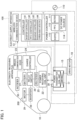
- the contactless electricity supply system includes an electricity supply apparatus 100 that is a ground-side unit, and an electricity receiving apparatus 200 that is a vehicle-side unit.
- the contactless electricity supply system supplies electricity contactlessly from the electricity supply apparatus 100 provided at an electricity supply station or the like to the electricity receiving apparatus 200 installed in a vehicle 10 such as an EV and a PHV to charge a battery 27 installed in the vehicle 10.
- the electricity supply apparatus 100 includes a power transmitter coil unit 12 disposed at a parking space near the charging station.
- the electricity receiving apparatus 200 includes a power receiving coil unit 22 installed on a bottom of the vehicle 10.
- the power receiving coil unit 22 is disposed such that it faces to the power transmitter coil unit 12 when the vehicle 10 is parked at a predetermined position (chargeable position) in the parking space.
- the electricity supply apparatus 100 includes an electricity controller 11, the power transmitter coil unit 12, a wireless communication device 13, a controller 14, a base 15, a lifting link mechanism 17, a drive motor 18 and a distance sensor 20.
- a lifting device for vertically lifting-up the power transmitter coil unit 12 from the ground is configured by the lifting link mechanism 17 and the drive motor 18.
- the lifting device that shifts the power transmitter coil unit 12 vertically above from the ground may be configured by a rotational moto and a gear mechanism, or may be configured by a hydraulic cylinder.
- the base 15 is buried under the ground, and supports the lifting device surely from beneath.
- the rectifier 111 is electrically connected with the AC power source 110, and rectifies the AC power output from the AC power source 110.
- the PFC circuit 112 is connected to the electrical connection between the rectifier 111 and the inverter 113, and improves power factor by fixing up an output waveform from the rectifier 111.
- the wireless communication device 13 communicates bi-directionally with a wireless communication device 23 provided in the vehicle 10.
- the controller 14 supplies the power for judging the parking position by turning the power transmitter coil unit 12 into a weak excitation state (excitation weaker than that in a normal charging).
- the sequence controller 143 exchanges sequence information with the electricity receiving apparatus 200 via the wireless communication device 13.
- the foreign object detector 144 is connected with after-explained foreign object detection coils 121 and 122 (see Fig. 3 ) housed within the power transmitter coil unit 12.
- the foreign object detector 144 detects a foreign object above the first foreign object detection coil 121 based on induction voltage generated in the first foreign object detection coil 121, and, in addition, detects a foreign object above the second foreign object detection coil 122 based on induction voltage generated in the second foreign object detection coil 122.
- the charge controller 24 controls charging of the battery 27.
- the charge controller 24 executes the judgement process of the parking position when the vehicle 10 is parked at the parking space.
- the charge controller 24 monitors electricity received by the power receiving coil unit 22.
- the charge controller 24 detects the position of the power receiving coil unit 22 (i.e. the position of the vehicle 10) with respect to the power transmitter coil unit 12 based on voltage received by the power receiving coil unit 22 when the power transmitter coil unit 12 is magnetically excited.
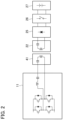
- the relay 26 With respect to the relay 26, its on/off is switched over by the control of the charge controller 24. In addition, if the relay 26 is switched off, the battery 27 and the rectifier 25 are electrically disconnected (see Fig. 2 ).
- the battery 27 is an electric power source of the vehicle 10 that is configured by connecting plural secondary batteries.
- the inverter 28 is provided with a PWM control circuit configured by switching elements such as IGBT or the like.
- the inverter 28 converts AC power output from the battery 27 to DC power based on switching control signals to supply it to the motor 29.
- the motor 29 is a three-phase AC motor, for example, and is a drive source for running the vehicle 10.
- the notifier 30 is configured by a warning lamp, a display of a navigation device, a speaker or the like, and notifies various information to a user based on the control of the charge controller 24.
- the power transmitter coil unit 12 will be explained more in detail with reference to Fig. 3 to Fig. 7 .
- the power transmitter coil unit 12 includes the distance sensor 20 for detecting the distance to the power receiving coil unit 22 as shown in Fig. 1 , but the distance sensor 20 is not shown in Fig. 3 to Fig. 7 .
- the power transmitter coil unit 12 houses the power transmitter coil 120 and the foreign object detection coils 121 and 122 within its case 123.
- the power transmitter coil 120 is magnetically coupled with the power receiving coil 220 housed in the power receiving coil unit 22 to supply electricity contactlessly.
- the case 123 protects various devices provided in itself (such as the power transmitter coil 120 and the foreign object detection coils 121 and 122).
- the case 123 possesses strength and rigidity enough to endure when the vehicle 10 runs onto it.
- the case 123 also possesses enough weathering resistivity.
- the case 123 is made of material, such as resin, that doesn't inhibit the above-mentioned magnetic coupling.
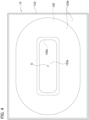
- the power transmitter coil 120 is wound in a ring manner about a winding center axis O, and is wound in a planar manner so as to have an oval outline shape in the present embodiment.
- the winding center axis (coil axis) O is an axis that passes through a winding center and is perpendicular to a winding plane.
- the winding center is a median point (geometric center) of a flat figure formed by an arbitrary single winding of the power transmitter coil 120. Therefore, the power transmitter coil 120 has the oval outline shape at whose center (i.e. around the winding center O) a hole is formed.
- the shape of the center hole (i.e. an inner circumferential edge 120a) of the power transmitter coil 120 is a rectangular shape but its four corner are rounded (see Fig. 4 ).
- the power receiving coil 220 is also wound in a ring manner about its winding center axis, and is wound in a planar manner so as to have an oval outline shape.
- the power receiving coil 220 also has an oval outline shape having a hole at its center (i.e. around its winding center).
- the power receiving coil 220 is smaller than the power transmitter coil 120, but slightly larger than the center hole of the power transmitter coil 120 (see Fig. 7 ). It is most preferable that the contactless electricity supply is done while the winding center axis of the power transmitter coil 120 and the winding center axis of the power receiving coil 220 are made completely coincident with each other.
- a ferrite 124 is lied in a planar manner on an inner bottom face of the case 123, and its whole shape is a rectangular shape larger than the power transmitter coil 120.
- the power transmitter coil 120 is disposed on an upper face of the ferrite 124.
- the power transmitter coil 120 is connected to the electricity controller 11 (the inverter 113) as explained above. Note that the foreign object detection coils 121 and 122 and the ferrite 124 are not shown in Fig 4 .
- the first foreign object detection (FOD) coil 121 that has an oval shape at whose center a hole is formed is disposed on the power transmitter coil 120.
- the bulge 123a and a surrounding surface 123b that is one-step lower than the bulge 123a and surrounds it are formed on the case 123.
- the bulge 123a will be explained later more in detail.
- the first FOD coil 121 detects a foreign object on the surrounding surface 123b.
- the second FOD coil 122 having an almost rectangular shape is provided on an inward side of the first FOD coil 121 having the oval ring shape. In other words, the second FOD coil 122 is disposed beneath the bulge 123a to detect a foreign object on the bulge 123a.
- the second FOD coil 122 is disposed higher than the first FOD coil 121.
- a distance from the first FOD coil 121 to the surrounding surface 123b and a distance from the second FOD coil 122 to the upper face of the bulge 123a are almost identical to each other.
- a distance from the first FOD coil 121 to its detection reference plane and a distance from the second FOD coil 122 to its detection reference plane are made identical to each other.
- the first FOD coil 121 and the second FOD coil 122 are connected to the controller 14 (the foreign object detector 144) as explained above.
- the bulge 123a is formed on the upper face of the case 123.
- the bulge 123a is formed around the above-mentioned winding center axis O of the power transmitter coil 120 in a plan view (see Fig. 4 ).
- An area of the center hole of the power transmitter coil 120 formed around the winding center axis O is an area where strong magnetic flux is generated while electricity is supplied, and incursion of a foreign object onto the power transmitter coil unit 12 is restricted by forming the bulge 123a. Incursion restriction of a foreign object will be explained later more in detail.
- the surrounding surface 123b is formed around the bulge 123a, and the surrounding surface 123b is a flat surface and is made flush with the ground surface while the power transmitter coil unit 12 positions at its moved-down position.
- the upper face of the bulge 123a is parallel to the surrounding surface 123b.
- the bulge 123a is formed around the winding center axis O of the power transmitter coil 120 as explained above, and the inner circumferential edge 120a of the ring-shaped power transmitter coil 120 is disposed on an inward side of the bulge 123a.
- the bulge 123a is raised upward from the surrounding surface 123b at a position just outside the inner circumferential edge 120a in the plan view. Note that the bulge 123a may be raised at a position almost coincident with the inner circumferential edge 120a as long as it includes the inner circumferential edge 120a within itself in the plan view.
- the bulge 123a also has an identical shape to that of the inner circumferential edge 120a, i.e. a rectangular shape whose four corners are rounded.
- some sort of pattern e.g. pattern as aesthetic design, pattern for anti-slipping or the like
- asperity of such patterns minute height difference
- only one "bulge” is provided around the winding center axis O in the present embodiment, and it is formed such that its upper face becomes a single flat surface.
- FIG. 5 Positional relation between the bulge 123a and the above-mentioned second FOD coil 122 (the first FOD coil 121) is shown in Fig. 5 .
- An outer circumferential edge 122a of the second FOD coil 122 is disposed on an inward side from a boundary inner circumferential edge 123c of the bulge 123a (on an inner face of the case 123) (see an arrow in Fig. 5 ).
- the outer circumferential edge 122a is made coincident with a position where the upper face of the bulge 123a shifts from a curved surface to a flat surface.
- FIG. 5 shows a cross-sectional plane (called as a reference cross-sectional plane, hereinafter), which includes an arbitrary point on the inner circumferential edge 120a, which is perpendicular to a tangential line of the inner circumferential edge 120a at the arbitrary point, and which is parallel to the above-mentioned winding center axis O.
- the positional relation shown in Fig. 5 is satisfied along an entire circumference of the bulge 123a (the inner circumferential edge 120a).
- an inner circumferential edge portion of the first FOD coil 121 is positioned so as to overlap a convex side wall of the bulge 123a.
- the first FOD coil 121 can cover an area that is hardly detected by the second FOD coil 122.
- the side wall of the bulge 123a may be formed as a concave side wall or a sloped plat side wall. (But, even in a case of the sloped flat side wall, within its sections where the boundary of the bulge 123a in the plan view curve, the surface of the sloped flat side wall curves along its circumferential direction.)
- Fig. 6 Positional relation between the bulge 123a and (the inner circumferential edge 120a of) the power transmitter coil 120 is shown in Fig. 6 .
- the bulge 123a is formed around the winding center axis O and the inner circumferential edge 120a is included within the bulge 123a in the plan view. This positional relation will be explained more in detail.
- Fig. 6 also shows the above-mentioned reference cross-sectional plane, and the positional relation shown therein is satisfied along an entire circumference of the bulge 123a (the inner circumferential edge 120a). As shown in Fig.
- boundary point (boundary line) X of the bulge 123a a perpendicular line (perpendicular plane) Y that passes through the inner circumferential edge 120a and is perpendicular to the power transmitter coil 120, and a reference oblique line (reference oblique plane) Z that passes thorough the inner circumferential edge 120a and is oblique at 60° with respect to the perpendicular line Y to the outer side.
- the boundary point X positions on the outer side from the perpendicular line Y and on the inner side from the reference oblique line Z. That is to say, the bulge 123a is disposed inside the reference oblique plane formed by the reference oblique line Z along an entire circumference of the inner circumferential edge 120a.
- an area of the center hole of the power transmitter coil 120 is the area where strong magnetic flux is generated while electricity is supplied, and a foreign object is restricted from entering into this area. It is known by the inventors though actual measurements (distance between the power transmitter coil 120 and the power receiving coil 220: 150mm) that radiated magnetic flux gets strongest at about 30° with respect to the perpendicular line Y near the inner circumferential edge 120a (see an arrow in Fig. 6 ). On an outer side from this, the magnetic flux gets weak and its directionality shifts to the lateral direction, and thereby it hardly contributes to the electricity supply. On the other hand, on an inner side from this, i.e.
- the magnetic flux gets weak only slightly and its directionality is almost parallel to the perpendicular line Y, and thereby the above-mentioned strong magnetic area is formed. Therefore, it is sufficient for utilizing the strong magnetic flux to cover to 60° with respect to the perpendicular line Y at a maximum.
- the bulge 123a so as to satisfy the above conditions, the area where the strong magnetic flux is generated can be covered surely, and thereby it becomes possible to restrict incursion of a foreign object into the area effectively. Incursion of a foreign object by the bulge 123a will be explained later more in detail.
- the power transmitter coil unit 12 is lifted up by the lifting device (the lifting link mechanism 17 and the drive motor 18) while electricity is supplied to make the power transmitter coil unit 12 close to (contacted with) the power receiving coil unit 22.
- the lifting device the lifting link mechanism 17 and the drive motor 18
- electricity is supplied to make the power transmitter coil unit 12 close to (contacted with) the power receiving coil unit 22.
- a power output required for the electricity supply can be reduced. Therefore, even if a foreign object that cannot be detected by the FOD coils 121 and 122 and the foreign object detector 144 still remains on the power transmitter coil unit 12, temperature rise of the foreign object (e.g. metal) due to the magnetic flux during the electricity supply can be restricted.
- leakage of the magnetic flux to the environment can be also reduced, because the power transmitter coil unit 12 is made close to a vehicle body and the vehicle body functions as a radio shielding material.
- the distance sensor 20 monitors the distance to the power receiving coil unit 22. Even if a foreign object that cannot be detected by the FOD coils 121 and 122 and the foreign object detector 144 still remains on the power transmitter coil unit 12, there is possibility for enabling detection of the foreign object (e.g. a large-sized foreign object) because the approach of the power transmitter coil unit 12 to (contacting thereof with) the power receiving coil unit 22 is inhibited.
- the foreign object e.g. a large-sized foreign object
- a design flexibility of the vehicle 10 can be improved in a case where the power transmitter coil unit 12 is lifted up so as to be optimized with the height level of the power receiving coil unit 22.
- the power receiving coil unit 22 of an SUV have to be disposed at a lower level.
- one type of a contactless electricity supply system becomes compatible with both a sedan and an SUV. Since the vertical positional relation between the power transmitter coil unit 12 and the power receiving coil unit 22 during the electricity supply can be always made optimized, efficiency of the electricity supply can be always maintained best.
- monitoring of the lift-up of the power transmitter coil unit 12 is done not by the distance sensor 20, but may be done based on an operational state of an actuator(s) of the lifting device (the drive motor 18 and so on).
- the actuator is a servomotor
- the lift-up of the power transmitter coil unit 12 can be monitored based on the operational state of the servomotor.
- the electricity supply is not affected when the power transmitter coil unit 12 is not contacted with the power receiving coil unit 22 and a small clearance is formed between the two. Even with such a small clearance formed due to mechanical accuracy of the lifting device, the electricity supply can be done as long as the power transmitter coil unit 12 and the power receiving coil unit 22 are made close to each other.
- the positional relation between the power transmitter coil unit 12 and the power receiving coil unit 22 during the electricity supply is shown in Fig. 7 .
- the power transmitter coil unit 12 is shown by its cross-sectional view in Fig. 7 , but the power receiving coil unit 22 is shown only by its outline shape. In addition, parts that are not required for the explanations are not shown in Fig. 7 .
- the power receiving coil unit 22 is attached to a subframe 300 of the vehicle 10.
- the subframe 300 is also shown by being simplified. In Fig.
- the power transmitter coil unit 12 is lifted up, and thereby the upper face of the bulge 123a is contacted with (made close to) the bottom face of the power receiving coil unit 22.
- the bottom face of the power receiving coil unit 22 is a flat surface similarly to the upper face of the bulge 123a.
- a suspension part 301 is disposed above the surrounding surface 123b.
- a size of the power receiving coil unit 22 in the plan view in the present embodiment is identical or almost identical to a size of the bulge 123a in the plan view (i.e. the area of the above-explained strong magnetic flux effectual for the electricity supply).
- many parts such as the part 301 are disposed around the power receiving coil unit 22.
- the position of the surrounding surface 123b can be made lower by providing the bulge 123a.
- a clearance can be provided between the part 301 and the surrounding surface 123b, and thereby layout flexibility of the parts around the power receiving coil unit 22 can be improved.
- a height A of the bulge 123a and a protruding length B of the part 301 from the bottom face of the power receiving coil unit 22 are defined as shown in Fig. 7 .
- A>B is satisfied in the layout shown in Fig. 7 , and a clearance (A-B) is made between the surrounding surface 123b and the part 301.
- the protruding length B, from the bottom face of the power receiving coil unit 22, of the part 301 that protrudes downward from the bottom face is made smaller than the height A of the bulge 123a from the upper face of the case 123.
- This condition is satisfied in an area of the size of the power transmitter coil unit 12 in a state where the power receiving coil unit 22 and the bulge 123a are made coincident with each other in the plan view.
- the power receiving coil unit 22 is disposed in a front section of a vehicle under assumption of forward running parking, or the power receiving coil unit 22 is disposed in a rear section of a vehicle under assumption of reverse running parking. In other words, it is assumed that suspension parts are located around the power receiving coil unit 22.
- the charge controller 24 determines whether or not a user conducts a charge start operation (step S101).
- the charge start operation is a user's operation of a charge start switch provided in a passenger compartment of the vehicle 10. If the user conducts the charge start operation (Yes in the step S101), the user starts parking by running the vehicle 10 (step S103). Note that the parking may be started automatically by the vehicle 10 according to its auto parking system. On the other hand, if the user doesn't conduct the charge start operation (No in the step S101), the process flow is looped until the charge start operation is conducted.
- the charge controller 24 starts wireless communication with the controller 14 via the wireless communication device 23 (step S105).
- the charge controller 24 sends a weak excitation request command to the controller 14 when the vehicle 10 gets close to the parking space.
- the controller 14 detects the position of the power receiving coil unit 22 (step S107).
- the controller 14 supplies the electricity for the weak excitation of the power transmitter coil unit 12 based on the weak excitation request command that is received by it in the step S105.
- the charge controller 24 judges that the power receiving coil unit 22 positions within the chargeable area when electricity received by the power receiving coil unit 22 takes a value not smaller than a predetermined value.
- the controller 14 also confirms this judgment through the wireless communication devices 13 and 23.
- the controller 14 conducts pairing of the power transmitter coil unit 12 and the power receiving coil unit 22 (step S111).
- the pairing is execution of authentication for combination of the power receiving coil unit 22 and the power transmitter coil unit 12 that will supply electricity.
- the pairing is a process for preventing an improper activation of an adjacent charging station in a parking lot in which parking stations are aligned.
- the controller 14 detects whether or not a foreign object exists above the power transmitter coil unit 12 by using the FOD coils 121 and 122 (step S115). In a case where a foreign object exists above the power transmitter coil unit 12 (Yes in the step S115), the notifier 30 notifies to the user that a foreign object exists above the power transmitter coil unit 12 (step S117) and then finishes the process flow. Note that, in the step S117, the notifier 30 may issue an instruction to remove the foreign object to the user. In this case, the process flow proceeds to a step S119 when the user has removed the foreign object.
- the notifier 30 notifies to that user that charging is available (step S119).
- the process flow proceeds to a step S123 and the controller 14 lifts up the power transmitter coil unit 12 by controlling the lifting device to make it close to (contacted with) the power receiving coil unit 22 (step S 123). Then, the controller 14 starts charging (step S125).
- the process flow is looped until the running system is stopped.
- the bulge 123a is formed on the upper face of the power transmitter coil unit 12 that is provided on the ground-side and capable of being lifted up. Then, a foreign object is prevented from entering onto the power transmitter coil unit 12, especially entering into the above-explained area where the strong magnetic flux is generated during the electricity supply, by the bulge 123a.
- the power transmitter coil unit 12 While no electricity is supplied, the power transmitter coil unit 12 is lowered down at the ground level, and thereby the surrounding surface 123b positions at the same height level as the ground.
- the bulge 123a is at a higher level than the ground, so that it is quite unlikely that a foreign object climbs up from the surrounding surface 123b onto the bulge 123a except when it is a living object such as an insect (it is an exceptionally rare case and the living object will moves to some other place).
- wind may carry it onto the bulge 123a, but wind may further carry it from the bulge 123a to some other place.
- the first FOD coil 121 is provided so as to be associated with the surrounding surface 123b in the present embodiment, so that a foreign object on the surrounding surface 123b can be detected by using the first FOD coil 121. Therefore, it can be avoided in the present embodiment that the electricity supply is started while a foreign object remains on the surrounding surface 123b.
- the power transmitter coil unit 12 is lifted up so as to be made close to (contacted with) the power receiving coil unit 22 during the electricity supply.
- the power transmitter coil unit 12 cannot be made close to (contacted with) the power receiving coil unit 22 when a large foreign object remains on the bulge 123a, so that existence of the object can be detected. It can be detected by the distance sensor 20 or through a state of the actuator of the lifting device whether or not the power transmitter coil unit 12 has been made close to (contacted with) the power receiving coil unit 22.
- the second FOD coil 122 is provided in the present embodiment, so that a foreign object on the bulge 123a can be detected by using the second FOD coil 122. A small foreign object can be detected by the second FOD coil 122. Therefore, it can be also avoided in the present embodiment that the electricity supply is started while a foreign object remains on the bulge 123a.
- the bulge 123a is made close to (contacted with) the power receiving coil unit 22 during the electricity supply. Then, the positions of the two are high from the ground, and the vehicle body functions as the shielding material. Therefore, incursion of a foreign object between the bulge 123a and the power receiving coil unit 22 can be prevented surely while the electricity is supplied.
- charging of an EV or a PHV takes longer time than filling of gasoline.
- incursion of a foreign object between the bulge 123a and the power receiving coil unit 22 can be prevented surely.
- affection to the electricity supply can be avoided sufficiently by restricting a foreign object from entering into the area of the strong magnetic flux that corresponds to the bulge 123a.
- the bulge 123a is made close to (contacted with) the power receiving coil unit 22 during the electricity supply, the position of the surrounding surface 123b is also high from the ground and the vehicle body functions as the shielding material. Therefore, incursion of a foreign object between the surrounding surface 123b and the vehicle body can be also prevented surely while the electricity is supplied. As the result, a foreign object can be prevented from entering onto the surrounding surface 123b, so that affection to the electricity supply can be avoided sufficiently. Note that, even if a foreign object enters onto the surrounding surface 123b, the electricity supply is hardly affected by it as explained above.
- the first FOD coil 121 is also provided in the present embodiment as explained above.
- the power transmitter coil 120 is forms to have an oval outline shape in the above embodiment, but may be formed to have a precise circular shape, an ellipsoidal shape or a multangular shape. In such a case, it is preferable that the power receiving coil 220 and the bulge 123a are also formed to have a shape corresponding to that of the power transmitter coil 120.
- the second FOD coil 122 for detecting a foreign object on the bulge 123a is also provided in addition to the first FOD coil 121 in the above embodiment. However, if incursion of a foreign object onto the bulge 123a can be ensured sufficiently by forming the bulge 123a, the second FOD coil 122 may not be provided.
- the lifting device vertically moves the power transmitter coil unit 12 in the above embodiment, but may move the power transmitter coil unit 12 upward in a curved manner or in an obliquely straight manner.
- the upper face of the bulge 123a is formed as a flat surface in the above embodiment, but may be formed as a slightly curved surface or a slightly sloped surface to be slanted downward from the center of the bulge 123a such that sands and rainwaters easily drop down onto the surrounding surface 123b.
- the contactless electricity supply system according to the present invention can be applied to an electricity supply system in which a power transmitter coil and a power receiving coil are magnetically coupled with each other, and can be applied to a resonant capacitive coupling type electricity supply system in addition to an electromagnetic inductive coupling type electricity supply system.
- the present invention can be applied to a contactless electricity supply system installed in a vehicle.
Landscapes
- Engineering & Computer Science (AREA)
- Power Engineering (AREA)
- Transportation (AREA)
- Mechanical Engineering (AREA)
- Computer Networks & Wireless Communication (AREA)
- Charge And Discharge Circuits For Batteries Or The Like (AREA)
- Electric Propulsion And Braking For Vehicles (AREA)
Description
- The present invention relates to a contactless electricity supply system for a vehicle.
- In an electric vehicle (EV) or a plug-in hybrid vehicle (PHV), a battery for running installed thereon is electrically charged. Charging is commonly done by using a cable in the present day, but a contactless electricity supply system is also being developed. In a contactless electricity supply system, a battery is charged by electricity supplied from a power transmitter coil unit provided under ground or on the ground to a power receiving coil unit attached to a bottom of a vehicle. A patent Literature 1 listed below discloses a contactless electricity supply system that includes a power transmitter coil unit.
- Patent Literature 1:
Japanese Patent Application Publication No. 2015-128363 - In a contactless electricity supply system, charging is done by magnetic coupling between a power transmitter coil unit and a power receiving coil unit. Here, if a foreign object exists between the power transmitter coil unit and the power receiving coil unit, specifically on the power transmitter coil unit, the charging is affected by it. Especially if the foreign object is metal, its affection to magnetic flux is noticeable, and thereby it may cause inhibition of the charging. The above-mentioned Patent Literature 1 also discloses an apparatus for detecting a foreign object in the contactless electricity supply system. However, even if a foreign object can be detected, charging is affected by the existence of the foreign object (a system that stops charging is also developed). Therefore, it is desired to restrict incursion of a foreign object further.
- An object of the present invention is to provide a contactless electricity supply system that can restrict incursion of a foreign object and can reduce affection of incursion of a foreign object.
- An aspect of the present invention provides a contactless electricity supply system that includes a power transmitter coil unit provided on a ground-side, and an elevation device for shifting the power transmitter coil unit upward from the ground. Here, the power transmitter coil unit supplies electricity to a power receiving coil unit provided on a vehicle-side by magnetic coupling with the power receiving coil unit. The power transmitter coil unit has a case that houses a power transmitter coil wound in a planar manner. A bulge is formed around a center axis of the power transmitter coil on an upper face of the case so as to bulge upward from its surrounding surface.
- Note that, hereinafter with respect to the contactless electricity supply system, the term "ground-side" includes a case of "on the ground" and a case of "under the ground", and means a side paired up with the "vehicle-side". In addition, the term "ground-side" also includes a case of a "floor-side" in consideration of the system that is set up in an intermediate floor of a building. This "floor-side" also includes a case of "on the floor" and a case of "under the floor".
- According to the aspect, by providing the bulge on the upper face of the power transmitter coil unit, it becomes possible to restrict incursion of a foreign object onto the bulge made one-step higher while electricity is not supplied. In addition, incursion of a foreign object onto the bulge (i.e. between the power transmitter coil unit and the power receiving coil unit) can be restricted more surely by making the bulge close to (contacted with) the bottom face of the power receiving coil unit while electricity is supplied. Further, the power transmitter coil capable of being lifted up can be made close to (contacted with) the power receiving coil unit installed in the vehicle while electricity is supplied. Therefore, a power output required for the electricity supply can be reduced, and thereby, even if a foreign object enters onto the power transmitter coil unit, affection to the power transmission due to the foreign object can be reduced.
-
- [
Fig. 1] Fig. 1 is a configuration l diagram of a contactless electricity supply system for a vehicle according to an embodiment. - [
Fig. 2] Fig. 2 is a conceptual configurational diagram of the contactless electricity supply system. - [
Fig. 3] Fig. 3 is a cross-sectional view of a power transmitter coil unit of the contactless electricity supply system. - [
Fig. 4] Fig. 4 is a plan view of the power transmitter coil unit. - [
Fig. 5] Fig. 5 is a partial cross-sectional view of the power transmitter coil unit. - [
Fig. 6] Fig. 6 is a partial cross-sectional view of the power transmitter coil unit. - [
Fig. 7] Fig. 7 is a partial cross-sectional view of the power transmitter coil unit and a power receiving coil unit. - [
Fig. 8] Fig. 8 is a flowchart showing operations of the contactless electricity supply system. - Hereinafter, a contactless electricity supply system for a vehicle according to an embodiment will be explained with reference to the drawings. First, configurations of an entire of the system will be explained with reference to
Fig. 1 andFig. 2 . - As shown in
Fig. 1 , the contactless electricity supply system includes anelectricity supply apparatus 100 that is a ground-side unit, and an electricity receivingapparatus 200 that is a vehicle-side unit. The contactless electricity supply system supplies electricity contactlessly from theelectricity supply apparatus 100 provided at an electricity supply station or the like to theelectricity receiving apparatus 200 installed in avehicle 10 such as an EV and a PHV to charge abattery 27 installed in thevehicle 10. - The
electricity supply apparatus 100 includes a powertransmitter coil unit 12 disposed at a parking space near the charging station. On the other hand, theelectricity receiving apparatus 200 includes a powerreceiving coil unit 22 installed on a bottom of thevehicle 10. The power receivingcoil unit 22 is disposed such that it faces to the powertransmitter coil unit 12 when thevehicle 10 is parked at a predetermined position (chargeable position) in the parking space. - A power transmitter coil 120 (see
Fig. 3 andFig. 4 ) housed in the powertransmitter coil unit 12 is configured by a primary coil made by conductive wire(s), and supplies electricity to the powerreceiving coil unit 22. The powertransmitter coil unit 12 will be explained later in detail. In addition, a power receiving coil 220 (seeFig. 7 ) housed in the powerreceiving coil unit 22 is similarly configured by a secondary coil made by conductive wire(s), and receives the electricity from the powertransmitter coil unit 12. In the present embodiment, the electricity can be supplied from the powertransmitter coil unit 12 to the powerreceiving coil unit 22 by electromagnetic induction between the bothcoil units - The
electricity supply apparatus 100 includes anelectricity controller 11, the powertransmitter coil unit 12, awireless communication device 13, acontroller 14, abase 15, alifting link mechanism 17, adrive motor 18 and adistance sensor 20. In the present embodiment, a lifting device for vertically lifting-up the powertransmitter coil unit 12 from the ground is configured by thelifting link mechanism 17 and thedrive motor 18. Note that the lifting device that shifts the powertransmitter coil unit 12 vertically above from the ground may be configured by a rotational moto and a gear mechanism, or may be configured by a hydraulic cylinder. Thebase 15 is buried under the ground, and supports the lifting device surely from beneath. - The
electricity controller 11 converts AC power transmitted from anAC power source 110 to high-frequency AC power, and then supplies it to the powertransmitter coil unit 12. Theelectricity controller 11 includes arectifier 111, aPFC circuit 112, aDC power source 114 and aninverter 113. - The
rectifier 111 is electrically connected with theAC power source 110, and rectifies the AC power output from theAC power source 110. ThePFC circuit 112 is connected to the electrical connection between therectifier 111 and theinverter 113, and improves power factor by fixing up an output waveform from therectifier 111. - The
inverter 113 is provided with a PWM control circuit configured by switching elements such as IGBT or the like, and converts DC power to AC power based on switching control signals to supply the electricity to the powertransmitter coil unit 12. TheDC power source 114 outputs DC power for magnetic excitation of thepower transmitter coil 120. - The
wireless communication device 13 communicates bi-directionally with awireless communication device 23 provided in thevehicle 10. - The
controller 14 is a unit for integrally controlling theelectricity supply apparatus 100, and includes aninverter controller 141, aPFC controller 142, asequence controller 143 and aforeign object detector 144. Thecontroller 14 executes a judgement process of a parking position when thevehicle 10 is parked at the parking space. At that time, the PFC (Power Factor Correction)controller 142 generates an exciting power command, and theinverter controller 141 controls theinverter 113 by generating a frequency command and a duty ratio for the exciting power. According to these, thecontroller 14 transmits the power for judging the parking position from the powertransmitter coil unit 12 to the power receivingcoil unit 22. - In the judgement process of the parking position, the
controller 14 supplies the power for judging the parking position by turning the powertransmitter coil unit 12 into a weak excitation state (excitation weaker than that in a normal charging). In addition, thesequence controller 143 exchanges sequence information with theelectricity receiving apparatus 200 via thewireless communication device 13. Theforeign object detector 144 is connected with after-explained foreign object detection coils 121 and 122 (seeFig. 3 ) housed within the powertransmitter coil unit 12. Theforeign object detector 144 detects a foreign object above the first foreignobject detection coil 121 based on induction voltage generated in the first foreignobject detection coil 121, and, in addition, detects a foreign object above the second foreignobject detection coil 122 based on induction voltage generated in the second foreignobject detection coil 122. - On the other hand, the
electricity receiving apparatus 200 includes the power receivingcoil unit 22, thewireless communication device 23, acharge controller 24, arectifier 25, arelay 26, abattery 27, aninverter 28, amotor 29 and anotifier 30. - The
charge controller 24 controls charging of thebattery 27. Thecharge controller 24 executes the judgement process of the parking position when thevehicle 10 is parked at the parking space. In addition, thecharge controller 24 monitors electricity received by the power receivingcoil unit 22. Further, thecharge controller 24 detects the position of the power receiving coil unit 22 (i.e. the position of the vehicle 10) with respect to the powertransmitter coil unit 12 based on voltage received by the power receivingcoil unit 22 when the powertransmitter coil unit 12 is magnetically excited. - The
charge controller 24 also controls thewireless communication device 23, thenotifier 30, therelay 26 and so on. Thecharge controller 24 sends a charging start signal to thecontroller 14 of theelectricity supply apparatus 100 via thewireless communication device 23. Therectifier 25 is connected with the power receivingcoil unit 22, and converts AC power received by the power receivingcoil unit 22 to DC power by rectification to supply it to thebattery 27 or the inverter 28 (seeFig. 2 ). - With respect to the
relay 26, its on/off is switched over by the control of thecharge controller 24. In addition, if therelay 26 is switched off, thebattery 27 and therectifier 25 are electrically disconnected (seeFig. 2 ). Thebattery 27 is an electric power source of thevehicle 10 that is configured by connecting plural secondary batteries. - The
inverter 28 is provided with a PWM control circuit configured by switching elements such as IGBT or the like. Theinverter 28 converts AC power output from thebattery 27 to DC power based on switching control signals to supply it to themotor 29. - The
motor 29 is a three-phase AC motor, for example, and is a drive source for running thevehicle 10. Thenotifier 30 is configured by a warning lamp, a display of a navigation device, a speaker or the like, and notifies various information to a user based on the control of thecharge controller 24. - Next, the power
transmitter coil unit 12 will be explained more in detail with reference toFig. 3 to Fig. 7 . Note that the powertransmitter coil unit 12 includes thedistance sensor 20 for detecting the distance to the power receivingcoil unit 22 as shown inFig. 1 , but thedistance sensor 20 is not shown inFig. 3 to Fig. 7 . - The power
transmitter coil unit 12 houses thepower transmitter coil 120 and the foreign object detection coils 121 and 122 within itscase 123. Thepower transmitter coil 120 is magnetically coupled with thepower receiving coil 220 housed in the power receivingcoil unit 22 to supply electricity contactlessly. Thecase 123 protects various devices provided in itself (such as thepower transmitter coil 120 and the foreign object detection coils 121 and 122). Thecase 123 possesses strength and rigidity enough to endure when thevehicle 10 runs onto it. In addition, in a case where the powertransmitter coil unit 12 is provided in an outdoor environment, thecase 123 also possesses enough weathering resistivity. For example, thecase 123 is made of material, such as resin, that doesn't inhibit the above-mentioned magnetic coupling. - The
power transmitter coil 120 is wound in a ring manner about a winding center axis O, and is wound in a planar manner so as to have an oval outline shape in the present embodiment. The winding center axis (coil axis) O is an axis that passes through a winding center and is perpendicular to a winding plane. The winding center is a median point (geometric center) of a flat figure formed by an arbitrary single winding of thepower transmitter coil 120. Therefore, thepower transmitter coil 120 has the oval outline shape at whose center (i.e. around the winding center O) a hole is formed. The shape of the center hole (i.e. an innercircumferential edge 120a) of thepower transmitter coil 120 is a rectangular shape but its four corner are rounded (seeFig. 4 ). - The
power receiving coil 220 is also wound in a ring manner about its winding center axis, and is wound in a planar manner so as to have an oval outline shape. Thepower receiving coil 220 also has an oval outline shape having a hole at its center (i.e. around its winding center). Thepower receiving coil 220 is smaller than thepower transmitter coil 120, but slightly larger than the center hole of the power transmitter coil 120 (seeFig. 7 ). It is most preferable that the contactless electricity supply is done while the winding center axis of thepower transmitter coil 120 and the winding center axis of thepower receiving coil 220 are made completely coincident with each other. - A
ferrite 124 is lied in a planar manner on an inner bottom face of thecase 123, and its whole shape is a rectangular shape larger than thepower transmitter coil 120. Thepower transmitter coil 120 is disposed on an upper face of theferrite 124. Thepower transmitter coil 120 is connected to the electricity controller 11 (the inverter 113) as explained above. Note that the foreign object detection coils 121 and 122 and theferrite 124 are not shown inFig 4 . - The first foreign object detection (FOD)
coil 121 that has an oval shape at whose center a hole is formed is disposed on thepower transmitter coil 120. Thebulge 123a and asurrounding surface 123b that is one-step lower than thebulge 123a and surrounds it are formed on thecase 123. Thebulge 123a will be explained later more in detail. Thefirst FOD coil 121 detects a foreign object on the surroundingsurface 123b. Thesecond FOD coil 122 having an almost rectangular shape is provided on an inward side of thefirst FOD coil 121 having the oval ring shape. In other words, thesecond FOD coil 122 is disposed beneath thebulge 123a to detect a foreign object on thebulge 123a. - The
second FOD coil 122 is disposed higher than thefirst FOD coil 121. A distance from thefirst FOD coil 121 to the surroundingsurface 123b and a distance from thesecond FOD coil 122 to the upper face of thebulge 123a are almost identical to each other. In other words, a distance from thefirst FOD coil 121 to its detection reference plane and a distance from thesecond FOD coil 122 to its detection reference plane are made identical to each other. Thefirst FOD coil 121 and thesecond FOD coil 122 are connected to the controller 14 (the foreign object detector 144) as explained above. - As explained above, the
bulge 123a is formed on the upper face of thecase 123. Thebulge 123a is formed around the above-mentioned winding center axis O of thepower transmitter coil 120 in a plan view (seeFig. 4 ). An area of the center hole of thepower transmitter coil 120 formed around the winding center axis O is an area where strong magnetic flux is generated while electricity is supplied, and incursion of a foreign object onto the powertransmitter coil unit 12 is restricted by forming thebulge 123a. Incursion restriction of a foreign object will be explained later more in detail. The surroundingsurface 123b is formed around thebulge 123a, and the surroundingsurface 123b is a flat surface and is made flush with the ground surface while the powertransmitter coil unit 12 positions at its moved-down position. The upper face of thebulge 123a is parallel to the surroundingsurface 123b. - In the plan view (see
Fig. 4 ), thebulge 123a is formed around the winding center axis O of thepower transmitter coil 120 as explained above, and the innercircumferential edge 120a of the ring-shapedpower transmitter coil 120 is disposed on an inward side of thebulge 123a. In the present embodiment, thebulge 123a is raised upward from the surroundingsurface 123b at a position just outside the innercircumferential edge 120a in the plan view. Note that thebulge 123a may be raised at a position almost coincident with the innercircumferential edge 120a as long as it includes the innercircumferential edge 120a within itself in the plan view. - Therefore, the
bulge 123a also has an identical shape to that of the innercircumferential edge 120a, i.e. a rectangular shape whose four corners are rounded. Note that some sort of pattern (e.g. pattern as aesthetic design, pattern for anti-slipping or the like) may be formed on the surface of thecase 123, and asperity of such patterns (minute height difference) is not a "bulge". In addition, only one "bulge" is provided around the winding center axis O in the present embodiment, and it is formed such that its upper face becomes a single flat surface. - Positional relation between the
bulge 123a and the above-mentioned second FOD coil 122 (the first FOD coil 121) is shown inFig. 5 . An outercircumferential edge 122a of thesecond FOD coil 122 is disposed on an inward side from a boundary innercircumferential edge 123c of thebulge 123a (on an inner face of the case 123) (see an arrow inFig. 5 ). In the present embodiment, the outercircumferential edge 122a is made coincident with a position where the upper face of thebulge 123a shifts from a curved surface to a flat surface.Fig. 5 shows a cross-sectional plane (called as a reference cross-sectional plane, hereinafter), which includes an arbitrary point on the innercircumferential edge 120a, which is perpendicular to a tangential line of the innercircumferential edge 120a at the arbitrary point, and which is parallel to the above-mentioned winding center axis O. The positional relation shown inFig. 5 is satisfied along an entire circumference of thebulge 123a (the innercircumferential edge 120a). By this configuration, a thickness of a boundary (circumferential edge) portion of thebulge 123a can be secured sufficiently, and degradation of strength and rigidity of the upper plate of thecase 123 can be avoided. Especially, since stress tends to concentrate to the boundary portion of thebulge 123a, securement of strength and rigidity of this portion is important. - In addition, an inner circumferential edge portion of the
first FOD coil 121 is positioned so as to overlap a convex side wall of thebulge 123a. According to this configuration, thefirst FOD coil 121 can cover an area that is hardly detected by thesecond FOD coil 122. Note that the side wall of thebulge 123a may be formed as a concave side wall or a sloped plat side wall. (But, even in a case of the sloped flat side wall, within its sections where the boundary of thebulge 123a in the plan view curve, the surface of the sloped flat side wall curves along its circumferential direction.) - Positional relation between the
bulge 123a and (the innercircumferential edge 120a of) thepower transmitter coil 120 is shown inFig. 6 . As explained above, thebulge 123a is formed around the winding center axis O and the innercircumferential edge 120a is included within thebulge 123a in the plan view. This positional relation will be explained more in detail.Fig. 6 also shows the above-mentioned reference cross-sectional plane, and the positional relation shown therein is satisfied along an entire circumference of thebulge 123a (the innercircumferential edge 120a). As shown inFig. 6 , defined are a boundary point (boundary line) X of thebulge 123a, a perpendicular line (perpendicular plane) Y that passes through the innercircumferential edge 120a and is perpendicular to thepower transmitter coil 120, and a reference oblique line (reference oblique plane) Z that passes thorough the innercircumferential edge 120a and is oblique at 60° with respect to the perpendicular line Y to the outer side. Here, the boundary point X positions on the outer side from the perpendicular line Y and on the inner side from the reference oblique line Z. That is to say, thebulge 123a is disposed inside the reference oblique plane formed by the reference oblique line Z along an entire circumference of the innercircumferential edge 120a. - As explained above, an area of the center hole of the
power transmitter coil 120 is the area where strong magnetic flux is generated while electricity is supplied, and a foreign object is restricted from entering into this area. It is known by the inventors though actual measurements (distance between thepower transmitter coil 120 and the power receiving coil 220: 150mm) that radiated magnetic flux gets strongest at about 30° with respect to the perpendicular line Y near the innercircumferential edge 120a (see an arrow inFig. 6 ). On an outer side from this, the magnetic flux gets weak and its directionality shifts to the lateral direction, and thereby it hardly contributes to the electricity supply. On the other hand, on an inner side from this, i.e. above the center hole of the power transmitter coil 120 (above thebulge 123a), the magnetic flux gets weak only slightly and its directionality is almost parallel to the perpendicular line Y, and thereby the above-mentioned strong magnetic area is formed. Therefore, it is sufficient for utilizing the strong magnetic flux to cover to 60° with respect to the perpendicular line Y at a maximum. By forming thebulge 123a so as to satisfy the above conditions, the area where the strong magnetic flux is generated can be covered surely, and thereby it becomes possible to restrict incursion of a foreign object into the area effectively. Incursion of a foreign object by thebulge 123a will be explained later more in detail. - Note that, in the present embodiment, the power
transmitter coil unit 12 is lifted up by the lifting device (thelifting link mechanism 17 and the drive motor 18) while electricity is supplied to make the powertransmitter coil unit 12 close to (contacted with) the power receivingcoil unit 22. By making the powertransmitter coil unit 12 close to (contacted with) the power receivingcoil unit 22, a power output required for the electricity supply can be reduced. Therefore, even if a foreign object that cannot be detected by the FOD coils 121 and 122 and theforeign object detector 144 still remains on the powertransmitter coil unit 12, temperature rise of the foreign object (e.g. metal) due to the magnetic flux during the electricity supply can be restricted. In addition to the reduction of the required power output during the electricity supply, leakage of the magnetic flux to the environment can be also reduced, because the powertransmitter coil unit 12 is made close to a vehicle body and the vehicle body functions as a radio shielding material. - Further, while the power
transmitter coil unit 12 is lifted up, thedistance sensor 20 monitors the distance to the power receivingcoil unit 22. Even if a foreign object that cannot be detected by the FOD coils 121 and 122 and theforeign object detector 144 still remains on the powertransmitter coil unit 12, there is possibility for enabling detection of the foreign object (e.g. a large-sized foreign object) because the approach of the powertransmitter coil unit 12 to (contacting thereof with) the power receivingcoil unit 22 is inhibited. - Furthermore, although a required minimum ground clearance is different for a sedan and an SUV, a design flexibility of the
vehicle 10 can be improved in a case where the powertransmitter coil unit 12 is lifted up so as to be optimized with the height level of the power receivingcoil unit 22. For example, it can be avoided that the power receivingcoil unit 22 of an SUV have to be disposed at a lower level. And, one type of a contactless electricity supply system becomes compatible with both a sedan and an SUV. Since the vertical positional relation between the powertransmitter coil unit 12 and the power receivingcoil unit 22 during the electricity supply can be always made optimized, efficiency of the electricity supply can be always maintained best. - Note that monitoring of the lift-up of the power
transmitter coil unit 12 is done not by thedistance sensor 20, but may be done based on an operational state of an actuator(s) of the lifting device (thedrive motor 18 and so on). For example, if the actuator is a servomotor, the lift-up of the powertransmitter coil unit 12 can be monitored based on the operational state of the servomotor. In addition, the electricity supply is not affected when the powertransmitter coil unit 12 is not contacted with the power receivingcoil unit 22 and a small clearance is formed between the two. Even with such a small clearance formed due to mechanical accuracy of the lifting device, the electricity supply can be done as long as the powertransmitter coil unit 12 and the power receivingcoil unit 22 are made close to each other. - The positional relation between the power
transmitter coil unit 12 and the power receivingcoil unit 22 during the electricity supply is shown inFig. 7 . Note that only one side of thevehicle 10 is shown inFig. 7 but the other side is also formed symmetrically. The powertransmitter coil unit 12 is shown by its cross-sectional view inFig. 7 , but the power receivingcoil unit 22 is shown only by its outline shape. In addition, parts that are not required for the explanations are not shown inFig. 7 . The powerreceiving coil unit 22 is attached to asubframe 300 of thevehicle 10. Thesubframe 300 is also shown by being simplified. InFig. 7 , the powertransmitter coil unit 12 is lifted up, and thereby the upper face of thebulge 123a is contacted with (made close to) the bottom face of the power receivingcoil unit 22. The bottom face of the power receivingcoil unit 22 is a flat surface similarly to the upper face of thebulge 123a. Asuspension part 301 is disposed above the surroundingsurface 123b. - A size of the power receiving
coil unit 22 in the plan view in the present embodiment is identical or almost identical to a size of thebulge 123a in the plan view (i.e. the area of the above-explained strong magnetic flux effectual for the electricity supply). In thevehicle 10, many parts such as thepart 301 are disposed around the power receivingcoil unit 22. Here, the position of the surroundingsurface 123b can be made lower by providing thebulge 123a. As the result, a clearance can be provided between thepart 301 and the surroundingsurface 123b, and thereby layout flexibility of the parts around the power receivingcoil unit 22 can be improved. - Specifically, a height A of the
bulge 123a and a protruding length B of thepart 301 from the bottom face of the power receivingcoil unit 22 are defined as shown inFig. 7 . A>B is satisfied in the layout shown inFig. 7 , and a clearance (A-B) is made between thesurrounding surface 123b and thepart 301. In other words, the protruding length B, from the bottom face of the power receivingcoil unit 22, of thepart 301 that protrudes downward from the bottom face is made smaller than the height A of thebulge 123a from the upper face of thecase 123. This condition is satisfied in an area of the size of the powertransmitter coil unit 12 in a state where the power receivingcoil unit 22 and thebulge 123a are made coincident with each other in the plan view. - Note that, if unable to approach a parking space in a straight line, it is preferable to locate the power
transmitter coil unit 12 on a far side in the parking space in consideration of paths of wheels. According to such a location, the wheels can be prevented from passing over the powertransmitter coil unit 12 as much as possible. In consideration of such a circumstance, the power receivingcoil unit 22 is disposed in a front section of a vehicle under assumption of forward running parking, or the power receivingcoil unit 22 is disposed in a rear section of a vehicle under assumption of reverse running parking. In other words, it is assumed that suspension parts are located around the power receivingcoil unit 22. Due to requirement of suspension geometry (especially, a position of a swing center of an arm, a beam, a rod, a link and so on), some of the suspension parts are desired to be located at a lower position. In such a case, it is very useful that the position of the surroundingsurface 123b can be made lower by providing thebulge 123a. - Operations of the above-explained contactless electricity supply system will be explained with reference to a flowchart shown in
Fig. 8 . - The
charge controller 24 determines whether or not a user conducts a charge start operation (step S101). For example, the charge start operation is a user's operation of a charge start switch provided in a passenger compartment of thevehicle 10. If the user conducts the charge start operation (Yes in the step S101), the user starts parking by running the vehicle 10 (step S103). Note that the parking may be started automatically by thevehicle 10 according to its auto parking system. On the other hand, if the user doesn't conduct the charge start operation (No in the step S101), the process flow is looped until the charge start operation is conducted. - When the parking is started in the step S103, the
charge controller 24 starts wireless communication with thecontroller 14 via the wireless communication device 23 (step S105). Thecharge controller 24 sends a weak excitation request command to thecontroller 14 when thevehicle 10 gets close to the parking space. - The
controller 14 detects the position of the power receiving coil unit 22 (step S107). Thecontroller 14 supplies the electricity for the weak excitation of the powertransmitter coil unit 12 based on the weak excitation request command that is received by it in the step S105. Thecharge controller 24 judges that the power receivingcoil unit 22 positions within the chargeable area when electricity received by the power receivingcoil unit 22 takes a value not smaller than a predetermined value. Thecontroller 14 also confirms this judgment through thewireless communication devices - When the power receiving
coil unit 22 positions within the chargeable area (Yes in the step S109), thecontroller 14 conducts pairing of the powertransmitter coil unit 12 and the power receiving coil unit 22 (step S111). The pairing is execution of authentication for combination of the power receivingcoil unit 22 and the powertransmitter coil unit 12 that will supply electricity. For example, the pairing is a process for preventing an improper activation of an adjacent charging station in a parking lot in which parking stations are aligned. - When the
controller 14 completes the pairing (Yes in the step S111), thecontroller 14 detects whether or not a foreign object exists above the powertransmitter coil unit 12 by using the FOD coils 121 and 122 (step S115). In a case where a foreign object exists above the power transmitter coil unit 12 (Yes in the step S115), thenotifier 30 notifies to the user that a foreign object exists above the power transmitter coil unit 12 (step S117) and then finishes the process flow. Note that, in the step S117, thenotifier 30 may issue an instruction to remove the foreign object to the user. In this case, the process flow proceeds to a step S119 when the user has removed the foreign object. - In a case where no foreign object exists above the power transmitter coil unit 12 (No in the step S115), the
notifier 30 notifies to that user that charging is available (step S119). When the user stops a running system of the vehicle 10 (Yes in the step S121), the process flow proceeds to a step S123 and thecontroller 14 lifts up the powertransmitter coil unit 12 by controlling the lifting device to make it close to (contacted with) the power receiving coil unit 22 (step S 123). Then, thecontroller 14 starts charging (step S125). When the user doesn't stop the running system (No in the step S121), the process flow is looped until the running system is stopped. - In the present embodiment, the
bulge 123a is formed on the upper face of the powertransmitter coil unit 12 that is provided on the ground-side and capable of being lifted up. Then, a foreign object is prevented from entering onto the powertransmitter coil unit 12, especially entering into the above-explained area where the strong magnetic flux is generated during the electricity supply, by thebulge 123a. - While no electricity is supplied, the power
transmitter coil unit 12 is lowered down at the ground level, and thereby the surroundingsurface 123b positions at the same height level as the ground. Here, thebulge 123a is at a higher level than the ground, so that it is quite unlikely that a foreign object climbs up from the surroundingsurface 123b onto thebulge 123a except when it is a living object such as an insect (it is an exceptionally rare case and the living object will moves to some other place). In addition, wind may carry it onto thebulge 123a, but wind may further carry it from thebulge 123a to some other place. Furthermore, it is quite unlikely that a foreign object returns onto thebulge 123a after once dropping off from thebulge 123a to the surroundingsurface 123b, and thereby a foreign object can be prevented from entering onto thebulge 123a and then remains there. - Note that, in cases explained above, there is possibilities that a foreign object enters onto the surrounding
surface 123b and then remains there. However, as explained above, the powertransmitter coil unit 12 is lifted up to be made close to (contacted with) the power receivingcoil unit 22 in the present embodiment, so that the power output required for the electricity supply is reduced by itself. Therefore, affection to the electricity supply can be avoided sufficiently by restricting a foreign object from entering into the area of the strong magnetic flux that corresponds to thebulge 123a. Then, even if a foreign object remains on the surroundingsurface 123b outside the area of the strong magnetic flux and the electricity supply is started, the electricity supply hardly affected by it. Even if it is metal, excessive temperature rise can be avoided because of the weak magnetic flux. - Especially, the
first FOD coil 121 is provided so as to be associated with the surroundingsurface 123b in the present embodiment, so that a foreign object on the surroundingsurface 123b can be detected by using thefirst FOD coil 121. Therefore, it can be avoided in the present embodiment that the electricity supply is started while a foreign object remains on the surroundingsurface 123b. - Subsequently, the power
transmitter coil unit 12 is lifted up so as to be made close to (contacted with) the power receivingcoil unit 22 during the electricity supply. Depending on a size of a foreign object, the powertransmitter coil unit 12 cannot be made close to (contacted with) the power receivingcoil unit 22 when a large foreign object remains on thebulge 123a, so that existence of the object can be detected. It can be detected by thedistance sensor 20 or through a state of the actuator of the lifting device whether or not the powertransmitter coil unit 12 has been made close to (contacted with) the power receivingcoil unit 22. Especially, thesecond FOD coil 122 is provided in the present embodiment, so that a foreign object on thebulge 123a can be detected by using thesecond FOD coil 122. A small foreign object can be detected by thesecond FOD coil 122. Therefore, it can be also avoided in the present embodiment that the electricity supply is started while a foreign object remains on thebulge 123a. - In addition, the
bulge 123a is made close to (contacted with) the power receivingcoil unit 22 during the electricity supply. Then, the positions of the two are high from the ground, and the vehicle body functions as the shielding material. Therefore, incursion of a foreign object between thebulge 123a and the power receivingcoil unit 22 can be prevented surely while the electricity is supplied. In the present day, charging of an EV or a PHV takes longer time than filling of gasoline. However, even if, during the long charging time, a foreign object is carried by wind or even if someone drops and scatters something near a vehicle, incursion of a foreign object between thebulge 123a and the power receivingcoil unit 22 can be prevented surely. As the result, affection to the electricity supply can be avoided sufficiently by restricting a foreign object from entering into the area of the strong magnetic flux that corresponds to thebulge 123a. - Further, since the
bulge 123a is made close to (contacted with) the power receivingcoil unit 22 during the electricity supply, the position of the surroundingsurface 123b is also high from the ground and the vehicle body functions as the shielding material. Therefore, incursion of a foreign object between thesurrounding surface 123b and the vehicle body can be also prevented surely while the electricity is supplied. As the result, a foreign object can be prevented from entering onto the surroundingsurface 123b, so that affection to the electricity supply can be avoided sufficiently. Note that, even if a foreign object enters onto the surroundingsurface 123b, the electricity supply is hardly affected by it as explained above. In addition, thefirst FOD coil 121 is also provided in the present embodiment as explained above. - Note that the
power transmitter coil 120 is forms to have an oval outline shape in the above embodiment, but may be formed to have a precise circular shape, an ellipsoidal shape or a multangular shape. In such a case, it is preferable that thepower receiving coil 220 and thebulge 123a are also formed to have a shape corresponding to that of thepower transmitter coil 120. In addition, thesecond FOD coil 122 for detecting a foreign object on thebulge 123a is also provided in addition to thefirst FOD coil 121 in the above embodiment. However, if incursion of a foreign object onto thebulge 123a can be ensured sufficiently by forming thebulge 123a, thesecond FOD coil 122 may not be provided. Further, the lifting device vertically moves the powertransmitter coil unit 12 in the above embodiment, but may move the powertransmitter coil unit 12 upward in a curved manner or in an obliquely straight manner. - Furthermore, the upper face of the
bulge 123a is formed as a flat surface in the above embodiment, but may be formed as a slightly curved surface or a slightly sloped surface to be slanted downward from the center of thebulge 123a such that sands and rainwaters easily drop down onto the surroundingsurface 123b. Note that the contactless electricity supply system according to the present invention can be applied to an electricity supply system in which a power transmitter coil and a power receiving coil are magnetically coupled with each other, and can be applied to a resonant capacitive coupling type electricity supply system in addition to an electromagnetic inductive coupling type electricity supply system. - The present invention can be applied to a contactless electricity supply system installed in a vehicle.
-
- 10
- vehicle
- 12
- power transmitter coil unit
- 120
- power transmitter coil
- 120a
- inner circumferential edge (of the power transmitter coil 120)
- 121
- first FOD coil
- 122
- second FOD coil
- 122a
- outer circumferential edge (of the second FOD coil 122)
- 123
- case
- 123a
- bulge
- 123b
- surrounding surface
- 123c
- boundary inner circumferential edge (of the
bulge 123a) - 22
- power receiving coil unit
- 220
- power receiving coil
- 15
- base
- 17
- lifting link mechanism (lifting device)
- 18
- drive motor (lifting device)
- 301
- part (protruding downward from the bottom face of the power receiving coil unit 22)
- Y
- perpendicular line (perpendicular plane)
- Z
- reference oblique line (reference oblique plane)
- A
- protruding length (of the part 301)
- B
- height (of the
bulge 123a) - O
- winding center axis (of the power transmitter coil 120)
Claims (5)
- A contactless electricity supply system for a vehicle (10), the system comprising:- a power transmitter coil unit (12) provided on a ground-side; andwherein:- the power transmitter coil unit (12) includes- a power transmitter coil (120) that is configured to supply electricity contactlessly to a power receiving coil unit (22) provided on a vehicle-side by magnetically coupling with a power receiving coil (220) housed in the power receiving coil unit (22), and- a case (123) that houses the power transmitter coil (120),- the power transmitter coil (120) is wound in a planar manner about a winding center axis (O),- a bulge (123a) is formed around the winding center axis (O) on an upper face of the case (123) so as to bulge upward from a surrounding surface (123b),- the case (123) of the power transmitter coil unit (12) also houses a first foreign object detection coil (121) and a second foreign object detection coil (122),- the first foreign object detection coil (121) is disposed on the power transmitter coil (120) and configured to detect a foreign object above the power transmitter coil (120) based on induction voltage generated in the first foreign object detection coil (121), and- that the second foreign object detection coil (122) is disposed beneath the bulge (123a) and configured to detect a foreign object on the bulge (123a) based on induction voltage generated in the second foreign object detection coil (122),characterized in that- it comprises a lifting device (17, 18) that lifts up the power transmitter coil unit (12) from the ground, and- the second foreign object detection coil (122) is disposed higher than the first foreign object detection coil (121).
- The contactless electricity supply system according to claim 1, wherein an inner circumferential edge (120a) of the power transmitter coil (120) is disposed on an inward side of the bulge (123a) in a plan view.
- The contactless electricity supply system according to claim 1, wherein, in a cross-sectional plane, which includes an arbitrary point on the inner circumferential edge (120a), which is perpendicular to a tangential line of the inner circumferential edge (120a) at the arbitrary point, and which is parallel to the winding center axis (O), an outer circumferential edge (122a) of the second foreign object detection coil (122) is disposed on an inward side from a boundary inner circumferential edge (123c) of the bulge (123a) on an inner surface of the case (123).
- The contactless electricity supply system according to claim 2 or 3, wherein - when a perpendicular line (Y) that passes through the inner circumferential edge (120a) and is perpendicular to the power transmitter coil (120) and a reference oblique line (Z) that passes thorough the inner circumferential edge (120a) and is oblique at 60° with respect to the perpendicular line (X) to an outer side are defined in a cross-sectional plane, which includes an arbitrary point on the inner circumferential edge (120a), which is perpendicular to a tangential line of the inner circumferential edge (120a) at the arbitrary point, and which is parallel to the winding center axis (O) - the bulge (123a) is disposed inside an reference oblique plane formed by the oblique reference line (Z) along an entire circumference of the inner circumferential edge (120a).
- The contactless electricity supply system according to any one of claims 2 to 4,further comprising the power receiving coil unit (22) attached to a bottom of the vehicle (10),wherein:- a size of the power receiving coil unit (220) in the plan view is identical to a side of the bulge (123a) in the plan view, and,- at the bottom of the vehicle (10) within an area of a size of the power transmitter coil unit (12) in the plan view with the power receiving coil unit (22) and the bulge (123a) made coincident with each other, a protruding length (B) of a part (301), which protrudes from a bottom face of the power receiving coil unit (22), from the bottom face is made smaller than a height (A) of the bulge (123a) from the upper face of the case (123).
Applications Claiming Priority (1)
| Application Number | Priority Date | Filing Date | Title |
|---|---|---|---|
| PCT/JP2018/024838 WO2020003498A1 (en) | 2018-06-29 | 2018-06-29 | Vehicle non-contact power feeding system |
Publications (3)
| Publication Number | Publication Date |
|---|---|
| EP3817191A1 EP3817191A1 (en) | 2021-05-05 |
| EP3817191A4 EP3817191A4 (en) | 2021-05-12 |
| EP3817191B1 true EP3817191B1 (en) | 2025-03-26 |
Family
ID=68984778
Family Applications (1)
| Application Number | Title | Priority Date | Filing Date |
|---|---|---|---|
| EP18925030.1A Active EP3817191B1 (en) | 2018-06-29 | 2018-06-29 | Vehicle non-contact power feeding system |
Country Status (5)
| Country | Link |
|---|---|
| US (1) | US11932127B2 (en) |
| EP (1) | EP3817191B1 (en) |
| JP (1) | JP7156375B2 (en) |
| CN (1) | CN112352367B (en) |
| WO (1) | WO2020003498A1 (en) |
Families Citing this family (7)
| Publication number | Priority date | Publication date | Assignee | Title |
|---|---|---|---|---|
| DE102016219476A1 (en) * | 2016-10-07 | 2018-04-12 | Bayerische Motoren Werke Aktiengesellschaft | Inductive charging unit for a vehicle |
| JP7183888B2 (en) * | 2019-03-19 | 2022-12-06 | トヨタ自動車株式会社 | vehicle undercarriage |
| US11923697B2 (en) * | 2020-11-04 | 2024-03-05 | Samsung Electronics Co., Ltd. | Wireless power transmitting apparatus and method for controlling wireless power transmitting apparatus |
| JP7459816B2 (en) | 2021-02-10 | 2024-04-02 | トヨタ自動車株式会社 | Charging equipment |
| JP7582012B2 (en) * | 2021-03-26 | 2024-11-13 | トヨタ自動車株式会社 | Charging equipment and method for controlling charging equipment |
| US20230322108A1 (en) * | 2022-04-08 | 2023-10-12 | Toyota Motor Engineering & Manufacturing North America, Inc. | Movable receiver coil for improved wireless coupling & charging |
| DE102024137379B3 (en) | 2024-12-12 | 2026-03-26 | Dr. Ing. H.C. F. Porsche Aktiengesellschaft | Method and device for carrying out an inductive charging process of a battery in a vehicle |
Family Cites Families (14)
| Publication number | Priority date | Publication date | Assignee | Title |
|---|---|---|---|---|
| JP2013135491A (en) | 2011-12-26 | 2013-07-08 | Equos Research Co Ltd | Antenna |
| CN104094498B (en) * | 2012-03-14 | 2017-11-21 | 松下知识产权经营株式会社 | Power supply device, power receiving device and power supply system |
| JP5270015B1 (en) | 2012-03-14 | 2013-08-21 | パナソニック株式会社 | Power feeding device, power receiving device, and power feeding system |
| JP6114926B2 (en) * | 2012-07-19 | 2017-04-19 | パナソニックIpマネジメント株式会社 | Power transmission coil |
| EP2996221B1 (en) * | 2013-05-10 | 2017-10-04 | IHI Corporation | Contactless power supply system |
| EP3073601B1 (en) * | 2013-11-18 | 2019-06-12 | IHI Corporation | Wireless power supply system |
| JP5904251B2 (en) * | 2013-11-28 | 2016-04-13 | Tdk株式会社 | Coil unit and non-contact power transmission device |
| JP5904250B2 (en) | 2013-11-28 | 2016-04-13 | Tdk株式会社 | Coil unit and non-contact power transmission device |
| JP6310278B2 (en) | 2014-02-28 | 2018-04-11 | 矢崎総業株式会社 | Power supply unit and power supply system |
| JP6372757B2 (en) | 2015-03-13 | 2018-08-15 | 株式会社Ihi | Foreign object detection device and coil device |
| JP6361515B2 (en) * | 2015-01-19 | 2018-07-25 | 株式会社Ihi | Power transmission system and foreign object detection device |
| EP3249783B1 (en) * | 2015-01-19 | 2022-02-09 | IHI Corporation | Power transmission system, foreign matter detection device, and coil device |
| JP6485080B2 (en) * | 2015-02-02 | 2019-03-20 | 株式会社Ihi | Coil device mounting structure and coil device |
| JP6572870B2 (en) * | 2016-11-18 | 2019-09-11 | トヨタ自動車株式会社 | Coil unit |
-
2018
- 2018-06-29 CN CN201880095146.5A patent/CN112352367B/en active Active
- 2018-06-29 US US17/256,425 patent/US11932127B2/en active Active
- 2018-06-29 WO PCT/JP2018/024838 patent/WO2020003498A1/en not_active Ceased
- 2018-06-29 EP EP18925030.1A patent/EP3817191B1/en active Active
- 2018-06-29 JP JP2020526856A patent/JP7156375B2/en active Active
Also Published As
| Publication number | Publication date |
|---|---|
| EP3817191A1 (en) | 2021-05-05 |
| WO2020003498A1 (en) | 2020-01-02 |
| EP3817191A4 (en) | 2021-05-12 |
| US11932127B2 (en) | 2024-03-19 |
| CN112352367B (en) | 2024-02-23 |
| US20210268922A1 (en) | 2021-09-02 |
| JPWO2020003498A1 (en) | 2021-08-12 |
| JP7156375B2 (en) | 2022-10-19 |
| CN112352367A (en) | 2021-02-09 |
Similar Documents
| Publication | Publication Date | Title |
|---|---|---|
| EP3817191B1 (en) | Vehicle non-contact power feeding system | |
| EP2717431B1 (en) | Contactless electricity supply device | |
| EP2873131B1 (en) | Device alignment and identification in inductive power transfer systems | |
| CN112204847B (en) | Power transmission device and control method for power transmission device | |
| JP5870957B2 (en) | Power receiving device, parking support device, vehicle, and power transmission system | |
| JP5051257B2 (en) | vehicle | |
| KR101842308B1 (en) | Wireless energy transfer via coupled parasitic resonators | |
| US9902278B2 (en) | Power supplying device, wireless power-supplying system, and bag unit | |
| WO2014174663A1 (en) | Power reception apparatus, power transmission apparatus, power transmission system, and parking assistance system | |
| KR20150134394A (en) | Vehicle, and contactless power supply system | |
| JP2015008552A (en) | Non-contact charger | |
| JP6939098B2 (en) | Foreign matter detection method by non-contact power supply system and non-contact power supply system | |
| CN112204849B (en) | Thawing method of power transmission device, non-contact power supply system and power transmission device | |
| JP2013038893A (en) | Power transmission system | |
| JP6232699B2 (en) | Contactless power supply system | |
| JP2014121125A (en) | Non-contact power supply system |
Legal Events
| Date | Code | Title | Description |
|---|---|---|---|
| STAA | Information on the status of an ep patent application or granted ep patent |
Free format text: STATUS: THE INTERNATIONAL PUBLICATION HAS BEEN MADE |
|
| PUAI | Public reference made under article 153(3) epc to a published international application that has entered the european phase |
Free format text: ORIGINAL CODE: 0009012 |
|
| STAA | Information on the status of an ep patent application or granted ep patent |
Free format text: STATUS: REQUEST FOR EXAMINATION WAS MADE |
|
| 17P | Request for examination filed |
Effective date: 20201217 |
|
| AK | Designated contracting states |
Kind code of ref document: A1 Designated state(s): AL AT BE BG CH CY CZ DE DK EE ES FI FR GB GR HR HU IE IS IT LI LT LU LV MC MK MT NL NO PL PT RO RS SE SI SK SM TR |
|
| A4 | Supplementary search report drawn up and despatched |
Effective date: 20210412 |
|
| RIC1 | Information provided on ipc code assigned before grant |
Ipc: H02J 50/60 20160101AFI20210406BHEP Ipc: H02J 50/10 20160101ALI20210406BHEP Ipc: B60L 53/124 20190101ALI20210406BHEP Ipc: B60L 53/38 20190101ALI20210406BHEP Ipc: H02J 50/90 20160101ALI20210406BHEP |
|
| DAV | Request for validation of the european patent (deleted) | ||
| DAX | Request for extension of the european patent (deleted) | ||
| GRAP | Despatch of communication of intention to grant a patent |
Free format text: ORIGINAL CODE: EPIDOSNIGR1 |
|
| STAA | Information on the status of an ep patent application or granted ep patent |
Free format text: STATUS: GRANT OF PATENT IS INTENDED |
|
| GRAS | Grant fee paid |
Free format text: ORIGINAL CODE: EPIDOSNIGR3 |
|
| GRAA | (expected) grant |
Free format text: ORIGINAL CODE: 0009210 |
|
| STAA | Information on the status of an ep patent application or granted ep patent |
Free format text: STATUS: THE PATENT HAS BEEN GRANTED |
|
| INTG | Intention to grant announced |
Effective date: 20250124 |
|
| AK | Designated contracting states |
Kind code of ref document: B1 Designated state(s): AL AT BE BG CH CY CZ DE DK EE ES FI FR GB GR HR HU IE IS IT LI LT LU LV MC MK MT NL NO PL PT RO RS SE SI SK SM TR |
|
| REG | Reference to a national code |
Ref country code: GB Ref legal event code: FG4D |
|
| REG | Reference to a national code |
Ref country code: CH Ref legal event code: EP |
|
| REG | Reference to a national code |
Ref country code: DE Ref legal event code: R096 Ref document number: 602018080603 Country of ref document: DE |
|
| REG | Reference to a national code |
Ref country code: IE Ref legal event code: FG4D |
|
| PG25 | Lapsed in a contracting state [announced via postgrant information from national office to epo] |
Ref country code: RS Free format text: LAPSE BECAUSE OF FAILURE TO SUBMIT A TRANSLATION OF THE DESCRIPTION OR TO PAY THE FEE WITHIN THE PRESCRIBED TIME-LIMIT Effective date: 20250626 |
|
| PG25 | Lapsed in a contracting state [announced via postgrant information from national office to epo] |
Ref country code: FI Free format text: LAPSE BECAUSE OF FAILURE TO SUBMIT A TRANSLATION OF THE DESCRIPTION OR TO PAY THE FEE WITHIN THE PRESCRIBED TIME-LIMIT Effective date: 20250326 |
|
| PGFP | Annual fee paid to national office [announced via postgrant information from national office to epo] |
Ref country code: DE Payment date: 20250630 Year of fee payment: 8 |
|
| PGFP | Annual fee paid to national office [announced via postgrant information from national office to epo] |
Ref country code: GB Payment date: 20250620 Year of fee payment: 8 |
|
| REG | Reference to a national code |
Ref country code: LT Ref legal event code: MG9D |
|
| PG25 | Lapsed in a contracting state [announced via postgrant information from national office to epo] |
Ref country code: NO Free format text: LAPSE BECAUSE OF FAILURE TO SUBMIT A TRANSLATION OF THE DESCRIPTION OR TO PAY THE FEE WITHIN THE PRESCRIBED TIME-LIMIT Effective date: 20250626 |
|
| PG25 | Lapsed in a contracting state [announced via postgrant information from national office to epo] |
Ref country code: HR Free format text: LAPSE BECAUSE OF FAILURE TO SUBMIT A TRANSLATION OF THE DESCRIPTION OR TO PAY THE FEE WITHIN THE PRESCRIBED TIME-LIMIT Effective date: 20250326 |
|
| PG25 | Lapsed in a contracting state [announced via postgrant information from national office to epo] |
Ref country code: LV Free format text: LAPSE BECAUSE OF FAILURE TO SUBMIT A TRANSLATION OF THE DESCRIPTION OR TO PAY THE FEE WITHIN THE PRESCRIBED TIME-LIMIT Effective date: 20250326 |
|
| PGFP | Annual fee paid to national office [announced via postgrant information from national office to epo] |
Ref country code: FR Payment date: 20250618 Year of fee payment: 8 |
|
| PG25 | Lapsed in a contracting state [announced via postgrant information from national office to epo] |
Ref country code: BG Free format text: LAPSE BECAUSE OF FAILURE TO SUBMIT A TRANSLATION OF THE DESCRIPTION OR TO PAY THE FEE WITHIN THE PRESCRIBED TIME-LIMIT Effective date: 20250326 Ref country code: GR Free format text: LAPSE BECAUSE OF FAILURE TO SUBMIT A TRANSLATION OF THE DESCRIPTION OR TO PAY THE FEE WITHIN THE PRESCRIBED TIME-LIMIT Effective date: 20250627 |
|
| REG | Reference to a national code |
Ref country code: NL Ref legal event code: MP Effective date: 20250326 |
|
| PG25 | Lapsed in a contracting state [announced via postgrant information from national office to epo] |
Ref country code: NL Free format text: LAPSE BECAUSE OF FAILURE TO SUBMIT A TRANSLATION OF THE DESCRIPTION OR TO PAY THE FEE WITHIN THE PRESCRIBED TIME-LIMIT Effective date: 20250326 |
|
| PG25 | Lapsed in a contracting state [announced via postgrant information from national office to epo] |
Ref country code: SE Free format text: LAPSE BECAUSE OF FAILURE TO SUBMIT A TRANSLATION OF THE DESCRIPTION OR TO PAY THE FEE WITHIN THE PRESCRIBED TIME-LIMIT Effective date: 20250326 |
|
| REG | Reference to a national code |
Ref country code: AT Ref legal event code: MK05 Ref document number: 1779945 Country of ref document: AT Kind code of ref document: T Effective date: 20250326 |
|
| PG25 | Lapsed in a contracting state [announced via postgrant information from national office to epo] |
Ref country code: SM Free format text: LAPSE BECAUSE OF FAILURE TO SUBMIT A TRANSLATION OF THE DESCRIPTION OR TO PAY THE FEE WITHIN THE PRESCRIBED TIME-LIMIT Effective date: 20250326 |
|
| PG25 | Lapsed in a contracting state [announced via postgrant information from national office to epo] |
Ref country code: ES Free format text: LAPSE BECAUSE OF FAILURE TO SUBMIT A TRANSLATION OF THE DESCRIPTION OR TO PAY THE FEE WITHIN THE PRESCRIBED TIME-LIMIT Effective date: 20250326 Ref country code: PT Free format text: LAPSE BECAUSE OF FAILURE TO SUBMIT A TRANSLATION OF THE DESCRIPTION OR TO PAY THE FEE WITHIN THE PRESCRIBED TIME-LIMIT Effective date: 20250728 |
|
| PG25 | Lapsed in a contracting state [announced via postgrant information from national office to epo] |
Ref country code: PL Free format text: LAPSE BECAUSE OF FAILURE TO SUBMIT A TRANSLATION OF THE DESCRIPTION OR TO PAY THE FEE WITHIN THE PRESCRIBED TIME-LIMIT Effective date: 20250326 Ref country code: IT Free format text: LAPSE BECAUSE OF FAILURE TO SUBMIT A TRANSLATION OF THE DESCRIPTION OR TO PAY THE FEE WITHIN THE PRESCRIBED TIME-LIMIT Effective date: 20250326 |
|
| PG25 | Lapsed in a contracting state [announced via postgrant information from national office to epo] |
Ref country code: AT Free format text: LAPSE BECAUSE OF FAILURE TO SUBMIT A TRANSLATION OF THE DESCRIPTION OR TO PAY THE FEE WITHIN THE PRESCRIBED TIME-LIMIT Effective date: 20250326 |
|
| PG25 | Lapsed in a contracting state [announced via postgrant information from national office to epo] |
Ref country code: EE Free format text: LAPSE BECAUSE OF FAILURE TO SUBMIT A TRANSLATION OF THE DESCRIPTION OR TO PAY THE FEE WITHIN THE PRESCRIBED TIME-LIMIT Effective date: 20250326 |
|
| PG25 | Lapsed in a contracting state [announced via postgrant information from national office to epo] |
Ref country code: RO Free format text: LAPSE BECAUSE OF FAILURE TO SUBMIT A TRANSLATION OF THE DESCRIPTION OR TO PAY THE FEE WITHIN THE PRESCRIBED TIME-LIMIT Effective date: 20250326 |
|
| PG25 | Lapsed in a contracting state [announced via postgrant information from national office to epo] |
Ref country code: SK Free format text: LAPSE BECAUSE OF FAILURE TO SUBMIT A TRANSLATION OF THE DESCRIPTION OR TO PAY THE FEE WITHIN THE PRESCRIBED TIME-LIMIT Effective date: 20250326 |
|
| PG25 | Lapsed in a contracting state [announced via postgrant information from national office to epo] |
Ref country code: IS Free format text: LAPSE BECAUSE OF FAILURE TO SUBMIT A TRANSLATION OF THE DESCRIPTION OR TO PAY THE FEE WITHIN THE PRESCRIBED TIME-LIMIT Effective date: 20250726 |
|
| REG | Reference to a national code |
Ref country code: DE Ref legal event code: R097 Ref document number: 602018080603 Country of ref document: DE |
|
| PG25 | Lapsed in a contracting state [announced via postgrant information from national office to epo] |
Ref country code: DK Free format text: LAPSE BECAUSE OF FAILURE TO SUBMIT A TRANSLATION OF THE DESCRIPTION OR TO PAY THE FEE WITHIN THE PRESCRIBED TIME-LIMIT Effective date: 20250326 |
|
| PG25 | Lapsed in a contracting state [announced via postgrant information from national office to epo] |
Ref country code: CZ Free format text: LAPSE BECAUSE OF FAILURE TO SUBMIT A TRANSLATION OF THE DESCRIPTION OR TO PAY THE FEE WITHIN THE PRESCRIBED TIME-LIMIT Effective date: 20250326 |
|
| REG | Reference to a national code |
Ref country code: CH Ref legal event code: H13 Free format text: ST27 STATUS EVENT CODE: U-0-0-H10-H13 (AS PROVIDED BY THE NATIONAL OFFICE) Effective date: 20260127 |
|
| PG25 | Lapsed in a contracting state [announced via postgrant information from national office to epo] |
Ref country code: MC Free format text: LAPSE BECAUSE OF FAILURE TO SUBMIT A TRANSLATION OF THE DESCRIPTION OR TO PAY THE FEE WITHIN THE PRESCRIBED TIME-LIMIT Effective date: 20250326 |
|
| PLBE | No opposition filed within time limit |
Free format text: ORIGINAL CODE: 0009261 |
|
| STAA | Information on the status of an ep patent application or granted ep patent |
Free format text: STATUS: NO OPPOSITION FILED WITHIN TIME LIMIT |
|
| REG | Reference to a national code |
Ref country code: CH Ref legal event code: L10 Free format text: ST27 STATUS EVENT CODE: U-0-0-L10-L00 (AS PROVIDED BY THE NATIONAL OFFICE) Effective date: 20260211 |
|
| PG25 | Lapsed in a contracting state [announced via postgrant information from national office to epo] |
Ref country code: LU Free format text: LAPSE BECAUSE OF NON-PAYMENT OF DUE FEES Effective date: 20250629 |
|
| REG | Reference to a national code |
Ref country code: BE Ref legal event code: MM Effective date: 20250630 |
|
| 26N | No opposition filed |
Effective date: 20260105 |
|
| PG25 | Lapsed in a contracting state [announced via postgrant information from national office to epo] |
Ref country code: IE Free format text: LAPSE BECAUSE OF NON-PAYMENT OF DUE FEES Effective date: 20250629 |
|
| PG25 | Lapsed in a contracting state [announced via postgrant information from national office to epo] |
Ref country code: BE Free format text: LAPSE BECAUSE OF NON-PAYMENT OF DUE FEES Effective date: 20250630 |
|
| PG25 | Lapsed in a contracting state [announced via postgrant information from national office to epo] |
Ref country code: CH Free format text: LAPSE BECAUSE OF NON-PAYMENT OF DUE FEES Effective date: 20250630 |