EP3816866A1 - Operation method and apparatus for network layer in deep neural network - Google Patents
Operation method and apparatus for network layer in deep neural network Download PDFInfo
- Publication number
- EP3816866A1 EP3816866A1 EP19827144.7A EP19827144A EP3816866A1 EP 3816866 A1 EP3816866 A1 EP 3816866A1 EP 19827144 A EP19827144 A EP 19827144A EP 3816866 A1 EP3816866 A1 EP 3816866A1
- Authority
- EP
- European Patent Office
- Prior art keywords
- fixed
- filter
- point
- splitting
- point convolution
- Prior art date
- Legal status (The legal status is an assumption and is not a legal conclusion. Google has not performed a legal analysis and makes no representation as to the accuracy of the status listed.)
- Granted
Links
Images

Classifications
-
- G—PHYSICS
- G06—COMPUTING OR CALCULATING; COUNTING
- G06N—COMPUTING ARRANGEMENTS BASED ON SPECIFIC COMPUTATIONAL MODELS
- G06N3/00—Computing arrangements based on biological models
- G06N3/02—Neural networks
- G06N3/06—Physical realisation, i.e. hardware implementation of neural networks, neurons or parts of neurons
- G06N3/063—Physical realisation, i.e. hardware implementation of neural networks, neurons or parts of neurons using electronic means
-
- G—PHYSICS
- G06—COMPUTING OR CALCULATING; COUNTING
- G06N—COMPUTING ARRANGEMENTS BASED ON SPECIFIC COMPUTATIONAL MODELS
- G06N3/00—Computing arrangements based on biological models
- G06N3/02—Neural networks
- G06N3/04—Architecture, e.g. interconnection topology
-
- G—PHYSICS
- G06—COMPUTING OR CALCULATING; COUNTING
- G06N—COMPUTING ARRANGEMENTS BASED ON SPECIFIC COMPUTATIONAL MODELS
- G06N3/00—Computing arrangements based on biological models
- G06N3/02—Neural networks
- G06N3/04—Architecture, e.g. interconnection topology
- G06N3/045—Combinations of networks
-
- G—PHYSICS
- G06—COMPUTING OR CALCULATING; COUNTING
- G06N—COMPUTING ARRANGEMENTS BASED ON SPECIFIC COMPUTATIONAL MODELS
- G06N3/00—Computing arrangements based on biological models
- G06N3/02—Neural networks
- G06N3/04—Architecture, e.g. interconnection topology
- G06N3/0464—Convolutional networks [CNN, ConvNet]
-
- G—PHYSICS
- G06—COMPUTING OR CALCULATING; COUNTING
- G06N—COMPUTING ARRANGEMENTS BASED ON SPECIFIC COMPUTATIONAL MODELS
- G06N3/00—Computing arrangements based on biological models
- G06N3/02—Neural networks
- G06N3/04—Architecture, e.g. interconnection topology
- G06N3/0495—Quantised networks; Sparse networks; Compressed networks
-
- G—PHYSICS
- G06—COMPUTING OR CALCULATING; COUNTING
- G06N—COMPUTING ARRANGEMENTS BASED ON SPECIFIC COMPUTATIONAL MODELS
- G06N3/00—Computing arrangements based on biological models
- G06N3/02—Neural networks
- G06N3/08—Learning methods
Definitions
- the present application relates to the technical field of machine learning, and in particular to an operation method and apparatus for a network layer in a Deep Neural Network.
- a Deep Neural Network analyzes data by imitating the mechanism of the human brain, and is an intelligent model which performs analysis and learning by establishing and simulating the human brain.
- DNN Deep Neural Network
- CNN Convolutional Neural Network
- RNN Recurrent Neural Network
- LSTM Long Short Term Memory
- Conventional DNN generally realizes the operation of basic units of the network by multiplication operation/addition operation of double-precision or single-precision floating-point number. Due to a relatively large amount of data involved in the operation, an amount of operation in each operation task for DNN is very large, and thus an operating efficiency for DNN is low.
- the objective of the embodiments of the present application is to provide an operation method and apparatus for a network layer in a Deep Neural Network to improve the operating efficiency of DNN.
- the specific technical solutions are as follows.
- an embodiment of the present application provides an operation method for a network layer in a Deep Neural Network.
- the method includes:
- the method before for each of the filters of the network layer, converting the filter into the linear combination of the plurality of fixed-point convolution kernels by splitting the filter, the method further comprises:
- calculating the weighted sum of the obtained convolution results based on the linear combination of the plurality of fixed-point convolution kernels of the filter to obtain the operation result of the filter comprises: for each of the filters of the convolution layer, weighting the convolution results of the fixed-point convolution kernels based on the preset linear weighting coefficients of the fixed-point convolution kernels of the filter and calculating a sum of the weighted convolution results to obtain the operation result of the filter.
- calculating the weighted sum of the obtained convolution results based on the linear combination of the plurality of fixed-point convolution kernels of the filter to obtain the operation result of the filter comprises: for each of the 1 ⁇ N vectors of the fully connected layer, weighting the convolution results of the fixed-point convolution kernels based on the preset linear weighting coefficients of the fixed-point convolution kernels of the vector and calculating a sum of the weighted convolution results to obtain the operation result of the vector.
- an embodiment of the present application provides an operation apparatus for a network layer in a Deep Neural Network; the apparatus includes:
- the acquiring module is further configured for: determining a preset quantized number of bits based on a preset application precision of the Deep Neural Network; the splitting module is further configured for: for each of the filters of the network layer, converting the filter into the linear combination of the plurality of fixed-point convolution kernels by splitting the filter based on the preset quantized number of bits; wherein, a sum of specified bit-widths corresponding to the fixed-point convolution kernels is equal to the preset quantized number of bits.
- the network layer comprises a convolution layer, and a size of the weighted tensor of the convolution layer is S ⁇ S ⁇ I ⁇ O;
- the operation module is further configured for: for each of the filters of the convolution layer, weighting the convolution results of the fixed-point convolution kernels based on the preset linear weighting coefficients of the fixed-point convolution kernels of the filter and calculating a sum of the weighted convolution results to obtain the operation result of the filter.
- the network layer comprises a fully connected layer, a size of the weighted tensor of the fully connected layer is M ⁇ N, and each of filters of the fully connected layer is a 1 ⁇ N vector;
- v x is an x th 1 ⁇ N vector of the fully connected layer
- x ⁇ [1,M] q is the number of the fixed-point convolution kernels obtained by splitting the vector v x
- ⁇ y is a preset linear weighting coefficient of a y th fixed-point convolution kernel
- t y is the y th fixed-point convolution kernel
- the operation module is further configured for: for each of the 1 ⁇ N vectors of the fully connected layer, weighting the convolution results of the fixed-point convolution kernels based on the preset linear weighting coefficients of the fixed-point convolution kernels of the vector and calculating a sum of the weighted convolution results to obtain the operation result of the vector.
- an embodiment of the present application provides an electronic device, including a processor and a machine-readable storage medium; the machine-readable storage medium stores machine-executable instructions, which are executed by the processor, so as to cause the processor to perform the method provided in the first aspect of the embodiments of the present application.
- an embodiment of the present application provides an machine-readable medium having stored thereon machine-executable instructions, wherein the machine-executable instructions are called and executed by the processor, so as to cause the processor to perform the method provided in the first aspect of the embodiments of the present application.
- an embodiment of the present application provides an application program, which, when executed, performs the method provided in the first aspect of the embodiments of the present application.
- a weighted tensor of a network layer in a Deep Neural Network is acquired; for each of the filters in the weighted tensor of the network layer, the filter is split to be converted into a linear combination of a plurality of fixed-point convolution kernels; a convolution operation is performed on input data of the network layer and each of the fixed-point convolution kernels of the filter, respectively, to obtain a plurality of convolution results, and a weighted sum of the convolution results is calculated based on the linear combination of the plurality of fixed-point convolution kernels of the filter to obtain an operation result of the filter; and output data of the network layer, which is composed of the operation results of the filters, is determined.
- the weight value of each of the fixed-point convolution kernels is a fixed-point quantized value having the specified bit-width and the amount of operations for the fixed-point quantized value is smaller than the amount of operations for the floating point number, the amount of operations in each operation task for DNN can be reduced and thus the operating efficiency for DNN can be improved by performing a fixing-point quantization on a floating point number, and converting a filter including a floating-point weight value in the weighted tensor of the network layer into a linear combination of a plurality of fixed-point convolution kernels, each including a fixed-point quantized weight value.
- the embodiments of the present application provide an operation method and apparatus for a network layer in a Deep Neural Network, an electronic device, a machine-readable storage medium and an application program.
- An executer of the operation method for a network layer in a Deep Neural Network may be an electronic device that executes an intellectual algorithm.
- the electronic device may be an intellectual device performing target detection and segmentation, behavior detection and recognition or voice recognition, for example, a remote computer, a remote server, an intellectual camera, an intellectual audio device, and the like.
- the executer should at least include a processor carrying a core processing chip.
- the operation method for a network layer in a Deep Neural Network according to the embodiment of the present application may be implemented by at least one of a software, a hardware circuit and a logic circuit disposed in the executer.
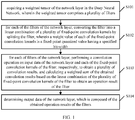
- an operation method for a network layer in a deep neural network may include the following steps.
- a weighted tensor of the network layer in the Deep Neural Network is acquired, wherein the weighted tensor includes a plurality of filters.
- Network layers in the Deep Neural Network are configured for network operations, such as, convolution, dot product, and the like.
- the network layers may include Convolution layers (Conv layer) and fully connected layers, and each of the network layers includes the weighted tensor for performing a network operation.
- DNN is a broad data processing method and may be any one of data processing methods, such as, CNN, RNN and LSTM.
- a weighted tensor includes specific weight values in a Conv layer or specific weight values in a fully connected layer.
- a weighted tensor of the k th Conv layer is denoted by W, and its size is S ⁇ S ⁇ I ⁇ O.
- the weighted tensor of the Conv layer may be divided into O filters based on the number of output feature vectors.
- a weighted tensor of the 1 st fully connected layer is denoted by V, and its size is M ⁇ N.
- the number of output feature vectors of the fully connected layer is M, and the size of the j th filter of the fully connected filter is 1 ⁇ N.
- the weighted tensor of the fully connected layer may be divided into M filters based on the number of output feature vectors.
- the filter is split to be converted a linear combination of a plurality of fixed-point convolution kernels; wherein, a weight value of each of the fixed-point convolution kernels is a fixed-point quantized value having a specified bit-width.
- the weight values of the weighted tensor in the network layer are usually floating-point numbers.
- a floating-point number may be represented as a product of one fixed-point quantized value and a weight or as a weighted sum of a plurality of fixed-point quantized values and corresponding weights.
- the weights can be obtained through multiple times of training and represent scale coefficients. Approximate floating-point numbers can be obtained by multiplying the weights with the fixed-point quantized values.
- the number of bits that are required to represent a weight value of a neural network model in different application scenarios is different.
- a weight value is represented by 16 bits.
- a weight value is represented by 4 bits.
- an operation rate cannot be significantly reduced due to a larger bit-width (i.e., the number of bits), and the requirement for supporting multiple numbers of bits in the same hardware platform will increase the complexity for designing a circuit and reduce the regularity of the circuit. Therefore, the weighted tensor can be converted uniformly to low-bit fixed-point convolution kernels through a method for splitting weight values, which largely reduces the amount of operation and the regularity for designing the circuit.
- the filter when a certain filter needs to be represented by a bit-width of 8 bits, the filter may be designed as a linear combination of four 2-bit fixed-point convolution kernels and it is only needed to perform operation on a 2-bit fixed-point convolution kernel each time.
- the filter When a certain filter needs to be represented by a bit-width of 4 bits, the filter may be designed as a linear combination of two 2-bit fixed-point convolution kernels and it is only needed to perform operation on a 2-bit fixed-point convolution kernel each time.
- the scheme significantly reduces the amount of operation and improves the regularity for designing the circuit.
- the weights of the linear combination here represent scale coefficients that can be obtained by training.
- the method provided by the embodiment of the present application may further include: determining a preset quantized number of bits based on a preset application precision of the Deep Neural Network.
- S102 may further include: for each of the filters of the network layer, converting the filter into the linear combination of the plurality of fixed-point convolution kernels by splitting the filter based on the preset quantized number of bits; wherein, a sum of specified bit-widths corresponding to all of the fixed-point convolution kernels is equal to the preset quantized number of bits.
- the preset application precision of the Deep Neural Network determines the preset quantized number of bits of each of the quantized weight values in the weighted tensor.
- the sum of the specified bit-widths corresponding to all of the fixed-point convolution kernels that are obtained by the splitting is equal to the preset quantized number of bits.
- the network layer may include a Conv layer, and the size of the weighted tensor of the Conv layer may be S ⁇ S ⁇ I ⁇ O.
- S102 may further include: for each of the filters of the Conv layer, converting the filter into the linear combination of the plurality of fixed-point convolution kernels by splitting the filter based on a preset splitting formula.
- w i is the i th filter of the Conv layer, i ⁇ [1,O]
- p is the number of the fixed-point convolution kernels obtained by splitting the filter w i
- ⁇ j is a preset linear weighting coefficient of the j th fixed-point convolution kernel
- t j is the j th fixed-point convolution kernel
- the size of t j is S ⁇ S ⁇ I
- B is the preset quantized number of bits
- b j is a specified bit-width corresponding to the j th fixed-point convolution kernel.
- the filter w i with a size of S ⁇ S ⁇ I in the Conv layer is split to be converted into a linear combination of p low-bit fixed-point convolution kernels, and the number of low-bit fixed-point bits (i.e. the specified bit-width) of the j th fixed-point convolution kernel is denoted by b j .
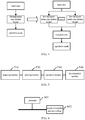
- the weighted tensor of each Conv layer in the network model can be represented as shown in FIG.
- a floating-point filter of the model is split to be converted into a linear combination of a plurality of low-bit fixed-point convolution kernels, which substantially is a linear combination of low-bit fixed-point weight values in the plurality of the low-bit fixed-point convolution kernels.
- the network layer may include a fully connected layer.
- the size of the weighted tensor of the fully connected layer may be M ⁇ N and each of filters of the fully connected layer is a 1 ⁇ N vector.
- S102 may further include: for each of the 1 ⁇ N vectors of the fully connected layer, converting the vector into the linear combination of the plurality of fixed-point convolution kernels by splitting the vector based on a preset splitting formula.
- v x is the x th 1 ⁇ N vector of the fully connected layer, x ⁇ [1,M]
- q is the number of the fixed-point convolution kernels obtained by splitting the vector v x
- ⁇ y is a preset linear weighting coefficient of the y th fixed-point convolution kernel
- t y is the y th fixed-point convolution kernel and the size of t y is 1 ⁇ N
- B is a preset quantized number of bits
- b y is a specified bit-width corresponding to the y th fixed-point convolution kernel
- each of the 1 ⁇ N vectors of the fully connected layer can be understood as a filter of the fully connected layer.
- Each of the 1 ⁇ N vectors of the fully connected layer is split to be converted into a linear combination of q low-bit fixed-point convolution kernels, and the number of low-bit fixed-point bits (i.e. the specified bit-width) of the y th fixed-point convolution kernel is denoted by b y .
- the weighted tensor of each of fully connected layers in the network model can be represented as shown in FIG.
- a floating-point vector of the model is split to be converted into a linear combination of a plurality of low-bit fixed-point convolution kernels, which substantially is a linear combination of low-bit fixed-point weight values in the plurality of the low-bit fixed-point convolution kernels.
- a convolution operation is performed on input data of the network layer and each of the fixed-point convolution kernels of the filter, respectively, to obtain a plurality of convolution results, and a weighted sum of the convolution results is calculated based on the linear combination of the plurality of fixed-point convolution kernels of the filter to obtain an operation result of the filter.
- the fixed-pointing of the weighted tensor of the network layer by S102 can convert one operation on a floating-point weight value of a Conv layer or a floating-point weight value of a fully connected layer into operations on a plurality of low-bit fixed-point weight values of the Conv layer or a plurality of low-bit fixed-point weight values of the fully connected layer.
- the model structure as shown in the left of the FIG. 4 can be converted into the model structure as shown in the right of the FIG. 4 to perform the operation. This reduces computing granularity of a hardware platform and improves the utilization rate of resources of the hardware platform while significantly reducing the number of parameters of the model and the amount of operation of the model.
- the convolution operation on the input data and each of the fixed-point convolution kernels is a process of performing dot product and summation operations, which is not described here.
- the weighted sum of the convolution results can be calculated based on the linear combination manner of the plurality of fixed-point convolution kernels of the filter, e.g., the weighted sum manner, to obtain an operation result of the filter.
- S103 may further include: for each of the filters of the Conv layer, weighting the convolution results of the fixed-point convolution kernels based on a preset linear weighting coefficient of each of the fixed-point convolution kernels of the filter and calculating a sum of the weighted convolution results to obtain the operation result of the filter.
- S103 may further include: for each of the 1 ⁇ N vectors of the fully connected layer, weighting the convolution results of the fixed-point convolution kernels based on a preset linear weighting coefficient of each of the fixed-point convolution kernels of the vector and calculating a sum of the weighted convolution results to obtain the operation result of the vector.
- a process of splitting a filter has been introduced respectively for the Conv layer or the fully connected layer as the network layer.
- the filter is represented as a linear combination of the sum of the products of the fixed-point convolution kernels and the preset linear weighting coefficients. Therefore, in performing the convolution operation, the convolution operation is performed on the input data and each of the fixed-point convolution kernels, respectively, and the weighted sum of the convolution results is calculated based on the preset linear weighting coefficients to obtain the operation result of the filter.
- output data of the network layer which is composed of the operation results of all of the filters, is determined.
- the filters of the network layer correspond to the number of output feature vectors of the network layer. Therefore, the output data of the network layer is actually a combination of operation results of all of the filters. For example, if a network layer includes 5 filters, the output data of the network layer actually includes 5 feature vectors.
- a weighted tensor of a network layer in a Deep Neural Network is acquired; for each of the filters in the weighted tensor of the network layer, the filter is split to be converted into a linear combination of a plurality of fixed-point convolution kernels; a convolution operation is performed on input data of the network layer and each of the fixed-point convolution kernels of the filter, respectively, to obtain a plurality of convolution results; a weighted sum of the convolution results is calculated based on the linear combination of the plurality of fixed-point convolution kernels of the filter to obtain an operation result of the filter; and the output data of the network layer, which is composed of the operation results of the filters, is determined.
- the weight value of each of the fixed-point convolution kernels is a fixed-point quantized value having the specified bit-width and the amount of operations for the fixed-point quantized value is smaller than the amount of operations for the floating point number, the amount of operations in each operation task for DNN can be reduced and thus the operating efficiency for DNN can be improved by performing a fixing-point quantization on a floating point number, and converting a filter including a floating-point weight value in the weighted tensor of the network layer into a linear combination of a plurality of fixed-point convolution kernels, each including a fixed-point quantized weight value.
- an embodiment of the present application provides an operation apparatus for a network layer in a Deep Neural Network.
- the operation apparatus for a network layer in the Deep Neural Network may include:
- the acquiring module 510 may be further configured for: determining a preset quantized number of bits based on a preset application precision of the Deep Neural Network.
- the splitting module 520 may be further configured for: for each of the filters of the network layer, converting the filter into the linear combination of the plurality of fixed-point convolution kernels by splitting the filter based on the preset quantized number of bits; wherein, a sum of specified bit-widths corresponding to the fixed-point convolution kernels is equal to the preset quantized number of bits.
- the network layer may include a convolution layer, and a size of the weighted tensor of the convolution layer may be S ⁇ S ⁇ I ⁇ O;
- the operation module 530 may be further configured for: for each of the filters of the convolution layer, weighting the convolution results of the fixed-point convolution kernels based on the preset linear weighting coefficients of the fixed-point convolution kernels of the filter and calculating a sum of weighted convolution results to obtain the operation result of the filter.
- the network layer may include a fully connected layer.
- the size of the weighted tensor of the fully connected layer may be M ⁇ N and each of the filters of the fully connected layer may be a 1 ⁇ N vector.
- the operation module 530 may be further configured for: for each of the 1 ⁇ N vectors of the fully connected layer, weighting the convolution results of the fixed-point convolution kernels based on the preset linear weighting coefficients of the fixed-point convolution kernels of the vector and calculating a sum of the weighted convolution results to obtain the operation result of the vector.
- a weighted tensor of a network layer in a Deep Neural Network is acquired; for each of the filters in the weighted tensor of the network layer, the filter is split to be converted into a linear combination of a plurality of fixed-point convolution kernels; a convolution operation is performed on input data of the network layer and each of the fixed-point convolution kernels of the filter, respectively, to obtain a plurality of convolution results; a weighted sum of the convolution results is calculated based on the linear combination of the plurality of fixed-point convolution kernels of the filter to obtain an operation result of the filter; and the output data of the network layer, which is composed of the operation results of the filters, is determined.
- the weight value of each of the fixed-point convolution kernels is a fixed-point quantized value having the specified bit-width and the amount of operations for the fixed-point quantized value is smaller than the amount of operations for the floating point number, the amount of operations in each operation task for DNN can be reduced and thus the operating efficiency for DNN can be improved by performing a fixing-point quantization on a floating point number, and converting a filter including a floating-point weight value in the weighted tensor of the network layer into a linear combination of a plurality of fixed-point convolution kernels, each including a fixed-point quantized weight value.
- an embodiment of the present application further provides an electronic device.
- the electronic device includes a processor 601 and a machine-readable storage medium 602.
- the machine-readable storage medium 602 stores machine-executable instructions that are executable by the processor 601.
- the processor 601 is caused by the machine-executable instructions stored in the machine-readable storage medium 602 to perform the operation method for a network layer in a Deep Neural Network provided by the embodiment of the present application.
- Data transmission may be implemented between the machine-readable storage medium 602 and the processor 601 in a wired connection or wireless connection manner.
- the electronic device can communicate with other devices via wired communication interfaces or wireless communication interfaces.
- the machine-readable storage medium may include a Random Access Memory (RAM), or a Non-volatile Memory (NVM), for example, at least one magnetic disk memory.
- the machine-readable storage medium may also be at least one storage apparatus located away from the processor.
- the processor may be a general-purpose processor, including a Central Processing Unit (CPU), a Network Processor (NP), etc.; it may also be a Digital Signal Processor (DSP), an Application Specific Integrated Circuit (ASIC), a Field-Programmable Gate Array (FPGA) or other programmable logic devices, discrete gates or transistor logic devices, discrete hardware components.
- CPU Central Processing Unit
- NP Network Processor
- DSP Digital Signal Processor
- ASIC Application Specific Integrated Circuit
- FPGA Field-Programmable Gate Array
- the processor of the electronic device by reading the machine-executable instructions stored in the machine-readable medium and executing the machine-executable instructions, can acquire a weighted tensor of a network layer in a Deep Neural Network; for each of the filters in the weighted tensor of the network layer, convert the filter into a linear combination of a plurality of fixed-point convolution kernels by splitting the filter; perform a convolution operation on input data of the network layer and each of the fixed-point convolution kernels of the filter, respectively, to obtain a plurality of convolution results, and calculate a weighted sum of the convolution results based on the linear combination of the plurality of fixed-point convolution kernels of the filter to obtain an operation result of the filter; and determine output data of the network layer, which is composed of the operation results of the filters.
- the weight value of each of the fixed-point convolution kernels is a fixed-point quantized value having the specified bit-width and the amount of operations for the fixed-point quantized value is smaller than the amount of operations for the floating point number, the amount of operations in each operation task for DNN can be reduced and thus the operating efficiency for DNN can be improved by performing a fixing-point quantization on a floating point number, and converting a filter including a floating-point weight value in the weighted tensor of the network layer into a linear combination of a plurality of fixed-point convolution kernels, each including a fixed-point quantized weight value.
- an embodiment of the present application provides a machine-readable storage medium having stored thereon machine-executable instructions.
- the machine-executable instructions cause a processor to perform the operation method for a network layer in a Deep Neural Network provided by the embodiment of the present application.
- the machine-readable storage medium stores the machine-executable instructions.
- the instructions when executed, perform the operation method for a network layer in a Deep Neural Network provided by the embodiment of the present application, including: acquiring a weighted tensor of a network layer in a Deep Neural Network; for each of the filters in the weighted tensor of the network layer, converting the filter into a linear combination of a plurality of fixed-point convolution kernels by splitting the filter; performing a convolution operation on input data of the network layer and each of the fixed-point convolution kernels of the filter, respectively, to obtain a plurality of convolution results, and calculating a weighted sum of the convolution results based on the linear combination of the plurality of fixed-point convolution kernels of the filter to obtain an operation result of the filter; determining output data of the network layer, which is composed of the operation results of the filters.
- the weight value of each of the fixed-point convolution kernels is a fixed-point quantized value having the specified bit-width and the amount of operations for the fixed-point quantized value is smaller than the amount of operations for the floating point number, the amount of operations in each operation task for DNN can be reduced and thus the operating efficiency for DNN can be improved by performing a fixing-point quantization on a floating point number, and converting a filter including a floating-point weight value in the weighted tensor of the network layer into a linear combination of a plurality of fixed-point convolution kernels, each including a fixed-point quantized weight value.
- an embodiment of the present application further provides an application program.
- the application program when executed, performs the method for a network layer in a Deep Neural Network provided by the embodiment of the present application.
- the application program when executed, performs the operation method for a network layer in a Deep Neural Network provided by the embodiment of the present application, including: acquiring a weighted tensor of a network layer in a Deep Neural Network; for each of the filters in the weighted tensor of the network layer, converting the filter into a linear combination of a plurality of fixed-point convolution kernels by splitting the filter; performing a convolution operation on input data of the network layer and each of the fixed-point convolution kernels of the filter, respectively, to obtain a plurality of convolution results, and calculating a weighted sum of the convolution results based on the linear combination of the plurality of fixed-point convolution kernels of the filter to obtain an operation result of the filter; determining output data of the network layer, which is composed of the operation results of the filters.
- the weight value of each of the fixed-point convolution kernels is a fixed-point quantized value having the specified bit-width and the amount of operations for the fixed-point quantized value is smaller than the amount of operations for the floating point number, the amount of operations in each operation task for DNN can be reduced and thus the operating efficiency for DNN can be improved by performing a fixing-point quantization on a floating point number, and converting a filter including a floating-point weight value in the weighted tensor of the network layer into a linear combination of a plurality of fixed-point convolution kernels, each including a fixed-point quantized weight value.
Landscapes
- Engineering & Computer Science (AREA)
- Physics & Mathematics (AREA)
- Theoretical Computer Science (AREA)
- Health & Medical Sciences (AREA)
- Life Sciences & Earth Sciences (AREA)
- Biomedical Technology (AREA)
- Biophysics (AREA)
- General Health & Medical Sciences (AREA)
- General Physics & Mathematics (AREA)
- Evolutionary Computation (AREA)
- Computational Linguistics (AREA)
- Molecular Biology (AREA)
- Computing Systems (AREA)
- General Engineering & Computer Science (AREA)
- Data Mining & Analysis (AREA)
- Mathematical Physics (AREA)
- Software Systems (AREA)
- Artificial Intelligence (AREA)
- Neurology (AREA)
- Complex Calculations (AREA)
- Image Processing (AREA)
Abstract
Description
- The present application claims the priority to a Chinese Patent Application No.
201810679580.X - The present application relates to the technical field of machine learning, and in particular to an operation method and apparatus for a network layer in a Deep Neural Network.
- As an emerging field in machine learning research, a Deep Neural Network (DNN) analyzes data by imitating the mechanism of the human brain, and is an intelligent model which performs analysis and learning by establishing and simulating the human brain. At present, for example, Convolutional Neural Network (CNN), Recurrent Neural Network (RNN), Long Short Term Memory (LSTM) and the like have been well applied in target detection and segmentation, behavior detection and recognition, voice recognition and other aspects.
- Conventional DNN generally realizes the operation of basic units of the network by multiplication operation/addition operation of double-precision or single-precision floating-point number. Due to a relatively large amount of data involved in the operation, an amount of operation in each operation task for DNN is very large, and thus an operating efficiency for DNN is low.
- The objective of the embodiments of the present application is to provide an operation method and apparatus for a network layer in a Deep Neural Network to improve the operating efficiency of DNN. The specific technical solutions are as follows.
- In a first aspect, an embodiment of the present application provides an operation method for a network layer in a Deep Neural Network. The method includes:
- acquiring a weighted tensor of the network layer in the Deep Neural Network, wherein the weighted tensor comprises a plurality of filters;
- for each of the filters of the network layer, converting the filter into a linear combination of a plurality of fixed-point convolution kernels by splitting the filter, wherein a weight value of each of the fixed-point convolution kernels is a fixed-point quantized value having a specified bit-width;
- for each of filters of the network layer, performing a convolution operation on input data of the network layer and each of the fixed-point convolution kernels of the filter, respectively, to obtain a plurality of convolution results, and calculating a weighted sum of the obtained convolution results based on the linear combination of the plurality of fixed-point convolution kernels of the filter to obtain an operation result of the filter; and
- determining output data of the network layer, which is composed of the obtained operation results of the filters.
- Optionally, before for each of the filters of the network layer, converting the filter into the linear combination of the plurality of fixed-point convolution kernels by splitting the filter, the method further comprises:
- determining a preset quantized number of bits based on a preset application precision of the Deep Neural Network;
- for each of the filters of the network layer, converting the filter into the linear combination of the plurality of fixed-point convolution kernels by splitting the filter comprises:
for each of the filters of the network layer, converting the filter into the linear combination of the plurality of fixed-point convolution kernels by splitting the filter based on the preset quantized number of bits; wherein, a sum of specified bit-widths corresponding to the fixed-point convolution kernels is equal to the preset quantized number of bits. - Optionally, the network layer comprises a convolution layer, and a size of the weighted tensor of the convolution layer is S×S×I×O;
for each of the filters of the network layer, converting the filter into the linear combination of the plurality of fixed-point convolution kernels by splitting the filter comprises:
for each of the filters of the convolution layer, converting the filter into the linear combination of the plurality of fixed-point convolution kernels by the splitting the filter based on a preset splitting formula; wherein, the preset splitting formula is:
- Optionally, calculating the weighted sum of the obtained convolution results based on the linear combination of the plurality of fixed-point convolution kernels of the filter to obtain the operation result of the filter comprises:
for each of the filters of the convolution layer, weighting the convolution results of the fixed-point convolution kernels based on the preset linear weighting coefficients of the fixed-point convolution kernels of the filter and calculating a sum of the weighted convolution results to obtain the operation result of the filter. - Optionally, the network layer comprises a fully connected layer, a size of the weighted tensor of the fully connected layer is M×N, and each of filters of the fully connected layer is a 1 ×N vector;
for each of the filters of the network layer, converting the filter into the linear combination of the plurality of fixed-point convolution kernels by splitting the filter comprises:
for each of the 1×N vectors of the fully connected layer, converting the vector into the linear combination of the plurality of fixed-point convolution kernels by splitting the vector based on a preset splitting formula; wherein, the preset splitting formula is:
- Optionally, calculating the weighted sum of the obtained convolution results based on the linear combination of the plurality of fixed-point convolution kernels of the filter to obtain the operation result of the filter comprises:
for each of the 1×N vectors of the fully connected layer, weighting the convolution results of the fixed-point convolution kernels based on the preset linear weighting coefficients of the fixed-point convolution kernels of the vector and calculating a sum of the weighted convolution results to obtain the operation result of the vector. - In a second aspect, an embodiment of the present application provides an operation apparatus for a network layer in a Deep Neural Network; the apparatus includes:
- an acquiring module configured for acquiring a weighted tensor of the network layer in the Deep Neural Network, wherein the weighted tensor comprises a plurality of filters;
- a splitting module configured for: for each of the filters of the network layer, converting the filter into a linear combination of a plurality of fixed-point convolution kernels by splitting the filter, wherein a weight value of each of the fixed-point convolution kernels is a fixed-point quantized value having a specified bit-width;
- an operation module configured for: for each of filters of the network layer, performing a convolution operation on input data of the network layer and each of the fixed-point convolution kernels of the filter, respectively, to obtain a plurality of convolution results, and calculating a weighted sum of the obtained convolution results based on the linear combination of the plurality of fixed-point convolution kernels of the filter to obtain an operation result of the filter; and
- a determination module configured for determining output data of the network layer, which is composed of the obtained operation results of the filters.
- Optionally, the acquiring module is further configured for: determining a preset quantized number of bits based on a preset application precision of the Deep Neural Network;
the splitting module is further configured for:
for each of the filters of the network layer, converting the filter into the linear combination of the plurality of fixed-point convolution kernels by splitting the filter based on the preset quantized number of bits; wherein, a sum of specified bit-widths corresponding to the fixed-point convolution kernels is equal to the preset quantized number of bits. - Optionally, the network layer comprises a convolution layer, and a size of the weighted tensor of the convolution layer is S×S×I×O;
the splitting module is further configured for:
for each of the filters of the convolution layer, converting the filter into the linear combination of the plurality of fixed-point convolution kernels by the splitting the filter based on a preset splitting formula; wherein, the preset splitting formula is:
- Optionally, the operation module is further configured for:
for each of the filters of the convolution layer, weighting the convolution results of the fixed-point convolution kernels based on the preset linear weighting coefficients of the fixed-point convolution kernels of the filter and calculating a sum of the weighted convolution results to obtain the operation result of the filter. - Optionally, the network layer comprises a fully connected layer, a size of the weighted tensor of the fully connected layer is M×N, and each of filters of the fully connected layer is a 1×N vector;
the splitting module is further configured for:
for each of the 1×N vectors of the fully connected layer, converting the vector into the linear combination of the plurality of fixed-point convolution kernels by splitting the vector based on a preset splitting formula; wherein, the preset splitting formula is:
- Optionally, the operation module is further configured for:
for each of the 1×N vectors of the fully connected layer, weighting the convolution results of the fixed-point convolution kernels based on the preset linear weighting coefficients of the fixed-point convolution kernels of the vector and calculating a sum of the weighted convolution results to obtain the operation result of the vector. - In a third aspect, an embodiment of the present application provides an electronic device, including a processor and a machine-readable storage medium; the machine-readable storage medium stores machine-executable instructions, which are executed by the processor, so as to cause the processor to perform the method provided in the first aspect of the embodiments of the present application.
- In a fourth aspect, an embodiment of the present application provides an machine-readable medium having stored thereon machine-executable instructions, wherein the machine-executable instructions are called and executed by the processor, so as to cause the processor to perform the method provided in the first aspect of the embodiments of the present application.
- In a fifth aspect, an embodiment of the present application provides an application program, which, when executed, performs the method provided in the first aspect of the embodiments of the present application.
- In summary, in the solutions provided by the embodiments of the present application, a weighted tensor of a network layer in a Deep Neural Network is acquired; for each of the filters in the weighted tensor of the network layer, the filter is split to be converted into a linear combination of a plurality of fixed-point convolution kernels; a convolution operation is performed on input data of the network layer and each of the fixed-point convolution kernels of the filter, respectively, to obtain a plurality of convolution results, and a weighted sum of the convolution results is calculated based on the linear combination of the plurality of fixed-point convolution kernels of the filter to obtain an operation result of the filter; and output data of the network layer, which is composed of the operation results of the filters, is determined. Since the weight value of each of the fixed-point convolution kernels is a fixed-point quantized value having the specified bit-width and the amount of operations for the fixed-point quantized value is smaller than the amount of operations for the floating point number, the amount of operations in each operation task for DNN can be reduced and thus the operating efficiency for DNN can be improved by performing a fixing-point quantization on a floating point number, and converting a filter including a floating-point weight value in the weighted tensor of the network layer into a linear combination of a plurality of fixed-point convolution kernels, each including a fixed-point quantized weight value.
- In order to more clearly describe the technical solutions of the embodiments of the present application or of the prior art, drawings that need to be used in embodiments and the prior art will be briefly described below. Obviously, the drawings described below are for only some embodiments of the present application; those skilled in the art can also obtain other drawings based on these drawings without any creative efforts.
-
FIG. 1 is a flowchart of an operation method for a network layer in a Deep Neural Network according to an embodiment of the present application. -
FIG. 2 is an exploded view of filters of a convolutional layer according to an embodiment of the present application. -
FIG. 3 is an exploded view of vectors with a size of 1 × N of fully connected layer according to an embodiment of the present application. -
FIG. 4 is a diagram for comparing an existing operation for a network layer with an operation for a network layer according to an embodiment of the present application. -
FIG. 5 is a structural diagram of an operation apparatus for a network layer in the Deep Neural Network according to an embodiment of the present application. -
FIG. 6 is a structural diagram of an electronic device according to an embodiment of the present application. - In order to make the objectives, technical solutions and advantages of the present application clearer and more understandable, the present application will be described in more detail below with reference to the appended drawings and embodiments. Obviously, the described embodiments are only some, and not all, of the embodiments of the present application. All other embodiments obtained based on the embodiments of the present application by those skilled in the art without any creative efforts fall into the scope of protection of the present application.
- In order to improve the operating efficiency of DNN, the embodiments of the present application provide an operation method and apparatus for a network layer in a Deep Neural Network, an electronic device, a machine-readable storage medium and an application program.
- First, the operation method for a network layer in a Deep Neural Network provided by an embodiment of the present application is introduced below.
- An executer of the operation method for a network layer in a Deep Neural Network according to an embodiment of the present application may be an electronic device that executes an intellectual algorithm. The electronic device may be an intellectual device performing target detection and segmentation, behavior detection and recognition or voice recognition, for example, a remote computer, a remote server, an intellectual camera, an intellectual audio device, and the like. The executer should at least include a processor carrying a core processing chip. The operation method for a network layer in a Deep Neural Network according to the embodiment of the present application may be implemented by at least one of a software, a hardware circuit and a logic circuit disposed in the executer.
- As shown in
FIG. 1 , an operation method for a network layer in a deep neural network according to the embodiment of the present application may include the following steps. - At S101, a weighted tensor of the network layer in the Deep Neural Network is acquired, wherein the weighted tensor includes a plurality of filters.
- Network layers in the Deep Neural Network are configured for network operations, such as, convolution, dot product, and the like. The network layers may include Convolution layers (Conv layer) and fully connected layers, and each of the network layers includes the weighted tensor for performing a network operation. DNN is a broad data processing method and may be any one of data processing methods, such as, CNN, RNN and LSTM.
- A weighted tensor includes specific weight values in a Conv layer or specific weight values in a fully connected layer. A weighted tensor of the kth Conv layer is denoted by W, and its size is S×S×I×O. w=W(:,:,:,i) is the ith filter of the Conv layer, and the size of the ith filter is S×S×I. The weighted tensor of the Conv layer may be divided into O filters based on the number of output feature vectors. For fully connected layers, a weighted tensor of the 1st fully connected layer is denoted by V, and its size is M×N. The number of output feature vectors of the fully connected layer is M, and the size of the jth filter of the fully connected filter is 1 ×N. The weighted tensor of the fully connected layer may be divided into M filters based on the number of output feature vectors.
- At S102, for each of the filters of the network layer, the filter is split to be converted a linear combination of a plurality of fixed-point convolution kernels; wherein, a weight value of each of the fixed-point convolution kernels is a fixed-point quantized value having a specified bit-width.
- The weight values of the weighted tensor in the network layer are usually floating-point numbers. A floating-point number may be represented as a product of one fixed-point quantized value and a weight or as a weighted sum of a plurality of fixed-point quantized values and corresponding weights. The weights can be obtained through multiple times of training and represent scale coefficients. Approximate floating-point numbers can be obtained by multiplying the weights with the fixed-point quantized values.
- In practice, the number of bits that are required to represent a weight value of a neural network model in different application scenarios is different. For some harder tasks, such as, face recognition, a weight value is represented by 16 bits. For some easier tasks, such as, target detection, a weight value is represented by 4 bits. In this case, an operation rate cannot be significantly reduced due to a larger bit-width (i.e., the number of bits), and the requirement for supporting multiple numbers of bits in the same hardware platform will increase the complexity for designing a circuit and reduce the regularity of the circuit. Therefore, the weighted tensor can be converted uniformly to low-bit fixed-point convolution kernels through a method for splitting weight values, which largely reduces the amount of operation and the regularity for designing the circuit. For example, when a certain filter needs to be represented by a bit-width of 8 bits, the filter may be designed as a linear combination of four 2-bit fixed-point convolution kernels and it is only needed to perform operation on a 2-bit fixed-point convolution kernel each time. When a certain filter needs to be represented by a bit-width of 4 bits, the filter may be designed as a linear combination of two 2-bit fixed-point convolution kernels and it is only needed to perform operation on a 2-bit fixed-point convolution kernel each time. The scheme significantly reduces the amount of operation and improves the regularity for designing the circuit. The weights of the linear combination here represent scale coefficients that can be obtained by training.
- Optionally, before S102, the method provided by the embodiment of the present application may further include: determining a preset quantized number of bits based on a preset application precision of the Deep Neural Network.
- S102 may further include: for each of the filters of the network layer, converting the filter into the linear combination of the plurality of fixed-point convolution kernels by splitting the filter based on the preset quantized number of bits; wherein, a sum of specified bit-widths corresponding to all of the fixed-point convolution kernels is equal to the preset quantized number of bits.
- As described above, the preset application precision of the Deep Neural Network determines the preset quantized number of bits of each of the quantized weight values in the weighted tensor. The bigger the preset application precision is, the bigger the preset quantized number of bits is. For ensuring the accuracy of splitting each of the filters, the sum of the specified bit-widths corresponding to all of the fixed-point convolution kernels that are obtained by the splitting is equal to the preset quantized number of bits.
- Optionally, the network layer may include a Conv layer, and the size of the weighted tensor of the Conv layer may be S×S×I×O.
- S102 may further include: for each of the filters of the Conv layer, converting the filter into the linear combination of the plurality of fixed-point convolution kernels by splitting the filter based on a preset splitting formula. The preset splitting formula is

- For a Conv layer in the network, the filter wi with a size of S×S×I in the Conv layer is split to be converted into a linear combination of p low-bit fixed-point convolution kernels, and the number of low-bit fixed-point bits (i.e. the specified bit-width) of the jth fixed-point convolution kernel is denoted by bj. After splitting each of the filters in the weighted tensor of the Conv layer via the formula (1), the weighted tensor of each Conv layer in the network model can be represented as shown in
FIG. 2 , i.e., a floating-point filter of the model is split to be converted into a linear combination of a plurality of low-bit fixed-point convolution kernels, which substantially is a linear combination of low-bit fixed-point weight values in the plurality of the low-bit fixed-point convolution kernels. - Optionally, the network layer may include a fully connected layer. The size of the weighted tensor of the fully connected layer may be M×N and each of filters of the fully connected layer is a 1×N vector.
- S102 may further include: for each of the 1×N vectors of the fully connected layer, converting the vector into the linear combination of the plurality of fixed-point convolution kernels by splitting the vector based on a preset splitting formula. The preset splitting formula is:

- For a fully connected layer in the network, each of the 1×N vectors of the fully connected layer can be understood as a filter of the fully connected layer. Each of the 1×N vectors of the fully connected layer is split to be converted into a linear combination of q low-bit fixed-point convolution kernels, and the number of low-bit fixed-point bits (i.e. the specified bit-width) of the yth fixed-point convolution kernel is denoted by by. After splitting each of the vectors in the weighted tensor of the fully connected layer via the formula (2), the weighted tensor of each of fully connected layers in the network model can be represented as shown in
FIG. 3 , i.e., a floating-point vector of the model is split to be converted into a linear combination of a plurality of low-bit fixed-point convolution kernels, which substantially is a linear combination of low-bit fixed-point weight values in the plurality of the low-bit fixed-point convolution kernels. - At S103, for each of the filters of the network layer, a convolution operation is performed on input data of the network layer and each of the fixed-point convolution kernels of the filter, respectively, to obtain a plurality of convolution results, and a weighted sum of the convolution results is calculated based on the linear combination of the plurality of fixed-point convolution kernels of the filter to obtain an operation result of the filter.
- The fixed-pointing of the weighted tensor of the network layer by S102 can convert one operation on a floating-point weight value of a Conv layer or a floating-point weight value of a fully connected layer into operations on a plurality of low-bit fixed-point weight values of the Conv layer or a plurality of low-bit fixed-point weight values of the fully connected layer. As shown in
FIG. 4 , in performing an operation on a network model, the model structure as shown in the left of theFIG. 4 can be converted into the model structure as shown in the right of theFIG. 4 to perform the operation. This reduces computing granularity of a hardware platform and improves the utilization rate of resources of the hardware platform while significantly reducing the number of parameters of the model and the amount of operation of the model. - The convolution operation on the input data and each of the fixed-point convolution kernels is a process of performing dot product and summation operations, which is not described here. After the convolution results of all of the fixed-point convolution kernels are obtained, the weighted sum of the convolution results can be calculated based on the linear combination manner of the plurality of fixed-point convolution kernels of the filter, e.g., the weighted sum manner, to obtain an operation result of the filter.
- Optionally, if the network layer is a Conv layer, S103 may further include: for each of the filters of the Conv layer, weighting the convolution results of the fixed-point convolution kernels based on a preset linear weighting coefficient of each of the fixed-point convolution kernels of the filter and calculating a sum of the weighted convolution results to obtain the operation result of the filter.
- If the network layer is a fully connected layer, S103 may further include: for each of the 1×N vectors of the fully connected layer, weighting the convolution results of the fixed-point convolution kernels based on a preset linear weighting coefficient of each of the fixed-point convolution kernels of the vector and calculating a sum of the weighted convolution results to obtain the operation result of the vector.
- In S102, a process of splitting a filter has been introduced respectively for the Conv layer or the fully connected layer as the network layer. In the process of the splitting, the filter is represented as a linear combination of the sum of the products of the fixed-point convolution kernels and the preset linear weighting coefficients. Therefore, in performing the convolution operation, the convolution operation is performed on the input data and each of the fixed-point convolution kernels, respectively, and the weighted sum of the convolution results is calculated based on the preset linear weighting coefficients to obtain the operation result of the filter.
- At S104, output data of the network layer, which is composed of the operation results of all of the filters, is determined.
- The filters of the network layer correspond to the number of output feature vectors of the network layer. Therefore, the output data of the network layer is actually a combination of operation results of all of the filters. For example, if a network layer includes 5 filters, the output data of the network layer actually includes 5 feature vectors.
- In the embodiment, a weighted tensor of a network layer in a Deep Neural Network is acquired; for each of the filters in the weighted tensor of the network layer, the filter is split to be converted into a linear combination of a plurality of fixed-point convolution kernels; a convolution operation is performed on input data of the network layer and each of the fixed-point convolution kernels of the filter, respectively, to obtain a plurality of convolution results; a weighted sum of the convolution results is calculated based on the linear combination of the plurality of fixed-point convolution kernels of the filter to obtain an operation result of the filter; and the output data of the network layer, which is composed of the operation results of the filters, is determined. Since the weight value of each of the fixed-point convolution kernels is a fixed-point quantized value having the specified bit-width and the amount of operations for the fixed-point quantized value is smaller than the amount of operations for the floating point number, the amount of operations in each operation task for DNN can be reduced and thus the operating efficiency for DNN can be improved by performing a fixing-point quantization on a floating point number, and converting a filter including a floating-point weight value in the weighted tensor of the network layer into a linear combination of a plurality of fixed-point convolution kernels, each including a fixed-point quantized weight value.
- Corresponding to the embodiment of the method, an embodiment of the present application provides an operation apparatus for a network layer in a Deep Neural Network. As shown in
FIG. 5 , the operation apparatus for a network layer in the Deep Neural Network may include: - an acquiring
module 510 configured for acquiring a weighted tensor of the network layer in the Deep Neural Network, wherein the weighted tensor comprises a plurality of filters; - a
splitting module 520 configured for: for each of the filters of the network layer, converting the filter into a linear combination of a plurality of fixed-point convolution kernels by splitting the filter, wherein a weight value of each of the fixed-point convolution kernels is a fixed-point quantized value having a specified bit-width; - an
operation module 530 configured for: for each of filters of the network layer, performing a convolution operation on input data of the network layer and each of the fixed-point convolution kernels of the filter, respectively, to obtain a plurality of convolution results, and calculating a weighted sum of the obtained convolution results based on the linear combination of the plurality of fixed-point convolution kernels of the filter to obtain an operation result of the filter; and - a
determination module 540 configured for determining output data of the network layer, which is composed of the obtained operation results of the filters. - Optionally, the acquiring
module 510 may be further configured for: determining a preset quantized number of bits based on a preset application precision of the Deep Neural Network. - The
splitting module 520 may be further configured for:
for each of the filters of the network layer, converting the filter into the linear combination of the plurality of fixed-point convolution kernels by splitting the filter based on the preset quantized number of bits; wherein, a sum of specified bit-widths corresponding to the fixed-point convolution kernels is equal to the preset quantized number of bits. - Optionally, the network layer may include a convolution layer, and a size of the weighted tensor of the convolution layer may be S×S×I×O;
thesplitting module 520 may be further configured for:
for each of the filters of the convolution layer, converting the filter into the linear combination of the plurality of fixed-point convolution kernels by the splitting the filter based on a preset splitting formula; wherein, the preset splitting formula is:
- Optionally, the
operation module 530 may be further configured for:
for each of the filters of the convolution layer, weighting the convolution results of the fixed-point convolution kernels based on the preset linear weighting coefficients of the fixed-point convolution kernels of the filter and calculating a sum of weighted convolution results to obtain the operation result of the filter. - Optionally, the network layer may include a fully connected layer. The size of the weighted tensor of the fully connected layer may be M×N and each of the filters of the fully connected layer may be a 1×N vector.
- The
splitting module 520 may be further configured for:
for each of the 1×N vectors of the fully connected layer, converting the vector into the linear combination of the plurality of fixed-point convolution kernels by splitting the vector based on a preset splitting formula; wherein, the preset splitting formula is:
- Optionally, the
operation module 530 may be further configured for:
for each of the 1×N vectors of the fully connected layer, weighting the convolution results of the fixed-point convolution kernels based on the preset linear weighting coefficients of the fixed-point convolution kernels of the vector and calculating a sum of the weighted convolution results to obtain the operation result of the vector. - In the embodiment, a weighted tensor of a network layer in a Deep Neural Network is acquired; for each of the filters in the weighted tensor of the network layer, the filter is split to be converted into a linear combination of a plurality of fixed-point convolution kernels; a convolution operation is performed on input data of the network layer and each of the fixed-point convolution kernels of the filter, respectively, to obtain a plurality of convolution results; a weighted sum of the convolution results is calculated based on the linear combination of the plurality of fixed-point convolution kernels of the filter to obtain an operation result of the filter; and the output data of the network layer, which is composed of the operation results of the filters, is determined. Since the weight value of each of the fixed-point convolution kernels is a fixed-point quantized value having the specified bit-width and the amount of operations for the fixed-point quantized value is smaller than the amount of operations for the floating point number, the amount of operations in each operation task for DNN can be reduced and thus the operating efficiency for DNN can be improved by performing a fixing-point quantization on a floating point number, and converting a filter including a floating-point weight value in the weighted tensor of the network layer into a linear combination of a plurality of fixed-point convolution kernels, each including a fixed-point quantized weight value.
- For improving the operating efficiency for DNN, an embodiment of the present application further provides an electronic device. As shown in
FIG. 6 , the electronic device includes aprocessor 601 and a machine-readable storage medium 602. - The machine-
readable storage medium 602 stores machine-executable instructions that are executable by theprocessor 601. - The
processor 601 is caused by the machine-executable instructions stored in the machine-readable storage medium 602 to perform the operation method for a network layer in a Deep Neural Network provided by the embodiment of the present application. - Data transmission may be implemented between the machine-
readable storage medium 602 and theprocessor 601 in a wired connection or wireless connection manner. The electronic device can communicate with other devices via wired communication interfaces or wireless communication interfaces. - The machine-readable storage medium may include a Random Access Memory (RAM), or a Non-volatile Memory (NVM), for example, at least one magnetic disk memory. Optionally, the machine-readable storage medium may also be at least one storage apparatus located away from the processor.
- The processor may be a general-purpose processor, including a Central Processing Unit (CPU), a Network Processor (NP), etc.; it may also be a Digital Signal Processor (DSP), an Application Specific Integrated Circuit (ASIC), a Field-Programmable Gate Array (FPGA) or other programmable logic devices, discrete gates or transistor logic devices, discrete hardware components.
- In this embodiment, the processor of the electronic device, by reading the machine-executable instructions stored in the machine-readable medium and executing the machine-executable instructions, can acquire a weighted tensor of a network layer in a Deep Neural Network; for each of the filters in the weighted tensor of the network layer, convert the filter into a linear combination of a plurality of fixed-point convolution kernels by splitting the filter; perform a convolution operation on input data of the network layer and each of the fixed-point convolution kernels of the filter, respectively, to obtain a plurality of convolution results, and calculate a weighted sum of the convolution results based on the linear combination of the plurality of fixed-point convolution kernels of the filter to obtain an operation result of the filter; and determine output data of the network layer, which is composed of the operation results of the filters. Since the weight value of each of the fixed-point convolution kernels is a fixed-point quantized value having the specified bit-width and the amount of operations for the fixed-point quantized value is smaller than the amount of operations for the floating point number, the amount of operations in each operation task for DNN can be reduced and thus the operating efficiency for DNN can be improved by performing a fixing-point quantization on a floating point number, and converting a filter including a floating-point weight value in the weighted tensor of the network layer into a linear combination of a plurality of fixed-point convolution kernels, each including a fixed-point quantized weight value.
- Further, corresponding to the operation method for a network layer in a Deep Neural Network according to the embodiment, an embodiment of the present application provides a machine-readable storage medium having stored thereon machine-executable instructions. The machine-executable instructions cause a processor to perform the operation method for a network layer in a Deep Neural Network provided by the embodiment of the present application.
- In this embodiment, the machine-readable storage medium stores the machine-executable instructions. The instructions, when executed, perform the operation method for a network layer in a Deep Neural Network provided by the embodiment of the present application, including: acquiring a weighted tensor of a network layer in a Deep Neural Network; for each of the filters in the weighted tensor of the network layer, converting the filter into a linear combination of a plurality of fixed-point convolution kernels by splitting the filter; performing a convolution operation on input data of the network layer and each of the fixed-point convolution kernels of the filter, respectively, to obtain a plurality of convolution results, and calculating a weighted sum of the convolution results based on the linear combination of the plurality of fixed-point convolution kernels of the filter to obtain an operation result of the filter; determining output data of the network layer, which is composed of the operation results of the filters. Since the weight value of each of the fixed-point convolution kernels is a fixed-point quantized value having the specified bit-width and the amount of operations for the fixed-point quantized value is smaller than the amount of operations for the floating point number, the amount of operations in each operation task for DNN can be reduced and thus the operating efficiency for DNN can be improved by performing a fixing-point quantization on a floating point number, and converting a filter including a floating-point weight value in the weighted tensor of the network layer into a linear combination of a plurality of fixed-point convolution kernels, each including a fixed-point quantized weight value.
- Further, an embodiment of the present application further provides an application program. The application program, when executed, performs the method for a network layer in a Deep Neural Network provided by the embodiment of the present application.
- In the embodiment of the present application, the application program, when executed, performs the operation method for a network layer in a Deep Neural Network provided by the embodiment of the present application, including: acquiring a weighted tensor of a network layer in a Deep Neural Network; for each of the filters in the weighted tensor of the network layer, converting the filter into a linear combination of a plurality of fixed-point convolution kernels by splitting the filter; performing a convolution operation on input data of the network layer and each of the fixed-point convolution kernels of the filter, respectively, to obtain a plurality of convolution results, and calculating a weighted sum of the convolution results based on the linear combination of the plurality of fixed-point convolution kernels of the filter to obtain an operation result of the filter; determining output data of the network layer, which is composed of the operation results of the filters. Since the weight value of each of the fixed-point convolution kernels is a fixed-point quantized value having the specified bit-width and the amount of operations for the fixed-point quantized value is smaller than the amount of operations for the floating point number, the amount of operations in each operation task for DNN can be reduced and thus the operating efficiency for DNN can be improved by performing a fixing-point quantization on a floating point number, and converting a filter including a floating-point weight value in the weighted tensor of the network layer into a linear combination of a plurality of fixed-point convolution kernels, each including a fixed-point quantized weight value.
- The embodiments of the electronic device, the machine-readable medium and the application program are described briefly, since they are substantially similar to the embodiment of the method. Related contents can refer to the part that describes the embodiment of the method.
- It should be noted that the relationship terms used herein, such as "first", "second" and the like are only to distinguish one entity or operation from another entity or operation, but do not necessarily require or imply that there is an actual relationship or order between these entities or operations. Moreover, the terms "include", "comprise", or any other variants thereof are intended to cover a non-exclusive inclusion, such that processes, methods, articles or devices, including a series of elements, include not only those elements that have been listed, but also other elements that are not specifically listed or the elements intrinsic to these processes, methods, articles or devices. Without further limitations, elements limited by the wording "include(s) a/an..." or "comprise(s) a/an..." do not exclude additional identical elements in the processes, methods, articles or devices, including the listed elements.
- All of the embodiments in the description are described in a correlated manner, and identical or similar parts in various embodiments can refer to one another. In addition, the description for each embodiment focuses on the differences from other embodiments. In particular, the embodiments of the apparatus, the electronic device, the machine-readable medium and the application program are described briefly, since they are substantially similar to the embodiment of the method, and the related contents can refer to the description of the embodiment of the method.
- The embodiments described above are simply preferable embodiments of the present application, and are not intended to limit the scope of protection of the present application. Any modifications, alternatives, improvements, or the like within the spirit and principle of the present application shall be included within the scope of protection of the present application.
Claims (15)
- An operation method for a network layer in a Deep Neural Network, comprising:acquiring a weighted tensor of the network layer in the Deep Neural Network, wherein the weighted tensor comprises a plurality of filters;for each of the filters of the network layer, converting the filter into a linear combination of a plurality of fixed-point convolution kernels by splitting the filter, wherein a weight value of each of the fixed-point convolution kernels is a fixed-point quantized value having a specified bit-width;for each of filters of the network layer, performing a convolution operation on input data of the network layer and each of the fixed-point convolution kernels of the filter, respectively, to obtain a plurality of convolution results, and calculating a weighted sum of the obtained convolution results based on the linear combination of the plurality of fixed-point convolution kernels of the filter to obtain an operation result of the filter; anddetermining output data of the network layer, which is composed of the obtained operation results of the filters.
- The method of claim 1, wherein, before for each of the filters of the network layer, converting the filter into the linear combination of the plurality of fixed-point convolution kernels by splitting the filter, the method further comprises:determining a preset quantized number of bits based on a preset application precision of the Deep Neural Network;for each of the filters of the network layer, converting the filter into the linear combination of the plurality of fixed-point convolution kernels by splitting the filter comprises:
for each of the filters of the network layer, converting the filter into the linear combination of the plurality of fixed-point convolution kernels by splitting the filter based on the preset quantized number of bits; wherein, a sum of specified bit-widths corresponding to the fixed-point convolution kernels is equal to the preset quantized number of bits. - The method of claim 1 or 2, wherein, the network layer comprises a convolution layer, and a size of the weighted tensor of the convolution layer is S×S×I×O;
for each of the filters of the network layer, converting the filter into the linear combination of the plurality of fixed-point convolution kernels by splitting the filter comprises:
for each of the filters of the convolution layer, converting the filter into the linear combination of the plurality of fixed-point convolution kernels by the splitting the filter based on a preset splitting formula; wherein, the preset splitting formula is:
- The method of claim 3, wherein, calculating the weighted sum of the obtained convolution results based on the linear combination of the plurality of fixed-point convolution kernels of the filter to obtain the operation result of the filter comprises:
for each of the filters of the convolution layer, weighting the convolution results of the fixed-point convolution kernels based on the preset linear weighting coefficients of the fixed-point convolution kernels of the filter and calculating a sum of the weighted convolution results to obtain the operation result of the filter. - The method of claim 1 or 2, wherein, the network layer comprises a fully connected layer, a size of the weighted tensor of the fully connected layer is M×N, and each of filters of the fully connected layer is a 1×N vector;
for each of the filters of the network layer, converting the filter into the linear combination of the plurality of fixed-point convolution kernels by splitting the filter comprises:
for each of the 1×N vectors of the fully connected layer, converting the vector into the linear combination of the plurality of fixed-point convolution kernels by splitting the vector based on a preset splitting formula; wherein, the preset splitting formula is:
- The method of claim 5, wherein, calculating the weighted sum of the obtained convolution results based on the linear combination of the plurality of fixed-point convolution kernels of the filter to obtain the operation result of the filter comprises:
for each of the 1×N vectors of the fully connected layer, weighting the convolution results of the fixed-point convolution kernels based on the preset linear weighting coefficients of the fixed-point convolution kernels of the vector and calculating a sum of the weighted convolution results to obtain the operation result of the vector. - An operation apparatus for a network layer in a Deep Neural Network, comprising:an acquiring module configured for acquiring a weighted tensor of the network layer in the Deep Neural Network, wherein the weighted tensor comprises a plurality of filters;a splitting module configured for: for each of the filters of the network layer, converting the filter into a linear combination of a plurality of fixed-point convolution kernels by splitting the filter, wherein a weight value of each of the fixed-point convolution kernels is a fixed-point quantized value having a specified bit-width;an operation module configured for: for each of filters of the network layer, performing a convolution operation on input data of the network layer and each of the fixed-point convolution kernels of the filter, respectively, to obtain a plurality of convolution results, and calculating a weighted sum of the obtained convolution results based on the linear combination of the plurality of fixed-point convolution kernels of the filter to obtain an operation result of the filter; anda determination module configured for determining output data of the network layer, which is composed of the obtained operation results of the filters.
- The apparatus of claim 7, wherein, the acquiring module is further configured for:
determining a preset quantized number of bits based on a preset application precision of the Deep Neural Network;
the splitting module is further configured for:
for each of the filters of the network layer, converting the filter into the linear combination of the plurality of fixed-point convolution kernels by splitting the filter based on the preset quantized number of bits; wherein, a sum of specified bit-widths corresponding to the fixed-point convolution kernels is equal to the preset quantized number of bits. - The apparatus of claim 7 or 8, wherein, the network layer comprises a convolution layer, and a size of the weighted tensor of the convolution layer is S×S×I×O;
the splitting module is further configured for:
for each of the filters of the convolution layer, converting the filter into the linear combination of the plurality of fixed-point convolution kernels by the splitting the filter based on a preset splitting formula; wherein, the preset splitting formula is:
- The apparatus of claim 9, wherein, the operation module is further configured for:
for each of the filters of the convolution layer, weighting the convolution results of the fixed-point convolution kernels based on the preset linear weighting coefficients of the fixed-point convolution kernels of the filter and calculating a sum of the weighted convolution results to obtain the operation result of the filter. - The apparatus of claim 7 or 8, wherein, the network layer comprises a fully connected layer, a size of the weighted tensor of the fully connected layer is M×N, and each of filters of the fully connected layer is a 1×N vector;
the splitting module is further configured for:
for each of the 1×N vectors of the fully connected layer, converting the vector into the linear combination of the plurality of fixed-point convolution kernels by splitting the vector based on a preset splitting formula; wherein, the preset splitting formula is:
- The apparatus of claim 11, wherein, the operation module is further configured for:
for each of the 1×N vectors of the fully connected layer, weighting the convolution results of the fixed-point convolution kernels based on the preset linear weighting coefficients of the fixed-point convolution kernels of the vector and calculating a sum of the weighted convolution results to obtain the operation result of the vector. - An electronic device, comprising a processor and a machine-readable storage medium; wherein, the machine-readable storage medium stores machine-executable instructions, which are executed by the processor, so as to cause the processor to perform the method of any one of claims 1-6.
- A machine-readable storage medium having stored thereon machine-executable instructions; wherein, the machine-executable instructions are called and executed by the processor, so as to cause the processor to perform the method of any one of claims 1-6.
- An application program, which, when executed, performs the method of any one of claims 1-6.
Applications Claiming Priority (2)
| Application Number | Priority Date | Filing Date | Title |
|---|---|---|---|
| CN201810679580.XA CN110647974A (en) | 2018-06-27 | 2018-06-27 | Network layer computing method and device in deep neural network |
| PCT/CN2019/092553 WO2020001401A1 (en) | 2018-06-27 | 2019-06-24 | Operation method and apparatus for network layer in deep neural network |
Publications (3)
| Publication Number | Publication Date |
|---|---|
| EP3816866A1 true EP3816866A1 (en) | 2021-05-05 |
| EP3816866A4 EP3816866A4 (en) | 2022-05-11 |
| EP3816866B1 EP3816866B1 (en) | 2024-11-27 |
Family
ID=68984444
Family Applications (1)
| Application Number | Title | Priority Date | Filing Date |
|---|---|---|---|
| EP19827144.7A Active EP3816866B1 (en) | 2018-06-27 | 2019-06-24 | Operation method and apparatus for network layer in deep neural network |
Country Status (4)
| Country | Link |
|---|---|
| US (1) | US12229668B2 (en) |
| EP (1) | EP3816866B1 (en) |
| CN (1) | CN110647974A (en) |
| WO (1) | WO2020001401A1 (en) |
Families Citing this family (7)
| Publication number | Priority date | Publication date | Assignee | Title |
|---|---|---|---|---|
| US11449739B2 (en) * | 2019-08-22 | 2022-09-20 | Google Llc | General padding support for convolution on systolic arrays |
| US11443347B2 (en) * | 2019-08-30 | 2022-09-13 | Samsung Electronics Co., Ltd. | System and method for click-through rate prediction |
| CN111932437B (en) * | 2020-10-10 | 2021-03-05 | 深圳云天励飞技术股份有限公司 | Image processing method, image processing device, electronic equipment and computer readable storage medium |
| CN114298280B (en) * | 2021-12-29 | 2026-02-06 | 杭州海康威视数字技术股份有限公司 | Data processing and network training method, electronic equipment and storage medium |
| CN114897147B (en) * | 2022-05-18 | 2023-06-06 | 北京百度网讯科技有限公司 | Backbone network generation method, device, equipment and storage medium |
| CN115758054B (en) * | 2023-02-10 | 2023-04-14 | 上海登临科技有限公司 | A convolution calculation method, data processing method, chip and electronic equipment |
| JPWO2024224534A1 (en) * | 2023-04-26 | 2024-10-31 |
Family Cites Families (12)
| Publication number | Priority date | Publication date | Assignee | Title |
|---|---|---|---|---|
| US20160328644A1 (en) * | 2015-05-08 | 2016-11-10 | Qualcomm Incorporated | Adaptive selection of artificial neural networks |
| US20160328645A1 (en) * | 2015-05-08 | 2016-11-10 | Qualcomm Incorporated | Reduced computational complexity for fixed point neural network |
| US10373050B2 (en) * | 2015-05-08 | 2019-08-06 | Qualcomm Incorporated | Fixed point neural network based on floating point neural network quantization |
| US10832136B2 (en) * | 2016-05-18 | 2020-11-10 | Nec Corporation | Passive pruning of filters in a convolutional neural network |
| CN106127297B (en) * | 2016-06-02 | 2019-07-12 | 中国科学院自动化研究所 | The acceleration of depth convolutional neural networks based on tensor resolution and compression method |
| CN106339753A (en) | 2016-08-17 | 2017-01-18 | 中国科学技术大学 | Method for effectively enhancing robustness of convolutional neural network |
| US11556772B2 (en) * | 2017-04-28 | 2023-01-17 | Intel Corporation | Incremental precision networks using residual inference and fine-grain quantization |
| CN107480770B (en) * | 2017-07-27 | 2020-07-28 | 中国科学院自动化研究所 | Neural network quantization and compression method and device capable of adjusting quantization bit width |
| CN107392309A (en) * | 2017-09-11 | 2017-11-24 | 东南大学—无锡集成电路技术研究所 | A kind of general fixed-point number neutral net convolution accelerator hardware structure based on FPGA |
| WO2019086104A1 (en) * | 2017-10-30 | 2019-05-09 | Fraunhofer-Gesellschaft zur Förderung der angewandten Forschung e.V. | Neural network representation |
| WO2019114842A1 (en) * | 2017-12-14 | 2019-06-20 | 北京中科寒武纪科技有限公司 | Integrated circuit chip apparatus |
| EP3719712B1 (en) * | 2017-12-27 | 2022-09-07 | Cambricon Technologies Corporation Limited | Integrated circuit chip device |
-
2018
- 2018-06-27 CN CN201810679580.XA patent/CN110647974A/en active Pending
-
2019
- 2019-06-24 EP EP19827144.7A patent/EP3816866B1/en active Active
- 2019-06-24 US US17/254,002 patent/US12229668B2/en active Active
- 2019-06-24 WO PCT/CN2019/092553 patent/WO2020001401A1/en not_active Ceased
Also Published As
| Publication number | Publication date |
|---|---|
| EP3816866A4 (en) | 2022-05-11 |
| EP3816866B1 (en) | 2024-11-27 |
| WO2020001401A1 (en) | 2020-01-02 |
| CN110647974A (en) | 2020-01-03 |
| US12229668B2 (en) | 2025-02-18 |
| US20210271973A1 (en) | 2021-09-02 |
Similar Documents
| Publication | Publication Date | Title |
|---|---|---|
| US12229668B2 (en) | Operation method and apparatus for network layer in deep neural network | |
| US12073309B2 (en) | Neural network device and method of quantizing parameters of neural network | |
| US11373087B2 (en) | Method and apparatus for generating fixed-point type neural network | |
| US12566962B2 (en) | Dithered quantization of parameters during training with a machine learning tool | |
| EP3772023A1 (en) | Method for determining quantization parameters in neural network and related products | |
| EP3931758B1 (en) | Neural network layer processing with scaled quantization | |
| US12579415B2 (en) | Area-efficient convolutional block | |
| EP3686813A1 (en) | Deep neural network-based method and device for quantifying activation amount | |
| US20180189650A1 (en) | Device and method for improving processing speed of neural network and application thereof | |
| CN111105017A (en) | Neural network quantization method and device and electronic equipment | |
| CN111814955A (en) | Method and apparatus for quantizing neural network model, and computer storage medium | |
| US11853897B2 (en) | Neural network training with decreased memory consumption and processor utilization | |
| US11823043B2 (en) | Machine learning with input data domain transformation | |
| CN110874625A (en) | A deep neural network quantization method and device | |
| US11036980B2 (en) | Information processing method and information processing system | |
| US20240404262A1 (en) | Method and machine learning system to perform quantization of neural network | |
| CN110503182A (en) | Network layer operation method and device in deep neural network | |
| EP4481554A1 (en) | Methods for decomposition of high-precision matrix multiplications into multiple matrix multiplications of different data types | |
| US20240202501A1 (en) | System and method for mathematical modeling of hardware quantization process | |
| CN116090511B (en) | Preprocessing and acceleration methods, acceleration systems and media for convolutional neural networks | |
| CN118861502A (en) | Data processing device, chip, method, equipment and medium | |
| CN112668702B (en) | Fixed-point parameter optimization method, system, terminal and storage medium | |
| US12183051B2 (en) | Image processing method, device and apparatus | |
| CN113159177A (en) | Target detection method, system and equipment based on batch normalization parameter fixed-point | |
| US12632708B2 (en) | Quantized neural network architecture |
Legal Events
| Date | Code | Title | Description |
|---|---|---|---|
| STAA | Information on the status of an ep patent application or granted ep patent |
Free format text: STATUS: THE INTERNATIONAL PUBLICATION HAS BEEN MADE |
|
| PUAI | Public reference made under article 153(3) epc to a published international application that has entered the european phase |
Free format text: ORIGINAL CODE: 0009012 |
|
| STAA | Information on the status of an ep patent application or granted ep patent |
Free format text: STATUS: REQUEST FOR EXAMINATION WAS MADE |
|
| 17P | Request for examination filed |
Effective date: 20201221 |
|
| AK | Designated contracting states |
Kind code of ref document: A1 Designated state(s): AL AT BE BG CH CY CZ DE DK EE ES FI FR GB GR HR HU IE IS IT LI LT LU LV MC MK MT NL NO PL PT RO RS SE SI SK SM TR |
|
| DAV | Request for validation of the european patent (deleted) | ||
| DAX | Request for extension of the european patent (deleted) | ||
| A4 | Supplementary search report drawn up and despatched |
Effective date: 20220411 |
|
| RIC1 | Information provided on ipc code assigned before grant |
Ipc: G06N 3/04 20060101AFI20220405BHEP |
|
| STAA | Information on the status of an ep patent application or granted ep patent |
Free format text: STATUS: EXAMINATION IS IN PROGRESS |
|
| 17Q | First examination report despatched |
Effective date: 20230322 |
|
| GRAP | Despatch of communication of intention to grant a patent |
Free format text: ORIGINAL CODE: EPIDOSNIGR1 |
|
| STAA | Information on the status of an ep patent application or granted ep patent |
Free format text: STATUS: GRANT OF PATENT IS INTENDED |
|
| INTG | Intention to grant announced |
Effective date: 20240730 |
|
| GRAS | Grant fee paid |
Free format text: ORIGINAL CODE: EPIDOSNIGR3 |
|
| GRAA | (expected) grant |
Free format text: ORIGINAL CODE: 0009210 |
|
| STAA | Information on the status of an ep patent application or granted ep patent |
Free format text: STATUS: THE PATENT HAS BEEN GRANTED |
|
| AK | Designated contracting states |
Kind code of ref document: B1 Designated state(s): AL AT BE BG CH CY CZ DE DK EE ES FI FR GB GR HR HU IE IS IT LI LT LU LV MC MK MT NL NO PL PT RO RS SE SI SK SM TR |
|
| REG | Reference to a national code |
Ref country code: GB Ref legal event code: FG4D |
|
| REG | Reference to a national code |
Ref country code: CH Ref legal event code: EP |
|
| REG | Reference to a national code |
Ref country code: IE Ref legal event code: FG4D |
|
| REG | Reference to a national code |
Ref country code: DE Ref legal event code: R096 Ref document number: 602019062682 Country of ref document: DE |
|
| REG | Reference to a national code |
Ref country code: LT Ref legal event code: MG9D |
|
| REG | Reference to a national code |
Ref country code: NL Ref legal event code: MP Effective date: 20241127 |
|
| PG25 | Lapsed in a contracting state [announced via postgrant information from national office to epo] |
Ref country code: HR Free format text: LAPSE BECAUSE OF FAILURE TO SUBMIT A TRANSLATION OF THE DESCRIPTION OR TO PAY THE FEE WITHIN THE PRESCRIBED TIME-LIMIT Effective date: 20241127 Ref country code: IS Free format text: LAPSE BECAUSE OF FAILURE TO SUBMIT A TRANSLATION OF THE DESCRIPTION OR TO PAY THE FEE WITHIN THE PRESCRIBED TIME-LIMIT Effective date: 20250327 Ref country code: PT Free format text: LAPSE BECAUSE OF FAILURE TO SUBMIT A TRANSLATION OF THE DESCRIPTION OR TO PAY THE FEE WITHIN THE PRESCRIBED TIME-LIMIT Effective date: 20250327 |
|
| PG25 | Lapsed in a contracting state [announced via postgrant information from national office to epo] |
Ref country code: FI Free format text: LAPSE BECAUSE OF FAILURE TO SUBMIT A TRANSLATION OF THE DESCRIPTION OR TO PAY THE FEE WITHIN THE PRESCRIBED TIME-LIMIT Effective date: 20241127 Ref country code: NL Free format text: LAPSE BECAUSE OF FAILURE TO SUBMIT A TRANSLATION OF THE DESCRIPTION OR TO PAY THE FEE WITHIN THE PRESCRIBED TIME-LIMIT Effective date: 20241127 |
|
| REG | Reference to a national code |
Ref country code: AT Ref legal event code: MK05 Ref document number: 1746415 Country of ref document: AT Kind code of ref document: T Effective date: 20241127 |
|
| P01 | Opt-out of the competence of the unified patent court (upc) registered |
Free format text: CASE NUMBER: APP_11803/2025 Effective date: 20250311 |
|
| PG25 | Lapsed in a contracting state [announced via postgrant information from national office to epo] |
Ref country code: BG Free format text: LAPSE BECAUSE OF FAILURE TO SUBMIT A TRANSLATION OF THE DESCRIPTION OR TO PAY THE FEE WITHIN THE PRESCRIBED TIME-LIMIT Effective date: 20241127 |
|
| PG25 | Lapsed in a contracting state [announced via postgrant information from national office to epo] |
Ref country code: ES Free format text: LAPSE BECAUSE OF FAILURE TO SUBMIT A TRANSLATION OF THE DESCRIPTION OR TO PAY THE FEE WITHIN THE PRESCRIBED TIME-LIMIT Effective date: 20241127 |
|
| PG25 | Lapsed in a contracting state [announced via postgrant information from national office to epo] |
Ref country code: NO Free format text: LAPSE BECAUSE OF FAILURE TO SUBMIT A TRANSLATION OF THE DESCRIPTION OR TO PAY THE FEE WITHIN THE PRESCRIBED TIME-LIMIT Effective date: 20250227 |
|
| PG25 | Lapsed in a contracting state [announced via postgrant information from national office to epo] |
Ref country code: GR Free format text: LAPSE BECAUSE OF FAILURE TO SUBMIT A TRANSLATION OF THE DESCRIPTION OR TO PAY THE FEE WITHIN THE PRESCRIBED TIME-LIMIT Effective date: 20250228 Ref country code: LV Free format text: LAPSE BECAUSE OF FAILURE TO SUBMIT A TRANSLATION OF THE DESCRIPTION OR TO PAY THE FEE WITHIN THE PRESCRIBED TIME-LIMIT Effective date: 20241127 Ref country code: AT Free format text: LAPSE BECAUSE OF FAILURE TO SUBMIT A TRANSLATION OF THE DESCRIPTION OR TO PAY THE FEE WITHIN THE PRESCRIBED TIME-LIMIT Effective date: 20241127 |
|
| PG25 | Lapsed in a contracting state [announced via postgrant information from national office to epo] |
Ref country code: PL Free format text: LAPSE BECAUSE OF FAILURE TO SUBMIT A TRANSLATION OF THE DESCRIPTION OR TO PAY THE FEE WITHIN THE PRESCRIBED TIME-LIMIT Effective date: 20241127 |
|
| PG25 | Lapsed in a contracting state [announced via postgrant information from national office to epo] |
Ref country code: RS Free format text: LAPSE BECAUSE OF FAILURE TO SUBMIT A TRANSLATION OF THE DESCRIPTION OR TO PAY THE FEE WITHIN THE PRESCRIBED TIME-LIMIT Effective date: 20250227 |
|
| PG25 | Lapsed in a contracting state [announced via postgrant information from national office to epo] |
Ref country code: SM Free format text: LAPSE BECAUSE OF FAILURE TO SUBMIT A TRANSLATION OF THE DESCRIPTION OR TO PAY THE FEE WITHIN THE PRESCRIBED TIME-LIMIT Effective date: 20241127 |
|
| PGFP | Annual fee paid to national office [announced via postgrant information from national office to epo] |
Ref country code: DE Payment date: 20250617 Year of fee payment: 7 |
|
| PG25 | Lapsed in a contracting state [announced via postgrant information from national office to epo] |
Ref country code: DK Free format text: LAPSE BECAUSE OF FAILURE TO SUBMIT A TRANSLATION OF THE DESCRIPTION OR TO PAY THE FEE WITHIN THE PRESCRIBED TIME-LIMIT Effective date: 20241127 |
|
| PGFP | Annual fee paid to national office [announced via postgrant information from national office to epo] |
Ref country code: GB Payment date: 20250625 Year of fee payment: 7 |
|
| PG25 | Lapsed in a contracting state [announced via postgrant information from national office to epo] |
Ref country code: EE Free format text: LAPSE BECAUSE OF FAILURE TO SUBMIT A TRANSLATION OF THE DESCRIPTION OR TO PAY THE FEE WITHIN THE PRESCRIBED TIME-LIMIT Effective date: 20241127 |
|
| PGFP | Annual fee paid to national office [announced via postgrant information from national office to epo] |
Ref country code: FR Payment date: 20250630 Year of fee payment: 7 |
|
| PG25 | Lapsed in a contracting state [announced via postgrant information from national office to epo] |
Ref country code: RO Free format text: LAPSE BECAUSE OF FAILURE TO SUBMIT A TRANSLATION OF THE DESCRIPTION OR TO PAY THE FEE WITHIN THE PRESCRIBED TIME-LIMIT Effective date: 20241127 |
|
| PG25 | Lapsed in a contracting state [announced via postgrant information from national office to epo] |
Ref country code: SK Free format text: LAPSE BECAUSE OF FAILURE TO SUBMIT A TRANSLATION OF THE DESCRIPTION OR TO PAY THE FEE WITHIN THE PRESCRIBED TIME-LIMIT Effective date: 20241127 |
|
| PG25 | Lapsed in a contracting state [announced via postgrant information from national office to epo] |
Ref country code: CZ Free format text: LAPSE BECAUSE OF FAILURE TO SUBMIT A TRANSLATION OF THE DESCRIPTION OR TO PAY THE FEE WITHIN THE PRESCRIBED TIME-LIMIT Effective date: 20241127 |
|
| PG25 | Lapsed in a contracting state [announced via postgrant information from national office to epo] |
Ref country code: IT Free format text: LAPSE BECAUSE OF FAILURE TO SUBMIT A TRANSLATION OF THE DESCRIPTION OR TO PAY THE FEE WITHIN THE PRESCRIBED TIME-LIMIT Effective date: 20241127 |
|
| REG | Reference to a national code |
Ref country code: DE Ref legal event code: R097 Ref document number: 602019062682 Country of ref document: DE |
|
| PG25 | Lapsed in a contracting state [announced via postgrant information from national office to epo] |
Ref country code: SE Free format text: LAPSE BECAUSE OF FAILURE TO SUBMIT A TRANSLATION OF THE DESCRIPTION OR TO PAY THE FEE WITHIN THE PRESCRIBED TIME-LIMIT Effective date: 20241127 |
|
| PLBE | No opposition filed within time limit |
Free format text: ORIGINAL CODE: 0009261 |
|
| STAA | Information on the status of an ep patent application or granted ep patent |
Free format text: STATUS: NO OPPOSITION FILED WITHIN TIME LIMIT |
|
| REG | Reference to a national code |
Ref country code: CH Ref legal event code: L10 Free format text: ST27 STATUS EVENT CODE: U-0-0-L10-L00 (AS PROVIDED BY THE NATIONAL OFFICE) Effective date: 20251008 |
|
| 26N | No opposition filed |
Effective date: 20250828 |
|
| REG | Reference to a national code |
Ref country code: CH Ref legal event code: H13 Free format text: ST27 STATUS EVENT CODE: U-0-0-H10-H13 (AS PROVIDED BY THE NATIONAL OFFICE) Effective date: 20260127 |
|
| PG25 | Lapsed in a contracting state [announced via postgrant information from national office to epo] |
Ref country code: MC Free format text: LAPSE BECAUSE OF FAILURE TO SUBMIT A TRANSLATION OF THE DESCRIPTION OR TO PAY THE FEE WITHIN THE PRESCRIBED TIME-LIMIT Effective date: 20241127 |
|
| PG25 | Lapsed in a contracting state [announced via postgrant information from national office to epo] |
Ref country code: LU Free format text: LAPSE BECAUSE OF NON-PAYMENT OF DUE FEES Effective date: 20250624 |
|
| REG | Reference to a national code |
Ref country code: BE Ref legal event code: MM Effective date: 20250630 |
|
| PG25 | Lapsed in a contracting state [announced via postgrant information from national office to epo] |
Ref country code: IE Free format text: LAPSE BECAUSE OF NON-PAYMENT OF DUE FEES Effective date: 20250624 |
|
| PG25 | Lapsed in a contracting state [announced via postgrant information from national office to epo] |
Ref country code: BE Free format text: LAPSE BECAUSE OF NON-PAYMENT OF DUE FEES Effective date: 20250630 |
|
| PG25 | Lapsed in a contracting state [announced via postgrant information from national office to epo] |
Ref country code: CH Free format text: LAPSE BECAUSE OF NON-PAYMENT OF DUE FEES Effective date: 20250630 |