EP3816426B1 - Gas generator - Google Patents
Gas generator Download PDFInfo
- Publication number
- EP3816426B1 EP3816426B1 EP20214226.1A EP20214226A EP3816426B1 EP 3816426 B1 EP3816426 B1 EP 3816426B1 EP 20214226 A EP20214226 A EP 20214226A EP 3816426 B1 EP3816426 B1 EP 3816426B1
- Authority
- EP
- European Patent Office
- Prior art keywords
- oxidizer
- combustion
- fuel
- injection
- dilution
- Prior art date
- Legal status (The legal status is an assumption and is not a legal conclusion. Google has not performed a legal analysis and makes no representation as to the accuracy of the status listed.)
- Active
Links
Images



Classifications
-
- F—MECHANICAL ENGINEERING; LIGHTING; HEATING; WEAPONS; BLASTING
- F02—COMBUSTION ENGINES; HOT-GAS OR COMBUSTION-PRODUCT ENGINE PLANTS
- F02K—JET-PROPULSION PLANTS
- F02K9/00—Rocket-engine plants, i.e. plants carrying both fuel and oxidant therefor; Control thereof
- F02K9/42—Rocket-engine plants, i.e. plants carrying both fuel and oxidant therefor; Control thereof using liquid or gaseous propellants
- F02K9/44—Feeding propellants
- F02K9/52—Injectors
-
- F—MECHANICAL ENGINEERING; LIGHTING; HEATING; WEAPONS; BLASTING
- F02—COMBUSTION ENGINES; HOT-GAS OR COMBUSTION-PRODUCT ENGINE PLANTS
- F02C—GAS-TURBINE PLANTS; AIR INTAKES FOR JET-PROPULSION PLANTS; CONTROLLING FUEL SUPPLY IN AIR-BREATHING JET-PROPULSION PLANTS
- F02C3/00—Gas-turbine plants characterised by the use of combustion products as the working fluid
- F02C3/20—Gas-turbine plants characterised by the use of combustion products as the working fluid using a special fuel, oxidant, or dilution fluid to generate the combustion products
-
- F—MECHANICAL ENGINEERING; LIGHTING; HEATING; WEAPONS; BLASTING
- F02—COMBUSTION ENGINES; HOT-GAS OR COMBUSTION-PRODUCT ENGINE PLANTS
- F02C—GAS-TURBINE PLANTS; AIR INTAKES FOR JET-PROPULSION PLANTS; CONTROLLING FUEL SUPPLY IN AIR-BREATHING JET-PROPULSION PLANTS
- F02C7/00—Features, components parts, details or accessories, not provided for in, or of interest apart form groups F02C1/00 - F02C6/00; Air intakes for jet-propulsion plants
- F02C7/22—Fuel supply systems
-
- F—MECHANICAL ENGINEERING; LIGHTING; HEATING; WEAPONS; BLASTING
- F02—COMBUSTION ENGINES; HOT-GAS OR COMBUSTION-PRODUCT ENGINE PLANTS
- F02C—GAS-TURBINE PLANTS; AIR INTAKES FOR JET-PROPULSION PLANTS; CONTROLLING FUEL SUPPLY IN AIR-BREATHING JET-PROPULSION PLANTS
- F02C7/00—Features, components parts, details or accessories, not provided for in, or of interest apart form groups F02C1/00 - F02C6/00; Air intakes for jet-propulsion plants
- F02C7/22—Fuel supply systems
- F02C7/222—Fuel flow conduits, e.g. manifolds
-
- F—MECHANICAL ENGINEERING; LIGHTING; HEATING; WEAPONS; BLASTING
- F02—COMBUSTION ENGINES; HOT-GAS OR COMBUSTION-PRODUCT ENGINE PLANTS
- F02K—JET-PROPULSION PLANTS
- F02K9/00—Rocket-engine plants, i.e. plants carrying both fuel and oxidant therefor; Control thereof
- F02K9/42—Rocket-engine plants, i.e. plants carrying both fuel and oxidant therefor; Control thereof using liquid or gaseous propellants
- F02K9/44—Feeding propellants
-
- F—MECHANICAL ENGINEERING; LIGHTING; HEATING; WEAPONS; BLASTING
- F02—COMBUSTION ENGINES; HOT-GAS OR COMBUSTION-PRODUCT ENGINE PLANTS
- F02K—JET-PROPULSION PLANTS
- F02K9/00—Rocket-engine plants, i.e. plants carrying both fuel and oxidant therefor; Control thereof
- F02K9/42—Rocket-engine plants, i.e. plants carrying both fuel and oxidant therefor; Control thereof using liquid or gaseous propellants
- F02K9/60—Constructional parts; Details not otherwise provided for
- F02K9/62—Combustion or thrust chambers
Definitions
- the present invention relates to a gas generator that mixes and burns a fuel and an oxidizer.
- a fuel and an oxidizer are each pressurized by a turbopump, and are supplied to a main combustion chamber. At this time, a part of the fuel and the oxidizer is introduced into a gas generator and is burned, and the resulting combustion gas is supplied as a turbine driving fluid for each of the turbopumps for fuel and oxidizer.
- the combustion gas supplied from the gas generator to the turbopumps is required to have low temperatures from the viewpoint of durability of turbines of the turbopumps. Therefore, in the gas generator, the temperature of the combustion gas is suppressed by burning the fuel and the oxidizer at a mixture ratio in which the fuel is excessive.
- the mixture ratio between a fuel and an oxidizer represents a value obtained by dividing the mass flow rate of the oxidizer by the mass flow rate of the fuel.
- the mixture ratio falls outside an appropriate range to be in a state of an excess fuel amount
- the mixture ratio becomes a low mixture ratio (fuel rich)
- the mixture ratio becomes a super-high mixture ratio (oxidizer rich).
- the mixture ratio is reduced by diluting, with fuel, the combustion gas obtained by combustion of a fuel and an oxidizer at a mixture ratio in an appropriate range, and thus temperature of the combustion gas is reduced (for example, Non-Patent Literature 1).
- the gas generator in which the combustion gas obtained through combustion of a fuel and an oxidizer at a mixture ratio falling in an appropriate range is diluted with fuel
- a gas generator in which a plurality of injection elements each having like-impingement fuel injection nozzles is arranged at a central portion and on an outer peripheral concentric circle of the combustor, and a plurality of injection elements each having like-impingement oxidizer injection nozzle is arranged on a concentric circle between the central portion and the outer peripheral concentric circle (Patent Literature 1).
- Non Patent Literature 1 NASA SP-8081 "LIQUID PROPELLANT GAS GENERATORS” pp. 8-12
- An object of the present invention is to provide a gas generator, which is obtained by further improving the conventional gas generator described above to thereby make further uniform a combustion state in a high-temperature combustion zone at a mixture ratio in an appropriate range where ignitability and flame-stability are secured, and a combustion state in a low-temperature combustion zone at a low mixture ratio (fuel rich) or a super-high mixture ratio (oxidizer rich) falling outside the appropriate range, and which can reduce development cost by simply evaluating the combustion states.
- a first aspect of the present invention is a gas generator, and the gas generator includes: an injector configured to inject a fuel and an oxidizer; and a combustor configured to mix and burn the fuel and the oxidizer injected from the injector, wherein the injector includes a plurality of injection elements arranged on a same plane, and each of the injection elements includes: one or more fuel injection nozzles for combustion and one or more oxidizer injection nozzles for combustion, which mix and burn each jet of the fuel and the oxidizer at a combustion point in front of the plane in the combustor; and one or more injection nozzles for dilution, which mixes an oxidizer for dilution injected toward a dilution point located forward further than the combustion point and in front of the plane in the combustor, with a combustion gas generated at the combustion point.
- the one or the plurality of fuel injection nozzles for combustion and the one or the plurality of oxidizer injection nozzles for combustion may be unlike-impingementtype inject nozzles that cause each jet of the fuel and the oxidizer to impinge with each other at the combustion point.
- the injection nozzle for dilution may inject the oxidizer for dilution toward a mixture point existing on an extended line of a spray fan direction of an impingement jet generated as a result of impingement of the jets of the fuel and the oxidizer at the combustion point.
- the present invention it is possible to make further uniform combustion states in a high-temperature combustion zone at a mixture ratio in an appropriate range where ignitability and flame-stability are secured, and in a low-temperature combustion zone at a low mixture ratio (fuel rich) or a super-high mixture ratio (oxidizer rich) falling outside the appropriate range, and to simply evaluate the states to thereby reduce development cost.
- FIG. 1 is an explanatory view illustrating a schematic configuration of a liquid rocket engine to which the present invention is applied.
- the liquid rocket engine illustrated in Fig. 1 includes a main combustion chamber C having a main injector I and a nozzle N communicating with the main combustion chamber C. Furthermore, the liquid rocket engine includes a turbopump TP1 for supplying fuel to the main injector I in a pressurized manner, and a turbopump TP2 for supplying oxidizer to the main injector I in a pressurized manner.
- a turbopump TP1 for supplying fuel to the main injector I in a pressurized manner
- a turbopump TP2 for supplying oxidizer to the main injector I in a pressurized manner.
- liquefied natural gas LNG: liquefied methane
- LOX liquefied oxygen
- the turbopump single-shaft turbopump in which a turbopump for fuel and a turbopump for oxidizer are integrated.
- the liquid rocket engine includes a gas generator (GG) that takes in a part of a fuel and an oxidizer introduced in the main injector I to mix and burn them.
- the combustion gas generated by the gas generator (GG) is used as the driving fluid for each of the turbopumps TP1 and TP2.
- a fuel and an oxidizer are mixed and burned in a state of a low mixture ratio, which is a state of being excess fuel (fuel rich), or in a state of a super-high mixture ratio, which is a state of being excess oxidizer (oxidizer rich), thereby reducing the temperature of the generated combustion gas (for example, at approximately 500 °C), in order not only to protect turbines of the turbopumps TP1 and TP2 from heat, but also to operate the turbines without a risk from the viewpoint of reduction in strength thereof or reduction in operating life thereof.
- the gas generator (GG) includes an injector 1 for fuel and oxidizer, and a tubular combustor 2 for mixing and burning the fuel and the oxidizer injected from the injector 1, and a pipe connecting portion 4 for guiding the combustion gas to the turbopumps TP1 and TP2 is continuously provided in the combustor 2.
- the injector 1 in the gas generator (GG) has a structure in which a plurality of injection elements 11, each having the same structure, are arranged on a surface 10a (the same plane) of a circular face plate 10.
- these injection elements 11 are arranged at intervals on circumferences of concentric circles with the center of the surface 10a of the face plate 10 as the center thereof.
- these injection elements 11 may not be necessarily arranged on the circumferences of concentric circles.
- each of the injection elements 11 includes one oxidizer injection nozzle 13 for combustion (hereinafter, referred to as a first injection nozzle) and three fuel injection nozzles 15 for combustion (hereinafter, referred to as second injection nozzles).
- the first injection nozzle 13 is arranged at the center of the concentric circles, and the three second injection nozzles 15 are arranged at equal intervals on a smaller circumference of the concentric circles.
- each of the injection elements 11 further includes three injection nozzles 17 for dilution (hereinafter, referred to as third injection nozzles).
- the three third injection nozzles 17 are arranged at equal intervals on a larger circumference of the concentric circles.
- the first injection nozzle 13 injects oxidizer toward the front of the face plate 10.
- Each of the second injection nozzles 15 injects fuel toward a combustion point CP in the combustor 2.
- the combustion point CP is positioned on the axial line of injection of the fuel from the first injection nozzle 13.
- the injection element 11 constitutes an unlike-impingement type injector.
- each of the third injection nozzles 17 injects an oxidizer for dilution toward a dilution point DP in the combustor 2.
- the dilution point DP is located on the axial line of injection of the fuel from the first injection nozzle 13, and is located forward further than the combustion point CP and in front of the face plate 10.
- the oxidizer from the first injection nozzle 13 and the fuel from each of the second injection nozzles 15, which have impinged at the combustion point CP, are mixed with each other to be an impingement jet CJ.
- the direction of the impingement jet CJ sprayed from the combustion point CP is determined according to injection directions or injection speeds of oxidizer and fuel from the first injection nozzle 13 and the second injection nozzles 15.
- the impingement jet CJ is a gas having a high mixture ratio in which a fuel and an oxidizer are mixed at a higher ratio than the entire mixture ratio, and is ignited to serve as a combustion gas. With these operations, a high-temperature combustion zone HA (see Fig. 4(b) ) surrounding the impingement jet CJ is formed in the vicinity of the combustion point CP.
- Fig. 5(a) illustrates a case where two second injection nozzles 15 are provided in each of the injection elements 11
- Fig. 5(b) illustrates a case where three second injection nozzles 15 are provided
- Fig. 5(c) illustrates a case where four second injection nozzles 15 are provided.
- the second injection nozzles 15 are arranged at equal intervals in the circumferential direction.
- the impingement jet CJ has strong directivity, in a direction extending in the radial direction of a circumference on which the second injection nozzles 15 are arranged, and in a direction toward the middle point between two second injection nozzles 15 adjacent on the circumference from the first injection nozzle 13.
- the direction of the strong directivity (the number of directivities) of the impingement jet CJ varies depending on the number (arrangement) of the second injection nozzles 15.
- the third injection nozzles 17 are provided in each of the injection elements 11, corresponding to respective second injection nozzles 15, and are each arranged on a line extending in the direction of each of the strong directivities of the impingement jet CJ.
- Figs. 5(a) to 5(c) each illustrate a case where a third injection nozzle 17 is provided, corresponding to a second injection nozzle 15, but it may be possible to provide a plurality of third injection nozzles 17, corresponding to one second injection nozzle 15.
- the oxidizer for dilution which is injected from each of the third injection nozzles 17 toward the dilution point DP illustrated in Fig. 4(b) , impinges with the impingement jet CJ at a mixture point MP existing on an extended line of the spray fan direction of the impingement jet CJ.
- the combustion gas is diluted with the fuel for dilution or oxidizer for dilution to be a low mixture ratio (fuel rich) or a super-high mixture ratio (oxidizer rich), whereby a low-temperature combustion zone LA (see Fig. 4(b) ) is formed in the vicinity of the pipe connecting portion 4.
- a configuration is such that: the fuel and the oxidizer are burned in the high-temperature combustion zone HA in the vicinity of the combustion point CP at a mixture ratio in an appropriate range where ignitability and flame-stability are secured; the high-temperature combustion gas generated through the burning is diluted with the fuel for dilution or oxidizer for dilution; and then, the combustion gas is burned in the low-temperature combustion zone LA in the vicinity of the pipe connecting portion 4, in a state of being at a low mixture ratio (fuel rich) or a super-high mixture ratio (oxidizer rich), whereby temperatures thereof are reduced.
- the combustion state in the high-temperature combustion zone HA and the combustion state in the low-temperature combustion zone LA can be individually evaluated for each of the injection elements 11, rather than for the entire combustor 2 the evaluation of which is obtained by integrating evaluation results for all the injection elements 11. Namely, it is possible to evaluate the combustion state of the entire combustor 2 by evaluating the combustion states of one injection element 11. Therefore, it is possible to simply evaluate the combustion states in the high-temperature combustion zone and the low-temperature combustion zone in the combustor 2.
- the injector when the injector is constituted by the combination of fuel injection nozzles and oxidizer injection nozzles, which are of like-impingement type, the combustion gas obtained by mixing a fuel and an oxidizer is mixed with a fuel or an oxidizer for dilution, which is injected from nozzles to be subjected to like-impingement. Accordingly, the position for diluting the combustion gas is set to be relatively close to the injector.
- each of the injection elements 11 constitutes an unlike-impingement type injection element. Furthermore, a configuration is such that the third injection nozzles 17 provided in each of the injection elements 11 inject the oxidizer for dilution to the dilution point DP further away from the combustion point CP where the oxidizer from the first injection nozzle 13 impinges with the fuel from each of the second injection nozzles 15 to thereby burn.
- the dilution point DP where the fuel or oxidizer for dilution is mixed with the combustion gas to thereby be made to be the low mixture ratio (fuel rich) or the super-high mixture ratio (oxidizer rich), further away from the combustion point CP where a fuel and an oxidizer are mixed and burned. Therefore, in the wide range of the combustion space in the combustor 2, the configuration of diluting the combustion gas with the fuel or oxidizer for dilution can be realized.
- the dilution of the combustion gas with the fuel or oxidizer for dilution is distributedly and individually carried out at a position away from the injector, for each of the injection elements 11, and thus it is possible to more reliably dilute the combustion gas in the entire injector 1 while securing ignitability in the vicinity of the injector 1.
- the present embodiment employs the configuration in which the fuel for dilution or oxidizer for dilution is injected toward the mixture point MP existing on the extended line of the spray fan direction of the impingement jet CJ of a fuel and an oxidizer impinging at the combustion point CP. Therefore, it is possible to cause the oxidizer for dilution from the third injection nozzles 17 to efficiently impinge with a directional component of a strong directivity of the impingement jet CJ diffusing by impingement at the combustion point CP, to cause the combustion gas to have a low mixture ratio (fuel rich) or a super-high mixture ratio (oxidizer rich), and accordingly, to uniformly and efficiently achieve a reduction in temperatures of the combustion gas.
- the first injection nozzle 13 and the second injection nozzles 15 provided in each of the injection elements 11 employ the unlike-impingement type.
- the first injection nozzle 13 and the second injection nozzles 15 may employ a coaxial type as illustrated in, for example, Fig. 7(a) which is the elevation view, and in Fig. 7(b) which is the cross-sectional view taken along the B-B line in Fig. 7(a) .
- the second injection nozzle 15 is annularly formed with the first injection nozzle 13 being a center thereof.
- Fig. 7(a) it may be possible to employ a configuration in which the third injection nozzle 17 is annularly formed similar to the second injection nozzle 15, and is arranged outside of the second injection nozzle 15, or it may be possible to employ a configuration in which a plurality of third injection nozzles 17 is arranged on the circumference of the concentric circle so as to be positioned outside of the circumference of the second injection nozzles 15 as with the injection element 11 of the above-described embodiment illustrated in Fig. 4(a) .
- the gas generator (GG) for liquid rocket engines has been described as an example, but the present invention is broadly applicable to gas generators in which a fuel and an oxidizer are mixed and burned in a state of being at the low mixture ratio with excess fuel (fuel rich), or in a state of being at the super-high mixture ratio with excess oxidizer (oxidizer rich).
- fuel from the fuel injection nozzle for combustion and oxidizer from the oxidizer injection nozzle for combustion are mixed at the combustion point at a mixture ratio in an appropriate range where ignitability and flame-stability are secured, and are burned at high temperatures.
- the high-temperature combustion gas thus generated is diluted with a fuel or an oxidizer from the injection nozzle for dilution at the dilution point forward further than the combustion point, thereby becoming a low-temperature combustion gas.
- high-temperature combustion of a fuel and an oxidizer mixed at the combustion point at the appropriate mixture ratio and low-temperature combustion of a combustion gas made to be excess fuel (fuel rich) or excess oxidizer (oxidizer rich) by diluting the high-temperature combustion gas generated through the high-temperature combustion, with a fuel or an oxidizer at the dilution point, are performed in a completed manner in each of the injection elements. Therefore, the combustion state in the high-temperature combustion zone and the combustion state in the low-temperature combustion zone are made individually uniform for each injection element, rather than for each combustor, and further, can be evaluated.
- a fuel and an oxidizer from the fuel injection nozzle for combustion and the oxidizer injection nozzle for combustion which are of unlike-impingement type, impinge and are mixed at the combustion point, thereby becoming an impingement jet.
- the direction of the impingement jet sprayed from the combustion point is determined according to injection directions or injection speeds of a fuel and an oxidizer from the fuel injection nozzle for combustion and the oxidizer injection nozzles for combustion.
- a fuel or an oxidizer for dilution from the injection nozzle for dilution impinges with the combustion gas in a form of impingement jet, and the combustion gas is diluted with the fuel or the oxidizer to thereby be made to be the low mixture ratio (fuel rich) or the super-high mixture ratio (oxidizer rich).
Landscapes
- Engineering & Computer Science (AREA)
- Chemical & Material Sciences (AREA)
- Combustion & Propulsion (AREA)
- Mechanical Engineering (AREA)
- General Engineering & Computer Science (AREA)
Description
- The present invention relates to a gas generator that mixes and burns a fuel and an oxidizer.
- In a rocket engine, a fuel and an oxidizer are each pressurized by a turbopump, and are supplied to a main combustion chamber. At this time, a part of the fuel and the oxidizer is introduced into a gas generator and is burned, and the resulting combustion gas is supplied as a turbine driving fluid for each of the turbopumps for fuel and oxidizer.
- The combustion gas supplied from the gas generator to the turbopumps is required to have low temperatures from the viewpoint of durability of turbines of the turbopumps. Therefore, in the gas generator, the temperature of the combustion gas is suppressed by burning the fuel and the oxidizer at a mixture ratio in which the fuel is excessive.
- Here, the mixture ratio between a fuel and an oxidizer represents a value obtained by dividing the mass flow rate of the oxidizer by the mass flow rate of the fuel. In the case where the mixture ratio falls outside an appropriate range to be in a state of an excess fuel amount, the mixture ratio becomes a low mixture ratio (fuel rich), whereas, in the case where the mixture ratio falls outside an appropriate range to be in a state of an excess oxidizer amount, the mixture ratio becomes a super-high mixture ratio (oxidizer rich).
- Note that a state of excess fuel is near a flammable limit and deteriorates ignitability or flame-stability. Accordingly, in order to avoid insufficient combustion-gas output due to non-ignition or anti-inflammation, the mixture ratio is reduced by diluting, with fuel, the combustion gas obtained by combustion of a fuel and an oxidizer at a mixture ratio in an appropriate range, and thus temperature of the combustion gas is reduced (for example, Non-Patent Literature 1).
- Furthermore, as the gas generator in which the combustion gas obtained through combustion of a fuel and an oxidizer at a mixture ratio falling in an appropriate range is diluted with fuel, there is proposed a gas generator in which a plurality of injection elements each having like-impingement fuel injection nozzles is arranged at a central portion and on an outer peripheral concentric circle of the combustor, and a plurality of injection elements each having like-impingement oxidizer injection nozzle is arranged on a concentric circle between the central portion and the outer peripheral concentric circle (Patent Literature 1).
- In the proposition, there is formed a high-temperature combustion zone in which equal amounts of a fuel and an oxidizer are injected at the central portion of the combustor, and there is formed a low-temperature combustion zone in which a fuel and an oxidizer are injected in a state of being excess fuel at an outer peripheral portion of the combustor.
-
- Patent Literature 1: Japanese Patent Laid-Open Publication No.
JP 2012-189014 - Patent Literature 2:
United States Patent No. 3,603,092 A - Non Patent Literature 1: NASA SP-8081 "LIQUID PROPELLANT GAS GENERATORS" pp. 8-12
- With the conventional gas generator described above, it is possible to reduce temperatures of the combustion gas by diluting the combustion gas with the fuel in the low-temperature combustion zone and reducing the mixture ratio, while securing flame-stability in the high-temperature combustion zone, whereby it is possible to stably supply the combustion gas serving as a driving fluid to the turbopump, by achieving both the flame-stability and reduction in the temperature of the combustion gas.
- An object of the present invention is to provide a gas generator, which is obtained by further improving the conventional gas generator described above to thereby make further uniform a combustion state in a high-temperature combustion zone at a mixture ratio in an appropriate range where ignitability and flame-stability are secured, and a combustion state in a low-temperature combustion zone at a low mixture ratio (fuel rich) or a super-high mixture ratio (oxidizer rich) falling outside the appropriate range, and which can reduce development cost by simply evaluating the combustion states.
- A first aspect of the present invention is a gas generator, and the gas generator includes: an injector configured to inject a fuel and an oxidizer; and a combustor configured to mix and burn the fuel and the oxidizer injected from the injector, wherein the injector includes a plurality of injection elements arranged on a same plane, and each of the injection elements includes: one or more fuel injection nozzles for combustion and one or more oxidizer injection nozzles for combustion, which mix and burn each jet of the fuel and the oxidizer at a combustion point in front of the plane in the combustor; and one or more injection nozzles for dilution, which mixes an oxidizer for dilution injected toward a dilution point located forward further than the combustion point and in front of the plane in the combustor, with a combustion gas generated at the combustion point.
- The one or the plurality of fuel injection nozzles for combustion and the one or the plurality of oxidizer injection nozzles for combustion may be unlike-impingementtype inject nozzles that cause each jet of the fuel and the oxidizer to impinge with each other at the combustion point. The injection nozzle for dilution may inject the oxidizer for dilution toward a mixture point existing on an extended line of a spray fan direction of an impingement jet generated as a result of impingement of the jets of the fuel and the oxidizer at the combustion point.
- According to the present invention, it is possible to make further uniform combustion states in a high-temperature combustion zone at a mixture ratio in an appropriate range where ignitability and flame-stability are secured, and in a low-temperature combustion zone at a low mixture ratio (fuel rich) or a super-high mixture ratio (oxidizer rich) falling outside the appropriate range, and to simply evaluate the states to thereby reduce development cost.
-
-
Fig. 1 is an explanatory view illustrating a schematic configuration of a liquid rocket engine to which the present invention is applied. -
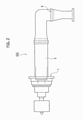
Fig. 2 is an explanatory view illustrating a gas generator according to an embodiment of the present invention applied to a liquid rocket engine illustrated inFig. 1 . -
Fig. 3 is an elevation view illustrating an injector inFig. 2 . -
Fig. 4(a) is an enlarged elevation view illustrating an injection element inFig. 3 , andFig. 4(b) is a cross-sectional view taken along the A-A line inFig. 4(a) . -
Figs. 5(a) to (c) are explanatory views illustrating spray fan of a fuel and an oxidizer, which impinge at a combustion point inFig. 4(a) , by numbers and arrangements of oxidizer injection nozzles for combustion. -
Fig. 6 is an explanatory view illustrating a positional relationship between an impingement jet of a fuel and an oxidizer and a jet of fuel for dilution in the combustor inFig. 2 . -
Fig. 7(a) is an enlarged elevation view illustrating an injection element (co-axial type) used in the injector of the gas generator according to another embodiment of the present invention, andFig. 7(b) is a cross-sectional view taken along the B-B line inFig. 7(a) . - Hereinafter, an embodiment of the present invention will be described with reference to the drawings.
Fig. 1 is an explanatory view illustrating a schematic configuration of a liquid rocket engine to which the present invention is applied. - The liquid rocket engine illustrated in
Fig. 1 includes a main combustion chamber C having a main injector I and a nozzle N communicating with the main combustion chamber C. Furthermore, the liquid rocket engine includes a turbopump TP1 for supplying fuel to the main injector I in a pressurized manner, and a turbopump TP2 for supplying oxidizer to the main injector I in a pressurized manner. Note that, for example, liquefied natural gas (LNG: liquefied methane) can be used as the fuel. Moreover, for example, liquefied oxygen (LOX) can be used as the oxidizer. There can be used, as the turbopump, single-shaft turbopump in which a turbopump for fuel and a turbopump for oxidizer are integrated. - Furthermore, the liquid rocket engine includes a gas generator (GG) that takes in a part of a fuel and an oxidizer introduced in the main injector I to mix and burn them. The combustion gas generated by the gas generator (GG) is used as the driving fluid for each of the turbopumps TP1 and TP2.
- At this time, in the gas generator (GG), a fuel and an oxidizer are mixed and burned in a state of a low mixture ratio, which is a state of being excess fuel (fuel rich), or in a state of a super-high mixture ratio, which is a state of being excess oxidizer (oxidizer rich), thereby reducing the temperature of the generated combustion gas (for example, at approximately 500 °C), in order not only to protect turbines of the turbopumps TP1 and TP2 from heat, but also to operate the turbines without a risk from the viewpoint of reduction in strength thereof or reduction in operating life thereof.
- As illustrated in the explanatory view in
Fig. 2 , the gas generator (GG) includes aninjector 1 for fuel and oxidizer, and atubular combustor 2 for mixing and burning the fuel and the oxidizer injected from theinjector 1, and apipe connecting portion 4 for guiding the combustion gas to the turbopumps TP1 and TP2 is continuously provided in thecombustor 2. - As illustrated in the elevation view in
Fig. 3 , theinjector 1 in the gas generator (GG) has a structure in which a plurality ofinjection elements 11, each having the same structure, are arranged on asurface 10a (the same plane) of acircular face plate 10. In the present embodiment, theseinjection elements 11 are arranged at intervals on circumferences of concentric circles with the center of thesurface 10a of theface plate 10 as the center thereof. Depending on operations, theseinjection elements 11 may not be necessarily arranged on the circumferences of concentric circles. - In the example illustrated in the explanatory view in
Fig. 4(a) , each of theinjection elements 11 includes oneoxidizer injection nozzle 13 for combustion (hereinafter, referred to as a first injection nozzle) and threefuel injection nozzles 15 for combustion (hereinafter, referred to as second injection nozzles). Thefirst injection nozzle 13 is arranged at the center of the concentric circles, and the threesecond injection nozzles 15 are arranged at equal intervals on a smaller circumference of the concentric circles. - Furthermore, in the example illustrated in
Fig. 4(a) , each of theinjection elements 11 further includes threeinjection nozzles 17 for dilution (hereinafter, referred to as third injection nozzles). The threethird injection nozzles 17 are arranged at equal intervals on a larger circumference of the concentric circles. - As illustrated in
Fig. 4(b) , which is a cross-sectional view taken along the A-A line inFig. 4(a) , thefirst injection nozzle 13 injects oxidizer toward the front of theface plate 10. Each of thesecond injection nozzles 15 injects fuel toward a combustion point CP in thecombustor 2. The combustion point CP is positioned on the axial line of injection of the fuel from thefirst injection nozzle 13. - Therefore, the oxidizer from the
first injection nozzle 13 and the fuel from each of thesecond injection nozzles 15 impinge at the combustion point CP in thecombustor 2. Namely, theinjection element 11 according to the present embodiment constitutes an unlike-impingement type injector. - Moreover, each of the
third injection nozzles 17 injects an oxidizer for dilution toward a dilution point DP in thecombustor 2. The dilution point DP is located on the axial line of injection of the fuel from thefirst injection nozzle 13, and is located forward further than the combustion point CP and in front of theface plate 10. - Here, as illustrated in the explanatory views in
Figs. 5(a) to 5(c) , the oxidizer from thefirst injection nozzle 13 and the fuel from each of thesecond injection nozzles 15, which have impinged at the combustion point CP, are mixed with each other to be an impingement jet CJ. The direction of the impingement jet CJ sprayed from the combustion point CP is determined according to injection directions or injection speeds of oxidizer and fuel from thefirst injection nozzle 13 and thesecond injection nozzles 15. - The impingement jet CJ is a gas having a high mixture ratio in which a fuel and an oxidizer are mixed at a higher ratio than the entire mixture ratio, and is ignited to serve as a combustion gas. With these operations, a high-temperature combustion zone HA (see
Fig. 4(b) ) surrounding the impingement jet CJ is formed in the vicinity of the combustion point CP. - Note that
Fig. 5(a) illustrates a case where twosecond injection nozzles 15 are provided in each of theinjection elements 11,Fig. 5(b) illustrates a case where threesecond injection nozzles 15 are provided, andFig. 5(c) illustrates a case where foursecond injection nozzles 15 are provided. In each of the cases described above, thesecond injection nozzles 15 are arranged at equal intervals in the circumferential direction. - As is clear from
Figs. 5(a) to 5(c) , the impingement jet CJ has strong directivity, in a direction extending in the radial direction of a circumference on which thesecond injection nozzles 15 are arranged, and in a direction toward the middle point between twosecond injection nozzles 15 adjacent on the circumference from thefirst injection nozzle 13. Namely, the direction of the strong directivity (the number of directivities) of the impingement jet CJ varies depending on the number (arrangement) of thesecond injection nozzles 15. - Therefore, as illustrated in
Figs. 5(a) to 5(c) , thethird injection nozzles 17 are provided in each of theinjection elements 11, corresponding to respectivesecond injection nozzles 15, and are each arranged on a line extending in the direction of each of the strong directivities of the impingement jet CJ. Note thatFigs. 5(a) to 5(c) each illustrate a case where athird injection nozzle 17 is provided, corresponding to asecond injection nozzle 15, but it may be possible to provide a plurality ofthird injection nozzles 17, corresponding to onesecond injection nozzle 15. - In addition, as illustrated in the explanatory view in
Fig. 6 , the oxidizer for dilution, which is injected from each of thethird injection nozzles 17 toward the dilution point DP illustrated inFig. 4(b) , impinges with the impingement jet CJ at a mixture point MP existing on an extended line of the spray fan direction of the impingement jet CJ. With this impingement, the combustion gas is diluted with the fuel for dilution or oxidizer for dilution to be a low mixture ratio (fuel rich) or a super-high mixture ratio (oxidizer rich), whereby a low-temperature combustion zone LA (seeFig. 4(b) ) is formed in the vicinity of thepipe connecting portion 4. - As described above, in the present embodiment, in each of the plurality of
injection elements 11 arranged on theface plate 10 of theinjector 1, there are provided: thefirst injection nozzle 13 and thesecond injection nozzles 15, which are of unlike-impingement type and which inject oxidizer and fuel to the combustion point CP located in front of theface plate 10; and thethird injection nozzles 17 that inject an oxidizer for dilution toward the dilution point DP forward further than the combustion point CP. - Furthermore, a configuration is such that: the fuel and the oxidizer are burned in the high-temperature combustion zone HA in the vicinity of the combustion point CP at a mixture ratio in an appropriate range where ignitability and flame-stability are secured; the high-temperature combustion gas generated through the burning is diluted with the fuel for dilution or oxidizer for dilution; and then, the combustion gas is burned in the low-temperature combustion zone LA in the vicinity of the
pipe connecting portion 4, in a state of being at a low mixture ratio (fuel rich) or a super-high mixture ratio (oxidizer rich), whereby temperatures thereof are reduced. - Therefore, the combustion state in the high-temperature combustion zone HA and the combustion state in the low-temperature combustion zone LA can be individually evaluated for each of the
injection elements 11, rather than for theentire combustor 2 the evaluation of which is obtained by integrating evaluation results for all theinjection elements 11. Namely, it is possible to evaluate the combustion state of theentire combustor 2 by evaluating the combustion states of oneinjection element 11. Therefore, it is possible to simply evaluate the combustion states in the high-temperature combustion zone and the low-temperature combustion zone in thecombustor 2. - Note that, when the injector is constituted by the combination of fuel injection nozzles and oxidizer injection nozzles, which are of like-impingement type, the combustion gas obtained by mixing a fuel and an oxidizer is mixed with a fuel or an oxidizer for dilution, which is injected from nozzles to be subjected to like-impingement. Accordingly, the position for diluting the combustion gas is set to be relatively close to the injector.
- On the other hand, in the present embodiment, each of the
injection elements 11 constitutes an unlike-impingement type injection element. Furthermore, a configuration is such that thethird injection nozzles 17 provided in each of theinjection elements 11 inject the oxidizer for dilution to the dilution point DP further away from the combustion point CP where the oxidizer from thefirst injection nozzle 13 impinges with the fuel from each of thesecond injection nozzles 15 to thereby burn. - With this configuration, for each of the
injection elements 11, it is possible to arrange, for each of theinjection elements 11, the dilution point DP where the fuel or oxidizer for dilution is mixed with the combustion gas to thereby be made to be the low mixture ratio (fuel rich) or the super-high mixture ratio (oxidizer rich), further away from the combustion point CP where a fuel and an oxidizer are mixed and burned. Therefore, in the wide range of the combustion space in thecombustor 2, the configuration of diluting the combustion gas with the fuel or oxidizer for dilution can be realized. - Moreover, the dilution of the combustion gas with the fuel or oxidizer for dilution is distributedly and individually carried out at a position away from the injector, for each of the
injection elements 11, and thus it is possible to more reliably dilute the combustion gas in theentire injector 1 while securing ignitability in the vicinity of theinjector 1. - Furthermore, the present embodiment employs the configuration in which the fuel for dilution or oxidizer for dilution is injected toward the mixture point MP existing on the extended line of the spray fan direction of the impingement jet CJ of a fuel and an oxidizer impinging at the combustion point CP. Therefore, it is possible to cause the oxidizer for dilution from the
third injection nozzles 17 to efficiently impinge with a directional component of a strong directivity of the impingement jet CJ diffusing by impingement at the combustion point CP, to cause the combustion gas to have a low mixture ratio (fuel rich) or a super-high mixture ratio (oxidizer rich), and accordingly, to uniformly and efficiently achieve a reduction in temperatures of the combustion gas. - As a result, it is possible to efficiently achieve both securement of ignitability and flame-stability in the high-temperature combustion zone HA, and reduction in the temperature of and the uniformity of the combustion gas in the low-temperature combustion zone LA, whereby it is possible to stably supply the low-temperature combustion gas suitable as a driving fluid, to the turbopumps TP1 and TP2.
- Note that, in the embodiment described above, the
first injection nozzle 13 and thesecond injection nozzles 15 provided in each of theinjection elements 11 employ the unlike-impingement type. However, thefirst injection nozzle 13 and thesecond injection nozzles 15 may employ a coaxial type as illustrated in, for example,Fig. 7(a) which is the elevation view, and inFig. 7(b) which is the cross-sectional view taken along the B-B line inFig. 7(a) . In the case of the coaxial type, thesecond injection nozzle 15 is annularly formed with thefirst injection nozzle 13 being a center thereof. - In this case, although illustration is omitted in
Fig. 7(a) , it may be possible to employ a configuration in which thethird injection nozzle 17 is annularly formed similar to thesecond injection nozzle 15, and is arranged outside of thesecond injection nozzle 15, or it may be possible to employ a configuration in which a plurality ofthird injection nozzles 17 is arranged on the circumference of the concentric circle so as to be positioned outside of the circumference of thesecond injection nozzles 15 as with theinjection element 11 of the above-described embodiment illustrated inFig. 4(a) . - Furthermore, in the present embodiment, the gas generator (GG) for liquid rocket engines has been described as an example, but the present invention is broadly applicable to gas generators in which a fuel and an oxidizer are mixed and burned in a state of being at the low mixture ratio with excess fuel (fuel rich), or in a state of being at the super-high mixture ratio with excess oxidizer (oxidizer rich).
- Described below are effects of the present embodiment.
- In each of the injection elements, fuel from the fuel injection nozzle for combustion and oxidizer from the oxidizer injection nozzle for combustion are mixed at the combustion point at a mixture ratio in an appropriate range where ignitability and flame-stability are secured, and are burned at high temperatures. The high-temperature combustion gas thus generated is diluted with a fuel or an oxidizer from the injection nozzle for dilution at the dilution point forward further than the combustion point, thereby becoming a low-temperature combustion gas.
- Namely, high-temperature combustion of a fuel and an oxidizer mixed at the combustion point at the appropriate mixture ratio, and low-temperature combustion of a combustion gas made to be excess fuel (fuel rich) or excess oxidizer (oxidizer rich) by diluting the high-temperature combustion gas generated through the high-temperature combustion, with a fuel or an oxidizer at the dilution point, are performed in a completed manner in each of the injection elements. Therefore, the combustion state in the high-temperature combustion zone and the combustion state in the low-temperature combustion zone are made individually uniform for each injection element, rather than for each combustor, and further, can be evaluated.
- Accordingly, it is possible to evaluate the combustion state of the entire combustor by evaluating the combustion state of one injection element, and it is possible to make further uniform the combustion states in the high-temperature combustion zone and the low-temperature combustion zone, and simply evaluate the combustion states, thereby reducing development cost.
- Moreover, a fuel and an oxidizer from the fuel injection nozzle for combustion and the oxidizer injection nozzle for combustion, which are of unlike-impingement type, impinge and are mixed at the combustion point, thereby becoming an impingement jet. The direction of the impingement jet sprayed from the combustion point is determined according to injection directions or injection speeds of a fuel and an oxidizer from the fuel injection nozzle for combustion and the oxidizer injection nozzles for combustion.
- Then, at the mixture point existing on the extended line of the spray fan direction of the impingement jet, a fuel or an oxidizer for dilution from the injection nozzle for dilution impinges with the combustion gas in a form of impingement jet, and the combustion gas is diluted with the fuel or the oxidizer to thereby be made to be the low mixture ratio (fuel rich) or the super-high mixture ratio (oxidizer rich). With this configuration, the dilution of the high-temperature combustion gas and the reduction in temperatures of the combustion gas are efficiently carried out.
- Therefore, it is possible to efficiently achieve both securement of ignitability and flame-stability in the high-temperature combustion zone, and reduction in the temperature of and the uniformity of the combustion gas in the low-temperature combustion zone, to stably supply the combustion gas to the turbopump in a state of being suitable as a driving fluid for turbines.
Claims (3)
- A gas generator (GG) supplying a driving fluid to a turbine of a turbopump, the gas generator (GG) comprising:an injector (1) configured to inject a fuel and an oxidizer; anda combustor (2) configured to:mix and burn the fuel and the oxidizer injected from the injector (1); andsupply a combustion gas of the fuel and the oxidizer as the driving fluid to the turbine of the turbopump, whereinthe injector (1) includes a plurality of injection elements (11) arranged on a same plane (10a), andeach of the injection elements (11) includes:one or more fuel injection nozzles (15) for combustion and one or more oxidizer injection nozzles (13) for combustion, which mix and burn each jet of the fuel and the oxidizer at a combustion point (CP) in front of the plane (10a) in the combustor (2); andone or more injection nozzles (17) for dilution, each mixing an oxidizer for dilution injected toward a dilution point (DP) located forward further than the combustion point (CP) and in front of the plane (10a) in the combustor (2), with a combustion gas generated at the combustion point (CP).
- The gas generator (GG) according to claim 1, whereinthe one or more fuel injection nozzles (15) for combustion and the one or more oxidizer injection nozzles (13) for combustion are unlike-impingement type inject nozzles that cause each jet of the fuel and the oxidizer to impinge with each other at the combustion point (CP), andthe injection nozzle (17) for dilution injects the oxidizer for dilution toward a mixture point (MP) existing on an extended line of a spray fan direction of an impingement jet (CJ) generated as a result of impingement of the jets of the fuel and the oxidizer at the combustion point (CP).
- The gas generator according to claim 1 or 2, further comprising
a pipe continuously provided in the combustor, the pipe configured to guide the combustion gas as the driving fluid to the turbopump.
Applications Claiming Priority (3)
| Application Number | Priority Date | Filing Date | Title |
|---|---|---|---|
| JP2013213725A JP6287034B2 (en) | 2013-10-11 | 2013-10-11 | Gas generator |
| PCT/JP2014/071486 WO2015052992A1 (en) | 2013-10-11 | 2014-08-15 | Gas generator |
| EP14852953.0A EP3026249B1 (en) | 2013-10-11 | 2014-08-15 | Gas generator |
Related Parent Applications (2)
| Application Number | Title | Priority Date | Filing Date |
|---|---|---|---|
| EP14852953.0A Division EP3026249B1 (en) | 2013-10-11 | 2014-08-15 | Gas generator |
| EP14852953.0A Division-Into EP3026249B1 (en) | 2013-10-11 | 2014-08-15 | Gas generator |
Publications (2)
| Publication Number | Publication Date |
|---|---|
| EP3816426A1 EP3816426A1 (en) | 2021-05-05 |
| EP3816426B1 true EP3816426B1 (en) | 2022-02-16 |
Family
ID=52812812
Family Applications (2)
| Application Number | Title | Priority Date | Filing Date |
|---|---|---|---|
| EP20214226.1A Active EP3816426B1 (en) | 2013-10-11 | 2014-08-15 | Gas generator |
| EP14852953.0A Active EP3026249B1 (en) | 2013-10-11 | 2014-08-15 | Gas generator |
Family Applications After (1)
| Application Number | Title | Priority Date | Filing Date |
|---|---|---|---|
| EP14852953.0A Active EP3026249B1 (en) | 2013-10-11 | 2014-08-15 | Gas generator |
Country Status (4)
| Country | Link |
|---|---|
| US (1) | US10072611B2 (en) |
| EP (2) | EP3816426B1 (en) |
| JP (1) | JP6287034B2 (en) |
| WO (1) | WO2015052992A1 (en) |
Families Citing this family (4)
| Publication number | Priority date | Publication date | Assignee | Title |
|---|---|---|---|---|
| CN109973247A (en) * | 2019-04-18 | 2019-07-05 | 哈尔滨工业大学 | Prevent liquid-propellant rocket engine ejector filler panel by the method for high-temperature fuel gas ablation |
| EP4030048A1 (en) * | 2021-01-13 | 2022-07-20 | Pangea Aerospace, S.L. | Aerospike engines, launch vehicles incorporating such engines and methods |
| CN117345467A (en) * | 2023-11-06 | 2024-01-05 | 西安航天动力试验技术研究所 | A modular safety processing device and processing method for rich combustion gas of methane engine |
| WO2025205984A1 (en) * | 2024-03-27 | 2025-10-02 | 国立研究開発法人産業技術総合研究所 | Nozzle unit, combustor, and power generation device |
Family Cites Families (16)
| Publication number | Priority date | Publication date | Assignee | Title |
|---|---|---|---|---|
| US3446024A (en) * | 1965-12-13 | 1969-05-27 | United Aircraft Corp | Axial concentric sheet injector |
| US3603092A (en) * | 1969-09-24 | 1971-09-07 | Nasa | Injection head for delivering liquid fuel and oxidizers |
| US4525175A (en) * | 1983-05-31 | 1985-06-25 | Texaco Inc. | High turn down burner for partial oxidation of slurries of solid fuel |
| JPS62150060A (en) | 1985-12-25 | 1987-07-04 | Natl Space Dev Agency Japan<Nasda> | Cooling device of rocket engine |
| US4801092A (en) * | 1986-02-24 | 1989-01-31 | Rockwell International Corporation | Injector assembly for a fluid fueled engine |
| JPS6419045U (en) * | 1987-07-23 | 1989-01-31 | ||
| JPH0192560A (en) | 1987-10-02 | 1989-04-11 | Natl Aerospace Lab | Rocket launcher |
| US4863102A (en) * | 1987-10-20 | 1989-09-05 | Spectran, Inc. | CVD torch |
| JPH079222B2 (en) | 1993-02-22 | 1995-02-01 | 科学技術庁航空宇宙技術研究所長 | Method and apparatus for cooling high temperature gas film |
| JP2685114B2 (en) | 1993-08-04 | 1997-12-03 | 科学技術庁航空宇宙技術研究所長 | Rocket engine injectors |
| JP3040695B2 (en) | 1995-06-09 | 2000-05-15 | 三菱重工業株式会社 | Liquid rocket engine |
| US6351939B1 (en) * | 2000-04-21 | 2002-03-05 | The Boeing Company | Swirling, impinging sheet injector |
| DE10130355C2 (en) | 2001-06-23 | 2003-11-27 | Astrium Gmbh | Injection element for a rocket engine |
| KR20030076119A (en) * | 2002-03-22 | 2003-09-26 | 현대모비스 주식회사 | Collisional injector of fluid rocket engine |
| JP2012189018A (en) * | 2011-03-11 | 2012-10-04 | Ihi Aerospace Co Ltd | Fuel/oxidizer supply device for gas generator |
| JP2012189014A (en) * | 2011-03-11 | 2012-10-04 | Ihi Aerospace Co Ltd | Gas generator |
-
2013
- 2013-10-11 JP JP2013213725A patent/JP6287034B2/en active Active
-
2014
- 2014-08-15 WO PCT/JP2014/071486 patent/WO2015052992A1/en not_active Ceased
- 2014-08-15 EP EP20214226.1A patent/EP3816426B1/en active Active
- 2014-08-15 EP EP14852953.0A patent/EP3026249B1/en active Active
-
2016
- 2016-02-08 US US15/018,450 patent/US10072611B2/en active Active
Also Published As
| Publication number | Publication date |
|---|---|
| JP2015075071A (en) | 2015-04-20 |
| US20160153400A1 (en) | 2016-06-02 |
| EP3816426A1 (en) | 2021-05-05 |
| EP3026249A4 (en) | 2017-03-29 |
| EP3026249B1 (en) | 2021-05-19 |
| JP6287034B2 (en) | 2018-03-07 |
| WO2015052992A1 (en) | 2015-04-16 |
| EP3026249A1 (en) | 2016-06-01 |
| US10072611B2 (en) | 2018-09-11 |
Similar Documents
| Publication | Publication Date | Title |
|---|---|---|
| JP5380488B2 (en) | Combustor | |
| JP5544141B2 (en) | Integrated combustor in a gas turbine-first stage nozzle and related methods | |
| JP6134544B2 (en) | System for supplying working fluid to the combustor | |
| US20170307210A1 (en) | Gas turbine combustor and gas turbine | |
| JP6203371B2 (en) | Lean azimuth flame combustor | |
| US10634356B2 (en) | Fuel injection nozzle, fuel injection module and gas turbine | |
| US10731862B2 (en) | Systems and methods for a multi-fuel premixing nozzle with integral liquid injectors/evaporators | |
| US20120282558A1 (en) | Combustor nozzle and method for supplying fuel to a combustor | |
| US9297534B2 (en) | Combustor portion for a turbomachine and method of operating a turbomachine | |
| US20150135723A1 (en) | Combustor nozzle and method of supplying fuel to a combustor | |
| EP3102877B1 (en) | Combustor | |
| JP6466102B2 (en) | Dual fuel combustor for gas turbine engines | |
| EP3816426B1 (en) | Gas generator | |
| US20240240792A1 (en) | Combustor and combustion nozzle thereof for hydrogen gas turbine | |
| US20220205637A1 (en) | Mitigating combustion dynamics using varying liquid fuel cartridges | |
| JP4854613B2 (en) | Combustion apparatus and gas turbine combustor | |
| JP2012189018A (en) | Fuel/oxidizer supply device for gas generator | |
| EP3425280B1 (en) | Combustor and gas turbine | |
| US11015810B2 (en) | Combustor nozzle assembly and gas turbine having the same | |
| US9134031B2 (en) | Combustor of a turbomachine including multiple tubular radial pathways arranged at multiple circumferential and axial locations | |
| JP2012189014A (en) | Gas generator | |
| JP2013245900A (en) | Gas turbine combustor | |
| JP2014126239A (en) | Combustor | |
| JP2012083097A (en) | Flame tolerant primary nozzle design |
Legal Events
| Date | Code | Title | Description |
|---|---|---|---|
| PUAI | Public reference made under article 153(3) epc to a published international application that has entered the european phase |
Free format text: ORIGINAL CODE: 0009012 |
|
| STAA | Information on the status of an ep patent application or granted ep patent |
Free format text: STATUS: REQUEST FOR EXAMINATION WAS MADE |
|
| 17P | Request for examination filed |
Effective date: 20201215 |
|
| AC | Divisional application: reference to earlier application |
Ref document number: 3026249 Country of ref document: EP Kind code of ref document: P |
|
| AK | Designated contracting states |
Kind code of ref document: A1 Designated state(s): AL AT BE BG CH CY CZ DE DK EE ES FI FR GB GR HR HU IE IS IT LI LT LU LV MC MK MT NL NO PL PT RO RS SE SI SK SM TR |
|
| GRAP | Despatch of communication of intention to grant a patent |
Free format text: ORIGINAL CODE: EPIDOSNIGR1 |
|
| STAA | Information on the status of an ep patent application or granted ep patent |
Free format text: STATUS: GRANT OF PATENT IS INTENDED |
|
| INTG | Intention to grant announced |
Effective date: 20210920 |
|
| GRAS | Grant fee paid |
Free format text: ORIGINAL CODE: EPIDOSNIGR3 |
|
| GRAA | (expected) grant |
Free format text: ORIGINAL CODE: 0009210 |
|
| STAA | Information on the status of an ep patent application or granted ep patent |
Free format text: STATUS: THE PATENT HAS BEEN GRANTED |
|
| AC | Divisional application: reference to earlier application |
Ref document number: 3026249 Country of ref document: EP Kind code of ref document: P |
|
| AK | Designated contracting states |
Kind code of ref document: B1 Designated state(s): AL AT BE BG CH CY CZ DE DK EE ES FI FR GB GR HR HU IE IS IT LI LT LU LV MC MK MT NL NO PL PT RO RS SE SI SK SM TR |
|
| RAP3 | Party data changed (applicant data changed or rights of an application transferred) |
Owner name: IHI CORPORATION |
|
| REG | Reference to a national code |
Ref country code: GB Ref legal event code: FG4D |
|
| RIN1 | Information on inventor provided before grant (corrected) |
Inventor name: ISHIKAWA, YASUHIRO Inventor name: TAYA, KOHEI |
|
| REG | Reference to a national code |
Ref country code: CH Ref legal event code: EP |
|
| REG | Reference to a national code |
Ref country code: DE Ref legal event code: R096 Ref document number: 602014082564 Country of ref document: DE |
|
| REG | Reference to a national code |
Ref country code: AT Ref legal event code: REF Ref document number: 1469023 Country of ref document: AT Kind code of ref document: T Effective date: 20220315 |
|
| REG | Reference to a national code |
Ref country code: IE Ref legal event code: FG4D |
|
| REG | Reference to a national code |
Ref country code: LT Ref legal event code: MG9D |
|
| REG | Reference to a national code |
Ref country code: NL Ref legal event code: MP Effective date: 20220216 |
|
| REG | Reference to a national code |
Ref country code: AT Ref legal event code: MK05 Ref document number: 1469023 Country of ref document: AT Kind code of ref document: T Effective date: 20220216 |
|
| PG25 | Lapsed in a contracting state [announced via postgrant information from national office to epo] |
Ref country code: SE Free format text: LAPSE BECAUSE OF FAILURE TO SUBMIT A TRANSLATION OF THE DESCRIPTION OR TO PAY THE FEE WITHIN THE PRESCRIBED TIME-LIMIT Effective date: 20220216 Ref country code: RS Free format text: LAPSE BECAUSE OF FAILURE TO SUBMIT A TRANSLATION OF THE DESCRIPTION OR TO PAY THE FEE WITHIN THE PRESCRIBED TIME-LIMIT Effective date: 20220216 Ref country code: PT Free format text: LAPSE BECAUSE OF FAILURE TO SUBMIT A TRANSLATION OF THE DESCRIPTION OR TO PAY THE FEE WITHIN THE PRESCRIBED TIME-LIMIT Effective date: 20220616 Ref country code: NO Free format text: LAPSE BECAUSE OF FAILURE TO SUBMIT A TRANSLATION OF THE DESCRIPTION OR TO PAY THE FEE WITHIN THE PRESCRIBED TIME-LIMIT Effective date: 20220516 Ref country code: NL Free format text: LAPSE BECAUSE OF FAILURE TO SUBMIT A TRANSLATION OF THE DESCRIPTION OR TO PAY THE FEE WITHIN THE PRESCRIBED TIME-LIMIT Effective date: 20220216 Ref country code: LT Free format text: LAPSE BECAUSE OF FAILURE TO SUBMIT A TRANSLATION OF THE DESCRIPTION OR TO PAY THE FEE WITHIN THE PRESCRIBED TIME-LIMIT Effective date: 20220216 Ref country code: HR Free format text: LAPSE BECAUSE OF FAILURE TO SUBMIT A TRANSLATION OF THE DESCRIPTION OR TO PAY THE FEE WITHIN THE PRESCRIBED TIME-LIMIT Effective date: 20220216 Ref country code: ES Free format text: LAPSE BECAUSE OF FAILURE TO SUBMIT A TRANSLATION OF THE DESCRIPTION OR TO PAY THE FEE WITHIN THE PRESCRIBED TIME-LIMIT Effective date: 20220216 Ref country code: BG Free format text: LAPSE BECAUSE OF FAILURE TO SUBMIT A TRANSLATION OF THE DESCRIPTION OR TO PAY THE FEE WITHIN THE PRESCRIBED TIME-LIMIT Effective date: 20220516 |
|
| PG25 | Lapsed in a contracting state [announced via postgrant information from national office to epo] |
Ref country code: PL Free format text: LAPSE BECAUSE OF FAILURE TO SUBMIT A TRANSLATION OF THE DESCRIPTION OR TO PAY THE FEE WITHIN THE PRESCRIBED TIME-LIMIT Effective date: 20220216 Ref country code: LV Free format text: LAPSE BECAUSE OF FAILURE TO SUBMIT A TRANSLATION OF THE DESCRIPTION OR TO PAY THE FEE WITHIN THE PRESCRIBED TIME-LIMIT Effective date: 20220216 Ref country code: GR Free format text: LAPSE BECAUSE OF FAILURE TO SUBMIT A TRANSLATION OF THE DESCRIPTION OR TO PAY THE FEE WITHIN THE PRESCRIBED TIME-LIMIT Effective date: 20220517 Ref country code: FI Free format text: LAPSE BECAUSE OF FAILURE TO SUBMIT A TRANSLATION OF THE DESCRIPTION OR TO PAY THE FEE WITHIN THE PRESCRIBED TIME-LIMIT Effective date: 20220216 Ref country code: AT Free format text: LAPSE BECAUSE OF FAILURE TO SUBMIT A TRANSLATION OF THE DESCRIPTION OR TO PAY THE FEE WITHIN THE PRESCRIBED TIME-LIMIT Effective date: 20220216 |
|
| PG25 | Lapsed in a contracting state [announced via postgrant information from national office to epo] |
Ref country code: IS Free format text: LAPSE BECAUSE OF FAILURE TO SUBMIT A TRANSLATION OF THE DESCRIPTION OR TO PAY THE FEE WITHIN THE PRESCRIBED TIME-LIMIT Effective date: 20220617 |
|
| PG25 | Lapsed in a contracting state [announced via postgrant information from national office to epo] |
Ref country code: SM Free format text: LAPSE BECAUSE OF FAILURE TO SUBMIT A TRANSLATION OF THE DESCRIPTION OR TO PAY THE FEE WITHIN THE PRESCRIBED TIME-LIMIT Effective date: 20220216 Ref country code: SK Free format text: LAPSE BECAUSE OF FAILURE TO SUBMIT A TRANSLATION OF THE DESCRIPTION OR TO PAY THE FEE WITHIN THE PRESCRIBED TIME-LIMIT Effective date: 20220216 Ref country code: RO Free format text: LAPSE BECAUSE OF FAILURE TO SUBMIT A TRANSLATION OF THE DESCRIPTION OR TO PAY THE FEE WITHIN THE PRESCRIBED TIME-LIMIT Effective date: 20220216 Ref country code: EE Free format text: LAPSE BECAUSE OF FAILURE TO SUBMIT A TRANSLATION OF THE DESCRIPTION OR TO PAY THE FEE WITHIN THE PRESCRIBED TIME-LIMIT Effective date: 20220216 Ref country code: DK Free format text: LAPSE BECAUSE OF FAILURE TO SUBMIT A TRANSLATION OF THE DESCRIPTION OR TO PAY THE FEE WITHIN THE PRESCRIBED TIME-LIMIT Effective date: 20220216 Ref country code: CZ Free format text: LAPSE BECAUSE OF FAILURE TO SUBMIT A TRANSLATION OF THE DESCRIPTION OR TO PAY THE FEE WITHIN THE PRESCRIBED TIME-LIMIT Effective date: 20220216 |
|
| REG | Reference to a national code |
Ref country code: DE Ref legal event code: R097 Ref document number: 602014082564 Country of ref document: DE |
|
| PG25 | Lapsed in a contracting state [announced via postgrant information from national office to epo] |
Ref country code: AL Free format text: LAPSE BECAUSE OF FAILURE TO SUBMIT A TRANSLATION OF THE DESCRIPTION OR TO PAY THE FEE WITHIN THE PRESCRIBED TIME-LIMIT Effective date: 20220216 |
|
| PLBE | No opposition filed within time limit |
Free format text: ORIGINAL CODE: 0009261 |
|
| STAA | Information on the status of an ep patent application or granted ep patent |
Free format text: STATUS: NO OPPOSITION FILED WITHIN TIME LIMIT |
|
| 26N | No opposition filed |
Effective date: 20221117 |
|
| PG25 | Lapsed in a contracting state [announced via postgrant information from national office to epo] |
Ref country code: MC Free format text: LAPSE BECAUSE OF FAILURE TO SUBMIT A TRANSLATION OF THE DESCRIPTION OR TO PAY THE FEE WITHIN THE PRESCRIBED TIME-LIMIT Effective date: 20220216 |
|
| REG | Reference to a national code |
Ref country code: CH Ref legal event code: PL |
|
| GBPC | Gb: european patent ceased through non-payment of renewal fee |
Effective date: 20220815 |
|
| PG25 | Lapsed in a contracting state [announced via postgrant information from national office to epo] |
Ref country code: LU Free format text: LAPSE BECAUSE OF NON-PAYMENT OF DUE FEES Effective date: 20220815 Ref country code: LI Free format text: LAPSE BECAUSE OF NON-PAYMENT OF DUE FEES Effective date: 20220831 Ref country code: CH Free format text: LAPSE BECAUSE OF NON-PAYMENT OF DUE FEES Effective date: 20220831 |
|
| REG | Reference to a national code |
Ref country code: BE Ref legal event code: MM Effective date: 20220831 |
|
| PG25 | Lapsed in a contracting state [announced via postgrant information from national office to epo] |
Ref country code: IT Free format text: LAPSE BECAUSE OF FAILURE TO SUBMIT A TRANSLATION OF THE DESCRIPTION OR TO PAY THE FEE WITHIN THE PRESCRIBED TIME-LIMIT Effective date: 20220216 Ref country code: IE Free format text: LAPSE BECAUSE OF NON-PAYMENT OF DUE FEES Effective date: 20220815 Ref country code: FR Free format text: LAPSE BECAUSE OF NON-PAYMENT OF DUE FEES Effective date: 20220831 |
|
| PG25 | Lapsed in a contracting state [announced via postgrant information from national office to epo] |
Ref country code: BE Free format text: LAPSE BECAUSE OF NON-PAYMENT OF DUE FEES Effective date: 20220831 |
|
| PG25 | Lapsed in a contracting state [announced via postgrant information from national office to epo] |
Ref country code: GB Free format text: LAPSE BECAUSE OF NON-PAYMENT OF DUE FEES Effective date: 20220815 |
|
| PG25 | Lapsed in a contracting state [announced via postgrant information from national office to epo] |
Ref country code: CY Free format text: LAPSE BECAUSE OF FAILURE TO SUBMIT A TRANSLATION OF THE DESCRIPTION OR TO PAY THE FEE WITHIN THE PRESCRIBED TIME-LIMIT Effective date: 20220216 |
|
| PG25 | Lapsed in a contracting state [announced via postgrant information from national office to epo] |
Ref country code: MK Free format text: LAPSE BECAUSE OF FAILURE TO SUBMIT A TRANSLATION OF THE DESCRIPTION OR TO PAY THE FEE WITHIN THE PRESCRIBED TIME-LIMIT Effective date: 20220216 Ref country code: HU Free format text: LAPSE BECAUSE OF FAILURE TO SUBMIT A TRANSLATION OF THE DESCRIPTION OR TO PAY THE FEE WITHIN THE PRESCRIBED TIME-LIMIT; INVALID AB INITIO Effective date: 20140815 |
|
| PG25 | Lapsed in a contracting state [announced via postgrant information from national office to epo] |
Ref country code: MT Free format text: LAPSE BECAUSE OF FAILURE TO SUBMIT A TRANSLATION OF THE DESCRIPTION OR TO PAY THE FEE WITHIN THE PRESCRIBED TIME-LIMIT Effective date: 20220216 |
|
| PGFP | Annual fee paid to national office [announced via postgrant information from national office to epo] |
Ref country code: DE Payment date: 20250724 Year of fee payment: 12 |
|
| PG25 | Lapsed in a contracting state [announced via postgrant information from national office to epo] |
Ref country code: TR Free format text: LAPSE BECAUSE OF FAILURE TO SUBMIT A TRANSLATION OF THE DESCRIPTION OR TO PAY THE FEE WITHIN THE PRESCRIBED TIME-LIMIT Effective date: 20220216 |
|
| PG25 | Lapsed in a contracting state [announced via postgrant information from national office to epo] |
Ref country code: SI Free format text: LAPSE BECAUSE OF FAILURE TO SUBMIT A TRANSLATION OF THE DESCRIPTION OR TO PAY THE FEE WITHIN THE PRESCRIBED TIME-LIMIT Effective date: 20220216 |