EP3816184B1 - Anti-human interleukin 17a monoclonal antibody and application thereof - Google Patents
Anti-human interleukin 17a monoclonal antibody and application thereof Download PDFInfo
- Publication number
- EP3816184B1 EP3816184B1 EP18919093.7A EP18919093A EP3816184B1 EP 3816184 B1 EP3816184 B1 EP 3816184B1 EP 18919093 A EP18919093 A EP 18919093A EP 3816184 B1 EP3816184 B1 EP 3816184B1
- Authority
- EP
- European Patent Office
- Prior art keywords
- amino acid
- acid sequence
- cdr
- monoclonal antibody
- seq
- Prior art date
- Legal status (The legal status is an assumption and is not a legal conclusion. Google has not performed a legal analysis and makes no representation as to the accuracy of the status listed.)
- Active
Links
Images




Classifications
-
- C—CHEMISTRY; METALLURGY
- C07—ORGANIC CHEMISTRY
- C07K—PEPTIDES
- C07K16/00—Immunoglobulins [IG], e.g. monoclonal or polyclonal antibodies
- C07K16/18—Immunoglobulins [IG], e.g. monoclonal or polyclonal antibodies against material from animals or humans
- C07K16/24—Immunoglobulins [IG], e.g. monoclonal or polyclonal antibodies against material from animals or humans against cytokines, lymphokines or interferons
- C07K16/244—Interleukins [IL]
-
- A—HUMAN NECESSITIES
- A61—MEDICAL OR VETERINARY SCIENCE; HYGIENE
- A61P—SPECIFIC THERAPEUTIC ACTIVITY OF CHEMICAL COMPOUNDS OR MEDICINAL PREPARATIONS
- A61P35/00—Antineoplastic agents
-
- A—HUMAN NECESSITIES
- A61—MEDICAL OR VETERINARY SCIENCE; HYGIENE
- A61P—SPECIFIC THERAPEUTIC ACTIVITY OF CHEMICAL COMPOUNDS OR MEDICINAL PREPARATIONS
- A61P37/00—Drugs for immunological or allergic disorders
-
- A—HUMAN NECESSITIES
- A61—MEDICAL OR VETERINARY SCIENCE; HYGIENE
- A61P—SPECIFIC THERAPEUTIC ACTIVITY OF CHEMICAL COMPOUNDS OR MEDICINAL PREPARATIONS
- A61P37/00—Drugs for immunological or allergic disorders
- A61P37/02—Immunomodulators
- A61P37/06—Immunosuppressants, e.g. drugs for graft rejection
-
- C—CHEMISTRY; METALLURGY
- C07—ORGANIC CHEMISTRY
- C07K—PEPTIDES
- C07K16/00—Immunoglobulins [IG], e.g. monoclonal or polyclonal antibodies
- C07K16/18—Immunoglobulins [IG], e.g. monoclonal or polyclonal antibodies against material from animals or humans
- C07K16/28—Immunoglobulins [IG], e.g. monoclonal or polyclonal antibodies against material from animals or humans against receptors, cell surface antigens or cell surface determinants
- C07K16/2803—Immunoglobulins [IG], e.g. monoclonal or polyclonal antibodies against material from animals or humans against receptors, cell surface antigens or cell surface determinants against the immunoglobulin superfamily
- C07K16/2818—Immunoglobulins [IG], e.g. monoclonal or polyclonal antibodies against material from animals or humans against receptors, cell surface antigens or cell surface determinants against the immunoglobulin superfamily against CD28 or CD152
-
- A—HUMAN NECESSITIES
- A61—MEDICAL OR VETERINARY SCIENCE; HYGIENE
- A61K—PREPARATIONS FOR MEDICAL, DENTAL OR TOILETRY PURPOSES
- A61K39/00—Medicinal preparations containing antigens or antibodies
- A61K2039/505—Medicinal preparations containing antigens or antibodies comprising antibodies
-
- C—CHEMISTRY; METALLURGY
- C07—ORGANIC CHEMISTRY
- C07K—PEPTIDES
- C07K2317/00—Immunoglobulins specific features
- C07K2317/20—Immunoglobulins specific features characterized by taxonomic origin
- C07K2317/21—Immunoglobulins specific features characterized by taxonomic origin from primates, e.g. man
-
- C—CHEMISTRY; METALLURGY
- C07—ORGANIC CHEMISTRY
- C07K—PEPTIDES
- C07K2317/00—Immunoglobulins specific features
- C07K2317/30—Immunoglobulins specific features characterized by aspects of specificity or valency
- C07K2317/34—Identification of a linear epitope shorter than 20 amino acid residues or of a conformational epitope defined by amino acid residues
-
- C—CHEMISTRY; METALLURGY
- C07—ORGANIC CHEMISTRY
- C07K—PEPTIDES
- C07K2317/00—Immunoglobulins specific features
- C07K2317/50—Immunoglobulins specific features characterized by immunoglobulin fragments
- C07K2317/56—Immunoglobulins specific features characterized by immunoglobulin fragments variable (Fv) region, i.e. VH and/or VL
- C07K2317/565—Complementarity determining region [CDR]
-
- C—CHEMISTRY; METALLURGY
- C07—ORGANIC CHEMISTRY
- C07K—PEPTIDES
- C07K2317/00—Immunoglobulins specific features
- C07K2317/70—Immunoglobulins specific features characterized by effect upon binding to a cell or to an antigen
- C07K2317/76—Antagonist effect on antigen, e.g. neutralization or inhibition of binding
-
- C—CHEMISTRY; METALLURGY
- C07—ORGANIC CHEMISTRY
- C07K—PEPTIDES
- C07K2317/00—Immunoglobulins specific features
- C07K2317/90—Immunoglobulins specific features characterized by (pharmaco)kinetic aspects or by stability of the immunoglobulin
- C07K2317/92—Affinity (KD), association rate (Ka), dissociation rate (Kd) or EC50 value
Definitions
- the present invention relates to the field of antibody drugs. Specifically, the present invention relates to a monoclonal antibody against human interleukin 17A and a use thereof.
- Interleukin 17 also known as CTLA-8 or IL-17A, is a pro-inflammatory cytokine that stimulates non-immune cells such as fibroblasts, keratinocytes, epithelial and endothelial cells, synovial cells, etc. to secrete IL-6, IL-8, PGE2, MCP-1, CXCL-1 and G-CSF and other cytokines, and also has the biological effects of inducing the surface expression of ICAM-1 and T cell proliferation, etc.
- IL-17A is mainly produced by a type of activated CD 4+ T cells called Th17 and acts by binding to the complex of IL-17RA and IL-17RC ( Toy et al., 2006, J. Immunol. 177(11); 36-39 ).
- IL-17A IL-17
- IL-17B IL-17B
- IL-17C IL-17D
- IL-17E IL-25
- IL-17F interleukin-17 cytokines
- IL-17A is a homodimer composed of two chains of 155 amino acids connected by disulfide bonds, with a molecular weight of 35kDa.
- the structure of IL-17 is composed of a signal peptide (AA) consisting of 23 amino acids and a chain region of 132 amino acids.
- IL-17A acts on macrophages and DC cells to induce high expression of IL-1, IL-6, TNF and CRP, leading to inflammation, and participates in the pathological process of psoriasis and transplant rejection;
- IL-17A acts on endothelial cells to induce high expression of IL-6, MMP and coagulation factors, leading to vascular activation, and participates in the pathological process of reperfusion injury, thrombus and atherosclerosis;
- IL-17A acts on fibroblasts to induce high expression of IL-6, chemokines, growth factors and MMP, leading to matrix destruction, and participates in the pathological process of multiple sclerosis and Crohn's disease;
- IL-17A acts on osteoblasts and chondrocytes to induce RANKL, MMP, osteoclast production, leading to bone erosion, cartilage damage, and participates in the pathological process of rheumatic arthritis and periodontal disease ( N Engl J Med.
- IL-17A neutralizing antibodies can inhibit the high expression of IL-17A in patients with autoimmune diseases and reduce the production of IL-6, an important inflammatory factor ( ChabaudM, DurandJM, BuchsN, etal.Arthritis Rheum.1999, 42:963-70 ).
- IL-6 an important inflammatory factor
- Many animal model experiments of autoimmune diseases have proved that the use of antibodies to neutralize IL-17A can effectively inhibit the pathological development of inflammation ( LubbertsE, KoendersMI, Oppers-Walgreen B, etal. Arthritis Rheum., 2004,50:650-659 ).
- WO 2011/053763 relates to interleukin-17 A antibody antagonists comprising an G 75 C 76 I 77 N 78 A 79 D 80 G 81 N 82 V 83 D 84 Y 85 epitope.
- Prabhala RH et al., Leukemia, 2015, 30(2), 379-389 relates to the interleuking-17A antibody AIN457.
- McInnes IB et al., The Lancet, 2015, 386(9999), 1137-1146 equally relates to the interleuking-17A antibody Secukinumab.
- IL-17A-related antibody drugs have been approved for marketing. They are Secukinumab (IL-17A targeting antibody, SEC) for the treatment of plaque psoriasis, ankylosing spondylitis and psoriatic arthritis, and Ixekizumab (IL-17A targeting antibody, IXE), used to treat plaque psoriasis and psoriatic arthritis.
- SEC Secukinumab
- IXE Ixekizumab
- the purpose of the present invention is to provide a new anti-human interleukin 17A monoclonal antibody, a pharmaceutical composition containing the monoclonal antibody, and the pharmaceutical use of the monoclonal antibody according to appended claims 1 to 10.
- the present invention includes an isolated anti-human interleukin 17A monoclonal antibody, which comprises three heavy chain complementarity determining regions (CDR-H1, CDR-H2 and CDR-H3) and three light chain complementarity determining regions (CDR-L1, CDR -L2 and CDR-L3), wherein, (a) an amino acid sequence of CDR-H1 is the amino acid sequence shown in SEQ ID NO:1; (b) an amino acid sequence of CDR-H2 is the amino acid sequence shown in SEQ ID NO: 2; (c) an amino acid sequence of CDR-H3 is the amino acid sequence shown in SEQ ID NO: 3; (d) an amino acid sequence of CDR-L1 is the amino acid sequence shown in SEQ ID NO: 4; (e) an amino acid sequence of CDR-L2 is the amino acid sequence shown in SEQ ID NO: 5; and (f) an amino acid sequence of CDR-L3 is the amino acid sequence shown in SEQ ID NO:6.
- the monoclonal antibody binds to an epitope including G 75 C 76 I 77 N 78 A 79 D 80 G 81 N 82 V 83 D 84 Y 85 in human interleukin 17A.
- the isolated anti-human interleukin 17A monoclonal antibody comprises a heavy chain variable region with an amino acid sequence shown in SEQ ID NO:7 and a light chain variable region with an amino acid sequence shown in SEQ ID NO:8.
- the isolated anti-human interleukin 17A monoclonal antibody a heavy chain with an amino acid sequence shown in SEQ ID NO: 10 and a light chain with an amino acid sequence shown in SEQ ID NO:11.
- the present invention further includes an isolated nucleic acid, encoding the monoclonal antibody of the present invention.
- the present invention further includes a host cell, comprising the nucleic acid of the present invention.
- the nucleic acid may be present on a vector.
- the vector may be of any type, for example, a recombinant vector such as an expression vector. Any one of a variety of host cells can be used.
- the host cell is a prokaryotic cell, for example, E. coli.
- the host cell is a eukaryotic cell, for example, a mammalian cell, such as a Chinese Hamster Ovary (CHO) cell.
- the present invention also includes a method of producing a monoclonal antibody, comprising culturing the host cell of the present invention to produce the monoclonal antibody of any one of the aforementioned items.
- the present invention also includes a pharmaceutical composition, comprising the monoclonal antibody of any one of the aforementioned items and a pharmaceutically acceptable carrier.
- the pharmaceutical composition may further comprise additional therapeutic agents (for example, different anti-human interleukin 17A antibodies).
- the pharmaceutical composition of the present invention is for a use for the treatment of autoimmune diseases, wherein the autoimmune diseases are rheumatoid arthritis, psoriasis, Crohn's disease, multiple sclerosis, psoriatic arthritis, plaque psoriasis and/or ankylosing spondylitis.
- autoimmune diseases are rheumatoid arthritis, psoriasis, Crohn's disease, multiple sclerosis, psoriatic arthritis, plaque psoriasis and/or ankylosing spondylitis.
- the present invention also includes the monoclonal antibody of the present invention for use for the treatment of autoimmune diseases, wherein the autoimmune diseases are rheumatoid arthritis, psoriasis, Crohn's disease, multiple sclerosis, psoriatic arthritis, plaque psoriasis and/or ankylosing spondylitis.
- autoimmune diseases are rheumatoid arthritis, psoriasis, Crohn's disease, multiple sclerosis, psoriatic arthritis, plaque psoriasis and/or ankylosing spondylitis.
- the present invention provides a new anti-human interleukin 17A monoclonal antibody as defined by the appended claims, compared with the existing anti-human interleukin 17A monoclonal antibody, its binding affinity to IL-17A is equivalent or higher.
- an “isolated” antibody is an antibody that has been separated from a component of its natural environment.
- the antibody is purified to greater than 95% or 99% purity which is determined by, for example, electrophoresis (for example, SDS-PAGE isoelectric focusing (IEF), capillary electrophoresis) or chromatography (for example, ion exchange or reverse phase HPLC).
- electrophoresis for example, SDS-PAGE isoelectric focusing (IEF), capillary electrophoresis
- chromatography for example, ion exchange or reverse phase HPLC.
- monoclonal antibody means an antibody derived from a population of substantially homologous antibodies, that is, each antibody constituting the population is the same and/or binds the same epitope, except for possible variant antibodies (For example, containing naturally occurring mutations or produced during the production of monoclonal antibody products), such variants are usually present in trace amounts.
- polyclonal antibody preparations which usually include different antibodies directed against different determinants (epitopes)
- each monoclonal antibody of the monoclonal antibody preparation is directed against a single determinant on the antigen.
- the modifier "monoclonal” indicates the characteristic that the antibody is derived from a substantially homologous antibody population, and should not be interpreted as requiring the production of the antibody by any specific method.
- the monoclonal antibody to be used in accordance with the present invention can be prepared by a variety of techniques including, but not limited to, hybridoma methods, recombinant DNA methods, phage display methods, and methods of using a transgenic animal containing all or part of a human immunoglobulin locus, such methods and other exemplary methods for preparing monoclonal antibodies are described herein.
- affinity means the strength of the sum of non-covalent interactions between a single binding site of a molecule (for example, an antibody) and its binding partner (for example, an antigen).
- binding affinity means the inherent binding affinity that reflects the 1:1 interaction between members of a binding pair (e.g., antibody and antigen).
- the affinity of a molecule X to its partner Y can usually be expressed by the equilibrium dissociation constant (K D ). The affinity can be measured by common methods known in the art.
- human Interleukin-17A represents a human-derived protein, and its amino acid sequence is shown in SEQ ID NO: 9, wherein the underlined part represents a signal peptide.
- IL-17A is a pro-inflammatory cytokine produced by Th17 cells, which stimulates such as keratinocytes, fibroblasts, epithelial cells, endothelial cells, joint synovial cells, etc. by binding to its receptor IL-17RA and IL-17RC to produce IL-6, IL-8, G-CSF, GM-CSF, CXCL-1, CXCL-2, CCL-8, CCL-2, CCL-7 and other cytokines, participates in and promotes a variety of diseases mediated by abnormal immune responses, such as rheumatoid arthritis, psoriasis, multiple sclerosis, psoriatic arthritis, plaque psoriasis, ankylosing spondylitis, etc.
- Th17 cells which stimulates such as keratinocytes, fibroblasts, epithelial cells, endothelial cells, joint synovial cells, etc. by binding to its receptor IL-17RA and IL-17RC to produce IL-6
- the monoclonal antibody of the present invention is a neutralizing antibody that specifically recognizes IL-17A. It binds to IL-17A, thereby blocking IL-17A from transducing signals and mediating biological effects through its receptor, thereby preventing and treating autoimmune diseases mediated by IL-17A.
- anti-human interleukin 17A monoclonal antibody means a monoclonal antibody that can bind to human interleukin 17A with sufficient affinity so that the monoclonal antibody can be used as a diagnostic agent and/or therapeutic agent targeting human interleukin 17A.
- the degree of binding of the anti-human interleukin 17A monoclonal antibody to the unrelated, non-human interleukin 17A protein is less than, for example, about 10% of that of the monoclonal antibody to the human interleukin 17A protein.
- the monoclonal antibody that binds to human interleukin 17A has ⁇ 1 ⁇ M, ⁇ 100 nM, ⁇ 10 nM, ⁇ 1 nM, ⁇ 0.1 nM, ⁇ 0.01 nM, or ⁇ 0.001 nM (e.g., 10 -8 M or lower, 10 -8 M to 10 -13 M, 10 -9 M to 10 -13 M) equilibrium dissociation constant (K D ).
- amino acid sequence of the heavy chain of the anti-human interleukin 17A monoclonal antibody of the present invention is shown in SEQ ID NO: 10; the amino acid sequence of the light chain is shown in SEQ ID NO: 11.
- SEQ ID Nos: 10 and 11 are both humanized sequences.
- isolated nucleic acid means a nucleic acid molecule that has been separated from a component of its natural environment.
- An isolated nucleic acid includes a nucleic acid molecule contained in a cell that usually contains a nucleic acid molecule, but the nucleic acid molecule is present outside the chromosome or at a chromosomal location different from its natural chromosomal location.
- isolated nucleic acid encoding anti-human interleukin 17A monoclonal antibody means one or more nucleic acid molecules encoding antibody heavy and light chains, including such nucleic acid molecules in a single vector or separate vectors, and such nucleic acid molecules present in one or more locations in the host cell.
- vector means a nucleic acid molecule capable of amplifying another nucleic acid linked to it.
- the term includes a vector as a self-replicating nucleic acid structure as well as a vector integrated into the genome of a host cell into which it has been introduced.
- Certain vectors can direct the expression of nucleic acids to which they are operably linked. Such vectors are referred to herein as "expression vectors”.
- host cell refers to cells into which exogenous nucleic acid has been introduced, including the progeny of such cells.
- Host cells include “transformants” and “transformed cells”, which include primary transformed cells and progeny derived therefrom (regardless of the number of passages).
- the offspring may not be exactly the same as the parent cell in terms of nucleic acid content, but may contain mutations.
- the mutant progeny with the same function or biological activity screened or selected for the originally transformed cells are included in this specification.
- pharmaceutical composition means a preparation that is in a form that makes the biological activity of the active ingredient contained therein effective, and that the composition does not contain additional components with unacceptable toxicity to the subject to which the formulation is to be administered.
- pharmaceutically acceptable carrier means ingredients other than the active ingredient in the pharmaceutical composition, which are non-toxic to the subject.
- Pharmaceutically acceptable carriers include, but are not limited to, buffers, excipients, stabilizers or preservatives.
- the human interleukin 17A was purchased from Shanghai Novoprotein Technology Co., Ltd. for immunizing New Zealand rabbits.
- B cell cloning technology was used to screen out monoclonal antibodies that have inhibitory activity on human interleukin 17A.
- the cell supernatant was detected by using binding ELISA to select clones that bind to hIL-17A; then, blocking ELISA was used to detect clones that could inhibit the binding of hIL-17A to its receptor.
- the above immunization and screening process were entrusted to a commercial company to complete.
- clone 37# Eight clones were selected for recombinant expression and sequencing. And the clone 37# was humanized. The homology alignment to human IgG germline sequences was performed using NCBI IgBlast. IgGHV4-59*01 was selected as the template for heavy chain CDR grafting, and the heavy chain CDR regions of the clone 37# (i.e., CDR-H1 (SEQ ID No: 1), CDR-H2 (SEQ ID No: 2) and CDR-H3 (SEQ ID No: 3)) were grafted into the framework regions of IgGHV4-59*01; IGKV1-12*01 was selected as the template for light chain CDR grafting, and the light chain CDR regions of the clone 37# (i.e., CDR-L1 (SEQ ID No: 4), CDR-L2 (SEQ ID No: 5) and CDR-L3 (SEQ ID No: 6)) were grafted into the framework regions of IGK
- the gene sequences of the heavy chain variable region and the light chain variable region were synthesized artificially and inserted into the pUC57 vector, respectively.
- the gene of the heavy chain variable region and the heavy chain expression plasmid pHZDCH were digested with HindIII and NheI; the gene of the light chain variable region and the light chain expression plasmid pHZDCK were digested with HindIII and BsiWI; the T4 DNA ligase was used to insert the digested fragments into the corresponding expression plasmids, respectively; the heavy chain expression plasmid pHZDCH-37VH-Hu5 and the light chain expression plasmid pHZDCK-37VK-Hu2 were constructed.
- the results of double digestion of the plasmids detected by nucleic acid electrophoresis were shown in Figure 1 .
- the results in Figure 1 it can be seen the results of double enzyme digestion of the heavy and light chain variable regions and the heavy and light chain expression plasmids of the antibody, wherein, the plasmid size of the heavy and light chains is about 10,000 bp, the variable region of the light chain is about 420 bp, and the variable region of the heavy chain is about 441 bp.
- the heavy chain and light chain expression plasmids with the correct sequence were co-transfected into ExpiCHO-S cells. The day before transfection, the ExpiCHO-S cells were diluted to 3 ⁇ 10 6 cells/ml for passage before transfection. On the day of transfection, dilute the cell density to 6 ⁇ 10 6 cells/ml, and pack 25 ml of cells in a 125ml shake flask, and wait for transfection. The transfection and expression process are shown in Figure 2 .
- the culture supernatant was harvested and purified with Protein A in one step.
- the purified antibody was detected by SDS-PAGE electrophoresis and named as QX002N.
- the result of the antibody detected by protein electrophoresis is shown in Figure 3 .
- the protein electrophoresis was performed on a denatured reducing gel.
- the result in Figure 3 shows that there are two bands. The sizes of the two bands are about 50 kDa and 25 kDa respectively, which are consistent with the theoretical molecular weights of the heavy chain (49.3 kDa) and light chain (23.2 kDa).
- Biacore T200 was used to detect the affinity of QX002N binding to hIL-17A, and all processes were performed at 25°C.
- the Protein A was chemically coupled to the CM5 chip, and an appropriate amount of antibody was immobilized by the capture method, so that the Rmax was less than 50 RU, and the capture flow rate was 10 ⁇ l/min.
- the antigen was gradually diluted, and the flow rate of the instrument was switched to 30 ⁇ l/min.
- the diluted antigen was flowed through the reference channel and the channel of immobilized antibody in sequence from low to high concentration, and the running buffer was flowed through as a negative control.
- the chip was regenerated with glycine, pH1.5. Fitting was performed with the build-in software in the instrument according to a 1:1 binding model.
- the association rate constant k a the dissociation rate constant k d , and the equilibrium dissociation constant K D values of the antibody were calculated.
- Ixekizumab (IXE) and Secukinumab (SEC) were obtained by purchasing commercially available drugs, respectively.
- Example 3 The anti-human interleukin 17A monoclonal antibody prepared in Example 1 inhibits the activity of cells induced by human interleukin 17A or its mutants
- hIL-17A can induce HEK-Blue TM IL-17 Cells to release secreted embryonic alkaline phosphatase (SEAP). Detect the released amount of SEAP induced by the hIL-17A standard at different concentrations and draw the concentration curve. The released amount of SEAP close to upper platform period was induced by 3ng/ml of hIL-17A. Therefore 3ng/ml was selected as the working concentration.
- SEAP embryonic alkaline phosphatase
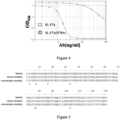
- the antibodies with different concentration gradients were incubated with the pre-diluted hIL-17A mutant (N78A) supernatant and 3 ng/ml of hIL-17A standard for 2 hours, respectively. 2 hours later, the above incubations were transferred to a 96-well cell culture plate pre-seeded with HEK-Blue TM IL-17 Cells. The expression of SEAP in the cells was detected 24 hours later, and data were analyzed and plotted using four parameter logistic curve fitting via SoftMax Pro (see Figure 4 ). The antibody can inhibit the release of SEAP induced by hIL-17A standard.
- the antibody cannot or cannot completely inhibit the release of SEAP induced by the hIL-17A mutant, it indicates that the antibody cannot bind to the hIL-17A mutant, and the corresponding site of the mutation is the epitope of the antibody; if the antibody can inhibit the release of SEAP induced by the hIL-17A mutant, it indicates that the antibody can bind to the hIL-17A mutant, and the site corresponding to the mutation is not the epitope of the antibody.
- N78 of hIL-17A is the epitope of QX002N.
- Figure 5 shows the alignment result of the IL-17A amino acid sequences of human, rhesus and cynomolgus. The 78th position of human and rhesus IL-17A is Asparagine (N), but the 78th position of cynomolgus IL-17A is Lysine (K).
- Example 4 Determine the hIL-17A epitope recognized by the anti-human interleukin 17A monoclonal antibody prepared in Example 1
- D80GNVDYH86 of hIL-17A may be an epitope of QX002N.
- single point mutations were performed in D80GNVDYH86 of hIL-17A and its adjacent sites. If the antibody cannot or cannot completely inhibit the release of SEAP induced by the hIL-17A mutant, it means that the antibody cannot bind to the hIL-17A mutant, and the corresponding site of the mutation is the epitope targeted by the antibody.
- Example 5 Comparative study of hIL-17A epitope recognized by QX002N and known monoclonal antibody IXE through cell activity inhibition experiments
- Figure 6 shows the position of the epitope recognized by QX002N and IXE in the crystal structure of the complex of IL-17A and its receptor.
- Figure 7 is a partial enlarged view in the box of Figure 6 .
- Interleukin-17 is a pro-inflammatory cytokine, mainly secreted by activated memory CD 4+ T lymphocytes. After IL-17 binds to the receptor, it can induce the release of inflammatory cytokines (TNF- ⁇ , IL-1, IL-6, G-CSF, GM-CSF) and chemokines (CXCL1, CXCL2, IL-8, CCL2, CCL7), which mediates the infiltration of inflammatory cells and tissue damage; in addition, IL-17 also has a synergistic effect with other inflammatory factors (such as TNF- ⁇ , IL-6, etc.) to amplify its pro-inflammatory effects.
- IL-17 is involved in the occurrence of a variety of autoimmune diseases (such as psoriasis, rheumatoid arthritis, rheumatoid heart disease, etc.).
- This study found that QX002N can inhibit IL-17A-induced KC (Keratinocyte Chemoattractant, i.e., Keratinocyte chemokine, which is equivalent to CXCL1 in humans) production in mice, suggesting that QX002N has the function of inhibiting the biological activity of IL-17A in vivo.
- IL-17A-induced KC Keratinocyte Chemoattractant, i.e., Keratinocyte chemokine, which is equivalent to CXCL1 in humans
- mice were C57BL/6 female mice, 6-8 weeks old.
- the mice were randomly divided into 12 groups and weighed, with 6 mice in each group.
- two groups of mice were injected with 200 ⁇ l of PBS via the orbital venous plexus, and the other groups of mice were injected with 200 ⁇ l of different concentrations of antibody drug solutions of each group via the orbital venous plexus.
- One hour after the injection of PBS or antibody drugs one of the two groups of mice injected with PBS via the orbital venous plexus was injected with 200 ⁇ l of PBS subcutaneously via the back, and all the other groups were injected with 200 ⁇ l of IL-17A (15 ⁇ g/ ml).
Landscapes
- Health & Medical Sciences (AREA)
- Chemical & Material Sciences (AREA)
- Immunology (AREA)
- Organic Chemistry (AREA)
- General Health & Medical Sciences (AREA)
- Medicinal Chemistry (AREA)
- Life Sciences & Earth Sciences (AREA)
- Bioinformatics & Cheminformatics (AREA)
- Engineering & Computer Science (AREA)
- Veterinary Medicine (AREA)
- Genetics & Genomics (AREA)
- Public Health (AREA)
- Pharmacology & Pharmacy (AREA)
- Nuclear Medicine, Radiotherapy & Molecular Imaging (AREA)
- General Chemical & Material Sciences (AREA)
- Chemical Kinetics & Catalysis (AREA)
- Biochemistry (AREA)
- Biophysics (AREA)
- Animal Behavior & Ethology (AREA)
- Molecular Biology (AREA)
- Proteomics, Peptides & Aminoacids (AREA)
- Transplantation (AREA)
- Peptides Or Proteins (AREA)
- Preparation Of Compounds By Using Micro-Organisms (AREA)
- Medicines Containing Antibodies Or Antigens For Use As Internal Diagnostic Agents (AREA)
- Micro-Organisms Or Cultivation Processes Thereof (AREA)
Description
- The present invention relates to the field of antibody drugs. Specifically, the present invention relates to a monoclonal antibody against
human interleukin 17A and a use thereof. - Interleukin 17 (IL-17), also known as CTLA-8 or IL-17A, is a pro-inflammatory cytokine that stimulates non-immune cells such as fibroblasts, keratinocytes, epithelial and endothelial cells, synovial cells, etc. to secrete IL-6, IL-8, PGE2, MCP-1, CXCL-1 and G-CSF and other cytokines, and also has the biological effects of inducing the surface expression of ICAM-1 and T cell proliferation, etc.. IL-17A is mainly produced by a type of activated CD4+ T cells called Th17 and acts by binding to the complex of IL-17RA and IL-17RC (Toy et al., 2006, J. Immunol. 177(11); 36-39).
- So far, six members of IL-17 family have been discovered: IL-17A (IL-17), IL-17B, IL-17C, IL-17D, IL-17E (IL-25), and IL-17F. These interleukin-17 cytokines can bind to the corresponding receptors to mediate different inflammatory responses.
- Among them, IL-17A is a homodimer composed of two chains of 155 amino acids connected by disulfide bonds, with a molecular weight of 35kDa. The structure of IL-17 is composed of a signal peptide (AA) consisting of 23 amino acids and a chain region of 132 amino acids.
- Overexpression of IL-17A can cause many inflammatory diseases. For example, IL-17A acts on macrophages and DC cells to induce high expression of IL-1, IL-6, TNF and CRP, leading to inflammation, and participates in the pathological process of psoriasis and transplant rejection; IL-17A acts on endothelial cells to induce high expression of IL-6, MMP and coagulation factors, leading to vascular activation, and participates in the pathological process of reperfusion injury, thrombus and atherosclerosis; IL-17A acts on fibroblasts to induce high expression of IL-6, chemokines, growth factors and MMP, leading to matrix destruction, and participates in the pathological process of multiple sclerosis and Crohn's disease; IL-17A acts on osteoblasts and chondrocytes to induce RANKL, MMP, osteoclast production, leading to bone erosion, cartilage damage, and participates in the pathological process of rheumatic arthritis and periodontal disease (N Engl J Med.2009Aug 27; 361(9):888-98.Nat Rev Drug Discov.2012Oct; 11(10):763-76.Semin Arthritis Rheum.2013Oct; 43(2):158- 70.Trends Mol Med.2016Mar; 22(3):230-41.).
- IL-17A neutralizing antibodies can inhibit the high expression of IL-17A in patients with autoimmune diseases and reduce the production of IL-6, an important inflammatory factor (ChabaudM, DurandJM, BuchsN, etal.Arthritis Rheum.1999, 42:963-70). Many animal model experiments of autoimmune diseases have proved that the use of antibodies to neutralize IL-17A can effectively inhibit the pathological development of inflammation (LubbertsE, KoendersMI, Oppers-Walgreen B, etal. Arthritis Rheum., 2004,50:650-659).
-
WO 2011/053763 relates to interleukin-17 A antibody antagonists comprising an G75C76I77N78A79D80G81N82V83D84Y85 epitope. Prabhala RH et al., Leukemia, 2015, 30(2), 379-389 relates to the interleuking-17A antibody AIN457. McInnes IB et al., The Lancet, 2015, 386(9999), 1137-1146 equally relates to the interleuking-17A antibody Secukinumab. - At present, IL-17A-related antibody drugs have been approved for marketing. They are Secukinumab (IL-17A targeting antibody, SEC) for the treatment of plaque psoriasis, ankylosing spondylitis and psoriatic arthritis, and Ixekizumab (IL-17A targeting antibody, IXE), used to treat plaque psoriasis and psoriatic arthritis.
- The purpose of the present invention is to provide a new
anti-human interleukin 17A monoclonal antibody, a pharmaceutical composition containing the monoclonal antibody, and the pharmaceutical use of the monoclonal antibody according to appendedclaims 1 to 10. - That is, the present invention includes an isolated
anti-human interleukin 17A monoclonal antibody, which comprises three heavy chain complementarity determining regions (CDR-H1, CDR-H2 and CDR-H3) and three light chain complementarity determining regions (CDR-L1, CDR -L2 and CDR-L3), wherein, (a) an amino acid sequence of CDR-H1 is the amino acid sequence shown in SEQ ID NO:1; (b) an amino acid sequence of CDR-H2 is the amino acid sequence shown in SEQ ID NO: 2; (c) an amino acid sequence of CDR-H3 is the amino acid sequence shown in SEQ ID NO: 3; (d) an amino acid sequence of CDR-L1 is the amino acid sequence shown in SEQ ID NO: 4; (e) an amino acid sequence of CDR-L2 is the amino acid sequence shown in SEQ ID NO: 5; and (f) an amino acid sequence of CDR-L3 is the amino acid sequence shown in SEQ ID NO:6. As far as the inventor knows, none of thehuman interleukin 17A epitopes bound byanti-human interleukin 17A monoclonal antibody in the prior art contains the 78th asparagine (N78). - Preferably, the monoclonal antibody binds to an epitope including G75C76I77N78A79D80G81N82V83D84Y85 in
human interleukin 17A. - Preferably, the isolated
anti-human interleukin 17A monoclonal antibody comprises a heavy chain variable region with an amino acid sequence shown in SEQ ID NO:7 and a light chain variable region with an amino acid sequence shown in SEQ ID NO:8. - More preferably, the isolated
anti-human interleukin 17A monoclonal antibody a heavy chain with an amino acid sequence shown in SEQ ID NO: 10 and a light chain with an amino acid sequence shown in SEQ ID NO:11. - The present invention further includes an isolated nucleic acid, encoding the monoclonal antibody of the present invention.
- The present invention further includes a host cell, comprising the nucleic acid of the present invention.
- The nucleic acid may be present on a vector. The vector may be of any type, for example, a recombinant vector such as an expression vector. Any one of a variety of host cells can be used. In one embodiment, the host cell is a prokaryotic cell, for example, E. coli. In another embodiment, the host cell is a eukaryotic cell, for example, a mammalian cell, such as a Chinese Hamster Ovary (CHO) cell.
- The present invention also includes a method of producing a monoclonal antibody, comprising culturing the host cell of the present invention to produce the monoclonal antibody of any one of the aforementioned items.
- The present invention also includes a pharmaceutical composition, comprising the monoclonal antibody of any one of the aforementioned items and a pharmaceutically acceptable carrier. The pharmaceutical composition may further comprise additional therapeutic agents (for example, different
anti-human interleukin 17A antibodies). - Preferably, the pharmaceutical composition of the present invention is for a use for the treatment of autoimmune diseases, wherein the autoimmune diseases are rheumatoid arthritis, psoriasis, Crohn's disease, multiple sclerosis, psoriatic arthritis, plaque psoriasis and/or ankylosing spondylitis.
- The present invention also includes the monoclonal antibody of the present invention for use for the treatment of autoimmune diseases, wherein the autoimmune diseases are rheumatoid arthritis, psoriasis, Crohn's disease, multiple sclerosis, psoriatic arthritis, plaque psoriasis and/or ankylosing spondylitis.
- The present invention provides a new
anti-human interleukin 17A monoclonal antibody as defined by the appended claims, compared with the existinganti-human interleukin 17A monoclonal antibody, its binding affinity to IL-17A is equivalent or higher. -
-
Figure 1 is the result of nucleic acid electrophoresis, wherein, M: Marker; Lane 1: pHZDCH, HindIII/NheI; Lane 2: pUC57-37VH-Hu5, HindIII/NheI; Lane 3: pHZDCK, HindIII/BsiWI; Lane 4: pUC57-37VK-Hu2, HindIII/BsiWI. -
Figure 2 is a flow chart of transient expression. -
Figure 3 is a diagram of protein electrophoresis detection. -
Figure 4 is a graph showing the results of QX002N inhibiting hIL-17A and hIL-17A mutant (N78A)-induced SEAP release. -
Figure 5 is a diagram showing the results of the amino acid sequence alignment of IL-17A in humans, rhesus monkeys and cynomolgus monkeys. -
Figure 6 is a diagram showing the position of the epitope recognized by QX002N and IXE in the crystal structure of the complex of IL-17A and its receptor. The epitope on IL-17A recognized by QX002N and IXE is represented by a box. The homodimer on the left is the structure of IL-17A, and the right is the structure of the IL-17 A receptor. -
Figure 7 is a partial enlarged view in the box ofFig. 6 . -
Figure 8 is a graph showing the experimental results of QX002N inhibiting IL-17A-induced KC release in mice. - The scientific and technological terms mentioned in this specification have the same meaning as those commonly understood by those skilled in the art. In case of conflict, the definition in this specification shall prevail.
- Generally, the terms used in this specification have the following meanings.
- In this specification, an "isolated" antibody is an antibody that has been separated from a component of its natural environment. In certain embodiments, the antibody is purified to greater than 95% or 99% purity which is determined by, for example, electrophoresis (for example, SDS-PAGE isoelectric focusing (IEF), capillary electrophoresis) or chromatography (for example, ion exchange or reverse phase HPLC). For a review of methods for evaluating antibody purity, see, for example, Flatman et al., J. Chromatogr. B848:79-87 (2007).
- In the present specification, "monoclonal antibody" means an antibody derived from a population of substantially homologous antibodies, that is, each antibody constituting the population is the same and/or binds the same epitope, except for possible variant antibodies (For example, containing naturally occurring mutations or produced during the production of monoclonal antibody products), such variants are usually present in trace amounts. Unlike polyclonal antibody preparations which usually include different antibodies directed against different determinants (epitopes), each monoclonal antibody of the monoclonal antibody preparation is directed against a single determinant on the antigen. Thus, the modifier "monoclonal" indicates the characteristic that the antibody is derived from a substantially homologous antibody population, and should not be interpreted as requiring the production of the antibody by any specific method. For example, the monoclonal antibody to be used in accordance with the present invention can be prepared by a variety of techniques including, but not limited to, hybridoma methods, recombinant DNA methods, phage display methods, and methods of using a transgenic animal containing all or part of a human immunoglobulin locus, such methods and other exemplary methods for preparing monoclonal antibodies are described herein.
- In the present specification, "affinity" means the strength of the sum of non-covalent interactions between a single binding site of a molecule (for example, an antibody) and its binding partner (for example, an antigen). Unless otherwise indicated, the "binding affinity" used in this specification means the inherent binding affinity that reflects the 1:1 interaction between members of a binding pair (e.g., antibody and antigen). The affinity of a molecule X to its partner Y can usually be expressed by the equilibrium dissociation constant (KD). The affinity can be measured by common methods known in the art.
- In this specification, human Interleukin-17A (hIL-17A) represents a human-derived protein, and its amino acid sequence is shown in SEQ ID NO: 9, wherein the underlined part represents a signal peptide.

- IL-17A is a pro-inflammatory cytokine produced by Th17 cells, which stimulates such as keratinocytes, fibroblasts, epithelial cells, endothelial cells, joint synovial cells, etc. by binding to its receptor IL-17RA and IL-17RC to produce IL-6, IL-8, G-CSF, GM-CSF, CXCL-1, CXCL-2, CCL-8, CCL-2, CCL-7 and other cytokines, participates in and promotes a variety of diseases mediated by abnormal immune responses, such as rheumatoid arthritis, psoriasis, multiple sclerosis, psoriatic arthritis, plaque psoriasis, ankylosing spondylitis, etc.
- The monoclonal antibody of the present invention is a neutralizing antibody that specifically recognizes IL-17A. It binds to IL-17A, thereby blocking IL-17A from transducing signals and mediating biological effects through its receptor, thereby preventing and treating autoimmune diseases mediated by IL-17A.
- In the present specification, "
anti-human interleukin 17A monoclonal antibody" means a monoclonal antibody that can bind tohuman interleukin 17A with sufficient affinity so that the monoclonal antibody can be used as a diagnostic agent and/or therapeutic agent targetinghuman interleukin 17A. In one embodiment, for example, as measured by radioimmunoassay (RIA), the degree of binding of theanti-human interleukin 17A monoclonal antibody to the unrelated,non-human interleukin 17A protein is less than, for example, about 10% of that of the monoclonal antibody to thehuman interleukin 17A protein. - In certain embodiments, the monoclonal antibody that binds to
human interleukin 17A has ≤1 µM, ≤100 nM, ≤10 nM, ≤1 nM, ≤0.1 nM, ≤0.01 nM, or ≤0.001 nM (e.g., 10-8M or lower, 10-8M to 10-13M, 10-9M to 10-13M) equilibrium dissociation constant (KD). - In one embodiment, the amino acid sequence of the heavy chain of the
anti-human interleukin 17A monoclonal antibody of the present invention is shown in SEQ ID NO: 10; the amino acid sequence of the light chain is shown in SEQ ID NO: 11. - SEQ ID NO: 10

- SEQ ID NO: 11

- Wherein, SEQ ID NOs: 10 and 11 are both humanized sequences.
- In this specification, "isolated" nucleic acid means a nucleic acid molecule that has been separated from a component of its natural environment. An isolated nucleic acid includes a nucleic acid molecule contained in a cell that usually contains a nucleic acid molecule, but the nucleic acid molecule is present outside the chromosome or at a chromosomal location different from its natural chromosomal location.
- In the present specification, "isolated nucleic acid encoding
anti-human interleukin 17A monoclonal antibody" means one or more nucleic acid molecules encoding antibody heavy and light chains, including such nucleic acid molecules in a single vector or separate vectors, and such nucleic acid molecules present in one or more locations in the host cell. - In this specification, "vector" means a nucleic acid molecule capable of amplifying another nucleic acid linked to it. The term includes a vector as a self-replicating nucleic acid structure as well as a vector integrated into the genome of a host cell into which it has been introduced. Certain vectors can direct the expression of nucleic acids to which they are operably linked. Such vectors are referred to herein as "expression vectors".
- In this specification, "host cell", "host cell line" and "host cell culture" are used interchangeably and refer to cells into which exogenous nucleic acid has been introduced, including the progeny of such cells. Host cells include "transformants" and "transformed cells", which include primary transformed cells and progeny derived therefrom (regardless of the number of passages). The offspring may not be exactly the same as the parent cell in terms of nucleic acid content, but may contain mutations. The mutant progeny with the same function or biological activity screened or selected for the originally transformed cells are included in this specification.
- In the present specification, "pharmaceutical composition" means a preparation that is in a form that makes the biological activity of the active ingredient contained therein effective, and that the composition does not contain additional components with unacceptable toxicity to the subject to which the formulation is to be administered.
- In the present specification, "pharmaceutically acceptable carrier" means ingredients other than the active ingredient in the pharmaceutical composition, which are non-toxic to the subject. Pharmaceutically acceptable carriers include, but are not limited to, buffers, excipients, stabilizers or preservatives.
- Hereinafter, the present invention will be explained in more detail through examples.
- The
human interleukin 17A was purchased from Shanghai Novoprotein Technology Co., Ltd. for immunizing New Zealand rabbits. B cell cloning technology was used to screen out monoclonal antibodies that have inhibitory activity onhuman interleukin 17A. First, the cell supernatant was detected by using binding ELISA to select clones that bind to hIL-17A; then, blocking ELISA was used to detect clones that could inhibit the binding of hIL-17A to its receptor. The above immunization and screening process were entrusted to a commercial company to complete. - Eight clones were selected for recombinant expression and sequencing. And the clone 37# was humanized. The homology alignment to human IgG germline sequences was performed using NCBI IgBlast. IgGHV4-59*01 was selected as the template for heavy chain CDR grafting, and the heavy chain CDR regions of the clone 37# (i.e., CDR-H1 (SEQ ID No: 1), CDR-H2 (SEQ ID No: 2) and CDR-H3 (SEQ ID No: 3)) were grafted into the framework regions of IgGHV4-59*01; IGKV1-12*01 was selected as the template for light chain CDR grafting, and the light chain CDR regions of the clone 37# (i.e., CDR-L1 (SEQ ID No: 4), CDR-L2 (SEQ ID No: 5) and CDR-L3 (SEQ ID No: 6)) were grafted into the framework regions of IGKV1-12*01; back mutations at specific sites in the framework regions were performed to obtain the variable regions of the monoclonal antibody QX002N of the present invention. Finally, the amino acid sequence of the humanized heavy chain variable region is shown in SEQ ID NO: 7; the amino acid sequence of the humanized light chain variable region is shown in SEQ ID NO: 8.
- The gene sequences of the heavy chain variable region and the light chain variable region were synthesized artificially and inserted into the pUC57 vector, respectively. The gene of the heavy chain variable region and the heavy chain expression plasmid pHZDCH were digested with HindIII and NheI; the gene of the light chain variable region and the light chain expression plasmid pHZDCK were digested with HindIII and BsiWI; the T4 DNA ligase was used to insert the digested fragments into the corresponding expression plasmids, respectively; the heavy chain expression plasmid pHZDCH-37VH-Hu5 and the light chain expression plasmid pHZDCK-37VK-Hu2 were constructed. The results of double digestion of the plasmids detected by nucleic acid electrophoresis were shown in
Figure 1 . According to the results inFigure 1 , it can be seen the results of double enzyme digestion of the heavy and light chain variable regions and the heavy and light chain expression plasmids of the antibody, wherein, the plasmid size of the heavy and light chains is about 10,000 bp, the variable region of the light chain is about 420 bp, and the variable region of the heavy chain is about 441 bp. The heavy chain and light chain expression plasmids with the correct sequence were co-transfected into ExpiCHO-S cells. The day before transfection, the ExpiCHO-S cells were diluted to 3×10⁶ cells/ml for passage before transfection. On the day of transfection, dilute the cell density to 6×10⁶ cells/ml, and pack 25 ml of cells in a 125ml shake flask, and wait for transfection. The transfection and expression process are shown inFigure 2 . - On the 7th day after transfection, the culture supernatant was harvested and purified with Protein A in one step. The purified antibody was detected by SDS-PAGE electrophoresis and named as QX002N. The result of the antibody detected by protein electrophoresis is shown in
Figure 3 . The protein electrophoresis was performed on a denatured reducing gel. The result inFigure 3 shows that there are two bands. The sizes of the two bands are about 50 kDa and 25 kDa respectively, which are consistent with the theoretical molecular weights of the heavy chain (49.3 kDa) and light chain (23.2 kDa). - Biacore T200 was used to detect the affinity of QX002N binding to hIL-17A, and all processes were performed at 25°C. The Protein A was chemically coupled to the CM5 chip, and an appropriate amount of antibody was immobilized by the capture method, so that the Rmax was less than 50 RU, and the capture flow rate was 10 µl/min. The antigen was gradually diluted, and the flow rate of the instrument was switched to 30 µl/min. The diluted antigen was flowed through the reference channel and the channel of immobilized antibody in sequence from low to high concentration, and the running buffer was flowed through as a negative control. After each binding and dissociation was completed, the chip was regenerated with glycine, pH1.5. Fitting was performed with the build-in software in the instrument according to a 1:1 binding model. The association rate constant ka , the dissociation rate constant kd , and the equilibrium dissociation constant KD values of the antibody were calculated.
- In addition, the affinity of QX002N was compared with the currently commercialized antibodies against hIL-17A, i.e., Ixekizumab (IXE) and Secukinumab (SEC). The detection method for known antibodies is the same as the detection method for QX002N. The results are shown in the table below.
- Wherein, Ixekizumab (IXE) and Secukinumab (SEC) were obtained by purchasing commercially available drugs, respectively.
Sample name ka (106 M-1S-1) kd (10-5 S-1) KD (pM) QX002N 3.35 2.36 7.07 Ixekizumab (IXE) 1.70 2.58 15.35 Secukinumab (SEC) 0.24 6.55 339.00 - Each sample was tested twice and the average value was calculated.
- Since the yield of hIL-17A mutant in mammalian cell expression system was too low to be purified, the supernatant described in
Figure 2 was used directly for cell-based inhibition assay. However, the proper dilution factor of the supernatants should be determined by cell-based assay. - hIL-17A can induce HEK-Blue™ IL-17 Cells to release secreted embryonic alkaline phosphatase (SEAP). Detect the released amount of SEAP induced by the hIL-17A standard at different concentrations and draw the concentration curve. The released amount of SEAP close to upper platform period was induced by 3ng/ml of hIL-17A. Therefore 3ng/ml was selected as the working concentration.
- Supernatants of different hIL-17A mutants were gradually diluted, and the released amount of SEAP induced by hIL-17A mutants of different dilutions was detected. The dilution factor was selected for cell-based inhibition assay, while the released amount of SEAP induced by diluted hIL-17A mutants was the same as that induced by 3ng/ml of hIL-17A standard.
- The antibodies with different concentration gradients were incubated with the pre-diluted hIL-17A mutant (N78A) supernatant and 3 ng/ml of hIL-17A standard for 2 hours, respectively. 2 hours later, the above incubations were transferred to a 96-well cell culture plate pre-seeded with HEK-Blue™ IL-17 Cells. The expression of SEAP in the cells was detected 24 hours later, and data were analyzed and plotted using four parameter logistic curve fitting via SoftMax Pro (see
Figure 4 ). The antibody can inhibit the release of SEAP induced by hIL-17A standard. If the antibody cannot or cannot completely inhibit the release of SEAP induced by the hIL-17A mutant, it indicates that the antibody cannot bind to the hIL-17A mutant, and the corresponding site of the mutation is the epitope of the antibody; if the antibody can inhibit the release of SEAP induced by the hIL-17A mutant, it indicates that the antibody can bind to the hIL-17A mutant, and the site corresponding to the mutation is not the epitope of the antibody. - The result shows that QX002N could not completely inhibit the SEAP release induced by N78A mutated hIL-17A. Meanwhile, QX002N could not block the release of SEAP induced by cynomolgus IL-17A instead of rhesus IL-17A. Therefore, N78 of hIL-17A is the epitope of QX002N. It should be noted that
Figure 5 shows the alignment result of the IL-17A amino acid sequences of human, rhesus and cynomolgus. The 78th position of human and rhesus IL-17A is Asparagine (N), but the 78th position of cynomolgus IL-17A is Lysine (K). - For SEC and IXE, the same method was used for detection. The results show that both SEC and IXE can bind to hIL-17A mutant (N78A) and cynomolgus IL-17A. Therefore, QX002N has different epitopes from SEC and IXE.
- Experimental results show that D80GNVDYH86 of hIL-17A may be an epitope of QX002N. In order to determine the epitope region targeted by QX002N, single point mutations were performed in D80GNVDYH86 of hIL-17A and its adjacent sites. If the antibody cannot or cannot completely inhibit the release of SEAP induced by the hIL-17A mutant, it means that the antibody cannot bind to the hIL-17A mutant, and the corresponding site of the mutation is the epitope targeted by the antibody.
- The results are shown in Table 1. It can be determined that the epitope region targeted by QX002N is G75XXN78XD80XN82V83D84Y85, wherein X represents any amino acid, and the number behind the one-letter symbol of the amino acid represents the position of the amino acid in hIL-17A.
Table 1 The epitope on IL-17A bound by QX002N Site Amino acid Mutation Cell-based neutralizing activity 72 R A Inhibition 73 H A Inhibition 74 L A Inhibition 75 G R/S/N Incomplete inhibition 76 C S/G No expression 77 I A Inhibition 78 N A Incomplete inhibition 79 A G/R/E/N/S/L Inhibition 80 D A No inhibition 81 G A/R/S/L Inhibition 82 N A No inhibition 83 V G No inhibition 84 D A No inhibition 85 Y A No inhibition 86 H A Inhibition 87 M A Inhibition 88 N A Inhibition 89 S A Inhibition 90 V A Inhibition - Single point mutations were performed in D80GNVDYH86 and T125PIV128 of hIL-17A. The activity of QX002N and IXE inhibiting the release of SEAP induced by IL-17A mutants were analyzed.
- The results indicate that QX002N only recognizes D80GNVDYH86, instead of T125PIV128; but IXE recognizes both of the two sequences. Therefore, the epitopes recognized by QX002N and IXE are completely different.
Table 2 Epitopes on IL-17A bound by QX002N and IXE Site Amino acid Mutation Cell-based neutralizing activity QX002N IXE 80 D A No inhibition Inhibition 81 G - 82 N A No inhibition Inhibition 83 V G/A No inhibition No inhibition 84 D A No inhibition Incomplete inhibition 85 Y A No inhibition Incomplete inhibition 86 H A Inhibition Incomplete inhibition 125 T A Inhibition Incomplete inhibition 126 P A Inhibition Incomplete inhibition 127 I A Inhibition Incomplete inhibition 128 V A Inhibition Incomplete inhibition -
Figure 6 shows the position of the epitope recognized by QX002N and IXE in the crystal structure of the complex of IL-17A and its receptor.Figure 7 is a partial enlarged view in the box ofFigure 6 . - Interleukin-17 (IL-17) is a pro-inflammatory cytokine, mainly secreted by activated memory CD4+ T lymphocytes. After IL-17 binds to the receptor, it can induce the release of inflammatory cytokines (TNF-α, IL-1, IL-6, G-CSF, GM-CSF) and chemokines (CXCL1, CXCL2, IL-8, CCL2, CCL7), which mediates the infiltration of inflammatory cells and tissue damage; in addition, IL-17 also has a synergistic effect with other inflammatory factors (such as TNF-α, IL-6, etc.) to amplify its pro-inflammatory effects. Studies have confirmed that IL-17 is involved in the occurrence of a variety of autoimmune diseases (such as psoriasis, rheumatoid arthritis, rheumatoid heart disease, etc.). This study found that QX002N can inhibit IL-17A-induced KC (Keratinocyte Chemoattractant, i.e., Keratinocyte chemokine, which is equivalent to CXCL1 in humans) production in mice, suggesting that QX002N has the function of inhibiting the biological activity of IL-17A in vivo.
- The experimental animals were C57BL/6 female mice, 6-8 weeks old. The mice were randomly divided into 12 groups and weighed, with 6 mice in each group. Among them, two groups of mice were injected with 200 µl of PBS via the orbital venous plexus, and the other groups of mice were injected with 200 µl of different concentrations of antibody drug solutions of each group via the orbital venous plexus. One hour after the injection of PBS or antibody drugs, one of the two groups of mice injected with PBS via the orbital venous plexus was injected with 200µl of PBS subcutaneously via the back, and all the other groups were injected with 200µl of IL-17A (15µg/ ml). Blood samples were collected from the orbit at 2 hours after the mice in each group were injected with PBS or IL-17A. The whole blood was allowed to stand at room temperature for 2 hours, centrifuged at 3000 rpm, 4°C for 10 minutes, and the upper serum was drawn. ELISA method was used to detect the KC content in mouse serum samples. It should be noted that "37-5" in the following brief flow and
Figure 8 are QX002N. - The brief experimental process is as follows:

- The experimental results are shown in
Figure 8 . It can be seen that QX002N can inhibit IL-17A-induced KC release in mice, and exhibit a certain antibody concentration-dependent. This suggests that QX002N can effectively inhibit the function of IL-17A in vivo, and has in vivo pharmacodynamic activity. Further from the data inFigure 8 , it can be seen that the effect of QX002N is equivalent to or slightly better than that of the currently approved drugs SEC and IXE.
Claims (9)
- An isolated anti-human interleukin 17A monoclonal antibody, which comprises three heavy chain complementarity determining regions (CDR-H1, CDR-H2 and CDR-H3) and three light chain complementarity determining regions (CDR-L1, CDR -L2 and CDR-L3), wherein,(a) an amino acid sequence of CDR-H1 is the amino acid sequence shown in SEQ ID NO:1;(b) an amino acid sequence of CDR-H2 is the amino acid sequence shown in SEQ ID NO: 2;(c) an amino acid sequence of CDR-H3 is the amino acid sequence shown in SEQ ID NO: 3;(d) an amino acid sequence of CDR-L1 is the amino acid sequence shown in SEQ ID NO: 4;(e) an amino acid sequence of CDR-L2 is the amino acid sequence shown in SEQ ID NO: 5; and(f) an amino acid sequence of CDR-L3 is the amino acid sequence shown in SEQ ID NO:6.
- The isolated anti-human interleukin 17A monoclonal antibody according to claim 1, which binds to an epitope including G75C76I77N78A79D80G81N82V83D84Y85 in human interleukin 17A.
- The isolated anti-human interleukin 17A monoclonal antibody of claim 1 or 2, comprising a heavy chain variable region with an amino acid sequence shown in SEQ ID NO:7 and a light chain variable region with an amino acid sequence shown in SEQ ID NO:8.
- The monoclonal antibody according to claim 3, comprising a heavy chain with an amino acid sequence shown in SEQ ID NO:10 and a light chain with an amino acid sequence shown in SEQ ID NO:11.
- An isolated nucleic acid, encoding the monoclonal antibody according to any one of claims 1 to 4.
- A host cell, comprising the nucleic acid according to claim 5.
- A method of producing a monoclonal antibody, comprising culturing the host cell according to claim 6 to produce the monoclonal antibody according to any one of claims 1 to 4.
- A pharmaceutical composition, comprising the monoclonal antibody according to any one of claims 1 to 4 and a pharmaceutically acceptable carrier.
- The monoclonal antibody according to any of claims 1 to 4 for use for the treatment of autoimmune diseases, wherein the autoimmune disease is rheumatoid arthritis, psoriasis, Crohn's disease, multiple sclerosis, psoriatic arthritis, plaque psoriasis and/or ankylosing spondylitis.
Applications Claiming Priority (1)
| Application Number | Priority Date | Filing Date | Title |
|---|---|---|---|
| PCT/CN2018/087271 WO2019218298A1 (en) | 2018-05-17 | 2018-05-17 | Anti-human interleukin 17a monoclonal antibody and application thereof |
Publications (3)
| Publication Number | Publication Date |
|---|---|
| EP3816184A1 EP3816184A1 (en) | 2021-05-05 |
| EP3816184A4 EP3816184A4 (en) | 2021-09-01 |
| EP3816184B1 true EP3816184B1 (en) | 2023-04-26 |
Family
ID=68539370
Family Applications (1)
| Application Number | Title | Priority Date | Filing Date |
|---|---|---|---|
| EP18919093.7A Active EP3816184B1 (en) | 2018-05-17 | 2018-05-17 | Anti-human interleukin 17a monoclonal antibody and application thereof |
Country Status (6)
| Country | Link |
|---|---|
| US (1) | US12110323B2 (en) |
| EP (1) | EP3816184B1 (en) |
| JP (1) | JP6930778B2 (en) |
| AU (1) | AU2018423921B2 (en) |
| CA (1) | CA3100092A1 (en) |
| WO (1) | WO2019218298A1 (en) |
Families Citing this family (1)
| Publication number | Priority date | Publication date | Assignee | Title |
|---|---|---|---|---|
| CA3181418A1 (en) * | 2020-04-30 | 2021-11-04 | Janssen Pharmaceutica Nv | Methods of identifying modulators of the il-17 pathway |
Family Cites Families (10)
| Publication number | Priority date | Publication date | Assignee | Title |
|---|---|---|---|---|
| CN101326195B9 (en) | 2005-12-13 | 2022-11-11 | 伊莱利利公司 | anti-IL-17 antibodies |
| TW200815469A (en) | 2006-06-23 | 2008-04-01 | Astrazeneca Ab | Compounds |
| KR101318549B1 (en) * | 2008-09-29 | 2013-10-16 | 로슈 글리카트 아게 | Antibodies against human il17 and uses thereof |
| JP5922025B2 (en) * | 2009-10-30 | 2016-05-25 | ヤンセン バイオテツク,インコーポレーテツド | IL-17A antagonist |
| EP2864355B1 (en) * | 2012-06-25 | 2016-10-12 | Orega Biotech | Il-17 antagonist antibodies |
| MX371052B (en) | 2013-02-08 | 2020-01-14 | Novartis Ag | ANTI-IL-17A ANTIBODIES AND ITS USE IN THE TREATMENT OF AUTOIMMUNE AND INFLAMMATORY DISORDERS. |
| US20170291939A1 (en) * | 2014-06-25 | 2017-10-12 | Novartis Ag | Antibodies specific for il-17a fused to hyaluronan binding peptide tags |
| CN106336459B (en) | 2015-07-13 | 2020-12-08 | 三生国健药业(上海)股份有限公司 | Human interleukin-17A resisting monoclonal antibody, preparation method and application thereof |
| US20180201673A1 (en) * | 2015-07-16 | 2018-07-19 | Eli Lilly And Company | Treatment of pruritus |
| CN107488227A (en) | 2016-06-12 | 2017-12-19 | 三生国健药业(上海)股份有限公司 | Anti-human IL-17 A monoclonal antibodies, its preparation method and application |
-
2018
- 2018-05-17 WO PCT/CN2018/087271 patent/WO2019218298A1/en not_active Ceased
- 2018-05-17 AU AU2018423921A patent/AU2018423921B2/en active Active
- 2018-05-17 CA CA3100092A patent/CA3100092A1/en active Pending
- 2018-05-17 US US17/055,789 patent/US12110323B2/en active Active
- 2018-05-17 JP JP2020565275A patent/JP6930778B2/en active Active
- 2018-05-17 EP EP18919093.7A patent/EP3816184B1/en active Active
Also Published As
| Publication number | Publication date |
|---|---|
| AU2018423921A2 (en) | 2021-01-14 |
| AU2018423921B2 (en) | 2021-09-30 |
| AU2018423921A1 (en) | 2021-01-07 |
| CA3100092A1 (en) | 2019-11-21 |
| JP6930778B2 (en) | 2021-09-01 |
| JP2021514669A (en) | 2021-06-17 |
| EP3816184A4 (en) | 2021-09-01 |
| US20210230264A1 (en) | 2021-07-29 |
| US12110323B2 (en) | 2024-10-08 |
| EP3816184A1 (en) | 2021-05-05 |
| WO2019218298A1 (en) | 2019-11-21 |
Similar Documents
| Publication | Publication Date | Title |
|---|---|---|
| JP7538721B2 (en) | Anti-interleukin 17a antibodies, pharmaceutical compositions, and uses thereof | |
| CN111494625B (en) | Pharmaceutical compositions for the treatment of IL-4 and/or IL-13 mediated signal transduction related disorders | |
| CN107810198B (en) | anti-CD 40 antibodies and uses thereof | |
| JP4271936B2 (en) | Antibody against human IL-1β | |
| JP3978338B2 (en) | Antibody against human IL-1β | |
| JP7384498B2 (en) | Anti-human interleukin 23 monoclonal antibody and its use | |
| JP2019525730A (en) | Anti-human interleukin-17A monoclonal antibody, production method and use thereof | |
| EP4397684A1 (en) | Anti-human tslp monoclonal antibody and use thereof | |
| CN108640991B (en) | Antihuman interleukin 17A monoclonal antibody and its application | |
| US12552870B2 (en) | Anti-human interleukin 36 receptor monoclonal antibody and methods of use thereof to treat disease | |
| US12110323B2 (en) | Anti-human interleukin 17A monoclonal antibody and application thereof | |
| HK1248718B (en) | Anti-cd40 antibodies and uses thereof |
Legal Events
| Date | Code | Title | Description |
|---|---|---|---|
| STAA | Information on the status of an ep patent application or granted ep patent |
Free format text: STATUS: THE INTERNATIONAL PUBLICATION HAS BEEN MADE |
|
| PUAI | Public reference made under article 153(3) epc to a published international application that has entered the european phase |
Free format text: ORIGINAL CODE: 0009012 |
|
| STAA | Information on the status of an ep patent application or granted ep patent |
Free format text: STATUS: REQUEST FOR EXAMINATION WAS MADE |
|
| 17P | Request for examination filed |
Effective date: 20201208 |
|
| AK | Designated contracting states |
Kind code of ref document: A1 Designated state(s): AL AT BE BG CH CY CZ DE DK EE ES FI FR GB GR HR HU IE IS IT LI LT LU LV MC MK MT NL NO PL PT RO RS SE SI SK SM TR |
|
| REG | Reference to a national code |
Ref country code: DE Ref legal event code: R079 Ref document number: 602018049063 Country of ref document: DE Free format text: PREVIOUS MAIN CLASS: C07K0016240000 Ipc: C07K0016280000 |
|
| STAA | Information on the status of an ep patent application or granted ep patent |
Free format text: STATUS: EXAMINATION IS IN PROGRESS |
|
| A4 | Supplementary search report drawn up and despatched |
Effective date: 20210730 |
|
| RIC1 | Information provided on ipc code assigned before grant |
Ipc: C12N 15/13 20060101ALI20210726BHEP Ipc: C07K 16/24 20060101ALI20210726BHEP Ipc: A61P 35/00 20060101ALI20210726BHEP Ipc: A61P 37/00 20060101ALI20210726BHEP Ipc: A61K 39/395 20060101ALI20210726BHEP Ipc: C07K 16/28 20060101AFI20210726BHEP |
|
| 17Q | First examination report despatched |
Effective date: 20210825 |
|
| GRAP | Despatch of communication of intention to grant a patent |
Free format text: ORIGINAL CODE: EPIDOSNIGR1 |
|
| STAA | Information on the status of an ep patent application or granted ep patent |
Free format text: STATUS: GRANT OF PATENT IS INTENDED |
|
| INTG | Intention to grant announced |
Effective date: 20220613 |
|
| GRAJ | Information related to disapproval of communication of intention to grant by the applicant or resumption of examination proceedings by the epo deleted |
Free format text: ORIGINAL CODE: EPIDOSDIGR1 |
|
| STAA | Information on the status of an ep patent application or granted ep patent |
Free format text: STATUS: EXAMINATION IS IN PROGRESS |
|
| INTC | Intention to grant announced (deleted) | ||
| GRAP | Despatch of communication of intention to grant a patent |
Free format text: ORIGINAL CODE: EPIDOSNIGR1 |
|
| STAA | Information on the status of an ep patent application or granted ep patent |
Free format text: STATUS: GRANT OF PATENT IS INTENDED |
|
| INTG | Intention to grant announced |
Effective date: 20221118 |
|
| GRAS | Grant fee paid |
Free format text: ORIGINAL CODE: EPIDOSNIGR3 |
|
| GRAA | (expected) grant |
Free format text: ORIGINAL CODE: 0009210 |
|
| STAA | Information on the status of an ep patent application or granted ep patent |
Free format text: STATUS: THE PATENT HAS BEEN GRANTED |
|
| AK | Designated contracting states |
Kind code of ref document: B1 Designated state(s): AL AT BE BG CH CY CZ DE DK EE ES FI FR GB GR HR HU IE IS IT LI LT LU LV MC MK MT NL NO PL PT RO RS SE SI SK SM TR |
|
| REG | Reference to a national code |
Ref country code: GB Ref legal event code: FG4D |
|
| REG | Reference to a national code |
Ref country code: CH Ref legal event code: EP |
|
| REG | Reference to a national code |
Ref country code: DE Ref legal event code: R096 Ref document number: 602018049063 Country of ref document: DE |
|
| REG | Reference to a national code |
Ref country code: AT Ref legal event code: REF Ref document number: 1562776 Country of ref document: AT Kind code of ref document: T Effective date: 20230515 |
|
| REG | Reference to a national code |
Ref country code: IE Ref legal event code: FG4D |
|
| P01 | Opt-out of the competence of the unified patent court (upc) registered |
Effective date: 20230522 |
|
| REG | Reference to a national code |
Ref country code: LT Ref legal event code: MG9D |
|
| REG | Reference to a national code |
Ref country code: NL Ref legal event code: MP Effective date: 20230426 |
|
| REG | Reference to a national code |
Ref country code: AT Ref legal event code: MK05 Ref document number: 1562776 Country of ref document: AT Kind code of ref document: T Effective date: 20230426 |
|
| PG25 | Lapsed in a contracting state [announced via postgrant information from national office to epo] |
Ref country code: NL Free format text: LAPSE BECAUSE OF FAILURE TO SUBMIT A TRANSLATION OF THE DESCRIPTION OR TO PAY THE FEE WITHIN THE PRESCRIBED TIME-LIMIT Effective date: 20230426 |
|
| PG25 | Lapsed in a contracting state [announced via postgrant information from national office to epo] |
Ref country code: SE Free format text: LAPSE BECAUSE OF FAILURE TO SUBMIT A TRANSLATION OF THE DESCRIPTION OR TO PAY THE FEE WITHIN THE PRESCRIBED TIME-LIMIT Effective date: 20230426 Ref country code: PT Free format text: LAPSE BECAUSE OF FAILURE TO SUBMIT A TRANSLATION OF THE DESCRIPTION OR TO PAY THE FEE WITHIN THE PRESCRIBED TIME-LIMIT Effective date: 20230828 Ref country code: NO Free format text: LAPSE BECAUSE OF FAILURE TO SUBMIT A TRANSLATION OF THE DESCRIPTION OR TO PAY THE FEE WITHIN THE PRESCRIBED TIME-LIMIT Effective date: 20230726 Ref country code: ES Free format text: LAPSE BECAUSE OF FAILURE TO SUBMIT A TRANSLATION OF THE DESCRIPTION OR TO PAY THE FEE WITHIN THE PRESCRIBED TIME-LIMIT Effective date: 20230426 Ref country code: AT Free format text: LAPSE BECAUSE OF FAILURE TO SUBMIT A TRANSLATION OF THE DESCRIPTION OR TO PAY THE FEE WITHIN THE PRESCRIBED TIME-LIMIT Effective date: 20230426 |
|
| PG25 | Lapsed in a contracting state [announced via postgrant information from national office to epo] |
Ref country code: RS Free format text: LAPSE BECAUSE OF FAILURE TO SUBMIT A TRANSLATION OF THE DESCRIPTION OR TO PAY THE FEE WITHIN THE PRESCRIBED TIME-LIMIT Effective date: 20230426 Ref country code: PL Free format text: LAPSE BECAUSE OF FAILURE TO SUBMIT A TRANSLATION OF THE DESCRIPTION OR TO PAY THE FEE WITHIN THE PRESCRIBED TIME-LIMIT Effective date: 20230426 Ref country code: LV Free format text: LAPSE BECAUSE OF FAILURE TO SUBMIT A TRANSLATION OF THE DESCRIPTION OR TO PAY THE FEE WITHIN THE PRESCRIBED TIME-LIMIT Effective date: 20230426 Ref country code: LT Free format text: LAPSE BECAUSE OF FAILURE TO SUBMIT A TRANSLATION OF THE DESCRIPTION OR TO PAY THE FEE WITHIN THE PRESCRIBED TIME-LIMIT Effective date: 20230426 Ref country code: IS Free format text: LAPSE BECAUSE OF FAILURE TO SUBMIT A TRANSLATION OF THE DESCRIPTION OR TO PAY THE FEE WITHIN THE PRESCRIBED TIME-LIMIT Effective date: 20230826 Ref country code: HR Free format text: LAPSE BECAUSE OF FAILURE TO SUBMIT A TRANSLATION OF THE DESCRIPTION OR TO PAY THE FEE WITHIN THE PRESCRIBED TIME-LIMIT Effective date: 20230426 Ref country code: GR Free format text: LAPSE BECAUSE OF FAILURE TO SUBMIT A TRANSLATION OF THE DESCRIPTION OR TO PAY THE FEE WITHIN THE PRESCRIBED TIME-LIMIT Effective date: 20230727 |
|
| PG25 | Lapsed in a contracting state [announced via postgrant information from national office to epo] |
Ref country code: FI Free format text: LAPSE BECAUSE OF FAILURE TO SUBMIT A TRANSLATION OF THE DESCRIPTION OR TO PAY THE FEE WITHIN THE PRESCRIBED TIME-LIMIT Effective date: 20230426 |
|
| REG | Reference to a national code |
Ref country code: CH Ref legal event code: PL |
|
| PG25 | Lapsed in a contracting state [announced via postgrant information from national office to epo] |
Ref country code: SK Free format text: LAPSE BECAUSE OF FAILURE TO SUBMIT A TRANSLATION OF THE DESCRIPTION OR TO PAY THE FEE WITHIN THE PRESCRIBED TIME-LIMIT Effective date: 20230426 |
|
| PG25 | Lapsed in a contracting state [announced via postgrant information from national office to epo] |
Ref country code: MC Free format text: LAPSE BECAUSE OF FAILURE TO SUBMIT A TRANSLATION OF THE DESCRIPTION OR TO PAY THE FEE WITHIN THE PRESCRIBED TIME-LIMIT Effective date: 20230426 |
|
| REG | Reference to a national code |
Ref country code: DE Ref legal event code: R097 Ref document number: 602018049063 Country of ref document: DE |
|
| REG | Reference to a national code |
Ref country code: BE Ref legal event code: MM Effective date: 20230531 |
|
| PG25 | Lapsed in a contracting state [announced via postgrant information from national office to epo] |
Ref country code: SM Free format text: LAPSE BECAUSE OF FAILURE TO SUBMIT A TRANSLATION OF THE DESCRIPTION OR TO PAY THE FEE WITHIN THE PRESCRIBED TIME-LIMIT Effective date: 20230426 Ref country code: SK Free format text: LAPSE BECAUSE OF FAILURE TO SUBMIT A TRANSLATION OF THE DESCRIPTION OR TO PAY THE FEE WITHIN THE PRESCRIBED TIME-LIMIT Effective date: 20230426 Ref country code: RO Free format text: LAPSE BECAUSE OF FAILURE TO SUBMIT A TRANSLATION OF THE DESCRIPTION OR TO PAY THE FEE WITHIN THE PRESCRIBED TIME-LIMIT Effective date: 20230426 Ref country code: MC Free format text: LAPSE BECAUSE OF FAILURE TO SUBMIT A TRANSLATION OF THE DESCRIPTION OR TO PAY THE FEE WITHIN THE PRESCRIBED TIME-LIMIT Effective date: 20230426 Ref country code: LU Free format text: LAPSE BECAUSE OF NON-PAYMENT OF DUE FEES Effective date: 20230517 Ref country code: LI Free format text: LAPSE BECAUSE OF NON-PAYMENT OF DUE FEES Effective date: 20230531 Ref country code: EE Free format text: LAPSE BECAUSE OF FAILURE TO SUBMIT A TRANSLATION OF THE DESCRIPTION OR TO PAY THE FEE WITHIN THE PRESCRIBED TIME-LIMIT Effective date: 20230426 Ref country code: DK Free format text: LAPSE BECAUSE OF FAILURE TO SUBMIT A TRANSLATION OF THE DESCRIPTION OR TO PAY THE FEE WITHIN THE PRESCRIBED TIME-LIMIT Effective date: 20230426 Ref country code: CZ Free format text: LAPSE BECAUSE OF FAILURE TO SUBMIT A TRANSLATION OF THE DESCRIPTION OR TO PAY THE FEE WITHIN THE PRESCRIBED TIME-LIMIT Effective date: 20230426 Ref country code: CH Free format text: LAPSE BECAUSE OF NON-PAYMENT OF DUE FEES Effective date: 20230531 |
|
| VS25 | Lapsed in a validation state [announced via postgrant information from nat. office to epo] |
Ref country code: MD Free format text: LAPSE BECAUSE OF FAILURE TO SUBMIT A TRANSLATION OF THE DESCRIPTION OR TO PAY THE FEE WITHIN THE PRESCRIBED TIME-LIMIT Effective date: 20230426 |
|
| REG | Reference to a national code |
Ref country code: IE Ref legal event code: MM4A |
|
| PLBE | No opposition filed within time limit |
Free format text: ORIGINAL CODE: 0009261 |
|
| STAA | Information on the status of an ep patent application or granted ep patent |
Free format text: STATUS: NO OPPOSITION FILED WITHIN TIME LIMIT |
|
| 26N | No opposition filed |
Effective date: 20240129 |
|
| PG25 | Lapsed in a contracting state [announced via postgrant information from national office to epo] |
Ref country code: IE Free format text: LAPSE BECAUSE OF NON-PAYMENT OF DUE FEES Effective date: 20230517 |
|
| PG25 | Lapsed in a contracting state [announced via postgrant information from national office to epo] |
Ref country code: IE Free format text: LAPSE BECAUSE OF NON-PAYMENT OF DUE FEES Effective date: 20230517 |
|
| PG25 | Lapsed in a contracting state [announced via postgrant information from national office to epo] |
Ref country code: SI Free format text: LAPSE BECAUSE OF FAILURE TO SUBMIT A TRANSLATION OF THE DESCRIPTION OR TO PAY THE FEE WITHIN THE PRESCRIBED TIME-LIMIT Effective date: 20230426 |
|
| PG25 | Lapsed in a contracting state [announced via postgrant information from national office to epo] |
Ref country code: SI Free format text: LAPSE BECAUSE OF FAILURE TO SUBMIT A TRANSLATION OF THE DESCRIPTION OR TO PAY THE FEE WITHIN THE PRESCRIBED TIME-LIMIT Effective date: 20230426 Ref country code: IT Free format text: LAPSE BECAUSE OF FAILURE TO SUBMIT A TRANSLATION OF THE DESCRIPTION OR TO PAY THE FEE WITHIN THE PRESCRIBED TIME-LIMIT Effective date: 20230426 Ref country code: BE Free format text: LAPSE BECAUSE OF NON-PAYMENT OF DUE FEES Effective date: 20230531 |
|
| PG25 | Lapsed in a contracting state [announced via postgrant information from national office to epo] |
Ref country code: BG Free format text: LAPSE BECAUSE OF FAILURE TO SUBMIT A TRANSLATION OF THE DESCRIPTION OR TO PAY THE FEE WITHIN THE PRESCRIBED TIME-LIMIT Effective date: 20230426 |
|
| PG25 | Lapsed in a contracting state [announced via postgrant information from national office to epo] |
Ref country code: BG Free format text: LAPSE BECAUSE OF FAILURE TO SUBMIT A TRANSLATION OF THE DESCRIPTION OR TO PAY THE FEE WITHIN THE PRESCRIBED TIME-LIMIT Effective date: 20230426 |
|
| PGFP | Annual fee paid to national office [announced via postgrant information from national office to epo] |
Ref country code: DE Payment date: 20250513 Year of fee payment: 8 |
|
| PGFP | Annual fee paid to national office [announced via postgrant information from national office to epo] |
Ref country code: GB Payment date: 20250521 Year of fee payment: 8 |
|
| PGFP | Annual fee paid to national office [announced via postgrant information from national office to epo] |
Ref country code: FR Payment date: 20250530 Year of fee payment: 8 |
|
| PG25 | Lapsed in a contracting state [announced via postgrant information from national office to epo] |
Ref country code: CY Free format text: LAPSE BECAUSE OF FAILURE TO SUBMIT A TRANSLATION OF THE DESCRIPTION OR TO PAY THE FEE WITHIN THE PRESCRIBED TIME-LIMIT; INVALID AB INITIO Effective date: 20180517 |
|
| PG25 | Lapsed in a contracting state [announced via postgrant information from national office to epo] |
Ref country code: HU Free format text: LAPSE BECAUSE OF FAILURE TO SUBMIT A TRANSLATION OF THE DESCRIPTION OR TO PAY THE FEE WITHIN THE PRESCRIBED TIME-LIMIT; INVALID AB INITIO Effective date: 20180517 |
|
| VS25 | Lapsed in a validation state [announced via postgrant information from nat. office to epo] |
Ref country code: MA Free format text: FAILURE TO ELECT DOMICILE IN THE NATIONAL COUNTRY Effective date: 20230727 |
|
| PG25 | Lapsed in a contracting state [announced via postgrant information from national office to epo] |
Ref country code: TR Free format text: LAPSE BECAUSE OF FAILURE TO SUBMIT A TRANSLATION OF THE DESCRIPTION OR TO PAY THE FEE WITHIN THE PRESCRIBED TIME-LIMIT Effective date: 20230426 |
|
| VS25 | Lapsed in a validation state [announced via postgrant information from nat. office to epo] |
Ref country code: MA Free format text: LAPSE BECAUSE OF FAILURE TO SUBMIT A TRANSLATION OF THE DESCRIPTION OR TO PAY THE FEE WITHIN THE PRESCRIBED TIME-LIMIT Effective date: 20230426 |