EP3815773A1 - Method for producing porous hollow fiber membrane for humidification - Google Patents
Method for producing porous hollow fiber membrane for humidification Download PDFInfo
- Publication number
- EP3815773A1 EP3815773A1 EP19827272.6A EP19827272A EP3815773A1 EP 3815773 A1 EP3815773 A1 EP 3815773A1 EP 19827272 A EP19827272 A EP 19827272A EP 3815773 A1 EP3815773 A1 EP 3815773A1
- Authority
- EP
- European Patent Office
- Prior art keywords
- hollow fiber
- fiber membrane
- porous hollow
- humidification
- water
- Prior art date
- Legal status (The legal status is an assumption and is not a legal conclusion. Google has not performed a legal analysis and makes no representation as to the accuracy of the status listed.)
- Withdrawn
Links
Images
Classifications
-
- B—PERFORMING OPERATIONS; TRANSPORTING
- B01—PHYSICAL OR CHEMICAL PROCESSES OR APPARATUS IN GENERAL
- B01D—SEPARATION
- B01D69/00—Semi-permeable membranes for separation processes or apparatus characterised by their form, structure or properties; Manufacturing processes specially adapted therefor
- B01D69/02—Semi-permeable membranes for separation processes or apparatus characterised by their form, structure or properties; Manufacturing processes specially adapted therefor characterised by their properties
-
- B—PERFORMING OPERATIONS; TRANSPORTING
- B01—PHYSICAL OR CHEMICAL PROCESSES OR APPARATUS IN GENERAL
- B01D—SEPARATION
- B01D67/00—Processes specially adapted for manufacturing semi-permeable membranes for separation processes or apparatus
- B01D67/0002—Organic membrane manufacture
- B01D67/0009—Organic membrane manufacture by phase separation, sol-gel transition, evaporation or solvent quenching
- B01D67/0016—Coagulation
-
- B—PERFORMING OPERATIONS; TRANSPORTING
- B01—PHYSICAL OR CHEMICAL PROCESSES OR APPARATUS IN GENERAL
- B01D—SEPARATION
- B01D67/00—Processes specially adapted for manufacturing semi-permeable membranes for separation processes or apparatus
- B01D67/0081—After-treatment of organic or inorganic membranes
- B01D67/0088—Physical treatment with compounds, e.g. swelling, coating or impregnation
-
- B—PERFORMING OPERATIONS; TRANSPORTING
- B01—PHYSICAL OR CHEMICAL PROCESSES OR APPARATUS IN GENERAL
- B01D—SEPARATION
- B01D69/00—Semi-permeable membranes for separation processes or apparatus characterised by their form, structure or properties; Manufacturing processes specially adapted therefor
- B01D69/08—Hollow fibre membranes
-
- B—PERFORMING OPERATIONS; TRANSPORTING
- B01—PHYSICAL OR CHEMICAL PROCESSES OR APPARATUS IN GENERAL
- B01D—SEPARATION
- B01D69/00—Semi-permeable membranes for separation processes or apparatus characterised by their form, structure or properties; Manufacturing processes specially adapted therefor
- B01D69/08—Hollow fibre membranes
- B01D69/087—Details relating to the spinning process
-
- B—PERFORMING OPERATIONS; TRANSPORTING
- B01—PHYSICAL OR CHEMICAL PROCESSES OR APPARATUS IN GENERAL
- B01D—SEPARATION
- B01D71/00—Semi-permeable membranes for separation processes or apparatus characterised by the material; Manufacturing processes specially adapted therefor
- B01D71/06—Organic material
- B01D71/44—Polymers obtained by reactions only involving carbon-to-carbon unsaturated bonds, not provided for in a single one of groups B01D71/26-B01D71/42
- B01D71/441—Polyvinylpyrrolidone
-
- B—PERFORMING OPERATIONS; TRANSPORTING
- B01—PHYSICAL OR CHEMICAL PROCESSES OR APPARATUS IN GENERAL
- B01D—SEPARATION
- B01D71/00—Semi-permeable membranes for separation processes or apparatus characterised by the material; Manufacturing processes specially adapted therefor
- B01D71/06—Organic material
- B01D71/66—Polymers having sulfur in the main chain, with or without nitrogen, oxygen or carbon only
- B01D71/68—Polysulfones; Polyethersulfones
-
- H—ELECTRICITY
- H01—ELECTRIC ELEMENTS
- H01M—PROCESSES OR MEANS, e.g. BATTERIES, FOR THE DIRECT CONVERSION OF CHEMICAL ENERGY INTO ELECTRICAL ENERGY
- H01M8/00—Fuel cells; Manufacture thereof
- H01M8/04—Auxiliary arrangements, e.g. for control of pressure or for circulation of fluids
- H01M8/04082—Arrangements for control of reactant parameters, e.g. pressure or concentration
- H01M8/04089—Arrangements for control of reactant parameters, e.g. pressure or concentration of gaseous reactants
- H01M8/04119—Arrangements for control of reactant parameters, e.g. pressure or concentration of gaseous reactants with simultaneous supply or evacuation of electrolyte; Humidifying or dehumidifying
- H01M8/04126—Humidifying
- H01M8/04149—Humidifying by diffusion, e.g. making use of membranes
-
- B—PERFORMING OPERATIONS; TRANSPORTING
- B01—PHYSICAL OR CHEMICAL PROCESSES OR APPARATUS IN GENERAL
- B01D—SEPARATION
- B01D2311/00—Details relating to membrane separation process operations and control
- B01D2311/10—Temperature control
- B01D2311/103—Heating
-
- B—PERFORMING OPERATIONS; TRANSPORTING
- B01—PHYSICAL OR CHEMICAL PROCESSES OR APPARATUS IN GENERAL
- B01D—SEPARATION
- B01D2315/00—Details relating to the membrane module operation
- B01D2315/22—Membrane contactor
-
- B—PERFORMING OPERATIONS; TRANSPORTING
- B01—PHYSICAL OR CHEMICAL PROCESSES OR APPARATUS IN GENERAL
- B01D—SEPARATION
- B01D2323/00—Details relating to membrane preparation
- B01D2323/08—Specific temperatures applied
-
- B—PERFORMING OPERATIONS; TRANSPORTING
- B01—PHYSICAL OR CHEMICAL PROCESSES OR APPARATUS IN GENERAL
- B01D—SEPARATION
- B01D2323/00—Details relating to membrane preparation
- B01D2323/08—Specific temperatures applied
- B01D2323/081—Heating
-
- B—PERFORMING OPERATIONS; TRANSPORTING
- B01—PHYSICAL OR CHEMICAL PROCESSES OR APPARATUS IN GENERAL
- B01D—SEPARATION
- B01D2323/00—Details relating to membrane preparation
- B01D2323/30—Cross-linking
-
- B—PERFORMING OPERATIONS; TRANSPORTING
- B01—PHYSICAL OR CHEMICAL PROCESSES OR APPARATUS IN GENERAL
- B01D—SEPARATION
- B01D2325/00—Details relating to properties of membranes
- B01D2325/22—Thermal or heat-resistance properties
-
- B—PERFORMING OPERATIONS; TRANSPORTING
- B01—PHYSICAL OR CHEMICAL PROCESSES OR APPARATUS IN GENERAL
- B01D—SEPARATION
- B01D2325/00—Details relating to properties of membranes
- B01D2325/36—Hydrophilic membranes
-
- F—MECHANICAL ENGINEERING; LIGHTING; HEATING; WEAPONS; BLASTING
- F24—HEATING; RANGES; VENTILATING
- F24F—AIR-CONDITIONING; AIR-HUMIDIFICATION; VENTILATION; USE OF AIR CURRENTS FOR SCREENING
- F24F3/00—Air-conditioning systems in which conditioned primary air is supplied from one or more central stations to distributing units in the rooms or spaces where it may receive secondary treatment; Apparatus specially designed for such systems
- F24F3/12—Air-conditioning systems in which conditioned primary air is supplied from one or more central stations to distributing units in the rooms or spaces where it may receive secondary treatment; Apparatus specially designed for such systems characterised by the treatment of the air otherwise than by heating and cooling
- F24F3/14—Air-conditioning systems in which conditioned primary air is supplied from one or more central stations to distributing units in the rooms or spaces where it may receive secondary treatment; Apparatus specially designed for such systems characterised by the treatment of the air otherwise than by heating and cooling by humidification; by dehumidification
- F24F2003/1435—Air-conditioning systems in which conditioned primary air is supplied from one or more central stations to distributing units in the rooms or spaces where it may receive secondary treatment; Apparatus specially designed for such systems characterised by the treatment of the air otherwise than by heating and cooling by humidification; by dehumidification comprising semi-permeable membrane
-
- H—ELECTRICITY
- H01—ELECTRIC ELEMENTS
- H01M—PROCESSES OR MEANS, e.g. BATTERIES, FOR THE DIRECT CONVERSION OF CHEMICAL ENERGY INTO ELECTRICAL ENERGY
- H01M8/00—Fuel cells; Manufacture thereof
- H01M8/10—Fuel cells with solid electrolytes
- H01M2008/1095—Fuel cells with polymeric electrolytes
-
- Y—GENERAL TAGGING OF NEW TECHNOLOGICAL DEVELOPMENTS; GENERAL TAGGING OF CROSS-SECTIONAL TECHNOLOGIES SPANNING OVER SEVERAL SECTIONS OF THE IPC; TECHNICAL SUBJECTS COVERED BY FORMER USPC CROSS-REFERENCE ART COLLECTIONS [XRACs] AND DIGESTS
- Y02—TECHNOLOGIES OR APPLICATIONS FOR MITIGATION OR ADAPTATION AGAINST CLIMATE CHANGE
- Y02E—REDUCTION OF GREENHOUSE GAS [GHG] EMISSIONS, RELATED TO ENERGY GENERATION, TRANSMISSION OR DISTRIBUTION
- Y02E60/00—Enabling technologies; Technologies with a potential or indirect contribution to GHG emissions mitigation
- Y02E60/30—Hydrogen technology
- Y02E60/50—Fuel cells
Definitions
- the present invention relates to a method for producing a porous hollow fiber membrane for humidification. More particularly, the present invention relates to a method for producing a porous hollow fiber membrane for humidification used in a humidifying membrane module for fuel cells.
- Dehumidifying and humidifying methods using porous hollow fiber membranes are widely performed, and the methods using porous hollow fiber membranes are not only maintenance-free, but also are highly advantageous in that, for example, no power source is required for driving.
- membranes that selectively permeate water vapor; however, their raw materials and permeation principles are different. Porous membranes that use polyimide resin as a raw material and are used to perform dehumidification and humidification by a dissolution diffusion method have excellent heat resistance and strength, but have a drawback that their water vapor permeability coefficient is low. In addition, membranes that use a fluorine-based ion exchange membrane as a raw material and are based on the principle of ion hydration have a high water vapor permeability coefficient, but have drawbacks that their heat resistance is not sufficient, and that the membranes themselves are very expensive.
- porous membranes that use polyetherimide resin as a raw material and are used to perform dehumidification and humidification by a capillary condensation method satisfy both water vapor permeability and heat resistance, and are used in many industrial fields.
- the absolute strength of the membranes is weak and the flexibility is particularly poor, there is a problem that the porous hollow fiber membranes are broken when dehumidifying and humidifying a large amount of gas.
- porous hollow fiber membranes have recently been used for humidifying a separating membrane in fuel cell stack.
- a large amount (i.e., about 4000 NL/min) of air humidification is required for in-vehicle use, and hot water is often used as a drive source for humidification for stationary use.
- polysulfone resin raw materials are commonly used as ultrafiltration membranes for water filtration, precision filtration membranes, and the like, and are known to have excellent strength stability under wet humid conditions; however, it tends to be difficult to obtain an appropriate pore size due to the application of capillary condensation method. In some cases, there are problems, such as water seeping out to the gas side.
- the present applicant has already proposed a method for obtaining a porous polyphenylsulfone resin hollow fiber membrane by dry-wet spinning a spinning dope comprising a water-soluble organic solvent solution composed of polyphenylsulfone resin and hydrophilic polyvinylpyrrolidone using an N-methyl-2-pyrrolidone aqueous solution as a core liquid (Patent Document 1).
- Patent Document 1 a water-soluble organic solvent solution composed of polyphenylsulfone resin and hydrophilic polyvinylpyrrolidone using an N-methyl-2-pyrrolidone aqueous solution as a core liquid.
- the porous hollow fiber membrane obtained by this method is preferably used for ultrafiltration membranes for oil/water separation, etc., and is not intended for water vapor permeation.
- the present applicant has also proposed a method of dry-wet spinning a spinning dope comprising a water-soluble organic solvent solution composed of polyphenylsulfone resin and hydrophilic polyvinylpyrrolidone [PVP] using water as a core liquid (Patent Document 2).
- An object of the present invention is to provide a method for producing a porous hollow fiber membrane that can improve hydrophilicity without impairing the wettability of the porous hollow fiber membrane, whereby the porous hollow fiber membrane alone has higher humidification performance.
- the above object of the present invention can be achieved by dry-wet spinning a spinning dope comprising a water-soluble organic solvent solution composed of polyphenylsulfone resin and hydrophilic polyvinylpyrrolidone using water as a core liquid, then performing a crosslinking treatment at 120 to 220°C for 1 to 20 hours, and then dipping the resultant in an acidic solution with a concentration of 5 to 500 ppm, thereby producing a porous hollow fiber membrane for humidification.
- the porous hollow fiber membrane for humidification according to the present invention has an excellent effect that performing the acid treatment after polyvinylpyrrolidone is crosslinked by heating makes it possible to suppress the elution of hydrophilizing substances due to the acid treatment. Therefore, it is possible to exhibit a good balance of performance of improving the wettability of the hollow fiber membrane by the acid treatment, while suppressing the reduction of hydrophilicity due to the elution of hydrophilizing substances from the porous hollow fiber membrane.
- the polyphenylsulfone resin has a repeating unit represented as follows: i.e., it has a biphenylene group and no isopropylidene group.
- commercial products such as the RADEL R series produced by Amoco, can be used as they are.
- a spinning dope comprising polyphenylsulfone resin as a film-forming component
- hydrophilic polyvinylpyrrolidone and a water-soluble organic solvent are added to form a spinning dope.
- a water-soluble organic solvent an aprotic polar solvent, such as dimethylformamide, dimethylacetamide, or N-methyl-2-pyrrolidone, is used.
- the polyphenylsulfone resin is used at a concentration of about 10 to 40 wt.%, preferably about 15 to 30 wt.%, in the spinning dope.
- a porous hollow fiber membrane having a desired pore size and membrane strength cannot be obtained outside this concentration range.
- polyvinylpyrrolidone added as a hydrophilic highmolecular substance one having a molecular weight of about 1000 (K-15) to 1200000 (K-90), preferably about 10000 (K-30) to 1200000 (K-90), is used at a ratio of about 50 to 150 parts by weight, preferably about 50 to 100 parts by weight, based on 100 parts by weight of the polyphenylsulfone resin.
- polyvinylpyrrolidone at such a ratio more or less affects structure control, such as the surface pore size of the porous membrane; however, more than that, it achieves an effect of reducing the air permeability rate of the porous membrane, i.e., improving gas barrier properties, and improving the water vapor permeability rate.
- Dry-wet spinning using such a spinning dope is carried out using water as a core liquid.
- the porous hollow fiber membrane coagulated in water or an aqueous coagulation solution is washed with water, and washed with hot water in an autoclave at 121°C for about 30 to 90 minutes, followed by a crosslinking treatment.
- the crosslinking treatment of polyvinylpyrrolidone is carried out at about 120 to 220°C, preferably about 150 to 190°C, more preferably about 175 to 190°C, for about 1 to 20 hours, preferably about 5 to 12 hours.
- the crosslinked porous hollow fiber membrane is further subjected to the acid treatment by dipping it in an acidic solution with a concentration of about 5 to 500 ppm, preferably about 50 to 300 ppm.
- sulfuric acid For the acid treatment, sulfuric acid; hydrohalogenic acids, such as hydrochloric acid, hydrobromic acid, and hydroiodic acid; halogen oxo acids, such as hypochlorous acid; sulfonic acids, such as fluorosulfonic acid and methanesulfonic acid; nitric acid; phosphoric acid; boric acid; hexafluoroantimonic acid; tetrafluoroboric acid; hexafluorophosphoric acid; carboxylic acids, such as acetic acid; ascorbic acid; and the like are used.
- hydrohalogenic acids such as hydrochloric acid, hydrobromic acid, and hydroiodic acid
- halogen oxo acids such as hypochlorous acid
- sulfonic acids such as fluorosulfonic acid and methanesulfonic acid
- nitric acid phosphoric acid
- boric acid hexafluoroantimonic acid
- the acid treatment is followed by a drying treatment, thereby producing a porous hollow fiber membrane.
- the acid treatment is carried out at about 60 to 110°C, preferably about 70 to 100°C, for about 24 to 150 hours.
- a drying treatment is carried out at about 40 to 60°C for about 12 to 48 hours.
- the wettability of the porous hollow fiber membrane is significantly improved, as shown in the comparison results of the Example and Comparative Example 2.
- the concentration of the acid used in the acid treatment is higher than the above range, the physical properties of the porous hollow fiber membrane are reduced, which is not preferable.
- the hollow fiber membrane after the autoclave treatment was placed in a thermostatic chamber and heated at 175°C for 9 hours to crosslink the polyvinylpyrrolidone. Then, the porous hollow fiber membrane after the crosslinking treatment was dipped in a sulfuric acid aqueous solution with a concentration of 300 ppm, and an acid treatment was carried out at 80°C for 150 hours. After completion of the dipping, the porous hollow fiber membrane was placed in a thermostatic chamber and dried at 55°C for 24 hours.
- the obtained porous hollow fiber membrane was used to perform a water vapor permeability test and to measure the water contact angle of the hollow fiber membrane.
- the water vapor permeability coefficient was 0.168 g/min/cm 2 /MPa and the contact angle was 71.39°.
- the obtained porous hollow fiber membrane had a water vapor permeability coefficient of 0.102 g/min/cm 2 /MPa and a contact angle of 81.10°.
- the obtained porous hollow fiber membrane had a water vapor permeability coefficient of 0.120 g/min/cm 2 /MPa and a contact angle of 79.30°.
- the obtained porous hollow fiber membrane had a water vapor permeability coefficient of 0.066 g/min/cm 2 /MPa and a contact angle of 82.42°.
- the porous hollow fiber membrane obtained by the production method according to the present invention has improved hydrophilicity without impairing the wettability of the porous hollow fiber membrane. Therefore, the porous hollow fiber membrane alone has high humidification performance, and is thus effectively used as a porous hollow fiber membrane used in a humidifying membrane module for fuel cells.
Landscapes
- Chemical & Material Sciences (AREA)
- Chemical Kinetics & Catalysis (AREA)
- Manufacturing & Machinery (AREA)
- Engineering & Computer Science (AREA)
- Life Sciences & Earth Sciences (AREA)
- Sustainable Development (AREA)
- Sustainable Energy (AREA)
- Electrochemistry (AREA)
- General Chemical & Material Sciences (AREA)
- Dispersion Chemistry (AREA)
- Inorganic Chemistry (AREA)
- Separation Using Semi-Permeable Membranes (AREA)
- Fuel Cell (AREA)
- Artificial Filaments (AREA)
Abstract
Description
- The present invention relates to a method for producing a porous hollow fiber membrane for humidification. More particularly, the present invention relates to a method for producing a porous hollow fiber membrane for humidification used in a humidifying membrane module for fuel cells.
- Dehumidifying and humidifying methods using porous hollow fiber membranes are widely performed, and the methods using porous hollow fiber membranes are not only maintenance-free, but also are highly advantageous in that, for example, no power source is required for driving.
- Several types of membranes are currently on the market as membranes that selectively permeate water vapor; however, their raw materials and permeation principles are different. Porous membranes that use polyimide resin as a raw material and are used to perform dehumidification and humidification by a dissolution diffusion method have excellent heat resistance and strength, but have a drawback that their water vapor permeability coefficient is low. In addition, membranes that use a fluorine-based ion exchange membrane as a raw material and are based on the principle of ion hydration have a high water vapor permeability coefficient, but have drawbacks that their heat resistance is not sufficient, and that the membranes themselves are very expensive.
- On the other hand, porous membranes that use polyetherimide resin as a raw material and are used to perform dehumidification and humidification by a capillary condensation method satisfy both water vapor permeability and heat resistance, and are used in many industrial fields. However, since the absolute strength of the membranes is weak and the flexibility is particularly poor, there is a problem that the porous hollow fiber membranes are broken when dehumidifying and humidifying a large amount of gas.
- Such porous hollow fiber membranes have recently been used for humidifying a separating membrane in fuel cell stack. However, in the case of fuel cells, a large amount (i.e., about 4000 NL/min) of air humidification is required for in-vehicle use, and hot water is often used as a drive source for humidification for stationary use. In any case, it is particularly necessary to impart durability and heat resistance to the porous hollow fiber membranes.
- Actually, in the case of solid polymer fuel cells, the actual operation is under the atmospheric conditions in a water vapor saturated state at a temperature of about 60 to 80°C. Polyetherimide resin is excellent in heat resistance and is not easily hydrolyzed; however, it has been pointed out that its elongation and flexibility decrease remarkably under wet heating conditions, which has caused breakage of the porous hollow fiber membranes.
- Further, polysulfone resin raw materials are commonly used as ultrafiltration membranes for water filtration, precision filtration membranes, and the like, and are known to have excellent strength stability under wet humid conditions; however, it tends to be difficult to obtain an appropriate pore size due to the application of capillary condensation method. In some cases, there are problems, such as water seeping out to the gas side.
- The present applicant has already proposed a method for obtaining a porous polyphenylsulfone resin hollow fiber membrane by dry-wet spinning a spinning dope comprising a water-soluble organic solvent solution composed of polyphenylsulfone resin and hydrophilic polyvinylpyrrolidone using an N-methyl-2-pyrrolidone aqueous solution as a core liquid (Patent Document 1). However, it is described that the porous hollow fiber membrane obtained by this method is preferably used for ultrafiltration membranes for oil/water separation, etc., and is not intended for water vapor permeation.
- As a method for producing a water vapor permeable membrane having excellent gas permeability, not causing a water leak toward a gas side, also excellent in strength stability and effectively usable as a humidifying membrane for a fuel cell, the present applicant has also proposed a method of dry-wet spinning a spinning dope comprising a water-soluble organic solvent solution composed of polyphenylsulfone resin and hydrophilic polyvinylpyrrolidone [PVP] using water as a core liquid (Patent Document 2).
- Here, in humidifying membrane modules for fuel cells, it is required to improve the performance of the porous hollow fiber membrane alone to save space and reduce cost. In order to improve the performance, a method to improve wettability by an acid treatment is known. However, in the porous hollow fiber membrane for humidification, even if the wettability of the hollow fiber membrane base material was improved by an acid treatment, hydrophilizing substances such as PVP were eluted. As a result, there was a problem that the humidification performance of the porous hollow fiber membrane alone was reduced.
-
- Patent Document 1 :
JP-A-2001-219043 - Patent Document 2 :
JP-A-2004-290751 - An object of the present invention is to provide a method for producing a porous hollow fiber membrane that can improve hydrophilicity without impairing the wettability of the porous hollow fiber membrane, whereby the porous hollow fiber membrane alone has higher humidification performance.
- The above object of the present invention can be achieved by dry-wet spinning a spinning dope comprising a water-soluble organic solvent solution composed of polyphenylsulfone resin and hydrophilic polyvinylpyrrolidone using water as a core liquid, then performing a crosslinking treatment at 120 to 220°C for 1 to 20 hours, and then dipping the resultant in an acidic solution with a concentration of 5 to 500 ppm, thereby producing a porous hollow fiber membrane for humidification.
- The porous hollow fiber membrane for humidification according to the present invention has an excellent effect that performing the acid treatment after polyvinylpyrrolidone is crosslinked by heating makes it possible to suppress the elution of hydrophilizing substances due to the acid treatment. Therefore, it is possible to exhibit a good balance of performance of improving the wettability of the hollow fiber membrane by the acid treatment, while suppressing the reduction of hydrophilicity due to the elution of hydrophilizing substances from the porous hollow fiber membrane.
-
-
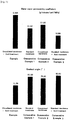
Fig. 1 : Graphs comparing the water vapor permeability coefficient and contact angle measured for hollow fiber membranes obtained in the Example and Comparative Examples - The polyphenylsulfone resin has a repeating unit represented as follows:

- To a spinning dope comprising polyphenylsulfone resin as a film-forming component, hydrophilic polyvinylpyrrolidone and a water-soluble organic solvent are added to form a spinning dope. As the water-soluble organic solvent, an aprotic polar solvent, such as dimethylformamide, dimethylacetamide, or N-methyl-2-pyrrolidone, is used. The polyphenylsulfone resin is used at a concentration of about 10 to 40 wt.%, preferably about 15 to 30 wt.%, in the spinning dope. A porous hollow fiber membrane having a desired pore size and membrane strength cannot be obtained outside this concentration range.
- As the polyvinylpyrrolidone added as a hydrophilic highmolecular substance, one having a molecular weight of about 1000 (K-15) to 1200000 (K-90), preferably about 10000 (K-30) to 1200000 (K-90), is used at a ratio of about 50 to 150 parts by weight, preferably about 50 to 100 parts by weight, based on 100 parts by weight of the polyphenylsulfone resin. The addition of polyvinylpyrrolidone at such a ratio more or less affects structure control, such as the surface pore size of the porous membrane; however, more than that, it achieves an effect of reducing the air permeability rate of the porous membrane, i.e., improving gas barrier properties, and improving the water vapor permeability rate.
- Dry-wet spinning using such a spinning dope is carried out using water as a core liquid. The porous hollow fiber membrane coagulated in water or an aqueous coagulation solution is washed with water, and washed with hot water in an autoclave at 121°C for about 30 to 90 minutes, followed by a crosslinking treatment. The crosslinking treatment of polyvinylpyrrolidone is carried out at about 120 to 220°C, preferably about 150 to 190°C, more preferably about 175 to 190°C, for about 1 to 20 hours, preferably about 5 to 12 hours.
- If the crosslinking treatment is not carried out, the elution of hydrophilizing substances cannot be suppressed even when the acid treatment is performed, and it is difficult to ensure wettability, as shown in the decrease of the water vapor permeability coefficient shown in Comparative Example 3, provided later.
- The crosslinked porous hollow fiber membrane is further subjected to the acid treatment by dipping it in an acidic solution with a concentration of about 5 to 500 ppm, preferably about 50 to 300 ppm.
- For the acid treatment, sulfuric acid; hydrohalogenic acids, such as hydrochloric acid, hydrobromic acid, and hydroiodic acid; halogen oxo acids, such as hypochlorous acid; sulfonic acids, such as fluorosulfonic acid and methanesulfonic acid; nitric acid; phosphoric acid; boric acid; hexafluoroantimonic acid; tetrafluoroboric acid; hexafluorophosphoric acid; carboxylic acids, such as acetic acid; ascorbic acid; and the like are used.
- The acid treatment is followed by a drying treatment, thereby producing a porous hollow fiber membrane. The acid treatment is carried out at about 60 to 110°C, preferably about 70 to 100°C, for about 24 to 150 hours. After the acid treatment, a drying treatment is carried out at about 40 to 60°C for about 12 to 48 hours.
- When the acid treatment is carried out, the wettability of the porous hollow fiber membrane is significantly improved, as shown in the comparison results of the Example and Comparative Example 2. However, if the concentration of the acid used in the acid treatment is higher than the above range, the physical properties of the porous hollow fiber membrane are reduced, which is not preferable.
- The following describes the present invention with reference to Examples.
- 20 parts by weight of polyphenylsulfone resin (RADEL R-5000, produced by Solvay Specialty Polymers) and 15 parts by weight of polyvinylpyrrolidone (Kollidon 30, produced by BASF) were dissolved in 65 parts by weight of dimethylformamide to prepare a membrane-forming dope. Next, water was discharged as a core liquid to the inside nozzle of a double annular spinning nozzle, and the membrane-forming dope was discharged from the outside of the double annular spinning nozzle using a gear pump. After the discharged membrane-forming dope was coagulated in a water coagulation liquid, and then taken up on a hollow fiber membrane bobbin using a winder. After the hollow fiber membrane was taken up, the hollow fiber membrane was subjected to an autoclave treatment at 121°C for 60 minutes.
- The hollow fiber membrane after the autoclave treatment was placed in a thermostatic chamber and heated at 175°C for 9 hours to crosslink the polyvinylpyrrolidone. Then, the porous hollow fiber membrane after the crosslinking treatment was dipped in a sulfuric acid aqueous solution with a concentration of 300 ppm, and an acid treatment was carried out at 80°C for 150 hours. After completion of the dipping, the porous hollow fiber membrane was placed in a thermostatic chamber and dried at 55°C for 24 hours.
- The obtained porous hollow fiber membrane was used to perform a water vapor permeability test and to measure the water contact angle of the hollow fiber membrane. As a result, the water vapor permeability coefficient was 0.168 g/min/cm2/MPa and the contact angle was 71.39°.
- When neither the crosslinking treatment nor the acid treatment was carried out in the Example, the obtained porous hollow fiber membrane had a water vapor permeability coefficient of 0.102 g/min/cm2/MPa and a contact angle of 81.10°.
- When the acid treatment was not carried out in the Example, the obtained porous hollow fiber membrane had a water vapor permeability coefficient of 0.120 g/min/cm2/MPa and a contact angle of 79.30°.
- When the crosslinking treatment was not carried out in the Example, the obtained porous hollow fiber membrane had a water vapor permeability coefficient of 0.066 g/min/cm2/MPa and a contact angle of 82.42°.
- The porous hollow fiber membrane obtained by the production method according to the present invention has improved hydrophilicity without impairing the wettability of the porous hollow fiber membrane. Therefore, the porous hollow fiber membrane alone has high humidification performance, and is thus effectively used as a porous hollow fiber membrane used in a humidifying membrane module for fuel cells.
Claims (4)
- A method for producing a porous hollow fiber membrane for humidification, the method comprising dry-wet spinning a spinning dope comprising a water-soluble organic solvent solution composed of polyphenylsulfone resin and hydrophilic polyvinylpyrrolidone using water as a core liquid; then performing a crosslinking treatment at 120 to 220°C for 1 to 20 hours; and then dipping the resultant in an acidic solution with a concentration of 5 to 500 ppm.
- The method for producing a porous hollow fiber membrane for humidification according to claim 1, wherein hydrophilic polyvinylpyrrolidone is used at a ratio of 50 to 150 parts by weight, based on 100 parts by weight of the polyphenylsulfone resin.
- The method for producing a porous hollow fiber membrane for humidification according to claim 1, wherein an autoclave treatment is performed prior to the crosslinking treatment.
- The method for producing a porous hollow fiber membrane for humidification according to claims 1, 2 or 3, which is used as a humidifying membrane for fuel cells.
Applications Claiming Priority (2)
| Application Number | Priority Date | Filing Date | Title |
|---|---|---|---|
| JP2018120695 | 2018-06-26 | ||
| PCT/JP2019/024474 WO2020004212A1 (en) | 2018-06-26 | 2019-06-20 | Method for producing porous hollow fiber membrane for humidification |
Publications (2)
| Publication Number | Publication Date |
|---|---|
| EP3815773A1 true EP3815773A1 (en) | 2021-05-05 |
| EP3815773A4 EP3815773A4 (en) | 2022-03-16 |
Family
ID=68985081
Family Applications (1)
| Application Number | Title | Priority Date | Filing Date |
|---|---|---|---|
| EP19827272.6A Withdrawn EP3815773A4 (en) | 2018-06-26 | 2019-06-20 | PROCESS FOR MAKING A POROUS HOLLOW FIBER MEMBRANE FOR HUMIDIFICATION |
Country Status (5)
| Country | Link |
|---|---|
| US (1) | US20210268449A1 (en) |
| EP (1) | EP3815773A4 (en) |
| JP (1) | JP6997314B2 (en) |
| CN (1) | CN112351832B (en) |
| WO (1) | WO2020004212A1 (en) |
Cited By (1)
| Publication number | Priority date | Publication date | Assignee | Title |
|---|---|---|---|---|
| EP3702021A4 (en) * | 2017-10-27 | 2021-12-01 | Nok Corporation | PROCESS FOR MANUFACTURING POLYPHENYLSULFONE HAIR MEMBRANE FOR WET FILM |
Families Citing this family (6)
| Publication number | Priority date | Publication date | Assignee | Title |
|---|---|---|---|---|
| US20240157307A1 (en) * | 2021-04-06 | 2024-05-16 | Nok Corporation | Method for manufacturing hollow fiber membrane |
| CN115400606B (en) * | 2021-05-26 | 2024-02-13 | 河北金士顿科技有限责任公司 | Hollow fiber membrane for fuel cell humidifier and preparation method thereof |
| CN114377555A (en) * | 2022-01-19 | 2022-04-22 | 天津鼎芯膜科技有限公司 | Hollow fiber humidifying membrane and preparation method and application thereof |
| US20230295393A1 (en) * | 2022-03-15 | 2023-09-21 | Ut-Battelle, Llc | Microporous polymer fibers and their use in environmental remediation |
| CN116926718B (en) * | 2023-08-07 | 2024-02-27 | 有研资源环境技术研究院(北京)有限公司 | Covalent organic framework hollow fiber membrane, preparation method and application thereof |
| CN122055823A (en) * | 2023-10-17 | 2026-05-15 | 可隆工业株式会社 | Hollow fiber membrane for fuel cell membrane humidifier, fuel cell membrane humidifier comprising same, and method for manufacturing hollow fiber membrane |
Family Cites Families (13)
| Publication number | Priority date | Publication date | Assignee | Title |
|---|---|---|---|---|
| IT1115397B (en) * | 1976-11-05 | 1986-02-03 | Nl Industries Inc | POLYURETHANE COMPOSITION AND RELATED ITEMS |
| JP2001219043A (en) | 2000-02-10 | 2001-08-14 | Nok Corp | Producing method of polyphenyl sulfone hollow fiber membrane |
| JP2002166144A (en) * | 2000-11-30 | 2002-06-11 | Fuji Photo Film Co Ltd | Filter cartridge and filtration method |
| JP4100215B2 (en) * | 2003-03-26 | 2008-06-11 | Nok株式会社 | Manufacturing method of water vapor permeable membrane |
| NZ563980A (en) | 2005-06-20 | 2011-07-29 | Siemens Water Tech Corp | Cross linking treatment of polymer membranes |
| JP2007162176A (en) * | 2005-12-15 | 2007-06-28 | Nissan Motor Co Ltd | Hollow fiber and fuel cell humidifier |
| US7959808B2 (en) * | 2008-10-31 | 2011-06-14 | General Electric Company | Polysulfone membranes methods and apparatuses |
| JP2011067812A (en) * | 2009-08-24 | 2011-04-07 | Toray Ind Inc | Steam-permeable membrane, hollow fiber membrane, and humidifier |
| JP5906665B2 (en) | 2011-10-28 | 2016-04-20 | Nok株式会社 | Method for producing porous membrane |
| KR102316246B1 (en) * | 2014-02-06 | 2021-10-25 | 감브로 룬디아 아베 | Hemodialyzer for blood purification |
| CN104629074B (en) * | 2015-02-04 | 2017-10-20 | 四川大学 | Hydrophilic surface crosslinked ultra-high-molecular-weight polyethylene moulding material and preparation method thereof |
| JP2017051880A (en) * | 2015-09-07 | 2017-03-16 | Nok株式会社 | Membrane production liquid concentrate for non-solvent induction phase separation method, and porous hollow fiber membrane manufacturing method using the liquid concentrate |
| WO2019082562A1 (en) * | 2017-10-27 | 2019-05-02 | Nok株式会社 | Manufacturing method for polyphenyl sulfone hollow-fiber membrane for use in humidification film |
-
2019
- 2019-06-20 WO PCT/JP2019/024474 patent/WO2020004212A1/en not_active Ceased
- 2019-06-20 EP EP19827272.6A patent/EP3815773A4/en not_active Withdrawn
- 2019-06-20 US US17/253,225 patent/US20210268449A1/en not_active Abandoned
- 2019-06-20 JP JP2020527455A patent/JP6997314B2/en active Active
- 2019-06-20 CN CN201980042188.7A patent/CN112351832B/en active Active
Cited By (1)
| Publication number | Priority date | Publication date | Assignee | Title |
|---|---|---|---|---|
| EP3702021A4 (en) * | 2017-10-27 | 2021-12-01 | Nok Corporation | PROCESS FOR MANUFACTURING POLYPHENYLSULFONE HAIR MEMBRANE FOR WET FILM |
Also Published As
| Publication number | Publication date |
|---|---|
| JP6997314B2 (en) | 2022-02-04 |
| CN112351832A (en) | 2021-02-09 |
| EP3815773A4 (en) | 2022-03-16 |
| WO2020004212A1 (en) | 2020-01-02 |
| JPWO2020004212A1 (en) | 2021-07-08 |
| CN112351832B (en) | 2022-05-24 |
| US20210268449A1 (en) | 2021-09-02 |
Similar Documents
| Publication | Publication Date | Title |
|---|---|---|
| US20210268449A1 (en) | Method for producing porous hollow fiber membrane for humidification | |
| CN104248918B (en) | Method for preparing hydrophilic anti-pollution composite ultrafiltration membrane by using semi-interpenetrating network method | |
| JP5927712B2 (en) | High performance membrane | |
| US20080214687A1 (en) | Cross Linking Treatment of Polymer Membranes | |
| EP3348323A1 (en) | Film-forming stock solution for use in non-solvent-induced phase separation methods, and method for producing porous hollow fiber membrane using same | |
| JP2011502775A5 (en) | ||
| JP2014094374A5 (en) | ||
| JP4100215B2 (en) | Manufacturing method of water vapor permeable membrane | |
| CN100522327C (en) | Polyolefine hollow fiber micro-filtration film with permanent hydrophilicity, and its preparation method | |
| KR102593611B1 (en) | Preparation method of cellulose-based polymer microfiltration membrane and microfiltration membrane thereby | |
| CN118236861A (en) | Small-aperture polysulfone hollow fiber ultrafiltration membrane and preparation method thereof | |
| EP3702021B1 (en) | Manufacturing method for polyphenyl sulfone hollow-fiber membrane for use in humidification film | |
| JP4840222B2 (en) | Humidifying membrane and method for producing the same | |
| AU2006261581B2 (en) | Cross linking treatment of polymer membranes | |
| CN114080266B (en) | Reactive Additives in Membrane Manufacturing | |
| KR20160051340A (en) | Manufactured method of polymer resin composition having increasing hydrophilicity and mechanical strength for preparing of filter membrane | |
| KR101556043B1 (en) | Separation membrane having excellent fouling resistance for positively charged pollutants and method for manufacturing thereof | |
| KR20220071138A (en) | Hydrophilized porous polymer filter, preparation method thereof, and useing the same for dehumidification | |
| KR101982909B1 (en) | Hollow fiber membrane and method for preparing the same | |
| KR102056871B1 (en) | Positive charged poly(vinylidene fluoride) porous membranes and manufacturing method thereof | |
| JP2009101346A (en) | Humidifying membrane and method for producing the same | |
| KR20250079377A (en) | Method for preparing a flat-type polyimide-based organic solvent nanofiltration membrane and the flat-type polyimide-based organic solvent nanofiltration membrane prepared thereby | |
| JP2003071259A (en) | Treating method for polysulfon based hollow thread film | |
| JPH04100524A (en) | Double-side active composite hollow yarn membrane |
Legal Events
| Date | Code | Title | Description |
|---|---|---|---|
| STAA | Information on the status of an ep patent application or granted ep patent |
Free format text: STATUS: THE INTERNATIONAL PUBLICATION HAS BEEN MADE |
|
| PUAI | Public reference made under article 153(3) epc to a published international application that has entered the european phase |
Free format text: ORIGINAL CODE: 0009012 |
|
| STAA | Information on the status of an ep patent application or granted ep patent |
Free format text: STATUS: REQUEST FOR EXAMINATION WAS MADE |
|
| 17P | Request for examination filed |
Effective date: 20201221 |
|
| AK | Designated contracting states |
Kind code of ref document: A1 Designated state(s): AL AT BE BG CH CY CZ DE DK EE ES FI FR GB GR HR HU IE IS IT LI LT LU LV MC MK MT NL NO PL PT RO RS SE SI SK SM TR |
|
| DAV | Request for validation of the european patent (deleted) | ||
| DAX | Request for extension of the european patent (deleted) | ||
| A4 | Supplementary search report drawn up and despatched |
Effective date: 20220216 |
|
| RIC1 | Information provided on ipc code assigned before grant |
Ipc: B01D 69/02 20060101ALI20220210BHEP Ipc: F24F 3/14 20060101ALI20220210BHEP Ipc: H01M 8/1018 20160101ALI20220210BHEP Ipc: B01D 67/00 20060101ALI20220210BHEP Ipc: H01M 8/10 20160101ALI20220210BHEP Ipc: H01M 8/04291 20160101ALI20220210BHEP Ipc: H01M 8/04119 20160101ALI20220210BHEP Ipc: H01M 8/04 20160101ALI20220210BHEP Ipc: B01D 71/44 20060101ALI20220210BHEP Ipc: B01D 69/08 20060101ALI20220210BHEP Ipc: B01D 71/68 20060101AFI20220210BHEP |
|
| STAA | Information on the status of an ep patent application or granted ep patent |
Free format text: STATUS: THE APPLICATION HAS BEEN WITHDRAWN |
|
| 18W | Application withdrawn |
Effective date: 20220524 |