EP3815737A1 - Microneedle device and method for manufacturing same - Google Patents
Microneedle device and method for manufacturing same Download PDFInfo
- Publication number
- EP3815737A1 EP3815737A1 EP19824984.9A EP19824984A EP3815737A1 EP 3815737 A1 EP3815737 A1 EP 3815737A1 EP 19824984 A EP19824984 A EP 19824984A EP 3815737 A1 EP3815737 A1 EP 3815737A1
- Authority
- EP
- European Patent Office
- Prior art keywords
- sulfate
- mass
- coating
- sulfated
- biologically active
- Prior art date
- Legal status (The legal status is an assumption and is not a legal conclusion. Google has not performed a legal analysis and makes no representation as to the accuracy of the status listed.)
- Granted
Links
Images


Classifications
-
- A—HUMAN NECESSITIES
- A61—MEDICAL OR VETERINARY SCIENCE; HYGIENE
- A61K—PREPARATIONS FOR MEDICAL, DENTAL OR TOILETRY PURPOSES
- A61K9/00—Medicinal preparations characterised by special physical form
- A61K9/0012—Galenical forms characterised by the site of application
- A61K9/0019—Injectable compositions; Intramuscular, intravenous, arterial, subcutaneous administration; Compositions to be administered through the skin in an invasive manner
- A61K9/0021—Intradermal administration, e.g. through microneedle arrays or needleless injectors
-
- A—HUMAN NECESSITIES
- A61—MEDICAL OR VETERINARY SCIENCE; HYGIENE
- A61K—PREPARATIONS FOR MEDICAL, DENTAL OR TOILETRY PURPOSES
- A61K31/00—Medicinal preparations containing organic active ingredients
- A61K31/33—Heterocyclic compounds
- A61K31/395—Heterocyclic compounds having nitrogen as a ring hetero atom, e.g. guanethidine or rifamycins
- A61K31/41—Heterocyclic compounds having nitrogen as a ring hetero atom, e.g. guanethidine or rifamycins having five-membered rings with two or more ring hetero atoms, at least one of which being nitrogen, e.g. tetrazole
- A61K31/4164—1,3-Diazoles
- A61K31/4174—Arylalkylimidazoles, e.g. oxymetazolin, naphazoline, miconazole
-
- A—HUMAN NECESSITIES
- A61—MEDICAL OR VETERINARY SCIENCE; HYGIENE
- A61K—PREPARATIONS FOR MEDICAL, DENTAL OR TOILETRY PURPOSES
- A61K47/00—Medicinal preparations characterised by the non-active ingredients used, e.g. carriers or inert additives; Targeting or modifying agents chemically bound to the active ingredient
- A61K47/30—Macromolecular organic or inorganic compounds, e.g. inorganic polyphosphates
- A61K47/36—Polysaccharides; Derivatives thereof, e.g. gums, starch, alginate, dextrin, hyaluronic acid, chitosan, inulin, agar or pectin
-
- A—HUMAN NECESSITIES
- A61—MEDICAL OR VETERINARY SCIENCE; HYGIENE
- A61M—DEVICES FOR INTRODUCING MEDIA INTO, OR ONTO, THE BODY; DEVICES FOR TRANSDUCING BODY MEDIA OR FOR TAKING MEDIA FROM THE BODY; DEVICES FOR PRODUCING OR ENDING SLEEP OR STUPOR
- A61M37/00—Other apparatus for introducing media into the body; Percutany, i.e. introducing medicines into the body by diffusion through the skin
- A61M37/0015—Other apparatus for introducing media into the body; Percutany, i.e. introducing medicines into the body by diffusion through the skin by using microneedles
-
- A—HUMAN NECESSITIES
- A61—MEDICAL OR VETERINARY SCIENCE; HYGIENE
- A61M—DEVICES FOR INTRODUCING MEDIA INTO, OR ONTO, THE BODY; DEVICES FOR TRANSDUCING BODY MEDIA OR FOR TAKING MEDIA FROM THE BODY; DEVICES FOR PRODUCING OR ENDING SLEEP OR STUPOR
- A61M37/00—Other apparatus for introducing media into the body; Percutany, i.e. introducing medicines into the body by diffusion through the skin
- A61M37/0015—Other apparatus for introducing media into the body; Percutany, i.e. introducing medicines into the body by diffusion through the skin by using microneedles
- A61M2037/0023—Drug applicators using microneedles
-
- A—HUMAN NECESSITIES
- A61—MEDICAL OR VETERINARY SCIENCE; HYGIENE
- A61M—DEVICES FOR INTRODUCING MEDIA INTO, OR ONTO, THE BODY; DEVICES FOR TRANSDUCING BODY MEDIA OR FOR TAKING MEDIA FROM THE BODY; DEVICES FOR PRODUCING OR ENDING SLEEP OR STUPOR
- A61M37/00—Other apparatus for introducing media into the body; Percutany, i.e. introducing medicines into the body by diffusion through the skin
- A61M37/0015—Other apparatus for introducing media into the body; Percutany, i.e. introducing medicines into the body by diffusion through the skin by using microneedles
- A61M2037/0046—Solid microneedles
-
- A—HUMAN NECESSITIES
- A61—MEDICAL OR VETERINARY SCIENCE; HYGIENE
- A61M—DEVICES FOR INTRODUCING MEDIA INTO, OR ONTO, THE BODY; DEVICES FOR TRANSDUCING BODY MEDIA OR FOR TAKING MEDIA FROM THE BODY; DEVICES FOR PRODUCING OR ENDING SLEEP OR STUPOR
- A61M37/00—Other apparatus for introducing media into the body; Percutany, i.e. introducing medicines into the body by diffusion through the skin
- A61M37/0015—Other apparatus for introducing media into the body; Percutany, i.e. introducing medicines into the body by diffusion through the skin by using microneedles
- A61M2037/0053—Methods for producing microneedles
-
- A—HUMAN NECESSITIES
- A61—MEDICAL OR VETERINARY SCIENCE; HYGIENE
- A61M—DEVICES FOR INTRODUCING MEDIA INTO, OR ONTO, THE BODY; DEVICES FOR TRANSDUCING BODY MEDIA OR FOR TAKING MEDIA FROM THE BODY; DEVICES FOR PRODUCING OR ENDING SLEEP OR STUPOR
- A61M2205/00—General characteristics of the apparatus
- A61M2205/02—General characteristics of the apparatus characterised by a particular materials
- A61M2205/0238—General characteristics of the apparatus characterised by a particular materials the material being a coating or protective layer
-
- A—HUMAN NECESSITIES
- A61—MEDICAL OR VETERINARY SCIENCE; HYGIENE
- A61M—DEVICES FOR INTRODUCING MEDIA INTO, OR ONTO, THE BODY; DEVICES FOR TRANSDUCING BODY MEDIA OR FOR TAKING MEDIA FROM THE BODY; DEVICES FOR PRODUCING OR ENDING SLEEP OR STUPOR
- A61M2205/00—General characteristics of the apparatus
- A61M2205/02—General characteristics of the apparatus characterised by a particular materials
- A61M2205/0244—Micromachined materials, e.g. made from silicon wafers, microelectromechanical systems [MEMS] or comprising nanotechnology
Definitions
- the present invention relates to a microneedle device and a method for manufacturing the same.
- the microneedle device allows a drug to be transdermally administered by piercing the stratum corneum, which is the outermost layer of the skin, with microneedles to form micropores through which the drug passes.
- the microneedle device comprises, for example, a substrate, microneedles disposed on the substrate, and a coating formed on the microneedles, and the coating comprises a biologically active substance (for example, Patent Literature 1).
- Patent Literature 1 Japanese Unexamined Patent Publication No. 2014-507473
- an object of the present invention is to manufacture a microneedle device capable of carrying and administering a larger amount of biologically active substance per one microneedle.
- a microneedle device comprises a substrate, microneedles disposed on the substrate, and a coating formed on the microneedles, wherein the coating comprises a biologically active substance and a sulfated polysaccharide.
- the sulfated polysaccharide may be one or more sulfated polysaccharides selected from the group consisting of chondroitin sulfate, carrageenan, fucoidan, ascophyllan, heparin, heparan sulfate, heparin analogue, keratan sulfate, funoran, porphyran, agaropectin, furcellaran, rhamnan sulfate, glucuronoxyloramnan sulfate, xyloarabinogalactan sulfate, glucuronoxylorhamnogalactan sulfate, arabinan sulfate, arabinoramnan sulfate, sulfated dextran, sulfated pentosan, sulfated curdlan, and sulfated cellulose, and salts thereof, and is preferably sodium chondroitin sulfate.
- the biologically active substance may be dexmedetomidine or a pharmaceutically acceptable salt thereof.
- An amount of the sulfated polysaccharide may be 0.5 parts by mass or more with respect to 100 parts by mass of the coating.
- a mass ratio of the sulfated polysaccharide to the biologically active substance may be 0.01 to 0.36, preferably 0.011 to 0.222, and more preferably 0.089 to 0.222.
- the microneedles may be disposed on the substrate at a needle density of 10 needles/cm 2 or more and 850 needles/cm 2 or less.
- An amount of the biologically active substance carried per one microneedle may be 390 ng or more.
- a method of manufacturing a microneedle device comprises coating the microneedles with a coating liquid, wherein the coating liquid comprises a biologically active substance and a sulfated polysaccharide.
- the microneedle device comprises a substrate, microneedles disposed on the substrate, and a coating formed on the microneedles.
- the sulfated polysaccharide may be one or more sulfated polysaccharides selected from the group consisting of chondroitin sulfate, carrageenan, fucoidan, ascophyllan, heparin, heparan sulfate, heparin analogue, keratan sulfate, funoran, porphyran, agaropectin, furcellaran, rhamnan sulfate, glucuronoxyloramnan sulfate, xyloarabinogalactan sulfate, glucuronoxylorhamnogalactan sulfate, arabinan sulfate, arabinoramnan sulfate, sulfated dextran, sulfated pentosan, sulfated curdlan, and sulfated cellulose, and salts thereof, and is preferably sodium chondroitin sulfate.
- the biologically active substance may be dexmedetomidine or a pharmaceutically acceptable salt thereof.
- a concentration of the sulfated polysaccharide in the coating liquid may be 0.1 mass% or more.
- a mass ratio of the sulfated polysaccharide to the biologically active substance in the coating liquid may be 0.01 to 0.36, preferably 0.011 to 0.222, and more preferably 0.089 to 0.222.
- microneedle device capable of carrying and administering a larger amount of biologically active substance per one microneedle.
- a method of manufacturing a microneedle device comprises a step (coating step) of coating microneedles with a coating liquid. After the coating step, a step (a drying step) of drying the coating liquid may be performed.
- the microneedle device is a device comprising a substrate, microneedles disposed on the substrate, and a coating formed on the microneedles.
- the microneedle device 10 comprises a substrate 2, a plurality of microneedles 4 disposed on a main surface of the substrate 2, and a coating 6 formed on each of the microneedles 4.
- a configuration in which the plurality of microneedles 4 are disposed on the substrate 2 is referred to as a microneedle array. Details of the coating 6 will be described later.
- the substrate 2 is a base for supporting the microneedles 4.
- a shape and a form of the substrate 2 are not particularly limited and may be, for example, rectangular or circular, and the main surface may be flat or curved.
- An area of the substrate 2 may be, for example, 0.5 cm 2 to 10 cm 2 , 0.5 cm 2 to 5 cm 2 , 1 cm 2 to 5 cm 2 , 0.5 cm 2 to 3 cm 2 , or 1 cm 2 to 3 cm 2 .
- a thickness of the substrate 2 may be 50 ⁇ m to 2000 ⁇ m, 300 ⁇ m to 1200 ⁇ m, or 500 ⁇ m to 1000 ⁇ m.
- the microneedles 4 may be needle-shaped convex structures.
- a shape of each microneedle 4 may be, for example, a polygonal pyramid, such as a quadrangular pyramid, or a cone.
- Microneedles 4 are a microstructures, and a length (a height) H M of each microneedle 4 in a direction perpendicular to the main surface of the substrate 2 is preferably 50 ⁇ m to 600 ⁇ m, 100 ⁇ m to 500 ⁇ m, or 300 ⁇ m to 500 ⁇ m, for example.
- the microneedles 4 are disposed on the main surface of the substrate in, for example, a square lattice pattern, a rectangular lattice pattern, an orthorhombic lattice pattern, a 45° staggered pattern, or a 60°staggered pattern.
- a density (a needle density) at which the microneedles 4 are disposed on the substrate 2 is represented by the number of the microneedles 4 per unit area in a region substantially having the microneedles 4.
- the region substantially having the microneedles 4 is a region obtained by connecting the outermost microneedles 4 among the plurality of microneedles 4 disposed in the microneedle device 10.
- the needle density may be, for example, 10 needles/cm 2 or more, 50 needles/cm 2 or more, or 100 needles/cm 2 or more.
- the needle density may be, for example, 850 needles/cm 2 or less, 500 needles/cm 2 or less, 200 needles/cm 2 or less, or 160 needles/cm 2 or less.
- Examples of a material of the substrate 2 or the microneedles 4 include silicon, silicon dioxide, ceramics, metals, polysaccharides, and synthetic or natural resin materials.
- Examples of polysaccharides include pullulan, chitin, and chitosan.
- the resin material may be, for example, a biodegradable polymer such as polylactic acid, polyglycolide, polylactic acid-co-polyglycolide, polycaprolactone, polyurethane, a polyamino acid (for example, poly- ⁇ -aminobutyric acid) or the like, or may be a non-degradable polymer such as polycarbonate, polymethacrylic acid, ethylene vinyl acetate, polytetrafluoroethylene, polyoxymethylene, or a cyclic olefin copolymer.
- a biodegradable polymer such as polylactic acid, polyglycolide, polylactic acid-co-polyglycolide, polycaprolactone, polyurethane, a polyamino acid (for example, poly- ⁇ -aminobutyric acid) or the like
- a non-degradable polymer such as polycarbonate, polymethacrylic acid, ethylene vinyl acetate, polytetrafluoroethylene,
- the coating liquid is coated on the microneedles 4.
- the coating liquid comprises a biologically active substance and a sulfated polysaccharide.
- the biologically active substance is a substance that exhibits a therapeutic or prophylactic effect in a subject to which it is administered.
- the biologically active substance may be, for example, peptides, proteins, nucleic acids such as DNA and RNA, sugars, glycoproteins, or other high-molecular or low-molecular compounds.
- the biologically active substance include dexmedetomidine, interferon ⁇ , interferon ⁇ for multiple sclerosis, erythropoietin, follitropin ⁇ , follitropin ⁇ , G-CSF, GM-CSF, human chorionic gonadotropin, luteinizing hormone, follicle stimulating hormone (FSH), salmon calcitonin, glucagon, GNRH antagonist, insulin, luteinizing hormone releasing hormone (LHRH), human growth hormone, parathyroid hormone (PTH), filgrastin, somatropin, incretin, GLP-1 analogues (for example, exenatide, liraglutide, lixisenatide, albiglutide, and taspoglutide), snake venom peptide analogues, ⁇ globulin, Japanese encephalitis vaccine, hepatitis B vaccine, rotavirus vaccine, Alzheimer's disease vaccine, arteriosclerosis vaccine, a cancer
- the sulfated polysaccharide is a component (a carrier) which assists in carrying the coating liquid on the microneedles 4.
- the sulfated polysaccharide has an affinity for skin tissues and is excellent in improving absorbability of biologically active substances into the skin.
- the sulfated polysaccharide is a polysaccharide with a sulfuric acid bound to a hydroxyl group or amino group.
- the polysaccharide in the sulfated polysaccharide may be a natural polysaccharide or may be a semi-synthetic or synthetic polysaccharide.
- a main structure of the polysaccharide is preferably a mucopolysaccharide (also known as glycosaminoglycan).
- the mucopolysaccharide is a heteropolysaccharide having uronic acid and hexosamine as sugar units.
- a sulfate moiety in the sulfated polysaccharide may be in the form of a free acid or may form a salt.
- the sulfate moiety is preferably a monovalent metal salt, particularly a sodium salt.
- the coating liquid may comprise one sulfated polysaccharide or may comprise a plurality of sulfated polysaccharides.
- Examples of a natural or biologically-derived sulfated polysaccharide include chondroitin sulfate, carrageenan, fucoidan, ascophyllan, heparin, heparan sulfate, heparin analogues (heparinoids), keratan sulfate, funoran, porphyran, agaropectin, furcellaran, rhamnan sulfate, glucuronoxyloramnan sulfate, xyloarabinogalactan sulfate, glucuronoxylorhamnogalactan sulfate, arabinan sulfate, and arabinoramnan sulfate, and salts thereof.
- semi-synthetic or synthetic sulfated polysaccharide examples include, for example, sulfated dextran, sulfated pentosan, sulfated curdlan, and sulfated cellulose, and salts thereof.
- sulfated polysaccharide having a mucopolysaccharide as a main structure examples include chondroitin sulfate, heparin, heparan sulfate, heparinoid, and keratan sulfate, and salts thereof. Among them, chondroitin sulfate and salts thereof are more preferable.
- a scope of the chondroitin sulfate includes chondroitin sulfate A, chondroitin sulfate B (dermatan sulfate), chondroitin sulfate C, chondroitin sulfate D, chondroitin sulfate E, chondroitin sulfate H, and chondroitin sulfate K.
- Examples of the salt of chondroitin sulfate include salts with alkali metals such as sodium and potassium, salts with alkaline earth metals such as calcium and magnesium, salts with other metals such as aluminum, and salts with organic bases.
- the salt of chondroitin sulfate is preferably an alkali metal salt of chondroitin sulfate, more preferably sodium chondroitin sulfate.
- the origin of the chondroitin sulfate and the salts thereof is not limited.
- the chondroitin sulfate and the salts thereof may be obtained from mammals such as pigs, fish such as salmon and sharks, or microorganisms.
- Sulfated polysaccharides tend to have common physical, chemical, and physiological properties due to the presence of sulfate groups. As the proportion of sulfate groups in the sulfated polysaccharide increases, the affinity for water, water retentivity and the thickening effect increase, but the proportion of sulfate groups in the sulfated polysaccharide is not particularly limited.
- the number of sulfate groups in the sulfated polysaccharide may be 0.25N to 2N, preferably 0.5N to 1.5N per N sugar units mainly constituting the polysaccharide. When the polysaccharide has two main sugar units, the number of sulfate groups may be 0.5 to 4, preferably 1 to 3 per disaccharide unit mainly constituting the polysaccharide.
- a viscosity average molecular weight of the sulfated polysaccharide may be, for example, 1000 Da to 500,000 Da, 1000 Da to 100,000 Da or 7000 Da to 40,000 Da, but is not limited thereto.
- the viscosity average molecular weight may be calculated from a limiting viscosity obtained in accordance with the viscosity measurement Method 1: Viscosity measurement by capillary tube viscometer in General Tests of the Japanese Pharmacopoeia, 15th editi on, using the Mark-Houwink-Sakurada equation.
- the coating liquid comprises at least one or more solvents that dissolves the biologically active substance and the sulfated polysaccharide.
- the solvent include water, polyhydric alcohols, lower alcohols, and triacetin. Water is preferable because it dissolves the sulfated polysaccharide well. Water is also preferable in that it also dissolves dexmedetomidine or pharmaceutically acceptable salts thereof well.
- the coating liquid may further comprise other components (for example, a stabilizer, a pH adjuster, a component that promotes entry of the biologically active substance into blood, oils and fats, or inorganic substances) in addition to the biologically active substance, the sulfated polysaccharide, and the solvent.
- the coating liquid does not comprise a surfactant, a monosaccharide, and a disaccharide.
- Surfactants, monosaccharides, and disaccharides may reduce the surface tension and viscosity of the coating liquid and may reduce the amount of the biologically active substance carried per one microneedle 4.
- the stabilizer has, for example, an action in which oxygen oxidation and photooxidation of each component are suppressed and the biologically active substance is stabilized.
- the stabilizer are L-cysteine, sodium pyrosulfite, sodium bisulfite, ascorbic acid, ethylenediaminetetraacetic acid (EDTA) or salts thereof, or dibutylhydroxytoluene (BHT). These stabilizers may be used alone or in combination of two or more.
- pH adjuster those commonly used in the industry may be used.
- examples of the pH adjuster include inorganic acids or organic acids, alkalis, salts, amino acids, or a combination thereof.
- a concentration of the sulfated polysaccharide in the coating liquid may be, for example, 0.1 mass% or more, 0.5 mass% or more, 1 mass% or more, 1.3 mass% or more, 1.5 mass% or more, 2 mass% or more, 3 mass% or more, or 4 mass% or more, and may be 20 mass% or less, 16 mass% or less, 15 mass% or less, 14 mass% or less, 13 mass% or less, 12 mass% or less, 11 mass% or less, 10 mass% or less, 9 mass% or less, or 8 mass% or less.
- the concentration of the sulfated polysaccharide in the coating liquid may be, for example, 1.3 mass% to 11 mass%, 1.5 mass% to 10 mass%, 2 mass% to 10 mass%, 0.5 mass% to 16 mass%, 0.5 mass% to 10 mass%, or 4.0 mass% to 10 mass%.
- the concentration of the biologically active substance in the coating liquid may be adjusted according to the type of the biologically active substance, the purpose of treatment, the condition of disease, the condition of the patient, and the nature of the solvent.
- the concentration of the biologically active substance in the coating liquid may be, for example, 0.01 mass% to 90 mass%, 0.1 mass% to 80 mass%, and 1 mass% to 70 mass%.
- a mass ratio of the sulfated polysaccharide to the biologically active substance in the coating liquid may be, for example, 0.01 or more, 0.02 or more, 0.025 or more, 0.03 or more, 0.035 or more, 0.04 or more, 0. 05 or more, or 0.08 or more, and also may be 0.36 or less, 0.35 or less, 0.3 or less, 0.27 or less, 0.26 or less, 0.24 or less, 0.23 or less, 0.20 or less, 0.18 or less, or 0.17 or less.
- the mass ratio is preferably 0.011 to 0.222, 0.044 to 0.222, or 0.089 to 0.222.
- the total amount of the other components other than the biologically active substance, the sulfated polysaccharide, and the solvent may be, for example, 80 mass% or less, 60 mass% or less, 30 mass% or less, or 20 mass% or less with respect to the total mass of the coating liquid.
- the coating liquid may comprise no other components other than the biologically active substance, the sulfated polysaccharide, and the solvent.
- the concentration of each component contained in the coating liquid may be measured, for example, by liquid chromatography. Further, the concentration of each component other than the biologically active substance may also be calculated based on the concentration of the biologically active substance measured by a liquid chromatography method and the proportion of each component at the time of formulating the coating liquid.
- a viscosity of the coating liquid at 25°C is preferably 500 mPa ⁇ s to 30,000 mPa ⁇ s, more preferably 1000 mPa ⁇ s to 10,000 mPa ⁇ s.
- a surface tension of the coating liquid is preferably 10 mN/m to 100 mN/m, more preferably 20 mN/m to 80 mN/m.
- the method of coating the microneedles 4 with the coating liquid is not particularly limited, and the coating liquid may be coated by inkjet coating or dip coating, for example. Among these, dip coating is preferred.
- the microneedles 4 are coated with the coating liquid by dipping the microneedles 4 in a reservoir in which the coating liquid is stored to a certain depth and then withdrawing the microneedles 4 from the reservoir.
- the microneedles 4 may be coated with a large amount of coating liquid, and thus, it is possible to manufacture the microneedle device 10 in which a larger amount of biologically active substance can be carried and administered per one microneedle.
- the amount of the coating liquid coated on the microneedles 4 may be adjusted by the depth to which the microneedles 4 are dipped, for example, in the case of application by dip coating.
- the depth to which the microneedles 4 are dipped indicates the distance from apexes of the dipped microneedles 4 to a surface of the coating liquid.
- the dipping depth depends on the length H M of the microneedle 4, but may be H M /2 or less, for example.
- the biologically active substance contained in the coating 6 formed by drying the coating liquid is less likely to be introduced into the skin compared to the biologically active substance contained in a portion formed in a tip portion of the microneedle 4. Therefore, a larger amount of the coating liquid is preferably coated, mainly, on the tip portion of the microneedle 4.
- the tip portion of the microneedle 4 is a portion in which a length measured from the apex of the microneedle 4 in a direction perpendicular to the main surface (that is, the base portion) of the substrate 2 is, for example, within 50% of the length H M of the microneedle 4, as will be described later.
- the coating liquid may be dried to form the coating 6 on the microneedles 4.
- drying the coating liquid means volatilizing some or the whole of the solvent contained in the coating liquid.
- the drying of the coating liquid may be performed by, for example, a method such as air drying, vacuum drying, freeze drying, or a combination thereof.
- the preferred drying method is air drying.
- the coating liquid according to the present invention comprising the sulfated polysaccharide has high viscosity and surface tension, downward flowing and spreading of the coating liquid before or during the drying of the coating liquid due to gravity can be further reduced. Therefore, even when then the coating liquid is dried with the microneedle array placed in such a way that the microneedles 4 face upward, the coating 6 can be formed mainly on the tip portions of the microneedles 4.
- the coating step and the drying step may be performed repeatedly.
- the amount of the coating 6 formed can be further increased by repeating these steps.
- the microneedle device 10 manufactured by the above-described method comprises the coating 6 comprising the biologically active substance and the sulfated polysaccharide on the microneedles 4.
- the details of the microneedle array, the biologically active substance, and the sulfated polysaccharide which constitute the microneedle device 10 are as described above.
- the coating 6 is a coating obtained by removing some or the whole of the solvent from the above-described coating liquid. Therefore, the coating liquid and the coating 6 described above have the same components except for the solvent.
- the amount of the sulfated polysaccharide may be, for example, 0.5 parts by mass or more, 1 part by mass or more, 1.9 parts by mass or more, 2 parts by mass or more, 2.5 parts by mass or more, 3 parts by mass or more, 3.5 parts by mass or more, 5.0 parts by mass or more, or 8.0 parts by mass or more, and may also be 27 parts by mass or less, 25 parts by mass or less, 22 parts by mass or less, 21 parts by mass or less, 20 parts by mass or less, 19 parts by mass or less, 18 parts by mass or less, 17 parts by mass or less, 14 parts by mass or less, or 13 parts by mass or less, with respect to 100 parts by mass of the coating 6.
- the amount of the biologically active substance may be, for example, 99 parts by mass or less, 95 parts by mass or less, 92 parts by mass or less, 90 parts by mass or less, 89 parts by mass or less, 88 parts by mass or less, or 87.5 parts by mass or less, or 87 parts by mass or less, and may also be 65 parts by mass or more, 70 parts by mass or more, 72 parts by mass or more, 73 parts by mass or more, 74 parts by mass or more, 75 parts by mass or more, 77 parts by mass or more, 78 parts by mass or more, 79 parts by mass or more, or 81 parts by mass or more. with respect to 100 parts by mass of the coating 6.
- a mass ratio of the sulfated polysaccharide to the biologically active substance in the coating 6 may be, for example, 0.01 or more, 0.02 or more, 0.025 or more, 0.03 or more, 0.035 or more, 0.04 or more, 0. 05 or more, or 0.08 or more, and may also be 0.36 or less, 0.35 or less, 0.3 or less, 0.27 or less, 0.26 or less, 0.24 or less, 0.23 or less, 0.20, 0.18 or less, or 0.17 or less.
- the mass ratio is preferably, for example, 0.011 to 0.222, 0.044 to 0.222, or 0.089 to 0.222.
- the total amount of the other components other than the biologically active substance, the sulfated polysaccharide, and the solvent may be, for example, 95 parts by mass or less, 75 parts by mass or less, 50 parts by mass or less, or 30 parts by mass or less, with respect to 100 parts by mass of the solid content in the coating 6.
- the solid content refers to the component which remains when the solvent is removed from the coating liquid.
- a preferable amount of the biologically active substance carried per one microneedle 4 depends on the type of the biologically active substance, the purpose of treatment, the condition of disease, and the condition of the patient.
- the biologically active substance is dexmedetomidine or a pharmaceutically acceptable salt thereof
- the amount of dexmedetomidine or the pharmaceutically acceptable salt thereof carried per one microneedle 4 is preferably 390 ng or more, 451 ng or more, or 670 ng or more, from the viewpoint of exhibiting a sufficient drug effect.
- the upper limit of the amount of the biologically active substance carried per one microneedle 4 is not particularly limited, but may be, for example, 2 ⁇ g or less, 1 ⁇ g or less, 755 ng or less, 545 ng or less, or 500 ng or less.
- the amount of the sulfated polysaccharide carried per one microneedle 4 may be, for example, 15 ng to 100 ng, 21 ng to 97 ng, 5 ng to 149 ng, or 67 ng to 149 ng.
- the amount of the coating 6 carried per one microneedle 4 may be, for example, 490 ng to 700 ng, 516 ng to 642 ng, 456 ng to 836 ng, or 819 ng to 836 ng.
- the amount of each component contained in the coating 6 may be measured by, for example, a liquid chromatography method. Further, the amount of each component other than the biologically active substance may also be calculated based on the amount of the biologically active substance measured by the liquid chromatography method and the proportion of each component at the time of formulating the coating liquid. The amount of each component carried per one microneedle 4 may be obtained by dividing a value thus measured or calculated by the number of microneedles.
- the coating 6 may be formed on all the microneedles 4 or may be formed on only some of the microneedles 4.
- the coating 6 may be formed only on the tip portion of the microneedle 4, or may be formed to cover the entire microneedle 4.
- the coating 6 is preferably formed on the tip portion of the microneedle 4.
- the tip portion of the microneedle 4 is a portion in which a length measured from the apex of the microneedle 4 in a direction perpendicular to the main surface (that is, the base portion) of the substrate 2 is, for example, within 50%, within 40%, within 30%, or within 20% of the length H M of the microneedle 4.
- An average thickness of the coating 6 may be less than 50 ⁇ m and may be 1 ⁇ m to 30 ⁇ m.
- Coating liquids 1 to 4 were prepared by mixing components shown in Tables 1 and 2.
- ⁇ -PGA is ⁇ -polyglutamic acid.
- a pharmaceutical grade product of Maruha Nichiro Corporation was used as sodium chondroitin sulfate (hereinafter, may be referred to as CSNa).
- CSNa sodium chondroitin sulfate
- As the pullulan a pharmaceutical product of Hayashibara Co., Ltd. was used.
- a product of Nippon Poly-Glu Co., Ltd. was used as ⁇ -PGA.
- "Kuraray Poval PVA-205" degree of saponification: about 87.0 mol% to 89.0 mol%, degree of polymerization: about 500
- Kuraray Co., Ltd. was used as polyvinyl alcohol.
- a contact angle with the microneedles of polylactic acid, a surface tension, and a viscosity were measured.
- the contact angle was measured by a droplet method (a ⁇ /2 method) (temperature of 23°C to 25°C).
- the surface tension was calculated by a pendant drop method using an empirical equation of Andreas et al. (temperature of 24°C).
- the viscosity was obtained from a pressure loss in a capillary channel (temperature of 23°C to 25°C).
- Table 3 Coating liquid Carrier Contact angle Surface tension (mN/m) Viscosity (mPa ⁇ s) 1 Sodium chondroitin sulfate 103.9° 42.5 3151 2 Pullulan 96.4° 41.9 3243
- microneedle array of polylactic acid in which microneedles were provided at a density of 156/cm 2 in a region of 1 cm 2 and the shape of each microneedle was a quadrangular pyramid having a height of 500 ⁇ m was prepared, and then the microneedles were dipped in the coating liquids 1 to 4 to a depth of about 140 ⁇ m. After the microneedles were pulled up from the coating liquids, the solvents of the coating liquids 1 to 4 on the microneedles were dried to obtain microneedle devices 1 to 4.
- the amount of dexmedetomidine hydrochloride in the coating formed on the microneedles was quantified by a high performance liquid chromatography method, and the amount of the carrier and the amount of the coating per one microneedle were calculated therefrom. The results are shown in Table 4 and FIG. 2 .
- Microneedle device Carrier Dexmedetomidine hydrochloride (ng/needle) Carrier (ng/needle) Coating (ng/needle) 1 (Example) Sodium chondroitin sulfate 545 97 702 2 (Comparative example) Pullulan 290 52 374 3 (Comparative example) ⁇ -PGA 327 58 421 4 (Comparative example) Polyvinyl alcohol 377 67 486
- Example 5 Dexmedetomidine hydrochloride, sodium chondroitin sulfate, L-cysteine (stabilizer) and water for injection were mixed to prepare coating liquids 5 to 13 (Examples) shown in Table 5.
- the details of the sodium chondroitin sulfate used are the same as in Test Example 1.
- a microneedle array of polylactic acid in which microneedles were provided at a density of 156/cm 2 in a region of 1 cm 2 and the shape of each microneedle was a quadrangular pyramid having a height of 500 ⁇ m was prepared, and then the microneedles were dipped in the coating liquids 5 to 13 to a depth of about 140 ⁇ m.
- Microneedle device Amount of dexmedetomidine hydrochloride (ng/needle) Amount of sodium chondroitin sulfate (ng/needle) Amount of coating (ng/needle) 5 335 4 376 6 358 8 406 7 486 22 562 8 449 40 539 9 458 61 570 10 400 71 516 11 437 97 583 12 321 86 442 13 265 82 377
- FIG. 3 is a graph in which the amount of coating per one microneedle and the amounts of dexmedetomidine hydrochloride and carriers contained therein are plotted with respect to the concentration (mass%) of sodium chondroitin sulfate in the coating liquid. As shown in FIG. 3 , it was possible to manufacture a microneedle device carrying even larger amount of dexmedetomidine hydrochloride per one microneedle by adding sodium chondroitin sulfate in the coating liquid at a concentration in a specific range.
- FIG. 4 is a graph in which the horizontal axis of FIG. 3 is changed to the concentration (mass%) of dexmedetomidine hydrochloride in the coating liquid in terms of a solid content.
- concentration of dexmedetomidine hydrochloride in terms of a solid content refers to the proportion of dexmedetomidine hydrochloride to the total amount of solid content (dexmedetomidine hydrochloride, sodium chondroitin sulfate, and L-cysteine) in the coating liquid.
- FIG. 5 is a graph in which the amount of dexmedetomidine hydrochloride (amount of DEX) carried per one microneedle is plotted, with the mass ratio of sodium chondroitin sulfate to dexmedetomidine hydrochloride (CSNa/DEX ratio) being the horizontal axis.
- a solid line shows a measurement value
- a broken line shows a theoretical value. The theoretical value indicates the amount of DEX estimated to be contained in the coating when the maximum amount of coating was carried per one microneedle.
- Dexmedetomidine hydrochloride (the biologically active substance), sodium chondroitin sulfate (the carrier), and water for injection were mixed to prepare coating liquids 14 to 23 (Examples) shown in Table 7.
- the details of the sodium chondroitin sulfate used are the same as in Test example 1.
- a microneedle array of polylactic acid in which microneedles were provided at a density of 156/cm 2 in a region of 1 cm 2 and the shape of each microneedle was a quadrangular pyramid having a height of 500 ⁇ m was prepared, and then the microneedles were dipped in the coating liquids 14 to 23 to a depth of about 140 ⁇ m.
- Microneedle device Amount of dexmedetomidine hydrochloride (ng/needle) Amount of sodium chondroitin sulfate (ng/needle) Amount of coating (ng/needle) 14 451 5 456 15 525 12 537 16 621 28 648 17 755 67 822 18 738 98 837 19 706 126 831 20 670 149 819 21 626 167 793 22 561 175 736 23 510 181 691
- FIG. 6 is a graph in which the amount of coating per one microneedle and the amounts of dexmedetomidine hydrochloride and carriers contained therein are plotted with respect to the concentration (mass%) of sodium chondroitin sulfate in the coating liquid. As shown in FIG. 6 , it was possible to manufacture a microneedle device carrying even larger amount of dexmedetomidine hydrochloride per one microneedle by adding sodium chondroitin sulfate in the coating liquid at a concentration in a specific range.
- FIG. 7 is a graph in which a horizontal axis of FIG. 6 is changed to the concentration (mass%) of dexmedetomidine hydrochloride in the coating solution in terms of a solid content.
- concentration of dexmedetomidine hydrochloride in terms of a solid content refers to the proportion of dexmedetomidine hydrochloride to the total amount of solid content (dexmedetomidine hydrochloride and sodium chondroitin sulfate) in the coating liquid.
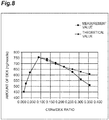
- FIG. 8 is a graph in which the amount of dexmedetomidine hydrochloride (amount of DEX) carried per one microneedle is plotted, with the mass ratio of sodium chondroitin sulfate to dexmedetomidine hydrochloride (CSNa/DEX ratio) being the horizontal axis.
- a solid line shows a measurement value
- a broken line shows a theoretical value. The theoretical value indicates the amount of DEX estimated to be contained in the coating when the maximum amount of coating was carried per one microneedle.
Landscapes
- Health & Medical Sciences (AREA)
- Animal Behavior & Ethology (AREA)
- Veterinary Medicine (AREA)
- Chemical & Material Sciences (AREA)
- Public Health (AREA)
- General Health & Medical Sciences (AREA)
- Life Sciences & Earth Sciences (AREA)
- Epidemiology (AREA)
- Pharmacology & Pharmacy (AREA)
- Medicinal Chemistry (AREA)
- Dermatology (AREA)
- Engineering & Computer Science (AREA)
- Biomedical Technology (AREA)
- Anesthesiology (AREA)
- Medical Informatics (AREA)
- Heart & Thoracic Surgery (AREA)
- Hematology (AREA)
- Inorganic Chemistry (AREA)
- Medicinal Preparation (AREA)
- Pharmaceuticals Containing Other Organic And Inorganic Compounds (AREA)
- Media Introduction/Drainage Providing Device (AREA)
Abstract
Description
- The present invention relates to a microneedle device and a method for manufacturing the same.
- As a form of administering a drug, transdermal administration using a microneedle device is known. The microneedle device allows a drug to be transdermally administered by piercing the stratum corneum, which is the outermost layer of the skin, with microneedles to form micropores through which the drug passes. The microneedle device comprises, for example, a substrate, microneedles disposed on the substrate, and a coating formed on the microneedles, and the coating comprises a biologically active substance (for example, Patent Literature 1).
- [Patent Literature 1] Japanese Unexamined Patent Publication No.
2014-507473 - In order to curb skin irritation due to the use of a microneedle device, it is conceivable to reduce the number (a density) of microneedles per unit area. However, when the number of microneedles is reduced, the amount of the biologically active substance that can be administered correspondingly decreases, and thus sufficient medicinal effects may not be exhibited. Accordingly, an object of the present invention is to manufacture a microneedle device capable of carrying and administering a larger amount of biologically active substance per one microneedle.
- A microneedle device according to an aspect of the present invention comprises a substrate, microneedles disposed on the substrate, and a coating formed on the microneedles, wherein the coating comprises a biologically active substance and a sulfated polysaccharide.
- The sulfated polysaccharide may be one or more sulfated polysaccharides selected from the group consisting of chondroitin sulfate, carrageenan, fucoidan, ascophyllan, heparin, heparan sulfate, heparin analogue, keratan sulfate, funoran, porphyran, agaropectin, furcellaran, rhamnan sulfate, glucuronoxyloramnan sulfate, xyloarabinogalactan sulfate, glucuronoxylorhamnogalactan sulfate, arabinan sulfate, arabinoramnan sulfate, sulfated dextran, sulfated pentosan, sulfated curdlan, and sulfated cellulose, and salts thereof, and is preferably sodium chondroitin sulfate. The biologically active substance may be dexmedetomidine or a pharmaceutically acceptable salt thereof. An amount of the sulfated polysaccharide may be 0.5 parts by mass or more with respect to 100 parts by mass of the coating. A mass ratio of the sulfated polysaccharide to the biologically active substance may be 0.01 to 0.36, preferably 0.011 to 0.222, and more preferably 0.089 to 0.222. The microneedles may be disposed on the substrate at a needle density of 10 needles/cm2 or more and 850 needles/cm2 or less. An amount of the biologically active substance carried per one microneedle may be 390 ng or more.
- A method of manufacturing a microneedle device according to an aspect of the present invention comprises coating the microneedles with a coating liquid, wherein the coating liquid comprises a biologically active substance and a sulfated polysaccharide. The microneedle device comprises a substrate, microneedles disposed on the substrate, and a coating formed on the microneedles.
- The sulfated polysaccharide may be one or more sulfated polysaccharides selected from the group consisting of chondroitin sulfate, carrageenan, fucoidan, ascophyllan, heparin, heparan sulfate, heparin analogue, keratan sulfate, funoran, porphyran, agaropectin, furcellaran, rhamnan sulfate, glucuronoxyloramnan sulfate, xyloarabinogalactan sulfate, glucuronoxylorhamnogalactan sulfate, arabinan sulfate, arabinoramnan sulfate, sulfated dextran, sulfated pentosan, sulfated curdlan, and sulfated cellulose, and salts thereof, and is preferably sodium chondroitin sulfate. The biologically active substance may be dexmedetomidine or a pharmaceutically acceptable salt thereof. A concentration of the sulfated polysaccharide in the coating liquid may be 0.1 mass% or more. A mass ratio of the sulfated polysaccharide to the biologically active substance in the coating liquid may be 0.01 to 0.36, preferably 0.011 to 0.222, and more preferably 0.089 to 0.222.
- According to the present invention, it is possible to manufacture a microneedle device capable of carrying and administering a larger amount of biologically active substance per one microneedle.
-
-
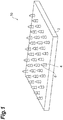
FIG. 1 is a perspective view schematically showing an embodiment of a microneedle device. -
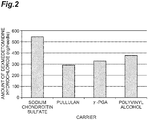
FIG. 2 is a graph showing a relationship between the type of carrier and the amount of dexmedetomidine hydrochloride carried per one microneedle. -
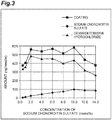
FIG. 3 is a graph in which the amount of coating per one microneedle and the amounts of dexmedetomidine hydrochloride and sodium chondroitin sulfate contained therein are plotted with respect to the concentration (mass%) of sodium chondroitin sulfate in the coating liquid. -
FIG. 4 is a graph in which the amount of coating per one microneedle and the amounts of dexmedetomidine hydrochloride and sodium chondroitin sulfate contained therein are plotted with respect to a concentration (mass%) of dexmedetomidine hydrochloride in the coating liquid in terms of a solid content. -
FIG. 5 is a graph in which the amount of dexmedetomidine hydrochloride (amount of DEX) carried per one microneedle is plotted with respect to the mass ratio (CSNa/DEX ratio) of sodium chondroitin sulfate to dexmedetomidine hydrochloride. -
FIG. 6 is a graph in which the amount of coating per one microneedle and the amounts of dexmedetomidine hydrochloride and sodium chondroitin sulfate contained therein are plotted with respect to the concentration (mass%) of sodium chondroitin sulfate in the coating liquid. -
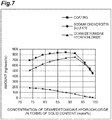
FIG. 7 is a graph in which the amount of coating per one microneedle and the amounts of dexmedetomidine hydrochloride and sodium chondroitin sulfate contained therein are plotted with respect to the concentration (mass%) of dexmedetomidine hydrochloride in the coating liquid in terms of a solid content. -
FIG. 8 is a graph in which the amount of dexmedetomidine hydrochloride (amount of DEX) carried per one microneedle is plotted with respect to the mass ratio (CSNa/DEX ratio) of sodium chondroitin sulfate to dexmedetomidine hydrochloride. - A method of manufacturing a microneedle device according to an aspect of the present invention comprises a step (coating step) of coating microneedles with a coating liquid. After the coating step, a step (a drying step) of drying the coating liquid may be performed. Here, the microneedle device is a device comprising a substrate, microneedles disposed on the substrate, and a coating formed on the microneedles.
- One embodiment of the microneedle device of the present invention is shown in
FIG. 1 . Themicroneedle device 10 comprises asubstrate 2, a plurality ofmicroneedles 4 disposed on a main surface of thesubstrate 2, and acoating 6 formed on each of themicroneedles 4. In the present specification, a configuration in which the plurality ofmicroneedles 4 are disposed on thesubstrate 2 is referred to as a microneedle array. Details of thecoating 6 will be described later. - The
substrate 2 is a base for supporting themicroneedles 4. A shape and a form of thesubstrate 2 are not particularly limited and may be, for example, rectangular or circular, and the main surface may be flat or curved. An area of thesubstrate 2 may be, for example, 0.5 cm2 to 10 cm2, 0.5 cm2 to 5 cm2, 1 cm2 to 5 cm2, 0.5 cm2 to 3 cm2, or 1 cm2 to 3 cm2. A thickness of thesubstrate 2 may be 50 µm to 2000 µm, 300 µm to 1200 µm, or 500 µm to 1000 µm. - The
microneedles 4 may be needle-shaped convex structures. A shape of eachmicroneedle 4 may be, for example, a polygonal pyramid, such as a quadrangular pyramid, or a cone.Microneedles 4 are a microstructures, and a length (a height) HM of eachmicroneedle 4 in a direction perpendicular to the main surface of thesubstrate 2 is preferably 50 µm to 600 µm, 100 µm to 500 µm, or 300 µm to 500 µm, for example. - The
microneedles 4 are disposed on the main surface of the substrate in, for example, a square lattice pattern, a rectangular lattice pattern, an orthorhombic lattice pattern, a 45° staggered pattern, or a 60°staggered pattern. - A density (a needle density) at which the
microneedles 4 are disposed on thesubstrate 2 is represented by the number of themicroneedles 4 per unit area in a region substantially having themicroneedles 4. The region substantially having themicroneedles 4 is a region obtained by connecting theoutermost microneedles 4 among the plurality ofmicroneedles 4 disposed in themicroneedle device 10. From the viewpoint of introducing a larger amount of biologically active substance into the skin, the needle density may be, for example, 10 needles/cm2 or more, 50 needles/cm2 or more, or 100 needles/cm2 or more. From the viewpoint of reducing skin irritation, the needle density may be, for example, 850 needles/cm2 or less, 500 needles/cm2 or less, 200 needles/cm2 or less, or 160 needles/cm2 or less. - Examples of a material of the
substrate 2 or themicroneedles 4 include silicon, silicon dioxide, ceramics, metals, polysaccharides, and synthetic or natural resin materials. Examples of polysaccharides include pullulan, chitin, and chitosan. The resin material may be, for example, a biodegradable polymer such as polylactic acid, polyglycolide, polylactic acid-co-polyglycolide, polycaprolactone, polyurethane, a polyamino acid (for example, poly-γ-aminobutyric acid) or the like, or may be a non-degradable polymer such as polycarbonate, polymethacrylic acid, ethylene vinyl acetate, polytetrafluoroethylene, polyoxymethylene, or a cyclic olefin copolymer. - In the coating step in the method of manufacturing the
microneedle device 10 according to one embodiment of the present invention, the coating liquid is coated on themicroneedles 4. The coating liquid comprises a biologically active substance and a sulfated polysaccharide. - The biologically active substance is a substance that exhibits a therapeutic or prophylactic effect in a subject to which it is administered. The biologically active substance may be, for example, peptides, proteins, nucleic acids such as DNA and RNA, sugars, glycoproteins, or other high-molecular or low-molecular compounds.
- Specific examples of the biologically active substance include dexmedetomidine, interferon α, interferon β for multiple sclerosis, erythropoietin, follitropin β, follitropin α, G-CSF, GM-CSF, human chorionic gonadotropin, luteinizing hormone, follicle stimulating hormone (FSH), salmon calcitonin, glucagon, GNRH antagonist, insulin, luteinizing hormone releasing hormone (LHRH), human growth hormone, parathyroid hormone (PTH), filgrastin, somatropin, incretin, GLP-1 analogues (for example, exenatide, liraglutide, lixisenatide, albiglutide, and taspoglutide), snake venom peptide analogues, γ globulin, Japanese encephalitis vaccine, hepatitis B vaccine, rotavirus vaccine, Alzheimer's disease vaccine, arteriosclerosis vaccine, a cancer vaccine, nicotine vaccine, diphtheria vaccine, tetanus vaccine, pertussis vaccine, lyme disease vaccine, rabies vaccine, pneumococcal vaccine, yellow fever vaccine, cholera vaccine, vaccinia vaccine, tuberculosis vaccine, rubella vaccine, measles vaccine, influenza vaccine, mumps vaccine, botulinum vaccine, herpes virus vaccine, and pharmaceutically acceptable salts thereof. The biologically active substance may be, for example, dexmedetomidine or dexmedetomidine hydrochloride. The coating liquid may comprise one biologically active substance, or may comprise a plurality of biologically active substances.
- In the present invention, the sulfated polysaccharide is a component (a carrier) which assists in carrying the coating liquid on the
microneedles 4. The sulfated polysaccharide has an affinity for skin tissues and is excellent in improving absorbability of biologically active substances into the skin. The sulfated polysaccharide is a polysaccharide with a sulfuric acid bound to a hydroxyl group or amino group. - The polysaccharide in the sulfated polysaccharide may be a natural polysaccharide or may be a semi-synthetic or synthetic polysaccharide. A main structure of the polysaccharide is preferably a mucopolysaccharide (also known as glycosaminoglycan). The mucopolysaccharide is a heteropolysaccharide having uronic acid and hexosamine as sugar units. A sulfate moiety in the sulfated polysaccharide may be in the form of a free acid or may form a salt. The sulfate moiety is preferably a monovalent metal salt, particularly a sodium salt. The coating liquid may comprise one sulfated polysaccharide or may comprise a plurality of sulfated polysaccharides.
- Examples of a natural or biologically-derived sulfated polysaccharide include chondroitin sulfate, carrageenan, fucoidan, ascophyllan, heparin, heparan sulfate, heparin analogues (heparinoids), keratan sulfate, funoran, porphyran, agaropectin, furcellaran, rhamnan sulfate, glucuronoxyloramnan sulfate, xyloarabinogalactan sulfate, glucuronoxylorhamnogalactan sulfate, arabinan sulfate, and arabinoramnan sulfate, and salts thereof. Examples of the semi-synthetic or synthetic sulfated polysaccharide include, for example, sulfated dextran, sulfated pentosan, sulfated curdlan, and sulfated cellulose, and salts thereof.
- Examples of the sulfated polysaccharide having a mucopolysaccharide as a main structure include chondroitin sulfate, heparin, heparan sulfate, heparinoid, and keratan sulfate, and salts thereof. Among them, chondroitin sulfate and salts thereof are more preferable. A scope of the chondroitin sulfate includes chondroitin sulfate A, chondroitin sulfate B (dermatan sulfate), chondroitin sulfate C, chondroitin sulfate D, chondroitin sulfate E, chondroitin sulfate H, and chondroitin sulfate K.
- Examples of the salt of chondroitin sulfate include salts with alkali metals such as sodium and potassium, salts with alkaline earth metals such as calcium and magnesium, salts with other metals such as aluminum, and salts with organic bases. The salt of chondroitin sulfate is preferably an alkali metal salt of chondroitin sulfate, more preferably sodium chondroitin sulfate.
- The origin of the chondroitin sulfate and the salts thereof is not limited. The chondroitin sulfate and the salts thereof may be obtained from mammals such as pigs, fish such as salmon and sharks, or microorganisms.
- Sulfated polysaccharides tend to have common physical, chemical, and physiological properties due to the presence of sulfate groups. As the proportion of sulfate groups in the sulfated polysaccharide increases, the affinity for water, water retentivity and the thickening effect increase, but the proportion of sulfate groups in the sulfated polysaccharide is not particularly limited. The number of sulfate groups in the sulfated polysaccharide may be 0.25N to 2N, preferably 0.5N to 1.5N per N sugar units mainly constituting the polysaccharide. When the polysaccharide has two main sugar units, the number of sulfate groups may be 0.5 to 4, preferably 1 to 3 per disaccharide unit mainly constituting the polysaccharide.
- A viscosity average molecular weight of the sulfated polysaccharide may be, for example, 1000 Da to 500,000 Da, 1000 Da to 100,000 Da or 7000 Da to 40,000 Da, but is not limited thereto. The viscosity average molecular weight may be calculated from a limiting viscosity obtained in accordance with the viscosity measurement Method 1: Viscosity measurement by capillary tube viscometer in General Tests of the Japanese Pharmacopoeia, 15th edition, using the Mark-Houwink-Sakurada equation.
- The coating liquid comprises at least one or more solvents that dissolves the biologically active substance and the sulfated polysaccharide. Examples of the solvent include water, polyhydric alcohols, lower alcohols, and triacetin. Water is preferable because it dissolves the sulfated polysaccharide well. Water is also preferable in that it also dissolves dexmedetomidine or pharmaceutically acceptable salts thereof well.
- The coating liquid may further comprise other components (for example, a stabilizer, a pH adjuster, a component that promotes entry of the biologically active substance into blood, oils and fats, or inorganic substances) in addition to the biologically active substance, the sulfated polysaccharide, and the solvent. However, it is preferable that the coating liquid does not comprise a surfactant, a monosaccharide, and a disaccharide. Surfactants, monosaccharides, and disaccharides may reduce the surface tension and viscosity of the coating liquid and may reduce the amount of the biologically active substance carried per one
microneedle 4. - The stabilizer has, for example, an action in which oxygen oxidation and photooxidation of each component are suppressed and the biologically active substance is stabilized. Examples of the stabilizer are L-cysteine, sodium pyrosulfite, sodium bisulfite, ascorbic acid, ethylenediaminetetraacetic acid (EDTA) or salts thereof, or dibutylhydroxytoluene (BHT). These stabilizers may be used alone or in combination of two or more.
- As the pH adjuster, those commonly used in the industry may be used. Examples of the pH adjuster include inorganic acids or organic acids, alkalis, salts, amino acids, or a combination thereof.
- A concentration of the sulfated polysaccharide in the coating liquid may be, for example, 0.1 mass% or more, 0.5 mass% or more, 1 mass% or more, 1.3 mass% or more, 1.5 mass% or more, 2 mass% or more, 3 mass% or more, or 4 mass% or more, and may be 20 mass% or less, 16 mass% or less, 15 mass% or less, 14 mass% or less, 13 mass% or less, 12 mass% or less, 11 mass% or less, 10 mass% or less, 9 mass% or less, or 8 mass% or less. From the viewpoint of manufacturing the
microneedle device 10 capable of carrying and administering more biologically active substance per one microneedle, the concentration of the sulfated polysaccharide in the coating liquid may be, for example, 1.3 mass% to 11 mass%, 1.5 mass% to 10 mass%, 2 mass% to 10 mass%, 0.5 mass% to 16 mass%, 0.5 mass% to 10 mass%, or 4.0 mass% to 10 mass%. - The concentration of the biologically active substance in the coating liquid may be adjusted according to the type of the biologically active substance, the purpose of treatment, the condition of disease, the condition of the patient, and the nature of the solvent. The concentration of the biologically active substance in the coating liquid may be, for example, 0.01 mass% to 90 mass%, 0.1 mass% to 80 mass%, and 1 mass% to 70 mass%.
- A mass ratio of the sulfated polysaccharide to the biologically active substance in the coating liquid may be, for example, 0.01 or more, 0.02 or more, 0.025 or more, 0.03 or more, 0.035 or more, 0.04 or more, 0. 05 or more, or 0.08 or more, and also may be 0.36 or less, 0.35 or less, 0.3 or less, 0.27 or less, 0.26 or less, 0.24 or less, 0.23 or less, 0.20 or less, 0.18 or less, or 0.17 or less. When the biologically active substance is dexmedetomidine or a pharmaceutically acceptable salt thereof, the mass ratio is preferably 0.011 to 0.222, 0.044 to 0.222, or 0.089 to 0.222.
- The total amount of the other components other than the biologically active substance, the sulfated polysaccharide, and the solvent may be, for example, 80 mass% or less, 60 mass% or less, 30 mass% or less, or 20 mass% or less with respect to the total mass of the coating liquid. The coating liquid may comprise no other components other than the biologically active substance, the sulfated polysaccharide, and the solvent.
- The concentration of each component contained in the coating liquid may be measured, for example, by liquid chromatography. Further, the concentration of each component other than the biologically active substance may also be calculated based on the concentration of the biologically active substance measured by a liquid chromatography method and the proportion of each component at the time of formulating the coating liquid.
- From the viewpoint of coating the
microneedles 4 with a larger amount of coating liquid and the viewpoint of forming thecoating 6 on a tip portion of eachmicroneedle 4, a viscosity of the coating liquid at 25°C is preferably 500 mPa·s to 30,000 mPa·s, more preferably 1000 mPa·s to 10,000 mPa·s. From the same viewpoints, a surface tension of the coating liquid is preferably 10 mN/m to 100 mN/m, more preferably 20 mN/m to 80 mN/m. - The method of coating the
microneedles 4 with the coating liquid is not particularly limited, and the coating liquid may be coated by inkjet coating or dip coating, for example. Among these, dip coating is preferred. In the dip coating, themicroneedles 4 are coated with the coating liquid by dipping themicroneedles 4 in a reservoir in which the coating liquid is stored to a certain depth and then withdrawing themicroneedles 4 from the reservoir. - Here, according to the coating liquid of the present invention comprising the sulfated polysaccharide, the
microneedles 4 may be coated with a large amount of coating liquid, and thus, it is possible to manufacture themicroneedle device 10 in which a larger amount of biologically active substance can be carried and administered per one microneedle. - The amount of the coating liquid coated on the
microneedles 4 may be adjusted by the depth to which themicroneedles 4 are dipped, for example, in the case of application by dip coating. Here, the depth to which themicroneedles 4 are dipped indicates the distance from apexes of the dippedmicroneedles 4 to a surface of the coating liquid. The dipping depth depends on the length HM of themicroneedle 4, but may be HM/2 or less, for example. Among the biologically active substance contained in thecoating 6 formed by drying the coating liquid, the biologically active substance contained in a portion formed in a base portion of themicroneedle 4 is less likely to be introduced into the skin compared to the biologically active substance contained in a portion formed in a tip portion of themicroneedle 4. Therefore, a larger amount of the coating liquid is preferably coated, mainly, on the tip portion of themicroneedle 4. Here, the tip portion of themicroneedle 4 is a portion in which a length measured from the apex of themicroneedle 4 in a direction perpendicular to the main surface (that is, the base portion) of thesubstrate 2 is, for example, within 50% of the length HM of themicroneedle 4, as will be described later. - In a drying step after the coating step, the coating liquid may be dried to form the
coating 6 on themicroneedles 4. Here, drying the coating liquid means volatilizing some or the whole of the solvent contained in the coating liquid. The drying of the coating liquid may be performed by, for example, a method such as air drying, vacuum drying, freeze drying, or a combination thereof. The preferred drying method is air drying. - Here, since the coating liquid according to the present invention comprising the sulfated polysaccharide has high viscosity and surface tension, downward flowing and spreading of the coating liquid before or during the drying of the coating liquid due to gravity can be further reduced. Therefore, even when then the coating liquid is dried with the microneedle array placed in such a way that the
microneedles 4 face upward, thecoating 6 can be formed mainly on the tip portions of themicroneedles 4. - The coating step and the drying step may be performed repeatedly. The amount of the
coating 6 formed can be further increased by repeating these steps. - The
microneedle device 10 according to one embodiment of the present invention manufactured by the above-described method comprises thecoating 6 comprising the biologically active substance and the sulfated polysaccharide on themicroneedles 4. - The details of the microneedle array, the biologically active substance, and the sulfated polysaccharide which constitute the
microneedle device 10 are as described above. Thecoating 6 is a coating obtained by removing some or the whole of the solvent from the above-described coating liquid. Therefore, the coating liquid and thecoating 6 described above have the same components except for the solvent. - The amount of the sulfated polysaccharide may be, for example, 0.5 parts by mass or more, 1 part by mass or more, 1.9 parts by mass or more, 2 parts by mass or more, 2.5 parts by mass or more, 3 parts by mass or more, 3.5 parts by mass or more, 5.0 parts by mass or more, or 8.0 parts by mass or more, and may also be 27 parts by mass or less, 25 parts by mass or less, 22 parts by mass or less, 21 parts by mass or less, 20 parts by mass or less, 19 parts by mass or less, 18 parts by mass or less, 17 parts by mass or less, 14 parts by mass or less, or 13 parts by mass or less, with respect to 100 parts by mass of the
coating 6. - The amount of the biologically active substance may be, for example, 99 parts by mass or less, 95 parts by mass or less, 92 parts by mass or less, 90 parts by mass or less, 89 parts by mass or less, 88 parts by mass or less, or 87.5 parts by mass or less, or 87 parts by mass or less, and may also be 65 parts by mass or more, 70 parts by mass or more, 72 parts by mass or more, 73 parts by mass or more, 74 parts by mass or more, 75 parts by mass or more, 77 parts by mass or more, 78 parts by mass or more, 79 parts by mass or more, or 81 parts by mass or more. with respect to 100 parts by mass of the
coating 6. - A mass ratio of the sulfated polysaccharide to the biologically active substance in the
coating 6 may be, for example, 0.01 or more, 0.02 or more, 0.025 or more, 0.03 or more, 0.035 or more, 0.04 or more, 0. 05 or more, or 0.08 or more, and may also be 0.36 or less, 0.35 or less, 0.3 or less, 0.27 or less, 0.26 or less, 0.24 or less, 0.23 or less, 0.20, 0.18 or less, or 0.17 or less. When the biologically active substance is dexmedetomidine or a pharmaceutically acceptable salt thereof, the mass ratio is preferably, for example, 0.011 to 0.222, 0.044 to 0.222, or 0.089 to 0.222. - The total amount of the other components other than the biologically active substance, the sulfated polysaccharide, and the solvent may be, for example, 95 parts by mass or less, 75 parts by mass or less, 50 parts by mass or less, or 30 parts by mass or less, with respect to 100 parts by mass of the solid content in the
coating 6. In the present specification, the solid content refers to the component which remains when the solvent is removed from the coating liquid. - A preferable amount of the biologically active substance carried per one
microneedle 4 depends on the type of the biologically active substance, the purpose of treatment, the condition of disease, and the condition of the patient. When the biologically active substance is dexmedetomidine or a pharmaceutically acceptable salt thereof, the amount of dexmedetomidine or the pharmaceutically acceptable salt thereof carried per onemicroneedle 4 is preferably 390 ng or more, 451 ng or more, or 670 ng or more, from the viewpoint of exhibiting a sufficient drug effect. The upper limit of the amount of the biologically active substance carried per onemicroneedle 4 is not particularly limited, but may be, for example, 2 µg or less, 1 µg or less, 755 ng or less, 545 ng or less, or 500 ng or less. The amount of the sulfated polysaccharide carried per onemicroneedle 4 may be, for example, 15 ng to 100 ng, 21 ng to 97 ng, 5 ng to 149 ng, or 67 ng to 149 ng. The amount of thecoating 6 carried per onemicroneedle 4 may be, for example, 490 ng to 700 ng, 516 ng to 642 ng, 456 ng to 836 ng, or 819 ng to 836 ng. - The amount of each component contained in the
coating 6 may be measured by, for example, a liquid chromatography method. Further, the amount of each component other than the biologically active substance may also be calculated based on the amount of the biologically active substance measured by the liquid chromatography method and the proportion of each component at the time of formulating the coating liquid. The amount of each component carried per onemicroneedle 4 may be obtained by dividing a value thus measured or calculated by the number of microneedles. - When there are a plurality of
microneedles 4, thecoating 6 may be formed on all themicroneedles 4 or may be formed on only some of themicroneedles 4. Thecoating 6 may be formed only on the tip portion of themicroneedle 4, or may be formed to cover theentire microneedle 4. Thecoating 6 is preferably formed on the tip portion of themicroneedle 4. Here, the tip portion of themicroneedle 4 is a portion in which a length measured from the apex of themicroneedle 4 in a direction perpendicular to the main surface (that is, the base portion) of thesubstrate 2 is, for example, within 50%, within 40%, within 30%, or within 20% of the length HM of themicroneedle 4. An average thickness of thecoating 6 may be less than 50 µm and may be 1 µm to 30 µm. - Coating liquids 1 to 4 were prepared by mixing components shown in Tables 1 and 2. In Table, γ-PGA is γ-polyglutamic acid. A pharmaceutical grade product of Maruha Nichiro Corporation was used as sodium chondroitin sulfate (hereinafter, may be referred to as CSNa). As the pullulan, a pharmaceutical product of Hayashibara Co., Ltd. was used. A product of Nippon Poly-Glu Co., Ltd. was used as γ-PGA. "Kuraray Poval PVA-205" (degree of saponification: about 87.0 mol% to 89.0 mol%, degree of polymerization: about 500) manufactured by Kuraray Co., Ltd. was used as polyvinyl alcohol.
[Table 1] Component Concentration (mass%) Biologically active substance Dexmedetomidine hydrochloride 45 Carrier Refer to Table 2 8 Stabilizer L-cysteine 5 Water for injection 42 Sum 100 [Table 2] Coating liquid Carrier 1 (Example) Sodium chondroitin sulfate 2 (Comparative example) Pullulan 3 (Comparative example) γ-PGA 4 (Comparative example) Polyvinyl alcohol - For the
coating liquids 1 and 2, a contact angle with the microneedles of polylactic acid, a surface tension, and a viscosity were measured. The contact angle was measured by a droplet method (a θ/2 method) (temperature of 23°C to 25°C). The surface tension was calculated by a pendant drop method using an empirical equation of Andreas et al. (temperature of 24°C). The viscosity was obtained from a pressure loss in a capillary channel (temperature of 23°C to 25°C). The results are shown in Table 3.[Table 3] Coating liquid Carrier Contact angle Surface tension (mN/m) Viscosity (mPa·s) 1 Sodium chondroitin sulfate 103.9° 42.5 3151 2 Pullulan 96.4° 41.9 3243 - As shown in Table 3, the surface tension and the viscosity were not significantly different between the coating liquid containing sodium chondroitin sulfate and the coating liquid containing pullulan.
- Next, a microneedle array of polylactic acid in which microneedles were provided at a density of 156/cm2 in a region of 1 cm2 and the shape of each microneedle was a quadrangular pyramid having a height of 500 µm was prepared, and then the microneedles were dipped in the coating liquids 1 to 4 to a depth of about 140 µm. After the microneedles were pulled up from the coating liquids, the solvents of the coating liquids 1 to 4 on the microneedles were dried to obtain microneedle devices 1 to 4.
- After the solvents were dried, the amount of dexmedetomidine hydrochloride in the coating formed on the microneedles was quantified by a high performance liquid chromatography method, and the amount of the carrier and the amount of the coating per one microneedle were calculated therefrom. The results are shown in Table 4 and
FIG. 2 .[Table 4] Microneedle device Carrier Dexmedetomidine hydrochloride (ng/needle) Carrier (ng/needle) Coating (ng/needle) 1 (Example) Sodium chondroitin sulfate 545 97 702 2 (Comparative example) Pullulan 290 52 374 3 (Comparative example) γ-PGA 327 58 421 4 (Comparative example) Polyvinyl alcohol 377 67 486 - By using sodium chondroitin sulfate as the carrier, it was possible to manufacture a microneedle device carrying a larger amount of biologically active substance per one microneedle compared to the case of using pullulan (nonionic polysaccharide), polyvinyl alcohol (nonionic polymer), and γ-PGA.
- Dexmedetomidine hydrochloride, sodium chondroitin sulfate, L-cysteine (stabilizer) and water for injection were mixed to prepare coating liquids 5 to 13 (Examples) shown in Table 5. The details of the sodium chondroitin sulfate used are the same as in Test Example 1. A microneedle array of polylactic acid in which microneedles were provided at a density of 156/cm2 in a region of 1 cm2 and the shape of each microneedle was a quadrangular pyramid having a height of 500 µm was prepared, and then the microneedles were dipped in the coating liquids 5 to 13 to a depth of about 140 µm. After the microneedles were pulled up from the coating liquids, the solvents of the coating liquids 5 to 13 on the microneedles were dried to obtain microneedle devices 5 to 13 (Examples).
[Table 5] Coating liquid Dexmedetomidine hydrochloride (mass%) Sodium chondroitin sulfate (mass%) L-cysteine (mass%) Water (mass%) Mass ratio of sodium chondroitin sulfate / dexmedetomidine hydrochloride 5 45 0.5 5 49.5 0.011 6 45 1 5 49 0.022 7 45 2 5 48 0.044 8 45 4 5 46 0.089 9 45 6 5 44 0.133 10 45 8 5 42 0.178 11 45 10 5 40 0.222 12 45 12 5 38 0.267 13 45 14 5 36 0.311 - After the solvents were dried, the amount of dexmedetomidine hydrochloride in the coating formed on the microneedles was quantified by a high performance liquid chromatography method, and the amount of the carrier and the amount of the coating per one microneedle were calculated therefrom. The results are shown in Table 6.
[Table 6] Microneedle device Amount of dexmedetomidine hydrochloride (ng/needle) Amount of sodium chondroitin sulfate (ng/needle) Amount of coating (ng/needle) 5 335 4 376 6 358 8 406 7 486 22 562 8 449 40 539 9 458 61 570 10 400 71 516 11 437 97 583 12 321 86 442 13 265 82 377 -
FIG. 3 is a graph in which the amount of coating per one microneedle and the amounts of dexmedetomidine hydrochloride and carriers contained therein are plotted with respect to the concentration (mass%) of sodium chondroitin sulfate in the coating liquid. As shown inFIG. 3 , it was possible to manufacture a microneedle device carrying even larger amount of dexmedetomidine hydrochloride per one microneedle by adding sodium chondroitin sulfate in the coating liquid at a concentration in a specific range. -
FIG. 4 is a graph in which the horizontal axis ofFIG. 3 is changed to the concentration (mass%) of dexmedetomidine hydrochloride in the coating liquid in terms of a solid content. The concentration of dexmedetomidine hydrochloride in terms of a solid content refers to the proportion of dexmedetomidine hydrochloride to the total amount of solid content (dexmedetomidine hydrochloride, sodium chondroitin sulfate, and L-cysteine) in the coating liquid. -
FIG. 5 is a graph in which the amount of dexmedetomidine hydrochloride (amount of DEX) carried per one microneedle is plotted, with the mass ratio of sodium chondroitin sulfate to dexmedetomidine hydrochloride (CSNa/DEX ratio) being the horizontal axis. InFIG. 5 , a solid line shows a measurement value, and a broken line shows a theoretical value. The theoretical value indicates the amount of DEX estimated to be contained in the coating when the maximum amount of coating was carried per one microneedle. The theoretical value was calculated assuming that the amount of coating (562 ng) carried per one microneedle when the maximum value of the amount of dexmedetomidine hydrochloride in Table 6 (486 ng/needle) was obtained was the maximum amount of coating that can be carried per one microneedle. Equation used for calculating the theoretical value is as follows.
- As shown in
FIG. 5 , when the CSNa/DEX ratio was 0.044 to 0.222, the measurement value and the theoretical value were substantially the same, although there was some variation. On the other hand, when the CSNa/DEX ratio exceeded 0.222, the measurement value was below the theoretical value, and a difference between the values increased as the CSNa/DEX ratio increased. From these results, it is estimated that, when the CSNa/DEX ratio exceeds 0.222, some kind of change occurs in physical properties of the coating liquid, and this change acts in a way to inhibit the increase in the amount of DEX carried on the microneedles. - Dexmedetomidine hydrochloride (the biologically active substance), sodium chondroitin sulfate (the carrier), and water for injection were mixed to prepare
coating liquids 14 to 23 (Examples) shown in Table 7. The details of the sodium chondroitin sulfate used are the same as in Test example 1. A microneedle array of polylactic acid in which microneedles were provided at a density of 156/cm2 in a region of 1 cm2 and the shape of each microneedle was a quadrangular pyramid having a height of 500 µm was prepared, and then the microneedles were dipped in thecoating liquids 14 to 23 to a depth of about 140 µm. After the microneedles were pulled up from the coating liquids, the solvents of thecoating liquids 14 to 23 on the microneedles were dried to obtainmicroneedle devices 14 to 23.[Table 7] Coating liquid Dexmedetomidine hydrochloride (mass%) Sodium chondroitin sulfate (mass%) Water (mass%) Mass ratio of sodium chondroitin sulfate / dexmedetomidine hydrochloride Transparency 14 45 0.5 54.5 0.011 Transparent 15 45 1 54 0.022 Transparent 16 45 2 53 0.044 Transparent 17 45 4 51 0.089 Transparent 18 45 6 49 0.133 Transparent 19 45 8 47 0.178 Transparent 20 45 10 45 0.222 Transparent 21 45 12 43 0.267 Transparent 22 45 14 41 0.311 Transparent 23 45 16 39 0.356 Slightly cloudy - After the solvents were dried, the amount of dexmedetomidine hydrochloride in the coating formed on the microneedles was quantified by a high performance liquid chromatography method, and the amount of the carrier and the amount of the coating per one microneedle were calculated therefrom. The results are shown in Table 8.
[Table 8] Microneedle device Amount of dexmedetomidine hydrochloride (ng/needle) Amount of sodium chondroitin sulfate (ng/needle) Amount of coating (ng/needle) 14 451 5 456 15 525 12 537 16 621 28 648 17 755 67 822 18 738 98 837 19 706 126 831 20 670 149 819 21 626 167 793 22 561 175 736 23 510 181 691 -
FIG. 6 is a graph in which the amount of coating per one microneedle and the amounts of dexmedetomidine hydrochloride and carriers contained therein are plotted with respect to the concentration (mass%) of sodium chondroitin sulfate in the coating liquid. As shown inFIG. 6 , it was possible to manufacture a microneedle device carrying even larger amount of dexmedetomidine hydrochloride per one microneedle by adding sodium chondroitin sulfate in the coating liquid at a concentration in a specific range. -
FIG. 7 is a graph in which a horizontal axis ofFIG. 6 is changed to the concentration (mass%) of dexmedetomidine hydrochloride in the coating solution in terms of a solid content. The concentration of dexmedetomidine hydrochloride in terms of a solid content refers to the proportion of dexmedetomidine hydrochloride to the total amount of solid content (dexmedetomidine hydrochloride and sodium chondroitin sulfate) in the coating liquid. -
FIG. 8 is a graph in which the amount of dexmedetomidine hydrochloride (amount of DEX) carried per one microneedle is plotted, with the mass ratio of sodium chondroitin sulfate to dexmedetomidine hydrochloride (CSNa/DEX ratio) being the horizontal axis. InFIG. 8 , a solid line shows a measurement value, and a broken line shows a theoretical value. The theoretical value indicates the amount of DEX estimated to be contained in the coating when the maximum amount of coating was carried per one microneedle. The theoretical value was calculated assuming that the amount of coating (822 ng) carried per one microneedle when the maximum value of the amount of dexmedetomidine hydrochloride in Table 8 (755 ng/needle) was obtained was the maximum amount of coating that can be carried per one microneedle. Equation used for calculating the theoretical value is as follows.
- As shown in
FIG. 8 , when the CSNa/DEX ratio was 0.089 to 0.222, the measurement value and the theoretical value were substantially the same. On the other hand, when the CSNa/DEX ratio exceeded 0.222, the measurement value was below the theoretical value, and a difference between the values increased as the CSNa/DEX ratio increased. From these results, it is estimated that, when the CSNa/DEX ratio exceeds 0.222, some kind of change occurs in physical properties of the coating liquid, and this change acts in a way to inhibit the increase in the amount of DEX carried on the microneedles. -
- 2
- Substrate
- 4
- Microneedle
- 6
- Coating
- 10
- Microneedle device
Claims (18)
- A microneedle device comprising:a substrate;microneedles disposed on the substrate; anda coating formed on the microneedles,wherein the coating comprises a biologically active substance and a sulfated polysaccharide.
- The microneedle device according to claim 1, wherein the sulfated polysaccharide is one or more sulfated polysaccharides selected from the group consisting of chondroitin sulfate, carrageenan, fucoidan, ascophyllan, heparin, heparan sulfate, heparin analogue, keratan sulfate, funoran, porphyran, agaropectin, furcellaran, rhamnan sulfate, glucuronoxyloramnan sulfate, xyloarabinogalactan sulfate, glucuronoxylorhamnogalactan sulfate, arabinan sulfate, arabinoramnan sulfate, sulfated dextran, sulfated pentosan, sulfated curdlan, and sulfated cellulose, and salts thereof.
- The microneedle device according to claim 2, wherein the sulfated polysaccharide is sodium chondroitin sulfate.
- The microneedle device according to any one of claims 1 to 3, wherein the biologically active substance is dexmedetomidine or a pharmaceutically acceptable salt thereof.
- The microneedle device according to any one of claims 1 to 4, wherein an amount of the sulfated polysaccharide is 0.5 parts by mass or more with respect to 100 parts by mass of the coating.
- The microneedle device according to any one of claims 1 to 5, wherein a mass ratio of the sulfated polysaccharide to the biologically active substance is 0.01 to 0.36.
- The microneedle device according to claim 6, wherein the mass ratio of the sulfated polysaccharide to the biologically active substance is 0.011 to 0.222.
- The microneedle device according to claim 7, wherein the mass ratio of the sulfated polysaccharide to the biologically active substance is 0.089 to 0.222.
- The microneedle device according to any one of claims 1 to 8, wherein the microneedles are disposed on the substrate at a needle density of 10 needles/cm2 or more and 850 needles/cm2 or less.
- The microneedle device according to any one of claims 1 to 9, wherein an amount of the biologically active substance carried per one microneedle is 390 ng or more.
- A method of manufacturing a microneedle device which comprises a substrate, microneedles disposed on the substrate, and a coating formed on the microneedles, the method comprising:coating the microneedles with a coating liquid,wherein the coating liquid comprises a biologically active substance and a sulfated polysaccharide.
- The method according to claim 11, wherein the sulfated polysaccharide is one or more sulfated polysaccharides selected from the group consisting of chondroitin sulfate, carrageenan, fucoidan, ascophyllan, heparin, heparan sulfate, heparin analogue, keratan sulfate, funoran, porphyran, agaropectin, furcellaran, rhamnan sulfate, glucuronoxyloramnan sulfate, xyloarabinogalactan sulfate, glucuronoxylorhamnogalactan sulfate, arabinan sulfate, arabinoramnan sulfate, sulfated dextran, sulfated pentosan, sulfated curdlan, and sulfated cellulose, and salts thereof.
- The method according to claim 12, wherein the sulfated polysaccharide is sodium chondroitin sulfate.
- The method according to any one of claims 11 to 13, wherein the biologically active substance is dexmedetomidine or a pharmaceutically acceptable salt thereof.
- The method according to any one of claims 11 to 14, wherein a concentration of the sulfated polysaccharide in the coating liquid is 0.1 mass% or more.
- The method according to any one of claims 11 to 15, wherein a mass ratio of the sulfated polysaccharide to the biologically active substance in the coating liquid is 0.01 to 0.36.
- The method according to claim 16, wherein the mass ratio of the sulfated polysaccharide to the biologically active substance is 0.011 to 0.222.
- The method according to claim 17, wherein the mass ratio of the sulfated polysaccharide to the biologically active substance in the coating liquid is 0.089 to 0.222.
Applications Claiming Priority (2)
| Application Number | Priority Date | Filing Date | Title |
|---|---|---|---|
| JP2018120639 | 2018-06-26 | ||
| PCT/JP2019/024586 WO2020004234A1 (en) | 2018-06-26 | 2019-06-20 | Microneedle device and method for manufacturing same |
Publications (3)
| Publication Number | Publication Date |
|---|---|
| EP3815737A1 true EP3815737A1 (en) | 2021-05-05 |
| EP3815737A4 EP3815737A4 (en) | 2022-03-30 |
| EP3815737B1 EP3815737B1 (en) | 2023-10-04 |
Family
ID=68987140
Family Applications (1)
| Application Number | Title | Priority Date | Filing Date |
|---|---|---|---|
| EP19824984.9A Active EP3815737B1 (en) | 2018-06-26 | 2019-06-20 | Microneedle device and method for manufacturing same |
Country Status (8)
| Country | Link |
|---|---|
| US (2) | US12233156B2 (en) |
| EP (1) | EP3815737B1 (en) |
| JP (4) | JP7430140B2 (en) |
| KR (1) | KR102437993B1 (en) |
| CN (1) | CN112351809B (en) |
| ES (1) | ES2964349T3 (en) |
| TW (1) | TWI752327B (en) |
| WO (1) | WO2020004234A1 (en) |
Families Citing this family (3)
| Publication number | Priority date | Publication date | Assignee | Title |
|---|---|---|---|---|
| US12233156B2 (en) | 2018-06-26 | 2025-02-25 | Hisamitsu Pharmaceutical Co., Inc. | Microneedle device and method for producing the same |
| CN114828849B (en) * | 2019-12-23 | 2025-06-17 | 久光制药株式会社 | Microneedle device and method of making the same |
| WO2024183696A1 (en) * | 2023-03-07 | 2024-09-12 | 宜昌人福药业有限责任公司 | Dexmedetomidine soluble microneedle, preparation method therefor and use thereof |
Family Cites Families (34)
| Publication number | Priority date | Publication date | Assignee | Title |
|---|---|---|---|---|
| JPS6379820A (en) | 1986-09-22 | 1988-04-09 | Nitto Electric Ind Co Ltd | Pharmaceutical formulation for percutaneous administration |
| US5124157A (en) | 1989-08-18 | 1992-06-23 | Cygnus Therapeutic Systems | Method and device for administering dexmedetomidine transdermally |
| DE4041702C1 (en) | 1990-12-24 | 1992-04-09 | Licentia Patent-Verwaltungs-Gmbh, 6000 Frankfurt, De | |
| AU722574B2 (en) | 1996-12-20 | 2000-08-10 | Alza Corporation | Device and method for enhancing transdermal agent flux |
| EP1656178A1 (en) * | 2003-08-04 | 2006-05-17 | Alza Corporation | Method and device for enhancing transdermal agent flux |
| WO2008001200A2 (en) | 2006-06-29 | 2008-01-03 | Antares Pharma Ipl Ag | Transdermal composition having enhanced color stability |
| BRPI0905369C8 (en) | 2008-02-15 | 2021-05-25 | Bone Therapeutics | pharmaceutical composition, use of pharmaceutical composition and compartmentalized kit |
| JP4521492B2 (en) * | 2008-07-01 | 2010-08-11 | コスメディ製薬株式会社 | Microneedle array and manufacturing method thereof |
| KR101622738B1 (en) | 2008-07-30 | 2016-05-19 | 히사미쓰 세이야꾸 가부시키가이샤 | Microneedle device and method for increasing the response of japanese encephalitis virus antigen with the microneedle device |
| EP2376073A2 (en) | 2008-11-30 | 2011-10-19 | Oron Zachar | Dermal application of vasoconstrictors |
| US20120095104A1 (en) | 2008-11-30 | 2012-04-19 | Oron Zachar | Use of vasoconstrictors |
| EP2383013A4 (en) * | 2008-12-26 | 2012-11-28 | Hisamitsu Pharmaceutical Co | Microneedle device |
| JP2011012050A (en) | 2009-06-03 | 2011-01-20 | Bioserentack Co Ltd | Microneedle array using porous substrate and method for producing the same |
| KR101728194B1 (en) * | 2010-02-24 | 2017-05-02 | 히사미쓰 세이야꾸 가부시키가이샤 | Micro-needle device and preparation method |
| JP5558311B2 (en) | 2010-10-27 | 2014-07-23 | 株式会社バイオセレンタック | Dissolvable three-layer microneedle array patch for vaccine antigen epidermis delivery |
| JP5695731B2 (en) | 2011-02-24 | 2015-04-08 | 久光製薬株式会社 | Bioactive nonaqueous composition for microneedle device and bioactive nonaqueous composition attached on microneedle |
| CN103402496B (en) * | 2011-03-07 | 2016-01-20 | 3M创新有限公司 | Microneedle devices and method |
| US8242158B1 (en) | 2012-01-04 | 2012-08-14 | Hospira, Inc. | Dexmedetomidine premix formulation |
| JP5472771B1 (en) * | 2012-09-28 | 2014-04-16 | コスメディ製薬株式会社 | Microneedle holding drug on the step |
| CN105073180B (en) | 2013-03-22 | 2016-08-10 | 3M创新有限公司 | Microneedle applicator including counter assembly |
| RU2018105761A (en) | 2013-10-07 | 2019-02-26 | ТЕЙКОКУ ФАРМА ЮЭсЭй, ИНК. | DEVICES FOR TRANSDERMAL DELIVERY OF DEXMEDETOMIDIDINE AND WAYS OF THEIR APPLICATION |
| TWI519781B (en) | 2014-01-28 | 2016-02-01 | 微凸科技股份有限公司 | Percutaneous microneedle array patch |
| EP3192556B1 (en) | 2014-09-11 | 2024-08-14 | Hisamitsu Pharmaceutical Co., Inc. | Microneedle device |
| JP6714319B2 (en) * | 2014-10-24 | 2020-06-24 | 凸版印刷株式会社 | Needle-like body manufacturing method |
| CN107106658B (en) | 2014-10-27 | 2021-07-09 | 久光制药株式会社 | Microneedle Device Containing Genetically Recombinant Follicle Stimulating Hormone |
| JP2017514646A (en) * | 2015-04-03 | 2017-06-08 | ソーチョウ ユニバーシティー | Swelled silk fibroin microneedle drug delivery system and method for producing the same |
| KR101610598B1 (en) | 2015-09-21 | 2016-04-07 | 비엔엘바이오테크 주식회사 | FLEXIBLE MICRONEEDLE FOR DENTAL MATERIAL DELIVERY AND THE MANUFACTURING METHOD Of THE SAME |
| JP2017158938A (en) * | 2016-03-11 | 2017-09-14 | 凸版印刷株式会社 | Method for manufacturing needle-shaped body |
| JP6970954B2 (en) | 2016-03-16 | 2021-11-24 | コスメディ製薬株式会社 | Fucoidan hair restorer |
| KR20190022476A (en) | 2016-04-12 | 2019-03-06 | 일루스트리스 파마슈티컬즈 인코포레이티드 | Composition for topical application of compounds |
| ES2895764T3 (en) | 2016-12-26 | 2022-02-22 | Hisamitsu Pharmaceutical Co | microneedle device |
| KR101745682B1 (en) * | 2017-01-05 | 2017-06-09 | 주식회사 쿼드메디슨 | Manufacturing method for micro needle and the microneedle manufactured by the method |
| US12233156B2 (en) | 2018-06-26 | 2025-02-25 | Hisamitsu Pharmaceutical Co., Inc. | Microneedle device and method for producing the same |
| CN110201297A (en) | 2019-07-15 | 2019-09-06 | 辽宁帝东医药生物工程有限公司 | A kind of absorbable microneedle patch of sulfated glycan |
-
2019
- 2019-06-20 US US17/253,311 patent/US12233156B2/en active Active
- 2019-06-20 EP EP19824984.9A patent/EP3815737B1/en active Active
- 2019-06-20 KR KR1020207028243A patent/KR102437993B1/en active Active
- 2019-06-20 WO PCT/JP2019/024586 patent/WO2020004234A1/en not_active Ceased
- 2019-06-20 ES ES19824984T patent/ES2964349T3/en active Active
- 2019-06-20 JP JP2020527464A patent/JP7430140B2/en active Active
- 2019-06-20 CN CN201980042132.1A patent/CN112351809B/en active Active
- 2019-06-25 TW TW108122138A patent/TWI752327B/en active
-
2022
- 2022-04-26 JP JP2022072350A patent/JP7477558B2/en active Active
-
2024
- 2024-04-18 JP JP2024067580A patent/JP2024096971A/en active Pending
-
2025
- 2025-01-15 US US19/021,981 patent/US20250152502A1/en active Pending
- 2025-05-02 JP JP2025076715A patent/JP2025108782A/en active Pending
Also Published As
| Publication number | Publication date |
|---|---|
| CN112351809A (en) | 2021-02-09 |
| JPWO2020004234A1 (en) | 2021-02-15 |
| EP3815737B1 (en) | 2023-10-04 |
| JP7430140B2 (en) | 2024-02-09 |
| TW202000259A (en) | 2020-01-01 |
| WO2020004234A1 (en) | 2020-01-02 |
| US20250152502A1 (en) | 2025-05-15 |
| EP3815737A4 (en) | 2022-03-30 |
| US12233156B2 (en) | 2025-02-25 |
| US20210267882A1 (en) | 2021-09-02 |
| KR20200128552A (en) | 2020-11-13 |
| KR102437993B1 (en) | 2022-08-29 |
| CN112351809B (en) | 2023-07-14 |
| ES2964349T3 (en) | 2024-04-05 |
| TWI752327B (en) | 2022-01-11 |
| JP7477558B2 (en) | 2024-05-01 |
| JP2022106846A (en) | 2022-07-20 |
| JP2025108782A (en) | 2025-07-23 |
| JP2024096971A (en) | 2024-07-17 |
Similar Documents
| Publication | Publication Date | Title |
|---|---|---|
| US20250152502A1 (en) | Microneedle Device and Method for Producing the Same | |
| KR102169536B1 (en) | Microneedle device | |
| JP5419702B2 (en) | Microneedle device | |
| KR101634838B1 (en) | Microneedle device | |
| CN102264429B (en) | Microneedle device | |
| WO2018155433A1 (en) | Method for producing microneedle device | |
| WO2014129816A1 (en) | Method for manufacturing microstructure using negative pressure and microstructure manufactured therefor | |
| KR20190019592A (en) | Micro-needles and method of mamufacture | |
| KR20190065003A (en) | Micro-needles and method of mamufacture | |
| KR102392782B1 (en) | Micro-needle and manufacturing method thereof | |
| KR20230012357A (en) | Micro-needle patch | |
| KR20220084180A (en) | Microneedle device and method of manufacturing same |
Legal Events
| Date | Code | Title | Description |
|---|---|---|---|
| STAA | Information on the status of an ep patent application or granted ep patent |
Free format text: STATUS: THE INTERNATIONAL PUBLICATION HAS BEEN MADE |
|
| PUAI | Public reference made under article 153(3) epc to a published international application that has entered the european phase |
Free format text: ORIGINAL CODE: 0009012 |
|
| STAA | Information on the status of an ep patent application or granted ep patent |
Free format text: STATUS: REQUEST FOR EXAMINATION WAS MADE |
|
| 17P | Request for examination filed |
Effective date: 20210111 |
|
| AK | Designated contracting states |
Kind code of ref document: A1 Designated state(s): AL AT BE BG CH CY CZ DE DK EE ES FI FR GB GR HR HU IE IS IT LI LT LU LV MC MK MT NL NO PL PT RO RS SE SI SK SM TR |
|
| DAV | Request for validation of the european patent (deleted) | ||
| DAX | Request for extension of the european patent (deleted) | ||
| A4 | Supplementary search report drawn up and despatched |
Effective date: 20220224 |
|
| RIC1 | Information provided on ipc code assigned before grant |
Ipc: A61K 47/36 20060101ALI20220220BHEP Ipc: A61K 31/4174 20060101ALI20220220BHEP Ipc: A61K 9/70 20060101ALI20220220BHEP Ipc: A61M 37/00 20060101AFI20220220BHEP |
|
| REG | Reference to a national code |
Ref country code: DE Ref legal event code: R079 Free format text: PREVIOUS MAIN CLASS: A61M0037000000 Ipc: A61K0009000000 Ref country code: DE Ref legal event code: R079 Ref document number: 602019038787 Country of ref document: DE Free format text: PREVIOUS MAIN CLASS: A61M0037000000 Ipc: A61K0009000000 |
|
| GRAP | Despatch of communication of intention to grant a patent |
Free format text: ORIGINAL CODE: EPIDOSNIGR1 |
|
| STAA | Information on the status of an ep patent application or granted ep patent |
Free format text: STATUS: GRANT OF PATENT IS INTENDED |
|
| RIC1 | Information provided on ipc code assigned before grant |
Ipc: A61M 37/00 20060101ALI20230504BHEP Ipc: A61K 47/36 20060101ALI20230504BHEP Ipc: A61K 31/4174 20060101ALI20230504BHEP Ipc: A61K 9/00 20060101AFI20230504BHEP |
|
| INTG | Intention to grant announced |
Effective date: 20230526 |
|
| GRAS | Grant fee paid |
Free format text: ORIGINAL CODE: EPIDOSNIGR3 |
|
| P01 | Opt-out of the competence of the unified patent court (upc) registered |
Effective date: 20230721 |
|
| GRAA | (expected) grant |
Free format text: ORIGINAL CODE: 0009210 |
|
| STAA | Information on the status of an ep patent application or granted ep patent |
Free format text: STATUS: THE PATENT HAS BEEN GRANTED |
|
| AK | Designated contracting states |
Kind code of ref document: B1 Designated state(s): AL AT BE BG CH CY CZ DE DK EE ES FI FR GB GR HR HU IE IS IT LI LT LU LV MC MK MT NL NO PL PT RO RS SE SI SK SM TR |
|
| REG | Reference to a national code |
Ref country code: GB Ref legal event code: FG4D |
|
| REG | Reference to a national code |
Ref country code: CH Ref legal event code: EP |
|
| REG | Reference to a national code |
Ref country code: IE Ref legal event code: FG4D |
|
| REG | Reference to a national code |
Ref country code: DE Ref legal event code: R096 Ref document number: 602019038787 Country of ref document: DE |
|
| REG | Reference to a national code |
Ref country code: LT Ref legal event code: MG9D |
|
| REG | Reference to a national code |
Ref country code: NL Ref legal event code: MP Effective date: 20231004 |
|
| REG | Reference to a national code |
Ref country code: AT Ref legal event code: MK05 Ref document number: 1616989 Country of ref document: AT Kind code of ref document: T Effective date: 20231004 |
|
| PG25 | Lapsed in a contracting state [announced via postgrant information from national office to epo] |
Ref country code: NL Free format text: LAPSE BECAUSE OF FAILURE TO SUBMIT A TRANSLATION OF THE DESCRIPTION OR TO PAY THE FEE WITHIN THE PRESCRIBED TIME-LIMIT Effective date: 20231004 |
|
| REG | Reference to a national code |
Ref country code: ES Ref legal event code: FG2A Ref document number: 2964349 Country of ref document: ES Kind code of ref document: T3 Effective date: 20240405 |
|
| PG25 | Lapsed in a contracting state [announced via postgrant information from national office to epo] |
Ref country code: GR Free format text: LAPSE BECAUSE OF FAILURE TO SUBMIT A TRANSLATION OF THE DESCRIPTION OR TO PAY THE FEE WITHIN THE PRESCRIBED TIME-LIMIT Effective date: 20240105 |
|
| PG25 | Lapsed in a contracting state [announced via postgrant information from national office to epo] |
Ref country code: IS Free format text: LAPSE BECAUSE OF FAILURE TO SUBMIT A TRANSLATION OF THE DESCRIPTION OR TO PAY THE FEE WITHIN THE PRESCRIBED TIME-LIMIT Effective date: 20240204 |
|
| PG25 | Lapsed in a contracting state [announced via postgrant information from national office to epo] |
Ref country code: LT Free format text: LAPSE BECAUSE OF FAILURE TO SUBMIT A TRANSLATION OF THE DESCRIPTION OR TO PAY THE FEE WITHIN THE PRESCRIBED TIME-LIMIT Effective date: 20231004 |
|
| PG25 | Lapsed in a contracting state [announced via postgrant information from national office to epo] |
Ref country code: AT Free format text: LAPSE BECAUSE OF FAILURE TO SUBMIT A TRANSLATION OF THE DESCRIPTION OR TO PAY THE FEE WITHIN THE PRESCRIBED TIME-LIMIT Effective date: 20231004 |
|
| PG25 | Lapsed in a contracting state [announced via postgrant information from national office to epo] |
Ref country code: LT Free format text: LAPSE BECAUSE OF FAILURE TO SUBMIT A TRANSLATION OF THE DESCRIPTION OR TO PAY THE FEE WITHIN THE PRESCRIBED TIME-LIMIT Effective date: 20231004 Ref country code: IS Free format text: LAPSE BECAUSE OF FAILURE TO SUBMIT A TRANSLATION OF THE DESCRIPTION OR TO PAY THE FEE WITHIN THE PRESCRIBED TIME-LIMIT Effective date: 20240204 Ref country code: GR Free format text: LAPSE BECAUSE OF FAILURE TO SUBMIT A TRANSLATION OF THE DESCRIPTION OR TO PAY THE FEE WITHIN THE PRESCRIBED TIME-LIMIT Effective date: 20240105 Ref country code: BG Free format text: LAPSE BECAUSE OF FAILURE TO SUBMIT A TRANSLATION OF THE DESCRIPTION OR TO PAY THE FEE WITHIN THE PRESCRIBED TIME-LIMIT Effective date: 20240104 Ref country code: AT Free format text: LAPSE BECAUSE OF FAILURE TO SUBMIT A TRANSLATION OF THE DESCRIPTION OR TO PAY THE FEE WITHIN THE PRESCRIBED TIME-LIMIT Effective date: 20231004 Ref country code: PT Free format text: LAPSE BECAUSE OF FAILURE TO SUBMIT A TRANSLATION OF THE DESCRIPTION OR TO PAY THE FEE WITHIN THE PRESCRIBED TIME-LIMIT Effective date: 20240205 |
|
| PG25 | Lapsed in a contracting state [announced via postgrant information from national office to epo] |
Ref country code: SE Free format text: LAPSE BECAUSE OF FAILURE TO SUBMIT A TRANSLATION OF THE DESCRIPTION OR TO PAY THE FEE WITHIN THE PRESCRIBED TIME-LIMIT Effective date: 20231004 Ref country code: RS Free format text: LAPSE BECAUSE OF FAILURE TO SUBMIT A TRANSLATION OF THE DESCRIPTION OR TO PAY THE FEE WITHIN THE PRESCRIBED TIME-LIMIT Effective date: 20231004 Ref country code: PL Free format text: LAPSE BECAUSE OF FAILURE TO SUBMIT A TRANSLATION OF THE DESCRIPTION OR TO PAY THE FEE WITHIN THE PRESCRIBED TIME-LIMIT Effective date: 20231004 Ref country code: NO Free format text: LAPSE BECAUSE OF FAILURE TO SUBMIT A TRANSLATION OF THE DESCRIPTION OR TO PAY THE FEE WITHIN THE PRESCRIBED TIME-LIMIT Effective date: 20240104 Ref country code: LV Free format text: LAPSE BECAUSE OF FAILURE TO SUBMIT A TRANSLATION OF THE DESCRIPTION OR TO PAY THE FEE WITHIN THE PRESCRIBED TIME-LIMIT Effective date: 20231004 Ref country code: HR Free format text: LAPSE BECAUSE OF FAILURE TO SUBMIT A TRANSLATION OF THE DESCRIPTION OR TO PAY THE FEE WITHIN THE PRESCRIBED TIME-LIMIT Effective date: 20231004 |
|
| REG | Reference to a national code |
Ref country code: DE Ref legal event code: R097 Ref document number: 602019038787 Country of ref document: DE |
|
| PG25 | Lapsed in a contracting state [announced via postgrant information from national office to epo] |
Ref country code: DK Free format text: LAPSE BECAUSE OF FAILURE TO SUBMIT A TRANSLATION OF THE DESCRIPTION OR TO PAY THE FEE WITHIN THE PRESCRIBED TIME-LIMIT Effective date: 20231004 |
|
| PG25 | Lapsed in a contracting state [announced via postgrant information from national office to epo] |
Ref country code: CZ Free format text: LAPSE BECAUSE OF FAILURE TO SUBMIT A TRANSLATION OF THE DESCRIPTION OR TO PAY THE FEE WITHIN THE PRESCRIBED TIME-LIMIT Effective date: 20231004 |
|
| PG25 | Lapsed in a contracting state [announced via postgrant information from national office to epo] |
Ref country code: SK Free format text: LAPSE BECAUSE OF FAILURE TO SUBMIT A TRANSLATION OF THE DESCRIPTION OR TO PAY THE FEE WITHIN THE PRESCRIBED TIME-LIMIT Effective date: 20231004 |
|
| PG25 | Lapsed in a contracting state [announced via postgrant information from national office to epo] |
Ref country code: SM Free format text: LAPSE BECAUSE OF FAILURE TO SUBMIT A TRANSLATION OF THE DESCRIPTION OR TO PAY THE FEE WITHIN THE PRESCRIBED TIME-LIMIT Effective date: 20231004 Ref country code: SK Free format text: LAPSE BECAUSE OF FAILURE TO SUBMIT A TRANSLATION OF THE DESCRIPTION OR TO PAY THE FEE WITHIN THE PRESCRIBED TIME-LIMIT Effective date: 20231004 Ref country code: RO Free format text: LAPSE BECAUSE OF FAILURE TO SUBMIT A TRANSLATION OF THE DESCRIPTION OR TO PAY THE FEE WITHIN THE PRESCRIBED TIME-LIMIT Effective date: 20231004 Ref country code: EE Free format text: LAPSE BECAUSE OF FAILURE TO SUBMIT A TRANSLATION OF THE DESCRIPTION OR TO PAY THE FEE WITHIN THE PRESCRIBED TIME-LIMIT Effective date: 20231004 Ref country code: DK Free format text: LAPSE BECAUSE OF FAILURE TO SUBMIT A TRANSLATION OF THE DESCRIPTION OR TO PAY THE FEE WITHIN THE PRESCRIBED TIME-LIMIT Effective date: 20231004 Ref country code: CZ Free format text: LAPSE BECAUSE OF FAILURE TO SUBMIT A TRANSLATION OF THE DESCRIPTION OR TO PAY THE FEE WITHIN THE PRESCRIBED TIME-LIMIT Effective date: 20231004 |
|
| PLBE | No opposition filed within time limit |
Free format text: ORIGINAL CODE: 0009261 |
|
| STAA | Information on the status of an ep patent application or granted ep patent |
Free format text: STATUS: NO OPPOSITION FILED WITHIN TIME LIMIT |
|
| 26N | No opposition filed |
Effective date: 20240705 |
|
| PG25 | Lapsed in a contracting state [announced via postgrant information from national office to epo] |
Ref country code: SI Free format text: LAPSE BECAUSE OF FAILURE TO SUBMIT A TRANSLATION OF THE DESCRIPTION OR TO PAY THE FEE WITHIN THE PRESCRIBED TIME-LIMIT Effective date: 20231004 |
|
| PG25 | Lapsed in a contracting state [announced via postgrant information from national office to epo] |
Ref country code: SI Free format text: LAPSE BECAUSE OF FAILURE TO SUBMIT A TRANSLATION OF THE DESCRIPTION OR TO PAY THE FEE WITHIN THE PRESCRIBED TIME-LIMIT Effective date: 20231004 |
|
| PG25 | Lapsed in a contracting state [announced via postgrant information from national office to epo] |
Ref country code: MC Free format text: LAPSE BECAUSE OF FAILURE TO SUBMIT A TRANSLATION OF THE DESCRIPTION OR TO PAY THE FEE WITHIN THE PRESCRIBED TIME-LIMIT Effective date: 20231004 |
|
| REG | Reference to a national code |
Ref country code: CH Ref legal event code: PL |
|
| PG25 | Lapsed in a contracting state [announced via postgrant information from national office to epo] |
Ref country code: LU Free format text: LAPSE BECAUSE OF NON-PAYMENT OF DUE FEES Effective date: 20240620 |
|
| PG25 | Lapsed in a contracting state [announced via postgrant information from national office to epo] |
Ref country code: IE Free format text: LAPSE BECAUSE OF NON-PAYMENT OF DUE FEES Effective date: 20240620 |
|
| PG25 | Lapsed in a contracting state [announced via postgrant information from national office to epo] |
Ref country code: BE Free format text: LAPSE BECAUSE OF NON-PAYMENT OF DUE FEES Effective date: 20240630 Ref country code: CH Free format text: LAPSE BECAUSE OF NON-PAYMENT OF DUE FEES Effective date: 20240630 |
|
| REG | Reference to a national code |
Ref country code: BE Ref legal event code: MM Effective date: 20240630 |
|
| PGFP | Annual fee paid to national office [announced via postgrant information from national office to epo] |
Ref country code: DE Payment date: 20250429 Year of fee payment: 7 |
|
| PGFP | Annual fee paid to national office [announced via postgrant information from national office to epo] |
Ref country code: GB Payment date: 20250501 Year of fee payment: 7 |
|
| PGFP | Annual fee paid to national office [announced via postgrant information from national office to epo] |
Ref country code: IT Payment date: 20250522 Year of fee payment: 7 |
|
| PGFP | Annual fee paid to national office [announced via postgrant information from national office to epo] |
Ref country code: FR Payment date: 20250508 Year of fee payment: 7 |
|
| PG25 | Lapsed in a contracting state [announced via postgrant information from national office to epo] |
Ref country code: FI Free format text: LAPSE BECAUSE OF FAILURE TO SUBMIT A TRANSLATION OF THE DESCRIPTION OR TO PAY THE FEE WITHIN THE PRESCRIBED TIME-LIMIT Effective date: 20231004 |
|
| PGFP | Annual fee paid to national office [announced via postgrant information from national office to epo] |
Ref country code: ES Payment date: 20250701 Year of fee payment: 7 |
|
| PG25 | Lapsed in a contracting state [announced via postgrant information from national office to epo] |
Ref country code: CY Free format text: LAPSE BECAUSE OF FAILURE TO SUBMIT A TRANSLATION OF THE DESCRIPTION OR TO PAY THE FEE WITHIN THE PRESCRIBED TIME-LIMIT; INVALID AB INITIO Effective date: 20190620 |
|
| PG25 | Lapsed in a contracting state [announced via postgrant information from national office to epo] |
Ref country code: HU Free format text: LAPSE BECAUSE OF FAILURE TO SUBMIT A TRANSLATION OF THE DESCRIPTION OR TO PAY THE FEE WITHIN THE PRESCRIBED TIME-LIMIT; INVALID AB INITIO Effective date: 20190620 |