EP3815387B1 - Frame conversion for adaptive streaming alignment - Google Patents
Frame conversion for adaptive streaming alignment Download PDFInfo
- Publication number
- EP3815387B1 EP3815387B1 EP19743085.3A EP19743085A EP3815387B1 EP 3815387 B1 EP3815387 B1 EP 3815387B1 EP 19743085 A EP19743085 A EP 19743085A EP 3815387 B1 EP3815387 B1 EP 3815387B1
- Authority
- EP
- European Patent Office
- Prior art keywords
- frame
- audio
- bitstream
- frames
- video
- Prior art date
- Legal status (The legal status is an assumption and is not a legal conclusion. Google has not performed a legal analysis and makes no representation as to the accuracy of the status listed.)
- Active
Links
Images



Classifications
-
- H—ELECTRICITY
- H04—ELECTRIC COMMUNICATION TECHNIQUE
- H04N—PICTORIAL COMMUNICATION, e.g. TELEVISION
- H04N21/00—Selective content distribution, e.g. interactive television or video on demand [VOD]
- H04N21/20—Servers specifically adapted for the distribution of content, e.g. VOD servers; Operations thereof
- H04N21/23—Processing of content or additional data; Elementary server operations; Server middleware
- H04N21/234—Processing of video elementary streams, e.g. splicing of video streams or manipulating encoded video stream scene graphs
- H04N21/2343—Processing of video elementary streams, e.g. splicing of video streams or manipulating encoded video stream scene graphs involving reformatting operations of video signals for distribution or compliance with end-user requests or end-user device requirements
-
- H—ELECTRICITY
- H04—ELECTRIC COMMUNICATION TECHNIQUE
- H04N—PICTORIAL COMMUNICATION, e.g. TELEVISION
- H04N21/00—Selective content distribution, e.g. interactive television or video on demand [VOD]
- H04N21/20—Servers specifically adapted for the distribution of content, e.g. VOD servers; Operations thereof
- H04N21/23—Processing of content or additional data; Elementary server operations; Server middleware
- H04N21/235—Processing of additional data, e.g. scrambling of additional data or processing content descriptors
- H04N21/2355—Processing of additional data, e.g. scrambling of additional data or processing content descriptors involving reformatting operations of additional data, e.g. HTML pages
-
- H—ELECTRICITY
- H04—ELECTRIC COMMUNICATION TECHNIQUE
- H04N—PICTORIAL COMMUNICATION, e.g. TELEVISION
- H04N21/00—Selective content distribution, e.g. interactive television or video on demand [VOD]
- H04N21/40—Client devices specifically adapted for the reception of or interaction with content, e.g. set-top-box [STB]; Operations thereof
- H04N21/43—Processing of content or additional data, e.g. demultiplexing additional data from a digital video stream; Elementary client operations, e.g. monitoring of home network or synchronising decoder's clock; Client middleware
- H04N21/435—Processing of additional data, e.g. decrypting of additional data, reconstructing software from modules extracted from the transport stream
- H04N21/4355—Processing of additional data, e.g. decrypting of additional data, reconstructing software from modules extracted from the transport stream involving reformatting operations of additional data, e.g. HTML pages on a television screen
-
- H—ELECTRICITY
- H04—ELECTRIC COMMUNICATION TECHNIQUE
- H04N—PICTORIAL COMMUNICATION, e.g. TELEVISION
- H04N21/00—Selective content distribution, e.g. interactive television or video on demand [VOD]
- H04N21/40—Client devices specifically adapted for the reception of or interaction with content, e.g. set-top-box [STB]; Operations thereof
- H04N21/43—Processing of content or additional data, e.g. demultiplexing additional data from a digital video stream; Elementary client operations, e.g. monitoring of home network or synchronising decoder's clock; Client middleware
- H04N21/44—Processing of video elementary streams, e.g. splicing a video clip retrieved from local storage with an incoming video stream or rendering scenes according to encoded video stream scene graphs
- H04N21/4402—Processing of video elementary streams, e.g. splicing a video clip retrieved from local storage with an incoming video stream or rendering scenes according to encoded video stream scene graphs involving reformatting operations of video signals for household redistribution, storage or real-time display
-
- H—ELECTRICITY
- H04—ELECTRIC COMMUNICATION TECHNIQUE
- H04N—PICTORIAL COMMUNICATION, e.g. TELEVISION
- H04N21/00—Selective content distribution, e.g. interactive television or video on demand [VOD]
- H04N21/60—Network structure or processes for video distribution between server and client or between remote clients; Control signalling between clients, server and network components; Transmission of management data between server and client, e.g. sending from server to client commands for recording incoming content stream; Communication details between server and client
- H04N21/61—Network physical structure; Signal processing
- H04N21/6106—Network physical structure; Signal processing specially adapted to the downstream path of the transmission network
-
- H—ELECTRICITY
- H04—ELECTRIC COMMUNICATION TECHNIQUE
- H04N—PICTORIAL COMMUNICATION, e.g. TELEVISION
- H04N21/00—Selective content distribution, e.g. interactive television or video on demand [VOD]
- H04N21/60—Network structure or processes for video distribution between server and client or between remote clients; Control signalling between clients, server and network components; Transmission of management data between server and client, e.g. sending from server to client commands for recording incoming content stream; Communication details between server and client
- H04N21/61—Network physical structure; Signal processing
- H04N21/615—Signal processing at physical level
-
- H—ELECTRICITY
- H04—ELECTRIC COMMUNICATION TECHNIQUE
- H04N—PICTORIAL COMMUNICATION, e.g. TELEVISION
- H04N21/00—Selective content distribution, e.g. interactive television or video on demand [VOD]
- H04N21/60—Network structure or processes for video distribution between server and client or between remote clients; Control signalling between clients, server and network components; Transmission of management data between server and client, e.g. sending from server to client commands for recording incoming content stream; Communication details between server and client
- H04N21/63—Control signaling related to video distribution between client, server and network components; Network processes for video distribution between server and clients or between remote clients, e.g. transmitting basic layer and enhancement layers over different transmission paths, setting up a peer-to-peer communication via Internet between remote STB's; Communication protocols; Addressing
- H04N21/647—Control signaling between network components and server or clients; Network processes for video distribution between server and clients, e.g. controlling the quality of the video stream, by dropping packets, protecting content from unauthorised alteration within the network, monitoring of network load, bridging between two different networks, e.g. between IP and wireless
- H04N21/64723—Monitoring of network processes or resources, e.g. monitoring of network load
- H04N21/6473—Monitoring network processes errors
Definitions
- bitstreams e.g., bitstreams or bitstream segments used in adaptive streaming formats or methods/protocols, or transport streams
- bitstreams which include video frames (of encoded video data and optionally also metadata) and audio frames (of encoded audio data and optionally also metadata).
- Some embodiments of the invention generate or adapt (e.g., align) bitstream segments (e.g., having MPEG-2 transport stream format, or format in accordance with MMT or MPEG-DASH or another streaming method/protocol, or another adaptive streaming format, or another standard compatible format), which include encoded audio data (e.g., encoded audio data in a format compliant or compatible with the AC-4, or MPEG-D USAC, or MPEG-H Audio standard).
- encoded audio data e.g., encoded audio data in a format compliant or compatible with the AC-4, or MPEG-D USAC, or MPEG-H Audio standard.
- data having (or used in) an adaptive streaming format may comprise separate bitstreams (or bitstream segments) for each video representation and audio representation.
- the data may not consist of a single bitstream (e.g., a single transport stream), and instead may include two or more separate bitstreams.
- AV bitstream (defined below) is used to denote a signal (or signals) indicative of a bitstream, or bitstream segment, or two or more bitstream segments (e.g., a transport stream, or a bitstream segment used in an adaptive streaming format), said bitstream (or bitstream segment(s)) including video data and/or encoded audio data, and typically also metadata.
- An AV bitstream (e.g., a transport stream, or bitstream segment used in an adaptive streaming format or streaming method or protocol,) may be indicative of at least one audio/video (audio and/or video) program ("program"), and may include (for each program indicated thereby) frames of video data (which determine at least one video elementary stream) and frames of encoded audio data (which determine at least one audio elementary stream) corresponding to the video data.
- the frames of video data may include or consist of I-frames of video data (video I-frames) and P-frames of video data (video P-frames)
- the frames of encoded audio data may include or consist of I-frames of encoded audio data (audio I-frames) and P-frames of encoded audio data (audio P-frames).
- I-frame denotes an independently decodable frame which can be decoded using information only from within itself.
- a frame which is not an I-frame e.g., a predictively encoded frame
- P-frame typically requires information from a previous I-frame in order to be decoded.
- An I-frame (or a P-frame) may include video data (and typically also metadata), and such a frame is sometimes referred to herein as a video frame or a frame of video data.
- An I-frame (or a P-frame) may include encoded audio data (and typically also metadata), and such a frame is sometimes referred to herein as an audio frame or a frame of audio data.
- MPEG-DASH Dynamic Adaptive Streaming over HTTP, published at ISO/IEC 23009-1:2012
- HLS Apple HTTP Live Streaming
- MMT MPEG Media Transport
- MPEG-2 transport stream format For example, MPEG-DASH (Dynamic Adaptive Streaming over HTTP, published at ISO/IEC 23009-1:2012), HLS (Apple HTTP Live Streaming), MMT (MPEG Media Transport), and the MPEG-2 transport stream format
- segments of audio (or video) content start with an I-frame to enable seamless splicing (or switching) at segment boundaries, and can benefit from audio and video segment alignment.
- an audio encoder and a video encoder are typically run independently, and both are allowed to make decisions about when to create I-frames, without knowledge of the other, it is typically very difficult to get alignment between audio I-frames and video I-frames.
- US 2016/366452 discloses a method in which video and audio are synchronized such that for each program of the transport stream, for each video I-frame in a video elementary stream of the program, there is at least one audio I -frame synchronized with the video I - frame in an audio elementary stream of the program.
- US 2013/208811 discloses a method for transmitting compressed digital video data in a manner that allows a downstream network device to readily combine multiple compressed video data using network packet level manipulation without decompressing the compressed video data.
- performing an operation "on" a signal or data e.g., filtering, scaling, transforming, or applying gain to, the signal or data
- a signal or data e.g., filtering, scaling, transforming, or applying gain to, the signal or data
- performing the operation directly on the signal or data or on a processed version of the signal or data (e.g., on a version of the signal that has undergone preliminary filtering or pre-processing prior to performance of the operation thereon).
- system is used in a broad sense to denote a device, system, or subsystem.
- a subsystem that implements encoding may be referred to as an encoder system, and a system including such a subsystem (e.g., a system that generates X output signals in response to multiple inputs, in which the subsystem generates M of the inputs and the other X - M inputs are received from an external source) may also be referred to as an encoder system.
- AV bitstream denotes a signal (or signals) indicative of a bitstream, or bitstream segment, or two or more bitstream segments (e.g., a transport stream, or a bitstream segment used in an adaptive streaming format), said bitstream (or bitstream segment(s)) including video data and/or encoded audio data, and typically also metadata.
- AV data is sometimes used herein to denote such video data and/or such encoded audio data.
- a transport stream is a signal indicative of a serial bitstream including a sequence of segments (e.g., packets) of encoded audio data, segments (e.g., packets) of video data, and segments (e.g., headers or other segments) of metadata (e.g., including metadata which supports splicing).
- An AV bitstream (e.g., a transport stream) may be indicative of multiple programs, and each program may include multiple elementary streams (e.g., a video elementary stream, and two or more audio elementary streams).
- each elementary stream of a transport stream has an associated descriptor that includes information related to the elementary stream.
- processor is used in a broad sense to denote a system or device programmable or otherwise configurable (e.g., with software or firmware) to perform operations on data (e.g., audio, and/or video or other image data).
- data e.g., audio, and/or video or other image data.
- processors include a field-programmable gate array (or other configurable integrated circuit or chip set), a digital signal processor programmed and/or otherwise configured to perform pipelined processing on audio or other sound data, a programmable general purpose processor or computer, and a programmable microprocessor chip or chip set.
- audio/video processing unit or “AV processing unit” or “AVPU”
- AV processor AV processor
- encoders e.g., transcoders
- decoders codecs
- NBMP entities e.g., splicers
- pre-processing systems e.g., post-processing systems
- bitstream processing tools e.g., bitstream processing tools
- an AV processing unit is a splicer configured to determine an out point (i.e., time) of a first transport stream and an in point (i.e., another time) of a second transport stream (which can be the first transport stream, or a different transport stream which is not the first transport stream), and to generate a spliced transport stream (e.g., a spliced transport stream which includes data of the first bitstream occurring prior to the out point and data of the second bitstream occurring after the in point).
- a spliced transport stream e.g., a spliced transport stream which includes data of the first bitstream occurring prior to the out point and data of the second bitstream occurring after the in point.
- Metadata refers to separate and different data from corresponding audio data and/or video data (audio and/or video content of a bitstream which also includes metadata). Metadata is associated with audio and/or video data ("AV" data), and indicates at least one feature or characteristic of the AV data (e.g., what type(s) of processing have already been performed, or should be performed, on the AV data, or the trajectory of an object indicated by audio data of the AV data).
- AV audio and/or video data
- the association of the metadata with the AV data is time-synchronous.
- present (most recently received or updated) metadata may indicate that the corresponding AV data contemporaneously has an indicated feature and/or comprises the results of an indicated type of audio and/or video data processing.
- Coupled is used to mean either a direct or indirect connection.
- that connection may be through a direct connection, or through an indirect connection via other devices and connections.
- Some examples of the invention are methods and systems for generating an AV bitstream that includes I-frames of video data (video I-frames) synchronized with I-frames of encoded audio data (audio I-frames), where the AV bitstream provides a solution to the problem of alignment between segments of elementary streams (e.g., a video elementary stream, and one or more corresponding audio elementary streams) of the AV bitstream.
- each of NBMP entity 12 of the content delivery network of Fig. 1 , the system of Fig. 7 , and production unit 3 of Fig. 4 is a system configured in accordance with an embodiment of the invention to generate such an AV bitstream.
- Independently decodable frames which are generated in accordance with some video and audio codec formats, and which are I-frames as defined above, may not be officially defined (in the formal specification of the relevant codec format) or commonly referred to as "I-frames" (and may instead be referred to by other names, e.g., as IDR-frames, IPF-Frames or IF-Frames).
- every video frame and/or every audio frame is independently decodable, and each such frame is an "I-frame.”
- encoded audio data of an audio P-frame can be decoded using information only from within the P-frame, although upon playback the decoded audio will, in some cases, not sound exactly as originally intended at the time of the original encoding.
- metadata from a prior I-frame e.g., dynamic range control metadata, downmix metadata, loudness metadata, spectral extension metadata or coupling metadata typically would need to available for use (and typically would need to be used) during the decoding.
- a P-frame may refer to data transmitted in previous frames for correct decoding.
- Video P-frames use previous data together with transmitted data to generate a predicted version of a picture of that video frame and only transmit differences to that picture.
- Audio P-frames may use differential coding of parameters that can be predicted from previous frames, e.g. use differential coding of spectral envelopes as used in ASPX of AC-4 or panning data of ACPL.
- each of the terms “adapting” (of an AV bitstream, e.g., a transport stream, or another bitstream), and performing "adaptation” (on a bitstream), is used in a broad sense to denote performing any operation on the bitstream which includes accessing content indicated by the bitstream (e.g., content of one or more elementary streams of a program indicated by the bitstream), where the content occurs at (corresponds to) a specific time (e.g., a time of an I-frame included in the bitstream in accordance with an embodiment of the invention).
- Examples of adaptation of a bitstream include (but are not limited to): adaptive bitrate switching (e.g., switching, at a specific time in a bitstream, between different bitrate versions of content indicated by the bitstream); alignment of elementary streams (audio elementary streams, or video and audio elementary streams) of a program of (indicated by) a bitstream; splicing, at a specific time, a program indicated by a bitstream with another program (e.g., indicated by another bitstream); concatenating, at a specific time, a program indicated by a bitstream (or a segment thereof) with another program; or initiating playback, at a specific time, of a program indicated by a bitstream (or a segment thereof).
- adaptive bitrate switching e.g., switching, at a specific time in a bitstream, between different bitrate versions of content indicated by the bitstream
- alignment of elementary streams audio elementary streams, or video and audio elementary streams
- a program of (indicated by) a bitstream e.g.
- adaptive point (of an AV bitstream, e.g., a transport stream, or another bitstream) is used in a broad sense to denote a time in the bitstream (e.g., as indicated by a time stamp value) at which an I-frame occurs (or a video I-frame and at least one corresponding audio I-frame occur), so that adaptation (e.g., switching or splicing) may be performed on the bitstream at the adaptation point.
- An AV bitstream (e.g., a transport stream) may be indicative of multiple programs.
- Each program may include multiple elementary streams (e.g., a video elementary stream, and one or more encoded audio elementary streams).
- An elementary stream may be a video elementary stream (including video data), or an audio elementary stream (e.g., corresponding to a video elementary stream) including encoded audio data (e.g., encoded audio data output from an audio encoder).
- some embodiments are methods and systems for generating and/or adapting (e.g., splicing) MPEG-2 transport streams (or AV bitstreams having formats in accordance with MPEG-DASH or MMT) whose audio frames include encoded audio data in the format known as AC-4 (or the MPEG-D USAC or MPEG-H Audio format).
- AC-4 or the MPEG-D USAC or MPEG-H Audio format
- Transport streams having other formats may be generated and/or adapted (e.g., switched or spliced) in accordance with other embodiments of the invention, if each such AV bitstream (e.g., bitstream segment) includes P-frames and I-frames of video data and/or P-frames and I-frames of encoded audio data.
- Frames (e.g., audio frames) of an AV bitstream (e.g., transport stream) generated and/or adapted (e.g., spliced) in accordance with a class of typical embodiments of the invention typically also include metadata.
- the adaptive streaming protocol known as MPEG-DASH allows streaming of media content over the Internet using HTTP web servers.
- media content of a Media Presentation (which also includes metadata) is broken into a sequence of segments.
- the segments are organized as representations (each representation including a sequence of segments, e.g., a sequence including the two "MPEG-DASH Segments" indicated in Fig. 5 ), adaptations (each adaptation including a sequence of representations), and periods (each period including a sequence of adaptations).
- a Media Presentation can include many periods.
- segments of a Media Presentation can contain any media data
- the MPEG-DASH specification provides guidance and formats for use with two types of media data containers: ISO base media file format (e.g., MPEG-4 file format) or the MPEG-2 Transport Stream format.
- ISO base media file format e.g., MPEG-4 file format
- MPEG-2 Transport Stream format e.g., MPEG-2 Transport Stream format.
- media content (and metadata) having MPEG-DASH format may be delivered as a sequence of MPEG-4 files, and not as a single bitstream.
- MPEG-DASH is audio/video codec agnostic.
- media content of an MPEG-DASH Media Presentation could include encoded audio content which has been encoded in accordance with one audio encoding format (e.g., AC-4 encoded audio content), and additional encoded audio content which has been encoded in accordance with another audio encoding format, and video content which has been encoded in accordance with one video encoding format, and additional video content which has been encoded in accordance with another video encoding format.
- one audio encoding format e.g., AC-4 encoded audio content
- Data having MPEG-DASH format can include one or more representations (e.g., versions having at different resolutions or bit rates) of a multimedia file. Selection among such representations can be implemented based on network conditions, device capabilities, and user preferences, thus enabling adaptive bitrate streaming.
- representations e.g., versions having at different resolutions or bit rates
- Fig. 5 is a diagram of an example of one segment of an AV bitstream (as defined herein) which has the MPEG-DASH adaptive streaming format.
- the AV bitstream (or the segment thereof shown in Fig. 5 ) may not be delivered as a single bitstream (e.g., having a single bitrate), the AV bitstream (and the segment thereof shown in Fig. 5 ) are examples of an "AV bitstream" as defined herein.
- the media content of the segment shown in Fig. 5 includes encoded audio data which is encoded in accordance with the AC-4 encoding standard as a sequence of AC-4 audio frames, and corresponding video content which is encoded as a sequence of video frames.
- the AC-4 audio frames include audio I-frames (e.g., AC-4 Frame 1, and AC-4 Frame 7) and audio P-frames (e.g., AC-4 Frame 2).
- the video frames include video I-frames (e.g., Video Frame 1, and Video Frame 5) and video P-frames.
- each video frame labeled with a "P" (indicating “predictively” encoded) or with a "B” (indicating “bidirectionally predictively” encoded) is a video "P-frame” as defined herein.
- the video P-frames of Fig. 5 include Video Frame 2 and Video Frame 3.
- Segments GOP 1 and GOP 2 together correspond to a longer segment (labeled "MPEG-DASH Segment 1") of the AV bitstream, and segments GOP 3 and GOP 4 together correspond to a longer segment (labeled "MPEG-DASH Segment 2") of the AV bitstream, and each of these longer segments also begins at an adaptation point.
- the MPEG-2 transport stream format is a standard format for transmission and storage of video data, encoded audio data, and related data.
- the MPEG-2 transport stream format is specified in the standard known as MPEG-2 Part 1, Systems (ISO/IEC standard 13818-1 or ITU-T Rec. H.222.0).
- An MPEG-2 transport stream has a specified container format which encapsulates packetized elementary streams.
- MPEG-2 transport streams are commonly used to broadcast audio and video content, for example, in the form of DVB (Digital Video Broadcasting) or ATSC (Advanced Television Systems Committee) TV broadcasts. It is often desirable to implement a splice between two MPEG-2 transport streams.
- An MPEG-2 transport stream carries (i.e., includes data indicative of) elementary streams (e.g., an elementary stream of video data output from a video encoder, and at least one corresponding elementary stream of encoded audio data output from an audio encoder) in packets.
- Each elementary stream is packetized by encapsulating sequential data bytes from the elementary stream in packetized elementary stream (“PES") packets having PES packet headers.
- PES packetized elementary stream
- elementary stream data output from video and audio encoders
- TS Transport Stream
- each PES packet is encapsulated into a sequence of TS packets.
- a PES packet may be indicative of an audio or video frame (e.g., an audio frame comprising metadata and encoded audio data, or a video frame comprising metadata and video data).
- At least one (one or more) of the TS packets, of a sequence of TS packets (of a transport stream) indicative of an audio frame may include metadata which is needed to decode the audio content of the frame.
- At least one (one or more) of the TS packets indicative of an audio I-frame includes metadata sufficient to enable independent decoding of the audio content of the frame.
- at least one (one or more) of the TS packets indicative of an audio P-frame includes metadata needed to decode the audio content of the frame, additional metadata (of a prior I-frame) is typically also needed in order to decode the audio content of the frame.
- An MPEG-2 transport stream may be indicative of one or more audio/video programs.
- Each single program is described by a Program Map Table (PMT) which has a unique identification value (PID), and the elementary stream(s) associated with that program has (or have) a PID listed in the PMT.
- PMT Program Map Table
- a transport stream may be indicative of three television programs, each program corresponding to a different television channel.
- each program (channel) may consist of one video elementary stream and a number of (e.g., one or two) encoded audio elementary streams, and any necessary metadata.
- a receiver wishing to decode a particular program (channel) decodes the payloads of each elementary stream whose PID is associated with the program.
- An MPEG-2 transport stream includes Program Specific Information (PSI), typically comprising data indicative of four PSI tables: a program association table (PAT), a program map table (PMT) for each program, a conditional access table (CAT), and a network information table (NIT).
- PSI Program Specific Information
- the program association table lists all programs indicated by (included in) the transport stream, and each of the programs has an associated value of PID for its program map table (PMT).
- the PMT for a program lists each elementary stream of the program, and includes data indicative of other information regarding the program.
- An MPEG-2 transport stream includes presentation time stamp ("PTS") values which are used to achieve synchronization of separate elementary streams (e.g., video and encoded audio streams) of a program of the transport stream.
- PTS presentation time stamp
- the PTS values are given in units related to a program's overall clock reference, which is also transmitted in the transport stream. All TS packets that comprise an audio or video frame (indicated by a PES packet) have the same PTS (time stamp) value.
- An AV bitstream may include encoded audio data (typically, compressed audio data indicative of one or more channels of audio content), video data, and metadata indicative of at least one characteristic of the encoded audio (or encoded audio and video) content.
- encoded audio data typically, compressed audio data indicative of one or more channels of audio content
- video data typically, video data
- metadata indicative of at least one characteristic of the encoded audio (or encoded audio and video) content.
- AC-4 encoded audio data typically, typical embodiments are methods and systems for generating and/or adapting AV bitstreams (e.g., bitstream segments used in an adaptive streaming format) including AC-4 encoded audio data.
- AC-4 format for encoding of audio data is well-known, and was published in April 2014 in the document entitled the "ETSI TS 103 190 V1.1.1 (2014-04), Digital Audio Compression (AC-4) Standard.”
- MPEG-2 transport streams are commonly used to broadcast audio and video content, for example in the form of DVB (Digital Video Broadcasting) or ATSC (Advanced Television Systems Committee) TV broadcasts.
- DVB Digital Video Broadcasting
- ATSC Advanced Television Systems Committee
- MPEG-2 transport streams are commonly used to broadcast audio and video content, for example in the form of DVB (Digital Video Broadcasting) or ATSC (Advanced Television Systems Committee) TV broadcasts.
- a splice between two MPEG-2 (or other) transport streams For example, it may be desirable for splices in a first transport stream to insert an advertisement (e.g., a segment of another stream) between two segments of the first transport stream.
- Conventional systems, known as transport stream splicers are available for performing such splicing.
- Typical embodiments of the present invention can be included in an element of network (e.g., a content delivery network or "CDN") configured to deliver media (including audio and video) content to end users.
- Network-Based Media Processing is a framework that allows service providers and end users to describe media processing operations that are to be performed by such a network.
- An example of NBMP is the MPEG-I Part 8, Network Based Media Processing framework which is being developed.
- NBMP entity e.g., an MPEG NBMP entity, which may be or may be included in a CDN Server
- NBMP describes the composition of network-based media processing services out of a set of network-based media processing functions and makes these network-based media processing services accessible through Application Programming Interfaces (APIs).
- APIs Application Programming Interfaces
- An NBMP media processing entity (NBMP entity) performs media processing tasks on the media data (and related metadata) which is input thereto.
- NBMP also provides control functions that are used to compose and configure the media processing.
- FIG. 1 is a block diagram of a content delivery network, in which NBMP entity 12 is configured in accordance with an embodiment of the invention to generate (and deliver to playback device 16) an AV bitstream including at least one re-authored frame.
- the AV bitstream is indicative of at least one audio/video program ("program") and includes (for each program indicated thereby) frames of video data (which determine at least one video elementary stream) and frames of corresponding encoded audio data (which determine at least one audio elementary stream).
- the frames of video data include I-frames of video data (video I-frames) and P-frames of video data (video P-frames)
- the frames of encoded audio data include I-frames of encoded audio data (audio I-frames) and P-frames of encoded audio data (audio P-frames).
- At least one frame (at least one of the video frames and/or at least one of the audio frames) of the AV bitstream has been re-authored (as a re-authored I-frame or a re-authored P-frame) by entity 12 so that a segment of content which includes the re-authored frame starts with an I-frame and includes at least one subsequent P-frame.
- At least one audio frame (but no video frame) of the AV bitstream has been re-authored (as a re-authored audio I-frame or a re-authored audio P-frame) by entity 12 so that a segment of audio content which includes the re-authored frame starts with an audio I-frame (aligned with a video I-frame of a corresponding segment of video content) and includes at least one subsequent audio P-frame.
- bitstream source 10 is configured to generate an input AV bitstream (e.g., a standard compatible transport stream, for example, a transport stream compatible with a version of the MPEG standard, e.g., the MPEG-2 standard, or another transport stream, or an input AV bitstream which is not a transport stream) including video frames (of video data and corresponding metadata) and audio frames (of encoded audio data, e.g., that is compatible with an audio format such as the AC-4 format, and metadata).
- the input AV bitstream is generated in a conventional manner.
- source 10 generates the input AV bitstream in accordance with an embodiment of the inventive AV bitstream generating method (including by re-authoring at least one frame).
- source 10 (or a device or subsystem coupled thereto) is configured to package (e.g., as an AV bitstream having format in accordance with MPEG-DASH, or HLS, or MMT, or another adaptive streaming format or method/protocol) the content (e.g., encoded audio data, or both video data and encoded audio data) and metadata generated by said source 10 for delivery (e.g., to NBMP entity 12) over the network; and NBMP entity 12 (or a device or subsystem coupled thereto) is configured to package (e.g., as an AV bitstream having format in accordance with MPEG-DASH, or HLS, or MMT, or another adaptive streaming format or method/protocol) the content (e.g., encoded audio data, or both video
- elements 10 and 12, and optionally also 14, are implemented as a single device or system (e.g., a production unit performing the functions of production unit 3 of Fig. 3 ) coupled to a network.
- source 10 is configured to provide frames including content (e.g., encoded audio data, or both video data and encoded audio data) and metadata to NBMP entity 12;
- NBMP entity 12 is configured to re-author at least one of the frames (in accordance with an embodiment of the invention) thereby generating a modified set of frames;
- NBMP entity 12 (or a subsystem coupled thereto) is configured to package (e.g., as an AV bitstream having format in accordance with MPEG-DASH, or HLS, or MMT, or another adaptive streaming format or method/protocol) the modified set of frames for delivery (e.g., to playback device 16) over the network.
- elements 10, 12, and 14 are configured to generate and process only audio content (and corresponding metadata), including by re-authoring (in element 12) at least one frame including encoded audio data in accordance with an embodiment of the invention.
- a video processing subsystem (not shown in Fig. 1 ) is optionally employed to generate and process only video content (and corresponding metadata), for example, including by re-authoring at least one frame including video data in accordance with an embodiment of the invention.
- a device or subsystem may be coupled to element 12 (and to the video processing subsystem) and configured to package (e.g., as an AV bitstream having format in accordance with MPEG-DASH, or HLS, or MMT, or another adaptive streaming format or method/protocol) the frames (including each re-authored frame) generated by elements 10, 12, and 14 (and the video processing elements), e.g., for delivery over the network (e.g., to playback device 16).
- package e.g., as an AV bitstream having format in accordance with MPEG-DASH, or HLS, or MMT, or another adaptive streaming format or method/protocol
- NBMP entity 14 is omitted (and described functions implemented by entity 14 are instead performed by NBMP entity 12).
- NBMP entity 12 may be implemented as a single device configured to perform both audio processing (including audio frame re-authoring) and video processing (including video frame re-authoring), and a second NBMP entity coupled to this device could package both the audio output of entity 12 (e.g., a raw AC-4 bitstream or other data stream) and the video output of entity 12, as an AV bitstream (e.g., an AV bitstream having format in accordance with MPEG-DASH, or HLS, or MMT, or another adaptive streaming format or method/protocol).
- NBMP entity 12 may be implemented as a single device configured to perform the functions of both entity 12 and the second NBMP entity in the first example embodiment.
- NBMP entity 12 is implemented as a first device configured to perform audio processing (including audio frame re-authoring), another NBMP entity is implemented as a second device configured to perform video processing (including video frame re-authoring), and a third NBMP entity coupled to both such devices could package the audio output of the first device (e.g., a raw AC-4 bitstream or other data stream) and the video output of the second device, as an AV bitstream (e.g., an AV bitstream having format in accordance with MPEG-DASH, or HLS, or MMT, or another adaptive streaming format or method/protocol).
- an AV bitstream e.g., an AV bitstream having format in accordance with MPEG-DASH, or HLS, or MMT, or another adaptive streaming format or method/protocol.
- Subsystem 12D is programmed (or otherwise configured) to generate the AV bitstream (to be delivered to playback device 16) to include each said re-authored frame (e.g., including by inserting at least one re-authored I-frame in the AV bitstream, and/or replacing at least one I-frame of the input AV bitstream with a re-authored P-frame), and performing any other packaging required (including any required metadata generation) to generate the AV bitstream to have the required format (e.g., MPEG-DASH format).
- the network constraints are indicated by control bits delivered over the Fig. 1 network to NBMP entity 12 from another NBMP entity (e.g., NBMP entity 14 of Fig. 1 ).
- an AV bitstream (e.g., a transport stream) generated (e.g., by NBMP entity 12 of Fig. 1 , or production unit 3 of Fig. 3 ) in accordance with an embodiment of the invention may be indicative of at least one audio/video program ("program"), and include (for each program indicated thereby) frames of video data (which determine at least one video elementary stream) and frames of corresponding encoded audio data (which determine at least one audio elementary stream).
- the frames of video data (e.g., video frames #1, #2, #3, #4, #5, and #6 of Fig. 2 ) may include I-frames of video data (e.g., video I-frames #1 and #5 of Fig.
- Each PES packet is packaged as a set of transport stream (TS) packets, and the MPEG-2 transport stream comprises the indicated sequence of TS packets (shown in the middle row of Fig. 2 ).
- Transport stream splicers that process the transport stream can potentially splice at the positions marked with bars S1 and S2, each of which positions occurs just before a video I-Frame, and thus leave audio undisturbed.
- all frames indicated in Fig. 2 are PES-Packet-aligned (even between I-Frames, where it is not required).
- the transport stream of Fig. 2 has (i.e., satisfies) the property of I-frame synchronization (i.e., video and audio encoding are synchronized such that for each program indicated by the transport stream, for each video I-frame in a video elementary stream of the program, there is at least one matching audio I-frame (i.e., at least one audio I-frame synchronized with the video I-frame) in an audio elementary stream of the program), in the sense that, for each program indicated by the transport stream, data of the transport stream which is indicative of the program has the property of I-frame synchronization.
- I-frame synchronization i.e., video and audio encoding are synchronized such that for each program indicated by the transport stream, for each video I-frame in a video elementary stream of the program, there is at least one matching audio I-frame (i.e., at least one audio I-frame synchronized with the video I-frame) in an audio elementary stream of the program), in the sense that, for each program indicated by
- the encoding performed on the audio content of an AV bitstream may be AC-4 encoding, or it may be any other audio encoding that is frame-aligned with video (i.e. so that each frame of video corresponds to an integer (i.e., non-fractional) number of frames of encoded audio (AC-4 encoding can be performed so as to have this latter property)).
- the AV bitstream output from unit 3 may include an encoded (e.g., compressed) audio bitstream (sometimes referred to herein as a "main mix") indicative of at least some of the audio content, and a video bitstream indicative of the video content, and optionally also at least one additional bitstream or file (sometimes referred to herein as a "side mix") indicative of some of the audio content.
- an encoded (e.g., compressed) audio bitstream (sometimes referred to herein as a "main mix") indicative of at least some of the audio content
- a video bitstream indicative of the video content
- optionally also at least one additional bitstream or file sometimes referred to herein as a "side mix”
- the data of the AV bitstream (and of each generated side mix, if any is generated) that are indicative of the audio content are sometimes referred to herein as "audio data.”
- Audio data of the AV bitstream may be indicative of one or more sets of speaker channels, and/or streams of audio samples indicative of object channels.
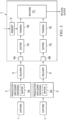
- an implementation of production unit 3 of Fig. 3 includes an encoding subsystem 3B which is coupled to receive video and audio data from unit 1.
- Subsystem 3B is configured to perform necessary encoding on the audio data (and optionally also on the video data) to generate frames of encoded audio data and optionally also frames of encoded video data.
- Re-authoring and multiplexing subsystem 3C of unit 3 (of Fig.
- subsystem 4 has an input 3D coupled to receive frames (e.g., audio frames, or audio frames and video frames) of data output from subsystem 3B, and a subsystem (a processor) coupled to the input and configured to re-author one or more of the frames output from subsystem 3B as needed to implement an embodiment of the invention, and to package (including by packetizing and multiplexing) the output of subsystem 3B (or frames of the output of subsystem 3B, and each re-authored frame that it generates to replace one of the frames output from subsystem 3B) as an AV bitstream in accordance with an embodiment of the invention.
- frames e.g., audio frames, or audio frames and video frames
- subsystem a processor
- the AV bitstream may be an MPEG-2 transport stream, whose audio content may be encoded in accordance with the AC-4 standard so that each audio elementary stream of the MPEG-2 transport stream comprises compressed audio data having AC-4 format.
- Buffer 3A is coupled to an output of subsystem 3C. Segments of the AV bitstream generated in subsystem 3C are buffered (stored in a non-transitory manner) in buffer 3A. Since the output of subsystem 3C of unit 3 is an AV bitstream including encoded audio content generated in unit 3 (and typically also video content packaged therewith), unit 3 is an example of an audio encoder.
- the AV bitstream generated by unit 3 is typically asserted (after buffering in buffer 3A) to a delivery system (e.g., delivery subsystem 5 of Fig. 3 ).
- Delivery subsystem 5 of FIG. 3 is configured to store and/or transmit (e.g., broadcast or deliver over a network) the transport bitstream generated by unit 3 (e.g., including each side mix thereof, if any side mix is generated).
- Capture unit 1', production unit 3' (including buffer 3A'), and delivery subsystem 5' perform the functions of (and are typically identical to) capture unit 1, production unit 3, and delivery subsystem 5, respectively. They may operate to generate (and deliver to input 8B of splicer 7) a second AV bitstream (e.g., a transport stream or other AV bitstream generated in accordance with an embodiment of the invention), to be spliced by splicer 7 with a first AV bitstream (e.g., a first transport stream or other AV bitstream) which is generated (e.g., in accordance with an embodiment of the invention) in production unit 3 and delivered to input 8A of splicer 7.
- a second AV bitstream e.g., a transport stream or other AV bitstream generated in accordance with an embodiment of the invention
- a first AV bitstream e.g., a first transport stream or other AV bitstream
- Splicer 7 of Fig. 3 includes inputs 8A and 8B.
- Input 8A is coupled to receive (e.g., read) at least one AV bitstream delivered to splicer 7 by delivery subsystem 5
- input 8B is coupled to receive (e.g., read) at least one AV bitstream delivered to splicer 7 by delivery subsystem 5'.
- Splicer 7 also includes buffer memory (buffer) 7A, buffer memory (buffer) 7D, parsing subsystem 7E, parsing subsystem 7B, and splicing subsystem 7C, coupled as shown in Fig. 3 .
- splicer 7 includes a memory 9 which is coupled (as shown) and configured to store an AV bitstream to be spliced.
- segments of at least one selected AV bitstream received at input 8A and/or 8B are buffered (stored in a non-transitory manner) in buffer 7A and/or buffer 7D.
- Buffered segments are asserted from buffer 7A to parsing subsystem 7B for parsing, and buffered segments are asserted from buffer 7D to parsing subsystem 7E.
- segments of at least one AV bitstream stored in memory 9 are asserted to parsing subsystem 7B for parsing (or segments of a selected sequence of AV bitstreams stored in memory 9 and/or received at input 8A are asserted from buffer 7A and/or memory 9 to parsing subsystem 7B for parsing).
- each AV bitstream to be parsed in subsystem 7B or 7E
- spliced in splicing subsystem 7C
- Splicer 7 (e.g., subsystems 7B and 7E and/or subsystem 7C thereof) is also coupled and configured to determine splice points in each AV bitstream to be spliced (e.g., a first transport stream delivered to splicer 7 by delivery subsystem 5 and/or a second transport stream delivered to splicer 7 by delivery subsystem 5', or a first transport stream stored in memory 9 and/or a second transport stream delivered to splicer 7 by delivery subsystem 5 or 5') and subsystem 7C is configured to splice the stream(s) to generate at least one spliced AV bitstream (the "spliced output" of Fig. 3 ).
- the splice omits a segment of a single AV bitstream
- splicer 7 is configured to determine an out point (i.e., a time) of the AV bitstream and an in point (a later time) of the AV bitstream, and to generate the spliced AV bitstream by concatenating the stream segment occurring prior to the out point with the stream segment occurring after the in point.
- the splice inserts a second AV bitstream between segments of a first AV bitstream (or between segments of first AV bitstream and a third AV bitstream), and splicer 7 is configured to determine an out point (i.e., time) of the first AV bitstream, an in point (a later time) of the first (or third) AV bitstream, an in point (i.e., a time) of the second AV bitstream, and an out point (a later time) of the second AV bitstream, and to generate a spliced AV bitstream which includes data of the first AV bitstream occurring prior to that stream's out point, data of the second AV bitstream occurring between that stream's in point and out point, and data of the first (or third) AV bitstream occurring after the first (or third) AV bitstream's in point.
- splicer 7 is configured to determine an out point (i.e., time) of the first AV bitstream, an in point (a later time) of the
- splicer 7 is configured to splice AV bitstream(s), at least one of which has been generated in accordance with an embodiment of the invention, in accordance with an embodiment of the inventive splicing method to generate the at least one spliced AV bitstream (the "spliced output" of Fig. 3 ).
- each splice point e.g.
- each such segment of audio content includes at least one audio P-frame subsequent to the audio I-frame
- each such segment of video content includes at least one video P-frame subsequent to the video I-frame.
- Some embodiments of the invention relates to a method for adapting (e.g., splicing or switching) an AV bitstream (e.g., an MPEG-2 transport stream) generated in accordance with any embodiment of the inventive method for generating an AV bitstream, thereby generating an adapted (e.g., spliced) AV bitstream (e.g., the output of an implementation of splicer 7 of Fig. 3 which is configured to perform such splicing method).
- an adapted (e.g., spliced) AV bitstream e.g., the output of an implementation of splicer 7 of Fig. 3 which is configured to perform such splicing method.
- the adapting is performed without modifying any encoded audio elementary stream of the AV bitstream (although in some cases, the adapter may need to perform re-multiplexing or other modification of the AV bitstream, in a manner which does not include modification of the data of any encoded audio elementary stream of the AV bitstream).
- a playback system would decode and render a spliced AV bitstream output from splicer 7.
- the playback system would typically include a subsystem for parsing the audio content and the video content of the AV bitstream, a subsystem configured to decode and render the audio content, and another subsystem configured to decode and render the video content.
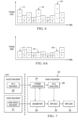
- Fig. 7 is a block diagram of a system for generating an AV bitstream having MPEG-DASH format in accordance with an embodiment of the invention.
- audio encoder 20 is coupled to receive audio data (e.g., from an embodiment of unit 1 of Fig. 4 or another capture unit)
- video encoder 21 is coupled to receive video data (e.g., from an embodiment of unit 1 of Fig. 4 or another capture unit).
- Encoder 20 is coupled and configured to perform audio encoding (e.g., AC-4 encoding) on the audio data to generate frames of encoded audio data, and to assert the frames to DASH packager 22.
- Encoder 21 is coupled and configured to perform video encoding (e.g., H265 video encoding) on the video data to generate frames of encoded video data, and to assert the frames to DASH packager 22.
- audio encoding e.g., AC-4 encoding
- video encoding e.g., H265 video encoding
- Packager 22 is an audio/video processing unit including I-frame conversion subsystem 24, segmenter 28, audio analyzer 26, MPEG-4 multiplexer 30, and MPD generation subsystem 32, coupled as shown.
- Segmenter 28 is a video processing subsystem (a processor) programmed (or otherwise configured) to determine segments of the video content (video frames) provided to segmenter 28 from encoder 21, and to provide the segments to MPEG-4 multiplexer 30. Typically, each of the segments starts with a video I-frame.
- a processor programmed (or otherwise configured) to determine segments of the video content (video frames) provided to segmenter 28 from encoder 21, and to provide the segments to MPEG-4 multiplexer 30.
- each of the segments starts with a video I-frame.
- I-frame conversion subsystem 24 is an audio processing subsystem (a processor) programmed (or otherwise configured) in accordance with an embodiment of the invention to perform re-authoring on at least one audio frame provided to subsystem 24 from encoder 20 (thereby generating at least one re-authored frame), and to pass through to audio analyzer 26 any of the frames (output from encoder 20) which it does not modify.
- subsystem 24 performs re-authoring so as to ensure that there is an audio I-frame (e.g., a re-authored I-frame) aligned with each video I-frame identified by segmenter 28.
- the audio content and metadata output from subsystem 24 i.e., original audio frames output from encoder 20 and each re-authored audio frame generated in subsystem 24) are provided to audio analyzer 26.
- the audio frames output from subsystem 24 are provided to audio analyzer 26.
- the audio frames include AC-4 encoded audio data.
- Analyzer 26 is configured to analyze metadata of the frames (e.g., AC-4 metadata) and, using results of the analysis, to generate any new metadata that it determines to be required for packaging (in MPEG-4 multiplexer 30) with the audio frames.
- the audio frames output from subsystem 24 and any new metadata generated in analyzer 26 are provided to MPEG-4 multiplexer 30.
- MPEG-4 multiplexer 30 is configured to multiplex the audio frames output from analyzer 26 (and any new metadata generated in analyzer 26) and the video frames output from segmenter 28, to generate multiplexed audio and video content (and metadata) in MPEG-4 file format for inclusion in an AV bitstream having MPEG-DASH format.
- MPD generation subsystem 32 is coupled to receive the multiplexed content output from multiplexer 30 and configured to generate an AV bitstream having MPEG-DASH format (and indicative of a MPEG-DASH Media Presentation) which includes the multiplexed content and metadata.
- the step of re-authoring an audio P-frame as a re-authored audio I-frame is performed as follows. At least one previous audio P-frame is copied into the P-frame (e.g., in an extension payload of the P-frame).
- the resulting re-authored I-frame includes encoded audio content of each previous P-frame
- the resulting re-authored I-frame includes a different set of metadata than the P-frame (i.e., it includes metadata of each previous P-frame as well as the original metadata of the P-frame).
- such copying of at least one previous P-frame into a P-frame may be performed using the AudioPreRoll() syntax element described in Section 5.5.6 ("Audio Pre-Roll") of the MPEG-H standard. It is contemplated that some implementations of subsystem 24 of Fig. 7 perform re-authoring of P-frames (as re-authored I-frames) in this way.
- the inventive method includes: (a) providing frames (e.g., transmitting, delivering, or otherwise providing the frames, or an input transport stream or other input AV bitstream including the frames, to an encoder (e.g., an embodiment of subsystem 3C of production unit 3 of Fig. 4 ) or an NBMP entity (e.g., an embodiment of NBMP entity 12 of Fig. 1 ), or generating the frames (e.g., in an embodiment of production unit 3 of Fig. 4 )), where each of the frames is indicative of audio content or video content, and where the frames include frames of a first decoding type; and (b) generating an AV bitstream (e.g., by operation of an embodiment of unit 3 of Fig.
- an encoder e.g., an embodiment of subsystem 3C of production unit 3 of Fig. 4
- an NBMP entity e.g., an embodiment of NBMP entity 12 of Fig. 1
- generating the frames e.g., in an embodiment of production unit 3
- the re-authored frame is an I-frame if said one of the frames of the first decoding type is a P-frame, or the re-authored frame is a P-frame if said one of the frames of the first decoding type is an I-frame
- the AV bitstream includes a segment of the content which includes the re-authored frame, and the segment of content starts with an I-frame and includes at least one P-frame following the I-frame.
- step (b) may include a step of re-authoring at least one audio P-frame so that the re-authored frame is an audio I-frame, or re-authoring at least one audio I-frame so that the re-authored frame is an audio P-frame, or re-authoring at least one video P-frame so that the re-authored frame is a video I-frame, or re-authoring at least one video I-frame so that the re-authored frame is a video P-frame.
- step (a) includes steps of: in a first system (e.g., an embodiment of production unit 3 of Fig. 4 or source 10 of Fig.
- step (b) is performed in the second system.
- At least one audio P-frame (including metadata and encoded audio data) is re-authored as an audio I-frame (including the same encoded audio data, and different metadata).
- the encoded audio data may be AC-4 encoded audio data.
- an audio P-frame is re-authored as a re-authored audio I-frame by replacing all or some of the audio P-frame's metadata (which may be in a header of the audio P-frame) with a different set of metadata (e.g., a different set of metadata consisting of or including metadata copied from, or generated by modifying metadata obtained from, a preceding audio I-frame) without modifying the encoded audio content of the frame (e.g., without modifying the encoded audio content by decoding such content and then re-encoding the decoded content).
- at least one audio I-frame (including metadata and encoded audio data) is re-authored as an audio P-frame (including the same encoded audio
- AC-4 encoded audio data of an audio P-frame (whose audio content is the AC-4 encoded audio data) can be decoded using information only from within the P-frame, although in some cases (i.e., when the encoding assumed that spectral extension metadata and/or coupling metadata from a prior I-frame would be available to decode the encoded audio data), upon playback the decoded audio will not sound exactly as originally intended at the time of the original encoding.
- the spectral extension metadata (and/or coupling metadata) from the prior I-frame typically would typically need to available for use (and typically would need to be used) during the decoding.
- An example of such spectral extension metadata is ASPX metadata
- an example of such coupling metadata is ACPL metadata.
- the re-authoring of an audio P-frame e.g., an audio P-frame whose audio content is AC-4 encoded audio data
- a re-authored audio I-frame is performed by copying metadata from a prior audio I-frame and inserting the copied metadata in place of all or some of the P-frame's original metadata.
- This type of re-authoring will typically be performed when the original encoding of the P-frame does not require that both specific metadata (e.g., spectral extension metadata and/or coupling metadata) from a prior I-frame, and corresponding metadata from the P-frame itself, be available in order to decode the P-frame's (and thus the re-authored I-frame's) encoded audio data (in a manner that will not result in unacceptable altering of the originally intended sound upon playback of the decoded audio).
- specific metadata e.g., spectral extension metadata and/or coupling metadata
- re-authoring of the P-frame in accordance with some embodiments of the invention includes steps of saving the specific metadata (e.g., spectral extension metadata and/or coupling metadata) from a prior audio I-frame, modifying the saved metadata (thereby generating modified metadata which is sufficient, when included in the re-authored I-frame, to enable decoding of the P-frame's (and thus the I-frame's) encoded audio data using information only from within the re-
- re-authoring of a video P-frame in accordance with some embodiments of the invention includes steps of saving specific metadata from a prior video I-frame, modifying the saved metadata (thereby generating modified metadata which is sufficient, when included in the re-authored I-frame, to enable decoding of the P-frame's (and thus the I-frame's) video content using information only from within the re-authored I-frame), e.g., using at least some of the original metadata of the P-frame, and inserting the modified metadata in place of all or some of the P-frame's original metadata.
- each P-frame (which may be re-authored in accordance with an embodiment of the invention) is performed in such a manner that metadata from another frame (e.g., a prior I-frame) can simply be copied from the other frame (without modifying the copied metadata) into the P-frame to replace original metadata of the P-frame (thereby re-authoring the P-frame as an I-frame) to enable decoding of the P-frame's (and thus the re-authored I-frame's) content (audio or video content) in a manner that does result in an unacceptable perceived difference (from what was intended at the time of encoding) upon playback of the decoded content.
- metadata from another frame e.g., a prior I-frame
- the re-authored I-frame's content audio or video content
- AC-4 encoding of audio data may be performed without including spectral extension metadata and/or coupling metadata in the resulting audio frames.
- This allows the re-authoring of an audio P-frame (one which has been generated as in the example), thereby generating a re-authored audio I-frame (without modifying the P-frame's audio content), by copying metadata from a prior audio I-frame and inserting the copied metadata in place of all or some of the P-frame's original metadata.
- the need to modify (re-encode) metadata from a prior I-frame is circumvented in the encoder by not exploiting inter-channel dependencies at the cost of a slightly higher bitrate.
- the inventive method includes steps of: (a) generating (e.g., in a conventional manner) audio I-frames and audio P-frames indicative of content (e.g., in subsystem 3B of an example of production unit 3 of Fig. 4 ); and (b) generating an AV bitstream (e.g., in subsystem 3C of an embodiment of production unit 3 of Fig.
- Steps (a) and (b) may be performed in an audio encoder (e.g., a production unit including or implementing an audio encoder), including by operating the audio encoder to perform step (a).
- an audio encoder e.g., a production unit including or implementing an audio encoder
- step (a) is performed in an audio encoder (e.g., in subsystem 3B, implemented as an AC-4 encoder, of production unit 3 of Fig. 4 ) which generates the audio I-frames and the audio P-frames
- step (b) includes re-authoring of at least one of the audio P-frames (corresponding to a time at which an audio I-frame is needed) as the re-authored audio I-frame
- step (b) also includes a step of including the re-authored audio I-frame in the AV bitstream instead of said one of the audio P-frames.
- Method 1 include steps of: in a first system (e.g., a production unit or an encoder, for example, an embodiment of production unit 3 of Fig. 4 , or the system of Fig. 7 ), generating an input AV bitstream which includes the audio I-frames and the audio P-frames generated in step (a); delivering (e.g., transmitting) the input AV bitstream to a second system (e.g., an embodiment of NBMP entity 12 of Fig. 1 ); and performing step (b) in the second system.
- a first system e.g., a production unit or an encoder, for example, an embodiment of production unit 3 of Fig. 4 , or the system of Fig. 7
- delivering e.g., transmitting
- the input AV bitstream e.g., a second system
- the step of generating the input AV bitstream includes packaging of encoded audio content (indicated by the audio I-frames and the audio P-frames generated in step (a)) and video content together to generate the input AV bitstream, and the AV bitstream generated in step (b) includes said encoded audio content packaged with said video content.
- At least one audio frame of the AV bitstream is a re-authored audio I-frame (but no video frame of the AV bitstream is a re-authored frame), and a segment of audio content of the AV bitstream starts with the re-authored audio I-frame (aligned with a video I-frame of a corresponding segment of video content of the AV bitstream) and includes at least one subsequent audio P-frame.
- the inventive method includes steps of: (a) generating (e.g., in a conventional manner) audio I-frames indicative of content (e.g., in subsystem 3B of an embodiment of production unit 3 of Fig. 4 ); and (b) generating (e.g., in subsystem 3C of an embodiment of production unit 3 of Fig.
- Steps (a) and (b) may be performed in an audio encoder (e.g., a production unit including or implementing an audio encoder), including by operating the audio encoder to perform step (a).
- an audio encoder e.g., a production unit including or implementing an audio encoder
- step (a) is performed in an audio encoder (e.g., in subsystem 3B, implemented as an AC-4 encoder, of production unit 3 of Fig. 4 ) which generates the audio I-frames
- step (b) includes re-authoring each of the audio I-frames which corresponds to a time other than a segment boundary (and thus does not occur at a segment boundary), thereby determining at least one re-authored audio P-frame
- the step of generating the AV bitstream includes a step of including the at least one re-authored audio P-frame in the AV bitstream.
- Method 2 include steps of: in a first system (e.g., a production unit or encoder, for example, an embodiment of production unit 3 of Fig. 4 , or the system of Fig. 7 ), generating an input AV bitstream which includes the audio I-frames generated in step (a); delivering (e.g., transmitting) the input AV bitstream to a second system (e.g., an embodiment of NBMP entity 12 of Fig. 1 ); and performing step (b) in the second system.
- a first system e.g., a production unit or encoder, for example, an embodiment of production unit 3 of Fig. 4 , or the system of Fig. 7
- delivering e.g., transmitting
- the input AV bitstream e.g., a second system
- step (b) in the second system.
- the step of generating the input AV bitstream includes packaging of encoded audio content (indicated by the audio I-frames generated in step (a)) and video content together to generate the input AV bitstream, and the AV bitstream generated in step (b) includes said encoded audio content packaged with said video content.
- at least one audio frame (but no video frame) of the AV bitstream has been re-authored (as a re-authored audio P-frame) so that a segment of audio content which includes the re-authored audio P-frame starts with an audio I-frame (aligned with a video I-frame of a corresponding segment of video content) and includes at least one re-authored audio P-frame after the audio I-frame.
- the inventive AV bitstream generation method includes generation (or provision) of hybrid frames that allow for inclusion in the AV bitstream of a P-frame including by selecting (or otherwise using) a data "chunk.”
- a data "chunk” may be or include data of one of the hybrid frames, or data of at least one sequence (e.g., two substreams) of frames indicative of the hybrid frames, or a predefined part of said at least one sequence (e.g., in the case of frames including AC-4 encoded audio data, an entire substream may comprise a whole data chunk).
- Method 3 includes generating the hybrid frames so as to ensure that adjacent frames of the AV bitstream match.
- an encoder generates the hybrid frames (e.g., streams indicative of the hybrid frames) without double processing, as much of the processing is required just once.
- a hybrid frame contains one instance of common data for a P-frame and an I-frame.
- a packager may synthesize an I-frame or a P-frame from at least one chunk of data of a hybrid frame (or of a sequence of frames indicative of hybrid frames including the hybrid frame), e.g. where the chunk does not comprise an entire I-frame or P-frame.
- Fig. 6 is a diagram of a set of ten hybrid frames
- Fig. 6A is a diagram of another set of ten such hybrid frames.
- hybrid frames e.g., those of Fig. 6 , or those of Fig. 6A
- an encoder e.g., audio encoder 20 of Fig. 7
- a packager e.g., an implementation of packager 22 of Fig. 7
- the AV bitstream including by selecting at least one P-frame of at least one of the hybrid frames.
- each hybrid frame may comprise:
- hybrid frames e.g., of the type shown in the Fig. 6 example, or the Fig. 6A example
- the packager or other AV bitstream generation system, which may be a subsystem of another system determines that an I-frame should be included at one time (in the AV bitstream being generated)
- it may select an I-frame from one hybrid frame (which has been previously generated by the encoder and is available for selection) corresponding to the relevant time.
- the system may either: select a P-frame from one hybrid frame corresponding to the relevant time (if the hybrid frame includes a P-frame); or re-author an I-frame of such hybrid frame as a re-authored P-frame.
- the re-authoring may include copying metadata from another hybrid frame, or modification of metadata obtained from a preceding frame.
- an encoder (or other system or device) which generates hybrid frames including AC-4 encoded audio (e.g., hybrid frames of an AC-4 encoded audio substream) in accordance with Method 3
- the encoder may include metadata of the following types in each hybrid frame (or at least some hybrid frames):
- an encoder which generates hybrid frames including AC-4 encoded audio (e.g., hybrid frames of an AC-4 encoded audio substream) in accordance with Method 3, can produce both frame types (e.g., a stream of I-frame and stream of corresponding P-frames) in a single process.
- both inter-frame coding and intra-frame coding is generated from the same set of data.
- Some components e.g., conventional components are configured to generate the two sets of data (a set of I-frames and a set of corresponding P-frames) and decide later which uses less bits.
- Intra-frame coded audio is always included in a hybrid frame which includes an I-frame.
- the bitrate and buffer control may also run just once (when generating a stream of P-frames that allows inter-frame coding). The results may be used also for the all I-frame stream that is also generated. In order to prevent audio quality drops, the overhead of the I-frames may be considered when determining the target bits for the ASF coding of the P-frames.
- a sequence of hybrid frames (e.g., determined by a sequence of I-frames and a sequence of corresponding P-frames) generated for implementing Method 3 may have an AC-4 Metadata TOC (table of contents) format or some other wrapper that combines I-frames and corresponding P-frames in a single stream.
- AC-4 Metadata TOC table of contents
- each frame in a sequence of hybrid frames contains a header, which may be independent of the underlying media format, and which contains a description how to generate an I-frame or a P-frame from the data provided in such hybrid frame.
- the description may contain one or multiple commands for synthesizing an I-frame by copying ranges of data or by deleting ranges of data from the hybrid frame.
- the description may also contain one or multiple commands for synthesizing a P-frame by copying ranges of data or by deleting ranges of data from the hybrid frame.
- the packager can then synthesize an I-frame or a P-frame without the knowledge of the underlying media format by following the instruction in the header of such a hybrid frame. For example, a Hint-Track in an ISOBMFF can be used.
- an encoder generates a stream of P-frames and a stream of corresponding I-frames at the same time (so that both streams together determine a sequence of hybrid frames). If a buffer model requirement needs to be met, then the frames of each pair of corresponding frames (each I-frame and the P-frame corresponding thereto) have equal frame size.
- a multiplexer chooses a frame from an all I-frame stream (output from the encoder) whenever an I-frame is required. It may choose a P-frame (e.g. from an all P-stream from the encoder) if an I-frame is not required for multiplexing.
- a benefit of a frame replacement implementation is that the multiplexer has lowest complexity. A disadvantage is double bandwidth on the link from the encoder to the multiplexer.
- the hybrid frames available to the multiplexer include I-frames, corresponding P-frames ("I-frame replacement" chunks of data) and instructions for I-frame replacement (selection of one or more P-frames in place of corresponding I-frame(s)).
- I-frame replacement selection of one or more P-frames in place of corresponding I-frame(s)
- a method for generating an AV bitstream (which implements Method 3) includes steps of:
- Step (a) may include generation (e.g., in an implementation of encoder 20 of Fig. 7 ) of a first sequence of I-frames (e.g., an all I-frame stream) indicative of an encoded version of content and a second sequence of P-frames (e.g., an all P-frame stream) indicative of a differently encoded version of the content, and wherein at least one said hybrid frame includes one of the I-frames of the first sequence and one of the P-frames of the second sequence.
- I-frames e.g., an all I-frame stream
- P-frames e.g., an all P-frame stream
- a method for generating an AV bitstream (which implements Method 3) includes steps of:
- Some examples of the inventive method of generating an AV bitstream are implemented so that the AV bitstream satisfies at least one currently underlying network constraint or other constraint (e.g., generation of the AV bitstream includes re-authoring of at least one frame of an input bitstream, and is performed such that the AV bitstream satisfies at least one currently underlying network constraint on the input bitstream).
- generation of the AV bitstream includes re-authoring of at least one frame of an input bitstream, and is performed such that the AV bitstream satisfies at least one currently underlying network constraint on the input bitstream.
- NBMP entity e.g., NBMP entity 12 of Fig.
- the NBMP entity may be implemented to insert I-frames in or remove I-frames from the AV bitstream in a manner depending on network and/or other constraints.
- the network constraints may be indicated by control bits delivered (e.g., over the Fig. 1 network) to the NBMP entity (e.g., NBMP entity 12 of Fig. 1 ) from another NBMP entity (e.g., NBMP entity 14 of Fig. 1 ). Examples of such constraints include but are not limited to available bitrate, needed tune-in time into a program, and/or segment duration of an underlying MPEG-DASH or MMT AV bitstream.
- R 96 kbits/second
- adaptation points e.g., splice points
- the adaptation splice points are determined by occurrence, once every 2 seconds or at some other rate, of a video I-frame and a corresponding audio I-frame of the input AV bitstream.
- An embodiment of the inventive method is performed (e.g., by operation of NBMP entity 12 of Fig. 1 ) to generate an AV bitstream in response to the input AV bitstream.
- the available bitrate for delivery of the generated AV bitstream is the bitrate, R (e.g., as indicated by bits delivered to NBMP entity 12 from NBMP entity 14 of Fig. 1 ), and if generation of the AV bitstream includes re-authoring of P-frames(s) of the input AV bitstream to insert a new adaptation point in the generated AV bitstream (e.g., by re-authoring a P-frame of the input stream as an I-frame having more metadata bits than did the P-frame, and including the I-frame in the generated stream in place of the P-frame), such insertion of a new adaptation point could undesirably increase the bitrate required for delivery of the generated AV bitstream unless compensatory action is taken.
- generation of the AV bitstream (e.g., by operation of NBMP entity 12 of Fig. 1 ) also includes steps of re-authoring of at least one I-frame of the input AV bitstream as a P-frame (having fewer metadata bits than did the I-frame) and including each re-authored P-frame in the generated AV bitstream in place of each I-frame, thus reducing the bitrate required to deliver the generated AV bitstream so as not to exceed the available bitrate, R.
- an input AV bitstream (e.g., an input AV bitstream generated by source 10 of Fig. 1 ) is indicative of an audio/video program, and includes adaptation points which occur a first rate (e.g., the adaptation points are determined by occurrence, once every 100 milliseconds, of a video I-frame and a corresponding audio I-frame of the input AV bitstream). Since the adaptation points are available times at which playback of the program may begin, they correspond to "tune-in" times (rewind/fast forward points) which a consumer might select (e.g., by operating playback device 16 of Fig. 1 ) in order to begin playback of the program.
- a first rate e.g., the adaptation points are determined by occurrence, once every 100 milliseconds, of a video I-frame and a corresponding audio I-frame of the input AV bitstream. Since the adaptation points are available times at which playback of the program may begin, they correspond to "tune-in" times (rewind/fast forward points) which
- the generated AV bitstream comprises adaptation points (tune-in times) which occur at a predetermined rate (e.g., once every 50 milliseconds) greater than the first rate (i.e., so that the generated AV bitstream has more adaptation points than the input AV bitstream) or predetermined rate (e.g., once every 200 milliseconds) less than the first rate (i.e., so that the generated AV bitstream has fewer adaptation points than the input AV bitstream), an embodiment of the inventive method is performed (e.g., by operation of NBMP entity 12 of Fig.
- Each of units 3 and 7 of Fig. 3 , unit 3 of Fig. 4 , and NBMP entity 12 and playback device 16 of Fig. 1 may be implemented as a hardware system configured, or as a processor programmed with software or firmware (or otherwise configured), to perform an embodiment of the inventive method.
- unit 3 of Fig. 3 includes at least one buffer 3A
- unit 3' of Fig. 3 includes at least one buffer 3A'
- splicer 7 of Fig. 3 includes at least one buffer (7A and/or 7D)
- each of NBMP entity 12 and playback device 16 of Fig. 1 includes at least one buffer.
- each of such buffers is a buffer memory coupled to receive a sequence of packets of a AV bitstream generated by (or provided to) the device including the buffer memory, and in operation the buffer memory stores (e.g., in a non-transitory manner) at least one segment of the AV bitstream.
- a sequence of segments of the AV bitstream is asserted from buffer 3A to delivery subsystem 5 (or from buffer 3A' to delivery subsystem 5'.
- a sequence of segments of an AV bitstream to be spliced is asserted from buffer 7A to parsing subsystem 7B of splicer 7, and from buffer 7D to parsing subsystem 7E of splicer 7.
- Unit 3 of Fig. 3 (of Fig. 4 ), and/or splicer 7 of Fig. 3 , and/or NBMP entity 12 and/or device 16 of Fig. 1 (or any component or element thereof) may be implemented as one or more processes and/or one or more circuits (e.g., ASICs, FPGAs, or other integrated circuits), in hardware, software, or a combination of hardware and software.
- circuits e.g., ASICs, FPGAs, or other integrated circuits
- a processing unit configured to perform any embodiment of the inventive method for generation or adaptation (e.g., splicing or switching) of an AV bitstream.
- the AVPU may be an NBMP entity (e.g., NBMP entity 12 of Fig. 1 ) or a production unit or audio encoder (e.g., unit 3 of Fig. 3 or Fig. 4 ).
- the AVPU e.g., an NBMP entity
- the AVPU may be an adapter (e.g., a splicer) configured to perform any embodiment of the inventive AV bitstream adaptation method (e.g., an appropriately configured embodiment of splicer 7 of Fig. 3 ).
- the AVPU (e.g., unit 3 or splicer 7 of Fig. 3 ) includes at least one buffer memory (e.g., buffer 3A in unit 3 of Fig.3 , or buffer 7A or 7D of splicer 7 of Fig. 3 , or a buffer memory in source 10, or NBMP entity 12, or device 16 of Fig. 1 ) which stores (e.g., in a non-transitory manner) at least one segment of a AV bitstream which has been generated by any embodiment of the inventive method.
- buffer memory e.g., buffer 3A in unit 3 of Fig.3 , or buffer 7A or 7D of splicer 7 of Fig. 3 , or a buffer memory in source 10, or NBMP entity 12, or device 16 of Fig. 1
- Examples of AVPUs include, but are not limited to encoders (e.g., transcoders), NBMP entities (e.g., NBMP entities configured to generate and/or perform adaptation on an AV bitstream), decoders (e.g., decoders configured to decode content of an AV bitstream, and/or to perform adaptation (e.g., splicing) on an AV bitstream to generate an adapted (e.g., spliced) AV bitstream and to decode content of the adapted AV bitstream), codecs, AV bitstream adapters (e.g., splicers), pre-processing systems (pre-processors), post-processing systems (post-processors), AV bitstream processing systems, and combinations of such elements.
- encoders e.g., transcoders
- NBMP entities e.g., NBMP entities configured to generate and/or perform adaptation on an AV bitstream
- decoders e.g.
- An example of the invention relates to a system or device configured (e.g., programmed) to perform any embodiment of the inventive method, and a computer readable medium (e.g., a disc) which stores code (e.g., in a non-transitory manner) for implementing any embodiment of the inventive method or steps thereof.
- the inventive system can be or include a programmable general purpose processor, digital signal processor, or microprocessor, programmed with software or firmware and/or otherwise configured to perform any of a variety of operations on data, including an embodiment of the inventive method or steps thereof.
- a general purpose processor may be or include a computer system including an input device, a memory, and processing circuitry programmed (and/or otherwise configured) to perform an embodiment of the inventive method (or steps thereof) in response to data asserted thereto.
- the inventive apparatus is an audio encoder (e.g., an AC-4 encoder) configured to perform an embodiment of the inventive method.
- the inventive apparatus is an NBMP entity (e.g., an MPEG NBMP entity, which may be or may be included in a CDN Server) programmed or otherwise configured to perform an embodiment of the inventive method (e.g., to insert I-frames in or remove I-Frames from a transport stream, optionally in a manner depending on network and/or other constraints).
- Examples of the present invention may be implemented in hardware, firmware, or software, or a combination thereof (e.g., as a programmable logic array).
- unit 3 and/or splicer 7 of Fig. 3 , or bitstream source 10 and/or NBMP entity 12 of Fig. 1 may be implemented in appropriately programmed (or otherwise configured) hardware or firmware, e.g., as a programmed general purpose processor, digital signal processor, or microprocessor.
- the algorithms or processes included as part of the embodiments of the invention are not inherently related to any particular computer or other apparatus.
- various general-purpose machines may be used with programs written in accordance with the teachings herein, or it may be more convenient to construct more specialized apparatus (e.g., integrated circuits) to perform the required method steps.
- the embodiments of the invention may be implemented in one or more computer programs executing on one or more programmable computer systems (e.g., an implementation of all or some of elements of unit 3 and/or splicer 7 of Fig. 3 , or source 10 and/or NBMP entity 12 of Fig. 1 ), each comprising at least one processor, at least one data storage system (including volatile and non-volatile memory and/or storage elements), at least one input device or port, and at least one output device or port.
- Program code is applied to input data to perform the functions described herein and generate output information.
- the output information is applied to one or more output devices, in known fashion.
- Each such program may be implemented in any desired computer language (including machine, assembly, or high level procedural, logical, or object oriented programming languages) to communicate with a computer system.
- the language may be a compiled or interpreted language.
- various functions and steps of embodiments of the invention may be implemented by multithreaded software instruction sequences running in suitable digital signal processing hardware, in which case the various devices, steps, and functions of the embodiments may correspond to portions of the software instructions.
- Each such computer program is preferably stored on or downloaded to a storage media or device (e.g., solid state memory or media, or magnetic or optical media) readable by a general or special purpose programmable computer, for configuring and operating the computer when the storage media or device is read by the computer system to perform the procedures described herein.
- a storage media or device e.g., solid state memory or media, or magnetic or optical media
- the inventive system may also be implemented as a computer-readable storage medium, configured with (i.e., storing) a computer program, where the storage medium so configured causes a computer system to operate in a specific and predefined manner to perform the functions described herein.
Landscapes
- Engineering & Computer Science (AREA)
- Multimedia (AREA)
- Signal Processing (AREA)
- Computer Networks & Wireless Communication (AREA)
- Computer Security & Cryptography (AREA)
- Two-Way Televisions, Distribution Of Moving Picture Or The Like (AREA)
- Compression Or Coding Systems Of Tv Signals (AREA)
Description
- This document pertains to audio and video signal processing, and more particularly, to the generation and adaptation of bitstreams (e.g., bitstreams or bitstream segments used in adaptive streaming formats or methods/protocols, or transport streams) which include video frames (of encoded video data and optionally also metadata) and audio frames (of encoded audio data and optionally also metadata). Some embodiments of the invention generate or adapt (e.g., align) bitstream segments (e.g., having MPEG-2 transport stream format, or format in accordance with MMT or MPEG-DASH or another streaming method/protocol, or another adaptive streaming format, or another standard compatible format), which include encoded audio data (e.g., encoded audio data in a format compliant or compatible with the AC-4, or MPEG-D USAC, or MPEG-H Audio standard).
- In adaptive streaming, data having (or used in) an adaptive streaming format may comprise separate bitstreams (or bitstream segments) for each video representation and audio representation. Thus, the data may not consist of a single bitstream (e.g., a single transport stream), and instead may include two or more separate bitstreams. Herein, the expression "AV bitstream" (defined below) is used to denote a signal (or signals) indicative of a bitstream, or bitstream segment, or two or more bitstream segments (e.g., a transport stream, or a bitstream segment used in an adaptive streaming format), said bitstream (or bitstream segment(s)) including video data and/or encoded audio data, and typically also metadata.
- An AV bitstream (e.g., a transport stream, or bitstream segment used in an adaptive streaming format or streaming method or protocol,) may be indicative of at least one audio/video (audio and/or video) program ("program"), and may include (for each program indicated thereby) frames of video data (which determine at least one video elementary stream) and frames of encoded audio data (which determine at least one audio elementary stream) corresponding to the video data. The frames of video data may include or consist of I-frames of video data (video I-frames) and P-frames of video data (video P-frames), and the frames of encoded audio data may include or consist of I-frames of encoded audio data (audio I-frames) and P-frames of encoded audio data (audio P-frames).
- Herein, including in the claims, "I-frame" denotes an independently decodable frame which can be decoded using information only from within itself. Herein, including in the claims, a frame which is not an I-frame (e.g., a predictively encoded frame) is referred to as a "P-frame." In an AV bitstream, a P-frame typically requires information from a previous I-frame in order to be decoded. An I-frame (or a P-frame) may include video data (and typically also metadata), and such a frame is sometimes referred to herein as a video frame or a frame of video data. An I-frame (or a P-frame) may include encoded audio data (and typically also metadata), and such a frame is sometimes referred to herein as an audio frame or a frame of audio data.
- Many modern audio codecs (for example, AC-4 audio, MPEG-H audio and MPEG-D USAC audio codecs) and video codecs make use of the concept of independently decodable frames ("I-frames" as defined hereinabove) and other frames (e.g., non-independently decodable frames which are "P-frames" as defined hereinabove), so that bitstreams including audio and/or video content encoded by such codecs typically include I-frames and P-frames. Many packaged media delivery formats or protocols (for example, MPEG-DASH (Dynamic Adaptive Streaming over HTTP, published at ISO/IEC 23009-1:2012), HLS (Apple HTTP Live Streaming), MMT (MPEG Media Transport), and the MPEG-2 transport stream format) require that segments of audio (or video) content start with an I-frame to enable seamless splicing (or switching) at segment boundaries, and can benefit from audio and video segment alignment. Since an audio encoder and a video encoder are typically run independently, and both are allowed to make decisions about when to create I-frames, without knowledge of the other, it is typically very difficult to get alignment between audio I-frames and video I-frames.
-
US 2016/366452 discloses a method in which video and audio are synchronized such that for each program of the transport stream, for each video I-frame in a video elementary stream of the program, there is at least one audio I -frame synchronized with the video I - frame in an audio elementary stream of the program. -
US 2013/208811 discloses a method for transmitting compressed digital video data in a manner that allows a downstream network device to readily combine multiple compressed video data using network packet level manipulation without decompressing the compressed video data. - The invention is defined in the appended claims.
-
-
FIG. 1 is a block diagram of a content delivery network, in which NBMP entity 12 (and optionally also at least one other element) is configured in accordance with an embodiment of the invention. -
FIG. 2 is a diagram of an example of an MPEG-2 transport stream. -
FIG. 3 is a block diagram of an embodiment of a system, in which one or more of the elements of the system may be configured. -
FIG. 4 is a block diagram of a system including an implementation ofproduction unit 3 ofFig. 3 , andcapture unit 1 ofFig. 3 . -
FIG. 5 is a diagram of a segment of an AV bitstream having MPEG-DASH format. -
FIG. 6 is a diagram of hybrid frames generated in accordance with the invention. -
FIG. 6A is a diagram of hybrid frames. -
FIG. 7 is a block diagram of a system for generating an AV bitstream having MPEG-DASH format. - Throughout this disclosure, including in the claims, the expression performing an operation "on" a signal or data (e.g., filtering, scaling, transforming, or applying gain to, the signal or data) is used in a broad sense to denote performing the operation directly on the signal or data, or on a processed version of the signal or data (e.g., on a version of the signal that has undergone preliminary filtering or pre-processing prior to performance of the operation thereon).
- Throughout this disclosure including in the claims, the expression "system" is used in a broad sense to denote a device, system, or subsystem. For example, a subsystem that implements encoding may be referred to as an encoder system, and a system including such a subsystem (e.g., a system that generates X output signals in response to multiple inputs, in which the subsystem generates M of the inputs and the other X - M inputs are received from an external source) may also be referred to as an encoder system.
- Throughout this disclosure including in the claims, the expression "AV bitstream" denotes a signal (or signals) indicative of a bitstream, or bitstream segment, or two or more bitstream segments (e.g., a transport stream, or a bitstream segment used in an adaptive streaming format), said bitstream (or bitstream segment(s)) including video data and/or encoded audio data, and typically also metadata. The expression "AV data" is sometimes used herein to denote such video data and/or such encoded audio data. Typically, a transport stream is a signal indicative of a serial bitstream including a sequence of segments (e.g., packets) of encoded audio data, segments (e.g., packets) of video data, and segments (e.g., headers or other segments) of metadata (e.g., including metadata which supports splicing). An AV bitstream (e.g., a transport stream) may be indicative of multiple programs, and each program may include multiple elementary streams (e.g., a video elementary stream, and two or more audio elementary streams). Typically, each elementary stream of a transport stream has an associated descriptor that includes information related to the elementary stream.
- Throughout this disclosure including in the claims, the term "processor" is used in a broad sense to denote a system or device programmable or otherwise configurable (e.g., with software or firmware) to perform operations on data (e.g., audio, and/or video or other image data). Examples of processors include a field-programmable gate array (or other configurable integrated circuit or chip set), a digital signal processor programmed and/or otherwise configured to perform pipelined processing on audio or other sound data, a programmable general purpose processor or computer, and a programmable microprocessor chip or chip set.
- Throughout this disclosure including in the claims, the expressions "audio/video processing unit" (or "AV processing unit" or "AVPU") and "AV processor" are used interchangeably, and in a broad sense, to denote a system configured to process an AV bitstream (or video data and/or encoded audio data of an AV bitstream). Examples of AV processing units include, but are not limited to encoders (e.g., transcoders), decoders, codecs, NBMP entities, splicers, pre-processing systems, post-processing systems, and bitstream processing systems (sometimes referred to as bitstream processing tools). In one example, an AV processing unit is a splicer configured to determine an out point (i.e., time) of a first transport stream and an in point (i.e., another time) of a second transport stream (which can be the first transport stream, or a different transport stream which is not the first transport stream), and to generate a spliced transport stream (e.g., a spliced transport stream which includes data of the first bitstream occurring prior to the out point and data of the second bitstream occurring after the in point).
- Throughout this disclosure including in the claims, the expression "metadata" refers to separate and different data from corresponding audio data and/or video data (audio and/or video content of a bitstream which also includes metadata). Metadata is associated with audio and/or video data ("AV" data), and indicates at least one feature or characteristic of the AV data (e.g., what type(s) of processing have already been performed, or should be performed, on the AV data, or the trajectory of an object indicated by audio data of the AV data). The association of the metadata with the AV data is time-synchronous. Thus, present (most recently received or updated) metadata may indicate that the corresponding AV data contemporaneously has an indicated feature and/or comprises the results of an indicated type of audio and/or video data processing.
- Throughout this disclosure including in the claims, the term "couples" or "coupled" is used to mean either a direct or indirect connection. Thus, if a first device couples to a second device, that connection may be through a direct connection, or through an indirect connection via other devices and connections.
- Some examples of the invention are methods and systems for generating an AV bitstream that includes I-frames of video data (video I-frames) synchronized with I-frames of encoded audio data (audio I-frames), where the AV bitstream provides a solution to the problem of alignment between segments of elementary streams (e.g., a video elementary stream, and one or more corresponding audio elementary streams) of the AV bitstream. For example, each of NBMP
entity 12 of the content delivery network ofFig. 1 , the system ofFig. 7 , andproduction unit 3 ofFig. 4 , is a system configured in accordance with an embodiment of the invention to generate such an AV bitstream. - Independently decodable frames which are generated in accordance with some video and audio codec formats, and which are I-frames as defined above, may not be officially defined (in the formal specification of the relevant codec format) or commonly referred to as "I-frames" (and may instead be referred to by other names, e.g., as IDR-frames, IPF-Frames or IF-Frames). In some codecs, every video frame and/or every audio frame is independently decodable, and each such frame is an "I-frame."
- In some cases, encoded audio data of an audio P-frame (e.g., an audio P-frame whose audio content is AC-4 encoded audio data) can be decoded using information only from within the P-frame, although upon playback the decoded audio will, in some cases, not sound exactly as originally intended at the time of the original encoding. In some cases, in order for a decoded version of the P-frame's audio content to sound as originally intended upon playback, metadata from a prior I-frame (e.g., dynamic range control metadata, downmix metadata, loudness metadata, spectral extension metadata or coupling metadata) typically would need to available for use (and typically would need to be used) during the decoding.
- In some cases a P-frame may refer to data transmitted in previous frames for correct decoding. Video P-frames use previous data together with transmitted data to generate a predicted version of a picture of that video frame and only transmit differences to that picture. Audio P-frames may use differential coding of parameters that can be predicted from previous frames, e.g. use differential coding of spectral envelopes as used in ASPX of AC-4 or panning data of ACPL.
- Herein, each of the terms "adapting" (of an AV bitstream, e.g., a transport stream, or another bitstream), and performing "adaptation" (on a bitstream), is used in a broad sense to denote performing any operation on the bitstream which includes accessing content indicated by the bitstream (e.g., content of one or more elementary streams of a program indicated by the bitstream), where the content occurs at (corresponds to) a specific time (e.g., a time of an I-frame included in the bitstream in accordance with an embodiment of the invention). Examples of adaptation of a bitstream include (but are not limited to): adaptive bitrate switching (e.g., switching, at a specific time in a bitstream, between different bitrate versions of content indicated by the bitstream); alignment of elementary streams (audio elementary streams, or video and audio elementary streams) of a program of (indicated by) a bitstream; splicing, at a specific time, a program indicated by a bitstream with another program (e.g., indicated by another bitstream); concatenating, at a specific time, a program indicated by a bitstream (or a segment thereof) with another program; or initiating playback, at a specific time, of a program indicated by a bitstream (or a segment thereof). The expression "adaptation point" (of an AV bitstream, e.g., a transport stream, or another bitstream) is used in a broad sense to denote a time in the bitstream (e.g., as indicated by a time stamp value) at which an I-frame occurs (or a video I-frame and at least one corresponding audio I-frame occur), so that adaptation (e.g., switching or splicing) may be performed on the bitstream at the adaptation point.
- An AV bitstream (e.g., a transport stream) may be indicative of multiple programs. Each program may include multiple elementary streams (e.g., a video elementary stream, and one or more encoded audio elementary streams). An elementary stream may be a video elementary stream (including video data), or an audio elementary stream (e.g., corresponding to a video elementary stream) including encoded audio data (e.g., encoded audio data output from an audio encoder).
- Although the methods and systems according to the embodiments of the invention are not limited to generation and/or splicing (or other adaptation) of transport streams having MPEG-2 transport stream format (or AV bitstreams having format in accordance with MPEG-DASH or MMT, or any other specific format), or including encoded audio data of any specific format, some embodiments are methods and systems for generating and/or adapting (e.g., splicing) MPEG-2 transport streams (or AV bitstreams having formats in accordance with MPEG-DASH or MMT) whose audio frames include encoded audio data in the format known as AC-4 (or the MPEG-D USAC or MPEG-H Audio format). Transport streams having other formats (or AV bitstreams which are not transport streams, e.g., bitstream segments having an adaptive streaming format or used in a streaming method or protocol) may be generated and/or adapted (e.g., switched or spliced) in accordance with other embodiments of the invention, if each such AV bitstream (e.g., bitstream segment) includes P-frames and I-frames of video data and/or P-frames and I-frames of encoded audio data. Frames (e.g., audio frames) of an AV bitstream (e.g., transport stream) generated and/or adapted (e.g., spliced) in accordance with a class of typical embodiments of the invention typically also include metadata.
- The adaptive streaming protocol known as MPEG-DASH allows streaming of media content over the Internet using HTTP web servers. In accordance with MPEG-DASH, media content of a Media Presentation (which also includes metadata) is broken into a sequence of segments. The segments are organized as representations (each representation including a sequence of segments, e.g., a sequence including the two "MPEG-DASH Segments" indicated in
Fig. 5 ), adaptations (each adaptation including a sequence of representations), and periods (each period including a sequence of adaptations). A Media Presentation can include many periods. - Although segments of a Media Presentation (can contain any media data, the MPEG-DASH specification provides guidance and formats for use with two types of media data containers: ISO base media file format (e.g., MPEG-4 file format) or the MPEG-2 Transport Stream format. Thus, in some cases, media content (and metadata) having MPEG-DASH format may be delivered as a sequence of MPEG-4 files, and not as a single bitstream.
- MPEG-DASH is audio/video codec agnostic. Thus, media content of an MPEG-DASH Media Presentation could include encoded audio content which has been encoded in accordance with one audio encoding format (e.g., AC-4 encoded audio content), and additional encoded audio content which has been encoded in accordance with another audio encoding format, and video content which has been encoded in accordance with one video encoding format, and additional video content which has been encoded in accordance with another video encoding format.
- Data having MPEG-DASH format can include one or more representations (e.g., versions having at different resolutions or bit rates) of a multimedia file. Selection among such representations can be implemented based on network conditions, device capabilities, and user preferences, thus enabling adaptive bitrate streaming.
-
Fig. 5 is a diagram of an example of one segment of an AV bitstream (as defined herein) which has the MPEG-DASH adaptive streaming format. Although the AV bitstream (or the segment thereof shown inFig. 5 ) may not be delivered as a single bitstream (e.g., having a single bitrate), the AV bitstream (and the segment thereof shown inFig. 5 ) are examples of an "AV bitstream" as defined herein. The media content of the segment shown inFig. 5 includes encoded audio data which is encoded in accordance with the AC-4 encoding standard as a sequence of AC-4 audio frames, and corresponding video content which is encoded as a sequence of video frames. The AC-4 audio frames include audio I-frames (e.g., AC-4Frame 1, and AC-4 Frame 7) and audio P-frames (e.g., AC-4 Frame 2). The video frames include video I-frames (e.g.,Video Frame 1, and Video Frame 5) and video P-frames. InFig. 5 , each video frame labeled with a "P" (indicating "predictively" encoded) or with a "B" (indicating "bidirectionally predictively" encoded) is a video "P-frame" as defined herein. The video P-frames ofFig. 5 includeVideo Frame 2 andVideo Frame 3. - Each video I-frame of
Fig. 5 is aligned with a corresponding audio I-frame (e.g., AC-4Frame 7, which is an audio I-frame, is aligned withVideo Frame 5, which is a video I-frame). Thus, each of the segments (of the AV bitstream ofFig. 5 ) labeled GOP 1 (where GOP denotes "group of pictures"),GOP 2,GOP 3, andGOP 4 begins at a time which is an "adaptation point" (as defined herein) of an AV bitstream. Thus, adaptation (e.g., switching) may be performed seamlessly on the AV bitstream at any of these adaptation points.Segments GOP 1 andGOP 2 together correspond to a longer segment (labeled "MPEG-DASH Segment 1") of the AV bitstream, andsegments GOP 3 andGOP 4 together correspond to a longer segment (labeled "MPEG-DASH Segment 2") of the AV bitstream, and each of these longer segments also begins at an adaptation point. - The MPEG-2 transport stream format is a standard format for transmission and storage of video data, encoded audio data, and related data. The MPEG-2 transport stream format is specified in the standard known as MPEG-2
Part 1, Systems (ISO/IEC standard 13818-1 or ITU-T Rec. H.222.0). An MPEG-2 transport stream has a specified container format which encapsulates packetized elementary streams. - MPEG-2 transport streams are commonly used to broadcast audio and video content, for example, in the form of DVB (Digital Video Broadcasting) or ATSC (Advanced Television Systems Committee) TV broadcasts. It is often desirable to implement a splice between two MPEG-2 transport streams.
- An MPEG-2 transport stream carries (i.e., includes data indicative of) elementary streams (e.g., an elementary stream of video data output from a video encoder, and at least one corresponding elementary stream of encoded audio data output from an audio encoder) in packets. Each elementary stream is packetized by encapsulating sequential data bytes from the elementary stream in packetized elementary stream ("PES") packets having PES packet headers. Typically, elementary stream data (output from video and audio encoders) is packetized as PES packets, the PES packets are then encapsulated inside Transport Stream (TS) packets, and the TS packets are then multiplexed to form the transport stream. Typically, each PES packet is encapsulated into a sequence of TS packets. A PES packet may be indicative of an audio or video frame (e.g., an audio frame comprising metadata and encoded audio data, or a video frame comprising metadata and video data).
- At least one (one or more) of the TS packets, of a sequence of TS packets (of a transport stream) indicative of an audio frame, may include metadata which is needed to decode the audio content of the frame. At least one (one or more) of the TS packets indicative of an audio I-frame includes metadata sufficient to enable independent decoding of the audio content of the frame. Although at least one (one or more) of the TS packets indicative of an audio P-frame includes metadata needed to decode the audio content of the frame, additional metadata (of a prior I-frame) is typically also needed in order to decode the audio content of the frame.
- An MPEG-2 transport stream may be indicative of one or more audio/video programs. Each single program is described by a Program Map Table (PMT) which has a unique identification value (PID), and the elementary stream(s) associated with that program has (or have) a PID listed in the PMT. For example, a transport stream may be indicative of three television programs, each program corresponding to a different television channel. In the example, each program (channel) may consist of one video elementary stream and a number of (e.g., one or two) encoded audio elementary streams, and any necessary metadata. A receiver wishing to decode a particular program (channel) decodes the payloads of each elementary stream whose PID is associated with the program.
- An MPEG-2 transport stream includes Program Specific Information (PSI), typically comprising data indicative of four PSI tables: a program association table (PAT), a program map table (PMT) for each program, a conditional access table (CAT), and a network information table (NIT). The program association table lists all programs indicated by (included in) the transport stream, and each of the programs has an associated value of PID for its program map table (PMT). The PMT for a program lists each elementary stream of the program, and includes data indicative of other information regarding the program.
- An MPEG-2 transport stream includes presentation time stamp ("PTS") values which are used to achieve synchronization of separate elementary streams (e.g., video and encoded audio streams) of a program of the transport stream. The PTS values are given in units related to a program's overall clock reference, which is also transmitted in the transport stream. All TS packets that comprise an audio or video frame (indicated by a PES packet) have the same PTS (time stamp) value.
- An AV bitstream (e.g., an MPEG-2 transport stream or an AV bitstream having MPEG-DASH format) may include encoded audio data (typically, compressed audio data indicative of one or more channels of audio content), video data, and metadata indicative of at least one characteristic of the encoded audio (or encoded audio and video) content. Although the embodiments of the invention are not limited to generation of AV bitstreams (e.g., transport streams) whose audio content is audio data encoded in accordance with the AC-4 format ("AC-4 encoded audio data"), typical embodiments are methods and systems for generating and/or adapting AV bitstreams (e.g., bitstream segments used in an adaptive streaming format) including AC-4 encoded audio data.
- The AC-4 format for encoding of audio data is well-known, and was published in April 2014 in the document entitled the "ETSI TS 103 190 V1.1.1 (2014-04), Digital Audio Compression (AC-4) Standard."
- MPEG-2 transport streams are commonly used to broadcast audio and video content, for example in the form of DVB (Digital Video Broadcasting) or ATSC (Advanced Television Systems Committee) TV broadcasts. Sometimes it is desirable to implement a splice between two MPEG-2 (or other) transport streams. For example, it may be desirable for a transmitter to implement splices in a first transport stream to insert an advertisement (e.g., a segment of another stream) between two segments of the first transport stream. Conventional systems, known as transport stream splicers, are available for performing such splicing. The sophistication of conventional splicers varies, and conventional transport streams are usually generated with the assumption that splicers will be aware of and able to understand all the codecs contained in them (i.e., will be able to parse their video and encoded audio content, and metadata) in order to perform splices on them. This leaves much room for errors for the implementation of splices, and gives rise to many problems with interoperability between muxers (which perform multiplexing to generate transport streams or other AV bitstreams) and splicers.
- Typical embodiments of the present invention can be included in an element of network (e.g., a content delivery network or "CDN") configured to deliver media (including audio and video) content to end users. Network-Based Media Processing (NBMP) is a framework that allows service providers and end users to describe media processing operations that are to be performed by such a network. An example of NBMP is the MPEG-I Part 8, Network Based Media Processing framework which is being developed. It is contemplated that some embodiments of the inventive apparatus will be implemented as an NBMP entity (e.g., an MPEG NBMP entity, which may be or may be included in a CDN Server) programmed or otherwise configured in accordance with an embodiment of the invention (e.g., to insert I-frames in or remove I-Frames from an AV bitstream, optionally in a manner depending on network and/or other constraints). NBMP describes the composition of network-based media processing services out of a set of network-based media processing functions and makes these network-based media processing services accessible through Application Programming Interfaces (APIs). An NBMP media processing entity (NBMP entity) performs media processing tasks on the media data (and related metadata) which is input thereto. NBMP also provides control functions that are used to compose and configure the media processing.
-
FIG. 1 is a block diagram of a content delivery network, in whichNBMP entity 12 is configured in accordance with an embodiment of the invention to generate (and deliver to playback device 16) an AV bitstream including at least one re-authored frame. In typical embodiments, the AV bitstream is indicative of at least one audio/video program ("program") and includes (for each program indicated thereby) frames of video data (which determine at least one video elementary stream) and frames of corresponding encoded audio data (which determine at least one audio elementary stream). The frames of video data include I-frames of video data (video I-frames) and P-frames of video data (video P-frames), and the frames of encoded audio data include I-frames of encoded audio data (audio I-frames) and P-frames of encoded audio data (audio P-frames). At least one frame (at least one of the video frames and/or at least one of the audio frames) of the AV bitstream has been re-authored (as a re-authored I-frame or a re-authored P-frame) byentity 12 so that a segment of content which includes the re-authored frame starts with an I-frame and includes at least one subsequent P-frame. In the embodiment, at least one audio frame (but no video frame) of the AV bitstream has been re-authored (as a re-authored audio I-frame or a re-authored audio P-frame) byentity 12 so that a segment of audio content which includes the re-authored frame starts with an audio I-frame (aligned with a video I-frame of a corresponding segment of video content) and includes at least one subsequent audio P-frame. - In
Fig. 1 ,bitstream source 10 is configured to generate an input AV bitstream (e.g., a standard compatible transport stream, for example, a transport stream compatible with a version of the MPEG standard, e.g., the MPEG-2 standard, or another transport stream, or an input AV bitstream which is not a transport stream) including video frames (of video data and corresponding metadata) and audio frames (of encoded audio data, e.g., that is compatible with an audio format such as the AC-4 format, and metadata). In some implementations ofsource 10, the input AV bitstream is generated in a conventional manner. In other implementations,source 10 generates the input AV bitstream in accordance with an embodiment of the inventive AV bitstream generating method (including by re-authoring at least one frame). - It should be appreciated that many implementations of (and variations on) the
Fig. 1 system are contemplated. For example, in some implementations,elements source 10 for delivery (e.g., to NBMP entity 12) over the network; and NBMP entity 12 (or a device or subsystem coupled thereto) is configured to package (e.g., as an AV bitstream having format in accordance with MPEG-DASH, or HLS, or MMT, or another adaptive streaming format or method/protocol) the content (e.g., encoded audio data, or both video data and encoded audio data) and metadata generated by said entity 12 (including at least one re-authored frame) for delivery (e.g., to playback device 16) over the network. - For another example, in some implementations,
elements production unit 3 ofFig. 3 ) coupled to a network. In one such implementation:source 10 is configured to provide frames including content (e.g., encoded audio data, or both video data and encoded audio data) and metadata toNBMP entity 12;NBMP entity 12 is configured to re-author at least one of the frames (in accordance with an embodiment of the invention) thereby generating a modified set of frames; and NBMP entity 12 (or a subsystem coupled thereto) is configured to package (e.g., as an AV bitstream having format in accordance with MPEG-DASH, or HLS, or MMT, or another adaptive streaming format or method/protocol) the modified set of frames for delivery (e.g., to playback device 16) over the network. - For another example,
elements Fig. 1 ) is optionally employed to generate and process only video content (and corresponding metadata), for example, including by re-authoring at least one frame including video data in accordance with an embodiment of the invention. A device or subsystem may be coupled to element 12 (and to the video processing subsystem) and configured to package (e.g., as an AV bitstream having format in accordance with MPEG-DASH, or HLS, or MMT, or another adaptive streaming format or method/protocol) the frames (including each re-authored frame) generated byelements - In some implementations, NBMP entity 14 is omitted (and described functions implemented by entity 14 are instead performed by NBMP entity 12).
- In a first example,
NBMP entity 12 may be implemented as a single device configured to perform both audio processing (including audio frame re-authoring) and video processing (including video frame re-authoring), and a second NBMP entity coupled to this device could package both the audio output of entity 12 (e.g., a raw AC-4 bitstream or other data stream) and the video output ofentity 12, as an AV bitstream (e.g., an AV bitstream having format in accordance with MPEG-DASH, or HLS, or MMT, or another adaptive streaming format or method/protocol). In a second example embodiment,NBMP entity 12 may be implemented as a single device configured to perform the functions of bothentity 12 and the second NBMP entity in the first example embodiment. In a third example embodiment,NBMP entity 12 is implemented as a first device configured to perform audio processing (including audio frame re-authoring), another NBMP entity is implemented as a second device configured to perform video processing (including video frame re-authoring), and a third NBMP entity coupled to both such devices could package the audio output of the first device (e.g., a raw AC-4 bitstream or other data stream) and the video output of the second device, as an AV bitstream (e.g., an AV bitstream having format in accordance with MPEG-DASH, or HLS, or MMT, or another adaptive streaming format or method/protocol). - In some implementations,
source 10 and NBMP entity 12 (orsource 10,NBMP entity 12, and a packaging system configured to package the output ofentity 12 as an AV bitstream) are implemented at an encoding/packaging facility and entity 12 (or a packaging system coupled thereto) is configured to output an AV bitstream, andplayback device 16 is located remote from this facility. In some other implementations, source 10 (and a packaging system coupled and configured to package the output ofsource 10 as an AV bitstream) is implemented at an encoding/packaging facility, andNBMP entity 12 andplayback device 16 be located together at a remote playback location, so thatNBMP 12 is coupled and configured to generate an AV bitstream including at least one re-authored frame, in response to the AV bitstream delivered to the playback location from the encoding/packaging facility. In any of these implementations, NBMP entity 14 may be implemented at a location remote fromNBMP entity 12, or at the same location asNBMP 12, or entity 14 may be omitted (andentity 12 may be implemented to perform the described functions of entity 14). Other variations on theFig. 1 system may implement other embodiments of the invention. - Next, we describe in greater detail example implementations of the system of
Fig. 1 . - Typically, the input AV bitstream generated by
source 10 is indicative of at least one audio/video program ("program"), and includes (for each program indicated thereby) frames of video data (which determine at least one video elementary stream) and frames of encoded audio data (which determine at least one audio elementary stream) corresponding to the video data. The input AV bitstream may include a sequence of I-frames including video data (video I-frames), I-frames including encoded audio data (audio I-frames), P-frames including video data (video P-frames), and P-frames including encoded audio data (audio P-frames), or it may include a sequence of video I-frames and video P-frames, and a sequence of audio I-frames. The audio I-frames of the input AV bitstream may occur at a first rate (e.g., once per each time interval X, as indicated inFig. 1 ). - The input AV bitstream may have a packaged media delivery format (e.g., a standardized format, such as but not limited to one in accordance with the MPEG-DASH, HLS, or MMT method/protocol, or the MPEG-2 transport stream format) which requires that each segment of content (audio content or video content) of the AV bitstream start with an I-frame, to enable seamless adaptation (e.g., splicing or switching) at segment boundaries (e.g., at the start of a segment of video content of a video elementary stream, indicated by a video I-frame, time-aligned with the start of a segment, indicated by an audio I-frame, of corresponding audio content of each of at least one audio elementary stream). In some cases, audio content of the input AV bitstream is time-aligned with corresponding video content of the input AV bitstream. In some other cases, audio content of the input AV bitstream may not be time-aligned with corresponding video content of the input AV bitstream, in the sense that a video I-frame occurs at one time in the stream (e.g., as indicated by a time stamp value) but no audio I-frame occurs at the same time in the stream, or an audio I-frame occurs at one time in the stream (e.g., as indicated by a time stamp value) but no video I-frame occurs at the same time in the stream. For example, the audio content of the stream may consist of audio I-frames only (e.g., when
NBMP entity 12 is configured to generate a transport stream or other AV bitstream, in response to the input AV bitstream, in accordance with an embodiment in the below-described second class of embodiments of the inventive AV bitstream generation method). - The input AV bitstream output from
source 10 is delivered over theFig. 1 network to Network-Based Media Processing (NBMP)entity 12, which may be implemented as (or included in) a CDN Server. It is contemplated that in some embodiments,NBMP entity 12 is implemented in accordance to a standardized format. In one example, such a standard may be an MPEG compatible standard andNMBP entity 12 may be implemented as an MPEG NBMP entity, e.g., in accordance with the MPEG-I Part 8, Network Based Media Processing framework or any other future version(s) of this framework.NBMP entity 12 has aninput 12A coupled to receive the input AV bitstream, abuffer 12B coupled to input 12A, a processing subsystem 12C coupled to buffer 12B, and a packaging subsystem 12D coupled to subsystem 12C. Segments of the AV bitstream delivered to input 12A are buffered (stored in a non-transitory manner) inbuffer 12B. Buffered segments are asserted frombuffer 12B to processing subsystem 12C (a processor). Subsystem 12C is programmed (or otherwise configured) in accordance with an embodiment of the invention to perform re-authoring on at least one frame of the input AV bitstream (thereby generating at least one re-authored frame) in a manner depending on network and/or other constraints, and to pass through to subsystem 12D any media content and metadata of the input AV bitstream which it does not modify. The media content and metadata output from subsystem 12C (e.g., original frames of the input AV bitstream and each re-authored frame generated in subsystem 12C) are provided to packaging subsystem 12D for packaging as an AV bitstream. Subsystem 12D is programmed (or otherwise configured) to generate the AV bitstream (to be delivered to playback device 16) to include each said re-authored frame (e.g., including by inserting at least one re-authored I-frame in the AV bitstream, and/or replacing at least one I-frame of the input AV bitstream with a re-authored P-frame), and performing any other packaging required (including any required metadata generation) to generate the AV bitstream to have the required format (e.g., MPEG-DASH format). The network constraints (and/or other constraints) are indicated by control bits delivered over theFig. 1 network toNBMP entity 12 from another NBMP entity (e.g., NBMP entity 14 ofFig. 1 ). Examples of such constraints (e.g., a constraint indicative of available bitrate for bitstream delivery over the network) will be described below.NBMP entity 12 is configured to perform control functions to compose and configure the media processing operations (including frame re-authoring) needed to perform the implemented embodiment of the inventive method, in a manner constrained by the control bits delivered from entity 14. - Each of
source 10,NBMP entity 12, NBMP entity 14, andplayback device 16 ofFig. 1 is an audio/video processing unit ("AVPU") as defined herein. Each ofsource 10,NBMP entity 12, andplayback device 16 may be configured to perform adaptation (e.g., switching or splicing) on an AV bitstream generated thereby or provided thereto, thus generating an adapted AV bitstream. An embodiment of each ofsource 10,NBMP entity 12, NBMP entity 14, andplayback device 16 includes a buffer memory and at least one audio/video processing subsystem coupled to the buffer memory, wherein the buffer memory stores in a non-transitory manner at least one segment of an AV bitstream which has been generated by an embodiment of the inventive method for generating an AV bitstream. -
NBMP entity 12 is coupled and configured to generate an AV bitstream (in response to the input AV bitstream delivered from source 10) in accordance with an embodiment of the inventive AV bitstream generation method, and to deliver the generated AV bitstream (e.g., assert to the network for delivery over the network) to aplayback device 16.Playback device 16 is configured to perform playback of the audio and/or video content of the AV bitstream.Playback device 16 includesinput 16A,buffer 16B coupled to input 16A, andprocessing subsystem 16C coupled to buffer 16B. Segments of the AV bitstream delivered to input 16A are buffered (stored in a non-transitory manner) inbuffer 16B. Buffered segments are asserted frombuffer 16B toprocessing subsystem 16C (a processor).Subsystem 16C is configured to parse the AV bitstream and perform any necessary decoding on encoded audio content and/or encoded video content of the AV bitstream, andplayback device 16 may include a display for displaying parsed (or parsed and decoded) video content of the AV bitstream. Playback device 16 (e.g., subsystem 16C, or another subsystem ofdevice 16 not specifically shown inFig. 1 ) may also be configured to render parsed (and decoded) audio content of the AV bitstream to generate at least one speaker feed, and optionally includes at least one speaker for emitting sound in response to each such speaker feed. - As noted, some implementations of
playback device 16 are configured to decode audio and/or video content of an AV bitstream generated in accordance with an embodiment of the invention. Thus, these implementations ofdevice 16 are examples of a decoder configured to decode audio and/or video content of an AV bitstream generated in accordance with an embodiment of the invention. - Typically, the AV bitstream output from
NBMP entity 12 has a packaged media delivery format (e.g., format in accordance with the MPEG-DASH, HLS, or MMT method/protocol, or the MPEG-2 transport stream format) which requires that each segment of content (audio content or video content) of the AV bitstream start with an I-frame. Typically, each segment of video content of a video elementary stream of the AV bitstream starts with a video I-frame (which may be a re-authored video I-frame generated in accordance with an embodiment of the invention) which is time-aligned with the start (indicated by an audio I-frame, which may be a re-authored audio I-frame generated in accordance with an embodiment of the invention) of at least one segment of corresponding audio content (of each of at least one audio elementary stream of the AV bitstream). - For example, in some embodiments,
entity 12 is configured to re-author audio P-frames of the input AV bitstream as audio I-frames as needed. For example,entity 12 may identify a video I-frame in the input AV bitstream and determine that an audio I-frame, time aligned with the video I-frame, is needed. In this case,entity 12 may re-author an audio P-frame (time aligned with the video I-frame) of the input AV bitstream as an audio I-frame, and insert the re-authored audio I-frame in the AV bitstream to be delivered toplayback device 16, in place of the audio P-frame. - For another example,
entity 12 may be configured to identify that audio I-frames (or audio I-frames and video I-frames) of the input AV bitstream occur at a first rate (e.g., once per each time interval X, as indicated inFig. 1 ), but that adaptation points (e.g., splice points) in the AV bitstream to be delivered toplayback device 16 are needed at a greater rate (e.g., once per each time interval Y, as indicated inFig. 1 , where Y is greater than X). In this case,entity 12 may re-author audio P-frames (or audio P-frames, and video P-frames time aligned with the audio P-frames) of the input AV bitstream as audio I-frames (or audio I-frames, and video I-frames time aligned with the audio I-frames), and insert the re-authored audio I-frames (or each set of time aligned re-authored audio I-frames and re-authored video I-frames) in the AV bitstream to be delivered toplayback device 16, in place of the original P-frames, thereby providing adaptation points in the AV bitstream at the needed rate (Y). - Other embodiments of the inventive method (which
NBMP entity 12 may be configured to perform) will be described below. -
FIG. 2 is a diagram of an example of an MPEG-2 transport stream. Some embodiments ofNBMP entity 12 ofFig. 1 (and some embodiments of below-describedproduction unit 3 ofFig. 3 ) are configured to generate an MPEG-2 transport stream, including by re-authoring at least one video or audio frame. - As noted, an AV bitstream (e.g., a transport stream) generated (e.g., by
NBMP entity 12 ofFig. 1 , orproduction unit 3 ofFig. 3 ) in accordance with an embodiment of the invention may be indicative of at least one audio/video program ("program"), and include (for each program indicated thereby) frames of video data (which determine at least one video elementary stream) and frames of corresponding encoded audio data (which determine at least one audio elementary stream). The frames of video data (e.g., video frames #1, #2, #3, #4, #5, and #6 ofFig. 2 ) may include I-frames of video data (e.g., video I-frames # 1 and #5 ofFig. 2 ), and the frames of encoded audio data (e.g., the audio frames identified as AC-4frame # 1, AC-4frame # 2, AC-4frame # 3, AC-4frame # 4, AC-4frame # 5, and AC-4frame # 6 ofFig. 2 ) may include I-frames of encoded audio data (e.g., audio I-frames AC-4frame # 1, AC-4frame # 3, and AC-4frame # 5 ofFig. 2 ). - To generate the MPEG-2 transport stream of
Fig. 2 , audio frames are packaged into PES packets (shown in enlarged versions in the top row ofFig. 2 ), and video frames are packaged into PES packets (shown in enlarged versions in the bottom row ofFig. 2 ). Each of the PES packets indicative of an audio frame has different one ofPTS values - Each PES packet is packaged as a set of transport stream (TS) packets, and the MPEG-2 transport stream comprises the indicated sequence of TS packets (shown in the middle row of
Fig. 2 ). Transport stream splicers that process the transport stream can potentially splice at the positions marked with bars S1 and S2, each of which positions occurs just before a video I-Frame, and thus leave audio undisturbed. To simplify the example, all frames indicated inFig. 2 are PES-Packet-aligned (even between I-Frames, where it is not required). - The transport stream of
Fig. 2 has (i.e., satisfies) the property of I-frame synchronization (i.e., video and audio encoding are synchronized such that for each program indicated by the transport stream, for each video I-frame in a video elementary stream of the program, there is at least one matching audio I-frame (i.e., at least one audio I-frame synchronized with the video I-frame) in an audio elementary stream of the program), in the sense that, for each program indicated by the transport stream, data of the transport stream which is indicative of the program has the property of I-frame synchronization. A transport stream having this property (e.g., a transport stream generated in accordance with an embodiment of the invention) can be seamlessly spliced (e.g., bysplicer 7 ofFig. 3 ) or otherwise adapted without modifying any audio elementary stream of any program of the transport stream. -
FIG. 3 is a block diagram of an example of an audio processing chain (audio data processing system), in which one or more of the elements of the system may be configured. The system includes the following elements, coupled together as shown: captureunit 1, production unit 3 (which includes an encoding subsystem),delivery subsystem 5, and splicing unit (splicer) 7, and optionally also capture unit 1', production unit 3' (which includes an encoding subsystem), and delivery subsystem 5'. In variations on the system shown, one or more of the elements are omitted, or additional processing units are included (e.g., subsystem 5' is omitted and the output of unit 3' is delivered tounit 7 by subsystem 5). -
Capture unit 1 is typically configured to generate PCM (time-domain) samples comprising audio content, and video data samples, and to output the PCM audio samples and video data samples. For example, the PCM samples may be indicative of multiple streams of audio captured by microphones.Production unit 3, typically operated by a broadcaster, is configured to accept the PCM audio samples and video samples as input, and to generate and output an AV bitstream indicative of the audio and video content. In some implementations of theFig. 3 system,production unit 3 is configured to output an MPEG-2 transport stream (e.g., an MPEG-2 transport stream whose audio content is encoded in accordance with the AC-4 standard, so that each audio elementary stream of the MPEG-2 transport stream comprises compressed audio data having AC-4 format). - The encoding performed on the audio content of an AV bitstream (e.g., an MPEG-2 transport stream) generated in accordance with any of various embodiments of the invention may be AC-4 encoding, or it may be any other audio encoding that is frame-aligned with video (i.e. so that each frame of video corresponds to an integer (i.e., non-fractional) number of frames of encoded audio (AC-4 encoding can be performed so as to have this latter property)).
- The AV bitstream output from
unit 3 may include an encoded (e.g., compressed) audio bitstream (sometimes referred to herein as a "main mix") indicative of at least some of the audio content, and a video bitstream indicative of the video content, and optionally also at least one additional bitstream or file (sometimes referred to herein as a "side mix") indicative of some of the audio content. The data of the AV bitstream (and of each generated side mix, if any is generated) that are indicative of the audio content are sometimes referred to herein as "audio data." - Audio data of the AV bitstream (e.g., the main mix thereof) may be indicative of one or more sets of speaker channels, and/or streams of audio samples indicative of object channels.
- As shown in
FIG. 4 , an implementation ofproduction unit 3 ofFig. 3 includes anencoding subsystem 3B which is coupled to receive video and audio data fromunit 1.Subsystem 3B is configured to perform necessary encoding on the audio data (and optionally also on the video data) to generate frames of encoded audio data and optionally also frames of encoded video data. Re-authoring andmultiplexing subsystem 3C of unit 3 (ofFig. 4 ) has aninput 3D coupled to receive frames (e.g., audio frames, or audio frames and video frames) of data output fromsubsystem 3B, and a subsystem (a processor) coupled to the input and configured to re-author one or more of the frames output fromsubsystem 3B as needed to implement an embodiment of the invention, and to package (including by packetizing and multiplexing) the output ofsubsystem 3B (or frames of the output ofsubsystem 3B, and each re-authored frame that it generates to replace one of the frames output fromsubsystem 3B) as an AV bitstream in accordance with an embodiment of the invention. For example, the AV bitstream may be an MPEG-2 transport stream, whose audio content may be encoded in accordance with the AC-4 standard so that each audio elementary stream of the MPEG-2 transport stream comprises compressed audio data having AC-4 format.Buffer 3A is coupled to an output ofsubsystem 3C. Segments of the AV bitstream generated insubsystem 3C are buffered (stored in a non-transitory manner) inbuffer 3A. Since the output ofsubsystem 3C ofunit 3 is an AV bitstream including encoded audio content generated in unit 3 (and typically also video content packaged therewith),unit 3 is an example of an audio encoder. The AV bitstream generated byunit 3 is typically asserted (after buffering inbuffer 3A) to a delivery system (e.g.,delivery subsystem 5 ofFig. 3 ). -
Delivery subsystem 5 ofFIG. 3 is configured to store and/or transmit (e.g., broadcast or deliver over a network) the transport bitstream generated by unit 3 (e.g., including each side mix thereof, if any side mix is generated). - Capture unit 1', production unit 3' (including
buffer 3A'), and delivery subsystem 5' perform the functions of (and are typically identical to)capture unit 1,production unit 3, anddelivery subsystem 5, respectively. They may operate to generate (and deliver to input 8B of splicer 7) a second AV bitstream (e.g., a transport stream or other AV bitstream generated in accordance with an embodiment of the invention), to be spliced bysplicer 7 with a first AV bitstream (e.g., a first transport stream or other AV bitstream) which is generated (e.g., in accordance with an embodiment of the invention) inproduction unit 3 and delivered to input 8A ofsplicer 7. -
Splicer 7 ofFig. 3 includesinputs Input 8A is coupled to receive (e.g., read) at least one AV bitstream delivered tosplicer 7 bydelivery subsystem 5, andinput 8B is coupled to receive (e.g., read) at least one AV bitstream delivered tosplicer 7 by delivery subsystem 5'.Splicer 7 also includes buffer memory (buffer) 7A, buffer memory (buffer) 7D, parsingsubsystem 7E, parsingsubsystem 7B, andsplicing subsystem 7C, coupled as shown inFig. 3 . Optionally,splicer 7 includes a memory 9 which is coupled (as shown) and configured to store an AV bitstream to be spliced. During typical operation ofsplicer 7, segments of at least one selected AV bitstream received atinput 8A and/or 8B (e.g., a sequence of segments of a selected sequence of AV bitstreams received atinputs buffer 7A and/orbuffer 7D. Buffered segments are asserted frombuffer 7A to parsingsubsystem 7B for parsing, and buffered segments are asserted frombuffer 7D to parsingsubsystem 7E. Alternatively, segments of at least one AV bitstream stored in memory 9 are asserted to parsingsubsystem 7B for parsing (or segments of a selected sequence of AV bitstreams stored in memory 9 and/or received atinput 8A are asserted frombuffer 7A and/or memory 9 to parsingsubsystem 7B for parsing). Typically, each AV bitstream to be parsed (insubsystem splicing subsystem 7C) has been generated in accordance with an embodiment of the invention. - Splicer 7 (e.g.,
subsystems subsystem 7C thereof) is also coupled and configured to determine splice points in each AV bitstream to be spliced (e.g., a first transport stream delivered tosplicer 7 bydelivery subsystem 5 and/or a second transport stream delivered tosplicer 7 by delivery subsystem 5', or a first transport stream stored in memory 9 and/or a second transport stream delivered tosplicer 7 bydelivery subsystem 5 or 5') andsubsystem 7C is configured to splice the stream(s) to generate at least one spliced AV bitstream (the "spliced output" ofFig. 3 ). In some cases, the splice omits a segment of a single AV bitstream, andsplicer 7 is configured to determine an out point (i.e., a time) of the AV bitstream and an in point (a later time) of the AV bitstream, and to generate the spliced AV bitstream by concatenating the stream segment occurring prior to the out point with the stream segment occurring after the in point. In other cases, the splice inserts a second AV bitstream between segments of a first AV bitstream (or between segments of first AV bitstream and a third AV bitstream), andsplicer 7 is configured to determine an out point (i.e., time) of the first AV bitstream, an in point (a later time) of the first (or third) AV bitstream, an in point (i.e., a time) of the second AV bitstream, and an out point (a later time) of the second AV bitstream, and to generate a spliced AV bitstream which includes data of the first AV bitstream occurring prior to that stream's out point, data of the second AV bitstream occurring between that stream's in point and out point, and data of the first (or third) AV bitstream occurring after the first (or third) AV bitstream's in point. - In some implementations,
splicer 7 is configured to splice AV bitstream(s), at least one of which has been generated in accordance with an embodiment of the invention, in accordance with an embodiment of the inventive splicing method to generate the at least one spliced AV bitstream (the "spliced output" ofFig. 3 ). In such embodiment of the inventive splicing method, each splice point (e.g. in point or out point) occurs at an audio I-frame (which may be a re-authored frame generated in accordance with an embodiment of the invention) of a segment of audio content, aligned with a video I-frame (which may be a re-authored frame generated in accordance with an embodiment of the invention) of a corresponding segment of video content. Typically, each such segment of audio content includes at least one audio P-frame subsequent to the audio I-frame, and each such segment of video content includes at least one video P-frame subsequent to the video I-frame. - Some embodiments of the invention relates to a method for adapting (e.g., splicing or switching) an AV bitstream (e.g., an MPEG-2 transport stream) generated in accordance with any embodiment of the inventive method for generating an AV bitstream, thereby generating an adapted (e.g., spliced) AV bitstream (e.g., the output of an implementation of
splicer 7 ofFig. 3 which is configured to perform such splicing method). In typical embodiment, the adapting is performed without modifying any encoded audio elementary stream of the AV bitstream (although in some cases, the adapter may need to perform re-multiplexing or other modification of the AV bitstream, in a manner which does not include modification of the data of any encoded audio elementary stream of the AV bitstream). - Typically, a playback system would decode and render a spliced AV bitstream output from
splicer 7. The playback system would typically include a subsystem for parsing the audio content and the video content of the AV bitstream, a subsystem configured to decode and render the audio content, and another subsystem configured to decode and render the video content. -
Fig. 7 is a block diagram of a system for generating an AV bitstream having MPEG-DASH format in accordance with an embodiment of the invention. In the system ofFig. 7 ,audio encoder 20 is coupled to receive audio data (e.g., from an embodiment ofunit 1 ofFig. 4 or another capture unit), andvideo encoder 21 is coupled to receive video data (e.g., from an embodiment ofunit 1 ofFig. 4 or another capture unit).Encoder 20 is coupled and configured to perform audio encoding (e.g., AC-4 encoding) on the audio data to generate frames of encoded audio data, and to assert the frames toDASH packager 22.Encoder 21 is coupled and configured to perform video encoding (e.g., H265 video encoding) on the video data to generate frames of encoded video data, and to assert the frames toDASH packager 22. -
Packager 22 is an audio/video processing unit including I-frame conversion subsystem 24,segmenter 28,audio analyzer 26, MPEG-4multiplexer 30, andMPD generation subsystem 32, coupled as shown. -
Segmenter 28 is a video processing subsystem (a processor) programmed (or otherwise configured) to determine segments of the video content (video frames) provided to segmenter 28 fromencoder 21, and to provide the segments to MPEG-4multiplexer 30. Typically, each of the segments starts with a video I-frame. - I-
frame conversion subsystem 24 is an audio processing subsystem (a processor) programmed (or otherwise configured) in accordance with an embodiment of the invention to perform re-authoring on at least one audio frame provided to subsystem 24 from encoder 20 (thereby generating at least one re-authored frame), and to pass through toaudio analyzer 26 any of the frames (output from encoder 20) which it does not modify. Typically,subsystem 24 performs re-authoring so as to ensure that there is an audio I-frame (e.g., a re-authored I-frame) aligned with each video I-frame identified bysegmenter 28. The audio content and metadata output from subsystem 24 (i.e., original audio frames output fromencoder 20 and each re-authored audio frame generated in subsystem 24) are provided toaudio analyzer 26. - The audio frames output from subsystem 24 (e.g., original audio frames from
encoder 20 and each re-authored audio frame generated in subsystem 24) are provided toaudio analyzer 26. Typically, the audio frames include AC-4 encoded audio data.Analyzer 26 is configured to analyze metadata of the frames (e.g., AC-4 metadata) and, using results of the analysis, to generate any new metadata that it determines to be required for packaging (in MPEG-4 multiplexer 30) with the audio frames. The audio frames output fromsubsystem 24 and any new metadata generated inanalyzer 26 are provided to MPEG-4multiplexer 30. - MPEG-4
multiplexer 30 is configured to multiplex the audio frames output from analyzer 26 (and any new metadata generated in analyzer 26) and the video frames output fromsegmenter 28, to generate multiplexed audio and video content (and metadata) in MPEG-4 file format for inclusion in an AV bitstream having MPEG-DASH format. -
MPD generation subsystem 32 is coupled to receive the multiplexed content output frommultiplexer 30 and configured to generate an AV bitstream having MPEG-DASH format (and indicative of a MPEG-DASH Media Presentation) which includes the multiplexed content and metadata. - In the embodiment of the present invention for generating an AV bitstream (e.g., an AV bitstream having MPEG-H format or MPEG-D USAC format), the step of re-authoring an audio P-frame as a re-authored audio I-frame is performed as follows. At least one previous audio P-frame is copied into the P-frame (e.g., in an extension payload of the P-frame). Thus, the resulting re-authored I-frame includes encoded audio content of each previous P-frame, and the resulting re-authored I-frame includes a different set of metadata than the P-frame (i.e., it includes metadata of each previous P-frame as well as the original metadata of the P-frame). In one example, such copying of at least one previous P-frame into a P-frame may be performed using the AudioPreRoll() syntax element described in Section 5.5.6 ("Audio Pre-Roll") of the MPEG-H standard. It is contemplated that some implementations of
subsystem 24 ofFig. 7 perform re-authoring of P-frames (as re-authored I-frames) in this way. - The inventive method includes: (a) providing frames (e.g., transmitting, delivering, or otherwise providing the frames, or an input transport stream or other input AV bitstream including the frames, to an encoder (e.g., an embodiment of subsystem 3C of production unit 3 of
Fig. 4 ) or an NBMP entity (e.g., an embodiment of NBMP entity 12 ofFig. 1 ), or generating the frames (e.g., in an embodiment of production unit 3 ofFig. 4 )), where each of the frames is indicative of audio content or video content, and where the frames include frames of a first decoding type; and (b) generating an AV bitstream (e.g., by operation of an embodiment of unit 3 ofFig. 4 on frames generated thereby, or by operation of an embodiment of NBMP entity 12 ofFig. 1 on frames of an input AV bitstream provided thereto) including by re-authoring at least one of the frames of the first decoding type as a re-authored frame of a second decoding type different than the first decoding type (e.g., the re-authored frame is an I-frame if said one of the frames of the first decoding type is a P-frame, or the re-authored frame is a P-frame if said one of the frames of the first decoding type is an I-frame), such that the AV bitstream includes a segment of the content which includes the re-authored frame, and the segment of content starts with an I-frame and includes at least one P-frame following the I-frame. For example, step (b) may include a step of re-authoring at least one audio P-frame so that the re-authored frame is an audio I-frame, or re-authoring at least one audio I-frame so that the re-authored frame is an audio P-frame, or re-authoring at least one video P-frame so that the re-authored frame is a video I-frame, or re-authoring at least one video I-frame so that the re-authored frame is a video P-frame. In some such embodiments, step (a) includes steps of: in a first system (e.g., an embodiment ofproduction unit 3 ofFig. 4 orsource 10 ofFig. 1 ), generating an input AV bitstream which includes the frames indicative of the content; and delivering (e.g., transmitting) the input AV bitstream to a second system (e.g., an embodiment ofNBMP entity 12 ofFig. 1 ); and step (b) is performed in the second system. - In the embodiment of the present invention, at least one audio P-frame (including metadata and encoded audio data) is re-authored as an audio I-frame (including the same encoded audio data, and different metadata). The encoded audio data may be AC-4 encoded audio data. For example, in some embodiments of the invention, an audio P-frame is re-authored as a re-authored audio I-frame by replacing all or some of the audio P-frame's metadata (which may be in a header of the audio P-frame) with a different set of metadata (e.g., a different set of metadata consisting of or including metadata copied from, or generated by modifying metadata obtained from, a preceding audio I-frame) without modifying the encoded audio content of the frame (e.g., without modifying the encoded audio content by decoding such content and then re-encoding the decoded content). In some other ones of the embodiments, at least one audio I-frame (including metadata and encoded audio data) is re-authored as an audio P-frame (including the same encoded audio data, and different metadata). This encoded audio data may be AC-4 encoded audio data.
- AC-4 encoded audio data of an audio P-frame (whose audio content is the AC-4 encoded audio data) can be decoded using information only from within the P-frame, although in some cases (i.e., when the encoding assumed that spectral extension metadata and/or coupling metadata from a prior I-frame would be available to decode the encoded audio data), upon playback the decoded audio will not sound exactly as originally intended at the time of the original encoding. In these cases, in order for a decoded version of the P-frame's encoded audio content to sound as originally intended upon playback, the spectral extension metadata (and/or coupling metadata) from the prior I-frame typically would typically need to available for use (and typically would need to be used) during the decoding. An example of such spectral extension metadata is ASPX metadata, and an example of such coupling metadata is ACPL metadata.
- Thus, in the embodiment of the invention, the re-authoring of an audio P-frame (e.g., an audio P-frame whose audio content is AC-4 encoded audio data) to generate a re-authored audio I-frame (without modifying the P-frame's audio content) is performed by copying metadata from a prior audio I-frame and inserting the copied metadata in place of all or some of the P-frame's original metadata. This type of re-authoring will typically be performed when the original encoding of the P-frame does not require that both specific metadata (e.g., spectral extension metadata and/or coupling metadata) from a prior I-frame, and corresponding metadata from the P-frame itself, be available in order to decode the P-frame's (and thus the re-authored I-frame's) encoded audio data (in a manner that will not result in unacceptable altering of the originally intended sound upon playback of the decoded audio). However, in cases in which the original encoding of a P-frame (e.g., an audio P-frame whose audio content is AC-4 encoded audio data) does require that both specific metadata (e.g., spectral extension metadata and/or coupling metadata) from a prior I-frame, and corresponding metadata from the P-frame itself, be available to decode the P-frame's encoded audio data (in a manner that will not result in unacceptable altering of the originally intended sound upon playback of the decoded audio), re-authoring of the P-frame (as a re-authored audio I-frame) in accordance with some embodiments of the invention includes steps of saving the specific metadata (e.g., spectral extension metadata and/or coupling metadata) from a prior audio I-frame, modifying the saved metadata (thereby generating modified metadata which is sufficient, when included in the re-authored I-frame, to enable decoding of the P-frame's (and thus the I-frame's) encoded audio data using information only from within the re-authored I-frame), typically using at least some of the original metadata of the P-frame, and inserting the modified metadata in place of all or some of the P-frame's original metadata. Similarly, it is contemplated that re-authoring of a video P-frame (as a re-authored video I-frame) in accordance with some embodiments of the invention includes steps of saving specific metadata from a prior video I-frame, modifying the saved metadata (thereby generating modified metadata which is sufficient, when included in the re-authored I-frame, to enable decoding of the P-frame's (and thus the I-frame's) video content using information only from within the re-authored I-frame), e.g., using at least some of the original metadata of the P-frame, and inserting the modified metadata in place of all or some of the P-frame's original metadata.
- Alternatively, encoding of each P-frame (which may be re-authored in accordance with an embodiment of the invention) is performed in such a manner that metadata from another frame (e.g., a prior I-frame) can simply be copied from the other frame (without modifying the copied metadata) into the P-frame to replace original metadata of the P-frame (thereby re-authoring the P-frame as an I-frame) to enable decoding of the P-frame's (and thus the re-authored I-frame's) content (audio or video content) in a manner that does result in an unacceptable perceived difference (from what was intended at the time of encoding) upon playback of the decoded content. For example, AC-4 encoding of audio data (of frames which may be re-authored in accordance with an embodiment of the invention) may be performed without including spectral extension metadata and/or coupling metadata in the resulting audio frames. This allows the re-authoring of an audio P-frame (one which has been generated as in the example), thereby generating a re-authored audio I-frame (without modifying the P-frame's audio content), by copying metadata from a prior audio I-frame and inserting the copied metadata in place of all or some of the P-frame's original metadata. In the example, the need to modify (re-encode) metadata from a prior I-frame (in order to re-author a P-frame) is circumvented in the encoder by not exploiting inter-channel dependencies at the cost of a slightly higher bitrate.
- In a first class of examples (sometimes referred to herein as examples implementing "
Method 1"), the inventive method includes steps of: (a) generating (e.g., in a conventional manner) audio I-frames and audio P-frames indicative of content (e.g., insubsystem 3B of an example ofproduction unit 3 ofFig. 4 ); and (b) generating an AV bitstream (e.g., insubsystem 3C of an embodiment ofproduction unit 3 ofFig. 4 ) including by re-authoring at least one of the audio P-frames as a re-authored audio I-frame, so that the AV bitstream includes a segment of the content which includes the re-authored audio I-frame, and the segment of the content starts with the re-authored audio I-frame. Typically, the segment of the content also includes at least one of the audio P-frames following the re-authored audio I-frame. Steps (a) and (b) may be performed in an audio encoder (e.g., a production unit including or implementing an audio encoder), including by operating the audio encoder to perform step (a). - In some examples which implement
Method 1, step (a) is performed in an audio encoder (e.g., insubsystem 3B, implemented as an AC-4 encoder, ofproduction unit 3 ofFig. 4 ) which generates the audio I-frames and the audio P-frames, step (b) includes re-authoring of at least one of the audio P-frames (corresponding to a time at which an audio I-frame is needed) as the re-authored audio I-frame, and step (b) also includes a step of including the re-authored audio I-frame in the AV bitstream instead of said one of the audio P-frames. - Some examples which implement
Method 1 include steps of: in a first system (e.g., a production unit or an encoder, for example, an embodiment ofproduction unit 3 ofFig. 4 , or the system ofFig. 7 ), generating an input AV bitstream which includes the audio I-frames and the audio P-frames generated in step (a); delivering (e.g., transmitting) the input AV bitstream to a second system (e.g., an embodiment ofNBMP entity 12 ofFig. 1 ); and performing step (b) in the second system. Typically, the step of generating the input AV bitstream includes packaging of encoded audio content (indicated by the audio I-frames and the audio P-frames generated in step (a)) and video content together to generate the input AV bitstream, and the AV bitstream generated in step (b) includes said encoded audio content packaged with said video content. In some embodiments which implementMethod 1, at least one audio frame of the AV bitstream is a re-authored audio I-frame (but no video frame of the AV bitstream is a re-authored frame), and a segment of audio content of the AV bitstream starts with the re-authored audio I-frame (aligned with a video I-frame of a corresponding segment of video content of the AV bitstream) and includes at least one subsequent audio P-frame. - In a second class of examples (sometimes referred to herein as examples implementing "
Method 2"), the inventive method includes steps of: (a) generating (e.g., in a conventional manner) audio I-frames indicative of content (e.g., insubsystem 3B of an embodiment ofproduction unit 3 ofFig. 4 ); and (b) generating (e.g., insubsystem 3C of an embodiment ofproduction unit 3 ofFig. 4 ) an AV bitstream including by re-authoring at least one of the audio I-frames as a re-authored audio P-frame, so that the AV bitstream includes a segment of the content which includes the re-authored audio P-frame, and the segment of the content starts with one of the audio I-frames generated in step (a). Steps (a) and (b) may be performed in an audio encoder (e.g., a production unit including or implementing an audio encoder), including by operating the audio encoder to perform step (a). - In some examples which implement
Method 2, step (a) is performed in an audio encoder (e.g., insubsystem 3B, implemented as an AC-4 encoder, ofproduction unit 3 ofFig. 4 ) which generates the audio I-frames, and step (b) includes re-authoring each of the audio I-frames which corresponds to a time other than a segment boundary (and thus does not occur at a segment boundary), thereby determining at least one re-authored audio P-frame, and the step of generating the AV bitstream includes a step of including the at least one re-authored audio P-frame in the AV bitstream. - Some examples which implement
Method 2 include steps of: in a first system (e.g., a production unit or encoder, for example, an embodiment ofproduction unit 3 ofFig. 4 , or the system ofFig. 7 ), generating an input AV bitstream which includes the audio I-frames generated in step (a); delivering (e.g., transmitting) the input AV bitstream to a second system (e.g., an embodiment ofNBMP entity 12 ofFig. 1 ); and performing step (b) in the second system. Typically, the step of generating the input AV bitstream includes packaging of encoded audio content (indicated by the audio I-frames generated in step (a)) and video content together to generate the input AV bitstream, and the AV bitstream generated in step (b) includes said encoded audio content packaged with said video content. In some embodiments, at least one audio frame (but no video frame) of the AV bitstream has been re-authored (as a re-authored audio P-frame) so that a segment of audio content which includes the re-authored audio P-frame starts with an audio I-frame (aligned with a video I-frame of a corresponding segment of video content) and includes at least one re-authored audio P-frame after the audio I-frame. - In a third class of examples (sometimes referred to herein as examples implementing "
Method 3"), the inventive AV bitstream generation method includes generation (or provision) of hybrid frames that allow for inclusion in the AV bitstream of a P-frame including by selecting (or otherwise using) a data "chunk." As used herein, a data "chunk" may be or include data of one of the hybrid frames, or data of at least one sequence (e.g., two substreams) of frames indicative of the hybrid frames, or a predefined part of said at least one sequence (e.g., in the case of frames including AC-4 encoded audio data, an entire substream may comprise a whole data chunk). In one example,Method 3 includes generating the hybrid frames so as to ensure that adjacent frames of the AV bitstream match. In typical embodiments, an encoder generates the hybrid frames (e.g., streams indicative of the hybrid frames) without double processing, as much of the processing is required just once. In some examples, a hybrid frame contains one instance of common data for a P-frame and an I-frame. In some embodiments, a packager may synthesize an I-frame or a P-frame from at least one chunk of data of a hybrid frame (or of a sequence of frames indicative of hybrid frames including the hybrid frame), e.g. where the chunk does not comprise an entire I-frame or P-frame. - For example,
Fig. 6 is a diagram of a set of ten hybrid frames, andFig. 6A is a diagram of another set of ten such hybrid frames. In typical embodiments ofMethod 3, hybrid frames (e.g., those ofFig. 6 , or those ofFig. 6A ) are generated by an implementation of an encoder (e.g.,audio encoder 20 ofFig. 7 ), and a packager (e.g., an implementation ofpackager 22 ofFig. 7 ) generates the AV bitstream including by selecting at least one P-frame of at least one of the hybrid frames. - With reference to
Figs. 6 and 6A , in some embodiments, each hybrid frame may comprise: - two copies of an I-frame. For example, each of hybrid frames H1, H5, and H9 of
Fig. 6 includes two copies of an I-frame (both labeled "I"); or - one I-frame. For example, each of hybrid frames H' 1, H'5, and H'9 of
Fig. 6A consists of one I-frame (labeled "I"); or - one I-frame (including encoded audio data and metadata) and one P-frame (including the same encoded audio data but different metadata). For example, each hybrid frame of
Fig. 6 , other than frame H1, H5, or H9, and each hybrid frame ofFig. 6A , other than frame H'1, H'5, and H'9, includes such an I-frame (labeled "I") and such a P-frame (labeled "P"). - With hybrid frames (e.g., of the type shown in the
Fig. 6 example, or theFig. 6A example), when the packager (or other AV bitstream generation system, which may be a subsystem of another system) determines that an I-frame should be included at one time (in the AV bitstream being generated), it may select an I-frame from one hybrid frame (which has been previously generated by the encoder and is available for selection) corresponding to the relevant time. When the system determines that a P-frame should be included at one time (in the AV bitstream being generated), it may either: select a P-frame from one hybrid frame corresponding to the relevant time (if the hybrid frame includes a P-frame); or re-author an I-frame of such hybrid frame as a re-authored P-frame. In some embodiments, the re-authoring may include copying metadata from another hybrid frame, or modification of metadata obtained from a preceding frame. - In some implementations of an encoder (or other system or device) which generates hybrid frames including AC-4 encoded audio (e.g., hybrid frames of an AC-4 encoded audio substream) in accordance with
Method 3, the encoder (or other system or device) may include metadata of the following types in each hybrid frame (or at least some hybrid frames): - ASF (audio spectral frontend) metadata. If constant bitrate is not required, then the entire sf_info and sf_data section is the same in both the I-frame and the P-frame of a hybrid frame. If constant bitrate is required, then the sf_data section of the I-frame may compensate for the I-frame size overhead and be smaller so that the entire I-frame has the same size as the corresponding P-frame. In both cases the sf_info section is identical to make sure that window shapes match perfectly;
- ASPX (spectral extension) metadata. An I-frame of a hybrid frame contains an aspx_config which matches the aspx_config of a P-frame of the hybrid frame. The aspx_data of the I-frame only uses intra-frame coding whereas the aspx_data of the P-frame can use either intra-frame coding or inter-frame coding. This typically poses no additional overhead to the encoder as the encoder typically performs both methods in order to select the one which is most bitrate efficient; and
- ACPL (coupling) metadata. An I-frame of a hybrid frame contains an acpl_config which matches the acpl_config of a P-frame of the hybrid frame. The acpl_framing_data are identical in the P-frame and I-frame. All instances of acpl_ec_data of the I-frame are restricted to diff_type=DIFF_FREQ (intra-frame coding only).
- In some examples, an encoder (or other system or device), which generates hybrid frames including AC-4 encoded audio (e.g., hybrid frames of an AC-4 encoded audio substream) in accordance with
Method 3, can produce both frame types (e.g., a stream of I-frame and stream of corresponding P-frames) in a single process. For parametric coding tools like ASPX or ACPL both inter-frame coding and intra-frame coding is generated from the same set of data. Some components (e.g., conventional components) are configured to generate the two sets of data (a set of I-frames and a set of corresponding P-frames) and decide later which uses less bits. Intra-frame coded audio is always included in a hybrid frame which includes an I-frame. - In an encoder (or other system or device), which generates hybrid frames in accordance with
Method 3, other analysis tools (e.g. the frame generator in ASPX or the blockswitching decider in ASF) may run only once. For perfect match the results and decisions are used in both I-frames and corresponding P-frames. - The bitrate and buffer control may also run just once (when generating a stream of P-frames that allows inter-frame coding). The results may be used also for the all I-frame stream that is also generated. In order to prevent audio quality drops, the overhead of the I-frames may be considered when determining the target bits for the ASF coding of the P-frames.
- A sequence of hybrid frames (e.g., determined by a sequence of I-frames and a sequence of corresponding P-frames) generated for implementing
Method 3 may have an AC-4 Metadata TOC (table of contents) format or some other wrapper that combines I-frames and corresponding P-frames in a single stream. - In another example of the invention each frame in a sequence of hybrid frames contains a header, which may be independent of the underlying media format, and which contains a description how to generate an I-frame or a P-frame from the data provided in such hybrid frame. The description may contain one or multiple commands for synthesizing an I-frame by copying ranges of data or by deleting ranges of data from the hybrid frame. The description may also contain one or multiple commands for synthesizing a P-frame by copying ranges of data or by deleting ranges of data from the hybrid frame. The packager can then synthesize an I-frame or a P-frame without the knowledge of the underlying media format by following the instruction in the header of such a hybrid frame. For example, a Hint-Track in an ISOBMFF can be used.
- In one frame selection implementation, an encoder generates a stream of P-frames and a stream of corresponding I-frames at the same time (so that both streams together determine a sequence of hybrid frames). If a buffer model requirement needs to be met, then the frames of each pair of corresponding frames (each I-frame and the P-frame corresponding thereto) have equal frame size. A multiplexer chooses a frame from an all I-frame stream (output from the encoder) whenever an I-frame is required. It may choose a P-frame (e.g. from an all P-stream from the encoder) if an I-frame is not required for multiplexing. A benefit of a frame replacement implementation is that the multiplexer has lowest complexity. A disadvantage is double bandwidth on the link from the encoder to the multiplexer.
- In another frame selection (chunk replacement) implementation, the hybrid frames available to the multiplexer include I-frames, corresponding P-frames ("I-frame replacement" chunks of data) and instructions for I-frame replacement (selection of one or more P-frames in place of corresponding I-frame(s)). This method requires the selection of I-frame replacement chunks of data which are not byte aligned and may require bit-shifting of large portions of the existing P-frame data in the replacement process.
- In some examples, a method for generating an AV bitstream (which implements Method 3) includes steps of:
- (a) providing frames, where at least one of the frames is a hybrid frame including a P-frame and an I-frame, where the I-frame is indicative of an encoded version of content and the P-frame is indicative of a differently encoded version of the content, and where each of the frames is indicative of audio content or video content; and
- (b) generating an AV bitstream, including by selecting the P-frame of at least one said hybrid frame, and including each selected P-frame in the AV bitstream, such that the AV bitstream includes a segment which starts with an I-frame and includes at least said selected P-frame following the I-frame.
- Step (a) may include generation (e.g., in an implementation of
encoder 20 ofFig. 7 ) of a first sequence of I-frames (e.g., an all I-frame stream) indicative of an encoded version of content and a second sequence of P-frames (e.g., an all P-frame stream) indicative of a differently encoded version of the content, and wherein at least one said hybrid frame includes one of the I-frames of the first sequence and one of the P-frames of the second sequence. - In some examples, a method for generating an AV bitstream (which implements Method 3) includes steps of:
- (a) providing frames, where at least one of the frames is a hybrid frame including at least one chunk of data useful for determining a P-frame and an I-frame, where the I-frame is indicative of an encoded version of content and the P-frame is indicative of a differently encoded version of the content, and where each of the frames is indicative of audio content or video content; and
- (b) generating an AV bitstream, including by synthesizing at least one I-frame or P-frame using at least one said chunk of data of at least one said hybrid frame (the at least one chunk of data may, or may not, comprise an entire I-frame or P-frame), thereby generating at least one synthesized frame, and including each said synthesized frame in the AV bitstream, such that the AV bitstream includes a segment which starts with an I-frame and includes at least one synthesized P-frame following the I-frame, or starts with a synthesized I-frame and includes at least one P-frame following the synthesized I-frame. Examples of step (b) include synthesizing the at least one P-frame (or I-frame) from at least one chunk of data of one hybrid frame, or from at least one chunk of data of a sequence of frames indicative of at least two hybrid frames. In some embodiments, at least one said hybrid frame contains at least one instance of a chunk of common data (for a P-frame and an I-frame).
- Some examples of the inventive method of generating an AV bitstream (e.g., including by re-authoring of at least one frame of an input AV bitstream) are implemented so that the AV bitstream satisfies at least one currently underlying network constraint or other constraint (e.g., generation of the AV bitstream includes re-authoring of at least one frame of an input bitstream, and is performed such that the AV bitstream satisfies at least one currently underlying network constraint on the input bitstream). For instance, when the AV bitstream is generated by an NBMP entity (e.g.,
NBMP entity 12 ofFig. 1 , implemented as an MPEG NBMP entity, e.g., one which is or is included in a CDN server), the NBMP entity may be implemented to insert I-frames in or remove I-frames from the AV bitstream in a manner depending on network and/or other constraints. For example, the network constraints (and/or other constraints) may be indicated by control bits delivered (e.g., over theFig. 1 network) to the NBMP entity (e.g.,NBMP entity 12 ofFig. 1 ) from another NBMP entity (e.g., NBMP entity 14 ofFig. 1 ). Examples of such constraints include but are not limited to available bitrate, needed tune-in time into a program, and/or segment duration of an underlying MPEG-DASH or MMT AV bitstream. - In one exemplary example of this type, an input AV bitstream (e.g., an input transport stream generated by
source 10 ofFig. 1 ) has a bitrate, R (e.g., R = 96 kbits/second), and includes adaptation points (e.g., splice points). For example, the adaptation splice points are determined by occurrence, once every 2 seconds or at some other rate, of a video I-frame and a corresponding audio I-frame of the input AV bitstream. An embodiment of the inventive method is performed (e.g., by operation ofNBMP entity 12 ofFig. 1 ) to generate an AV bitstream in response to the input AV bitstream. If the available bitrate for delivery of the generated AV bitstream is the bitrate, R (e.g., as indicated by bits delivered toNBMP entity 12 from NBMP entity 14 ofFig. 1 ), and if generation of the AV bitstream includes re-authoring of P-frames(s) of the input AV bitstream to insert a new adaptation point in the generated AV bitstream (e.g., by re-authoring a P-frame of the input stream as an I-frame having more metadata bits than did the P-frame, and including the I-frame in the generated stream in place of the P-frame), such insertion of a new adaptation point could undesirably increase the bitrate required for delivery of the generated AV bitstream unless compensatory action is taken. Thus, in the exemplary example, generation of the AV bitstream (e.g., by operation ofNBMP entity 12 ofFig. 1 ) also includes steps of re-authoring of at least one I-frame of the input AV bitstream as a P-frame (having fewer metadata bits than did the I-frame) and including each re-authored P-frame in the generated AV bitstream in place of each I-frame, thus reducing the bitrate required to deliver the generated AV bitstream so as not to exceed the available bitrate, R. - In another exemplary example, an input AV bitstream (e.g., an input AV bitstream generated by
source 10 ofFig. 1 ) is indicative of an audio/video program, and includes adaptation points which occur a first rate (e.g., the adaptation points are determined by occurrence, once every 100 milliseconds, of a video I-frame and a corresponding audio I-frame of the input AV bitstream). Since the adaptation points are available times at which playback of the program may begin, they correspond to "tune-in" times (rewind/fast forward points) which a consumer might select (e.g., by operatingplayback device 16 ofFig. 1 ) in order to begin playback of the program. If generation of the AV bitstream is subject to the constraint (e.g., as indicated by bits delivered toNBMP entity 12 ofFig. 1 , from NBMP 14 orplayback device 16 ofFig. 1 ) that the generated AV bitstream comprises adaptation points (tune-in times) which occur at a predetermined rate (e.g., once every 50 milliseconds) greater than the first rate (i.e., so that the generated AV bitstream has more adaptation points than the input AV bitstream) or predetermined rate (e.g., once every 200 milliseconds) less than the first rate (i.e., so that the generated AV bitstream has fewer adaptation points than the input AV bitstream), an embodiment of the inventive method is performed (e.g., by operation ofNBMP entity 12 ofFig. 1 ) to generate the AV bitstream in response to the input AV bitstream subject to such constraint. For example, if adaptation points occur in the input AV bitstream once every 100 milliseconds (i.e., a video I-frame and a corresponding audio I-frame of the input AV bitstream occur once every 100 milliseconds), in order to increase the rate at which adaptation points occur in the generated AV bitstream, video P-frames and audio P-frames of the input AV bitstream are re-authored as video I-frames and audio I-frames, and the re-authored I-frames are included in the generated AV bitstream in place of the P-frames, such that adaptation points occur in the generated AV bitstream more than once every 100 milliseconds (i.e., with at least one such adaptation point occurring at a time corresponding to a re-authored video I-frame and a corresponding re-authored audio I-frame). - Each of
units Fig. 3 ,unit 3 ofFig. 4 , andNBMP entity 12 andplayback device 16 ofFig. 1 may be implemented as a hardware system configured, or as a processor programmed with software or firmware (or otherwise configured), to perform an embodiment of the inventive method. - Typically,
unit 3 ofFig. 3 includes at least onebuffer 3A, unit 3' ofFig. 3 includes at least onebuffer 3A',splicer 7 ofFig. 3 includes at least one buffer (7A and/or 7D), and each ofNBMP entity 12 andplayback device 16 ofFig. 1 includes at least one buffer. Typically, each of such buffers (e.g., buffers 3A, 3A', 7A, and 7D, and the buffers ofentity 12 and device 16) is a buffer memory coupled to receive a sequence of packets of a AV bitstream generated by (or provided to) the device including the buffer memory, and in operation the buffer memory stores (e.g., in a non-transitory manner) at least one segment of the AV bitstream. In typical operation of unit 3 (or 3'), a sequence of segments of the AV bitstream is asserted frombuffer 3A to delivery subsystem 5 (or frombuffer 3A' to delivery subsystem 5'. In typical operation ofsplicer 7, a sequence of segments of an AV bitstream to be spliced is asserted frombuffer 7A to parsingsubsystem 7B ofsplicer 7, and frombuffer 7D to parsingsubsystem 7E ofsplicer 7. -
Unit 3 ofFig. 3 (ofFig. 4 ), and/orsplicer 7 ofFig. 3 , and/orNBMP entity 12 and/ordevice 16 ofFig. 1 (or any component or element thereof) may be implemented as one or more processes and/or one or more circuits (e.g., ASICs, FPGAs, or other integrated circuits), in hardware, software, or a combination of hardware and software. - Some examples of the invention relate to a processing unit (AVPU) configured to perform any embodiment of the inventive method for generation or adaptation (e.g., splicing or switching) of an AV bitstream. For example, the AVPU may be an NBMP entity (e.g.,
NBMP entity 12 ofFig. 1 ) or a production unit or audio encoder (e.g.,unit 3 ofFig. 3 orFig. 4 ). For another example, the AVPU (e.g., an NBMP entity) may be an adapter (e.g., a splicer) configured to perform any embodiment of the inventive AV bitstream adaptation method (e.g., an appropriately configured embodiment ofsplicer 7 ofFig. 3 ). In another class of embodiments of the invention the AVPU (e.g.,unit 3 orsplicer 7 ofFig. 3 ) includes at least one buffer memory (e.g.,buffer 3A inunit 3 ofFig.3 , orbuffer splicer 7 ofFig. 3 , or a buffer memory insource 10, orNBMP entity 12, ordevice 16 ofFig. 1 ) which stores (e.g., in a non-transitory manner) at least one segment of a AV bitstream which has been generated by any embodiment of the inventive method. Examples of AVPUs include, but are not limited to encoders (e.g., transcoders), NBMP entities (e.g., NBMP entities configured to generate and/or perform adaptation on an AV bitstream), decoders (e.g., decoders configured to decode content of an AV bitstream, and/or to perform adaptation (e.g., splicing) on an AV bitstream to generate an adapted (e.g., spliced) AV bitstream and to decode content of the adapted AV bitstream), codecs, AV bitstream adapters (e.g., splicers), pre-processing systems (pre-processors), post-processing systems (post-processors), AV bitstream processing systems, and combinations of such elements. - An example of the invention relates to a system or device configured (e.g., programmed) to perform any embodiment of the inventive method, and a computer readable medium (e.g., a disc) which stores code (e.g., in a non-transitory manner) for implementing any embodiment of the inventive method or steps thereof. For example, the inventive system can be or include a programmable general purpose processor, digital signal processor, or microprocessor, programmed with software or firmware and/or otherwise configured to perform any of a variety of operations on data, including an embodiment of the inventive method or steps thereof. Such a general purpose processor may be or include a computer system including an input device, a memory, and processing circuitry programmed (and/or otherwise configured) to perform an embodiment of the inventive method (or steps thereof) in response to data asserted thereto.
- In some examples, the inventive apparatus is an audio encoder (e.g., an AC-4 encoder) configured to perform an embodiment of the inventive method. In some embodiments, the inventive apparatus is an NBMP entity (e.g., an MPEG NBMP entity, which may be or may be included in a CDN Server) programmed or otherwise configured to perform an embodiment of the inventive method (e.g., to insert I-frames in or remove I-Frames from a transport stream, optionally in a manner depending on network and/or other constraints).
- Examples of the present invention may be implemented in hardware, firmware, or software, or a combination thereof (e.g., as a programmable logic array). For example,
unit 3 and/orsplicer 7 ofFig. 3 , orbitstream source 10 and/orNBMP entity 12 ofFig. 1 , may be implemented in appropriately programmed (or otherwise configured) hardware or firmware, e.g., as a programmed general purpose processor, digital signal processor, or microprocessor. Unless otherwise specified, the algorithms or processes included as part of the embodiments of the invention are not inherently related to any particular computer or other apparatus. In particular, various general-purpose machines may be used with programs written in accordance with the teachings herein, or it may be more convenient to construct more specialized apparatus (e.g., integrated circuits) to perform the required method steps. Thus, the embodiments of the invention may be implemented in one or more computer programs executing on one or more programmable computer systems (e.g., an implementation of all or some of elements ofunit 3 and/orsplicer 7 ofFig. 3 , orsource 10 and/orNBMP entity 12 ofFig. 1 ), each comprising at least one processor, at least one data storage system (including volatile and non-volatile memory and/or storage elements), at least one input device or port, and at least one output device or port. Program code is applied to input data to perform the functions described herein and generate output information. The output information is applied to one or more output devices, in known fashion. - Each such program may be implemented in any desired computer language (including machine, assembly, or high level procedural, logical, or object oriented programming languages) to communicate with a computer system. In any case, the language may be a compiled or interpreted language.
- For example, when implemented by computer software instruction sequences, various functions and steps of embodiments of the invention may be implemented by multithreaded software instruction sequences running in suitable digital signal processing hardware, in which case the various devices, steps, and functions of the embodiments may correspond to portions of the software instructions.
- Each such computer program is preferably stored on or downloaded to a storage media or device (e.g., solid state memory or media, or magnetic or optical media) readable by a general or special purpose programmable computer, for configuring and operating the computer when the storage media or device is read by the computer system to perform the procedures described herein. The inventive system may also be implemented as a computer-readable storage medium, configured with (i.e., storing) a computer program, where the storage medium so configured causes a computer system to operate in a specific and predefined manner to perform the functions described herein.
- A number of examples of the invention have been described. It should be understood that various modifications may be contemplated. Numerous modifications and variations of the embodiment of the invention are possible in light of the above teachings. It is to be understood that within the scope of the appended claims, the embodiment of the invention may be practiced otherwise.
Claims (15)
- A method for generating an output audio/video bitstream, including steps of:providing an input audio/video bitstream comprising frames indicative of audio and video content, including frames of a first decoding type, and metadata associated with each of the frames, where each of the frames of the first decoding type comprises either a P-frame or an I-frame and where each of the frames is indicative of audio content or video content;modifying some of the metadata associated with at least one of the frames of the first decoding type into different metadata to generate at least one re-authored frame of a second decoding type different from the first decoding type, wherein the re-authored frame of the second decoding type is either one re-authored P-frame if the frame of the first decoding type is an I-frame or one re-authored I-frame if the frame of the first decoding type is a P-frame,generating the output audio/video bitstream in response to the input audio/video bitstream using the modified metadata such that the output audio/video bitstream includes a segment of the audio and video content which includes the re-authored frame, and the segment of the audio and video content starts with an I-frame and includes at least one P-frame following the I-frame for aligning an I-frame of the video content with an I-frame of the audio content.
- The method of claim 1, wherein the different metadata comprises metadata associated with a frame previous to the at least one frame of the first decoding type.
- The method of claim 1 or 2, wherein generating the output audio/video bitstream comprises determining the segment of the audio and video content of the output audio/video bitstream as a segment of the video content which starts with an I-frame.
- The method of claim 1, 2 or 3, wherein the step of providing frames includes steps of:in a first system, generating the input audio/video bitstream which includes the frames; anddelivering the input audio/video bitstream to a second system, andwherein the step of generating the output audio/video bitstream is performed in the second system.
- The method of claim 1, 2, 3 or 4, wherein the re-authored frame is an audio I-frame, said at least one of the frames of the first decoding type is an audio P-frame.
- The method of claim 5, wherein the step of modifying some of the metadata includes replacing at least some of the metadata of the audio P-frame with different metadata copied from a prior audio I-frame, so that the re-authored frame includes said different metadata.
- The method of claim 5, wherein the step of modifying some of the metadata includes steps of:generating modified metadata, by modifying metadata from a prior audio I-frame; andreplacing at least some of the metadata of the audio P-frame with the modified metadata, so that the re-authored frame includes said modified metadata.
- The method of claim 5, wherein the step of modifying some of the metadata includes copying at least one prior P-frame into the audio P-frame.
- The method of any of the claims 1 to 8, wherein generating the output/video bitstream comprises passing the audio and video content and the metadata of a segment of the content of the input audio/video bitstream which has been not modified to the output audio/video bitstream.
- The method of claim 1, 2, 3, 4, 5, 6, 7, 8 or 9, wherein the step of generating the output audio/video bitstream is performed so that said output audio/video bitstream satisfies at least one network constraint.
- The method of claim 10, wherein the network constraint is an available bitrate of the output audio/video bitstream, or a maximum time to tune in to a program, or a maximum allowed segment duration of the output audio/video bitstream.
- The method of claim 1, 2, 3, 4, 5, 6, 7, 8, 9, 10 or 11, wherein the step of generating the output audio/video bitstream is performed so that said output audio/video bitstream satisfies at least one constraint, where the constraint is that the output audio/video bitstream comprises adaptation points which occur at a pre-determined rate, and where each of the adaptation points is a time of occurrence of both a video I-frame of the output audio/video bitstream and at least one corresponding audio I-frame of the output audio/video bitstream.
- A system for generating an output audio/video bitstream, said system including:at least one input (12A) coupled to receive an input audio/video bitstream comprising frames indicative of audio and video content, including frames of a first decoding type, and metadata associated with each of the frames, where each of the frames of the first decoding type comprises either a P-frame or an I-frame and where each of the frame is indicative of audio content or video content;a first subsystem (12C) configured to modify some of the metadata associated with at least one of the frames of the first decoding type into different metadata to generate at least one re-authored frame of a second decoding type different from the first decoding type, wherein the re-authored frame of the second decoding type is either one re-authored P-frame if the frame of the first decoding type is an I-frame or one re-authored I-frame if the frame of the first decoding type is a P-frame; anda second subsystem (12D; 3C), coupled and configured to generate the output audio/video bitstream in response to the input audio/video bitstream using the modified metadata, such that the output audio/video bitstream includes a segment of the audio and video content which includes the re-authored frame, and the segment of the content starts with an I-frame and includes at least one P-frame following the I-frame for aligning an I-frame of the video content with an I-frame of the audio content.
- An audio/video processing unit, including:a buffer memory; andat least one audio/video processing subsystem coupled to the buffer memory, wherein the buffer memory stores in a non-transitory manner at least one segment of an input audio/video bitstream, wherein the output audio/video bitstream has been generated by the method of claim 1, 2, 3, 4, 5, 6, 7, 8, 9, 10, 11, or 12.
- A computer program product having instructions which, when executed by a processing device or system, cause said processing device or system to perform the method of any of the claims 1-12.
Applications Claiming Priority (3)
| Application Number | Priority Date | Filing Date | Title |
|---|---|---|---|
| US201862690998P | 2018-06-28 | 2018-06-28 | |
| EP18180389 | 2018-06-28 | ||
| PCT/US2019/039535 WO2020006250A1 (en) | 2018-06-28 | 2019-06-27 | Frame conversion for adaptive streaming alignment |
Publications (2)
| Publication Number | Publication Date |
|---|---|
| EP3815387A1 EP3815387A1 (en) | 2021-05-05 |
| EP3815387B1 true EP3815387B1 (en) | 2025-02-26 |
Family
ID=67403003
Family Applications (1)
| Application Number | Title | Priority Date | Filing Date |
|---|---|---|---|
| EP19743085.3A Active EP3815387B1 (en) | 2018-06-28 | 2019-06-27 | Frame conversion for adaptive streaming alignment |
Country Status (6)
| Country | Link |
|---|---|
| US (2) | US11368747B2 (en) |
| EP (1) | EP3815387B1 (en) |
| JP (1) | JP7171772B2 (en) |
| KR (1) | KR102406318B1 (en) |
| CN (2) | CN112369042B (en) |
| WO (1) | WO2020006250A1 (en) |
Families Citing this family (9)
| Publication number | Priority date | Publication date | Assignee | Title |
|---|---|---|---|---|
| US11431817B2 (en) * | 2018-12-04 | 2022-08-30 | Samsung Electronics Co., Ltd. | Method and apparatus for management of network based media processing functions |
| CN111831842B (en) * | 2019-04-23 | 2025-09-09 | 腾讯美国有限责任公司 | NBMP method, apparatus and storage medium for processing media content |
| US11356534B2 (en) * | 2019-04-23 | 2022-06-07 | Tencent America LLC | Function repository selection mode and signaling for cloud based processing |
| CN113316001B (en) * | 2021-05-25 | 2023-04-11 | 上海哔哩哔哩科技有限公司 | Video alignment method and device |
| US12530226B2 (en) * | 2021-07-06 | 2026-01-20 | Tencent America LLC | Method and apparatus for signaling independent processing of media segments on cloud using metadata and startcode |
| US11930189B2 (en) * | 2021-09-30 | 2024-03-12 | Samsung Electronics Co., Ltd. | Parallel metadata generation based on a window of overlapped frames |
| CN114363791A (en) * | 2021-11-26 | 2022-04-15 | 赛因芯微(北京)电子科技有限公司 | Serial audio metadata generation method, device, equipment and storage medium |
| CN114567812B (en) * | 2022-03-02 | 2025-03-25 | 北京字节跳动网络技术有限公司 | Audio playback method, device, system, electronic device and storage medium |
| US12126879B2 (en) * | 2022-07-08 | 2024-10-22 | Disney Enterprises, Inc. | Surgical micro-encoding of content |
Family Cites Families (31)
| Publication number | Priority date | Publication date | Assignee | Title |
|---|---|---|---|---|
| JP4066817B2 (en) * | 1997-06-09 | 2008-03-26 | 株式会社日立製作所 | Encoding method and decoding method of moving picture |
| JP3800819B2 (en) * | 1998-08-25 | 2006-07-26 | 松下電器産業株式会社 | Image synthesizer |
| US7574113B2 (en) | 2002-05-06 | 2009-08-11 | Sony Corporation | Video and audio data recording apparatus, video and audio data recording method, video and audio data reproducing apparatus, and video and audio data reproducing method |
| US7949047B2 (en) * | 2003-03-17 | 2011-05-24 | Qualcomm Incorporated | System and method for partial intraframe encoding for wireless multimedia transmission |
| CN1774925A (en) * | 2003-03-17 | 2006-05-17 | 高通股份有限公司 | System and method for partial intraframe encoding for wireless multimedia transmission |
| JP4176573B2 (en) | 2003-07-29 | 2008-11-05 | 京セラ株式会社 | Data editing apparatus and data editing method |
| US8085846B2 (en) * | 2004-08-24 | 2011-12-27 | Thomson Licensing | Method and apparatus for decoding hybrid intra-inter coded blocks |
| US9544602B2 (en) | 2005-12-30 | 2017-01-10 | Sharp Laboratories Of America, Inc. | Wireless video transmission system |
| US8403757B2 (en) * | 2006-04-13 | 2013-03-26 | Yosef Mizrachi | Method and apparatus for providing gaming services and for handling video content |
| US7983440B1 (en) * | 2006-11-02 | 2011-07-19 | Qurio Holdings, Inc. | Selection of I-frames for client-side watermarking |
| US7738676B1 (en) * | 2006-11-02 | 2010-06-15 | Qurio Holdings, Inc. | Client-side watermarking using hybrid I-frames |
| US8335266B2 (en) | 2007-06-29 | 2012-12-18 | Cisco Technology, Inc. | Expedited splicing of video streams |
| US8781003B2 (en) * | 2008-07-17 | 2014-07-15 | Cisco Technology, Inc. | Splicing of encrypted video/audio content |
| US8621044B2 (en) | 2009-03-16 | 2013-12-31 | Microsoft Corporation | Smooth, stateless client media streaming |
| CN102172028A (en) * | 2009-07-31 | 2011-08-31 | 松下电器产业株式会社 | Video data processing device and video data processing system |
| TWI581250B (en) | 2010-12-03 | 2017-05-01 | 杜比實驗室特許公司 | Adaptive processing technology using multimedia processing nodes |
| KR101648123B1 (en) * | 2011-08-31 | 2016-08-18 | 한국과학기술원 | Method for encoding partitioned block in video encoding, method for decoding partitioned block in video decoding and recording medium implementing the same |
| EP2920961A4 (en) * | 2011-09-15 | 2017-05-31 | Libre Communications Inc. | Method, apparatus and computer program product for video compression |
| US9584832B2 (en) * | 2011-12-16 | 2017-02-28 | Apple Inc. | High quality seamless playback for video decoder clients |
| TWI519147B (en) * | 2011-12-28 | 2016-01-21 | 財團法人工業技術研究院 | System and method for providing and transmitting condensed streaming content |
| WO2014204366A1 (en) | 2013-06-19 | 2014-12-24 | Telefonaktiebolaget L M Ericsson (Publ) | Arrangements and method thereof for a channel change during streaming |
| EP2843963A1 (en) | 2013-08-30 | 2015-03-04 | Thomson Licensing | Method for watermarking a content |
| WO2015118164A1 (en) | 2014-02-10 | 2015-08-13 | Dolby International Ab | Embedding encoded audio into transport stream for perfect splicing |
| BR102014011263B1 (en) | 2014-05-09 | 2019-07-02 | Tqtvd Software Ltda | METHOD FOR ENCLOSURING AUDIOVISUAL CONTENT STREAMS IN MPEG2-PRIVATE-SECTIONS, DEVICE FOR ENCLOSING AUDIOVISUAL CONTENT IN MPEG2-TRANSPORT-STREAM, AUDIO / AUDIO COMMUNICATION PROTOCOL DATA FOR USER DEVICES WITHOUT RESOURCES TO TUNE A DIGITAL TV SIGNAL BROADCAST THROUGH A DIGITAL TV SIGNAL BROADCAST |
| US20150358622A1 (en) | 2014-06-10 | 2015-12-10 | Empire Technology Development Llc | Video Encoding for Real-Time Streaming Based on Audio Analysis |
| US20150373075A1 (en) | 2014-06-23 | 2015-12-24 | Radia Perlman | Multiple network transport sessions to provide context adaptive video streaming |
| US10349057B2 (en) * | 2015-04-01 | 2019-07-09 | Cox Communications, Inc. | Systems and methods for optimizing video coding efficiency based on characteristics of video content |
| US9819480B2 (en) * | 2015-08-04 | 2017-11-14 | Ibiquity Digital Corporation | System and method for synchronous processing of analog and digital pathways in a digital radio receiver |
| US10951914B2 (en) * | 2015-08-27 | 2021-03-16 | Intel Corporation | Reliable large group of pictures (GOP) file streaming to wireless displays |
| CN108605160B (en) | 2016-02-12 | 2021-09-03 | 索尼公司 | Information processing apparatus, information processing method, and computer program |
| JP6835306B2 (en) | 2016-04-14 | 2021-02-24 | 株式会社ユピテル | Equipment, in-vehicle equipment and systems |
-
2019
- 2019-06-27 JP JP2020572962A patent/JP7171772B2/en active Active
- 2019-06-27 EP EP19743085.3A patent/EP3815387B1/en active Active
- 2019-06-27 CN CN201980043163.9A patent/CN112369042B/en active Active
- 2019-06-27 WO PCT/US2019/039535 patent/WO2020006250A1/en not_active Ceased
- 2019-06-27 CN CN202211544575.0A patent/CN115802046A/en active Pending
- 2019-06-27 KR KR1020217002694A patent/KR102406318B1/en active Active
- 2019-06-27 US US16/973,762 patent/US11368747B2/en active Active
-
2022
- 2022-05-26 US US17/825,995 patent/US11770582B2/en active Active
Also Published As
| Publication number | Publication date |
|---|---|
| US20210258632A1 (en) | 2021-08-19 |
| US11770582B2 (en) | 2023-09-26 |
| KR102406318B1 (en) | 2022-06-10 |
| CN115802046A (en) | 2023-03-14 |
| US20220286730A1 (en) | 2022-09-08 |
| CN112369042B (en) | 2022-12-09 |
| EP3815387A1 (en) | 2021-05-05 |
| WO2020006250A1 (en) | 2020-01-02 |
| JP2021529478A (en) | 2021-10-28 |
| KR20210024131A (en) | 2021-03-04 |
| US11368747B2 (en) | 2022-06-21 |
| CN112369042A (en) | 2021-02-12 |
| JP7171772B2 (en) | 2022-11-15 |
Similar Documents
| Publication | Publication Date | Title |
|---|---|---|
| US11770582B2 (en) | Frame conversion for adaptive streaming alignment | |
| US9883213B2 (en) | Embedding encoded audio into transport stream for perfect splicing | |
| EP3800898B1 (en) | Data processor and transport of user control data to audio decoders and renderers | |
| US12315524B2 (en) | Methods, apparatus and systems for generation, transportation and processing of immediate playout frames (IPFs) | |
| US20070162852A1 (en) | Method and apparatus for changing codec to reproduce video and/or audio data streams encoded by different codecs within a channel | |
| US20170111706A1 (en) | Media content transceiving method and transceiving apparatus using same | |
| WO2012077855A1 (en) | Method and device for packetizing a video stream | |
| US10700799B2 (en) | Method and apparatus for broadcast signal transmission | |
| US10554711B2 (en) | Packet placement for scalable video coding schemes | |
| US20070166002A1 (en) | System and method for transport PID version check | |
| HK40047355B (en) | Data processor and transport of user control data to audio decoders and renderers | |
| HK40051518A (en) | Methods, apparatus and systems for generation, transportation and processing of immediate playout frames (ipfs) |
Legal Events
| Date | Code | Title | Description |
|---|---|---|---|
| STAA | Information on the status of an ep patent application or granted ep patent |
Free format text: STATUS: UNKNOWN |
|
| STAA | Information on the status of an ep patent application or granted ep patent |
Free format text: STATUS: THE INTERNATIONAL PUBLICATION HAS BEEN MADE |
|
| PUAI | Public reference made under article 153(3) epc to a published international application that has entered the european phase |
Free format text: ORIGINAL CODE: 0009012 |
|
| STAA | Information on the status of an ep patent application or granted ep patent |
Free format text: STATUS: REQUEST FOR EXAMINATION WAS MADE |
|
| 17P | Request for examination filed |
Effective date: 20210128 |
|
| AK | Designated contracting states |
Kind code of ref document: A1 Designated state(s): AL AT BE BG CH CY CZ DE DK EE ES FI FR GB GR HR HU IE IS IT LI LT LU LV MC MK MT NL NO PL PT RO RS SE SI SK SM TR |
|
| DAV | Request for validation of the european patent (deleted) | ||
| DAX | Request for extension of the european patent (deleted) | ||
| RAP3 | Party data changed (applicant data changed or rights of an application transferred) |
Owner name: DOLBY INTERNATIONAL AB Owner name: DOLBY LABORATORIES LICENSING CORPORATION |
|
| RAP3 | Party data changed (applicant data changed or rights of an application transferred) |
Owner name: DOLBY INTERNATIONAL AB Owner name: DOLBY LABORATORIES LICENSING CORPORATION |
|
| STAA | Information on the status of an ep patent application or granted ep patent |
Free format text: STATUS: EXAMINATION IS IN PROGRESS |
|
| 17Q | First examination report despatched |
Effective date: 20221223 |
|
| P01 | Opt-out of the competence of the unified patent court (upc) registered |
Effective date: 20230428 |
|
| GRAP | Despatch of communication of intention to grant a patent |
Free format text: ORIGINAL CODE: EPIDOSNIGR1 |
|
| STAA | Information on the status of an ep patent application or granted ep patent |
Free format text: STATUS: GRANT OF PATENT IS INTENDED |
|
| INTG | Intention to grant announced |
Effective date: 20240624 |
|
| GRAJ | Information related to disapproval of communication of intention to grant by the applicant or resumption of examination proceedings by the epo deleted |
Free format text: ORIGINAL CODE: EPIDOSDIGR1 |
|
| STAA | Information on the status of an ep patent application or granted ep patent |
Free format text: STATUS: EXAMINATION IS IN PROGRESS |
|
| GRAP | Despatch of communication of intention to grant a patent |
Free format text: ORIGINAL CODE: EPIDOSNIGR1 |
|
| STAA | Information on the status of an ep patent application or granted ep patent |
Free format text: STATUS: GRANT OF PATENT IS INTENDED |
|
| INTC | Intention to grant announced (deleted) | ||
| INTG | Intention to grant announced |
Effective date: 20241030 |
|
| GRAS | Grant fee paid |
Free format text: ORIGINAL CODE: EPIDOSNIGR3 |
|
| GRAA | (expected) grant |
Free format text: ORIGINAL CODE: 0009210 |
|
| STAA | Information on the status of an ep patent application or granted ep patent |
Free format text: STATUS: THE PATENT HAS BEEN GRANTED |
|
| AK | Designated contracting states |
Kind code of ref document: B1 Designated state(s): AL AT BE BG CH CY CZ DE DK EE ES FI FR GB GR HR HU IE IS IT LI LT LU LV MC MK MT NL NO PL PT RO RS SE SI SK SM TR |
|
| REG | Reference to a national code |
Ref country code: GB Ref legal event code: FG4D |
|
| REG | Reference to a national code |
Ref country code: CH Ref legal event code: EP |
|
| REG | Reference to a national code |
Ref country code: DE Ref legal event code: R096 Ref document number: 602019066499 Country of ref document: DE |
|
| REG | Reference to a national code |
Ref country code: IE Ref legal event code: FG4D |
|
| REG | Reference to a national code |
Ref country code: NL Ref legal event code: MP Effective date: 20250226 |
|
| PG25 | Lapsed in a contracting state [announced via postgrant information from national office to epo] |
Ref country code: RS Free format text: LAPSE BECAUSE OF FAILURE TO SUBMIT A TRANSLATION OF THE DESCRIPTION OR TO PAY THE FEE WITHIN THE PRESCRIBED TIME-LIMIT Effective date: 20250526 |
|
| PG25 | Lapsed in a contracting state [announced via postgrant information from national office to epo] |
Ref country code: FI Free format text: LAPSE BECAUSE OF FAILURE TO SUBMIT A TRANSLATION OF THE DESCRIPTION OR TO PAY THE FEE WITHIN THE PRESCRIBED TIME-LIMIT Effective date: 20250226 |
|
| PG25 | Lapsed in a contracting state [announced via postgrant information from national office to epo] |
Ref country code: PL Free format text: LAPSE BECAUSE OF FAILURE TO SUBMIT A TRANSLATION OF THE DESCRIPTION OR TO PAY THE FEE WITHIN THE PRESCRIBED TIME-LIMIT Effective date: 20250226 |
|
| PGFP | Annual fee paid to national office [announced via postgrant information from national office to epo] |
Ref country code: DE Payment date: 20250520 Year of fee payment: 7 |
|
| PG25 | Lapsed in a contracting state [announced via postgrant information from national office to epo] |
Ref country code: ES Free format text: LAPSE BECAUSE OF FAILURE TO SUBMIT A TRANSLATION OF THE DESCRIPTION OR TO PAY THE FEE WITHIN THE PRESCRIBED TIME-LIMIT Effective date: 20250226 |
|
| PGFP | Annual fee paid to national office [announced via postgrant information from national office to epo] |
Ref country code: GB Payment date: 20250520 Year of fee payment: 7 |
|
| REG | Reference to a national code |
Ref country code: LT Ref legal event code: MG9D |
|
| PG25 | Lapsed in a contracting state [announced via postgrant information from national office to epo] |
Ref country code: IS Free format text: LAPSE BECAUSE OF FAILURE TO SUBMIT A TRANSLATION OF THE DESCRIPTION OR TO PAY THE FEE WITHIN THE PRESCRIBED TIME-LIMIT Effective date: 20250626 Ref country code: NO Free format text: LAPSE BECAUSE OF FAILURE TO SUBMIT A TRANSLATION OF THE DESCRIPTION OR TO PAY THE FEE WITHIN THE PRESCRIBED TIME-LIMIT Effective date: 20250526 |
|
| PG25 | Lapsed in a contracting state [announced via postgrant information from national office to epo] |
Ref country code: NL Free format text: LAPSE BECAUSE OF FAILURE TO SUBMIT A TRANSLATION OF THE DESCRIPTION OR TO PAY THE FEE WITHIN THE PRESCRIBED TIME-LIMIT Effective date: 20250226 |
|
| PG25 | Lapsed in a contracting state [announced via postgrant information from national office to epo] |
Ref country code: HR Free format text: LAPSE BECAUSE OF FAILURE TO SUBMIT A TRANSLATION OF THE DESCRIPTION OR TO PAY THE FEE WITHIN THE PRESCRIBED TIME-LIMIT Effective date: 20250226 |
|
| PG25 | Lapsed in a contracting state [announced via postgrant information from national office to epo] |
Ref country code: LV Free format text: LAPSE BECAUSE OF FAILURE TO SUBMIT A TRANSLATION OF THE DESCRIPTION OR TO PAY THE FEE WITHIN THE PRESCRIBED TIME-LIMIT Effective date: 20250226 Ref country code: PT Free format text: LAPSE BECAUSE OF FAILURE TO SUBMIT A TRANSLATION OF THE DESCRIPTION OR TO PAY THE FEE WITHIN THE PRESCRIBED TIME-LIMIT Effective date: 20250626 |
|
| PGFP | Annual fee paid to national office [announced via postgrant information from national office to epo] |
Ref country code: FR Payment date: 20250520 Year of fee payment: 7 |
|
| PG25 | Lapsed in a contracting state [announced via postgrant information from national office to epo] |
Ref country code: BG Free format text: LAPSE BECAUSE OF FAILURE TO SUBMIT A TRANSLATION OF THE DESCRIPTION OR TO PAY THE FEE WITHIN THE PRESCRIBED TIME-LIMIT Effective date: 20250226 Ref country code: GR Free format text: LAPSE BECAUSE OF FAILURE TO SUBMIT A TRANSLATION OF THE DESCRIPTION OR TO PAY THE FEE WITHIN THE PRESCRIBED TIME-LIMIT Effective date: 20250527 |
|
| REG | Reference to a national code |
Ref country code: AT Ref legal event code: MK05 Ref document number: 1771832 Country of ref document: AT Kind code of ref document: T Effective date: 20250226 |
|
| PG25 | Lapsed in a contracting state [announced via postgrant information from national office to epo] |
Ref country code: SE Free format text: LAPSE BECAUSE OF FAILURE TO SUBMIT A TRANSLATION OF THE DESCRIPTION OR TO PAY THE FEE WITHIN THE PRESCRIBED TIME-LIMIT Effective date: 20250226 |
|
| PG25 | Lapsed in a contracting state [announced via postgrant information from national office to epo] |
Ref country code: SM Free format text: LAPSE BECAUSE OF FAILURE TO SUBMIT A TRANSLATION OF THE DESCRIPTION OR TO PAY THE FEE WITHIN THE PRESCRIBED TIME-LIMIT Effective date: 20250226 |
|
| PG25 | Lapsed in a contracting state [announced via postgrant information from national office to epo] |
Ref country code: DK Free format text: LAPSE BECAUSE OF FAILURE TO SUBMIT A TRANSLATION OF THE DESCRIPTION OR TO PAY THE FEE WITHIN THE PRESCRIBED TIME-LIMIT Effective date: 20250226 |
|
| PG25 | Lapsed in a contracting state [announced via postgrant information from national office to epo] |
Ref country code: IT Free format text: LAPSE BECAUSE OF FAILURE TO SUBMIT A TRANSLATION OF THE DESCRIPTION OR TO PAY THE FEE WITHIN THE PRESCRIBED TIME-LIMIT Effective date: 20250226 |
|
| PG25 | Lapsed in a contracting state [announced via postgrant information from national office to epo] |
Ref country code: AT Free format text: LAPSE BECAUSE OF FAILURE TO SUBMIT A TRANSLATION OF THE DESCRIPTION OR TO PAY THE FEE WITHIN THE PRESCRIBED TIME-LIMIT Effective date: 20250226 |
|
| PG25 | Lapsed in a contracting state [announced via postgrant information from national office to epo] |
Ref country code: CZ Free format text: LAPSE BECAUSE OF FAILURE TO SUBMIT A TRANSLATION OF THE DESCRIPTION OR TO PAY THE FEE WITHIN THE PRESCRIBED TIME-LIMIT Effective date: 20250226 Ref country code: EE Free format text: LAPSE BECAUSE OF FAILURE TO SUBMIT A TRANSLATION OF THE DESCRIPTION OR TO PAY THE FEE WITHIN THE PRESCRIBED TIME-LIMIT Effective date: 20250226 |
|
| PG25 | Lapsed in a contracting state [announced via postgrant information from national office to epo] |
Ref country code: RO Free format text: LAPSE BECAUSE OF FAILURE TO SUBMIT A TRANSLATION OF THE DESCRIPTION OR TO PAY THE FEE WITHIN THE PRESCRIBED TIME-LIMIT Effective date: 20250226 |
|
| PG25 | Lapsed in a contracting state [announced via postgrant information from national office to epo] |
Ref country code: SK Free format text: LAPSE BECAUSE OF FAILURE TO SUBMIT A TRANSLATION OF THE DESCRIPTION OR TO PAY THE FEE WITHIN THE PRESCRIBED TIME-LIMIT Effective date: 20250226 |
|
| REG | Reference to a national code |
Ref country code: DE Ref legal event code: R097 Ref document number: 602019066499 Country of ref document: DE |
|
| PLBE | No opposition filed within time limit |
Free format text: ORIGINAL CODE: 0009261 |
|
| STAA | Information on the status of an ep patent application or granted ep patent |
Free format text: STATUS: NO OPPOSITION FILED WITHIN TIME LIMIT |
|
| REG | Reference to a national code |
Ref country code: CH Ref legal event code: L10 Free format text: ST27 STATUS EVENT CODE: U-0-0-L10-L00 (AS PROVIDED BY THE NATIONAL OFFICE) Effective date: 20260107 |
|
| REG | Reference to a national code |
Ref country code: CH Ref legal event code: H13 Free format text: ST27 STATUS EVENT CODE: U-0-0-H10-H13 (AS PROVIDED BY THE NATIONAL OFFICE) Effective date: 20260127 |
|
| PG25 | Lapsed in a contracting state [announced via postgrant information from national office to epo] |
Ref country code: MC Free format text: LAPSE BECAUSE OF FAILURE TO SUBMIT A TRANSLATION OF THE DESCRIPTION OR TO PAY THE FEE WITHIN THE PRESCRIBED TIME-LIMIT Effective date: 20250226 |
|
| 26N | No opposition filed |
Effective date: 20251127 |
|
| PG25 | Lapsed in a contracting state [announced via postgrant information from national office to epo] |
Ref country code: LU Free format text: LAPSE BECAUSE OF NON-PAYMENT OF DUE FEES Effective date: 20250627 |
|
| REG | Reference to a national code |
Ref country code: BE Ref legal event code: MM Effective date: 20250630 |
|
| PG25 | Lapsed in a contracting state [announced via postgrant information from national office to epo] |
Ref country code: IE Free format text: LAPSE BECAUSE OF NON-PAYMENT OF DUE FEES Effective date: 20250627 |
|
| PG25 | Lapsed in a contracting state [announced via postgrant information from national office to epo] |
Ref country code: BE Free format text: LAPSE BECAUSE OF NON-PAYMENT OF DUE FEES Effective date: 20250630 |
|
| PG25 | Lapsed in a contracting state [announced via postgrant information from national office to epo] |
Ref country code: CH Free format text: LAPSE BECAUSE OF NON-PAYMENT OF DUE FEES Effective date: 20250630 |