EP3815345B1 - Client application for web application execution - Google Patents
Client application for web application execution Download PDFInfo
- Publication number
- EP3815345B1 EP3815345B1 EP20745371.3A EP20745371A EP3815345B1 EP 3815345 B1 EP3815345 B1 EP 3815345B1 EP 20745371 A EP20745371 A EP 20745371A EP 3815345 B1 EP3815345 B1 EP 3815345B1
- Authority
- EP
- European Patent Office
- Prior art keywords
- client
- application
- web
- web application
- platform
- Prior art date
- Legal status (The legal status is an assumption and is not a legal conclusion. Google has not performed a legal analysis and makes no representation as to the accuracy of the status listed.)
- Active
Links
Images




Classifications
-
- H—ELECTRICITY
- H04—ELECTRIC COMMUNICATION TECHNIQUE
- H04L—TRANSMISSION OF DIGITAL INFORMATION, e.g. TELEGRAPHIC COMMUNICATION
- H04L67/00—Network arrangements or protocols for supporting network services or applications
- H04L67/34—Network arrangements or protocols for supporting network services or applications involving the movement of software or configuration parameters
-
- G—PHYSICS
- G06—COMPUTING OR CALCULATING; COUNTING
- G06F—ELECTRIC DIGITAL DATA PROCESSING
- G06F16/00—Information retrieval; Database structures therefor; File system structures therefor
- G06F16/90—Details of database functions independent of the retrieved data types
- G06F16/95—Retrieval from the web
- G06F16/958—Organisation or management of web site content, e.g. publishing, maintaining pages or automatic linking
- G06F16/972—Access to data in other repository systems, e.g. legacy data or dynamic Web page generation
-
- G—PHYSICS
- G06—COMPUTING OR CALCULATING; COUNTING
- G06F—ELECTRIC DIGITAL DATA PROCESSING
- G06F16/00—Information retrieval; Database structures therefor; File system structures therefor
- G06F16/90—Details of database functions independent of the retrieved data types
- G06F16/904—Browsing; Visualisation therefor
-
- H—ELECTRICITY
- H04—ELECTRIC COMMUNICATION TECHNIQUE
- H04L—TRANSMISSION OF DIGITAL INFORMATION, e.g. TELEGRAPHIC COMMUNICATION
- H04L67/00—Network arrangements or protocols for supporting network services or applications
- H04L67/01—Protocols
- H04L67/02—Protocols based on web technology, e.g. hypertext transfer protocol [HTTP]
Definitions
- This disclosure relates generally to executing a web application in a client application.
- Computer systems routinely communicate information with other computer systems over networks, including wide-area networks such as the Internet.
- One form of communication is the sending of web pages (documents commonly written in Hypertext Markup Language (HTML) and accessible through the World Wide Web) from a server computer system to a client computer system that presents them to a user, who may view and interact with them.
- web pages documents commonly written in Hypertext Markup Language (HTML) and accessible through the World Wide Web
- a user can request access to a set of web pages using a web browser and then view and interact with them using the web browser.
- Such interaction may involve the user providing input to the web browser for the web pages, copying content from the web pages, navigating the web pages using web links, etc.
- WO 2014/062490 A1 describes a system and method for handling web applications that are maintained by a server and distributed upon request to client devices where they are executed in a browser or in the specific execution environment of the client device.
- Different versions of a webpage such as a browser-based webpage and a non-browser-based webpage, are maintained in a server.
- a marking parameter is added to the request, if the application requesting the webpage is a non-browser application.
- a browser version or a non-browser version is returned for execution.
- WO 2017/205187 Al describes systems and methods for accelerating loading, parsing, and rendering of a web page hosted by a native mobile application.
- a manifest file including resources for rendering the webpage hosted by the native mobile application is stored in a local web cache.
- a request is sent by the native mobile application to a website associated with the native mobile application for the webpage. While initial content of the webpage is loading, the resources stored in the local web cache are loaded into a browser document object model and the webpage is rendered within the native mobile application.
- a "network interface configured to communicate over a network” is intended to cover, for example, an integrated circuit that has circuitry that performs this function during operation, even if the integrated circuit in question is not currently being used (e.g., a power supply is not connected to it).
- an entity described or recited as “configured to” perform some task refers to something physical, such as a device, circuit, memory storing program instructions executable to implement the task, etc. This phrase is not used herein to refer to something intangible.
- the "configured to" construct is not used herein to refer to a software entity such as an application programming interface (API).
- API application programming interface
- first and second processing cores are used as labels for nouns that they precede, and do not imply any type of ordering (e.g., spatial, temporal, logical, etc.) unless specifically stated.
- first and second processing cores can be used to refer to any two of the eight processing cores.
- the first and second processing cores are not limited to processing cores 0 and 1, for example.
- the term "based on” is used to describe one or more factors that affect a determination. This term does not foreclose the possibility that additional factors may affect a determination. That is, a determination may be solely based on specified factors or based on the specified factors as well as other, unspecified factors.
- a determination may be solely based on specified factors or based on the specified factors as well as other, unspecified factors.
- the type of experience that a user has when viewing and interacting with web pages is often dependent on the implementation of the web browser that is used. For example, if a web browser implements a location-based feature, then the user can provide their location for an improved experience in which a web page presents location-relevant information to the user. There are, however, many features, such as geofencing, that today's web browsers do not implement. (Geofencing being the ability to perform an action based upon a user being located within a predefined geographic area.) As a result, web browsers, in some cases, are not able to provide a feature-rich experience to users.
- web browsers implement are often not as versatile and capable as the counterparts provided by a client platform (e.g., iOS ® ) on which the web browsers may execute. It may be desirable to implement an environment that can execute web applications (e.g., web pages) and also provide them with access to more features, including those provided by a client platform.
- client platform e.g., iOS ®
- web applications e.g., web pages
- the present invention provides a method according to claim 1, a system according to claim 6, a computer-readable medium according to claim 7 and a web application according to claim 9. Specific embodiments thereof are set out subsequently and in the dependent claims.
- a method according to the present invention may especially be carried out by a server computer system.
- a client application may especially implement a set of modules that enable the web application to invoke the set of features supported by the respective client platform
- the client device on which the browser executes may especially be the first client device on which the first client application executes.
- the method of the invention may also comprise
- the method of the invention may also comprise receiving, by the server computer system, an update to the web application, wherein the web application is updated such that the web application is capable of invoking an additional feature supported by the client platform but not by the particular web browser.
- the method of the invention may comprise
- the method of the invention may provide that the web application is capable of invoking a plurality of features, including features supported by a particular web browser and a client platform, and wherein the web application is capable of identifying, when executing within the particular web browser or within the client application, particular ones of the plurality of features that are available for invoking by the web application.
- the method of the invention may provide that the client platform supports a plurality of versions for a particular feature, and wherein the web application is capable of:
- the method of the invention may further comprise
- the second client application may execute on a third client device that implements the second client platform.
- the method may further comprise
- the method may further comprise prior to receiving the request for the web application from a client application, sending the client application to the second client device for execution on the second client device.
- the method of the invention may especially comprise
- This method may further comprise in response receiving at least one request from the web application to register the particular features, the particular instance of the client application registering the particular features such that the web application is permitted to cause the particular instance to invoke the particular features on behalf of the web application.
- the method may further comprise
- the client application may especially support at least two different versions of a particular one of the set of features.
- the web application is a web page hosted by a server computer system.
- a client application that is capable of executing web applications and providing them with access to native features that are provided by a client platform.
- An example of a web application may be a web page and an example of a client application may be an application specifically developed for iOS ® .
- a client application that is native to a client platform includes an execution environment in which web applications can be executed and a feature API through which the web applications can invoke features of the client platform.
- the feature API includes a set of modules via which a web application may invoke a corresponding set of features of the client platform on which the client application executes.
- a server computer system hosts a web application that is distributed to a web browser and a client application upon request. Accordingly, the server computer system may send the web application to a particular instance of the client application that is executing on a client device that implements a client platform corresponding to the client application. The particular instance of the client application is operable to execute the received web application within its execution environment. In various cases, when that web applications is executed within the particular instance, the web application may invoke at least one feature, such as geofencing, that is not supported by the web browser.
- a developer may write one code base (e.g., a web application) that can be served to a browser or a native application that is native to a particular platform. That is, developers may be provided with the ability of developing only one application (which can be executed across different platforms) instead of having to develop a platform-specific application for each platform. For example, instead of developing an application for a web browser, an application for Android TM , and an application for iOS ® , a developer may develop one application that can be executed by the web browser, Android TM , and iOS ® . Accordingly, a server computer system serves the same web application to a web browser and a native application upon request. At runtime, the web application may check which features are available in its runtime container (i.e., the web browser or the native application) and call them where appropriate.
- a runtime container i.e., the web browser or the native application
- these techniques allow web applications to invoke the native features of a client platform, various ones of which may be more versatile and capable than the counterparts provided by web browsers. Accordingly, users may be provided with an improved experience when viewing and interacting with web applications. That is, the web application (without changes to its code) can use native features (that would be missing in the web browser) when running in a native application.
- a system for implementing these techniques will now be discussed below, starting with Fig. 1 .
- System 100 includes components that are implemented via hardware or a combination of hardware and software routines.
- system 100 includes a server system 110 and a client device 120.
- server system 110 includes a web application 115 and client device 120 includes client platform 130 having platform features 135, a web browser 140 (with browser features 145), and a client application 150.
- system 100 may be implemented differently than shown.
- client platform 130 may not include web browser 140-web browser 140 may be executed on a second, different client device 120 that implements the same or a different client platform 130.
- Server system 110 in various embodiments, is a system that hosts web application 115 for distribution to other systems including client device 120.
- Server system 110 may, for example, implement a database management system capable of interacting with tenants, applications (such as web application 115), and databases in order to store, analyze, and serve data.
- server system 110 may be a multi-tenant system that receives and manages data from tenants-such data may include web applications 115.
- tenants of server system 110 may develop and upload web applications 115 to server system 110 for distribution to web browsers 140 and client applications 150.
- server system 110 hosts multiple web applications 115 that are received from one or more tenants and sends such web applications 115 to web browsers 140 and client applications 150 upon request.
- server system 110 may receive an update to a particular web application 115; such an update may permit that web application 115 to invoke additional platform features 135 and/or browser features 135.
- Web application 115 in various embodiments, includes a set of software routines that provide a web-based experience when executed.
- Web application 115 may, for example, be a set of dynamic web pages that a user can view and interact with when rendered by web browser 140 or client application 150.
- web application 115 includes software routines that are executable to invoke browser features 145 and/or platform features 135. When executed within web browser 140, web application 115 may invoke browser features 145, and when executed within client application 150, web application 115 may invoke client platform features 135.
- different web applications 115 may be capable of invoking different features 135 and/or 145 from each other-they may invoke different feature sets that have overlap or no overlap in features. For example, one web application 115 may be able to invoke a geofencing feature while another web application 115 cannot (as it may not be designed to).
- Client device 120 in various embodiments, is a computer system capable of interacting with server system 110 in a client-server relationship.
- Client device 120 may be, for example, a desktop computer, a laptop, a smartphone, a smartwatch, etc.
- client device 120 executes a client platform 130 upon which software routines, such as web browser 140 and client application 150, may be executed.
- Client platform 130 in various embodiments, is a set of software routines that provides an environment that is capable of initiating execution of other software routines and subsequent management of that execution.
- Client platform 130 may be, for example, an operating system, such as iOS ® or Android TM .
- Client platform 130 may provide a framework under which applications, such as client application 150, are developed.
- a client application 150 developed for one client platform 130 may implement the same or similar functionality as a client application 150 developed for another client platform 130; however, both client applications 150 may include different software routines.
- client platform 130 may provide an application store or exchange that allows for various client applications such as client application 150 to be downloaded and installed on client platform 130.
- server system 110 may provide the appropriate client application 150 for a client platform 130 in response to a request from client device 120.
- client platform 130 includes platform features 135 that may be invoked by web application 115 via client application 150.
- platform features 135 include, but are not limited to, geofencing, artificial intelligence integration (e.g., the ability to issue a command to Siri ® ), push notifications, microphone access, camera access, Bluetooth ® access, and photo access.
- different client platforms 130 may include different platform features 135.
- one client platform 130 may implement push notifications while another client platform 130 does not implement that platform feature.
- a client platform 130 may include platforms features 135 that are not included by another client platform or by web browser 140.
- different client platforms 130 may include the same high-level feature but implement that feature differently.
- two client platforms 130 may have different implementations of artificial intelligence agents (e.g., Google Assistant TM versus Siri ® ). These two client platforms 130 support the same feature, although it is implemented differently.
- Web browser 140 is a program executable to access web pages and other content in a standardized format, such as HTML or XML. These web pages are commonly located on a network, such as the World Wide Web. Examples of web browsers 140 include, but are not limited to, Chrome TM , Safari ® , Firefox ® , and Edge ® . As shown, web browser 140 includes browser features 145 that may be invoked by web application 115. Examples of web browser features 145 include, but are not limited to, offline work mode (e.g., a service worker periodically caches data for web application 115 so that it can be loaded even when a user has temporarily lost their Internet connection), push notifications, and Hypertext Transfer Protocol Secure (HTTPS) support. In various embodiments, web browser 140 implements an API that allows for web application 115 to invoke browser features 145 when it is executed within web browser 140.
- offline work mode e.g., a service worker periodically caches data for web application 115 so that it can be loaded even when a user has temporarily lost their Internet connection
- platform features 135 and browser features 145 may include different sets of features.
- platform features 135 may include a geofencing feature that is not included in browser features 145.
- web application 115 may invoke that geofencing feature.
- client application 150 may allow for a web application 115 to provide an improved user experience when executed by client application 150 as opposed to web browser 140.
- platform features 135 and browser features 145 may include the same high-level feature, but different implementations-the particular platform feature 135 may be more versatile than the particular browser feature 145.
- platform features 135 and browser features 145 may include a push notification feature.
- the push notification feature 145 of web browser 140 may be able to provide notifications for web application 115 only while web browser 140 is executing on client platform 130. But the push notification feature 135 of client platform 130 may be able to provide notifications for web application 115 even when client application 150 is not executing on client platform 130.
- Client application 150 is a set of software routines executable to implement an environment in which web application 115 can be executed.
- Client application 150 implements an API that allows for web application 115 to invoke platform features 135 of client platform 130.
- Client application 150 may be a native application that is native to a particular client platform 130.
- the term "native application” is used herein according to its ordinary and accustomed meaning in the art, and includes an application that is written for a framework supported by a specific client platform. As an example, client application 150 may be written and optimized for the iOS ® operating system, and thus be "native" to that platform.
- Client application 150 may request web application 115 from server system 110 in response to different conditions being met, such as a user opening client application 150 or a user selecting a certain tab within client application 150. Once web application 115 is received, client application 150 may execute web application 115 within the environment implemented by client application 150. As part of that execution, web application 115 may invoke platform features 135 using the API that is provided by client application 150.
- system 100 in this manner is believed advantageous over prior approaches as it allows for web applications to have access to features provided by a client platform.
- Such features may include features that are not supported by web browsers along with features that are more versatile than their web browser counterparts. Consequently, system 100 may allow for web applications to provide an improved user experience in which users have access to more and better features.
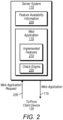
- server system 110 includes web application 115 and feature availability information 200.
- web application 115 includes implemented features 210 and a check engine 220.
- server system 110 may be implemented differently than shown.
- server system 110 may include multiple, different web applications 115, which may be received from systems associated with one or more different users of server system 110.
- Feature availability information 200 is information indicating platform features 135 that are supported by client application 150.
- feature availably information 200 may be an API documentation page that a developer consults when writing the code for their web application 115.
- feature availability information 200 may indicate that the geofencing platform feature 135 is available for invoking by a web application 115 via client application 150.
- a developer may code their web application 115 to be able to invoke the geofencing platform feature 135 via client application 150.
- there are multiple client applications 150 each of which may be developed for a certain client platform 130.
- Feature availability information 200 may indicate, for each client application 150, the platform features 135 that are available for invoking by a web application 115 via that client application 150.
- feature availability information 200 might indicate that a geofencing platform feature 135 is available on one particular client platform 130 (via the corresponding client application 150) and a push notification platform feature 135 is available on another particular client platform 130 (via the corresponding client application 150).
- server system 110 causes feature availability information 200 to be presented to a user (e.g., by sending information 200 to a client device for presenting to that user) in response to a request for information 200.
- a user may wish to know which platform features 135 are available via a particular client application 150. As such, that developer may request (using a client device) feature availability information 200 from server system 110.
- feature availability information 200 may be stored at an external system that provides it upon request.
- Implemented features 210 are features that a web application 115 is capable of invoking when it is executed.
- implemented features 210 may include both features from browser features 145 of web browser 140 and platform features 135 of client platform 130. Accordingly, when executed within web browser 140, web application 115 may invoke browser features 145 identified by implemented features 210. When executed within client application 150, web application 115 may invoke platform features 135 identified by implemented features 210. Thus, web application 115 may invoke the appropriate features based on the environment in which it is executed.
- implemented features 210 may include features corresponding to multiple web browsers 140 and/or client platforms 130.
- Check engine 220 checks for implemented features 210 that are available for invoking by web application 115 when executed.
- check engine 220 may register those features (via an API) that are available for invoking. After registering features, web application 115 may then invoke those features (e.g., by making API calls to web browser 140 or client application 150).
- check engine 220 performs a progressive check where it checks for available platform features 135 before checking for browser features 145 (or vice versa in some cases).
- server system 110 receives a web application request 205 from client device 120 for a web application 115.
- web application request 205 may identify a specific web application 115 to be returned.
- web application request 205 might identify a uniform resource locator (URL) for a particular web application 115.
- server system 110 may return the appropriate web application 115 to the requestor (e.g., web browser 140 or client application 150 of client device 120) for execution.
- check engine 220 may check for any available features and register them to allow for subsequent invocation of those features.
- web browser 140 includes browser features 145 and an execution environment 300.
- web application 115 can execute within execution environment 300.
- web browser 140 may be implemented differently than shown.
- web browser 140 may include multiple execution environments 300 that are capable of executing multiple web applications 115 concurrently.
- web browser 140 may receive web application 115 in response to issuing a web application request 205 to server system 110.
- Web browser 140 may issue web application request 205 in response to a user submitting a URL that directs web browser 140 to server system 110.
- web browser 140 may execute web application 115 within execution environment 300.
- Execution environment 300 is a software environment that is capable of executing web application 115.
- web application 115 may invoke browser features 145 using an API provided by web browser 140.
- web browser 140 may include multiple execution environments 300, each of which may execute a respective web application 115.
- Each execution environment 300 may be associated with one of multiple tabs maintained by web browser 140.
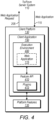
- client application 150 includes an execution environment 400 and a feature application programming interface (API) 410.
- client application 150 operates on client platform 130, which includes platform features 135.
- feature API 410 includes plugins 415, and web application 115 can execute within execution environment 400.
- Client application 150 may be implemented differently than shown.
- client application 150 may include multiple execution environments 400 capable of executing multiple web applications 115 concurrently.
- client application 150 may receive web application 115 in response to issuing a web application request 205 to server system 110.
- Client application 150 may issue web application request 205 in response to a user navigating through client application 150-e.g., a user may select a tab of client application 150, causing client application 150 to issue a web application request 205.
- client application 150 may execute web application 115 within execution environment 400.
- Execution environment 400 is a software environment that is capable of executing web application 115.
- environment 400 includes a container object that allows for web content, such as web application 115, to be executed within an application that is native to a client platform 130.
- a client application 150 that is developed for the Android TM operating system may include a webview object that allows for web application 115 to be rendered.
- web application 115 may use feature API 410 to invoke platform features 135.
- Feature API 410 is an API that permits web application 115 to invoke platform features 135 using plugins 415.
- a plugin 415 in various embodiments, is a set of software routines executable to interface with a corresponding platform feature 135.
- a plugin 415 may be a software wrapper that wraps around the corresponding platform feature 135.
- a plugin 415 may hide the underlying complexity of a platform feature 135 and present a consistent calling mechanism for invoking that platform feature. This may allow for web application 115 to issue the same call on different client platforms 130 to invoke the same platform feature 135, including the cases in which the underlying implementation for that platform feature 135 is different. That is, a plugin 415 may provide a level of abstraction for invoking a platform feature 135.
- web application 115 When executed within client application 150, web application 115 may register for the features included in its implemented features 210. Web application 115 may then invoke ones of those platform features 135 by issuing feature API 410 calls. Such calls may cause plugins 415 to invoke corresponding platforms features 135, which may return a result. The result may be passed back to web application 115.
- client platform 130 may implement different versions of the same particular platform feature 135. Accordingly, feature API 410 may include support for one or more of those different versions of that platform feature 135.
- web application 115 When executing within execution environment 400, web application 115 may identify and register for a particular version based on the version that web application 115 has been written to invoke. Web application 115 may then invoke that particular version.
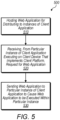
- Method 500 is one embodiment of a method performed by a computer system such as server system 110 in order to provide a web application (e.g., web application 115) that is capable of executing within a particular web browser (e.g., a particular web browser 140) or within a client application (e.g., client application 150) that is native to a client platform (e.g., client platform 130).
- a web application e.g., web application 115
- client application e.g., client application 150
- client platform e.g., client platform 130
- the particular web browser and the client platform may support differing sets of features (e.g., browser features 145 versus platform features 135).
- method 500 may include additional steps than shown-e.g., the computer system may receive an update to the web application.
- Method 500 begins in step 510 with the computer system hosting the web application for distributing to instances of the client application.
- the client application may implement a set of modules (e.g., plugins 415) that enable the web application to invoke the set of features supported by the client platform.
- the web application when executing within an instance of the client application, may be capable of invoking at least one feature not supported by the particular web browser.
- the computer system accesses, in various embodiments, feature information (e.g., feature availability information 200) that identifies the set of modules implemented by the client application. Accordingly, in response to a second request for the feature information, the computer system may cause the feature information to be presented (e.g., via a graphical interface) to a user associated with the second request.
- feature information e.g., feature availability information 200
- the computer system receives, from a particular instance of the client application executing on a client device (e.g., client device 120) that implements the client platform, a request (e.g., web application request 205) for the web application.
- a request e.g., web application request 205
- the computer system sends the web application to the particular instance of the client application to cause the web application to be executed within the particular instance.
- Execution of the web application within the particular instance may permit the web application to invoke the at least one feature not supported by the particular web browser.
- the web application is capable of invoking a plurality of features, including features supported by the particular web browser and the client platform.
- the web application may be capable of identifying, when executing within the particular web browser or within the client application, particular ones of the plurality of features that are available for invoking by the web application.
- the client platform supports a plurality of versions for a particular feature. As such, the web application may be capable of identifying a particular one of the plurality of versions based on the particular version matching a version invokable by the web application.
- the web application may be capable of invoking the particular version of the particular feature.
- the particular web browser may execute on a second client device, which may be the client device that executes the particular instance.
- the computer system may receive, from the particular web browser, a second request (e.g., web application request 205) for the web application.
- the computer system may send the web application to the particular web browser to cause the web application to be executed within the particular web browser.
- the web application when executing within the particular web browser, may not be capable of invoking the at least one feature.
- the computer system may receive, from a second particular instance of a second client application executing on a second client device that implements a second client platform, a second request (e.g., web application request 205) for the web application.
- the second client platform may support a set of different features than the particular web browser and the client platform.
- the computer system may send the web application to the second particular instance of the second client application to cause the web application to be executed within the second particular instance. Execution of the web application within the second particular instance may permit the web application to invoke at least one feature not supported by the particular web browser and the client platform.
- the second client platform corresponds to a different operating system than the client platform.
- the computer system hosts a second web application for distributing to instances of the client application.
- the second web application may be capable of invoking a different set of features than the web application.
- the computer system may send the second web application to the particular instance to cause the second web application to be executed within the particular instance. Execution of the second web application within the particular instance may permit the second web application to invoke one or more features not supported by the web application.
- Method 600 is one embodiment of a method performed by a computer system such as server system 110 in order to provide a web application (e.g., web application 115) that is capable of executing within a particular web browser (e.g., a particular web browser 140) or within a client application (e.g., client application 150) that is native to a client platform (e.g., client platform 130).
- a web application e.g., web application 115
- client application e.g., client application 150
- client platform e.g., client platform 130
- the particular web browser and the client platform may support differing sets of features (e.g., browser features 145 versus platform features 135).
- Method 600 may be performed by executing a set of program instructions stored on a non-transitory computer-readable medium.
- method 600 may include additional steps than shown.
- the computer system may receive an update to the web application.
- Method 600 begins in step 610 with the computer system hosting the web application capable of executing within a plurality of environments that include a web browser and the client application that is native to the client platform.
- the computer system receives, from a particular web browser executing on a first client computer system (e.g., a client device 120), a request (e.g., web application request 205) for the web application.
- the particular web browser may implement a first set of features (e.g., browser features 145) that is different than a second set of features (e.g., platform features 135) implemented by the client application.
- the first and second different sets of features may share one or more features-i.e., there may be at least one feature that is included in the two sets.
- the computer system accesses feature information (e.g., feature availability information 200) that identifies the second set of features implemented by the client application.
- the computer system may cause the feature information to be presented to a user in response to a third request for the feature information.
- step 630 the computer system sends the web application to the particular web browser to cause the web application to be executed within the particular web browser. Execution of the web application within the particular web browser may permit the web application to invoke the first set of features.
- the computer system receives, from a particular instance of the client application executing on a second client device that implements the client platform, a second request (e.g., web application request 205) for the web application.
- a second request e.g., web application request 205
- the computer system may send the client application to the second client device for execution on the second client device.
- step 650 the computer system sends the web application to the particular instance of the client application to cause the web application to be executed within the particular instance. Execution of the web application within the particular instance may permit the web application to invoke the second set of features.
- the computer system hosts a second web application that is capable of executing within the particular web browser or within the client application.
- the computer system may receive a third request (e.g., web application request 205) from the particular instance for the second web application. Accordingly, the computer system may send the second web application to the particular instance to cause the second web application to be executed within the particular instance. Execution of the second web application within the particular instance may permit the second web application to invoke at least one feature not invokable by the web application.
- the computer system receives, from a second particular instance of a second client application executing on a third client device that implements a second client platform, a third request for the web application.
- the second client application may implement a third set of features that is different from the first and second sets of features.
- the computer system may send the web application to the second particular instance of the second client application to cause the web application to be executed within the second particular instance. Execution of the web application within the second particular instance may permit the web application to invoke the third set of features.
- Method 700 is one embodiment of a method performed by a particular instance of a client application (e.g., client application 150) in order to execute a web application (e.g., web application 115) that is capable of being executed in a web browser (e.g., web browser 140) or in the client application that is native to a client platform (e.g., client platform 130).
- the web browser and the client platform may support differing sets of features (e.g., browser features 145 versus platform features 135).
- method 700 may include additional steps than shown-e.g., the particular instance may receive an update that allows it to support additional features of the client platform.
- Method 700 begins in step 710 with the particular instance sends, to a server computer system (e.g., server system 110), a request (e.g., web application request 205) for the web application.
- a server computer system e.g., server system 110
- the client application may implement a set of modules (e.g., plugins 415) that enable the web application to invoke the set of features supported by the client platform.
- the web application may be a web page hosted by the server computer system.
- step 720 in response to receiving the web application from the server computer system, the particular instance executes the web application.
- such execution includes performing steps 730-750.
- the particular instance receives, from the web application, requests to invoke particular ones of the set of features supported by the client platform.
- the particular instance in response receiving at least one request from the web application to register the particular features, may register the particular features such that the web application is permitted to cause the particular instance to invoke the particular features on behalf of the web application.
- step 740 the particular instance invokes, on behalf of the web application, the particular features.
- step 750 the particular instance returns a result of the invoking to the web application.
- the particular instance sends a request for a second web application.
- the particular instance may execute the second web application.
- Such execution may include the particular instance receiving, from the second web application, requests to invoke second particular ones of the set of features supported by the client platform.
- the second particular features may include at least one feature not included in the particular features.
- the execution may further include the particular instance invoking, on behalf of the second web application, the second particular features and returning, to the second web application, a second result of the invoking of the second particular features.
- Computer system 800 includes a processor subsystem 880 that is coupled to a system memory 820 and I/O interfaces(s) 840 via an interconnect 860 (e.g., a system bus). I/O interface(s) 840 is coupled to one or more I/O devices 850.
- Computer system 800 may be any of various types of devices, including, but not limited to, a server system, personal computer system, desktop computer, laptop or notebook computer, mainframe computer system, tablet computer, handheld computer, workstation, network computer, a consumer device such as a mobile phone, music player, or personal data assistant (PDA).
- PDA personal data assistant
- Processor subsystem 880 may include one or more processors or processing units. In various embodiments of computer system 800, multiple instances of processor subsystem 880 may be coupled to interconnect 860. In various embodiments, processor subsystem 880 (or each processor unit within 880) may contain a cache or other form of on-board memory.
- System memory 820 is usable store program instructions executable by processor subsystem 880 to cause system 800 perform various operations described herein.
- System memory 820 may be implemented using different physical memory media, such as hard disk storage, floppy disk storage, removable disk storage, flash memory, random access memory (RAM-SRAM, EDO RAM, SDRAM, DDR SDRAM, RAMBUS RAM, etc.), read only memory (PROM, EEPROM, etc.), and so on.
- Memory in computer system 800 is not limited to primary storage such as memory 820. Rather, computer system 800 may also include other forms of storage such as cache memory in processor subsystem 880 and secondary storage on I/O Devices 850 (e.g., a hard drive, storage array, etc.).
- these other forms of storage may also store program instructions executable by processor subsystem 880.
- program instructions that when executed implement web application 115, client platform 130, web browser 140, and/or client application 150 may be included/stored within system memory 820.
- I/O interfaces 840 may be any of various types of interfaces configured to couple to and communicate with other devices, according to various embodiments.
- I/O interface 840 is a bridge chip (e.g., Southbridge) from a front-side to one or more back-side buses.
- I/O interfaces 840 may be coupled to one or more I/O devices 850 via one or more corresponding buses or other interfaces.
- I/O devices 850 include storage devices (hard drive, optical drive, removable flash drive, storage array, SAN, or their associated controller), network interface devices (e.g., to a local or wide-area network), or other devices (e.g., graphics, user interface devices, etc.).
- computer system 800 is coupled to a network via a network interface device 850 (e.g., configured to communicate over WiFi, Bluetooth, Ethernet, etc.).
Landscapes
- Engineering & Computer Science (AREA)
- Databases & Information Systems (AREA)
- Theoretical Computer Science (AREA)
- Data Mining & Analysis (AREA)
- Physics & Mathematics (AREA)
- General Engineering & Computer Science (AREA)
- General Physics & Mathematics (AREA)
- Computer Networks & Wireless Communication (AREA)
- Signal Processing (AREA)
- Information Transfer Between Computers (AREA)
- Stored Programmes (AREA)
Description
- This disclosure relates generally to executing a web application in a client application.
- Computer systems routinely communicate information with other computer systems over networks, including wide-area networks such as the Internet. One form of communication is the sending of web pages (documents commonly written in Hypertext Markup Language (HTML) and accessible through the World Wide Web) from a server computer system to a client computer system that presents them to a user, who may view and interact with them. In particular, a user can request access to a set of web pages using a web browser and then view and interact with them using the web browser. Such interaction may involve the user providing input to the web browser for the web pages, copying content from the web pages, navigating the web pages using web links, etc.
-
WO 2014/062490 A1 describes a system and method for handling web applications that are maintained by a server and distributed upon request to client devices where they are executed in a browser or in the specific execution environment of the client device. Different versions of a webpage, such as a browser-based webpage and a non-browser-based webpage, are maintained in a server. When a client device sends a webpage request to the server, a marking parameter is added to the request, if the application requesting the webpage is a non-browser application. Depending on whether the marking parameter is present or not, a browser version or a non-browser version is returned for execution. -
WO 2017/205187 Al describes systems and methods for accelerating loading, parsing, and rendering of a web page hosted by a native mobile application. To this end, a manifest file including resources for rendering the webpage hosted by the native mobile application is stored in a local web cache. A request is sent by the native mobile application to a website associated with the native mobile application for the webpage. While initial content of the webpage is loading, the resources stored in the local web cache are loaded into a browser document object model and the webpage is rendered within the native mobile application. - The publication "Emerging Mobile Platforms: Firefox OS and Tizen" by Olga Gadyatskaya et al. relates to approaches to developing applications for mobile platforms and enabling support of natively mobile web applications and in this context addresses hybrid apps. The authors provide an overview of the platforms Firefox OS and Tizen and compare their security features with those of the Android operating system.
- The present invention is defined by the independent claims. Embodiments labelled as inventive embodiments in the following, which are not covered by the scope of protection defined by the independent claims, are to be understood as examples helpful for understanding the invention, but not as embodiments of the invention.
-
-
Fig. 1 is a block diagram illustrating example elements of a system that has a server system capable of distributing a web application to a web browser and a client application, according to some embodiments. -
Fig. 2 is a block diagram illustrating example elements of a server system capable of distributing a web application, according to some embodiments. -
Fig. 3 is a block diagram illustrating example elements of a web browser capable of executing a web application, according to some embodiments. -
Fig. 4 is a block diagram illustrating example elements of a client application capable of executing a web application, according to some embodiments. -
Figs. 5 and6 are flow diagrams illustrating example methods relating to providing a web application, according to some embodiments. -
Fig. 7 is a flow diagram illustrating an example method relating to executing a web application, according to some embodiments. -
Fig. 8 is a block diagram illustrating an example computer system, according to some embodiments. - This disclosure includes references to "one embodiment" or "an embodiment." The appearances of the phrases "in one embodiment" or "in an embodiment" do not necessarily refer to the same embodiment. Particular features, structures, or characteristics may be combined in any suitable manner consistent with this disclosure.
- Within this disclosure, different entities (which may variously be referred to as "units," "circuits," other components, etc.) may be described or claimed as "configured" to perform one or more tasks or operations. This formulation-[entity] configured to [perform one or more tasks]-is used herein to refer to structure (i.e., something physical, such as an electronic circuit). More specifically, this formulation is used to indicate that this structure is arranged to perform the one or more tasks during operation. A structure can be said to be "configured to" perform some task even if the structure is not currently being operated. A "network interface configured to communicate over a network" is intended to cover, for example, an integrated circuit that has circuitry that performs this function during operation, even if the integrated circuit in question is not currently being used (e.g., a power supply is not connected to it). Thus, an entity described or recited as "configured to" perform some task refers to something physical, such as a device, circuit, memory storing program instructions executable to implement the task, etc. This phrase is not used herein to refer to something intangible. Thus, the "configured to" construct is not used herein to refer to a software entity such as an application programming interface (API).
- The term "configured to" is not intended to mean "configurable to." An unprogrammed FPGA, for example, would not be considered to be "configured to" perform some specific function, although it may be "configurable to" perform that function and may be "configured to" perform the function after programming.
- As used herein, the terms "first," "second," etc. are used as labels for nouns that they precede, and do not imply any type of ordering (e.g., spatial, temporal, logical, etc.) unless specifically stated. For example, in a processor having eight processing cores, the terms "first" and "second" processing cores can be used to refer to any two of the eight processing cores. In other words, the first and second processing cores are not limited to processing cores 0 and 1, for example.
- As used herein, the term "based on" is used to describe one or more factors that affect a determination. This term does not foreclose the possibility that additional factors may affect a determination. That is, a determination may be solely based on specified factors or based on the specified factors as well as other, unspecified factors. Consider the phrase "determine A based on B." This phrase specifies that B is a factor is used to determine A or that affects the determination of A. This phrase does not foreclose that the determination of A may also be based on some other factor, such as C. This phrase is also intended to cover an embodiment in which A is determined based solely on B. As used herein, the phrase "based on" is thus synonymous with the phrase "based at least in part on."
- The type of experience that a user has when viewing and interacting with web pages is often dependent on the implementation of the web browser that is used. For example, if a web browser implements a location-based feature, then the user can provide their location for an improved experience in which a web page presents location-relevant information to the user. There are, however, many features, such as geofencing, that today's web browsers do not implement. (Geofencing being the ability to perform an action based upon a user being located within a predefined geographic area.) As a result, web browsers, in some cases, are not able to provide a feature-rich experience to users. Moreover, the features that web browsers implement are often not as versatile and capable as the counterparts provided by a client platform (e.g., iOS®) on which the web browsers may execute. It may be desirable to implement an environment that can execute web applications (e.g., web pages) and also provide them with access to more features, including those provided by a client platform.
- The present invention provides a method according to claim 1, a system according to claim 6, a computer-readable medium according to claim 7 and a web application according to claim 9. Specific embodiments thereof are set out subsequently and in the dependent claims. A method according to the present invention may especially be carried out by a server computer system. A client application may especially implement a set of modules that enable the web application to invoke the set of features supported by the respective client platform The client device on which the browser executes may especially be the first client device on which the first client application executes.
- The method of the invention may also comprise
- accessing, by the server computer system, feature information that identifies the set of modules implemented by the client application; and
- in response to a second request for the feature information, the server computer system causing the feature information to be presented to a user associated with the second request.
- The method of the invention may also comprise
receiving, by the server computer system, an update to the web application, wherein the web application is updated such that the web application is capable of invoking an additional feature supported by the client platform but not by the particular web browser. - The method of the invention may comprise
- hosting, by the server computer system, a second web application for distribution to instances of the client application, wherein the second web application is capable of invoking a different set of features than the web application; and
- in response to a second request from a particular instance of the first client application for the second web application, the server computer system sending the second web application to the particular instance to cause the second web application to be executed within this particular instance, wherein execution of the second web application within this particular instance permits the second web application to invoke one or more features not supported by the web browser.
- The method of the invention may provide that the web application is capable of invoking a plurality of features, including features supported by a particular web browser and a client platform, and wherein the web application is capable of identifying, when executing within the particular web browser or within the client application, particular ones of the plurality of features that are available for invoking by the web application.
- The method of the invention may provide that the client platform supports a plurality of versions for a particular feature, and wherein the web application is capable of:
- identifying a particular one of the plurality of versions based on the particular version matching a version invokable by the web application; and
- invoking the particular version of the particular feature.
- The method of the invention may further comprise
- hosting a second web application that is capable of executing within a particular web browser or within a client application;
- receiving a third request from a particular instance of the client application for the second web application; and
- sending the second web application to the particular instance to cause the second web application to be executed within this particular instance, wherein execution of the second web application within the particular instance permits the second web application to invoke at least one feature not invokable by the web application.
- The second client application may execute on a third client device that implements the second client platform.
- The method may further comprise
- accessing feature information that identifies the set of features implemented by a client application; and
- causing the feature information to be presented to a user in response to a third request for the feature information.
- The method may further comprise
prior to receiving the request for the web application from a client application, sending the client application to the second client device for execution on the second client device. - The method of the invention may especially comprise
- sending, especially to a server computing system, a request for the web application by a particular instance of a client application that is executing on a client device that implements a client platform, wherein the client application implements a set of modules that enable the web application to invoke the set of features supported by the client platform; and
- in response to receiving the web application from the server computer system, the particular instance of the client application executing the web application, including:
- receiving, from the web application, requests to invoke particular ones of the set of features supported by the client platform;
- invoking, on behalf of the web application, the particular features; and
- returning a result of the invoking to the web application.
- This method may further comprise
in response receiving at least one request from the web application to register the particular features, the particular instance of the client application registering the particular features such that the web application is permitted to cause the particular instance to invoke the particular features on behalf of the web application. - The method may further comprise
- sending, by the particular instance of the client application, a request for a second web application; and
- in response to receiving the second web application, the particular instance of the client application executing the second web application, including:
- receiving, from the second web application, requests to invoke second particular ones of the set of features supported by the client platform, wherein the second particular features includes at least one feature not included in the particular features;
- invoking, on behalf of the second web application, the second particular features; and
- returning, to the second web application, a second result of the invoking of the second particular features.
- The client application may especially support at least two different versions of a particular one of the set of features.
- In an embodiment, the web application is a web page hosted by a server computer system.
- The present disclosure describes techniques for implementing a client application that is capable of executing web applications and providing them with access to native features that are provided by a client platform. An example of a web application may be a web page and an example of a client application may be an application specifically developed for iOS®. In various embodiments that are described below, a client application that is native to a client platform includes an execution environment in which web applications can be executed and a feature API through which the web applications can invoke features of the client platform. In some embodiments, the feature API includes a set of modules via which a web application may invoke a corresponding set of features of the client platform on which the client application executes.
- A server computer system, in various embodiments, hosts a web application that is distributed to a web browser and a client application upon request. Accordingly, the server computer system may send the web application to a particular instance of the client application that is executing on a client device that implements a client platform corresponding to the client application. The particular instance of the client application is operable to execute the received web application within its execution environment. In various cases, when that web applications is executed within the particular instance, the web application may invoke at least one feature, such as geofencing, that is not supported by the web browser.
- These techniques are believed advantageous over prior approaches as they allow for a developer to write one code base (e.g., a web application) that can be served to a browser or a native application that is native to a particular platform. That is, developers may be provided with the ability of developing only one application (which can be executed across different platforms) instead of having to develop a platform-specific application for each platform. For example, instead of developing an application for a web browser, an application for Android™, and an application for iOS®, a developer may develop one application that can be executed by the web browser, Android™, and iOS®. Accordingly, a server computer system serves the same web application to a web browser and a native application upon request. At runtime, the web application may check which features are available in its runtime container (i.e., the web browser or the native application) and call them where appropriate.
- Moreover, these techniques allow web applications to invoke the native features of a client platform, various ones of which may be more versatile and capable than the counterparts provided by web browsers. Accordingly, users may be provided with an improved experience when viewing and interacting with web applications. That is, the web application (without changes to its code) can use native features (that would be missing in the web browser) when running in a native application. A system for implementing these techniques will now be discussed below, starting with
Fig. 1 . - Turning now to
Fig. 1 , a block diagram of asystem 100 is shown.System 100 includes components that are implemented via hardware or a combination of hardware and software routines. In the illustrated embodiment,system 100 includes aserver system 110 and aclient device 120. As further illustrated,server system 110 includes aweb application 115 andclient device 120 includesclient platform 130 having platform features 135, a web browser 140 (with browser features 145), and aclient application 150. In some embodiments,system 100 may be implemented differently than shown. As an example,client platform 130 may not include web browser 140-web browser 140 may be executed on a second,different client device 120 that implements the same or adifferent client platform 130. -
Server system 110, in various embodiments, is a system that hostsweb application 115 for distribution to other systems includingclient device 120.Server system 110 may, for example, implement a database management system capable of interacting with tenants, applications (such as web application 115), and databases in order to store, analyze, and serve data. Accordingly, in some embodiments,server system 110 may be a multi-tenant system that receives and manages data from tenants-such data may includeweb applications 115. In various cases, tenants ofserver system 110 may develop and uploadweb applications 115 toserver system 110 for distribution toweb browsers 140 andclient applications 150. Accordingly, in various embodiments,server system 110 hostsmultiple web applications 115 that are received from one or more tenants and sendssuch web applications 115 toweb browsers 140 andclient applications 150 upon request. In some cases,server system 110 may receive an update to aparticular web application 115; such an update may permit thatweb application 115 to invoke additional platform features 135 and/or browser features 135. -
Web application 115, in various embodiments, includes a set of software routines that provide a web-based experience when executed.Web application 115 may, for example, be a set of dynamic web pages that a user can view and interact with when rendered byweb browser 140 orclient application 150. In various embodiments,web application 115 includes software routines that are executable to invoke browser features 145 and/or platform features 135. When executed withinweb browser 140,web application 115 may invoke browser features 145, and when executed withinclient application 150,web application 115 may invoke client platform features 135. In various instances,different web applications 115 may be capable of invokingdifferent features 135 and/or 145 from each other-they may invoke different feature sets that have overlap or no overlap in features. For example, oneweb application 115 may be able to invoke a geofencing feature while anotherweb application 115 cannot (as it may not be designed to). -
Client device 120, in various embodiments, is a computer system capable of interacting withserver system 110 in a client-server relationship.Client device 120 may be, for example, a desktop computer, a laptop, a smartphone, a smartwatch, etc. In various embodiment,client device 120 executes aclient platform 130 upon which software routines, such asweb browser 140 andclient application 150, may be executed.Client platform 130, in various embodiments, is a set of software routines that provides an environment that is capable of initiating execution of other software routines and subsequent management of that execution.Client platform 130 may be, for example, an operating system, such as iOS® or Android™. In various cases, there may bemultiple client devices 120 that interact withserver system 110, each of which may be executing adifferent client platform 130. -
Client platform 130 may provide a framework under which applications, such asclient application 150, are developed. In various instances, aclient application 150 developed for oneclient platform 130 may implement the same or similar functionality as aclient application 150 developed for anotherclient platform 130; however, bothclient applications 150 may include different software routines. For example, there may be aclient application 150 that is specific to the Android™ operating system and aclient application 150 specific to the iOS® operating system. In some embodiments,client platform 130 may provide an application store or exchange that allows for various client applications such asclient application 150 to be downloaded and installed onclient platform 130. In some cases,server system 110 may provide theappropriate client application 150 for aclient platform 130 in response to a request fromclient device 120. - As illustrated,
client platform 130 includes platform features 135 that may be invoked byweb application 115 viaclient application 150. Examples of platform features 135 include, but are not limited to, geofencing, artificial intelligence integration (e.g., the ability to issue a command to Siri®), push notifications, microphone access, camera access, Bluetooth® access, and photo access. In some cases,different client platforms 130 may include different platform features 135. As an example, oneclient platform 130 may implement push notifications while anotherclient platform 130 does not implement that platform feature. As such, aclient platform 130 may include platforms features 135 that are not included by another client platform or byweb browser 140. In some instances,different client platforms 130 may include the same high-level feature but implement that feature differently. For example, twoclient platforms 130 may have different implementations of artificial intelligence agents (e.g., Google Assistant™ versus Siri®). These twoclient platforms 130 support the same feature, although it is implemented differently. -
Web browser 140, as used herein, is a program executable to access web pages and other content in a standardized format, such as HTML or XML. These web pages are commonly located on a network, such as the World Wide Web. Examples ofweb browsers 140 include, but are not limited to, Chrome™, Safari®, Firefox®, and Edge®. As shown,web browser 140 includes browser features 145 that may be invoked byweb application 115. Examples of web browser features 145 include, but are not limited to, offline work mode (e.g., a service worker periodically caches data forweb application 115 so that it can be loaded even when a user has temporarily lost their Internet connection), push notifications, and Hypertext Transfer Protocol Secure (HTTPS) support. In various embodiments,web browser 140 implements an API that allows forweb application 115 to invoke browser features 145 when it is executed withinweb browser 140. - In various cases, platform features 135 and browser features 145 may include different sets of features. As an example, platform features 135 may include a geofencing feature that is not included in browser features 145. As a result, when
web application 115 is executed withinclient application 150,web application 115 may invoke that geofencing feature. But whenweb application 115 is executed withinweb browser 140, it cannot use the geofencing feature. As such,client application 150 may allow for aweb application 115 to provide an improved user experience when executed byclient application 150 as opposed toweb browser 140. In some cases, platform features 135 and browser features 145 may include the same high-level feature, but different implementations-the particular platform feature 135 may be more versatile than theparticular browser feature 145. As an example, platform features 135 and browser features 145 may include a push notification feature. Thepush notification feature 145 ofweb browser 140 may be able to provide notifications forweb application 115 only whileweb browser 140 is executing onclient platform 130. But thepush notification feature 135 ofclient platform 130 may be able to provide notifications forweb application 115 even whenclient application 150 is not executing onclient platform 130. -
Client application 150, as used herein, is a set of software routines executable to implement an environment in whichweb application 115 can be executed.Client application 150, in various embodiments, implements an API that allows forweb application 115 to invoke platform features 135 ofclient platform 130.Client application 150 may be a native application that is native to aparticular client platform 130. The term "native application" is used herein according to its ordinary and accustomed meaning in the art, and includes an application that is written for a framework supported by a specific client platform. As an example,client application 150 may be written and optimized for the iOS® operating system, and thus be "native" to that platform.Client application 150 may requestweb application 115 fromserver system 110 in response to different conditions being met, such as a useropening client application 150 or a user selecting a certain tab withinclient application 150. Onceweb application 115 is received,client application 150 may executeweb application 115 within the environment implemented byclient application 150. As part of that execution,web application 115 may invoke platform features 135 using the API that is provided byclient application 150. - Implementing
system 100 in this manner is believed advantageous over prior approaches as it allows for web applications to have access to features provided by a client platform. Such features may include features that are not supported by web browsers along with features that are more versatile than their web browser counterparts. Consequently,system 100 may allow for web applications to provide an improved user experience in which users have access to more and better features. - Turning now to
Fig. 2 , a block diagram of anexample server system 110 is shown. In the illustrated embodiment,server system 110 includesweb application 115 and featureavailability information 200. As shown,web application 115 includes implementedfeatures 210 and acheck engine 220. In some embodiments,server system 110 may be implemented differently than shown. As an example,server system 110 may include multiple,different web applications 115, which may be received from systems associated with one or more different users ofserver system 110. -
Feature availability information 200, in various embodiments, is information indicating platform features 135 that are supported byclient application 150. In some instances, featureavailably information 200 may be an API documentation page that a developer consults when writing the code for theirweb application 115. Consider an example whereclient platform 130 provides aplatform feature 135 for geofencing andclient application 150 supports that platform feature. Accordingly, featureavailability information 200 may indicate that thegeofencing platform feature 135 is available for invoking by aweb application 115 viaclient application 150. With that knowledge, a developer may code theirweb application 115 to be able to invoke thegeofencing platform feature 135 viaclient application 150. In various embodiments, there aremultiple client applications 150, each of which may be developed for acertain client platform 130.Feature availability information 200 may indicate, for eachclient application 150, the platform features 135 that are available for invoking by aweb application 115 via thatclient application 150. As an example, featureavailability information 200 might indicate that ageofencing platform feature 135 is available on one particular client platform 130 (via the corresponding client application 150) and a pushnotification platform feature 135 is available on another particular client platform 130 (via the corresponding client application 150). - In various embodiments,
server system 110 causes featureavailability information 200 to be presented to a user (e.g., by sendinginformation 200 to a client device for presenting to that user) in response to a request forinformation 200. As an example, when developing aweb application 115, a developer may wish to know which platform features 135 are available via aparticular client application 150. As such, that developer may request (using a client device)feature availability information 200 fromserver system 110. In some cases, featureavailability information 200 may be stored at an external system that provides it upon request. - Implemented features 210, in various embodiments, are features that a
web application 115 is capable of invoking when it is executed. In some cases, implemented features 210 may include both features from browser features 145 ofweb browser 140 and platform features 135 ofclient platform 130. Accordingly, when executed withinweb browser 140,web application 115 may invoke browser features 145 identified by implemented features 210. When executed withinclient application 150,web application 115 may invoke platform features 135 identified by implemented features 210. Thus,web application 115 may invoke the appropriate features based on the environment in which it is executed. In some embodiments, implemented features 210 may include features corresponding tomultiple web browsers 140 and/orclient platforms 130. - Check
engine 220, in various embodiments, checks for implementedfeatures 210 that are available for invoking byweb application 115 when executed. In some cases, such as whenweb application 115 is executed inclient application 150, checkengine 220 may register those features (via an API) that are available for invoking. After registering features,web application 115 may then invoke those features (e.g., by making API calls toweb browser 140 or client application 150). In some embodiments, checkengine 220 performs a progressive check where it checks for available platform features 135 before checking for browser features 145 (or vice versa in some cases). - As shown,
server system 110 receives aweb application request 205 fromclient device 120 for aweb application 115. In various cases, such as whenserver system 110 hostsdifferent web applications 115,web application request 205 may identify aspecific web application 115 to be returned. As an example,web application request 205 might identify a uniform resource locator (URL) for aparticular web application 115. In response to receiving aweb application request 205,server system 110 may return theappropriate web application 115 to the requestor (e.g.,web browser 140 orclient application 150 of client device 120) for execution. Whenweb application 115 is executed, checkengine 220 may check for any available features and register them to allow for subsequent invocation of those features. - Turning now to
Fig. 3 , a block diagram of anexample web browser 140 is shown. In the illustrated embodiments,web browser 140 includes browser features 145 and anexecution environment 300. As depicted,web application 115 can execute withinexecution environment 300. In some embodiments,web browser 140 may be implemented differently than shown. For example,web browser 140 may includemultiple execution environments 300 that are capable of executingmultiple web applications 115 concurrently. - As explained earlier,
web browser 140 may receiveweb application 115 in response to issuing aweb application request 205 toserver system 110.Web browser 140 may issueweb application request 205 in response to a user submitting a URL that directsweb browser 140 toserver system 110. After receivingweb application 115,web browser 140 may executeweb application 115 withinexecution environment 300. -
Execution environment 300, in various embodiments, is a software environment that is capable of executingweb application 115. When executing withinexecution environment 300,web application 115 may invoke browser features 145 using an API provided byweb browser 140. In some cases,web browser 140 may includemultiple execution environments 300, each of which may execute arespective web application 115. Eachexecution environment 300 may be associated with one of multiple tabs maintained byweb browser 140. - Turning now to
Fig. 4 , a block diagram of anexample client application 150 is shown. In the illustrated embodiments,client application 150 includes anexecution environment 400 and a feature application programming interface (API) 410. As depicted,client application 150 operates onclient platform 130, which includes platform features 135. As further illustrated, featureAPI 410 includes plugins 415, andweb application 115 can execute withinexecution environment 400.Client application 150 may be implemented differently than shown. As an example,client application 150 may includemultiple execution environments 400 capable of executingmultiple web applications 115 concurrently. - As noted earlier,
client application 150 may receiveweb application 115 in response to issuing aweb application request 205 toserver system 110.Client application 150 may issueweb application request 205 in response to a user navigating through client application 150-e.g., a user may select a tab ofclient application 150, causingclient application 150 to issue aweb application request 205. After receivingweb application 115,client application 150 may executeweb application 115 withinexecution environment 400. -
Execution environment 400, in various embodiments, is a software environment that is capable of executingweb application 115. In some embodiments,environment 400 includes a container object that allows for web content, such asweb application 115, to be executed within an application that is native to aclient platform 130. For example, aclient application 150 that is developed for the Android™ operating system may include a webview object that allows forweb application 115 to be rendered. When executing withinexecution environment 400,web application 115 may usefeature API 410 to invoke platform features 135. -
Feature API 410, in various embodiments, is an API that permitsweb application 115 to invoke platform features 135 using plugins 415. A plugin 415, in various embodiments, is a set of software routines executable to interface with acorresponding platform feature 135. In various instances, a plugin 415 may be a software wrapper that wraps around the correspondingplatform feature 135. A plugin 415 may hide the underlying complexity of aplatform feature 135 and present a consistent calling mechanism for invoking that platform feature. This may allow forweb application 115 to issue the same call ondifferent client platforms 130 to invoke thesame platform feature 135, including the cases in which the underlying implementation for thatplatform feature 135 is different. That is, a plugin 415 may provide a level of abstraction for invoking aplatform feature 135. - When executed within
client application 150,web application 115 may register for the features included in its implemented features 210.Web application 115 may then invoke ones of those platform features 135 by issuingfeature API 410 calls. Such calls may cause plugins 415 to invoke corresponding platforms features 135, which may return a result. The result may be passed back toweb application 115. In various cases,client platform 130 may implement different versions of the sameparticular platform feature 135. Accordingly, featureAPI 410 may include support for one or more of those different versions of thatplatform feature 135. When executing withinexecution environment 400,web application 115 may identify and register for a particular version based on the version thatweb application 115 has been written to invoke.Web application 115 may then invoke that particular version. - Turning now to
Fig. 5 , a flow diagram of amethod 500 is shown.Method 500 is one embodiment of a method performed by a computer system such asserver system 110 in order to provide a web application (e.g., web application 115) that is capable of executing within a particular web browser (e.g., a particular web browser 140) or within a client application (e.g., client application 150) that is native to a client platform (e.g., client platform 130). In various cases, the particular web browser and the client platform may support differing sets of features (e.g., browser features 145 versus platform features 135). In some embodiments,method 500 may include additional steps than shown-e.g., the computer system may receive an update to the web application. -
Method 500 begins instep 510 with the computer system hosting the web application for distributing to instances of the client application. The client application may implement a set of modules (e.g., plugins 415) that enable the web application to invoke the set of features supported by the client platform. As a result, the web application, when executing within an instance of the client application, may be capable of invoking at least one feature not supported by the particular web browser. The computer system accesses, in various embodiments, feature information (e.g., feature availability information 200) that identifies the set of modules implemented by the client application. Accordingly, in response to a second request for the feature information, the computer system may cause the feature information to be presented (e.g., via a graphical interface) to a user associated with the second request. - In
step 520, the computer system receives, from a particular instance of the client application executing on a client device (e.g., client device 120) that implements the client platform, a request (e.g., web application request 205) for the web application. - In step 530, the computer system sends the web application to the particular instance of the client application to cause the web application to be executed within the particular instance. Execution of the web application within the particular instance may permit the web application to invoke the at least one feature not supported by the particular web browser. In some embodiments, the web application is capable of invoking a plurality of features, including features supported by the particular web browser and the client platform. The web application may be capable of identifying, when executing within the particular web browser or within the client application, particular ones of the plurality of features that are available for invoking by the web application. In some embodiments, the client platform supports a plurality of versions for a particular feature. As such, the web application may be capable of identifying a particular one of the plurality of versions based on the particular version matching a version invokable by the web application. The web application may be capable of invoking the particular version of the particular feature.
- The particular web browser may execute on a second client device, which may be the client device that executes the particular instance. The computer system may receive, from the particular web browser, a second request (e.g., web application request 205) for the web application. As such, the computer system may send the web application to the particular web browser to cause the web application to be executed within the particular web browser. The web application, when executing within the particular web browser, may not be capable of invoking the at least one feature.
- The computer system may receive, from a second particular instance of a second client application executing on a second client device that implements a second client platform, a second request (e.g., web application request 205) for the web application. The second client platform may support a set of different features than the particular web browser and the client platform. The computer system may send the web application to the second particular instance of the second client application to cause the web application to be executed within the second particular instance. Execution of the web application within the second particular instance may permit the web application to invoke at least one feature not supported by the particular web browser and the client platform. In some embodiments, the second client platform corresponds to a different operating system than the client platform.
- In various embodiments, the computer system hosts a second web application for distributing to instances of the client application. The second web application may be capable of invoking a different set of features than the web application. In response to a second request from the particular instance for the second web application, the computer system may send the second web application to the particular instance to cause the second web application to be executed within the particular instance. Execution of the second web application within the particular instance may permit the second web application to invoke one or more features not supported by the web application.
- Turning now to
Fig. 6 , a flow diagram of amethod 600 is shown.Method 600 is one embodiment of a method performed by a computer system such asserver system 110 in order to provide a web application (e.g., web application 115) that is capable of executing within a particular web browser (e.g., a particular web browser 140) or within a client application (e.g., client application 150) that is native to a client platform (e.g., client platform 130). In various cases, the particular web browser and the client platform may support differing sets of features (e.g., browser features 145 versus platform features 135).Method 600 may be performed by executing a set of program instructions stored on a non-transitory computer-readable medium. In some embodiments,method 600 may include additional steps than shown. For example, the computer system may receive an update to the web application. -
Method 600 begins instep 610 with the computer system hosting the web application capable of executing within a plurality of environments that include a web browser and the client application that is native to the client platform. - In
step 620, the computer system receives, from a particular web browser executing on a first client computer system (e.g., a client device 120), a request (e.g., web application request 205) for the web application. The particular web browser may implement a first set of features (e.g., browser features 145) that is different than a second set of features (e.g., platform features 135) implemented by the client application. The first and second different sets of features may share one or more features-i.e., there may be at least one feature that is included in the two sets. In various embodiments, the computer system accesses feature information (e.g., feature availability information 200) that identifies the second set of features implemented by the client application. The computer system may cause the feature information to be presented to a user in response to a third request for the feature information. - In step 630, the computer system sends the web application to the particular web browser to cause the web application to be executed within the particular web browser. Execution of the web application within the particular web browser may permit the web application to invoke the first set of features.
- In
step 640, the computer system receives, from a particular instance of the client application executing on a second client device that implements the client platform, a second request (e.g., web application request 205) for the web application. In some instances, prior to receiving the second request for the web application, the computer system may send the client application to the second client device for execution on the second client device. - In
step 650, the computer system sends the web application to the particular instance of the client application to cause the web application to be executed within the particular instance. Execution of the web application within the particular instance may permit the web application to invoke the second set of features. - In various embodiments, the computer system hosts a second web application that is capable of executing within the particular web browser or within the client application. The computer system may receive a third request (e.g., web application request 205) from the particular instance for the second web application. Accordingly, the computer system may send the second web application to the particular instance to cause the second web application to be executed within the particular instance. Execution of the second web application within the particular instance may permit the second web application to invoke at least one feature not invokable by the web application.
- In various embodiments, the computer system receives, from a second particular instance of a second client application executing on a third client device that implements a second client platform, a third request for the web application. The second client application may implement a third set of features that is different from the first and second sets of features. The computer system may send the web application to the second particular instance of the second client application to cause the web application to be executed within the second particular instance. Execution of the web application within the second particular instance may permit the web application to invoke the third set of features.
- Turning now to
Fig. 7 , a flow diagram of amethod 700 is shown.Method 700 is one embodiment of a method performed by a particular instance of a client application (e.g., client application 150) in order to execute a web application (e.g., web application 115) that is capable of being executed in a web browser (e.g., web browser 140) or in the client application that is native to a client platform (e.g., client platform 130). The web browser and the client platform may support differing sets of features (e.g., browser features 145 versus platform features 135). In some embodiments,method 700 may include additional steps than shown-e.g., the particular instance may receive an update that allows it to support additional features of the client platform. -
Method 700 begins instep 710 with the particular instance sends, to a server computer system (e.g., server system 110), a request (e.g., web application request 205) for the web application. The client application may implement a set of modules (e.g., plugins 415) that enable the web application to invoke the set of features supported by the client platform. The web application may be a web page hosted by the server computer system. - In
step 720, in response to receiving the web application from the server computer system, the particular instance executes the web application. In various embodiments, such execution includes performing steps 730-750. - In
step 730, the particular instance receives, from the web application, requests to invoke particular ones of the set of features supported by the client platform. In some cases, in response receiving at least one request from the web application to register the particular features, the particular instance may register the particular features such that the web application is permitted to cause the particular instance to invoke the particular features on behalf of the web application. - In
step 740, the particular instance invokes, on behalf of the web application, the particular features. Instep 750, the particular instance returns a result of the invoking to the web application. - In various embodiments, the particular instance sends a request for a second web application. In response to receiving the second web application, the particular instance may execute the second web application. Such execution may include the particular instance receiving, from the second web application, requests to invoke second particular ones of the set of features supported by the client platform. The second particular features may include at least one feature not included in the particular features. The execution may further include the particular instance invoking, on behalf of the second web application, the second particular features and returning, to the second web application, a second result of the invoking of the second particular features.
- Turning now to
Fig. 8 , a block diagram of anexemplary computer system 800, which may implementserver system 110 and/orclient device 120, is depicted.Computer system 800 includes aprocessor subsystem 880 that is coupled to asystem memory 820 and I/O interfaces(s) 840 via an interconnect 860 (e.g., a system bus). I/O interface(s) 840 is coupled to one or more I/O devices 850.Computer system 800 may be any of various types of devices, including, but not limited to, a server system, personal computer system, desktop computer, laptop or notebook computer, mainframe computer system, tablet computer, handheld computer, workstation, network computer, a consumer device such as a mobile phone, music player, or personal data assistant (PDA). Although asingle computer system 800 is shown inFigure 8 for convenience,system 800 may also be implemented as two or more computer systems operating together. -
Processor subsystem 880 may include one or more processors or processing units. In various embodiments ofcomputer system 800, multiple instances ofprocessor subsystem 880 may be coupled tointerconnect 860. In various embodiments, processor subsystem 880 (or each processor unit within 880) may contain a cache or other form of on-board memory. -
System memory 820 is usable store program instructions executable byprocessor subsystem 880 to causesystem 800 perform various operations described herein.System memory 820 may be implemented using different physical memory media, such as hard disk storage, floppy disk storage, removable disk storage, flash memory, random access memory (RAM-SRAM, EDO RAM, SDRAM, DDR SDRAM, RAMBUS RAM, etc.), read only memory (PROM, EEPROM, etc.), and so on. Memory incomputer system 800 is not limited to primary storage such asmemory 820. Rather,computer system 800 may also include other forms of storage such as cache memory inprocessor subsystem 880 and secondary storage on I/O Devices 850 (e.g., a hard drive, storage array, etc.). In some embodiments, these other forms of storage may also store program instructions executable byprocessor subsystem 880. In some embodiments, program instructions that when executed implementweb application 115,client platform 130,web browser 140, and/orclient application 150 may be included/stored withinsystem memory 820. - I/O interfaces 840 may be any of various types of interfaces configured to couple to and communicate with other devices, according to various embodiments. In one embodiment, I/
O interface 840 is a bridge chip (e.g., Southbridge) from a front-side to one or more back-side buses. I/O interfaces 840 may be coupled to one or more I/O devices 850 via one or more corresponding buses or other interfaces. Examples of I/O devices 850 include storage devices (hard drive, optical drive, removable flash drive, storage array, SAN, or their associated controller), network interface devices (e.g., to a local or wide-area network), or other devices (e.g., graphics, user interface devices, etc.). In one embodiment,computer system 800 is coupled to a network via a network interface device 850 (e.g., configured to communicate over WiFi, Bluetooth, Ethernet, etc.). - Although specific embodiments have been described above, these embodiments are not intended to limit the scope of the present disclosure, even where only a single embodiment is described with respect to a particular feature; the invention is solely defined by the independent claims, dependent claims define preferred embodiments. Examples of features provided in the disclosure are intended to be illustrative rather than restrictive unless stated otherwise.
Claims (8)
- A method for providing a web application (115) that is capable of executing within a web browser (114) and within a client application (150) that is native to a client platform (130), comprising:hosting a web application (115) for distribution to client applications (150) and web browsers (140), wherein a client application (150) implements a set of modules that enable the web application to invoke a set of features supported by a respective client platform (130),wherein the web application (115) is capable of executing within a plurality of environments (140, 150) that include a web browser, a first client application native to a first client platform and a second client application native to a second client platform,wherein the second client platform supports a different set of features than the web browser and the first client platform and wherein the second client platform corresponds to a different operating system than the first client platform,wherein execution of the web application (115) within the first client application permits the web application to invoke at least one feature not supported by the web browserand wherein execution of the web application within the second client application permits the web application to invoke at least one feature not supported by the web browser and the first client platform;receiving, from the first client application, executing on a first client device that implements the first client platform, a request for the web application (115),receiving, from the web browser, executing on a client device that is the same as or different from the first client device, a request for the web application (115),receiving, from the second client application, executing on a further client device that implements the second client platform, a request for the web application (115); and
sending the same web application (115) to the first client application, to the second client application and to the web browser to cause the web application to be executed within the first client application, the second client application and the web browser, respectively. - The method of claim 1, further comprising:accessing feature information that identifies the set of modules implemented by the first client application; andin response to a request for the feature information, causing the feature information to be presented to a user associated with the request for the feature information.
- The method of claim 1 or 2, further comprising:
receiving an update to the web application (115), wherein the web application is updated such that the web application is capable of invoking an additional feature supported by the first client platform but not by the web browser. - The method of any of claims 1 to 3, wherein the web application (115) is capable of invoking a plurality of features, including features supported by the web browser, the first client platform and the second client platform, and wherein the web application is capable of identifying, when executing within the web browser, within the first client application or within the second client application, particular ones of the plurality of features that are available for invoking by the web application.
- The method of any of claims 1 to 4, wherein the first client platform supports a plurality of versions for a particular feature, and wherein the web application (115) is capable of:identifying a particular one of the plurality of versions based on the particular version matching a version invokable by the web application; andinvoking the particular version of the particular feature.
- A computer system, comprising a server, a first client device hosting a first client platform, a second client device hosting a second client platform and
memory having program instructions stored thereon that are executable to perform the method of any of claims 1 to 5, wherein the server executes the steps of hosting, receiving, sending accessing and causing to present. - A non-transitory computer readable medium having program instructions stored thereon that are capable of causing a computer system that comprises a server, a first client device hosting a first client platform and a second device hosting a second client platform to perform operations comprising:hosting, by the server, a web application (115) capable of executing within a plurality of environments (140, 150) that include a web browser, a first client application native to the first client platform and a second client application native to the second client platform,wherein the second client platform supports a different set of features than the web browser and the first client platform and wherein the second client platform corresponds to a different operating system than the first client platform,wherein the first and second client application implement a respective set of modules that enable the web application to invoke a set of features supported by the first and second client platform, respectivelywherein execution of the web application (115) within the first client application permits the web application (115) to invoke at least one feature not supported by the web browserand wherein execution of the web application (115) within the second client application permits the web application to invoke at least one feature not supported by the web browser and the first client platform;receiving, by the server, from the first client application, executing on a first client device that implements the first client platform, a request for the web application (115),receiving, by the server, from the web browser, executing on a client device that is the same as or different from the first client device, a request for the web application (115),receiving, by the server, from the second client application, executing on a further client device that implements the second client platform, a request for the web application (115); andsending, by the server, the same web application (115) to the first client application, the second client application and the web browser to cause the web application to be executed within the first client application, the second application and the browser, respectively.
- The medium of claim 7, wherein the operations further comprise:accessing, by the server, feature information that identifies the set of modules implemented by the first client application; andthe server causing the feature information to be presented to a user in response to a request for the feature information.
Applications Claiming Priority (2)
| Application Number | Priority Date | Filing Date | Title |
|---|---|---|---|
| US16/528,566 US10963538B2 (en) | 2019-07-31 | 2019-07-31 | Client application for web application execution |
| PCT/US2020/040265 WO2021021365A1 (en) | 2019-07-31 | 2020-06-30 | Client application for web application execution |
Publications (2)
| Publication Number | Publication Date |
|---|---|
| EP3815345A1 EP3815345A1 (en) | 2021-05-05 |
| EP3815345B1 true EP3815345B1 (en) | 2025-04-23 |
Family
ID=71784654
Family Applications (1)
| Application Number | Title | Priority Date | Filing Date |
|---|---|---|---|
| EP20745371.3A Active EP3815345B1 (en) | 2019-07-31 | 2020-06-30 | Client application for web application execution |
Country Status (5)
| Country | Link |
|---|---|
| US (1) | US10963538B2 (en) |
| EP (1) | EP3815345B1 (en) |
| JP (1) | JP7181992B2 (en) |
| CN (1) | CN112930530B (en) |
| WO (1) | WO2021021365A1 (en) |
Families Citing this family (3)
| Publication number | Priority date | Publication date | Assignee | Title |
|---|---|---|---|---|
| US10666706B2 (en) * | 2017-11-22 | 2020-05-26 | Citrix Systems, Inc. | Rendering a web application in a cloud service |
| US11749282B1 (en) * | 2020-05-05 | 2023-09-05 | Amazon Technologies, Inc. | Goal-oriented dialog system |
| US11770414B2 (en) * | 2021-08-20 | 2023-09-26 | Dell Products L.P. | Information handling systems and methods to provide a secure platform control point for cloud-native applications |
Family Cites Families (14)
| Publication number | Priority date | Publication date | Assignee | Title |
|---|---|---|---|---|
| US9436482B2 (en) * | 2009-03-25 | 2016-09-06 | Microsoft Technology Licensing, Llc | Input content to application via web browser |
| US20130145357A1 (en) * | 2011-12-05 | 2013-06-06 | Jacek Korycki | Integrating applications |
| WO2013100969A1 (en) * | 2011-12-28 | 2013-07-04 | Intel Corporation | Method and apparatus for streaming metadata between devices using javascript and html5 |
| US9223599B1 (en) * | 2012-03-30 | 2015-12-29 | Zynga Inc. | Client-side server for client-side scripting languages |
| US8819698B2 (en) * | 2012-04-02 | 2014-08-26 | Hewlett-Packard Development Company, L. P. | Cross-platform web-based native device feature access |
| US8990710B1 (en) * | 2012-08-30 | 2015-03-24 | Google Inc. | Building native computer applications using a browser platform |
| US8887182B2 (en) * | 2012-10-16 | 2014-11-11 | Yahoo! Inc. | Hybrid applications |
| CN103777967B (en) * | 2012-10-17 | 2017-08-04 | 阿里巴巴集团控股有限公司 | Page returning method, page generation method and device |
| US9170808B2 (en) * | 2013-11-07 | 2015-10-27 | Sap Se | Dynamic containerization |
| JP6424440B2 (en) * | 2014-03-14 | 2018-11-21 | 株式会社リコー | INFORMATION PROCESSING APPARATUS, DEVICE, INFORMATION PROCESSING SYSTEM, INFORMATION PROCESSING METHOD, AND DISPLAY CONTROL PROGRAM |
| US20160253171A1 (en) * | 2015-02-26 | 2016-09-01 | Yan Zang | Application development system with native feature engine |
| US10050934B2 (en) * | 2015-07-31 | 2018-08-14 | Citrix Systems, Inc. | Redirector for secure web browsing |
| US10447759B2 (en) | 2016-05-27 | 2019-10-15 | Microsoft Technology Licensing, Llc | Web page accelerations for web application hosted in native mobile application |
| US10664290B2 (en) * | 2018-08-01 | 2020-05-26 | Red Hat, Inc. | Application environment that implements native code functionality in progressive web applications |
-
2019
- 2019-07-31 US US16/528,566 patent/US10963538B2/en active Active
-
2020
- 2020-06-30 JP JP2021505386A patent/JP7181992B2/en active Active
- 2020-06-30 EP EP20745371.3A patent/EP3815345B1/en active Active
- 2020-06-30 CN CN202080004341.XA patent/CN112930530B/en active Active
- 2020-06-30 WO PCT/US2020/040265 patent/WO2021021365A1/en not_active Ceased
Also Published As
| Publication number | Publication date |
|---|---|
| EP3815345A1 (en) | 2021-05-05 |
| US10963538B2 (en) | 2021-03-30 |
| CN112930530A (en) | 2021-06-08 |
| CN112930530B (en) | 2022-04-12 |
| WO2021021365A1 (en) | 2021-02-04 |
| US20210034694A1 (en) | 2021-02-04 |
| JP2021535461A (en) | 2021-12-16 |
| JP7181992B2 (en) | 2022-12-01 |
Similar Documents
| Publication | Publication Date | Title |
|---|---|---|
| US9075663B2 (en) | Cloud-based web workers and storages | |
| EP2798494B1 (en) | Virtual channel for embedded process communication | |
| US7689665B2 (en) | Dynamically loading scripts | |
| US7530081B2 (en) | System for creating a dynamic OGSI service proxy framework using runtime introspection of an OGSI service | |
| US8966508B2 (en) | Method for executing hybrid web application and apparatus therefor | |
| EP2932390B1 (en) | Inversion-of-control component service models for virtual environments | |
| CN107168960B (en) | A business execution method and device | |
| EP2909998B1 (en) | Webpages with onboard hardware functions | |
| WO2018161813A1 (en) | Resource loading method and device | |
| CN108228147A (en) | A kind of performance data journal obtaining method and device | |
| CN108846100A (en) | The method and apparatus of fast search boarding application | |
| US20140317641A1 (en) | Controlling runtime access to application programming interfaces | |
| US10963538B2 (en) | Client application for web application execution | |
| CN112988604A (en) | Object testing method, testing system, electronic device and readable storage medium | |
| CN118331765B (en) | JsBridge communication method, device and storage medium during Hongmon applet running | |
| US8499311B2 (en) | Web container extension classloading | |
| US9692806B2 (en) | Route a service | |
| CN115633073A (en) | Micro-service calling method, electronic device, system and readable storage medium | |
| CN114327941A (en) | A service providing method and device | |
| CN101482816B (en) | Intermediary software bridging system and method | |
| US20190325072A1 (en) | Providing Isolated Extensibility For Webpages With A Unified Manifest And Omni-Accessible Platform Script | |
| CN115202893A (en) | Container distribution method, device, equipment and medium | |
| CN114661426A (en) | Container management method and device, electronic equipment and storage medium | |
| CN113760467B (en) | Transaction processing methods, apparatus, computer systems and storage media | |
| CN118885254A (en) | Script debugging method, device, equipment and storage medium |
Legal Events
| Date | Code | Title | Description |
|---|---|---|---|
| STAA | Information on the status of an ep patent application or granted ep patent |
Free format text: STATUS: UNKNOWN |
|
| STAA | Information on the status of an ep patent application or granted ep patent |
Free format text: STATUS: THE INTERNATIONAL PUBLICATION HAS BEEN MADE |
|
| PUAI | Public reference made under article 153(3) epc to a published international application that has entered the european phase |
Free format text: ORIGINAL CODE: 0009012 |
|
| STAA | Information on the status of an ep patent application or granted ep patent |
Free format text: STATUS: REQUEST FOR EXAMINATION WAS MADE |
|
| 17P | Request for examination filed |
Effective date: 20210127 |
|
| AK | Designated contracting states |
Kind code of ref document: A1 Designated state(s): AL AT BE BG CH CY CZ DE DK EE ES FI FR GB GR HR HU IE IS IT LI LT LU LV MC MK MT NL NO PL PT RO RS SE SI SK SM TR |
|
| STAA | Information on the status of an ep patent application or granted ep patent |
Free format text: STATUS: EXAMINATION IS IN PROGRESS |
|
| 17Q | First examination report despatched |
Effective date: 20220824 |
|
| DAV | Request for validation of the european patent (deleted) | ||
| DAX | Request for extension of the european patent (deleted) | ||
| P01 | Opt-out of the competence of the unified patent court (upc) registered |
Effective date: 20230528 |
|
| REG | Reference to a national code |
Ref country code: DE Ref legal event code: R079 Free format text: PREVIOUS MAIN CLASS: H04L0029080000 Ipc: G06F0008600000 Ref country code: DE Ref legal event code: R079 Ref document number: 602020049956 Country of ref document: DE Free format text: PREVIOUS MAIN CLASS: H04L0029080000 Ipc: G06F0008600000 |
|
| GRAP | Despatch of communication of intention to grant a patent |
Free format text: ORIGINAL CODE: EPIDOSNIGR1 |
|
| STAA | Information on the status of an ep patent application or granted ep patent |
Free format text: STATUS: GRANT OF PATENT IS INTENDED |
|
| RIC1 | Information provided on ipc code assigned before grant |
Ipc: G06F 9/44 20180101ALI20241015BHEP Ipc: G06F 8/60 20180101AFI20241015BHEP |
|
| INTG | Intention to grant announced |
Effective date: 20241114 |
|
| GRAS | Grant fee paid |
Free format text: ORIGINAL CODE: EPIDOSNIGR3 |
|
| GRAA | (expected) grant |
Free format text: ORIGINAL CODE: 0009210 |
|
| STAA | Information on the status of an ep patent application or granted ep patent |
Free format text: STATUS: THE PATENT HAS BEEN GRANTED |
|
| AK | Designated contracting states |
Kind code of ref document: B1 Designated state(s): AL AT BE BG CH CY CZ DE DK EE ES FI FR GB GR HR HU IE IS IT LI LT LU LV MC MK MT NL NO PL PT RO RS SE SI SK SM TR |
|
| REG | Reference to a national code |
Ref country code: GB Ref legal event code: FG4D |
|
| REG | Reference to a national code |
Ref country code: CH Ref legal event code: EP |
|
| REG | Reference to a national code |
Ref country code: DE Ref legal event code: R096 Ref document number: 602020049956 Country of ref document: DE |
|
| REG | Reference to a national code |
Ref country code: IE Ref legal event code: FG4D |
|
| PGFP | Annual fee paid to national office [announced via postgrant information from national office to epo] |
Ref country code: DE Payment date: 20250523 Year of fee payment: 6 |
|
| PGFP | Annual fee paid to national office [announced via postgrant information from national office to epo] |
Ref country code: GB Payment date: 20250616 Year of fee payment: 6 |
|
| PGFP | Annual fee paid to national office [announced via postgrant information from national office to epo] |
Ref country code: FR Payment date: 20250616 Year of fee payment: 6 |
|
| REG | Reference to a national code |
Ref country code: NL Ref legal event code: MP Effective date: 20250423 |
|
| PG25 | Lapsed in a contracting state [announced via postgrant information from national office to epo] |
Ref country code: NL Free format text: LAPSE BECAUSE OF FAILURE TO SUBMIT A TRANSLATION OF THE DESCRIPTION OR TO PAY THE FEE WITHIN THE PRESCRIBED TIME-LIMIT Effective date: 20250423 |
|
| REG | Reference to a national code |
Ref country code: AT Ref legal event code: MK05 Ref document number: 1788432 Country of ref document: AT Kind code of ref document: T Effective date: 20250423 |
|
| PG25 | Lapsed in a contracting state [announced via postgrant information from national office to epo] |
Ref country code: PT Free format text: LAPSE BECAUSE OF FAILURE TO SUBMIT A TRANSLATION OF THE DESCRIPTION OR TO PAY THE FEE WITHIN THE PRESCRIBED TIME-LIMIT Effective date: 20250825 Ref country code: FI Free format text: LAPSE BECAUSE OF FAILURE TO SUBMIT A TRANSLATION OF THE DESCRIPTION OR TO PAY THE FEE WITHIN THE PRESCRIBED TIME-LIMIT Effective date: 20250423 Ref country code: ES Free format text: LAPSE BECAUSE OF FAILURE TO SUBMIT A TRANSLATION OF THE DESCRIPTION OR TO PAY THE FEE WITHIN THE PRESCRIBED TIME-LIMIT Effective date: 20250423 |
|
| REG | Reference to a national code |
Ref country code: LT Ref legal event code: MG9D |
|
| PG25 | Lapsed in a contracting state [announced via postgrant information from national office to epo] |
Ref country code: GR Free format text: LAPSE BECAUSE OF FAILURE TO SUBMIT A TRANSLATION OF THE DESCRIPTION OR TO PAY THE FEE WITHIN THE PRESCRIBED TIME-LIMIT Effective date: 20250724 Ref country code: NO Free format text: LAPSE BECAUSE OF FAILURE TO SUBMIT A TRANSLATION OF THE DESCRIPTION OR TO PAY THE FEE WITHIN THE PRESCRIBED TIME-LIMIT Effective date: 20250723 |
|
| PG25 | Lapsed in a contracting state [announced via postgrant information from national office to epo] |
Ref country code: PL Free format text: LAPSE BECAUSE OF FAILURE TO SUBMIT A TRANSLATION OF THE DESCRIPTION OR TO PAY THE FEE WITHIN THE PRESCRIBED TIME-LIMIT Effective date: 20250423 |
|
| PG25 | Lapsed in a contracting state [announced via postgrant information from national office to epo] |
Ref country code: BG Free format text: LAPSE BECAUSE OF FAILURE TO SUBMIT A TRANSLATION OF THE DESCRIPTION OR TO PAY THE FEE WITHIN THE PRESCRIBED TIME-LIMIT Effective date: 20250423 |
|
| PG25 | Lapsed in a contracting state [announced via postgrant information from national office to epo] |
Ref country code: HR Free format text: LAPSE BECAUSE OF FAILURE TO SUBMIT A TRANSLATION OF THE DESCRIPTION OR TO PAY THE FEE WITHIN THE PRESCRIBED TIME-LIMIT Effective date: 20250423 |
|
| PG25 | Lapsed in a contracting state [announced via postgrant information from national office to epo] |
Ref country code: AT Free format text: LAPSE BECAUSE OF FAILURE TO SUBMIT A TRANSLATION OF THE DESCRIPTION OR TO PAY THE FEE WITHIN THE PRESCRIBED TIME-LIMIT Effective date: 20250423 |
|
| PG25 | Lapsed in a contracting state [announced via postgrant information from national office to epo] |
Ref country code: RS Free format text: LAPSE BECAUSE OF FAILURE TO SUBMIT A TRANSLATION OF THE DESCRIPTION OR TO PAY THE FEE WITHIN THE PRESCRIBED TIME-LIMIT Effective date: 20250723 |
|
| PG25 | Lapsed in a contracting state [announced via postgrant information from national office to epo] |
Ref country code: IS Free format text: LAPSE BECAUSE OF FAILURE TO SUBMIT A TRANSLATION OF THE DESCRIPTION OR TO PAY THE FEE WITHIN THE PRESCRIBED TIME-LIMIT Effective date: 20250823 |
|
| PG25 | Lapsed in a contracting state [announced via postgrant information from national office to epo] |
Ref country code: LV Free format text: LAPSE BECAUSE OF FAILURE TO SUBMIT A TRANSLATION OF THE DESCRIPTION OR TO PAY THE FEE WITHIN THE PRESCRIBED TIME-LIMIT Effective date: 20250423 |
|
| PG25 | Lapsed in a contracting state [announced via postgrant information from national office to epo] |
Ref country code: SM Free format text: LAPSE BECAUSE OF FAILURE TO SUBMIT A TRANSLATION OF THE DESCRIPTION OR TO PAY THE FEE WITHIN THE PRESCRIBED TIME-LIMIT Effective date: 20250423 Ref country code: DK Free format text: LAPSE BECAUSE OF FAILURE TO SUBMIT A TRANSLATION OF THE DESCRIPTION OR TO PAY THE FEE WITHIN THE PRESCRIBED TIME-LIMIT Effective date: 20250423 |
|
| PG25 | Lapsed in a contracting state [announced via postgrant information from national office to epo] |
Ref country code: CZ Free format text: LAPSE BECAUSE OF FAILURE TO SUBMIT A TRANSLATION OF THE DESCRIPTION OR TO PAY THE FEE WITHIN THE PRESCRIBED TIME-LIMIT Effective date: 20250423 |
|
| PG25 | Lapsed in a contracting state [announced via postgrant information from national office to epo] |
Ref country code: EE Free format text: LAPSE BECAUSE OF FAILURE TO SUBMIT A TRANSLATION OF THE DESCRIPTION OR TO PAY THE FEE WITHIN THE PRESCRIBED TIME-LIMIT Effective date: 20250423 |
|
| REG | Reference to a national code |
Ref country code: DE Ref legal event code: R097 Ref document number: 602020049956 Country of ref document: DE |
|
| PG25 | Lapsed in a contracting state [announced via postgrant information from national office to epo] |
Ref country code: RO Free format text: LAPSE BECAUSE OF FAILURE TO SUBMIT A TRANSLATION OF THE DESCRIPTION OR TO PAY THE FEE WITHIN THE PRESCRIBED TIME-LIMIT Effective date: 20250423 Ref country code: SK Free format text: LAPSE BECAUSE OF FAILURE TO SUBMIT A TRANSLATION OF THE DESCRIPTION OR TO PAY THE FEE WITHIN THE PRESCRIBED TIME-LIMIT Effective date: 20250423 |
|
| REG | Reference to a national code |
Ref country code: CH Ref legal event code: H13 Free format text: ST27 STATUS EVENT CODE: U-0-0-H10-H13 (AS PROVIDED BY THE NATIONAL OFFICE) Effective date: 20260127 |
|
| PG25 | Lapsed in a contracting state [announced via postgrant information from national office to epo] |
Ref country code: IT Free format text: LAPSE BECAUSE OF FAILURE TO SUBMIT A TRANSLATION OF THE DESCRIPTION OR TO PAY THE FEE WITHIN THE PRESCRIBED TIME-LIMIT Effective date: 20250423 |
|
| PG25 | Lapsed in a contracting state [announced via postgrant information from national office to epo] |
Ref country code: MC Free format text: LAPSE BECAUSE OF FAILURE TO SUBMIT A TRANSLATION OF THE DESCRIPTION OR TO PAY THE FEE WITHIN THE PRESCRIBED TIME-LIMIT Effective date: 20250423 |
|
| PG25 | Lapsed in a contracting state [announced via postgrant information from national office to epo] |
Ref country code: LU Free format text: LAPSE BECAUSE OF NON-PAYMENT OF DUE FEES Effective date: 20250630 |
|
| REG | Reference to a national code |
Ref country code: BE Ref legal event code: MM Effective date: 20250630 |
|
| PLBE | No opposition filed within time limit |
Free format text: ORIGINAL CODE: 0009261 |
|
| STAA | Information on the status of an ep patent application or granted ep patent |
Free format text: STATUS: NO OPPOSITION FILED WITHIN TIME LIMIT |
|
| REG | Reference to a national code |
Ref country code: CH Ref legal event code: L10 Free format text: ST27 STATUS EVENT CODE: U-0-0-L10-L00 (AS PROVIDED BY THE NATIONAL OFFICE) Effective date: 20260304 |
|
| 26N | No opposition filed |
Effective date: 20260126 |
|
| REG | Reference to a national code |
Ref country code: DE Ref legal event code: R081 Ref document number: 602020049956 Country of ref document: DE Owner name: SALESFORCE, INC., SAN FRANCISCO, US Free format text: FORMER OWNER: SALESFORCE.COM, INC., SAN FRANCISCO, CA, US |
|
| PG25 | Lapsed in a contracting state [announced via postgrant information from national office to epo] |
Ref country code: IE Free format text: LAPSE BECAUSE OF NON-PAYMENT OF DUE FEES Effective date: 20250630 |
|
| PG25 | Lapsed in a contracting state [announced via postgrant information from national office to epo] |
Ref country code: BE Free format text: LAPSE BECAUSE OF NON-PAYMENT OF DUE FEES Effective date: 20250630 |
|
| PG25 | Lapsed in a contracting state [announced via postgrant information from national office to epo] |
Ref country code: CH Free format text: LAPSE BECAUSE OF NON-PAYMENT OF DUE FEES Effective date: 20250630 |