EP3813347A1 - Apparatus and method for detecting illegal call - Google Patents
Apparatus and method for detecting illegal call Download PDFInfo
- Publication number
- EP3813347A1 EP3813347A1 EP19821679.8A EP19821679A EP3813347A1 EP 3813347 A1 EP3813347 A1 EP 3813347A1 EP 19821679 A EP19821679 A EP 19821679A EP 3813347 A1 EP3813347 A1 EP 3813347A1
- Authority
- EP
- European Patent Office
- Prior art keywords
- information
- training image
- call
- illegal call
- illegal
- Prior art date
- Legal status (The legal status is an assumption and is not a legal conclusion. Google has not performed a legal analysis and makes no representation as to the accuracy of the status listed.)
- Granted
Links
Images



Classifications
-
- H—ELECTRICITY
- H04—ELECTRIC COMMUNICATION TECHNIQUE
- H04M—TELEPHONIC COMMUNICATION
- H04M3/00—Automatic or semi-automatic exchanges
- H04M3/22—Arrangements for supervision, monitoring or testing
- H04M3/2281—Call monitoring, e.g. for law enforcement purposes; Call tracing; Detection or prevention of malicious calls
-
- G—PHYSICS
- G06—COMPUTING OR CALCULATING; COUNTING
- G06N—COMPUTING ARRANGEMENTS BASED ON SPECIFIC COMPUTATIONAL MODELS
- G06N3/00—Computing arrangements based on biological models
- G06N3/02—Neural networks
- G06N3/04—Architecture, e.g. interconnection topology
- G06N3/045—Combinations of networks
-
- G—PHYSICS
- G06—COMPUTING OR CALCULATING; COUNTING
- G06N—COMPUTING ARRANGEMENTS BASED ON SPECIFIC COMPUTATIONAL MODELS
- G06N3/00—Computing arrangements based on biological models
- G06N3/02—Neural networks
- G06N3/04—Architecture, e.g. interconnection topology
- G06N3/0464—Convolutional networks [CNN, ConvNet]
-
- G—PHYSICS
- G06—COMPUTING OR CALCULATING; COUNTING
- G06N—COMPUTING ARRANGEMENTS BASED ON SPECIFIC COMPUTATIONAL MODELS
- G06N3/00—Computing arrangements based on biological models
- G06N3/02—Neural networks
- G06N3/08—Learning methods
-
- G—PHYSICS
- G06—COMPUTING OR CALCULATING; COUNTING
- G06N—COMPUTING ARRANGEMENTS BASED ON SPECIFIC COMPUTATIONAL MODELS
- G06N3/00—Computing arrangements based on biological models
- G06N3/02—Neural networks
- G06N3/08—Learning methods
- G06N3/09—Supervised learning
-
- G—PHYSICS
- G06—COMPUTING OR CALCULATING; COUNTING
- G06V—IMAGE OR VIDEO RECOGNITION OR UNDERSTANDING
- G06V10/00—Arrangements for image or video recognition or understanding
- G06V10/70—Arrangements for image or video recognition or understanding using pattern recognition or machine learning
- G06V10/82—Arrangements for image or video recognition or understanding using pattern recognition or machine learning using neural networks
-
- H—ELECTRICITY
- H04—ELECTRIC COMMUNICATION TECHNIQUE
- H04L—TRANSMISSION OF DIGITAL INFORMATION, e.g. TELEGRAPHIC COMMUNICATION
- H04L65/00—Network arrangements, protocols or services for supporting real-time applications in data packet communication
- H04L65/10—Architectures or entities
- H04L65/1053—IP private branch exchange [PBX] functionality entities or arrangements
-
- H—ELECTRICITY
- H04—ELECTRIC COMMUNICATION TECHNIQUE
- H04L—TRANSMISSION OF DIGITAL INFORMATION, e.g. TELEGRAPHIC COMMUNICATION
- H04L65/00—Network arrangements, protocols or services for supporting real-time applications in data packet communication
- H04L65/1066—Session management
- H04L65/1069—Session establishment or de-establishment
-
- H—ELECTRICITY
- H04—ELECTRIC COMMUNICATION TECHNIQUE
- H04L—TRANSMISSION OF DIGITAL INFORMATION, e.g. TELEGRAPHIC COMMUNICATION
- H04L65/00—Network arrangements, protocols or services for supporting real-time applications in data packet communication
- H04L65/1066—Session management
- H04L65/1073—Registration or de-registration
-
- H—ELECTRICITY
- H04—ELECTRIC COMMUNICATION TECHNIQUE
- H04L—TRANSMISSION OF DIGITAL INFORMATION, e.g. TELEGRAPHIC COMMUNICATION
- H04L65/00—Network arrangements, protocols or services for supporting real-time applications in data packet communication
- H04L65/1066—Session management
- H04L65/1076—Screening of IP real time communications, e.g. spam over Internet telephony [SPIT]
- H04L65/1079—Screening of IP real time communications, e.g. spam over Internet telephony [SPIT] of unsolicited session attempts, e.g. SPIT
-
- H—ELECTRICITY
- H04—ELECTRIC COMMUNICATION TECHNIQUE
- H04L—TRANSMISSION OF DIGITAL INFORMATION, e.g. TELEGRAPHIC COMMUNICATION
- H04L65/00—Network arrangements, protocols or services for supporting real-time applications in data packet communication
- H04L65/60—Network streaming of media packets
- H04L65/65—Network streaming protocols, e.g. real-time transport protocol [RTP] or real-time control protocol [RTCP]
-
- H—ELECTRICITY
- H04—ELECTRIC COMMUNICATION TECHNIQUE
- H04M—TELEPHONIC COMMUNICATION
- H04M3/00—Automatic or semi-automatic exchanges
- H04M3/22—Arrangements for supervision, monitoring or testing
- H04M3/2218—Call detail recording
-
- H—ELECTRICITY
- H04—ELECTRIC COMMUNICATION TECHNIQUE
- H04M—TELEPHONIC COMMUNICATION
- H04M7/00—Arrangements for interconnection between switching centres
- H04M7/006—Networks other than PSTN/ISDN providing telephone service, e.g. Voice over Internet Protocol (VoIP), including next generation networks with a packet-switched transport layer
- H04M7/0078—Security; Fraud detection; Fraud prevention
-
- H—ELECTRICITY
- H04—ELECTRIC COMMUNICATION TECHNIQUE
- H04L—TRANSMISSION OF DIGITAL INFORMATION, e.g. TELEGRAPHIC COMMUNICATION
- H04L65/00—Network arrangements, protocols or services for supporting real-time applications in data packet communication
- H04L65/1066—Session management
- H04L65/1101—Session protocols
- H04L65/1104—Session initiation protocol [SIP]
-
- H—ELECTRICITY
- H04—ELECTRIC COMMUNICATION TECHNIQUE
- H04M—TELEPHONIC COMMUNICATION
- H04M2203/00—Aspects of automatic or semi-automatic exchanges
- H04M2203/55—Aspects of automatic or semi-automatic exchanges related to network data storage and management
- H04M2203/558—Databases
-
- H—ELECTRICITY
- H04—ELECTRIC COMMUNICATION TECHNIQUE
- H04M—TELEPHONIC COMMUNICATION
- H04M2203/00—Aspects of automatic or semi-automatic exchanges
- H04M2203/60—Aspects of automatic or semi-automatic exchanges related to security aspects in telephonic communication systems
- H04M2203/6027—Fraud preventions
Definitions
- the present invention relates to an apparatus and method for detecting an illegal call.
- VoIP Voice over Internet Protocol
- VoIP Voice over Internet Protocol
- various types of Internet phone such as an enterprise IP-PBX, a CALL BOX, or a softphone also have been distributed.
- the Internet phone accesses the Internet, the Internet phone is vulnerable to security.
- the enterprise IP-PBXs purchased by customers in person may use an ID and a password configured in a factory without changing them. Or the ID and the password can be found easily with a simple program. Accordingly, due to illegal calls induced by stealing IDs and passwords used for the Internet phone, customers may be damaged by charges ranging from thousands to tens of thousands dollars per month.
- the present invention provides technology to detect illegal calls by learning a generated illegal call pattern through a CNN algorithm and to block the illegal calls.
- An illegal call detection apparatus comprises: a data collecting unit that collects, from at least one of a subscriber terminal or a call exchanger, a raw packet generated by a subscriber terminal using a Voice over Internet Protocol (VoIP) service and collects, from a billing server, call detailed record (CDR) data related to the raw packet; a preprocessing unit that generates training data by using service usage information extracted from the CDR data and service detailed information extracted from the raw packet, and generates a training image by converting the training data into an image according to a predetermined imaging rule; and a learning unit that extracts at least one or more features from the training image and learns whether the training image is related to an illegal call by using the features, through an illegal call detection model.
- VoIP Voice over Internet Protocol
- CDR call detailed record
- the service usage information includes at least one of detection time information, calling number information, or receiving number information
- the service detailed information includes at least one of receiving country information, source IP information, IP country information, and terminal identifier information.
- the preprocessing unit generates the training data by sequentially arranging in a table in the order of information included in the service usage information and information included in the service detailed information.
- the preprocessing unit generates unit polygons, each of which visualizes the information based on a byte size of the information arranged in the table, and generates the training image by arranging the unit polygons in the order arranged in the table.
- the unit polygons include a rectangle having a length proportional to a byte size of each of the information as a length of two sides facing each other, and the unit polygons are vertically arranged to be staggered in the training image according to the order arranged in the table.
- the illegal call detection apparatus further comprises an illegal call detection unit that determines whether a new training image is related to an illegal call by inputting the new training image into the illegal call detection model when the new training image is generated.
- the illegal call detection apparatus further comprises an action unit that blocks a subscriber terminal related to the new training image when the new training image is related to the illegal call.
- a method for training an illegal call detection model by an illegal call detection apparatus comprises collecting a raw packet generated by a previously detected illegal call from at least one of a subscriber terminal related to the illegal call or a call exchanger, and collecting CDR data related to the raw packet from a billing server; extracting service usage information from the CDR data, and extracting service detailed information from the raw packet; determining an illegal call pattern information by using information included in the service usage information and in the service detailed information; generating training data by using the service usage information, the service detailed information, and the illegal call pattern information; generating a training image by converting the training data into an image according to a predetermined imaging rule; and learning that the training image is related to the illegal call through the illegal call detection model.
- the service usage information includes at least one of detection time information, calling number information, or receiving number information
- the service detailed information includes at least one of receiving country information, source IP information, IP country information, and a terminal identifier information
- the illegal call pattern information includes at least one of cumulative transmitting call count information or cumulative receiving call count information.
- Determining the illegal call pattern information comprises determining cumulative transmitting call count information originated from the subscriber terminal by using calling number information included in the service usage information, determining cumulative receiving call count information received by the subscriber terminal during a threshold time by using the receiving number information included in the service usage information, and tagging at least one of the cumulative transmitting call count information.
- Generating the training data comprises generating the training data by sequentially arranging in a table in the order of information included in the service usage information, information included in the service detailed information, and information included in the illegal call pattern information.
- Generating the training image comprises generating unit polygons, each of which visualizes the information arranged in the table based on a byte size of the information arranged in the table, and generating the training image by arranging the unit polygons in the order arranged in the table.
- the unit polygons include rectangular shapes having a length proportional to the byte size of information arranged in the table as lengths of both sides facing each other, and the unit polygons are sequentially arranged in a vertical direction so as to be staggered on the training image.
- a method for training an illegal call detection model by an illegal call detection apparatus further comprises, when a new training image is generated, determining whether the training image is related to an illegal call by inputting the new training image into an illegal call detection model, and blocking a subscriber terminal related to the new training image when the new training image is related to the illegal call.
- FIG. 1 is a diagram illustrating an environment in which an illegal call detection apparatus according to an embodiment of the present invention is implemented.
- a subscriber terminal 100 generates raw packets depending on using a Voice over Internet Protocol (VoIP) service.
- VoIP Voice over Internet Protocol
- the subscriber terminal 100 is an Internet phone terminal, and provides internet phone service for subscriber having subscribed to the VoIP service.
- the subscriber terminal 100 may include a VoIP terminal, and may be a physical VoIP terminal device such as a SoIP phone, an IP-PBX or a call box, or may be a softphone operated by software on a PC or a mobile device.
- the subscriber terminal 100 may include a terminal for using the VoIP service via a VoIP network 400.
- the subscriber terminal 100 uses the VoIP service, transmits a raw packet including a call connection request to a call exchanger 200 via the VoIP network 400.
- the call exchanger 200 Upon receiving the raw packet from the subscriber terminal 100, the call exchanger 200 transmits a call connection request signal to a receiving terminal (not shown) corresponding to the call connection request included in the raw packet.
- the call exchanger 200 is located in a VoIP service provider network and interworks with a billing server 300.
- the call exchanger 200 transmits information on VoIP service usage of the subscriber terminal 100 to a billing server 300.
- the billing server 300 generates call detail record (CDR) data for the subscriber terminal 100 by using the information received from the call exchanger 200.
- CDR call detail record
- the billing server 300 can generate the CDR data for the subscriber terminal 100, even when the subscriber terminal 100 uses a specific VoIP service (e.g., IP-centrex or calls free calls (CFC)).
- a specific VoIP service e.g., IP-centrex or calls free calls (CFC)
- the VoIP network 400 may be a general Internet network that connects the subscriber terminal 100 with the call exchanger 200 and makes it possible to transmit and receive data for providing the subscriber terminal 100 with the VoIP service.
- An illegal call detection apparatus 500 collects raw packets from at least one of the subscriber terminal 100 or the call exchanger 200, collects the CDR data from the billing server 300, generates a training image using the raw packets and the CDR data, detects an illegal call by learning the training image through an illegal call detection model, and blocks the detected illegal call.
- the illegal call detection apparatus 500 will be described in detail.
- FIG. 2 is a diagram for explaining an illegal call detection apparatus according to an embodiment of the present invention
- FIG. 3 is a diagram for explaining a method of generating a training image by a preprocessing unit
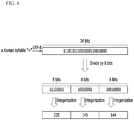
- FIG. 4 is a diagram for explaining a method of integerizing contents included in each of unit rectangles by a preprocessing unit
- FIG. 5 is a diagram for explaining a method of learning a training image by a learning unit through a convolution filter.
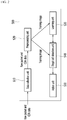
- an illegal call detection apparatus 500 includes a data collection unit 510, a preprocessing unit 520, a learning unit 530, an illegal call detection unit 540, and an action unit 550.
- the data collection unit 510 collects a raw packet generated by a subscriber terminal 100 using a Voice over Internet Protocol (VoIP) service, from at least one of the subscriber terminal 100 or a call exchanger 200.
- VoIP Voice over Internet Protocol
- the subscriber terminal 100 when the VoIP service is processed via a session initiation protocol (SIP) protocol or integrated services digital network (ISDN) user part (ISUP) protocol, the subscriber terminal 100 generates a raw packet containing various signal information.
- the data collecting unit 510 receives the generated raw packet.
- Table 1 shows field information of an exemplary raw packet generated based on the SIP protocol.
- Table 1 INVITE SIP/2.0 Call-id Via From To
- the data collection unit 510 collects call detail record (CDR) data related to the raw packet generated by the subscriber terminal 100 from the billing server 300.
- the CDR data includes information on charging data incurred from the VoIP service usage of the subscriber terminal 100.
- the CDR data includes calling number information, receiving number information, call start time information, and call duration.
- the preprocessing unit 520 generates training data by using service usage information extracted from the CDR data and service detailed information extracted from the raw packet.
- the preprocessing unit 520 determines detection time information using the time at which the CDR data is collected, and generates service usage information by extracting at least one of the calling number information or the receiving number information included in the CDR data. That is, the service usage information includes at least one of the detection time information, the calling number information, or the receiving number information.
- the preprocessing unit 520 determines at least one of receiving country information, source IP information, IP country information, and an terminal identifier by using information included in the raw data, and generates the service detailed information. That is, the service detailed information includes at least one of the receiving country information, the source IP information, the IP country information, and the terminal identifier.
- the preprocessing unit 520 generates training data by sequentially arranging in a table in the order of information included in service usage information and information included in service detailed information.
- the preprocessing unit 520 generates the training data by sequentially arranging in a table in the order of the detection time information, the calling number information, the receiving number information, the receiving country information, the source IP information, the IP country information, and the terminal identifier information.
- Table 2 shows an example of training data, and the training data shown in Table 2 may include a total of 244 bytes.
- Table 2 Detection time Calling number Receiving number Receiving country Source IP IP country Terminal identifier 20 bytes 20 bytes 40 bytes 40 bytes 20 bytes 40 bytes 64 bytes 2018/10/15 /14:00 010-2139 -1230 02-529-0219 KR 110.111.111 KR 1wk12
- the preprocessing unit 520 converts the generated training data into an image according to a predetermined imaging rule to generate a training image.
- the preprocessing unit 520 generates unit polygons, each of which visualizes information based on a byte size of information arranged in a table, and then generates a training image by arranging the unit polygons according to the order arranged in the table.
- the unit polygons consist of a rectangle having a length proportional to the byte size of each of the information as the length of both sides facing each other, and are sequentially arranged in a vertical direction so as to be staggered on the training image.
- the preprocessing unit 520 may generate a unit rectangle having the same vertical length for each of the information of Table 2.
- the vertical length of the unit rectangle may be one byte.
- the preprocessing unit 520 determines information having the smallest byte size in the training data, and determines a polygon so as to have a side length of a byte size smaller than the byte size of the corresponding information. Thereafter, the preprocessing unit 520 sequentially arranges unit rectangles inside a shape of the determined polygon.
- the preprocessing unit 520 determines a polygon with a horizontal length of 18 bytes smaller than 20 bytes, and may sequentially arrange unit rectangles for each of the information from the detection time information to the terminal identifier information, inside the polygon.
- the preprocessing unit 520 integerizes contents included in each of the unit rectangles.
- the preprocessing unit 520 divides the contents that are inputted in a bit format into each of the unit rectangles, into a predetermined bit unit, and integerizes the divided bit units.
- a Korean syllable " " included in an arbitrary unit rectangle consists of a total of 24 bits of "111010111001000110010000".
- the Korean syllable " " is pronounced "DO” in English.
- the preprocessing unit 520 divides "111010111001000110010000” into 8-bit units to generate "11101011", "10010001” and "10010000”, and may integerize each of the divided bit units.
- the integerized results correspond to "235", "145” and "144".
- the preprocessing unit 520 generates a training image by imaging entire polygons in which unit rectangles are arranged to be staggered, by using an imaging algorithm. For example, when a polygon having one side with a length of 18 bytes is imaged in FIG. 3 , a training image which has the same polygonal shape having one side with length of 144 pixels may be generated.
- the learning unit 530 extracts at least one feature from the training image, and learns whether the training image is related to an illegal call by using the features, through an illegal call detection model.
- the learning unit 530 uses the illegal call detection model that classifies whether the training image is related to an illegal call or a normal call through a CNN algorithm.
- the illegal call detection model includes one or more convolution layers in a neural network.
- the learning unit 530 extracts features of the training image through convolution filters of the convolution layers and classifies whether the training image is related to an illegal call or a normal call by applying the extracted features to the neural network.
- the learning unit 530 may extract features by applying a convolution filter with a size of 3x3 to the training image shown in FIG. 3 .
- a convolution filter with a size of 3x3 to the training image shown in FIG. 3 .
- the learning unit 530 may learn by extracting a feature of the vertical association between the detection time information at the time of initial filtering and the calling number information. Thereafter, as the convolution filter moves, the learning unit 530 may learn by extracting features of the vertical association among three types of information of the detection time information, the calling number information, and the receiving number information.
- an administrator determines a classification accuracy by inputting a training image related to an illegal call or a training image related to a normal call into the illegal call detection model, and may train the illegal call detection model until the classification accuracy comes to the same as or higher than a predetermined threshold accuracy.
- the illegal call detection unit 540 inputs the new training image into the illegal call detection model to determine whether the new training image is related to an illegal call.
- the action unit 550 blocks a subscriber terminal related to the new training image.
- the action unit 550 identifies new training data related to the new training image.
- the action unit 550 determines a call which is related to calling number information, receiving number information, receiving country information, or terminal identification information included in the new training data, and blocks the determined call or provides a voice notifying that the call cannot be connected through an announcement.
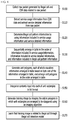
- FIG. 6 is a diagram for explaining a method of training an illegal call detection model by an illegal call detection apparatus.
- FIG. 6 the same statements as described with reference to FIG. 1 to FIG. 5 will be omitted.
- an illegal call detection apparatus 500 collects a raw packet generated by a previously detected illegal call from at least one of a subscriber terminal related to the illegal call or a call exchanger, and collects CDR data related to the raw packet from a billing server (S100).
- the illegal call detection apparatus 500 extracts service usage information from the CDR data and extracts service detailed information from the raw packet (S110).
- the illegal call detection apparatus 500 determines illegal call pattern information by using the information included in the service usage information and the service detailed information (S120).
- the illegal call detection apparatus 500 generates cumulative call count information based on calling number information and receiving number information included in service usage information.
- the cumulative call count information includes cumulative transmitting call count information and cumulative receiving call count information.
- the illegal call detection apparatus 500 counts the number of calls originated from a subscriber terminal 100 during a threshold time and determines the cumulative transmitting call count information. For example, the illegal call detection apparatus 500 may determine the cumulative transmitting call count information by counting the number of calls originated from the subscriber terminal 100 during 1 minute, 3 minutes, and 60 minutes.
- the threshold time may be set in advance or may be set dynamically.
- the illegal call detection apparatus 500 determines cumulative receiving call count information by counting the number of calls received by the subscriber terminal 100 during the threshold time. For example, the illegal call detection apparatus 500 may determine the cumulative receiving call count information by using the number of calls received by the subscriber terminal 100 during 1 minute, 3 minutes, and 60 minutes.
- the threshold time may be set in advance or may be set dynamically.
- the illegal call detection apparatus 500 tags illegal call pattern information including at least one of the cumulative transmitting call count information or the cumulative receiving call count information, as being related to an illegal call.
- the illegal call detection apparatus 500 tags the determined information as being related to the illegal call.
- the illegal call detection apparatus 500 generates training data by using the service usage information, the service detailed information, and the illegal call pattern information.
- the illegal call detection apparatus 500 generates the training data by sequentially arranging in a table in the order of information included in the service usage information, information included in the service detailed information, and information included in the illegal call pattern information (S130).
- the illegal call detection apparatus 500 may generate the training data by sequentially arranging in a table in the order of detection time information, calling number information, receiving number information, receiving country information, source IP information, IP country information, terminal identifier information, cumulative transmitting call count information, and cumulative receiving call count information.
- the illegal call detection apparatus 500 generates a training image by converting the training data into an image according to a predetermined imaging rule.
- the illegal call detection apparatus 500 generates unit polygons, each of which visualizes information arranged in the table based on the byte size of the information arranged in the table, and arranges the generated unit polygons in the order arranged in the table (S140).
- the illegal call detection apparatus 500 divides contents which are input in the bit format into each of unit rectangles, into predetermined bit units, and integerizes the divided bit units (S150).
- the illegal call detection apparatus 500 generates a training image by imaging the entire polygons in which unit rectangles are arranged to be staggered using an imaging algorithm (S160).
- the illegal call detection apparatus 500 learns that the training image is related to an illegal call (S170).
- the generated training image includes the illegal call pattern information including at least one of the cumulative transmitting call count information or the cumulative receiving call count information in addition to the service usage information and the service detailed information, so a pattern related to illegal calls collected during the threshold time may be learned additionally.
- the illegal call detection apparatus 500 determines whether the new training image is related to the illegal call by inputting the new training image into the illegal call detection model.
- the illegal call detection apparatus 500 may block a subscriber terminal related to the new training image.
Landscapes
- Engineering & Computer Science (AREA)
- Signal Processing (AREA)
- Multimedia (AREA)
- Theoretical Computer Science (AREA)
- Physics & Mathematics (AREA)
- Computer Networks & Wireless Communication (AREA)
- Evolutionary Computation (AREA)
- Health & Medical Sciences (AREA)
- Artificial Intelligence (AREA)
- General Physics & Mathematics (AREA)
- General Health & Medical Sciences (AREA)
- Software Systems (AREA)
- Computing Systems (AREA)
- Computational Linguistics (AREA)
- Mathematical Physics (AREA)
- Molecular Biology (AREA)
- Data Mining & Analysis (AREA)
- Biophysics (AREA)
- Biomedical Technology (AREA)
- Life Sciences & Earth Sciences (AREA)
- General Engineering & Computer Science (AREA)
- Computer Security & Cryptography (AREA)
- Technology Law (AREA)
- General Business, Economics & Management (AREA)
- Business, Economics & Management (AREA)
- Computer Vision & Pattern Recognition (AREA)
- Databases & Information Systems (AREA)
- Medical Informatics (AREA)
- Telephonic Communication Services (AREA)
- Data Exchanges In Wide-Area Networks (AREA)
Abstract
Description
- The present invention relates to an apparatus and method for detecting an illegal call.
- As Internet usage increases, Voice over Internet Protocol (VoIP) such as Internet phone, VoLTE, or mobile VoIP are rapidly spreading, and various types of Internet phone such as an enterprise IP-PBX, a CALL BOX, or a softphone also have been distributed.
- However, since the Internet phone accesses the Internet, the Internet phone is vulnerable to security. Particularly, there are many cases that the enterprise IP-PBXs purchased by customers in person, may use an ID and a password configured in a factory without changing them. Or the ID and the password can be found easily with a simple program. Accordingly, due to illegal calls induced by stealing IDs and passwords used for the Internet phone, customers may be damaged by charges ranging from thousands to tens of thousands dollars per month.
- The present invention provides technology to detect illegal calls by learning a generated illegal call pattern through a CNN algorithm and to block the illegal calls.
- An illegal call detection apparatus according to an embodiment of the present invention comprises: a data collecting unit that collects, from at least one of a subscriber terminal or a call exchanger, a raw packet generated by a subscriber terminal using a Voice over Internet Protocol (VoIP) service and collects, from a billing server, call detailed record (CDR) data related to the raw packet; a preprocessing unit that generates training data by using service usage information extracted from the CDR data and service detailed information extracted from the raw packet, and generates a training image by converting the training data into an image according to a predetermined imaging rule; and a learning unit that extracts at least one or more features from the training image and learns whether the training image is related to an illegal call by using the features, through an illegal call detection model.
- The service usage information includes at least one of detection time information, calling number information, or receiving number information, and the service detailed information includes at least one of receiving country information, source IP information, IP country information, and terminal identifier information.
- The preprocessing unit generates the training data by sequentially arranging in a table in the order of information included in the service usage information and information included in the service detailed information.
- The preprocessing unit generates unit polygons, each of which visualizes the information based on a byte size of the information arranged in the table, and generates the training image by arranging the unit polygons in the order arranged in the table.
- The unit polygons include a rectangle having a length proportional to a byte size of each of the information as a length of two sides facing each other, and the unit polygons are vertically arranged to be staggered in the training image according to the order arranged in the table.
- The illegal call detection apparatus further comprises an illegal call detection unit that determines whether a new training image is related to an illegal call by inputting the new training image into the illegal call detection model when the new training image is generated.
- The illegal call detection apparatus further comprises an action unit that blocks a subscriber terminal related to the new training image when the new training image is related to the illegal call.
- A method for training an illegal call detection model by an illegal call detection apparatus according to an embodiment of the present invention comprises collecting a raw packet generated by a previously detected illegal call from at least one of a subscriber terminal related to the illegal call or a call exchanger, and collecting CDR data related to the raw packet from a billing server; extracting service usage information from the CDR data, and extracting service detailed information from the raw packet; determining an illegal call pattern information by using information included in the service usage information and in the service detailed information; generating training data by using the service usage information, the service detailed information, and the illegal call pattern information; generating a training image by converting the training data into an image according to a predetermined imaging rule; and learning that the training image is related to the illegal call through the illegal call detection model.
- The service usage information includes at least one of detection time information, calling number information, or receiving number information, the service detailed information includes at least one of receiving country information, source IP information, IP country information, and a terminal identifier information, and the illegal call pattern information includes at least one of cumulative transmitting call count information or cumulative receiving call count information.
- Determining the illegal call pattern information comprises determining cumulative transmitting call count information originated from the subscriber terminal by using calling number information included in the service usage information, determining cumulative receiving call count information received by the subscriber terminal during a threshold time by using the receiving number information included in the service usage information, and tagging at least one of the cumulative transmitting call count information.
- Generating the training data comprises generating the training data by sequentially arranging in a table in the order of information included in the service usage information, information included in the service detailed information, and information included in the illegal call pattern information.
- Generating the training image comprises generating unit polygons, each of which visualizes the information arranged in the table based on a byte size of the information arranged in the table, and generating the training image by arranging the unit polygons in the order arranged in the table.
- The unit polygons include rectangular shapes having a length proportional to the byte size of information arranged in the table as lengths of both sides facing each other, and the unit polygons are sequentially arranged in a vertical direction so as to be staggered on the training image.
- A method for training an illegal call detection model by an illegal call detection apparatus according to an embodiment of the present invention further comprises, when a new training image is generated, determining whether the training image is related to an illegal call by inputting the new training image into an illegal call detection model, and blocking a subscriber terminal related to the new training image when the new training image is related to the illegal call.
- According to the present invention, by detecting and blocking illegal calls in real time, it is possible to prevent fundamentally billing damage caused by illegal calls.
-
-
FIG. 1 is a diagram illustrating an environment in which an illegal call detection apparatus according to an embodiment of the present invention is implemented. -
FIG. 2 is a diagram for explaining an illegal call detection apparatus according to an embodiment of the present invention. -
FIG. 3 is a diagram for explaining a method of generating a training image by a preprocessing unit. -
FIG. 4 is a diagram for explaining a method of integerizing contents included in each of unit rectangles by a preprocessing unit. -
FIG. 5 is a diagram for explaining a method of learning a training image by a learning unit through a convolution filter. -
FIG. 6 is a diagram for explaining a method of training an illegal call detection model by an illegal call detection apparatus. - In the following detailed description, exemplary embodiments of the present invention will be described in detail with reference to the accompanying drawings so that those of ordinary skill in the art may easily implement the present invention. However, the present invention may be implemented in various different ways and is not limited thereto. Then, in the drawings, elements irrelevant to the explanation of the present invention are omitted for simplicity of explanation, and like reference numerals designate like elements throughout the specification.
- Throughout the specification, when a part is referred to "include" a certain element, it means that it may further include other elements rather than exclude other elements, unless specifically indicates otherwise. In addition, the terms "-er", "-or", and "module" described in the specification mean units for processing at least one function and operation, and can be implemented by software, hardware, or a combination thereof.
-
FIG. 1 is a diagram illustrating an environment in which an illegal call detection apparatus according to an embodiment of the present invention is implemented. - Referring to
FIG. 1 , asubscriber terminal 100 generates raw packets depending on using a Voice over Internet Protocol (VoIP) service. - Specifically, the
subscriber terminal 100 is an Internet phone terminal, and provides internet phone service for subscriber having subscribed to the VoIP service. - The
subscriber terminal 100 may include a VoIP terminal, and may be a physical VoIP terminal device such as a SoIP phone, an IP-PBX or a call box, or may be a softphone operated by software on a PC or a mobile device. In addition, thesubscriber terminal 100 may include a terminal for using the VoIP service via aVoIP network 400. - When the
subscriber terminal 100 uses the VoIP service, thesubscriber terminal 100 transmits a raw packet including a call connection request to acall exchanger 200 via theVoIP network 400. - Upon receiving the raw packet from the
subscriber terminal 100, thecall exchanger 200 transmits a call connection request signal to a receiving terminal (not shown) corresponding to the call connection request included in the raw packet. - The
call exchanger 200 is located in a VoIP service provider network and interworks with abilling server 300. Thecall exchanger 200 transmits information on VoIP service usage of thesubscriber terminal 100 to abilling server 300. - The
billing server 300 generates call detail record (CDR) data for thesubscriber terminal 100 by using the information received from thecall exchanger 200. - Meanwhile, the
billing server 300 can generate the CDR data for thesubscriber terminal 100, even when thesubscriber terminal 100 uses a specific VoIP service (e.g., IP-centrex or calls free calls (CFC)). - The
VoIP network 400 may be a general Internet network that connects thesubscriber terminal 100 with thecall exchanger 200 and makes it possible to transmit and receive data for providing thesubscriber terminal 100 with the VoIP service. - An illegal
call detection apparatus 500 collects raw packets from at least one of thesubscriber terminal 100 or thecall exchanger 200, collects the CDR data from thebilling server 300, generates a training image using the raw packets and the CDR data, detects an illegal call by learning the training image through an illegal call detection model, and blocks the detected illegal call. Hereinafter, the illegalcall detection apparatus 500 will be described in detail. -
FIG. 2 is a diagram for explaining an illegal call detection apparatus according to an embodiment of the present invention,FIG. 3 is a diagram for explaining a method of generating a training image by a preprocessing unit,FIG. 4 is a diagram for explaining a method of integerizing contents included in each of unit rectangles by a preprocessing unit, andFIG. 5 is a diagram for explaining a method of learning a training image by a learning unit through a convolution filter. - Referring to
FIG. 2 , an illegalcall detection apparatus 500 includes adata collection unit 510, a preprocessingunit 520, alearning unit 530, an illegalcall detection unit 540, and anaction unit 550. - The
data collection unit 510 collects a raw packet generated by asubscriber terminal 100 using a Voice over Internet Protocol (VoIP) service, from at least one of thesubscriber terminal 100 or acall exchanger 200. - Specifically, when the VoIP service is processed via a session initiation protocol (SIP) protocol or integrated services digital network (ISDN) user part (ISUP) protocol, the
subscriber terminal 100 generates a raw packet containing various signal information. Thedata collecting unit 510 receives the generated raw packet. Table 1 shows field information of an exemplary raw packet generated based on the SIP protocol.Table 1 INVITE SIP/2.0 Call-id Via From To - In addition, the
data collection unit 510 collects call detail record (CDR) data related to the raw packet generated by thesubscriber terminal 100 from thebilling server 300. The CDR data includes information on charging data incurred from the VoIP service usage of thesubscriber terminal 100. Specifically, the CDR data includes calling number information, receiving number information, call start time information, and call duration. The preprocessingunit 520 generates training data by using service usage information extracted from the CDR data and service detailed information extracted from the raw packet. - Specifically, the
preprocessing unit 520 determines detection time information using the time at which the CDR data is collected, and generates service usage information by extracting at least one of the calling number information or the receiving number information included in the CDR data. That is, the service usage information includes at least one of the detection time information, the calling number information, or the receiving number information. - In addition, the
preprocessing unit 520 determines at least one of receiving country information, source IP information, IP country information, and an terminal identifier by using information included in the raw data, and generates the service detailed information. That is, the service detailed information includes at least one of the receiving country information, the source IP information, the IP country information, and the terminal identifier. - The
preprocessing unit 520 generates training data by sequentially arranging in a table in the order of information included in service usage information and information included in service detailed information. - Specifically, the
preprocessing unit 520 generates the training data by sequentially arranging in a table in the order of the detection time information, the calling number information, the receiving number information, the receiving country information, the source IP information, the IP country information, and the terminal identifier information. Table 2 shows an example of training data, and the training data shown in Table 2 may include a total of 244 bytes.Table 2 Detection time Calling number Receiving number Receiving country Source IP IP country Terminal identifier 20 bytes 20 bytes 40 bytes 40 bytes 20 bytes 40 bytes 64 bytes 2018/10/15 /14:00 010-2139 -1230 02-529-0219 KR 110.111.111 KR 1wk12 - The
preprocessing unit 520 converts the generated training data into an image according to a predetermined imaging rule to generate a training image. Referring toFIG. 3 , thepreprocessing unit 520 generates unit polygons, each of which visualizes information based on a byte size of information arranged in a table, and then generates a training image by arranging the unit polygons according to the order arranged in the table. In this case, the unit polygons consist of a rectangle having a length proportional to the byte size of each of the information as the length of both sides facing each other, and are sequentially arranged in a vertical direction so as to be staggered on the training image. - For example, as shown in
FIG. 3 , thepreprocessing unit 520 may generate a unit rectangle having the same vertical length for each of the information of Table 2. Here, the vertical length of the unit rectangle may be one byte. - Meanwhile, the
preprocessing unit 520 determines information having the smallest byte size in the training data, and determines a polygon so as to have a side length of a byte size smaller than the byte size of the corresponding information. Thereafter, thepreprocessing unit 520 sequentially arranges unit rectangles inside a shape of the determined polygon. - For example, since the smallest byte size among the information of Table 2 is 20 bytes, the
preprocessing unit 520 determines a polygon with a horizontal length of 18 bytes smaller than 20 bytes, and may sequentially arrange unit rectangles for each of the information from the detection time information to the terminal identifier information, inside the polygon. - In this case, 18 bytes among the 20 bytes of the detection time information are marked in the first row, and the remaining 2 bytes are marked in the second row. In addition, 16 bytes among the 20 bytes of the calling number information are marked in the second row, and the remaining 2 bytes are marked in the third row. Arranging unit rectangles sequentially in this way allows the unit rectangles to be staggered within the entire polygon.
- The
preprocessing unit 520 integerizes contents included in each of the unit rectangles. - Specifically, the
preprocessing unit 520 divides the contents that are inputted in a bit format into each of the unit rectangles, into a predetermined bit unit, and integerizes the divided bit units. - For example, referring to
FIG. 4 , when syllables are input in Unicode Transformation Format-8bit (UFT-8) format, a Korean syllable "" included in an arbitrary unit rectangle consists of a total of 24 bits of "111010111001000110010000". The Korean syllable " " is pronounced "DO" in English. In this case, the
preprocessing unit 520 divides "111010111001000110010000" into 8-bit units to generate "11101011", "10010001" and "10010000", and may integerize each of the divided bit units. The integerized results correspond to "235", "145" and "144". - The
preprocessing unit 520 generates a training image by imaging entire polygons in which unit rectangles are arranged to be staggered, by using an imaging algorithm. For example, when a polygon having one side with a length of 18 bytes is imaged inFIG. 3 , a training image which has the same polygonal shape having one side with length of 144 pixels may be generated. - The
learning unit 530 extracts at least one feature from the training image, and learns whether the training image is related to an illegal call by using the features, through an illegal call detection model. - Specifically, the
learning unit 530 uses the illegal call detection model that classifies whether the training image is related to an illegal call or a normal call through a CNN algorithm. - The illegal call detection model includes one or more convolution layers in a neural network. The
learning unit 530 extracts features of the training image through convolution filters of the convolution layers and classifies whether the training image is related to an illegal call or a normal call by applying the extracted features to the neural network. - For example, referring to
FIG. 5 , thelearning unit 530 may extract features by applying a convolution filter with a size of 3x3 to the training image shown inFIG. 3 . In this case, since each of the information is arranged alternately in the training image shown inFIG. 3 , features of plural information can be extracted simultaneously. - Specifically, in
FIG. 5 , thelearning unit 530 may learn by extracting a feature of the vertical association between the detection time information at the time of initial filtering and the calling number information. Thereafter, as the convolution filter moves, thelearning unit 530 may learn by extracting features of the vertical association among three types of information of the detection time information, the calling number information, and the receiving number information. - Meanwhile, an administrator determines a classification accuracy by inputting a training image related to an illegal call or a training image related to a normal call into the illegal call detection model, and may train the illegal call detection model until the classification accuracy comes to the same as or higher than a predetermined threshold accuracy.
- When a new training image is generated, the illegal
call detection unit 540 inputs the new training image into the illegal call detection model to determine whether the new training image is related to an illegal call. - If the new training image is related to an illegal call, the
action unit 550 blocks a subscriber terminal related to the new training image. - Specifically, if the new training image is related to an illegal call, the
action unit 550 identifies new training data related to the new training image. - Thereafter, the
action unit 550 determines a call which is related to calling number information, receiving number information, receiving country information, or terminal identification information included in the new training data, and blocks the determined call or provides a voice notifying that the call cannot be connected through an announcement. -
FIG. 6 is a diagram for explaining a method of training an illegal call detection model by an illegal call detection apparatus. - In
FIG. 6 , the same statements as described with reference toFIG. 1 to FIG. 5 will be omitted. - Referring to
FIG. 6 , an illegalcall detection apparatus 500 collects a raw packet generated by a previously detected illegal call from at least one of a subscriber terminal related to the illegal call or a call exchanger, and collects CDR data related to the raw packet from a billing server (S100). - The illegal
call detection apparatus 500 extracts service usage information from the CDR data and extracts service detailed information from the raw packet (S110). - The illegal
call detection apparatus 500 determines illegal call pattern information by using the information included in the service usage information and the service detailed information (S120). - Specifically, the illegal
call detection apparatus 500 generates cumulative call count information based on calling number information and receiving number information included in service usage information. In this case, the cumulative call count information includes cumulative transmitting call count information and cumulative receiving call count information. - The illegal
call detection apparatus 500 counts the number of calls originated from asubscriber terminal 100 during a threshold time and determines the cumulative transmitting call count information. For example, the illegalcall detection apparatus 500 may determine the cumulative transmitting call count information by counting the number of calls originated from thesubscriber terminal 100 during 1 minute, 3 minutes, and 60 minutes. Here, the threshold time may be set in advance or may be set dynamically. - In addition, the illegal
call detection apparatus 500 determines cumulative receiving call count information by counting the number of calls received by thesubscriber terminal 100 during the threshold time. For example, the illegalcall detection apparatus 500 may determine the cumulative receiving call count information by using the number of calls received by thesubscriber terminal 100 during 1 minute, 3 minutes, and 60 minutes. Here, the threshold time may be set in advance or may be set dynamically. - The illegal
call detection apparatus 500 tags illegal call pattern information including at least one of the cumulative transmitting call count information or the cumulative receiving call count information, as being related to an illegal call. - Specifically, since the collected raw data and CDR data are generated by the illegal call, the illegal
call detection apparatus 500 tags the determined information as being related to the illegal call. - The illegal
call detection apparatus 500 generates training data by using the service usage information, the service detailed information, and the illegal call pattern information. - Specifically, the illegal
call detection apparatus 500 generates the training data by sequentially arranging in a table in the order of information included in the service usage information, information included in the service detailed information, and information included in the illegal call pattern information (S130). - For example, the illegal
call detection apparatus 500 may generate the training data by sequentially arranging in a table in the order of detection time information, calling number information, receiving number information, receiving country information, source IP information, IP country information, terminal identifier information, cumulative transmitting call count information, and cumulative receiving call count information. - The illegal
call detection apparatus 500 generates a training image by converting the training data into an image according to a predetermined imaging rule. - Specifically, the illegal
call detection apparatus 500 generates unit polygons, each of which visualizes information arranged in the table based on the byte size of the information arranged in the table, and arranges the generated unit polygons in the order arranged in the table (S140). - The illegal
call detection apparatus 500 divides contents which are input in the bit format into each of unit rectangles, into predetermined bit units, and integerizes the divided bit units (S150). - The illegal
call detection apparatus 500 generates a training image by imaging the entire polygons in which unit rectangles are arranged to be staggered using an imaging algorithm (S160). - Through the illegal call detection model, the illegal
call detection apparatus 500 learns that the training image is related to an illegal call (S170). In this case, the generated training image includes the illegal call pattern information including at least one of the cumulative transmitting call count information or the cumulative receiving call count information in addition to the service usage information and the service detailed information, so a pattern related to illegal calls collected during the threshold time may be learned additionally. - Thereafter, when a new training image is generated, the illegal
call detection apparatus 500 determines whether the new training image is related to the illegal call by inputting the new training image into the illegal call detection model. When the new training image is related to the illegal call, the illegalcall detection apparatus 500 may block a subscriber terminal related to the new training image. - According to the present invention, by detecting and blocking illegal calls in real time, it is possible to fundamentally prevent billing damage caused by illegal calls.
Claims (14)
- An illegal call detection apparatus comprising:a data collecting unit that collects, from at least one of a subscriber terminal or a call exchanger, a raw packet generated by the subscriber terminal using a Voice over Internet Protocol (VoIP) service and collects, from a billing server, call detailed record (CDR) data related to the raw packet;a preprocessing unit that generates training data by using service usage information extracted from the CDR data and service detailed information extracted from the raw packet, and generates a training image by converting the training data into an image according to a predetermined imaging rule; anda learning unit that extracts at least one or more features from the training image and learns whether the training image is related to an illegal call by using the features, through an illegal call detection model.
- The illegal call detection apparatus of claim 1, wherein the service usage information includes at least one of detection time information, calling number information, or receiving number information, and
wherein the service detailed information includes at least one of receiving country information, source IP information, IP country information, and terminal identifier information. - The illegal call detection apparatus of claim 1, wherein the preprocessing unit generates the training data by sequentially arranging in a table in the order of information included in the service usage information and information included in the service detailed information.
- The illegal call detection apparatus of claim 3, wherein the preprocessing unit generates unit polygons, each of which visualizes the information based on a byte size of the information arranged in the table, and generates the training image by arranging the unit polygons in the order arranged in the table.
- The illegal call detection apparatus of claim 4, wherein the unit polygons include a rectangle having a length proportional to a byte size of each of the information as a length of two sides facing each other, and the unit polygons are vertically arranged to be staggered in the training image according to the order arranged in the table.
- The illegal call detection apparatus of claim 1, further comprising
an illegal call detection unit that determines whether a new training image is related to an illegal call by inputting the new training image into the illegal call detection model when the new training image is generated. - The illegal call detection apparatus of claim 6, further comprising
an action unit that blocks a subscriber terminal related to the new training image when the new training image is related to the illegal call. - A method of training an illegal call detection model by an illegal call detection apparatus, the method comprising:collecting a raw packet generated by a previously detected illegal call from at least one of a subscriber terminal related to the illegal call or a call exchanger, and collecting CDR data related to the raw packet from a billing server;extracting service usage information from the CDR data, and extracting service detailed information from the raw packet;determining an illegal call pattern information by using information included in the service usage information and in the service detailed information;generating training data by using the service usage information, the service detailed information, and the illegal call pattern information;generating a training image by converting the training data into an image according to a predetermined imaging rule; andlearning that the training image is related to the illegal call through the illegal call detection model.
- The method of claim 8, wherein the service usage information includes at least one of detection time information, calling number information, or receiving number information,
wherein the service detailed information includes at least one of receiving country information, source IP information, IP country information, and a terminal identifier information, and
wherein the illegal call pattern information includes at least one of cumulative transmitting call count information or cumulative receiving call count information. - The method of claim 8, wherein determining the illegal call pattern information comprises
determining cumulative transmitting call count information originated from the subscriber terminal by using calling number information included in the service usage information,
determining cumulative receiving call count information received by the subscriber terminal during a threshold time by using the receiving number information included in the service usage information, and
tagging at least one of the cumulative transmitting call count information or the cumulative receiving call count information, as related to an illegal call. - The method of claim 8, wherein generating the training data comprises generating the training data by sequentially arranging in a table in the order of information included in the service usage information, information included in the service detailed information, and information included in the illegal call pattern information.
- The method of claim 11, wherein generating the training image comprises
generating unit polygons, each of which visualizes the information arranged in the table based on a byte size of the information arranged in the table, and
generating the training image by arranging the unit polygons in the order arranged in the table - The method of claim 12, wherein the unit polygons include rectangular shapes having a length proportional to the byte size of information arranged in the table as lengths of both sides facing each other, and the unit polygons are sequentially arranged in a vertical direction so as to be staggered on the training image.
- The method of claim 8, further comprising:when a new training image is generated, determining whether the training image is related to an illegal call by inputting the new training image into an illegal call detection model; andblocking a subscriber terminal related to the new training image when the new training image is related to the illegal call.
Applications Claiming Priority (4)
| Application Number | Priority Date | Filing Date | Title |
|---|---|---|---|
| KR20180071042 | 2018-06-20 | ||
| KR20180087377 | 2018-07-26 | ||
| KR1020180144892A KR102135242B1 (en) | 2018-06-20 | 2018-11-21 | Apparatus and method for detecting illegal call |
| PCT/KR2019/002966 WO2019245131A1 (en) | 2018-06-20 | 2019-03-14 | Apparatus and method for detecting illegal call |
Publications (3)
| Publication Number | Publication Date |
|---|---|
| EP3813347A1 true EP3813347A1 (en) | 2021-04-28 |
| EP3813347A4 EP3813347A4 (en) | 2022-03-02 |
| EP3813347B1 EP3813347B1 (en) | 2023-02-08 |
Family
ID=68984174
Family Applications (1)
| Application Number | Title | Priority Date | Filing Date |
|---|---|---|---|
| EP19821679.8A Active EP3813347B1 (en) | 2018-06-20 | 2019-03-14 | Apparatus and method for detecting illegal call |
Country Status (3)
| Country | Link |
|---|---|
| US (1) | US11323560B2 (en) |
| EP (1) | EP3813347B1 (en) |
| WO (1) | WO2019245131A1 (en) |
Family Cites Families (20)
| Publication number | Priority date | Publication date | Assignee | Title |
|---|---|---|---|---|
| US6377672B1 (en) * | 1996-03-29 | 2002-04-23 | British Telecommunications Public Limited Company | Fraud monitoring in a telecommunications network |
| US6163604A (en) * | 1998-04-03 | 2000-12-19 | Lucent Technologies | Automated fraud management in transaction-based networks |
| IL132915A (en) * | 1999-11-14 | 2004-05-12 | Networks Assoc Tech Inc | Method for secure function execution by calling address validation |
| US20020138427A1 (en) * | 2001-03-20 | 2002-09-26 | Trivedi Prakash A. | Systems and methods for communicating from an integration platform to a billing unit |
| JP2006025374A (en) * | 2004-07-09 | 2006-01-26 | Fujitsu Ltd | Wireless communication unauthorized use verification system |
| US8804926B2 (en) * | 2007-06-21 | 2014-08-12 | Motorola Mobility Llc | Communicating modem or multimedia terminal adapter status to a handset for a cordless telephone |
| KR100978972B1 (en) * | 2008-01-17 | 2010-08-30 | 한남대학교 산학협력단 | SV Intrusion Detection System and Its Operation Method |
| US9338196B2 (en) * | 2009-04-30 | 2016-05-10 | Nec Corporation | Malicious call detection apparatus, malicious call detecting method and computer program for detecting malicious calls |
| KR20120010372A (en) * | 2010-07-26 | 2012-02-03 | 에스케이 텔레콤주식회사 | International telephone illegal call automatic detection system and method |
| WO2014107141A1 (en) * | 2013-01-03 | 2014-07-10 | Sestek Ses Ve Iletişim Bilgisayar Teknolojileri Sanayii Ve Ticaret Anonim Şirketi | Speech analytics system and methodology with accurate statistics |
| US20150032449A1 (en) | 2013-07-26 | 2015-01-29 | Nuance Communications, Inc. | Method and Apparatus for Using Convolutional Neural Networks in Speech Recognition |
| KR101492733B1 (en) | 2013-10-02 | 2015-02-12 | 서울과학기술대학교 산학협력단 | Method for detecting toll fraud attack in Voice over Internet Protocol service using novelty detection technique |
| KR101506982B1 (en) * | 2013-12-11 | 2015-03-30 | (주)엔컴 | System and method for detecting and bclocking illegal call through data network |
| KR101942965B1 (en) * | 2015-06-01 | 2019-01-28 | 주식회사 케이티 | System and method for detecting illegal traffic |
| EP3363189A1 (en) * | 2015-10-14 | 2018-08-22 | Pindrop Security, Inc. | Call detail record analysis to identify fraudulent activity and fraud detection in interactive voice response systems |
| JP6568821B2 (en) * | 2016-04-18 | 2019-08-28 | 京セラ株式会社 | Portable electronic device, security control method, and security control program |
| CA2984304C (en) * | 2016-11-01 | 2023-06-13 | Transaction Network Services, Inc. | Systems and methods for automatically conducting risk assessments for telephony communications |
| US9729727B1 (en) | 2016-11-18 | 2017-08-08 | Ibasis, Inc. | Fraud detection on a communication network |
| US11176188B2 (en) | 2017-01-11 | 2021-11-16 | Siemens Healthcare Gmbh | Visualization framework based on document representation learning |
| US10554821B1 (en) * | 2018-11-09 | 2020-02-04 | Noble Systems Corporation | Identifying and processing neighbor spoofed telephone calls in a VoIP-based telecommunications network |
-
2019
- 2019-03-14 WO PCT/KR2019/002966 patent/WO2019245131A1/en not_active Ceased
- 2019-03-14 EP EP19821679.8A patent/EP3813347B1/en active Active
-
2020
- 2020-12-17 US US17/125,339 patent/US11323560B2/en active Active
Also Published As
| Publication number | Publication date |
|---|---|
| WO2019245131A1 (en) | 2019-12-26 |
| US11323560B2 (en) | 2022-05-03 |
| US20210105357A1 (en) | 2021-04-08 |
| EP3813347A4 (en) | 2022-03-02 |
| EP3813347B1 (en) | 2023-02-08 |
Similar Documents
| Publication | Publication Date | Title |
|---|---|---|
| US9729727B1 (en) | Fraud detection on a communication network | |
| CN106790105A (en) | Reptile identification hold-up interception method and system based on business datum | |
| US12210656B2 (en) | Information processing system, information processing method, program, and user interface | |
| JP2006279930A (en) | Method and device for detecting and blocking unauthorized access | |
| CN100479396C (en) | Method and device for detecting the message attack | |
| US20090138959A1 (en) | DEVICE, SYSTEM AND METHOD FOR DROPPING ATTACK MULTIMEDIA PACKET IN THE VoIP SERVICE | |
| CN107705126A (en) | A kind of method and device for judging transaction risk | |
| CN112118442A (en) | AI video call quality analysis method, device, computer equipment and storage medium | |
| PT1318655E (en) | A method for detecting fraudulent calls in telecommunication networks using dna | |
| CN105072296B (en) | A kind of method, apparatus and system that dial-up person is marked | |
| KR102228021B1 (en) | System for detecting illegal call using machine learning and control method thereof | |
| EP3813347B1 (en) | Apparatus and method for detecting illegal call | |
| KR102135242B1 (en) | Apparatus and method for detecting illegal call | |
| CN105812596B (en) | Method for displaying calling number in IMS network, related device and system | |
| CN113705428B (en) | Living body detection method and device, electronic equipment and computer readable storage medium | |
| EP2490423A1 (en) | A bypass detection system resembling human behaviour | |
| KR20120057293A (en) | Method and apparatus of charging the network usage ofVoIP traffic for VoIP service provider | |
| CN115883234A (en) | Brute force cracking detection method and related assembly | |
| CN115842888A (en) | Marketing call control method and device, electronic equipment and readable storage medium | |
| CN113286035B (en) | Abnormal call detection method, device, equipment and medium | |
| CN105894285A (en) | Using method of face payment system based on Bluetooth-assisted authentication | |
| WO2021176559A1 (en) | Special fraud countermeasure device, special fraud countermeasure method, and special fraud countermeasure program | |
| US20260122174A1 (en) | Calling line identity spoof detection in the presence of repeat calls | |
| CN116963070A (en) | Number whitelist generation method, device, equipment and computer program product | |
| ES2785654T3 (en) | Telephone communication system to detect misuse in a public telephone network |
Legal Events
| Date | Code | Title | Description |
|---|---|---|---|
| STAA | Information on the status of an ep patent application or granted ep patent |
Free format text: STATUS: THE INTERNATIONAL PUBLICATION HAS BEEN MADE |
|
| PUAI | Public reference made under article 153(3) epc to a published international application that has entered the european phase |
Free format text: ORIGINAL CODE: 0009012 |
|
| STAA | Information on the status of an ep patent application or granted ep patent |
Free format text: STATUS: REQUEST FOR EXAMINATION WAS MADE |
|
| 17P | Request for examination filed |
Effective date: 20210119 |
|
| AK | Designated contracting states |
Kind code of ref document: A1 Designated state(s): AL AT BE BG CH CY CZ DE DK EE ES FI FR GB GR HR HU IE IS IT LI LT LU LV MC MK MT NL NO PL PT RO RS SE SI SK SM TR |
|
| AX | Request for extension of the european patent |
Extension state: BA ME |
|
| DAV | Request for validation of the european patent (deleted) | ||
| DAX | Request for extension of the european patent (deleted) | ||
| A4 | Supplementary search report drawn up and despatched |
Effective date: 20220131 |
|
| RIC1 | Information provided on ipc code assigned before grant |
Ipc: H04M 7/00 20060101ALI20220125BHEP Ipc: H04L 65/65 20220101ALI20220125BHEP Ipc: H04L 65/1069 20220101ALI20220125BHEP Ipc: H04L 65/10 20220101ALI20220125BHEP Ipc: H04L 65/1053 20220101ALI20220125BHEP Ipc: H04L 65/1076 20220101ALI20220125BHEP Ipc: G06N 3/08 20060101ALI20220125BHEP Ipc: H04M 3/22 20060101AFI20220125BHEP |
|
| RIC1 | Information provided on ipc code assigned before grant |
Ipc: G06V 10/82 20220101ALI20220705BHEP Ipc: G06N 3/04 20060101ALI20220705BHEP Ipc: H04M 7/00 20060101ALI20220705BHEP Ipc: H04L 65/65 20220101ALI20220705BHEP Ipc: H04L 65/1069 20220101ALI20220705BHEP Ipc: H04L 65/10 20220101ALI20220705BHEP Ipc: H04L 65/1053 20220101ALI20220705BHEP Ipc: H04L 65/1076 20220101ALI20220705BHEP Ipc: G06N 3/08 20060101ALI20220705BHEP Ipc: H04M 3/22 20060101AFI20220705BHEP |
|
| GRAP | Despatch of communication of intention to grant a patent |
Free format text: ORIGINAL CODE: EPIDOSNIGR1 |
|
| STAA | Information on the status of an ep patent application or granted ep patent |
Free format text: STATUS: GRANT OF PATENT IS INTENDED |
|
| INTG | Intention to grant announced |
Effective date: 20220908 |
|
| GRAS | Grant fee paid |
Free format text: ORIGINAL CODE: EPIDOSNIGR3 |
|
| GRAA | (expected) grant |
Free format text: ORIGINAL CODE: 0009210 |
|
| STAA | Information on the status of an ep patent application or granted ep patent |
Free format text: STATUS: THE PATENT HAS BEEN GRANTED |
|
| AK | Designated contracting states |
Kind code of ref document: B1 Designated state(s): AL AT BE BG CH CY CZ DE DK EE ES FI FR GB GR HR HU IE IS IT LI LT LU LV MC MK MT NL NO PL PT RO RS SE SI SK SM TR |
|
| REG | Reference to a national code |
Ref country code: GB Ref legal event code: FG4D |
|
| REG | Reference to a national code |
Ref country code: CH Ref legal event code: EP Ref country code: AT Ref legal event code: REF Ref document number: 1547708 Country of ref document: AT Kind code of ref document: T Effective date: 20230215 |
|
| REG | Reference to a national code |
Ref country code: DE Ref legal event code: R096 Ref document number: 602019025140 Country of ref document: DE |
|
| REG | Reference to a national code |
Ref country code: IE Ref legal event code: FG4D |
|
| REG | Reference to a national code |
Ref country code: LT Ref legal event code: MG9D |
|
| REG | Reference to a national code |
Ref country code: NL Ref legal event code: MP Effective date: 20230208 |
|
| REG | Reference to a national code |
Ref country code: AT Ref legal event code: MK05 Ref document number: 1547708 Country of ref document: AT Kind code of ref document: T Effective date: 20230208 |
|
| PG25 | Lapsed in a contracting state [announced via postgrant information from national office to epo] |
Ref country code: RS Free format text: LAPSE BECAUSE OF FAILURE TO SUBMIT A TRANSLATION OF THE DESCRIPTION OR TO PAY THE FEE WITHIN THE PRESCRIBED TIME-LIMIT Effective date: 20230208 Ref country code: PT Free format text: LAPSE BECAUSE OF FAILURE TO SUBMIT A TRANSLATION OF THE DESCRIPTION OR TO PAY THE FEE WITHIN THE PRESCRIBED TIME-LIMIT Effective date: 20230609 Ref country code: NO Free format text: LAPSE BECAUSE OF FAILURE TO SUBMIT A TRANSLATION OF THE DESCRIPTION OR TO PAY THE FEE WITHIN THE PRESCRIBED TIME-LIMIT Effective date: 20230508 Ref country code: NL Free format text: LAPSE BECAUSE OF FAILURE TO SUBMIT A TRANSLATION OF THE DESCRIPTION OR TO PAY THE FEE WITHIN THE PRESCRIBED TIME-LIMIT Effective date: 20230208 Ref country code: LV Free format text: LAPSE BECAUSE OF FAILURE TO SUBMIT A TRANSLATION OF THE DESCRIPTION OR TO PAY THE FEE WITHIN THE PRESCRIBED TIME-LIMIT Effective date: 20230208 Ref country code: LT Free format text: LAPSE BECAUSE OF FAILURE TO SUBMIT A TRANSLATION OF THE DESCRIPTION OR TO PAY THE FEE WITHIN THE PRESCRIBED TIME-LIMIT Effective date: 20230208 Ref country code: HR Free format text: LAPSE BECAUSE OF FAILURE TO SUBMIT A TRANSLATION OF THE DESCRIPTION OR TO PAY THE FEE WITHIN THE PRESCRIBED TIME-LIMIT Effective date: 20230208 Ref country code: ES Free format text: LAPSE BECAUSE OF FAILURE TO SUBMIT A TRANSLATION OF THE DESCRIPTION OR TO PAY THE FEE WITHIN THE PRESCRIBED TIME-LIMIT Effective date: 20230208 Ref country code: AT Free format text: LAPSE BECAUSE OF FAILURE TO SUBMIT A TRANSLATION OF THE DESCRIPTION OR TO PAY THE FEE WITHIN THE PRESCRIBED TIME-LIMIT Effective date: 20230208 |
|
| PG25 | Lapsed in a contracting state [announced via postgrant information from national office to epo] |
Ref country code: SE Free format text: LAPSE BECAUSE OF FAILURE TO SUBMIT A TRANSLATION OF THE DESCRIPTION OR TO PAY THE FEE WITHIN THE PRESCRIBED TIME-LIMIT Effective date: 20230208 Ref country code: PL Free format text: LAPSE BECAUSE OF FAILURE TO SUBMIT A TRANSLATION OF THE DESCRIPTION OR TO PAY THE FEE WITHIN THE PRESCRIBED TIME-LIMIT Effective date: 20230208 Ref country code: IS Free format text: LAPSE BECAUSE OF FAILURE TO SUBMIT A TRANSLATION OF THE DESCRIPTION OR TO PAY THE FEE WITHIN THE PRESCRIBED TIME-LIMIT Effective date: 20230608 Ref country code: GR Free format text: LAPSE BECAUSE OF FAILURE TO SUBMIT A TRANSLATION OF THE DESCRIPTION OR TO PAY THE FEE WITHIN THE PRESCRIBED TIME-LIMIT Effective date: 20230509 Ref country code: FI Free format text: LAPSE BECAUSE OF FAILURE TO SUBMIT A TRANSLATION OF THE DESCRIPTION OR TO PAY THE FEE WITHIN THE PRESCRIBED TIME-LIMIT Effective date: 20230208 |
|
| PG25 | Lapsed in a contracting state [announced via postgrant information from national office to epo] |
Ref country code: SM Free format text: LAPSE BECAUSE OF FAILURE TO SUBMIT A TRANSLATION OF THE DESCRIPTION OR TO PAY THE FEE WITHIN THE PRESCRIBED TIME-LIMIT Effective date: 20230208 Ref country code: RO Free format text: LAPSE BECAUSE OF FAILURE TO SUBMIT A TRANSLATION OF THE DESCRIPTION OR TO PAY THE FEE WITHIN THE PRESCRIBED TIME-LIMIT Effective date: 20230208 Ref country code: EE Free format text: LAPSE BECAUSE OF FAILURE TO SUBMIT A TRANSLATION OF THE DESCRIPTION OR TO PAY THE FEE WITHIN THE PRESCRIBED TIME-LIMIT Effective date: 20230208 Ref country code: DK Free format text: LAPSE BECAUSE OF FAILURE TO SUBMIT A TRANSLATION OF THE DESCRIPTION OR TO PAY THE FEE WITHIN THE PRESCRIBED TIME-LIMIT Effective date: 20230208 Ref country code: CZ Free format text: LAPSE BECAUSE OF FAILURE TO SUBMIT A TRANSLATION OF THE DESCRIPTION OR TO PAY THE FEE WITHIN THE PRESCRIBED TIME-LIMIT Effective date: 20230208 |
|
| REG | Reference to a national code |
Ref country code: CH Ref legal event code: PL |
|
| REG | Reference to a national code |
Ref country code: DE Ref legal event code: R097 Ref document number: 602019025140 Country of ref document: DE |
|
| PG25 | Lapsed in a contracting state [announced via postgrant information from national office to epo] |
Ref country code: SK Free format text: LAPSE BECAUSE OF FAILURE TO SUBMIT A TRANSLATION OF THE DESCRIPTION OR TO PAY THE FEE WITHIN THE PRESCRIBED TIME-LIMIT Effective date: 20230208 |
|
| REG | Reference to a national code |
Ref country code: BE Ref legal event code: MM Effective date: 20230331 |
|
| PLBE | No opposition filed within time limit |
Free format text: ORIGINAL CODE: 0009261 |
|
| STAA | Information on the status of an ep patent application or granted ep patent |
Free format text: STATUS: NO OPPOSITION FILED WITHIN TIME LIMIT |
|
| PG25 | Lapsed in a contracting state [announced via postgrant information from national office to epo] |
Ref country code: LU Free format text: LAPSE BECAUSE OF NON-PAYMENT OF DUE FEES Effective date: 20230314 |
|
| 26N | No opposition filed |
Effective date: 20231109 |
|
| PG25 | Lapsed in a contracting state [announced via postgrant information from national office to epo] |
Ref country code: MC Free format text: LAPSE BECAUSE OF FAILURE TO SUBMIT A TRANSLATION OF THE DESCRIPTION OR TO PAY THE FEE WITHIN THE PRESCRIBED TIME-LIMIT Effective date: 20230208 |
|
| REG | Reference to a national code |
Ref country code: IE Ref legal event code: MM4A |
|
| PG25 | Lapsed in a contracting state [announced via postgrant information from national office to epo] |
Ref country code: SI Free format text: LAPSE BECAUSE OF FAILURE TO SUBMIT A TRANSLATION OF THE DESCRIPTION OR TO PAY THE FEE WITHIN THE PRESCRIBED TIME-LIMIT Effective date: 20230208 Ref country code: MC Free format text: LAPSE BECAUSE OF FAILURE TO SUBMIT A TRANSLATION OF THE DESCRIPTION OR TO PAY THE FEE WITHIN THE PRESCRIBED TIME-LIMIT Effective date: 20230208 Ref country code: LI Free format text: LAPSE BECAUSE OF NON-PAYMENT OF DUE FEES Effective date: 20230331 Ref country code: IE Free format text: LAPSE BECAUSE OF NON-PAYMENT OF DUE FEES Effective date: 20230314 Ref country code: CH Free format text: LAPSE BECAUSE OF NON-PAYMENT OF DUE FEES Effective date: 20230331 |
|
| PG25 | Lapsed in a contracting state [announced via postgrant information from national office to epo] |
Ref country code: BE Free format text: LAPSE BECAUSE OF NON-PAYMENT OF DUE FEES Effective date: 20230331 |
|
| PG25 | Lapsed in a contracting state [announced via postgrant information from national office to epo] |
Ref country code: IT Free format text: LAPSE BECAUSE OF FAILURE TO SUBMIT A TRANSLATION OF THE DESCRIPTION OR TO PAY THE FEE WITHIN THE PRESCRIBED TIME-LIMIT Effective date: 20230208 |
|
| PG25 | Lapsed in a contracting state [announced via postgrant information from national office to epo] |
Ref country code: BG Free format text: LAPSE BECAUSE OF FAILURE TO SUBMIT A TRANSLATION OF THE DESCRIPTION OR TO PAY THE FEE WITHIN THE PRESCRIBED TIME-LIMIT Effective date: 20230208 |
|
| PG25 | Lapsed in a contracting state [announced via postgrant information from national office to epo] |
Ref country code: BG Free format text: LAPSE BECAUSE OF FAILURE TO SUBMIT A TRANSLATION OF THE DESCRIPTION OR TO PAY THE FEE WITHIN THE PRESCRIBED TIME-LIMIT Effective date: 20230208 |
|
| PG25 | Lapsed in a contracting state [announced via postgrant information from national office to epo] |
Ref country code: CY Free format text: LAPSE BECAUSE OF FAILURE TO SUBMIT A TRANSLATION OF THE DESCRIPTION OR TO PAY THE FEE WITHIN THE PRESCRIBED TIME-LIMIT; INVALID AB INITIO Effective date: 20190314 |
|
| PG25 | Lapsed in a contracting state [announced via postgrant information from national office to epo] |
Ref country code: HU Free format text: LAPSE BECAUSE OF FAILURE TO SUBMIT A TRANSLATION OF THE DESCRIPTION OR TO PAY THE FEE WITHIN THE PRESCRIBED TIME-LIMIT; INVALID AB INITIO Effective date: 20190314 |
|
| PG25 | Lapsed in a contracting state [announced via postgrant information from national office to epo] |
Ref country code: TR Free format text: LAPSE BECAUSE OF FAILURE TO SUBMIT A TRANSLATION OF THE DESCRIPTION OR TO PAY THE FEE WITHIN THE PRESCRIBED TIME-LIMIT Effective date: 20230208 |
|
| PGFP | Annual fee paid to national office [announced via postgrant information from national office to epo] |
Ref country code: GB Payment date: 20260216 Year of fee payment: 8 |
|
| PGFP | Annual fee paid to national office [announced via postgrant information from national office to epo] |
Ref country code: DE Payment date: 20260218 Year of fee payment: 8 |
|
| PGFP | Annual fee paid to national office [announced via postgrant information from national office to epo] |
Ref country code: FR Payment date: 20260223 Year of fee payment: 8 |