EP3813325A1 - Method and device for establishing trusted computing cluster - Google Patents
Method and device for establishing trusted computing cluster Download PDFInfo
- Publication number
- EP3813325A1 EP3813325A1 EP19901556.1A EP19901556A EP3813325A1 EP 3813325 A1 EP3813325 A1 EP 3813325A1 EP 19901556 A EP19901556 A EP 19901556A EP 3813325 A1 EP3813325 A1 EP 3813325A1
- Authority
- EP
- European Patent Office
- Prior art keywords
- trusted computing
- unit
- authentication
- computing units
- group
- Prior art date
- Legal status (The legal status is an assumption and is not a legal conclusion. Google has not performed a legal analysis and makes no representation as to the accuracy of the status listed.)
- Granted
Links
Images






Classifications
-
- H—ELECTRICITY
- H04—ELECTRIC COMMUNICATION TECHNIQUE
- H04L—TRANSMISSION OF DIGITAL INFORMATION, e.g. TELEGRAPHIC COMMUNICATION
- H04L63/00—Network architectures or network communication protocols for network security
- H04L63/08—Network architectures or network communication protocols for network security for authentication of entities
- H04L63/0869—Network architectures or network communication protocols for network security for authentication of entities for achieving mutual authentication
-
- H—ELECTRICITY
- H04—ELECTRIC COMMUNICATION TECHNIQUE
- H04L—TRANSMISSION OF DIGITAL INFORMATION, e.g. TELEGRAPHIC COMMUNICATION
- H04L63/00—Network architectures or network communication protocols for network security
- H04L63/06—Network architectures or network communication protocols for network security for supporting key management in a packet data network
- H04L63/065—Network architectures or network communication protocols for network security for supporting key management in a packet data network for group communications
-
- H—ELECTRICITY
- H04—ELECTRIC COMMUNICATION TECHNIQUE
- H04L—TRANSMISSION OF DIGITAL INFORMATION, e.g. TELEGRAPHIC COMMUNICATION
- H04L63/00—Network architectures or network communication protocols for network security
- H04L63/10—Network architectures or network communication protocols for network security for controlling access to devices or network resources
- H04L63/104—Grouping of entities
-
- H—ELECTRICITY
- H04—ELECTRIC COMMUNICATION TECHNIQUE
- H04L—TRANSMISSION OF DIGITAL INFORMATION, e.g. TELEGRAPHIC COMMUNICATION
- H04L9/00—Cryptographic mechanisms or cryptographic arrangements for secret or secure communications; Network security protocols
- H04L9/08—Key distribution or management, e.g. generation, sharing or updating, of cryptographic keys or passwords
- H04L9/0816—Key establishment, i.e. cryptographic processes or cryptographic protocols whereby a shared secret becomes available to two or more parties, for subsequent use
- H04L9/085—Secret sharing or secret splitting, e.g. threshold schemes
-
- H—ELECTRICITY
- H04—ELECTRIC COMMUNICATION TECHNIQUE
- H04L—TRANSMISSION OF DIGITAL INFORMATION, e.g. TELEGRAPHIC COMMUNICATION
- H04L67/00—Network arrangements or protocols for supporting network services or applications
- H04L67/50—Network services
- H04L67/53—Network services using third party service providers
Definitions
- Implementations of the present specification relate to the field of trusted computing clusters, and in particular, to a method and an apparatus for establishing a trusted computing cluster.
- trusted computing units are often used for trusted computing and data processing.
- the trusted computing unit can ensure security of code execution in the trusted computing unit, and an external entity (including an operating system or a driver) cannot obtain secrets such as internal runtime memory of the trusted computing unit.
- each trusted computing unit is not trusted.
- a trusted computing cluster is established, that is, trust relationships are established between the trusted computing units, and a common encryption key is obtained through negotiation.
- a plurality of trusted computing units have a same key, it is considered that the plurality of trusted computing units form a logical trusted computing cluster. The key cannot be cracked by any trusted computing unit other than both communication parties.
- the present application provides a method and an apparatus for establishing a trusted computing cluster, to shorten time for establishing a trusted computing cluster.
- a method for establishing a trusted computing cluster is provided.
- the method is used to form a trusted computing cluster by using N trusted computing units, the method including: grouping the N trusted computing units into a plurality of groups, each group of the plurality of groups including a number of trusted computing units not greater than K+1, K being a maximum number of trusted computing units with which a trusted computing unit of the N trusted computing unit simultaneously performs trust authentication; identifying a first trusted computing unit in each group, and causing first trusted computing units in the plurality of groups to each respectively perform inter-unit trust authentication with other trusted computing units in a same group in parallel; performing inter-group trust authentication between/among the plurality of groups in parallel to obtain the N trusted computing units on which trust authentication succeeds; and propagating secret information in the N trusted computing units on which trust authentication succeeds, so that the N trusted computing units obtain the same secret information to form the trusted computing cluster.
- the inter-unit trust authentication includes: each trusted computing unit of two trusted computing units performing mutual trust authentication through following actions: obtaining a unit authentication report of other trusted computing unit of the two trusted computing units from the other trusted computing unit, and sending the unit authentication report of the other trusted computing unit to a third-party authentication institution for authentication; and sending a unit authentication report of the trusted computing unit to the other trusted computing unit for the other trusted computing unit to send the unit authentication report of the trusted computing unit to the third-party authentication institution for authentication.
- the performing the inter-group trust authentication between/among the plurality of groups in parallel includes: causing the plurality of groups to each perform inter-group trust authentication with a neighboring group in a group sequence of the plurality of groups, in parallel.
- the performing the inter-group trust authentication between/among the plurality of groups in parallel includes: causing at least one group in the plurality of groups to simultaneously perform inter-group trust authentication with a maximum of K other groups.
- the inter-group trust authentication includes: identifying a second trusted computing unit in each group of the inter-group trust authentication, and causing second trusted computing units of the plurality of groups to perform inter-unit trust authentication among the second trusted computing units.
- the propagating the secret information in the N trusted computing units on which trust authentication succeeds includes: identifying a third trusted computing unit in the N trusted computing units, identifying first data of the third trusted computing unit as the secret information, and causing the third trusted computing unit to simultaneously and separately send the secret information to M trusted computing units, M not exceeding a maximum number H of trusted computing units to which a trusted computing unit simultaneously sends the secret information.
- the propagating the secret information in the N trusted computing units on which trust authentication succeeds includes: causing each of a plurality of trusted computing units that have the secret information to simultaneously and separately send the secret information to a plurality of trusted computing units that do not have the secret information.
- the secret information is a cluster key.
- an apparatus for establishing a trusted computing cluster is provided.
- the apparatus is configured to form a trusted computing cluster by using N trusted computing units, the apparatus including: a grouping unit, configured to group the N trusted computing units into a plurality of groups, each group of the plurality of groups including a number of trusted computing units not greater than K +1, K being a maximum number of trusted computing units with which a trusted computing unit of the N trusted computing unit simultaneously performs trust authentication; a first authentication unit, configured to identify a first trusted computing unit in each group, and cause first trusted computing units in the plurality of groups to each respectively perform inter-unit trust authentication with other trusted computing units in a same group in parallel; a second authentication unit, configured to perform inter-group trust authentication between/among the plurality of groups in parallel to obtain the N trusted computing units on which trust authentication succeeds; and a transmission unit, configured to propagate secret information in the N trusted computing units on which trust authentication succeeds, so that the N trusted computing units obtain the same secret information to form the trusted computing cluster.
- the inter-unit trust authentication includes: each trusted computing unit of two trusted computing units performing mutual trust authentication through the following actions: obtaining a unit authentication report of other trusted computing unit of the two trusted computing units from the other trusted computing unit, and sending the unit authentication report of the other trusted computing unit to a third-party authentication institution for authentication; and sending a unit authentication report of the trusted computing unit to the other trusted computing unit for the other trusted computing unit to send the unit authentication report of the trusted computing unit to the third-party authentication institution for authentication.
- the second authentication unit is specifically configured to cause the plurality of groups to each perform inter-group trust authentication with a neighboring group in a group sequence of the plurality of groups, in parallel.
- the second authentication unit is specifically configured to cause at least one group in the plurality of groups to simultaneously perform inter-group trust authentication with a maximum of K other groups.
- the inter-group trust authentication includes: identifying a second trusted computing unit in each group of the inter-group trust authentication, and causing second trusted computing units of the plurality of groups to perform inter-unit trust authentication among the second trusted computing units.
- the transmission unit is specifically configured to identify a third trusted computing unit in the N trusted computing units, identify first data of the third trusted computing unit as the secret information, and cause the third trusted computing unit to simultaneously and separately send the secret information to M trusted computing units, M not exceeding a maximum number H of trusted computing units to which a trusted computing unit simultaneously sends the secret information.
- the transmission unit is specifically configured to cause each of a plurality of trusted computing units that have the secret information to simultaneously and separately send the secret information to a plurality of trusted computing units that do not have the secret information.
- the secret information is a cluster key.
- a computer-readable storage medium stores a computer program, a computer being caused to perform the method according to the first aspect when the computer program is executed in the computer.
- a computing device including a memory and a processor, the memory storing executable code, and the processor implementing the method according to the first aspect when executing the executable code.
- the N trusted computing units are grouped into the plurality of groups, and the number of trusted computing units included in each group is caused to be not greater than K +1; and one first trusted computing unit is identified in each group, and the first trusted computing units in the groups are caused to perform inter-unit trust authentication with the other trusted computing units in the same groups in parallel; then, inter-group trust authentication is performed between/among the plurality of groups in parallel to obtain the N trusted computing units on which trust authentication succeeds; and finally, the secret information is propagated in the N trusted computing units on which trust authentication succeeds, so that the N trusted computing units obtain the same secret information to form the trusted cluster of the N trusted computing units.
- time for establishing a trusted cluster is shortened, and efficiency of establishing a trusted cluster is improved.
- FIG. 1 is a schematic diagram illustrating a scenario according to an implementation of the present application.
- a trusted computing cluster Rc is constructed by using a plurality of trusted computing units ( N 1 , N 2 , N 3 , ..., and N n ), the trusted computing units N 1 , N 2 , N 3 , ..., and N n are all caused to maintain the same key Ec , and the key Ec is used as a cluster key of the trusted computing cluster Rc , to facilitate subsequent secret data transmission between/among the trusted computing units. Any data transmission between/among the trusted computing units is encrypted by using the cluster key Ec , thereby improving security of secret data transmission.
- the trusted computing cluster Rc is centrally managed by a cluster manager.
- At least the following process is performed for forming the trusted computing cluster shown in FIG. 1 by using a plurality of trusted computing units: First, mutual trust authentication is performed between/among the plurality of trusted computing units to confirm that the other party is a trusted computing unit. Then, a key is propagated between/among the trusted computing units, so that the plurality of trusted computing units on which mutual trust authentication succeeds maintain the common key. As such, the trusted computing cluster is formed.
- FIG. 2(a) and FIG. 2(b) are schematic process diagrams of a method for establishing a trusted computing cluster.
- the trusted computing cluster is serially established by using a central trusted computing unit.
- establishment of a trusted cluster is divided into two processes.
- the first process is shown in FIG. 2(a) , where trust authentication is serially established between/among n trusted computing units; the second process is shown in FIG.
- time consumed for establishing the trusted computing cluster is also divided into two parts:
- time t1 is required for completing mutual trust authentication between any two of the n trusted computing units, and one trusted computing unit can establish trust authentication with a maximum of K trusted computing units in parallel; and after trust authentication is completed, time t2 is required for sending the key to another trusted computing unit by a trusted computing unit, and a trusted computing unit can transmit the key to a maximum of H nodes in parallel.
- the n trusted computing units complete trust authentication with one another in a serial manner starting with or by the central trusted computing unit N 1 , that is, the central trusted computing unit N 1 establishes trust authentication with a trusted computing unit N 2 , and then the trusted computing unit N 2 establishes trust authentication with a trusted computing unit N 3 .
- the central trusted computing unit N 1 After the n trusted computing units have completed trust authentication between/among one another, the central trusted computing unit N 1 starts propagating the key in a serial manner, as shown in FIG. 2(b) .
- the implementations of the present specification further provide a method and an apparatus for establishing a trusted computing cluster.
- FIG. 3 is a schematic flowchart illustrating a method for establishing a trusted computing cluster according to an implementation of the present application. The method is performed by a cluster manager, and is used to form a trusted computing cluster by using N trusted computing units. As shown in FIG. 3 , the method can include the following steps.
- step S101 the N trusted computing units are grouped into a plurality of groups, each group of the plurality of groups including a number of trusted computing units not greater than K+1, K being a maximum number of trusted computing units with which a trusted computing unit of the N trusted computing unit simultaneously performs trust authentication, and 1 ⁇ K ⁇ N.
- a purpose of the grouping in this step is to cause trusted computing units in each group to complete mutual trust authentication within one authentication period t1. Therefore, a basis of the grouping is a parallel authentication capability of the trusted computing unit, that is, a maximum number of trusted computing units with which a trusted computing unit of the N trusted computing unit simultaneously performs trust authentication. If each trusted computing unit simultaneously performs trust authentication with a maximum of K other trusted computing units, the number of trusted computing units included in each group is caused to be not greater than K +1.
- the parallel authentication capability K of the trusted computing unit depends on a computing capability of a central processing unit (CPU) of the trusted computing unit. In other possible implementations, the parallel authentication capability K of the trusted computing unit can depend on other factors such as network settings.
- CPU central processing unit
- the cluster manager can learn the maximum trust authentication number K of each trusted computing unit in advance, and group the N trusted computing units accordingly.
- the cluster manager can group the N trusted computing units into the plurality of groups based on a unique identifier such as a serial number of each trusted computing unit.
- the groups obtained by the cluster manager are groups of a uniform size, that is, the groups include the same number of trusted computing units.
- the groups obtained by the cluster manager are groups of non-uniform sizes, that is, the groups include different numbers of trusted computing units.
- a group can include one trusted computing unit, a group can include two trusted computing units, another group includes four trusted computing units, etc.
- step S102 a first trusted computing unit is identified in each group, and first trusted computing units in the plurality of groups are caused to each respectively perform inter-unit trust authentication with other trusted computing units in a same group in parallel.
- the cluster manager may randomly identify one trusted computing unit in each group as the first trusted computing unit, and then perform inter-unit trust authentication between/among the first trusted computing units in the groups and the other trusted computing units in the same groups in parallel.
- a first group includes five trusted computing units ( N 1 , N 2 , N 3 , N 4 , and N 5 ), and a second group includes three trusted computing units ( N 6 , N 7 , and N 8 ) .
- the cluster manager specifies N 1 in the first group as a first trusted computing unit, and specifies N 6 in the second group as a first trusted computing unit.
- a process in which the two groups establish trust authentication relationships in parallel is as follows: N 1 in the first group separately and simultaneously establishes trust authentication with N 2 , N 3 , N 4 , and N 5 ; and meanwhile, N 6 in the second group separately and simultaneously establishes trust authentication with N 7 and N 8 .
- the two groups perform the trust authentication in parallel. Therefore, time consumed for the trust authentication process is equivalent to time for establishing trust authentication between two trusted computing units, that is, one authentication period t1.
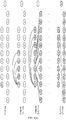
- any trusted computing unit in each group can separately establish trust authentication with other trusted computing units in the same group in parallel, as shown in FIG. 4(b) .
- FIG. 4(b) the first group in FIG. 4(a) is used as an example for description.
- the trusted computing units N 1 , N 2 , N 3 , N 4 , and N 5 in the group perform mutual trust authentication.
- inter-unit trust authentication between any two trusted computing units includes the following steps performed by each of the two trusted computing units to perform mutual trust authentication, as shown in FIG. 5 .
- a trusted computing unit X obtains a unit authentication report, including, for example, a certificate and signature information, of a trusted computing unit Y from the trusted computing unit Y , sends the unit authentication report to a third-party authentication institution for authentication, and receives an authentication result sent by the third-party authentication institution. Simultaneously, the trusted computing unit X sends a unit authentication report of the trusted computing unit X to the trusted computing unit Y , so that the trusted computing unit Y sends the unit authentication report to the third-party authentication institution for authentication, and receives an authentication result sent by the third-party authentication institution.
- a unit authentication report including, for example, a certificate and signature information
- both the authentication results by the third-party authentication institution authenticate, respectively, that the trusted computing unit X and the trusted computing unit Y are trusted authentication units, a trusted relationship is established between the trusted computing unit X and the trusted computing unit Y ; or if either one of the results of authenticating the trusted computing unit X or authenticating the trusted computing unit Y by the third-party authentication institution indicates an untrusted authentication unit, no trusted relationship is established between the trusted computing unit X and the trusted computing unit Y.
- step S103 inter-group trust authentication is performed between/among the plurality of groups in parallel to obtain the N trusted computing units on which trust authentication succeeds.
- the cluster manager After completing S101 and S102, that is, after grouping the N trusted computing units and establishing the trust authentication between/among the trusted computing units in each of the groups in parallel, the cluster manager performs trust authentication between/among the groups in parallel.
- the cluster manager when performing grouping, sets a group serial number for each group, and when performing inter-group trust authentication between/among the plurality of groups in parallel, the cluster manager performs inter-group trust authentication between/among groups with adjacent group serial numbers in parallel, as shown in FIG. 6(a) .
- K 1 is used as an example for description.
- No trust authentication is established between/among the N trusted computing units in an initial state.
- the N trusted computing units are grouped into the plurality of groups, and an inter-unit trust authentication is established between/among trusted computing units in each group.
- inter-group trust authentication is established between groups with adjacent group serial numbers.
- the establishing the inter-group trust authentication between/among the groups can be specifically as follows: As shown in FIG. 6(b) , first, the cluster manager randomly specifies one trusted computing unit in each group as a second trusted computing unit. In this implementation, the second trusted computing unit identified in each group can be the same as or different from the first trusted computing unit identified in S102. This is not limited in this implementation.
- the cluster manager causes trust authentication to be established between second trusted computing units in the groups.
- the second trusted computing unit in each group establishes a trust connection to a second trusted computing unit in a neighboring group.
- each group establishes trust authentication with one group in parallel.
- the performing the inter-group trust authentication between/among the plurality of groups in parallel includes: the cluster manager causes at least one group in the plurality of groups to simultaneously perform inter-group trust authentication with a maximum of K other groups.
- a certain group in the plurality of groups performs inter-group trust authentication with K groups in parallel, as shown in FIG. 7(a) .
- the inter-group trust authentication performed by the certain group with the K groups in parallel can be specifically as follows:
- the cluster manager specifies one second trusted computing unit for each group, which is the same as the case in FIG. 6(b) .
- the second trusted computing unit identified in each group can be the same as or different from the first trusted computing unit identified in S102. This is not limited in this implementation.
- a second trusted computing unit in the certain group simultaneously establishes trust authentication with second trusted computing units in K other groups, as shown in FIG. 7(b) .
- K 3 is used as an example for description.
- time consumed for establishing trust authentication between/among groups is equivalent to time ( t1 ) for establishing trust authentication between two trusted computing units.
- total time consumed for establishing the trust authentication between/among the N trusted computing units is 2 ⁇ t1.
- step S104 secret information is propagated in the N trusted computing units on which trust authentication succeeds, so that the N trusted computing units obtain the same secret information to form the trusted computing cluster.
- the cluster manager randomly specifies one of the N trusted computing units as a third trusted computing unit.
- the third trusted computing unit can be a first trusted computing unit that is in a specific group and that is identified by the cluster manager in S102, or can be any trusted computing unit in any group other than the first trusted computing unit; or can be a second trusted computing unit that is in a specific group and that is identified by the cluster manager in S103, or can be any trusted computing unit in any group other than the second trusted computing unit.
- the cluster manager specifies first data of the third trusted computing unit as the secret information.
- the secret information can be a key.
- the secret information can be other secret data that subsequently needs to be maintained or propagated in the trusted computing cluster.
- the cluster manager causes the third trusted computing unit to simultaneously and separately send the secret information to M trusted computing units, M doing not exceed H, and H being a maximum number of other trusted computing units to which a trusted computing unit simultaneously sends the secret information.
- the maximum number H for sending the secret information in parallel can depend on, for example, a CPU processing capability or network settings.
- the propagating the secret information in the N trusted computing units on which trust authentication succeeds further includes: causing each of a plurality of trusted computing units that have the secret information to simultaneously and separately send the secret information to a plurality of trusted computing units that do not have the secret information, so that the N trusted computing units obtain the same key to form the trusted computing cluster of the N trusted computing nodes.
- the key is transmitted by a trusted computing unit N 1 to a trusted computing unit N 2 , which consumes time t2.
- the trusted computing unit N 1 transmits the key to a trusted computing unit N 3 and the trusted computing unit N 2 transmits the key to a trusted computing unit N 4 in parallel, which consumes time t2.
- the trusted computing unit N 1 transmits the key to a trusted computing unit N 5
- the trusted computing unit N 2 transmits the key to a trusted computing unit N 6
- the trusted computing unit N 3 transmits the key to a trusted computing unit N 7
- the trusted computing unit N 4 transmits the key to a trusted computing unit N 8 , which consumes time t2.
- trusted computing units that obtain the key separately transmit the key in parallel to trusted computing units that do not obtain the key until the N trusted computing units obtain the key to form a trusted computing cluster of the N trusted computing units.
- Time ( log ( H+1 ) N ) ⁇ t2 needs to be consumed for transmitting the key between/among the N trusted computing units until each of the N trusted computing units obtains the key.
- K and H can be the same value, or can be different values.
- a smaller value e.g. , min( H , K )
- K and H can separately send the key to min( H , K ) trusted computing units in parallel.
- time log (( min ( H , K)+1 ) N ) ⁇ t2 needs to be consumed for transmitting the key between/among the N trusted computing units until each of the N trusted computing units obtains the key.
- time for establishing a trusted computing cluster is shortened, and efficiency of establishing a trusted computing cluster is improved.
- each node in the N trusted computing units can non-uniformly and concurrently transmit the key to other trusted computing units that do not obtain the key.
- the maximum number H of trusted computing units to which one trusted computing unit can send the key is equal to 4. As shown in FIG.
- a trusted computing unit N 1 separately transmits the key to four trusted computing units ( N 2 , N 3 , N 4 , and N 5 ) in parallel; and within the second t2 time, the trusted computing units N 1 , N 2 , N 3 , N 4 , and N 5 can separately transmit the key in parallel to three trusted computing units that do not obtain the key, for example, N 1 transmits the key to N 6 , N 7 , and N 8 , N 2 transmits the key to N 9 , N 10 , and N 11 , N 3 transmits the key to N 12 , N 13 , and N 14 , N 4 transmits the key to N 15 , N 16 , and N 17 , and N 5 transmits the key to N 18 , N 19 , and N 20 .
- the trusted computing units N 1 to N 20 that obtain the key can concurrently and separately transmit the key to trusted computing units (less than or equal to four trusted computing units) that do not obtain the key until the N trusted computing units all obtain the key to construct a trusted computing cluster of the N trusted computing units.
- Q ⁇ t2 time needs to be consumed, and log ((min(H , K)+1) N ⁇ Q ⁇ log 2 N .
- the maximum time consumed for establishing the trusted computing cluster through calculation is greater than 2 ⁇ t1 +( log ((min(H, K)+1) N ) ⁇ t2 and is less than 2 ⁇ t1 + (log 2 N) ⁇ t2.
- the time for establishing the trusted computing cluster is shortened.
- the cluster manager can directly perform trust authentication between/among the N trusted computing units in parallel without performing grouping, thereby further shortening the time for establishing the trusted cluster.
- FIG. 2(a) and FIG. 2(b) to FIG. 8(a) and FIG. 8(b) describe the process of establishing the trusted computing cluster.
- the following describes the apparatus provided in the implementations of the present application with reference to FIG. 9 .
- the apparatus 900 is configured to form a trusted computing cluster by using N trusted computing units, the apparatus 900 including: a grouping unit 901, configured to group the N trusted computing units into a plurality of groups, each group of the plurality of groups including a number of trusted computing units not greater than K+1, K being a maximum number of trusted computing units with which a trusted computing unit of the N trusted computing unit simultaneously performs trust authentication; a first authentication unit 902, configured to identify a first trusted computing unit in each group, and cause first trusted computing units in the plurality of groups to each respectively perform inter-unit trust authentication with other trusted computing units in a same group in parallel; a second authentication unit 903, configured to perform inter-group trust authentication between/among the plurality of groups in parallel to obtain the N trusted computing units on which trust authentication succeeds; and a transmission unit 904, configured to propagate secret information in the N trusted computing units on which trust authentication succeeds, so that the N trusted computing units obtain the same secret information to form the trusted computing cluster.
- a grouping unit 901 configured to group the N trusted
- the inter-unit trust authentication includes: each trusted computing unit of two trusted computing units performing mutual trust authentication through following actions: obtaining a unit authentication report of other trusted computing unit of the two trusted computing units from the other trusted computing unit, and sending the unit authentication report of the other trusted computing unit to a third-party authentication institution for authentication; and sending a unit authentication report of the trusted computing unit to the other trusted computing unit for the other trusted computing unit to send the unit authentication report of the trusted computing unit to the third-party authentication institution for authentication.
- the second authentication unit 903 is specifically configured to cause the plurality of groups to each perform inter-group trust authentication with a neighboring group in a group sequence of the plurality of groups, in parallel.
- the second authentication unit 903 is specifically configured to cause at least one group in the plurality of groups to simultaneously perform inter-group trust authentication with a maximum of K other groups.
- the inter-group trust authentication includes: identifying a second trusted computing unit in each group of the inter-group trust authentication, and causing inter-unit trust authentication to be performed between/among second trusted computing units.
- the transmission unit 904 is specifically configured to identify a third trusted computing unit in the N trusted computing units, identify first data of the third trusted computing unit as the secret information, and cause the third trusted computing unit to simultaneously and separately send the secret information to M trusted computing units, M not exceeding a maximum number H of trusted computing units to which a trusted computing unit simultaneously sends the secret information.
- the transmission unit 904 is specifically configured to cause each of a plurality of trusted computing units that have the secret information to simultaneously and separately send the secret information to a plurality of trusted computing units that do not have the secret information.
- the secret information is a cluster key.
- the apparatus forms the trusted computing cluster by using the N trusted computing units.
- the N trusted computing units must first perform bidirectional mutual identity authentication, and the key is transmitted only when the dual-party authentication succeeds, so that all the N trusted computing units have the same key as the cluster key.
- the N trusted computing units are grouped, trust authentication between/among trusted computing units in the groups is established in parallel, and trust authentication between/among the groups is established in parallel, to form the N trusted computing units on which trust authentication succeeds; and then, the secret information is propagated between/among the N trusted computing units, so that all the N trusted computing units obtain the secret information to obtain the trusted computing cluster of the N trusted computing units, thereby shortening time for establishing the trusted computing cluster.
- An implementation of the present application further provides a computer-readable storage medium.
- the computer-readable storage medium stores a computer program, a computer being caused to perform the method described with reference to FIG. 3 when the computer program is executed in the computer.
- An implementation of the present application further provides a computing device, including a memory and a processor, the memory storing executable code, and the processor implementing the method described with reference to FIG. 3 when executing the executable code.
Landscapes
- Engineering & Computer Science (AREA)
- Computer Security & Cryptography (AREA)
- Computer Networks & Wireless Communication (AREA)
- Signal Processing (AREA)
- Computer Hardware Design (AREA)
- Computing Systems (AREA)
- General Engineering & Computer Science (AREA)
- Storage Device Security (AREA)
- Mobile Radio Communication Systems (AREA)
Abstract
Description
- Implementations of the present specification relate to the field of trusted computing clusters, and in particular, to a method and an apparatus for establishing a trusted computing cluster.
- For security of computing and data transmission, trusted computing units are often used for trusted computing and data processing. The trusted computing unit can ensure security of code execution in the trusted computing unit, and an external entity (including an operating system or a driver) cannot obtain secrets such as internal runtime memory of the trusted computing unit. In an initial state, each trusted computing unit is not trusted. As a result, it cannot be ensured that information propagated between the trusted computing units is not disclosed. To ensure security of information transmission, a trusted computing cluster is established, that is, trust relationships are established between the trusted computing units, and a common encryption key is obtained through negotiation. When a plurality of trusted computing units have a same key, it is considered that the plurality of trusted computing units form a logical trusted computing cluster. The key cannot be cracked by any trusted computing unit other than both communication parties.
- It is very time consuming to establish a trusted computing cluster related to a huge number of trusted computing units under conventional ways. Therefore, a new method needs to be found to establish the trusted computing cluster.
- The present application provides a method and an apparatus for establishing a trusted computing cluster, to shorten time for establishing a trusted computing cluster.
- According to a first aspect, a method for establishing a trusted computing cluster is provided. The method is used to form a trusted computing cluster by using N trusted computing units, the method including: grouping the N trusted computing units into a plurality of groups, each group of the plurality of groups including a number of trusted computing units not greater than K+1, K being a maximum number of trusted computing units with which a trusted computing unit of the N trusted computing unit simultaneously performs trust authentication; identifying a first trusted computing unit in each group, and causing first trusted computing units in the plurality of groups to each respectively perform inter-unit trust authentication with other trusted computing units in a same group in parallel; performing inter-group trust authentication between/among the plurality of groups in parallel to obtain the N trusted computing units on which trust authentication succeeds; and propagating secret information in the N trusted computing units on which trust authentication succeeds, so that the N trusted computing units obtain the same secret information to form the trusted computing cluster.
- In an implementation, the inter-unit trust authentication includes: each trusted computing unit of two trusted computing units performing mutual trust authentication through following actions: obtaining a unit authentication report of other trusted computing unit of the two trusted computing units from the other trusted computing unit, and sending the unit authentication report of the other trusted computing unit to a third-party authentication institution for authentication; and sending a unit authentication report of the trusted computing unit to the other trusted computing unit for the other trusted computing unit to send the unit authentication report of the trusted computing unit to the third-party authentication institution for authentication.
- In an implementation, the performing the inter-group trust authentication between/among the plurality of groups in parallel includes: causing the plurality of groups to each perform inter-group trust authentication with a neighboring group in a group sequence of the plurality of groups, in parallel.
- In an implementation, the performing the inter-group trust authentication between/among the plurality of groups in parallel includes: causing at least one group in the plurality of groups to simultaneously perform inter-group trust authentication with a maximum of K other groups.
- In an implementation, the inter-group trust authentication includes: identifying a second trusted computing unit in each group of the inter-group trust authentication, and causing second trusted computing units of the plurality of groups to perform inter-unit trust authentication among the second trusted computing units.
- In an implementation, the propagating the secret information in the N trusted computing units on which trust authentication succeeds includes: identifying a third trusted computing unit in the N trusted computing units, identifying first data of the third trusted computing unit as the secret information, and causing the third trusted computing unit to simultaneously and separately send the secret information to M trusted computing units, M not exceeding a maximum number H of trusted computing units to which a trusted computing unit simultaneously sends the secret information.
- In an implementation, the propagating the secret information in the N trusted computing units on which trust authentication succeeds includes: causing each of a plurality of trusted computing units that have the secret information to simultaneously and separately send the secret information to a plurality of trusted computing units that do not have the secret information.
- In an implementation, the secret information is a cluster key.
- According to a second aspect, an apparatus for establishing a trusted computing cluster is provided. The apparatus is configured to form a trusted computing cluster by using N trusted computing units, the apparatus including: a grouping unit, configured to group the N trusted computing units into a plurality of groups, each group of the plurality of groups including a number of trusted computing units not greater than K+1, K being a maximum number of trusted computing units with which a trusted computing unit of the N trusted computing unit simultaneously performs trust authentication; a first authentication unit, configured to identify a first trusted computing unit in each group, and cause first trusted computing units in the plurality of groups to each respectively perform inter-unit trust authentication with other trusted computing units in a same group in parallel; a second authentication unit, configured to perform inter-group trust authentication between/among the plurality of groups in parallel to obtain the N trusted computing units on which trust authentication succeeds; and a transmission unit, configured to propagate secret information in the N trusted computing units on which trust authentication succeeds, so that the N trusted computing units obtain the same secret information to form the trusted computing cluster.
- In an implementation, the inter-unit trust authentication includes: each trusted computing unit of two trusted computing units performing mutual trust authentication through the following actions: obtaining a unit authentication report of other trusted computing unit of the two trusted computing units from the other trusted computing unit, and sending the unit authentication report of the other trusted computing unit to a third-party authentication institution for authentication; and sending a unit authentication report of the trusted computing unit to the other trusted computing unit for the other trusted computing unit to send the unit authentication report of the trusted computing unit to the third-party authentication institution for authentication.
- In an implementation, the second authentication unit is specifically configured to cause the plurality of groups to each perform inter-group trust authentication with a neighboring group in a group sequence of the plurality of groups, in parallel.
- In an implementation, the second authentication unit is specifically configured to cause at least one group in the plurality of groups to simultaneously perform inter-group trust authentication with a maximum of K other groups.
- In an implementation, the inter-group trust authentication includes: identifying a second trusted computing unit in each group of the inter-group trust authentication, and causing second trusted computing units of the plurality of groups to perform inter-unit trust authentication among the second trusted computing units.
- In an implementation, the transmission unit is specifically configured to identify a third trusted computing unit in the N trusted computing units, identify first data of the third trusted computing unit as the secret information, and cause the third trusted computing unit to simultaneously and separately send the secret information to M trusted computing units, M not exceeding a maximum number H of trusted computing units to which a trusted computing unit simultaneously sends the secret information.
- In an implementation, the transmission unit is specifically configured to cause each of a plurality of trusted computing units that have the secret information to simultaneously and separately send the secret information to a plurality of trusted computing units that do not have the secret information.
- In an implementation, the secret information is a cluster key.
- According to a third aspect, a computer-readable storage medium is provided. The computer-readable storage medium stores a computer program, a computer being caused to perform the method according to the first aspect when the computer program is executed in the computer.
- According to a fourth aspect, a computing device is provided, including a memory and a processor, the memory storing executable code, and the processor implementing the method according to the first aspect when executing the executable code.
- Based on the method and the apparatus for establishing a trusted cluster provided in the implementations of the present specification, first, the N trusted computing units are grouped into the plurality of groups, and the number of trusted computing units included in each group is caused to be not greater than K+1; and one first trusted computing unit is identified in each group, and the first trusted computing units in the groups are caused to perform inter-unit trust authentication with the other trusted computing units in the same groups in parallel; then, inter-group trust authentication is performed between/among the plurality of groups in parallel to obtain the N trusted computing units on which trust authentication succeeds; and finally, the secret information is propagated in the N trusted computing units on which trust authentication succeeds, so that the N trusted computing units obtain the same secret information to form the trusted cluster of the N trusted computing units. As such, time for establishing a trusted cluster is shortened, and efficiency of establishing a trusted cluster is improved.
- To describe the technical solutions in the plurality of implementations disclosed in the present specification more clearly, the following briefly describes the accompanying drawings required for describing the implementations. Apparently, the accompanying drawings in the following description show merely a plurality of implementations disclosed in the present specification, and a person of ordinary skill in the art can still derive other drawings from these accompanying drawings without creative efforts.
-
FIG. 1 is a schematic diagram illustrating a scenario according to an implementation of the present specification; -
FIG. 2(a) is a schematic diagram illustrating an authentication process of establishing trust authentication between trusted computing units; -
FIG. 2(b) is a schematic diagram illustrating a transmission process of transmitting a key between trusted computing units; -
FIG. 3 is a schematic flowchart illustrating a method for establishing a trusted computing cluster according to an implementation; -
FIG. 4(a) is a schematic diagram illustrating a process of establishing trust authentication between trusted computing units according to an implementation; -
FIG. 4(b) is a schematic diagram illustrating another process of establishing trust authentication between trusted computing units according to an implementation; -
FIG. 5 is a schematic diagram illustrating a process of establishing trust authentication between two trusted computing units according to an implementation; -
FIG. 6(a) is a schematic diagram illustrating a process of establishing trust authentication between groups according to an implementation; -
FIG. 6(b) is a schematic diagram illustrating another process of establishing trust authentication between groups according to an implementation; -
FIG. 7(a) is a schematic diagram illustrating another process of establishing trust authentication between groups according to an implementation; -
FIG. 7(b) is a schematic diagram illustrating another process of establishing trust authentication between groups according to an implementation; -
FIG. 8(a) is a schematic diagram illustrating a process of transmitting a key between trusted computing units according to an implementation; -
FIG. 8(b) is a schematic diagram illustrating another process of transmitting a key between trusted computing units according to an implementation; and -
FIG. 9 is a schematic structural diagram illustrating an apparatus for establishing a trusted computing cluster according to an implementation. - The following describes the solutions in the implementations of the present specification with reference to the accompanying drawings.
-
FIG. 1 is a schematic diagram illustrating a scenario according to an implementation of the present application. As shown inFIG. 1 , a trusted computing cluster Rc is constructed by using a plurality of trusted computing units (N1 , N2 , N3 , ..., and Nn ), the trusted computing units N1 , N2 , N3 , ..., and Nn are all caused to maintain the same key Ec, and the key Ec is used as a cluster key of the trusted computing cluster Rc, to facilitate subsequent secret data transmission between/among the trusted computing units. Any data transmission between/among the trusted computing units is encrypted by using the cluster key Ec, thereby improving security of secret data transmission. The trusted computing cluster Rc is centrally managed by a cluster manager. - At least the following process is performed for forming the trusted computing cluster shown in
FIG. 1 by using a plurality of trusted computing units: First, mutual trust authentication is performed between/among the plurality of trusted computing units to confirm that the other party is a trusted computing unit. Then, a key is propagated between/among the trusted computing units, so that the plurality of trusted computing units on which mutual trust authentication succeeds maintain the common key. As such, the trusted computing cluster is formed. - According to a solution, a trusted computing cluster is serially formed.
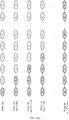
FIG. 2(a) andFIG. 2(b) are schematic process diagrams of a method for establishing a trusted computing cluster. As shown inFIG. 2(a) andFIG. 2(b) , the trusted computing cluster is serially established by using a central trusted computing unit. As described herein, establishment of a trusted cluster is divided into two processes. In the solution of serially establishing a trusted computing cluster, the first process is shown inFIG. 2(a) , where trust authentication is serially established between/among n trusted computing units; the second process is shown inFIG. 2(b) , where a key is serially propagated between/among the n trusted computing units after authentication on the n trusted computing units is completed in the first process ofFIG. 2(a) , so that all the trusted computing units have the common key. As such, a logical trusted computing cluster is formed. - It can be understood that time consumed for establishing the trusted computing cluster is also divided into two parts:
- 1. time consumed for establishing the trust authentication between/among the trusted computing units; and
- 2. time consumed for transmitting the key between/among the trusted computing units.
- It is assumed that time t1 is required for completing mutual trust authentication between any two of the n trusted computing units, and one trusted computing unit can establish trust authentication with a maximum of K trusted computing units in parallel; and after trust authentication is completed, time t2 is required for sending the key to another trusted computing unit by a trusted computing unit, and a trusted computing unit can transmit the key to a maximum of H nodes in parallel.
- In this case, as shown in
FIG. 2(a) , K=1 is used as an example for description. The n trusted computing units complete trust authentication with one another in a serial manner starting with or by the central trusted computing unit N1 , that is, the central trusted computing unit N1 establishes trust authentication with a trusted computing unit N2, and then the trusted computing unit N2 establishes trust authentication with a trusted computing unit N3. Similarly, trust authenticity is sequentially and serially established until the n trusted computing units complete trust authentication between/among one another, and required time T1=(n-1)∗ t1. In this case, if one trusted computing unit simultaneously establishes trusted authentication relationships with K trusted computing units, time T1=t1∗ (n-1)/K needs to be consumed for completing trust authentication by the n trusted computing units. - After the n trusted computing units have completed trust authentication between/among one another, the central trusted computing unit N1 starts propagating the key in a serial manner, as shown in
FIG. 2(b) . InFIG. 2(b) , H=1 is used as an example for description. That is, the trusted computing units N1 , N2 , N3 , ..., and Nn transmit the key one by one, so that the n trusted computing units have the same key to form the trusted computing cluster, and required time T2=t2 ∗(n-1). In this case, if one trusted computing unit simultaneously propagates the key to H trusted computing units, time T2=t2 ∗(n-1)/H needs to be consumed. - As such, total time consumed for serially establishing the trusted computing cluster by using the central trusted computing unit is as follows:

- To further shorten time for establishing a trusted computing cluster, the implementations of the present specification further provide a method and an apparatus for establishing a trusted computing cluster.
-
FIG. 3 is a schematic flowchart illustrating a method for establishing a trusted computing cluster according to an implementation of the present application. The method is performed by a cluster manager, and is used to form a trusted computing cluster by using N trusted computing units. As shown inFIG. 3 , the method can include the following steps. - In step S101, the N trusted computing units are grouped into a plurality of groups, each group of the plurality of groups including a number of trusted computing units not greater than K+1, K being a maximum number of trusted computing units with which a trusted computing unit of the N trusted computing unit simultaneously performs trust authentication, and 1≤K≤N.
- It should be understood that a purpose of the grouping in this step is to cause trusted computing units in each group to complete mutual trust authentication within one authentication period t1. Therefore, a basis of the grouping is a parallel authentication capability of the trusted computing unit, that is, a maximum number of trusted computing units with which a trusted computing unit of the N trusted computing unit simultaneously performs trust authentication. If each trusted computing unit simultaneously performs trust authentication with a maximum of K other trusted computing units, the number of trusted computing units included in each group is caused to be not greater than K+1.
- In an implementation, the parallel authentication capability K of the trusted computing unit depends on a computing capability of a central processing unit (CPU) of the trusted computing unit. In other possible implementations, the parallel authentication capability K of the trusted computing unit can depend on other factors such as network settings.
- The cluster manager can learn the maximum trust authentication number K of each trusted computing unit in advance, and group the N trusted computing units accordingly.
- In some implementations, the cluster manager can group the N trusted computing units into the plurality of groups based on a unique identifier such as a serial number of each trusted computing unit.
- In some implementations, the groups obtained by the cluster manager are groups of a uniform size, that is, the groups include the same number of trusted computing units.
- In some implementations, the groups obtained by the cluster manager are groups of non-uniform sizes, that is, the groups include different numbers of trusted computing units. For example, a group can include one trusted computing unit, a group can include two trusted computing units, another group includes four trusted computing units, etc.
- Then, in step S102, a first trusted computing unit is identified in each group, and first trusted computing units in the plurality of groups are caused to each respectively perform inter-unit trust authentication with other trusted computing units in a same group in parallel.
- The cluster manager may randomly identify one trusted computing unit in each group as the first trusted computing unit, and then perform inter-unit trust authentication between/among the first trusted computing units in the groups and the other trusted computing units in the same groups in parallel.
- As shown in
FIG. 4(a) , two groups are used as an example. A first group includes five trusted computing units (N1 , N2 , N3 , N4 , and N5 ), and a second group includes three trusted computing units (N6 , N7 , and N8 ). The cluster manager specifies N1 in the first group as a first trusted computing unit, and specifies N6 in the second group as a first trusted computing unit. A process in which the two groups establish trust authentication relationships in parallel is as follows: N1 in the first group separately and simultaneously establishes trust authentication with N2 , N3 , N4, and N5 ; and meanwhile, N6 in the second group separately and simultaneously establishes trust authentication with N7 and N8. As such, the two groups perform the trust authentication in parallel. Therefore, time consumed for the trust authentication process is equivalent to time for establishing trust authentication between two trusted computing units, that is, one authentication period t1. - In some implementations, any trusted computing unit in each group can separately establish trust authentication with other trusted computing units in the same group in parallel, as shown in
FIG. 4(b) . InFIG. 4(b) , the first group inFIG. 4(a) is used as an example for description. The trusted computing units N1 , N2 , N3 , N4, and N5 in the group perform mutual trust authentication. - In some implementations, inter-unit trust authentication between any two trusted computing units includes the following steps performed by each of the two trusted computing units to perform mutual trust authentication, as shown in
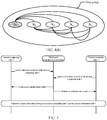
FIG. 5 . - In some implementations, a trusted computing unit X obtains a unit authentication report, including, for example, a certificate and signature information, of a trusted computing unit Y from the trusted computing unit Y, sends the unit authentication report to a third-party authentication institution for authentication, and receives an authentication result sent by the third-party authentication institution. Simultaneously, the trusted computing unit X sends a unit authentication report of the trusted computing unit X to the trusted computing unit Y, so that the trusted computing unit Y sends the unit authentication report to the third-party authentication institution for authentication, and receives an authentication result sent by the third-party authentication institution.
- If both the authentication results by the third-party authentication institution authenticate, respectively, that the trusted computing unit X and the trusted computing unit Y are trusted authentication units, a trusted relationship is established between the trusted computing unit X and the trusted computing unit Y; or if either one of the results of authenticating the trusted computing unit X or authenticating the trusted computing unit Y by the third-party authentication institution indicates an untrusted authentication unit, no trusted relationship is established between the trusted computing unit X and the trusted computing unit Y.
- Then, in step S103, inter-group trust authentication is performed between/among the plurality of groups in parallel to obtain the N trusted computing units on which trust authentication succeeds.
- After completing S101 and S102, that is, after grouping the N trusted computing units and establishing the trust authentication between/among the trusted computing units in each of the groups in parallel, the cluster manager performs trust authentication between/among the groups in parallel.
- In implementations, when performing grouping, the cluster manager sets a group serial number for each group, and when performing inter-group trust authentication between/among the plurality of groups in parallel, the cluster manager performs inter-group trust authentication between/among groups with adjacent group serial numbers in parallel, as shown in
FIG. 6(a) . - In
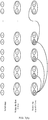
FIG. 6(a) , K=1 is used as an example for description. No trust authentication is established between/among the N trusted computing units in an initial state. Within the first t1 time period, the N trusted computing units are grouped into the plurality of groups, and an inter-unit trust authentication is established between/among trusted computing units in each group. Within the second t1 time period, inter-group trust authentication is established between groups with adjacent group serial numbers. - In an implementation, the establishing the inter-group trust authentication between/among the groups can be specifically as follows: As shown in
FIG. 6(b) , first, the cluster manager randomly specifies one trusted computing unit in each group as a second trusted computing unit. In this implementation, the second trusted computing unit identified in each group can be the same as or different from the first trusted computing unit identified in S102. This is not limited in this implementation. - Then, the cluster manager causes trust authentication to be established between second trusted computing units in the groups. As shown in
FIG. 6(b) , the second trusted computing unit in each group establishes a trust connection to a second trusted computing unit in a neighboring group. For example, inFIG. 6(b) , each group establishes trust authentication with one group in parallel. - Optionally, in another implementation, the performing the inter-group trust authentication between/among the plurality of groups in parallel includes: the cluster manager causes at least one group in the plurality of groups to simultaneously perform inter-group trust authentication with a maximum of K other groups. In other words, a certain group in the plurality of groups performs inter-group trust authentication with K groups in parallel, as shown in
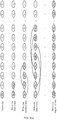
FIG. 7(a) . InFIG. 7(a) , only K=3 is used as an example for description. - Correspondingly, the inter-group trust authentication performed by the certain group with the K groups in parallel can be specifically as follows: The cluster manager specifies one second trusted computing unit for each group, which is the same as the case in
FIG. 6(b) . The second trusted computing unit identified in each group can be the same as or different from the first trusted computing unit identified in S102. This is not limited in this implementation. Within the second t1 time period, a second trusted computing unit in the certain group simultaneously establishes trust authentication with second trusted computing units in K other groups, as shown inFIG. 7(b) . InFIG. 7(b) , K=3 is used as an example for description. - In S103, in some implementations, time consumed for establishing trust authentication between/among groups is equivalent to time (t1) for establishing trust authentication between two trusted computing units.
- Therefore, total time consumed for establishing the trust authentication between/among the N trusted computing units is 2∗ t1.
- In step S104, secret information is propagated in the N trusted computing units on which trust authentication succeeds, so that the N trusted computing units obtain the same secret information to form the trusted computing cluster.
- In an implementation, the cluster manager randomly specifies one of the N trusted computing units as a third trusted computing unit. The third trusted computing unit can be a first trusted computing unit that is in a specific group and that is identified by the cluster manager in S102, or can be any trusted computing unit in any group other than the first trusted computing unit; or can be a second trusted computing unit that is in a specific group and that is identified by the cluster manager in S103, or can be any trusted computing unit in any group other than the second trusted computing unit.
- The cluster manager specifies first data of the third trusted computing unit as the secret information. In an implementation, the secret information can be a key. In other implementations, the secret information can be other secret data that subsequently needs to be maintained or propagated in the trusted computing cluster. Then, the cluster manager causes the third trusted computing unit to simultaneously and separately send the secret information to M trusted computing units, M doing not exceed H, and H being a maximum number of other trusted computing units to which a trusted computing unit simultaneously sends the secret information. Similarly, the maximum number H for sending the secret information in parallel can depend on, for example, a CPU processing capability or network settings.
- After the first propagation performed by the third trusted computing unit, a part of the plurality of trusted computing units has the secret information, and the other part does not have the secret information. In an implementation, the propagating the secret information in the N trusted computing units on which trust authentication succeeds further includes: causing each of a plurality of trusted computing units that have the secret information to simultaneously and separately send the secret information to a plurality of trusted computing units that do not have the secret information, so that the N trusted computing units obtain the same key to form the trusted computing cluster of the N trusted computing nodes.
- For example, it is assumed that H=1, time t2 is consumed for transmitting the key between two trusted computing units, and a process of transmitting the key between/among the N trusted computing units is shown in
FIG. 8(a) . First, the key is transmitted by a trusted computing unit N1 to a trusted computing unit N2 , which consumes time t2. Then, the trusted computing unit N1 transmits the key to a trusted computing unit N3 and the trusted computing unit N2 transmits the key to a trusted computing unit N 4 in parallel, which consumes time t2. Further, the trusted computing unit N1 transmits the key to a trusted computing unit N5 , the trusted computing unit N2 transmits the key to a trusted computing unit N6, the trusted computing unit N3 transmits the key to a trusted computing unit N7, and the trusted computing unit N4 transmits the key to a trusted computing unit N8 , which consumes time t2. In the same propagation mode, trusted computing units that obtain the key separately transmit the key in parallel to trusted computing units that do not obtain the key until the N trusted computing units obtain the key to form a trusted computing cluster of the N trusted computing units. - Time (log (H+1) N)∗ t2 needs to be consumed for transmitting the key between/among the N trusted computing units until each of the N trusted computing units obtains the key.
- In this implementation, K and H can be the same value, or can be different values. However, considering a CPU parallel computing capability of each trusted computing unit, in a key transmission process, a smaller value (e.g., min(H, K)) in K and H is selected as a value for parallel key transmission. In other words, each of the N trusted computing units can separately send the key to min(H, K) trusted computing units in parallel. As such, time log ((min(H, K)+1) N)∗ t2 needs to be consumed for transmitting the key between/among the N trusted computing units until each of the N trusted computing units obtains the key.
- Because time 2∗ t1 is consumed for performing trust authentication in the first phase, in this implementation, total time required for completing establishment of the trusted computing cluster of the N trusted computing units is:

- According to the method for establishing a trusted computing cluster, time for establishing a trusted computing cluster is shortened, and efficiency of establishing a trusted computing cluster is improved.
- In another implementation, when the key is transmitted between/among the N trusted computing units, each node in the N trusted computing units can non-uniformly and concurrently transmit the key to other trusted computing units that do not obtain the key. For example, the maximum number H of trusted computing units to which one trusted computing unit can send the key is equal to 4. As shown in
FIG. 8(b) , within the first t2 time, a trusted computing unit N1 separately transmits the key to four trusted computing units (N2 , N3 , N4 , and N5 ) in parallel; and within the second t2 time, the trusted computing units N1 , N2 , N3 , N4 , and N5 can separately transmit the key in parallel to three trusted computing units that do not obtain the key, for example, N1 transmits the key to N6 , N7 , and N8 , N2 transmits the key to N9 , N10 , and N11 , N3 transmits the key to N12 , N13 , and N14 , N4 transmits the key to N15, N16, and N17 , and N5 transmits the key to N18 , N19 , and N20. Subsequently, within the third t2 time, the trusted computing units N1 to N20 that obtain the key can concurrently and separately transmit the key to trusted computing units (less than or equal to four trusted computing units) that do not obtain the key until the N trusted computing units all obtain the key to construct a trusted computing cluster of the N trusted computing units. In a process of propagating the key, Q ∗ t2 time needs to be consumed, and log((min(H, K)+1)N<Q<log2N. The maximum time consumed for establishing the trusted computing cluster through calculation is greater than 2 ∗ t1+(log((min(H, K)+1)N) ∗ t2 and is less than 2 ∗ t1+(log2N) ∗ t2. - log2N) ∗ t2 is time consumed for concurrently propagating the key between/among the N trusted computing units (H=1). As shown in
FIG. 7(a) , time required for obtaining the key by all the N trusted computing units is log 2N) ∗ t2. - In an implementation, when the key is transmitted between/among the N trusted computing units, different H values for concurrent key transmission can be set for the trusted computing units, and the maximum time required for obtaining the key by all the N trusted computing units is 'log 2N) ∗ t2. The maximum total time consumed for establishing the trusted computing cluster is T = 2 ∗ t1+(log2N)∗ t2. Compared with a conventional solution, the time for establishing the trusted computing cluster is shortened.
- In some implementations, if the CPU computing capability is powerful enough, the cluster manager can directly perform trust authentication between/among the N trusted computing units in parallel without performing grouping, thereby further shortening the time for establishing the trusted cluster.
-
FIG. 2(a) andFIG. 2(b) toFIG. 8(a) andFIG. 8(b) describe the process of establishing the trusted computing cluster. The following describes the apparatus provided in the implementations of the present application with reference toFIG. 9 . - As shown in
FIG. 9 , theapparatus 900 is configured to form a trusted computing cluster by using N trusted computing units, theapparatus 900 including: agrouping unit 901, configured to group the N trusted computing units into a plurality of groups, each group of the plurality of groups including a number of trusted computing units not greater than K+1, K being a maximum number of trusted computing units with which a trusted computing unit of the N trusted computing unit simultaneously performs trust authentication; afirst authentication unit 902, configured to identify a first trusted computing unit in each group, and cause first trusted computing units in the plurality of groups to each respectively perform inter-unit trust authentication with other trusted computing units in a same group in parallel; asecond authentication unit 903, configured to perform inter-group trust authentication between/among the plurality of groups in parallel to obtain the N trusted computing units on which trust authentication succeeds; and atransmission unit 904, configured to propagate secret information in the N trusted computing units on which trust authentication succeeds, so that the N trusted computing units obtain the same secret information to form the trusted computing cluster. - Optionally, in an implementation, the inter-unit trust authentication includes: each trusted computing unit of two trusted computing units performing mutual trust authentication through following actions: obtaining a unit authentication report of other trusted computing unit of the two trusted computing units from the other trusted computing unit, and sending the unit authentication report of the other trusted computing unit to a third-party authentication institution for authentication; and sending a unit authentication report of the trusted computing unit to the other trusted computing unit for the other trusted computing unit to send the unit authentication report of the trusted computing unit to the third-party authentication institution for authentication.
- In an implementation, the
second authentication unit 903 is specifically configured to cause the plurality of groups to each perform inter-group trust authentication with a neighboring group in a group sequence of the plurality of groups, in parallel. - Optionally, in another implementation, the
second authentication unit 903 is specifically configured to cause at least one group in the plurality of groups to simultaneously perform inter-group trust authentication with a maximum of K other groups. - Further, in an implementation, the inter-group trust authentication includes: identifying a second trusted computing unit in each group of the inter-group trust authentication, and causing inter-unit trust authentication to be performed between/among second trusted computing units.
- In an implementation, the
transmission unit 904 is specifically configured to identify a third trusted computing unit in the N trusted computing units, identify first data of the third trusted computing unit as the secret information, and cause the third trusted computing unit to simultaneously and separately send the secret information to M trusted computing units, M not exceeding a maximum number H of trusted computing units to which a trusted computing unit simultaneously sends the secret information. - In an implementation, the
transmission unit 904 is specifically configured to cause each of a plurality of trusted computing units that have the secret information to simultaneously and separately send the secret information to a plurality of trusted computing units that do not have the secret information. - Optionally, in an implementation, the secret information is a cluster key.
- The apparatus forms the trusted computing cluster by using the N trusted computing units. The N trusted computing units must first perform bidirectional mutual identity authentication, and the key is transmitted only when the dual-party authentication succeeds, so that all the N trusted computing units have the same key as the cluster key.
- In addition, according to the method in
FIG. 3 , first, the N trusted computing units are grouped, trust authentication between/among trusted computing units in the groups is established in parallel, and trust authentication between/among the groups is established in parallel, to form the N trusted computing units on which trust authentication succeeds; and then, the secret information is propagated between/among the N trusted computing units, so that all the N trusted computing units obtain the secret information to obtain the trusted computing cluster of the N trusted computing units, thereby shortening time for establishing the trusted computing cluster. - An implementation of the present application further provides a computer-readable storage medium. The computer-readable storage medium stores a computer program, a computer being caused to perform the method described with reference to
FIG. 3 when the computer program is executed in the computer. - An implementation of the present application further provides a computing device, including a memory and a processor, the memory storing executable code, and the processor implementing the method described with reference to
FIG. 3 when executing the executable code. - A person skilled in the art should be aware that in the above one or more examples, the functions described in the plurality of implementations disclosed in the present specification can be implemented by using hardware, software, firmware, or any combination thereof. When the functions are implemented by using software, the functions can be stored in a computer-readable medium or transmitted as one or more instructions or code in the computer-readable medium.
- In the above specific implementations, the objectives, technical solutions, and benefits of the plurality of implementations disclosed in the present specification are further described in detail. It should be understood that the above descriptions are merely specific implementations of the plurality of implementations disclosed in the present specification, but are not intended to limit the protection scope of the plurality of implementations disclosed in the present specification. Any modification, equivalent replacement, improvement, etc., made based on the technical solutions in the plurality of implementations disclosed in the present specification shall fall within the protection scope of the plurality of implementations disclosed in the present specification.
Claims (18)
- A method for establishing a trusted computing cluster, wherein the method is used to form a trusted computing cluster by using N trusted computing units, the method comprising:grouping the N trusted computing units into a plurality of groups, each group of the plurality of groups including a number of trusted computing units not greater than K+1, K being a maximum number of trusted computing units with which a trusted computing unit of the N trusted computing unit simultaneously performs trust authentication;identifying a first trusted computing unit in each group, and causing first trusted computing units in the plurality of groups to each respectively perform inter-unit trust authentication with other trusted computing units in a same group in parallel;performing inter-group trust authentication between/among the plurality of groups in parallel to obtain the N trusted computing units on which trust authentication succeeds; andpropagating secret information in the trusted computing units on which trust authentication succeeds, so that the trusted computing units on which trust authentication succeeds obtain the same secret information to form the trusted computing cluster.
- The method according to claim 1, wherein the inter-unit trust authentication includes:
each trusted computing unit of two trusted computing units performing mutual trust authentication through following actions:obtaining a unit authentication report of other trusted computing unit of the two trusted computing units from the other trusted computing unit, and sending the unit authentication report of the other trusted computing unit to a third-party authentication institution for authentication; andsending a unit authentication report of the trusted computing unit to the other trusted computing unit for the other trusted computing unit to send the unit authentication report of the trusted computing unit to the third-party authentication institution for authentication. - The method according to claim 1, wherein the performing the inter-group trust authentication between/among the plurality of groups in parallel includes:
causing the plurality of groups to each perform inter-group trust authentication with a neighboring group in a group sequence of the plurality of groups, in parallel. - The method according to claim 1, wherein the performing the inter-group trust authentication between/among the plurality of groups in parallel includes:
causing at least one group in the plurality of groups to simultaneously perform inter-group trust authentication with a maximum of K other groups. - The method according to any of claims 1 to 4, wherein the inter-group trust authentication includes:
identifying a second trusted computing unit in each group of the inter-group trust authentication, and causing second trusted computing units of the plurality of groups to perform inter-unit trust authentication among the second trusted computing units. - The method according to claim 1, wherein the propagating the secret information in the N trusted computing units on which trust authentication succeeds includes:
identifying a third trusted computing unit in the N trusted computing units, identifying first data of the third trusted computing unit as the secret information, and causing the third trusted computing unit to separately send the secret information to M trusted computing units, M not exceeding a maximum number of trusted computing units to which a trusted computing unit simultaneously sends the secret information. - The method according to claim 6, wherein the propagating the secret information in the N trusted computing units on which trust authentication succeeds includes:
causing each of a plurality of trusted computing units that have the secret information to separately send the secret information to a plurality of trusted computing units that do not have the secret information. - The method according to claim 1, wherein the secret information is a cluster key.
- An apparatus for establishing a trusted computing cluster, wherein the apparatus is configured to form a trusted computing cluster by using N trusted computing units, the apparatus comprising:a grouping unit, configured to group the N trusted computing units into a plurality of groups, each group of the plurality of groups including a number of trusted computing units not greater than K+1, K being a maximum number of trusted computing units with which a trusted computing unit of the N trusted computing unit simultaneously performs trust authentication;a first authentication unit, configured to identify a first trusted computing unit in each group, and cause first trusted computing units in the plurality of groups to each respectively perform inter-unit trust authentication with other trusted computing units in a same group in parallel;a second authentication unit, configured to perform inter-group trust authentication between/among the plurality of groups in parallel to obtain the N trusted computing units on which trust authentication succeeds; anda transmission unit, configured to propagate secret information in the N trusted computing units on which trust authentication succeeds, so that the N trusted computing units obtain the same secret information to form the trusted computing cluster.
- The apparatus according to claim 9, wherein the inter-unit trust authentication includes:
each trusted computing unit of two trusted computing units performing mutual trust authentication through following actions:obtaining a unit authentication report of other trusted computing unit of the two trusted computing units from the other trusted computing unit, and sending the unit authentication report of the other trusted computing unit to a third-party authentication institution for authentication; andsending a unit authentication report of the trusted computing unit to the other trusted computing unit for the other trusted computing unit to send the unit authentication report of the trusted computing unit to the third-party authentication institution for authentication. - The apparatus according to claim 9, wherein the second authentication unit is specifically configured to:
cause the plurality of groups to each perform inter-group trust authentication with a neighboring group in a group sequence of the plurality of groups, in parallel. - The apparatus according to claim 9, wherein the second authentication unit is specifically configured to:
cause at least one group in the plurality of groups to simultaneously perform inter-group trust authentication with a maximum of K other groups. - The apparatus according to any of claims 9 to 12, wherein the inter-group trust authentication includes:
identifying a second trusted computing unit in each group of the inter-group trust authentication, and causing second trusted computing units of the plurality of groups to perform inter-unit trust authentication among the second trusted computing units. - The apparatus according to claim 9, wherein the transmission unit is specifically configured to:
identify a third trusted computing unit in the N trusted computing units, identify first data of the third trusted computing unit as the secret information, and cause the third trusted computing unit to simultaneously and separately send the secret information to M trusted computing units, M not exceeding a maximum number H of trusted computing units to which a trusted computing unit simultaneously sends the secret information. - The apparatus according to claim 14, wherein the transmission unit is specifically configured to:
cause each of a plurality of trusted computing units that have the secret information to simultaneously and separately send the secret information to a plurality of trusted computing units that do not have the secret information. - The apparatus according to claim 9, wherein the secret information is a cluster key.
- A computer-readable storage medium, wherein the computer-readable storage medium stores a computer program, a computer being caused to perform the method according to any of claims 1 to 8 when the computer program is executed in the computer.
- A computing device, comprising a memory and a processor, the memory storing executable code, and the processor implementing the method according to any of claims 1 to 8 when executing the executable code.
Applications Claiming Priority (2)
| Application Number | Priority Date | Filing Date | Title |
|---|---|---|---|
| CN201811631728.9A CN109861980B (en) | 2018-12-29 | 2018-12-29 | A method, device, storage medium and computing device for establishing a trusted computing cluster |
| PCT/CN2019/116252 WO2020134632A1 (en) | 2018-12-29 | 2019-11-07 | Method and device for establishing trusted computing cluster |
Publications (3)
| Publication Number | Publication Date |
|---|---|
| EP3813325A1 true EP3813325A1 (en) | 2021-04-28 |
| EP3813325A4 EP3813325A4 (en) | 2021-10-20 |
| EP3813325B1 EP3813325B1 (en) | 2023-01-04 |
Family
ID=66893161
Family Applications (1)
| Application Number | Title | Priority Date | Filing Date |
|---|---|---|---|
| EP19901556.1A Active EP3813325B1 (en) | 2018-12-29 | 2019-11-07 | Method and device for establishing trusted computing cluster |
Country Status (6)
| Country | Link |
|---|---|
| US (2) | US11196741B2 (en) |
| EP (1) | EP3813325B1 (en) |
| CN (1) | CN109861980B (en) |
| SG (1) | SG11202100922TA (en) |
| TW (1) | TWI724584B (en) |
| WO (1) | WO2020134632A1 (en) |
Families Citing this family (10)
| Publication number | Priority date | Publication date | Assignee | Title |
|---|---|---|---|---|
| CN109873801B (en) | 2018-12-12 | 2020-07-24 | 阿里巴巴集团控股有限公司 | Method, device, storage medium and computing device for establishing a trusted channel between a user and a trusted computing cluster |
| CN109861980B (en) * | 2018-12-29 | 2020-08-04 | 阿里巴巴集团控股有限公司 | A method, device, storage medium and computing device for establishing a trusted computing cluster |
| US11038699B2 (en) | 2019-08-29 | 2021-06-15 | Advanced New Technologies Co., Ltd. | Method and apparatus for performing multi-party secure computing based-on issuing certificate |
| CN110535628B (en) * | 2019-08-29 | 2020-07-17 | 阿里巴巴集团控股有限公司 | Method and device for performing multi-party security calculation through certificate signing and issuing |
| CN111064569B (en) * | 2019-12-09 | 2021-04-20 | 支付宝(杭州)信息技术有限公司 | Method and device for obtaining cluster key of trusted computing cluster |
| CN111988141B (en) * | 2020-03-18 | 2022-08-02 | 支付宝(杭州)信息技术有限公司 | Method and device for sharing cluster key |
| CN113569248A (en) * | 2020-04-28 | 2021-10-29 | 华为技术有限公司 | Data processing method and computing device |
| CN112688781A (en) * | 2021-03-11 | 2021-04-20 | 浙江口碑网络技术有限公司 | Key processing method and device |
| CN112926051B (en) * | 2021-03-25 | 2022-05-06 | 支付宝(杭州)信息技术有限公司 | Multi-party secure computing method and device |
| US20230273808A1 (en) * | 2022-02-28 | 2023-08-31 | Mellanox Technologies, Ltd. | Confidential offloading of persistent storage operations in confidential computing environments |
Family Cites Families (50)
| Publication number | Priority date | Publication date | Assignee | Title |
|---|---|---|---|---|
| US6314130B1 (en) * | 1999-04-28 | 2001-11-06 | Dspc Technologies, Ltd. | System and method for joint time tracking of multiple paths |
| US7082200B2 (en) * | 2001-09-06 | 2006-07-25 | Microsoft Corporation | Establishing secure peer networking in trust webs on open networks using shared secret device key |
| US7599496B2 (en) | 2002-08-27 | 2009-10-06 | Pine Valley Investments, Inc. | Secure encryption key distribution |
| US7231664B2 (en) | 2002-09-04 | 2007-06-12 | Secure Computing Corporation | System and method for transmitting and receiving secure data in a virtual private group |
| US7640324B2 (en) * | 2003-04-15 | 2009-12-29 | Microsoft Corporation | Small-scale secured computer network group without centralized management |
| CN100359845C (en) | 2004-03-26 | 2008-01-02 | 中兴通讯股份有限公司 | Method for Shared Key Authentication and Session Key Negotiation in Wireless Local Area Network Ad Hoc Network Mode |
| US7607008B2 (en) * | 2004-04-01 | 2009-10-20 | Microsoft Corporation | Authentication broker service |
| US7577258B2 (en) * | 2005-06-30 | 2009-08-18 | Intel Corporation | Apparatus and method for group session key and establishment using a certified migration key |
| US7885412B2 (en) * | 2005-09-29 | 2011-02-08 | International Business Machines Corporation | Pre-generation of generic session keys for use in communicating within communications environments |
| US8086850B2 (en) * | 2006-06-23 | 2011-12-27 | Honeywell International Inc. | Secure group communication among wireless devices with distributed trust |
| CN100463391C (en) * | 2006-09-23 | 2009-02-18 | 西安西电捷通无线网络通信有限公司 | Network key management and session key updating method |
| CN101170404B (en) | 2006-10-24 | 2010-05-19 | 华为技术有限公司 | How to configure keys for specified groups |
| US8364975B2 (en) * | 2006-12-29 | 2013-01-29 | Intel Corporation | Methods and apparatus for protecting data |
| US8259949B2 (en) * | 2008-05-27 | 2012-09-04 | Intel Corporation | Methods and apparatus for protecting digital content |
| EP2194686A1 (en) * | 2008-12-03 | 2010-06-09 | Panasonic Corporation | Secure tunnel establishment upon attachment or handover to an access network |
| US8176336B1 (en) * | 2008-12-19 | 2012-05-08 | Emc Corporation | Software trusted computing base |
| US8316113B2 (en) * | 2008-12-19 | 2012-11-20 | Watchguard Technologies, Inc. | Cluster architecture and configuration for network security devices |
| EP2278513A1 (en) * | 2009-07-15 | 2011-01-26 | Nagravision SA | Method for preventing the use of a cloned user unit communicating with a server |
| CN101594386B (en) * | 2009-06-29 | 2012-07-04 | 北京航空航天大学 | Method and device for constructing reliable virtual organization based on distributed strategy verification |
| CN101651543B (en) | 2009-09-04 | 2012-02-01 | 瑞达信息安全产业股份有限公司 | Creditable calculation platform key migration system and key migration method thereof |
| EP2363977B1 (en) | 2010-02-26 | 2012-10-24 | Research In Motion Limited | Methods and devices for computing a shared encryption key |
| JP5457564B2 (en) * | 2010-03-05 | 2014-04-02 | インターデイジタル パテント ホールディングス インコーポレイテッド | Method and apparatus for providing security to equipment |
| CN102244577A (en) * | 2010-05-10 | 2011-11-16 | 东北大学技术转移中心 | Node authentication |
| US8954740B1 (en) * | 2010-10-04 | 2015-02-10 | Symantec Corporation | Session key proxy decryption method to secure content in a one-to-many relationship |
| CN103688563A (en) * | 2011-05-26 | 2014-03-26 | 诺基亚公司 | Perform group authentication and key agreement process |
| US9160914B2 (en) * | 2011-06-28 | 2015-10-13 | Inview Technology Corporation | User control of the visual performance of a compressive imaging system |
| US8719571B2 (en) | 2011-08-25 | 2014-05-06 | Netapp, Inc. | Systems and methods for providing secure multicast intra-cluster communication |
| EP2745461B1 (en) * | 2011-09-27 | 2014-12-03 | Koninklijke Philips N.V. | Management of group secrets by group members |
| US8897452B2 (en) | 2011-10-27 | 2014-11-25 | Architecture Technology, Inc. | Network having multicast security and method therefore |
| US9705856B2 (en) * | 2012-07-27 | 2017-07-11 | Telefonaktiebolaget L M Ericsson | Secure session for a group of network nodes |
| CN103856477B (en) * | 2012-12-06 | 2018-01-02 | 阿里巴巴集团控股有限公司 | A kind of credible accounting system and corresponding authentication method and equipment |
| CN103051455B (en) | 2012-12-22 | 2015-12-02 | 中国船舶重工集团公司第七0九研究所 | The implementation method of the credible password module cryptographic function devolution under a kind of cloud computing environment |
| US9716716B2 (en) * | 2014-09-17 | 2017-07-25 | Microsoft Technology Licensing, Llc | Establishing trust between two devices |
| EP3059919A1 (en) * | 2015-02-19 | 2016-08-24 | Nxp B.V. | Method and system for facilitating network joining |
| CN106332074A (en) | 2015-06-15 | 2017-01-11 | 中国移动通信集团辽宁有限公司 | A multi-party communication authentication method and system |
| US10162978B2 (en) * | 2015-09-22 | 2018-12-25 | Mastercard International Incorporated | Secure computer cluster with encryption |
| US10701039B2 (en) * | 2015-09-25 | 2020-06-30 | Intel Corporation | Mutual approval for privacy-preserving computing |
| CN105790938B (en) | 2016-05-23 | 2019-02-19 | 中国银联股份有限公司 | Secure unit key generation system and method based on trusted execution environment |
| CN106101252B (en) * | 2016-07-01 | 2019-02-05 | 广西电网有限责任公司 | Information security risk protection system based on big data and trusted computing |
| CN206611427U (en) | 2017-03-28 | 2017-11-03 | 浙江神州量子网络科技有限公司 | A kind of key storage management system based on trust computing device |
| CN106991329A (en) * | 2017-03-31 | 2017-07-28 | 山东超越数控电子有限公司 | A kind of trust calculation unit and its operation method based on domestic TCM |
| US10204241B2 (en) | 2017-06-30 | 2019-02-12 | Microsoft Technology Licensing, Llc | Theft and tamper resistant data protection |
| CN107592292B (en) * | 2017-07-26 | 2019-08-09 | 阿里巴巴集团控股有限公司 | A communication method and device between blockchain nodes |
| CN108259469A (en) * | 2017-12-19 | 2018-07-06 | 浪潮软件集团有限公司 | A blockchain-based cluster security authentication method, a node and a cluster |
| CN108491727B (en) | 2018-04-08 | 2021-03-16 | 成都三零嘉微电子有限公司 | Safety processor integrating general calculation, trusted calculation and password calculation |
| CN108847928B (en) * | 2018-04-26 | 2021-04-06 | 如般量子科技有限公司 | Communication system and communication method for realizing information encryption and decryption transmission based on group type quantum key card |
| CN113645229B (en) * | 2018-06-06 | 2023-04-07 | 北京八分量信息科技有限公司 | Authentication system and method based on credible confirmation |
| US11165766B2 (en) * | 2018-08-21 | 2021-11-02 | International Business Machines Corporation | Implementing authentication protocol for merging multiple server nodes with trusted platform modules utilizing provisioned node certificates to support concurrent node add and remove |
| CN109873801B (en) | 2018-12-12 | 2020-07-24 | 阿里巴巴集团控股有限公司 | Method, device, storage medium and computing device for establishing a trusted channel between a user and a trusted computing cluster |
| CN109861980B (en) * | 2018-12-29 | 2020-08-04 | 阿里巴巴集团控股有限公司 | A method, device, storage medium and computing device for establishing a trusted computing cluster |
-
2018
- 2018-12-29 CN CN201811631728.9A patent/CN109861980B/en active Active
-
2019
- 2019-10-21 TW TW108137861A patent/TWI724584B/en not_active IP Right Cessation
- 2019-11-07 WO PCT/CN2019/116252 patent/WO2020134632A1/en not_active Ceased
- 2019-11-07 SG SG11202100922TA patent/SG11202100922TA/en unknown
- 2019-11-07 EP EP19901556.1A patent/EP3813325B1/en active Active
-
2021
- 2021-01-28 US US17/161,359 patent/US11196741B2/en active Active
- 2021-11-16 US US17/528,101 patent/US11792190B2/en active Active
Also Published As
| Publication number | Publication date |
|---|---|
| TWI724584B (en) | 2021-04-11 |
| US11792190B2 (en) | 2023-10-17 |
| EP3813325B1 (en) | 2023-01-04 |
| US20210185038A1 (en) | 2021-06-17 |
| SG11202100922TA (en) | 2021-02-25 |
| CN109861980A (en) | 2019-06-07 |
| WO2020134632A1 (en) | 2020-07-02 |
| US11196741B2 (en) | 2021-12-07 |
| US20220078187A1 (en) | 2022-03-10 |
| EP3813325A4 (en) | 2021-10-20 |
| TW202038580A (en) | 2020-10-16 |
| CN109861980B (en) | 2020-08-04 |
Similar Documents
| Publication | Publication Date | Title |
|---|---|---|
| EP3813325B1 (en) | Method and device for establishing trusted computing cluster | |
| CN110336774B (en) | Hybrid encryption and decryption method, device and system | |
| CN111563261A (en) | Privacy protection multi-party computing method and system based on trusted execution environment | |
| CN111723384B (en) | Data processing method, system and equipment | |
| CN109818747A (en) | Digital signature method and device | |
| CN113901432A (en) | Blockchain identity authentication method, device, storage medium and computer program product | |
| CN110177124A (en) | Identity identifying method and relevant device based on block chain | |
| CN109361508A (en) | Data transmission method, electronic equipment and computer readable storage medium | |
| US11240661B2 (en) | Secure simultaneous authentication of equals anti-clogging mechanism | |
| CN115908001A (en) | Block chain-based transaction supervision method, device, electronic equipment and storage medium | |
| US20230019728A1 (en) | Dynamic tokenization table exchange | |
| KR102766253B1 (en) | Apparatus and method for maintaining wvaelengh interval of light sources | |
| CN112422534B (en) | Credit evaluation method and equipment for electronic certificate | |
| CN115514504A (en) | Cross-confederation node authentication method, device, computer equipment and storage medium | |
| Kamble et al. | Efficient key management for dynamic wireless sensor network | |
| CN114765531B (en) | Authentication method, quantum key calling method, device and quantum password network | |
| CN115567929A (en) | Key management method and device, electronic device and storage medium | |
| CN113055345B (en) | Block chain-based data security authentication method and device | |
| CN113242133A (en) | Digital certificate management method and device | |
| CN114978537A (en) | Identity recognition method, device, equipment and computer readable storage medium | |
| CN114244528A (en) | Processing method, system, equipment and medium for block chain downlink management request | |
| CN113987594A (en) | A blockchain signature management method and device | |
| CN113039766A (en) | Optimized equal-cost Simultaneous Authentication (SAE) authentication in wireless networks | |
| CN116170209B (en) | Communication systems, methods, apparatus, devices and storage media | |
| CN114282237B (en) | A communication method, device, equipment and storage medium |
Legal Events
| Date | Code | Title | Description |
|---|---|---|---|
| STAA | Information on the status of an ep patent application or granted ep patent |
Free format text: STATUS: THE INTERNATIONAL PUBLICATION HAS BEEN MADE |
|
| PUAI | Public reference made under article 153(3) epc to a published international application that has entered the european phase |
Free format text: ORIGINAL CODE: 0009012 |
|
| STAA | Information on the status of an ep patent application or granted ep patent |
Free format text: STATUS: REQUEST FOR EXAMINATION WAS MADE |
|
| 17P | Request for examination filed |
Effective date: 20210122 |
|
| AK | Designated contracting states |
Kind code of ref document: A1 Designated state(s): AL AT BE BG CH CY CZ DE DK EE ES FI FR GB GR HR HU IE IS IT LI LT LU LV MC MK MT NL NO PL PT RO RS SE SI SK SM TR |
|
| AX | Request for extension of the european patent |
Extension state: BA ME |
|
| A4 | Supplementary search report drawn up and despatched |
Effective date: 20210916 |
|
| RIC1 | Information provided on ipc code assigned before grant |
Ipc: H04L 29/06 20060101AFI20210910BHEP |
|
| DAV | Request for validation of the european patent (deleted) | ||
| DAX | Request for extension of the european patent (deleted) | ||
| REG | Reference to a national code |
Ref country code: DE Ref legal event code: R079 Ref document number: 602019024148 Country of ref document: DE Free format text: PREVIOUS MAIN CLASS: H04L0029060000 Ipc: H04L0009400000 |
|
| GRAP | Despatch of communication of intention to grant a patent |
Free format text: ORIGINAL CODE: EPIDOSNIGR1 |
|
| STAA | Information on the status of an ep patent application or granted ep patent |
Free format text: STATUS: GRANT OF PATENT IS INTENDED |
|
| RIC1 | Information provided on ipc code assigned before grant |
Ipc: H04L 9/40 20220101AFI20220516BHEP |
|
| INTG | Intention to grant announced |
Effective date: 20220613 |
|
| GRAS | Grant fee paid |
Free format text: ORIGINAL CODE: EPIDOSNIGR3 |
|
| GRAA | (expected) grant |
Free format text: ORIGINAL CODE: 0009210 |
|
| STAA | Information on the status of an ep patent application or granted ep patent |
Free format text: STATUS: THE PATENT HAS BEEN GRANTED |
|
| AK | Designated contracting states |
Kind code of ref document: B1 Designated state(s): AL AT BE BG CH CY CZ DE DK EE ES FI FR GB GR HR HU IE IS IT LI LT LU LV MC MK MT NL NO PL PT RO RS SE SI SK SM TR |
|
| REG | Reference to a national code |
Ref country code: GB Ref legal event code: FG4D |
|
| REG | Reference to a national code |
Ref country code: DE Ref legal event code: R096 Ref document number: 602019024148 Country of ref document: DE |
|
| REG | Reference to a national code |
Ref country code: CH Ref legal event code: EP |
|
| REG | Reference to a national code |
Ref country code: AT Ref legal event code: REF Ref document number: 1542704 Country of ref document: AT Kind code of ref document: T Effective date: 20230115 |
|
| REG | Reference to a national code |
Ref country code: IE Ref legal event code: FG4D |
|
| REG | Reference to a national code |
Ref country code: LT Ref legal event code: MG9D |
|
| REG | Reference to a national code |
Ref country code: NL Ref legal event code: MP Effective date: 20230104 |
|
| REG | Reference to a national code |
Ref country code: AT Ref legal event code: MK05 Ref document number: 1542704 Country of ref document: AT Kind code of ref document: T Effective date: 20230104 |
|
| P01 | Opt-out of the competence of the unified patent court (upc) registered |
Effective date: 20230524 |
|
| PG25 | Lapsed in a contracting state [announced via postgrant information from national office to epo] |
Ref country code: NL Free format text: LAPSE BECAUSE OF FAILURE TO SUBMIT A TRANSLATION OF THE DESCRIPTION OR TO PAY THE FEE WITHIN THE PRESCRIBED TIME-LIMIT Effective date: 20230104 |
|
| PG25 | Lapsed in a contracting state [announced via postgrant information from national office to epo] |
Ref country code: RS Free format text: LAPSE BECAUSE OF FAILURE TO SUBMIT A TRANSLATION OF THE DESCRIPTION OR TO PAY THE FEE WITHIN THE PRESCRIBED TIME-LIMIT Effective date: 20230104 Ref country code: PT Free format text: LAPSE BECAUSE OF FAILURE TO SUBMIT A TRANSLATION OF THE DESCRIPTION OR TO PAY THE FEE WITHIN THE PRESCRIBED TIME-LIMIT Effective date: 20230504 Ref country code: NO Free format text: LAPSE BECAUSE OF FAILURE TO SUBMIT A TRANSLATION OF THE DESCRIPTION OR TO PAY THE FEE WITHIN THE PRESCRIBED TIME-LIMIT Effective date: 20230404 Ref country code: LV Free format text: LAPSE BECAUSE OF FAILURE TO SUBMIT A TRANSLATION OF THE DESCRIPTION OR TO PAY THE FEE WITHIN THE PRESCRIBED TIME-LIMIT Effective date: 20230104 Ref country code: LT Free format text: LAPSE BECAUSE OF FAILURE TO SUBMIT A TRANSLATION OF THE DESCRIPTION OR TO PAY THE FEE WITHIN THE PRESCRIBED TIME-LIMIT Effective date: 20230104 Ref country code: HR Free format text: LAPSE BECAUSE OF FAILURE TO SUBMIT A TRANSLATION OF THE DESCRIPTION OR TO PAY THE FEE WITHIN THE PRESCRIBED TIME-LIMIT Effective date: 20230104 Ref country code: ES Free format text: LAPSE BECAUSE OF FAILURE TO SUBMIT A TRANSLATION OF THE DESCRIPTION OR TO PAY THE FEE WITHIN THE PRESCRIBED TIME-LIMIT Effective date: 20230104 Ref country code: AT Free format text: LAPSE BECAUSE OF FAILURE TO SUBMIT A TRANSLATION OF THE DESCRIPTION OR TO PAY THE FEE WITHIN THE PRESCRIBED TIME-LIMIT Effective date: 20230104 |
|
| PG25 | Lapsed in a contracting state [announced via postgrant information from national office to epo] |
Ref country code: SE Free format text: LAPSE BECAUSE OF FAILURE TO SUBMIT A TRANSLATION OF THE DESCRIPTION OR TO PAY THE FEE WITHIN THE PRESCRIBED TIME-LIMIT Effective date: 20230104 Ref country code: PL Free format text: LAPSE BECAUSE OF FAILURE TO SUBMIT A TRANSLATION OF THE DESCRIPTION OR TO PAY THE FEE WITHIN THE PRESCRIBED TIME-LIMIT Effective date: 20230104 Ref country code: IS Free format text: LAPSE BECAUSE OF FAILURE TO SUBMIT A TRANSLATION OF THE DESCRIPTION OR TO PAY THE FEE WITHIN THE PRESCRIBED TIME-LIMIT Effective date: 20230504 Ref country code: GR Free format text: LAPSE BECAUSE OF FAILURE TO SUBMIT A TRANSLATION OF THE DESCRIPTION OR TO PAY THE FEE WITHIN THE PRESCRIBED TIME-LIMIT Effective date: 20230405 Ref country code: FI Free format text: LAPSE BECAUSE OF FAILURE TO SUBMIT A TRANSLATION OF THE DESCRIPTION OR TO PAY THE FEE WITHIN THE PRESCRIBED TIME-LIMIT Effective date: 20230104 |
|
| REG | Reference to a national code |
Ref country code: DE Ref legal event code: R097 Ref document number: 602019024148 Country of ref document: DE |
|
| PG25 | Lapsed in a contracting state [announced via postgrant information from national office to epo] |
Ref country code: SM Free format text: LAPSE BECAUSE OF FAILURE TO SUBMIT A TRANSLATION OF THE DESCRIPTION OR TO PAY THE FEE WITHIN THE PRESCRIBED TIME-LIMIT Effective date: 20230104 Ref country code: RO Free format text: LAPSE BECAUSE OF FAILURE TO SUBMIT A TRANSLATION OF THE DESCRIPTION OR TO PAY THE FEE WITHIN THE PRESCRIBED TIME-LIMIT Effective date: 20230104 Ref country code: EE Free format text: LAPSE BECAUSE OF FAILURE TO SUBMIT A TRANSLATION OF THE DESCRIPTION OR TO PAY THE FEE WITHIN THE PRESCRIBED TIME-LIMIT Effective date: 20230104 Ref country code: DK Free format text: LAPSE BECAUSE OF FAILURE TO SUBMIT A TRANSLATION OF THE DESCRIPTION OR TO PAY THE FEE WITHIN THE PRESCRIBED TIME-LIMIT Effective date: 20230104 Ref country code: CZ Free format text: LAPSE BECAUSE OF FAILURE TO SUBMIT A TRANSLATION OF THE DESCRIPTION OR TO PAY THE FEE WITHIN THE PRESCRIBED TIME-LIMIT Effective date: 20230104 |
|
| PLBE | No opposition filed within time limit |
Free format text: ORIGINAL CODE: 0009261 |
|
| STAA | Information on the status of an ep patent application or granted ep patent |
Free format text: STATUS: NO OPPOSITION FILED WITHIN TIME LIMIT |
|
| PG25 | Lapsed in a contracting state [announced via postgrant information from national office to epo] |
Ref country code: SK Free format text: LAPSE BECAUSE OF FAILURE TO SUBMIT A TRANSLATION OF THE DESCRIPTION OR TO PAY THE FEE WITHIN THE PRESCRIBED TIME-LIMIT Effective date: 20230104 |
|
| 26N | No opposition filed |
Effective date: 20231005 |
|
| PG25 | Lapsed in a contracting state [announced via postgrant information from national office to epo] |
Ref country code: SI Free format text: LAPSE BECAUSE OF FAILURE TO SUBMIT A TRANSLATION OF THE DESCRIPTION OR TO PAY THE FEE WITHIN THE PRESCRIBED TIME-LIMIT Effective date: 20230104 |
|
| PG25 | Lapsed in a contracting state [announced via postgrant information from national office to epo] |
Ref country code: IT Free format text: LAPSE BECAUSE OF FAILURE TO SUBMIT A TRANSLATION OF THE DESCRIPTION OR TO PAY THE FEE WITHIN THE PRESCRIBED TIME-LIMIT Effective date: 20230104 |
|
| REG | Reference to a national code |
Ref country code: CH Ref legal event code: PL |
|
| PG25 | Lapsed in a contracting state [announced via postgrant information from national office to epo] |
Ref country code: MC Free format text: LAPSE BECAUSE OF FAILURE TO SUBMIT A TRANSLATION OF THE DESCRIPTION OR TO PAY THE FEE WITHIN THE PRESCRIBED TIME-LIMIT Effective date: 20230104 |
|
| PG25 | Lapsed in a contracting state [announced via postgrant information from national office to epo] |
Ref country code: LU Free format text: LAPSE BECAUSE OF NON-PAYMENT OF DUE FEES Effective date: 20231107 |
|
| PG25 | Lapsed in a contracting state [announced via postgrant information from national office to epo] |
Ref country code: CH Free format text: LAPSE BECAUSE OF NON-PAYMENT OF DUE FEES Effective date: 20231130 |
|
| GBPC | Gb: european patent ceased through non-payment of renewal fee |
Effective date: 20231107 |
|
| PG25 | Lapsed in a contracting state [announced via postgrant information from national office to epo] |
Ref country code: MC Free format text: LAPSE BECAUSE OF FAILURE TO SUBMIT A TRANSLATION OF THE DESCRIPTION OR TO PAY THE FEE WITHIN THE PRESCRIBED TIME-LIMIT Effective date: 20230104 Ref country code: LU Free format text: LAPSE BECAUSE OF NON-PAYMENT OF DUE FEES Effective date: 20231107 Ref country code: CH Free format text: LAPSE BECAUSE OF NON-PAYMENT OF DUE FEES Effective date: 20231130 |
|
| REG | Reference to a national code |
Ref country code: BE Ref legal event code: MM Effective date: 20231130 |
|
| REG | Reference to a national code |
Ref country code: IE Ref legal event code: MM4A |
|
| PG25 | Lapsed in a contracting state [announced via postgrant information from national office to epo] |
Ref country code: IE Free format text: LAPSE BECAUSE OF NON-PAYMENT OF DUE FEES Effective date: 20231107 |
|
| PG25 | Lapsed in a contracting state [announced via postgrant information from national office to epo] |
Ref country code: GB Free format text: LAPSE BECAUSE OF NON-PAYMENT OF DUE FEES Effective date: 20231107 |
|
| PG25 | Lapsed in a contracting state [announced via postgrant information from national office to epo] |
Ref country code: BE Free format text: LAPSE BECAUSE OF NON-PAYMENT OF DUE FEES Effective date: 20231130 |
|
| PG25 | Lapsed in a contracting state [announced via postgrant information from national office to epo] |
Ref country code: FR Free format text: LAPSE BECAUSE OF NON-PAYMENT OF DUE FEES Effective date: 20231130 |
|
| PG25 | Lapsed in a contracting state [announced via postgrant information from national office to epo] |
Ref country code: IE Free format text: LAPSE BECAUSE OF NON-PAYMENT OF DUE FEES Effective date: 20231107 Ref country code: GB Free format text: LAPSE BECAUSE OF NON-PAYMENT OF DUE FEES Effective date: 20231107 Ref country code: FR Free format text: LAPSE BECAUSE OF NON-PAYMENT OF DUE FEES Effective date: 20231130 Ref country code: BE Free format text: LAPSE BECAUSE OF NON-PAYMENT OF DUE FEES Effective date: 20231130 |
|
| PG25 | Lapsed in a contracting state [announced via postgrant information from national office to epo] |
Ref country code: BG Free format text: LAPSE BECAUSE OF FAILURE TO SUBMIT A TRANSLATION OF THE DESCRIPTION OR TO PAY THE FEE WITHIN THE PRESCRIBED TIME-LIMIT Effective date: 20230104 |
|
| PG25 | Lapsed in a contracting state [announced via postgrant information from national office to epo] |
Ref country code: BG Free format text: LAPSE BECAUSE OF FAILURE TO SUBMIT A TRANSLATION OF THE DESCRIPTION OR TO PAY THE FEE WITHIN THE PRESCRIBED TIME-LIMIT Effective date: 20230104 |
|
| PG25 | Lapsed in a contracting state [announced via postgrant information from national office to epo] |
Ref country code: CY Free format text: LAPSE BECAUSE OF FAILURE TO SUBMIT A TRANSLATION OF THE DESCRIPTION OR TO PAY THE FEE WITHIN THE PRESCRIBED TIME-LIMIT; INVALID AB INITIO Effective date: 20191107 |
|
| PG25 | Lapsed in a contracting state [announced via postgrant information from national office to epo] |
Ref country code: HU Free format text: LAPSE BECAUSE OF FAILURE TO SUBMIT A TRANSLATION OF THE DESCRIPTION OR TO PAY THE FEE WITHIN THE PRESCRIBED TIME-LIMIT; INVALID AB INITIO Effective date: 20191107 |
|
| PG25 | Lapsed in a contracting state [announced via postgrant information from national office to epo] |
Ref country code: TR Free format text: LAPSE BECAUSE OF FAILURE TO SUBMIT A TRANSLATION OF THE DESCRIPTION OR TO PAY THE FEE WITHIN THE PRESCRIBED TIME-LIMIT Effective date: 20230104 |
|
| PGFP | Annual fee paid to national office [announced via postgrant information from national office to epo] |
Ref country code: DE Payment date: 20250910 Year of fee payment: 7 |