EP3813182B1 - Recycling method for oxide-based solid electrolyte with original phase, method of fabricating lithium battery and green battery thereof - Google Patents
Recycling method for oxide-based solid electrolyte with original phase, method of fabricating lithium battery and green battery thereof Download PDFInfo
- Publication number
- EP3813182B1 EP3813182B1 EP20202581.3A EP20202581A EP3813182B1 EP 3813182 B1 EP3813182 B1 EP 3813182B1 EP 20202581 A EP20202581 A EP 20202581A EP 3813182 B1 EP3813182 B1 EP 3813182B1
- Authority
- EP
- European Patent Office
- Prior art keywords
- oxide
- solid electrolyte
- based solid
- recycling method
- battery
- Prior art date
- Legal status (The legal status is an assumption and is not a legal conclusion. Google has not performed a legal analysis and makes no representation as to the accuracy of the status listed.)
- Active
Links
Images
Classifications
-
- H—ELECTRICITY
- H01—ELECTRIC ELEMENTS
- H01M—PROCESSES OR MEANS, e.g. BATTERIES, FOR THE DIRECT CONVERSION OF CHEMICAL ENERGY INTO ELECTRICAL ENERGY
- H01M10/00—Secondary cells; Manufacture thereof
- H01M10/42—Methods or arrangements for servicing or maintenance of secondary cells or secondary half-cells
- H01M10/4242—Regeneration of electrolyte or reactants
-
- H—ELECTRICITY
- H01—ELECTRIC ELEMENTS
- H01M—PROCESSES OR MEANS, e.g. BATTERIES, FOR THE DIRECT CONVERSION OF CHEMICAL ENERGY INTO ELECTRICAL ENERGY
- H01M10/00—Secondary cells; Manufacture thereof
- H01M10/54—Reclaiming serviceable parts of waste accumulators
-
- H—ELECTRICITY
- H01—ELECTRIC ELEMENTS
- H01M—PROCESSES OR MEANS, e.g. BATTERIES, FOR THE DIRECT CONVERSION OF CHEMICAL ENERGY INTO ELECTRICAL ENERGY
- H01M10/00—Secondary cells; Manufacture thereof
- H01M10/05—Accumulators with non-aqueous electrolyte
- H01M10/052—Li-accumulators
-
- H—ELECTRICITY
- H01—ELECTRIC ELEMENTS
- H01M—PROCESSES OR MEANS, e.g. BATTERIES, FOR THE DIRECT CONVERSION OF CHEMICAL ENERGY INTO ELECTRICAL ENERGY
- H01M10/00—Secondary cells; Manufacture thereof
- H01M10/05—Accumulators with non-aqueous electrolyte
- H01M10/052—Li-accumulators
- H01M10/0525—Rocking-chair batteries, i.e. batteries with lithium insertion or intercalation in both electrodes; Lithium-ion batteries
-
- H—ELECTRICITY
- H01—ELECTRIC ELEMENTS
- H01M—PROCESSES OR MEANS, e.g. BATTERIES, FOR THE DIRECT CONVERSION OF CHEMICAL ENERGY INTO ELECTRICAL ENERGY
- H01M10/00—Secondary cells; Manufacture thereof
- H01M10/05—Accumulators with non-aqueous electrolyte
- H01M10/056—Accumulators with non-aqueous electrolyte characterised by the materials used as electrolytes, e.g. mixed inorganic/organic electrolytes
- H01M10/0561—Accumulators with non-aqueous electrolyte characterised by the materials used as electrolytes, e.g. mixed inorganic/organic electrolytes the electrolyte being constituted of inorganic materials only
- H01M10/0562—Solid materials
-
- H—ELECTRICITY
- H01—ELECTRIC ELEMENTS
- H01M—PROCESSES OR MEANS, e.g. BATTERIES, FOR THE DIRECT CONVERSION OF CHEMICAL ENERGY INTO ELECTRICAL ENERGY
- H01M10/00—Secondary cells; Manufacture thereof
- H01M10/05—Accumulators with non-aqueous electrolyte
- H01M10/058—Construction or manufacture
-
- H—ELECTRICITY
- H01—ELECTRIC ELEMENTS
- H01M—PROCESSES OR MEANS, e.g. BATTERIES, FOR THE DIRECT CONVERSION OF CHEMICAL ENERGY INTO ELECTRICAL ENERGY
- H01M2300/00—Electrolytes
- H01M2300/0017—Non-aqueous electrolytes
- H01M2300/0065—Solid electrolytes
- H01M2300/0068—Solid electrolytes inorganic
- H01M2300/0071—Oxides
-
- Y—GENERAL TAGGING OF NEW TECHNOLOGICAL DEVELOPMENTS; GENERAL TAGGING OF CROSS-SECTIONAL TECHNOLOGIES SPANNING OVER SEVERAL SECTIONS OF THE IPC; TECHNICAL SUBJECTS COVERED BY FORMER USPC CROSS-REFERENCE ART COLLECTIONS [XRACs] AND DIGESTS
- Y02—TECHNOLOGIES OR APPLICATIONS FOR MITIGATION OR ADAPTATION AGAINST CLIMATE CHANGE
- Y02W—CLIMATE CHANGE MITIGATION TECHNOLOGIES RELATED TO WASTEWATER TREATMENT OR WASTE MANAGEMENT
- Y02W30/00—Technologies for solid waste management
- Y02W30/50—Reuse, recycling or recovery technologies
- Y02W30/84—Recycling of batteries or fuel cells
Definitions
- the present invention relates to a recycling and reusing method for the lithium batteries, in particular to a recycling method for oxide-based solid electrolyte with original phase, method of fabricating lithium batteries and green batteries thereof.
- the liquid electrolyte is usually used for the existing lithium ion secondary battery as a medium for the lithium ion transport.
- the volatile nature of the liquid electrolyte may adversely affect the human body and the environment.
- the solid electrolytes is a focusing research.
- the ionic conductivity of the solid electrolytes is similar to the ionic conductivity of the liquid electrolytes, without having the property of evaporating and burning.
- the interfaces between the solid electrolytes and the surface of active materials is relatively stable, regardless chemically or electrochemically, to greatly improve the safety of lithium batteries.
- the solid-state or quasi-solid lithium batteries are expected to replace the organic electrolyte lithium batteries, to solve the safety problems of the lithium batteries. Also, the energy density of the batteries is greatly increased through further designs.
- Japanese patent JP3015423 B2 describes a process for the disposal of rechargeable storage cells based on sodium and sulphur.
- United States patent US6150050 describes a method for recovering lithium manganese oxide active material from a positive electrode/current collector assembly.
- this invention discloses recycling method for oxide-based solid electrolyte with original phase, which includes the following steps: obtaining a battery with an oxide-based solid electrolyte with an original size and an original material's characteristics; disassembling the battery to obtain a processing part including at least one electrode and the oxide-based solid electrolyte; removing an organic substance of the processing part, so that the processing part essentially remains an inorganic substance composition; separating the inorganic substance composition to obtain the oxide-based solid electrolyte; and purifying the oxide-based solid electrolyte to obtain a recycled oxide-based solid electrolyte with the original size and the original material's characteristics.
- the foregoing recycled oxide-based solid electrolyte can be re-used to manufacture the lithium battery. Therefore, the manufacturing cost of the solid-state or quasi-solid metal-ion batteries is reduced. Also, the manufactured green batteries can also meet environmental protection requirements to reduce resource consumption and environmental pollution.
- the oxide-based solid electrolyte is only used as an ion transport pathway, and does not participate in the insertion and extraction of lithium ions during charge and discharge cycles. Its size, crystal structure and material's characteristics do not be destroyed, even after repeated charging and discharging cycle. Therefore, the original phase recycle of the oxide-based solid electrolyte is achieved without damage to the structure or materials.
- the recycled oxide-based solid electrolyte has the states equivalent to the material initial used.
- FIG. 1 is a flowchart illustrating an example of steps for recycling method for oxide-based solid electrolyte with original phase in accordance with the present invention.
- the battery includes solid-state or quasi-solid metal-ion batteries, lithium batteries for example, such as unusable after multiple charge and discharge cycles, improper manufacturing process only used for a few charge and discharge cycles, or other man-made disposal or damage.
- the metal-ion battery must have a certain amount of the oxide-based solid electrolyte with an original size and an original material's characteristics.
- the oxide-based solid electrolyte may be a fluorite structure oxide-based solid electrolyte.
- it may be yttria stabilized zirconia (YSZ) with molar fraction 3-10%.
- the oxide-based solid electrolyte may be a Perovskite structure (ABO 3 ) oxide-based solid electrolyte, such as doped LaGaO 3 .
- the oxide-based solid electrolyte may be Li 1+x+y (Al, Ga) x (Ti, Ge) 2-x Si y P 3-y O 12 , where 0 ⁇ x ⁇ 1 and 0 ⁇ y ⁇ 1.
- the oxide-based solid electrolyte may be Li 2 O-Al 2 O 3 -SiO 2 -P 2 O 5 -TiO 2 , Li 2 O-Al 2 O 3 -SiO 2 -P 2 O 5 -TiO 2 -GeO 2 , Na 3.3 Zr 1.7 La 0.3 Si 3 PO 12 , Li 3.5 Si 0.5 P 0.5 O 4 , Li 3x La 2/3x TiO 3 , Li 7 La 3 Zr 2 O 12 , Li 0.38 La 0.56 Ti 0.99 Al 0.01 O 3 , or Li 0.34 LaTiO 2.94 ; or LLZO (lithium lanthanum zirconium oxide, Li 7 La 3 Zr 2 O 12 ).
- the battery is disassembled to obtain a processing part, and the discharge treatment is performed if it is required.
- a physical dissembling to dissemble the external housing such as an aluminum foil bag, a casing, etc.
- the processing part after disassembled is mainly the cell portion, as shown in FIG. 2 , which includes two electrodes 20, 30 and the solid electrolyte layer 40.
- the electrodes 20, 30 further include the current collectors 21, 31 and the active material layers 22, 32.
- the drawing shown in this figure is illustrative only and not intended to be limiting.
- the metal-ion battery may also include a separator, and the solid electrolytes may be distributed in the battery, not a layer-type.
- the arrangement position and sequence of the current collectors 21, 31 and the active material layers 22, 32 can also be changed according to different types.
- the physical disassembling method may also involve disassembling the particle electrode, such as the metallic current collectors. It is mainly depends on the factors, such as the disassembling convenience, safety of disassembling and non-destructive of the oxide solid electrolyte. Therefore, the processing part after disassembled may include at least one electrode and the oxide-based solid electrolyte.
- an organic substance of the processing part is removed.
- the removing method may be a wet process or a dry process.
- each layer of the metal-ion battery such as between the electrodes 20, 30, and the solid electrolyte layer 40 or between the materials within each layer, is adhered with a binder. Therefore, the wet process, is performed to dissolve at least one of the binder to make the layers or materials be separated from each other.
- the solvent used in the wet process can be adjusted for the organic substance to be dissolved. For example, the solvent is adjusted depend on different metal-ion batteries with different binders or the binder formulation of each layers.
- the above-mentioned dry process may be a high-temperature pyrolysis process, which is lower than the temperature at which the oxide solid electrolyte will occur the crystal variation. Therefore the processing part essentially remains an inorganic substance composition after this step.
- step S3' can be performed to clean and remove the aforementioned the residual organic substances, the remained solvent, or the residual substances after pyrolysis process, so as to facilitate subsequent the step S4 of separating various inorganic substances to obtain the oxide solid electrolyte.
- the cleaning process of the step S3' is mainly to remove the dissolved organic substances, such as the binders or the polymer solid electrolytes, from the processing part. If the dissolving solvent used in the aforementioned step S3 does not affect the subsequent separation step, step S4, the step S3' can be omitted. For example, if acetone or alcohol is used to dissolve and remove the organic substances, the acetone or alcohol will volatilize by itself.
- step S3' there is no need to perform step S3'.
- a heating treatment at the temperature 400-500°C can be used to remove the residual organic substances, which may include the solvent and the residual binder, etc., on the processing part.
- the oxide-based solid electrolyte is separated from the remaining inorganic substance composition.
- the remaining inorganic substances may include the active materials, the solid oxide electrolytes, the electrically conductive materials, etc.
- the remaining inorganic substance composition depends on the battery usage status, such as the amount of repeated charging and discharging cycles, and the type of the metal-ion battery. Specifically, a screening process by a centrifugal force may be used. On the other hand, the aforementioned solid components are separated based on sizes and/or densities under the centrifugal force. Then the oxide-based solid electrolyte is obtained by screening process.
- the oxide-based solid electrolyte is purified in step S5 to obtain a recycled oxide-based solid electrolyte which has the original size and the original material's characteristics.
- a deionized water, an organic solvent or by turns thereof are used to purify the oxide-based solid electrolyte.
- a plasma or corona is adapted for purifying surfaces of the oxide-based solid electrolyte.
- the oxide-based solid electrolyte is dried, in step S6. For example, the drying process is performed in 350°C-750°C.
- the solid-state or quasi-solid lithium batteries are effectively recycled to prevent the environmental pollution of the waste metal-ion batteries. Also, there does not have cracking process during the recycling method.
- the structure, with original particle size, and original composition of the oxide-based solid electrolyte will not be damaged. For example, the temperature of the heat treatment of the above-mentioned step is lower than the temperature of the oxide-based solid electrolyte to produce crystal variation. And the chemical reagents will not affect the structure or composition of the oxide-based solid electrolyte.
- the oxide-based solid electrolyte is only used as an ion transport pathway, and does not participate in the insertion and extraction of metal-ions. Therefore, the recycled oxide-based solid electrolyte would still have the states of the initial used to achieve original phase recycle.
- FIG. 3 is a block diagram of an example of a production mode for re-used of the recycled oxide-based solid electrolyte in accordance with the present invention.
- the recycling company 71 obtains the original phase oxide-based solid electrolyte 74 by performing the above-mentioned original phase recycling method on the battery 73. Then the original phase oxide-based solid electrolyte 74 is supplied to the manufacturer 72 for a new assembly metal-ion battery.
- the manufactured metal-ion battery will include the original phase oxide-based solid electrolyte 74 obtained by the original phase recycling method of the aforementioned steps. In this way, the cost of the solid state electrolyte is greatly reduced, and the manufacturing cost of the solid-state or quasi-solid metal-ion batteries are also greatly reduced.
- the produced battery is a green battery. In other words, the green battery includes the original phase oxide-based solid electrolyte 74 obtained by the original phase recycling method of the aforementioned steps.
- this invention provides a recycling method for oxide-based solid electrolyte with original phase, method of fabricating lithium batteries and green batteries thereof, which is adapted to recycle the solid-state or quasi-solid lithium batteries after discard.
- the oxide-based solid electrolyte is only used as an ion transport pathway, and does not participate in the insertion and extraction of the metal-ions during charge and discharge cycles, and its crystal structure dose not be destroyed. Therefore, the original phase recycle of the oxide-based solid electrolyte is achieved without damage the structure or materials.
- the recycled oxide-based solid electrolyte can be re-used to reduce the manufacturing cost of the metal-ion battery.
Landscapes
- Chemical & Material Sciences (AREA)
- Engineering & Computer Science (AREA)
- Manufacturing & Machinery (AREA)
- Chemical Kinetics & Catalysis (AREA)
- Electrochemistry (AREA)
- General Chemical & Material Sciences (AREA)
- General Physics & Mathematics (AREA)
- Inorganic Chemistry (AREA)
- Condensed Matter Physics & Semiconductors (AREA)
- Physics & Mathematics (AREA)
- Secondary Cells (AREA)
- Materials Engineering (AREA)
- Primary Cells (AREA)
Description
- The present invention relates to a recycling and reusing method for the lithium batteries, in particular to a recycling method for oxide-based solid electrolyte with original phase, method of fabricating lithium batteries and green batteries thereof.
- The liquid electrolyte is usually used for the existing lithium ion secondary battery as a medium for the lithium ion transport. However, the volatile nature of the liquid electrolyte may adversely affect the human body and the environment. Moreover, it is also a great security concern for the battery users due to the flammability of the liquid electrolyte.
- Furthermore, one reason for the destabilization of lithium batteries is the greater surface activity of the negative electrode and the higher voltage of the positive electrode. When the liquid electrolyte is directly contacted to the electrodes, the interfaces therebetween is destabilized and the exothermic reaction is occurred to form a passivation layer. These reactions would consume the liquid electrolyte and the lithium ion and generate heat. When a local short circuit occurs, the local temperature rises rapidly. The passivation layer will become unstable and release heats. This exothermic reaction is cumulative to cause the temperature of the whole battery to continue to rise. The one of safety concerns of using a battery is that once the battery temperature is increased to a starting temperature (trigger temp.), the thermal runaway is initiated to cause an ignition or explosion of the battery. That is a major safety issue for use.
- In recent years, the solid electrolytes is a focusing research. The ionic conductivity of the solid electrolytes is similar to the ionic conductivity of the liquid electrolytes, without having the property of evaporating and burning. Also, the interfaces between the solid electrolytes and the surface of active materials is relatively stable, regardless chemically or electrochemically, to greatly improve the safety of lithium batteries.
- Therefore, the solid-state or quasi-solid lithium batteries are expected to replace the organic electrolyte lithium batteries, to solve the safety problems of the lithium batteries. Also, the energy density of the batteries is greatly increased through further designs.
- However, with the widespread application of these lithium batteries, a large number of the used solid-state or quasi-solid lithium batteries will be accumulated. It is an important issue and an inevitable consideration in this field with the disposal of these used lithium batteries at a low cost, a low resource consumption and a relatively small environmental impact.
- Japanese patent
JP3015423 B2 - United States patent
US6150050 describes a method for recovering lithium manganese oxide active material from a positive electrode/current collector assembly. - It is an objective of this invention as defined by the appended claims to provide a recycling method for oxide-based solid electrolyte with original phase, method of fabricating lithium batteries and green batteries thereof to overcome the forgoing shortcomings. It can effectively dispose of the oxide-based solid electrolyte of the used solid-state or quasi-solid metal-ion batteries to avoid environmental pollution.
- Also, it is another objective of this invention to provide a recycling method for oxide-based solid electrolyte with original phase, method of fabricating lithium batteries and green batteries thereof, which the original phase recycle of the oxide-based solid electrolyte is achieved without damage the structure or materials. Moreover, the recycled the oxide-based solid electrolyte can be re-used to a new assembly lithium battery in production line. Therefore, the manufacturing cost of the solid-state or quasi-solid metal-ion batteries is reduced.
- In order to implement the abovementioned, this invention discloses recycling method for oxide-based solid electrolyte with original phase, which includes the following steps: obtaining a battery with an oxide-based solid electrolyte with an original size and an original material's characteristics; disassembling the battery to obtain a processing part including at least one electrode and the oxide-based solid electrolyte; removing an organic substance of the processing part, so that the processing part essentially remains an inorganic substance composition; separating the inorganic substance composition to obtain the oxide-based solid electrolyte; and purifying the oxide-based solid electrolyte to obtain a recycled oxide-based solid electrolyte with the original size and the original material's characteristics. By the foregoing recycling method, it can effectively dispose of the used solid-state or quasi-solid metal-ion batteries to avoid environmental pollution, and the original phase recycle of the oxide-based solid electrolyte is achieved without damage the structure or materials.
- Further, the foregoing recycled oxide-based solid electrolyte can be re-used to manufacture the lithium battery. Therefore, the manufacturing cost of the solid-state or quasi-solid metal-ion batteries is reduced. Also, the manufactured green batteries can also meet environmental protection requirements to reduce resource consumption and environmental pollution.
- Further scope of applicability of the present invention will become apparent from the detailed description given hereinafter. However, it should be understood that the detailed description and specific examples, while indicating preferred embodiments of the invention, are given by way of illustration only.
- The present invention will become more fully understood from the detailed description given hereinbelow illustration only, and thus are not limitative of the present invention, and wherein:
-
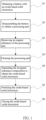
FIG. 1 is a flowchart illustrating an example of steps for recycling method for oxide-based solid electrolyte with original phase in accordance with the present invention. -
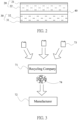
FIG. 2 is a schematic diagram of the used lithium battery in accordance with the present invention. -
FIG. 3 is a block diagram of an example of a production mode for re-used of the recycled oxide-based solid electrolyte in accordance with the present invention. - In this invention, it is considered that the oxide-based solid electrolyte is only used as an ion transport pathway, and does not participate in the insertion and extraction of lithium ions during charge and discharge cycles. Its size, crystal structure and material's characteristics do not be destroyed, even after repeated charging and discharging cycle. Therefore, the original phase recycle of the oxide-based solid electrolyte is achieved without damage to the structure or materials. The recycled oxide-based solid electrolyte has the states equivalent to the material initial used.
- Please refer to
FIG. 1 , which is a flowchart illustrating an example of steps for recycling method for oxide-based solid electrolyte with original phase in accordance with the present invention. Firstly, in the step S1, a battery with an oxide-based solid electrolyte is obtained. The battery includes solid-state or quasi-solid metal-ion batteries, lithium batteries for example, such as unusable after multiple charge and discharge cycles, improper manufacturing process only used for a few charge and discharge cycles, or other man-made disposal or damage. In other words, the metal-ion battery must have a certain amount of the oxide-based solid electrolyte with an original size and an original material's characteristics. - The oxide-based solid electrolyte may be a fluorite structure oxide-based solid electrolyte. For example, it may be yttria stabilized zirconia (YSZ) with molar fraction 3-10%. The oxide-based solid electrolyte may be a Perovskite structure (ABO3) oxide-based solid electrolyte, such as doped LaGaO3. Or, the oxide-based solid electrolyte may be Li1+x+y(Al, Ga)x (Ti, Ge)2-xSiyP3-yO12, where 0≦x≦1 and 0≦y≦1. Moreover, the oxide-based solid electrolyte may be Li2O-Al2O3-SiO2-P2O5-TiO2, Li2O-Al2O3-SiO2-P2O5-TiO2-GeO2, Na3.3Zr1.7La0.3Si3PO12, Li3.5Si0.5P0.5O4, Li3xLa2/3xTiO3, Li7La3Zr2O12, Li0.38La0.56Ti0.99Al0.01O3, or Li0.34LaTiO2.94; or LLZO (lithium lanthanum zirconium oxide, Li7La3Zr2O12).
- Then, in the step S2, the battery is disassembled to obtain a processing part, and the discharge treatment is performed if it is required. In this step, it is mainly performed a physical dissembling to dissemble the external housing, such as an aluminum foil bag, a casing, etc., mainly depends on the type of metal-ion batteries. The processing part after disassembled is mainly the cell portion, as shown in
FIG. 2 , which includes twoelectrodes solid electrolyte layer 40. According to the general structure, theelectrodes current collectors active material layers current collectors active material layers - In the step S3, an organic substance of the processing part is removed. The removing method may be a wet process or a dry process. For example, each layer of the metal-ion battery, such as between the
electrodes solid electrolyte layer 40 or between the materials within each layer, is adhered with a binder. Therefore, the wet process, is performed to dissolve at least one of the binder to make the layers or materials be separated from each other. The solvent used in the wet process can be adjusted for the organic substance to be dissolved. For example, the solvent is adjusted depend on different metal-ion batteries with different binders or the binder formulation of each layers. These adjustments are mainly aimed to separate the inorganic substances, such as the active materials, the electrically conductive material and the oxide solid electrolytes, from the organic substances, such as the binders or the polymer electrolytes. The above-mentioned dry process may be a high-temperature pyrolysis process, which is lower than the temperature at which the oxide solid electrolyte will occur the crystal variation. Therefore the processing part essentially remains an inorganic substance composition after this step. - After the above step S3, another cleaning step, step S3', can be performed to clean and remove the aforementioned the residual organic substances, the remained solvent, or the residual substances after pyrolysis process, so as to facilitate subsequent the step S4 of separating various inorganic substances to obtain the oxide solid electrolyte. The cleaning process of the step S3' is mainly to remove the dissolved organic substances, such as the binders or the polymer solid electrolytes, from the processing part. If the dissolving solvent used in the aforementioned step S3 does not affect the subsequent separation step, step S4, the step S3' can be omitted. For example, if acetone or alcohol is used to dissolve and remove the organic substances, the acetone or alcohol will volatilize by itself. Therefore, there is no need to perform step S3'. However, if the cleaning solvent used in this step S3' does not volatilize by itself, a heating treatment at the temperature 400-500°C can be used to remove the residual organic substances, which may include the solvent and the residual binder, etc., on the processing part.
- In the step S4, the oxide-based solid electrolyte is separated from the remaining inorganic substance composition. After the above-mentioned steps, the remaining inorganic substances may include the active materials, the solid oxide electrolytes, the electrically conductive materials, etc. The remaining inorganic substance composition depends on the battery usage status, such as the amount of repeated charging and discharging cycles, and the type of the metal-ion battery. Specifically, a screening process by a centrifugal force may be used. On the other hand, the aforementioned solid components are separated based on sizes and/or densities under the centrifugal force. Then the oxide-based solid electrolyte is obtained by screening process.
- Then, the oxide-based solid electrolyte is purified in step S5 to obtain a recycled oxide-based solid electrolyte which has the original size and the original material's characteristics. To clean the impurities on the surface of the oxide-based solid electrolyte or the remaining compositions of the battery, a deionized water, an organic solvent or by turns thereof are used to purify the oxide-based solid electrolyte. Or a plasma or corona is adapted for purifying surfaces of the oxide-based solid electrolyte. Finally, the oxide-based solid electrolyte is dried, in step S6. For example, the drying process is performed in 350°C-750°C.
- Through the aforementioned recycling method, the solid-state or quasi-solid lithium batteries are effectively recycled to prevent the environmental pollution of the waste metal-ion batteries. Also, there does not have cracking process during the recycling method. The structure, with original particle size, and original composition of the oxide-based solid electrolyte will not be damaged. For example, the temperature of the heat treatment of the above-mentioned step is lower than the temperature of the oxide-based solid electrolyte to produce crystal variation. And the chemical reagents will not affect the structure or composition of the oxide-based solid electrolyte. Moreover, during the electrochemical reactions, the oxide-based solid electrolyte is only used as an ion transport pathway, and does not participate in the insertion and extraction of metal-ions. Therefore, the recycled oxide-based solid electrolyte would still have the states of the initial used to achieve original phase recycle.
- Due to the recycled oxide-based solid electrolyte is original phase recycle, the obtained oxide-based solid electrolyte still has the material's states of the initial used. The recycled oxide-based solid electrolyte can be re-used directly to a new assembly lithium battery in production line. Therefore, a novel production mode is generated. Please refer to
FIG. 3 , which is a block diagram of an example of a production mode for re-used of the recycled oxide-based solid electrolyte in accordance with the present invention. - The
recycling company 71 obtains the original phase oxide-basedsolid electrolyte 74 by performing the above-mentioned original phase recycling method on thebattery 73. Then the original phase oxide-basedsolid electrolyte 74 is supplied to themanufacturer 72 for a new assembly metal-ion battery. In other words, the manufactured metal-ion battery will include the original phase oxide-basedsolid electrolyte 74 obtained by the original phase recycling method of the aforementioned steps. In this way, the cost of the solid state electrolyte is greatly reduced, and the manufacturing cost of the solid-state or quasi-solid metal-ion batteries are also greatly reduced. Furthermore, because the used solid-state electrolyte comes from the original phase electrolyte of recycling, the produced battery is a green battery. In other words, the green battery includes the original phase oxide-basedsolid electrolyte 74 obtained by the original phase recycling method of the aforementioned steps. - Accordingly, this invention provides a recycling method for oxide-based solid electrolyte with original phase, method of fabricating lithium batteries and green batteries thereof, which is adapted to recycle the solid-state or quasi-solid lithium batteries after discard. The oxide-based solid electrolyte is only used as an ion transport pathway, and does not participate in the insertion and extraction of the metal-ions during charge and discharge cycles, and its crystal structure dose not be destroyed. Therefore, the original phase recycle of the oxide-based solid electrolyte is achieved without damage the structure or materials. The recycled oxide-based solid electrolyte can be re-used to reduce the manufacturing cost of the metal-ion battery.
Claims (10)
- A recycling method for oxide-based solid electrolytes with original phase, comprising the following steps:step S1: obtaining a battery with an oxide-based solid electrolyte with an original size and an original material's characteristics;step S2: disassembling the battery to obtain a processing part including at least one electrode and the oxide-based solid electrolyte;step S3: removing an organic substance of the processing part, so that the processing part essentially remains an inorganic substance composition;step S4: separating the inorganic substance composition to obtain the oxide-based solid electrolyte; andstep S5: purifying the oxide-based solid electrolyte to obtain a recycled oxide-based solid electrolyte with the original size and the original material's characteristics.
- The recycling method of claim 1, wherein the step S3 specifically comprises removing the organic substance of the processing part by a wet or dry process.
- The recycling method of claim 2, further comprises a step of cleaning the processing part to remove a residual organic substance before the step S4 and after the step S3.
- The recycling method of claim 1, wherein the step S4 specifically comprises separating the inorganic substance composition via screening by a centrifugal force.
- The recycling method of claim 1, wherein the step S5, a deionized water, an organic solvent or by turns thereof are used to purify the oxide-based solid electrolyte.
- The recycling method of claim 1, wherein the step S5 specifically comprises purifying surfaces of the oxide-based solid electrolyte by a plasma or corona discharge.
- The recycling method of claim 1, further comprises a step of drying the oxide-based solid electrolyte after the step S5.
- The recycling method of claim 7, wherein the drying process is performed in 350° C-750°C.
- The recycling method of claim 1, wherein the oxide-based solid electrolyte is LLZO (lithium lanthanum zirconium oxide, Li7La3Zr2O12).
- A green battery including an oxide-based solid electrolytes with original phase, which is recycled according to any one of claims 1-9.
Applications Claiming Priority (1)
| Application Number | Priority Date | Filing Date | Title |
|---|---|---|---|
| TW108138562A TWI725589B (en) | 2019-10-25 | 2019-10-25 | Recycling method for oxide-based solid electrolyte with original phase, method of fabricating lithium battery and green battery thereof |
Publications (3)
| Publication Number | Publication Date |
|---|---|
| EP3813182A1 EP3813182A1 (en) | 2021-04-28 |
| EP3813182B1 true EP3813182B1 (en) | 2024-04-24 |
| EP3813182C0 EP3813182C0 (en) | 2024-04-24 |
Family
ID=72943976
Family Applications (1)
| Application Number | Title | Priority Date | Filing Date |
|---|---|---|---|
| EP20202581.3A Active EP3813182B1 (en) | 2019-10-25 | 2020-10-19 | Recycling method for oxide-based solid electrolyte with original phase, method of fabricating lithium battery and green battery thereof |
Country Status (11)
| Country | Link |
|---|---|
| US (1) | US11575158B2 (en) |
| EP (1) | EP3813182B1 (en) |
| JP (1) | JP7074823B2 (en) |
| KR (1) | KR102570324B1 (en) |
| CN (1) | CN112713326B (en) |
| ES (1) | ES2982505T3 (en) |
| HU (1) | HUE066690T2 (en) |
| MX (1) | MX2020011218A (en) |
| PL (1) | PL3813182T3 (en) |
| RU (1) | RU2741877C1 (en) |
| TW (1) | TWI725589B (en) |
Families Citing this family (7)
| Publication number | Priority date | Publication date | Assignee | Title |
|---|---|---|---|---|
| CN117561631A (en) * | 2021-06-25 | 2024-02-13 | 升腾元素公司 | Recycling All Solid State Batteries (ASSB) and Anode Recovery |
| CN113620336B (en) * | 2021-07-27 | 2022-10-25 | 西安交通大学 | Method for recovering germanium, aluminum and lithium in LAGP solid electrolyte |
| CN114122319A (en) * | 2021-11-19 | 2022-03-01 | 哈尔滨工业大学 | Method for efficiently separating electrode and electrolyte of solid polymer lithium metal battery |
| CN114639837A (en) * | 2022-03-09 | 2022-06-17 | 先导薄膜材料(广东)有限公司 | Method for recycling electrolyte sheet of solid fuel cell |
| CN115584397B (en) * | 2022-11-24 | 2023-03-24 | 中自环保科技股份有限公司 | Method for recovering lithium, lanthanum, zirconium, titanium and oxygen in lithium ion semi-solid battery |
| KR102786854B1 (en) * | 2024-07-04 | 2025-03-28 | 한국에너지공과대학교 | Recycling method of non-destructive secondary battery electrode materials using plasma process |
| CN119683592A (en) * | 2024-12-16 | 2025-03-25 | 昆明理工大学 | Method for regenerating damaged oxide solid electrolyte by electric heating pulse |
Family Cites Families (24)
| Publication number | Priority date | Publication date | Assignee | Title |
|---|---|---|---|---|
| DE3927225A1 (en) * | 1989-08-18 | 1991-02-21 | Asea Brown Boveri | METHOD FOR DISPOSAL OF STORAGE CELLS |
| JPH05339747A (en) * | 1992-06-05 | 1993-12-21 | Kobe Steel Ltd | Hydrophilic treatment device for metallic pipe |
| AU701597B2 (en) * | 1996-03-05 | 1999-02-04 | Canon Kabushiki Kaisha | Process and apparatus for recovering components of sealed type battery |
| US6150050A (en) * | 1998-03-09 | 2000-11-21 | Valence Technology, Inc | Method for recovering particulate material from electrical components |
| JP2001243994A (en) * | 2000-02-28 | 2001-09-07 | Hitachi Ltd | How to recycle sodium-sulfur battery |
| JP4492222B2 (en) * | 2004-06-21 | 2010-06-30 | トヨタ自動車株式会社 | Lithium battery treatment method |
| JP4692556B2 (en) * | 2008-02-12 | 2011-06-01 | トヨタ自動車株式会社 | All-solid lithium secondary battery |
| JP2010034021A (en) * | 2008-07-03 | 2010-02-12 | Sumitomo Chemical Co Ltd | Method of recycling oxide-containing battery material from waste battery material |
| CN100576626C (en) * | 2008-07-11 | 2009-12-30 | 东莞市松山科技集团有限公司 | A process that can realize the full cycle regeneration of waste lead-acid batteries |
| JP2010040458A (en) * | 2008-08-07 | 2010-02-18 | Idemitsu Kosan Co Ltd | Lithium recovery method and metal-recovering method |
| FR2979756B1 (en) * | 2011-09-07 | 2013-10-04 | Commissariat Energie Atomique | PROCESS FOR RECYCLING LITHIUM BATTERIES AND / OR ELECTRODES OF SUCH BATTERIES |
| KR20140131441A (en) * | 2013-05-03 | 2014-11-13 | 한국생산기술연구원 | Method for manufacturing solid electrolyte for solid oxide fuel cell and manufacturing method for unit cell of the solid oxide fuel cell |
| RU2672556C2 (en) * | 2013-09-02 | 2018-11-16 | Мицубиси Газ Кемикал Компани, Инк. | Battery with solid electrolyte and method of obtaining active material of electrode |
| KR102272556B1 (en) * | 2013-09-02 | 2021-07-02 | 미츠비시 가스 가가쿠 가부시키가이샤 | Solid-state battery |
| DE102014116378B4 (en) * | 2014-11-10 | 2016-07-28 | Schott Ag | Method for producing a glass-ceramic ion conductor |
| CN105648469B (en) * | 2014-11-24 | 2018-08-21 | 中国科学院大连化学物理研究所 | A kind of recoverying and utilizing method of solid polymer electrolyte water electrolytic cell membrane electrode |
| JP2016134254A (en) * | 2015-01-16 | 2016-07-25 | トヨタ自動車株式会社 | Manufacturing method of all solid state battery |
| WO2017091562A1 (en) * | 2015-11-24 | 2017-06-01 | Worcester Polytechnic Institute | Method and apparatus for recycling lithium-ion batteries |
| KR101793168B1 (en) * | 2016-02-03 | 2017-11-20 | 한국생산기술연구원 | All solid lithium secondary batterie including llzo solid electrolyte and manufacturing method for the same |
| US10629950B2 (en) * | 2017-07-07 | 2020-04-21 | Polyplus Battery Company | Encapsulated sulfide glass solid electrolytes and solid-state laminate electrode assemblies |
| CN107394301A (en) * | 2017-07-19 | 2017-11-24 | 深圳市沃特玛电池有限公司 | A kind of waste and old electrokinetic cell physiochemical mutagens technique |
| CN107687018A (en) * | 2017-07-25 | 2018-02-13 | 南昌航空大学 | A kind of method of sensitization solar battery light anode MAT'L recycling |
| CN109935796A (en) * | 2017-12-19 | 2019-06-25 | 成都亦道科技合伙企业(有限合伙) | A kind of total oxygen compound solid state lithium battery structure and preparation method thereof |
| CN109786624A (en) * | 2019-01-16 | 2019-05-21 | 北京卫蓝新能源科技有限公司 | A kind of preparation method and ion battery of ion battery porous septum |
-
2019
- 2019-10-25 TW TW108138562A patent/TWI725589B/en active
-
2020
- 2020-10-06 US US17/064,136 patent/US11575158B2/en active Active
- 2020-10-19 ES ES20202581T patent/ES2982505T3/en active Active
- 2020-10-19 HU HUE20202581A patent/HUE066690T2/en unknown
- 2020-10-19 EP EP20202581.3A patent/EP3813182B1/en active Active
- 2020-10-19 PL PL20202581.3T patent/PL3813182T3/en unknown
- 2020-10-20 RU RU2020134296A patent/RU2741877C1/en active
- 2020-10-20 CN CN202011124736.1A patent/CN112713326B/en active Active
- 2020-10-21 KR KR1020200136798A patent/KR102570324B1/en active Active
- 2020-10-22 MX MX2020011218A patent/MX2020011218A/en unknown
- 2020-10-22 JP JP2020177415A patent/JP7074823B2/en active Active
Also Published As
| Publication number | Publication date |
|---|---|
| CN112713326B (en) | 2023-11-24 |
| CN112713326A (en) | 2021-04-27 |
| ES2982505T3 (en) | 2024-10-16 |
| MX2020011218A (en) | 2021-04-26 |
| EP3813182A1 (en) | 2021-04-28 |
| TWI725589B (en) | 2021-04-21 |
| HUE066690T2 (en) | 2024-08-28 |
| US11575158B2 (en) | 2023-02-07 |
| JP2021068708A (en) | 2021-04-30 |
| KR20210050463A (en) | 2021-05-07 |
| JP7074823B2 (en) | 2022-05-24 |
| EP3813182C0 (en) | 2024-04-24 |
| RU2741877C1 (en) | 2021-01-29 |
| US20210126294A1 (en) | 2021-04-29 |
| PL3813182T3 (en) | 2024-06-10 |
| KR102570324B1 (en) | 2023-08-23 |
| TW202118133A (en) | 2021-05-01 |
Similar Documents
| Publication | Publication Date | Title |
|---|---|---|
| EP3813182B1 (en) | Recycling method for oxide-based solid electrolyte with original phase, method of fabricating lithium battery and green battery thereof | |
| US11355817B2 (en) | Nanoporous separators for batteries and related manufacturing methods | |
| KR102691135B1 (en) | Nanoporous separators for batteries and related manufacturing methods | |
| US12322832B2 (en) | Nanoporous separators for batteries and related manufacturing methods | |
| CN100369317C (en) | A resource separation method for waste lithium-ion batteries | |
| WO2011079409A1 (en) | Method of recycling and reusing spent lithium iron phosphate power battery | |
| CN115818607B (en) | Method for recycling lithium iron phosphate material | |
| KR102223720B1 (en) | Method for recovering positive electrode mixture material from lithium secondary battery | |
| US20230275279A1 (en) | Remanufacturing of a battery cell | |
| CN102544579A (en) | Method for etching water system lithium battery solid electrolyte piece | |
| BR102020021831A2 (en) | RECYCLING METHOD FOR ORIGINAL PHASE OXIDE-BASED SOLID ELECTROLYTE, LITHIUM BATTERY MANUFACTURING METHOD AND ECOLOGICAL BATTERY | |
| BR102020021831B1 (en) | RECYCLING METHOD FOR OXIDE-BASED SOLID ELECTROLYTE WITH ORIGINAL PHASE, MANUFACTURING METHOD FOR LITHIUM BATTERY AND ECOLOGICAL BATTERY THEREOF | |
| KR20240084757A (en) | Manufacturing method for recycled cathode active material | |
| KR102811000B1 (en) | Eco friendly battery recycling method | |
| WO2025151084A1 (en) | Method of recycling battery | |
| KR20230124314A (en) | Method for Recovering Positive Electrode Active Material From Secondary Battery | |
| KR20260054908A (en) | Method for discharging pouch cell |
Legal Events
| Date | Code | Title | Description |
|---|---|---|---|
| PUAI | Public reference made under article 153(3) epc to a published international application that has entered the european phase |
Free format text: ORIGINAL CODE: 0009012 |
|
| STAA | Information on the status of an ep patent application or granted ep patent |
Free format text: STATUS: THE APPLICATION HAS BEEN PUBLISHED |
|
| AK | Designated contracting states |
Kind code of ref document: A1 Designated state(s): AL AT BE BG CH CY CZ DE DK EE ES FI FR GB GR HR HU IE IS IT LI LT LU LV MC MK MT NL NO PL PT RO RS SE SI SK SM TR |
|
| AX | Request for extension of the european patent |
Extension state: BA ME |
|
| STAA | Information on the status of an ep patent application or granted ep patent |
Free format text: STATUS: REQUEST FOR EXAMINATION WAS MADE |
|
| 17P | Request for examination filed |
Effective date: 20211028 |
|
| RBV | Designated contracting states (corrected) |
Designated state(s): AL AT BE BG CH CY CZ DE DK EE ES FI FR GB GR HR HU IE IS IT LI LT LU LV MC MK MT NL NO PL PT RO RS SE SI SK SM TR |
|
| GRAP | Despatch of communication of intention to grant a patent |
Free format text: ORIGINAL CODE: EPIDOSNIGR1 |
|
| STAA | Information on the status of an ep patent application or granted ep patent |
Free format text: STATUS: GRANT OF PATENT IS INTENDED |
|
| RIC1 | Information provided on ipc code assigned before grant |
Ipc: H01M 10/0562 20100101ALN20231115BHEP Ipc: H01M 10/54 20060101AFI20231115BHEP |
|
| INTG | Intention to grant announced |
Effective date: 20231130 |
|
| GRAS | Grant fee paid |
Free format text: ORIGINAL CODE: EPIDOSNIGR3 |
|
| GRAA | (expected) grant |
Free format text: ORIGINAL CODE: 0009210 |
|
| STAA | Information on the status of an ep patent application or granted ep patent |
Free format text: STATUS: THE PATENT HAS BEEN GRANTED |
|
| AK | Designated contracting states |
Kind code of ref document: B1 Designated state(s): AL AT BE BG CH CY CZ DE DK EE ES FI FR GB GR HR HU IE IS IT LI LT LU LV MC MK MT NL NO PL PT RO RS SE SI SK SM TR |
|
| REG | Reference to a national code |
Ref country code: GB Ref legal event code: FG4D |
|
| REG | Reference to a national code |
Ref country code: CH Ref legal event code: EP |
|
| REG | Reference to a national code |
Ref country code: DE Ref legal event code: R096 Ref document number: 602020029453 Country of ref document: DE |
|
| REG | Reference to a national code |
Ref country code: IE Ref legal event code: FG4D |
|
| U01 | Request for unitary effect filed |
Effective date: 20240510 |
|
| U07 | Unitary effect registered |
Designated state(s): AT BE BG DE DK EE FI FR IT LT LU LV MT NL PT SE SI Effective date: 20240523 |
|
| REG | Reference to a national code |
Ref country code: HU Ref legal event code: AG4A Ref document number: E066690 Country of ref document: HU |
|
| PG25 | Lapsed in a contracting state [announced via postgrant information from national office to epo] |
Ref country code: IS Free format text: LAPSE BECAUSE OF FAILURE TO SUBMIT A TRANSLATION OF THE DESCRIPTION OR TO PAY THE FEE WITHIN THE PRESCRIBED TIME-LIMIT Effective date: 20240824 |
|
| PG25 | Lapsed in a contracting state [announced via postgrant information from national office to epo] |
Ref country code: HR Free format text: LAPSE BECAUSE OF FAILURE TO SUBMIT A TRANSLATION OF THE DESCRIPTION OR TO PAY THE FEE WITHIN THE PRESCRIBED TIME-LIMIT Effective date: 20240424 |
|
| PG25 | Lapsed in a contracting state [announced via postgrant information from national office to epo] |
Ref country code: GR Free format text: LAPSE BECAUSE OF FAILURE TO SUBMIT A TRANSLATION OF THE DESCRIPTION OR TO PAY THE FEE WITHIN THE PRESCRIBED TIME-LIMIT Effective date: 20240725 |
|
| REG | Reference to a national code |
Ref country code: ES Ref legal event code: FG2A Ref document number: 2982505 Country of ref document: ES Kind code of ref document: T3 Effective date: 20241016 |
|
| PG25 | Lapsed in a contracting state [announced via postgrant information from national office to epo] |
Ref country code: NO Free format text: LAPSE BECAUSE OF FAILURE TO SUBMIT A TRANSLATION OF THE DESCRIPTION OR TO PAY THE FEE WITHIN THE PRESCRIBED TIME-LIMIT Effective date: 20240724 Ref country code: IS Free format text: LAPSE BECAUSE OF FAILURE TO SUBMIT A TRANSLATION OF THE DESCRIPTION OR TO PAY THE FEE WITHIN THE PRESCRIBED TIME-LIMIT Effective date: 20240824 Ref country code: HR Free format text: LAPSE BECAUSE OF FAILURE TO SUBMIT A TRANSLATION OF THE DESCRIPTION OR TO PAY THE FEE WITHIN THE PRESCRIBED TIME-LIMIT Effective date: 20240424 Ref country code: GR Free format text: LAPSE BECAUSE OF FAILURE TO SUBMIT A TRANSLATION OF THE DESCRIPTION OR TO PAY THE FEE WITHIN THE PRESCRIBED TIME-LIMIT Effective date: 20240725 Ref country code: RS Free format text: LAPSE BECAUSE OF FAILURE TO SUBMIT A TRANSLATION OF THE DESCRIPTION OR TO PAY THE FEE WITHIN THE PRESCRIBED TIME-LIMIT Effective date: 20240724 |
|
| U20 | Renewal fee for the european patent with unitary effect paid |
Year of fee payment: 5 Effective date: 20241029 |
|
| PG25 | Lapsed in a contracting state [announced via postgrant information from national office to epo] |
Ref country code: SK Free format text: LAPSE BECAUSE OF FAILURE TO SUBMIT A TRANSLATION OF THE DESCRIPTION OR TO PAY THE FEE WITHIN THE PRESCRIBED TIME-LIMIT Effective date: 20240424 Ref country code: RO Free format text: LAPSE BECAUSE OF FAILURE TO SUBMIT A TRANSLATION OF THE DESCRIPTION OR TO PAY THE FEE WITHIN THE PRESCRIBED TIME-LIMIT Effective date: 20240424 |
|
| REG | Reference to a national code |
Ref country code: DE Ref legal event code: R097 Ref document number: 602020029453 Country of ref document: DE |
|
| PG25 | Lapsed in a contracting state [announced via postgrant information from national office to epo] |
Ref country code: SM Free format text: LAPSE BECAUSE OF FAILURE TO SUBMIT A TRANSLATION OF THE DESCRIPTION OR TO PAY THE FEE WITHIN THE PRESCRIBED TIME-LIMIT Effective date: 20240424 |
|
| PG25 | Lapsed in a contracting state [announced via postgrant information from national office to epo] |
Ref country code: SM Free format text: LAPSE BECAUSE OF FAILURE TO SUBMIT A TRANSLATION OF THE DESCRIPTION OR TO PAY THE FEE WITHIN THE PRESCRIBED TIME-LIMIT Effective date: 20240424 Ref country code: SK Free format text: LAPSE BECAUSE OF FAILURE TO SUBMIT A TRANSLATION OF THE DESCRIPTION OR TO PAY THE FEE WITHIN THE PRESCRIBED TIME-LIMIT Effective date: 20240424 Ref country code: RO Free format text: LAPSE BECAUSE OF FAILURE TO SUBMIT A TRANSLATION OF THE DESCRIPTION OR TO PAY THE FEE WITHIN THE PRESCRIBED TIME-LIMIT Effective date: 20240424 |
|
| PLBE | No opposition filed within time limit |
Free format text: ORIGINAL CODE: 0009261 |
|
| STAA | Information on the status of an ep patent application or granted ep patent |
Free format text: STATUS: NO OPPOSITION FILED WITHIN TIME LIMIT |
|
| 26N | No opposition filed |
Effective date: 20250127 |
|
| REG | Reference to a national code |
Ref country code: CH Ref legal event code: PL |
|
| PG25 | Lapsed in a contracting state [announced via postgrant information from national office to epo] |
Ref country code: MC Free format text: LAPSE BECAUSE OF FAILURE TO SUBMIT A TRANSLATION OF THE DESCRIPTION OR TO PAY THE FEE WITHIN THE PRESCRIBED TIME-LIMIT Effective date: 20240424 |
|
| PG25 | Lapsed in a contracting state [announced via postgrant information from national office to epo] |
Ref country code: CH Free format text: LAPSE BECAUSE OF NON-PAYMENT OF DUE FEES Effective date: 20241031 |
|
| PGFP | Annual fee paid to national office [announced via postgrant information from national office to epo] |
Ref country code: TR Payment date: 20250930 Year of fee payment: 6 Ref country code: PL Payment date: 20250930 Year of fee payment: 6 |
|
| PG25 | Lapsed in a contracting state [announced via postgrant information from national office to epo] |
Ref country code: IE Free format text: LAPSE BECAUSE OF NON-PAYMENT OF DUE FEES Effective date: 20241019 |
|
| PGFP | Annual fee paid to national office [announced via postgrant information from national office to epo] |
Ref country code: HU Payment date: 20251007 Year of fee payment: 6 |
|
| U20 | Renewal fee for the european patent with unitary effect paid |
Year of fee payment: 6 Effective date: 20251030 |
|
| PGFP | Annual fee paid to national office [announced via postgrant information from national office to epo] |
Ref country code: GB Payment date: 20251014 Year of fee payment: 6 |
|
| PGFP | Annual fee paid to national office [announced via postgrant information from national office to epo] |
Ref country code: CZ Payment date: 20251008 Year of fee payment: 6 |
|
| PG25 | Lapsed in a contracting state [announced via postgrant information from national office to epo] |
Ref country code: CY Free format text: LAPSE BECAUSE OF FAILURE TO SUBMIT A TRANSLATION OF THE DESCRIPTION OR TO PAY THE FEE WITHIN THE PRESCRIBED TIME-LIMIT; INVALID AB INITIO Effective date: 20201019 |
|
| PGFP | Annual fee paid to national office [announced via postgrant information from national office to epo] |
Ref country code: ES Payment date: 20251107 Year of fee payment: 6 |