EP3812429A1 - Transparent colorless flaky pigment, process for the production anduse thereof - Google Patents
Transparent colorless flaky pigment, process for the production anduse thereof Download PDFInfo
- Publication number
- EP3812429A1 EP3812429A1 EP19206094.5A EP19206094A EP3812429A1 EP 3812429 A1 EP3812429 A1 EP 3812429A1 EP 19206094 A EP19206094 A EP 19206094A EP 3812429 A1 EP3812429 A1 EP 3812429A1
- Authority
- EP
- European Patent Office
- Prior art keywords
- sublayer
- colorless flaky
- aluminium
- flakes
- transparent colorless
- Prior art date
- Legal status (The legal status is an assumption and is not a legal conclusion. Google has not performed a legal analysis and makes no representation as to the accuracy of the status listed.)
- Granted
Links
Images


Classifications
-
- C—CHEMISTRY; METALLURGY
- C09—DYES; PAINTS; POLISHES; NATURAL RESINS; ADHESIVES; COMPOSITIONS NOT OTHERWISE PROVIDED FOR; APPLICATIONS OF MATERIALS NOT OTHERWISE PROVIDED FOR
- C09C—TREATMENT OF INORGANIC MATERIALS, OTHER THAN FIBROUS FILLERS, TO ENHANCE THEIR PIGMENTING OR FILLING PROPERTIES ; PREPARATION OF CARBON BLACK ; PREPARATION OF INORGANIC MATERIALS WHICH ARE NO SINGLE CHEMICAL COMPOUNDS AND WHICH ARE MAINLY USED AS PIGMENTS OR FILLERS
- C09C1/00—Treatment of specific inorganic materials other than fibrous fillers; Preparation of carbon black
- C09C1/0015—Pigments exhibiting interference colours, e.g. transparent platelets of appropriate thinness or flaky substrates, e.g. mica, bearing appropriate thin transparent coatings
- C09C1/0021—Pigments exhibiting interference colours, e.g. transparent platelets of appropriate thinness or flaky substrates, e.g. mica, bearing appropriate thin transparent coatings comprising a core coated with only one layer having a high or low refractive index
-
- A—HUMAN NECESSITIES
- A61—MEDICAL OR VETERINARY SCIENCE; HYGIENE
- A61K—PREPARATIONS FOR MEDICAL, DENTAL OR TOILETRY PURPOSES
- A61K8/00—Cosmetics or similar toiletry preparations
- A61K8/02—Cosmetics or similar toiletry preparations characterised by special physical form
- A61K8/0241—Containing particulates characterized by their shape and/or structure
- A61K8/0254—Platelets; Flakes
- A61K8/0258—Layered structure
- A61K8/0266—Characterized by the sequence of layers
-
- A—HUMAN NECESSITIES
- A61—MEDICAL OR VETERINARY SCIENCE; HYGIENE
- A61K—PREPARATIONS FOR MEDICAL, DENTAL OR TOILETRY PURPOSES
- A61K8/00—Cosmetics or similar toiletry preparations
- A61K8/02—Cosmetics or similar toiletry preparations characterised by special physical form
- A61K8/04—Dispersions; Emulsions
- A61K8/044—Suspensions
-
- A—HUMAN NECESSITIES
- A61—MEDICAL OR VETERINARY SCIENCE; HYGIENE
- A61K—PREPARATIONS FOR MEDICAL, DENTAL OR TOILETRY PURPOSES
- A61K8/00—Cosmetics or similar toiletry preparations
- A61K8/18—Cosmetics or similar toiletry preparations characterised by the composition
- A61K8/19—Cosmetics or similar toiletry preparations characterised by the composition containing inorganic ingredients
-
- A—HUMAN NECESSITIES
- A61—MEDICAL OR VETERINARY SCIENCE; HYGIENE
- A61K—PREPARATIONS FOR MEDICAL, DENTAL OR TOILETRY PURPOSES
- A61K8/00—Cosmetics or similar toiletry preparations
- A61K8/18—Cosmetics or similar toiletry preparations characterised by the composition
- A61K8/19—Cosmetics or similar toiletry preparations characterised by the composition containing inorganic ingredients
- A61K8/25—Silicon; Compounds thereof
-
- A—HUMAN NECESSITIES
- A61—MEDICAL OR VETERINARY SCIENCE; HYGIENE
- A61K—PREPARATIONS FOR MEDICAL, DENTAL OR TOILETRY PURPOSES
- A61K8/00—Cosmetics or similar toiletry preparations
- A61K8/18—Cosmetics or similar toiletry preparations characterised by the composition
- A61K8/19—Cosmetics or similar toiletry preparations characterised by the composition containing inorganic ingredients
- A61K8/26—Aluminium; Compounds thereof
-
- A—HUMAN NECESSITIES
- A61—MEDICAL OR VETERINARY SCIENCE; HYGIENE
- A61Q—SPECIFIC USE OF COSMETICS OR SIMILAR TOILETRY PREPARATIONS
- A61Q1/00—Make-up preparations; Body powders; Preparations for removing make-up
-
- A—HUMAN NECESSITIES
- A61—MEDICAL OR VETERINARY SCIENCE; HYGIENE
- A61Q—SPECIFIC USE OF COSMETICS OR SIMILAR TOILETRY PREPARATIONS
- A61Q1/00—Make-up preparations; Body powders; Preparations for removing make-up
- A61Q1/02—Preparations containing skin colorants, e.g. pigments
-
- A—HUMAN NECESSITIES
- A61—MEDICAL OR VETERINARY SCIENCE; HYGIENE
- A61Q—SPECIFIC USE OF COSMETICS OR SIMILAR TOILETRY PREPARATIONS
- A61Q19/00—Preparations for care of the skin
-
- A—HUMAN NECESSITIES
- A61—MEDICAL OR VETERINARY SCIENCE; HYGIENE
- A61K—PREPARATIONS FOR MEDICAL, DENTAL OR TOILETRY PURPOSES
- A61K2800/00—Properties of cosmetic compositions or active ingredients thereof or formulation aids used therein and process related aspects
- A61K2800/20—Chemical, physico-chemical or functional or structural properties of the composition as a whole
- A61K2800/26—Optical properties
- A61K2800/262—Transparent; Translucent
-
- A—HUMAN NECESSITIES
- A61—MEDICAL OR VETERINARY SCIENCE; HYGIENE
- A61K—PREPARATIONS FOR MEDICAL, DENTAL OR TOILETRY PURPOSES
- A61K2800/00—Properties of cosmetic compositions or active ingredients thereof or formulation aids used therein and process related aspects
- A61K2800/40—Chemical, physico-chemical or functional or structural properties of particular ingredients
- A61K2800/41—Particular ingredients further characterized by their size
- A61K2800/412—Microsized, i.e. having sizes between 0.1 and 100 microns
-
- A—HUMAN NECESSITIES
- A61—MEDICAL OR VETERINARY SCIENCE; HYGIENE
- A61K—PREPARATIONS FOR MEDICAL, DENTAL OR TOILETRY PURPOSES
- A61K2800/00—Properties of cosmetic compositions or active ingredients thereof or formulation aids used therein and process related aspects
- A61K2800/40—Chemical, physico-chemical or functional or structural properties of particular ingredients
- A61K2800/42—Colour properties
- A61K2800/43—Pigments; Dyes
-
- A—HUMAN NECESSITIES
- A61—MEDICAL OR VETERINARY SCIENCE; HYGIENE
- A61K—PREPARATIONS FOR MEDICAL, DENTAL OR TOILETRY PURPOSES
- A61K2800/00—Properties of cosmetic compositions or active ingredients thereof or formulation aids used therein and process related aspects
- A61K2800/40—Chemical, physico-chemical or functional or structural properties of particular ingredients
- A61K2800/60—Particulates further characterized by their structure or composition
- A61K2800/61—Surface treated
- A61K2800/62—Coated
- A61K2800/621—Coated by inorganic compounds
-
- A—HUMAN NECESSITIES
- A61—MEDICAL OR VETERINARY SCIENCE; HYGIENE
- A61K—PREPARATIONS FOR MEDICAL, DENTAL OR TOILETRY PURPOSES
- A61K2800/00—Properties of cosmetic compositions or active ingredients thereof or formulation aids used therein and process related aspects
- A61K2800/40—Chemical, physico-chemical or functional or structural properties of particular ingredients
- A61K2800/60—Particulates further characterized by their structure or composition
- A61K2800/61—Surface treated
- A61K2800/62—Coated
- A61K2800/63—More than one coating
-
- C—CHEMISTRY; METALLURGY
- C01—INORGANIC CHEMISTRY
- C01P—INDEXING SCHEME RELATING TO STRUCTURAL AND PHYSICAL ASPECTS OF SOLID INORGANIC COMPOUNDS
- C01P2004/00—Particle morphology
- C01P2004/01—Particle morphology depicted by an image
- C01P2004/04—Particle morphology depicted by an image obtained by TEM, STEM, STM or AFM
-
- C—CHEMISTRY; METALLURGY
- C01—INORGANIC CHEMISTRY
- C01P—INDEXING SCHEME RELATING TO STRUCTURAL AND PHYSICAL ASPECTS OF SOLID INORGANIC COMPOUNDS
- C01P2004/00—Particle morphology
- C01P2004/54—Particles characterised by their aspect ratio, i.e. the ratio of sizes in the longest to the shortest dimension
-
- C—CHEMISTRY; METALLURGY
- C01—INORGANIC CHEMISTRY
- C01P—INDEXING SCHEME RELATING TO STRUCTURAL AND PHYSICAL ASPECTS OF SOLID INORGANIC COMPOUNDS
- C01P2006/00—Physical properties of inorganic compounds
- C01P2006/10—Solid density
-
- C—CHEMISTRY; METALLURGY
- C01—INORGANIC CHEMISTRY
- C01P—INDEXING SCHEME RELATING TO STRUCTURAL AND PHYSICAL ASPECTS OF SOLID INORGANIC COMPOUNDS
- C01P2006/00—Physical properties of inorganic compounds
- C01P2006/16—Pore diameter
- C01P2006/17—Pore diameter distribution
-
- C—CHEMISTRY; METALLURGY
- C09—DYES; PAINTS; POLISHES; NATURAL RESINS; ADHESIVES; COMPOSITIONS NOT OTHERWISE PROVIDED FOR; APPLICATIONS OF MATERIALS NOT OTHERWISE PROVIDED FOR
- C09C—TREATMENT OF INORGANIC MATERIALS, OTHER THAN FIBROUS FILLERS, TO ENHANCE THEIR PIGMENTING OR FILLING PROPERTIES ; PREPARATION OF CARBON BLACK ; PREPARATION OF INORGANIC MATERIALS WHICH ARE NO SINGLE CHEMICAL COMPOUNDS AND WHICH ARE MAINLY USED AS PIGMENTS OR FILLERS
- C09C2200/00—Compositional and structural details of pigments exhibiting interference colours
- C09C2200/10—Interference pigments characterized by the core material
- C09C2200/1004—Interference pigments characterized by the core material the core comprising at least one inorganic oxide, e.g. Al2O3, TiO2 or SiO2
-
- C—CHEMISTRY; METALLURGY
- C09—DYES; PAINTS; POLISHES; NATURAL RESINS; ADHESIVES; COMPOSITIONS NOT OTHERWISE PROVIDED FOR; APPLICATIONS OF MATERIALS NOT OTHERWISE PROVIDED FOR
- C09C—TREATMENT OF INORGANIC MATERIALS, OTHER THAN FIBROUS FILLERS, TO ENHANCE THEIR PIGMENTING OR FILLING PROPERTIES ; PREPARATION OF CARBON BLACK ; PREPARATION OF INORGANIC MATERIALS WHICH ARE NO SINGLE CHEMICAL COMPOUNDS AND WHICH ARE MAINLY USED AS PIGMENTS OR FILLERS
- C09C2220/00—Methods of preparing the interference pigments
- C09C2220/10—Wet methods, e.g. co-precipitation
- C09C2220/106—Wet methods, e.g. co-precipitation comprising only a drying or calcination step of the finally coated pigment
Definitions
- the present invention is directed to a transparent colorless flaky pigment, to a process for the production thereof as well as to the use of such a pigment, in particular as a soft-focus filler in cosmetic formulations.
- Flaky powders such as mica or clay materials are known to be useful as filler materials or as basis for filler materials in several applications, in particular for cosmetic formulations. Since these materials sometimes exhibit not all of the requested characteristics of filler materials by themselves, they are occasionally either mixed with other ingredients or coated therewith.
- filler pigments in the market provide often merely a good transparency or an excellent wrinkle concealment, but there is still a need for a filler pigment being capable to provide both properties with one single filler pigment only when applied in a cosmetic formulation.
- the ability of a filler to impart a particularly attractive and natural appearance on the skin while, at the same time, exhibiting a satisfying light scattering (diffuse reflection) to conceal wrinkles and skin impurities is often referred to as the soft-focus effect.
- the object of the present invention to provide a transparent flaky colorless pigment which is especially useful in cosmetic applications and provides a good transparency as well as a good soft-focus effect to the skin which is treated with the respective cosmetic formulation containing the filler.
- usual characteristics such as soft skin-feeling, good spreadability and good adhesion to the skin should be provided as well.
- a transparent colorless flaky pigment consisting of a transparent colorless flaky core particle and of a coating on the core particle, wherein the coating consists of a first and a second separate continuous sublayer, each sublayer being composed of aluminium oxide (Al 2 O 3 ) and/or aluminium oxide hydroxide (AlO(OH)), the second sublayer being located on top of the first sublayer, where the coating has a density ⁇ ⁇ 3.00 g/cm 3 and where the density of the first sublayer is larger than the density of the second sublayer.
- the object of the present invention is achieved by a process for the production of said transparent colorless flaky pigment, comprising the following steps:
- the object of the present invention is also achieved by the use of said transparent colorless flaky pigments as filler in cosmetic formulations, paints, lacquers, inks, printing inks or plastics.
- the transparent colorless flaky pigments according to the present invention are based on transparent colorless flaky core particles which are provided with a coating.
- the core particles of the pigments must be as transparent and colorless as possible.
- materials such as Al 2 O 3 flakes, talc flakes, SiO 2 flakes, glass flakes, BN flakes or synthetic mica flakes are preferably used as core particles.
- Natural mica flakes are less useful, since they include foreign ions such as iron ions which may impart a slightly colored appearance to them which is not of advantage in the present pigments.
- Al 2 O 3 flakes are particularly preferred, especially ⁇ -Al 2 O 3 -flakes.
- the transparent colorless flaky core particles for the present pigments are available in the market in several qualities and size distributions, manufactured by several companies. Particular preference is given to ⁇ -Al 2 O 3 -flakes which are described in their characteristics and production method in US 2017/0105915 A1 .
- Neat Al 2 O 3 flakes may be used as filler pigments in cosmetic formulations as well. Usually, they impart a relatively low coverage to the skin, leading to a little whitish effect only, and impart a soft skin-feeling and good adhesion to the skin as well as comfortable spreadability characteristics, but the soft-focus factor thereof is low and needs to be improved. Similar defects regarding the one or other characteristic may be observed for the other core flake materials mentioned above as well, when used in a neat form without any coating thereon.
- the present inventors did therefore investigate eagerly how the good skin performance of all core particle materials mentioned above could be maintained by improving their general attractivity with respect to a good balance of transparency and soft-focus effect.
- the present inventors did find that a particular porous coating onto useful transparent colorless flaky core particles can impart the desired diffuse reflection, i.e. the soft-focus effect, to them, while the transparency of the core particles could be maintained to such an extent that the resulting pigments may be regarded transparent to visible light when used in cosmetic formulations.
- the coating on the transparent colorless flaky core particles is colorless as well and is composed of two continuous sublayers laying on top of each other, the first sublayer laying directly on the surface of the transparent colorless flaky core particles and, preferably, surrounding the core particles, whereas the second sublayer being located on the first sublayer and surrounding the latter.
- the two continuous sublayers are composed of the same components, namely of aluminium oxide and/or aluminium oxide hydroxide, where the content of aluminium oxide hydroxide is dependent on the production details, especially on the calcination temperature, as will be explained hereunder.
- the two sublayers exhibit different reflection properties, due to the different porosity in each sublayer.
- two sublayers of the same material composition, but exhibiting different reflection behavior may be achieved. Since the pore volume in each sublayer may hardly be measured, the inventors rely instead on the density of the coating comprising the two sublayers.
- the coating contains pores having the density of air of 1.00 g/cm 3
- the density of the coating of the present pigments is smaller than the theoretical density of AlO(OH) or of Al 2 O 3 and is ⁇ ⁇ 3.00 g/cm 3 , in particular ⁇ 2.70 g/cm 3 , especially ⁇ 2.60 g/cm 3 .
- the pigment according to the present invention consists of 30-70% by weight of the colorless flaky core particle and of 30-70% by weight of the coating, where the sum of the core particle and the coating is 100% by weight.
- the weight percentage of the coating is larger than that of the core.
- the weight content of the coating is 55 to 60% by weight, where the sum of the core particle and the coating is 100% by weight.
- the size of the pore diameters and the relation of the total pore area in respect to the total cross-section area covered by each sublayer may be determined by evaluating cross-sectional TEM samples of pigments according to the present invention.
- the TEM samples are analyzed using a Hitachi HD-2700 STEM (scanning transmission electron microscope).
- the cross-sectional TEM samples are prepared using a focused ion beam (FIB). The magnification is 80.000x.
- the TEM samples reveal a two-layer structure of the coating of the present pigments, consisting of a first and second sublayer.
- the diameter of the pores ranges from 1 to 100 nm, preferably from 5 to 80 nm, and in particular from 10 to 60 nm.
- the percentage of the pore area in the observation field is examined in different observation fields and an average value is calculated based on the values for each observation field.
- the pore area ratio relative to the total area covered by the first sublayer is 0 to 50%, preferably 0 to 10%.
- the pore area relative to the total area covered by the second sublayer is 5 to 80%, preferably 5 to 30%.
- the relative pore area covered by the pores in the second sublayer is always larger than the relative pore area covered by the pores in the first sublayer. Therefore, since both sublayers are composed of the same materials, the density of the second sublayer is smaller than the density of the first sublayer.
- the transparent colorless flaky core particle of the pigments is an Al 2 O 3 flake, in particular an ⁇ -Al 2 O 3 flake.
- ⁇ -Al 2 O 3 flakes which are produced according to the process disclosed in US 2017/0105915 A1 .
- the porous surface of the pigments according to the invention diminishes the whiteness of the filler pigment and its regular reflection under the influence of light, but strengthens the diffuse reflection which is almost uniform in all directions. Therefore, the soft-focus effect may be ameliorated to a great extent when compared with, e.g., the action of pure alumina flakes, while the transparency of the pigments may be maintained or even ameliorated too.
- the particle size of the transparent colorless flaky pigments is in the range of from 2 to 30 ⁇ m, which corresponds to the d 90 value (90% by volume of pigments in a respective pigment powder exhibit a particle size lower than the value given).
- the particle size refers to the largest longitudinal extension of the respective pigment.
- the particle size is in the range of from 5 to 25 ⁇ m.
- the aspect ratio ratio of average diameter to average thickness of the pigment is in the range of from 1.5 to 60.
- the particle size as well as the particle size distribution of the pigments is often determined by a laser diffraction method. To this end, several useful apparatuses are available in the market.
- the particle size and particle size distribution of the present pigments is determined by an instrument of the type Malvern Mastersizer 3000 (Malvern Panalytical (UK)) according to the laser diffraction method in a standard procedure.
- Malvern Mastersizer 3000 Malvern Panalytical (UK)
- the soft-focus effect which is referred to herein may not only be described, but is also measurable by a certain method and may be expressed in a graph.
- the present inventors refer to the disclosure of US 9,250,179 B2 , where the corresponding measurement method is described in detail.
- Lw luminance value
- Lg luminance L* in the specular angle
- the quotient Lw/Lg describes the uniformity of the scattered light distribution over the various viewing angles and is, therefore, a good predictor of the soft-focus effect of the respective pigment.
- the factor Lw/Lg is 1 for the best soft-focus effect available.
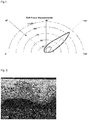
- the soft-focus factor achieved by the present pigments is about 0.5, whereas the soft-focus factor of a pure alumina flake is only about 0.15 (see graph of Fig. 1 ).
- the present invention is also directed to a process for the production of the transparent colorless flaky pigments as described above, the process comprising the following steps:
- the pH value in the first and second precipitation step is adjusted in the range of from pH 6.0 to pH 8.0.
- the temperature range for the whole coating process is between 45°C and 105°C, while the temperature difference between the coating temperature for precipitation of the first sublayer and the coating temperature for precipitation of the second sublayer is at least 10 degrees and at most 40 degrees, in particular it is between 15 and 35 degrees centigrade.
- the temperature must be raised by at least 10 to 40 degrees, in particular by 15 to 35 degrees centigrade, in order to assure that the porosity of the second sublayer will be higher than that of the first sublayer in the resulting product.
- the density of the second sublayer is smaller than the density of the first sublayer in the resulting transparent colorless flaky pigment of the present invention.
- the temperature range for calcination determines the percentual content of aluminium oxide hydroxide and aluminium oxide in the resulting product.
- the calcination temperature is in the range of from 300°C to 1400°C in order to assure that the aluminium hydroxide (Al(OH) 3 ) precipitated in the first and second sublayer is converted at least to aluminium oxide hydroxide (AlO(OH)), the conversion starting at 300°C.
- Al(OH) 3 aluminium hydroxide
- AlO(OH) aluminium oxide hydroxide
- water soluble aluminium salts those selected from the group consisting of aluminium sulfate, aluminium chloride, aluminium nitrate, sodium aluminate, and mixtures of at least two of them are preferably used.
- the pH value may be adjusted by adding sodium hydroxide, potassium hydroxide, sodium carbonate, potassium carbonate or ammonia in an appropriate amount as usual and appropriate.
- the transparent colorless flaky core particles which are preferably used in the present process are Al 2 O 3 flakes, in particular the ⁇ -Al 2 O 3 flakes as described above, although other flaky base materials such as talc flakes, SiO 2 flakes, glass flakes, BN flakes or synthetic mica flakes may be used as well.
- the present invention is also directed to the use of the pigments described above, namely to the use of the respective pigments as filler in cosmetic formulations, paints, lacquers, inks, printing inks or plastics.
- the present pigments are especially useful in cosmetic applications according to their pronounced transparency and soft-focus effect, they may also be used as fillers in technical applications such as described above, where the particular transparency thereof is of advantage, combined with a high oil absorbency which is due to the porosity of the coating.
- the pigments according to the present invention may be used in an amount of from 0.5 to 95% by weight, based on the weight of the formulation, preferably of from 1 to 80% by weight and in particular of from 5 to 70% by weight. It is generally dependent on the specific application.
- the pigments according to the present invention may be employed in decorative as well as in care cosmetics. They are particularly suitable for products and formulations in skin care products and anti-wrinkle products such as make-ups, compact powders, lose powders, etc.
- the pigments according to the present invention can be mixed with commercially available state-of-the-art fillers which are neither restricted in their material composition nor in their shape.
- Fillers which may be mentioned are, for example, natural and synthetic mica, glass beads or glass powder, nylon powder, polymethylmethacrylate powders, pure or filled melamine resins, talc, glasses, kaolin, oxides or hydroxides of aluminium, magnesium, calcium or zinc, BiOCl, barium sulfate, calcium sulfate, calcium carbonate, magnesium carbonate, carbon, boron nitride and physical or chemical combinations of these substances.
- the cosmetic formulation containing the present pigments may comprise further usual ingredients (besides optional color imparting organic or inorganic pigments) which may comprise at least one absorbent, astringent, antimicrobial substance, antioxidant, antiperspirant, antifoaming agent, antidandruff active ingredient, antistatic, binder, biological additive, bleaching agent, chelating agent, deodorant, emollient, emulsifier, emulsion stabilizer, dye, humectant, film former, filler, odor imparting substance, flavorant, insect repellent, preservative, anticorrosion agent, cosmetic oil, solvent, oxidant, vegetable constituent, buffer substance, reducing agent, surfactant, propellent gas, opacifier, UV filter and UV absorber, denaturing agent, viscosity regulator, perfume or vitamin.
- the cosmetic formulation containing the present pigments may comprise further usual ingredients (besides optional color imparting organic or inorganic pigments) which may comprise at least one absorbent, astringent, antimicrobial substance, antioxidant, antiperspir
- Examples for such usually used cosmetic raw materials and auxiliaries are, inter alia, oils, fats, waxes, film formers, surfactants, antioxidants, such as, for example, vitamin C or vitamin E, stabilisers, odour intensifiers, silicone oils, emulsifiers, solvents, such as, for example, ethanol, or ethyl acetate or butyl acetate, preservatives and auxiliaries which generally determine applicational properties, such as, for example, thickeners and rheological additives, such as, for example, bentonites, hectorites, silicon dioxides, Ca silicates, gelatines, high-molecular-weight carbohydrates and/or surface-active auxiliaries, etc.
- the cosmetic formulations comprising the pigments according to the invention can belong to the lipophilic, hydrophilic or hydrophobic type.
- the pigments according to the invention may in each case be present in only one of the two phases or alternatively distributed over both phases.
- the pH of the formulations can be between 1 and 14, preferably between 2 and 11 and particularly preferably between 5 and 8.
- the pigments according to the invention may furthermore also be combined with cosmetic active ingredients.
- Suitable active ingredients are, for example, insect repellents, inorganic UV filters, such as, for example, TiO 2 , UV A/BC protective filters (for example OMC, B3 and MBC), also in encapsulated form, anti-ageing active ingredients, vitamins and derivatives thereof (for example vitamin A, C, E, etc.), self-tanning agents (for example DHA, erythrulose, inter alia), and further cosmetic active ingredients, such as, for example, bisabolol, LPO, VTA, ectoine, emblica, allantoin, bioflavonoids and derivatives thereof.
- Organic UV filters are generally incorporated into cosmetic formulations in an amount of 0.5 to 10 % by weight, preferably 1 to 8 %, and inorganic filters in an amount of 0.1 to 30 %.
- the cosmetic formulations comprising the pigments according to the invention may in addition comprise further conventional skin-protecting or skin-care active ingredients. These may in principle be any active ingredients known to the person skilled in the art.
- Particularly preferred active ingredients are pyrimidine carboxylic acids and/or aryl oximes.
- European patent application EP-A-0 671 161 describes, in particular, that ectoine and hydroxyectoine are employed in cosmetic preparations, such as powders, soaps, surfactant-containing cleansing products, lipsticks, rouge, make-up, care creams and sunscreen compositions.
- Amount and kind of any further ingredient is determined by the skilled person corresponding to the particular application requirement for the actual cosmetic formulation.
- Application forms of cosmetic formulations which may be mentioned are, for example, solutions, suspensions, emulsions, PIT (phase inversion temperature) emulsions, pastes, ointments, gels, creams, lotions, powders, soaps, surfactant containing cleansing compositions, oils, aerosols and sprays. Examples of other applications forms are sticks, shampoos and shower preparations. Any desired customary excipients, auxiliaries and, if desired, further active ingredients may be added to the cosmetic formulation.
- Ointments, pastes, creams and gels may comprise the customary excipients, for example animal and vegetable fats, waxes, paraffins, starch, tragacanth, cellulose derivatives, polyethylene glycols, silicones, bentonites, silica, talc and zinc oxide, or mixtures of these substances.
- Powders and sprays may comprise the customary excipients, for example lactose, talc, silica, aluminium hydroxide, calcium silicate and polyamide powder, or mixtures of these substances.
- Sprays may additionally comprise the customary propellants, for example chlorofluorocarbons, propane/butane or dimethyl ether.
- Solutions and emulsions may comprise the customary excipients, such as solvents, solubilisers and emulsifiers, for example water, ethanol, isopropanol, ethyl carbonate, ethyl acetate, benzyl alcohol, benzyl benzoate, propylene glycol, 1,3-butyl glycol, oils, in particular cottonseed oil, peanut oil, wheatgerm oil, olive oil, castor oil and sesame oil, glycerol fatty acid esters, polyethylene glycols and fatty acid esters of sorbitan, or mixtures of these substances.
- solvents such as solvents, solubilisers and emulsifiers, for example water, ethanol, isopropanol, ethyl carbonate, ethyl acetate, benzyl alcohol, benzyl benzoate, propylene glycol, 1,3-butyl glycol, oils, in particular cottonseed oil, peanut oil, wheat
- Suspensions may comprise the customary excipients, such as liquid diluents, for example water, ethanol or propylene glycol, suspending agents, for example ethoxylated isostearyl alcohols, polyoxyethylene sorbitol esters and polyoxyethylene sorbitan esters, microcrystalline cellulose, aluminium metahydroxide, bentonite, agar-agar and tragacanth, or mixtures of these substances.
- liquid diluents for example water, ethanol or propylene glycol
- suspending agents for example ethoxylated isostearyl alcohols, polyoxyethylene sorbitol esters and polyoxyethylene sorbitan esters, microcrystalline cellulose, aluminium metahydroxide, bentonite, agar-agar and tragacanth, or mixtures of these substances.
- Soaps may comprise the customary excipients, such as alkali metal salts of fatty acids, salts of fatty acid monoesters, fatty acid protein hydrolysates, isothionates, lanolin, fatty alcohol, vegetable oils, plant extracts, glycerol, sugars, or mixtures of these substances.
- Surfactant-containing cleansing products may comprise the customary excipients, such as salts of fatty alcohol sulfates, fatty alcohol ether sulfates, sulfosuccinic acid monoesters, fatty acid protein hydrolysates, isothionates, imidazolinium derivatives, methyl taurates, sarcosinates, fatty acid amide ether sulfates, alkylamidobetaines, fatty alcohols, fatty acid glycerides, fatty acid diethanolamides, vegetable and synthetic oils, lanolin derivatives, ethoxylated glycerol fatty acid esters, or mixtures of these substances.
- customary excipients such as salts of fatty alcohol sulfates, fatty alcohol ether sulfates, sulfosuccinic acid monoesters, fatty acid protein hydrolysates, isothionates, imidazolinium derivatives, methyl taurates, sarco
- Face and body oils may comprise the customary excipients, such as synthetic oils, such as, for example, fatty acid esters, fatty alcohols, silicone oils, natural oils, such as vegetable oils and oily plant extracts, paraffin oils, lanolin oils, or mixtures of these substances.
- synthetic oils such as, for example, fatty acid esters, fatty alcohols, silicone oils, natural oils, such as vegetable oils and oily plant extracts, paraffin oils, lanolin oils, or mixtures of these substances.
- the cosmetic preparations may exist in various forms. Thus, they can be, for example, a solution, a water-free preparation, an emulsion or microemulsion of the water-in-oil (W/O) or oil-in-water (O/W) type, a multiple emulsion, for example of the water-in-oil-in-water (W/O/W) type, a gel, a solid stick, an ointment or an aerosol. It is also advantageous to administer ectoines in encapsulated form, for example in collagen matrices and other conventional encapsulation materials, for example as cellulose encapsulations, in gelatine, wax matrices or liposomally encapsulated.
- ectoines in encapsulated form, for example in collagen matrices and other conventional encapsulation materials, for example as cellulose encapsulations, in gelatine, wax matrices or liposomally encapsulated.
- wax matrices as described in DE-A 43 08 282 , have proven favorable. Preference is given to emulsions. O/W emulsions are particularly preferred. Emulsions, W/O emulsions and O/W emulsions are obtainable in a conventional manner.
- oily lotions based on natural or synthetic oils and waxes, lanolin, fatty acid esters, in particular triglycerides of fatty acids, or oily-alcoholic lotions based on a lower alcohol, such as ethanol, or a glycerol, such as propylene glycol, and/or a polyol, such as glycerol, and oils, waxes and fatty acid esters, such as triglycerides of fatty acids.
- a lower alcohol such as ethanol
- a glycerol such as propylene glycol
- a polyol such as glycerol
- Solid sticks consist of natural or synthetic waxes and oils, fatty alcohols, fatty acids, fatty acid esters, lanolin and other fatty substances.
- the customary propellants such as alkanes, fluoroalkanes and chlorofluoroalkanes, are generally used.
- Cosmetic formulations having light-protection properties may comprise adjuvants, such as surfactants, thickeners, polymers, softeners, preservatives, foam stabilisers, electrolytes, organic solvents, silicone derivatives, oils, waxes, antigrease agents, dyes and/or pigments which color the composition itself or the hair, or other ingredients usually used in the cosmetic field.
- adjuvants such as surfactants, thickeners, polymers, softeners, preservatives, foam stabilisers, electrolytes, organic solvents, silicone derivatives, oils, waxes, antigrease agents, dyes and/or pigments which color the composition itself or the hair, or other ingredients usually used in the cosmetic field.
- the cosmetic formulation according to the present invention comprises a transparent colorless flaky pigment which consists of a core particle of Al 2 O 3 flakes, having a coating consisting of a first and second sublayer of aluminium oxide and/or aluminium oxide hydroxide thereon, where the coating exhibits a density and a gradient of the density in the two sublayers as described before.
- paints and coatings all areas of application known to the person skilled in the art are possible, such as, for example, powder coatings, printing inks for gravure, offset, screen or flexographic printing, toners and for coatings in outdoor applications.
- the paints and coatings here can be, for example, radiation-curing, physically drying or chemically curing.
- a multiplicity of binders is suitable for the preparation of printing inks or liquid surface coatings, for example based on acreages, methacrylates, polyesters, polyurethanes, nitrocellulose, ethylcellulose, polyamide, polyvinyl butyrate, phenolic resins, maleic resins, starch or polyvinyl alcohol, amino resins, alkyd resins, epoxy resins, polytetrafluoroethylene, polyvinylidene fluorides, polyvinyl chloride or mixtures thereof, in particular water-soluble grades.
- the surface coatings can be powder coatings or water- or solvent-based coatings, where the choice of the coating constituents is part of the general knowledge of the person skilled in the art.
- Common polymeric binders for powder coatings are, for example, polyesters, epoxides, polyurethanes, acrylates or mixtures thereof.
- the pigments according to the invention can be used in films and plastics, gift foils, plastic containers and moldings for all applications known to the person skilled in the art.
- Suitable plastics for the incorporation of the pigments according to the invention are all common plastics, for example thermosets or thermoplastics.
- the description of the possible applications and the plastics which can be employed, processing methods and additives are given, for example, in RD 472005 or in R. Glausch, M. Kieser, R. Maisch, G. Pfaff, J. Weitzel, Perlglanzpigmente [Pearlescent Pigments], Curt R. Vincentz Verlag, 1996, 83 ff ., the disclosure content of which is also incorporated herein.
- the pigments according to the invention are likewise suitable in the above-mentioned areas of application for use in blends with organic dyes and/or pigments, such as, for example, transparent and opaque white, coloured and black pigments, and with flake-form iron oxides, BiOCl, organic pigments, holographic pigments, LCPs (liquid crystal polymers) and conventional transparent, coloured and black luster pigments based on metal oxide-coated flakes based on mica, glass, Al 2 O 3 , Fe 2 O 3 , SiO 2 , metal flakes, etc.
- the pigments according to the invention can be mixed in any ratio with commercially available pigments and fillers.
- the pigments according to the invention are furthermore suitable for the preparation of flowable pigment compositions and dry preparations comprising one or more particles according to the invention, binders and optionally one or more additives.
- Dry preparations are also taken to mean preparations which comprise from 0 to 8 % by weight, preferably from 2 to 8 % by weight, in particular from 3 to 6 % by weight, of water and/or a solvent or solvent mixture.
- the dry preparations are preferably in the form of pellets, granules, chips, sausages or briquettes and have particle sizes of 0.2-80 mm.
- the dry preparations are used, in particular, in the preparation of printing inks and in cosmetic formulations.
- 100g alumina flakes having a mean particle size of 10 ⁇ m are suspended in 1750 ml of deionized water at a temperature of 60°C while stirring.
- 928 g of an aqueous aluminium sulfate solution (corresponding to 8% Al 2 O 3 ) is added to the suspension at a pH of 7, the pH being maintained by the addition of NaOH.
- a first sublayer of aluminium hydroxide is allowed to precipitate onto the surface of the alumina flakes.
- the suspension is then heated up to 90°C.
- a further amount of 928 g of an aqueous aluminium sulfate solution (corresponding to 8% Al 2 O 3 ) is then added to the suspension at a pH of 7, the pH being maintained by the addition of NaOH.
- a second sublayer of aluminium hydroxide is allowed to precipitate onto the surface of the first sublayer on the alumina flakes.
- the solids are then filtered from the suspension, washed with deionized water and dried at a temperature of 110 °C.
- the dried product is calcined at a temperature of 700°C for 10 minutes.
- the resulting product exhibits a weight content of 60% of a porous coating and 40% by weight of the core alumina flake.
- the porosity of the coating is examined as follows: TEM samples of the cross section of the pigment according to example 1 are prepared (using Hitachi HD-2700 scanning transmission electron microscope and a focused ion beam). The TEM samples are evaluated at a magnification of 80.000X. Four different observation fields are evaluated for each sublayer. The overall cross-section area of the respective sublayer is determined as well as the overall area of the visible pores in the respective observation field. The results are as shown in tables 1 and 2: Table 1: First sublayer ( Figs.
- FIG. 1 A graph for comparison of the SSF of products according to example 1 and comparative example 1, respectively, is shown in Fig. 1 .
- the small covered area pertains to the soft-focus factor of the pigments according to example 1
- the larger, extended area pertains to the soft-focus factor of the pigments according to comparative example 1.
- 1750 ml of deionized water is heated to a temperature of 60°C while stirring.
- 928 g of an aqueous aluminium sulfate solution (corresponding to 8% Al 2 O 3 ) is added at a pH of 7, the pH being maintained by the addition of NaOH.
- the solution is then heated up to 90°C.
- a further amount of 928 g of an aqueous aluminium sulfate solution (corresponding to 8% Al 2 O 3 ) is added at a pH of 7, the pH being maintained by the addition of NaOH.
- the solids are then filtered from the resulting suspension, washed with deionized water and dried at a temperature of 110 °C.
- the dried product is calcined at 700°C for 10 minutes.
- alumina flakes having a mean particle size of 10 ⁇ m are suspended in 1750 ml of deionized water at a temperature of 75°C while stirring. 1875 g of an aqueous aluminium sulfate solution (corresponding to 8% Al 2 O 3 ) is added to the suspension at a pH of 7, the pH being maintained by the addition of NaOH. A layer of aluminium hydroxide is allowed to precipitate onto the surface of the alumina flakes.
- the solids are then filtered from the suspension, washed with deionized water and dried at a temperature of 110 °C.
- the dried product is calcined at a temperature of 1000°C for 3 hours.
- the resulting product exhibits a weight content of 60% of a porous coating and 40% by weight of the core alumina flake.
- Porous particles without core particle (1-step-method):
- the dried product is calcined at 700°c for 10 minutes.
- optical performance and the skin-feeling effects of pigment powders according to example 1 and comparative examples 1 to 4 are evaluated by a sensory evaluation using the following procedure:
- the filler powder is applied with one finger onto the back of the hand. The same amount is used for every sample as exact as possible to allow a fair comparison.
- Table 3 Optical effects: Example: Transparency Soft-focus effect 1 4 5 Comp. 1 3-4 2 Comp. 2 4 5 Comp. 3 5 5 Comp.4 4 5
- the pigment powders according to comparative examples 2 to 4 are on average much worse than those of example 1 and comparative example 1. Although the trade product of comparative example 1 exhibits comparable results in skin-feeling effects, the soft-focus effect thereof is much worse than the soft-focus effect of example 1. It turns out that the pigment powders according to example 1 exhibit the best results with respect to a good balance of transparency, soft-focus effect and skin-feeling characteristics.
- the obtained face powder is a light and transparent formula.
- RonaFlair® Boroneige® SF-15 and RonaFlair® Mica M improve the pay-off and cause a pleasant skin-feeling while the filler pigment according to Example 1 is responsible for a good mattifying and soft-focus effect.
Landscapes
- Health & Medical Sciences (AREA)
- Life Sciences & Earth Sciences (AREA)
- Public Health (AREA)
- Veterinary Medicine (AREA)
- General Health & Medical Sciences (AREA)
- Animal Behavior & Ethology (AREA)
- Epidemiology (AREA)
- Chemical & Material Sciences (AREA)
- Birds (AREA)
- Inorganic Chemistry (AREA)
- Dermatology (AREA)
- Organic Chemistry (AREA)
- Dispersion Chemistry (AREA)
- Cosmetics (AREA)
- Pigments, Carbon Blacks, Or Wood Stains (AREA)
- Paints Or Removers (AREA)
- Inks, Pencil-Leads, Or Crayons (AREA)
Abstract
Description
- The present invention is directed to a transparent colorless flaky pigment, to a process for the production thereof as well as to the use of such a pigment, in particular as a soft-focus filler in cosmetic formulations.
- Flaky powders such as mica or clay materials are known to be useful as filler materials or as basis for filler materials in several applications, in particular for cosmetic formulations. Since these materials sometimes exhibit not all of the requested characteristics of filler materials by themselves, they are occasionally either mixed with other ingredients or coated therewith.
- In cosmetic applications, properties such as providing a matte skin surface, soft skin-feeling, natural look and good spreadability are highly desired. In addition, light-diffusing pigments are often used which should provide a good balance of transparency, scattering and reflection to minimize the visibility of wrinkles, which becomes more and more important for make-ups, anti-wrinkle products and skin correctors, especially for elder people.
- Unfortunately, it is complicated to adjust a good balance of wrinkle concealment and natural look within a single filler pigment, since wrinkle concealment is due to diffuse light scattering of the pigments which usually causes a whitish appearance of the skin as well.
- Thus, transparent filler pigments providing wrinkle concealment as well as a transparent natural look would be of great advantage.
- So far, filler pigments in the market provide often merely a good transparency or an excellent wrinkle concealment, but there is still a need for a filler pigment being capable to provide both properties with one single filler pigment only when applied in a cosmetic formulation.
- The ability of a filler to impart a particularly attractive and natural appearance on the skin while, at the same time, exhibiting a satisfying light scattering (diffuse reflection) to conceal wrinkles and skin impurities is often referred to as the soft-focus effect.
- Several products are on the market which fulfill more or less either the one or the other optical request for a cosmetic filler powder. Often, these products are based on mica or other phyllosilicates being used either as neat powders or coated or mixed with materials such as silica, titanium dioxide, alumina, barium sulfate, etc. BiOCl or BN powders or alumina particles are used as well. The powder particles may exhibit a flaky, spherical or granular shape, or a mixture of at least two thereof.
- Based on the disadvantages of the filler powders mentioned above it is the object of the present invention to provide a transparent flaky colorless pigment which is especially useful in cosmetic applications and provides a good transparency as well as a good soft-focus effect to the skin which is treated with the respective cosmetic formulation containing the filler. In addition, usual characteristics such as soft skin-feeling, good spreadability and good adhesion to the skin should be provided as well.
- Furthermore, it is an object of the present invention to provide a process for the production of a filler pigment having the characteristics as described before.
- In addition, it is a further object of the present invention to provide the use of the respective pigments, in particular as filler powders in cosmetic formulations.
- The object of the present invention is achieved by a transparent colorless flaky pigment, consisting of a transparent colorless flaky core particle and of a coating on the core particle, wherein the coating consists of a first and a second separate continuous sublayer, each sublayer being composed of aluminium oxide (Al2O3) and/or aluminium oxide hydroxide (AlO(OH)), the second sublayer being located on top of the first sublayer, where the coating has a density ρ < 3.00 g/cm3 and where the density of the first sublayer is larger than the density of the second sublayer.
- In addition, the object of the present invention is achieved by a process for the production of said transparent colorless flaky pigment, comprising the following steps:
- Providing an aqueous suspension of transparent colorless flaky core particles at a temperature in the range of from 45°C to 80°C;
- Adjusting a pH value in the range of from pH 4.5 to pH 9.0;
- Adding a first amount of an aqueous solution of a water soluble aluminium salt while maintaining the pH value;
- Allowing a first aluminium hydroxide sublayer to precipitate onto the flaky core particle;
- Raising the temperature of the aqueous suspension by at least 10°C;
- Adding a second amount of an aqueous solution of a water soluble aluminium salt while controlling the pH value in the range of from pH 4.5 to pH 9.0;
- Allowing a second aluminium hydroxide sublayer to precipitate onto the first aluminium hydroxide sublayer;
- Separating, washing and drying the colorless flaky core particles coated with the first and second sublayers; and
- Calcining the thus coated colorless flaky core particles at a temperature in the range of from 300°C to 1400°C, whereby the aluminium hydroxide in the first and second sublayers is converted to aluminium oxide and/or aluminium oxide hydroxide.
- Furthermore, the object of the present invention is also achieved by the use of said transparent colorless flaky pigments as filler in cosmetic formulations, paints, lacquers, inks, printing inks or plastics.
- The transparent colorless flaky pigments according to the present invention are based on transparent colorless flaky core particles which are provided with a coating.
- In order to avoid a whitish or dull appearance of the present pigments, the core particles of the pigments must be as transparent and colorless as possible. To this end, materials such as Al2O3 flakes, talc flakes, SiO2 flakes, glass flakes, BN flakes or synthetic mica flakes are preferably used as core particles. Natural mica flakes are less useful, since they include foreign ions such as iron ions which may impart a slightly colored appearance to them which is not of advantage in the present pigments. Al2O3 flakes are particularly preferred, especially α-Al2O3-flakes. The transparent colorless flaky core particles for the present pigments are available in the market in several qualities and size distributions, manufactured by several companies. Particular preference is given to α-Al2O3-flakes which are described in their characteristics and production method in
US 2017/0105915 A1 . - Neat Al2O3 flakes may be used as filler pigments in cosmetic formulations as well. Usually, they impart a relatively low coverage to the skin, leading to a little whitish effect only, and impart a soft skin-feeling and good adhesion to the skin as well as comfortable spreadability characteristics, but the soft-focus factor thereof is low and needs to be improved. Similar defects regarding the one or other characteristic may be observed for the other core flake materials mentioned above as well, when used in a neat form without any coating thereon.
- The present inventors did therefore investigate eagerly how the good skin performance of all core particle materials mentioned above could be maintained by improving their general attractivity with respect to a good balance of transparency and soft-focus effect.
- The present inventors did find that a particular porous coating onto useful transparent colorless flaky core particles can impart the desired diffuse reflection, i.e. the soft-focus effect, to them, while the transparency of the core particles could be maintained to such an extent that the resulting pigments may be regarded transparent to visible light when used in cosmetic formulations.
- The coating on the transparent colorless flaky core particles is colorless as well and is composed of two continuous sublayers laying on top of each other, the first sublayer laying directly on the surface of the transparent colorless flaky core particles and, preferably, surrounding the core particles, whereas the second sublayer being located on the first sublayer and surrounding the latter.
- With respect to the material composition, the two continuous sublayers are composed of the same components, namely of aluminium oxide and/or aluminium oxide hydroxide, where the content of aluminium oxide hydroxide is dependent on the production details, especially on the calcination temperature, as will be explained hereunder.
- Nevertheless, the two sublayers exhibit different reflection properties, due to the different porosity in each sublayer. Based on a unique production process, two sublayers of the same material composition, but exhibiting different reflection behavior, may be achieved. Since the pore volume in each sublayer may hardly be measured, the inventors rely instead on the density of the coating comprising the two sublayers.
- The theoretical density of pure Al2O3 is given as ρ= 3.95 or 3.94 g/cm3 in the literature, whereas the theoretical density of AlO(OH) is given as about 3.1 g/cm3. Since the coating contains pores having the density of air of 1.00 g/cm3, the density of the coating of the present pigments is smaller than the theoretical density of AlO(OH) or of Al2O3 and is ρ < 3.00 g/cm3, in particular ≤ 2.70 g/cm3, especially ≤ 2.60 g/cm3.
- The density of the coating may be calculated by determining the density of the whole pigment by a usual pycnometer, determining the weight content of the core particles and of the coating (the weight content of the core particles corresponds to the weight of the core particles used as starting materials, whereas the weight content of the coating is determined via the amount of the aluminium compound solution used for the coating procedure), determining the density of the neat core particles and calculating the density of the coating by the formula:

- All densities mentioned in the present disclosure rely on values determined at 20°C.
- In general, the pigment according to the present invention consists of 30-70% by weight of the colorless flaky core particle and of 30-70% by weight of the coating, where the sum of the core particle and the coating is 100% by weight. Preference is given to a content of 40-60% by weight of the colorless transparent core particle and 40-60% by weight of the coating. Especially, the weight percentage of the coating is larger than that of the core. In particular, the weight content of the coating is 55 to 60% by weight, where the sum of the core particle and the coating is 100% by weight.
- The size of the pore diameters and the relation of the total pore area in respect to the total cross-section area covered by each sublayer may be determined by evaluating cross-sectional TEM samples of pigments according to the present invention. The TEM samples are analyzed using a Hitachi HD-2700 STEM (scanning transmission electron microscope). The cross-sectional TEM samples are prepared using a focused ion beam (FIB). The magnification is 80.000x.
- The TEM samples reveal a two-layer structure of the coating of the present pigments, consisting of a first and second sublayer.
- In the overall coating, the diameter of the pores ranges from 1 to 100 nm, preferably from 5 to 80 nm, and in particular from 10 to 60 nm.
- Regarding the content of the area covered by pores (pore area) in relation to the whole area of the respective sublayer, the percentage of the pore area in the observation field is examined in different observation fields and an average value is calculated based on the values for each observation field.
- According to the procedure explained above, the pore area ratio relative to the total area covered by the first sublayer is 0 to 50%, preferably 0 to 10%.
- In contrast, the pore area relative to the total area covered by the second sublayer is 5 to 80%, preferably 5 to 30%.
- The relative pore area covered by the pores in the second sublayer is always larger than the relative pore area covered by the pores in the first sublayer. Therefore, since both sublayers are composed of the same materials, the density of the second sublayer is smaller than the density of the first sublayer.
- According to a preferred embodiment of the present invention, the transparent colorless flaky core particle of the pigments is an Al2O3 flake, in particular an α-Al2O3 flake. Most preferred are α-Al2O3 flakes which are produced according to the process disclosed in
US 2017/0105915 A1 . When these alumina flakes are used, the overall density of the resulting transparent colorless flaky pigment is lowered to a value of ρ < 3.30 g/cm3, in particular to ρ < 3.15 g/cm3, even if the pigment consisting of the core particle and the two sublayers of the coating is composed of pure aluminium oxide, which exhibits a theoretical density of ρ = 3.94 g/cm3. - The porous surface of the pigments according to the invention diminishes the whiteness of the filler pigment and its regular reflection under the influence of light, but strengthens the diffuse reflection which is almost uniform in all directions. Therefore, the soft-focus effect may be ameliorated to a great extent when compared with, e.g., the action of pure alumina flakes, while the transparency of the pigments may be maintained or even ameliorated too.
- According to the present invention, the particle size of the transparent colorless flaky pigments is in the range of from 2 to 30 µm, which corresponds to the d90 value (90% by volume of pigments in a respective pigment powder exhibit a particle size lower than the value given).
- The particle size refers to the largest longitudinal extension of the respective pigment. Preferably, the particle size is in the range of from 5 to 25 µm. The aspect ratio (ratio of average diameter to average thickness of the pigment) is in the range of from 1.5 to 60.
- The particle size as well as the particle size distribution of the pigments is often determined by a laser diffraction method. To this end, several useful apparatuses are available in the market. The particle size and particle size distribution of the present pigments is determined by an instrument of the type Malvern Mastersizer 3000 (Malvern Panalytical (UK)) according to the laser diffraction method in a standard procedure.
- The soft-focus effect which is referred to herein may not only be described, but is also measurable by a certain method and may be expressed in a graph. To this end, the present inventors refer to the disclosure of
US 9,250,179 B2 - Therein, it is described that a so-called soft-focus factor (SSF) may be measured by measuring the luminance value L* at an angle of 65° (= Lw) and the luminance L* in the specular angle (=Lg) (the basis for all measurements is the CIE L*a*b* color system, the measurements are done by a usual goniophotometer). The quotient Lw/Lg describes the uniformity of the scattered light distribution over the various viewing angles and is, therefore, a good predictor of the soft-focus effect of the respective pigment. In an ideal case, the factor Lw/Lg is 1 for the best soft-focus effect available.
- According to this method, the soft-focus factor achieved by the present pigments is about 0.5, whereas the soft-focus factor of a pure alumina flake is only about 0.15 (see graph of
Fig. 1 ). - The present invention is also directed to a process for the production of the transparent colorless flaky pigments as described above, the process comprising the following steps:
- Providing an aqueous suspension of transparent colorless flaky core particles at a temperature in the range of from 45°C to 80°C;
- Adjusting a pH value in the range of from pH 4.5 to pH 9.0;
- Adding a first amount of an aqueous solution of a water soluble aluminium salt while maintaining the pH value;
- Allowing a first aluminium hydroxide sublayer to precipitate onto the flaky core particle;
- Raising the temperature of the aqueous suspension by at least 10°C;
- Adding a second amount of an aqueous solution of a water soluble aluminium salt while controlling the pH value in the range of from pH 4.5 to pH 9.0;
- Allowing a second aluminium hydroxide sublayer to precipitate onto the first aluminium hydroxide sublayer;
- Separating, washing and drying the colorless flaky core particles coated with the first and second sublayers; and
- Calcining the thus coated colorless flaky core particles at a temperature in the range of from 300°C to 1400°C, whereby the aluminium hydroxide in the first and second sublayers is converted to aluminium oxide and/or aluminium oxide hydroxide.
- Preferably, the pH value in the first and second precipitation step is adjusted in the range of from pH 6.0 to pH 8.0.
- The temperature range for the whole coating process is between 45°C and 105°C, while the temperature difference between the coating temperature for precipitation of the first sublayer and the coating temperature for precipitation of the second sublayer is at least 10 degrees and at most 40 degrees, in particular it is between 15 and 35 degrees centigrade. This means that between the first and second precipitation step for forming the first and second sublayer the temperature must be raised by at least 10 to 40 degrees, in particular by 15 to 35 degrees centigrade, in order to assure that the porosity of the second sublayer will be higher than that of the first sublayer in the resulting product. Accordingly, the density of the second sublayer is smaller than the density of the first sublayer in the resulting transparent colorless flaky pigment of the present invention.
- The temperature range for calcination determines the percentual content of aluminium oxide hydroxide and aluminium oxide in the resulting product. In general, the calcination temperature is in the range of from 300°C to 1400°C in order to assure that the aluminium hydroxide (Al(OH)3) precipitated in the first and second sublayer is converted at least to aluminium oxide hydroxide (AlO(OH)), the conversion starting at 300°C. The higher the calcination temperature, the higher the content of aluminium oxide will be. Therefore, the preferred calcination temperature is in the range of from 500°C to 1200°C.
- As water soluble aluminium salts, those selected from the group consisting of aluminium sulfate, aluminium chloride, aluminium nitrate, sodium aluminate, and mixtures of at least two of them are preferably used.
- The pH value may be adjusted by adding sodium hydroxide, potassium hydroxide, sodium carbonate, potassium carbonate or ammonia in an appropriate amount as usual and appropriate.
- The transparent colorless flaky core particles which are preferably used in the present process are Al2O3 flakes, in particular the α-Al2O3 flakes as described above, although other flaky base materials such as talc flakes, SiO2 flakes, glass flakes, BN flakes or synthetic mica flakes may be used as well.
- The present invention is also directed to the use of the pigments described above, namely to the use of the respective pigments as filler in cosmetic formulations, paints, lacquers, inks, printing inks or plastics. Although the present pigments are especially useful in cosmetic applications according to their pronounced transparency and soft-focus effect, they may also be used as fillers in technical applications such as described above, where the particular transparency thereof is of advantage, combined with a high oil absorbency which is due to the porosity of the coating.
- In cosmetic formulations, the pigments according to the present invention may be used in an amount of from 0.5 to 95% by weight, based on the weight of the formulation, preferably of from 1 to 80% by weight and in particular of from 5 to 70% by weight. It is generally dependent on the specific application. The pigments according to the present invention may be employed in decorative as well as in care cosmetics. They are particularly suitable for products and formulations in skin care products and anti-wrinkle products such as make-ups, compact powders, lose powders, etc.
- Preferably,
- emulsions contain 0.1-30 % by weight, in particular 1-15 % by weight,
- pigment-containing emulsions comprise 0.1-50% by weight, in particular 1-15 % by weight, depending on the texture,
- toothpastes contain 0.1-60 % by weight, in particular 1-50 % by weight,
- water-free oil/wax-based products comprise 0.1-75 % by weight, in particular 0.5-65 % by weight,
- powder products contain 0.1-95 % by weight, in particular 1-75 % by weight,
- The pigments according to the present invention can be mixed with commercially available state-of-the-art fillers which are neither restricted in their material composition nor in their shape. Fillers which may be mentioned are, for example, natural and synthetic mica, glass beads or glass powder, nylon powder, polymethylmethacrylate powders, pure or filled melamine resins, talc, glasses, kaolin, oxides or hydroxides of aluminium, magnesium, calcium or zinc, BiOCl, barium sulfate, calcium sulfate, calcium carbonate, magnesium carbonate, carbon, boron nitride and physical or chemical combinations of these substances.
- It goes without saying that the cosmetic formulation containing the present pigments may comprise further usual ingredients (besides optional color imparting organic or inorganic pigments) which may comprise at least one absorbent, astringent, antimicrobial substance, antioxidant, antiperspirant, antifoaming agent, antidandruff active ingredient, antistatic, binder, biological additive, bleaching agent, chelating agent, deodorant, emollient, emulsifier, emulsion stabilizer, dye, humectant, film former, filler, odor imparting substance, flavorant, insect repellent, preservative, anticorrosion agent, cosmetic oil, solvent, oxidant, vegetable constituent, buffer substance, reducing agent, surfactant, propellent gas, opacifier, UV filter and UV absorber, denaturing agent, viscosity regulator, perfume or vitamin.
- Examples for such usually used cosmetic raw materials and auxiliaries are, inter alia, oils, fats, waxes, film formers, surfactants, antioxidants, such as, for example, vitamin C or vitamin E, stabilisers, odour intensifiers, silicone oils, emulsifiers, solvents, such as, for example, ethanol, or ethyl acetate or butyl acetate, preservatives and auxiliaries which generally determine applicational properties, such as, for example, thickeners and rheological additives, such as, for example, bentonites, hectorites, silicon dioxides, Ca silicates, gelatines, high-molecular-weight carbohydrates and/or surface-active auxiliaries, etc.
- The cosmetic formulations comprising the pigments according to the invention can belong to the lipophilic, hydrophilic or hydrophobic type. In the case of heterogeneous formulations having discrete aqueous and nonaqueous phases, the pigments according to the invention may in each case be present in only one of the two phases or alternatively distributed over both phases.
- The pH of the formulations can be between 1 and 14, preferably between 2 and 11 and particularly preferably between 5 and 8.
- The pigments according to the invention may furthermore also be combined with cosmetic active ingredients. Suitable active ingredients are, for example, insect repellents, inorganic UV filters, such as, for example, TiO2, UV A/BC protective filters (for example OMC, B3 and MBC), also in encapsulated form, anti-ageing active ingredients, vitamins and derivatives thereof (for example vitamin A, C, E, etc.), self-tanning agents (for example DHA, erythrulose, inter alia), and further cosmetic active ingredients, such as, for example, bisabolol, LPO, VTA, ectoine, emblica, allantoin, bioflavonoids and derivatives thereof.
- Organic UV filters are generally incorporated into cosmetic formulations in an amount of 0.5 to 10 % by weight, preferably 1 to 8 %, and inorganic filters in an amount of 0.1 to 30 %.
- The cosmetic formulations comprising the pigments according to the invention may in addition comprise further conventional skin-protecting or skin-care active ingredients. These may in principle be any active ingredients known to the person skilled in the art.
- Particularly preferred active ingredients are pyrimidine carboxylic acids and/or aryl oximes.
- Of the cosmetic applications, particular mention should be made of the use of ectoine and ectoine derivatives for the care of aged, dry or irritated skin. Thus, European patent application
EP-A-0 671 161 describes, in particular, that ectoine and hydroxyectoine are employed in cosmetic preparations, such as powders, soaps, surfactant-containing cleansing products, lipsticks, rouge, make-up, care creams and sunscreen compositions. - Amount and kind of any further ingredient is determined by the skilled person corresponding to the particular application requirement for the actual cosmetic formulation. Application forms of cosmetic formulations which may be mentioned are, for example, solutions, suspensions, emulsions, PIT (phase inversion temperature) emulsions, pastes, ointments, gels, creams, lotions, powders, soaps, surfactant containing cleansing compositions, oils, aerosols and sprays. Examples of other applications forms are sticks, shampoos and shower preparations. Any desired customary excipients, auxiliaries and, if desired, further active ingredients may be added to the cosmetic formulation.
- Ointments, pastes, creams and gels may comprise the customary excipients, for example animal and vegetable fats, waxes, paraffins, starch, tragacanth, cellulose derivatives, polyethylene glycols, silicones, bentonites, silica, talc and zinc oxide, or mixtures of these substances. Powders and sprays may comprise the customary excipients, for example lactose, talc, silica, aluminium hydroxide, calcium silicate and polyamide powder, or mixtures of these substances. Sprays may additionally comprise the customary propellants, for example chlorofluorocarbons, propane/butane or dimethyl ether.
- Solutions and emulsions may comprise the customary excipients, such as solvents, solubilisers and emulsifiers, for example water, ethanol, isopropanol, ethyl carbonate, ethyl acetate, benzyl alcohol, benzyl benzoate, propylene glycol, 1,3-butyl glycol, oils, in particular cottonseed oil, peanut oil, wheatgerm oil, olive oil, castor oil and sesame oil, glycerol fatty acid esters, polyethylene glycols and fatty acid esters of sorbitan, or mixtures of these substances.
- Suspensions may comprise the customary excipients, such as liquid diluents, for example water, ethanol or propylene glycol, suspending agents, for example ethoxylated isostearyl alcohols, polyoxyethylene sorbitol esters and polyoxyethylene sorbitan esters, microcrystalline cellulose, aluminium metahydroxide, bentonite, agar-agar and tragacanth, or mixtures of these substances.
- Soaps may comprise the customary excipients, such as alkali metal salts of fatty acids, salts of fatty acid monoesters, fatty acid protein hydrolysates, isothionates, lanolin, fatty alcohol, vegetable oils, plant extracts, glycerol, sugars, or mixtures of these substances.
- Surfactant-containing cleansing products may comprise the customary excipients, such as salts of fatty alcohol sulfates, fatty alcohol ether sulfates, sulfosuccinic acid monoesters, fatty acid protein hydrolysates, isothionates, imidazolinium derivatives, methyl taurates, sarcosinates, fatty acid amide ether sulfates, alkylamidobetaines, fatty alcohols, fatty acid glycerides, fatty acid diethanolamides, vegetable and synthetic oils, lanolin derivatives, ethoxylated glycerol fatty acid esters, or mixtures of these substances.
- Face and body oils may comprise the customary excipients, such as synthetic oils, such as, for example, fatty acid esters, fatty alcohols, silicone oils, natural oils, such as vegetable oils and oily plant extracts, paraffin oils, lanolin oils, or mixtures of these substances.
- The cosmetic preparations may exist in various forms. Thus, they can be, for example, a solution, a water-free preparation, an emulsion or microemulsion of the water-in-oil (W/O) or oil-in-water (O/W) type, a multiple emulsion, for example of the water-in-oil-in-water (W/O/W) type, a gel, a solid stick, an ointment or an aerosol. It is also advantageous to administer ectoines in encapsulated form, for example in collagen matrices and other conventional encapsulation materials, for example as cellulose encapsulations, in gelatine, wax matrices or liposomally encapsulated. In particular, wax matrices, as described in
DE-A 43 08 282 , have proven favorable. Preference is given to emulsions. O/W emulsions are particularly preferred. Emulsions, W/O emulsions and O/W emulsions are obtainable in a conventional manner. - Further embodiments are oily lotions based on natural or synthetic oils and waxes, lanolin, fatty acid esters, in particular triglycerides of fatty acids, or oily-alcoholic lotions based on a lower alcohol, such as ethanol, or a glycerol, such as propylene glycol, and/or a polyol, such as glycerol, and oils, waxes and fatty acid esters, such as triglycerides of fatty acids.
- Solid sticks consist of natural or synthetic waxes and oils, fatty alcohols, fatty acids, fatty acid esters, lanolin and other fatty substances.
- If a preparation is formulated as an aerosol, the customary propellants, such as alkanes, fluoroalkanes and chlorofluoroalkanes, are generally used.
- Cosmetic formulations having light-protection properties may comprise adjuvants, such as surfactants, thickeners, polymers, softeners, preservatives, foam stabilisers, electrolytes, organic solvents, silicone derivatives, oils, waxes, antigrease agents, dyes and/or pigments which color the composition itself or the hair, or other ingredients usually used in the cosmetic field.
- In a particularly preferred embodiment, the cosmetic formulation according to the present invention comprises a transparent colorless flaky pigment which consists of a core particle of Al2O3 flakes, having a coating consisting of a first and second sublayer of aluminium oxide and/or aluminium oxide hydroxide thereon, where the coating exhibits a density and a gradient of the density in the two sublayers as described before.
- In the case of the use of the present pigments in paints and coatings, all areas of application known to the person skilled in the art are possible, such as, for example, powder coatings, printing inks for gravure, offset, screen or flexographic printing, toners and for coatings in outdoor applications. The paints and coatings here can be, for example, radiation-curing, physically drying or chemically curing. A multiplicity of binders is suitable for the preparation of printing inks or liquid surface coatings, for example based on acreages, methacrylates, polyesters, polyurethanes, nitrocellulose, ethylcellulose, polyamide, polyvinyl butyrate, phenolic resins, maleic resins, starch or polyvinyl alcohol, amino resins, alkyd resins, epoxy resins, polytetrafluoroethylene, polyvinylidene fluorides, polyvinyl chloride or mixtures thereof, in particular water-soluble grades. The surface coatings can be powder coatings or water- or solvent-based coatings, where the choice of the coating constituents is part of the general knowledge of the person skilled in the art. Common polymeric binders for powder coatings are, for example, polyesters, epoxides, polyurethanes, acrylates or mixtures thereof.
- In addition, the pigments according to the invention can be used in films and plastics, gift foils, plastic containers and moldings for all applications known to the person skilled in the art. Suitable plastics for the incorporation of the pigments according to the invention are all common plastics, for example thermosets or thermoplastics. The description of the possible applications and the plastics which can be employed, processing methods and additives are given, for example, in RD 472005 or in R. Glausch, M. Kieser, R. Maisch, G. Pfaff, J. Weitzel, Perlglanzpigmente [Pearlescent Pigments], Curt R. Vincentz Verlag, 1996, 83 ff., the disclosure content of which is also incorporated herein.
- The pigments according to the invention are likewise suitable in the above-mentioned areas of application for use in blends with organic dyes and/or pigments, such as, for example, transparent and opaque white, coloured and black pigments, and with flake-form iron oxides, BiOCl, organic pigments, holographic pigments, LCPs (liquid crystal polymers) and conventional transparent, coloured and black luster pigments based on metal oxide-coated flakes based on mica, glass, Al2O3, Fe2O3, SiO2, metal flakes, etc. The pigments according to the invention can be mixed in any ratio with commercially available pigments and fillers.
- The pigments according to the invention are furthermore suitable for the preparation of flowable pigment compositions and dry preparations comprising one or more particles according to the invention, binders and optionally one or more additives. Dry preparations are also taken to mean preparations which comprise from 0 to 8 % by weight, preferably from 2 to 8 % by weight, in particular from 3 to 6 % by weight, of water and/or a solvent or solvent mixture. The dry preparations are preferably in the form of pellets, granules, chips, sausages or briquettes and have particle sizes of 0.2-80 mm. The dry preparations are used, in particular, in the preparation of printing inks and in cosmetic formulations.
- Figures:
- Figure 1:
- shows graphs pertaining to the soft-focus factor of the pigments according to example 1 and comparative example 1, determined according to the method disclosed in
US 9,250,179 B2 - Figure 2:
- shows a TEM cross-section image (x 80.000) of the pigment according to example 1, the location of the first sublayer is marked as fully covered area
- Figure 3:
- shows the TEM cross-section image of
Fig. 2 , the marked area being removed - Figure 4:
- shows a TEM cross-section image (x 80.000) of the pigment according to example 1, the location of the second sublayer is marked as fully covered area
- Figure 5:
- shows the TEM cross-section image of
Fig. 4 , the marked area being removed - The present invention shall be illustrated by the following examples without being restricted thereto.
- 100g alumina flakes having a mean particle size of 10 µm are suspended in 1750 ml of deionized water at a temperature of 60°C while stirring. 928 g of an aqueous aluminium sulfate solution (corresponding to 8% Al2O3) is added to the suspension at a pH of 7, the pH being maintained by the addition of NaOH. A first sublayer of aluminium hydroxide is allowed to precipitate onto the surface of the alumina flakes. The suspension is then heated up to 90°C. A further amount of 928 g of an aqueous aluminium sulfate solution (corresponding to 8% Al2O3) is then added to the suspension at a pH of 7, the pH being maintained by the addition of NaOH. A second sublayer of aluminium hydroxide is allowed to precipitate onto the surface of the first sublayer on the alumina flakes.
- The solids are then filtered from the suspension, washed with deionized water and dried at a temperature of 110 °C.
- The dried product is calcined at a temperature of 700°C for 10 minutes.
- The resulting product exhibits a weight content of 60% of a porous coating and 40% by weight of the core alumina flake.
- The porosity of the coating is examined as follows:
TEM samples of the cross section of the pigment according to example 1 are prepared (using Hitachi HD-2700 scanning transmission electron microscope and a focused ion beam). The TEM samples are evaluated at a magnification of 80.000X. Four different observation fields are evaluated for each sublayer. The overall cross-section area of the respective sublayer is determined as well as the overall area of the visible pores in the respective observation field. The results are as shown in tables 1 and 2:Table 1: First sublayer ( Figs. 2 and3 ):Observation field total cross-section of sublayer (nm2) cross-section area of pores (nm2) ratio of pore area % Field 1 363,494 0 0 Field 2 401,446 6,765 1.69 Field 3 342,708 3,914 1.15 Field 4 435,797 1,648 0.38 The average ratio of the pore area is about 0.81% in the first sublayer. Table 2: second sublayer ( Figs. 4 and5 ):Observation field total cross-section of sublayer (nm2) cross-section area of pores (nm2) ratio of pore area % Field 1 650,042 90,104 13.86 Field 2 644,358 95,272 14.79 Field 3 485,735 52,875 10.89 Field 4 531,449 82,191 15.47 The average ratio of the pore area is about 13.75% in the second sublayer. - The pigments have an overall density of ρ = 3.13 g/cm3, determined by a pycnometer consisting of a specific gravity bottle of the Wadon type, product of Sibata Scientific Technology, Ltd. They exhibit a very low hiding power and a soft-focus factor SFF of 0.5, determined according to the method as described in
US 9,250,179 B2 - Trade product, pure white powder of uncoated Al2O3 flakes, particle size d80 = 16 µm, density ρ = 3.77 g/cm3, low hiding power, SFF 0,15
- A graph for comparison of the SSF of products according to example 1 and comparative example 1, respectively, is shown in
Fig. 1 . Whereas the small covered area pertains to the soft-focus factor of the pigments according to example 1, the larger, extended area pertains to the soft-focus factor of the pigments according to comparative example 1. - 1750 ml of deionized water is heated to a temperature of 60°C while stirring. 928 g of an aqueous aluminium sulfate solution (corresponding to 8% Al2O3) is added at a pH of 7, the pH being maintained by the addition of NaOH. The solution is then heated up to 90°C. A further amount of 928 g of an aqueous aluminium sulfate solution (corresponding to 8% Al2O3) is added at a pH of 7, the pH being maintained by the addition of NaOH.
- The solids are then filtered from the resulting suspension, washed with deionized water and dried at a temperature of 110 °C.
- The dried product is calcined at 700°C for 10 minutes.
- Porous alumina particles having a particle size of about 8.5 µm are achieved. They exhibit a density ρ =3.07 g/cm3.
- 100g alumina flakes having a mean particle size of 10 µm are suspended in 1750 ml of deionized water at a temperature of 75°C while stirring. 1875 g of an aqueous aluminium sulfate solution (corresponding to 8% Al2O3) is added to the suspension at a pH of 7, the pH being maintained by the addition of NaOH. A layer of aluminium hydroxide is allowed to precipitate onto the surface of the alumina flakes.
- The solids are then filtered from the suspension, washed with deionized water and dried at a temperature of 110 °C.
- The dried product is calcined at a temperature of 1000°C for 3 hours.
- The resulting product exhibits a weight content of 60% of a porous coating and 40% by weight of the core alumina flake. The overall density of the pigment is ρ = 3.45 g/cm3.
- 1750 ml of deionized water is heated to a temperature of 75°C while stirring. 1875 g of an aqueous aluminium sulfate solution (corresponding to 8% Al2O3) is added at a pH of 7, the pH being maintained by the addition of NaOH. The solids are then filtered from the resulting suspension, washed with deionized water and dried at a temperature of 110 °C.
- The dried product is calcined at 700°c for 10 minutes.
- Porous alumina particles having a particle size of about 10 µm are achieved. They exhibit a density ρ =3.17 g/cm3.
- The optical performance and the skin-feeling effects of pigment powders according to example 1 and comparative examples 1 to 4 are evaluated by a sensory evaluation using the following procedure:
The filler powder is applied with one finger onto the back of the hand. The same amount is used for every sample as exact as possible to allow a fair comparison. For the evaluation results, the following scales are used:Optical effects: Transparency Soft-focus effect 1: high coverage (whitish appearance) 1: strong luster 2: medium to high coverage 2: slight soft-focus 3: medium coverage 3: medium soft-focus 4: slight coverage 4: good soft-focus 5: transparent 5: superior soft-focus Skin feeling: Softness/Roughness Skin adhesion Slipperiness (Spreadability) 1: very rough 1: no skin adhesion 1: weak 2: rough 2: slight 2: slight 3: medium 3: medium 3: medium 4: soft 4: medium to strong 4: smooth 5: very soft 5: strong 5: very smooth - The results of the evaluation are shown in tables 3 and 4:
Table 3: Optical effects: Example: Transparency Soft-focus effect 1 4 5 Comp. 1 3-4 2 Comp. 2 4 5 Comp. 3 5 5 Comp.4 4 5 - Regarding the optical effects, the results of example 1 and comparative examples 2 to 4 are comparable.
Table 4: Skin-feeling: Example Softness/Roughness Skin adhesion Slipperiness (Spreadability) 1 3 4 3 Comp. 1 4 3 4 Comp. 2 2 3 3 Comp. 3 1 5 2 Comp. 4 2 3 3 - Regarding skin-feeling effects, the pigment powders according to comparative examples 2 to 4 are on average much worse than those of example 1 and comparative example 1. Although the trade product of comparative example 1 exhibits comparable results in skin-feeling effects, the soft-focus effect thereof is much worse than the soft-focus effect of example 1. It turns out that the pigment powders according to example 1 exhibit the best results with respect to a good balance of transparency, soft-focus effect and skin-feeling characteristics.
-
Ingredients INCI (EU) wt. % Phase A RonaFlair® Boroneige® SF-15 (1) BORON NITRIDE 61.32 RonaFlair® Mica M (1) MICA 10.00 Filler pigment according to example 1 (1) ALUMINA 10.00 Maisita Natural 9083 (2) ZEA MAYS 1.60 Unipure Yellow LC 182 (3) CI 77492 (IRON OXIDES) 0.75 Unipure Red LC 381 (3) CI 77491 (IRON OXIDES) 0.19 Unipure Black LC 989 (3) CI 77499 (IRON OXIDES) 0.06 Parteck® LUB MST (1) MAGNESIUM STEARATE 1.08 RonaFlair® Extender W (1) MICA, CI 77891 5.00 Titan(IV)-oxid (1) TITANIUM OXIDE 5.00 Phase B Ceraphyl 368 (4) ETHYLHEXYL PALMITATE 4.50 Euxyl® PE 9010 (5) PHENOXYETHANOL, ETHYLHEXYL GLYCERIN 0.50 - Grind the titanium oxide and the iron oxides of phase A. After that, mix with the remaining ingredients of phase A until the blend is homogeneous. Then add the previously mixed phase B and mix again until the whole phase A/B is homogeneous. Fill the bulk into pans and press with the desired pressure. The pressure for pans with 59 mm diameter is approx. 210-220 bar.
- The obtained face powder is a light and transparent formula. RonaFlair® Boroneige® SF-15 and RonaFlair® Mica M improve the pay-off and cause a pleasant skin-feeling while the filler pigment according to Example 1 is responsible for a good mattifying and soft-focus effect.
-
- (1) Merck KGaA, Darmstadt
- (2) SLI Chemicals GmbH
- (3) S. Goldmann GmbH Co. KG
- (4) Ashland
- (5) Schülke & Mayr GmbH
Claims (15)
- Transparent colorless flaky pigment, consisting of a transparent colorless flaky core particle and of a coating on the core particle, wherein the coating consists of a first and a second separate continuous sublayer, each sublayer being composed of aluminium oxide and/or aluminium oxide hydroxide, the second sublayer being located on top of the first sublayer, where the coating has a density ρ < 3.00 g/cm3 and where the density of the first sublayer is larger than the density of the second sublayer.
- Transparent colorless flaky pigment according to claim 1, wherein the colorless flaky core particle is selected from the group consisting of Al2O3 flakes, talc flakes, SiO2 flakes, glass flakes, BN flakes and synthetic mica flakes.
- Transparent colorless flaky pigment according to claim 1 or 2, wherein the colorless flaky core particle is an Al2O3 flake.
- Transparent colorless flaky pigment according to claim 3, which has a density ρ ≤ 3.30 g/cm3.
- Transparent colorless flaky pigment according to one or more of claims 1 to 4, wherein the pigment has a particle size in the range of from 2 to 30 µm.
- Transparent colorless flaky pigment according to one or more of claims 1 to 5, wherein the pigment consists of 30-70% by weight of the colorless flaky core particle and 30-70% by weight of the coating, where the sum of the core particle and coating is 100% by weight.
- Process for the production of a transparent colorless flaky pigment according to one or more of claims 1 to 6, comprising the following steps:- Providing an aqueous suspension of transparent colorless flaky core particles at a temperature in the range of from 45°C to 80°C;- Adjusting a pH value in the range of from pH 4.5 to pH 9.0;- Adding a first amount of an aqueous solution of a water soluble aluminium salt while maintaining the pH value;- Allowing a first aluminium hydroxide sublayer to precipitate onto the flaky core particle;- Raising the temperature of the aqueous suspension by at least 10°C;- Adding a second amount of an aqueous solution of a water soluble aluminium salt while controlling the pH value in the range of from pH 4.5 to pH 9.0;- Allowing a second aluminium hydroxide sublayer to precipitate onto the first aluminium hydroxide sublayer;- Separating, washing and drying the colorless flaky core particles coated with the first and second sublayers; and- Calcining the thus coated colorless flaky core particles at a temperature in the range of from 300°C to 1400°C, whereby the aluminium hydroxide in the first and second sublayers is converted to aluminium oxide and/or aluminium oxide hydroxide.
- Process according to claim 7, wherein the pH value is adjusted in the range of from pH 6.0 to pH 8.0.
- Process according to claim 7 or 8, wherein the calcining temperature is in the range of from 500°C to 1200°C.
- Process according to one or more of claims 7 to 9, wherein the water soluble aluminium salt is selected from the group consisting of aluminium sulfate, aluminium chloride, aluminium nitrate, sodium aluminate, and mixtures of at least two of them.
- Process according to one or more of claims 7 to 10, wherein the transparent colorless flaky core particles are Al2O3 flakes.
- Use of a transparent colorless flaky pigment according to one or more of claims 1 to 6 as filler in cosmetic formulations, paints, lacquers, inks, printing inks or plastics.
- Cosmetic formulation, containing a pigment according to one or more of claims 1 to 6 in an amount of from 0.5 to 95 % by weight, based on the weight of the cosmetic formulation.
- Cosmetic formulation according to claim 13, further comprising at least one absorbent, astringent, antimicrobial substance, antioxidant, antiperspirant, antifoaming agent, antidandruff active ingredient, antistatic, binder, biological additive, bleaching agent, chelating agent, deodorant, emollient, emulsifier, emulsion stabilizer, dye, humectant, film former, filler, odor imparting substance, flavorant, insect repellent, preservative, anticorrosion agent, cosmetic oil, solvent, oxidant, vegetable constituent, buffer substance, reducing agent, surfactant, propellent gas, opacifier, UV filter and UV absorber, denaturing agent, viscosity regulator, perfume or vitamin.
- Cosmetic formulation according to claim 13 or 14, wherein the transparent colorless flaky pigment consists of a core particle of Al2O3 flakes, having a coating of a first and second sublayer of aluminium oxide and/or aluminium oxide hydroxide thereon.
Applications Claiming Priority (1)
| Application Number | Priority Date | Filing Date | Title |
|---|---|---|---|
| EP18204077 | 2018-11-02 |
Publications (2)
| Publication Number | Publication Date |
|---|---|
| EP3812429A1 true EP3812429A1 (en) | 2021-04-28 |
| EP3812429B1 EP3812429B1 (en) | 2022-05-18 |
Family
ID=64172245
Family Applications (1)
| Application Number | Title | Priority Date | Filing Date |
|---|---|---|---|
| EP19206094.5A Active EP3812429B1 (en) | 2018-11-02 | 2019-10-30 | Transparent colorless flaky pigment, process for the production anduse thereof |
Country Status (2)
| Country | Link |
|---|---|
| EP (1) | EP3812429B1 (en) |
| JP (1) | JP7350624B2 (en) |
Citations (7)
| Publication number | Priority date | Publication date | Assignee | Title |
|---|---|---|---|---|
| DE4308282A1 (en) | 1993-03-16 | 1994-09-22 | Beiersdorf Ag | Galenic matrices preferably in the form of microspheres |
| EP0671161A1 (en) | 1993-12-14 | 1995-09-13 | Marbert GmbH | Ectoine and ectoine derivatives as moisturizing agents in cosmetic preparation |
| US20070179241A1 (en) * | 2006-01-31 | 2007-08-02 | L'oreal | Compositions having improved soft focus effect properties |
| US20110064779A1 (en) * | 2008-04-15 | 2011-03-17 | Michael Gruener | Pearlescent pigments based on fine and thin substrates |
| WO2012031664A1 (en) * | 2010-09-10 | 2012-03-15 | Merck Patent Gmbh | Goniophotometric measurement method for characterizing pigments and fillers |
| US20160199492A1 (en) * | 2013-08-22 | 2016-07-14 | Merck Patent Gmbh | Diffusion pigments in phototherapy |
| US20170105915A1 (en) | 2014-05-20 | 2017-04-20 | Merck Patent Gmbh | Alpha-al2o3 flakes |
Family Cites Families (7)
| Publication number | Priority date | Publication date | Assignee | Title |
|---|---|---|---|---|
| JP2568481B2 (en) * | 1987-05-08 | 1997-01-08 | 鐘紡株式会社 | Coated pigment and method for producing the same |
| JP2001098186A (en) * | 1999-07-29 | 2001-04-10 | Merck Japan Ltd | Flaky pigment and method for producing the same |
| JP2002104923A (en) * | 2000-09-25 | 2002-04-10 | Kao Corp | Cosmetics |
| JP3745688B2 (en) * | 2002-01-22 | 2006-02-15 | メルク株式会社 | Cosmetic extender pigment and method for producing the same |
| DE102005029647A1 (en) * | 2005-06-23 | 2007-02-15 | Merck Patent Gmbh | Cosmetic formulations with IR protection |
| DE102012005754A1 (en) * | 2012-03-23 | 2013-09-26 | Merck Patent Gmbh | pigment |
| ES2688388T3 (en) * | 2013-04-30 | 2018-11-02 | Merck Patent Gmbh | Alpha-alumina scales |
-
2019
- 2019-10-30 EP EP19206094.5A patent/EP3812429B1/en active Active
- 2019-11-01 JP JP2019199530A patent/JP7350624B2/en active Active
Patent Citations (8)
| Publication number | Priority date | Publication date | Assignee | Title |
|---|---|---|---|---|
| DE4308282A1 (en) | 1993-03-16 | 1994-09-22 | Beiersdorf Ag | Galenic matrices preferably in the form of microspheres |
| EP0671161A1 (en) | 1993-12-14 | 1995-09-13 | Marbert GmbH | Ectoine and ectoine derivatives as moisturizing agents in cosmetic preparation |
| US20070179241A1 (en) * | 2006-01-31 | 2007-08-02 | L'oreal | Compositions having improved soft focus effect properties |
| US20110064779A1 (en) * | 2008-04-15 | 2011-03-17 | Michael Gruener | Pearlescent pigments based on fine and thin substrates |
| WO2012031664A1 (en) * | 2010-09-10 | 2012-03-15 | Merck Patent Gmbh | Goniophotometric measurement method for characterizing pigments and fillers |
| US9250179B2 (en) | 2010-09-10 | 2016-02-02 | Merck Patent Gmbh | Goniophotometric measurement method for the characterization of pigments and fillers |
| US20160199492A1 (en) * | 2013-08-22 | 2016-07-14 | Merck Patent Gmbh | Diffusion pigments in phototherapy |
| US20170105915A1 (en) | 2014-05-20 | 2017-04-20 | Merck Patent Gmbh | Alpha-al2o3 flakes |
Non-Patent Citations (1)
| Title |
|---|
| R. GLAUSCHM. KIESERR. MAISCHG. PFAFFJ. WEITZEL: "Perlglanzpigmente [Pearlescent Pigments", 1996, CURT R. VINCENTZ VERLAG, pages: 83 |
Also Published As
| Publication number | Publication date |
|---|---|
| JP7350624B2 (en) | 2023-09-26 |
| EP3812429B1 (en) | 2022-05-18 |
| JP2020070447A (en) | 2020-05-07 |
Similar Documents
| Publication | Publication Date | Title |
|---|---|---|
| JP5781277B2 (en) | Pigment mixture | |
| US7479323B2 (en) | Encapsulated pigments | |
| JP6259483B2 (en) | Effect pigments | |
| EP1935946B1 (en) | Filler, process for producing the same, and cosmetic | |
| US8889107B2 (en) | Nail varnish with a velvety feel | |
| JP2019112647A (en) | Filler pigments | |
| CN112940534A (en) | Carbon-coated BiOCl pigments | |
| JP4879834B2 (en) | Cosmetics containing multi-functional composite powder | |
| CN103476384B (en) | Pigment Mixtures for Cosmetics | |
| JP2001010929A (en) | Composite powder | |
| EP3812429B1 (en) | Transparent colorless flaky pigment, process for the production anduse thereof | |
| JP2008024677A (en) | Colored composite powder and cosmetic compounded with the same | |
| JP5758142B2 (en) | Cosmetics |
Legal Events
| Date | Code | Title | Description |
|---|---|---|---|
| PUAI | Public reference made under article 153(3) epc to a published international application that has entered the european phase |
Free format text: ORIGINAL CODE: 0009012 |
|
| STAA | Information on the status of an ep patent application or granted ep patent |
Free format text: STATUS: REQUEST FOR EXAMINATION WAS MADE |
|
| 17P | Request for examination filed |
Effective date: 20191030 |
|
| AK | Designated contracting states |
Kind code of ref document: A1 Designated state(s): AL AT BE BG CH CY CZ DE DK EE ES FI FR GB GR HR HU IE IS IT LI LT LU LV MC MK MT NL NO PL PT RO RS SE SI SK SM TR |
|
| AX | Request for extension of the european patent |
Extension state: BA ME |
|
| RIC1 | Information provided on ipc code assigned before grant |
Ipc: A61Q 19/00 20060101ALI20211027BHEP Ipc: A61Q 1/00 20060101ALI20211027BHEP Ipc: A61K 8/25 20060101ALI20211027BHEP Ipc: A61K 8/19 20060101ALI20211027BHEP Ipc: A61K 8/04 20060101ALI20211027BHEP Ipc: A61Q 1/02 20060101ALI20211027BHEP Ipc: A61K 8/26 20060101ALI20211027BHEP Ipc: A61K 8/02 20060101ALI20211027BHEP Ipc: C09C 1/00 20060101AFI20211027BHEP |
|
| GRAP | Despatch of communication of intention to grant a patent |
Free format text: ORIGINAL CODE: EPIDOSNIGR1 |
|
| STAA | Information on the status of an ep patent application or granted ep patent |
Free format text: STATUS: GRANT OF PATENT IS INTENDED |
|
| INTG | Intention to grant announced |
Effective date: 20211210 |
|
| GRAS | Grant fee paid |
Free format text: ORIGINAL CODE: EPIDOSNIGR3 |
|
| GRAA | (expected) grant |
Free format text: ORIGINAL CODE: 0009210 |
|
| STAA | Information on the status of an ep patent application or granted ep patent |
Free format text: STATUS: THE PATENT HAS BEEN GRANTED |
|
| AK | Designated contracting states |
Kind code of ref document: B1 Designated state(s): AL AT BE BG CH CY CZ DE DK EE ES FI FR GB GR HR HU IE IS IT LI LT LU LV MC MK MT NL NO PL PT RO RS SE SI SK SM TR |
|
| REG | Reference to a national code |
Ref country code: GB Ref legal event code: FG4D |
|
| REG | Reference to a national code |
Ref country code: CH Ref legal event code: EP |
|
| REG | Reference to a national code |
Ref country code: IE Ref legal event code: FG4D |
|
| REG | Reference to a national code |
Ref country code: DE Ref legal event code: R096 Ref document number: 602019015062 Country of ref document: DE |
|
| REG | Reference to a national code |
Ref country code: AT Ref legal event code: REF Ref document number: 1493144 Country of ref document: AT Kind code of ref document: T Effective date: 20220615 |
|
| REG | Reference to a national code |
Ref country code: LT Ref legal event code: MG9D |
|
| REG | Reference to a national code |
Ref country code: NL Ref legal event code: MP Effective date: 20220518 |
|
| REG | Reference to a national code |
Ref country code: AT Ref legal event code: MK05 Ref document number: 1493144 Country of ref document: AT Kind code of ref document: T Effective date: 20220518 |
|
| PG25 | Lapsed in a contracting state [announced via postgrant information from national office to epo] |
Ref country code: SE Free format text: LAPSE BECAUSE OF FAILURE TO SUBMIT A TRANSLATION OF THE DESCRIPTION OR TO PAY THE FEE WITHIN THE PRESCRIBED TIME-LIMIT Effective date: 20220518 Ref country code: PT Free format text: LAPSE BECAUSE OF FAILURE TO SUBMIT A TRANSLATION OF THE DESCRIPTION OR TO PAY THE FEE WITHIN THE PRESCRIBED TIME-LIMIT Effective date: 20220919 Ref country code: NO Free format text: LAPSE BECAUSE OF FAILURE TO SUBMIT A TRANSLATION OF THE DESCRIPTION OR TO PAY THE FEE WITHIN THE PRESCRIBED TIME-LIMIT Effective date: 20220818 Ref country code: NL Free format text: LAPSE BECAUSE OF FAILURE TO SUBMIT A TRANSLATION OF THE DESCRIPTION OR TO PAY THE FEE WITHIN THE PRESCRIBED TIME-LIMIT Effective date: 20220518 Ref country code: LT Free format text: LAPSE BECAUSE OF FAILURE TO SUBMIT A TRANSLATION OF THE DESCRIPTION OR TO PAY THE FEE WITHIN THE PRESCRIBED TIME-LIMIT Effective date: 20220518 Ref country code: HR Free format text: LAPSE BECAUSE OF FAILURE TO SUBMIT A TRANSLATION OF THE DESCRIPTION OR TO PAY THE FEE WITHIN THE PRESCRIBED TIME-LIMIT Effective date: 20220518 Ref country code: GR Free format text: LAPSE BECAUSE OF FAILURE TO SUBMIT A TRANSLATION OF THE DESCRIPTION OR TO PAY THE FEE WITHIN THE PRESCRIBED TIME-LIMIT Effective date: 20220819 Ref country code: FI Free format text: LAPSE BECAUSE OF FAILURE TO SUBMIT A TRANSLATION OF THE DESCRIPTION OR TO PAY THE FEE WITHIN THE PRESCRIBED TIME-LIMIT Effective date: 20220518 Ref country code: BG Free format text: LAPSE BECAUSE OF FAILURE TO SUBMIT A TRANSLATION OF THE DESCRIPTION OR TO PAY THE FEE WITHIN THE PRESCRIBED TIME-LIMIT Effective date: 20220818 Ref country code: AT Free format text: LAPSE BECAUSE OF FAILURE TO SUBMIT A TRANSLATION OF THE DESCRIPTION OR TO PAY THE FEE WITHIN THE PRESCRIBED TIME-LIMIT Effective date: 20220518 |
|
| PG25 | Lapsed in a contracting state [announced via postgrant information from national office to epo] |
Ref country code: RS Free format text: LAPSE BECAUSE OF FAILURE TO SUBMIT A TRANSLATION OF THE DESCRIPTION OR TO PAY THE FEE WITHIN THE PRESCRIBED TIME-LIMIT Effective date: 20220518 Ref country code: PL Free format text: LAPSE BECAUSE OF FAILURE TO SUBMIT A TRANSLATION OF THE DESCRIPTION OR TO PAY THE FEE WITHIN THE PRESCRIBED TIME-LIMIT Effective date: 20220518 Ref country code: LV Free format text: LAPSE BECAUSE OF FAILURE TO SUBMIT A TRANSLATION OF THE DESCRIPTION OR TO PAY THE FEE WITHIN THE PRESCRIBED TIME-LIMIT Effective date: 20220518 Ref country code: IS Free format text: LAPSE BECAUSE OF FAILURE TO SUBMIT A TRANSLATION OF THE DESCRIPTION OR TO PAY THE FEE WITHIN THE PRESCRIBED TIME-LIMIT Effective date: 20220918 |
|
| PG25 | Lapsed in a contracting state [announced via postgrant information from national office to epo] |
Ref country code: SM Free format text: LAPSE BECAUSE OF FAILURE TO SUBMIT A TRANSLATION OF THE DESCRIPTION OR TO PAY THE FEE WITHIN THE PRESCRIBED TIME-LIMIT Effective date: 20220518 Ref country code: SK Free format text: LAPSE BECAUSE OF FAILURE TO SUBMIT A TRANSLATION OF THE DESCRIPTION OR TO PAY THE FEE WITHIN THE PRESCRIBED TIME-LIMIT Effective date: 20220518 Ref country code: RO Free format text: LAPSE BECAUSE OF FAILURE TO SUBMIT A TRANSLATION OF THE DESCRIPTION OR TO PAY THE FEE WITHIN THE PRESCRIBED TIME-LIMIT Effective date: 20220518 Ref country code: ES Free format text: LAPSE BECAUSE OF FAILURE TO SUBMIT A TRANSLATION OF THE DESCRIPTION OR TO PAY THE FEE WITHIN THE PRESCRIBED TIME-LIMIT Effective date: 20220518 Ref country code: EE Free format text: LAPSE BECAUSE OF FAILURE TO SUBMIT A TRANSLATION OF THE DESCRIPTION OR TO PAY THE FEE WITHIN THE PRESCRIBED TIME-LIMIT Effective date: 20220518 Ref country code: DK Free format text: LAPSE BECAUSE OF FAILURE TO SUBMIT A TRANSLATION OF THE DESCRIPTION OR TO PAY THE FEE WITHIN THE PRESCRIBED TIME-LIMIT Effective date: 20220518 Ref country code: CZ Free format text: LAPSE BECAUSE OF FAILURE TO SUBMIT A TRANSLATION OF THE DESCRIPTION OR TO PAY THE FEE WITHIN THE PRESCRIBED TIME-LIMIT Effective date: 20220518 |
|
| REG | Reference to a national code |
Ref country code: DE Ref legal event code: R097 Ref document number: 602019015062 Country of ref document: DE |
|
| PLBE | No opposition filed within time limit |
Free format text: ORIGINAL CODE: 0009261 |
|
| STAA | Information on the status of an ep patent application or granted ep patent |
Free format text: STATUS: NO OPPOSITION FILED WITHIN TIME LIMIT |
|
| PG25 | Lapsed in a contracting state [announced via postgrant information from national office to epo] |
Ref country code: AL Free format text: LAPSE BECAUSE OF FAILURE TO SUBMIT A TRANSLATION OF THE DESCRIPTION OR TO PAY THE FEE WITHIN THE PRESCRIBED TIME-LIMIT Effective date: 20220518 |
|
| 26N | No opposition filed |
Effective date: 20230221 |
|
| PG25 | Lapsed in a contracting state [announced via postgrant information from national office to epo] |
Ref country code: SI Free format text: LAPSE BECAUSE OF FAILURE TO SUBMIT A TRANSLATION OF THE DESCRIPTION OR TO PAY THE FEE WITHIN THE PRESCRIBED TIME-LIMIT Effective date: 20220518 Ref country code: MC Free format text: LAPSE BECAUSE OF FAILURE TO SUBMIT A TRANSLATION OF THE DESCRIPTION OR TO PAY THE FEE WITHIN THE PRESCRIBED TIME-LIMIT Effective date: 20220518 |
|
| REG | Reference to a national code |
Ref country code: CH Ref legal event code: PL |
|
| REG | Reference to a national code |
Ref country code: BE Ref legal event code: MM Effective date: 20221031 |
|
| P01 | Opt-out of the competence of the unified patent court (upc) registered |
Effective date: 20230519 |
|
| PG25 | Lapsed in a contracting state [announced via postgrant information from national office to epo] |
Ref country code: LU Free format text: LAPSE BECAUSE OF NON-PAYMENT OF DUE FEES Effective date: 20221030 |
|
| PG25 | Lapsed in a contracting state [announced via postgrant information from national office to epo] |
Ref country code: LI Free format text: LAPSE BECAUSE OF NON-PAYMENT OF DUE FEES Effective date: 20221031 Ref country code: CH Free format text: LAPSE BECAUSE OF NON-PAYMENT OF DUE FEES Effective date: 20221031 |
|
| PG25 | Lapsed in a contracting state [announced via postgrant information from national office to epo] |
Ref country code: BE Free format text: LAPSE BECAUSE OF NON-PAYMENT OF DUE FEES Effective date: 20221031 |
|
| PG25 | Lapsed in a contracting state [announced via postgrant information from national office to epo] |
Ref country code: IE Free format text: LAPSE BECAUSE OF NON-PAYMENT OF DUE FEES Effective date: 20221030 |
|
| PG25 | Lapsed in a contracting state [announced via postgrant information from national office to epo] |
Ref country code: IT Free format text: LAPSE BECAUSE OF FAILURE TO SUBMIT A TRANSLATION OF THE DESCRIPTION OR TO PAY THE FEE WITHIN THE PRESCRIBED TIME-LIMIT Effective date: 20220518 |
|
| PG25 | Lapsed in a contracting state [announced via postgrant information from national office to epo] |
Ref country code: CY Free format text: LAPSE BECAUSE OF FAILURE TO SUBMIT A TRANSLATION OF THE DESCRIPTION OR TO PAY THE FEE WITHIN THE PRESCRIBED TIME-LIMIT Effective date: 20220511 |
|
| PG25 | Lapsed in a contracting state [announced via postgrant information from national office to epo] |
Ref country code: MK Free format text: LAPSE BECAUSE OF FAILURE TO SUBMIT A TRANSLATION OF THE DESCRIPTION OR TO PAY THE FEE WITHIN THE PRESCRIBED TIME-LIMIT Effective date: 20220511 Ref country code: HU Free format text: LAPSE BECAUSE OF FAILURE TO SUBMIT A TRANSLATION OF THE DESCRIPTION OR TO PAY THE FEE WITHIN THE PRESCRIBED TIME-LIMIT; INVALID AB INITIO Effective date: 20191030 |
|
| GBPC | Gb: european patent ceased through non-payment of renewal fee |
Effective date: 20231030 |
|
| PG25 | Lapsed in a contracting state [announced via postgrant information from national office to epo] |
Ref country code: TR Free format text: LAPSE BECAUSE OF FAILURE TO SUBMIT A TRANSLATION OF THE DESCRIPTION OR TO PAY THE FEE WITHIN THE PRESCRIBED TIME-LIMIT Effective date: 20220511 |
|
| PG25 | Lapsed in a contracting state [announced via postgrant information from national office to epo] |
Ref country code: GB Free format text: LAPSE BECAUSE OF NON-PAYMENT OF DUE FEES Effective date: 20231030 |
|
| PG25 | Lapsed in a contracting state [announced via postgrant information from national office to epo] |
Ref country code: GB Free format text: LAPSE BECAUSE OF NON-PAYMENT OF DUE FEES Effective date: 20231030 |
|
| PG25 | Lapsed in a contracting state [announced via postgrant information from national office to epo] |
Ref country code: MT Free format text: LAPSE BECAUSE OF FAILURE TO SUBMIT A TRANSLATION OF THE DESCRIPTION OR TO PAY THE FEE WITHIN THE PRESCRIBED TIME-LIMIT Effective date: 20220511 |
|
| PG25 | Lapsed in a contracting state [announced via postgrant information from national office to epo] |
Ref country code: BG Free format text: LAPSE BECAUSE OF FAILURE TO SUBMIT A TRANSLATION OF THE DESCRIPTION OR TO PAY THE FEE WITHIN THE PRESCRIBED TIME-LIMIT Effective date: 20220518 |
|
| PG25 | Lapsed in a contracting state [announced via postgrant information from national office to epo] |
Ref country code: BG Free format text: LAPSE BECAUSE OF FAILURE TO SUBMIT A TRANSLATION OF THE DESCRIPTION OR TO PAY THE FEE WITHIN THE PRESCRIBED TIME-LIMIT Effective date: 20220518 |
|
| REG | Reference to a national code |
Ref country code: DE Ref legal event code: R081 Ref document number: 602019015062 Country of ref document: DE Owner name: SUSONITY COMMERCIAL GMBH, DE Free format text: FORMER OWNER: MERCK PATENT GESELLSCHAFT MIT BESCHRAENKTER HAFTUNG, 64293 DARMSTADT, DE |
|
| PGFP | Annual fee paid to national office [announced via postgrant information from national office to epo] |
Ref country code: DE Payment date: 20251031 Year of fee payment: 7 |
|
| PGFP | Annual fee paid to national office [announced via postgrant information from national office to epo] |
Ref country code: FR Payment date: 20251030 Year of fee payment: 7 |