EP3812235B1 - Transport refrigeration unit adapter frame for railway car installation - Google Patents
Transport refrigeration unit adapter frame for railway car installation Download PDFInfo
- Publication number
- EP3812235B1 EP3812235B1 EP20203133.2A EP20203133A EP3812235B1 EP 3812235 B1 EP3812235 B1 EP 3812235B1 EP 20203133 A EP20203133 A EP 20203133A EP 3812235 B1 EP3812235 B1 EP 3812235B1
- Authority
- EP
- European Patent Office
- Prior art keywords
- adapter frame
- tru
- railway car
- inches
- window
- Prior art date
- Legal status (The legal status is an assumption and is not a legal conclusion. Google has not performed a legal analysis and makes no representation as to the accuracy of the status listed.)
- Active
Links
Images




Classifications
-
- B—PERFORMING OPERATIONS; TRANSPORTING
- B61—RAILWAYS
- B61D—BODY DETAILS OR KINDS OF RAILWAY VEHICLES
- B61D17/00—Construction details of vehicle bodies
- B61D17/04—Construction details of vehicle bodies with bodies of metal; with composite, e.g. metal and wood body structures
- B61D17/041—Construction details of vehicle bodies with bodies of metal; with composite, e.g. metal and wood body structures with bodies characterised by use of light metal, e.g. aluminium
-
- B—PERFORMING OPERATIONS; TRANSPORTING
- B61—RAILWAYS
- B61D—BODY DETAILS OR KINDS OF RAILWAY VEHICLES
- B61D27/00—Heating, cooling, ventilating, or air-conditioning
- B61D27/0072—Means for cooling only
- B61D27/0081—Means for cooling only of wagons for transporting refrigerated goods
-
- B—PERFORMING OPERATIONS; TRANSPORTING
- B60—VEHICLES IN GENERAL
- B60H—ARRANGEMENTS OF HEATING, COOLING, VENTILATING OR OTHER AIR-TREATING DEVICES SPECIALLY ADAPTED FOR PASSENGER OR GOODS SPACES OF VEHICLES
- B60H1/00—Heating, cooling or ventilating devices
- B60H1/00007—Combined heating, ventilating, or cooling devices
- B60H1/00014—Combined heating, ventilating, or cooling devices for load cargos on load transporting vehicles
-
- B—PERFORMING OPERATIONS; TRANSPORTING
- B60—VEHICLES IN GENERAL
- B60H—ARRANGEMENTS OF HEATING, COOLING, VENTILATING OR OTHER AIR-TREATING DEVICES SPECIALLY ADAPTED FOR PASSENGER OR GOODS SPACES OF VEHICLES
- B60H1/00—Heating, cooling or ventilating devices
- B60H1/00357—Air-conditioning arrangements specially adapted for particular vehicles
- B60H1/00364—Air-conditioning arrangements specially adapted for particular vehicles for caravans or trailers
-
- B—PERFORMING OPERATIONS; TRANSPORTING
- B60—VEHICLES IN GENERAL
- B60H—ARRANGEMENTS OF HEATING, COOLING, VENTILATING OR OTHER AIR-TREATING DEVICES SPECIALLY ADAPTED FOR PASSENGER OR GOODS SPACES OF VEHICLES
- B60H1/00—Heating, cooling or ventilating devices
- B60H1/00507—Details, e.g. mounting arrangements, desaeration devices
-
- B—PERFORMING OPERATIONS; TRANSPORTING
- B60—VEHICLES IN GENERAL
- B60H—ARRANGEMENTS OF HEATING, COOLING, VENTILATING OR OTHER AIR-TREATING DEVICES SPECIALLY ADAPTED FOR PASSENGER OR GOODS SPACES OF VEHICLES
- B60H1/00—Heating, cooling or ventilating devices
- B60H1/00507—Details, e.g. mounting arrangements, desaeration devices
- B60H1/00514—Details of air conditioning housings
- B60H1/00535—Mounting or fastening of the housing to the vehicle
-
- B—PERFORMING OPERATIONS; TRANSPORTING
- B60—VEHICLES IN GENERAL
- B60P—VEHICLES ADAPTED FOR LOAD TRANSPORTATION OR TO TRANSPORT, TO CARRY, OR TO COMPRISE SPECIAL LOADS OR OBJECTS
- B60P3/00—Vehicles adapted to transport, to carry or to comprise special loads or objects
- B60P3/20—Refrigerated goods vehicles
-
- B—PERFORMING OPERATIONS; TRANSPORTING
- B61—RAILWAYS
- B61D—BODY DETAILS OR KINDS OF RAILWAY VEHICLES
- B61D27/00—Heating, cooling, ventilating, or air-conditioning
-
- B—PERFORMING OPERATIONS; TRANSPORTING
- B61—RAILWAYS
- B61D—BODY DETAILS OR KINDS OF RAILWAY VEHICLES
- B61D3/00—Wagons or vans
-
- F—MECHANICAL ENGINEERING; LIGHTING; HEATING; WEAPONS; BLASTING
- F25—REFRIGERATION OR COOLING; COMBINED HEATING AND REFRIGERATION SYSTEMS; HEAT PUMP SYSTEMS; MANUFACTURE OR STORAGE OF ICE; LIQUEFACTION SOLIDIFICATION OF GASES
- F25D—REFRIGERATORS; COLD ROOMS; ICE-BOXES; COOLING OR FREEZING APPARATUS NOT OTHERWISE PROVIDED FOR
- F25D19/00—Arrangement or mounting of refrigeration units with respect to devices or objects to be refrigerated, e.g. infrared detectors
- F25D19/003—Arrangement or mounting of refrigeration units with respect to devices or objects to be refrigerated, e.g. infrared detectors with respect to movable containers
-
- Y—GENERAL TAGGING OF NEW TECHNOLOGICAL DEVELOPMENTS; GENERAL TAGGING OF CROSS-SECTIONAL TECHNOLOGIES SPANNING OVER SEVERAL SECTIONS OF THE IPC; TECHNICAL SUBJECTS COVERED BY FORMER USPC CROSS-REFERENCE ART COLLECTIONS [XRACs] AND DIGESTS
- Y02—TECHNOLOGIES OR APPLICATIONS FOR MITIGATION OR ADAPTATION AGAINST CLIMATE CHANGE
- Y02T—CLIMATE CHANGE MITIGATION TECHNOLOGIES RELATED TO TRANSPORTATION
- Y02T30/00—Transportation of goods or passengers via railways, e.g. energy recovery or reducing air resistance
Definitions
- Exemplary embodiments pertain to the art of installation of a transport refrigeration unit (TRU).
- TRU transport refrigeration unit
- Railway hauling can provide an energy efficient alternative to roadway transport for long distance hauling of goods. It is becoming increasingly common for a TRU to be installed directly onto a railway car in order to facilitate rail transport of refrigerated goods.
- EP 058 821 A2 discloses a transport refrigeration machine comprising a frame containing an evaporator housing.
- US 4 182 134 A discloses a structural arrangement of a transport refrigeration unit for a trailer that utilizes a generally planar frame attached to a front wall of the trailer.
- WO 2007/106066 A2 discloses a cover of a transport refrigeration unit comprising a rear frame member, forwardly extending tabs, and a bottom pane
- the invention is defined by the features of claim 1 and by the method-steps of claim 13.
- an adapter frame for attaching a transport refrigeration unit (TRU) to a railway car comprising: a window and a supporting section, the window having a rectangular shape, the supporting section extending from an edge of the window and comprising two or more truss members spanning from an edge of the window to a corresponding edge of the supporting section, wherein the adapter frame is configured for installation between the TRU and the railway car such that when installed a distal end of a protruding evaporator section of the TRU protrudes into the window.
- the distal end of the TRU When installed the distal end of the TRU may extend past an interior surface of the railway car wall.
- the distal end of the TRU When installed the distal end of the TRU may be flush with an interior surface of the railway car wall.
- the distal end of the TRU When installed the distal end of the TRU may not extend past an interior surface of the railway car wall.
- the adapter frame may further comprise a plurality of fastening features disposed on a surface of the adapter frame.
- the fastening features may comprise a combination of a threaded stud, a captured nut, a slot or opening for accepting a bolt, a weld stud, a flange, a tab, or a combination comprising at least one of the foregoing.
- the adapter frame may further comprise a corner support fastened to a surface of the adapter frame, the corner support extending diagonally between two adjacent structural segments forming a corner.
- the supporting section may have a quadrilateral shape where a width dimension is larger than a height dimension and the corner support may extend when installed along a TRU side surface of the adapter frame, adjacent to a corner of the quadrilateral shape, from one side to an adjacent side of the supporting section.
- the structural segments may comprise quadrilateral cross-sectional shape.
- the window may comprise a width of 40 inches (1m) to 60 inches (1.5m), a height of 8 inches (20cm) to 20 inches (50cm).
- the window may comprise a width of 60 inches (1.5m) to 80 inches (2m), a height of 40 inches (1m) to 60 inches (1.5m).
- the window may align when installed with an opening in a wall of the railway car.
- a method of installing a TRU onto a railway car comprising attaching an adapter frame onto the TRU using a plurality of fastening features disposed along a surface of the adapter frame to form a combined adapter frame and TRU, and attaching the combined adapter frame and TRU onto a railway car using a plurality of fastening features disposed along an opposing surface of the adapter frame thereby securing the TRU, adapter frame and railway car together, or attaching an adapter frame onto the railway car using a plurality of fastening features disposed along a surface of the adapter frame to form a combined adapter frame and railway car, and attaching the TRU onto the combined adapter frame and railway car using a plurality of fastening features disposed along an opposing surface of the adapter frame thereby securing the TRU, adapter frame and railway car together.
- the method may include sealing a gap between the TRU and a railway car wall.
- a transport refrigeration unit is a refrigeration device configured to cool a cargo space by blowing air from the cargo space over a heat absorbing evaporator coil thereby cooling the air, and returning it to the cargo space.
- a TRU can be designed to meet a number of customer and application requirements, such as the outer physical envelope of the TRU.
- the shape and overall dimensions of a TRU must ensure that once installed on a trailer there is adequate clearance for powered truck operation and maintenance, e.g., turning, fueling, accessing truck compartments and/or maintenance items, and the like. In some cases, these requirements can limit the arrangement of components within the allotted volume for the TRU.
- the resultant TRU layout can include otherwise unnecessary protrusion into the trailer cargo space.
- railway cars are generally not subject to swing radii or other powered truck maintenance activities. Therefore the outer envelope of a refrigeration unit is less constrained in a railway car application in comparison to trailer application.
- the air outlet of the TRU can protrude into the conditioned cargo space similar to a trailer installation. Due at least in part to commonality of shipping sizes (e.g. shipping pallets), any extension from the interior wall of a railway car into the conditioned cargo space can reduce the cargo payload (e.g., by an entire row of shipping pallets). Reduction in payload can have a correspondingly negative impact on shipping cost, speed, and capacity.
- an adapter frame for attaching a TRU to a railway car is disclosed.
- FIG. 1 is an illustration of a front view of a TRU 10.
- the TRU 10 has an outer enclosure 20, a condenser air inlet 30, and condenser air outlet 40.
- the TRU 10 can have additional interfaces for power, fuel (e.g., diesel, LPG, CNG, and the like), drain (e.g. condensate), control, communication, and the like.
- the TRU 10 can be any suitable TRU 10 having an air inlet /outlet configured for cooling the cargo space upon installation.
- the TRU 10 can include a refrigeration unit such as the truck or trailer refrigeration systems manufactured by Carrier Corporation, Palm Beach Gardens, FL, USA (e.g.
- the TRU 10 has a width measured along the w-dimension, a height measured along the h-dimension, and a depth measured along the d-dimension in the attached figures.
- the outside of the TRU 10 can be box shaped or can include aerodynamic features as the outside surface, such as curved edges.
- the TRU can include rounded or contoured edges, between the face 11 and top 12, bottom 14, and/or sides 16/18 of the TRU 10.
- FIG 2 is an illustration of a rear view of a TRU 10 with the outer enclosure 20 removed.
- the back side 13 (cargo side) of the TRU 10 can be flat, or have a surface shaped corresponding to the outside surface of a trailer.
- the TRU can have a protruding evaporator section 70 having the cargo air inlet 50 (which can be located for example under the protruding evaporator section 70 ) and one or more refrigerated cargo air outlets 60.
- the protruding evaporator section 70 can include air outlet extensions 72 which can protrude further from the main body of TRU 10 than the protruding evaporator section 70 and can define a distal end 66 of the protruding evaporator section.
- the protruding evaporator section 70 can have a width (extending in the w dimension of the attached figures) of about 60 inches (1. 5m) to about 80 inches (2m), or about 65 inches (1.6m) to about 68 inches (1.7m), or about 66.3 inches (1.68m), a height (extending along the h dimension in the attached figures) of about 40 inches (1m) to about 60 inches (1.5m), or about 44 inches (1.1m) to about 48 inches (1.2m), or about 45.3 inches (1.15m), and a protruding distance (extending along the d dimension of the attached figures) of about 1 inch (3cm) to about 15 inches (38cm), or about 6 inches (15cm) to about 10 inches (25cm), or about 8.2 inches (21cm).
- the protruding evaporator section 70 can have a width of about 40 inches (1m) to about 60 inches (1.5m), or about 48 inches (1.2m) to about 52 inches (1.3m), or about 48.2 inches (1.23m), a height of about 8 inches (20cm) to about 20 inches (50cm), or about 10 inches (25cm) to about 14 inches (36cm), or about 13 inches (33cm), or about 11.4 inches (29.0cm), and a protruding distance of about 1 inch (3cm) to about 32 inches (81cm), or about 20 inches (51cm) to about 32 inches (81cm), or about 28.8 inches (73.2cm), or about 24.8 inches (63.0cm).
- the protruding evaporator section 70 has a width of about 48.2 inches (1.22m), a height of about 13 inches (33cm) and a protruding distance of about 28.8 inches (73.2cm).
- the window 420 has a width of about 48.2 inches (1.22m), a height of about 11.4 inches (29.0cm) and a protruding evaporator distance of about 24.8 inches (63.0cm).
- the TRU 10 is flush mount to the outside surface of a trailer 100 as shown in Figure 4 .
- the trailer 100 is configured with an opening 102 for receiving the protruding evaporator section 70.
- the distal end 66 extends past the interior surface 104 of a trailer wall 106.
- the size of the refrigeration unit components e.g., compressor, evaporator coil, condenser coil, expansion device, plumbing, controller, and the like
- limited volume they may occupy outside the trailer can result in pushing protruding evaporator section 70 into the cargo space.
- FIG. 5 is an illustration of a TRU 10 installed directly onto a wall of a railway car 200 without the use of the inventive adapter frame as disclosed herein.
- the protruding evaporator section 70 extends past an interior surface 204 of the railway car 200 and creates an obstructed volume 250 (shaded area in Figure 5 ) of the cargo volume 220 of the railway car 200.
- the size of the obstructed volume can be reduced through the use of the disclosed adapter frame 400, which can act to shift the protruding evaporator section 70 out of the opening 102 (in a negative direction along the d dimension in the attached figures) and away from the railway car cargo volume 220.
- Figure 6 is an illustration of an adapter frame 400 having a plurality of structural segments 402 fastened together to form a window 420 and a supporting section 440.
- the plurality of structural segments 402 can be any shape corresponding to the outside surface of a railway car 200 and the back side 13 of a TRU 10.
- the plurality of structural segments 402 can be formed from any suitably strong material capable of mounting and supporting a TRU 10 to a railway car 200.
- the structural segments 402 can be made of steel, aluminum, iron, alloys thereof, or a combination comprising at least one of the foregoing.
- the structural segments 402 can be made of a polymer including for example polyethylene (PE), acrylonitrile butadiene styrene (ABS) polymer, high-density polyethylene (HDPE) polymer, and the like, and copolymers thereof.
- the structural segments 402 can be made of a polymer composite, where the composite material includes a polymer resin such as a polymer previously mentioned and a woven, continuous, or chopped structural fiber, e.g., glass fiber, carbon fiber, aramid fiber, or the like.
- the plurality of structural segments 402 can have any cross sectional shape, for example, the cross-sectional shape of any one or more segment of the plurality of structural segments can be quadrilateral (e.g., square, rectangular, and the like), triangular, other simple closed polygons, I-shaped, H-shaped, C-shaped, U-shaped, T-shaped, and the like.
- the plurality of structural segments 402 can be linear, e.g., not having appreciable curvature in a given plane.
- the cross-sectional thickness T (extending along the t axis in the attached figures) of the adapter can
- the plurality of structural segments 402 can be fastened in any suitable way to secure the segments and form the adapter frame 400.
- the plurality of structural segments 402 can be welded (arc, ultrasonic, and the like), bolted or otherwise secured together to form the window 420 and the supporting section 440.
- the structural segments 402 can be formed integrally as a single unitary structure such as die cast, polymer molding, co-molding, multi shot molding, or other molding process.
- the window 420 can have any shape, for example it can have a shape corresponding to the outer dimensions of the protruding evaporator section 70 such that the protruding evaporator section 70 can slidably fit into the window 420 for purposes of installing and removing the TRU 10 from the adapter frame 400.
- the window 420 can have a quadrilateral shape, such as square, rectangular, trapezoidal, and the like.
- the window 420 can optionally include additional framing extending from a front/rear surface ( 405 / 406 ) of the adapter frame 400 for added structural support of the window 420. Additional framing can be used for securing the protruding evaporator section 70 to the window 420.
- the window 420 can be formed of steel box beam and an additional steel frame formed of steel having an L-shaped cross section welded to, and extending from, a front surface 405 of the adapter frame 400.
- the L-shape can provide a flange for fastening the TRU 10 or the railway car 200 to the adapter frame 400.
- the window 420 is rectangular, the window has a width dimension W (extending along the w axis in the attached figures) that is larger than the height dimension H (extending along the h axis in the attached figures) and the supporting section 440 includes two or more truss members 422 spanning from an edge of the window 420 to a corresponding edge of the supporting section 440.
- the window 420 of the adapter frame 400 can have a width W of about 60 inches (1.5m) to about 80 inches (2m), or about 65 inches (1.6m) to about 68 inches (1.7m), or about 66.8 inches (1.70m), a height H of about 40 inches (1m) to about 60 inches (1.5m), or about 45 inches (1.1m) to about 48 inches (1.2m), or about 46 inches (1.2m), and a thickness (extending along the d dimension of the attached figures) of about 1 inch (3cm) to about 16 inches (41cm), or about 2 inches (5cm) to about 10 inches (25cm), or about 8.2 inches (21cm).
- the window 420 of the adapter frame 400 has a width of 66.8 inches (1.70m), a height of 46 inches (1.2m) and a thickness of between 1 and 16 inches (3 and 41cm).
- the window 420 of the adapter frame 400 can have a width W of about 40 inches (1m) to about 60 inches (1.5m), or about 48 inches (1.2m) to about 52 inches (1.3m), or about 49 inches (1.2m), a height H of about 8 inches (20cm) to about 20 inches (51cm), or about 10 inches (25cm) to about 14 inches (36cm), or about 13 inches (33cm), or about 11.4 inches (29.0cm) and a thickness (extending along the d dimension of the attached figures) of about 1 inch (3cm) to about 32 inches (81cm), or about 1 inches (3cm) to about 16 inches (41cm), or about 10 inches (25cm), or about 8 inches (20cm), or about 6 inches (15cm).
- the window 420 of the adapter frame 400 has a width of 49 inches (1.2m), a height of 13.8 inches (35.1cm) and a thickness of between 1 and 16 inches (3 and 41cm). In an embodiment the window 420 of the adapter frame 400 has a width of 49 inches (1.2m), a height of 12.2 inches (31.0cm) and a thickness of between 1 and 16 inches (3 and 41cm).
- the supporting section 440 can include a plurality of truss members 423.
- the plurality of truss members 423 can extend from a bottom structural segment 415 to a mid-spanning segment 417, which can also constitute an edge, and optionally the bottom edge of the window 420.
- the adapter frame 400 can include a corner support 426 disposed between adjacent structural segments 402.
- the corner support 426 can be used to add rigidity to the adapter frame 400 and reinforce the structural segments 402 against deformation.
- the adapter frame 400 can include TRU side fastening features 410 for securing the adapter frame 400 to a TRU 10.
- the adapter frame 400 can include rail car side fastening features 411 for securing the adapter frame 400 to a railway car 200.
- the TRU side fastening features 410 can be disposed along one face of the adapter frame 400, for example, the front surface 405 of the adapter frame 400.
- the rail car side fastening features 411 can be disposed on an opposing side of the adapter frame 400, for example the rear surface 406.
- the TRU side fastening features 410 and the rail car side fastening features 411 can be any suitable mechanical fastener, for example a threaded stud, a captured nut, a slot or opening for accepting a bolt, a weld stud, a flange, a tab, or a combination including at least one of the foregoing.
- the adapter frame 400 can include a threaded stud extending from a front surface 405 of the adapter frame 400, along the depth dimension, for inserting into a corresponding opening on the TRU 10 which can accept the treaded stud and allow for movement of a washer and/or nut to securely fasten the adapter frame 400 to the TRU 10.
- Figure 8 shows a side view of a TRU 10 and adapter frame 400 installed onto a railway car 200.
- the adapter frame 400 can be used to position the TRU further away from the railway car 200 and reduce or eliminate the distance of TRU protrusion into the cargo volume 220.
- an adapter frame 400 By using an adapter frame 400 to mount the TRU to the railway car, the obstructed volume 250 can be reduced or eliminated completely offering a corresponding improvement in available cargo volume 220.
- the use of an adapter frame 400 allows for ordering the sequence of assembly in the most beneficial way to the installer.
- the adapter frame 400 can first be installed onto a TRU 10, then the TRU and adapter frame securely mounted to a railway car 200. Or, the adapter frame 400 can first be installed on the railway car 200 then the TRU 10 can be mounted to the adapter frame 400.
- FIG. 9 illustrates an installation method that can be employed using the adapter frame 400.
- a first step 500 includes attaching an adapter frame 400 onto a railway car 200 to form a combined adapter frame and railway car.
- the attachment can be made using any suitable fastening method, for example the adapter frame 400 can be welded to the railway car 200, the plurality of railway car side fastening features 411 can be relied on to secure the adapter frame 400 to a wall of a railway car 200.
- threaded studs extended from the adapter frame 400 could be inserted into corresponding holes in the railway car 200 and nuts fastened thereto to secure the adapter frame 400 to the railway car 200.
- the TRU 10 can then be installed to the combined adapter frame and railway car in a second step 501 using any suitable fastening method, for example utilizing the TRU car side fastening features 410.
- FIG. 10 illustrates an installation method that can be employed using the adapter frame 400.
- a first step 600 includes attaching an adapter frame 400 to a TRU 10 to form a combined adapter frame and TRU.
- the attachment can be made using any suitable fastening method, for example the plurality of TRU side fastening features 410 can be relied on to secure the adapter frame 400 and the TRU 10.
- the combined adapter frame and TRU can then be installed to a railway car 200 in a second step 601 using any suitable fastening method, for example utilizing the railway car side fastening features 411.
- the window 420 of the adapter frame 400 can be aligned with an opening in the wall of the railway car 200.
- the opening 102, the adapter frame 400, the TRU 10, or a combination including at least one of the foregoing can be prepared with a gasket and/or seal material.
- the gasket and/or seal material can be a unitary structure applied to a side of the adapter frame 400 or the corresponding attachment surface (TRU 10 or railway car 200 ) prior to assembly in any of steps 500, 501, 600, and/or 601.
- the gasket and/or seal material can include a fluid material (e.g., silicone caulk) applied before, during, and/or after the assembly in any of steps 500, 501, 600, and/or 601.
- the gasket and/or seal material can be disposed at least along a portion of the opening 102, one or more sides of the corresponding window 420 in the adapter frame 400, the perimeter of the protruding evaporator section 70, or a combination including at least one of the foregoing.
- the gasket and/or seal material can include any suitable material.
- the gasket and/or seal can include a thermal insulation (e.g.
- a compliant material such as polyethylene, polypropylene, polystyrene, polyvinyl chloride, natural or synthetic rubber, neoprene, nylon, polyacrylonitrile, PVB, silicone, an expanded polymer, extruded polymer, or foamed polymer including at least one of the foregoing, or a combination thereof.
Landscapes
- Engineering & Computer Science (AREA)
- Mechanical Engineering (AREA)
- Physics & Mathematics (AREA)
- Thermal Sciences (AREA)
- Transportation (AREA)
- Life Sciences & Earth Sciences (AREA)
- Wood Science & Technology (AREA)
- Combustion & Propulsion (AREA)
- Health & Medical Sciences (AREA)
- Public Health (AREA)
- General Engineering & Computer Science (AREA)
- Chemical & Material Sciences (AREA)
- Packaging Of Machine Parts And Wound Products (AREA)
- Connection Of Plates (AREA)
- Devices That Are Associated With Refrigeration Equipment (AREA)
Description
- Exemplary embodiments pertain to the art of installation of a transport refrigeration unit (TRU).
- As urbanization continues to shift more people move into urban environments, there can be constant need for the transport of food and other perishable items in environmentally controlled conditions. In order to deliver fresh products from farm to table a portfolio of technologies may be employed. For example, trucks and trailers outfitted with TRU's allow for the transport of foodstuffs via roadway by providing environmentally controlled cargo space that can preserve their freshness and longevity.
- Railway hauling can provide an energy efficient alternative to roadway transport for long distance hauling of goods. It is becoming increasingly common for a TRU to be installed directly onto a railway car in order to facilitate rail transport of refrigerated goods.
-
EP 058 821 A2 -
US 4 182 134 A discloses a structural arrangement of a transport refrigeration unit for a trailer that utilizes a generally planar frame attached to a front wall of the trailer. -
WO 2007/106066 A2 discloses a cover of a transport refrigeration unit comprising a rear frame member, forwardly extending tabs, and a bottom pane - The invention is defined by the features of claim 1 and by the method-steps of
claim 13. - According to a first aspect of the invention an adapter frame for attaching a transport refrigeration unit (TRU) to a railway car is provided, the adapter frame comprising: a window and a supporting section, the window having a rectangular shape, the supporting section extending from an edge of the window and comprising two or more truss members spanning from an edge of the window to a corresponding edge of the supporting section, wherein the adapter frame is configured for installation between the TRU and the railway car such that when installed a distal end of a protruding evaporator section of the TRU protrudes into the window.
- When installed the distal end of the TRU may extend past an interior surface of the railway car wall.
- When installed the distal end of the TRU may be flush with an interior surface of the railway car wall.
- When installed the distal end of the TRU may not extend past an interior surface of the railway car wall.
- The adapter frame may further comprise a plurality of fastening features disposed on a surface of the adapter frame.
- The fastening features may comprise a combination of a threaded stud, a captured nut, a slot or opening for accepting a bolt, a weld stud, a flange, a tab, or a combination comprising at least one of the foregoing.
- The adapter frame may further comprise a corner support fastened to a surface of the adapter frame, the corner support extending diagonally between two adjacent structural segments forming a corner.
- The supporting section may have a quadrilateral shape where a width dimension is larger than a height dimension and the corner support may extend when installed along a TRU side surface of the adapter frame, adjacent to a corner of the quadrilateral shape, from one side to an adjacent side of the supporting section.
- The structural segments may comprise quadrilateral cross-sectional shape.
- The window may comprise a width of 40 inches (1m) to 60 inches (1.5m), a height of 8 inches (20cm) to 20 inches (50cm).
- The window may comprise a width of 60 inches (1.5m) to 80 inches (2m), a height of 40 inches (1m) to 60 inches (1.5m).
- The window may align when installed with an opening in a wall of the railway car.
- According to a second aspect of the invention a method of installing a TRU onto a railway car is provided, the method comprising attaching an adapter frame onto the TRU using a plurality of fastening features disposed along a surface of the adapter frame to form a combined adapter frame and TRU, and attaching the combined adapter frame and TRU onto a railway car using a plurality of fastening features disposed along an opposing surface of the adapter frame thereby securing the TRU, adapter frame and railway car together, or attaching an adapter frame onto the railway car using a plurality of fastening features disposed along a surface of the adapter frame to form a combined adapter frame and railway car, and attaching the TRU onto the combined adapter frame and railway car using a plurality of fastening features disposed along an opposing surface of the adapter frame thereby securing the TRU, adapter frame and railway car together.
- The method may include sealing a gap between the TRU and a railway car wall.
- The following descriptions are by way of example only and should not be considered limiting in any way. With reference to the accompanying drawings, like elements are numbered alike:
-
FIG. 1 is a schematic view of a TRU. -
FIG. 2 is an angled rear schematic view of a TRU. -
FIG.3 is a side schematic view of a TRU. -
FIG. 4 is a schematic view of a TRU installed onto a trailer without an adapter frame. -
FIG. 5 is a schematic view of a TRU installed onto a railway car without an adapter frame. -
FIG. 6 is a schematic view of an adapter frame for attaching a TRU to a railway car. -
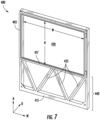
FIG. 7 is a schematic view of an adapter frame for attaching a TRU to a railway car. -
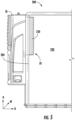
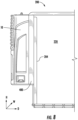
FIG. 8 is a schematic view of a TRU installed onto a railway car with an adapter frame. -
FIG. 9 is a schematic of a method of installing a TRU onto a railway car using an adapter frame. -
FIG. 10 is a schematic of a method of installing a TRU onto a railway car using an adapter frame. - A detailed description of one or more embodiments of the disclosed apparatus and method are presented herein by way of exemplification and not limitation with reference to the Figures.
- A transport refrigeration unit (TRU) is a refrigeration device configured to cool a cargo space by blowing air from the cargo space over a heat absorbing evaporator coil thereby cooling the air, and returning it to the cargo space. A TRU can be designed to meet a number of customer and application requirements, such as the outer physical envelope of the TRU. The shape and overall dimensions of a TRU must ensure that once installed on a trailer there is adequate clearance for powered truck operation and maintenance, e.g., turning, fueling, accessing truck compartments and/or maintenance items, and the like. In some cases, these requirements can limit the arrangement of components within the allotted volume for the TRU. The resultant TRU layout can include otherwise unnecessary protrusion into the trailer cargo space.
- Unlike some trailers, railway cars are generally not subject to swing radii or other powered truck maintenance activities. Therefore the outer envelope of a refrigeration unit is less constrained in a railway car application in comparison to trailer application. However, when a TRU is installed flush to the side of a railway car, the air outlet of the TRU can protrude into the conditioned cargo space similar to a trailer installation. Due at least in part to commonality of shipping sizes (e.g. shipping pallets), any extension from the interior wall of a railway car into the conditioned cargo space can reduce the cargo payload (e.g., by an entire row of shipping pallets). Reduction in payload can have a correspondingly negative impact on shipping cost, speed, and capacity. To overcome at least this limitation an adapter frame for attaching a TRU to a railway car is disclosed.
-
Figure 1 is an illustration of a front view of aTRU 10. The TRU 10 has anouter enclosure 20, acondenser air inlet 30, andcondenser air outlet 40. The TRU 10 can have additional interfaces for power, fuel (e.g., diesel, LPG, CNG, and the like), drain (e.g. condensate), control, communication, and the like. The TRU 10 can be any suitable TRU 10 having an air inlet /outlet configured for cooling the cargo space upon installation. For example, the TRU 10 can include a refrigeration unit such as the truck or trailer refrigeration systems manufactured by Carrier Corporation, Palm Beach Gardens, FL, USA (e.g. Vector™ 8500, Vector™ 8600, Vector™ 8611, X4™ 7300, X4™ 7500, Supra® 660, Supra® 760, Supra® 860, Supra® 960, and the like). - The
TRU 10 has a width measured along the w-dimension, a height measured along the h-dimension, and a depth measured along the d-dimension in the attached figures. The outside of the TRU 10 can be box shaped or can include aerodynamic features as the outside surface, such as curved edges. In any embodiment the TRU can include rounded or contoured edges, between theface 11 andtop 12,bottom 14, and/orsides 16/18 of the TRU 10. -
Figure 2 is an illustration of a rear view of aTRU 10 with theouter enclosure 20 removed. The back side 13 (cargo side) of the TRU 10 can be flat, or have a surface shaped corresponding to the outside surface of a trailer. The TRU can have aprotruding evaporator section 70 having the cargo air inlet 50 (which can be located for example under the protruding evaporator section 70) and one or more refrigeratedcargo air outlets 60. As shown inFigure 3 , theprotruding evaporator section 70 can includeair outlet extensions 72 which can protrude further from the main body ofTRU 10 than the protrudingevaporator section 70 and can define adistal end 66 of the protruding evaporator section. - For trailer applications, the
protruding evaporator section 70 can have a width (extending in the w dimension of the attached figures) of about 60 inches (1. 5m) to about 80 inches (2m), or about 65 inches (1.6m) to about 68 inches (1.7m), or about 66.3 inches (1.68m), a height (extending along the h dimension in the attached figures) of about 40 inches (1m) to about 60 inches (1.5m), or about 44 inches (1.1m) to about 48 inches (1.2m), or about 45.3 inches (1.15m), and a protruding distance (extending along the d dimension of the attached figures) of about 1 inch (3cm) to about 15 inches (38cm), or about 6 inches (15cm) to about 10 inches (25cm), or about 8.2 inches (21cm). - For truck applications, the
protruding evaporator section 70 can have a width of about 40 inches (1m) to about 60 inches (1.5m), or about 48 inches (1.2m) to about 52 inches (1.3m), or about 48.2 inches (1.23m), a height of about 8 inches (20cm) to about 20 inches (50cm), or about 10 inches (25cm) to about 14 inches (36cm), or about 13 inches (33cm), or about 11.4 inches (29.0cm), and a protruding distance of about 1 inch (3cm) to about 32 inches (81cm), or about 20 inches (51cm) to about 32 inches (81cm), or about 28.8 inches (73.2cm), or about 24.8 inches (63.0cm). In an embodiment theprotruding evaporator section 70 has a width of about 48.2 inches (1.22m), a height of about 13 inches (33cm) and a protruding distance of about 28.8 inches (73.2cm). In an embodiment thewindow 420 has a width of about 48.2 inches (1.22m), a height of about 11.4 inches (29.0cm) and a protruding evaporator distance of about 24.8 inches (63.0cm). - In truck/trailer applications the
TRU 10 is flush mount to the outside surface of atrailer 100 as shown inFigure 4 . Thetrailer 100 is configured with anopening 102 for receiving the protrudingevaporator section 70. Once installed thedistal end 66 extends past theinterior surface 104 of atrailer wall 106. Although undesirable, the size of the refrigeration unit components (e.g., compressor, evaporator coil, condenser coil, expansion device, plumbing, controller, and the like) and limited volume they may occupy outside the trailer can result in pushing protrudingevaporator section 70 into the cargo space. -
Figure 5 is an illustration of aTRU 10 installed directly onto a wall of arailway car 200 without the use of the inventive adapter frame as disclosed herein. In this installation, the protrudingevaporator section 70 extends past aninterior surface 204 of therailway car 200 and creates an obstructed volume 250 (shaded area inFigure 5 ) of thecargo volume 220 of therailway car 200. The size of the obstructed volume can be reduced through the use of the disclosedadapter frame 400, which can act to shift the protrudingevaporator section 70 out of the opening 102 (in a negative direction along the d dimension in the attached figures) and away from the railwaycar cargo volume 220. Even small outward movement of the protrudingevaporator section 70 from thecargo volume 220 can create significant advantages in payload capacity of thecargo volume 220. In some cases, this can allow for an entire row of shipping pallets to be added to a railway car'scargo volume 220. -
Figure 6 is an illustration of anadapter frame 400 having a plurality ofstructural segments 402 fastened together to form awindow 420 and a supportingsection 440. The plurality ofstructural segments 402 can be any shape corresponding to the outside surface of arailway car 200 and theback side 13 of aTRU 10. The plurality ofstructural segments 402 can be formed from any suitably strong material capable of mounting and supporting aTRU 10 to arailway car 200. For example thestructural segments 402 can be made of steel, aluminum, iron, alloys thereof, or a combination comprising at least one of the foregoing. In an example thestructural segments 402 can be made of a polymer including for example polyethylene (PE), acrylonitrile butadiene styrene (ABS) polymer, high-density polyethylene (HDPE) polymer, and the like, and copolymers thereof. In an example thestructural segments 402 can be made of a polymer composite, where the composite material includes a polymer resin such as a polymer previously mentioned and a woven, continuous, or chopped structural fiber, e.g., glass fiber, carbon fiber, aramid fiber, or the like. - The plurality of
structural segments 402 can have any cross sectional shape, for example, the cross-sectional shape of any one or more segment of the plurality of structural segments can be quadrilateral (e.g., square, rectangular, and the like), triangular, other simple closed polygons, I-shaped, H-shaped, C-shaped, U-shaped, T-shaped, and the like. For example, the plurality ofstructural segments 402 can be linear, e.g., not having appreciable curvature in a given plane. The cross-sectional thickness T (extending along the t axis in the attached figures) of the adapter can - The plurality of
structural segments 402 can be fastened in any suitable way to secure the segments and form theadapter frame 400. For example, the plurality ofstructural segments 402 can be welded (arc, ultrasonic, and the like), bolted or otherwise secured together to form thewindow 420 and the supportingsection 440. In another example, thestructural segments 402 can be formed integrally as a single unitary structure such as die cast, polymer molding, co-molding, multi shot molding, or other molding process. Thewindow 420 can have any shape, for example it can have a shape corresponding to the outer dimensions of the protrudingevaporator section 70 such that the protrudingevaporator section 70 can slidably fit into thewindow 420 for purposes of installing and removing theTRU 10 from theadapter frame 400. For example, thewindow 420 can have a quadrilateral shape, such as square, rectangular, trapezoidal, and the like. Thewindow 420 can optionally include additional framing extending from a front/rear surface (405/406) of theadapter frame 400 for added structural support of thewindow 420. Additional framing can be used for securing the protrudingevaporator section 70 to thewindow 420. For example, thewindow 420 can be formed of steel box beam and an additional steel frame formed of steel having an L-shaped cross section welded to, and extending from, afront surface 405 of theadapter frame 400. The L-shape can provide a flange for fastening theTRU 10 or therailway car 200 to theadapter frame 400. - In an example, the
window 420 is rectangular, the window has a width dimension W (extending along the w axis in the attached figures) that is larger than the height dimension H (extending along the h axis in the attached figures) and the supportingsection 440 includes two ormore truss members 422 spanning from an edge of thewindow 420 to a corresponding edge of the supportingsection 440. - Corresponding to the dimensions of the protruding
evaporator section 70 mentioned previously for trailer applications, thewindow 420 of theadapter frame 400 can have a width W of about 60 inches (1.5m) to about 80 inches (2m), or about 65 inches (1.6m) to about 68 inches (1.7m), or about 66.8 inches (1.70m), a height H of about 40 inches (1m) to about 60 inches (1.5m), or about 45 inches (1.1m) to about 48 inches (1.2m), or about 46 inches (1.2m), and a thickness (extending along the d dimension of the attached figures) of about 1 inch (3cm) to about 16 inches (41cm), or about 2 inches (5cm) to about 10 inches (25cm), or about 8.2 inches (21cm). In an embodiment thewindow 420 of theadapter frame 400 has a width of 66.8 inches (1.70m), a height of 46 inches (1.2m) and a thickness of between 1 and 16 inches (3 and 41cm). - Corresponding to the dimensions of the protruding
evaporator section 70 mentioned previously for truck applications, thewindow 420 of theadapter frame 400 can have a width W of about 40 inches (1m) to about 60 inches (1.5m), or about 48 inches (1.2m) to about 52 inches (1.3m), or about 49 inches (1.2m), a height H of about 8 inches (20cm) to about 20 inches (51cm), or about 10 inches (25cm) to about 14 inches (36cm), or about 13 inches (33cm), or about 11.4 inches (29.0cm) and a thickness (extending along the d dimension of the attached figures) of about 1 inch (3cm) to about 32 inches (81cm), or about 1 inches (3cm) to about 16 inches (41cm), or about 10 inches (25cm), or about 8 inches (20cm), or about 6 inches (15cm). In an embodiment thewindow 420 of theadapter frame 400 has a width of 49 inches (1.2m), a height of 13.8 inches (35.1cm) and a thickness of between 1 and 16 inches (3 and 41cm). In an embodiment thewindow 420 of theadapter frame 400 has a width of 49 inches (1.2m), a height of 12.2 inches (31.0cm) and a thickness of between 1 and 16 inches (3 and 41cm). - In another example, as shown in
Figure 7 , the supportingsection 440 can include a plurality oftruss members 423. The plurality oftruss members 423 can extend from a bottomstructural segment 415 to amid-spanning segment 417, which can also constitute an edge, and optionally the bottom edge of thewindow 420. - The
adapter frame 400 can include acorner support 426 disposed between adjacentstructural segments 402. Thecorner support 426 can be used to add rigidity to theadapter frame 400 and reinforce thestructural segments 402 against deformation. - The
adapter frame 400 can include TRU side fastening features 410 for securing theadapter frame 400 to aTRU 10. Theadapter frame 400 can include rail car side fastening features 411 for securing theadapter frame 400 to arailway car 200. The TRU side fastening features 410 can be disposed along one face of theadapter frame 400, for example, thefront surface 405 of theadapter frame 400. The rail car side fastening features 411 can be disposed on an opposing side of theadapter frame 400, for example therear surface 406. The TRU side fastening features 410 and the rail car side fastening features 411 can be any suitable mechanical fastener, for example a threaded stud, a captured nut, a slot or opening for accepting a bolt, a weld stud, a flange, a tab, or a combination including at least one of the foregoing. For example, theadapter frame 400 can include a threaded stud extending from afront surface 405 of theadapter frame 400, along the depth dimension, for inserting into a corresponding opening on theTRU 10 which can accept the treaded stud and allow for movement of a washer and/or nut to securely fasten theadapter frame 400 to theTRU 10. -
Figure 8 shows a side view of aTRU 10 andadapter frame 400 installed onto arailway car 200. Theadapter frame 400 can be used to position the TRU further away from therailway car 200 and reduce or eliminate the distance of TRU protrusion into thecargo volume 220. By using anadapter frame 400 to mount the TRU to the railway car, the obstructedvolume 250 can be reduced or eliminated completely offering a corresponding improvement inavailable cargo volume 220. The use of anadapter frame 400 allows for ordering the sequence of assembly in the most beneficial way to the installer. Theadapter frame 400 can first be installed onto aTRU 10, then the TRU and adapter frame securely mounted to arailway car 200. Or, theadapter frame 400 can first be installed on therailway car 200 then theTRU 10 can be mounted to theadapter frame 400. -
Figure 9 illustrates an installation method that can be employed using theadapter frame 400. Afirst step 500 includes attaching anadapter frame 400 onto arailway car 200 to form a combined adapter frame and railway car. The attachment can be made using any suitable fastening method, for example theadapter frame 400 can be welded to therailway car 200, the plurality of railway car side fastening features 411 can be relied on to secure theadapter frame 400 to a wall of arailway car 200. By way of further example, threaded studs extended from theadapter frame 400 could be inserted into corresponding holes in therailway car 200 and nuts fastened thereto to secure theadapter frame 400 to therailway car 200. TheTRU 10 can then be installed to the combined adapter frame and railway car in asecond step 501 using any suitable fastening method, for example utilizing the TRU car side fastening features 410. -
Figure 10 illustrates an installation method that can be employed using theadapter frame 400. Afirst step 600 includes attaching anadapter frame 400 to aTRU 10 to form a combined adapter frame and TRU. The attachment can be made using any suitable fastening method, for example the plurality of TRU side fastening features 410 can be relied on to secure theadapter frame 400 and theTRU 10. The combined adapter frame and TRU can then be installed to arailway car 200 in asecond step 601 using any suitable fastening method, for example utilizing the railway car side fastening features 411. During and after installation thewindow 420 of theadapter frame 400 can be aligned with an opening in the wall of therailway car 200. - As part of the installation process the
opening 102, theadapter frame 400, theTRU 10, or a combination including at least one of the foregoing can be prepared with a gasket and/or seal material. The gasket and/or seal material can be a unitary structure applied to a side of theadapter frame 400 or the corresponding attachment surface (TRU 10 or railway car 200) prior to assembly in any ofsteps steps opening 102, one or more sides of thecorresponding window 420 in theadapter frame 400, the perimeter of the protrudingevaporator section 70, or a combination including at least one of the foregoing. The gasket and/or seal material can include any suitable material. For example, the gasket and/or seal can include a thermal insulation (e.g. fiberglass, cellulose, cork, and the like), a compliant material such as polyethylene, polypropylene, polystyrene, polyvinyl chloride, natural or synthetic rubber, neoprene, nylon, polyacrylonitrile, PVB, silicone, an expanded polymer, extruded polymer, or foamed polymer including at least one of the foregoing, or a combination thereof. - The term "about" is intended to include the degree of error associated with measurement of the particular quantity based upon the equipment available at the time of filing the application.
- The terminology used herein is for the purpose of describing particular embodiments only and is not intended to be limiting of the present disclosure. As used herein, the singular forms "a", "an" and "the" are intended to include the plural forms as well, unless the context clearly indicates otherwise. It will be further understood that the terms "comprises" and/or "comprising," when used in this specification, specify the presence of stated features, integers, steps, operations, elements, and/or components, but do not preclude the presence or addition of one or more other features, integers, steps, operations, element components, and/or groups thereof.
- While the present disclosure has been described with reference to an exemplary embodiment or embodiments, it will be understood by those skilled in the art that various changes may be made and equivalents may be substituted for elements thereof without departing from the scope of the present invention as defined by the claims. The present invention is not limited to the particular embodiment disclosed for carrying out this present disclosure, but the present invention will include all embodiments falling within the scope of the claims.
Claims (14)
- An adapter frame (400) for attaching a transport refrigeration unit (10), called TRU, to a railway car (200), the adapter frame comprisinga window (420) and a supporting section (440),the window (420) having a rectangular shape,the supporting section (440) extending from an edge of the window (420) and comprising two or more truss members (422) spanning from an edge of the window to a corresponding edge of the supporting section,wherein the adapter frame (400) is configured for installation between the TRU (10) and the railway car (200) such that when installed a distal end (66) of a protruding evaporator section (70) of the TRU protrudes into the window (420).
- The adapter frame (400) of claim 1, wherein when installed the distal end of the TRU (10) extends past an interior surface (104) of the railway car wall (106).
- The adapter frame (400) of claim 1, wherein when installed the distal end of the TRU (10) is flush with an interior surface (104) of the railway car wall (106).
- The adapter frame (400) of claim 1, wherein when installed the distal end of the TRU (10) is does not extend past an interior surface (104) of the railway car wall (106).
- The adapter frame (400) of any of claims 1-4, further comprising a plurality of fastening features (410) disposed on a surface of the adapter frame.
- The adapter frame (400) of claim 5, wherein the fastening features (410) comprise a combination of a threaded stud, a captured nut, a slot or opening for accepting a bolt, a weld stud, a flange, a tab, or a combination comprising at least one of the foregoing.
- The adapter frame (400) of any of claims 1-6, further comprising a corner support (426) fastened to a surface of the adapter frame, the corner support extending diagonally between two adjacent structural segments (402) forming a corner.
- The adapter frame (400) of claim 7, wherein the supporting section (440) has a quadrilateral shape where a width dimension is larger than a height dimension and the corner support (426) extends when installed along a TRU side surface of the adapter frame, adjacent to a corner of the quadrilateral shape, from one side to an adjacent side of the supporting section.
- The adapter frame (400) of claim 6 or 7, wherein the structural segments (402) comprise quadrilateral cross-sectional shape.
- The adapter frame (400) of any of claims 1-8, wherein the window (420) comprises a width of 40 inches (1m) to 60 inches (1.5m), a height of 8 inches (20cm) to 20 inches (50cm).
- The adapter frame (400) of any of claims 1-9, wherein the window (420) comprises a width of 60 inches (1.5m) to 80 inches (2m), a height of 40 inches (1m) to 60 inches (1.5m).
- The adapter frame (400) as in any preceding claim, wherein the window (420) aligns when installed with an opening in a wall (104) of the railway car (200).
- A method of installing a transport refrigeration unit (10), called TRU, onto a railway car (200) comprising:attaching an adapter frame (400) onto the transport refrigeration unit (10) using a plurality of fastening features disposed along a surface of the adapter frame to form a combined adapter frame and TRU, and attaching the combined adapter frame (400) and transport refrigeration unit (10) onto a railway car (200) using a plurality of fastening features (211) disposed along an opposing surface of the adapter frame thereby securing the transport refrigeration unit, adapter frame and railway car together, orattaching an adapter frame (400) onto the railway car (200) using a plurality of fastening features (411) disposed along a surface of the adapter frame to form a combined adapter frame and railway car, and attaching the TRU (10) onto the combined adapter frame (400) and railway car (200) using a plurality of fastening features (410) disposed along an opposing surface of the adapter frame thereby securing the transport refrigeration unit, adapter frame and railway car together.
- The method of claim 13 further comprising:
sealing a gap between the TRU (10) and a railway car wall (106).
Applications Claiming Priority (1)
| Application Number | Priority Date | Filing Date | Title |
|---|---|---|---|
| US201962924331P | 2019-10-22 | 2019-10-22 |
Publications (2)
| Publication Number | Publication Date |
|---|---|
| EP3812235A1 EP3812235A1 (en) | 2021-04-28 |
| EP3812235B1 true EP3812235B1 (en) | 2023-08-23 |
Family
ID=73005459
Family Applications (1)
| Application Number | Title | Priority Date | Filing Date |
|---|---|---|---|
| EP20203133.2A Active EP3812235B1 (en) | 2019-10-22 | 2020-10-21 | Transport refrigeration unit adapter frame for railway car installation |
Country Status (3)
| Country | Link |
|---|---|
| US (1) | US20210114630A1 (en) |
| EP (1) | EP3812235B1 (en) |
| CN (1) | CN112693487A (en) |
Family Cites Families (8)
| Publication number | Priority date | Publication date | Assignee | Title |
|---|---|---|---|---|
| US4182134A (en) * | 1978-08-15 | 1980-01-08 | Thermo King Corporation | Transport refrigeration unit |
| EP0058821B1 (en) * | 1981-02-24 | 1986-03-26 | Carrier Corporation | Transport refrigeration machine |
| US4551986A (en) * | 1984-10-17 | 1985-11-12 | Westinghouse Electric Corp. | Transport refrigeration unit |
| US4736597A (en) * | 1987-04-08 | 1988-04-12 | Thermo King Corporation | Transport refrigeration system |
| US7614242B1 (en) * | 2004-11-23 | 2009-11-10 | Carlos Quesada Saborio | Transport refrigeration system |
| EP1994341B1 (en) * | 2006-02-24 | 2011-04-20 | Carrier Corporation | Bottom panel for transport refrigeration unit |
| US8291721B2 (en) * | 2008-02-25 | 2012-10-23 | Carrier Corporation | Dual condenser fans with center partition |
| EP3072740A1 (en) * | 2015-03-25 | 2016-09-28 | Thermo King Corporation | Low profile refrigerated transport unit |
-
2020
- 2020-10-21 EP EP20203133.2A patent/EP3812235B1/en active Active
- 2020-10-21 US US16/949,227 patent/US20210114630A1/en not_active Abandoned
- 2020-10-22 CN CN202011136874.1A patent/CN112693487A/en active Pending
Also Published As
| Publication number | Publication date |
|---|---|
| EP3812235A1 (en) | 2021-04-28 |
| US20210114630A1 (en) | 2021-04-22 |
| CN112693487A (en) | 2021-04-23 |
Similar Documents
| Publication | Publication Date | Title |
|---|---|---|
| US8496286B1 (en) | Aerodynamic sidewall post for a trailer | |
| MXPA04009991A (en) | Universal boxcar with exterior metal surfaces. | |
| EP1994341B1 (en) | Bottom panel for transport refrigeration unit | |
| EP2459468B1 (en) | Refrigerated container, method | |
| EP3812235B1 (en) | Transport refrigeration unit adapter frame for railway car installation | |
| US20170244078A1 (en) | Battery And Auxiliary Power Unit Mounting System | |
| JPH06293233A (en) | Cargo compartment structure for refrigerator van truck and trailer | |
| US20020148382A1 (en) | Pultruded panel | |
| EP2647539B1 (en) | Air conditioner for vehicle | |
| CN104520145B (en) | Transport refrigeration bulkhead | |
| US20020101095A1 (en) | Structural post and a body liner assembly for a van | |
| EP2442055B1 (en) | Refrigeration device for trailer | |
| EP2703200A1 (en) | Refrigerated transport system and refrigeration logistics system | |
| JP2009210182A (en) | Refrigerating apparatus for vehicle | |
| US20110036111A1 (en) | Low profile refrigeration system | |
| KR100613051B1 (en) | Vacuum Refrigeration Tower with Panel Reinforcement Structure | |
| JPH0610775U (en) | In-vehicle mobile refrigerator | |
| JPH10329600A (en) | Van type vehicle with low temperature control room such as refrigeration room on floor of cargo room | |
| EP4015948B1 (en) | Refrigeration device for containers | |
| US11845317B2 (en) | Bracket for a power module of a transport refrigeration unit | |
| US12618602B2 (en) | Electrical transport refrigeration unit | |
| US20240369282A1 (en) | Electrical transport refrigeration unit | |
| EP4303046A1 (en) | Refrigeration system stator mount | |
| EP2838744B1 (en) | Flame retardant door for transport refrigeration unit | |
| JPH1035785A (en) | Mounting device in box for load for transportation provided with heat insulating structure |
Legal Events
| Date | Code | Title | Description |
|---|---|---|---|
| PUAI | Public reference made under article 153(3) epc to a published international application that has entered the european phase |
Free format text: ORIGINAL CODE: 0009012 |
|
| STAA | Information on the status of an ep patent application or granted ep patent |
Free format text: STATUS: THE APPLICATION HAS BEEN PUBLISHED |
|
| AK | Designated contracting states |
Kind code of ref document: A1 Designated state(s): AL AT BE BG CH CY CZ DE DK EE ES FI FR GB GR HR HU IE IS IT LI LT LU LV MC MK MT NL NO PL PT RO RS SE SI SK SM TR |
|
| AX | Request for extension of the european patent |
Extension state: BA ME |
|
| STAA | Information on the status of an ep patent application or granted ep patent |
Free format text: STATUS: REQUEST FOR EXAMINATION WAS MADE |
|
| 17P | Request for examination filed |
Effective date: 20211022 |
|
| RBV | Designated contracting states (corrected) |
Designated state(s): AL AT BE BG CH CY CZ DE DK EE ES FI FR GB GR HR HU IE IS IT LI LT LU LV MC MK MT NL NO PL PT RO RS SE SI SK SM TR |
|
| GRAP | Despatch of communication of intention to grant a patent |
Free format text: ORIGINAL CODE: EPIDOSNIGR1 |
|
| STAA | Information on the status of an ep patent application or granted ep patent |
Free format text: STATUS: GRANT OF PATENT IS INTENDED |
|
| RIC1 | Information provided on ipc code assigned before grant |
Ipc: B60H 1/00 20060101ALI20230220BHEP Ipc: F25D 19/00 20060101ALI20230220BHEP Ipc: B60P 3/20 20060101ALI20230220BHEP Ipc: B60H 1/32 20060101ALI20230220BHEP Ipc: B61D 27/00 20060101AFI20230220BHEP |
|
| INTG | Intention to grant announced |
Effective date: 20230320 |
|
| GRAS | Grant fee paid |
Free format text: ORIGINAL CODE: EPIDOSNIGR3 |
|
| GRAA | (expected) grant |
Free format text: ORIGINAL CODE: 0009210 |
|
| STAA | Information on the status of an ep patent application or granted ep patent |
Free format text: STATUS: THE PATENT HAS BEEN GRANTED |
|
| AK | Designated contracting states |
Kind code of ref document: B1 Designated state(s): AL AT BE BG CH CY CZ DE DK EE ES FI FR GB GR HR HU IE IS IT LI LT LU LV MC MK MT NL NO PL PT RO RS SE SI SK SM TR |
|
| REG | Reference to a national code |
Ref country code: GB Ref legal event code: FG4D |
|
| RIN1 | Information on inventor provided before grant (corrected) |
Inventor name: SENF, RAYMOND L., JR. Inventor name: STOCKBRIDGE, MICHAEL |
|
| REG | Reference to a national code |
Ref country code: CH Ref legal event code: EP |
|
| REG | Reference to a national code |
Ref country code: DE Ref legal event code: R096 Ref document number: 602020016142 Country of ref document: DE |
|
| REG | Reference to a national code |
Ref country code: IE Ref legal event code: FG4D |
|
| REG | Reference to a national code |
Ref country code: NL Ref legal event code: FP |
|
| REG | Reference to a national code |
Ref country code: LT Ref legal event code: MG9D |
|
| REG | Reference to a national code |
Ref country code: AT Ref legal event code: MK05 Ref document number: 1602263 Country of ref document: AT Kind code of ref document: T Effective date: 20230823 |
|
| PG25 | Lapsed in a contracting state [announced via postgrant information from national office to epo] |
Ref country code: GR Free format text: LAPSE BECAUSE OF FAILURE TO SUBMIT A TRANSLATION OF THE DESCRIPTION OR TO PAY THE FEE WITHIN THE PRESCRIBED TIME-LIMIT Effective date: 20231124 |
|
| PG25 | Lapsed in a contracting state [announced via postgrant information from national office to epo] |
Ref country code: IS Free format text: LAPSE BECAUSE OF FAILURE TO SUBMIT A TRANSLATION OF THE DESCRIPTION OR TO PAY THE FEE WITHIN THE PRESCRIBED TIME-LIMIT Effective date: 20231223 |
|
| PG25 | Lapsed in a contracting state [announced via postgrant information from national office to epo] |
Ref country code: SE Free format text: LAPSE BECAUSE OF FAILURE TO SUBMIT A TRANSLATION OF THE DESCRIPTION OR TO PAY THE FEE WITHIN THE PRESCRIBED TIME-LIMIT Effective date: 20230823 Ref country code: RS Free format text: LAPSE BECAUSE OF FAILURE TO SUBMIT A TRANSLATION OF THE DESCRIPTION OR TO PAY THE FEE WITHIN THE PRESCRIBED TIME-LIMIT Effective date: 20230823 Ref country code: PT Free format text: LAPSE BECAUSE OF FAILURE TO SUBMIT A TRANSLATION OF THE DESCRIPTION OR TO PAY THE FEE WITHIN THE PRESCRIBED TIME-LIMIT Effective date: 20231226 Ref country code: NO Free format text: LAPSE BECAUSE OF FAILURE TO SUBMIT A TRANSLATION OF THE DESCRIPTION OR TO PAY THE FEE WITHIN THE PRESCRIBED TIME-LIMIT Effective date: 20231123 Ref country code: LV Free format text: LAPSE BECAUSE OF FAILURE TO SUBMIT A TRANSLATION OF THE DESCRIPTION OR TO PAY THE FEE WITHIN THE PRESCRIBED TIME-LIMIT Effective date: 20230823 Ref country code: LT Free format text: LAPSE BECAUSE OF FAILURE TO SUBMIT A TRANSLATION OF THE DESCRIPTION OR TO PAY THE FEE WITHIN THE PRESCRIBED TIME-LIMIT Effective date: 20230823 Ref country code: IS Free format text: LAPSE BECAUSE OF FAILURE TO SUBMIT A TRANSLATION OF THE DESCRIPTION OR TO PAY THE FEE WITHIN THE PRESCRIBED TIME-LIMIT Effective date: 20231223 Ref country code: HR Free format text: LAPSE BECAUSE OF FAILURE TO SUBMIT A TRANSLATION OF THE DESCRIPTION OR TO PAY THE FEE WITHIN THE PRESCRIBED TIME-LIMIT Effective date: 20230823 Ref country code: GR Free format text: LAPSE BECAUSE OF FAILURE TO SUBMIT A TRANSLATION OF THE DESCRIPTION OR TO PAY THE FEE WITHIN THE PRESCRIBED TIME-LIMIT Effective date: 20231124 Ref country code: FI Free format text: LAPSE BECAUSE OF FAILURE TO SUBMIT A TRANSLATION OF THE DESCRIPTION OR TO PAY THE FEE WITHIN THE PRESCRIBED TIME-LIMIT Effective date: 20230823 Ref country code: AT Free format text: LAPSE BECAUSE OF FAILURE TO SUBMIT A TRANSLATION OF THE DESCRIPTION OR TO PAY THE FEE WITHIN THE PRESCRIBED TIME-LIMIT Effective date: 20230823 |
|
| PG25 | Lapsed in a contracting state [announced via postgrant information from national office to epo] |
Ref country code: PL Free format text: LAPSE BECAUSE OF FAILURE TO SUBMIT A TRANSLATION OF THE DESCRIPTION OR TO PAY THE FEE WITHIN THE PRESCRIBED TIME-LIMIT Effective date: 20230823 |
|
| PG25 | Lapsed in a contracting state [announced via postgrant information from national office to epo] |
Ref country code: ES Free format text: LAPSE BECAUSE OF FAILURE TO SUBMIT A TRANSLATION OF THE DESCRIPTION OR TO PAY THE FEE WITHIN THE PRESCRIBED TIME-LIMIT Effective date: 20230823 |
|
| PG25 | Lapsed in a contracting state [announced via postgrant information from national office to epo] |
Ref country code: SM Free format text: LAPSE BECAUSE OF FAILURE TO SUBMIT A TRANSLATION OF THE DESCRIPTION OR TO PAY THE FEE WITHIN THE PRESCRIBED TIME-LIMIT Effective date: 20230823 Ref country code: RO Free format text: LAPSE BECAUSE OF FAILURE TO SUBMIT A TRANSLATION OF THE DESCRIPTION OR TO PAY THE FEE WITHIN THE PRESCRIBED TIME-LIMIT Effective date: 20230823 Ref country code: ES Free format text: LAPSE BECAUSE OF FAILURE TO SUBMIT A TRANSLATION OF THE DESCRIPTION OR TO PAY THE FEE WITHIN THE PRESCRIBED TIME-LIMIT Effective date: 20230823 Ref country code: EE Free format text: LAPSE BECAUSE OF FAILURE TO SUBMIT A TRANSLATION OF THE DESCRIPTION OR TO PAY THE FEE WITHIN THE PRESCRIBED TIME-LIMIT Effective date: 20230823 Ref country code: DK Free format text: LAPSE BECAUSE OF FAILURE TO SUBMIT A TRANSLATION OF THE DESCRIPTION OR TO PAY THE FEE WITHIN THE PRESCRIBED TIME-LIMIT Effective date: 20230823 Ref country code: CZ Free format text: LAPSE BECAUSE OF FAILURE TO SUBMIT A TRANSLATION OF THE DESCRIPTION OR TO PAY THE FEE WITHIN THE PRESCRIBED TIME-LIMIT Effective date: 20230823 Ref country code: SK Free format text: LAPSE BECAUSE OF FAILURE TO SUBMIT A TRANSLATION OF THE DESCRIPTION OR TO PAY THE FEE WITHIN THE PRESCRIBED TIME-LIMIT Effective date: 20230823 |
|
| REG | Reference to a national code |
Ref country code: DE Ref legal event code: R097 Ref document number: 602020016142 Country of ref document: DE |
|
| PG25 | Lapsed in a contracting state [announced via postgrant information from national office to epo] |
Ref country code: IT Free format text: LAPSE BECAUSE OF FAILURE TO SUBMIT A TRANSLATION OF THE DESCRIPTION OR TO PAY THE FEE WITHIN THE PRESCRIBED TIME-LIMIT Effective date: 20230823 Ref country code: MC Free format text: LAPSE BECAUSE OF FAILURE TO SUBMIT A TRANSLATION OF THE DESCRIPTION OR TO PAY THE FEE WITHIN THE PRESCRIBED TIME-LIMIT Effective date: 20230823 |
|
| REG | Reference to a national code |
Ref country code: CH Ref legal event code: PL |
|
| REG | Reference to a national code |
Ref country code: BE Ref legal event code: MM Effective date: 20231031 |
|
| PG25 | Lapsed in a contracting state [announced via postgrant information from national office to epo] |
Ref country code: LU Free format text: LAPSE BECAUSE OF NON-PAYMENT OF DUE FEES Effective date: 20231021 |
|
| PLBE | No opposition filed within time limit |
Free format text: ORIGINAL CODE: 0009261 |
|
| STAA | Information on the status of an ep patent application or granted ep patent |
Free format text: STATUS: NO OPPOSITION FILED WITHIN TIME LIMIT |
|
| PG25 | Lapsed in a contracting state [announced via postgrant information from national office to epo] |
Ref country code: LU Free format text: LAPSE BECAUSE OF NON-PAYMENT OF DUE FEES Effective date: 20231021 |
|
| PG25 | Lapsed in a contracting state [announced via postgrant information from national office to epo] |
Ref country code: CH Free format text: LAPSE BECAUSE OF NON-PAYMENT OF DUE FEES Effective date: 20231031 |
|
| 26N | No opposition filed |
Effective date: 20240524 |
|
| PG25 | Lapsed in a contracting state [announced via postgrant information from national office to epo] |
Ref country code: CH Free format text: LAPSE BECAUSE OF NON-PAYMENT OF DUE FEES Effective date: 20231031 Ref country code: SI Free format text: LAPSE BECAUSE OF FAILURE TO SUBMIT A TRANSLATION OF THE DESCRIPTION OR TO PAY THE FEE WITHIN THE PRESCRIBED TIME-LIMIT Effective date: 20230823 |
|
| PG25 | Lapsed in a contracting state [announced via postgrant information from national office to epo] |
Ref country code: BE Free format text: LAPSE BECAUSE OF NON-PAYMENT OF DUE FEES Effective date: 20231031 |
|
| PG25 | Lapsed in a contracting state [announced via postgrant information from national office to epo] |
Ref country code: IE Free format text: LAPSE BECAUSE OF NON-PAYMENT OF DUE FEES Effective date: 20231021 |
|
| PGFP | Annual fee paid to national office [announced via postgrant information from national office to epo] |
Ref country code: NL Payment date: 20240919 Year of fee payment: 5 |
|
| PG25 | Lapsed in a contracting state [announced via postgrant information from national office to epo] |
Ref country code: IE Free format text: LAPSE BECAUSE OF NON-PAYMENT OF DUE FEES Effective date: 20231021 |
|
| PG25 | Lapsed in a contracting state [announced via postgrant information from national office to epo] |
Ref country code: BG Free format text: LAPSE BECAUSE OF FAILURE TO SUBMIT A TRANSLATION OF THE DESCRIPTION OR TO PAY THE FEE WITHIN THE PRESCRIBED TIME-LIMIT Effective date: 20230823 |
|
| PG25 | Lapsed in a contracting state [announced via postgrant information from national office to epo] |
Ref country code: BG Free format text: LAPSE BECAUSE OF FAILURE TO SUBMIT A TRANSLATION OF THE DESCRIPTION OR TO PAY THE FEE WITHIN THE PRESCRIBED TIME-LIMIT Effective date: 20230823 |
|
| PG25 | Lapsed in a contracting state [announced via postgrant information from national office to epo] |
Ref country code: CY Free format text: LAPSE BECAUSE OF FAILURE TO SUBMIT A TRANSLATION OF THE DESCRIPTION OR TO PAY THE FEE WITHIN THE PRESCRIBED TIME-LIMIT; INVALID AB INITIO Effective date: 20201021 |
|
| PG25 | Lapsed in a contracting state [announced via postgrant information from national office to epo] |
Ref country code: HU Free format text: LAPSE BECAUSE OF FAILURE TO SUBMIT A TRANSLATION OF THE DESCRIPTION OR TO PAY THE FEE WITHIN THE PRESCRIBED TIME-LIMIT; INVALID AB INITIO Effective date: 20201021 |
|
| PGFP | Annual fee paid to national office [announced via postgrant information from national office to epo] |
Ref country code: GB Payment date: 20250923 Year of fee payment: 6 |
|
| PGFP | Annual fee paid to national office [announced via postgrant information from national office to epo] |
Ref country code: FR Payment date: 20250924 Year of fee payment: 6 |
|
| PG25 | Lapsed in a contracting state [announced via postgrant information from national office to epo] |
Ref country code: TR Free format text: LAPSE BECAUSE OF FAILURE TO SUBMIT A TRANSLATION OF THE DESCRIPTION OR TO PAY THE FEE WITHIN THE PRESCRIBED TIME-LIMIT Effective date: 20230823 |
|
| PGFP | Annual fee paid to national office [announced via postgrant information from national office to epo] |
Ref country code: DE Payment date: 20250923 Year of fee payment: 6 |