EP3812230B1 - Autonomous driving assistance system and operation method therefor - Google Patents
Autonomous driving assistance system and operation method therefor Download PDFInfo
- Publication number
- EP3812230B1 EP3812230B1 EP18923618.5A EP18923618A EP3812230B1 EP 3812230 B1 EP3812230 B1 EP 3812230B1 EP 18923618 A EP18923618 A EP 18923618A EP 3812230 B1 EP3812230 B1 EP 3812230B1
- Authority
- EP
- European Patent Office
- Prior art keywords
- control amount
- driving assistance
- control
- steering
- downstream
- Prior art date
- Legal status (The legal status is an assumption and is not a legal conclusion. Google has not performed a legal analysis and makes no representation as to the accuracy of the status listed.)
- Active
Links
Images






Classifications
-
- B—PERFORMING OPERATIONS; TRANSPORTING
- B60—VEHICLES IN GENERAL
- B60W—CONJOINT CONTROL OF VEHICLE SUB-UNITS OF DIFFERENT TYPE OR DIFFERENT FUNCTION; CONTROL SYSTEMS SPECIALLY ADAPTED FOR HYBRID VEHICLES; ROAD VEHICLE DRIVE CONTROL SYSTEMS FOR PURPOSES NOT RELATED TO THE CONTROL OF A PARTICULAR SUB-UNIT
- B60W50/00—Details of control systems for road vehicle drive control not related to the control of a particular sub-unit, e.g. process diagnostic or vehicle driver interfaces
- B60W50/02—Ensuring safety in case of control system failures, e.g. by diagnosing, circumventing or fixing failures
- B60W50/0205—Diagnosing or detecting failures; Failure detection models
-
- B—PERFORMING OPERATIONS; TRANSPORTING
- B60—VEHICLES IN GENERAL
- B60W—CONJOINT CONTROL OF VEHICLE SUB-UNITS OF DIFFERENT TYPE OR DIFFERENT FUNCTION; CONTROL SYSTEMS SPECIALLY ADAPTED FOR HYBRID VEHICLES; ROAD VEHICLE DRIVE CONTROL SYSTEMS FOR PURPOSES NOT RELATED TO THE CONTROL OF A PARTICULAR SUB-UNIT
- B60W50/00—Details of control systems for road vehicle drive control not related to the control of a particular sub-unit, e.g. process diagnostic or vehicle driver interfaces
- B60W50/02—Ensuring safety in case of control system failures, e.g. by diagnosing, circumventing or fixing failures
- B60W50/029—Adapting to failures or work around with other constraints, e.g. circumvention by avoiding use of failed parts
-
- B—PERFORMING OPERATIONS; TRANSPORTING
- B60—VEHICLES IN GENERAL
- B60W—CONJOINT CONTROL OF VEHICLE SUB-UNITS OF DIFFERENT TYPE OR DIFFERENT FUNCTION; CONTROL SYSTEMS SPECIALLY ADAPTED FOR HYBRID VEHICLES; ROAD VEHICLE DRIVE CONTROL SYSTEMS FOR PURPOSES NOT RELATED TO THE CONTROL OF A PARTICULAR SUB-UNIT
- B60W10/00—Conjoint control of vehicle sub-units of different type or different function
- B60W10/04—Conjoint control of vehicle sub-units of different type or different function including control of propulsion units
- B60W10/06—Conjoint control of vehicle sub-units of different type or different function including control of propulsion units including control of combustion engines
-
- B—PERFORMING OPERATIONS; TRANSPORTING
- B60—VEHICLES IN GENERAL
- B60W—CONJOINT CONTROL OF VEHICLE SUB-UNITS OF DIFFERENT TYPE OR DIFFERENT FUNCTION; CONTROL SYSTEMS SPECIALLY ADAPTED FOR HYBRID VEHICLES; ROAD VEHICLE DRIVE CONTROL SYSTEMS FOR PURPOSES NOT RELATED TO THE CONTROL OF A PARTICULAR SUB-UNIT
- B60W10/00—Conjoint control of vehicle sub-units of different type or different function
- B60W10/18—Conjoint control of vehicle sub-units of different type or different function including control of braking systems
- B60W10/184—Conjoint control of vehicle sub-units of different type or different function including control of braking systems with wheel brakes
-
- B—PERFORMING OPERATIONS; TRANSPORTING
- B60—VEHICLES IN GENERAL
- B60W—CONJOINT CONTROL OF VEHICLE SUB-UNITS OF DIFFERENT TYPE OR DIFFERENT FUNCTION; CONTROL SYSTEMS SPECIALLY ADAPTED FOR HYBRID VEHICLES; ROAD VEHICLE DRIVE CONTROL SYSTEMS FOR PURPOSES NOT RELATED TO THE CONTROL OF A PARTICULAR SUB-UNIT
- B60W10/00—Conjoint control of vehicle sub-units of different type or different function
- B60W10/20—Conjoint control of vehicle sub-units of different type or different function including control of steering systems
-
- B—PERFORMING OPERATIONS; TRANSPORTING
- B60—VEHICLES IN GENERAL
- B60W—CONJOINT CONTROL OF VEHICLE SUB-UNITS OF DIFFERENT TYPE OR DIFFERENT FUNCTION; CONTROL SYSTEMS SPECIALLY ADAPTED FOR HYBRID VEHICLES; ROAD VEHICLE DRIVE CONTROL SYSTEMS FOR PURPOSES NOT RELATED TO THE CONTROL OF A PARTICULAR SUB-UNIT
- B60W50/00—Details of control systems for road vehicle drive control not related to the control of a particular sub-unit, e.g. process diagnostic or vehicle driver interfaces
- B60W50/02—Ensuring safety in case of control system failures, e.g. by diagnosing, circumventing or fixing failures
- B60W50/023—Avoiding failures by using redundant parts
-
- B—PERFORMING OPERATIONS; TRANSPORTING
- B60—VEHICLES IN GENERAL
- B60W—CONJOINT CONTROL OF VEHICLE SUB-UNITS OF DIFFERENT TYPE OR DIFFERENT FUNCTION; CONTROL SYSTEMS SPECIALLY ADAPTED FOR HYBRID VEHICLES; ROAD VEHICLE DRIVE CONTROL SYSTEMS FOR PURPOSES NOT RELATED TO THE CONTROL OF A PARTICULAR SUB-UNIT
- B60W50/00—Details of control systems for road vehicle drive control not related to the control of a particular sub-unit, e.g. process diagnostic or vehicle driver interfaces
- B60W50/04—Monitoring the functioning of the control system
- B60W50/045—Monitoring control system parameters
-
- B—PERFORMING OPERATIONS; TRANSPORTING
- B60—VEHICLES IN GENERAL
- B60W—CONJOINT CONTROL OF VEHICLE SUB-UNITS OF DIFFERENT TYPE OR DIFFERENT FUNCTION; CONTROL SYSTEMS SPECIALLY ADAPTED FOR HYBRID VEHICLES; ROAD VEHICLE DRIVE CONTROL SYSTEMS FOR PURPOSES NOT RELATED TO THE CONTROL OF A PARTICULAR SUB-UNIT
- B60W60/00—Drive control systems specially adapted for autonomous road vehicles
- B60W60/001—Planning or execution of driving tasks
- B60W60/0015—Planning or execution of driving tasks specially adapted for safety
- B60W60/0018—Planning or execution of driving tasks specially adapted for safety by employing degraded modes, e.g. reducing speed, in response to suboptimal conditions
- B60W60/00186—Planning or execution of driving tasks specially adapted for safety by employing degraded modes, e.g. reducing speed, in response to suboptimal conditions related to the vehicle
-
- B—PERFORMING OPERATIONS; TRANSPORTING
- B60—VEHICLES IN GENERAL
- B60W—CONJOINT CONTROL OF VEHICLE SUB-UNITS OF DIFFERENT TYPE OR DIFFERENT FUNCTION; CONTROL SYSTEMS SPECIALLY ADAPTED FOR HYBRID VEHICLES; ROAD VEHICLE DRIVE CONTROL SYSTEMS FOR PURPOSES NOT RELATED TO THE CONTROL OF A PARTICULAR SUB-UNIT
- B60W60/00—Drive control systems specially adapted for autonomous road vehicles
- B60W60/005—Handover processes
- B60W60/0053—Handover processes from vehicle to occupant
- B60W60/0055—Handover processes from vehicle to occupant only part of driving tasks shifted to occupants
-
- G—PHYSICS
- G06—COMPUTING OR CALCULATING; COUNTING
- G06F—ELECTRIC DIGITAL DATA PROCESSING
- G06F11/00—Error detection; Error correction; Monitoring
- G06F11/07—Responding to the occurrence of a fault, e.g. fault tolerance
- G06F11/16—Error detection or correction of the data by redundancy in hardware
- G06F11/1629—Error detection by comparing the output of redundant processing systems
- G06F11/1641—Error detection by comparing the output of redundant processing systems where the comparison is not performed by the redundant processing components
-
- G—PHYSICS
- G06—COMPUTING OR CALCULATING; COUNTING
- G06F—ELECTRIC DIGITAL DATA PROCESSING
- G06F11/00—Error detection; Error correction; Monitoring
- G06F11/07—Responding to the occurrence of a fault, e.g. fault tolerance
- G06F11/16—Error detection or correction of the data by redundancy in hardware
- G06F11/1629—Error detection by comparing the output of redundant processing systems
- G06F11/165—Error detection by comparing the output of redundant processing systems with continued operation after detection of the error
-
- B—PERFORMING OPERATIONS; TRANSPORTING
- B60—VEHICLES IN GENERAL
- B60W—CONJOINT CONTROL OF VEHICLE SUB-UNITS OF DIFFERENT TYPE OR DIFFERENT FUNCTION; CONTROL SYSTEMS SPECIALLY ADAPTED FOR HYBRID VEHICLES; ROAD VEHICLE DRIVE CONTROL SYSTEMS FOR PURPOSES NOT RELATED TO THE CONTROL OF A PARTICULAR SUB-UNIT
- B60W50/00—Details of control systems for road vehicle drive control not related to the control of a particular sub-unit, e.g. process diagnostic or vehicle driver interfaces
- B60W50/02—Ensuring safety in case of control system failures, e.g. by diagnosing, circumventing or fixing failures
- B60W50/0205—Diagnosing or detecting failures; Failure detection models
- B60W2050/021—Means for detecting failure or malfunction
-
- B—PERFORMING OPERATIONS; TRANSPORTING
- B60—VEHICLES IN GENERAL
- B60W—CONJOINT CONTROL OF VEHICLE SUB-UNITS OF DIFFERENT TYPE OR DIFFERENT FUNCTION; CONTROL SYSTEMS SPECIALLY ADAPTED FOR HYBRID VEHICLES; ROAD VEHICLE DRIVE CONTROL SYSTEMS FOR PURPOSES NOT RELATED TO THE CONTROL OF A PARTICULAR SUB-UNIT
- B60W50/00—Details of control systems for road vehicle drive control not related to the control of a particular sub-unit, e.g. process diagnostic or vehicle driver interfaces
- B60W50/02—Ensuring safety in case of control system failures, e.g. by diagnosing, circumventing or fixing failures
- B60W50/029—Adapting to failures or work around with other constraints, e.g. circumvention by avoiding use of failed parts
- B60W2050/0297—Control Giving priority to different actuators or systems
Definitions
- the present invention relates to an autonomous driving assistance system.
- An autonomous driving assistance system for performing autonomous driving of a vehicle such as an automobile has employed the following measure to ensure safety during autonomous driving. That is, a plurality of autonomous driving devices for backup having the same function are provided in parallel, and the autonomous driving assistance system is configured to enable, even if an abnormality occurs in any of these devices, autonomous driving to be maintained by another normal device substituting for the abnormal device (see, for example, Patent Document 1).
- WO 2018/069061 A1 discloses determining a setpoint for a driving member based on comparing preliminary setpoints determined from sensor signals.
- a driving assistance device for performing autonomous driving on the basis of information from a sensor includes three independent calculation devices which respectively calculate control amounts for a steering device, a drive device, and a brake device through substantially the same kind of computation. It is necessary for a comparison determination unit to determine whether these calculation results are normal or abnormal, and determine which of the calculation results is to be used for autonomous driving.
- a problem arises in that an enormous amount of very complex computation based on various kinds of input information is needed for calculating these control amounts.
- the same miscalculation may be repeated, and another problem arises from the viewpoint of diversification.
- the present invention has been made to solve the above problems, and an object of the present invention is to obtain an autonomous driving assistance system that has redundancy and that is inexpensive and poses no problem in terms of diversification.
- An autonomous driving assistance system is an autonomous driving assistance system including: a sensor configured to acquire surroundings information; a downstream device including an actuator configured to control a vehicle; and a driving assistance device configured to calculate a control amount for the downstream device on the basis of the surroundings information.
- the downstream device further includes a diagnosis unit configured to: perform comparison between at least two control amounts that include the control amount calculated in the driving assistance device and a control amount calculated in the downstream device on the basis of the surroundings information; and determine, if the control amounts are equal to each other, that the control amounts are normal, and determine, if the control amounts are different from each other, that the control amounts are abnormal.
- An autonomous driving assistance system comprising the features of claim 2 and a method comprising the features of claim 7 are also provided.
- the autonomous driving assistance system according to the present invention makes it possible to obtain an autonomous driving assistance system for vehicles that has redundancy and that is inexpensive and poses no problem in diversification.
- FIG. 1 is a block diagram of an autonomous driving assistance system and shows the entire configuration of the autonomous driving assistance system according to embodiment 1.
- FIG. 2 is a flowchart for the autonomous driving assistance system and shows an operation and drive procedure for the autonomous driving assistance system according to embodiment 1.
- FIG. 3 is a hardware diagram and shows, in the present embodiment, an example of hardware in which control amounts which are commands for actuators are calculated in a driving assistance device and downstream devices.
- FIG. 1 is a diagram of the entire configuration of the autonomous driving assistance system.
- the autonomous driving assistance system is composed mainly of: sensors 1; a driving assistance device 10; and a steering device 20, a drive device 30, and a brake device 40 which are actuators for actually controlling a vehicle.
- the steering device 20, the drive device 30, and the brake device 40 are sometimes referred to as downstream devices in the sense that they compose the latter half of the inside of the autonomous driving assistance system.
- the sensors 1 are implemented by: cameras and radars for monitoring areas in front of, behind, and lateral to the vehicle; a navigator for road information data; and the like.
- the driving assistance device 10 includes: a driving route generation unit 11 which generates a driving route on the basis of surroundings information acquired by the sensors 1; and a driving control amount calculation unit 12 which calculates, in order to apply the generated driving route, control amounts which are commands for the respective downstream devices.
- the steering device 20, the drive device 30, and the brake device 40 which are three types of downstream devices are formed. These downstream devices are different from one another in vehicle-controlling function but have basically the same configuration. Thus, a structure will be described based on the steering device 20.
- the steering device 20 includes: a steering route generation unit 21 and a steering control amount calculation unit 22 for calculating a control amount on the basis of the surroundings information from the sensors 1; and a steering diagnosis unit 23 which compares this control amount with the control amount calculated in the driving assistance device 10. Whether these control amounts are normal or abnormal is determined. If these control amounts are normal, the said control amount is outputted to an actuator that implements a steering portion.
- the autonomous driving assistance system is composed of the sensors 1, the driving assistance device 10, and the steering device 20, the drive device 30, and the brake device 40 which are three types of downstream devices.
- FIG. 2 a flow of autonomous driving assistance is shown from the upper side to the lower side.
- the steps from A to B shown in the flowchart are steps of determination by the diagnosis unit and control of the actuator based on the determination, which are parts of the flow of autonomous driving assistance.
- examples in which the steps from A to B are replaced by other steps will be described.
- the driving assistance device 10 includes the driving route generation unit 11 and the driving control amount calculation unit 12.
- the driving route generation unit 11 selects information that is necessary for executing autonomous driving from, for example, information transmitted from the sensors 1 about the distance to a vehicle running in front, a traffic lane and an obstacle having been detected, the curvature of the road, a tunnel, and traffic congestion, and generates a driving route.
- vehicle running information such as the vehicle speed, steering wheel steering, and a brake operation is also transmitted through the sensors 1 to the driving route generation unit 11 and used for generating a route.
- control amounts for the actuators composing the respective downstream devices are calculated on the basis of the driving route generated by the driving route generation unit 11, and are outputted.
- control amounts are calculated on the basis of the surroundings information (step S103).
- the steering device 20 includes: the steering route generation unit 21 which acquires the surroundings information from the sensors 1 and information that is characteristic of the steering device 20 such as a steering wheel torque signal and steering wheel angle information, and selects and processes necessary information; and the steering control amount calculation unit 22 which calculates a control amount.
- the steering route generation unit 21 which acquires the surroundings information from the sensors 1 and information that is characteristic of the steering device 20 such as a steering wheel torque signal and steering wheel angle information, and selects and processes necessary information
- the steering control amount calculation unit 22 which calculates a control amount.
- the information from the sensors 1 is transmitted to the drive device 30, and the drive device 30 acquires information that is characteristic of the drive device 30 and that is related to the rotation rate, the temperature, the drive shift position, and the like of the engine or a motor.
- a drive route generation unit 31 selects and processes drive-related information, and a drive control amount calculation unit 32 calculates a control amount.
- the information from the sensors 1 is transmitted also to the brake device 40, a brake route generation unit 41 selects and processes brake-related information, and a brake control amount calculation unit 42 calculates a control amount.
- step S104 the corresponding control amount calculated in the driving assistance device 10 and the control amount obtained in the downstream device are compared with each other, and whether or not the control amounts are equal to each other is determined.
- step S110 If these control amounts are different from each other, switching is made to manual driving (step S110), and the actuator is controlled through manual driving (step S111).
- control amount is used to control the actuator (step S105), and autonomous driving can be performed.
- a steering command is outputted to the steering device 20
- an acceleration/deceleration command is outputted to the drive device 30
- a brake command is outputted to the brake device 40, thereby performing operation for steering, the engine or the motor, and the brake, respectively.
- an engine portion 34 is controlled by giving an acceleration command to the drive device 30.
- a steering portion 24 is controlled by giving a steering command to the steering device 20 according to the tilt and the curvature of the road in order to move the vehicle toward an edge of the road.
- a brake portion 44 is controlled by giving a command for braking wheels to the brake device 40 in order to avoid the risk of running off the road.
- Hardware of each of the calculation units included in the driving assistance device 10, and the downstream devices 20, 30, and 40 composing the autonomous driving assistance system is composed of a processor 13 and a storage device 14, an example of the hardware being shown in FIG. 3 .
- the storage device includes a volatile storage device such as a random access memory and a nonvolatile auxiliary storage device such as a flash memory.
- the storage device may include, instead of a flash memory, a hard disk as the auxiliary storage device.
- the processor 13 executes a program inputted from the storage device 14. In this case, a program is inputted from the auxiliary storage device via the volatile storage device to the processor 13.
- the processor 13 may output data such as a calculation result to the volatile storage device of the storage device 14, or save the data via the volatile storage device into the auxiliary storage device.
- Driving assistance devices 10 are devices for outputting a command of changing the behavior of a vehicle on the basis of various kinds of information, and do not directly control actuators that actually drive the vehicle. However, the contents of the command from the driving assistance devices 10 are considered to be most important in terms of safety.
- the steering device 20, the drive device 30, and the brake device 40 which are the downstream devices of the autonomous driving assistance system and which are for operating the actuators also share the role of driving assistance regarding the respective operation targets in order to improve the safety of the driving assistance device 10 and ensure high redundancy and diversity for the autonomous driving assistance system.
- the steering device 20 for controlling the steering portion 24 configuring is performed such that the information from the sensors 1 is transmitted not only to the driving assistance device 10 but also to the steering device 20 through a communication line 5.
- the steering route generation unit 21 When having received the information from the sensors 1, the steering route generation unit 21 generates a route related to steering, and the steering control amount calculation unit 22 calculates a control amount to be transmitted to the steering portion 24.
- a part of control of the steering device 20 taken charge of by the driving assistance device 10 is assigned to the steering device 20, and calculation is performed parallelly.
- the steering route generation unit 21 further acquires other information that is characteristic of the steering device 20, e.g., a steering wheel torque signal, a steering wheel angle information, and the like, selects or processes information related to steering, and outputs the information to the steering control amount calculation unit 22, and the steering control amount calculation unit 22 calculates a control amount.
- other information that is characteristic of the steering device 20, e.g., a steering wheel torque signal, a steering wheel angle information, and the like, selects or processes information related to steering, and outputs the information to the steering control amount calculation unit 22, and the steering control amount calculation unit 22 calculates a control amount.
- the steering control amount calculated in the driving assistance device 10 and the steering control amount calculated in the steering device 20 are compared with each other by the steering diagnosis unit 23. If both steering control amounts are the same calculation result, the said calculation result can be determined to be normal, and the steering portion 24 is driven on the basis of the said calculation result.
- the drive device 30 and the brake device 40 also parallelly perform parts of the function of the driving assistance device 10.
- a drive control amount calculated in the driving assistance device 10 and a drive control amount calculated in the drive device 30 are compared with each other by the drive diagnosis unit 33. If both drive control amounts are the same calculation result, the said calculation result is determined to be normal, and the engine portion 34 is controlled.
- This autonomous driving assistance system corresponds to a device called an EMS (engine management system). Even when the driver has not manipulated the accelerator, the EMS can cause the vehicle to run while controlling acceleration/deceleration.
- a brake control amount calculated in the driving assistance device 10 and a brake control amount calculated in the brake device 40 are compared with each other by the brake diagnosis unit 43. If both brake control amounts are the same calculation result, the said calculation result is determined to be normal, and the brake portion 44 is controlled.
- the autonomous driving assistance system corresponds to a device called an ABS (antilock brake system).
- the ABS can give not only a brake command to cause braking to obtain a predetermined deceleration but also a fine brake command according to a vehicle running state without causing the vehicle to spin, such as a command to cause braking only at the outer front wheel during cornering at an excessive speed.
- VDC vehicle dynamics control
- Each downstream device is originally mounted with a CPU or the like for controlling the corresponding actuator, and thus has a capability of performing calculation. Therefore, there is no need to increase cost for the downstream devices to parallelly perform calculation, and thus the autonomous driving assistance system according to the present embodiment can be obtained at low cost.
- Embodiment 2 will be described with reference to FIG. 4 and FIG. 5 .
- the present embodiment is the same as embodiment 1 in that each downstream device parallelly performs a part of calculation of control amounts to be performed by a driving assistance device 100, thereby improving redundancy. Meanwhile, the present embodiment is different from embodiment 1 in that control amounts are parallelly calculated in the plurality of downstream devices, thereby further improving redundancy.
- FIG. 5 is a flowchart for an autonomous driving assistance system according to the present embodiment, and shows only steps from A to B which are different from those in the flowchart for the autonomous driving assistance system according to embodiment 1 shown in FIG. 2 .
- the hardware configuration is basically the same as that shown in FIG. 3 , and thus description thereof is omitted.
- a driving route generation unit 101, a steering route generation unit 201, a drive route generation unit 301, and a brake route generation unit 401 which generate routes can select and process the same information with the same accuracy.
- the accuracies of some of the route generation units may be reduced, or only some of the route generation units may be used, to calculate basic control amounts.
- the simplified calculation makes it also possible for a pair of route generation units and a pair of control amount calculation units to simultaneously calculate two types of routes and two types of control amounts.
- Timings of acquisition of various information from the sensors 1 may be different among the downstream devices, and, if there is a difference in the acquired information, it is considered that: errors are generated; and calculation results of a plurality of control amounts do not take the same value.
- a margin is set for a determination criterion; and control amounts that fall within the predetermined range are regarded as the same and determined to be normal.
- the present embodiment takes advantage of a feature of being able to calculate, in each downstream device, not only a route and a control amount for the own device but also a route and a control amount for another downstream device. Accordingly, an autonomous driving assistance system having further improved redundancy is achieved.
- each downstream device will be described using a configuration diagram that is explained in the present embodiment shown in FIG. 4 .
- Surroundings information is transmitted from the sensors 1 through the communication line 5 to a steering device 200, and a control amount for a steering portion 204 is calculated by the steering route generation unit 201 and a steering control amount calculation unit 202 and transmitted to a steering diagnosis unit 203.
- a control amount for an engine portion 304 is calculated by a drive route generation unit 311 and a drive control amount calculation unit 312 in the same steering device 200, and the control amount is transmitted through the communication line 5.
- a control amount for the engine portion 304 is calculated by the drive route generation unit 301 and a drive control amount calculation unit 302 and transmitted to a drive diagnosis unit 303, and a control amount for a brake portion 404 is parallelly calculated by a brake route generation unit 411 and a brake control amount calculation unit 412 and transmitted through the communication line 5.
- a control amount for the brake portion 404 is calculated by the brake route generation unit 401 and a brake control amount calculation unit 402 and transmitted to a brake diagnosis unit 403, and a control amount for the steering portion 204 is parallelly calculated by a steering route generation unit 211 and a steering control amount calculation unit 212 and transmitted through the communication line 5.
- the steering control amount calculated in the brake device 400 is transmitted through the communication line 5 to the steering diagnosis unit 203 of the steering device 200. Further, a calculation result from a driving control amount calculation unit 102 is added. Thus, the three calculation results are compared with one another.
- the two drive control amounts and a calculation result from the driving control amount calculation unit 102 are transmitted to the drive diagnosis unit 303, and the three calculation results are compared with one another.
- the two brake control amounts and a calculation result from the driving control amount calculation unit 102 are transmitted also to the brake diagnosis unit 403, and the three calculation results are compared with one another.
- each diagnosis unit performs determination on the basis of a total of three calculation results, i.e., the calculation result from the driving assistance device 100 and the calculation results from the two downstream devices. Since all of these calculation results are calculated by different CPUs, more accurate determination can be performed, and false determination can be inhibited.
- step S204 Whether or not two or more calculation results among the three calculated control amounts are the same control amount is determined (step S204). If two or more control amounts are the same control amount, the said control amount is used to control the actuator (step S205). If two or more control amounts do not take the same value, i.e., if all of the three control amounts are different from one another, switching is made to manual driving (step S210), and the actuator is controlled through manual driving (step S211).
- the redundancy is high, and accurate determination can be performed.
- a steering control amount and a drive control amount are calculated in the steering device 200; a drive control amount and a brake control amount are calculated in the drive device 300; and a brake control amount and a steering control amount are calculated in the brake device 400.
- these combinations are just an example, and the same advantageous effects can be obtained also with different combinations for calculation.
- two types of control amounts are calculated in each downstream device has been described, favorable effects can be obtained also if three types of control amounts are calculated in each downstream device.
- control amount calculated in the driving assistance device 10 and the control amount calculated in the downstream device are the same control amount as a result of comparison therebetween (step S304), the said control amount is used to control the actuator (step S305) .
- a smaller control amount indicates a smaller control amount for the actuator and is considered to result in a smaller change.
- a control amount X1 calculated in the driving assistance device 10 and a control amount Y1 calculated in the downstream device are compared with each other, and, for example, the actuator is controlled by using Y1 as the control amount in the case of X1>Y1 while using X1 as the control amount in the case of X1 ⁇ Y1 (step S310) .
- the selected control amount causes a smaller change in the behavior of the vehicle and leads to better safety. Accordingly, a favorable autonomous driving assistance system can be obtained.
- control amount X2 calculated in the driving assistance device 10 and a control amount Y2 obtained in a downstream device are compared with each other (step S404), if X2 and Y2 are the same control amount, the said control amount is used to control the actuator (step S405).
- step S410 a previous control amount C2 (step S410) and a control amount of which the difference from C2 is smaller between the present control amounts X2 and Y2 are used (step S411) to control the actuator.
- the present embodiment is the same as the normal flow in that, when the control amounts obtained in the driving assistance device 10 and the downstream device are compared with each other (step S504), if the control amounts are the same control amount, the said control amount is used to control the actuator (step S505).
- control amounts obtained in the driving assistance device 10 and the downstream device are determined to be different from each other and autonomous driving is interrupted, it may be risky to perform control such as stoppage of the engine, fuel cut, or application of the brake.
- it is determined to make switching to manual driving step S510
- a predetermined allowable range is set on the basis of a previous control amount, and determination as to appropriateness of autonomous driving is performed on the basis of whether or not two or more of the control amounts fall within the range (step S604).
- control amounts obtained in the driving assistance device 10 and the control amounts obtained in the downstream device fall within the allowable range, these values are used to control the actuator (step S605) .
- step S610 If the number of control amounts within the predetermined range is one or less, for example, notification is given to the driver and switching is made to manual driving (step S610), and the actuator is controlled through manual driving (step S611).
- an upper limit value C3 for the control amounts is set (step S704).
- the upper limit value C3 is compared with a control amount X3 obtained in the driving assistance device 10 and a control amount Y3 obtained in the downstream device (step S704). If any of the control amounts is smaller than the upper limit value C3, the said control amount is used to control the actuator (step S705).
- step S710 If each of the control amounts X3 and Y3 is larger than the upper limit value C3, switching is made to manual driving (step S710). Then, for example, notification is given to the driver, and the actuator is controlled through manual driving (step S711).
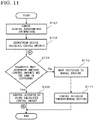
- the diagnosis unit compares the control amounts with each other and determines whether the control amounts are the same as or different from each other (step S804), as in embodiment 1 and the like. If the control amounts are the same value, the said value is used to control the actuator (step S805). If the control amounts are different from each other, a control amount calculated from surroundings information acquired by a sensor is selected on the basis of a predetermined order of importance of the sensors (step S810). The selected control amount is used to control the actuator (step S811).
- control can be performed without interrupting autonomous driving, whereby autonomous driving can be performed with high safety.
- the present embodiment is the same as the other embodiments in that a diagnosis unit determines whether or not control amounts are the same as or different from each other (step S904). Meanwhile, as in the present embodiment, for example, a predetermined range divided into a plurality of levels may be specified for a control amount instead of obtaining a numerical value of the control amount, to carry out the present invention .
- a control amount X4 regarding acceleration/deceleration division into the following five levels may be performed: X4>a (high acceleration), a ⁇ X4>b (low acceleration), b ⁇ X4>c (maintaining the speed), c ⁇ X4>d (low deceleration), and d ⁇ X4 (high deceleration) (step S905).
- diagnosis unit determines that the control amounts are different from each other, switching is made to manual driving (step S910) and the actuator is manually controlled (step S911), in FIG. 12 .
- the present invention is not limited thereto.
- combination with embodiment 3 or the like may be performed. That is, combination with the method in which a small control amount considered to result in highest safety is selected may be performed.
- Embodiment 10 will be described with reference to FIG. 13 and FIG. 14 .
- the present embodiment is the same as embodiment 2 in that control amounts are parallelly calculated in the plurality of downstream devices. Meanwhile, the present embodiment is different from embodiment 2 in that the autonomous driving system is constructed without being provided with any driving assistance device.
- FIG. 14 is a flowchart for the autonomous driving assistance system according to the present embodiment.
- the hardware configuration is basically the same as that in FIG. 3 , and thus description thereof is omitted.
- the steering route generation unit 201, the drive route generation unit 301, and the brake route generation unit 401 which generate routes can select and process the same information with the same accuracy.
- the accuracies of some of the route generation units may be reduced, or only some of the route generation units may be used, to calculate basic control amounts.
- the simplified calculation makes it also possible to simultaneously calculate a plurality of types of routes and control amounts by using a pair of route generation units and a pair of control amount calculation units.
- Timings of acquisition of various information from the sensors 1 may be different among the downstream devices, and there may be a difference in the acquired information. In this case, it is considered that: errors are generated also in calculation results of a plurality of control amounts; and the calculation results do not take the same value. In view of this, it is effective that, in each diagnosis unit: a margin is set for a determination criterion; and control amounts that fall within the predetermined range are regarded as the same and determined to be normal.
- each downstream device not only a route and a control amount for the own device but also a route and a control amount for another downstream device, are calculated. Accordingly, an autonomous driving assistance system having redundancy can be achieved without the need of any driving assistance device.
- each downstream device will be described using a configuration diagram that is explained in the present embodiment shown in FIG. 13 .
- Surroundings information is transmitted from the sensors 1 through the communication line 5 to the steering device 200, and a control amount for the steering portion 204 is calculated by the steering route generation unit 201 and the steering control amount calculation unit 202 and transmitted to the steering diagnosis unit 203.
- a control amount for the engine portion 304 is calculated by the drive route generation unit 311 and the drive control amount calculation unit 312 in the same steering device 200, and the control amount is transmitted through the communication line 5.
- a control amount for the engine portion 304 is calculated by the drive route generation unit 301 and the drive control amount calculation unit 302 and transmitted to the drive diagnosis unit 303, and a control amount for the brake portion 404 is parallelly calculated by the brake route generation unit 411 and the brake control amount calculation unit 412 and transmitted through the communication line 5.
- a control amount for the brake portion 404 is calculated by the brake route generation unit 401 and the brake control amount calculation unit 402 and transmitted to the brake diagnosis unit 403, and a control amount for the steering portion 204 is parallelly calculated by the steering route generation unit 211 and the steering control amount calculation unit 212 and transmitted through the communication line 5.
- the steering control amount calculated in the brake device 400 is transmitted through the communication line 5 to the steering diagnosis unit 203 of the steering device 200, and the two calculation results are compared with each other.
- two drive control amounts are transmitted to the drive diagnosis unit 303, and the two calculation results are compared with each other.
- two calculation results of brake control amounts are transmitted to the brake diagnosis unit 403, and the two calculation results are compared with each other.
- each diagnosis unit performs determination on the basis of the calculation results obtained in the two downstream devices. Since these calculation results are calculated by different CPUs, more accurate determination can be performed, and false determination can be inhibited.
- the flowchart is basically the same as the flowchart shown in FIG. 2 but is different therefrom in that the step of calculating a control amount in the driving assistance device (step S102) is not included.
- step S104 Whether or not two calculation results of control amounts calculated in each downstream device are the same control amount, is determined (step S104). In a case where the two control amounts are the same control amount, the said control amount is used to control the actuator (step S105). In a case where the two control amounts are not the same control amount and both of the two control amounts are different from each other, switching is made to manual driving (step S110), and the actuator is controlled through manual driving (step S111).
- accurate determination can be performed by using the plurality of downstream devices without providing any driving assistance device.
- a steering control amount and a drive control amount are calculated in the steering device 200; a drive control amount and a brake control amount are calculated in the drive device 300; and a brake control amount and a steering control amount are calculated in the brake device 400.
- these combinations are just an example, and the same advantageous effects can be obtained also with different combinations for calculation.
- two types of control amounts are calculated in each downstream device has been described, favorable effects can be obtained also if three types of control amounts are calculated in each downstream device.
- Embodiment 11 will be described with reference to FIG. 15 and FIG. 16 .
- the present embodiment is the same as embodiment 2 in that control amounts are parallelly calculated in the plurality of downstream devices. Meanwhile, the present embodiment is different from embodiment 2 in that: two or more driving assistance devices are provided; and the plurality of driving assistance devices and the plurality of downstream devices are used to calculate control amounts.
- FIG. 16 is a flowchart for an autonomous driving assistance system according to the present embodiment, and shows only the steps from A to B which are different from those of the flowchart for the autonomous driving assistance system according to embodiment 1 shown in FIG. 2 .
- the hardware configuration is basically the same as that in FIG. 3 , and thus description thereof is omitted.
- two driving route generation units 101 and 111, the steering route generation unit 201, the drive route generation unit 301, and the brake route generation unit 401 which generate routes can select and process the same information with the same accuracy.
- the accuracies of some of the route generation units may be reduced, or only some of the route generation units may be used, to calculate basic control amounts.
- the simplified calculation makes it also possible to simultaneously calculate a plurality of routes and control amounts by using a pair of route generation units and a pair of control amount calculation units.
- Timings of acquisition of various information from the sensors 1 may be different among the downstream devices, and there may be a difference in the acquired information. In this case, it is considered that: errors are generated in calculation results of a plurality of control amounts; and the calculation results do not take the same value. In view of this, it is effective that, in each diagnosis unit: a margin is set for a determination criterion; and control amounts that fall within the predetermined range are regarded as the same and determined to be normal.
- each downstream device along with the two driving assistance devices, in each downstream device, not only a route and a control amount for the own device but also a route and a control amount for another downstream device are calculated. Accordingly, even if an abnormality or a fault occurs in one of the driving assistance devices, at least three calculation results can be compared with one another. Therefore, an autonomous driving assistance system having high redundancy that is equivalent to the redundancy in embodiment 2 is achieved.
- Surroundings information is transmitted from the sensors 1 through the communication line 5 to the steering device 200, and a control amount for the steering portion 204 is calculated by the steering route generation unit 201 and the steering control amount calculation unit 202 and transmitted to the steering diagnosis unit 203.
- a control amount for the engine portion 304 is calculated by the drive route generation unit 311 and the drive control amount calculation unit 312 in the same steering device 200, and the control amount is transmitted through the communication line 5.
- a control amount for the engine portion 304 is calculated by the drive route generation unit 301 and the drive control amount calculation unit 302 and transmitted to the drive diagnosis unit 303, and a control amount for the brake portion 404 is parallelly calculated by the brake route generation unit 411 and the brake control amount calculation unit 412 and transmitted through the communication line 5.
- a control amount for the brake portion 404 is calculated by the brake route generation unit 401 and the brake control amount calculation unit 402 and transmitted to the brake diagnosis unit 403, and a control amount for the steering portion 204 is parallelly calculated by the steering route generation unit 211 and the steering control amount calculation unit 212 and transmitted through the communication line 5.
- the steering control amount calculated in the brake device 400 is transmitted through the communication line 5 to the steering diagnosis unit 203 of the steering device 200. Further, calculation results from two driving control amount calculation units 102 and 112 are added. Thus, the four calculation results are compared with one another.
- each diagnosis unit performs determination on the basis of a total of four calculation results, i.e., the calculation results from two driving assistance devices 100 and 110 and the calculation results from the two downstream devices. Since these calculation results are calculated by different CPUs, more accurate determination can be performed, and false determination can be inhibited. Further, even if one of the calculation results takes an abnormal value, determination based on the other three calculation results is performed, whereby accurate determination can be continued even at the time of a fault.
- step S1004 Whether or not three or more calculation results among the four calculated control amounts are the same control amount, is determined (step S1004). If three or more control amounts are the same control amount, the said control amount is used to control the actuator (step S1005). Meanwhile, if three or more control amounts do not take the same value and all of the four control amounts are different from one another, or if two of the control amounts take the same value and the other two control amounts take the same value that is different from the value taken by the two control amounts so that determination as to correctness cannot be performed, switching is made to manual driving (step S1010), and the actuator is controlled through manual driving (step S1011). Further, if three of the calculation results take the same value and the calculation result from one of the driving assistance devices is different therefrom (S1006), it is determined that an abnormality is present in the device which has calculated the different control amount (S1007) .
- three or more control amounts are used even if a calculation result from one of the driving assistance devices is found to be abnormal.
- the redundancy is high, and accurate determination can be performed.
- two driving assistance devices and two downstream devices are used, and thus, without increase in cost, calculation result diversification and a higher redundancy are achieved as compared to the case where only calculation results from the two driving assistance devices are compared with each other.
- a steering control amount and a drive control amount are calculated in the steering device 200; a drive control amount and a brake control amount are calculated in the drive device 300; and a brake control amount and a steering control amount are calculated in the brake device 400.
- these combinations are just an example, and the same advantageous effects can be obtained also with different combinations for calculation.
- two types of control amounts are calculated in each downstream device has been described, favorable effects can be obtained also if three types of control amounts are calculated in each downstream device.
- each downstream device calculates two types of control amounts.
- these combinations are just an example, and favorable effects can be obtained also if two or more driving assistance devices are provided.
- each of the downstream devices 200, 300, and 400 not only a route and a control amount for the own device but also routes and control amounts for the other two downstream devices are calculated.
- Each calculation result is transmitted through the communication line 5 to the corresponding downstream device and used, by the diagnosis unit of the downstream device, for determination as to whether an abnormality has occurred in calculation.
- a calculation result for the own device and calculation results for the other two downstream devices are used, and thus, even though this configuration uses only the downstream devices, the three calculation results can be compared with one another. Accordingly, a favorable autonomous driving assistance system having a higher redundancy can be formed.
Landscapes
- Engineering & Computer Science (AREA)
- Automation & Control Theory (AREA)
- Mechanical Engineering (AREA)
- Transportation (AREA)
- Human Computer Interaction (AREA)
- Chemical & Material Sciences (AREA)
- Combustion & Propulsion (AREA)
- Theoretical Computer Science (AREA)
- General Engineering & Computer Science (AREA)
- General Physics & Mathematics (AREA)
- Physics & Mathematics (AREA)
- Quality & Reliability (AREA)
- Control Of Driving Devices And Active Controlling Of Vehicle (AREA)
- Steering Control In Accordance With Driving Conditions (AREA)
- Traffic Control Systems (AREA)
Description
- The present invention relates to an autonomous driving assistance system.
- An autonomous driving assistance system for performing autonomous driving of a vehicle such as an automobile has employed the following measure to ensure safety during autonomous driving. That is, a plurality of autonomous driving devices for backup having the same function are provided in parallel, and the autonomous driving assistance system is configured to enable, even if an abnormality occurs in any of these devices, autonomous driving to be maintained by another normal device substituting for the abnormal device (see, for example, Patent Document 1).
- Further, for a case where it is determined that autonomous driving should be ended, the following function is adopted in an autonomous driving assistance system in order to safely make switching to manual driving. That is, switching is made to manual driving only after: notification is given to the driver; and consent of the driver, or the like, is confirmed (see, for example, Patent Document 2).
-
WO 2018/069061 A1 discloses determining a setpoint for a driving member based on comparing preliminary setpoints determined from sensor signals. -
- Patent Document 1:
Japanese Patent No. 6212409 - Patent Document 2:
Japanese Laid-Open Patent Publication No. 2017-154542 - In these autonomous driving assistance systems, a driving assistance device for performing autonomous driving on the basis of information from a sensor includes three independent calculation devices which respectively calculate control amounts for a steering device, a drive device, and a brake device through substantially the same kind of computation. It is necessary for a comparison determination unit to determine whether these calculation results are normal or abnormal, and determine which of the calculation results is to be used for autonomous driving. Thus, a problem arises in that an enormous amount of very complex computation based on various kinds of input information is needed for calculating these control amounts. In addition, if calculation is performed through the same kind of computation by the same CPU, the same miscalculation may be repeated, and another problem arises from the viewpoint of diversification.
- The present invention has been made to solve the above problems, and an object of the present invention is to obtain an autonomous driving assistance system that has redundancy and that is inexpensive and poses no problem in terms of diversification.
- An autonomous driving assistance system according to the present invention is an autonomous driving assistance system including: a sensor configured to acquire surroundings information; a downstream device including an actuator configured to control a vehicle; and a driving assistance device configured to calculate a control amount for the downstream device on the basis of the surroundings information. The downstream device further includes a diagnosis unit configured to: perform comparison between at least two control amounts that include the control amount calculated in the driving assistance device and a control amount calculated in the downstream device on the basis of the surroundings information; and determine, if the control amounts are equal to each other, that the control amounts are normal, and determine, if the control amounts are different from each other, that the control amounts are abnormal.
- An autonomous driving assistance system comprising the features of
claim 2 and a method comprising the features of claim 7 are also provided. - The autonomous driving assistance system according to the present invention makes it possible to obtain an autonomous driving assistance system for vehicles that has redundancy and that is inexpensive and poses no problem in diversification.
-
- [
FIG. 1] FIG. 1 is a block diagram of an autonomous driving assistance system according toembodiment 1. - [
FIG. 2] FIG. 2 is a flowchart for the autonomous driving assistance system according toembodiment 1. - [
FIG. 3] FIG. 3 is a hardware diagram of a driving assistance device inembodiment 1. - [
FIG. 4] FIG. 4 is a block diagram of an autonomous driving assistance system according toembodiment 2. - [
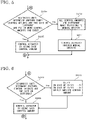
FIG. 5] FIG. 5 is a part of a flowchart for the autonomous driving assistance system according toembodiment 2. - [
FIG. 6] FIG. 6 is a part of a flowchart for an autonomous driving assistance system according to embodiment 3. - [
FIG. 7] FIG. 7 is a part of a flowchart for an autonomous driving assistance system according to embodiment 4. - [
FIG. 8] FIG. 8 is a part of a flowchart for an autonomous driving assistance system according toembodiment 5. - [
FIG. 9] FIG. 9 is a part of a flowchart for an autonomous driving assistance system according to embodiment 6. - [
FIG. 10] FIG. 10 is a part of a flowchart for an autonomous driving assistance system according to embodiment 7. - [
FIG. 11] FIG. 11 is a part of a flowchart for an autonomous driving assistance system according to embodiment 8. - [
FIG. 12] FIG. 12 is a part of a flowchart for an autonomous driving assistance system according to embodiment 9. - [
FIG. 13] FIG. 13 is a block diagram of an autonomous driving assistance system according toembodiment 10. - [
FIG. 14] FIG. 14 is a flowchart for the autonomous driving assistance system according toembodiment 10. - [
FIG. 15] FIG. 15 is a block diagram of an autonomous driving assistance system according toembodiment 11. - [
FIG. 16] FIG. 16 is a flowchart for the autonomous driving assistance system according toembodiment 11. - [
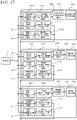
FIG. 17] FIG. 17 is a block diagram of an autonomous driving assistance system according toembodiment 12. - In the description of embodiments and the drawings, parts denoted by the same reference characters indicate identical or corresponding parts.
-
Embodiment 1 of the present invention will be described with reference toFIG. 1 to 3 .FIG. 1 is a block diagram of an autonomous driving assistance system and shows the entire configuration of the autonomous driving assistance system according toembodiment 1.FIG. 2 is a flowchart for the autonomous driving assistance system and shows an operation and drive procedure for the autonomous driving assistance system according toembodiment 1.FIG. 3 is a hardware diagram and shows, in the present embodiment, an example of hardware in which control amounts which are commands for actuators are calculated in a driving assistance device and downstream devices. -
FIG. 1 is a diagram of the entire configuration of the autonomous driving assistance system. The autonomous driving assistance system is composed mainly of:sensors 1; adriving assistance device 10; and asteering device 20, adrive device 30, and abrake device 40 which are actuators for actually controlling a vehicle. Thesteering device 20, thedrive device 30, and thebrake device 40 are sometimes referred to as downstream devices in the sense that they compose the latter half of the inside of the autonomous driving assistance system. - The
sensors 1 are implemented by: cameras and radars for monitoring areas in front of, behind, and lateral to the vehicle; a navigator for road information data; and the like. - The
driving assistance device 10 includes: a drivingroute generation unit 11 which generates a driving route on the basis of surroundings information acquired by thesensors 1; and a driving controlamount calculation unit 12 which calculates, in order to apply the generated driving route, control amounts which are commands for the respective downstream devices. - Subsequently to the
driving assistance device 10, thesteering device 20, thedrive device 30, and thebrake device 40 which are three types of downstream devices are formed. These downstream devices are different from one another in vehicle-controlling function but have basically the same configuration. Thus, a structure will be described based on thesteering device 20. - The
steering device 20 includes: a steeringroute generation unit 21 and a steering controlamount calculation unit 22 for calculating a control amount on the basis of the surroundings information from thesensors 1; and asteering diagnosis unit 23 which compares this control amount with the control amount calculated in thedriving assistance device 10. Whether these control amounts are normal or abnormal is determined. If these control amounts are normal, the said control amount is outputted to an actuator that implements a steering portion. - As described above, the autonomous driving assistance system is composed of the
sensors 1, thedriving assistance device 10, and thesteering device 20, thedrive device 30, and thebrake device 40 which are three types of downstream devices. - Next, an operation and drive procedure for the autonomous driving assistance system will be described with reference to the flowchart for the autonomous driving assistance system shown in
FIG. 2 . - In
FIG. 2 , a flow of autonomous driving assistance is shown from the upper side to the lower side. The steps from A to B shown in the flowchart are steps of determination by the diagnosis unit and control of the actuator based on the determination, which are parts of the flow of autonomous driving assistance. In the other embodiments, examples in which the steps from A to B are replaced by other steps will be described. - First, surroundings information is acquired by the sensors 1 (step S101), the surroundings information is outputted to the driving
assistance device 10, and control amounts for controlling the actuators are calculated (step S102). As described with reference toFIG. 1 , the drivingassistance device 10 includes the drivingroute generation unit 11 and the driving controlamount calculation unit 12. The drivingroute generation unit 11 selects information that is necessary for executing autonomous driving from, for example, information transmitted from thesensors 1 about the distance to a vehicle running in front, a traffic lane and an obstacle having been detected, the curvature of the road, a tunnel, and traffic congestion, and generates a driving route. Besides the above-described information, vehicle running information such as the vehicle speed, steering wheel steering, and a brake operation is also transmitted through thesensors 1 to the drivingroute generation unit 11 and used for generating a route. - In the driving control
amount calculation unit 12, control amounts for the actuators composing the respective downstream devices are calculated on the basis of the driving route generated by the drivingroute generation unit 11, and are outputted. - Then, also in the downstream devices, control amounts are calculated on the basis of the surroundings information (step S103). There are three types of downstream devices, i.e., the
steering device 20, thedrive device 30, and thebrake device 40, and a control amount is calculated in each of the downstream devices. - Specifically, the
steering device 20 includes: the steeringroute generation unit 21 which acquires the surroundings information from thesensors 1 and information that is characteristic of thesteering device 20 such as a steering wheel torque signal and steering wheel angle information, and selects and processes necessary information; and the steering controlamount calculation unit 22 which calculates a control amount. - The information from the
sensors 1 is transmitted to thedrive device 30, and thedrive device 30 acquires information that is characteristic of thedrive device 30 and that is related to the rotation rate, the temperature, the drive shift position, and the like of the engine or a motor. A driveroute generation unit 31 selects and processes drive-related information, and a drive controlamount calculation unit 32 calculates a control amount. - The information from the
sensors 1 is transmitted also to thebrake device 40, a brakeroute generation unit 41 selects and processes brake-related information, and a brake controlamount calculation unit 42 calculates a control amount. - In each of
diagnosis units assistance device 10 and the control amount obtained in the downstream device are compared with each other, and whether or not the control amounts are equal to each other is determined (step S104). - If these control amounts are different from each other, switching is made to manual driving (step S110), and the actuator is controlled through manual driving (step S111).
- Meanwhile, if the diagnosis unit determines that these control amounts are the same control amount, the said control amount is used to control the actuator (step S105), and autonomous driving can be performed.
- In control of the actuators through these steps of autonomous driving, a steering command is outputted to the
steering device 20, an acceleration/deceleration command is outputted to thedrive device 30, and a brake command is outputted to thebrake device 40, thereby performing operation for steering, the engine or the motor, and the brake, respectively. As a more specific example, if the distance to a vehicle running in front is long, anengine portion 34 is controlled by giving an acceleration command to thedrive device 30. Further, a steeringportion 24 is controlled by giving a steering command to thesteering device 20 according to the tilt and the curvature of the road in order to move the vehicle toward an edge of the road. Meanwhile, if the speed is excessively high, abrake portion 44 is controlled by giving a command for braking wheels to thebrake device 40 in order to avoid the risk of running off the road. - Hardware of each of the calculation units included in the driving
assistance device 10, and thedownstream devices processor 13 and astorage device 14, an example of the hardware being shown inFIG. 3 . Although not shown, the storage device includes a volatile storage device such as a random access memory and a nonvolatile auxiliary storage device such as a flash memory. Alternatively, the storage device may include, instead of a flash memory, a hard disk as the auxiliary storage device. Theprocessor 13 executes a program inputted from thestorage device 14. In this case, a program is inputted from the auxiliary storage device via the volatile storage device to theprocessor 13. In addition, theprocessor 13 may output data such as a calculation result to the volatile storage device of thestorage device 14, or save the data via the volatile storage device into the auxiliary storage device. - Driving
assistance devices 10 are devices for outputting a command of changing the behavior of a vehicle on the basis of various kinds of information, and do not directly control actuators that actually drive the vehicle. However, the contents of the command from the drivingassistance devices 10 are considered to be most important in terms of safety. - If an abnormality occurs in generation of a route or calculation of a control amount in the driving
assistance devices 10, an accident may be caused. In view of this, in the autonomous driving assistance system according to the present embodiment, thesteering device 20, thedrive device 30, and thebrake device 40 which are the downstream devices of the autonomous driving assistance system and which are for operating the actuators also share the role of driving assistance regarding the respective operation targets in order to improve the safety of the drivingassistance device 10 and ensure high redundancy and diversity for the autonomous driving assistance system. - For example, regarding the
steering device 20 for controlling the steeringportion 24, configuring is performed such that the information from thesensors 1 is transmitted not only to the drivingassistance device 10 but also to thesteering device 20 through acommunication line 5. When having received the information from thesensors 1, the steeringroute generation unit 21 generates a route related to steering, and the steering controlamount calculation unit 22 calculates a control amount to be transmitted to thesteering portion 24. In other words, a part of control of thesteering device 20 taken charge of by the drivingassistance device 10 is assigned to thesteering device 20, and calculation is performed parallelly. - The steering
route generation unit 21 further acquires other information that is characteristic of thesteering device 20, e.g., a steering wheel torque signal, a steering wheel angle information, and the like, selects or processes information related to steering, and outputs the information to the steering controlamount calculation unit 22, and the steering controlamount calculation unit 22 calculates a control amount. - Then, the steering control amount calculated in the driving
assistance device 10 and the steering control amount calculated in thesteering device 20 are compared with each other by thesteering diagnosis unit 23. If both steering control amounts are the same calculation result, the said calculation result can be determined to be normal, and the steeringportion 24 is driven on the basis of the said calculation result. - Similarly, the
drive device 30 and thebrake device 40 also parallelly perform parts of the function of the drivingassistance device 10. - For example, in the
drive device 30, a drive control amount calculated in the drivingassistance device 10 and a drive control amount calculated in thedrive device 30 are compared with each other by thedrive diagnosis unit 33. If both drive control amounts are the same calculation result, the said calculation result is determined to be normal, and theengine portion 34 is controlled. This autonomous driving assistance system corresponds to a device called an EMS (engine management system). Even when the driver has not manipulated the accelerator, the EMS can cause the vehicle to run while controlling acceleration/deceleration. - In the
brake device 40, a brake control amount calculated in the drivingassistance device 10 and a brake control amount calculated in thebrake device 40 are compared with each other by thebrake diagnosis unit 43. If both brake control amounts are the same calculation result, the said calculation result is determined to be normal, and thebrake portion 44 is controlled. The autonomous driving assistance system corresponds to a device called an ABS (antilock brake system). The ABS can give not only a brake command to cause braking to obtain a predetermined deceleration but also a fine brake command according to a vehicle running state without causing the vehicle to spin, such as a command to cause braking only at the outer front wheel during cornering at an excessive speed. - As described above, parallelly to calculation of the control amounts by the driving
assistance device 10, parts of calculation of control amounts are assigned also to thesteering device 20, thedrive device 30, and thebrake device 40 which control the respective actuators. Since the control amount obtained in the drivingassistance device 10 and the control amount calculated in each downstream device are control amounts calculated by using different CPUs, an autonomous driving assistance system having excellent redundancy can be obtained. - In addition, it is also possible to integrally control the entire vehicle by comprehensively controlling steering, the engine, and the brake. A system for this control is called a VDC (vehicle dynamics control) system.
- No calculation capabilities are newly imparted to the downstream devices in order to obtain the autonomous driving assistance system according to the present embodiment. Each downstream device is originally mounted with a CPU or the like for controlling the corresponding actuator, and thus has a capability of performing calculation. Therefore, there is no need to increase cost for the downstream devices to parallelly perform calculation, and thus the autonomous driving assistance system according to the present embodiment can be obtained at low cost.
-
Embodiment 2 will be described with reference toFIG. 4 andFIG. 5 . The present embodiment is the same asembodiment 1 in that each downstream device parallelly performs a part of calculation of control amounts to be performed by a drivingassistance device 100, thereby improving redundancy. Meanwhile, the present embodiment is different fromembodiment 1 in that control amounts are parallelly calculated in the plurality of downstream devices, thereby further improving redundancy. -
FIG. 5 is a flowchart for an autonomous driving assistance system according to the present embodiment, and shows only steps from A to B which are different from those in the flowchart for the autonomous driving assistance system according toembodiment 1 shown inFIG. 2 . The hardware configuration is basically the same as that shown inFIG. 3 , and thus description thereof is omitted. - In the present embodiment, a driving
route generation unit 101, a steeringroute generation unit 201, a driveroute generation unit 301, and a brakeroute generation unit 401 which generate routes can select and process the same information with the same accuracy. Alternatively, the accuracies of some of the route generation units may be reduced, or only some of the route generation units may be used, to calculate basic control amounts. Further, the simplified calculation makes it also possible for a pair of route generation units and a pair of control amount calculation units to simultaneously calculate two types of routes and two types of control amounts. - Timings of acquisition of various information from the
sensors 1 may be different among the downstream devices, and, if there is a difference in the acquired information, it is considered that: errors are generated; and calculation results of a plurality of control amounts do not take the same value. In view of this, it is effective that, in each diagnosis unit: a margin is set for a determination criterion; and control amounts that fall within the predetermined range are regarded as the same and determined to be normal. - The present embodiment takes advantage of a feature of being able to calculate, in each downstream device, not only a route and a control amount for the own device but also a route and a control amount for another downstream device. Accordingly, an autonomous driving assistance system having further improved redundancy is achieved.
- A configuration of each downstream device will be described using a configuration diagram that is explained in the present embodiment shown in
FIG. 4 . - Surroundings information is transmitted from the
sensors 1 through thecommunication line 5 to asteering device 200, and a control amount for asteering portion 204 is calculated by the steeringroute generation unit 201 and a steering controlamount calculation unit 202 and transmitted to asteering diagnosis unit 203. - At the same time, a control amount for an
engine portion 304 is calculated by a driveroute generation unit 311 and a drive controlamount calculation unit 312 in thesame steering device 200, and the control amount is transmitted through thecommunication line 5. - In a
drive device 300, a control amount for theengine portion 304 is calculated by the driveroute generation unit 301 and a drive controlamount calculation unit 302 and transmitted to adrive diagnosis unit 303, and a control amount for abrake portion 404 is parallelly calculated by a brakeroute generation unit 411 and a brake controlamount calculation unit 412 and transmitted through thecommunication line 5. Further, in abrake device 400, a control amount for thebrake portion 404 is calculated by the brakeroute generation unit 401 and a brake controlamount calculation unit 402 and transmitted to abrake diagnosis unit 403, and a control amount for thesteering portion 204 is parallelly calculated by a steeringroute generation unit 211 and a steering controlamount calculation unit 212 and transmitted through thecommunication line 5. - In addition to the steering control amount obtained in the
steering device 200, the steering control amount calculated in thebrake device 400 is transmitted through thecommunication line 5 to thesteering diagnosis unit 203 of thesteering device 200. Further, a calculation result from a driving controlamount calculation unit 102 is added. Thus, the three calculation results are compared with one another. - Similarly, the two drive control amounts and a calculation result from the driving control
amount calculation unit 102 are transmitted to thedrive diagnosis unit 303, and the three calculation results are compared with one another. In addition, the two brake control amounts and a calculation result from the driving controlamount calculation unit 102 are transmitted also to thebrake diagnosis unit 403, and the three calculation results are compared with one another. - As described above, in the present embodiment, each diagnosis unit performs determination on the basis of a total of three calculation results, i.e., the calculation result from the driving
assistance device 100 and the calculation results from the two downstream devices. Since all of these calculation results are calculated by different CPUs, more accurate determination can be performed, and false determination can be inhibited. - In the present embodiment, determination using the three calculation results will be described with reference to the flowchart shown in
FIG. 5 . In the flowchart, the steps from A to B of the flowchart shown inFIG. 2 have been taken out and replaced by steps in the present embodiment, and the steps other than the steps from A to B are the same as those in the flowchart inFIG. 2 . - Whether or not two or more calculation results among the three calculated control amounts are the same control amount is determined (step S204). If two or more control amounts are the same control amount, the said control amount is used to control the actuator (step S205). If two or more control amounts do not take the same value, i.e., if all of the three control amounts are different from one another, switching is made to manual driving (step S210), and the actuator is controlled through manual driving (step S211).
- In the present embodiment, since three control amounts are used, the redundancy is high, and accurate determination can be performed.
- In the present embodiment, an example has been described in which: a steering control amount and a drive control amount are calculated in the
steering device 200; a drive control amount and a brake control amount are calculated in thedrive device 300; and a brake control amount and a steering control amount are calculated in thebrake device 400. However, these combinations are just an example, and the same advantageous effects can be obtained also with different combinations for calculation. In addition, although an example in which two types of control amounts are calculated in each downstream device has been described, favorable effects can be obtained also if three types of control amounts are calculated in each downstream device. - In a case where, for example, two CPUs are mounted in each of the three downstream devices, two control amounts calculated by the two CPUs in the same downstream device can be used to perform diagnosis as to the validity of the calculation results. In order to improve redundancy, it is important to use calculation results obtained by different CPUs. Thus, it is possible to perform diagnosis by using, instead of a calculation result from another downstream device, calculation results obtained by two CPUs in the same downstream device.
- In the present embodiment, a measure against the case where a control amount calculated in the driving
assistance device 10 and a control amount obtained in a downstream device such as thesteering device FIG. 6 . - In the flowchart, the steps from A to B of the flowchart shown in
FIG. 2 have been replaced by steps in the present embodiment, and the steps other than the steps from A to B are the same as those of the flowchart inFIG. 2 . - In a case where the control amount calculated in the driving
assistance device 10 and the control amount calculated in the downstream device are the same control amount as a result of comparison therebetween (step S304), the said control amount is used to control the actuator (step S305) . - Meanwhile, in a case where the control amounts are different from each other, it is necessary to select one of the control amounts that is safer in terms of the behavior of the vehicle. Here, a smaller control amount indicates a smaller control amount for the actuator and is considered to result in a smaller change. Thus, a control amount X1 calculated in the driving
assistance device 10 and a control amount Y1 calculated in the downstream device are compared with each other, and, for example, the actuator is controlled by using Y1 as the control amount in the case of X1>Y1 while using X1 as the control amount in the case of X1<Y1 (step S310) . - It is considered that, if a control amount that makes a smaller change to the actuator is used, the selected control amount causes a smaller change in the behavior of the vehicle and leads to better safety. Accordingly, a favorable autonomous driving assistance system can be obtained.
- In the present embodiment, a measure against the case where a control amount calculated in the driving
assistance device 10 and a control amount obtained in a downstream device such as thesteering device FIG. 7 . - In the flowchart, the steps from A to B of the flowchart shown in
FIG. 2 have been replaced by steps in the present embodiment, and the steps other than the steps from A to B are the same as those of the flowchart inFIG. 2 . - In the present embodiment, when a control amount X2 calculated in the driving
assistance device 10 and a control amount Y2 obtained in a downstream device are compared with each other (step S404), if X2 and Y2 are the same control amount, the said control amount is used to control the actuator (step S405). - If the control amounts are different from each other, a previous control amount C2 (step S410) and a control amount of which the difference from C2 is smaller between the present control amounts X2 and Y2 are used (step S411) to control the actuator.
- It is considered that use of a value that is closer to the previous control amount C2 allows reduction in the change of the behavior of the vehicle. Accordingly, a favorable autonomous driving assistance system can be obtained.
- In the present embodiment, an operation method to safely make switching to manual driving in the case where a control amount calculated in the driving
assistance device 10 and a control amount calculated in a downstream device such as thesteering device FIG. 8 . - In the flowchart, the steps from A to B of the flowchart shown in
FIG. 2 have been replaced by steps in the present embodiment, and the other steps are the same as those shown in the flowchart inFIG. 2 . - The present embodiment is the same as the normal flow in that, when the control amounts obtained in the driving
assistance device 10 and the downstream device are compared with each other (step S504), if the control amounts are the same control amount, the said control amount is used to control the actuator (step S505). - If the control amounts obtained in the driving
assistance device 10 and the downstream device are determined to be different from each other and autonomous driving is interrupted, it may be risky to perform control such as stoppage of the engine, fuel cut, or application of the brake. In view of this, it is determined to make switching to manual driving (step S510), notification is given to the driver, and consent is obtained (step S511) before switching is made to manual driving (step S512), whereby it is possible to ensure safety at the time of switching to manual driving. - In the present embodiment, determination as to whether or not control amounts obtained in the driving
assistance device 10 and a downstream device are different from one another, will be described with reference to the flowchart shown inFIG. 9 . - In the flowchart, the steps from A to B of the flowchart shown in
FIG. 2 have been replaced by steps in the present embodiment, and the other steps are the same as those shown in the flowchart inFIG. 2 . - In the present embodiment, for comparison between the control amounts obtained in the driving
assistance device 10 and the downstream device, a predetermined allowable range is set on the basis of a previous control amount, and determination as to appropriateness of autonomous driving is performed on the basis of whether or not two or more of the control amounts fall within the range (step S604). - If two or more of the control amounts obtained in the driving
assistance device 10 and the control amounts obtained in the downstream device fall within the allowable range, these values are used to control the actuator (step S605) . - If the number of control amounts within the predetermined range is one or less, for example, notification is given to the driver and switching is made to manual driving (step S610), and the actuator is controlled through manual driving (step S611).
- In the present embodiment, in the case of using three control amounts, driving can be continued without interrupting the autonomous driving even if one of the control amounts is outside the allowable range. Accordingly, convenience can be ensured in addition to safety.
- In the present embodiment, a measure against the case where control amounts obtained in the driving
assistance device 10 and a downstream device are different from each other, will be described with reference to the flowchart shown inFIG. 10 . - In the flowchart, the steps from A to B of the flowchart shown in
FIG. 2 have been replaced by steps in the present embodiment, and the other steps are the same as those shown in the flowchart inFIG. 2 . - On the basis of previous values of the control amounts obtained in the driving
assistance device 10 and the downstream device, an upper limit value C3 for the control amounts is set (step S704). The upper limit value C3 is compared with a control amount X3 obtained in the drivingassistance device 10 and a control amount Y3 obtained in the downstream device (step S704). If any of the control amounts is smaller than the upper limit value C3, the said control amount is used to control the actuator (step S705). - If each of the control amounts X3 and Y3 is larger than the upper limit value C3, switching is made to manual driving (step S710). Then, for example, notification is given to the driver, and the actuator is controlled through manual driving (step S711).
- If the upper limit value is set, an abrupt and great change in the control amount can be prevented, whereby an abrupt change in the movement of the vehicle can be inhibited.
- In the present embodiment, a measure against the case where control amounts obtained in the driving
assistance device 10 and a downstream device are different from each other, will be described with reference to the flowchart shown inFIG. 11 . - In the flowchart, the steps from A to B of the flowchart shown in
FIG. 2 have been replaced by steps in the present embodiment, and the other steps are the same as those shown in the flowchart inFIG. 2 . - In the present embodiment, the diagnosis unit compares the control amounts with each other and determines whether the control amounts are the same as or different from each other (step S804), as in
embodiment 1 and the like. If the control amounts are the same value, the said value is used to control the actuator (step S805). If the control amounts are different from each other, a control amount calculated from surroundings information acquired by a sensor is selected on the basis of a predetermined order of importance of the sensors (step S810). The selected control amount is used to control the actuator (step S811). - Since a control amount based on the predetermined order is used, control can be performed without interrupting autonomous driving, whereby autonomous driving can be performed with high safety.
- In the present embodiment, a selection method for a control amount in a diagnosis unit will be described with reference to the flowchart shown in
FIG. 12 . - In the flowchart, the steps from A to B of the flowchart shown in
FIG. 2 have been replaced by steps in the present embodiment, and the other steps are the same as those shown in the flowchart inFIG. 2 . - The present embodiment is the same as the other embodiments in that a diagnosis unit determines whether or not control amounts are the same as or different from each other (step S904). Meanwhile, as in the present embodiment, for example, a predetermined range divided into a plurality of levels may be specified for a control amount instead of obtaining a numerical value of the control amount, to carry out the present invention .
- As an example, for a control amount X4 regarding acceleration/deceleration, division into the following five levels may be performed: X4>a (high acceleration), a≥X4>b (low acceleration), b≥X4>c (maintaining the speed), c≥X4>d (low deceleration), and d≥X4 (high deceleration) (step S905).
- If the diagnosis unit determines that the control amounts are different from each other, switching is made to manual driving (step S910) and the actuator is manually controlled (step S911), in
FIG. 12 . However, the present invention is not limited thereto. For example, combination with embodiment 3 or the like may be performed. That is, combination with the method in which a small control amount considered to result in highest safety is selected may be performed. - If determination that involves specifying a range divided into a plurality of levels is performed as described above instead of obtaining a control amount as a numerical value, the amount of information to be acquired from the
sensors 1 can be reduced, and load of calculation can also be suppressed. -
Embodiment 10 will be described with reference toFIG. 13 andFIG. 14 . The present embodiment is the same asembodiment 2 in that control amounts are parallelly calculated in the plurality of downstream devices. Meanwhile, the present embodiment is different fromembodiment 2 in that the autonomous driving system is constructed without being provided with any driving assistance device. -
FIG. 14 is a flowchart for the autonomous driving assistance system according to the present embodiment. The hardware configuration is basically the same as that inFIG. 3 , and thus description thereof is omitted. - In the present embodiment, the steering
route generation unit 201, the driveroute generation unit 301, and the brakeroute generation unit 401 which generate routes can select and process the same information with the same accuracy. Alternatively, the accuracies of some of the route generation units may be reduced, or only some of the route generation units may be used, to calculate basic control amounts. As shown inFIG. 13 , the simplified calculation makes it also possible to simultaneously calculate a plurality of types of routes and control amounts by using a pair of route generation units and a pair of control amount calculation units. - Timings of acquisition of various information from the
sensors 1 may be different among the downstream devices, and there may be a difference in the acquired information. In this case, it is considered that: errors are generated also in calculation results of a plurality of control amounts; and the calculation results do not take the same value. In view of this, it is effective that, in each diagnosis unit: a margin is set for a determination criterion; and control amounts that fall within the predetermined range are regarded as the same and determined to be normal. - In the present embodiment, in each downstream device, not only a route and a control amount for the own device but also a route and a control amount for another downstream device, are calculated. Accordingly, an autonomous driving assistance system having redundancy can be achieved without the need of any driving assistance device.
- A configuration of each downstream device will be described using a configuration diagram that is explained in the present embodiment shown in
FIG. 13 . - Surroundings information is transmitted from the
sensors 1 through thecommunication line 5 to thesteering device 200, and a control amount for thesteering portion 204 is calculated by the steeringroute generation unit 201 and the steering controlamount calculation unit 202 and transmitted to thesteering diagnosis unit 203. - At the same time, a control amount for the
engine portion 304 is calculated by the driveroute generation unit 311 and the drive controlamount calculation unit 312 in thesame steering device 200, and the control amount is transmitted through thecommunication line 5. - In the
drive device 300, a control amount for theengine portion 304 is calculated by the driveroute generation unit 301 and the drive controlamount calculation unit 302 and transmitted to thedrive diagnosis unit 303, and a control amount for thebrake portion 404 is parallelly calculated by the brakeroute generation unit 411 and the brake controlamount calculation unit 412 and transmitted through thecommunication line 5. Further, in thebrake device 400, a control amount for thebrake portion 404 is calculated by the brakeroute generation unit 401 and the brake controlamount calculation unit 402 and transmitted to thebrake diagnosis unit 403, and a control amount for thesteering portion 204 is parallelly calculated by the steeringroute generation unit 211 and the steering controlamount calculation unit 212 and transmitted through thecommunication line 5. - In addition to the steering control amount obtained in the
steering device 200, the steering control amount calculated in thebrake device 400 is transmitted through thecommunication line 5 to thesteering diagnosis unit 203 of thesteering device 200, and the two calculation results are compared with each other. - Similarly, two drive control amounts are transmitted to the
drive diagnosis unit 303, and the two calculation results are compared with each other. In addition, two calculation results of brake control amounts are transmitted to thebrake diagnosis unit 403, and the two calculation results are compared with each other. - As described above, in the present embodiment, each diagnosis unit performs determination on the basis of the calculation results obtained in the two downstream devices. Since these calculation results are calculated by different CPUs, more accurate determination can be performed, and false determination can be inhibited.
- Determination using the calculation results obtained in the two downstream devices as in the present embodiment will be described with reference to the flowchart shown in
FIG. 14 . The flowchart is basically the same as the flowchart shown inFIG. 2 but is different therefrom in that the step of calculating a control amount in the driving assistance device (step S102) is not included. - Whether or not two calculation results of control amounts calculated in each downstream device are the same control amount, is determined (step S104). In a case where the two control amounts are the same control amount, the said control amount is used to control the actuator (step S105). In a case where the two control amounts are not the same control amount and both of the two control amounts are different from each other, switching is made to manual driving (step S110), and the actuator is controlled through manual driving (step S111).
- In the present embodiment, accurate determination can be performed by using the plurality of downstream devices without providing any driving assistance device.
- In the present embodiment, an example has been described in which: a steering control amount and a drive control amount are calculated in the
steering device 200; a drive control amount and a brake control amount are calculated in thedrive device 300; and a brake control amount and a steering control amount are calculated in thebrake device 400. However, these combinations are just an example, and the same advantageous effects can be obtained also with different combinations for calculation. In addition, although an example in which two types of control amounts are calculated in each downstream device has been described, favorable effects can be obtained also if three types of control amounts are calculated in each downstream device. - In a case where, for example, two CPUs are mounted in each of the three downstream devices, two control amounts calculated by the two CPUs in the same downstream device can be used to perform diagnosis as to the validity of the calculation results. In order to improve redundancy, it is important to use calculation results obtained by different CPUs. Thus, it is possible to perform diagnosis by using, instead of a calculation result from another downstream device, calculation results obtained by the two CPUs in the same downstream device.
-
Embodiment 11 will be described with reference toFIG. 15 andFIG. 16 . The present embodiment is the same asembodiment 2 in that control amounts are parallelly calculated in the plurality of downstream devices. Meanwhile, the present embodiment is different fromembodiment 2 in that: two or more driving assistance devices are provided; and the plurality of driving assistance devices and the plurality of downstream devices are used to calculate control amounts. -
FIG. 16 is a flowchart for an autonomous driving assistance system according to the present embodiment, and shows only the steps from A to B which are different from those of the flowchart for the autonomous driving assistance system according toembodiment 1 shown inFIG. 2 . The hardware configuration is basically the same as that inFIG. 3 , and thus description thereof is omitted. - In the present embodiment, two driving
route generation units route generation unit 201, the driveroute generation unit 301, and the brakeroute generation unit 401 which generate routes can select and process the same information with the same accuracy. Alternatively, the accuracies of some of the route generation units may be reduced, or only some of the route generation units may be used, to calculate basic control amounts. Further, the simplified calculation makes it also possible to simultaneously calculate a plurality of routes and control amounts by using a pair of route generation units and a pair of control amount calculation units. - Timings of acquisition of various information from the
sensors 1 may be different among the downstream devices, and there may be a difference in the acquired information. In this case, it is considered that: errors are generated in calculation results of a plurality of control amounts; and the calculation results do not take the same value. In view of this, it is effective that, in each diagnosis unit: a margin is set for a determination criterion; and control amounts that fall within the predetermined range are regarded as the same and determined to be normal. - In the present embodiment, along with the two driving assistance devices, in each downstream device, not only a route and a control amount for the own device but also a route and a control amount for another downstream device are calculated. Accordingly, even if an abnormality or a fault occurs in one of the driving assistance devices, at least three calculation results can be compared with one another. Therefore, an autonomous driving assistance system having high redundancy that is equivalent to the redundancy in
embodiment 2 is achieved. - A configuration of each downstream device will be described using the configuration diagram explained in the present embodiment shown in
FIG. 15 . - Surroundings information is transmitted from the
sensors 1 through thecommunication line 5 to thesteering device 200, and a control amount for thesteering portion 204 is calculated by the steeringroute generation unit 201 and the steering controlamount calculation unit 202 and transmitted to thesteering diagnosis unit 203. - At the same time, a control amount for the
engine portion 304 is calculated by the driveroute generation unit 311 and the drive controlamount calculation unit 312 in thesame steering device 200, and the control amount is transmitted through thecommunication line 5. - In the
drive device 300, a control amount for theengine portion 304 is calculated by the driveroute generation unit 301 and the drive controlamount calculation unit 302 and transmitted to thedrive diagnosis unit 303, and a control amount for thebrake portion 404 is parallelly calculated by the brakeroute generation unit 411 and the brake controlamount calculation unit 412 and transmitted through thecommunication line 5. Further, in thebrake device 400, a control amount for thebrake portion 404 is calculated by the brakeroute generation unit 401 and the brake controlamount calculation unit 402 and transmitted to thebrake diagnosis unit 403, and a control amount for thesteering portion 204 is parallelly calculated by the steeringroute generation unit 211 and the steering controlamount calculation unit 212 and transmitted through thecommunication line 5. - In addition to the steering control amount obtained in the
steering device 200, the steering control amount calculated in thebrake device 400 is transmitted through thecommunication line 5 to thesteering diagnosis unit 203 of thesteering device 200. Further, calculation results from two driving controlamount calculation units - Similarly, two drive control amounts are further transmitted to the
drive diagnosis unit 303, and the four calculation results are compared with one another. In addition, calculation results of two brake control amounts are further transmitted also to thebrake diagnosis unit 403, and the four calculation results are compared with one another. - As described above, in the present embodiment, each diagnosis unit performs determination on the basis of a total of four calculation results, i.e., the calculation results from two driving
assistance devices - In the present embodiment, determination using four calculation results will be described with reference to the flowchart shown in
FIG. 16 . In the flowchart, the steps from A to B of the flowchart shown inFIG. 2 have been taken out and replaced by steps in the present embodiment. The steps other than the steps from A to B are the same as those of the flowchart inFIG. 2 . - Whether or not three or more calculation results among the four calculated control amounts are the same control amount, is determined (step S1004). If three or more control amounts are the same control amount, the said control amount is used to control the actuator (step S1005). Meanwhile, if three or more control amounts do not take the same value and all of the four control amounts are different from one another, or if two of the control amounts take the same value and the other two control amounts take the same value that is different from the value taken by the two control amounts so that determination as to correctness cannot be performed, switching is made to manual driving (step S1010), and the actuator is controlled through manual driving (step S1011). Further, if three of the calculation results take the same value and the calculation result from one of the driving assistance devices is different therefrom (S1006), it is determined that an abnormality is present in the device which has calculated the different control amount (S1007) .
- In the present embodiment, three or more control amounts are used even if a calculation result from one of the driving assistance devices is found to be abnormal. Thus, even if an abnormality occurs, the redundancy is high, and accurate determination can be performed.
- In the present embodiment, two driving assistance devices and two downstream devices are used, and thus, without increase in cost, calculation result diversification and a higher redundancy are achieved as compared to the case where only calculation results from the two driving assistance devices are compared with each other.
- In the present embodiment, an example has been described in which: a steering control amount and a drive control amount are calculated in the
steering device 200; a drive control amount and a brake control amount are calculated in thedrive device 300; and a brake control amount and a steering control amount are calculated in thebrake device 400. However, these combinations are just an example, and the same advantageous effects can be obtained also with different combinations for calculation. In addition, although an example in which two types of control amounts are calculated in each downstream device has been described, favorable effects can be obtained also if three types of control amounts are calculated in each downstream device. - In the embodiment, an example has been described in which the two driving assistance devices calculate two types of control amounts and each downstream device also calculates two types of control amounts. However, these combinations are just an example, and favorable effects can be obtained also if two or more driving assistance devices are provided.
- In addition, although an example in which an abnormality occurs in calculation by the driving assistance device has been described, favorable results can be obtained in the same manner also if an abnormality occurs in calculation by any of the downstream devices.
- In a case where, for example, two CPUs are mounted in each of the three downstream devices, two control amounts calculated by the two CPUs in the same downstream device can be used to perform diagnosis as to the validity of the calculation results. In order to improve redundancy, it is important to use calculation results obtained by different CPUs. Thus, it is possible to perform diagnosis by using, instead of a calculation result from another downstream device, calculation results obtained by the two CPUs in the same downstream device.
- In
embodiment 10, an example has been described in which, in each of thedownstream devices FIG. 13 . - In the present embodiment, a configuration in which
embodiment 10 is further developed and calculation for the other two downstream devices is performed as shown inFIG. 17 , will be described. - In each of the
downstream devices communication line 5 to the corresponding downstream device and used, by the diagnosis unit of the downstream device, for determination as to whether an abnormality has occurred in calculation. - A calculation result for the own device and calculation results for the other two downstream devices are used, and thus, even though this configuration uses only the downstream devices, the three calculation results can be compared with one another. Accordingly, a favorable autonomous driving assistance system having a higher redundancy can be formed.
- In a case where, for example, two CPUs are mounted in each of the three downstream devices, two control amounts calculated by the two CPUs in the same downstream device can be used to perform diagnosis as to the validity of the calculation results. In order to improve redundancy, it is important to use calculation results obtained by different CPUs. Thus, it is possible to perform diagnosis by using, instead of a calculation result from another downstream device, calculation results obtained by the two CPUs in the same downstream device.
-
- 1 sensor
- 5 communication line
- 10, 100, 110 driving assistance device
- 11, 101, 111 driving route generation unit
- 12, 102, 112 driving control amount calculation unit
- 13 processor
- 14 storage device
- 20, 200 steering device
- 21, 201, 211 steering route generation unit
- 22, 202, 212 steering control amount calculation unit
- 23, 203 steering diagnosis unit
- 24, 204 steering portion
- 30, 300 drive device
- 31, 301, 311 drive route generation unit
- 32, 302, 312 drive control amount calculation unit
- 33, 303 drive diagnosis unit
- 34, 304 engine portion
- 40, 400 brake device
- 41, 401, 411 brake route generation unit
- 42, 402, 412 brake control amount calculation unit
- 43, 403 brake diagnosis unit
- 44, 404 brake portion
Claims (7)
- An autonomous driving assistance system comprising:a sensor (1) configured to acquire surroundings information;a downstream device (200,300,400) including an actuator (204,304,404) configured to control a vehicle; anda driving assistance device (100) configured to calculate a control amount for the downstream device (200,300,400) on the basis of the surroundings information, characterised in thatthe downstream device (200,300,400) further includes a diagnosis unit (203,303,403) configured to:perform comparison between at least two control amounts that includethe control amount calculated in the driving assistance device (100) anda control amount calculated in the downstream device (200,300,400) on the basis of the surroundings information; anddetermine, if the control amounts are equal to each other, that the control amounts are normal, and determine, if the control amounts are different from each other, that the control amounts are abnormal.
- An autonomous driving assistance system comprising:a sensor (1) configured to acquire surroundings information; anda plurality of downstream devices (200,300,400) including actuators configured to control a vehicle, whereinone downstream device (200) among the plurality of downstream devices (200,300,400) further includes a diagnosis unit (203) configured to:perform comparison between at least two control amounts that includea control amount calculated in the one downstream device (200) on the basis of the surroundings information anda control amount calculated in a downstream device that is different from the one downstream device (400) among the plurality of downstream devices (200,300,400) on the basis of the surroundings information; anddetermine, if the control amounts are equal to each other, that the control amounts are normal, and determine, if the control amounts are different from each other, that the control amounts are abnormal.
- The autonomous driving assistance system according to claim 1 or 2, wherein the downstream device includes a steering device (200), a drive device (300), and a brake device (400).
- The autonomous driving assistance system according to claim 1, wherein calculation of the control amount in the driving assistance device (100) is performed by: a driving route generation unit (101) configured to acquire the surroundings information via the sensor (1) and generate a travel route; and a driving control amount calculation unit (102) configured to calculate the control amount for the downstream device.
- The autonomous driving assistance system according to any one of claims 1 to 4, wherein calculation of the control amount in the downstream device (200,300,400) is performed by: a route generation unit (201,311,301,411,401,211) configured to acquire the surroundings information via the sensor (1) and generate a travel direction; and a control amount calculation unit (202,312,302,412,402,212) configured to calculate the control amount for the downstream device (200,300,400).
- The autonomous driving assistance system according to claim 1 or 4, wherein comparison by the diagnosis unit (203,303,403) is performed for, in addition to the control amount calculated in the driving assistance device (100) and the control amount calculated in the downstream device (200), the control amount calculated in a downstream device that is different from the downstream device (400).
- An operation method for the autonomous driving assistance system according to any one of claims 1 to 6, the operation method comprising determination by the diagnosis unit, wherein, if the control amounts are determined to be different from each other, a control amount that allows safety of the vehicle to be prioritized is selected from among the control amounts (S310,S411), and the actuator is controlled by using the control amount.
Applications Claiming Priority (2)
| Application Number | Priority Date | Filing Date | Title |
|---|---|---|---|
| PCT/JP2018/023418 WO2019244269A1 (en) | 2018-06-20 | 2018-06-20 | Automated operating assistance system and operation method therefor |
| PCT/JP2018/036981 WO2019244366A1 (en) | 2018-06-20 | 2018-10-03 | Autonomous driving assistance system and operation method therefor |
Publications (3)
| Publication Number | Publication Date |
|---|---|
| EP3812230A1 EP3812230A1 (en) | 2021-04-28 |
| EP3812230A4 EP3812230A4 (en) | 2022-01-05 |
| EP3812230B1 true EP3812230B1 (en) | 2022-10-26 |
Family
ID=68982775
Family Applications (1)
| Application Number | Title | Priority Date | Filing Date |
|---|---|---|---|
| EP18923618.5A Active EP3812230B1 (en) | 2018-06-20 | 2018-10-03 | Autonomous driving assistance system and operation method therefor |
Country Status (5)
| Country | Link |
|---|---|
| US (1) | US11529962B2 (en) |
| EP (1) | EP3812230B1 (en) |
| JP (1) | JP7080319B2 (en) |
| CN (1) | CN112313136B (en) |
| WO (2) | WO2019244269A1 (en) |
Families Citing this family (3)
| Publication number | Priority date | Publication date | Assignee | Title |
|---|---|---|---|---|
| JP6944510B2 (en) * | 2019-12-27 | 2021-10-06 | 本田技研工業株式会社 | Vehicle control device, vehicle and vehicle control method |
| JP7354170B2 (en) * | 2021-03-15 | 2023-10-02 | ウーブン・バイ・トヨタ株式会社 | Vehicle control device and vehicle control method |
| EP4523990A1 (en) | 2023-09-18 | 2025-03-19 | aiMotive Kft. | Redundant architecture for automated or autonomous driving |
Family Cites Families (18)
| Publication number | Priority date | Publication date | Assignee | Title |
|---|---|---|---|---|
| JPS57171128A (en) | 1981-04-16 | 1982-10-21 | Tokyo Buhin Kogyo Kk | Brake shoe |
| EP1616746B1 (en) * | 2004-07-15 | 2010-02-24 | Hitachi, Ltd. | Vehicle control system |
| JP2006113654A (en) * | 2004-10-12 | 2006-04-27 | Nissan Motor Co Ltd | Vehicle controller |
| JP2008055992A (en) * | 2006-08-30 | 2008-03-13 | Hitachi Ltd | Brake control device |
| DE102007042481B4 (en) * | 2007-09-06 | 2022-04-07 | Zf Cv Systems Hannover Gmbh | Vehicle control system for an automobile |
| US9090265B2 (en) * | 2012-08-28 | 2015-07-28 | GM Global Technology Operations LLC | Active safety systems of vehicles with graphical microprocessors |
| US9372774B2 (en) * | 2013-05-22 | 2016-06-21 | GM Global Technology Operations LLC | Redundant computing architecture |
| DE102013220526A1 (en) * | 2013-10-11 | 2015-04-16 | Bayerische Motoren Werke Aktiengesellschaft | Fail-safe sensor architecture for driver assistance systems |
| JP5726265B2 (en) * | 2013-10-23 | 2015-05-27 | 三菱電機株式会社 | Electric power steering control device |
| JP2015093535A (en) * | 2013-11-11 | 2015-05-18 | Ntn株式会社 | Rear wheel steering control device with abnormality monitor function |
| DE102014213245A1 (en) * | 2014-07-08 | 2016-01-14 | Robert Bosch Gmbh | Method for processing data for a driving function of a vehicle |
| DE102014220781A1 (en) * | 2014-10-14 | 2016-04-14 | Robert Bosch Gmbh | Fail-safe E / E architecture for automated driving |
| JP2017013542A (en) * | 2015-06-29 | 2017-01-19 | Ntn株式会社 | Vehicular steering control device |
| JP2017154542A (en) | 2016-02-29 | 2017-09-07 | 株式会社デンソー | Operation switching device |
| JP6345199B2 (en) * | 2016-03-03 | 2018-06-20 | 三菱電機株式会社 | Automatic operation control device |
| JP6611664B2 (en) * | 2016-04-26 | 2019-11-27 | 三菱電機株式会社 | Automatic operation control device and automatic operation control method |
| JP6900163B2 (en) * | 2016-09-26 | 2021-07-07 | 株式会社デンソー | Control system |
| FR3058378B1 (en) * | 2016-10-14 | 2018-12-07 | Valeo Schalter Und Sensoren Gmbh | METHOD FOR PRODUCING A STEERING SUPERVISION SETTING OF A DRIVING DEVICE OF A MOTOR VEHICLE |
-
2018
- 2018-06-20 WO PCT/JP2018/023418 patent/WO2019244269A1/en not_active Ceased
- 2018-10-03 WO PCT/JP2018/036981 patent/WO2019244366A1/en not_active Ceased
- 2018-10-03 CN CN201880094681.9A patent/CN112313136B/en active Active
- 2018-10-03 US US17/051,025 patent/US11529962B2/en active Active
- 2018-10-03 EP EP18923618.5A patent/EP3812230B1/en active Active
- 2018-10-03 JP JP2020525220A patent/JP7080319B2/en active Active
Also Published As
| Publication number | Publication date |
|---|---|
| US20210122384A1 (en) | 2021-04-29 |
| WO2019244269A1 (en) | 2019-12-26 |
| WO2019244366A1 (en) | 2019-12-26 |
| US11529962B2 (en) | 2022-12-20 |
| EP3812230A4 (en) | 2022-01-05 |
| JPWO2019244366A1 (en) | 2021-05-13 |
| JP7080319B2 (en) | 2022-06-03 |
| CN112313136B (en) | 2025-03-25 |
| CN112313136A (en) | 2021-02-02 |
| EP3812230A1 (en) | 2021-04-28 |
Similar Documents
| Publication | Publication Date | Title |
|---|---|---|
| US10336268B2 (en) | Method and apparatus for operating a vehicle | |
| JP6611664B2 (en) | Automatic operation control device and automatic operation control method | |
| US9393967B2 (en) | Method and device for operating a motor vehicle in an automated driving operation | |
| EP3819181B1 (en) | Vehicle control system | |
| KR20190124130A (en) | Apparatus and method for providing safety strategy of vehicle | |
| KR20200017579A (en) | Apparatus and method for controlling drive of vehicle | |
| EP3812230B1 (en) | Autonomous driving assistance system and operation method therefor | |
| US20210237770A1 (en) | Vehicle control apparatus | |
| WO2019142563A1 (en) | Electronic control device | |
| US11673565B1 (en) | Recoverable fail-safe trajectory | |
| CN105270413A (en) | Redundancy for automated vehicle operations | |
| CN108698605A (en) | estimating device | |
| US20220219656A1 (en) | Vehicle control device | |
| EP4547538A1 (en) | Modified minimal risk maneuver using sensor input | |
| EP4512683A1 (en) | Vehicle for performing minimal risk maneuver and operation method for vehicle | |
| US11225256B2 (en) | Vehicle control system and control method of vehicle | |
| EP4032761A1 (en) | Rctb system of vehicle and control method thereof | |
| JP5700126B2 (en) | Vehicle travel control device | |
| EP3722175B1 (en) | Periphery recognition apparatus and periphery recognition method | |
| CN114902015A (en) | System and method for managing autonomous vehicle position | |
| JP7521639B2 (en) | Driving Control System | |
| US12157462B2 (en) | Vehicle control system and method | |
| US12409883B2 (en) | Electric power steering device | |
| US20240383498A1 (en) | Multi-node computational architecture for control of autonomous vehicles | |
| KR102274802B1 (en) | Method for controling vehicle in abnornal situation of acc |
Legal Events
| Date | Code | Title | Description |
|---|---|---|---|
| STAA | Information on the status of an ep patent application or granted ep patent |
Free format text: STATUS: THE INTERNATIONAL PUBLICATION HAS BEEN MADE |
|
| PUAI | Public reference made under article 153(3) epc to a published international application that has entered the european phase |
Free format text: ORIGINAL CODE: 0009012 |
|
| STAA | Information on the status of an ep patent application or granted ep patent |
Free format text: STATUS: REQUEST FOR EXAMINATION WAS MADE |
|
| 17P | Request for examination filed |
Effective date: 20201111 |
|
| AK | Designated contracting states |
Kind code of ref document: A1 Designated state(s): AL AT BE BG CH CY CZ DE DK EE ES FI FR GB GR HR HU IE IS IT LI LT LU LV MC MK MT NL NO PL PT RO RS SE SI SK SM TR |
|
| AX | Request for extension of the european patent |
Extension state: BA ME |
|
| DAV | Request for validation of the european patent (deleted) | ||
| DAX | Request for extension of the european patent (deleted) | ||
| A4 | Supplementary search report drawn up and despatched |
Effective date: 20211206 |
|
| RIC1 | Information provided on ipc code assigned before grant |
Ipc: G06F 11/16 20060101ALI20211130BHEP Ipc: G08G 1/16 20060101ALI20211130BHEP Ipc: B60W 50/04 20060101ALI20211130BHEP Ipc: B60W 50/02 20120101ALI20211130BHEP Ipc: B60W 50/023 20120101AFI20211130BHEP |
|
| REG | Reference to a national code |
Ref country code: DE Ref legal event code: R079 Ref document number: 602018042442 Country of ref document: DE Free format text: PREVIOUS MAIN CLASS: B60W0050020000 Ipc: B60W0050023000 |
|
| GRAP | Despatch of communication of intention to grant a patent |
Free format text: ORIGINAL CODE: EPIDOSNIGR1 |
|
| RIC1 | Information provided on ipc code assigned before grant |
Ipc: B60W 10/20 20060101ALI20220531BHEP Ipc: B60W 10/184 20120101ALI20220531BHEP Ipc: B60W 10/06 20060101ALI20220531BHEP Ipc: B60W 60/00 20200101ALI20220531BHEP Ipc: G06F 11/16 20060101ALI20220531BHEP Ipc: B60W 50/029 20120101ALI20220531BHEP Ipc: B60W 50/023 20120101AFI20220531BHEP |
|
| STAA | Information on the status of an ep patent application or granted ep patent |
Free format text: STATUS: GRANT OF PATENT IS INTENDED |
|
| INTG | Intention to grant announced |
Effective date: 20220707 |
|
| GRAS | Grant fee paid |
Free format text: ORIGINAL CODE: EPIDOSNIGR3 |
|
| GRAA | (expected) grant |
Free format text: ORIGINAL CODE: 0009210 |
|
| STAA | Information on the status of an ep patent application or granted ep patent |
Free format text: STATUS: THE PATENT HAS BEEN GRANTED |
|
| AK | Designated contracting states |
Kind code of ref document: B1 Designated state(s): AL AT BE BG CH CY CZ DE DK EE ES FI FR GB GR HR HU IE IS IT LI LT LU LV MC MK MT NL NO PL PT RO RS SE SI SK SM TR |
|
| REG | Reference to a national code |
Ref country code: GB Ref legal event code: FG4D |
|
| REG | Reference to a national code |
Ref country code: CH Ref legal event code: EP |
|
| REG | Reference to a national code |
Ref country code: AT Ref legal event code: REF Ref document number: 1526850 Country of ref document: AT Kind code of ref document: T Effective date: 20221115 |
|
| REG | Reference to a national code |
Ref country code: DE Ref legal event code: R096 Ref document number: 602018042442 Country of ref document: DE |
|
| REG | Reference to a national code |
Ref country code: IE Ref legal event code: FG4D |
|
| REG | Reference to a national code |
Ref country code: LT Ref legal event code: MG9D |
|
| REG | Reference to a national code |
Ref country code: NL Ref legal event code: MP Effective date: 20221026 |
|
| REG | Reference to a national code |
Ref country code: AT Ref legal event code: MK05 Ref document number: 1526850 Country of ref document: AT Kind code of ref document: T Effective date: 20221026 |
|
| PG25 | Lapsed in a contracting state [announced via postgrant information from national office to epo] |
Ref country code: NL Free format text: LAPSE BECAUSE OF FAILURE TO SUBMIT A TRANSLATION OF THE DESCRIPTION OR TO PAY THE FEE WITHIN THE PRESCRIBED TIME-LIMIT Effective date: 20221026 |
|
| PG25 | Lapsed in a contracting state [announced via postgrant information from national office to epo] |
Ref country code: SE Free format text: LAPSE BECAUSE OF FAILURE TO SUBMIT A TRANSLATION OF THE DESCRIPTION OR TO PAY THE FEE WITHIN THE PRESCRIBED TIME-LIMIT Effective date: 20221026 Ref country code: PT Free format text: LAPSE BECAUSE OF FAILURE TO SUBMIT A TRANSLATION OF THE DESCRIPTION OR TO PAY THE FEE WITHIN THE PRESCRIBED TIME-LIMIT Effective date: 20230227 Ref country code: NO Free format text: LAPSE BECAUSE OF FAILURE TO SUBMIT A TRANSLATION OF THE DESCRIPTION OR TO PAY THE FEE WITHIN THE PRESCRIBED TIME-LIMIT Effective date: 20230126 Ref country code: LT Free format text: LAPSE BECAUSE OF FAILURE TO SUBMIT A TRANSLATION OF THE DESCRIPTION OR TO PAY THE FEE WITHIN THE PRESCRIBED TIME-LIMIT Effective date: 20221026 Ref country code: FI Free format text: LAPSE BECAUSE OF FAILURE TO SUBMIT A TRANSLATION OF THE DESCRIPTION OR TO PAY THE FEE WITHIN THE PRESCRIBED TIME-LIMIT Effective date: 20221026 Ref country code: ES Free format text: LAPSE BECAUSE OF FAILURE TO SUBMIT A TRANSLATION OF THE DESCRIPTION OR TO PAY THE FEE WITHIN THE PRESCRIBED TIME-LIMIT Effective date: 20221026 Ref country code: AT Free format text: LAPSE BECAUSE OF FAILURE TO SUBMIT A TRANSLATION OF THE DESCRIPTION OR TO PAY THE FEE WITHIN THE PRESCRIBED TIME-LIMIT Effective date: 20221026 |
|
| PG25 | Lapsed in a contracting state [announced via postgrant information from national office to epo] |
Ref country code: RS Free format text: LAPSE BECAUSE OF FAILURE TO SUBMIT A TRANSLATION OF THE DESCRIPTION OR TO PAY THE FEE WITHIN THE PRESCRIBED TIME-LIMIT Effective date: 20221026 Ref country code: PL Free format text: LAPSE BECAUSE OF FAILURE TO SUBMIT A TRANSLATION OF THE DESCRIPTION OR TO PAY THE FEE WITHIN THE PRESCRIBED TIME-LIMIT Effective date: 20221026 Ref country code: LV Free format text: LAPSE BECAUSE OF FAILURE TO SUBMIT A TRANSLATION OF THE DESCRIPTION OR TO PAY THE FEE WITHIN THE PRESCRIBED TIME-LIMIT Effective date: 20221026 Ref country code: IS Free format text: LAPSE BECAUSE OF FAILURE TO SUBMIT A TRANSLATION OF THE DESCRIPTION OR TO PAY THE FEE WITHIN THE PRESCRIBED TIME-LIMIT Effective date: 20230226 Ref country code: HR Free format text: LAPSE BECAUSE OF FAILURE TO SUBMIT A TRANSLATION OF THE DESCRIPTION OR TO PAY THE FEE WITHIN THE PRESCRIBED TIME-LIMIT Effective date: 20221026 Ref country code: GR Free format text: LAPSE BECAUSE OF FAILURE TO SUBMIT A TRANSLATION OF THE DESCRIPTION OR TO PAY THE FEE WITHIN THE PRESCRIBED TIME-LIMIT Effective date: 20230127 |
|
| REG | Reference to a national code |
Ref country code: DE Ref legal event code: R097 Ref document number: 602018042442 Country of ref document: DE |
|
| PG25 | Lapsed in a contracting state [announced via postgrant information from national office to epo] |
Ref country code: SM Free format text: LAPSE BECAUSE OF FAILURE TO SUBMIT A TRANSLATION OF THE DESCRIPTION OR TO PAY THE FEE WITHIN THE PRESCRIBED TIME-LIMIT Effective date: 20221026 Ref country code: RO Free format text: LAPSE BECAUSE OF FAILURE TO SUBMIT A TRANSLATION OF THE DESCRIPTION OR TO PAY THE FEE WITHIN THE PRESCRIBED TIME-LIMIT Effective date: 20221026 Ref country code: EE Free format text: LAPSE BECAUSE OF FAILURE TO SUBMIT A TRANSLATION OF THE DESCRIPTION OR TO PAY THE FEE WITHIN THE PRESCRIBED TIME-LIMIT Effective date: 20221026 Ref country code: DK Free format text: LAPSE BECAUSE OF FAILURE TO SUBMIT A TRANSLATION OF THE DESCRIPTION OR TO PAY THE FEE WITHIN THE PRESCRIBED TIME-LIMIT Effective date: 20221026 Ref country code: CZ Free format text: LAPSE BECAUSE OF FAILURE TO SUBMIT A TRANSLATION OF THE DESCRIPTION OR TO PAY THE FEE WITHIN THE PRESCRIBED TIME-LIMIT Effective date: 20221026 |
|
| P01 | Opt-out of the competence of the unified patent court (upc) registered |
Effective date: 20230711 |
|
| PG25 | Lapsed in a contracting state [announced via postgrant information from national office to epo] |
Ref country code: SK Free format text: LAPSE BECAUSE OF FAILURE TO SUBMIT A TRANSLATION OF THE DESCRIPTION OR TO PAY THE FEE WITHIN THE PRESCRIBED TIME-LIMIT Effective date: 20221026 Ref country code: AL Free format text: LAPSE BECAUSE OF FAILURE TO SUBMIT A TRANSLATION OF THE DESCRIPTION OR TO PAY THE FEE WITHIN THE PRESCRIBED TIME-LIMIT Effective date: 20221026 |
|
| PLBE | No opposition filed within time limit |
Free format text: ORIGINAL CODE: 0009261 |
|
| STAA | Information on the status of an ep patent application or granted ep patent |
Free format text: STATUS: NO OPPOSITION FILED WITHIN TIME LIMIT |
|
| 26N | No opposition filed |
Effective date: 20230727 |
|
| PG25 | Lapsed in a contracting state [announced via postgrant information from national office to epo] |
Ref country code: SI Free format text: LAPSE BECAUSE OF FAILURE TO SUBMIT A TRANSLATION OF THE DESCRIPTION OR TO PAY THE FEE WITHIN THE PRESCRIBED TIME-LIMIT Effective date: 20221026 |
|
| PG25 | Lapsed in a contracting state [announced via postgrant information from national office to epo] |
Ref country code: IT Free format text: LAPSE BECAUSE OF FAILURE TO SUBMIT A TRANSLATION OF THE DESCRIPTION OR TO PAY THE FEE WITHIN THE PRESCRIBED TIME-LIMIT Effective date: 20221026 Ref country code: MC Free format text: LAPSE BECAUSE OF FAILURE TO SUBMIT A TRANSLATION OF THE DESCRIPTION OR TO PAY THE FEE WITHIN THE PRESCRIBED TIME-LIMIT Effective date: 20221026 |
|
| REG | Reference to a national code |
Ref country code: CH Ref legal event code: PL |
|
| REG | Reference to a national code |
Ref country code: BE Ref legal event code: MM Effective date: 20231031 |
|
| PG25 | Lapsed in a contracting state [announced via postgrant information from national office to epo] |
Ref country code: LU Free format text: LAPSE BECAUSE OF NON-PAYMENT OF DUE FEES Effective date: 20231003 |
|
| GBPC | Gb: european patent ceased through non-payment of renewal fee |
Effective date: 20231003 |
|
| PG25 | Lapsed in a contracting state [announced via postgrant information from national office to epo] |
Ref country code: LU Free format text: LAPSE BECAUSE OF NON-PAYMENT OF DUE FEES Effective date: 20231003 |
|
| PG25 | Lapsed in a contracting state [announced via postgrant information from national office to epo] |
Ref country code: GB Free format text: LAPSE BECAUSE OF NON-PAYMENT OF DUE FEES Effective date: 20231003 |
|
| PG25 | Lapsed in a contracting state [announced via postgrant information from national office to epo] |
Ref country code: CH Free format text: LAPSE BECAUSE OF NON-PAYMENT OF DUE FEES Effective date: 20231031 |
|
| PG25 | Lapsed in a contracting state [announced via postgrant information from national office to epo] |
Ref country code: GB Free format text: LAPSE BECAUSE OF NON-PAYMENT OF DUE FEES Effective date: 20231003 Ref country code: CH Free format text: LAPSE BECAUSE OF NON-PAYMENT OF DUE FEES Effective date: 20231031 |
|
| PG25 | Lapsed in a contracting state [announced via postgrant information from national office to epo] |
Ref country code: BE Free format text: LAPSE BECAUSE OF NON-PAYMENT OF DUE FEES Effective date: 20231031 |
|
| PG25 | Lapsed in a contracting state [announced via postgrant information from national office to epo] |
Ref country code: IE Free format text: LAPSE BECAUSE OF NON-PAYMENT OF DUE FEES Effective date: 20231003 |
|
| PG25 | Lapsed in a contracting state [announced via postgrant information from national office to epo] |
Ref country code: IE Free format text: LAPSE BECAUSE OF NON-PAYMENT OF DUE FEES Effective date: 20231003 |
|
| PG25 | Lapsed in a contracting state [announced via postgrant information from national office to epo] |
Ref country code: BG Free format text: LAPSE BECAUSE OF FAILURE TO SUBMIT A TRANSLATION OF THE DESCRIPTION OR TO PAY THE FEE WITHIN THE PRESCRIBED TIME-LIMIT Effective date: 20221026 |
|
| PG25 | Lapsed in a contracting state [announced via postgrant information from national office to epo] |
Ref country code: BG Free format text: LAPSE BECAUSE OF FAILURE TO SUBMIT A TRANSLATION OF THE DESCRIPTION OR TO PAY THE FEE WITHIN THE PRESCRIBED TIME-LIMIT Effective date: 20221026 |
|
| REG | Reference to a national code |
Ref country code: DE Ref legal event code: R081 Ref document number: 602018042442 Country of ref document: DE Owner name: MITSUBISHI ELECTRIC MOBILITY CORPORATION, JP Free format text: FORMER OWNER: MITSUBISHI ELECTRIC CORPORATION, TOKYO, JP |
|
| REG | Reference to a national code |
Ref country code: DE Ref legal event code: R084 Ref document number: 602018042442 Country of ref document: DE |
|
| PG25 | Lapsed in a contracting state [announced via postgrant information from national office to epo] |
Ref country code: CY Free format text: LAPSE BECAUSE OF FAILURE TO SUBMIT A TRANSLATION OF THE DESCRIPTION OR TO PAY THE FEE WITHIN THE PRESCRIBED TIME-LIMIT; INVALID AB INITIO Effective date: 20181003 |
|
| PG25 | Lapsed in a contracting state [announced via postgrant information from national office to epo] |
Ref country code: HU Free format text: LAPSE BECAUSE OF FAILURE TO SUBMIT A TRANSLATION OF THE DESCRIPTION OR TO PAY THE FEE WITHIN THE PRESCRIBED TIME-LIMIT; INVALID AB INITIO Effective date: 20181003 |
|
| PGFP | Annual fee paid to national office [announced via postgrant information from national office to epo] |
Ref country code: FR Payment date: 20250908 Year of fee payment: 8 |
|
| PG25 | Lapsed in a contracting state [announced via postgrant information from national office to epo] |
Ref country code: TR Free format text: LAPSE BECAUSE OF FAILURE TO SUBMIT A TRANSLATION OF THE DESCRIPTION OR TO PAY THE FEE WITHIN THE PRESCRIBED TIME-LIMIT Effective date: 20221026 |
|
| PGFP | Annual fee paid to national office [announced via postgrant information from national office to epo] |
Ref country code: DE Payment date: 20250902 Year of fee payment: 8 |