EP3812215B1 - Electronic device holder - Google Patents
Electronic device holder Download PDFInfo
- Publication number
- EP3812215B1 EP3812215B1 EP20203018.5A EP20203018A EP3812215B1 EP 3812215 B1 EP3812215 B1 EP 3812215B1 EP 20203018 A EP20203018 A EP 20203018A EP 3812215 B1 EP3812215 B1 EP 3812215B1
- Authority
- EP
- European Patent Office
- Prior art keywords
- holder
- arm
- resting
- resting element
- hinge
- Prior art date
- Legal status (The legal status is an assumption and is not a legal conclusion. Google has not performed a legal analysis and makes no representation as to the accuracy of the status listed.)
- Active
Links
Images



Classifications
-
- B—PERFORMING OPERATIONS; TRANSPORTING
- B60—VEHICLES IN GENERAL
- B60R—VEHICLES, VEHICLE FITTINGS, OR VEHICLE PARTS, NOT OTHERWISE PROVIDED FOR
- B60R11/00—Arrangements for holding or mounting articles, not otherwise provided for
- B60R11/02—Arrangements for holding or mounting articles, not otherwise provided for for radio sets, television sets, telephones, or the like; Arrangement of controls thereof
- B60R11/0252—Arrangements for holding or mounting articles, not otherwise provided for for radio sets, television sets, telephones, or the like; Arrangement of controls thereof for personal computers, e.g. laptops, notebooks
-
- B—PERFORMING OPERATIONS; TRANSPORTING
- B64—AIRCRAFT; AVIATION; COSMONAUTICS
- B64D—EQUIPMENT FOR FITTING IN OR TO AIRCRAFT; FLIGHT SUITS; PARACHUTES; ARRANGEMENT OR MOUNTING OF POWER PLANTS OR PROPULSION TRANSMISSIONS IN AIRCRAFT
- B64D11/00—Passenger or crew accommodation; Flight-deck installations not otherwise provided for
- B64D11/0015—Arrangements for entertainment or communications, e.g. radio, television
- B64D11/00152—Seat back fixtures for removable monitors, e.g. tablet computers
-
- B—PERFORMING OPERATIONS; TRANSPORTING
- B60—VEHICLES IN GENERAL
- B60R—VEHICLES, VEHICLE FITTINGS, OR VEHICLE PARTS, NOT OTHERWISE PROVIDED FOR
- B60R11/00—Arrangements for holding or mounting articles, not otherwise provided for
- B60R2011/0001—Arrangements for holding or mounting articles, not otherwise provided for characterised by position
- B60R2011/0003—Arrangements for holding or mounting articles, not otherwise provided for characterised by position inside the vehicle
- B60R2011/0012—Seats or parts thereof
- B60R2011/0015—Back-rests
-
- B—PERFORMING OPERATIONS; TRANSPORTING
- B60—VEHICLES IN GENERAL
- B60R—VEHICLES, VEHICLE FITTINGS, OR VEHICLE PARTS, NOT OTHERWISE PROVIDED FOR
- B60R11/00—Arrangements for holding or mounting articles, not otherwise provided for
- B60R2011/0042—Arrangements for holding or mounting articles, not otherwise provided for characterised by mounting means
- B60R2011/0049—Arrangements for holding or mounting articles, not otherwise provided for characterised by mounting means for non integrated articles
- B60R2011/0064—Connection with the article
- B60R2011/0071—Connection with the article using latches, clips, clamps, straps or the like
-
- B—PERFORMING OPERATIONS; TRANSPORTING
- B60—VEHICLES IN GENERAL
- B60R—VEHICLES, VEHICLE FITTINGS, OR VEHICLE PARTS, NOT OTHERWISE PROVIDED FOR
- B60R11/00—Arrangements for holding or mounting articles, not otherwise provided for
- B60R2011/0042—Arrangements for holding or mounting articles, not otherwise provided for characterised by mounting means
- B60R2011/008—Adjustable or movable supports
- B60R2011/0085—Adjustable or movable supports with adjustment by rotation in their operational position
- B60R2011/0087—Adjustable or movable supports with adjustment by rotation in their operational position around two axes
-
- B—PERFORMING OPERATIONS; TRANSPORTING
- B60—VEHICLES IN GENERAL
- B60R—VEHICLES, VEHICLE FITTINGS, OR VEHICLE PARTS, NOT OTHERWISE PROVIDED FOR
- B60R11/00—Arrangements for holding or mounting articles, not otherwise provided for
- B60R2011/0094—Arrangements for holding or mounting articles, not otherwise provided for characterised by means for covering after user, e.g. boxes, shutters or the like
Definitions
- the present invention relates to an electronic device holder such as smartphone or tablet, known in the art with the acronym PED ( Personal Electronic Device ) which designates the personal electronic devices, and which have a tablet-like shape with different sizes, with a touch screen which occupies almost wholly a face of the device, which acts as display and as interface with the user.
- PED Personal Electronic Device
- Onboard vehicles such as aircrafts or trains, especially when the seats are arranged on parallel rows, but even onboard motor vehicles, making use of these electronic devices involves the fact of keeping them with one or both hands, but this can tire the user, and the device runs the risk of falling onto the floor.
- the user likes very much the presence of a holder allowing to arrange its own device frontally, on the back of the seatback of the seat in front of one's own seat, so as to have it in a position in which both viewing display and using the interface are facilitated.
- the users could have electronic devices of different formats, such as for example smartphone, the diagonal measure thereof substantially varies from 4.5" to 6.5", or tablet, the diagonal measure thereof substantially varies from 7" to 12", but there are even devices of intermediate format, such as the readers for books in electronic format ( ebook reader ) , the diagonal measure thereof substantially varies from 6" to 9". All these devices can be used in order to make use of videos, to read, or to consult images, documents or Internet sites, and then it is requested that a holder could be used for devices of any format.
- electronic devices of different formats such as for example smartphone, the diagonal measure thereof substantially varies from 4.5" to 6.5", or tablet, the diagonal measure thereof substantially varies from 7" to 12", but there are even devices of intermediate format, such as the readers for books in electronic format ( ebook reader ) , the diagonal measure thereof substantially varies from 6" to 9". All these devices can be used in order to make use of videos, to read, or to consult images, documents or Internet sites, and then it is requested that a holder could be used for
- the presence of projecting hooks and resting bases could result to be uncomfortable and undesirable to the user when the electronic devices are not in use, therefore it is required that the electronic device holder has no holds and projections.
- the holder, if not in use, should be virtually invisible and occupy a minimum space.
- the holder when the holder is in use, it has to guarantee to the device the maximum stability and protection, even in presence of vibrations, jolts and jerks caused by the vehicle. Another purpose of the holder is to interfere as little as possible with possible cables for the recharge, or cables for headphones and the like.
- the holder should have a structure so that the weights, the control of which is fundamental in particular on aircrafts, should be minimum.
- An electronic device holder is known from the registration of design in USA No. USD 73,960 S, with four arms and ending hooks connecting to the angles of the electronic device.
- US patent No. 8,205,938 B2 describes a folding shelf in a seat for aircrafts including an electronic device holder system.
- German patent application No. DE 10 2018 103,057 A1 describes an electronic device holder according to the preamble of claim 1, with revolving supporting arms.
- the technical problem underlying the present invention is to provide a holder allowing to obviate the drawbacks mentioned with reference to the known art, at the same time by implementing the above-described purposes.
- a holder as specified above which has a plate-like shape which adheres to a holding surface, and which includes in its thickness an extendable arm projecting from the upper edge thereof, which can be extracted vertically, and which characterizes in that it comprises:
- the main advantage of the electronic device holder according to the present invention lies in the fact of allowing the holder itself to adapt to any format of electronic device, smartphone, tablet or other, with a light structure and without producing unwished projections when not in use.
- an electronic device holder is designated with 1; it is of the type suitable to be fastened to the back of a seat seatback, in particular of a seat with reclining seatback, of the type used on aircrafts, but it is meant that the same holder can be fastened to a holding surface in turn in front of a seat occupied by a user, onboard any vehicle or even in other contexts, such as stadiums, cinemas, conference rooms and so on.
- the holder 1 has a plate-like shape, with a thickness which is obtained by coupling a fastening base 2 with a front mask 3, both having flat shapes and connected by locking elements 4 of the screw or snap type, with possible seats 4'.
- the fastening base 2 has a rear surface which, in the present example, suits to the surface of the back of the seatback which receives it and thereto it adheres. In the present example, it has an elongated shape, apt to be arranged with the side having greater extension horizontally, and with a width larger than that of a tablet of big format. It has two symmetrical openings 5, which occupy most part of the overall surface, and which are surrounded by solid portions of the fastening base, in particular with a central vertical strip 6 separating the two openings 5.
- the front mask 3 has a shape which couples with that of the fastening base 2, then with said openings 5, and it has, on its own external and internal edges, that is those of said openings 5, a projecting edge 7, defining the thickness of the holder 1 and determines, between base 2 and mask 3, an empty space.
- the mask 2, at said central strip 6, has projecting and vertical ribs 35 defining a guide 8, wherein an extendable arm 9 is inserted, which moves vertically and which projects from the upper edge of the holder 1.
- the guide 8 has a lower stop 10 preventing the extendable arm 9, which has the form of an elongated table, from falling down.
- the extendable arm 9 has recesses 11 on each side edge, the function thereof will be described hereinafter; moreover, it has an upper end 12 thereto a first resting element 13 is revolvingly connected, which has the shape of a plate and it is hinged to said end so that it adheres to the mask 3, pushed by a first helical spring 14 wound onto the first axis 15 of a first hinge 32 formed at said upper end 12.
- the first resting element 13 can be lifted from its vertical position to a substantially horizontal position.
- it has a distal edge, opposite to the hinge, having a first locking tooth 16 faced downwards, arranged to interfere with an edge of an electronic device which could be both a smartphone S positioned vertically and a tablet T positioned horizontally.
- the first helical spring 14 pushes the first resting element 13 downwards, so that the first locking tooth adheres to the mask 3. Besides, if pushed upwards, the first resting element can rotate by 90° and beyond, by extending the space available between itself and a lower resting element which will be described hereinafter, by adapting the holder 1 to different formats and positions of the electronic devices.
- An arm-positioning mechanism 17 is fastened onto the mask 3, at the hole produced by an interruption of the edge 7 which allows the extendable arm 9 to project from its upper end 12, which mechanism is fastened to the base 2 with two fixed elements 18 positioned at the side edge of the extendable arm 9, therefrom two elastic buttons 19 project inside, the shape thereof is so as to insert into said recesses 11: in this way, the arm 9 can project above from the top of the holder 1 and remain still in a position selected by the user depending upon the height and/or width of the electronic device, generally designated with P.
- a second hinge 20 is formed, thereto the upper end of a pivoting arm 21 is revolvingly connected, formed too by a solid and elongated strip, which rests upon the exposed surface of the mask 3, and then it is faced towards the user, but it can be detached therefrom.
- a third hinge 22 is formed at the lower end thereof 33, which is positioned substantially at the internal edge of the holder 1.
- a second resting element 23 is connected, wholly similar in the shape to the first resting element 13, and hinged to said end so that it adheres to the pivoting arm 21 in vertical position, with a second hinge axis 24 whose rotation is braked by a friction inside the third hinge 22, so that the second resting element 23 does not fall by gravity if adhered to the pivoting arm 21.
- Said lower end 33, at the third hinge 22, has a stopping projection 34 which prevents the second resting element 23 from rotating more than 90°: when the second resting element 22 is detached from the pivoting arm 21 and rotated downwards by 90°, it forms a projecting bracket with the pivoting arm 21, which acts as resting plane for the lower edge of any electronic device, in any position.
- a fourth hinge 25 is formed thereto a third resting element 26 is connected, wholly similar by shape, function and rotation capability to the above first resting element 13, and hinged so that it adheres to the pivoting arm 21 in vertical position, pushed downwards by a second helical spring 27 wound onto the second axis 28 of the fourth hinge 25.
- the second and the third resting element 23, 26, on their own distal edge, opposite to the respective hinge 22, 25, have a second and a third locking tooth 29, 30, faced upwards and downwards, respectively, and arranged to interfere with an edge of an electronic device which could be both a smartphone S and a tablet T.
- the respective spring 27 allows it to rotate more than 90°, by extending the space available between itself and the lower resting element constituted by the second resting element 23, by adapting the holder 1 to different formats of electronic devices.
- Figure 1A shows the three resting elements 13, 23, 26 each one in its resting position, adhered to the mask 3 and to the pivoting arm 21 pushed by the respective springs. Their adherence, and the fact that the respective locking teeth 16, 29, 30 are faced towards the mask 3, that is the holder 1, determines a surface substantially without projections and footholds which could cause discomforts to the user.
- Figures 2 and 2A show a configuration wherein the holder 1 is engaged by a smartphone S, whose lower edge is rested upon the target lower resting element, that is the second resting element 23 which, if open, assumes a fixed position.
- the upper edge of the smartphone S instead, is locked by the locking tooth 30 of the third resting element 26, which is rotated even more than 90° both to allow to insert the smartphone S and to adapt to its width, then by arranging the smartphone S horizontally.
- the display of smartphone S can be tilted by making the pivoting arm 21 to pivot and by keeping it in tilted position.
- Figures 3 and 3A show a configuration wherein the holder 1 is engaged by a tablet T, but what follows is valid also for a smartphone S arranged in vertical position, therefore in each case the lower edge of the device is rested upon the target lower resting element, that is the second resting element 23 which, if opened, assumes a fixed position.
- the upper edge of the device is locked by the first locking tooth 16 of the first resting element 13, which is rotated even more than 90° both to allow to insert the tablet T or the smartphone S and to adapt to its cross width.
- the retractable teeth 36 then act analogously to the elastic push-buttons 19 of the first embodiment, as contrast elements of the positioning mechanism 17, 17', still on side recesses of the extendable arm 9.
- magnetic elements could be inserted, for example in the shape of small plates or buttons which could be drowned in the thicknesses or arranged in specific recesses which, when the surfaces of the above-mentioned elements are adjacent and/or in contact, keep them in that position, so that it is necessary to apply a certain force, by the user, to move them between their different positions.
- Passages and slits could further be provided, formed by indentations and openings, which allow the passage of connecting cables, in particular positioned at the doors of the portable electronic devices.
Landscapes
- Engineering & Computer Science (AREA)
- Aviation & Aerospace Engineering (AREA)
- Mechanical Engineering (AREA)
- Telephone Set Structure (AREA)
- Polymers With Sulfur, Phosphorus Or Metals In The Main Chain (AREA)
- Transition And Organic Metals Composition Catalysts For Addition Polymerization (AREA)
- Casings For Electric Apparatus (AREA)
Description
- The present invention relates to an electronic device holder such as smartphone or tablet, known in the art with the acronym PED (Personal Electronic Device) which designates the personal electronic devices, and which have a tablet-like shape with different sizes, with a touch screen which occupies almost wholly a face of the device, which acts as display and as interface with the user.
- As it is known, these devices accompany the users for most part of the day, and the time spent travelling is no exception and, on the contrary, it is often used to consult this kind of devices, often to watch videos, to read, or to consult images or documents.
- Onboard vehicles such as aircrafts or trains, especially when the seats are arranged on parallel rows, but even onboard motor vehicles, making use of these electronic devices involves the fact of keeping them with one or both hands, but this can tire the user, and the device runs the risk of falling onto the floor.
- On the other hand, even when shelves reclining on the back of the seatbacks are available, resting these devices in a comfortable position for viewing the display, that it vertical or tilted position, involves a precarious equilibrium, and an engagement of the space of the object-holding shelf which cannot be intended for other uses.
- For this reason, the user likes very much the presence of a holder allowing to arrange its own device frontally, on the back of the seatback of the seat in front of one's own seat, so as to have it in a position in which both viewing display and using the interface are facilitated.
- Then, it is necessary to keep into consideration the fact that the users could have electronic devices of different formats, such as for example smartphone, the diagonal measure thereof substantially varies from 4.5" to 6.5", or tablet, the diagonal measure thereof substantially varies from 7" to 12", but there are even devices of intermediate format, such as the readers for books in electronic format (ebook reader), the diagonal measure thereof substantially varies from 6" to 9". All these devices can be used in order to make use of videos, to read, or to consult images, documents or Internet sites, and then it is requested that a holder could be used for devices of any format.
- However, the presence of projecting hooks and resting bases could result to be uncomfortable and undesirable to the user when the electronic devices are not in use, therefore it is required that the electronic device holder has no holds and projections. Ideally, the holder, if not in use, should be virtually invisible and occupy a minimum space.
- Moreover, when the holder is in use, it has to guarantee to the device the maximum stability and protection, even in presence of vibrations, jolts and jerks caused by the vehicle. Another purpose of the holder is to interfere as little as possible with possible cables for the recharge, or cables for headphones and the like.
- At last, the holder should have a structure so that the weights, the control of which is fundamental in particular on aircrafts, should be minimum.
- An electronic device holder is known from the registration of design in USA No. USD 73,960 S, with four arms and ending hooks connecting to the angles of the electronic device.
-
US patent No. 8,205,938 B2 describes a folding shelf in a seat for aircrafts including an electronic device holder system. - Another holder, which uses projecting teeth to implement resting elements for the device edges, is known from US patent No.
US 2013/0001382 A1 ; and another solution of holder integrated in a backseat is described in Italian patent No.IT 1,417,101 B - German patent application No.
DE 10 2018 103,057 A1 describes an electronic device holder according to the preamble ofclaim 1, with revolving supporting arms. - Other examples of electronic device holders associated to the back of a seatback are described in
European patent application No. EP 2,746,158 A1 , in US patent applications No.US 2012/0,120,626 A1 and No.2018/0,072,424 A1 , and in International patent application No.WO 2016/197,104 A1 . - The technical problem underlying the present invention is to provide a holder allowing to obviate the drawbacks mentioned with reference to the known art, at the same time by implementing the above-described purposes.
- Such problem is solved by a holder as specified above which has a plate-like shape which adheres to a holding surface, and which includes in its thickness an extendable arm projecting from the upper edge thereof, which can be extracted vertically, and which characterizes in that it comprises:
- a first holding element capable of rotating from a vertical position adhered to the extendable arm or to the holder to a position rotated upwards; and
- a second holding element capable of rotating from a vertical position adhered to the extendable arm or to the holder itself to a position wherein it acts as resting bracket;
- The main advantage of the electronic device holder according to the present invention lies in the fact of allowing the holder itself to adapt to any format of electronic device, smartphone, tablet or other, with a light structure and without producing unwished projections when not in use.
- The present invention will be described hereinafter according to a preferred embodiment example thereof, provided by way of example and not for limitative purposes with reference to the enclosed drawings wherein:
- *
figure 1 shows a front view of an electronic device holder according to a first embodiment of the present invention; - *
figure 1A shows a side view of the holder offigure 1 ; - *
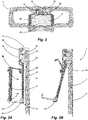
figure 2 shows the view offigure 1 , wherein the holder is engaged by a smartphone; - *
figures 2A and 2B show a side view of the holder in the configuration offigure 2 , and a side view of the holder in a tilted configuration, arranged for a smartphone, respectively; - *
figure 3 shows the view offigure 1 , wherein the holder is engaged by a tablet; - *
figures 3A e3B show a side view of the holder in the configuration offigure 3 , and a side view of the holder in a tilted configuration, arranged for a tablet, respectively; - *
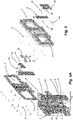
figure 4 shows an axonometric and exploded view of the holder offigure 1 ; - *
figure 5 shows an axonometric and exploded view of a second embodiment of an electronic device holder according to the invention; and - *
figure 5A shows an enlargement of a detail of the holder offigure 5 . - With reference to the figures, an electronic device holder is designated with 1; it is of the type suitable to be fastened to the back of a seat seatback, in particular of a seat with reclining seatback, of the type used on aircrafts, but it is meant that the same holder can be fastened to a holding surface in turn in front of a seat occupied by a user, onboard any vehicle or even in other contexts, such as stadiums, cinemas, conference rooms and so on.
- The
holder 1 has a plate-like shape, with a thickness which is obtained by coupling afastening base 2 with afront mask 3, both having flat shapes and connected bylocking elements 4 of the screw or snap type, with possible seats 4'. Thefastening base 2 has a rear surface which, in the present example, suits to the surface of the back of the seatback which receives it and thereto it adheres. In the present example, it has an elongated shape, apt to be arranged with the side having greater extension horizontally, and with a width larger than that of a tablet of big format. It has twosymmetrical openings 5, which occupy most part of the overall surface, and which are surrounded by solid portions of the fastening base, in particular with a centralvertical strip 6 separating the twoopenings 5. - The
front mask 3 has a shape which couples with that of thefastening base 2, then with saidopenings 5, and it has, on its own external and internal edges, that is those of saidopenings 5, aprojecting edge 7, defining the thickness of theholder 1 and determines, betweenbase 2 andmask 3, an empty space. - The
mask 2, at saidcentral strip 6, has projecting andvertical ribs 35 defining aguide 8, wherein anextendable arm 9 is inserted, which moves vertically and which projects from the upper edge of theholder 1. Theguide 8 has alower stop 10 preventing theextendable arm 9, which has the form of an elongated table, from falling down. Theextendable arm 9 hasrecesses 11 on each side edge, the function thereof will be described hereinafter; moreover, it has anupper end 12 thereto afirst resting element 13 is revolvingly connected, which has the shape of a plate and it is hinged to said end so that it adheres to themask 3, pushed by a firsthelical spring 14 wound onto thefirst axis 15 of afirst hinge 32 formed at saidupper end 12. - However, it is meant that the
first resting element 13 can be lifted from its vertical position to a substantially horizontal position. In this respect, it has a distal edge, opposite to the hinge, having afirst locking tooth 16 faced downwards, arranged to interfere with an edge of an electronic device which could be both a smartphone S positioned vertically and a tablet T positioned horizontally. - The first
helical spring 14 pushes the first restingelement 13 downwards, so that the first locking tooth adheres to themask 3. Besides, if pushed upwards, the first resting element can rotate by 90° and beyond, by extending the space available between itself and a lower resting element which will be described hereinafter, by adapting theholder 1 to different formats and positions of the electronic devices. - An arm-
positioning mechanism 17 is fastened onto themask 3, at the hole produced by an interruption of theedge 7 which allows theextendable arm 9 to project from itsupper end 12, which mechanism is fastened to thebase 2 with twofixed elements 18 positioned at the side edge of theextendable arm 9, therefrom twoelastic buttons 19 project inside, the shape thereof is so as to insert into said recesses 11: in this way, thearm 9 can project above from the top of theholder 1 and remain still in a position selected by the user depending upon the height and/or width of the electronic device, generally designated with P. - On the
mask 3, still at the hole therefrom theextendable arm 9 extends, asecond hinge 20 is formed, thereto the upper end of apivoting arm 21 is revolvingly connected, formed too by a solid and elongated strip, which rests upon the exposed surface of themask 3, and then it is faced towards the user, but it can be detached therefrom. - The rotation of the
second hinge 20 is braked by an internal friction, so that thepivoting arm 21 could be arranged in a position tilted and fixed with respect to the mask 3 (figure 2B ), on the contrary thearm 21 adhering to themask 3 when theholder 1 is not used (figure 1A ). - On the pivoting arm 21 a
third hinge 22 is formed at the lower end thereof 33, which is positioned substantially at the internal edge of theholder 1. - To said third hinge 22 a
second resting element 23 is connected, wholly similar in the shape to thefirst resting element 13, and hinged to said end so that it adheres to the pivotingarm 21 in vertical position, with asecond hinge axis 24 whose rotation is braked by a friction inside thethird hinge 22, so that the second restingelement 23 does not fall by gravity if adhered to thepivoting arm 21. - Said
lower end 33, at thethird hinge 22, has astopping projection 34 which prevents the second restingelement 23 from rotating more than 90°: when thesecond resting element 22 is detached from the pivotingarm 21 and rotated downwards by 90°, it forms a projecting bracket with thepivoting arm 21, which acts as resting plane for the lower edge of any electronic device, in any position. - Moreover, on the pivoting
arm 21, in proximity of saidsecond hinge 20, afourth hinge 25 is formed thereto athird resting element 26 is connected, wholly similar by shape, function and rotation capability to the abovefirst resting element 13, and hinged so that it adheres to the pivotingarm 21 in vertical position, pushed downwards by a secondhelical spring 27 wound onto thesecond axis 28 of thefourth hinge 25. - Even the second and the third resting
element respective hinge third locking tooth - With reference to the
third resting element 26, therespective spring 27 allows it to rotate more than 90°, by extending the space available between itself and the lower resting element constituted by thesecond resting element 23, by adapting theholder 1 to different formats of electronic devices. -
Figure 1A shows the threeresting elements mask 3 and to thepivoting arm 21 pushed by the respective springs. Their adherence, and the fact that therespective locking teeth mask 3, that is theholder 1, determines a surface substantially without projections and footholds which could cause discomforts to the user. -
Figures 2 and 2A show a configuration wherein theholder 1 is engaged by a smartphone S, whose lower edge is rested upon the target lower resting element, that is thesecond resting element 23 which, if open, assumes a fixed position. The upper edge of the smartphone S, instead, is locked by the lockingtooth 30 of thethird resting element 26, which is rotated even more than 90° both to allow to insert the smartphone S and to adapt to its width, then by arranging the smartphone S horizontally. Moreover (figure 2B ), the display of smartphone S can be tilted by making the pivotingarm 21 to pivot and by keeping it in tilted position. -
Figures 3 and 3A show a configuration wherein theholder 1 is engaged by a tablet T, but what follows is valid also for a smartphone S arranged in vertical position, therefore in each case the lower edge of the device is rested upon the target lower resting element, that is thesecond resting element 23 which, if opened, assumes a fixed position. The upper edge of the device is locked by thefirst locking tooth 16 of thefirst resting element 13, which is rotated even more than 90° both to allow to insert the tablet T or the smartphone S and to adapt to its cross width. - It is to be noted that, by extending the
extendable arm 9 wholly out of theholder 1 it is possible to widen the space available between the lower resting element and the upper locking element, that is from thefirst locking tooth 16 of thefirst resting element 13 rotated more than 90°, until making possible to insert a tablet or an ebook reader in vertical position. - With reference to
figure 5 , a second embodiment of theholder 1 of the preceding figures is described, having a different positioning mechanism of theextendable arm 9, designated with 17'. - It is integrated in the
guide 8 of theextendable arm 9 which, as mentioned previously, has two projectingribs 35 therebetween thearm 9 is inserted. In theribs 35 respectiveretractable teeth 36 are formed, formed by injection in the same thickness of the ribs 35 (figure 5A ): the teeth are positioned on the top of a foil-like arm 37 which acts elastically, so that the retractable teeth insert in therecesses 11 of the side edge of theextendable arm 9, which then can assume different positions by moving vertically. - The
retractable teeth 36 then act analogously to the elastic push-buttons 19 of the first embodiment, as contrast elements of thepositioning mechanism 17, 17', still on side recesses of theextendable arm 9. - In the resting
elements extendable arm 9, in themask 3 and in the pivotingarm 21 magnetic elements could be inserted, for example in the shape of small plates or buttons which could be drowned in the thicknesses or arranged in specific recesses which, when the surfaces of the above-mentioned elements are adjacent and/or in contact, keep them in that position, so that it is necessary to apply a certain force, by the user, to move them between their different positions. - For the same reason, all or a portion of the above-mentioned hinges 20, 22, 25, 32 could be of the braked type.
- Passages and slits could further be provided, formed by indentations and openings, which allow the passage of connecting cables, in particular positioned at the doors of the portable electronic devices.
- To the above-described electronic device holder a person skilled in the art, with the purpose of satisfying additional and contingent needs, could introduce several modifications and variants, however all comprised within the protective scope of the present invention, as defined by the enclosed claims.
Claims (10)
- An electronic device holder (1) of the type suitable to be fastened to the back of a seat seatback or to a holding surface in front of a user, which has a plate-like shape adhering to said holding surface, and which includes in its thickness an extendable arm (9) projecting from the upper edge thereof, through an outlet hole, which can be extracted vertically and having:• a first holding element (13) capable of rotating from a vertical position adhered to the extendable arm (9) or to the holder (1) to a position rotated upwards; and• a second holding element (23) capable of rotating from a vertical position adhered to the extendable arm (9) or to the holder (1) to a position wherein it acts as resting bracket;said first and second holding elements (13, 23) being arranged to receive respective edges of an electronic device (S, T) and being provided with a respective first and second locking tooth (16, 29), characterized in that the second holding element (23) is hinged to the lower end of a pivoting arm (21), in turn hinged in proximity of an outlet hole of said extendable arm (9) from the holder (1), which is capable of rotating from a position adhered to the holder (1) to a tilted position.
- The holder (1) according to claim 1, wherein the rotation of the second resting element (23) is braked by a friction inside the respective hinge (22) so that, if adhered to the pivoting arm (21) in vertical position, it remains in such position.
- The holder (1) according to claim 1, wherein the rotation del pivoting arm (21) is braked by a friction inside the respective hinge (20) so that, if tilted with respect to the holder (1), it remains in such position.
- The holder (1) according to claim 1, wherein the first resting element (13) has a locking tooth (16) projecting downwards from a distal edge, opposite to the hinge (32) of the first resting element (13).
- The holder (1) according to claim 1, wherein the first resting element (13) is kept in vertical position by a spring (14), being able to rotate upwards in opposition thereto.
- The holder (1) according to claim 1, wherein il second resting element (23) has a locking tooth (29) projecting upwards from a distal edge, opposite to the hinge (22) of the second resting element (23).
- The holder (1) according to claim 1, having a third resting element (26) hinged to said pivoting arm (21) in proximity of its respective hinge (20) and capable of rotating from a vertical position adhered to the tilted arm (21) to a position rotated upwards.
- The holder (1) according to claim 7, wherein the third resting element (26) has a locking tooth (30) projecting downwards from a distal edge, opposite to the hinge (25) of the third resting element (26).
- The holder (1) according to claim 7, wherein the third resting element (26) is kept in vertical position by a spring (27), being able to rotate upwards in opposition thereto.
- The holder (1) according to claim 1, wherein a snap-positioning mechanism (17. 17') is provided to extract and arrange said extendable arm (9) in a prefixed position, comprising contrast elements (19, 36) acting elastically on recesses (11) formed on each side edge of the extractable arm (9).
Applications Claiming Priority (1)
| Application Number | Priority Date | Filing Date | Title |
|---|---|---|---|
| IT102019000019628A IT201900019628A1 (en) | 2019-10-23 | 2019-10-23 | Support for electronic devices |
Publications (2)
| Publication Number | Publication Date |
|---|---|
| EP3812215A1 EP3812215A1 (en) | 2021-04-28 |
| EP3812215B1 true EP3812215B1 (en) | 2022-08-10 |
Family
ID=69743759
Family Applications (1)
| Application Number | Title | Priority Date | Filing Date |
|---|---|---|---|
| EP20203018.5A Active EP3812215B1 (en) | 2019-10-23 | 2020-10-21 | Electronic device holder |
Country Status (2)
| Country | Link |
|---|---|
| EP (1) | EP3812215B1 (en) |
| IT (1) | IT201900019628A1 (en) |
Family Cites Families (9)
| Publication number | Priority date | Publication date | Assignee | Title |
|---|---|---|---|---|
| DE102007001962A1 (en) | 2007-01-13 | 2008-07-17 | Recaro Aircraft Seating Gmbh & Co. Kg | seat device |
| KR100984552B1 (en) | 2010-03-15 | 2010-09-30 | 장용철 | Portable electronic holder |
| FR2965768B1 (en) * | 2010-10-12 | 2015-07-17 | Faurecia Interieur Ind | SUPPORT FOR ELECTRONIC EQUIPMENT AND CORRESPONDING ASSEMBLY |
| JP2012105752A (en) * | 2010-11-16 | 2012-06-07 | Toyota Boshoku Corp | Fixing apparatus for portable device |
| TR201910601T4 (en) * | 2012-12-21 | 2019-08-21 | Recaro Aircraft Seating Gmbh & Co Kg | Aircraft seat holding device. |
| ITTO20130453A1 (en) * | 2013-06-03 | 2014-12-04 | Fiat Group Automobiles Spa | SUPPORT AND HOLDING GROUP FOR A PORTABLE ELECTRONIC DEVICE, AND VEHICLE DASHBOARD PROVIDED WITH SUCH SUPPORT AND HOLDING GROUP |
| EP3303133B1 (en) * | 2015-06-04 | 2019-02-20 | B/E Aerospace, Inc. | Deployable seatback holder for portable electronic devices |
| CN107813768A (en) * | 2016-09-14 | 2018-03-20 | 福特环球技术公司 | Electronic installation retainer |
| GB2563211B (en) * | 2017-06-05 | 2019-09-04 | Ford Global Tech Llc | A portable electronic device support assembly |
-
2019
- 2019-10-23 IT IT102019000019628A patent/IT201900019628A1/en unknown
-
2020
- 2020-10-21 EP EP20203018.5A patent/EP3812215B1/en active Active
Also Published As
| Publication number | Publication date |
|---|---|
| IT201900019628A1 (en) | 2021-04-23 |
| EP3812215A1 (en) | 2021-04-28 |
Similar Documents
| Publication | Publication Date | Title |
|---|---|---|
| US8905367B2 (en) | Retaining device | |
| US10113691B2 (en) | Stabilising device | |
| JP3872345B2 (en) | Table device | |
| US10569878B2 (en) | Mounting arm assembly | |
| EP0404166A2 (en) | Hinge device having mechanism for stopping movable member at open position | |
| CN108345355A (en) | Laptop computer with multiple integrated displays | |
| EP3283370B1 (en) | Portable electronic device holder | |
| EP3722209A1 (en) | Passenger entertainment device, passenger seat arrangement and vehicle | |
| US11220198B2 (en) | Headrest cover holder system | |
| EP3812215B1 (en) | Electronic device holder | |
| US20060261659A1 (en) | Adjustable arm and armrest assembly | |
| US11084409B2 (en) | Shaft-support structure for rotary body | |
| US12172581B2 (en) | Deployable personal entertainment device holder | |
| JPH057965Y2 (en) | ||
| JP2018143316A (en) | Movable shelf | |
| US4109890A (en) | Telephone supported directory information support rack | |
| CN215488547U (en) | Support frame | |
| CN214963963U (en) | Writing board rotary positioning mechanism and seat | |
| JP2001125675A (en) | Personal computer support device | |
| JPH0928509A (en) | Writing table device for chair | |
| JP3069589B2 (en) | Bookend | |
| IT201900019747A1 (en) | Integrated support system for electronic devices in a backrest | |
| KR980006407U (en) | reading desk | |
| GB2346323A (en) | Chair with table |
Legal Events
| Date | Code | Title | Description |
|---|---|---|---|
| PUAI | Public reference made under article 153(3) epc to a published international application that has entered the european phase |
Free format text: ORIGINAL CODE: 0009012 |
|
| STAA | Information on the status of an ep patent application or granted ep patent |
Free format text: STATUS: THE APPLICATION HAS BEEN PUBLISHED |
|
| AK | Designated contracting states |
Kind code of ref document: A1 Designated state(s): AL AT BE BG CH CY CZ DE DK EE ES FI FR GB GR HR HU IE IS IT LI LT LU LV MC MK MT NL NO PL PT RO RS SE SI SK SM TR |
|
| AX | Request for extension of the european patent |
Extension state: BA ME |
|
| STAA | Information on the status of an ep patent application or granted ep patent |
Free format text: STATUS: REQUEST FOR EXAMINATION WAS MADE |
|
| 17P | Request for examination filed |
Effective date: 20211027 |
|
| RBV | Designated contracting states (corrected) |
Designated state(s): AL AT BE BG CH CY CZ DE DK EE ES FI FR GB GR HR HU IE IS IT LI LT LU LV MC MK MT NL NO PL PT RO RS SE SI SK SM TR |
|
| GRAP | Despatch of communication of intention to grant a patent |
Free format text: ORIGINAL CODE: EPIDOSNIGR1 |
|
| STAA | Information on the status of an ep patent application or granted ep patent |
Free format text: STATUS: GRANT OF PATENT IS INTENDED |
|
| INTG | Intention to grant announced |
Effective date: 20220228 |
|
| GRAS | Grant fee paid |
Free format text: ORIGINAL CODE: EPIDOSNIGR3 |
|
| GRAA | (expected) grant |
Free format text: ORIGINAL CODE: 0009210 |
|
| STAA | Information on the status of an ep patent application or granted ep patent |
Free format text: STATUS: THE PATENT HAS BEEN GRANTED |
|
| AK | Designated contracting states |
Kind code of ref document: B1 Designated state(s): AL AT BE BG CH CY CZ DE DK EE ES FI FR GB GR HR HU IE IS IT LI LT LU LV MC MK MT NL NO PL PT RO RS SE SI SK SM TR |
|
| REG | Reference to a national code |
Ref country code: AT Ref legal event code: REF Ref document number: 1510293 Country of ref document: AT Kind code of ref document: T Effective date: 20220815 Ref country code: CH Ref legal event code: EP |
|
| REG | Reference to a national code |
Ref country code: IE Ref legal event code: FG4D |
|
| REG | Reference to a national code |
Ref country code: DE Ref legal event code: R096 Ref document number: 602020004456 Country of ref document: DE |
|
| REG | Reference to a national code |
Ref country code: NL Ref legal event code: MP Effective date: 20220810 |
|
| REG | Reference to a national code |
Ref country code: LT Ref legal event code: MG9D |
|
| PG25 | Lapsed in a contracting state [announced via postgrant information from national office to epo] |
Ref country code: SE Free format text: LAPSE BECAUSE OF FAILURE TO SUBMIT A TRANSLATION OF THE DESCRIPTION OR TO PAY THE FEE WITHIN THE PRESCRIBED TIME-LIMIT Effective date: 20220810 Ref country code: RS Free format text: LAPSE BECAUSE OF FAILURE TO SUBMIT A TRANSLATION OF THE DESCRIPTION OR TO PAY THE FEE WITHIN THE PRESCRIBED TIME-LIMIT Effective date: 20220810 Ref country code: PT Free format text: LAPSE BECAUSE OF FAILURE TO SUBMIT A TRANSLATION OF THE DESCRIPTION OR TO PAY THE FEE WITHIN THE PRESCRIBED TIME-LIMIT Effective date: 20221212 Ref country code: NO Free format text: LAPSE BECAUSE OF FAILURE TO SUBMIT A TRANSLATION OF THE DESCRIPTION OR TO PAY THE FEE WITHIN THE PRESCRIBED TIME-LIMIT Effective date: 20221110 Ref country code: NL Free format text: LAPSE BECAUSE OF FAILURE TO SUBMIT A TRANSLATION OF THE DESCRIPTION OR TO PAY THE FEE WITHIN THE PRESCRIBED TIME-LIMIT Effective date: 20220810 Ref country code: LV Free format text: LAPSE BECAUSE OF FAILURE TO SUBMIT A TRANSLATION OF THE DESCRIPTION OR TO PAY THE FEE WITHIN THE PRESCRIBED TIME-LIMIT Effective date: 20220810 Ref country code: LT Free format text: LAPSE BECAUSE OF FAILURE TO SUBMIT A TRANSLATION OF THE DESCRIPTION OR TO PAY THE FEE WITHIN THE PRESCRIBED TIME-LIMIT Effective date: 20220810 Ref country code: FI Free format text: LAPSE BECAUSE OF FAILURE TO SUBMIT A TRANSLATION OF THE DESCRIPTION OR TO PAY THE FEE WITHIN THE PRESCRIBED TIME-LIMIT Effective date: 20220810 |
|
| REG | Reference to a national code |
Ref country code: AT Ref legal event code: MK05 Ref document number: 1510293 Country of ref document: AT Kind code of ref document: T Effective date: 20220810 |
|
| PG25 | Lapsed in a contracting state [announced via postgrant information from national office to epo] |
Ref country code: PL Free format text: LAPSE BECAUSE OF FAILURE TO SUBMIT A TRANSLATION OF THE DESCRIPTION OR TO PAY THE FEE WITHIN THE PRESCRIBED TIME-LIMIT Effective date: 20220810 Ref country code: IS Free format text: LAPSE BECAUSE OF FAILURE TO SUBMIT A TRANSLATION OF THE DESCRIPTION OR TO PAY THE FEE WITHIN THE PRESCRIBED TIME-LIMIT Effective date: 20221210 Ref country code: HR Free format text: LAPSE BECAUSE OF FAILURE TO SUBMIT A TRANSLATION OF THE DESCRIPTION OR TO PAY THE FEE WITHIN THE PRESCRIBED TIME-LIMIT Effective date: 20220810 Ref country code: GR Free format text: LAPSE BECAUSE OF FAILURE TO SUBMIT A TRANSLATION OF THE DESCRIPTION OR TO PAY THE FEE WITHIN THE PRESCRIBED TIME-LIMIT Effective date: 20221111 |
|
| PG25 | Lapsed in a contracting state [announced via postgrant information from national office to epo] |
Ref country code: SM Free format text: LAPSE BECAUSE OF FAILURE TO SUBMIT A TRANSLATION OF THE DESCRIPTION OR TO PAY THE FEE WITHIN THE PRESCRIBED TIME-LIMIT Effective date: 20220810 Ref country code: RO Free format text: LAPSE BECAUSE OF FAILURE TO SUBMIT A TRANSLATION OF THE DESCRIPTION OR TO PAY THE FEE WITHIN THE PRESCRIBED TIME-LIMIT Effective date: 20220810 Ref country code: ES Free format text: LAPSE BECAUSE OF FAILURE TO SUBMIT A TRANSLATION OF THE DESCRIPTION OR TO PAY THE FEE WITHIN THE PRESCRIBED TIME-LIMIT Effective date: 20220810 Ref country code: DK Free format text: LAPSE BECAUSE OF FAILURE TO SUBMIT A TRANSLATION OF THE DESCRIPTION OR TO PAY THE FEE WITHIN THE PRESCRIBED TIME-LIMIT Effective date: 20220810 Ref country code: CZ Free format text: LAPSE BECAUSE OF FAILURE TO SUBMIT A TRANSLATION OF THE DESCRIPTION OR TO PAY THE FEE WITHIN THE PRESCRIBED TIME-LIMIT Effective date: 20220810 Ref country code: AT Free format text: LAPSE BECAUSE OF FAILURE TO SUBMIT A TRANSLATION OF THE DESCRIPTION OR TO PAY THE FEE WITHIN THE PRESCRIBED TIME-LIMIT Effective date: 20220810 |
|
| REG | Reference to a national code |
Ref country code: DE Ref legal event code: R097 Ref document number: 602020004456 Country of ref document: DE |
|
| PG25 | Lapsed in a contracting state [announced via postgrant information from national office to epo] |
Ref country code: SK Free format text: LAPSE BECAUSE OF FAILURE TO SUBMIT A TRANSLATION OF THE DESCRIPTION OR TO PAY THE FEE WITHIN THE PRESCRIBED TIME-LIMIT Effective date: 20220810 Ref country code: MC Free format text: LAPSE BECAUSE OF FAILURE TO SUBMIT A TRANSLATION OF THE DESCRIPTION OR TO PAY THE FEE WITHIN THE PRESCRIBED TIME-LIMIT Effective date: 20220810 Ref country code: EE Free format text: LAPSE BECAUSE OF FAILURE TO SUBMIT A TRANSLATION OF THE DESCRIPTION OR TO PAY THE FEE WITHIN THE PRESCRIBED TIME-LIMIT Effective date: 20220810 |
|
| PLBE | No opposition filed within time limit |
Free format text: ORIGINAL CODE: 0009261 |
|
| STAA | Information on the status of an ep patent application or granted ep patent |
Free format text: STATUS: NO OPPOSITION FILED WITHIN TIME LIMIT |
|
| REG | Reference to a national code |
Ref country code: BE Ref legal event code: MM Effective date: 20221031 |
|
| P01 | Opt-out of the competence of the unified patent court (upc) registered |
Effective date: 20230523 |
|
| PG25 | Lapsed in a contracting state [announced via postgrant information from national office to epo] |
Ref country code: LU Free format text: LAPSE BECAUSE OF NON-PAYMENT OF DUE FEES Effective date: 20221021 Ref country code: AL Free format text: LAPSE BECAUSE OF FAILURE TO SUBMIT A TRANSLATION OF THE DESCRIPTION OR TO PAY THE FEE WITHIN THE PRESCRIBED TIME-LIMIT Effective date: 20220810 |
|
| 26N | No opposition filed |
Effective date: 20230511 |
|
| PG25 | Lapsed in a contracting state [announced via postgrant information from national office to epo] |
Ref country code: SI Free format text: LAPSE BECAUSE OF FAILURE TO SUBMIT A TRANSLATION OF THE DESCRIPTION OR TO PAY THE FEE WITHIN THE PRESCRIBED TIME-LIMIT Effective date: 20220810 |
|
| PG25 | Lapsed in a contracting state [announced via postgrant information from national office to epo] |
Ref country code: BE Free format text: LAPSE BECAUSE OF NON-PAYMENT OF DUE FEES Effective date: 20221031 |
|
| PG25 | Lapsed in a contracting state [announced via postgrant information from national office to epo] |
Ref country code: IE Free format text: LAPSE BECAUSE OF NON-PAYMENT OF DUE FEES Effective date: 20221021 |
|
| PG25 | Lapsed in a contracting state [announced via postgrant information from national office to epo] |
Ref country code: CY Free format text: LAPSE BECAUSE OF FAILURE TO SUBMIT A TRANSLATION OF THE DESCRIPTION OR TO PAY THE FEE WITHIN THE PRESCRIBED TIME-LIMIT Effective date: 20220810 |
|
| PG25 | Lapsed in a contracting state [announced via postgrant information from national office to epo] |
Ref country code: MK Free format text: LAPSE BECAUSE OF FAILURE TO SUBMIT A TRANSLATION OF THE DESCRIPTION OR TO PAY THE FEE WITHIN THE PRESCRIBED TIME-LIMIT Effective date: 20220810 |
|
| REG | Reference to a national code |
Ref country code: CH Ref legal event code: PL |
|
| PG25 | Lapsed in a contracting state [announced via postgrant information from national office to epo] |
Ref country code: CH Free format text: LAPSE BECAUSE OF NON-PAYMENT OF DUE FEES Effective date: 20231031 |
|
| PG25 | Lapsed in a contracting state [announced via postgrant information from national office to epo] |
Ref country code: HU Free format text: LAPSE BECAUSE OF FAILURE TO SUBMIT A TRANSLATION OF THE DESCRIPTION OR TO PAY THE FEE WITHIN THE PRESCRIBED TIME-LIMIT; INVALID AB INITIO Effective date: 20201021 Ref country code: CH Free format text: LAPSE BECAUSE OF NON-PAYMENT OF DUE FEES Effective date: 20231031 Ref country code: BG Free format text: LAPSE BECAUSE OF FAILURE TO SUBMIT A TRANSLATION OF THE DESCRIPTION OR TO PAY THE FEE WITHIN THE PRESCRIBED TIME-LIMIT Effective date: 20220810 |
|
| PG25 | Lapsed in a contracting state [announced via postgrant information from national office to epo] |
Ref country code: MT Free format text: LAPSE BECAUSE OF FAILURE TO SUBMIT A TRANSLATION OF THE DESCRIPTION OR TO PAY THE FEE WITHIN THE PRESCRIBED TIME-LIMIT Effective date: 20220810 |
|
| PGFP | Annual fee paid to national office [announced via postgrant information from national office to epo] |
Ref country code: IT Payment date: 20250915 Year of fee payment: 6 |
|
| PG25 | Lapsed in a contracting state [announced via postgrant information from national office to epo] |
Ref country code: TR Free format text: LAPSE BECAUSE OF FAILURE TO SUBMIT A TRANSLATION OF THE DESCRIPTION OR TO PAY THE FEE WITHIN THE PRESCRIBED TIME-LIMIT Effective date: 20220810 |
|
| PGFP | Annual fee paid to national office [announced via postgrant information from national office to epo] |
Ref country code: DE Payment date: 20251021 Year of fee payment: 6 |
|
| PGFP | Annual fee paid to national office [announced via postgrant information from national office to epo] |
Ref country code: GB Payment date: 20251022 Year of fee payment: 6 |
|
| PGFP | Annual fee paid to national office [announced via postgrant information from national office to epo] |
Ref country code: FR Payment date: 20251030 Year of fee payment: 6 |