EP3811262B1 - Recheneinrichtung und betriebsverfahren hierfür - Google Patents
Recheneinrichtung und betriebsverfahren hierfür Download PDFInfo
- Publication number
- EP3811262B1 EP3811262B1 EP19727324.6A EP19727324A EP3811262B1 EP 3811262 B1 EP3811262 B1 EP 3811262B1 EP 19727324 A EP19727324 A EP 19727324A EP 3811262 B1 EP3811262 B1 EP 3811262B1
- Authority
- EP
- European Patent Office
- Prior art keywords
- computer program
- computing device
- prg1
- control command
- memory
- Prior art date
- Legal status (The legal status is an assumption and is not a legal conclusion. Google has not performed a legal analysis and makes no representation as to the accuracy of the status listed.)
- Active
Links
Images


Classifications
-
- G—PHYSICS
- G06—COMPUTING OR CALCULATING; COUNTING
- G06F—ELECTRIC DIGITAL DATA PROCESSING
- G06F21/00—Security arrangements for protecting computers, components thereof, programs or data against unauthorised activity
- G06F21/60—Protecting data
- G06F21/602—Providing cryptographic facilities or services
-
- G—PHYSICS
- G06—COMPUTING OR CALCULATING; COUNTING
- G06F—ELECTRIC DIGITAL DATA PROCESSING
- G06F12/00—Accessing, addressing or allocating within memory systems or architectures
- G06F12/14—Protection against unauthorised use of memory or access to memory
- G06F12/1408—Protection against unauthorised use of memory or access to memory by using cryptography
-
- G—PHYSICS
- G06—COMPUTING OR CALCULATING; COUNTING
- G06F—ELECTRIC DIGITAL DATA PROCESSING
- G06F21/00—Security arrangements for protecting computers, components thereof, programs or data against unauthorised activity
- G06F21/50—Monitoring users, programs or devices to maintain the integrity of platforms, e.g. of processors, firmware or operating systems
- G06F21/51—Monitoring users, programs or devices to maintain the integrity of platforms, e.g. of processors, firmware or operating systems at application loading time, e.g. accepting, rejecting, starting or inhibiting executable software based on integrity or source reliability
-
- G—PHYSICS
- G06—COMPUTING OR CALCULATING; COUNTING
- G06F—ELECTRIC DIGITAL DATA PROCESSING
- G06F21/00—Security arrangements for protecting computers, components thereof, programs or data against unauthorised activity
- G06F21/50—Monitoring users, programs or devices to maintain the integrity of platforms, e.g. of processors, firmware or operating systems
- G06F21/55—Detecting local intrusion or implementing counter-measures
- G06F21/56—Computer malware detection or handling, e.g. anti-virus arrangements
- G06F21/567—Computer malware detection or handling, e.g. anti-virus arrangements using dedicated hardware
-
- G—PHYSICS
- G06—COMPUTING OR CALCULATING; COUNTING
- G06F—ELECTRIC DIGITAL DATA PROCESSING
- G06F21/00—Security arrangements for protecting computers, components thereof, programs or data against unauthorised activity
- G06F21/50—Monitoring users, programs or devices to maintain the integrity of platforms, e.g. of processors, firmware or operating systems
- G06F21/57—Certifying or maintaining trusted computer platforms, e.g. secure boots or power-downs, version controls, system software checks, secure updates or assessing vulnerabilities
-
- G—PHYSICS
- G06—COMPUTING OR CALCULATING; COUNTING
- G06F—ELECTRIC DIGITAL DATA PROCESSING
- G06F21/00—Security arrangements for protecting computers, components thereof, programs or data against unauthorised activity
- G06F21/50—Monitoring users, programs or devices to maintain the integrity of platforms, e.g. of processors, firmware or operating systems
- G06F21/57—Certifying or maintaining trusted computer platforms, e.g. secure boots or power-downs, version controls, system software checks, secure updates or assessing vulnerabilities
- G06F21/575—Secure boot
-
- G—PHYSICS
- G06—COMPUTING OR CALCULATING; COUNTING
- G06F—ELECTRIC DIGITAL DATA PROCESSING
- G06F21/00—Security arrangements for protecting computers, components thereof, programs or data against unauthorised activity
- G06F21/60—Protecting data
- G06F21/64—Protecting data integrity, e.g. using checksums, certificates or signatures
-
- G—PHYSICS
- G06—COMPUTING OR CALCULATING; COUNTING
- G06F—ELECTRIC DIGITAL DATA PROCESSING
- G06F21/00—Security arrangements for protecting computers, components thereof, programs or data against unauthorised activity
- G06F21/70—Protecting specific internal or peripheral components, in which the protection of a component leads to protection of the entire computer
- G06F21/78—Protecting specific internal or peripheral components, in which the protection of a component leads to protection of the entire computer to assure secure storage of data
- G06F21/79—Protecting specific internal or peripheral components, in which the protection of a component leads to protection of the entire computer to assure secure storage of data in semiconductor storage media, e.g. directly-addressable memories
-
- G—PHYSICS
- G06—COMPUTING OR CALCULATING; COUNTING
- G06F—ELECTRIC DIGITAL DATA PROCESSING
- G06F9/00—Arrangements for program control, e.g. control units
- G06F9/06—Arrangements for program control, e.g. control units using stored programs, i.e. using an internal store of processing equipment to receive or retain programs
- G06F9/44—Arrangements for executing specific programs
- G06F9/4401—Bootstrapping
-
- H—ELECTRICITY
- H04—ELECTRIC COMMUNICATION TECHNIQUE
- H04L—TRANSMISSION OF DIGITAL INFORMATION, e.g. TELEGRAPHIC COMMUNICATION
- H04L9/00—Cryptographic mechanisms or cryptographic arrangements for secret or secure communications; Network security protocols
- H04L9/32—Cryptographic mechanisms or cryptographic arrangements for secret or secure communications; Network security protocols including means for verifying the identity or authority of a user of the system or for message authentication, e.g. authorization, entity authentication, data integrity or data verification, non-repudiation, key authentication or verification of credentials
- H04L9/3236—Cryptographic mechanisms or cryptographic arrangements for secret or secure communications; Network security protocols including means for verifying the identity or authority of a user of the system or for message authentication, e.g. authorization, entity authentication, data integrity or data verification, non-repudiation, key authentication or verification of credentials using cryptographic hash functions
- H04L9/3242—Cryptographic mechanisms or cryptographic arrangements for secret or secure communications; Network security protocols including means for verifying the identity or authority of a user of the system or for message authentication, e.g. authorization, entity authentication, data integrity or data verification, non-repudiation, key authentication or verification of credentials using cryptographic hash functions involving keyed hash functions, e.g. message authentication codes [MACs], CBC-MAC or HMAC
-
- G—PHYSICS
- G06—COMPUTING OR CALCULATING; COUNTING
- G06F—ELECTRIC DIGITAL DATA PROCESSING
- G06F12/00—Accessing, addressing or allocating within memory systems or architectures
- G06F12/14—Protection against unauthorised use of memory or access to memory
- G06F12/1416—Protection against unauthorised use of memory or access to memory by checking the object accessibility, e.g. type of access defined by the memory independently of subject rights
- G06F12/1425—Protection against unauthorised use of memory or access to memory by checking the object accessibility, e.g. type of access defined by the memory independently of subject rights the protection being physical, e.g. cell, word, block
- G06F12/1441—Protection against unauthorised use of memory or access to memory by checking the object accessibility, e.g. type of access defined by the memory independently of subject rights the protection being physical, e.g. cell, word, block for a range
-
- G—PHYSICS
- G06—COMPUTING OR CALCULATING; COUNTING
- G06F—ELECTRIC DIGITAL DATA PROCESSING
- G06F2212/00—Indexing scheme relating to accessing, addressing or allocation within memory systems or architectures
- G06F2212/10—Providing a specific technical effect
- G06F2212/1052—Security improvement
-
- G—PHYSICS
- G06—COMPUTING OR CALCULATING; COUNTING
- G06F—ELECTRIC DIGITAL DATA PROCESSING
- G06F2221/00—Indexing scheme relating to security arrangements for protecting computers, components thereof, programs or data against unauthorised activity
- G06F2221/03—Indexing scheme relating to G06F21/50, monitoring users, programs or devices to maintain the integrity of platforms
Definitions
- the disclosure relates to a computing device with at least one computing core for executing a first computer program, wherein the computing device is designed to access a memory device, in particular to load the first computer program.
- Such computing devices are used, for example, in control units for motor vehicles, for example in the form of so-called embedded systems.
- the disclosure further relates to a method for operating such a computing device.
- US 2013/117578 A1 describes a method for verifying a memory block of a non-volatile memory.
- US 2018/150637 A1 describes a method for securely booting a computer system.
- US 2009/0327678 A1 describes a system and method for performing pre-boot security verification.
- US 2005/193217 A1 describes an autonomous memory checker to ensure runtime safety.
- US 2006/036853 A1 describes systems and methods that support the authentication of storage device contents.
- This task is solved in the computing device of the type mentioned at the beginning by the combination of features according to claim 1.
- This advantageously makes it possible to initiate a check of the first computer program by the cryptography module.
- This advantageously provides the possibility of checking the first computer program or a content of the memory area in which the first computer program is stored, for example for deviations from a predeterminable content. This can advantageously prevent, for example, the execution of insecure computer programs or programs compromised by an attacker by the computing device.
- the first control command can be used to signal to the cryptography module the memory area or areas to be checked (e.g. address information about which memory blocks are to be checked), so that this information does not have to be preconfigured, for example. Rather, the memory area or areas or computer programs to be checked can be signaled dynamically (e.g. during the runtime of the cryptography module or computing device) by means of the first control command, which further increases flexibility.
- the memory device can be arranged or provided externally to the computing device (and in particular also externally to the cryptography module). In further preferred embodiments, however, the memory device can also be integrated into the computing device. In still further preferred embodiments, a system, in particular a system-on-a-chip (SoC), can also advantageously be provided which has the computing device according to the embodiments, the memory device and the cryptography module according to the embodiments.
- SoC system-on-a-chip
- the computing device is designed to receive a response from the cryptography module to the first control command or to read it from the cryptography module (e.g. from a memory area of the cryptography module to which the computing device can access for reading (preferably only for reading, not writing)), wherein in particular the response contains information about the result of a test of the computer program characterized by the control command or of the first memory area of the storage device assigned to the computer program.
- the cryptography module is designed to carry out the check of the first computer program or of the at least one memory area using a key-based message authentication code, CMAC (Cipher-based Message Authentication Code).
- CMAC Cipher-based Message Authentication Code
- An Internet publication that relates to an exemplary embodiment of the CMAC method can be accessed, for example, at https://doi.org/10.6028%2Fnist.sp.800-38b.
- a result of the check can be written into a or the memory area of the cryptography module, which the computing device can access for reading (preferably only for reading, not for writing).
- the computing device can read the result of the check from this memory area of the cryptography module.
- the cryptography module has a memory unit, preferably integrated into the cryptography module, for storing at least one reference value and/or a reference layout for the at least one memory area.
- the reference value can represent, for example, a CMAC value for a predeterminable memory content, which is, for example, comparable to a CMAC value that was determined when the cryptography module checked the at least one first computer program or memory area. If the determined CMAC value deviates from the reference value, it can be concluded that there has been an impermissible change to the memory content of the checked memory area and in particular to the computer program stored therein.
- the cryptography module is designed to carry out the check depending on the reference value.
- the check includes, for example, the formation of a CMAC value depending on the first computer program or the memory content of the at least one memory area and a comparison of the CMAC value thus formed with the Reference value, as stored, for example, in the memory unit of the cryptography module.
- the reference value can also be sent by the computing device to the cryptography module using the first control command.
- several reference values for several computer programs or memory areas to be checked can also be sent to the cryptography module using the first control command.
- the reference layout can contain one or more of the following information: a) number of computer programs or memory areas in the memory device that the computing device can access, b) address range (start address and/or end address) of the relevant computer programs or memory areas, c) length of the relevant computer programs or memory areas, d) at least one reference value (for example a CMAC value) of the relevant computer program or memory area, e) data relating to a cryptographic signature, for example a signature address and/or a signature type and/or a reference to a higher-level certificate ("root certificate").
- the information can preferably be stored in a data structure having a plurality of corresponding data fields.
- the cryptography module can use the above-mentioned reference values or the reference layout to determine the type and extent of a check of at least one computer program or memory area.
- the amount of input data for the check e.g. CMAC value formation
- the amount of input data for the check can be determined based on a start address and end address.
- the computing device is designed to execute the first computer program directly after sending the first control command to the cryptography module, in particular without waiting for a response from the cryptography module to the first control command and/or without reading the response from the cryptography module.
- the first computer program is therefore already executed by the computing device before the first computer program is checked by the Cryptographic module is completed or the result of the check of the first computer program by the cryptography module is read out by the computing device (e.g. in the form of the response to the first control command). This ensures particularly fast execution of the first computer program by the computing device, and at the same time the check of the first computer program by the cryptography module by means of the first control command has at least been initiated.
- the computing device is designed to wait for a response from the cryptography module to the first control command and/or to read the response from the cryptography module, and to execute the first computer program only after the response has been received or read. This enables a particularly secure execution of the first computer program, which only takes place after it has been checked by the cryptography module.
- the computing device is designed to control operation of the computing device depending on the response.
- an error reaction can be initiated by the computing device and/or by the cryptography module.
- the error reaction can, for example, provide for at least one of the following measures: termination of the execution of the first computer program by the computing device (if possible), prevention of repeated or renewed execution of the first computer program by the computing device, signaling of an error state to an external unit, resetting the computing device, temporary or permanent deactivation of the computing device, deletion of the first computer program from the storage device.
- a) the storage device is integrated into the computing device, and/or that b) the storage device is provided externally to the computing device.
- the computing device receives a response from the cryptography module to the first control command or reads it from the cryptography module, wherein in particular the response contains information about the result of a check of the computer program characterized by the control command or of the memory area of the memory device assigned to the first computer program.
- the computing device executes the first computer program directly after sending the first control command to the cryptography module, in particular without waiting for a response from the cryptography module to the first control command and/or without reading the response from the cryptography module (in particular before starting the first computer program).
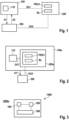
- FIG. 1 shows schematically a simplified block diagram of a computing device 100 according to an embodiment.
- the computing device 100 has at least one computing core 110 for executing a first computer program PRG1, which is stored, for example, at least temporarily in a memory device 200 that the computing device 100 can access.
- the memory device 200 comprises, for example, a working memory (RAM) and/or a non-volatile memory (eg flash EEPROM).
- the computing device 100 accesses the memory device 200 by means of a first data connection DV1, which can have, for example, at least one address and/or data bus.
- a bootloader BL for the computing device 100 and possibly further Computer programs (not shown) may also be stored in the storage device 200 in further embodiments.
- the computing device 100 is designed to load and execute the first computer program PRG1.
- the computing device 100 is further designed to send a first control command A1, which characterizes the first computer program PRG1 and/or a memory area assigned to the first computer program PRG1 (e.g. address area in an address space of the memory device 200), to at least one cryptography module 300.
- the cryptography module 300 is designed to check the computer program PRG1 characterized by the first control command A1 or the memory area of the memory device 200 assigned to the first computer program PRG1. This advantageously makes it possible to initiate and carry out a check of the first computer program PRG1 by the cryptography module 300.
- the first control command A1 can be used to signal to the cryptography module 300 the memory area or memory areas to be checked (e.g. address information about which memory blocks are to be checked), so that this information does not have to be preconfigured, for example. Rather, the memory area or memory areas or computer programs PRG1 to be checked can be signaled dynamically (e.g. during the runtime of the cryptography module 300 or the computing device 100) using the first control command A1, which further increases flexibility.
- the storage device 200 can be arranged or provided externally to the computing device 100 (and in particular also externally to the cryptography module 300).
- the cryptography module 300 can, for example, be connected to the data storage device 200 via a second data connection DV2, which in further embodiments can also be identical or similar to the first Data connection DV1 can access the storage device 200.
- the memory device 200a can also be integrated into the computing device 100a.
- the computing core 110 can access the memory device 200a via the data connection DV1 ⁇
- the cryptography module 300 can access the memory device 200a via the data connection DV2 ⁇ .
- a control command for initiating a check of the first computer program PRG1 is in Fig. 2 designated by the reference symbol A1 ⁇ .
- a system 1000 in particular a single-chip system (SoC) 1000, can also advantageously be provided, which has the computing device 100, the memory device 200 and the cryptography module 300.
- SoC single-chip system
- all components 100, 200, 300 are arranged on the same semiconductor substrate 1000a.
- FIG 4 shows schematically a simplified block diagram of a cryptography module 300 according to an embodiment.
- the cryptography module 300 has a memory unit 302 for storing at least one reference value R and/or a reference layout for computer programs PRG1 ( Fig. 1 ), as well as a computing unit 304, which is designed to carry out the aforementioned checking of the computer program PRG1 and is preferably designed entirely as a hardware circuit.
- the computing unit 304 can also have a computing core 304a and a storage device 304b for operating software that controls operation of the cryptography module 300.
- the cryptography module 300 also has a result storage unit 306, to which the computing device 100 ( Fig. 1, 3 ), 100a ( Fig. 2 ) can be accessed for reading but not writing.
- FIG. 5 shows schematically a simplified flow chart of a method according to an embodiment.
- the computing device 100 Fig. 1
- the control command A1 which in this case characterizes the first computer program PRG1 or its memory area in the memory device 200
- the cryptography module 300 is informed about which computer program or memory area of the storage device 200 it should check.
- the computing device 100 executes the first computer program PRG1, in particular without waiting for the aforementioned check.
- the computing device 100 reads a response or a result A2 ( Fig. 3 ) which the cryptographic module 300 has formed in response to the control command A1, e.g.
- the computing device 100 controls its operation depending on the result A2.
- the response or the result A2 can, for example, contain information about the result of the check of the computer program PRG1 characterized by the control command A1 or of the memory area of the memory device 200 assigned to the first computer program PRG1.
- the cryptography module 300 is designed to carry out the verification of the first computer program PRG1 or of the at least one memory area using a key-based message authentication code, CMAC (Cipher-based Message Authentication Code).
- CMAC Cipher-based Message Authentication Code
- An Internet publication relating to an exemplary embodiment of the CMAC method can be accessed, for example, at https://doi.org/10.6028%2Fnist.sp.800-38b.
- a result of the verification can be stored, for example, in the result memory area 306 ( Fig. 4 ) of the cryptography module 300, which the computing device 100, 100a can access for reading (preferably only for reading, not writing).
- the computing device 100, 100a can read the result of the check from this memory area 306 of the cryptography module 300.
- the cryptography module 300 can also send the response or the result A2 to the computing device 100, 100a.
- FIG. 6 shows schematically a simplified flow chart of a method for operating the cryptography module 300 ( Fig. 4 ) according to one embodiment.
- the cryptography module 300 receives the first control command A1 from the computing device 100, 100a.
- the cryptography module 300 checks the characterized first computer program PRG1, for example using a CMAC calculation.
- the cryptography module 300 determines a response A2 to the first control command A1, wherein in particular the response A2 contains information about the result of the test 510 of the computer program PRG1 characterized by the control command A1 or of the memory area of the memory device 200, 200a assigned to the first computer program PRG1.
- FIG. 7 shows a simplified block diagram of a further embodiment.
- the area 100' comprises steps carried out on the side of the computing device 100, and the area 300 ⁇ comprises steps carried out on the side of the cryptography module 300.
- the cryptography module 100 is activated or initialized.
- the computing device 100 is activated or initialized.
- the steps S1, S2 can preferably take place at least essentially at the same time as one another, or at different times from one another.
- the computing device 100 executes a start program PRG0 (for example a bootloader BL ( Fig. 1 ) or a program started by a bootloader BL).
- a first control command A1 ⁇ is sent to the cryptography module 300, which characterizes a first computer program PRG1 to be checked by the cryptography module 100, e.g. describes the address range assigned to it in the memory device 200, 200a.
- the computing device 100 then directly executes the first computer program PRG1, see step S3a, in particular without waiting for a result of the check of the first computer program PRG1 by the cryptography module 300.
- the first computer program PRG1 becomes active in the computing device, see block PRG1 from Fig. 7 .
- the cryptography module 300 After receiving the first control command A1 ⁇ by the cryptography module 300, see step S4, the cryptography module 300 checks the first computer program PRG1 in step S5.
- the checking in step S5 includes, for example, the formation of a CMAC value depending on the first computer program PRG1 or a corresponding memory content of the memory device 200, 200a and storing the first computer program PRG1. a comparison with a reference CMAC value R.
- the information as to which memory area is to be checked and which (e.g. CMAC) reference value R is to be used for this can be obtained by the cryptography module 300, for example, from the reference data stored in the memory unit 302 (and/or the first control command A1').
- step S6 the cryptography module 300 stores the result of the check from step S5, preferably internally (in particular in a memory 302 or memory area to which no other unit has read or write access), and in step S7 a corresponding response A2 ⁇ is sent to the computing device 100.
- the result of the check from step S5 can also be stored in step S6 (if necessary additionally) in the result storage unit 306, where it can be read by the computing device 100.
- the cryptography module sends an interrupt request A2 ⁇ to the computing device as soon as the check S5 is completed.
- the cryptography module 300 has a memory unit 302, preferably integrated into the cryptography module 300, for storing at least one reference value R and/or a reference layout for the at least one memory area or the at least one computer program PRG1 to be checked.
- the reference value R can represent, for example, a CMAC value for the computer program PRG1 or a predefinable memory content that is, for example, comparable to a CMAC value that was determined when the cryptography module checked the at least one first computer program or memory area. If the determined CMAC value deviates from the reference value R, it can be concluded that there has been an impermissible change to the memory content of the checked memory area.
- the cryptography module 300 is designed to carry out the check depending on the reference value R.
- the check includes, for example, the formation of a CMAC value depending on the first computer program PRG1 or the memory content of the at least a memory area and a comparison of the CMAC value thus formed with the reference value R ( Fig. 4 ), as stored, for example, in the memory unit 302 of the cryptography module 300.
- the reference value R can also be sent by the computing device 100, 100a to the cryptography module 300 by means of the first control command A1.
- several reference values R for several memory areas or computer programs PRG1, BL, .. to be checked can also be sent to the cryptography module 300 by means of the first control command A1.
- a reference layout can contain one or more of the following information: a) number of computer programs or memory areas in the memory device that the computing device can access, b) address range (start address and/or end address) of the relevant computer programs or memory areas, c) length of the relevant computer programs or memory areas, d) at least one reference value (for example a CMAC value) of the relevant computer program or memory area, e) data relating to a cryptographic signature, for example a signature address and/or a signature type and/or a reference to a higher-level certificate ("root certificate").
- the information can preferably be stored in a data structure DS having several corresponding data fields, cf. Figure 8 , e.g. in the storage unit 302 ( Fig. 3 ).
- the cryptography module 300 can use the above-mentioned reference values or the reference layout to determine the type and extent of a check of at least one computer program PRG1 or memory area.
- the amount of input data for the check e.g. CMAC value formation
- the amount of input data for the check can be determined based on a start address and end address.
- the computing device 100, 100a is designed to execute the first computer program PRG1 directly after the transmission 400 ( Fig. 5 ) of the first control command A1 to the cryptographic module 300, in particular without waiting for a response from the cryptographic module 300 to the first control command A1 and/or without reading the response from the cryptographic module 300 420.
- the first computer program PRG1 is therefore already executed by the computing device 100, 100a (see block PRG1 from Figure 7 ), even before a check of the first computer program PRG1 by the cryptography module 300 is completed or the result of the check of the first computer program PRG1 by the cryptography module 300 is read out by the computing device 100, 100a (e.g.
- the computing device 100, 100a is designed to wait for a response A2 from the cryptography module 300 to the first control command A1 and/or to read the response A2 from the cryptography module 300, and only execute the first computer program PRG1 after receiving or reading the response. This enables a particularly secure execution of the first computer program PRG1, which only takes place after verification by the cryptography module 300.
- the computing device 100, 100a is designed to control an operation of the computing device 100, 100a depending on the response A2.
- the computing device 100, 100a is designed to control an operation of the computing device 100, 100a depending on the response A2.
- an error reaction can be initiated by the computing device 100, 100a and/or the cryptography module 300.
- the error reaction can, for example, provide for at least one of the following measures: Termination of the execution of the first computer program PRG1 by the computing device 100, 100a (if possible), preventing repeated or renewed execution of the first computer program PRG1 by the computing device 100, 100a, signaling an error state to an external unit, resetting the computing device 100, 100a (in particular by the cryptography module 300), temporarily or permanently deactivating the computing device 100, 100a, deleting the first computer program PRG1 from the storage device 200, 200a.
- the principle according to the embodiments has, among other things, the following advantages: a) manipulations (as well as error-related changes) to the content of the storage device 200, 200a, for example manipulations of computer programs PRG1, BL stored therein, can be efficiently detected during the runtime of the computing device 100, 100a and the cryptography module 300 ("runtime manipulation detection", RTMD), b) secure booting (i.e.
- a software PRG1 on the computing device 200 for example an application software
- PRG1 or other data stored subsequently in the storage device 200, 200a can also advantageously be checked according to the principle according to the embodiments ("secure flashing")
- access to cryptographic keys and other sensitive information provided by the cryptography module can be controlled depending on the check according to the embodiments ("security access")
- a boot sequence sequence of Processing of computer programs when starting the computing unit 100
- powerful and secure cryptographic functions can be provided, for example CMAC formation, eg based on 128 bit AES (Advanced Encryption Standard), g) by providing reference layouts eg in the form of the data structure DS according to Fig.
- the operation of the cryptography module 300 can be flexibly adapted to different memory layouts and other configurations of the computing device 100, 100a, h) by transmitting the first control command A1, the programs PRG1 or memory areas to be checked can be signaled to the cryptography module 300 dynamically (eg during the runtime of the cryptography module), i) by the immediate execution 410 ( Fig. 5 ) of the first computer program PRG1 before (complete) execution of the check by the cryptography module 300 results in a particularly short start-up time for the computer program PRG1.
Landscapes
- Engineering & Computer Science (AREA)
- Computer Security & Cryptography (AREA)
- Theoretical Computer Science (AREA)
- Software Systems (AREA)
- General Engineering & Computer Science (AREA)
- Computer Hardware Design (AREA)
- Physics & Mathematics (AREA)
- General Physics & Mathematics (AREA)
- Health & Medical Sciences (AREA)
- General Health & Medical Sciences (AREA)
- Bioethics (AREA)
- Power Engineering (AREA)
- Computer Networks & Wireless Communication (AREA)
- Signal Processing (AREA)
- Virology (AREA)
- Storage Device Security (AREA)
- Techniques For Improving Reliability Of Storages (AREA)
Description
- Die Offenbarung betrifft eine Recheneinrichtung mit wenigstens einem Rechenkern zur Ausführung eines ersten Computerprogramms, wobei die Recheneinrichtung dazu ausgebildet ist, auf eine Speichereinrichtung zuzugreifen, insbesondere um das erste Computerprogramm zu laden. Derartige Recheneinrichtungen werden beispielsweise in Steuergeräten für Kraftfahrzeuge verwendet, beispielsweise in Form von sog. eingebetteten Systemen ("embedded systems").
- Die Offenbarung betrifft ferner ein Verfahren zum Betreiben einer derartigen Recheneinrichtung.
-
US 2013/117578 A1 beschreibt ein Verfahren zum Verifizieren eines Speicherblocks eines nichtflüchtigen Speichers.US 2018/150637 A1 beschreibt ein Verfahren zum sicheren Booten eines Computersystems.US 2009/0327678 A1 beschreibt ein System und Verfahren zur Ausführung einer pre-boot Sicherheitsverifikation.US 2005/193217 A1 beschreibt einen autonomen Speicherprüfer zur Gewährleistung der Laufzeitsicherheit.US 2006/036853 A1 beschreibt Systeme und Verfahren, die die Authentifizierung von Speichergeräteinhalten unterstützen. - Es ist Aufgabe der vorliegenden Erfindung, eine Recheneinrichtung mit gesteigerter Sicherheit und gesteigertem Gebrauchsnutzen anzugeben.
- Diese Aufgabe wird bei der Recheneinrichtung der eingangs genannten Art durch die Merkmalskombination gemäß Patentanspruch 1 gelöst. Dies ermöglicht vorteilhaft, eine Überprüfung des ersten Computerprogramms durch das Kryptografiemodul anzustoßen. Dadurch ist vorteilhaft die Möglichkeit gegeben, das erste Computerprogramm bzw. einen Inhalt des Speicherbereichs, in dem das erste Computerprogramm gespeichert ist, beispielsweise auf Abweichungen gegenüber einem vorgebbaren Inhalt hin, zu überprüfen. Hierdurch kann vorteilhaft beispielsweise die Ausführung von unsicheren bzw. durch einen Angreifer kompromittierten Computerprogrammen durch die Recheneinrichtung verhindert werden. Weiter vorteilhaft kann dem Kryptografiemodul mittels des ersten Steuerbefehls der zu überprüfende Speicherbereich bzw. die zu überprüfenden Speicherbereiche signalisiert werden (z.B. Adressinformationen, welche Speicherblöcke zu überprüfen sind), so dass diese Informationen z.B. nicht vorkonfiguriert werden müssen. Vielmehr kann der zu überprüfende Speicherbereich bzw. können die zu überprüfenden Speicherbereiche bzw. Computerprogramme dynamisch (z.B. zur Laufzeit des Kryptografiemoduls bzw. der Recheneinrichtung) mittels des ersten Steuerbefehls signalisiert werden, wodurch die Flexibilität weiter gesteigert wird.
- Bei bevorzugten Ausführungsformen kann die Speichereinrichtung extern zu der Recheneinrichtung (und insbesondere auch extern zu dem Kryptografiemodul) angeordnet bzw. vorgesehen sein. Bei weiteren bevorzugten Ausführungsformen kann die Speichereinrichtung jedoch auch in die Recheneinrichtung integriert sein. Bei noch weiteren bevorzugten Ausführungsformen kann vorteilhaft auch ein System, insbesondere ein Ein-chip-System (englisch: system-on-a-chip, SoC), vorgesehen sein, das die Recheneinrichtung gemäß den Ausführungsformen, die Speichereinrichtung und das Kryptografiemodul gemäß den Ausführungsformen aufweist.
- Bei weiteren bevorzugten Ausführungsformen ist die Recheneinrichtung dazu ausgebildet, eine Antwort des Kryptografiemoduls auf den ersten Steuerbefehl zu empfangen oder aus dem Kryptografiemodul auszulesen (z.B. aus einem Speicherbereich des Kryptografiemoduls, auf den die Recheneinrichtung lesend (bevorzugt nur lesend, nicht schreibend) zugreifen kann), wobei insbesondere die Antwort Informationen über das Ergebnis einer Prüfung des durch den Steuerbefehl charakterisierten Computerprogramms bzw. des dem ersten Computerprogramm zugeordneten Speicherbereichs der Speichereinrichtung aufweist.
- Bei weiteren bevorzugten Ausführungsformen ist vorgesehen, dass das Kryptografiemodul dazu ausgebildet ist, die Überprüfung des ersten Computerprogramms bzw. des wenigstens einen Speicherbereichs unter Verwendung eines schlüsselbasierten Nachrichtenauthentifizierungscodes, CMAC (Cipher-based Message Authentication Code), auszuführen. Dadurch ist eine besonders effiziente Überprüfung ermöglicht. Eine Internetpublikation, die sich auf eine beispielhafte Ausgestaltung des CMAC-Verfahrens bezieht, ist beispielsweise unter https://doi.org/10.6028%2Fnist.sp.800-38b abrufbar. Ein Ergebnis der Überprüfung kann in einen bzw. den Speicherbereich des Kryptografiemoduls geschrieben werden, auf den die Recheneinrichtung lesend (bevorzugt nur lesend, nicht schreibend) zugreifen kann. Somit kann die Recheneinrichtung bei weiteren bevorzugten Ausführungsformen das Ergebnis der Überprüfung aus diesem Speicherbereich des Kryptografiemoduls auslesen.
- Bei weiteren bevorzugten Ausführungsformen ist vorgesehen, dass das Kryptografiemodul eine, vorzugsweise in das Kryptografiemodul integrierte, Speichereinheit zur Speicherung wenigstens eines Referenzwerts und/oder eines Referenzlayouts für den wenigstens einen Speicherbereich aufweist. Bei weiteren bevorzugten Ausführungsformen kann der Referenzwert beispielsweise einen CMAC-Wert für einen vorgebbaren Speicherinhalt repräsentieren, der beispielsweise mit einem CMAC-Wert vergleichbar ist, der bei der Überprüfung des wenigstens einen ersten Computerprogramms bzw. Speicherbereichs durch das Kryptografiemodul ermittelt worden ist. Sofern der ermittelte CMAC-Wert von dem Referenzwert abweicht, kann auf eine unzulässige Veränderung des Speicherinhalts des überprüften Speicherbereichs und insbesondere des darin gespeicherten Computerprogramms geschlossen werden.
- Bei weiteren bevorzugten Ausführungsformen ist vorgesehen, dass das Kryptografiemodul dazu ausgebildet ist, die Überprüfung in Abhängigkeit des Referenzwerts auszuführen. Bei diesen Ausführungsformen umfasst die Überprüfung beispielsweise die Bildung eines CMAC-Werts in Abhängigkeit des ersten Computerprogramms bzw. des Speicherinhalts des wenigstens einen Speicherbereichs und einen Vergleich des so gebildeten CMAC-Werts mit dem Referenzwert, wie er beispielsweise in der Speichereinheit des Kryptografiemoduls hinterlegt ist. Alternativ oder ergänzend kann der Referenzwert bei weiteren bevorzugten Ausführungsformen auch durch die Recheneinrichtung mittels des ersten Steuerbefehls an das Kryptografiemodul gesendet werden. Weiter alternativ oder ergänzend können bei weiteren Ausführungsformen auch mehrere Referenzwerte für mehrere zu überprüfende Computerprogramme bzw. Speicherbereiche mittels des ersten Steuerbefehls an das Kryptografiemodul gesendet werden.
- Bei weiteren bevorzugten Ausführungsformen kann das Referenzlayout ein oder mehrere der folgenden Informationen enthalten: a) Anzahl der Computerprogramme bzw. Speicherbereiche in der Speichereinrichtung, auf die die Recheneinrichtung zugreifen kann, b) Adressbereich (Startadresse und/oder Endadresse) der betreffenden Computerprogramme bzw. Speicherbereiche, c) Länge der betreffenden Computerprogramme bzw. Speicherbereiche, d) wenigstens einen Referenzwert (beispielsweise ein CMAC-Wert) des betreffenden Computerprogramms bzw. Speicherbereichs, e) Daten betreffend eine kryptografische Signatur, beispielsweise eine Signaturadresse und/oder einen Signaturtyp und/oder eine Referenz auf ein übergeordnetes Zertifikat ("root certificate"). Die Informationen können bevorzugt in einer mehrere entsprechende Datenfelder aufweisenden Datenstruktur gespeichert sein.
- Bei weiteren bevorzugten Ausführungsformen kann das Kryptografiemodul die vorstehend genannten Referenzwerte bzw. das Referenzlayout nutzen, um die Art und den Umfang einer Überprüfung wenigstens eines Computerprogramms bzw. Speicherbereichs festzulegen. Beispielsweise kann anhand einer Startadresse und Endadresse die Menge der Eingangsdaten für die Überprüfung (z.B. CMAC-Wert-Bildung) festgelegt werden.
- Vorteilhaft ist die Recheneinrichtung dazu ausgebildet, das erste Computerprogramm direkt nach dem Senden des ersten Steuerbefehls an das Kryptografiemodul auszuführen, insbesondere ohne auf eine bzw. die Antwort des Kryptografiemoduls auf den ersten Steuerbefehl zu warten und/oder ohne die Antwort aus dem Kryptografiemodul auszulesen. Somit kommt das erste Computerprogramm also bereits zur Ausführung durch die Recheneinrichtung, noch bevor eine Überprüfung des ersten Computerprogramms durch das Kryptografiemodul abgeschlossen ist bzw. das Ergebnis der Überprüfung des ersten Computerprogramms durch das Kryptografiemodul von der Recheneinrichtung (z.B. in Form der Antwort auf den ersten Steuerbefehl) ausgelesen wird. Damit ist eine besonders schnelle Ausführung des ersten Computerprogramms durch die Recheneinrichtung sichergestellt, und gleichzeitig ist die Überprüfung des ersten Computerprogramms durch das Kryptografiemodul mittels des ersten Steuerbefehls wenigstens initiiert worden.
- Bei weiteren bevorzugten Ausführungsformen ist vorgesehen, dass die Recheneinrichtung dazu ausgebildet ist, auf eine bzw. die Antwort des Kryptografiemoduls auf den ersten Steuerbefehl zu warten und/oder die Antwort aus dem Kryptografiemodul auszulesen, und erst nach einem Empfang bzw. dem Auslesen der Antwort das erste Computerprogramm auszuführen. Damit ist eine besonders sichere Ausführung des ersten Computerprogramms ermöglicht, die erst nach der Überprüfung durch das Kryptografiemodul erfolgt.
- Bei weiteren bevorzugten Ausführungsformen ist vorgesehen, dass die Recheneinrichtung dazu ausgebildet ist, einen Betrieb der Recheneinrichtung in Abhängigkeit der Antwort zu steuern. Dadurch kann beispielsweise bei einem negativen Ergebnis der Überprüfung des ersten Computerprogramms durch das Kryptografiemodul (erstes Computerprogramm ist beispielsweise aufgrund eines Fehlers in der Speichereinrichtung verändert oder manipuliert worden) eine Fehlerreaktion durch die Recheneinrichtung und/oder durch das Kryptografiemodul eingeleitet werden. Die Fehlerreaktion kann beispielsweise wenigstens eine der folgenden Maßnahmen vorsehen: Abbruch der Ausführung des ersten Computerprogramms durch die Recheneinrichtung (sofern möglich), Verhinderung einer wiederholten bzw. neuerlichen Ausführung des ersten Computerprogramms durch die Recheneinrichtung, Signalisierung eines Fehlerzustands an eine externe Einheit, Resetierung (Zurücksetzen) der Recheneinrichtung, zeitweise oder dauerhafte Deaktivierung der Recheneinrichtung, Löschung des ersten Computerprogramms aus der Speichereinrichtung.
- Bei weiteren bevorzugten Ausführungsformen ist vorgesehen, dass a) die Speichereinrichtung in die Recheneinrichtung integriert ist, und/oder dass b) die Speichereinrichtung extern zu der Recheneinrichtung vorgesehen ist.
- Weitere bevorzugte Ausführungsformen beziehen sich auf ein Verfahren zum Betreiben einer Recheneinrichtung gemäß Patentanspruch 6.
- Bei weiteren bevorzugten Ausführungsformen ist vorgesehen, dass die Recheneinrichtung eine Antwort des Kryptografiemoduls auf den ersten Steuerbefehl empfängt oder aus dem Kryptografiemodul ausliest, wobei insbesondere die Antwort Informationen über das Ergebnis einer Prüfung des durch den Steuerbefehl charakterisierten Computerprogramms bzw. des dem ersten Computerprogramm zugeordneten Speicherbereichs der Speichereinrichtung aufweist.
- Vorteilhaft ist vorgesehen, dass die Recheneinrichtung das erste Computerprogramm direkt nach dem Senden des ersten Steuerbefehls an das Kryptografiemodul ausführt, insbesondere ohne auf eine bzw. die Antwort des Kryptografiemoduls auf den ersten Steuerbefehl zu warten und/oder ohne (insbesondere vor dem Start des ersten Computerprogramms) die Antwort aus dem Kryptografiemodul auszulesen.
- Weitere bevorzugte Ausführungsformen beziehen sich auf ein System gemäß Patentanspruch 8.
- Weitere vorteilhafte Ausführungsformen sind Gegenstand der Unteransprüche.
- Weitere Merkmale, Anwendungsmöglichkeiten und Vorteile der Erfindung ergeben sich aus der nachfolgenden Beschreibung von Ausführungsbeispielen der Erfindung, die in den Figuren der Zeichnung dargestellt sind. Dabei bilden alle beschriebenen oder dargestellten Merkmale für sich oder in beliebiger Kombination den Gegenstand der Erfindung, unabhängig von ihrer Zusammenfassung in den Ansprüchen oder deren Rückbeziehung sowie unabhängig von ihrer Formulierung bzw. Darstellung in der Beschreibung bzw. in der Zeichnung.
- In der Zeichnung zeigt:
- Figur 1
- schematisch ein vereinfachtes Blockdiagramm einer Recheneinrichtung gemäß einer Ausführungsform,
- Figur 2
- schematisch ein vereinfachtes Blockdiagramm einer Recheneinrichtung gemäß einer weiteren Ausführungsform,
- Figur 3
- schematisch ein vereinfachtes Blockdiagramm einer weiteren Ausführungsform,
- Figur 4
- schematisch ein vereinfachtes Blockdiagramm eines Kryptografiemoduls gemäß einer Ausführungsform,
- Figur 5
- schematisch ein vereinfachtes Flussdiagramm eines Verfahrens gemäß einer Ausführungsform,
- Figur 6
- schematisch ein vereinfachtes Flussdiagramm eines Verfahrens gemäß einer weiteren Ausführungsform,
- Figur 7
- schematisch ein vereinfachtes Flussdiagramm gemäß einer weiteren Ausführungsform, und
- Figur 8
- schematisch eine Datenstruktur gemäß einer Ausführungsform.
-
Figur 1 zeigt schematisch ein vereinfachtes Blockdiagramm einer Recheneinrichtung 100 gemäß einer Ausführungsform. Die Recheneinrichtung 100 weist wenigstens einen Rechenkern 110 zur Ausführung eines ersten Computerprogramms PRG1 auf, das beispielsweise zumindest zeitweise in einer Speichereinrichtung 200 gespeichert ist, auf die die Recheneinrichtung 100 zugreifen kann. Die Speichereinrichtung 200 umfasst z.B. einen Arbeitsspeicher (RAM) und/oder einen nichtflüchtigen Speicher (z.B. Flash-EEPROM). - Vorliegend erfolgt der Zugriff der Recheneinrichtung 100 auf die Speichereinrichtung 200 mittels einer ersten Datenverbindung DV1, die beispielsweise wenigstens einen Address- und oder Datenbus aufweisen kann. Ein Bootloader BL für die Recheneinrichtung 100 sowie ggf. weitere Computerprogramme (nicht gezeigt) können bei weiteren Ausführungsformen ebenfalls in der Speichereinrichtung 200 gespeichert sein.
- Die Recheneinrichtung 100 ist dazu ausgebildet, das erste Computerprogramm PRG1 zu laden und auszuführen. Die Recheneinrichtung 100 ist ferner dazu ausgebildet, einen ersten Steuerbefehl A1, der das erste Computerporgramm PRG1 und/oder einen dem ersten Computerprogramm PRG1 zugeordneten Speicherbereich (z.B. Adressbereich in einem Adressraum der Speichereinrichtung 200) charakterisiert, an wenigstens ein Kryptografiemodul 300 zu senden. Das Kryptografiemodul 300 ist dazu ausgebildet, das durch den ersten Steuerbefehl A1 charakterisierte Computerporgramm PRG1 bzw. den dem ersten Computerprogramm PRG1 zugeordneten Speicherbereich der Speichereinrichtung 200 zu überprüfen. Dies ermöglicht vorteilhaft, eine Überprüfung des ersten Computerprogramms PRG1 durch das Kryptografiemodul 300 anzustoßen und auszuführen. Dadurch ist vorteilhaft die Möglichkeit gegeben, das erste Computerprogramm PRG1 bzw. einen Inhalt des Speicherbereichs, in dem das erste Computerprogramm PRG1 gespeichert ist, beispielsweise auf Abweichungen gegenüber einem vorgebbaren Inhalt hin, zu überprüfen. Hierdurch kann vorteilhaft beispielsweise die Ausführung von unsicheren bzw. durch einen Angreifer kompromittierten Computerprogrammen PRG1 durch die Recheneinrichtung 100 verhindert werden. Weiter vorteilhaft kann dem Kryptografiemodul 300 mittels des ersten Steuerbefehls A1 der zu überprüfende Speicherbereich bzw. die zu überprüfenden Speicherbereiche signalisiert werden (z.B. Adressinformationen, welche Speicherblöcke zu überprüfen sind), so dass diese Informationen z.B. nicht vorkonfiguriert werden müssen. Vielmehr kann der zu überprüfende Speicherbereich bzw. können die zu überprüfenden Speicherbereiche bzw. Computerprogramme PRG1 dynamisch (z.B. zur Laufzeit des Kryptografiemoduls 300 bzw. der Recheneinrichtung 100) mittels des ersten Steuerbefehls A1 signalisiert werden, wodurch die Flexibilität weiter gesteigert wird.
- Bei weiteren bevorzugten Ausführungsformen kann die Speichereinrichtung 200 extern zu der Recheneinrichtung 100 (und insbesondere auch extern zu dem Kryptografiemodul 300) angeordnet bzw. vorgesehen sein. Das Kryptografiemodul 300 kann z.B. über eine zweite Datenverbindung DV2, die bei weiteren Ausführungsformen auch identisch oder ähnlich zu der ersten Datenverbindung DV1 ausgebildet sein kann, auf die Speichereinrichtung 200 zugreifen.
- Bei weiteren bevorzugten Ausführungsformen, vgl. die Konfiguration 100a gemäß
Figur 2 , kann die Speichereinrichtung 200a jedoch auch in die Recheneinrichtung 100a integriert sein. Der Rechenkern 110 kann über die Datenverbindung DV1`, und das Kryptografiemodul 300 kann über die Datenverbindung DV2` auf die Speichereinrichtung 200a zugreifen. Ein Steuerbefehl zum Initiieren einer Überprüfung des ersten Computerprogramms PRG1 ist inFig. 2 mit dem Bezugszeichen A1` bezeichnet. - Bei noch weiteren bevorzugten Ausführungsformen, vgl.
Fig. 3 , kann vorteilhaft auch ein System 1000, insbesondere ein Ein-chip-System (englisch: system-ona-chip, SoC) 1000, vorgesehen sein, das die Recheneinrichtung 100, die Speichereinrichtung 200 und das Kryptografiemodul 300 aufweist. Vorzugsweise sind alle Komponenten 100, 200, 300 auf demselben Halbleitersubstrat 1000a angeordnet. -
Figur 4 zeigt schematisch ein vereinfachtes Blockdiagramm eines Kryptografiemoduls 300 gemäß einer Ausführungsform. Das Kryptografiemodul 300 weist eine Speichereinheit 302 zur Speicherung wenigstens eines Referenzwerts R und/oder eines Referenzlayouts für zu überprüfende Computerprogramme PRG1 (Fig. 1 ) auf, sowie eine Recheneinheit 304, die zur Ausführung der genannten Überprüfung Computerprogramms PRG1 ausgebildet und vorzugsweise vollständig als Hardwareschaltung ausgebildet ist. Alternativ kann die Recheneinheit 304 auch einen Rechenkern 304a und eine Speichereinrichtung 304b für eine Betriebssoftware aufweisen, die einen Betrieb des Kryptografiemoduls 300 steuert. Weiter weist das Kryptografiemodul 300 eine Ergebnis-Speichereinheit 306 auf, auf die die Recheneinrichtung 100 (Fig. 1, 3 ), 100a (Fig. 2 ) lesend, nicht jedoch schreiben zugreifen kann. -
Figur 5 zeigt schematisch ein vereinfachtes Flussdiagramm eines Verfahrens gemäß einer Ausführungsform. In Schritt 400 sendet die Recheneinrichtung 100 (Fig. 1 ) den Steuerbefehl A1, der vorliegend beispielhaft das erste Computerprogramm PRG1 bzw. seinen Speicherbereich in der Speichereinrichtung 200 charakterisiert, an das Kryptografiemodul 300. Dadurch wird das Kryptografiemodul 300 darüber informiert, welches Computerprogramm bzw. welchen Speicherbereich der Speichereinrichtung 200 es überprüfen soll. In Schritt 410 (Fig. 5 ) führt die Recheneinrichtung 100 das erste Computerprogramm PRG1 aus, insbesondere ohne die genannte Überprüfung abzuwarten. In dem optionalen Schritt 420 liest die Recheneinrichtung 100 eine Antwort bzw. ein Ergebnis A2 (Fig. 3 ), das das Kryptografiemodul 300 in Abhängigkeit des Steuerbefehls A1 gebildet hat, aus, z.B. direkt aus der Ergebnis-Speichereinheit 306 gemäßFig. 4 . In dem optionalen Schritt 430 steuert die Recheneinrichtung 100 ihren Betrieb in Abhängigkeit von dem Ergebnis A2. Die Antwort bzw. das Ergebnis A2 kann z.B. Informationen über das Ergebnis der Überprüfung des durch den Steuerbefehl A1 charakterisierten Computerprogramms PRG1 bzw. des dem ersten Computerprogramm PRG1 zugeordneten Speicherbereichs der Speichereinrichtung 200 aufweisen. - Bei weiteren bevorzugten Ausführungsformen ist vorgesehen, dass das Kryptografiemodul 300 dazu ausgebildet ist, die Überprüfung des ersten Computerprogramms PRG1 bzw. des wenigstens einen Speicherbereichs unter Verwendung eines schlüsselbasierten Nachrichtenauthentifizierungscodes, CMAC (Cipher-based Message Authentication Code), auszuführen. Dadurch ist eine besonders effiziente Überprüfung ermöglicht. Eine Internetpublikation, die sich auf eine beispielhafte Ausgestaltung des CMAC-Verfahrens bezieht, ist beispielsweise unter https://doi.org/10.6028%2Fnist.sp.800-38b abrufbar. Ein Ergebnis der Überprüfung kann z.B. in den Ergebnis-Speicherbereich 306 (
Fig. 4 ) des Kryptografiemoduls 300 geschrieben werden, auf den die Recheneinrichtung 100, 100a lesend (bevorzugt nur lesend, nicht schreibend) zugreifen kann. Somit kann die Recheneinrichtung 100, 100a bei weiteren bevorzugten Ausführungsformen das Ergebnis der Überprüfung aus diesem Speicherbereich 306 des Kryptografiemoduls 300 auslesen. Alternativ oder ergänzend kann bei weiteren Ausführungsformen das Kryptografiemodul 300 die Antwort bzw. das Ergebnis A2 auch an die Recheneinrichtung 100, 100a senden. -
Figur 6 zeigt schematisch ein vereinfachtes Flussdiagramm eines Verfahrens zum Betreiben des Kryptografiemoduls 300 (Fig. 4 ) gemäß einer Ausführungsform. In Schritt 500 (Fig. 6 ) empfängt das Kryptografiemodul 300 der ersten Steuerbefehl A1 von der Recheneinrichtung 100, 100a. In Schritt 510 überprüft das Kryptografiemodul 300 das durch den ersten Steuerbefehl A1 charakterisierte erste Computerprogramm PRG1, beispielsweise unter Verwendung einer CMAC-Berechnung. In dem optionalen Schritt 520 ermittelt das Kryptografiemodul 300 eine Antwort A2 auf den ersten Steuerbefehl A1, wobei insbesondere die Antwort A2 Informationen über das Ergebnis der Prüfung 510 des durch den Steuerbefehl A1 charakterisierten Computerprogramms PRG1 bzw. des dem ersten Computerprogramm PRG1 zugeordneten Speicherbereichs der Speichereinrichtung 200, 200a aufweist. -
Figur 7 zeigt schematisch ein vereinfachtes Blockdiagramm einer weiteren Ausführungsform. Der Bereich 100' umfasst i.w. auf Seiten der Recheneinrichtung 100 ausgeführte Schritte, und der Bereich 300` umfasst i.w. auf Seiten des Kryptografiemoduls 300 ausgeführte Schritte. In Schritt S1 wird das Kryptografiemodul 100 aktiviert bzw. initialisiert. In Schritt S2 wird die Recheneinrichtung 100 aktiviert bzw. initialisiert. Die Schritte S1, S2 können bei manchen Ausführungsformen bevorzugt zumindest i.w. zeitgleich zueinander erfolgen, oder zeitlich versetzt zueinander. - Nach der Initialisierung S2 führt die Recheneinrichtung 100 ein Starprogramm PRG0 (beispielsweise einen Bootloader BL (
Fig. 1 ) oder ein durch einen Bootloader BL gestartetes Programm) aus. In Schritt S3 wird ein erster Steuerbefehl A1 ` an das Kryptografiemodul 300 gesendet, der ein erstes von dem Kryptografiemodul 100 zu prüfendes Computerprogramm PRG1 charakterisiert, z.B. den ihm zugeordneten Adressbereich in der Speichereinrichtung 200, 200a beschreibt. Sodann führt die Recheneinrichtung 100 direkt das erste Computerprogramm PRG1 aus, vgl. Schritt S3a, insbesondere ohne ein Ergebnis der Überprüfung des ersten Computerprogramms PRG1 durch das Kryptografiemodul 300 abzuwarten. Dadurch wird das erste Computerprogramm PRG1 in der Recheneinrichtung aktiv, vgl. Block PRG1 ausFig. 7 . - Nach dem Erhalt des ersten Steuerbefehls A1` durch das Kryptografiemodul 300, vgl. Schritt S4, überprüft das Kryptografiemodul 300 in Schritt S5 das erste Computerprogramm PRG1. Das Überprüfen in Schritt S5 umfasst beispielsweise die Bildung eines CMAC-Werts in Abhängigkeit des ersten Computerprogramms PRG1 bzw. eines entsprechenden Speicherinhalts der das erste Computerprogramm PRG1 speichernden Speichereinrichtung 200, 200a und einen Vergleich mit einem Referenz-CMAC-Wert R. Die Informationen, welcher Speicherbereich zu prüfen ist, und welcher (z.B. CMAC-) Referenzwert R hierfür zu nutzen ist, kann das Kryptografiemodul 300 beispielsweise den in der Speichereinheit 302 gespeicherten Referenzdaten (und/oder dem ersten Steuerbefehl A1') entnehmen. In Schritt S6 speichert das Kryptografiemodul 300 das Ergebnis der Überprüfung aus Schritt S5, bevorzugt intern (insbesondere in einem Speicher 302 bzw. Speicherbereich, auf den keine andere Einheit lesend oder schreibend zugreifen kann), und in Schritt S7 wird eine entsprechende Antwort A2` an die Recheneinrichtung 100 gesendet. Alternativ kann das Ergebnis der Überprüfung aus Schritt S5 in Schritt S6 auch (ggf. zusätzlich) in der Ergebnis-Speichereinheit 306 gespeichert werden, wo es durch die Recheneinrichtung 100 gelesen werden kann. Bei weiteren Ausführungsformen ist auch denkbar, dass das Kryptografiemodul eine Unterbrechungsanforderung ("interrupt") A2` an die Recheneinrichtung sendet, sobald die Überprüfung S5 abgeschlossen ist.
- Wie vorstehend unter Bezugnahme auf
Fig. 3 bereits angedeutet ist bei weiteren bevorzugten Ausführungsformen vorgesehen, dass das Kryptografiemodul 300 eine, vorzugsweise in das Kryptografiemodul 300 integrierte, Speichereinheit 302 zur Speicherung wenigstens eines Referenzwerts R und/oder eines Referenzlayouts für den wenigstens einen Speicherbereich bzw. das wenigstens eine zu überprüfende Computerprogramm PRG1 aufweist. Bei weiteren bevorzugten Ausführungsformen kann der Referenzwert R beispielsweise einen CMAC-Wert für das Computerprogramm PRG1 bzw. einen vorgebbaren Speicherinhalt repräsentieren, der beispielsweise mit einem CMAC-Wert vergleichbar ist, der bei der Überprüfung des wenigstens einen ersten Computerprogramms bzw. Speicherbereichs durch das Kryptografiemodul ermittelt worden ist. Sofern der ermittelte CMAC-Wert von dem Referenzwert R abweicht, kann auf eine unzulässige Veränderung des Speicherinhalts des überprüften Speicherbereichs geschlossen werden. - Bei weiteren bevorzugten Ausführungsformen ist vorgesehen, dass das Kryptografiemodul 300 dazu ausgebildet ist, die Überprüfung in Abhängigkeit des Referenzwerts R auszuführen. Bei diesen Ausführungsformen umfasst die Überprüfung beispielsweise die Bildung eines CMAC-Werts in Abhängigkeit des ersten Computerprogramms PRG1 bzw. des Speicherinhalts des wenigstens einen Speicherbereichs und einen Vergleich des so gebildeten CMAC-Werts mit dem Referenzwert R (
Fig. 4 ), wie er beispielsweise in der Speichereinheit 302 des Kryptografiemoduls 300 hinterlegt ist. Alternativ oder ergänzend kann der Referenzwert R bei weiteren bevorzugten Ausführungsformen auch durch die Recheneinrichtung 100, 100a mittels des ersten Steuerbefehls A1 an das Kryptografiemodul 300 gesendet werden. Weiter alternativ oder ergänzend können bei weiteren Ausführungsformen auch mehrere Referenzwerte R für mehrere zu überprüfende Speicherbereiche bzw. Computerprogramme PRG1, BL, .. mittels des ersten Steuerbefehls A1 an das Kryptografiemodul 300 gesendet werden. - Bei weiteren bevorzugten Ausführungsformen kann ein Referenzlayout ein oder mehrere der folgenden Informationen enthalten: a) Anzahl der Computerprogramme bzw. Speicherbereiche in der Speichereinrichtung, auf die die Recheneinrichtung zugreifen kann, b) Adressbereich (Startadresse und/oder Endadresse) der betreffenden Computerprogramme bzw. Speicherbereiche, c) Länge der betreffenden Computerprogramme bzw. Speicherbereiche, d) wenigstens einen Referenzwert (beispielsweise ein CMAC-Wert) des betreffenden Computerprogramms bzw. Speicherbereichs, e) Daten betreffend eine kryptografische Signatur, beispielsweise eine Signaturadresse und/oder einen Signaturtyp und/oder eine Referenz auf ein übergeordnetes Zertifikat ("root certificate"). Die Informationen können bevorzugt in einer mehrere entsprechende Datenfelder aufweisenden Datenstruktur DS gespeichert sein, vgl.
Figur 8 , z. B. in der Speichereinheit 302 (Fig. 3 ). - Bei weiteren bevorzugten Ausführungsformen kann das Kryptografiemodul 300 die vorstehend genannten Referenzwerte bzw. das Referenzlayout nutzen, um die Art und den Umfang einer Überprüfung wenigstens eines Computerprogramms PRG1 bzw. Speicherbereichs festzulegen. Beispielsweise kann anhand einer Startadresse und Endadresse die Menge der Eingangsdaten für die Überprüfung (z.B. CMAC-Wert-Bildung) festgelegt werden.
- Bei weiteren besonders bevorzugten Ausführungsformen ist vorgesehen, dass die Recheneinrichtung 100, 100a dazu ausgebildet ist, das erste Computerprogramm PRG1 direkt nach dem Senden 400 (
Fig. 5 ) des ersten Steuerbefehls A1 an das Kryptografiemodul 300 auszuführen 410, insbesondere ohne auf eine bzw. die Antwort des Kryptografiemoduls 300 auf den ersten Steuerbefehl A1 zu warten und/oder ohne die Antwort aus dem Kryptografiemodul 300 auszulesen 420. Bei diesen Ausführungsformen kommt das erste Computerprogramm PRG1 also bereits zur Ausführung durch die Recheneinrichtung 100, 100a (vgl. Block PRG1 ausFigur 7 ), noch bevor eine Überprüfung des ersten Computerprogramms PRG1 durch das Kryptografiemodul 300 abgeschlossen ist bzw. das Ergebnis der Überprüfung des ersten Computerprogramms PRG1 durch das Kryptografiemodul 300 von der Recheneinrichtung 100, 100a (z.B. in Form der Antwort A2, A2` auf den ersten Steuerbefehl) ausgelesen wird. Damit ist eine besonders schnelle Ausführung des ersten Computerprogramms PRG1 durch die Recheneinrichtung 100, 100a sichergestellt, und gleichzeitig ist die Überprüfung des ersten Computerprogramms PRG1 durch das Kryptografiemodul 300 mittels des ersten Steuerbefehls bereits initiiert worden. - Bei weiteren bevorzugten Ausführungsformen ist vorgesehen, dass die Recheneinrichtung 100, 100a dazu ausgebildet ist, auf eine bzw. die Antwort A2 des Kryptografiemoduls 300 auf den ersten Steuerbefehl A1 zu warten und/oder die Antwort A2 aus dem Kryptografiemodul 300 auszulesen, und erst nach einem Empfang bzw. dem Auslesen der Antwort das erste Computerprogramm PRG1 auszuführen. Damit ist eine besonders sichere Ausführung des ersten Computerprogramms PRG1 ermöglicht, die erst nach der Überprüfung durch das Kryptografiemodul 300 erfolgt.
- Bei weiteren bevorzugten Ausführungsformen ist wie bereits vorstehend erwähnt vorgesehen, dass die Recheneinrichtung 100, 100a dazu ausgebildet ist, einen Betrieb der Recheneinrichtung 100, 100a in Abhängigkeit der Antwort A2 zu steuern. Dadurch kann beispielsweise bei einem negativen Ergebnis der Überprüfung des ersten Computerprogramms PRG1 durch das Kryptografiemodul 300 (erstes Computerprogramm ist beispielsweise aufgrund eines Fehlers in der Speichereinrichtung 200, 200a verändert oder (z.B. durch einen Angreifer) manipuliert worden) eine Fehlerreaktion durch die Recheneinrichtung 100, 100a und/oder das Kryptografiemodul 300 eingeleitet werden. Die Fehlerreaktion kann beispielsweise wenigstens eine der folgenden Maßnahmen vorsehen: Abbruch der Ausführung des ersten Computerprogramms PRG1 durch die Recheneinrichtung 100, 100a (sofern möglich), Verhinderung einer wiederholten bzw. neuerlichen Ausführung des ersten Computerprogramms PRG1 durch die Recheneinrichtung 100, 100a, Signalisierung eines Fehlerzustands an eine externe Einheit, Resetierung (Zurücksetzen) der Recheneinrichtung 100, 100a (insbesondere durch das Kryptografiemodul 300), zeitweise oder dauerhafte Deaktivierung der Recheneinrichtung 100, 100a, Löschung des ersten Computerprogramms PRG1 aus der Speichereinrichtung 200, 200a.
- Das Prinzip gemäß den Ausführungsformen weist u.a. die nachstehend genannten Vorteile auf: a) es können effizient Manipulationen (wie auch fehlerbedingte Änderungen) am Inhalt der Speichereinrichtung 200, 200a, beispielsweise Manipulationen von darin gespeicherten Computerprogrammen PRG1, BL, während der Laufzeit der Recheneinrichtung 100, 100a und des Kryptografiemoduls 300 erkannt werden ("runtime manipulation detection", RTMD), b) das sichere Booten (also Starten) einer Software PRG1 auf der Recheneinrichtung 200, beispielsweise einer Anwendungssoftware, ist sichergestellt ("trusted boot"), c) auch nachträglich in die Speichereinrichtung 200, 200a gespeicherte Computerprogramme PRG1 bzw. sonstige Daten können vorteilhaft nach dem Prinzip gemäß den Ausführungsformen überprüft werden ("secure flashing"), d) ein Zugriff auf gegebenenfalls durch das Kryptografiemodul bereitgestellte kryptografische Schlüssel und andere sensible Informationen ist in Abhängigkeit der Überprüfung gemäß den Ausführungsformen steuerbar ("security access"), e) eine Bootreihenfolge (Reihenfolge der Abarbeitung von Computerprogrammen bei Start der Recheneinheit 100) kann beliebig gewählt werden, ohne dass die Sicherheit beeinträchtigt wird, f) durch den Einsatz des Kryptografiemoduls 300, gegebenenfalls mit einer dedizierten Hardwareschaltung, können leistungsfähige und sichere kryptografische Funktionen bereitgestellt werden, beispielsweise CMAC-Bildung, z.B. basierend auf 128 Bit AES (Advanced Encryption Standard), g) durch die Vorsehung von Referenzlayouts z.B. in Form der Datenstruktur DS nach
Fig. 8 kann der Betrieb des Kryptografiemoduls 300 flexibel an unterschiedliche Speicherlayouts und sonstige Konfigurationen der Recheneinrichtung 100, 100a angepasst werden, h) durch die Übermittlung des ersten Steuerbefehls A1 können die zu überprüfenden Programme PRG1 bzw. Speicherbereiche dem Kryptografiemodul 300 dynamisch (z.B. zur Laufzeit des Kryptografiemoduls) signalisiert werden, i) durch die sofortige Ausführung 410 (Fig. 5 ) des ersten Computerprogramms PRG1 noch vor (vollständiger) Ausführung der Überprüfung durch das Kryptografiemodul 300 ergibt sich eine besonders kurze Startzeit für das Computerprogramm PRG1.
Claims (6)
- Recheneinrichtung (100; 100a) mit wenigstens einem Rechenkern (110) zur Ausführung eines ersten Computerprogramms (PRG1), wobei die Recheneinrichtung (100; 100a) dazu ausgebildet ist, auf eine Speichereinrichtung (200; 200a) zuzugreifen, um das erste Computerprogramm (PRG1) zu laden, wobei die Recheneinrichtung (100; 100a) dazu ausgebildet ist, einen ersten Steuerbefehl (A1; A1'), der das erste Computerporgramm (PRG1) und/oder einen dem ersten Computerprogramm (PRG1) zugeordneten Speicherbereich der Speichereinrichtung (200; 200a) charakterisiert, an wenigstens ein Kryptografiemodul (300) zu senden (400), wobei das Kryptografiemodul (300) dazu ausgebildet ist, das durch den ersten Steuerbefehl (A1) charakterisierte Computerporgramm (PRG1) bzw. den dem ersten Computerprogramm (PRG1) zugeordneten Speicherbereich der Speichereinrichtung (200; 200a) zu überprüfen (510), wobei die Recheneinrichtung (100; 100a) dazu ausgebildet ist, das erste Computerprogramm (PRG1) auszuführen (410), wobei die Recheneinrichtung (100; 100a) dazu ausgebildet ist, das erste Computerprogramm (PRG1) direkt nach dem Senden (400) des ersten Steuerbefehls (A1; A1') an das Kryptografiemodul (300) auszuführen, ohne auf eine bzw. die Antwort (A2) des Kryptografiemoduls (300) auf den ersten Steuerbefehl (A1; A1') zu warten und/oder ohne die Antwort (A2) aus dem Kryptografiemodul (300) auszulesen (420), wobei die Recheneinrichtung (100; 100a) dazu ausgebildet ist, eine Antwort (A2; A2') des Kryptografiemoduls (300) auf den ersten Steuerbefehl (A1) zu empfangen oder aus dem Kryptografiemodul (300) auszulesen (420), wobei die Antwort (A2; A2') Informationen über das Ergebnis einer Prüfung des durch den Steuerbefehl (A1; A1') charakterisierten ersten Computerporgramms (PRG1) bzw. des dem ersten Computerprogramm (PRG1) zugeordneten Speicherbereichs der Speichereinrichtung (200; 200a) aufweist, wobei die Recheneinrichtung (100; 100a) dazu ausgebildet ist, einen Betrieb der Recheneinrichtung (100; 100a) in Abhängigkeit der Antwort (A2; A2') zu steuern (430).
- Recheneinrichtung (100; 100a) nach Anspruch 1, wobei a) die Speichereinrichtung (200; 200a) in die Recheneinrichtung (100; 100a) integriert ist, oder wobei b) die Speichereinrichtung (200; 200a) extern zu der Recheneinrichtung (100; 100a) vorgesehen ist.
- Verfahren zum Betreiben einer Recheneinrichtung (100; 100a) mit wenigstens einem Rechenkern (110) zur Ausführung eines ersten Computerprogramms (PRG1), wobei die Recheneinrichtung (100; 100a) dazu ausgebildet ist, auf eine Speichereinrichtung (200; 200a) zuzugreifen, um das erste Computerprogramm (PRG1) zu laden, wobei die Recheneinrichtung (100; 100a) einen ersten Steuerbefehl (A1), der das erste Computerporgramm (PRG1) und/oder einen dem ersten Computerprogramm (PRG1) zugeordneten Speicherbereich der Speichereinrichtung (200; 200a) charakterisiert, an wenigstens ein Kryptografiemodul (300) sendet (400), wobei das Kryptografiemodul (300) dazu ausgebildet ist, das durch den Steuerbefehl (A1) charakterisierte Computerporgramm (PRG1) bzw. den dem ersten Computerprogramm (PRG1) zugeordneten Speicherbereich der Speichereinrichtung (200; 200a) zu überprüfen (510), wobei die Recheneinrichtung (100; 100a) das erste Computerprogramm (PRG1) ausführt (410), wobei die Recheneinrichtung (100; 100a) das erste Computerprogramm (PRG1), direkt, nach dem Senden des ersten Steuerbefehls (A1; A1') an das Kryptografiemodul (300) ausführt, ohne auf eine bzw. die Antwort (A2; A2') des Kryptografiemoduls (300) auf den ersten Steuerbefehl (A1; A1') zu warten und/oder ohne die Antwort (A2; A2') aus dem Kryptografiemodul (300) auszulesen, wobei die Recheneinrichtung (100; 100a) eine Antwort (A2; A2') des Kryptografiemoduls (300) auf den ersten Steuerbefehl (A1; A1`) empfängt oder aus dem Kryptografiemodul (300) ausliest (420), wobei die Antwort (A2; A2') Informationen über das Ergebnis einer Prüfung des durch den Steuerbefehl (A1; A1') charakterisierten Computerporgramms (PRG1) bzw. des dem ersten Computerprogramm (PRG1) zugeordneten Speicherbereichs der Speichereinrichtung (200; 200a) aufweist, wobei die Recheneinrichtung (100; 100a) einen Betrieb der Recheneinrichtung (100; 100a) in Abhängigkeit der Antwort (A2; A2') steuert (430).
- System (1000) aufweisend wenigstens eine Recheneinrichtung (100; 100a) nach wenigstens einem der Ansprüche 1 bis 2, wenigstens eine Speichereinrichtung (200; 200a), und wenigstens ein Kryptografiemodul (300), wobei das Kryptografiemodul (300) dazu ausgebildet ist, einen ersten Steuerbefehl (A1; A1'), der ein erstes Computerporgramm (PRG1) und/oder einen dem ersten Computerprogramm (PRG1) zugeordneten Speicherbereich der Speichereinrichtung (200; 200a) charakterisiert, von der Recheneinrichtung (200; 200a) zu empfangen (500), wobei das Kryptografiemodul (300) dazu ausgebildet ist, das durch den ersten Steuerbefehl (A1; A1') charakterisierte Computerporgramm (PRG1) bzw. den dem ersten Computerprogramm (PRG1) zugeordneten Speicherbereich der Speichereinrichtung (200; 200a) zu überprüfen (510), wobei insbesondere die wenigstens eine Recheneinrichtung (100; 100a) und die wenigstens eine Speichereinrichtung (200; 200a) und das wenigstens eine Kryptografiemodul (300) auf einem selben Halbleitersubstrat (1000a) angeordnet sind.
- System (1000) nach Anspruch 4, wobei das Kryptografiemodul (300) dazu ausgebildet ist, eine Antwort (A2; A2') auf den ersten Steuerbefehl (A1; A1') zu ermitteln (520), wobei insbesondere die Antwort (A2; A2') Informationen über das Ergebnis einer Prüfung des durch den Steuerbefehl (A1; A1') charakterisierten Computerporgramms (PRG1) bzw. des dem ersten Computerprogramm (PRG1) zugeordneten Speicherbereichs der Speichereinrichtung (200; 200a) aufweist.
- System (1000) nach Anspruch 4 oder 5, wobei das Kryptografiemodul (300) dazu ausgebildet ist, die Überprüfung (510) des wenigstens einen Computerporgramms (PRG1) bzw. Speicherbereichs unter Verwendung eines schlüsselbasierten Nachrichtenauthentifizierungscodes, CMAC, auszuführen.
Applications Claiming Priority (4)
| Application Number | Priority Date | Filing Date | Title |
|---|---|---|---|
| DE102018209965 | 2018-06-20 | ||
| DE102018211752 | 2018-07-13 | ||
| DE102018213617.3A DE102018213617A1 (de) | 2018-06-20 | 2018-08-13 | Recheneinrichtung und Betriebsverfahren hierfür |
| PCT/EP2019/063188 WO2019242971A1 (de) | 2018-06-20 | 2019-05-22 | Recheneinrichtung und betriebsverfahren hierfür |
Publications (3)
| Publication Number | Publication Date |
|---|---|
| EP3811262A1 EP3811262A1 (de) | 2021-04-28 |
| EP3811262B1 true EP3811262B1 (de) | 2024-12-18 |
| EP3811262C0 EP3811262C0 (de) | 2024-12-18 |
Family
ID=68805915
Family Applications (5)
| Application Number | Title | Priority Date | Filing Date |
|---|---|---|---|
| EP19727325.3A Active EP3811263B1 (de) | 2018-06-20 | 2019-05-22 | Kryptografiemodul und betriebsverfahren hierfür |
| EP19727323.8A Active EP3811261B1 (de) | 2018-06-20 | 2019-05-22 | Kryptografiemodul und betriebsverfahren hierfür |
| EP19727324.6A Active EP3811262B1 (de) | 2018-06-20 | 2019-05-22 | Recheneinrichtung und betriebsverfahren hierfür |
| EP19727322.0A Active EP3811260B1 (de) | 2018-06-20 | 2019-05-22 | Kryptografiemodul und betriebsverfahren hierfür |
| EP23184649.4A Pending EP4246335A3 (de) | 2018-06-20 | 2019-05-22 | Kryptografiemodul und betriebsverfahren hierfür |
Family Applications Before (2)
| Application Number | Title | Priority Date | Filing Date |
|---|---|---|---|
| EP19727325.3A Active EP3811263B1 (de) | 2018-06-20 | 2019-05-22 | Kryptografiemodul und betriebsverfahren hierfür |
| EP19727323.8A Active EP3811261B1 (de) | 2018-06-20 | 2019-05-22 | Kryptografiemodul und betriebsverfahren hierfür |
Family Applications After (2)
| Application Number | Title | Priority Date | Filing Date |
|---|---|---|---|
| EP19727322.0A Active EP3811260B1 (de) | 2018-06-20 | 2019-05-22 | Kryptografiemodul und betriebsverfahren hierfür |
| EP23184649.4A Pending EP4246335A3 (de) | 2018-06-20 | 2019-05-22 | Kryptografiemodul und betriebsverfahren hierfür |
Country Status (5)
| Country | Link |
|---|---|
| US (4) | US12430448B2 (de) |
| EP (5) | EP3811263B1 (de) |
| CN (4) | CN112292680A (de) |
| DE (4) | DE102018213615A1 (de) |
| WO (4) | WO2019242972A1 (de) |
Families Citing this family (4)
| Publication number | Priority date | Publication date | Assignee | Title |
|---|---|---|---|---|
| JP7286381B2 (ja) * | 2019-04-01 | 2023-06-05 | キヤノン株式会社 | 情報処理装置とその制御方法 |
| WO2021217652A1 (zh) * | 2020-04-30 | 2021-11-04 | 西门子股份公司 | 一种移动存储设备的控制方法、装置和计算机可读介质 |
| US11651077B2 (en) * | 2021-01-22 | 2023-05-16 | Dell Products L.P. | Systems and methods for providing secured boot and scan for devices with limited access |
| US11698971B2 (en) * | 2021-04-15 | 2023-07-11 | Honeywell International Inc. | Secure boot device |
Family Cites Families (48)
| Publication number | Priority date | Publication date | Assignee | Title |
|---|---|---|---|---|
| US6449720B1 (en) * | 1999-05-17 | 2002-09-10 | Wave Systems Corp. | Public cryptographic control unit and system therefor |
| US6986052B1 (en) * | 2000-06-30 | 2006-01-10 | Intel Corporation | Method and apparatus for secure execution using a secure memory partition |
| DE10131577A1 (de) * | 2001-07-02 | 2003-01-16 | Bosch Gmbh Robert | Verfahren zum Schutz eines Mikrorechner-Systems gegen Manipulation seines Programms |
| US7401234B2 (en) * | 2004-03-01 | 2008-07-15 | Freescale Semiconductor, Inc. | Autonomous memory checker for runtime security assurance and method therefore |
| US7500098B2 (en) * | 2004-03-19 | 2009-03-03 | Nokia Corporation | Secure mode controlled memory |
| US7937593B2 (en) * | 2004-08-06 | 2011-05-03 | Broadcom Corporation | Storage device content authentication |
| US7356668B2 (en) * | 2004-08-27 | 2008-04-08 | Microsoft Corporation | System and method for using address bits to form an index into secure memory |
| CN100363857C (zh) * | 2004-11-25 | 2008-01-23 | 杭州华三通信技术有限公司 | 系统bootrom安全访问方法 |
| WO2006120617A1 (en) * | 2005-05-11 | 2006-11-16 | Nxp B.V. | Communication protocol and electronic communication system, in particular authentication control system, as well as corresponding method |
| US20080141042A1 (en) * | 2006-12-11 | 2008-06-12 | Phison Electronics Corp. | Memory card and security method therefor |
| DE102007013685A1 (de) * | 2007-03-22 | 2008-09-25 | Robert Bosch Gmbh | Kollisionswarnvorrichtung für Kraftfahrzeuge |
| US7917741B2 (en) * | 2007-04-10 | 2011-03-29 | Standard Microsystems Corporation | Enhancing security of a system via access by an embedded controller to a secure storage device |
| US8375219B2 (en) * | 2007-10-24 | 2013-02-12 | Microsoft Corporation | Program and operation verification |
| DE102008010233A1 (de) * | 2008-02-21 | 2009-08-27 | Robert Bosch Gmbh | Anordnung zur Überprüfung eines Programmspeichers einer Recheneinheit |
| US8370644B2 (en) * | 2008-05-30 | 2013-02-05 | Spansion Llc | Instant hardware erase for content reset and pseudo-random number generation |
| US8594333B2 (en) * | 2008-09-05 | 2013-11-26 | Vixs Systems, Inc | Secure key access with one-time programmable memory and applications thereof |
| CN101504705B (zh) * | 2009-03-17 | 2011-05-11 | 武汉大学 | 可信平台模块及其计算机启动控制方法 |
| US8839458B2 (en) * | 2009-05-12 | 2014-09-16 | Nokia Corporation | Method, apparatus, and computer program for providing application security |
| DE102009046436A1 (de) | 2009-11-05 | 2011-05-12 | Robert Bosch Gmbh | Kryptographisches Hardwaremodul bzw. Verfahren zur Aktualisierung eines kryptographischen Schlüssels |
| US8510569B2 (en) * | 2009-12-16 | 2013-08-13 | Intel Corporation | Providing integrity verification and attestation in a hidden execution environment |
| US8826035B2 (en) * | 2009-12-23 | 2014-09-02 | Intel Corporation | Cumulative integrity check value (ICV) processor based memory content protection |
| DE102010002472A1 (de) * | 2010-03-01 | 2011-09-01 | Robert Bosch Gmbh | Verfahren zum Verifizieren eines Speicherblocks eines nicht-flüchtigen Speichers |
| EP2461251B1 (de) * | 2010-12-03 | 2017-06-21 | Robert Bosch GmbH | Speicherschutzeinheit und Verfahren zur Steuerung eines Zugangs zu einer Speichervorrichtung |
| CN102800365A (zh) * | 2011-05-26 | 2012-11-28 | 北京兆易创新科技有限公司 | 非易失存储器的测试校验方法和系统 |
| US9262631B2 (en) * | 2011-11-15 | 2016-02-16 | Mstar Semiconductor, Inc. | Embedded device and control method thereof |
| US9038179B2 (en) * | 2012-08-28 | 2015-05-19 | Lenovo Enterprise Solutions (Singapore) Pte. Ltd. | Secure code verification enforcement in a trusted computing device |
| KR101416542B1 (ko) * | 2012-12-24 | 2014-07-09 | 주식회사 로웸 | 패스코드 관리 방법 및 장치 |
| US9473954B2 (en) * | 2013-06-11 | 2016-10-18 | Jin Jiang | Performance monitor, evaluation and diagnosis system for wireless sensor networks |
| WO2015065431A1 (en) * | 2013-10-31 | 2015-05-07 | Hewlett-Packard Development Company, L.P. | Memory integrity checking |
| DE102014208838A1 (de) * | 2014-05-12 | 2015-11-12 | Robert Bosch Gmbh | Verfahren zum Betreiben eines Steuergeräts |
| US9553721B2 (en) * | 2015-01-30 | 2017-01-24 | Qualcomm Incorporated | Secure execution environment communication |
| DE102015202935A1 (de) * | 2015-02-18 | 2016-08-18 | Robert Bosch Gmbh | Verfahren zum Manipulationsschutz |
| EP3065078A1 (de) * | 2015-03-02 | 2016-09-07 | Siemens AG Österreich | Schutz von speicherinhalten eines speichers eines computersystems unter verwendung einer hashfunktion |
| DE102015203776A1 (de) * | 2015-03-03 | 2016-09-08 | Robert Bosch Gmbh | Verfahren zur Programmierung eines Steuergeräts eines Kraftfahrzeugs |
| DE102015108504B4 (de) * | 2015-05-29 | 2019-05-02 | Fujitsu Client Computing Limited | Verfahren zum sicheren Booten eines Computersystems und Computersystem |
| US10057070B2 (en) * | 2015-11-19 | 2018-08-21 | Robert Bosch Tool Corporation | Secure access control to an embedded device through a networked computer |
| US9900310B2 (en) * | 2016-02-24 | 2018-02-20 | Intel Corporation | Local verification of code authentication |
| DE102016206630A1 (de) * | 2016-04-20 | 2017-11-09 | Robert Bosch Gmbh | Verfahren und Vorrichtung zur Vermeidung von Manipulation einer Datenübertragung |
| WO2018029905A1 (ja) * | 2016-08-10 | 2018-02-15 | Kddi株式会社 | データ提供システム、データ保安装置、データ提供方法、及びコンピュータプログラム |
| CN106529303A (zh) * | 2016-10-25 | 2017-03-22 | 北京广利核系统工程有限公司 | 一种核电厂仪控系统启动装置和方法 |
| GB2555628B (en) * | 2016-11-04 | 2019-02-20 | Advanced Risc Mach Ltd | Main processor error detection using checker processors |
| KR101887974B1 (ko) * | 2016-12-01 | 2018-08-13 | 현대오트론 주식회사 | 엔진제어기의 안전부팅을 위한 시스템 및 방법 |
| US10230527B2 (en) * | 2017-04-19 | 2019-03-12 | Continental Automotive Systems, Inc. | Method and apparatus to quickly authenticate program using a security element |
| US10877806B2 (en) * | 2017-06-14 | 2020-12-29 | Intel Corporation | Method and apparatus for securely binding a first processor to a second processor |
| CN107466031A (zh) * | 2017-08-08 | 2017-12-12 | 深圳市金立通信设备有限公司 | 一种保护数据的方法及终端 |
| US10924277B2 (en) * | 2018-01-25 | 2021-02-16 | Micron Technology, Inc. | Certifying authenticity of stored code and code updates |
| US10409585B2 (en) * | 2018-02-14 | 2019-09-10 | Micron Technology, Inc. | Over-the-air (OTA) update for firmware of a vehicle component |
| US10719607B2 (en) * | 2018-03-19 | 2020-07-21 | Nxp B.V. | Data integrity verification in a non-volatile memory |
-
2018
- 2018-08-13 DE DE102018213615.7A patent/DE102018213615A1/de active Pending
- 2018-08-13 DE DE102018213617.3A patent/DE102018213617A1/de active Pending
- 2018-08-13 DE DE102018213616.5A patent/DE102018213616A1/de active Pending
- 2018-08-13 DE DE102018213618.1A patent/DE102018213618A1/de not_active Withdrawn
-
2019
- 2019-05-22 EP EP19727325.3A patent/EP3811263B1/de active Active
- 2019-05-22 CN CN201980041249.8A patent/CN112292680A/zh active Pending
- 2019-05-22 US US17/053,225 patent/US12430448B2/en active Active
- 2019-05-22 WO PCT/EP2019/063189 patent/WO2019242972A1/de not_active Ceased
- 2019-05-22 EP EP19727323.8A patent/EP3811261B1/de active Active
- 2019-05-22 WO PCT/EP2019/063187 patent/WO2019242970A1/de not_active Ceased
- 2019-05-22 EP EP19727324.6A patent/EP3811262B1/de active Active
- 2019-05-22 US US17/054,681 patent/US11461479B2/en active Active
- 2019-05-22 WO PCT/EP2019/063188 patent/WO2019242971A1/de not_active Ceased
- 2019-05-22 EP EP19727322.0A patent/EP3811260B1/de active Active
- 2019-05-22 CN CN201980040932.XA patent/CN112236771B/zh active Active
- 2019-05-22 CN CN201980040931.5A patent/CN112292679B/zh active Active
- 2019-05-22 US US17/052,242 patent/US11366911B2/en active Active
- 2019-05-22 US US17/055,035 patent/US11657165B2/en active Active
- 2019-05-22 WO PCT/EP2019/063186 patent/WO2019242969A1/de not_active Ceased
- 2019-05-22 CN CN201980041324.0A patent/CN112313651B/zh active Active
- 2019-05-22 EP EP23184649.4A patent/EP4246335A3/de active Pending
Also Published As
Similar Documents
| Publication | Publication Date | Title |
|---|---|---|
| DE102015210651B4 (de) | Schaltung und Verfahren zum Testen einer Fehlerkorrektur-Fähigkeit | |
| WO2019242971A1 (de) | Recheneinrichtung und betriebsverfahren hierfür | |
| DE112016001972T5 (de) | Sicherer Zugriff in einem Mikrokontrollersystem | |
| DE102010002472A1 (de) | Verfahren zum Verifizieren eines Speicherblocks eines nicht-flüchtigen Speichers | |
| EP3286872B1 (de) | Bereitstellen eines gerätespezifischen kryptographischen schlüssels aus einem systemübergreifenden schlüssel für ein gerät | |
| DE102021212994B3 (de) | Verfahren zur Erkennung von auf eine Manipulation hindeutenden Anomalien während eines sicheren Startvorgangs einer softwaregesteuerten Vorrichtung | |
| EP4078314B1 (de) | Vorrichtung mit einer schnittstelle und verfahren zum betreiben einer vorrichtung mit einer schnittstelle | |
| DE102022202691A1 (de) | Verfahren zur Durchführung einer abgesicherten Startsequenz einer Recheneinheit | |
| EP3378006B1 (de) | Verfahren zum laden eines sicheren speicherabbilds eines mikrocontrollers und anordnung mit einem mikrocontroller | |
| DE102013108073B4 (de) | Datenverarbeitungsanordnung und verfahren zur datenverarbeitung | |
| DE102020207866A1 (de) | Verfahren zum Durchführen einer abgesicherten Startsequenz eines Steuergeräts | |
| DE102020207863A1 (de) | Verfahren zur sicheren Aktualisierung von Steuergeräten | |
| WO2020126365A1 (de) | Recheneinrichtung und verfahren zum betreiben einer recheneinrichtung | |
| EP3819804A1 (de) | Integritätsüberprüfung eines registerinhalts | |
| DE102020207861A1 (de) | Verfahren zur Durchführung einer abgesicherten Startsequenz eines Steuergeräts | |
| DE102018217969A1 (de) | Recheneinrichtung und Betriebsverfahren hierfür | |
| DE102022128183B3 (de) | Verfahren zum Starten einer Datenverarbeitungseinrichtung, Datenverarbeitungseinrichtung und Kraftfahrzeug | |
| EP3072080B1 (de) | Verfahren und vorrichtung zum manipulationsschutz einer recheneinrichtung | |
| DE10235380B4 (de) | Verfahren zur dynamischen Speicherverwaltung | |
| DE102020207614A1 (de) | Recheneinrichtung und Betriebsverfahren hierfür | |
| DE102024132407A1 (de) | Mikrocontroller-Einheit, Verfahren und Computerprogramm zur Änderung von Anwendungen | |
| DE102023101503A1 (de) | Verfahren zum Starten einer Datenverarbeitungseinrichtung, Datenverarbeitungseinrichtung und Kraftfahrzeug | |
| DE102019220450A1 (de) | Vorrichtung mit einer Schnittstelle und Verfahren zum Betreiben einer Vorrichtung mit einer Schnittstelle | |
| DE102020216071A1 (de) | Verfahren zum Betreiben einer Vorrichtung, ein Steuergerät eines Kraftfahrzeugs, und Vorrichtung | |
| DE102019212188A1 (de) | Datenstruktur, Steuerungssystem zum Einlesen einer solchen Datenstruktur, Fahrerassistenzsystem und Verfahren |
Legal Events
| Date | Code | Title | Description |
|---|---|---|---|
| STAA | Information on the status of an ep patent application or granted ep patent |
Free format text: STATUS: UNKNOWN |
|
| STAA | Information on the status of an ep patent application or granted ep patent |
Free format text: STATUS: THE INTERNATIONAL PUBLICATION HAS BEEN MADE |
|
| PUAI | Public reference made under article 153(3) epc to a published international application that has entered the european phase |
Free format text: ORIGINAL CODE: 0009012 |
|
| STAA | Information on the status of an ep patent application or granted ep patent |
Free format text: STATUS: REQUEST FOR EXAMINATION WAS MADE |
|
| 17P | Request for examination filed |
Effective date: 20210120 |
|
| AK | Designated contracting states |
Kind code of ref document: A1 Designated state(s): AL AT BE BG CH CY CZ DE DK EE ES FI FR GB GR HR HU IE IS IT LI LT LU LV MC MK MT NL NO PL PT RO RS SE SI SK SM TR |
|
| AX | Request for extension of the european patent |
Extension state: BA ME |
|
| DAV | Request for validation of the european patent (deleted) | ||
| DAX | Request for extension of the european patent (deleted) | ||
| STAA | Information on the status of an ep patent application or granted ep patent |
Free format text: STATUS: EXAMINATION IS IN PROGRESS |
|
| 17Q | First examination report despatched |
Effective date: 20230403 |
|
| RIC1 | Information provided on ipc code assigned before grant |
Ipc: G06F 12/14 20060101ALI20240813BHEP Ipc: H04L 9/32 20060101ALI20240813BHEP Ipc: G06F 21/64 20130101ALI20240813BHEP Ipc: G06F 21/56 20130101ALI20240813BHEP Ipc: G06F 21/51 20130101ALI20240813BHEP Ipc: G06F 21/57 20130101AFI20240813BHEP |
|
| GRAP | Despatch of communication of intention to grant a patent |
Free format text: ORIGINAL CODE: EPIDOSNIGR1 |
|
| STAA | Information on the status of an ep patent application or granted ep patent |
Free format text: STATUS: GRANT OF PATENT IS INTENDED |
|
| INTG | Intention to grant announced |
Effective date: 20241008 |
|
| GRAS | Grant fee paid |
Free format text: ORIGINAL CODE: EPIDOSNIGR3 |
|
| GRAA | (expected) grant |
Free format text: ORIGINAL CODE: 0009210 |
|
| STAA | Information on the status of an ep patent application or granted ep patent |
Free format text: STATUS: THE PATENT HAS BEEN GRANTED |
|
| AK | Designated contracting states |
Kind code of ref document: B1 Designated state(s): AL AT BE BG CH CY CZ DE DK EE ES FI FR GB GR HR HU IE IS IT LI LT LU LV MC MK MT NL NO PL PT RO RS SE SI SK SM TR |
|
| REG | Reference to a national code |
Ref country code: CH Ref legal event code: EP |
|
| REG | Reference to a national code |
Ref country code: DE Ref legal event code: R096 Ref document number: 502019012666 Country of ref document: DE |
|
| REG | Reference to a national code |
Ref country code: IE Ref legal event code: FG4D Free format text: LANGUAGE OF EP DOCUMENT: GERMAN |
|
| U01 | Request for unitary effect filed |
Effective date: 20250117 |
|
| U07 | Unitary effect registered |
Designated state(s): AT BE BG DE DK EE FI FR IT LT LU LV MT NL PT RO SE SI Effective date: 20250123 |
|
| PG25 | Lapsed in a contracting state [announced via postgrant information from national office to epo] |
Ref country code: HR Free format text: LAPSE BECAUSE OF FAILURE TO SUBMIT A TRANSLATION OF THE DESCRIPTION OR TO PAY THE FEE WITHIN THE PRESCRIBED TIME-LIMIT Effective date: 20241218 |
|
| PG25 | Lapsed in a contracting state [announced via postgrant information from national office to epo] |
Ref country code: NO Free format text: LAPSE BECAUSE OF FAILURE TO SUBMIT A TRANSLATION OF THE DESCRIPTION OR TO PAY THE FEE WITHIN THE PRESCRIBED TIME-LIMIT Effective date: 20250318 |
|
| PG25 | Lapsed in a contracting state [announced via postgrant information from national office to epo] |
Ref country code: GR Free format text: LAPSE BECAUSE OF FAILURE TO SUBMIT A TRANSLATION OF THE DESCRIPTION OR TO PAY THE FEE WITHIN THE PRESCRIBED TIME-LIMIT Effective date: 20250319 |
|
| PG25 | Lapsed in a contracting state [announced via postgrant information from national office to epo] |
Ref country code: RS Free format text: LAPSE BECAUSE OF FAILURE TO SUBMIT A TRANSLATION OF THE DESCRIPTION OR TO PAY THE FEE WITHIN THE PRESCRIBED TIME-LIMIT Effective date: 20250318 |
|
| U20 | Renewal fee for the european patent with unitary effect paid |
Year of fee payment: 7 Effective date: 20250516 |
|
| PG25 | Lapsed in a contracting state [announced via postgrant information from national office to epo] |
Ref country code: SM Free format text: LAPSE BECAUSE OF FAILURE TO SUBMIT A TRANSLATION OF THE DESCRIPTION OR TO PAY THE FEE WITHIN THE PRESCRIBED TIME-LIMIT Effective date: 20241218 |
|
| PG25 | Lapsed in a contracting state [announced via postgrant information from national office to epo] |
Ref country code: PL Free format text: LAPSE BECAUSE OF FAILURE TO SUBMIT A TRANSLATION OF THE DESCRIPTION OR TO PAY THE FEE WITHIN THE PRESCRIBED TIME-LIMIT Effective date: 20241218 |
|
| PG25 | Lapsed in a contracting state [announced via postgrant information from national office to epo] |
Ref country code: ES Free format text: LAPSE BECAUSE OF FAILURE TO SUBMIT A TRANSLATION OF THE DESCRIPTION OR TO PAY THE FEE WITHIN THE PRESCRIBED TIME-LIMIT Effective date: 20241218 |
|
| PGFP | Annual fee paid to national office [announced via postgrant information from national office to epo] |
Ref country code: GB Payment date: 20250522 Year of fee payment: 7 |
|
| PG25 | Lapsed in a contracting state [announced via postgrant information from national office to epo] |
Ref country code: IS Free format text: LAPSE BECAUSE OF FAILURE TO SUBMIT A TRANSLATION OF THE DESCRIPTION OR TO PAY THE FEE WITHIN THE PRESCRIBED TIME-LIMIT Effective date: 20250418 |
|
| PG25 | Lapsed in a contracting state [announced via postgrant information from national office to epo] |
Ref country code: SK Free format text: LAPSE BECAUSE OF FAILURE TO SUBMIT A TRANSLATION OF THE DESCRIPTION OR TO PAY THE FEE WITHIN THE PRESCRIBED TIME-LIMIT Effective date: 20241218 |
|
| PG25 | Lapsed in a contracting state [announced via postgrant information from national office to epo] |
Ref country code: CZ Free format text: LAPSE BECAUSE OF FAILURE TO SUBMIT A TRANSLATION OF THE DESCRIPTION OR TO PAY THE FEE WITHIN THE PRESCRIBED TIME-LIMIT Effective date: 20241218 |
|
| PLBE | No opposition filed within time limit |
Free format text: ORIGINAL CODE: 0009261 |
|
| STAA | Information on the status of an ep patent application or granted ep patent |
Free format text: STATUS: NO OPPOSITION FILED WITHIN TIME LIMIT |
|
| REG | Reference to a national code |
Ref country code: CH Ref legal event code: L10 Free format text: ST27 STATUS EVENT CODE: U-0-0-L10-L00 (AS PROVIDED BY THE NATIONAL OFFICE) Effective date: 20251029 |
|
| 26N | No opposition filed |
Effective date: 20250919 |
|
| REG | Reference to a national code |
Ref country code: CH Ref legal event code: H13 Free format text: ST27 STATUS EVENT CODE: U-0-0-H10-H13 (AS PROVIDED BY THE NATIONAL OFFICE) Effective date: 20251223 |
|
| PG25 | Lapsed in a contracting state [announced via postgrant information from national office to epo] |
Ref country code: CH Free format text: LAPSE BECAUSE OF NON-PAYMENT OF DUE FEES Effective date: 20250531 |
|
| PG25 | Lapsed in a contracting state [announced via postgrant information from national office to epo] |
Ref country code: MC Free format text: LAPSE BECAUSE OF FAILURE TO SUBMIT A TRANSLATION OF THE DESCRIPTION OR TO PAY THE FEE WITHIN THE PRESCRIBED TIME-LIMIT Effective date: 20241218 |
|
| PG25 | Lapsed in a contracting state [announced via postgrant information from national office to epo] |
Ref country code: IE Free format text: LAPSE BECAUSE OF NON-PAYMENT OF DUE FEES Effective date: 20250522 |