EP3809516B1 - Battery module and insulating plate - Google Patents
Battery module and insulating plate Download PDFInfo
- Publication number
- EP3809516B1 EP3809516B1 EP20829524.6A EP20829524A EP3809516B1 EP 3809516 B1 EP3809516 B1 EP 3809516B1 EP 20829524 A EP20829524 A EP 20829524A EP 3809516 B1 EP3809516 B1 EP 3809516B1
- Authority
- EP
- European Patent Office
- Prior art keywords
- plate
- tab
- bus bar
- insulating plate
- battery module
- Prior art date
- Legal status (The legal status is an assumption and is not a legal conclusion. Google has not performed a legal analysis and makes no representation as to the accuracy of the status listed.)
- Active
Links
Images




Classifications
-
- H—ELECTRICITY
- H01—ELECTRIC ELEMENTS
- H01M—PROCESSES OR MEANS, e.g. BATTERIES, FOR THE DIRECT CONVERSION OF CHEMICAL ENERGY INTO ELECTRICAL ENERGY
- H01M50/00—Constructional details or processes of manufacture of the non-active parts of electrochemical cells other than fuel cells, e.g. hybrid cells
- H01M50/50—Current conducting connections for cells or batteries
- H01M50/502—Interconnectors for connecting terminals of adjacent batteries; Interconnectors for connecting cells outside a battery casing
- H01M50/507—Interconnectors for connecting terminals of adjacent batteries; Interconnectors for connecting cells outside a battery casing comprising an arrangement of two or more busbars within a container structure, e.g. busbar modules
-
- H—ELECTRICITY
- H01—ELECTRIC ELEMENTS
- H01M—PROCESSES OR MEANS, e.g. BATTERIES, FOR THE DIRECT CONVERSION OF CHEMICAL ENERGY INTO ELECTRICAL ENERGY
- H01M50/00—Constructional details or processes of manufacture of the non-active parts of electrochemical cells other than fuel cells, e.g. hybrid cells
- H01M50/50—Current conducting connections for cells or batteries
- H01M50/502—Interconnectors for connecting terminals of adjacent batteries; Interconnectors for connecting cells outside a battery casing
- H01M50/505—Interconnectors for connecting terminals of adjacent batteries; Interconnectors for connecting cells outside a battery casing comprising a single busbar
-
- H—ELECTRICITY
- H01—ELECTRIC ELEMENTS
- H01M—PROCESSES OR MEANS, e.g. BATTERIES, FOR THE DIRECT CONVERSION OF CHEMICAL ENERGY INTO ELECTRICAL ENERGY
- H01M50/00—Constructional details or processes of manufacture of the non-active parts of electrochemical cells other than fuel cells, e.g. hybrid cells
- H01M50/20—Mountings; Secondary casings or frames; Racks, modules or packs; Suspension devices; Shock absorbers; Transport or carrying devices; Holders
- H01M50/204—Racks, modules or packs for multiple batteries or multiple cells
- H01M50/207—Racks, modules or packs for multiple batteries or multiple cells characterised by their shape
-
- H—ELECTRICITY
- H01—ELECTRIC ELEMENTS
- H01M—PROCESSES OR MEANS, e.g. BATTERIES, FOR THE DIRECT CONVERSION OF CHEMICAL ENERGY INTO ELECTRICAL ENERGY
- H01M50/00—Constructional details or processes of manufacture of the non-active parts of electrochemical cells other than fuel cells, e.g. hybrid cells
- H01M50/20—Mountings; Secondary casings or frames; Racks, modules or packs; Suspension devices; Shock absorbers; Transport or carrying devices; Holders
- H01M50/204—Racks, modules or packs for multiple batteries or multiple cells
- H01M50/207—Racks, modules or packs for multiple batteries or multiple cells characterised by their shape
- H01M50/209—Racks, modules or packs for multiple batteries or multiple cells characterised by their shape adapted for prismatic or rectangular cells
-
- H—ELECTRICITY
- H01—ELECTRIC ELEMENTS
- H01M—PROCESSES OR MEANS, e.g. BATTERIES, FOR THE DIRECT CONVERSION OF CHEMICAL ENERGY INTO ELECTRICAL ENERGY
- H01M50/00—Constructional details or processes of manufacture of the non-active parts of electrochemical cells other than fuel cells, e.g. hybrid cells
- H01M50/20—Mountings; Secondary casings or frames; Racks, modules or packs; Suspension devices; Shock absorbers; Transport or carrying devices; Holders
- H01M50/289—Mountings; Secondary casings or frames; Racks, modules or packs; Suspension devices; Shock absorbers; Transport or carrying devices; Holders characterised by spacing elements or positioning means within frames, racks or packs
-
- H—ELECTRICITY
- H01—ELECTRIC ELEMENTS
- H01M—PROCESSES OR MEANS, e.g. BATTERIES, FOR THE DIRECT CONVERSION OF CHEMICAL ENERGY INTO ELECTRICAL ENERGY
- H01M50/00—Constructional details or processes of manufacture of the non-active parts of electrochemical cells other than fuel cells, e.g. hybrid cells
- H01M50/20—Mountings; Secondary casings or frames; Racks, modules or packs; Suspension devices; Shock absorbers; Transport or carrying devices; Holders
- H01M50/289—Mountings; Secondary casings or frames; Racks, modules or packs; Suspension devices; Shock absorbers; Transport or carrying devices; Holders characterised by spacing elements or positioning means within frames, racks or packs
- H01M50/291—Mountings; Secondary casings or frames; Racks, modules or packs; Suspension devices; Shock absorbers; Transport or carrying devices; Holders characterised by spacing elements or positioning means within frames, racks or packs characterised by their shape
-
- H—ELECTRICITY
- H01—ELECTRIC ELEMENTS
- H01M—PROCESSES OR MEANS, e.g. BATTERIES, FOR THE DIRECT CONVERSION OF CHEMICAL ENERGY INTO ELECTRICAL ENERGY
- H01M50/00—Constructional details or processes of manufacture of the non-active parts of electrochemical cells other than fuel cells, e.g. hybrid cells
- H01M50/50—Current conducting connections for cells or batteries
- H01M50/502—Interconnectors for connecting terminals of adjacent batteries; Interconnectors for connecting cells outside a battery casing
- H01M50/503—Interconnectors for connecting terminals of adjacent batteries; Interconnectors for connecting cells outside a battery casing characterised by the shape of the interconnectors
-
- H—ELECTRICITY
- H01—ELECTRIC ELEMENTS
- H01M—PROCESSES OR MEANS, e.g. BATTERIES, FOR THE DIRECT CONVERSION OF CHEMICAL ENERGY INTO ELECTRICAL ENERGY
- H01M50/00—Constructional details or processes of manufacture of the non-active parts of electrochemical cells other than fuel cells, e.g. hybrid cells
- H01M50/50—Current conducting connections for cells or batteries
- H01M50/543—Terminals
- H01M50/552—Terminals characterised by their shape
- H01M50/553—Terminals adapted for prismatic, pouch or rectangular cells
- H01M50/557—Plate-shaped terminals
-
- H—ELECTRICITY
- H01—ELECTRIC ELEMENTS
- H01M—PROCESSES OR MEANS, e.g. BATTERIES, FOR THE DIRECT CONVERSION OF CHEMICAL ENERGY INTO ELECTRICAL ENERGY
- H01M50/00—Constructional details or processes of manufacture of the non-active parts of electrochemical cells other than fuel cells, e.g. hybrid cells
- H01M50/50—Current conducting connections for cells or batteries
- H01M50/572—Means for preventing undesired use or discharge
- H01M50/584—Means for preventing undesired use or discharge for preventing incorrect connections inside or outside the batteries
- H01M50/59—Means for preventing undesired use or discharge for preventing incorrect connections inside or outside the batteries characterised by the protection means
- H01M50/593—Spacers; Insulating plates
-
- Y—GENERAL TAGGING OF NEW TECHNOLOGICAL DEVELOPMENTS; GENERAL TAGGING OF CROSS-SECTIONAL TECHNOLOGIES SPANNING OVER SEVERAL SECTIONS OF THE IPC; TECHNICAL SUBJECTS COVERED BY FORMER USPC CROSS-REFERENCE ART COLLECTIONS [XRACs] AND DIGESTS
- Y02—TECHNOLOGIES OR APPLICATIONS FOR MITIGATION OR ADAPTATION AGAINST CLIMATE CHANGE
- Y02E—REDUCTION OF GREENHOUSE GAS [GHG] EMISSIONS, RELATED TO ENERGY GENERATION, TRANSMISSION OR DISTRIBUTION
- Y02E60/00—Enabling technologies; Technologies with a potential or indirect contribution to GHG emissions mitigation
- Y02E60/10—Energy storage using batteries
Definitions
- the present application relates to the field of energy storage devices, and in particular to a battery module and an insulating plate.
- An energy storage system of a new energy vehicle is a large-capacity battery group composed of a plurality of battery units connected in series or in parallel.
- the series-parallel structure of the battery group is mainly connected by a bus bar to realize the pooling of currents.
- the battery module also includes an insulating plate; after passing through the insulating plate, the tab is adjusted regarding the position and altitude before being connected to the bus bar to ensure stable flow.
- the insulating plate in the prior art usually includes a sharp-angled structure, which is not only prone to damage to the battery group, but also occupies a space inside the battery module and reduce the energy density of the battery module.
- the secondary battery comprises a top cover assembly, an electrode assembly, a transfer connection sheet, and an insulating insolating plate;
- the top cover assembly comprises an electrode terminal;
- the electrode assembly comprises a battery core main body and an electrode tab stretching out from the battery core main body;
- the transfer connection sheet comprises an electrode tab connecting part connected with the electrode tab, and a terminal connecting part connected with the electrode terminal;
- the insulating isolating plate is arranged between the battery core main body and the transfer connection sheet, and is provided with a concave part used for accommodating the terminal connecting part.
- the cell module includes a core set, two clamping boards and two conjunction assemblies, wherein the core setincludes multiple cores arranged side by side along the first direction, each core has tabs at two ends on a second direction perpendicular to the first direction, the two clamping boards are used for clamping the core set in the first direction, the two junction assemblies are respectively arranged at two sides of the core set in the second direction, each junction assembly includes a support board and a conductive sheet arranged at one side of the support board away from the core set, each support board is fixedly connected with the two clamping boards, the support board has multiple first through grooves arranged in the first direction at intervals, the first through grooves correspond to the tabs in a one-to-one correspondence, each tab penetrates through the corresponding first through groove and is further connected with the conductive sheet, each first through groove faces the corresponding tab, and connection portions with the cores are staggered in the first direction.
- the present application provides a battery module, including: a battery group and an insulating plate.
- the battery group includes a bus bar and a plurality of battery units, each battery unit includes a tab; and the bus bar is fixed at one side of the insulating plate away from the battery group.
- the insulating plate includes a plurality of plate assemblies, the adjacent plate assemblies are connected through a connecting plate; and there is an obtuse first angle between each plate assembly and the connecting plate connected thereto.
- the plate assembly includes a guiding groove, and each tab passes through the guiding groove and is fixed and connected to the bus bar.
- each plate assembly includes a first plate and a second plate.
- the connecting segment passes through the guiding groove, and the bending segment is fixed and connected to the bus bar.
- a buckle is disposed at one side of the insulating plate away from the battery group.
- the insulating plate includes a first insulating plate and a second insulating plate.
- the tab includes a first tab and a second tab.
- the bus bar includes a first bus bar and a second bus bar.
- a bending segment of each second tab is fixed and connected to the second bus bar.
- An inner wall of the lower box body is provided with a slot.
- the battery group, the insulating plate and the bus bar are all disposed in the lower box body.
- Two ends of the insulating plate are provided with an extending portion; and the extending portion is snap-fitted and fixed to the slot.
- the present application provides an insulating plate, wherein the insulating plate is disposed between a bus bar and a battery group, the insulating plate includes a plurality of plate assemblies, the adjacent plate assemblies are connected through the connecting plate; and there is an obtuse first angle between each plate assembly and the connecting plate connected thereto.
- FIG. 1 is an exploded structural view of the battery module according to an embodiment of the present application
- FIG. 2 is a further exploded schematic structural diagram of the battery module according to an embodiment of the present application.
- the embodiments of the present application provide a battery module 1, including a battery group 11 and an insulating plate 12, where the battery module 1 may further include a lower box body 13 and an upper cover 14.
- the battery group 11 is formed with a plurality of batter units 111 (with reference to FIG. 5 ) connected in series or parallel, and the battery group 11 is accommodated in an accommodating space between the lower box body 13 and the upper cover 14.
- a thermally conductive structural adhesive 15 may be disposed between the battery group 11 and the lower box body 13 so as to dissipate the heat of the battery group 11.
- the thermally conductive structural adhesive 15 can also play a role as a buffer, avoiding a short circuit of the battery group 11 because of the less evenness of the lower box body 13.
- a filing layer 16 can be disposed between the battery group 11 and the upper cover 14, thereby separating the battery group 11 and the upper cover 14.
- the insulating plate 12 may include a first insulating plate 126 and a second insulating plate 127 (as shown in FIG. 4 ) disposed oppositely along a lengthwise direction of the battery group 11 (the direction X in FIG. 1 ).
- the first insulating plate 126 and the second insulating plate 127 are disposed respectively at two sides of the battery group 11 along the lengthwise direction (the direction X in FIG. 1 ).
- FIG. 3 is a schematic diagram of the connecting relationship of the insulating plate, the bus bar and the sampling member.
- a sampling member 17 may be located at a top end of the battery group 11 and electrically connected to a bus bar 112, used to sample temperature and voltage of the battery group 11 to monitor the working state of the battery group 11.
- the battery group 11 includes a bus bar 112 and a plurality of battery units 111, and the bus bar 112 is fixed at one side of the insulating plate 12 away from the battery group 11, and may be connected to the sampling member 17 (with reference to FIG. 3 ).
- the structure of the first tab 111b and the second tab 111c may be same, and both of which include a connecting segment 111a1 and a bending segment 111a2.
- the insulating plate 12 includes a guiding groove 121, and each tab 111a passes through the guiding groove 121 and is fixed and connected to the bus bar 112.
- each tab includes a connecting segment 111a1 and a bending segment 111a2 which are integrally formed.
- Each connecting segment 111a1 passes through the guiding groove 121, and the bending segment 111a2 is fixed and connected to the bus bar 112.
- the battery module 1 By disposing the guiding groove 121 at the insulating plate 12, the battery module 1 provided by embodiments of the present application can adjust the altitude of the tab 111a as it passes through and facilitate the passage of the tab 111a.
- the bending segment 111a2 can be connected to the bus bar 112, and face-to-face attachment fixing is formed between the bending segment 111a2 and the bus bar112. Then there is no need to reserve a large space between the battery group 11 and the insulating plate 12 to meet the process requirements, which increases the energy density of the battery module 1. And the way of fact-to-face attachment can make the current more stable and also ensure an enough flow area.
- the insulating plate 12 includes a plurality of plate assemblies 122.
- the adjacent plate assemblies 122 are connected through a connecting plate 123, and there is an obtuse first angle ⁇ between each plate assembly 122 and the connecting plate 123 connected thereto.
- the connecting plate 123 By providing the connecting plate 123, there is an obtuse angle between the plate assembly 122 and the connecting plate 123, and the sharp-angled portion between the plate assembly and the plate assembly in the prior art is eliminated, which not only avoids damage to the battery group, but also increases the internal space of the battery module and increases the energy density of the battery module.
- each plate assembly includes a first plate 122a and a second plate 122b.
- the foregoing guiding groove 121 is disposed at a junction of the first plate 122a and the second plate122b.
- the tabs 111a of the adjacent battery units 111 can pass through the junction of the first plate 122a and the second plate 122b at the same time, which makes the structure more compact.
- the second angle ⁇ is disposed towards the battery group 11, and the foregoing guiding groove 121 is disposed at a vertex of the second angle ⁇ .
- the insulating plate 12 occupies a small space, which increases the energy density of the battery module 1.
- the foregoing connecting plate 123 may be integrally formed with the plate assembly 122, and the connecting plate 123 can transit and connect the adjacent two plate assemblies 122. If the two plate assemblies 122 are directly connected, then a sharp-edged structure is formed. After the connecting plate 123 is provided, the insulating plate 12 tends to be more flat, which further provides a space for the expansion of the battery group 11. And the insulating plate 12 occupies a smaller space, which increases the energy density of the battery module 1.
- the bus bar 112 may include a first bus bar and a second bus bar, where the first bus bar is a positive bus bar and the second bus bar is a negative bus bar.
- the first bus bar may also be provided as a negative bus bar and the second bus bar as a positive bus bar.
- the tab 111a includes a first tab 111b and a second tab 111c.
- the number of the first bus bar is three and all of which are disposed at one side connected to the first tab.
- the number of the first bus bar and the number of the second bus bar are not specifically limited, and can be determined according to the number of the battery unit 111 and the installation space.
- the connecting segment 111a1 extends along the lengthwise direction (direction X) of the battery group 11, and the bending segment 111a2 extends along the widthwise direction (direction Y) of the battery group.
- the connecting segment 111a1 and the bending segment 111a2 of the foregoing tab 111a tend to be substantially perpendicular to each other.
- the connecting segment 111a1 is accommodated in the guiding groove 121, and the bending segment 111a2 is bent and connected to the bus bar 112. If the bending segment 111a2 tends to be perpendicular to the connecting section 111a1 after bending, the space between the insulating plate 12 and the lower box body 13 can be maximally saved, thereby increasing the energy density of the battery module 1.
- an inner wall of the lower box body 13 is provided with a slot 131, and all of the battery group 11, the insulating plate 12 and the bus bar 112 are disposed in the lower box body 13.
- Two ends of the insulating plate 12 are provided with an extending portion 125; and the extending portion 125 is snap-fitted and fixed to the slot 131.
- the two ends of the insulating plate 12 is snap-fitted to the slot 131 of the lower box body 13 by the extending portion 125, which increases the reliability of the insulating plate 12 connected to the inside of the lower box body 13.
Landscapes
- Chemical & Material Sciences (AREA)
- Chemical Kinetics & Catalysis (AREA)
- Electrochemistry (AREA)
- General Chemical & Material Sciences (AREA)
- Connection Of Batteries Or Terminals (AREA)
- Battery Mounting, Suspending (AREA)
Description
- The present application claims priority to
Chinese Patent Application No. 201921002498.X, filed to the Chinese Patent Office on June 28, 2019 - The present application relates to the field of energy storage devices, and in particular to a battery module and an insulating plate.
- An energy storage system of a new energy vehicle is a large-capacity battery group composed of a plurality of battery units connected in series or in parallel. The series-parallel structure of the battery group is mainly connected by a bus bar to realize the pooling of currents.
- Each battery unit in the battery group includes two tabs, namely, a positive tab and a negative tab. When the battery units are connected in parallel, usually a plurality of positive tabs are connected to a positive bus bar and a plurality of negative tabs are connected to a negative bus bar.
- In prior art, the battery module also includes an insulating plate; after passing through the insulating plate, the tab is adjusted regarding the position and altitude before being connected to the bus bar to ensure stable flow. However, the insulating plate in the prior art usually includes a sharp-angled structure, which is not only prone to damage to the battery group, but also occupies a space inside the battery module and reduce the energy density of the battery module.
-
CN108428852A discloses a secondary battery and an automobile. The secondary battery comprises a top cover assembly, an electrode assembly, a transfer connection sheet, and an insulating insolating plate; the top cover assembly comprises an electrode terminal; the electrode assembly comprises a battery core main body and an electrode tab stretching out from the battery core main body; the transfer connection sheet comprises an electrode tab connecting part connected with the electrode tab, and a terminal connecting part connected with the electrode terminal; the insulating isolating plate is arranged between the battery core main body and the transfer connection sheet, and is provided with a concave part used for accommodating the terminal connecting part. -
CN110380112A discloses a cell module and an assembling method thereof, and a power cell. The cell module includes a core set, two clamping boards and two conjunction assemblies, wherein the core setincludes multiple cores arranged side by side along the first direction, each core has tabs at two ends on a second direction perpendicular to the first direction, the two clamping boards are used for clamping the core set in the first direction, the two junction assemblies are respectively arranged at two sides of the core set in the second direction, each junction assembly includes a support board and a conductive sheet arranged at one side of the support board away from the core set, each support board is fixedly connected with the two clamping boards, the support board has multiple first through grooves arranged in the first direction at intervals, the first through grooves correspond to the tabs in a one-to-one correspondence, each tab penetrates through the corresponding first through groove and is further connected with the conductive sheet, each first through groove faces the corresponding tab, and connection portions with the cores are staggered in the first direction. -
EP1798787A2 discloses a battery module which includes a plurality of flat batteries stacked upon one another in a thickness direction. The plurality of flat batteries each have an outer cover and plate-shaped electrode terminals connected. A power generating element is sealed within the outer cover of each of the plurality of flat batteries. The electrode terminals include substantially flat plates connected to the power generating element and projecting out of the outer cover in a projecting direction. The electrode terminals of the plurality of batteries are electrically connected to each other. Each of a plurality of electrically insulating spacers receives the electrode terminals of more than one of the flat batteries and the spacers are stacked in the thickness direction of the flat batteries. At least one of the insulating spacers has an opening along a projecting direction of the electrode terminal so as to expose a portion of the electrode terminal while supporting the plurality of electrode terminals spaced from each other in the thickness direction of the flat batteries. - The present application is provided with a battery module and an insulating plate to solve technical problems in prior art and increase the energy density of the battery module. This is achieved by the technical features according to
claim 1. - The present application provides a battery module, including: a battery group and an insulating plate.
- The battery group includes a bus bar and a plurality of battery units, each battery unit includes a tab; and the bus bar is fixed at one side of the insulating plate away from the battery group.
- The insulating plate includes a plurality of plate assemblies, the adjacent plate assemblies are connected through a connecting plate; and there is an obtuse first angle between each plate assembly and the connecting plate connected thereto.
- The plate assembly includes a guiding groove, and each tab passes through the guiding groove and is fixed and connected to the bus bar.
- Optionally, each plate assembly includes a first plate and a second plate.
- The guiding groove is disposed at a junction of the first plate and the second plate.
- Optionally, there is an obtuse second angle between the first plate and the second plate.
- Optionally, the tab includes a connecting segment and a bending segment which are integrally formed.
- The connecting segment passes through the guiding groove, and the bending segment is fixed and connected to the bus bar.
- Optionally, face-to-face attachment fixing is formed between the bending segment and the bus bar.
- Optionally, a buckle is disposed at one side of the insulating plate away from the battery group.
- The bus bar is snap-fitted and fixed to the buckle.
- Optionally, the insulating plate includes a first insulating plate and a second insulating plate.
- The first insulating plate and the second insulating plate are disposed at two ends of the battery group along a lengthwise direction.
- The tab includes a first tab and a second tab.
- A connecting segment of each first tab passes through the guiding groove of the first insulating plate.
- A connecting segment of each second tab passes through the guiding groove of the second insulating plate.
- Optionally, the bus bar includes a first bus bar and a second bus bar.
- A bending segment of each first tab is fixed and connected to the first bus bar.
- A bending segment of each second tab is fixed and connected to the second bus bar.
- Optionally, the connecting segment extends along the lengthwise direction of the battery group.
- The bending segment extends along a widthwise direction of the battery group. Optionally, the battery module further includes a lower box body.
- An inner wall of the lower box body is provided with a slot.
- The battery group, the insulating plate and the bus bar are all disposed in the lower box body.
- Two ends of the insulating plate are provided with an extending portion; and the extending portion is snap-fitted and fixed to the slot.
- The technical solution provided by this application can achieve the following beneficial effects.
- The present application provides a battery module, including a battery group and an insulating plate. The battery group includes a bus bar and a plurality of battery units, each battery unit includes a tab, and the bus bar is fixed at one side of the insulating plate away from the battery group. The insulating plate includes a plurality of plate assemblies, the adjacent plate assemblies are connected through a connecting plate. There is an obtuse angle between each plate assembly and the connecting plate connected thereto. The plate assembly includes a guiding groove, and each tab passes through the guiding groove and is fixed and connected to the bus bar. The guiding groove can adjust the altitude of the tab as it passes through the insulating plate, facilitating the passage of the tab. By providing the connecting plate, there is an obtuse angle between the plate assembly and the connecting plate, and a sharp-angled portion between the plate assembly and the plate assembly in the prior art is eliminated, which not only avoids damage to the battery group, but also increases the internal space of the battery module and improves the energy density of the battery module.
- The present application provides an insulating plate, wherein the insulating plate is disposed between a bus bar and a battery group, the insulating plate includes a plurality of plate assemblies, the adjacent plate assemblies are connected through the connecting plate; and there is an obtuse first angle between each plate assembly and the connecting plate connected thereto.
- The plate assembly includes a guiding groove, and each tab passes through the guiding groove and is fixed and connected to the bus bar.
- It should be understood that, the foregoing general description and the coming detailed description are merely exemplary and can not limit the present application.
- In order to illustrate the embodiments of the present application and the technical solutions in prior art more clearly, brief description will be made below to the accompanying drawings required in the embodiments of the present application or the technical solutions in the prior art, and apparently, the accompanying drawings described below are some embodiments.
-
FIG. 1 is an exploded structural view of the battery module according to an embodiment of the present application; -
FIG. 2 is a further exploded schematic structural diagram of the battery module according to an embodiment of the present application; -
FIG. 3 is a schematic diagram of the connecting relationship of the insulating plate, the bus bar and the sampling member; -
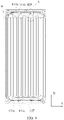
FIG. 4 is a sectional view of the battery module according to an embodiment of the present application; -
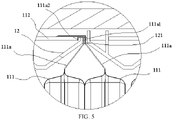
FIG. 5 is an enlarged view of the point A inFIG. 4 ; -
FIG. 6 is an enlarged view of the point B inFIG. 4 ; -
FIG. 7 is a structural schematic diagram of the insulating plate; -
FIG. 8 is a cross-section view of the insulating plate; and -
FIG. 9 is an enlarged view of the point C inFIG. 8 . -
- 1-battery module;
- 11-battery group;
- 111-battery unit;
- 111a-tab;
- 111a1-connecting segment;
- 111a2-bending segment;
- 111b-first tab;
- 111c-second tab;
- 111a-tab;
- 112-bus bar;
- 111-battery unit;
- 12-insulating plate;
- 121-guiding groove;
- 122-plate assembly;
- 122a-first plate;
- 122b-second plate;
- 123-connecting plate;
- 124-buckle;
- 125-extending portion;
- 126-first insulating plate;
- 127-second insulating plate;
- 13-lower box body;
13 1-slot; - 14-upper cover;
- 15-thermally conductive structure adhesive;
- 16-filing layer;
- 17-sampling member;
- α-second angle; and
- β-first angle.
- 11-battery group;
- The accompanying drawings herein are incorporated into the description and form a part of the description, show embodiments conforming to the present application, and are used together with description to explain the principle of the present application.
- Now the technical solutions in embodiments of the present application will be clearly and completely described below with reference to the accompanying drawings. Apparently, the described embodiments are some of, rather than all of, the embodiments of the present application.
-
FIG. 1 is an exploded structural view of the battery module according to an embodiment of the present application, andFIG. 2 is a further exploded schematic structural diagram of the battery module according to an embodiment of the present application. As shown inFIG. 1 , the embodiments of the present application provide abattery module 1, including abattery group 11 and an insulatingplate 12, where thebattery module 1 may further include alower box body 13 and anupper cover 14. Thebattery group 11 is formed with a plurality of batter units 111 (with reference toFIG. 5 ) connected in series or parallel, and thebattery group 11 is accommodated in an accommodating space between thelower box body 13 and theupper cover 14. - As shown in
FIG. 2 , a thermally conductivestructural adhesive 15 may be disposed between thebattery group 11 and thelower box body 13 so as to dissipate the heat of thebattery group 11. The thermally conductive structural adhesive 15 can also play a role as a buffer, avoiding a short circuit of thebattery group 11 because of the less evenness of thelower box body 13. Afiling layer 16 can be disposed between thebattery group 11 and theupper cover 14, thereby separating thebattery group 11 and theupper cover 14. - The insulating
plate 12 may include a first insulatingplate 126 and a second insulating plate 127 (as shown inFIG. 4 ) disposed oppositely along a lengthwise direction of the battery group 11 (the direction X inFIG. 1 ). The first insulatingplate 126 and the second insulatingplate 127 are disposed respectively at two sides of thebattery group 11 along the lengthwise direction (the direction X inFIG. 1 ).FIG. 3 is a schematic diagram of the connecting relationship of the insulating plate, the bus bar and the sampling member. With reference toFIG. 2 andFIG. 3 at the same time, a samplingmember 17 may be located at a top end of thebattery group 11 and electrically connected to abus bar 112, used to sample temperature and voltage of thebattery group 11 to monitor the working state of thebattery group 11. -
FIG. 4 is a sectional view of the battery module according to an embodiment of the present application;FIG. 5 is an enlarged view of the point A inFIG. 4 ;FIG. 6 is an enlarged view of the point B inFIG. 4 ;FIG. 7 is a structural schematic diagram of the insulating plate;FIG. 8 is a cross-section view of the insulating plate; andFIG. 9 is an enlarged view of the point C inFIG. 8 . - As shown in
FIG. 4 to FIG. 9 , thebattery group 11 includes abus bar 112 and a plurality ofbattery units 111, and thebus bar 112 is fixed at one side of the insulatingplate 12 away from thebattery group 11, and may be connected to the sampling member 17 (with reference toFIG. 3 ). - Each
battery unit 111 includes atab 111a, and thetab 111a includes afirst tab 111b and asecond tab 111c, implementing energy output of thebattery group 11. Among them, exemplarily, thefirst tab 111b may be a positive tab and thesecond tab 111c may be a negative tab. Or thefirst tab 111b may be a negative tab and thesecond tab 111c may be a positive tab, which is not limited herein. - The structure of the
first tab 111b and thesecond tab 111c may be same, and both of which include a connecting segment 111a1 and a bending segment 111a2. The insulatingplate 12 includes a guidinggroove 121, and eachtab 111a passes through the guidinggroove 121 and is fixed and connected to thebus bar 112. - Optionally, each tab includes a connecting segment 111a1 and a bending segment 111a2 which are integrally formed. Each connecting segment 111a1 passes through the guiding
groove 121, and the bending segment 111a2 is fixed and connected to thebus bar 112. - By disposing the guiding
groove 121 at the insulatingplate 12, thebattery module 1 provided by embodiments of the present application can adjust the altitude of thetab 111a as it passes through and facilitate the passage of thetab 111a. - Further, after the
tab 111a is bended, the bending segment 111a2 can be connected to thebus bar 112, and face-to-face attachment fixing is formed between the bending segment 111a2 and the bus bar112. Then there is no need to reserve a large space between thebattery group 11 and the insulatingplate 12 to meet the process requirements, which increases the energy density of thebattery module 1. And the way of fact-to-face attachment can make the current more stable and also ensure an enough flow area. - With reference to
FIG. 8 , the insulatingplate 12 includes a plurality ofplate assemblies 122. With reference toFIG. 9 , theadjacent plate assemblies 122 are connected through a connectingplate 123, and there is an obtuse first angle β between eachplate assembly 122 and the connectingplate 123 connected thereto. - By providing the connecting
plate 123, there is an obtuse angle between theplate assembly 122 and the connectingplate 123, and the sharp-angled portion between the plate assembly and the plate assembly in the prior art is eliminated, which not only avoids damage to the battery group, but also increases the internal space of the battery module and increases the energy density of the battery module. - Optionally, each plate assembly includes a
first plate 122a and asecond plate 122b. The foregoing guidinggroove 121 is disposed at a junction of thefirst plate 122a and the second plate122b. Thetabs 111a of theadjacent battery units 111 can pass through the junction of thefirst plate 122a and thesecond plate 122b at the same time, which makes the structure more compact. - As an optional implementation manner, there is an obtuse second angle α between the
first plate 122a and thesecond plate 122b, the second angle α is disposed towards thebattery group 11, and the foregoing guidinggroove 121 is disposed at a vertex of the second angle α. By providing a certain angle between thefirst plate 122a and thesecond plate 122b, when thetab 111a prepares to pass through the guidinggroove 121, a space circled by thefirst plate 122a and thesecond plate 122b can limit an active space of thetab 111a and avoid a short circuit caused by the tipping of thetab 111a. - There is an obtuse angle between the
first plate 122a and thesecond plate 122b, which can make the entire insulatingplate 12 tend to be more flat, thereby leaving a certain space for the expansion of thebattery group 11. The gas generated after thebattery group 11 is repeatedly charged make thebattery group 11 expand, the foregoing structure can reserve space for gas expansion. At the same time, the insulatingplate 12 occupies a small space, which increases the energy density of thebattery module 1. - The foregoing connecting
plate 123 may be integrally formed with theplate assembly 122, and the connectingplate 123 can transit and connect the adjacent twoplate assemblies 122. If the twoplate assemblies 122 are directly connected, then a sharp-edged structure is formed. After the connectingplate 123 is provided, the insulatingplate 12 tends to be more flat, which further provides a space for the expansion of thebattery group 11. And the insulatingplate 12 occupies a smaller space, which increases the energy density of thebattery module 1. - There are many ways to fix the
bus bar 112 to the insulatingplate 12. And one implementation manner is to provide abuckle 124 at one side of the insulatingplate 12 away from thebattery group 11, and thebus bar 112 is snap-fitted and fixed to thebuckle 124. The bus bar 1112 may include a first bus bar and a second bus bar, where the first bus bar is a positive bus bar and the second bus bar is a negative bus bar. Of course, the first bus bar may also be provided as a negative bus bar and the second bus bar as a positive bus bar. Thetab 111a includes afirst tab 111b and asecond tab 111c. The connecting segment 111a1 of eachfirst tab 111b passes through the guidinggroove 121 of the first insulatingplate 126, and the connecting segment 111a1 of eachsecond tab 111c passes through the guidinggroove 121 of the second insulatingplate 127. In the embodiment, the connecting segment 111a1 of eachfirst tab 111b passes through the guidinggroove 121 of the first insulatingplate 126 and the connecting segments 111a1 of eachsecond tab 111c passes through the guidinggroove 121 of the second insulatingplate 127. The insulatingplate 12 may be provided with a plurality of guidinggrooves 121. In this embodiment, eightbattery units 111 are taken as an example. Thefirst tab 111b of eachadjacent battery unit 111 passes through thesame guiding groove 121 on the first insulatingplate 126. The first insulatingplate 126 is provided with four guidinggrooves 121, and thefirst tab 111b may be a positive tab. Thesecond tab 111c of eachadjacent battery cell 111 passes through thesame guiding groove 121 on the second insulatingplate 127. Four guidinggrooves 121 may also be disposed on the second insulatingplate 127, and thesecond tab 111c may be a negative tab. - As what is mentioned above, the
bus bar 112 may include a first bus bar and a second bus bar. The bending segment 111a2 of eachfirst tab 111b is fixed and connected to the first bus bar, and the bending segment 111a2 of eachsecond tab 111c is fixed and connected to the second bus bar. The first bus bar may be a positive bus bar and extracted as a positive electrode after thebattery module 1 is assembled; and the second bus bar may be a negative bus bar and extracted as a negative electrode after thebattery module 1 is assembled. - In the embodiments shown in
FIG. 2 andFIG. 3 , the number of the first bus bar is three and all of which are disposed at one side connected to the first tab. Those skilled in the art may understand that the number of the first bus bar and the number of the second bus bar are not specifically limited, and can be determined according to the number of thebattery unit 111 and the installation space. - As an optional implementation manner, the connecting segment 111a1 extends along the lengthwise direction (direction X) of the
battery group 11, and the bending segment 111a2 extends along the widthwise direction (direction Y) of the battery group. Thus the connecting segment 111a1 and the bending segment 111a2 of the foregoingtab 111a tend to be substantially perpendicular to each other. After thetab 111a passes through the guidinggroove 121, the connecting segment 111a1 is accommodated in the guidinggroove 121, and the bending segment 111a2 is bent and connected to thebus bar 112. If the bending segment 111a2 tends to be perpendicular to the connecting section 111a1 after bending, the space between the insulatingplate 12 and thelower box body 13 can be maximally saved, thereby increasing the energy density of thebattery module 1. - Further, an inner wall of the
lower box body 13 is provided with aslot 131, and all of thebattery group 11, the insulatingplate 12 and thebus bar 112 are disposed in thelower box body 13. Two ends of the insulatingplate 12 are provided with an extendingportion 125; and the extendingportion 125 is snap-fitted and fixed to theslot 131. The two ends of the insulatingplate 12 is snap-fitted to theslot 131 of thelower box body 13 by the extendingportion 125, which increases the reliability of the insulatingplate 12 connected to the inside of thelower box body 13. - The present application also provides an insulating plate, and the insulating plate is disposed between a bus bar and a battery group. The insulating plate includes a plurality of plate assemblies, the adjacent plate assemblies are connected through a connecting plate; and there is an obtuse first angle between each plate assembly and the connecting plate connected thereto; and the plate assembly includes a guiding groove, and each tab passes through the guiding groove and is fixed and connected to the bus bar.
- The forgoing descriptions are merely optional embodiments of the present application, but are not intended to limit the present application. For those skilled in the art, the present application may have various amendments and modifications. Any modification, equivalent substitution, improvement or the like, made within the principle of the present application, shall fall within the protection scope of the present application.
Claims (13)
- A battery module, comprising: a battery group (11) and an insulating plate (12);wherein the battery group (11) comprises a bus bar (112) and a plurality of battery units (111), each battery unit (111) comprises a tab (111a); and the bus bar (112) is fixed at one side of the insulating plate (12) away from the battery group (11);wherein the insulating plate (12) comprises a plurality of plate assemblies (122), the adjacent plate assemblies (122) are connected through a connecting plate (123); and there is an obtuse first angle between each plate assembly (122) and the connecting plate (123) connected thereto;and the plate assembly (122) comprises a guiding groove (121), and each tab (111a) passes through the guiding groove (121) and is fixed and connected to the bus bar (112).
- The battery module according to claim 1, wherein each plate assembly (122) comprises a first plate (122a) and a second plate (122b);
and the guiding groove (121) is disposed at a junction of the first plate (122a) and the second plate (122b). - The battery module according to claim 2, wherein there is an obtuse second angle between the first plate (122a) and the second plate (122b).
- The battery module according to any one of claims 1-3, wherein the tab (111a) comprises a connecting segment (111a1) and a bending segment (111a2) which are integrally formed;
and the connecting segment (111a1) passes through the guiding groove (121), and the bending segment (111a2) is fixed and connected to the bus bar (112). - The battery module according to claim 4, wherein face-to-face attachment and fixing is formed between the bending segment (111a2) and the bus bar (112).
- The battery module according to claim 4 or 5, wherein the connecting segment (111a1) extends along a lengthwise direction of the battery group (11);
and the bending segment (111a2) extends along a widthwise direction of the battery group (11). - The battery module according to any one of claims 1-6, wherein a buckle (124) is disposed at one side of the insulating plate (12) away from the battery group (11);
and the bus bar (112) is snap-fitted and fixed to the buckle (124). - The battery module according to any one of claims 1-7, wherein the insulating plate (12) comprises a first insulating plate (126) and a second insulating plate (127);
the first insulating plate (126) and the second insulating plate (127) are disposed at two ends of the battery group (11) along a lengthwise direction. - The battery module according to claim 8, wherein the tab (111a) comprises a first tab (111b) and a second tab (111c);a connecting segment of each first tab (111b) passes through the guiding groove (121) of the first insulating plate (126);and a connecting segment of each second tab (111c) passes through the guiding groove (121) of the second insulating plate (127).
- The battery module according to claim 9, wherein the bus bar (112) comprises a first bus bar and a second bus bar;a bending segment of each first tab (111b) is fixed and connected to the first bus bar;and a bending segment of each second tab (111c) is fixed and connected to the second bus bar.
- The battery module according to any one of claims 1-10, wherein the battery module further comprises a lower box body (13);
the battery group (11), the insulating plate (12) and the bus bar (112) are all disposed in the lower box body (13). - The battery module according to claim 11, wherein an inner wall of the lower box body (13) is provided with a slot (131);
two ends of the insulating plate (12) are provided with an extending portion (125); and the extending portion (125) is snap-fitted and fixed to the slot (131). - The battery module according to any one of claims 1-12, each plate assembly (122) and the connecting plate (123) connected thereto are integrally formed.
Applications Claiming Priority (2)
| Application Number | Priority Date | Filing Date | Title |
|---|---|---|---|
| CN201921002498.XU CN209822772U (en) | 2019-06-28 | 2019-06-28 | Battery module |
| PCT/CN2020/085394 WO2020259027A1 (en) | 2019-06-28 | 2020-04-17 | Battery module and insulating plate |
Publications (3)
| Publication Number | Publication Date |
|---|---|
| EP3809516A1 EP3809516A1 (en) | 2021-04-21 |
| EP3809516A4 EP3809516A4 (en) | 2021-10-13 |
| EP3809516B1 true EP3809516B1 (en) | 2022-04-06 |
Family
ID=68885140
Family Applications (1)
| Application Number | Title | Priority Date | Filing Date |
|---|---|---|---|
| EP20829524.6A Active EP3809516B1 (en) | 2019-06-28 | 2020-04-17 | Battery module and insulating plate |
Country Status (5)
| Country | Link |
|---|---|
| US (1) | US11705605B2 (en) |
| EP (1) | EP3809516B1 (en) |
| CN (1) | CN209822772U (en) |
| ES (1) | ES2913768T3 (en) |
| WO (1) | WO2020259027A1 (en) |
Families Citing this family (16)
| Publication number | Priority date | Publication date | Assignee | Title |
|---|---|---|---|---|
| CN209822772U (en) | 2019-06-28 | 2019-12-20 | 宁德时代新能源科技股份有限公司 | Battery module |
| CN111293265B (en) * | 2020-02-24 | 2023-03-03 | 湖北亿纬动力有限公司 | Busbar Electrical Isolation Components and Batteries |
| CN111354882A (en) * | 2020-04-09 | 2020-06-30 | 江苏丰盈科技有限公司 | Lithium-ion battery pack |
| WO2021206350A1 (en) * | 2020-04-09 | 2021-10-14 | 주식회사 엘지에너지솔루션 | Battery module and battery pack including same |
| WO2022006894A1 (en) | 2020-07-10 | 2022-01-13 | 宁德时代新能源科技股份有限公司 | Battery and related apparatus therefor, preparation method, and preparation device |
| EP3958387B1 (en) * | 2020-07-10 | 2023-06-21 | Contemporary Amperex Technology Co., Limited | Battery and related apparatus thereof, preparation method therefor, and preparation device therefor |
| EP3958378B1 (en) | 2020-07-10 | 2023-12-13 | Contemporary Amperex Technology Co., Limited | Battery, electric device, and method and device for preparing battery |
| JP7429719B2 (en) | 2020-07-10 | 2024-02-08 | 寧徳時代新能源科技股▲分▼有限公司 | Batteries, power consumption equipment, battery manufacturing methods and devices |
| CN114175363B (en) | 2020-07-10 | 2024-02-20 | 宁德时代新能源科技股份有限公司 | Batteries and related devices, preparation methods and preparation equipment |
| EP3965211B1 (en) | 2020-07-10 | 2023-11-29 | Contemporary Amperex Technology Co., Limited | Box body for battery, battery, electric device, and method and device for preparing battery |
| CN115347310B (en) * | 2021-01-15 | 2024-07-02 | 湖南万竞智航科技有限公司 | Unmanned aerial vehicle power Chi Cang |
| CN113782804B (en) * | 2021-08-20 | 2023-09-15 | 欣旺达惠州动力新能源有限公司 | Battery pack assembly method and battery pack |
| EP4459763A4 (en) * | 2022-06-09 | 2025-05-07 | LG Energy Solution, Ltd. | BUSBAR FRAME ASSEMBLY AND BATTERY MODULE THEREFORE |
| CN114976521A (en) * | 2022-07-18 | 2022-08-30 | 上海兰钧新能源科技有限公司 | Battery Sampling Kits and Battery Packs |
| CN116315322B (en) * | 2023-05-18 | 2023-08-25 | 宁德新能源科技有限公司 | Electrochemical devices and electronic devices |
| CN120749361B (en) * | 2025-08-15 | 2025-12-26 | 吉利汽车研究院(宁波)有限公司 | A battery module, a solid-state battery pack and a vehicle |
Family Cites Families (9)
| Publication number | Priority date | Publication date | Assignee | Title |
|---|---|---|---|---|
| JP5070697B2 (en) * | 2005-12-19 | 2012-11-14 | 日産自動車株式会社 | Battery module |
| CN204857837U (en) * | 2015-07-23 | 2015-12-09 | 中航锂电(洛阳)有限公司 | Soft packet of lithium ion battery module connection structure |
| CN207183361U (en) * | 2017-08-31 | 2018-04-03 | 宁德时代新能源科技股份有限公司 | Frame and battery module |
| CN109428020B (en) | 2017-08-31 | 2024-04-16 | 宁德时代新能源科技股份有限公司 | Frame and battery module |
| CN108428852B (en) * | 2018-01-12 | 2024-02-09 | 宁德时代新能源科技股份有限公司 | Secondary battery and automobile |
| CN208028106U (en) * | 2018-01-19 | 2018-10-30 | 淮安华德电池科技有限公司 | A kind of explosion-proof graphene battery |
| CN109888159A (en) * | 2019-02-28 | 2019-06-14 | 力神动力电池系统有限公司 | A kind of power battery Soft Roll mould group |
| CN209822772U (en) * | 2019-06-28 | 2019-12-20 | 宁德时代新能源科技股份有限公司 | Battery module |
| CN110380112B (en) * | 2019-07-31 | 2023-08-22 | 桑顿新能源科技(长沙)有限公司 | Battery module, assembling method and power battery |
-
2019
- 2019-06-28 CN CN201921002498.XU patent/CN209822772U/en active Active
-
2020
- 2020-04-17 EP EP20829524.6A patent/EP3809516B1/en active Active
- 2020-04-17 WO PCT/CN2020/085394 patent/WO2020259027A1/en not_active Ceased
- 2020-04-17 ES ES20829524T patent/ES2913768T3/en active Active
-
2021
- 2021-01-09 US US17/145,286 patent/US11705605B2/en active Active
Also Published As
| Publication number | Publication date |
|---|---|
| WO2020259027A1 (en) | 2020-12-30 |
| ES2913768T3 (en) | 2022-06-06 |
| US11705605B2 (en) | 2023-07-18 |
| EP3809516A4 (en) | 2021-10-13 |
| US20210135319A1 (en) | 2021-05-06 |
| CN209822772U (en) | 2019-12-20 |
| EP3809516A1 (en) | 2021-04-21 |
Similar Documents
| Publication | Publication Date | Title |
|---|---|---|
| EP3809516B1 (en) | Battery module and insulating plate | |
| EP3817133A2 (en) | Battery module and battery pack including same | |
| CN115843398B (en) | Batteries, electrical equipment, methods and equipment for preparing batteries | |
| CN212136551U (en) | Battery module | |
| KR102317506B1 (en) | Battery pack | |
| WO2022041964A1 (en) | Large pouch cell module and electric automobile comprising same | |
| WO2014137017A1 (en) | Electrode assembly having rounded corners | |
| EP4358281A1 (en) | Electrode assembly and power battery | |
| EP4459786A1 (en) | Battery module without busbar, and battery pack | |
| WO2023093759A1 (en) | Battery cell unit, battery, and vehicle | |
| CN113097654A (en) | Battery module | |
| WO2025208801A9 (en) | Battery and electric device | |
| CN116134669B (en) | Battery, electrical equipment, method and equipment for preparing battery | |
| RU2728543C1 (en) | Flexible assembled capacitor module with a solid casing and a system | |
| US11664524B2 (en) | Battery module and battery pack | |
| US10170812B2 (en) | Assembly module comprising electrochemical cells received by lugs and connecting clips | |
| KR20240125343A (en) | Battery device comprising spacer | |
| EP4383430A1 (en) | Battery sampling assembly, battery and manufacturing method therefor, and electric device | |
| CN209766520U (en) | Battery cell module | |
| CN224164336U (en) | Battery cell modules, battery packs and electrical devices | |
| CN222953290U (en) | A BCMIS component and battery pack | |
| EP4734220A1 (en) | Battery pack and vehicle | |
| CN217589323U (en) | Battery module and battery | |
| CN222088752U (en) | A fixing bracket for stacking energy storage battery modules | |
| CN216056929U (en) | Integrated wiring device |
Legal Events
| Date | Code | Title | Description |
|---|---|---|---|
| STAA | Information on the status of an ep patent application or granted ep patent |
Free format text: STATUS: UNKNOWN |
|
| STAA | Information on the status of an ep patent application or granted ep patent |
Free format text: STATUS: THE INTERNATIONAL PUBLICATION HAS BEEN MADE |
|
| PUAI | Public reference made under article 153(3) epc to a published international application that has entered the european phase |
Free format text: ORIGINAL CODE: 0009012 |
|
| STAA | Information on the status of an ep patent application or granted ep patent |
Free format text: STATUS: REQUEST FOR EXAMINATION WAS MADE |
|
| 17P | Request for examination filed |
Effective date: 20210112 |
|
| AK | Designated contracting states |
Kind code of ref document: A1 Designated state(s): AL AT BE BG CH CY CZ DE DK EE ES FI FR GB GR HR HU IE IS IT LI LT LU LV MC MK MT NL NO PL PT RO RS SE SI SK SM TR |
|
| AX | Request for extension of the european patent |
Extension state: BA ME |
|
| A4 | Supplementary search report drawn up and despatched |
Effective date: 20210908 |
|
| RIC1 | Information provided on ipc code assigned before grant |
Ipc: H01M 50/593 20210101ALI20210903BHEP Ipc: H01M 50/291 20210101ALI20210903BHEP Ipc: H01M 50/10 20210101ALI20210903BHEP Ipc: H01M 50/531 20210101AFI20210903BHEP |
|
| GRAP | Despatch of communication of intention to grant a patent |
Free format text: ORIGINAL CODE: EPIDOSNIGR1 |
|
| STAA | Information on the status of an ep patent application or granted ep patent |
Free format text: STATUS: GRANT OF PATENT IS INTENDED |
|
| DAV | Request for validation of the european patent (deleted) | ||
| DAX | Request for extension of the european patent (deleted) | ||
| INTG | Intention to grant announced |
Effective date: 20220110 |
|
| GRAS | Grant fee paid |
Free format text: ORIGINAL CODE: EPIDOSNIGR3 |
|
| GRAA | (expected) grant |
Free format text: ORIGINAL CODE: 0009210 |
|
| STAA | Information on the status of an ep patent application or granted ep patent |
Free format text: STATUS: THE PATENT HAS BEEN GRANTED |
|
| AK | Designated contracting states |
Kind code of ref document: B1 Designated state(s): AL AT BE BG CH CY CZ DE DK EE ES FI FR GB GR HR HU IE IS IT LI LT LU LV MC MK MT NL NO PL PT RO RS SE SI SK SM TR |
|
| REG | Reference to a national code |
Ref country code: GB Ref legal event code: FG4D |
|
| REG | Reference to a national code |
Ref country code: CH Ref legal event code: EP |
|
| REG | Reference to a national code |
Ref country code: AT Ref legal event code: REF Ref document number: 1482250 Country of ref document: AT Kind code of ref document: T Effective date: 20220415 |
|
| REG | Reference to a national code |
Ref country code: IE Ref legal event code: FG4D |
|
| REG | Reference to a national code |
Ref country code: DE Ref legal event code: R096 Ref document number: 602020002595 Country of ref document: DE |
|
| REG | Reference to a national code |
Ref country code: ES Ref legal event code: FG2A Ref document number: 2913768 Country of ref document: ES Kind code of ref document: T3 Effective date: 20220606 |
|
| REG | Reference to a national code |
Ref country code: LT Ref legal event code: MG9D |
|
| REG | Reference to a national code |
Ref country code: NL Ref legal event code: MP Effective date: 20220406 |
|
| REG | Reference to a national code |
Ref country code: AT Ref legal event code: MK05 Ref document number: 1482250 Country of ref document: AT Kind code of ref document: T Effective date: 20220406 |
|
| PG25 | Lapsed in a contracting state [announced via postgrant information from national office to epo] |
Ref country code: NL Free format text: LAPSE BECAUSE OF FAILURE TO SUBMIT A TRANSLATION OF THE DESCRIPTION OR TO PAY THE FEE WITHIN THE PRESCRIBED TIME-LIMIT Effective date: 20220406 |
|
| PG25 | Lapsed in a contracting state [announced via postgrant information from national office to epo] |
Ref country code: SE Free format text: LAPSE BECAUSE OF FAILURE TO SUBMIT A TRANSLATION OF THE DESCRIPTION OR TO PAY THE FEE WITHIN THE PRESCRIBED TIME-LIMIT Effective date: 20220406 Ref country code: PT Free format text: LAPSE BECAUSE OF FAILURE TO SUBMIT A TRANSLATION OF THE DESCRIPTION OR TO PAY THE FEE WITHIN THE PRESCRIBED TIME-LIMIT Effective date: 20220808 Ref country code: NO Free format text: LAPSE BECAUSE OF FAILURE TO SUBMIT A TRANSLATION OF THE DESCRIPTION OR TO PAY THE FEE WITHIN THE PRESCRIBED TIME-LIMIT Effective date: 20220706 Ref country code: LT Free format text: LAPSE BECAUSE OF FAILURE TO SUBMIT A TRANSLATION OF THE DESCRIPTION OR TO PAY THE FEE WITHIN THE PRESCRIBED TIME-LIMIT Effective date: 20220406 Ref country code: HR Free format text: LAPSE BECAUSE OF FAILURE TO SUBMIT A TRANSLATION OF THE DESCRIPTION OR TO PAY THE FEE WITHIN THE PRESCRIBED TIME-LIMIT Effective date: 20220406 Ref country code: GR Free format text: LAPSE BECAUSE OF FAILURE TO SUBMIT A TRANSLATION OF THE DESCRIPTION OR TO PAY THE FEE WITHIN THE PRESCRIBED TIME-LIMIT Effective date: 20220707 Ref country code: FI Free format text: LAPSE BECAUSE OF FAILURE TO SUBMIT A TRANSLATION OF THE DESCRIPTION OR TO PAY THE FEE WITHIN THE PRESCRIBED TIME-LIMIT Effective date: 20220406 Ref country code: BG Free format text: LAPSE BECAUSE OF FAILURE TO SUBMIT A TRANSLATION OF THE DESCRIPTION OR TO PAY THE FEE WITHIN THE PRESCRIBED TIME-LIMIT Effective date: 20220706 Ref country code: AT Free format text: LAPSE BECAUSE OF FAILURE TO SUBMIT A TRANSLATION OF THE DESCRIPTION OR TO PAY THE FEE WITHIN THE PRESCRIBED TIME-LIMIT Effective date: 20220406 |
|
| PG25 | Lapsed in a contracting state [announced via postgrant information from national office to epo] |
Ref country code: RS Free format text: LAPSE BECAUSE OF FAILURE TO SUBMIT A TRANSLATION OF THE DESCRIPTION OR TO PAY THE FEE WITHIN THE PRESCRIBED TIME-LIMIT Effective date: 20220406 Ref country code: PL Free format text: LAPSE BECAUSE OF FAILURE TO SUBMIT A TRANSLATION OF THE DESCRIPTION OR TO PAY THE FEE WITHIN THE PRESCRIBED TIME-LIMIT Effective date: 20220406 Ref country code: LV Free format text: LAPSE BECAUSE OF FAILURE TO SUBMIT A TRANSLATION OF THE DESCRIPTION OR TO PAY THE FEE WITHIN THE PRESCRIBED TIME-LIMIT Effective date: 20220406 Ref country code: IS Free format text: LAPSE BECAUSE OF FAILURE TO SUBMIT A TRANSLATION OF THE DESCRIPTION OR TO PAY THE FEE WITHIN THE PRESCRIBED TIME-LIMIT Effective date: 20220806 |
|
| REG | Reference to a national code |
Ref country code: BE Ref legal event code: MM Effective date: 20220430 |
|
| REG | Reference to a national code |
Ref country code: DE Ref legal event code: R097 Ref document number: 602020002595 Country of ref document: DE |
|
| PG25 | Lapsed in a contracting state [announced via postgrant information from national office to epo] |
Ref country code: SM Free format text: LAPSE BECAUSE OF FAILURE TO SUBMIT A TRANSLATION OF THE DESCRIPTION OR TO PAY THE FEE WITHIN THE PRESCRIBED TIME-LIMIT Effective date: 20220406 Ref country code: SK Free format text: LAPSE BECAUSE OF FAILURE TO SUBMIT A TRANSLATION OF THE DESCRIPTION OR TO PAY THE FEE WITHIN THE PRESCRIBED TIME-LIMIT Effective date: 20220406 Ref country code: RO Free format text: LAPSE BECAUSE OF FAILURE TO SUBMIT A TRANSLATION OF THE DESCRIPTION OR TO PAY THE FEE WITHIN THE PRESCRIBED TIME-LIMIT Effective date: 20220406 Ref country code: MC Free format text: LAPSE BECAUSE OF FAILURE TO SUBMIT A TRANSLATION OF THE DESCRIPTION OR TO PAY THE FEE WITHIN THE PRESCRIBED TIME-LIMIT Effective date: 20220406 Ref country code: LU Free format text: LAPSE BECAUSE OF NON-PAYMENT OF DUE FEES Effective date: 20220417 Ref country code: EE Free format text: LAPSE BECAUSE OF FAILURE TO SUBMIT A TRANSLATION OF THE DESCRIPTION OR TO PAY THE FEE WITHIN THE PRESCRIBED TIME-LIMIT Effective date: 20220406 Ref country code: DK Free format text: LAPSE BECAUSE OF FAILURE TO SUBMIT A TRANSLATION OF THE DESCRIPTION OR TO PAY THE FEE WITHIN THE PRESCRIBED TIME-LIMIT Effective date: 20220406 Ref country code: CZ Free format text: LAPSE BECAUSE OF FAILURE TO SUBMIT A TRANSLATION OF THE DESCRIPTION OR TO PAY THE FEE WITHIN THE PRESCRIBED TIME-LIMIT Effective date: 20220406 |
|
| PLBE | No opposition filed within time limit |
Free format text: ORIGINAL CODE: 0009261 |
|
| STAA | Information on the status of an ep patent application or granted ep patent |
Free format text: STATUS: NO OPPOSITION FILED WITHIN TIME LIMIT |
|
| PG25 | Lapsed in a contracting state [announced via postgrant information from national office to epo] |
Ref country code: BE Free format text: LAPSE BECAUSE OF NON-PAYMENT OF DUE FEES Effective date: 20220430 |
|
| 26N | No opposition filed |
Effective date: 20230110 |
|
| PG25 | Lapsed in a contracting state [announced via postgrant information from national office to epo] |
Ref country code: AL Free format text: LAPSE BECAUSE OF FAILURE TO SUBMIT A TRANSLATION OF THE DESCRIPTION OR TO PAY THE FEE WITHIN THE PRESCRIBED TIME-LIMIT Effective date: 20220406 |
|
| PG25 | Lapsed in a contracting state [announced via postgrant information from national office to epo] |
Ref country code: IE Free format text: LAPSE BECAUSE OF NON-PAYMENT OF DUE FEES Effective date: 20220417 |
|
| PG25 | Lapsed in a contracting state [announced via postgrant information from national office to epo] |
Ref country code: SI Free format text: LAPSE BECAUSE OF FAILURE TO SUBMIT A TRANSLATION OF THE DESCRIPTION OR TO PAY THE FEE WITHIN THE PRESCRIBED TIME-LIMIT Effective date: 20220406 |
|
| P01 | Opt-out of the competence of the unified patent court (upc) registered |
Effective date: 20230516 |
|
| REG | Reference to a national code |
Ref country code: CH Ref legal event code: PL |
|
| PG25 | Lapsed in a contracting state [announced via postgrant information from national office to epo] |
Ref country code: LI Free format text: LAPSE BECAUSE OF NON-PAYMENT OF DUE FEES Effective date: 20230430 Ref country code: CH Free format text: LAPSE BECAUSE OF NON-PAYMENT OF DUE FEES Effective date: 20230430 |
|
| PG25 | Lapsed in a contracting state [announced via postgrant information from national office to epo] |
Ref country code: MK Free format text: LAPSE BECAUSE OF FAILURE TO SUBMIT A TRANSLATION OF THE DESCRIPTION OR TO PAY THE FEE WITHIN THE PRESCRIBED TIME-LIMIT Effective date: 20220406 Ref country code: CY Free format text: LAPSE BECAUSE OF FAILURE TO SUBMIT A TRANSLATION OF THE DESCRIPTION OR TO PAY THE FEE WITHIN THE PRESCRIBED TIME-LIMIT Effective date: 20220406 |
|
| PG25 | Lapsed in a contracting state [announced via postgrant information from national office to epo] |
Ref country code: HU Free format text: LAPSE BECAUSE OF FAILURE TO SUBMIT A TRANSLATION OF THE DESCRIPTION OR TO PAY THE FEE WITHIN THE PRESCRIBED TIME-LIMIT; INVALID AB INITIO Effective date: 20200417 |
|
| PG25 | Lapsed in a contracting state [announced via postgrant information from national office to epo] |
Ref country code: TR Free format text: LAPSE BECAUSE OF FAILURE TO SUBMIT A TRANSLATION OF THE DESCRIPTION OR TO PAY THE FEE WITHIN THE PRESCRIBED TIME-LIMIT Effective date: 20220406 |
|
| REG | Reference to a national code |
Ref country code: DE Ref legal event code: R081 Ref document number: 602020002595 Country of ref document: DE Owner name: CONTEMPORARY AMPEREX TECHNOLOGY (HONG KONG) LI, HK Free format text: FORMER OWNER: CONTEMPORARY AMPEREX TECHNOLOGY CO., LIMITED, NINGDE CITY, FUJIAN, CN |
|
| REG | Reference to a national code |
Ref country code: GB Ref legal event code: 732E Free format text: REGISTERED BETWEEN 20240829 AND 20240904 |
|
| PG25 | Lapsed in a contracting state [announced via postgrant information from national office to epo] |
Ref country code: MT Free format text: LAPSE BECAUSE OF FAILURE TO SUBMIT A TRANSLATION OF THE DESCRIPTION OR TO PAY THE FEE WITHIN THE PRESCRIBED TIME-LIMIT Effective date: 20220406 |
|
| PG25 | Lapsed in a contracting state [announced via postgrant information from national office to epo] |
Ref country code: BG Free format text: LAPSE BECAUSE OF FAILURE TO SUBMIT A TRANSLATION OF THE DESCRIPTION OR TO PAY THE FEE WITHIN THE PRESCRIBED TIME-LIMIT Effective date: 20220406 |
|
| PG25 | Lapsed in a contracting state [announced via postgrant information from national office to epo] |
Ref country code: BG Free format text: LAPSE BECAUSE OF FAILURE TO SUBMIT A TRANSLATION OF THE DESCRIPTION OR TO PAY THE FEE WITHIN THE PRESCRIBED TIME-LIMIT Effective date: 20220406 |
|
| REG | Reference to a national code |
Ref country code: ES Ref legal event code: PC2A Owner name: CONTEMPORARY AMPEREX TECHNOLOGY (HONG KONG) LIMITED Effective date: 20241129 |
|
| PGFP | Annual fee paid to national office [announced via postgrant information from national office to epo] |
Ref country code: DE Payment date: 20250218 Year of fee payment: 6 |
|
| PGFP | Annual fee paid to national office [announced via postgrant information from national office to epo] |
Ref country code: ES Payment date: 20250509 Year of fee payment: 6 |
|
| PGFP | Annual fee paid to national office [announced via postgrant information from national office to epo] |
Ref country code: GB Payment date: 20260303 Year of fee payment: 7 |
|
| PGFP | Annual fee paid to national office [announced via postgrant information from national office to epo] |
Ref country code: IT Payment date: 20260320 Year of fee payment: 7 |
|
| PGFP | Annual fee paid to national office [announced via postgrant information from national office to epo] |
Ref country code: FR Payment date: 20260223 Year of fee payment: 7 |