EP3806905B1 - Methods and materials for treating cancer - Google Patents
Methods and materials for treating cancer Download PDFInfo
- Publication number
- EP3806905B1 EP3806905B1 EP18922975.0A EP18922975A EP3806905B1 EP 3806905 B1 EP3806905 B1 EP 3806905B1 EP 18922975 A EP18922975 A EP 18922975A EP 3806905 B1 EP3806905 B1 EP 3806905B1
- Authority
- EP
- European Patent Office
- Prior art keywords
- antibody
- cancer
- her2
- drug
- adc
- Prior art date
- Legal status (The legal status is an assumption and is not a legal conclusion. Google has not performed a legal analysis and makes no representation as to the accuracy of the status listed.)
- Active
Links
Images





Classifications
-
- A—HUMAN NECESSITIES
- A61—MEDICAL OR VETERINARY SCIENCE; HYGIENE
- A61K—PREPARATIONS FOR MEDICAL, DENTAL OR TOILETRY PURPOSES
- A61K45/00—Medicinal preparations containing active ingredients not provided for in groups A61K31/00 - A61K41/00
- A61K45/06—Mixtures of active ingredients without chemical characterisation, e.g. antiphlogistics and cardiaca
-
- A—HUMAN NECESSITIES
- A61—MEDICAL OR VETERINARY SCIENCE; HYGIENE
- A61K—PREPARATIONS FOR MEDICAL, DENTAL OR TOILETRY PURPOSES
- A61K39/00—Medicinal preparations containing antigens or antibodies
- A61K39/395—Antibodies; Immunoglobulins; Immune serum, e.g. antilymphocytic serum
- A61K39/39533—Antibodies; Immunoglobulins; Immune serum, e.g. antilymphocytic serum against materials from animals
- A61K39/39541—Antibodies; Immunoglobulins; Immune serum, e.g. antilymphocytic serum against materials from animals against normal tissues, cells
-
- A—HUMAN NECESSITIES
- A61—MEDICAL OR VETERINARY SCIENCE; HYGIENE
- A61K—PREPARATIONS FOR MEDICAL, DENTAL OR TOILETRY PURPOSES
- A61K47/00—Medicinal preparations characterised by the non-active ingredients used, e.g. carriers or inert additives; Targeting or modifying agents chemically bound to the active ingredient
- A61K47/50—Medicinal preparations characterised by the non-active ingredients used, e.g. carriers or inert additives; Targeting or modifying agents chemically bound to the active ingredient the non-active ingredient being chemically bound to the active ingredient, e.g. polymer-drug conjugates
- A61K47/51—Medicinal preparations characterised by the non-active ingredients used, e.g. carriers or inert additives; Targeting or modifying agents chemically bound to the active ingredient the non-active ingredient being chemically bound to the active ingredient, e.g. polymer-drug conjugates the non-active ingredient being a modifying agent
- A61K47/68—Medicinal preparations characterised by the non-active ingredients used, e.g. carriers or inert additives; Targeting or modifying agents chemically bound to the active ingredient the non-active ingredient being chemically bound to the active ingredient, e.g. polymer-drug conjugates the non-active ingredient being a modifying agent the modifying agent being an antibody, an immunoglobulin or a fragment thereof, e.g. an Fc-fragment
- A61K47/6801—Drug-antibody or immunoglobulin conjugates defined by the pharmacologically or therapeutically active agent
- A61K47/6803—Drugs conjugated to an antibody or immunoglobulin, e.g. cisplatin-antibody conjugates
-
- A—HUMAN NECESSITIES
- A61—MEDICAL OR VETERINARY SCIENCE; HYGIENE
- A61K—PREPARATIONS FOR MEDICAL, DENTAL OR TOILETRY PURPOSES
- A61K47/00—Medicinal preparations characterised by the non-active ingredients used, e.g. carriers or inert additives; Targeting or modifying agents chemically bound to the active ingredient
- A61K47/50—Medicinal preparations characterised by the non-active ingredients used, e.g. carriers or inert additives; Targeting or modifying agents chemically bound to the active ingredient the non-active ingredient being chemically bound to the active ingredient, e.g. polymer-drug conjugates
- A61K47/51—Medicinal preparations characterised by the non-active ingredients used, e.g. carriers or inert additives; Targeting or modifying agents chemically bound to the active ingredient the non-active ingredient being chemically bound to the active ingredient, e.g. polymer-drug conjugates the non-active ingredient being a modifying agent
- A61K47/68—Medicinal preparations characterised by the non-active ingredients used, e.g. carriers or inert additives; Targeting or modifying agents chemically bound to the active ingredient the non-active ingredient being chemically bound to the active ingredient, e.g. polymer-drug conjugates the non-active ingredient being a modifying agent the modifying agent being an antibody, an immunoglobulin or a fragment thereof, e.g. an Fc-fragment
- A61K47/6801—Drug-antibody or immunoglobulin conjugates defined by the pharmacologically or therapeutically active agent
- A61K47/6803—Drugs conjugated to an antibody or immunoglobulin, e.g. cisplatin-antibody conjugates
- A61K47/68031—Drugs conjugated to an antibody or immunoglobulin, e.g. cisplatin-antibody conjugates the drug being an auristatin
-
- A—HUMAN NECESSITIES
- A61—MEDICAL OR VETERINARY SCIENCE; HYGIENE
- A61K—PREPARATIONS FOR MEDICAL, DENTAL OR TOILETRY PURPOSES
- A61K47/00—Medicinal preparations characterised by the non-active ingredients used, e.g. carriers or inert additives; Targeting or modifying agents chemically bound to the active ingredient
- A61K47/50—Medicinal preparations characterised by the non-active ingredients used, e.g. carriers or inert additives; Targeting or modifying agents chemically bound to the active ingredient the non-active ingredient being chemically bound to the active ingredient, e.g. polymer-drug conjugates
- A61K47/51—Medicinal preparations characterised by the non-active ingredients used, e.g. carriers or inert additives; Targeting or modifying agents chemically bound to the active ingredient the non-active ingredient being chemically bound to the active ingredient, e.g. polymer-drug conjugates the non-active ingredient being a modifying agent
- A61K47/68—Medicinal preparations characterised by the non-active ingredients used, e.g. carriers or inert additives; Targeting or modifying agents chemically bound to the active ingredient the non-active ingredient being chemically bound to the active ingredient, e.g. polymer-drug conjugates the non-active ingredient being a modifying agent the modifying agent being an antibody, an immunoglobulin or a fragment thereof, e.g. an Fc-fragment
- A61K47/6835—Medicinal preparations characterised by the non-active ingredients used, e.g. carriers or inert additives; Targeting or modifying agents chemically bound to the active ingredient the non-active ingredient being chemically bound to the active ingredient, e.g. polymer-drug conjugates the non-active ingredient being a modifying agent the modifying agent being an antibody, an immunoglobulin or a fragment thereof, e.g. an Fc-fragment the modifying agent being an antibody or an immunoglobulin bearing at least one antigen-binding site
- A61K47/6849—Medicinal preparations characterised by the non-active ingredients used, e.g. carriers or inert additives; Targeting or modifying agents chemically bound to the active ingredient the non-active ingredient being chemically bound to the active ingredient, e.g. polymer-drug conjugates the non-active ingredient being a modifying agent the modifying agent being an antibody, an immunoglobulin or a fragment thereof, e.g. an Fc-fragment the modifying agent being an antibody or an immunoglobulin bearing at least one antigen-binding site the antibody targeting a receptor, a cell surface antigen or a cell surface determinant
-
- A—HUMAN NECESSITIES
- A61—MEDICAL OR VETERINARY SCIENCE; HYGIENE
- A61K—PREPARATIONS FOR MEDICAL, DENTAL OR TOILETRY PURPOSES
- A61K47/00—Medicinal preparations characterised by the non-active ingredients used, e.g. carriers or inert additives; Targeting or modifying agents chemically bound to the active ingredient
- A61K47/50—Medicinal preparations characterised by the non-active ingredients used, e.g. carriers or inert additives; Targeting or modifying agents chemically bound to the active ingredient the non-active ingredient being chemically bound to the active ingredient, e.g. polymer-drug conjugates
- A61K47/51—Medicinal preparations characterised by the non-active ingredients used, e.g. carriers or inert additives; Targeting or modifying agents chemically bound to the active ingredient the non-active ingredient being chemically bound to the active ingredient, e.g. polymer-drug conjugates the non-active ingredient being a modifying agent
- A61K47/68—Medicinal preparations characterised by the non-active ingredients used, e.g. carriers or inert additives; Targeting or modifying agents chemically bound to the active ingredient the non-active ingredient being chemically bound to the active ingredient, e.g. polymer-drug conjugates the non-active ingredient being a modifying agent the modifying agent being an antibody, an immunoglobulin or a fragment thereof, e.g. an Fc-fragment
- A61K47/6835—Medicinal preparations characterised by the non-active ingredients used, e.g. carriers or inert additives; Targeting or modifying agents chemically bound to the active ingredient the non-active ingredient being chemically bound to the active ingredient, e.g. polymer-drug conjugates the non-active ingredient being a modifying agent the modifying agent being an antibody, an immunoglobulin or a fragment thereof, e.g. an Fc-fragment the modifying agent being an antibody or an immunoglobulin bearing at least one antigen-binding site
- A61K47/6851—Medicinal preparations characterised by the non-active ingredients used, e.g. carriers or inert additives; Targeting or modifying agents chemically bound to the active ingredient the non-active ingredient being chemically bound to the active ingredient, e.g. polymer-drug conjugates the non-active ingredient being a modifying agent the modifying agent being an antibody, an immunoglobulin or a fragment thereof, e.g. an Fc-fragment the modifying agent being an antibody or an immunoglobulin bearing at least one antigen-binding site the antibody targeting a determinant of a tumour cell
-
- A—HUMAN NECESSITIES
- A61—MEDICAL OR VETERINARY SCIENCE; HYGIENE
- A61K—PREPARATIONS FOR MEDICAL, DENTAL OR TOILETRY PURPOSES
- A61K47/00—Medicinal preparations characterised by the non-active ingredients used, e.g. carriers or inert additives; Targeting or modifying agents chemically bound to the active ingredient
- A61K47/50—Medicinal preparations characterised by the non-active ingredients used, e.g. carriers or inert additives; Targeting or modifying agents chemically bound to the active ingredient the non-active ingredient being chemically bound to the active ingredient, e.g. polymer-drug conjugates
- A61K47/51—Medicinal preparations characterised by the non-active ingredients used, e.g. carriers or inert additives; Targeting or modifying agents chemically bound to the active ingredient the non-active ingredient being chemically bound to the active ingredient, e.g. polymer-drug conjugates the non-active ingredient being a modifying agent
- A61K47/68—Medicinal preparations characterised by the non-active ingredients used, e.g. carriers or inert additives; Targeting or modifying agents chemically bound to the active ingredient the non-active ingredient being chemically bound to the active ingredient, e.g. polymer-drug conjugates the non-active ingredient being a modifying agent the modifying agent being an antibody, an immunoglobulin or a fragment thereof, e.g. an Fc-fragment
- A61K47/6835—Medicinal preparations characterised by the non-active ingredients used, e.g. carriers or inert additives; Targeting or modifying agents chemically bound to the active ingredient the non-active ingredient being chemically bound to the active ingredient, e.g. polymer-drug conjugates the non-active ingredient being a modifying agent the modifying agent being an antibody, an immunoglobulin or a fragment thereof, e.g. an Fc-fragment the modifying agent being an antibody or an immunoglobulin bearing at least one antigen-binding site
- A61K47/6851—Medicinal preparations characterised by the non-active ingredients used, e.g. carriers or inert additives; Targeting or modifying agents chemically bound to the active ingredient the non-active ingredient being chemically bound to the active ingredient, e.g. polymer-drug conjugates the non-active ingredient being a modifying agent the modifying agent being an antibody, an immunoglobulin or a fragment thereof, e.g. an Fc-fragment the modifying agent being an antibody or an immunoglobulin bearing at least one antigen-binding site the antibody targeting a determinant of a tumour cell
- A61K47/6855—Medicinal preparations characterised by the non-active ingredients used, e.g. carriers or inert additives; Targeting or modifying agents chemically bound to the active ingredient the non-active ingredient being chemically bound to the active ingredient, e.g. polymer-drug conjugates the non-active ingredient being a modifying agent the modifying agent being an antibody, an immunoglobulin or a fragment thereof, e.g. an Fc-fragment the modifying agent being an antibody or an immunoglobulin bearing at least one antigen-binding site the antibody targeting a determinant of a tumour cell the tumour determinant being from breast cancer cell
-
- A—HUMAN NECESSITIES
- A61—MEDICAL OR VETERINARY SCIENCE; HYGIENE
- A61K—PREPARATIONS FOR MEDICAL, DENTAL OR TOILETRY PURPOSES
- A61K47/00—Medicinal preparations characterised by the non-active ingredients used, e.g. carriers or inert additives; Targeting or modifying agents chemically bound to the active ingredient
- A61K47/50—Medicinal preparations characterised by the non-active ingredients used, e.g. carriers or inert additives; Targeting or modifying agents chemically bound to the active ingredient the non-active ingredient being chemically bound to the active ingredient, e.g. polymer-drug conjugates
- A61K47/51—Medicinal preparations characterised by the non-active ingredients used, e.g. carriers or inert additives; Targeting or modifying agents chemically bound to the active ingredient the non-active ingredient being chemically bound to the active ingredient, e.g. polymer-drug conjugates the non-active ingredient being a modifying agent
- A61K47/68—Medicinal preparations characterised by the non-active ingredients used, e.g. carriers or inert additives; Targeting or modifying agents chemically bound to the active ingredient the non-active ingredient being chemically bound to the active ingredient, e.g. polymer-drug conjugates the non-active ingredient being a modifying agent the modifying agent being an antibody, an immunoglobulin or a fragment thereof, e.g. an Fc-fragment
- A61K47/6835—Medicinal preparations characterised by the non-active ingredients used, e.g. carriers or inert additives; Targeting or modifying agents chemically bound to the active ingredient the non-active ingredient being chemically bound to the active ingredient, e.g. polymer-drug conjugates the non-active ingredient being a modifying agent the modifying agent being an antibody, an immunoglobulin or a fragment thereof, e.g. an Fc-fragment the modifying agent being an antibody or an immunoglobulin bearing at least one antigen-binding site
- A61K47/6851—Medicinal preparations characterised by the non-active ingredients used, e.g. carriers or inert additives; Targeting or modifying agents chemically bound to the active ingredient the non-active ingredient being chemically bound to the active ingredient, e.g. polymer-drug conjugates the non-active ingredient being a modifying agent the modifying agent being an antibody, an immunoglobulin or a fragment thereof, e.g. an Fc-fragment the modifying agent being an antibody or an immunoglobulin bearing at least one antigen-binding site the antibody targeting a determinant of a tumour cell
- A61K47/6863—Medicinal preparations characterised by the non-active ingredients used, e.g. carriers or inert additives; Targeting or modifying agents chemically bound to the active ingredient the non-active ingredient being chemically bound to the active ingredient, e.g. polymer-drug conjugates the non-active ingredient being a modifying agent the modifying agent being an antibody, an immunoglobulin or a fragment thereof, e.g. an Fc-fragment the modifying agent being an antibody or an immunoglobulin bearing at least one antigen-binding site the antibody targeting a determinant of a tumour cell the tumour determinant being from stomach or intestines cancer cell
-
- A—HUMAN NECESSITIES
- A61—MEDICAL OR VETERINARY SCIENCE; HYGIENE
- A61K—PREPARATIONS FOR MEDICAL, DENTAL OR TOILETRY PURPOSES
- A61K47/00—Medicinal preparations characterised by the non-active ingredients used, e.g. carriers or inert additives; Targeting or modifying agents chemically bound to the active ingredient
- A61K47/50—Medicinal preparations characterised by the non-active ingredients used, e.g. carriers or inert additives; Targeting or modifying agents chemically bound to the active ingredient the non-active ingredient being chemically bound to the active ingredient, e.g. polymer-drug conjugates
- A61K47/51—Medicinal preparations characterised by the non-active ingredients used, e.g. carriers or inert additives; Targeting or modifying agents chemically bound to the active ingredient the non-active ingredient being chemically bound to the active ingredient, e.g. polymer-drug conjugates the non-active ingredient being a modifying agent
- A61K47/68—Medicinal preparations characterised by the non-active ingredients used, e.g. carriers or inert additives; Targeting or modifying agents chemically bound to the active ingredient the non-active ingredient being chemically bound to the active ingredient, e.g. polymer-drug conjugates the non-active ingredient being a modifying agent the modifying agent being an antibody, an immunoglobulin or a fragment thereof, e.g. an Fc-fragment
- A61K47/6889—Conjugates wherein the antibody being the modifying agent and wherein the linker, binder or spacer confers particular properties to the conjugates, e.g. peptidic enzyme-labile linkers or acid-labile linkers, providing for an acid-labile immuno conjugate wherein the drug may be released from its antibody conjugated part in an acidic, e.g. tumoural or environment
-
- A—HUMAN NECESSITIES
- A61—MEDICAL OR VETERINARY SCIENCE; HYGIENE
- A61P—SPECIFIC THERAPEUTIC ACTIVITY OF CHEMICAL COMPOUNDS OR MEDICINAL PREPARATIONS
- A61P35/00—Antineoplastic agents
-
- C—CHEMISTRY; METALLURGY
- C07—ORGANIC CHEMISTRY
- C07K—PEPTIDES
- C07K16/00—Immunoglobulins [IG], e.g. monoclonal or polyclonal antibodies
- C07K16/18—Immunoglobulins [IG], e.g. monoclonal or polyclonal antibodies against material from animals or humans
- C07K16/28—Immunoglobulins [IG], e.g. monoclonal or polyclonal antibodies against material from animals or humans against receptors, cell surface antigens or cell surface determinants
- C07K16/2803—Immunoglobulins [IG], e.g. monoclonal or polyclonal antibodies against material from animals or humans against receptors, cell surface antigens or cell surface determinants against the immunoglobulin superfamily
- C07K16/2818—Immunoglobulins [IG], e.g. monoclonal or polyclonal antibodies against material from animals or humans against receptors, cell surface antigens or cell surface determinants against the immunoglobulin superfamily against CD28 or CD152
-
- C—CHEMISTRY; METALLURGY
- C07—ORGANIC CHEMISTRY
- C07K—PEPTIDES
- C07K16/00—Immunoglobulins [IG], e.g. monoclonal or polyclonal antibodies
- C07K16/18—Immunoglobulins [IG], e.g. monoclonal or polyclonal antibodies against material from animals or humans
- C07K16/28—Immunoglobulins [IG], e.g. monoclonal or polyclonal antibodies against material from animals or humans against receptors, cell surface antigens or cell surface determinants
- C07K16/2803—Immunoglobulins [IG], e.g. monoclonal or polyclonal antibodies against material from animals or humans against receptors, cell surface antigens or cell surface determinants against the immunoglobulin superfamily
- C07K16/2827—Immunoglobulins [IG], e.g. monoclonal or polyclonal antibodies against material from animals or humans against receptors, cell surface antigens or cell surface determinants against the immunoglobulin superfamily against B7 molecules, e.g. CD80, CD86
-
- C—CHEMISTRY; METALLURGY
- C07—ORGANIC CHEMISTRY
- C07K—PEPTIDES
- C07K16/00—Immunoglobulins [IG], e.g. monoclonal or polyclonal antibodies
- C07K16/18—Immunoglobulins [IG], e.g. monoclonal or polyclonal antibodies against material from animals or humans
- C07K16/32—Immunoglobulins [IG], e.g. monoclonal or polyclonal antibodies against material from animals or humans against translation products of oncogenes
-
- A—HUMAN NECESSITIES
- A61—MEDICAL OR VETERINARY SCIENCE; HYGIENE
- A61K—PREPARATIONS FOR MEDICAL, DENTAL OR TOILETRY PURPOSES
- A61K39/00—Medicinal preparations containing antigens or antibodies
- A61K2039/505—Medicinal preparations containing antigens or antibodies comprising antibodies
- A61K2039/507—Comprising a combination of two or more separate antibodies
-
- C—CHEMISTRY; METALLURGY
- C07—ORGANIC CHEMISTRY
- C07K—PEPTIDES
- C07K2317/00—Immunoglobulins specific features
- C07K2317/20—Immunoglobulins specific features characterized by taxonomic origin
- C07K2317/24—Immunoglobulins specific features characterized by taxonomic origin containing regions, domains or residues from different species, e.g. chimeric, humanized or veneered
-
- C—CHEMISTRY; METALLURGY
- C07—ORGANIC CHEMISTRY
- C07K—PEPTIDES
- C07K2317/00—Immunoglobulins specific features
- C07K2317/40—Immunoglobulins specific features characterized by post-translational modification
- C07K2317/41—Glycosylation, sialylation, or fucosylation
-
- C—CHEMISTRY; METALLURGY
- C07—ORGANIC CHEMISTRY
- C07K—PEPTIDES
- C07K2317/00—Immunoglobulins specific features
- C07K2317/70—Immunoglobulins specific features characterized by effect upon binding to a cell or to an antigen
- C07K2317/73—Inducing cell death, e.g. apoptosis, necrosis or inhibition of cell proliferation
- C07K2317/732—Antibody-dependent cellular cytotoxicity [ADCC]
-
- C—CHEMISTRY; METALLURGY
- C07—ORGANIC CHEMISTRY
- C07K—PEPTIDES
- C07K2317/00—Immunoglobulins specific features
- C07K2317/70—Immunoglobulins specific features characterized by effect upon binding to a cell or to an antigen
- C07K2317/73—Inducing cell death, e.g. apoptosis, necrosis or inhibition of cell proliferation
- C07K2317/734—Complement-dependent cytotoxicity [CDC]
-
- C—CHEMISTRY; METALLURGY
- C07—ORGANIC CHEMISTRY
- C07K—PEPTIDES
- C07K2317/00—Immunoglobulins specific features
- C07K2317/90—Immunoglobulins specific features characterized by (pharmaco)kinetic aspects or by stability of the immunoglobulin
- C07K2317/92—Affinity (KD), association rate (Ka), dissociation rate (Kd) or EC50 value
Definitions
- ADC antibody drug conjugate
- HER2 is a proto-oncogene of many cancers, especially breast and gastric cancers showing HER2 protein overexpression or gene amplification ( Yan et al., 2014 Cancer treatment reviews, 40(6):770-780 ). About 15-20% of breast cancer patients overexpress HER2. This overexpression is closely related to increased malignancy and poor prognosis ( Witton et al., 2003 The Journal of pathology, 200(3):290-297 ). Gastric cancer is the fifth most common cancer worldwide, with nearly one million new cases reported in 2012 ( Ferlay et al., 2015 International journal of cancer, 136(5):E359-86 ).
- HER2-expressing gastric cancer is an area of unmet medical need owing to genetic complexity and heterogeneity of the disease ( Lordick et al., 2014 Cancer treatment reviews, 40(6):692-700 ).
- Trastuzumab (HERCEPTIN ® ) is FDA approved for treating HER2 positive metastatic breast cancer in combination with chemotherapy or taxol, and for the treatment of HER2-positive progress gastric cancers in combination with chemotherapy can remarkably prolong the survival of progressive gastric cancer patients ( Van Cutsem et al., 2009 J clin oncol, 27:1 5s ).
- PERJETA ® (pertuzumab) is FDA approved for treating HER2-positive metastatic breast cancer patients who have not received prior anti-HER2 therapy or chemotherapy for metastatic disease in combination with trastuzumab and docetaxel.
- Kadcyla ® (ado-trastuzumab emtansine; also referred to as T-DM1) is an FDA approved ADC containing trastuzumab linked to the cytotoxic agent emtansine for treating HER2 positive metastatic breast cancer patients who previously received trastuzumab and a taxane.
- T-DM1 ado-trastuzumab emtansine
- T-DM1 is an FDA approved ADC containing trastuzumab linked to the cytotoxic agent emtansine for treating HER2 positive metastatic breast cancer patients who previously received trastuzumab and a taxane.
- the combination therapy can prolong overall survival of gastric cancer patients, half of them progress one year after treatment, the combination with trastuzumab only increased the response rate by approximately 12%, indicating resistance to trastuzumab among patients ( Bang et al., 2010 The Lancet, 376(9742):687-697 ).
- therapeutic agents targeting HER2 expressing cancers with increased efficacy relative to currently available HER2-targeted therapy options, and for therapeutic agents targeting HER2 expressing cancers are resistant to (e.g., that do not respond to; such as HER2 expressing cancers that relapse after treatment) currently available HER2-targeted therapy options.
- WO 2005/081711 A2 and WO 2014/065661 A1 disclose antibody-drug conjugates comprising an anti-HER2 antibody and auristatin peptides, as well as their use for treating HER2-expressing cancers.
- CA 2 900 912 A discloses highly galactosylated anti-HER2 antibodies and uses thereof.
- ADCs containing an antibody targeting a tumor-associated antigen (HER2 polypeptide) and an anti-cancer drug as further defined in the claims, that can be used for treating a mammal (e.g., a human) having a cancer expressing the antigen a HER2-expressing cancer).
- An antibody drug conjugate includes an anti-HER2 antibody (e.g., MAB802) and at least one molecule of an anti-cancer drug (e.g., an auristatin derivative such as monomethyl auristatin E (MMAE)) conjugated to the antibody, as further defined in the claims.
- the ADC can include more than one molecule of an anti-cancer drug per antibody.
- An ADC described herein includes an anti-HER2 antibody having increased levels of fucosylation (e.g., relative to other anti-HER2 antibodies).
- an ADC described herein can include an increased drug/antibody ratio (DAR; e.g., relative to other ADCs containing anti-HER2 antibodies).
- DAR drug/antibody ratio
- This document also provides methods and materials for making and using ADCs containing an anti-HER2 antibody (e.g., MAB802) and one or more anti-cancer drugs (e.g., MMAE).
- an ADC containing an anti-HER2 antibody and one or more anti-cancer drugs as further defined in the claims, can be used for treating a mammal (e.g., a human) having a HER2-expressing cancer.
- the ADC MRG002 including a MAB802 antibody conjugated to MMAE via a vcLinker, exhibits anti-tumor activity in vitro and in vivo in HER2-expressing tumors.
- MRG002 was markedly more potent than T-DM1 in inhibiting cancer cell growth in vitro in a number of breast and gastric cancer cells (Table 5).
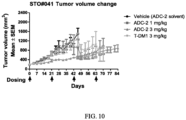
- MRG002 significantly inhibited in vivo tumor growth of breast cancers and gastric cancers, including in trastuzumab resistant tumors and T-DM1 resistant PDX models.
- MRG002 can address unmet medical needs for treating patients having HER2-expressing cancers, especially refractory HER2-expressing cancers (e.g., refractory HER2-expressing breast cancers and refractory HER2-expressing gastric cancers) and/or relapsed (e.g., metastatic) HER2-expressing cancers (e.g., relapsed HER2-expressing breast cancers and relapsed HER2-expressing gastric cancers).
- refractory HER2-expressing cancers e.g., refractory HER2-expressing breast cancers and refractory HER2-expressing gastric cancers
- relapsed e.g., metastatic
- one aspect of this document features an ADC including an anti-HER2 antibody having greater than about 90% fucosylation, at least one molecule of an anti-cancer drug, and a linker connecting the anti-HER2 antibody and the molecule(s) of said anti-cancer drug, as further defined in the claims.
- the anti-HER2 antibody can be an IgG antibody.
- the anti-HER2 antibody can be a humanized antibody.
- the anti-HER2 antibody includes a light chain having the amino acid sequence set forth in SEQ ID NO:4.
- the anti-HER2 antibody includes a heavy chain having the amino acid sequence set forth in SEQ ID NO:8 (e.g., a heavy chain having the amino acid sequence set forth in SEQ ID NO:9).
- the anti-HER2 antibody can be a MAB802 antibody.
- the anti-HER2 antibody can have less than 8% afucosylation, as further defined in the claims.
- the anti-HER2 antibody can have a binding affinity for CD16 having an equilibrium dissociation constant (KD) value of greater than about 2.5 ⁇ 10 -08 M.
- KD equilibrium dissociation constant
- the CD 16 can be a human 176Val CD16a, and the KD can be from about 6.9 ⁇ 10 -08 M to about 7.1 ⁇ 10 -08 M.
- the CD16 can be a human 176Phe CD16a, and the KD can be from about 6.6 ⁇ 10 -07 M to about 6.9 ⁇ 10 -17 M.
- the ADC comprises at least three molecules of said anti-cancer drug per molecule of antibody.
- the anti-cancer drug can be an auristatin derivative (e.g., monomethyl auristatin E).
- the linker can be a cleavable linker (e.g., a valine citruline dipeptide linker).
- this document features a composition including a plurality of ADCs, where the ADCs include an anti-HER2 antibody having greater than about 90% fucosylation, at least one molecule of an anti-cancer drug, and a linker connecting the anti-HER2 antibody and the molecule(s) of the anti-cancer drug, as further defined in the claims.
- the anti-HER2 antibody can be an IgG antibody.
- the anti-HER2 antibody can be a humanized antibody.
- the anti-HER2 antibody includes a light chain having the amino acid sequence set forth in SEQ ID NO:4.
- the anti-HER2 antibody includes a heavy chain having the amino acid sequence set forth in SEQ ID NO:8 (e.g., a heavy chain having the amino acid sequence set forth in SEQ ID NO:9).
- the anti-HER2 antibody can be a MAB802 antibody.
- the anti-HER2 antibody can have less than 8% afucosylation.
- the composition can have a drug/antibody ratio of greater than about 3.5 molecules of anti-cancer drug per anti-HER2 antibody (e.g., a drug/antibody ratio of about 3.8 molecules of anti-cancer drug per anti-HER2 antibody).
- the anti-cancer drug can be an auristatin derivative (e.g., monomethyl auristatin E).
- the linker can be a cleavable linker (e.g., a valine citruline dipeptide linker).
- this document features an ADC, where the ADC includes an anti-HER2 antibody having greater than about 90% fucosylation, at least one molecule of an anti-cancer drug, and a linker connecting the anti-HER2 antibody and the molecule(s) of anti-cancer drug, as further defined in the claims, for use in treating a mammal having a HER2-expressing cancer.
- the mammal can be a human.
- the HER2-expressing cancer can be a breast cancer.
- the HER2-expressing cancer can be a gastric cancer.
- the HER2-expressing cancer can be a refractory cancer (e.g., a trastuzumab resistant cancer or a T-DM1 resistant cancer).
- the anti-HER2 antibody can be an IgG antibody.
- the anti-HER2 antibody can be a humanized antibody.
- the anti-HER2 antibody includes a light chain having the amino acid sequence set forth in SEQ ID NO:4.
- the anti-HER2 antibody includes a heavy chain having the amino acid sequence set forth in SEQ ID NO:8 (e.g., a heavy chain having the amino acid sequence set forth in SEQ ID NO:9).
- the anti-HER2 antibody can be a MAB802 antibody.
- the anti-HER2 antibody can have less than 8% afucosylation.
- the anti-HER2 antibody can have a binding affinity for CD16 having a KD value of greater than about 2.5 ⁇ 10 -08 M.
- the CD16 can be a human 176Val CD16a, and the KD can be from about 6.9 ⁇ 10 -08 M to about 7.1 ⁇ 10 -08 M.
- the CD16 can be a human 176Phe CD 16a, and the KD can be from about 6.6 ⁇ 10 -07 M to about 6.9 ⁇ 10 -07 M.
- the ADC can have antibody-dependent cellular cytotoxicity (ADCC) activity leading to from about 0% to about 30% cell lysis (e.g., from about 13.9% to about 15.7% cell lysis).
- the ADC can include at least three molecules of anti-cancer drug per molecule of anti-HER2 antibody.
- the anti-cancer drug can be an auristatin derivative (e.g., monomethyl auristatin E).
- the linker can be a cleavable linker (e.g., a valine citruline dipeptide linker).
- the administering can include administering about 0.6 mg to about 4 mg of ADC per kg body
- Any reference to a method of treatment of the human or animal body by therapy involving a certain compound or composition is to be understood as a reference to said compound or composition for use in said method.
- ADCs provided herein can include an antibody targeting a tumor-associated antigen (a HER2 polypeptide) and an anti-cancer drug, as further defined in the claims, that can be used for treating a mammal (e.g., a human) having a cancer expressing the antigen (a HER2-expressing cancer).
- ADCs include an anti-HER2 antibody (e.g., MAB802) and at least one (e.g., 2, 3, 4, 5, or more) molecule of one or more anti-cancer drugs (e.g., an auristatin derivative such as MMAE), as further defined in the claims.
- ADCs provided herein and as defined in the claims can be used for treating a mammal (e.g., a human) having a cancer expressing the antigen (a HER2-expressing cancer).
- a mammal e.g., a human
- one or more ADCs containing an anti-HER2 antibody and an anti-cancer drug as further defined in the claims are suitable for administration to a mammal having a HER2-expressing cancer to reduce the severity of the cancer, to reduce a symptom of the cancer, and/or to reduce the number of cancer cells present within the mammal.
- ADCs containing an anti-HER2 antibody e.g., MAB802
- at least one (e.g., 2, 3, 4, 5, or more) molecule of one or more anti-cancer drugs e.g., an auristatin derivative such as MMAE
- ADCs described herein bind to HER2 receptors on tumor cell surface, are internalized via receptor-mediated endocytosis, release MMAE inside the lysosome, and cause suppression of tumor cell growth and/or cell death.
- ADCs described herein include an appropriate anti-HER2 antibody, as further defined in the claims.
- an "antibody” can be a complete antibody or an antigen-binding (Fab) fragment (e.g., a naturally occurring Fab or a synthetic Fab (e.g., a fusion protein such as a single-chain variable fragment (scFv)).
- Fab antigen-binding
- an anti-HER2 antibody can include any complete antibody or antibody fragment having binding affinity for a HER2 polypeptide.
- An anti-HER2 antibody can be any appropriate class and subclass (e.g., IgG such as IgG1, IgG2, IgG3, and IgG4; IgA such as IgA1 and IgA2; IgD; IgE; and IgM).
- the anti-HER2 antibody as defined in the claims can be an IgG (e.g., an IgG1) antibody.
- An anti-HER2 antibody can be a recombinant antibody.
- An anti-HER2 antibody can be a chimeric antibody (e.g., a humanized antibody).
- an anti-HER2 antibody can be a humanized antibody.
- the anti-HER2 antibody as defined in the claims is a monoclonal antibody.
- An anti-HER2 antibody can be a monospecific antibody or a bispecific antibody.
- the bispecific anti-HER2 antibody can have binding affinity for a HER2 polypeptide and binding affinity for a second antigen.
- An anti-HER2 antibody can have binding affinity for a phosphorylated HER2 polypeptide or can have binding affinity for a non-phosphorylated HER2 polypeptide.
- the anti-HER2 antibody light chain as defined in the claims includes the complementarity-determining regions (CDRs) set forth below:
- the anti-HER2 antibody light chain including CDRs set forth in SEQ ID NO: 1, SEQ ID NO:2, and SEQ ID NO:3 includes an amino acid sequence set forth in SEQ ID NO:4.
- the anti-HER2 antibody heavy chain as defined in the claims includes the CDRs set forth below:
- the anti-HER2 antibody heavy chain including CDRs set forth in SEQ ID NO:5, SEQ ID NO:6, and SEQ ID NO:7 includes an amino acid sequence set forth in SEQ ID NO:8, SEQ ID NO:9, or SEQ ID NO:10.
- an anti-HER2 antibody heavy chain can have an amino acid sequence that is at least 75 percent (e.g., at least 78%, at least 79%, at least 80%, at least 81%, at least 82%, at least 83%, at least 84%, at least 85%, at least 90%, at least 95%, at least 99%, or 100%) identical to the sequence set forth in any one of SEQ ID NO:9 to SEQ ID NO:10.
- an anti-HER2 antibody can have an amino acid sequence that is at least 75% identical to SEQ ID NO:9 and includes the amino acid sequence set forth in SEQ ID NO: 8, including the CDRs set forth in SEQ ID NO:5, SEQ ID NO:6, and SEQ ID NO:7.
- an anti-HER2 antibody can have an amino acid sequence that is at least 75% identical to SEQ ID NO:9, includes the amino acid sequence set forth in SEQ ID NO: 8, including the CDRs set forth in SEQ ID NO:5, SEQ ID NO:6, and SEQ ID NO:7, and has an EEM sequence at residues 359-361.
- anti-HER2 antibodies that can be used in an ADC described herein include, without limitation, MAB802, trastuzumab.
- nucleic acids encoding anti-HER2 antibodies described herein as well as constructs (e.g., expression constructs) for expressing nucleic acids encoding anti-HER2 antibodies described herein.
- the anti-HER2 antibody as defined in the claims has an increased level of fucosylation and optionally a decreased level of afucosylation (e.g., relative to other anti-HER2 antibodies, such as anti-HER2 antibodies used in current FDA-approved HER2-targeted therapies (e.g., trastuzumab)).
- the percent fucosylation refers to the molar percentage of glycans attached to the antibody that contain fucose (i.e ., the percentage ratio of the molar amount of the fucosylated glycans to the total molar amount of both fucosylated and non-fucosylated glycans).
- the percent afucosylation refers to the molar percentage of glycans attached to the antibody that do not contain fucose (i.e ., the percentage ratio of the molar amount of the non-fucosylated glycans to the total molar amount of both fucosylated and non-fucosylated glycans).
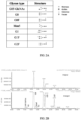
- Examples of glycan types can be as shown in Figure 2A .
- the percent fucosylation can be determined as a ratio of the total amount of fucorylated glycans (G0F-GlcNAc. G0F, G1F and G2F) divided by the total amount of all the glycans (G0F-GlcNAc. G0, G0F, Man5, G1, G1F and G2F).
- the percent afucosylation can be determined as the ratio of the total amount of the non-fucosylated glycans (G0, Man5 and G1) to divided by the total amount of all the glycans (G0F-GlcNAc. G0, G0F, Man5, G1, G1F and G2F).
- the anti-HER2 antibody as defined in the claims has an increased level of fucosylation and optionally a decreased level of afucosylation in the Fc region of the antibody.
- Any appropriate method can be used to determine the amount of fucosylation on an antibody.
- a glycosylation analysis e.g., an N-glycan analysis
- HPLC see, e.g., the Examples
- EUROPEAN PHARMACOPOEIA 8.0; 2.2.59. Glycan analysis of glycoproteins can be performed using HPLC (see, e.g., the Examples) or as described elsewhere (see, e.g., EUROPEAN PHARMACOPOEIA 8.0; 2.2.59. Glycan analysis of glycoproteins).
- the anti-HER2 antibody as defined in the claims has greater than 90% fucosylation, and in some cases greater than about 91%, greater than about 92%, greater than about 93%, greater than about 94%, greater than about 95%, greater than about 95%, greater than about 96%, greater than about 98%, greater than about 99%, or about 100% fucosylation).
- the anti-HER2 antibody as defined in the claims can have from 90% to about 100% fucosylation (e.g., from about 93% to about 100%, from about 95% to about 100%, from about 97% to about 100%, from 90% to about 97%, from 90% to about 95%, from 90% to about 92%, or from about 92% to about 98%, or from about 92% to about 99% fucosylation).
- an anti-HER2 antibody can have about 97.77% or about 98% fucosylation.
- an anti-HER2 antibody can have less than 10% afucosylation (e.g., less than about 9%, less than about 8%, less than about 7%, less than about 6%, less than about 5%, less than about 4%, less than about 3%, less than about 2%, less than about 1%, or less than about 0.5% afucosylation).
- an anti-HER2 antibody can have from about 0% to 10% afucosylation (e.g., from about 0% to about 9%, from about 0% to about 8%, from about 0% to about 7%, from about 0% to about 6%, from about 0% to about 5%, from about 0% to about 4%, from about 0% to about 3%, from about 0% to about 2%, from about 0% to about 1%, from about 1% to 10%, from about 3% to 10%, from about 5% to 10%, from about 7% to 10%, from about 1% to 10%, from about 2% to about 7%, from about 3% to about 6%, from about 0.5% to about 5%, from about 1% to about 5%, from about 1.5% to about 4%, or from about 2% to about 3% afucosylation).
- an anti-HER2 antibody can have about 2.23% afucosylation.
- an anti-HER2 antibody can be modified to have an increased level of fucosylation and to have a decreased level of afucosylation.
- Any appropriate method can be used to alter (e.g., increase or decrease) the fucosylation level of an anti-HER2 antibody.
- the level of fucosylation on an anti-HER2 antibody can be altered, for example, by modifying culture medium osmolality.
- the level of fucosylation on an anti-HER2 antibody can be increased using, for example, a fucosyltransferase.
- the level of fucosylation on an anti-HER2 antibody can be decreased using, for example, a fucosyltransferase inhibitor.
- an anti-HER2 antibody can be modified to have an increased level of fucosylation and/or to have a decreased level of afucosylation as described elsewhere (see, e.g., Konno et al., 2012 Cytotechnology, 64:249-265 ; and Yamane-Ohnuki et al., 2009 mAbs, 1:3 ).
- An anti-HER2 antibody can have decreased antibody-dependent cellular cytotoxicity (ADCC) activity (e.g., relative to other anti-HER2 antibodies, such as anti-HER2 antibodies used in current FDA-approved HER2-targeted therapies (e.g., trastuzumab)).
- ADCC antibody-dependent cellular cytotoxicity
- an anti-HER2 antibody can have ADCC activity leading to decreased cell lysis.
- an anti-HER2 antibody can have ADCC activity leading to less than about 30% cell lysis (e.g., less than about 30%, less than about 29%, less than about 29%, less than about 28%, less than about 27%, less than about 26%, less than about 25%, less than about 24%, less than about 23%, less than about 22%, less than about 21%, less than about 20%, less than about 19%, less than about 18%, less than about 17%, less than about 16%, less than about 15%, less than about 14%, less than about 13%, less than about 12%, less than about 11%, less than about 10%, less than about 9%, less than about 8%, less than about 7%, less than about 6%, or less than about 5%).
- cell lysis e.g., less than about 30%, less than about 29%, less than about 29%, less than about 28%, less than about 27%, less than about 26%, less than about 25%, less than about 24%, less than about 23%, less than about 22%, less
- an anti-HER2 antibody can have ADCC activity leading to from about 0% to about 30% cell lysis (e.g., from about 0% to about 28%, from about 0% to about 25%, from about 0% to about 22%, from about 0% to about 20%, from about 0% to about 17%, from about 0% to about 15%, from about 0% to about 13%, from about 0% to about 10%, from about 0% to about 5%, from about 2% to about 30%, from about 5% to about 30%, from about 10% to about 30%, from about 12% to about 30%, from about 15% to about 30%, from about 18% to about 30%, from about 20% to about 30%, from about 22% to about 30%, from about 25% to about 30%, from about 3% to about 25%, from about 5% to about 22%, from about 8% to about 20%, from about 10% to about 18%, or from about 13% to about 16% cell lysis).
- an anti-HER2 antibody can have ADCC activity leading to from about 13.9% to about 15.7% cell lysis.
- An anti-HER2 antibody can have decreased CD16 binding affinity (e.g., relative to other anti-HER2 antibodies, such as anti-HER2 antibodies used in current FDA-approved HER2-targeted therapies (e.g., trastuzumab)).
- the CD16 can be a human CD16.
- the CD16 can be a CD16a or a CD16b form of CD16.
- the CD16 can be a CD16a.
- the CD16 can have a valine residue at position 176 (e.g., a 176Val CD16).
- the CD16 can have a phenylalanine residue at position 176 (e.g., a 176Phe CD16).
- an anti-HER2 antibody can have a CD16 binding affinity having an equilibrium dissociation constant (KD) value of greater than about 2.5 ⁇ 10 -08 M (e.g., greater than about 2.7 ⁇ 10 -08 M, greater than about 3.0 ⁇ 10 -08 M, greater than about 3.2 ⁇ 10 -08 M, greater than about 3.5 ⁇ 10 -08 M, greater than about 4.0 ⁇ 10 -08 M, greater than about 4.3 ⁇ 10 -08 M, greater than about 4.5 ⁇ 10 -08 M, greater than about 4.8 ⁇ 10 -08 M, greater than about 5.0 ⁇ 10 -08 M, greater than about 5.3 ⁇ 10 -08 M, greater than about 5.5 ⁇ 10 -08 M, greater than about 5.7 ⁇ 10 -08 M, greater than about 6.0 ⁇ 10 -08 M, greater than about 6.2 ⁇ 10 -08 M, greater than about 6.5 ⁇ 10 -08 M, greater than about 6.8 ⁇ 10 -08 M, greater than about 2.5 ⁇ 10 -08 M, greater than about 7.0
- an anti-HER2 antibody can have a CD16 binding affinity having a KD value of from about 2.5 ⁇ 10 -08 M to about 10.0 ⁇ 10 -08 M (e.g., from about 3.0 ⁇ 10 -08 M to about 10.0 ⁇ 10 -08 M, from about 3.5 ⁇ 10 -08 M to about 10.0 ⁇ 10 -08 M, from about 4.0 ⁇ 10 -08 M to about 10.0 ⁇ 10 -08 M, from about 4.5 ⁇ 10 -08 M to about 10.0 ⁇ 10 -08 M, from about 5.0 ⁇ 10 -08 M to about 10.0 ⁇ 10 -08 M, from about 5.5 ⁇ 10 -08 M to about 10.0 ⁇ 10 -08 M, from about 6.0 ⁇ 10 -08 M to about 10.0 ⁇ 10 -08 M, from about 6.5 ⁇ 10 -08 M to about 10.0 ⁇ 10 -08 M, from about 6.8 ⁇ 10 -08 M to about 10.0 ⁇ 10 -08 M, from about 7.0 ⁇ 10 -08 M to about 10.0 ⁇ 10 -08
- an anti-HER2 antibody can have a CD16 binding affinity (e.g., a binding affinity for a human 176Val CD16a) having a KD value of from about 6.9 ⁇ 10 -08 M (e.g., about 6.988 ⁇ 10 -08 M) to about 7.1 ⁇ 10 -08 M (e.g., about 7.089 ⁇ 10 -08 M).
- CD16 binding affinity e.g., a binding affinity for a human 176Val CD16a
- KD value of from about 6.9 ⁇ 10 -08 M (e.g., about 6.988 ⁇ 10 -08 M) to about 7.1 ⁇ 10 -08 M (e.g., about 7.089 ⁇ 10 -08 M).
- an anti-HER2 antibody can have a CD16 binding affinity (e.g., a binding affinity for a human 176Phe CD16a) having a KD value of from about 6.6 ⁇ 10 -07 M (e.g., about 6.620 ⁇ 10 -07 M) to about 6.9 ⁇ 10 -07 M (e.g., about 6.894 ⁇ 10 -07 M).
- CD16 binding affinity e.g., a binding affinity for a human 176Phe CD16a
- KD value of from about 6.6 ⁇ 10 -07 M (e.g., about 6.620 ⁇ 10 -07 M) to about 6.9 ⁇ 10 -07 M (e.g., about 6.894 ⁇ 10 -07 M).
- ADCs described herein can include any appropriate anti-cancer drugs.
- the one or more anti-cancer drugs can include one or more molecules of a single anti-cancer drug (e.g., per anti-HER2 antibody).
- the one or more anti-cancer drugs can include one or more molecules of two or more different anti-cancer drugs (e.g., per anti-HER2 antibody).
- An anti-cancer drug can be a cytotoxic agent.
- An anti-cancer drug can be an antimicrotubule agent.
- An anti-cancer drug can be a microtubule-formation inhibitor.
- An anti-cancer drug can be an antineoplastic agent.
- An anti-cancer drug can be naturally occurring compound or a synthetic drug.
- anti-cancer drugs that can be used in ADCs described herein include, without limitation, auristatins (e.g., monomethyl auristatin E (MMAE) and monomethyl auristatin F (MMAF)), maytansines (e.g., mertansine (DM1), maitansine (INN), and maytansine (USAN)), pyrrolobenzodiazepines (PBDs), duocarmycins, calicheamicins, SN-38, amanitin, and eribulin, or derivatives thereof.
- auristatins e.g., monomethyl auristatin E (MMAE) and monomethyl auristatin F (MMAF)
- maytansines e.g., mertansine (DM1), maitansine (INN), and maytansine (USAN)
- PBDs pyrrolobenzodiaze
- ADCs containing an anti-HER2 antibody and one or more anti-cancer drugs can include one or more molecules of MMAE per molecule of the antibody.
- ADCs described herein include one or more linkers connecting the anti-HER2 antibody and the one or more anti-cancer drugs.
- a linker can be any appropriate linker.
- linker Since a function of the linker is to provide a physical connection between the antibody and drug, a wide variety of chemical groups can, in principle, serve as a linker.
- the linker typically a divalent organic linking group where one valency represents the point of attachment to the antibody and one valency represents the attachment to the drug.
- a linker can be a cleavable linker or a non-cleavable linker. In some cases, a linker can be a cleavable linker. For example, a cleavable linker can be cleaved by an enzyme such as cathepsin B.
- a linker can be a peptide linker that includes one or more (e.g., 1, 2, 3, 4, or more) amino acids (e.g., natural amino acids or non-natural amino acids). For example, a peptide linker can include one or more of valine and/or citruline.
- a linker can also be a biodegradable linker.
- linkers that can be used in ADCs described herein include, without limitation, valine citruline dipeptide linkers (vcLinkers), disulfide linkers, thioether linkers, SPP, SMCC, SPDB, MC, acetyl butyrate, and CL2A, and/or hadrazone,PEG4-Mal,b-glucuronide.
- vcLinkers valine citruline dipeptide linkers
- disulfide linkers disulfide linkers
- thioether linkers SPP
- SMCC SMCC
- SPDB thioether linkers
- MC acetyl butyrate
- CL2A acetyl butyrate
- hadrazone PEG4-Mal,b-glucuronide
- ADCs containing an anti-HER2 antibody and one or more anti-cancer drugs can include a vcLinker connecting the anti-HER2 antibody and the one or more anti-cancer drugs.
- the linker is of the formula: -L 1 x -A y -L 2 z - wherein:
- Ay is a an amino acid or peptide group, wherein:
- L 1 groups include , e.g .:-O-, -S-, -S(O)-, -S(O) 2 -, -C(O)-, -NH-, -N(C 1 -C 6 )alkyl, -NHC(O)-, -C(O)NH-, -O(CO)-, -C(O) O-, -O(CO)NH-, -NHC(O)O-, -O(CO)O-, -NHC(O)NH-, -O(C 1 -C 6 )alkylene-, -S(C 1 -C 6 )alkylene-, - S(O)(C 1 -C 6 )alkylene-, -S(O) 2 (C 1 -C 6 )alkylene-, -C(O)(C 1 -C 6 )alkylene-, -NH((C 1 -C 6 )alkylene-
- Suitable heteroalkylene groups can include one or more 1,2-dioxyethylene units -(O-CH 2 CH 2 ) n O-, where n is an integer, e.g ., 1, 2, 3, 4 or 5).
- the -(C 1 -C 10 )alkylene- and -(C 1 -C 10 )heteroalkylene also include -(C 1 -C 6 )alkylene- and -(C 1 -C 6 )heteroalkylene and -(C 1 -C 3 )alkylene- and -(C 1 -C 3 )heteroalkylene
- Suitable L 3 groups include groups of formula -(C 1 -C 10 )alkylene- or -(C 1 -C 10 )heteroalkylene, such as -CH 2 -, -(CH 2 ) 2 -, -(CH 2 ) 3 -, -(CH 2 ) 4 -, -(CH 2 ) 5 -, -(CH 2 ) 6 -, -(CH 2 ) 7 -, -(CH 2 ) 8 -, -CH 2 CH 2 OCH 2 -, and -CH 2 CH 2 OCH 2 CH 2 OCH 2 -.
- L 3 is of the formula -(CH 2 ) 5 -.
- the amino acid or peptide group when present, is an amino acid, or a dipeptide, tripeptide, tetrapeptide, pentapeptide, hexapeptide, heptapeptide, octapeptide, nonapeptide, decapeptide, undecapeptide or dodecapeptide unit.
- each A is a group of the formula: -NH-CH(A 1 )-C(O)-
- each A is an amino acid moiety selected from alanine, citrulline, cysteine, aspartic acid, glutamic acid, phenylalanine, glycine, histidine, isoleucine, lysine, leucine, methionine, asparagine, pyrrolysine, proline, glutamine, arginine, serine, threonine, selenocyseine, valine, tryptophan, and tyrosine.
- the amino acid groups forming A can be of R or S (or D or L) configuration.
- the amino acids can be of naturally occurring configuration (i.e ., S or L; or R / L in the case of cysteine).
- A is a dipeptide of the following formula: -NH-CH(A 11 )-C(O)-NH-CH(A 12 )-C(O)- wherein A 11 and A 12 are independently selected from groups of formula A1 as defined above.
- a 11 can be methyl and A 12 can be (CH 2 ) 4 NH 2 .
- a 11 can be isopropyl and A 12 can be (CH 2 ) 4 NH 2 .
- a 11 can be benzyl and A 12 can be (CH 2 ) 4 NH 2 .
- a 11 can be indol-3-ylmethyl and A 12 can be (CH 2 ) 4 NH 2 .
- a 11 can be methyl and A 12 can be (CH 2 ) 3 NHCONH 2 . In some embodiments A 11 can be isopropyl and A 12 can be (CH 2 ) 3 NHCONH 2 . In some embodiments A 11 can be benzyl and A 12 can be (CH 2 ) 3 NHCONH 2 . In some embodiments A 11 can be indol-3-ylmethyl and A 12 can be (CH 2 ) 3 NHCONH 2 .
- L 2 when present, links the amino acid or peptide moiety of formula -A y - to the drug molecule.
- suitable L 2 groups include ,
- the group of L 2 is one that can disintegrate to release the drug molecule upon hydrolysis of a bond between the amino acid or peptide moiety -A y - and L2.
- a Compound of the Invention containing a self-immolative Spacer unit can release --D without the need for a separate hydrolysis step.
- --Y-- is a PAB group that is linked to --W.sub.w-- via the amino nitrogen atom of the PAB group, and connected directly to -D via a carbonate, carbamate or ether group.
- Scheme 2 depicts a possible mechanism of Drug release of a PAB group which is attached directly to --D via a carbamate or carbonate group.
- An example of such a group is a para-amino benzyl L 2 group of formula -NH-p-C 6 H 4 -CH 2 - or NH-p-C 6 H 4 -CH 2 -OC(O) that can release drug via an elimination reaction.
- the linker can be of the following formula: or one of the following formulae (with an S or NH group forming the link between the antibody and linking group:
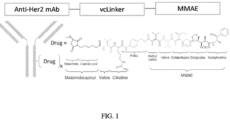
- ADCs described herein can include a MAB802 antibody and about, on average, 3.8 molecules of MMAE linked by a vcLinker.
- an ADC can be as described in Example 1.
- an ADC can be as shown in Figure 1 .
- ADCs described herein can have decreased ADCC activity (e.g., relative to other anti-HER2 antibodies, such as anti-HER2 antibodies used in current FDA-approved HER2-targeted therapies (e.g., trastuzumab)).
- ADCs described herein can have ADCC activity leading to decreased cell lysis.
- an ADC can have ADCC activity leading to less than about 30% cell lysis (e.g., less than about 30%, less than about 29%, less than about 29%, less than about 28%, less than about 27%, less than about 26%, less than about 25%, less than about 24%, less than about 23%, less than about 22%, less than about 21%, less than about 20%, less than about 19%, less than about 18%, less than about 17%, less than about 16%, less than about 15%, less than about 14%, less than about 13%, less than about 12%, less than about 11%, less than about 10%, less than about 9%, less than about 8%, less than about 7%, less than about 6%, or less than about 5%).
- cell lysis e.g., less than about 30%, less than about 29%, less than about 29%, less than about 28%, less than about 27%, less than about 26%, less than about 25%, less than about 24%, less than about 23%, less than about 22%, less than about 2
- an ADC can have ADCC activity leading to from about 0% to about 30% cell lysis (e.g., from about 0% to about 28%, from about 0% to about 25%, from about 0% to about 22%, from about 0% to about 20%, from about 0% to about 17%, from about 0% to about 15%, from about 0% to about 13%, from about 0% to about 10%, from about 0% to about 5%, from about 2% to about 30%, from about 5% to about 30%, from about 10% to about 30%, from about 12% to about 30%, from about 15% to about 30%, from about 18% to about 30%, from about 20% to about 30%, from about 22% to about 30%, from about 25% to about 30%, from about 1% to about 25%, from about 3% to about 22%, from about 5% to about 20%, from about 7% to about 18%, or from about 10% to about 13% cell lysis).
- an ADC can have ADCC activity leading to from about 9.9% to about 12.7% cell lysis.
- an ADC can have ADCC activity leading to from
- ADCs described herein can have decreased CD16 binding affinity (e.g., relative to other anti-HER2 antibodies, such as anti-HER2 antibodies used in current FDA-approved HER2-targeted therapies (e.g., trastuzumab)).
- the CD16 can be a human CD16.
- the CD16 can be a CD16a or a CD16b form of CD16.
- the CD16 can be a CD16a.
- the CD16 can have a valine residue at position 176 (e.g., a 176Val CD16).
- the CD16 can have a phenylalanine residue at position 176 (e.g., a 176Phe CD16). In some cases, the CD16 can have a phenylalanine residue at position 176.
- an ADC can have a CD16 binding affinity having a KD value of greater than about 2.5 ⁇ 10 -08 M (e.g., greater than about 2.7 ⁇ 10 -08 M, greater than about 3.0 ⁇ 10 -08 M, greater than about 3.2 ⁇ 10 -08 M, greater than about 3.5 ⁇ 10 -08 M, greater than about 4.0 ⁇ 10 -08 M, greater than about 4.3 ⁇ 10 -08 M, greater than about 4.5 ⁇ 10 -08 M, greater than about 4.8 ⁇ 10 -08 M, greater than about 5.0 ⁇ 10 -08 M, greater than about 5.3 ⁇ 10 -08 M, greater than about 5.5 ⁇ 10 -08 M, greater than about 5.7 ⁇ 10 -08 M, greater than about 6.0 ⁇ 10 -08 M, greater
- an ADC can have a CD16 binding affinity having a KD value of from about 2.5 ⁇ 10 -08 M to about 10.0 ⁇ 10 -08 M (e.g., from about 3.0 ⁇ 10 -08 M to about 10.0 ⁇ 10 -08 M, from about 3.5 ⁇ 10 -08 M to about 10.0x 10 -08 M, from about 4.0 ⁇ 10 -08 M to about 10.0 ⁇ 10 -08 M, from about 4.5 ⁇ 10 -08 M to about 10.0 ⁇ 10 -08 M, from about 5.0 ⁇ 10 -08 M to about 10.0 ⁇ 10 -08 M, from about 5.5 ⁇ 10 -08 M to about 10.0 ⁇ 10 -08 M, from about 6.0 ⁇ 10 -09 M to about 10.0 ⁇ 10 -08 M, from about 6.5 ⁇ 10 -08 M to about 10.0 ⁇ 10 -09 M, from about 6.8 ⁇ 10 -08 M to about 10.0 ⁇ 10 -08 M, from about 7.0 ⁇ 10 -08 M to about 10.0 ⁇ 10 -08 M (e
- an ADC can have a CD16 binding affinity (e.g., a binding affinity for a human 176Val CD16a) having a KD value of about 8.094 ⁇ 10 -08 M to about 8.465 ⁇ 10 -08 M.
- an ADC can have a CD16 binding affinity (e.g., a binding affinity for a human 176Phe CD16a) having a KD value of about 7.87 ⁇ 10 -07 M to about 9.708 ⁇ 10 -07 M.
- ADCs described herein can have at least one (e.g., 1, 2, 3, 4, 5, 6, or more) molecule of an anti-cancer drug (e.g., per molecule of anti-HER2 antibody). In some ADCs described herein can have more than one (e.g., 2, 3, 4, 5, 6, or more) molecule of an anti-cancer drug (e.g., per molecule of anti-HER2 antibody).
- an ADC can have from about 3 molecules to about 8 molecules of MMAE (e.g., from about 3 molecules to about 7 molecules, from about 3 molecules to about 6 molecules, from about 3 molecules to about 5 molecules, from about 3 molecules to about 4 molecules, from about 4 molecules to about 8 molecules, from about 5 molecules to about 8 molecules, from about 6 molecules to about 8 molecules, from about 7 molecules to about 8 molecules, from about 4 molecules to about 7 molecules, from about 5 molecules to about 6, from about 4 molecules to about 5 molecules, or molecules from about 6 molecules to about 7 molecules of MMAE).
- ADCs described herein can have about 3 to about 4 molecules of MMAE per molecule of MAB802.
- ADCs described herein can have, on average, about 3.8 molecules of MMAE per molecule of MAB802.
- ADCs described herein (ADCs containing an anti-HER2 antibody and one or more anti-cancer drugs (e.g., MMAE), as further defined in the claims) can have an increased DAR (e.g., relative to other HER2-targeted ADCs, such current FDA-approved HER2-targeted ADCs (e.g., T-DM1)).
- the DAR refers to the number of molecules of anti-cancer drug conjugated to an anti-HER2 antibody.
- ADCs described herein typically contain a whole number of molecules of anti-cancer drug, and that any DAR provided as a rational number (e.g., suggesting a fraction or portion of a molecule) is intended to refer an average number of molecules of anti-cancer drug per anti-HER2 antibody.
- an ADC can have a DAR of greater than about 3.5 (e.g., greater than about 3.55, greater than about 3.6, greater than about 3.65, greater than about 3.7, greater than about 3.75, or greater than about 3.8).
- an ADC can have a DAR of from about 3.5 to about 8 (e.g., from about 4 to about 8, from about 4.5 to about 8, from about 5 to about 8, from about 5.5 to about 8, from about 6 to about 8, from about 6.5 to about 8, from about 7 to about 8, from about 3.5 to about 7, from about 3.5 to about 6.5, from about 3.5 to about 6, from about 3.5 to about 5.5, from about 3.5 to about 5, from about 3.5 to about 4.5, from about 3.5 to about 4, from about 3.6 to about 7, from about 3.7 to about 6, or from about 3.8 to about 5).
- an ADC can have a DAR of about 3.8.
- ADCs described herein can have ADCC activity leading to from about 9.9% to about 12.7% cell lysis (e.g., about 11.3% cell lysis), can have a CD16 binding affinity (e.g., a binding affinity for a human 176Val CD16a) having a KD value of about 8.094 ⁇ 10 -08 M to about 8.465 ⁇ 10 -08 M, can have a CD16 binding affinity (e.g., a binding affinity for a human 176Phe CD16a) having a KD value of about 7.877 ⁇ 10 -07 M to about 9.708 ⁇ 10 -17 M, and/or can have a DAR of about 3.8.
- CD16 binding affinity e.g., a binding affinity for a human 176Val CD16a
- a CD16 binding affinity e.g., a binding affinity for a human 176Phe CD16a
- ADCs described herein can include one or more additional components.
- ADCs can include detectable labels such as, without limitation, fluorescent labels (e.g., to monitor loca).
- the ADC can be represented by the following formula: wherein AB represents the antibody and k represents the number of attached linker/drug groups per molecule of antibody. For any given antibody molecule, k represents an integer, such as 0, 1, 2, 3, 4, 5, 6, 7, 8, 9, or 10. For the ADC represented as a whole, k represents the drug/antibody ratio (i.e., the average number of drug molecules attached per antibody). In some embodiments, k can be in the range from about 1 to about 6, e.g., about 1, about 1.5, about 2, about 2.5, about 3, about 3.5, about 4, about 4.5, about 5, about 5.5, or about 6. In some embodiments, k can be about 3.5 or greater, e.g., about 3.55 or greater, about 3.6 or greater, about 3.7 or greater, about 3.75 or greater, or about 3.8 or greater.
- ADCs described herein ADCs containing an anti-HER2 antibody (e.g., MAB802) and one or more anti-cancer drugs
- an ADC containing an anti-HER2 antibody and one or more anti-cancer drugs can be used for treating a mammal (e.g., a human) having a HER2-expressing cancer.
- the terms "treat” or “treating” refer to one or more of (1) preventing a disease; e.g., preventing a disease, condition or disorder in an individual who may be predisposed to the disease, condition or disorder but does not yet experience or display the pathology or symptomatology of the disease; (2) inhibiting a disease; e.g., inhibiting a disease, condition or disorder in an individual who is experiencing or displaying the pathology or symptomatology of the disease, condition or disorder ( i.e.
- ameliorating a disease for example, ameliorating a disease, condition or disorder in an individual who is experiencing or displaying the pathology or symptomatology of the disease, condition or disorder ( i.e ., reversing the pathology and/or symptomatology) such as decreasing the severity of disease or reducing or alleviating one or more symptoms of the disease.
- treating cancer can include reducing the number, frequency, or severity of one or more (e.g., two, three, four, or five) signs or symptoms of a cancer in a mammal having a cancer.
- treatment can reduce the severity of a cancer (e.g., can reduce the number of cancer cells in and/or reduce the size (e.g., volume) of a tumor), reduce cancer progression (e.g., can reduce or eliminate tumor growth and/or metastasis or can reduce the proliferative, migratory, and/or invasive potential of cancer cells), and/or reduce the risk of re-occurrence of a cancer in a mammal having cancer.
- administration of one or more ADCs containing an anti-HER2 antibody (e.g., MAB802) and one or more anti-cancer drugs (e.g., MMAE), as further defined in the claims, to a mammal (e.g., a human) having a HER2-expressing cancer can inhibit cancer cell growth of HER2-expressing cancer cells.
- administration of one or more ADCs containing an anti-HER2 antibody (e.g., MAB802) and one or more anti-cancer drugs (e.g., MMAE), as further defined in the claims, to a mammal (e.g., a human) having a HER2-expressing cancer can reduce the tumor volume of a HER2-expressing tumor.
- Any appropriate mammal having a HER2-expressing cancer can be treated as described herein.
- humans and other primates such as monkeys having a HER2-expressing cancer can be treated with one or more ADCs described herein (ADCs containing an anti-HER2 antibody (e.g., MAB802) and one or more anti-cancer drugs, as further defined in the claims) to reduce a symptom of the cancer, and/or to reduce the number of cancer cells present within the mammal within the human or other primate.
- ADCs described herein ADCs containing an anti-HER2 antibody (e.g., MAB802) and one or more anti-cancer drugs, as further defined in the claims) to reduce a symptom of the cancer, and/or to reduce the number of cancer cells present within the mammal within the human or other primate.
- dogs, cats, horses, cows, pigs, sheep, mice, and rats having a HER2-expressing cancer can be treated with one or more ADCs containing an anti-HER2 antibody (e.g., MAB802) and one or more anti-cancer drugs as further defined in the claims.
- ADCs containing an anti-HER2 antibody e.g., MAB802
- anti-cancer drugs as further defined in the claims.
- the HER2-expressing cancer can be any appropriate HER2-expressing cancer.
- a HER2-expressing cancer can be a refractory cancer (e.g., a cancer that is resistant (e.g., does not respond to) an anti-cancer drug).
- a cancer treated as described herein can be a trastuzumab resistant cancer.
- a cancer treated as described herein can be a T-DM1 resistant cancer.
- a HER2-expressing cancer can be a relapsed (e.g., metastatic) cancer.
- HER2-expressing cancers that can be treated as described herein include, without limitation, breast cancers, gastric cancers, lung cancers, colon cancers, ovarian cancers, bladder cancers, cervical cancers, prostate cancers, thyroid cancers, head and neck carcinomas, glioblastomas, and sarcomas.
- a HER2-expressing cancer can be a HER2-expressing breast cancer (e.g., a trastuzumab and/or T-DM1 resistant breast cancer).
- a HER2-expressing cancer can be a HER2-expressing gastric cancer (e.g., a trastuzumab and/or T-DM1 resistant gastric cancer).
- a mammal having cancer can be assessed to determine if the cancer is a HER2-expressing cancer.
- Any appropriate method can be used to determine whether or not a cancer is a HER2-expressing cancer.
- expression of HER2 can be determined using, for example, a transcription assay such as RT-PCR and/or a translation assay such as a western blot analysis.
- a mammal can be administered one or more ADCs described herein (ADCs containing an anti-HER2 antibody (e.g., MAB802) and one or more anti-cancer drugs, as further defined in the claims).
- ADCs containing an anti-HER2 antibody e.g., MAB802
- anti-cancer drugs as further defined in the claims.
- One or more ADCs described herein can be administered to a mammal having a cancer as a combination therapy with one or more additional agents used to treat a cancer.
- one or more ADCs described herein can be administered to a mammal in combination with one or more anti-cancer treatments (e.g. , radiation therapy, chemotherapy, other targeted therapies, hormonal therapy, angiogenesis inhibitors, and/or immune checkpoint inhibitors such as anti-PD-1 antibodies, anti-PD-L1 antibodies, anti-CTLA4 antibodies, and anti-TIGIT antibodies).
- anti-cancer treatments e.g. , radiation therapy, chemotherapy, other targeted therapies, hormonal therapy, angiogenesis inhibitors, and/or immune checkpoint inhibitors such as anti-PD-1 antibodies, anti-PD-L1 antibodies, anti-CTLA4 antibodies, and anti-TIGIT antibodies.
- compositions including one or more ADCs described herein are used with additional agents treat a cancer
- the one or more additional agents can be administered at the same time or independently.
- a composition including one or more ADCs described herein can be administered first, and the one or more additional agents administered second, or vice versa.
- ADCs described herein can be formulated into a composition (e.g., a pharmaceutically acceptable composition) for administration to a mammal having a HER2-expressing cancer.
- a therapeutically effective amount of one or more ADCs described herein can be formulated into a composition suitable for administration to a mammal having a HER2-expressing cancer to treat the mammal.
- a composition can be a sterile composition.
- a composition can be formulated for administration in any appropriate form including, without limitation, solutions, suspensions, sustained-release formulations, tablets, capsules, pills, powders, and granules.
- a composition containing one or more ADCs described herein can include a plurality (e.g., 2, 3, 4, 5, 6, 7, 8, 9, 10, 11, 12, 15, 20, 25, 50, 75, 100, or more) of antibody-drug conjugates.
- ADCs described herein within a composition containing a plurality of ADCs can contain the same number of molecules of one or more anti-cancer drugs.
- ADCs described herein within a composition containing a plurality of ADCs can contain differing numbers of molecules of one or more anti-cancer drugs.
- a composition can have an increased DAR (e.g., relative to other HER2-targeted ADCs, such current FDA-approved HER2-targeted ADCs (e.g., T-DM1)).
- a composition can have a DAR of greater than about 3.5 (e.g., greater than about 3.55, greater than about 3.6, greater than about 3.65, greater than about 3.7, greater than about 3.75, or greater than about 3.8).
- a composition can have a DAR of from about 3.5 to about 8 (e.g., from about 4 to about 8, from about 4.5 to about 8, from about 5 to about 8, from about 5.5 to about 8, from about 6 to about 8, from about 6.5 to about 8, from about 7 to about 8, from about 3.5 to about 7, from about 3.5 to about 6.5, from about 3.5 to about 6, from about 3.5 to about 5.5, from about 3.5 to about 5, from about 3.5 to about 4.5, from about 3.5 to about 4, from about 3.6 to about 7, from about 3.7 to about 6, or from about 3.8 to about 5).
- an ADC can have a DAR of about 3.8.
- a composition containing one or more ADCs described herein can be a pharmaceutically acceptable composition.
- ADCs containing an anti-HER2 antibody (e.g., MAB802) and one or more anti-cancer drugs, as further defined in the claims can be a pharmaceutically acceptable composition.
- a therapeutically effective amount of one or more ADCs described herein can be formulated into a pharmaceutically acceptable composition suitable for administration to a mammal having a HER2-expressing cancer to treat the mammal.
- the term "pharmaceutically acceptable” refers to compounds, materials, compositions, and/or dosage forms which are, within the scope of sound medical judgment, suitable for use in contact with the tissues of human beings and animals without excessive toxicity, irritation, allergic response, or other problem or complication, commensurate with a reasonable benefit/risk ratio.
- a therapeutically effective amount of one or more T-type calcium channel antagonists can be formulated together with one or more pharmaceutically acceptable carriers (e.g., additives, diluents, and/or excipients).
- a pharmaceutically acceptable carrier can be a solid, semi-solid, or liquid material.
- a pharmaceutically acceptable carrier can be any compound which acts as a vehicle, carrier, or medium for one or more T-type calcium channel antagonists.
- pharmaceutically acceptable carriers that may be used in a pharmaceutically acceptable composition described herein include, without limitation, ion exchangers, alumina, aluminum stearate, lecithin, serum proteins, such as human serum albumin, buffer substances such as phosphates, glycine, sorbic acid, potassium sorbate, partial glyceride mixtures of saturated vegetable fatty acids, water, salts or electrolytes, such as protamine sulfate, disodium hydrogen phosphate, potassium hydrogen phosphate, sodium chloride, zinc salts, colloidal silica, magnesium trisilicate, polyvinyl pyrrolidone, cellulose-based substances, polyethylene glycol such as Vitamin E TPGS, sodium carboxymethylcellulose, polyacrylates, waxes, polyethylene-polyoxypropylene-block polymers, and wool fat.
- a composition containing one or more ADCs described herein (ADCs containing an anti-HER2 antibody (e.g., MAB802) and one or more anti-cancer drugs, as further defined in the claims) can be formulated for administration in any appropriate form.
- a composition described herein can be in a solid form or liquid form.
- a pharmaceutically acceptable composition containing one or more ADCs described herein can be a sustained-release composition.
- compositions described herein can be formulated include, without limitation, solutions, suspensions, tablets, capsules (e.g., soft gelatin capsules or hard gelatin capsules), pills, powders, granules, lozenges, sachets, cachets, elixirs, emulsions, syrups, aerosols (e.g., solid aerosols or liquid aerosols), and ointments.
- a pharmaceutically acceptable composition containing one or more ADCs described herein can be a sterile composition.
- a pharmaceutically acceptable composition containing one or more ADCs described herein can include aqueous and non-aqueous sterile injection solutions that can contain anti-oxidants, buffers, bacteriostats, and solutes that render the composition isotonic with the blood of the intended recipient; and aqueous and non-aqueous sterile suspensions that may include suspending agents and thickening agents.
- a composition e.g., a pharmaceutical composition
- ADCs containing an anti-HER2 antibody (e.g., MAB802) and one or more anti-cancer drugs, as further defined in the claims can be designed for any appropriate type of administration (e.g., topical, oral, parenteral, or inhaled administration).
- a pharmaceutical composition containing one or more ADCs described herein can be administered transdermally, epidermally, ophthalmically, and/or to mucous membranes (e.g., intranasally, vaginally, and rectally).
- ADCs containing an anti-HER2 antibody e.g., MAB802
- a pharmaceutical composition containing one or more ADCs described herein can be in the form of, for example, transdermal patches, ointments, lotions, creams, gels, drops, suppositories, sprays, liquids and powders.
- a pharmaceutical composition containing one or more ADCs described herein can be in the form of, for example, a pill, tablet, or capsule.
- a pharmaceutical composition containing one or more ADCs described herein can be administered by intravenous, intraarterial, subcutaneous, intraperitoneal, intramuscular intracranial (e.g ., intrathecal or intraventricular) injection or infusion.
- ADCs containing an anti-HER2 antibody e.g., MAB802
- one or more anti-cancer drugs as further defined in the claism
- a pharmaceutical composition containing one or more ADCs described herein can be in the form of, for example, liquids, gels, drops, suppositories, sprays, and powders.
- a pharmaceutical composition containing one or more ADCs described herein can be administered in the form of a one or more bolus doses or may be administered by a continuous perfusion (e.g., by a pump).
- a pharmaceutical composition containing one or more ADCs described herein can be pulmonary.
- administration of a pharmaceutical composition containing one or more ADCs described herein can include inhalation or insufflation of a liquid (e.g., an aerosol) and/or a solid (e.g., powder).
- a pharmaceutical composition containing one or more ADCs described herein can be in the form of, for example, liquids, gels, and powders.
- a composition containing one or more ADCs described herein (ADCs containing an anti-HER2 antibody (e.g., MAB802) and one or more anti-cancer drugs, as further defined in the claims) can be administered locally or systemically.
- a composition containing one or more ADCs described herein can be administered systemically by an oral administration or by injection to a mammal ( e.g. , a human).
- Effective doses of one or more ADCs described herein can vary depending on the severity of the cancer, the route of administration, the age and general health condition of the subject, excipient usage, the possibility of co-usage with other therapeutic treatments such as use of other agents, and the judgment of the treating physician.
- ADCs containing an anti-HER2 antibody e.g., MAB802
- anti-cancer drugs as further defined in the claims
- Effective doses of one or more ADCs described herein can vary depending on the severity of the cancer, the route of administration, the age and general health condition of the subject, excipient usage, the possibility of co-usage with other therapeutic treatments such as use of other agents, and the judgment of the treating physician.
- An effective amount of a composition containing one or more ADCs described herein can be any amount that reduces the severity of a cancer, reduces cancer progression, and/or reduces the risk of re-occurrence of a cancer in the mammal without producing significant toxicity to the mammal.
- An effective amount of an ADC containing an anti-HER2 antibody (e.g., MAB802) and one or more anti-cancer drugs, as further defined in the claims, can be from about 0.6 mg per kg body weight (mg/kg) to about 10 mg/kg (e.g., from about 1 mg/kg to about 10 mg/kg, from about 2 mg/kg to about 10 mg/kg, from about 3 mg/kg to about 10 mg/kg, from about 4 mg/kg to about 10 mg/kg, from about 5 mg/kg to about 10 mg/kg, from about 6 mg/kg to about 10 mg/kg, from about 7 mg/kg to about 10 mg/kg, from about 8 mg/kg to about 10 mg/kg, from about 9 mg/kg to about 10 mg/kg, from about 0.6 mg/kg to about 9 mg/kg, from about 0.6 mg/kg to about 8 mg/kg, from about 0.6 mg/kg to about 7 mg/kg, from about 0.6 mg/kg to about 6 mg/kg, from about 0.6 mg/kg to about 5
- an effective amount of an ADC containing a MAB802 antibody and one or more molecules of MMAE can be from about 1.8 mg/kg to about 2.4 mg/kg.
- an effective amount of an ADC containing a MAB802 antibody and one or more molecules of MMAE can be about 2 mg/kg.
- an effective amount of an ADC containing a MAB802 antibody and one or more molecules of MMAE can be about 3 mg/kg.
- the effective amount can remain constant or can be adjusted as a sliding scale or variable dose depending on the mammal's response to treatment.
- the frequency of administration, duration of treatment, use of multiple treatment agents, route of administration, and severity of the condition may require an increase or decrease in the actual effective amount administered.
- the frequency of administration of a composition containing one or more ADCs described herein can be any frequency that reduces the severity of a cancer, reduces cancer progression, and/or reduces the risk of re-occurrence of a cancer in the mammal without producing significant toxicity to the mammal.
- the frequency of administration can be from about once a week to about once every four weeks, from about once every two weeks to about once every three weeks, or from about once every three weeks to about once every four weeks. In some cases, the frequency of administration can be about once every three weeks.
- the frequency of administration can remain constant or can be variable during the duration of treatment.
- a course of treatment with a composition containing one or more ADCs described herein can include rest periods.
- a composition containing one or more ADCs described herein can be administered daily over a two-week period followed by a two-week rest period, and such a regimen can be repeated multiple times.
- the effective amount various factors can influence the actual frequency of administration used for a particular application. For example, the effective amount, duration of treatment, use of multiple treatment agents, route of administration, and severity of the HER2-expressing cancer may require an increase or decrease in administration frequency.
- An effective duration for administering a composition containing one or more ADCs described herein can be any duration that reduces the severity of a cancer, reduces cancer progression, and/or reduces the risk of re-occurrence of a cancer in the mammal without producing significant toxicity to the mammal.
- the effective duration can vary from several days to several weeks, months, or years. In some cases, the effective duration for the treatment of a cancer can range in duration from about one month to about 10 years.
- the effective duration can include any appropriate number of administrations (e.g., cycles of treatment) of a composition containing one or more ADCs described herein.
- the effective duration for the treatment of a cancer can include eight administrations (e.g., cycles of treatment) of a composition containing one or more ADCs described herein. Multiple factors can influence the actual effective duration used for a particular treatment. For example, an effective duration can vary with the frequency of administration, effective amount, use of multiple treatment agents, route of administration, and severity of the condition being treated.
- the HER2-expressing cancer present within a mammal can be monitored.
- the size of a tumor present within a mammal, the number of cancer cells present within a mammal, and/or the severity of one or more symptoms related to the cancer being treated can be monitored.
- Any appropriate method can be used to determine whether or not the number of cancer cells present within a mammal is reduced.
- imaging techniques can be used to assess the number of cancer cells present within a mammal.
- a composition containing one or more ADCs described herein can be combined with packaging material and configured into a kit.
- the packaging material included in a kit can contain instructions or a label describing how the composition can be used to treat a mammal (e.g., a human) having a HER2-expressig cancer as described herein.
- MAB802 is a humanized recombinant IgG1 with an average expected molar mass at 145,423 Da. It was developed based on the same amino acid sequence as trastuzumab with elevated fucosylation (decreased afucosylation) and decreased ADCC activity according to the design of MRG002 molecule.
- MAB802 The manufacturing of MAB802 was initiated by thawing a vial of the WCB containing CHO cells expressing the monoclonal antibody MAB802. Cells were serially expanded in vessels of increasing size until a 250 L production bioreactor. Cells were harvested and MAB802 was purified via three-step chromatography, followed by a nanofiltration step to remove any potential adventitious viral agents. The pool was then concentrated and buffer exchanged into a formulation buffer via an ultrafiltration/diafiltration step. The purified and formulated MAB802 bulk was filtered, filled into bottles, and stored.
- the characterization of MAB802 included studies of the structural characteristics and physicochemical properties of the antibody, including primary, secondary and higher-order structure, post-translational modifications, in vitro bioactivity, purity and impurities.
- Posttranslational modifications were evaluated using glycosylation analysis procedures. Glycans were released from mAb by PNGase F, and were derivatized with fluorescent agent 2-AB. Derivatized glycans were analyzed with normal phase HPLC. Each glycan fraction was separated and quantitated by its peak area. A representative fluorescence chromatogram is shown in Figure 2B . The posttranslational modifications were consistent among batches, and afucosylation was significantly lower than that of Herceptin ® (Table 1).
- Table 1.1 Percent N-glycan of MAB802 and Herceptin ® Type of N-glycan Herceptin batch 1 Herceptin batch 2 Herceptin batch 3 MAB802 batch 1 MAB802 batch 2 MAB802 batch 3 G0F-GlcNAc 1.04 0.78 0.71 0.43 0.49 0.43 G0 5.18 5.05 5.1 0.3 0.29 0.29 G0F 40.9 38.98 36.92 52.43 53.44 50.52 Man5 4.26 3.71 2.34 0.51 0.55 0.47 G1 2.62 2.67 3.22 0.35 0.36 0.39 G1F 34.98 36.82 39.54 36.07 36.15 38.41 G2F 6.43 7.21 8.3 6.18 6.03 6.84 Others 4.59 4.78 3.87 3.73 2.69 2.65
- Table 1.2 Comparison of afucosylation levels of MAB802 and Herceptin ® MAB802 batch 1 MAB802 batch 2 MAB802 batch 3 Herceptin batch 1 Herceptin batch 2 Herceptin batch 3 Af
- MAB802 showed significant lower ADCC activity than that of Herceptin ® ( Figure 4 ), which is in agreement with lower CD16 binding affinity of MAB802 in comparison with Herceptin ® .
- MRG002 is an antibody drug conjugate (ADC) comprised of three components: the anti-HER2 monoclonal antibody (MAB802), the vcLinker, and an auristatin derivative MMAE ( Figure 1 ). Each MRG002 molecule carries, on average, 3.8 MMAE.
- ADC antibody drug conjugate
- MAB802 antibody Approximately 10 mg of MAB802 antibody were buffer-exchanged into reducing buffer using diafiltration and the protein concentration was determined using A 280 .
- the reductant DTT was added into the antibody at a molar ratio of 2:1 and the reaction mixture was incubated at room temperature for 2 hours with constant mixing.
- partially reduced antibody was exchanged into a conjugation buffer with an 30 KD ultrafiltration device (15 mL in capacity) and the protein concentration was determined via A 280 . 10 ⁇ L samples were applied to determine the average number of free thiol per antibody with Ellman's assay.
- the average number of free thiols per antibody was calculated based on the molar concentration of the antibody and free thiol.
- a solution containing an drug-linker conjugate of MMAE linked via a valine-citrulline dipeptide (vcMMAE) was prepared in neat in DMSO was added into the reduced antibody at a molar ratio of 1:1 to free thiol, the composition was mixed and the resulting mixture was incubated for 30 minutes at room temperature with constant mixing. N-Acetyl-L-cysteine was added into the reaction mixture at a molar ratio of 20:1 to vcMMAE, the composition was mixed, and the resulting mixture was incubated for 5 minutes. At last, the mixture was purified and buffer-exchanged into a formulation buffer using a 30KD ultrafiltration device (15 mL in capacity) to obtain the finished product, which was then stored at ⁇ -60°C.
- the drug/antibody ratio (DAR) of prepared MRG002 batches was determined by HIC-HPLC profile ( Figure 3 ).
- HIC-HPLC was performed as described elsewhere (see, e.g., Ouyang, "Chapter 17: Drug-to-Antibody Ratio (DAR) and Drug Load Distribution by Hydrophobic Interaction Chromatography and Reversed Phase High-Performance Liquid Chromatography” 2013; Laurent Ducry (ed.), Antibody-Drug Conjugates, Methods in Molecular Biology, vol. 1045; Springer Science+Business Media ).
- Anti-his IgG and HER2-hFc were diluted to 20 ⁇ g/mL and 2 ⁇ g/mL, respectively, in sodium acetate (pH 4.5) and immobilized on Series S Sensor Chip CM5 (GE Healthcare) by amine coupling to the amount of about 6000 and 300 resonance units, respectively; then for the flow cells with immobilized anti-his IgG, 0.5 ⁇ g/mL Human CD16a (176Val, His Tag) or Human CD16a (176Phe, His Tag) were injected at a flow rate of 10 ⁇ L/min to bind to the immobilized anti-his IgG.
- affinity studies included the affinity of MRG002, MAB802 and reference drug Herceptin ® to human HER2, as well as to human CD16a (176Val; 176Phe).
- MRG002 The affinity of MRG002 to human HER2, to human CD16a (176Val), and to human CD16a (176Phe) was studied. To compare the difference in affinity before and after conjugation, as well as the consistence among batches, 3 batches of MRG002 and the corresponding batches of MAB802 were studied. In addition, this study compared the affinity of Herceptin ® with MRG002 and MAB802. The affinity was measured by Biacore T200 using surface plasmon resonance (SPR) technique as described elsewhere (see, e.g., Campbell et al., 2007 Biomaterials, 28(15):2380-2392 ).
- SPR surface plasmon resonance
- Table 2 The binding affinity of MRG002, MAB802 and Herceptin ® to human HER2 antigen and human CD16a measured using Biacore Binding affinity to human HER2 antigen, KD (M) Binding affinity to CD 16a (176Val, His Tag), KD (M) Binding affinity to CD16a (176Phe, His Tag), KD (M) MRG002 6.625 ⁇ 7.503E-11 8.094 ⁇ 8.465E-08 7.877 ⁇ 9.708E-07 MAB802 7.988 ⁇ 9.861E-11 6.988 ⁇ 7.089E-08 6.620 ⁇ 6.894E-07 Herceptin ® 1.219E-10 2.484E-08 2.535E-07
- the binding affinity to human HER2 antigen the KD value of the 3 batches of MRG002 ranged from 6.625 ⁇ 10 -11 to 7.503 ⁇ 10 -11 M; the KD value of the 2 batches of MAB802 ranged from 7.988 ⁇ 10 -11 to 9.861 ⁇ 10 -11 M; the KD value of Herceptin ® was 1.219 ⁇ 10 -10 M. These results showed that the affinity were similar before and after conjugation, and that MAB802 has similar affinity as Herceptin ® . The affinity of Herceptin ® with human HER2 antigen was consistent with that reported in the literature (see, e.g., Selis et al., 2016 International journal of molecular sciences, 17(4):491 ).
- the binding affinity to human CD16a (176Val, His Tag): the KD value of the 3 batches of MRG002 ranged from 8.094 ⁇ 10 -08 to 8.465 ⁇ 10 -08 M; the KD value of the 2 batches of MAB802 ranged from 6.988 ⁇ 10 -08 to 7.089 ⁇ 10 -08 M; the KD value of Herceptin ® was 2.484 ⁇ 10 -08 M. These results showed that the affinity were similar before and after conjugation. However, MAB802's affinity was 3 times lower than Herceptin ® .
- the binding affinity to human CD16a (176Phe, His Tag): the KD value of the 3 batches of MRG002 ranged from 7.877 ⁇ 10 -07 to 9.708 ⁇ 10 -07 M; the KD value of the 2 batches of MAB802 ranged from 6.620 ⁇ 10 -07 to 6.894 ⁇ 10 -07 M; the KD value of Herceptin ® was 2.535 ⁇ 10 -07 M. These results showed that the affinity were similar before and after conjugation. However, MAB802's affinity was 3 times lower than Herceptin ® .
- MRG002 was prepared by conjugating recombinant humanized anti-HER2 IgG1 monoclonal antibody MAB802 to the linker-drug vcMMAE. In order to assess whether MRG002 retained the ADCC and CDC activity from MAB802 (which is a IgG1 type of monoclonal antibody), 3 batches of MRG002 and their corresponding MAB802 batches were tested for these activities.
- ADCC activity was evaluated by calculating and comparing the amount of targeted cell lysis (Max% Target Cell Lysis). The experimental results are shown in Figure 4 .
- CDC activity was determined by measuring the amount of ATP released into the culture medium by the target cells.
- the CDC activity of Rituxan ® on Ramos cells was used as a positive control, and Herceptin ® was used as the reference drug for MAB802.
- Cells were thawed and passaged for two generations. After removal of the culture medium, cells were washed once with 5 mL DPBS, digested with 3 mL trypsin, washed and resuspended with the culture medium. 0.5 mL of the cell suspension was used for cell counting. After cell counting, the cells were plated in 96-well plates at the density of 8000 cells/well for SKBR3 cells, 20000 cells/well for BT-474 cells, 20000 cells/well for NCI-N87 cells, 24000 cells/well for MDA-MB-453 cells.
- Table 3 Test article Name Concentration Manufacturer Lot No. Storage MRG002 5.2 mg/mL Shanghai Miracogen Inc. SWD-001 ⁇ -60°C T-DM1 10.3 mg/mL Roche N-1025 ⁇ -60°C
- IC 50 of MRG002 and T-DM1 are listed in Table 5, while representative in vitro cell growth inhibition curves are shown in Figure 5 .
- Table 5 Anti-Proliferation Activity of MRG002 and T-DM1 in different cell lines Cell line Type of tumor Avg. IC 50 of MRG002 (ng/mL) Avg.
- MRG002 was more effective than T-DM1 in inhibiting the growth of these cancer cells. For instance, MRG002 was 25-fold more potent in killing BT-474 breast cancer cells and 5.3-fold more potent in killing NCI-N87 gastric cancer cell line.
- the anti-tumor activity of MRG002 was evaluated in two CDX (Cell line-Derived Xenograft) and a number of PDX (Patient-Derived Xenograft) models.
- the two CDX models were established with a breast cancer cell line BT-474 and a gastric cancer cell line NCI-N87, both of which have high level of HER2 expression, whereas PDX models exhibit varying levels of HER2 expression.
- CDX models were established by subcutaneous inoculation of ⁇ 5 ⁇ 10 6 BT-474 or NCI-N87 cells into BALB/c nude mice. Mice with BT-474 implantation received ⁇ -estradiol in the form of pellets placed subcutaneously to promote tumor growth. MRG002, T-DM1 or non-binding control ADCs were administered intravenously in a q7d ⁇ 2, q7d ⁇ 3 or q7d ⁇ 4 regimen when tumors grew to a size of ⁇ 150 mm 3 ⁇ 250 mm 3 .
- PDX models were established by subcutaneous implantation of small fragments of human breast cancer or gastric cancer tissues (15-30 mm 3 ) in BALB/c nude mice. Three days before implantation, mice intended for breast cancer xenografts received ⁇ -estradiol in the form of pellets placed subcutaneously to promote tumor growth. MRG002, T-DM1 or non-binding control ADC were administrated q3w ⁇ 4 intravenously when tumors grew to a size of ⁇ 150 mm 3 to -250 mm 3 .
- the PDX models consist of a number of gastric and breast cancer models, and many of these models are Herceptin ® -resistant.
- the commercially available HER2-targeting ADC drug T-DM1 was used as a reference drug to compare anti-tumor activity.
- MRG002's anti-tumor activity in BT-474 breast cancer CDX model Figure 6 showed that both MRG002 (3 mg/kg, iv, q7d ⁇ 2) and Herceptin-ADC (3 mg/kg, iv, q7d ⁇ 2) caused complete tumor regression at D21 in 6/6 mice. Meanwhile, T-DM1 (3 mg/kg, iv, q7d ⁇ 2) and mAb-2 (3 mg/kg, iv, q7d ⁇ 2) had tumor inhibition rate of 64% and 57% at D21, respectively. All test articles were well tolerated by the tumor-bearing mice.
- MRG002 The anti-tumor activity of MRG002 in an exploratory study is shown in Figure 7 .
- the T/C (%) and TGI% of T-DM1 (3 mg/kg, iv, q7d ⁇ 3) were 31.72% and 67.52%, respectively.
- the T/C (%) and TGI% of Herceptin-ADC (3 mg/kg, iv, q7d ⁇ 3) were 8.28% and 91.86%, respectively.
- the T/C (%) and TGI% of mAb-2 (3 mg/kg, iv, q7d ⁇ 3) were 74.83% and 26.28%, respectively. All test articles were tolerated by the tumor-bearing mice.
- MRG002 's anti-tumor activity in breast cancer PDX model BC#046.
- BC#046 is a Herceptin ® -resistant human breast cancer PDX model.
- the results ( Figure 8 ) showed that at Day 63, the T/C (%) for the MRG002 dose groups were 45.07% (P ⁇ 0.001) at 1 mg/kg and 0.45% (P ⁇ 0.001) at 3 mg/kg, while their corresponding TGI% were 54.93% and 99.55%the T/C (%) and TGI% of T-DM1 at 3 mg/kg were 6.56% (P ⁇ 0.001) and 93.44%, respectively.
- BC#197 is a Herceptin ® -resistant human breast cancer PDX model.
- the results ( Figure 9 ) showed that at Day 69, the T/C (%) for the MRG002 groups were 14.11% (P ⁇ 0.001) at 3 mg/kg and 2.26% (P ⁇ 0.001) at 10 mg/kg, while their corresponding TGI% were 85.89% and 97.74%, with 1/8 and 5/8 complete tumor regression, as well as 1/8 and 3/8 partial tumor regression, respectively; the T/C (%) and TGI% of T-DM1 at 10 mg/kg were 63.31% (P ⁇ 0.001) and 36.69%, respectively.
- STO#041 is a Herceptin ® -resistant human gastric cancer PDX model.
- the results ( Figure 10 ) showed that at Day 46, the T/C (%) for the MRG002 dose groups were 61.46% (P ⁇ 0.001) at 1 mg/kg and 32.47% (P ⁇ 0.001) at 3 mg/kg, while their corresponding TGI% were 38.54% and 67.53%, respectively; the T/C (%) and TGI% of T-DM1 at 3 mg/kg were 83.66% (P>0.05) and 16.34%, respectively.
- STO#179 is a Herceptin ® -resistant human gastric cancer PDX model.
- the results ( Figure 13 ) showed that at Day 59, the T/C (%) for the MRG002 dose groups were 35.20% (P ⁇ 0.001) at 1 mg/kg and 4.14% (P ⁇ 0.001) at 3 mg/kg, while their corresponding TGI% were 64.80% and 95.86%, respectively; the T/C (%) and TGI% of T-DM1 at 3 mg/kg were 92.56% (P>0.05) and 7.44%, respectively.
- STO#240 is a Herceptin ® -resistant human gastric cancer PDX model.
- the results ( Figure 14 ) showed that at Day 83, the T/C (%) for the MRG002 dose groups were 20.70% (P ⁇ 0.001) at 3 mg/kg and 18.78% (P ⁇ 0.001) at 10 mg/kg, while their corresponding TGI% were 79.30% and 81.22%, respectively; the T/C (%) and TGI% of T-DM1 at 10 mg/kg were 40.96% (P ⁇ 0.01) and 59.04%, respectively.
- STO#410 is a Herceptin ® -resistant human gastric cancer PDX model.
- the results ( Figure 15 ) showed that at Day 38, the T/C (%) for the MRG002 dose groups were 39.94% (P ⁇ 0.001) at 3 mg/kg and 0% (P ⁇ 0.001) at 10 mg/kg, while their corresponding TGI% were 60.06% and 100%, respectively; the T/C (%) and TGI% of T-DM1 at 10 mg/kg were 108.79% (P>0.05) and -8.79%, respectively.
- MRG002 showed significant anti-tumor activity both at 3 mg/kg and 10 mg/kg, while T-DM1 at 10 mg/kg showed no inhibition in tumor growth. All tumor-bearing mice tolerated MRG002 and T-DM1 well.
- Table 7 In vivo efficacy of MRG002 (i.v., q3w ⁇ 4) in HER2-positive PDX models of gastric (STO) and breast cancer (BC).
- MRG002 is markedly more potent than T-DM1 in inhibiting cancer cell growth in a number of breast and gastric cancer cells (Table 7).
- MRG002 significantly inhibited tumor growth in breast and gastric CDX and PDX models and was well tolerated by tumor-bearing mice. Notably, MRG002 significantly inhibited tumor growth in Herceptin ® -resistant tumors, and in Kadcyla ® -resistant PDX models.
- MRG002 exhibits improved anti-tumor activity in comparison to currently available ADCs both in vitro and in vivo.
Landscapes
- Health & Medical Sciences (AREA)
- Chemical & Material Sciences (AREA)
- Life Sciences & Earth Sciences (AREA)
- Engineering & Computer Science (AREA)
- Bioinformatics & Cheminformatics (AREA)
- Immunology (AREA)
- Medicinal Chemistry (AREA)
- General Health & Medical Sciences (AREA)
- Animal Behavior & Ethology (AREA)
- Public Health (AREA)
- Veterinary Medicine (AREA)
- Pharmacology & Pharmacy (AREA)
- Epidemiology (AREA)
- Organic Chemistry (AREA)
- Cell Biology (AREA)
- Oncology (AREA)
- Biochemistry (AREA)
- Molecular Biology (AREA)
- Proteomics, Peptides & Aminoacids (AREA)
- Genetics & Genomics (AREA)
- Biophysics (AREA)
- Nuclear Medicine, Radiotherapy & Molecular Imaging (AREA)
- General Chemical & Material Sciences (AREA)
- Chemical Kinetics & Catalysis (AREA)
- Biomedical Technology (AREA)
- Microbiology (AREA)
- Mycology (AREA)
- Medicines Containing Antibodies Or Antigens For Use As Internal Diagnostic Agents (AREA)
- Peptides Or Proteins (AREA)
- Medicinal Preparation (AREA)
- Medicines That Contain Protein Lipid Enzymes And Other Medicines (AREA)
Description
- This document relates an antibody drug conjugate (ADC) containing an anti-HER2 antibody and at least one anti-cancer drug as defined in the claims, and its use for treating a mammal (e.g., a human) having a HER2-expressing cancer.
- HER2 is a proto-oncogene of many cancers, especially breast and gastric cancers showing HER2 protein overexpression or gene amplification (Yan et al., 2014 Cancer treatment reviews, 40(6):770-780). About 15-20% of breast cancer patients overexpress HER2. This overexpression is closely related to increased malignancy and poor prognosis (Witton et al., 2003 The Journal of pathology, 200(3):290-297). Gastric cancer is the fifth most common cancer worldwide, with nearly one million new cases reported in 2012 (Ferlay et al., 2015 International journal of cancer, 136(5):E359-86). Approximately 20% of gastric cancers overexpress HER2 (American Cancer Society, 2017 "Targeted Therapies for Stomach Cancer," available online at cancer.org). HER2-expressing gastric cancer is an area of unmet medical need owing to genetic complexity and heterogeneity of the disease (Lordick et al., 2014 Cancer treatment reviews, 40(6):692-700).
- Uses for current Food and Drug Administration (FDA) approved HER2-targeted therapies are limited. Trastuzumab (HERCEPTIN®) is FDA approved for treating HER2 positive metastatic breast cancer in combination with chemotherapy or taxol, and for the treatment of HER2-positive progress gastric cancers in combination with chemotherapy can remarkably prolong the survival of progressive gastric cancer patients (Van Cutsem et al., 2009 J clin oncol, 27:1 5s). PERJETA® (pertuzumab) is FDA approved for treating HER2-positive metastatic breast cancer patients who have not received prior anti-HER2 therapy or chemotherapy for metastatic disease in combination with trastuzumab and docetaxel. Kadcyla® (ado-trastuzumab emtansine; also referred to as T-DM1) is an FDA approved ADC containing trastuzumab linked to the cytotoxic agent emtansine for treating HER2 positive metastatic breast cancer patients who previously received trastuzumab and a taxane. Although the combination therapy can prolong overall survival of gastric cancer patients, half of them progress one year after treatment, the combination with trastuzumab only increased the response rate by approximately 12%, indicating resistance to trastuzumab among patients (Bang et al., 2010 The Lancet, 376(9742):687-697). Thus, there is a need for therapeutic agents targeting HER2 expressing cancers with increased efficacy relative to currently available HER2-targeted therapy options, and for therapeutic agents targeting HER2 expressing cancers are resistant to (e.g., that do not respond to; such as HER2 expressing cancers that relapse after treatment) currently available HER2-targeted therapy options.
- Thomann et al. Molecular Immunology 73 : 69-75 (2016) discloses that Fc-galactosylation modulates antibody-dependent cellular toxicity of therapeutic antibodies.
-
WO 2005/081711 A2 andWO 2014/065661 A1 disclose antibody-drug conjugates comprising an anti-HER2 antibody and auristatin peptides, as well as their use for treating HER2-expressing cancers. -
CA 2 900 912 A - This document provides ADCs containing an antibody targeting a tumor-associated antigen (HER2 polypeptide) and an anti-cancer drug, as further defined in the claims, that can be used for treating a mammal (e.g., a human) having a cancer expressing the antigen a HER2-expressing cancer). An antibody drug conjugate (ADC) includes an anti-HER2 antibody (e.g., MAB802) and at least one molecule of an anti-cancer drug (e.g., an auristatin derivative such as monomethyl auristatin E (MMAE)) conjugated to the antibody, as further defined in the claims. The ADC can include more than one molecule of an anti-cancer drug per antibody. An ADC described herein includes an anti-HER2 antibody having increased levels of fucosylation (e.g., relative to other anti-HER2 antibodies). In some cases, an ADC described herein can include an increased drug/antibody ratio (DAR; e.g., relative to other ADCs containing anti-HER2 antibodies). This document also provides methods and materials for making and using ADCs containing an anti-HER2 antibody (e.g., MAB802) and one or more anti-cancer drugs (e.g., MMAE). For example, an ADC containing an anti-HER2 antibody and one or more anti-cancer drugs, as further defined in the claims, can be used for treating a mammal (e.g., a human) having a HER2-expressing cancer.
- As demonstrated herein, the ADC MRG002, including a MAB802 antibody conjugated to MMAE via a vcLinker, exhibits anti-tumor activity in vitro and in vivo in HER2-expressing tumors. For example, MRG002 was markedly more potent than T-DM1 in inhibiting cancer cell growth in vitro in a number of breast and gastric cancer cells (Table 5). For example, MRG002 significantly inhibited in vivo tumor growth of breast cancers and gastric cancers, including in trastuzumab resistant tumors and T-DM1 resistant PDX models. Thus, MRG002 can address unmet medical needs for treating patients having HER2-expressing cancers, especially refractory HER2-expressing cancers (e.g., refractory HER2-expressing breast cancers and refractory HER2-expressing gastric cancers) and/or relapsed (e.g., metastatic) HER2-expressing cancers (e.g., relapsed HER2-expressing breast cancers and relapsed HER2-expressing gastric cancers).
- In general, one aspect of this document features an ADC including an anti-HER2 antibody having greater than about 90% fucosylation, at least one molecule of an anti-cancer drug, and a linker connecting the anti-HER2 antibody and the molecule(s) of said anti-cancer drug, as further defined in the claims.
- The anti-HER2 antibody can be an IgG antibody. The anti-HER2 antibody can be a humanized antibody. The anti-HER2 antibody includes a light chain having the amino acid sequence set forth in SEQ ID NO:4. The anti-HER2 antibody includes a heavy chain having the amino acid sequence set forth in SEQ ID NO:8 (e.g., a heavy chain having the amino acid sequence set forth in SEQ ID NO:9). The anti-HER2 antibody can be a MAB802 antibody. The anti-HER2 antibody can have less than 8% afucosylation, as further defined in the claims. The anti-HER2 antibody can have a binding affinity for CD16 having an equilibrium dissociation constant (KD) value of greater than about 2.5 × 10-08 M. The CD 16 can be a human 176Val CD16a, and the KD can be from about 6.9×10-08 M to about 7.1×10-08 M. The CD16 can be a human 176Phe CD16a, and the KD can be from about 6.6×10-07 M to about 6.9×10⁻¹⁷ M. The ADC comprises at least three molecules of said anti-cancer drug per molecule of antibody. The anti-cancer drug can be an auristatin derivative (e.g., monomethyl auristatin E). The linker can be a cleavable linker (e.g., a valine citruline dipeptide linker).
- In another aspect, this document features a composition including a plurality of ADCs, where the ADCs include an anti-HER2 antibody having greater than about 90% fucosylation, at least one molecule of an anti-cancer drug, and a linker connecting the anti-HER2 antibody and the molecule(s) of the anti-cancer drug, as further defined in the claims. The anti-HER2 antibody can be an IgG antibody. The anti-HER2 antibody can be a humanized antibody. The anti-HER2 antibody includes a light chain having the amino acid sequence set forth in SEQ ID NO:4. The anti-HER2 antibody includes a heavy chain having the amino acid sequence set forth in SEQ ID NO:8 (e.g., a heavy chain having the amino acid sequence set forth in SEQ ID NO:9). The anti-HER2 antibody can be a MAB802 antibody. The anti-HER2 antibody can have less than 8% afucosylation. The composition can have a drug/antibody ratio of greater than about 3.5 molecules of anti-cancer drug per anti-HER2 antibody (e.g., a drug/antibody ratio of about 3.8 molecules of anti-cancer drug per anti-HER2 antibody). The anti-cancer drug can be an auristatin derivative (e.g., monomethyl auristatin E). The linker can be a cleavable linker (e.g., a valine citruline dipeptide linker).
- In another aspect, this document features an ADC, where the ADC includes an anti-HER2 antibody having greater than about 90% fucosylation, at least one molecule of an anti-cancer drug, and a linker connecting the anti-HER2 antibody and the molecule(s) of anti-cancer drug, as further defined in the claims, for use in treating a mammal having a HER2-expressing cancer. The mammal can be a human. The HER2-expressing cancer can be a breast cancer. The HER2-expressing cancer can be a gastric cancer. The HER2-expressing cancer can be a refractory cancer (e.g., a trastuzumab resistant cancer or a T-DM1 resistant cancer). The anti-HER2 antibody can be an IgG antibody. The anti-HER2 antibody can be a humanized antibody. The anti-HER2 antibody includes a light chain having the amino acid sequence set forth in SEQ ID NO:4. The anti-HER2 antibody includes a heavy chain having the amino acid sequence set forth in SEQ ID NO:8 (e.g., a heavy chain having the amino acid sequence set forth in SEQ ID NO:9). The anti-HER2 antibody can be a MAB802 antibody. The anti-HER2 antibody can have less than 8% afucosylation. The anti-HER2 antibody can have a binding affinity for CD16 having a KD value of greater than about 2.5×10-08 M. The CD16 can be a human 176Val CD16a, and the KD can be from about 6.9×10-08 M to about 7.1×10-08 M. The CD16 can be a human 176Phe CD 16a, and the KD can be from about 6.6×10-07 M to about 6.9×10-07 M. The ADC can have antibody-dependent cellular cytotoxicity (ADCC) activity leading to from about 0% to about 30% cell lysis (e.g., from about 13.9% to about 15.7% cell lysis). The ADC can include at least three molecules of anti-cancer drug per molecule of anti-HER2 antibody. The anti-cancer drug can be an auristatin derivative (e.g., monomethyl auristatin E). The linker can be a cleavable linker (e.g., a valine citruline dipeptide linker). The administering can include administering about 0.6 mg to about 4 mg of ADC per kg body weight of the mammal.
- Unless otherwise defined, all technical and scientific terms used herein have the same meaning as commonly understood by one of ordinary skill in the art to which this invention pertains. For example, the terms "e.g." and "such as," and grammatical equivalents thereof, the phrase "and without limitation" is understood to follow unless explicitly stated otherwise. For example, the singular forms "a," "an," and "the" include plural referents unless the context clearly dictates otherwise. For example, the term "about" means "approximately" (e.g., plus or minus approximately 10% of the indicated value). Although methods and materials similar or equivalent to those described herein can be used to practice the invention, suitable methods and materials are described below. It is appreciated that certain features of the invention, which are, for clarity, described in the context of separate embodiments, can also be provided in combination in a single embodiment. Conversely, various features of the invention which are, for brevity, described in the context of a single embodiment, can also be provided separately or in any suitable subcombination. In case of conflict, the present specification, including definitions, will control. In addition, the materials, methods, and examples are illustrative only and not intended to be limiting.
- The details of one or more embodiments of the invention are set forth in the accompanying drawings and the description below. Other features, objects, and advantages of the invention will be apparent from the description and drawings, and from the claims.
- The invention is defined in the claims. Any subject-matter which is not encompassed by the claims is not part of the invention and provided for reference or comparison purposes only.
- Any reference to a method of treatment of the human or animal body by therapy involving a certain compound or composition is to be understood as a reference to said compound or composition for use in said method.
-
-
Figure 1 contains a schematic of an MRG002 molecule having the anti-HER2 monoclonal antibody (MAB802), the vcLinker, and an auristatin derivative MMAE. X is the number of MMAE molecules conjugated per antibody. -
Figure 2A contains a schematic of glycan types. Among these glycans, those with red triangles (standing for fucose) are fucosylated, while others are not.Figure 2B contains a fluorescence chromatogram showing the glycan fractions present on MAB802. -
Figure 3 contains a hydrophobic interaction chromatography-high performance liquid chromatography (HIC-HPLC) profile of MRG002. -
Figure 4 contains graphs showing representative dose-response curves of MRG002, MAB802, and trastuzumab in an antibody-dependent cell-mediated cytotoxicity (ADCC) activity assay. -
Figure 5 contains a graph showing anti-proliferation activity of MRG002 and T-DM1 (Kadcyla®) in BT-474 cells. -
Figure 6 shows the effect of MRG002, T-DM1, mAb-2 and trastuzumab-ADC on the tumor volume of BT-474 breast cancer CDX models (left) and the photo of tumors at the end of the study(right). ADC-2 represents MRG002; mAb-2 represents MAB802; trastuzumab-ADC is an ADC comprised of trastuzumab and vcMMAE, same as in MRG002; "" represents Vehicle; the number of animals was 10 for the vehicle group, and was 6 for other groups.
-
Figure 7 shows the effect of MRG002, T-DM1, mAb-2 and trastuzumab-ADC on the tumor volume of NCI-N87 gastric cancer CDX models (left) and the photo of tumors at the end of the study (right). ADC-2 represents MRG002; mAb-2 represents MAB802; trastuzumab-ADC is an ADC comprised of trastuzumab and vcMMAE. -
Figure 8 shows the effect of MRG002 (ADC-2) and T-DM1 on the tumor volume of breast cancer PDX model BC#046. All of the tumor-bearing mice in the vehicle (ADC-2 solvent) group had been euthanized beforeDay 84 for compliance with the animal welfare requirements (4 mice had >20% reduction in body weight, and the other 7 mice had a tumor volume of over 2000 mm3), therefore no picture of the tumors was taken. -
Figure 9 shows the effect of MRG002 (ADC-2) and T-DM1 on the tumor volume of breast cancer PDX model BC#197 (left) and the photo of tumors at the end of the study (right).Group 1 is vehicle (ADC-2 solvent),Group 2 is ADC-2 at a dose of 3 mg/kg,Group 3 is ADC-2 at a dose of 10 mg/kg, andGroup 4 is T-DM1 at a dose of 10 mg/kg. Five tumor-bearing mice in the ADC-2 solvent group had been euthanized beforeDay 84 for compliance with the animal welfare requirements (No.8 mouse had >20% reduction in body weight, and No.2, 5, 6 and 7 mice had a tumor volume of over 2000 mm3) , therefore no picture of their corresponding tumors was taken. -
Figure 10 shows the effect of MRG002 (ADC-2) and T-DM1 on the tumor volume of gastric cancer PDXmodel STO# 041. All of the tumor-bearing mice in the vehicle (ADC-2 solvent) group had been euthanized beforeDay 84 for compliance with the animal welfare requirements (tumor volume exceeded 2000 mm3). -
Figure 11 shows the effect of MRG002 (ADC-2) and T-DM1 on the tumor volume of gastric cancer PDX model STO#053 (left) and the photo of tumors at the end of the study (right).Group 1 is vehicle (ADC-2 solvent),Group 2 is ADC-2 at a dose of 3 mg/kg,Group 3 is ADC-2 at a dose of 10 mg/kg, andGroup 4 is T-DM1 at a dose of 10 mg/kg. Six tumor-bearing mice in the ADC-2 solvent group had been euthanized beforeDay 84 for compliance with the animal welfare requirements (No. 1, 2, 3, 4, 7 and 8 mice had tumor volume >2000 mm3), therefore no picture of these tumors was taken. -
Figure 12 shows the effect of MRG002 (ADC-2) and T-DM1 on the tumor volume of gastric cancer PDXmodel STO# 069. All of the tumor-bearing mice in the vehicle (ADC-2 solvent) group had been euthanized beforeDay 84 for compliance with the animal welfare requirements (tumor volume exceeded 2000 mm3). -
Figure 13 shows the effect of MRG002 (ADC-2) and T-DM1 on the tumor volume of gastric cancer PDX model STO#179 (left) and the photo of tumors at the end of the study (right).Group 1 is vehicle (ADC-2 solvent),Group 2 is ADC-2 at a dose of 1 mg/kg,Group 3 is ADC-2 at a dose of 3 mg/kg, andGroup 4 is T-DM1 at a dose of 3 mg/kg. Five tumor-bearing mice in the ADC-2 vehicle group had been euthanized beforeDay 84 for compliance with the animal welfare requirements (No. 1, 2, 3, 4 and 5 mice had tumor volume >2000 mm3), therefore no picture of these tumors was taken. -
Figure 14 shows the effect of MRG002 (ADC-2) and T-DM1 on the tumor volume of gastric cancer PDX model STO#240 (left) and the photo of tumors at the end of the study (right).Group 1 is vehicle (ADC-2 solvent),Group 2 is ADC-2 at a dose of 3 mg/kg,Group 3 is ADC-2 at a dose of 10 mg/kg, andGroup 4 is T-DM1 at a dose of 10 mg/kg. No.1 tumor-bearing mouse in the ADC-2 vehicle group had been euthanized beforeDay 84 for compliance with the animal welfare requirements (tumor volume >2000 mm3), therefore no picture of its tumor was taken. -
Figure 15 shows the effect of MRG002 (ADC-2) and T-DM1 on the tumor volume of gastric cancer PDXmodel STO# 410. All of the tumor-bearing mice in the vehicle (ADC-2 solvent) group were euthanized beforeDay 84 for compliance with the animal welfare requirements (tumor volume exceeded 2000 mm3). - This document provides methods and materials useful for treating cancer. ADCs provided herein can include an antibody targeting a tumor-associated antigen (a HER2 polypeptide) and an anti-cancer drug, as further defined in the claims, that can be used for treating a mammal (e.g., a human) having a cancer expressing the antigen (a HER2-expressing cancer). ADCs include an anti-HER2 antibody (e.g., MAB802) and at least one (e.g., 2, 3, 4, 5, or more) molecule of one or more anti-cancer drugs (e.g., an auristatin derivative such as MMAE), as further defined in the claims. In some cases, ADCs provided herein and as defined in the claims can be used for treating a mammal (e.g., a human) having a cancer expressing the antigen (a HER2-expressing cancer). For example, one or more ADCs containing an anti-HER2 antibody and an anti-cancer drug as further defined in the claims are suitable for administration to a mammal having a HER2-expressing cancer to reduce the severity of the cancer, to reduce a symptom of the cancer, and/or to reduce the number of cancer cells present within the mammal.
- This document provides ADCs containing an anti-HER2 antibody (e.g., MAB802) and at least one (e.g., 2, 3, 4, 5, or more) molecule of one or more anti-cancer drugs (e.g., an auristatin derivative such as MMAE), as further defined in the claims. Without being bound by theory, it is believed that ADCs described herein (e.g., MRG002) bind to HER2 receptors on tumor cell surface, are internalized via receptor-mediated endocytosis, release MMAE inside the lysosome, and cause suppression of tumor cell growth and/or cell death.
- ADCs described herein (ADCs containing an anti-HER2 antibody and one or more anti-cancer drugs) include an appropriate anti-HER2 antibody, as further defined in the claims. In general, an "antibody" can be a complete antibody or an antigen-binding (Fab) fragment (e.g., a naturally occurring Fab or a synthetic Fab (e.g., a fusion protein such as a single-chain variable fragment (scFv)). For example, an anti-HER2 antibody can include any complete antibody or antibody fragment having binding affinity for a HER2 polypeptide. An anti-HER2 antibody can be any appropriate class and subclass (e.g., IgG such as IgG1, IgG2, IgG3, and IgG4; IgA such as IgA1 and IgA2; IgD; IgE; and IgM). In some cases, the anti-HER2 antibody as defined in the claims can be an IgG (e.g., an IgG1) antibody. An anti-HER2 antibody can be a recombinant antibody. An anti-HER2 antibody can be a chimeric antibody (e.g., a humanized antibody). In some cases, an anti-HER2 antibody can be a humanized antibody. The anti-HER2 antibody as defined in the claims is a monoclonal antibody. An anti-HER2 antibody can be a monospecific antibody or a bispecific antibody. For example, in cases where an anti-HER2 antibody is a bispecific antibody, the bispecific anti-HER2 antibody can have binding affinity for a HER2 polypeptide and binding affinity for a second antigen. An anti-HER2 antibody can have binding affinity for a phosphorylated HER2 polypeptide or can have binding affinity for a non-phosphorylated HER2 polypeptide.
- The anti-HER2 antibody light chain as defined in the claims includes the complementarity-determining regions (CDRs) set forth below:
- ASQDVNTAVA (SEQ ID NO: 1);
- SASFLYS (SEQ ID NO:2); and
- QQHYTTPPT (SEQ ID NO:3).
- In particular, the anti-HER2 antibody light chain including CDRs set forth in SEQ ID NO: 1, SEQ ID NO:2, and SEQ ID NO:3 includes an amino acid sequence set forth in SEQ ID NO:4.

- The anti-HER2 antibody heavy chain as defined in the claims includes the CDRs set forth below:
- GFNIKDTYIH (SEQ ID NO:5);
- IYPTNGYTRYADSVK (SEQ ID NO:6); and
- WGGDGFYAMDY (SEQ ID NO:7).
- In particular, the anti-HER2 antibody heavy chain including CDRs set forth in SEQ ID NO:5, SEQ ID NO:6, and SEQ ID NO:7 includes an amino acid sequence set forth in SEQ ID NO:8, SEQ ID NO:9, or SEQ ID NO:10.
- SEQ ID NO:8

- SEQ ID NO:9

- SEQ ID NO:10

- In some cases, an anti-HER2 antibody heavy chain can have an amino acid sequence that is at least 75 percent (e.g., at least 78%, at least 79%, at least 80%, at least 81%, at least 82%, at least 83%, at least 84%, at least 85%, at least 90%, at least 95%, at least 99%, or 100%) identical to the sequence set forth in any one of SEQ ID NO:9 to SEQ ID NO:10. For example, an anti-HER2 antibody can have an amino acid sequence that is at least 75% identical to SEQ ID NO:9 and includes the amino acid sequence set forth in SEQ ID NO: 8, including the CDRs set forth in SEQ ID NO:5, SEQ ID NO:6, and SEQ ID NO:7. For example, an anti-HER2 antibody can have an amino acid sequence that is at least 75% identical to SEQ ID NO:9, includes the amino acid sequence set forth in SEQ ID NO: 8, including the CDRs set forth in SEQ ID NO:5, SEQ ID NO:6, and SEQ ID NO:7, and has an EEM sequence at residues 359-361.
- Examples of anti-HER2 antibodies that can be used in an ADC described herein include, without limitation, MAB802, trastuzumab.
- This document also provides nucleic acids encoding anti-HER2 antibodies described herein as well as constructs (e.g., expression constructs) for expressing nucleic acids encoding anti-HER2 antibodies described herein.
- The anti-HER2 antibody as defined in the claims has an increased level of fucosylation and optionally a decreased level of afucosylation (e.g., relative to other anti-HER2 antibodies, such as anti-HER2 antibodies used in current FDA-approved HER2-targeted therapies (e.g., trastuzumab)).
- As used herein, the percent fucosylation refers to the molar percentage of glycans attached to the antibody that contain fucose (i.e., the percentage ratio of the molar amount of the fucosylated glycans to the total molar amount of both fucosylated and non-fucosylated glycans).
- As used herein, the percent afucosylation refers to the molar percentage of glycans attached to the antibody that do not contain fucose (i.e., the percentage ratio of the molar amount of the non-fucosylated glycans to the total molar amount of both fucosylated and non-fucosylated glycans).
- Examples of glycan types can be as shown in
Figure 2A . For example, with reference toFigure 2A , the percent fucosylation can be determined as a ratio of the total amount of fucorylated glycans (G0F-GlcNAc. G0F, G1F and G2F) divided by the total amount of all the glycans (G0F-GlcNAc. G0, G0F, Man5, G1, G1F and G2F). Similarly, the percent afucosylation can be determined as the ratio of the total amount of the non-fucosylated glycans (G0, Man5 and G1) to divided by the total amount of all the glycans (G0F-GlcNAc. G0, G0F, Man5, G1, G1F and G2F). - The anti-HER2 antibody as defined in the claims has an increased level of fucosylation and optionally a decreased level of afucosylation in the Fc region of the antibody. Any appropriate method can be used to determine the amount of fucosylation on an antibody. For example, a glycosylation analysis (e.g., an N-glycan analysis) can be performed using HPLC (see, e.g., the Examples) or as described elsewhere (see, e.g., EUROPEAN PHARMACOPOEIA 8.0; 2.2.59. Glycan analysis of glycoproteins).
- The anti-HER2 antibody as defined in the claims has greater than 90% fucosylation, and in some cases greater than about 91%, greater than about 92%, greater than about 93%, greater than about 94%, greater than about 95%, greater than about 95%, greater than about 96%, greater than about 98%, greater than about 99%, or about 100% fucosylation).
- In some cases, the anti-HER2 antibody as defined in the claims can have from 90% to about 100% fucosylation (e.g., from about 93% to about 100%, from about 95% to about 100%, from about 97% to about 100%, from 90% to about 97%, from 90% to about 95%, from 90% to about 92%, or from about 92% to about 98%, or from about 92% to about 99% fucosylation). For example, an anti-HER2 antibody can have about 97.77% or about 98% fucosylation.
- In some cases, an anti-HER2 antibody can have less than 10% afucosylation (e.g., less than about 9%, less than about 8%, less than about 7%, less than about 6%, less than about 5%, less than about 4%, less than about 3%, less than about 2%, less than about 1%, or less than about 0.5% afucosylation). In some cases, an anti-HER2 antibody can have from about 0% to 10% afucosylation (e.g., from about 0% to about 9%, from about 0% to about 8%, from about 0% to about 7%, from about 0% to about 6%, from about 0% to about 5%, from about 0% to about 4%, from about 0% to about 3%, from about 0% to about 2%, from about 0% to about 1%, from about 1% to 10%, from about 3% to 10%, from about 5% to 10%, from about 7% to 10%, from about 1% to 10%, from about 2% to about 7%, from about 3% to about 6%, from about 0.5% to about 5%, from about 1% to about 5%, from about 1.5% to about 4%, or from about 2% to about 3% afucosylation). For example, an anti-HER2 antibody can have about 2.23% afucosylation.
- In some cases, an anti-HER2 antibody can be modified to have an increased level of fucosylation and to have a decreased level of afucosylation. Any appropriate method can be used to alter (e.g., increase or decrease) the fucosylation level of an anti-HER2 antibody. For example, the level of fucosylation on an anti-HER2 antibody can be altered, for example, by modifying culture medium osmolality. For example, the level of fucosylation on an anti-HER2 antibody can be increased using, for example, a fucosyltransferase. For example, the level of fucosylation on an anti-HER2 antibody can be decreased using, for example, a fucosyltransferase inhibitor. In some cases, an anti-HER2 antibody can be modified to have an increased level of fucosylation and/or to have a decreased level of afucosylation as described elsewhere (see, e.g., Konno et al., 2012 Cytotechnology, 64:249-265; and Yamane-Ohnuki et al., 2009 mAbs, 1:3).
- An anti-HER2 antibody can have decreased antibody-dependent cellular cytotoxicity (ADCC) activity (e.g., relative to other anti-HER2 antibodies, such as anti-HER2 antibodies used in current FDA-approved HER2-targeted therapies (e.g., trastuzumab)). For example, an anti-HER2 antibody can have ADCC activity leading to decreased cell lysis. In some cases, an anti-HER2 antibody can have ADCC activity leading to less than about 30% cell lysis (e.g., less than about 30%, less than about 29%, less than about 29%, less than about 28%, less than about 27%, less than about 26%, less than about 25%, less than about 24%, less than about 23%, less than about 22%, less than about 21%, less than about 20%, less than about 19%, less than about 18%, less than about 17%, less than about 16%, less than about 15%, less than about 14%, less than about 13%, less than about 12%, less than about 11%, less than about 10%, less than about 9%, less than about 8%, less than about 7%, less than about 6%, or less than about 5%). In some cases, an anti-HER2 antibody can have ADCC activity leading to from about 0% to about 30% cell lysis (e.g., from about 0% to about 28%, from about 0% to about 25%, from about 0% to about 22%, from about 0% to about 20%, from about 0% to about 17%, from about 0% to about 15%, from about 0% to about 13%, from about 0% to about 10%, from about 0% to about 5%, from about 2% to about 30%, from about 5% to about 30%, from about 10% to about 30%, from about 12% to about 30%, from about 15% to about 30%, from about 18% to about 30%, from about 20% to about 30%, from about 22% to about 30%, from about 25% to about 30%, from about 3% to about 25%, from about 5% to about 22%, from about 8% to about 20%, from about 10% to about 18%, or from about 13% to about 16% cell lysis). For example, an anti-HER2 antibody can have ADCC activity leading to from about 13.9% to about 15.7% cell lysis. For example, an anti-HER2 antibody can have ADCC activity leading to about 14.8% cell lysis.
- An anti-HER2 antibody can have decreased CD16 binding affinity (e.g., relative to other anti-HER2 antibodies, such as anti-HER2 antibodies used in current FDA-approved HER2-targeted therapies (e.g., trastuzumab)). The CD16 can be a human CD16. The CD16 can be a CD16a or a CD16b form of CD16. For example, the CD16 can be a CD16a. In some cases, the CD16 can have a valine residue at position 176 (e.g., a 176Val CD16). In some cases, the CD16 can have a phenylalanine residue at position 176 (e.g., a 176Phe CD16). In some cases, an anti-HER2 antibody can have a CD16 binding affinity having an equilibrium dissociation constant (KD) value of greater than about 2.5×10-08 M (e.g., greater than about 2.7×10-08 M, greater than about 3.0×10-08 M, greater than about 3.2×10-08 M, greater than about 3.5×10-08 M, greater than about 4.0×10-08 M, greater than about 4.3×10-08 M, greater than about 4.5×10-08 M, greater than about 4.8×10-08 M, greater than about 5.0×10-08 M, greater than about 5.3×10-08 M, greater than about 5.5×10-08 M, greater than about 5.7×10-08 M, greater than about 6.0×10-08 M, greater than about 6.2×10-08 M, greater than about 6.5×10-08 M, greater than about 6.8×10-08 M, greater than about 2.5×10-08 M, greater than about 7.0×10-08 M, greater than about 7.3×10-08 M, greater than about 7.5×10-08 M, greater than about 7.8×10-08 M, greater than about 8.0×10-08 M, greater than about 8.2×10-08 M, greater than about 8.5×10-08 M, greater than about 8.7 × 10-08 M, greater than about 9.0×10-08 M, or greater than about 9.5×10-08 M). In some cases, an anti-HER2 antibody can have a CD16 binding affinity having a KD value of from about 2.5×10-08 M to about 10.0×10-08 M (e.g., from about 3.0×10-08 M to about 10.0×10-08 M, from about 3.5×10-08 M to about 10.0×10-08 M, from about 4.0×10-08 M to about 10.0×10-08 M, from about 4.5×10-08 M to about 10.0×10-08 M, from about 5.0×10-08 M to about 10.0×10-08 M, from about 5.5×10-08 M to about 10.0×10-08 M, from about 6.0×10-08 M to about 10.0×10-08 M, from about 6.5×10-08 M to about 10.0×10-08 M, from about 6.8×10-08 M to about 10.0×10-08 M, from about 7.0×10-08 M to about 10.0×10-08 M, from about 7.2×10-08 M to about 10.0×10-08 M, from about 7.5×10-08 M to about 10.0×10-08 M, from about 7.8×10-08 M to about 10.0×10-08 M, from about 8.0×10-08 M to about 10.0×10-08 M, from about 8.2×10-08 M to about 10.0×10-08 M, from about 8.5×10-08 M to about 10.0×10-08 M, from about 2.5×10-08 M to about 9.5×10-08 M, from about 2.5×10-08 M to about 9.0×10-08 M, from about 2.5×10-08 M to about 8.8×10-08 M, from about 2.5×10-08 M to about 8.5×10-08 M, from about 2.5×10-08 M to about 8.2×10-08 M, from about 2.5×10-08 M to about 8.0×10-08 M, from about 2.5×10-08 M to about 7.7×10-08 M, from about 2.5×10-08 M to about 7.5 × 10-08 M, from about 2.5×10-08 M to about 7.3×10-08 M, from about 2.5×10-08 M to about 7.0×10-08 M, from about 2.5×10-08 M to about 6.8×10-08 M, from about 2.5×10-08 M to about 6.5×10-08 M, from about 3.0×10-08 M to about 9.5×10-08 M, from about 3.5×10-08 M to about 9.0×10-08 M, from about 4.0×10-08 M to about 8.8×10-08 M, from about 4.5×10-08 M to about 8.5×10-08 M, from about 5.0×10-08 M to about 8.2×10-08 M, from about 5.5×10-08 M to about 8.0×10-08 M, from about 6.0×10-08 M to about 7.8×10-08 M, or from about 6.5×10-08 M to about 7.5×10-08 M). For example, an anti-HER2 antibody can have a CD16 binding affinity (e.g., a binding affinity for a human 176Val CD16a) having a KD value of from about 6.9×10-08 M (e.g., about 6.988×10-08 M) to about 7.1×10-08 M (e.g., about 7.089×10-08 M). For example, an anti-HER2 antibody can have a CD16 binding affinity (e.g., a binding affinity for a human 176Phe CD16a) having a KD value of from about 6.6×10-07 M (e.g., about 6.620×10-07 M) to about 6.9×10-07 M (e.g., about 6.894×10-07 M).
- ADCs described herein (ADCs containing an anti-HER2 antibody and one or more anti-cancer drugs, as further defined in the claims) can include any appropriate anti-cancer drugs. In some cases, the one or more anti-cancer drugs can include one or more molecules of a single anti-cancer drug (e.g., per anti-HER2 antibody). In some cases, the one or more anti-cancer drugs can include one or more molecules of two or more different anti-cancer drugs (e.g., per anti-HER2 antibody). An anti-cancer drug can be a cytotoxic agent. An anti-cancer drug can be an antimicrotubule agent. An anti-cancer drug can be a microtubule-formation inhibitor. An anti-cancer drug can be an antineoplastic agent. An anti-cancer drug can be naturally occurring compound or a synthetic drug. Examples of anti-cancer drugs that can be used in ADCs described herein include, without limitation, auristatins (e.g., monomethyl auristatin E (MMAE) and monomethyl auristatin F (MMAF)), maytansines (e.g., mertansine (DM1), maitansine (INN), and maytansine (USAN)), pyrrolobenzodiazepines (PBDs), duocarmycins, calicheamicins, SN-38, amanitin, and eribulin, or derivatives thereof.
- For example, ADCs containing an anti-HER2 antibody and one or more anti-cancer drugs can include one or more molecules of MMAE per molecule of the antibody.
- ADCs described herein (ADCs containing an anti-HER2 antibody and one or more anti-cancer drugs, as further defined in the claims) include one or more linkers connecting the anti-HER2 antibody and the one or more anti-cancer drugs. A linker can be any appropriate linker.
- Since a function of the linker is to provide a physical connection between the antibody and drug, a wide variety of chemical groups can, in principle, serve as a linker. The linker typically a divalent organic linking group where one valency represents the point of attachment to the antibody and one valency represents the attachment to the drug.
- A linker can be a cleavable linker or a non-cleavable linker. In some cases, a linker can be a cleavable linker. For example, a cleavable linker can be cleaved by an enzyme such as cathepsin B. A linker can be a peptide linker that includes one or more (e.g., 1, 2, 3, 4, or more) amino acids (e.g., natural amino acids or non-natural amino acids). For example, a peptide linker can include one or more of valine and/or citruline.
- A linker can also be a biodegradable linker. Examples of linkers that can be used in ADCs described herein include, without limitation, valine citruline dipeptide linkers (vcLinkers), disulfide linkers, thioether linkers, SPP, SMCC, SPDB, MC, acetyl butyrate, and CL2A, and/or hadrazone,PEG4-Mal,b-glucuronide. In some cases, a linker can be as described elsewhere (see, e.g., Donaghy, 2016 mAbs, 8:659-71)
- For example, ADCs containing an anti-HER2 antibody and one or more anti-cancer drugs can include a vcLinker connecting the anti-HER2 antibody and the one or more anti-cancer drugs.
- In some embodiments, the linker is of the formula:
-L1 x-Ay-L2 z-
wherein: - L1 is a first divalent chemical group;
- x is 0 or 1;
- Ay is a an amino acid or peptide group, wherein:
- each A is an independently selected amino acid group;
- y is 0, 1, 2, 3, 4, 5, 6, 7, 8, 9, 10, 11, or 12;
- L2 is a second divalent chemical group; and
- z is 0 or 1.
- L1, when present, links the antibody to an amino acid or peptide moiety of formula -Ay-. The antibody is attached to L1 via a functional group that can form a suitable covalent bond such as a mercapto (SH), amino, hydroxyl, carboxy, or carboxyl. The functional group can be present on the antibody as originally obtained or introduced by chemical manipulation. For example, mercapto groups can be generated by reduction of an intramolecular disulfide bond. Suitable amino groups can include an amino group group of a lysine moiety of the antibody.
- Examples of suitable L1 groups include , e.g.:-O-, -S-, -S(O)-, -S(O)2-, -C(O)-, -NH-, -N(C1-C6)alkyl, -NHC(O)-, -C(O)NH-, -O(CO)-, -C(O) O-, -O(CO)NH-, -NHC(O)O-, -O(CO)O-, -NHC(O)NH-, -O(C1-C6)alkylene-, -S(C1-C6)alkylene-, - S(O)(C1-C6)alkylene-, -S(O)2(C1-C6)alkylene-, -C(O)(C1-C6)alkylene-, -NH((C1-C6)alkylene)C(O)-, -C(O)((C1-C6)alkylene)C(O)-, -C(O)((C1-C6)alkylene)NH-, -O(CO)-, -C(O)O-, -O(CO)NH-, -NHC( O)O-, -O(CO)O-, -NHC(O)NH-, unsubstituted-(C1-C10)alkylene-, unsubstituted-(C1-C10)heteroalkylene, or -(C1-C10)alkylene or -(C1-C10)heteroalkylene substituted with one or more (e.g., 1, 2, 3, 4 or 5 substituents) independently selected from the group consisting of (C1-C6)alkyl, (C2-C6)alkenyl, (C2-C6)alkynyl, halogen, (C1-C6)haloalkyl, -CN, -NO2, - C(=O)R, -OC(=O)Ar, -C(=O)OR, -C(=O)NR2, -C(=NR)NR2, - OR, -Ar, -OAr, -((C1-C6)alkylene)Ar, -O((C1-C6)alkylene)Ar, -OC(=O)(C1-C6)alkyl, -OC(=O)O(C1-C6)alkyl, -OC(=O)NR2, -NR2, -NRAr, -NR((C1-C6)alkylene)Ar, - NRC(=O)R, -NRC(=O)Ar, -NRC(=O)O(C1-C6)alkyl, -NRC(=O)NR2, -NRSO2R, -SR, -S(O)R, - SO2R, -OSO2(C1-C6)alkyl, -SO2NR2, (C1-C8)perfluoroalkyl, -(C2-C6)alkylene-OR, -O(C2-C6)alkylene-N((C1-C6)alkyl)2, -P(=O)(OR)2, -OP(=O)(OR)2, oxo and sulfido, wherein each R group is hydrogen or (C1-C6 alkyl), e.g., methyl and wherein each Ar is independently unsubstituted aryl or heteroaryl or aryl or heteroaryl substituted with one or more of (C1-C6)alkyl, (C2-C6)alkenyl, (C2-C6)alkynyl, halogen, (C1-C6)haloalkyl, -CN, -NO2, -C(=O)R, -C(=O)OR, - C(=O)NR2, -C(=NR)NR2, -OR, -OC(=O)(C1-C6)alkyl, -OC(=O)O(C1-C6)alkyl, -OC(=O)NR2, - NR2, -NRC(=O)R, -NRC(=O)O(C1-C6)alkyl, -NRC(=O)NR2, -NRSO2R, -SR, -S(O)R, -SO2R, - OSO2(C1-C6)alkyl, -SO2NR2, (C1-C8)perfluoroalkyl, -(C2-C6)alkylene-OR, -O(C2-C6)alkylene-N((C1-C6)alkyl)2, -P(=O)(OR)2, -OP(=O)(OR)2 wherein each R group is hydrogen or (C1-C6 alkyl). In addition, -(C1-C10)alkylene- and -(C1-C10)heteroalkylene can be substituted by one or more oxo groups (C=O) and the nitrogen and sulfur atoms of a heteroalkylene group can optionally be oxidized (e.g., to form S(O), -S(O)2-, or N-oxide). Suitable heteroalkylene groups can include one or more 1,2-dioxyethylene units -(O-CH2CH2)nO-, where n is an integer, e.g., 1, 2, 3, 4 or 5).
The -(C1-C10)alkylene- and -(C1-C10)heteroalkylene also include -(C1-C6)alkylene- and -(C1-C6)heteroalkylene and -(C1-C3)alkylene- and -(C1-C3)heteroalkylene - L1 may be a group of the formula:

- which may be attached to the antibody, e.g., via S or NH, so that the linking moiety (including the functional group attaching L1 to the antibody) is of the formula:


- Suitable L3 groups include groups of formula -(C1-C10)alkylene- or -(C1-C10)heteroalkylene, such as -CH2-, -(CH2)2-, -(CH2)3-, -(CH2)4-, -(CH2)5-, -(CH2)6-, -(CH2)7-, -(CH2)8-, -CH2 CH2OCH2-, and -CH2 CH2OCH2 CH2OCH2-. In some embodiments, L3 is of the formula -(CH2)5-.
- The amino acid or peptide group, when present, is an amino acid, or a dipeptide, tripeptide, tetrapeptide, pentapeptide, hexapeptide, heptapeptide, octapeptide, nonapeptide, decapeptide, undecapeptide or dodecapeptide unit.
- In some embodiments, each A is a group of the formula:
-NH-CH(A1)-C(O)-
- In some embodiments, each A1 is independently selected from hydrogen, methyl, isopropyl, isobutyl, sec-butyl, benzyl, p-hydroxybenzyl, -CH2OH, -CH(OH)CH3, -CH2CH2SCH3, -CH2CONH2, -CH2COOH, -CH2CH2CONH2, -CH2CH2COOH, -(CH2)3NHC(=NH)NH2, -(CH2)3NH2, -(CH2)3NHCOCH3, -(CH2)3NHCHO, -(CH2)4NHC(=NH)NH2, -(CH2)4NH2, -(CH2)4NHCOCH3, -(CH2)4NHCHO, -(CH2)3NHCONH2, - (CH2)4NHCONH2, -CH2CH2CH(OH)CH2NH2, 2-pyridylmethyl, 3-pyridylmethyl, 4-pyridylmethyl-, phenyl, cyclohexyl, 2-(phenyl)ethyl, 2-(4-hydroxyphenyl)ethyl, (imidazol-4-yl)methyl, and indol-3-yl methyl.
- In some embodiments, each A is an amino acid moiety selected from alanine, citrulline, cysteine, aspartic acid, glutamic acid, phenylalanine, glycine, histidine, isoleucine, lysine, leucine, methionine, asparagine, pyrrolysine, proline, glutamine, arginine, serine, threonine, selenocyseine, valine, tryptophan, and tyrosine.
- The amino acid groups forming A can be of R or S (or D or L) configuration. In some embodiments, the amino acids can be of naturally occurring configuration (i.e., S or L; or R / L in the case of cysteine).
- In some embodiments, A is a dipeptide of the following formula:
-NH-CH(A11)-C(O)-NH-CH(A12)-C(O)-
wherein A11 and A12 are independently selected from groups of formula A1 as defined above. In some embodiments A11 can be methyl and A12 can be (CH2)4NH2. In some embodiments A11 can be isopropyl and A12 can be (CH2)4NH2. In some embodiments A11 can be benzyl and A12 can be (CH2)4NH2. In some embodiments A11 can be indol-3-ylmethyl and A12 can be (CH2)4NH2. In some embodiments A11 can be methyl and A12 can be (CH2)3NHCONH2. In some embodiments A11 can be isopropyl and A12 can be (CH2)3NHCONH2. In some embodiments A11 can be benzyl and A12 can be (CH2)3NHCONH2. In some embodiments A11 can be indol-3-ylmethyl and A12 can be (CH2)3NHCONH2. - L2, when present, links the amino acid or peptide moiety of formula -Ay- to the drug molecule. Examples of suitable L2 groups include ,
- e.g. :-O-, -S-, -S(O)-, -S(O)2-, -C(O)-, -NH-, -N(C1-C6)alkyl, -NHC(O)-, -C(O)NH-, -O(CO)-, -C(O) O-, -O(CO)NH-, -NHC(O)O-, -O(CO)O-, -NHC(O)NH-, -O(C1-C6)alkylene-, -S(C1-C6)alkylene-, - S(O)(C1-C6)alkylene-, -S(O)2(C1-C6)alkylene-, -C(O)(C1-C6)alkylene-, -NH((C1-C6)alkylene)C(O)-, -C(O)((C1-C6)alkylene)C(O)-, -C(O)((C1-C6)alkylene)NH-, -O(CO)-, -C(O)O-, -O(CO)NH-, -NHC( O)O-, -O(CO)O-, -NHC(O)NH-, unsubstituted-(C1-C10)alkylene-,
- unsubstituted-(C1-C10)heteroalkylene, or -(C1-C10)alkylene or -(C1-C10)heteroalkylene substituted with one or more (e.g., 1, 2, 3, 4 or 5 substituents) independently selected from the group consisting of (C1-C6)alkyl, (C2-C6)alkenyl, (C2-C6)alkynyl, halogen, (C1-C6)haloalkyl, -CN, -NO2, - C(=O)R, -OC(=O)Ar, -C(=O)OR, -C(=O)NR2, -C(=NR)NR2, - OR, -Ar, -OAr, -((C1-C6)alkylene)Ar, -O((C1-C6)alkylene)Ar, -OC(=O)(C1-C6)alkyl, -OC(=O)O(C1-C6)alkyl, -OC(=O)NR2, -NR2, -NRAr, -NR((C1-C6)alkylene)Ar, - NRC(=O)R, -NRC(=O)Ar, -NRC(=O)O(C1-C6)alkyl, -NRC(=O)NR2, -NRSO2R, -SR, -S(O)R, - SO2R, -OSO2(C1-C6)alkyl, -SO2NR2, (C1-C8)perfluoroalkyl, -(C2-C6)alkylene-OR, -O(C2-C6)alkylene-N((C1-C6)alkyl)2, -P(=O)(OR)2, -OP(=O)(OR)2, oxo and sulfido, wherein each R group is hydrogen or (C1-C6 alkyl), e.g., methyl and wherein each Ar is independently unsubstituted aryl or heteroaryl or aryl or heteroaryl substituted with one or more of (C1-C6)alkyl, (C2-C6)alkenyl, (C2-C6)alkynyl, halogen, (C1-C6)haloalkyl, -CN, -NO2, -C(=O)R, -C(=O)OR, - C(=O)NR2, -C(=NR)NR2, -OR, -OC(=O)(C1-C6)alkyl, -OC(=O)O(C1-C6)alkyl, -OC(=O)NR2, - NR2, -NRC(=O)R, -NRC(=O)O(C1-C6)alkyl, -NRC(=O)NR2, -NRSO2R, -SR, -S(O)R, -SO2R, - OSO2(C1-C6)alkyl, -SO2NR2, (C1-C8)perfluoroalkyl, -(C2-C6)alkylene-OR, -O(C2-C6)alkylene-N((C1-C6)alkyl)2, -P(=O)(OR)2, -OP(=O)(OR)2 wherein each R group is hydrogen or (C1-C6 alkyl). In addition, -(C1-C10)alkylene- and -(C1-C10)heteroalkylene can be substituted by one or more oxo groups (C=O) and the nitrogen and sulfur atoms of a heteroalkylene group can optionally be oxidized (e.g., to form S(O), -S(O)2-, or N-oxide). Suitable heteroalkylene groups can include one or more 1,2-dioxyethylene units -(O-CH2CH2)nO-, where n is an integer, e.g., 1, 2, 3, 4 or 5).
- In some embodiments, the group of L2 is one that can disintegrate to release the drug molecule upon hydrolysis of a bond between the amino acid or peptide moiety -Ay- and L2.
- Alternatively, a Compound of the Invention containing a self-immolative Spacer unit can release --D without the need for a separate hydrolysis step. In this embodiment, --Y-- is a PAB group that is linked to --W.sub.w-- via the amino nitrogen atom of the PAB group, and connected directly to -D via a carbonate, carbamate or ether group. Without being bound by theory,
Scheme 2 depicts a possible mechanism of Drug release of a PAB group which is attached directly to --D via a carbamate or carbonate group. An example of such a group is a para-amino benzyl L2 group of formula -NH-p-C6H4-CH2- or NH-p-C6H4-CH2-OC(O) that can release drug via an elimination reaction. - In some embodiments, the linker can be of the following formula:


- In some cases, ADCs described herein (ADCs containing an anti-HER2 antibody and one or more anti-cancer drugs, as further defined in the claims) can include a MAB802 antibody and about, on average, 3.8 molecules of MMAE linked by a vcLinker. For example, an ADC can be as described in Example 1. For example, an ADC can be as shown in
Figure 1 . - ADCs described herein (ADCs containing an anti-HER2 antibody and one or more anti-cancer drugs (e.g., MMAE), as further defined in the claims) can have decreased ADCC activity (e.g., relative to other anti-HER2 antibodies, such as anti-HER2 antibodies used in current FDA-approved HER2-targeted therapies (e.g., trastuzumab)). For example, ADCs described herein (ADCs containing an anti-HER2 antibody and one or more anti-cancer drugs (e.g., MMAE), as further defined in the claims) can have ADCC activity leading to decreased cell lysis. In some cases, an ADC can have ADCC activity leading to less than about 30% cell lysis (e.g., less than about 30%, less than about 29%, less than about 29%, less than about 28%, less than about 27%, less than about 26%, less than about 25%, less than about 24%, less than about 23%, less than about 22%, less than about 21%, less than about 20%, less than about 19%, less than about 18%, less than about 17%, less than about 16%, less than about 15%, less than about 14%, less than about 13%, less than about 12%, less than about 11%, less than about 10%, less than about 9%, less than about 8%, less than about 7%, less than about 6%, or less than about 5%). In some cases, an ADC can have ADCC activity leading to from about 0% to about 30% cell lysis (e.g., from about 0% to about 28%, from about 0% to about 25%, from about 0% to about 22%, from about 0% to about 20%, from about 0% to about 17%, from about 0% to about 15%, from about 0% to about 13%, from about 0% to about 10%, from about 0% to about 5%, from about 2% to about 30%, from about 5% to about 30%, from about 10% to about 30%, from about 12% to about 30%, from about 15% to about 30%, from about 18% to about 30%, from about 20% to about 30%, from about 22% to about 30%, from about 25% to about 30%, from about 1% to about 25%, from about 3% to about 22%, from about 5% to about 20%, from about 7% to about 18%, or from about 10% to about 13% cell lysis). For example, an ADC can have ADCC activity leading to from about 9.9% to about 12.7% cell lysis. For example, an ADC can have ADCC activity leading to about 11.3% cell lysis.
- ADCs described herein (ADCs containing an anti-HER2 antibody and one or more anti-cancer drugs (e.g., MMAE), as further defined in the claims) can have decreased CD16 binding affinity (e.g., relative to other anti-HER2 antibodies, such as anti-HER2 antibodies used in current FDA-approved HER2-targeted therapies (e.g., trastuzumab)). The CD16 can be a human CD16. The CD16 can be a CD16a or a CD16b form of CD16. For example, the CD16 can be a CD16a. In some cases, the CD16 can have a valine residue at position 176 (e.g., a 176Val CD16). In some cases, the CD16 can have a phenylalanine residue at position 176 (e.g., a 176Phe CD16). In some cases, the CD16 can have a phenylalanine residue at position 176. In some cases, an ADC can have a CD16 binding affinity having a KD value of greater than about 2.5×10-08 M (e.g., greater than about 2.7×10-08 M, greater than about 3.0×10-08 M, greater than about 3.2×10-08 M, greater than about 3.5×10-08 M, greater than about 4.0×10-08 M, greater than about 4.3×10-08 M, greater than about 4.5×10-08 M, greater than about 4.8×10-08 M, greater than about 5.0×10-08 M, greater than about 5.3×10-08 M, greater than about 5.5×10-08 M, greater than about 5.7×10-08 M, greater than about 6.0×10-08 M, greater than about 6.2×10-08 M, greater than about 6.5×10-08 M, greater than about 6.8×10-08 M, greater than about 2.5×10-08 M, greater than about 7.0×10-08 M, greater than about 7.3×10-08 M, greater than about 7.5 × 10-08 M, greater than about 7.8×10-08 M, greater than about 8.0×10-08 M, greater than about 8.2×10-08 M, greater than about 8.5×10-08 M, greater than about 8.7×10-08 M, greater than about 9.0×10-08 M, or greater than about 9.5×10-08 M). In some cases, an ADC can have a CD16 binding affinity having a KD value of from about 2.5×10-08 M to about 10.0×10-08 M (e.g., from about 3.0×10-08 M to about 10.0×10-08 M, from about 3.5×10-08 M to about 10.0x 10-08 M, from about 4.0×10-08 M to about 10.0×10-08 M, from about 4.5×10-08 M to about 10.0×10-08 M, from about 5.0×10-08 M to about 10.0×10-08 M, from about 5.5×10-08 M to about 10.0×10-08 M, from about 6.0×10-09 M to about 10.0×10-08 M, from about 6.5×10-08 M to about 10.0×10-09 M, from about 6.8×10-08 M to about 10.0×10-08 M, from about 7.0×10-08 M to about 10.0×10-08 M, from about 7.2×10-08 M to about 10.0×10-08 M, from about 7.5×10-08 M to about 1 0.0×10-08 M, from about 7.8×10-08 M to about 10.0×10-08 M, from about 8.0×10-08 M to about 10.0×10-08 M, from about 8.2×10-08 M to about 10.0×10-08 M, from about 8.5×10-08 M to about 10.0×10-08 M, from about 2.5×10-08 M to about 9.5×10-08 M, from about 2.5×10-08 M to about 9.0×10-08 M, from about 2.5×10-08 M to about 8.8 × 10-08 M, from about 2.5×10-08 M to about 8.5×10-08 M, from about 2.5×10-08 M to about 8.2×10-08 M, from about 2.5×10-08 M to about 8.0×10-08 M, from about 2.5×10-08 M to about 7.7×10-08 M, from about 2.5×10-08 M to about 7.5×10-08 M, from about 2.5×10-08 M to about 7.3×10-08 M, from about 2.5×10-08 M to about 7.0×10-08 M, from about 2.5×10-08 M to about 6.8×10-08 M, from about 2.5×10-08 M to about 6.5×10-08 M, from about 3.0×10-08 M to about 9.8×10-08 M, from about 3.5×10-08 M to about 9.5×10-08 M, from about 4.0×10-08 M to about 9.2×10-08 M, from about 4.5×10-08 M to about 9.0×10-08 M, from about 5.0×10-08 M to about 8.8×10-08 M, from about 5.5×10-08 M to about 8.5×10-08 M, from about 6.0×10-08 M to about 8.2×10-08 M, from about 6.5×10-08 M to about 8.0×10-08 M, or from about 6.8×10-08 M to about 7.8×10-08 M). For example, an ADC can have a CD16 binding affinity (e.g., a binding affinity for a human 176Val CD16a) having a KD value of about 8.094×10-08 M to about 8.465× 10-08 M. For example, an ADC can have a CD16 binding affinity (e.g., a binding affinity for a human 176Phe CD16a) having a KD value of about 7.87×10-07 M to about 9.708×10-07 M.
- ADCs described herein (ADCs containing an anti-HER2 antibody and one or more anti-cancer drugs (e.g., MMAE), as further defined in the claims) can have at least one (e.g., 1, 2, 3, 4, 5, 6, or more) molecule of an anti-cancer drug (e.g., per molecule of anti-HER2 antibody). In some ADCs described herein can have more than one (e.g., 2, 3, 4, 5, 6, or more) molecule of an anti-cancer drug (e.g., per molecule of anti-HER2 antibody). For example, an ADC can have from about 3 molecules to about 8 molecules of MMAE (e.g., from about 3 molecules to about 7 molecules, from about 3 molecules to about 6 molecules, from about 3 molecules to about 5 molecules, from about 3 molecules to about 4 molecules, from about 4 molecules to about 8 molecules, from about 5 molecules to about 8 molecules, from about 6 molecules to about 8 molecules, from about 7 molecules to about 8 molecules, from about 4 molecules to about 7 molecules, from about 5 molecules to about 6, from about 4 molecules to about 5 molecules, or molecules from about 6 molecules to about 7 molecules of MMAE). For example, ADCs described herein can have about 3 to about 4 molecules of MMAE per molecule of MAB802. For example, ADCs described herein can have, on average, about 3.8 molecules of MMAE per molecule of MAB802. In some cases, ADCs described herein (ADCs containing an anti-HER2 antibody and one or more anti-cancer drugs (e.g., MMAE), as further defined in the claims) can have an increased DAR (e.g., relative to other HER2-targeted ADCs, such current FDA-approved HER2-targeted ADCs (e.g., T-DM1)). The DAR, as used herein, refers to the number of molecules of anti-cancer drug conjugated to an anti-HER2 antibody. It will be understood that ADCs described herein typically contain a whole number of molecules of anti-cancer drug, and that any DAR provided as a rational number (e.g., suggesting a fraction or portion of a molecule) is intended to refer an average number of molecules of anti-cancer drug per anti-HER2 antibody. In some cases, an ADC can have a DAR of greater than about 3.5 (e.g., greater than about 3.55, greater than about 3.6, greater than about 3.65, greater than about 3.7, greater than about 3.75, or greater than about 3.8). For example, an ADC can have a DAR of from about 3.5 to about 8 (e.g., from about 4 to about 8, from about 4.5 to about 8, from about 5 to about 8, from about 5.5 to about 8, from about 6 to about 8, from about 6.5 to about 8, from about 7 to about 8, from about 3.5 to about 7, from about 3.5 to about 6.5, from about 3.5 to about 6, from about 3.5 to about 5.5, from about 3.5 to about 5, from about 3.5 to about 4.5, from about 3.5 to about 4, from about 3.6 to about 7, from about 3.7 to about 6, or from about 3.8 to about 5). For example, an ADC can have a DAR of about 3.8.
- In some cases, ADCs described herein (ADCs containing an anti-HER2 antibody and one or more anti-cancer drugs, as further defined in the claims) can have ADCC activity leading to from about 9.9% to about 12.7% cell lysis (e.g., about 11.3% cell lysis), can have a CD16 binding affinity (e.g., a binding affinity for a human 176Val CD16a) having a KD value of about 8.094×10-08 M to about 8.465×10-08 M, can have a CD16 binding affinity (e.g., a binding affinity for a human 176Phe CD16a) having a KD value of about 7.877×10-07 M to about 9.708×10⁻¹⁷ M, and/or can have a DAR of about 3.8.
- In some cases, ADCs described herein (ADCs containing an anti-HER2 antibody and one or more anti-cancer drugs, as further defined in the claims) also can include one or more additional components. For example, ADCs can include detectable labels such as, without limitation, fluorescent labels (e.g., to monitor loca).
- In some embodiments, the ADC can be represented by the following formula:

- This document also provides therapeutic uses of ADCs described herein (ADCs containing an anti-HER2 antibody (e.g., MAB802) and one or more anti-cancer drugs), as further defined in the claims. Specifically, an ADC containing an anti-HER2 antibody and one or more anti-cancer drugs can be used for treating a mammal (e.g., a human) having a HER2-expressing cancer.
- As used herein, the terms "treat" or "treating" refer to one or more of (1) preventing a disease; e.g., preventing a disease, condition or disorder in an individual who may be predisposed to the disease, condition or disorder but does not yet experience or display the pathology or symptomatology of the disease; (2) inhibiting a disease; e.g., inhibiting a disease, condition or disorder in an individual who is experiencing or displaying the pathology or symptomatology of the disease, condition or disorder (i.e., arresting further development of the pathology and/or symptomatology); and (3) ameliorating a disease; for example, ameliorating a disease, condition or disorder in an individual who is experiencing or displaying the pathology or symptomatology of the disease, condition or disorder (i.e., reversing the pathology and/or symptomatology) such as decreasing the severity of disease or reducing or alleviating one or more symptoms of the disease.
- In some cases, treating cancer can include reducing the number, frequency, or severity of one or more (e.g., two, three, four, or five) signs or symptoms of a cancer in a mammal having a cancer. For example, treatment can reduce the severity of a cancer (e.g., can reduce the number of cancer cells in and/or reduce the size (e.g., volume) of a tumor), reduce cancer progression (e.g., can reduce or eliminate tumor growth and/or metastasis or can reduce the proliferative, migratory, and/or invasive potential of cancer cells), and/or reduce the risk of re-occurrence of a cancer in a mammal having cancer. For example, administration of one or more ADCs containing an anti-HER2 antibody (e.g., MAB802) and one or more anti-cancer drugs (e.g., MMAE), as further defined in the claims, to a mammal (e.g., a human) having a HER2-expressing cancer can inhibit cancer cell growth of HER2-expressing cancer cells. For example, administration of one or more ADCs containing an anti-HER2 antibody (e.g., MAB802) and one or more anti-cancer drugs (e.g., MMAE), as further defined in the claims, to a mammal (e.g., a human) having a HER2-expressing cancer can reduce the tumor volume of a HER2-expressing tumor.
- Any appropriate mammal having a HER2-expressing cancer can be treated as described herein. For example, humans and other primates such as monkeys having a HER2-expressing cancer can be treated with one or more ADCs described herein (ADCs containing an anti-HER2 antibody (e.g., MAB802) and one or more anti-cancer drugs, as further defined in the claims) to reduce a symptom of the cancer, and/or to reduce the number of cancer cells present within the mammal within the human or other primate. In some cases, dogs, cats, horses, cows, pigs, sheep, mice, and rats having a HER2-expressing cancer can be treated with one or more ADCs containing an anti-HER2 antibody (e.g., MAB802) and one or more anti-cancer drugs as further defined in the claims.
- When treating a mammal (e.g., a human) having a HER2-expressing cancer as described herein, the HER2-expressing cancer can be any appropriate HER2-expressing cancer. In some cases, a HER2-expressing cancer can be a refractory cancer (e.g., a cancer that is resistant (e.g., does not respond to) an anti-cancer drug). For example, a cancer treated as described herein can be a trastuzumab resistant cancer. For example, a cancer treated as described herein can be a T-DM1 resistant cancer. In some cases, a HER2-expressing cancer can be a relapsed (e.g., metastatic) cancer. Examples of HER2-expressing cancers that can be treated as described herein include, without limitation, breast cancers, gastric cancers, lung cancers, colon cancers, ovarian cancers, bladder cancers, cervical cancers, prostate cancers, thyroid cancers, head and neck carcinomas, glioblastomas, and sarcomas. For example, a HER2-expressing cancer can be a HER2-expressing breast cancer (e.g., a trastuzumab and/or T-DM1 resistant breast cancer). For example, a HER2-expressing cancer can be a HER2-expressing gastric cancer (e.g., a trastuzumab and/or T-DM1 resistant gastric cancer).
- In some cases, a mammal having cancer can be assessed to determine if the cancer is a HER2-expressing cancer. Any appropriate method can be used to determine whether or not a cancer is a HER2-expressing cancer. For example, expression of HER2 can be determined using, for example, a transcription assay such as RT-PCR and/or a translation assay such as a western blot analysis.
- Once identified as having a HER2-expressing cancer (e.g., a HER2-expressing cancer breast cancer or a HER2-expressing cancer gastric cancer), a mammal can be administered one or more ADCs described herein (ADCs containing an anti-HER2 antibody (e.g., MAB802) and one or more anti-cancer drugs, as further defined in the claims).
- One or more ADCs described herein (ADCs containing an anti-HER2 antibody (e.g., MAB802) and one or more anti-cancer drugs, as further defined in the claims) can be administered to a mammal having a cancer as a combination therapy with one or more additional agents used to treat a cancer. For example, one or more ADCs described herein can be administered to a mammal in combination with one or more anti-cancer treatments (e.g., radiation therapy, chemotherapy, other targeted therapies, hormonal therapy, angiogenesis inhibitors, and/or immune checkpoint inhibitors such as anti-PD-1 antibodies, anti-PD-L1 antibodies, anti-CTLA4 antibodies, and anti-TIGIT antibodies). In cases where a composition including one or more ADCs described herein is used with additional agents treat a cancer, the one or more additional agents can be administered at the same time or independently. In some cases, a composition including one or more ADCs described herein can be administered first, and the one or more additional agents administered second, or vice versa.
- One or more ADCs described herein (ADCs containing an anti-HER2 antibody (e.g., MAB802) and one or more anti-cancer drugs, as further defined in the claims) can be formulated into a composition (e.g., a pharmaceutically acceptable composition) for administration to a mammal having a HER2-expressing cancer. For example, a therapeutically effective amount of one or more ADCs described herein can be formulated into a composition suitable for administration to a mammal having a HER2-expressing cancer to treat the mammal. A composition can be a sterile composition. A composition can be formulated for administration in any appropriate form including, without limitation, solutions, suspensions, sustained-release formulations, tablets, capsules, pills, powders, and granules.
- A composition containing one or more ADCs described herein (ADCs containing an anti-HER2 antibody (e.g., MAB802) and one or more anti-cancer drugs, as further defined in the claims) can include a plurality (e.g., 2, 3, 4, 5, 6, 7, 8, 9, 10, 11, 12, 15, 20, 25, 50, 75, 100, or more) of antibody-drug conjugates. In some cases, ADCs described herein within a composition containing a plurality of ADCs can contain the same number of molecules of one or more anti-cancer drugs. In some cases, ADCs described herein within a composition containing a plurality of ADCs can contain differing numbers of molecules of one or more anti-cancer drugs. In some cases, a composition can have an increased DAR (e.g., relative to other HER2-targeted ADCs, such current FDA-approved HER2-targeted ADCs (e.g., T-DM1)). In some cases, a composition can have a DAR of greater than about 3.5 (e.g., greater than about 3.55, greater than about 3.6, greater than about 3.65, greater than about 3.7, greater than about 3.75, or greater than about 3.8). For example, a composition can have a DAR of from about 3.5 to about 8 (e.g., from about 4 to about 8, from about 4.5 to about 8, from about 5 to about 8, from about 5.5 to about 8, from about 6 to about 8, from about 6.5 to about 8, from about 7 to about 8, from about 3.5 to about 7, from about 3.5 to about 6.5, from about 3.5 to about 6, from about 3.5 to about 5.5, from about 3.5 to about 5, from about 3.5 to about 4.5, from about 3.5 to about 4, from about 3.6 to about 7, from about 3.7 to about 6, or from about 3.8 to about 5). For example, an ADC can have a DAR of about 3.8.
- In some cases, a composition containing one or more ADCs described herein (ADCs containing an anti-HER2 antibody (e.g., MAB802) and one or more anti-cancer drugs, as further defined in the claims) can be a pharmaceutically acceptable composition. For example, a therapeutically effective amount of one or more ADCs described herein can be formulated into a pharmaceutically acceptable composition suitable for administration to a mammal having a HER2-expressing cancer to treat the mammal. As used herein, the term "pharmaceutically acceptable" refers to compounds, materials, compositions, and/or dosage forms which are, within the scope of sound medical judgment, suitable for use in contact with the tissues of human beings and animals without excessive toxicity, irritation, allergic response, or other problem or complication, commensurate with a reasonable benefit/risk ratio. For example, a therapeutically effective amount of one or more T-type calcium channel antagonists can be formulated together with one or more pharmaceutically acceptable carriers (e.g., additives, diluents, and/or excipients). A pharmaceutically acceptable carrier can be a solid, semi-solid, or liquid material. A pharmaceutically acceptable carrier can be any compound which acts as a vehicle, carrier, or medium for one or more T-type calcium channel antagonists. Examples of pharmaceutically acceptable carriers that may be used in a pharmaceutically acceptable composition described herein include, without limitation, ion exchangers, alumina, aluminum stearate, lecithin, serum proteins, such as human serum albumin, buffer substances such as phosphates, glycine, sorbic acid, potassium sorbate, partial glyceride mixtures of saturated vegetable fatty acids, water, salts or electrolytes, such as protamine sulfate, disodium hydrogen phosphate, potassium hydrogen phosphate, sodium chloride, zinc salts, colloidal silica, magnesium trisilicate, polyvinyl pyrrolidone, cellulose-based substances, polyethylene glycol such as Vitamin E TPGS, sodium carboxymethylcellulose, polyacrylates, waxes, polyethylene-polyoxypropylene-block polymers, and wool fat.
- A composition (e.g., a pharmaceutical composition) containing one or more ADCs described herein (ADCs containing an anti-HER2 antibody (e.g., MAB802) and one or more anti-cancer drugs, as further defined in the claims) can be formulated for administration in any appropriate form. A composition described herein can be in a solid form or liquid form. In some cases, a pharmaceutically acceptable composition containing one or more ADCs described herein can be a sustained-release composition. Examples of forms in which a composition described herein can be formulated include, without limitation, solutions, suspensions, tablets, capsules (e.g., soft gelatin capsules or hard gelatin capsules), pills, powders, granules, lozenges, sachets, cachets, elixirs, emulsions, syrups, aerosols (e.g., solid aerosols or liquid aerosols), and ointments. In some cases, a pharmaceutically acceptable composition containing one or more ADCs described herein can be a sterile composition. For example, a pharmaceutically acceptable composition containing one or more ADCs described herein can include aqueous and non-aqueous sterile injection solutions that can contain anti-oxidants, buffers, bacteriostats, and solutes that render the composition isotonic with the blood of the intended recipient; and aqueous and non-aqueous sterile suspensions that may include suspending agents and thickening agents.
- A composition (e.g., a pharmaceutical composition) containing one or more ADCs described herein (ADCs containing an anti-HER2 antibody (e.g., MAB802) and one or more anti-cancer drugs, as further defined in the claims) can be designed for any appropriate type of administration (e.g., topical, oral, parenteral, or inhaled administration). When being administered by topical administration, a pharmaceutical composition containing one or more ADCs described herein (ADCs containing an anti-HER2 antibody (e.g., MAB802) and one or more anti-cancer drugs, as further defined in the claims) can be administered transdermally, epidermally, ophthalmically, and/or to mucous membranes (e.g., intranasally, vaginally, and rectally). When being administered by topical administration, a pharmaceutical composition containing one or more ADCs described herein can be in the form of, for example, transdermal patches, ointments, lotions, creams, gels, drops, suppositories, sprays, liquids and powders. When being administered by oral administration, a pharmaceutical composition containing one or more ADCs described herein (ADCs containing an anti-HER2 antibody (e.g., MAB802) and one or more anti-cancer drugs, as further defined in the claims) can be in the form of, for example, a pill, tablet, or capsule. When being administered by parenteral administration, a pharmaceutical composition containing one or more ADCs described herein (ADCs containing an anti-HER2 antibody (e.g., MAB802) and one or more anti-cancer drugs, as further defined in the claism) can be administered by intravenous, intraarterial, subcutaneous, intraperitoneal, intramuscular intracranial (e.g., intrathecal or intraventricular) injection or infusion. When being administered by parenteral administration, a pharmaceutical composition containing one or more ADCs described herein can be in the form of, for example, liquids, gels, drops, suppositories, sprays, and powders. When being administered by parenteral administration, a pharmaceutical composition containing one or more ADCs described herein can be administered in the form of a one or more bolus doses or may be administered by a continuous perfusion (e.g., by a pump). When being administered by inhaled administration, a pharmaceutical composition containing one or more ADCs described herein (ADCs containing an anti-HER2 antibody (e.g., MAB802) and one or more anti-cancer drugs, as further defined in the claims) can be pulmonary. For example, administration of a pharmaceutical composition containing one or more ADCs described herein can include inhalation or insufflation of a liquid (e.g., an aerosol) and/or a solid (e.g., powder). When being administered by inhaled administration, a pharmaceutical composition containing one or more ADCs described herein can be in the form of, for example, liquids, gels, and powders.
- A composition (e.g., a pharmaceutical composition) containing one or more ADCs described herein (ADCs containing an anti-HER2 antibody (e.g., MAB802) and one or more anti-cancer drugs, as further defined in the claims) can be administered locally or systemically. For example, a composition containing one or more ADCs described herein can be administered systemically by an oral administration or by injection to a mammal (e.g., a human).
- Effective doses of one or more ADCs described herein (ADCs containing an anti-HER2 antibody (e.g., MAB802) and one or more anti-cancer drugs, as further defined in the claims) can vary depending on the severity of the cancer, the route of administration, the age and general health condition of the subject, excipient usage, the possibility of co-usage with other therapeutic treatments such as use of other agents, and the judgment of the treating physician.
- An effective amount of a composition containing one or more ADCs described herein (ADCs containing an anti-HER2 antibody (e.g., MAB802) and one or more anti-cancer drugs, as further defined in the claims) can be any amount that reduces the severity of a cancer, reduces cancer progression, and/or reduces the risk of re-occurrence of a cancer in the mammal without producing significant toxicity to the mammal. An effective amount of an ADC containing an anti-HER2 antibody (e.g., MAB802) and one or more anti-cancer drugs, as further defined in the claims, can be from about 0.6 mg per kg body weight (mg/kg) to about 10 mg/kg (e.g., from about 1 mg/kg to about 10 mg/kg, from about 2 mg/kg to about 10 mg/kg, from about 3 mg/kg to about 10 mg/kg, from about 4 mg/kg to about 10 mg/kg, from about 5 mg/kg to about 10 mg/kg, from about 6 mg/kg to about 10 mg/kg, from about 7 mg/kg to about 10 mg/kg, from about 8 mg/kg to about 10 mg/kg, from about 9 mg/kg to about 10 mg/kg, from about 0.6 mg/kg to about 9 mg/kg, from about 0.6 mg/kg to about 8 mg/kg, from about 0.6 mg/kg to about 7 mg/kg, from about 0.6 mg/kg to about 6 mg/kg, from about 0.6 mg/kg to about 5 mg/kg, from about 0.6 mg/kg to about 4 mg/kg, from about 0.6 mg/kg to about 3 mg/kg, from about 0.8 mg/kg to about 9 mg/kg, from about 1 mg/kg to about 8 mg/kg, from about 1.5 mg/kg to about 7 mg/kg, from about 2 mg/kg to about 6 mg/kg, from about 3 mg/kg to about 5 mg/kg, from about 1 mg/kg to about 4 mg/kg, from about 1.5 mg/kg to about 3 mg/kg, from about 2 mg/kg to about 4 mg/kg, or from about 2 mg/kg to about 6 mg/kg). For example, an effective amount of an ADC containing a MAB802 antibody and one or more molecules of MMAE can be from about 1.8 mg/kg to about 2.4 mg/kg. For example, an effective amount of an ADC containing a MAB802 antibody and one or more molecules of MMAE can be about 2 mg/kg. For example, an effective amount of an ADC containing a MAB802 antibody and one or more molecules of MMAE can be about 3 mg/kg. The effective amount can remain constant or can be adjusted as a sliding scale or variable dose depending on the mammal's response to treatment. Various factors can influence the actual effective amount used for a particular application. For example, the frequency of administration, duration of treatment, use of multiple treatment agents, route of administration, and severity of the condition (e.g., a cancer) may require an increase or decrease in the actual effective amount administered.
- The frequency of administration of a composition containing one or more ADCs described herein (ADCs containing an anti-HER2 antibody (e.g., MAB802) and one or more anti-cancer drugs, as further defined in the claims) can be any frequency that reduces the severity of a cancer, reduces cancer progression, and/or reduces the risk of re-occurrence of a cancer in the mammal without producing significant toxicity to the mammal. For example, the frequency of administration can be from about once a week to about once every four weeks, from about once every two weeks to about once every three weeks, or from about once every three weeks to about once every four weeks. In some cases, the frequency of administration can be about once every three weeks. The frequency of administration can remain constant or can be variable during the duration of treatment. A course of treatment with a composition containing one or more ADCs described herein can include rest periods. For example, a composition containing one or more ADCs described herein can be administered daily over a two-week period followed by a two-week rest period, and such a regimen can be repeated multiple times. As with the effective amount, various factors can influence the actual frequency of administration used for a particular application. For example, the effective amount, duration of treatment, use of multiple treatment agents, route of administration, and severity of the HER2-expressing cancer may require an increase or decrease in administration frequency.
- An effective duration for administering a composition containing one or more ADCs described herein (ADCs containing an anti-HER2 antibody (e.g., MAB802) and one or more anti-cancer drugs, as further defined in the claims) can be any duration that reduces the severity of a cancer, reduces cancer progression, and/or reduces the risk of re-occurrence of a cancer in the mammal without producing significant toxicity to the mammal. For example, the effective duration can vary from several days to several weeks, months, or years. In some cases, the effective duration for the treatment of a cancer can range in duration from about one month to about 10 years. For example, the effective duration can include any appropriate number of administrations (e.g., cycles of treatment) of a composition containing one or more ADCs described herein. In some cases, the effective duration for the treatment of a cancer can include eight administrations (e.g., cycles of treatment) of a composition containing one or more ADCs described herein. Multiple factors can influence the actual effective duration used for a particular treatment. For example, an effective duration can vary with the frequency of administration, effective amount, use of multiple treatment agents, route of administration, and severity of the condition being treated.
- In some cases, the HER2-expressing cancer present within a mammal can be monitored. For example, the size of a tumor present within a mammal, the number of cancer cells present within a mammal, and/or the severity of one or more symptoms related to the cancer being treated can be monitored. Any appropriate method can be used to determine whether or not the number of cancer cells present within a mammal is reduced. For example, imaging techniques can be used to assess the number of cancer cells present within a mammal.
- A composition containing one or more ADCs described herein (ADCs containing an anti-HER2 antibody (e.g., MAB802) and one or more anti-cancer drugs, as further defined in the claims) can be combined with packaging material and configured into a kit. The packaging material included in a kit can contain instructions or a label describing how the composition can be used to treat a mammal (e.g., a human) having a HER2-expressig cancer as described herein.
- The invention will be further described in the following examples.
- MAB802 is a humanized recombinant IgG1 with an average expected molar mass at 145,423 Da. It was developed based on the same amino acid sequence as trastuzumab with elevated fucosylation (decreased afucosylation) and decreased ADCC activity according to the design of MRG002 molecule.
- Light chain sequences (SEQ ID NO:4) and heavy chain sequences (SEQ ID NO:9) of MAB802 were encoded in expression plasmids and were expressed by CHO cells stably co-transfected with these plasmids. Subsequent subcloning by limiting dilution produced a cell line with relatively high specific productivity, good growth characteristics, and desired product quality, and was used to produce the primary cell bank (PCB), from which the master cell bank (MCB) and working cell bank (WCB) were derived.
- The manufacturing of MAB802 was initiated by thawing a vial of the WCB containing CHO cells expressing the monoclonal antibody MAB802. Cells were serially expanded in vessels of increasing size until a 250 L production bioreactor. Cells were harvested and MAB802 was purified via three-step chromatography, followed by a nanofiltration step to remove any potential adventitious viral agents. The pool was then concentrated and buffer exchanged into a formulation buffer via an ultrafiltration/diafiltration step. The purified and formulated MAB802 bulk was filtered, filled into bottles, and stored.
- The characterization of MAB802 included studies of the structural characteristics and physicochemical properties of the antibody, including primary, secondary and higher-order structure, post-translational modifications, in vitro bioactivity, purity and impurities.
- The molecular weights of the intact antibody, the light chain and the heavy chain were in line with the theoretical value; the amino acid sequence was consistent with the theoretical sequence.
- Posttranslational modifications were evaluated using glycosylation analysis procedures. Glycans were released from mAb by PNGase F, and were derivatized with fluorescent agent 2-AB. Derivatized glycans were analyzed with normal phase HPLC. Each glycan fraction was separated and quantitated by its peak area. A representative fluorescence chromatogram is shown in
Figure 2B . The posttranslational modifications were consistent among batches, and afucosylation was significantly lower than that of Herceptin® (Table 1).Table 1.1 : Percent N-glycan of MAB802 and Herceptin® Type of N- glycan Herceptin batch 1 Herceptin batch 2Herceptin batch 3MAB802 batch 1MAB802 batch 2MAB802 batch 3G0F-GlcNAc 1.04 0.78 0.71 0.43 0.49 0.43 G0 5.18 5.05 5.1 0.3 0.29 0.29 G0F 40.9 38.98 36.92 52.43 53.44 50.52 Man5 4.26 3.71 2.34 0.51 0.55 0.47 G1 2.62 2.67 3.22 0.35 0.36 0.39 G1F 34.98 36.82 39.54 36.07 36.15 38.41 G2F 6.43 7.21 8.3 6.18 6.03 6.84 Others 4.59 4.78 3.87 3.73 2.69 2.65 Table 1.2 : Comparison of afucosylation levels of MAB802 and Herceptin® MAB802 batch 1 MAB802 batch 2MAB802 batch 3Herceptin batch 1Herceptin batch 2Herceptin batch 3Afucosylation % 2.56 2.27 1.86 15.60 15.17 12.57 Table 1.3 : Comparison of afucosylation levels of MAB802 and Herceptin® MAB802 Herceptin® Afucosylation (%)* 2.23 14.45 Note: * Average value from three batches - MAB802 showed significant lower ADCC activity than that of Herceptin® (
Figure 4 ), which is in agreement with lower CD16 binding affinity of MAB802 in comparison with Herceptin®. - MRG002 is an antibody drug conjugate (ADC) comprised of three components: the anti-HER2 monoclonal antibody (MAB802), the vcLinker, and an auristatin derivative MMAE (
Figure 1 ). Each MRG002 molecule carries, on average, 3.8 MMAE. - Approximately 10 mg of MAB802 antibody were buffer-exchanged into reducing buffer using diafiltration and the protein concentration was determined using A280. The reductant DTT was added into the antibody at a molar ratio of 2:1 and the reaction mixture was incubated at room temperature for 2 hours with constant mixing. Then, partially reduced antibody was exchanged into a conjugation buffer with an 30 KD ultrafiltration device (15 mL in capacity) and the protein concentration was determined via A280. 10 µL samples were applied to determine the average number of free thiol per antibody with Ellman's assay.
- The following formula was used to calculate the molar concentration of free thiol:

- The average number of free thiols per antibody was calculated based on the molar concentration of the antibody and free thiol.
- A solution containing an drug-linker conjugate of MMAE linked via a valine-citrulline dipeptide (vcMMAE) was prepared in neat in DMSO was added into the reduced antibody at a molar ratio of 1:1 to free thiol, the composition was mixed and the resulting mixture was incubated for 30 minutes at room temperature with constant mixing. N-Acetyl-L-cysteine was added into the reaction mixture at a molar ratio of 20:1 to vcMMAE, the composition was mixed, and the resulting mixture was incubated for 5 minutes. At last, the mixture was purified and buffer-exchanged into a formulation buffer using a 30KD ultrafiltration device (15 mL in capacity) to obtain the finished product, which was then stored at ≤-60°C.
- The drug/antibody ratio (DAR) of prepared MRG002 batches was determined by HIC-HPLC profile (
Figure 3 ). HIC-HPLC was performed as described elsewhere (see, e.g., Ouyang, "Chapter 17: Drug-to-Antibody Ratio (DAR) and Drug Load Distribution by Hydrophobic Interaction Chromatography and Reversed Phase High-Performance Liquid Chromatography" 2013; Laurent Ducry (ed.), Antibody-Drug Conjugates, Methods in Molecular Biology, vol. 1045; Springer Science+Business Media). - The binding kinetics of MRG002, MAB802 and Herceptin® to immobilized HER2-Fc, Human CD16a (176Val, His Tag) and Human CD16a (176Phe, His Tag) were analyzed by surface plasmon resonance (SPR) using Biacore T200. Anti-his IgG and HER2-hFc were diluted to 20 µg/mL and 2 µg/mL, respectively, in sodium acetate (pH 4.5) and immobilized on Series S Sensor Chip CM5 (GE Healthcare) by amine coupling to the amount of about 6000 and 300 resonance units, respectively; then for the flow cells with immobilized anti-his IgG, 0.5 µg/mL Human CD16a (176Val, His Tag) or Human CD16a (176Phe, His Tag) were injected at a flow rate of 10 µL/min to bind to the immobilized anti-his IgG. Finally, serial dilutions of MRG002, MAB802 or Herceptin® in HBS-EP buffer (10 mM HEPES, 150 mM NaCl, 3.0 mM EDTA, 0.05% surfactant P20, pH 7.4) were injected into their corresponding flow cell at a flow rate of 30 µL/min. The association rate (Ka), the dissociation rate (Kd) and the dissociation equilibrium constant (KD) were calculated using the BIAevaluation software (BIAcore) by fitting the data with bivalent binding model.
- In vitro binding affinity (hereinafter referred to as affinity) studies included the affinity of MRG002, MAB802 and reference drug Herceptin® to human HER2, as well as to human CD16a (176Val; 176Phe).
- The affinity of MRG002 to human HER2, to human CD16a (176Val), and to human CD16a (176Phe) was studied. To compare the difference in affinity before and after conjugation, as well as the consistence among batches, 3 batches of MRG002 and the corresponding batches of MAB802 were studied. In addition, this study compared the affinity of Herceptin® with MRG002 and MAB802. The affinity was measured by Biacore T200 using surface plasmon resonance (SPR) technique as described elsewhere (see, e.g., Campbell et al., 2007 Biomaterials, 28(15):2380-2392).
- The binding affinity of these samples to human HER2 antigen and to human CD 16a are shown in Table 2.
Table 2 : The binding affinity of MRG002, MAB802 and Herceptin® to human HER2 antigen and human CD16a measured using Biacore Binding affinity to human HER2 antigen, KD (M) Binding affinity to CD 16a (176Val, His Tag), KD (M) Binding affinity to CD16a (176Phe, His Tag), KD (M) MRG002 6.625∼7.503E-11 8.094∼8.465E-08 7.877∼9.708E-07 MAB802 7.988∼9.861E-11 6.988∼7.089E-08 6.620∼6.894E-07 Herceptin® 1.219E-10 2.484E-08 2.535E-07 - The binding affinity to human HER2 antigen: the KD value of the 3 batches of MRG002 ranged from 6.625×10⁻¹¹ to 7.503×10⁻¹¹ M; the KD value of the 2 batches of MAB802 ranged from 7.988×10⁻¹¹ to 9.861×10⁻¹¹ M; the KD value of Herceptin® was 1.219×10⁻¹⁰ M. These results showed that the affinity were similar before and after conjugation, and that MAB802 has similar affinity as Herceptin®. The affinity of Herceptin® with human HER2 antigen was consistent with that reported in the literature (see, e.g., Selis et al., 2016 International journal of molecular sciences, 17(4):491).
- The binding affinity to human CD16a (176Val, His Tag): the KD value of the 3 batches of MRG002 ranged from 8.094×10-08 to 8.465×10-08 M; the KD value of the 2 batches of MAB802 ranged from 6.988×10-08 to 7.089×10-08 M; the KD value of Herceptin® was 2.484×10-08 M. These results showed that the affinity were similar before and after conjugation. However, MAB802's affinity was 3 times lower than Herceptin®.
- The binding affinity to human CD16a (176Phe, His Tag): the KD value of the 3 batches of MRG002 ranged from 7.877×10-07 to 9.708×10-07 M; the KD value of the 2 batches of MAB802 ranged from 6.620×10-07 to 6.894×10-07 M; the KD value of Herceptin® was 2.535×10-07 M. These results showed that the affinity were similar before and after conjugation. However, MAB802's affinity was 3 times lower than Herceptin®.
- MRG002 was prepared by conjugating recombinant humanized anti-HER2 IgG1 monoclonal antibody MAB802 to the linker-drug vcMMAE. In order to assess whether MRG002 retained the ADCC and CDC activity from MAB802 (which is a IgG1 type of monoclonal antibody), 3 batches of MRG002 and their corresponding MAB802 batches were tested for these activities.
- Using an engineered NK cell line as effector cells, SKBR3 cell line with high expression of HER2 as target cells, and Herceptin® as positive reference drug, ADCC activity was evaluated by calculating and comparing the amount of targeted cell lysis (Max% Target Cell Lysis). The experimental results are shown in
Figure 4 . - The results showed that for the 3 batches of MRG002, the average amount of targeted cell lysis ranged from 9.9% to 12.7%, and the mean value was 11.3%; for the 2 batches of MAB802, the average amount of targeted cell lysis ranged from 13.9% to 15.7 %, and the mean value was 14.8%; for Herceptin®, the average amount of targeted cell lysis ranged from 23.94% to 33.07%, and the mean value was 29.49%. These results showed that the ADCC activity of MRG002 was similar to that of MAB802 without drug conjugation, but was significantly lower than that of Herceptin®. Since the ADCC activity of antibody positively correlates with its affinity to CD16, lower ADCC activity of MRG002 and MAB802 compared with Herceptin® can be explained by reduced affinity to CD16 (see Table 2). The amount of targeted cell lysis for Herceptin® was consistent with previous report (see, e.g., Zhao et al., 2011 Proceedings of the National Academy of Sciences, 108(45):18342-18347).
- Using 20% normal human serum (NHS) as the source of complement, and HER2 overexpressing SKBR3 cells as target cells, CDC activity was determined by measuring the amount of ATP released into the culture medium by the target cells. The CDC activity of Rituxan® on Ramos cells was used as a positive control, and Herceptin® was used as the reference drug for MAB802.
- The results showed that the CDC activity of Rituxan® on Ramos cells was very apparent, with targeted cell lysis of 100%. However, three batches of MRG002, three batches of MAB802 and Herceptin® did not show CDC activity on SKRB3 cells. The result that Herceptin® has no significant CDC activity on SKRB-3 cells is consistent with literature (see, e.g., Mamidi et al., 2013 Molecular oncology, 7(3):580-594; Petricevic et al., 2013 Journal of translational medicine, 11(1):307; and Haen et al., 2016 Oncotarget, 7(11):13013).
- Cells were thawed and passaged for two generations. After removal of the culture medium, cells were washed once with 5 mL DPBS, digested with 3 mL trypsin, washed and resuspended with the culture medium. 0.5 mL of the cell suspension was used for cell counting. After cell counting, the cells were plated in 96-well plates at the density of 8000 cells/well for SKBR3 cells, 20000 cells/well for BT-474 cells, 20000 cells/well for NCI-N87 cells, 24000 cells/well for MDA-MB-453 cells. After 24 hours incubation at 37°C, serially-diluted T-DM1 and MRG002 were added and incubated with cells for 96 hours, 20 µL/well CCK-8 color developing reagent was added, and finally OD450-650 were read by a spectrometer and four parameter fitting of the readout were performed.
- Reagents and sources are listed in Table 3 and Table 4, respectively.
Table 3: Test article Name Concentration Manufacturer Lot No. Storage MRG002 5.2 mg/mL Shanghai Miracogen Inc. SWD-001 ≤-60°C T-DM1 10.3 mg/mL Roche N-1025 ≤-60°C Table 4: Cell line and culture medium Cell line name Cancer Type Her2 expression level Origin Culture medium SKBR3 Breast cancer high ATCC McCoy's 5A+10%FBS BT-474 Breast cancer high Shanghai Institute for Biological Sciences, CAS RPM11640+10%FBS MDA-MB-453 Breast cancer medium Shanghai Institute for Biological Sciences, CAS L-15+10%FBS NCI-N87 Gastric cancer high Medicilon RPMI1640+10%FBS Note : Medicilon = Shanghai Medicilon Inc. - Average IC50 of MRG002 and T-DM1 are listed in Table 5, while representative in vitro cell growth inhibition curves are shown in
Figure 5 .Table 5 : Anti-Proliferation Activity of MRG002 and T-DM1 in different cell lines Cell line Type of tumor Avg. IC50 of MRG002 (ng/mL) Avg. IC50 of T-DM1 (ng/mL) Fold of Activity SKBR3 Breast cancer 1.8±0.8 4.7±1.3 2.6 BT-474 Breast cancer 5.3±3.5 136.5±82.0 25.7 MDA-MB-453 Breast cancer 59.9±8.9 65.9±8.5 1.1 NCI-N87 Gastric cancer 22.7±8.8 121.2±19.9 5.3 Note: Fold of Activity = Ratio of Avg. IC50 of T-DM1 to Avg. IC50 of MRG002 - Table 5 shows that MRG002 was more effective than T-DM1 in inhibiting the growth of these cancer cells. For instance, MRG002 was 25-fold more potent in killing BT-474 breast cancer cells and 5.3-fold more potent in killing NCI-N87 gastric cancer cell line.
- The anti-tumor activity of MRG002 was evaluated in two CDX (Cell line-Derived Xenograft) and a number of PDX (Patient-Derived Xenograft) models. The two CDX models were established with a breast cancer cell line BT-474 and a gastric cancer cell line NCI-N87, both of which have high level of HER2 expression, whereas PDX models exhibit varying levels of HER2 expression.
- CDX models were established by subcutaneous inoculation of ~5×10⁶ BT-474 or NCI-N87 cells into BALB/c nude mice. Mice with BT-474 implantation received β-estradiol in the form of pellets placed subcutaneously to promote tumor growth. MRG002, T-DM1 or non-binding control ADCs were administered intravenously in a q7d×2, q7d×3 or q7d×4 regimen when tumors grew to a size of ~150 mm3~250 mm3.
- PDX models were established by subcutaneous implantation of small fragments of human breast cancer or gastric cancer tissues (15-30 mm3) in BALB/c nude mice. Three days before implantation, mice intended for breast cancer xenografts received β-estradiol in the form of pellets placed subcutaneously to promote tumor growth. MRG002, T-DM1 or non-binding control ADC were administrated q3w×4 intravenously when tumors grew to a size of ~150 mm3 to -250 mm3.
- The PDX models consist of a number of gastric and breast cancer models, and many of these models are Herceptin®-resistant. In all these experiments, the commercially available HER2-targeting ADC drug T-DM1 (Kadcyla®) was used as a reference drug to compare anti-tumor activity.
- Tumor sizes were measured twice per week throughout the study. The following formula was used to calculate tumor size: tumor volume (TV) = tumor length (l) × tumor width (w)2/2, where "l" and "w" represents the length and width of a tumor, respectively; relative tumor volume (RTV) = Vf / V0, where V0 is the tumor volume measured before grouping (i.e., Day 0) and Vf is the tumor volume measured on the last day of experiment; T/C(%) = (RTV of test article group/ RTV of vehicle group) × 100%; TGI% = (average TV of vehicle group - average TV of test article group) / average TV of test article group × 100%. All animal experiments were carried out with approved institutional animal care and facility protocols.
- Exploratory studies were carried out in BT-474 and NCI-N87 CDX models initially with information listed in Table 6.
Table 6: Information of the 2 CDX models used in in vivo efficacy studies Tumor type Cell line HER2 expression Ductal breast cancer BT-474 High Gastric cancer NCI-N87 High - MRG002's anti-tumor activity in BT-474 breast cancer CDX model
Figure 6 showed that both MRG002 (3 mg/kg, iv, q7d×2) and Herceptin-ADC (3 mg/kg, iv, q7d×2) caused complete tumor regression at D21 in 6/6 mice. Meanwhile, T-DM1 (3 mg/kg, iv, q7d×2) and mAb-2 (3 mg/kg, iv, q7d×2) had tumor inhibition rate of 64% and 57% at D21, respectively. All test articles were well tolerated by the tumor-bearing mice. - The anti-tumor activity of MRG002 in an exploratory study is shown in
Figure 7 . MRG002 (3 mg/kg, iv, q7d×3) significantly inhibited the growth of HER2-high-expressing NCI-N87 xenografts, with T/C (%) = 10.00% and TGI% = 90.07%. The T/C (%) and TGI% of T-DM1 (3 mg/kg, iv, q7d×3) were 31.72% and 67.52%, respectively. The T/C (%) and TGI% of Herceptin-ADC (3 mg/kg, iv, q7d×3) were 8.28% and 91.86%, respectively. The T/C (%) and TGI% of mAb-2 (3 mg/kg, iv, q7d×3) were 74.83% and 26.28%, respectively. All test articles were tolerated by the tumor-bearing mice. -
BC# 046 is a Herceptin®-resistant human breast cancer PDX model. The results (Figure 8 ) showed that atDay 63, the T/C (%) for the MRG002 dose groups were 45.07% (P<0.001) at 1 mg/kg and 0.45% (P<0.001) at 3 mg/kg, while their corresponding TGI% were 54.93% and 99.55%the T/C (%) and TGI% of T-DM1 at 3 mg/kg were 6.56% (P<0.001) and 93.44%, respectively. - These results demonstrated that for the HER2-overexpressing human PDX model BC#046, both MRG002 and T-DM1 at 3 mg/kg were effective in inhibiting tumor growth, with MRG002 more potent than T-DM1 at the same dose level. All tumor-bearing mice tolerated MRG002 and T-DM1 well.
- BC#197 is a Herceptin®-resistant human breast cancer PDX model. The results (
Figure 9 ) showed that at Day 69, the T/C (%) for the MRG002 groups were 14.11% (P<0.001) at 3 mg/kg and 2.26% (P<0.001) at 10 mg/kg, while their corresponding TGI% were 85.89% and 97.74%, with 1/8 and 5/8 complete tumor regression, as well as 1/8 and 3/8 partial tumor regression, respectively; the T/C (%) and TGI% of T-DM1 at 10 mg/kg were 63.31% (P<0.001) and 36.69%, respectively. - These results demonstrated that for the HER2-overexpressing PDX model BC#197, MRG002 effectively inhibited the tumor growth at both 3 mg/kg and 10 mg/kg, while T-DM1 at 10 mg/kg showed no much inhibition in tumor growth. All tumor-bearing mice tolerated MRG002 and T-DM1 well.
-
STO# 041 is a Herceptin®-resistant human gastric cancer PDX model. The results (Figure 10 ) showed that at Day 46, the T/C (%) for the MRG002 dose groups were 61.46% (P<0.001) at 1 mg/kg and 32.47% (P<0.001) at 3 mg/kg, while their corresponding TGI% were 38.54% and 67.53%, respectively; the T/C (%) and TGI% of T-DM1 at 3 mg/kg were 83.66% (P>0.05) and 16.34%, respectively. - These results demonstrated that for the HER2-overexpressing human PDX
model STO# 041, only MRG002 at 3 mg/kg showed significant tumor inhibition. All tumor-bearing mice tolerated MRG002 and T-DM1 well. - The results (
Figure 11 ) showed that at Day 45, the T/C (%) for the MRG002 dose groups were 47.75% (P<0.01) at 3 mg/kg and 0.65% (P<0.001) at 10 mg/kg, while their corresponding TGI% were 52.25% and 99.35%, respectively; the T/C (%) and TGI% of T-DM1 at 10 mg/kg were 19.43% (P>0.05) and 80.57%, respectively. - These results demonstrated that for the HER2-overexpressing human PDX
model STO# 053, both MRG002 at 3 mg/kg and T-DM1 at 10 mg/kg showed significant inhibition in tumor growth, while MRG002 at 3 mg/kg showed no much inhibition in tumor growth. In addition, all tumor-bearing mice tolerated MRG002 and T-DM1 well. - The results (
Figure 12 ) showed that atDay 40, the T/C (%) for the MRG002 dose groups were 70.78% (P>0.05) at 1 mg/kg and 6.02% (P<0.001) at 3 mg/kg, while their corresponding TGI% were 29.22% and 93.98%, respectively; the T/C (%) and TGI% of T-DM1 at 3 mg/kg were 90.03% (P>0.05) and 9.97%, respectively. - These results demonstrated that for the HER2-overexpressing human PDX
model STO# 069, only MRG002 at 3 mg/kg showed significant tumor inhibition. All tumor-bearing mice tolerated MRG002 and T-DM1 well. -
STO# 179 is a Herceptin®-resistant human gastric cancer PDX model. The results (Figure 13 ) showed that at Day 59, the T/C (%) for the MRG002 dose groups were 35.20% (P<0.001) at 1 mg/kg and 4.14% (P<0.001) at 3 mg/kg, while their corresponding TGI% were 64.80% and 95.86%, respectively; the T/C (%) and TGI% of T-DM1 at 3 mg/kg were 92.56% (P>0.05) and 7.44%, respectively. - These results demonstrated that for the HER2-overexpressing human PDX
model STO# 179, MRG002 at both 1 mg/kg and 3 mg/kg exhibited significant anti-tumor activity in a dose-dependent manner, while T-DM1 at 3 mg/kg showed no significant tumor growth inhibition. All tumor-bearing mice tolerated MRG002 and T-DM1 well. -
STO# 240 is a Herceptin®-resistant human gastric cancer PDX model. The results (Figure 14 ) showed that at Day 83, the T/C (%) for the MRG002 dose groups were 20.70% (P<0.001) at 3 mg/kg and 18.78% (P<0.001) at 10 mg/kg, while their corresponding TGI% were 79.30% and 81.22%, respectively; the T/C (%) and TGI% of T-DM1 at 10 mg/kg were 40.96% (P<0.01) and 59.04%, respectively. - These results demonstrated that for the HER2-overexpressing human PDX
model STO# 240, MRG002 at both 3 mg/kg and 10 mg/kg showed significant anti-tumor activity, while T-DM1 at 10 mg/kg showed no significant tumor growth inhibition. All tumor-bearing mice tolerated MRG002 and T-DM1 well. -
STO# 410 is a Herceptin®-resistant human gastric cancer PDX model. The results (Figure 15 ) showed that at Day 38, the T/C (%) for the MRG002 dose groups were 39.94% (P<0.001) at 3 mg/kg and 0% (P<0.001) at 10 mg/kg, while their corresponding TGI% were 60.06% and 100%, respectively; the T/C (%) and TGI% of T-DM1 at 10 mg/kg were 108.79% (P>0.05) and -8.79%, respectively. - These results demonstrated that for the HER2-overexpressing human PDX
model STO# 410, MRG002 showed significant anti-tumor activity both at 3 mg/kg and 10 mg/kg, while T-DM1 at 10 mg/kg showed no inhibition in tumor growth. All tumor-bearing mice tolerated MRG002 and T-DM1 well. - The anti-tumor activity of these models are summarized in Table 7.
Table 7: In vivo efficacy of MRG002 (i.v., q3w × 4) in HER2-positive PDX models of gastric (STO) and breast cancer (BC). Model number Test article Dose Date for T/C (%) and TGI% calculation T/C(%) TGI% (mg/kg) BC#046 Vehicle / Day 63 100 0 MRG002 1 45.07 (P<0.001) 54.93 3 0.45 (P<0.001) 99.55 T-DM1 3 6.56 (P<0.001) 93.44 BC#197 Vehicle / Day 69 100 0 MRG002 3 14.11 (P<0.001) 85.89 10 2.26 (P<0.001) 97.74 T-DM1 10 63.31 (P<0.001) 36.69 STO#041 Vehicle / Day 46 100 0 MRG002 1 61.46 (P>0.05) 3 32.47 (P<0.001) 67.53 T-DM1 3 83.66 (P>0.05) 16.34 STO#053 Vehicle / Day 45 100 0 MRG002 3 47.75 (P<0.01) 52.25 10 0.65 (P<0.001) 99.35 T-DM1 10 19.43 (P<0.001) 80.57 STO#069 Vehicle / Day 40 100 0 MRG002 1 70.78 (P>0.05) 29.22 3 6.02 (P<0.001) 93.98 T-DM1 3 90.03 (P>0.05) 9.97 STO#179 Vehicle / Day 59 100 0 MRG002 1 35.20 (P<0.001) 64.80 3 4.14 (P<0.001) 95.86 T-DM1 3 92.56 (P>0.05) 7.44 STO#240 Vehicle / Day 83 100 0 MRG002 3 2070 (P<0.001) 79.30 10 18.78 (P<0.001) 81.22 T-DM1 10 40.96 (P<0.05) 59.04 STO#410 Vehicle / Day 38 100 0 MRG002 3 39.94 (P<0.001) 10 0 (P<0.001) 100 T-DM1 10 108.79 (P>0.05) -8.79 Notes : "/"means inapplicable; Tumor Volume (TV) = 1×w2/2, where "l" and "w" represents the length and wideth of a tumor, respectively; relative tumor volume (RTV) = Vf / V0, where V0 is the tumor volume measured before grouping (i.e., Day 0) and Vf is the tumor volume measured on the last day of experiment; T/C(%) = (RTV of test article group/ RTV of vehicle group)×100%; TGI% = (average TV of vehicle group - average TV of test article group) / average TV of test article group×100%. - In vitro cytotoxicity assays showed that MRG002 is markedly more potent than T-DM1 in inhibiting cancer cell growth in a number of breast and gastric cancer cells (Table 7).
- In vivo efficacy study results showed that MRG002 significantly inhibited tumor growth in breast and gastric CDX and PDX models and was well tolerated by tumor-bearing mice. Notably, MRG002 significantly inhibited tumor growth in Herceptin®-resistant tumors, and in Kadcyla®-resistant PDX models.
- These results demonstrated that MRG002 exhibits improved anti-tumor activity in comparison to currently available ADCs both in vitro and in vivo.
- The invention is defined by the scope of the claims.
Claims (15)
- An antibody-drug conjugate comprising:an anti-HER2 antibody having greater than 90% fucosylation; wherein said anti-HER2 antibody comprises a light chain comprising the amino acid sequence set forth in SEQ ID NO:4 and a heavy chain comprising the amino acid sequence set forth in SEQ ID NO:8;at least one molecule of an anti-cancer drug, anda linker connecting the anti-HER2 antibody and the at least on molecule of said anti-cancer drug;wherein the percent fucosylation refers to the percentage ratio of the molar amount of the fucosylated glycans to the total molar amount of both fucosylated and non-fucosylated glycans.
- The antibody-drug conjugate of claim 1, wherein said anti-HER2 antibody is an IgG antibody.
- The antibody-drug conjugate of any one of claims 1-2, wherein said anti-HER2 antibody is a humanized antibody.
- The antibody-drug conjugate of any one of claims 1-3, wherein said anti-HER2 antibody comprises a heavy chain comprising the amino acid sequence set forth in SEQ ID NO: 9.
- The antibody-drug conjugate of any one of claims 1-4, wherein said anti-HER2 antibody has a binding affinity for CD16 having an equilibrium dissociation constant (KD) value of greater than about 2.5×10-08 M;preferably, said CD16 is a human 176Val CD16a, and wherein said KD is from about 6.9×10-08 M to about 7.1×10-08 M;preferably, said CD16 is a human 176Phe CD16a, and wherein said KD is from about 6.6×10-07 M to about 6.9×10-07 M.
- The antibody-drug conjugate of any one of claims 1-5, which is characterized by one or more of the following:(i) said anti-HER2 antibody has less than 8% afucosylation; the percent afucosylation refers to the percentage ratio of the molar amount of the non-fucosylated glycans to the total molar amount of both fucosylated and non-fucosylated glycans;(ii) said ADC comprises at least three molecules of said anti-cancer drug per molecule of antibody;(iii) said anti-cancer drug is monomethyl auristatin E;(iv) said linker is a cleavable linker; preferably, said linker comprises a valine citruline dipeptide linker.
- A composition comprising a plurality of antibody-drug conjugates, wherein said antibody-drug conjugate is defined as in any one of claims 1 to 4.
- The composition of claim 7, wherein said composition comprises a drug/antibody ratio of greater than about 3.5 molecules of said anti-cancer drug per anti-HER2 antibody;
preferably, said composition comprises a drug/antibody ratio of about 3.8 molecules of said anti-cancer drug per anti-HER2 antibody. - An antibody-drug conjugate of any one of claims 1-4for use in treating a mammal having a HER2-expressing cancer.
- The antibody-drug conjugate for use according to claim 9, wherein said mammal is a human.
- The antibody-drug conjugate for use according to any one of claims 9-10, wherein said HER2-expressing cancer is a breast cancer, gastric cancer or refractory cancer.
- The antibody-drug conjugate for use according to claim 11, wherein said refractory cancer is a trastuzumab resistant cancer or T-DM1 resistant cancer.
- The antibody-drug conjugate for use according to any one of claims 9-12, wherein said ADC has antibody-dependent cellular cytotoxicity (ADCC) activity leading to from about 0% to about 30% cell lysis;
preferably, said ADC has ADCC activity leading to from about 13.9% to about 15.7% cell lysis. - The antibody-drug conjugate for use according to any one of claims 9-13, wherein said ADC is to be administered at a dose of about 0.6 mg to about 4 mg of said ADC per kg body weight of said mammal.
- The antibody-drug conjugate for use according to any one of claims 9-14, further comprising the administration of one or more additional anti-cancer agents;
preferably, the one or more additional anti-cancer agents is selected from an anti-PD-1 antibody, an anti-PD-L1 antibody, an anti-CTLA4 antibody, and/or an anti-TIGIT antibody.
Applications Claiming Priority (1)
| Application Number | Priority Date | Filing Date | Title |
|---|---|---|---|
| PCT/CN2018/091444 WO2019237322A1 (en) | 2018-06-15 | 2018-06-15 | Methods and materials for treating cancer |
Publications (4)
| Publication Number | Publication Date |
|---|---|
| EP3806905A1 EP3806905A1 (en) | 2021-04-21 |
| EP3806905A4 EP3806905A4 (en) | 2021-07-07 |
| EP3806905C0 EP3806905C0 (en) | 2024-08-07 |
| EP3806905B1 true EP3806905B1 (en) | 2024-08-07 |
Family
ID=68842389
Family Applications (1)
| Application Number | Title | Priority Date | Filing Date |
|---|---|---|---|
| EP18922975.0A Active EP3806905B1 (en) | 2018-06-15 | 2018-06-15 | Methods and materials for treating cancer |
Country Status (6)
| Country | Link |
|---|---|
| US (2) | US12103978B2 (en) |
| EP (1) | EP3806905B1 (en) |
| JP (1) | JP7273858B2 (en) |
| CN (1) | CN112566667B (en) |
| ES (1) | ES2995219T3 (en) |
| WO (1) | WO2019237322A1 (en) |
Families Citing this family (2)
| Publication number | Priority date | Publication date | Assignee | Title |
|---|---|---|---|---|
| JP2023548538A (en) * | 2020-11-08 | 2023-11-17 | シージェン インコーポレイテッド | combination therapy |
| KR20240037267A (en) * | 2021-07-22 | 2024-03-21 | 상하이 센후이 메디슨 컴퍼니 리미티드 | Drug conjugates of eribulin derivatives |
Family Cites Families (8)
| Publication number | Priority date | Publication date | Assignee | Title |
|---|---|---|---|---|
| EP3434275A1 (en) * | 2003-11-06 | 2019-01-30 | Seattle Genetics, Inc. | Assay for cancer cells based on the use of auristatin conjugates with antibodies |
| FR2980271B1 (en) * | 2011-09-16 | 2013-10-11 | Cisbio Bioassays | METHOD FOR DETERMINING GLYCOSYLATION OF ANTIBODY |
| EA201590237A1 (en) * | 2012-07-18 | 2015-05-29 | Гликотоп Гмбх | NEW METHODS OF ANTIBODY TREATMENT AGAINST HER2 WITH LOW FUZOZYLATION |
| ES2659270T5 (en) | 2012-10-23 | 2026-02-11 | Synaffix Bv | Modified antibody, antibody-conjugate and process for the preparation thereof |
| CN105308071A (en) | 2013-02-13 | 2016-02-03 | 法国化学与生物科技实验室 | Highly galactosylated anti-her2 antibodies and uses thereof |
| EP2970508A4 (en) * | 2013-03-15 | 2016-12-14 | Permeon Biologics Inc | Charge-engineered antibodies or compositions of penetration-enhanced targeting proteins and methods of use |
| EP3015116B1 (en) * | 2013-06-24 | 2020-02-26 | ABLBio | Antibody-drug conjugate having improved stability and use thereof |
| CN106999606B (en) * | 2015-02-17 | 2020-06-19 | 上海美雅珂生物技术有限责任公司 | Antibody drug conjugates |
-
2018
- 2018-06-15 US US16/763,335 patent/US12103978B2/en active Active
- 2018-06-15 EP EP18922975.0A patent/EP3806905B1/en active Active
- 2018-06-15 ES ES18922975T patent/ES2995219T3/en active Active
- 2018-06-15 WO PCT/CN2018/091444 patent/WO2019237322A1/en not_active Ceased
- 2018-06-15 CN CN201880096544.9A patent/CN112566667B/en active Active
- 2018-06-15 JP JP2020569132A patent/JP7273858B2/en active Active
-
2024
- 2024-08-27 US US18/816,475 patent/US20250041421A1/en active Pending
Non-Patent Citations (1)
| Title |
|---|
| NAOKO YAMANE-OHNUKI ET AL: "Production of therapeutic antibodies with controlled fucosylation", MABS, LANDES BIOSCIENCE, US, vol. 1, no. 3, 1 May 2009 (2009-05-01), pages 230 - 236, XP002731447, ISSN: 1942-0862, DOI: 10.4161/MABS.1.3.8328 * |
Also Published As
| Publication number | Publication date |
|---|---|
| CN112566667A (en) | 2021-03-26 |
| ES2995219T3 (en) | 2025-02-07 |
| WO2019237322A1 (en) | 2019-12-19 |
| US20210087292A1 (en) | 2021-03-25 |
| CN112566667B (en) | 2023-06-09 |
| EP3806905C0 (en) | 2024-08-07 |
| US12103978B2 (en) | 2024-10-01 |
| JP2021534075A (en) | 2021-12-09 |
| EP3806905A4 (en) | 2021-07-07 |
| US20250041421A1 (en) | 2025-02-06 |
| JP7273858B2 (en) | 2023-05-15 |
| EP3806905A1 (en) | 2021-04-21 |
Similar Documents
| Publication | Publication Date | Title |
|---|---|---|
| US20240382612A1 (en) | Bioactive conjugate, preparation method therefor and use thereof | |
| US20250041421A1 (en) | Methods and materials for treating cancer | |
| CN111712520A (en) | Glypican 3 antibody and its conjugate | |
| US20250161478A1 (en) | Linker payloads and conjugates thereof | |
| CN111989138A (en) | Humanized Anti-Prostate Specific Membrane Antigen (PSMA) Antibody Drug Conjugates | |
| CN114901308A (en) | Compositions and methods for treating cancer using anti-HER 2 antibody drug conjugates | |
| TW202246344A (en) | An anti-claudin18.2 antibody and its antibody-drug conjugate | |
| CA3230628A1 (en) | Anti-dll3 antibodies and uses thereof | |
| US20180133337A1 (en) | Calicheamicin constructs and methods of use | |
| US20190127476A1 (en) | Novel anti-tnfrsf21 antibodies and methods of use | |
| US20230310636A1 (en) | Combination therapies for treatment of cancer with therapeutic binding molecules | |
| CN105828841A (en) | Anti-EFNA4 Antibody-Drug Conjugates | |
| TW201914616A (en) | Anti-gd3 antibodies and antibody-drug conjugates | |
| JP2022552349A (en) | B-lymphocyte-specific amatoxin antibody conjugates | |
| HK40047096B (en) | Methods and materials for treating cancer | |
| HK40047096A (en) | Methods and materials for treating cancer | |
| US20240165255A1 (en) | Anti-folate receptor conjugate therapy for cancer treatment | |
| JP2026508672A (en) | Daratumumab drug conjugates and their preparation | |
| US20230092648A1 (en) | Combination containing a duocarmycin derivative-comprising antibody-drug conjugate and thiosulfate | |
| CN116615257A (en) | Selenium antibody conjugates |
Legal Events
| Date | Code | Title | Description |
|---|---|---|---|
| STAA | Information on the status of an ep patent application or granted ep patent |
Free format text: STATUS: THE INTERNATIONAL PUBLICATION HAS BEEN MADE |
|
| PUAI | Public reference made under article 153(3) epc to a published international application that has entered the european phase |
Free format text: ORIGINAL CODE: 0009012 |
|
| STAA | Information on the status of an ep patent application or granted ep patent |
Free format text: STATUS: REQUEST FOR EXAMINATION WAS MADE |
|
| 17P | Request for examination filed |
Effective date: 20201216 |
|
| AK | Designated contracting states |
Kind code of ref document: A1 Designated state(s): AL AT BE BG CH CY CZ DE DK EE ES FI FR GB GR HR HU IE IS IT LI LT LU LV MC MK MT NL NO PL PT RO RS SE SI SK SM TR |
|
| AX | Request for extension of the european patent |
Extension state: BA ME |
|
| A4 | Supplementary search report drawn up and despatched |
Effective date: 20210608 |
|
| RIC1 | Information provided on ipc code assigned before grant |
Ipc: A61K 45/06 20060101ALI20210601BHEP Ipc: C07K 16/32 20060101ALI20210601BHEP Ipc: A61P 35/00 20060101ALI20210601BHEP Ipc: A61K 47/68 20170101ALI20210601BHEP Ipc: C07K 16/28 20060101ALI20210601BHEP Ipc: A61K 47/00 20060101AFI20210601BHEP |
|
| DAV | Request for validation of the european patent (deleted) | ||
| DAX | Request for extension of the european patent (deleted) | ||
| STAA | Information on the status of an ep patent application or granted ep patent |
Free format text: STATUS: EXAMINATION IS IN PROGRESS |
|
| 17Q | First examination report despatched |
Effective date: 20230413 |
|
| GRAP | Despatch of communication of intention to grant a patent |
Free format text: ORIGINAL CODE: EPIDOSNIGR1 |
|
| STAA | Information on the status of an ep patent application or granted ep patent |
Free format text: STATUS: GRANT OF PATENT IS INTENDED |
|
| INTG | Intention to grant announced |
Effective date: 20240105 |
|
| GRAJ | Information related to disapproval of communication of intention to grant by the applicant or resumption of examination proceedings by the epo deleted |
Free format text: ORIGINAL CODE: EPIDOSDIGR1 |
|
| GRAL | Information related to payment of fee for publishing/printing deleted |
Free format text: ORIGINAL CODE: EPIDOSDIGR3 |
|
| GRAS | Grant fee paid |
Free format text: ORIGINAL CODE: EPIDOSNIGR3 |
|
| STAA | Information on the status of an ep patent application or granted ep patent |
Free format text: STATUS: EXAMINATION IS IN PROGRESS |
|
| GRAP | Despatch of communication of intention to grant a patent |
Free format text: ORIGINAL CODE: EPIDOSNIGR1 |
|
| STAA | Information on the status of an ep patent application or granted ep patent |
Free format text: STATUS: GRANT OF PATENT IS INTENDED |
|
| INTC | Intention to grant announced (deleted) | ||
| INTG | Intention to grant announced |
Effective date: 20240503 |
|
| GRAA | (expected) grant |
Free format text: ORIGINAL CODE: 0009210 |
|
| STAA | Information on the status of an ep patent application or granted ep patent |
Free format text: STATUS: THE PATENT HAS BEEN GRANTED |
|
| AK | Designated contracting states |
Kind code of ref document: B1 Designated state(s): AL AT BE BG CH CY CZ DE DK EE ES FI FR GB GR HR HU IE IS IT LI LT LU LV MC MK MT NL NO PL PT RO RS SE SI SK SM TR |
|
| REG | Reference to a national code |
Ref country code: GB Ref legal event code: FG4D |
|
| REG | Reference to a national code |
Ref country code: CH Ref legal event code: EP |
|
| REG | Reference to a national code |
Ref country code: DE Ref legal event code: R096 Ref document number: 602018072960 Country of ref document: DE |
|
| REG | Reference to a national code |
Ref country code: IE Ref legal event code: FG4D |
|
| U01 | Request for unitary effect filed |
Effective date: 20240905 |
|
| U07 | Unitary effect registered |
Designated state(s): AT BE BG DE DK EE FI FR IT LT LU LV MT NL PT RO SE SI Effective date: 20240918 |
|
| PG25 | Lapsed in a contracting state [announced via postgrant information from national office to epo] |
Ref country code: NO Free format text: LAPSE BECAUSE OF FAILURE TO SUBMIT A TRANSLATION OF THE DESCRIPTION OR TO PAY THE FEE WITHIN THE PRESCRIBED TIME-LIMIT Effective date: 20241107 |
|
| PG25 | Lapsed in a contracting state [announced via postgrant information from national office to epo] |
Ref country code: PL Free format text: LAPSE BECAUSE OF FAILURE TO SUBMIT A TRANSLATION OF THE DESCRIPTION OR TO PAY THE FEE WITHIN THE PRESCRIBED TIME-LIMIT Effective date: 20240807 Ref country code: GR Free format text: LAPSE BECAUSE OF FAILURE TO SUBMIT A TRANSLATION OF THE DESCRIPTION OR TO PAY THE FEE WITHIN THE PRESCRIBED TIME-LIMIT Effective date: 20241108 |
|
| PG25 | Lapsed in a contracting state [announced via postgrant information from national office to epo] |
Ref country code: IS Free format text: LAPSE BECAUSE OF FAILURE TO SUBMIT A TRANSLATION OF THE DESCRIPTION OR TO PAY THE FEE WITHIN THE PRESCRIBED TIME-LIMIT Effective date: 20241207 |
|
| PG25 | Lapsed in a contracting state [announced via postgrant information from national office to epo] |
Ref country code: HR Free format text: LAPSE BECAUSE OF FAILURE TO SUBMIT A TRANSLATION OF THE DESCRIPTION OR TO PAY THE FEE WITHIN THE PRESCRIBED TIME-LIMIT Effective date: 20240807 |
|
| PG25 | Lapsed in a contracting state [announced via postgrant information from national office to epo] |
Ref country code: RS Free format text: LAPSE BECAUSE OF FAILURE TO SUBMIT A TRANSLATION OF THE DESCRIPTION OR TO PAY THE FEE WITHIN THE PRESCRIBED TIME-LIMIT Effective date: 20241107 |
|
| PG25 | Lapsed in a contracting state [announced via postgrant information from national office to epo] |
Ref country code: RS Free format text: LAPSE BECAUSE OF FAILURE TO SUBMIT A TRANSLATION OF THE DESCRIPTION OR TO PAY THE FEE WITHIN THE PRESCRIBED TIME-LIMIT Effective date: 20241107 Ref country code: PL Free format text: LAPSE BECAUSE OF FAILURE TO SUBMIT A TRANSLATION OF THE DESCRIPTION OR TO PAY THE FEE WITHIN THE PRESCRIBED TIME-LIMIT Effective date: 20240807 Ref country code: NO Free format text: LAPSE BECAUSE OF FAILURE TO SUBMIT A TRANSLATION OF THE DESCRIPTION OR TO PAY THE FEE WITHIN THE PRESCRIBED TIME-LIMIT Effective date: 20241107 Ref country code: IS Free format text: LAPSE BECAUSE OF FAILURE TO SUBMIT A TRANSLATION OF THE DESCRIPTION OR TO PAY THE FEE WITHIN THE PRESCRIBED TIME-LIMIT Effective date: 20241207 Ref country code: HR Free format text: LAPSE BECAUSE OF FAILURE TO SUBMIT A TRANSLATION OF THE DESCRIPTION OR TO PAY THE FEE WITHIN THE PRESCRIBED TIME-LIMIT Effective date: 20240807 Ref country code: GR Free format text: LAPSE BECAUSE OF FAILURE TO SUBMIT A TRANSLATION OF THE DESCRIPTION OR TO PAY THE FEE WITHIN THE PRESCRIBED TIME-LIMIT Effective date: 20241108 |
|
| REG | Reference to a national code |
Ref country code: ES Ref legal event code: FG2A Ref document number: 2995219 Country of ref document: ES Kind code of ref document: T3 Effective date: 20250207 |
|
| PG25 | Lapsed in a contracting state [announced via postgrant information from national office to epo] |
Ref country code: SM Free format text: LAPSE BECAUSE OF FAILURE TO SUBMIT A TRANSLATION OF THE DESCRIPTION OR TO PAY THE FEE WITHIN THE PRESCRIBED TIME-LIMIT Effective date: 20240807 |
|
| PG25 | Lapsed in a contracting state [announced via postgrant information from national office to epo] |
Ref country code: CZ Free format text: LAPSE BECAUSE OF FAILURE TO SUBMIT A TRANSLATION OF THE DESCRIPTION OR TO PAY THE FEE WITHIN THE PRESCRIBED TIME-LIMIT Effective date: 20240807 |
|
| PG25 | Lapsed in a contracting state [announced via postgrant information from national office to epo] |
Ref country code: SK Free format text: LAPSE BECAUSE OF FAILURE TO SUBMIT A TRANSLATION OF THE DESCRIPTION OR TO PAY THE FEE WITHIN THE PRESCRIBED TIME-LIMIT Effective date: 20240807 |
|
| PLBE | No opposition filed within time limit |
Free format text: ORIGINAL CODE: 0009261 |
|
| STAA | Information on the status of an ep patent application or granted ep patent |
Free format text: STATUS: NO OPPOSITION FILED WITHIN TIME LIMIT |
|
| U20 | Renewal fee for the european patent with unitary effect paid |
Year of fee payment: 8 Effective date: 20250528 |
|
| PGFP | Annual fee paid to national office [announced via postgrant information from national office to epo] |
Ref country code: GB Payment date: 20250625 Year of fee payment: 8 |
|
| 26N | No opposition filed |
Effective date: 20250508 |
|
| PGFP | Annual fee paid to national office [announced via postgrant information from national office to epo] |
Ref country code: ES Payment date: 20250710 Year of fee payment: 8 |
|
| PGFP | Annual fee paid to national office [announced via postgrant information from national office to epo] |
Ref country code: CH Payment date: 20250701 Year of fee payment: 8 |
|
| REG | Reference to a national code |
Ref country code: CH Ref legal event code: R14 Free format text: ST27 STATUS EVENT CODE: U-0-0-R10-R14 (AS PROVIDED BY THE NATIONAL OFFICE) Effective date: 20251106 Ref country code: CH Ref legal event code: R17 Free format text: ST27 STATUS EVENT CODE: U-0-0-R10-R17 (AS PROVIDED BY THE NATIONAL OFFICE) Effective date: 20251106 |
|
| U1K | Transfer of rights of the unitary patent after the registration of the unitary effect |
Owner name: LEPU BIOPHARMA CO., LTD.; CN |
|
| PG25 | Lapsed in a contracting state [announced via postgrant information from national office to epo] |
Ref country code: MC Free format text: LAPSE BECAUSE OF FAILURE TO SUBMIT A TRANSLATION OF THE DESCRIPTION OR TO PAY THE FEE WITHIN THE PRESCRIBED TIME-LIMIT Effective date: 20240807 |
|
| PG25 | Lapsed in a contracting state [announced via postgrant information from national office to epo] |
Ref country code: IE Free format text: LAPSE BECAUSE OF NON-PAYMENT OF DUE FEES Effective date: 20250615 |
|
| REG | Reference to a national code |
Ref country code: ES Ref legal event code: PC2A Owner name: LEPU BIOPHARMA CO., LTD. Effective date: 20260415 |
|
| U1N | Appointed representative for the unitary patent procedure changed after the registration of the unitary effect |
Representative=s name: MARKS & CLERK LLP; GB |