EP3806263A1 - Hybrid direct current converter valve group online feed circuit and feed method and apparatus - Google Patents
Hybrid direct current converter valve group online feed circuit and feed method and apparatus Download PDFInfo
- Publication number
- EP3806263A1 EP3806263A1 EP19811157.7A EP19811157A EP3806263A1 EP 3806263 A1 EP3806263 A1 EP 3806263A1 EP 19811157 A EP19811157 A EP 19811157A EP 3806263 A1 EP3806263 A1 EP 3806263A1
- Authority
- EP
- European Patent Office
- Prior art keywords
- valve group
- voltage source
- converter
- type valve
- group unit
- Prior art date
- Legal status (The legal status is an assumption and is not a legal conclusion. Google has not performed a legal analysis and makes no representation as to the accuracy of the status listed.)
- Withdrawn
Links
Images



Classifications
-
- H—ELECTRICITY
- H02—GENERATION; CONVERSION OR DISTRIBUTION OF ELECTRIC POWER
- H02M—APPARATUS FOR CONVERSION BETWEEN AC AND AC, BETWEEN AC AND DC, OR BETWEEN DC AND DC, AND FOR USE WITH MAINS OR SIMILAR POWER SUPPLY SYSTEMS; CONVERSION OF DC OR AC INPUT POWER INTO SURGE OUTPUT POWER; CONTROL OR REGULATION THEREOF
- H02M7/00—Conversion of AC power input into DC power output; Conversion of DC power input into AC power output
- H02M7/02—Conversion of AC power input into DC power output without possibility of reversal
- H02M7/04—Conversion of AC power input into DC power output without possibility of reversal by static converters
- H02M7/12—Conversion of AC power input into DC power output without possibility of reversal by static converters using discharge tubes with control electrode or semiconductor devices with control electrode
- H02M7/145—Conversion of AC power input into DC power output without possibility of reversal by static converters using discharge tubes with control electrode or semiconductor devices with control electrode using devices of a thyratron or thyristor type requiring extinguishing means
- H02M7/155—Conversion of AC power input into DC power output without possibility of reversal by static converters using discharge tubes with control electrode or semiconductor devices with control electrode using devices of a thyratron or thyristor type requiring extinguishing means using semiconductor devices only
- H02M7/162—Conversion of AC power input into DC power output without possibility of reversal by static converters using discharge tubes with control electrode or semiconductor devices with control electrode using devices of a thyratron or thyristor type requiring extinguishing means using semiconductor devices only in a bridge configuration
-
- H—ELECTRICITY
- H02—GENERATION; CONVERSION OR DISTRIBUTION OF ELECTRIC POWER
- H02J—ELECTRIC POWER NETWORKS; CIRCUIT ARRANGEMENTS OR SYSTEMS FOR SUPPLYING OR DISTRIBUTING ELECTRIC POWER; SYSTEMS FOR STORING ELECTRIC ENERGY
- H02J3/00—Circuit arrangements for AC mains or AC distribution networks
- H02J3/36—Arrangements for transfer of electric power between AC networks via high-voltage DC [HVDC] links; Arrangements for transfer of electric power between generators and networks via HVDC links
-
- H—ELECTRICITY
- H02—GENERATION; CONVERSION OR DISTRIBUTION OF ELECTRIC POWER
- H02M—APPARATUS FOR CONVERSION BETWEEN AC AND AC, BETWEEN AC AND DC, OR BETWEEN DC AND DC, AND FOR USE WITH MAINS OR SIMILAR POWER SUPPLY SYSTEMS; CONVERSION OF DC OR AC INPUT POWER INTO SURGE OUTPUT POWER; CONTROL OR REGULATION THEREOF
- H02M1/00—Details of apparatus for conversion
- H02M1/0067—Converter structures employing plural converter units, other than for parallel operation of the units on a single load
- H02M1/0077—Plural converter units whose outputs are connected in series
-
- H—ELECTRICITY
- H02—GENERATION; CONVERSION OR DISTRIBUTION OF ELECTRIC POWER
- H02M—APPARATUS FOR CONVERSION BETWEEN AC AND AC, BETWEEN AC AND DC, OR BETWEEN DC AND DC, AND FOR USE WITH MAINS OR SIMILAR POWER SUPPLY SYSTEMS; CONVERSION OF DC OR AC INPUT POWER INTO SURGE OUTPUT POWER; CONTROL OR REGULATION THEREOF
- H02M1/00—Details of apparatus for conversion
- H02M1/32—Means for protecting converters other than automatic disconnection
-
- H—ELECTRICITY
- H02—GENERATION; CONVERSION OR DISTRIBUTION OF ELECTRIC POWER
- H02M—APPARATUS FOR CONVERSION BETWEEN AC AND AC, BETWEEN AC AND DC, OR BETWEEN DC AND DC, AND FOR USE WITH MAINS OR SIMILAR POWER SUPPLY SYSTEMS; CONVERSION OF DC OR AC INPUT POWER INTO SURGE OUTPUT POWER; CONTROL OR REGULATION THEREOF
- H02M5/00—Conversion of AC power input into AC power output, e.g. for change of voltage, for change of frequency, for change of number of phases
- H02M5/40—Conversion of AC power input into AC power output, e.g. for change of voltage, for change of frequency, for change of number of phases with intermediate conversion into DC
- H02M5/42—Conversion of AC power input into AC power output, e.g. for change of voltage, for change of frequency, for change of number of phases with intermediate conversion into DC by static converters
- H02M5/44—Conversion of AC power input into AC power output, e.g. for change of voltage, for change of frequency, for change of number of phases with intermediate conversion into DC by static converters using discharge tubes or semiconductor devices to convert the intermediate DC into AC
- H02M5/443—Conversion of AC power input into AC power output, e.g. for change of voltage, for change of frequency, for change of number of phases with intermediate conversion into DC by static converters using discharge tubes or semiconductor devices to convert the intermediate DC into AC using devices of a thyratron or thyristor type requiring extinguishing means
- H02M5/45—Conversion of AC power input into AC power output, e.g. for change of voltage, for change of frequency, for change of number of phases with intermediate conversion into DC by static converters using discharge tubes or semiconductor devices to convert the intermediate DC into AC using devices of a thyratron or thyristor type requiring extinguishing means using semiconductor devices only
- H02M5/4505—Conversion of AC power input into AC power output, e.g. for change of voltage, for change of frequency, for change of number of phases with intermediate conversion into DC by static converters using discharge tubes or semiconductor devices to convert the intermediate DC into AC using devices of a thyratron or thyristor type requiring extinguishing means using semiconductor devices only having a rectifier with controlled elements
-
- H—ELECTRICITY
- H02—GENERATION; CONVERSION OR DISTRIBUTION OF ELECTRIC POWER
- H02M—APPARATUS FOR CONVERSION BETWEEN AC AND AC, BETWEEN AC AND DC, OR BETWEEN DC AND DC, AND FOR USE WITH MAINS OR SIMILAR POWER SUPPLY SYSTEMS; CONVERSION OF DC OR AC INPUT POWER INTO SURGE OUTPUT POWER; CONTROL OR REGULATION THEREOF
- H02M5/00—Conversion of AC power input into AC power output, e.g. for change of voltage, for change of frequency, for change of number of phases
- H02M5/40—Conversion of AC power input into AC power output, e.g. for change of voltage, for change of frequency, for change of number of phases with intermediate conversion into DC
- H02M5/42—Conversion of AC power input into AC power output, e.g. for change of voltage, for change of frequency, for change of number of phases with intermediate conversion into DC by static converters
- H02M5/44—Conversion of AC power input into AC power output, e.g. for change of voltage, for change of frequency, for change of number of phases with intermediate conversion into DC by static converters using discharge tubes or semiconductor devices to convert the intermediate DC into AC
- H02M5/453—Conversion of AC power input into AC power output, e.g. for change of voltage, for change of frequency, for change of number of phases with intermediate conversion into DC by static converters using discharge tubes or semiconductor devices to convert the intermediate DC into AC using devices of a triode or transistor type requiring continuous application of a control signal
- H02M5/458—Conversion of AC power input into AC power output, e.g. for change of voltage, for change of frequency, for change of number of phases with intermediate conversion into DC by static converters using discharge tubes or semiconductor devices to convert the intermediate DC into AC using devices of a triode or transistor type requiring continuous application of a control signal using semiconductor devices only
- H02M5/4585—Conversion of AC power input into AC power output, e.g. for change of voltage, for change of frequency, for change of number of phases with intermediate conversion into DC by static converters using discharge tubes or semiconductor devices to convert the intermediate DC into AC using devices of a triode or transistor type requiring continuous application of a control signal using semiconductor devices only having a rectifier with controlled elements
-
- H—ELECTRICITY
- H02—GENERATION; CONVERSION OR DISTRIBUTION OF ELECTRIC POWER
- H02M—APPARATUS FOR CONVERSION BETWEEN AC AND AC, BETWEEN AC AND DC, OR BETWEEN DC AND DC, AND FOR USE WITH MAINS OR SIMILAR POWER SUPPLY SYSTEMS; CONVERSION OF DC OR AC INPUT POWER INTO SURGE OUTPUT POWER; CONTROL OR REGULATION THEREOF
- H02M7/00—Conversion of AC power input into DC power output; Conversion of DC power input into AC power output
- H02M7/02—Conversion of AC power input into DC power output without possibility of reversal
- H02M7/04—Conversion of AC power input into DC power output without possibility of reversal by static converters
- H02M7/12—Conversion of AC power input into DC power output without possibility of reversal by static converters using discharge tubes with control electrode or semiconductor devices with control electrode
- H02M7/145—Conversion of AC power input into DC power output without possibility of reversal by static converters using discharge tubes with control electrode or semiconductor devices with control electrode using devices of a thyratron or thyristor type requiring extinguishing means
- H02M7/155—Conversion of AC power input into DC power output without possibility of reversal by static converters using discharge tubes with control electrode or semiconductor devices with control electrode using devices of a thyratron or thyristor type requiring extinguishing means using semiconductor devices only
- H02M7/19—Conversion of AC power input into DC power output without possibility of reversal by static converters using discharge tubes with control electrode or semiconductor devices with control electrode using devices of a thyratron or thyristor type requiring extinguishing means using semiconductor devices only arranged for operation in series, e.g. for voltage multiplication
-
- H—ELECTRICITY
- H02—GENERATION; CONVERSION OR DISTRIBUTION OF ELECTRIC POWER
- H02M—APPARATUS FOR CONVERSION BETWEEN AC AND AC, BETWEEN AC AND DC, OR BETWEEN DC AND DC, AND FOR USE WITH MAINS OR SIMILAR POWER SUPPLY SYSTEMS; CONVERSION OF DC OR AC INPUT POWER INTO SURGE OUTPUT POWER; CONTROL OR REGULATION THEREOF
- H02M7/00—Conversion of AC power input into DC power output; Conversion of DC power input into AC power output
- H02M7/02—Conversion of AC power input into DC power output without possibility of reversal
- H02M7/04—Conversion of AC power input into DC power output without possibility of reversal by static converters
- H02M7/12—Conversion of AC power input into DC power output without possibility of reversal by static converters using discharge tubes with control electrode or semiconductor devices with control electrode
- H02M7/21—Conversion of AC power input into DC power output without possibility of reversal by static converters using discharge tubes with control electrode or semiconductor devices with control electrode using devices of a triode or transistor type requiring continuous application of a control signal
- H02M7/217—Conversion of AC power input into DC power output without possibility of reversal by static converters using discharge tubes with control electrode or semiconductor devices with control electrode using devices of a triode or transistor type requiring continuous application of a control signal using semiconductor devices only
- H02M7/219—Conversion of AC power input into DC power output without possibility of reversal by static converters using discharge tubes with control electrode or semiconductor devices with control electrode using devices of a triode or transistor type requiring continuous application of a control signal using semiconductor devices only in a bridge configuration
-
- H—ELECTRICITY
- H02—GENERATION; CONVERSION OR DISTRIBUTION OF ELECTRIC POWER
- H02M—APPARATUS FOR CONVERSION BETWEEN AC AND AC, BETWEEN AC AND DC, OR BETWEEN DC AND DC, AND FOR USE WITH MAINS OR SIMILAR POWER SUPPLY SYSTEMS; CONVERSION OF DC OR AC INPUT POWER INTO SURGE OUTPUT POWER; CONTROL OR REGULATION THEREOF
- H02M7/00—Conversion of AC power input into DC power output; Conversion of DC power input into AC power output
- H02M7/66—Conversion of AC power input into DC power output; Conversion of DC power input into AC power output with possibility of reversal
- H02M7/68—Conversion of AC power input into DC power output; Conversion of DC power input into AC power output with possibility of reversal by static converters
- H02M7/72—Conversion of AC power input into DC power output; Conversion of DC power input into AC power output with possibility of reversal by static converters using discharge tubes with control electrode or semiconductor devices with control electrode
- H02M7/75—Conversion of AC power input into DC power output; Conversion of DC power input into AC power output with possibility of reversal by static converters using discharge tubes with control electrode or semiconductor devices with control electrode using devices of a thyratron or thyristor type requiring extinguishing means
- H02M7/757—Conversion of AC power input into DC power output; Conversion of DC power input into AC power output with possibility of reversal by static converters using discharge tubes with control electrode or semiconductor devices with control electrode using devices of a thyratron or thyristor type requiring extinguishing means using semiconductor devices only
- H02M7/7575—Conversion of AC power input into DC power output; Conversion of DC power input into AC power output with possibility of reversal by static converters using discharge tubes with control electrode or semiconductor devices with control electrode using devices of a thyratron or thyristor type requiring extinguishing means using semiconductor devices only for high voltage direct transmission link
-
- H—ELECTRICITY
- H02—GENERATION; CONVERSION OR DISTRIBUTION OF ELECTRIC POWER
- H02M—APPARATUS FOR CONVERSION BETWEEN AC AND AC, BETWEEN AC AND DC, OR BETWEEN DC AND DC, AND FOR USE WITH MAINS OR SIMILAR POWER SUPPLY SYSTEMS; CONVERSION OF DC OR AC INPUT POWER INTO SURGE OUTPUT POWER; CONTROL OR REGULATION THEREOF
- H02M1/00—Details of apparatus for conversion
- H02M1/0067—Converter structures employing plural converter units, other than for parallel operation of the units on a single load
- H02M1/0074—Plural converter units whose inputs are connected in series
-
- H—ELECTRICITY
- H02—GENERATION; CONVERSION OR DISTRIBUTION OF ELECTRIC POWER
- H02M—APPARATUS FOR CONVERSION BETWEEN AC AND AC, BETWEEN AC AND DC, OR BETWEEN DC AND DC, AND FOR USE WITH MAINS OR SIMILAR POWER SUPPLY SYSTEMS; CONVERSION OF DC OR AC INPUT POWER INTO SURGE OUTPUT POWER; CONTROL OR REGULATION THEREOF
- H02M1/00—Details of apparatus for conversion
- H02M1/0095—Hybrid converter topologies, e.g. NPC mixed with flying capacitor, thyristor converter mixed with MMC or charge pump mixed with buck
-
- Y—GENERAL TAGGING OF NEW TECHNOLOGICAL DEVELOPMENTS; GENERAL TAGGING OF CROSS-SECTIONAL TECHNOLOGIES SPANNING OVER SEVERAL SECTIONS OF THE IPC; TECHNICAL SUBJECTS COVERED BY FORMER USPC CROSS-REFERENCE ART COLLECTIONS [XRACs] AND DIGESTS
- Y02—TECHNOLOGIES OR APPLICATIONS FOR MITIGATION OR ADAPTATION AGAINST CLIMATE CHANGE
- Y02E—REDUCTION OF GREENHOUSE GAS [GHG] EMISSIONS, RELATED TO ENERGY GENERATION, TRANSMISSION OR DISTRIBUTION
- Y02E60/00—Enabling technologies; Technologies with a potential or indirect contribution to GHG emissions mitigation
- Y02E60/60—Arrangements for transfer of electric power between AC networks or generators via a high voltage DC link [HVCD]
Definitions
- the present invention relates to the field of hybrid High Voltage Direct Current (HVDC) transmission employing Voltage-Source Converters (VSCs) and HVDC transmission employing Line Commutated Converters (LCCs), and in particular, to a hybrid DC converter valve group online entry circuit, method and apparatus.
- HVDC High Voltage Direct Current
- VSCs Voltage-Source Converters
- LCCs Line Commutated Converters
- Thyristor-based current source type HVDC transmission has the advantages that the converter loss is small, and the DC system can be restarted by means of phase shift when a DC line has a fault, and has the disadvantages that a converter on the inverter side works in active inversion and cannot be connected to a passive system; commutation failure is prone to occur if disturbance exists in the inverter side after accessing a weak AC system; and the reactive power consumption is high, the voltage and current harmonic content is high, and it is necessary to install a filter apparatus to provide reactive power and filtering.
- VSC-HVDC Voltage Source Converter based High Voltage Direct Current
- ABB company solves it by using a DC circuit breaker with additional DC lines, but the DC circuit breaker is high in cost, and the reliability needs to be verified;
- Siemens AG solves it by using the modular multi-level converter with a full-bridge circuit structure, but the converter of the full-bridge circuit structure is high in loss;
- Alstom solves it by using a full-bridge circuit and connecting a bridge arm in series to a power electronic switch device, but the reliability needs to be verified;
- Zhejiang University solves it by connecting a diode in series to a main loop, but the diode does not participate in power conversion, which causes loss; and NR Electric Co., Ltd.
- the voltage source converter uses a hybrid DC converter with a bypass branch in which a line commutated converter and the voltage source converter are connected in series, the voltage source converter only adopts the modular multi-level converter with a half-bridge circuit structure, the line commutated converter can naturally block the fault current at the DC side, and the bypass branch can reliably protect the voltage source converter, but the DC voltage adjustment range of the voltage source converter of the hybrid DC converter is limited. Unlike the line commutated converter, the voltage source converter cannot adjust the voltage to zero to achieve online entry. If the voltage source converter is withdrawn due to failure or maintenance, the hybrid DC converter needs to be stop or put into operation again only when the DC current is controlled to zero, which affects the stable power operation of the DC transmission system.
- An objective of the present invention is to provide a hybrid DC converter valve group online entry circuit for realizing series-parallel conversion of a voltage source converter and a current source converter by operating DC field switches, to provide a hybrid DC converter valve group online entry method for realizing online entry of the voltage source converter by adjusting the DC voltage and power and operating the DC field switches, and to provide a hybrid DC converter valve group online entry apparatus for controlling the valve group online entry circuit.
- a hybrid DC converter valve group online entry circuit for online entering a voltage source converter of a hybrid DC converter, where if a voltage source-type valve group unit is a low-end valve group, the valve group online entry circuit at least includes a valve group connecting line switch of the voltage source-type valve group unit, a DC bus switch of the voltage source-type valve group unit, a bypass switch of the voltage source-type valve group unit, and a bypass switch of a current source-type valve group unit; and if the voltage source-type valve group unit is a high-end valve group, the valve group online entry circuit at least includes a valve group connecting line switch of the voltage source-type valve group unit, a neutral bus switch of the voltage source-type valve group unit, a bypass switch of the voltage source-type valve group unit, and a bypass switch of the current source-type valve group unit.
- the valve group connecting line switch of the voltage source-type valve group unit is connected to a voltage source converter of the voltage source-type valve group unit and the current source-type valve group unit;
- the DC bus switch of the voltage source-type valve group unit is connected to the voltage source converter of the voltage source-type valve group unit and a DC bus;
- the bypass switch of the voltage source-type valve group unit is connected to a positive electrode and a negative electrode of the voltage source converter of the voltage source-type valve group unit;
- the bypass switch of the current source-type valve group unit is connected to an anode and a cathode of a line commutated converter of the current source-type valve group unit;
- the neutral bus switch of the voltage source-type valve group unit is connected to the voltage source converter of the voltage source-type valve group unit and a neutral bus.
- the hybrid HVDC transmission converter consists of the current source-type valve group unit and the voltage source-type valve group unit connected in series, and has four series connection topologies:
- the voltage source-type valve group unit is the low-end valve group, the voltage source-type valve group unit is close to the neutral bus; and if the voltage source-type valve group unit is the high-end valve group, the voltage source-type valve group unit is close to the DC bus.
- the DC bus switch of the voltage source-type valve group unit adopts a DC circuit breaker capable of breaking DC fault current, or a diode valve group capable of breaking DC fault current is connected in series between the DC bus switch and the voltage source converter of the voltage source-type valve group unit of the hybrid DC converter, and a cathode of the diode valve group and the positive electrode of the voltage source converter are common connection ends; and if the voltage source-type valve group unit is the high-end valve group, the neutral bus switch of the voltage source-type valve group unit adopts a DC circuit breaker capable of breaking DC fault current, or a diode valve group capable of breaking DC fault current is connected in series between the neutral bus switch and the voltage source converter of the voltage source-type valve group unit of the hybrid DC converter, and an anode of the diode valve group and the negative electrode of the voltage source converter are common connection ends.
- the current source-type valve group unit adopts the line commutated converter, and includes the line commutated converter and a bypass switch assembly; the line commutated converter is connected in parallel to a bypass switch; and two ends of the current source-type valve group unit connected in parallel are respectively connected to one end of a disconnection switch, and the other end of the disconnection switch is connected in parallel to a bypass switch.
- the voltage source-type valve group unit adopts the voltage source converter, and includes the voltage source converter, a current limiting reactor, a bypass thyristor valve group and a bypass switch assembly; the voltage source converter is connected in series to the current limiting reactor and then connected in parallel to the bypass thyristor valve group; two ends of the voltage source-type valve group unit connected in parallel are respectively connected to one end of the disconnection switch, and the other end of the disconnection switch is connected in parallel to the bypass switch.
- the DC circuit breaker capable of breaking DC fault current is connected in series between the voltage source converter and the current limiting reactor in the voltage source-type valve group unit.
- the line commutated converter is a six-pulse bridge circuit or a twelve-pulse bridge circuit, which consists of semi-controlled power semiconductors that cannot be turned off.
- the voltage source converter is any one or more of the following: a two-level converter, a diode-clamped multi-level converter, a Modular Multi-level Converter (MMC), a Hybrid Multi-level Converter (HMC), a Cascaded Two-Level Converter (CSL) or a Stacked Two-Level Converter (CTL), which consists of fully controlled power semiconductors that can be turned off.
- MMC Modular Multi-level Converter
- HMC Hybrid Multi-level Converter
- CSL Cascaded Two-Level Converter
- CTL Stacked Two-Level Converter
- the fully controlled power semiconductors that can be turned off are any one or more of the following: an Insulated Gate Bipolar Transistor (IGBT), an Integrated Gate Commutation Thyristor (IGCT), a Gate Turn-Off Thyristor (GTO), a Power Field Effect Transistor (Power MOSFET), an electron Injection Enhanced Gate Transistor (IEGT), a Gate Commutation Thyristor (GCT), or a Silicon Carbide Enhanced Junction Field Effect Transistor (SiC-JFET).
- IGBT Insulated Gate Bipolar Transistor
- IGCT Integrated Gate Commutation Thyristor
- GTO Gate Turn-Off Thyristor
- POWER MOSFET Power Field Effect Transistor
- IEGT electron Injection Enhanced Gate Transistor
- GCT Gate Commutation Thyristor
- SiC-JFET Silicon Carbide Enhanced Junction Field Effect Transistor
- the present invention also provides a hybrid DC converter valve group online entry method applicable to the hybrid DC converter valve group online entry circuit, including: when only a line commutated converter is operating and a voltage source converter needs to be put into operation, connecting one end of the voltage source converter to a fixed potential; charging the voltage source converter; deblocking the voltage source converter; controlling the voltage of the voltage source converter to be the same as that of the line commutated converter; connecting the voltage source converter in parallel to two ends of the line commutated converter by means of parallel conversion of DC field switches; transferring DC power from the line commutated converter to the voltage source converter; blocking the line commutated converter; connecting the line commutated converter in series to the voltage source converter by means of series conversion of DC field switches; and online entering the line commutated converter.
- connection of one end of the voltage source converter to the fixed potential is realized by connecting a voltage source-type valve group unit to a neutral bus, and closing a neutral bus switch of the voltage source-type valve group unit.
- the parallel conversion of the DC field switches is connecting the other end of the voltage source-type valve group unit to a DC bus, and it is realized by closing a DC bus switch of the voltage source-type valve group unit.
- the series conversion of the DC field switches has two cases: (1) if the voltage source-type valve group unit is a low-end valve group, opening a bypass switch of the voltage source-type valve group unit, closing a bypass switch of a current source-type valve group unit, closing a valve group connecting line switch of the voltage source-type valve group unit, and opening the DC bus switch of the voltage source-type valve group unit; and (2) if the voltage source-type valve group unit is a high-end valve group, opening the bypass switch of the voltage source-type valve group unit, closing the bypass switch of the current source-type valve group unit, closing the valve group connecting line switch of the voltage source-type valve group unit, and opening the neutral bus switch of the voltage source-type valve group unit.
- the online entry of the line commutated converter is realized by deblocking the line commutated converter, controlling DC current to transfer from the bypass switch to the line commutated converter, and opening the bypass switch to increase DC voltage.
- the present invention also provides a hybrid DC converter valve group online entry apparatus applicable to the hybrid DC converter valve group online entry circuit, including a detection unit and a control unit, where:
- connection of one end of the voltage source converter to the fixed potential is connecting the voltage source-type valve group unit to the neutral bus, and it is realized by closing the neutral bus switch of the voltage source-type valve group unit.
- the parallel conversion of the DC field switches in the control unit is connecting the other end of the voltage source-type valve group unit to the DC bus, and it is realized by closing the DC bus switch of the voltage source-type valve group unit.
- the series conversion of the DC field switches has two cases: (1) if the voltage source-type valve group unit is a low-end valve group, opening a bypass switch of the voltage source-type valve group unit, closing a bypass switch of a current source-type valve group unit, closing a valve group connecting line switch of the voltage source-type valve group unit, and opening the DC bus switch of the voltage source-type valve group unit; and (2) if the voltage source-type valve group unit is a high-end valve group, opening the bypass switch of the voltage source-type valve group unit, closing the bypass switch of the current source-type valve group unit, closing the valve group connecting line switch of the voltage source-type valve group unit, and opening the neutral bus switch of the voltage source-type valve group unit.
- the online entry of the line commutated converter is realized by deblocking the line commutated converter, controlling DC current to transfer from the bypass switch to the line commutated converter, and opening the bypass switch to increase DC voltage.
- the present invention has the beneficial effect: provided is a hybrid DC converter valve group online entry circuit, method, and apparatus.
- the online smooth entry of the voltage source converter is realized by connecting the voltage source converter in parallel to two ends of the line commutated converter, transferring the power of the line commutated converter to the voltage source converter, and then connecting the line commutated converter in series to the voltage source converter, and putting the line commutated converter into operation, so as to ensure the stable power operation of the HVDC transmission system.
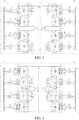
- FIG. 1 shows four topologies in which a current source-type valve group unit is connected to a voltage source-type valve group unit according to the present invention.
- FIG. 1(a) shows the topology in which a cathode X1 of the current source-type valve group unit is connected to a negative electrode X4 of the voltage source-type valve group unit.
- FIG. 1(b) shows the topology in which an anode X2 of the current source-type valve group unit is connected to a positive electrode X3 of the voltage source-type valve group unit.
- FIG. 1 shows four topologies in which a current source-type valve group unit is connected to a voltage source-type valve group unit according to the present invention.
- FIG. 1(a) shows the topology in which a cathode X1 of the current source-type valve group unit is connected to a negative electrode X4 of the voltage source-type valve group unit.
- FIG. 1(b) shows the topology in which an anode X2 of the current
- FIG. 1(c) shows the topology in which the cathode XI of the current source-type valve group unit is connected to the positive electrode X3 of the voltage source-type valve group unit.
- FIG. 1(d) shows the topology in which the anode X2 of the current source-type valve group unit is connected to the negative electrode X4 of the voltage source-type valve group unit.
- FIG. 2 shows four topologies in which a preferred current source-type valve group unit is connected to a voltage source-type valve group unit according to the present invention.
- FIG. 2(a) shows the topology in which a cathode of the preferred current source-type valve group unit is connected to a negative electrode of the voltage source-type valve group unit.
- FIG. 2(b) shows the topology in which an anode of the preferred current source-type valve group unit is connected to a positive electrode of the voltage source-type valve group unit.
- FIG. 2(c) shows the topology in which the cathode of the preferred current source-type valve group unit is connected to the positive electrode of the voltage source-type valve group unit.
- FIG. 2(a) shows the topology in which a cathode of the preferred current source-type valve group unit is connected to a negative electrode of the voltage source-type valve group unit.
- FIG. 2(b) shows the topology in which an anode of the preferred current source-type valve group unit is connected to
- the current source-type valve group unit includes a line commutated converter 1 and a bypass switch assembly.
- the line commutated converter 1 is connected in parallel to the bypass switch 3.
- Two ends of the current source-type valve group unit connected in parallel are respectively connected to one end of a disconnection switch 5, 6, and the other end of the disconnection switch 5, 6 is connected in parallel to a bypass switch 4.
- the voltage source-type valve group unit includes a voltage source converter 2 and a bypass switch assembly. The voltage source converter 2 is connected in series to a current limiting reactor 11 and then connected in parallel to a bypass power electronic switch 7.
- the voltage source converter 2 is a converter or a plurality of converters connected in parallel.
- a DC circuit breaker capable of breaking DC fault current is added between the voltage source converter 2 and the current limiting reactor 11.
- FIG. 3 shows an embodiment in which the HVDC transmission apparatus consists of the four topologies shown in FIG. 2 , with the low-end valve group composed of voltage source converters, where a rectifier station 27 is connected to an inverter station 28 by means of a DC line 15.
- a negative converter and a positive converter of the rectifier station 27 are respectively formed by the topologies (1)23 and (2)24 in FIG. 2
- a positive converter and a negative converter of the inverter station 28 are respectively formed by the topologies (3)25 and (4)26.
- a valve group 1 includes a line commutated converter, which is connected to a secondary winding of a thyristor-based current source-type HVDC transmission transformer 18.
- a valve group 2 includes a voltage source converter, which is connected to a secondary winding of a VSC-HVDC transmission transformer 19. It should be pointed out that an AC power grid is three-phase. However, only one phase is shown in FIG. 3 for clarity. A primary winding of the HVDC transmission transformer is connected to and disconnected from the AC power grid 22 by means of an AC switch 21. If the voltage source converter 2 provides reactive power to the current source converter 1, an AC filter is less configured or not configured. In order to suppress the circulating current of the bridge arm of the voltage source converter and the surge current under the fault, a bridge arm reactor 20 is provided. In order to smooth the DC voltage of the DC circuit and suppress the DC fault current, a smoothing reactor 13 and the current limiting reactor 11 are provided. FIG.
- FIG. 3 shows a ground electrode lead 16, configured to connect a converter to a ground electrode.
- a DC filter 14 is disposed between the DC line 15 and a valve block connecting line 17.
- the valve group connecting line switch 9 is close to the voltage source converter 2, and the DC bus switch 12 is bridged between the valve group connecting line switch 9 and the DC bus.
- the hybrid DC converter valve group online entry circuit is used for online entering the voltage source converter 2.
- the voltage source-type valve group unit in FIG. 3 is a low-end valve group, and the valve group online entry circuit at least includes a valve group connecting line switch 9 of the voltage source-type valve group unit, a DC bus switch 12 of the voltage source-type valve group unit, a bypass switch 8 of the voltage source-type valve group unit, and a bypass switch 4 of a current source-type valve group unit.
- the disconnection switches 5 and 6 of the current source-type valve group unit are in the closed position, and the bypass switch 3 and the bypass switch 4 are in the open position; the valve group connecting line switch 9, the bus switch 10, and the DC bus switch 12 of the voltage source-type valve group unit are in the open position, the bypass power electronic switch 7 is in the turn-off state, and the bypass switch 8 is in the closed position.
- the bus switch 10 When the voltage source converter 2 needs to be put into operation, the bus switch 10 is closed, the voltage source converter 2 is charged, the voltage source converter 2 is deblocked, the voltage of the voltage source converter 2 is controlled to be the same as that of the line commutated converter 1, the DC bus switch 12 is closed, the voltage source converter 2 is connected in parallel to two ends of the line commutated converter 1, the DC power is transferred from the line commutated converter 1 to the voltage source converter 2, and the line commutated converter 1 is blocked, and in this case, the operating power of the voltage source converter 2 is equal to the preceding operating power of the line commutated converter 1, the bypass switch 8 is open, the bypass switch 3 or the bypass switch 4 is closed, the valve group connecting line switch 9 is closed, and the DC bus switch 12 is open.
- the rectifier station 27 and the inverter station 28 can respectively carry out the foregoing operations to realize the power transfer from the line commutated converter 1 to the voltage source converter 2.
- the line commutated converters 1 of the rectifier station 27 and the inverter station 28 are all set, the line commutated converter 1 is deblocked, the DC current is controlled to transfer from the bypass switch 3 or the bypass switch 4 to the line commutated converter 1, the bypass switch 3 or the bypass switch 4 is open to control the trigger angle of the line commutated converter 1 and increase DC voltage to realize the online entry of the line commutated converter 1, and so far, the line commutated converter 1 and the voltage source converter 2 operate in series.
- a DC circuit breaker capable of breaking DC fault current is added between the voltage source converter 2 and the current limiting reactor 11, or the DC bus switch 12 adopts a DC circuit breaker capable of breaking DC fault current, or a diode valve group capable of breaking the reverse current of the voltage source converter 2 is connected in series between the DC bus switch 12 of the hybrid DC converter at the inverter side and the voltage source converter 2, and a cathode of the diode valve group and a positive electrode of the voltage source converter are common connection ends. It should be noted that the reverse current of the voltage source converter 2 in the hybrid DC converter at the inverter side flows from the negative electrode to the positive electrode of the voltage source converter 2.
- FIG. 4 shows an embodiment in which the HVDC transmission apparatus consists of the four topologies shown in FIG. 2 , with the high-end valve group composed of voltage source converters, where a rectifier station 27 is connected to a inverter station 28 by means of a DC line 15.
- a positive converter and a negative converter of the rectifier station 27 are respectively formed by the topologies (1)23 and (2)24 in FIG. 2
- a negative converter and a positive converter of the inverter station 28 are respectively formed by the topologies (3)25 and (4)26.
- a valve group 1 is a line commutated converter, which is connected to a secondary winding of a thyristor-based current source-type HVDC transmission transformer 18.
- a valve group 2 is a voltage source converter, which is connected to a secondary winding of a VSC-HVDC transmission transformer 19.
- a primary winding of the HVDC transmission transformer is connected to and disconnected from the AC power grid 22 by means of an AC switch 21. If the voltage source converter 2 provides reactive power to the current source converter 1, an AC filter is less configured or not configured.
- a bridge arm reactor 20 is provided in order to suppress the circulating current of the bridge arm of the voltage source converter and the surge current under the fault.
- a smoothing reactor 13 and the current limiting reactor 11 are provided.
- FIG. 4 shows a ground electrode lead 16, configured to connect a converter to a ground electrode.
- a DC filter 14 is disposed between the DC line 16 and a valve block connecting line 17.
- the valve group connecting line switch 9 is close to the voltage source converter 2, and the neutral bus switch 29 is bridged between the valve group connecting line switch 9 and the neutral bus.
- the hybrid DC converter valve group online entry circuit is used for online entering the voltage source converter 2.
- the voltage source-type valve group unit in FIG. 4 is a high-end valve group, and the valve group online entry circuit at least includes a valve group connecting line switch 9 of the voltage source-type valve group unit, a neutral bus switch 29 of the voltage source-type valve group unit, a bypass switch 8 of the voltage source-type valve group unit, and a bypass switch 4 of a current source-type valve group unit.
- the disconnection switches 5 and 6 of the current source-type valve group unit are in the closed position, and the bypass switch 3 and the bypass switch 4 are in the open position; the valve group connecting line switch 9, the disconnection switch 10, and the neutral bus switch 29 of the voltage source-type valve group unit are in the open position, the bypass power electronic switch 7 is in the turn-off state, and the bypass switch 8 is in the closed position.
- the neutral bus switch 29 is closed, the voltage source converter 2 is charged, the voltage source converter 2 is deblocked, the voltage of the voltage source converter 2 is controlled to be the same as that of the line commutated converter 1, the bus switch 10 is closed, the voltage source converter 2 is connected in parallel to two ends of the line commutated converter 1, the DC power is transferred from the line commutated converter 1 to the voltage source converter 2, and the line commutated converter 1 is blocked, and in this case, the operating power of the voltage source converter 2 is equal to the preceding operating power of the line commutated converter 1, the bypass switch 8 is open, the bypass switch 3 or the bypass switch 4 is closed, the valve group connecting line switch 9 is closed, and the neutral bus switch 29 is open.
- the rectifier station 27 and the inverter station 28 can respectively carry out the foregoing operations to realize the power transfer from the line commutated converter 1 to the voltage source converter 2.
- the line commutated converters 1 of the rectifier station 27 and the inverter station 28 are all set, the line commutated converter 1 is deblocked, the DC current is controlled to transfer from the bypass switch 3 or the bypass switch 4 to the line commutated converter 1, the bypass switch 3 or the bypass switch 4 is open to control the trigger angle of the line commutated converter 1 and increase DC voltage to realize the online entry of the line commutated converter 1, and so far, the line commutated converter 1 and the voltage source converter 2 operate in series.
- a DC circuit breaker capable of breaking DC fault current is added between the voltage source converter 2 and the current limiting reactor 11, or the neutral bus switch 29 adopts a DC circuit breaker capable of breaking DC fault current, or a diode valve group capable of breaking the reverse current of the voltage source converter 2 is connected in series between the neutral bus switch 29 of the hybrid DC converter at the inverter side and the voltage source converter 2, and an anode of the diode valve group and a negative electrode of the voltage source converter are common connection ends.
- FIG. 5 shows an embodiment in which an HVDC transmission apparatus consists of a converter composed of conventional current source-type valve groups and two topologies shown in FIG. 2 .
- the rectifier station 27 of the HVDC transmission apparatus is composed of a topology 30 with current source-type valve group units connected in series, and a positive converter and a negative converter of the inverter station 28 are respectively formed by topologies (3)25 and (4)26.
- a valve group 1 is a line commutated converter, which is connected to a secondary winding of a thyristor-based current source-type HVDC transmission transformer 18.
- a valve group 2 is a voltage source converter, which is connected to a secondary winding of a VSC-HVDC transmission transformer 19.
- the rectifier station 27 is configured with an AC filter 32 to filter out harmonics and provide reactive power, and is connected to and disconnected from the AC power grid 22 by means of an AC switch 31.
- a bridge arm reactor 20 is provided in order to suppress the circulating current of the bridge arm of the voltage source converter and the surge current under the fault.
- a smoothing reactor 13 and the current limiting reactor 11 are provided in order to smooth the DC voltage of the DC circuit and suppress the DC fault current.
- FIG. 5 shows a ground electrode lead 16, configured to connect a converter to a ground electrode.
- the rectifier station 27 is configured with a DC filter 14 between the DC line 15 and the ground electrode lead 16.
- the inverter station 28 is configured with a DC filter 14 between the valve group connecting line 17 and the ground electrode lead 16.
- the valve group connecting line switch 9 of the inverter station is close to the voltage source converter 2, and the DC bus switch 12 is bridged between the valve group connecting line switch 9 and the DC bus.
- the hybrid DC converter valve group online entry circuit is used for online entering the voltage source converter 2.
- the voltage source-type valve group unit in FIG. 5 is a low-end valve group, and the valve group online entry circuit at least includes a valve group connecting line switch 9 of the voltage source-type valve group unit, a DC bus switch 12 of the voltage source-type valve group unit, a bypass switch 8 of the voltage source-type valve group unit, and a bypass switch 4 of a current source-type valve group unit.
- the disconnection switches 5 and 6 of the current source-type valve group unit are in the closed position, and the bypass switch 3 and the bypass switch 4 are in the open position; the valve group connecting line switch 9, the bus switch 10, and the DC bus switch 12 of the voltage source-type valve group unit are in the open position, the bypass power electronic switch 7 is in the turn-off state, and the bypass switch 8 is in the closed position.
- the disconnection switch 10 When the voltage source converter 2 needs to be put into operation, the disconnection switch 10 is closed, the voltage source converter 2 is charged, the voltage source converter 2 is deblocked, the voltage of the voltage source converter 2 is controlled to be the same as that of the line commutated converter 1, the DC bus switch 12 is closed, the voltage source converter 2 is connected in parallel to two ends of the line commutated converter 1, the DC power is transferred from the line commutated converter 1 to the voltage source converter 2, and the line commutated converter 1 is blocked, and in this case, the operating power of the voltage source converter 2 is equal to the preceding operating power of the line commutated converter 1, the bypass switch 8 is open, the bypass switch 3 or the bypass switch 4 is closed, the valve group connecting line switch 9 is closed, and the DC bus switch 12 is open.
- the inverter station 28 can carry out the foregoing operations to realize the power transfer from the line commutated converter 1 to the voltage source converter 2.
- the line commutated converters 1 of the rectifier station 27 and the inverter station 28 are all set, the line commutated converter 1 is deblocked, the DC current is controlled to transfer from the bypass switch 3 or the bypass switch 4 to the line commutated converter 1, the bypass switch 3 or the bypass switch 4 is open to control the trigger angle of the line commutated converter 1 and increase DC voltage to realize the online entry of the line commutated converter 1, and so far, the line commutated converter 1 and the voltage source converter 2 operate in series.
- a DC circuit breaker capable of breaking DC fault current is added between the voltage source converter 2 and the current limiting reactor 11, or the DC bus switch 12 adopts a DC circuit breaker capable of breaking DC fault current, or a diode valve group capable of breaking the reverse current of the voltage source converter 2 is connected in series between the DC bus switch 12 of the hybrid DC converter at the inverter side and the voltage source converter 2, and a cathode of the diode valve group and a positive electrode of the voltage source converter are common connection ends.
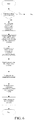
- FIG. 6 shows a hybrid DC converter valve group online entry method, including: when only the line commutated converter is operating, and a command of putting the voltage source converter into operation is received, connecting one end of the voltage source converter to a fixed potential; charging the voltage source converter; deblocking the voltage source converter; controlling the voltage of the voltage source converter to be the same as that of the line commutated converter; connecting the voltage source converter in parallel to two ends of the line commutated converter by means of parallel conversion of DC field switches; transferring DC power from the line commutated converter to the voltage source converter; blocking the line commutated converter; connecting the line commutated converter in series to the voltage source converter by means of series conversion of the DC field switches; and online entering the line commutated converter.
- connection of one end of the voltage source converter to the fixed potential is realized by connecting a voltage source-type valve group unit to a neutral bus, and closing a neutral bus switch of the voltage source-type valve group unit.
- the parallel conversion of the DC field switches is realized by connecting the other end of the voltage source-type valve group unit to a DC bus, and closing a DC bus switch of the voltage source-type valve group unit.
- the series conversion of the DC field switches has two cases: (1) if the voltage source-type valve group unit is a low-end valve group, opening a bypass switch of the voltage source-type valve group unit, closing a bypass switch of a current source-type valve group unit, closing a valve group connecting line switch of the voltage source-type valve group unit, and opening the DC bus switch of the voltage source-type valve group unit; and (2) if the voltage source-type valve group unit is a high-end valve group, opening the bypass switch of the voltage source-type valve group unit, closing the bypass switch of the current source-type valve group unit, closing the valve group connecting line switch of the voltage source-type valve group unit, and opening the neutral bus switch of the voltage source-type valve group unit.
- the online entry of the line commutated converter is realized by deblocking the line commutated converter, controlling DC current to transfer from the bypass switch to the line commutated converter, and opening the bypass switch to increase DC voltage.
- FIG. 7 shows a hybrid DC converter valve group online entry apparatus for realizing online entry of a hybrid DC converter valve group, including:
- connection of one end of the voltage source converter to the fixed potential in the control unit is realized by connecting the voltage source-type valve group unit to a neutral bus, and closing a neutral bus switch of the voltage source-type valve group unit.
- the parallel conversion of the DC field switches in the control unit is realized by connecting the other end of the voltage source-type valve group unit to a DC bus, and closing a DC bus switch of the voltage source-type valve group unit.
- the series conversion of the DC field switches in the control unit has two cases: (1) if the voltage source-type valve group unit is a low-end valve group, opening a bypass switch of the voltage source-type valve group unit, closing a bypass switch of a current source-type valve group unit, closing a valve group connecting line switch of the voltage source-type valve group unit, and opening the DC bus switch of the voltage source-type valve group unit; and (2) if the voltage source-type valve group unit is a high-end valve group, opening the bypass switch of the voltage source-type valve group unit, closing the bypass switch of the current source-type valve group unit, closing the valve group connecting line switch of the voltage source-type valve group unit, and opening the neutral bus switch of the voltage source-type valve group unit.
- the online entry of the line commutated converter in the control unit is realized by deblocking the line commutated converter, controlling DC current to transfer from the bypass switch to the line commutated converter, and opening the bypass switch to increase DC voltage.
- valve group online entry circuit and method proposed in the present invention are used for online entry of a voltage source converter of a hybrid DC converter, and are particularly suitable for a voltage source converter with a narrow DC voltage adjustment range or incapable of adjusting the DC voltage to zero.
Landscapes
- Engineering & Computer Science (AREA)
- Power Engineering (AREA)
- Rectifiers (AREA)
- Inverter Devices (AREA)
- Direct Current Feeding And Distribution (AREA)
- Supply And Distribution Of Alternating Current (AREA)
Abstract
Description
- The present invention relates to the field of hybrid High Voltage Direct Current (HVDC) transmission employing Voltage-Source Converters (VSCs) and HVDC transmission employing Line Commutated Converters (LCCs), and in particular, to a hybrid DC converter valve group online entry circuit, method and apparatus.
- Thyristor-based current source type HVDC transmission has the advantages that the converter loss is small, and the DC system can be restarted by means of phase shift when a DC line has a fault, and has the disadvantages that a converter on the inverter side works in active inversion and cannot be connected to a passive system; commutation failure is prone to occur if disturbance exists in the inverter side after accessing a weak AC system; and the reactive power consumption is high, the voltage and current harmonic content is high, and it is necessary to install a filter apparatus to provide reactive power and filtering. Voltage Source Converter based High Voltage Direct Current (VSC-HVDC) transmission has the advantages that the controllability is high, the passive system can be accessed, and no reactive power compensation apparatus is needed, and has the disadvantages that the converter has large switching loss, and the modular multi-level converter with a half-bridge structure cannot control the fault current when the DC side has a fault, and after the fault occurs, the fault can only be removed by turning off a circuit breaker at the AC side.
- For the fault at the DC side, ABB company solves it by using a DC circuit breaker with additional DC lines, but the DC circuit breaker is high in cost, and the reliability needs to be verified; Siemens AG solves it by using the modular multi-level converter with a full-bridge circuit structure, but the converter of the full-bridge circuit structure is high in loss; Alstom solves it by using a full-bridge circuit and connecting a bridge arm in series to a power electronic switch device, but the reliability needs to be verified; Zhejiang University solves it by connecting a diode in series to a main loop, but the diode does not participate in power conversion, which causes loss; and NR Electric Co., Ltd. uses a hybrid DC converter with a bypass branch in which a line commutated converter and the voltage source converter are connected in series, the voltage source converter only adopts the modular multi-level converter with a half-bridge circuit structure, the line commutated converter can naturally block the fault current at the DC side, and the bypass branch can reliably protect the voltage source converter, but the DC voltage adjustment range of the voltage source converter of the hybrid DC converter is limited. Unlike the line commutated converter, the voltage source converter cannot adjust the voltage to zero to achieve online entry. If the voltage source converter is withdrawn due to failure or maintenance, the hybrid DC converter needs to be stop or put into operation again only when the DC current is controlled to zero, which affects the stable power operation of the DC transmission system.
- An objective of the present invention is to provide a hybrid DC converter valve group online entry circuit for realizing series-parallel conversion of a voltage source converter and a current source converter by operating DC field switches, to provide a hybrid DC converter valve group online entry method for realizing online entry of the voltage source converter by adjusting the DC voltage and power and operating the DC field switches, and to provide a hybrid DC converter valve group online entry apparatus for controlling the valve group online entry circuit.
- To achieve the foregoing objective, the present invention adopts the following technical solution: a hybrid DC converter valve group online entry circuit for online entering a voltage source converter of a hybrid DC converter, where if a voltage source-type valve group unit is a low-end valve group, the valve group online entry circuit at least includes a valve group connecting line switch of the voltage source-type valve group unit, a DC bus switch of the voltage source-type valve group unit, a bypass switch of the voltage source-type valve group unit, and a bypass switch of a current source-type valve group unit; and if the voltage source-type valve group unit is a high-end valve group, the valve group online entry circuit at least includes a valve group connecting line switch of the voltage source-type valve group unit, a neutral bus switch of the voltage source-type valve group unit, a bypass switch of the voltage source-type valve group unit, and a bypass switch of the current source-type valve group unit.
- The valve group connecting line switch of the voltage source-type valve group unit is connected to a voltage source converter of the voltage source-type valve group unit and the current source-type valve group unit; the DC bus switch of the voltage source-type valve group unit is connected to the voltage source converter of the voltage source-type valve group unit and a DC bus; the bypass switch of the voltage source-type valve group unit is connected to a positive electrode and a negative electrode of the voltage source converter of the voltage source-type valve group unit; the bypass switch of the current source-type valve group unit is connected to an anode and a cathode of a line commutated converter of the current source-type valve group unit; and the neutral bus switch of the voltage source-type valve group unit is connected to the voltage source converter of the voltage source-type valve group unit and a neutral bus.
- The hybrid HVDC transmission converter consists of the current source-type valve group unit and the voltage source-type valve group unit connected in series, and has four series connection topologies:
- (1) a cathode of the current source-type valve group unit is connected to a negative electrode of the voltage source-type valve group unit; or
- (2) an anode of the current source-type valve group unit is connected to a positive electrode of the voltage source-type valve group unit; or
- (3) the cathode of the current source-type valve group unit is connected to the positive electrode of the voltage source-type valve group unit; or
- (4) the anode of the current source-type valve group unit is connected to the negative electrode of the voltage source-type valve group unit;
- If the voltage source-type valve group unit is the low-end valve group, the voltage source-type valve group unit is close to the neutral bus; and if the voltage source-type valve group unit is the high-end valve group, the voltage source-type valve group unit is close to the DC bus.
- If the voltage source-type valve group unit is the low-end valve group, the DC bus switch of the voltage source-type valve group unit adopts a DC circuit breaker capable of breaking DC fault current, or a diode valve group capable of breaking DC fault current is connected in series between the DC bus switch and the voltage source converter of the voltage source-type valve group unit of the hybrid DC converter, and a cathode of the diode valve group and the positive electrode of the voltage source converter are common connection ends; and if the voltage source-type valve group unit is the high-end valve group, the neutral bus switch of the voltage source-type valve group unit adopts a DC circuit breaker capable of breaking DC fault current, or a diode valve group capable of breaking DC fault current is connected in series between the neutral bus switch and the voltage source converter of the voltage source-type valve group unit of the hybrid DC converter, and an anode of the diode valve group and the negative electrode of the voltage source converter are common connection ends.
- The current source-type valve group unit adopts the line commutated converter, and includes the line commutated converter and a bypass switch assembly; the line commutated converter is connected in parallel to a bypass switch; and two ends of the current source-type valve group unit connected in parallel are respectively connected to one end of a disconnection switch, and the other end of the disconnection switch is connected in parallel to a bypass switch.
- The voltage source-type valve group unit adopts the voltage source converter, and includes the voltage source converter, a current limiting reactor, a bypass thyristor valve group and a bypass switch assembly; the voltage source converter is connected in series to the current limiting reactor and then connected in parallel to the bypass thyristor valve group; two ends of the voltage source-type valve group unit connected in parallel are respectively connected to one end of the disconnection switch, and the other end of the disconnection switch is connected in parallel to the bypass switch. Optionally, the DC circuit breaker capable of breaking DC fault current is connected in series between the voltage source converter and the current limiting reactor in the voltage source-type valve group unit.
- The line commutated converter is a six-pulse bridge circuit or a twelve-pulse bridge circuit, which consists of semi-controlled power semiconductors that cannot be turned off. The voltage source converter is any one or more of the following: a two-level converter, a diode-clamped multi-level converter, a Modular Multi-level Converter (MMC), a Hybrid Multi-level Converter (HMC), a Cascaded Two-Level Converter (CSL) or a Stacked Two-Level Converter (CTL), which consists of fully controlled power semiconductors that can be turned off. The semi-controlled power semiconductors that cannot be turned off are generally thyristors that cannot be turned off. The fully controlled power semiconductors that can be turned off are any one or more of the following: an Insulated Gate Bipolar Transistor (IGBT), an Integrated Gate Commutation Thyristor (IGCT), a Gate Turn-Off Thyristor (GTO), a Power Field Effect Transistor (Power MOSFET), an electron Injection Enhanced Gate Transistor (IEGT), a Gate Commutation Thyristor (GCT), or a Silicon Carbide Enhanced Junction Field Effect Transistor (SiC-JFET).
- The present invention also provides a hybrid DC converter valve group online entry method applicable to the hybrid DC converter valve group online entry circuit, including: when only a line commutated converter is operating and a voltage source converter needs to be put into operation, connecting one end of the voltage source converter to a fixed potential; charging the voltage source converter; deblocking the voltage source converter; controlling the voltage of the voltage source converter to be the same as that of the line commutated converter; connecting the voltage source converter in parallel to two ends of the line commutated converter by means of parallel conversion of DC field switches; transferring DC power from the line commutated converter to the voltage source converter; blocking the line commutated converter; connecting the line commutated converter in series to the voltage source converter by means of series conversion of DC field switches; and online entering the line commutated converter.
- The connection of one end of the voltage source converter to the fixed potential is realized by connecting a voltage source-type valve group unit to a neutral bus, and closing a neutral bus switch of the voltage source-type valve group unit.
- The parallel conversion of the DC field switches is connecting the other end of the voltage source-type valve group unit to a DC bus, and it is realized by closing a DC bus switch of the voltage source-type valve group unit.
- The series conversion of the DC field switches has two cases: (1) if the voltage source-type valve group unit is a low-end valve group, opening a bypass switch of the voltage source-type valve group unit, closing a bypass switch of a current source-type valve group unit, closing a valve group connecting line switch of the voltage source-type valve group unit, and opening the DC bus switch of the voltage source-type valve group unit; and (2) if the voltage source-type valve group unit is a high-end valve group, opening the bypass switch of the voltage source-type valve group unit, closing the bypass switch of the current source-type valve group unit, closing the valve group connecting line switch of the voltage source-type valve group unit, and opening the neutral bus switch of the voltage source-type valve group unit.
- The online entry of the line commutated converter is realized by deblocking the line commutated converter, controlling DC current to transfer from the bypass switch to the line commutated converter, and opening the bypass switch to increase DC voltage.
- The present invention also provides a hybrid DC converter valve group online entry apparatus applicable to the hybrid DC converter valve group online entry circuit, including a detection unit and a control unit, where:
- the detection unit is configured to detect DC voltage, DC current, an deblocking signal, a blocking signal, and an operation signal of a voltage source-type valve group unit, detect DC voltage, DC current, an deblocking signal, a blocking signal, and an operation signal of a current source-type valve group unit, and detect the positions of switches of a DC field, the voltage source-type valve group unit and the current source-type valve group unit; and
- the control unit is configured to connect, when receiving an operator's command of putting a voltage source converter into operation in the case that a line commutated converter has an deblocking signal and an operation signal and the voltage source converter has a blocking signal, one end of the voltage source converter to a fixed potential, charge the voltage source converter, deblock the voltage source converter, control the voltage of the voltage source converter to be the same as that of the line commutated converter, connect the voltage source converter in parallel to two ends of the line commutated converter by means of parallel conversion of DC field switches, transfer DC power from the line commutated converter to the voltage source converter, block the line commutated converter, connect the line commutated converter in series to the voltage source converter by means of series conversion of the DC field switches, and online enter the line commutated converter.
- The connection of one end of the voltage source converter to the fixed potential is connecting the voltage source-type valve group unit to the neutral bus, and it is realized by closing the neutral bus switch of the voltage source-type valve group unit.
- The parallel conversion of the DC field switches in the control unit is connecting the other end of the voltage source-type valve group unit to the DC bus, and it is realized by closing the DC bus switch of the voltage source-type valve group unit.
- The series conversion of the DC field switches has two cases: (1) if the voltage source-type valve group unit is a low-end valve group, opening a bypass switch of the voltage source-type valve group unit, closing a bypass switch of a current source-type valve group unit, closing a valve group connecting line switch of the voltage source-type valve group unit, and opening the DC bus switch of the voltage source-type valve group unit; and (2) if the voltage source-type valve group unit is a high-end valve group, opening the bypass switch of the voltage source-type valve group unit, closing the bypass switch of the current source-type valve group unit, closing the valve group connecting line switch of the voltage source-type valve group unit, and opening the neutral bus switch of the voltage source-type valve group unit.
- The online entry of the line commutated converter is realized by deblocking the line commutated converter, controlling DC current to transfer from the bypass switch to the line commutated converter, and opening the bypass switch to increase DC voltage.
- The present invention has the beneficial effect: provided is a hybrid DC converter valve group online entry circuit, method, and apparatus. The online smooth entry of the voltage source converter is realized by connecting the voltage source converter in parallel to two ends of the line commutated converter, transferring the power of the line commutated converter to the voltage source converter, and then connecting the line commutated converter in series to the voltage source converter, and putting the line commutated converter into operation, so as to ensure the stable power operation of the HVDC transmission system.
-
- FIG. 1 shows four topologies in which a current source-type valve group unit is connected to a voltage source-type valve group unit;
- FIG. 2 shows four typical topologies in which a current source-type valve group unit is connected to a voltage source-type valve group unit;
- FIG. 3 shows an HVDC transmission apparatus consisting of four hybrid DC converter topologies, with a low-end valve group composed of voltage source converters;
- FIG. 4 shows an HVDC transmission apparatus consisting of four hybrid DC converter topologies, with a high-end valve group composed of voltage source converters;
- FIG. 5 shows an HVDC transmission apparatus consisting of a conventional line commutated converter at the rectifier side and two hybrid DC converters at the inverter side;
- FIG. 6 shows a hybrid DC converter valve group online entry method according to the present invention; and
- FIG. 7 shows a hybrid DC converter valve group online entry apparatus according to the present invention.
- Embodiments of the present invention are described with reference to the following drawings, and the same components are numbered with the same reference numerals.
FIG. 1 shows four topologies in which a current source-type valve group unit is connected to a voltage source-type valve group unit according to the present invention.FIG. 1(a) shows the topology in which a cathode X1 of the current source-type valve group unit is connected to a negative electrode X4 of the voltage source-type valve group unit.FIG. 1(b) shows the topology in which an anode X2 of the current source-type valve group unit is connected to a positive electrode X3 of the voltage source-type valve group unit.FIG. 1(c) shows the topology in which the cathode XI of the current source-type valve group unit is connected to the positive electrode X3 of the voltage source-type valve group unit.FIG. 1(d) shows the topology in which the anode X2 of the current source-type valve group unit is connected to the negative electrode X4 of the voltage source-type valve group unit. -
FIG. 2 shows four topologies in which a preferred current source-type valve group unit is connected to a voltage source-type valve group unit according to the present invention.FIG. 2(a) shows the topology in which a cathode of the preferred current source-type valve group unit is connected to a negative electrode of the voltage source-type valve group unit.FIG. 2(b) shows the topology in which an anode of the preferred current source-type valve group unit is connected to a positive electrode of the voltage source-type valve group unit.FIG. 2(c) shows the topology in which the cathode of the preferred current source-type valve group unit is connected to the positive electrode of the voltage source-type valve group unit.FIG. 2(d) shows the topology in which the anode of the preferred current source-type valve group unit is connected to the negative electrode of the voltage source-type valve group unit. The current source-type valve group unit includes a line commutated converter 1 and a bypass switch assembly. The line commutated converter 1 is connected in parallel to the bypass switch 3. Two ends of the current source-type valve group unit connected in parallel are respectively connected to one end of adisconnection switch 5, 6, and the other end of thedisconnection switch 5, 6 is connected in parallel to abypass switch 4. The voltage source-type valve group unit includes a voltage source converter 2 and a bypass switch assembly. The voltage source converter 2 is connected in series to a current limiting reactor 11 and then connected in parallel to a bypass powerelectronic switch 7. Two ends of the voltage source-type valve group unit connected in parallel are respectively connected to one end of a valve group connectingline switch 9 and one end of abus switch 10, and the other end of the valve group connectingline switch 9 and the other end of thebus switch 10 are connected in parallel to abypass switch 8. In order to match the capacity of the line commutated converter 1, the voltage source converter 2 is a converter or a plurality of converters connected in parallel. Optionally, in order to better suppress the DC fault current, a DC circuit breaker capable of breaking DC fault current is added between the voltage source converter 2 and the current limiting reactor 11. -
FIG. 3 shows an embodiment in which the HVDC transmission apparatus consists of the four topologies shown inFIG. 2 , with the low-end valve group composed of voltage source converters, where arectifier station 27 is connected to aninverter station 28 by means of aDC line 15. A negative converter and a positive converter of therectifier station 27 are respectively formed by the topologies (1)23 and (2)24 inFIG. 2 , and a positive converter and a negative converter of theinverter station 28 are respectively formed by the topologies (3)25 and (4)26. A valve group 1 includes a line commutated converter, which is connected to a secondary winding of a thyristor-based current source-typeHVDC transmission transformer 18. A valve group 2 includes a voltage source converter, which is connected to a secondary winding of a VSC-HVDC transmission transformer 19. It should be pointed out that an AC power grid is three-phase. However, only one phase is shown inFIG. 3 for clarity. A primary winding of the HVDC transmission transformer is connected to and disconnected from the AC power grid 22 by means of anAC switch 21. If the voltage source converter 2 provides reactive power to the current source converter 1, an AC filter is less configured or not configured. In order to suppress the circulating current of the bridge arm of the voltage source converter and the surge current under the fault, abridge arm reactor 20 is provided. In order to smooth the DC voltage of the DC circuit and suppress the DC fault current, a smoothingreactor 13 and the current limiting reactor 11 are provided.FIG. 3 shows aground electrode lead 16, configured to connect a converter to a ground electrode. ADC filter 14 is disposed between theDC line 15 and a valveblock connecting line 17. The valve group connectingline switch 9 is close to the voltage source converter 2, and the DC bus switch 12 is bridged between the valve group connectingline switch 9 and the DC bus. - The hybrid DC converter valve group online entry circuit is used for online entering the voltage source converter 2. The voltage source-type valve group unit in
FIG. 3 is a low-end valve group, and the valve group online entry circuit at least includes a valve group connectingline switch 9 of the voltage source-type valve group unit, a DC bus switch 12 of the voltage source-type valve group unit, abypass switch 8 of the voltage source-type valve group unit, and abypass switch 4 of a current source-type valve group unit. - When only the line commutated converter 1 is operating, the disconnection switches 5 and 6 of the current source-type valve group unit are in the closed position, and the bypass switch 3 and the
bypass switch 4 are in the open position; the valve group connectingline switch 9, thebus switch 10, and the DC bus switch 12 of the voltage source-type valve group unit are in the open position, the bypass powerelectronic switch 7 is in the turn-off state, and thebypass switch 8 is in the closed position. When the voltage source converter 2 needs to be put into operation, thebus switch 10 is closed, the voltage source converter 2 is charged, the voltage source converter 2 is deblocked, the voltage of the voltage source converter 2 is controlled to be the same as that of the line commutated converter 1, the DC bus switch 12 is closed, the voltage source converter 2 is connected in parallel to two ends of the line commutated converter 1, the DC power is transferred from the line commutated converter 1 to the voltage source converter 2, and the line commutated converter 1 is blocked, and in this case, the operating power of the voltage source converter 2 is equal to the preceding operating power of the line commutated converter 1, thebypass switch 8 is open, the bypass switch 3 or thebypass switch 4 is closed, the valve group connectingline switch 9 is closed, and the DC bus switch 12 is open. Therectifier station 27 and theinverter station 28 can respectively carry out the foregoing operations to realize the power transfer from the line commutated converter 1 to the voltage source converter 2. When the line commutated converters 1 of therectifier station 27 and theinverter station 28 are all set, the line commutated converter 1 is deblocked, the DC current is controlled to transfer from the bypass switch 3 or thebypass switch 4 to the line commutated converter 1, the bypass switch 3 or thebypass switch 4 is open to control the trigger angle of the line commutated converter 1 and increase DC voltage to realize the online entry of the line commutated converter 1, and so far, the line commutated converter 1 and the voltage source converter 2 operate in series. - In order to prevent the DC transmission system from being blocked due to the fault in the DC line or the AC line during the parallel connection of the voltage source converter 2 to the line commutated converter 1, optionally, a DC circuit breaker capable of breaking DC fault current is added between the voltage source converter 2 and the current limiting reactor 11, or the DC bus switch 12 adopts a DC circuit breaker capable of breaking DC fault current, or a diode valve group capable of breaking the reverse current of the voltage source converter 2 is connected in series between the DC bus switch 12 of the hybrid DC converter at the inverter side and the voltage source converter 2, and a cathode of the diode valve group and a positive electrode of the voltage source converter are common connection ends. It should be noted that the reverse current of the voltage source converter 2 in the hybrid DC converter at the inverter side flows from the negative electrode to the positive electrode of the voltage source converter 2.
-
FIG. 4 shows an embodiment in which the HVDC transmission apparatus consists of the four topologies shown inFIG. 2 , with the high-end valve group composed of voltage source converters, where arectifier station 27 is connected to ainverter station 28 by means of aDC line 15. A positive converter and a negative converter of therectifier station 27 are respectively formed by the topologies (1)23 and (2)24 inFIG. 2 , and a negative converter and a positive converter of theinverter station 28 are respectively formed by the topologies (3)25 and (4)26. A valve group 1 is a line commutated converter, which is connected to a secondary winding of a thyristor-based current source-typeHVDC transmission transformer 18. A valve group 2 is a voltage source converter, which is connected to a secondary winding of a VSC-HVDC transmission transformer 19. A primary winding of the HVDC transmission transformer is connected to and disconnected from the AC power grid 22 by means of anAC switch 21. If the voltage source converter 2 provides reactive power to the current source converter 1, an AC filter is less configured or not configured. In order to suppress the circulating current of the bridge arm of the voltage source converter and the surge current under the fault, abridge arm reactor 20 is provided. In order to smooth the DC voltage of the DC circuit and suppress the DC fault current, a smoothingreactor 13 and the current limiting reactor 11 are provided.FIG. 4 shows aground electrode lead 16, configured to connect a converter to a ground electrode. ADC filter 14 is disposed between theDC line 16 and a valveblock connecting line 17. The valve group connectingline switch 9 is close to the voltage source converter 2, and the neutral bus switch 29 is bridged between the valve group connectingline switch 9 and the neutral bus. - The hybrid DC converter valve group online entry circuit is used for online entering the voltage source converter 2. The voltage source-type valve group unit in
FIG. 4 is a high-end valve group, and the valve group online entry circuit at least includes a valve group connectingline switch 9 of the voltage source-type valve group unit, a neutral bus switch 29 of the voltage source-type valve group unit, abypass switch 8 of the voltage source-type valve group unit, and abypass switch 4 of a current source-type valve group unit. - When only the line commutated converter 1 is operating, the disconnection switches 5 and 6 of the current source-type valve group unit are in the closed position, and the bypass switch 3 and the
bypass switch 4 are in the open position; the valve group connectingline switch 9, thedisconnection switch 10, and the neutral bus switch 29 of the voltage source-type valve group unit are in the open position, the bypass powerelectronic switch 7 is in the turn-off state, and thebypass switch 8 is in the closed position. When the voltage source converter 2 needs to be put into operation, the neutral bus switch 29 is closed, the voltage source converter 2 is charged, the voltage source converter 2 is deblocked, the voltage of the voltage source converter 2 is controlled to be the same as that of the line commutated converter 1, thebus switch 10 is closed, the voltage source converter 2 is connected in parallel to two ends of the line commutated converter 1, the DC power is transferred from the line commutated converter 1 to the voltage source converter 2, and the line commutated converter 1 is blocked, and in this case, the operating power of the voltage source converter 2 is equal to the preceding operating power of the line commutated converter 1, thebypass switch 8 is open, the bypass switch 3 or thebypass switch 4 is closed, the valve group connectingline switch 9 is closed, and the neutral bus switch 29 is open. Therectifier station 27 and theinverter station 28 can respectively carry out the foregoing operations to realize the power transfer from the line commutated converter 1 to the voltage source converter 2. When the line commutated converters 1 of therectifier station 27 and theinverter station 28 are all set, the line commutated converter 1 is deblocked, the DC current is controlled to transfer from the bypass switch 3 or thebypass switch 4 to the line commutated converter 1, the bypass switch 3 or thebypass switch 4 is open to control the trigger angle of the line commutated converter 1 and increase DC voltage to realize the online entry of the line commutated converter 1, and so far, the line commutated converter 1 and the voltage source converter 2 operate in series. - In order to prevent the DC transmission system from being blocked due to the fault in the DC line or the AC line during the parallel connection of the voltage source converter 2 to the line commutated converter 1, optionally, a DC circuit breaker capable of breaking DC fault current is added between the voltage source converter 2 and the current limiting reactor 11, or the neutral bus switch 29 adopts a DC circuit breaker capable of breaking DC fault current, or a diode valve group capable of breaking the reverse current of the voltage source converter 2 is connected in series between the neutral bus switch 29 of the hybrid DC converter at the inverter side and the voltage source converter 2, and an anode of the diode valve group and a negative electrode of the voltage source converter are common connection ends.
-
FIG. 5 shows an embodiment in which an HVDC transmission apparatus consists of a converter composed of conventional current source-type valve groups and two topologies shown inFIG. 2 . Therectifier station 27 of the HVDC transmission apparatus is composed of atopology 30 with current source-type valve group units connected in series, and a positive converter and a negative converter of theinverter station 28 are respectively formed by topologies (3)25 and (4)26. A valve group 1 is a line commutated converter, which is connected to a secondary winding of a thyristor-based current source-typeHVDC transmission transformer 18. A valve group 2 is a voltage source converter, which is connected to a secondary winding of a VSC-HVDC transmission transformer 19. Therectifier station 27 is configured with anAC filter 32 to filter out harmonics and provide reactive power, and is connected to and disconnected from the AC power grid 22 by means of anAC switch 31. In order to suppress the circulating current of the bridge arm of the voltage source converter and the surge current under the fault, abridge arm reactor 20 is provided. In order to smooth the DC voltage of the DC circuit and suppress the DC fault current, a smoothingreactor 13 and the current limiting reactor 11 are provided.FIG. 5 shows aground electrode lead 16, configured to connect a converter to a ground electrode. Therectifier station 27 is configured with aDC filter 14 between theDC line 15 and theground electrode lead 16. Theinverter station 28 is configured with aDC filter 14 between the valvegroup connecting line 17 and theground electrode lead 16. The valve group connectingline switch 9 of the inverter station is close to the voltage source converter 2, and the DC bus switch 12 is bridged between the valve group connectingline switch 9 and the DC bus. - The hybrid DC converter valve group online entry circuit is used for online entering the voltage source converter 2. The voltage source-type valve group unit in
FIG. 5 is a low-end valve group, and the valve group online entry circuit at least includes a valve group connectingline switch 9 of the voltage source-type valve group unit, a DC bus switch 12 of the voltage source-type valve group unit, abypass switch 8 of the voltage source-type valve group unit, and abypass switch 4 of a current source-type valve group unit. - When only the line commutated converter 1 is operating, the disconnection switches 5 and 6 of the current source-type valve group unit are in the closed position, and the bypass switch 3 and the
bypass switch 4 are in the open position; the valve group connectingline switch 9, thebus switch 10, and the DC bus switch 12 of the voltage source-type valve group unit are in the open position, the bypass powerelectronic switch 7 is in the turn-off state, and thebypass switch 8 is in the closed position. When the voltage source converter 2 needs to be put into operation, thedisconnection switch 10 is closed, the voltage source converter 2 is charged, the voltage source converter 2 is deblocked, the voltage of the voltage source converter 2 is controlled to be the same as that of the line commutated converter 1, the DC bus switch 12 is closed, the voltage source converter 2 is connected in parallel to two ends of the line commutated converter 1, the DC power is transferred from the line commutated converter 1 to the voltage source converter 2, and the line commutated converter 1 is blocked, and in this case, the operating power of the voltage source converter 2 is equal to the preceding operating power of the line commutated converter 1, thebypass switch 8 is open, the bypass switch 3 or thebypass switch 4 is closed, the valve group connectingline switch 9 is closed, and the DC bus switch 12 is open. Theinverter station 28 can carry out the foregoing operations to realize the power transfer from the line commutated converter 1 to the voltage source converter 2. When the line commutated converters 1 of therectifier station 27 and theinverter station 28 are all set, the line commutated converter 1 is deblocked, the DC current is controlled to transfer from the bypass switch 3 or thebypass switch 4 to the line commutated converter 1, the bypass switch 3 or thebypass switch 4 is open to control the trigger angle of the line commutated converter 1 and increase DC voltage to realize the online entry of the line commutated converter 1, and so far, the line commutated converter 1 and the voltage source converter 2 operate in series. - In order to prevent the DC transmission system from being blocked due to the fault in the DC line or the AC line during the parallel connection of the voltage source converter 2 to the line commutated converter 1, optionally, a DC circuit breaker capable of breaking DC fault current is added between the voltage source converter 2 and the current limiting reactor 11, or the DC bus switch 12 adopts a DC circuit breaker capable of breaking DC fault current, or a diode valve group capable of breaking the reverse current of the voltage source converter 2 is connected in series between the DC bus switch 12 of the hybrid DC converter at the inverter side and the voltage source converter 2, and a cathode of the diode valve group and a positive electrode of the voltage source converter are common connection ends.
-
FIG. 6 shows a hybrid DC converter valve group online entry method, including: when only the line commutated converter is operating, and a command of putting the voltage source converter into operation is received, connecting one end of the voltage source converter to a fixed potential; charging the voltage source converter; deblocking the voltage source converter; controlling the voltage of the voltage source converter to be the same as that of the line commutated converter; connecting the voltage source converter in parallel to two ends of the line commutated converter by means of parallel conversion of DC field switches; transferring DC power from the line commutated converter to the voltage source converter; blocking the line commutated converter; connecting the line commutated converter in series to the voltage source converter by means of series conversion of the DC field switches; and online entering the line commutated converter. - The connection of one end of the voltage source converter to the fixed potential is realized by connecting a voltage source-type valve group unit to a neutral bus, and closing a neutral bus switch of the voltage source-type valve group unit.
- The parallel conversion of the DC field switches is realized by connecting the other end of the voltage source-type valve group unit to a DC bus, and closing a DC bus switch of the voltage source-type valve group unit.
- The series conversion of the DC field switches has two cases: (1) if the voltage source-type valve group unit is a low-end valve group, opening a bypass switch of the voltage source-type valve group unit, closing a bypass switch of a current source-type valve group unit, closing a valve group connecting line switch of the voltage source-type valve group unit, and opening the DC bus switch of the voltage source-type valve group unit; and (2) if the voltage source-type valve group unit is a high-end valve group, opening the bypass switch of the voltage source-type valve group unit, closing the bypass switch of the current source-type valve group unit, closing the valve group connecting line switch of the voltage source-type valve group unit, and opening the neutral bus switch of the voltage source-type valve group unit.
- The online entry of the line commutated converter is realized by deblocking the line commutated converter, controlling DC current to transfer from the bypass switch to the line commutated converter, and opening the bypass switch to increase DC voltage.
-
FIG. 7 shows a hybrid DC converter valve group online entry apparatus for realizing online entry of a hybrid DC converter valve group, including: - a
detection unit 33, configured to detect DC voltage, DC current, an deblocking signal, a blocking signal, and an operation signal of a voltage source-type valve group unit, detect DC voltage, DC current, an deblocking signal, a blocking signal, and an operation signal of a current source-type valve group unit, and detect the positions of switches of a DC field, the voltage source-type valve group unit and the current source-type valve group unit; and - a
control unit 34, configured to connect, when receiving an operator's command of putting a voltage source converter into operation in the case that a line commutated converter has an deblocking signal and an operation signal and the voltage source converter has a blocking signal, one end of the voltage source converter to a fixed potential, charge the voltage source converter, deblock the voltage source converter, control the voltage of the voltage source converter to be the same as that of the line commutated converter, connect the voltage source converter in parallel to two ends of the line commutated converter by means of parallel conversion of DC field switches, transfer DC power from the line commutated converter to the voltage source converter, block the line commutated converter, connect the line commutated converter in series to the voltage source converter by means of series conversion of the DC field switches, and online enter the line commutated converter. - The connection of one end of the voltage source converter to the fixed potential in the control unit is realized by connecting the voltage source-type valve group unit to a neutral bus, and closing a neutral bus switch of the voltage source-type valve group unit.
- The parallel conversion of the DC field switches in the control unit is realized by connecting the other end of the voltage source-type valve group unit to a DC bus, and closing a DC bus switch of the voltage source-type valve group unit.
- The series conversion of the DC field switches in the control unit has two cases: (1) if the voltage source-type valve group unit is a low-end valve group, opening a bypass switch of the voltage source-type valve group unit, closing a bypass switch of a current source-type valve group unit, closing a valve group connecting line switch of the voltage source-type valve group unit, and opening the DC bus switch of the voltage source-type valve group unit; and (2) if the voltage source-type valve group unit is a high-end valve group, opening the bypass switch of the voltage source-type valve group unit, closing the bypass switch of the current source-type valve group unit, closing the valve group connecting line switch of the voltage source-type valve group unit, and opening the neutral bus switch of the voltage source-type valve group unit.
- The online entry of the line commutated converter in the control unit is realized by deblocking the line commutated converter, controlling DC current to transfer from the bypass switch to the line commutated converter, and opening the bypass switch to increase DC voltage.
- The valve group online entry circuit and method proposed in the present invention are used for online entry of a voltage source converter of a hybrid DC converter, and are particularly suitable for a voltage source converter with a narrow DC voltage adjustment range or incapable of adjusting the DC voltage to zero.
- The foregoing embodiments are for only describing the technical idea of the present invention, and are not intended to limit the scope of protection of the preset invention. Any modification made based on the technical solutions according to the technical idea of the present invention shall fall within the scope of protection of the present invention.
Claims (18)
- A hybrid DC converter valve group online entry circuit for online entering a voltage source converter of a hybrid DC converter, wherein if a voltage source-type valve group unit is a low-end valve group, the valve group online entry circuit at least comprises a valve group connecting line switch of the voltage source-type valve group unit, a DC bus switch of the voltage source-type valve group unit, a bypass switch of the voltage source-type valve group unit, and a bypass switch of a current source-type valve group unit; and if the voltage source-type valve group unit is a high-end valve group, the valve group online entry circuit at least comprises a valve group connecting line switch of the voltage source-type valve group unit, a neutral bus switch of the voltage source-type valve group unit, a bypass switch of the voltage source-type valve group unit, and a bypass switch of the current source-type valve group unit;
the valve group connecting line switch of the voltage source-type valve group unit is connected to a voltage source converter of the voltage source-type valve group unit and the current source-type valve group unit; the DC bus switch of the voltage source-type valve group unit is connected to the voltage source converter of the voltage source-type valve group unit and a DC bus; the bypass switch of the voltage source-type valve group unit is connected to a positive electrode and a negative electrode of the voltage source converter of the voltage source-type valve group unit; the bypass switch of the current source-type valve group unit is connected to an anode and a cathode of a line commutated converter of the current source-type valve group unit; and the neutral bus switch of the voltage source-type valve group unit is connected to the voltage source converter of the voltage source-type valve group unit and a neutral bus. - The hybrid DC converter valve group online entry circuit according to claim 1, wherein the hybrid HVDC transmission converter consists of the current source-type valve group unit and the voltage source-type valve group unit connected in series, and has four series connection topologies:(1) a cathode of the current source-type valve group unit is connected to a negative electrode of the voltage source-type valve group unit; or(2) an anode of the current source-type valve group unit is connected to a positive electrode of the voltage source-type valve group unit; or(3) the cathode of the current source-type valve group unit is connected to the positive electrode of the voltage source-type valve group unit; or(4) the anode of the current source-type valve group unit is connected to the negative electrode of the voltage source-type valve group unit;the current source-type valve group unit adopts the line commutated converter, and the voltage source-type valve group unit adopts one voltage source converter or multiple voltage source converters connected in parallel.
- The hybrid DC converter valve group online entry circuit according to claim 1, wherein if the voltage source-type valve group unit is the low-end valve group, the voltage source-type valve group unit is close to the neutral bus; and if the voltage source-type valve group unit is the high-end valve group, the voltage source-type valve group unit is close to the DC bus.
- The hybrid DC converter valve group online entry circuit according to claim 1, wherein if the voltage source-type valve group unit is the low-end valve group, the DC bus switch of the voltage source-type valve group unit adopts a DC circuit breaker capable of breaking DC fault current, or a diode valve group capable of breaking DC fault current is connected in series between the DC bus switch and the voltage source converter of the voltage source-type valve group unit of the hybrid DC converter, and a cathode of the diode valve group and the positive electrode of the voltage source converter are common connection ends; and if the voltage source-type valve group unit is the high-end valve group, the neutral bus switch of the voltage source-type valve group unit adopts a DC circuit breaker capable of breaking DC fault current, or a diode valve group capable of breaking DC fault current is connected in series between the neutral bus switch and the voltage source converter of the voltage source-type valve group unit of the hybrid DC converter, and an anode of the diode valve group and the negative electrode of the voltage source converter are common connection ends.
- The hybrid DC converter valve group online entry circuit according to claim 2, wherein the current source-type valve group unit adopts the line commutated converter, and comprises the line commutated converter and a bypass switch assembly; the line commutated converter is connected in parallel to a bypass switch; and two ends of the current source-type valve group unit connected in parallel are respectively connected to one end of a disconnection switch, and the other end of the disconnection switch is connected in parallel to a bypass switch.
- The hybrid DC converter valve group online entry circuit according to claim 2, wherein the voltage source-type valve group unit adopts the voltage source converter, and comprises the voltage source converter, a current limiting reactor, a bypass thyristor valve group and a bypass switch assembly; the voltage source converter is connected in series to the current limiting reactor and then connected in parallel to the bypass thyristor valve group; two ends of the voltage source-type valve group unit connected in parallel are respectively connected to one end of the disconnection switch, and the other end of the disconnection switch is connected in parallel to the bypass switch.
- The hybrid DC converter valve group online entry circuit according to claim 2, wherein the line commutated converter is a six-pulse bridge circuit or a twelve-pulse bridge circuit, which consists of semi-controlled power semiconductors that cannot be turned off.
- The hybrid DC converter valve group online entry circuit according to claim 2, wherein the voltage source converter is any one or more of the following: a two-level converter, a diode-clamped multi-level converter, a Modular Multi-level Converter (MMC), a Hybrid Multi-level Converter (HMC), a Cascaded Two-Level Converter (CSL) or a Stacked Two-Level Converter (CTL), which consists of fully controlled power semiconductors that can be turned off.
- A hybrid DC converter valve group online entry method applicable to the hybrid DC converter valve group online entry circuit according to any one of claims 1 to 8, comprising:
when only a line commutated converter is operating and a voltage source converter needs to be put into operation, connecting one end of the voltage source converter to a fixed potential; charging the voltage source converter; deblocking the voltage source converter; controlling the voltage of the voltage source converter to be the same as that of the line commutated converter; connecting the voltage source converter in parallel to two ends of the line commutated converter by means of parallel conversion of DC field switches; transferring DC power from the line commutated converter to the voltage source converter; blocking the line commutated converter; connecting the line commutated converter in series to the voltage source converter by means of series conversion of the DC field switches; and online entering the line commutated converter. - The hybrid DC converter valve group online entry method according to claim 9, wherein the connection of one end of the voltage source converter to the fixed potential is realized by connecting a voltage source-type valve group unit to a neutral bus, and closing a neutral bus switch of the voltage source-type valve group unit.
- The hybrid DC converter valve group online entry method according to claim 9, wherein the parallel conversion of the DC field switches is realized by connecting the other end of the voltage source-type valve group unit to a DC bus, and closing a DC bus switch of the voltage source-type valve group unit.
- The hybrid DC converter valve group online entry method according to claim 9, wherein the series conversion of the DC field switches has two cases: (1) if the voltage source-type valve group unit is a low-end valve group, opening a bypass switch of the voltage source-type valve group unit, closing a bypass switch of a current source-type valve group unit, closing a valve group connecting line switch of the voltage source-type valve group unit, and opening the DC bus switch of the voltage source-type valve group unit; and (2) if the voltage source-type valve group unit is a high-end valve group, opening the bypass switch of the voltage source-type valve group unit, closing the bypass switch of the current source-type valve group unit, closing the valve group connecting line switch of the voltage source-type valve group unit, and opening the neutral bus switch of the voltage source-type valve group unit.
- The hybrid DC converter valve group online entry method according to claim 9, wherein the online entry of the line commutated converter is realized by deblocking the line commutated converter, controlling DC current to transfer from the bypass switch to the line commutated converter, and opening the bypass switch to increase DC voltage.
- A hybrid DC converter valve group online entry apparatus applicable to the hybrid DC converter valve group online entry circuit according to any one of claims 1 to 8, comprising a detection unit and a control unit, wherein:the detection unit is configured to detect DC voltage, DC current, an deblocking signal, a blocking signal, and an operation signal of a voltage source-type valve group unit, detect DC voltage, DC current, an deblocking signal, a blocking signal, and an operation signal of a current source-type valve group unit, and detect the positions of switches of a DC field, the voltage source-type valve group unit and the current source-type valve group unit; andthe control unit is configured to connect, when receiving an operator's command of putting a voltage source converter into operation in the case that a line commutated converter has an deblocking signal and an operation signal and the voltage source converter has a blocking signal, one end of the voltage source converter to a fixed potential, charge the voltage source converter, deblock the voltage source converter, control the voltage of the voltage source converter to be the same as that of the line commutated converter, connect the voltage source converter in parallel to two ends of the line commutated converter by means of parallel conversion of DC field switches, transfer DC power from the line commutated converter to the voltage source converter, block the line commutated converter, connect the line commutated converter in series to the voltage source converter by means of series conversion of the DC field switches, and online enter the line commutated converter.
- The hybrid DC converter valve group online entry apparatus according to claim 14, wherein the connection of one end of the voltage source converter to the fixed potential in the control unit is realized by connecting the voltage source-type valve group unit to a neutral bus, and closing a neutral bus switch of the voltage source-type valve group unit.
- The hybrid DC converter valve group online entry apparatus according to claim 14, wherein the parallel conversion of the DC field switches in the control unit is realized by connecting the other end of the voltage source-type valve group unit to a DC bus, and closing a DC bus switch of the voltage source-type valve group unit.
- The hybrid DC converter valve group online entry apparatus according to claim 14, wherein the series conversion of the DC field switches in the control unit has two cases: (1) if the voltage source-type valve group unit is a low-end valve group, opening a bypass switch of the voltage source-type valve group unit, closing a bypass switch of a current source-type valve group unit, closing a valve group connecting line switch of the voltage source-type valve group unit, and opening the DC bus switch of the voltage source-type valve group unit; and (2) if the voltage source-type valve group unit is a high-end valve group, opening the bypass switch of the voltage source-type valve group unit, closing the bypass switch of the current source-type valve group unit, closing the valve group connecting line switch of the voltage source-type valve group unit, and opening the neutral bus switch of the voltage source-type valve group unit.
- The hybrid DC converter valve group online entry apparatus according to claim 14, wherein the online entry of the line commutated converter is realized by deblocking the line commutated converter, controlling DC current to transfer from the bypass switch to the line commutated converter, and opening the bypass switch to increase DC voltage.
Applications Claiming Priority (2)
| Application Number | Priority Date | Filing Date | Title |
|---|---|---|---|
| CN201810519362.XA CN108683207B (en) | 2018-05-28 | 2018-05-28 | A kind of hybrid DC converter valve group online input circuit and input method and device |
| PCT/CN2019/075673 WO2019227979A1 (en) | 2018-05-28 | 2019-02-21 | Hybrid direct current converter valve group online feed circuit and feed method and apparatus |
Publications (2)
| Publication Number | Publication Date |
|---|---|
| EP3806263A1 true EP3806263A1 (en) | 2021-04-14 |
| EP3806263A4 EP3806263A4 (en) | 2022-03-09 |
Family
ID=63808360
Family Applications (1)
| Application Number | Title | Priority Date | Filing Date |
|---|---|---|---|
| EP19811157.7A Withdrawn EP3806263A4 (en) | 2018-05-28 | 2019-02-21 | ON-LINE SUPPLY CIRCUIT OF A HYBRID DC CONVERTER VALVE GROUP AND METHOD AND SUPPLY APPARATUS |
Country Status (7)
| Country | Link |
|---|---|
| EP (1) | EP3806263A4 (en) |
| JP (1) | JP2021520183A (en) |
| KR (1) | KR102253974B1 (en) |
| CN (1) | CN108683207B (en) |
| BR (1) | BR112020016284A2 (en) |
| RU (1) | RU2748367C1 (en) |
| WO (1) | WO2019227979A1 (en) |
Families Citing this family (19)
| Publication number | Priority date | Publication date | Assignee | Title |
|---|---|---|---|---|
| CN108683207B (en) * | 2018-05-28 | 2021-10-01 | 南京南瑞继保电气有限公司 | A kind of hybrid DC converter valve group online input circuit and input method and device |
| CN109672206A (en) * | 2018-11-23 | 2019-04-23 | 南京南瑞继保电气有限公司 | A kind of Hybrid HVDC system and its inverter of connecting put into device and method |
| CN109361213B (en) * | 2018-11-23 | 2022-03-29 | 南京南瑞继保电气有限公司 | Withdrawal device and method for series converter of hybrid direct-current power transmission system |
| CN110289774B (en) * | 2019-07-03 | 2024-06-18 | 南京南瑞继保电气有限公司 | A high voltage direct current transmission conversion unit and control method and control device thereof |
| CN110718900B (en) * | 2019-10-12 | 2023-03-28 | 日立能源瑞士股份公司 | Method and apparatus for detecting faults in a hybrid power system |
| CN110829869B (en) * | 2019-10-22 | 2020-11-24 | 中国南方电网有限责任公司超高压输电公司检修试验中心 | An MMC charging strategy suitable for hybrid DC |
| WO2021093746A1 (en) * | 2019-11-11 | 2021-05-20 | 南京南瑞继保电气有限公司 | Hybrid direct-current converter inline ejection circuit, ejection method, and ejection apparatus |
| CN112787349B (en) * | 2019-11-11 | 2022-07-22 | 南京南瑞继保电气有限公司 | Online withdrawing method and withdrawing device for mixed direct-current converter valve bank |
| CN112787347B (en) * | 2019-11-11 | 2022-07-22 | 南京南瑞继保电气有限公司 | Online exit circuit, exit method and exit device for hybrid direct-current converter valve bank |
| CN113054679B (en) * | 2019-12-26 | 2022-07-22 | 南京南瑞继保电气有限公司 | Direct-current side earth fault control method and control device for high-voltage direct-current transmission system |
| CN111162554B (en) * | 2019-12-26 | 2024-11-08 | 南瑞集团有限公司 | A compact voltage source converter system suitable for DC distribution network |
| CN113659603B (en) * | 2020-05-12 | 2024-02-02 | 南京南瑞继保电气有限公司 | Hybrid DC converter fault lockout control method and control device |
| CN113949042B (en) * | 2020-07-17 | 2024-07-30 | 中国南方电网有限责任公司超高压输电公司 | A method for isolating a UHV DC valve group and a faulty valve group |
| KR102813896B1 (en) * | 2020-11-13 | 2025-05-29 | 한국전자기술연구원 | Power conversion devices and systems for LVDC distribution |
| CN112653171B (en) * | 2020-12-11 | 2023-11-21 | 华北电力大学 | A hybrid converter topology and its control strategy suitable for offshore wind power transmission |
| CN112865038B (en) * | 2021-02-01 | 2023-01-17 | 华北电力大学 | A Fault Protection Method for Receiving Valve Side of UHV Hybrid Multi-terminal DC Transmission System |
| FR3133041B1 (en) * | 2022-02-28 | 2024-02-02 | Valeo Systemes Dessuyage | Device for cleaning motor vehicle sensors comprising several valve blocks mounted in series |
| CN116722577B (en) * | 2023-08-10 | 2023-10-20 | 长江三峡集团实业发展(北京)有限公司 | New energy direct current output topology circuit and system |
| CN117937912A (en) * | 2024-01-23 | 2024-04-26 | 南方电网科学研究院有限责任公司 | Converter submodule, converter valve and offshore wind power overvoltage suppression system |
Family Cites Families (13)
| Publication number | Priority date | Publication date | Assignee | Title |
|---|---|---|---|---|
| CN101297469B (en) * | 2006-01-18 | 2011-05-11 | Abb技术有限公司 | A transmission system and a method for control thereof |
| US8098504B2 (en) * | 2006-01-18 | 2012-01-17 | Abb Technology Ltd. | Converter station for connecting an AC system to an end of an HVDC transmission line |
| JP6099951B2 (en) * | 2012-11-29 | 2017-03-22 | 株式会社東芝 | Power converter |
| DE102013218207A1 (en) * | 2013-09-11 | 2015-03-12 | Siemens Aktiengesellschaft | Modular multipoint power converter for high voltages |
| CN104578130B (en) * | 2015-01-08 | 2017-05-31 | 南京南瑞继保电气有限公司 | A kind of Hybrid HVDC transverter and direct current transportation device |
| CN104753079B (en) * | 2015-03-27 | 2018-05-29 | 国家电网公司 | A kind of Hybrid HVDC system of achievable anti-power delivery |
| CN105162155B (en) * | 2015-08-26 | 2017-10-27 | 浙江大学 | A kind of series hybrid bipolar direct current transmission system with DC Line Fault ride-through capability |
| CN107732954B (en) * | 2017-11-22 | 2020-06-09 | 南京南瑞继保电气有限公司 | A kind of voltage source converter unit online input control method and device |
| CN106786713B (en) * | 2016-11-25 | 2019-04-09 | 南京南瑞继保电气有限公司 | A voltage source converter unit topology structure and control method |
| CN107204626B (en) * | 2017-06-09 | 2021-05-11 | 电子科技大学 | A LCC-MMC Interleaved Hybrid Bipolar DC Transmission System |
| CN107565590B (en) * | 2017-09-06 | 2020-05-05 | 合肥工业大学 | Hybrid high-voltage direct-current power transmission system suitable for wind power transmission |
| CN107968588B (en) * | 2017-12-17 | 2019-08-30 | 华中科技大学 | Cascade converter valve, direct-current power transmission system and control method thereof |
| CN108683207B (en) * | 2018-05-28 | 2021-10-01 | 南京南瑞继保电气有限公司 | A kind of hybrid DC converter valve group online input circuit and input method and device |
-
2018
- 2018-05-28 CN CN201810519362.XA patent/CN108683207B/en active Active
-
2019
- 2019-02-21 BR BR112020016284-1A patent/BR112020016284A2/en not_active IP Right Cessation
- 2019-02-21 EP EP19811157.7A patent/EP3806263A4/en not_active Withdrawn
- 2019-02-21 RU RU2020126720A patent/RU2748367C1/en active
- 2019-02-21 KR KR1020207023403A patent/KR102253974B1/en active Active
- 2019-02-21 WO PCT/CN2019/075673 patent/WO2019227979A1/en not_active Ceased
- 2019-02-21 JP JP2021508043A patent/JP2021520183A/en active Pending
Also Published As
| Publication number | Publication date |
|---|---|
| BR112020016284A2 (en) | 2020-12-15 |
| CN108683207B (en) | 2021-10-01 |
| EP3806263A4 (en) | 2022-03-09 |
| RU2748367C1 (en) | 2021-05-24 |
| WO2019227979A1 (en) | 2019-12-05 |
| JP2021520183A (en) | 2021-08-12 |
| KR20200100204A (en) | 2020-08-25 |
| KR102253974B1 (en) | 2021-05-18 |
| CN108683207A (en) | 2018-10-19 |
Similar Documents
| Publication | Publication Date | Title |
|---|---|---|
| EP3806263A1 (en) | Hybrid direct current converter valve group online feed circuit and feed method and apparatus | |
| EP3726712A1 (en) | Protection circuit of converter, and protection method and device | |
| CN104578130B (en) | A kind of Hybrid HVDC transverter and direct current transportation device | |
| US10084387B2 (en) | LCC and MMC series-connected HVDC system with DC fault ride-through capability | |
| CN108258657B (en) | Voltage source converter protection circuit, protection method and device | |
| CN111555333B (en) | Control method and control device of direct current voltage regulating unit | |
| CN104167753B (en) | Three-pole direct current power transmission based on CDSM MMC HVDC and LCC HVDC | |
| US20190252885A1 (en) | On-Line Input and Quit Control Method and Device for Voltage-Source Converter Unit | |
| CN110289774A (en) | A high-voltage direct current transmission converter unit and its control method and control device | |
| CN108448542A (en) | Sub-modular structure with alternating current-direct current fault clearance ability and MMC topological structures | |
| CN113517711B (en) | Fault control device, hybrid DC power transmission system and fault handling method | |
| CN110233472B (en) | Fault protection method and protection device for voltage source converter | |
| CN113659603B (en) | Hybrid DC converter fault lockout control method and control device | |
| WO2021093746A1 (en) | Hybrid direct-current converter inline ejection circuit, ejection method, and ejection apparatus | |
| CN110277772B (en) | A hybrid DC transmission system with fault handling function | |
| CN120511763A (en) | Self-commutation converter, control method and control device thereof and high-voltage direct-current transmission system | |
| WO2025098333A1 (en) | High voltage direct current transmission valve group, series circuit, system, control method, and control device | |
| CN207896655U (en) | A kind of voltage source converter protection circuit | |
| CN113489359A (en) | Submodule topology with direct-current fault clearing capability | |
| CN113258802A (en) | Submodule topological structure with direct current fault clearing and self-voltage-sharing capabilities | |
| CN208094430U (en) | A kind of converter unit protection circuit | |
| CN111600324B (en) | Control method of hybrid cascade direct-current power transmission system | |
| CN111555331B (en) | Power mutual aid device and hybrid multi-terminal direct current transmission system | |
| US11121645B2 (en) | Power transmission via a bipolar high-voltage DC transmission link | |
| CN112787348A (en) | Online switching circuit, switching method and switching device for hybrid direct current converter valve bank |
Legal Events
| Date | Code | Title | Description |
|---|---|---|---|
| STAA | Information on the status of an ep patent application or granted ep patent |
Free format text: STATUS: THE INTERNATIONAL PUBLICATION HAS BEEN MADE |
|
| PUAI | Public reference made under article 153(3) epc to a published international application that has entered the european phase |
Free format text: ORIGINAL CODE: 0009012 |
|
| STAA | Information on the status of an ep patent application or granted ep patent |
Free format text: STATUS: REQUEST FOR EXAMINATION WAS MADE |
|
| 17P | Request for examination filed |
Effective date: 20201030 |
|
| AK | Designated contracting states |
Kind code of ref document: A1 Designated state(s): AL AT BE BG CH CY CZ DE DK EE ES FI FR GB GR HR HU IE IS IT LI LT LU LV MC MK MT NL NO PL PT RO RS SE SI SK SM TR |
|
| AX | Request for extension of the european patent |
Extension state: BA ME |
|
| DAV | Request for validation of the european patent (deleted) | ||
| DAX | Request for extension of the european patent (deleted) | ||
| A4 | Supplementary search report drawn up and despatched |
Effective date: 20220204 |
|
| RIC1 | Information provided on ipc code assigned before grant |
Ipc: H02M 5/45 20060101ALI20220131BHEP Ipc: H02M 7/757 20060101ALI20220131BHEP Ipc: H02M 7/219 20060101ALI20220131BHEP Ipc: H02M 7/162 20060101ALI20220131BHEP Ipc: H02M 5/458 20060101ALI20220131BHEP Ipc: H02M 1/00 20060101ALI20220131BHEP Ipc: H02M 1/32 20070101ALI20220131BHEP Ipc: H02J 3/36 20060101AFI20220131BHEP |
|
| STAA | Information on the status of an ep patent application or granted ep patent |
Free format text: STATUS: THE APPLICATION IS DEEMED TO BE WITHDRAWN |
|
| 18D | Application deemed to be withdrawn |
Effective date: 20220901 |