EP3806209B1 - Fuel cell system and operation method therefor - Google Patents
Fuel cell system and operation method therefor Download PDFInfo
- Publication number
- EP3806209B1 EP3806209B1 EP18920411.8A EP18920411A EP3806209B1 EP 3806209 B1 EP3806209 B1 EP 3806209B1 EP 18920411 A EP18920411 A EP 18920411A EP 3806209 B1 EP3806209 B1 EP 3806209B1
- Authority
- EP
- European Patent Office
- Prior art keywords
- fuel
- injection device
- fuel cell
- cell system
- flow passage
- Prior art date
- Legal status (The legal status is an assumption and is not a legal conclusion. Google has not performed a legal analysis and makes no representation as to the accuracy of the status listed.)
- Active
Links
Images



Classifications
-
- H—ELECTRICITY
- H01—ELECTRIC ELEMENTS
- H01M—PROCESSES OR MEANS, e.g. BATTERIES, FOR THE DIRECT CONVERSION OF CHEMICAL ENERGY INTO ELECTRICAL ENERGY
- H01M8/00—Fuel cells; Manufacture thereof
- H01M8/04—Auxiliary arrangements, e.g. for control of pressure or for circulation of fluids
- H01M8/04082—Arrangements for control of reactant parameters, e.g. pressure or concentration
- H01M8/04201—Reactant storage and supply, e.g. means for feeding, pipes
-
- H—ELECTRICITY
- H01—ELECTRIC ELEMENTS
- H01M—PROCESSES OR MEANS, e.g. BATTERIES, FOR THE DIRECT CONVERSION OF CHEMICAL ENERGY INTO ELECTRICAL ENERGY
- H01M8/00—Fuel cells; Manufacture thereof
- H01M8/04—Auxiliary arrangements, e.g. for control of pressure or for circulation of fluids
- H01M8/04007—Auxiliary arrangements, e.g. for control of pressure or for circulation of fluids related to heat exchange
-
- H—ELECTRICITY
- H01—ELECTRIC ELEMENTS
- H01M—PROCESSES OR MEANS, e.g. BATTERIES, FOR THE DIRECT CONVERSION OF CHEMICAL ENERGY INTO ELECTRICAL ENERGY
- H01M16/00—Structural combinations of different types of electrochemical generators
- H01M16/003—Structural combinations of different types of electrochemical generators of fuel cells with other electrochemical devices, e.g. capacitors, electrolysers
- H01M16/006—Structural combinations of different types of electrochemical generators of fuel cells with other electrochemical devices, e.g. capacitors, electrolysers of fuel cells with rechargeable batteries
-
- H—ELECTRICITY
- H01—ELECTRIC ELEMENTS
- H01M—PROCESSES OR MEANS, e.g. BATTERIES, FOR THE DIRECT CONVERSION OF CHEMICAL ENERGY INTO ELECTRICAL ENERGY
- H01M8/00—Fuel cells; Manufacture thereof
- H01M8/04—Auxiliary arrangements, e.g. for control of pressure or for circulation of fluids
- H01M8/04082—Arrangements for control of reactant parameters, e.g. pressure or concentration
-
- H—ELECTRICITY
- H01—ELECTRIC ELEMENTS
- H01M—PROCESSES OR MEANS, e.g. BATTERIES, FOR THE DIRECT CONVERSION OF CHEMICAL ENERGY INTO ELECTRICAL ENERGY
- H01M8/00—Fuel cells; Manufacture thereof
- H01M8/04—Auxiliary arrangements, e.g. for control of pressure or for circulation of fluids
- H01M8/04298—Processes for controlling fuel cells or fuel cell systems
- H01M8/043—Processes for controlling fuel cells or fuel cell systems applied during specific periods
- H01M8/04302—Processes for controlling fuel cells or fuel cell systems applied during specific periods applied during start-up
-
- H—ELECTRICITY
- H01—ELECTRIC ELEMENTS
- H01M—PROCESSES OR MEANS, e.g. BATTERIES, FOR THE DIRECT CONVERSION OF CHEMICAL ENERGY INTO ELECTRICAL ENERGY
- H01M8/00—Fuel cells; Manufacture thereof
- H01M8/04—Auxiliary arrangements, e.g. for control of pressure or for circulation of fluids
- H01M8/04298—Processes for controlling fuel cells or fuel cell systems
- H01M8/04313—Processes for controlling fuel cells or fuel cell systems characterised by the detection or assessment of variables; characterised by the detection or assessment of failure or abnormal function
- H01M8/0432—Temperature; Ambient temperature
-
- H—ELECTRICITY
- H01—ELECTRIC ELEMENTS
- H01M—PROCESSES OR MEANS, e.g. BATTERIES, FOR THE DIRECT CONVERSION OF CHEMICAL ENERGY INTO ELECTRICAL ENERGY
- H01M8/00—Fuel cells; Manufacture thereof
- H01M8/04—Auxiliary arrangements, e.g. for control of pressure or for circulation of fluids
- H01M8/04298—Processes for controlling fuel cells or fuel cell systems
- H01M8/04313—Processes for controlling fuel cells or fuel cell systems characterised by the detection or assessment of variables; characterised by the detection or assessment of failure or abnormal function
- H01M8/0432—Temperature; Ambient temperature
- H01M8/04328—Temperature; Ambient temperature of anode reactants at the inlet or inside the fuel cell
-
- H—ELECTRICITY
- H01—ELECTRIC ELEMENTS
- H01M—PROCESSES OR MEANS, e.g. BATTERIES, FOR THE DIRECT CONVERSION OF CHEMICAL ENERGY INTO ELECTRICAL ENERGY
- H01M8/00—Fuel cells; Manufacture thereof
- H01M8/04—Auxiliary arrangements, e.g. for control of pressure or for circulation of fluids
- H01M8/04298—Processes for controlling fuel cells or fuel cell systems
- H01M8/04313—Processes for controlling fuel cells or fuel cell systems characterised by the detection or assessment of variables; characterised by the detection or assessment of failure or abnormal function
- H01M8/0432—Temperature; Ambient temperature
- H01M8/04335—Temperature; Ambient temperature of cathode reactants at the inlet or inside the fuel cell
-
- H—ELECTRICITY
- H01—ELECTRIC ELEMENTS
- H01M—PROCESSES OR MEANS, e.g. BATTERIES, FOR THE DIRECT CONVERSION OF CHEMICAL ENERGY INTO ELECTRICAL ENERGY
- H01M8/00—Fuel cells; Manufacture thereof
- H01M8/04—Auxiliary arrangements, e.g. for control of pressure or for circulation of fluids
- H01M8/04298—Processes for controlling fuel cells or fuel cell systems
- H01M8/04313—Processes for controlling fuel cells or fuel cell systems characterised by the detection or assessment of variables; characterised by the detection or assessment of failure or abnormal function
- H01M8/0438—Pressure; Ambient pressure; Flow
- H01M8/04388—Pressure; Ambient pressure; Flow of anode reactants at the inlet or inside the fuel cell
-
- H—ELECTRICITY
- H01—ELECTRIC ELEMENTS
- H01M—PROCESSES OR MEANS, e.g. BATTERIES, FOR THE DIRECT CONVERSION OF CHEMICAL ENERGY INTO ELECTRICAL ENERGY
- H01M8/00—Fuel cells; Manufacture thereof
- H01M8/04—Auxiliary arrangements, e.g. for control of pressure or for circulation of fluids
- H01M8/04298—Processes for controlling fuel cells or fuel cell systems
- H01M8/04313—Processes for controlling fuel cells or fuel cell systems characterised by the detection or assessment of variables; characterised by the detection or assessment of failure or abnormal function
- H01M8/0438—Pressure; Ambient pressure; Flow
- H01M8/04395—Pressure; Ambient pressure; Flow of cathode reactants at the inlet or inside the fuel cell
-
- H—ELECTRICITY
- H01—ELECTRIC ELEMENTS
- H01M—PROCESSES OR MEANS, e.g. BATTERIES, FOR THE DIRECT CONVERSION OF CHEMICAL ENERGY INTO ELECTRICAL ENERGY
- H01M8/00—Fuel cells; Manufacture thereof
- H01M8/06—Combination of fuel cells with means for production of reactants or for treatment of residues
- H01M8/0606—Combination of fuel cells with means for production of reactants or for treatment of residues with means for production of gaseous reactants
-
- H—ELECTRICITY
- H01—ELECTRIC ELEMENTS
- H01M—PROCESSES OR MEANS, e.g. BATTERIES, FOR THE DIRECT CONVERSION OF CHEMICAL ENERGY INTO ELECTRICAL ENERGY
- H01M8/00—Fuel cells; Manufacture thereof
- H01M8/06—Combination of fuel cells with means for production of reactants or for treatment of residues
- H01M8/0662—Treatment of gaseous reactants or gaseous residues, e.g. cleaning
-
- H—ELECTRICITY
- H01—ELECTRIC ELEMENTS
- H01M—PROCESSES OR MEANS, e.g. BATTERIES, FOR THE DIRECT CONVERSION OF CHEMICAL ENERGY INTO ELECTRICAL ENERGY
- H01M2250/00—Fuel cells for particular applications; Specific features of fuel cell system
- H01M2250/20—Fuel cells in motive systems, e.g. vehicle, ship, plane
-
- Y—GENERAL TAGGING OF NEW TECHNOLOGICAL DEVELOPMENTS; GENERAL TAGGING OF CROSS-SECTIONAL TECHNOLOGIES SPANNING OVER SEVERAL SECTIONS OF THE IPC; TECHNICAL SUBJECTS COVERED BY FORMER USPC CROSS-REFERENCE ART COLLECTIONS [XRACs] AND DIGESTS
- Y02—TECHNOLOGIES OR APPLICATIONS FOR MITIGATION OR ADAPTATION AGAINST CLIMATE CHANGE
- Y02E—REDUCTION OF GREENHOUSE GAS [GHG] EMISSIONS, RELATED TO ENERGY GENERATION, TRANSMISSION OR DISTRIBUTION
- Y02E60/00—Enabling technologies; Technologies with a potential or indirect contribution to GHG emissions mitigation
- Y02E60/10—Energy storage using batteries
-
- Y—GENERAL TAGGING OF NEW TECHNOLOGICAL DEVELOPMENTS; GENERAL TAGGING OF CROSS-SECTIONAL TECHNOLOGIES SPANNING OVER SEVERAL SECTIONS OF THE IPC; TECHNICAL SUBJECTS COVERED BY FORMER USPC CROSS-REFERENCE ART COLLECTIONS [XRACs] AND DIGESTS
- Y02—TECHNOLOGIES OR APPLICATIONS FOR MITIGATION OR ADAPTATION AGAINST CLIMATE CHANGE
- Y02E—REDUCTION OF GREENHOUSE GAS [GHG] EMISSIONS, RELATED TO ENERGY GENERATION, TRANSMISSION OR DISTRIBUTION
- Y02E60/00—Enabling technologies; Technologies with a potential or indirect contribution to GHG emissions mitigation
- Y02E60/30—Hydrogen technology
- Y02E60/50—Fuel cells
-
- Y—GENERAL TAGGING OF NEW TECHNOLOGICAL DEVELOPMENTS; GENERAL TAGGING OF CROSS-SECTIONAL TECHNOLOGIES SPANNING OVER SEVERAL SECTIONS OF THE IPC; TECHNICAL SUBJECTS COVERED BY FORMER USPC CROSS-REFERENCE ART COLLECTIONS [XRACs] AND DIGESTS
- Y02—TECHNOLOGIES OR APPLICATIONS FOR MITIGATION OR ADAPTATION AGAINST CLIMATE CHANGE
- Y02T—CLIMATE CHANGE MITIGATION TECHNOLOGIES RELATED TO TRANSPORTATION
- Y02T90/00—Enabling technologies or technologies with a potential or indirect contribution to GHG emissions mitigation
- Y02T90/40—Application of hydrogen technology to transportation, e.g. using fuel cells
Definitions
- JP2005-100772A discloses a fuel cell system having a plurality of injection devices as injection devices for injecting raw fuel for a fuel cell.
- the fuel cell system includes a main fuel injection valve, a supply destination of which is a main combustion unit of a combustor and a sub fuel injection valve, a supply destination of which is a sub combustion unit of the combustor.
- the main fuel injection valve and the sub fuel injection valve are used separately depending on the situation (paragraph 0017).
- Fuel cell systems according to the preamble of claim 1 are disclosed in US 2002/155331 A1 , US 2005/089732 A1 and US 2014/038071 A1 .
- a fuel cell a fuel cell, a first injection device associated with a supply of fuel to a fuel cell, and a second injection device provided on an upstream side of the first injection device in a fuel flow passage from a fuel storage unit to the first injection device are provided.
- the first and second injection devices switch a flow passage extending downstream from the fuel flow passage, between a first flow passage via the first injection device and a second flow passage via the second injection device.
- the second injection device operates at a lower frequency than the first injection device during an operation of the fuel cell system.
- a method for operating the fuel cell system is provided.
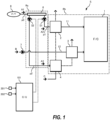
- FIG. 1 schematically shows the configuration of a fuel cell system S according to the embodiment of the present invention.
- the fuel cell system (hereinafter, referred to as a "fuel cell system” and simply referred to as a "system") S according to the present embodiment includes a fuel cell stack 1, a fuel processing unit 2, an oxidant gas heating unit 3, a combustor 4, and a controller 101 as a control unit.
- the fuel cell stack (hereinafter, simply referred to as a "stack") 1 is formed by stacking a plurality of fuel cells or fuel cell unit cells.
- Each of the fuel cells which is a power generating source, is a solid oxide fuel cell (SOFC), for example.
- SOFC solid oxide fuel cell
- the fuel cell stack 1 includes an anode gas passage 11 for supplying fuel gas to an anode electrode of the fuel cell and an anode off gas passage, not shown, for flowing anode off gas after the power generation reaction discharged from the anode electrode.
- the fuel cell stack 1 includes a cathode gas passage 12 for supplying oxidant gas to a cathode electrode of the fuel cell and a cathode off gas passage, not shown, for flowing cathode off gas after the power generation discharged from the cathode electrode.
- the fuel processing unit 2 processes raw fuel, which is primary fuel, and produces fuel gas used for a power generation reaction in the fuel cell.
- the fuel processing unit 2 is interposed in the anode gas passage 11 and receives the supply of the raw fuel from a fuel tank (corresponding to "fuel storage unit” or “raw fuel storage unit”) 8 which is a storage unit mountable on a vehicle (arrows A1, A2).
- the raw fuel is a water-containing oxygenated fuel, and specifically, is a mixture of ethanol, which is an oxygenated fuel, and water (ethanol water solution).
- the fuel processing unit 2 includes a vaporizer, a fuel heat exchanger and a reformer, receives the supply of the raw fuel from the fuel tank 8, and after vaporizing the raw fuel by the vaporizer and heating by the fuel heat exchanger, supplies hydrogen generated by the reformer to the fuel cell stack 1 as the fuel gas.
- the reformer includes a catalyst for reforming, and produces hydrogen from ethanol by steam reforming.
- reaction related to power generation at the anode and cathode electrodes of the solid oxide fuel cell can be expressed by the following equations.
- the combustor 4 burns the raw fuel and produces the combustion gas of the raw fuel.
- the combustor 4 receives the supply of raw fuel from the fuel tank 8 (arrows A1 and A3) and the supply of the oxidant gas (arrow C).
- the combustor 4 includes a catalyst for combustion, and produces combustion gas by catalytic combustion of ethanol.
- the heat amount generated by the combustion of the raw fuel or the heat amount of the combustion gas can be supplied not only to the fuel cell stack 1 but also to the fuel processing unit 2 and the oxidant gas heating unit 3.
- FIG. 1 shows the transfer of the heat amount from the combustor 4 to the fuel processing unit 2 and the oxidant gas heating unit 3 by thick dotted lines.
- the way of supplying of the oxidant gas to the combustor 4 is not limited to this, but it may be possible by the air supply device 7 shared with the oxidant gas heating unit 3 via passages (cathode gas passage, cathode off gas passage) in the cathode system of the fuel cell stack 1 by connecting the cathode off gas passage to the combustor 4.
- a part of the fuel flow passage p0 from the fuel tank 8 to the first fuel injector 51 is formed by a fuel rail 6 shared by the first and second fuel injectors 51 and 52.
- the first fuel injector 51 is directly attached to a portion of the fuel rail 6 on the most downstream side in the flow direction without interposing another flow passage member such as a conduit.
- the second fuel injector 52 is directly attached to a portion on the upstream side of the first fuel injector 51, similarly to the first fuel injector 51.
- the first fuel injector 51, the second fuel injector 52 and the air compressor 7 operate in response to command signals from the controller 101.
- the first fuel injector 51 supplies the raw fuel to the fuel processing unit 2 via the first flow passage p1 following the fuel flow passage p0 (in the present embodiment, the fuel rail 6).
- the second fuel injector 52 introduces the raw fuel flowing in the fuel passage p0 into the second flow passage p2 different from the first flow passage p1, and supplies the raw fuel to the combustor 4 via the second flow passage p2.
- the connection between the first fuel injector 51 and the fuel processing unit 2, the connection between the second fuel injector 52 and the combustor 4 can be achieved by piping, respectively.
- the first fuel injector 51 is connected to the fuel processing unit 2 by a conduit forming the first flow passage p1
- the second fuel injector 52 is connected to the combustor 4 by a conduit forming the second flow passage p2.
- the controller 101 inputs signal from a stack temperature sensor 201 that detects the stack temperature T stk as information relating the startup control.
- the stack temperature T stk is an index indicating a temperature condition of the fuel cell stack 1 or the fuel cell.
- the stack temperature sensor 201 is installed near the cathode off gas outlet of the fuel cell stack 1, and the temperature detected by the stack temperature sensor 201 is regarded as the temperature T stk .
- the controller 101 inputs the temperature of the fuel processing unit 2 (for example, the reformer) and the temperature of the combustor 4 as information relating the startup control in addition to the stack temperature T stk .
- the temperature of the fuel processing unit 2 can be detected by installing a temperature sensor near the fuel gas outlet of the fuel processing unit 2.
- the temperature of the combustor 4 can be detected by installing a temperature sensor near the combustion gas outlet of the combustor 4.
- FIG. 8 shows a third modification in which the first fuel injector 51 is disposed at the most downstream portion of the fuel rail 6 and the plurality of second fuel injectors 52a and 52b are disposed on the upstream side of the first fuel injector 51.
- the second fuel injector 52 need not be single. It is possible to install any number of second fuel injectors 52a, 52b corresponding to the number of the supply target(s) of the raw fuel.
- the second fuel injectors 52a, 52b are installed for each combustor if a combustor for main combustion and a combustor for sub-combustion exist. If the frequency of operation between the main combustor and the sub combustor is different, the second fuel injector corresponding to the less frequent combustor is preferably located upstream.
- FIG. 9 illustrates a case in which, in the direction of the raw fuel, the first fuel injector 51 is disposed at the most downstream portion of the fuel rail 6, the second fuel injector 52 is disposed at the most upstream portion, and further, the first fuel injector 51 is disposed such that the injection direction is parallel to the flow direction of the raw fuel in the fuel rail 6.
- the first and second fuel injectors 51 and 52 are mounted to the fuel rail 6, but not limited thereto.
- the fuel tank 8 and the first fuel injector 51 may be connected via conduits, and the second fuel injector 52 may be disposed in the middle of the pipe extending from the fuel tank 8 to the first fuel injector 51.
- the first fuel injector 51 and the second fuel injector 52 are alternatively operated, but the present invention is not limited thereto. It is also possible to operate both at the same time depending on the situation, while operating alternatively basically. For example, only the second fuel injector 52 is operated during the warmup. During the normal operation after the warmup is completed, while fuel is supplied basically by the first fuel injector 51, the second fuel injector 52 is also operated in addition to the first fuel injector 51 when heating is required due to a decrease in temperature or the like in the fuel processing unit 2.
Landscapes
- Life Sciences & Earth Sciences (AREA)
- Engineering & Computer Science (AREA)
- Sustainable Development (AREA)
- Sustainable Energy (AREA)
- Chemical & Material Sciences (AREA)
- Chemical Kinetics & Catalysis (AREA)
- Electrochemistry (AREA)
- General Chemical & Material Sciences (AREA)
- Manufacturing & Machinery (AREA)
- Fuel Cell (AREA)
Description
- The present invention relates to a fuel cell system including a plurality of injection devices for injecting raw fuel and a method for operating the same.
-
JP2005-100772A claim 1 are disclosed inUS 2002/155331 A1 ,US 2005/089732 A1 andUS 2014/038071 A1 . - In a fuel cell system having a plurality of injection devices, when the injection device that actually operates during an operation of the system is switched depending on the situation like this, the following problem may arise. Stopping an operation of a part of the injection devices causes stagnation in a flow passage of the raw fuel depending on an arrangement of the injection devices, and affects the state of the stopping injector or the operating injector. When stagnation occurs, since the sufficient cooling effect by the raw fuel as a cooling medium cannot be obtained, this problem becomes more remarkable in
a system having a fuel cell which operates at a high temperature, such as a solid oxide fuel cell. - It is an object of the present invention to provide a fuel cell system and a method for operating the same taking the above-mentioned problems into account.
- According to an aspect of the present invention, a fuel cell, a first injection device associated with a supply of fuel to a fuel cell, and a second injection device provided on an upstream side of the first injection device in a fuel flow passage from a fuel storage unit to the first injection device are provided. The first and second injection devices switch a flow passage extending downstream from the fuel flow passage, between a first flow passage via the first injection device and a second flow passage via the second injection device. The second injection device operates at a lower frequency than the first injection device during an operation of the fuel cell system.
- According to another aspect of the present invention, a method for operating the fuel cell system is provided.
-
-
FIG. 1 is a schematic diagram showing an overall configuration of a fuel cell system according to an embodiment of the present invention. -
FIG. 2 is an explanatory diagram showing an operating state during a startup of the fuel cell system according to the embodiment. -
FIG. 3 is an explanatory diagram showing an operating state during a normal operation of the fuel cell system according to the embodiment. -
FIG. 4 is an explanatory diagram showing a positional relationship between a first fuel injector and a second fuel injector in the system. -
FIG. 5 is a flow chart showing the basic control flow of the system. -
FIG. 6 is an explanatory diagram showing another example (first modification) of the positional relationship between the first fuel injector and the second fuel injector. -
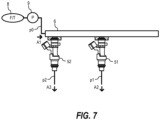
FIG. 7 is an explanatory diagram showing still another example (second modification) of the positional relationship between the first fuel injector and the second fuel injector. -
FIG. 8 is an explanatory diagram showing still another example (third modification) of the positional relationship between the first fuel injector and the second fuel injector. -
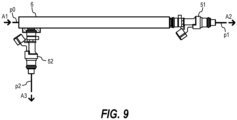
FIG. 9 is an explanatory diagram showing still another example (fourth modification) of the positional relationship between the first fuel injector and the second fuel injector. - Hereinafter, referring to the drawings, an embodiment of the present invention will be described.
-
FIG. 1 schematically shows the configuration of a fuel cell system S according to the embodiment of the present invention. - The fuel cell system (hereinafter, referred to as a "fuel cell system" and simply referred to as a "system") S according to the present embodiment includes a
fuel cell stack 1, afuel processing unit 2, an oxidantgas heating unit 3, acombustor 4, and acontroller 101 as a control unit. - The fuel cell stack (hereinafter, simply referred to as a "stack") 1 is formed by stacking a plurality of fuel cells or fuel cell unit cells. Each of the fuel cells, which is a power generating source, is a solid oxide fuel cell (SOFC), for example. In an anode system, the
fuel cell stack 1 includes ananode gas passage 11 for supplying fuel gas to an anode electrode of the fuel cell and an anode off gas passage, not shown, for flowing anode off gas after the power generation reaction discharged from the anode electrode. On the other hand, in a cathode system, thefuel cell stack 1 includes acathode gas passage 12 for supplying oxidant gas to a cathode electrode of the fuel cell and a cathode off gas passage, not shown, for flowing cathode off gas after the power generation discharged from the cathode electrode. - The
fuel processing unit 2 processes raw fuel, which is primary fuel, and produces fuel gas used for a power generation reaction in the fuel cell. Thefuel processing unit 2 is interposed in theanode gas passage 11 and receives the supply of the raw fuel from a fuel tank (corresponding to "fuel storage unit" or "raw fuel storage unit") 8 which is a storage unit mountable on a vehicle (arrows A1, A2). In this embodiment, the raw fuel is a water-containing oxygenated fuel, and specifically, is a mixture of ethanol, which is an oxygenated fuel, and water (ethanol water solution). Thefuel processing unit 2 includes a vaporizer, a fuel heat exchanger and a reformer, receives the supply of the raw fuel from thefuel tank 8, and after vaporizing the raw fuel by the vaporizer and heating by the fuel heat exchanger, supplies hydrogen generated by the reformer to thefuel cell stack 1 as the fuel gas. The reformer includes a catalyst for reforming, and produces hydrogen from ethanol by steam reforming. - The oxidant
gas heating unit 3 heats the oxidant gas. The oxidantgas heating unit 3 is interposed in thecathode gas passage 12 and receives the supply of the oxidant gas (arrow B). The oxidant gas is, for example, air, and by supplying air in the atmosphere to the cathode electrode of the fuel cell, it is possible to supply oxygen used in the power generation reaction to the cathode electrode. In the present embodiment, the oxidantgas heating unit 3 is configured as an air heat exchanger, heats air at a normal temperature (for example, 25° C) and supplies the air to thefuel cell stack 1. - Here, the reaction related to power generation at the anode and cathode electrodes of the solid oxide fuel cell can be expressed by the following equations.
- anode electrode :
2H2 + 4O2- → 2H2O + 4e- ... (1.1)
- cathode electrode :
O2 + 4e- → 2O2- ... (1.2)
- The
combustor 4 burns the raw fuel and produces the combustion gas of the raw fuel. Thecombustor 4 receives the supply of raw fuel from the fuel tank 8 (arrows A1 and A3) and the supply of the oxidant gas (arrow C). In this embodiment, thecombustor 4 includes a catalyst for combustion, and produces combustion gas by catalytic combustion of ethanol. The heat amount generated by the combustion of the raw fuel or the heat amount of the combustion gas can be supplied not only to thefuel cell stack 1 but also to thefuel processing unit 2 and the oxidantgas heating unit 3.FIG. 1 shows the transfer of the heat amount from thecombustor 4 to thefuel processing unit 2 and the oxidantgas heating unit 3 by thick dotted lines. In thefuel processing unit 2, the vaporizer and the reformer are heated by the heat amount of the combustion gas, and the raw fuel (in the present embodiment, the ethanol gas after evaporation) can be heated by heat exchange with the combustion gas in the fuel heat exchanger. In the oxidantgas heating unit 3, the oxidant gas can be heated by heat exchange with the combustion gas. - The
controller 101 controls the supply of the raw fuel and the oxidant gas to thefuel processing unit 2 and the oxidantgas heating unit 3, and controls the supply of the raw fuel and the oxidant gas to thecombustor 4. - In the present embodiment, the supply of the raw fuel to the
fuel processing unit 2 is performed by the first fuel injector (corresponding to the "first injection device") 51, and the supply of the raw fuel to thecombustor 4 is performed by a second fuel injector (corresponding to the "second injection device") 52. Thesecond fuel injector 52 is provided on the upstream side of thefirst fuel injector 51 in the middle of the flow passage (corresponding to the "fuel flow passage") p0 of the raw fuel from thefuel tank 8 to thefirst fuel injector 51. On the other hand, the supply of the oxidant gas to the oxidantgas heating unit 3 is performed by anair supply device 7 which is an air compressor, for example. The way of supplying of the oxidant gas to thecombustor 4 is not limited to this, but it may be possible by theair supply device 7 shared with the oxidantgas heating unit 3 via passages (cathode gas passage, cathode off gas passage) in the cathode system of thefuel cell stack 1 by connecting the cathode off gas passage to thecombustor 4. - Here, referring to
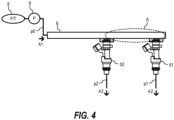
FIG. 4 , the configuration around the first andsecond fuel injectors FIG. 4 shows the positional relation between thefirst fuel injector 51 and thesecond fuel injector 52 in the fuel cell system S. - In the present embodiment, of the
anode gas passage 11 connecting thefuel tank 8 and the anode electrode of thefuel cell stack 1, a part of the fuel flow passage p0 from thefuel tank 8 to thefirst fuel injector 51 is formed by afuel rail 6 shared by the first andsecond fuel injectors first fuel injector 51 is directly attached to a portion of thefuel rail 6 on the most downstream side in the flow direction without interposing another flow passage member such as a conduit. Thesecond fuel injector 52 is directly attached to a portion on the upstream side of thefirst fuel injector 51, similarly to thefirst fuel injector 51. Thefuel rail 6, on the upstream side, is connected to thefuel tank 8 via afuel pump 9, on the downstream side, is connected to thefuel processing unit 2 via thefirst fuel injector 51 and a flow passage (corresponding to the "first flow passage") p1 following the downstream side thereof, and is connected to thecombustor 4 via thesecond fuel injector 52 and a flow passage (corresponding to the "second flow passage") p2 following the downstream side thereof. The fuel flow passage p0 (including the fuel rail 6) extending from thefuel tank 8 and the flow passage p1 extending fromfirst fuel injector 51 form a part of theanode gas passage 11. - Returning to
FIG. 1 , thefirst fuel injector 51, thesecond fuel injector 52 and theair compressor 7 operate in response to command signals from thecontroller 101. Thefirst fuel injector 51 supplies the raw fuel to thefuel processing unit 2 via the first flow passage p1 following the fuel flow passage p0 (in the present embodiment, the fuel rail 6). Thesecond fuel injector 52 introduces the raw fuel flowing in the fuel passage p0 into the second flow passage p2 different from the first flow passage p1, and supplies the raw fuel to thecombustor 4 via the second flow passage p2. The connection between thefirst fuel injector 51 and thefuel processing unit 2, the connection between thesecond fuel injector 52 and thecombustor 4 can be achieved by piping, respectively. In other words, thefirst fuel injector 51 is connected to thefuel processing unit 2 by a conduit forming the first flow passage p1, and thesecond fuel injector 52 is connected to thecombustor 4 by a conduit forming the second flow passage p2. - In the present embodiment, the
first fuel injector 51 and thesecond fuel injector 52 are provided at a position of the fuel cell system S where the temperature of the raw fuel becomes higher than the temperature in thefuel tank 8 during an operation of the fuel cell system S. Specifically, among the components of the fuel cell system S, the entire system S except for some parts like theair compressor 7, thefuel tank 8, thecontroller 101, is accommodated in a heat insulating case Rh, Rc. The inside of the insulating case Rh, Rc is roughly partitioned into two. One is a high temperature room (corresponding to "the first constant temperature room") Rh accommodating thefuel cell stack 1, thefuel processing unit 2, the oxidantgas heating unit 3 and thecombustor 4. The other one is a low temperature room (corresponding to "the second constant temperature room") Rc accommodating the first andsecond fuel injectors air compressor 7, thefuel tank 8 and thecontroller 101 are located outside the insulating case Rh, Rc and are managed at a room temperature.FIG. 1 conceptually indicates an area of the high temperature room Rh by a two-dot chain line and an area of the low temperature room Rc by a one-dot chain line. Between the high temperature room Rh and the low temperature room Rc, in order to suppress the heat transfer from the high temperature room Rh to the low temperature room Rc, a heat insulating member (not shown) is installed. The first andsecond fuel injectors fuel processing unit 2 and thecombustor 4 via conduits passing through the heat insulating member. As an example, during the operation of the fuel cell system S, the temperature of the high temperature room Rh is 500 - 800°C and the temperature of the low temperature room Rc between the outside air temperature and 200°C. - The power generated by the
fuel cell stack 1 can be used to charge the battery or to drive an external device such as an electric motor or motor generator. For example, the fuel cell system S can be applied to a drive system for a vehicle, and charges the battery with the power generated by the rated operation of thefuel cell stack 1 and supplies the power corresponding to the target driving force of the vehicle from the battery to the motor generator for running. - The operation of the
first fuel injector 51, thesecond fuel injector 52, theair compressor 7, and other various devices or components used in the operation of the fuel cell system S is controlled by thecontroller 101. In the present embodiment, thecontroller 101 is configured as an electronic control unit, and includes a microcomputer including a central processing unit, various storage devices such as a ROM and a RAM, an input/output interface, and the like. - The
controller 101, during a startup of the fuel cell system S (hereinafter sometimes referred to as "system startup"), executes a startup control for performing a warmup of the fuel cell system S, thefuel cell stack 1 that was in a low temperature state (e.g., room temperature) during stopping, to raise the temperature to the operating temperature. The operating temperature of the solid oxide fuel cell is 500 °C or higher. In the present embodiment, the temperature of thefuel cell stack 1 or the fuel cell is raised to the operating temperature by the startup control. - The
controller 101 inputs signal from astack temperature sensor 201 that detects the stack temperature Tstk as information relating the startup control. The stack temperature Tstk is an index indicating a temperature condition of thefuel cell stack 1 or the fuel cell. In the present embodiment, thestack temperature sensor 201 is installed near the cathode off gas outlet of thefuel cell stack 1, and the temperature detected by thestack temperature sensor 201 is regarded as the temperature Tstk. Thecontroller 101 inputs the temperature of the fuel processing unit 2 (for example, the reformer) and the temperature of thecombustor 4 as information relating the startup control in addition to the stack temperature Tstk. The temperature of thefuel processing unit 2 can be detected by installing a temperature sensor near the fuel gas outlet of thefuel processing unit 2. The temperature of thecombustor 4 can be detected by installing a temperature sensor near the combustion gas outlet of thecombustor 4. - During the system startup, the
controller 101 determines whether or not to warmup the fuel cell system S based on the stack temperature Tstk. When it is determined that the temperature of the fuel cell system S is low and the warmup is required, the raw fuel in an amount corresponding to the stack temperature Tstk is supplied to thecombustor 4 via thesecond fuel injector 52, and the raw fuel is combusted by thecombustor 4 to execute the warmup of the fuel cell system S. - In addition, the
controller 101 performs the rated operation of thefuel cell stack 1, in other words, the operation at the maximum power generation output of thefuel cell stack 1, during a normal operation after the temperature of the fuel cell system S has risen and the warmup has been completed. Thecontroller 101 sets the supply amount of the raw fuel required for the rated operation of thefuel cell stack 1, and supplies the raw fuel of this normal supply amount to the fuel cell system S (i.e., the fuel processing unit 2) via thefirst fuel injector 51. -
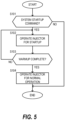
FIG. 5 is a flow chart showing a basic flow of control executed by thecontroller 101. In the present embodiment, thecontroller 101 is programmed to execute the control routines shown inFIG. 5 at predetermined intervals. - In S101, it is determined whether or not there has been an instruction to start the fuel cell system S. The presence or absence of the startup command can be determined based on whether or not a
system start switch 202 has been turned on by a driver. When there is the startup command, the process proceeds to S102 to execute the startup control. Otherwise, the process waits until there is the startup command. - In S102, the
second fuel injector 52 is operated to provide thecombustor 4 with the raw fuel in an amount in accordance with the thermal condition of the fuel cell system S. More specifically, based on the stack temperature Tstk, the startup supply amount for causing thecombustor 4 to generate the heat amount required for the warmup of the fuel cell system S is calculated, and the raw fuel of the startup supply amount is supplied to thecombustor 4 via thesecond fuel injector 52. In the present embodiment, the startup supply amount is greater than the supply amount of the raw fuel required for the rated operation of thefuel cell stack 1, i.e., the normal supply amount. Thesecond fuel injector 52 is a fuel injector having a higher injection flow rate than thefirst fuel injector 51. - In S103, it is determined whether the warmup of the fuel cell system S is completed. The completion of the warmup can be determined by determining whether the stack temperature Tstk rises and reaches the predetermined temperature indicating the completion of the warmup. If the warmup is complete, proceed to S104 and if not, return to S102 and continue to operate the
second fuel injector 52 to continue the warmup. - In S104, the startup control is terminated as the warmup of the fuel cell system S is completed, and the process proceeds to a normal control. In other words, the fuel injector to be operated is switched from the
second fuel injector 52 to thefirst fuel injector 51, and the raw fuel in an amount of the normal supply amount is supplied to thefuel processing unit 2 by thefirst fuel injector 51. -
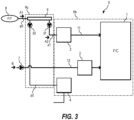
FIGs. 2 and3 show an operating state of the fuel cell system S.FIG. 2 indicates the operating state during the startup of the fuel cell system S, andFIG. 3 indicates the operating state during the normal operation after the system startup, i.e., after completion of the warmup. Among the passages of the anode system and the cathode system, the passage through which gas is actually flowing is indicated by an arrow of a thick solid line whereas the passage through which the flow of gas is stopped is indicated by a thin solid line. - During the system startup, the supply of the raw fuel via the
first fuel injector 51 is stopped, the raw fuel required for the warmup of the fuel cell system S is supplied to thecombustor 4 via the second fuel injector 52 (FIG. 2 ). On the other hand, theair compressor 7 is operated to supply the oxidant gas to thecombustor 4. The heat amount generated by the combustion of the raw fuel heats thefuel processing unit 2 and the oxidantgas heating unit 3, thereby promoting the warmup of thefuel cell stack 1 and the fuel cell system S. "During the system startup" corresponds to the "system low temperature period" in which the fuel cell system S is in the low temperature state. - During the normal operation after the system is started, the operation of the
second fuel injector 52 is stopped, and the raw fuel of the normal supply amount required for the rated operation of thefuel cell stack 1 is supplied to thefuel processing unit 2 via the first fuel injector 51 (FIG. 3 ). By connecting both the anode off gas passage and the cathode off gas passage (not shown) to thecombustor 4, it is possible to combust the residual fuel in the anode off gas in thecombustor 4. Thus, while supplying the heat amount required to continue the reforming of the raw fuel (steam reforming) to thefuel processing unit 2, it is possible to maintain the entire fuel cell system S at a temperature necessary for the operation. "During the normal operation" corresponds to the "system high temperature period" in which the fuel cell system S is in a high temperature state. - During the system startup and the subsequent normal operation, the pressure inside the
fuel rail 6 is kept substantially uniform without significant uneven distribution, and thus substantially equivalent fuel pressure is applied on thefirst fuel injector 51 and thesecond fuel injector 52. - The fuel cell system S according to the present embodiment is configured as described above, and the operation and effects obtained by the present embodiment will be described below.
- First, in the fuel flow passage p0 (in the present embodiment, the flow passage formed by the fuel rail 6) from the
fuel tank 8 to thefirst fuel injector 51, thefirst fuel injector 51 which operates at a higher frequency during the operation of the fuel cell system S is disposed on the downstream side, and thesecond fuel injector 52 which operates at a lower frequency than thefirst fuel injector 51 is disposed on the upstream side. Thus, when the operation of thesecond fuel injector 52 is stopped, it is possible to suppress stagnation in the flow of the raw fuel on the downstream side of thesecond fuel injector 52. - Specifically, referring to
FIG. 4 , by operating thefirst fuel injector 51 while stopping thesecond fuel injector 52, the flow of the raw fuel can still be ensured on the downstream side of the second fuel injector 52 (indicated by the dotted line A) in the fuel flow passage p0, stagnation is suppressed. - Thus, it is possible to suppress the influence of stagnation in the fuel passage p0 on the stopping
second fuel injector 52 and the operatingfirst fuel injector 51. - Specifically, in the fuel flow passage p0 from the
fuel tank 8 to thefirst fuel injector 51, it is possible to secure the cooling effect using the raw fuel as a cooling medium and reduce a thermal load applied on the stoppingsecond fuel injector 52. Thus, for example, it is possible to prevent an excessive thermal load from applying on resin members such as an O-ring used in thesecond fuel injector 52 and prevent an excessive progress of their deterioration. - Furthermore, it is possible to suppress the occurrence of a local increase in the temperature of the raw fuel in the fuel passage p0 due to stagnation, and stably supply the raw fuel to the
fuel processing unit 2 via thefirst fuel injector 51. - Here, since the arrangement of the
first fuel injector 51 is on the downstream side of thesecond fuel injector 52, stagnation occurs on the downstream side of thesecond fuel injector 52 when thefirst fuel injector 51 is stopped. However, since such a situation occurs only at a relatively low frequency during the operation of the fuel cell system S, it is possible to switch the operating fuel injector and mitigate the effect of stagnation before the effect of stagnation becomes too large. - The above effects are better obtained in the system S in which the first and
second fuel injectors fuel tank 8. In the system S where thefuel cell stack 1 is accommodated in the high temperature room Rh (first constant temperature room) and the first andsecond fuel injectors fuel cell stack 1 is promoted and, after the completion of the warmup, the temperature is kept. Further, it is also possible to suppress the heat reception of the first andsecond fuel injectors fuel cell stack 1 is a heat source. - Second, by operating the
second fuel injector 52 during the warmup of the fuel cell system S and by operating thefirst fuel injector 51 during the normal operation after the completion of the warmup, it is possible to effectively obtain the above effects. - During the warmup, since the temperature of the entire fuel cell system S is low, even if the fuel flow passage p0 (in the present embodiment, the fuel rail 6) is affected by a heat amount of the combustion gas, the temperature of the fuel flow passage p0 does not increase greatly. Therefore, even if stagnation occurs downstream of the
second fuel injector 52, it does not become a major issue in terms of a thermal load or the like on thesecond fuel injector 52. In contrast, during the normal operation after completion of the warmup, since the temperature of the entire fuel cell system S is relatively high and the temperature of the components constituting the system S is also high, the heat received by the fuel flow passage p0 is concerned. However, since stagnation in the fuel flow passage p0 is suppressed by devising the arrangement of the first andsecond fuel injectors second fuel injector 52, the raw fuel can be stably supplied to the fuel cell system S via thefirst fuel injector 51. - Third, since the injection characteristics of the
first fuel injector 51 and thesecond fuel injector 52 are different, and the injection flow rate of thesecond fuel injector 52 is larger than that of thefirst fuel injector 51, in the system S in which supplying the more raw fuel is temporary, it is possible to suppress stagnation in the fuel flow passage p0 when thesecond fuel injector 52 is stopped during the normal operation. By supplying more raw fuel via thesecond fuel injector 52 during the warmup of the fuel cell system S, together with the above effects, it is possible to accelerate the progress of the warmup. - In the above description, the
first fuel injector 51 and thesecond fuel injector 52 are mounted to thefuel rail 6, thefirst fuel injector 51 is disposed at the most downstream portion of thefuel rail 6, and thesecond fuel injector 52 is disposed at a substantially intermediate portion of thefuel rail 6. However, the arrangement of the first andsecond fuel injectors second fuel injector 52 is disposed on the upstream side of thefirst fuel injector 51 in the direction of flow in the fuel flow passage p0. -
FIGs. 6-9 illustrate variations of the arrangement of thefirst fuel injector 51 and thesecond fuel injector 52. - As a first modification,
FIG. 6 shows a case where thefirst fuel injector 51 is disposed at the most downstream portion of thefuel rail 6 and thesecond fuel injector 52 is disposed at the most upstream portion in the flow direction of the raw fuel. Thefirst fuel injector 51 and thesecond fuel injector 52 may be disposed close to each other or may be disposed apart from each other. By arranging thefirst fuel injector 51 at the most downstream portion, it is possible to suppress stagnation over theentire fuel rail 6, reduce fluctuations in the fuel pressure applied on thefirst fuel injector 51, and suppress a local temperature rise. -
FIG. 7 shows a second modification in which thesecond fuel injector 52 is disposed at the most upstream portion of thefuel rail 6 and thefirst fuel injector 51 is disposed at a substantially intermediate portion in the flow direction of the raw fuel. This arrangement results in stagnation on the downstream side of thefirst fuel injector 51. However, since the flow of the raw fuel at the portion where thesecond fuel injector 52 is disposed is maintained, it is possible to suppress the influence of stagnation on thesecond fuel injector 52. -
FIG. 8 shows a third modification in which thefirst fuel injector 51 is disposed at the most downstream portion of thefuel rail 6 and the plurality ofsecond fuel injectors first fuel injector 51. Thesecond fuel injector 52 need not be single. It is possible to install any number ofsecond fuel injectors second fuel injectors - As a fourth modification,
FIG. 9 illustrates a case in which, in the direction of the raw fuel, thefirst fuel injector 51 is disposed at the most downstream portion of thefuel rail 6, thesecond fuel injector 52 is disposed at the most upstream portion, and further, thefirst fuel injector 51 is disposed such that the injection direction is parallel to the flow direction of the raw fuel in thefuel rail 6. Thus, not only suppressing stagnation over theentire fuel rail 6, but also making the flow of the raw fuel from thefuel rail 6 toward thefirst fuel injector 51 smooth, it is possible to more effectively suppress stagnation in thefuel rail 6. - The first and
second fuel injectors fuel rail 6, but not limited thereto. Thefuel tank 8 and thefirst fuel injector 51 may be connected via conduits, and thesecond fuel injector 52 may be disposed in the middle of the pipe extending from thefuel tank 8 to thefirst fuel injector 51. - Furthermore, in the above description, the
first fuel injector 51 and thesecond fuel injector 52 are alternatively operated, but the present invention is not limited thereto. It is also possible to operate both at the same time depending on the situation, while operating alternatively basically. For example, only thesecond fuel injector 52 is operated during the warmup. During the normal operation after the warmup is completed, while fuel is supplied basically by thefirst fuel injector 51, thesecond fuel injector 52 is also operated in addition to thefirst fuel injector 51 when heating is required due to a decrease in temperature or the like in thefuel processing unit 2. - While the present invention embodiment has been described above, the above embodiment is merely a part of the application examples of the present invention, and the technical scope of the present invention is not intended to be limited to the specific configuration of the above embodiment. Various changes and modifications can be made to the above-described embodiments within the scope of the claims.
Claims (13)
- A fuel cell system (S) comprising:a fuel cell (1);a first injection device (51) connected to a fuel storage unit (8) and associated with a supply of fuel to the fuel cell (1);a second injection device (52); anda controller (101) programmed to control the first injection device (51) and the second injection device (52), whereinthe first and second injection devices (51, 52) are configured to switch a flow passage extending downstream from a fuel flow passage (p0) from the fuel storage unit (8) to the first injection device (51), between a first flow passage (p1) via the first injection device (51) and a second flow passage (p2) via the second injection device (52), the fuel flow passage (p0) being supplied with a common fuel with the first injection device (51),characterized in thatthe controller (101) is programed to control the second injection device (52) to be operated at a lower frequency than the first injection device (51) during an operation of the fuel cell system (S), andthe second injection device (52) is provided on an upstream side of the first injection device (51) in the fuel flow passage (p0).
- A fuel cell system (S) as defined in claim 1, wherein
the controller (101) is programed to control the first and second injection devices (51, 52) to switch the flow passage extending downstream from the fuel flow passage (p0) alternatively between the first flow passage (p1) and the second flow passage (p2). - A fuel cell system (S) as defined in claim 1 or 2, whereinthe controller (101) is programed to control the second injection device (52) to operate during a warmup of the fuel cell system (S), andthe first injection device (51) is configured to operate during a normal operation other than during the warmup of the fuel cell system (S).
- A fuel cell system (S) as defined in any one of claims 1-3, further comprising:a combustor (4); anda fuel processing unit (2) producing fuel gas for the fuel cell (1) by processing raw fuel; whereinthe fuel storage unit (8) stores the raw fuel,the second injection device (52) is connected to the combustor (4) via the second flow passage (p2), andthe first injection device (51) is connected to the fuel processing unit (2) via the first flow passage (p1).
- A fuel cell system (S) as defined in any one of claims 1-4, wherein
the controller (101) is programed to control an injection flow rate of the second injection device (52) to be higher than an injection flow rate of the first injection device (51). - A fuel cell system (S) as defined in any one of claims 1-5, wherein
the first and second injection devices (51, 52) are provided at a position in the fuel cell system (S) where a temperature becomes higher than a temperature of the fuel storage unit (8). - A fuel cell system (S) as defined in claim 6, further comprising:a first constant temperature room (Rh) in which the fuel cell (1) is accommodated; anda second constant temperature room (Rc) maintained at a temperature lower than a temperature of the first constant temperature chamber (Rh) during the operation of the fuel cell system (S); whereinthe first and second injection devices (51, 52) are accommodated in the second constant temperature chamber (Rc).
- A fuel cell system (S) as defined in any one of claims 1-7, further comprising:a fuel rail (6) forming at least a part of the fuel flow passage (p0), whereinthe first and second injection devices (51, 52) are mounted on the fuel rail (6).
- A fuel cell system (S) as defined in claim 8, whereinthe fuel rail (6) has an inlet connecting to the fuel storage unit (8),the second injection device (52) is mounted on the fuel rail (6) on a downstream side of the inlet, andthe first injection device (51) is mounted on an end portion of the fuel rail (6) on a downstream side of the second injection device (52).
- A fuel cell system (S) as defined in claim 9, wherein
an injection direction of the first injection device (51) is parallel to a direction of flow in the fuel rail (6). - A fuel cell system (S) as defined in claim 1, whereinat least a part of the fuel flow passage (p0) is a fuel rail (6), andthe first and second injection devices (51, 52) are mounted on the fuel rail (6).
- A fuel cell system (S) as defined in claim 1, wherein the fuel is raw fuel and further comprising:a fuel processing unit (2) producing fuel gas for the fuel cell (1) by processing the raw fuel; anda combustor (4); whereinthe first injection device (51) is connected to the fuel processing unit (2) to supply the raw fuel to the fuel processing unit (2), andthe second injection device (52) is connected to the combustor (4) to supply the raw fuel to the combustor (4).
- A method for operating a fuel cell system (S) having a plurality of injection devices (51, 52) for injecting raw fuel, comprisingcontrolling an operation of a first injection device (51) connected to a storage unit (8) of the raw fuel and a second injection device (52), the second injection device (52) being provided on an upstream of the first injection device (51) in a fuel flow passage (p0) from the storage unit (8) of the raw fuel to the first injection device (51),controlling the second injection device (52) to be operated at a lower frequency than the first injection device (51) during an operation of the fuel cell system (S),during a system high temperature period where the fuel cell system (S) is in a high temperature state, stopping the second injection device (52) while distributing the raw fuel from the first injection device (51) to supply fuel to the fuel cell (1), andduring a system low temperature period where the fuel cell system (S) is in a low temperature state, stopping the first injection device (51) while distributing the raw fuel from the second injection device (52) to perform a warmup of the system (S).
Applications Claiming Priority (1)
| Application Number | Priority Date | Filing Date | Title |
|---|---|---|---|
| PCT/JP2018/020751 WO2019229877A1 (en) | 2018-05-30 | 2018-05-30 | Fuel cell system and operation method therefor |
Publications (3)
| Publication Number | Publication Date |
|---|---|
| EP3806209A1 EP3806209A1 (en) | 2021-04-14 |
| EP3806209A4 EP3806209A4 (en) | 2021-06-02 |
| EP3806209B1 true EP3806209B1 (en) | 2025-04-16 |
Family
ID=68697923
Family Applications (1)
| Application Number | Title | Priority Date | Filing Date |
|---|---|---|---|
| EP18920411.8A Active EP3806209B1 (en) | 2018-05-30 | 2018-05-30 | Fuel cell system and operation method therefor |
Country Status (5)
| Country | Link |
|---|---|
| US (1) | US11929529B2 (en) |
| EP (1) | EP3806209B1 (en) |
| JP (1) | JP7004072B2 (en) |
| CN (1) | CN112204785B (en) |
| WO (1) | WO2019229877A1 (en) |
Family Cites Families (24)
| Publication number | Priority date | Publication date | Assignee | Title |
|---|---|---|---|---|
| US20020018051A1 (en) * | 1998-09-15 | 2002-02-14 | Mona Singh | Apparatus and method for moving objects on a touchscreen display |
| JP2001180904A (en) * | 1999-12-21 | 2001-07-03 | Honda Motor Co Ltd | Fuel evaporator |
| US6899741B2 (en) | 1999-12-21 | 2005-05-31 | Honda Giken Kogyo Kabushiki Kaisha | Fuel evaporator |
| US6562496B2 (en) * | 2000-05-01 | 2003-05-13 | Delphi Technologies, Inc. | Integrated solid oxide fuel cell mechanization and method of using for transportation industry applications |
| WO2002023659A1 (en) * | 2000-09-12 | 2002-03-21 | Nissan Motor Co., Ltd. | Fuel cell drive system |
| US6758656B2 (en) * | 2001-05-17 | 2004-07-06 | Delphi Technologies, Inc. | Multi-stage internal gear/turbine fuel pump |
| JP3750597B2 (en) * | 2001-12-18 | 2006-03-01 | 日産自動車株式会社 | Catalytic combustor |
| JP3807361B2 (en) * | 2002-02-08 | 2006-08-09 | 日産自動車株式会社 | Fuel reforming system and fuel cell system |
| JP4655464B2 (en) | 2003-09-24 | 2011-03-23 | 日産自動車株式会社 | Fuel reformer |
| CN101292374B (en) * | 2005-08-17 | 2011-03-09 | Utc电力公司 | Solid-oxide fuel cell stack for portable power generation |
| JP4756476B2 (en) * | 2006-12-07 | 2011-08-24 | トヨタ自動車株式会社 | Fuel cell system and fuel cell vehicle |
| JP2008196401A (en) * | 2007-02-14 | 2008-08-28 | Toyota Motor Corp | System with ejector |
| JP5348409B2 (en) * | 2009-06-22 | 2013-11-20 | トヨタ自動車株式会社 | Fuel cell system |
| JP5610791B2 (en) * | 2010-02-26 | 2014-10-22 | 本田技研工業株式会社 | Fuel circulation device |
| WO2011118169A1 (en) * | 2010-03-24 | 2011-09-29 | パナソニック株式会社 | Fuel cell system and method for operating fuel cell system |
| JP5643712B2 (en) * | 2011-04-14 | 2014-12-17 | 本田技研工業株式会社 | Fuel cell module |
| JP5613146B2 (en) * | 2011-12-26 | 2014-10-22 | 本田技研工業株式会社 | Fuel cell system |
| JP5555282B2 (en) * | 2012-05-25 | 2014-07-23 | 本田技研工業株式会社 | Fuel cell system |
| JP5921465B2 (en) * | 2013-03-06 | 2016-05-24 | 愛三工業株式会社 | Fuel cell system |
| JP2015072763A (en) * | 2013-10-02 | 2015-04-16 | トヨタ自動車株式会社 | Fuel cell system |
| US9964054B2 (en) * | 2014-10-08 | 2018-05-08 | Immixt, LLC | Alternate fuel blending systems and associated methods |
| JP2016091890A (en) * | 2014-11-07 | 2016-05-23 | 愛三工業株式会社 | Fuel supply unit |
| JP6102893B2 (en) * | 2014-11-14 | 2017-03-29 | トヨタ自動車株式会社 | Fuel cell system and vehicle equipped with fuel cell |
| WO2017017786A1 (en) * | 2015-07-28 | 2017-02-02 | 日産自動車株式会社 | Fuel-cell system |
-
2018
- 2018-05-30 US US17/058,792 patent/US11929529B2/en active Active
- 2018-05-30 CN CN201880094030.XA patent/CN112204785B/en active Active
- 2018-05-30 JP JP2020522455A patent/JP7004072B2/en active Active
- 2018-05-30 WO PCT/JP2018/020751 patent/WO2019229877A1/en not_active Ceased
- 2018-05-30 EP EP18920411.8A patent/EP3806209B1/en active Active
Also Published As
| Publication number | Publication date |
|---|---|
| CN112204785A (en) | 2021-01-08 |
| JPWO2019229877A1 (en) | 2021-06-17 |
| US11929529B2 (en) | 2024-03-12 |
| EP3806209A1 (en) | 2021-04-14 |
| EP3806209A4 (en) | 2021-06-02 |
| JP7004072B2 (en) | 2022-02-04 |
| US20210202966A1 (en) | 2021-07-01 |
| CN112204785B (en) | 2024-04-26 |
| WO2019229877A1 (en) | 2019-12-05 |
Similar Documents
| Publication | Publication Date | Title |
|---|---|---|
| US20130302708A1 (en) | Fuel cell power generation system and method of controlling fuel cell power generation system | |
| US6627342B1 (en) | Evaporator liquid fuel injection apparatus and fuel cell system | |
| CN112673501B (en) | fuel cell system | |
| CN108370050B (en) | Control method for fuel cell system and fuel cell system | |
| US12206140B2 (en) | Fuel cell system and method for controlling the temperature of a fuel cell system | |
| WO2008016257A1 (en) | Fuel cell system and operating method | |
| CN117577877A (en) | Integrated fuel cell system and control method for fuel cell system | |
| CN101673835A (en) | Fuel cell system and fuel supply method thereof | |
| EP3806209B1 (en) | Fuel cell system and operation method therefor | |
| KR100837975B1 (en) | Cooling system of fuel cell vehicle | |
| EP4037043A1 (en) | Fuel cell system and control method for fuel cell system | |
| JP2004319363A (en) | Fuel cell system and operating method thereof | |
| WO2014006988A1 (en) | Fuel cell generation system, and method of controlling fuel cell generation system | |
| JP5838599B2 (en) | Fuel cell system | |
| JP7330222B2 (en) | fuel cell system | |
| JP7110859B2 (en) | FUEL CELL SYSTEM AND METHOD OF OPERATION OF FUEL CELL SYSTEM | |
| CN102918696B (en) | Method and apparatus for controlling heat balance of a fuel cell stack in a fuel cell system | |
| JP2023065090A (en) | FUEL CELL FUEL GAS SUPPLY SYSTEM AND CONTROL METHOD THEREOF | |
| JP7176263B2 (en) | FUEL CELL SYSTEM AND METHOD OF CONTROLLING FUEL CELL SYSTEM | |
| EP4550485A1 (en) | A computer-implemented method for operating a fuel cell system in connection with start-up of the fuel cell system | |
| US11769887B2 (en) | Combustion system and combustion control method | |
| JP2019046676A (en) | Fuel cell system and method of controlling fuel cell system | |
| JP6981089B2 (en) | Fuel cell system and control method of fuel cell system | |
| KR20250149731A (en) | fuel cell system | |
| JP2014207066A (en) | Fuel cell power generation system |
Legal Events
| Date | Code | Title | Description |
|---|---|---|---|
| STAA | Information on the status of an ep patent application or granted ep patent |
Free format text: STATUS: THE INTERNATIONAL PUBLICATION HAS BEEN MADE |
|
| PUAI | Public reference made under article 153(3) epc to a published international application that has entered the european phase |
Free format text: ORIGINAL CODE: 0009012 |
|
| STAA | Information on the status of an ep patent application or granted ep patent |
Free format text: STATUS: REQUEST FOR EXAMINATION WAS MADE |
|
| 17P | Request for examination filed |
Effective date: 20201209 |
|
| AK | Designated contracting states |
Kind code of ref document: A1 Designated state(s): AL AT BE BG CH CY CZ DE DK EE ES FI FR GB GR HR HU IE IS IT LI LT LU LV MC MK MT NL NO PL PT RO RS SE SI SK SM TR |
|
| AX | Request for extension of the european patent |
Extension state: BA ME |
|
| A4 | Supplementary search report drawn up and despatched |
Effective date: 20210506 |
|
| RIC1 | Information provided on ipc code assigned before grant |
Ipc: H01M 8/04 20160101AFI20210429BHEP |
|
| DAV | Request for validation of the european patent (deleted) | ||
| DAX | Request for extension of the european patent (deleted) | ||
| STAA | Information on the status of an ep patent application or granted ep patent |
Free format text: STATUS: EXAMINATION IS IN PROGRESS |
|
| 17Q | First examination report despatched |
Effective date: 20211130 |
|
| REG | Reference to a national code |
Ref country code: DE Ref legal event code: R079 Free format text: PREVIOUS MAIN CLASS: H01M0008040000 Ipc: H01M0016000000 Ref country code: DE Ref legal event code: R079 Ref document number: 602018081222 Country of ref document: DE Free format text: PREVIOUS MAIN CLASS: H01M0008040000 Ipc: H01M0016000000 |
|
| GRAP | Despatch of communication of intention to grant a patent |
Free format text: ORIGINAL CODE: EPIDOSNIGR1 |
|
| STAA | Information on the status of an ep patent application or granted ep patent |
Free format text: STATUS: GRANT OF PATENT IS INTENDED |
|
| RIC1 | Information provided on ipc code assigned before grant |
Ipc: H01M 8/0662 20160101ALI20250108BHEP Ipc: H01M 8/0606 20160101ALI20250108BHEP Ipc: H01M 8/0438 20160101ALI20250108BHEP Ipc: H01M 8/0432 20160101ALI20250108BHEP Ipc: H01M 8/04302 20160101ALI20250108BHEP Ipc: H01M 8/04082 20160101ALI20250108BHEP Ipc: H01M 8/04007 20160101ALI20250108BHEP Ipc: H01M 16/00 20060101AFI20250108BHEP |
|
| INTG | Intention to grant announced |
Effective date: 20250122 |
|
| GRAS | Grant fee paid |
Free format text: ORIGINAL CODE: EPIDOSNIGR3 |
|
| GRAA | (expected) grant |
Free format text: ORIGINAL CODE: 0009210 |
|
| STAA | Information on the status of an ep patent application or granted ep patent |
Free format text: STATUS: THE PATENT HAS BEEN GRANTED |
|
| AK | Designated contracting states |
Kind code of ref document: B1 Designated state(s): AL AT BE BG CH CY CZ DE DK EE ES FI FR GB GR HR HU IE IS IT LI LT LU LV MC MK MT NL NO PL PT RO RS SE SI SK SM TR |
|
| REG | Reference to a national code |
Ref country code: GB Ref legal event code: FG4D |
|
| REG | Reference to a national code |
Ref country code: CH Ref legal event code: EP Ref country code: DE Ref legal event code: R096 Ref document number: 602018081222 Country of ref document: DE |
|
| REG | Reference to a national code |
Ref country code: IE Ref legal event code: FG4D |
|
| PGFP | Annual fee paid to national office [announced via postgrant information from national office to epo] |
Ref country code: DE Payment date: 20250528 Year of fee payment: 8 |
|
| PGFP | Annual fee paid to national office [announced via postgrant information from national office to epo] |
Ref country code: FR Payment date: 20250617 Year of fee payment: 8 |
|
| REG | Reference to a national code |
Ref country code: NL Ref legal event code: MP Effective date: 20250416 |
|
| PG25 | Lapsed in a contracting state [announced via postgrant information from national office to epo] |
Ref country code: NL Free format text: LAPSE BECAUSE OF FAILURE TO SUBMIT A TRANSLATION OF THE DESCRIPTION OR TO PAY THE FEE WITHIN THE PRESCRIBED TIME-LIMIT Effective date: 20250416 |
|
| REG | Reference to a national code |
Ref country code: AT Ref legal event code: MK05 Ref document number: 1786430 Country of ref document: AT Kind code of ref document: T Effective date: 20250416 |
|
| PG25 | Lapsed in a contracting state [announced via postgrant information from national office to epo] |
Ref country code: FI Free format text: LAPSE BECAUSE OF FAILURE TO SUBMIT A TRANSLATION OF THE DESCRIPTION OR TO PAY THE FEE WITHIN THE PRESCRIBED TIME-LIMIT Effective date: 20250416 Ref country code: PT Free format text: LAPSE BECAUSE OF FAILURE TO SUBMIT A TRANSLATION OF THE DESCRIPTION OR TO PAY THE FEE WITHIN THE PRESCRIBED TIME-LIMIT Effective date: 20250818 Ref country code: ES Free format text: LAPSE BECAUSE OF FAILURE TO SUBMIT A TRANSLATION OF THE DESCRIPTION OR TO PAY THE FEE WITHIN THE PRESCRIBED TIME-LIMIT Effective date: 20250416 |
|
| REG | Reference to a national code |
Ref country code: LT Ref legal event code: MG9D |
|
| PG25 | Lapsed in a contracting state [announced via postgrant information from national office to epo] |
Ref country code: GR Free format text: LAPSE BECAUSE OF FAILURE TO SUBMIT A TRANSLATION OF THE DESCRIPTION OR TO PAY THE FEE WITHIN THE PRESCRIBED TIME-LIMIT Effective date: 20250717 Ref country code: NO Free format text: LAPSE BECAUSE OF FAILURE TO SUBMIT A TRANSLATION OF THE DESCRIPTION OR TO PAY THE FEE WITHIN THE PRESCRIBED TIME-LIMIT Effective date: 20250716 |
|
| PG25 | Lapsed in a contracting state [announced via postgrant information from national office to epo] |
Ref country code: PL Free format text: LAPSE BECAUSE OF FAILURE TO SUBMIT A TRANSLATION OF THE DESCRIPTION OR TO PAY THE FEE WITHIN THE PRESCRIBED TIME-LIMIT Effective date: 20250416 |
|
| PG25 | Lapsed in a contracting state [announced via postgrant information from national office to epo] |
Ref country code: BG Free format text: LAPSE BECAUSE OF FAILURE TO SUBMIT A TRANSLATION OF THE DESCRIPTION OR TO PAY THE FEE WITHIN THE PRESCRIBED TIME-LIMIT Effective date: 20250416 |
|
| PG25 | Lapsed in a contracting state [announced via postgrant information from national office to epo] |
Ref country code: HR Free format text: LAPSE BECAUSE OF FAILURE TO SUBMIT A TRANSLATION OF THE DESCRIPTION OR TO PAY THE FEE WITHIN THE PRESCRIBED TIME-LIMIT Effective date: 20250416 |
|
| PG25 | Lapsed in a contracting state [announced via postgrant information from national office to epo] |
Ref country code: AT Free format text: LAPSE BECAUSE OF FAILURE TO SUBMIT A TRANSLATION OF THE DESCRIPTION OR TO PAY THE FEE WITHIN THE PRESCRIBED TIME-LIMIT Effective date: 20250416 |
|
| PG25 | Lapsed in a contracting state [announced via postgrant information from national office to epo] |
Ref country code: RS Free format text: LAPSE BECAUSE OF FAILURE TO SUBMIT A TRANSLATION OF THE DESCRIPTION OR TO PAY THE FEE WITHIN THE PRESCRIBED TIME-LIMIT Effective date: 20250716 |
|
| PG25 | Lapsed in a contracting state [announced via postgrant information from national office to epo] |
Ref country code: IS Free format text: LAPSE BECAUSE OF FAILURE TO SUBMIT A TRANSLATION OF THE DESCRIPTION OR TO PAY THE FEE WITHIN THE PRESCRIBED TIME-LIMIT Effective date: 20250816 |
|
| PG25 | Lapsed in a contracting state [announced via postgrant information from national office to epo] |
Ref country code: LV Free format text: LAPSE BECAUSE OF FAILURE TO SUBMIT A TRANSLATION OF THE DESCRIPTION OR TO PAY THE FEE WITHIN THE PRESCRIBED TIME-LIMIT Effective date: 20250416 |
|
| REG | Reference to a national code |
Ref country code: CH Ref legal event code: H13 Free format text: ST27 STATUS EVENT CODE: U-0-0-H10-H13 (AS PROVIDED BY THE NATIONAL OFFICE) Effective date: 20251223 |
|
| PG25 | Lapsed in a contracting state [announced via postgrant information from national office to epo] |
Ref country code: SM Free format text: LAPSE BECAUSE OF FAILURE TO SUBMIT A TRANSLATION OF THE DESCRIPTION OR TO PAY THE FEE WITHIN THE PRESCRIBED TIME-LIMIT Effective date: 20250416 Ref country code: DK Free format text: LAPSE BECAUSE OF FAILURE TO SUBMIT A TRANSLATION OF THE DESCRIPTION OR TO PAY THE FEE WITHIN THE PRESCRIBED TIME-LIMIT Effective date: 20250416 |
|
| PG25 | Lapsed in a contracting state [announced via postgrant information from national office to epo] |
Ref country code: LU Free format text: LAPSE BECAUSE OF NON-PAYMENT OF DUE FEES Effective date: 20250530 |
|
| PG25 | Lapsed in a contracting state [announced via postgrant information from national office to epo] |
Ref country code: CH Free format text: LAPSE BECAUSE OF NON-PAYMENT OF DUE FEES Effective date: 20250531 |
|
| REG | Reference to a national code |
Ref country code: DE Ref legal event code: R097 Ref document number: 602018081222 Country of ref document: DE |
|
| PG25 | Lapsed in a contracting state [announced via postgrant information from national office to epo] |
Ref country code: CZ Free format text: LAPSE BECAUSE OF FAILURE TO SUBMIT A TRANSLATION OF THE DESCRIPTION OR TO PAY THE FEE WITHIN THE PRESCRIBED TIME-LIMIT Effective date: 20250416 |
|
| PG25 | Lapsed in a contracting state [announced via postgrant information from national office to epo] |
Ref country code: EE Free format text: LAPSE BECAUSE OF FAILURE TO SUBMIT A TRANSLATION OF THE DESCRIPTION OR TO PAY THE FEE WITHIN THE PRESCRIBED TIME-LIMIT Effective date: 20250416 |
|
| PG25 | Lapsed in a contracting state [announced via postgrant information from national office to epo] |
Ref country code: SK Free format text: LAPSE BECAUSE OF FAILURE TO SUBMIT A TRANSLATION OF THE DESCRIPTION OR TO PAY THE FEE WITHIN THE PRESCRIBED TIME-LIMIT Effective date: 20250416 Ref country code: RO Free format text: LAPSE BECAUSE OF FAILURE TO SUBMIT A TRANSLATION OF THE DESCRIPTION OR TO PAY THE FEE WITHIN THE PRESCRIBED TIME-LIMIT Effective date: 20250416 |
|
| PG25 | Lapsed in a contracting state [announced via postgrant information from national office to epo] |
Ref country code: IT Free format text: LAPSE BECAUSE OF FAILURE TO SUBMIT A TRANSLATION OF THE DESCRIPTION OR TO PAY THE FEE WITHIN THE PRESCRIBED TIME-LIMIT Effective date: 20250416 |
|
| REG | Reference to a national code |
Ref country code: BE Ref legal event code: MM Effective date: 20250531 |
|
| PG25 | Lapsed in a contracting state [announced via postgrant information from national office to epo] |
Ref country code: MC Free format text: LAPSE BECAUSE OF FAILURE TO SUBMIT A TRANSLATION OF THE DESCRIPTION OR TO PAY THE FEE WITHIN THE PRESCRIBED TIME-LIMIT Effective date: 20250416 |
|
| PLBE | No opposition filed within time limit |
Free format text: ORIGINAL CODE: 0009261 |
|
| STAA | Information on the status of an ep patent application or granted ep patent |
Free format text: STATUS: NO OPPOSITION FILED WITHIN TIME LIMIT |
|
| REG | Reference to a national code |
Ref country code: CH Ref legal event code: L10 Free format text: ST27 STATUS EVENT CODE: U-0-0-L10-L00 (AS PROVIDED BY THE NATIONAL OFFICE) Effective date: 20260225 |
|
| 26N | No opposition filed |
Effective date: 20260119 |
|
| PGFP | Annual fee paid to national office [announced via postgrant information from national office to epo] |
Ref country code: GB Payment date: 20260317 Year of fee payment: 9 |
|
| PG25 | Lapsed in a contracting state [announced via postgrant information from national office to epo] |
Ref country code: IE Free format text: LAPSE BECAUSE OF NON-PAYMENT OF DUE FEES Effective date: 20250530 |
|
| PG25 | Lapsed in a contracting state [announced via postgrant information from national office to epo] |
Ref country code: BE Free format text: LAPSE BECAUSE OF NON-PAYMENT OF DUE FEES Effective date: 20250531 |