EP3805989A1 - Visual time-series pattern matching method employing hough transform - Google Patents
Visual time-series pattern matching method employing hough transform Download PDFInfo
- Publication number
- EP3805989A1 EP3805989A1 EP19908070.6A EP19908070A EP3805989A1 EP 3805989 A1 EP3805989 A1 EP 3805989A1 EP 19908070 A EP19908070 A EP 19908070A EP 3805989 A1 EP3805989 A1 EP 3805989A1
- Authority
- EP
- European Patent Office
- Prior art keywords
- time sequence
- data
- historical data
- matched
- history
- Prior art date
- Legal status (The legal status is an assumption and is not a legal conclusion. Google has not performed a legal analysis and makes no representation as to the accuracy of the status listed.)
- Withdrawn
Links
Images



Classifications
-
- G—PHYSICS
- G06—COMPUTING OR CALCULATING; COUNTING
- G06F—ELECTRIC DIGITAL DATA PROCESSING
- G06F18/00—Pattern recognition
- G06F18/20—Analysing
- G06F18/22—Matching criteria, e.g. proximity measures
-
- G—PHYSICS
- G06—COMPUTING OR CALCULATING; COUNTING
- G06V—IMAGE OR VIDEO RECOGNITION OR UNDERSTANDING
- G06V10/00—Arrangements for image or video recognition or understanding
- G06V10/70—Arrangements for image or video recognition or understanding using pattern recognition or machine learning
- G06V10/74—Image or video pattern matching; Proximity measures in feature spaces
- G06V10/75—Organisation of the matching processes, e.g. simultaneous or sequential comparisons of image or video features; Coarse-fine approaches, e.g. multi-scale approaches; using context analysis; Selection of dictionaries
- G06V10/753—Transform-based matching, e.g. Hough transform
-
- G—PHYSICS
- G06—COMPUTING OR CALCULATING; COUNTING
- G06F—ELECTRIC DIGITAL DATA PROCESSING
- G06F2218/00—Aspects of pattern recognition specially adapted for signal processing
- G06F2218/12—Classification; Matching
- G06F2218/16—Classification; Matching by matching signal segments
Definitions
- the invention relates to the technical field of data visualization analysis, in particular to a visualized time sequence pattern matching method based on Hough transformation.
- an image matching method based on polygon generalized Hough transformation is used for real-time positioning of objects, the above methods are applications of the Hough transformation, but are not specific to similarity matching, and are not suitable for being directly applied for solving the problem of real-time data similarity matching in the industry.
- the invention aims to solve the technical problem of providing a visualized time sequence pattern matching method based on Hough transformation to realize visualization matching of one-dimensional or multi-dimensional time sequence data similarity in accordance with the deficiencies existing in the prior art.
- the technical scheme adopted by the visualized time sequence pattern matching method disclosed by the invention lies in that the visualized time sequence pattern matching method based on Hough transformation comprises the following steps:
- the Hough transformation comprises three parts: data pool updating, projection of XY axes to the Hough space, and voting,
- a specific method of the data pool updating comprises the steps: when a time sequence having similar data with the time sequence to be matched is matched in the historical data, the matched time sequence is eliminated from the historical data so as to realize the data pool updating;
- a specific method of the projection of XY axes to the Hough space comprises the following steps of:
- the visualized time sequence pattern matching method adopting the technical scheme has the beneficial effects that according to the visualized time sequence pattern matching method based on Hough transformation provided by the invention, a time sequence image in original coordinates is converted to the Hough space through the Hough transformation, and the similarity matching situation of the time sequence is judged through the voting mechanism.
- the method is easy to realize, simple and effective, the running efficiency of an algorithm is high, and the method can be applied to the field of industrial real-time data visualization to be used for realizing visualized basic functions of finding out similar time sequences and the like.
- a visualized time sequence pattern matching method based on Hough transformation as shown in Fig. 1 , comprises the following steps:
- a specific method of the data pool updating comprises the steps: when a time sequence having similar data with the time sequence to be matched is matched in the historical data, the matched time sequence is eliminated from the historical data so as to realize data pool updating;
- a specific method of the projection of XY axes to the Hough space comprises the following steps of:
- the production index data of ore separation enterprises is typical time sequence data
- the embodiment takes common production indexes in the ore separation enterprises as an example, and a visualized time sequence pattern matching method based on Hough transformation disclosed by the invention is used for matching the production index data of the enterprises.
- the ore separation comprehensive refined yield (wet weight) indexes, comprehensive massive ore ratio indexes, powder 2#indexes and 2X refined 4# indexes of the ore separation enterprises are important production indexes, data is acquired at the frequency of 1 time per hour, and the obtained historical data of the ore separation comprehensive refined yield (wet weight) in two days is as shown in the following Table 1.
- the embodiment illustrates a one-dimensional pattern matching manner by taking comprehensive massive ore ratio indexes as an example.
- historical data History [ i ] is set as historical data of the comprehensive refined yield (wet weight) in 3 days
- i is a time sequence value and meets 0 ⁇ i ⁇ 72
- the time sequence to be matched is Query [ j ] and is a time sequence selected from the historical data through screening operations
- QueryMin and QueryMax are respectively the starting point and the termination point of the time sequence to be matched, wherein 0 ⁇ j ⁇ 6.
- an X axis voting proportional scale Xscale takes 0.25
- a Y axis voting proportional scale Yscale takes 0.25
- the final one-dimensional time sequence pattern matching result of the embodiment is as shown in Fig. 2 , and the figure shows the effect diagram of 2 pieces of similar one-dimensional data 2, 3 matched according to the selected inquired one-dimensional data 1.
- the embodiment illustrates a visualized multi-dimensional time sequence matching method based on Hough transformation by taking ore separation comprehensive refined wet weight yield indexes, comprehensive massive ore ratio indexes, powder 2# indexes and finished product -2# ore quantity indexes in ore separation production process of ore separation enterprises, in Table 2, as examples.
- Table 2 Multi-dimensional index data table ID Sampling time Powder 2# Finished product -2# ore quantity Raw data Normalized data Raw data Normalized data 1 2017/7/2 1:00 282.95 0.51 204.04 0.83 2 2017-07-02 02:00:00 424.90 0.76 176.60 0.69 3 2017-07-02 03:00:00 344.63 0.62 196.14 0.79 4 2017-07-02 04:00:00 291.48 0.52 200.16 0.81 5 2017-07-02 05:00:00 26.01 0.05 180.33 0.71 6 2017-07-02 06:00:00 5.11 0.01 224.42 0.93 7 2017-07-02 07:00:00 219.46 0.39 160.02 0.61 8 2017-07-02 08:00:00 146.32 0.26 214.38 0.88 9 2017-07-02 09:00:00 0.88 0.00 156.44 0.59 10 2017-07-02 10:00:00 508.69 0.91 172.24 0.67 11 2017-07-02 11:00:00 558
- Powder 2# indexes are taken as an example, for example, for the time sequence consisting of 24 data points screened out from data on 20170702, original data is ⁇ 282.95, 424.90, 344.63, 291.48, 26.01, 5.11, 219.46, 146.32, 0.88, 508.69, 558.75, 530.15, 258.68, 0.00, 0.00, 14.10, 350.88, 521.25, 162.65, 0.00, 48.28, 559.00, 228.15, 0.04 ⁇ , and normalized data is ⁇ 0.51, 0.76, 0.62, 0.52, 0.05, 0.01, 0.39, 0.26, 0.00, 0.91, 1.00, 0.95, 0.46, 0.00, 0.00, 0.03, 0.63, 0.93, 0.29, 0.00, 0.
- the selected time sequence is eliminated from the historical data so as to conveniently match similar time sequence data from the remaining historical data, and the length of the remaining time sequence is History [0].
- length - Range 66
- an X axis voting proportional scale Xscale is 2
- a Y axis voting proportional scale Yscale is 2
- the final multi-dimensional time sequence pattern matching result of the embodiment is as shown in Fig. 3 , and the figure shows the effect diagram of 2 pieces of similar multi-dimensional data 2, 3 matched according to the selected inquired multi-dimensional data 1.
Landscapes
- Engineering & Computer Science (AREA)
- Theoretical Computer Science (AREA)
- Data Mining & Analysis (AREA)
- Computer Vision & Pattern Recognition (AREA)
- Evolutionary Computation (AREA)
- Artificial Intelligence (AREA)
- General Physics & Mathematics (AREA)
- Physics & Mathematics (AREA)
- General Engineering & Computer Science (AREA)
- Evolutionary Biology (AREA)
- Bioinformatics & Computational Biology (AREA)
- Bioinformatics & Cheminformatics (AREA)
- Life Sciences & Earth Sciences (AREA)
- Databases & Information Systems (AREA)
- Computing Systems (AREA)
- Health & Medical Sciences (AREA)
- General Health & Medical Sciences (AREA)
- Medical Informatics (AREA)
- Software Systems (AREA)
- Multimedia (AREA)
- Information Retrieval, Db Structures And Fs Structures Therefor (AREA)
- Management, Administration, Business Operations System, And Electronic Commerce (AREA)
- Image Analysis (AREA)
Abstract
Description
- The invention relates to the technical field of data visualization analysis, in particular to a visualized time sequence pattern matching method based on Hough transformation.
- Most of industrial production data is time sequence data, with the development of industrial informationization, a decision maker hopes that the industrial production data can be presented in a more intuitive and effective manner so as to conveniently assist in decision making, visualization analysis of the time sequence data is an important technical means for realizing the prospect, and pattern matching is emphasis in the process of performing visualization analysis on the industrial data. Hough transformation as a pattern matching method based on shape is also suitable for the industrial data visualization field which pays attention to the production data running trend. The following is a case of applying the Hough transformation as the pattern matching method in the past. In Chinese patent publication No.
106936964A , Hough transformation template matching is used in cellphone screen corner point detection, in Chinese patent publication No.105046684A , an image matching method based on polygon generalized Hough transformation is used for real-time positioning of objects, the above methods are applications of the Hough transformation, but are not specific to similarity matching, and are not suitable for being directly applied for solving the problem of real-time data similarity matching in the industry. - The invention aims to solve the technical problem of providing a visualized time sequence pattern matching method based on Hough transformation to realize visualization matching of one-dimensional or multi-dimensional time sequence data similarity in accordance with the deficiencies existing in the prior art.
- In order to solve the technical problem, the technical scheme adopted by the visualized time sequence pattern matching method disclosed by the invention lies in that the visualized time sequence pattern matching method based on Hough transformation comprises the following steps:
- Step 1, judging whether historical data to be matched is one-dimensional time sequence data or multi-dimensional time sequence data, if the historical data to be matched is the one-dimensional time sequence data, directly performing
step 2, if the historical data to be matched is the multi-dimensional time sequence data, performing normalization processing on the time sequence data, and then performing thestep 2; -
Step 2, performing time sequence selection: selecting a time sequence to be matched from the historical data in a time window pattern, and eliminating the selected time sequence from the historical data so as to conveniently match similar time sequence data from the remaining historical data,
Wherein if the historical data is one-dimensional time sequence data History[i], i is a time sequence value and meets 0 ≤ i ≤ History.length -1, History.length isa length of the historical data, the selected time sequence to be matched is Query[j],a length of the selected time sequence to be matched is Range, 0 ≤ j < Range and Range = QueryMax - QueryMin, and QueryMax and QueryMinare respectively a termination point and a starting point of the time sequence to be matched, after the selected matched time sequence is eliminated from the historical data, the length of the remaining time sequence is History.length - Range; and
If the historical data is multi-dimensional time sequence data History'[dim][i], dim is different dimension indexes, i is a time sequence value, History'[0].length isa length of the zero-dimensional historical data and meets 0 ≤ i ≤ History'[0].length-1, the time sequence to be matched is Query'[dim][j],a length of the time sequence to be matched is Range, 0 ≤ j < Range and Range = QueryMax - QueryMin, and QueryMax and QueryMinare respectively a termination point anda starting point of the time sequence to be matched, after the selected matched time sequence is eliminated from the historical data, the length of the remaining time sequence is History'[0].length - Range; - Step 3, converting a time sequence image in original coordinates to a Hough space through the Hough transformation, and judging the similarity matching situation of the time sequence through a voting mechanism,
- Wherein the Hough transformation comprises three parts: data pool updating, projection of XY axes to the Hough space, and voting,
- A specific method of the data pool updating comprises the steps: when a time sequence having similar data with the time sequence to be matched is matched in the historical data, the matched time sequence is eliminated from the historical data so as to realize the data pool updating;
- If the historical data is the one-dimensional time sequence data, when then-th similar time sequence is matched, the length of the remaining time sequence in the historical data is as shown in the following formula:

- If the historical data is the multi-dimensional time sequence data, when then-th similar time sequence is matched, the length of the remaining time sequence in the historical data is as shown in the following formula:

- A specific method of the projection of XY axes to the Hough space comprises the following steps of:
- Step C1, finding out the X axis starting point StartSearch of the historical data to be matched this time, setting t = StartSearch, and determining the termination point EndSearch of the historical data to be matched this time;
- Step C2, setting m = QueryMin; and
- Step C3, projecting an X axis of the historical data to the Hough space,
Wherein if the historical data is the one-dimensional time sequence data, a projection formula is as follows:
If the historical data is the multi-dimensional time sequence data, a projection formula is as follows:
- Step C4, projecting a Y axis of the historical data to the Hough space, and needing to figure out a difference value between a data to be matched and the historical data for unit Y axis projection,
Wherein if the historical data is the one-dimensional time sequence data, a projection formula is as follows:
If the historical data is the multi-dimensional time sequence data, a projection formula is as follows:
- Step C5, performing voting to obtain a corresponding time sequence when the largest number of votes under [hx][hy] coordinates is obtained, wherein a specific method comprises the steps of:
- Step C5.1, setting a voting principle: giving one vote under the condition of the same X axis difference value and the same Y axis difference value, namely Vote[hx][hy]++, wherein Vote is the number of votes obtained under the [hx][hy] coordinates;
- Step C5.2, if the count of votes obtained under the [hx][hy] coordinates is MMax < Vote[hx][hy], enabling:

- Step C6, m++, re-performing steps C3-C5, until m = QueryMax; and
- Step C7, t++, re-performing steps C2-C6, until t = EndSearch; and
- Step4, performing screening: finding out the most similar group of time sequences according to the voting result MMax, outputting MMaxT to obtain the positions of the time sequences in the historical data, deleting the time sequences from the positions of the time sequences in the historical data, enabling n+1, and from the step 3, performing a next-round voting calculation until matching of all the historical data is completed.
- The visualized time sequence pattern matching method adopting the technical scheme has the beneficial effects that according to the visualized time sequence pattern matching method based on Hough transformation provided by the invention, a time sequence image in original coordinates is converted to the Hough space through the Hough transformation, and the similarity matching situation of the time sequence is judged through the voting mechanism. The method is easy to realize, simple and effective, the running efficiency of an algorithm is high, and the method can be applied to the field of industrial real-time data visualization to be used for realizing visualized basic functions of finding out similar time sequences and the like.
-
-
Fig. 1 is a flow diagram of a visualized time sequence pattern matching method based on Hough transformation provided by the embodiment of the invention; -
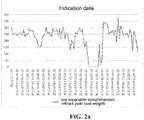
Figs. 2a and2b are a matching effect diagram of a one-dimensional time sequence pattern provided by the embodiment of the invention, whereinFig. 2a is a distribution diagram of one-dimensional time sequence data, andFig. 2b is a matching effect diagram after one-dimensional time sequence pattern matching is performed; and -
Figs. 3a and3b are a matching effect diagram of a multi-dimensional time sequence pattern provided by the embodiment of the invention, whereinFig. 3a is a distribution diagram of multi-dimensional time sequence data, andFig. 3b is a matching effect diagram after multi-dimensional time sequence pattern matching is performed. - The detailed description of the invention is further elaborated in combination with the drawings and the embodiment. The following embodiment is used to illustrate the invention, but is not intended to limit the scope of the invention.
- A visualized time sequence pattern matching method based on Hough transformation, as shown in
Fig. 1 , comprises the following steps: - Step 1, judging whether historical data to be matched is one-dimensional time sequence data or multi-dimensional time sequence data, if the historical data to be matched is the one-dimensional time sequence data, directly performing
step 2, if the historical data to be matched is the multi-dimensional time sequence data, performing normalization processing on the time sequence data, and then performing thestep 2; -
Step 2, performing time sequence selection: selecting a time sequence to be matched from the historical data in a time window pattern, and eliminating the selected time sequence from the historical data so as to conveniently match similar time sequence data from the remaining historical data,
Wherein if the historical data is one-dimensional time sequence data History[i], i is a time sequence value and meets 0 ≤ i ≤ History.length - 1, History.length is a length of the historical data, the selected time sequence to be matched is Query[j], a length of the selected time sequence to be matched is Range, 0 ≤ j < Range and Range = QueryMax - QueryMin, and QueryMax and QueryMinare respectively a termination point and a starting point of the time sequence to be matched, after the selected matched time sequence is eliminated from the historical data, the length of the remaining time sequence is History.length - Range; and
If the historical data is multi-dimensional time sequence data History'[dim][i], dim is different dimension indexes, i is a time sequence value, History'[0].length is a length of zero-dimensional historical data and meets 0 ≤ i ≤ History'[0].length -1, the time sequence to be matched is Query'[dim][j], a length of the time sequence to be matched is Range , 0 ≤ j < Range and Range = QueryMax - QueryMin, QueryMax and QueryMin are respectively a termination point and a starting point of the time sequence to be matched, after the selected matched time sequence is eliminated from the historical data, the length of the remaining time sequence is History'[0].length - Range; - Step 3, converting a time sequence image in original coordinates to a Hough space through the Hough transformation, and judging the similarity matching situation of the time sequence through a voting mechanism, wherein the Hough transformation comprises three parts: data pool updating, projection of XY axes to the Hough space, and voting,
- A specific method of the data pool updating comprises the steps: when a time sequence having similar data with the time sequence to be matched is matched in the historical data, the matched time sequence is eliminated from the historical data so as to realize data pool updating;
- If the historical data is the one-dimensional time sequence data, when then-th similar time sequence is matched, the length of the remaining time sequence in the historical data is as shown in the following formula:

- If the historical data is the multi-dimensional time sequence data, when then-th similar time sequence is matched, the length of the remaining time sequence in the historical data is as shown in the following formula:

- A specific method of the projection of XY axes to the Hough space comprises the following steps of:
- Step C1, finding out the X axis starting point StartSearch of the historical data to be matched this time, setting t = StartSearch, and determining the termination point EndSearch of the historical data to be matched this time;
- Step C2, setting m = QueryMin; and
- Step C3, projecting an X axis of the historical data to the Hough space,
Wherein if the historical data is the one-dimensional time sequence data, a projection formula is as follows:
If the historical data is the multi-dimensional time sequence data, a projection formula is as follows:
- Step C4, projecting a Y axis to the Hough space, and needing to figure out a difference value between a data to be matched and the historical data for unit Y axis projection,
Wherein if the historical data is the one-dimensional time sequence data, a projection formula is as follows:
If the historical data is the multi-dimensional time sequence data, a projection formula is as follows:
- Step C5, performing voting to obtain a corresponding time sequence when the largest number of votes under [hx][hy] coordinates is obtained, wherein a specific method comprises the steps of:
- Step C5.1, setting a voting principle: giving one vote under the condition of the same X axis difference value and the same Y axis difference value namely Vote[hx][hy]++, wherein Vote is the number of votes obtained under the [hx][hy] coordinates;
- Step C5.2, if MMax < Vote[hx][hy], enabling:

Wherein MMax is the count of votes obtained under the [hx][hy] coordinates, MMaxT is a corresponding time sequence when the number of votes MMax is obtained; - Step C6, m++, re-performing steps C3-C5, until m = QueryMax; and
- Step C7, t++, re-performing steps C2-C6, until t = EndSearch; and
- Step 4, performing screening: finding out the most similar group of time sequences according to the voting result MMax, outputting MMaxT to obtain the positions of the time sequences in the historical data, deleting the time sequences from the positions of the time sequences, enabling n+1, and from the step 3, performing a next-round voting calculation until matching of all the historical data is completed.
- The production index data of ore separation enterprises is typical time sequence data, the embodiment takes common production indexes in the ore separation enterprises as an example, and a visualized time sequence pattern matching method based on Hough transformation disclosed by the invention is used for matching the production index data of the enterprises.
- The ore separation comprehensive refined yield (wet weight) indexes, comprehensive massive ore ratio indexes,
powder 2#indexes and 2X refined 4# indexes of the ore separation enterprises are important production indexes, data is acquired at the frequency of 1 time per hour, and the obtained historical data of the ore separation comprehensive refined yield (wet weight) in two days is as shown in the following Table 1.Table 1 Ore separation comprehensive refined yield (wet weight) Index ID Index name Sampling time Data value (ton) 1 ore separation comprehensive refined yield (wet weight) 2017-07-02 01:00:00 303.00 2 ore separation comprehensive refined yield (wet weight) 2017-07-02 02:00:00 247.00 3 ore separation comprehensive refined yield (wet weight) 2017-07-02 03:00:00 248.00 4 ore separation comprehensive refined yield (wet weight) 2017-07-02 04:00:00 260.00 5 ore separation comprehensive refined yield (wet weight) 2017-07-02 05:00:00 240.00 6 ore separation comprehensive refined yield (wet weight) 2017-07-02 06:00:00 247.00 7 ore separation comprehensive refined yield (wet weight) 2017-07-02 07:00:00 255.00 8 ore separation comprehensive refined yield (wet weight) 2017-07-02 08:00:00 262.00 9 ore separation comprehensive refined yield (wet weight) 2017-07-02 09:00:00 245.00 10 ore separation comprehensive refined yield (wet weight) 2017-07-02 10:00:00 283.00 11 ore separation comprehensive refined yield (wet weight) 2017-07-02 11:00:00 231.00 12 ore separation comprehensive refined yield (wet weight) 2017-07-02 12:00:00 251.00 13 ore separation comprehensive refined yield (wet weight) 2017-07-02 13:00:00 242.00 14 ore separation comprehensive refined yield (wet weight) 2017-07-02 14:00:00 290.00 15 ore separation comprehensive refined yield (wet weight) 2017-07-02 15:00:00 273.00 16 ore separation comprehensive refined yield (wet weight) 2017-07-02 16:00:00 279.00 17 ore separation comprehensive refined yield (wet weight) 2017-07-02 17:00:00 281.00 18 ore separation comprehensive refined yield (wet weight) 2017-07-02 18:00:00 234.00 19 ore separation comprehensive refined yield (wet weight) 2017-07-02 19:00:00 222.00 20 ore separation comprehensive refined yield (wet weight) 2017-07-02 20:00:00 202.00 21 ore separation comprehensive refined yield (wet weight) 2017-07-02 21:00:00 159.00 22 ore separation comprehensive refined yield (wet weight) 2017-07-02 22:00:00 147.00 23 ore separation comprehensive refined yield (wet weight) 2017-07-02 23:00:00 153.00 24 ore separation comprehensive refined yield (wet weight) 2017-07-03 00:00:00 217.00 25 ore separation comprehensive refined yield (wet weight) 2017-07-03 01:00:00 240.00 26 ore separation comprehensive refined yield (wet weight) 2017-07-03 02:00:00 250.00 27 ore separation comprehensive refined yield (wet weight) 2017-07-03 03:00:00 302.00 28 ore separation comprehensive refined yield (wet weight) 2017-07-03 04:00:00 255.00 29 ore separation comprehensive refined yield (wet weight) 2017-07-03 05:00:00 265.00 30 ore separation comprehensive refined yield (wet weight) 2017-07-03 06:00:00 247.00 31 ore separation comprehensive refined yield (wet weight) 2017-07-03 07:00:00 234.00 32 ore separation comprehensive refined yield (wet weight) 2017-07-03 08:00:00 294.00 33 ore separation comprehensive refined yield (wet weight) 2017-07-03 09:00:00 268.00 34 ore separation comprehensive refined yield (wet weight) 2017-07-03 10:00:00 275.00 35 ore separation comprehensive refined yield (wet weight) 2017-07-03 11:00:00 287.00 36 ore separation comprehensive refined yield (wet weight) 2017-07-03 12:00:00 237.00 37 ore separation comprehensive refined yield (wet weight) 2017-07-03 13:00:00 289.00 38 ore separation comprehensive refined yield (wet weight) 2017-07-03 14:00:00 216.00 39 ore separation comprehensive refined yield (wet weight) 2017-07-03 15:00:00 278.00 40 ore separation comprehensive refined yield (wet weight) 2017-07-03 16:00:00 303.70 41 ore separation comprehensive refined yield (wet weight) 2017-07-03 17:00:00 214.00 42 ore separation comprehensive refined yield (wet weight) 2017-07-03 18:00:00 258.00 43 ore separation comprehensive refined yield (wet weight) 2017-07-03 19:00:00 251.00 44 ore separation comprehensive refined yield (wet weight) 2017-07-03 20:00:00 203.00 45 ore separation comprehensive refined yield (wet weight) 2017-07-03 21:00:00 124.00 46 ore separation comprehensive refined yield (wet weight) 2017-07-03 22:00:00 201.00 47 ore separation comprehensive refined yield (wet weight) 2017-07-03 23:00:00 191.00 48 ore separation comprehensive refined yield (wet weight) 2017-07-04 00:00:00 137.00 49 ore separation comprehensive refined yield (wet weight) 2017-07-04 01:00:00 260.00 50 ore separation comprehensive refined yield (wet weight) 2017-07-04 02:00:00 250.00 51 ore separation comprehensive refined yield (wet weight) 2017-07-04 03:00:00 270.00 52 ore separation comprehensive refined yield (wet weight) 2017-07-04 04:00:00 299.00 53 ore separation comprehensive refined yield (wet weight) 2017-07-04 05:00:00 270.00 54 ore separation comprehensive refined yield (wet weight) 2017-07-04 06:00:00 284.00 55 ore separation comprehensive refined yield (wet weight) 2017-07-04 07:00:00 219.00 56 ore separation comprehensive refined yield (wet weight) 2017-07-04 08:00:00 157.46 57 ore separation comprehensive refined yield (wet weight) 2017-07-04 09:00:00 193.00 58 ore separation comprehensive refined yield (wet weight) 2017-07-04 10:00:00 107.15 59 ore separation comprehensive refined yield (wet weight) 2017-07-04 11:00:00 0.00 60 ore separation comprehensive refined yield (wet weight) 2017-07-04 12:00:00 0.00 61 ore separation comprehensive refined yield (wet weight) 2017-07-04 13:00:00 0.00 62 ore separation comprehensive refined yield (wet weight) 2017-07-04 14:00:00 0.00 63 ore separation comprehensive refined yield (wet weight) 2017-07-04 15:00:00 0.00 64 ore separation comprehensive refined yield (wet weight) 2017-07-04 16:00:00 0.00 65 ore separation comprehensive refined yield (wet weight) 2017-07-04 17:00:00 0.00 66 ore separation comprehensive refined yield (wet weight) 2017-07-04 18:00:00 0.00 67 ore separation comprehensive refined yield (wet weight) 2017-07-04 19:00:00 167.00 68 ore separation comprehensive refined yield (wet weight) 2017-07-04 20:00:00 16.00 69 ore separation comprehensive refined yield (wet weight) 2017-07-04 21:00:00 64.00 70 ore separation comprehensive refined yield (wet weight) 2017-07-04 22:00:00 339.00 71 ore separation comprehensive refined yield (wet weight) 2017-07-04 23:00:00 336.00 72 ore separation comprehensive refined yield (wet weight) 2017-07-05 00:00:00 330.00 - The embodiment illustrates a one-dimensional pattern matching manner by taking comprehensive massive ore ratio indexes as an example. For time sequence selection of one-dimensional pattern matching, historical data History[i] is set as historical data of the comprehensive refined yield (wet weight) in 3 days, i is a time sequence value and meets 0 ≤ i ≤ 72, the time sequence to be matched is Query[j] and is a time sequence selected from the historical data through screening operations, the length of the time sequence is Range = 6 and meets Range = QueryMax - QueryMin, and QueryMin and QueryMax are respectively the starting point and the termination point of the time sequence to be matched, wherein 0 ≤ j < 6. The selected time sequence is eliminated from the historical data so as to conveniently match similar time sequence data from the remaining historical data, and the length of the remaining time sequence is History.length - Range = 66.
- During data pool updating, if pattern matching is performed twice and 2 groups of similar time sequence data is obtained, History.length = History.length - (n + 1) ∗ Range = 72- (2+ 1) ∗ 6 = 54 ,which means that the length of a data pool performing pattern matching of time sequence data next time is 54.
- During Hough transformation, an X axis voting proportional scale Xscale takes 0.25, and a Y axis voting proportional scale Yscale takes 0.25.
- The final one-dimensional time sequence pattern matching result of the embodiment is as shown in
Fig. 2 , and the figure shows the effect diagram of 2 pieces of similar one-dimensional data 2, 3 matched according to the selected inquired one-dimensional data 1. - Relative to historical data of a one-dimensional time sequence pattern matching method, historical data of a multi-dimensional time sequence pattern matching method changes, and one-dimensional data is converted into multi-dimensional data. The embodiment illustrates a visualized multi-dimensional time sequence matching method based on Hough transformation by taking ore separation comprehensive refined wet weight yield indexes, comprehensive massive ore ratio indexes,
powder 2# indexes and finished product -2# ore quantity indexes in ore separation production process of ore separation enterprises, in Table 2, as examples.Table 2 Multi-dimensional index data table ID Sampling time Powder 2# Finished product -2# ore quantity Raw data Normalized data Raw data Normalized data 1 2017/7/2 1:00 282.95 0.51 204.04 0.83 2 2017-07-02 02:00:00 424.90 0.76 176.60 0.69 3 2017-07-02 03:00:00 344.63 0.62 196.14 0.79 4 2017-07-02 04:00:00 291.48 0.52 200.16 0.81 5 2017-07-02 05:00:00 26.01 0.05 180.33 0.71 6 2017-07-02 06:00:00 5.11 0.01 224.42 0.93 7 2017-07-02 07:00:00 219.46 0.39 160.02 0.61 8 2017-07-02 08:00:00 146.32 0.26 214.38 0.88 9 2017-07-02 09:00:00 0.88 0.00 156.44 0.59 10 2017-07-02 10:00:00 508.69 0.91 172.24 0.67 11 2017-07-02 11:00:00 558.75 1.00 161.69 0.62 12 2017-07-02 12:00:00 530.15 0.95 89.96 0.26 13 2017-07-02 13:00:00 258.68 0.46 231.29 0.97 14 2017-07-02 14:00:00 0.00 0.00 138.22 0.50 15 2017-07-02 15:00:00 0.00 0.00 195.07 0.79 16 2017-07-02 16:00:00 14.10 0.03 196.82 0.80 17 2017-07-02 17:00:00 350.88 0.63 178.26 0.70 18 2017-07-02 18:00:00 521.25 0.93 201.30 0.82 19 2017-07-02 19:00:00 162.65 0.29 179.33 0.71 20 2017-07-02 20:00:00 0.00 0.00 164.64 0.63 21 2017-07-02 21:00:00 48.28 0.09 160.22 0.61 22 2017-07-02 22:00:00 559.00 1.00 192.93 0.78 23 2017-07-02 23:00:00 228.15 0.41 162.56 0.62 24 2017-07-03 00:00:00 0.04 0.00 189.66 0.76 25 2017-07-03 01:00:00 296.72 0.53 191.15 0.77 26 2017-07-03 02:00:00 406.92 0.73 195.53 0.79 27 2017-07-03 03:00:00 459.58 0.82 201.41 0.82 28 2017-07-03 04:00:00 2.60 0.00 232.45 0.97 29 2017-07-03 05:00:00 134.41 0.24 225.86 0.94 30 2017-07-03 06:00:00 318.07 0.57 213.56 0.88 31 2017-07-03 07:00:00 53.83 0.10 214.60 0.88 32 2017-07-03 08:00:00 0.00 0.00 157.69 0.60 33 2017-07-03 09:00:00 122.22 0.22 170.69 0.66 34 2017-07-03 10:00:00 447.55 0.80 183.23 0.73 35 2017-07-03 11:00:00 457.58 0.82 201.14 0.82 36 2017-07-03 12:00:00 489.31 0.88 171.90 0.67 37 2017-07-03 13:00:00 227.61 0.41 205.96 0.84 38 2017-07-03 14:00:00 0.00 0.00 199.84 0.81 39 2017-07-03 15:00:00 0.00 0.00 186.29 0.74 40 2017-07-03 16:00:00 0.00 0.00 224.50 0.93 41 2017-07-03 17:00:00 306.57 0.55 195.90 0.79 42 2017-07-03 18:00:00 374.34 0.67 179.66 0.71 43 2017-07-03 19:00:00 291.61 0.52 167.70 0.65 44 2017-07-03 20:00:00 0.00 0.00 160.35 0.61 45 2017-07-03 21:00:00 30.68 0.05 140.20 0.51 46 2017-07-03 22:00:00 457.02 0.82 176.02 0.69 47 2017-07-03 23:00:00 407.15 0.73 166.22 0.64 48 2017-07-04 00:00:00 0.01 0.00 179.77 0.71 49 2017-07-04 01:00:00 397.02 0.71 190.11 0.76 50 2017-07-04 02:00:00 414.37 0.74 182.92 0.73 51 2017-07-04 03:00:00 394.51 0.71 183.05 0.73 52 2017-07-04 04:00:00 406.07 0.73 179.48 0.71 53 2017-07-04 05:00:00 250.08 0.45 220.00 0.91 54 2017-07-04 06:00:00 0.00 0.00 202.21 0.82 55 2017-07-04 07:00:00 0.00 0.00 202.24 0.82 56 2017-07-04 08:00:00 6.93 0.01 181.45 0.72 57 2017-07-04 09:00:00 353.13 0.63 129.78 0.46 58 2017-07-04 10:00:00 338.91 0.61 161.78 0.62 59 2017-07-04 11:00:00 390.05 0.70 137.05 0.50 60 2017-07-04 12:00:00 82.78 0.15 151.72 0.57 61 2017-07-04 13:00:00 0.02 0.00 38.13 0.00 62 2017-07-04 14:00:00 0.00 0.00 186.03 0.74 63 2017-07-04 15:00:00 0.00 0.00 185.78 0.74 64 2017-07-04 16:00:00 0.00 0.00 237.67 1.00 65 2017-07-04 17:00:00 131.27 0.23 157.69 0.60 66 2017-07-04 18:00:00 288.58 0.52 159.82 0.61 67 2017-07-04 19:00:00 299.99 0.54 44.76 0.03 68 2017-07-04 20:00:00 90.14 0.16 94.61 0.28 69 2017-07-04 21:00:00 0.00 0.00 105.57 0.34 70 2017-07-04 22:00:00 181.47 0.32 73.90 0.18 71 2017-07-04 23:00:00 47.75 0.09 83.76 0.23 72 2017-07-05 00:00:00 0.00 0.00 95.16 0.29 - According to a multi-dimensional pattern matching method, firstly index data is subjected to normalization processing, and a normalization method adopted in the embodiment lies in that:

Powder 2# indexes are taken as an example, for example, for the time sequence consisting of 24 data points screened out from data on 20170702, original data is {282.95, 424.90, 344.63, 291.48, 26.01, 5.11, 219.46, 146.32, 0.88, 508.69, 558.75, 530.15, 258.68, 0.00, 0.00, 14.10, 350.88, 521.25, 162.65, 0.00, 48.28, 559.00, 228.15, 0.04}, and normalized data is {0.51, 0.76, 0.62, 0.52, 0.05, 0.01, 0.39, 0.26, 0.00, 0.91, 1.00, 0.95, 0.46, 0.00, 0.00, 0.03, 0.63, 0.93, 0.29, 0.00, 0.09, 1.00, 0.41, 0.00}; - For time sequence selection of multi-dimensional pattern matching, historical data History[dim][i] is set as data after normalization of historical data of ore separation comprehensive refined wet weight yield indexes, comprehensive massive ore ratio indexes,
powder 2# indexes and finished product -2# ore quantity indexes in 3 days, i is a time sequence value and meets 0 ≤ i ≤ 72, the time sequence to be matched is Query[dim][j] and is a time sequence selected from the historical data through screening operations, the length of the time sequence is Range = 6 and meets Range = QueryMax - QueryMin, and QueryMin and QueryMax are respectively the starting point and the termination point of the time sequence to be matched, wherein 0 ≤ j < 6, dim = 4. The selected time sequence is eliminated from the historical data so as to conveniently match similar time sequence data from the remaining historical data, and the length of the remaining time sequence is History[0].length - Range = 66 - During data pool updating, if pattern matching is performed twice and 2 groups of similar time sequence data is obtained, History[0].length = History[0].length - (n + 1) ∗ Range = 72 - (2 + 1) ∗ 6 = 54 ,which means that the length of a data pool performing pattern matching of time sequence data next time is 54.
- During Hough transformation, an X axis voting proportional scale Xscale is 2, a Y axis voting proportional scale Yscale is 2, and historical data dimension is K = 4.
- The final multi-dimensional time sequence pattern matching result of the embodiment is as shown in
Fig. 3 , and the figure shows the effect diagram of 2 pieces of similarmulti-dimensional data 2, 3 matched according to the selected inquired multi-dimensional data 1. - Finally, it should be noted that the above embodiments are only used to illustrate the technical solution of the invention, not to limit it; although the invention has been described in detail with reference to the foregoing embodiments, it should be understood by those skilled in the art that these technical solutions described in the foregoing embodiments may be modified or some or all of its technical features equivalently may be substituted; however, these modifications or substitutions do not cause the essence of the corresponding technical solution to depart from the scope defined by the claims of the invention.
Claims (5)
- A visualized time sequence pattern matching method based on Hough transformation, comprising the following steps:step 1, judging whether historical data to be matched is one-dimensional time sequence data or multi-dimensional time sequence data, if the historical data to be matched is the one-dimensional time sequence data, directly performing step 2, if the historical data to be matched is the multi-dimensional time sequence data, performing normalization processing on the time sequence data, and then performing the step 2;step 2, performing time sequence selection: selecting a time sequence to be matched from the historical data in a time window pattern, and eliminating the selected time sequence from the historical data so as to conveniently match similar time sequence data from the remaining historical data;step 3, converting a time sequence image in original coordinates to a Hough space through the Hough transformation, and judging a similarity matching situation of the time sequence through a voting mechanism,wherein the Hough transformation comprises three parts: data pool updating, projection of XY axes to the Hough space, and voting; andstep 4, performing screening: finding out a most similar group of time sequences according to the voting result, outputting to obtain positions of the time sequences in the historical data, deleting the time sequences from the positions of the time sequences in the historical data, enabling the similar time sequence data to be added with 1, and from the step 3, performing a next-round voting calculation until matching of all the historical data is completed.
- The method according to claim 1, wherein a specific method of the step 2 comprises the following steps:if the historical data is one-dimensional time sequence data History[i], i is a time sequence value and meets 0 ≤ i ≤ History.length -1, History.length is a length of the historical data, the selected time sequence to be matched is Query[j],a length of the selected time sequence to be matched is Range , 0 ≤ j < Range andRange = QueryMax - QueryMin, and QueryMax and QueryMin are respectively a termination point and a starting point of the time sequence to be matched, after the selected matched time sequence is eliminated from the historical data, the length of the remaining time sequence is History.length - Range; andif the historical data is multi-dimensional time sequence data History'[dim][i], dim is different dimension indexes, i is a time sequence value, History'[0].length is a length of zero-dimensional historical data and meets 0 ≤ i ≤ History'[0].length -1, the time sequence to be matched is Query'[dim][j],a length of the time sequence to be matched is Range, 0 ≤ j < Range and Range = QueryMax - QueryMin, and QueryMax and QueryMin are respectively a termination point and a starting point of the time sequence to be matched, after the selected matched time sequence is eliminated from the historical data, the length of the remaining time sequence is History'[0].length - Range.
- The method according to claim 2, wherein a specific method of the data pool updating in the step 3 comprises the following steps:when a time sequence having similar data with the time sequence to be matched is matched in the historical data, the matched time sequence is eliminated from the historical data so as to realize the data pool updating,wherein if the historical data is the one-dimensional time sequence data, when an n-th similar time sequence is matched, the length of the remaining time sequence in the historical data is as shown in the following formula:
 if the historical data is the multi-dimensional time sequence data, when an n-th similar time sequence is matched, the length of the remaining time sequence in the historical data is as shown in the following formula:
- The method according to claim 3, wherein a specific method of the projection of the XY axes to the Hough space in the step 3 comprises the following steps:step C1, finding out an X axis starting point StartSearch of the historical data to be matched this time, setting t = StartSearch, and determining a termination point EndSearch of the historical data to be matched this time;step C2, setting m = QueryMin; andstep C3, projecting an X axis of the historical data to the Hough space,wherein if the historical data is the one-dimensional time sequence data, a projection formula is as follows:

if the historical data is the multi-dimensional time sequence data, a projection formula is as follows: step C4, projecting a Y axis of the historical data to the Hough space, and needing to figure out a difference value between a data to be matched and the historical data for unit Y axis projection,
wherein if the historical data is the one-dimensional time sequence data, a projection formula is as follows:
if the historical data is the multi-dimensional time sequence data, a projection formula is as follows: wherein K is a historical data dimension;step C5, performing voting to obtain a corresponding time sequence when a largest number of votes under [hx][hy] coordinates is obtained;step C6, m++, re-performing steps C3-C5, until m = QueryMax; andstep C7, t++, re-performing steps C2-C6, until t = EndSearch.
 - The method according to claim 4, wherein a specific method of the step C5 comprises the following steps:step C5.1, setting a voting principle: giving one vote under the condition of a same X axis difference value and a same Y axis difference value, namely, Vote[hx][hy]++, wherein Vote is a number of votes obtained under the [hx][hy] coordinates; andstep C5.2, if a count of votes obtained under the [hx][hy] coordinates is MMax < Vote[hx][hy], enabling:

Applications Claiming Priority (2)
| Application Number | Priority Date | Filing Date | Title |
|---|---|---|---|
| CN201910272006.7A CN110059735A (en) | 2019-04-04 | 2019-04-04 | A kind of visualization time series pattern matching process based on Hough transformation |
| PCT/CN2019/082423 WO2020199241A1 (en) | 2019-04-04 | 2019-04-12 | Visual time-series pattern matching method employing hough transform |
Publications (2)
| Publication Number | Publication Date |
|---|---|
| EP3805989A1 true EP3805989A1 (en) | 2021-04-14 |
| EP3805989A4 EP3805989A4 (en) | 2021-11-17 |
Family
ID=67318410
Family Applications (1)
| Application Number | Title | Priority Date | Filing Date |
|---|---|---|---|
| EP19908070.6A Withdrawn EP3805989A4 (en) | 2019-04-04 | 2019-04-12 | VISUAL CHRONOLOGICAL SERIES PATTERN MATCHING METHOD USING THE HOUGH TRANSFORM |
Country Status (5)
| Country | Link |
|---|---|
| US (1) | US11328502B2 (en) |
| EP (1) | EP3805989A4 (en) |
| JP (1) | JP6942889B2 (en) |
| CN (1) | CN110059735A (en) |
| WO (1) | WO2020199241A1 (en) |
Families Citing this family (2)
| Publication number | Priority date | Publication date | Assignee | Title |
|---|---|---|---|---|
| CN110059735A (en) * | 2019-04-04 | 2019-07-26 | 东北大学 | A kind of visualization time series pattern matching process based on Hough transformation |
| CN118882695B (en) * | 2024-07-10 | 2025-04-04 | 江西科技学院 | Method for determining mileage deviation of track inspection data based on DTW and Hough transform |
Family Cites Families (14)
| Publication number | Priority date | Publication date | Assignee | Title |
|---|---|---|---|---|
| US7375731B2 (en) * | 2002-11-01 | 2008-05-20 | Mitsubishi Electric Research Laboratories, Inc. | Video mining using unsupervised clustering of video content |
| US7103222B2 (en) * | 2002-11-01 | 2006-09-05 | Mitsubishi Electric Research Laboratories, Inc. | Pattern discovery in multi-dimensional time series using multi-resolution matching |
| JP5441554B2 (en) * | 2009-08-03 | 2014-03-12 | 三菱電機株式会社 | Time-series data similarity determination device, time-series data similarity determination program, recording medium, and time-series data similarity determination method |
| KR101650833B1 (en) * | 2013-04-02 | 2016-08-24 | 쓰리엠 이노베이티브 프로퍼티즈 컴파니 | Systems and methods for note recognition |
| JP6441895B2 (en) * | 2013-04-02 | 2018-12-19 | スリーエム イノベイティブ プロパティズ カンパニー | System and method for managing notes |
| CA2895624C (en) | 2014-06-26 | 2024-03-26 | Tata Consultancy Services Limited | Detecting an event from time-series data sequences |
| CN104570739B (en) * | 2015-01-07 | 2017-01-25 | 东北大学 | Ore dressing multi-production-index optimized decision making system and method based on cloud and mobile terminal |
| CN105046684B (en) | 2015-06-15 | 2017-09-29 | 华中科技大学 | A kind of image matching method based on polygon generalised Hough transform |
| CN106936964B (en) | 2016-12-14 | 2019-11-19 | 惠州旭鑫智能技术有限公司 | A mobile phone screen corner detection method based on Hough transform template matching |
| US10522186B2 (en) * | 2017-07-28 | 2019-12-31 | Adobe Inc. | Apparatus, systems, and methods for integrating digital media content |
| CN109241077A (en) | 2018-08-30 | 2019-01-18 | 东北大学 | Production target variation tendency visual query system and method based on similitude |
| CN109409639A (en) | 2018-08-31 | 2019-03-01 | 东北大学 | A kind of the incidence relation visualization system and method for mineral processing production index |
| CN109241190A (en) | 2018-09-12 | 2019-01-18 | 国网江苏省电力有限公司苏州供电分公司 | Electric power big data mixes computing architecture |
| CN110059735A (en) * | 2019-04-04 | 2019-07-26 | 东北大学 | A kind of visualization time series pattern matching process based on Hough transformation |
-
2019
- 2019-04-04 CN CN201910272006.7A patent/CN110059735A/en active Pending
- 2019-04-12 EP EP19908070.6A patent/EP3805989A4/en not_active Withdrawn
- 2019-04-12 WO PCT/CN2019/082423 patent/WO2020199241A1/en not_active Ceased
- 2019-04-12 US US16/960,483 patent/US11328502B2/en active Active
- 2019-04-12 JP JP2020527944A patent/JP6942889B2/en active Active
Also Published As
| Publication number | Publication date |
|---|---|
| US11328502B2 (en) | 2022-05-10 |
| WO2020199241A1 (en) | 2020-10-08 |
| US20210117715A1 (en) | 2021-04-22 |
| EP3805989A4 (en) | 2021-11-17 |
| CN110059735A (en) | 2019-07-26 |
| JP2021520526A (en) | 2021-08-19 |
| JP6942889B2 (en) | 2021-09-29 |
Similar Documents
| Publication | Publication Date | Title |
|---|---|---|
| US11113505B2 (en) | Palm print image matching techniques | |
| US20230130901A1 (en) | Method for constructing three-dimensional map in high-definition map, device and storage medium | |
| US20170308768A1 (en) | Character information recognition method based on image processing | |
| CN105354599A (en) | Color recognition method based on improved SLIC super-pixel segmentation algorithm | |
| CN103761515B (en) | A kind of face feature extraction method and device based on LBP | |
| US20210319204A1 (en) | Fingerprint Matching Method And Apparatus, Electronic Equipment And Readable Storage Medium | |
| US20210065021A1 (en) | Working condition state modeling and model correcting method | |
| CN108615253A (en) | Image generating method, device and computer readable storage medium | |
| EP3822830A1 (en) | Feature processing method and device for motion trajectory, and computer storage medium | |
| CN103955518A (en) | Method for matching a test object spectrum with database spectrum | |
| US11328502B2 (en) | Visualized time sequence pattern matching method for data visualization analysis based on Hough transformation | |
| CN116883184A (en) | Financial tax intelligent analysis method based on big data | |
| CN107730524B (en) | Key tooth shape code identification method | |
| CN117314940A (en) | Rapid segmentation method of laser cutting part contours based on artificial intelligence | |
| US20230048643A1 (en) | High-Precision Map Construction Method, Apparatus and Electronic Device | |
| CN115018835B (en) | Automobile starter gear detection method | |
| CN105224941A (en) | Object Recognition and Localization Methods | |
| Chaabouni et al. | Fractal and multi-fractal for arabic offline writer identification | |
| CN112215852A (en) | Digital image segmentation method based on cluster learning device integration | |
| Arora et al. | An algorithm to straighten the bent human chromosomes | |
| CN112784733A (en) | Emotion recognition method and device based on online education and electronic equipment | |
| CN104008382B (en) | Sensor fingerprint image identification system and method | |
| CN111739018A (en) | Chromatic aberration detection method, device, terminal and medium based on point cloud technology | |
| CN113538484B (en) | Deep-refinement multiple-information nested edge detection method | |
| CN104616264B (en) | The automatic contrast enhancement method of gene-chip Image |
Legal Events
| Date | Code | Title | Description |
|---|---|---|---|
| STAA | Information on the status of an ep patent application or granted ep patent |
Free format text: STATUS: UNKNOWN |
|
| STAA | Information on the status of an ep patent application or granted ep patent |
Free format text: STATUS: THE INTERNATIONAL PUBLICATION HAS BEEN MADE |
|
| PUAI | Public reference made under article 153(3) epc to a published international application that has entered the european phase |
Free format text: ORIGINAL CODE: 0009012 |
|
| STAA | Information on the status of an ep patent application or granted ep patent |
Free format text: STATUS: REQUEST FOR EXAMINATION WAS MADE |
|
| 17P | Request for examination filed |
Effective date: 20200713 |
|
| AK | Designated contracting states |
Kind code of ref document: A1 Designated state(s): AL AT BE BG CH CY CZ DE DK EE ES FI FR GB GR HR HU IE IS IT LI LT LU LV MC MK MT NL NO PL PT RO RS SE SI SK SM TR |
|
| AX | Request for extension of the european patent |
Extension state: BA ME |
|
| A4 | Supplementary search report drawn up and despatched |
Effective date: 20211015 |
|
| RIC1 | Information provided on ipc code assigned before grant |
Ipc: G06K 9/62 20060101AFI20211011BHEP |
|
| DAV | Request for validation of the european patent (deleted) | ||
| DAX | Request for extension of the european patent (deleted) | ||
| STAA | Information on the status of an ep patent application or granted ep patent |
Free format text: STATUS: EXAMINATION IS IN PROGRESS |
|
| 17Q | First examination report despatched |
Effective date: 20230526 |
|
| REG | Reference to a national code |
Ref country code: DE Ref legal event code: R079 Free format text: PREVIOUS MAIN CLASS: G06K0009620000 Ipc: G06F0018220000 |
|
| RIC1 | Information provided on ipc code assigned before grant |
Ipc: G06F 18/22 20230101AFI20250128BHEP |
|
| STAA | Information on the status of an ep patent application or granted ep patent |
Free format text: STATUS: THE APPLICATION IS DEEMED TO BE WITHDRAWN |
|
| 18D | Application deemed to be withdrawn |
Effective date: 20250611 |