EP3805944A1 - Data page access method, storage engine, and computer readable storage medium - Google Patents
Data page access method, storage engine, and computer readable storage medium Download PDFInfo
- Publication number
- EP3805944A1 EP3805944A1 EP19811789.7A EP19811789A EP3805944A1 EP 3805944 A1 EP3805944 A1 EP 3805944A1 EP 19811789 A EP19811789 A EP 19811789A EP 3805944 A1 EP3805944 A1 EP 3805944A1
- Authority
- EP
- European Patent Office
- Prior art keywords
- data page
- data
- log information
- page
- buffer pool
- Prior art date
- Legal status (The legal status is an assumption and is not a legal conclusion. Google has not performed a legal analysis and makes no representation as to the accuracy of the status listed.)
- Granted
Links
Images


Classifications
-
- G—PHYSICS
- G06—COMPUTING OR CALCULATING; COUNTING
- G06F—ELECTRIC DIGITAL DATA PROCESSING
- G06F16/00—Information retrieval; Database structures therefor; File system structures therefor
- G06F16/20—Information retrieval; Database structures therefor; File system structures therefor of structured data, e.g. relational data
- G06F16/21—Design, administration or maintenance of databases
-
- G—PHYSICS
- G06—COMPUTING OR CALCULATING; COUNTING
- G06F—ELECTRIC DIGITAL DATA PROCESSING
- G06F16/00—Information retrieval; Database structures therefor; File system structures therefor
- G06F16/20—Information retrieval; Database structures therefor; File system structures therefor of structured data, e.g. relational data
- G06F16/22—Indexing; Data structures therefor; Storage structures
-
- G—PHYSICS
- G06—COMPUTING OR CALCULATING; COUNTING
- G06F—ELECTRIC DIGITAL DATA PROCESSING
- G06F16/00—Information retrieval; Database structures therefor; File system structures therefor
- G06F16/20—Information retrieval; Database structures therefor; File system structures therefor of structured data, e.g. relational data
- G06F16/24—Querying
- G06F16/245—Query processing
- G06F16/2455—Query execution
-
- G—PHYSICS
- G06—COMPUTING OR CALCULATING; COUNTING
- G06F—ELECTRIC DIGITAL DATA PROCESSING
- G06F16/00—Information retrieval; Database structures therefor; File system structures therefor
- G06F16/20—Information retrieval; Database structures therefor; File system structures therefor of structured data, e.g. relational data
- G06F16/28—Databases characterised by their database models, e.g. relational or object models
Definitions
- This application relates to, but is not limited to, the technical field of communications.
- a traditional relational database system is disk-oriented, and its main architecture is based on a two-layer storage hierarchy constructed by a hard disk drive (HDD) and a dynamic random access memory (DRAM). For this reason, input/output (I/O) between the slow HDD and the high-speed DRAM has become a major bottleneck in performance of the entire system.
- I/O input/output
- 3D XPoint technology the industrialization of production of a new type of nonvolatile storage hardware characterized by non-volatility, large capacity, low latency, high concurrent access capability, and byte addressing and so on has become a reality.
- a new storage environment incorporating a nonvolatile memory (NVM) is expected to cross a performance gap between a central processing unit (CPU) and an external memory, and eliminate the I/O bottleneck restricting design of upper-level software in a computer system.
- an on-line transaction processing (OLTP) database architecture cannot achieve consistent optimal performance under different load characteristics (such as read-only, read-more-and write-less, write-more-and-read-less, etc.) and under an NVM environment.
- a data page access method includes: storing mirrored data pages of a buffer pool on a nonvolatile memory (NVM); and modifying a data page in the buffer pool according to a write access to the data page, and storing a page number of, undo log information and modification log information about the data page in a preset dynamic array.
- NVM nonvolatile memory
- a storage engine of an NVM-based database includes: a memory, a processor, and a data page access program stored on the memory and runnable on the processor.
- the data page access program when executed by the processor, implements the data page access method according to the present disclosure.
- a computer-readable storage medium stores thereon a data page access program.
- the data page access program when executed by a processor, implements the data page access method according to the present disclosure.
- Fig. 1 is a flowchart of a data page access method according to an embodiment of the present disclosure.
- a data page access method may include steps S11 to S12.
- step S11 mirrored data pages of a buffer pool are stored on a nonvolatile memory (NVM).
- NVM nonvolatile memory
- a storage engine of a database is reconstructed to adopt a hierarchical storage architecture, in which each layer uses a different storage medium.
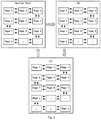
- Fig. 2 is a schematic structural diagram of a system architecture of a database according to an embodiment of the present disclosure.
- a layer L0 uses an NVM
- a layer L1 may use a hard disk drive (HDD) or a solid state drive (SSD).
- Both the layer L0 and the buffer pool include k data pages, namely Page 1 to Page k.
- the layer L1 includes n data pages, namely Page 1 to Page n, where n>k.
- the NVM on the layer L0 is formatted in sizes of 16Kb, so that a one-to-one correspondence is formed between the NVM on the layer L0 and the data pages in the buffer pool.
- step S12 a data page in the buffer pool is modified according to a write access to the data page, and a page number of, undo log information and modification log information about the data page are stored in a preset dynamic array.
- a mini-transaction is used in a memory as a unit for operating data pages.
- Fig. 3 is a schematic structural diagram of a mini-transaction according to an embodiment of the present disclosure.
- a mini-transaction includes a dynamic array of memos (Memo) for storing page numbers of data pages, a dynamic array of modification logs (Log) for storing modification log information, and a dynamic array of undo logs (Undo log) for storing undo log information.
- Memo dynamic array of memos
- Log dynamic array of modification logs
- Undo log dynamic array of undo logs
- the undo log information includes a page number, an offset from a head, a modified size, and a value before modification.
- the modification log information includes a page number, an offset from a head, and a modified size. Reference can be made to Fig. 3 for formats of the undo log information and the modification log information.
- step 12 of modifying the data page in the buffer pool according to the write access to the data page, and storing the page number of, the undo log information and the modification log information about the data page in the preset dynamic array includes: locating the data page according to the page number of the data page and locking the data page; storing the page number of the data page in the dynamic array of memos; recording the undo log information and storing the undo log information in the dynamic array of undo logs; and modifying the data page and storing the modification log information in the dynamic array of modification logs.
- the data page is located according to the page number and is locked; the page number of the data page is stored in the Memo; the undo log information is recorded and then stored in the Undo log for use in rolling back the transaction; and then the data page is modified and the modification log information is stored in the Log.
- the method further includes: flushing a modified part of the data page to the mirrored data pages of the buffer pool stored on the NVM according to the modification log information stored in the dynamic array of modification logs, and unlocking the data page.
- a piece of modification log information is popped up from the dynamic array of modification logs; the piece of modification log information is parsed to obtain the page number, the offset from the head, and the modified size; then the data page is located according to the page number; and the modified part of the data page is flushed to the NVM on the layer L0, for example, to the mirrored data pages of the buffer pool on the NVM, and the data page is unlocked.
- the existing relational database when a dirty page is flushed, the entire data page needs to be flushed to a disk.
- the method further includes: restoring the data page according to the undo log information stored in the dynamic array of undo logs, and unlocking the data page.
- a piece of undo log information needs to be popped from the dynamic array of undo logs; the piece of undo log information is then parsed to obtain the page number, the offset from the head, the modified size, and the value before the modification; and then the data page before the modification is restored and unlocked.
- the method further includes: judging whether the data page is in the buffer pool according to a read-only access to the data page; loading the data page from the hard disk to the buffer pool if the data page is not in the buffer pool; and performing a read-only access to the data page if the data page is in the buffer pool.
- the data page to be accessed when the data page to be accessed is not in the buffer pool, the data page is loaded from the hard disk on the layer L1 to the buffer pool; and when the data page to be accessed is in the buffer pool, a direct access to the data page is performed.
- the method before loading the data page from the hard disk to the buffer pool, the method further includes: selecting an unmodified data page from a least recently used (LRU) linked list of the buffer pool when a memory of the buffer pool is insufficient, and flushing the unmodified data page to the hard disk.
- LRU least recently used
- Fig. 4 is a schematic structural diagram of an LRU linked list of the buffer pool according to an embodiment of the present disclosure. As shown in Fig. 4 , page 6 is used as the junction between the hot data and the cold data. Data pages (including page 6) after page 6 are all cold data pages, and data pages before page 6 are all hot data pages.
- the method further includes: loading the mirrored data pages stored on the NVM to the buffer pool when the database is restarted.
- the redo log buffer in the existing relational database is removed; the redo log recording process is also removed from the data page modification process; and concurrency is enhanced, which improves the performance of the storage engine of the database.
- Fig. 5 is a schematic structural diagram of a storage engine of an NVM-based database according to an embodiment of the present disclosure.
- a storage engine of an NVM-based database may include: a memory 21, a processor 22, and a data page access program stored on the memory 21 and runnable on the processor 22.
- the data page access program when executed by the processor 22, is configured to implement the following described steps of a data page access method: storing mirrored data pages of a buffer pool on a nonvolatile memory (NVM); and modifying a data page in the buffer pool according to a write access to the data page, and storing a page number of, undo log information and modification log information about the data page in a preset dynamic array.
- NVM nonvolatile memory
- the data page access program when executed by the processor 22, is further configured to implement the following steps of the data page access method: judging whether the data page is in the buffer pool according to a read-only access to the data page; loading the data page from a hard disk to the buffer pool if the data page is not in the buffer pool; and performing a read-only access to the data page if the data page is in the buffer pool.
- the data page access program when executed by the processor 22, is further configured to implement the following steps of the data page access method: selecting an unmodified data page from a least recently used (LRU) linked list of the buffer pool when a memory of the buffer pool is insufficient, and flushing the unmodified data page to the hard disk.
- LRU least recently used
- the data page access program when executed by the processor 22, is further configured to implement the following steps of the data page access method: loading the mirrored data pages stored on the NVM into the buffer pool when the database is restarted.
- the preset dynamic array includes a dynamic array of memos for storing page numbers of data pages, a dynamic array of undo logs for storing undo log information, and a dynamic array of modification logs for storing modification log information.
- the step of modifying the data page in the buffer pool according to the write access to the data page, and storing the page number of, the undo log information and the modification log information about the data page in the preset dynamic array includes: locating the data page according to the page number of the data page and locking the data page; storing the page number of the data page in the dynamic array of memos; recording the undo log information and storing the undo log information in the dynamic array of undo logs; and modifying the data page and storing the modification log information in the dynamic array of modification logs.
- the data page access program when executed by the processor 22, is further configured to implement the following steps of the data page access method: flushing a modified part of the data page to the mirrored data pages of the buffer pool on the NVM according to the modification log information stored in the dynamic array of modification logs, and unlocking the data page.
- the data page access program when executed by the processor 22, is further configured to implement the following steps of the data page access method: restoring the data page according to the undo log information stored in the dynamic array of undo logs, and unlocking the data page.
- the present disclosure further provides a computer-readable storage medium which stores a data page access program.
- the data page access program when executed by a processor, is configured to implement the data page access method according to the present disclosure.
- the computer-readable storage medium of the present disclosure belongs to a same concept as the method of the present disclosure.
- a specific process of implementing the computer-readable storage medium is detailed in the method embodiments, and technical features in the method embodiments are correspondingly applicable in this embodiment. Details are not repeated herein.
- the redo log buffer in the existing relational database is removed; the redo log recording process is also removed from the data page modification process; and concurrency is added, which improves performance of the storage engine of the database.
- the steps of the methods disclosed above, and the functional modules/units of the systems and devices disclosed above may be implemented as software, firmware, hardware, and any suitable combinations thereof.
- the division between functional modules/units referred to in the above description does not necessarily correspond to the division between physical components.
- one physical component may have multiple functions, or one function or step may be executed by a combination of a plurality of physical components.
- Some or all of the components may be implemented as software executed by a processor, such as a central processing unit, a digital signal processor or a microprocessor, or be implemented as hardware, or as an integrated circuit, such as an application-specific integrated circuit.
- Such software may be distributed on a computer-readable medium which may include computer storage medium (or non-transitory medium) and communication medium (or transitory medium).
- computer storage medium includes volatile and nonvolatile, removable and non-removable medium implemented in any method or technology for storage of information (such as computer-readable instructions, data structures, program modules, or other data).
- Computer storage medium includes, but is not limited to, random access memory (RAM), read only memory (ROM), electrically erasable programmable read-only memory (EEPROM), flash memory or other memory technologies, compact disc read-only memory (CD-ROM), digital versatile disk (DVD) or other optical disk storages, magnetic cassettes, magnetic tapes, magnetic disk storages or other magnetic storages, or any other medium that can be used to store desired information and can be accessed by a computer.
- communication medium typically contains computer-readable instructions, data structures, program modules or other data in a modulated data signal such as a carrier wave or other transport mechanism, and may include any information delivery medium.
Landscapes
- Engineering & Computer Science (AREA)
- Theoretical Computer Science (AREA)
- Databases & Information Systems (AREA)
- Data Mining & Analysis (AREA)
- Physics & Mathematics (AREA)
- General Engineering & Computer Science (AREA)
- General Physics & Mathematics (AREA)
- Software Systems (AREA)
- Information Retrieval, Db Structures And Fs Structures Therefor (AREA)
Abstract
Description
- This application relates to, but is not limited to, the technical field of communications.
- A traditional relational database system is disk-oriented, and its main architecture is based on a two-layer storage hierarchy constructed by a hard disk drive (HDD) and a dynamic random access memory (DRAM). For this reason, input/output (I/O) between the slow HDD and the high-speed DRAM has become a major bottleneck in performance of the entire system. With the emergence of 3D XPoint technology, the industrialization of production of a new type of nonvolatile storage hardware characterized by non-volatility, large capacity, low latency, high concurrent access capability, and byte addressing and so on has become a reality. A new storage environment incorporating a nonvolatile memory (NVM) is expected to cross a performance gap between a central processing unit (CPU) and an external memory, and eliminate the I/O bottleneck restricting design of upper-level software in a computer system.
- However, applying an existing relational database system directly to an NVM cannot achieve optimal performance. Specifically, there are inefficient or useless components and technologies in a database system based on the traditional storage hierarchical architecture. For example, after the disk-oriented database system is cut into a version that can be completely resident in a memory, the system does not obtain expected performance gains under an all-in memory execution environment. The reason is that except about 12% of the CPU time that is spent on useful work, a large amount of the rest of the CPU time is spent on other auxiliary work (such as buffering, concurrency control, recovery, etc.) closely related to transaction processing. At present, in some cases, an on-line transaction processing (OLTP) database architecture cannot achieve consistent optimal performance under different load characteristics (such as read-only, read-more-and write-less, write-more-and-read-less, etc.) and under an NVM environment.
- According to one aspect of the present disclosure, a data page access method is provided. The method includes: storing mirrored data pages of a buffer pool on a nonvolatile memory (NVM); and modifying a data page in the buffer pool according to a write access to the data page, and storing a page number of, undo log information and modification log information about the data page in a preset dynamic array.
- According to another aspect of the present disclosure, a storage engine of an NVM-based database is provided. The storage engine includes: a memory, a processor, and a data page access program stored on the memory and runnable on the processor. The data page access program, when executed by the processor, implements the data page access method according to the present disclosure.
- According to further another aspect of the present disclosure, a computer-readable storage medium is provided. The computer-readable storage medium stores thereon a data page access program. The data page access program, when executed by a processor, implements the data page access method according to the present disclosure.
-
-
Fig. 1 is a flowchart of a data page access method according to an embodiment of the present disclosure. -
Fig. 2 is a schematic structural diagram of a system architecture of a database according to an embodiment of the present disclosure. -
Fig. 3 is a schematic structural diagram of a mini-transaction according to an embodiment of the present disclosure. -
Fig. 4 is a schematic structural diagram of a least recently used (LRU) linked list of a buffer pool according to an embodiment of the present disclosure. -
Fig. 5 is a schematic structural diagram of a storage engine of an NVM-based database according to an embodiment of the present disclosure. - The realization of the objectives of the present disclosure, functional features and advantages of the objectives of the present disclosure will be further described in conjunction with the embodiments and with reference to the accompanying drawings.
- In order to make the technical problems to be solved by the present disclosure, the technical solutions and beneficial effects of the present disclosure clearer and more comprehensible, the present disclosure will be further described in detail below with reference to the accompanying drawings and the embodiments. It shall be appreciated that the specific embodiments described herein are intended only for explaining, rather than limiting, the present disclosure.
-
Fig. 1 is a flowchart of a data page access method according to an embodiment of the present disclosure. - As shown in
Fig. 1 , a data page access method according to an embodiment of the present disclosure may include steps S11 to S12. - In step S11, mirrored data pages of a buffer pool are stored on a nonvolatile memory (NVM).
- In one embodiment, a storage engine of a database is reconstructed to adopt a hierarchical storage architecture, in which each layer uses a different storage medium.
-
Fig. 2 is a schematic structural diagram of a system architecture of a database according to an embodiment of the present disclosure. - As shown in
Fig. 2 , a layer L0 uses an NVM, and a layer L1 may use a hard disk drive (HDD) or a solid state drive (SSD). Both the layer L0 and the buffer pool include k data pages, namelyPage 1 to Page k. The layer L1 includes n data pages, namelyPage 1 to Page n, where n>k. By storing the mirrored data pages of the buffer pool on the NVM, a redo log buffer as in an existing relational database is removed and concurrency is enhanced. - When the database is started for a first time, the NVM on the layer L0 is formatted in sizes of 16Kb, so that a one-to-one correspondence is formed between the NVM on the layer L0 and the data pages in the buffer pool.
- In step S12, a data page in the buffer pool is modified according to a write access to the data page, and a page number of, undo log information and modification log information about the data page are stored in a preset dynamic array.
- In one embodiment, a mini-transaction is used in a memory as a unit for operating data pages.
Fig. 3 is a schematic structural diagram of a mini-transaction according to an embodiment of the present disclosure. As shown inFig. 3 , a mini-transaction includes a dynamic array of memos (Memo) for storing page numbers of data pages, a dynamic array of modification logs (Log) for storing modification log information, and a dynamic array of undo logs (Undo log) for storing undo log information. - The undo log information includes a page number, an offset from a head, a modified size, and a value before modification. The modification log information includes a page number, an offset from a head, and a modified size. Reference can be made to
Fig. 3 for formats of the undo log information and the modification log information. - In one embodiment,
step 12 of modifying the data page in the buffer pool according to the write access to the data page, and storing the page number of, the undo log information and the modification log information about the data page in the preset dynamic array includes: locating the data page according to the page number of the data page and locking the data page; storing the page number of the data page in the dynamic array of memos; recording the undo log information and storing the undo log information in the dynamic array of undo logs; and modifying the data page and storing the modification log information in the dynamic array of modification logs. - In one embodiment, after the transaction is started, the data page is located according to the page number and is locked; the page number of the data page is stored in the Memo; the undo log information is recorded and then stored in the Undo log for use in rolling back the transaction; and then the data page is modified and the modification log information is stored in the Log.
- In one embodiment, after modifying the data page and storing the modification log information in the dynamic array of modification logs, the method further includes: flushing a modified part of the data page to the mirrored data pages of the buffer pool stored on the NVM according to the modification log information stored in the dynamic array of modification logs, and unlocking the data page.
- In one embodiment, after the transaction is submitted, a piece of modification log information is popped up from the dynamic array of modification logs; the piece of modification log information is parsed to obtain the page number, the offset from the head, and the modified size; then the data page is located according to the page number; and the modified part of the data page is flushed to the NVM on the layer L0, for example, to the mirrored data pages of the buffer pool on the NVM, and the data page is unlocked. In the existing relational database, when a dirty page is flushed, the entire data page needs to be flushed to a disk. By way of this embodiment, however, it is only necessary to flush a modified part of the data page to the NVM on the layer L0, for example, to the mirrored data pages of the buffer pool, which reduces write amplification.
- In one embodiment, after modifying the data page and storing the modification log information in the dynamic array of modification logs, the method further includes: restoring the data page according to the undo log information stored in the dynamic array of undo logs, and unlocking the data page.
- In one embodiment, for rolling back the transaction, a piece of undo log information needs to be popped from the dynamic array of undo logs; the piece of undo log information is then parsed to obtain the page number, the offset from the head, the modified size, and the value before the modification; and then the data page before the modification is restored and unlocked.
- In one embodiment, after the step of storing the mirrored data pages of the buffer pool on the NVM, the method further includes: judging whether the data page is in the buffer pool according to a read-only access to the data page; loading the data page from the hard disk to the buffer pool if the data page is not in the buffer pool; and performing a read-only access to the data page if the data page is in the buffer pool.
- In one embodiment, when the data page to be accessed is not in the buffer pool, the data page is loaded from the hard disk on the layer L1 to the buffer pool; and when the data page to be accessed is in the buffer pool, a direct access to the data page is performed.
- In one embodiment, before loading the data page from the hard disk to the buffer pool, the method further includes: selecting an unmodified data page from a least recently used (LRU) linked list of the buffer pool when a memory of the buffer pool is insufficient, and flushing the unmodified data page to the hard disk.
- In one embodiment, when the memory of the buffer pool is insufficient, data on the layer L1 cannot be directly loaded into the memory. It is necessary to select an unmodified data page from an end of a cold part of the LRU linked list of the buffer pool, and flush the selected data page from the layer L0 to the layer L1, so that the selected data page in the memory is used as a free data page for loading data from the layer L1. All the data pages in the buffer pool are organized by the LRU linked list (doubly linked list), and a point at 3/8 of the LRU linked list is used as a junction between hot data and cold data.
Fig. 4 is a schematic structural diagram of an LRU linked list of the buffer pool according to an embodiment of the present disclosure. As shown inFig. 4 ,page 6 is used as the junction between the hot data and the cold data. Data pages (including page 6) afterpage 6 are all cold data pages, and data pages beforepage 6 are all hot data pages. - In one embodiment, after the step of storing the mirrored data pages of the buffer pool on the NVM, the method further includes: loading the mirrored data pages stored on the NVM to the buffer pool when the database is restarted.
- In the existing relational database, when the database is restarted, a redo log on the disk is read for a roll-forward recovery. By using this embodiment, however, it is only necessary to load the mirrored data page on the NVM into the memory, by means of which startup time is reduced and meanwhile hot data is loaded into the memory, which further facilitates data access.
- According to the data page access method of the present disclosure, by storing the mirrored data pages of the buffer pool on the NVM, the redo log buffer in the existing relational database is removed; the redo log recording process is also removed from the data page modification process; and concurrency is enhanced, which improves the performance of the storage engine of the database.
-
Fig. 5 is a schematic structural diagram of a storage engine of an NVM-based database according to an embodiment of the present disclosure. - As shown in
Fig. 5 , a storage engine of an NVM-based database according to an embodiment of the present disclosure may include: amemory 21, aprocessor 22, and a data page access program stored on thememory 21 and runnable on theprocessor 22. The data page access program, when executed by theprocessor 22, is configured to implement the following described steps of a data page access method: storing mirrored data pages of a buffer pool on a nonvolatile memory (NVM); and modifying a data page in the buffer pool according to a write access to the data page, and storing a page number of, undo log information and modification log information about the data page in a preset dynamic array. - In one embodiment, the data page access program, when executed by the
processor 22, is further configured to implement the following steps of the data page access method: judging whether the data page is in the buffer pool according to a read-only access to the data page; loading the data page from a hard disk to the buffer pool if the data page is not in the buffer pool; and performing a read-only access to the data page if the data page is in the buffer pool. - In one embodiment, the data page access program, when executed by the
processor 22, is further configured to implement the following steps of the data page access method: selecting an unmodified data page from a least recently used (LRU) linked list of the buffer pool when a memory of the buffer pool is insufficient, and flushing the unmodified data page to the hard disk. - In one embodiment, the data page access program, when executed by the
processor 22, is further configured to implement the following steps of the data page access method: loading the mirrored data pages stored on the NVM into the buffer pool when the database is restarted. - In one embodiment, the preset dynamic array includes a dynamic array of memos for storing page numbers of data pages, a dynamic array of undo logs for storing undo log information, and a dynamic array of modification logs for storing modification log information.
- In one embodiment, the step of modifying the data page in the buffer pool according to the write access to the data page, and storing the page number of, the undo log information and the modification log information about the data page in the preset dynamic array includes: locating the data page according to the page number of the data page and locking the data page; storing the page number of the data page in the dynamic array of memos; recording the undo log information and storing the undo log information in the dynamic array of undo logs; and modifying the data page and storing the modification log information in the dynamic array of modification logs.
- In one embodiment, the data page access program, when executed by the
processor 22, is further configured to implement the following steps of the data page access method: flushing a modified part of the data page to the mirrored data pages of the buffer pool on the NVM according to the modification log information stored in the dynamic array of modification logs, and unlocking the data page. - In one embodiment, the data page access program, when executed by the
processor 22, is further configured to implement the following steps of the data page access method: restoring the data page according to the undo log information stored in the dynamic array of undo logs, and unlocking the data page. - In one embodiment, the undo log information includes a page number, an offset from a head, a modified size, and a value before modification, and the modification log information includes a page number, an offset from a head, and a modified size.
- According to the storage engine of the NVM-based database of the present disclosure, by storing the mirrored data pages of the buffer pool on the NVM, the redo log buffer in the existing relational database is removed; the redo log recording process is also removed from the data page modification process; and concurrency is added, which improves performance of the storage engine of the database.
- The present disclosure further provides a computer-readable storage medium which stores a data page access program. The data page access program, when executed by a processor, is configured to implement the data page access method according to the present disclosure.
- It shall be noted that the computer-readable storage medium of the present disclosure belongs to a same concept as the method of the present disclosure. A specific process of implementing the computer-readable storage medium is detailed in the method embodiments, and technical features in the method embodiments are correspondingly applicable in this embodiment. Details are not repeated herein.
- According to the computer-readable storage medium of the present disclosure, by storing the mirrored data pages of the buffer pool on the NVM, the redo log buffer in the existing relational database is removed; the redo log recording process is also removed from the data page modification process; and concurrency is added, which improves performance of the storage engine of the database.
- Those persons of ordinary skill in the art will appreciate that all or some of the steps of the methods disclosed above, and the functional modules/units of the systems and devices disclosed above, may be implemented as software, firmware, hardware, and any suitable combinations thereof. In hardware implementations, the division between functional modules/units referred to in the above description does not necessarily correspond to the division between physical components. For example, one physical component may have multiple functions, or one function or step may be executed by a combination of a plurality of physical components. Some or all of the components may be implemented as software executed by a processor, such as a central processing unit, a digital signal processor or a microprocessor, or be implemented as hardware, or as an integrated circuit, such as an application-specific integrated circuit. Such software may be distributed on a computer-readable medium which may include computer storage medium (or non-transitory medium) and communication medium (or transitory medium). As known to those of ordinary skill in the art, the term computer storage medium includes volatile and nonvolatile, removable and non-removable medium implemented in any method or technology for storage of information (such as computer-readable instructions, data structures, program modules, or other data). Computer storage medium includes, but is not limited to, random access memory (RAM), read only memory (ROM), electrically erasable programmable read-only memory (EEPROM), flash memory or other memory technologies, compact disc read-only memory (CD-ROM), digital versatile disk (DVD) or other optical disk storages, magnetic cassettes, magnetic tapes, magnetic disk storages or other magnetic storages, or any other medium that can be used to store desired information and can be accessed by a computer. In addition, it is known to those of ordinary skill in the art that, communication medium typically contains computer-readable instructions, data structures, program modules or other data in a modulated data signal such as a carrier wave or other transport mechanism, and may include any information delivery medium.
- Exemplary embodiments of the present disclosure are described above with reference to the accompanying drawings. These exemplary embodiments, however, are not intended for limiting the scope of the present disclosure. Any modifications, equivalent substitutions and improvements made by those persons of ordinary skill in the art without departing from the scope and substantive content of the present disclosure shall be considered as falling within the scope of the present disclosure.
Claims (10)
- A data page access method, comprising:storing (S11) mirrored data pages of a buffer pool on a nonvolatile memory; andmodifying (S12) a data page in the buffer pool according to a write access to the data page, and storing a page number of, undo log information and modification log information about the data page in a preset dynamic array.
- The method according to claim 1, wherein, after storing the mirrored data pages of the buffer pool on the nonvolatile memory, the method further comprises:judging whether the data page is in the buffer pool according to a read-only access to the data page;loading the data page from a hard disk to the buffer pool if the data page is not in the buffer pool; andperforming a read-only access to the data page if the data page is in the buffer pool.
- The method according to claim 2, wherein, before loading the data page from the hard disk to the buffer pool, the method further comprises:
selecting an unmodified data page from a least recently used linked list of the buffer pool when a memory of the buffer pool is insufficient; flushing the unmodified data page to the hard disk; and taking the unmodified data page in the buffer pool as a free data page for loading the data page from the hard disk. - The method according to claim 1, wherein, after storing the mirrored data pages of the buffer pool on the nonvolatile memory, the method further comprises:
loading the mirrored data pages stored on the nonvolatile memory into the buffer pool when a database is restarted. - The method according to claim 1, wherein the preset dynamic array comprises: a dynamic array of memos for storing page numbers of data pages, a dynamic array of undo logs for storing undo log information, and a dynamic array of modification logs for storing modification log information; and
wherein modifying the data page in the buffer pool according to the write access to the data page, and storing the page number of, the undo log information and the modification log information about the data page in the preset dynamic array comprises:locating the data page according to the page number of the data page and locking the data page;storing the page number of the data page in the dynamic array of memos;recording the undo log information and storing the undo log information in the dynamic array of undo logs; andmodifying the data page and storing the modification log information in the dynamic array of modification logs. - The method according to claim 5, wherein, after modifying the data page and storing the modification log information in the dynamic array of modification logs, the method further comprises:
flushing a modified part of the data page to the mirrored data pages of the buffer pool stored on the NVM according to the modification log information stored in the dynamic array of modification logs, and unlocking the data page. - The method according to claim 5, wherein, after modifying the data page and storing the modification log information in the dynamic array of modification logs, the method further comprises:
restoring the data page according to the undo log information stored in the dynamic array of undo logs, and unlocking the data page. - The method according to claim 5, wherein the undo log information includes a page number, an offset from a head, a modified size, and a value before modification; and
the modification log information includes a page number, an offset from a head, and a modified size. - A storage engine of a nonvolatile memory-based database, comprising: a memory (21), a processor (22), and a data page access program stored on the memory (21) and runnable on the processor (22), wherein the data page access program, when executed by the processor (22), implements the data page access method according to any of claims 1 to 8.
- A computer-readable storage medium on which a data page access program is stored, wherein the data page access program, when executed by a processor, implements the data page access method according to any of claims 1 to 8.
Applications Claiming Priority (2)
| Application Number | Priority Date | Filing Date | Title |
|---|---|---|---|
| CN201810541439.3A CN108763508B (en) | 2018-05-30 | 2018-05-30 | Data page access method, storage engine, and computer-readable storage medium |
| PCT/CN2019/089210 WO2019228440A1 (en) | 2018-05-30 | 2019-05-30 | Data page access method, storage engine, and computer readable storage medium |
Publications (3)
| Publication Number | Publication Date |
|---|---|
| EP3805944A1 true EP3805944A1 (en) | 2021-04-14 |
| EP3805944A4 EP3805944A4 (en) | 2022-03-09 |
| EP3805944B1 EP3805944B1 (en) | 2024-03-27 |
Family
ID=64004555
Family Applications (1)
| Application Number | Title | Priority Date | Filing Date |
|---|---|---|---|
| EP19811789.7A Active EP3805944B1 (en) | 2018-05-30 | 2019-05-30 | Data page access method, storage engine, and computer readable storage medium |
Country Status (3)
| Country | Link |
|---|---|
| EP (1) | EP3805944B1 (en) |
| CN (1) | CN108763508B (en) |
| WO (1) | WO2019228440A1 (en) |
Families Citing this family (8)
| Publication number | Priority date | Publication date | Assignee | Title |
|---|---|---|---|---|
| CN108763508B (en) * | 2018-05-30 | 2019-07-30 | 中兴通讯股份有限公司 | Data page access method, storage engine, and computer-readable storage medium |
| CN110377436B (en) | 2019-07-12 | 2021-04-27 | 清华大学 | Data storage access method, equipment and device of persistent memory |
| CN110377531B (en) | 2019-07-19 | 2021-08-10 | 清华大学 | Persistent memory storage engine device based on log structure and control method |
| CN110389863A (en) * | 2019-07-26 | 2019-10-29 | 苏州浪潮智能科技有限公司 | A kind of data reconstruction method, device, equipment and computer readable storage medium |
| CN110659305B (en) * | 2019-08-06 | 2020-11-24 | 上海孚典智能科技有限公司 | High-performance relational database service system based on nonvolatile storage system |
| CN113655949B (en) * | 2020-06-15 | 2023-12-01 | 中兴通讯股份有限公司 | A PM-based database page caching method and system |
| CN113867820B (en) * | 2021-09-29 | 2024-05-28 | 深圳市智微智能软件开发有限公司 | Method, device, equipment and storage medium for dynamically modifying frame buffer |
| CN114791913B (en) * | 2022-04-26 | 2024-09-13 | 北京人大金仓信息技术股份有限公司 | Shared memory buffer pool processing method, storage medium and device for database |
Family Cites Families (7)
| Publication number | Priority date | Publication date | Assignee | Title |
|---|---|---|---|---|
| CN105335220A (en) * | 2014-07-25 | 2016-02-17 | 华为技术有限公司 | Transaction recovery method and apparatus for storage device |
| CN104239225B (en) * | 2014-09-04 | 2018-02-06 | 浪潮(北京)电子信息产业有限公司 | A kind of method and device for managing isomery mixing internal memory |
| CN105930500A (en) * | 2016-05-06 | 2016-09-07 | 华为技术有限公司 | Transaction recovery method in database system, and database management system |
| CN107704466B (en) * | 2016-08-09 | 2020-12-11 | 上海川源信息科技有限公司 | Data storage system |
| US10354716B2 (en) * | 2016-09-16 | 2019-07-16 | Aspiring Sky Co. Limited | SRAM based memory structures and methods thereof |
| CN106951376B (en) * | 2017-02-27 | 2019-10-29 | 清华大学 | Flash memory-oriented fine-grained non-volatile cache system and cache management method |
| CN108763508B (en) * | 2018-05-30 | 2019-07-30 | 中兴通讯股份有限公司 | Data page access method, storage engine, and computer-readable storage medium |
-
2018
- 2018-05-30 CN CN201810541439.3A patent/CN108763508B/en active Active
-
2019
- 2019-05-30 EP EP19811789.7A patent/EP3805944B1/en active Active
- 2019-05-30 WO PCT/CN2019/089210 patent/WO2019228440A1/en not_active Ceased
Also Published As
| Publication number | Publication date |
|---|---|
| CN108763508A (en) | 2018-11-06 |
| WO2019228440A1 (en) | 2019-12-05 |
| EP3805944A4 (en) | 2022-03-09 |
| EP3805944B1 (en) | 2024-03-27 |
| CN108763508B (en) | 2019-07-30 |
Similar Documents
| Publication | Publication Date | Title |
|---|---|---|
| EP3805944B1 (en) | Data page access method, storage engine, and computer readable storage medium | |
| US10360149B2 (en) | Data structure store in persistent memory | |
| EP3724764B1 (en) | Write-ahead style logging in a persistent memory device | |
| US8151139B1 (en) | Preventing data loss from restore overwrites | |
| US10176190B2 (en) | Data integrity and loss resistance in high performance and high capacity storage deduplication | |
| US10642696B2 (en) | Copying compressed pages without uncompressing the compressed pages | |
| US20120254120A1 (en) | Logging system using persistent memory | |
| US9542279B2 (en) | Shadow paging based log segment directory | |
| CN111666046B (en) | Data storage method, device and equipment | |
| US20140324782A1 (en) | Applying write elision | |
| KR20170054767A (en) | Database management system and method for modifying and recovering data the same | |
| US11204912B2 (en) | Commit coalescing for micro-journal based transaction logging | |
| CN104899117A (en) | Memory database parallel logging method for nonvolatile memory | |
| KR100689762B1 (en) | System and method for storing a database system and its database components in main memory | |
| KR102049417B1 (en) | Data storing and restoring method based on In-memory database using NVDIMM | |
| WO2025162051A1 (en) | Data processing | |
| CN111444114A (en) | Method, device and system for processing data in nonvolatile memory | |
| US10528436B2 (en) | Micro-journal based transaction logging | |
| KR101809679B1 (en) | Apparatus and method for consistency of database | |
| US12430210B2 (en) | Managing changes to metadata in a data storage system | |
| US20230142948A1 (en) | Techniques for managing context information for a storage device | |
| US20080133619A1 (en) | System and method for preserving memory resources during data backup | |
| US12222969B2 (en) | Management device, database system, management method, and computer program product | |
| CN111190543A (en) | Storage method and system for sharing NVDIMM storage resources among threads | |
| KR101744401B1 (en) | Method for storaging and restoring system status of computing apparatus and computing apparatus |
Legal Events
| Date | Code | Title | Description |
|---|---|---|---|
| STAA | Information on the status of an ep patent application or granted ep patent |
Free format text: STATUS: THE INTERNATIONAL PUBLICATION HAS BEEN MADE |
|
| PUAI | Public reference made under article 153(3) epc to a published international application that has entered the european phase |
Free format text: ORIGINAL CODE: 0009012 |
|
| STAA | Information on the status of an ep patent application or granted ep patent |
Free format text: STATUS: REQUEST FOR EXAMINATION WAS MADE |
|
| 17P | Request for examination filed |
Effective date: 20201013 |
|
| AK | Designated contracting states |
Kind code of ref document: A1 Designated state(s): AL AT BE BG CH CY CZ DE DK EE ES FI FR GB GR HR HU IE IS IT LI LT LU LV MC MK MT NL NO PL PT RO RS SE SI SK SM TR |
|
| AX | Request for extension of the european patent |
Extension state: BA ME |
|
| DAV | Request for validation of the european patent (deleted) | ||
| DAX | Request for extension of the european patent (deleted) | ||
| A4 | Supplementary search report drawn up and despatched |
Effective date: 20220204 |
|
| RIC1 | Information provided on ipc code assigned before grant |
Ipc: G06F 16/21 20190101ALI20220131BHEP Ipc: G06F 16/22 20190101ALI20220131BHEP Ipc: G06F 16/2455 20190101AFI20220131BHEP |
|
| GRAP | Despatch of communication of intention to grant a patent |
Free format text: ORIGINAL CODE: EPIDOSNIGR1 |
|
| STAA | Information on the status of an ep patent application or granted ep patent |
Free format text: STATUS: GRANT OF PATENT IS INTENDED |
|
| INTG | Intention to grant announced |
Effective date: 20231204 |
|
| GRAS | Grant fee paid |
Free format text: ORIGINAL CODE: EPIDOSNIGR3 |
|
| GRAA | (expected) grant |
Free format text: ORIGINAL CODE: 0009210 |
|
| STAA | Information on the status of an ep patent application or granted ep patent |
Free format text: STATUS: THE PATENT HAS BEEN GRANTED |
|
| AK | Designated contracting states |
Kind code of ref document: B1 Designated state(s): AL AT BE BG CH CY CZ DE DK EE ES FI FR GB GR HR HU IE IS IT LI LT LU LV MC MK MT NL NO PL PT RO RS SE SI SK SM TR |
|
| REG | Reference to a national code |
Ref country code: GB Ref legal event code: FG4D |
|
| REG | Reference to a national code |
Ref country code: CH Ref legal event code: EP |
|
| REG | Reference to a national code |
Ref country code: DE Ref legal event code: R096 Ref document number: 602019049134 Country of ref document: DE |
|
| REG | Reference to a national code |
Ref country code: IE Ref legal event code: FG4D |
|
| PG25 | Lapsed in a contracting state [announced via postgrant information from national office to epo] |
Ref country code: LT Free format text: LAPSE BECAUSE OF FAILURE TO SUBMIT A TRANSLATION OF THE DESCRIPTION OR TO PAY THE FEE WITHIN THE PRESCRIBED TIME-LIMIT Effective date: 20240327 |
|
| REG | Reference to a national code |
Ref country code: LT Ref legal event code: MG9D |
|
| PG25 | Lapsed in a contracting state [announced via postgrant information from national office to epo] |
Ref country code: GR Free format text: LAPSE BECAUSE OF FAILURE TO SUBMIT A TRANSLATION OF THE DESCRIPTION OR TO PAY THE FEE WITHIN THE PRESCRIBED TIME-LIMIT Effective date: 20240628 |
|
| PG25 | Lapsed in a contracting state [announced via postgrant information from national office to epo] |
Ref country code: RS Free format text: LAPSE BECAUSE OF FAILURE TO SUBMIT A TRANSLATION OF THE DESCRIPTION OR TO PAY THE FEE WITHIN THE PRESCRIBED TIME-LIMIT Effective date: 20240627 Ref country code: HR Free format text: LAPSE BECAUSE OF FAILURE TO SUBMIT A TRANSLATION OF THE DESCRIPTION OR TO PAY THE FEE WITHIN THE PRESCRIBED TIME-LIMIT Effective date: 20240327 |
|
| PG25 | Lapsed in a contracting state [announced via postgrant information from national office to epo] |
Ref country code: RS Free format text: LAPSE BECAUSE OF FAILURE TO SUBMIT A TRANSLATION OF THE DESCRIPTION OR TO PAY THE FEE WITHIN THE PRESCRIBED TIME-LIMIT Effective date: 20240627 Ref country code: NO Free format text: LAPSE BECAUSE OF FAILURE TO SUBMIT A TRANSLATION OF THE DESCRIPTION OR TO PAY THE FEE WITHIN THE PRESCRIBED TIME-LIMIT Effective date: 20240627 Ref country code: LT Free format text: LAPSE BECAUSE OF FAILURE TO SUBMIT A TRANSLATION OF THE DESCRIPTION OR TO PAY THE FEE WITHIN THE PRESCRIBED TIME-LIMIT Effective date: 20240327 Ref country code: HR Free format text: LAPSE BECAUSE OF FAILURE TO SUBMIT A TRANSLATION OF THE DESCRIPTION OR TO PAY THE FEE WITHIN THE PRESCRIBED TIME-LIMIT Effective date: 20240327 Ref country code: GR Free format text: LAPSE BECAUSE OF FAILURE TO SUBMIT A TRANSLATION OF THE DESCRIPTION OR TO PAY THE FEE WITHIN THE PRESCRIBED TIME-LIMIT Effective date: 20240628 Ref country code: FI Free format text: LAPSE BECAUSE OF FAILURE TO SUBMIT A TRANSLATION OF THE DESCRIPTION OR TO PAY THE FEE WITHIN THE PRESCRIBED TIME-LIMIT Effective date: 20240327 Ref country code: BG Free format text: LAPSE BECAUSE OF FAILURE TO SUBMIT A TRANSLATION OF THE DESCRIPTION OR TO PAY THE FEE WITHIN THE PRESCRIBED TIME-LIMIT Effective date: 20240327 |
|
| REG | Reference to a national code |
Ref country code: NL Ref legal event code: MP Effective date: 20240327 |
|
| PG25 | Lapsed in a contracting state [announced via postgrant information from national office to epo] |
Ref country code: SE Free format text: LAPSE BECAUSE OF FAILURE TO SUBMIT A TRANSLATION OF THE DESCRIPTION OR TO PAY THE FEE WITHIN THE PRESCRIBED TIME-LIMIT Effective date: 20240327 Ref country code: LV Free format text: LAPSE BECAUSE OF FAILURE TO SUBMIT A TRANSLATION OF THE DESCRIPTION OR TO PAY THE FEE WITHIN THE PRESCRIBED TIME-LIMIT Effective date: 20240327 |
|
| PG25 | Lapsed in a contracting state [announced via postgrant information from national office to epo] |
Ref country code: NL Free format text: LAPSE BECAUSE OF FAILURE TO SUBMIT A TRANSLATION OF THE DESCRIPTION OR TO PAY THE FEE WITHIN THE PRESCRIBED TIME-LIMIT Effective date: 20240327 |
|
| REG | Reference to a national code |
Ref country code: AT Ref legal event code: MK05 Ref document number: 1670588 Country of ref document: AT Kind code of ref document: T Effective date: 20240327 |
|
| PG25 | Lapsed in a contracting state [announced via postgrant information from national office to epo] |
Ref country code: NL Free format text: LAPSE BECAUSE OF FAILURE TO SUBMIT A TRANSLATION OF THE DESCRIPTION OR TO PAY THE FEE WITHIN THE PRESCRIBED TIME-LIMIT Effective date: 20240327 |
|
| PG25 | Lapsed in a contracting state [announced via postgrant information from national office to epo] |
Ref country code: IS Free format text: LAPSE BECAUSE OF FAILURE TO SUBMIT A TRANSLATION OF THE DESCRIPTION OR TO PAY THE FEE WITHIN THE PRESCRIBED TIME-LIMIT Effective date: 20240727 |
|
| PG25 | Lapsed in a contracting state [announced via postgrant information from national office to epo] |
Ref country code: PT Free format text: LAPSE BECAUSE OF FAILURE TO SUBMIT A TRANSLATION OF THE DESCRIPTION OR TO PAY THE FEE WITHIN THE PRESCRIBED TIME-LIMIT Effective date: 20240729 Ref country code: SM Free format text: LAPSE BECAUSE OF FAILURE TO SUBMIT A TRANSLATION OF THE DESCRIPTION OR TO PAY THE FEE WITHIN THE PRESCRIBED TIME-LIMIT Effective date: 20240327 |
|
| PG25 | Lapsed in a contracting state [announced via postgrant information from national office to epo] |
Ref country code: ES Free format text: LAPSE BECAUSE OF FAILURE TO SUBMIT A TRANSLATION OF THE DESCRIPTION OR TO PAY THE FEE WITHIN THE PRESCRIBED TIME-LIMIT Effective date: 20240327 |
|
| PG25 | Lapsed in a contracting state [announced via postgrant information from national office to epo] |
Ref country code: EE Free format text: LAPSE BECAUSE OF FAILURE TO SUBMIT A TRANSLATION OF THE DESCRIPTION OR TO PAY THE FEE WITHIN THE PRESCRIBED TIME-LIMIT Effective date: 20240327 Ref country code: CZ Free format text: LAPSE BECAUSE OF FAILURE TO SUBMIT A TRANSLATION OF THE DESCRIPTION OR TO PAY THE FEE WITHIN THE PRESCRIBED TIME-LIMIT Effective date: 20240327 |
|
| PG25 | Lapsed in a contracting state [announced via postgrant information from national office to epo] |
Ref country code: AT Free format text: LAPSE BECAUSE OF FAILURE TO SUBMIT A TRANSLATION OF THE DESCRIPTION OR TO PAY THE FEE WITHIN THE PRESCRIBED TIME-LIMIT Effective date: 20240327 |
|
| PG25 | Lapsed in a contracting state [announced via postgrant information from national office to epo] |
Ref country code: PL Free format text: LAPSE BECAUSE OF FAILURE TO SUBMIT A TRANSLATION OF THE DESCRIPTION OR TO PAY THE FEE WITHIN THE PRESCRIBED TIME-LIMIT Effective date: 20240327 |
|
| PG25 | Lapsed in a contracting state [announced via postgrant information from national office to epo] |
Ref country code: SK Free format text: LAPSE BECAUSE OF FAILURE TO SUBMIT A TRANSLATION OF THE DESCRIPTION OR TO PAY THE FEE WITHIN THE PRESCRIBED TIME-LIMIT Effective date: 20240327 |
|
| PG25 | Lapsed in a contracting state [announced via postgrant information from national office to epo] |
Ref country code: SM Free format text: LAPSE BECAUSE OF FAILURE TO SUBMIT A TRANSLATION OF THE DESCRIPTION OR TO PAY THE FEE WITHIN THE PRESCRIBED TIME-LIMIT Effective date: 20240327 Ref country code: SK Free format text: LAPSE BECAUSE OF FAILURE TO SUBMIT A TRANSLATION OF THE DESCRIPTION OR TO PAY THE FEE WITHIN THE PRESCRIBED TIME-LIMIT Effective date: 20240327 Ref country code: RO Free format text: LAPSE BECAUSE OF FAILURE TO SUBMIT A TRANSLATION OF THE DESCRIPTION OR TO PAY THE FEE WITHIN THE PRESCRIBED TIME-LIMIT Effective date: 20240327 Ref country code: PT Free format text: LAPSE BECAUSE OF FAILURE TO SUBMIT A TRANSLATION OF THE DESCRIPTION OR TO PAY THE FEE WITHIN THE PRESCRIBED TIME-LIMIT Effective date: 20240729 Ref country code: PL Free format text: LAPSE BECAUSE OF FAILURE TO SUBMIT A TRANSLATION OF THE DESCRIPTION OR TO PAY THE FEE WITHIN THE PRESCRIBED TIME-LIMIT Effective date: 20240327 Ref country code: IS Free format text: LAPSE BECAUSE OF FAILURE TO SUBMIT A TRANSLATION OF THE DESCRIPTION OR TO PAY THE FEE WITHIN THE PRESCRIBED TIME-LIMIT Effective date: 20240727 Ref country code: ES Free format text: LAPSE BECAUSE OF FAILURE TO SUBMIT A TRANSLATION OF THE DESCRIPTION OR TO PAY THE FEE WITHIN THE PRESCRIBED TIME-LIMIT Effective date: 20240327 Ref country code: EE Free format text: LAPSE BECAUSE OF FAILURE TO SUBMIT A TRANSLATION OF THE DESCRIPTION OR TO PAY THE FEE WITHIN THE PRESCRIBED TIME-LIMIT Effective date: 20240327 Ref country code: CZ Free format text: LAPSE BECAUSE OF FAILURE TO SUBMIT A TRANSLATION OF THE DESCRIPTION OR TO PAY THE FEE WITHIN THE PRESCRIBED TIME-LIMIT Effective date: 20240327 Ref country code: AT Free format text: LAPSE BECAUSE OF FAILURE TO SUBMIT A TRANSLATION OF THE DESCRIPTION OR TO PAY THE FEE WITHIN THE PRESCRIBED TIME-LIMIT Effective date: 20240327 |
|
| PG25 | Lapsed in a contracting state [announced via postgrant information from national office to epo] |
Ref country code: IT Free format text: LAPSE BECAUSE OF FAILURE TO SUBMIT A TRANSLATION OF THE DESCRIPTION OR TO PAY THE FEE WITHIN THE PRESCRIBED TIME-LIMIT Effective date: 20240327 |
|
| REG | Reference to a national code |
Ref country code: CH Ref legal event code: PL |
|
| PG25 | Lapsed in a contracting state [announced via postgrant information from national office to epo] |
Ref country code: IT Free format text: LAPSE BECAUSE OF FAILURE TO SUBMIT A TRANSLATION OF THE DESCRIPTION OR TO PAY THE FEE WITHIN THE PRESCRIBED TIME-LIMIT Effective date: 20240327 |
|
| REG | Reference to a national code |
Ref country code: DE Ref legal event code: R097 Ref document number: 602019049134 Country of ref document: DE |
|
| PG25 | Lapsed in a contracting state [announced via postgrant information from national office to epo] |
Ref country code: MC Free format text: LAPSE BECAUSE OF FAILURE TO SUBMIT A TRANSLATION OF THE DESCRIPTION OR TO PAY THE FEE WITHIN THE PRESCRIBED TIME-LIMIT Effective date: 20240327 |
|
| PG25 | Lapsed in a contracting state [announced via postgrant information from national office to epo] |
Ref country code: DK Free format text: LAPSE BECAUSE OF FAILURE TO SUBMIT A TRANSLATION OF THE DESCRIPTION OR TO PAY THE FEE WITHIN THE PRESCRIBED TIME-LIMIT Effective date: 20240327 |
|
| PG25 | Lapsed in a contracting state [announced via postgrant information from national office to epo] |
Ref country code: LU Free format text: LAPSE BECAUSE OF NON-PAYMENT OF DUE FEES Effective date: 20240530 |
|
| PG25 | Lapsed in a contracting state [announced via postgrant information from national office to epo] |
Ref country code: MC Free format text: LAPSE BECAUSE OF FAILURE TO SUBMIT A TRANSLATION OF THE DESCRIPTION OR TO PAY THE FEE WITHIN THE PRESCRIBED TIME-LIMIT Effective date: 20240327 Ref country code: LU Free format text: LAPSE BECAUSE OF NON-PAYMENT OF DUE FEES Effective date: 20240530 Ref country code: DK Free format text: LAPSE BECAUSE OF FAILURE TO SUBMIT A TRANSLATION OF THE DESCRIPTION OR TO PAY THE FEE WITHIN THE PRESCRIBED TIME-LIMIT Effective date: 20240327 Ref country code: CH Free format text: LAPSE BECAUSE OF NON-PAYMENT OF DUE FEES Effective date: 20240531 |
|
| PLBE | No opposition filed within time limit |
Free format text: ORIGINAL CODE: 0009261 |
|
| STAA | Information on the status of an ep patent application or granted ep patent |
Free format text: STATUS: NO OPPOSITION FILED WITHIN TIME LIMIT |
|
| REG | Reference to a national code |
Ref country code: BE Ref legal event code: MM Effective date: 20240531 |
|
| 26N | No opposition filed |
Effective date: 20250103 |
|
| PG25 | Lapsed in a contracting state [announced via postgrant information from national office to epo] |
Ref country code: IE Free format text: LAPSE BECAUSE OF NON-PAYMENT OF DUE FEES Effective date: 20240530 |
|
| PG25 | Lapsed in a contracting state [announced via postgrant information from national office to epo] |
Ref country code: SI Free format text: LAPSE BECAUSE OF FAILURE TO SUBMIT A TRANSLATION OF THE DESCRIPTION OR TO PAY THE FEE WITHIN THE PRESCRIBED TIME-LIMIT Effective date: 20240327 Ref country code: BE Free format text: LAPSE BECAUSE OF NON-PAYMENT OF DUE FEES Effective date: 20240531 |
|
| PGFP | Annual fee paid to national office [announced via postgrant information from national office to epo] |
Ref country code: DE Payment date: 20250521 Year of fee payment: 7 |
|
| PGFP | Annual fee paid to national office [announced via postgrant information from national office to epo] |
Ref country code: FR Payment date: 20250528 Year of fee payment: 7 |
|
| PG25 | Lapsed in a contracting state [announced via postgrant information from national office to epo] |
Ref country code: CY Free format text: LAPSE BECAUSE OF FAILURE TO SUBMIT A TRANSLATION OF THE DESCRIPTION OR TO PAY THE FEE WITHIN THE PRESCRIBED TIME-LIMIT; INVALID AB INITIO Effective date: 20190530 |
|
| PG25 | Lapsed in a contracting state [announced via postgrant information from national office to epo] |
Ref country code: HU Free format text: LAPSE BECAUSE OF FAILURE TO SUBMIT A TRANSLATION OF THE DESCRIPTION OR TO PAY THE FEE WITHIN THE PRESCRIBED TIME-LIMIT; INVALID AB INITIO Effective date: 20190530 |
|
| PGFP | Annual fee paid to national office [announced via postgrant information from national office to epo] |
Ref country code: GB Payment date: 20260306 Year of fee payment: 8 |