EP3805035A1 - Power battery heating system and method using solar sunroof energy - Google Patents
Power battery heating system and method using solar sunroof energy Download PDFInfo
- Publication number
- EP3805035A1 EP3805035A1 EP20199498.5A EP20199498A EP3805035A1 EP 3805035 A1 EP3805035 A1 EP 3805035A1 EP 20199498 A EP20199498 A EP 20199498A EP 3805035 A1 EP3805035 A1 EP 3805035A1
- Authority
- EP
- European Patent Office
- Prior art keywords
- power battery
- battery
- sunroof
- heating
- temperature
- Prior art date
- Legal status (The legal status is an assumption and is not a legal conclusion. Google has not performed a legal analysis and makes no representation as to the accuracy of the status listed.)
- Pending
Links
Images

Classifications
-
- B—PERFORMING OPERATIONS; TRANSPORTING
- B60—VEHICLES IN GENERAL
- B60L—PROPULSION OF ELECTRICALLY-PROPELLED VEHICLES; SUPPLYING ELECTRIC POWER FOR AUXILIARY EQUIPMENT OF ELECTRICALLY-PROPELLED VEHICLES; ELECTRODYNAMIC BRAKE SYSTEMS FOR VEHICLES IN GENERAL; MAGNETIC SUSPENSION OR LEVITATION FOR VEHICLES; MONITORING OPERATING VARIABLES OF ELECTRICALLY-PROPELLED VEHICLES; ELECTRIC SAFETY DEVICES FOR ELECTRICALLY-PROPELLED VEHICLES
- B60L8/00—Electric propulsion with power supply from forces of nature, e.g. sun or wind
- B60L8/003—Converting light into electric energy, e.g. by using photo-voltaic systems
-
- B—PERFORMING OPERATIONS; TRANSPORTING
- B60—VEHICLES IN GENERAL
- B60L—PROPULSION OF ELECTRICALLY-PROPELLED VEHICLES; SUPPLYING ELECTRIC POWER FOR AUXILIARY EQUIPMENT OF ELECTRICALLY-PROPELLED VEHICLES; ELECTRODYNAMIC BRAKE SYSTEMS FOR VEHICLES IN GENERAL; MAGNETIC SUSPENSION OR LEVITATION FOR VEHICLES; MONITORING OPERATING VARIABLES OF ELECTRICALLY-PROPELLED VEHICLES; ELECTRIC SAFETY DEVICES FOR ELECTRICALLY-PROPELLED VEHICLES
- B60L58/00—Methods or circuit arrangements for monitoring or controlling batteries or fuel cells, specially adapted for electric vehicles
- B60L58/10—Methods or circuit arrangements for monitoring or controlling batteries or fuel cells, specially adapted for electric vehicles for monitoring or controlling batteries
- B60L58/24—Methods or circuit arrangements for monitoring or controlling batteries or fuel cells, specially adapted for electric vehicles for monitoring or controlling batteries for controlling the temperature of batteries
- B60L58/27—Methods or circuit arrangements for monitoring or controlling batteries or fuel cells, specially adapted for electric vehicles for monitoring or controlling batteries for controlling the temperature of batteries by heating
-
- B—PERFORMING OPERATIONS; TRANSPORTING
- B60—VEHICLES IN GENERAL
- B60J—WINDOWS, WINDSCREENS, NON-FIXED ROOFS, DOORS, OR SIMILAR DEVICES FOR VEHICLES; REMOVABLE EXTERNAL PROTECTIVE COVERINGS SPECIALLY ADAPTED FOR VEHICLES
- B60J7/00—Non-fixed roofs; Roofs with movable panels, e.g. rotary sunroofs
-
- B—PERFORMING OPERATIONS; TRANSPORTING
- B60—VEHICLES IN GENERAL
- B60L—PROPULSION OF ELECTRICALLY-PROPELLED VEHICLES; SUPPLYING ELECTRIC POWER FOR AUXILIARY EQUIPMENT OF ELECTRICALLY-PROPELLED VEHICLES; ELECTRODYNAMIC BRAKE SYSTEMS FOR VEHICLES IN GENERAL; MAGNETIC SUSPENSION OR LEVITATION FOR VEHICLES; MONITORING OPERATING VARIABLES OF ELECTRICALLY-PROPELLED VEHICLES; ELECTRIC SAFETY DEVICES FOR ELECTRICALLY-PROPELLED VEHICLES
- B60L1/00—Supplying electric power to auxiliary equipment of vehicles
- B60L1/02—Supplying electric power to auxiliary equipment of vehicles to electric heating circuits
-
- B—PERFORMING OPERATIONS; TRANSPORTING
- B60—VEHICLES IN GENERAL
- B60L—PROPULSION OF ELECTRICALLY-PROPELLED VEHICLES; SUPPLYING ELECTRIC POWER FOR AUXILIARY EQUIPMENT OF ELECTRICALLY-PROPELLED VEHICLES; ELECTRODYNAMIC BRAKE SYSTEMS FOR VEHICLES IN GENERAL; MAGNETIC SUSPENSION OR LEVITATION FOR VEHICLES; MONITORING OPERATING VARIABLES OF ELECTRICALLY-PROPELLED VEHICLES; ELECTRIC SAFETY DEVICES FOR ELECTRICALLY-PROPELLED VEHICLES
- B60L50/00—Electric propulsion with power supplied within the vehicle
- B60L50/50—Electric propulsion with power supplied within the vehicle using propulsion power supplied by batteries or fuel cells
- B60L50/60—Electric propulsion with power supplied within the vehicle using propulsion power supplied by batteries or fuel cells using power supplied by batteries
-
- B—PERFORMING OPERATIONS; TRANSPORTING
- B60—VEHICLES IN GENERAL
- B60L—PROPULSION OF ELECTRICALLY-PROPELLED VEHICLES; SUPPLYING ELECTRIC POWER FOR AUXILIARY EQUIPMENT OF ELECTRICALLY-PROPELLED VEHICLES; ELECTRODYNAMIC BRAKE SYSTEMS FOR VEHICLES IN GENERAL; MAGNETIC SUSPENSION OR LEVITATION FOR VEHICLES; MONITORING OPERATING VARIABLES OF ELECTRICALLY-PROPELLED VEHICLES; ELECTRIC SAFETY DEVICES FOR ELECTRICALLY-PROPELLED VEHICLES
- B60L53/00—Methods of charging batteries, specially adapted for electric vehicles; Charging stations or on-board charging equipment therefor; Exchange of energy storage elements in electric vehicles
- B60L53/50—Charging stations characterised by energy-storage or power-generation means
- B60L53/51—Photovoltaic means
-
- B—PERFORMING OPERATIONS; TRANSPORTING
- B60—VEHICLES IN GENERAL
- B60L—PROPULSION OF ELECTRICALLY-PROPELLED VEHICLES; SUPPLYING ELECTRIC POWER FOR AUXILIARY EQUIPMENT OF ELECTRICALLY-PROPELLED VEHICLES; ELECTRODYNAMIC BRAKE SYSTEMS FOR VEHICLES IN GENERAL; MAGNETIC SUSPENSION OR LEVITATION FOR VEHICLES; MONITORING OPERATING VARIABLES OF ELECTRICALLY-PROPELLED VEHICLES; ELECTRIC SAFETY DEVICES FOR ELECTRICALLY-PROPELLED VEHICLES
- B60L53/00—Methods of charging batteries, specially adapted for electric vehicles; Charging stations or on-board charging equipment therefor; Exchange of energy storage elements in electric vehicles
- B60L53/60—Monitoring or controlling charging stations
-
- B—PERFORMING OPERATIONS; TRANSPORTING
- B60—VEHICLES IN GENERAL
- B60L—PROPULSION OF ELECTRICALLY-PROPELLED VEHICLES; SUPPLYING ELECTRIC POWER FOR AUXILIARY EQUIPMENT OF ELECTRICALLY-PROPELLED VEHICLES; ELECTRODYNAMIC BRAKE SYSTEMS FOR VEHICLES IN GENERAL; MAGNETIC SUSPENSION OR LEVITATION FOR VEHICLES; MONITORING OPERATING VARIABLES OF ELECTRICALLY-PROPELLED VEHICLES; ELECTRIC SAFETY DEVICES FOR ELECTRICALLY-PROPELLED VEHICLES
- B60L58/00—Methods or circuit arrangements for monitoring or controlling batteries or fuel cells, specially adapted for electric vehicles
- B60L58/10—Methods or circuit arrangements for monitoring or controlling batteries or fuel cells, specially adapted for electric vehicles for monitoring or controlling batteries
-
- B—PERFORMING OPERATIONS; TRANSPORTING
- B60—VEHICLES IN GENERAL
- B60L—PROPULSION OF ELECTRICALLY-PROPELLED VEHICLES; SUPPLYING ELECTRIC POWER FOR AUXILIARY EQUIPMENT OF ELECTRICALLY-PROPELLED VEHICLES; ELECTRODYNAMIC BRAKE SYSTEMS FOR VEHICLES IN GENERAL; MAGNETIC SUSPENSION OR LEVITATION FOR VEHICLES; MONITORING OPERATING VARIABLES OF ELECTRICALLY-PROPELLED VEHICLES; ELECTRIC SAFETY DEVICES FOR ELECTRICALLY-PROPELLED VEHICLES
- B60L58/00—Methods or circuit arrangements for monitoring or controlling batteries or fuel cells, specially adapted for electric vehicles
- B60L58/10—Methods or circuit arrangements for monitoring or controlling batteries or fuel cells, specially adapted for electric vehicles for monitoring or controlling batteries
- B60L58/12—Methods or circuit arrangements for monitoring or controlling batteries or fuel cells, specially adapted for electric vehicles for monitoring or controlling batteries responding to state of charge [SoC]
-
- H—ELECTRICITY
- H01—ELECTRIC ELEMENTS
- H01M—PROCESSES OR MEANS, e.g. BATTERIES, FOR THE DIRECT CONVERSION OF CHEMICAL ENERGY INTO ELECTRICAL ENERGY
- H01M10/00—Secondary cells; Manufacture thereof
- H01M10/42—Methods or arrangements for servicing or maintenance of secondary cells or secondary half-cells
- H01M10/44—Methods for charging or discharging
- H01M10/443—Methods for charging or discharging in response to temperature
-
- H—ELECTRICITY
- H01—ELECTRIC ELEMENTS
- H01M—PROCESSES OR MEANS, e.g. BATTERIES, FOR THE DIRECT CONVERSION OF CHEMICAL ENERGY INTO ELECTRICAL ENERGY
- H01M10/00—Secondary cells; Manufacture thereof
- H01M10/60—Heating or cooling; Temperature control
- H01M10/61—Types of temperature control
- H01M10/615—Heating or keeping warm
-
- H—ELECTRICITY
- H01—ELECTRIC ELEMENTS
- H01M—PROCESSES OR MEANS, e.g. BATTERIES, FOR THE DIRECT CONVERSION OF CHEMICAL ENERGY INTO ELECTRICAL ENERGY
- H01M10/00—Secondary cells; Manufacture thereof
- H01M10/60—Heating or cooling; Temperature control
- H01M10/62—Heating or cooling; Temperature control specially adapted for specific applications
- H01M10/625—Vehicles
-
- H—ELECTRICITY
- H01—ELECTRIC ELEMENTS
- H01M—PROCESSES OR MEANS, e.g. BATTERIES, FOR THE DIRECT CONVERSION OF CHEMICAL ENERGY INTO ELECTRICAL ENERGY
- H01M10/00—Secondary cells; Manufacture thereof
- H01M10/60—Heating or cooling; Temperature control
- H01M10/65—Means for temperature control structurally associated with the cells
- H01M10/657—Means for temperature control structurally associated with the cells by electric or electromagnetic means
-
- B—PERFORMING OPERATIONS; TRANSPORTING
- B60—VEHICLES IN GENERAL
- B60K—ARRANGEMENT OR MOUNTING OF PROPULSION UNITS OR OF TRANSMISSIONS IN VEHICLES; ARRANGEMENT OR MOUNTING OF PLURAL DIVERSE PRIME-MOVERS IN VEHICLES; AUXILIARY DRIVES FOR VEHICLES; INSTRUMENTATION OR DASHBOARDS FOR VEHICLES; ARRANGEMENTS IN CONNECTION WITH COOLING, AIR INTAKE, GAS EXHAUST OR FUEL SUPPLY OF PROPULSION UNITS IN VEHICLES
- B60K6/00—Arrangement or mounting of plural diverse prime-movers for mutual or common propulsion, e.g. hybrid propulsion systems comprising electric motors and internal combustion engines
- B60K6/20—Arrangement or mounting of plural diverse prime-movers for mutual or common propulsion, e.g. hybrid propulsion systems comprising electric motors and internal combustion engines the prime-movers consisting of electric motors and internal combustion engines, e.g. HEVs
- B60K6/22—Arrangement or mounting of plural diverse prime-movers for mutual or common propulsion, e.g. hybrid propulsion systems comprising electric motors and internal combustion engines the prime-movers consisting of electric motors and internal combustion engines, e.g. HEVs characterised by apparatus, components or means specially adapted for HEVs
- B60K6/28—Arrangement or mounting of plural diverse prime-movers for mutual or common propulsion, e.g. hybrid propulsion systems comprising electric motors and internal combustion engines the prime-movers consisting of electric motors and internal combustion engines, e.g. HEVs characterised by apparatus, components or means specially adapted for HEVs characterised by the electric energy storing means, e.g. batteries or capacitors
-
- B—PERFORMING OPERATIONS; TRANSPORTING
- B60—VEHICLES IN GENERAL
- B60L—PROPULSION OF ELECTRICALLY-PROPELLED VEHICLES; SUPPLYING ELECTRIC POWER FOR AUXILIARY EQUIPMENT OF ELECTRICALLY-PROPELLED VEHICLES; ELECTRODYNAMIC BRAKE SYSTEMS FOR VEHICLES IN GENERAL; MAGNETIC SUSPENSION OR LEVITATION FOR VEHICLES; MONITORING OPERATING VARIABLES OF ELECTRICALLY-PROPELLED VEHICLES; ELECTRIC SAFETY DEVICES FOR ELECTRICALLY-PROPELLED VEHICLES
- B60L2240/00—Control parameters of input or output; Target parameters
- B60L2240/40—Drive Train control parameters
- B60L2240/54—Drive Train control parameters related to batteries
- B60L2240/545—Temperature
-
- B—PERFORMING OPERATIONS; TRANSPORTING
- B60—VEHICLES IN GENERAL
- B60L—PROPULSION OF ELECTRICALLY-PROPELLED VEHICLES; SUPPLYING ELECTRIC POWER FOR AUXILIARY EQUIPMENT OF ELECTRICALLY-PROPELLED VEHICLES; ELECTRODYNAMIC BRAKE SYSTEMS FOR VEHICLES IN GENERAL; MAGNETIC SUSPENSION OR LEVITATION FOR VEHICLES; MONITORING OPERATING VARIABLES OF ELECTRICALLY-PROPELLED VEHICLES; ELECTRIC SAFETY DEVICES FOR ELECTRICALLY-PROPELLED VEHICLES
- B60L3/00—Electric devices on electrically-propelled vehicles for safety purposes; Monitoring operating variables, e.g. speed, deceleration or energy consumption
- B60L3/04—Cutting off the power supply under fault conditions
-
- B—PERFORMING OPERATIONS; TRANSPORTING
- B60—VEHICLES IN GENERAL
- B60Y—INDEXING SCHEME RELATING TO ASPECTS CROSS-CUTTING VEHICLE TECHNOLOGY
- B60Y2200/00—Type of vehicle
- B60Y2200/90—Vehicles comprising electric prime movers
- B60Y2200/91—Electric vehicles
-
- B—PERFORMING OPERATIONS; TRANSPORTING
- B60—VEHICLES IN GENERAL
- B60Y—INDEXING SCHEME RELATING TO ASPECTS CROSS-CUTTING VEHICLE TECHNOLOGY
- B60Y2200/00—Type of vehicle
- B60Y2200/90—Vehicles comprising electric prime movers
- B60Y2200/92—Hybrid vehicles
-
- B—PERFORMING OPERATIONS; TRANSPORTING
- B60—VEHICLES IN GENERAL
- B60Y—INDEXING SCHEME RELATING TO ASPECTS CROSS-CUTTING VEHICLE TECHNOLOGY
- B60Y2400/00—Special features of vehicle units
- B60Y2400/21—External power supplies
- B60Y2400/216—External power supplies by solar panels
-
- H—ELECTRICITY
- H01—ELECTRIC ELEMENTS
- H01M—PROCESSES OR MEANS, e.g. BATTERIES, FOR THE DIRECT CONVERSION OF CHEMICAL ENERGY INTO ELECTRICAL ENERGY
- H01M2220/00—Batteries for particular applications
- H01M2220/20—Batteries in motive systems, e.g. vehicle, ship, plane
-
- Y—GENERAL TAGGING OF NEW TECHNOLOGICAL DEVELOPMENTS; GENERAL TAGGING OF CROSS-SECTIONAL TECHNOLOGIES SPANNING OVER SEVERAL SECTIONS OF THE IPC; TECHNICAL SUBJECTS COVERED BY FORMER USPC CROSS-REFERENCE ART COLLECTIONS [XRACs] AND DIGESTS
- Y02—TECHNOLOGIES OR APPLICATIONS FOR MITIGATION OR ADAPTATION AGAINST CLIMATE CHANGE
- Y02E—REDUCTION OF GREENHOUSE GAS [GHG] EMISSIONS, RELATED TO ENERGY GENERATION, TRANSMISSION OR DISTRIBUTION
- Y02E60/00—Enabling technologies; Technologies with a potential or indirect contribution to GHG emissions mitigation
- Y02E60/10—Energy storage using batteries
-
- Y—GENERAL TAGGING OF NEW TECHNOLOGICAL DEVELOPMENTS; GENERAL TAGGING OF CROSS-SECTIONAL TECHNOLOGIES SPANNING OVER SEVERAL SECTIONS OF THE IPC; TECHNICAL SUBJECTS COVERED BY FORMER USPC CROSS-REFERENCE ART COLLECTIONS [XRACs] AND DIGESTS
- Y02—TECHNOLOGIES OR APPLICATIONS FOR MITIGATION OR ADAPTATION AGAINST CLIMATE CHANGE
- Y02T—CLIMATE CHANGE MITIGATION TECHNOLOGIES RELATED TO TRANSPORTATION
- Y02T10/00—Road transport of goods or passengers
- Y02T10/60—Other road transportation technologies with climate change mitigation effect
- Y02T10/70—Energy storage systems for electromobility, e.g. batteries
-
- Y—GENERAL TAGGING OF NEW TECHNOLOGICAL DEVELOPMENTS; GENERAL TAGGING OF CROSS-SECTIONAL TECHNOLOGIES SPANNING OVER SEVERAL SECTIONS OF THE IPC; TECHNICAL SUBJECTS COVERED BY FORMER USPC CROSS-REFERENCE ART COLLECTIONS [XRACs] AND DIGESTS
- Y02—TECHNOLOGIES OR APPLICATIONS FOR MITIGATION OR ADAPTATION AGAINST CLIMATE CHANGE
- Y02T—CLIMATE CHANGE MITIGATION TECHNOLOGIES RELATED TO TRANSPORTATION
- Y02T10/00—Road transport of goods or passengers
- Y02T10/60—Other road transportation technologies with climate change mitigation effect
- Y02T10/7072—Electromobility specific charging systems or methods for batteries, ultracapacitors, supercapacitors or double-layer capacitors
-
- Y—GENERAL TAGGING OF NEW TECHNOLOGICAL DEVELOPMENTS; GENERAL TAGGING OF CROSS-SECTIONAL TECHNOLOGIES SPANNING OVER SEVERAL SECTIONS OF THE IPC; TECHNICAL SUBJECTS COVERED BY FORMER USPC CROSS-REFERENCE ART COLLECTIONS [XRACs] AND DIGESTS
- Y02—TECHNOLOGIES OR APPLICATIONS FOR MITIGATION OR ADAPTATION AGAINST CLIMATE CHANGE
- Y02T—CLIMATE CHANGE MITIGATION TECHNOLOGIES RELATED TO TRANSPORTATION
- Y02T90/00—Enabling technologies or technologies with a potential or indirect contribution to GHG emissions mitigation
- Y02T90/10—Technologies relating to charging of electric vehicles
- Y02T90/12—Electric charging stations
Definitions
- the disclosure relates to a power battery heating system and method using solar sunroof energy, the system and method being applicable in electric vehicles.
- Power batteries of existing electric vehicles have strict requirements on operational temperature. When the temperature of the power battery is too high or too low, the power battery stops outputting electrical energy to protect itself. When a user parks an electric vehicle in the cold environment for an extended period, it is highly possible the internal temperature of the battery drops below the lowest temperature that allows the vehicle to start. In this case, the vehicle cannot be started.
- a solar sunroof which comprises a solar cell battery under the glass of a sunroof.
- the electric energy converted from solar energy gathered by the solar sunroof is mainly used for allowing the vehicle ventilation system to run continuously to maintain a comfortable temperature inside the vehicle, to expel harmful gases emitted from vehicle components under high temperature, and to prolong the service life of the interior decoration and vehicle electrics.
- the electric energy generated by the solar sunroof may also be used for charging the assistant battery of the vehicle.
- the disclosure is to provide a power battery heating system, which can heat the power battery effectively by using the electric energy generated by the solar sunroof.
- the disclosure provides in one aspect a power battery heating system of an electric vehicle, the system comprising:
- the sunroof control unit is configured to receive information about the power battery's temperature, and to terminate the power battery heating operation when the power battery's temperature is higher than a predetermined temperature value.
- the power battery comprises one or more battery cells and the power battery's temperature comprises the power battery's core temperature, which is an average temperature of the battery cells of the power battery.
- the sunroof control unit is configured to set the solar sunroof in a state for charging an assistant battery of the electric vehicle when the core temperature is higher than the predetermined temperature value.
- the sunroof control unit is configured to receive information about the assistant battery, including the assistant battery's voltage or energy level, and to allow the assistant battery to be charged using the electric energy output by the solar sunroof, when the voltage or energy level of the assistant battery is lower than a threshold.
- the sunroof control unit is configured to receive information about whether there is a failure in the assistant battery and to prohibit charging the assistant battery using the electric energy output by the solar sunroof when there is a failure in the assistant battery.
- the sunroof control unit is configured to set the solar sunroof in one of a group of selectable states when the power battery is in the high voltage output state, the group of selectable states including at least: a state for charging the assistant battery of the electric vehicle, and a standby state not outputting electric energy.
- the heating module comprises an infrared heating module, the infrared heating module comprising a heating sheet in the form of infrared electronic paste or infrared blanket power placed in a battery housing of the power battery, and the heating sheet being applied to different locations of the power battery housing, facing towards battery cells of the power battery respectively.
- the sunroof control unit is configured to receive information about whether there is a failure in the power battery or the heating module, and to prohibit the power battery heating operation when there is a failure in the power battery or the heating module.
- the sunroof control unit is configured to check the output power level of the solar sunroof at a predetermined time interval, and to allow starting of the power battery heating operation when the output power level of the solar sunroof is not lower than a minimum enablement value.
- the disclosure provides in another aspect a power battery heating method used in an electric vehicle, possible performed using the power battery heating system described above, the method comprising:
- the power battery heating method further comprises setting the solar sunroof in one of a group of selectable states when the power battery is in the high voltage output state, the group of selectable states including at least: a state for charging the assistant battery of the electric vehicle, and a standby state not outputting electric energy.
- the electric energy generated from solar energy absorbed by the solar sunroof is used not only for charging the in-vehicle assistant battery but also, and more importantly, for increasing the temperature of the power battery at a low temperature state.
- the energy for heating the power battery comes from solar energy, so it does not need to consume the energy of the vehicle batteries.
- An electric vehicle comprises a high voltage power battery (with an output voltage of generally 200V or more, in some cases 1000V or more) and a low voltage assistant battery (with an output voltage of 12V, 24V, etc.).
- the power battery powers up the driving motor of the vehicle.
- the driving motor itself, or together with an engine, forms the power source of the vehicle.
- the low voltage assistant battery provides energy for other electricity-consuming devices (such as control system, illumination system, signal system, instrument system, electrics, etc.) of the vehicle.
- the disclosure uses the electric energy generated by a solar sunroof in the heating of the power battery (which is in a low temperature state) in the electric vehicle.
- a power battery heating system based on the solar sunroof according to a possible embodiment of the disclosure is schematically shown in Figure 1 .
- the power battery heating system mainly comprises a solar sunroof 1 configured to convert the solar energy into electric energy that can be used for heating a power battery 3 of the electric vehicle, and a sunroof control unit 2 electrically connected with the solar sunroof 1 and the power battery 3, which is configured to receive information about the status of the solar sunroof 1 and the power battery 3, and is configured to control the use of the electric energy generated by the solar sunroof 1 (including heating the power battery 3 when the power battery 3 is in a low temperature state).
- the sunroof control unit 2 is also electrically connected with an assistant battery 4 of the electric vehicle, is configured to receive information about the state of the assistant battery 4 and to control the electric energy generated by the solar sunroof 1 to be used for charging the assistant battery 4.
- the assistant battery 4 may also be used for heating the power battery 3.
- the power battery heating system further comprises a heating module 5, which is electrically driven by the sunroof 1 and/or the assistant battery 4.
- the sunroof control unit 2 is electrically connected to the heating module 5 so as to control the operation of the heating module 5.
- the heating module 5 may comprise various suitable electric heating elements, such as heating wires, fluid heating medium, etc.
- the heating module is an infrared module, which includes an infrared heating element in the form of sheet, such as a coating of infrared electronic paste or an infrared blanket, etc.
- the infrared heating element can be arranged within a housing of the power battery 3 along the interior wall of the housing.
- the infrared heating element can include multiple sheets distributed in different locations facing corresponding battery elements of the power battery 3 respectively.
- the infrared heating module in operation emits infrared ray, which radiates on the battery element of the power battery 3, resulting in heating the battery element directly, requiring no heat conduction from the heating module to the power battery as a thermal conductive hating module. For this reason, the heating speed of the infrared heating module is faster.
- another advantage of the infrared heating module is even distribution of the heat without any local overheating.
- Yet another advantage of the infrared heating module is that the heating module has a function of limiting temperature, avoiding overall overheating.
- the power battery heating system of this disclosure is configured to heat the power battery 3 in a state of low temperature such that the temperature of the power battery 3 is maintained at a proper temperature suitable for operation.
- the sunroof control unit 2 In an initial state, the sunroof control unit 2 is configured to check the output power level of the solar sunroof 1 at a certain time interval. If the output power level of the solar sunroof 1 is lower than a minimum enablement value, the sunroof control unit 2 directs the solar sunroof 1 not to output electric energy. If the output power level of the solar sunroof 1 equals to or is higher than the minimum enablement value, the sunroof control unit 2 further checks whether the power battery 3 is in a high voltage output state, for example, by checking the state of the ignition switch of the vehicle. If the power battery 3 is in the high voltage output state, the sunroof control unit 2 checks the voltage state of the assistant battery 4 (the voltage state of the assistant battery 4 reflects its energy level).
- the sunroof control unit 2 directs the solar sunroof 1 to charge the assistant battery 4; and if the voltage of the assistant battery 4 is not lower than the threshold, the control logic goes back to the initial state.
- the electric energy of the solar sunroof 1 can also be used for other purposes, such as temperature control of various vehicle components (including the assistant battery 4) and spaces.
- the solar sunroof 1 may be set in a standby state in which no electric energy is output.
- the sunroof control unit 2 detects the temperature (Tc) of the power battery 3, particularly, the core temperature (or the temperature of the battery cells).
- the sunroof control unit 2 determines again whether to charge the assistant battery 4 by the electric energy of the solar sunroof 1; and if the temperature Tc of the power battery 3 is not higher than the first threshold T1, then the sunroof control unit 2 further determines if the temperature Tc of the power battery 3 is lower than a second threshold T2 (the set value of the minimum temperature of the power battery 3 that requires heating, particularly, the minimum temperature of the battery cells that require heating, T2 being lower than T1).
- a first threshold T1 the set value of the minimum temperature of the power battery 3 in normal operation
- the sunroof control element 2 controls the heating module 5 to start and supply power to the heating module 5 by using the electrical energy of the solar sunroof 1,
- the heating module 5 utilizes the electrical energy generated by the solar sunroof 1 to heat the power battery 3.
- the sunroof control element 2 monitors the temperature of the power battery 3 and stops the operation of the heating module 5 and goes back to initial state when the temperature Tc of the power battery 3 is higher than the first threshold T1.
- the electric energy generated by the solar sunroof 1 when the power battery 3 of the vehicle is not in the high voltage output state, and the temperature of the power battery 3 is too low, the electric energy generated by the solar sunroof 1 is used for heating the power battery 3, so it does not need to consume the electric energy of the assistant battery 4. In other conditions, the electric energy generated by the solar sunroof 1 can be used for charging the assistant battery 4 (or for driving the vehicle ventilation/air conditioning system, etc.).
- the sunroof control unit 2 may also receive additional information, such as system state information, external environment temperature information, etc., for making supplementary decision.
- the system state information includes information about the status of the power battery 3, the assistant battery 4 and actuation components (like the heating module 5). If there is any failure (such as insulation failure, failure in the heating module 5, failure in the assistant battery 4, or failure in the power battery 3) preventing proper charging, the function of charging or heating using the energy of solar sunroof 1 is not be initiated even other requirements are met.
- the external environment temperature information can also be taken into consideration in the control logic.
- the sunroof control unit 2 may be formed as an individual control element, or be integrated in the vehicle ECU as a module of the vehicle ECU.
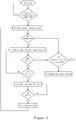
- the disclosure also relates to a power battery heating method based on the solar sunroof in the electric vehicle, an embodiment of which is schematically shown in Figure 2 and will be described below.
- Step S2 it decides whether the output power level of the solar sunroof equals to or is higher than a minimum enablement value. If the determination is "No”, the procedure returns back to Step S1; and if the determination is "Yes”, the procedure goes to Step S3.
- Step S3 the procedure checks the working state of the power battery.
- Step S4 it determines whether the power battery is in the high voltage output state. If the determination is "Yes”, the procedure goes to Step S5; and if the determination is "No", the procedure goes to Step S6.
- Step S5 it determines whether the voltage of the assistant battery of the vehicle is lower than a threshold V1. If the determination is "No”, the procedure returns back to Step S1; and if the determination is "Yes”, the procedure goes to Step S7.
- Step S7 the electric energy generated by the solar sunroof is used for charging the assistant battery.
- Steps S5 and S7 can be substituted by a step in which the solar sunroof is put in a standby state, not outputting electric energy.
- Step S6 the procedure detects the temperature Tc of the power battery, such as the temperature of the electric core/battery cells of the power battery. Then, in Step 8, it determines whether the temperature Tc of the power battery is higher than a first threshold T1. If the determination is "Yes”, the procedure goes to Step S5; if the determination is "No”, the procedure goes to Step S9.
- Step S9 it determines whether the temperature Tc of the power battery is lower than a second threshold T2 (T2 ⁇ T1). If the determination is "No”, the procedure returns to Step S6; if the determination is "Yes”, the procedure goes to Step S10.
- Step S10 the heating module is started. Heating of the power battery is performed by utilizing the electrical energy generated by the solar sunroof.
- Step S11 it determines whether the temperature Tc of the power battery is higher than the first threshold T1. If the determination is "No”, it returns to Step S10; if the determination is "Yes”, it goes to Step 12.
- Step S12 the heating of the power battery is terminated, for example, by stopping the heating module.
- control logic can consider the system state information and external environment information in the method.
- the electrical energy generated by the solar sunroof absorbing solar energy can be used to charge vehicle mounted assistant battery, and can also be used for increasing the temperature of a power battery in a low temperature state such that the temperature of the battery is maintained above a minimum temperature suitable for operation, at least for power outputting, ensuring both the electric vehicle being started normally and the temperature of power battery being within a proper range, for the benefit of the service life of the power battery.
- the energy for heating the power battery comes from solar energy, no energy of the vehicle will be consumed, so efficiency of using the electric energy of the electric vehicle is increased.
- the infrared heating module when using the infrared heating module for heating the power battery, the infrared ray can reach the interior of the power battery to increase the temperature of the power battery directly, as a result, the heating process is faster. Moreover, using infrared ray for heating provides even distribution heat and preventing local overheating, avoiding malfunction of the power battery. Further, infrared heating modules can be easily arranged along the housing of the power battery.
Landscapes
- Engineering & Computer Science (AREA)
- Power Engineering (AREA)
- Mechanical Engineering (AREA)
- Transportation (AREA)
- Life Sciences & Earth Sciences (AREA)
- Sustainable Development (AREA)
- Sustainable Energy (AREA)
- Electrochemistry (AREA)
- Manufacturing & Machinery (AREA)
- Chemical & Material Sciences (AREA)
- Chemical Kinetics & Catalysis (AREA)
- General Chemical & Material Sciences (AREA)
- Secondary Cells (AREA)
- Electromagnetism (AREA)
- Physics & Mathematics (AREA)
- Charge And Discharge Circuits For Batteries Or The Like (AREA)
Abstract
Description
- The disclosure relates to a power battery heating system and method using solar sunroof energy, the system and method being applicable in electric vehicles.
- Nowadays there are various electric vehicles, such as pure electric vehicles and hybrid power vehicles. Compared with traditional fuel vehicles, electric vehicles have less impact on environment and lower energy consumption and thus are predicted to dominate the vehicle market in the near future.
- Power batteries of existing electric vehicles have strict requirements on operational temperature. When the temperature of the power battery is too high or too low, the power battery stops outputting electrical energy to protect itself. When a user parks an electric vehicle in the cold environment for an extended period, it is highly possible the internal temperature of the battery drops below the lowest temperature that allows the vehicle to start. In this case, the vehicle cannot be started.
- On the other hand, now some vehicles are equipped with a solar sunroof, which comprises a solar cell battery under the glass of a sunroof. Currently, the electric energy converted from solar energy gathered by the solar sunroof is mainly used for allowing the vehicle ventilation system to run continuously to maintain a comfortable temperature inside the vehicle, to expel harmful gases emitted from vehicle components under high temperature, and to prolong the service life of the interior decoration and vehicle electrics. In addition, the electric energy generated by the solar sunroof may also be used for charging the assistant battery of the vehicle.
- The disclosure is to provide a power battery heating system, which can heat the power battery effectively by using the electric energy generated by the solar sunroof.
- For this end, the disclosure provides in one aspect a power battery heating system of an electric vehicle, the system comprising:
- a heating module configured to heat a power battery of the electric vehicle;
- a solar sunroof configured to output electric energy; and
- a sunroof control unit configured to control the operation of the heating module and the electric energy output by the solar sunroof;
- wherein the power battery heating system is configured to start a power battery heating operation using the electric energy output by the solar sunroof when the power battery is not in a high voltage output state and the power battery's temperature is lower than a temperature threshold, the power battery heating operation comprising: controlling the solar sunroof to output electric energy to the heating module such that the heating module performs heating of the power battery using the electric energy from the solar sunroof.
- In one embodiment, the sunroof control unit is configured to receive information about the power battery's temperature, and to terminate the power battery heating operation when the power battery's temperature is higher than a predetermined temperature value.
- In one embodiment, the power battery comprises one or more battery cells and the power battery's temperature comprises the power battery's core temperature, which is an average temperature of the battery cells of the power battery.
- In one embodiment, the sunroof control unit is configured to set the solar sunroof in a state for charging an assistant battery of the electric vehicle when the core temperature is higher than the predetermined temperature value.
- In one embodiment, the sunroof control unit is configured to receive information about the assistant battery, including the assistant battery's voltage or energy level, and to allow the assistant battery to be charged using the electric energy output by the solar sunroof, when the voltage or energy level of the assistant battery is lower than a threshold.
- In one embodiment, the sunroof control unit is configured to receive information about whether there is a failure in the assistant battery and to prohibit charging the assistant battery using the electric energy output by the solar sunroof when there is a failure in the assistant battery.
- In one embodiment, the sunroof control unit is configured to set the solar sunroof in one of a group of selectable states when the power battery is in the high voltage output state, the group of selectable states including at least: a state for charging the assistant battery of the electric vehicle, and a standby state not outputting electric energy.
- In one embodiment, the heating module comprises an infrared heating module, the infrared heating module comprising a heating sheet in the form of infrared electronic paste or infrared blanket power placed in a battery housing of the power battery, and the heating sheet being applied to different locations of the power battery housing, facing towards battery cells of the power battery respectively.
- In one embodiment, the sunroof control unit is configured to receive information about whether there is a failure in the power battery or the heating module, and to prohibit the power battery heating operation when there is a failure in the power battery or the heating module.
- In one embodiment, the sunroof control unit is configured to check the output power level of the solar sunroof at a predetermined time interval, and to allow starting of the power battery heating operation when the output power level of the solar sunroof is not lower than a minimum enablement value.
- The disclosure provides in another aspect a power battery heating method used in an electric vehicle, possible performed using the power battery heating system described above, the method comprising:
- checking whether the power battery is in the high voltage output state and checking the power battery's temperature; and
- in the condition that the power battery is not in the high voltage output state and the power battery's temperature is lower than a temperature threshold, controlling the solar sunroof to output electric energy to the heating module so that the heating module performs the heating operation of the power battery using the electric energy output by the solar sunroof.
- In one embodiment, the power battery heating method further comprises setting the solar sunroof in one of a group of selectable states when the power battery is in the high voltage output state, the group of selectable states including at least: a state for charging the assistant battery of the electric vehicle, and a standby state not outputting electric energy.
- The features of the power battery heating system as disclosed here are also applicable in the power battery heating method of the disclosure.
- According to this disclosure, the electric energy generated from solar energy absorbed by the solar sunroof is used not only for charging the in-vehicle assistant battery but also, and more importantly, for increasing the temperature of the power battery at a low temperature state. The energy for heating the power battery comes from solar energy, so it does not need to consume the energy of the vehicle batteries.
-
-
Figure 1 is a schematic block diagram of a power battery heating system using solar sunroof energy according to an embodiment of the disclosure. -
Figure 2 is a schematic flow chart of a power battery heating method using solar sunroof energy according to an embodiment of the disclosure. - An electric vehicle comprises a high voltage power battery (with an output voltage of generally 200V or more, in some cases 1000V or more) and a low voltage assistant battery (with an output voltage of 12V, 24V, etc.). The power battery powers up the driving motor of the vehicle. The driving motor itself, or together with an engine, forms the power source of the vehicle. The low voltage assistant battery provides energy for other electricity-consuming devices (such as control system, illumination system, signal system, instrument system, electrics, etc.) of the vehicle.
- The disclosure uses the electric energy generated by a solar sunroof in the heating of the power battery (which is in a low temperature state) in the electric vehicle. To this end, a power battery heating system based on the solar sunroof according to a possible embodiment of the disclosure is schematically shown in
Figure 1 . The power battery heating system mainly comprises asolar sunroof 1 configured to convert the solar energy into electric energy that can be used for heating apower battery 3 of the electric vehicle, and asunroof control unit 2 electrically connected with thesolar sunroof 1 and thepower battery 3, which is configured to receive information about the status of thesolar sunroof 1 and thepower battery 3, and is configured to control the use of the electric energy generated by the solar sunroof 1 (including heating thepower battery 3 when thepower battery 3 is in a low temperature state). - The
sunroof control unit 2 is also electrically connected with anassistant battery 4 of the electric vehicle, is configured to receive information about the state of theassistant battery 4 and to control the electric energy generated by thesolar sunroof 1 to be used for charging theassistant battery 4. When necessary, theassistant battery 4 may also be used for heating thepower battery 3. - The power battery heating system further comprises a
heating module 5, which is electrically driven by thesunroof 1 and/or theassistant battery 4. Thesunroof control unit 2 is electrically connected to theheating module 5 so as to control the operation of theheating module 5. - The
heating module 5 may comprise various suitable electric heating elements, such as heating wires, fluid heating medium, etc. According to a preferred embodiment of the disclosure, the heating module is an infrared module, which includes an infrared heating element in the form of sheet, such as a coating of infrared electronic paste or an infrared blanket, etc. The infrared heating element can be arranged within a housing of thepower battery 3 along the interior wall of the housing. The infrared heating element can include multiple sheets distributed in different locations facing corresponding battery elements of thepower battery 3 respectively. - The infrared heating module in operation emits infrared ray, which radiates on the battery element of the
power battery 3, resulting in heating the battery element directly, requiring no heat conduction from the heating module to the power battery as a thermal conductive hating module. For this reason, the heating speed of the infrared heating module is faster. In addition, another advantage of the infrared heating module is even distribution of the heat without any local overheating. Yet another advantage of the infrared heating module is that the heating module has a function of limiting temperature, avoiding overall overheating. - The power battery heating system of this disclosure is configured to heat the
power battery 3 in a state of low temperature such that the temperature of thepower battery 3 is maintained at a proper temperature suitable for operation. - In an initial state, the
sunroof control unit 2 is configured to check the output power level of thesolar sunroof 1 at a certain time interval. If the output power level of thesolar sunroof 1 is lower than a minimum enablement value, thesunroof control unit 2 directs thesolar sunroof 1 not to output electric energy. If the output power level of thesolar sunroof 1 equals to or is higher than the minimum enablement value, thesunroof control unit 2 further checks whether thepower battery 3 is in a high voltage output state, for example, by checking the state of the ignition switch of the vehicle. If thepower battery 3 is in the high voltage output state, thesunroof control unit 2 checks the voltage state of the assistant battery 4 (the voltage state of theassistant battery 4 reflects its energy level). If the voltage of theassistant battery 4 is lower than a threshold, thesunroof control unit 2 directs thesolar sunroof 1 to charge theassistant battery 4; and if the voltage of theassistant battery 4 is not lower than the threshold, the control logic goes back to the initial state. When thepower battery 3 is in the high voltage output state, the electric energy of thesolar sunroof 1 can also be used for other purposes, such as temperature control of various vehicle components (including the assistant battery 4) and spaces. Alternatively, when thepower battery 3 is in the high voltage output state, thesolar sunroof 1 may be set in a standby state in which no electric energy is output. - On the other hand, if the
power battery 3 is not in the high voltage output state (for example, when the vehicle is shutoff and parked, or in a gas engine driving state for a hybrid vehicle, etc.), thesunroof control unit 2 detects the temperature (Tc) of thepower battery 3, particularly, the core temperature (or the temperature of the battery cells). If the temperature Tc of thepower battery 3 is higher than a first threshold T1 (the set value of the minimum temperature of thepower battery 3 in normal operation), thesunroof control unit 2 determines again whether to charge theassistant battery 4 by the electric energy of thesolar sunroof 1; and if the temperature Tc of thepower battery 3 is not higher than the first threshold T1, then thesunroof control unit 2 further determines if the temperature Tc of thepower battery 3 is lower than a second threshold T2 (the set value of the minimum temperature of thepower battery 3 that requires heating, particularly, the minimum temperature of the battery cells that require heating, T2 being lower than T1). If the temperature Tc of thepower battery 3 is not lower that the second threshold T2, it continues to monitor the temperature Tc of thepower battery 3; and if the temperature Tc of thepower battery 3 is lower than the second threshold T2, thesunroof control element 2 controls theheating module 5 to start and supply power to theheating module 5 by using the electrical energy of thesolar sunroof 1, Theheating module 5 utilizes the electrical energy generated by thesolar sunroof 1 to heat thepower battery 3. During the period that thepower battery 3 is being heated using the electrical energy of thesolar sunroof 1, thesunroof control element 2 monitors the temperature of thepower battery 3 and stops the operation of theheating module 5 and goes back to initial state when the temperature Tc of thepower battery 3 is higher than the first threshold T1. - It can be seen that, according to the disclosure, when the
power battery 3 of the vehicle is not in the high voltage output state, and the temperature of thepower battery 3 is too low, the electric energy generated by thesolar sunroof 1 is used for heating thepower battery 3, so it does not need to consume the electric energy of theassistant battery 4. In other conditions, the electric energy generated by thesolar sunroof 1 can be used for charging the assistant battery 4 (or for driving the vehicle ventilation/air conditioning system, etc.). - The
sunroof control unit 2 may also receive additional information, such as system state information, external environment temperature information, etc., for making supplementary decision. The system state information includes information about the status of thepower battery 3, theassistant battery 4 and actuation components (like the heating module 5). If there is any failure (such as insulation failure, failure in theheating module 5, failure in theassistant battery 4, or failure in the power battery 3) preventing proper charging, the function of charging or heating using the energy ofsolar sunroof 1 is not be initiated even other requirements are met. The external environment temperature information can also be taken into consideration in the control logic. - The
sunroof control unit 2 may be formed as an individual control element, or be integrated in the vehicle ECU as a module of the vehicle ECU. - Based on the principle of the disclosure, those skilled in the art can make any suited modifications to the power battery heating system described above.
- The disclosure also relates to a power battery heating method based on the solar sunroof in the electric vehicle, an embodiment of which is schematically shown in
Figure 2 and will be described below. - Then, in Step S2, it decides whether the output power level of the solar sunroof equals to or is higher than a minimum enablement value. If the determination is "No", the procedure returns back to Step S1; and if the determination is "Yes", the procedure goes to Step S3.
- In Step S3, the procedure checks the working state of the power battery.
- Then, in Step S4, it determines whether the power battery is in the high voltage output state. If the determination is "Yes", the procedure goes to Step S5; and if the determination is "No", the procedure goes to Step S6.
- In Step S5, it determines whether the voltage of the assistant battery of the vehicle is lower than a threshold V1. If the determination is "No", the procedure returns back to Step S1; and if the determination is "Yes", the procedure goes to Step S7. In Step S7, the electric energy generated by the solar sunroof is used for charging the assistant battery. Optionally, when the power battery is in the high voltage output state, Steps S5 and S7 can be substituted by a step in which the solar sunroof is put in a standby state, not outputting electric energy.
- In Step S6, the procedure detects the temperature Tc of the power battery, such as the temperature of the electric core/battery cells of the power battery. Then, in Step 8, it determines whether the temperature Tc of the power battery is higher than a first threshold T1. If the determination is "Yes", the procedure goes to Step S5; if the determination is "No", the procedure goes to Step S9.
- In Step S9, it determines whether the temperature Tc of the power battery is lower than a second threshold T2 (T2<T1). If the determination is "No", the procedure returns to Step S6; if the determination is "Yes", the procedure goes to Step S10.
- In Step S10, the heating module is started. Heating of the power battery is performed by utilizing the electrical energy generated by the solar sunroof.
- Then in Step S11, it determines whether the temperature Tc of the power battery is higher than the first threshold T1. If the determination is "No", it returns to Step S10; if the determination is "Yes", it goes to Step 12.
- In Step S12, the heating of the power battery is terminated, for example, by stopping the heating module.
- Based on the principle of the disclosure, those skilled in the art can make various modifications to the power battery heating method described above, especially to the details in the steps. For example, the control logic can consider the system state information and external environment information in the method.
- It can be seen that, according to the disclosure, the electrical energy generated by the solar sunroof absorbing solar energy can be used to charge vehicle mounted assistant battery, and can also be used for increasing the temperature of a power battery in a low temperature state such that the temperature of the battery is maintained above a minimum temperature suitable for operation, at least for power outputting, ensuring both the electric vehicle being started normally and the temperature of power battery being within a proper range, for the benefit of the service life of the power battery. In addition, according to this disclosure, since the energy for heating the power battery comes from solar energy, no energy of the vehicle will be consumed, so efficiency of using the electric energy of the electric vehicle is increased.
- In addition, as an optional feature, when using the infrared heating module for heating the power battery, the infrared ray can reach the interior of the power battery to increase the temperature of the power battery directly, as a result, the heating process is faster. Moreover, using infrared ray for heating provides even distribution heat and preventing local overheating, avoiding malfunction of the power battery. Further, infrared heating modules can be easily arranged along the housing of the power battery.
- While certain embodiments have been described, these embodiments have been presented by way of example only, and are not intended to limit the scope of the disclosure. The attached claims and their equivalents are intended to cover all the modifications, substitutions and changes as would fall within the scope and spirit of the disclosure.
Claims (12)
- A power battery heating system of an electric vehicle comprising:a heating module configured to heat a power battery of the electric vehicle;a solar sunroof configured to output electric energy; anda sunroof control unit configured to control the operation of the heating module and the electric energy output by the solar sunroof;wherein the power battery heating system is configured to start a power battery heating operation using the electric energy output by the solar sunroof when the power battery is not in a high voltage output state and the power battery's temperature is lower than a temperature threshold, the power battery heating operation comprising: controlling the solar sunroof to output electric energy to the heating module such that the heating module performs heating of the power battery using the electric energy from the solar sunroof.
- The power battery heating system of claim 1, wherein the sunroof control unit is configured to receive information about the power battery's temperature, and to terminate the power battery heating operation when the power battery's temperature is higher than a predetermined temperature value.
- The power battery heating system of claim 1 or 2, wherein the power battery comprises one or more battery cells and the power battery's temperature comprises the power battery's core temperature, which is an average temperature of the battery cells of the power battery.
- The power battery heating system of claim 3, wherein the sunroof control unit is configured to set the solar sunroof in a state for charging an assistant battery of the electric vehicle when the core temperature is higher than the predetermined temperature value.
- The power battery heating system of claim 4, wherein the sunroof control unit is configured to receive information about the assistant battery, including the assistant battery's voltage or energy level, and to allow the assistant battery to be charged using the electric energy output by the solar sunroof, when the voltage or energy level of the assistant battery is lower than a threshold.
- The power battery heating system of claim 4 or 5, wherein the sunroof control unit is configured to receive information about whether there is a failure in the assistant battery and to prohibit charging the assistant battery using the electric energy output by the solar sunroof when there is a failure in the assistant battery.
- The power battery heating system of any one of claims 1 to 6, wherein the sunroof control unit is configured to set the solar sunroof in one of a group of selectable states when the power battery is in the high voltage output state, the group of selectable states including at least: a state for charging the assistant battery of the electric vehicle, and a standby state not outputting electric energy.
- The power battery heating system of any one of claims 1 to 7, wherein the heating module comprises an infrared heating module, the infrared heating module comprising a heating sheet in the form of infrared electronic paste or infrared blanket power placed in a battery housing of the power battery, and the heating sheet being applied to different locations of the power battery housing, facing towards battery cells of the power battery respectively.
- The power battery heating system of any one of claims 1 to 8, wherein the sunroof control unit is configured to receive information about whether there is a failure in the power battery or the heating module, and to prohibit the power battery heating operation when there is a failure in the power battery or the heating module.
- The power battery heating system of any one of claims 1 to 9, wherein the sunroof control unit is configured to check the output power level of the solar sunroof at a predetermined time interval, and to allow starting of the power battery heating operation when the output power level of the solar sunroof is not lower than a minimum enablement value.
- A power battery heating method using the power battery heating system of any one of claims 1 to 10, the method comprising:checking whether the power battery is in the high voltage output state and checking the power battery's temperature; andin the condition that the power battery is not in the high voltage output state and the power battery's temperature is lower than a temperature threshold, controlling the solar sunroof to output electric energy to the heating module so that the heating module performs the heating operation of the power battery using the electric energy output by the solar sunroof.
- The power battery heating method of claim 11, further comprising setting the solar sunroof in one of a group of selectable states when the power battery is in the high voltage output state, the group of selectable states including at least: a state for charging the assistant battery of the electric vehicle, and a standby state not outputting electric energy.
Applications Claiming Priority (1)
| Application Number | Priority Date | Filing Date | Title |
|---|---|---|---|
| CN201910961998.4A CN112644342B (en) | 2019-10-11 | 2019-10-11 | Power battery heating system and method based on solar skylight |
Publications (1)
| Publication Number | Publication Date |
|---|---|
| EP3805035A1 true EP3805035A1 (en) | 2021-04-14 |
Family
ID=72717689
Family Applications (1)
| Application Number | Title | Priority Date | Filing Date |
|---|---|---|---|
| EP20199498.5A Pending EP3805035A1 (en) | 2019-10-11 | 2020-10-01 | Power battery heating system and method using solar sunroof energy |
Country Status (3)
| Country | Link |
|---|---|
| US (1) | US12083930B2 (en) |
| EP (1) | EP3805035A1 (en) |
| CN (1) | CN112644342B (en) |
Cited By (1)
| Publication number | Priority date | Publication date | Assignee | Title |
|---|---|---|---|---|
| EP4029717A1 (en) * | 2021-01-14 | 2022-07-20 | Vehtec AB | Preconditioning system and method for control of traction battery preconditioning |
Families Citing this family (3)
| Publication number | Priority date | Publication date | Assignee | Title |
|---|---|---|---|---|
| CN114771345B (en) * | 2022-04-29 | 2024-12-27 | 中国第一汽车股份有限公司 | Control method, control device and processor of vehicle power battery management system |
| CN114927801B (en) * | 2022-04-29 | 2025-08-01 | 中国第一汽车股份有限公司 | Method, device and processor for controlling vehicle-mounted power battery management system |
| EP4279321A1 (en) * | 2022-05-18 | 2023-11-22 | Sono Motors GmbH | Method for operating a vehicle including a pv arrangement by using pv generated electricity for thermalising a battery arrangement |
Citations (5)
| Publication number | Priority date | Publication date | Assignee | Title |
|---|---|---|---|---|
| US20100090527A1 (en) * | 2008-10-09 | 2010-04-15 | Gm Global Technology Operations, Inc. | Solar Powered Ventilation System For Vehicle And Method Of Operating The Same |
| JP2013110897A (en) * | 2011-11-22 | 2013-06-06 | Toyota Motor Corp | Vehicle |
| US20130253781A1 (en) * | 2010-12-15 | 2013-09-26 | Sumitomo Heavy Industries, Ltd., | Shovel |
| CN105896676A (en) * | 2016-06-03 | 2016-08-24 | 深圳市德兰明海科技有限公司 | Auxiliary power supply method and system of vehicle solar cell |
| CN107181022A (en) * | 2017-07-05 | 2017-09-19 | 陆玉正 | A kind of electric automobile power battery thermostat |
Family Cites Families (15)
| Publication number | Priority date | Publication date | Assignee | Title |
|---|---|---|---|---|
| DE10107999B4 (en) * | 2001-01-26 | 2008-09-04 | Müller, Hermann-Frank | Sunroof for vehicles |
| US10536007B2 (en) * | 2011-03-05 | 2020-01-14 | Powin Energy Corporation | Battery energy storage system and control system and applications thereof |
| US8620506B2 (en) * | 2011-12-21 | 2013-12-31 | Ford Global Technologies, Llc | Method and system for thermal management of a high voltage battery for a vehicle |
| KR20170102255A (en) * | 2014-12-04 | 2017-09-08 | 딕난 허버트 레이너 | Apparatus and system for providing secondary power for electric vehicles |
| WO2017218218A1 (en) * | 2016-06-13 | 2017-12-21 | Pure Watercraft, Inc. | Batteries with thermal management |
| JP6589773B2 (en) * | 2016-08-25 | 2019-10-16 | トヨタ自動車株式会社 | Electric vehicle |
| CN106314188A (en) * | 2016-09-19 | 2017-01-11 | 智车优行科技(北京)有限公司 | Vehicle power battery cold-starting heating system and vehicle |
| CN106985677A (en) * | 2017-03-01 | 2017-07-28 | 上海蔚来汽车有限公司 | vehicle solar charging device, system, control method and vehicle |
| US10300808B2 (en) * | 2017-04-20 | 2019-05-28 | Nio Usa, Inc. | Preconditioned charging using an autonomous vehicle |
| US11161421B2 (en) * | 2017-08-29 | 2021-11-02 | Toyota Motor Engineering & Manufacturing North America, Inc. | Auxiliary wireless power transfer system |
| US10749354B2 (en) * | 2017-09-10 | 2020-08-18 | Premergy, Inc. | Intelligent circuit control for solar panel systems |
| CN109599632B (en) * | 2017-09-30 | 2020-11-20 | 比亚迪股份有限公司 | Temperature regulation method and temperature regulation system of vehicle battery |
| CN108263244A (en) * | 2018-04-08 | 2018-07-10 | 北方节能股份有限公司 | A kind of solar energy alternating-current charging pile for being capable of auto switching electric source |
| CN109130808B (en) * | 2018-08-23 | 2020-12-29 | 奇瑞商用车(安徽)有限公司 | Automobile skylight auxiliary endurance system applying solar energy and charging control method thereof |
| CN109755689B (en) * | 2019-03-04 | 2024-07-30 | 深圳源码智能照明有限公司 | Battery protection system capable of controlling temperature |
-
2019
- 2019-10-11 CN CN201910961998.4A patent/CN112644342B/en active Active
-
2020
- 2020-09-30 US US17/037,805 patent/US12083930B2/en active Active
- 2020-10-01 EP EP20199498.5A patent/EP3805035A1/en active Pending
Patent Citations (6)
| Publication number | Priority date | Publication date | Assignee | Title |
|---|---|---|---|---|
| US20100090527A1 (en) * | 2008-10-09 | 2010-04-15 | Gm Global Technology Operations, Inc. | Solar Powered Ventilation System For Vehicle And Method Of Operating The Same |
| US20130253781A1 (en) * | 2010-12-15 | 2013-09-26 | Sumitomo Heavy Industries, Ltd., | Shovel |
| JP2013110897A (en) * | 2011-11-22 | 2013-06-06 | Toyota Motor Corp | Vehicle |
| CN105896676A (en) * | 2016-06-03 | 2016-08-24 | 深圳市德兰明海科技有限公司 | Auxiliary power supply method and system of vehicle solar cell |
| CN105896676B (en) * | 2016-06-03 | 2018-06-26 | 深圳市德兰明海科技有限公司 | The auxiliary power supply method and its system of automobile-used solar cell |
| CN107181022A (en) * | 2017-07-05 | 2017-09-19 | 陆玉正 | A kind of electric automobile power battery thermostat |
Cited By (1)
| Publication number | Priority date | Publication date | Assignee | Title |
|---|---|---|---|---|
| EP4029717A1 (en) * | 2021-01-14 | 2022-07-20 | Vehtec AB | Preconditioning system and method for control of traction battery preconditioning |
Also Published As
| Publication number | Publication date |
|---|---|
| US12083930B2 (en) | 2024-09-10 |
| CN112644342A (en) | 2021-04-13 |
| US20210107379A1 (en) | 2021-04-15 |
| CN112644342B (en) | 2023-09-26 |
Similar Documents
| Publication | Publication Date | Title |
|---|---|---|
| US12083930B2 (en) | Power battery heating system and method using solar sunroof energy | |
| EP3623198B1 (en) | Power battery cooling system and method based on solar sunroof | |
| JP6313455B2 (en) | Hybrid vehicle and air conditioning system thereof | |
| CN110077278B (en) | Discharge management method and system for plug-in hybrid electric vehicle | |
| CN101877364B (en) | Solar powered ventilation system for vehicle and method of operating the same | |
| CN103098338B (en) | The battery charge controller of vehicle | |
| EP2366598B1 (en) | Vehicle with a battery unit heating | |
| KR101603647B1 (en) | Apparatus for controlling secondary battery pack to improve a performance in low-temperature environment | |
| US20100116565A1 (en) | Solar cell system for vehicles and control method thereof | |
| US9750085B2 (en) | Apparatus and method for controlling vehicle | |
| CN109353248A (en) | The low-temperature start method and system of fuel cell car | |
| KR102386115B1 (en) | Air conditioner without engine running for heating and cooling for truck | |
| KR100836355B1 (en) | Indoor heating method of fuel cell vehicle using braking resistor | |
| CN112060925A (en) | Whole vehicle control method and system of extended range vehicle | |
| KR101319433B1 (en) | Solar cell system for Vehicles and its control method | |
| CN104553673A (en) | Vehicle-mounted direct-current air regulating system and control method thereof | |
| CN101698387A (en) | Solar-powered power generating and heat insulating device for automobile | |
| CN108437815A (en) | A kind of power battery rapid warming-up control method | |
| CN106740158A (en) | The dynamic thermal release method of supplying power to of electric automobile | |
| CN116252637A (en) | A method for energy distribution control of high-voltage devices in pure electric vehicles | |
| CN209776086U (en) | A commercial vehicle air conditioner with auxiliary heating function | |
| KR20260046458A (en) | electric vehicles | |
| CN111584975A (en) | Vehicle thermal management system, vehicle thermal management method and vehicle | |
| KR101225567B1 (en) | Solar cell system for Vehicles | |
| CN209938248U (en) | Vehicle-mounted solar cooling system |
Legal Events
| Date | Code | Title | Description |
|---|---|---|---|
| PUAI | Public reference made under article 153(3) epc to a published international application that has entered the european phase |
Free format text: ORIGINAL CODE: 0009012 |
|
| STAA | Information on the status of an ep patent application or granted ep patent |
Free format text: STATUS: THE APPLICATION HAS BEEN PUBLISHED |
|
| AK | Designated contracting states |
Kind code of ref document: A1 Designated state(s): AL AT BE BG CH CY CZ DE DK EE ES FI FR GB GR HR HU IE IS IT LI LT LU LV MC MK MT NL NO PL PT RO RS SE SI SK SM TR |
|
| AX | Request for extension of the european patent |
Extension state: BA ME |
|
| STAA | Information on the status of an ep patent application or granted ep patent |
Free format text: STATUS: REQUEST FOR EXAMINATION WAS MADE |
|
| 17P | Request for examination filed |
Effective date: 20211014 |
|
| RBV | Designated contracting states (corrected) |
Designated state(s): AL AT BE BG CH CY CZ DE DK EE ES FI FR GB GR HR HU IE IS IT LI LT LU LV MC MK MT NL NO PL PT RO RS SE SI SK SM TR |
|
| STAA | Information on the status of an ep patent application or granted ep patent |
Free format text: STATUS: EXAMINATION IS IN PROGRESS |
|
| 17Q | First examination report despatched |
Effective date: 20221107 |