EP3803147B1 - A powertrain for a vehicle and method for controlling a powertrain in a vehicle - Google Patents
A powertrain for a vehicle and method for controlling a powertrain in a vehicle Download PDFInfo
- Publication number
- EP3803147B1 EP3803147B1 EP19726992.1A EP19726992A EP3803147B1 EP 3803147 B1 EP3803147 B1 EP 3803147B1 EP 19726992 A EP19726992 A EP 19726992A EP 3803147 B1 EP3803147 B1 EP 3803147B1
- Authority
- EP
- European Patent Office
- Prior art keywords
- vehicle
- acceleration
- sign
- slip
- speed
- Prior art date
- Legal status (The legal status is an assumption and is not a legal conclusion. Google has not performed a legal analysis and makes no representation as to the accuracy of the status listed.)
- Active
Links
Images


Classifications
-
- F—MECHANICAL ENGINEERING; LIGHTING; HEATING; WEAPONS; BLASTING
- F16—ENGINEERING ELEMENTS AND UNITS; GENERAL MEASURES FOR PRODUCING AND MAINTAINING EFFECTIVE FUNCTIONING OF MACHINES OR INSTALLATIONS; THERMAL INSULATION IN GENERAL
- F16D—COUPLINGS FOR TRANSMITTING ROTATION; CLUTCHES; BRAKES
- F16D48/00—External control of clutches
- F16D48/06—Control by electric or electronic means, e.g. of fluid pressure
- F16D48/10—Preventing unintentional or unsafe engagement
-
- B—PERFORMING OPERATIONS; TRANSPORTING
- B60—VEHICLES IN GENERAL
- B60W—CONJOINT CONTROL OF VEHICLE SUB-UNITS OF DIFFERENT TYPE OR DIFFERENT FUNCTION; CONTROL SYSTEMS SPECIALLY ADAPTED FOR HYBRID VEHICLES; ROAD VEHICLE DRIVE CONTROL SYSTEMS FOR PURPOSES NOT RELATED TO THE CONTROL OF A PARTICULAR SUB-UNIT
- B60W10/00—Conjoint control of vehicle sub-units of different type or different function
- B60W10/02—Conjoint control of vehicle sub-units of different type or different function including control of driveline clutches
-
- B—PERFORMING OPERATIONS; TRANSPORTING
- B60—VEHICLES IN GENERAL
- B60W—CONJOINT CONTROL OF VEHICLE SUB-UNITS OF DIFFERENT TYPE OR DIFFERENT FUNCTION; CONTROL SYSTEMS SPECIALLY ADAPTED FOR HYBRID VEHICLES; ROAD VEHICLE DRIVE CONTROL SYSTEMS FOR PURPOSES NOT RELATED TO THE CONTROL OF A PARTICULAR SUB-UNIT
- B60W10/00—Conjoint control of vehicle sub-units of different type or different function
- B60W10/04—Conjoint control of vehicle sub-units of different type or different function including control of propulsion units
- B60W10/08—Conjoint control of vehicle sub-units of different type or different function including control of propulsion units including control of electric propulsion units, e.g. motors or generators
-
- B—PERFORMING OPERATIONS; TRANSPORTING
- B60—VEHICLES IN GENERAL
- B60W—CONJOINT CONTROL OF VEHICLE SUB-UNITS OF DIFFERENT TYPE OR DIFFERENT FUNCTION; CONTROL SYSTEMS SPECIALLY ADAPTED FOR HYBRID VEHICLES; ROAD VEHICLE DRIVE CONTROL SYSTEMS FOR PURPOSES NOT RELATED TO THE CONTROL OF A PARTICULAR SUB-UNIT
- B60W40/00—Estimation or calculation of non-directly measurable driving parameters for road vehicle drive control systems not related to the control of a particular sub unit, e.g. by using mathematical models
- B60W40/10—Estimation or calculation of non-directly measurable driving parameters for road vehicle drive control systems not related to the control of a particular sub unit, e.g. by using mathematical models related to vehicle motion
- B60W40/105—Speed
-
- F—MECHANICAL ENGINEERING; LIGHTING; HEATING; WEAPONS; BLASTING
- F16—ENGINEERING ELEMENTS AND UNITS; GENERAL MEASURES FOR PRODUCING AND MAINTAINING EFFECTIVE FUNCTIONING OF MACHINES OR INSTALLATIONS; THERMAL INSULATION IN GENERAL
- F16D—COUPLINGS FOR TRANSMITTING ROTATION; CLUTCHES; BRAKES
- F16D2500/00—External control of clutches by electric or electronic means
- F16D2500/10—System to be controlled
- F16D2500/104—Clutch
- F16D2500/10406—Clutch position
- F16D2500/10412—Transmission line of a vehicle
-
- F—MECHANICAL ENGINEERING; LIGHTING; HEATING; WEAPONS; BLASTING
- F16—ENGINEERING ELEMENTS AND UNITS; GENERAL MEASURES FOR PRODUCING AND MAINTAINING EFFECTIVE FUNCTIONING OF MACHINES OR INSTALLATIONS; THERMAL INSULATION IN GENERAL
- F16D—COUPLINGS FOR TRANSMITTING ROTATION; CLUTCHES; BRAKES
- F16D2500/00—External control of clutches by electric or electronic means
- F16D2500/30—Signal inputs
- F16D2500/304—Signal inputs from the clutch
- F16D2500/30406—Clutch slip
-
- F—MECHANICAL ENGINEERING; LIGHTING; HEATING; WEAPONS; BLASTING
- F16—ENGINEERING ELEMENTS AND UNITS; GENERAL MEASURES FOR PRODUCING AND MAINTAINING EFFECTIVE FUNCTIONING OF MACHINES OR INSTALLATIONS; THERMAL INSULATION IN GENERAL
- F16D—COUPLINGS FOR TRANSMITTING ROTATION; CLUTCHES; BRAKES
- F16D2500/00—External control of clutches by electric or electronic means
- F16D2500/30—Signal inputs
- F16D2500/304—Signal inputs from the clutch
- F16D2500/3041—Signal inputs from the clutch from the input shaft
- F16D2500/30415—Speed of the input shaft
-
- F—MECHANICAL ENGINEERING; LIGHTING; HEATING; WEAPONS; BLASTING
- F16—ENGINEERING ELEMENTS AND UNITS; GENERAL MEASURES FOR PRODUCING AND MAINTAINING EFFECTIVE FUNCTIONING OF MACHINES OR INSTALLATIONS; THERMAL INSULATION IN GENERAL
- F16D—COUPLINGS FOR TRANSMITTING ROTATION; CLUTCHES; BRAKES
- F16D2500/00—External control of clutches by electric or electronic means
- F16D2500/30—Signal inputs
- F16D2500/304—Signal inputs from the clutch
- F16D2500/3042—Signal inputs from the clutch from the output shaft
- F16D2500/30421—Torque of the output shaft
-
- F—MECHANICAL ENGINEERING; LIGHTING; HEATING; WEAPONS; BLASTING
- F16—ENGINEERING ELEMENTS AND UNITS; GENERAL MEASURES FOR PRODUCING AND MAINTAINING EFFECTIVE FUNCTIONING OF MACHINES OR INSTALLATIONS; THERMAL INSULATION IN GENERAL
- F16D—COUPLINGS FOR TRANSMITTING ROTATION; CLUTCHES; BRAKES
- F16D2500/00—External control of clutches by electric or electronic means
- F16D2500/30—Signal inputs
- F16D2500/304—Signal inputs from the clutch
- F16D2500/3042—Signal inputs from the clutch from the output shaft
- F16D2500/30426—Speed of the output shaft
-
- F—MECHANICAL ENGINEERING; LIGHTING; HEATING; WEAPONS; BLASTING
- F16—ENGINEERING ELEMENTS AND UNITS; GENERAL MEASURES FOR PRODUCING AND MAINTAINING EFFECTIVE FUNCTIONING OF MACHINES OR INSTALLATIONS; THERMAL INSULATION IN GENERAL
- F16D—COUPLINGS FOR TRANSMITTING ROTATION; CLUTCHES; BRAKES
- F16D2500/00—External control of clutches by electric or electronic means
- F16D2500/30—Signal inputs
- F16D2500/31—Signal inputs from the vehicle
- F16D2500/3108—Vehicle speed
-
- F—MECHANICAL ENGINEERING; LIGHTING; HEATING; WEAPONS; BLASTING
- F16—ENGINEERING ELEMENTS AND UNITS; GENERAL MEASURES FOR PRODUCING AND MAINTAINING EFFECTIVE FUNCTIONING OF MACHINES OR INSTALLATIONS; THERMAL INSULATION IN GENERAL
- F16D—COUPLINGS FOR TRANSMITTING ROTATION; CLUTCHES; BRAKES
- F16D2500/00—External control of clutches by electric or electronic means
- F16D2500/30—Signal inputs
- F16D2500/31—Signal inputs from the vehicle
- F16D2500/3108—Vehicle speed
- F16D2500/3109—Vehicle acceleration
-
- F—MECHANICAL ENGINEERING; LIGHTING; HEATING; WEAPONS; BLASTING
- F16—ENGINEERING ELEMENTS AND UNITS; GENERAL MEASURES FOR PRODUCING AND MAINTAINING EFFECTIVE FUNCTIONING OF MACHINES OR INSTALLATIONS; THERMAL INSULATION IN GENERAL
- F16D—COUPLINGS FOR TRANSMITTING ROTATION; CLUTCHES; BRAKES
- F16D2500/00—External control of clutches by electric or electronic means
- F16D2500/50—Problem to be solved by the control system
- F16D2500/508—Relating driving conditions
- F16D2500/50858—Selecting a Mode of operation
-
- F—MECHANICAL ENGINEERING; LIGHTING; HEATING; WEAPONS; BLASTING
- F16—ENGINEERING ELEMENTS AND UNITS; GENERAL MEASURES FOR PRODUCING AND MAINTAINING EFFECTIVE FUNCTIONING OF MACHINES OR INSTALLATIONS; THERMAL INSULATION IN GENERAL
- F16D—COUPLINGS FOR TRANSMITTING ROTATION; CLUTCHES; BRAKES
- F16D2500/00—External control of clutches by electric or electronic means
- F16D2500/50—Problem to be solved by the control system
- F16D2500/51—Relating safety
- F16D2500/5102—Detecting abnormal operation, e.g. unwanted slip or excessive temperature
-
- F—MECHANICAL ENGINEERING; LIGHTING; HEATING; WEAPONS; BLASTING
- F16—ENGINEERING ELEMENTS AND UNITS; GENERAL MEASURES FOR PRODUCING AND MAINTAINING EFFECTIVE FUNCTIONING OF MACHINES OR INSTALLATIONS; THERMAL INSULATION IN GENERAL
- F16D—COUPLINGS FOR TRANSMITTING ROTATION; CLUTCHES; BRAKES
- F16D2500/00—External control of clutches by electric or electronic means
- F16D2500/70—Details about the implementation of the control system
- F16D2500/706—Strategy of control
- F16D2500/7061—Feed-back
-
- F—MECHANICAL ENGINEERING; LIGHTING; HEATING; WEAPONS; BLASTING
- F16—ENGINEERING ELEMENTS AND UNITS; GENERAL MEASURES FOR PRODUCING AND MAINTAINING EFFECTIVE FUNCTIONING OF MACHINES OR INSTALLATIONS; THERMAL INSULATION IN GENERAL
- F16D—COUPLINGS FOR TRANSMITTING ROTATION; CLUTCHES; BRAKES
- F16D48/00—External control of clutches
- F16D48/06—Control by electric or electronic means, e.g. of fluid pressure
Definitions
- the present invention pertains to a powertrain for a vehicle.
- the present invention further pertains to a method for controlling such a powertrain in a vehicle.
- State of the art documents are EP1460317 and DE19952352 .
- a brushless electromotor is applied to propel the vehicle.
- the rotation direction thereof fully relies on the controller that provides the drive signals to drive the electromotor. It is of utmost importance and usually a legal requirement that the rotation direction corresponds is indeed the rotation direction that is required to achieve the desired driving direction to guarantee a predictable behavior of the vehicle. Although various measures are taken to avoid that this occurs, it is desired to further reduce this risk.
- a powertrain When operating in its safety mode, it controls an engagement of the controllable clutch with a feedback loop in which a desired extent of engagement as specified by the clutch control signal is positively correlated to a difference between an extent of slip as indicated by the slip indicator and a positive reference value for said extent of slip. Accordingly, in the normal situation, wherein the rotation direction of the electromotor corresponds to the rotation direction that is required to achieve the desired driving direction, the controller maintains the controllable clutch in a state wherein it transmits a torque driving the vehicle in the desired direction with the output of the controllable clutch rotating at a rotational velocity that is less than a rotational velocity at its input as determined by the positive reference value.
- the difference between the input rotational velocity and the output rotational value is negative. Consequently, also the error signal, as determined by the difference between the extent of slip as indicated by the slip indicator and the positive reference value is negative.
- the clutch is forced into a disengagement. As a result of the disengagement it is prevented that the electromotor can cause a propulsion if the vehicle in a reverse direction, even if it inadvertently rotates reversely.
- the error signal will remain negative so that the clutch is indeed maintained stably in its disengaged state as long as the electromotor remains in its inversely rotation state.
- the measure may be combined with a further safety measure that monitors the rotation direction of the electromotor and that disables operation of the electromotor in case it is detected that the rotation direction does not correspond to the rotation direction that is required to achieve the desired driving direction. In this manner two independent safety measures are provided that in combination even more reduce the risk of unpredictable vehicle behavior.
- the controller maintains the controllable clutch in a state wherein it transmits a torque driving the vehicle in the desired direction with the output of the controllable clutch rotating at a rotational velocity that is less than a rotational velocity at its input as determined by the positive reference value.
- the difference between the input rotational velocity and the output rotational value is negative. Consequently, also the error signal, as determined by the difference between the extent of slip as indicated by the slip indicator and the positive reference value is negative.
- the clutch is forced into a disengagement. As a result of the disengagement it is prevented that the electromotor can cause a propulsion if the vehicle in a reverse direction, even if it inadvertently rotates reversely.
- the error signal will remain negative so that the clutch is indeed maintained stably in its disengaged state as long as the electromotor remains in its inversely rotation state.
- the present disclosure further provides a method of operating such a powertrain according to claim 10, and a computer program product according to claim 15.
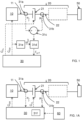
- FIG. 1 schematically shows a powertrain for a vehicle including at least an electromagnetic driving unit 10 with output shaft 11 and a transmission module 20 to transmit mechanical energy from the electromagnetic driving unit 10 to wheels 50 of the vehicle.
- the electromagnetic driving unit 10 is to generate mechanical energy by rotating the driving shaft 11 with a first rotational speed ⁇ in while exerting a driving torque T driv .
- the electromagnetic driving unit 10 may comprise an electromotor and optional transmission elements like a fixed gear.
- the electromagnetic driving unit 10 may further include a control unit that drives the electromotor.
- the transmission module 20 is to transmit the mechanical energy from the driving shaft 11 to wheels 50 of the vehicle.
- the transmission module 20 at least comprises a controllable clutch 21 to controllably couple the driving shaft 11 with the output shaft 22.
- the powertrain further includes a control system comprising a controller 30 to control a desired rotational speed and desired driving torque of the electromagnetic driving unit with a drive control signal C EM .
- the desired driving torque has a desired driving torque sign.
- the desired driving torque sign is denoted as positive if the electromagnetic driving unit 10 is to accelerate the vehicle in the desired driving direction and is negative otherwise.
- the electromagnetic driving unit 10 when correctly exerting this desired driving torque tends to increase a speed of the vehicle in that forward direction. For example if the vehicle is actually driving backwards on a slanting road portion the electromagnetic driving unit 10 should tend to reduce the velocity in the backwards direction and subsequently to accelerate the vehicle in the forward direction.
- the controller 30 is further provided to control the controllable clutch with a clutch control signal C CL .
- the clutch control signal specifies a desired extent of engagement to be provided by the clutch 21 between the driving shaft 11 and its output shaft 22.
- the transmission module 20 may comprise other transmission elements, like a gear, to define a transmission ratio in a stepwise or in a continuous manner, a torque converter, a fixed transmission and a differential. Also other motors may be included, for example a combustion engine in a hybrid arrangement and an auxiliary electromotor to start the combustion engine.
- a clutch slip indicator 31a, 31b, 31c is to provide a signal S ⁇ indicative for an extent of slip between the driving shaft 11 and the output shaft 22 of the controllable clutch.
- the extent of slip as indicated by the signal S ⁇ may for example be a difference ⁇ in - ⁇ out between the first rotational speed ⁇ in and a second rotational speed ⁇ out with which the output shaft 22 rotates.
- the extent of slip as indicated may be another function of the rotational speeds ⁇ in - ⁇ out of the driving shaft 11 and the output shaft 22, for example a ratio defined as ⁇ in / ⁇ out , or a logarithmic value of this ratio.
- the clutch slip indicator includes a first rotational speed sensor 31a attached to the fixed world to measure the rotational speed ⁇ in of the driving shaft 11, a second rotational speed sensor 31b, also attached to the fixed world to measure the rotational speed ⁇ o ut of the output shaft 22, and a comparator 31c to compute a value of the extent of slip to be indicated by the signal S ⁇ .
- a single rotational speed detector may be provided that is attached to one of the shafts and that measures the rotational speed of the other one of the shafts relative to the rotational speed of the shaft to which it is attached.
- Such an alternative sensor may for example indicate the extent of slip as by a value proportional to the measured relative rotational speed or a logarithmic value thereof.
- the slip indicator further includes a selective invertor element 31d that selectively inverts an output signal of the comparator 31c in response to a polarity control signal S pol from polarity indicator 31e.
- the extent of slip is indicated with a sign that is the product of the sign of the difference between the rotational speed of the input shaft and a rotational speed of the output shaft and the desired driving torque sign;
- the controller 30 is arranged to assume a safety operational mode, wherein it controls an engagement of the controllable clutch 21 with a feedback loop in which a desired extent of engagement as specified by the clutch control signal C CL is positively correlated to a difference between an extent of slip as indicated S ⁇ .by the slip indicator and a positive reference value for said extent of slip.
- the slip indicator indicates the extent of slip with a sign that is the product of the sign of the difference between the rotational speed of the input shaft and a rotational speed of the output shaft and the desired driving torque sign. In the embodiment shown this is achieved in that the polarity indicator 31e determines the desired driving torque sign from the desired driving torque as specified by control signal C EM .
- the controller 30 may provide an output signal that directly controls the selective invertor element 31d.
- one or more elements of the slip indicator may be integrated in the controller 30, This is schematically indicated in FIG. 1A , as controller 30 having a module 31f.
- a desired change may be one of the following:
- the driver may have selected a forward direction for example by selecting the setting "D" in a continuous transmission system, or a setting "1-6" for example in a stepwise controllable transmission system.
- the driver may have selected a backward direction for example by selecting the setting "R” in a continuous transmission system, or in a stepwise controllable transmission system.
- the first rotational speed ⁇ in is greater than the second rotational speed ⁇ out in a normal operating conditions of the electromagnetic driving unit 10. It is also conceivable that the driver intends to accelerate in the selected forward direction while the vehicle is (slowly) driving backwards. In that case the rotational speed ⁇ out of the output shaft has a negative value, and the rotational speed ⁇ in of the driving shaft 11 has a value which is preferably a positive value, but at least greater than or equal to said negative value.
- the slip indicator indicates the extent of slip with a sign that is the product of the sign of the difference between the rotational speed of the input shaft and a rotational speed of the output shaft and the desired driving torque sign.
- the slip indicator indicates the extent of slip with a positive sign.
- a tendency of the slip to increase above the reference value would be counteracted by an increased engagement of the controllable clutch, while a tendency of the slip to decrease below the reference value would be counteracted by an decreased engagement of the controllable clutch.
- the driver may indicate an intended deceleration by releasing the speed pedal and/or by pressing the break pedal. In that case the driving torque sign is negative.
- the slip indicator indicates the extent of slip with a sign that is the inverse of the sign of the difference between the rotational speed of the input shaft and a rotational speed of the output shaft.
- the first rotational speed ⁇ in is less than the second rotational speed ⁇ out in a normal operating conditions of the electromagnetic driving unit 10.
- the slip indicator inverts the sign of the measured slip, the feedback loop active in the safety operational mode will tend to maintain a desired extent of engagement of the controllable clutch wherein the first rotational speed ⁇ in is equal to the second rotational speed ⁇ out minus the positive reference value.
- FIG. 2 An embodiment of a controller 30 is depicted in FIG. 2 . It is presumed that the controller 30 receives a control signal C EM , indicative for a desired rotational speed and a desired driving torque of the electromagnetic driving unit 10 ( FIG.1 ) from an external control unit, for example a conventional control unit for this purpose. The controller also receives a signal S ⁇ indicative for an extent of slip of the controllable clutch 21 ( FIG. 1 ) for example be a difference ⁇ in - ⁇ out between the first rotational speed ⁇ in and a second rotational speed ⁇ out with which the output shaft 22 rotates. Alternatively the controller 30 may have a means to calculate the signal S ⁇ indicative for an extent of slip.
- the controller 30 has a torque sign indicator 32 to provide a signal S sgn(trq) indicative of a sign of the desired torque.
- the controller 30 further has a controllable inverter 33 to selectively invert a sign of the extend of slip as indicated by signal S ⁇ . I.e. if the desired torque is positive, corresponding to an acceleration of the vehicle in the selected direction, the sign of the slip signal is remains the same. However, if the desired torque is negative, corresponding to an deceleration of the vehicle in the selected direction, then the sign of the slip signal is inverted.
- the subtraction element 35 subtracts a positive reference value from the value as indicated by the controllable inverter 33 and provides this as the error signal to drive unit 36 that provides the drive signal C CL for the controllable clutch 21.
- the drive unit 36 may typically have a proportional response, but may additionally have an integrating or differentiating component for fine tuning the response.
- the controller 30 may be configured to selectively assume the safety operational mode upon compliance of at least one enablement condition.
- An embodiment of such a controller is shown in FIG. 3 .
- the controller 30 shown therein has a selection element 37, that dependent on input signal Sv, selects a drive signal C CLS from drive unit 36 or a further drive signal C CLL as the output signal C CL .
- the further drive signal C CLL may be a drive signal that forces the controllable clutch 21 into a locked operational mode.
- the selection element 37 may alternatively be arranged between the subtraction element 35 and the drive unit 36, so that it selectively transmits the error signal provided by the selection element to the input of the drive unit or another control signal.
- the selection of the selection element 37 is determined by a signal indicative Sv for a speed of the vehicle provided by speed indicator 40.
- the at least one enablement condition is an indication from the speed indicator 40 that an absolute value of the speed of the vehicle is less than or equal to a speed threshold value.
- the controller 30 selectively assumes the safety operational mode at a relatively low speed of the vehicle. This is based on the consideration that the risk of a coming into existence of a malfunction of the electromagnetic driving unit 10 is the highest in the situation wherein the electromagnetic driving unit 10 is activated (again).
- the safety operational mode may be deactivated.
- the safety operational mode incurs some transmission losses, due to its selective activation at low speeds of the vehicle, the overall amount of these losses is very modest.
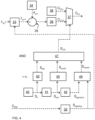
- the vehicle comprises an acceleration indicator 41, 42 to provide a signal S acc indicative for a measured acceleration of the vehicle.
- the at least one enablement condition is an indication Saccerr provided by comparison element 46 that a sign of the acceleration as indicated S sgn(acc) by the acceleration indicator 41,42 is inverse to an intended sign of the acceleration S sgn(trq) as derived from the control signal C EM .
- the acceleration indicator 41, 42 may indicate the measured acceleration of the vehicle by derivation of the speed of the vehicle as indicated by speed indicator 40.
- an inertial sensor may be provided to render the signal S acc indicative for the measured acceleration.
- the occurrence of a measured acceleration inverse to an intended acceleration is a strong indicator of an error condition that justifies the safety operational mode.
- additional conditions may be required to be complied with.
- these are the additional condition that the acceleration indicator indicates that a magnitude of the acceleration exceeds a threshold magnitude.
- This condition is determined by threshold element 45.
- the threshold magnitude is dependent on the sign of the acceleration as indicated by the acceleration indicator.
- the threshold magnitude for a positive sign of the acceleration is greater than a threshold magnitude for a negative sign of the acceleration.
- the threshold element 45 may indicate compliance of the additional condition if the measured vehicle acceleration is less than -2 m/s 2 or exceeds 1.5 m/s 2 .
- the speed indicator 40 indicates that an absolute value of the speed of the vehicle is greater than or equal to a further speed threshold value.
- This condition is verified by a further threshold element 43.
- the further threshold element may indicate that this condition is complied with, for example if the measured speed as indicated by the signal SV exceeds the further threshold value, e.g. a value of 30 km/h or 50 km/h.
- the safety operational mode is enabled by signal Scs if the logical gate 47, determines that each of the enablement conditions is complied with.
- FIG. 5 shows a further embodiment. Elements therein corresponding to those of FIG. 4 have a corresponding reference. Therein the selection signal Scs is provided by a logic element 49 that determines that at least one of the following (sets of) conditions is complied with.
- the safety operational mode is enabled in situations where the a priori probability of a malfunctioning of the electromagnetic driving unit is higher than an average probability and the safety operational mode is also enabled in situations wherein a behavior of the vehicle is indicative of a malfunctioning.
- a method of operating a powertrain for a vehicle is executed.
- the powertrain to be operated includes at least an electromagnetic driving unit 10 ( FIG. 1 , 2 ) to generate mechanical energy by rotating a driving shaft 11 with a first rotational speed ⁇ in while exerting a driving torque T driv .
- a transmission module 20 is to transmit mechanical energy from the driving shaft 11 to wheels 50 of the vehicle.
- the transmission module 20 at least comprises a controllable clutch 21 to controllably couple an output shaft 22 with the driving shaft 11.
- the method includes a safety operational mode, comprising:
Landscapes
- Engineering & Computer Science (AREA)
- Mechanical Engineering (AREA)
- General Engineering & Computer Science (AREA)
- Combustion & Propulsion (AREA)
- Chemical & Material Sciences (AREA)
- Transportation (AREA)
- Physics & Mathematics (AREA)
- Fluid Mechanics (AREA)
- Mathematical Physics (AREA)
- Automation & Control Theory (AREA)
- Hydraulic Clutches, Magnetic Clutches, Fluid Clutches, And Fluid Joints (AREA)
- Electric Propulsion And Braking For Vehicles (AREA)
- Hybrid Electric Vehicles (AREA)
Description
- The present invention pertains to a powertrain for a vehicle.
- The present invention further pertains to a method for controlling such a powertrain in a vehicle. State of the art documents are
EP1460317 andDE19952352 . - In hybrid or electrically driven vehicles typically a brushless electromotor is applied to propel the vehicle. The rotation direction thereof fully relies on the controller that provides the drive signals to drive the electromotor. It is of utmost importance and usually a legal requirement that the rotation direction corresponds is indeed the rotation direction that is required to achieve the desired driving direction to guarantee a predictable behavior of the vehicle. Although various measures are taken to avoid that this occurs, it is desired to further reduce this risk.
- It is an object of the present invention to provide a powertrain for a vehicle that reduces the risk of such an unpredictable behavior.
- It is a further object of the present invention to provide a method for controlling a powertrain for a vehicle that reduces the risk of such an unpredictable behavior.
- According to the first object a powertrain is provided as claimed in claim 1. When operating in its safety mode, it controls an engagement of the controllable clutch with a feedback loop in which a desired extent of engagement as specified by the clutch control signal is positively correlated to a difference between an extent of slip as indicated by the slip indicator and a positive reference value for said extent of slip. Accordingly, in the normal situation, wherein the rotation direction of the electromotor corresponds to the rotation direction that is required to achieve the desired driving direction, the controller maintains the controllable clutch in a state wherein it transmits a torque driving the vehicle in the desired direction with the output of the controllable clutch rotating at a rotational velocity that is less than a rotational velocity at its input as determined by the positive reference value.
- Should however a situation occur wherein the electromotor inadvertently rotates in the inverse direction, the difference between the input rotational velocity and the output rotational value is negative. Consequently, also the error signal, as determined by the difference between the extent of slip as indicated by the slip indicator and the positive reference value is negative. As the desired extent of engagement as specified by the clutch control signal is positively correlated to the error signal, the clutch is forced into a disengagement. As a result of the disengagement it is prevented that the electromotor can cause a propulsion if the vehicle in a reverse direction, even if it inadvertently rotates reversely. As the disengagement of the controllable clutch prevents a propulsion of the vehicle, the error signal will remain negative so that the clutch is indeed maintained stably in its disengaged state as long as the electromotor remains in its inversely rotation state.
- In this manner it is achieved that a risk of unpredictable behavior of the vehicle is mitigated. The measure may be combined with a further safety measure that monitors the rotation direction of the electromotor and that disables operation of the electromotor in case it is detected that the rotation direction does not correspond to the rotation direction that is required to achieve the desired driving direction. In this manner two independent safety measures are provided that in combination even more reduce the risk of unpredictable vehicle behavior.
- Accordingly, in the normal situation, wherein the rotation direction of the electromotor corresponds to the rotation direction that is required to achieve the desired driving direction, the controller maintains the controllable clutch in a state wherein it transmits a torque driving the vehicle in the desired direction with the output of the controllable clutch rotating at a rotational velocity that is less than a rotational velocity at its input as determined by the positive reference value.
- Should however a situation occur wherein the electromotor inadvertently rotates in the inverse direction, the difference between the input rotational velocity and the output rotational value is negative. Consequently, also the error signal, as determined by the difference between the extent of slip as indicated by the slip indicator and the positive reference value is negative. As the desired extent of engagement as specified by the clutch control signal is positively correlated to the error signal, the clutch is forced into a disengagement. As a result of the disengagement it is prevented that the electromotor can cause a propulsion if the vehicle in a reverse direction, even if it inadvertently rotates reversely. As the disengagement of the controllable clutch prevents a propulsion of the vehicle, the error signal will remain negative so that the clutch is indeed maintained stably in its disengaged state as long as the electromotor remains in its inversely rotation state.
- The present disclosure further provides a method of operating such a powertrain according to
claim 10, and a computer program product according toclaim 15. - These and other aspects are described in more detail with reference to the drawing. Therein:
-
FIG. 1 schematically shows an embodiment of a powertrain for a vehicle; -
FIG. 1A schematically shows a further embodiment of a powertrain for a vehicle; -
FIG. 2 shows in more detail an embodiment of a controller for use in a powertrain; -
FIG. 3 shows in more detail another embodiment of a controller for use in a powertrain; -
FIG. 4 shows in more detail a further embodiment of a controller for use in a powertrain; -
FIG. 5 shows in more detail a still further embodiment of a controller for use in a powertrain. -
FIG. 1 schematically shows a powertrain for a vehicle including at least anelectromagnetic driving unit 10 withoutput shaft 11 and atransmission module 20 to transmit mechanical energy from theelectromagnetic driving unit 10 towheels 50 of the vehicle. Theelectromagnetic driving unit 10 is to generate mechanical energy by rotating thedriving shaft 11 with a first rotational speed ωin while exerting a driving torque Tdriv. Theelectromagnetic driving unit 10 may comprise an electromotor and optional transmission elements like a fixed gear. Theelectromagnetic driving unit 10 may further include a control unit that drives the electromotor. Thetransmission module 20 is to transmit the mechanical energy from thedriving shaft 11 towheels 50 of the vehicle. Thetransmission module 20 at least comprises acontrollable clutch 21 to controllably couple thedriving shaft 11 with theoutput shaft 22. It is noted that the wording shaft is not restricted to refer to a solid axis, but to any other member that is capable of rotating, for example drum. Shafts may enclose other shafts, for example a drum may be rotatably arranged around another drum, which on its turn is rotatably arranged around a solid axis. The powertrain further includes a control system comprising acontroller 30 to control a desired rotational speed and desired driving torque of the electromagnetic driving unit with a drive control signal CEM. The desired driving torque has a desired driving torque sign. The desired driving torque sign is denoted as positive if theelectromagnetic driving unit 10 is to accelerate the vehicle in the desired driving direction and is negative otherwise. For example, if the desired driving direction is the forward direction of the vehicle is positive if theelectromagnetic driving unit 10, when correctly exerting this desired driving torque tends to increase a speed of the vehicle in that forward direction. For example if the vehicle is actually driving backwards on a slanting road portion theelectromagnetic driving unit 10 should tend to reduce the velocity in the backwards direction and subsequently to accelerate the vehicle in the forward direction. - The
controller 30 is further provided to control the controllable clutch with a clutch control signal CCL. The clutch control signal specifies a desired extent of engagement to be provided by theclutch 21 between thedriving shaft 11 and itsoutput shaft 22. Thetransmission module 20 may comprise other transmission elements, like a gear, to define a transmission ratio in a stepwise or in a continuous manner, a torque converter, a fixed transmission and a differential. Also other motors may be included, for example a combustion engine in a hybrid arrangement and an auxiliary electromotor to start the combustion engine. In the embodiment shown, aclutch slip indicator driving shaft 11 and theoutput shaft 22 of the controllable clutch. The extent of slip as indicated by the signal SΔω may for example be a difference ωin - ωout between the first rotational speed ωin and a second rotational speed ωout with which theoutput shaft 22 rotates. Alternatively the extent of slip as indicated may be another function of the rotational speeds ωin - ωout of thedriving shaft 11 and theoutput shaft 22, for example a ratio defined as ωin/ωout, or a logarithmic value of this ratio. In the embodiment shown, the clutch slip indicator includes a firstrotational speed sensor 31a attached to the fixed world to measure the rotational speed ωin of thedriving shaft 11, a secondrotational speed sensor 31b, also attached to the fixed world to measure the rotational speed ωout of theoutput shaft 22, and acomparator 31c to compute a value of the extent of slip to be indicated by the signal SΔω. Alternatively, a single rotational speed detector may be provided that is attached to one of the shafts and that measures the rotational speed of the other one of the shafts relative to the rotational speed of the shaft to which it is attached. Such an alternative sensor may for example indicate the extent of slip as by a value proportional to the measured relative rotational speed or a logarithmic value thereof. In the embodiment shown, the slip indicator further includes aselective invertor element 31d that selectively inverts an output signal of thecomparator 31c in response to a polarity control signal Spol frompolarity indicator 31e. Therewith, the extent of slip is indicated with a sign that is the product of the sign of the difference between the rotational speed of the input shaft and a rotational speed of the output shaft and the desired driving torque sign; - The
controller 30 is arranged to assume a safety operational mode, wherein it controls an engagement of thecontrollable clutch 21 with a feedback loop in which a desired extent of engagement as specified by the clutch control signal CCL is positively correlated to a difference between an extent of slip as indicated SΔω.by the slip indicator and a positive reference value for said extent of slip. Therein the slip indicator indicates the extent of slip with a sign that is the product of the sign of the difference between the rotational speed of the input shaft and a rotational speed of the output shaft and the desired driving torque sign. In the embodiment shown this is achieved in that thepolarity indicator 31e determines the desired driving torque sign from the desired driving torque as specified by control signal CEM. Alternatively thecontroller 30 may provide an output signal that directly controls theselective invertor element 31d. Also one or more elements of the slip indicator may be integrated in thecontroller 30, This is schematically indicated inFIG. 1A , ascontroller 30 having amodule 31f. - When driving a vehicle, a desired change may be one of the following:
- a) The vehicle should accelerate its motion in the direction corresponding to the selected gear.
- b) The vehicle should decelerate its motion in the direction corresponding to the selected gear.
- In case a) the driver may have selected a forward direction for example by selecting the setting "D" in a continuous transmission system, or a setting "1-6" for example in a stepwise controllable transmission system. Alternatively, the driver may have selected a backward direction for example by selecting the setting "R" in a continuous transmission system, or in a stepwise controllable transmission system. By pressing the speed pedal the driver indicates an intention to accelerate in the selected direction, which corresponds to a positive driving torque sign.
- With the clutch in a slipping operational mode, the first rotational speed ωin is greater than the second rotational speed ωout in a normal operating conditions of the
electromagnetic driving unit 10. It is also conceivable that the driver intends to accelerate in the selected forward direction while the vehicle is (slowly) driving backwards. In that case the rotational speed ωout of the output shaft has a negative value, and the rotational speed ωin of the drivingshaft 11 has a value which is preferably a positive value, but at least greater than or equal to said negative value. The slip indicator indicates the extent of slip with a sign that is the product of the sign of the difference between the rotational speed of the input shaft and a rotational speed of the output shaft and the desired driving torque sign. Hence, in any of these cases the slip indicator indicates the extent of slip with a positive sign. In each of these cases, a tendency of the slip to increase above the reference value would be counteracted by an increased engagement of the controllable clutch, while a tendency of the slip to decrease below the reference value would be counteracted by an decreased engagement of the controllable clutch. - Should it be the case that inadvertently an error occurs in the
electromagnetic driving unit 10 that causes theelectromagnetic driving unit 10 to exert a torque in a direction reverse to the torque that should be exerted in normal operation, this would have the effect that with the clutch in a slipping operational mode, the first rotational speed ωin is less than the second rotational speed ωout. In that case, the value of the slip is negative, i.e. the value of the slip is always lower than the reference value. As a result the controllable clutch is disengaged, resulting in an even more negative slip value. This process ends in a full disengagement of the controllable clutch therewith avoiding unexpected braking of the vehicle due to an inadvertent malfunctioning of the electromagnetic driving unit. - The driver may indicate an intended deceleration by releasing the speed pedal and/or by pressing the break pedal. In that case the driving torque sign is negative. As a result, the slip indicator indicates the extent of slip with a sign that is the inverse of the sign of the difference between the rotational speed of the input shaft and a rotational speed of the output shaft. With the clutch in a slipping operational mode, the first rotational speed ωin is less than the second rotational speed ωout in a normal operating conditions of the
electromagnetic driving unit 10. As the slip indicator inverts the sign of the measured slip, the feedback loop active in the safety operational mode will tend to maintain a desired extent of engagement of the controllable clutch wherein the first rotational speed ωin is equal to the second rotational speed ωout minus the positive reference value. - Should it be the case that inadvertently an error occurs in the
electromagnetic driving unit 10 that causes theelectromagnetic driving unit 10 to exert a torque in a direction reverse to the torque that should be exerted in normal operation, this would have the effect that with the clutch in a slipping operational mode, the first rotational speed ωin is greater than the second rotational speed ωout. In that case, the inverted value, as indicated by the slip indicator is negative, and therewith always lower than the reference value. As a result the controllable clutch is disengaged, resulting in an even more negative slip value. This process ends in a full disengagement of the controllable clutch therewith avoiding unexpected braking of the vehicle due to an inadvertent malfunctioning of the electromagnetic driving unit. - An embodiment of a
controller 30 is depicted inFIG. 2 . It is presumed that thecontroller 30 receives a control signal CEM, indicative for a desired rotational speed and a desired driving torque of the electromagnetic driving unit 10 (FIG.1 ) from an external control unit, for example a conventional control unit for this purpose. The controller also receives a signal SΔω indicative for an extent of slip of the controllable clutch 21 (FIG. 1 ) for example be a difference ωin - ωout between the first rotational speed ωin and a second rotational speed ωout with which theoutput shaft 22 rotates. Alternatively thecontroller 30 may have a means to calculate the signal SΔω indicative for an extent of slip. Thecontroller 30 has atorque sign indicator 32 to provide a signal Ssgn(trq) indicative of a sign of the desired torque. Thecontroller 30 further has acontrollable inverter 33 to selectively invert a sign of the extend of slip as indicated by signal SΔω. I.e. if the desired torque is positive, corresponding to an acceleration of the vehicle in the selected direction, the sign of the slip signal is remains the same. However, if the desired torque is negative, corresponding to an deceleration of the vehicle in the selected direction, then the sign of the slip signal is inverted. Thesubtraction element 35 subtracts a positive reference value from the value as indicated by thecontrollable inverter 33 and provides this as the error signal to driveunit 36 that provides the drive signal CCL for thecontrollable clutch 21. Thedrive unit 36 may typically have a proportional response, but may additionally have an integrating or differentiating component for fine tuning the response. - In order to enable a more efficient operation if the risk of occurrence of a malfunctioning electromagnetic driving unit is already with acceptable bounds, the
controller 30 may be configured to selectively assume the safety operational mode upon compliance of at least one enablement condition. An embodiment of such a controller is shown inFIG. 3 . Thecontroller 30 shown therein has aselection element 37, that dependent on input signal Sv, selects a drive signal CCLS fromdrive unit 36 or a further drive signal CCLL as the output signal CCL. The further drive signal CCLL may be a drive signal that forces the controllable clutch 21 into a locked operational mode. Theselection element 37 may alternatively be arranged between thesubtraction element 35 and thedrive unit 36, so that it selectively transmits the error signal provided by the selection element to the input of the drive unit or another control signal. The selection of theselection element 37 is determined by a signal indicative Sv for a speed of the vehicle provided byspeed indicator 40. The at least one enablement condition is an indication from thespeed indicator 40 that an absolute value of the speed of the vehicle is less than or equal to a speed threshold value. Therewith thecontroller 30 selectively assumes the safety operational mode at a relatively low speed of the vehicle. This is based on the consideration that the risk of a coming into existence of a malfunction of theelectromagnetic driving unit 10 is the highest in the situation wherein theelectromagnetic driving unit 10 is activated (again). This is typically the case if the driver intends to accelerate the vehicle from standstill. Once it is established that theelectromagnetic driving unit 10 is correctly functioning, when the vehicle is accelerated to some extent, e.g. to a speed of at least 5 km/h or 10 km/h for example the safety operational mode may be deactivated. Hence although the safety operational mode incurs some transmission losses, due to its selective activation at low speeds of the vehicle, the overall amount of these losses is very modest. - In a further embodiment, as shown in
FIG. 4 , the vehicle comprises anacceleration indicator comparison element 46 that a sign of the acceleration as indicated Ssgn(acc) by theacceleration indicator acceleration indicator speed indicator 40. Alternatively an inertial sensor may be provided to render the signal Sacc indicative for the measured acceleration. The occurrence of a measured acceleration inverse to an intended acceleration is a strong indicator of an error condition that justifies the safety operational mode. To avoid a too abrupt selection of the safety operational mode, for example due to a temporary deceleration of the vehicle in a slanting portion of the road, additional conditions may be required to be complied with. In the embodiment shown, these are the additional condition that the acceleration indicator indicates that a magnitude of the acceleration exceeds a threshold magnitude. This condition is determined bythreshold element 45. In the embodiment shown the threshold magnitude is dependent on the sign of the acceleration as indicated by the acceleration indicator. In particular, the threshold magnitude for a positive sign of the acceleration is greater than a threshold magnitude for a negative sign of the acceleration. By way of example thethreshold element 45 may indicate compliance of the additional condition if the measured vehicle acceleration is less than -2 m/s2 or exceeds 1.5 m/s2. - As a still further additional condition for entering the safety operational mode it may be required that the
speed indicator 40 indicates that an absolute value of the speed of the vehicle is greater than or equal to a further speed threshold value. This condition is verified by afurther threshold element 43. The further threshold element may indicate that this condition is complied with, for example if the measured speed as indicated by the signal SV exceeds the further threshold value, e.g. a value of 30 km/h or 50 km/h. - In the embodiment of
FIG. 4 , the safety operational mode is enabled by signal Scs if thelogical gate 47, determines that each of the enablement conditions is complied with. -
FIG. 5 shows a further embodiment. Elements therein corresponding to those ofFIG. 4 have a corresponding reference. Therein the selection signal Scs is provided by a logic element 49 that determines that at least one of the following (sets of) conditions is complied with. - a) The measured speed of the vehicle as indicated by signal Sv is less than a lower threshold value, e.g. 10 km/h. This condition is verified by
first threshold element 48 and signaled by signal Ssthl to the logic element 49. - b)
- b1) The measured speed of the is greater than a higher threshold value, e.g. 30 km/h.
AND - b2) The sign of the measured acceleration is inverse to the sign of the intended acceleration.
AND - b3) The magnitude of the acceleration exceeds a threshold value.
- b1) The measured speed of the is greater than a higher threshold value, e.g. 30 km/h.
- In the embodiment of
FIG. 5 , a selection of the safety operational mode is normally avoided. However, the safety operational mode is enabled in situations where the a priori probability of a malfunctioning of the electromagnetic driving unit is higher than an average probability and the safety operational mode is also enabled in situations wherein a behavior of the vehicle is indicative of a malfunctioning. - In operation a method of operating a powertrain for a vehicle is executed. The powertrain to be operated includes at least an electromagnetic driving unit 10 (
FIG. 1 ,2 ) to generate mechanical energy by rotating a drivingshaft 11 with a first rotational speed ωin while exerting a driving torque Tdriv.A transmission module 20 is to transmit mechanical energy from the drivingshaft 11 towheels 50 of the vehicle. Thetransmission module 20 at least comprises a controllable clutch 21 to controllably couple anoutput shaft 22 with the drivingshaft 11. The method includes a safety operational mode, comprising: - controlling a desired rotational speed and desired driving torque of the
electromagnetic driving unit 10 with a drive control signal CEM, the desired driving torque having a desired driving torque sign; - controlling the clutch 21 with a clutch control signal SCL specifying a desired extent of engagement to be provided by the clutch between the driving
shaft 10 and itsoutput shaft 22, - providing a signal SΔω1 indicative for an extent of slip between the driving
shaft 11 and theoutput shaft 22, the extent of slip being indicated with a sign that is the product of the sign of the difference between the rotational speed of the input shaft and a rotational speed of the output shaft and the desired driving torque sign; - controlling an engagement of the controllable clutch with a feedback loop in which a desired extent of engagement as specified by the clutch control signal CCL is positively correlated to a difference between the indicated extent of slip and a positive reference value for said extent of slip.
- Unless otherwise defined, all technical and scientific terms used herein have the same meaning as commonly understood by one of ordinary skill in the art to which this invention belongs.
Claims (15)
- A powertrain for a vehicle including at least an electromagnetic driving unit (10) to generate mechanical energy by rotating a driving shaft (11) with a first rotational speed while exerting a driving torque and a transmission module (20) to transmit mechanical energy from the driving shaft (11) to wheels (50) of the vehicle, the transmission module at least comprising a controllable clutch (21) to controllably couple an output shaft (21) with the driving shaft (11), the powertrain further including a control system comprising a controller (30) to control a desired rotational speed and desired driving torque of the electromagnetic driving unit with a drive control signal (CEM), the desired driving torque having a desired driving torque sign, and to control the clutch with a clutch control signal (CCL) specifying a desired extent of engagement to be provided by the clutch between the driving shaft and its output shaft, the control system comprising a clutch slip indicator to provide a signal (SΔω1) indicative for an extent of slip between the driving shaft and the output shaft, wherein the controller has a safety operational mode wherein it controls an engagement of the controllable clutch with a feedback loop in which a desired extent of engagement as specified by the clutch control signal is positively correlated to a difference between an extent of slip as indicated by the slip indicator and a positive reference value for said extent of slip, wherein the slip indicator indicates the extent of slip with a sign that is the product of the sign of the difference between the rotational speed of the input shaft and a rotational speed of the output shaft and the desired driving torque sign.
- The powertrain according to claim 1, wherein the controller selectively assumes the safety operational mode upon compliance of at least one enablement condition.
- The powertrain according to claim 2, wherein the vehicle further comprises a speed indicator to provide a signal indicative for a speed of the vehicle, and wherein the at least one enablement condition is an indication from the speed indicator that an absolute value of the speed of the vehicle is less than or equal to a speed threshold value.
- The powertrain according to claim 2 or 3, wherein the vehicle comprises an acceleration indicator to provide a signal indicative for a measured acceleration of the vehicle, wherein the at least one enablement condition is an indication by the acceleration indicator that the acceleration is inverse to an intended sign of the acceleration.
- The powertrain according to claim 4, wherein the at least one enablement condition further includes the condition that the acceleration indicator indicates that a magnitude of the acceleration exceeds a threshold magnitude.
- The powertrain according to claim 5, wherein the threshold magnitude is dependent on the sign of the acceleration as indicated by the acceleration indicator.
- The powertrain according to claim 6, wherein the threshold magnitude for a positive sign of the acceleration is greater than a threshold magnitude for a negative sign of the acceleration.
- The powertrain according to one of the claims 4-7, wherein the vehicle further comprises a speed indicator to provide a signal indicative for a speed of the vehicle, and wherein the at least one enablement condition is an indication from the speed indicator that an absolute value of the speed of the vehicle is greater than or equal to a further speed threshold value.
- The powertrain according to one of the previous claims, wherein a further controller is provided that monitors whether the rotation direction of the electromotor corresponds to the rotation direction that is required to achieve the desired driving direction and that switches off the electromotor if it is determined that this condition is not complied with.
- A method of operating a powertrain for a vehicle, the powertrain according to one of the previous claims the method including a safety operational mode, comprising:- controlling a desired rotational speed and desired driving torque of the electromagnetic driving unit with a drive control signal, the desired driving torque having a desired driving torque sign;- controlling the clutch with a clutch control signal specifying a desired extent of engagement to be provided by the clutch between the driving shaft and its output shaft,- providing a signal indicative for an extent of slip between the driving shaft and the output shaft, the extent of slip being indicated with a sign that is the product of the sign of the difference between the rotational speed of the input shaft and a rotational speed of the output shaft and the desired driving torque sign;- controlling an engagement of the controllable clutch with a feedback loop in which a desired extent of engagement as specified by the clutch control signal is positively correlated to a difference between an indicated extent of slip and a positive reference value for said extent of slip.
- The method according to claim 10, comprising selectively assuming the safety operational mode upon compliance of at least one enablement condition.
- The method according to claim 11, further comprising providing a signal indicative for a speed of the vehicle, and wherein the at least one enablement condition is an indication that an absolute value of the speed of the vehicle is less than or equal to a speed threshold value.
- The method according to claim 11 or 12, further comprising providing a signal indicative for a measured acceleration of the vehicle, wherein the at least one enablement condition is an indication by the acceleration indicator that the acceleration is inverse to an intended sign of the acceleration.
- The method according to claim 13, wherein the at least one enablement condition further includes the condition that a magnitude of the acceleration exceeding a threshold magnitude is indicated.
- A computer program product comprising a computer program, which when executed by a programmable processor causes the programmable processor to carry out all of the steps of the method of one of claim 10-14.
Applications Claiming Priority (2)
| Application Number | Priority Date | Filing Date | Title |
|---|---|---|---|
| BE20185341A BE1026305B1 (en) | 2018-05-25 | 2018-05-25 | A powertrain for a vehicle and method for driving a powertrain in a vehicle |
| PCT/EP2019/063622 WO2019224394A1 (en) | 2018-05-25 | 2019-05-27 | A powertrain for a vehicle and method for controlling a powertrain in a vehicle |
Publications (2)
| Publication Number | Publication Date |
|---|---|
| EP3803147A1 EP3803147A1 (en) | 2021-04-14 |
| EP3803147B1 true EP3803147B1 (en) | 2023-07-26 |
Family
ID=63452327
Family Applications (1)
| Application Number | Title | Priority Date | Filing Date |
|---|---|---|---|
| EP19726992.1A Active EP3803147B1 (en) | 2018-05-25 | 2019-05-27 | A powertrain for a vehicle and method for controlling a powertrain in a vehicle |
Country Status (5)
| Country | Link |
|---|---|
| US (1) | US11293501B2 (en) |
| EP (1) | EP3803147B1 (en) |
| CN (1) | CN112534154B (en) |
| BE (1) | BE1026305B1 (en) |
| WO (1) | WO2019224394A1 (en) |
Families Citing this family (2)
| Publication number | Priority date | Publication date | Assignee | Title |
|---|---|---|---|---|
| CN113236682B (en) * | 2021-05-31 | 2023-03-31 | 蜂巢传动科技河北有限公司 | Method and device for controlling sliding of double clutches, vehicle and storage medium |
| DE112022007138T5 (en) * | 2022-04-26 | 2025-02-27 | Gkn Automotive Limited | drive system |
Family Cites Families (23)
| Publication number | Priority date | Publication date | Assignee | Title |
|---|---|---|---|---|
| US5627750A (en) * | 1993-12-29 | 1997-05-06 | Toyota Jidosha Kabushiki Kaisha | Clutch slip control device and method of manufacturing the same, clutch slip control method, and vehicle control device |
| DE19952352A1 (en) * | 1999-10-30 | 2001-05-03 | Zahnradfabrik Friedrichshafen | Method and device for controlling and regulating a clutch in an automated multi-step transmission for a motor vehicle |
| JP3896976B2 (en) * | 2003-03-19 | 2007-03-22 | 日産自動車株式会社 | Automatic transmission control device for manual transmission |
| US8775039B2 (en) * | 2003-10-20 | 2014-07-08 | Nmhg Oregon, Llc | Dynamically adjustable inch/brake overlap for vehicle transmission control |
| EP1733945B1 (en) * | 2005-06-17 | 2007-10-24 | C.R.F. Società Consortile per Azioni | Control system and method for controlling the driving-away manoeuvre in a motor vehicle with a servo-controlled gearbox |
| US8066620B2 (en) * | 2009-05-19 | 2011-11-29 | GM Global Technology Operations LLC | Method of clutch actuation for hybrid transmissions |
| DE102010033836A1 (en) | 2009-09-03 | 2011-03-10 | Schaeffler Technologies Gmbh & Co. Kg | Clutch actuator and method for its control |
| US8290673B2 (en) * | 2010-09-15 | 2012-10-16 | GM Global Technology Operations LLC | System and method of detecting a failed friction element |
| JP5488712B2 (en) * | 2010-10-25 | 2014-05-14 | 日産自動車株式会社 | Control device for hybrid vehicle |
| CN102180103B (en) * | 2011-03-30 | 2012-10-17 | 北京理工华创电动车技术有限公司 | An electric vehicle drive system and its control method |
| CN102320295A (en) * | 2011-06-20 | 2012-01-18 | 奇瑞汽车股份有限公司 | Self-protection system of car speed control system and control method thereof |
| US8475335B2 (en) * | 2011-09-21 | 2013-07-02 | GM Global Technology Operations LLC | Method and apparatus for adaptive clutch control for a vehicle having engine start-stop functionality |
| JP5854052B2 (en) * | 2011-10-21 | 2016-02-09 | トヨタ自動車株式会社 | Vehicle control device |
| EP2749756B1 (en) * | 2011-11-21 | 2020-03-25 | UD Trucks Corporation | Vehicle start-up control mechanism |
| US8834320B2 (en) * | 2012-01-11 | 2014-09-16 | Ford Global Technologies, Llc | Hybrid vehicle and control for a clutch engaging event |
| GB201319641D0 (en) * | 2013-11-07 | 2013-12-25 | Jaguar Land Rover Ltd | Driveline and method of controlling a driveline |
| US9026296B1 (en) * | 2013-11-08 | 2015-05-05 | Ford Global Technologies, Llc | System for controlling overall coasting torque in a hybrid electric vehicle |
| US9827969B2 (en) * | 2013-12-12 | 2017-11-28 | Ford Global Technologies, Llc | Controlling powertrain torque in a hybrid vehicle |
| JP6413177B2 (en) * | 2014-12-16 | 2018-10-31 | ヤマハ発動機株式会社 | Vehicle clutch control system |
| GB2544177B (en) * | 2015-03-12 | 2018-04-04 | Flybrid Automotive Ltd | Transmission for energy storage device |
| NL1041280B1 (en) * | 2015-04-21 | 2017-01-26 | Gear Chain Ind Bv | A control system for a continuously variable transmission. |
| AT517108B1 (en) * | 2015-09-01 | 2016-11-15 | Avl List Gmbh | METHOD FOR OPERATING VEHICLES OPERATED VIA A DRIVE MACHINE AND A DRIVE TRAIN WITH AT LEAST ONE COUPLING OPERATED VEHICLE |
| DE102016219793B3 (en) | 2016-10-12 | 2018-02-01 | Robert Bosch Gmbh | Method for monitoring a dual-clutch transmission |
-
2018
- 2018-05-25 BE BE20185341A patent/BE1026305B1/en not_active IP Right Cessation
-
2019
- 2019-05-27 WO PCT/EP2019/063622 patent/WO2019224394A1/en not_active Ceased
- 2019-05-27 US US17/058,475 patent/US11293501B2/en active Active
- 2019-05-27 CN CN201980048006.7A patent/CN112534154B/en active Active
- 2019-05-27 EP EP19726992.1A patent/EP3803147B1/en active Active
Also Published As
| Publication number | Publication date |
|---|---|
| WO2019224394A1 (en) | 2019-11-28 |
| BE1026305A1 (en) | 2019-12-17 |
| EP3803147A1 (en) | 2021-04-14 |
| CN112534154A (en) | 2021-03-19 |
| US11293501B2 (en) | 2022-04-05 |
| BE1026305B1 (en) | 2019-12-23 |
| US20210199164A1 (en) | 2021-07-01 |
| CN112534154B (en) | 2022-10-14 |
Similar Documents
| Publication | Publication Date | Title |
|---|---|---|
| JP3775562B2 (en) | Parallel hybrid vehicle | |
| JP2011031829A (en) | Torque distribution control device of four-wheel drive vehicle | |
| CN102149557A (en) | Method for operating a drive of a motor vehicle as well as a drive device and an electronic control unit | |
| EP3803147B1 (en) | A powertrain for a vehicle and method for controlling a powertrain in a vehicle | |
| WO2013115355A1 (en) | Vehicle control device | |
| US9694808B2 (en) | Method for a vehicle having an electric machine | |
| JP5257188B2 (en) | Vehicle drive control device | |
| CN116006681B (en) | Gear shift control method, system, electronic device and vehicle | |
| JP5347535B2 (en) | Vehicle braking force control device and braking force control method | |
| JP4839960B2 (en) | VEHICLE POWER DEVICE AND CONTROL DEVICE THEREOF | |
| JP3807369B2 (en) | Hybrid vehicle | |
| US20060128520A1 (en) | Vehicle driving force control system | |
| EP3916269B1 (en) | Vehicle driving device and hybrid vehicle | |
| JP6751532B2 (en) | Energy flow display device and display method | |
| JP4816243B2 (en) | VEHICLE POWER DEVICE AND CONTROL DEVICE THEREOF | |
| WO2023281560A1 (en) | Electric vehicle drive control device | |
| JP2009220711A (en) | Vehicular controller and vehicular control method | |
| JP6268527B2 (en) | vehicle | |
| JP6295894B2 (en) | Vehicle control device | |
| JP5995651B2 (en) | Clutch control device | |
| JP2015233378A (en) | vehicle | |
| JP7549302B2 (en) | Drive control device for four-wheel drive vehicle | |
| US7458916B2 (en) | Control method and device for the propulsion motor unit of a motor vehicle driven by an internal combustion engine | |
| JP6751533B2 (en) | Energy flow display device and display method | |
| JP7381989B2 (en) | Hybrid vehicle control device |
Legal Events
| Date | Code | Title | Description |
|---|---|---|---|
| STAA | Information on the status of an ep patent application or granted ep patent |
Free format text: STATUS: THE INTERNATIONAL PUBLICATION HAS BEEN MADE |
|
| PUAI | Public reference made under article 153(3) epc to a published international application that has entered the european phase |
Free format text: ORIGINAL CODE: 0009012 |
|
| STAA | Information on the status of an ep patent application or granted ep patent |
Free format text: STATUS: REQUEST FOR EXAMINATION WAS MADE |
|
| 17P | Request for examination filed |
Effective date: 20201222 |
|
| AK | Designated contracting states |
Kind code of ref document: A1 Designated state(s): AL AT BE BG CH CY CZ DE DK EE ES FI FR GB GR HR HU IE IS IT LI LT LU LV MC MK MT NL NO PL PT RO RS SE SI SK SM TR |
|
| AX | Request for extension of the european patent |
Extension state: BA ME |
|
| RAP1 | Party data changed (applicant data changed or rights of an application transferred) |
Owner name: PUNCH POWERTRAIN PSA E-TRANSMISSIONS NV |
|
| DAV | Request for validation of the european patent (deleted) | ||
| DAX | Request for extension of the european patent (deleted) | ||
| GRAP | Despatch of communication of intention to grant a patent |
Free format text: ORIGINAL CODE: EPIDOSNIGR1 |
|
| STAA | Information on the status of an ep patent application or granted ep patent |
Free format text: STATUS: GRANT OF PATENT IS INTENDED |
|
| INTG | Intention to grant announced |
Effective date: 20230203 |
|
| GRAS | Grant fee paid |
Free format text: ORIGINAL CODE: EPIDOSNIGR3 |
|
| GRAA | (expected) grant |
Free format text: ORIGINAL CODE: 0009210 |
|
| STAA | Information on the status of an ep patent application or granted ep patent |
Free format text: STATUS: THE PATENT HAS BEEN GRANTED |
|
| AK | Designated contracting states |
Kind code of ref document: B1 Designated state(s): AL AT BE BG CH CY CZ DE DK EE ES FI FR GB GR HR HU IE IS IT LI LT LU LV MC MK MT NL NO PL PT RO RS SE SI SK SM TR |
|
| REG | Reference to a national code |
Ref country code: CH Ref legal event code: EP |
|
| REG | Reference to a national code |
Ref country code: IE Ref legal event code: FG4D |
|
| REG | Reference to a national code |
Ref country code: DE Ref legal event code: R096 Ref document number: 602019033520 Country of ref document: DE |
|
| REG | Reference to a national code |
Ref country code: LT Ref legal event code: MG9D |
|
| REG | Reference to a national code |
Ref country code: NL Ref legal event code: MP Effective date: 20230726 |
|
| REG | Reference to a national code |
Ref country code: AT Ref legal event code: MK05 Ref document number: 1592233 Country of ref document: AT Kind code of ref document: T Effective date: 20230726 |
|
| PG25 | Lapsed in a contracting state [announced via postgrant information from national office to epo] |
Ref country code: NL Free format text: LAPSE BECAUSE OF FAILURE TO SUBMIT A TRANSLATION OF THE DESCRIPTION OR TO PAY THE FEE WITHIN THE PRESCRIBED TIME-LIMIT Effective date: 20230726 |
|
| PG25 | Lapsed in a contracting state [announced via postgrant information from national office to epo] |
Ref country code: GR Free format text: LAPSE BECAUSE OF FAILURE TO SUBMIT A TRANSLATION OF THE DESCRIPTION OR TO PAY THE FEE WITHIN THE PRESCRIBED TIME-LIMIT Effective date: 20231027 |
|
| PG25 | Lapsed in a contracting state [announced via postgrant information from national office to epo] |
Ref country code: IS Free format text: LAPSE BECAUSE OF FAILURE TO SUBMIT A TRANSLATION OF THE DESCRIPTION OR TO PAY THE FEE WITHIN THE PRESCRIBED TIME-LIMIT Effective date: 20231126 |
|
| PG25 | Lapsed in a contracting state [announced via postgrant information from national office to epo] |
Ref country code: SE Free format text: LAPSE BECAUSE OF FAILURE TO SUBMIT A TRANSLATION OF THE DESCRIPTION OR TO PAY THE FEE WITHIN THE PRESCRIBED TIME-LIMIT Effective date: 20230726 Ref country code: RS Free format text: LAPSE BECAUSE OF FAILURE TO SUBMIT A TRANSLATION OF THE DESCRIPTION OR TO PAY THE FEE WITHIN THE PRESCRIBED TIME-LIMIT Effective date: 20230726 Ref country code: PT Free format text: LAPSE BECAUSE OF FAILURE TO SUBMIT A TRANSLATION OF THE DESCRIPTION OR TO PAY THE FEE WITHIN THE PRESCRIBED TIME-LIMIT Effective date: 20231127 Ref country code: NO Free format text: LAPSE BECAUSE OF FAILURE TO SUBMIT A TRANSLATION OF THE DESCRIPTION OR TO PAY THE FEE WITHIN THE PRESCRIBED TIME-LIMIT Effective date: 20231026 Ref country code: LV Free format text: LAPSE BECAUSE OF FAILURE TO SUBMIT A TRANSLATION OF THE DESCRIPTION OR TO PAY THE FEE WITHIN THE PRESCRIBED TIME-LIMIT Effective date: 20230726 Ref country code: LT Free format text: LAPSE BECAUSE OF FAILURE TO SUBMIT A TRANSLATION OF THE DESCRIPTION OR TO PAY THE FEE WITHIN THE PRESCRIBED TIME-LIMIT Effective date: 20230726 Ref country code: IS Free format text: LAPSE BECAUSE OF FAILURE TO SUBMIT A TRANSLATION OF THE DESCRIPTION OR TO PAY THE FEE WITHIN THE PRESCRIBED TIME-LIMIT Effective date: 20231126 Ref country code: HR Free format text: LAPSE BECAUSE OF FAILURE TO SUBMIT A TRANSLATION OF THE DESCRIPTION OR TO PAY THE FEE WITHIN THE PRESCRIBED TIME-LIMIT Effective date: 20230726 Ref country code: GR Free format text: LAPSE BECAUSE OF FAILURE TO SUBMIT A TRANSLATION OF THE DESCRIPTION OR TO PAY THE FEE WITHIN THE PRESCRIBED TIME-LIMIT Effective date: 20231027 Ref country code: FI Free format text: LAPSE BECAUSE OF FAILURE TO SUBMIT A TRANSLATION OF THE DESCRIPTION OR TO PAY THE FEE WITHIN THE PRESCRIBED TIME-LIMIT Effective date: 20230726 Ref country code: AT Free format text: LAPSE BECAUSE OF FAILURE TO SUBMIT A TRANSLATION OF THE DESCRIPTION OR TO PAY THE FEE WITHIN THE PRESCRIBED TIME-LIMIT Effective date: 20230726 |
|
| PG25 | Lapsed in a contracting state [announced via postgrant information from national office to epo] |
Ref country code: PL Free format text: LAPSE BECAUSE OF FAILURE TO SUBMIT A TRANSLATION OF THE DESCRIPTION OR TO PAY THE FEE WITHIN THE PRESCRIBED TIME-LIMIT Effective date: 20230726 |
|
| PG25 | Lapsed in a contracting state [announced via postgrant information from national office to epo] |
Ref country code: ES Free format text: LAPSE BECAUSE OF FAILURE TO SUBMIT A TRANSLATION OF THE DESCRIPTION OR TO PAY THE FEE WITHIN THE PRESCRIBED TIME-LIMIT Effective date: 20230726 |
|
| REG | Reference to a national code |
Ref country code: DE Ref legal event code: R097 Ref document number: 602019033520 Country of ref document: DE |
|
| PG25 | Lapsed in a contracting state [announced via postgrant information from national office to epo] |
Ref country code: SM Free format text: LAPSE BECAUSE OF FAILURE TO SUBMIT A TRANSLATION OF THE DESCRIPTION OR TO PAY THE FEE WITHIN THE PRESCRIBED TIME-LIMIT Effective date: 20230726 Ref country code: RO Free format text: LAPSE BECAUSE OF FAILURE TO SUBMIT A TRANSLATION OF THE DESCRIPTION OR TO PAY THE FEE WITHIN THE PRESCRIBED TIME-LIMIT Effective date: 20230726 Ref country code: ES Free format text: LAPSE BECAUSE OF FAILURE TO SUBMIT A TRANSLATION OF THE DESCRIPTION OR TO PAY THE FEE WITHIN THE PRESCRIBED TIME-LIMIT Effective date: 20230726 Ref country code: EE Free format text: LAPSE BECAUSE OF FAILURE TO SUBMIT A TRANSLATION OF THE DESCRIPTION OR TO PAY THE FEE WITHIN THE PRESCRIBED TIME-LIMIT Effective date: 20230726 Ref country code: DK Free format text: LAPSE BECAUSE OF FAILURE TO SUBMIT A TRANSLATION OF THE DESCRIPTION OR TO PAY THE FEE WITHIN THE PRESCRIBED TIME-LIMIT Effective date: 20230726 Ref country code: CZ Free format text: LAPSE BECAUSE OF FAILURE TO SUBMIT A TRANSLATION OF THE DESCRIPTION OR TO PAY THE FEE WITHIN THE PRESCRIBED TIME-LIMIT Effective date: 20230726 Ref country code: SK Free format text: LAPSE BECAUSE OF FAILURE TO SUBMIT A TRANSLATION OF THE DESCRIPTION OR TO PAY THE FEE WITHIN THE PRESCRIBED TIME-LIMIT Effective date: 20230726 |
|
| PLBE | No opposition filed within time limit |
Free format text: ORIGINAL CODE: 0009261 |
|
| STAA | Information on the status of an ep patent application or granted ep patent |
Free format text: STATUS: NO OPPOSITION FILED WITHIN TIME LIMIT |
|
| 26N | No opposition filed |
Effective date: 20240429 |
|
| PG25 | Lapsed in a contracting state [announced via postgrant information from national office to epo] |
Ref country code: SI Free format text: LAPSE BECAUSE OF FAILURE TO SUBMIT A TRANSLATION OF THE DESCRIPTION OR TO PAY THE FEE WITHIN THE PRESCRIBED TIME-LIMIT Effective date: 20230726 |
|
| PG25 | Lapsed in a contracting state [announced via postgrant information from national office to epo] |
Ref country code: BG Free format text: LAPSE BECAUSE OF FAILURE TO SUBMIT A TRANSLATION OF THE DESCRIPTION OR TO PAY THE FEE WITHIN THE PRESCRIBED TIME-LIMIT Effective date: 20230726 |
|
| PG25 | Lapsed in a contracting state [announced via postgrant information from national office to epo] |
Ref country code: BG Free format text: LAPSE BECAUSE OF FAILURE TO SUBMIT A TRANSLATION OF THE DESCRIPTION OR TO PAY THE FEE WITHIN THE PRESCRIBED TIME-LIMIT Effective date: 20230726 |
|
| REG | Reference to a national code |
Ref country code: CH Ref legal event code: PL |
|
| PG25 | Lapsed in a contracting state [announced via postgrant information from national office to epo] |
Ref country code: MC Free format text: LAPSE BECAUSE OF FAILURE TO SUBMIT A TRANSLATION OF THE DESCRIPTION OR TO PAY THE FEE WITHIN THE PRESCRIBED TIME-LIMIT Effective date: 20230726 |
|
| PG25 | Lapsed in a contracting state [announced via postgrant information from national office to epo] |
Ref country code: LU Free format text: LAPSE BECAUSE OF NON-PAYMENT OF DUE FEES Effective date: 20240527 |
|
| PG25 | Lapsed in a contracting state [announced via postgrant information from national office to epo] |
Ref country code: MC Free format text: LAPSE BECAUSE OF FAILURE TO SUBMIT A TRANSLATION OF THE DESCRIPTION OR TO PAY THE FEE WITHIN THE PRESCRIBED TIME-LIMIT Effective date: 20230726 Ref country code: LU Free format text: LAPSE BECAUSE OF NON-PAYMENT OF DUE FEES Effective date: 20240527 Ref country code: CH Free format text: LAPSE BECAUSE OF NON-PAYMENT OF DUE FEES Effective date: 20240531 |
|
| PG25 | Lapsed in a contracting state [announced via postgrant information from national office to epo] |
Ref country code: IE Free format text: LAPSE BECAUSE OF NON-PAYMENT OF DUE FEES Effective date: 20240527 |
|
| PGFP | Annual fee paid to national office [announced via postgrant information from national office to epo] |
Ref country code: DE Payment date: 20250423 Year of fee payment: 7 |
|
| PGFP | Annual fee paid to national office [announced via postgrant information from national office to epo] |
Ref country code: GB Payment date: 20250423 Year of fee payment: 7 |
|
| PGFP | Annual fee paid to national office [announced via postgrant information from national office to epo] |
Ref country code: BE Payment date: 20250423 Year of fee payment: 7 Ref country code: IT Payment date: 20250423 Year of fee payment: 7 |
|
| PGFP | Annual fee paid to national office [announced via postgrant information from national office to epo] |
Ref country code: FR Payment date: 20250423 Year of fee payment: 7 |
|
| PG25 | Lapsed in a contracting state [announced via postgrant information from national office to epo] |
Ref country code: HU Free format text: LAPSE BECAUSE OF FAILURE TO SUBMIT A TRANSLATION OF THE DESCRIPTION OR TO PAY THE FEE WITHIN THE PRESCRIBED TIME-LIMIT; INVALID AB INITIO Effective date: 20190527 |
|
| PG25 | Lapsed in a contracting state [announced via postgrant information from national office to epo] |
Ref country code: CY Free format text: LAPSE BECAUSE OF FAILURE TO SUBMIT A TRANSLATION OF THE DESCRIPTION OR TO PAY THE FEE WITHIN THE PRESCRIBED TIME-LIMIT; INVALID AB INITIO Effective date: 20190527 |