EP3803079B1 - Double acting piston engines - Google Patents
Double acting piston engines Download PDFInfo
- Publication number
- EP3803079B1 EP3803079B1 EP19730888.5A EP19730888A EP3803079B1 EP 3803079 B1 EP3803079 B1 EP 3803079B1 EP 19730888 A EP19730888 A EP 19730888A EP 3803079 B1 EP3803079 B1 EP 3803079B1
- Authority
- EP
- European Patent Office
- Prior art keywords
- seal
- cylinder
- separation plate
- joint
- connecting rod
- Prior art date
- Legal status (The legal status is an assumption and is not a legal conclusion. Google has not performed a legal analysis and makes no representation as to the accuracy of the status listed.)
- Active
Links
Images





Classifications
-
- F—MECHANICAL ENGINEERING; LIGHTING; HEATING; WEAPONS; BLASTING
- F02—COMBUSTION ENGINES; HOT-GAS OR COMBUSTION-PRODUCT ENGINE PLANTS
- F02B—INTERNAL-COMBUSTION PISTON ENGINES; COMBUSTION ENGINES IN GENERAL
- F02B75/00—Other engines
- F02B75/002—Double acting engines
-
- F—MECHANICAL ENGINEERING; LIGHTING; HEATING; WEAPONS; BLASTING
- F01—MACHINES OR ENGINES IN GENERAL; ENGINE PLANTS IN GENERAL; STEAM ENGINES
- F01B—MACHINES OR ENGINES, IN GENERAL OR OF POSITIVE-DISPLACEMENT TYPE, e.g. STEAM ENGINES
- F01B9/00—Reciprocating-piston machines or engines characterised by connections between pistons and main shafts, not specific to groups F01B1/00 - F01B7/00
- F01B9/02—Reciprocating-piston machines or engines characterised by connections between pistons and main shafts, not specific to groups F01B1/00 - F01B7/00 with crankshaft
- F01B9/026—Rigid connections between piston and rod; Oscillating pistons
-
- F—MECHANICAL ENGINEERING; LIGHTING; HEATING; WEAPONS; BLASTING
- F01—MACHINES OR ENGINES IN GENERAL; ENGINE PLANTS IN GENERAL; STEAM ENGINES
- F01L—CYCLICALLY OPERATING VALVES FOR MACHINES OR ENGINES
- F01L1/00—Valve-gear or valve arrangements, e.g. lift-valve gear
- F01L1/02—Valve drive
- F01L1/04—Valve drive by means of cams, camshafts, cam discs, eccentrics or the like
- F01L1/06—Valve drive by means of cams, camshafts, cam discs, eccentrics or the like the cams, or the like, rotating at a higher speed than that corresponding to the valve cycle, e.g. operating fourstroke engine valves directly from crankshaft
-
- F—MECHANICAL ENGINEERING; LIGHTING; HEATING; WEAPONS; BLASTING
- F01—MACHINES OR ENGINES IN GENERAL; ENGINE PLANTS IN GENERAL; STEAM ENGINES
- F01L—CYCLICALLY OPERATING VALVES FOR MACHINES OR ENGINES
- F01L3/00—Lift-valve, i.e. cut-off apparatus with closure members having at least a component of their opening and closing motion perpendicular to the closing faces; Parts or accessories thereof
- F01L3/08—Valves guides; Sealing of valve stem, e.g. sealing by lubricant
-
- F—MECHANICAL ENGINEERING; LIGHTING; HEATING; WEAPONS; BLASTING
- F01—MACHINES OR ENGINES IN GENERAL; ENGINE PLANTS IN GENERAL; STEAM ENGINES
- F01M—LUBRICATING OF MACHINES OR ENGINES IN GENERAL; LUBRICATING INTERNAL COMBUSTION ENGINES; CRANKCASE VENTILATING
- F01M1/00—Pressure lubrication
- F01M1/06—Lubricating systems characterised by the provision therein of crankshafts or connecting rods with lubricant passageways, e.g. bores
-
- F—MECHANICAL ENGINEERING; LIGHTING; HEATING; WEAPONS; BLASTING
- F01—MACHINES OR ENGINES IN GENERAL; ENGINE PLANTS IN GENERAL; STEAM ENGINES
- F01M—LUBRICATING OF MACHINES OR ENGINES IN GENERAL; LUBRICATING INTERNAL COMBUSTION ENGINES; CRANKCASE VENTILATING
- F01M1/00—Pressure lubrication
- F01M1/16—Controlling lubricant pressure or quantity
-
- F—MECHANICAL ENGINEERING; LIGHTING; HEATING; WEAPONS; BLASTING
- F01—MACHINES OR ENGINES IN GENERAL; ENGINE PLANTS IN GENERAL; STEAM ENGINES
- F01M—LUBRICATING OF MACHINES OR ENGINES IN GENERAL; LUBRICATING INTERNAL COMBUSTION ENGINES; CRANKCASE VENTILATING
- F01M11/00—Component parts, details or accessories, not provided for in, or of interest apart from, groups F01M1/00 - F01M9/00
- F01M11/02—Arrangements of lubricant conduits
-
- F—MECHANICAL ENGINEERING; LIGHTING; HEATING; WEAPONS; BLASTING
- F02—COMBUSTION ENGINES; HOT-GAS OR COMBUSTION-PRODUCT ENGINE PLANTS
- F02B—INTERNAL-COMBUSTION PISTON ENGINES; COMBUSTION ENGINES IN GENERAL
- F02B75/00—Other engines
- F02B75/02—Engines characterised by their cycles, e.g. six-stroke
-
- F—MECHANICAL ENGINEERING; LIGHTING; HEATING; WEAPONS; BLASTING
- F02—COMBUSTION ENGINES; HOT-GAS OR COMBUSTION-PRODUCT ENGINE PLANTS
- F02B—INTERNAL-COMBUSTION PISTON ENGINES; COMBUSTION ENGINES IN GENERAL
- F02B75/00—Other engines
- F02B75/32—Engines characterised by connections between pistons and main shafts and not specific to preceding main groups
-
- F—MECHANICAL ENGINEERING; LIGHTING; HEATING; WEAPONS; BLASTING
- F16—ENGINEERING ELEMENTS AND UNITS; GENERAL MEASURES FOR PRODUCING AND MAINTAINING EFFECTIVE FUNCTIONING OF MACHINES OR INSTALLATIONS; THERMAL INSULATION IN GENERAL
- F16J—PISTONS; CYLINDERS; SEALINGS
- F16J15/00—Sealings
- F16J15/16—Sealings between relatively-moving surfaces
- F16J15/32—Sealings between relatively-moving surfaces with elastic sealings, e.g. O-rings
- F16J15/3284—Sealings between relatively-moving surfaces with elastic sealings, e.g. O-rings characterised by their structure; Selection of materials
-
- F—MECHANICAL ENGINEERING; LIGHTING; HEATING; WEAPONS; BLASTING
- F16—ENGINEERING ELEMENTS AND UNITS; GENERAL MEASURES FOR PRODUCING AND MAINTAINING EFFECTIVE FUNCTIONING OF MACHINES OR INSTALLATIONS; THERMAL INSULATION IN GENERAL
- F16J—PISTONS; CYLINDERS; SEALINGS
- F16J15/00—Sealings
- F16J15/16—Sealings between relatively-moving surfaces
- F16J15/32—Sealings between relatively-moving surfaces with elastic sealings, e.g. O-rings
- F16J15/3284—Sealings between relatively-moving surfaces with elastic sealings, e.g. O-rings characterised by their structure; Selection of materials
- F16J15/3288—Filamentary structures, e.g. brush seals
-
- F—MECHANICAL ENGINEERING; LIGHTING; HEATING; WEAPONS; BLASTING
- F16—ENGINEERING ELEMENTS AND UNITS; GENERAL MEASURES FOR PRODUCING AND MAINTAINING EFFECTIVE FUNCTIONING OF MACHINES OR INSTALLATIONS; THERMAL INSULATION IN GENERAL
- F16J—PISTONS; CYLINDERS; SEALINGS
- F16J15/00—Sealings
- F16J15/44—Free-space packings
- F16J15/447—Labyrinth packings
-
- F—MECHANICAL ENGINEERING; LIGHTING; HEATING; WEAPONS; BLASTING
- F01—MACHINES OR ENGINES IN GENERAL; ENGINE PLANTS IN GENERAL; STEAM ENGINES
- F01M—LUBRICATING OF MACHINES OR ENGINES IN GENERAL; LUBRICATING INTERNAL COMBUSTION ENGINES; CRANKCASE VENTILATING
- F01M1/00—Pressure lubrication
- F01M1/06—Lubricating systems characterised by the provision therein of crankshafts or connecting rods with lubricant passageways, e.g. bores
- F01M2001/066—Connecting rod with passageways
-
- F—MECHANICAL ENGINEERING; LIGHTING; HEATING; WEAPONS; BLASTING
- F01—MACHINES OR ENGINES IN GENERAL; ENGINE PLANTS IN GENERAL; STEAM ENGINES
- F01M—LUBRICATING OF MACHINES OR ENGINES IN GENERAL; LUBRICATING INTERNAL COMBUSTION ENGINES; CRANKCASE VENTILATING
- F01M11/00—Component parts, details or accessories, not provided for in, or of interest apart from, groups F01M1/00 - F01M9/00
- F01M11/02—Arrangements of lubricant conduits
- F01M2011/022—Arrangements of lubricant conduits for lubricating cylinders
-
- F—MECHANICAL ENGINEERING; LIGHTING; HEATING; WEAPONS; BLASTING
- F02—COMBUSTION ENGINES; HOT-GAS OR COMBUSTION-PRODUCT ENGINE PLANTS
- F02B—INTERNAL-COMBUSTION PISTON ENGINES; COMBUSTION ENGINES IN GENERAL
- F02B75/00—Other engines
- F02B75/02—Engines characterised by their cycles, e.g. six-stroke
- F02B2075/022—Engines characterised by their cycles, e.g. six-stroke having less than six strokes per cycle
- F02B2075/027—Engines characterised by their cycles, e.g. six-stroke having less than six strokes per cycle four
Definitions
- This invention relates to double acting internal combustion engines operating on a four stroke cycle.
- Double acting internal combustion engines are taught in WO0250410 .
- This document describes a linear reciprocating piston engine having upper and lower combustion chambers either side of the piston.
- the lower chamber is sealed by a separation plate that is configured to accommodate the throw of the connecting rod as it moves about the crankshaft.
- WO 02/50410 discloses a four-stroke internal combustion engine having at least one cylinder having a double acting piston dividing the cylinder into two combustion chambers, and being reciprocal within the cylinder to perform a power stroke, producing work on a crankshaft whilst moving towards or away from the crankshaft.
- the piston has a pivotal connection with a connecting rod which is in turn connected directly to the crankshaft.
- a separation plate separates the engine pump from the adjacent combustion chamber and accommodates lateral movement of the connecting rod passing sealingly therethrough.
- US 2,564,913 discloses a two-stroke cycle motor having a cylinder, a piston slidable in the cylinder, a crank case, a crank-shaft rotatable in the crank case and a connecting rod operatively connected between the crank-shaft and the piston.
- the connecting rod allows for reciprocating the piston upon rotation of the crank-shaft.
- the motor further comprises a sealing means for sealing the cylinder from the crank case, the sealing means comprising walls defining a guideway extending normal to the axis of said cylinder and disposed between the cylinder and the crank case, a slide member reciprocable in the guideway, a ball carried by and mounted for universal movement on the slide member, whereby the ball has a bore through which the connecting rod extends and is slidable, and compressible sealing means disposed between the relatively movable surface of the guideway, slide member, ball and connecting rod.
- US 2009/151686 discloses an internal combustion engine which includes at least one piston that compresses air in the lower cylinder chamber as it transitions from top dead centre to bottom dead centre during the power stroke.
- the air in the lower cylinder chamber is compressed between the downward-moving cylinder and a structure that substantially seals the lower chamber from the crankcase chamber so that compression takes place in a chamber smaller than the crankcase chamber.
- the present invention seeks to provide an improved double acting internal combustion engine by improving the sealing of a connecting rod passing through the separation plate of a double acting engine.
- a linear reciprocating piston engine comprising:
- the or each inner seal may be located in a respective groove in the bore of the joint.
- the curved outer surface of the joint may be a spherical outer surface.
- the lower end of the cylinder may be provided with a separation plate seal between the lower combustion chamber and the separation plate.
- the engine may further comprise a bottom end component housing the crankshaft, the bottom end component being arranged to hold the separation plate against the lower end of the cylinder.
- a seal may be disposed between the bottom end component and the separation plate.
- an internal combustion engine 110 which is a four stroke engine operable on all conventional fuels e. g petrol, alcohol, fuel oil, hyrocarbon gases, hydrogen etc..
- the engine 110 comprises a cylinder block 11 mounted on a sump 12.
- a cylinder block 11 mounted on a sump 12.
- the block 11 could house any number of cylinders as is desired for a particular engine configuration.
- the cylinder 13 is divided into upper and lower combustion chambers 14 & 15 by a reciprocable piston 16.
- Piston rings 161 ensure a gas tight seal between the piston 16 and the cylinder wall 13.
- the piston 16 is a double acting piston and is directly connected to a connecting rod 17 which sealingly passes through a separation plate 18 which separates the lower chamber 15 from the sump 12.
- double acting means that a power stroke for the engine can be performed in either direction of movement of the piston 16.
- the piston 16 is connected via a pin 30 to the connecting rod 17 which in turn is connected directly to the crank shaft 21 in the conventional manner.
- the separation plate 18 is configured to accommodate lateral movement of the connecting rod 17 as it moves around the crank shaft's axis.
- lateral movement means movement perpendicular to a longitudinal axis of the cylinder 13, A-A.
- vertical movement means movement in a direction parallel to the longitudinal axis A-A of the cylinder 13.
- the separation plate 18 comprises an aperture 113 to accommodate lateral movement of the rod 17.
- the aperture is closed by a slide portion 118 with a sealed opening provided around the connecting rod.
- the slide portion 118 extends over the aperture 113 and slides across the separation plate 18 with the lateral motion of the crankshaft 21.
- the rod 17 will also move vertically in the slide portion 118 and is sealed therein by seals 115 to accommodate such movement.
- FIG. 2 and 2A A different sealing arrangement is shown in Fig. 2 and 2A in which a pair of spring loaded seals 41, 42 are located in the aperture 113 in separation plate 18.
- the connecting rod 17 may bear against the seals, or may contact bearing guides 43 mounted against the seals 41 & 42 respectively.
- the seals 41, 42 reciprocate in the aperture 113 to seal around the moving connecting rod.
- the separation plate 18 is configured to move laterally.
- the separation plate 18 is located in a guide 121 disposed between the cylinder block 11 and the sump 12, or machined into one or the other.
- the length of the guide 121 transverse to the axis A-A of the cylinder 13 is greater than corresponding dimension of the separation plate 18 so that it is free to move laterally within the guide 121.
- the sealing joint 50 is provided either directly in the separation plate 18 or in a slide portion 118, like that shown in Fig 1 .
- the separation plate 18 may be downwardly domed - like the separation plate of Fig. 1 - so that the connecting rod 17 remains perpendicular to a tangent of the domed separation plate throughout its movement of the crankshaft 21, thus negating the need for a joint.
- downwardly domed it is meant that the separation plate 18 projects away from the cylinder 13 and into the sump 12.
- the joint 50 is located in an opening 183 of the separation plate or slide portion and comprises a bore 51 through which the connecting rod 17 extends and a curved outer surface to allow rotation of the joint 50 within the opening 183.
- the joint 50 comprises a spherical outer surface to accommodate slight rotation in other axes that might result from manufacturing tolerances.
- the joint 50 is retained by a curved inner edge of the separation plate 18 opening 183, which is shaped to prevent the joint 50 moving in a vertical direction, as illustrated in Fig. 4 .
- seals are provided: An outer seal 181, disposed between the outer surface of the joint 50 and the separation plate, or slide portion; and an inner seal 52, disposed between the connecting rod 17 and the bore 51. Both seals 181, 52 have to accommodate movement of underlying surfaces.
- the inner seal 52 must accommodate the connecting rod 17 as it moves through the bore 51; while the outer seal 181 must accommodate rotation of the joint 50 and the associated relative movement of the outer surface and the separation plate 18 or sliding portion 118.
- Lubrication of the joint 50 may be effected by natural dispersion of oil during rotation of the crankshaft 21 as oil is picked up from the sump 12 and thrown against the separation plate 18, or, alternatively, oil may be sprayed from a nozzle (not shown) provided in the sump 12.
- the inner and outer seals 52, 181 are split ring compression seals.
- the inner seal 52 comprises two split ring compression seals 52 spaced apart along the length of the bore 51, each being located in a corresponding groove 53 in the bore wall.
- the split nature of the seals allows them to decrease in diameter under compression to provide a seal about their inner edge against the connecting rod 17.
- combustion gasses expand into the bore 51 and grooves 53, compressing each seal 52 against the connecting rod 17 and simultaneously pushing each seal 52 onto a seat of the corresponding groove 53. This cuts off the bore 51 from fluid communication to prevent combustion gases from escaping into the sump 12.
- Gapless compression seals may comprise a sleeve which extends over the split portion of the seal or be arranged so as to have overlapping free ends.
- the outer seal 181 also comprises split ring compression seals 181, of which there are preferably two. Each seal 181 is located in a groove 182 provided about the inner edge of the opening 183. During operation of the engine 110, when combustion occurs in the lower combustion chamber 15, combustion gasses expand into the opening 183 and grooves 53, compressing each seal 181 against the outer surface of the joint 50 and simultaneously pushing each seal 181 onto a seat of the corresponding groove 182. This cuts off the opening 183 from fluid communication to prevent combustion gases from escaping into the sump 12. As with the inner seal 52, it is possible to use a gapless compression seal, in which case only a single split ring compression seal 183 is required.
- outer and inner compression seals are replaced with outer and inner labyrinth seals.
- An example labyrinth seal is shown in Fig. 5 , located in a groove 53 of the bore 51.
- Each labyrinth seal comprises a castellated inner edge, the castellations being arranged in the axial direction of the seal to make a tortuous path for escaping combustion gasses.
- a castellated inner edge of an inner seal 53 is shown in abutting relation with the connecting rod 17.
- the castellated surface will be arranged in abutting relation with the outer surface of the joint 50.
- outer and inner compression seals are replaced with outer and inner brush seals (not shown).
- Each brush seal comprises thousands of fine wires that extend from a supporting ring. The densely packed arrangement of these wires forms a barrier to escaping combustion gases whilst accommodating excursions, thermal movements of misalignments of the underlying surfaces that would otherwise reduce the efficiency of a labyrinth seal.
- Compression seals, brush seals or labyrinth seals are ideally suited for dealing with the combustion forces experienced during operation of the engine. It is also possible to use split ring expansion seals where the seals are located in grooves of the other of the respective components: For example, the outer seal 181 is located in a groove in the outer surface of the joint and expands under the influence of combustion gases to seal against the inner edge of the opening 183.
- the separation plate is upwardly curved - for example upwardly domed - by which it is meant that the separation plate 18 partially projects into the cylinder 13.
- the upwardly domed shape of the plate redistributes the force to the edges of the plate and lowers the bending moment, thereby increasing longevity by decreasing the stress cycle intensity.
- the separation plates 18 of the examples of Figs. 3 to 6 are supported in their guide 121 by a hydrostatic oil bed. Drilled oil galleries 122 that communicate with the guide 121 allow oil to well up into the space between the separation plate 18 and the guide walls, as shown in Fig. 7 . Oil pressure is maintained by an oil pump (not shown) in the conventional manner.
- the hydrostatic oil bed provides lubrication and protects the separation plate 18 and guide walls from premature wear by separating the two components by a film of pressurised oil.
- a seal 123 is provided between the separation plate and the guide 121 in which it is located to prevent combustion gasses escaping around the edges of the separation plate 18 and into the sump 12.
- the seal 123 provides the further advantage of restricting oil transfer from the guide 121 into the lower combustion chamber 15.
- a channel 124 in a wall of the guide 121 is provided to retain the seal 123.
- the channel 124 is located inward of edges of the separation plate 18 so that the seal 123 remains in contact with the separation plate 18 as it moves laterally with the throw of crankshaft 21.
- the illustrated seal 123 is a labyrinth seal having a castellated surface in contact with the separation plate 18 to create a tortuous path for combustion gasses; although it shall be appreciated that any conventional sealing method may be used, including a brush seal.
- the seal is located on an upper surface of the separation plate 18, by which it is meant that the surface facing the lower combustion chamber 15.
- a spring 125 may be provided to maintain the seal 123 in contact with the separation plate 18.
- the seal 123 has an inclined inner edge which directs combustion gas or compressed air into the channel 124 to force the seal 123 down and onto the separation plate 18, sealing the lower combustion chamber 15 during compression and combustion strokes.
- the seal 123 may also be configured to lift off of the separation plate 18 during exhaust and intake strokes to reduce friction.
- an extension spring 127 as illustrated, or a magnet (not shown) may be provided to lift the seal 123 off of the separation plate 18, or, alternatively, the seal 123 may comprise an inclined outer edge (not shown) so that the seal 123 is lifted by the hydrodynamic effect of the film of oil.
- the illustrated seal of Fig. 8 also comprises a lip 126 which extends about its outer edge and provides a seat for an additional labyrinth seal 123a, although this is merely optional.
- FIG. 9 Yet another construction of engine 120 according to the present invention, is shown in Figs. 9 and 10 .
- This engine is similar to the engine 110 excepting that the lower compression chamber 15 includes a portion of the sump 12 in which valves 23 & 25 and spark plug 27 are located in the wall thereof.
- Those components present in Fig 1 will be given the same reference numbers.
- Each lower chamber 15 extends only into a portion 213 of the sump with the chamber 15 sealed by bearings/seals 212 around the respective portion of the crankshaft 21.
- the total extended volume of the chamber 15 including the respective portion 213 of the sump equates with the effective working volume of chamber 14.
- the cylinder wall and piston are lubricated by the natural dispersion of oil during rotation of the crankshaft, as oil is picked up from the sump and thrown into the cylinder.
- oil is sprayed into the cylinder from a nozzle adjacent the connecting rod.
- the presence of a lower combustion chamber prevents such forms of lubrication.
- lubrication for the presently described engines 110 may include the use of self-lubricating fuels which may comprise added lubricants. Or, alternatively lubrication may be achieved by high pressure lubrication systems pumping lubricant along internal bores in the crankshaft 21 and connecting rods 17 and associated pins and bearings.
- the lubrication system comprises an oil pump (not shown) which draws oil from the sump 12 and feeds it through a series of oil galleries that channel oil along the crankshaft 21 and up through an oil bore in the connecting rod 17.
- the oil bore opens onto the pin 30.
- Further oil galleries provided in the pin 30 transfer oil to piston galleries 163 (see Fig. 11 ) from where the oil may pass out of openings 164 in the piston cylindrical wall to provide a film of oil on the cylinder wall.
- Each of the openings 164 on the cylindrical wall of the piston may be provided with a valve 162 configured to regulate the oil film thickness on the cylinder wall.
- the valve 162 may be configured so that when the hydostatic oil pressure of the film of oil between the cylindrical wall of the piston 16 and the cylinder 13 drops below the oil pressure in the piston galleries 163, the valve 162 opens and oil passes out, replenishing the oil film.
- each valve 162 comprises a ball bearing located in a countersunk mouth of the opening 164.
- valves are omitted and the oil film thickness is instead regulated simply by careful design of the diameter of each opening 164.
- Each piston comprises an upper and lower piston ring 161 with the openings of the oil galleries 163 located between the piston rings 161.
- Further oil control rings 165 are provided to retain the oil film, as much as possible, between the piston rings 161.
- the oil control rings 165 are provided outwardly of the piston rings 161, that is to say nearer upper and lower surfaces of the piston 16. The oil control rings 165 scrape excess oil from the cylinder walls to prevent excessive oil remaining in the combustion chamber during combustion.
- the cylindrical wall of the piston is further provided with oil scavenging ports (not shown), through which excess oil can flow back into the galleries.
- the oil scavenging ports comprise one way valves, such as calibrated spring loaded stem valves, to ensure oil back into the oil galleries only when the hydrostatic oil pressure exceeds a predetermined value.
- the engine may use sleeved cylinders having oil porous walls and oil drainage may be provided for the removal of excess oil.
- oil porous metals which are pre-impregnated with oil may be possible for short life engine for example but without limitation, racing engines which are stripped between races.
- each chamber 14, 15 is provided with respective inlet valves 22, 23, exhaust valves 24, 25 and spark plugs 26, 27.
- the engine 110 in this example comprises a single piston 16 to produce a power stroke in both directions of movement of the piston (i. e towards and away from the crankshaft), which will hereinafter be called a double stroke cycle.
- the cycle then begins again at step 1. In essence at any stage in the cycle the stroke in the lower chamber 15 is one step behind the stroke in the upper chamber.
- any number of cylinders can be incorporated in an engine system, each cylinder using one of the operational cycles shown in Figs. 11 or 12 , and in some engine systems some cylinders may operate on one cycle while other cylinders operate simultaneously on the other cycle. It shall also be appreciated that the engine can operate on other cycles.
Landscapes
- Engineering & Computer Science (AREA)
- General Engineering & Computer Science (AREA)
- Mechanical Engineering (AREA)
- Chemical & Material Sciences (AREA)
- Combustion & Propulsion (AREA)
- Lubrication Of Internal Combustion Engines (AREA)
- Shafts, Cranks, Connecting Bars, And Related Bearings (AREA)
Description
- This invention relates to double acting internal combustion engines operating on a four stroke cycle.
- Double acting internal combustion engines are taught in
WO0250410 -
WO 02/50410 -
US 2,564,913 discloses a two-stroke cycle motor having a cylinder, a piston slidable in the cylinder, a crank case, a crank-shaft rotatable in the crank case and a connecting rod operatively connected between the crank-shaft and the piston. The connecting rod allows for reciprocating the piston upon rotation of the crank-shaft. The motor further comprises a sealing means for sealing the cylinder from the crank case, the sealing means comprising walls defining a guideway extending normal to the axis of said cylinder and disposed between the cylinder and the crank case, a slide member reciprocable in the guideway, a ball carried by and mounted for universal movement on the slide member, whereby the ball has a bore through which the connecting rod extends and is slidable, and compressible sealing means disposed between the relatively movable surface of the guideway, slide member, ball and connecting rod. -
US 2009/151686 discloses an internal combustion engine which includes at least one piston that compresses air in the lower cylinder chamber as it transitions from top dead centre to bottom dead centre during the power stroke. The air in the lower cylinder chamber is compressed between the downward-moving cylinder and a structure that substantially seals the lower chamber from the crankcase chamber so that compression takes place in a chamber smaller than the crankcase chamber. - The present invention seeks to provide an improved double acting internal combustion engine by improving the sealing of a connecting rod passing through the separation plate of a double acting engine.
- According to the invention, there is provided a linear reciprocating piston engine comprising:
- a cylinder;
- a piston located within the cylinder, the piston separating upper and lower combustion chambers of the cylinder;
- a separation plate disposed across a lower end of the cylinder to seal the lower combustion chamber;
- a joint disposed in the separation plate, the joint comprising a bore through which a connecting rod extends to connect the piston to a crankshaft,
- wherein movement of the piston along a longitudinal axis of the cylinder causes the connecting rod to rotate the crankshaft, said rotation of the crankshaft causing both transverse and angular movement of the connecting rod relative to the longitudinal axis of the cylinder, the angular movement of the connecting rod causing a corresponding angular movement of the joint; wherein the separation plate is configured to slide across the lower end of the cylinder to accommodate the transverse movement of the connecting rod; and wherein the joint comprises a curved outer surface configured to ensure contact with an outer seal disposed between the separation plate and the joint during angular movement of the joint and the connecting rod;
- the joint further comprising at least two seals disposed between the bore and the connecting rod, the at least two inner seals being spaced along the bore of the joint;
- wherein the outer and inner seals are selected from any of:
- a split ring compression seal;
- a split ring expansion seal;
- a gapless expansion seal;
- a gapless compression seal;
- a labyrinth seal having a castellated inner edge; and
- a brush seal.
- The or each inner seal may be located in a respective groove in the bore of the joint.
- The curved outer surface of the joint may be a spherical outer surface.
- The lower end of the cylinder may be provided with a separation plate seal between the lower combustion chamber and the separation plate.
- The engine may further comprise a bottom end component housing the crankshaft, the bottom end component being arranged to hold the separation plate against the lower end of the cylinder.
- A seal may be disposed between the bottom end component and the separation plate.
-
-
Fig. 1 is a schematic drawing of a cylinder a double acting engine comprising a separation plate; -
Fig. 2 is a partial view of an optional feature of the separation plate of the engine, as shown in detail inFig. 2A ; -
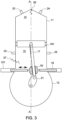
Fig. 3 is a schematic drawing of a cylinder a double acting engine comprising a separation plate of an alternate design; -
Fig. 4 is a detail view of a joint of the separation plate of the engine ofFig. 3 ; -
Fig. 5 is a detail view of an optional sealing arrangement for the joint ofFig. 4 ; -
Fig. 6 is a schematic drawing of a cylinder a double acting engine comprising a separation plate of an alternate design; -
Fig. 7 is a detail view of an optional sealing arrangement for a separation plate; -
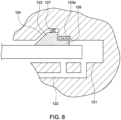
Fig. 8 is a detail view of an optional sealing arrangement for a separation plate; -
Fig. 9 is a schematic drawing of a cylinder a double acting engine of an alternative design; -
Fig. 10 is a schematic view in the direction of arrow A of the engine ofFig. 8 ; -
Fig. 11 is a schematic view of a piston lubricating system for a double acting engine of any of the designs ofFigs. 1 to 10 ; -
Fig. 12 is a schematic representation of the operational cycle of the cylinder shown in any one ofFigs. 1 to 11 ; and -
Fig. 13 is a schematic representation of an alternative operational cycle of the cylinder shown in any one ofFigs. 1 to 11 . - With reference to
Fig. 1 there is shown aninternal combustion engine 110 according to the present invention and which is a four stroke engine operable on all conventional fuels e. g petrol, alcohol, fuel oil, hyrocarbon gases, hydrogen etc.. - The
engine 110 comprises acylinder block 11 mounted on asump 12. For the sake of convenience only asingle cylinder 13 is shown but theblock 11 could house any number of cylinders as is desired for a particular engine configuration. - The
cylinder 13 is divided into upper andlower combustion chambers 14 & 15 by areciprocable piston 16.Piston rings 161 ensure a gas tight seal between thepiston 16 and thecylinder wall 13. - The
piston 16 is a double acting piston and is directly connected to a connectingrod 17 which sealingly passes through aseparation plate 18 which separates thelower chamber 15 from thesump 12. - The term"double acting"means that a power stroke for the engine can be performed in either direction of movement of the
piston 16. - The
piston 16 is connected via apin 30 to the connectingrod 17 which in turn is connected directly to thecrank shaft 21 in the conventional manner. Theseparation plate 18 is configured to accommodate lateral movement of the connectingrod 17 as it moves around the crank shaft's axis. The term "lateral movement" means movement perpendicular to a longitudinal axis of thecylinder 13, A-A. The term "vertical movement" means movement in a direction parallel to the longitudinal axis A-A of thecylinder 13. - In the example of the
engine 110 illustrated byFig. 1 , theseparation plate 18 comprises anaperture 113 to accommodate lateral movement of therod 17. The aperture is closed by aslide portion 118 with a sealed opening provided around the connecting rod. Theslide portion 118 extends over theaperture 113 and slides across theseparation plate 18 with the lateral motion of thecrankshaft 21. Therod 17 will also move vertically in theslide portion 118 and is sealed therein byseals 115 to accommodate such movement. - A different sealing arrangement is shown in
Fig. 2 and 2A in which a pair of spring loadedseals aperture 113 inseparation plate 18. The connectingrod 17 may bear against the seals, or may contact bearing guides 43 mounted against theseals 41 & 42 respectively. Theseals aperture 113 to seal around the moving connecting rod. - In another example of the engine illustrated by
Fig. 3 , theseparation plate 18 is configured to move laterally. Theseparation plate 18 is located in aguide 121 disposed between thecylinder block 11 and thesump 12, or machined into one or the other. The length of theguide 121 transverse to the axis A-A of thecylinder 13 is greater than corresponding dimension of theseparation plate 18 so that it is free to move laterally within theguide 121. - As the connecting
rod 17 moves around the crank shaft's axis, the angle of inclination of the connectingrod 17 relative to theseparation plate 18 changes. This changing angle is accommodated by a sealing joint 50. The sealing joint 50 is provided either directly in theseparation plate 18 or in aslide portion 118, like that shown inFig 1 . - Alternatively, the
separation plate 18 may be downwardly domed - like the separation plate ofFig. 1 - so that the connectingrod 17 remains perpendicular to a tangent of the domed separation plate throughout its movement of thecrankshaft 21, thus negating the need for a joint. By "downwardly domed", it is meant that theseparation plate 18 projects away from thecylinder 13 and into thesump 12. - The joint 50 is located in an
opening 183 of the separation plate or slide portion and comprises abore 51 through which the connectingrod 17 extends and a curved outer surface to allow rotation of the joint 50 within theopening 183. Preferably the joint 50 comprises a spherical outer surface to accommodate slight rotation in other axes that might result from manufacturing tolerances. The joint 50 is retained by a curved inner edge of theseparation plate 18opening 183, which is shaped to prevent the joint 50 moving in a vertical direction, as illustrated inFig. 4 . - Referring still to
Fig. 4 , two seals are provided: Anouter seal 181, disposed between the outer surface of the joint 50 and the separation plate, or slide portion; and aninner seal 52, disposed between the connectingrod 17 and thebore 51. Both seals 181, 52 have to accommodate movement of underlying surfaces. Theinner seal 52 must accommodate the connectingrod 17 as it moves through thebore 51; while theouter seal 181 must accommodate rotation of the joint 50 and the associated relative movement of the outer surface and theseparation plate 18 or slidingportion 118. Lubrication of the joint 50 may be effected by natural dispersion of oil during rotation of thecrankshaft 21 as oil is picked up from thesump 12 and thrown against theseparation plate 18, or, alternatively, oil may be sprayed from a nozzle (not shown) provided in thesump 12. - The inner and
outer seals inner seal 52 comprises two split ring compression seals 52 spaced apart along the length of thebore 51, each being located in a correspondinggroove 53 in the bore wall. The split nature of the seals allows them to decrease in diameter under compression to provide a seal about their inner edge against the connectingrod 17. During operation of theengine 110, when combustion occurs in thelower combustion chamber 15, combustion gasses expand into thebore 51 andgrooves 53, compressing eachseal 52 against the connectingrod 17 and simultaneously pushing eachseal 52 onto a seat of the correspondinggroove 53. This cuts off thebore 51 from fluid communication to prevent combustion gases from escaping into thesump 12. The provision of two split ring compression seals 52 ensures that the split parts of eachseal 52 can be offset to further prevent the escape of gasses during combustion. However, it shall be appreciated that it is equally feasible to use gapless compression seals, in which case only asingle compression seal 52 is required. Gapless compression seals may comprise a sleeve which extends over the split portion of the seal or be arranged so as to have overlapping free ends. - The
outer seal 181 also comprises split ring compression seals 181, of which there are preferably two. Eachseal 181 is located in agroove 182 provided about the inner edge of theopening 183. During operation of theengine 110, when combustion occurs in thelower combustion chamber 15, combustion gasses expand into theopening 183 andgrooves 53, compressing eachseal 181 against the outer surface of the joint 50 and simultaneously pushing eachseal 181 onto a seat of thecorresponding groove 182. This cuts off theopening 183 from fluid communication to prevent combustion gases from escaping into thesump 12. As with theinner seal 52, it is possible to use a gapless compression seal, in which case only a single splitring compression seal 183 is required. - In an alternative example, the outer and inner compression seals are replaced with outer and inner labyrinth seals. An example labyrinth seal is shown in
Fig. 5 , located in agroove 53 of thebore 51. Each labyrinth seal comprises a castellated inner edge, the castellations being arranged in the axial direction of the seal to make a tortuous path for escaping combustion gasses. In the illustrated example, a castellated inner edge of aninner seal 53 is shown in abutting relation with the connectingrod 17. Where a labyrinth seal is used for theouter seal 181, the castellated surface will be arranged in abutting relation with the outer surface of the joint 50. - In another alternative example, the outer and inner compression seals are replaced with outer and inner brush seals (not shown). Each brush seal comprises thousands of fine wires that extend from a supporting ring. The densely packed arrangement of these wires forms a barrier to escaping combustion gases whilst accommodating excursions, thermal movements of misalignments of the underlying surfaces that would otherwise reduce the efficiency of a labyrinth seal.
- Compression seals, brush seals or labyrinth seals are ideally suited for dealing with the combustion forces experienced during operation of the engine. It is also possible to use split ring expansion seals where the seals are located in grooves of the other of the respective components: For example, the
outer seal 181 is located in a groove in the outer surface of the joint and expands under the influence of combustion gases to seal against the inner edge of theopening 183. - In another example of the engine, shown in
Fig. 6 , the separation plate is upwardly curved - for example upwardly domed - by which it is meant that theseparation plate 18 partially projects into thecylinder 13. The upwardly domed shape of the plate redistributes the force to the edges of the plate and lowers the bending moment, thereby increasing longevity by decreasing the stress cycle intensity. - The
separation plates 18 of the examples ofFigs. 3 to 6 are supported in theirguide 121 by a hydrostatic oil bed.Drilled oil galleries 122 that communicate with theguide 121 allow oil to well up into the space between theseparation plate 18 and the guide walls, as shown inFig. 7 . Oil pressure is maintained by an oil pump (not shown) in the conventional manner. The hydrostatic oil bed provides lubrication and protects theseparation plate 18 and guide walls from premature wear by separating the two components by a film of pressurised oil. - A
seal 123 is provided between the separation plate and theguide 121 in which it is located to prevent combustion gasses escaping around the edges of theseparation plate 18 and into thesump 12. Theseal 123 provides the further advantage of restricting oil transfer from theguide 121 into thelower combustion chamber 15. As illustrated, achannel 124 in a wall of theguide 121 is provided to retain theseal 123. Thechannel 124 is located inward of edges of theseparation plate 18 so that theseal 123 remains in contact with theseparation plate 18 as it moves laterally with the throw ofcrankshaft 21. The illustratedseal 123 is a labyrinth seal having a castellated surface in contact with theseparation plate 18 to create a tortuous path for combustion gasses; although it shall be appreciated that any conventional sealing method may be used, including a brush seal. Preferably the seal is located on an upper surface of theseparation plate 18, by which it is meant that the surface facing thelower combustion chamber 15. Aspring 125 may be provided to maintain theseal 123 in contact with theseparation plate 18. - Alternatively, in another example illustrated in
Fig. 8 , theseal 123 has an inclined inner edge which directs combustion gas or compressed air into thechannel 124 to force theseal 123 down and onto theseparation plate 18, sealing thelower combustion chamber 15 during compression and combustion strokes. Theseal 123 may also be configured to lift off of theseparation plate 18 during exhaust and intake strokes to reduce friction. For example, anextension spring 127, as illustrated, or a magnet (not shown) may be provided to lift theseal 123 off of theseparation plate 18, or, alternatively, theseal 123 may comprise an inclined outer edge (not shown) so that theseal 123 is lifted by the hydrodynamic effect of the film of oil. It is important the inclined outer edge is configured so that the hydrodynamic effect is easily overcome by the force of combustion gas or compressed air during compression and combustions strokes so that thecombustion chamber 15 remains during this time. The intake, compression, combustion and exhaust strokes of thelower combustion chamber 15 are explained in more detail below, with reference toFigs. 12 and 13 . - The illustrated seal of
Fig. 8 also comprises alip 126 which extends about its outer edge and provides a seat for anadditional labyrinth seal 123a, although this is merely optional. - Yet another construction of
engine 120 according to the present invention, is shown inFigs. 9 and 10 . This engine is similar to theengine 110 excepting that thelower compression chamber 15 includes a portion of thesump 12 in whichvalves 23 & 25 andspark plug 27 are located in the wall thereof. Those components present inFig 1 will be given the same reference numbers. Eachlower chamber 15 extends only into aportion 213 of the sump with thechamber 15 sealed by bearings/seals 212 around the respective portion of thecrankshaft 21. In a preferred condition, the total extended volume of thechamber 15 including therespective portion 213 of the sump equates with the effective working volume ofchamber 14. - In conventional combustion engines, the cylinder wall and piston are lubricated by the natural dispersion of oil during rotation of the crankshaft, as oil is picked up from the sump and thrown into the cylinder. In more recent engines, oil is sprayed into the cylinder from a nozzle adjacent the connecting rod. In the presently described examples of the
engine 110, the presence of a lower combustion chamber prevents such forms of lubrication. - Therefore, lubrication for the presently described
engines 110 may include the use of self-lubricating fuels which may comprise added lubricants. Or, alternatively lubrication may be achieved by high pressure lubrication systems pumping lubricant along internal bores in thecrankshaft 21 and connectingrods 17 and associated pins and bearings. - In one example, the lubrication system comprises an oil pump (not shown) which draws oil from the
sump 12 and feeds it through a series of oil galleries that channel oil along thecrankshaft 21 and up through an oil bore in the connectingrod 17. The oil bore opens onto thepin 30. Further oil galleries provided in thepin 30 transfer oil to piston galleries 163 (seeFig. 11 ) from where the oil may pass out ofopenings 164 in the piston cylindrical wall to provide a film of oil on the cylinder wall. - Careful management of this film of lubricant is necessary to prevent excessive oil combustion and to ensure sufficient lubrication of the piston rings 161. The proposed solution may use any combination of the oil distribution control techniques set out below:
Each of theopenings 164 on the cylindrical wall of the piston may be provided with avalve 162 configured to regulate the oil film thickness on the cylinder wall. For example, thevalve 162 may be configured so that when the hydostatic oil pressure of the film of oil between the cylindrical wall of thepiston 16 and thecylinder 13 drops below the oil pressure in thepiston galleries 163, thevalve 162 opens and oil passes out, replenishing the oil film. In the illustrated example eachvalve 162 comprises a ball bearing located in a countersunk mouth of theopening 164. - Alternatively, valves are omitted and the oil film thickness is instead regulated simply by careful design of the diameter of each
opening 164. - Each piston comprises an upper and
lower piston ring 161 with the openings of theoil galleries 163 located between the piston rings 161. Further oil control rings 165 are provided to retain the oil film, as much as possible, between the piston rings 161. The oil control rings 165 are provided outwardly of the piston rings 161, that is to say nearer upper and lower surfaces of thepiston 16. The oil control rings 165 scrape excess oil from the cylinder walls to prevent excessive oil remaining in the combustion chamber during combustion. - As a further measure to control the oil film the cylindrical wall of the piston is further provided with oil scavenging ports (not shown), through which excess oil can flow back into the galleries. The oil scavenging ports comprise one way valves, such as calibrated spring loaded stem valves, to ensure oil back into the oil galleries only when the hydrostatic oil pressure exceeds a predetermined value.
- The engine may use sleeved cylinders having oil porous walls and oil drainage may be provided for the removal of excess oil.
- The use of oil porous metals which are pre-impregnated with oil may be possible for short life engine for example but without limitation, racing engines which are stripped between races.
- The oil may also acts as a coolant for the engine.
- Using the Otto cycle as an example, the operational cycle of the two
chambers chamber respective inlet valves exhaust valves spark plugs - The
engine 110 in this example comprises asingle piston 16 to produce a power stroke in both directions of movement of the piston (i. e towards and away from the crankshaft), which will hereinafter be called a double stroke cycle. - One operational cycle of the two
chamber 14 & 15 will be explained with reference toFig. 12 : - Step 1: has the
lower chamber 15 in the compression stroke with theupper chamber 14 in the induction stroke. - Step 2: has the
lower chamber 15 in the power stroke and theupper chamber 14 in the compression stroke. - Step 3: has the
lower chamber 15 in the exhaust stroke and theupper chamber 14 in the power stroke, and - Step 4: has the
lower chamber 15 in the induction stroke and theupper chamber 14 in the exhaust stroke. - The cycle then begins again at
step 1. - In essence at any stage in the cycle, the stroke in the
lower chamber 15 is repeated in theupper chamber 14 during the next consecutive stroke. - An alternative operational cycle of the two chambers will be explained with reference to
Fig 13 : -
Step 1 has thelower chamber 15 in the compression stroke with the upper chamber in the power stroke. -
Step 2 has thelower chamber 15 in the power stroke with the upper chamber in the exhaust stroke. -
Step 3 has the lower chamber in the exhaust stroke with theupper chamber 14 in the induction stroke. -
Step 4 has thelower chamber 15 in the induction stroke with the upper chamber in the compression stroke. - The cycle then begins again at
step 1. In essence at any stage in the cycle the stroke in thelower chamber 15 is one step behind the stroke in the upper chamber. - Any number of cylinders can be incorporated in an engine system, each cylinder using one of the operational cycles shown in
Figs. 11 or12 , and in some engine systems some cylinders may operate on one cycle while other cylinders operate simultaneously on the other cycle. It shall also be appreciated that the engine can operate on other cycles.
Claims (6)
- A linear reciprocating piston engine (110) comprising:a cylinder (13);a piston(16) located within the cylinder, the piston separating upper and lower combustion chambers (14, 15) of the cylinder;a separation plate (18) disposed across a lower end of the cylinder to seal the lower combustion chamber; anda joint (50) disposed in the separation plate, the joint comprising a bore (51) through which a connecting rod (17) extends to connect the piston to a crankshaft (21),characterised in that the joint comprises a curved outer surface configured to ensure contact with an outer seal (181) disposed between the separation plate and the joint during said angular movement of the joint and the connecting rod;
wherein movement of the piston along a longitudinal axis (A-A) of the cylinder causes the connecting rod to rotate the crankshaft, said rotation of the crankshaft causing both transverse and angular movement of the connecting rod relative to the longitudinal axis of the cylinder, the angular movement of the connecting rod causing a corresponding angular movement of the joint; wherein the separation plate is configured to slide across the lower end of the cylinder to accommodate said transverse movement of the connecting rod;the joint further comprising at least two inner seals (52) disposed between the bore and the connecting rod, the at least two inner seals being spaced along the bore of the joint;wherein the outer and inner seals are selected from any of:a split ring compression seal;a split ring expansion seal;a gapless expansion seal;a gapless compression seal;a labyrinth seal having a castellated inner edge; anda brush seal. - An engine according to claim 1, wherein each inner seal is located in a respective groove (53) in the bore of the joint.
- An engine according to any preceding claim, wherein the curved outer surface of the joint is a spherical outer surface.
- An engine according to any preceding claim, wherein the lower end of the cylinder is provided with a separation plate seal (123) between the lower combustion chamber and the separation plate.
- An engine according to any preceding claim, further comprising a bottom end component (12) housing the crankshaft, the bottom end component being arranged to hold the separation plate against the lower end of the cylinder.
- An engine according to claim 5, wherein a seal is disposed between the bottom end component and the separation plate.
Applications Claiming Priority (2)
| Application Number | Priority Date | Filing Date | Title |
|---|---|---|---|
| GB1809068.8A GB2574274A (en) | 2018-06-02 | 2018-06-02 | Double acting piston engines |
| PCT/GB2019/051475 WO2019229440A1 (en) | 2018-06-02 | 2019-05-30 | Double acting piston engines |
Publications (3)
| Publication Number | Publication Date |
|---|---|
| EP3803079A1 EP3803079A1 (en) | 2021-04-14 |
| EP3803079B1 true EP3803079B1 (en) | 2025-04-30 |
| EP3803079C0 EP3803079C0 (en) | 2025-04-30 |
Family
ID=62872893
Family Applications (1)
| Application Number | Title | Priority Date | Filing Date |
|---|---|---|---|
| EP19730888.5A Active EP3803079B1 (en) | 2018-06-02 | 2019-05-30 | Double acting piston engines |
Country Status (5)
| Country | Link |
|---|---|
| US (1) | US20210231048A1 (en) |
| EP (1) | EP3803079B1 (en) |
| CN (1) | CN112292516A (en) |
| GB (1) | GB2574274A (en) |
| WO (1) | WO2019229440A1 (en) |
Families Citing this family (2)
| Publication number | Priority date | Publication date | Assignee | Title |
|---|---|---|---|---|
| RU2756798C1 (en) * | 2021-02-09 | 2021-10-05 | Сергей Иванович Потапов | Potapov piston machine |
| CN115338030B (en) * | 2022-10-18 | 2022-12-27 | 常州越新传动系统有限公司 | Multifunctional connecting device for gear box |
Family Cites Families (13)
| Publication number | Priority date | Publication date | Assignee | Title |
|---|---|---|---|---|
| US1977657A (en) * | 1931-01-14 | 1934-10-23 | Frank E Liveranee | Internal combustion engine |
| US2215793A (en) * | 1938-11-29 | 1940-09-24 | Mayes Graham | Internal combustion engine |
| US2295037A (en) * | 1940-10-04 | 1942-09-08 | Harry O Hedges | Internal combustion engine |
| US2317167A (en) * | 1942-02-23 | 1943-04-20 | Bernard M Baer | Internal combustion engine |
| US2564913A (en) * | 1950-05-04 | 1951-08-21 | Malcolm S Mead | Internal-combustion motor |
| DE4205663A1 (en) * | 1992-02-25 | 1993-08-26 | Peter Tontch | Two-stroke IC engine - has stepped piston with sealing rings at both ends, for lubrication of piston, gudgeon pin, and cylinder wall |
| US5771849A (en) * | 1995-09-15 | 1998-06-30 | Hamy; Norbert | Internal combustion engine with crankcase pressure barrier |
| FR2764939A1 (en) * | 1997-06-18 | 1998-12-24 | Alexis Defarge | Device to convert two stroke engine to give three stroke filling of chamber |
| AU3313400A (en) * | 1998-12-15 | 2000-07-03 | Fernando Maqueo Jimeno | Pairing of combustion chambers in engines |
| GB0031187D0 (en) * | 2000-12-21 | 2001-01-31 | Deeke Georg W | An internal combustion engine |
| US20090151686A1 (en) * | 2007-12-12 | 2009-06-18 | Bill Nguyen | Supercharged internal combustion engine |
| PL225376B1 (en) * | 2015-03-07 | 2017-04-28 | Gaj Jabłoński Wojciech | Combustion engine |
| PL234850B1 (en) * | 2015-08-31 | 2020-04-30 | Gaj Jablonski Wojciech | Hydrogen engine and method for producing the hydrogen fuel to supply it |
-
2018
- 2018-06-02 GB GB1809068.8A patent/GB2574274A/en not_active Withdrawn
-
2019
- 2019-05-30 WO PCT/GB2019/051475 patent/WO2019229440A1/en not_active Ceased
- 2019-05-30 CN CN201980037188.8A patent/CN112292516A/en active Pending
- 2019-05-30 EP EP19730888.5A patent/EP3803079B1/en active Active
- 2019-05-30 US US15/733,954 patent/US20210231048A1/en not_active Abandoned
Also Published As
| Publication number | Publication date |
|---|---|
| US20210231048A1 (en) | 2021-07-29 |
| CN112292516A (en) | 2021-01-29 |
| GB201809068D0 (en) | 2018-07-18 |
| GB2574274A (en) | 2019-12-04 |
| EP3803079A1 (en) | 2021-04-14 |
| WO2019229440A1 (en) | 2019-12-05 |
| EP3803079C0 (en) | 2025-04-30 |
Similar Documents
| Publication | Publication Date | Title |
|---|---|---|
| US5702238A (en) | Direct drive gas compressor with vented distance piece | |
| US10247065B2 (en) | Two-stroke internal combustion engine with crankcase lubrication system | |
| EP3803079B1 (en) | Double acting piston engines | |
| US8662031B2 (en) | Uniflow portless two-stroke engine | |
| EP1356195B1 (en) | An internal combustion engine | |
| WO1989002979A1 (en) | Connecting rod with hydrodynamic bearing | |
| US8061324B2 (en) | High performance resin piston internal combustion engine | |
| CA2080132A1 (en) | Double acting rectangular faced arc shaped, oscillating piston quadratic internal combustion engine or machine | |
| CN1959092A (en) | Piston having asymmetrical pin bore slot placement | |
| WO2020053591A1 (en) | A two stroke internal combustion engine | |
| US20060060165A1 (en) | Internal combustion engine witouth oil | |
| WO2000036288A2 (en) | Pairing of combustion chambers in engines | |
| CA2558668C (en) | Apparatus with piston having upper piston extensions | |
| WO2020086216A1 (en) | Systems, devices, and/or methods for improving engine efficiency | |
| CN102844524B (en) | engine | |
| US1314716A (en) | Internal-combustion motor | |
| US1141443A (en) | Explosive-engine. | |
| WO2021006855A1 (en) | Engine with slider-crank mechanism | |
| GB2315812A (en) | I.c. engine without an overall lubricating oil circuit; it has rolling bearings between piston and cylinder and separate lubrication of valve gear and crank | |
| PL212301B1 (en) | Two-stroke combustion engine | |
| JP2010229858A (en) | Piston, piston ring, and reciprocating device | |
| CN1187579A (en) | Reciprocating engine | |
| GB2587663A (en) | Improvements to pumps and compressors | |
| GB2187801A (en) | Lubricating compressors | |
| KR20010112126A (en) | Structure of piston |
Legal Events
| Date | Code | Title | Description |
|---|---|---|---|
| STAA | Information on the status of an ep patent application or granted ep patent |
Free format text: STATUS: UNKNOWN |
|
| STAA | Information on the status of an ep patent application or granted ep patent |
Free format text: STATUS: THE INTERNATIONAL PUBLICATION HAS BEEN MADE |
|
| PUAI | Public reference made under article 153(3) epc to a published international application that has entered the european phase |
Free format text: ORIGINAL CODE: 0009012 |
|
| STAA | Information on the status of an ep patent application or granted ep patent |
Free format text: STATUS: REQUEST FOR EXAMINATION WAS MADE |
|
| 17P | Request for examination filed |
Effective date: 20201130 |
|
| AK | Designated contracting states |
Kind code of ref document: A1 Designated state(s): AL AT BE BG CH CY CZ DE DK EE ES FI FR GB GR HR HU IE IS IT LI LT LU LV MC MK MT NL NO PL PT RO RS SE SI SK SM TR |
|
| AX | Request for extension of the european patent |
Extension state: BA ME |
|
| DAV | Request for validation of the european patent (deleted) | ||
| DAX | Request for extension of the european patent (deleted) | ||
| STAA | Information on the status of an ep patent application or granted ep patent |
Free format text: STATUS: EXAMINATION IS IN PROGRESS |
|
| 17Q | First examination report despatched |
Effective date: 20211022 |
|
| GRAP | Despatch of communication of intention to grant a patent |
Free format text: ORIGINAL CODE: EPIDOSNIGR1 |
|
| STAA | Information on the status of an ep patent application or granted ep patent |
Free format text: STATUS: GRANT OF PATENT IS INTENDED |
|
| INTG | Intention to grant announced |
Effective date: 20241121 |
|
| GRAS | Grant fee paid |
Free format text: ORIGINAL CODE: EPIDOSNIGR3 |
|
| GRAA | (expected) grant |
Free format text: ORIGINAL CODE: 0009210 |
|
| STAA | Information on the status of an ep patent application or granted ep patent |
Free format text: STATUS: THE PATENT HAS BEEN GRANTED |
|
| AK | Designated contracting states |
Kind code of ref document: B1 Designated state(s): AL AT BE BG CH CY CZ DE DK EE ES FI FR GB GR HR HU IE IS IT LI LT LU LV MC MK MT NL NO PL PT RO RS SE SI SK SM TR |
|
| REG | Reference to a national code |
Ref country code: CH Ref legal event code: EP Ref country code: GB Ref legal event code: FG4D |
|
| REG | Reference to a national code |
Ref country code: IE Ref legal event code: FG4D |
|
| REG | Reference to a national code |
Ref country code: DE Ref legal event code: R096 Ref document number: 602019069305 Country of ref document: DE |
|
| U01 | Request for unitary effect filed |
Effective date: 20250529 |
|
| U07 | Unitary effect registered |
Designated state(s): AT BE BG DE DK EE FI FR IT LT LU LV MT NL PT RO SE SI Effective date: 20250605 |
|
| U20 | Renewal fee for the european patent with unitary effect paid |
Year of fee payment: 7 Effective date: 20250627 |
|
| PG25 | Lapsed in a contracting state [announced via postgrant information from national office to epo] |
Ref country code: ES Free format text: LAPSE BECAUSE OF FAILURE TO SUBMIT A TRANSLATION OF THE DESCRIPTION OR TO PAY THE FEE WITHIN THE PRESCRIBED TIME-LIMIT Effective date: 20250430 |
|
| PG25 | Lapsed in a contracting state [announced via postgrant information from national office to epo] |
Ref country code: NO Free format text: LAPSE BECAUSE OF FAILURE TO SUBMIT A TRANSLATION OF THE DESCRIPTION OR TO PAY THE FEE WITHIN THE PRESCRIBED TIME-LIMIT Effective date: 20250730 Ref country code: GR Free format text: LAPSE BECAUSE OF FAILURE TO SUBMIT A TRANSLATION OF THE DESCRIPTION OR TO PAY THE FEE WITHIN THE PRESCRIBED TIME-LIMIT Effective date: 20250731 |
|
| PG25 | Lapsed in a contracting state [announced via postgrant information from national office to epo] |
Ref country code: PL Free format text: LAPSE BECAUSE OF FAILURE TO SUBMIT A TRANSLATION OF THE DESCRIPTION OR TO PAY THE FEE WITHIN THE PRESCRIBED TIME-LIMIT Effective date: 20250430 |
|
| PG25 | Lapsed in a contracting state [announced via postgrant information from national office to epo] |
Ref country code: HR Free format text: LAPSE BECAUSE OF FAILURE TO SUBMIT A TRANSLATION OF THE DESCRIPTION OR TO PAY THE FEE WITHIN THE PRESCRIBED TIME-LIMIT Effective date: 20250430 |
|
| PG25 | Lapsed in a contracting state [announced via postgrant information from national office to epo] |
Ref country code: RS Free format text: LAPSE BECAUSE OF FAILURE TO SUBMIT A TRANSLATION OF THE DESCRIPTION OR TO PAY THE FEE WITHIN THE PRESCRIBED TIME-LIMIT Effective date: 20250731 |
|
| PG25 | Lapsed in a contracting state [announced via postgrant information from national office to epo] |
Ref country code: IS Free format text: LAPSE BECAUSE OF FAILURE TO SUBMIT A TRANSLATION OF THE DESCRIPTION OR TO PAY THE FEE WITHIN THE PRESCRIBED TIME-LIMIT Effective date: 20250830 |
|
| REG | Reference to a national code |
Ref country code: CH Ref legal event code: H13 Free format text: ST27 STATUS EVENT CODE: U-0-0-H10-H13 (AS PROVIDED BY THE NATIONAL OFFICE) Effective date: 20251223 |
|
| PG25 | Lapsed in a contracting state [announced via postgrant information from national office to epo] |
Ref country code: SM Free format text: LAPSE BECAUSE OF FAILURE TO SUBMIT A TRANSLATION OF THE DESCRIPTION OR TO PAY THE FEE WITHIN THE PRESCRIBED TIME-LIMIT Effective date: 20250430 |
|
| PG25 | Lapsed in a contracting state [announced via postgrant information from national office to epo] |
Ref country code: CH Free format text: LAPSE BECAUSE OF NON-PAYMENT OF DUE FEES Effective date: 20250531 |
|
| PG25 | Lapsed in a contracting state [announced via postgrant information from national office to epo] |
Ref country code: CZ Free format text: LAPSE BECAUSE OF FAILURE TO SUBMIT A TRANSLATION OF THE DESCRIPTION OR TO PAY THE FEE WITHIN THE PRESCRIBED TIME-LIMIT Effective date: 20250430 |
|
| PG25 | Lapsed in a contracting state [announced via postgrant information from national office to epo] |
Ref country code: SK Free format text: LAPSE BECAUSE OF FAILURE TO SUBMIT A TRANSLATION OF THE DESCRIPTION OR TO PAY THE FEE WITHIN THE PRESCRIBED TIME-LIMIT Effective date: 20250430 |
|
| PG25 | Lapsed in a contracting state [announced via postgrant information from national office to epo] |
Ref country code: MC Free format text: LAPSE BECAUSE OF FAILURE TO SUBMIT A TRANSLATION OF THE DESCRIPTION OR TO PAY THE FEE WITHIN THE PRESCRIBED TIME-LIMIT Effective date: 20250430 |
|
| PLBE | No opposition filed within time limit |
Free format text: ORIGINAL CODE: 0009261 |
|
| STAA | Information on the status of an ep patent application or granted ep patent |
Free format text: STATUS: NO OPPOSITION FILED WITHIN TIME LIMIT |
|
| REG | Reference to a national code |
Ref country code: CH Ref legal event code: L10 Free format text: ST27 STATUS EVENT CODE: U-0-0-L10-L00 (AS PROVIDED BY THE NATIONAL OFFICE) Effective date: 20260311 |
|
| 26N | No opposition filed |
Effective date: 20260202 |
|
| PGFP | Annual fee paid to national office [announced via postgrant information from national office to epo] |
Ref country code: GB Payment date: 20260325 Year of fee payment: 8 |
|
| PG25 | Lapsed in a contracting state [announced via postgrant information from national office to epo] |
Ref country code: IE Free format text: LAPSE BECAUSE OF NON-PAYMENT OF DUE FEES Effective date: 20250530 |