EP3801791B1 - Inductive charging controller - Google Patents
Inductive charging controller Download PDFInfo
- Publication number
- EP3801791B1 EP3801791B1 EP19733385.9A EP19733385A EP3801791B1 EP 3801791 B1 EP3801791 B1 EP 3801791B1 EP 19733385 A EP19733385 A EP 19733385A EP 3801791 B1 EP3801791 B1 EP 3801791B1
- Authority
- EP
- European Patent Office
- Prior art keywords
- game controller
- control portion
- mobile device
- sized
- shaped
- Prior art date
- Legal status (The legal status is an assumption and is not a legal conclusion. Google has not performed a legal analysis and makes no representation as to the accuracy of the status listed.)
- Active
Links
Images






Classifications
-
- A—HUMAN NECESSITIES
- A63—SPORTS; GAMES; AMUSEMENTS
- A63F—CARD, BOARD, OR ROULETTE GAMES; INDOOR GAMES USING SMALL MOVING PLAYING BODIES; VIDEO GAMES; GAMES NOT OTHERWISE PROVIDED FOR
- A63F13/00—Video games, i.e. games using an electronically generated display having two or more dimensions
- A63F13/20—Input arrangements for video game devices
- A63F13/24—Constructional details thereof, e.g. game controllers with detachable joystick handles
-
- A—HUMAN NECESSITIES
- A63—SPORTS; GAMES; AMUSEMENTS
- A63F—CARD, BOARD, OR ROULETTE GAMES; INDOOR GAMES USING SMALL MOVING PLAYING BODIES; VIDEO GAMES; GAMES NOT OTHERWISE PROVIDED FOR
- A63F13/00—Video games, i.e. games using an electronically generated display having two or more dimensions
- A63F13/20—Input arrangements for video game devices
- A63F13/23—Input arrangements for video game devices for interfacing with the game device, e.g. specific interfaces between game controller and console
-
- A—HUMAN NECESSITIES
- A63—SPORTS; GAMES; AMUSEMENTS
- A63F—CARD, BOARD, OR ROULETTE GAMES; INDOOR GAMES USING SMALL MOVING PLAYING BODIES; VIDEO GAMES; GAMES NOT OTHERWISE PROVIDED FOR
- A63F13/00—Video games, i.e. games using an electronically generated display having two or more dimensions
- A63F13/90—Constructional details or arrangements of video game devices not provided for in groups A63F13/20 or A63F13/25, e.g. housing, wiring, connections or cabinets
- A63F13/98—Accessories, i.e. detachable arrangements optional for the use of the video game device, e.g. grip supports of game controllers
-
- H—ELECTRICITY
- H02—GENERATION; CONVERSION OR DISTRIBUTION OF ELECTRIC POWER
- H02J—ELECTRIC POWER NETWORKS; CIRCUIT ARRANGEMENTS OR SYSTEMS FOR SUPPLYING OR DISTRIBUTING ELECTRIC POWER; SYSTEMS FOR STORING ELECTRIC ENERGY
- H02J50/00—Circuit arrangements or systems for wireless supply or distribution of electric power
- H02J50/005—Mechanical details of housing or structure aiming to accommodate the power transfer means, e.g. mechanical integration of coils, antennas or transducers into emitting or receiving devices
-
- H—ELECTRICITY
- H02—GENERATION; CONVERSION OR DISTRIBUTION OF ELECTRIC POWER
- H02J—ELECTRIC POWER NETWORKS; CIRCUIT ARRANGEMENTS OR SYSTEMS FOR SUPPLYING OR DISTRIBUTING ELECTRIC POWER; SYSTEMS FOR STORING ELECTRIC ENERGY
- H02J50/00—Circuit arrangements or systems for wireless supply or distribution of electric power
- H02J50/10—Circuit arrangements or systems for wireless supply or distribution of electric power using inductive coupling
-
- H—ELECTRICITY
- H02—GENERATION; CONVERSION OR DISTRIBUTION OF ELECTRIC POWER
- H02J—ELECTRIC POWER NETWORKS; CIRCUIT ARRANGEMENTS OR SYSTEMS FOR SUPPLYING OR DISTRIBUTING ELECTRIC POWER; SYSTEMS FOR STORING ELECTRIC ENERGY
- H02J7/00—Circuit arrangements for charging or discharging batteries or for supplying loads from batteries
- H02J7/70—Circuit arrangements for charging or discharging batteries or for supplying loads from batteries characterised by the mechanical construction
- H02J7/731—Circuit arrangements for charging or discharging batteries or for supplying loads from batteries characterised by the mechanical construction specially adapted for holding portable devices containing batteries
Definitions
- the present disclosure is directed to inductive charging devices and, more particularly, to inductive charging devices disposed in a game controller.
- Video game controllers may be used to play video games on mobile devices.
- the video game controllers may be connected to the mobile devices via a wireless connection or a wired connection.
- a game controller for a mobile device is known.
- the mobile device can be attached to the game controller.
- the game controller can be used to charge and/or to play games on the mobile device.
- an inductive charging pad for mobile devices is known.
- the invention provides a game controller as defined in claim 1.
- the various embodiments and/or implementations described herein provide inductive charging devices that allow for users to secure their mobile devices and play video games, while restoring, replenishing, or otherwise improving charge level of the batteries of the mobile devices.
- the game controller that is a form of an inductive charging device, is communicably coupled to a mobile device having a power source, the game controller having a retracted configuration and an extended configuration, may be summarized as including a first control portion having one or more game controller inputs, a second control portion have one or more game controller inputs, and a charging unit coupleable to the first control portion and the second control portion.
- the charging unit has a region that is sized and shaped to receive the mobile device, and an inductive charging apparatus, the inductive charging apparatus operable to selectively inductively charge the power source of the mobile device when the mobile device is received in the region.
- a charging unit that is coupleable to the game controller of claim 1 and operable to selectively charge a battery of a mobile device coupled to the game controller, may be summarized as including a housing compartment, a first rail extending outwardly from the housing compartment, the first rail sized and shaped to couple to the game controller, a second rail extending outwardly from the housing compartment, the second rail sized and shaped to couple to the game controller, and an inductive charging apparatus received in the housing compartment.
- the inductive charging apparatus may be operable to selectively inductively charge the battery of the mobile device when the mobile device is positioned proximal to the inductive charging apparatus.
- the application further discloses the following aspects:
- the charging unit wherein the first charge interface comprises a primary charging coil, and the second charge interface comprises a secondary charging coil.
- the charging unit wherein the inductive charging apparatus includes a power source that is operable to deliver power to selectively inductively charge the battery of the mobile device.
- the charging unit wherein the power source includes at least one of a charging battery or an external power source.
- the charging unit wherein the charging unit includes a cover guard, the cover guard sized and shaped to secure the mobile device.
- the charging unit wherein:
- ordinals such as first, second and third does not necessarily imply a ranked sense of order, but rather may only distinguish between multiple instances of an act or structure.
- FIGS 1-11 illustrate an inductive charging device 10 in the form of a game controller 11 according to one example, non-limiting embodiment, although other forms of inductive charging devices, in lieu of game controllers, are within the scope of the disclosed subject matter.
- the inductive charging device 10 may take the form of a video game console, etc.
- the game controller 11 generally is sized, shaped, and operable to removably, coupleably receive a mobile device 5.
- the game controller 11 includes a first control portion 12, a second control portion 13, a charging unit 14, and a stand assembly 15.
- the first control portion 12 is generally a mirror image of the second control portion 13.
- the first control portion 12 includes an upper housing 16a and a lower housing 17a that is coupled to the upper housing 16a.
- the lower housing 17a includes one or more posts 18a that are sized and shaped to couple to one or more receiving protrusions 19a disposed in the upper housing 16a.
- the upper and lower housings 16a, 17a, when coupled together provide a first housing cavity 20a that is sized and shaped to receive various components of the first control portion 12.
- the first control portion 12 includes electrical circuitry 21a, for example, mounted on one or more printed circuit boards (PCBs) 22a, one or more switches, one or more diodes, etc., that form a system 23a of the game controller 11 that cooperates with similar circuitry of the second control portion 13 to activate control function.
- activating of the control function is generally operable to control an on-screen function, such as navigation, jump, sprint, switch screens, etc. of a video game being played on a mobile device 5.
- the first control portion 12 includes one or more game controller inputs 24a, for example joystick 25a, control buttons 26a, triggers 27a, power button 28a, program button, etc.
- game controller inputs 24a are demonstrated in Figures 1-3D and 9-11 , in some embodiments, one or more additional game controller inputs 24a known in the art can be incorporated in the first control portion 12, or omitted from the ones demonstrated in Figures 1-3D and 9-11 .
- the electrical circuitry 21a includes one or more communications modules (e.g ., Bluetooth TM , WI-FI, IEEE 802.11 compliant protocols) to facilitate communication of the game controller 11 with the mobile device 5.
- the one or more communications channels may, for instance, include a communication network, which may be a wired connection, a Wi-Fi network, WiMAX, Zigbee, Z-Wave, Bluetooth TM , Bluetooth TM Low Energy, near-field communication, or any other type of connection capable of providing uni-directional or bi-directional communication between the game controller 11 and the mobile device 5.
- the second control portion 13 is generally similar to the first control portion 12.
- the second control portion 13 includes an upper housing 16b and a lower housing 17b that is coupled to the upper housing 16b.
- the lower housing 17b includes one or more posts 18b that are sized and shaped to couple to one or more receiving protrusions 19b disposed in the upper housing 16b.
- the upper and lower housings 16b, 17b, when coupled together provide a second housing cavity 20b that is sized and shaped to receive various components of the second control portion 13.
- the second control portion 13 includes electrical circuitry 21b, for example, mounted on one or more printed circuit boards (PCBs) 22b, one or more switches, one or more diodes, etc., that form a system 23b of the game controller 11 that cooperates with similar circuitry of the first control portion 12 to activate control function.
- activating of the control function is generally operable to control an on-screen function, such as navigation, jump, sprint, switch screens, etc., of a video game being played on a mobile device 5.
- the second control portion 13 includes one or more game controller inputs 24b, for example joystick 25b, triggers 27b, directional key pad 29b, battery control button 30b, etc.
- game controller inputs 24b are demonstrated in Figures 1-4D and 9-11 , in some embodiments, one or more additional game controller inputs 24b known in the art can be incorporated in the second control portion 13, or omitted from the ones demonstrated in Figures 1-4D and 9-11 .
- the electrical circuitry 21b may include, in addition to, or alternative to, the electrical circuitry 21a of the first control portion 12, one or more communications modules (e.g ., Bluetooth TM , WI-FI, IEEE 802.11 compliant protocols) to facilitate communication of the game controller 11 with the mobile device 5.
- the one or more communications channels may, for instance, include a communication network, which may be a wired connection, a Wi-Fi network, WiMAX, Zigbee, Z-Wave, Bluetooth TM , Bluetooth TM Low Energy, near-field communication, or any other type of connection capable of providing uni-directional or bi-directional communication between the game controller 11 and the mobile device 5.
- the first and second control portions 12, 13, are generally operable to be slideably moveable relative to a central axis 4 of the game controller 11. As described in more detail below, the first and second control portions 12, 13 can slideably translate to allow for the mobile device 5 to be received in, on, or around the charging unit 14.
- the first control portion 12 includes a receiving assembly 32a that slideably telescopically translates relative to the charging unit 14.
- the receiving assembly 32a includes a first bracket 33a, a first grip member 34a, and a first channel member 35a.
- the first bracket 33a has a generally C-shaped structural shape and profile. The first bracket 33a is sized and shaped to couple to the upper housing 16a.
- the upper housing 16a has a first recess region 36a that is sized and shaped to receive the first bracket 33a.
- An interior side 37a of the first bracket 33a includes a first grip cavity 38a that is sized and shaped to coupleably receive the first grip member 34a.
- the first grip member 34a has a generally C-shaped structural shape profile and is sized and shaped to receive the mobile device 5.
- the first grip member 34a comprises rubber, plastics, or other materials.
- the first grip member 34a includes a plurality of axially spaced apart first grip recesses 39a.
- the first grip recesses 39a generally provide gripping ability to a mobile device 5 that is received therein.
- the first channel member 35a has a generally rectangular shape and profile with arcuate end portions and is hollow to define a first internal cavity 40a.
- Upper and lower sides 41a, 42a of the first channel member 35a include respective first protrusions 43a, 44a.
- the first protrusions 43a are sized and shaped to be received in upper channel recesses 45a disposed in the upper housing 16a.
- the first protrusions 44a are sized and shaped to be received in lower channel recesses 46a disposed in the lower housing 17a.
- Each first protrusion 43a includes an upper channel 47a that extends the longitudinal length of the first channel member 35a.
- each first protrusion 44a includes a lower channel 48a that extends the longitudinal length of the first channel member 35a.
- Each first protrusion 44a includes a first slot aperture 49a extending therethrough.
- One of the two first protrusions 44a includes first locking teeth 50a extending in a longitudinal direction from a first side flange 51a of one of the two first protrusions 44a.
- the first locking teeth 50a are sized and shaped to adjustably couple to a first locking member 52a of the first control portion 12.
- the first locking member 52a includes a first coupling plate 53a, a first release bracket 54a, and a first locking bracket 55a.
- the first coupling plate 53a is fixedly coupled to the channel member 35a, and is positioned near or proximal to the first locking teeth 50a.
- the first coupling plate 53a includes a first bracket cavity 56a sized and shaped to slideably receive portions of the first release bracket 54a.
- the first release bracket 54a includes a first lower protrusion 63a that is sized and shaped to slideably move through the first bracket cavity 56a.
- An upper side of the first release bracket 54a includes a first release button 57a that protrudes outwardly therefrom.
- the first release button 57a is sized and shaped to protrude out of a first release cavity 58a disposed in the lower housing 17a.
- the first release button 57a slideably moves through the first release cavity 58a between a locking and a release position.
- the first locking bracket 55a is coupled to the first coupling plate 53a.
- the first locking bracket 55a includes a first locking cavity 59a and first teeth 60a.
- the first locking cavity 59a is sized and shaped to slideably receive the first release bracket 54a.
- the first release bracket 54a slides into the first locking cavity 59a to lock the first control portion 12 and slides out of the first locking cavity 59a to unlock and/or release to first control portion 12.
- the first release bracket 54a moves through or in the first bracket cavity 56a until mating or abutting with a surface of the first coupling plate 53a.
- the first locking bracket 55a moves or slides out, as described above, such moves the first control portion 12 to the release position or the unlock position. Moving or sliding the first locking bracket 55a into the first locking cavity 59a moves the first control portion 12 into the locked position.
- the first teeth 60a are sized and shaped to couple to the first locking teeth 50a.
- the first teeth 60a couple to the first locking teeth 50a to lock the first control portion 12.
- a user may slideably move the first control portion 12 away from the central axis 4 of the game controller 11.
- the first locking bracket 55a may deformably move as the first teeth 60a uncouple from the first locking teeth 50a.
- the first teeth 60a couple to the first locking teeth 50a, and the first release button 57a can be moved to the locked position, which causes the first locking bracket 55a to move into the first locking cavity 59a, thereby preventing deformable movement of the first locking bracket 55a.
- the second control portion 13 is generally similar to the first control portion 12.
- the second control portion 13 includes a receiving assembly 32b that slideably telescopically translates relative to the charging unit 14.
- the receiving assembly 32b includes a second bracket 33b, a second grip member 34b, and a second channel member 35b.
- the second bracket 33b has a generally C-shaped structural shape and profile.
- the second bracket 33b is sized and shaped to couple to the upper housing 16b.
- the upper housing 16b has a second recess region 36b that is sized and shaped to receive the second bracket 33b.
- An interior side 37b of the second bracket 33b includes a second grip cavity 38b that is sized and shaped to coupleably receive the second grip member 34b.
- the second grip member 34b has a generally C-shaped structural shape profile and is sized and shaped to receive the mobile device 5.
- the second grip member 34b comprises rubber, plastics, or other materials.
- the second grip member 34b includes a plurality of axially spaced apart second grip recesses 39b.
- the second grip recesses 39b generally provide gripping ability to a mobile device 5 that is received therein.
- the second channel member 35b has a generally rectangular shape and profile with arcuate end portions and is hollow to define a second internal cavity 40b.
- Upper and lower sides 41b, 42b of the second channel member 35b include respective second protrusions 43b, 44b.
- the second protrusions 43b are sized and shaped to be received in upper channel recesses 45b disposed in the upper housing 16b.
- the second protrusions 44b are sized and shaped to be received in lower channel recesses 46b disposed in the lower housing 17b.
- Each second protrusion 43b includes an upper channel 47b that extends the longitudinal length of the second channel member 35b.
- each second protrusion 44b includes a lower channel 48b that extends the longitudinal length of the second channel member 35b.
- Each second protrusion 44b includes a second slot aperture 49b extending therethrough.
- One of the two second protrusions 44b includes second locking teeth 50b extending in a longitudinal direction from a second side flange 51b of one of the two second protrusions 44b.
- the second locking teeth 50b are sized and shaped to adjustably couple to a second locking member 52b of the second control portion 13.
- the second locking member 52b includes a second coupling plate 53b, a second release bracket 54b, and second locking bracket 55b.
- the second coupling plate 53b is fixedly coupled to the second channel member 35b, and is positioned near or proximal to the second locking teeth 50b.
- the second coupling plate 53b includes a second bracket cavity 56b sized and shaped to slideably receive portions of the second release bracket 54b.
- the second release bracket 54b includes a second lower protrusion 63b that is sized and shaped to slideably move through the second bracket cavity 56b.
- An upper side of the second release bracket 54b includes a second release button 57b that protrudes outwardly therefrom.
- the second release button 57b is sized and shaped to protrude out of a second release cavity 58b disposed in the lower housing 17b.
- the second release button 57b slideably moves through the second release cavity 58b between a locking position and a release position.
- the second locking bracket 55b is coupled to the second coupling plate 53b.
- the second locking bracket 55b includes a second locking cavity 59b and second teeth 60b.
- the second locking cavity 59b is sized and shaped to slideably receive the second release bracket 54b.
- the second release bracket 54b slides into the second locking cavity 59b to lock the second control portion 13 and slides out of the second locking cavity 59b to unlock and/or release to second control portion 13.
- the second release bracket 54b moves or in the second bracket cavity 56b until mating or abutting with a surface of the second coupling plate 53b.
- the second locking bracket 55b moves or slides out, as described above, such moves the second control portion 13 to the release or unlock position. Moving or sliding the second locking bracket 55b into the second locking cavity 59b moves the second control portion 13 into the locked position.
- the second teeth 60b are sized and shaped to couple to the second locking teeth 50b.
- the second teeth 60b couple to the second locking teeth 50b to lock the second control portion 13.
- a user may slideably move the second control portion 13 away from the central axis 4 of the game controller 11.
- the second locking bracket 55b may deformably move as the second teeth 60b uncouple from the second locking teeth 50b.
- the second teeth 60b couple to the second locking teeth 50b, and the second release button 57b can be moved to the locked position, which causes the second locking bracket 55b to move into the second locking cavity 59b, thereby preventing deformable movement of the second locking bracket 55b.
- the game controller 11 optionally includes the stand assembly 15.
- the stand assembly 15 generally operates to hold the mobile device 5. For example, a user may desire to position the mobile device 5 in the stand to allow for a viewing orientation where the user is facing the mobile device 5 without having to bend his/her neck.
- the optional stand assembly 15 is hingedly and removably coupled to the first and second control portions 12, 13.
- the stand assembly 15 includes a stand bracket 64 that is coupled to the first and second control portions 12, 13.
- the stand bracket 64 has a generally C-shaped structural shape and profile having stand side flanges 65a, 65b, and an end flange 66.
- the stand side flange 65a is coupled to the second control portion 13 and the stand side flange 65a is coupled to the first control portion 12.
- the end flange 66 includes hinge portions 67 that are sized and shaped to hingedly couple to portions of the stand assembly 15.
- the stand assembly 15 includes the stand side bracket 64, a hinge plate 68 having plate hinge portions 96 that are sized and shaped to couple to the hinge portions 67 of the end flange 66, an outer cover plate 69, a coupling bracket 70, a coupling plate 71, a first holding bracket 72, and a second holding bracket 73.
- the coupling bracket 70 includes side bracket flanges 75a, 75b that are coupleably received in respective stand side flanges 65a, 65b.
- the coupling plate 71 couples to the stand bracket 64 to conceal or overlay the side bracket flanges 75a, 75b received in the stand side flanges 65a, 65b, and more generally, the coupling bracket 70 couples to the stand bracket 64.
- the hinge plate 68 includes plate hinge portions 96 that hingedly couple to the hinge portions 67 of the end flange 66.
- the plate hinge portions 96 and the hinge portions 67 both include pin apertures that are sized and shaped to receive one or more hinge pin(s) 74.
- a center of the hinge pin(s) 74 defines a pivot axis about which the hinge plate 68 pivotably and hingedly rotates relative to the hinge portions 67 of the end flange 66.
- the hinge plate 68 includes a web flange 77 that is sized and shaped to coupleably receive the first holding bracket 72 and the second holding bracket 73.
- the first holding bracket 72 includes a first receiving flange 78 and a pair of first end flanges 79.
- the first receiving flange 78 is sized and shaped to hold a mobile device 5.
- the first end flanges 79 extend through the web flange 77 and are received in bracket portions 80 of the web flange 77.
- the second holding bracket 73 is generally operable to adjustably move relative to the first holding bracket 72 in order to securably receive mobile devices 5 having various sizes and shapes.
- the second holding bracket 73 includes a second receiving flange 81 and a second end flange 82.
- the second receiving flange 81 is sized and shaped to cooperate with the first receiving flange 78 to hold, secure, or retain the mobile device 5.
- the second end flange 82 extends adjacent to the web flange 77 and includes a spring recess 83 and a pair of posts 84.
- the pair of posts 84 are sized and shaped to coupleably receive a biasing device 85, e.g., one or more springs 86.
- the spring recess 83 is sized and shaped to receive the biasing device 85.
- the outer cover plate 69 is sized and shaped to couple to the second holding bracket 73 and the hinge plate 68. When the outer cover plate 69 is coupled to the hinge plate 68, such defines an internal cavity for receiving the biasing device 85.
- the outer cover plate 69 includes a pair of channel members 87 through which the springs 86 of the biasing device 85 are guided.
- the outer cover plate 69 includes a pair of spring posts 89 that coupleably receive one end of each of the springs 86, and another end of each of the springs 86 is coupled to the posts 84 of the second end flange 82. In this manner, the second holding bracket 73 may be extended outwardly relative to the first holding bracket 72 by applying forces which overcome biasing forces of the biasing device 85 urging the second holding bracket 73 toward the first holding bracket 72.
- the stand assembly 15 optionally includes one or more protective shield members 90.
- the one or more protective shield members 90 generally comprise rubber and are sized and shaped to protect the mobile device 5 from impact and/or damage.
- one or more of the protective shield members 90 may be coupled to the web flange 77, the first holding bracket 72, and/or the second holding bracket 73. More specifically, the one or more protective shield members 90 are coupled to portions or components of the stand assembly 15 that will face and/or abut the mobile device 5.
- the charging unit 14 includes a lower compartment 91 and an upper compartment 92.
- the lower compartment 91 includes a lower central member 93, a first lower rail 94a extending from the lower central member 93, and a second lower rail 94b extending from the lower central member 93.
- the upper compartment 92 includes an upper central member 95, a first upper rail member 97a extending from the upper central member 95, and a second upper rail member 97b extending from the upper central member 95.
- Each of the first and second upper rail members 97a, 97b include respective upper rail protrusions 98a.
- the upper rail protrusions 98a are sized and shaped to be received in the upper channels 47a of the first protrusions 43a and the upper channels 47b of the second protrusions 43b.
- Each of the first and second lower rail members 94a, 94b include respective lower protrusions 98b.
- the lower rail protrusions 98b are sized and shaped to be received in the lower channels 48a of the second protrusions 44a and the lower channels 48b of the second protrusions 44b.
- Each of the first and second lower rail members 94a, 94b includes corresponding fastening devices 101.
- the fastening devices 101 are sized and shaped to be slideably received in the first slot aperture 49a and the second slot apertures 49b.
- first and second control portions 12, 13 may slide the first and second control portions 12, 13 away from the central axis 4.
- the first control portion 12 will slideably move via the upper channels 47a of the first protrusions 43a moving through the upper rail protrusions 98a and the lower channels 48a of the second protrusions 44a through the lower rail protrusions 98b.
- the second control portion 13 will slideably move via the upper channels 47b of the first protrusions 43b moving through the upper rail protrusions 98a and the lower channels 48b of the second protrusions 44b through the lower rail protrusions 98b.
- the fastening devices 101 allow the slideable movement of the first and second control portions 12, 13 and act as guides via movement in the first and second slot apertures 49a, 49b and also act as a stop when the fastening devices 101 abut ends of the first and second slot apertures 49a, 49b.
- the inductive charging apparatus 103 is generally operable to inductively charge any power storage device, for example, batteries, via, for example, inductive charging.
- the second charge interface of the mobile device 5 may comprise a secondary winding and the first charging interface may comprise a primary winding, spaced sufficiently close together that passage of a current through the primary winding induces a current in the secondary winding.
- the power storage device may comprise batteries.
- the power storage device may comprise a battery 105 of the mobile device 5 that is charged via the inductive charging apparatus 103.
- the inductive charging apparatus 103 includes a charging coil 104, for example, a primary winding of a first charge interface, a power source 106, charging electrical circuitry 107, and optional cover guard 108.
- the power source 106 is generally configured to provide power to charge the battery 105 of the mobile device 5 via inductive charging; for example, as described above, the charging coil 104 can form the first charging interface to inductively communicate with the second charging interface disposed in the mobile device 5 to charge the battery 105.
- the power source 106 can optionally comprise a charging battery 109, which provides the power source to inductively charge the battery 105 of the mobile device 5.
- the inductive charging apparatus 103 includes a port 110, such as, for example, a USB 3.0 A-type, B-Type, Micro or Mini, a 4-pin connector, or other type of connectors.
- the inductive charging apparatus 103 may include one or more ports which may comprise any of the USB 3.0 A-type, B-Type, Micro or Mini, a 4-pin connectors.
- the port 110 is generally operable to couple to an external power source to provide power to the power source 106, for example, the charging battery 109. Thus, via the external power source, the charging battery 109 may be charged.
- the charging electrical circuitry 107 for example, mounted on one or more printed circuit boards (PCBs), one or more switches, one or more diodes, etc., forms a charging system 115 that transfers or delivers power from the external power source to charge the charging battery 109, and which charging battery 109 inductively communicates with the battery 105 of the mobile device 5 to charge the battery 105.
- the charging electrical circuitry 107 can directly inductively charge the battery 105 via power received via the external power source.
- the charging electrical circuitry 107 of the charging system 115 may communicate with power modules, charging modules, battery modules, or similar systems of the mobile device 5 (and associated electrical circuitry) to communicably receive information about a charge level of the battery 105.
- the charging electrical circuitry 107 of the charging system 115 may be activated to inductively charge the battery 105 based on the information about the charge level of the battery 105. For example, the charging system 115 may only be activated if the charge level of the battery 105 reaches a certain threshold percentage. For example, the charging system 115 may be activated if the threshold percentage is set to 50 percent. Thus, the charging system 115 may be activated if the charge level reaches falls below the threshold percentage of 50.
- the charging system 115 can include a central controller, for example a microprocessor, digital signal processor, programmable gate array (PGA) or application specific integrated circuit (ASIC).
- the charging system 115 can include one or more non-transitory storage mediums, for example read only memory (ROM), random access memory (RAM), Flash memory, or other physical computer- or processor-readable storage media.
- the non-transitory storage mediums may store instructions and/or data used by the controller, for example an operating system (OS) and/or applications.
- the instructions as executed by the controller may execute logic to perform the functionality of the various embodiments described herein, including, but not limited to, logic to establish a pairing relationship with the mobile device 5.
- the charging system 115 may include a user interface, to allow an end user to operate or otherwise provide input to the game controller 11 regarding operation of the charging system.
- the user interface may include a number of user actuable controls accessible from the exterior of the game controller 11.
- the user interface and may include a number of switches or keys operable to turn the charging system 115 ON and OFF and/or to set various operating parameters of the charging system 115.
- the user interface may also include one or more visual indicators, for instance light emitting diodes (LEDs). The visual indicators may be single color or may be capable of producing different color indicia corresponding to various operational states or conditions of the charging system 115.
- LEDs light emitting diodes
- the user interface may include a display, for instance a touch panel display.
- the touch panel display (e.g., LCD with touch sensitive overlay) may provide both an input and an output interface for the end user.
- the touch panel display may present a graphical user interface, with various user selectable icons, menus, check boxes, dialog boxes, and other components and elements selectable by the end user to set operational states or conditions of the charging system 115.
- the user interface may also include one or more auditory transducers, for example one or more speakers and/or microphones. Such may allow audible alert notifications or signals to be provided to an end user. Such may additionally, or alternatively, allow an end user to provide audible commands or instructions.
- the user interface may include additional components and/or different components than those illustrated or described, and/or may omit some components.
- the switches and keys or the graphical user interface may, for example, include toggle switches, a keypad or keyboard, rocker switches, trackball, joystick or thumbstick.
- the switches and keys or the graphical user interface may, for example, allow an end user to turn ON the charging system 115, start or end a charging mode, select and/or deselect from a power source to charge the mobile device 5 battery 105, define a threshold charge level to activate charging, etc.
- the instructions and/or data stored on the non-transitory storage mediums that may be used by the controller of the charging system 115 include or provide an application program interface ("API") that provides programmatic access to one or more functions of the charging system 115.
- API application program interface
- such an API may provide a programmatic interface to control one or more operational characteristics of the charging system 115.
- control may be invoked by one of the other programs, paired devices, or other remote device or system (not shown), or some other module.
- the API may facilitate the development of third-party software, such as various different user interfaces and control systems for other devices, plug-ins, and adapters, and the like to facilitate interactivity and customization of the operation and devices within the charging system 115.
- components or modules of the charging system 115 are implemented using standard programming techniques.
- the logic to perform the functionality of the various embodiments or implementations described herein may be implemented as a "native" executable running on the controller, e.g ., microprocessor, along with one or more static or dynamic libraries.
- various functions of the charging system 115 may be implemented as instructions processed by a virtual machine that executes as one or more programs whose instructions are stored on ROM and/or random RAM.
- a range of programming languages known in the art may be employed for implementing such example embodiments, including representative implementations of various programming language paradigms, including but not limited to, object-oriented (e.g ., Java, C++, C#, Visual Basic.NET, Smalltalk, and the like), functional (e.g ., ML, Lisp, Scheme, and the like), procedural (e.g ., C, Pascal, Ada, Modula, and the like), scripting ( e.g ., Perl, Ruby, Python, JavaScript, VBScript, and the like), or declarative ( e.g ., SQL, Prolog, and the like).
- object-oriented e.g ., Java, C++, C#, Visual Basic.NET, Smalltalk, and the like
- functional e.g ., ML, Lisp, Scheme, and the like
- procedural e.g ., C, Pascal, Ada, Modula, and the like
- scripting e.g ., Perl, Ruby
- instructions stored in a memory configure, when executed, one or more processors of the charging system 115, such as microprocessor, to perform the functions of the charging system 115.
- the instructions cause the microprocessor or some other processor, such as an I/O controller/processor, to process and act on information received to provide the functionality and operations of the charging system 115 described herein.
- the embodiments or implementations described above may also use well-known or other synchronous or asynchronous client-server computing techniques.
- the various components may be implemented using more monolithic programming techniques as well such as, for example, an executable running on a single microprocessor, or alternatively decomposed using a variety of structuring techniques known in the art, including but not limited to, multiprogramming, multithreading, client-server, or peer-to-peer (e.g ., Bluetooth ® , NFC or RFID wireless technology, mesh networks, etc.), running on one or more computer systems each having one or more central processing units (CPUs) or other processors.
- Some embodiments may execute concurrently and asynchronously, and communicate using message passing techniques.
- other functions could be implemented and/or performed by each component/module, and in different orders, and by different components/modules, yet still achieve the functions of the charging system 115.
- charging system 115 can be available by standard mechanisms such as through C, C++, C#, and Java APIs; libraries for accessing files, databases, or other data repositories; scripting languages; or Web servers, FTP servers, or other types of servers providing access to stored data.
- the data stored and utilized by charging system 115 and overall ecosystem may be implemented as one or more database systems, file systems, or any other technique for storing such information, or any combination of the above, including implementations using distributed computing techniques.
- some or all of the components of the charging system 115 and components of other devices within the inductive charging device 10 may be implemented or provided in other manners, such as at least partially in firmware and/or hardware, including, but not limited to, one or more application-specific integrated circuits ("ASICs”), standard integrated circuits, controllers ( e.g ., by executing appropriate instructions, and including microcontrollers and/or embedded controllers), field-programmable gate arrays ("FPGAs”), complex programmable logic devices (“CPLDs”), and the like.
- ASICs application-specific integrated circuits
- controllers e.g ., by executing appropriate instructions, and including microcontrollers and/or embedded controllers
- FPGAs field-programmable gate arrays
- CPLDs complex programmable logic devices
- system components and/or data structures may also be stored as contents (e.g ., as executable or other machine-readable software instructions or structured data) on a computer-readable medium (e.g ., as a hard disk; a memory; a computer network, cellular wireless network or other data transmission medium; or a portable media article to be read by an appropriate drive or via an appropriate connection, such as a DVD or flash memory device) so as to enable or configure the computer-readable medium and/or one or more associated computing systems or devices to execute or otherwise use, or provide the contents to perform, at least some of the described techniques.
- a computer-readable medium e.g ., as a hard disk; a memory; a computer network, cellular wireless network or other data transmission medium; or a portable media article to be read by an appropriate drive or via an appropriate connection, such as a DVD or flash memory device
- the cover guard 108 is coupled to the lower compartment 91.
- the cover guard 108 may be removably coupleable to the lower compartment 91.
- the cover guard 108 is optionally coupled to the lower compartment 91 to protect or guard the mobile device 5 received in the charging unit 14.
- a user may inductively charge a mobile device 5 via the game controller 11.
- the game controller 11 is moveable between a retracted configuration and an extended configuration.
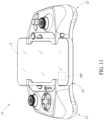
- Figures 1 and 11 illustrate the game controller 11 in the retracted configuration.
- the first control portion 12 and the second control portion 13 are each, individually, or collectively, slideable, telescopically moveable to the extended configuration.
- a user may move the first and/or second release buttons 57a, 57b to move the corresponding first and second release brackets 54a, 54b.
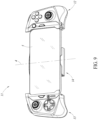
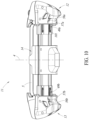
- Figures 9 and 10 illustrate the game controller 11 in an extended configuration, where both first control portion 12 and the second control portion 13 have been moved away from the central axis 4.
- the user may position the mobile device on the charging unit 14.
- one end of the mobile device 5 is positioned within the first bracket 33a and mates or abuts the first grip member 34a.
- Another end of the mobile device 5 is positioned within the second bracket 33b and mates or abuts the second grip member 34b.
- the user may thereafter move the first and/or second release buttons 57a, 57b to lock the respective first and second control portions 12, 13.
- the first and second control portions 12, 13 include electrical circuitry 21a, 21b that allows the user to communicate with the mobile device 5, for example, wirelessly, to activate control function to control an on-screen function, such as navigation, jump, sprint, switch screens, etc. of a video game being played on a mobile device 5.
- the battery 105 of the mobile device 5 may be selectively charged via inductive charging.
- the charging system 115 formed by the charging electrical circuitry 107 may be configured to directly inductively charge the battery 105 via power received via the external power source.
- the charging electrical circuitry 107 of the charging system 115 may communicate with power modules, charging modules, battery modules, or similar systems of the mobile device 5 (and associated electrical circuitry) to communicably receive information about a charge level of the battery 105.
- the charging system 115 may be activated to inductively charge the battery 105 based on the information about the charge level of the battery 105. For example, the charging system may only be activated if the charge level of the battery 105 reaches a certain threshold percentage. For example, the charging system may be activated if the threshold percentage is set to 50 percent.
- the charging system may be activated if the charge level falls below the threshold percentage of 50.
- the charging system 115 may be operable to deactivate the charging unit 14 once the charge level of the battery 105 reaches a certain threshold charge percentage.
- the charging unit 14 may not inductively charge the battery 105 when the charge level of the battery 105 exceeds any threshold percentage between 70 to 100 percent.
- the charging system 115 may be operable to alternate between delivering power to charge the battery 105 from the external power source and the charging battery 109.
- the charging battery 109 may deliver power until the charge level of the battery 105 reaches a certain threshold.
- the charging system 115 may switch power supply to be received from the external power source.
- Figures 9 and 10 illustrate the mobile device 5 being positioned in a horizontal orientation
- the game controller 11 can receive the mobile device 5 in a vertical orientation.
- the stand unit 15 is optional and may be removably decoupled from the first and second control portions 12, 13.
- the cover guard 108 is optional and may be removably decoupled from the compartment 91.
- the mobile device 5 can be oriented in a vertical direction.
- the first and control portions 12, 13 may be slideably moved to receive the mobile device 5 oriented in the vertical direction by moving the first and second release buttons 57a, 57b to the unlock positions as described above.
- the first and second control portions 12, 13 may be moved to the retracted configuration illustrated in Figure 1 , and the first and second release buttons 57a, 57b may be moved to the locked positons.
Landscapes
- Engineering & Computer Science (AREA)
- Multimedia (AREA)
- Human Computer Interaction (AREA)
- Power Engineering (AREA)
- Computer Networks & Wireless Communication (AREA)
- Charge And Discharge Circuits For Batteries Or The Like (AREA)
- Secondary Cells (AREA)
Description
- The present disclosure is directed to inductive charging devices and, more particularly, to inductive charging devices disposed in a game controller.
- Mobile devices are widely used for playing video games. Several video game developers have made available games especially suitable for playing on mobile devices, such as smart phones, tablets, etc. Using touch screens or mobile device keys, however, may be unsuitable and may present challenges for effectively playing such games. Therefore, video game controllers may be used to play video games on mobile devices. The video game controllers may be connected to the mobile devices via a wireless connection or a wired connection.
- When video games are played on mobile devices, a significant strain is placed on the batteries that power the mobile devices. The strain on the batteries is further exacerbated when the mobile device is connected to the game controllers. Thus, it is desirable to provide devices, systems, and methods that restore, replenish, or otherwise improve charge level of the batteries.
- From
US 2004/137983 A1 , a game controller for a mobile device is known. The mobile device can be attached to the game controller. The game controller can be used to charge and/or to play games on the mobile device. FromUS 2013/324035 A1 , an inductive charging pad for mobile devices is known. - The invention provides a game controller as defined in claim 1.
- The various embodiments and/or implementations described herein provide inductive charging devices that allow for users to secure their mobile devices and play video games, while restoring, replenishing, or otherwise improving charge level of the batteries of the mobile devices. The game controller, that is a form of an inductive charging device, is communicably coupled to a mobile device having a power source, the game controller having a retracted configuration and an extended configuration, may be summarized as including a first control portion having one or more game controller inputs, a second control portion have one or more game controller inputs, and a charging unit coupleable to the first control portion and the second control portion. The charging unit has a region that is sized and shaped to receive the mobile device, and an inductive charging apparatus, the inductive charging apparatus operable to selectively inductively charge the power source of the mobile device when the mobile device is received in the region.
- In another example, non-limiting example embodiment, a charging unit that is coupleable to the game controller of claim 1 and operable to selectively charge a battery of a mobile device coupled to the game controller, may be summarized as including a housing compartment, a first rail extending outwardly from the housing compartment, the first rail sized and shaped to couple to the game controller, a second rail extending outwardly from the housing compartment, the second rail sized and shaped to couple to the game controller, and an inductive charging apparatus received in the housing compartment. The inductive charging apparatus may be operable to selectively inductively charge the battery of the mobile device when the mobile device is positioned proximal to the inductive charging apparatus.
- The application further discloses the following aspects:
The charging unit, wherein the first charge interface comprises a primary charging coil, and the second charge interface comprises a secondary charging coil. - The charging unit, wherein the inductive charging apparatus includes a power source that is operable to deliver power to selectively inductively charge the battery of the mobile device.
- The charging unit, wherein the power source includes at least one of a charging battery or an external power source.
- The charging unit, wherein the charging unit includes a cover guard, the cover guard sized and shaped to secure the mobile device.
- The charging unit, wherein:
- the first rail includes a first protrusion;
- the second rail includes a second protrusion;
- the game controller includes a first channel that is sized and shaped to slideably receive the first protrusion of the first rail; and
- the game controller includes a second channel that is sized and shaped to slideably receive the second protrusion of the second rail.
-
-
Figure 1 is an isometric view of an inductive charging device, according to one example, non-limiting embodiment, in the form of a game controller, illustrating the game controller in a retracted configuration. -
Figure 2 is a high-level exploded view of the game controller ofFigure 1 . -
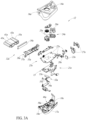
Figure 3A is an exploded view of a first control portion of the game controller ofFigure 1 . -
Figure 3B is a skewed isometric view of the first control portion of the game controller ofFigure 1 . -
Figure 3C is a partial rear view of the first control portion of the game controller ofFigure 1 with the lower housing removed for clarity of description and illustration. -
Figure 3D is a skewed partial isometric view of the first control portion of the game controller ofFigure 1 with the lower housing removed for clarity of description and illustration. -
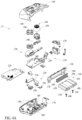
Figure 4A is an exploded view of a second control portion of the game controller ofFigure 1 . -
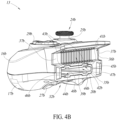
Figure 4B is a skewed isometric view of the second control portion of the game controller ofFigure 1 . -
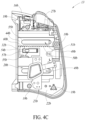
Figure 4C is a partial rear view of the second control portion of the game controller ofFigure 1 with the lower housing removed for clarity of description and illustration. -
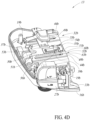
Figure 4D is a skewed partial isometric view of the second control portion of the game controller ofFigure 1 with the lower housing removed for clarity of description and illustration. -
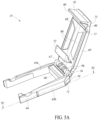
Figure 5A is an isometric view of a stand assembly of the game controller ofFigure 1 . -
Figure 5B is an exploded view of the stand assembly of the game controller ofFigure 1 . -
Figure 5C is a cross-sectional view of the stand assembly of the game controller ofFigure 1 , taken alongline 5C-5C. -
Figure 5D is a skewed partial isometric view of the stand assembly of the game controller ofFigure 1 , with certain components, e.g., an outer cover plate, removed for clarity of illustration and description. -
Figure 6 is a skewed isometric view of a charging unit of the game controller ofFigure 1 . -
Figure 7 is an exploded view of the charging unit of the game controller ofFigure 1 . -
Figure 8 is a partial isometric view of the charging unit of the game controller ofFigure 1 , with certain components, e.g., upper compartment, removed for clarity of illustration and description. -
Figure 9 is a skewed isometric view of the game controller ofFigure 1 , illustrating the game controller in an extended configuration. -
Figure 10 is another skewed isometric view of the game controller ofFigure 1 , illustrating the game controller in an extended configuration. -
Figure 11 is an isometric view of the game controller ofFigure 1 , illustrated the game controller in a retracted configuration. - In the following description, certain specific details are set forth in order to provide a thorough understanding of various disclosed implementations. However, one skilled in the relevant art will recognize that implementations may be practiced without one or more of these specific details, or with other methods, components, materials, etc. In other instances, well-known structures associated with video game consoles, controllers, mobile devices, and communications systems and structures and networks have not been shown or described in detail to avoid unnecessarily obscuring descriptions of the implementations.
- Unless the context requires otherwise, throughout the specification and claims which follow, the word "comprise" and variations thereof, such as "comprises" and "comprising," are to be construed in an open, inclusive sense, that is, as "including, but not limited to."
- Reference throughout this specification to "one embodiment" or "an embodiment" means that a particular feature, structure or characteristic described in connection with the embodiment is included in at least one embodiment. Thus, the appearances of the phrases "in one embodiment" or "in an embodiment" in various places throughout this specification are not necessarily all referring to the same embodiment.
- The use of ordinals such as first, second and third does not necessarily imply a ranked sense of order, but rather may only distinguish between multiple instances of an act or structure.
- The headings and Abstract of the Disclosure provided herein are for convenience only and do not interpret the scope or meaning of the implementations.
-
Figures 1-11 illustrate aninductive charging device 10 in the form of agame controller 11 according to one example, non-limiting embodiment, although other forms of inductive charging devices, in lieu of game controllers, are within the scope of the disclosed subject matter. For example, in some embodiments, theinductive charging device 10 may take the form of a video game console, etc. Thegame controller 11 generally is sized, shaped, and operable to removably, coupleably receive amobile device 5. Thegame controller 11 includes afirst control portion 12, asecond control portion 13, a chargingunit 14, and astand assembly 15. Thefirst control portion 12 is generally a mirror image of thesecond control portion 13. Thefirst control portion 12 includes anupper housing 16a and alower housing 17a that is coupled to theupper housing 16a. For example, thelower housing 17a includes one ormore posts 18a that are sized and shaped to couple to one ormore receiving protrusions 19a disposed in theupper housing 16a. The upper andlower housings first housing cavity 20a that is sized and shaped to receive various components of thefirst control portion 12. - The
first control portion 12 includeselectrical circuitry 21a, for example, mounted on one or more printed circuit boards (PCBs) 22a, one or more switches, one or more diodes, etc., that form asystem 23a of thegame controller 11 that cooperates with similar circuitry of thesecond control portion 13 to activate control function. In particular, activating of the control function is generally operable to control an on-screen function, such as navigation, jump, sprint, switch screens, etc. of a video game being played on amobile device 5. Thefirst control portion 12 includes one or moregame controller inputs 24a, forexample joystick 25a,control buttons 26a, triggers 27a,power button 28a, program button, etc. While somegame controller inputs 24a are demonstrated inFigures 1-3D and9-11 , in some embodiments, one or more additionalgame controller inputs 24a known in the art can be incorporated in thefirst control portion 12, or omitted from the ones demonstrated inFigures 1-3D and9-11 . - The
electrical circuitry 21a includes one or more communications modules (e.g., Bluetooth™, WI-FI, IEEE 802.11 compliant protocols) to facilitate communication of thegame controller 11 with themobile device 5. For example, the one or more communications channels may, for instance, include a communication network, which may be a wired connection, a Wi-Fi network, WiMAX, Zigbee, Z-Wave, Bluetooth™, Bluetooth™ Low Energy, near-field communication, or any other type of connection capable of providing uni-directional or bi-directional communication between thegame controller 11 and themobile device 5. - As described above the
second control portion 13 is generally similar to thefirst control portion 12. Thesecond control portion 13 includes anupper housing 16b and alower housing 17b that is coupled to theupper housing 16b. For example, thelower housing 17b includes one ormore posts 18b that are sized and shaped to couple to one or more receivingprotrusions 19b disposed in theupper housing 16b. The upper andlower housings second housing cavity 20b that is sized and shaped to receive various components of thesecond control portion 13. Thesecond control portion 13 includeselectrical circuitry 21b, for example, mounted on one or more printed circuit boards (PCBs) 22b, one or more switches, one or more diodes, etc., that form asystem 23b of thegame controller 11 that cooperates with similar circuitry of thefirst control portion 12 to activate control function. In particular, activating of the control function is generally operable to control an on-screen function, such as navigation, jump, sprint, switch screens, etc., of a video game being played on amobile device 5. Thesecond control portion 13 includes one or moregame controller inputs 24b, forexample joystick 25b, triggers 27b, directionalkey pad 29b,battery control button 30b, etc. While somegame controller inputs 24b are demonstrated inFigures 1-4D and9-11 , in some embodiments, one or more additionalgame controller inputs 24b known in the art can be incorporated in thesecond control portion 13, or omitted from the ones demonstrated inFigures 1-4D and9-11 . - The
electrical circuitry 21b may include, in addition to, or alternative to, theelectrical circuitry 21a of thefirst control portion 12, one or more communications modules (e.g., Bluetooth™, WI-FI, IEEE 802.11 compliant protocols) to facilitate communication of thegame controller 11 with themobile device 5. For example, the one or more communications channels may, for instance, include a communication network, which may be a wired connection, a Wi-Fi network, WiMAX, Zigbee, Z-Wave, Bluetooth™, Bluetooth™ Low Energy, near-field communication, or any other type of connection capable of providing uni-directional or bi-directional communication between thegame controller 11 and themobile device 5. - The first and
second control portions central axis 4 of thegame controller 11. As described in more detail below, the first andsecond control portions mobile device 5 to be received in, on, or around the chargingunit 14. In particular, thefirst control portion 12 includes a receivingassembly 32a that slideably telescopically translates relative to the chargingunit 14. The receivingassembly 32a includes afirst bracket 33a, afirst grip member 34a, and afirst channel member 35a. Thefirst bracket 33a has a generally C-shaped structural shape and profile. Thefirst bracket 33a is sized and shaped to couple to theupper housing 16a. In particular, theupper housing 16a has afirst recess region 36a that is sized and shaped to receive thefirst bracket 33a. Aninterior side 37a of thefirst bracket 33a includes afirst grip cavity 38a that is sized and shaped to coupleably receive thefirst grip member 34a. Thefirst grip member 34a has a generally C-shaped structural shape profile and is sized and shaped to receive themobile device 5. In some embodiments, thefirst grip member 34a comprises rubber, plastics, or other materials. Thefirst grip member 34a includes a plurality of axially spaced apart first grip recesses 39a. The first grip recesses 39a generally provide gripping ability to amobile device 5 that is received therein. - The
first channel member 35a has a generally rectangular shape and profile with arcuate end portions and is hollow to define a firstinternal cavity 40a. Upper andlower sides first channel member 35a include respectivefirst protrusions first protrusions 43a are sized and shaped to be received in upper channel recesses 45a disposed in theupper housing 16a. Thefirst protrusions 44a are sized and shaped to be received inlower channel recesses 46a disposed in thelower housing 17a. Eachfirst protrusion 43a includes anupper channel 47a that extends the longitudinal length of thefirst channel member 35a. Similarly, eachfirst protrusion 44a includes alower channel 48a that extends the longitudinal length of thefirst channel member 35a. Eachfirst protrusion 44a includes afirst slot aperture 49a extending therethrough. One of the twofirst protrusions 44a includes first lockingteeth 50a extending in a longitudinal direction from afirst side flange 51a of one of the twofirst protrusions 44a. Thefirst locking teeth 50a are sized and shaped to adjustably couple to afirst locking member 52a of thefirst control portion 12. - The
first locking member 52a includes afirst coupling plate 53a, afirst release bracket 54a, and afirst locking bracket 55a. Thefirst coupling plate 53a is fixedly coupled to thechannel member 35a, and is positioned near or proximal to thefirst locking teeth 50a. Thefirst coupling plate 53a includes afirst bracket cavity 56a sized and shaped to slideably receive portions of thefirst release bracket 54a. In particular, thefirst release bracket 54a includes a firstlower protrusion 63a that is sized and shaped to slideably move through thefirst bracket cavity 56a. An upper side of thefirst release bracket 54a includes afirst release button 57a that protrudes outwardly therefrom. Thefirst release button 57a is sized and shaped to protrude out of afirst release cavity 58a disposed in thelower housing 17a. In particular, thefirst release button 57a slideably moves through thefirst release cavity 58a between a locking and a release position. - The
first locking bracket 55a is coupled to thefirst coupling plate 53a. Thefirst locking bracket 55a includes afirst locking cavity 59a andfirst teeth 60a. Thefirst locking cavity 59a is sized and shaped to slideably receive thefirst release bracket 54a. In particular, thefirst release bracket 54a slides into thefirst locking cavity 59a to lock thefirst control portion 12 and slides out of thefirst locking cavity 59a to unlock and/or release tofirst control portion 12. As thefirst release bracket 54a moves or slides out of thefirst locking cavity 59a, thefirst release bracket 54a moves through or in thefirst bracket cavity 56a until mating or abutting with a surface of thefirst coupling plate 53a. As thefirst locking bracket 55a moves or slides out, as described above, such moves thefirst control portion 12 to the release position or the unlock position. Moving or sliding thefirst locking bracket 55a into thefirst locking cavity 59a moves thefirst control portion 12 into the locked position. - The
first teeth 60a are sized and shaped to couple to thefirst locking teeth 50a. Thus, when thefirst control portion 12 is slideably moved to a desired longitudinal position, thefirst teeth 60a couple to thefirst locking teeth 50a to lock thefirst control portion 12. In order to slideably move thefirst control portion 12, one may move thefirst control portion 12 to the unlocked/release position by moving thefirst release button 57a as described above. Once thefirst release bracket 54a is moved out of thefirst locking cavity 59a, a user may slideably move thefirst control portion 12 away from thecentral axis 4 of thegame controller 11. As thefirst release bracket 54a is moved out of thefirst locking cavity 59a, thefirst locking bracket 55a may deformably move as thefirst teeth 60a uncouple from thefirst locking teeth 50a. When thefirst control portion 12 is moved to a desired position or location, thefirst teeth 60a couple to thefirst locking teeth 50a, and thefirst release button 57a can be moved to the locked position, which causes thefirst locking bracket 55a to move into thefirst locking cavity 59a, thereby preventing deformable movement of thefirst locking bracket 55a. - As described above, the
second control portion 13 is generally similar to thefirst control portion 12. In particular, thesecond control portion 13 includes a receivingassembly 32b that slideably telescopically translates relative to the chargingunit 14. The receivingassembly 32b includes asecond bracket 33b, asecond grip member 34b, and asecond channel member 35b. Thesecond bracket 33b has a generally C-shaped structural shape and profile. Thesecond bracket 33b is sized and shaped to couple to theupper housing 16b. In particular, theupper housing 16b has asecond recess region 36b that is sized and shaped to receive thesecond bracket 33b. Aninterior side 37b of thesecond bracket 33b includes asecond grip cavity 38b that is sized and shaped to coupleably receive thesecond grip member 34b. Thesecond grip member 34b has a generally C-shaped structural shape profile and is sized and shaped to receive themobile device 5. In some embodiments, thesecond grip member 34b comprises rubber, plastics, or other materials. Thesecond grip member 34b includes a plurality of axially spaced apart second grip recesses 39b. The second grip recesses 39b generally provide gripping ability to amobile device 5 that is received therein. - The
second channel member 35b has a generally rectangular shape and profile with arcuate end portions and is hollow to define a secondinternal cavity 40b. Upper andlower sides 41b, 42b of thesecond channel member 35b include respectivesecond protrusions second protrusions 43b are sized and shaped to be received in upper channel recesses 45b disposed in theupper housing 16b. Thesecond protrusions 44b are sized and shaped to be received in lower channel recesses 46b disposed in thelower housing 17b. Eachsecond protrusion 43b includes anupper channel 47b that extends the longitudinal length of thesecond channel member 35b. Similarly, eachsecond protrusion 44b includes alower channel 48b that extends the longitudinal length of thesecond channel member 35b. Eachsecond protrusion 44b includes asecond slot aperture 49b extending therethrough. One of the twosecond protrusions 44b includes second lockingteeth 50b extending in a longitudinal direction from asecond side flange 51b of one of the twosecond protrusions 44b. Thesecond locking teeth 50b are sized and shaped to adjustably couple to asecond locking member 52b of thesecond control portion 13. - The
second locking member 52b includes asecond coupling plate 53b, asecond release bracket 54b, andsecond locking bracket 55b. Thesecond coupling plate 53b is fixedly coupled to thesecond channel member 35b, and is positioned near or proximal to thesecond locking teeth 50b. Thesecond coupling plate 53b includes asecond bracket cavity 56b sized and shaped to slideably receive portions of thesecond release bracket 54b. In particular, thesecond release bracket 54b includes a secondlower protrusion 63b that is sized and shaped to slideably move through thesecond bracket cavity 56b. An upper side of thesecond release bracket 54b includes asecond release button 57b that protrudes outwardly therefrom. Thesecond release button 57b is sized and shaped to protrude out of asecond release cavity 58b disposed in thelower housing 17b. In particular, thesecond release button 57b slideably moves through thesecond release cavity 58b between a locking position and a release position. - The
second locking bracket 55b is coupled to thesecond coupling plate 53b. Thesecond locking bracket 55b includes a second locking cavity 59b andsecond teeth 60b. The second locking cavity 59b is sized and shaped to slideably receive thesecond release bracket 54b. In particular, thesecond release bracket 54b slides into the second locking cavity 59b to lock thesecond control portion 13 and slides out of the second locking cavity 59b to unlock and/or release tosecond control portion 13. As thesecond release bracket 54b moves or slides out of the second locking cavity 59b, thesecond release bracket 54b moves through or in thesecond bracket cavity 56b until mating or abutting with a surface of thesecond coupling plate 53b. As thesecond locking bracket 55b moves or slides out, as described above, such moves thesecond control portion 13 to the release or unlock position. Moving or sliding thesecond locking bracket 55b into the second locking cavity 59b moves thesecond control portion 13 into the locked position. - The
second teeth 60b are sized and shaped to couple to thesecond locking teeth 50b. Thus, when thesecond control portion 13 is slideably moved to a desired longitudinal position, thesecond teeth 60b couple to thesecond locking teeth 50b to lock thesecond control portion 13. In order to slideably move thesecond control portion 13, one may move thesecond control portion 13 to the unlocked/release position by moving thesecond release button 57b as described above. Once thesecond release bracket 54b is moved out of the second locking cavity 59b, a user may slideably move thesecond control portion 13 away from thecentral axis 4 of thegame controller 11. As thesecond release bracket 54b is moved out of the second locking cavity 59b, thesecond locking bracket 55b may deformably move as thesecond teeth 60b uncouple from thesecond locking teeth 50b. When thesecond control portion 13 is moved to a desired position or location, thesecond teeth 60b couple to thesecond locking teeth 50b, and thesecond release button 57b can be moved to the locked position, which causes thesecond locking bracket 55b to move into the second locking cavity 59b, thereby preventing deformable movement of thesecond locking bracket 55b. - The
game controller 11 optionally includes thestand assembly 15. Thestand assembly 15 generally operates to hold themobile device 5. For example, a user may desire to position themobile device 5 in the stand to allow for a viewing orientation where the user is facing themobile device 5 without having to bend his/her neck. Theoptional stand assembly 15 is hingedly and removably coupled to the first andsecond control portions stand assembly 15 includes astand bracket 64 that is coupled to the first andsecond control portions Figures 1-11 , thestand bracket 64 has a generally C-shaped structural shape and profile havingstand side flanges end flange 66. Thestand side flange 65a is coupled to thesecond control portion 13 and thestand side flange 65a is coupled to thefirst control portion 12. Theend flange 66 includeshinge portions 67 that are sized and shaped to hingedly couple to portions of thestand assembly 15. In particular, thestand assembly 15 includes thestand side bracket 64, ahinge plate 68 having plate hingeportions 96 that are sized and shaped to couple to thehinge portions 67 of theend flange 66, anouter cover plate 69, acoupling bracket 70, acoupling plate 71, afirst holding bracket 72, and asecond holding bracket 73. - The
coupling bracket 70 includesside bracket flanges stand side flanges coupling plate 71 couples to thestand bracket 64 to conceal or overlay theside bracket flanges stand side flanges coupling bracket 70 couples to thestand bracket 64. As described above, thehinge plate 68 includesplate hinge portions 96 that hingedly couple to thehinge portions 67 of theend flange 66. Theplate hinge portions 96 and thehinge portions 67 both include pin apertures that are sized and shaped to receive one or more hinge pin(s) 74. A center of the hinge pin(s) 74 defines a pivot axis about which thehinge plate 68 pivotably and hingedly rotates relative to thehinge portions 67 of theend flange 66. Thehinge plate 68 includes aweb flange 77 that is sized and shaped to coupleably receive thefirst holding bracket 72 and thesecond holding bracket 73. - The
first holding bracket 72 includes a first receivingflange 78 and a pair offirst end flanges 79. Thefirst receiving flange 78 is sized and shaped to hold amobile device 5. Thefirst end flanges 79 extend through theweb flange 77 and are received inbracket portions 80 of theweb flange 77. Thesecond holding bracket 73 is generally operable to adjustably move relative to thefirst holding bracket 72 in order to securably receivemobile devices 5 having various sizes and shapes. Thesecond holding bracket 73 includes asecond receiving flange 81 and asecond end flange 82. Thesecond receiving flange 81 is sized and shaped to cooperate with the first receivingflange 78 to hold, secure, or retain themobile device 5. Thesecond end flange 82 extends adjacent to theweb flange 77 and includes aspring recess 83 and a pair ofposts 84. The pair ofposts 84 are sized and shaped to coupleably receive abiasing device 85, e.g., one or more springs 86. Thespring recess 83 is sized and shaped to receive thebiasing device 85. - The
outer cover plate 69 is sized and shaped to couple to thesecond holding bracket 73 and thehinge plate 68. When theouter cover plate 69 is coupled to thehinge plate 68, such defines an internal cavity for receiving the biasingdevice 85. Theouter cover plate 69 includes a pair ofchannel members 87 through which thesprings 86 of the biasingdevice 85 are guided. Theouter cover plate 69 includes a pair of spring posts 89 that coupleably receive one end of each of thesprings 86, and another end of each of thesprings 86 is coupled to theposts 84 of thesecond end flange 82. In this manner, thesecond holding bracket 73 may be extended outwardly relative to thefirst holding bracket 72 by applying forces which overcome biasing forces of the biasingdevice 85 urging thesecond holding bracket 73 toward thefirst holding bracket 72. - In some implementations, the
stand assembly 15 optionally includes one or moreprotective shield members 90. The one or moreprotective shield members 90 generally comprise rubber and are sized and shaped to protect themobile device 5 from impact and/or damage. For example, one or more of theprotective shield members 90 may be coupled to theweb flange 77, thefirst holding bracket 72, and/or thesecond holding bracket 73. More specifically, the one or moreprotective shield members 90 are coupled to portions or components of thestand assembly 15 that will face and/or abut themobile device 5. - The charging
unit 14 includes alower compartment 91 and anupper compartment 92. Thelower compartment 91 includes a lowercentral member 93, a firstlower rail 94a extending from the lowercentral member 93, and a secondlower rail 94b extending from the lowercentral member 93. Theupper compartment 92 includes an uppercentral member 95, a firstupper rail member 97a extending from the uppercentral member 95, and a secondupper rail member 97b extending from the uppercentral member 95. Each of the first and secondupper rail members upper rail protrusions 98a. Theupper rail protrusions 98a are sized and shaped to be received in theupper channels 47a of thefirst protrusions 43a and theupper channels 47b of thesecond protrusions 43b. Each of the first and secondlower rail members lower protrusions 98b. Thelower rail protrusions 98b are sized and shaped to be received in thelower channels 48a of thesecond protrusions 44a and thelower channels 48b of thesecond protrusions 44b. Each of the first and secondlower rail members corresponding fastening devices 101. Thefastening devices 101 are sized and shaped to be slideably received in thefirst slot aperture 49a and thesecond slot apertures 49b. Thus, to extend or slideably move the first andsecond control portions second control portions central axis 4. Thefirst control portion 12 will slideably move via theupper channels 47a of thefirst protrusions 43a moving through theupper rail protrusions 98a and thelower channels 48a of thesecond protrusions 44a through thelower rail protrusions 98b. Similarly, thesecond control portion 13 will slideably move via theupper channels 47b of thefirst protrusions 43b moving through theupper rail protrusions 98a and thelower channels 48b of thesecond protrusions 44b through thelower rail protrusions 98b. Thefastening devices 101 allow the slideable movement of the first andsecond control portions second slot apertures fastening devices 101 abut ends of the first andsecond slot apertures - When the
lower compartment 91 is coupled to theupper compartment 92, such defines acentral cavity 102. Thecentral cavity 102 is sized and shaped to receive aninductive charging apparatus 103. Theinductive charging apparatus 103 is generally operable to inductively charge any power storage device, for example, batteries, via, for example, inductive charging. Theinductive charging apparatus 103 of thegame controller 11, in general, forms a first charge interface that couples to a second charge interface of themobile device 5. The second charge interface of themobile device 5 may comprise a secondary winding and the first charging interface may comprise a primary winding, spaced sufficiently close together that passage of a current through the primary winding induces a current in the secondary winding. As described above, the power storage device may comprise batteries. Thus, the power storage device may comprise abattery 105 of themobile device 5 that is charged via theinductive charging apparatus 103. - The
inductive charging apparatus 103 includes a chargingcoil 104, for example, a primary winding of a first charge interface, apower source 106, chargingelectrical circuitry 107, andoptional cover guard 108. Thepower source 106 is generally configured to provide power to charge thebattery 105 of themobile device 5 via inductive charging; for example, as described above, the chargingcoil 104 can form the first charging interface to inductively communicate with the second charging interface disposed in themobile device 5 to charge thebattery 105. Thepower source 106 can optionally comprise a chargingbattery 109, which provides the power source to inductively charge thebattery 105 of themobile device 5. In some implementations, theinductive charging apparatus 103 includes aport 110, such as, for example, a USB 3.0 A-type, B-Type, Micro or Mini, a 4-pin connector, or other type of connectors. In some implementations, theinductive charging apparatus 103 may include one or more ports which may comprise any of the USB 3.0 A-type, B-Type, Micro or Mini, a 4-pin connectors. Theport 110 is generally operable to couple to an external power source to provide power to thepower source 106, for example, the chargingbattery 109. Thus, via the external power source, the chargingbattery 109 may be charged. - The charging
electrical circuitry 107, for example, mounted on one or more printed circuit boards (PCBs), one or more switches, one or more diodes, etc., forms acharging system 115 that transfers or delivers power from the external power source to charge the chargingbattery 109, and which chargingbattery 109 inductively communicates with thebattery 105 of themobile device 5 to charge thebattery 105. In some implementations, the chargingelectrical circuitry 107 can directly inductively charge thebattery 105 via power received via the external power source. In some implementations, the chargingelectrical circuitry 107 of thecharging system 115 may communicate with power modules, charging modules, battery modules, or similar systems of the mobile device 5 (and associated electrical circuitry) to communicably receive information about a charge level of thebattery 105. The chargingelectrical circuitry 107 of thecharging system 115 may be activated to inductively charge thebattery 105 based on the information about the charge level of thebattery 105. For example, thecharging system 115 may only be activated if the charge level of thebattery 105 reaches a certain threshold percentage. For example, thecharging system 115 may be activated if the threshold percentage is set to 50 percent. Thus, thecharging system 115 may be activated if the charge level reaches falls below the threshold percentage of 50. - The
charging system 115 can include a central controller, for example a microprocessor, digital signal processor, programmable gate array (PGA) or application specific integrated circuit (ASIC). Thecharging system 115 can include one or more non-transitory storage mediums, for example read only memory (ROM), random access memory (RAM), Flash memory, or other physical computer- or processor-readable storage media. The non-transitory storage mediums may store instructions and/or data used by the controller, for example an operating system (OS) and/or applications. The instructions as executed by the controller may execute logic to perform the functionality of the various embodiments described herein, including, but not limited to, logic to establish a pairing relationship with themobile device 5. - In some embodiments or implementations, the
charging system 115 may include a user interface, to allow an end user to operate or otherwise provide input to thegame controller 11 regarding operation of the charging system. The user interface may include a number of user actuable controls accessible from the exterior of thegame controller 11. For example, the user interface and may include a number of switches or keys operable to turn thecharging system 115 ON and OFF and/or to set various operating parameters of thecharging system 115. The user interface may also include one or more visual indicators, for instance light emitting diodes (LEDs). The visual indicators may be single color or may be capable of producing different color indicia corresponding to various operational states or conditions of thecharging system 115. - Additionally, or alternatively, the user interface may include a display, for instance a touch panel display. The touch panel display (e.g., LCD with touch sensitive overlay) may provide both an input and an output interface for the end user. The touch panel display may present a graphical user interface, with various user selectable icons, menus, check boxes, dialog boxes, and other components and elements selectable by the end user to set operational states or conditions of the
charging system 115. The user interface may also include one or more auditory transducers, for example one or more speakers and/or microphones. Such may allow audible alert notifications or signals to be provided to an end user. Such may additionally, or alternatively, allow an end user to provide audible commands or instructions. The user interface may include additional components and/or different components than those illustrated or described, and/or may omit some components. The switches and keys or the graphical user interface may, for example, include toggle switches, a keypad or keyboard, rocker switches, trackball, joystick or thumbstick. The switches and keys or the graphical user interface may, for example, allow an end user to turn ON thecharging system 115, start or end a charging mode, select and/or deselect from a power source to charge themobile device 5battery 105, define a threshold charge level to activate charging, etc. - In some embodiments or implementations, the instructions and/or data stored on the non-transitory storage mediums that may be used by the controller of the
charging system 115, such as, for example, ROM, RAM, and Flash memory, include or provide an application program interface ("API") that provides programmatic access to one or more functions of thecharging system 115. For example, such an API may provide a programmatic interface to control one or more operational characteristics of thecharging system 115. Such control may be invoked by one of the other programs, paired devices, or other remote device or system (not shown), or some other module. In this manner, the API may facilitate the development of third-party software, such as various different user interfaces and control systems for other devices, plug-ins, and adapters, and the like to facilitate interactivity and customization of the operation and devices within thecharging system 115. - In an example embodiment or implementation, components or modules of the
charging system 115 are implemented using standard programming techniques. For example, the logic to perform the functionality of the various embodiments or implementations described herein may be implemented as a "native" executable running on the controller, e.g., microprocessor, along with one or more static or dynamic libraries. In other embodiments, various functions of thecharging system 115 may be implemented as instructions processed by a virtual machine that executes as one or more programs whose instructions are stored on ROM and/or random RAM. In general, a range of programming languages known in the art may be employed for implementing such example embodiments, including representative implementations of various programming language paradigms, including but not limited to, object-oriented (e.g., Java, C++, C#, Visual Basic.NET, Smalltalk, and the like), functional (e.g., ML, Lisp, Scheme, and the like), procedural (e.g., C, Pascal, Ada, Modula, and the like), scripting (e.g., Perl, Ruby, Python, JavaScript, VBScript, and the like), or declarative (e.g., SQL, Prolog, and the like). - In a software or firmware implementation, instructions stored in a memory configure, when executed, one or more processors of the
charging system 115, such as microprocessor, to perform the functions of thecharging system 115. The instructions cause the microprocessor or some other processor, such as an I/O controller/processor, to process and act on information received to provide the functionality and operations of thecharging system 115 described herein. - The embodiments or implementations described above may also use well-known or other synchronous or asynchronous client-server computing techniques. However, the various components may be implemented using more monolithic programming techniques as well such as, for example, an executable running on a single microprocessor, or alternatively decomposed using a variety of structuring techniques known in the art, including but not limited to, multiprogramming, multithreading, client-server, or peer-to-peer (e.g., Bluetooth®, NFC or RFID wireless technology, mesh networks, etc.), running on one or more computer systems each having one or more central processing units (CPUs) or other processors. Some embodiments may execute concurrently and asynchronously, and communicate using message passing techniques. Also, other functions could be implemented and/or performed by each component/module, and in different orders, and by different components/modules, yet still achieve the functions of the
charging system 115. - In addition, programming interfaces to the data stored on and functionality provided by the
charging system 115, can be available by standard mechanisms such as through C, C++, C#, and Java APIs; libraries for accessing files, databases, or other data repositories; scripting languages; or Web servers, FTP servers, or other types of servers providing access to stored data. The data stored and utilized by chargingsystem 115 and overall ecosystem may be implemented as one or more database systems, file systems, or any other technique for storing such information, or any combination of the above, including implementations using distributed computing techniques. - Different configurations and locations of programs and data are contemplated for use with techniques described herein. A variety of distributed computing techniques are appropriate for implementing the components of the illustrated embodiments in a distributed manner including but not limited to TCP/IP sockets, RPC, RMI, HTTP, and Web Services (XML-RPC, JAX-RPC, SOAP, and the like). Other variations are possible. Other functionality could also be provided by each component/module, or existing functionality could be distributed amongst the components/modules in different ways, yet still achieve the functions of the
charging system 115. - Furthermore, in some embodiments, some or all of the components of the
charging system 115 and components of other devices within theinductive charging device 10, may be implemented or provided in other manners, such as at least partially in firmware and/or hardware, including, but not limited to, one or more application-specific integrated circuits ("ASICs"), standard integrated circuits, controllers (e.g., by executing appropriate instructions, and including microcontrollers and/or embedded controllers), field-programmable gate arrays ("FPGAs"), complex programmable logic devices ("CPLDs"), and the like. Some or all of the system components and/or data structures may also be stored as contents (e.g., as executable or other machine-readable software instructions or structured data) on a computer-readable medium (e.g., as a hard disk; a memory; a computer network, cellular wireless network or other data transmission medium; or a portable media article to be read by an appropriate drive or via an appropriate connection, such as a DVD or flash memory device) so as to enable or configure the computer-readable medium and/or one or more associated computing systems or devices to execute or otherwise use, or provide the contents to perform, at least some of the described techniques. - The
cover guard 108 is coupled to thelower compartment 91. In some implementations, thecover guard 108 may be removably coupleable to thelower compartment 91. In general, thecover guard 108 is optionally coupled to thelower compartment 91 to protect or guard themobile device 5 received in the chargingunit 14. - Thus, in operation, a user may inductively charge a
mobile device 5 via thegame controller 11. In particular, thegame controller 11 is moveable between a retracted configuration and an extended configuration. For example,Figures 1 and11 illustrate thegame controller 11 in the retracted configuration. As described above, thefirst control portion 12 and thesecond control portion 13 are each, individually, or collectively, slideable, telescopically moveable to the extended configuration. For example, a user may move the first and/orsecond release buttons second release brackets second release brackets second control portions central axis 4 to the desired position or location. For example,Figures 9 and10 illustrate thegame controller 11 in an extended configuration, where bothfirst control portion 12 and thesecond control portion 13 have been moved away from thecentral axis 4. After extending the first and/orsecond control portions unit 14. In particular, one end of themobile device 5 is positioned within thefirst bracket 33a and mates or abuts thefirst grip member 34a. Another end of themobile device 5 is positioned within thesecond bracket 33b and mates or abuts thesecond grip member 34b. The user may thereafter move the first and/orsecond release buttons second control portions - As described above, the first and
second control portions electrical circuitry mobile device 5, for example, wirelessly, to activate control function to control an on-screen function, such as navigation, jump, sprint, switch screens, etc. of a video game being played on amobile device 5. As themobile device 5 is positioned on or near the chargingunit 14, thebattery 105 of themobile device 5 may be selectively charged via inductive charging. - For example, the
charging system 115 formed by the chargingelectrical circuitry 107, may be configured to directly inductively charge thebattery 105 via power received via the external power source. In some implementations, the chargingelectrical circuitry 107 of thecharging system 115 may communicate with power modules, charging modules, battery modules, or similar systems of the mobile device 5 (and associated electrical circuitry) to communicably receive information about a charge level of thebattery 105. Thecharging system 115 may be activated to inductively charge thebattery 105 based on the information about the charge level of thebattery 105. For example, the charging system may only be activated if the charge level of thebattery 105 reaches a certain threshold percentage. For example, the charging system may be activated if the threshold percentage is set to 50 percent. Thus, the charging system may be activated if the charge level falls below the threshold percentage of 50. In some implementations, thecharging system 115 may be operable to deactivate the chargingunit 14 once the charge level of thebattery 105 reaches a certain threshold charge percentage. For example, the chargingunit 14 may not inductively charge thebattery 105 when the charge level of thebattery 105 exceeds any threshold percentage between 70 to 100 percent. In some implementations, thecharging system 115 may be operable to alternate between delivering power to charge thebattery 105 from the external power source and the chargingbattery 109. For example, the chargingbattery 109 may deliver power until the charge level of thebattery 105 reaches a certain threshold. Upon reaching that certain threshold, thecharging system 115 may switch power supply to be received from the external power source. - While
Figures 9 and10 illustrate themobile device 5 being positioned in a horizontal orientation, in other embodiments, thegame controller 11 can receive themobile device 5 in a vertical orientation. For example, as described above, thestand unit 15 is optional and may be removably decoupled from the first andsecond control portions cover guard 108 is optional and may be removably decoupled from thecompartment 91. In such a configuration, as illustrated inFigure 11 , themobile device 5 can be oriented in a vertical direction. For example, the first andcontrol portions mobile device 5 oriented in the vertical direction by moving the first andsecond release buttons mobile device 5 is received in, on, or around the chargingunit 14, the first andsecond control portions Figure 1 , and the first andsecond release buttons - Moreover, the various embodiments described above can be combined to provide further embodiments.
Claims (15)
- A game controller (11) communicably coupled to a mobile device (5) having a power source, the game controller (11) having a retracted configuration and an extended configuration, the game controller (11) comprising:a first control portion (12) having one or more game controller inputs (24a);a second control portion (13) have one or more game controller inputs (24b); anda charging unit (14) coupleable to the first control portion (12) and the second control portion (13), the charging unit (14) having:a region that is sized and shaped to receive the mobile device (5), andan inductive charging apparatus (103), the inductive charging apparatus (103) operable to selectively inductively charge the power source of the mobile device (5) when the mobile device is received in the region (5),characterized in that the first control portion (12) is slideably moveable relative to the charging unit (14) in a first direction away from a central axis (4) of the game controller (11) when the game controller (11) moves between the retracted configuration and the extended configuration.
- The game controller (11) of claim 1, wherein the charging unit (14) includes:a lower compartment (91); andan upper compartment (92) coupleable to the lower compartment (91) to define an interior cavity, the interior cavity sized and shaped to house components of the charging unit (14).
- The game controller (11) of claim 1, wherein the charging unit (14) includes a primary winding and a charging battery (109), the charging battery (109) operable to supply power to inductively charge the power source of the mobile device (5).
- The game controller (11) according to any one of claims 1 to 3, wherein the second control portion (13) is slideably moveable relative to the charging unit (14) in a second direction away from the central axis (4) of the game controller (11) when the game controller (11) moves between the retracted configuration and the extended configuration, the second direction being opposite of the first direction.
- The game controller (11) of claim 1, wherein each of the first and second control portions (12, 13) are slideably moveable relative to the charging unit (14) when the game controller (11) switches between the retracted configuration and the extended configuration, the game controller (11) in the extended configuration, sized and shaped to receive the mobile device (5) in the region in a first orientation, and the game controller (11) in the retracted configuration, sized and shaped to receive the mobile device (5) in the region in a second orientation that is different from the first orientation.
- The game controller (11) of claim 1, wherein the charging unit (14) includes a first rail that is sized and shaped to slideably couple to the first control portion (12), and a second rail that is sized and shaped to slideably couple to the second control portion (13).
- The game controller of claim 6, wherein:the first rail includes a first protrusion;the second rail includes a second protrusion;the first control portion (12) includes a first channel that is sized and shaped to slideably receive the first protrusion of the first rail; andthe second control portion includes a second channel that is sized and shaped to slideably receive the second protrusion of the second rail.
- The game controller (11) of claim 1, wherein the first control portion (12) includes a first receiving assembly (32a) that slideably telescopically translates relative to the charging unit (14), and the second control portion (13) includes a second receiving (32b) assembly that slideably telescopically translates relative to the charging unit (14).
- The game controller (11) of claim 8 wherein the first and second receiving assemblies (32a, 32b) each include:a bracket (33a, 33b);a grip member (34a, 34b); anda channel member (35a, 35b), the channel member (35a, 35b) having a cavity (40a, 40b) that is sized and shaped to receive a rail of the charging unit (14).
- The game controller (11) of claim 1, further comprising a stand assembly (15), the stand assembly (15) including:a first holding bracket (72); anda second holding bracket (73), the first and second holding brackets (72, 73) sized and shaped to define a holding region that secures the mobile device (5).
- The game controller (11) of claim 10 wherein the stand assembly (15) is hingedly coupled to the first control portion (12) and the second control portion (13).
- The game controller (11) of claim 10 wherein the second holding bracket (73) is adjustable moveable relative to the first holding bracket (72).
- A charging unit (14) configured to be coupled to a game controller (11) according to any one of claims 1 to 12 and operable to selectively charge a battery (105) of a mobile device (5) coupled to the game controller (11), the charging unit (14) comprising:a housing compartment;a first rail extending outwardly from the housing compartment, the first rail sized and shaped to couple to the game controller (11);a second rail extending outwardly from the housing compartment, the second rail sized and shaped to couple to the game controller (11); andan inductive charging apparatus (103) received in the housing compartment, the inductive charging apparatus (103) operable to selectively inductively charge the battery (105) of the mobile device (5) when the mobile device (5) is positioned proximal to the inductive charging apparatus (103).
- The charging unit (14) of claim 13, wherein the inductive charging apparatus (103) includes a first charge interface that inductively communicates with a secondary charge interface disposed in the mobile device (5).
- The charging unit (14) of claim 13, wherein the inductive charging apparatus (103) includes a power source (106) that is operable to deliver power to selectively inductively charge the battery (105) of the mobile device (5).
Applications Claiming Priority (2)
| Application Number | Priority Date | Filing Date | Title |
|---|---|---|---|
| US201862683593P | 2018-06-11 | 2018-06-11 | |
| PCT/US2019/036561 WO2019241255A1 (en) | 2018-06-11 | 2019-06-11 | Inductive charging controller |
Publications (2)
| Publication Number | Publication Date |
|---|---|
| EP3801791A1 EP3801791A1 (en) | 2021-04-14 |
| EP3801791B1 true EP3801791B1 (en) | 2024-03-27 |
Family
ID=67003789
Family Applications (1)
| Application Number | Title | Priority Date | Filing Date |
|---|---|---|---|
| EP19733385.9A Active EP3801791B1 (en) | 2018-06-11 | 2019-06-11 | Inductive charging controller |
Country Status (7)
| Country | Link |
|---|---|
| US (1) | US11437841B2 (en) |
| EP (1) | EP3801791B1 (en) |
| JP (1) | JP2021527384A (en) |
| CN (1) | CN112601588A (en) |
| AU (1) | AU2019286407A1 (en) |
| CA (1) | CA3103236A1 (en) |
| WO (1) | WO2019241255A1 (en) |
Families Citing this family (31)
| Publication number | Priority date | Publication date | Assignee | Title |
|---|---|---|---|---|
| JP4805633B2 (en) * | 2005-08-22 | 2011-11-02 | 任天堂株式会社 | Game operation device |
| US10773172B2 (en) * | 2018-12-18 | 2020-09-15 | Fixture Gaming, LLC | Video game controller adapter for holding a display of a portable video game system |
| US11325026B2 (en) * | 2019-05-07 | 2022-05-10 | Dun Dun Mao | Micro game controller |
| USD969793S1 (en) * | 2019-05-08 | 2022-11-15 | Microsoft Corporation | Clip |
| US12194374B2 (en) | 2020-03-03 | 2025-01-14 | Backbone Labs, Inc. | Game controller for a mobile device with extended bumper button |
| US12115443B2 (en) | 2020-03-03 | 2024-10-15 | Backbone Labs, Inc. | Game controller with magnetic wireless connector |
| US12121800B2 (en) | 2020-03-03 | 2024-10-22 | Backbone Labs, Inc. | Haptics for touch-input hardware interfaces of a game controller |
| US11389721B2 (en) * | 2020-03-03 | 2022-07-19 | Backbone Labs, Inc. | Game controller for a mobile device with a hold-open feature |
| US12145052B2 (en) | 2020-03-03 | 2024-11-19 | Backbone Labs, Inc. | Game controller for a mobile device with flat flex connector |
| US12268956B2 (en) | 2020-03-03 | 2025-04-08 | Backbone Labs, Inc. | Game controller for a mobile device with audio waveguide feature |
| EP4146361A1 (en) * | 2020-05-05 | 2023-03-15 | Performance Designed Products LLC | Mobile video game controller |
| US11619343B2 (en) * | 2020-06-23 | 2023-04-04 | Otter Products, Llc | Multi-function controller mount |
| US11654351B2 (en) | 2020-06-23 | 2023-05-23 | Otter Products, Llc | Multi-function controller mount |
| US12465846B2 (en) * | 2020-09-25 | 2025-11-11 | Apple Inc. | Magnetically attachable gaming accessory |
| USD953435S1 (en) * | 2020-11-17 | 2022-05-31 | Shenzhen Qixiong Technology Co., Ltd | Game controller for mobile telephone |
| USD968514S1 (en) * | 2021-03-11 | 2022-11-01 | Shenzhen Qixiong Technology Co., Ltd | Game controller for mobile telephone |
| USD964464S1 (en) * | 2021-03-19 | 2022-09-20 | Shenzhen Qixiong Technology Co., Ltd | Game controller for mobile telephone |
| US12097425B2 (en) * | 2022-06-22 | 2024-09-24 | Microsoft Technology Licensing, Llc | Adaptable input devices |
| US12337231B2 (en) * | 2022-08-01 | 2025-06-24 | Dexin Corp. | Control assembly with multiple-angle positioning hinge |
| US12458873B2 (en) * | 2022-08-29 | 2025-11-04 | Dexin Corp. | Control assembly |
| TWI882246B (en) * | 2022-09-13 | 2025-05-01 | 寶德科技股份有限公司 | Control device |
| US11911694B1 (en) * | 2022-10-10 | 2024-02-27 | T2M, Inc. | Cloud gaming system |
| US11717746B1 (en) * | 2022-10-12 | 2023-08-08 | T2M, Inc. | Video gaming system |
| US20240149151A1 (en) | 2022-11-04 | 2024-05-09 | Backbone Labs, Inc. | System and Method for Rich Content Browsing Multitasking on Device Operating Systems with Multitasking Limitations |
| US12070678B2 (en) | 2022-12-21 | 2024-08-27 | Backbone Labs, Inc. | Dynamically changing button indicia for a game controller |
| US12324983B2 (en) | 2022-12-23 | 2025-06-10 | Backbone Labs, Inc. | Universal mobile game controller |
| US12558612B2 (en) | 2022-12-23 | 2026-02-24 | Backbone Labs, Inc. | Universal mobile game controller |
| WO2024148214A1 (en) | 2023-01-06 | 2024-07-11 | Backbone Labs, Inc. | Open and close features for game controller bridge |
| WO2024232327A1 (en) * | 2023-05-10 | 2024-11-14 | 株式会社ソニー・インタラクティブエンタテインメント | Input device |
| US12427403B2 (en) | 2023-07-27 | 2025-09-30 | Backbone Labs, Inc. | Mobile game controller and method for connecting to a wireless audio device |
| US20250135330A1 (en) * | 2023-10-27 | 2025-05-01 | Valve Corporation | Drop resistant controller |
Family Cites Families (20)
| Publication number | Priority date | Publication date | Assignee | Title |
|---|---|---|---|---|
| US6809724B1 (en) * | 2000-01-18 | 2004-10-26 | Seiko Epson Corporation | Display apparatus and portable information processing apparatus |
| US20040137983A1 (en) | 2003-01-13 | 2004-07-15 | Gaming Accessory For Wireless Devices | Gaming accessory for wireless devices |
| US7833097B1 (en) | 2005-12-19 | 2010-11-16 | Kyocera Corporation | Game pad controller and system for portable communication device |
| EP2579522B1 (en) | 2011-10-05 | 2018-05-30 | BlackBerry Limited | Wireless power charging and communication with wireless communication devices in a communication system |
| US20130324035A1 (en) | 2012-06-01 | 2013-12-05 | Nvidia Corporation | Methodology for using smartphone in desktop or mobile compute environment |
| US8858335B2 (en) * | 2013-01-18 | 2014-10-14 | Microsoft Corporation | Reconfigurable clip-on modules for mobile computing devices |
| EP2777786A3 (en) | 2013-03-15 | 2014-12-10 | Disney Enterprises, Inc. | Managing virtual content based on information associated with toy objects |
| US20140364231A1 (en) * | 2013-06-10 | 2014-12-11 | Bensussen Deutsch & Associates, Inc. | Controllers for use with mobile devices |
| CN204147521U (en) * | 2014-06-18 | 2015-02-11 | 北京武耀科技有限公司 | The wireless phone game paddle of mobile phone Special folding |
| TWM494020U (en) | 2014-07-04 | 2015-01-21 | Dexin Corp | Control handle capable of being combined with portable electronic device |
| CN204147522U (en) * | 2014-07-14 | 2015-02-11 | 艾芮克股份有限公司 | Telescopic structure of control device |
| CN204337725U (en) * | 2014-12-22 | 2015-05-20 | 徐志祥 | A kind of Multifunctional gamepad that can be used for handset mounting |
| CN204380232U (en) * | 2015-01-12 | 2015-06-10 | 深圳市申江科技开发有限公司 | Game paddle |
| CN204380233U (en) * | 2015-01-26 | 2015-06-10 | 郭思明 | A kind of multimedia Bluetooth gamepad |
| WO2017039636A1 (en) * | 2015-08-31 | 2017-03-09 | Wikipad, Inc. | Combination computing device and game controller with flexible bridge section |
| CN206924406U (en) * | 2017-05-10 | 2018-01-26 | 陈买军 | Game paddle |
| CN206790562U (en) * | 2017-05-10 | 2017-12-22 | 深圳市卓欧科技有限公司 | A kind of multi-functional mobile phone game paddle |
| CN107008005B (en) * | 2017-05-19 | 2023-11-03 | 东莞市健耀烨电子科技有限公司 | Storable digital device controller |
| US10951043B2 (en) * | 2017-06-04 | 2021-03-16 | Apple Inc. | Multi-device charging user interface |
| CN107413046A (en) * | 2017-09-25 | 2017-12-01 | 周莉 | A kind of electronic equipment of bluetooth connection mobile terminal |
-
2019
- 2019-06-10 US US16/436,792 patent/US11437841B2/en active Active
- 2019-06-11 JP JP2020569984A patent/JP2021527384A/en active Pending
- 2019-06-11 CA CA3103236A patent/CA3103236A1/en active Pending
- 2019-06-11 AU AU2019286407A patent/AU2019286407A1/en not_active Abandoned
- 2019-06-11 EP EP19733385.9A patent/EP3801791B1/en active Active
- 2019-06-11 CN CN201980053291.1A patent/CN112601588A/en active Pending
- 2019-06-11 WO PCT/US2019/036561 patent/WO2019241255A1/en not_active Ceased
Non-Patent Citations (1)
| Title |
|---|
| WWW IGN COM: "E3 2012: The Moga and Moga Pro, Android Phone and Tablet Controllers", INTERNET CITATION, 7 June 2012 (2012-06-07), pages 1 - 8, XP002729826, Retrieved from the Internet <URL:http://www.ign.com/articles/2012/06/08/e3-2012-the-moga-and-moga-pro-android-phone-and-tablet-controllers> [retrieved on 20140911] * |
Also Published As
| Publication number | Publication date |
|---|---|
| CA3103236A1 (en) | 2019-12-19 |
| US20190379231A1 (en) | 2019-12-12 |
| CN112601588A (en) | 2021-04-02 |
| WO2019241255A1 (en) | 2019-12-19 |
| JP2021527384A (en) | 2021-10-11 |
| EP3801791A1 (en) | 2021-04-14 |
| AU2019286407A1 (en) | 2021-01-14 |
| US11437841B2 (en) | 2022-09-06 |
Similar Documents
| Publication | Publication Date | Title |
|---|---|---|
| EP3801791B1 (en) | Inductive charging controller | |
| US11074466B2 (en) | Anti-counterfeiting processing method and related products | |
| US10965796B2 (en) | Mobile terminal | |
| US12041193B2 (en) | Mobile terminal | |
| US10627931B2 (en) | Rollable mobile terminal | |
| EP3340592B1 (en) | Mobile terminal having card unit and method for controlling same | |
| CN111589125B (en) | Virtual object control method and device, computer equipment and storage medium | |
| US20180063620A1 (en) | Portable sound equipment | |
| CN107580774A (en) | mobile terminal | |
| KR20220008738A (en) | An electronic device comprising an expandable display | |
| US10474892B2 (en) | Mobile terminal and control method therefor | |
| KR20190111628A (en) | Head mounted display | |
| KR20180018049A (en) | Mobile terminal | |
| KR20200125728A (en) | Mobile terminal | |
| EP4167216A1 (en) | Electronic device comprising expandable display | |
| KR102867141B1 (en) | Electronic device including flexible display and method for controlling the same | |
| KR20220041899A (en) | mobile terminal | |
| KR20220030865A (en) | Slidable electronic device, and method for using transparent display in electronic device | |
| US20180097989A1 (en) | Smartphone camera case | |
| KR102849771B1 (en) | Electronic device comprising stylus pen and operating method thereof | |
| KR20220111542A (en) | Tray including latch and mobile communication device including same | |
| KR102959925B1 (en) | Electronic device including flexible display and method of operating the same | |
| EP4542975B1 (en) | Driving structure and electronic device comprising same | |
| US20240305705A1 (en) | Electronic device comprising ground structure | |
| KR20250170901A (en) | Method for performing authentication and electronic device for supporting the same |
Legal Events
| Date | Code | Title | Description |
|---|---|---|---|
| STAA | Information on the status of an ep patent application or granted ep patent |
Free format text: STATUS: UNKNOWN |
|
| STAA | Information on the status of an ep patent application or granted ep patent |
Free format text: STATUS: THE INTERNATIONAL PUBLICATION HAS BEEN MADE |
|
| PUAI | Public reference made under article 153(3) epc to a published international application that has entered the european phase |
Free format text: ORIGINAL CODE: 0009012 |
|
| STAA | Information on the status of an ep patent application or granted ep patent |
Free format text: STATUS: REQUEST FOR EXAMINATION WAS MADE |
|
| 17P | Request for examination filed |
Effective date: 20201217 |
|
| AK | Designated contracting states |
Kind code of ref document: A1 Designated state(s): AL AT BE BG CH CY CZ DE DK EE ES FI FR GB GR HR HU IE IS IT LI LT LU LV MC MK MT NL NO PL PT RO RS SE SI SK SM TR |
|
| AX | Request for extension of the european patent |
Extension state: BA ME |
|
| DAV | Request for validation of the european patent (deleted) | ||
| DAX | Request for extension of the european patent (deleted) | ||
| REG | Reference to a national code |
Ref country code: DE Free format text: PREVIOUS MAIN CLASS: A63F0013200000 Ref country code: DE Ref legal event code: R079 Ref document number: 602019049009 Country of ref document: DE Free format text: PREVIOUS MAIN CLASS: A63F0013200000 Ipc: A63F0013240000 |
|
| GRAP | Despatch of communication of intention to grant a patent |
Free format text: ORIGINAL CODE: EPIDOSNIGR1 |
|
| STAA | Information on the status of an ep patent application or granted ep patent |
Free format text: STATUS: GRANT OF PATENT IS INTENDED |
|
| RIC1 | Information provided on ipc code assigned before grant |
Ipc: A63F 13/23 20140101ALI20230301BHEP Ipc: A63F 13/24 20140101AFI20230301BHEP |
|
| INTG | Intention to grant announced |
Effective date: 20230405 |
|
| GRAJ | Information related to disapproval of communication of intention to grant by the applicant or resumption of examination proceedings by the epo deleted |
Free format text: ORIGINAL CODE: EPIDOSDIGR1 |
|
| STAA | Information on the status of an ep patent application or granted ep patent |
Free format text: STATUS: REQUEST FOR EXAMINATION WAS MADE |
|
| INTC | Intention to grant announced (deleted) | ||
| GRAP | Despatch of communication of intention to grant a patent |
Free format text: ORIGINAL CODE: EPIDOSNIGR1 |
|
| STAA | Information on the status of an ep patent application or granted ep patent |
Free format text: STATUS: GRANT OF PATENT IS INTENDED |
|
| INTG | Intention to grant announced |
Effective date: 20231004 |
|
| GRAS | Grant fee paid |
Free format text: ORIGINAL CODE: EPIDOSNIGR3 |
|
| GRAA | (expected) grant |
Free format text: ORIGINAL CODE: 0009210 |
|
| STAA | Information on the status of an ep patent application or granted ep patent |
Free format text: STATUS: THE PATENT HAS BEEN GRANTED |
|
| AK | Designated contracting states |
Kind code of ref document: B1 Designated state(s): AL AT BE BG CH CY CZ DE DK EE ES FI FR GB GR HR HU IE IS IT LI LT LU LV MC MK MT NL NO PL PT RO RS SE SI SK SM TR |
|
| RAP1 | Party data changed (applicant data changed or rights of an application transferred) |
Owner name: ACCO BRANDS CORPORATION |
|
| REG | Reference to a national code |
Ref country code: GB Ref legal event code: FG4D |
|
| REG | Reference to a national code |
Ref country code: CH Ref legal event code: EP |
|
| REG | Reference to a national code |
Ref country code: DE Ref legal event code: R096 Ref document number: 602019049009 Country of ref document: DE |
|
| REG | Reference to a national code |
Ref country code: IE Ref legal event code: FG4D |
|
| PG25 | Lapsed in a contracting state [announced via postgrant information from national office to epo] |
Ref country code: LT Free format text: LAPSE BECAUSE OF FAILURE TO SUBMIT A TRANSLATION OF THE DESCRIPTION OR TO PAY THE FEE WITHIN THE PRESCRIBED TIME-LIMIT Effective date: 20240327 |
|
| REG | Reference to a national code |
Ref country code: LT Ref legal event code: MG9D |
|
| PG25 | Lapsed in a contracting state [announced via postgrant information from national office to epo] |
Ref country code: GR Free format text: LAPSE BECAUSE OF FAILURE TO SUBMIT A TRANSLATION OF THE DESCRIPTION OR TO PAY THE FEE WITHIN THE PRESCRIBED TIME-LIMIT Effective date: 20240628 |
|
| PG25 | Lapsed in a contracting state [announced via postgrant information from national office to epo] |
Ref country code: HR Free format text: LAPSE BECAUSE OF FAILURE TO SUBMIT A TRANSLATION OF THE DESCRIPTION OR TO PAY THE FEE WITHIN THE PRESCRIBED TIME-LIMIT Effective date: 20240327 Ref country code: RS Free format text: LAPSE BECAUSE OF FAILURE TO SUBMIT A TRANSLATION OF THE DESCRIPTION OR TO PAY THE FEE WITHIN THE PRESCRIBED TIME-LIMIT Effective date: 20240627 |
|
| PG25 | Lapsed in a contracting state [announced via postgrant information from national office to epo] |
Ref country code: RS Free format text: LAPSE BECAUSE OF FAILURE TO SUBMIT A TRANSLATION OF THE DESCRIPTION OR TO PAY THE FEE WITHIN THE PRESCRIBED TIME-LIMIT Effective date: 20240627 Ref country code: NO Free format text: LAPSE BECAUSE OF FAILURE TO SUBMIT A TRANSLATION OF THE DESCRIPTION OR TO PAY THE FEE WITHIN THE PRESCRIBED TIME-LIMIT Effective date: 20240627 Ref country code: LT Free format text: LAPSE BECAUSE OF FAILURE TO SUBMIT A TRANSLATION OF THE DESCRIPTION OR TO PAY THE FEE WITHIN THE PRESCRIBED TIME-LIMIT Effective date: 20240327 Ref country code: HR Free format text: LAPSE BECAUSE OF FAILURE TO SUBMIT A TRANSLATION OF THE DESCRIPTION OR TO PAY THE FEE WITHIN THE PRESCRIBED TIME-LIMIT Effective date: 20240327 Ref country code: GR Free format text: LAPSE BECAUSE OF FAILURE TO SUBMIT A TRANSLATION OF THE DESCRIPTION OR TO PAY THE FEE WITHIN THE PRESCRIBED TIME-LIMIT Effective date: 20240628 Ref country code: FI Free format text: LAPSE BECAUSE OF FAILURE TO SUBMIT A TRANSLATION OF THE DESCRIPTION OR TO PAY THE FEE WITHIN THE PRESCRIBED TIME-LIMIT Effective date: 20240327 Ref country code: BG Free format text: LAPSE BECAUSE OF FAILURE TO SUBMIT A TRANSLATION OF THE DESCRIPTION OR TO PAY THE FEE WITHIN THE PRESCRIBED TIME-LIMIT Effective date: 20240327 |
|
| REG | Reference to a national code |
Ref country code: NL Ref legal event code: MP Effective date: 20240327 |
|
| PG25 | Lapsed in a contracting state [announced via postgrant information from national office to epo] |
Ref country code: SE Free format text: LAPSE BECAUSE OF FAILURE TO SUBMIT A TRANSLATION OF THE DESCRIPTION OR TO PAY THE FEE WITHIN THE PRESCRIBED TIME-LIMIT Effective date: 20240327 Ref country code: LV Free format text: LAPSE BECAUSE OF FAILURE TO SUBMIT A TRANSLATION OF THE DESCRIPTION OR TO PAY THE FEE WITHIN THE PRESCRIBED TIME-LIMIT Effective date: 20240327 |
|
| PG25 | Lapsed in a contracting state [announced via postgrant information from national office to epo] |
Ref country code: NL Free format text: LAPSE BECAUSE OF FAILURE TO SUBMIT A TRANSLATION OF THE DESCRIPTION OR TO PAY THE FEE WITHIN THE PRESCRIBED TIME-LIMIT Effective date: 20240327 |
|
| REG | Reference to a national code |
Ref country code: AT Ref legal event code: MK05 Ref document number: 1669370 Country of ref document: AT Kind code of ref document: T Effective date: 20240327 |
|
| PG25 | Lapsed in a contracting state [announced via postgrant information from national office to epo] |
Ref country code: NL Free format text: LAPSE BECAUSE OF FAILURE TO SUBMIT A TRANSLATION OF THE DESCRIPTION OR TO PAY THE FEE WITHIN THE PRESCRIBED TIME-LIMIT Effective date: 20240327 |
|
| PG25 | Lapsed in a contracting state [announced via postgrant information from national office to epo] |
Ref country code: IS Free format text: LAPSE BECAUSE OF FAILURE TO SUBMIT A TRANSLATION OF THE DESCRIPTION OR TO PAY THE FEE WITHIN THE PRESCRIBED TIME-LIMIT Effective date: 20240727 |
|
| PG25 | Lapsed in a contracting state [announced via postgrant information from national office to epo] |
Ref country code: PT Free format text: LAPSE BECAUSE OF FAILURE TO SUBMIT A TRANSLATION OF THE DESCRIPTION OR TO PAY THE FEE WITHIN THE PRESCRIBED TIME-LIMIT Effective date: 20240729 Ref country code: SM Free format text: LAPSE BECAUSE OF FAILURE TO SUBMIT A TRANSLATION OF THE DESCRIPTION OR TO PAY THE FEE WITHIN THE PRESCRIBED TIME-LIMIT Effective date: 20240327 |
|
| PG25 | Lapsed in a contracting state [announced via postgrant information from national office to epo] |
Ref country code: ES Free format text: LAPSE BECAUSE OF FAILURE TO SUBMIT A TRANSLATION OF THE DESCRIPTION OR TO PAY THE FEE WITHIN THE PRESCRIBED TIME-LIMIT Effective date: 20240327 |
|
| PG25 | Lapsed in a contracting state [announced via postgrant information from national office to epo] |
Ref country code: EE Free format text: LAPSE BECAUSE OF FAILURE TO SUBMIT A TRANSLATION OF THE DESCRIPTION OR TO PAY THE FEE WITHIN THE PRESCRIBED TIME-LIMIT Effective date: 20240327 Ref country code: CZ Free format text: LAPSE BECAUSE OF FAILURE TO SUBMIT A TRANSLATION OF THE DESCRIPTION OR TO PAY THE FEE WITHIN THE PRESCRIBED TIME-LIMIT Effective date: 20240327 |
|
| PG25 | Lapsed in a contracting state [announced via postgrant information from national office to epo] |
Ref country code: AT Free format text: LAPSE BECAUSE OF FAILURE TO SUBMIT A TRANSLATION OF THE DESCRIPTION OR TO PAY THE FEE WITHIN THE PRESCRIBED TIME-LIMIT Effective date: 20240327 |
|
| PG25 | Lapsed in a contracting state [announced via postgrant information from national office to epo] |
Ref country code: PL Free format text: LAPSE BECAUSE OF FAILURE TO SUBMIT A TRANSLATION OF THE DESCRIPTION OR TO PAY THE FEE WITHIN THE PRESCRIBED TIME-LIMIT Effective date: 20240327 |
|
| PG25 | Lapsed in a contracting state [announced via postgrant information from national office to epo] |
Ref country code: SK Free format text: LAPSE BECAUSE OF FAILURE TO SUBMIT A TRANSLATION OF THE DESCRIPTION OR TO PAY THE FEE WITHIN THE PRESCRIBED TIME-LIMIT Effective date: 20240327 |
|
| PG25 | Lapsed in a contracting state [announced via postgrant information from national office to epo] |
Ref country code: SM Free format text: LAPSE BECAUSE OF FAILURE TO SUBMIT A TRANSLATION OF THE DESCRIPTION OR TO PAY THE FEE WITHIN THE PRESCRIBED TIME-LIMIT Effective date: 20240327 Ref country code: SK Free format text: LAPSE BECAUSE OF FAILURE TO SUBMIT A TRANSLATION OF THE DESCRIPTION OR TO PAY THE FEE WITHIN THE PRESCRIBED TIME-LIMIT Effective date: 20240327 Ref country code: RO Free format text: LAPSE BECAUSE OF FAILURE TO SUBMIT A TRANSLATION OF THE DESCRIPTION OR TO PAY THE FEE WITHIN THE PRESCRIBED TIME-LIMIT Effective date: 20240327 Ref country code: PT Free format text: LAPSE BECAUSE OF FAILURE TO SUBMIT A TRANSLATION OF THE DESCRIPTION OR TO PAY THE FEE WITHIN THE PRESCRIBED TIME-LIMIT Effective date: 20240729 Ref country code: PL Free format text: LAPSE BECAUSE OF FAILURE TO SUBMIT A TRANSLATION OF THE DESCRIPTION OR TO PAY THE FEE WITHIN THE PRESCRIBED TIME-LIMIT Effective date: 20240327 Ref country code: IS Free format text: LAPSE BECAUSE OF FAILURE TO SUBMIT A TRANSLATION OF THE DESCRIPTION OR TO PAY THE FEE WITHIN THE PRESCRIBED TIME-LIMIT Effective date: 20240727 Ref country code: ES Free format text: LAPSE BECAUSE OF FAILURE TO SUBMIT A TRANSLATION OF THE DESCRIPTION OR TO PAY THE FEE WITHIN THE PRESCRIBED TIME-LIMIT Effective date: 20240327 Ref country code: EE Free format text: LAPSE BECAUSE OF FAILURE TO SUBMIT A TRANSLATION OF THE DESCRIPTION OR TO PAY THE FEE WITHIN THE PRESCRIBED TIME-LIMIT Effective date: 20240327 Ref country code: CZ Free format text: LAPSE BECAUSE OF FAILURE TO SUBMIT A TRANSLATION OF THE DESCRIPTION OR TO PAY THE FEE WITHIN THE PRESCRIBED TIME-LIMIT Effective date: 20240327 Ref country code: AT Free format text: LAPSE BECAUSE OF FAILURE TO SUBMIT A TRANSLATION OF THE DESCRIPTION OR TO PAY THE FEE WITHIN THE PRESCRIBED TIME-LIMIT Effective date: 20240327 |
|
| PG25 | Lapsed in a contracting state [announced via postgrant information from national office to epo] |
Ref country code: IT Free format text: LAPSE BECAUSE OF FAILURE TO SUBMIT A TRANSLATION OF THE DESCRIPTION OR TO PAY THE FEE WITHIN THE PRESCRIBED TIME-LIMIT Effective date: 20240327 |
|
| PG25 | Lapsed in a contracting state [announced via postgrant information from national office to epo] |
Ref country code: IT Free format text: LAPSE BECAUSE OF FAILURE TO SUBMIT A TRANSLATION OF THE DESCRIPTION OR TO PAY THE FEE WITHIN THE PRESCRIBED TIME-LIMIT Effective date: 20240327 |
|
| REG | Reference to a national code |
Ref country code: DE Ref legal event code: R097 Ref document number: 602019049009 Country of ref document: DE |
|
| PG25 | Lapsed in a contracting state [announced via postgrant information from national office to epo] |
Ref country code: DK Free format text: LAPSE BECAUSE OF FAILURE TO SUBMIT A TRANSLATION OF THE DESCRIPTION OR TO PAY THE FEE WITHIN THE PRESCRIBED TIME-LIMIT Effective date: 20240327 |
|
| PG25 | Lapsed in a contracting state [announced via postgrant information from national office to epo] |
Ref country code: DK Free format text: LAPSE BECAUSE OF FAILURE TO SUBMIT A TRANSLATION OF THE DESCRIPTION OR TO PAY THE FEE WITHIN THE PRESCRIBED TIME-LIMIT Effective date: 20240327 Ref country code: MC Free format text: LAPSE BECAUSE OF FAILURE TO SUBMIT A TRANSLATION OF THE DESCRIPTION OR TO PAY THE FEE WITHIN THE PRESCRIBED TIME-LIMIT Effective date: 20240327 |
|
| REG | Reference to a national code |
Ref country code: CH Ref legal event code: PL |
|
| PLBE | No opposition filed within time limit |
Free format text: ORIGINAL CODE: 0009261 |
|
| STAA | Information on the status of an ep patent application or granted ep patent |
Free format text: STATUS: NO OPPOSITION FILED WITHIN TIME LIMIT |
|
| PG25 | Lapsed in a contracting state [announced via postgrant information from national office to epo] |
Ref country code: LU Free format text: LAPSE BECAUSE OF NON-PAYMENT OF DUE FEES Effective date: 20240611 |
|
| 26N | No opposition filed |
Effective date: 20250103 |
|
| PG25 | Lapsed in a contracting state [announced via postgrant information from national office to epo] |
Ref country code: IE Free format text: LAPSE BECAUSE OF NON-PAYMENT OF DUE FEES Effective date: 20240611 |
|
| PG25 | Lapsed in a contracting state [announced via postgrant information from national office to epo] |
Ref country code: SI Free format text: LAPSE BECAUSE OF FAILURE TO SUBMIT A TRANSLATION OF THE DESCRIPTION OR TO PAY THE FEE WITHIN THE PRESCRIBED TIME-LIMIT Effective date: 20240327 Ref country code: BE Free format text: LAPSE BECAUSE OF NON-PAYMENT OF DUE FEES Effective date: 20240630 Ref country code: CH Free format text: LAPSE BECAUSE OF NON-PAYMENT OF DUE FEES Effective date: 20240630 |
|
| PG25 | Lapsed in a contracting state [announced via postgrant information from national office to epo] |
Ref country code: FR Free format text: LAPSE BECAUSE OF NON-PAYMENT OF DUE FEES Effective date: 20240630 |
|
| REG | Reference to a national code |
Ref country code: BE Ref legal event code: MM Effective date: 20240630 |
|
| PGFP | Annual fee paid to national office [announced via postgrant information from national office to epo] |
Ref country code: DE Payment date: 20250520 Year of fee payment: 7 |
|
| PGFP | Annual fee paid to national office [announced via postgrant information from national office to epo] |
Ref country code: GB Payment date: 20250520 Year of fee payment: 7 |
|
| PG25 | Lapsed in a contracting state [announced via postgrant information from national office to epo] |
Ref country code: CY Free format text: LAPSE BECAUSE OF FAILURE TO SUBMIT A TRANSLATION OF THE DESCRIPTION OR TO PAY THE FEE WITHIN THE PRESCRIBED TIME-LIMIT; INVALID AB INITIO Effective date: 20190611 |
|
| PG25 | Lapsed in a contracting state [announced via postgrant information from national office to epo] |
Ref country code: HU Free format text: LAPSE BECAUSE OF FAILURE TO SUBMIT A TRANSLATION OF THE DESCRIPTION OR TO PAY THE FEE WITHIN THE PRESCRIBED TIME-LIMIT; INVALID AB INITIO Effective date: 20190611 |