EP3800716B1 - Throttle valve for adjusting the feeding of a gas to a fuel cell and electric drive vehicle including the throttle valve - Google Patents
Throttle valve for adjusting the feeding of a gas to a fuel cell and electric drive vehicle including the throttle valve Download PDFInfo
- Publication number
- EP3800716B1 EP3800716B1 EP20199020.7A EP20199020A EP3800716B1 EP 3800716 B1 EP3800716 B1 EP 3800716B1 EP 20199020 A EP20199020 A EP 20199020A EP 3800716 B1 EP3800716 B1 EP 3800716B1
- Authority
- EP
- European Patent Office
- Prior art keywords
- throttle valve
- shaft
- gear
- valve body
- throttle
- Prior art date
- Legal status (The legal status is an assumption and is not a legal conclusion. Google has not performed a legal analysis and makes no representation as to the accuracy of the status listed.)
- Active
Links
Images



Classifications
-
- F—MECHANICAL ENGINEERING; LIGHTING; HEATING; WEAPONS; BLASTING
- F16—ENGINEERING ELEMENTS AND UNITS; GENERAL MEASURES FOR PRODUCING AND MAINTAINING EFFECTIVE FUNCTIONING OF MACHINES OR INSTALLATIONS; THERMAL INSULATION IN GENERAL
- F16K—VALVES; TAPS; COCKS; ACTUATING-FLOATS; DEVICES FOR VENTING OR AERATING
- F16K31/00—Actuating devices; Operating means; Releasing devices
- F16K31/02—Actuating devices; Operating means; Releasing devices electric; magnetic
- F16K31/04—Actuating devices; Operating means; Releasing devices electric; magnetic using a motor
- F16K31/041—Actuating devices; Operating means; Releasing devices electric; magnetic using a motor for rotating valves
- F16K31/042—Actuating devices; Operating means; Releasing devices electric; magnetic using a motor for rotating valves with electric means, e.g. for controlling the motor or a clutch between the valve and the motor
-
- B—PERFORMING OPERATIONS; TRANSPORTING
- B60—VEHICLES IN GENERAL
- B60L—PROPULSION OF ELECTRICALLY-PROPELLED VEHICLES; SUPPLYING ELECTRIC POWER FOR AUXILIARY EQUIPMENT OF ELECTRICALLY-PROPELLED VEHICLES; ELECTRODYNAMIC BRAKE SYSTEMS FOR VEHICLES IN GENERAL; MAGNETIC SUSPENSION OR LEVITATION FOR VEHICLES; MONITORING OPERATING VARIABLES OF ELECTRICALLY-PROPELLED VEHICLES; ELECTRIC SAFETY DEVICES FOR ELECTRICALLY-PROPELLED VEHICLES
- B60L50/00—Electric propulsion with power supplied within the vehicle
- B60L50/50—Electric propulsion with power supplied within the vehicle using propulsion power supplied by batteries or fuel cells
- B60L50/70—Electric propulsion with power supplied within the vehicle using propulsion power supplied by batteries or fuel cells using power supplied by fuel cells
- B60L50/72—Constructional details of fuel cells specially adapted for electric vehicles
-
- B—PERFORMING OPERATIONS; TRANSPORTING
- B60—VEHICLES IN GENERAL
- B60K—ARRANGEMENT OR MOUNTING OF PROPULSION UNITS OR OF TRANSMISSIONS IN VEHICLES; ARRANGEMENT OR MOUNTING OF PLURAL DIVERSE PRIME-MOVERS IN VEHICLES; AUXILIARY DRIVES FOR VEHICLES; INSTRUMENTATION OR DASHBOARDS FOR VEHICLES; ARRANGEMENTS IN CONNECTION WITH COOLING, AIR INTAKE, GAS EXHAUST OR FUEL SUPPLY OF PROPULSION UNITS IN VEHICLES
- B60K1/00—Arrangement or mounting of electrical propulsion units
- B60K1/04—Arrangement or mounting of electrical propulsion units of the electric storage means for propulsion
-
- B—PERFORMING OPERATIONS; TRANSPORTING
- B60—VEHICLES IN GENERAL
- B60K—ARRANGEMENT OR MOUNTING OF PROPULSION UNITS OR OF TRANSMISSIONS IN VEHICLES; ARRANGEMENT OR MOUNTING OF PLURAL DIVERSE PRIME-MOVERS IN VEHICLES; AUXILIARY DRIVES FOR VEHICLES; INSTRUMENTATION OR DASHBOARDS FOR VEHICLES; ARRANGEMENTS IN CONNECTION WITH COOLING, AIR INTAKE, GAS EXHAUST OR FUEL SUPPLY OF PROPULSION UNITS IN VEHICLES
- B60K15/00—Arrangement in connection with fuel supply of combustion engines or other fuel consuming energy converters, e.g. fuel cells; Mounting or construction of fuel tanks
- B60K15/03—Fuel tanks
- B60K15/03006—Gas tanks
-
- F—MECHANICAL ENGINEERING; LIGHTING; HEATING; WEAPONS; BLASTING
- F16—ENGINEERING ELEMENTS AND UNITS; GENERAL MEASURES FOR PRODUCING AND MAINTAINING EFFECTIVE FUNCTIONING OF MACHINES OR INSTALLATIONS; THERMAL INSULATION IN GENERAL
- F16K—VALVES; TAPS; COCKS; ACTUATING-FLOATS; DEVICES FOR VENTING OR AERATING
- F16K1/00—Lift valves or globe valves, i.e. cut-off apparatus with closure members having at least a component of their opening and closing motion perpendicular to the closing faces
- F16K1/16—Lift valves or globe valves, i.e. cut-off apparatus with closure members having at least a component of their opening and closing motion perpendicular to the closing faces with pivoted closure-members
- F16K1/18—Lift valves or globe valves, i.e. cut-off apparatus with closure members having at least a component of their opening and closing motion perpendicular to the closing faces with pivoted closure-members with pivoted discs or flaps
- F16K1/22—Lift valves or globe valves, i.e. cut-off apparatus with closure members having at least a component of their opening and closing motion perpendicular to the closing faces with pivoted closure-members with pivoted discs or flaps with axis of rotation crossing the valve member, e.g. butterfly valves
- F16K1/221—Lift valves or globe valves, i.e. cut-off apparatus with closure members having at least a component of their opening and closing motion perpendicular to the closing faces with pivoted closure-members with pivoted discs or flaps with axis of rotation crossing the valve member, e.g. butterfly valves specially adapted operating means therefor
-
- F—MECHANICAL ENGINEERING; LIGHTING; HEATING; WEAPONS; BLASTING
- F16—ENGINEERING ELEMENTS AND UNITS; GENERAL MEASURES FOR PRODUCING AND MAINTAINING EFFECTIVE FUNCTIONING OF MACHINES OR INSTALLATIONS; THERMAL INSULATION IN GENERAL
- F16K—VALVES; TAPS; COCKS; ACTUATING-FLOATS; DEVICES FOR VENTING OR AERATING
- F16K1/00—Lift valves or globe valves, i.e. cut-off apparatus with closure members having at least a component of their opening and closing motion perpendicular to the closing faces
- F16K1/16—Lift valves or globe valves, i.e. cut-off apparatus with closure members having at least a component of their opening and closing motion perpendicular to the closing faces with pivoted closure-members
- F16K1/18—Lift valves or globe valves, i.e. cut-off apparatus with closure members having at least a component of their opening and closing motion perpendicular to the closing faces with pivoted closure-members with pivoted discs or flaps
- F16K1/22—Lift valves or globe valves, i.e. cut-off apparatus with closure members having at least a component of their opening and closing motion perpendicular to the closing faces with pivoted closure-members with pivoted discs or flaps with axis of rotation crossing the valve member, e.g. butterfly valves
- F16K1/226—Shaping or arrangements of the sealing
- F16K1/2268—Sealing means for the axis of rotation
-
- F—MECHANICAL ENGINEERING; LIGHTING; HEATING; WEAPONS; BLASTING
- F16—ENGINEERING ELEMENTS AND UNITS; GENERAL MEASURES FOR PRODUCING AND MAINTAINING EFFECTIVE FUNCTIONING OF MACHINES OR INSTALLATIONS; THERMAL INSULATION IN GENERAL
- F16K—VALVES; TAPS; COCKS; ACTUATING-FLOATS; DEVICES FOR VENTING OR AERATING
- F16K27/00—Construction of housing; Use of materials therefor
- F16K27/02—Construction of housing; Use of materials therefor of lift valves
- F16K27/0209—Check valves or pivoted valves
- F16K27/0218—Butterfly valves
-
- F—MECHANICAL ENGINEERING; LIGHTING; HEATING; WEAPONS; BLASTING
- F16—ENGINEERING ELEMENTS AND UNITS; GENERAL MEASURES FOR PRODUCING AND MAINTAINING EFFECTIVE FUNCTIONING OF MACHINES OR INSTALLATIONS; THERMAL INSULATION IN GENERAL
- F16K—VALVES; TAPS; COCKS; ACTUATING-FLOATS; DEVICES FOR VENTING OR AERATING
- F16K31/00—Actuating devices; Operating means; Releasing devices
- F16K31/02—Actuating devices; Operating means; Releasing devices electric; magnetic
- F16K31/04—Actuating devices; Operating means; Releasing devices electric; magnetic using a motor
- F16K31/041—Actuating devices; Operating means; Releasing devices electric; magnetic using a motor for rotating valves
-
- F—MECHANICAL ENGINEERING; LIGHTING; HEATING; WEAPONS; BLASTING
- F16—ENGINEERING ELEMENTS AND UNITS; GENERAL MEASURES FOR PRODUCING AND MAINTAINING EFFECTIVE FUNCTIONING OF MACHINES OR INSTALLATIONS; THERMAL INSULATION IN GENERAL
- F16K—VALVES; TAPS; COCKS; ACTUATING-FLOATS; DEVICES FOR VENTING OR AERATING
- F16K31/00—Actuating devices; Operating means; Releasing devices
- F16K31/02—Actuating devices; Operating means; Releasing devices electric; magnetic
- F16K31/04—Actuating devices; Operating means; Releasing devices electric; magnetic using a motor
- F16K31/041—Actuating devices; Operating means; Releasing devices electric; magnetic using a motor for rotating valves
- F16K31/043—Actuating devices; Operating means; Releasing devices electric; magnetic using a motor for rotating valves characterised by mechanical means between the motor and the valve, e.g. lost motion means reducing backlash, clutches, brakes or return means
-
- F—MECHANICAL ENGINEERING; LIGHTING; HEATING; WEAPONS; BLASTING
- F16—ENGINEERING ELEMENTS AND UNITS; GENERAL MEASURES FOR PRODUCING AND MAINTAINING EFFECTIVE FUNCTIONING OF MACHINES OR INSTALLATIONS; THERMAL INSULATION IN GENERAL
- F16K—VALVES; TAPS; COCKS; ACTUATING-FLOATS; DEVICES FOR VENTING OR AERATING
- F16K31/00—Actuating devices; Operating means; Releasing devices
- F16K31/44—Mechanical actuating means
- F16K31/53—Mechanical actuating means with toothed gearing
- F16K31/535—Mechanical actuating means with toothed gearing for rotating valves
-
- F—MECHANICAL ENGINEERING; LIGHTING; HEATING; WEAPONS; BLASTING
- F16—ENGINEERING ELEMENTS AND UNITS; GENERAL MEASURES FOR PRODUCING AND MAINTAINING EFFECTIVE FUNCTIONING OF MACHINES OR INSTALLATIONS; THERMAL INSULATION IN GENERAL
- F16K—VALVES; TAPS; COCKS; ACTUATING-FLOATS; DEVICES FOR VENTING OR AERATING
- F16K37/00—Special means in or on valves or other cut-off apparatus for indicating or recording operation thereof, or for enabling an alarm to be given
- F16K37/0075—For recording or indicating the functioning of a valve in combination with test equipment
- F16K37/0083—For recording or indicating the functioning of a valve in combination with test equipment by measuring valve parameters
-
- F—MECHANICAL ENGINEERING; LIGHTING; HEATING; WEAPONS; BLASTING
- F17—STORING OR DISTRIBUTING GASES OR LIQUIDS
- F17C—VESSELS FOR CONTAINING OR STORING COMPRESSED, LIQUEFIED OR SOLIDIFIED GASES; FIXED-CAPACITY GAS-HOLDERS; FILLING VESSELS WITH, OR DISCHARGING FROM VESSELS, COMPRESSED, LIQUEFIED, OR SOLIDIFIED GASES
- F17C1/00—Pressure vessels, e.g. gas cylinder, gas tank, replaceable cartridge
-
- H—ELECTRICITY
- H01—ELECTRIC ELEMENTS
- H01M—PROCESSES OR MEANS, e.g. BATTERIES, FOR THE DIRECT CONVERSION OF CHEMICAL ENERGY INTO ELECTRICAL ENERGY
- H01M8/00—Fuel cells; Manufacture thereof
- H01M8/04—Auxiliary arrangements, e.g. for control of pressure or for circulation of fluids
- H01M8/04082—Arrangements for control of reactant parameters, e.g. pressure or concentration
- H01M8/04089—Arrangements for control of reactant parameters, e.g. pressure or concentration of gaseous reactants
-
- H—ELECTRICITY
- H01—ELECTRIC ELEMENTS
- H01M—PROCESSES OR MEANS, e.g. BATTERIES, FOR THE DIRECT CONVERSION OF CHEMICAL ENERGY INTO ELECTRICAL ENERGY
- H01M8/00—Fuel cells; Manufacture thereof
- H01M8/04—Auxiliary arrangements, e.g. for control of pressure or for circulation of fluids
- H01M8/04082—Arrangements for control of reactant parameters, e.g. pressure or concentration
- H01M8/04089—Arrangements for control of reactant parameters, e.g. pressure or concentration of gaseous reactants
- H01M8/04104—Regulation of differential pressures
-
- H—ELECTRICITY
- H01—ELECTRIC ELEMENTS
- H01M—PROCESSES OR MEANS, e.g. BATTERIES, FOR THE DIRECT CONVERSION OF CHEMICAL ENERGY INTO ELECTRICAL ENERGY
- H01M8/00—Fuel cells; Manufacture thereof
- H01M8/04—Auxiliary arrangements, e.g. for control of pressure or for circulation of fluids
- H01M8/04298—Processes for controlling fuel cells or fuel cell systems
- H01M8/04313—Processes for controlling fuel cells or fuel cell systems characterised by the detection or assessment of variables; characterised by the detection or assessment of failure or abnormal function
- H01M8/04664—Failure or abnormal function
- H01M8/04671—Failure or abnormal function of the individual fuel cell
-
- H—ELECTRICITY
- H02—GENERATION; CONVERSION OR DISTRIBUTION OF ELECTRIC POWER
- H02K—DYNAMO-ELECTRIC MACHINES
- H02K49/00—Dynamo-electric clutches; Dynamo-electric brakes
- H02K49/10—Dynamo-electric clutches; Dynamo-electric brakes of the permanent-magnet type
-
- B—PERFORMING OPERATIONS; TRANSPORTING
- B60—VEHICLES IN GENERAL
- B60K—ARRANGEMENT OR MOUNTING OF PROPULSION UNITS OR OF TRANSMISSIONS IN VEHICLES; ARRANGEMENT OR MOUNTING OF PLURAL DIVERSE PRIME-MOVERS IN VEHICLES; AUXILIARY DRIVES FOR VEHICLES; INSTRUMENTATION OR DASHBOARDS FOR VEHICLES; ARRANGEMENTS IN CONNECTION WITH COOLING, AIR INTAKE, GAS EXHAUST OR FUEL SUPPLY OF PROPULSION UNITS IN VEHICLES
- B60K15/00—Arrangement in connection with fuel supply of combustion engines or other fuel consuming energy converters, e.g. fuel cells; Mounting or construction of fuel tanks
- B60K15/03—Fuel tanks
- B60K15/03006—Gas tanks
- B60K2015/03026—Gas tanks comprising a valve
-
- B—PERFORMING OPERATIONS; TRANSPORTING
- B60—VEHICLES IN GENERAL
- B60K—ARRANGEMENT OR MOUNTING OF PROPULSION UNITS OR OF TRANSMISSIONS IN VEHICLES; ARRANGEMENT OR MOUNTING OF PLURAL DIVERSE PRIME-MOVERS IN VEHICLES; AUXILIARY DRIVES FOR VEHICLES; INSTRUMENTATION OR DASHBOARDS FOR VEHICLES; ARRANGEMENTS IN CONNECTION WITH COOLING, AIR INTAKE, GAS EXHAUST OR FUEL SUPPLY OF PROPULSION UNITS IN VEHICLES
- B60K15/00—Arrangement in connection with fuel supply of combustion engines or other fuel consuming energy converters, e.g. fuel cells; Mounting or construction of fuel tanks
- B60K15/03—Fuel tanks
- B60K2015/03309—Tanks specially adapted for particular fuels
- B60K2015/03315—Tanks specially adapted for particular fuels for hydrogen
-
- F—MECHANICAL ENGINEERING; LIGHTING; HEATING; WEAPONS; BLASTING
- F17—STORING OR DISTRIBUTING GASES OR LIQUIDS
- F17C—VESSELS FOR CONTAINING OR STORING COMPRESSED, LIQUEFIED OR SOLIDIFIED GASES; FIXED-CAPACITY GAS-HOLDERS; FILLING VESSELS WITH, OR DISCHARGING FROM VESSELS, COMPRESSED, LIQUEFIED, OR SOLIDIFIED GASES
- F17C2221/00—Handled fluid, in particular type of fluid
- F17C2221/01—Pure fluids
- F17C2221/012—Hydrogen
-
- F—MECHANICAL ENGINEERING; LIGHTING; HEATING; WEAPONS; BLASTING
- F17—STORING OR DISTRIBUTING GASES OR LIQUIDS
- F17C—VESSELS FOR CONTAINING OR STORING COMPRESSED, LIQUEFIED OR SOLIDIFIED GASES; FIXED-CAPACITY GAS-HOLDERS; FILLING VESSELS WITH, OR DISCHARGING FROM VESSELS, COMPRESSED, LIQUEFIED, OR SOLIDIFIED GASES
- F17C2270/00—Applications
- F17C2270/01—Applications for fluid transport or storage
- F17C2270/0165—Applications for fluid transport or storage on the road
- F17C2270/0184—Fuel cells
-
- H—ELECTRICITY
- H01—ELECTRIC ELEMENTS
- H01M—PROCESSES OR MEANS, e.g. BATTERIES, FOR THE DIRECT CONVERSION OF CHEMICAL ENERGY INTO ELECTRICAL ENERGY
- H01M2250/00—Fuel cells for particular applications; Specific features of fuel cell system
- H01M2250/20—Fuel cells in motive systems, e.g. vehicle, ship, plane
-
- Y—GENERAL TAGGING OF NEW TECHNOLOGICAL DEVELOPMENTS; GENERAL TAGGING OF CROSS-SECTIONAL TECHNOLOGIES SPANNING OVER SEVERAL SECTIONS OF THE IPC; TECHNICAL SUBJECTS COVERED BY FORMER USPC CROSS-REFERENCE ART COLLECTIONS [XRACs] AND DIGESTS
- Y02—TECHNOLOGIES OR APPLICATIONS FOR MITIGATION OR ADAPTATION AGAINST CLIMATE CHANGE
- Y02E—REDUCTION OF GREENHOUSE GAS [GHG] EMISSIONS, RELATED TO ENERGY GENERATION, TRANSMISSION OR DISTRIBUTION
- Y02E60/00—Enabling technologies; Technologies with a potential or indirect contribution to GHG emissions mitigation
- Y02E60/30—Hydrogen technology
- Y02E60/32—Hydrogen storage
-
- Y—GENERAL TAGGING OF NEW TECHNOLOGICAL DEVELOPMENTS; GENERAL TAGGING OF CROSS-SECTIONAL TECHNOLOGIES SPANNING OVER SEVERAL SECTIONS OF THE IPC; TECHNICAL SUBJECTS COVERED BY FORMER USPC CROSS-REFERENCE ART COLLECTIONS [XRACs] AND DIGESTS
- Y02—TECHNOLOGIES OR APPLICATIONS FOR MITIGATION OR ADAPTATION AGAINST CLIMATE CHANGE
- Y02E—REDUCTION OF GREENHOUSE GAS [GHG] EMISSIONS, RELATED TO ENERGY GENERATION, TRANSMISSION OR DISTRIBUTION
- Y02E60/00—Enabling technologies; Technologies with a potential or indirect contribution to GHG emissions mitigation
- Y02E60/30—Hydrogen technology
- Y02E60/50—Fuel cells
-
- Y—GENERAL TAGGING OF NEW TECHNOLOGICAL DEVELOPMENTS; GENERAL TAGGING OF CROSS-SECTIONAL TECHNOLOGIES SPANNING OVER SEVERAL SECTIONS OF THE IPC; TECHNICAL SUBJECTS COVERED BY FORMER USPC CROSS-REFERENCE ART COLLECTIONS [XRACs] AND DIGESTS
- Y02—TECHNOLOGIES OR APPLICATIONS FOR MITIGATION OR ADAPTATION AGAINST CLIMATE CHANGE
- Y02T—CLIMATE CHANGE MITIGATION TECHNOLOGIES RELATED TO TRANSPORTATION
- Y02T90/00—Enabling technologies or technologies with a potential or indirect contribution to GHG emissions mitigation
- Y02T90/40—Application of hydrogen technology to transportation, e.g. using fuel cells
Definitions
- the present invention relates to a throttle valve for adjusting the feeding of a gas, in particular hydrogen (H 2 ), to a fuel cell and a corresponding electric drive vehicle including the throttle valve.
- a gas in particular hydrogen (H 2 )
- Fuel cells are devices provided with a pair of electrodes (called anode and cathode), an electrolyte and optionally a catalyst which convert the chemical energy of a fuel and an oxidizing agent into reaction products (in particular, chemical compounds and electrical energy) through a pair of oxidation-reduction (also called “redox”) reactions, generated at respective electrodes of the pair of electrodes.
- a pair of electrodes called anode and cathode
- an electrolyte an electrolyte
- a catalyst which convert the chemical energy of a fuel and an oxidizing agent into reaction products (in particular, chemical compounds and electrical energy) through a pair of oxidation-reduction (also called “redox”) reactions, generated at respective electrodes of the pair of electrodes.
- redox oxidation-reduction
- Examples of known fuel cells are hydrogen cells, wherein hydrogen (H 2 ) is used as fuel and oxygen (O 2 ) as oxidizing agent.
- the reaction products of the oxidation-reduction reactions at the anode and at the cathode of a hydrogen cell are water (H 2 O) and electrical energy, the latter typically being adapted to feed an electrical load.
- hydrogen cells have been used in different application fields such as, e.g., the automotive sector, in particular for feeding electric motors of electric drive vehicles.
- the use of hydrogen cells has the advantage of providing electrical energy reducing environmental pollution.
- the aim is to provide for regulating means for the flow of hydrogen to be provided to a hydrogen cell in a system using the latter, such as an electric drive vehicle.
- the object of the present invention is to provide a throttle valve for adjusting the feeding of a gas, in particular hydrogen, to a fuel cell and a corresponding electric drive vehicle including the throttle valve.
- a throttle valve for adjusting the feeding of a gas to a fuel cell and a corresponding electric drive vehicle including the throttle valve are provided, as claimed in the appended claims.
- FIG 1 schematically shows and as a whole an electric drive vehicle 1 comprising a throttle valve 10 realized according to an embodiment of the present invention and schematically illustrated in Figures 2-6 .
- the throttle valve 10 is positioned between a reservoir 2, containing a gas, in particular hydrogen, and a fuel cell 3, in particular a hydrogen cell; the throttle valve 10 is connected to the reservoir 2 and to the fuel cell 3 via respective ducts 4 and 5, which are designed to transport the gas respectively from the reservoir 2 to the throttle valve 10 and from the throttle valve 10 to the fuel cell 3.
- the electric drive vehicle 1 further comprises at least one electric motor 6, electrically connected to the fuel cell 3 via an electrical connection 7 and designed to generate a motor torque which is transmitted to drive wheels.
- the throttle valve 10 comprises a metal valve body 12 having a portion 12A and a portion 12B, the latter being coupled to one another according to the modalities described in detail in the following.
- the valve body 12 comprises a feeding duct 14, in particular obtained in the portion 12A, through which the hydrogen drawn from the reservoir 2 via the duct 4 passes and continues towards the fuel cell 3 via the duct 5.
- the feeding duct 14 is engaged by a throttle plate 15, which moves between an opening position and a closing position of the feeding duct 14 through the action of an electric motor 8 (illustrated in Figure 4 ).
- the throttle plate 15 is affixed onto a metal shaft 16 which is arranged in the portion 12A and is rotatably mounted around a longitudinal rotation axis R to rotate between the opening position and the closing position under the control of the electric motor 8.
- the electric motor 8 is arranged in the portion 12B and is coupled to the shaft 16 through a gear transmission 18 (partially illustrated in Figures 3 and 4 ), which is also arranged in the portion 12B.
- the electric motor 8 is housed in a cylindrical chamber 19 which is arranged next to the feeding duct 14 and is obtained in the portion 12B.
- the gear transmission 18 comprises a gear 21 which is directly mounted on a shaft of the electric motor 8 and is designed to rotate around a corresponding rotation axis S, coinciding with the rotation axis of the shaft of the electric motor 8.
- the gear transmission 18 further comprises a gear 22 which comprises a first toothed ring, which meshes with the gear 21, and a second toothed ring (not shown) which is coaxial with the first toothed ring and has a smaller radius compared to the latter.
- the gear transmission 18 comprises a toothed sector 23, which meshes with the second toothed ring of the gear 22 and is coaxial with the shaft 16.
- the gear 21 is normally made of sintered steel and the gear 22 is normally made of plastic material.
- the gear transmission 18 is arranged in a chamber of the valve body 12 which is closed by a removable cover 39, shown in Figure 2 and made, e.g., of plastic material.
- the throttle valve 10 further comprises a magnetic joint 20 which is positioned between the gear transmission 18 and the shaft 16 of the throttle valve 10; more precisely, the magnetic joint 20 is coaxial with the shaft 16 of the throttle valve 10, i.e. it is designed to rotate around the rotation axis R as a result of the movement induced by the electric motor 8 as well.
- the magnetic joint 20 comprises a joint half 25 and a joint half 26, respectively formed in the portions 12A and 12B of the valve body 12.
- the joint half 25 comprises a plurality of magnetic elements 41 (shown in Figure 6 ) arranged in an annulus 43, the latter defined by a cover 28 and by a central portion 37 of the joint half 25;
- the joint half 26 comprises a plurality of magnetic elements 29 (shown in Figure 5 ) arranged in an annulus 31, the latter defined by a cover 32 and by a central portion 38 of the joint half 26.
- the plurality of magnetic elements 41 of the joint half 25 and the plurality of magnetic elements 29 of the joint half 26 are magnetically coupled to one another, i.e. the plurality of magnetic elements 41 has an opposite polarity compared to the plurality of magnetic elements 29, so that the two joint halves 25 and 26 are magnetically attracted to one another.
- the toothed sector 23 is directly mounted on the joint half 25, so that the latter is mechanically coupled to the shaft of the electric motor 8 via the gear transmission 18.
- an insulating wall 27 (shown in Figure 3 ) is arranged, which is adapted to insulate the portion 12A from the portion 12B and thus the joint half 25 from the joint half 26 in a pneumatically sealed manner.
- the throttle valve 10 further comprises a return spring 34, arranged in the portion 12A and mechanically coupled to the joint half 26 or to the shaft 16; in particular, the return spring 34 is, e.g., a helical torsion spring (i.e. the spring loses its shape according to a circular motion, generating a counter-torque) and tends to rotate the shaft 16 in a closing direction with a movement that moves the throttle plate 15 towards the closing position.
- the return spring 34 is arranged around a cylindrical portion 35 (visible in Figures 2 and 3 ) of the portion 12A which is coaxial with the rotation axis R.
- One end 34A of the return spring 34 is connected to an anchoring portion 36, the latter formed in the portion 12A of the valve body 12; in addition, a further end (not shown) of the return spring 34 is connected to a further anchoring portion (not shown) obtained in the shaft 16 (or in the joint half 26) so that, in use, the rotation of the shaft 16 resulting from the movement induced by the electric motor 8 causes the generation of a counter-torque in the return spring 34 when such rotation is intended to move the plate 15 from the closing position to the opening position.
- the rotation of the toothed sector 23 causes a corresponding rotation of the joint half 25 around the rotation axis R; thanks to the magnetic coupling between the two joint halves 25 and 26, also the joint half 26 rotates around the rotation axis R in the same rotation direction of the joint half 25.
- the shaft 16 rotates around the rotation axis R, in particular in the same rotation direction of the two joint halves 25 and 26, so as to stop the throttle plate 15 towards the opening position.
- the throttle valve 10 comprises a position sensor 40 (schematically shown in Figures 2-4 ), e.g. of inductive type, arranged at an end 30 of the portion 12A of the body 12; in particular, the position sensor 40 is designed to detect the angular position of the shaft 16 and, thus, of the throttle plate 15 to allow a feedback control of the position of said throttle plate 15.
- the position sensor 40 could be of the type described in U.S. patent no. US6236199B1 and thus comprise a rotor angularly integral to the shaft 16 and a stator supported by the valve body 12 and arranged facing the rotor when in use.
- the position sensor 40 could be of a magnetostrictive type and thus comprise a permanent magnet integral to the shaft 16, in particular at the end 30.
- the throttle valve 10 further comprises a gas sensor, in particular a hydrogen sensor (not shown), arranged on the valve body 12, coupled to the electric motor 8 and configured to detect potential gas leaks.
- a gas sensor in particular a hydrogen sensor (not shown)
- the hydrogen sensor generates and transmits an electrical signal to the electric motor 8, which, based on such electrical signal, moves the throttle plate 15 towards the closing position almost immediately, interrupting the flow of gas through the feeding duct 14.
- the throttle valve 10 described above has numerous advantages.
- the presence of the insulating wall 27 allows insulating the two joint halves 25 and 26 and, consequently, the two portions 12A and 12B of the valve body 12, in a pneumatically sealed manner, making the passage of gas leaks from the portion 12A to the portion 12B totally impossible.
- the throttle valve 10 is designed to automatically close in the event of gas leaks; indeed, as stated above, the presence of the gas sensor makes it possible to detect gas leaks and, consequently, to control the electric motor 8 so as to move the throttle plate 15 in a closing position, thereby obstructing the feeding duct 14.
- the obstruction of the feeding duct 14 also occurs in absence of the action of the electric motor 8, so as to avoid accidental gas leaks and, thus, to guarantee the safety of the electric drive vehicle 1 also when not in use.
- the throttle valve 10 is an element which is completely sealed in the absence of actions by the electric motor 8 and which guarantees the safety of the electric drive vehicle 1 in any operating conditions.
- the throttle valve 10 is simple and inexpensive to produce.
Landscapes
- Engineering & Computer Science (AREA)
- General Engineering & Computer Science (AREA)
- Mechanical Engineering (AREA)
- Life Sciences & Earth Sciences (AREA)
- Sustainable Development (AREA)
- Sustainable Energy (AREA)
- Chemical & Material Sciences (AREA)
- General Chemical & Material Sciences (AREA)
- Electrochemistry (AREA)
- Chemical Kinetics & Catalysis (AREA)
- Manufacturing & Machinery (AREA)
- Transportation (AREA)
- Combustion & Propulsion (AREA)
- Power Engineering (AREA)
- Electrically Driven Valve-Operating Means (AREA)
- Lift Valve (AREA)
- Control Of Throttle Valves Provided In The Intake System Or In The Exhaust System (AREA)
- Fuel Cell (AREA)
Description
- This patent application claims priority from
Italian patent application no. 102019000017894 filed on October 3, 2019 - The present invention relates to a throttle valve for adjusting the feeding of a gas, in particular hydrogen (H2), to a fuel cell and a corresponding electric drive vehicle including the throttle valve.
- Fuel cells are devices provided with a pair of electrodes (called anode and cathode), an electrolyte and optionally a catalyst which convert the chemical energy of a fuel and an oxidizing agent into reaction products (in particular, chemical compounds and electrical energy) through a pair of oxidation-reduction (also called "redox") reactions, generated at respective electrodes of the pair of electrodes.
- Examples of known fuel cells are hydrogen cells, wherein hydrogen (H2) is used as fuel and oxygen (O2) as oxidizing agent. The reaction products of the oxidation-reduction reactions at the anode and at the cathode of a hydrogen cell are water (H2O) and electrical energy, the latter typically being adapted to feed an electrical load. In recent years, hydrogen cells have been used in different application fields such as, e.g., the automotive sector, in particular for feeding electric motors of electric drive vehicles. The use of hydrogen cells has the advantage of providing electrical energy reducing environmental pollution.
- Given the flammability of hydrogen, it is needed to provide for safety and preventive measures in systems integrating hydrogen cells capable of guaranteeing the integrity of said system; in particular, it is needed to identify dangerous situations, e.g. to detect potential hydrogen leaks, and to provide for preventive as well as isolating measures when potential leaks are identified. Moreover, it is needed to provide for adequate ventilation measures suitable for preventing potential hydrogen leaks.
- In other words, the aim is to provide for regulating means for the flow of hydrogen to be provided to a hydrogen cell in a system using the latter, such as an electric drive vehicle.
- The patent application
US2018309143A1 and the patentUS5431141A describe a throttle valve for adjusting the flow of air through an intake duct of an internal combustion engine. - The patent application
US2019277202A1 describes a system with a fuel cell provided with a throttle valve. - The object of the present invention is to provide a throttle valve for adjusting the feeding of a gas, in particular hydrogen, to a fuel cell and a corresponding electric drive vehicle including the throttle valve.
- According to the present invention, a throttle valve for adjusting the feeding of a gas to a fuel cell and a corresponding electric drive vehicle including the throttle valve are provided, as claimed in the appended claims.
- The present invention will now be described with reference to the attached drawings, which illustrate a nonlimiting embodiment thereof, wherein:
-
Figure 1 is a schematic view of an electric drive vehicle integrating a throttle valve realized according to the present invention; -
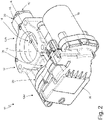
Figure 2 is a perspective view of an embodiment of a throttle valve realized according to the present invention; -
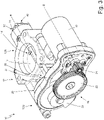
Figure 3 is a perspective view of the throttle valve shown inFigure 2 with parts removed for the sake of clarity; -
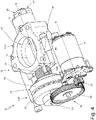
Figure 4 is a different perspective view of the throttle valve shown inFigure 2 with parts removed for the sake of clarity; and -
Figures 5 and6 are two different perspective views of a magnetic joint of the throttle valve shown inFigure 1 . -
Figure 1 schematically shows and as a whole anelectric drive vehicle 1 comprising athrottle valve 10 realized according to an embodiment of the present invention and schematically illustrated inFigures 2-6 . - As shown in
Figure 1 , thethrottle valve 10 is positioned between areservoir 2, containing a gas, in particular hydrogen, and afuel cell 3, in particular a hydrogen cell; thethrottle valve 10 is connected to thereservoir 2 and to thefuel cell 3 viarespective ducts 4 and 5, which are designed to transport the gas respectively from thereservoir 2 to thethrottle valve 10 and from thethrottle valve 10 to thefuel cell 3. - The
electric drive vehicle 1 further comprises at least oneelectric motor 6, electrically connected to thefuel cell 3 via an electrical connection 7 and designed to generate a motor torque which is transmitted to drive wheels. - With reference to
Figures 2-4 , thethrottle valve 10 comprises ametal valve body 12 having aportion 12A and aportion 12B, the latter being coupled to one another according to the modalities described in detail in the following. Thevalve body 12 comprises afeeding duct 14, in particular obtained in theportion 12A, through which the hydrogen drawn from thereservoir 2 via the duct 4 passes and continues towards thefuel cell 3 via theduct 5. Thefeeding duct 14 is engaged by athrottle plate 15, which moves between an opening position and a closing position of thefeeding duct 14 through the action of an electric motor 8 (illustrated inFigure 4 ). Thethrottle plate 15 is affixed onto ametal shaft 16 which is arranged in theportion 12A and is rotatably mounted around a longitudinal rotation axis R to rotate between the opening position and the closing position under the control of theelectric motor 8. - The
electric motor 8 is arranged in theportion 12B and is coupled to theshaft 16 through a gear transmission 18 (partially illustrated inFigures 3 and4 ), which is also arranged in theportion 12B. Theelectric motor 8 is housed in acylindrical chamber 19 which is arranged next to thefeeding duct 14 and is obtained in theportion 12B. Thegear transmission 18 comprises agear 21 which is directly mounted on a shaft of theelectric motor 8 and is designed to rotate around a corresponding rotation axis S, coinciding with the rotation axis of the shaft of theelectric motor 8. Thegear transmission 18 further comprises agear 22 which comprises a first toothed ring, which meshes with thegear 21, and a second toothed ring (not shown) which is coaxial with the first toothed ring and has a smaller radius compared to the latter. Finally, thegear transmission 18 comprises atoothed sector 23, which meshes with the second toothed ring of thegear 22 and is coaxial with theshaft 16. According to a preferred embodiment, thegear 21 is normally made of sintered steel and thegear 22 is normally made of plastic material. According to a preferred embodiment, thegear transmission 18 is arranged in a chamber of thevalve body 12 which is closed by aremovable cover 39, shown inFigure 2 and made, e.g., of plastic material. - The
throttle valve 10 further comprises amagnetic joint 20 which is positioned between thegear transmission 18 and theshaft 16 of thethrottle valve 10; more precisely, themagnetic joint 20 is coaxial with theshaft 16 of thethrottle valve 10, i.e. it is designed to rotate around the rotation axis R as a result of the movement induced by theelectric motor 8 as well. With reference toFigures 4-6 , themagnetic joint 20 comprises ajoint half 25 and ajoint half 26, respectively formed in theportions valve body 12. Thejoint half 25 comprises a plurality of magnetic elements 41 (shown inFigure 6 ) arranged in anannulus 43, the latter defined by acover 28 and by acentral portion 37 of thejoint half 25; thejoint half 26 comprises a plurality of magnetic elements 29 (shown inFigure 5 ) arranged in anannulus 31, the latter defined by acover 32 and by acentral portion 38 of thejoint half 26. The plurality ofmagnetic elements 41 of thejoint half 25 and the plurality ofmagnetic elements 29 of thejoint half 26 are magnetically coupled to one another, i.e. the plurality ofmagnetic elements 41 has an opposite polarity compared to the plurality ofmagnetic elements 29, so that the twojoint halves - In addition, according to the present embodiment, the
toothed sector 23 is directly mounted on thejoint half 25, so that the latter is mechanically coupled to the shaft of theelectric motor 8 via thegear transmission 18. - Furthermore, between the two
joint halves Figure 3 ) is arranged, which is adapted to insulate theportion 12A from theportion 12B and thus thejoint half 25 from thejoint half 26 in a pneumatically sealed manner. - Again with reference to
Figure 4 , thethrottle valve 10 further comprises areturn spring 34, arranged in theportion 12A and mechanically coupled to thejoint half 26 or to theshaft 16; in particular, thereturn spring 34 is, e.g., a helical torsion spring (i.e. the spring loses its shape according to a circular motion, generating a counter-torque) and tends to rotate theshaft 16 in a closing direction with a movement that moves thethrottle plate 15 towards the closing position. In detail, thereturn spring 34 is arranged around a cylindrical portion 35 (visible inFigures 2 and3 ) of theportion 12A which is coaxial with the rotation axis R. Oneend 34A of thereturn spring 34 is connected to ananchoring portion 36, the latter formed in theportion 12A of thevalve body 12; in addition, a further end (not shown) of thereturn spring 34 is connected to a further anchoring portion (not shown) obtained in the shaft 16 (or in the joint half 26) so that, in use, the rotation of theshaft 16 resulting from the movement induced by theelectric motor 8 causes the generation of a counter-torque in thereturn spring 34 when such rotation is intended to move theplate 15 from the closing position to the opening position. - In use, when the
electric motor 8 moves thegear transmission 18, the rotation of thetoothed sector 23 causes a corresponding rotation of thejoint half 25 around the rotation axis R; thanks to the magnetic coupling between the twojoint halves joint half 26 rotates around the rotation axis R in the same rotation direction of thejoint half 25. As a consequence of the movement of thejoint halves shaft 16 rotates around the rotation axis R, in particular in the same rotation direction of the twojoint halves throttle plate 15 towards the opening position. - According to a preferred embodiment, the
throttle valve 10 comprises a position sensor 40 (schematically shown inFigures 2-4 ), e.g. of inductive type, arranged at anend 30 of theportion 12A of thebody 12; in particular, theposition sensor 40 is designed to detect the angular position of theshaft 16 and, thus, of thethrottle plate 15 to allow a feedback control of the position of saidthrottle plate 15. For instance, theposition sensor 40 could be of the type described in U.S. patent no.US6236199B1 and thus comprise a rotor angularly integral to theshaft 16 and a stator supported by thevalve body 12 and arranged facing the rotor when in use. Alternatively, theposition sensor 40 could be of a magnetostrictive type and thus comprise a permanent magnet integral to theshaft 16, in particular at theend 30. - According to an embodiment, the
throttle valve 10 further comprises a gas sensor, in particular a hydrogen sensor (not shown), arranged on thevalve body 12, coupled to theelectric motor 8 and configured to detect potential gas leaks. In use, when a hydrogen leak is detected, the hydrogen sensor generates and transmits an electrical signal to theelectric motor 8, which, based on such electrical signal, moves thethrottle plate 15 towards the closing position almost immediately, interrupting the flow of gas through thefeeding duct 14. - The aforementioned transition from the opening position to the closing position of the
throttle plate 15 also occurs in absence of the action of theelectric motor 8, i.e. thethrottle plate 15 is generally in a closing position. In this way, the flow of gas, in particular of hydrogen, through thefeeding duct 14 is permitted only when theelectric motor 8 induces a movement of thegear transmission 18, of themagnetic joint 20 and, thus, of theshaft 16. - The
throttle valve 10 described above has numerous advantages. - First of all, the presence of the
insulating wall 27 allows insulating the twojoint halves portions valve body 12, in a pneumatically sealed manner, making the passage of gas leaks from theportion 12A to theportion 12B totally impossible. - Moreover, the
throttle valve 10 is designed to automatically close in the event of gas leaks; indeed, as stated above, the presence of the gas sensor makes it possible to detect gas leaks and, consequently, to control theelectric motor 8 so as to move thethrottle plate 15 in a closing position, thereby obstructing thefeeding duct 14. - The obstruction of the
feeding duct 14 also occurs in absence of the action of theelectric motor 8, so as to avoid accidental gas leaks and, thus, to guarantee the safety of theelectric drive vehicle 1 also when not in use. - In summary, the
throttle valve 10 is an element which is completely sealed in the absence of actions by theelectric motor 8 and which guarantees the safety of theelectric drive vehicle 1 in any operating conditions. - Finally, the
throttle valve 10 is simple and inexpensive to produce. -
- 1
- electric drive vehicle
- 2
- reservoir
- 3
- fuel cell
- 4
- duct
- 5
- duct
- 6
- electric motor
- 7
- electrical connection
- 8
- electric motor
- 10
- throttle valve
- 12
- valve body
- 12A
- portion
- 12B
- portion
- 14
- feeding duct
- 15
- plate
- 18
- gear transmission
- 19
- connector
- 20
- magnetic joint
- 21
- gear
- 22
- gear
- 23
- toothed sector
- 25
- joint half
- 26
- joint half
- 27
- insulating wall
- 28
- cover
- 29
- magnetic elements
- 30
- end
- 31
- annulus
- 32
- cover
- 33
- borehole
- 34
- return spring
- 34A
- end
- 35
- cylindrical portion
- 36
- anchoring portion
- 37
- central portion
- 38
- central portion
- 39
- removable cover
- 40
- position sensor
- 41
- magnetic elements
- 42
- annulus
- R
- rotation axis
- S
- rotation axis
Claims (9)
- A throttle valve (10) for adjusting the feeding of a gas to a fuel cell (3); the throttle valve (10) comprises:a valve body (12) including a first (12A) and a second portion (12B);a gas feeding duct (14) obtained in the first portion (12A) of the valve body (12);a throttle plate (15), arranged in the feeding duct (14);a shaft (16), which is rotatably mounted in the first portion (12A) of the valve body (12) and supports the throttle plate (15); andan actuator (8), which is mounted in the second portion (12B) of the valve body (12) and is configured to rotate the shaft (16);the throttle valve (10) is characterized in that it comprises:a magnetic joint (20), which transmits the motion from the actuator (8) to the shaft and comprises a first half (25) coupled to the shaft (16) and a second half (26) facing the first half (25) and coupled to the actuator (8); andan insulating wall (27) which is configured to insulate the first portion (12A) of the valve body (12), in a pneumatically sealed manner, from the second portion (12B) of the valve body (12) and is arranged between the two halves (25, 26) of the magnetic joint (20).
- The throttle valve (10) according to claim 1, wherein:the first half (25) of the magnetic joint (20) comprises a plurality of first magnetic elements (41); andthe second half (26) of the magnetic joint comprises a plurality of second magnetic elements (29).
- The throttle valve (10) according to any of the preceding claims and comprising a position sensor (40), which is arranged in the first portion (12A) of the valve body (12), is coupled to the shaft (16) and is designed to detect the angular position of the shaft (12).
- The throttle valve (10) according to any of the preceding claims and comprising a return spring (34), which is arranged in the first portion (12A) of the valve body (12), is coupled to the shaft (16) and is designed to rotate the shaft (16) towards a closing position.
- The throttle valve (10) according to any of the preceding claims and comprising a gear transmission (18), which is arranged in the second portion (12B) of the valve body and is configured to connect the first half (25) of the magnetic joint (20) to the actuator (8).
- The throttle valve (10) according to claim 5, wherein the gear transmission (18) comprises:a first gear (21), which is integral to a shaft of the actuator (8);a second gear (22), which meshes with the first gear (21); anda toothed sector (23), which meshes with the second gear (22) and is arranged, relative to the second gear (22), on the side opposite the first gear (21).
- The throttle valve (10) according to claim 6, wherein the second gear (22) comprises a first larger toothed ring, which meshes with the first gear (21), and a second smaller toothed ring, which meshes with the toothed sector (23).
- The throttle valve (10) according to claim 6 or 7, wherein the toothed sector (23) is coaxial and directly fitted to the first half (25) of the magnetic joint.
- An electric drive vehicle (1) comprising:a reservoir (2) containing hydrogen;a fuel cell (3), which uses hydrogen to generate electric energy;a duct (4, 5), which connects the reservoir (2) to the fuel cell (3); andat least one electric motor (6) connected to drive wheels;the electric drive vehicle (1) is characterized in that it comprises a throttle valve (10) according to any of the preceding claims.
Applications Claiming Priority (1)
| Application Number | Priority Date | Filing Date | Title |
|---|---|---|---|
| IT201900017894 | 2019-10-03 |
Publications (2)
| Publication Number | Publication Date |
|---|---|
| EP3800716A1 EP3800716A1 (en) | 2021-04-07 |
| EP3800716B1 true EP3800716B1 (en) | 2022-05-04 |
Family
ID=69469126
Family Applications (1)
| Application Number | Title | Priority Date | Filing Date |
|---|---|---|---|
| EP20199020.7A Active EP3800716B1 (en) | 2019-10-03 | 2020-09-29 | Throttle valve for adjusting the feeding of a gas to a fuel cell and electric drive vehicle including the throttle valve |
Country Status (3)
| Country | Link |
|---|---|
| US (1) | US11535109B2 (en) |
| EP (1) | EP3800716B1 (en) |
| CN (1) | CN112610743B (en) |
Families Citing this family (5)
| Publication number | Priority date | Publication date | Assignee | Title |
|---|---|---|---|---|
| EP3800716B1 (en) * | 2019-10-03 | 2022-05-04 | Marelli Europe S.p.A. | Throttle valve for adjusting the feeding of a gas to a fuel cell and electric drive vehicle including the throttle valve |
| CN115523327B (en) * | 2021-06-25 | 2025-08-08 | 浙江三花汽车零部件有限公司 | Drives and control valves |
| WO2023072636A1 (en) * | 2021-10-26 | 2023-05-04 | Vitesco Technologies GmbH | Throttle-valve actuator unit, fuel cell system comprising a throttle-valve actuator unit of this kind, and motor vehicle comprising a fuel cell system of this kind |
| DE102022120289A1 (en) * | 2022-08-11 | 2024-02-22 | Purem GmbH | Control flap assembly for a gas flow in a fuel cell system |
| EP4735780A1 (en) * | 2023-06-29 | 2026-05-06 | Schaeffler Technologies AG & Co. KG | Throttle valve device, fuel-cell system and vehicle |
Family Cites Families (18)
| Publication number | Priority date | Publication date | Assignee | Title |
|---|---|---|---|---|
| EP0300479B1 (en) * | 1987-07-22 | 1992-05-06 | Mitsubishi Denki Kabushiki Kaisha | Throttle valve controlling apparatus |
| DE3811892A1 (en) * | 1988-04-09 | 1989-10-19 | Bosch Gmbh Robert | DEVICE FOR CONTROLLING AN INTERNAL COMBUSTION ENGINE IN VEHICLES |
| JP2758535B2 (en) | 1992-07-16 | 1998-05-28 | 株式会社日立製作所 | Electronic throttle control |
| JP3364873B2 (en) * | 1997-03-13 | 2003-01-08 | 株式会社日立ユニシアオートモティブ | Electronically controlled throttle valve device for internal combustion engine |
| JP3361030B2 (en) * | 1997-03-19 | 2003-01-07 | 株式会社日立ユニシアオートモティブ | Electronically controlled throttle valve device for internal combustion engine |
| DE19738836A1 (en) | 1997-09-05 | 1999-03-11 | Hella Kg Hueck & Co | Inductive angle sensor |
| DE10007611A1 (en) * | 2000-02-18 | 2001-08-23 | Mannesmann Vdo Ag | Throttle body |
| DE10205090A1 (en) * | 2002-02-07 | 2003-09-04 | Bosch Gmbh Robert | Throttle body with modular cover element |
| JP2004132235A (en) * | 2002-10-09 | 2004-04-30 | Aisan Ind Co Ltd | Throttle control device |
| US7096851B2 (en) * | 2003-06-26 | 2006-08-29 | Honda Motor Co., Ltd. | Throttle device for multipurpose engine |
| JP2005048671A (en) * | 2003-07-29 | 2005-02-24 | Mitsubishi Electric Corp | Engine intake control system |
| JP4289303B2 (en) * | 2004-06-30 | 2009-07-01 | 株式会社デンソー | Intake control device for internal combustion engine |
| DE102010042072A1 (en) * | 2010-10-06 | 2012-04-12 | Robert Bosch Gmbh | DC electric machine |
| ITBO20120312A1 (en) * | 2012-06-06 | 2013-12-07 | Magneti Marelli Spa | BUTTERFLY VALVE FOR AN INTERNAL COMBUSTION ENGINE PROVIDED WITH A METALLIC VALVE SEAT MOLDED INSIDE A BODY VALVE IN PLASTIC MATERIAL |
| ITUB20160567A1 (en) * | 2016-02-08 | 2017-08-08 | Dellorto S P A | Air flow control device in a throttle body for supplying an internal combustion engine |
| JP6822296B2 (en) | 2017-04-20 | 2021-01-27 | トヨタ自動車株式会社 | Fuel cell system |
| IT201800003347A1 (en) | 2018-03-07 | 2019-09-07 | Magneti Marelli Spa | BUTTERFLY VALVE FOR AN INTERNAL COMBUSTION ENGINE WITH THE POSSIBILITY OF ADJUSTING THE LIMP-HOME POSITION AND RELATED METHOD OF ADJUSTING THE LIMP-HOME POSITION |
| EP3800716B1 (en) * | 2019-10-03 | 2022-05-04 | Marelli Europe S.p.A. | Throttle valve for adjusting the feeding of a gas to a fuel cell and electric drive vehicle including the throttle valve |
-
2020
- 2020-09-29 EP EP20199020.7A patent/EP3800716B1/en active Active
- 2020-09-30 CN CN202011057542.4A patent/CN112610743B/en active Active
- 2020-10-01 US US17/060,233 patent/US11535109B2/en active Active
Also Published As
| Publication number | Publication date |
|---|---|
| CN112610743A (en) | 2021-04-06 |
| US11535109B2 (en) | 2022-12-27 |
| EP3800716A1 (en) | 2021-04-07 |
| US20210101491A1 (en) | 2021-04-08 |
| CN112610743B (en) | 2025-04-29 |
Similar Documents
| Publication | Publication Date | Title |
|---|---|---|
| EP3800716B1 (en) | Throttle valve for adjusting the feeding of a gas to a fuel cell and electric drive vehicle including the throttle valve | |
| US7534187B2 (en) | Locking differential assembly | |
| US10180181B2 (en) | Cam gear and linear drive device comprising said cam gear | |
| CN109630677B (en) | Electromechanically active dual redundant dual-motor actuator for operating vehicle components | |
| US8408518B2 (en) | Electric actuators having internal load apparatus | |
| US8591375B2 (en) | Clutch device | |
| US20140346380A1 (en) | Electrically Operated Valve Assembly | |
| US20080011269A1 (en) | Throttle control apparatus | |
| JP4206920B2 (en) | Actuator holding device | |
| EP3516263B1 (en) | Actuator for a regulator pilot valve | |
| JP4259315B2 (en) | Electronically controlled throttle control device | |
| JP2020176655A (en) | Rotary actuator | |
| CN118223755B (en) | Actuator, electric charging port cover, and vehicle | |
| US20020033194A1 (en) | Bypass control valve | |
| JP2009264504A (en) | Valve driving device | |
| US9765874B2 (en) | Gear drive and actuator arrangement | |
| CN102128090A (en) | Electronic throttle valve body for diesel engine | |
| US20020084433A1 (en) | Electronic throttle body with low friction default mechanism | |
| CN111828554A (en) | Rotary actuator | |
| JP5447266B2 (en) | Electric actuator | |
| CN115871773B (en) | Drive-by-wire steering road feel simulation system with failure redundancy and control method thereof | |
| US6860464B1 (en) | Electromechanical/pneumatic rocket engine valve actuator | |
| CN104279087A (en) | Valve device | |
| KR102662974B1 (en) | Valve assembly for hydrogen fuel cell vehicle | |
| KR102883822B1 (en) | Metal Particle Gathering type Electronic Throttle Control valve |
Legal Events
| Date | Code | Title | Description |
|---|---|---|---|
| PUAI | Public reference made under article 153(3) epc to a published international application that has entered the european phase |
Free format text: ORIGINAL CODE: 0009012 |
|
| STAA | Information on the status of an ep patent application or granted ep patent |
Free format text: STATUS: THE APPLICATION HAS BEEN PUBLISHED |
|
| AK | Designated contracting states |
Kind code of ref document: A1 Designated state(s): AL AT BE BG CH CY CZ DE DK EE ES FI FR GB GR HR HU IE IS IT LI LT LU LV MC MK MT NL NO PL PT RO RS SE SI SK SM TR |
|
| AX | Request for extension of the european patent |
Extension state: BA ME |
|
| STAA | Information on the status of an ep patent application or granted ep patent |
Free format text: STATUS: REQUEST FOR EXAMINATION WAS MADE |
|
| 17P | Request for examination filed |
Effective date: 20210901 |
|
| GRAP | Despatch of communication of intention to grant a patent |
Free format text: ORIGINAL CODE: EPIDOSNIGR1 |
|
| STAA | Information on the status of an ep patent application or granted ep patent |
Free format text: STATUS: GRANT OF PATENT IS INTENDED |
|
| RIC1 | Information provided on ipc code assigned before grant |
Ipc: H01M 8/04 20160101ALI20211108BHEP Ipc: F02M 21/02 20060101ALI20211108BHEP Ipc: F02D 9/10 20060101ALI20211108BHEP Ipc: H01M 8/04089 20160101AFI20211108BHEP |
|
| INTG | Intention to grant announced |
Effective date: 20211124 |
|
| GRAS | Grant fee paid |
Free format text: ORIGINAL CODE: EPIDOSNIGR3 |
|
| GRAA | (expected) grant |
Free format text: ORIGINAL CODE: 0009210 |
|
| STAA | Information on the status of an ep patent application or granted ep patent |
Free format text: STATUS: THE PATENT HAS BEEN GRANTED |
|
| AK | Designated contracting states |
Kind code of ref document: B1 Designated state(s): AL AT BE BG CH CY CZ DE DK EE ES FI FR GB GR HR HU IE IS IT LI LT LU LV MC MK MT NL NO PL PT RO RS SE SI SK SM TR |
|
| REG | Reference to a national code |
Ref country code: GB Ref legal event code: FG4D |
|
| REG | Reference to a national code |
Ref country code: CH Ref legal event code: EP |
|
| REG | Reference to a national code |
Ref country code: AT Ref legal event code: REF Ref document number: 1490086 Country of ref document: AT Kind code of ref document: T Effective date: 20220515 |
|
| REG | Reference to a national code |
Ref country code: DE Ref legal event code: R096 Ref document number: 602020003019 Country of ref document: DE |
|
| REG | Reference to a national code |
Ref country code: IE Ref legal event code: FG4D |
|
| REG | Reference to a national code |
Ref country code: LT Ref legal event code: MG9D |
|
| REG | Reference to a national code |
Ref country code: NL Ref legal event code: MP Effective date: 20220504 |
|
| REG | Reference to a national code |
Ref country code: AT Ref legal event code: MK05 Ref document number: 1490086 Country of ref document: AT Kind code of ref document: T Effective date: 20220504 |
|
| PG25 | Lapsed in a contracting state [announced via postgrant information from national office to epo] |
Ref country code: SE Free format text: LAPSE BECAUSE OF FAILURE TO SUBMIT A TRANSLATION OF THE DESCRIPTION OR TO PAY THE FEE WITHIN THE PRESCRIBED TIME-LIMIT Effective date: 20220504 Ref country code: PT Free format text: LAPSE BECAUSE OF FAILURE TO SUBMIT A TRANSLATION OF THE DESCRIPTION OR TO PAY THE FEE WITHIN THE PRESCRIBED TIME-LIMIT Effective date: 20220905 Ref country code: NO Free format text: LAPSE BECAUSE OF FAILURE TO SUBMIT A TRANSLATION OF THE DESCRIPTION OR TO PAY THE FEE WITHIN THE PRESCRIBED TIME-LIMIT Effective date: 20220804 Ref country code: NL Free format text: LAPSE BECAUSE OF FAILURE TO SUBMIT A TRANSLATION OF THE DESCRIPTION OR TO PAY THE FEE WITHIN THE PRESCRIBED TIME-LIMIT Effective date: 20220504 Ref country code: LT Free format text: LAPSE BECAUSE OF FAILURE TO SUBMIT A TRANSLATION OF THE DESCRIPTION OR TO PAY THE FEE WITHIN THE PRESCRIBED TIME-LIMIT Effective date: 20220504 Ref country code: HR Free format text: LAPSE BECAUSE OF FAILURE TO SUBMIT A TRANSLATION OF THE DESCRIPTION OR TO PAY THE FEE WITHIN THE PRESCRIBED TIME-LIMIT Effective date: 20220504 Ref country code: GR Free format text: LAPSE BECAUSE OF FAILURE TO SUBMIT A TRANSLATION OF THE DESCRIPTION OR TO PAY THE FEE WITHIN THE PRESCRIBED TIME-LIMIT Effective date: 20220805 Ref country code: FI Free format text: LAPSE BECAUSE OF FAILURE TO SUBMIT A TRANSLATION OF THE DESCRIPTION OR TO PAY THE FEE WITHIN THE PRESCRIBED TIME-LIMIT Effective date: 20220504 Ref country code: BG Free format text: LAPSE BECAUSE OF FAILURE TO SUBMIT A TRANSLATION OF THE DESCRIPTION OR TO PAY THE FEE WITHIN THE PRESCRIBED TIME-LIMIT Effective date: 20220804 Ref country code: AT Free format text: LAPSE BECAUSE OF FAILURE TO SUBMIT A TRANSLATION OF THE DESCRIPTION OR TO PAY THE FEE WITHIN THE PRESCRIBED TIME-LIMIT Effective date: 20220504 |
|
| PG25 | Lapsed in a contracting state [announced via postgrant information from national office to epo] |
Ref country code: RS Free format text: LAPSE BECAUSE OF FAILURE TO SUBMIT A TRANSLATION OF THE DESCRIPTION OR TO PAY THE FEE WITHIN THE PRESCRIBED TIME-LIMIT Effective date: 20220504 Ref country code: PL Free format text: LAPSE BECAUSE OF FAILURE TO SUBMIT A TRANSLATION OF THE DESCRIPTION OR TO PAY THE FEE WITHIN THE PRESCRIBED TIME-LIMIT Effective date: 20220504 Ref country code: LV Free format text: LAPSE BECAUSE OF FAILURE TO SUBMIT A TRANSLATION OF THE DESCRIPTION OR TO PAY THE FEE WITHIN THE PRESCRIBED TIME-LIMIT Effective date: 20220504 Ref country code: IS Free format text: LAPSE BECAUSE OF FAILURE TO SUBMIT A TRANSLATION OF THE DESCRIPTION OR TO PAY THE FEE WITHIN THE PRESCRIBED TIME-LIMIT Effective date: 20220904 |
|
| PG25 | Lapsed in a contracting state [announced via postgrant information from national office to epo] |
Ref country code: SM Free format text: LAPSE BECAUSE OF FAILURE TO SUBMIT A TRANSLATION OF THE DESCRIPTION OR TO PAY THE FEE WITHIN THE PRESCRIBED TIME-LIMIT Effective date: 20220504 Ref country code: SK Free format text: LAPSE BECAUSE OF FAILURE TO SUBMIT A TRANSLATION OF THE DESCRIPTION OR TO PAY THE FEE WITHIN THE PRESCRIBED TIME-LIMIT Effective date: 20220504 Ref country code: RO Free format text: LAPSE BECAUSE OF FAILURE TO SUBMIT A TRANSLATION OF THE DESCRIPTION OR TO PAY THE FEE WITHIN THE PRESCRIBED TIME-LIMIT Effective date: 20220504 Ref country code: ES Free format text: LAPSE BECAUSE OF FAILURE TO SUBMIT A TRANSLATION OF THE DESCRIPTION OR TO PAY THE FEE WITHIN THE PRESCRIBED TIME-LIMIT Effective date: 20220504 Ref country code: EE Free format text: LAPSE BECAUSE OF FAILURE TO SUBMIT A TRANSLATION OF THE DESCRIPTION OR TO PAY THE FEE WITHIN THE PRESCRIBED TIME-LIMIT Effective date: 20220504 Ref country code: DK Free format text: LAPSE BECAUSE OF FAILURE TO SUBMIT A TRANSLATION OF THE DESCRIPTION OR TO PAY THE FEE WITHIN THE PRESCRIBED TIME-LIMIT Effective date: 20220504 Ref country code: CZ Free format text: LAPSE BECAUSE OF FAILURE TO SUBMIT A TRANSLATION OF THE DESCRIPTION OR TO PAY THE FEE WITHIN THE PRESCRIBED TIME-LIMIT Effective date: 20220504 |
|
| REG | Reference to a national code |
Ref country code: DE Ref legal event code: R097 Ref document number: 602020003019 Country of ref document: DE |
|
| PLBE | No opposition filed within time limit |
Free format text: ORIGINAL CODE: 0009261 |
|
| STAA | Information on the status of an ep patent application or granted ep patent |
Free format text: STATUS: NO OPPOSITION FILED WITHIN TIME LIMIT |
|
| PG25 | Lapsed in a contracting state [announced via postgrant information from national office to epo] |
Ref country code: AL Free format text: LAPSE BECAUSE OF FAILURE TO SUBMIT A TRANSLATION OF THE DESCRIPTION OR TO PAY THE FEE WITHIN THE PRESCRIBED TIME-LIMIT Effective date: 20220504 |
|
| 26N | No opposition filed |
Effective date: 20230207 |
|
| PG25 | Lapsed in a contracting state [announced via postgrant information from national office to epo] |
Ref country code: MC Free format text: LAPSE BECAUSE OF FAILURE TO SUBMIT A TRANSLATION OF THE DESCRIPTION OR TO PAY THE FEE WITHIN THE PRESCRIBED TIME-LIMIT Effective date: 20220504 |
|
| REG | Reference to a national code |
Ref country code: BE Ref legal event code: MM Effective date: 20220930 |
|
| PG25 | Lapsed in a contracting state [announced via postgrant information from national office to epo] |
Ref country code: SI Free format text: LAPSE BECAUSE OF FAILURE TO SUBMIT A TRANSLATION OF THE DESCRIPTION OR TO PAY THE FEE WITHIN THE PRESCRIBED TIME-LIMIT Effective date: 20220504 |
|
| PG25 | Lapsed in a contracting state [announced via postgrant information from national office to epo] |
Ref country code: LU Free format text: LAPSE BECAUSE OF NON-PAYMENT OF DUE FEES Effective date: 20220929 |
|
| PG25 | Lapsed in a contracting state [announced via postgrant information from national office to epo] |
Ref country code: IE Free format text: LAPSE BECAUSE OF NON-PAYMENT OF DUE FEES Effective date: 20220929 |
|
| PG25 | Lapsed in a contracting state [announced via postgrant information from national office to epo] |
Ref country code: BE Free format text: LAPSE BECAUSE OF NON-PAYMENT OF DUE FEES Effective date: 20220930 |
|
| PG25 | Lapsed in a contracting state [announced via postgrant information from national office to epo] |
Ref country code: CY Free format text: LAPSE BECAUSE OF FAILURE TO SUBMIT A TRANSLATION OF THE DESCRIPTION OR TO PAY THE FEE WITHIN THE PRESCRIBED TIME-LIMIT Effective date: 20220504 |
|
| REG | Reference to a national code |
Ref country code: CH Ref legal event code: PL |
|
| PG25 | Lapsed in a contracting state [announced via postgrant information from national office to epo] |
Ref country code: MK Free format text: LAPSE BECAUSE OF FAILURE TO SUBMIT A TRANSLATION OF THE DESCRIPTION OR TO PAY THE FEE WITHIN THE PRESCRIBED TIME-LIMIT Effective date: 20220504 |
|
| PG25 | Lapsed in a contracting state [announced via postgrant information from national office to epo] |
Ref country code: TR Free format text: LAPSE BECAUSE OF FAILURE TO SUBMIT A TRANSLATION OF THE DESCRIPTION OR TO PAY THE FEE WITHIN THE PRESCRIBED TIME-LIMIT Effective date: 20220504 |
|
| PG25 | Lapsed in a contracting state [announced via postgrant information from national office to epo] |
Ref country code: CH Free format text: LAPSE BECAUSE OF NON-PAYMENT OF DUE FEES Effective date: 20230930 |
|
| PG25 | Lapsed in a contracting state [announced via postgrant information from national office to epo] |
Ref country code: HU Free format text: LAPSE BECAUSE OF FAILURE TO SUBMIT A TRANSLATION OF THE DESCRIPTION OR TO PAY THE FEE WITHIN THE PRESCRIBED TIME-LIMIT; INVALID AB INITIO Effective date: 20200929 Ref country code: CH Free format text: LAPSE BECAUSE OF NON-PAYMENT OF DUE FEES Effective date: 20230930 |
|
| PG25 | Lapsed in a contracting state [announced via postgrant information from national office to epo] |
Ref country code: MT Free format text: LAPSE BECAUSE OF FAILURE TO SUBMIT A TRANSLATION OF THE DESCRIPTION OR TO PAY THE FEE WITHIN THE PRESCRIBED TIME-LIMIT Effective date: 20220504 |
|
| PG25 | Lapsed in a contracting state [announced via postgrant information from national office to epo] |
Ref country code: BG Free format text: LAPSE BECAUSE OF FAILURE TO SUBMIT A TRANSLATION OF THE DESCRIPTION OR TO PAY THE FEE WITHIN THE PRESCRIBED TIME-LIMIT Effective date: 20220504 |
|
| PG25 | Lapsed in a contracting state [announced via postgrant information from national office to epo] |
Ref country code: BG Free format text: LAPSE BECAUSE OF FAILURE TO SUBMIT A TRANSLATION OF THE DESCRIPTION OR TO PAY THE FEE WITHIN THE PRESCRIBED TIME-LIMIT Effective date: 20220504 |
|
| GBPC | Gb: european patent ceased through non-payment of renewal fee |
Effective date: 20240929 |
|
| PG25 | Lapsed in a contracting state [announced via postgrant information from national office to epo] |
Ref country code: GB Free format text: LAPSE BECAUSE OF NON-PAYMENT OF DUE FEES Effective date: 20240929 |
|
| PGFP | Annual fee paid to national office [announced via postgrant information from national office to epo] |
Ref country code: DE Payment date: 20260323 Year of fee payment: 6 |
|
| PGFP | Annual fee paid to national office [announced via postgrant information from national office to epo] |
Ref country code: IT Payment date: 20260325 Year of fee payment: 6 |
|
| PGFP | Annual fee paid to national office [announced via postgrant information from national office to epo] |
Ref country code: FR Payment date: 20260323 Year of fee payment: 6 |