EP3800206A1 - Bio-based polysaccharide foil - Google Patents
Bio-based polysaccharide foil Download PDFInfo
- Publication number
- EP3800206A1 EP3800206A1 EP19201216.9A EP19201216A EP3800206A1 EP 3800206 A1 EP3800206 A1 EP 3800206A1 EP 19201216 A EP19201216 A EP 19201216A EP 3800206 A1 EP3800206 A1 EP 3800206A1
- Authority
- EP
- European Patent Office
- Prior art keywords
- polysaccharide
- foil
- medium
- fungus
- foil according
- Prior art date
- Legal status (The legal status is an assumption and is not a legal conclusion. Google has not performed a legal analysis and makes no representation as to the accuracy of the status listed.)
- Withdrawn
Links
- 229920001282 polysaccharide Polymers 0.000 title claims abstract description 159
- 239000005017 polysaccharide Substances 0.000 title claims abstract description 159
- 150000004676 glycans Chemical class 0.000 title claims abstract description 157
- 239000011888 foil Substances 0.000 title claims abstract description 116
- 241000233866 Fungi Species 0.000 claims abstract description 63
- 238000000034 method Methods 0.000 claims abstract description 60
- 229920000642 polymer Polymers 0.000 claims abstract description 48
- 239000004014 plasticizer Substances 0.000 claims abstract description 33
- 238000000855 fermentation Methods 0.000 claims abstract description 26
- 230000004151 fermentation Effects 0.000 claims abstract description 26
- 241000235349 Ascomycota Species 0.000 claims abstract description 25
- 238000004519 manufacturing process Methods 0.000 claims abstract description 25
- 229920002498 Beta-glucan Polymers 0.000 claims description 29
- XLYOFNOQVPJJNP-UHFFFAOYSA-N water Substances O XLYOFNOQVPJJNP-UHFFFAOYSA-N 0.000 claims description 26
- 239000000463 material Substances 0.000 claims description 23
- 229910052799 carbon Inorganic materials 0.000 claims description 21
- OKTJSMMVPCPJKN-UHFFFAOYSA-N Carbon Chemical compound [C] OKTJSMMVPCPJKN-UHFFFAOYSA-N 0.000 claims description 19
- LFQSCWFLJHTTHZ-UHFFFAOYSA-N Ethanol Chemical compound CCO LFQSCWFLJHTTHZ-UHFFFAOYSA-N 0.000 claims description 18
- FYGDTMLNYKFZSV-URKRLVJHSA-N (2s,3r,4s,5s,6r)-2-[(2r,4r,5r,6s)-4,5-dihydroxy-2-(hydroxymethyl)-6-[(2r,4r,5r,6s)-4,5,6-trihydroxy-2-(hydroxymethyl)oxan-3-yl]oxyoxan-3-yl]oxy-6-(hydroxymethyl)oxane-3,4,5-triol Chemical group O[C@@H]1[C@@H](O)[C@H](O)[C@@H](CO)O[C@H]1OC1[C@@H](CO)O[C@@H](OC2[C@H](O[C@H](O)[C@H](O)[C@H]2O)CO)[C@H](O)[C@H]1O FYGDTMLNYKFZSV-URKRLVJHSA-N 0.000 claims description 17
- 239000007789 gas Substances 0.000 claims description 13
- 238000002156 mixing Methods 0.000 claims description 13
- 235000013305 food Nutrition 0.000 claims description 12
- 239000002966 varnish Substances 0.000 claims description 12
- 229940126601 medicinal product Drugs 0.000 claims description 11
- -1 alkyl sulphonic acid phenyl ester Chemical class 0.000 claims description 10
- 239000011248 coating agent Substances 0.000 claims description 10
- 238000000576 coating method Methods 0.000 claims description 10
- 239000002131 composite material Substances 0.000 claims description 10
- 239000002537 cosmetic Substances 0.000 claims description 10
- 238000011081 inoculation Methods 0.000 claims description 10
- 239000004753 textile Substances 0.000 claims description 10
- 239000005022 packaging material Substances 0.000 claims description 9
- 125000001477 organic nitrogen group Chemical group 0.000 claims description 7
- 239000003205 fragrance Substances 0.000 claims description 5
- 238000001035 drying Methods 0.000 claims description 4
- OLAQBFHDYFMSAJ-UHFFFAOYSA-L 1,2-bis(7-methyloctyl)cyclohexane-1,2-dicarboxylate Chemical compound CC(C)CCCCCCC1(C([O-])=O)CCCCC1(CCCCCCC(C)C)C([O-])=O OLAQBFHDYFMSAJ-UHFFFAOYSA-L 0.000 claims description 3
- KKEYFWRCBNTPAC-UHFFFAOYSA-N Terephthalic acid Chemical class OC(=O)C1=CC=C(C(O)=O)C=C1 KKEYFWRCBNTPAC-UHFFFAOYSA-N 0.000 claims description 3
- WNLRTRBMVRJNCN-UHFFFAOYSA-N adipic acid Chemical class OC(=O)CCCCC(O)=O WNLRTRBMVRJNCN-UHFFFAOYSA-N 0.000 claims description 3
- 150000001558 benzoic acid derivatives Chemical class 0.000 claims description 3
- 239000008035 bio-based plasticizer Substances 0.000 claims description 3
- 239000002775 capsule Substances 0.000 claims description 3
- 238000000151 deposition Methods 0.000 claims description 3
- 210000004051 gastric juice Anatomy 0.000 claims description 3
- 150000002334 glycols Chemical class 0.000 claims description 3
- 230000005661 hydrophobic surface Effects 0.000 claims description 3
- 150000002688 maleic acid derivatives Chemical class 0.000 claims description 3
- XNGIFLGASWRNHJ-UHFFFAOYSA-L phthalate(2-) Chemical compound [O-]C(=O)C1=CC=CC=C1C([O-])=O XNGIFLGASWRNHJ-UHFFFAOYSA-L 0.000 claims description 3
- 229920001083 polybutene Polymers 0.000 claims description 3
- 229920000570 polyether Polymers 0.000 claims description 3
- CXMXRPHRNRROMY-UHFFFAOYSA-N sebacic acid Chemical class OC(=O)CCCCCCCCC(O)=O CXMXRPHRNRROMY-UHFFFAOYSA-N 0.000 claims description 3
- 229940124530 sulfonamide Drugs 0.000 claims description 3
- 150000003456 sulfonamides Chemical class 0.000 claims description 3
- 125000005591 trimellitate group Chemical group 0.000 claims description 3
- 239000007864 aqueous solution Substances 0.000 claims description 2
- 241000894006 Bacteria Species 0.000 abstract description 9
- 239000002609 medium Substances 0.000 description 66
- XUMBMVFBXHLACL-UHFFFAOYSA-N Melanin Chemical compound O=C1C(=O)C(C2=CNC3=C(C(C(=O)C4=C32)=O)C)=C2C4=CNC2=C1C XUMBMVFBXHLACL-UHFFFAOYSA-N 0.000 description 14
- 239000004033 plastic Substances 0.000 description 13
- 239000000047 product Substances 0.000 description 12
- 238000005406 washing Methods 0.000 description 11
- 238000002360 preparation method Methods 0.000 description 10
- PEDCQBHIVMGVHV-UHFFFAOYSA-N Glycerine Chemical compound OCC(O)CO PEDCQBHIVMGVHV-UHFFFAOYSA-N 0.000 description 9
- 210000004027 cell Anatomy 0.000 description 8
- 241000223678 Aureobasidium pullulans Species 0.000 description 7
- 239000000243 solution Substances 0.000 description 7
- 241000924936 Saccotheciaceae Species 0.000 description 6
- 239000000203 mixture Substances 0.000 description 6
- IJGRMHOSHXDMSA-UHFFFAOYSA-N Atomic nitrogen Chemical compound N#N IJGRMHOSHXDMSA-UHFFFAOYSA-N 0.000 description 4
- FBPFZTCFMRRESA-FSIIMWSLSA-N D-Glucitol Natural products OC[C@H](O)[C@H](O)[C@@H](O)[C@H](O)CO FBPFZTCFMRRESA-FSIIMWSLSA-N 0.000 description 4
- 229920001503 Glucan Polymers 0.000 description 4
- 244000005700 microbiome Species 0.000 description 4
- 238000001556 precipitation Methods 0.000 description 4
- 239000000600 sorbitol Substances 0.000 description 4
- 241000894007 species Species 0.000 description 4
- 150000005846 sugar alcohols Polymers 0.000 description 4
- OKKJLVBELUTLKV-UHFFFAOYSA-N Methanol Chemical compound OC OKKJLVBELUTLKV-UHFFFAOYSA-N 0.000 description 3
- HEMHJVSKTPXQMS-UHFFFAOYSA-M Sodium hydroxide Chemical compound [OH-].[Na+] HEMHJVSKTPXQMS-UHFFFAOYSA-M 0.000 description 3
- 229930006000 Sucrose Natural products 0.000 description 3
- CZMRCDWAGMRECN-UGDNZRGBSA-N Sucrose Chemical compound O[C@H]1[C@H](O)[C@@H](CO)O[C@@]1(CO)O[C@@H]1[C@H](O)[C@@H](O)[C@H](O)[C@@H](CO)O1 CZMRCDWAGMRECN-UGDNZRGBSA-N 0.000 description 3
- WQZGKKKJIJFFOK-VFUOTHLCSA-N beta-D-glucose Chemical compound OC[C@H]1O[C@@H](O)[C@H](O)[C@@H](O)[C@@H]1O WQZGKKKJIJFFOK-VFUOTHLCSA-N 0.000 description 3
- 238000004140 cleaning Methods 0.000 description 3
- 238000001914 filtration Methods 0.000 description 3
- 239000000049 pigment Substances 0.000 description 3
- 239000000126 substance Substances 0.000 description 3
- 239000005720 sucrose Substances 0.000 description 3
- NOOLISFMXDJSKH-UTLUCORTSA-N (+)-Neomenthol Chemical compound CC(C)[C@@H]1CC[C@@H](C)C[C@@H]1O NOOLISFMXDJSKH-UTLUCORTSA-N 0.000 description 2
- GNFTZDOKVXKIBK-UHFFFAOYSA-N 3-(2-methoxyethoxy)benzohydrazide Chemical compound COCCOC1=CC=CC(C(=O)NN)=C1 GNFTZDOKVXKIBK-UHFFFAOYSA-N 0.000 description 2
- NOOLISFMXDJSKH-UHFFFAOYSA-N DL-menthol Natural products CC(C)C1CCC(C)CC1O NOOLISFMXDJSKH-UHFFFAOYSA-N 0.000 description 2
- 102000004190 Enzymes Human genes 0.000 description 2
- 108090000790 Enzymes Proteins 0.000 description 2
- WQZGKKKJIJFFOK-GASJEMHNSA-N Glucose Natural products OC[C@H]1OC(O)[C@H](O)[C@@H](O)[C@@H]1O WQZGKKKJIJFFOK-GASJEMHNSA-N 0.000 description 2
- 241000204849 Hormonema Species 0.000 description 2
- 229920001218 Pullulan Polymers 0.000 description 2
- FAPWRFPIFSIZLT-UHFFFAOYSA-M Sodium chloride Chemical compound [Na+].[Cl-] FAPWRFPIFSIZLT-UHFFFAOYSA-M 0.000 description 2
- 241000006364 Torula Species 0.000 description 2
- 229920001222 biopolymer Polymers 0.000 description 2
- 238000005119 centrifugation Methods 0.000 description 2
- HVYWMOMLDIMFJA-DPAQBDIFSA-N cholesterol Chemical compound C1C=C2C[C@@H](O)CC[C@]2(C)[C@@H]2[C@@H]1[C@@H]1CC[C@H]([C@H](C)CCCC(C)C)[C@@]1(C)CC2 HVYWMOMLDIMFJA-DPAQBDIFSA-N 0.000 description 2
- 150000001875 compounds Chemical class 0.000 description 2
- 238000002474 experimental method Methods 0.000 description 2
- 239000008103 glucose Substances 0.000 description 2
- 229940041616 menthol Drugs 0.000 description 2
- 239000002480 mineral oil Substances 0.000 description 2
- 235000010446 mineral oil Nutrition 0.000 description 2
- 239000000178 monomer Substances 0.000 description 2
- 150000002772 monosaccharides Chemical class 0.000 description 2
- 229910052757 nitrogen Inorganic materials 0.000 description 2
- 238000004806 packaging method and process Methods 0.000 description 2
- 230000035699 permeability Effects 0.000 description 2
- 235000019423 pullulan Nutrition 0.000 description 2
- 230000005855 radiation Effects 0.000 description 2
- 239000006228 supernatant Substances 0.000 description 2
- DBTMGCOVALSLOR-DEVYUCJPSA-N (2s,3r,4s,5r,6r)-4-[(2s,3r,4s,5r,6r)-3,5-dihydroxy-6-(hydroxymethyl)-4-[(2s,3r,4s,5s,6r)-3,4,5-trihydroxy-6-(hydroxymethyl)oxan-2-yl]oxyoxan-2-yl]oxy-6-(hydroxymethyl)oxane-2,3,5-triol Chemical compound O[C@@H]1[C@@H](O)[C@H](O)[C@@H](CO)O[C@H]1O[C@@H]1[C@@H](O)[C@H](O[C@H]2[C@@H]([C@@H](CO)O[C@H](O)[C@@H]2O)O)O[C@H](CO)[C@H]1O DBTMGCOVALSLOR-DEVYUCJPSA-N 0.000 description 1
- WPVORICJSWGOPP-UHFFFAOYSA-N 2-naphthalen-1-yl-4-nitroisoindole-1,3-dione Chemical compound C1=CC=C2C(N3C(=O)C=4C=CC=C(C=4C3=O)[N+](=O)[O-])=CC=CC2=C1 WPVORICJSWGOPP-UHFFFAOYSA-N 0.000 description 1
- FIKFLLIUPUVONI-UHFFFAOYSA-N 8-(2-phenylethyl)-1-oxa-3,8-diazaspiro[4.5]decan-2-one;hydrochloride Chemical compound Cl.O1C(=O)NCC11CCN(CCC=2C=CC=CC=2)CC1 FIKFLLIUPUVONI-UHFFFAOYSA-N 0.000 description 1
- 241000223651 Aureobasidium Species 0.000 description 1
- 239000002028 Biomass Substances 0.000 description 1
- FGUUSXIOTUKUDN-IBGZPJMESA-N C1(=CC=CC=C1)N1C2=C(NC([C@H](C1)NC=1OC(=NN=1)C1=CC=CC=C1)=O)C=CC=C2 Chemical compound C1(=CC=CC=C1)N1C2=C(NC([C@H](C1)NC=1OC(=NN=1)C1=CC=CC=C1)=O)C=CC=C2 FGUUSXIOTUKUDN-IBGZPJMESA-N 0.000 description 1
- 241000222120 Candida <Saccharomycetales> Species 0.000 description 1
- 208000024172 Cardiovascular disease Diseases 0.000 description 1
- 229920000887 Chrysolaminarin Polymers 0.000 description 1
- 241000222290 Cladosporium Species 0.000 description 1
- 229920002558 Curdlan Polymers 0.000 description 1
- 239000001879 Curdlan Substances 0.000 description 1
- 241000758536 Dikarya Species 0.000 description 1
- 241001326550 Dothideomycetes Species 0.000 description 1
- 241000221997 Exobasidium Species 0.000 description 1
- 229920000544 Gore-Tex Polymers 0.000 description 1
- 238000008214 LDL Cholesterol Methods 0.000 description 1
- 229920001543 Laminarin Polymers 0.000 description 1
- 239000005717 Laminarin Substances 0.000 description 1
- 229920001491 Lentinan Polymers 0.000 description 1
- 229920002097 Lichenin Polymers 0.000 description 1
- 229920001106 Pleuran Polymers 0.000 description 1
- 229930183415 Suberin Natural products 0.000 description 1
- 230000006750 UV protection Effects 0.000 description 1
- 241000219095 Vitis Species 0.000 description 1
- 235000009392 Vitis Nutrition 0.000 description 1
- 229920000392 Zymosan Polymers 0.000 description 1
- 230000002745 absorbent Effects 0.000 description 1
- 239000002250 absorbent Substances 0.000 description 1
- 230000001133 acceleration Effects 0.000 description 1
- 239000002253 acid Substances 0.000 description 1
- 230000002378 acidificating effect Effects 0.000 description 1
- 239000000654 additive Substances 0.000 description 1
- 230000000996 additive effect Effects 0.000 description 1
- 238000004458 analytical method Methods 0.000 description 1
- 150000001491 aromatic compounds Chemical class 0.000 description 1
- 150000004945 aromatic hydrocarbons Chemical class 0.000 description 1
- 102000006995 beta-Glucosidase Human genes 0.000 description 1
- 108010047754 beta-Glucosidase Proteins 0.000 description 1
- 230000015572 biosynthetic process Effects 0.000 description 1
- 230000036765 blood level Effects 0.000 description 1
- 210000001124 body fluid Anatomy 0.000 description 1
- 239000010839 body fluid Substances 0.000 description 1
- 150000001720 carbohydrates Chemical group 0.000 description 1
- 230000015556 catabolic process Effects 0.000 description 1
- 210000002421 cell wall Anatomy 0.000 description 1
- 229920002678 cellulose Polymers 0.000 description 1
- 239000001913 cellulose Substances 0.000 description 1
- 239000000919 ceramic Substances 0.000 description 1
- 235000013339 cereals Nutrition 0.000 description 1
- 239000003795 chemical substances by application Substances 0.000 description 1
- 239000012459 cleaning agent Substances 0.000 description 1
- 235000009508 confectionery Nutrition 0.000 description 1
- 239000000356 contaminant Substances 0.000 description 1
- 229940078035 curdlan Drugs 0.000 description 1
- 235000019316 curdlan Nutrition 0.000 description 1
- 230000007423 decrease Effects 0.000 description 1
- 238000006731 degradation reaction Methods 0.000 description 1
- 235000018823 dietary intake Nutrition 0.000 description 1
- 238000009826 distribution Methods 0.000 description 1
- 235000013399 edible fruits Nutrition 0.000 description 1
- 230000000694 effects Effects 0.000 description 1
- 229920001971 elastomer Polymers 0.000 description 1
- 238000005538 encapsulation Methods 0.000 description 1
- 238000005265 energy consumption Methods 0.000 description 1
- 230000007717 exclusion Effects 0.000 description 1
- 238000011049 filling Methods 0.000 description 1
- 235000002864 food coloring agent Nutrition 0.000 description 1
- 239000000576 food coloring agent Substances 0.000 description 1
- 238000000227 grinding Methods 0.000 description 1
- 239000001963 growth medium Substances 0.000 description 1
- 238000003306 harvesting Methods 0.000 description 1
- 230000002209 hydrophobic effect Effects 0.000 description 1
- 238000011534 incubation Methods 0.000 description 1
- 229940115286 lentinan Drugs 0.000 description 1
- 229920005610 lignin Polymers 0.000 description 1
- 239000013028 medium composition Substances 0.000 description 1
- 230000036564 melanin content Effects 0.000 description 1
- 230000003061 melanogenesis Effects 0.000 description 1
- 239000012528 membrane Substances 0.000 description 1
- 238000010327 methods by industry Methods 0.000 description 1
- 239000011505 plaster Substances 0.000 description 1
- 238000005086 pumping Methods 0.000 description 1
- 229930195734 saturated hydrocarbon Natural products 0.000 description 1
- 239000011780 sodium chloride Substances 0.000 description 1
- 239000007787 solid Substances 0.000 description 1
- 230000001954 sterilising effect Effects 0.000 description 1
- 238000004659 sterilization and disinfection Methods 0.000 description 1
- 239000012780 transparent material Substances 0.000 description 1
- 230000000007 visual effect Effects 0.000 description 1
Images
Classifications
-
- C—CHEMISTRY; METALLURGY
- C08—ORGANIC MACROMOLECULAR COMPOUNDS; THEIR PREPARATION OR CHEMICAL WORKING-UP; COMPOSITIONS BASED THEREON
- C08J—WORKING-UP; GENERAL PROCESSES OF COMPOUNDING; AFTER-TREATMENT NOT COVERED BY SUBCLASSES C08B, C08C, C08F, C08G or C08H
- C08J5/00—Manufacture of articles or shaped materials containing macromolecular substances
- C08J5/18—Manufacture of films or sheets
-
- C—CHEMISTRY; METALLURGY
- C08—ORGANIC MACROMOLECULAR COMPOUNDS; THEIR PREPARATION OR CHEMICAL WORKING-UP; COMPOSITIONS BASED THEREON
- C08B—POLYSACCHARIDES; DERIVATIVES THEREOF
- C08B37/00—Preparation of polysaccharides not provided for in groups C08B1/00 - C08B35/00; Derivatives thereof
- C08B37/0003—General processes for their isolation or fractionation, e.g. purification or extraction from biomass
-
- C—CHEMISTRY; METALLURGY
- C08—ORGANIC MACROMOLECULAR COMPOUNDS; THEIR PREPARATION OR CHEMICAL WORKING-UP; COMPOSITIONS BASED THEREON
- C08B—POLYSACCHARIDES; DERIVATIVES THEREOF
- C08B37/00—Preparation of polysaccharides not provided for in groups C08B1/00 - C08B35/00; Derivatives thereof
- C08B37/0006—Homoglycans, i.e. polysaccharides having a main chain consisting of one single sugar, e.g. colominic acid
- C08B37/0024—Homoglycans, i.e. polysaccharides having a main chain consisting of one single sugar, e.g. colominic acid beta-D-Glucans; (beta-1,3)-D-Glucans, e.g. paramylon, coriolan, sclerotan, pachyman, callose, scleroglucan, schizophyllan, laminaran, lentinan or curdlan; (beta-1,6)-D-Glucans, e.g. pustulan; (beta-1,4)-D-Glucans; (beta-1,3)(beta-1,4)-D-Glucans, e.g. lichenan; Derivatives thereof
-
- C—CHEMISTRY; METALLURGY
- C08—ORGANIC MACROMOLECULAR COMPOUNDS; THEIR PREPARATION OR CHEMICAL WORKING-UP; COMPOSITIONS BASED THEREON
- C08K—Use of inorganic or non-macromolecular organic substances as compounding ingredients
- C08K5/00—Use of organic ingredients
- C08K5/0008—Organic ingredients according to more than one of the "one dot" groups of C08K5/01 - C08K5/59
- C08K5/0016—Plasticisers
-
- C—CHEMISTRY; METALLURGY
- C08—ORGANIC MACROMOLECULAR COMPOUNDS; THEIR PREPARATION OR CHEMICAL WORKING-UP; COMPOSITIONS BASED THEREON
- C08K—Use of inorganic or non-macromolecular organic substances as compounding ingredients
- C08K5/00—Use of organic ingredients
- C08K5/04—Oxygen-containing compounds
- C08K5/10—Esters; Ether-esters
- C08K5/12—Esters; Ether-esters of cyclic polycarboxylic acids
-
- C—CHEMISTRY; METALLURGY
- C08—ORGANIC MACROMOLECULAR COMPOUNDS; THEIR PREPARATION OR CHEMICAL WORKING-UP; COMPOSITIONS BASED THEREON
- C08L—COMPOSITIONS OF MACROMOLECULAR COMPOUNDS
- C08L5/00—Compositions of polysaccharides or of their derivatives not provided for in groups C08L1/00 or C08L3/00
-
- C—CHEMISTRY; METALLURGY
- C12—BIOCHEMISTRY; BEER; SPIRITS; WINE; VINEGAR; MICROBIOLOGY; ENZYMOLOGY; MUTATION OR GENETIC ENGINEERING
- C12P—FERMENTATION OR ENZYME-USING PROCESSES TO SYNTHESISE A DESIRED CHEMICAL COMPOUND OR COMPOSITION OR TO SEPARATE OPTICAL ISOMERS FROM A RACEMIC MIXTURE
- C12P19/00—Preparation of compounds containing saccharide radicals
- C12P19/04—Polysaccharides, i.e. compounds containing more than five saccharide radicals attached to each other by glycosidic bonds
-
- C—CHEMISTRY; METALLURGY
- C12—BIOCHEMISTRY; BEER; SPIRITS; WINE; VINEGAR; MICROBIOLOGY; ENZYMOLOGY; MUTATION OR GENETIC ENGINEERING
- C12P—FERMENTATION OR ENZYME-USING PROCESSES TO SYNTHESISE A DESIRED CHEMICAL COMPOUND OR COMPOSITION OR TO SEPARATE OPTICAL ISOMERS FROM A RACEMIC MIXTURE
- C12P19/00—Preparation of compounds containing saccharide radicals
- C12P19/04—Polysaccharides, i.e. compounds containing more than five saccharide radicals attached to each other by glycosidic bonds
- C12P19/08—Dextran
-
- C—CHEMISTRY; METALLURGY
- C08—ORGANIC MACROMOLECULAR COMPOUNDS; THEIR PREPARATION OR CHEMICAL WORKING-UP; COMPOSITIONS BASED THEREON
- C08J—WORKING-UP; GENERAL PROCESSES OF COMPOUNDING; AFTER-TREATMENT NOT COVERED BY SUBCLASSES C08B, C08C, C08F, C08G or C08H
- C08J2305/00—Characterised by the use of polysaccharides or of their derivatives not provided for in groups C08J2301/00 or C08J2303/00
Definitions
- the present invention refers to a polysaccharide foil comprising a polysaccharide polymer originating from fermentation of a microorganism such as a bacterium or fungus, e.g., Ascomycota and a plasticizer, its use and a method for its production.
- a microorganism such as a bacterium or fungus, e.g., Ascomycota and a plasticizer
- Ascomycetes are yeast-like fungi capable of producing a wide variety of different valuable bioproducts such as enzymes, pigments and biopolymers, e.g., polysaccharides such as beta-glucans. These beta-glucans are of high economic importance as they can be widely used in food, pharmaceutical, agricultural and also chemical applications.
- a polysaccharide such as a beta-glucan was not considered to form a stable, in particular water-resistant, flexible foil.
- the present invention provides such foil comprising a polysaccharide polymer originating from the fermentation of a microorganism such as a bacterium or fungus, e.g., Ascomycota and a plasticizer.
- the present invention is directed to a polysaccharide foil comprising 0.1 - 10 wt.-% of a polysaccharide polymer and 0.1 - 10 wt.-%, 0.1 - 5 wt.-% or 0.1 - 1 wt.-% of a plasticizer, wherein the polysaccharide polymer originates from fermentation of Ascomycota.
- the polysaccharide polymer is for example beta-glucan.
- the plasticizer of the polysaccharide foil is for example selected from the group of phthalate-based plasticizer, trimellitates, adipates, sebacates, maleates, azelates, terephthalates, benzoates, 1,2-cyclohexane dicarboxylic acid diisononyl ester, alkyl sulphonic acid phenyl ester, sulfonamides, organophosphates, glycols, polyethers, polymeric plasticizers, polybutene, bio-based plasticizer, plasticizers for energetic material or a combination thereof.
- the plasticizer is for example a polyalcohol, a sugar alcohol, a monosaccharide, such as glycerol and/or sorbitol, or a combination thereof,.
- the polysaccharide foil of the present invention is for example water-resistant, permeable to vapor, in particular to water vapor, or a combination thereof.
- the polysaccharide foil retains alcohol such as ethanol. It is clear, transparent, flexible or a combination thereof.
- the polysaccharide foil is thermostable for example up to 70 °C, up to 80 °C, up to 90 °C, up to 100 °C, up to 110 °C, up to 120 °C, up to 130 °C, up to 140 °C or up to 150 °C.
- the polysaccharide foil comprises for example a colourant, a fragrance or a combination thereof. It is for example a packaging material, a composite, a textile, a medicinal product, a coating material, a cosmetic product, a food product, a varnish or part of a packaging material, of a composite, of a textile, of a medicinal product, of a coating material, of a cosmetic product, of a food product or of a varnish.
- the present invention further relates to the use of the polysaccharide foil for the production of a packaging material, a composite, a textile, a medicinal product, a coating material, a cosmetic product, a food product, a varnish or a combination thereof.
- the medicinal product is for example selected from the group consisting of a wound closure, a bandage such as a waterproof bandage, a soluble film, a capsule resistant to gastric juice or a combination thereof.
- the present invention refers to a method for the production of the polysaccharide foil, wherein the polysaccharide polymer originates from fermentation of Ascomycota, comprising the steps:
- the method for the production of a polysaccharide foil optionally further comprises the step of preparing an aqueous solution of the polysaccharide polymer in a concentration of 0.1 - 10 wt.-% or 0.5 - 5 wt.-%.
- the plasticizer is for example added in a concentration of 0.1 - 10 wt.-%, 0.1 - 5 wt.-% or 0.1 - 1 wt.-%.
- the method further comprises the step of depositing the polysaccharide foil on a hydrophobic surface such as a plastic surface which is for example sloping or flat, and drying the polysaccharide foil with an air stream such as a continuous air stream.
- a hydrophobic surface such as a plastic surface which is for example sloping or flat
- the present invention is directed to a bio-based polysaccharide foil. It comprises or consists of a polysaccharide polymer and a plasticizer, wherein the polysaccharide polymer originates from fermentation of a microorganisms such as a bacterium or fungus, e.g., Ascomycota.
- the polysaccharide polymer is for example beta-glucan.
- Beta-glucan comprises a group of beta-D-glucose polysaccharides naturally occurring in the cell walls of cereals, bacteria, and fungi, respectively. At dietary intake levels of for example at least 3 g per day, beta-glucan decreases blood levels of LDL cholesterol and so may reduce the risk of cardiovascular diseases.
- the polysaccharide foil of the present invention is highly economically friendly, has positive health aspects and is at the same time stable, water-resistant and flexible, i.e., ideal for example as a packaging material, composite material, textile material, medicinal product, coating material, cosmetic material, a food material or varnish material.
- the polysaccharide foil of the present invention is bio-based and 100 % recyclable. It comprises or consists of 0.1 - 10 wt.-% of a polysaccharide polymer and 0.1 - 10 wt.-%, 0.1 - 5 wt.-% or 0.1 - 1 wt.-% of a plasticizer, or it comprises or consists of 0.5 - 5 wt.-% of a polysaccharide polymer and 0.1 - 10 wt.-%, 0.1 - 5 wt.-% or 0.1 - 1 wt.-% of a plasticizer, or it comprises or consists of 0.3 - 3 wt.-% of a polysaccharide polymer and 0.1 - 10 wt.-%, 0.1 - 5 wt.-% or 0.1 - 1 wt.-% of a plasticizer, wherein the polysaccharide polymer originates from fermentation of a bacterium or fungus
- Beta-glucans are polysaccharides derived from glucose monomers. The monomers are linked by glycosidic bonds.
- glucose-based polysaccharides are possible: 1,6-bonded, 1,4-bonded, 1,3-bonded and 1,2-bonded glucans.
- Beta-glucans are for example cellulose ( ⁇ -1,4-glucan), chrysolaminarin ( ⁇ -1,3-glucan), curdlan ( ⁇ -1,3-glucan), laminarin ( ⁇ -1,3- and ⁇ -1,6-glucan), lentinan ( ⁇ -1,6: ⁇ -1,3-glucan), lichenin ( ⁇ -1,3- and ⁇ -1,4-glucan), oat beta-glucan ( ⁇ -1,3- and ⁇ -1,4-glucan), pleuran ( ⁇ -1,3- and ⁇ -1,6-glucan) or zymosan ( ⁇ -1,3-glucan).
- the polysaccharide polymer of the polysaccharide foil of the present invention is for example beta-glucan.
- the polysaccharide foil of the present invention is water resistant, resistant to alcohol such as methanol or ethanol and/or permeable to vapor such as water vapor.
- the polysaccharide foil allows for example separating water and alcohol.
- the polysaccharide foil is clear, transparent and/or flexible. It is not brittle which is for example supported by the plasticizer.
- the plasticizer of the polysaccharide foil of the present invention is for example selected from the group of phthalate-based plasticizer, trimellitates, adipates, sebacates, maleates, azelates, terephthalates, benzoates, 1,2-cyclohexane dicarboxylic acid diisononyl ester, alkyl sulphonic acid phenyl ester, sulfonamides, organophosphates, glycols, polyethers, polymeric plasticizers, polybutene, bio-based plasticizer, plasticizers for energetic material or a combination thereof.
- the plasticizer is for example a polyalcohol, a sugar alcohol, a monosaccharide, such as glycerol and/or sorbitol, or a combination thereof.
- the polysaccharide foil of the present invention is thermostable for example in the range of 10 °C to 95 °C, 15 °C to 90 °C, 20 °C to 85 °C, 25 °C to 80 °C, 30 °C to 75 °C, 40 °C to 70 °C, 50 °C to 60 °C, or up to 40 °C, up to 50 °C, up to 60 °C, up to 70 °C, up to 80 °C, up to 90 °C or up to 95 °C.
- the polysaccharide foil of the present invention optionally comprises an additive such as a colourant and/or a fragrance.
- the polysaccharide foil comprising fragrance is for example used in fragrance encapsulation in cleaning agent such as washing agent.
- the polysaccharide foil of the present invention is for example a packaging material for example in general in all types of industry or more specific in food industry, where the food product is for example wrapped in the polysaccharide foil or the polysaccharide foil is directly administered on the food product, e.g., sprayed on fruits.
- the polysaccharide foil is for example applied to a packaging on the basis of paper or carton, where it forms aprotective layer such as a film against water or a hydrophobic substance such as mineral oil saturated hydrocarbons (MOSH) and/or mineral oil aromatic hydrocarbons (MOAH).
- MOSH mineral oil saturated hydrocarbons
- MOAH mineral oil aromatic hydrocarbons
- the polysaccharide foil may form the basis for a candy with or without aromatic compounds. This may even result in health advantages, if the polysaccharide is beta-glucan which positively effects the cholesterol level in human or animal bodies.
- the polysaccharide foil is a composite for example in a Tetra Pak or a textile or forms part in a composite or a textile such as Goretex which is water resistant and permeable for vapor such as water vapor.
- the polysaccharide foil is a medicinal product such as a wound closure, a bandage such as a waterproof bandage, a soluble film, and/or a capsule resistant to a body fluid such as gastric juice.
- the polysaccharide foil may form a sprayable plaster.
- the polysaccharide foil is a coating or part of a coating, e.g., for a membrane for example for laboratory use or for a plastic for example in the automotive industry.
- the polysaccharide foil of the present invention is a cosmetic product or part of a cosmetic product, e.g., a face mask, a crème such as sun crème for UV protection or an epilating product.
- the polysaccharide is a varnish or part of a varnish, e.g., a water-based varnish including nail varnish.
- the polysaccharide polymer of the present invention can be used for the production of all of these products such as a packaging material, a composite, a textile, a medicinal product, a coating material, a cosmetic product, a food product and/or a varnish.
- the polysaccharide foil is recyclable for example by breaking-up the foil such as grinding the foil and rehydrating the foil, e.g., in water.
- the polysaccharide foil is rehydrated in a basic (e.g., pH >13) or acidic (e.g., pH ⁇ 2) solution, by growing a microorganism such as a bacterium or fungus, e.g., Ascomycota, on the polymer foil or by use of an enzyme such as beta-glucosidase.
- the polysaccharide polymer forming part of the polysaccharide foil of the present invention originates from fermentation of a bacterium or fungus such as Ascomycota. Therefore, the present invention refers for example to a method for the production of a polysaccharide foil, wherein the polysaccharide polymer originates from fermentation of Ascomycota, comprising the steps:
- the method optionally further comprises a precipitation step, wherein the polysaccharide polymer is precipitated from the medium after the filtration step h) or from the washing solution after one or more washing steps i).
- the precipitation is for example performed using an alcohol such as ethanol.
- the precipitated polysaccharide polymer can be rehydrated which allows for example exact dosing of the polysaccharide polymer in solution.
- the method optionally further comprises the step of depositing the polysaccharide foil on a hydrophobic surface such as a plastic surface which is for example sloping or flat.
- the polysaccharide foil is for example dried with an air stream such as a continuous air stream.
- the temperature of the air stream is for example 15 - 60 °C, 20 - 55 °C, 25 °C - 50 °C, 30 °C - 45 °C or 40 °C.
- the polysaccharide foil is for example dried with the air stream such as a continuous air stream for 1 - 24 h, 5 to 20 h, 10 to 15 h, or 1, 2 or 3 days.
- the air stream is 330 to 650 m 3 /h, 400 to 600 m 3 /h, 450 to 550 m 3 /h or 400 to 500 m 3 /h, or 500 m 3 /h.
- Ascomycota is to be understood to comprise any fungus belonging to the division or phylum of the kingdom Fungi. Ascomycota belong to the subkingdom Dikarya. Ascomycota which are suitable for the method of the present invention include but are not limited to any fungus falling in the class of Dothideomycetes such as Aureobasidiaceae.
- the method for the production of the polysaccharide foil is for example based on the fermentation of Aureobasidium pullulans also referred to as Aureobasidium oleae, Azymocandida malicola, Candida malicola, Cladosporium pullulans, Dematium pullulans, Exobasidium vitis, Hormonema oleae, Hormonema pullulans, Pullularia fermentans, Pullularia fermentans var. schoenii, Pullularia pullulans, Torula oleae or Torula schoenii. All of which are to be understood as synonyms. Fungi belonging to the division of Ascomycota are commonly referred to as Ascomycetes.
- melanin is a broad term for a group of natural pigments found in most organisms.
- the chemical formula of melanin is for example C 18 H 10 N 2 O 4 .
- Melanogenesis is initiated by exposure to UV radiation and melanin is an effective absorbent of light. The pigment is able to dissipate over 99.9% of absorbed UV radiation.
- the three basic types of melanin are eumelanin, pheomelanin, and neuromelanin.
- eumelanin The most common type is eumelanin, of which there are two types-brown eumelanin and dark brown eumelanin.
- a fungus for example belonging to Ascomycota produce a dark, e.g., brown or black polysaccharide such as beta-glucan.
- the polysaccharide foil of the present invention contains for example from 0.05 to 30 g/l melanin, wherein a melanin content of from 0.05 to 15 g/l, from 0.07 to 7 g/l or from 0.1 to 6 g/l is also suitable.
- the medium to be provided within step a) of the method for the production of a polysaccharide foil is characterized by a dry matter content selected from the range of from 0.1 to 0.3 wt.-%, wherein a dry matter content selected from the range of from 0.15 to 0.25 wt.-% is also within the scope of the present invention.
- dry matter content refers to the mass determined after water and other volatile compounds have been removed from the sample using an IR-balance.
- At least one of steps c) to g) of the method for the production of a polysaccharide foil of the present invention is carried out at a relative gas content selected from the range of from 0.005 to 0.50, wherein ranges of from 0.0075 to 0.40, from 0.01 to 0.35 and from 0.01 to 0.20 are also within the scope of the present invention.
- the medium may be provided in any vessel known to a person skilled in the art as suitable for the method for the production of a polysaccharide foil, such as a batch or fed-batch reactor, an air lift reactor, a stirred tank reactor or a bubble column reactor.
- the absolute pressure in the headspace of the vessel is for example selected from the range of from 1 to 11 bar, wherein ranges of from 1.1 to 10 bar, from 1.2 to 9 bar and from 1.3 to 8 bar are also within the scope of the present invention.
- the vessel is for example equipped with a light source providing a light intensity of at least 300 Lux.
- the light source is for example placed above the surface of the fermentation medium during at least 40 % of the time as described in step d). 1 Lux is defined as 1 Lumen per m 2 .
- the light source is for example placed next to and outside of the vessel.
- the vessel is for example equipped with a window or may comprise or consist of transparent material.
- the light source is for example placed inside the vessel submerged in the fermentation medium.
- step b) of the method for the production of a polysaccharide foil the medium is inoculated with at least one fungus belonging to the division of Ascomycota with an inoculation density selected from the range of from 0.01 g CDW /L to 50 g CDW /L.
- the "inoculating" may be carried out by any method known to a person skilled in the art as suitable for the method of the present invention such as addition of the at least one fungus in a purified form or in form of a pre-culture.
- the concentration of the at least one fungus is selected from a range of from 0.01 g CDW /L to 50 g CDW /L, wherein ranges of from 0.02 g CDW /L to 25 g CDW /L, of from 0.03 g CDW /L to 20 g CDW /L and of from 0.05 g CDW /L to 15 g CDW /L are also within the scope of the invention.
- the parameter "L" thereby relates to the volume of the medium according to step a) of the method of the present invention.
- the at least one fungus used in the method for the production of a polysaccharide foil is for example only one single type of fungus or a mixture of different fungi.
- the term "cell dry weight” (CDW) is to be understood as the weight of the total biomass divided by the volume of a fermentation sample after centrifugation of a fermentation sample, removal of the supernatant, washing with a solution of 9 g/L NaCl, again centrifugation, again removal of the supernatant and drying at 90 °C until constant weight is reached.
- pre-culture is to be understood to comprise any composition of fermentation or culture medium used for pre-cultivating the at least one fungus.
- pre-culture is well known to any person skilled in the art of fermenting.
- the at least one fungus is pre-cultivated for example up to a cell dry weight of 2 g CDW /L - 30 g CDW /L before addition to the medium according to step b) of the method of the present invention. It is a particular advantage of this method that high yields of beta glucan can be obtained while keeping the volume of pre-culture relatively low, as for example the use of from 0.1 to 0.5 wt.-% (weight pre-culture to weight medium) is sufficient.
- the nitrogen content of the medium according to step a) is for example selected from the range of from 0.003 to 0.02 wt.-%, wherein a range of from 0.005 to 0.015 wt.-% and from 0.006 to 0.01 wt.-% is also within the scope of the present invention.
- Step b) of the method of the present invention is for example carried out for a time period of from 1 minutes to 8 hours, wherein a time period of from 2 minutes to 7 hours, from 3 minutes to 6 hours and form 5 minutes to 5 hours is also within the scope of the present invention. It is thereby particularly suitable to carry out inoculation by adding the at least one fungus all at once at the beginning of the time period.
- step c) of the method for the production of a polysaccharide foil at least one carbon source is for example added in a concentration of from 1 to 20 wt.-%, wherein a concentration of from 2 to 18 wt.-%, from 3 to 15 wt.-% and from 4 to 12 wt.-% is also within the scope of the present invention.
- the "adding" may be carried out by any method known to a person skilled in the art as suitable for the method of the present invention.
- Step c) is for example carried out after step b) of the method of the present invention but may also be carried out before step b) or steps b) and c) may also be carried out concurrently. Alternatively, steps a) and c) may be carried out concurrently and before step b).
- step d) of the method of the present invention the medium and the at least one fungus are mixed for a time period of from 24 to 400 hours, wherein a time period of from 30 to 350 hours, from 35 to 300 hours, from 40 to 250 hours and from 50 to 200 hours are also within the scope of the present invention.
- the "mixing" may be carried out by any method known to a person skilled in the art as suitable for the method of the present invention.
- a method which has shown to be of specific advantage regarding time and energy consumption is mixing by continuously pumping of the medium and at least one fungus from the bottom to the top of the vessel.
- the mixing is for example carried out without the use of any kind of rotating device such as a stirrer.
- a system which is advantageous for carrying out the method of the present invention is for example a bubble column reactor.
- the mixing is for examle carried out with a specific power input P/V of from 2 to 12.000 W/m 3 , wherein a specific power input of from 100 to 1.000 W/m 3 is also within the scope of the present invention.
- the term "specific power input” is to be understood as wherein P is the power input [W], Ne is the Newton number [-], ⁇ is the density of the medium according to step a) [kg/m 3 ], n is the stirrer frequency [s -1 ], d is the diameter of the impeller [m] and V is the volume of the medium according to step a), the carbon source and the at least one fungus.
- the specific power input is to be understood as wherein g is the gravitational acceleration [m s -2 ], and u g is the superficial gas velocity as defined above.
- the mixing is for example carried out until the dynamic viscosity at a shear rate of 20 s -1 and at a temperature of 20 °C of the medium and at least one fungus during step d) is within the range of from 40 to 600 mPas, wherein a range of from 50 to 550 mPas, from 70 to 500 mPas, from 90 to 450 mPas and from 100 to 400 mPas is also within the scope of the present invention.
- the pH is for example kept in the range of from 4.0 to 6.0 during the whole process, wherein a range of from 4.25 to 5.75, from 4.25 to 5.5 and from 4.25 to 4.75 is also within the scope of the present invention.
- the pH is for example kept above 4.75, such as within a range of from 4.75 and 5.25 during the complete process by addition of a base, wherein bases can be any bases known to person trained in the skill of fermentation to be suitable for the use in fermentations and not containing nitrogen, such as NaOH or KOH. It is of particular advantage of the method of the present invention that no acid needs to be used to adjust the pH levels.
- the temperature is for example kept in the range of from 22 to 30 °C during the whole production method, wherein a range of from 23 to 30 °C, a range from 24 to 29 and from 24 to 28 °C is also within the scope of the present invention.
- step e) of the method for the production of a polysaccharide foil from 30 to 90 wt.-% of the medium and at least one fungus are removed, wherein ranges of from 40 to 85 wt.-%, from 45 to 80 wt.-%, from 50 to 75 wt.-% and from 55 to 65 wt.-% are also within the scope of the present invention.
- the "removing” can thereby be carried out by any means and method known to a person skilled in the art as suitable for the inventive process.
- step f) of the method of the present invention from 30 to 90 wt.-% of a medium as defined within step a) of the inventive process and additionally containing a carbon source are added to the remaining medium and at least one fungus, wherein ranges of from 40 to 85 wt.-%, from 45 to 80 wt.-%, from 50 to 75 wt.-% and from 55 to 65 wt.-% are also within the scope of the present invention. It is thereby understood that the range of from 30 to 90 wt.-% comprises the weight of the medium and the carbon source.
- the "adding" can thereby be carried out by any means and method known to a person skilled in the art as suitable for the inventive process. It is thereby of importance that the amount of removed medium and fungus and the amount of new medium are equal, wherein a deviation of up to 30%, preferably less than 10 % is tolerable.
- steps c) to f) are repeated from 2 to 100 times, wherein a repetition of from 2 to 80, from 2 to 70, from 2 to 50 and from 2 to 25 times is also within the scope of the present invention. It is a particular advantage of the method of the present invention that cells and fermentation products can be harvested up to 100 times without the need of new inoculation.
- the fermentation process and medium composition of the method of the present invention guarantees high yields of the polysaccharide polymer such as beta glucan.
- the repetition of steps c) to f) is of particular advantage as the yield of polysaccharide polymer such as beta-glucan increases significantly with the first repetition.
- step g) of the method of the present invention contributes to further cost savings
- costs for the preparation of precultures can be minimized as preculture preparation is only necessary for every second to 100 th iteration of the process.
- downtimes (non-productive phases) of the production equipment are minimized, since the production can be kept running without time losses for harvesting, sterilization, cleaning and filling. It is, however, also possible to obtain decent yields of beta glucan by not repeating steps c) to f) but carrying out steps c) to f) just once.
- polysaccharide polymer is to be understood as any polysaccharide polymer produced by living organisms.
- the polysaccharide polymer shows for example a temperature-independent viscosity within the range from 20 to 100°C or within the range of from 20 to 80°C.
- the polysaccharide polymer contains for example monomeric units which are covalently bonded such as polymeric carbohydrate structures, rubber, suberin, melanin and lignin.
- the polysaccharide polymer has for example a shear thinning behavior described by a constant b in which b is the gradient between two pairs of values x1 / y1 and x2 / y2 where x is the shear rate [s -1 ] in the range of 0.1-100 s -1 and y is the dynamic viscosity [mPas] at the given shear rate and at a temperature of the biopolymer between 20°C and 80°C and a concentration between 0.05 and 0.5 wt.-%.
- b is for example selected from the range of from 0.7 to 1.0 or for example from the range of from 0.75 to 0.9.
- the term "beta-glucan” is to be understood as referring to any ⁇ -D-glucose polysaccharide characterized by the formation of a linear backbone with 1-3 ⁇ -glycosidic bonds.
- the beta-glucans have for example a molecular weight distribution with a maximum of from 0.5 to 5.0 Million Dalton (MegaDalton) or from 0.75 to 3.5 Million Dalton (MegaDalton) or from 1.0 to 2.0 Million Dalton (MegaDalton).
- the methods of all these embodiments optionally further comprise a precipitation step, wherein the polysaccharide polymer is precipitated from the medium after the filtration step h) or from the washing solution after one or more washing steps i).
- the precipitation is for example performed using an alcohol such as ethanol.
- the precipitated polysaccharide polymer can be rehydrated which allows for example exact dosing of the polysaccharide polymer in solution.
- polysaccharide medium (6 g/l polysaccharide polymer content) was added 1 g glycerol and the mixture poured on a plastic foil.
- the polysaccharide foil was dried for 10 hours in a constant airstream of 500 m 3 /h and was separated from the plastic foil thereafter.
- polysaccharide medium (4 g/l polysaccharide polymer content) was added 1 g sorbitol and the mixture poured on a plastic plate.
- the polysaccharide foil was dried for 5 hours in a constant airstream of 500 m 3 /h and was separated from the plastic plate thereafter.
- polysaccharide medium (10 g/l polysaccharide polymer content) was added 0.5 g menthol and the mixture poured on a plastic foil.
- the polysaccharide foil was dried for 8 hours in a constant airstream of 500 m 3 /h and was separated from the plastic plate thereafter.
- the foil exhibited a menthol odor.
- polysaccharide medium 5 g/l polysaccharide polymer content
- 50 ml polysaccharide medium 5 g/l polysaccharide polymer content
- the solid was removed by filtration and subsequently rehydrated in 50 ml demineralized water. This solution was poured on a plastic surface and dried for 1 hour in a constant airstream of 500 m 3 /h.
- polysaccharide medium 5 g/l polysaccharide polymer content
- 100 ⁇ l blue food coloring 100 ⁇ l blue food coloring
- the polysaccharide foil was dried for 10 hours in a constant airstream of 500 m 3 /h.
- a polysaccharide foil was prepared according to the method of the present invention and tested for thermostability.
- the foil was heated on a plate to 70 °C for 2 h.
- the experiment shows that the polysaccharide foil was unchanged, i.e., is thermostabil at a temperature of 70 °C.
- Example 8 Test for water permeability of the polysaccharide foil
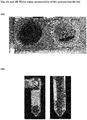
- a polysaccharide foil was prepared according to the method of the present invention and tested for water resistance in comparison to a parafilm and a polysaccharide foil prepared according to the method of the present invention containing 1 % w/w sorbitol and 0.1 % w/w food color. To each foil a drop of water was added and incubated for 10 h. The visual analysis showed no sign of structural degradation of the foil of the present invention.
Landscapes
- Chemical & Material Sciences (AREA)
- Organic Chemistry (AREA)
- Health & Medical Sciences (AREA)
- Life Sciences & Earth Sciences (AREA)
- Chemical Kinetics & Catalysis (AREA)
- Engineering & Computer Science (AREA)
- Medicinal Chemistry (AREA)
- Polymers & Plastics (AREA)
- General Health & Medical Sciences (AREA)
- Biochemistry (AREA)
- Materials Engineering (AREA)
- Wood Science & Technology (AREA)
- Zoology (AREA)
- Molecular Biology (AREA)
- Manufacturing & Machinery (AREA)
- Microbiology (AREA)
- General Chemical & Material Sciences (AREA)
- Bioinformatics & Cheminformatics (AREA)
- General Engineering & Computer Science (AREA)
- Genetics & Genomics (AREA)
- Biotechnology (AREA)
- Sustainable Development (AREA)
- Preparation Of Compounds By Using Micro-Organisms (AREA)
- Polysaccharides And Polysaccharide Derivatives (AREA)
- Manufacture Of Macromolecular Shaped Articles (AREA)
- Laminated Bodies (AREA)
Abstract
The present invention is directed to a polysaccharide foil comprising a polysaccharide polymer and a plasticizer, wherein the polysaccharide polymer originates from fermentation of a bacterium or a fungus such as Ascomycota. The invention further relates to the use of the polysaccharide foil and a method for its production.
Description
- The present invention refers to a polysaccharide foil comprising a polysaccharide polymer originating from fermentation of a microorganism such as a bacterium or fungus, e.g., Ascomycota and a plasticizer, its use and a method for its production.
- There is a continuously increasing demand of sustainable and so called "green" material in almost all technical fields. Thus, it is of high importance that new materials such as a foil, which is applicable in a wide variety of technical fields, is free of contaminants, is recyclable and based on a renewable resource, i.e., there is a high demand for environmentally friendly material. At the same time it is important that these materials provide high quality which is identical or even better than the quality of the common material, particularly if it is intended that the new material should replace the common material.
- Since a long time, there is an unmet need in the field of foil production, suitable for example for packaging, which is based on plastic material to find environmentally friendly alternatives.
- Ascomycetes are yeast-like fungi capable of producing a wide variety of different valuable bioproducts such as enzymes, pigments and biopolymers, e.g., polysaccharides such as beta-glucans. These beta-glucans are of high economic importance as they can be widely used in food, pharmaceutical, agricultural and also chemical applications.
- However, a polysaccharide such as a beta-glucan was not considered to form a stable, in particular water-resistant, flexible foil. The present invention provides such foil comprising a polysaccharide polymer originating from the fermentation of a microorganism such as a bacterium or fungus, e.g., Ascomycota and a plasticizer.
- The present invention is directed to a polysaccharide foil comprising 0.1 - 10 wt.-% of a polysaccharide polymer and 0.1 - 10 wt.-%, 0.1 - 5 wt.-% or 0.1 - 1 wt.-% of a plasticizer, wherein the polysaccharide polymer originates from fermentation of Ascomycota. The polysaccharide polymer is for example beta-glucan.
- The plasticizer of the polysaccharide foil is for example selected from the group of phthalate-based plasticizer, trimellitates, adipates, sebacates, maleates, azelates, terephthalates, benzoates, 1,2-cyclohexane dicarboxylic acid diisononyl ester, alkyl sulphonic acid phenyl ester, sulfonamides, organophosphates, glycols, polyethers, polymeric plasticizers, polybutene, bio-based plasticizer, plasticizers for energetic material or a combination thereof. The plasticizer is for example a polyalcohol, a sugar alcohol, a monosaccharide, such as glycerol and/or sorbitol, or a combination thereof,.
- The polysaccharide foil of the present invention is for example water-resistant, permeable to vapor, in particular to water vapor, or a combination thereof. In addition, the polysaccharide foil retains alcohol such as ethanol. It is clear, transparent, flexible or a combination thereof. Moreover, the polysaccharide foil is thermostable for example up to 70 °C, up to 80 °C, up to 90 °C, up to 100 °C, up to 110 °C, up to 120 °C, up to 130 °C, up to 140 °C or up to 150 °C.
- The polysaccharide foil comprises for example a colourant, a fragrance or a combination thereof. It is for example a packaging material, a composite, a textile, a medicinal product, a coating material, a cosmetic product, a food product, a varnish or part of a packaging material, of a composite, of a textile, of a medicinal product, of a coating material, of a cosmetic product, of a food product or of a varnish.
- The present invention further relates to the use of the polysaccharide foil for the production of a packaging material, a composite, a textile, a medicinal product, a coating material, a cosmetic product, a food product, a varnish or a combination thereof. The medicinal product is for example selected from the group consisting of a wound closure, a bandage such as a waterproof bandage, a soluble film, a capsule resistant to gastric juice or a combination thereof.
- Furthermore, the present invention refers to a method for the production of the polysaccharide foil, wherein the polysaccharide polymer originates from fermentation of Ascomycota, comprising the steps:
- a) providing a medium with a dry matter content selected from the range of from 0.1 to 0.3 wt.-% and containing less than 0.1 wt.-% of an organic nitrogen source;
- b) inoculating the medium with at least one fungus belonging to the division of Ascomycota with an inoculation density selected from the range of from 0.01 gCDW/L to 50 gCDW/L;
- c) adding at least one carbon source in a concentration of from 1 to 20 wt.-%;
- d) mixing the medium and the at least one fungus according to step d) for a time period of from 24 to 400 hours;
- e) removing from 30 to 90 wt.-% of the medium and the at least one fungus;
- f) adding from 30 to 90 wt.-% of a medium as defined in step a) additionally containing a carbon source;
- g) repeating steps c) to f) from 2 to 100 times;
wherein at least one of steps c) to g) is carried out with a relative gas content selected from the range of from 0.005 to 0.5, and - h) adding a plasticizer.
- The method for the production of a polysaccharide foil optionally further comprises the step of preparing an aqueous solution of the polysaccharide polymer in a concentration of 0.1 - 10 wt.-% or 0.5 - 5 wt.-%. The plasticizer is for example added in a concentration of 0.1 - 10 wt.-%, 0.1 - 5 wt.-% or 0.1 - 1 wt.-%.
- Optionally, the method further comprises the step of depositing the polysaccharide foil on a hydrophobic surface such as a plastic surface which is for example sloping or flat, and drying the polysaccharide foil with an air stream such as a continuous air stream.
- All documents cited or referenced herein ("herein cited documents"), and all documents cited or referenced in herein cited documents, together with any manufacturer's instructions, descriptions, product specifications, and product sheets for any products mentioned herein or in any document incorporated by reference herein, are hereby incorporated herein by reference, and may be employed in the practice of the invention. More specifically, all referenced documents are incorporated by reference to the same extent as if each individual document was specifically and individually indicated to be incorporated by reference. In particular, beta-glucans particularly suitable for the present invention are defined for example in
EP 2018165787 -
-
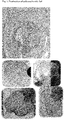
Fig. 1 shows the preparation of a polysaccharide foil of the present invention. -
Fig. 2A and 2B depict permeability for water vapor of the polysaccharide foil of the present invention in comparison to a parafilm. - The present invention is directed to a bio-based polysaccharide foil. It comprises or consists of a polysaccharide polymer and a plasticizer, wherein the polysaccharide polymer originates from fermentation of a microorganisms such as a bacterium or fungus, e.g., Ascomycota. The polysaccharide polymer is for example beta-glucan. Beta-glucan comprises a group of beta-D-glucose polysaccharides naturally occurring in the cell walls of cereals, bacteria, and fungi, respectively. At dietary intake levels of for example at least 3 g per day, beta-glucan decreases blood levels of LDL cholesterol and so may reduce the risk of cardiovascular diseases.
- Thus, the polysaccharide foil of the present invention is highly economically friendly, has positive health aspects and is at the same time stable, water-resistant and flexible, i.e., ideal for example as a packaging material, composite material, textile material, medicinal product, coating material, cosmetic material, a food material or varnish material.
- Throughout this description and the claims, unless the context requires otherwise, the word "comprise", and variations such as "comprises" and "comprising", will be understood to imply the inclusion of a stated member, integer or step or group of members, integers or steps but not the exclusion of any other member, integer or step or group of members, integers or steps. The terms "a" and "an" and "the" and similar reference used in the context of describing the invention (especially in the context of the claims) are to be construed to cover both the singular and the plural, unless otherwise indicated herein or clearly contradicted by the context. Recitation of ranges of values herein is merely intended to serve as a shorthand method of referring individually to each separate value falling within the range. Unless otherwise indicated herein, each individual value is incorporated into the specification as if it were individually recited herein. All methods described herein can be performed in any suitable order unless otherwise indicated herein or otherwise clearly contradicted by context. The use of any and all examples, or exemplary language (e.g., "such as", "for example", "specific", "specific embodiment"), provided herein is intended merely to better illustrate the invention and does not pose a limitation on the scope of the invention otherwise claimed. No language in the specification should be construed as indicating any non-claimed element essential to the practice of the invention.
- The polysaccharide foil of the present invention is bio-based and 100 % recyclable. It comprises or consists of 0.1 - 10 wt.-% of a polysaccharide polymer and 0.1 - 10 wt.-%, 0.1 - 5 wt.-% or 0.1 - 1 wt.-% of a plasticizer, or it comprises or consists of 0.5 - 5 wt.-% of a polysaccharide polymer and 0.1 - 10 wt.-%, 0.1 - 5 wt.-% or 0.1 - 1 wt.-% of a plasticizer, or it comprises or consists of 0.3 - 3 wt.-% of a polysaccharide polymer and 0.1 - 10 wt.-%, 0.1 - 5 wt.-% or 0.1 - 1 wt.-% of a plasticizer, wherein the polysaccharide polymer originates from fermentation of a bacterium or fungus such as Ascomycota.
- The bacterium and/or fungus produces numerous compounds amongst others a polysaccharide polymer such as beta-glucan. Beta-glucans are polysaccharides derived from glucose monomers. The monomers are linked by glycosidic bonds. Four types of glucose-based polysaccharides are possible: 1,6-bonded, 1,4-bonded, 1,3-bonded and 1,2-bonded glucans. Beta-glucans are for example cellulose (β-1,4-glucan), chrysolaminarin (β-1,3-glucan), curdlan (β-1,3-glucan), laminarin (β-1,3- and β-1,6-glucan), lentinan (β-1,6:β-1,3-glucan), lichenin (β-1,3- and β-1,4-glucan), oat beta-glucan (β-1,3- and β-1,4-glucan), pleuran (β-1,3- and β-1,6-glucan) or zymosan (β-1,3-glucan). The polysaccharide polymer of the polysaccharide foil of the present invention is for example beta-glucan.
- The polysaccharide foil of the present invention is water resistant, resistant to alcohol such as methanol or ethanol and/or permeable to vapor such as water vapor. Thus, the polysaccharide foil allows for example separating water and alcohol. Further, the polysaccharide foil is clear, transparent and/or flexible. It is not brittle which is for example supported by the plasticizer.
- The plasticizer of the polysaccharide foil of the present invention is for example selected from the group of phthalate-based plasticizer, trimellitates, adipates, sebacates, maleates, azelates, terephthalates, benzoates, 1,2-cyclohexane dicarboxylic acid diisononyl ester, alkyl sulphonic acid phenyl ester, sulfonamides, organophosphates, glycols, polyethers, polymeric plasticizers, polybutene, bio-based plasticizer, plasticizers for energetic material or a combination thereof. The plasticizer is for example a polyalcohol, a sugar alcohol, a monosaccharide, such as glycerol and/or sorbitol, or a combination thereof.
- Moreover, the polysaccharide foil of the present invention is thermostable for example in the range of 10 °C to 95 °C, 15 °C to 90 °C, 20 °C to 85 °C, 25 °C to 80 °C, 30 °C to 75 °C, 40 °C to 70 °C, 50 °C to 60 °C, or up to 40 °C, up to 50 °C, up to 60 °C, up to 70 °C, up to 80 °C, up to 90 °C or up to 95 °C.
- The polysaccharide foil of the present invention optionally comprises an additive such as a colourant and/or a fragrance. The polysaccharide foil comprising fragrance is for example used in fragrance encapsulation in cleaning agent such as washing agent.
- Further, the polysaccharide foil of the present invention is for example a packaging material for example in general in all types of industry or more specific in food industry, where the food product is for example wrapped in the polysaccharide foil or the polysaccharide foil is directly administered on the food product, e.g., sprayed on fruits. Alternatively, the polysaccharide foil is for example applied to a packaging on the basis of paper or carton, where it forms aprotective layer such as a film against water or a hydrophobic substance such as mineral oil saturated hydrocarbons (MOSH) and/or mineral oil aromatic hydrocarbons (MOAH). The polysaccharide foil may form the basis for a candy with or without aromatic compounds. This may even result in health advantages, if the polysaccharide is beta-glucan which positively effects the cholesterol level in human or animal bodies.
- Alternatively, the polysaccharide foil is a composite for example in a Tetra Pak or a textile or forms part in a composite or a textile such as Goretex which is water resistant and permeable for vapor such as water vapor.
- Alternatively, the polysaccharide foil is a medicinal product such as a wound closure, a bandage such as a waterproof bandage, a soluble film, and/or a capsule resistant to a body fluid such as gastric juice. The polysaccharide foil may form a sprayable plaster.
- Alternatively, the polysaccharide foil is a coating or part of a coating, e.g., for a membrane for example for laboratory use or for a plastic for example in the automotive industry.
- Alternatively, the polysaccharide foil of the present invention is a cosmetic product or part of a cosmetic product, e.g., a face mask, a crème such as sun crème for UV protection or an epilating product.
- Moreover, the polysaccharide is a varnish or part of a varnish, e.g., a water-based varnish including nail varnish.
- Thus, the polysaccharide polymer of the present invention can be used for the production of all of these products such as a packaging material, a composite, a textile, a medicinal product, a coating material, a cosmetic product, a food product and/or a varnish.
- The polysaccharide foil is recyclable for example by breaking-up the foil such as grinding the foil and rehydrating the foil, e.g., in water. Alternatively, the polysaccharide foil is rehydrated in a basic (e.g., pH >13) or acidic (e.g., pH < 2) solution, by growing a microorganism such as a bacterium or fungus, e.g., Ascomycota, on the polymer foil or by use of an enzyme such as beta-glucosidase.
- The polysaccharide polymer forming part of the polysaccharide foil of the present invention originates from fermentation of a bacterium or fungus such as Ascomycota. Therefore, the present invention refers for example to a method for the production of a polysaccharide foil, wherein the polysaccharide polymer originates from fermentation of Ascomycota, comprising the steps:
- a) providing a medium with a dry matter content selected from the range of from 0.1 to 0.3 wt.-% and containing less than 0.1 wt.-% of an organic nitrogen source;
- b) inoculating the medium with at least one fungus belonging to the division of Ascomycota with an inoculation density selected from the range of from 0.01 gCDW/L to 50 gCDW/L;
- c) adding at least one carbon source in a concentration of from 1 to 20 wt.-%;
- d) mixing the medium and the at least one fungus according to step d) for a time period of from 24 to 400 hours;
- e) removing from 30 to 90 wt.-% of the medium and the at least one fungus;
- f) adding from 30 to 90 wt.-% of a medium as defined in step a) additionally containing a carbon source;
- g) repeating steps c) to f) from 2 to 100 times;
wherein at least one of steps c) to g) is carried out with a relative gas content selected from the range of from 0.005 to 0.5; - h) optionally filtrating the medium comprising the fungus to remove cell mass;
- i) optionally one or more washing steps; and
- j) adding a plasticizer.
- The method optionally further comprises a precipitation step, wherein the polysaccharide polymer is precipitated from the medium after the filtration step h) or from the washing solution after one or more washing steps i). The precipitation is for example performed using an alcohol such as ethanol. The precipitated polysaccharide polymer can be rehydrated which allows for example exact dosing of the polysaccharide polymer in solution.
- The method optionally further comprises the step of depositing the polysaccharide foil on a hydrophobic surface such as a plastic surface which is for example sloping or flat. The polysaccharide foil is for example dried with an air stream such as a continuous air stream. The temperature of the air stream is for example 15 - 60 °C, 20 - 55 °C, 25 °C - 50 °C, 30 °C - 45 °C or 40 °C. The polysaccharide foil is for example dried with the air stream such as a continuous air stream for 1 - 24 h, 5 to 20 h, 10 to 15 h, or 1, 2 or 3 days. The air stream is 330 to 650 m3/h, 400 to 600 m3/h, 450 to 550 m3/h or 400 to 500 m3/h, or 500 m3/h.
- Within the present invention the term "Ascomycota" is to be understood to comprise any fungus belonging to the division or phylum of the kingdom Fungi. Ascomycota belong to the subkingdom Dikarya. Ascomycota which are suitable for the method of the present invention include but are not limited to any fungus falling in the class of Dothideomycetes such as Aureobasidiaceae. The method for the production of the polysaccharide foil is for example based on the fermentation of Aureobasidium pullulans also referred to as Aureobasidium oleae, Azymocandida malicola, Candida malicola, Cladosporium pullulans, Dematium pullulans, Exobasidium vitis, Hormonema oleae, Hormonema pullulans, Pullularia fermentans, Pullularia fermentans var. schoenii, Pullularia pullulans, Torula oleae or Torula schoenii. All of which are to be understood as synonyms. Fungi belonging to the division of Ascomycota are commonly referred to as Ascomycetes.
- If the fungus for example belonging to the group of Ascomycota grows in the presence of UV light or is even irradiated with UV light, it produces melanin. Melanin is a broad term for a group of natural pigments found in most organisms. The chemical formula of melanin is for example C18H10N2O4. Melanogenesis is initiated by exposure to UV radiation and melanin is an effective absorbent of light. The pigment is able to dissipate over 99.9% of absorbed UV radiation. The three basic types of melanin are eumelanin, pheomelanin, and neuromelanin. The most common type is eumelanin, of which there are two types-brown eumelanin and dark brown eumelanin. Thus, in the presence of UV light a fungus for example belonging to Ascomycota produce a dark, e.g., brown or black polysaccharide such as beta-glucan.
- The polysaccharide foil of the present invention contains for example from 0.05 to 30 g/l melanin, wherein a melanin content of from 0.05 to 15 g/l, from 0.07 to 7 g/l or from 0.1 to 6 g/l is also suitable.
- The medium to be provided within step a) of the method for the production of a polysaccharide foil is characterized by a dry matter content selected from the range of from 0.1 to 0.3 wt.-%, wherein a dry matter content selected from the range of from 0.15 to 0.25 wt.-% is also within the scope of the present invention. The term "dry matter content" refers to the mass determined after water and other volatile compounds have been removed from the sample using an IR-balance.
- At least one of steps c) to g) of the method for the production of a polysaccharide foil of the present invention is carried out at a relative gas content selected from the range of from 0.005 to 0.50, wherein ranges of from 0.0075 to 0.40, from 0.01 to 0.35 and from 0.01 to 0.20 are also within the scope of the present invention.
- Within the present invention the relative gas content is defined by the formula:

- Within the present invention the term "power input" is defined as P = Ne ∗ ρL ∗ n 3 ∗ d5 (wherein Ne is the Newton number, ρL is the density of the medium according to step a), the at least one fungus and the at least one carbon source [kg/m3], n is the frequency of the stirrer [s-1], d is the diameter of the stirrer [m]). Within the present invention the term superficial gas velocity is defined as

- The medium may be provided in any vessel known to a person skilled in the art as suitable for the method for the production of a polysaccharide foil, such as a batch or fed-batch reactor, an air lift reactor, a stirred tank reactor or a bubble column reactor. The absolute pressure in the headspace of the vessel is for example selected from the range of from 1 to 11 bar, wherein ranges of from 1.1 to 10 bar, from 1.2 to 9 bar and from 1.3 to 8 bar are also within the scope of the present invention. The vessel is for example equipped with a light source providing a light intensity of at least 300 Lux. The light source is for example placed above the surface of the fermentation medium during at least 40 % of the time as described in step d). 1 Lux is defined as 1 Lumen per m2. Alternatively or in addition, the light source is for example placed next to and outside of the vessel. In this case the vessel is for example equipped with a window or may comprise or consist of transparent material. Alternatively or in addition, the light source is for example placed inside the vessel submerged in the fermentation medium.
- Within step b) of the method for the production of a polysaccharide foil the medium is inoculated with at least one fungus belonging to the division of Ascomycota with an inoculation density selected from the range of from 0.01 gCDW/L to 50 gCDW/L. The "inoculating" may be carried out by any method known to a person skilled in the art as suitable for the method of the present invention such as addition of the at least one fungus in a purified form or in form of a pre-culture. Within the method of the present invention, the concentration of the at least one fungus is selected from a range of from 0.01 gCDW/L to 50 gCDW/L, wherein ranges of from 0.02 gCDW/L to 25 gCDW/L, of from 0.03 gCDW/L to 20 gCDW/L and of from 0.05 gCDW/L to 15 gCDW/L are also within the scope of the invention. The parameter "L" thereby relates to the volume of the medium according to step a) of the method of the present invention.
- The at least one fungus used in the method for the production of a polysaccharide foil is for example only one single type of fungus or a mixture of different fungi. The term "cell dry weight" (CDW) is to be understood as the weight of the total biomass divided by the volume of a fermentation sample after centrifugation of a fermentation sample, removal of the supernatant, washing with a solution of 9 g/L NaCl, again centrifugation, again removal of the supernatant and drying at 90 °C until constant weight is reached.
- The term "pre-culture" according to the present invention is to be understood to comprise any composition of fermentation or culture medium used for pre-cultivating the at least one fungus. The term "pre-culture" is well known to any person skilled in the art of fermenting. The at least one fungus is pre-cultivated for example up to a cell dry weight of 2 gCDW/L - 30 gCDW/L before addition to the medium according to step b) of the method of the present invention. It is a particular advantage of this method that high yields of beta glucan can be obtained while keeping the volume of pre-culture relatively low, as for example the use of from 0.1 to 0.5 wt.-% (weight pre-culture to weight medium) is sufficient.
- The nitrogen content of the medium according to step a) is for example selected from the range of from 0.003 to 0.02 wt.-%, wherein a range of from 0.005 to 0.015 wt.-% and from 0.006 to 0.01 wt.-% is also within the scope of the present invention.
- Step b) of the method of the present invention is for example carried out for a time period of from 1 minutes to 8 hours, wherein a time period of from 2 minutes to 7 hours, from 3 minutes to 6 hours and form 5 minutes to 5 hours is also within the scope of the present invention. It is thereby particularly suitable to carry out inoculation by adding the at least one fungus all at once at the beginning of the time period.
- Within step c) of the method for the production of a polysaccharide foil, at least one carbon source is for example added in a concentration of from 1 to 20 wt.-%, wherein a concentration of from 2 to 18 wt.-%, from 3 to 15 wt.-% and from 4 to 12 wt.-% is also within the scope of the present invention. The "adding" may be carried out by any method known to a person skilled in the art as suitable for the method of the present invention. Step c) is for example carried out after step b) of the method of the present invention but may also be carried out before step b) or steps b) and c) may also be carried out concurrently. Alternatively, steps a) and c) may be carried out concurrently and before step b).
- Within step d) of the method of the present invention the medium and the at least one fungus are mixed for a time period of from 24 to 400 hours, wherein a time period of from 30 to 350 hours, from 35 to 300 hours, from 40 to 250 hours and from 50 to 200 hours are also within the scope of the present invention. The "mixing" may be carried out by any method known to a person skilled in the art as suitable for the method of the present invention.
- A method which has shown to be of specific advantage regarding time and energy consumption is mixing by continuously pumping of the medium and at least one fungus from the bottom to the top of the vessel.
- The mixing is for example carried out without the use of any kind of rotating device such as a stirrer. A system which is advantageous for carrying out the method of the present invention is for example a bubble column reactor.
- The mixing is for examle carried out with a specific power input P/V of from 2 to 12.000 W/m3, wherein a specific power input of from 100 to 1.000 W/m3 is also within the scope of the present invention.
- Within a stirred mixing system such as a stirred tank reactor, the term "specific power input" is to be understood as


- The mixing is for example carried out until the dynamic viscosity at a shear rate of 20 s-1 and at a temperature of 20 °C of the medium and at least one fungus during step d) is within the range of from 40 to 600 mPas, wherein a range of from 50 to 550 mPas, from 70 to 500 mPas, from 90 to 450 mPas and from 100 to 400 mPas is also within the scope of the present invention.
- The pH is for example kept in the range of from 4.0 to 6.0 during the whole process, wherein a range of from 4.25 to 5.75, from 4.25 to 5.5 and from 4.25 to 4.75 is also within the scope of the present invention. Alternatively, the pH is for example kept above 4.75, such as within a range of from 4.75 and 5.25 during the complete process by addition of a base, wherein bases can be any bases known to person trained in the skill of fermentation to be suitable for the use in fermentations and not containing nitrogen, such as NaOH or KOH. It is of particular advantage of the method of the present invention that no acid needs to be used to adjust the pH levels.
The temperature is for example kept in the range of from 22 to 30 °C during the whole production method, wherein a range of from 23 to 30 °C, a range from 24 to 29 and from 24 to 28 °C is also within the scope of the present invention. - Within step e) of the method for the production of a polysaccharide foil, from 30 to 90 wt.-% of the medium and at least one fungus are removed, wherein ranges of from 40 to 85 wt.-%, from 45 to 80 wt.-%, from 50 to 75 wt.-% and from 55 to 65 wt.-% are also within the scope of the present invention. The "removing" can thereby be carried out by any means and method known to a person skilled in the art as suitable for the inventive process.
- Within step f) of the method of the present invention, from 30 to 90 wt.-% of a medium as defined within step a) of the inventive process and additionally containing a carbon source are added to the remaining medium and at least one fungus, wherein ranges of from 40 to 85 wt.-%, from 45 to 80 wt.-%, from 50 to 75 wt.-% and from 55 to 65 wt.-% are also within the scope of the present invention. It is thereby understood that the range of from 30 to 90 wt.-% comprises the weight of the medium and the carbon source. The "adding" can thereby be carried out by any means and method known to a person skilled in the art as suitable for the inventive process. It is thereby of importance that the amount of removed medium and fungus and the amount of new medium are equal, wherein a deviation of up to 30%, preferably less than 10 % is tolerable.
- Within step g) of the method of the present invention steps c) to f) are repeated from 2 to 100 times, wherein a repetition of from 2 to 80, from 2 to 70, from 2 to 50 and from 2 to 25 times is also within the scope of the present invention. It is a particular advantage of the method of the present invention that cells and fermentation products can be harvested up to 100 times without the need of new inoculation. The fermentation process and medium composition of the method of the present invention guarantees high yields of the polysaccharide polymer such as beta glucan. The repetition of steps c) to f) is of particular advantage as the yield of polysaccharide polymer such as beta-glucan increases significantly with the first repetition. In addition, cleaning expenditures can be minimized as cleaning of the reactor is only necessary after the completion of step g) of the method of the present invention contributing to further cost savings, costs for the preparation of precultures can be minimized as preculture preparation is only necessary for every second to 100th iteration of the process. Additionally downtimes (non-productive phases) of the production equipment are minimized, since the production can be kept running without time losses for harvesting, sterilization, cleaning and filling. It is, however, also possible to obtain decent yields of beta glucan by not repeating steps c) to f) but carrying out steps c) to f) just once.
- Within the present invention the term "polysaccharide polymer" is to be understood as any polysaccharide polymer produced by living organisms. The polysaccharide polymer shows for example a temperature-independent viscosity within the range from 20 to 100°C or within the range of from 20 to 80°C. The polysaccharide polymer contains for example monomeric units which are covalently bonded such as polymeric carbohydrate structures, rubber, suberin, melanin and lignin. The polysaccharide polymer has for example a shear thinning behavior described by a constant b in which b is the gradient between two pairs of values x1/y1 and x2/y2 where x is the shear rate [s-1] in the range of 0.1-100 s-1 and y is the dynamic viscosity [mPas] at the given shear rate and at a temperature of the biopolymer between 20°C and 80°C and a concentration between 0.05 and 0.5 wt.-%. The constant b is for example described by the formula b= - ((lg(y1/y2)/(lg(x1/x2)). b is for example selected from the range of from 0.65 to 1.05. Alternatively, b is for example selected from the range of from 0.7 to 1.0 or for example from the range of from 0.75 to 0.9. Within the present invention the term "beta-glucan" is to be understood as referring to any β-D-glucose polysaccharide characterized by the formation of a linear backbone with 1-3 β-glycosidic bonds. The beta-glucans have for example a molecular weight distribution with a maximum of from 0.5 to 5.0 Million Dalton (MegaDalton) or from 0.75 to 3.5 Million Dalton (MegaDalton) or from 1.0 to 2.0 Million Dalton (MegaDalton).
- In the following, the elements of the fermentation of Ascomycota will be described in more detail. These elements are listed with specific embodiments, however, it should be understood that they may be combined in any manner and in any number to create additional embodiments. The variously described examples and embodiments should not be construed to limit the present invention to only the explicitly described embodiments. This description should be understood to support and encompass embodiments which combine the explicitly described embodiments with any number of the disclosed elements. Furthermore, any permutations and combinations of all described elements in this application should be considered disclosed by the description of the present application unless the context indicates otherwise.
- The following specific embodiments define embodiments which are particularly advantageous for the production of a polysaccharide polymer such as beta-glucan by a fungus belonging to the family of Aureobasidiaceae. These embodiments are not meant to limit the scope of the present invention in any respect.
- Process for the fermentation of Aureobasidiaceae comprising the following steps:
- a) Providing a medium with a dry matter content selected from the range of from 0.1 to 0.3 wt.-% and containing less than 0.1 wt.-% of an organic nitrogen source;
- b) Inoculating the medium with at least one fungus belonging to the species of Aureobasidium pullulans with an inoculation density selected from the range of from 0.01 gCDW/L to 50 gCDW/L;
- c) Adding at least one carbon source in a concentration of from 1 to 20 wt.-%;
- d) Mixing the medium and the at least one fungus according to step d) for a time period of from 24 to 400 hours;
- e) Removing from 30 to 90 wt.-% of the medium and the at least one fungus;
- f) Adding from 30 to 90 wt.-% of a medium as defined in step a) additionally containing a carbon source;
- g) Repeating steps c) to f) from 2 to 100 times;
wherein at least one of steps c) to g) is carried out with a relative gas content selected from the range of from 0.005 to 0.5; - h) optionally filtrating the medium comprising the fungus to remove cell mass;
- i) optionally one or more washing steps and
- j) Adding a plasticizer, e.g., in a concentration of 0.1 - 10 wt.-%, 0.1 - 5 wt.-% or 0.1 - 1 wt.-%.
- Process for the fermentation of Aureobasidiaceae comprising the following steps:
- a) Providing a medium with a dry matter content selected from the range of from 0.1 to 0.3 wt.-% and containing less than 0.1 wt.-% of an organic nitrogen source;
- b) Inoculating the medium with at least one fungus belonging to the species of Aureobasidium pullulans with an inoculation density selected from the range of from 0.01 gCDW/L to 50 gCDW/L;
- c) Adding sucrose in a concentration of from 1 to 20 wt.-%;
- d) Mixing the medium and the at least one fungus according to step d) for a time period of from 24 to 400 hours;
- e) Removing from 30 to 90 wt.-% of the medium and the at least one fungus;
- f) Adding from 30 to 90 wt.-% of a medium as defined in step a) additionally containing a carbon source;
- g) Repeating steps c) to f) from 2 to 100 times;
wherein at least one of steps c) to g) is carried out with a relative gas content selected from the range of from 0.005 to 0.2, - h) optionally filtrating the medium comprising the fungus to remove cell mass;
- i) optionally one or more washing steps and
- j) Adding a plasticizer, e.g., in a concentration of 0.1 - 10 wt.-%, 0.1 - 5 wt.-% or 0.1 - 1 wt.-%.
- Process for the fermentation of Aureobasidiaceae comprising the following steps:
- a) Providing a medium with a dry matter content selected from the range of from 0.1 to 0.3 wt.-% and containing less than 0.1 wt.-% of an organic nitrogen source;
- b) Inoculating the medium with at least one fungus belonging to the species of Aureobasidium pullulans with an inoculation density selected from the range of from 0.01 gCDW/L to 50 gCDW/L;
- c) Adding sucrose in a concentration of from 1 to 20 wt.-%;
- d) Mixing the medium and the at least one fungus according to step d) for a time period of from 24 to 400 hours;
- e) Removing from 30 to 90 wt.-% of the medium and the at least one fungus;
- f) Adding from 30 to 90 wt.-% of a medium as defined in step a) additionally containing a carbon source;
- g) Repeating steps c) to f) from 2 to 100 times;
wherein at least one of steps c) to g) is carried out with a relative gas content selected from the range of from 0.005 to 0.2 and at a temperature of from 24 to 30 °C and at a pH of from 4 to 6, - h) optionally filtrating the medium comprising the fungus to remove cell mass;
- i) optionally one or more washing steps and
- j) Adding a plasticizer, e.g., in a concentration of 0.1 - 10 wt.-%, 0.1 - 5 wt.-% or 0.1 - 1 wt.-%.
- Process for the fermentation of Aureobasidiaceae comprising the following steps:
- a) Providing a medium with a dry matter content selected from the range of from 0.1 to 0.3 wt.-% and containing less than 0.1 wt.-% of an organic nitrogen source;
- b) Inoculating the medium with at least one fungus belonging to the species of Aureobasidium pullulans with an inoculation density selected from the range of from 0.01 gCDW/L to 50 gCDW/L;
- c) Adding sucrose in a concentration of from 1 to 20 wt.-%;
- d) Mixing the medium and the at least one fungus according to step d) for a time period of from 24 to 400 hours;
- e) Removing from 30 to 90 wt.-% of the medium and the at least one fungus;
- f) Adding from 30 to 90 wt.-% of a medium as defined in step a) additionally containing a carbon source;
- g) Repeating steps c) to f) from 2 to 100 times;
wherein at least one of steps c) to g) is carried out with a relative gas content selected from the range of from 0.005 to 0.2 and at a temperature of from 24 to 30 °C and at a pH of from 4 to 6 and step b) is carried out for a time period of from 1 minute to 8 hours before step c), - h) optionally filtrating the medium comprising the fungus to remove cell mass;
- i) optionally one or more washing steps and
- j) Adding a plasticizer, e.g., in a concentration of 0.1 - 10 wt.-%, 0.1 - 5 wt.-% or 0.1 - 1 wt.-%.
- The methods of all these embodiments optionally further comprise a precipitation step, wherein the polysaccharide polymer is precipitated from the medium after the filtration step h) or from the washing solution after one or more washing steps i). The precipitation is for example performed using an alcohol such as ethanol. The precipitated polysaccharide polymer can be rehydrated which allows for example exact dosing of the polysaccharide polymer in solution.
- All these embodiments result in a polysaccharide foil of the present invention.
- The following examples illustrate the present invention in more detail, however, the invention is not limited to these examples.
- 10 ml polysaccharide foil (5 g/l polysaccharide polymer content) was poured on a plastic foil over a Petri dish to create a cavity (
Fig. 1A ). The polysaccharide foil was allowed drying for 3 days and was separated from the plastic foil thereafter (Fig. 1B to 1E ). Preparation of a polysaccharide foil of the present invention is shown inFig. 1A to 1E . - To 100 ml polysaccharide medium (6 g/l polysaccharide polymer content) was added 1 g glycerol and the mixture poured on a plastic foil. The polysaccharide foil was dried for 10 hours in a constant airstream of 500 m3/h and was separated from the plastic foil thereafter.
- To 50 ml polysaccharide medium (4 g/l polysaccharide polymer content) was added 1 g sorbitol and the mixture poured on a plastic plate. The polysaccharide foil was dried for 5 hours in a constant airstream of 500 m3/h and was separated from the plastic plate thereafter.
- To 70 ml polysaccharide medium (10 g/l polysaccharide polymer content) was added 0.5 g menthol and the mixture poured on a plastic foil. The polysaccharide foil was dried for 8 hours in a constant airstream of 500 m3/h and was separated from the plastic plate thereafter. The foil exhibited a menthol odor.
- 50 ml polysaccharide medium (5 g/l polysaccharide polymer content) were added to 200 ml ethanol. The solid was removed by filtration and subsequently rehydrated in 50 ml demineralized water. This solution was poured on a plastic surface and dried for 1 hour in a constant airstream of 500 m3/h.
- To 20 ml polysaccharide medium (5 g/l polysaccharide polymer content) was added 100 µl blue food coloring and the mixture was poured on a ceramic surface. The polysaccharide foil was dried for 10 hours in a constant airstream of 500 m3/h.
- A polysaccharide foil was prepared according to the method of the present invention and tested for thermostability. The foil was heated on a plate to 70 °C for 2 h. The experiment shows that the polysaccharide foil was unchanged, i.e., is thermostabil at a temperature of 70 °C.
- In these experiments two tubes (falcon tubes) were filled with 10 ml of water. One tube was closed with a polymer of the present invention, the other tube was closed with a parafilm. The tube covered with the polysaccharide foil which is unchanged after an incubation of the tube at 70 °C for 16 h does not comprise water anymore as water vapor evaporated through the polysaccharide foil. In the tube covered with the parafilm, the water vapor condenses at the parafilm which is not permeable for the water vapor (
Fig. 2A and 2B ). - A polysaccharide foil was prepared according to the method of the present invention and tested for water resistance in comparison to a parafilm and a polysaccharide foil prepared according to the method of the present invention containing 1 % w/w sorbitol and 0.1 % w/w food color. To each foil a drop of water was added and incubated for 10 h. The visual analysis showed no sign of structural degradation of the foil of the present invention.
Claims (15)
- Polysaccharide foil comprising 0.1 - 10 wt.-% of a polysaccharide polymer and 0.1 - 10 wt.-%, 0.1 - 5 wt.-% or 0.1 - 1 wt.-% of a plasticizer, wherein the polysaccharide polymer originates from fermentation of Ascomycota.
- Polysaccharide foil according to claim 1, wherein the polysaccharide polymer is beta-glucan.
- Polysaccharide foil according to claim 1 or 2, wherein the plasticizer is selected from the group of phthalate-based plasticizer, trimellitates, adipates, sebacates, maleates, azelates, terephthalates, benzoates, 1,2-cyclohexane dicarboxylic acid diisononyl ester, alkyl sulphonic acid phenyl ester, sulfonamides, organophosphates, glycols, polyethers, polymeric plasticizers, polybutene, bio-based plasticizer, plasticizers for energetic material or a combination thereof.
- Polysaccharide foil according to any one claims 1 to 3, wherein the polysaccharide foil is water-resistant, permeable to vapor, in particular to water vapor, or a combination thereof.
- Polysaccharide foil according to any one claims 1 to 4, wherein the polysaccharide foil retains alcohol such as ethanol.
- Polysaccharide foil according to any one claims 1 to 5, wherein the polysaccharide foil is clear, transparent, flexible or a combination thereof.
- Polysaccharide foil according to any one claims 1 to 5, wherein the polysaccharide foil is thermostable for example up to 70 °C, up to 80 °C, up to 90 °C, up to 100 °C, up to 110 °C, up to 120 °C, up to 130 °C, up to 140 °C or up to 150 °C.
- Polysaccharide foil according to any one claims 1 to 7, wherein the polysaccharide foil comprises a colourant, a fragrance or a combination thereof.
- Polysaccharide foil according to any one claims 1 to 8, wherein the polysaccharide foil is a packaging material, a composite, a textile, a medicinal product, a coating material, a cosmetic product, a food product, a varnish or part of a packaging material, of a composite, of a textile, of a medicinal product, of a coating material, of a cosmetic product, of a food product or of a varnish.
- Use of a polysaccharide foil according to any one of claims 1 to 9 for the production of a packaging material, a composite, a textile, a medicinal product, a coating material, a cosmetic product, a food product, a varnish or a combination thereof.
- Use of a polysaccharide foil according to claim 10, wherein the medicinal product is selected from the group consisting of a wound closure, a bandage such as a waterproof bandage, a soluble film, a capsule resistant to gastric juice or a combination thereof.
- Method for the production of a polysaccharide foil according to any one of claims 1 to 9, wherein the polysaccharide polymer originates from fermentation of Ascomycota, comprising the steps:a) providing a medium with a dry matter content selected from the range of from 0.1 to 0.3 wt.-% and containing less than 0.1 wt.-% of an organic nitrogen source;b) inoculating the medium with at least one fungus belonging to the division of Ascomycota with an inoculation density selected from the range of from 0.01 gCDW/L to 50 gCDW/L;c) adding at least one carbon source in a concentration of from 1 to 20 wt.-%;d) mixing the medium and the at least one fungus according to step d) for a time period of from 24 to 400 hours;e) removing from 30 to 90 wt.-% of the medium and the at least one fungus;f) adding from 30 to 90 wt.-% of a medium as defined in step a) additionally containing a carbon source;g) repeating steps c) to f) from 2 to 100 times;
wherein at least one of steps c) to g) is carried out with a relative gas content selected from the range of from 0.005 to 0.5, andh) adding a plasticizer. - Method for the production of a polysaccharide foil according to claim 12, further comprising the step of preparing an aqueous solution of the polysaccharide polymer in a concentration of 0.1 - 10 wt.-% or 0.5 - 5 wt.-%.
- Method for the production of a polysaccharide foil according to claim 12 or 13, wherein the plasticizer is added in a concentration of 0.1 - 1 wt.-%.
- Method for the production of a polysaccharide foil according to any one of claims 12 to 14 further comprising the step of depositing the polysaccharide foil on a hydrophobic surface and drying the polysaccharide foil with an air stream.
Priority Applications (7)
| Application Number | Priority Date | Filing Date | Title |
|---|---|---|---|
| EP19201216.9A EP3800206A1 (en) | 2019-10-02 | 2019-10-02 | Bio-based polysaccharide foil |
| BR112022006366A BR112022006366A2 (en) | 2019-10-02 | 2020-09-09 | BIOLOGICAL COMPONENT BASED POLYSACCHARIDE SHEET |
| PCT/EP2020/075132 WO2021063640A1 (en) | 2019-10-02 | 2020-09-09 | Bio-based polysaccharide foil |
| EP20767551.3A EP4038104A1 (en) | 2019-10-02 | 2020-09-09 | Bio-based polysaccharide foil |
| CA3151826A CA3151826A1 (en) | 2019-10-02 | 2020-09-09 | Bio-based polysaccharide foil |
| US17/764,606 US20220356315A1 (en) | 2019-10-02 | 2020-09-09 | Bio-based polysaccharide foil |
| CN202080069715.6A CN114502627A (en) | 2019-10-02 | 2020-09-09 | Bio-based polysaccharide foil |
Applications Claiming Priority (1)
| Application Number | Priority Date | Filing Date | Title |
|---|---|---|---|
| EP19201216.9A EP3800206A1 (en) | 2019-10-02 | 2019-10-02 | Bio-based polysaccharide foil |
Publications (1)
| Publication Number | Publication Date |
|---|---|
| EP3800206A1 true EP3800206A1 (en) | 2021-04-07 |
Family
ID=68137869
Family Applications (2)
| Application Number | Title | Priority Date | Filing Date |
|---|---|---|---|
| EP19201216.9A Withdrawn EP3800206A1 (en) | 2019-10-02 | 2019-10-02 | Bio-based polysaccharide foil |
| EP20767551.3A Withdrawn EP4038104A1 (en) | 2019-10-02 | 2020-09-09 | Bio-based polysaccharide foil |
Family Applications After (1)
| Application Number | Title | Priority Date | Filing Date |
|---|---|---|---|
| EP20767551.3A Withdrawn EP4038104A1 (en) | 2019-10-02 | 2020-09-09 | Bio-based polysaccharide foil |
Country Status (6)
| Country | Link |
|---|---|
| US (1) | US20220356315A1 (en) |
| EP (2) | EP3800206A1 (en) |
| CN (1) | CN114502627A (en) |
| BR (1) | BR112022006366A2 (en) |
| CA (1) | CA3151826A1 (en) |
| WO (1) | WO2021063640A1 (en) |
Citations (1)
| Publication number | Priority date | Publication date | Assignee | Title |
|---|---|---|---|---|
| EP0236124A2 (en) * | 1986-03-03 | 1987-09-09 | Kabushiki Kaisha Hayashibara Seibutsu Kagaku Kenkyujo | Beta-d-glucan, and its production and uses |
Family Cites Families (5)
| Publication number | Priority date | Publication date | Assignee | Title |
|---|---|---|---|---|
| KR20170117374A (en) * | 2014-12-09 | 2017-10-23 | 모노졸 알엑스, 엘엘씨 | Linear polysaccharide based film products |
| CN107699500B (en) * | 2017-11-17 | 2021-05-04 | 山东省农业科学院农产品研究所 | Aureobasidium pullulans and method for producing pullulan by fermentation |
| CN108721632B (en) * | 2018-06-27 | 2021-10-22 | 中国海洋大学 | A kind of high molecular weight pullulan polysaccharide additive and its application in capsule preparation |
| CN110183741A (en) * | 2019-06-03 | 2019-08-30 | 武汉轻工大学 | A kind of composite package film and preparation method thereof |
| CN110172169B (en) * | 2019-06-03 | 2021-05-14 | 武汉轻工大学 | Preparation method of food packaging film |
-
2019
- 2019-10-02 EP EP19201216.9A patent/EP3800206A1/en not_active Withdrawn
-
2020
- 2020-09-09 WO PCT/EP2020/075132 patent/WO2021063640A1/en not_active Ceased
- 2020-09-09 CN CN202080069715.6A patent/CN114502627A/en active Pending
- 2020-09-09 EP EP20767551.3A patent/EP4038104A1/en not_active Withdrawn
- 2020-09-09 CA CA3151826A patent/CA3151826A1/en active Pending
- 2020-09-09 BR BR112022006366A patent/BR112022006366A2/en not_active Application Discontinuation
- 2020-09-09 US US17/764,606 patent/US20220356315A1/en not_active Abandoned
Patent Citations (1)
| Publication number | Priority date | Publication date | Assignee | Title |
|---|---|---|---|---|
| EP0236124A2 (en) * | 1986-03-03 | 1987-09-09 | Kabushiki Kaisha Hayashibara Seibutsu Kagaku Kenkyujo | Beta-d-glucan, and its production and uses |
Non-Patent Citations (4)
| Title |
|---|
| F. LIEPE: "Verfahrenstechnische Berechnungsmethoden Teil 4: Stoffvereinigen in fluiden Phasen - Ausriistungen und ihre Berechnungen von einem Autorenkollektiv unter Federfiihrung", 1988, VEB DEUTSCHER VERLAG |
| LAZARIDOU A ET AL: "Molecular weight effects on solution rheology of pullulan and mechanical properties of its films", CARBOHYDRATE POLYMERS, APPLIED SCIENCE PUBLISHERS, LTD. BARKING, GB, vol. 52, no. 2, 1 May 2003 (2003-05-01), pages 151 - 166, XP004405543, ISSN: 0144-8617, DOI: 10.1016/S0144-8617(02)00302-8 * |
| NILAY KANDEMIR ET AL: "Production of Antimicrobial Films by Incorporation of Partially Purified Lysozyme into Biodegradable Films of Crude Exopolysaccharides Obtained from Aureobasidium pullulans Fermentation", FOOD TECHNOLOGY AND BIOTECHNOLOGY, vol. 43, no. 4, 1 January 2005 (2005-01-01), pages 343 - 350, XP055157357 * |
| Y GÖKSUNGUR ET AL: "Production of Pullulan From Beet Molasses ans Synthetic Medium by Aureobasidium pullulans", TURK J BIOL VOL 28, 1 January 2004 (2004-01-01), pages 23 - 30, XP055678690, Retrieved from the Internet <URL:http://journals.tubitak.gov.tr/biology/issues/biy-04-28-1/biy-28-1-4-0311-3.pdf> [retrieved on 20200323] * |
Also Published As
| Publication number | Publication date |
|---|---|
| WO2021063640A1 (en) | 2021-04-08 |
| EP4038104A1 (en) | 2022-08-10 |
| CA3151826A1 (en) | 2021-04-08 |
| US20220356315A1 (en) | 2022-11-10 |
| CN114502627A (en) | 2022-05-13 |
| BR112022006366A2 (en) | 2022-06-28 |
Similar Documents
| Publication | Publication Date | Title |
|---|---|---|
| Schmid et al. | Scleroglucan: biosynthesis, production and application of a versatile hydrocolloid | |
| WO2021158179A1 (en) | SCHIZOPHYLLUM COMMUNE STRAIN PLNP13 AND β-GLUCAN OBTAINED FROM CO-CULTURING THE STRAIN WITH GANODERMA LUCIDUM | |
| Kumla et al. | Research advances in fungal polysaccharides: Production, extraction, characterization, properties, and their multifaceted applications | |
| CN111417382B (en) | Method for producing Ganoderma lucidum extract using eco-friendly extraction technology, Ganoderma lucidum extract produced thereby, and anti-aging cosmetic composition containing same | |
| CN102220248B (en) | Bacterial strain for producing PMLA [Poly (Beta-L-malic acid)] and method for producing PMLA by fermentation of bacterial strain | |
| KR20170089009A (en) | Process for the fermentation of fungal strains | |
| US20220356315A1 (en) | Bio-based polysaccharide foil | |
| CN113735802B (en) | A method for preparing fucoxanthin extract with eutectic solvent | |
| RU2754114C1 (en) | Fermentation process of ascomycetes | |
| CN113430126B (en) | Aureobasidium pullulans and method for preparing melanin polysaccharide by using same | |
| Wiater et al. | Water-soluble (1→ 3),(1→ 4)-α-d-glucan from mango as a novel inducer of cariogenic biofilm-degrading enzyme | |
| US20180273647A1 (en) | Method for concentrating beta-glucans | |
| Pavlova | Production of polymers and other compounds of industrial importance by cold-adapted yeasts | |
| CN103571895B (en) | Application of reverse micelle system in catalysis of lignin peroxidase for esterification reaction of oleic acid | |
| Betlej et al. | Bacterial cellulose synthesis by Kombucha microorganisms on a medium with a variable composition of nutrients | |
| Trutnau et al. | Enhanced chitosan production and modeling hyphal growth of Mucor rouxii interpreting the dependence of chitosan yields on processing and cultivation time | |
| CN117778493B (en) | A method for increasing the yield of alginate produced by brown nitrogen-fixing bacteria | |
| Mohamad et al. | Production of endopolysaccharides from Malaysia's local mushrooms in air-lift bioreactor | |
| RU2785450C1 (en) | Method for obtaining agarose from ahnfeltia tobuchiensis used as the basis of nutrient media | |
| KR101362532B1 (en) | A Method of Producing Glucose via Hydrolysis of Microalgae Dunaliella tertiolecta Biomass | |
| CN103305566A (en) | Culture method for improving yield and viscosity of bacterial polysaccharides | |
| Rodrigues et al. | Chemical and biological routes for the valorization of macroalgal polysaccharides | |
| Hewawasam et al. | Immobilization of selected microbes at some selected solid supports for enhanced fermentation process | |
| JPH0568236B2 (en) | ||
| Chagas et al. | Extraction and purification of cell wall polysaccharides from Pichia pastoris biomass |
Legal Events
| Date | Code | Title | Description |
|---|---|---|---|
| PUAI | Public reference made under article 153(3) epc to a published international application that has entered the european phase |
Free format text: ORIGINAL CODE: 0009012 |
|
| STAA | Information on the status of an ep patent application or granted ep patent |
Free format text: STATUS: THE APPLICATION HAS BEEN PUBLISHED |
|
| AK | Designated contracting states |
Kind code of ref document: A1 Designated state(s): AL AT BE BG CH CY CZ DE DK EE ES FI FR GB GR HR HU IE IS IT LI LT LU LV MC MK MT NL NO PL PT RO RS SE SI SK SM TR |
|
| AX | Request for extension of the european patent |
Extension state: BA ME |
|
| STAA | Information on the status of an ep patent application or granted ep patent |
Free format text: STATUS: THE APPLICATION IS DEEMED TO BE WITHDRAWN |
|
| 18D | Application deemed to be withdrawn |
Effective date: 20211008 |