EP3799719A1 - Treatment of an animal carcass after slaughtering - Google Patents
Treatment of an animal carcass after slaughtering Download PDFInfo
- Publication number
- EP3799719A1 EP3799719A1 EP19201532.9A EP19201532A EP3799719A1 EP 3799719 A1 EP3799719 A1 EP 3799719A1 EP 19201532 A EP19201532 A EP 19201532A EP 3799719 A1 EP3799719 A1 EP 3799719A1
- Authority
- EP
- European Patent Office
- Prior art keywords
- carcass
- chamber
- slaughtering
- oxygen
- temperature
- Prior art date
- Legal status (The legal status is an assumption and is not a legal conclusion. Google has not performed a legal analysis and makes no representation as to the accuracy of the status listed.)
- Granted
Links
Images
Classifications
-
- A—HUMAN NECESSITIES
- A22—BUTCHERING; MEAT TREATMENT; PROCESSING POULTRY OR FISH
- A22C—PROCESSING MEAT, POULTRY, OR FISH
- A22C21/00—Processing poultry
- A22C21/0061—Cleaning or disinfecting poultry
-
- A—HUMAN NECESSITIES
- A23—FOODS OR FOODSTUFFS; TREATMENT THEREOF, NOT COVERED BY OTHER CLASSES
- A23B—PRESERVATION OF FOODS, FOODSTUFFS OR NON-ALCOHOLIC BEVERAGES; CHEMICAL RIPENING OF FRUIT OR VEGETABLES
- A23B4/00—Preservation of meat, sausages, fish or fish products
- A23B4/14—Preserving with chemicals not covered by groups A23B4/02 or A23B4/12
- A23B4/16—Preserving with chemicals not covered by groups A23B4/02 or A23B4/12 in the form of gases, e.g. fumigation; Compositions or apparatus therefor
-
- A—HUMAN NECESSITIES
- A22—BUTCHERING; MEAT TREATMENT; PROCESSING POULTRY OR FISH
- A22B—SLAUGHTERING
- A22B5/00—Accessories for use during or after slaughtering
- A22B5/0082—Cleaning, washing or disinfecting carcasses
-
- A—HUMAN NECESSITIES
- A23—FOODS OR FOODSTUFFS; TREATMENT THEREOF, NOT COVERED BY OTHER CLASSES
- A23B—PRESERVATION OF FOODS, FOODSTUFFS OR NON-ALCOHOLIC BEVERAGES; CHEMICAL RIPENING OF FRUIT OR VEGETABLES
- A23B4/00—Preservation of meat, sausages, fish or fish products
- A23B4/005—Preserving by heating
- A23B4/0053—Preserving by heating with gas or liquids, with or without shaping, e.g. in form of powder, granules or flakes
-
- A—HUMAN NECESSITIES
- A23—FOODS OR FOODSTUFFS; TREATMENT THEREOF, NOT COVERED BY OTHER CLASSES
- A23V—INDEXING SCHEME RELATING TO FOODS, FOODSTUFFS OR NON-ALCOHOLIC BEVERAGES AND LACTIC OR PROPIONIC ACID BACTERIA USED IN FOODSTUFFS OR FOOD PREPARATION
- A23V2002/00—Food compositions, function of food ingredients or processes for food or foodstuffs
Definitions
- the present invention is directed to a method for treating an animal carcass after slaughtering, in particular for disinfecting a poultry carcass. Thereby, in particular, campylobacter bacteria can be killed.
- animal carcasses in particular poultry carcasses
- campylobacter bacteria can cause illness if a human eats a food product obtained from a contaminated carcass. Therefore, methods have been developed to treat carcasses after slaughtering in order to reduce the amount of campylobacter bacteria on the carcass surface. These methods, however, are often inefficient. That is, a great effort is required for a small reduction of bacteria.
- an object of the present invention to overcome at least in part the disadvantages known from prior art and, in particular, to provide a method for treating an animal carcass after slaughtering, by means of which the animal carcass can be disinfected particularly efficiently, in particular with respect to campylobacter bacteria.
- a method for treating an animal carcass after slaughtering comprises:
- an animal carcass can be treated.
- An animal carcass is the body of a dead animal.
- the method can be performed after slaughtering.
- the treatment comprises disinfecting the carcass.
- the described method can be considered a method for disinfecting the carcass.
- the described method can comprise further treatment of the carcass such that the method is described as a method for treating the carcass.
- the disinfecting of the carcass is performed within a chamber.
- the animal is slaughtered outside the chamber.
- the carcass is placed into the chamber. That is, the animal is already dead when being placed into the chamber.
- the chamber is preferably sealed such that the atmosphere within the chamber can be controlled.
- the chamber comprises a door, via which the carcass can be placed into the chamber and via which the carcass can be taken out of the chamber.
- the door is preferably configured so as to seal the chamber when the door is closed.
- the chamber is preferably made of steel. This material is particularly hygienic.
- step b) the carcass is disinfected.
- bacteria can be killed, in particular campylobacter bacteria.
- bacteria such as the campylobacter bacteria can be killed by maintaining an oxygen concentration within the chamber above 20 % and by maintaining a temperature of the carcass above 10 °C. The combination of this oxygen concentration and this temperature was found to kill campylobacter bacteria.
- the oxygen concentration in the chamber is preferably maintained within 20 and 100 %.
- the temperature of the carcass is preferably maintained within 10 °C and 120 °C, in particular between 10 °C and 50 °C. A temperature above 50 °C could already affect the carcass in a manner only desired in cooking.
- carcasses are cooled immediately after slaughtering. Thereby, molding of the carcasses can be prevented. According to the described method, however, the temperature of the carcass is maintained at least above 10 °C for disinfecting. It was found that the reduction of campylobacter bacteria justifies the delayed cooling because the reduction of the campylobacter bacteria increases the food quality, while a comparatively short delay in cooling does not have any significant negative effect.
- step a) is performed less than 30 minutes after slaughtering.
- step a) is performed less than 10 minutes, in particular less than 1 minute after slaughtering.
- step a) is performed between 1 and 5 minutes after slaughtering. "Slaughtering" refers to the time of death of the animal.
- step a) is performed immediately after slaughtering.
- "Immediately after slaughtering” means that the carcass is placed into the chamber less than 30 minutes, in particular less than 10 minutes, in particular less than 1 minute after the time of death.
- feathers can be removed from the carcass, the carcass can be cut open and/or pluck can be removed from the carcass.
- step a) is performed after pluck has been removed from the carcass and before any other process step is performed.
- the carcass is still warm due to the body heat of the animal. If the described method is performed sufficiently soon after slaughtering, the temperature of the carcass is sufficient for the disinfection according to step b) without requiring a heating of the carcass. Also, the campylobacter bacteria are preferably killed as soon as possible in order to prevent them from spreading out. Further, food quality could be reduced if the carcass was cooled after slaughtering and heated up again for disinfecting. Heating up the carcass after cooling it down would interrupt the cold chain, which is supposed to be avoided with food products. Such a cooling down and heating up would also be energetically inefficient.
- the carcass is preferably cooled as soon as possible. Therefore, the embodiment is preferred, in which the method further comprises: c) cooling the carcass.
- Step c) is performed after step b). That is, after slaughtering an animal its carcass is preferably disinfected as soon as possible and, subsequently, cooled down as soon as possible. Preferably, the carcass is cooled as soon as the carcass is removed from the chamber after disinfecting.
- step b) the oxygen concentration within the chamber is maintained above 25 %.
- the oxygen concentration is maintained above the oxygen concentration in air.
- This can be achieved by accumulating oxygen within the chamber and/or by introducing oxygen into the chamber, in particular pure oxygen. That is, according to the present embodiment the oxygen concentration within the chamber is deliberately increased compared to air. This is reasonable because it was found that bacteria such as campylobacter bacteria can be killed by oxygen provided the temperature is sufficiently high. A higher oxygen concentration enhances this effect. It is preferred that the oxygen concentration within the chamber is maintained between 25 % and 100 %, in particular between 40 % and 60 %. An oxygen concentration above 60 % can be dangerous because oxygen contribute to starting a fire.
- step b) the temperature of the carcass is maintained above 30 °C.
- the temperature of the carcass is maintained above 30 °C. This temperature is close to the body temperature of animals such that this temperature can be maintained during step b) without heating the carcass. Nevertheless, it is preferred that during step b) the temperature of the carcass is maintained between 30 °C and 120 °C, in particular between 30 °C and 50 °C.
- step b) the carcass is heated.
- the carcass can be heated during a part of step b) or during the entire step b).
- the carcass can be heated, for example, by heating a gas within the chamber and/or by irradiating and/or contacting the carcass.
- the carcass is preferably heated to a temperature between 40 °C and 80 °C, in particular between 30 °C and 50 °C.
- step b) lasts at least 1 minute.
- step b) lasts at least 15 minutes, in particular at least 1 hour. Such a duration of the disinfecting can be sufficient in order to achieve a certain desired food quality. However, it is also possible to adapt the duration of step b) to working routines. Therefore, it is preferred that step b) lasts at least 4 hours, in particular at least 8 hours. This time may correspond to (half) the duration of a working shift. Performing step b) over several hours has the advantage that it is almost certain that all bacteria are killed.
- step b) lasts between 1 minute and 1 hour, in particular between 5 and 15 minutes. Alternatively, it is preferred that step b) lasts between 3 and 5 hours, which may correspond to half a working shift, or between 7 and 9 hours, which may correspond to a full working shift.
- step b) is performed until substantially all bacteria are killed, in particular substantially all campylobacter bacteria.
- substantially all refers to how many bacteria are allowed to remain in and/or on the carcass if the carcass is supposed to be used as a food product.
- step b) can be performed until 99.99 % of the bacteria, in particular 99.99 % of the campylobacter bacteria, are removed from the carcass.
- a pressure within the chamber is maintained between 0.2 and 800 mbar.
- the pressure within the chamber is maintained below atmospheric pressure.
- a gas within the chamber can be confined to the chamber particularly well. This can prevent substances such as bacteria from leaving the chamber.
- sealing the chamber can increase safety, in particular if a gas within the chamber comprises a particularly high oxygen concentration. A gas having a high oxygen concentration can be inflammable.
- a pressure within the chamber is maintained between 1.2 and 10 bar.
- the pressure within the chamber is higher than atmospheric pressure. This is possible if the chamber is sufficiently tight such that the before described issues are avoided. This may require a more complicated construction of the chamber. However, it was found that bacteria such as campylobacter bacteria can be killed particularly well at a higher pressure within the chamber.
- step b) the carcass is subjected to a jet of a gas comprising oxygen.
- bacteria in particular campylobacter bacteria, can be killed by oxygen provided the temperature is sufficiently high.
- a jet of pure oxygen or a jet of a mixture comprising oxygen particularly high oxygen concentrations can be achieved locally at the surface of the carcass. Therefore, the bacteria can be killed particularly efficiently.
- the animal is poultry.
- Campylobacter bacteria are an issue with different animals. However, these bacteria are found in and/or on poultry carcasses particularly often.
- steps a) and b) are performed as a continuous process.
- one carcass after the other is treated according to steps a) and b).
- This can be achieved, for example, by conveying the carcasses through the chamber by a conveyor. Via air locks, the carcasses can be introduced into and taken out of the chamber.
- a continuous process is particularly fast, but requires a respective equipment. Also, in this embodiment it is particularly difficult to confine gas to the chamber because the carcasses must be introduced into and taken out of the chamber while the chamber is in operation.
- steps a) and b) are performed as a batch process.
- a first batch of one or more carcasses is placed into the chamber and treated according to step b). Subsequently, another batch of one or more carcasses is treated that way.
- the chamber can be sealed by closing a door.
- it is particularly easy to confine gas to the chamber.
- no conveyor and/or airlocks are required such that the equipment is particularly simple.
- a batch process might be slower than a continuous process.
- a use of oxygen for treating an animal carcass after slaughtering comprises:
- the oxygen is used to maintain an oxygen concentration within the chamber that is higher than the oxygen concentration in air.
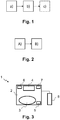
- Fig. 1 is a flow diagram of a method for treating an animal carcass 3, in particular a poultry carcass, after slaughtering. The method is described using the reference numerals of Fig. 3 . The method comprises:
- Steps a) and b) can be performed as a continuous process or as a batch process.
- the method further comprises the following step, c) cooling the carcass 3, which is indicated by a dotted box in Fig. 1 .
- Fig. 2 is a flow diagram of a use of oxygen for treating an animal carcass 3, in particular a poultry carcass, after slaughtering. The use is described using the reference numerals of Fig. 3 . The use comprises:
- Fig. 3 is a sectional side view of a device 1 for treating an animal carcass 3 after slaughtering, in particular according to the method of Fig. 1 and/or according to the use of Fig. 2 .
- the device 1 comprises a chamber 2, in which the carcass 3 can be treated, in particular disinfected.
- the carcass 3 can be subjected to an atmosphere with an oxygen concentration above 20 %, in particular above 25 %.
- an oxygen sensor 6 is arranged within the chamber 2.
- the oxygen sensor 6 is configured for measuring the oxygen concentration. If the oxygen concentration is lower than a set value, oxygen from an oxygen tank 8 can be introduced into the chamber 2.
- a temperature sensor 5 is arranged within the chamber 2.
- the temperature sensor 5 is configured for measuring the temperature of the carcass 3. This temperature can be approximated by measuring the temperature in the proximity of the carcass 3.
- the temperature sensor 5 can be configured as an infrared sensor for measuring the surface temperature of the carcass 3. In particular in case the temperature falls below a set value, the carcass 3 can be heated by a heater 4.
- the pressure within the chamber 2 can be monitored by means of a pressure sensor 7 arranged within the chamber 2. If the pressure deviates from a set value, a gas can be introduced into the chamber 2 or extracted from the chamber 2.
- the gas can be, for example, oxygen.
- an animal carcass 3 can be disinfected particularly efficiently, in particular with respect to campylobacter bacteria. Therefore, the carcass 3 is subjected to an oxygen concentration above 20 % and to a temperature above 10 °C.
Landscapes
- Life Sciences & Earth Sciences (AREA)
- Engineering & Computer Science (AREA)
- Food Science & Technology (AREA)
- Wood Science & Technology (AREA)
- Zoology (AREA)
- Chemical & Material Sciences (AREA)
- Polymers & Plastics (AREA)
- Chemical Kinetics & Catalysis (AREA)
- General Chemical & Material Sciences (AREA)
- Apparatus For Disinfection Or Sterilisation (AREA)
- Processing Of Meat And Fish (AREA)
- Treatments For Attaching Organic Compounds To Fibrous Goods (AREA)
Abstract
Description
- The present invention is directed to a method for treating an animal carcass after slaughtering, in particular for disinfecting a poultry carcass. Thereby, in particular, campylobacter bacteria can be killed.
- It is known that animal carcasses, in particular poultry carcasses, can be contaminated with campylobacter bacteria after slaughtering. These bacteria can cause illness if a human eats a food product obtained from a contaminated carcass. Therefore, methods have been developed to treat carcasses after slaughtering in order to reduce the amount of campylobacter bacteria on the carcass surface. These methods, however, are often inefficient. That is, a great effort is required for a small reduction of bacteria.
- It is, therefore, an object of the present invention to overcome at least in part the disadvantages known from prior art and, in particular, to provide a method for treating an animal carcass after slaughtering, by means of which the animal carcass can be disinfected particularly efficiently, in particular with respect to campylobacter bacteria.
- These objects are solved by the features of the independent claims. Dependent claims are directed to preferred embodiments of the present invention.
- According to the invention a method is provided for treating an animal carcass after slaughtering. The method comprises:
- a) placing the carcass into a chamber, and
- b) disinfecting the carcass within the chamber by maintaining an oxygen concentration within the chamber above 20 % and maintaining a temperature of the carcass above 10 °C.
- With the described method an animal carcass can be treated. An animal carcass is the body of a dead animal. The method can be performed after slaughtering. The treatment comprises disinfecting the carcass. Thus, the described method can be considered a method for disinfecting the carcass. However, the described method can comprise further treatment of the carcass such that the method is described as a method for treating the carcass.
- The disinfecting of the carcass is performed within a chamber. The animal is slaughtered outside the chamber. In step a), the carcass is placed into the chamber. That is, the animal is already dead when being placed into the chamber. The chamber is preferably sealed such that the atmosphere within the chamber can be controlled. Preferably, the chamber comprises a door, via which the carcass can be placed into the chamber and via which the carcass can be taken out of the chamber. The door is preferably configured so as to seal the chamber when the door is closed. The chamber is preferably made of steel. This material is particularly hygienic.
- In step b) the carcass is disinfected. Thereby, bacteria can be killed, in particular campylobacter bacteria. This is possible because it was found that bacteria such as the campylobacter bacteria can be killed by maintaining an oxygen concentration within the chamber above 20 % and by maintaining a temperature of the carcass above 10 °C. The combination of this oxygen concentration and this temperature was found to kill campylobacter bacteria.
- During step b) the oxygen concentration in the chamber is preferably maintained within 20 and 100 %. During step b) the temperature of the carcass is preferably maintained within 10 °C and 120 °C, in particular between 10 °C and 50 °C. A temperature above 50 °C could already affect the carcass in a manner only desired in cooking.
- Usually, carcasses are cooled immediately after slaughtering. Thereby, molding of the carcasses can be prevented. According to the described method, however, the temperature of the carcass is maintained at least above 10 °C for disinfecting. It was found that the reduction of campylobacter bacteria justifies the delayed cooling because the reduction of the campylobacter bacteria increases the food quality, while a comparatively short delay in cooling does not have any significant negative effect.
- According to a preferred embodiment of the method step a) is performed less than 30 minutes after slaughtering.
- Preferably, step a) is performed less than 10 minutes, in particular less than 1 minute after slaughtering. Preferably, step a) is performed between 1 and 5 minutes after slaughtering. "Slaughtering" refers to the time of death of the animal.
- In the present embodiment step a) is performed immediately after slaughtering. "Immediately after slaughtering" means that the carcass is placed into the chamber less than 30 minutes, in particular less than 10 minutes, in particular less than 1 minute after the time of death. Between the slaughtering and step a), feathers can be removed from the carcass, the carcass can be cut open and/or pluck can be removed from the carcass. Preferably, step a) is performed after pluck has been removed from the carcass and before any other process step is performed.
- Immediately after slaughtering, the carcass is still warm due to the body heat of the animal. If the described method is performed sufficiently soon after slaughtering, the temperature of the carcass is sufficient for the disinfection according to step b) without requiring a heating of the carcass. Also, the campylobacter bacteria are preferably killed as soon as possible in order to prevent them from spreading out. Further, food quality could be reduced if the carcass was cooled after slaughtering and heated up again for disinfecting. Heating up the carcass after cooling it down would interrupt the cold chain, which is supposed to be avoided with food products. Such a cooling down and heating up would also be energetically inefficient.
- Nevertheless, also according to the described method the carcass is preferably cooled as soon as possible. Therefore, the embodiment is preferred, in which the method further comprises:
c) cooling the carcass. - Step c) is performed after step b). That is, after slaughtering an animal its carcass is preferably disinfected as soon as possible and, subsequently, cooled down as soon as possible. Preferably, the carcass is cooled as soon as the carcass is removed from the chamber after disinfecting.
- According to a further preferred embodiment of the method, during step b) the oxygen concentration within the chamber is maintained above 25 %.
- In this embodiment, the oxygen concentration is maintained above the oxygen concentration in air. This can be achieved by accumulating oxygen within the chamber and/or by introducing oxygen into the chamber, in particular pure oxygen. That is, according to the present embodiment the oxygen concentration within the chamber is deliberately increased compared to air. This is reasonable because it was found that bacteria such as campylobacter bacteria can be killed by oxygen provided the temperature is sufficiently high. A higher oxygen concentration enhances this effect. It is preferred that the oxygen concentration within the chamber is maintained between 25 % and 100 %, in particular between 40 % and 60 %. An oxygen concentration above 60 % can be dangerous because oxygen contribute to starting a fire.
- According to a further preferred embodiment of the method, during step b) the temperature of the carcass is maintained above 30 °C.
- It was found that bacteria such as the campylobacter bacteria can be killed by oxygen the more efficiently, the higher the temperature is. Thus, in the present embodiment the temperature of the carcass is maintained above 30 °C. This temperature is close to the body temperature of animals such that this temperature can be maintained during step b) without heating the carcass. Nevertheless, it is preferred that during step b) the temperature of the carcass is maintained between 30 °C and 120 °C, in particular between 30 °C and 50 °C.
- This can be achieved, in particular, according to the further preferred embodiment of the method, wherein in step b) the carcass is heated.
- The carcass can be heated during a part of step b) or during the entire step b). The carcass can be heated, for example, by heating a gas within the chamber and/or by irradiating and/or contacting the carcass. The carcass is preferably heated to a temperature between 40 °C and 80 °C, in particular between 30 °C and 50 °C.
- According to a further preferred embodiment of the method step b) lasts at least 1 minute.
- Preferably, step b) lasts at least 15 minutes, in particular at least 1 hour. Such a duration of the disinfecting can be sufficient in order to achieve a certain desired food quality. However, it is also possible to adapt the duration of step b) to working routines. Therefore, it is preferred that step b) lasts at least 4 hours, in particular at least 8 hours. This time may correspond to (half) the duration of a working shift. Performing step b) over several hours has the advantage that it is almost certain that all bacteria are killed.
- Preferably, step b) lasts between 1 minute and 1 hour, in particular between 5 and 15 minutes. Alternatively, it is preferred that step b) lasts between 3 and 5 hours, which may correspond to half a working shift, or between 7 and 9 hours, which may correspond to a full working shift.
- Preferably, step b) is performed until substantially all bacteria are killed, in particular substantially all campylobacter bacteria. "Substantially all" refers to how many bacteria are allowed to remain in and/or on the carcass if the carcass is supposed to be used as a food product. For example, step b) can be performed until 99.99 % of the bacteria, in particular 99.99 % of the campylobacter bacteria, are removed from the carcass.
- It was found that the present embodiment is a reasonable compromise between a sufficient reduction of bacteria and a sufficiently fast processing. A slow processing is disadvantageous not only in view of the duration of the method, but also in view of delaying the cooling.
- According to a further preferred embodiment of the method, during step b) a pressure within the chamber is maintained between 0.2 and 800 mbar.
- In this embodiment the pressure within the chamber is maintained below atmospheric pressure. Thereby, a gas within the chamber can be confined to the chamber particularly well. This can prevent substances such as bacteria from leaving the chamber. Also, sealing the chamber can increase safety, in particular if a gas within the chamber comprises a particularly high oxygen concentration. A gas having a high oxygen concentration can be inflammable.
- Alternatively, according to a further preferred embodiment of the method, during step b) a pressure within the chamber is maintained between 1.2 and 10 bar.
- In this embodiment the pressure within the chamber is higher than atmospheric pressure. This is possible if the chamber is sufficiently tight such that the before described issues are avoided. This may require a more complicated construction of the chamber. However, it was found that bacteria such as campylobacter bacteria can be killed particularly well at a higher pressure within the chamber.
- According to a further preferred embodiment of the method, in step b) the carcass is subjected to a jet of a gas comprising oxygen.
- It was found that bacteria, in particular campylobacter bacteria, can be killed by oxygen provided the temperature is sufficiently high. By subjecting the carcass to a jet of pure oxygen or a jet of a mixture comprising oxygen, particularly high oxygen concentrations can be achieved locally at the surface of the carcass. Therefore, the bacteria can be killed particularly efficiently.
- According to a further preferred embodiment of the method the animal is poultry.
- Campylobacter bacteria are an issue with different animals. However, these bacteria are found in and/or on poultry carcasses particularly often.
- According to a further preferred embodiment of the method steps a) and b) are performed as a continuous process.
- In a continuous process, one carcass after the other is treated according to steps a) and b). This can be achieved, for example, by conveying the carcasses through the chamber by a conveyor. Via air locks, the carcasses can be introduced into and taken out of the chamber. A continuous process is particularly fast, but requires a respective equipment. Also, in this embodiment it is particularly difficult to confine gas to the chamber because the carcasses must be introduced into and taken out of the chamber while the chamber is in operation.
- Alternatively, according to a further preferred embodiment of the method steps a) and b) are performed as a batch process.
- In a batch process, a first batch of one or more carcasses is placed into the chamber and treated according to step b). Subsequently, another batch of one or more carcasses is treated that way. In this embodiment the chamber can be sealed by closing a door. Thus, it is particularly easy to confine gas to the chamber. Also, no conveyor and/or airlocks are required such that the equipment is particularly simple. However, a batch process might be slower than a continuous process.
- According to a further aspect of the invention a use of oxygen for treating an animal carcass after slaughtering is presented. The use comprises:
- A) placing the carcass into a chamber, and
- B) disinfecting the carcass within the chamber by introducing the oxygen into the chamber so as to maintain an oxygen concentration within the chamber above 25 %, and by maintaining a temperature of the carcass above 10 °C.
- The details and advantages disclosed for the described method can be applied to the described use, and vice versa.
- The oxygen is used to maintain an oxygen concentration within the chamber that is higher than the oxygen concentration in air.
- It should be noted that the individual features specified in the claims may be combined with one another in any desired technologically reasonable manner and form further embodiments of the invention. The specification, in particular taken together with the figures, explains the invention further and specifies particularly preferred embodiments of the invention. Particularly preferred variants of the invention and the technical field will now be explained in more detail with reference to the enclosed figures. It should be noted that the exemplary embodiments shown in the figures are not intended to restrict the invention. The figures are schematic and may not be to scale. The figures display:
- Fig. 1:
- a flow diagram of a method according to the invention for treating an animal carcass after slaughtering,
- Fig. 2:
- a flow diagram of a use according to the invention for treating an animal carcass after slaughtering, and
- Fig. 3:
- a sectional side view of a device for treating an animal carcass after slaughtering, in particular according to the method of
Fig. 1 and/or according to the use ofFig. 2 . -
Fig. 1 is a flow diagram of a method for treating ananimal carcass 3, in particular a poultry carcass, after slaughtering. The method is described using the reference numerals ofFig. 3 . The method comprises: - a) less than 30 minutes, preferably less than 10 min, in particular less than 1 minute after slaughtering placing the
carcass 3 into achamber 2, and - b) disinfecting the
carcass 3 within thechamber 2 for at least 1 minute, preferably for at least 15 minutes, in particular for at least 1 hour, by maintaining an oxygen concentration within thechamber 2 above 20 %, in particular above 25 %, maintaining a temperature of thecarcass 3 above 10 °C, in particular above 30 °C, and, in particular, by maintaining a pressure within thechamber 2 between 0.2 and 800 mbar or between 1.2 and 10 bar and/or by heating thecarcass 3 and/or by subjecting thecarcass 3 to a jet of a gas comprising oxygen. - Steps a) and b) can be performed as a continuous process or as a batch process.
- Preferably, the method further comprises the following step,
c) cooling thecarcass 3,
which is indicated by a dotted box inFig. 1 . -
Fig. 2 is a flow diagram of a use of oxygen for treating ananimal carcass 3, in particular a poultry carcass, after slaughtering. The use is described using the reference numerals ofFig. 3 . The use comprises: - A) placing the
carcass 3 into achamber 2, and - B) disinfecting the
carcass 3 within thechamber 2 by introducing the oxygen into thechamber 2 so as to maintain an oxygen concentration within thechamber 2 above 25 %, and by maintaining a temperature of thecarcass 3 above 10 °C. -
Fig. 3 is a sectional side view of a device 1 for treating ananimal carcass 3 after slaughtering, in particular according to the method ofFig. 1 and/or according to the use ofFig. 2 . The device 1 comprises achamber 2, in which thecarcass 3 can be treated, in particular disinfected. Within thechamber 2, thecarcass 3 can be subjected to an atmosphere with an oxygen concentration above 20 %, in particular above 25 %. In order to monitor the oxygen concentration, anoxygen sensor 6 is arranged within thechamber 2. Theoxygen sensor 6 is configured for measuring the oxygen concentration. If the oxygen concentration is lower than a set value, oxygen from anoxygen tank 8 can be introduced into thechamber 2. - Further, a
temperature sensor 5 is arranged within thechamber 2. Thetemperature sensor 5 is configured for measuring the temperature of thecarcass 3. This temperature can be approximated by measuring the temperature in the proximity of thecarcass 3. Alternatively, thetemperature sensor 5 can be configured as an infrared sensor for measuring the surface temperature of thecarcass 3. In particular in case the temperature falls below a set value, thecarcass 3 can be heated by aheater 4. - The pressure within the
chamber 2 can be monitored by means of apressure sensor 7 arranged within thechamber 2. If the pressure deviates from a set value, a gas can be introduced into thechamber 2 or extracted from thechamber 2. The gas can be, for example, oxygen. - With the described method and use an
animal carcass 3 can be disinfected particularly efficiently, in particular with respect to campylobacter bacteria. Therefore, thecarcass 3 is subjected to an oxygen concentration above 20 % and to a temperature above 10 °C. -
- 1
- device
- 2
- chamber
- 3
- carcass
- 4
- heater
- 5
- temperature sensor
- 6
- oxygen sensor
- 7
- pressure sensor
- 8
- oxygen tank
Claims (14)
- Method for treating an animal carcass (3) after slaughtering, comprising:a) placing the carcass (3) into a chamber (2), andb) disinfecting the carcass (3) within the chamber (2) by maintaining an oxygen concentration within the chamber (2) above 20 % and maintaining a temperature of the carcass (3) above 10 °C.
- Method according to claim 1, wherein step a) is performed less than 30 minutes after slaughtering.
- Method according to any of the preceding claims, further comprising:
c) cooling the carcass (3). - Method according to any of the preceding claims, wherein during step b) the oxygen concentration within the chamber (2) is maintained above 25 %.
- Method according to any of the preceding claims, wherein during step b) the temperature of the carcass (3) is maintained above 30 °C.
- Method according to any of the preceding claims, wherein in step b) the carcass (3) is heated.
- Method according to any of the preceding claims, wherein step b) lasts at least 1 minute.
- Method according to any of the preceding claims, wherein during step b) a pressure within the chamber (2) is maintained between 0.2 and 800 mbar.
- Method according to any one of claims 1 to 7, wherein during step b) a pressure within the chamber (2) is maintained between 1.2 and 10 bar.
- Method according to any of the preceding claims, wherein in step b) the carcass (3) is subjected to a jet of a gas comprising oxygen.
- Method according to any of the preceding claims, wherein the animal is poultry.
- Method according to any of the preceding claims, wherein steps a) and b) are performed as a continuous process.
- Method according to any one of claims 1 to 11, wherein steps a) and b) are performed as a batch process.
- Use of oxygen for treating an animal carcass (3) after slaughtering, comprising:A) placing the carcass (3) into a chamber (2), andB) disinfecting the carcass (3) within the chamber (2) by introducing the oxygen into the chamber (2) so as to maintain an oxygen concentration within the chamber (2) above 25 %, and by maintaining a temperature of the carcass (3) above 10 °C.
Priority Applications (6)
| Application Number | Priority Date | Filing Date | Title |
|---|---|---|---|
| EP19201532.9A EP3799719B1 (en) | 2019-10-04 | 2019-10-04 | Treatment of an animal carcass after slaughtering |
| PL19201532.9T PL3799719T3 (en) | 2019-10-04 | 2019-10-04 | Treatment of an animal carcass after slaughtering |
| ES19201532T ES2953066T3 (en) | 2019-10-04 | 2019-10-04 | Treatment of the carcass of an animal after slaughter |
| CN202011038831.XA CN112602764A (en) | 2019-10-04 | 2020-09-28 | Treatment of slaughtered animal carcasses |
| US17/038,980 US20210100259A1 (en) | 2019-10-04 | 2020-09-30 | Treatment of an animal carcass after slaughtering |
| BR102020020424-6A BR102020020424A2 (en) | 2019-10-04 | 2020-10-05 | treatment of an animal carcass after slaughter |
Applications Claiming Priority (1)
| Application Number | Priority Date | Filing Date | Title |
|---|---|---|---|
| EP19201532.9A EP3799719B1 (en) | 2019-10-04 | 2019-10-04 | Treatment of an animal carcass after slaughtering |
Publications (2)
| Publication Number | Publication Date |
|---|---|
| EP3799719A1 true EP3799719A1 (en) | 2021-04-07 |
| EP3799719B1 EP3799719B1 (en) | 2023-06-07 |
Family
ID=68242251
Family Applications (1)
| Application Number | Title | Priority Date | Filing Date |
|---|---|---|---|
| EP19201532.9A Active EP3799719B1 (en) | 2019-10-04 | 2019-10-04 | Treatment of an animal carcass after slaughtering |
Country Status (6)
| Country | Link |
|---|---|
| US (1) | US20210100259A1 (en) |
| EP (1) | EP3799719B1 (en) |
| CN (1) | CN112602764A (en) |
| BR (1) | BR102020020424A2 (en) |
| ES (1) | ES2953066T3 (en) |
| PL (1) | PL3799719T3 (en) |
Citations (2)
| Publication number | Priority date | Publication date | Assignee | Title |
|---|---|---|---|---|
| EP0827695A2 (en) * | 1996-09-10 | 1998-03-11 | The Boc Group, Inc. | Minimizing microbial growth during food processing |
| WO2017080849A1 (en) * | 2015-11-12 | 2017-05-18 | Rs Cutting Edge Llp | A carcass cleaning system |
Family Cites Families (38)
| Publication number | Priority date | Publication date | Assignee | Title |
|---|---|---|---|---|
| US2152083A (en) * | 1935-09-03 | 1939-03-28 | Onorato Paul | Poultry bleeding and steaming machine |
| US2135334A (en) * | 1937-01-30 | 1938-11-01 | Charles C Guthrie | Process of aging and pickling meat and the like |
| US2963369A (en) * | 1956-11-02 | 1960-12-06 | Swift & Co | Protecting color of electron irradiated meat |
| US3047404A (en) * | 1958-09-23 | 1962-07-31 | Goodyear Tire & Rubber | Packaging red meats |
| US3522058A (en) * | 1967-01-19 | 1970-07-28 | Tra Way Corp | Process for treating poultry products |
| US3851080A (en) * | 1972-09-14 | 1974-11-26 | Transfresh Corp | Fresh meat in a predominately carbon dioxide environment |
| US4045579A (en) * | 1974-06-06 | 1977-08-30 | Armour And Company | Process for pasteurizing raw poultry |
| US3930040A (en) * | 1974-09-16 | 1975-12-30 | Transfresh Corp | Process of storing or shipping fresh meat in a modified gaseous atmosphere |
| US4209538A (en) * | 1977-04-04 | 1980-06-24 | Transfresh Corporation | Method for inhibiting fungi in citrus fruit |
| US4224347A (en) * | 1979-06-08 | 1980-09-23 | Transfresh Corporation | Process and package for extending the life of cut vegetables |
| US4551338A (en) * | 1982-11-22 | 1985-11-05 | Wallace Charles H | Method for changing the internal temperature of meat by the use of gas |
| US4683139A (en) * | 1985-07-11 | 1987-07-28 | Wilson Foods Corporation | Process for prepacking fresh meat |
| DK165866C (en) * | 1989-01-31 | 1993-06-28 | Slagteriernes Forskningsinst | PROCEDURE FOR SHOULDING THE CARCASSES AND APPARATUS FOR EXERCISING THE PROCEDURE |
| NL8901731A (en) * | 1989-07-06 | 1991-02-01 | Stork Pmt | METHOD FOR KILLING BACTERIA IN GENDER POULTRY |
| US5281428A (en) * | 1993-03-31 | 1994-01-25 | Morgan Arthur I | Method and apparatus for treating and packaging raw meat |
| US5607349A (en) * | 1994-04-28 | 1997-03-04 | Kentmaster Mfg. Co., Inc. | Carcass cleaning system |
| US5503594A (en) * | 1995-01-25 | 1996-04-02 | Kentmaster Mfg. Co., Inc. | Carccass cleaning system |
| US5439694A (en) * | 1994-07-11 | 1995-08-08 | Morris & Associates, Inc. | Poultry preparation process and apparatus |
| NZ264771A (en) * | 1994-10-25 | 1998-02-26 | Tenderland Ltd | Meat treatment includes pre-treating meat under anaerobic conditions and exposing the meat to a controlled environment of predetermined temperature and gas type |
| US5711981A (en) * | 1994-11-07 | 1998-01-27 | Frigoscandia Inc. | Method for steam pasteurization of meat |
| US5791151A (en) * | 1995-06-07 | 1998-08-11 | Verhaag; Hubert | Method of preserving tissues and organs |
| DE19739789A1 (en) * | 1997-09-10 | 1999-03-11 | Vivotec New Concepts In Fresh | Process and device for treating fresh meat |
| US5980375A (en) * | 1998-04-13 | 1999-11-09 | Chad Company Of Missouri, Inc. | Method and apparatus for antimicrobial treatment of animal carcasses |
| US6033704A (en) * | 1998-08-14 | 2000-03-07 | Charvid Limited Liability Co. | Method and apparatus for preserving fruits and vegetables |
| US6066348A (en) * | 1998-09-23 | 2000-05-23 | American Air Liquide Inc. | Method of disinfecting a foodstuff using gaseous ozone |
| US6485769B2 (en) * | 2000-03-10 | 2002-11-26 | Air Liquide Canada, Inc. | Food disinfection using ozone |
| US6767568B2 (en) * | 2000-06-05 | 2004-07-27 | Spectra Research, Inc. | Meat processing scheme |
| US20030224669A1 (en) * | 2002-05-30 | 2003-12-04 | Yuan James T.C. | Method of improving cooking efficiency |
| US7588486B2 (en) * | 2005-07-19 | 2009-09-15 | Drew Horst | Microwave poultry processing device and method |
| US20070237671A1 (en) * | 2005-08-29 | 2007-10-11 | Yuan James T | Novel method of sanitizing target items using a moist sanitizing gas |
| US20090226579A1 (en) * | 2008-03-07 | 2009-09-10 | Tuna Processors, Inc. | Fish and meat curing process |
| CA2793950A1 (en) * | 2010-03-22 | 2011-09-29 | Bjm Food Technologies Inc. | Controlling contamination on carcasses using flame decontamination |
| US8252230B2 (en) * | 2010-05-11 | 2012-08-28 | Hussmann Corporation | System and method for sanitization |
| GB201421501D0 (en) * | 2014-12-03 | 2015-01-14 | Moy Park Ltd | Apparatus and method for improving the hygiene of poultry processing |
| GB2554099A (en) * | 2016-09-20 | 2018-03-28 | Anacail Ltd | Use of gas mixtures comprising oxygen for the production of ozone |
| CA3043088C (en) * | 2019-05-10 | 2020-06-09 | Luana Lauri | Method of processing an intact animal carcass |
| WO2021113384A1 (en) * | 2019-12-02 | 2021-06-10 | Preservation Tech LLC | Systems and methods for disinfecting meat products |
| US20210289799A1 (en) * | 2020-03-18 | 2021-09-23 | Cal Poly Corporation | Meat processing methods |
-
2019
- 2019-10-04 PL PL19201532.9T patent/PL3799719T3/en unknown
- 2019-10-04 ES ES19201532T patent/ES2953066T3/en active Active
- 2019-10-04 EP EP19201532.9A patent/EP3799719B1/en active Active
-
2020
- 2020-09-28 CN CN202011038831.XA patent/CN112602764A/en active Pending
- 2020-09-30 US US17/038,980 patent/US20210100259A1/en not_active Abandoned
- 2020-10-05 BR BR102020020424-6A patent/BR102020020424A2/en not_active Application Discontinuation
Patent Citations (2)
| Publication number | Priority date | Publication date | Assignee | Title |
|---|---|---|---|---|
| EP0827695A2 (en) * | 1996-09-10 | 1998-03-11 | The Boc Group, Inc. | Minimizing microbial growth during food processing |
| WO2017080849A1 (en) * | 2015-11-12 | 2017-05-18 | Rs Cutting Edge Llp | A carcass cleaning system |
Also Published As
| Publication number | Publication date |
|---|---|
| ES2953066T3 (en) | 2023-11-07 |
| PL3799719T3 (en) | 2023-09-18 |
| US20210100259A1 (en) | 2021-04-08 |
| BR102020020424A2 (en) | 2021-04-20 |
| CN112602764A (en) | 2021-04-06 |
| EP3799719B1 (en) | 2023-06-07 |
Similar Documents
| Publication | Publication Date | Title |
|---|---|---|
| US4594253A (en) | Method for mincing and prepackaging minced meat under controlled atmosphere and temperature | |
| US6387426B1 (en) | Method for treating meat products with ammonia | |
| Lu et al. | Processing and retail strategies to minimize Campylobacter contamination in retail chicken | |
| Serra-Castelló et al. | Modeling and designing a Listeria monocytogenes control strategy for dry-cured ham taking advantage of water activity and storage temperature | |
| EP1450868B1 (en) | Bulk decontamination and degermination of materials in a sub-atmospheric saturated steam environment | |
| US20190230947A1 (en) | Food hygiene method and food product | |
| US20170071246A1 (en) | Low-temperature, forced-convection, steam-heating of nuts | |
| Wang et al. | Simultaneous decontamination and drying of rough rice using combined pulsed light and holding treatment | |
| EP3799719B1 (en) | Treatment of an animal carcass after slaughtering | |
| CN103750497B (en) | A kind of biological bacteriostatic agent combined temperature works in coordination with the food fresh-keeping method of super-pressure | |
| CA2184384A1 (en) | Method and apparatus for sterilization of seeds, herbs and spices | |
| WO2008128027A1 (en) | System and method for stunning hogs with gas | |
| KR20130061330A (en) | A device for postharvest phytosanitation against the peach fruit moth by using controlled atmosphere temperature treatment system | |
| US10098375B2 (en) | Forced-convection, steam-heating of nuts with preheating | |
| US20100034936A1 (en) | Method and system for reducing pathogens | |
| CN107763951A (en) | Refrigerator and its defrosting method for disinfection with sterilization and defrosting function | |
| AU2022100141B4 (en) | Forced-convection, steam-heating of nuts with preheating | |
| US3761283A (en) | Method of tenderizing meat | |
| Tungyshbayeva et al. | DEVISING PREVENTIVE ACTIONS IN THE PRODUCTION OF BROILER CHICKENS USING ULTRAVIOLET RADIATION FOR LONG-TERM STORAGE BASED ON RISK ANALYSIS. | |
| US2135334A (en) | Process of aging and pickling meat and the like | |
| US20030224669A1 (en) | Method of improving cooking efficiency | |
| US2356505A (en) | Process fob sterilization of organic | |
| CH707589A2 (en) | Tofu in film packaging introduced into gastight, closable pasteurizing system with back pressure, where system is filled with water and includes steam-powered pressure vessel configured for thermal treatment of substances at high pressure | |
| Marsden | The effectiveness of Listex P100 in reducing Listeria monocytogenes in RTE food products | |
| Ribeiro et al. | Pig meat processing wastes stabilization: Effect on the microbiological properties |
Legal Events
| Date | Code | Title | Description |
|---|---|---|---|
| PUAI | Public reference made under article 153(3) epc to a published international application that has entered the european phase |
Free format text: ORIGINAL CODE: 0009012 |
|
| STAA | Information on the status of an ep patent application or granted ep patent |
Free format text: STATUS: THE APPLICATION HAS BEEN PUBLISHED |
|
| AK | Designated contracting states |
Kind code of ref document: A1 Designated state(s): AL AT BE BG CH CY CZ DE DK EE ES FI FR GB GR HR HU IE IS IT LI LT LU LV MC MK MT NL NO PL PT RO RS SE SI SK SM TR |
|
| AX | Request for extension of the european patent |
Extension state: BA ME |
|
| STAA | Information on the status of an ep patent application or granted ep patent |
Free format text: STATUS: REQUEST FOR EXAMINATION WAS MADE |
|
| 17P | Request for examination filed |
Effective date: 20210928 |
|
| RBV | Designated contracting states (corrected) |
Designated state(s): AL AT BE BG CH CY CZ DE DK EE ES FI FR GB GR HR HU IE IS IT LI LT LU LV MC MK MT NL NO PL PT RO RS SE SI SK SM TR |
|
| STAA | Information on the status of an ep patent application or granted ep patent |
Free format text: STATUS: EXAMINATION IS IN PROGRESS |
|
| 17Q | First examination report despatched |
Effective date: 20220217 |
|
| GRAP | Despatch of communication of intention to grant a patent |
Free format text: ORIGINAL CODE: EPIDOSNIGR1 |
|
| STAA | Information on the status of an ep patent application or granted ep patent |
Free format text: STATUS: GRANT OF PATENT IS INTENDED |
|
| INTG | Intention to grant announced |
Effective date: 20221013 |
|
| GRAS | Grant fee paid |
Free format text: ORIGINAL CODE: EPIDOSNIGR3 |
|
| GRAA | (expected) grant |
Free format text: ORIGINAL CODE: 0009210 |
|
| STAA | Information on the status of an ep patent application or granted ep patent |
Free format text: STATUS: THE PATENT HAS BEEN GRANTED |
|
| RAP3 | Party data changed (applicant data changed or rights of an application transferred) |
Owner name: AIR LIQUIDE DEUTSCHLAND GMBH Owner name: L'AIR LIQUIDE, SOCIETE ANONYME POUR L'ETUDE ET L'EXPLOITATION DES PROCEDES GEORGES CLAUDE |
|
| AK | Designated contracting states |
Kind code of ref document: B1 Designated state(s): AL AT BE BG CH CY CZ DE DK EE ES FI FR GB GR HR HU IE IS IT LI LT LU LV MC MK MT NL NO PL PT RO RS SE SI SK SM TR |
|
| REG | Reference to a national code |
Ref country code: GB Ref legal event code: FG4D |
|
| REG | Reference to a national code |
Ref country code: CH Ref legal event code: EP Ref country code: AT Ref legal event code: REF Ref document number: 1571952 Country of ref document: AT Kind code of ref document: T Effective date: 20230615 |
|
| REG | Reference to a national code |
Ref country code: DE Ref legal event code: R096 Ref document number: 602019029890 Country of ref document: DE |
|
| REG | Reference to a national code |
Ref country code: LT Ref legal event code: MG9D |
|
| REG | Reference to a national code |
Ref country code: NL Ref legal event code: MP Effective date: 20230607 |
|
| PG25 | Lapsed in a contracting state [announced via postgrant information from national office to epo] |
Ref country code: SE Free format text: LAPSE BECAUSE OF FAILURE TO SUBMIT A TRANSLATION OF THE DESCRIPTION OR TO PAY THE FEE WITHIN THE PRESCRIBED TIME-LIMIT Effective date: 20230607 Ref country code: NO Free format text: LAPSE BECAUSE OF FAILURE TO SUBMIT A TRANSLATION OF THE DESCRIPTION OR TO PAY THE FEE WITHIN THE PRESCRIBED TIME-LIMIT Effective date: 20230907 |
|
| REG | Reference to a national code |
Ref country code: AT Ref legal event code: MK05 Ref document number: 1571952 Country of ref document: AT Kind code of ref document: T Effective date: 20230607 |
|
| PG25 | Lapsed in a contracting state [announced via postgrant information from national office to epo] |
Ref country code: RS Free format text: LAPSE BECAUSE OF FAILURE TO SUBMIT A TRANSLATION OF THE DESCRIPTION OR TO PAY THE FEE WITHIN THE PRESCRIBED TIME-LIMIT Effective date: 20230607 Ref country code: NL Free format text: LAPSE BECAUSE OF FAILURE TO SUBMIT A TRANSLATION OF THE DESCRIPTION OR TO PAY THE FEE WITHIN THE PRESCRIBED TIME-LIMIT Effective date: 20230607 Ref country code: LV Free format text: LAPSE BECAUSE OF FAILURE TO SUBMIT A TRANSLATION OF THE DESCRIPTION OR TO PAY THE FEE WITHIN THE PRESCRIBED TIME-LIMIT Effective date: 20230607 Ref country code: LT Free format text: LAPSE BECAUSE OF FAILURE TO SUBMIT A TRANSLATION OF THE DESCRIPTION OR TO PAY THE FEE WITHIN THE PRESCRIBED TIME-LIMIT Effective date: 20230607 Ref country code: HR Free format text: LAPSE BECAUSE OF FAILURE TO SUBMIT A TRANSLATION OF THE DESCRIPTION OR TO PAY THE FEE WITHIN THE PRESCRIBED TIME-LIMIT Effective date: 20230607 Ref country code: GR Free format text: LAPSE BECAUSE OF FAILURE TO SUBMIT A TRANSLATION OF THE DESCRIPTION OR TO PAY THE FEE WITHIN THE PRESCRIBED TIME-LIMIT Effective date: 20230908 |
|
| PG25 | Lapsed in a contracting state [announced via postgrant information from national office to epo] |
Ref country code: FI Free format text: LAPSE BECAUSE OF FAILURE TO SUBMIT A TRANSLATION OF THE DESCRIPTION OR TO PAY THE FEE WITHIN THE PRESCRIBED TIME-LIMIT Effective date: 20230607 |
|
| PG25 | Lapsed in a contracting state [announced via postgrant information from national office to epo] |
Ref country code: SK Free format text: LAPSE BECAUSE OF FAILURE TO SUBMIT A TRANSLATION OF THE DESCRIPTION OR TO PAY THE FEE WITHIN THE PRESCRIBED TIME-LIMIT Effective date: 20230607 |
|
| PG25 | Lapsed in a contracting state [announced via postgrant information from national office to epo] |
Ref country code: IS Free format text: LAPSE BECAUSE OF FAILURE TO SUBMIT A TRANSLATION OF THE DESCRIPTION OR TO PAY THE FEE WITHIN THE PRESCRIBED TIME-LIMIT Effective date: 20231007 |
|
| PG25 | Lapsed in a contracting state [announced via postgrant information from national office to epo] |
Ref country code: SM Free format text: LAPSE BECAUSE OF FAILURE TO SUBMIT A TRANSLATION OF THE DESCRIPTION OR TO PAY THE FEE WITHIN THE PRESCRIBED TIME-LIMIT Effective date: 20230607 Ref country code: SK Free format text: LAPSE BECAUSE OF FAILURE TO SUBMIT A TRANSLATION OF THE DESCRIPTION OR TO PAY THE FEE WITHIN THE PRESCRIBED TIME-LIMIT Effective date: 20230607 Ref country code: RO Free format text: LAPSE BECAUSE OF FAILURE TO SUBMIT A TRANSLATION OF THE DESCRIPTION OR TO PAY THE FEE WITHIN THE PRESCRIBED TIME-LIMIT Effective date: 20230607 Ref country code: PT Free format text: LAPSE BECAUSE OF FAILURE TO SUBMIT A TRANSLATION OF THE DESCRIPTION OR TO PAY THE FEE WITHIN THE PRESCRIBED TIME-LIMIT Effective date: 20231009 Ref country code: IS Free format text: LAPSE BECAUSE OF FAILURE TO SUBMIT A TRANSLATION OF THE DESCRIPTION OR TO PAY THE FEE WITHIN THE PRESCRIBED TIME-LIMIT Effective date: 20231007 Ref country code: EE Free format text: LAPSE BECAUSE OF FAILURE TO SUBMIT A TRANSLATION OF THE DESCRIPTION OR TO PAY THE FEE WITHIN THE PRESCRIBED TIME-LIMIT Effective date: 20230607 Ref country code: CZ Free format text: LAPSE BECAUSE OF FAILURE TO SUBMIT A TRANSLATION OF THE DESCRIPTION OR TO PAY THE FEE WITHIN THE PRESCRIBED TIME-LIMIT Effective date: 20230607 Ref country code: AT Free format text: LAPSE BECAUSE OF FAILURE TO SUBMIT A TRANSLATION OF THE DESCRIPTION OR TO PAY THE FEE WITHIN THE PRESCRIBED TIME-LIMIT Effective date: 20230607 |
|
| REG | Reference to a national code |
Ref country code: DE Ref legal event code: R097 Ref document number: 602019029890 Country of ref document: DE |
|
| PLBE | No opposition filed within time limit |
Free format text: ORIGINAL CODE: 0009261 |
|
| STAA | Information on the status of an ep patent application or granted ep patent |
Free format text: STATUS: NO OPPOSITION FILED WITHIN TIME LIMIT |
|
| PG25 | Lapsed in a contracting state [announced via postgrant information from national office to epo] |
Ref country code: DK Free format text: LAPSE BECAUSE OF FAILURE TO SUBMIT A TRANSLATION OF THE DESCRIPTION OR TO PAY THE FEE WITHIN THE PRESCRIBED TIME-LIMIT Effective date: 20230607 |
|
| PG25 | Lapsed in a contracting state [announced via postgrant information from national office to epo] |
Ref country code: SI Free format text: LAPSE BECAUSE OF FAILURE TO SUBMIT A TRANSLATION OF THE DESCRIPTION OR TO PAY THE FEE WITHIN THE PRESCRIBED TIME-LIMIT Effective date: 20230607 |
|
| 26N | No opposition filed |
Effective date: 20240308 |
|
| PG25 | Lapsed in a contracting state [announced via postgrant information from national office to epo] |
Ref country code: SI Free format text: LAPSE BECAUSE OF FAILURE TO SUBMIT A TRANSLATION OF THE DESCRIPTION OR TO PAY THE FEE WITHIN THE PRESCRIBED TIME-LIMIT Effective date: 20230607 Ref country code: MC Free format text: LAPSE BECAUSE OF FAILURE TO SUBMIT A TRANSLATION OF THE DESCRIPTION OR TO PAY THE FEE WITHIN THE PRESCRIBED TIME-LIMIT Effective date: 20230607 |
|
| REG | Reference to a national code |
Ref country code: CH Ref legal event code: PL |
|
| REG | Reference to a national code |
Ref country code: BE Ref legal event code: MM Effective date: 20231031 |
|
| PG25 | Lapsed in a contracting state [announced via postgrant information from national office to epo] |
Ref country code: LU Free format text: LAPSE BECAUSE OF NON-PAYMENT OF DUE FEES Effective date: 20231004 |
|
| PG25 | Lapsed in a contracting state [announced via postgrant information from national office to epo] |
Ref country code: LU Free format text: LAPSE BECAUSE OF NON-PAYMENT OF DUE FEES Effective date: 20231004 |
|
| PG25 | Lapsed in a contracting state [announced via postgrant information from national office to epo] |
Ref country code: CH Free format text: LAPSE BECAUSE OF NON-PAYMENT OF DUE FEES Effective date: 20231031 |
|
| PG25 | Lapsed in a contracting state [announced via postgrant information from national office to epo] |
Ref country code: CH Free format text: LAPSE BECAUSE OF NON-PAYMENT OF DUE FEES Effective date: 20231031 |
|
| PG25 | Lapsed in a contracting state [announced via postgrant information from national office to epo] |
Ref country code: BE Free format text: LAPSE BECAUSE OF NON-PAYMENT OF DUE FEES Effective date: 20231031 |
|
| PG25 | Lapsed in a contracting state [announced via postgrant information from national office to epo] |
Ref country code: IE Free format text: LAPSE BECAUSE OF NON-PAYMENT OF DUE FEES Effective date: 20231004 |
|
| PG25 | Lapsed in a contracting state [announced via postgrant information from national office to epo] |
Ref country code: IE Free format text: LAPSE BECAUSE OF NON-PAYMENT OF DUE FEES Effective date: 20231004 |
|
| PG25 | Lapsed in a contracting state [announced via postgrant information from national office to epo] |
Ref country code: BG Free format text: LAPSE BECAUSE OF FAILURE TO SUBMIT A TRANSLATION OF THE DESCRIPTION OR TO PAY THE FEE WITHIN THE PRESCRIBED TIME-LIMIT Effective date: 20230607 |
|
| PG25 | Lapsed in a contracting state [announced via postgrant information from national office to epo] |
Ref country code: BG Free format text: LAPSE BECAUSE OF FAILURE TO SUBMIT A TRANSLATION OF THE DESCRIPTION OR TO PAY THE FEE WITHIN THE PRESCRIBED TIME-LIMIT Effective date: 20230607 |
|
| PGFP | Annual fee paid to national office [announced via postgrant information from national office to epo] |
Ref country code: ES Payment date: 20241128 Year of fee payment: 6 |
|
| PG25 | Lapsed in a contracting state [announced via postgrant information from national office to epo] |
Ref country code: CY Free format text: LAPSE BECAUSE OF FAILURE TO SUBMIT A TRANSLATION OF THE DESCRIPTION OR TO PAY THE FEE WITHIN THE PRESCRIBED TIME-LIMIT; INVALID AB INITIO Effective date: 20191004 |
|
| PG25 | Lapsed in a contracting state [announced via postgrant information from national office to epo] |
Ref country code: HU Free format text: LAPSE BECAUSE OF FAILURE TO SUBMIT A TRANSLATION OF THE DESCRIPTION OR TO PAY THE FEE WITHIN THE PRESCRIBED TIME-LIMIT; INVALID AB INITIO Effective date: 20191004 |
|
| PGFP | Annual fee paid to national office [announced via postgrant information from national office to epo] |
Ref country code: PL Payment date: 20250926 Year of fee payment: 7 |
|
| PG25 | Lapsed in a contracting state [announced via postgrant information from national office to epo] |
Ref country code: TR Free format text: LAPSE BECAUSE OF FAILURE TO SUBMIT A TRANSLATION OF THE DESCRIPTION OR TO PAY THE FEE WITHIN THE PRESCRIBED TIME-LIMIT Effective date: 20230607 |
|
| PGFP | Annual fee paid to national office [announced via postgrant information from national office to epo] |
Ref country code: DE Payment date: 20251021 Year of fee payment: 7 |
|
| PGFP | Annual fee paid to national office [announced via postgrant information from national office to epo] |
Ref country code: GB Payment date: 20251022 Year of fee payment: 7 |
|
| PGFP | Annual fee paid to national office [announced via postgrant information from national office to epo] |
Ref country code: IT Payment date: 20251021 Year of fee payment: 7 |
|
| PGFP | Annual fee paid to national office [announced via postgrant information from national office to epo] |
Ref country code: FR Payment date: 20251030 Year of fee payment: 7 |