EP3799543B1 - A device for controlling and/or supplying information on a recharging operation of an electric motor-vehicle or a hybrid motor-vehicle - Google Patents
A device for controlling and/or supplying information on a recharging operation of an electric motor-vehicle or a hybrid motor-vehicle Download PDFInfo
- Publication number
- EP3799543B1 EP3799543B1 EP20195113.4A EP20195113A EP3799543B1 EP 3799543 B1 EP3799543 B1 EP 3799543B1 EP 20195113 A EP20195113 A EP 20195113A EP 3799543 B1 EP3799543 B1 EP 3799543B1
- Authority
- EP
- European Patent Office
- Prior art keywords
- casing
- push
- button
- circuit board
- printed circuit
- Prior art date
- Legal status (The legal status is an assumption and is not a legal conclusion. Google has not performed a legal analysis and makes no representation as to the accuracy of the status listed.)
- Active
Links
Images




Classifications
-
- H—ELECTRICITY
- H05—ELECTRIC TECHNIQUES NOT OTHERWISE PROVIDED FOR
- H05K—PRINTED CIRCUITS; CASINGS OR CONSTRUCTIONAL DETAILS OF ELECTRIC APPARATUS; MANUFACTURE OF ASSEMBLAGES OF ELECTRICAL COMPONENTS
- H05K5/00—Casings, cabinets or drawers for electric apparatus
- H05K5/0017—Casings, cabinets or drawers for electric apparatus with operator interface units
-
- H—ELECTRICITY
- H01—ELECTRIC ELEMENTS
- H01H—ELECTRIC SWITCHES; RELAYS; SELECTORS; EMERGENCY PROTECTIVE DEVICES
- H01H11/00—Apparatus or processes specially adapted for the manufacture of electric switches
-
- H—ELECTRICITY
- H01—ELECTRIC ELEMENTS
- H01H—ELECTRIC SWITCHES; RELAYS; SELECTORS; EMERGENCY PROTECTIVE DEVICES
- H01H13/00—Switches having rectilinearly-movable operating part or parts adapted for pushing or pulling in one direction only, e.g. push-button switch
- H01H13/02—Details
- H01H13/04—Cases; Covers
-
- H—ELECTRICITY
- H01—ELECTRIC ELEMENTS
- H01H—ELECTRIC SWITCHES; RELAYS; SELECTORS; EMERGENCY PROTECTIVE DEVICES
- H01H13/00—Switches having rectilinearly-movable operating part or parts adapted for pushing or pulling in one direction only, e.g. push-button switch
- H01H13/02—Details
- H01H13/12—Movable parts; Contacts mounted thereon
- H01H13/14—Operating parts, e.g. push-button
-
- H—ELECTRICITY
- H05—ELECTRIC TECHNIQUES NOT OTHERWISE PROVIDED FOR
- H05K—PRINTED CIRCUITS; CASINGS OR CONSTRUCTIONAL DETAILS OF ELECTRIC APPARATUS; MANUFACTURE OF ASSEMBLAGES OF ELECTRICAL COMPONENTS
- H05K3/00—Apparatus or processes for manufacturing printed circuits
- H05K3/30—Assembling printed circuits with electric components, e.g. with resistors
- H05K3/303—Assembling printed circuits with electric components, e.g. with resistors with surface mounted components
-
- H—ELECTRICITY
- H05—ELECTRIC TECHNIQUES NOT OTHERWISE PROVIDED FOR
- H05K—PRINTED CIRCUITS; CASINGS OR CONSTRUCTIONAL DETAILS OF ELECTRIC APPARATUS; MANUFACTURE OF ASSEMBLAGES OF ELECTRICAL COMPONENTS
- H05K7/00—Constructional details common to different types of electric apparatus
- H05K7/14—Mounting supporting structure in casing or on frame or rack
- H05K7/1422—Printed circuit boards receptacles, e.g. stacked structures, electronic circuit modules or box like frames
- H05K7/1427—Housings
-
- B—PERFORMING OPERATIONS; TRANSPORTING
- B60—VEHICLES IN GENERAL
- B60L—PROPULSION OF ELECTRICALLY-PROPELLED VEHICLES; SUPPLYING ELECTRIC POWER FOR AUXILIARY EQUIPMENT OF ELECTRICALLY-PROPELLED VEHICLES; ELECTRODYNAMIC BRAKE SYSTEMS FOR VEHICLES IN GENERAL; MAGNETIC SUSPENSION OR LEVITATION FOR VEHICLES; MONITORING OPERATING VARIABLES OF ELECTRICALLY-PROPELLED VEHICLES; ELECTRIC SAFETY DEVICES FOR ELECTRICALLY-PROPELLED VEHICLES
- B60L53/00—Methods of charging batteries, specially adapted for electric vehicles; Charging stations or on-board charging equipment therefor; Exchange of energy storage elements in electric vehicles
- B60L53/60—Monitoring or controlling charging stations
-
- Y—GENERAL TAGGING OF NEW TECHNOLOGICAL DEVELOPMENTS; GENERAL TAGGING OF CROSS-SECTIONAL TECHNOLOGIES SPANNING OVER SEVERAL SECTIONS OF THE IPC; TECHNICAL SUBJECTS COVERED BY FORMER USPC CROSS-REFERENCE ART COLLECTIONS [XRACs] AND DIGESTS
- Y02—TECHNOLOGIES OR APPLICATIONS FOR MITIGATION OR ADAPTATION AGAINST CLIMATE CHANGE
- Y02T—CLIMATE CHANGE MITIGATION TECHNOLOGIES RELATED TO TRANSPORTATION
- Y02T10/00—Road transport of goods or passengers
- Y02T10/60—Other road transportation technologies with climate change mitigation effect
- Y02T10/70—Energy storage systems for electromobility, e.g. batteries
-
- Y—GENERAL TAGGING OF NEW TECHNOLOGICAL DEVELOPMENTS; GENERAL TAGGING OF CROSS-SECTIONAL TECHNOLOGIES SPANNING OVER SEVERAL SECTIONS OF THE IPC; TECHNICAL SUBJECTS COVERED BY FORMER USPC CROSS-REFERENCE ART COLLECTIONS [XRACs] AND DIGESTS
- Y02—TECHNOLOGIES OR APPLICATIONS FOR MITIGATION OR ADAPTATION AGAINST CLIMATE CHANGE
- Y02T—CLIMATE CHANGE MITIGATION TECHNOLOGIES RELATED TO TRANSPORTATION
- Y02T10/00—Road transport of goods or passengers
- Y02T10/60—Other road transportation technologies with climate change mitigation effect
- Y02T10/7072—Electromobility specific charging systems or methods for batteries, ultracapacitors, supercapacitors or double-layer capacitors
-
- Y—GENERAL TAGGING OF NEW TECHNOLOGICAL DEVELOPMENTS; GENERAL TAGGING OF CROSS-SECTIONAL TECHNOLOGIES SPANNING OVER SEVERAL SECTIONS OF THE IPC; TECHNICAL SUBJECTS COVERED BY FORMER USPC CROSS-REFERENCE ART COLLECTIONS [XRACs] AND DIGESTS
- Y02—TECHNOLOGIES OR APPLICATIONS FOR MITIGATION OR ADAPTATION AGAINST CLIMATE CHANGE
- Y02T—CLIMATE CHANGE MITIGATION TECHNOLOGIES RELATED TO TRANSPORTATION
- Y02T90/00—Enabling technologies or technologies with a potential or indirect contribution to GHG emissions mitigation
- Y02T90/10—Technologies relating to charging of electric vehicles
- Y02T90/12—Electric charging stations
-
- Y—GENERAL TAGGING OF NEW TECHNOLOGICAL DEVELOPMENTS; GENERAL TAGGING OF CROSS-SECTIONAL TECHNOLOGIES SPANNING OVER SEVERAL SECTIONS OF THE IPC; TECHNICAL SUBJECTS COVERED BY FORMER USPC CROSS-REFERENCE ART COLLECTIONS [XRACs] AND DIGESTS
- Y02—TECHNOLOGIES OR APPLICATIONS FOR MITIGATION OR ADAPTATION AGAINST CLIMATE CHANGE
- Y02T—CLIMATE CHANGE MITIGATION TECHNOLOGIES RELATED TO TRANSPORTATION
- Y02T90/00—Enabling technologies or technologies with a potential or indirect contribution to GHG emissions mitigation
- Y02T90/10—Technologies relating to charging of electric vehicles
- Y02T90/14—Plug-in electric vehicles
Definitions
- the device D is made in such a way as to avoid damage to the printed circuit board P, deriving from an excessive pressure on the push-button 19.
Landscapes
- Engineering & Computer Science (AREA)
- Microelectronics & Electronic Packaging (AREA)
- Manufacturing & Machinery (AREA)
- Casings For Electric Apparatus (AREA)
- Details Of Connecting Devices For Male And Female Coupling (AREA)
- Electric Propulsion And Braking For Vehicles (AREA)
Description
- The present invention relates to a device for controlling and/or supplying information on a recharging operation of an electric motor-vehicle or a hybrid motor-vehicle, associable with an inlet electric connector assembly for recharging the motor-vehicle,
- The object of the present invention is to provide a device of the type indicated above, which is simple to use and reliable in use.
- Another object of the present invention is to provide a device of the type indicated above which has a non-bulky structure and which can be assembled and installed on board a motor-vehicle by means of simple and rapid operations.
- Another object of the invention is to provide a device of the type indicated above which is free from operating anomalies during the entire life cycle of a motor-vehicle on which the device is installed.
- Devices for controlling and/or supplying information on a recharging operation of an electric motor-vehicle or a hybrid motor-vehicle are disclosed for instance in documents
US 5 593 319 A ,US 2015/056845 A1 ,US 2015/255234 A1 andUS 5 530 621 A . - In view of reaching one or more of the aforesaid objects, the invention relates to a device for controlling and/or supplying information on a recharging operation of an electric motor-vehicle or a hybrid motor-vehicle, which can be mounted on the motor-vehicle and associated with an inlet electric connector assembly for recharging the motor-vehicle,
- said device including a casing, a printed circuit board mounted within said casing and a human-machine interface HMI associated with the casing,
- wherein said human-machine interface HMI includes a push-button switching device comprising an on/off button, a push-button body carrying at least one electric contact, arranged within said casing and having a portion mounted to said printed circuit board,
- wherein said push-button switching device comprises an arm protruding from said push-button body, said arm, when the push-button is pressed, abuts against an abutment wall arranged within said casing, so as to prevent the stress on the push-button switching device (resulting from the pressure of said push-button) from being discharged onto said printed circuit board.
- In one or more embodiments, the casing includes a plurality of grooves therein, to lock said printed circuit board in position within said casing, along a horizontal direction, perpendicular to said front wall of the casing.
- In one or more embodiments, the push-button body extends into said casing along a direction substantially perpendicular to the front and rear walls of the casing, said arm protruding from the push-button body in the opposite direction to the printed circuit board, perpendicular to a main axis of the push-button body. The arm has a plane substantially perpendicular to said abutment wall, in such a way that, in the pressed condition of the push-button, one side of the arm is arranged in contact with said abutment wall.
- In one or more embodiments, each groove is defined by a pair of fins including an upper fin and a lower fin spaced apart vertically from each other, said plurality of grooves including:
- two end grooves, each arranged at the inner surface of a respective side wall of the casing, and
- two intermediate grooves each arranged at a respective intermediate wall formed within said casing between said side walls.
- Further characteristics and advantages of the present invention will become apparent from the description that follows with reference to the attached drawings, provided purely by way of non-limiting example, wherein:
-
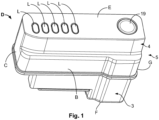
Figure 1 is a perspective view of a preferred embodiment of a device according to the invention, -
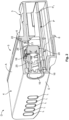
Figure 2 illustrates a cross-sectioned perspective view of the device of the preceding figure, -
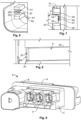
Figure 3 is a view on an enlarged scale of some details illustrated inFigure 2 ; -
Figures 4 and5 are, respectively, a perspective view and a front view of a portion of the casing of the device illustrated in the previous figures, -
Figures 6-8 are views on an enlarged scale of some details illustrated inFigures 4 and5 , -
Figure 9 is another perspective view of the component illustrated inFigures 4 and5 , -
Figures 10 and11 are exploded views, according to different perspectives, of some components of the device according to the invention, -
Figures 12 and 13 are cross-sectional views of the device illustrated inFigures 10 and11 , in its assembled condition. - In the following description various specific details are illustrated aimed at a thorough understanding of examples of one or more embodiments. The embodiments can be implemented without one or more of the specific details, or with other methods, components, materials, etc. In other cases, known structures, materials, or operations are not shown or described in detail to avoid obscuring various aspects of the embodiments, as long as they fall within the limitations as defined by the appended claims.
- The reference to "an embodiment" in the context of this description indicates that a particular configuration, structure or characteristic described in relation to the embodiment is included in at least one embodiment. Therefore, phrases such as "in an embodiment", possibly present in different places of this description do not necessarily refer to the same embodiment. Moreover, particular conformations, structures or characteristics can be combined in a suitable manner in one or more embodiments and/or associated with the embodiments in a different way from that illustrated here, for example, a characteristic here exemplified in relation to a figure may be applied to one or more embodiments exemplified in a different figure.
- The references illustrated here are only for convenience and do not therefore delimit the field of protection or the scope of the invention which is delimited by the appended claims.
- In the attached drawings, the reference D indicates - in its entirety - a preferred embodiment of a device for controlling and/or supplying information on a recharging operation of an electric motor-vehicle or a hybrid motor-vehicle, which can be mounted on the motor-vehicle and associable with an inlet electric connector assembly for recharging the motor-vehicle,
- As shown in particular in the perspective view of
Figure 1 , the device D has acasing 5 of a substantially prismatic shape, which defines an upper wall A, a lower wall B, opposite side walls C, G, a front wall E and a rear wall F. - A printed circuit board P is mounted inside the
casing 5, said board having a main side P1 on which a plurality of components are mounted (Figures 2 ,10 ). Details relating to these components are indicated in the description below. - The device D comprises a human-machine interface HMI associated with the
casing 5, to allow a user to control the recharging process of the battery pack of the motor-vehicle, on which the device D is installed. The interface includes a push-button switching device 18 comprising an on/offbutton 19. In the example illustrated in the drawings, the on/offbutton 19 is arranged at the front wall E of the casing 5 (Figure 1 ). Purely by way of example, by means of the push-button 19, it is also possible to create a series of auxiliary functions, in addition to switching on/off of the device D, such as programming the start time of the recharging step. Again with reference to the example ofFigure 1 , at the front wall E, next to the push-button 19, there are a plurality of warning lights L, which light up progressively during recharging of the vehicle, to display the battery recharge status of the motor-vehicle. - Of course, the configuration of the interface illustrated in the attached drawings, in particular in
Figure 1 , is given here purely by way of example. - In one or more embodiments, as in the one illustrated in the drawings, the
casing 5 of the device D is defined by afirst support body 3, configured to support the printed circuit board P, and asecond support body 4, bearing the front wall E with the push-button 19. The first and thesecond support bodies casing 5 indicated above. - According to a technique known per se, the first and second supporting
bodies first support body 3 has athickness 6 protruding from the upper A, lower B and side C, G walls of thefirst support body 3, along a direction perpendicular to these, arranged to be joined to a corresponding front surface of thesecond support body 4, so as to create a singlehollow casing 5 inside which all the components of the device D are arranged. Of course, thecasing 5 can be made according to other construction techniques, materials and conformations, which differ from that indicated above, without departing from the scope of the present invention. -
Figure 2 illustrates a cross-sectioned perspective view of a preferred embodiment of the device according to the invention. As indicated above, the device D includes a human-machine interface HMI having a push-button switching device 18, and a printed circuit board P mounted within thecasing 5. The push-button switching device 18, in addition to the push-button 19, comprises a push-button body 20 arranged inside the casing 5 (Figure 2 ). The push-button body 20 has at least one portion mounted on the printed circuit board P, and carries at least one electrical contact for transmitting a pulse to the printed circuit board P, so as to activate the device D. More particularly, the push-button body 20 has a tubular-shapedfirst portion 25 made of plastic material, having a first end connected to the push-button 19. With reference, in particular, to the enlarged scale view ofFigure 3 , the push-button body 20 also has asecond portion 26 of conductive material, having a first end connected to thetubular portion 25 of plastic material and a second end welded to the printed circuit board P. According to a technique known per se, after the on/offbutton 19 is pressed, the push-button body 20 moves along an operating direction corresponding to the main axis of the push-button body 20, to transmit a pulse which, through the electrical terminals, activates the device D. Thesecond portion 26 is mounted on the board P so as to allow micro-displacements of the push-button body 20 deriving from the pressure of the push-button 19. The push-button body 20 also comprises elastic means (not illustrated in the drawings), which allow the push-button body 20 to be returned to its initial position. - According to an essential characteristic of the invention, the push-
button switching device 18 also comprises anarm 21 protruding from the push-button body 20 which, in a pressed push-button condition, abuts against anabutment wall 22 arranged inside the casing 5 (Figures 2 and3 ). In the embodiment illustrated in the drawings, theabutment wall 22 is formed within thefirst support body 3, and is spaced apart perpendicularly to the main axis of the push-button body 20. - Thanks to this characteristic, the stress deriving from the pressure of the push-
button 19 and the displacement of the push-button body 20 along its main axis, is discharged onto theabutment wall 22 by means of thearm 21, thus preventing this stress from being discharged onto the printed circuit board P. It will therefore be appreciated that the device D is made in such a way as to avoid damage to the printed circuit board P, deriving from an excessive pressure on the push-button 19. - In one or more embodiments, as well as in the one illustrated in the drawings, the printed circuit board P is mounted inside the
casing 5 along a horizontal direction, in such a way that the main plane of the board P is perpendicular to the front and rear walls E, F of thecasing 5. Still with reference to the embodiment illustrated in the drawings, the push-button body 20 extends within thecasing 5 perpendicularly to the front and rear walls E, F of thecasing 5, near the main side P1 of the board P. - The
arm 21 protrudes from the push-button body 20 (more particularly from theportion 26 of conductive material) in the opposite direction with respect to the printed circuit board P, perpendicularly to the main axis of the push-button body 20. Furthermore, again with reference to the embodiment illustrated in the drawings, thearm 21 has a main plane substantially perpendicular to theabutment wall 22, in such a way that, in the pressed condition of the push-button 19, one side of thearm 21 abuts against theabutment wall 22, which is arranged perpendicularly to the main axis of the push-button body 20. - According to a relevant characteristic of the device D according to the invention, the
casing 5 includes a plurality of grooves S1, S2, S3, S4, therein, to lock the printed circuit board P in position within thecasing 5. In the example illustrated, the board P is locked horizontally, in such a way that its main plane is perpendicular to the front and rear walls E, F of thecasing 5. - As indicated above, still with reference to the illustrated embodiment, the
casing 5 of the device D is defined by afirst support body 3, configured to support the printed circuit board P, and asecond support body 4, bearing the front wall E with the push-button 19. -
Figures 4 and5 show, respectively, a perspective view and a front view of thefirst support body 3 carrying the grooves S1, S2, S3, S4. - Preferably, each groove is defined by a pair of fins including an upper fin A1 and a lower fin A2 spaced apart vertically from each other, to retain, respectively, a portion of the printed circuit board P. In the case illustrated in the drawings, the main side P1 of the printed circuit board P is in contact with the upper fins A1, while the secondary side of the printed circuit board P is in contact with the lower fins A2.
- In various embodiments, as well as in the one illustrated, the plurality of grooves includes two end grooves S1, S4 each arranged at the inner surface of a respective side wall C, G of the
casing 5, and two intermediate grooves S2, S3, each arranged at a respectiveintermediate wall casing 5 between said side walls C, G (Figures 4 ,5 ). In the example illustrated in the drawings, theintermediate walls casing 5. - Preferably, the intermediate grooves S2,S3 are both facing one of the two end grooves S1, S4 and are arranged in positions progressively closer to the rear wall F of the
casing 5. - In various embodiments, as well as in the one illustrated, a
central rib 23 is formed between the upper and lower fins A1, A2 defining the end grooves S1, S4; said rib extends longitudinally within the respective end groove S1, S4. Thecentral ribs 23 are arranged to limit the movement of the printed circuit board P along a horizontal direction, perpendicular to the side walls C, G of the casing 5 (Figures 5 ,6 ). - Preferably, as illustrated in particular in the enlarged scale view of
Figure 6 , the upper and lower fins A1, A2 which define the outer grooves S1, S4 have a frontbeveled portion 29 configured for facilitating the insertion of the printed circuit board P within the grooves. - In one or more embodiments, as well as in the one illustrated in the drawings, between the upper and lower fins A1, A2 defining one of the outer grooves S4, and between the upper and lower fins A1, A2 defining one of the intermediate grooves S2, two
triangular ribs 24 are formed, facing each other and each arranged adjacent to a respective upper and lower fin A1, A2, to limit the movement of the printed circuit board P along a direction perpendicular to the front wall E of the casing 5 (Figures 5 ,7, 8 ) . - Thanks to the characteristics of the grooves S1, S2, S3, S4, indicated above, the printed circuit board P is stably locked inside the
casing 5, avoiding the risk of running into operating anomalies of any type (for example, detachment of the board P from its seats inside the casing, caused by vibrations deriving from the operating steps of a motor-vehicle on which the device is installed). - According to a further relevant characteristic of the invention, the device D comprises a miniaturized connector system.
- With reference, in particular, to the exploded perspective views of
Figures 10 ,11 , the miniaturized connector system includes one ormore connector elements 1 mounted on the printed circuit board P. According to a technique known per se, theconnector element 1 can be welded or glued on the main side P1 of the board P. - The
connector element 1, rigidly connected to the printed circuit board P, comprises amain connector body 10 made of plastic material, which defines a receptacle R extending along a direction substantially parallel to the main plane of the printed circuit board P. - In one or more embodiments, the
main body 10 of theconnector 1 can be cuboid-shaped, so as to define abottom wall 14 of the receptacle R, substantially perpendicular to the main plane of the printed circuit board P. - The
connector element 1 further comprises at least onemetal terminal 11 arranged at least partially inside the receptacle R, and electrically connected to the printed circuit board P. Themetal terminals 11 are configured to cooperate with a terminal of a cable 8 (illustrated inFigures 11 and13 ) connected to theconnector element 1 and arranged within the receptacle R according to an operative connection direction parallel to the main plane of the printed circuit board P. - With reference in particular to
Figures 12 and 13 , themetal terminals 11 each include arespective portion 12 protruding from respective holes made on thebottom wall 14 of the receptacle R. In order to make the electrical connection with the printed circuit board P, the aforesaid protrudingportions 12 are bent in the direction of the printed circuit board P and welded thereto, at its main side P1. - In the case of the invention, the miniaturized connector system also includes an
auxiliary portion 2 of thebody 10 of theconnector element 1, arranged on the extension of themain body 10 of theconnector element 1. Theauxiliary portion 2 defines an extension portion R1 of the receptacle R of theconnector element 1. - According to a relevant characteristic of the present invention, the
auxiliary portion 2 of the body of theconnector element 1 is an integral part of a portion of thecasing 5, separate from themain body 10 of theconnector element 1. - With reference to the embodiment illustrated in the drawings, the
auxiliary portion 2 is an integral part of thefirst support body 3, which supports the printed circuit board P by means of the previously described grooves S1, S2, S3, S4. More particularly, theauxiliary portion 2 is formed at the rear wall F of the casing 5 (Figures 9 ,10 ). The grooves S1, S2, S3, S4 arranged within the first support body allow the printed circuit board P to be brought into position relative to theauxiliary portion 2 carried by theaforesaid casing portion 5. - As previously indicated, the printed circuit board P is arranged within the
casing 5 along a horizontal direction, in such a way that its main plane is substantially perpendicular to the front and rear walls E, F of thecasing 5. - It will therefore be appreciated that, in one or more embodiments, a
terminal 8 of an electric cable may be connected to the printed circuit board P by means of the miniaturized connector system including theconnector element 1 carrying themetal terminals 11 and theauxiliary portion 2, which defines an extension R1 of the receptacle R. - To allow locking of the
terminal 8 within the receptacle R and its extension R1, theauxiliary portions 2 haverespective openings 7 configured to cooperate with a locking element carried by theterminal 8. - The cross-sectional view of
Figure 13 illustrates theterminal 8, arranged within the receptacle R and its extension R1, and connected to the board P by means of themetal terminals 11 carried by theconnector element 1. - In accordance with an additional relevant characteristic of the present invention, a sealing
area 13 is formed at the inner surface of theauxiliary portion 2. The sealingarea 13 has a profile configured to cooperate with anannular sealing gasket 9 arranged on the cable terminal 8 (Figure 13 ). Thanks to this characteristic, it is possible to make a sealed electrical connection, to avoid water infiltrations that could damage themetal terminals 11 of theconnector element 1, or other electronic components, compromising the overall operation of the device D. In order to achieve this function effectively, the sealingarea 13 is arranged downstream (in the direction of the rear wall F of the casing 5) with respect to theterminals 11 carried by themain body 10 of theconnector element 1. - In order to provide simple and intuitive assembly operations for making the device D, the
casing 5 of the device D comprises anabutment surface 17, against which theconnector element 1 abuts, in the assembled condition of the device D, (Figures 12,13 ). Theabutment surface 17 allows theauxiliary portion 2 of extension R1 of the receptacle R, and the receptacle R of themain body 10 of theconnector element 1 to be correctly aligned easily. With reference to the embodiment illustrated in the drawings, theabutment surface 17 is defined by a wall arranged within thefirst support body 3, protruding and directed perpendicularly to the upper wall A of thecasing 5, so as to abut against a front portion of the plastic material body of theconnector element 1, opposite thebottom wall 14 of the receptacle R. - In the embodiment illustrated in the drawings, three
connector elements 1 are arranged side by side with respect to each other, respectively welded to the main side P1 of the printed circuit board P, with the receptacles R having their respectivebottom walls 14 directed perpendicularly on the main plane of the printed circuit board P. At the rear wall F of thecasing 5 there is a set of threeauxiliary portions 2 of theconnector elements 1, each arranged on the extension of a respectivemain body 10 of theconnector element 1. In this embodiment example, a set of three terminals ofelectric cables 8 will be connected to therespective connector elements 1 to make a connection with an electronic control unit, an actuator for locking a mobile recharging connector, mounted on board the motor-vehicle with which the present device D is associated and, finally, with a fixed recharging connector. - It will also be appreciated that characteristics or details exemplified with reference to one of the figures described above can also be transposed (individually or in combination with each other) to embodiments exemplified in different figures.
- One or more embodiments of the present invention may have one or more of the following advantages:
- the device is simple to use and reliable during use;
- the device is free from operating anomalies, during the entire life cycle of a vehicle on which the device is installed;
- the device can be assembled and installed on board a motor-vehicle by means of simple and rapid operations;
- the device has a relatively simple and low-cost structure, designed to reduce the number of components to be produced and assembled;
- the device has a compact structure which allows integration of a miniaturized connector system therein; and
- the device allows a sealed electrical connection to be obtained, to avoid water infiltration, by means of a limited number of components.
- The present invention also relates to a method for assembling a device for controlling and/or supplying information on a recharging operation of an electric motor-vehicle or a hybrid motor-vehicle, comprising the following steps:
- providing a printed circuit board P having a main side P1,
- rigidly connecting on the main side P1 of the board P at least one
connector element 1 comprising amain connector body 10 made of plastic material and defining a receptacle R extending along a direction substantially parallel to the main plane of the printed circuit board P, said at least oneconnector element 1 further comprising at least onemetal terminal 11, - connecting said at least one
metal terminal 1 to the printed circuit board P, - providing an
auxiliary portion 2 of themain body 10 of theconnector element 1, integrated in aportion 3 of thecasing 5, separated from saidmain body 10 of theconnector element 1 defining said receptacle R, - locking said printed circuit board P into at least one seat S1,S2 S3,S4 formed on said
portion 3 of thecasing 5, and - arranging said
main body 10 of theconnector element 1 in abutment against anabutment surface 17 of saidportion 3 of thecasing 5, - connecting a terminal of a
cable 8 to theconnector element 1, through saidauxiliary portion 2, according to an operative connection direction, parallel to the main plane of the printed circuit board P. - Of course, without prejudice to the principle of the invention, the details of construction and the embodiments may vary widely with respect to those described and illustrated purely by way of example, without departing from the scope of the present invention which is defined by the appended claims.
Claims (13)
- A device (D) for controlling and/or supplying information on a recharging operation of an electric motor-vehicle or a hybrid motor-vehicle, which can be mounted on the motor-vehicle and associable with an inlet electric connector assembly for recharging the motor-vehicle,- said device (D) including: a casing (5) which defines an upper wall (A), a lower wall (B), opposite walls (C, G), a front wall (E) and a rear wall (F); a printed circuit board (P) mounted within said casing (5); and a human-machine interface HMI associated with the casing (5),characterized in that:wherein said human-machine interface HMI includes: a push-button switching device (18) comprising an on/off button (19); a push-button body (20) extending inside said casing (5) perpendicularly to said front and rear walls (E, F);and an arm (21) protruding from said push-button body (20), said arm (21) - when the push-button (19) is pressed - abuts against an abutment wall (22) arranged within said casing (5),said printed circuit board (P) is mounted within said casing (5) in a horizontal direction, so that a main plane of said printed circuit board (P) is perpendicular to said front and rear walls (E, F) andsaid arm (21) projects from said push-button body (20) in the opposite direction with respect to said printed circuit board (P), perpendicularly to a main axis of said push-button body (20);said push-button body (20) carries at least one electric contact, arranged within said casing (5) and having a portion mounted to said printed circuit board (P), andsaid abutment wall (22) is spaced perpendicularly to said main axis of said push-button (20);said arm (21) has a main plane perpendicular to said abutment wall (22) and is configured so as to prevent the stress on the push-button switching device (18) resulting from the pressure of said push-button (19) from being discharged onto said printed circuit board (P).
- A device (D) according to claim 1, characterized in that said casing (5) has a prismatic shape, and defines an upper wall (A), a lower wall (B), two opposite side walls (C,G), a front wall (E) and a rear wall (F), said on/off button (19) being arranged at said front wall (E).
- A device (D) according to claim 2, characterized in that a plurality of grooves (S1,S2,S3,S4) are included within said casing (5), configured for locking said printed circuit board (P) in position within said casing (5), along a horizontal direction, perpendicular to said front wall (E) of the casing (5).
- A device (D) according to claim 2 or claim 3, characterized in that said push-button body (20) extends within said casing (5) along a direction perpendicular to the front and rear walls (E,F), said arm (21) protruding from the push-button body (20) in the opposite direction to the printed circuit board (P), perpendicularly to a main axis of the push-button body (20).
- A device (D) according to claim 4, characterized in that said arm (21) has a plane perpendicular to said abutment wall (22), in such a way that, when the push-button is pressed, one side of the arm (21) is arranged in contact with said abutment wall (22).
- A device (D) according to any one of claims 3-5, characterized in that each groove (S1,S2,S3,S4) is defined by a pair of fins including an upper fin (A1) and a lower fin (A2) vertically spaced apart from each other, said plurality of grooves (S1, S2, S3, S4) including:- two end grooves (S1,S4), each arranged at the inner surface of a respective side wall (C,G) of the casing (5), and- two intermediate grooves (S2,S3) each arranged at a respective intermediate wall (27,28) formed within said casing (5) between said side walls (C,G).
- A device (D) according to claim 6, characterized in that the intermediate grooves (S2,S3) are both facing one of the two end grooves (S1, S4), and arranged in positions progressively closer to the rear wall (F) of the casing (5).
- A device (D) according to claims 6 or 7, characterized in that a central rib (23) is formed between the upper and lower fin (A1,A2) defining the end grooves (S1,S4), said central rib (23) extending longitudinally within the respective end groove (S1,S4), to limit the movement of the printed circuit board (P) along a horizontal direction, perpendicular to the side walls (C,G) of the casing (5).
- A device (D) according to any of claims 6-8, characterized in that two triangular ribs (24) are formed between the upper and lower fin (A1,A2) defining an end groove (S1,S4), and two triangular ribs (24) are formed between the upper and lower fin (A1,A2) defining an intermediate groove (S2,S3), the two triangular ribs (24), face each other and are arranged, respectively, adjacent to the upper or lower fin (A1,A2), to limit the movement of the printed circuit board (P) along a direction perpendicular to said front wall (E) of the casing (5).
- A device (D) according to any one of claims 3-9, characterized in that said casing (5) comprises a first support body (3) and a second support body (4) rigidly connected to each other, wherein said grooves (S1,S2,S3,S4) to lock the printed circuit board (P) in position are located within said first support body (3), and said second support body (4) carries said front wall (E) which includes said push-button (19).
- A device (D) according to claim 10, characterized in that the first support body (3) has a thickness (6) protruding from the walls of the first support body (3) along a direction perpendicular to said walls, said thickness (6) being arranged to be joined to a corresponding front surface of the second support body (4), so as to provide a single hollow casing (5) inside which all the components of the device (D) are arranged.
- A device (D) according to claims 10 or 11, characterized in that said abutment wall (22) is formed within said first support body (3).
- A method for assembling a device (D) for controlling and/or supplying information on a recharging operation of an electric motor-vehicle or a hybrid motor-vehicle, comprising the following steps:- providing a printed circuit board (P) having a main side (P1),- locking said printed circuit board (P) into at least one seat (S1,S2 S3,S4) formed on a portion (3) of the casing (5), said casing (5) defining an upper wall (A), a lower wall (B), opposite walls (C, G), a front wall (E) and a rear wall (F);- providing a human-machine interface HMI associated with the casing (5), said human-machine interface HMI including a push-button switching device (18) comprising: an on/off button (19); a push-button body (20) extending inside said casing (5) perpendicularly to said front and rear walls (E, F); and an arm (21) protruding from said push-button body (20), wherein said arm (21) - when the push-button (19) is pressed - abuts against an abutment wall (22) arranged within said casing (5),characterized in that:said method further comprises the following steps:- mounting said printed circuit board (P) within said casing (5) in a horizontal direction, so that said main side (P1) is perpendicular to said front and rear walls (E, F);- providing said arm (21) so that it projects from said push-button body (20) in the opposite direction with respect to said printed circuit board (P), perpendicularly to a main axis of said push-button body (20);- providing said push-button body (20) so that it carries at least one electric contact, arranged within said casing (5) and having a portion mounted to said printed circuit board (P);- placing said abutment wall (22) so that it is spaced perpendicularly to said main axis of said push-button (20);wherein said arm (21) has a main plane perpendicular to said abutment wall (22) and is configured so as to prevent the stress on the push-button switching device (18) resulting from the pressure of said push-button (19) from being discharged onto said printed circuit board (P).
Applications Claiming Priority (1)
| Application Number | Priority Date | Filing Date | Title |
|---|---|---|---|
| IT102019000015983A IT201900015983A1 (en) | 2019-09-10 | 2019-09-10 | DEVICE FOR CHECKING AND / OR PROVIDING INFORMATION ON A CHARGING OPERATION OF AN ELECTRIC CAR OR A HYBRID MOTOR VEHICLE |
Publications (2)
| Publication Number | Publication Date |
|---|---|
| EP3799543A1 EP3799543A1 (en) | 2021-03-31 |
| EP3799543B1 true EP3799543B1 (en) | 2023-02-22 |
Family
ID=69375694
Family Applications (1)
| Application Number | Title | Priority Date | Filing Date |
|---|---|---|---|
| EP20195113.4A Active EP3799543B1 (en) | 2019-09-10 | 2020-09-08 | A device for controlling and/or supplying information on a recharging operation of an electric motor-vehicle or a hybrid motor-vehicle |
Country Status (3)
| Country | Link |
|---|---|
| US (1) | US11282657B2 (en) |
| EP (1) | EP3799543B1 (en) |
| IT (1) | IT201900015983A1 (en) |
Family Cites Families (9)
| Publication number | Priority date | Publication date | Assignee | Title |
|---|---|---|---|---|
| JP2794527B2 (en) * | 1994-03-18 | 1998-09-10 | 日本航空電子工業株式会社 | Case integrated connector |
| US5530621A (en) * | 1994-09-14 | 1996-06-25 | Motorola, Inc. | Portable electronic module device with tactile button and tact switch |
| US7044773B2 (en) | 2002-08-01 | 2006-05-16 | Ddk Ltd. | Connector |
| JP5092605B2 (en) * | 2006-11-14 | 2012-12-05 | パナソニック株式会社 | Vehicle switch |
| US7997914B2 (en) | 2008-06-11 | 2011-08-16 | Google Inc. | Push-to-insert, push-to-eject and pull-to-extract card connector |
| KR200457863Y1 (en) * | 2009-10-28 | 2012-01-05 | 한국알프스 주식회사 | Automotive engine start / stop switch |
| JP6009908B2 (en) * | 2012-10-31 | 2016-10-19 | 株式会社ヴァレオジャパン | Multi-directional switch |
| JP5575314B1 (en) * | 2013-08-23 | 2014-08-20 | 三菱電機株式会社 | Electronic control device and manufacturing method thereof |
| WO2016038559A1 (en) | 2014-09-10 | 2016-03-17 | Mindarika Private Limited | Electromechanical switch assembly |
-
2019
- 2019-09-10 IT IT102019000015983A patent/IT201900015983A1/en unknown
-
2020
- 2020-09-08 EP EP20195113.4A patent/EP3799543B1/en active Active
- 2020-09-10 US US17/016,729 patent/US11282657B2/en active Active
Also Published As
| Publication number | Publication date |
|---|---|
| US20210074491A1 (en) | 2021-03-11 |
| EP3799543A1 (en) | 2021-03-31 |
| IT201900015983A1 (en) | 2021-03-10 |
| US11282657B2 (en) | 2022-03-22 |
Similar Documents
| Publication | Publication Date | Title |
|---|---|---|
| EP2248228B1 (en) | Connector | |
| US20180332726A1 (en) | Electric protective cover and receptacle | |
| EP1081805A2 (en) | Panel mounting connector | |
| US10263356B2 (en) | Secondary lock and receptacle | |
| US10348020B2 (en) | Receptacle housing and receptacle | |
| EP3792115B1 (en) | Electric junction box | |
| EP3863122B1 (en) | Connector | |
| US10608385B2 (en) | Connector structure and electric vehicle | |
| CN112217017B (en) | Connector with a locking member | |
| CN113711452B (en) | Electrical connection box | |
| EP3796478B1 (en) | Housing for a charging device for a vehicle | |
| EP3793033B1 (en) | A device for electrically connecting one or more electrical connectors to a printed circuit board | |
| US10594071B2 (en) | Charging inlet with a drainage port in a peripheral wall | |
| US20240274930A1 (en) | Energy storage device and power consuming apparatus | |
| EP3799543B1 (en) | A device for controlling and/or supplying information on a recharging operation of an electric motor-vehicle or a hybrid motor-vehicle | |
| EP3896794B1 (en) | Connector | |
| EP1345798B1 (en) | Rear wiper hatch cassette using interlocking parts | |
| US20170069898A1 (en) | Connection member and electricity storage module | |
| CN211743233U (en) | Battery pack internal module and battery pack | |
| JP2006216914A (en) | Electronic component housing | |
| JP2013031245A (en) | Charger | |
| JP2020087563A (en) | connector | |
| KR101996450B1 (en) | Resistor Connection Connector | |
| KR200368550Y1 (en) | battery spiral structure | |
| JP2016051572A (en) | Power storage device and grommet |
Legal Events
| Date | Code | Title | Description |
|---|---|---|---|
| PUAI | Public reference made under article 153(3) epc to a published international application that has entered the european phase |
Free format text: ORIGINAL CODE: 0009012 |
|
| STAA | Information on the status of an ep patent application or granted ep patent |
Free format text: STATUS: REQUEST FOR EXAMINATION WAS MADE |
|
| 17P | Request for examination filed |
Effective date: 20200908 |
|
| AK | Designated contracting states |
Kind code of ref document: A1 Designated state(s): AL AT BE BG CH CY CZ DE DK EE ES FI FR GB GR HR HU IE IS IT LI LT LU LV MC MK MT NL NO PL PT RO RS SE SI SK SM TR |
|
| AX | Request for extension of the european patent |
Extension state: BA ME |
|
| GRAP | Despatch of communication of intention to grant a patent |
Free format text: ORIGINAL CODE: EPIDOSNIGR1 |
|
| STAA | Information on the status of an ep patent application or granted ep patent |
Free format text: STATUS: GRANT OF PATENT IS INTENDED |
|
| INTG | Intention to grant announced |
Effective date: 20220920 |
|
| RIN1 | Information on inventor provided before grant (corrected) |
Inventor name: GENTA, ALESSANDRO Inventor name: CEZZA, CLAUDIA Inventor name: SPOLVERATO, ARIANNA Inventor name: ALFERI, CINZIA Inventor name: FARINOLA, MARCELLO |
|
| GRAS | Grant fee paid |
Free format text: ORIGINAL CODE: EPIDOSNIGR3 |
|
| GRAA | (expected) grant |
Free format text: ORIGINAL CODE: 0009210 |
|
| STAA | Information on the status of an ep patent application or granted ep patent |
Free format text: STATUS: THE PATENT HAS BEEN GRANTED |
|
| AK | Designated contracting states |
Kind code of ref document: B1 Designated state(s): AL AT BE BG CH CY CZ DE DK EE ES FI FR GB GR HR HU IE IS IT LI LT LU LV MC MK MT NL NO PL PT RO RS SE SI SK SM TR |
|
| REG | Reference to a national code |
Ref country code: GB Ref legal event code: FG4D |
|
| REG | Reference to a national code |
Ref country code: CH Ref legal event code: EP |
|
| REG | Reference to a national code |
Ref country code: DE Ref legal event code: R096 Ref document number: 602020008242 Country of ref document: DE |
|
| REG | Reference to a national code |
Ref country code: AT Ref legal event code: REF Ref document number: 1550347 Country of ref document: AT Kind code of ref document: T Effective date: 20230315 Ref country code: IE Ref legal event code: FG4D |
|
| REG | Reference to a national code |
Ref country code: LT Ref legal event code: MG9D |
|
| REG | Reference to a national code |
Ref country code: NL Ref legal event code: MP Effective date: 20230222 |
|
| REG | Reference to a national code |
Ref country code: AT Ref legal event code: MK05 Ref document number: 1550347 Country of ref document: AT Kind code of ref document: T Effective date: 20230222 |
|
| PG25 | Lapsed in a contracting state [announced via postgrant information from national office to epo] |
Ref country code: RS Free format text: LAPSE BECAUSE OF FAILURE TO SUBMIT A TRANSLATION OF THE DESCRIPTION OR TO PAY THE FEE WITHIN THE PRESCRIBED TIME-LIMIT Effective date: 20230222 Ref country code: PT Free format text: LAPSE BECAUSE OF FAILURE TO SUBMIT A TRANSLATION OF THE DESCRIPTION OR TO PAY THE FEE WITHIN THE PRESCRIBED TIME-LIMIT Effective date: 20230622 Ref country code: NO Free format text: LAPSE BECAUSE OF FAILURE TO SUBMIT A TRANSLATION OF THE DESCRIPTION OR TO PAY THE FEE WITHIN THE PRESCRIBED TIME-LIMIT Effective date: 20230522 Ref country code: NL Free format text: LAPSE BECAUSE OF FAILURE TO SUBMIT A TRANSLATION OF THE DESCRIPTION OR TO PAY THE FEE WITHIN THE PRESCRIBED TIME-LIMIT Effective date: 20230222 Ref country code: LV Free format text: LAPSE BECAUSE OF FAILURE TO SUBMIT A TRANSLATION OF THE DESCRIPTION OR TO PAY THE FEE WITHIN THE PRESCRIBED TIME-LIMIT Effective date: 20230222 Ref country code: LT Free format text: LAPSE BECAUSE OF FAILURE TO SUBMIT A TRANSLATION OF THE DESCRIPTION OR TO PAY THE FEE WITHIN THE PRESCRIBED TIME-LIMIT Effective date: 20230222 Ref country code: HR Free format text: LAPSE BECAUSE OF FAILURE TO SUBMIT A TRANSLATION OF THE DESCRIPTION OR TO PAY THE FEE WITHIN THE PRESCRIBED TIME-LIMIT Effective date: 20230222 Ref country code: ES Free format text: LAPSE BECAUSE OF FAILURE TO SUBMIT A TRANSLATION OF THE DESCRIPTION OR TO PAY THE FEE WITHIN THE PRESCRIBED TIME-LIMIT Effective date: 20230222 Ref country code: AT Free format text: LAPSE BECAUSE OF FAILURE TO SUBMIT A TRANSLATION OF THE DESCRIPTION OR TO PAY THE FEE WITHIN THE PRESCRIBED TIME-LIMIT Effective date: 20230222 |
|
| PG25 | Lapsed in a contracting state [announced via postgrant information from national office to epo] |
Ref country code: SE Free format text: LAPSE BECAUSE OF FAILURE TO SUBMIT A TRANSLATION OF THE DESCRIPTION OR TO PAY THE FEE WITHIN THE PRESCRIBED TIME-LIMIT Effective date: 20230222 Ref country code: PL Free format text: LAPSE BECAUSE OF FAILURE TO SUBMIT A TRANSLATION OF THE DESCRIPTION OR TO PAY THE FEE WITHIN THE PRESCRIBED TIME-LIMIT Effective date: 20230222 Ref country code: IS Free format text: LAPSE BECAUSE OF FAILURE TO SUBMIT A TRANSLATION OF THE DESCRIPTION OR TO PAY THE FEE WITHIN THE PRESCRIBED TIME-LIMIT Effective date: 20230622 Ref country code: GR Free format text: LAPSE BECAUSE OF FAILURE TO SUBMIT A TRANSLATION OF THE DESCRIPTION OR TO PAY THE FEE WITHIN THE PRESCRIBED TIME-LIMIT Effective date: 20230523 Ref country code: FI Free format text: LAPSE BECAUSE OF FAILURE TO SUBMIT A TRANSLATION OF THE DESCRIPTION OR TO PAY THE FEE WITHIN THE PRESCRIBED TIME-LIMIT Effective date: 20230222 |
|
| PG25 | Lapsed in a contracting state [announced via postgrant information from national office to epo] |
Ref country code: SM Free format text: LAPSE BECAUSE OF FAILURE TO SUBMIT A TRANSLATION OF THE DESCRIPTION OR TO PAY THE FEE WITHIN THE PRESCRIBED TIME-LIMIT Effective date: 20230222 Ref country code: RO Free format text: LAPSE BECAUSE OF FAILURE TO SUBMIT A TRANSLATION OF THE DESCRIPTION OR TO PAY THE FEE WITHIN THE PRESCRIBED TIME-LIMIT Effective date: 20230222 Ref country code: EE Free format text: LAPSE BECAUSE OF FAILURE TO SUBMIT A TRANSLATION OF THE DESCRIPTION OR TO PAY THE FEE WITHIN THE PRESCRIBED TIME-LIMIT Effective date: 20230222 Ref country code: DK Free format text: LAPSE BECAUSE OF FAILURE TO SUBMIT A TRANSLATION OF THE DESCRIPTION OR TO PAY THE FEE WITHIN THE PRESCRIBED TIME-LIMIT Effective date: 20230222 Ref country code: CZ Free format text: LAPSE BECAUSE OF FAILURE TO SUBMIT A TRANSLATION OF THE DESCRIPTION OR TO PAY THE FEE WITHIN THE PRESCRIBED TIME-LIMIT Effective date: 20230222 |
|
| REG | Reference to a national code |
Ref country code: DE Ref legal event code: R097 Ref document number: 602020008242 Country of ref document: DE |
|
| PG25 | Lapsed in a contracting state [announced via postgrant information from national office to epo] |
Ref country code: SK Free format text: LAPSE BECAUSE OF FAILURE TO SUBMIT A TRANSLATION OF THE DESCRIPTION OR TO PAY THE FEE WITHIN THE PRESCRIBED TIME-LIMIT Effective date: 20230222 |
|
| PLBE | No opposition filed within time limit |
Free format text: ORIGINAL CODE: 0009261 |
|
| STAA | Information on the status of an ep patent application or granted ep patent |
Free format text: STATUS: NO OPPOSITION FILED WITHIN TIME LIMIT |
|
| 26N | No opposition filed |
Effective date: 20231123 |
|
| PG25 | Lapsed in a contracting state [announced via postgrant information from national office to epo] |
Ref country code: SI Free format text: LAPSE BECAUSE OF FAILURE TO SUBMIT A TRANSLATION OF THE DESCRIPTION OR TO PAY THE FEE WITHIN THE PRESCRIBED TIME-LIMIT Effective date: 20230222 |
|
| REG | Reference to a national code |
Ref country code: CH Ref legal event code: PL |
|
| PG25 | Lapsed in a contracting state [announced via postgrant information from national office to epo] |
Ref country code: LU Free format text: LAPSE BECAUSE OF NON-PAYMENT OF DUE FEES Effective date: 20230908 |
|
| REG | Reference to a national code |
Ref country code: BE Ref legal event code: MM Effective date: 20230930 |
|
| PG25 | Lapsed in a contracting state [announced via postgrant information from national office to epo] |
Ref country code: LU Free format text: LAPSE BECAUSE OF NON-PAYMENT OF DUE FEES Effective date: 20230908 Ref country code: MC Free format text: LAPSE BECAUSE OF FAILURE TO SUBMIT A TRANSLATION OF THE DESCRIPTION OR TO PAY THE FEE WITHIN THE PRESCRIBED TIME-LIMIT Effective date: 20230222 |
|
| REG | Reference to a national code |
Ref country code: IE Ref legal event code: MM4A |
|
| PG25 | Lapsed in a contracting state [announced via postgrant information from national office to epo] |
Ref country code: IE Free format text: LAPSE BECAUSE OF NON-PAYMENT OF DUE FEES Effective date: 20230908 |
|
| PG25 | Lapsed in a contracting state [announced via postgrant information from national office to epo] |
Ref country code: CH Free format text: LAPSE BECAUSE OF NON-PAYMENT OF DUE FEES Effective date: 20230930 |
|
| PG25 | Lapsed in a contracting state [announced via postgrant information from national office to epo] |
Ref country code: IE Free format text: LAPSE BECAUSE OF NON-PAYMENT OF DUE FEES Effective date: 20230908 Ref country code: CH Free format text: LAPSE BECAUSE OF NON-PAYMENT OF DUE FEES Effective date: 20230930 |
|
| PG25 | Lapsed in a contracting state [announced via postgrant information from national office to epo] |
Ref country code: BE Free format text: LAPSE BECAUSE OF NON-PAYMENT OF DUE FEES Effective date: 20230930 |
|
| PG25 | Lapsed in a contracting state [announced via postgrant information from national office to epo] |
Ref country code: BG Free format text: LAPSE BECAUSE OF FAILURE TO SUBMIT A TRANSLATION OF THE DESCRIPTION OR TO PAY THE FEE WITHIN THE PRESCRIBED TIME-LIMIT Effective date: 20230222 |
|
| PG25 | Lapsed in a contracting state [announced via postgrant information from national office to epo] |
Ref country code: BG Free format text: LAPSE BECAUSE OF FAILURE TO SUBMIT A TRANSLATION OF THE DESCRIPTION OR TO PAY THE FEE WITHIN THE PRESCRIBED TIME-LIMIT Effective date: 20230222 |
|
| GBPC | Gb: european patent ceased through non-payment of renewal fee |
Effective date: 20240908 |
|
| PG25 | Lapsed in a contracting state [announced via postgrant information from national office to epo] |
Ref country code: GB Free format text: LAPSE BECAUSE OF NON-PAYMENT OF DUE FEES Effective date: 20240908 |
|
| PG25 | Lapsed in a contracting state [announced via postgrant information from national office to epo] |
Ref country code: CY Free format text: LAPSE BECAUSE OF FAILURE TO SUBMIT A TRANSLATION OF THE DESCRIPTION OR TO PAY THE FEE WITHIN THE PRESCRIBED TIME-LIMIT; INVALID AB INITIO Effective date: 20200908 |
|
| PG25 | Lapsed in a contracting state [announced via postgrant information from national office to epo] |
Ref country code: HU Free format text: LAPSE BECAUSE OF FAILURE TO SUBMIT A TRANSLATION OF THE DESCRIPTION OR TO PAY THE FEE WITHIN THE PRESCRIBED TIME-LIMIT; INVALID AB INITIO Effective date: 20200908 |
|
| PGFP | Annual fee paid to national office [announced via postgrant information from national office to epo] |
Ref country code: DE Payment date: 20250702 Year of fee payment: 6 |
|
| PGFP | Annual fee paid to national office [announced via postgrant information from national office to epo] |
Ref country code: IT Payment date: 20250825 Year of fee payment: 6 |
|
| PGFP | Annual fee paid to national office [announced via postgrant information from national office to epo] |
Ref country code: FR Payment date: 20250703 Year of fee payment: 6 |
|
| PG25 | Lapsed in a contracting state [announced via postgrant information from national office to epo] |
Ref country code: TR Free format text: LAPSE BECAUSE OF FAILURE TO SUBMIT A TRANSLATION OF THE DESCRIPTION OR TO PAY THE FEE WITHIN THE PRESCRIBED TIME-LIMIT Effective date: 20230222 |