EP3799184B1 - An electrolyte and a battery with said electrolyte - Google Patents
An electrolyte and a battery with said electrolyte Download PDFInfo
- Publication number
- EP3799184B1 EP3799184B1 EP20150380.2A EP20150380A EP3799184B1 EP 3799184 B1 EP3799184 B1 EP 3799184B1 EP 20150380 A EP20150380 A EP 20150380A EP 3799184 B1 EP3799184 B1 EP 3799184B1
- Authority
- EP
- European Patent Office
- Prior art keywords
- pyr
- electrolyte
- carbonate
- stabilizer
- electrode
- Prior art date
- Legal status (The legal status is an assumption and is not a legal conclusion. Google has not performed a legal analysis and makes no representation as to the accuracy of the status listed.)
- Active
Links
Images










Classifications
-
- H—ELECTRICITY
- H01—ELECTRIC ELEMENTS
- H01M—PROCESSES OR MEANS, e.g. BATTERIES, FOR THE DIRECT CONVERSION OF CHEMICAL ENERGY INTO ELECTRICAL ENERGY
- H01M10/00—Secondary cells; Manufacture thereof
- H01M10/05—Accumulators with non-aqueous electrolyte
- H01M10/056—Accumulators with non-aqueous electrolyte characterised by the materials used as electrolytes, e.g. mixed inorganic/organic electrolytes
- H01M10/0564—Accumulators with non-aqueous electrolyte characterised by the materials used as electrolytes, e.g. mixed inorganic/organic electrolytes the electrolyte being constituted of organic materials only
- H01M10/0566—Liquid materials
- H01M10/0567—Liquid materials characterised by the additives
-
- C—CHEMISTRY; METALLURGY
- C07—ORGANIC CHEMISTRY
- C07D—HETEROCYCLIC COMPOUNDS
- C07D295/00—Heterocyclic compounds containing polymethylene-imine rings with at least five ring members, 3-azabicyclo [3.2.2] nonane, piperazine, morpholine or thiomorpholine rings, having only hydrogen atoms directly attached to the ring carbon atoms
- C07D295/02—Heterocyclic compounds containing polymethylene-imine rings with at least five ring members, 3-azabicyclo [3.2.2] nonane, piperazine, morpholine or thiomorpholine rings, having only hydrogen atoms directly attached to the ring carbon atoms containing only hydrogen and carbon atoms in addition to the ring hetero elements
- C07D295/037—Heterocyclic compounds containing polymethylene-imine rings with at least five ring members, 3-azabicyclo [3.2.2] nonane, piperazine, morpholine or thiomorpholine rings, having only hydrogen atoms directly attached to the ring carbon atoms containing only hydrogen and carbon atoms in addition to the ring hetero elements with quaternary ring nitrogen atoms
-
- H—ELECTRICITY
- H01—ELECTRIC ELEMENTS
- H01G—CAPACITORS; CAPACITORS, RECTIFIERS, DETECTORS, SWITCHING DEVICES, LIGHT-SENSITIVE OR TEMPERATURE-SENSITIVE DEVICES OF THE ELECTROLYTIC TYPE
- H01G9/00—Electrolytic capacitors, rectifiers, detectors, switching devices, light-sensitive or temperature-sensitive devices; Processes of their manufacture
- H01G9/004—Details
- H01G9/022—Electrolytes; Absorbents
-
- H—ELECTRICITY
- H01—ELECTRIC ELEMENTS
- H01M—PROCESSES OR MEANS, e.g. BATTERIES, FOR THE DIRECT CONVERSION OF CHEMICAL ENERGY INTO ELECTRICAL ENERGY
- H01M10/00—Secondary cells; Manufacture thereof
- H01M10/05—Accumulators with non-aqueous electrolyte
- H01M10/052—Li-accumulators
- H01M10/0525—Rocking-chair batteries, i.e. batteries with lithium insertion or intercalation in both electrodes; Lithium-ion batteries
-
- H—ELECTRICITY
- H01—ELECTRIC ELEMENTS
- H01M—PROCESSES OR MEANS, e.g. BATTERIES, FOR THE DIRECT CONVERSION OF CHEMICAL ENERGY INTO ELECTRICAL ENERGY
- H01M10/00—Secondary cells; Manufacture thereof
- H01M10/05—Accumulators with non-aqueous electrolyte
- H01M10/056—Accumulators with non-aqueous electrolyte characterised by the materials used as electrolytes, e.g. mixed inorganic/organic electrolytes
- H01M10/0564—Accumulators with non-aqueous electrolyte characterised by the materials used as electrolytes, e.g. mixed inorganic/organic electrolytes the electrolyte being constituted of organic materials only
- H01M10/0566—Liquid materials
- H01M10/0568—Liquid materials characterised by the solutes
-
- H—ELECTRICITY
- H01—ELECTRIC ELEMENTS
- H01M—PROCESSES OR MEANS, e.g. BATTERIES, FOR THE DIRECT CONVERSION OF CHEMICAL ENERGY INTO ELECTRICAL ENERGY
- H01M10/00—Secondary cells; Manufacture thereof
- H01M10/05—Accumulators with non-aqueous electrolyte
- H01M10/056—Accumulators with non-aqueous electrolyte characterised by the materials used as electrolytes, e.g. mixed inorganic/organic electrolytes
- H01M10/0564—Accumulators with non-aqueous electrolyte characterised by the materials used as electrolytes, e.g. mixed inorganic/organic electrolytes the electrolyte being constituted of organic materials only
- H01M10/0566—Liquid materials
- H01M10/0569—Liquid materials characterised by the solvents
-
- H—ELECTRICITY
- H01—ELECTRIC ELEMENTS
- H01M—PROCESSES OR MEANS, e.g. BATTERIES, FOR THE DIRECT CONVERSION OF CHEMICAL ENERGY INTO ELECTRICAL ENERGY
- H01M10/00—Secondary cells; Manufacture thereof
- H01M10/42—Methods or arrangements for servicing or maintenance of secondary cells or secondary half-cells
- H01M10/4235—Safety or regulating additives or arrangements in electrodes, separators or electrolyte
-
- H—ELECTRICITY
- H01—ELECTRIC ELEMENTS
- H01M—PROCESSES OR MEANS, e.g. BATTERIES, FOR THE DIRECT CONVERSION OF CHEMICAL ENERGY INTO ELECTRICAL ENERGY
- H01M2300/00—Electrolytes
- H01M2300/0017—Non-aqueous electrolytes
- H01M2300/0025—Organic electrolyte
-
- H—ELECTRICITY
- H01—ELECTRIC ELEMENTS
- H01M—PROCESSES OR MEANS, e.g. BATTERIES, FOR THE DIRECT CONVERSION OF CHEMICAL ENERGY INTO ELECTRICAL ENERGY
- H01M2300/00—Electrolytes
- H01M2300/0017—Non-aqueous electrolytes
- H01M2300/0025—Organic electrolyte
- H01M2300/0045—Room temperature molten salts comprising at least one organic ion
-
- Y—GENERAL TAGGING OF NEW TECHNOLOGICAL DEVELOPMENTS; GENERAL TAGGING OF CROSS-SECTIONAL TECHNOLOGIES SPANNING OVER SEVERAL SECTIONS OF THE IPC; TECHNICAL SUBJECTS COVERED BY FORMER USPC CROSS-REFERENCE ART COLLECTIONS [XRACs] AND DIGESTS
- Y02—TECHNOLOGIES OR APPLICATIONS FOR MITIGATION OR ADAPTATION AGAINST CLIMATE CHANGE
- Y02E—REDUCTION OF GREENHOUSE GAS [GHG] EMISSIONS, RELATED TO ENERGY GENERATION, TRANSMISSION OR DISTRIBUTION
- Y02E60/00—Enabling technologies; Technologies with a potential or indirect contribution to GHG emissions mitigation
- Y02E60/10—Energy storage using batteries
Definitions
- the present invention relates to an electrolyte for a rechargeable battery, for example particularly, but not exclusively, for a lithium-ion battery.
- Lithium-ion battery has extensive application in diverse fields of technology. It is progressively more challenging to enhance the performance of the battery, which involves fine balancing amongst various aspects. Side reactions creep in when new combination is used, for example, sudden redox reaction at specific yet broad range of potential applied. In addition to the costs for manufacture, two main concerns are the life cycle and the stability of the battery. It is obvious that safety is the first and foremost.
- LFP Lithium Iron Phosphate
- nonaqueous organic solvent in the electrolyte of a lithium ion battery.
- a mixture of two or more carbonate-based electrolytes are prevalent.
- the commonly used organic solvents include ethylene carbonate (EC), ethyl methyl carbonate (EMC), diethyl carbonate (DEC), propylene carbonate (PC), or dimethyl carbonate (DMC).
- EMC ethylene carbonate
- DEC diethyl carbonate
- PC propylene carbonate
- DMC dimethyl carbonate
- film former agents include vinyl carbonate (VC) and fluoroethylene carbonate (FEC).
- ionic liquids in the electrolyte of lithium ion battery is being extensively explored because of its low volatility and low-combustion properties. It remains as molten salt that exhibits liquid state below 100 degree Celsius and around room temperature. As such they are called room temperature ionic liquids (RTIL) or room temperature molten salts.
- RTIL room temperature ionic liquids
- 1-alkyl-3-methylimidazolium is the most researched. Taking 1-alkyl-3-methylimidazolium tetrafluoroborate as an example, in which the alkyl chain has a carbon number of 1 to 18. In general, the melting point should increase substantially as the number of carbon chains increases. However, this may not always be the case. The melting point of an ionic liquid with 1-alkyl-3-methylimidazolium cation is substantially affected by the anion. There are many uncertainties.
- the melting point of the ionic liquid depends on multiple factors including the number of carbon in the cation and the anion.
- 1-ethyl-3-methylimidazolium Cl has a melting point of 87 ° C
- 1-ethyl-3-methylimidazolium PF 6 has a melting point of 62 ° C
- 1-ethyl-3-methylimidazolium BF 4 has a melting point of 15 degrees
- 1-ethyl-3-methylimidazolium AlCl 4 has a melting point of 7 degrees
- Another problem would be the size of the molecular group of the ionic liquid.
- the larger the molecular group the higher the viscosity and the lower the conductivity.
- carbonate electrolytes to overcome the inherent problem with the ionic liquid brings back the aforementioned concerns on volatility, combustion and possible explosion.
- the invention seeks to inhibit or at least to mitigate such shortcomings by providing a stable electrolyte useful in battery for multiple fields.
- an electrolyte for a lithium-ion battery comprising a lithium salt, and a non-aqueous organic solvent which includes a carbonate-based solvent, a flame retardant, a film former and a stabilizing medium, wherein the flame retardant comprises PYR 1R PF 6 (N-Methyl- N -alkylpyrrolidinium hexafluorophosphate salt) at the amount of 1 to 15 wt. % of the electrolyte.
- PYR 1R PF 6 N-Methyl- N -alkylpyrrolidinium hexafluorophosphate salt
- PYR 1R PF 6 PYR represents pyrrolidinium, subscript 1 indicates the methyl group, and subscript R indicates the number of carbon atoms in the alkyl side chains, in which R is selected from any one of 2 to 10. More preferably, the PYR 1R PF 6 has a melting point greater than 200 °C. It is preferable that the R is 2, 5 or 6.
- the stabilizing medium includes first and second stabilizers which are different from each other.
- the first stabilizer comprises an ionic liquid with PYR 1R + cation and a boron-based anion other than BF 4 - .
- R is 2, 3, 4, 5 or 6.
- the boron-based anion is selected from a group consisting of bis(oxalato)borate) (BOB - ), difluoro(oxalato)borate (ODFB - ) and bis(mandelato)borate(BMB - ).
- the second stabilizer comprises an ionic liquid with PYR 1R + cation and/or with an anion selected from a group consisting of TFSI - and FSI - .
- the second stabilizer comprises an ionic liquid with PYR 1R + cation. More advantageously, R is 3 or 4.
- the second stabilizer comprises an ionic liquid with an anion selected from a group consisting of TFSI - and FSI - .
- the amount of the first stabilizer is between 0 to 5 wt. % of the electrolyte. It is preferable that the amount of the second stabilizer is between 0 to 10 wt. % of the electrolyte. More preferably, it comprises a third stabilizer, selected from a group consisting of Ethoxy(pentafluoro) cyclotriphosphazene (PFPN), Ethylhexyl Diphenyl Phosphate (EHDP), Hexaphenoxycyclotriphosphazene (HPCP) and 10-(2,5-dihydroxyphenyl)-10-hydro-9-oxa-10-phosphaphenanthrene-10-oxidation(DOPO-HQ).
- the amount of PFPN is between 0.5 to 10 wt. % of the electrolyte.
- the amount of EHDP is between 0.5 to 5 wt. % of the electrolyte. It is preferable that the amount of HPCP is between 0.5 to 5 wt. % of the electrolyte.
- the amount of DOPO-HQ is less than or equal to 1.5 wt. % of the electrolyte. More preferably, the amount of PFPN is 0.5 to 2.9 wt. % of the electrolyte.
- the non-aqueous organic solvent comprises carbonate-based organic solvents.
- the carbonate-based organic solvents is selected from a group consisting of ethylene carbonate (EC), ethyl methyl carbonate (EMC), diethyl carbonate (DEC), Propylene carbonate (PC), dimethyl carbonate (DMC) and a mixture thereof.
- the film former is selected from a group consisting of vinylene carbonate (VC) and fluoroethylene carbonate (FEC). More preferably, the lithium salt comprises lithium hexafluorophosphate (LiPF 6 ).
- an electrolyte for a lithium-ion battery comprising: a lithium salt, a non-aqueous organic solvent which includes a carbonate-based solvent, a flame retardant, a film former and a stabilizing medium, wherein the flame retardant comprises PYR 1R PF 6 (N-Methyl- N -alkylpyrrolidinium hexafluorophosphate salt), the stabilizing medium includes first, second and third stabilizers, which are different from each other and wherein the lithium salt comprises LiPF 6 ;
- the carbonate-based organic solvent is selected from a group consisting of ethylene carbonate (EC), ethyl methyl carbonate (EMC), diethyl carbonate (DEC), Propylene carbonate (PC), dimethyl carbonate (DMC) and a mixture thereof;
- the film former is selected from a group consisting of vinylene carbonate (VC) and fluoroethylene carbonate (FEC); wherein in PYR 1R PF 6
- the flame retardant is PYR 16 PF 6 ; the first stabilizer is PYR 14 BOB; the second stabilizer is PYR 14 TFSI at a ratio of 1:0.5:1 wt %. It is preferable that the flame retardant is PYR 16 PF 6 ; the first stabilizer is PYR 14 ODFB; the second stabilizer is PYR 13 TFSI at a ratio of 1:0.5:1 wt %.
- the flame retardant is PYR 16 PF 6 ; the first stabilizer is PYR 14 ODFB; the second stabilizer is PYR 13 TFSI at a ratio of 10:1:4 wt %.
- the carbonate-based organic solvent comprises EC, DMC and DEC at 1:1:1 vol% and the film former comprises 3.5wt % of VC.
- a battery comprising: a positive electrode, a negative electrode, a separator, and an electrolyte as claimed in any one of claims 1 to 30.
- the positive electrode comprises LiFePO 4 .
- the negative electrode is formed from a material selected from a group consisting of carbon and carbon/silicon (SiC).
- the separator is a composite film formed from a material selected from a group consisting of Polypropylene (PP), Polyethylene (PE), ceramic, glass fiber and a combination thereof.
- PYR 1R PF 6 series ionic liquid is an identified candidate that offers an alternative to room temperature ionic liquids because it has a relatively high melting point.
- PYR 1R PF 6 series ionic liquid also possesses the advantages of relatively low volatility and relatively high non-flammability.
- Proton solvents must be used in combination with PYR 1R PF 6 series ionic liquid at room temperature because PYR 1R PF 6 is in solid state at room temperature due to its relatively high melting point .
- the PF 6 - increases the fire retardancy of the ionic liquid and hence acts as a fire retardant.
- PYR 1R PF 6 series ionic liquid that are considered more suitable are each mixed with a carbonate electrolyte to be used in a lithium iron phosphate(LFP) battery for electrical performance testing.
- LiPF lithium iron phosphate
- the present invention offers a novel electrolyte formulation containing a PYR 1R PF 6 series ionic liquid for use in a commercializable lithium ion battery.
- Step 1 synthesis of PYR 12 Br, PYR 13 Br, PYR 14 Br, PYR 15 Br, PYR 16 Br, PYR 17 Br, PYR 18 Br, PYR 19 Br, PYR 110 Br.
- N-methylpyrrolidine (NMPD) is purified by distillation at 85 °C.
- the purified N-methylpyrrolidine and N-ethyl bromide (n-bromoethane) are mixed at a molar ratio of 1:1.1, followed by adding an equal volume of deionized water with n-bromoethane, and mixing and stirring in a 5 degree Celsius ice bath. After 2 hours, the supernatant was N-ethyl-N-methylpyrrolidinium bromide (PYR 12 Br).
- N-methylpyrrolidine (NMPD) is purified by distillation at 85 °C.
- the purified N-methylpyrrolidine and N-propyl bromide are mixed at a molar ratio of 1:1.1, followed by adding an equal volume of deionized water with n-bromopropane, and mixing and stirring in a 10 degree Celsius ice bath. After 2 hours, the supernatant was N-propyl-N-methylpyrrolidinium bromide (PYR 13 Br).
- N-methylpyrrolidine (NMPD) is purified by distillation at 85 °C.
- the purified N-methylpyrrolidine and N-butyl bromide are mixed at a molar ratio of 1:1.1, followed by adding an equal volume of deionized water with n-bromobutane, and mixing and stirring in a 10 degree Celsius ice bath. After 2 hours, the supernatant was N-butyl-N-methylpyrrolidinium bromide (PYR 14 Br).
- N-methylpyrrolidine (NMPD) is purified by distillation at 85 °C.
- the purified N-methylpyrrolidine and N-pentyl bromide are mixed at a molar ratio of 1:1.1, followed by adding an equal volume of deionized water with n-bromopantane, and mixing and stirring in a 60 degree Celsius hot bath. After 2 hours, the supernatant was N-pentyl-N-methylpyrrolidinium bromide (PYR 15 Br).
- N-methylpyrrolidine (NMPD) is purified by distillation at 85 °C.
- the purified N-methylpyrrolidine and N-hexyl bromide are mixed at a molar ratio of 1:1.1, followed by adding an equal volume of deionized water with n-bromohexane, and mixing and stirring in a 60 degree Celsius hot bath. After 2 hours, the supernatant was N-hexyl-N-methylpyrrolidinium bromide (PYR 16 Br).
- N-methylpyrrolidine (NMPD) is purified by distillation at 85 °C.
- the purified N-methylpyrrolidine and N-heptyl bromide are mixed at a molar ratio of 1:1.1, followed by adding an equal volume of deionized water with n-bromoheptane, and mixing and stirring in a 70 degree Celsius hot bath. After 2 hours, the supernatant was N-heptyl-N-methylpyrrolidinium bromide (PYR 17 Br).
- N-methylpyrrolidine (NMPD) is purified by distillation at 85 °C.
- the purified N-methylpyrrolidine and N-octyl bromide are mixed at a molar ratio of 1:1.1, followed by adding an equal volume of deionized water with n-bromooctane, and mixing and stirring in a 70 degree Celsius hot bath. After 2 hours, the supernatant was N-octyl-N-methylpyrrolidinium bromide (PYR 18 Br).
- N-methylpyrrolidine (NMPD) is purified by distillation at 85 °C.
- the purified N-methylpyrrolidine and Bromononame are mixed at a molar ratio of 1:1.1, followed by adding an equal volume of deionized water with bromononame, and mixing and stirring in a 70 degree Celsius hot bath. After 2 hours, the supernatant was N-nonyl-N-methylpyrrolidinium bromide (PYR 19 Br).
- N-methylpyrrolidine (NMPD) is purified by distillation at 85 °C.
- the purified N-methylpyrrolidine and Bromodecane are mixed at a molar ratio of 1:1.1, followed by adding an equal volume of deionized water with n-bromodecane, and mixing and stirring in a 70 degree Celsius hot bath. After 2 hours, the supernatant was N-decyl-N-methylpyrrolidinium bromide (PYR 110 Br).
- Step 2 Synthesis of pyrrolidinium ionic liquids PYR 12 PF 6 , PYR 13 PF 6 , PYR 14 PF 6 , PYR 15 PF 6 , PYR 16 PF 6 , PYR 17 PF 6 , PYR 18 PF 6 , PYR 19 PF 6 and PYR 110 PF 6
- N-ethyl-N-methylpyrrolidinium bromide salt synthesized in Step 1 Adding the N-ethyl-N-methylpyrrolidinium bromide salt synthesized in Step 1 to a molar amount (1M) of potassium hexafluorophosphate(KPF 6 ), followed by addition of deionized water.
- the ratio of deionized water to the bromine salt is 1: 1 wt.%, stirred at room temperature until reaction is completed.
- the white precipitate is filtered and is placed in a container. Deionized water is added to wash the white precipitate which is then filtered out. The white precipitate is washed for three times. The white precipitate is then dried in a 60 degree vacuum oven until it reaches a moisture content of 20 ppm or less.
- the N-propyl-N-methylpyrrolidinium bromide synthesized in Step 1 was added to a molar amount (1M) of potassium hexafluorophosphate(KPF 6 ), followed by addition of deionized water.
- the ratio of deionized water to the bromine salt is 1: 1 wt.%.
- the mixture is stirred at room temperature until reaction is completed.
- the resulting white precipitate is filtered and is placed in a container.
- Deionized water is added to wash the white precipitate which is then filtered out.
- the white precipitate is washed for three times.
- the cleaned precipitate is dried in a 60 degree vacuum oven until it reaches a moisture content of 20 ppm or less.
- the N-butyl-N-methylpyrrolidinium bromide synthesized in Step 1 is added to a molar amount (1M) of potassium hexafluorophosphate(KPF 6 ), followed by an addition of deionized water.
- the ratio of deionized water to the bromine salt is 1: 1 wt.%.
- the mixture is stirred at room temperature until reaction is completed.
- the white precipitate is filtered and placed in a container.
- Deionized water is added to wash the white precipitate which is then filtered.
- the white precipitate is cleaned three times and is then dried in a 60 degree vacuum oven until it reaches a moisture content of 20 ppm or less.
- the N-pentyl-N-methylpyrrolidinium bromide synthesized in Step 1 is added to a molar amount (1M) of potassium hexafluorophosphate(KPF 6 ), followed by addition of deionized water.
- the ratio of deionized water to the bromine salt is 1: 1 wt.%.
- the mixture is stirred at room temperature until reaction is completed.
- the white precipitate is then filtered out and is placed in a container.
- deionized water is added for washing and the white precipitate is filtered out. The washing process is repeated three times.
- the precipitate is then dried in a 60 degree vacuum oven until the moisture content is of 20 ppm or less.
- the N-hexyl-N-methylpyrrolidinium bromide synthesized in Step 1 is added to a molar amount (1M) of potassium hexafluorophosphate(KPF 6 ), followed by addition of deionized water.
- the ratio of deionized water to the bromine salt is 1: 1 wt.%.
- the mixture is stirred at room temperature until reaction is completed.
- the resulting white precipitate is filtered and is placed in a container.
- Deionized water is added to wash the white precipitate which is then filtered out. The washing process is repeated three times. Finally, the resulting white precipitate is dried in a 60 degree vacuum oven to a moisture content of 20 ppm or less.
- the N-heptyl-N-methylpyrrolidinium bromide synthesized in Step 1 is added to a molar amount (1M) of potassium hexafluorophosphate(KPF 6 ), followed by addition of deionized water.
- the ratio of deionized water to the bromine salt is 1: 1 wt.%.
- the mixture is stirred at room temperature until reaction is completed.
- the resulting the white precipitate is filtered.
- the white precipitate is removed and placed in a container.
- Deionized water is added for washing and the white precipitate is then filtered out. The washing process is repeated three times. Finally, the white precipitate is dried in a 60 degree vacuum oven to a moisture content of 20 ppm or less.
- the N-octyl-N-methylpyrrolidinium bromide synthesized in Step 1 is added to a molar amount (1M) of potassium hexafluorophosphate(KPF 6 ), followed by addition of deionized water.
- the ratio of deionized water to the bromine salt is 1: 1 wt.%.
- the mixture is stirred at room temperature until reaction is completed.
- the white precipitate is filtered out and is placed in a container.
- Deionized water is added for washing and the white precipitate is then filtered out. The washing process is repeated three times. Finally, the white precipitate is dried in a 60 degree vacuum oven to a moisture content of 20 ppm or less.
- the N-nonyl-N-methylpyrrolidinium bromide synthesized in Step 1 is added to a molar amount of potassium hexafluorophosphate(KPF 6 ), followed by addition of deionized water.
- the ratio of deionized water to the bromine salt is 1: 1 wt.%.
- the mixture is stirred at room temperature until reaction is completed, and the resulting white precipitate is filtered out.
- the white precipitate is removed and placed in a container.
- Deionized water is added for washing and the white precipitate is then filtered out. The washing process is repeated three times. Finally, the precipitate is dried in a 60 degree vacuum oven to a moisture content of 20 ppm or less.
- the N-decyl-N-methylpyrrolidinium bromide synthesized in Step 1 is added to a molar amount of potassium hexafluorophosphate(KPF 6 ), followed by addition of deionized water.
- the ratio of deionized water to the bromine salt is 1: 1 wt.%.
- the mixture is stirred at room temperature until reaction is completed, and the resulting white precipitate is filtered out.
- the white precipitate is removed and placed in a container.
- Deionized water is added for washing and the white precipitate is then filtered out. The washing process is repeated three times. Finally, the precipitate is dried in a 60 degree vacuum oven to a moisture content of 20 ppm or less.
- Additives are introduced to the PYR 1R PF 6 series ionic liquid to enhance the battery life cycle as well as to counter any negative side effects.
- the followings are the method of synthesis of the useful additives.
- the N-butyl-N-methylpyrrolidinium bromide salt synthesized in Step 1 is added to a molar amount (1M) of NaBMB, followed by addition of deionized water.
- the ratio of deionized water to the bromine salt is 1:1 wt. %.
- the mixture is stirred at room temperature until reaction is completed.
- Dichloromethane is added to the mixture and the amount of dichloromethane added is the same as the amount of deionized water added to the bromine salt in the mixture.
- the Dichloromethane is separated and washed with a small amount of deionized water.
- the deionized water is then removed.
- the washing process is repeated for three times, followed by heating.
- the dichloromethane is removed by evaporation to obtain PYR 14 BMB.
- the product is placed in a 60 degree vacuum oven until its moisture content is of 100 ppm or less.
- the N-butyl-N-methylpyrrolidinium bromide salt synthesized in Step 1 is added to an equimolar of NaBOB, followed by the addition of deionized water for mixing.
- the ratio of deionized water to the bromide salt is 1:1 wt. %.
- the mixture is stirred at room temperature until reaction is completed.
- Dichloromethane is added to the mixture and the amount of dichloromethane added is the same as the amount of deionized water added to the bromine salt in the mixture.
- the Dichloromethane is separated and washed with a small amount of deionized water.
- the deionized water is then removed.
- the washing process is repeated for three times, followed by heating.
- the dichloromethane is removed by evaporation to obtain PYR 14 BOB.
- the product is placed in a 60 degree vacuum oven until its moisture content is of 100 ppm or less.
- the N-butyl-N-methylpyrrolidinium bromide salt synthesized in Example 1 is added to an equimolar of NaODFB, followed by the addition of deionized water for mixing.
- the ratio of the deionized water to the bromide salt is 1:1 wt. %.
- the mixture is stirred at room temperature until the reaction is completed.
- Dichloromethane is added to the mixture and the amount of dichloromethane added is the same as the amount of deionized water added to the bromine salt in the mixture.
- the Dichloromethane is separated and washed with a small amount of deionized water.
- the deionized water is then removed.
- the washing process is repeated for three times, followed by heating.
- the dichloromethane is removed by evaporation to obtain PYR 14 ODFB.
- the product is placed in a 60 degree vacuum oven until its moisture content is of 100 ppm or less.
- the N-butyl-N-methylpyrrolidinium bromide salt synthesized in Step 1 is added to the an equimolar of LiTFSI, followed by the addition of deionized water for mixing.
- the ratio of deionized water to the bromine salt is 1:1 wt. %.
- the mixture is stirred at room temperature until the reaction is completed.
- PYR 14 TFSI is not water soluble while LiBr is and therefore PYR 14 TFSI (organic matter) can easily be separated.
- the organic matter is washed with deionized water, and separated, and the washing process is repeated three times. Finally, the product was dried in a 60 degree vacuum oven until its moisture content is of 20 ppm or less.
- the N-butyl-N-methylpyrrolidinium bromide salt synthesized in Step 1 is added to the equimolar LiFSI, followed by the addition of DI water, and the ratio of the DI water content to the bromide salt is 1:1 wt.%.
- the organic matter PYR 14 FSI (not water soluble) is separated from LiBr (water soluble), and PYR 14 FSI is washed with deionized water and separated, and the washing process is repeated three times. Finally, the product is dried in a 60 degree vacuum oven until its moisture content is of 20 ppm or less.
- PYR 1R PF 6 with other carbon chains can be synthesized with the bromide salt in Step 1 in Step 2 synthesis method to produce the desired PYR 1R PF 6 series ionic liquid
- the self-extinguishing test is performed by dropping a 1.2 g of the electrolyte on a 47 mm diameter glass fiber membrane with a thickness of 0.5 mm. Ignition timing test is then performed.
- PYR 12 PF 6 has a melting point of 260 degree Celsius. 5wt% of PYR 12 PF 6 has a self-extinguish time of about 25.1 seconds per gram. 10wt% of PYR 12 PF 6 has a self-extinguish time of about 24.6 seconds per gram. 15wt% of PYR 12 PF 6 has a self-extinguish time of about 7 seconds per gram. 20wt% of PYR 12 PF 6 has a self-extinguish time of about 6 seconds per gram.
- PYR 13 PF 6 has a melting point of 113 degree Celsius. 5wt% of PYR 13 PF 6 has a self-extinguish time of about 28.8 seconds per gram. 10wt% of PYR 13 PF 6 has a self-extinguish time of about 28.1 seconds per gram. 15wt% of PYR 13 PF 6 has a self-extinguish time of about 8.6 seconds per gram. 20wt% of PYR 13 PF 6 has a self-extinguish time of about 6 seconds per gram.
- PYR 14 PF 6 has a melting point of 89 degree Celsius. 5wt% of PYR 14 PF 6 has a self-extinguish time of about 27.4 seconds per gram. 10wt% of PYR 14 PF 6 has a self-extinguish time of about 27 seconds per gram. 15wt% of PYR 14 PF 6 has a self-extinguish time of about 8.6 seconds per gram. 20wt% of PYR 14 PF 6 has a self-extinguish time of about 6 seconds per gram.
- PYR 15 PF 6 has a melting point of 206 degree Celsius. 5wt% of PYR 15 PF 6 has a self-extinguish time of about 25 seconds per gram. 10wt% of PYR 15 PF 6 has a self-extinguish time of about 24.5 seconds per gram. 15wt% of PYR 15 PF 6 has a self-extinguish time of about 7 seconds per gram. 20wt% of PYR 15 PF 6 has a self-extinguish time of about 6 seconds per gram.
- PYR 16 PF 6 has a melting point of 208 degree Celsius. 5wt% of PYR 16 PF 6 has a self-extinguish time of about 24.5 seconds per gram. 10wt% of PYR 16 PF 6 has a self-extinguish time of about 23.9 seconds per gram. 15wt% of PYR 16 PF 6 has a self-extinguish time of about 7 seconds per gram. 20wt% of PYR 16 PF 6 has a self-extinguish time of about 6 seconds per gram.
- PYR 17 PF 6 has a melting point of 107 degree Celsius. 5wt% of PYR 17 PF 6 has a self-extinguish time of about 27 seconds per gram. 10wt% of PYR 17 PF 6 has a self-extinguish time of about 26.8 seconds per gram. 15wt% of PYR 17 PF 6 has a self-extinguish time of about 8 seconds per gram. 20wt% of PYR 17 PF 6 has a self-extinguish time of about 6 seconds per gram.
- PYR 18 PF 6 has a melting point of 75 degree Celsius. 5wt% of PYR 18 PF 6 has a self-extinguish time of about 26.5 seconds per gram. 10wt% of PYR 18 PF 6 has a self-extinguish time of about 25.9 seconds per gram. 15wt% of PYR 18 PF 6 has a self-extinguish time of about 8.7 seconds per gram. 20wt% of PYR 18 PF 6 has a self-extinguish time of about 6 seconds per gram.
- PYR 19 PF 6 has a melting point of 83 degree Celsius. 5wt% of PYR 19 PF 6 has a self-extinguish time of about 28.1 seconds per gram. 10wt% of PYR 19 PF 6 has a self-extinguish time of about 27.6 seconds per gram. 15wt% of PYR 19 PF 6 has a self-extinguish time of about 7.5 seconds per gram. 20wt% of PYR 19 PF 6 has a self-extinguish time of about 6 seconds per gram.
- PYR 110 PF 6 has a melting point of 92 degree Celsius. 5wt% of PYR 110 PF 6 has a self-extinguish time of about 28.2 seconds per gram. 10wt% of PYR 110 PF 6 has a self-extinguish time of about 27.3 seconds per gram. 15wt% of PYR 110 PF 6 has a self-extinguish time of about 7.1 seconds per gram. 20wt% of PYR 110 PF 6 has a self-extinguish time of about 6 seconds per gram.
- PYR 1R PF 6 series ionic liquids is commercially attractive given that the synthesis is relatively straight forward and hence the costs for doing so is relatively low.
- OE organic electrolyte
- the battery performance test was conducted with the Neware Battery Performance Test System and any side reaction test was tested with the Autolab 302N Electrochemical Workstation.
- the battery contains a positive electrode, a negative electrode, a separator and an electrolyte.
- Positive electrode is a composition of the electrode is 90 wt% LiFePO 4 + 5 wt% Super P (RTM) + 5 wt% PVDF.
- Negative A electrode is a composition of the electrode is MCMB 92 wt%+Super P (RTM) 5 wt%+3 wt% PVDF.
- Separator is a ceramic coated polypropylene separator with a thickness of 20 um.
- Electrolyte is a mixture of organic electrolyte and ionic liquid, the organic electrolyte being 1M LiPF 6 with ethylene carbonate (EC)/dimethyl carbonate (DMC)/diethyl carbonate (DEC)(1:1:1 vol%)+3.5wt% vinylene carbonate (VC) with different ratios of PYR 1R PF 6 for charge and discharge tests.
- EC ethylene carbonate
- DMC dimethyl carbonate
- DEC diethyl carbonate
- VC vinylene carbonate
- Charge and discharge conditions 0.2C-rate is charged and discharged.
- Cut-off condition The battery is judged to be invalid when the cycle charge/discharge capacity drops below 80% of the original capacity.
- Working electrode comprises Negative A which is MCMB 92 wt%+Super P (RTM) 5 wt%+3 wt% PVDF.
- Reference electrode comprises lithium metal
- Counter electrode comprises lithium metal
- Scan range of the test is 0 ⁇ 2.5V and the scan rate is 1 mV/s.
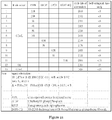
- PYR 1R PF 6 has substantial negative impact on the cycle life of the battery, resulting in no more than 100 charge and discharge cycles before the charge and discharge capacity drops below 80% of the original capacity. The value is too low to have commercial value.
- PYR 12 PF 6 PYR 13 PF 6 , PYR 14 PF 6 , PYR 15 PF 6, PYR 16 PF 6 , PYR 17 PF 6 , PYR 18 PF 6 , PYR 19 PF 6 and PYR 110 PF 6 , the lower the number of charge and discharge cycles before the charge and discharge capacity drops below 80% of the original capacity.
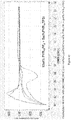
- Electrolyte of the battery includes 10wt. % of PYR 16 PF 6 .
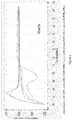
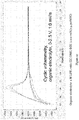
- the side reaction peak is shown at 0.5-1V with an intensity of -0.0014A.
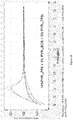
- Electrolyte of the battery includes 15wt. % of PYR 16 PF 6 .
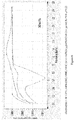
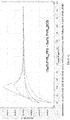
- the side reaction peak is shown at 0.5-1V with an intensity of -0.0015A.
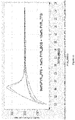
- Electrolyte of the battery includes 30wt. % of PYR 16 PF 6 .
- the side reaction peak is shown at 0.5-1V with an intensity of -0.0016A.
- the following tests aim at showing although charging and discharging are possible or can be performed, the side reaction eventually lead to decrease in charging and discharging of battery cycle.
- the side reaction affects the life cycle of a battery.
- the side reaction can be a result of reduction and deposition reaction of PYR 1R PF 6 and the pre-intercalation of PYR 1R PF 6 . Both affects the intercalation and deintercalation of Lithium ion.
- Batteries formed from electrolyte having different amounts of PYR 12 PF 6 , PYR 15 PF 6 , or PYR 16 PF 6 mixed with organic electrolyte(OE) comprises 1M LiPF 6 with ethylene carbonate (EC)/dimethyl carbonate (DMC)/diethyl carbonate (DEC)(1:1: 1 vol%)+3.5wt% vinylene carbonate (VC) are tested.
- EC ethylene carbonate
- DMC dimethyl carbonate
- DEC diethyl carbonate
- VC vinylene carbonate
- the Samples 1 to 11 and a control Sample A are tested with the Neware Battery Performance Test System.
- the battery contains a positive electrode, a negative electrode, a separator and an electrolyte.
- Positive electrode comprises a composition of the electrode is 90 wt% LiFePO 4 + 5 wt% Super P (RTM) + 5 wt% PVDF
- Negative A electrode comprises a composition of the electrode is MCMB 92 wt%+Super P (RTM) 5 wt%+3 wt% PVDF
- Negative B electrode comprises a composition of the electrode is MCMB 80 wt%+Super P (RTM) 4 wt%+ 1 wt% VGCF+10 wt% SiOx/C+5 wt% SBR
- a separator comprises ceramic coated polypropylene separator with a thickness of 20 um.
- Cut-off condition The battery is considered invalid when the charge and discharge cycle capacity drops below 80% of the original capacity.
- Electrolyte Sample 1 to 11 - Different amount of PYR 12 PF 6 , PYR 15 PF 6 , or PYR 16 PF 6 mixed with organic solvent (OE) comprises 1M LiPF 6 with ethylene carbonate (EC)/dimethyl carbonate (DMC)/diethyl carbonate (DEC)(1:1:1 vol%)+3.5wt% vinylene carbonate (VC). Sample A - OE alone.
- the electrolyte contains 100% of organic electrolyte (OE), which is without any PYR 1R PF 6 .
- OE organic electrolyte
- the number of charge and discharge life cycle of Negative A electrode is 2163 and that of Negative B electrode is 513.
- the electrolyte comprise a mixture of an organic electrolyte (OE) comprises 1M LiPF 6 with ethylene carbonate (EC)/dimethyl carbonate (DMC)/diethyl carbonate (DEC)(1:1:1 vol%)+3.5wt% vinylene carbonate (VC) and one of PYR I2 PF 6 , PYR 15 PF 6 , and PYR 16 PF 6 which have melting points of above 200 degree Celsius. At least one PYR 1R boron-based stabilizer is added to the electrolyte to improve or lengthen the life cycle of the batteries.
- OE organic electrolyte
- the specific amount of the first stabilizer in each of the Samples 1 to 15 batteries is provided in Figure 8 .
- the battery is tested with the Neware Battery Performance Test System and the cycle life of Negative A and Negative B electrodes are provided in Figure 8 .
- Sample 16 is a control with 100% OE and is also tested with the Neware Battery Performance Test System.
- the battery contains a positive electrode, a negative electrode, a separator and an electrolyte.
- Positive electrode comprises a composition of the electrode is 90 wt% LiFePO 4 + 5 wt% Super P (RTM) + 5 wt% PVDF.
- Negative A electrode comprises a composition of the electrode is MCMB 92 wt%+Super P (RTM) 5 wt%+3 wt% PVDF.
- Negative B electrode comprises a composition of the electrode is MCMB 80 wt%+Super P (RTM) 4 wt%+ 1 wt% VGCF+10 wt% SiOx/C+5 wt% SBR.
- Separator comprises a ceramic coated polypropylene separator with a thickness of 20 um.
- Organic electrolyte comprises 1M LiPF 6 with ethylene carbonate (EC)/dimethyl carbonate (DMC)/diethyl carbonate (DEC)(1:1:1 vol%)+3.5wt% vinylene carbonate (VC), one of PYR 12 PF 6 , PYR 15 PF 6 , and PYR 16 PF 6 and a first stabilizer which is a PYR 1R boron-based ionic liquid.
- EC ethylene carbonate
- DMC dimethyl carbonate
- DEC diethyl carbonate
- VC vinylene carbonate
- PYR 12 PF 6 PYR 15 PF 6
- PYR 16 PF 6 PYR 16 PF 6
- a first stabilizer which is a PYR 1R boron-based ionic liquid.
- the specific amount in wt. % of these constituents are provided in Figure 8 .
- the battery is charged and discharged.
- the cut-off condition is when the battery is considered to be invalid i.e. when the charge and discharge cycle capacity drops below 80% of the original capacity.
- the battery contains a positive electrode, a negative electrode, a separator and an electrolyte.
- the Positive electrode comprises a composition of 90 wt% LiFePO 4 + 5 wt% Super P (RTM) + 5 wt% PVDF.
- the Negative A electrode comprises a composition of MCMB 92 wt%+Super P (RTM) 5 wt%+3 wt% PVDF.
- the Negative B electrode comprises a composition of MCMB 80 wt%+Super P (RTM) 4 wt%+ 1 wt% VGCF+10 wt% SiOx/C+5 wt% SBR.
- the separator comprises a ceramic coated polypropylene separator with a thickness of 20 um.
- the electrolytes at the negative electrode A and the negative electrode B are different. They both comprise PYR 15 PF 6 , a first PYR 1R boron-based stabilizer, PYR 14 BOB, PYR 14 ODFB or PYR 14 BMB and a second stabilizer which is preferably PYR 1R -TFSI or PYR 1R -FSI.
- the OE at negative electrode A is 1M LiPF6 with ethylene carbonate (EC)/dimethyl carbonate (DMC)/diethyl carbonate (DEC)(1: 1: 1 vol%)+3.5wt% vinylene carbonate (VC).
- the OE at negative electrode B is 1M LiPF6 with ethylene carbonate (EC)/dimethyl carbonate (DMC)/diethyl carbonate (DEC)(1:1:1 vol%)+3.5wt% fluoroethylene carbonate (FEC).
- EC ethylene carbonate
- DMC dimethyl carbonate
- DEC diethyl carbonate
- FEC fluoroethylene carbonate
- the resulting batteries are tested with the Neware Battery Performance Test System, being charged and discharged at 0.2C-rate.
- the Cut-off condition The battery is considered to be invalid when the charge and discharge cycle capacity drops below 80% of the original capacity.
- the battery contains a positive electrode, a negative electrode, a separator and an electrolyte.
- the positive electrode comprises 90 wt% LiFePO 4 + 5 wt% Super P (RTM) + 5 wt% PVDF.
- the negative electrode comprises MCMB 92 wt%+Super P (RTM) 5 wt%+3 wt% PVDF.
- the separator comprises ceramic coated polypropylene separator with a thickness of 20 um.
- the electrolyte comprises an organic electrolyte (OE) comprises 1M LiPF 6 with ethylene carbonate (EC)/dimethyl carbonate (DMC)/diethyl carbonate (DEC) (at 1:1:1 vol%) and 3.5wt% vinylene carbonate (VC), an ionic liquid (IL) comprises PYR 16 PF 6 , PYR 14 BOB, PYR 14 TFSI at 10:1:4 wt% and a third stabilizer.
- OE organic electrolyte
- EC ethylene carbonate
- DMC dimethyl carbonate
- DEC diethyl carbonate
- VC vinylene carbonate
- IL ionic liquid
- the battery is charged and discharged
- the Cut-off condition The battery is considered to be invalid when the charge and discharge cycle capacity drops below 80% of the original capacity.
- a self-extinguishing test is also performed. 1.2 g of the electrolyte is dropped on a 47 mm glass fiber membrane having a thickness of 0.5 mm. Ignition timing test. The results are listed in Figure 10 as well.
- the results show that the addition of the third stabilizer can most effectively improve the cycle life of the battery, while ensuring the safety of the battery.
- the third stabilizer can be any of the four additives as listed below:
- the addition of the third stabilizer renders the battery commercially useful as far as charging and discharging life cycles is concerned.
- the side reactions as shown in Figure 3 to 6 require attention.
- the addition of the flame retardant is necessary but brings about the unwanted side reaction.
- These side reactions are inhibited by the addition of the first and second stabilizers.
- the addition of the first and second stabilizers not only improves the charging and discharging life cycles but also to avoid the side reactions.
- the side reaction peak test is performed using a three-electrode test method measured by Autolab 302N electrochemical workstation.
- the working electrode is a Negative A electrode comprising MCMB 92 wt%+Super P (RTM) 5 wt%+3 wt% PVDF.
- the reference electrode comprises lithium metal.
- the counter electrode comprises lithium metal.
- the scan range is 0-2.5V and the scan rate is 1 mV/s.
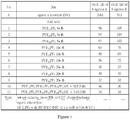
- Sample 1 in Figure 11 is a control in which the electrolyte contains no PYR 1R PF 6 but organic electrolyte (OE) comprises 1M LiPF6 with ethylene carbonate (EC)/dimethyl carbonate (DMC)/diethyl carbonate (DEC) (at 1:1:1 vol%) and 3.5wt% vinylene carbonate (VC).
- OE organic electrolyte
- Sample 2 in Figure 11 includes 85wt% of OE, 10wt% of PYR 16 PF 6 and a first stabilizer 5wt% of PYR 14 BF 4 in the electrolyte. Side reaction is found after testing as shown in the cyclic voltammetry graph of Figure 13 .
- Sample 3 in Figure 11 includes 80wt% of OE, 15wt% of PYR 16 PF 6 and a first stabilizer 5wt% of PYR 14 ODFB in the electrolyte. No Side reaction is found after testing as shown in the cyclic voltammetry graph of Figure 14 .
- Sample 4 in Figure 11 includes 80wt% of OE, 15wt% of PYR 16 PF 6 and a first stabilizer 5wt% of PYR 14 BOB in the electrolyte. No Side reaction is found after testing as shown in the cyclic voltammetry graph of Figure 15 .
- Sample 5 in Figure 11 includes 85wt% of OE, 10wt% of PYR 16 PF 6 and a second stabilizer 5wt% of PYR 14 FSI in the electrolyte. Side reaction is found after testing as shown in the cyclic voltammetry graph of Figure 16 .
- Sample 6 in Figure 11 includes 85wt% of OE, 10wt% of PYR 16 PF 6 and a second stabilizer 5wt% of PYR 14 TFSI in the electrolyte. Side reaction is found after testing as shown in the cyclic voltammetry graph of Figure 17 .
- Sample 7 in Figure 11 includes 80wt% of OE, 14wt% of PYR 16 PF 6 , 1wt%PYR 14 BOB as a first stabilizer and a second stabilizer 5wt% of PYR 14 TFSI in the electrolyte. No side reaction is found after testing as shown in the cyclic voltammetry graph of Figure 18 .
- Sample 8 in Figure 11 includes 80wt% of OE, 9wt% of PYR 16 PF 6 , 1wt%PYR 14 BOB as a first stabilizer and a second stabilizer 10wt% of PYR 14T TFSI in the electrolyte. No side reaction is found after testing as shown in the cyclic voltammetry graph of Figure 19 .
- the first stabilizer-PYR 1R boron-based ionic liquid and the anion of BF 4 do not contribute to the inhibition of the side reaction peak.
- Samples 5 and 6 when there is only a second stabilizer being used with PYR 16 PF 6 i.e. without a first stabilizer, no inhibition of the side reaction peak is observed.
- the first stabilizer is used without a second stabilizer, it seems to be slightly more effective than the use of second stabilizer without a first stabilizer as can be seen from the results of Samples 3 and 4 in comparison with Samples 5 and 6.
- the organic solvent 1M LiPF6 with ethylene carbonate (EC)/dimethyl carbonate (DMC)/diethyl carbonate (DEC) (at 1:1:1 vol%) and 3.5wt% vinylene carbonate (VC) is mixed with PYR 16 PF 6 as the flame retardant, PYR 14 BOB as the first stabilizer, PYR 14 TFSI as the second stabilizer to form a main solvent of the electrolyte.
- the main solvent is tested with different amount of third stabilizer selected from a group consisting of PFPN, EHDP, HPCP and DOPO-HQ.
- the resulting battery is tested with the Neware Battery Performance Test System.
- the battery contains a positive electrode, a negative electrode, a separator and an electrolyte.
- the positive electrode comprises a composition of 90 wt% LiFePO 4 + 5 wt% Super P (RTM) + 5 wt% PVDF.
- the negative A electrode comprises a composition of MCMB 92 wt%+Super P (RTM) 5 wt%+3 wt% PVDF.
- the separator comprises of ceramic coated polypropylene separator with a thickness of 20 um.
- the electrolyte comprises the OE, PYR 16 PF 6 as the flame retardant, PYR 14 BOB as the first stabilizer, PYR 14 TFSI as the second stabilizer and a third stabilizer as detailed in Figure 20 .
- the resulting battery is charged and discharged at 0.2C-rate.
- the cut-off condition is when the battery is judged to be invalid i.e. when the charge and discharge cycle capacity drops below 80% of the original capacity.
- Self-extinguishing test is performed by dropping 1.2 g of the electrolyte on a 47 mm glass fiber membrane having a thickness of 0.5 mm. The self-extinguishing time is recorded.
- the organic electrolyte comprises 1M LiPF6 with ethylene carbonate (EC)/dimethyl carbonate (DMC)/diethyl carbonate (DEC) (at 1:1:1 vol%) and 3.5wt% vinylene carbonate (VC) is mixed with PYR 16 PF 6 as the flame retardant, PYR 14 ODFB as the first stabilizer, PYR 13 TFSI as the second stabilizer to form a main solvent of the electrolyte.
- the main solvent is tested with different amount of third stabilizer selected from a group consisting of PFPN, EHDP, HPCP and DOPO-HQ.
- the resulting battery is tested with the Neware Battery Performance Test System.
- the battery contains a positive electrode, a negative electrode, a separator and an electrolyte.
- the positive electrode comprises a composition of 90 wt% LiFePO 4 + 5 wt% Super P (RTM) + 5 wt% PVDF.
- the negative A electrode comprises a composition of MCMB 92 wt%+Super P (RTM) 5 wt%+3 wt% PVDF.
- the separator comprises of ceramic coated polypropylene separator with a thickness of 20 um.
- the electrolyte comprises the (OE), PYR 16 PF 6 as the flame retardant, PYR 14 ODFB as the first stabilizer, PYR 13 TFSI as the second stabilizer and a third stabilizer as detailed in Figure 21 .
- the resulting battery is charged and discharged at 0.2C-rate.
- the cut-off condition is when the battery is judged to be invalid i.e. when the charge and discharge cycle capacity drops below 80% of the original capacity.
- Self-extinguishing test is performed by dropping 1.2 g of the electrolyte on a 47 mm glass fiber membrane having a thickness of 0.5 mm. The self-extinguishing time is recorded.
- the organic solvent (OE) comprises 1M LiPF6 with ethylene carbonate (EC)/dimethyl carbonate (DMC)/diethyl carbonate (DEC) (at 1:1:1 vol%) and 3.5wt% vinylene carbonate (VC) is mixed with PYR 16 PF 6 as the flame retardant, PYR 14 ODFB as the first stabilizer, PYR 13 TFSI as the second stabilizer to form a main solvent of the electrolyte.
- the main solvent is tested with different amount of third stabilizer selected from a group consisting of PFPN, EHDP, HPCP and DOPO-HQ.
- the resulting battery is tested with the Neware Battery Performance Test System.
- the battery contains a positive electrode, a negative electrode, a separator and an electrolyte.
- the positive electrode comprises a composition of 90 wt% LiFePO 4 + 5 wt% Super P (RTM) + 5 wt% PVDF.
- the negative A electrode comprises a composition of MCMB 92 wt%+Super P (RTM) 5 wt%+3 wt% PVDF.
- the separator comprises of ceramic coated polypropylene separator with a thickness of 20 um.
- the electrolyte comprises the OE, PYR 16 PF 6 as the flame retardant, PYR 14 ODFB as the first stabilizer, PYR 13 TFSI as the second stabilizer and a third stabilizer as detailed in Figure 22 .
- the resulting battery is charged and discharged at 0.2 C-rate.
- the cut-off condition is when the battery is judged to be invalid i.e. when the charge and discharge cycle capacity drops below 80% of the original capacity.
- Self-extinguishing test is performed by dropping 1.2 g of the electrolyte on a 47 mm glass fiber membrane having a thickness of 0.5 mm. The self-extinguishing time is recorded.
- Examples 1 and 2 are the most cost effective embodiments of the invention while Example 3 is the embodiment that has the best performance.
Landscapes
- Chemical & Material Sciences (AREA)
- Engineering & Computer Science (AREA)
- Electrochemistry (AREA)
- Chemical Kinetics & Catalysis (AREA)
- Manufacturing & Machinery (AREA)
- General Chemical & Material Sciences (AREA)
- Condensed Matter Physics & Semiconductors (AREA)
- General Physics & Mathematics (AREA)
- Inorganic Chemistry (AREA)
- Physics & Mathematics (AREA)
- Organic Chemistry (AREA)
- Power Engineering (AREA)
- Materials Engineering (AREA)
- Microelectronics & Electronic Packaging (AREA)
- Secondary Cells (AREA)
Description
- The present invention relates to an electrolyte for a rechargeable battery, for example particularly, but not exclusively, for a lithium-ion battery.
- Lithium-ion battery has extensive application in diverse fields of technology. It is progressively more challenging to enhance the performance of the battery, which involves fine balancing amongst various aspects. Side reactions creep in when new combination is used, for example, sudden redox reaction at specific yet broad range of potential applied. In addition to the costs for manufacture, two main concerns are the life cycle and the stability of the battery. It is obvious that safety is the first and foremost.
- Recurrently, flammability and explosion of lithium-ion batteries make the headlines of newspapers and cause concerns. The problem is usually attributable to a poor combination of electrode and electrolyte.
- A solution to enhance stability would be to use Lithium Iron Phosphate (LFP) as a material for the positive electrode. Cost and pollution concerns are minimal. The special olivine structure of LFP contributes significantly to the low flammability and explosion risk due to improper handling of the battery such as overcharging, over discharging and/or short circuit.
- It is common to use nonaqueous organic solvent in the electrolyte of a lithium ion battery. A mixture of two or more carbonate-based electrolytes are prevalent. The commonly used organic solvents include ethylene carbonate (EC), ethyl methyl carbonate (EMC), diethyl carbonate (DEC), propylene carbonate (PC), or dimethyl carbonate (DMC). The addition of film former agents is also customary. The common film former agents include vinyl carbonate (VC) and fluoroethylene carbonate (FEC).
- All of these organic solvents and film former agents have relatively high volatility and flammability. They are more likely to contribute to an explosion in case of improper handling of a battery.
- The use of ionic liquids in the electrolyte of lithium ion battery is being extensively explored because of its low volatility and low-combustion properties. It remains as molten salt that exhibits liquid state below 100 degree Celsius and around room temperature. As such they are called room temperature ionic liquids (RTIL) or room temperature molten salts.
- 1-alkyl-3-methylimidazolium is the most researched. Taking 1-alkyl-3-methylimidazolium tetrafluoroborate as an example, in which the alkyl chain has a carbon number of 1 to 18. In general, the melting point should increase substantially as the number of carbon chains increases. However, this may not always be the case. The melting point of an ionic liquid with 1-alkyl-3-methylimidazolium cation is substantially affected by the anion. There are many uncertainties.
- In summary, the melting point of the ionic liquid depends on multiple factors including the number of carbon in the cation and the anion. For example 1-ethyl-3-methylimidazolium Cl has a melting point of 87 ° C, 1-ethyl-3-methylimidazolium PF6 has a melting point of 62 ° C, 1-ethyl-3-methylimidazolium BF4 has a melting point of 15 degrees, 1-ethyl-3-methylimidazolium AlCl4 has a melting point of 7 degrees, and 1- ethyl-3-methylimidazolium TFSI melting point -3 degrees,
- Another problem would be the size of the molecular group of the ionic liquid. There is a general trend that the larger the molecular group, the higher the viscosity and the lower the conductivity. The addition of carbonate electrolytes to overcome the inherent problem with the ionic liquid brings back the aforementioned concerns on volatility, combustion and possible explosion.
- The invention seeks to inhibit or at least to mitigate such shortcomings by providing a stable electrolyte useful in battery for multiple fields.
- According to the invention, there is provided an electrolyte for a lithium-ion battery comprising a lithium salt, and a non-aqueous organic solvent which includes a carbonate-based solvent, a flame retardant, a film former and a stabilizing medium, wherein the flame retardant comprises PYR1RPF6 (N-Methyl-N-alkylpyrrolidinium hexafluorophosphate salt) at the amount of 1 to 15 wt. % of the electrolyte. In PYR1RPF6, PYR represents pyrrolidinium,
subscript 1 indicates the methyl group, and subscript R indicates the number of carbon atoms in the alkyl side chains, in which R is selected from any one of 2 to 10. More preferably, the PYR1RPF6 has a melting point greater than 200 °C. It is preferable that the R is 2, 5 or 6.The stabilizing medium includes first and second stabilizers which are different from each other. The first stabilizer comprises an ionic liquid with PYR1R + cation and a boron-based anion other than BF4 -. Preferably, R is 2, 3, 4, 5 or 6. It is preferable that the boron-based anion is selected from a group consisting of bis(oxalato)borate) (BOB-), difluoro(oxalato)borate (ODFB-) and bis(mandelato)borate(BMB-). The second stabilizer comprises an ionic liquid with PYR1R + cation and/or with an anion selected from a group consisting of TFSI- and FSI-. Advantageously, the second stabilizer comprises an ionic liquid with PYR1R + cation. More advantageously, R is 3 or 4. Preferably, the second stabilizer comprises an ionic liquid with an anion selected from a group consisting of TFSI- and FSI-. - More preferably, the amount of the first stabilizer is between 0 to 5 wt. % of the electrolyte. It is preferable that the amount of the second stabilizer is between 0 to 10 wt. % of the electrolyte. More preferably, it comprises a third stabilizer, selected from a group consisting of Ethoxy(pentafluoro) cyclotriphosphazene (PFPN), Ethylhexyl Diphenyl Phosphate (EHDP), Hexaphenoxycyclotriphosphazene (HPCP) and 10-(2,5-dihydroxyphenyl)-10-hydro-9-oxa-10-phosphaphenanthrene-10-oxidation(DOPO-HQ). Preferably, the amount of PFPN is between 0.5 to 10 wt. % of the electrolyte.
- More preferably, the amount of EHDP is between 0.5 to 5 wt. % of the electrolyte. It is preferable that the amount of HPCP is between 0.5 to 5 wt. % of the electrolyte. Preferably, the amount of DOPO-HQ is less than or equal to 1.5 wt. % of the electrolyte. More preferably, the amount of PFPN is 0.5 to 2.9 wt. % of the electrolyte. Yet more preferably, the non-aqueous organic solvent comprises carbonate-based organic solvents. In a preferred embodiment, the carbonate-based organic solvents is selected from a group consisting of ethylene carbonate (EC), ethyl methyl carbonate (EMC), diethyl carbonate (DEC), Propylene carbonate (PC), dimethyl carbonate (DMC) and a mixture thereof. Preferably, the film former is selected from a group consisting of vinylene carbonate (VC) and fluoroethylene carbonate (FEC). More preferably, the lithium salt comprises lithium hexafluorophosphate (LiPF6).
- In another aspect of the invention, there is provided an electrolyte for a lithium-ion battery comprising: a lithium salt, a non-aqueous organic solvent which includes a carbonate-based solvent, a flame retardant, a film former and a stabilizing medium, wherein the flame retardant comprises PYR1RPF6 (N-Methyl-N-alkylpyrrolidinium hexafluorophosphate salt), the stabilizing medium includes first, second and third stabilizers, which are different from each other and wherein the lithium salt comprises LiPF6; the carbonate-based organic solvent is selected from a group consisting of ethylene carbonate (EC), ethyl methyl carbonate (EMC), diethyl carbonate (DEC), Propylene carbonate (PC), dimethyl carbonate (DMC) and a mixture thereof; the film former is selected from a group consisting of vinylene carbonate (VC) and fluoroethylene carbonate (FEC); wherein in PYR1RPF6, PYR represents pyrrolidinium,
subscript 1 indicates the methyl group, and subscript R indicates the number of carbon atoms in the alkyl side chains, in which R is selected from any one of 2 to 10; the first stabilizer is selected from a group consisting of bis(oxalato)borate (BOB-), difluoro(oxalato)borate (ODFB-) and bis(mandelato)borate(BMB-); the second stabilizer comprises an ionic liquid with an anion selected from a group consisting of TFSI- and FSI-; and the third stabilizer is selected from a group consisting of Ethoxy(pentafluoro) cyclotriphosphazene (PFPN), Ethylhexyl Diphenyl Phosphate (EHDP), Hexaphenoxycyclotriphosphazene (HPCP) and 10-(2,5-dihydroxyphenyl)-10-hydro-9-oxa-10-phosphaphenanthrene-10-oxidation(DOPO-HQ). More preferably, the flame retardant is PYR16PF6; the first stabilizer is PYR14BOB; the second stabilizer is PYR14TFSI at a ratio of 1:0.5:1 wt %. It is preferable that the flame retardant is PYR16PF6; the first stabilizer is PYR14ODFB; the second stabilizer is PYR13TFSI at a ratio of 1:0.5:1 wt %. Preferably, the flame retardant is PYR16PF6; the first stabilizer is PYR14ODFB; the second stabilizer is PYR13TFSI at a ratio of 10:1:4 wt %. Yet more preferably, the carbonate-based organic solvent comprises EC, DMC and DEC at 1:1:1 vol% and the film former comprises 3.5wt % of VC. - In a further aspect of the invention, there is provided a battery comprising: a positive electrode, a negative electrode, a separator, and
an electrolyte as claimed in any one ofclaims 1 to 30. Preferably, the positive electrode comprises LiFePO4. More preferably, the negative electrode is formed from a material selected from a group consisting of carbon and carbon/silicon (SiC). Yet more preferably, the separator is a composite film formed from a material selected from a group consisting of Polypropylene (PP), Polyethylene (PE), ceramic, glass fiber and a combination thereof. - The invention will now be more particularly described, by way of example only, with reference to the accompanying drawings, in which:
-
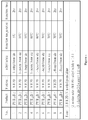
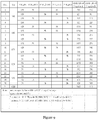
Figure 1 is table showing the synthesis of PYR12Br, PYR13Br, PYR14Br, PYR15Br, PYR16Br, PYR17Br, PYR18Br, PYR19Br, PYR110Br; -
Figure 2 is bar chart showing the self-extinguish time in second per gram and the melting point in degree Celsius of PYR12PF6, PYR13PF6, PYR14PF6, PYR15PF6, PYR16PF6, PYR17PF6, PYR18PF6, PYR19PF6 and PYR110PF6; -
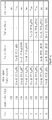
Figure 3 is a table showing the side reaction test results of PYR12PF6, PYR13PF6, PYR14PF6, PYR15PF6, PYR16PF6, PYR17PF6, PYR18PF6, PYR19PF6 and PYR110PF6 as the flame retardant in the ionic liquid (IL) at 5wt%, 10wt%, 15wt% and 20wt% with organic electrolyte (OE) 1M LiPF6 with ethylene carbonate (EC)/dimethyl carbonate (DMC)/diethyl carbonate (DEC)(1:1:1 vol%)+3.5wt% vinylene carbonate (VC) at 95wt%, 90wt%, 85wt% and 80wt%; -
Figure 4 is a cyclic voltammetry line graph showing the side reaction measurable at 0.5V to 1.0V of the battery with electrolyte comprises 90wt% of 1M LiPF6 with ethylene carbonate (EC)/dimethyl carbonate (DMC)/diethyl carbonate (DEC)(1:1:1 vol%)+3.5wt% vinylene carbonate (VC) and 10 wt.% PYR16PF6; -
Figure 5 is a cyclic voltammetry line graph showing the side reaction measurable at 0.5V to 1.0V of the battery with electrolyte comprises 85wt% of 1M LiPF6 with ethylene carbonate (EC)/dimethyl carbonate (DMC)/diethyl carbonate (DEC)(1:1:1 vol%)+3.5wt% vinylene carbonate (VC) and 15 wt.% PYR16PF6; -
Figure 6 is a cyclic voltammetry line graph showing the side reaction measurable at 0.4V to 1.0V of the battery with electrolyte comprises 70wt% of 1M LiPF6 with ethylene carbonate (EC)/dimethyl carbonate (DMC)/diethyl carbonate (DEC)(1:1:1 vol%)+3.5wt% vinylene carbonate (VC) and 30 wt.% PYR16PF6; -
Figure 7 is a table showing the 0.2C charge and discharge life cycle of a Negative A and Negative B electrodes of a battery with electrolyte comprises 1M LiPF6 with ethylene carbonate (EC)/dimethyl carbonate (DMC)/diethyl carbonate (DEC)(1:1:1 vol%)+3.5wt% vinylene carbonate (VC) alone or with PYR12PF6, PYR13PF6, PYR14PF6, PYR15PF6, PYR16PF6, PYR17PF6, PYR18PF6, PYR19PF6 and/or PYR110PF6 in various proportions; -
Figure 8 is a table showing 0.2C charge and discharge life cycle of a Negative A and Negative B electrodes of a battery with electrolyte comprises 1M LiPF6 with ethylene carbonate (EC)/dimethyl carbonate (DMC)/diethyl carbonate (DEC)(1:1:1 vol%)+3.5wt% vinylene carbonate (VC) alone or with PYR12PF6, PYR15PF6, PYR16PF6, and the addition of a first stabilizer PYR14BOB, PYR14ODFB or PYR14BMB in various proportions; -
Figure 9 is a table showing 0.2C charge and discharge life cycle of a battery with a Negative A electrode in an electrolyte comprises 1M LiPF6 with ethylene carbonate (EC)/dimethyl carbonate (DMC)/diethyl carbonate (DEC)(1:1: 1 vol%)+3.5wt% vinylene carbonate (VC) alone or with PYR15PF6, and the addition of a first stabilizer PYR14BOB or PYR14ODFB and a second stabilizer PYR14TFSI or PYR14FSI in various proportions and a Negative B electrode in an electrolyte comprises 1M LiPF6 with ethylene carbonate (EC)/dimethyl carbonate (DMC)/diethyl carbonate (DEC)(1:1:1 vol%)+3.5wt% fluoroethylene carbonate (FEC) alone or with PYR15PF6, and the addition of a first stabilizer PYR14BOB or PYR14ODFB and a second stabilizer PYR14TFSI or PYR14FSI in various proportions; -
Figure 10 is a table showing 0.2C charge and discharge life cycle of a battery with a Negative A electrode in an electrolyte comprises 1M LiPF6 with ethylene carbonate (EC)/dimethyl carbonate (DMC)/diethyl carbonate (DEC)(1: 1: 1 vol%)+3.5wt% vinylene carbonate (VC) (OE) alone or with PYR16PF6, PYR14BOB, PYR14TSFI at the ratio of (10:1:4 wt%) (IL) or an electrolyte comprises OE, IL and a third stabilizer Ethoxy(pentafluoro) cyclotriphosphazene (PFPN), Ethylhexyl Diphenyl Phosphate (EHDP), Hexaphenoxycyclotriphosphazene (HPCP) or 10-(2,5-dihydroxyphenyl)-10-hydro-9-oxa-10-phosphaphenanthrene-10-oxidation (DOPO-HQ) in various amount; -
Figure 11 is a table showing the side reaction testing result with electrolyte comprises of 1M LiPF6 with ethylene carbonate (EC)/dimethyl carbonate (DMC)/diethyl carbonate (DEC)(1:1:1 vol%)+3.5wt% vinylene carbonate (VC) (OE) alone or with flame retardant and a first stabilizer, or OE with flame retardant and second stabilizer or OE with flame retardant, first and second stabilizer; -
Figure 12 is a cyclic voltammetry line graph at 0-2.5V at 1.0mV/s showing no side reaction measurable on the battery with electrolyte comprises 100wt% of 1M LiPF6 with ethylene carbonate (EC)/dimethyl carbonate (DMC)/diethyl carbonate (DEC)(1:1:1 vol%)+3.5wt% vinylene carbonate (VC); -
Figure 13 is a cyclic voltammetry line graph showing side reaction measurable at 0.5-1.0 V on the battery with electrolyte comprises 85wt% of 1M LiPF6 with ethylene carbonate (EC)/dimethyl carbonate (DMC)/diethyl carbonate (DEC)(1:1:1 vol%)+3.5wt% vinylene carbonate (VC), 10wt% of PYR16PF6 and 5wt% PYR14BF4; -
Figure 14 is a cyclic voltammetry line graph showing no side reaction measurable on the battery with electrolyte comprises 80% of 1M LiPF6 with ethylene carbonate (EC)/dimethyl carbonate (DMC)/diethyl carbonate (DEC)(1:1:1 vol%)+3.5wt% vinylene carbonate (VC), 15wt% of PYR16PF6 and 5wt% PYR14ODFB; -
Figure 15 is a cyclic voltammetry line graph showing no side reaction measurable on the battery with electrolyte comprises 80% of 1M LiPF6 with ethylene carbonate (EC)/dimethyl carbonate (DMC)/diethyl carbonate (DEC)(1:1:1 vol%)+3.5wt% vinylene carbonate (VC), 15wt% of PYR16PF6 and 5wt% PYR14BOB; -
Figure 16 is a cyclic voltammetry line graph showing side reaction measurable at 0.4-1.0 V on the battery with electrolyte comprises 85% of 1M LiPF6 with ethylene carbonate (EC)/dimethyl carbonate (DMC)/diethyl carbonate (DEC)(1:1:1 vol%)+3.5wt% vinylene carbonate (VC), 10wt% of PYR16PF6 and 5wt% PYR14FSI; -
Figure 17 is a cyclic voltammetry line graph showing side reaction measurable at 0.5-1.0 V on the battery with electrolyte comprises 85% of 1M LiPF6 with ethylene carbonate (EC)/dimethyl carbonate (DMC)/diethyl carbonate (DEC)(1:1:1 vol%)+3.5wt% vinylene carbonate (VC), 10wt% of PYR16PF6 and 5wt% PYR14TFSI; -
Figure 18 is a cyclic voltammetry line graph showing no side reaction measurable on the battery with electrolyte comprises 80% of 1M LiPF6 with ethylene carbonate (EC)/dimethyl carbonate (DMC)/diethyl carbonate (DEC)(1:1:1 vol%)+3.5wt% vinylene carbonate (VC), 14wt% of PYR16PF6, 1wt% of PYR14BOB and 5wt% PYR14TFSI; -
Figure 19 is a cyclic voltammetry line graph showing no side reaction measurable on the battery with electrolyte comprises 80% of 1M LiPF6 with ethylene carbonate (EC)/dimethyl carbonate (DMC)/diethyl carbonate (DEC)(1:1:1 vol%)+3.5wt% vinylene carbonate (VC), 9 wt% of PYR16PF6, 1wt% of PYR14BOB and 10wt% PYR14TFSI; and -
Figure 20 is a table showing 0.2C charge and discharge life cycle of Electrode A in a battery with an electrolyte comprises 1M LiPF6 with ethylene carbonate (EC)/dimethyl carbonate (DMC)/diethyl carbonate (DEC)(1: 1: 1 vol%)+3.5wt% vinylene carbonate (VC) (OE) alone or with PYR16PF6, PYR14BOB, PYR14TSFI at the ratio of 1:0.5:1 wt% ionic liquid (IL) or an electrolyte comprises OE, IL and a third stabilizer Ethoxy(pentafluoro) cyclotriphosphazene ((PFPN), Ethylhexyl Diphenyl Phosphate (EHDP), Hexaphenoxycyclotriphosphazene (HPCP) or 10-(2,5-dihydroxyphenyl)-10-hydro-9-oxa-10-phosphaphenanthrene-10-oxidation (DOPO-HQ) in various amount. -
Figure 21 is a table showing 0.2C charge and discharge life cycle of Electrode A in a battery with an electrolyte comprises 1M LiPF6 with ethylene carbonate (EC)/dimethyl carbonate (DMC)/diethyl carbonate (DEC)(1: 1:1 vol%)+3.5wt% vinylene carbonate (VC) (OE) alone or with PYR16PF6, PYR14ODFB, PYR13TSFI at the ratio of 1:0.5:1 wt% ionic liquid (IL) or an electrolyte comprises OE, IL and a third stabilizer Ethoxy(pentafluoro) cyclotriphosphazene ((PFPN), Ethylhexyl Diphenyl Phosphate (EHDP), Hexaphenoxycyclotriphosphazene (HPCP) or 10-(2,5-dihydroxyphenyl)-10-hydro-9-oxa-10-phosphaphenanthrene-10-oxidation (DOPO-HQ) in various amount. -
Figure 22 is a table showing 0.2C charge and discharge life cycle of Electrode A in a battery with an electrolyte comprises 1M LiPF6 with ethylene carbonate (EC)/dimethyl carbonate (DMC)/diethyl carbonate (DEC)(1:1:1 vol%)+3.5wt% vinylene carbonate (VC) (OE) alone or with PYR16PF6, PYR14ODFB, PYR13TSFI at the ratio of 10:1:4 wt% ionic liquid (IL) or an electrolyte comprises OE, IL and a third stabilizer Ethoxy(pentafluoro) cyclotriphosphazene ((PFPN), Ethylhexyl Diphenyl Phosphate (EHDP), Hexaphenoxycyclotriphosphazene (HPCP) or 10-(2,5-dihydroxyphenyl)-10-hydro-9-oxa-10-phosphaphenanthrene-10-oxidation (DOPO-HQ) in various amount. - PYR1RPF6 series ionic liquid is an identified candidate that offers an alternative to room temperature ionic liquids because it has a relatively high melting point. PYR1RPF6 series ionic liquid also possesses the advantages of relatively low volatility and relatively high non-flammability. Proton solvents must be used in combination with PYR1RPF6 series ionic liquid at room temperature because PYR1RPF6 is in solid state at room temperature due to its relatively high melting point. The PF6 - increases the fire retardancy of the ionic liquid and hence acts as a fire retardant.
- Some of the PYR1RPF6 series ionic liquid that are considered more suitable are each mixed with a carbonate electrolyte to be used in a lithium iron phosphate(LFP) battery for electrical performance testing. Although charging and discharging are possible or can be performed, lithium deposition occurs slowly over charging and discharging of the battery. The deposition lowers the number of battery cycles to be less than 100 times, hence the battery cannot be commercialized.
- With reference to
Figures 1 to 20 , the following findings offer a solution that mitigates all of the aforementioned shortcomings. More specifically, the present invention offers a novel electrolyte formulation containing a PYR1RPF6 series ionic liquid for use in a commercializable lithium ion battery. - Below are the method of synthesis of certain PYR1RPF6 series ionic liquid.
- Synthesis of N-methyl-N-alkylpyrrolidinium PYR1R + cation PF6 - anion is a two-step synthesis. With reference to
Figure 1 the synthesis of PYR12PF6, PYR13PF6, PYR14PF6, PYR15PF6, PYR16PF6, PYR17PF6, PYR18PF6, PYR19PF6 and PYR110PF6 are provided in detail below. - N-methylpyrrolidine (NMPD) is purified by distillation at 85 °C. The purified N-methylpyrrolidine and N-ethyl bromide (n-bromoethane) are mixed at a molar ratio of 1:1.1, followed by adding an equal volume of deionized water with n-bromoethane, and mixing and stirring in a 5 degree Celsius ice bath. After 2 hours, the supernatant was N-ethyl-N-methylpyrrolidinium bromide (PYR12Br).
- N-methylpyrrolidine (NMPD) is purified by distillation at 85 °C. The purified N-methylpyrrolidine and N-propyl bromide are mixed at a molar ratio of 1:1.1, followed by adding an equal volume of deionized water with n-bromopropane, and mixing and stirring in a 10 degree Celsius ice bath. After 2 hours, the supernatant was N-propyl-N-methylpyrrolidinium bromide (PYR13Br).
- N-methylpyrrolidine (NMPD) is purified by distillation at 85 °C. The purified N-methylpyrrolidine and N-butyl bromide are mixed at a molar ratio of 1:1.1, followed by adding an equal volume of deionized water with n-bromobutane, and mixing and stirring in a 10 degree Celsius ice bath. After 2 hours, the supernatant was N-butyl-N-methylpyrrolidinium bromide (PYR14Br).
- N-methylpyrrolidine (NMPD) is purified by distillation at 85 °C. The purified N-methylpyrrolidine and N-pentyl bromide are mixed at a molar ratio of 1:1.1, followed by adding an equal volume of deionized water with n-bromopantane, and mixing and stirring in a 60 degree Celsius hot bath. After 2 hours, the supernatant was N-pentyl-N-methylpyrrolidinium bromide (PYR15Br).
- N-methylpyrrolidine (NMPD) is purified by distillation at 85 °C. The purified N-methylpyrrolidine and N-hexyl bromide are mixed at a molar ratio of 1:1.1, followed by adding an equal volume of deionized water with n-bromohexane, and mixing and stirring in a 60 degree Celsius hot bath. After 2 hours, the supernatant was N-hexyl-N-methylpyrrolidinium bromide (PYR16Br).
- N-methylpyrrolidine (NMPD) is purified by distillation at 85 °C. The purified N-methylpyrrolidine and N-heptyl bromide are mixed at a molar ratio of 1:1.1, followed by adding an equal volume of deionized water with n-bromoheptane, and mixing and stirring in a 70 degree Celsius hot bath. After 2 hours, the supernatant was N-heptyl-N-methylpyrrolidinium bromide (PYR17Br).
- N-methylpyrrolidine (NMPD) is purified by distillation at 85 °C. The purified N-methylpyrrolidine and N-octyl bromide are mixed at a molar ratio of 1:1.1, followed by adding an equal volume of deionized water with n-bromooctane, and mixing and stirring in a 70 degree Celsius hot bath. After 2 hours, the supernatant was N-octyl-N-methylpyrrolidinium bromide (PYR18Br).
- N-methylpyrrolidine (NMPD) is purified by distillation at 85 °C. The purified N-methylpyrrolidine and Bromononame are mixed at a molar ratio of 1:1.1, followed by adding an equal volume of deionized water with bromononame, and mixing and stirring in a 70 degree Celsius hot bath. After 2 hours, the supernatant was N-nonyl-N-methylpyrrolidinium bromide (PYR19Br).
- N-methylpyrrolidine (NMPD) is purified by distillation at 85 °C. The purified N-methylpyrrolidine and Bromodecane are mixed at a molar ratio of 1:1.1, followed by adding an equal volume of deionized water with n-bromodecane, and mixing and stirring in a 70 degree Celsius hot bath. After 2 hours, the supernatant was N-decyl-N-methylpyrrolidinium bromide (PYR110Br).
- Adding the N-ethyl-N-methylpyrrolidinium bromide salt synthesized in
Step 1 to a molar amount (1M) of potassium hexafluorophosphate(KPF6), followed by addition of deionized water. The ratio of deionized water to the bromine salt is 1: 1 wt.%, stirred at room temperature until reaction is completed. The white precipitate is filtered and is placed in a container. Deionized water is added to wash the white precipitate which is then filtered out. The white precipitate is washed for three times. The white precipitate is then dried in a 60 degree vacuum oven until it reaches a moisture content of 20 ppm or less. - The N-propyl-N-methylpyrrolidinium bromide synthesized in
Step 1 was added to a molar amount (1M) of potassium hexafluorophosphate(KPF6), followed by addition of deionized water. The ratio of deionized water to the bromine salt is 1: 1 wt.%. The mixture is stirred at room temperature until reaction is completed. the resulting white precipitate is filtered and is placed in a container. Deionized water is added to wash the white precipitate which is then filtered out. The white precipitate is washed for three times. The cleaned precipitate is dried in a 60 degree vacuum oven until it reaches a moisture content of 20 ppm or less. - The N-butyl-N-methylpyrrolidinium bromide synthesized in
Step 1 is added to a molar amount (1M) of potassium hexafluorophosphate(KPF6), followed by an addition of deionized water. The ratio of deionized water to the bromine salt is 1: 1 wt.%. The mixture is stirred at room temperature until reaction is completed. The white precipitate is filtered and placed in a container. Deionized water is added to wash the white precipitate which is then filtered. The white precipitate is cleaned three times and is then dried in a 60 degree vacuum oven until it reaches a moisture content of 20 ppm or less. - The N-pentyl-N-methylpyrrolidinium bromide synthesized in
Step 1 is added to a molar amount (1M) of potassium hexafluorophosphate(KPF6), followed by addition of deionized water. The ratio of deionized water to the bromine salt is 1: 1 wt.%. The mixture is stirred at room temperature until reaction is completed. The white precipitate is then filtered out and is placed in a container. deionized water is added for washing and the white precipitate is filtered out. The washing process is repeated three times. The precipitate is then dried in a 60 degree vacuum oven until the moisture content is of 20 ppm or less. - The N-hexyl-N-methylpyrrolidinium bromide synthesized in
Step 1 is added to a molar amount (1M) of potassium hexafluorophosphate(KPF6), followed by addition of deionized water. The ratio of deionized water to the bromine salt is 1: 1 wt.%. The mixture is stirred at room temperature until reaction is completed. The resulting white precipitate is filtered and is placed in a container. Deionized water is added to wash the white precipitate which is then filtered out. The washing process is repeated three times. Finally, the resulting white precipitate is dried in a 60 degree vacuum oven to a moisture content of 20 ppm or less. - The N-heptyl-N-methylpyrrolidinium bromide synthesized in
Step 1 is added to a molar amount (1M) of potassium hexafluorophosphate(KPF6), followed by addition of deionized water. The ratio of deionized water to the bromine salt is 1: 1 wt.%. The mixture is stirred at room temperature until reaction is completed. The resulting the white precipitate is filtered. The white precipitate is removed and placed in a container. Deionized water is added for washing and the white precipitate is then filtered out. The washing process is repeated three times. Finally, the white precipitate is dried in a 60 degree vacuum oven to a moisture content of 20 ppm or less. - The N-octyl-N-methylpyrrolidinium bromide synthesized in
Step 1 is added to a molar amount (1M) of potassium hexafluorophosphate(KPF6), followed by addition of deionized water. The ratio of deionized water to the bromine salt is 1: 1 wt.%. The mixture is stirred at room temperature until reaction is completed. The white precipitate is filtered out and is placed in a container. Deionized water is added for washing and the white precipitate is then filtered out. The washing process is repeated three times. Finally, the white precipitate is dried in a 60 degree vacuum oven to a moisture content of 20 ppm or less. - The N-nonyl-N-methylpyrrolidinium bromide synthesized in
Step 1 is added to a molar amount of potassium hexafluorophosphate(KPF6), followed by addition of deionized water. The ratio of deionized water to the bromine salt is 1: 1 wt.%. The mixture is stirred at room temperature until reaction is completed, and the resulting white precipitate is filtered out. The white precipitate is removed and placed in a container. Deionized water is added for washing and the white precipitate is then filtered out. The washing process is repeated three times. Finally, the precipitate is dried in a 60 degree vacuum oven to a moisture content of 20 ppm or less. - The N-decyl-N-methylpyrrolidinium bromide synthesized in
Step 1 is added to a molar amount of potassium hexafluorophosphate(KPF6), followed by addition of deionized water. The ratio of deionized water to the bromine salt is 1: 1 wt.%. The mixture is stirred at room temperature until reaction is completed, and the resulting white precipitate is filtered out. The white precipitate is removed and placed in a container. Deionized water is added for washing and the white precipitate is then filtered out. The washing process is repeated three times. Finally, the precipitate is dried in a 60 degree vacuum oven to a moisture content of 20 ppm or less. - Additives are introduced to the PYR1RPF6 series ionic liquid to enhance the battery life cycle as well as to counter any negative side effects. The followings are the method of synthesis of the useful additives.
- The N-butyl-N-methylpyrrolidinium bromide salt synthesized in
Step 1 is added to a molar amount (1M) of NaBMB, followed by addition of deionized water. The ratio of deionized water to the bromine salt is 1:1 wt. %. The mixture is stirred at room temperature until reaction is completed. Dichloromethane is added to the mixture and the amount of dichloromethane added is the same as the amount of deionized water added to the bromine salt in the mixture. The Dichloromethane is separated and washed with a small amount of deionized water. The deionized water is then removed. The washing process is repeated for three times, followed by heating. The dichloromethane is removed by evaporation to obtain PYR14BMB. The product is placed in a 60 degree vacuum oven until its moisture content is of 100 ppm or less. - The N-butyl-N-methylpyrrolidinium bromide salt synthesized in
Step 1 is added to an equimolar of NaBOB, followed by the addition of deionized water for mixing. The ratio of deionized water to the bromide salt is 1:1 wt. %. The mixture is stirred at room temperature until reaction is completed. Dichloromethane is added to the mixture and the amount of dichloromethane added is the same as the amount of deionized water added to the bromine salt in the mixture. The Dichloromethane is separated and washed with a small amount of deionized water. The deionized water is then removed. The washing process is repeated for three times, followed by heating. The dichloromethane is removed by evaporation to obtain PYR14BOB. The product is placed in a 60 degree vacuum oven until its moisture content is of 100 ppm or less. - The N-butyl-N-methylpyrrolidinium bromide salt synthesized in Example 1 is added to an equimolar of NaODFB, followed by the addition of deionized water for mixing. The ratio of the deionized water to the bromide salt is 1:1 wt. %. The mixture is stirred at room temperature until the reaction is completed. Dichloromethane is added to the mixture and the amount of dichloromethane added is the same as the amount of deionized water added to the bromine salt in the mixture. The Dichloromethane is separated and washed with a small amount of deionized water. The deionized water is then removed. The washing process is repeated for three times, followed by heating. The dichloromethane is removed by evaporation to obtain PYR14ODFB. The product is placed in a 60 degree vacuum oven until its moisture content is of 100 ppm or less.
- The N-butyl-N-methylpyrrolidinium bromide salt synthesized in
Step 1 is added to the an equimolar of LiTFSI, followed by the addition of deionized water for mixing. The ratio of deionized water to the bromine salt is 1:1 wt. %. The mixture is stirred at room temperature until the reaction is completed. PYR 14 TFSI is not water soluble while LiBr is and therefore PYR 14 TFSI (organic matter) can easily be separated. The organic matter is washed with deionized water, and separated, and the washing process is repeated three times. Finally, the product was dried in a 60 degree vacuum oven until its moisture content is of 20 ppm or less. - The N-butyl-N-methylpyrrolidinium bromide salt synthesized in
Step 1 is added to the equimolar LiFSI, followed by the addition of DI water, and the ratio of the DI water content to the bromide salt is 1:1 wt.%. After stirring at room temperature until the reaction is completed, the organic matter PYR14FSI (not water soluble) is separated from LiBr (water soluble), and PYR14FSI is washed with deionized water and separated, and the washing process is repeated three times. Finally, the product is dried in a 60 degree vacuum oven until its moisture content is of 20 ppm or less. - PYR1RPF6 with other carbon chains can be synthesized with the bromide salt in
Step 1 inStep 2 synthesis method to produce the desired PYR1RPF6 series ionic liquid - PYR1RPF6, R=2∼10 series ionic liquids were synthesized and detected by differential scanning calorimetry (DSC) which shows that the series of ionic liquids are in solid state at room temperature. They are mixed with an organic solvent (a proton solvent) according to different ratios (5-20 wt.%) and tested for self-extinguish time (SET). With reference to
Figure 2 , the amount of PYR1RPF6 is 5.00, 10.00, 15.00 and 20.00 wt.%. - In
Figure 2 , the self-extinguishing test is performed by dropping a 1.2 g of the electrolyte on a 47 mm diameter glass fiber membrane with a thickness of 0.5 mm. Ignition timing test is then performed. - PYR12PF6 has a melting point of 260 degree Celsius. 5wt% of PYR12PF6 has a self-extinguish time of about 25.1 seconds per gram. 10wt% of PYR12PF6 has a self-extinguish time of about 24.6 seconds per gram. 15wt% of PYR12PF6 has a self-extinguish time of about 7 seconds per gram. 20wt% of PYR12PF6 has a self-extinguish time of about 6 seconds per gram.
- PYR13PF6 has a melting point of 113 degree Celsius. 5wt% of PYR13PF6 has a self-extinguish time of about 28.8 seconds per gram. 10wt% of PYR13PF6 has a self-extinguish time of about 28.1 seconds per gram. 15wt% of PYR13PF6 has a self-extinguish time of about 8.6 seconds per gram. 20wt% of PYR13PF6 has a self-extinguish time of about 6 seconds per gram.
- PYR14PF6 has a melting point of 89 degree Celsius. 5wt% of PYR14PF6 has a self-extinguish time of about 27.4 seconds per gram. 10wt% of PYR14PF6 has a self-extinguish time of about 27 seconds per gram. 15wt% of PYR14PF6 has a self-extinguish time of about 8.6 seconds per gram. 20wt% of PYR14PF6 has a self-extinguish time of about 6 seconds per gram.
- PYR15PF6 has a melting point of 206 degree Celsius. 5wt% of PYR15PF6 has a self-extinguish time of about 25 seconds per gram. 10wt% of PYR15PF6 has a self-extinguish time of about 24.5 seconds per gram. 15wt% of PYR15PF6 has a self-extinguish time of about 7 seconds per gram. 20wt% of PYR15PF6 has a self-extinguish time of about 6 seconds per gram.
- PYR16PF6 has a melting point of 208 degree Celsius. 5wt% of PYR16PF6 has a self-extinguish time of about 24.5 seconds per gram. 10wt% of PYR16PF6 has a self-extinguish time of about 23.9 seconds per gram. 15wt% of PYR16PF6 has a self-extinguish time of about 7 seconds per gram. 20wt% of PYR16PF6 has a self-extinguish time of about 6 seconds per gram.
- PYR17PF6 has a melting point of 107 degree Celsius. 5wt% of PYR17PF6 has a self-extinguish time of about 27 seconds per gram. 10wt% of PYR17PF6 has a self-extinguish time of about 26.8 seconds per gram. 15wt% of PYR17PF6 has a self-extinguish time of about 8 seconds per gram. 20wt% of PYR17PF6 has a self-extinguish time of about 6 seconds per gram.
- PYR18PF6 has a melting point of 75 degree Celsius. 5wt% of PYR18PF6 has a self-extinguish time of about 26.5 seconds per gram. 10wt% of PYR18PF6 has a self-extinguish time of about 25.9 seconds per gram. 15wt% of PYR18PF6 has a self-extinguish time of about 8.7 seconds per gram. 20wt% of PYR18PF6 has a self-extinguish time of about 6 seconds per gram.
- PYR19PF6 has a melting point of 83 degree Celsius. 5wt% of PYR19PF6 has a self-extinguish time of about 28.1 seconds per gram. 10wt% of PYR19PF6 has a self-extinguish time of about 27.6 seconds per gram. 15wt% of PYR19PF6 has a self-extinguish time of about 7.5 seconds per gram. 20wt% of PYR19PF6 has a self-extinguish time of about 6 seconds per gram.
- PYR110PF6 has a melting point of 92 degree Celsius. 5wt% of PYR110PF6 has a self-extinguish time of about 28.2 seconds per gram. 10wt% of PYR110PF6 has a self-extinguish time of about 27.3 seconds per gram. 15wt% of PYR110PF6 has a self-extinguish time of about 7.1 seconds per gram. 20wt% of PYR110PF6 has a self-extinguish time of about 6 seconds per gram.
- As shown in
Figure 2 , the addition of PYR1RPF6, R=2~10, up to 15wt % have good self-extinguishing properties which is in general below 9 seconds per gram. When the added amount of PYR1RPF6, R=2∼10 reaches 20wt%, the self-extinguishing time reaches about 6 sec/g. When the added amount reaches 40wt%, the self-extinguishing time reaches 5sec/g. - At lower concentration, 5wt%, 10wt%, 15wt% of PYR1RPF6, R=2∼10, the self-extinguishing times of PYR1RPF6, R=2~10, with melting point higher than 200 degree Celsius are better than the self-extinguishing times of PYR1RPF6, R=2~10, with melting point lower than 200 degree Celsius.
- PYR1RPF6 series ionic liquids is commercially attractive given that the synthesis is relatively straight forward and hence the costs for doing so is relatively low.
- Charge and discharge battery performance test is conducted on the battery with PYR1RPF6, R=2~10 as the ionic liquid flame retardant using the Neware Battery Performance Test System. Side reaction test is also performed using Autolab 302N Electrochemical Workstation.
- PYR1RPF6, R=2∼10 ionic liquid flame retardant is mixed with an organic electrolyte (OE) comprises 1M LiPF6 with ethylene carbonate(EC) / dimethyl carbonate(DMC) / diethyl carbonate(DEC) at 1:1:1 vol% and 3.5wt% vinylene carbonate (VC). The overall amounts of PYR1RPF6, R=2∼10 and OE in the batteries being tested are detailed in
Figure 3 . The battery performance test was conducted with the Neware Battery Performance Test System and any side reaction test was tested with the Autolab 302N Electrochemical Workstation. - In both the battery performance test, the battery contains a positive electrode, a negative electrode, a separator and an electrolyte.
- Positive electrode is a composition of the electrode is 90 wt% LiFePO4+ 5 wt% Super P(RTM)+ 5 wt% PVDF.
- Negative A electrode is a composition of the electrode is MCMB 92 wt%+
Super P (RTM) 5 wt%+3 wt% PVDF. - Separator is a ceramic coated polypropylene separator with a thickness of 20 um.
- Electrolyte is a mixture of organic electrolyte and ionic liquid, the organic electrolyte being 1M LiPF6 with ethylene carbonate (EC)/dimethyl carbonate (DMC)/diethyl carbonate (DEC)(1:1:1 vol%)+3.5wt% vinylene carbonate (VC) with different ratios of PYR1RPF6 for charge and discharge tests.
- Charge and discharge conditions: 0.2C-rate is charged and discharged.
- Cut-off condition: The battery is judged to be invalid when the cycle charge/discharge capacity drops below 80% of the original capacity.
- In the side reaction test, also known as the side reaction peak test, is performed using three-electrode test method.
- Working electrode comprises Negative A which is MCMB 92 wt%+
Super P (RTM) 5 wt%+3 wt% PVDF. - Scan range of the test is 0∼2.5V and the scan rate is 1 mV/s.
- As summarized in
Figure 3 , side reaction is inevitable when the flame retardant PYR1RPF6, R=2~10, is added. The addition of any one of PYR12PF6, PYR13PF6, PYR14PF6, PYR15PF6, PYR16PF6, PYR17PF6, PYR18PF6, PYR19PF6 and PYR110PF6 shows side reaction in the tested sample, irrespective of the overall amount of OE and IL mixture i.e. 5wt% (of electrolyte), 10wt% (of electrolyte), 15wt% (of electrolyte) and 20wt% (of electrolyte). Furthermore, The addition of PYR1RPF6, R=2~10, has substantial negative impact on the cycle life of the battery, resulting in no more than 100 charge and discharge cycles before the charge and discharge capacity drops below 80% of the original capacity. The value is too low to have commercial value. Worth noting, there is a general trend in which the larger the amount of PYR12PF6, PYR13PF6, PYR14PF6, PYR15PF6, PYR16PF6, PYR17PF6, PYR18PF6, PYR19PF6 and PYR110PF6, the lower the number of charge and discharge cycles before the charge and discharge capacity drops below 80% of the original capacity. - Referring to
Figures 4 to 6 which show the cyclic voltammetry of the battery with electrolyte having different amounts of PYR1RPF6 where R=6. The cyclic voltammetries indicate that the side reactions peak between 0.4∼1V. It can also be concluded that there is a direction relationship between the amount of PYR16PF6 and the intensity of the side reaction peak. In general, the more the amount of PYR1RPF6 where R=6, the more obvious (higher intensity) the side reaction peak. - In
Figure 4 , there is shown a cyclic voltammetry graph of a battery. Electrolyte of the battery includes 10wt. % of PYR16PF6. The side reaction peak is shown at 0.5-1V with an intensity of -0.0014A. - In
Figure 5 , there is shown a cyclic voltammetry graph of a battery. Electrolyte of the battery includes 15wt. % of PYR16PF6. The side reaction peak is shown at 0.5-1V with an intensity of -0.0015A. - In
Figure 6 , there is shown a cyclic voltammetry graph of a battery. Electrolyte of the battery includes 30wt. % of PYR16PF6. The side reaction peak is shown at 0.5-1V with an intensity of -0.0016A. - The following tests aim at showing although charging and discharging are possible or can be performed, the side reaction eventually lead to decrease in charging and discharging of battery cycle. The side reaction affects the life cycle of a battery. The side reaction can be a result of reduction and deposition reaction of PYR1RPF6 and the pre-intercalation of PYR1RPF6. Both affects the intercalation and deintercalation of Lithium ion.
- PYR1RPF6 where R=2, 5, 6 have melting points above 200 degree Celsius. Batteries formed from electrolyte having different amounts of PYR12PF6, PYR15PF6, or PYR16PF6 mixed with organic electrolyte(OE) comprises 1M LiPF6 with ethylene carbonate (EC)/dimethyl carbonate (DMC)/diethyl carbonate (DEC)(1:1: 1 vol%)+3.5wt% vinylene carbonate (VC) are tested. With reference to
Figure 7 , details of the composition of the electrolytes in each of the tested batteries (Samples 1 to 11) are discussed below. The results of the tests are shown inFigure 7 and it is indicated that the battery charge and discharge cycle life performance is poor with the presence of PYR12PF6, PYR15PF6, or PYR16PF6. - The
Samples 1 to 11 and a control Sample A are tested with the Neware Battery Performance Test System. In the test system, the battery contains a positive electrode, a negative electrode, a separator and an electrolyte. - Positive electrode comprises a composition of the electrode is 90 wt% LiFePO4+ 5 wt% Super P(RTM)+ 5 wt% PVDF
- Negative A electrode comprises a composition of the electrode is MCMB 92 wt%+
Super P (RTM) 5 wt%+3 wt% PVDF - Negative B electrode comprises a composition of the electrode is MCMB 80 wt%+
Super P (RTM) 4 wt%+ 1 wt% VGCF+10 wt% SiOx/C+5 wt% SBR - A separator comprises ceramic coated polypropylene separator with a thickness of 20 um.
- Charge and discharge at 0.2C-rate.
- Cut-off condition: The battery is considered invalid when the charge and discharge cycle capacity drops below 80% of the original capacity.
- Electrolyte:
Sample 1 to 11 - Different amount of PYR12PF6, PYR15PF6, or PYR16PF6 mixed with organic solvent (OE) comprises 1M LiPF6 with ethylene carbonate (EC)/dimethyl carbonate (DMC)/diethyl carbonate (DEC)(1:1:1 vol%)+3.5wt% vinylene carbonate (VC). Sample A - OE alone. - In the Sample A, the electrolyte contains 100% of organic electrolyte (OE), which is without any PYR1RPF6. The number of charge and discharge life cycle of Negative A electrode is 2163 and that of Negative B electrode is 513.
- In the
Sample 1, 5wt% of PYR12PF6 is added to 95wt% of OE. The number of charge and discharge life cycle of Negative A electrode is 98 and that of Negative B electrode is 105. - In
Sample 2, 5wt% of PYR15PF6 is added to 95wt% of OE The number of charge and discharge life cycle of Negative A electrode is 94 and that of Negative B electrode is 104. - In
Sample 3, 5wt% of PYR16PF6 is added to 95wt% of OE., The number of charge and discharge life cycle of Negative A electrode is 97 and that of Negative B electrode is 102. - In
Sample 4, 10wt% of PYR12PF6 is added to 90wt% of OE. The number of charge and discharge life cycle of Negative A electrode is 63 and that of Negative B electrode is 78. - In
Sample 5, 10wt% of PYR15PF6 is added to 90wt% of OE., The number of charge and discharge life cycle of Negative A electrode is 50 and that of Negative B electrode is 69. - In
Sample 6, 10wt% of PYR16PF6 is added to 90wt% of OE., The number of charge and discharge life cycle of Negative A electrode is 56 and that of Negative B electrode is 72. - In
Sample 7, 20wt% of PYR12PF6 is added to 80wt% of OE. The number of charge and discharge life cycle of Negative A electrode is 38 and that of Negative B electrode is 37. - In
Sample 8, 20wt% of PYR15PF6 is added to 80wt% of OE. The number of charge and discharge life cycle of Negative A electrode is 40 and that of Negative B electrode is 40. - In
Sample 9, 20wt% of PYR16PF6 is added to 80wt% of OE. The number of charge and discharge life cycle of Negative A electrode is 32 and that of Negative B electrode is 32. - In
Sample 10, PYR12PF6: PYR15PF6: PYR16PF6: OE in the ratio of 10wt%:5wt%:5wt%:80wt% is mixed. The number of charge and discharge life cycle of Negative A electrode is 36 and that of Negative B electrode is 36. - In
Sample 11, PYR12PF6: PYR15PF6: PYR16PF6: OE in the ratio of 5wt%:10wt%:5wt%:80wt% is mixed. The number of charge and discharge life cycle of Negative A electrode is 34 and that of Negative B electrode is 34. - Based on the above findings, in general, the higher the wt% of PYR12PF6, PYR15PF6, or PYR16PF6 in the electrolyte, the shorter the battery charge and discharge life cycle. By comparing with Sample A,
Samples 1 to 11 have significantly lower number of cycle life in both Negative A and Negative B electrodes. It is therefore concluded that the addition of PYR12PF6, PYR15PF6, or PYR16PF6 or even PYR1RPF6, where R = 2 to 10 in to the electrolyte renders the battery not commercializable by shortening the life cycle of the battery significantly. - In each of the tested batteries (
Samples 1 to 15), the electrolyte comprise a mixture of an organic electrolyte (OE) comprises 1M LiPF6 with ethylene carbonate (EC)/dimethyl carbonate (DMC)/diethyl carbonate (DEC)(1:1:1 vol%)+3.5wt% vinylene carbonate (VC) and one of PYRI2PF6, PYR15PF6, and PYR16PF6 which have melting points of above 200 degree Celsius. At least one PYR 1R boron-based stabilizer is added to the electrolyte to improve or lengthen the life cycle of the batteries. - The specific amount of the first stabilizer in each of the
Samples 1 to 15 batteries is provided inFigure 8 . The battery is tested with the Neware Battery Performance Test System and the cycle life of Negative A and Negative B electrodes are provided inFigure 8 .Sample 16 is a control with 100% OE and is also tested with the Neware Battery Performance Test System. - The presence of a PYR 1R boron-based stabilizer (first stabilizer) improves or lengthens the cycle life of each of the batteries in
Samples 1 to 15. - Battery performance test:
The battery contains a positive electrode, a negative electrode, a separator and an electrolyte. - Positive electrode comprises a composition of the electrode is 90 wt% LiFePO4+ 5 wt% Super P(RTM)+ 5 wt% PVDF.
- Negative A electrode comprises a composition of the electrode is MCMB 92 wt%+
Super P (RTM) 5 wt%+3 wt% PVDF. - Negative B electrode comprises a composition of the electrode is MCMB 80 wt%+
Super P (RTM) 4 wt%+ 1 wt% VGCF+10 wt% SiOx/C+5 wt% SBR. - Separator comprises a ceramic coated polypropylene separator with a thickness of 20 um.
- Electrolyte: Organic electrolyte (OE) comprises 1M LiPF6 with ethylene carbonate (EC)/dimethyl carbonate (DMC)/diethyl carbonate (DEC)(1:1:1 vol%)+3.5wt% vinylene carbonate (VC), one of PYR12PF6, PYR15PF6, and PYR16PF6 and a first stabilizer which is a PYR1R boron-based ionic liquid. The specific amount in wt. % of these constituents are provided in
Figure 8 . - The battery is charged and discharged.
- Charge and discharge at 0.2C-rate.
- The cut-off condition is when the battery is considered to be invalid i.e. when the charge and discharge cycle capacity drops below 80% of the original capacity.
- Referring to
Figure 8 : - In
Sample 1, the OE: PYR12PF6:PYR14BOB ratio is 80wt%:15wt%:5wt%. The number of charge and discharge life cycle of Negative A electrode in the resulting battery is 572 and that of Negative B electrode is 178. - In
Sample 2, the OE: PYR12PF6:PYR14ODFB ratio is 80wt%:15wt%:5wt%. The number of charge and discharge life cycle of Negative A electrode in the resulting battery is 558 and that of Negative B electrode is 182. - In
Sample 3, the OE: PYR12PF6:PYR14BMB ratio is 80wt%:15wt%:5wt%. The number of charge and discharge life cycle of Negative A electrode in the resulting battery is 542 and that of Negative B electrode is 175. - In
Sample 4, the OE: PYR15PF6:PYR14BOB ratio is 80wt%:15wt%:5wt%. The number of charge and discharge life cycle of Negative A electrode in the resulting battery is 546 and that of Negative B electrode is 163. - In
Sample 5, the OE: PYR15PF6:PYR14ODFB ratio is 80wt%:15wt%:5wt%. The number of charge and discharge life cycle of Negative A electrode in the resulting battery is 537 and that of Negative B electrode is 149. - In
Sample 6, the OE: PYR15PF6:PYR14BMB ratio is 80wt%:15wt%:5wt%. The number of charge and discharge life cycle of Negative A electrode in the resulting battery is 523 and that of Negative B electrode is 152. - In
Sample 7, the OE: PYR16PF6:PYR14BOB ratio is 80wt%:15wt%:5wt%. The number of charge and discharge life cycle of Negative A electrode in the resulting battery is 539 and that of Negative B electrode is 184. - In
Sample 8, the OE: PYR16PF6:PYR14ODFB ratio is 80wt%:15wt%:5wt%. The number of charge and discharge life cycle of Negative A electrode in the resulting battery is 542 and that of Negative B electrode is 172. - In
Sample 9, the OE: PYR16PF6:PYR14BMB ratio is 80wt%:15wt%:5wt%. The number of charge and discharge life cycle of Negative A electrode in the resulting battery is 512 and that of Negative B electrode is 167. - In
Sample 10, the OE: PYR15PF6:PYR14BOB ratio is 87wt%:10wt%:3wt%. The number of charge and discharge life cycle of Negative A electrode in the resulting battery is 785 and that of Negative B electrode is 198. - In
Sample 11, the OE: PYR15PF6:PYR14ODFB ratio is 87wt%:10wt%:3wt%. The number of charge and discharge life cycle of Negative A electrode in the resulting battery is 769 and that of Negative B electrode is 221. - In
Sample 12, the OE: PYR15PF6:PYR14BMB ratio is 87wt%:10wt%:3wt%. The number of charge and discharge life cycle of Negative A electrode in the resulting battery is 743 and that of Negative B electrode is 203. - In
Sample 13, the OE: PYR12PF6:PYR14BOB ratio is 94wt%: 5wt%:1wt%. The number of charge and discharge life cycle of Negative A electrode in the resulting battery is 925 and that of Negative B electrode is 234. - In
Sample 14, the OE: PYR12PF6:PYR14ODFB ratio is 94wt%:5wt%:1wt%. The number of charge and discharge life cycle of Negative A electrode in the resulting battery is 937 and that of Negative B electrode is 252. - In
Sample 15, the OE: PYR12PF6:PYR14BMB ratio is 94wt%:5wt%:1wt%. The number of charge and discharge life cycle of Negative A electrode in the resulting battery is 909 and that of Negative B electrode is 226. - In
Sample 16, which is a control, the electrolyte comprises only 100 wt% OE. The number of charge and discharge life cycle of Negative A electrode in the resulting battery is 2163 and that of Negative B electrode is 513. - The results show that the cycle life of a battery with electrolyte formed from a mixture of OE and one of PYR12PF6, PYR15PF6, and PYR16PF6 is noticeably improved by the addition of a PYR1R boron-based first stabilizer.
- Battery performance tests performed on batteries with electrolytes that contain a first and a second stabilizer. It is concluded that similar result will be shown in batteries with electrolyte mixture of OE, PYR1RPF6 where R = 2 to 10 and a first stabilizer (PYR 1R boron-based).
- Battery Performance Test System.
- The battery contains a positive electrode, a negative electrode, a separator and an electrolyte.
- The Positive electrode comprises a composition of 90 wt% LiFePO4+ 5 wt% Super P(RTM)+ 5 wt% PVDF.
- The Negative A electrode comprises a composition of MCMB 92 wt%+
Super P (RTM) 5 wt%+3 wt% PVDF. - The Negative B electrode comprises a composition of MCMB 80 wt%+
Super P (RTM) 4 wt%+ 1 wt% VGCF+10 wt% SiOx/C+5 wt% SBR. - The separator comprises a ceramic coated polypropylene separator with a thickness of 20 um.
- The electrolytes at the negative electrode A and the negative electrode B are different. They both comprise PYR15PF6, a first PYR1R boron-based stabilizer, PYR14BOB, PYR14ODFB or PYR14BMB and a second stabilizer which is preferably PYR1R -TFSI or PYR1R -FSI.
- The OE at negative electrode A is 1M LiPF6 with ethylene carbonate (EC)/dimethyl carbonate (DMC)/diethyl carbonate (DEC)(1: 1: 1 vol%)+3.5wt% vinylene carbonate (VC).
- The OE at negative electrode B is 1M LiPF6 with ethylene carbonate (EC)/dimethyl carbonate (DMC)/diethyl carbonate (DEC)(1:1:1 vol%)+3.5wt% fluoroethylene carbonate (FEC).
- Details of the amount of various constituents in the electrolyte of the batteries (
Samples 1 to 21) are provided inFigure 9 . - The resulting batteries are tested with the Neware Battery Performance Test System, being charged and discharged at 0.2C-rate.
- The Cut-off condition: The battery is considered to be invalid when the charge and discharge cycle capacity drops below 80% of the original capacity.
- Based on the findings in
Figure 9 , it is concluded that the addition of a second stabilizer (PYR14FSI or PYR14TFSI to an electrolyte mixture of OE, PYR15PF6 and first stabilizer (PYR14BOB or PYR14ODFB) in a battery further improves the cycle life of that battery when compared to the battery with only a first stabilizer as an additive to the electrolyte. - With reference to
Figure 9 : - In
Sample 1, the electrolyte comprises OE, PYR15PF6, PYR14BOB, and PYR14TFSI. The OE:PYR15PF6:PYR14BOB:PYR14TFSI ratio is 79wt%:15wt%:5wt%:1wt%. The number of charge and discharge life cycle of Negative A electrode in the resulting battery is 789 and that of Negative B electrode is 210. - In
Sample 2, the electrolyte comprises OE, PYR15PF6, PYR14ODFB, and PYR14TFSI. The OE: PYR15PF6:PYR14ODFB:PYR14TFSI ratio is 79wt%: 15wt%:5wt%: 1wt%. The number of charge and discharge life cycle of Negative A electrode in the resulting battery is 801 and that of Negative B electrode is 201. - In
Sample 3, the electrolyte comprises OE, PYR15PF6, PYR14BOB and PYR14FSI. the OE: PYR15PF6:PYR14BOB:PYR14FSI ratio is 79wt%:15wt%:5wt%:1wt%. The number of charge and discharge life cycle of Negative A electrode in the resulting battery is 537 and that of Negative B electrode is 215. - In
Sample 4, the electrolyte comprises OE, PYR15PF6, PYR14ODFB and PYR14FSI. The OE: PYR15PF6:PYR14ODFB:PYR14FSI ratio is 79wt%:15wt%:5wt%:1wt%. The number of charge and discharge life cycle of Negative A electrode in the resulting battery is 521 and that of Negative B electrode is 228. - In
Sample 5, the electrolyte comprises OE, PYR15PF6, PYR14BOB and PYR14TFSI. The OE: PYR15PF6:PYR14BOB:PYR14TFSI ratio is 84wt%:10wt%:5wt%:1wt%. The number of charge and discharge life cycle of Negative A electrode in the resulting battery is 1321 and that of Negative B electrode is 241. - In
Sample 6, the electrolyte comprises OE, PYR15PF6, PYR14ODFB and PYR14TFSI. The OE: PYR15PF6:PYR14ODFB:PYR14TFSIratio is 84wt%:10wt%:5wt%:1wt%. The number of charge and discharge life cycle of Negative A electrode in the resulting battery is 1318 and that of Negative B electrode is 238. - In
Sample 7, the electrolyte comprises OE, PYR15PF6, PYR14BOB and PYR14FSI. The OE: PYR15PF6:PYR14BOB:PYR14FSIratio is 84wt%:10wt%:5wt%:1wt%. The number of charge and discharge life cycle of Negative A electrode in the resulting battery is 759 and that of Negative B electrode is 253. - In
Sample 8, the electrolyte comprises OE, PYR15PF6, PYR14ODFB and PYR14FSI. The OE: PYR15PF6:PYR14ODFB:PYR14FSI ratio is 84wt%:15wt%:5wt%:lwt%. The number of charge and discharge life cycle of Negative A electrode in the resulting battery is 773 and that of Negative B electrode is 257. - In
Sample 9, the electrolyte comprises OE, PYR15PF6, PYR14BOB and PYR14TFSI. The OE: PYR15PF6:PYR14BOB:PYR14TFSI ratio is 82wt%:10wt%:5wt%:3wt%. The number of charge and discharge life cycle of Negative A electrode in the resulting battery is 1433 and that of Negative B electrode is 253. - In
Sample 10, the electrolyte comprises OE, PYR15PF6, PYR14ODFB and PYR14TFSI. The OE: PYR15PF6:PYR14ODFB:PYR14TFSI ratio is 82wt%:10wt%:5wt%:3wt%. The number of charge and discharge life cycle of Negative A electrode in the resulting battery is 1437 and that of Negative B electrode is 240. - In
Sample 11, the electrolyte comprises OE, PYR15PF6, PYR14BOB and PYR14FSI. The OE: PYR15PF6:PYR14BOB:PYR14FSI ratio is 82wt%:10wt%:5wt%:3wt%. The number of charge and discharge life cycle of Negative A electrode in the resulting battery is 785 and that of Negative B electrode is 262. - In
Sample 12, the electrolyte comprises OE, PYR15PF6, PYR14ODFB and PYR14FSI. The OE: PYR15PF6:PYR14ODFB:PYR14FSI ratio is 82wt%:10wt%:5wt%:3wt%. The number of charge and discharge life cycle of Negative A electrode in the resulting battery is 792 and that of Negative B electrode is 279. - In
Sample 13, the electrolyte comprises OE, PYR15PF6, PYR14BOB and PYR14TFSI. The OE: PYR15PF6:PYR14BOB:PYR14TFSI ratio is 93%:5%:1wt%:1wt%. The number of charge and discharge life cycle of Negative A electrode in the resulting battery is 1345 and that of Negative B electrode is 299. - In
Sample 14, the electrolyte comprises the OE: PYR15PF6:PYR14ODFB:PYR14TFSI ratio is 93%:5%:1wt%:1wt%. The number of charge and discharge life cycle of Negative A electrode in the resulting battery is 1372 and that of Negative B electrode is 305. - In
Sample 15, the electrolyte comprises the OE: PYR15PF6:PYR14BOB:PYR14FSI ratio is 93%:5%:1wt%:1wt%. The number of charge and discharge life cycle of Negative A electrode in the resulting battery is 910 and that of Negative B electrode is 310. - In
Sample 16, the electrolyte comprises OE, PYR15PF6, PYR14ODFB and PYR14FSI. The OE: PYR15PF6:PYR14ODFB:PYR14FSI ratio is 93%:5%:1wt%:1wt%. The number of charge and discharge life cycle of Negative A electrode in the resulting battery is 920 and that of Negative B electrode is 326. - In
Sample 17, the electrolyte comprises OE, PYR15PF6, PYR14BOB and PYR14TFSI. The OE: PYR15PF6:PYR14BOB:PYR14TFSI ratio is 91%:5%:lwt%:3wt%. The number of charge and discharge life cycle of Negative A electrode in the resulting battery is 1537 and that of Negative B electrode is 306. - In
Sample 18, the electrolyte comprises OE, PYR15PF6, PYR14ODFB and PYR14TFSI. The OE: PYR15PF6:PYR14ODFB:PYR14TFSI ratio is 91%:5%:1wt%:3wt%. The number of charge and discharge life cycle of Negative A electrode in the resulting battery is 1587 and that of Negative B electrode is 328. - In
Sample 19, the electrolyte comprises OE, PYR15PF6, PYR14BOB and PYR14FSI. The OE: PYR15PF6:PYR14BOB:PYR14FSI ratio is 91%:5%:lwt%:3wt%. The number of charge and discharge life cycle of Negative A electrode in the resulting battery is 915 and that of Negative B electrode is 354. - In
Sample 20, the electrolyte comprises OE, PYR15PF6, PYR14ODFB and PYR14FSI. The OE: PYR15PF6:PYR14ODFB:PYR14FSI ratio is 91%:5%:1wt%:3wt%. The number of charge and discharge life cycle of Negative A electrode in the resulting battery is 908 and that of Negative B electrode is 369. - In
Sample 21, which is a control, the electrolyte comprises only 100wt% OE. The number of charge and discharge life cycle of Negative A electrode in the resulting battery is 2163 and that of Negative B electrode is 513. - It is reasonable to conclude that the addition of a second stabilizer PYR1R-bis(trifluoromethane)sulfonimide (TFSI) or PYR1R-bis(fluorosulfonyl)imide (FSI) to the electrolyte of a battery with OE+ PYR1RPF6 where R = 2 to 10 and PYR1R boron-based first stabilizer will result in further improvement of the cycle life of that battery when compared to the battery with only a first stabilizer added to the electrolyte..
- With refer to
Figure 10 : - Battery performance test with the Neware Battery Performance Test System.
- The battery contains a positive electrode, a negative electrode, a separator and an electrolyte.
- The positive electrode comprises 90 wt% LiFePO4+ 5 wt% Super P(RTM)+ 5 wt% PVDF.
- The negative electrode comprises MCMB 92 wt%+
Super P (RTM) 5 wt%+3 wt% PVDF. - The separator comprises ceramic coated polypropylene separator with a thickness of 20 um.
- The electrolyte comprises an organic electrolyte (OE) comprises 1M LiPF6 with ethylene carbonate (EC)/dimethyl carbonate (DMC)/diethyl carbonate (DEC) (at 1:1:1 vol%) and 3.5wt% vinylene carbonate (VC), an ionic liquid (IL) comprises PYR16PF6, PYR14BOB, PYR14TFSI at 10:1:4 wt% and a third stabilizer.
- The battery is charged and discharged
- Charge and discharge at 0.2C-rate.
- The Cut-off condition: The battery is considered to be invalid when the charge and discharge cycle capacity drops below 80% of the original capacity.
- Different batteries with different amounts of third stabilizer are tested and the results are provided in
Figure 10 - A self-extinguishing test is also performed. 1.2 g of the electrolyte is dropped on a 47 mm glass fiber membrane having a thickness of 0.5 mm. Ignition timing test. The results are listed in
Figure 10 as well. - The results show that the addition of the third stabilizer can most effectively improve the cycle life of the battery, while ensuring the safety of the battery. The third stabilizer can be any of the four additives as listed below:
- 1) Ethoxy(pentafluoro) cyclotriphosphazene (PFPN) is added in an amount of 0.5 to 10 wt.% of the electrolyte, and a more preferred embodiment is 0.5 to 2.9% of the electrolyte.;
- 2) Ethylhexyl Diphenyl Phosphate (EHDP) is added in an amount of 0.5 to 5 wt.% of the electrolyte;
- 3) Hexaphenoxycyclotriphosphazene (HPCP) is added in an amount of 0.5 to 5% by weight of the electrolyte; and
- 4) 10-(2,5-dihydroxyphenyl)-10-hydro-9-oxa-10-phosphaphenanthrene-10-oxidation (DOPO-HQ) is added less than 1.5 wt.% of the electrolyte.
- With reference to
Figure 10 : - In
Sample 1, the electrolyte comprises the OE, IL and PFPN. The OE:IL ratio is 85 wt. %:15 wt. %. The OE + PYR16PF6, PYR14BOB, PYR14TFSI (IL):_PFPN ratio is 99.50wt%:0.50wt%. The number of charge and discharge life cycle of Negative A electrode in the resulting battery is 1674 and the self-extinguishing time is less than 6 second per gram. - In
Sample 2, the electrolyte comprises the OE, IL and PFPN. The OE:IL ratio is 85 wt. %:15 wt. %. The OE + PYR16PF6, PYR14BOB, PYR14TFSI (IL):_PFPN ratio is 98wt%:2wt%. The number of charge and discharge life cycle of Negative A electrode in the resulting battery is 2291 and the self-extinguishing time is less than 6 second per gram. - In
Sample 3, the electrolyte comprises the OE, IL and PFPN. The OE:IL ratio is 85 wt. %:15 wt. %. The OE + PYR16PF6, PYR14BOB, PYR14TFSI (IL):_PFPN ratio is 97.50wt%:2.50wt%. The number of charge and discharge life cycle of Negative A electrode in the resulting battery is 2308 and the self-extinguishing time is less than 6 second per gram. - In
Sample 4, the electrolyte comprises the OE, IL and PFPN. The OE:IL ratio is 85 wt. %:15 wt. %. The OE + PYR16PF6, PYR14BOB, PYR14TFSI (IL):_PFPN ratio is 97.10wt%:2.90wt%. The number of charge and discharge life cycle of Negative A electrode in the resulting battery is 2315 and the self-extinguishing time is less than 6 second per gram. - In
Sample 5, the electrolyte comprises the OE, IL and PFPN. The OE:IL ratio is 85 wt. %:15 wt. %. The OE + PYR16PF6, PYR14BOB, PYR14TFSI (IL):_PFPN ratio is 97wt%:3wt%. The number of charge and discharge life cycle of Negative A electrode in the resulting battery is 2330 and the self-extinguishing time is less than 6 second per gram. - In
Sample 6, the electrolyte comprises the OE, IL and PFPN. The OE:IL ratio is 85 wt. %:15 wt. %. The OE + PYR16PF6, PYR14BOB, PYR14TFSI (IL):_PFPN ratio is (95wt%:5wt%). The number of charge and discharge life cycle of Negative A electrode in the resulting battery is 2392 and the self-extinguishing time is less than 6 second per gram. - In
Sample 7, the electrolyte comprises the OE, IL and PFPN. The OE:IL ratio is 85 wt. %:15 wt. %. The OE + PYR16PF6, PYR14BOB, PYR14TFSI (IL):_PFPN ratio is 90wt%: 10wt%. The number of charge and discharge life cycle of Negative A electrode in the resulting battery is 2432 and the self-extinguishing time is less than 6 second per gram. - In
Sample 8, the electrolyte comprises the OE, IL and EHDP. The OE:IL ratio is 85 wt. %:15 wt. %. The OE + PYR16PF6, PYR14BOB, PYR14TFSI (IL):_:EHDP ratio is 99.50wt%:0.50wt%. The number of charge and discharge life cycle of Negative A electrode in the resulting battery is 1637 and the self-extinguishing time is less than 6 second per gram. - In
Sample 9, the electrolyte comprises the OE, IL and EHDP. The OE:IL ratio is 85 wt. %:15 wt. %. The OE + PYR16PF6, PYR14BOB, PYR14TFSI (IL)::EHDP ratio is 98wt%:2wt%. The number of charge and discharge life cycle of Negative A electrode in the resulting battery is 1943 and the self-extinguishing time is less than 6 second per gram. - In
Sample 10, the electrolyte comprises the OE, IL and EHDP. The OE:IL ratio is 85 wt. %:15 wt. %. The OE + PYR16PF6, PYR14BOB, PYR14TFSI (IL)::EHDP ratio is (96.50wt%:3.50wt%). The number of charge and discharge life cycle of Negative A electrode in the resulting battery is 2098 and the self-extinguishing time is less than 6 second per gram. - In
Sample 11, the electrolyte comprises the OE, IL and EHDP. The OE:IL ratio is 85 wt. %:15 wt. %. The OE + PYR16PF6, PYR14BOB, PYR14TFSI (IL):EHDP ratio is 95.50wt%:4.50wt%. The number of charge and discharge life cycle of Negative A electrode in the resulting battery is 2158 and the self-extinguishing time is less than 6 second per gram. - In
Sample 12, the electrolyte comprises the OE, IL and EHDP. The OE:IL ratio is 85 wt. %:15 wt. %. The OE + PYR16PF6, PYR14BOB, PYR14TFSI (IL):EHDP ratio is 95wt%:5wt%. The number of charge and discharge life cycle of Negative A electrode in the resulting battery is 2153 and the self-extinguishing time is less than 6 second per gram. - In
Sample 13, the electrolyte comprises the OE, IL and HPCP. The OE:IL ratio is 85 wt. %:15 wt. %. The OE + PYR16PF6, PYR14BOB, PYR14TFSI (IL):HPCP ratio is 99.50wt%:0.50wt%. The number of charge and discharge life cycle of Negative A electrode in the resulting battery is 1484 and the self-extinguishing time is less than 6 second per gram. - In
Sample 14, the electrolyte comprises the OE, IL and HPCP. The OE:IL ratio is 85 wt. %:15 wt. %. The OE + PYR16PF6, PYR14BOB, PYR14TFSI (IL):HPCP ratio is 98wt%:2wt%. The number of charge and discharge life cycle of Negative A electrode in the resulting battery is 1599 and the self-extinguishing time is less than 6 second per gram. - In
Sample 15, the electrolyte comprises the OE, IL and HPCP. The OE:IL ratio is 85 wt. %:15 wt. %. The OE + PYR16PF6, PYR14BOB, PYR14TFSI (IL):HPCP ratio is 96.50wt%:3.50wt%. The number of charge and discharge life cycle of Negative A electrode in the resulting battery is 1932 and the self-extinguishing time is less than 6 second per gram. - In
Sample 16, the electrolyte comprises the OE, IL and HPCP. The OE:IL ratio is 85 wt. %:15 wt. %. The OE + PYR16PF6, PYR14BOB, PYR14TFSI (IL):HPCP ratio is 95.50wt%:4.50wt%. The number of charge and discharge life cycle of Negative A electrode in the resulting battery is 1908 and the self-extinguishing time is less than 6 second per gram. - In
Sample 17, the electrolyte comprises the OE, IL and HPCP. The OE:IL ratio is 85 wt. %:15 wt. %. The OE + PYR16PF6, PYR14BOB, PYR14TFSI (IL):HPCP ratio is 95wt%:5wt%. The number of charge and discharge life cycle of Negative A electrode in the resulting battery is 1956 and the self-extinguishing time is less than 6 second per gram. - In
Sample 18, the electrolyte comprises the OE, IL and DOPO-HQ. The OE:IL ratio is 85 wt. %:15 wt. %. The OE + PYR16PF6, PYR14BOB, PYR14TFSI (IL):DOPO-HQ ratio is 99.5wt%:0.5wt%. The number of charge and discharge life cycle of Negative A electrode in the resulting battery is 1957 and the self-extinguishing time is less than 6 second per gram. - In
Sample 19, the electrolyte comprises the OE, IL and DOPO-HQ. The OE:IL ratio is 85 wt. %: 15 wt. %. The OE + PYR16PF6, PYR14BOB, PYR14TFSI (IL):DOPO-HQ ratio is 98.50wt%:1.50wt%. The number of charge and discharge life cycle of Negative A electrode in the resulting battery is 2084 and the self-extinguishing time is less than 6 second per gram. - In
Sample 20, which is a control, the electrolyte comprises only OE. The number of charge and discharge life cycle of Negative A electrode in the resulting battery is 2163 and the self-extinguishing time is about 35 second per gram. - In
Sample 21, which is a control, the electrolyte comprises OE and IL, OE:IL ratio is 85wt%:15wt%. The number of charge and discharge life cycle of Negative A electrode in the resulting battery is 1396 and the self-extinguishing time is less than 6 second per gram. - The addition of the third stabilizer renders the battery commercially useful as far as charging and discharging life cycles is concerned. However the side reactions as shown in
Figure 3 to 6 require attention. The addition of the flame retardant is necessary but brings about the unwanted side reaction. These side reactions are inhibited by the addition of the first and second stabilizers. The addition of the first and second stabilizers not only improves the charging and discharging life cycles but also to avoid the side reactions. - In
Figure 12 , there is shown a cyclic voltammetry graph for a battery in which the electrolyte contains no PYR1RPF6 but organic electrolyte (OE) comprises 1M LiPF6 with ethylene carbonate (EC)/dimethyl carbonate (DMC)/diethyl carbonate (DEC) (at 1:1:1 vol%) and 3.5wt% vinylene carbonate (VC). There is no side reaction (redox reaction). This is confirmed by the experiment resulting in the findings in the table ofFigure 11 . Upon the addition of PYR1RPF6, where R = any one of 2 to 10 , side reactions are detected as shown detailed inFigure 3 . - One or more stabilizers are added with the intension to inhibit the side reaction as a result of the addition of PYR1RPF6, where R = any one of 2 to 10.
- Referring to
Figure 11 , the side reaction peak test is performed using a three-electrode test method measured by Autolab 302N electrochemical workstation. - The working electrode is a Negative A electrode comprising MCMB 92 wt%+
Super P (RTM) 5 wt%+3 wt% PVDF. - The reference electrode comprises lithium metal.
- The counter electrode comprises lithium metal.
- The scan range is 0-2.5V and the scan rate is 1 mV/s.
-
Sample 1 inFigure 11 is a control in which the electrolyte contains no PYR1RPF6 but organic electrolyte (OE) comprises 1M LiPF6 with ethylene carbonate (EC)/dimethyl carbonate (DMC)/diethyl carbonate (DEC) (at 1:1:1 vol%) and 3.5wt% vinylene carbonate (VC).. There is no side reaction after testing as shown in the cyclic voltammetry graph ofFigure 12 . -
Sample 2 inFigure 11 includes 85wt% of OE, 10wt% of PYR16PF6 and a first stabilizer 5wt% of PYR14BF4 in the electrolyte. Side reaction is found after testing as shown in the cyclic voltammetry graph ofFigure 13 . -
Sample 3 inFigure 11 includes 80wt% of OE, 15wt% of PYR16PF6 and a first stabilizer 5wt% of PYR14ODFB in the electrolyte. No Side reaction is found after testing as shown in the cyclic voltammetry graph ofFigure 14 . -
Sample 4 inFigure 11 includes 80wt% of OE, 15wt% of PYR16PF6 and a first stabilizer 5wt% of PYR14BOB in the electrolyte. No Side reaction is found after testing as shown in the cyclic voltammetry graph ofFigure 15 . -
Sample 5 inFigure 11 includes 85wt% of OE, 10wt% of PYR16PF6 and a second stabilizer 5wt% of PYR14FSI in the electrolyte. Side reaction is found after testing as shown in the cyclic voltammetry graph ofFigure 16 . -
Sample 6 inFigure 11 includes 85wt% of OE, 10wt% of PYR16PF6 and a second stabilizer 5wt% of PYR14TFSI in the electrolyte. Side reaction is found after testing as shown in the cyclic voltammetry graph ofFigure 17 . -
Sample 7 inFigure 11 includes 80wt% of OE, 14wt% of PYR16PF6, 1wt%PYR14BOB as a first stabilizer and a second stabilizer 5wt% of PYR14TFSI in the electrolyte. No side reaction is found after testing as shown in the cyclic voltammetry graph ofFigure 18 . -
Sample 8 inFigure 11 includes 80wt% of OE, 9wt% of PYR16PF6, 1wt%PYR14BOB as a first stabilizer and a second stabilizer 10wt% of PYR14TTFSI in the electrolyte. No side reaction is found after testing as shown in the cyclic voltammetry graph ofFigure 19 . - As noted in
Sample 2, the first stabilizer-PYR1Rboron-based ionic liquid and the anion of BF4 do not contribute to the inhibition of the side reaction peak. As shown inSamples Samples Samples - The
organic solvent 1M LiPF6 with ethylene carbonate (EC)/dimethyl carbonate (DMC)/diethyl carbonate (DEC) (at 1:1:1 vol%) and 3.5wt% vinylene carbonate (VC) is mixed with PYR16PF6 as the flame retardant, PYR14BOB as the first stabilizer, PYR14TFSI as the second stabilizer to form a main solvent of the electrolyte. The main solvent is tested with different amount of third stabilizer selected from a group consisting of PFPN, EHDP, HPCP and DOPO-HQ. - The resulting battery is tested with the Neware Battery Performance Test System.
- Battery performance test with reference to
Figure 20 :
The battery contains a positive electrode, a negative electrode, a separator and an electrolyte. - The positive electrode comprises a composition of 90 wt% LiFePO4+ 5 wt% Super P(RTM)+ 5 wt% PVDF.
- The negative A electrode comprises a composition of MCMB 92 wt%+
Super P (RTM) 5 wt%+3 wt% PVDF. - The separator comprises of ceramic coated polypropylene separator with a thickness of 20 um.
- The electrolyte comprises the OE, PYR16PF6 as the flame retardant, PYR14BOB as the first stabilizer, PYR14TFSI as the second stabilizer and a third stabilizer as detailed in
Figure 20 . - The resulting battery is charged and discharged at 0.2C-rate. The cut-off condition is when the battery is judged to be invalid i.e. when the charge and discharge cycle capacity drops below 80% of the original capacity.
- Self-extinguishing test is performed by dropping 1.2 g of the electrolyte on a 47 mm glass fiber membrane having a thickness of 0.5 mm. The self-extinguishing time is recorded.
- With reference to
Figure 20 - In
Sample 1, the electrolyte comprises organic electrolyte (OE) 1M LiPF6 with ethylene carbonate (EC)/dimethyl carbonate (DMC)/diethyl carbonate (DEC) (at 1:1:1 vol%) and 3.5wt% vinylene carbonate (VC), PYR16PF6, PYR14BOB, PYR14TFSI at 1:0.5:1wt% and PFPN as a third stabilizer at 2.0wt%. The number of charge and discharge life cycle of electrode A in the resulting battery is 2013 and the self-extinguishing time is less than 12 second per gram. - In
Sample 2, the electrolyte comprises organic electrolyte (OE) 1M LiPF6 with ethylene carbonate (EC)/dimethyl carbonate (DMC)/diethyl carbonate (DEC) (at 1:1:1 vol%) and 3.5wt% vinylene carbonate (VC), PYR16PF6, PYR14BOB, PYR14TFSI at 1:0.5: 1wt% and PFPN a third stabilizer at 2.5wt%. The number of charge and discharge life cycle of electrode A in the resulting battery is 2089 and the self-extinguishing time is less than 8 second per gram. - In
Sample 3, the electrolyte comprises organic electrolyte (OE) 1M LiPF6 with ethylene carbonate (EC)/dimethyl carbonate (DMC)/diethyl carbonate (DEC) (at 1:1:1 vol%) and 3.5wt% vinylene carbonate (VC), PYR16PF6, PYR14BOB, PYR14TFSI at 1:0.5:1 wt% and PFPN_a third stabilizer at 2.9wt%. The number of charge and discharge life cycle of electrode A in the resulting battery is 2149 and the self-extinguishing time is less than 8 second per gram. - In
Sample 4, the electrolyte comprises organic electrolyte (OE) 1M LiPF6 with ethylene carbonate (EC)/dimethyl carbonate (DMC)/diethyl carbonate (DEC) (at 1:1:1 vol%) and 3.5wt% vinylene carbonate (VC), PYR16PF6, PYR14BOB, PYR14TFSI at 1:0.5:1 wt% and PFPN_a third stabilizer at 3.0wt%. The number of charge and discharge life cycle of electrode A in the resulting battery is 2315 and the self-extinguishing time is less than 6 second per gram. - In
Sample 5, the electrolyte comprises organic electrolyte (OE) 1M LiPF6 with ethylene carbonate (EC)/dimethyl carbonate (DMC)/diethyl carbonate (DEC) (at 1:1:1 vol%) and 3.5wt% vinylene carbonate (VC), PYR16PF6, PYR14BOB, PYR14TFSI at 1:0.5:1 wt% and PFPN_a third stabilizer at 4wt%. The number of charge and discharge life cycle of electrode A in the resulting battery is 2317 and the self-extinguishing time is less than 6 second per gram. - In
Sample 6, the electrolyte comprises organic electrolyte (OE) 1M LiPF6 with ethylene carbonate (EC)/dimethyl carbonate (DMC)/diethyl carbonate (DEC) (at 1:1:1 vol%) and 3.5wt% vinylene carbonate (VC), PYR16PF6, PYR14BOB, PYR14TFSI at 1:0.5:1 wt% and PFPN_a third stabilizer at 5wt%. The number of charge and discharge life cycle of electrode A in the resulting battery is 2340 and the self-extinguishing time is less than 6 second per gram. - In
Sample 7, the electrolyte comprises organic electrolyte (OE) 1M LiPF6 with ethylene carbonate (EC)/dimethyl carbonate (DMC)/diethyl carbonate (DEC) (at 1:1:1 vol%) and 3.5wt% vinylene carbonate (VC), PYR16PF6, PYR14BOB, PYR14TFSI at 1:0.5:1 wt% and PFPN_a third stabilizer at 10wt%. The number of charge and discharge life cycle of electrode A in the resulting battery is 2452 and the self-extinguishing time is less than 6 second per gram. - In
Sample 8, the electrolyte comprises organic electrolyte(OE) 1M LiPF6 with ethylene carbonate (EC)/dimethyl carbonate (DMC)/diethyl carbonate (DEC) (at 1:1:1 vol%) and 3.5wt% vinylene carbonate (VC), PYR16PF6, PYR14BOB, PYR14TFSI at 1:0.5:1 wt% and EHDP as a third stabilizer at 4.50wt%. The number of charge and discharge life cycle of electrode A in the resulting battery is 2173 and the self-extinguishing time is less than 7 second per gram. - In
Sample 9, the electrolyte comprises organic electrolyte (OE) 1M LiPF6 with ethylene carbonate (EC)/dimethyl carbonate (DMC)/diethyl carbonate (DEC) (at 1:1:1 vol%) and 3.5wt% vinylene carbonate (VC), PYR16PF6, PYR14BOB, PYR14TFSI at 1:0.5:1 wt% and EHDP as a third stabilizer at 5wt%. The number of charge and discharge life cycle of electrode A in the resulting battery is 2188 and the self-extinguishing time is less than 6 second per gram. - In
Sample 10, the electrolyte comprises organic electrolyte (OE) 1M LiPF6 with ethylene carbonate (EC)/dimethyl carbonate (DMC)/diethyl carbonate (DEC) (at 1:1:1 vol%) and 3.5wt% vinylene carbonate (VC), PYR16PF6, PYR14BOB, PYR14TFSI at 1:0.5:1 wt% and HPCP as a third stabilizer at 4.50wt%. The number of charge and discharge life cycle of electrode A in the resulting battery is 2098 and the self-extinguishing time is less than 6 second per gram. - In
Sample 11, the electrolyte comprises organic electrolyte (OE) 1M LiPF6 with ethylene carbonate (EC)/dimethyl carbonate (DMC)/diethyl carbonate (DEC) (at 1:1:1 vol%) and 3.5wt% vinylene carbonate (VC), PYR16PF6, PYR14BOB, PYR14TFSI at 1:0.5:1 wt% and HPCP as a third stabilizer at 5wt%. The number of charge and discharge life cycle of electrode A in the resulting battery is 2134 and the self-extinguishing time is less than 6 second per gram. - In
Sample 12, the electrolyte comprises organic electrolyte (OE) 1M LiPF6 with ethylene carbonate (EC)/dimethyl carbonate (DMC)/diethyl carbonate (DEC) (at 1:1:1 vol%) and 3.5wt% vinylene carbonate (VC), PYR16PF6, PYR14BOB, PYR14TFSI at 1:0.5:1 wt% and DOPO-HQ as a third stabilizer at 1.50wt%. The number of charge and discharge life cycle of electrode A in the resulting battery is 2102 and the self-extinguishing time is less than 10 second per gram. - In
Sample 13, it is a control, the electrolyte comprises organic electrolyte (OE) 1M LiPF6 with ethylene carbonate (EC)/dimethyl carbonate (DMC)/diethyl carbonate (DEC) (at 1:1:1 vol%) and 3.5wt% vinylene carbonate (VC). The number of charge and discharge life cycle of electrode A electrode in the resulting battery is 2163 and the self-extinguishing time is 35 second per gram. - In
Sample 14, it is a control, the electrolyte comprises organic electrolyte (OE) 1M LiPF6 with ethylene carbonate (EC)/dimethyl carbonate (DMC)/diethyl carbonate (DEC) (at 1:1:1 vol%) and 3.5wt% vinylene carbonate (VC) and PYR16PF6, PYR14BOB, PYR14TFSI at 1:0.5:1 wt%. The number of charge and discharge life cycle of electrode A in the resulting battery is 1873 and the self-extinguishing time is less than 25 second per gram. - The organic electrolyte (OE) comprises 1M LiPF6 with ethylene carbonate (EC)/dimethyl carbonate (DMC)/diethyl carbonate (DEC) (at 1:1:1 vol%) and 3.5wt% vinylene carbonate (VC) is mixed with PYR16PF6 as the flame retardant, PYR14ODFB as the first stabilizer, PYR13TFSI as the second stabilizer to form a main solvent of the electrolyte. The main solvent is tested with different amount of third stabilizer selected from a group consisting of PFPN, EHDP, HPCP and DOPO-HQ.
- The resulting battery is tested with the Neware Battery Performance Test System.
- Battery performance test with reference to
Figure 21 :
The battery contains a positive electrode, a negative electrode, a separator and an electrolyte. - The positive electrode comprises a composition of 90 wt% LiFePO4+ 5 wt% Super P(RTM)+ 5 wt% PVDF.
- The negative A electrode comprises a composition of MCMB 92 wt%+
Super P (RTM) 5 wt%+3 wt% PVDF. - The separator comprises of ceramic coated polypropylene separator with a thickness of 20 um.
- The electrolyte comprises the (OE), PYR16PF6 as the flame retardant, PYR14ODFB as the first stabilizer, PYR13TFSI as the second stabilizer and a third stabilizer as detailed in
Figure 21 . - The resulting battery is charged and discharged at 0.2C-rate. The cut-off condition is when the battery is judged to be invalid i.e. when the charge and discharge cycle capacity drops below 80% of the original capacity.
- Self-extinguishing test is performed by dropping 1.2 g of the electrolyte on a 47 mm glass fiber membrane having a thickness of 0.5 mm. The self-extinguishing time is recorded.
- With reference to
Figure 21 - In
Sample 1, the electrolyte comprises organic electrolyte (OE) 1M LiPF6 with ethylene carbonate (EC)/dimethyl carbonate (DMC)/diethyl carbonate (DEC) (at 1:1:1 vol%) and 3.5wt% vinylene carbonate (VC), PYR16PF6, PYR14ODFB, PYR13TFSI at 1:0.5:1wt% and PFPN as a third stabilizer at 2.5wt%. The number of charge and discharge life cycle of electrode A in the resulting battery is 2078 and the self-extinguishing time is less than 8 second per gram. - In
Sample 2, the electrolyte comprises organic electrolyte (OE) 1M LiPF6 with ethylene carbonate (EC)/dimethyl carbonate (DMC)/diethyl carbonate (DEC) (at 1:1:1 vol%) and 3.5wt% vinylene carbonate (VC), PYR16PF6, PYR14ODFB, PYR13TFSI at 1:0.5:1wt% and PFPN a third stabilizer at 2.9wt%. The number of charge and discharge life cycle of electrode A in the resulting battery is 2102 and the self-extinguishing time is less than 8 second per gram. - In
Sample 3, the electrolyte comprises organic electrolyte (OE) 1M LiPF6 with ethylene carbonate (EC)/dimethyl carbonate (DMC)/diethyl carbonate (DEC) (at 1:1:1 vol%) and 3.5wt% vinylene carbonate (VC), PYR16PF6, PYR14ODFB, PYR13TFSI at 1:0.5:1 wt% and PFPN_a third stabilizer at 3.0wt%. The number of charge and discharge life cycle of electrode A electrode in the resulting battery is 2311 and the self-extinguishing time is less than 6 second per gram. - In
Sample 4, the electrolyte comprises organic electrolyte (OE) 1M LiPF6 with ethylene carbonate (EC)/dimethyl carbonate (DMC)/diethyl carbonate (DEC) (at 1:1:1 vol%) and 3.5wt% vinylene carbonate (VC), PYR16PF6, PYR14ODFB, PYR13TFSI at 1:0.5:1 wt% and PFPN_a third stabilizer at 4wt%. The number of charge and discharge life cycle of electrode A in the resulting battery is 2315 and the self-extinguishing time is less than 6 second per gram. - In
Sample 5, the electrolyte comprises organic electrolyte (OE) 1M LiPF6 with ethylene carbonate (EC)/dimethyl carbonate (DMC)/diethyl carbonate (DEC) (at 1:1:1 vol%) and 3.5wt% vinylene carbonate (VC), PYR16PF6, PYR14ODFB, PYR13TFSI at 1:0.5:1 wt% and PFPN_a third stabilizer at 5wt%. The number of charge and discharge life cycle of electrode A in the resulting battery is 2338 and the self-extinguishing time is less than 6 second per gram. - In
Sample 6, the electrolyte comprises organic electrolyte (OE) 1M LiPF6 with ethylene carbonate (EC)/dimethyl carbonate (DMC)/diethyl carbonate (DEC) (at 1:1:1 vol%) and 3.5wt% vinylene carbonate (VC), PYR16PF6, PYR14ODFB, PYR13TFSI at 1:0.5:1 wt% and PFPN_a third stabilizer at 10wt%. The number of charge and discharge life cycle of electrode A in the resulting battery is 2433 and the self-extinguishing time is less than 6 second per gram. - In
Sample 7, the electrolyte comprises organic electrolyte (OE) 1M LiPF6 with ethylene carbonate (EC)/dimethyl carbonate (DMC)/diethyl carbonate (DEC) (at 1:1:1 vol%) and 3.5wt% vinylene carbonate (VC), PYR16PF6, PYR14ODFB, PYR13TFSI at 1:0.5:1 wt% and EHDP as a third stabilizer at 4.50wt%. The number of charge and discharge life cycle of electrode A in the resulting battery is 2149 and the self-extinguishing time is less than 7 second per gram. - In
Sample 8, the electrolyte comprises organic electrolyte (OE) 1M LiPF6 with ethylene carbonate (EC)/dimethyl carbonate (DMC)/diethyl carbonate (DEC) (at 1:1:1 vol%) and 3.5wt% vinylene carbonate (VC), PYR16PF6, PYR14ODFB, PYR13TFSI at 1:0.5:1 wt% and EHDP as a third stabilizer at 5wt%. The number of charge and discharge life cycle of electrode A electrode in the resulting battery is 2176 and the self-extinguishing time is less than 6 second per gram. - In
Sample 9, the electrolyte comprises organic electrolyte (OE) 1M LiPF6 with ethylene carbonate (EC)/dimethyl carbonate (DMC)/diethyl carbonate (DEC) (at 1:1:1 vol%) and 3.5wt% vinylene carbonate (VC), PYR16PF6, PYR14ODFB, PYR13TFSI at 1:0.5:1 wt% and HPCP as a third stabilizer at 4.50wt%. The number of charge and discharge life cycle of electrode A in the resulting battery is 2055 and the self-extinguishing time is less than 6 second per gram. - In
Sample 10, the electrolyte comprises organic electrolyte (OE) 1M LiPF6 with ethylene carbonate (EC)/dimethyl carbonate (DMC)/diethyl carbonate (DEC) (at 1:1:1 vol%) and 3.5wt% vinylene carbonate (VC), PYR16PF6, PYR14ODFB, PYR13TFSI at 1:0.5:1 wt% and HPCP as a third stabilizer at 5wt%. The number of charge and discharge life cycle of electrode A in the resulting battery is 2122 and the self-extinguishing time is less than 6 second per gram. - In
Sample 11, the electrolyte comprises organic electrolyte (OE) 1M LiPF6 with ethylene carbonate (EC)/dimethyl carbonate (DMC)/diethyl carbonate (DEC) (at 1:1:1 vol%) and 3.5wt% vinylene carbonate (VC), PYR16PF6, PYR14ODFB, PYR13TFSI at 1:0.5:1 wt% and DOPO-HQ as a third stabilizer at 1.50wt%. The number of charge and discharge life cycle of electrode A in the resulting battery is 2095 and the self-extinguishing time is less than 10 second per gram. - In
Sample 13, it is a control, the electrolyte comprises organic electrolyte (OE) 1M LiPF6 with ethylene carbonate (EC)/dimethyl carbonate (DMC)/diethyl carbonate (DEC) (at 1:1:1 vol%) and 3.5wt% vinylene carbonate (VC). The number of charge and discharge life cycle of electrode A in the resulting battery is 2163 and the self-extinguishing time is 35 second per gram. - In
Sample 14, it is a control, the electrolyte comprises organic electrolyte (OE) 1M LiPF6 with ethylene carbonate (EC)/dimethyl carbonate (DMC)/diethyl carbonate (DEC) (at 1:1:1 vol%) and 3.5wt% vinylene carbonate (VC) and PYR16PF6, PYR14ODFB, PYR13TFSI at 1:0.5:1 wt%. The number of charge and discharge life cycle of electrode A in the resulting battery is 1824 and the self-extinguishing time is less than 25 second per gram. - The organic solvent (OE) comprises 1M LiPF6 with ethylene carbonate (EC)/dimethyl carbonate (DMC)/diethyl carbonate (DEC) (at 1:1:1 vol%) and 3.5wt% vinylene carbonate (VC) is mixed with PYR16PF6 as the flame retardant, PYR14ODFB as the first stabilizer, PYR13TFSI as the second stabilizer to form a main solvent of the electrolyte. The main solvent is tested with different amount of third stabilizer selected from a group consisting of PFPN, EHDP, HPCP and DOPO-HQ.
- The resulting battery is tested with the Neware Battery Performance Test System.
- Battery performance test with reference to
Figure 22 :
The battery contains a positive electrode, a negative electrode, a separator and an electrolyte. - The positive electrode comprises a composition of 90 wt% LiFePO4+ 5 wt% Super P(RTM)+ 5 wt% PVDF.
- The negative A electrode comprises a composition of MCMB 92 wt%+
Super P (RTM) 5 wt%+3 wt% PVDF. - The separator comprises of ceramic coated polypropylene separator with a thickness of 20 um.
- The electrolyte comprises the OE, PYR16PF6 as the flame retardant, PYR14ODFB as the first stabilizer, PYR13TFSI as the second stabilizer and a third stabilizer as detailed in
Figure 22 . - The resulting battery is charged and discharged at 0.2 C-rate. The cut-off condition is when the battery is judged to be invalid i.e. when the charge and discharge cycle capacity drops below 80% of the original capacity.
- Self-extinguishing test is performed by dropping 1.2 g of the electrolyte on a 47 mm glass fiber membrane having a thickness of 0.5 mm. The self-extinguishing time is recorded.
- With reference to
Figure 22 - In
Sample 1, the electrolyte comprises organic electrolyte (OE) 1M LiPF6 with ethylene carbonate (EC)/dimethyl carbonate (DMC)/diethyl carbonate (DEC) (at 1:1:1 vol%) and 3.5wt% vinylene carbonate (VC), PYR16PF6, PYR14ODFB, PYR13TFSI at 10:1:4wt% and PFPN as a third stabilizer at 2.50wt%. The number of charge and discharge life cycle of electrode A in the resulting battery is 2251 and the self-extinguishing time is less than 6 second per gram. - In
Sample 2, the electrolyte comprises organic electrolyte (OE) 1M LiPF6 with ethylene carbonate (EC)/dimethyl carbonate (DMC)/diethyl carbonate (DEC) (at 1:1:1 vol%) and 3.5wt% vinylene carbonate (VC), PYR16PF6, PYR14ODFB, PYR13TFSI at 10:1:4wt% and PFPN a third stabilizer at 2.90wt%. The number of charge and discharge life cycle of electrode A in the resulting battery is 2294 and the self-extinguishing time is less than 6 second per gram. - In
Sample 3, the electrolyte comprises organic electrolyte (OE) 1M LiPF6 with ethylene carbonate (EC)/dimethyl carbonate (DMC)/diethyl carbonate (DEC) (at 1:1:1 vol%) and 3.5wt% vinylene carbonate (VC), PYR16PF6, PYR14ODFB, PYR13TFSI at 10:1:4wt% and PFPN_a third stabilizer at 3wt%. The number of charge and discharge life cycle of electrode A in the resulting battery is 2315 and the self-extinguishing time is less than 6 second per gram. - In
Sample 4, the electrolyte comprises organic electrolyte (OE) 1M LiPF6 with ethylene carbonate (EC)/dimethyl carbonate (DMC)/diethyl carbonate (DEC) (at 1:1:1 vol%) and 3.5wt% vinylene carbonate (VC), PYR16PF6, PYR14ODFB, PYR13TFSI at 10:1:4wt% and PFPN_a third stabilizer at 5wt%. The number of charge and discharge life cycle of electrode A in the resulting battery is 2337 and the self-extinguishing time is less than 6 second per gram. - In
Sample 5, the electrolyte comprises organic electrolyte (OE) 1M LiPF6 with ethylene carbonate (EC)/dimethyl carbonate (DMC)/diethyl carbonate (DEC) (at 1:1:1 vol%) and 3.5wt% vinylene carbonate (VC), PYR16PF6, PYR14ODFB, PYR13TFSI at 10:1:4wt% and PFPN_a third stabilizer at 10wt%. The number of charge and discharge life cycle of electrode A in the resulting battery is 2356 and the self-extinguishing time is less than 6 second per gram. - In
Sample 6, the electrolyte comprises organic electrolyte (OE) 1M LiPF6 with ethylene carbonate (EC)/dimethyl carbonate (DMC)/diethyl carbonate (DEC) (at 1:1:1 vol%) and 3.5wt% vinylene carbonate (VC), PYR16PF6, PYR14ODFB, PYR13TFSI at 10:1:4wt% and EHDP as a third stabilizer at 3.50wt%. The number of charge and discharge life cycle of electrode A in the resulting battery is 2043 and the self-extinguishing time is less than 6 second per gram. - In
Sample 7, the electrolyte comprises organic electrolyte (OE) 1M LiPF6 with ethylene carbonate (EC)/dimethyl carbonate (DMC)/diethyl carbonate (DEC) (at 1:1:1 vol%) and 3.5wt% vinylene carbonate (VC), PYR16PF6, PYR14ODFB, PYR13TFSI at 10:1:4wt% and EHDP as a third stabilizer at 4.50wt%. The number of charge and discharge life cycle of electrode A in the resulting battery is 2098 and the self-extinguishing time is less than 6 second per gram. - In
Sample 8, the electrolyte comprises organic electrolyte (OE) 1M LiPF6 with ethylene carbonate (EC)/dimethyl carbonate (DMC)/diethyl carbonate (DEC) (at 1:1:1 vol%) and 3.5wt% vinylene carbonate (VC), PYR16PF6, PYR14ODFB, PYR13TFSI at 10:1:4wt% and EHDP as a third stabilizer at 5wt%. The number of charge and discharge life cycle of electrode A electrode in the resulting battery is 2156 and the self-extinguishing time is less than 6 second per gram. - In
Sample 9, the electrolyte comprises organic electrolyte (OE) 1M LiPF6 with ethylene carbonate (EC)/dimethyl carbonate (DMC)/diethyl carbonate (DEC) (at 1:1:1 vol%) and 3.5wt% vinylene carbonate (VC), PYR16PF6, PYR14ODFB, PYR13TFSI at 10:1:4wt% and HPCP as a third stabilizer at 3.50wt%. The number of charge and discharge life cycle of electrode A in the resulting battery is 1894 and the self-extinguishing time is less than 6 second per gram. - In
Sample 10, the electrolyte comprises organic electrolyte (OE) 1M LiPF6 with ethylene carbonate (EC)/dimethyl carbonate (DMC)/diethyl carbonate (DEC) (at 1:1:1 vol%) and 3.5wt% vinylene carbonate (VC), PYR16PF6, PYR14ODFB, PYR13TFSI at 10:1:4wt% and HPCP as a third stabilizer at 4.50wt%. The number of charge and discharge life cycle of electrode A in the resulting battery is 1902 and the self-extinguishing time is less than 6 second per gram. - In
Sample 11, the electrolyte comprises organic electrolyte (OE) 1M LiPF6 with ethylene carbonate (EC)/dimethyl carbonate (DMC)/diethyl carbonate (DEC) (at 1:1:1 vol%) and 3.5wt% vinylene carbonate (VC), PYR16PF6, PYR14ODFB, PYR13TFSI at 10:1:4wt% and HPCP as a third stabilizer at 5wt%. The number of charge and discharge life cycle of electrode A in the resulting battery is 1941 and the self-extinguishing time is less than 6 second per gram. - In
Sample 12, the electrolyte comprises organic electrolyte (OE) 1M LiPF6 with ethylene carbonate (EC)/dimethyl carbonate (DMC)/diethyl carbonate (DEC) (at 1:1:1 vol%) and 3.5wt% vinylene carbonate (VC), PYR16PF6, PYR14ODFB, PYR13TFSI at 10:1:4wt% and DOPO-HQ as a third stabilizer at 1.50wt%. The number of charge and discharge life cycle of electrode A in the resulting battery is 2096 and the self-extinguishing time is less than 6 second per gram. - In
Sample 13, it is a control, the electrolyte comprises organic electrolyte (OE) 1M LiPF6 with ethylene carbonate (EC)/dimethyl carbonate (DMC)/diethyl carbonate (DEC) (at 1:1:1 vol%) and 3.5wt% vinylene carbonate (VC). The number of charge and discharge life cycle of electrode A in the resulting battery is 2163 and the self-extinguishing time is 35 second per gram. - In
Sample 14, it is a control, the electrolyte comprises organic electrolyte (OE) 1M LiPF6 with ethylene carbonate (EC)/dimethyl carbonate (DMC)/diethyl carbonate (DEC) (at 1:1:1 vol%) and 3.5wt% vinylene carbonate (VC) and PYR16PF6, PYR14ODFB, PYR13TFSI at 10:1 :4wt%. The number of charge and discharge life cycle of electrode A in the resulting battery is 1361 and the self-extinguishing time is less than 6 second per gram. - Examples 1 and 2 are the most cost effective embodiments of the invention while Example 3 is the embodiment that has the best performance.
- The invention has been given by way of example only, and various other modifications of and/or alterations to the described embodiment may be made by persons skilled in the art without departing from the scope of the invention as specified in the appended claims.
Claims (14)
- An electrolyte for a lithium-ion battery comprising:a lithium salt, anda non-aqueous organic solvent which includes a carbonate-based solvent, a flame retardant, a film former and a stabilizing medium,wherein the flame retardant comprises PYR1RPF6 (N-Methyl-N-alkylpyrrolidinium hexafluorophosphate salt) at the amount of 1 to 15 wt. % of the electrolyte, wherein in PYR1RPF6, PYR represents pyrrolidinium, subscript 1 indicates the methyl group, and subscript R indicates the number of carbon atoms in the alkyl side chain, in which R is selected from any one of 2 to 10,wherein the stabilizing medium includes first and second stabilizers, which are different from each other and wherein the first stabilizer comprises an ionic liquid with PYR1R + cation and a boron-based anion other than BF4 - , wherein the second stabilizer comprises an ionic liquid with PYR1R + cation and/or with an anion selected from a group consisting of TFSI- and FSI-.
- The electrolyte as claimed in claim 1, wherein the PYR1RPF6 has a melting point greater than 200 °C; wherein, optionally the R is 2, 5 or 6.
- The electrolyte as claimed in claim 1, wherein R is 2, 3, 4, 5 or 6; wherein, optionally, the boron-based anion is selected from a group consisting of bis(oxalato)borate (BOB-), difluoro(oxalato)borate (ODFB-) and bis(mandelato)borate(BMB-).
- The electrolyte as claimed in claim 3, wherein the second stabilizer comprises an ionic liquid with PYR1R + cation; wherein, optionally. the R is 3 or 4; wherein, optionally, the second stabilizer comprises an ionic liquid with an anion selected from a group consisting of TFSI- and FSI-.
- The electrolyte as claimed in claim 3, wherein the amount of the first stabilizer is between 0 to 5 wt. % of the electrolyte.
- The electrolyte as claimed in claim 4, wherein the amount of the second stabilizer is between 0 to 10 wt. % of the electrolyte.
- The electrolyte as claimed in claim 3 further comprising a third stabilizer; wherein the third stabilizer is selected from a group consisting of Ethoxy(pentafluoro) cyclotriphosphazene (PFPN), Ethylhexyl Diphenyl Phosphate (EHDP), Hexaphenoxycyclotriphosphazene (HPCP) and 10-(2,5-dihydroxyphenyl)-10-hydro-9-oxa-10-phosphaphenanthrene-10-oxidation(DOPO-HQ); wherein optionally, the amount of PFPN is between 0.5 to 10 wt. % of the electrolyte; wherein optionally, the amount of EHDP is between 0.5 to 5 wt. % of the electrolyte; wherein optionally, the amount of HPCP is between 0.5 to 5 wt. % of the electrolyte; wherein optionally, the amount of DOPO-HQ is less than or equal to 1.5 wt. % of the electrolyte; wherein optionally, the amount of PFPN is 0.5 to 2.9 wt. % of the electrolyte.
- The electrolyte as claimed in claim 1, wherein the non-aqueous organic solvent comprises carbonate-based organic solvents; wherein, optionally, the carbonate-based organic solvents is selected from a group consisting of ethylene carbonate (EC), ethyl methyl carbonate (EMC), diethyl carbonate (DEC), Propylene carbonate (PC), dimethyl carbonate (DMC) and a mixture thereof.
- The electrolyte as claimed in claim 1, wherein the film former is selected from a group consisting of vinylene carbonate (VC) and fluoroethylene carbonate (FEC).
- The electrolyte as claimed in claim 1, wherein the lithium salt comprises lithium hexafluorophosphate (LiPF6).
- An electrolyte for a lithium-ion battery comprising:a lithium salt,a non-aqueous organic solvent which includes a carbonate-based solvent, a flame retardant, a film former and a stabilizing medium,wherein the flame retardant comprises PYR1RPF6 (N-Methyl-N-alkylpyrrolidinium hexafluorophosphate salt), the stabilizing medium includes first, second and third stabilizers, which are different from each other andwherein the lithium salt comprises LiPF6; the carbonate-based organic solvents is selected from a group consisting of ethylene carbonate (EC), ethyl methyl carbonate (EMC), diethyl carbonate (DEC), Propylene carbonate (PC), dimethyl carbonate (DMC) and a mixture thereof; the film former is selected from a group consisting of vinylene carbonate (VC) and fluoroethylene carbonate (FEC); wherein in PYR1RPF6, PYR represents pyrrolidinium, subscript 1 indicates the methyl group, and subscript R indicates the number of carbon atoms in the alkyl side chains, in which R is selected from any one of 2 to 10; the first stabilizer is selected from a group consisting of bis(oxalato)borate (BOB-), difluoro(oxalato)borate (ODFB-) and bis(mandelato)borate(BMB-); the second stabilizer comprises an ionic liquid with an anion selected from a group consisting of TFSI- and FSI-; and the third stabilizer is selected from a group consisting of Ethoxy(pentafluoro) cyclotriphosphazene (PFPN), Ethylhexyl Diphenyl Phosphate (EHDP), Hexaphenoxycyclotriphosphazene (HPCP) and 10-(2,5-dihydroxyphenyl)-10-hydro-9-oxa-10-phosphaphenanthrene-10-oxidation(DOPO-HQ).
- The electrolyte as claimed in claim 11, wherein the flame retardant is PYR16PF6; the first stabilizer is PYR14BOB; the second stabilizer is PYR14TFSI at a ratio of 1:0.5:1 wt %; wherein, optionally the flame retardant is PYR16PF6; the first stabilizer is PYR14ODFB; the second stabilizer is PYR13TFSI at a ratio of 1:0.5:1 wt %; wherein, optionally the flame retardant is PYR16PF6; the first stabilizer is PYR14ODFB; the second stabilizer is PYR13TFSI at a ratio of 10:1:4 wt %; wherein, optionally the carbonate-based organic solvent comprises EC, DMC and DEC at 1:1:1 vol% and the film former comprises 3.5wt % of VC.
- A battery comprising:a positive electrode,a negative electrode,a separator, andan electrolyte as claimed in any one of claims 1 to 12.
- The battery as claimed in claim 13, wherein the positive electrode comprises LiFePO4; wherein, optionally the negative electrode is formed from a material selected from a group consisting of carbon and carbon/silicon (SiC); wherein, optionally, the separator is a composite film formed from a material selected from a group consisting of Polypropylene (PP), Polyethylene (PE), ceramic, glass fiber and a combination thereof.
Priority Applications (2)
| Application Number | Priority Date | Filing Date | Title |
|---|---|---|---|
| PL20150380T PL3799184T3 (en) | 2019-09-24 | 2020-01-06 | An electrolyte and a battery with said electrolyte |
| GB2000738.1A GB2580553B (en) | 2019-09-24 | 2020-01-17 | An electrolyte and a battery with said electrolyte |
Applications Claiming Priority (1)
| Application Number | Priority Date | Filing Date | Title |
|---|---|---|---|
| US201962904828P | 2019-09-24 | 2019-09-24 |
Publications (2)
| Publication Number | Publication Date |
|---|---|
| EP3799184A1 EP3799184A1 (en) | 2021-03-31 |
| EP3799184B1 true EP3799184B1 (en) | 2021-12-22 |
Family
ID=69137811
Family Applications (1)
| Application Number | Title | Priority Date | Filing Date |
|---|---|---|---|
| EP20150380.2A Active EP3799184B1 (en) | 2019-09-24 | 2020-01-06 | An electrolyte and a battery with said electrolyte |
Country Status (6)
| Country | Link |
|---|---|
| US (1) | US10763547B1 (en) |
| EP (1) | EP3799184B1 (en) |
| DK (1) | DK3799184T3 (en) |
| ES (1) | ES2905132T3 (en) |
| PT (1) | PT3799184T (en) |
| TW (1) | TWI742818B (en) |
Families Citing this family (6)
| Publication number | Priority date | Publication date | Assignee | Title |
|---|---|---|---|---|
| CN113035584B (en) * | 2021-03-01 | 2021-12-17 | 齐鲁工业大学 | Gel polymer electrolyte for high-performance all-solid-state supercapacitor |
| WO2022256535A1 (en) * | 2021-06-03 | 2022-12-08 | Zenlabs Energy, Inc. | Lithium ion cells with high performance electroyte and silicon oxide active materials achieving long cycle life, fast charge and high thermal stability |
| CN117096447A (en) * | 2022-05-12 | 2023-11-21 | 珠海冠宇电池股份有限公司 | a battery |
| US11827599B1 (en) * | 2022-11-09 | 2023-11-28 | Tetra Technologies, Inc. | Method of preparing ionic fluids |
| CN116779974B (en) * | 2023-08-25 | 2023-12-29 | 深圳市德兰明海新能源股份有限公司 | Nonaqueous electrolyte and secondary battery |
| CN118136950B (en) * | 2024-05-06 | 2024-07-02 | 深圳欣界能源科技有限公司 | Electrolyte and preparation method thereof, lithium battery and application thereof |
Family Cites Families (17)
| Publication number | Priority date | Publication date | Assignee | Title |
|---|---|---|---|---|
| KR100660065B1 (en) * | 2005-03-29 | 2006-12-21 | 한국과학기술연구원 | Lithium salt using pyrrolidinium-based amphoteric ion and method for preparing same |
| EP2072496B1 (en) * | 2006-09-19 | 2017-11-15 | Otsuka Chemical Co., Ltd. | Method for producing high-purity quaternary ammonium salt |
| EP2023434B1 (en) * | 2007-07-23 | 2016-09-07 | Litarion GmbH | Electrolyte preparations for energy storage devices based on ionic fluids |
| US8236446B2 (en) * | 2008-03-26 | 2012-08-07 | Ada Technologies, Inc. | High performance batteries with carbon nanomaterials and ionic liquids |
| DE102008021271A1 (en) * | 2008-04-29 | 2010-01-28 | Merck Patent Gmbh | Reactive ionic liquids |
| EP2526104A1 (en) * | 2010-01-18 | 2012-11-28 | Merck Patent GmbH | Electrolyte formulations |
| KR102050964B1 (en) * | 2012-11-12 | 2019-12-02 | 선천 캡쳄 테크놀로지 컴퍼니 리미티드 | Non-aqueous electrolytic solutions and electrochemical cells comprising same |
| KR20140083170A (en) * | 2012-12-24 | 2014-07-04 | 삼성에스디아이 주식회사 | Electrolyte for rechargeable lithium battery and rechargeable lithium battery including the same |
| JP6086249B2 (en) * | 2014-03-26 | 2017-03-01 | トヨタ自動車株式会社 | Nonaqueous electrolyte secondary battery |
| PL3528330T3 (en) * | 2014-08-22 | 2023-09-25 | Mitsubishi Chemical Corporation | Non-aqueous electrolyte secondary battery |
| JP6777388B2 (en) * | 2015-02-27 | 2020-10-28 | パナソニック株式会社 | Non-aqueous electrolyte secondary battery |
| US10312551B2 (en) * | 2015-09-11 | 2019-06-04 | Microvast Power Systems Co., Ltd. | Preparation method of ionic liquids and secondary batteries |
| EP3203557B1 (en) * | 2016-02-08 | 2018-12-05 | Karlsruher Institut für Technologie | High performance organic electrodes for secondary batteries |
| US20170229737A1 (en) * | 2016-02-10 | 2017-08-10 | University Of Notre Dame Du Lac | Ion transport in binary-salt ionic liquids |
| WO2017218616A1 (en) * | 2016-06-17 | 2017-12-21 | 3M Innovative Properties Company | Electrolyte solutions and electrochemical cells containing same |
| GB201717576D0 (en) * | 2017-10-26 | 2017-12-13 | Johnson Matthey Plc | ionic liquid |
| US10283813B1 (en) * | 2018-04-16 | 2019-05-07 | High Tech Battery Inc. | Ionic liquid electrolyte in an energy storage device and method of making the same |
-
2020
- 2020-01-03 US US16/733,608 patent/US10763547B1/en active Active
- 2020-01-06 EP EP20150380.2A patent/EP3799184B1/en active Active
- 2020-01-06 ES ES20150380T patent/ES2905132T3/en active Active
- 2020-01-06 DK DK20150380.2T patent/DK3799184T3/en active
- 2020-01-06 PT PT201503802T patent/PT3799184T/en unknown
- 2020-08-24 TW TW109128766A patent/TWI742818B/en active
Also Published As
| Publication number | Publication date |
|---|---|
| DK3799184T3 (en) | 2022-01-24 |
| TWI742818B (en) | 2021-10-11 |
| US10763547B1 (en) | 2020-09-01 |
| EP3799184A1 (en) | 2021-03-31 |
| TW202114283A (en) | 2021-04-01 |
| PT3799184T (en) | 2022-01-31 |
| ES2905132T3 (en) | 2022-04-07 |
Similar Documents
| Publication | Publication Date | Title |
|---|---|---|
| EP3799184B1 (en) | An electrolyte and a battery with said electrolyte | |
| JP7518099B2 (en) | Nonaqueous electrolyte composition | |
| Cekic-Laskovic et al. | Synergistic effect of blended components in nonaqueous electrolytes for lithium ion batteries | |
| CN105826606B (en) | An electrolyte and a lithium ion battery comprising the electrolyte | |
| Kim et al. | Pyrrolinium-based ionic liquid as a flame retardant for binary electrolytes of lithium ion batteries | |
| Hofmann et al. | Mixtures of ionic liquid and sulfolane as electrolytes for Li-ion batteries | |
| CN106795184A (en) | Functionalized silane and electrolyte composition and electrochemical device comprising same | |
| CN110391457A (en) | Electrolyte and Lithium Ion Batteries | |
| Wang et al. | Novel composite electrolyte additive for enhancing the thermal and cycling stability of SiO/C anode Li-ion battery | |
| EP4459732A1 (en) | Non-aqueous electrolyte and lithium-ion battery comprising non-aqueous electrolyte | |
| WO2023050597A1 (en) | Additive, electrolyte containing additive, and lithium ion battery | |
| CN112186248B (en) | Lithium ion battery non-aqueous electrolyte and lithium ion battery | |
| Pohl et al. | Nitrile functionalized silyl ether with dissolved LiTFSI as new electrolyte solvent for lithium-ion batteries | |
| KR20190080040A (en) | Non-Aqueous Electrolyte Solution for Secondary Battery and Secondary Battery Comprising the Same | |
| Harrup et al. | Unsaturated phosphazenes as co-solvents for lithium-ion battery electrolytes | |
| EP3373379A1 (en) | Additive for nonaqueous electrolyte solutions, nonaqueous electrolyte solution and electricity storage device | |
| GB2580553A (en) | An electrolyte and a battery with said electrolyte | |
| Chagnes | Lithium battery technologies: electrolytes | |
| Quan et al. | Safe sodium‐ion battery using hybrid electrolytes of organic solvent/pyrrolidinium ionic liquid | |
| Sreedeep et al. | In situ transformation of a liquid electrolyte into a solid polymer electrolyte: influence of TMSP in a layered LiNi 0.82 Mn 0.12 Al 0.06 O 2 cathode | |
| CN115498259A (en) | A kind of phosphorothioate electrolyte additive containing P=S bond and non-aqueous electrolyte and lithium ion battery containing the additive | |
| CN114583263B (en) | Electrolyte, positive electrode, lithium ion battery and vehicle | |
| CN113328139A (en) | Electrolyte for lithium ion battery and lithium ion battery | |
| CN113140794B (en) | Electrolyte film forming additive and lithium ion battery electrolyte containing same | |
| CN112186250B (en) | Electrolyte containing lithium bis (oxalato) phosphoryl imine and lithium ion battery using electrolyte |
Legal Events
| Date | Code | Title | Description |
|---|---|---|---|
| PUAI | Public reference made under article 153(3) epc to a published international application that has entered the european phase |
Free format text: ORIGINAL CODE: 0009012 |
|
| STAA | Information on the status of an ep patent application or granted ep patent |
Free format text: STATUS: REQUEST FOR EXAMINATION WAS MADE |
|
| STAA | Information on the status of an ep patent application or granted ep patent |
Free format text: STATUS: EXAMINATION IS IN PROGRESS |
|
| 17P | Request for examination filed |
Effective date: 20201002 |
|
| AK | Designated contracting states |
Kind code of ref document: A1 Designated state(s): AL AT BE BG CH CY CZ DE DK EE ES FI FR GB GR HR HU IE IS IT LI LT LU LV MC MK MT NL NO PL PT RO RS SE SI SK SM TR |
|
| AX | Request for extension of the european patent |
Extension state: BA ME |
|
| RIN1 | Information on inventor provided before grant (corrected) |
Inventor name: WANG, KUEI YUNG |
|
| RIN1 | Information on inventor provided before grant (corrected) |
Inventor name: WANG, KUEI YUNG |
|
| 17Q | First examination report despatched |
Effective date: 20210322 |
|
| RAP3 | Party data changed (applicant data changed or rights of an application transferred) |
Owner name: HIGH TECH BATTERY INC. |
|
| RIN1 | Information on inventor provided before grant (corrected) |
Inventor name: WANG, KUEI YUNG |
|
| GRAP | Despatch of communication of intention to grant a patent |
Free format text: ORIGINAL CODE: EPIDOSNIGR1 |
|
| STAA | Information on the status of an ep patent application or granted ep patent |
Free format text: STATUS: GRANT OF PATENT IS INTENDED |
|
| INTG | Intention to grant announced |
Effective date: 20210611 |
|
| RBV | Designated contracting states (corrected) |
Designated state(s): AL AT BE BG CH CY CZ DE DK EE ES FI FR GR HR HU IE IS IT LI LT LU LV MC MK MT NL NO PL PT RO RS SE SI SK SM TR |
|
| GRAS | Grant fee paid |
Free format text: ORIGINAL CODE: EPIDOSNIGR3 |
|
| GRAA | (expected) grant |
Free format text: ORIGINAL CODE: 0009210 |
|
| STAA | Information on the status of an ep patent application or granted ep patent |
Free format text: STATUS: THE PATENT HAS BEEN GRANTED |
|
| AK | Designated contracting states |
Kind code of ref document: B1 Designated state(s): AL AT BE BG CH CY CZ DE DK EE ES FI FR GR HR HU IE IS IT LI LT LU LV MC MK MT NL NO PL PT RO RS SE SI SK SM TR |
|
| REG | Reference to a national code |
Ref country code: CH Ref legal event code: EP |
|
| REG | Reference to a national code |
Ref country code: DE Ref legal event code: R096 Ref document number: 602020001306 Country of ref document: DE |
|
| REG | Reference to a national code |
Ref country code: AT Ref legal event code: REF Ref document number: 1457660 Country of ref document: AT Kind code of ref document: T Effective date: 20220115 |
|
| REG | Reference to a national code |
Ref country code: IE Ref legal event code: FG4D |
|
| REG | Reference to a national code |
Ref country code: DK Ref legal event code: T3 Effective date: 20220117 |
|
| REG | Reference to a national code |
Ref country code: PT Ref legal event code: SC4A Ref document number: 3799184 Country of ref document: PT Date of ref document: 20220131 Kind code of ref document: T Free format text: AVAILABILITY OF NATIONAL TRANSLATION Effective date: 20220124 |
|
| REG | Reference to a national code |
Ref country code: SE Ref legal event code: TRGR |
|
| REG | Reference to a national code |
Ref country code: NL Ref legal event code: FP |
|
| REG | Reference to a national code |
Ref country code: NO Ref legal event code: T2 Effective date: 20211222 |
|
| REG | Reference to a national code |
Ref country code: ES Ref legal event code: FG2A Ref document number: 2905132 Country of ref document: ES Kind code of ref document: T3 Effective date: 20220407 |
|
| REG | Reference to a national code |
Ref country code: LT Ref legal event code: MG9D |
|
| PG25 | Lapsed in a contracting state [announced via postgrant information from national office to epo] |
Ref country code: RS Free format text: LAPSE BECAUSE OF FAILURE TO SUBMIT A TRANSLATION OF THE DESCRIPTION OR TO PAY THE FEE WITHIN THE PRESCRIBED TIME-LIMIT Effective date: 20211222 Ref country code: LT Free format text: LAPSE BECAUSE OF FAILURE TO SUBMIT A TRANSLATION OF THE DESCRIPTION OR TO PAY THE FEE WITHIN THE PRESCRIBED TIME-LIMIT Effective date: 20211222 Ref country code: FI Free format text: LAPSE BECAUSE OF FAILURE TO SUBMIT A TRANSLATION OF THE DESCRIPTION OR TO PAY THE FEE WITHIN THE PRESCRIBED TIME-LIMIT Effective date: 20211222 Ref country code: BG Free format text: LAPSE BECAUSE OF FAILURE TO SUBMIT A TRANSLATION OF THE DESCRIPTION OR TO PAY THE FEE WITHIN THE PRESCRIBED TIME-LIMIT Effective date: 20220322 |
|
| PG25 | Lapsed in a contracting state [announced via postgrant information from national office to epo] |
Ref country code: LV Free format text: LAPSE BECAUSE OF FAILURE TO SUBMIT A TRANSLATION OF THE DESCRIPTION OR TO PAY THE FEE WITHIN THE PRESCRIBED TIME-LIMIT Effective date: 20211222 Ref country code: HR Free format text: LAPSE BECAUSE OF FAILURE TO SUBMIT A TRANSLATION OF THE DESCRIPTION OR TO PAY THE FEE WITHIN THE PRESCRIBED TIME-LIMIT Effective date: 20211222 Ref country code: GR Free format text: LAPSE BECAUSE OF FAILURE TO SUBMIT A TRANSLATION OF THE DESCRIPTION OR TO PAY THE FEE WITHIN THE PRESCRIBED TIME-LIMIT Effective date: 20220323 |
|
| PG25 | Lapsed in a contracting state [announced via postgrant information from national office to epo] |
Ref country code: SM Free format text: LAPSE BECAUSE OF FAILURE TO SUBMIT A TRANSLATION OF THE DESCRIPTION OR TO PAY THE FEE WITHIN THE PRESCRIBED TIME-LIMIT Effective date: 20211222 Ref country code: SK Free format text: LAPSE BECAUSE OF FAILURE TO SUBMIT A TRANSLATION OF THE DESCRIPTION OR TO PAY THE FEE WITHIN THE PRESCRIBED TIME-LIMIT Effective date: 20211222 Ref country code: RO Free format text: LAPSE BECAUSE OF FAILURE TO SUBMIT A TRANSLATION OF THE DESCRIPTION OR TO PAY THE FEE WITHIN THE PRESCRIBED TIME-LIMIT Effective date: 20211222 Ref country code: EE Free format text: LAPSE BECAUSE OF FAILURE TO SUBMIT A TRANSLATION OF THE DESCRIPTION OR TO PAY THE FEE WITHIN THE PRESCRIBED TIME-LIMIT Effective date: 20211222 Ref country code: CZ Free format text: LAPSE BECAUSE OF FAILURE TO SUBMIT A TRANSLATION OF THE DESCRIPTION OR TO PAY THE FEE WITHIN THE PRESCRIBED TIME-LIMIT Effective date: 20211222 |
|
| REG | Reference to a national code |
Ref country code: DE Ref legal event code: R097 Ref document number: 602020001306 Country of ref document: DE |
|
| PG25 | Lapsed in a contracting state [announced via postgrant information from national office to epo] |
Ref country code: MC Free format text: LAPSE BECAUSE OF FAILURE TO SUBMIT A TRANSLATION OF THE DESCRIPTION OR TO PAY THE FEE WITHIN THE PRESCRIBED TIME-LIMIT Effective date: 20211222 Ref country code: IS Free format text: LAPSE BECAUSE OF FAILURE TO SUBMIT A TRANSLATION OF THE DESCRIPTION OR TO PAY THE FEE WITHIN THE PRESCRIBED TIME-LIMIT Effective date: 20220422 |
|
| REG | Reference to a national code |
Ref country code: BE Ref legal event code: MM Effective date: 20220131 |
|
| PLBE | No opposition filed within time limit |
Free format text: ORIGINAL CODE: 0009261 |
|
| STAA | Information on the status of an ep patent application or granted ep patent |
Free format text: STATUS: NO OPPOSITION FILED WITHIN TIME LIMIT |
|
| PG25 | Lapsed in a contracting state [announced via postgrant information from national office to epo] |
Ref country code: LU Free format text: LAPSE BECAUSE OF NON-PAYMENT OF DUE FEES Effective date: 20220106 Ref country code: AL Free format text: LAPSE BECAUSE OF FAILURE TO SUBMIT A TRANSLATION OF THE DESCRIPTION OR TO PAY THE FEE WITHIN THE PRESCRIBED TIME-LIMIT Effective date: 20211222 |
|
| 26N | No opposition filed |
Effective date: 20220923 |
|
| PG25 | Lapsed in a contracting state [announced via postgrant information from national office to epo] |
Ref country code: BE Free format text: LAPSE BECAUSE OF NON-PAYMENT OF DUE FEES Effective date: 20220131 |
|
| PG25 | Lapsed in a contracting state [announced via postgrant information from national office to epo] |
Ref country code: IE Free format text: LAPSE BECAUSE OF NON-PAYMENT OF DUE FEES Effective date: 20220106 |
|
| PG25 | Lapsed in a contracting state [announced via postgrant information from national office to epo] |
Ref country code: SI Free format text: LAPSE BECAUSE OF FAILURE TO SUBMIT A TRANSLATION OF THE DESCRIPTION OR TO PAY THE FEE WITHIN THE PRESCRIBED TIME-LIMIT Effective date: 20211222 |
|
| PG25 | Lapsed in a contracting state [announced via postgrant information from national office to epo] |
Ref country code: MK Free format text: LAPSE BECAUSE OF FAILURE TO SUBMIT A TRANSLATION OF THE DESCRIPTION OR TO PAY THE FEE WITHIN THE PRESCRIBED TIME-LIMIT Effective date: 20211222 Ref country code: CY Free format text: LAPSE BECAUSE OF FAILURE TO SUBMIT A TRANSLATION OF THE DESCRIPTION OR TO PAY THE FEE WITHIN THE PRESCRIBED TIME-LIMIT Effective date: 20211222 |
|
| PG25 | Lapsed in a contracting state [announced via postgrant information from national office to epo] |
Ref country code: HU Free format text: LAPSE BECAUSE OF FAILURE TO SUBMIT A TRANSLATION OF THE DESCRIPTION OR TO PAY THE FEE WITHIN THE PRESCRIBED TIME-LIMIT; INVALID AB INITIO Effective date: 20200106 |
|
| PG25 | Lapsed in a contracting state [announced via postgrant information from national office to epo] |
Ref country code: MT Free format text: LAPSE BECAUSE OF FAILURE TO SUBMIT A TRANSLATION OF THE DESCRIPTION OR TO PAY THE FEE WITHIN THE PRESCRIBED TIME-LIMIT Effective date: 20211222 |
|
| REG | Reference to a national code |
Ref country code: AT Ref legal event code: UEP Ref document number: 1457660 Country of ref document: AT Kind code of ref document: T Effective date: 20211222 |
|
| PGFP | Annual fee paid to national office [announced via postgrant information from national office to epo] |
Ref country code: PL Payment date: 20251231 Year of fee payment: 7 |
|
| REG | Reference to a national code |
Ref country code: CH Ref legal event code: U11 Free format text: ST27 STATUS EVENT CODE: U-0-0-U10-U11 (AS PROVIDED BY THE NATIONAL OFFICE) Effective date: 20260201 |
|
| PGFP | Annual fee paid to national office [announced via postgrant information from national office to epo] |
Ref country code: NL Payment date: 20260121 Year of fee payment: 7 |
|
| PGFP | Annual fee paid to national office [announced via postgrant information from national office to epo] |
Ref country code: SE Payment date: 20260121 Year of fee payment: 7 |
|
| PGFP | Annual fee paid to national office [announced via postgrant information from national office to epo] |
Ref country code: ES Payment date: 20260227 Year of fee payment: 7 |
|
| PGFP | Annual fee paid to national office [announced via postgrant information from national office to epo] |
Ref country code: DK Payment date: 20260126 Year of fee payment: 7 Ref country code: NO Payment date: 20260123 Year of fee payment: 7 Ref country code: DE Payment date: 20260128 Year of fee payment: 7 |
|
| PGFP | Annual fee paid to national office [announced via postgrant information from national office to epo] |
Ref country code: AT Payment date: 20260122 Year of fee payment: 7 |
|
| PGFP | Annual fee paid to national office [announced via postgrant information from national office to epo] |
Ref country code: IT Payment date: 20260126 Year of fee payment: 7 |
|
| PGFP | Annual fee paid to national office [announced via postgrant information from national office to epo] |
Ref country code: FR Payment date: 20260123 Year of fee payment: 7 |
|
| PGFP | Annual fee paid to national office [announced via postgrant information from national office to epo] |
Ref country code: TR Payment date: 20260102 Year of fee payment: 7 |
|
| PGFP | Annual fee paid to national office [announced via postgrant information from national office to epo] |
Ref country code: CH Payment date: 20260201 Year of fee payment: 7 Ref country code: PT Payment date: 20260102 Year of fee payment: 7 |